
This piece is a reflection on what defines a school and the essence of education. My elementary school was nestled in a hutong in Beijing—a courtyard surrounded by bungalows. Each classroom faced the yard, with larger courtyards serving five or six classes and smaller ones two or three. After classes, children eagerly ran to their respective yards, feeling both familiar and safe. Tall trees shaded the yard during summer, while in winter, fallen leaves allowed sunlight to stream through bare branches into the rooms. I remember birds and insects visiting daily, and occasionally, little hedgehogs would appear. Observation and firsthand experience were central themes of my extracurricular life. The courtyard and classrooms felt interconnected, creating a space where learning and play coexisted. This cherished childhood experience shaped my initial understanding of school.
My concept of education deepened around the Year of the Tiger when I became a parent. As survival challenges reentered daily life, my child grew and developed faster than I could keep up with, prompting me to make many choices. Suddenly, I felt a profound responsibility for another life and realized the importance of considering how much influence I should exert over his growth and identity. Among the vast educational classics and renowned figures’ experiences, the keyword “interest” stood out repeatedly. It highlighted the importance of discovering and nurturing opportunities that spark curiosity.
By chance, we were entrusted with two projects: renovating the branch campus of Peking University Affiliated Middle School and designing the junior high section of Yitu School. Peking University Affiliated High School, one of Haidian’s top six primary schools in Beijing, has been exploring a shift-based education system for over a decade. This system centers education around a “platform,” which impressed me deeply, especially regarding the vibrant lives of teachers and students. Here, students gain self-awareness and real-world understanding earlier than their peers, while the passionate and idealistic teachers—from the principal to the faculty I interacted with—create a nurturing environment. Designing the junior high section of Yitu School introduced me to a different private education model, one that fully values and cultivates every student’s physical and mental health. These experiences broadened my perspective on education and helped shape my philosophy: “attract first, then guide; support persistence, and grow together.”
Building on these insights, we now face a new challenge: designing a primary school within the Lezhi Modern Education Industry Park, located in a newly developed area near Nanning, Guangxi. Scheduled to open in September 2021, this school draws from past experiences. We noticed that in primary education, learning through “mutual influence and imitation among children” often proves more natural and effective than the traditional “teacher lecture” method. This subtle influence is vital. Therefore, we aimed to provide ample opportunities for children to communicate—not only between students and teachers but also with nature and their inner selves.
To ensure a joyful and vivid learning experience for today’s children, the school’s design not only fulfills necessary teaching functions but also creates inviting and exploratory spaces. Our architectural goal is to craft settings that are dynamic or tranquil, social or solitary—places where children can discover and develop their interests, build physical strength, and cultivate a well-rounded personality.
Standing on the shoulders of giants, we began by exploring historical campus architecture, aiming to understand the schools children truly need today. During the Renaissance, European city and rural monasteries were advanced centers of academic research. They fostered knowledge exploration and inheritance while serving social and public roles. Architecturally similar to modern campuses, monasteries used corridors to create meaningful teaching spaces, forming self-sufficient utopias for specific communities—mirroring ideals sought in modern education.
Traditional Chinese academies, some predating the Renaissance, emphasized not only teaching but also the harmony between heaven and man, with deep reverence for nature. Structured along rigorous spatial axes, these academies surrounded courtyard spaces with layered, interwoven buildings. Courtyards served as secondary educational spaces, stimulating students through natural environmental influences and redefining the relationships between architecture, nature, and people. This spatial design carried rich spiritual meaning.
Closer to our time, Donghai University skillfully blends Chinese and Western campus forms. Its courtyard-style buildings align along a landscape axis, incorporating natural elements like grassy slopes and trees. The fluid, open courtyards foster flexible public activity spaces, creating a quiet and elegant modern Chinese campus atmosphere.
Absorbing these lessons, we realized this design must transcend being just a school—it should be a public space imbued with educational openness. Learning here can be like moonlight: silent, tireless, unconscious, yet indispensable.
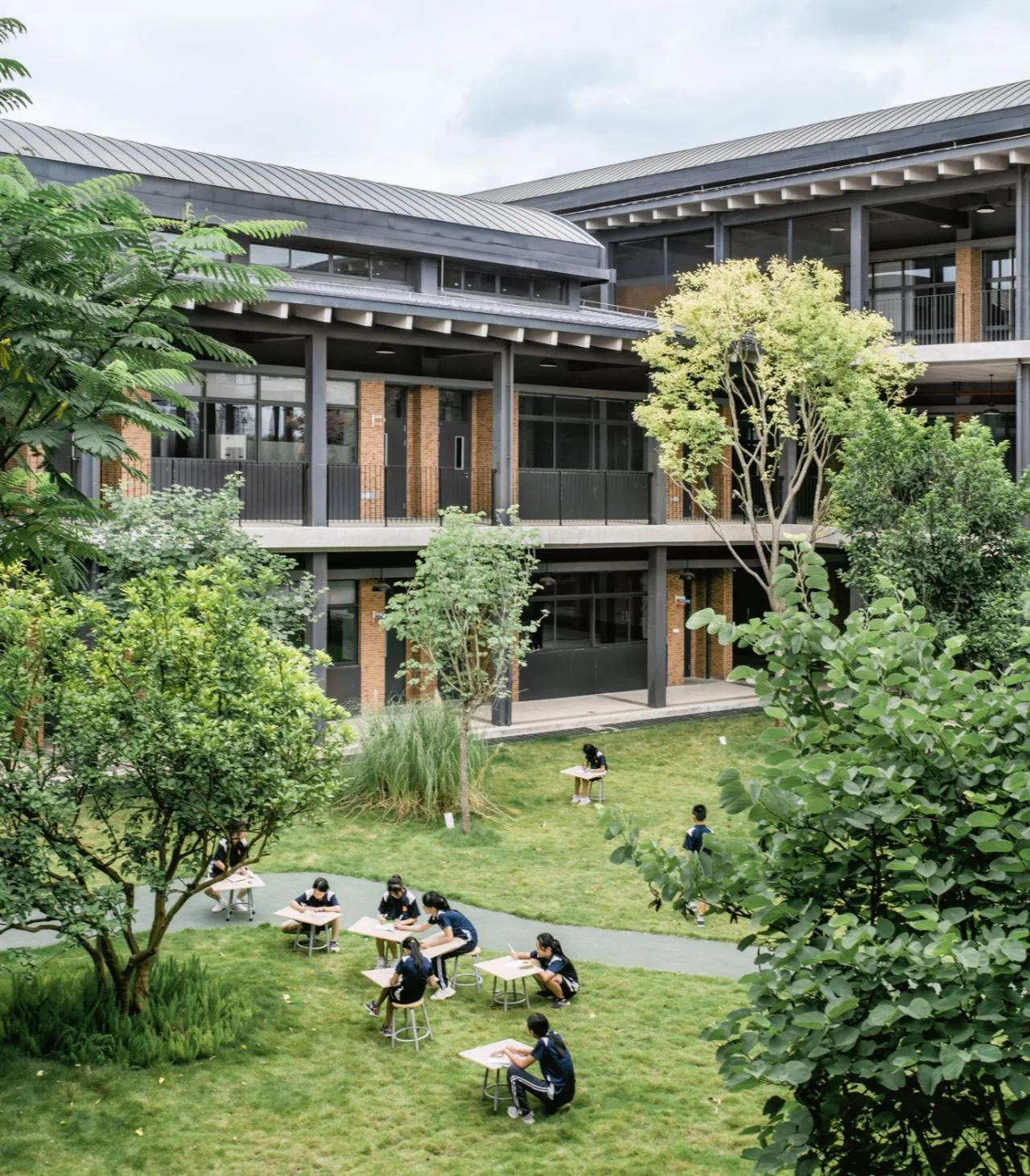
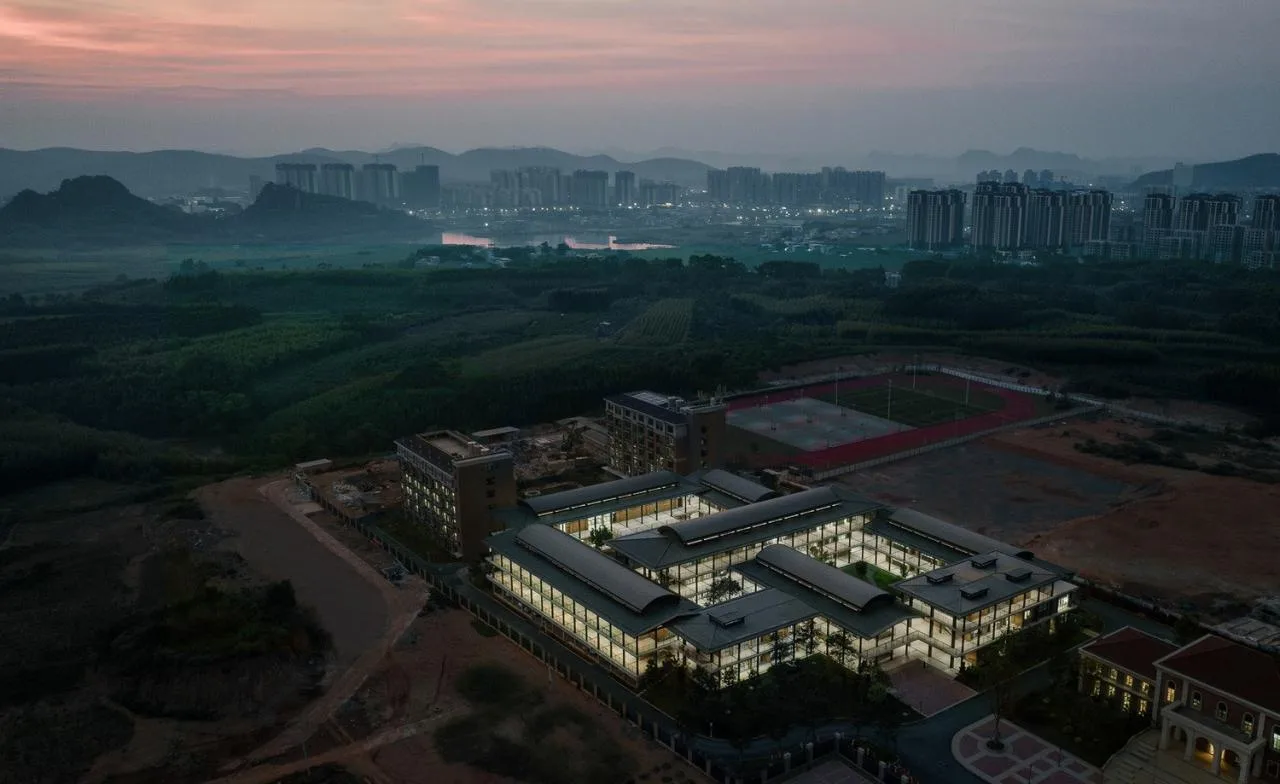
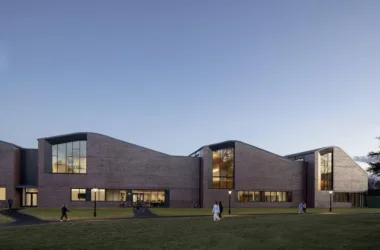
Hidden Beneath the Trees: The school adopts a courtyard-style layout featuring three staggered and interlocking courtyards. This enclosed design enhances tranquility and safety. Considering Nanning’s local climate—with southeast monsoons in summer and northeast monsoons in winter—we increased openings on the southeast and northwest sides to promote summer airflow, while enclosing the northeast courtyard corner to reduce cold winter air infiltration.
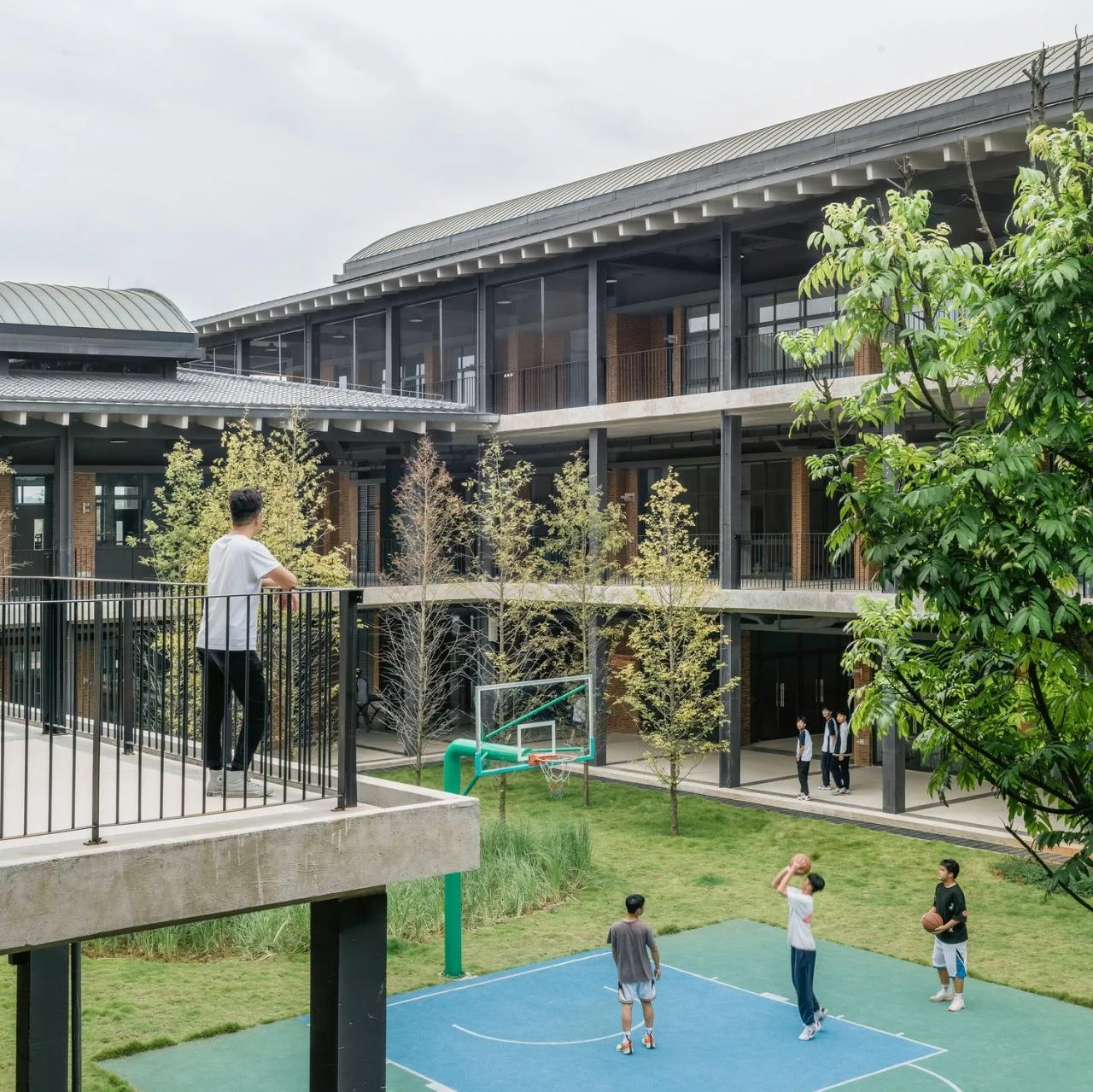
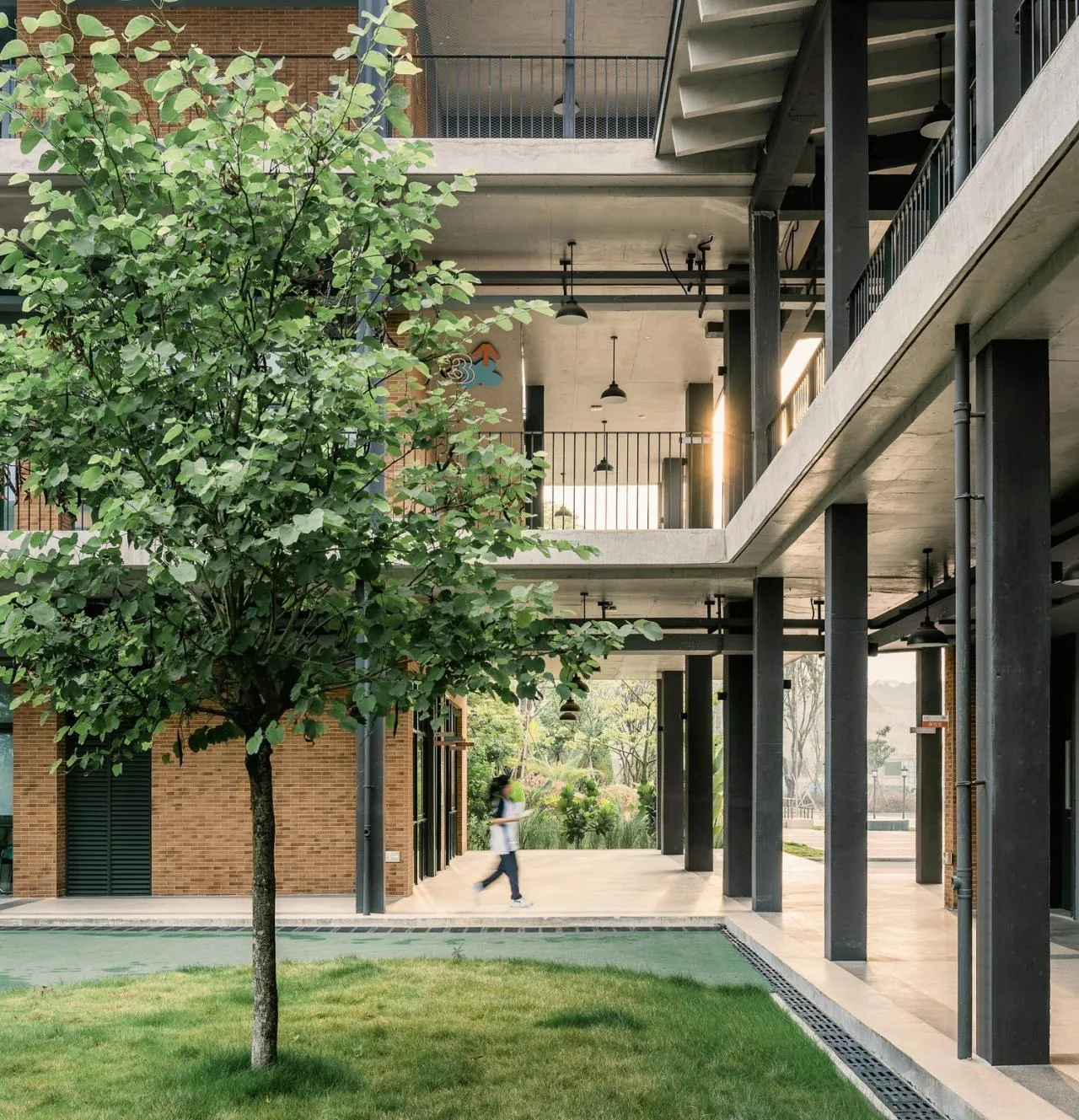
Regarding the functional layout, ordinary classrooms, specialized rooms, and offices are scattered and interwoven around the courtyards. At the intersection of the three courtyards sits a library, serving as an open hub where teachers and students frequently gather to read and learn.
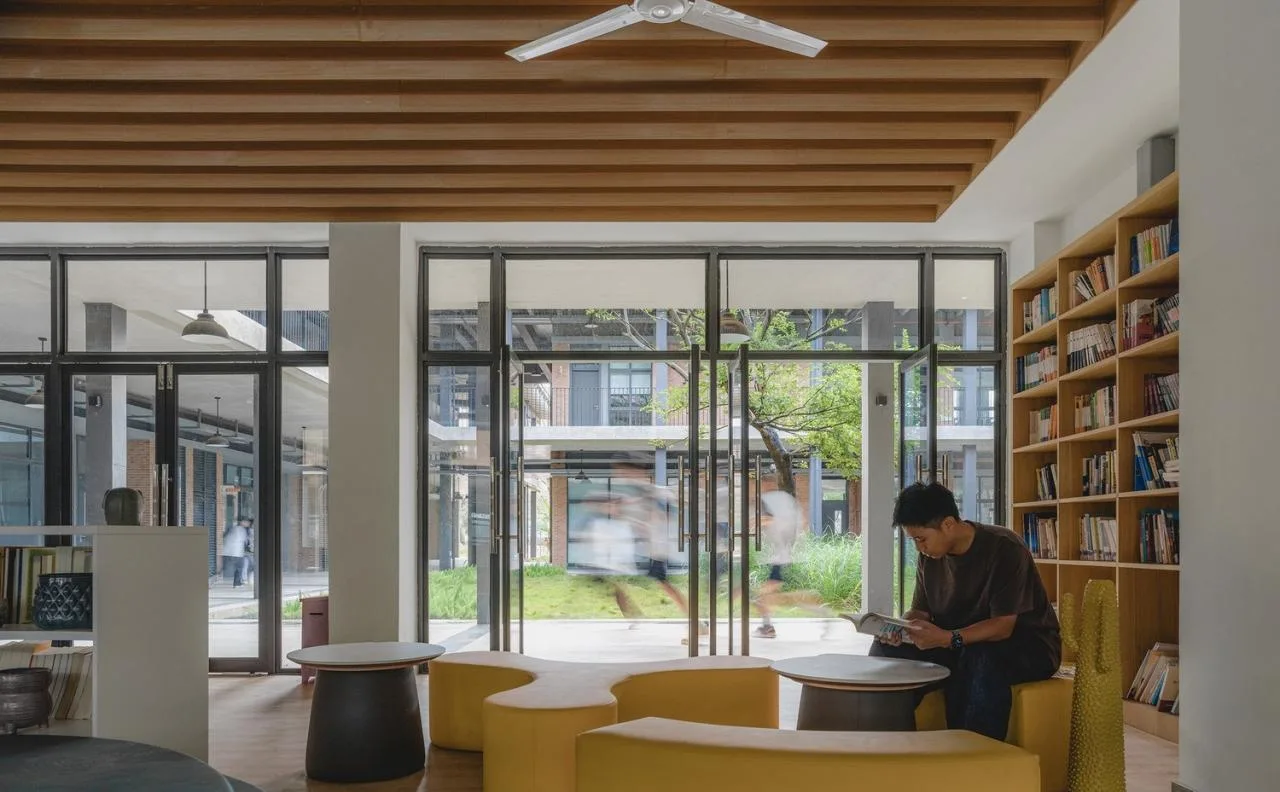
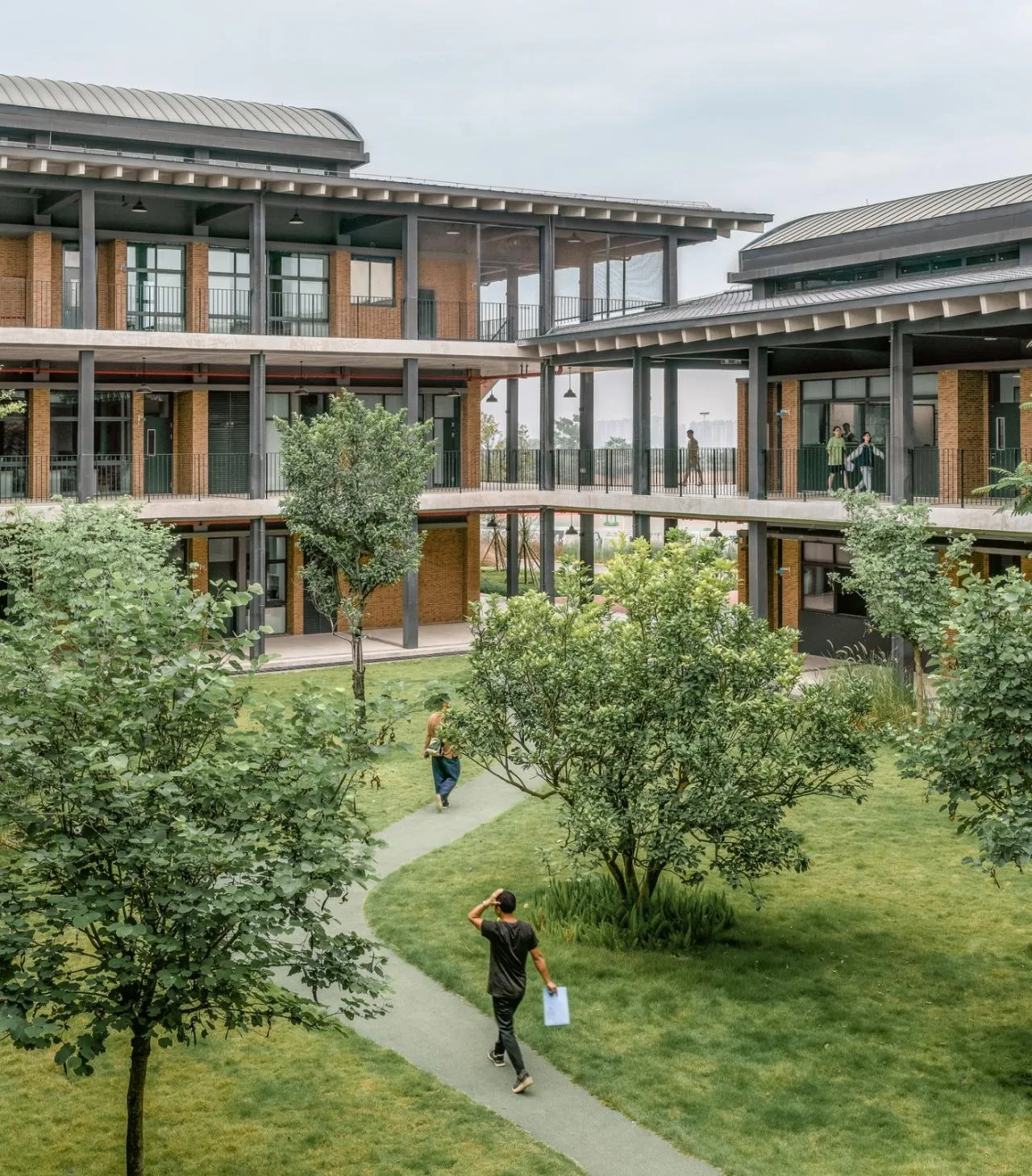
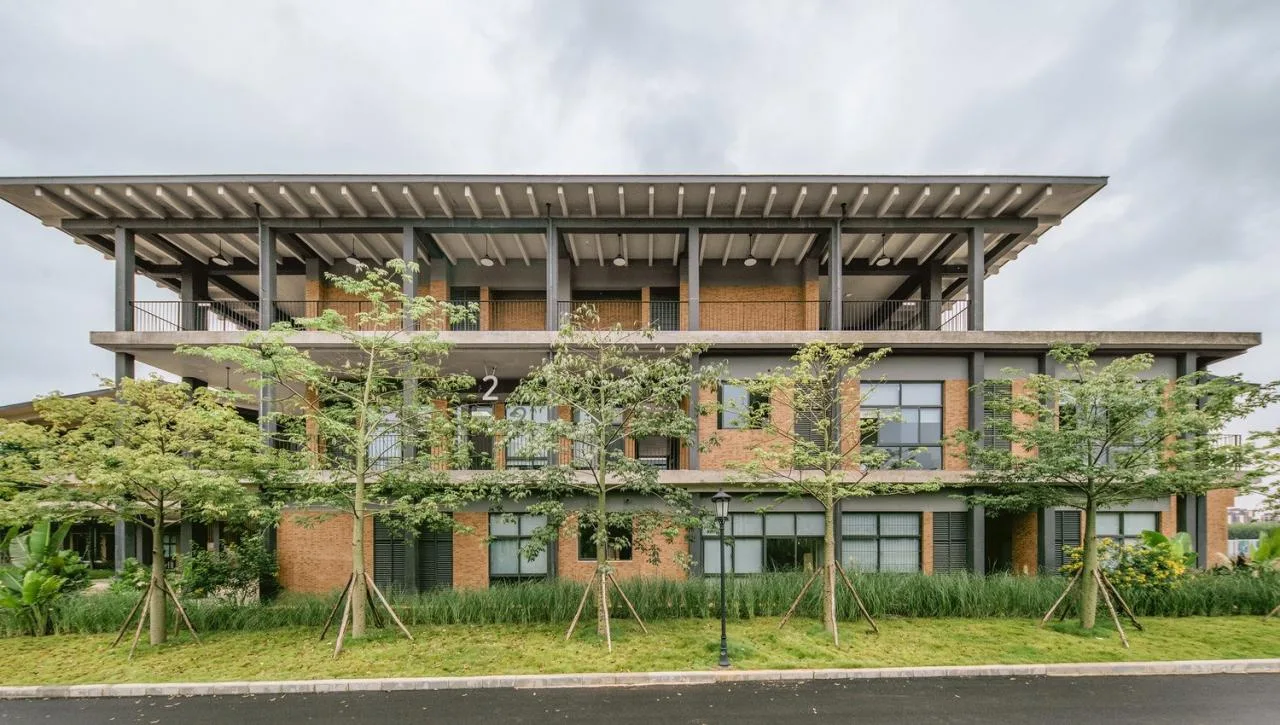
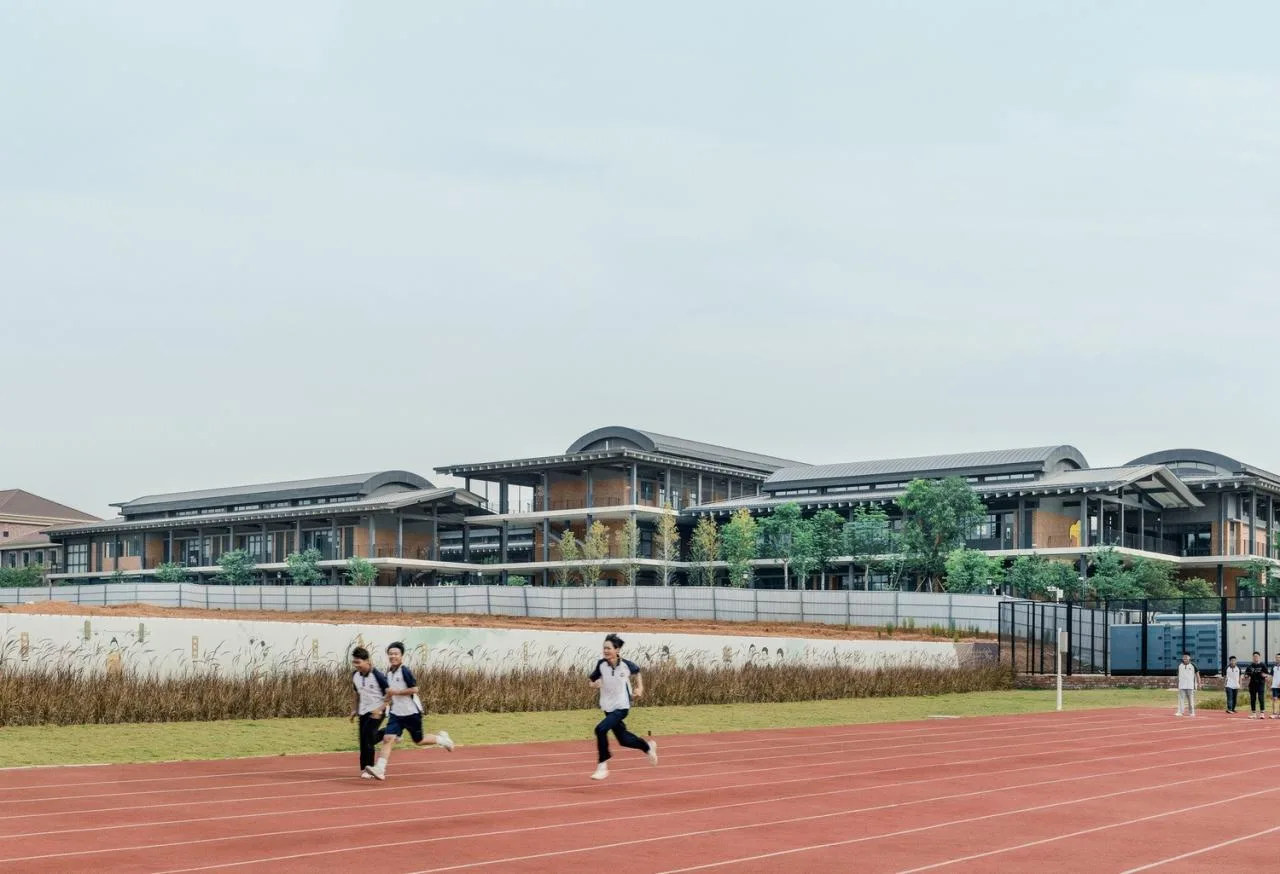
Despite accommodating about 1,800 people, the building remains predominantly two stories tall. This reduces stair climbing time and makes it easier for children to engage with nature. The relatively low height allows more scenery and rain to reach the courtyards and buildings. As the courtyard trees grow taller than the buildings, the campus becomes enveloped in forest, with dancing shadows creating a calm and relaxed atmosphere.
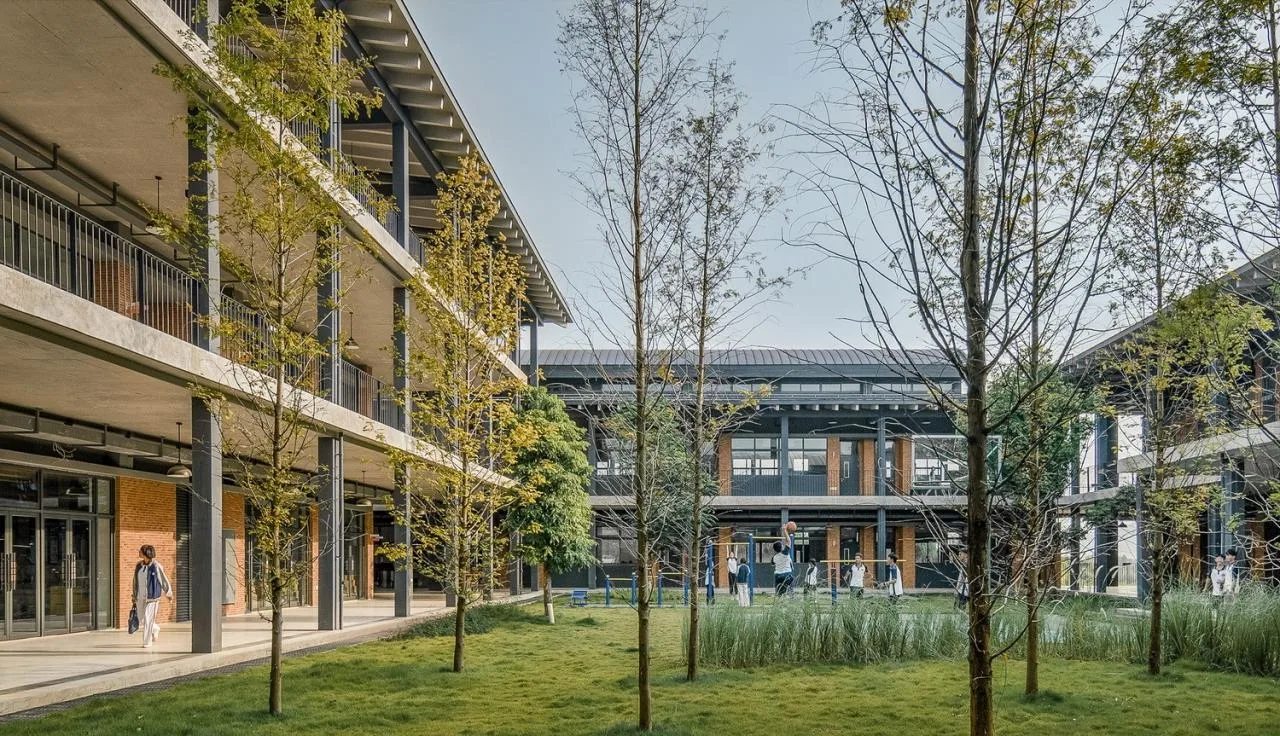
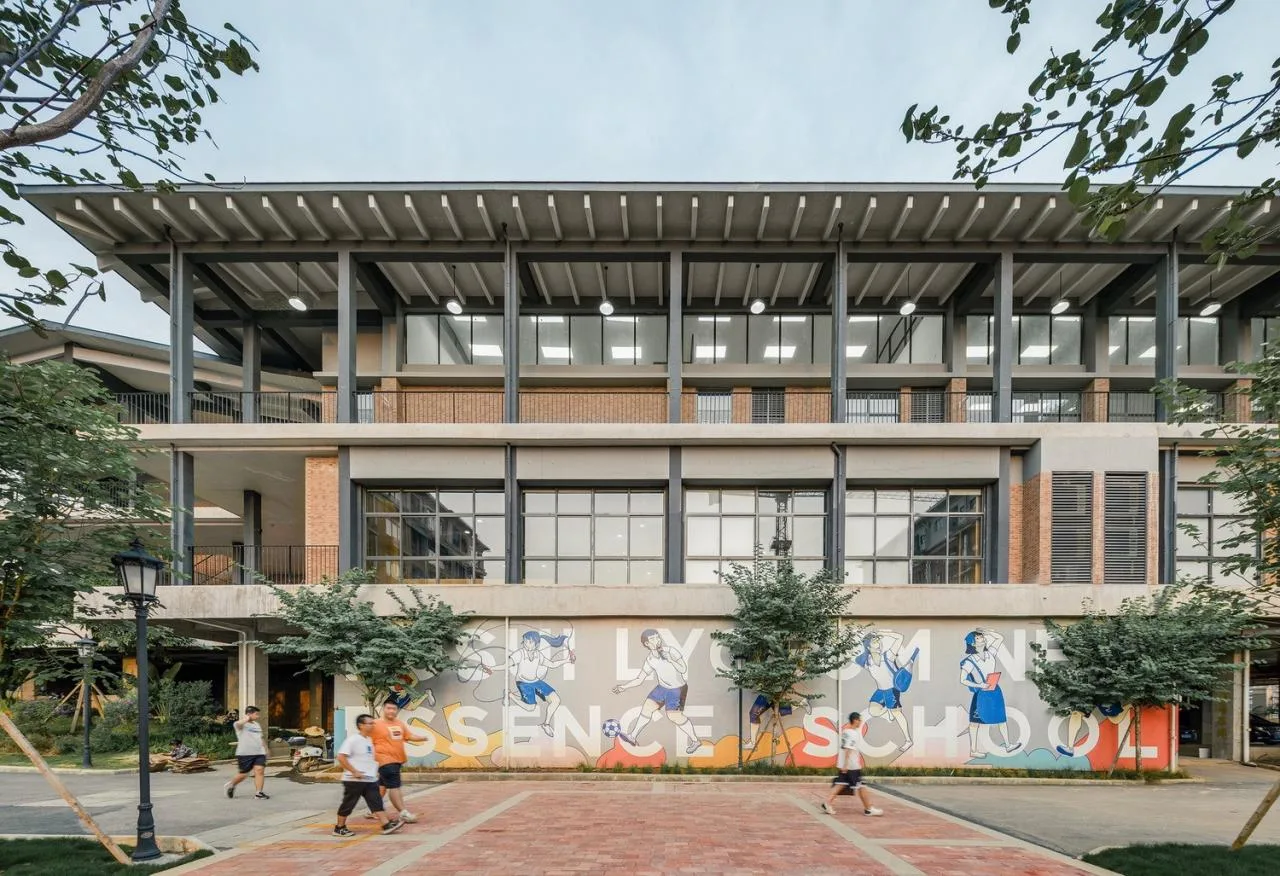
Interwoven Dynamic Atmosphere: The Courtyards
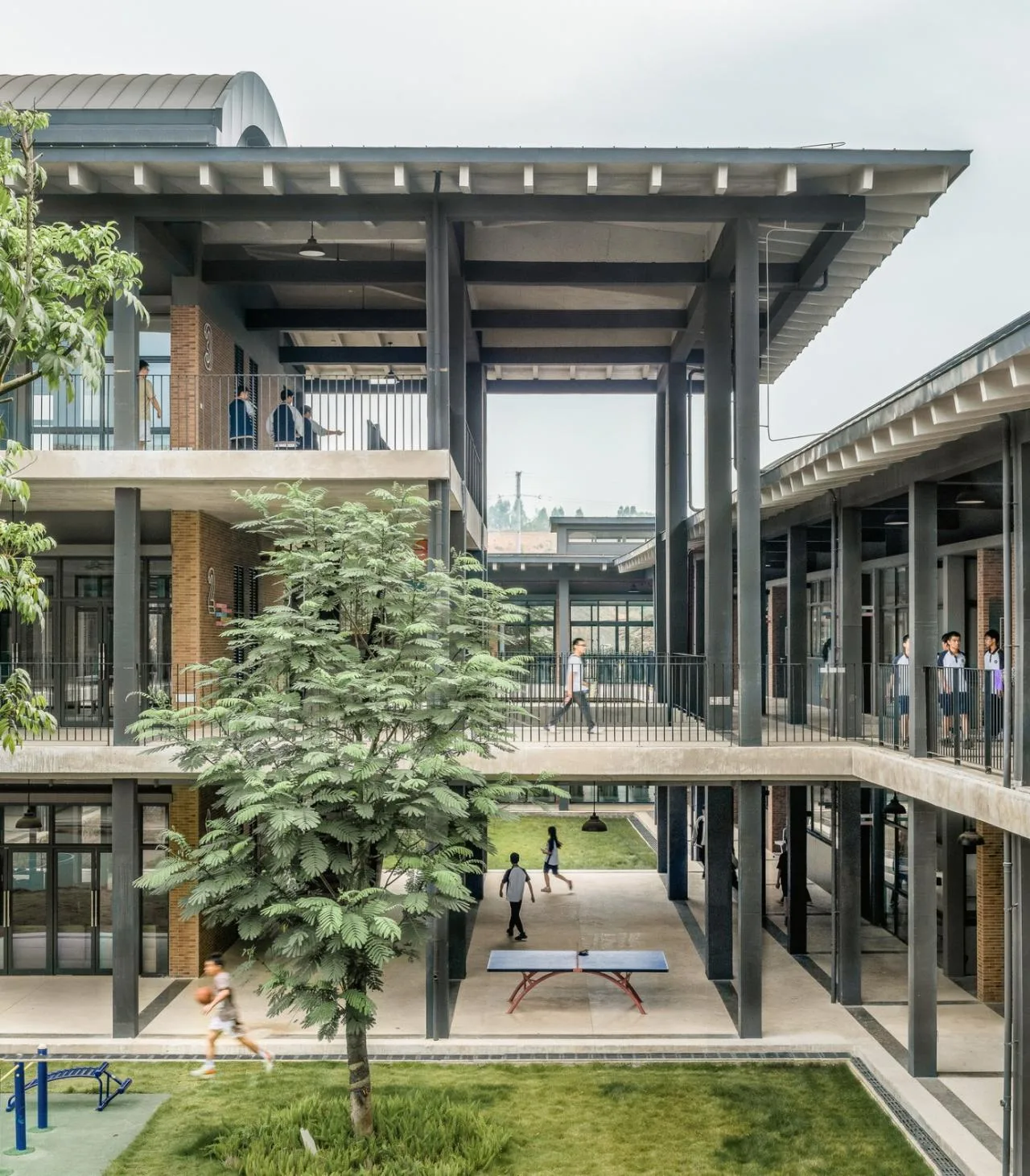
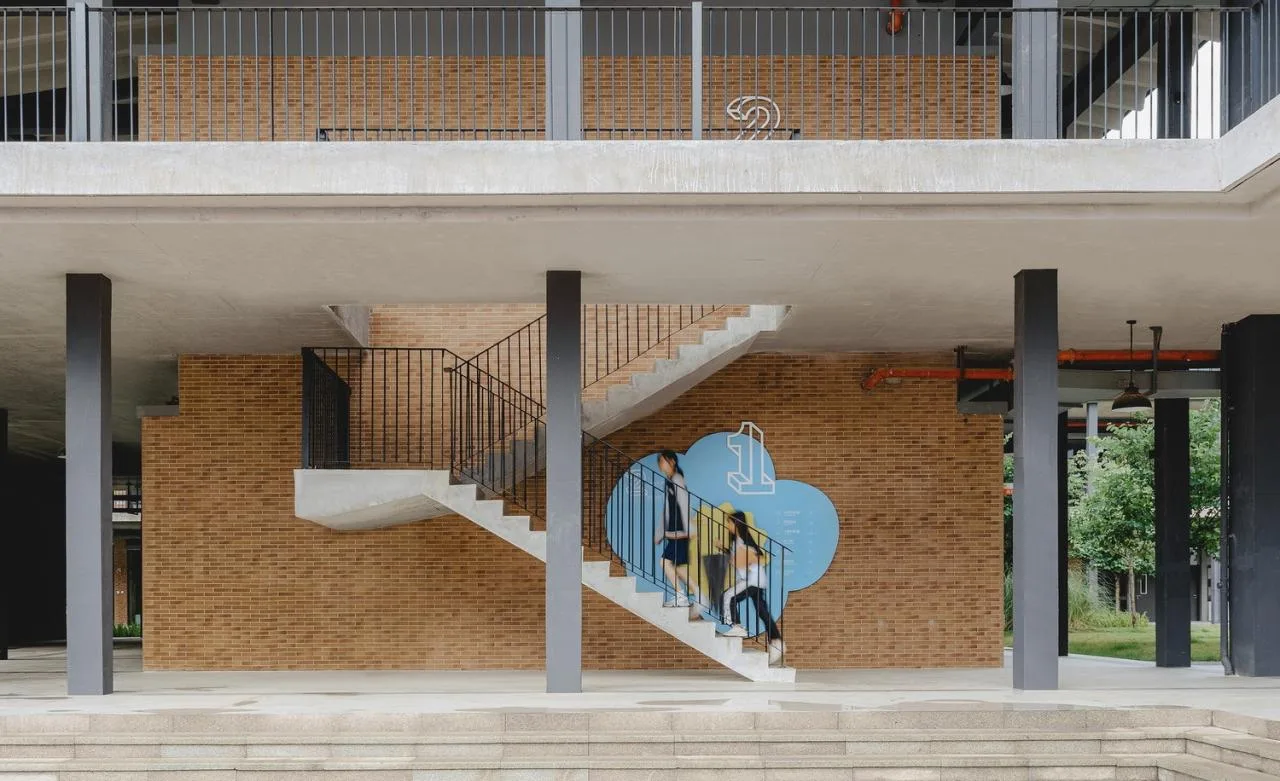
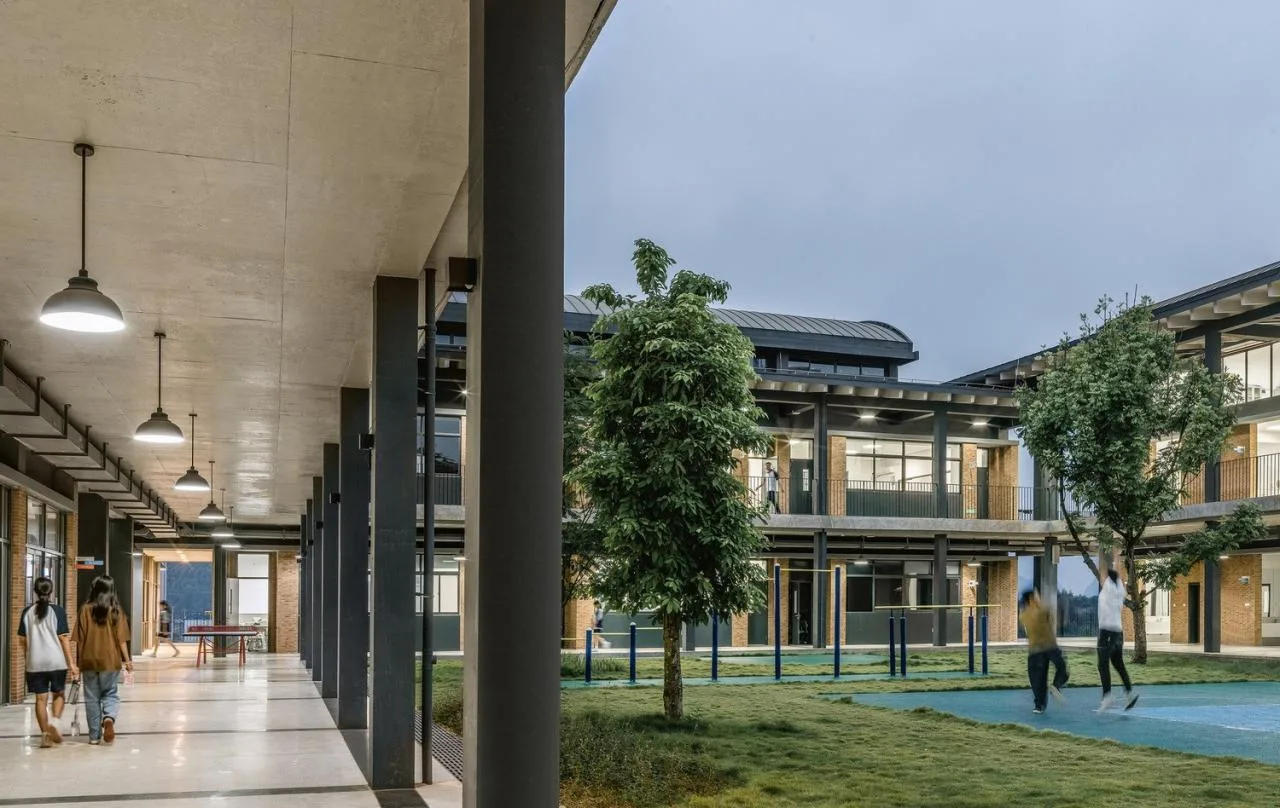
All ordinary classrooms are located on the first and second floors, with multiple staircases scattered throughout the teaching building. There are intentionally no fixed entrances or exits, allowing corridors to open directly onto the courtyards. This design greatly improves courtyard accessibility. Even during short ten-minute breaks, students can easily reach various courtyards. Each courtyard varies in size and atmosphere, allowing dynamic and tranquil scenes to coexist peacefully on campus.
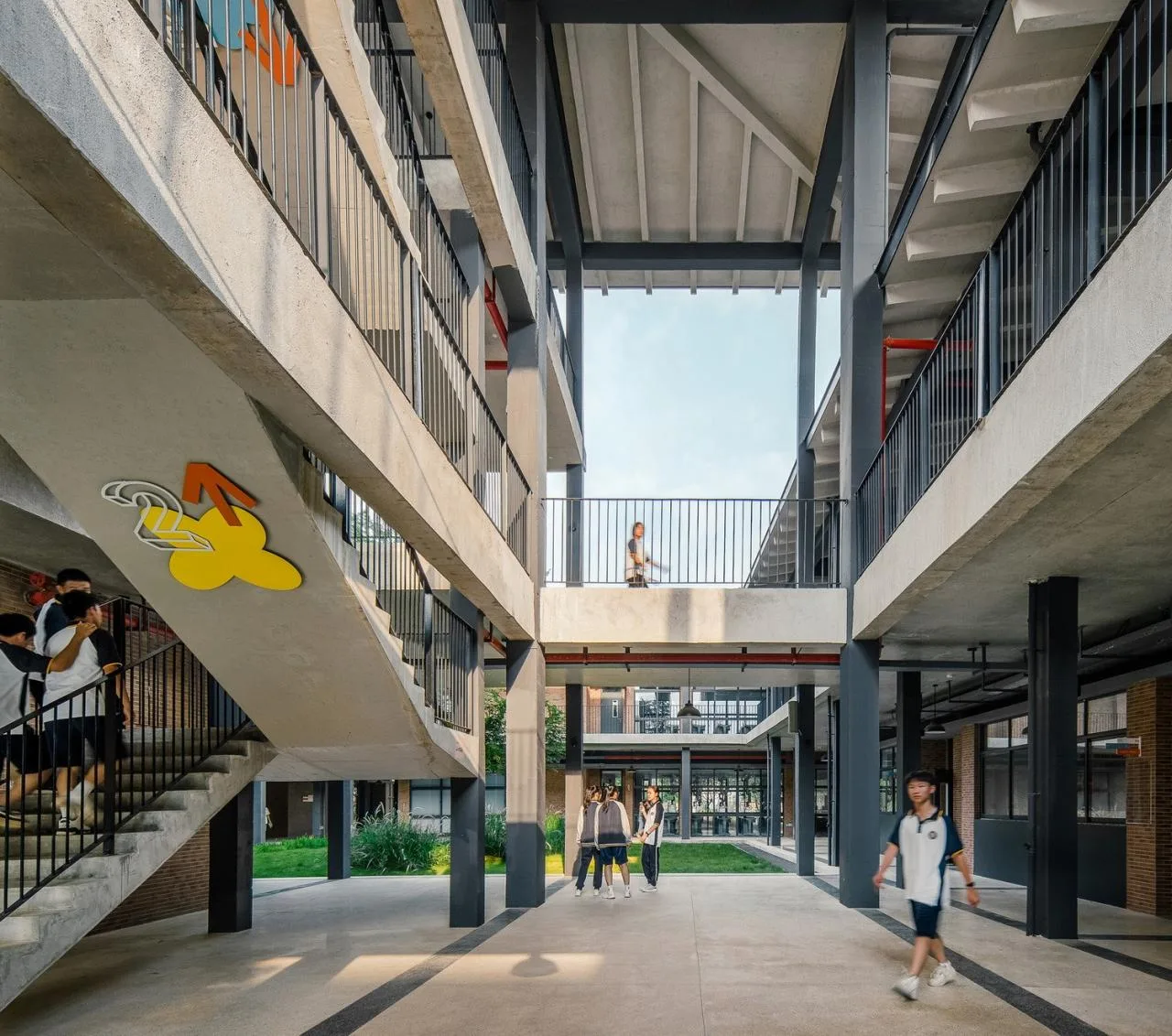
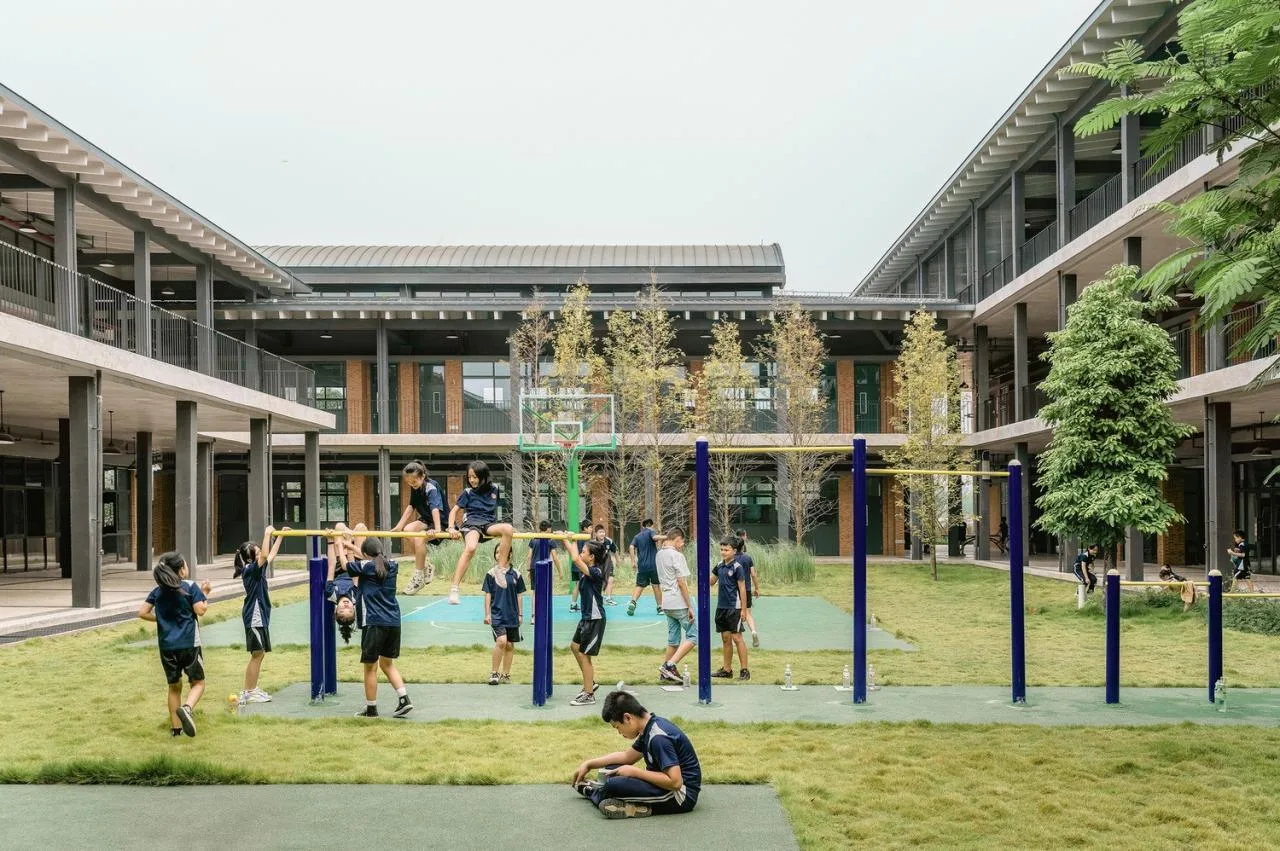
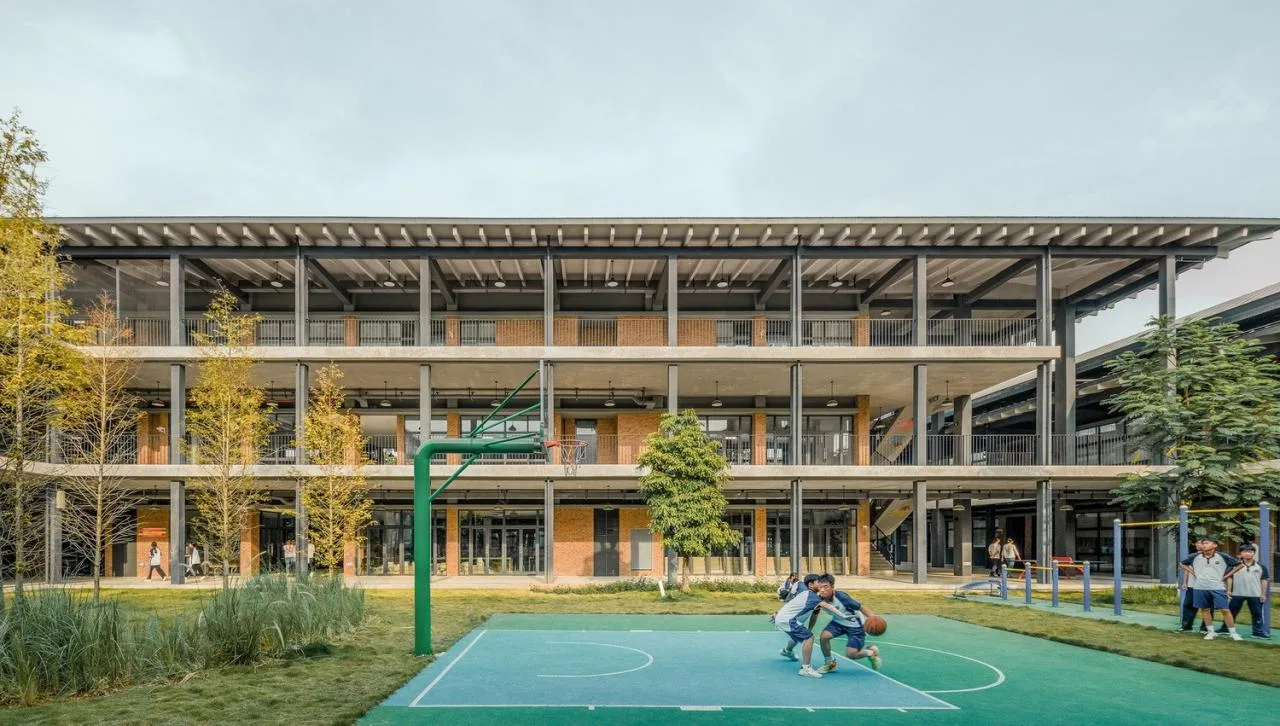
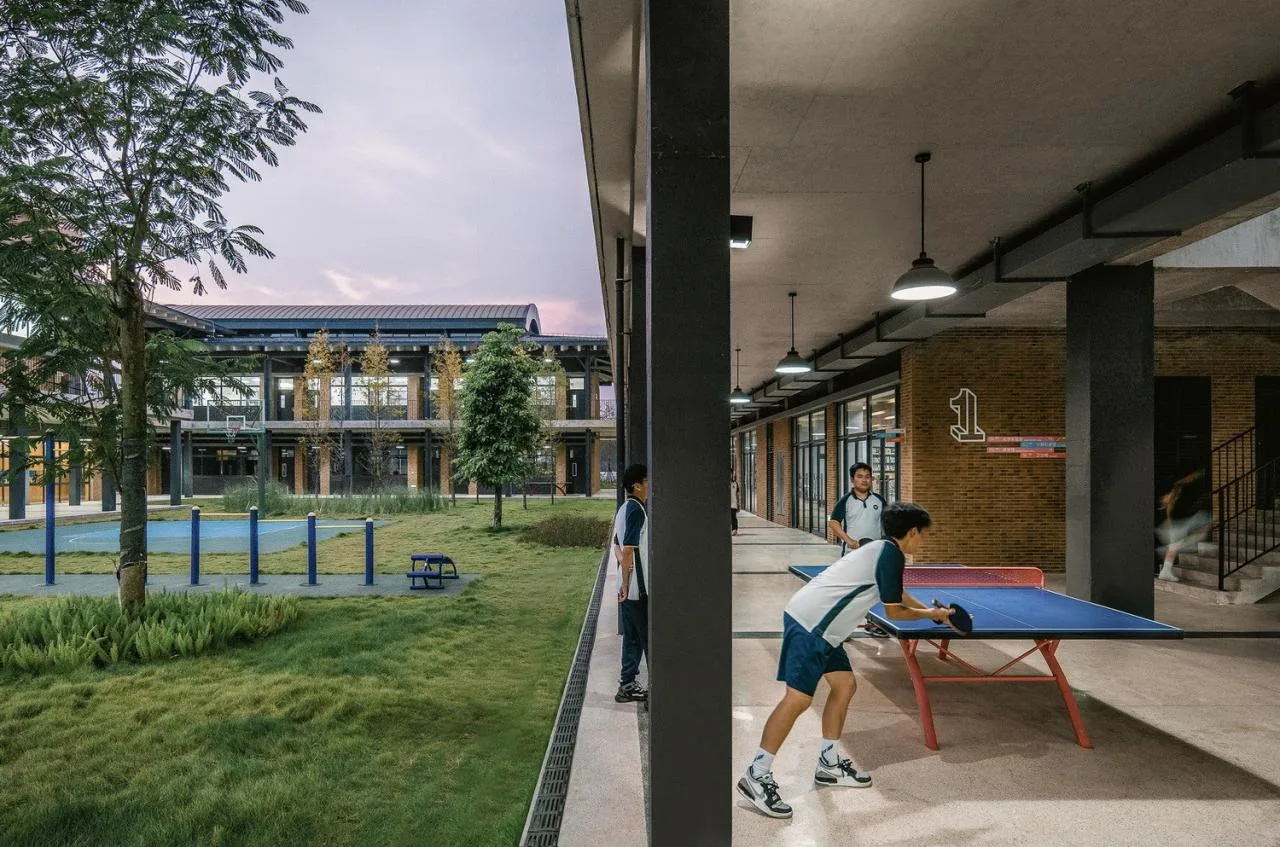
The largest courtyard is open and equipped with numerous sports facilities. Here, children stretch and play on bars, compete on the basketball court, or simply chase one another. These activities create a lively atmosphere, encouraging closer communication through sports.
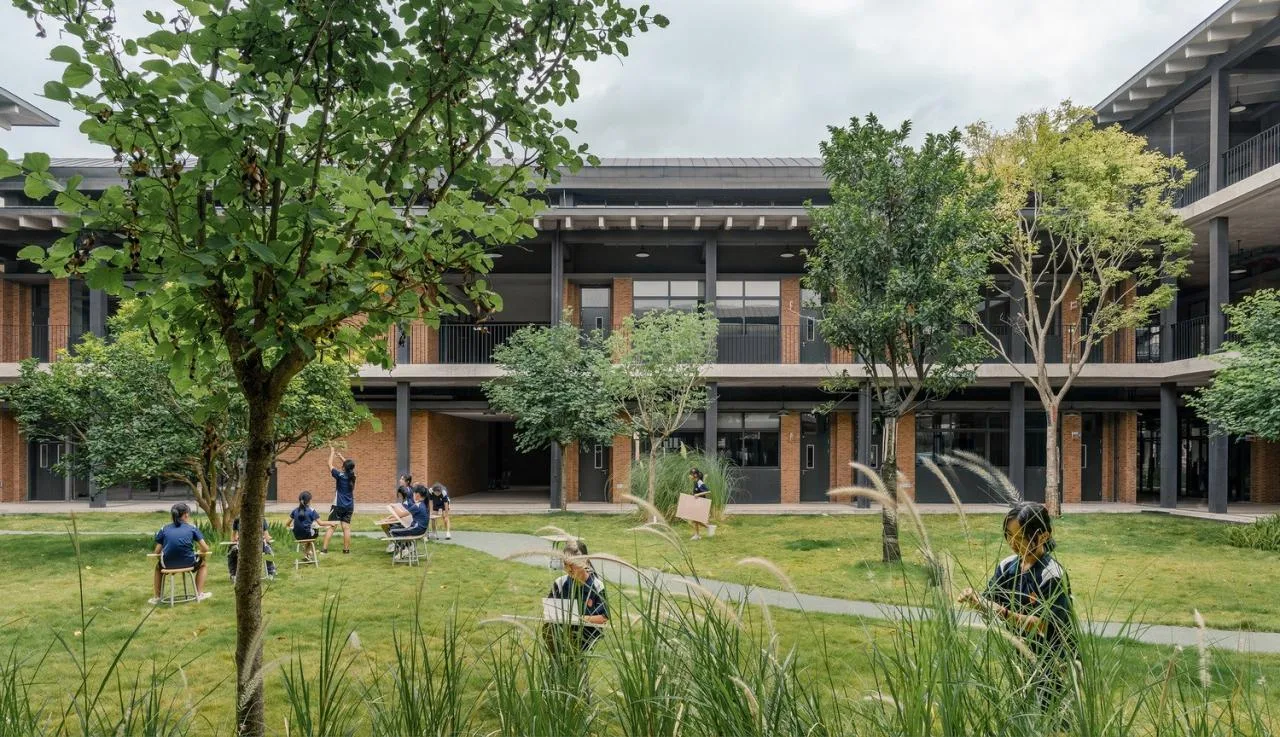
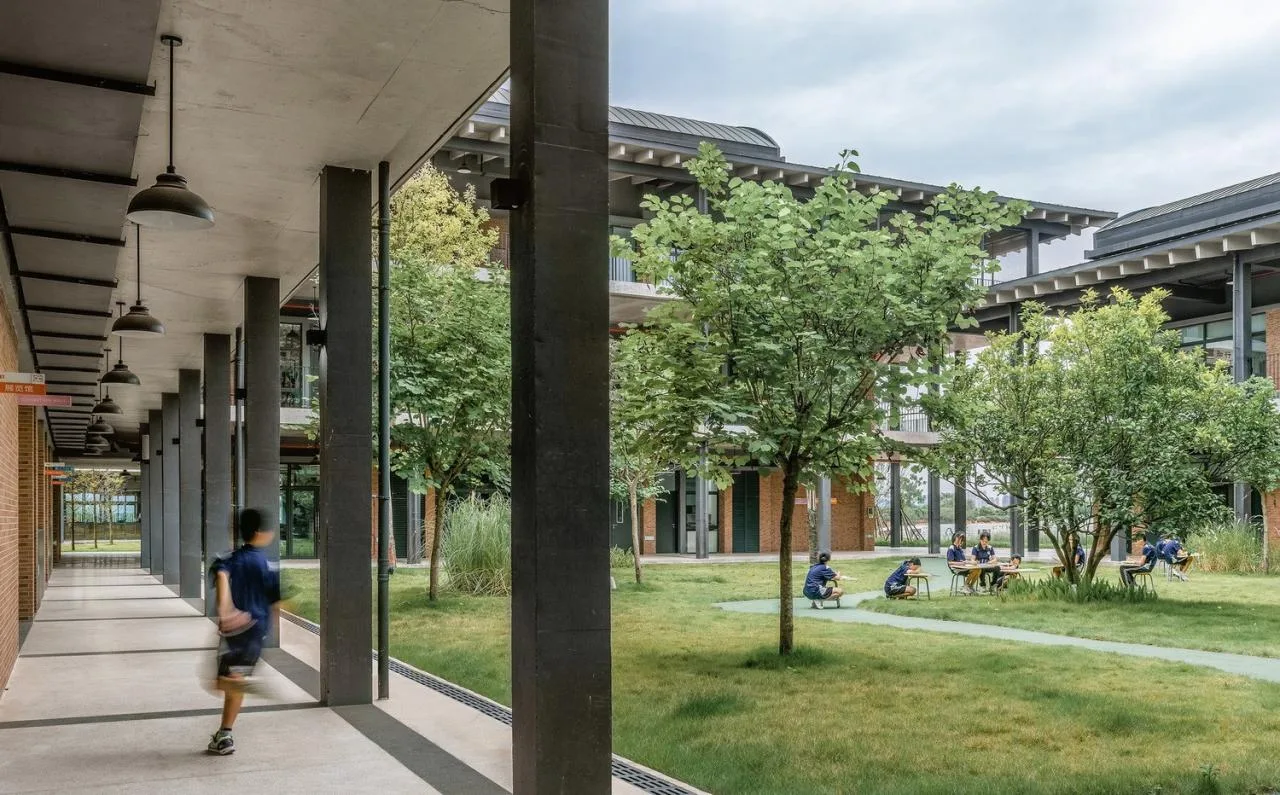
A medium-sized courtyard hosts sketching classes and outdoor interactive games. A winding path allows easy movement across the space. Compared to the energetic sports courtyard, this area offers a slower, more relaxed rhythm, fostering a casual and healthy learning environment where relationships among students, teachers, and classrooms feel less formal.
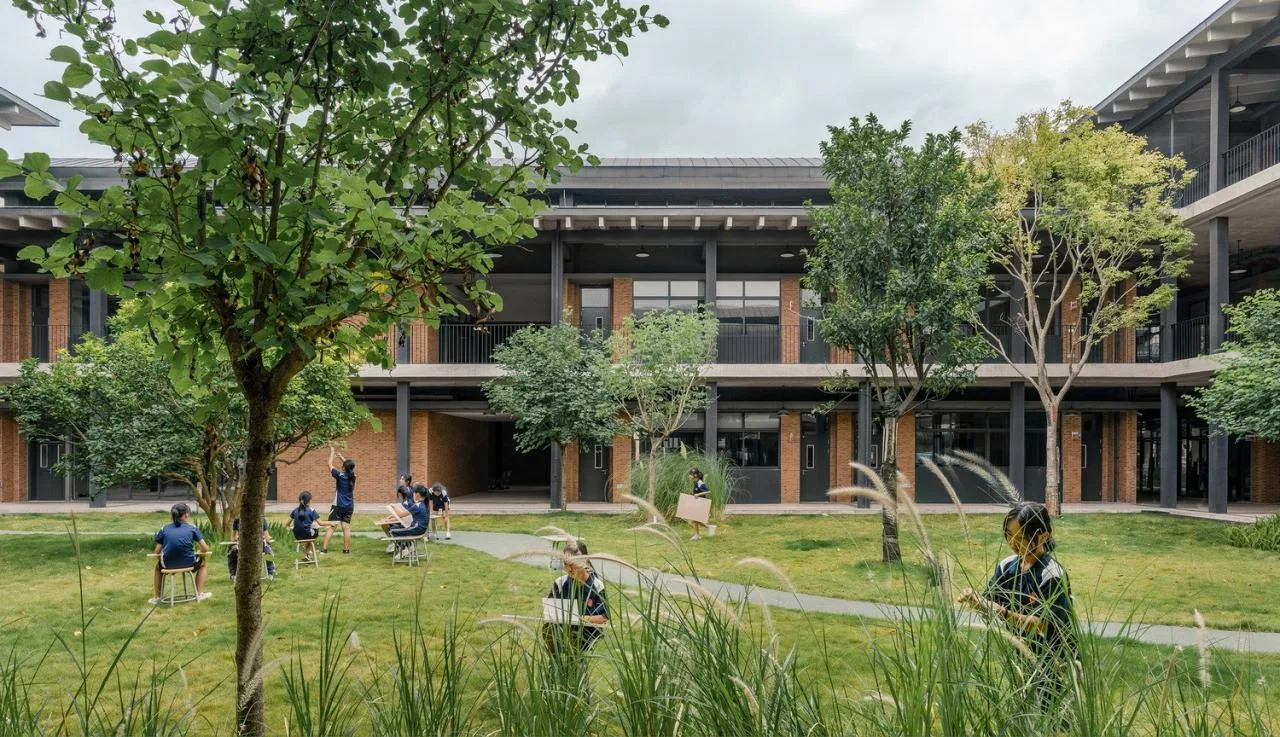
The third courtyard is vibrant with lush plants and a large tree at its center. The breeze rustles leaves as children sing, whisper to friends, or lie in the grass observing insects. Here, they celebrate nature’s subtle changes and engage in quiet conversations with the environment.
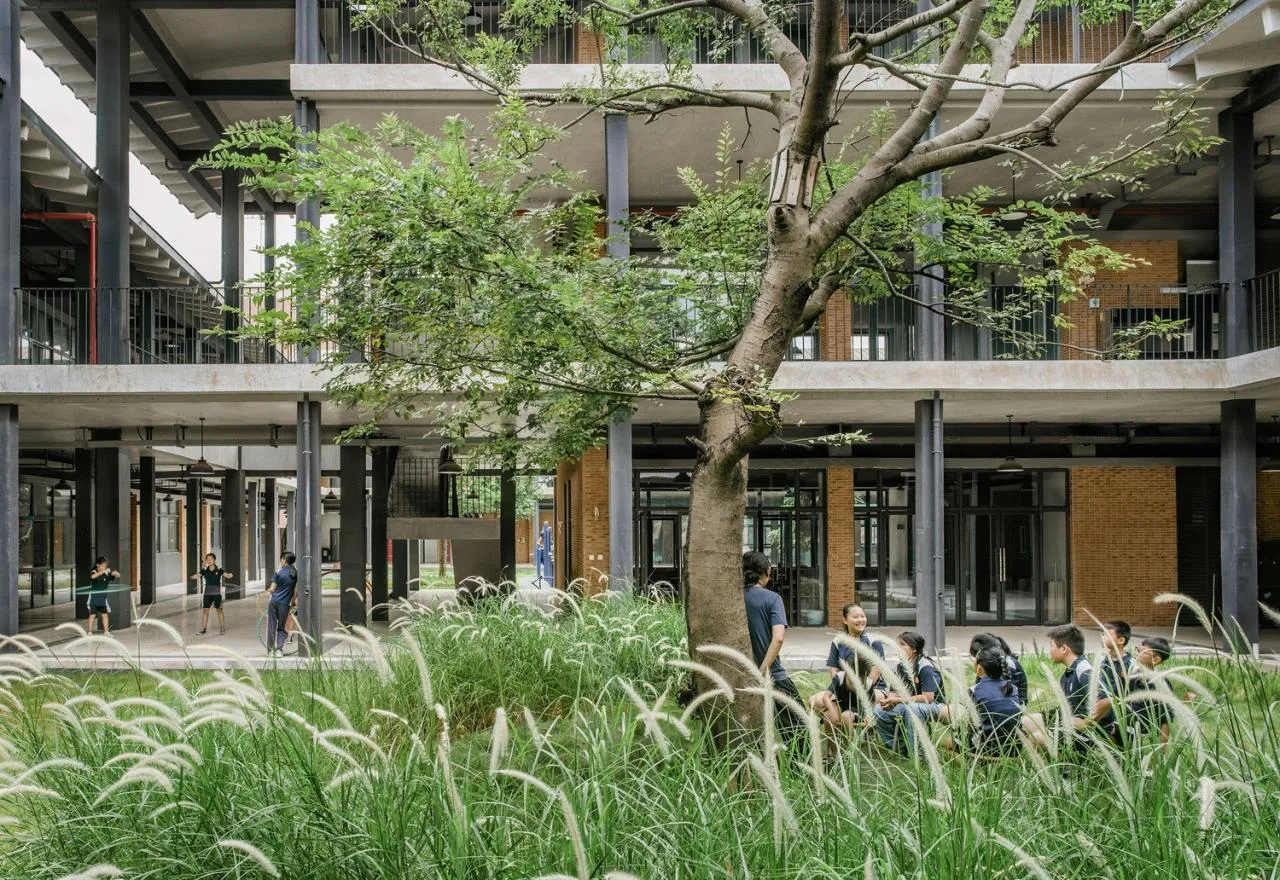
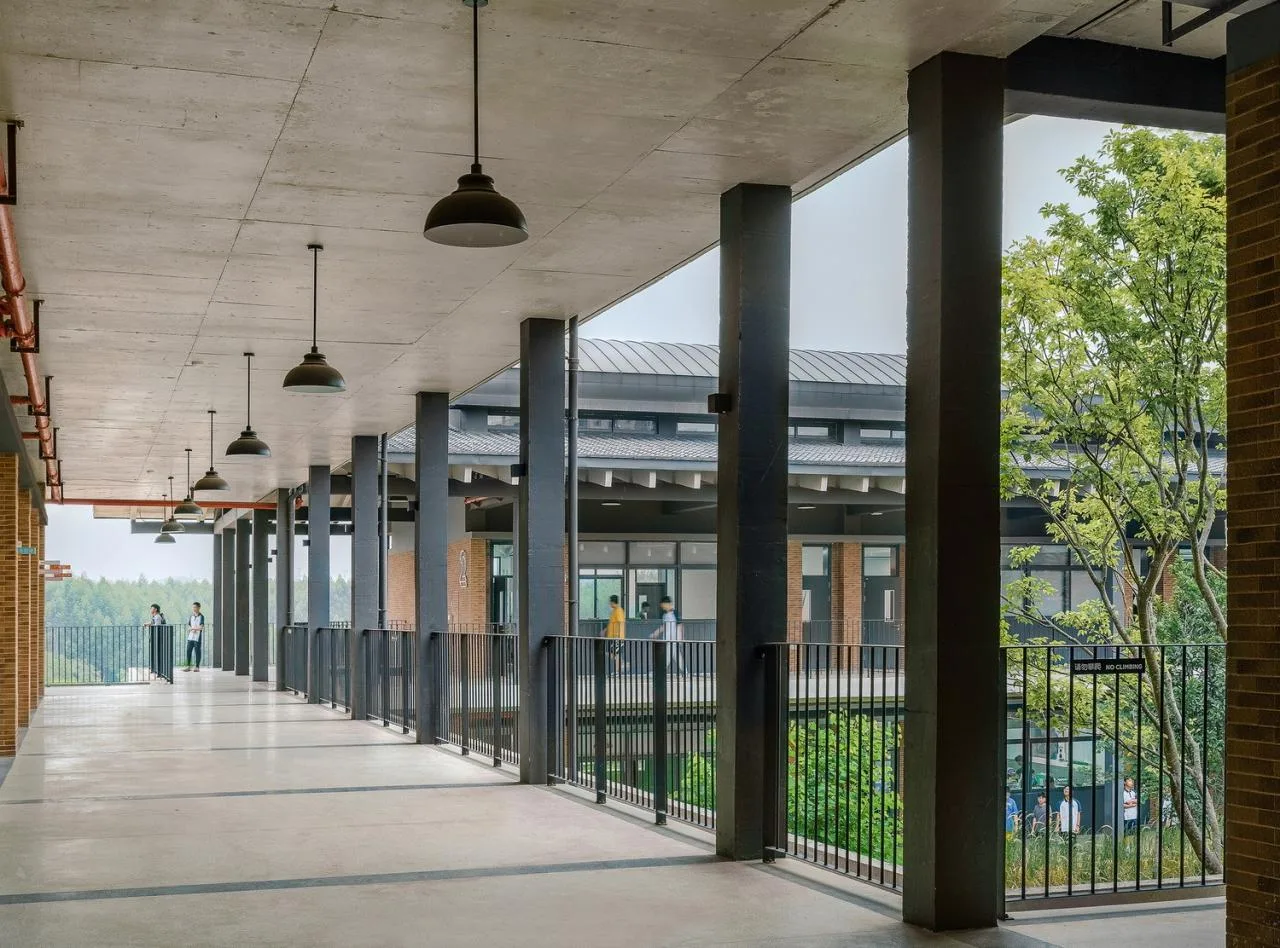
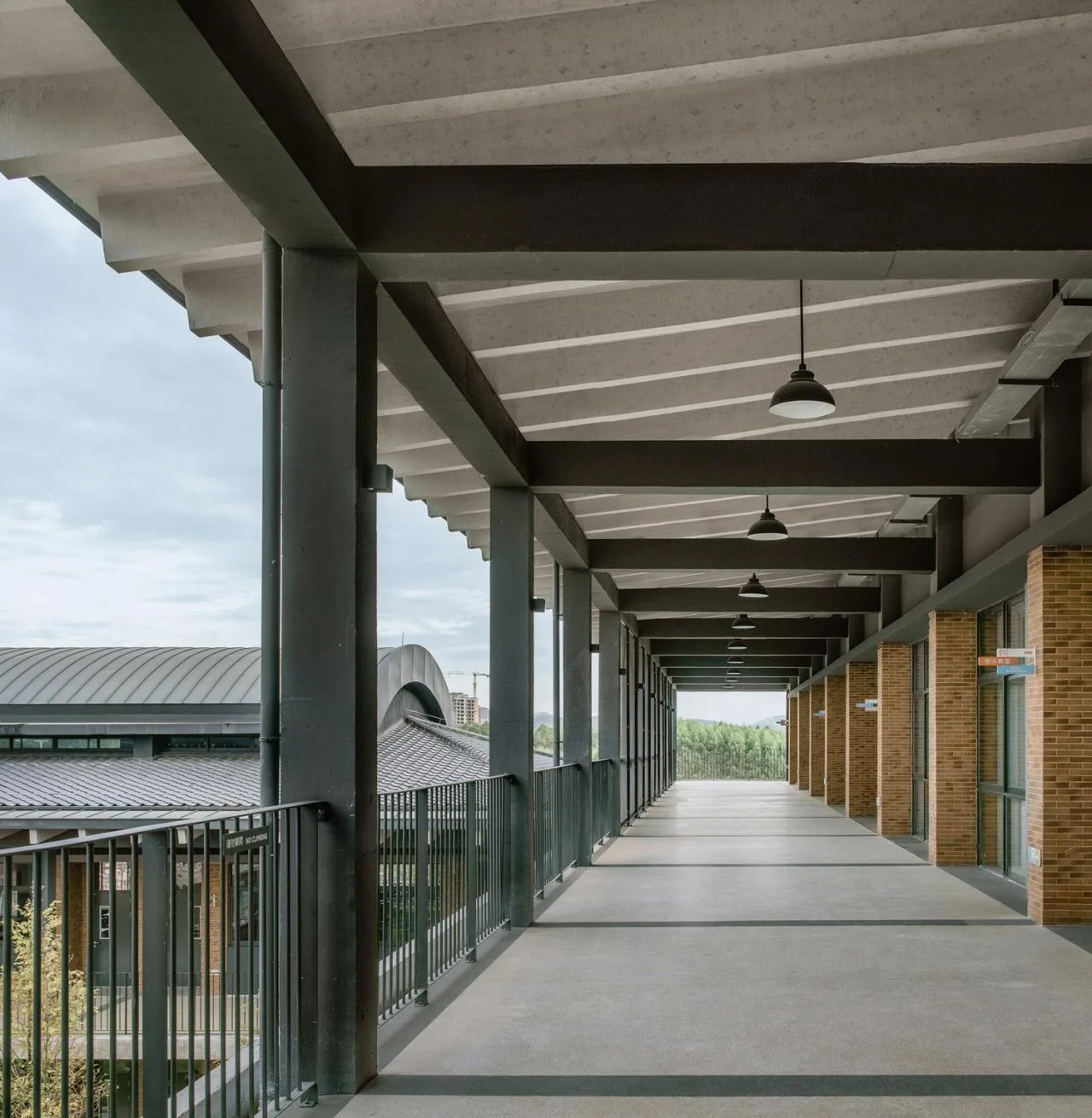
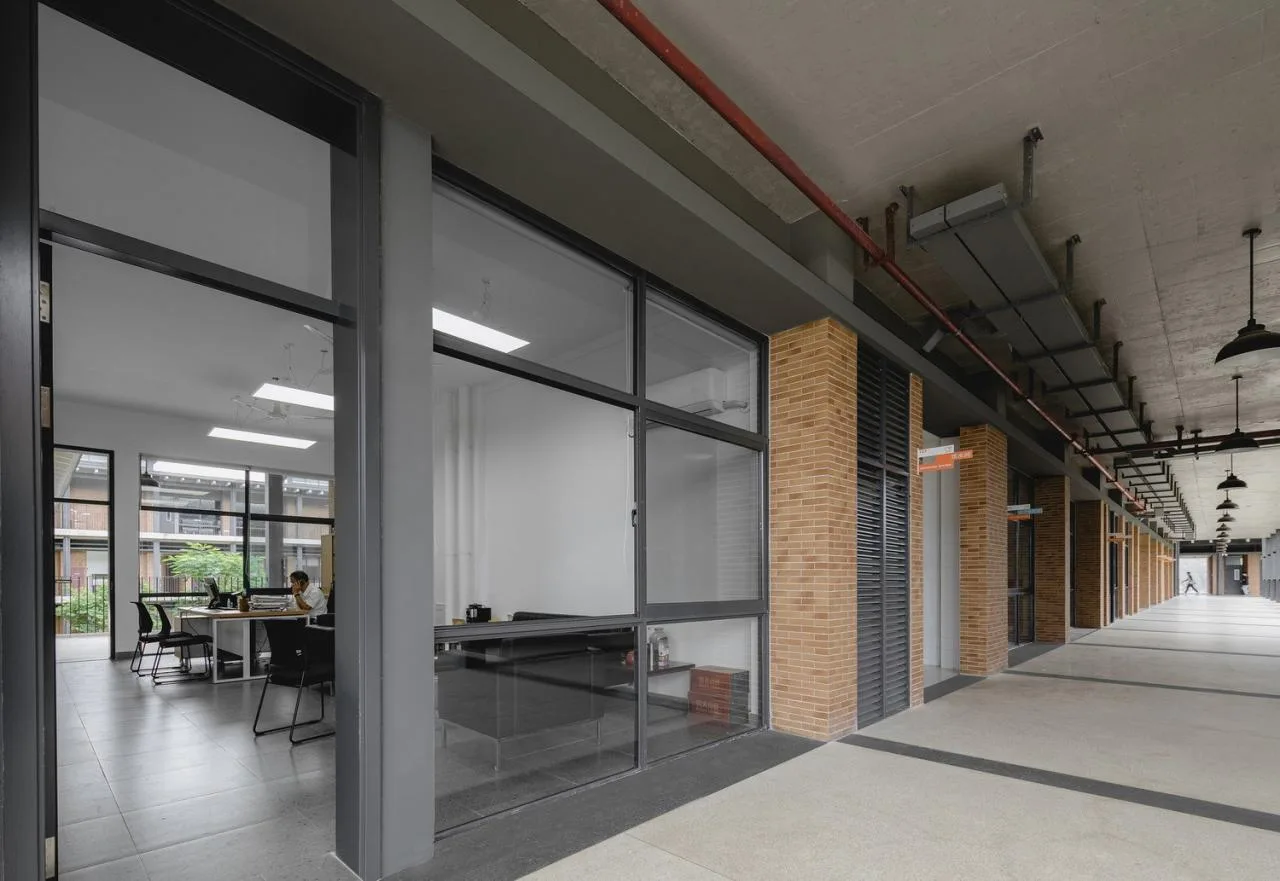
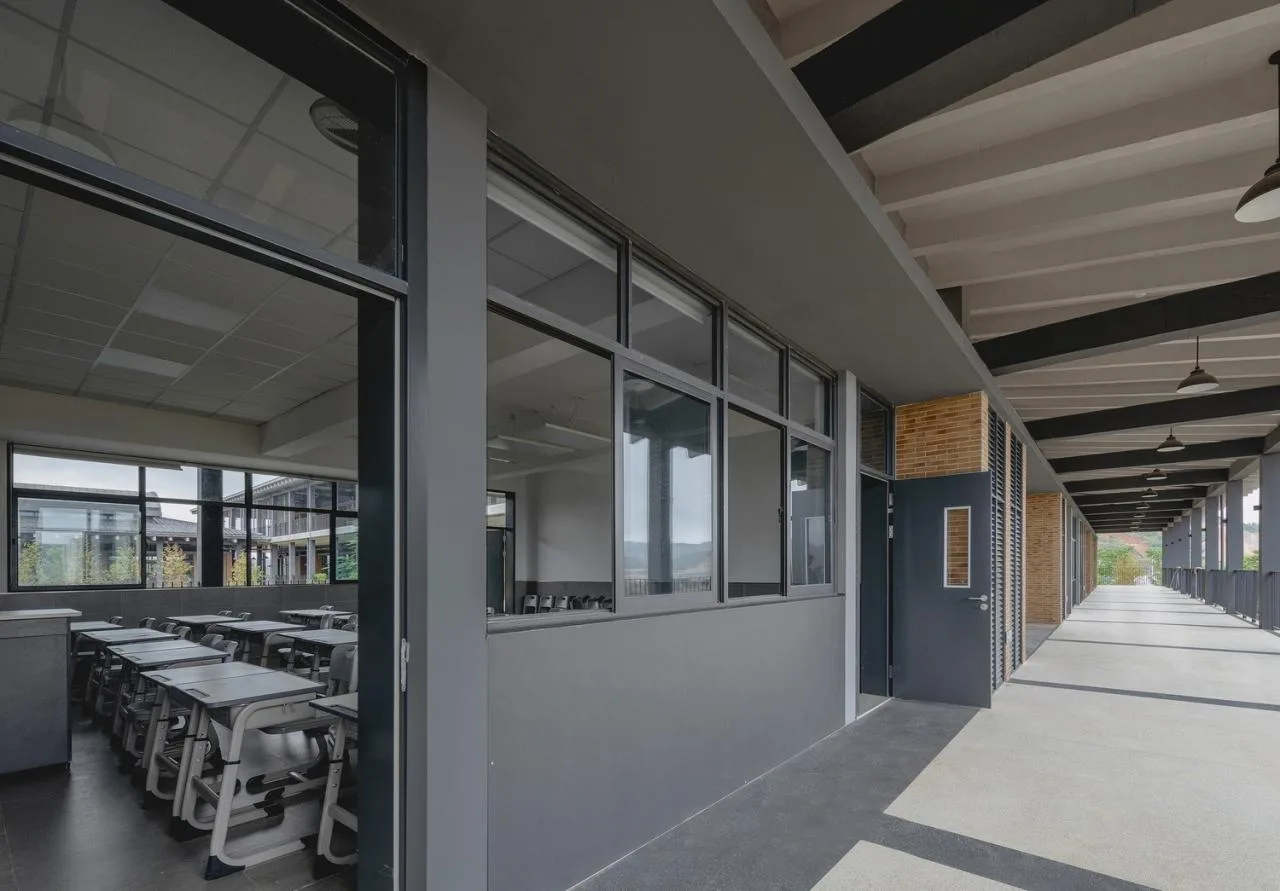
Blurring Spatial Boundaries: Each building surrounding the courtyards acts like a towering tree, complementing the varied plants within. Deep roof eaves provide shade and shelter, supporting spacious, open corridors that serve as playgrounds even during rain or shine.
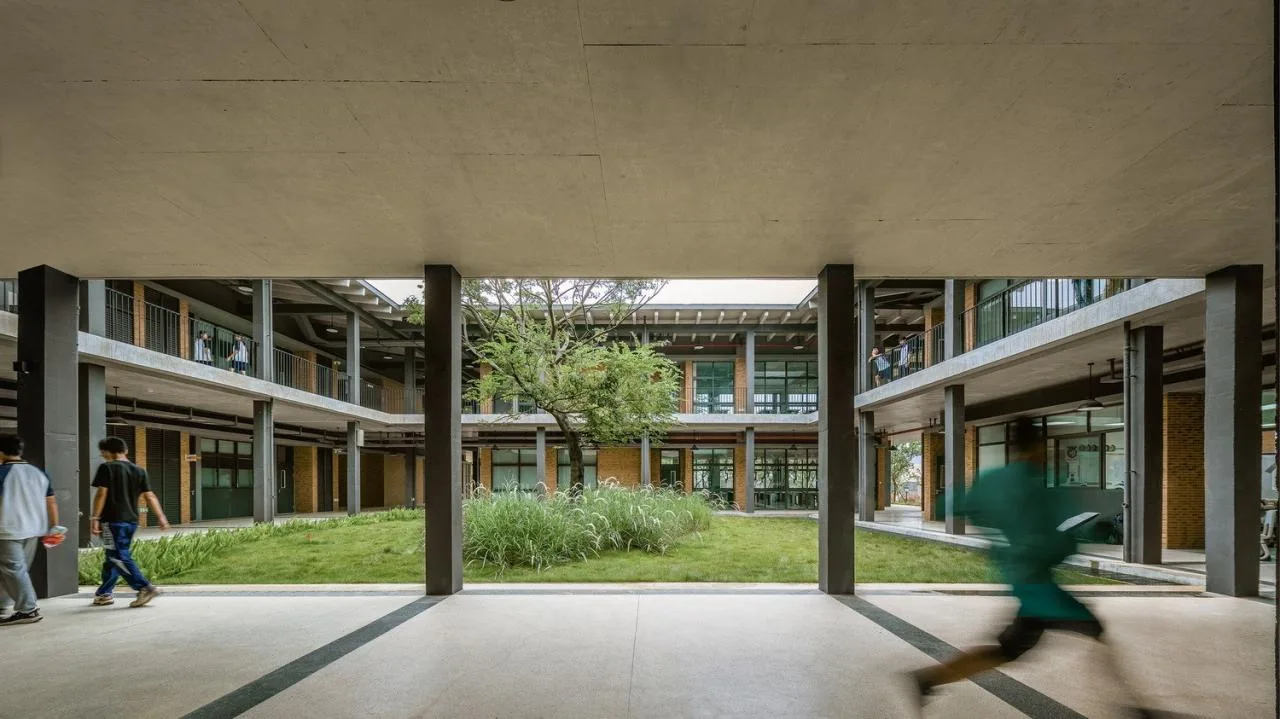
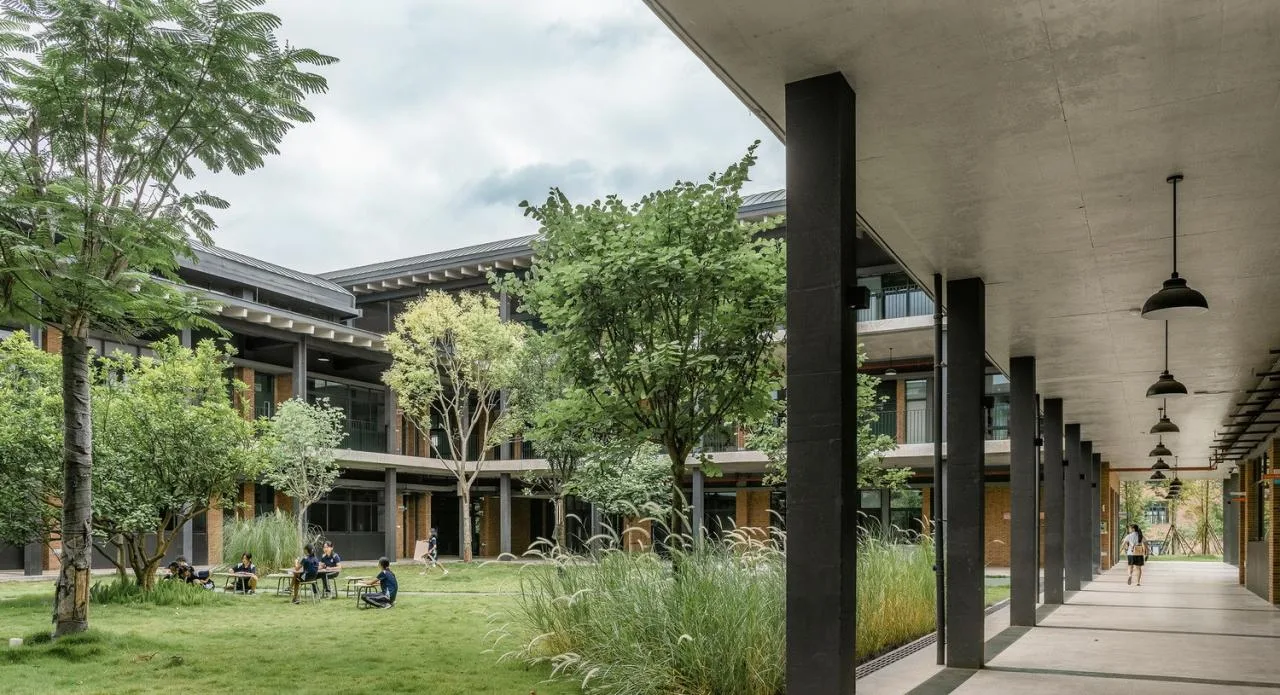
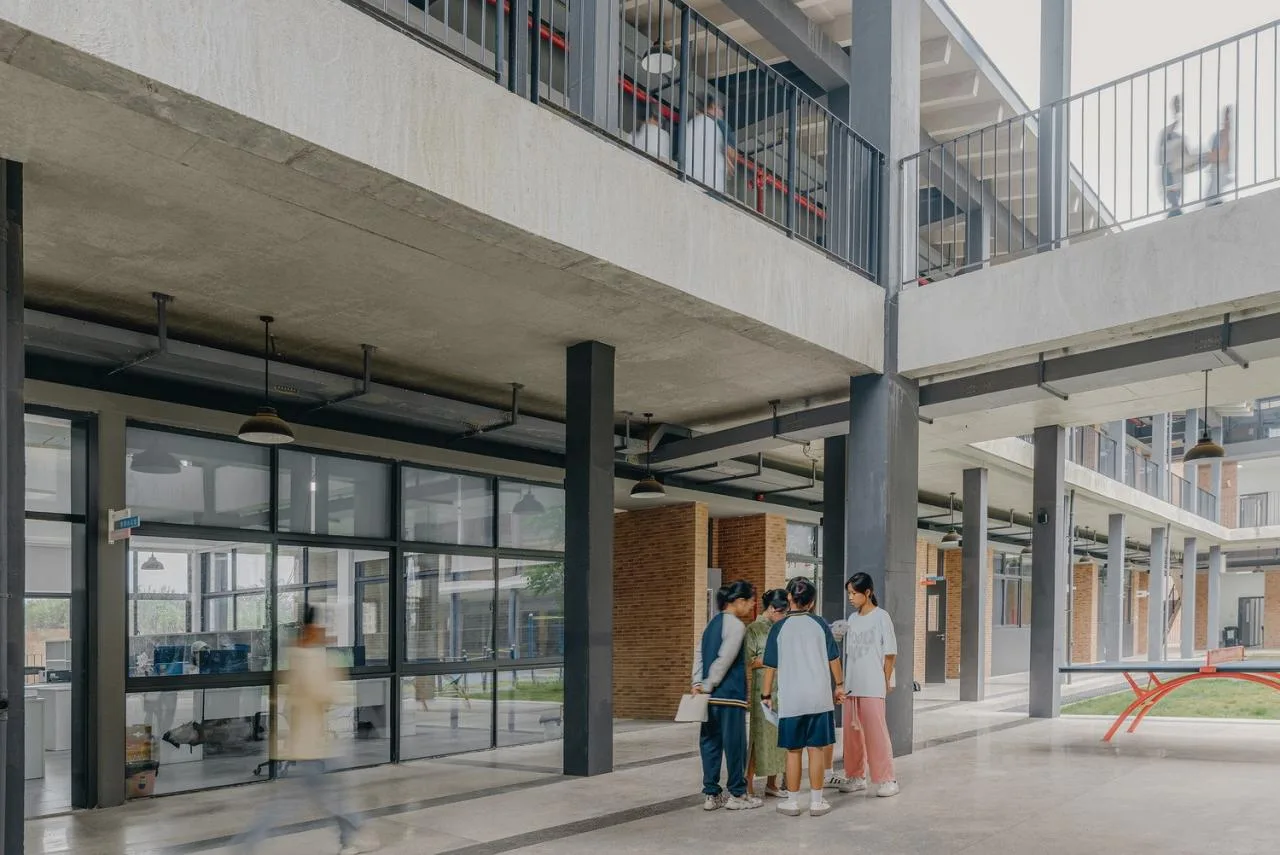
The “back” corridor wraps around functional spaces like classrooms and offices, featuring doorways on both sides. This design lets teachers and students exit from different directions and follow interconnected paths through the building, encouraging spontaneous encounters and easing traffic congestion. It expands traditional circulation areas, fostering more interaction and exchange.
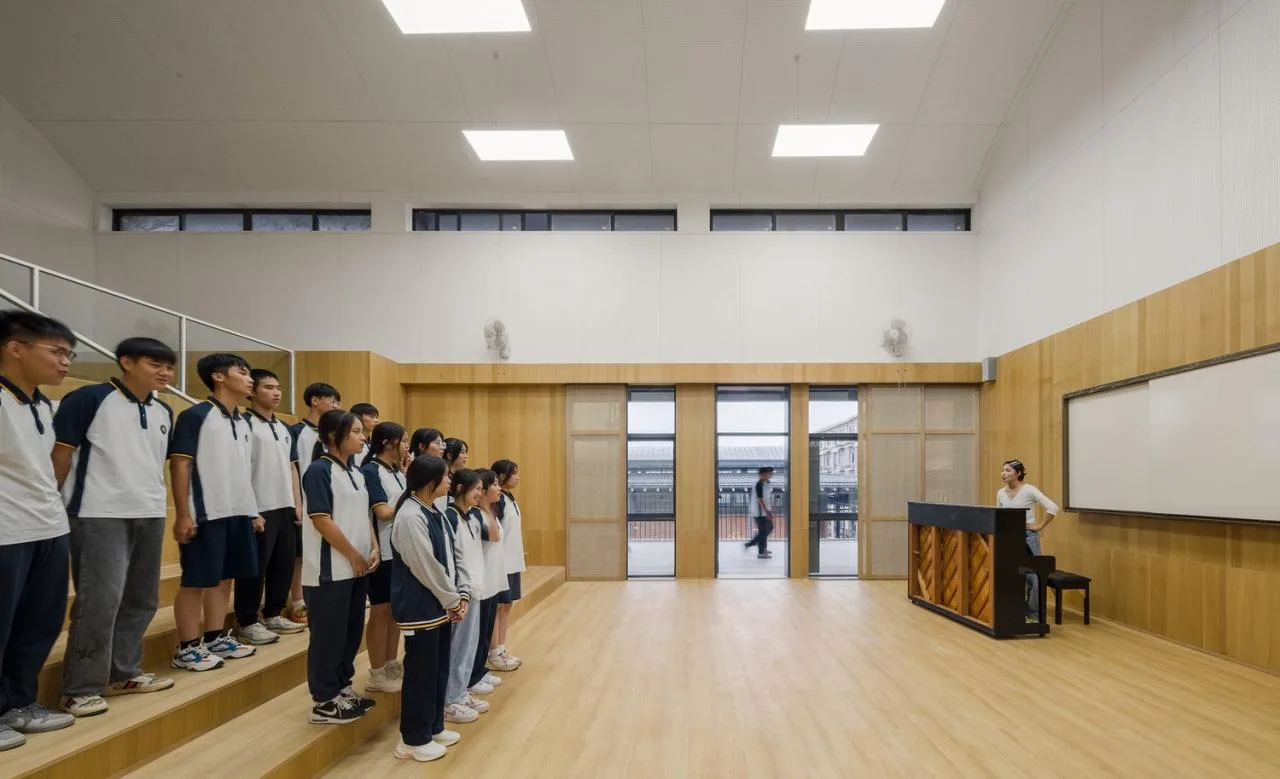
The corridor also extends the teaching space itself. With three or two ping pong tables and seven or eight seats arranged along it, it becomes a place to learn, socialize, and play. Boundaries between spaces begin to blur, enriching the environment’s versatility. Our goal is to extend learning beyond the classroom—into hallways and courtyards—transforming children from passive recipients into active, self-directed learners.
Feeling the Sunshine and Wind: The Classrooms
Our pursuit of nature extends beyond the growth of plants to include sunlight and wind. Classrooms are positioned beneath the roof with two-sided lighting and balconies, creating transparent spaces that encourage visual connection. Children can see teachers outside and catch glimpses of their favorite classmates through large windows. This openness expands spatial boundaries and breaks down barriers, fostering a sense of community.
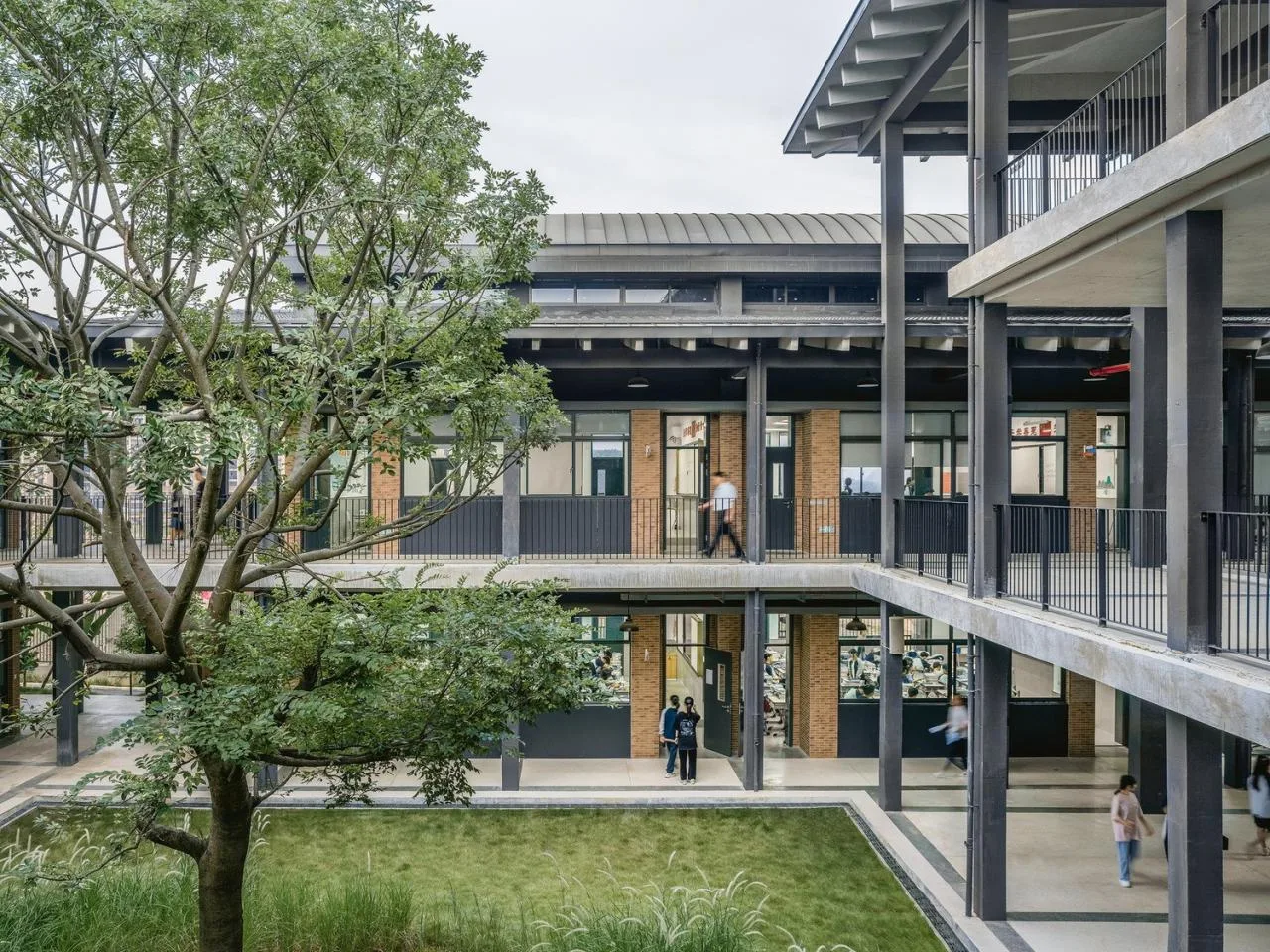
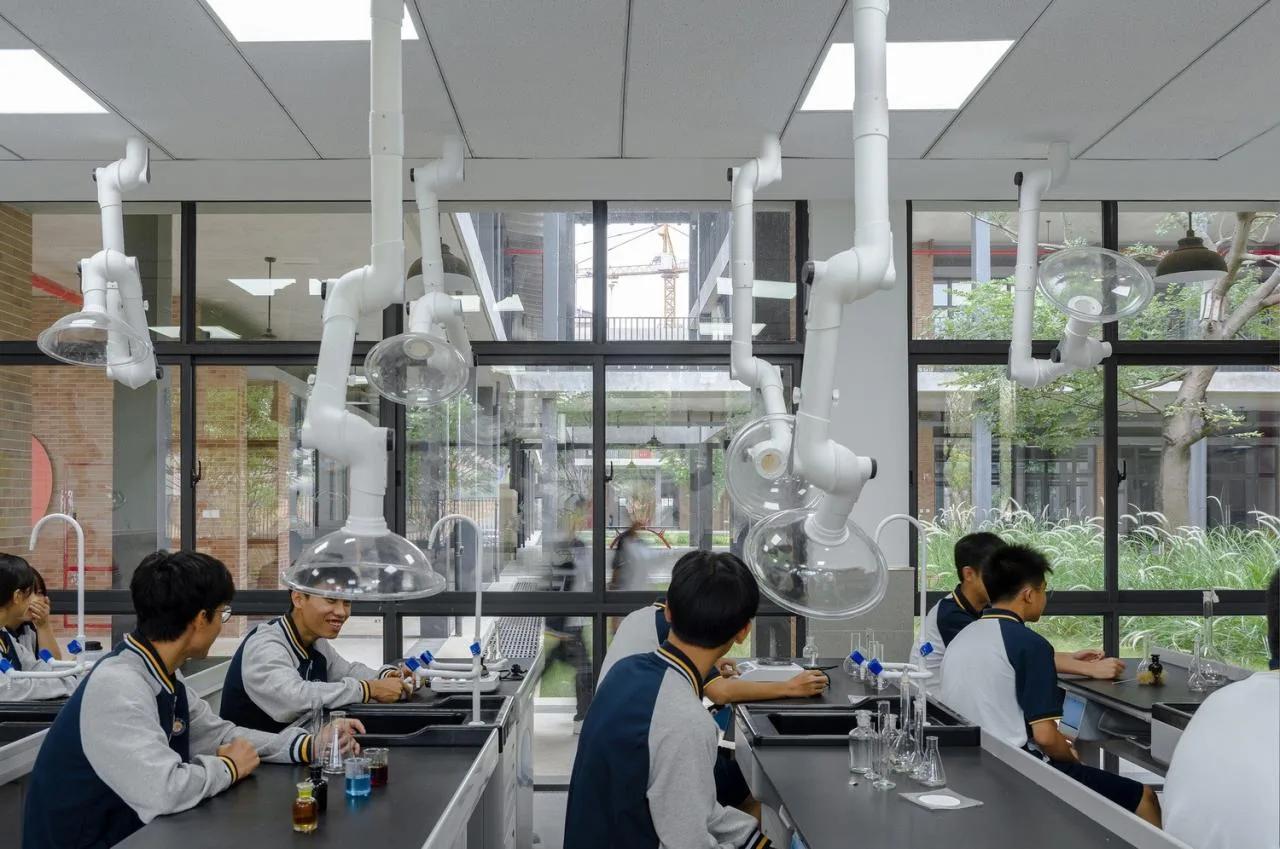
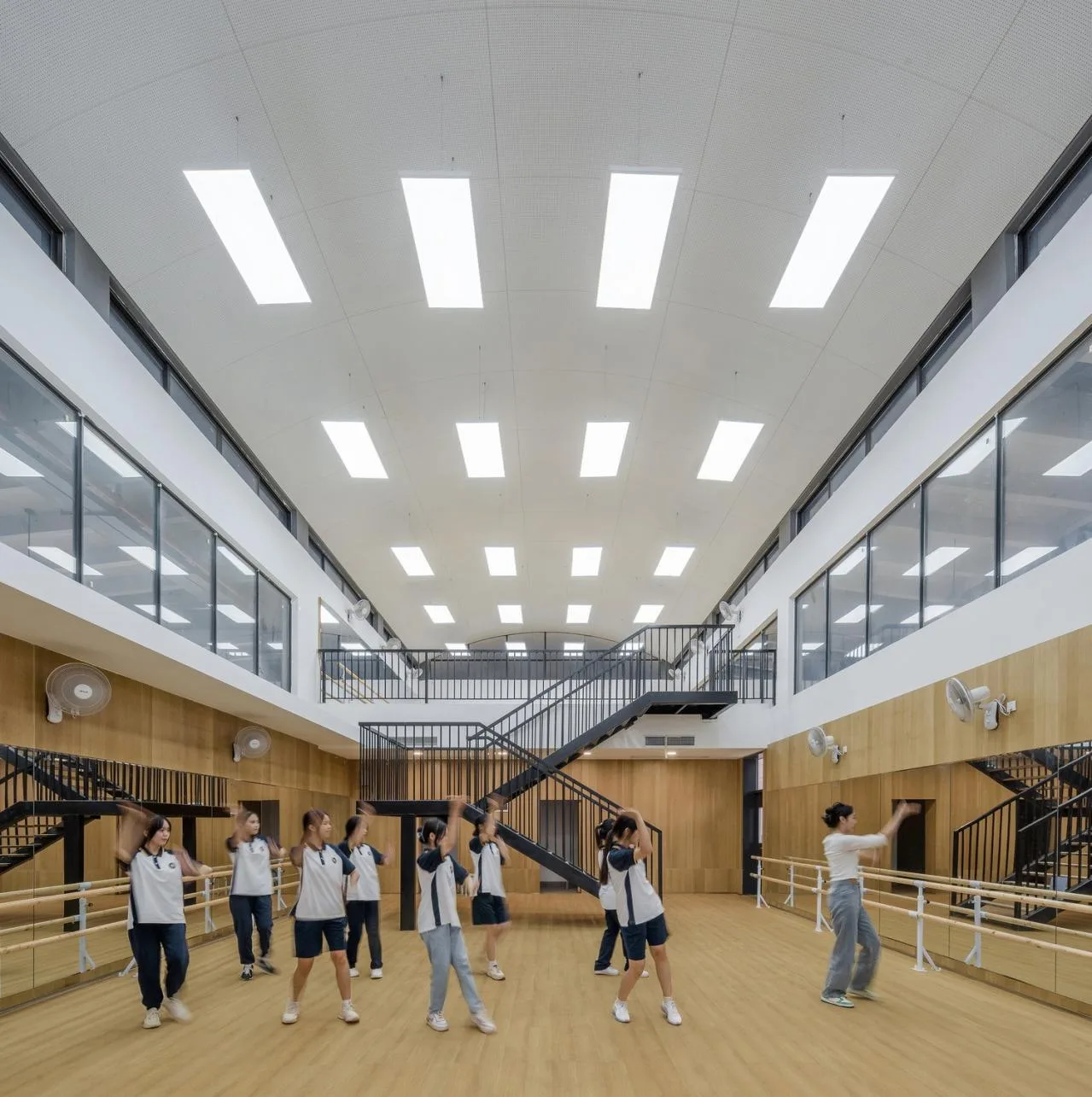
Above the sloping roof sits a suspended arch. Windows between the dome and roof create a chimney effect, facilitating hot air ventilation and allowing natural airflow without relying on air conditioning. Inside the dome, a mezzanine serves as a cozy book corner, extending the boundaries between teaching and relaxation.
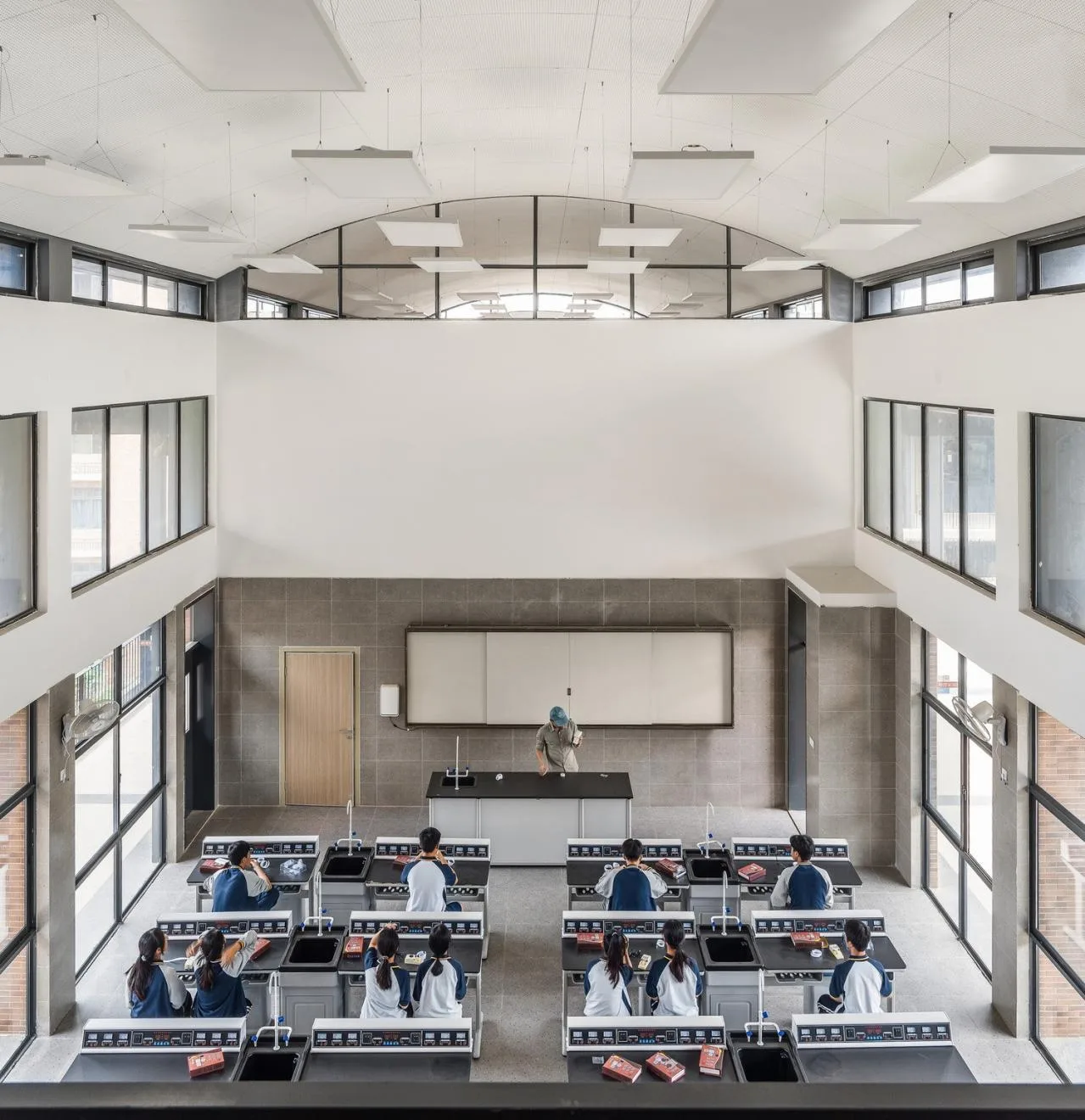
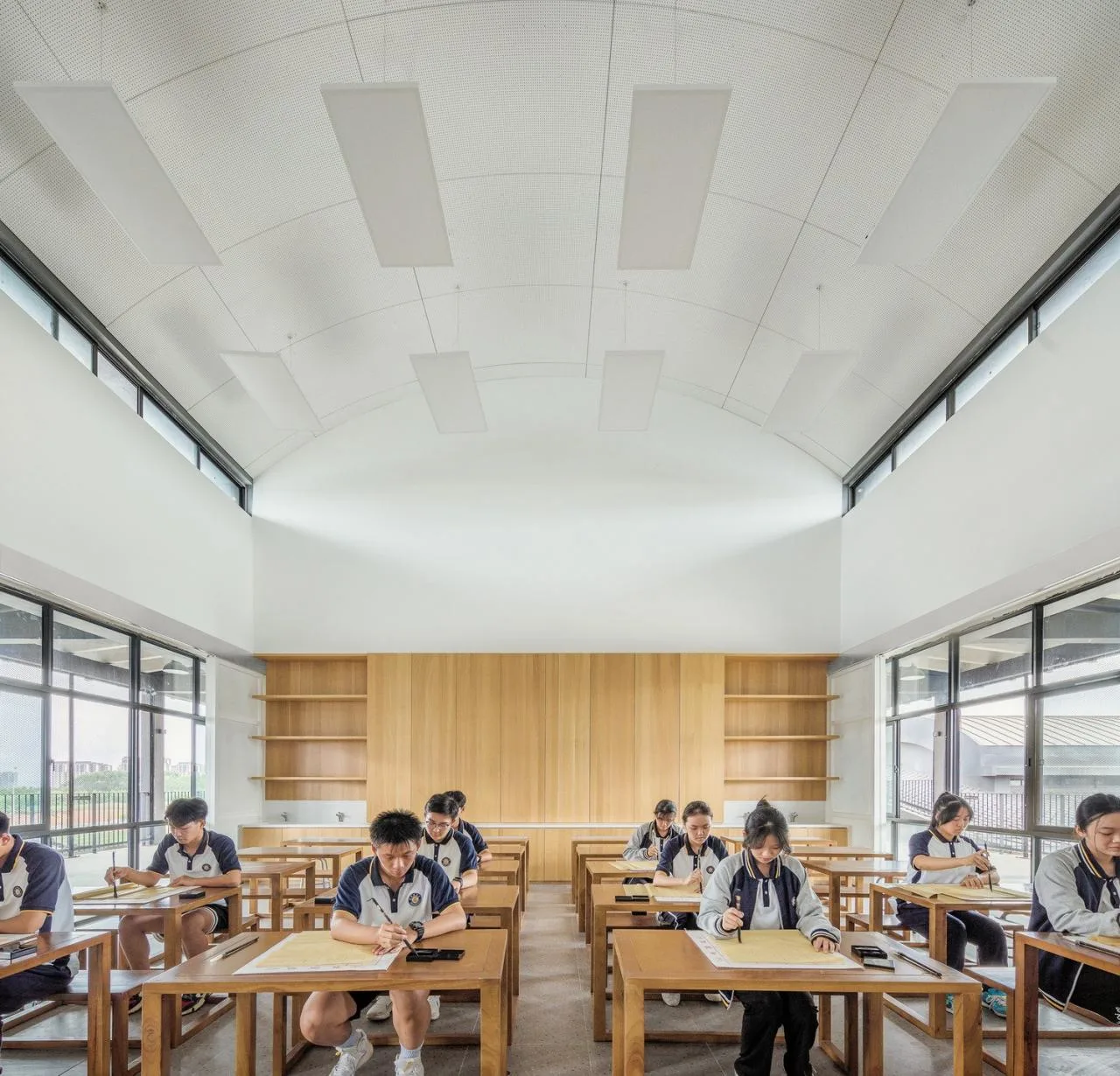
While some buildings impress with grandeur, others touch with gentle warmth. We hope this “giant tree” of a building will become a peaceful, rich, and independent forest. It is more than a school—it is a public environment and platform for education. Here, teachers and children shape education’s public nature together, discovering themselves, their talents, and their abilities under its light.
In the blink of an eye, my child graduated from elementary school this year. He wrote a paragraph for each close friend on his graduation letter, and one in particular resonated with me. It felt as if we had grown together, sharing a mutual educational belief—like moonlight illuminating our path through darkness.
Project Drawings
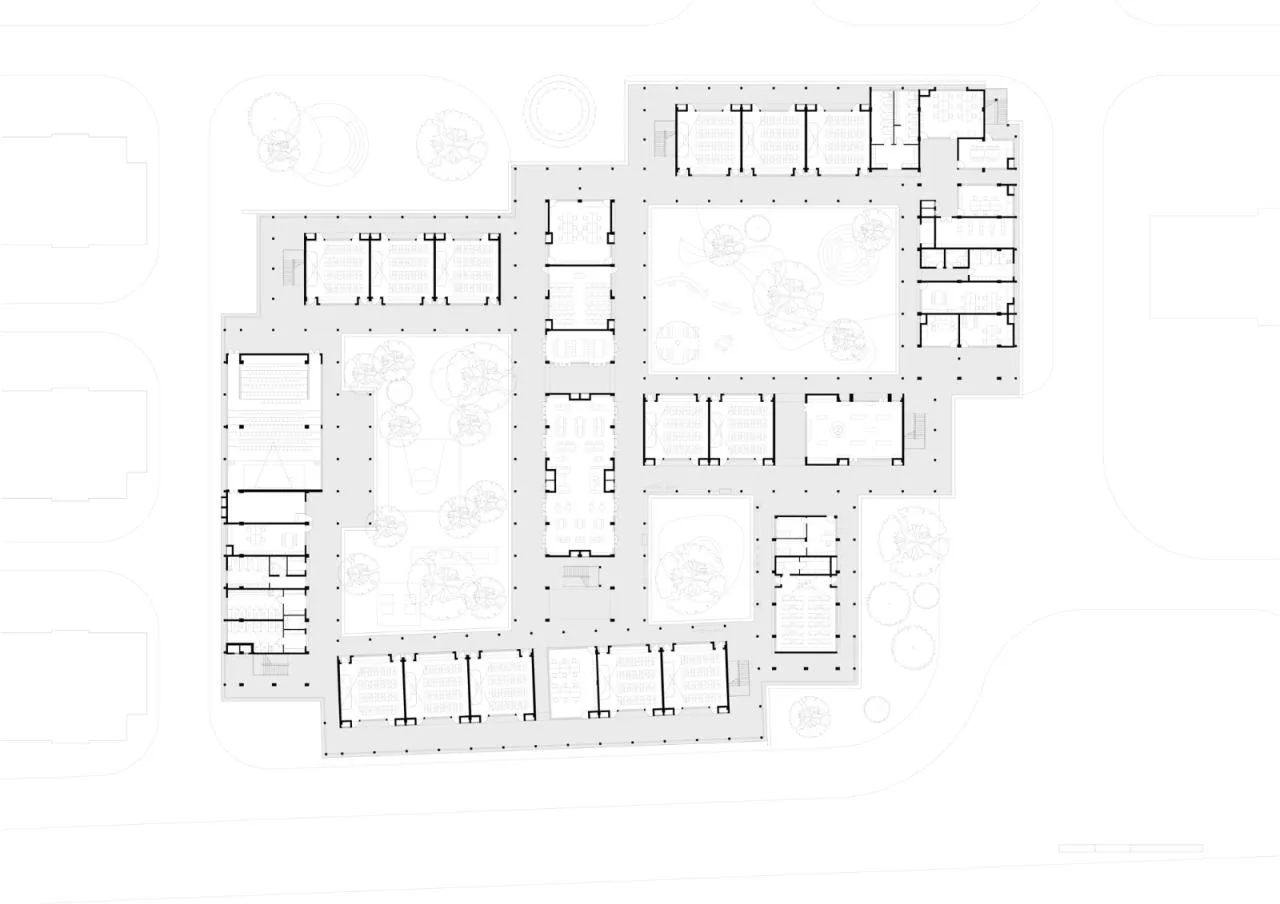
△ First Floor Plan
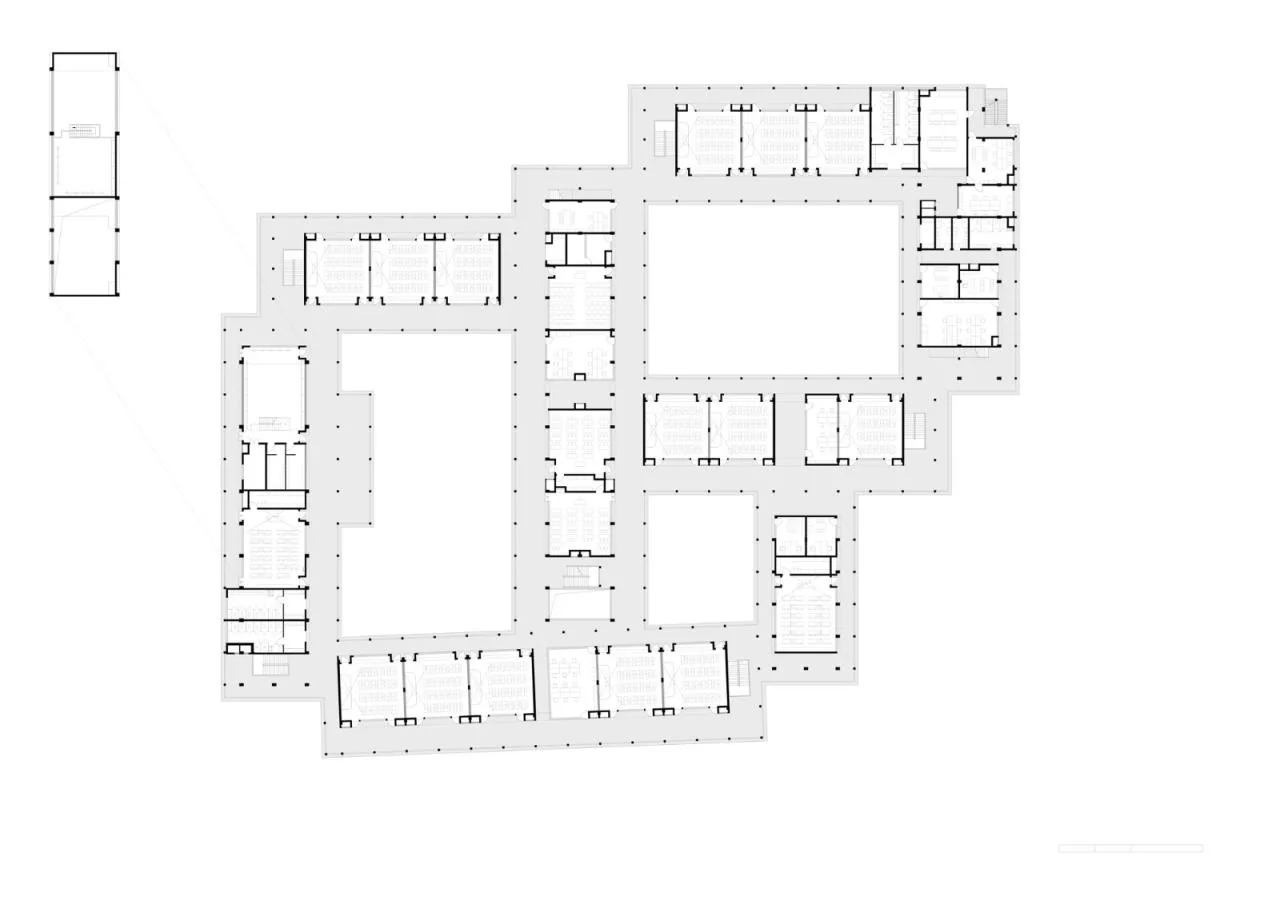
△ Second Floor Plan
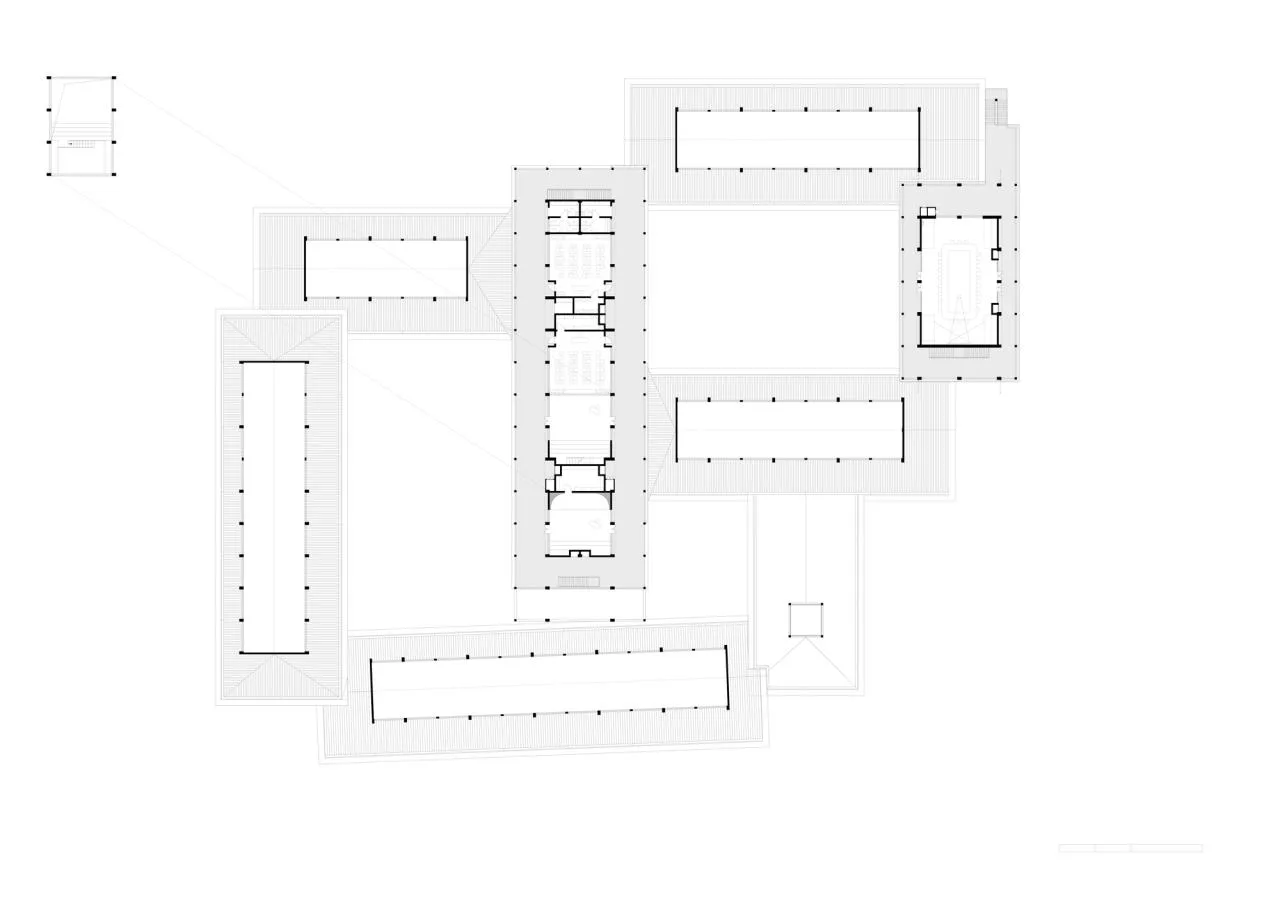
△ Third Floor Plan
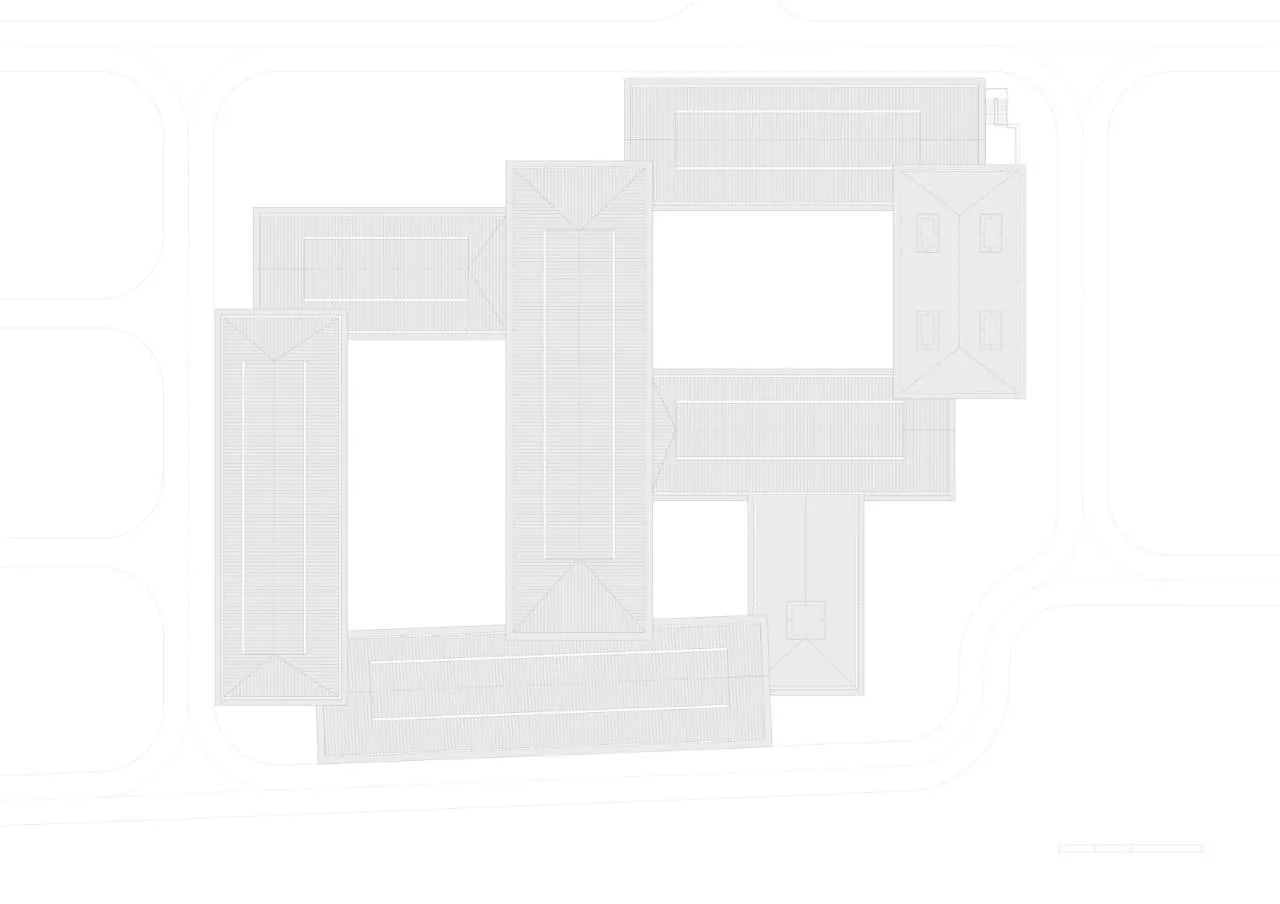
△ Roof Plan
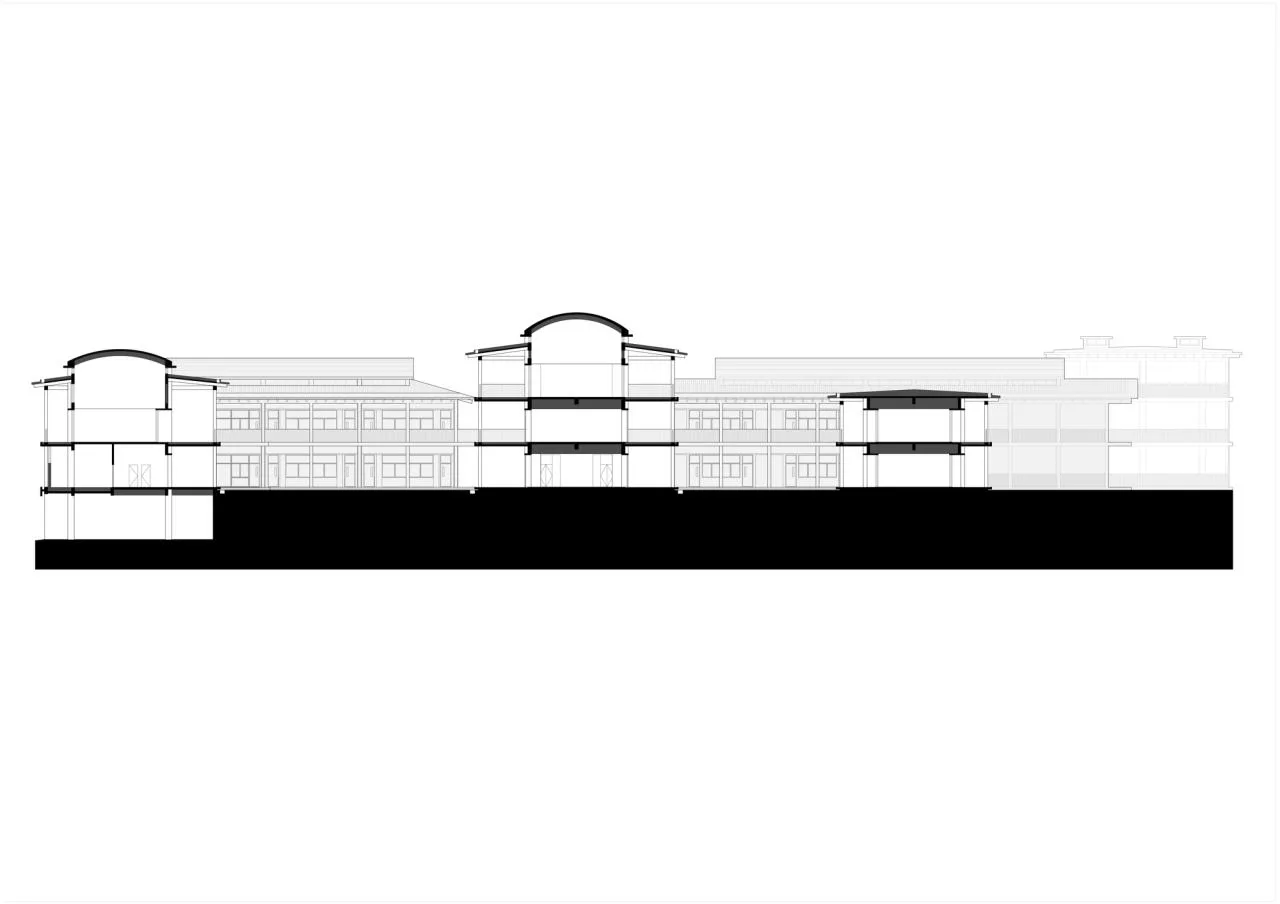
△ Section Diagram
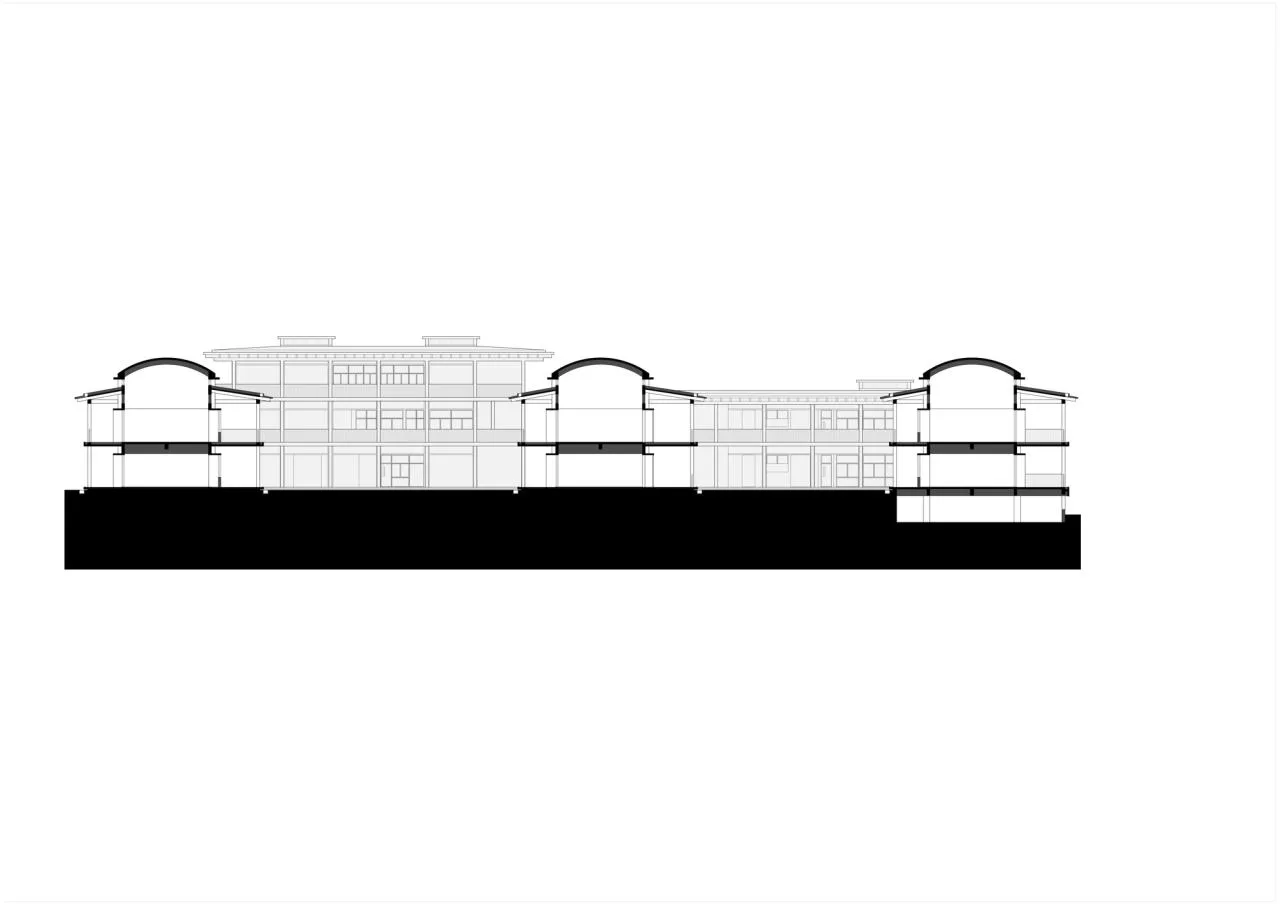
△ Section Diagram
Project Information
Architect: Large scale Building
Area: 12,000 m²
Project Year: 2022
Photographer: Zhu Yumeng
Architectural, Interior, Landscape Planning, and Preliminary Design: Large scale Architecture (Liu Yang, Hu Muhuai, Sun Xinye, Duan Qi, Ding Yuewen, Fang Zhengxin)
Plant Design: Jian Sijian
Construction Drawing Design: China IoT Planning and Design Institute
Logo Design: SURE Design
Function: School
Timeline: 2019–2022
Owner: Lezhi Xinxuedao Senior High School, Chongzuo City
Location: Nanning, Guangxi















Must log in before commenting!
Sign Up