
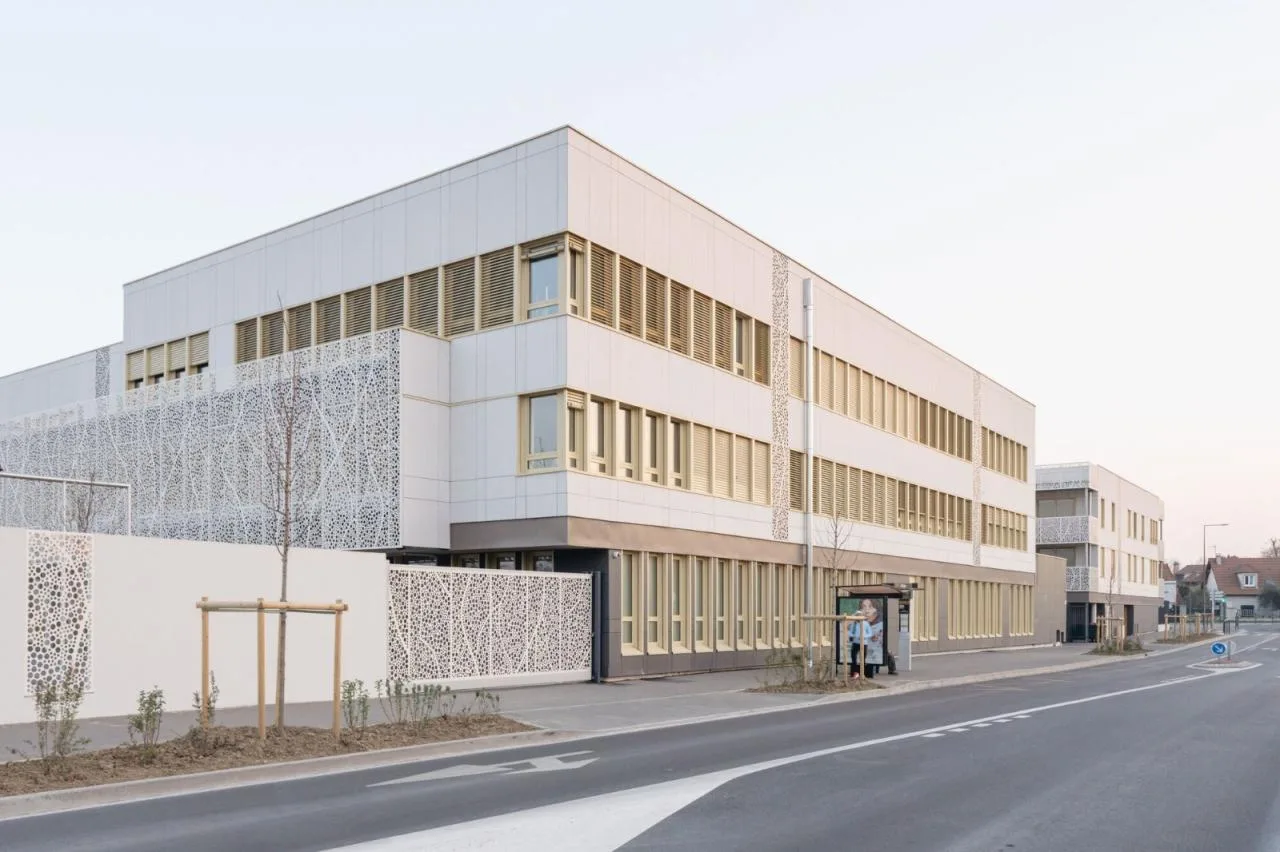
Located at the corner of Guy-Môquet Avenue and Rue du Colonel Fabien, this project features three distinct buildings, each serving a unique function and capable of operating independently. The main entrance to the education building and gymnasium is situated on Mail Yvonne Hagnauer, a pedestrian zone recently established by the Valenton City Government between Rue du 8-Mai-1945 and Rue du Colonel Fabien. This car-free area offers a safe and tranquil environment for students and their families.
On the northern edge of the site, six employee dormitories (T5 apartments with double or triple rooms) are integrated with the adjacent residential structures. Facing Guy-Môquet Avenue, these residences provide a relaxing retreat away from the professional environment.
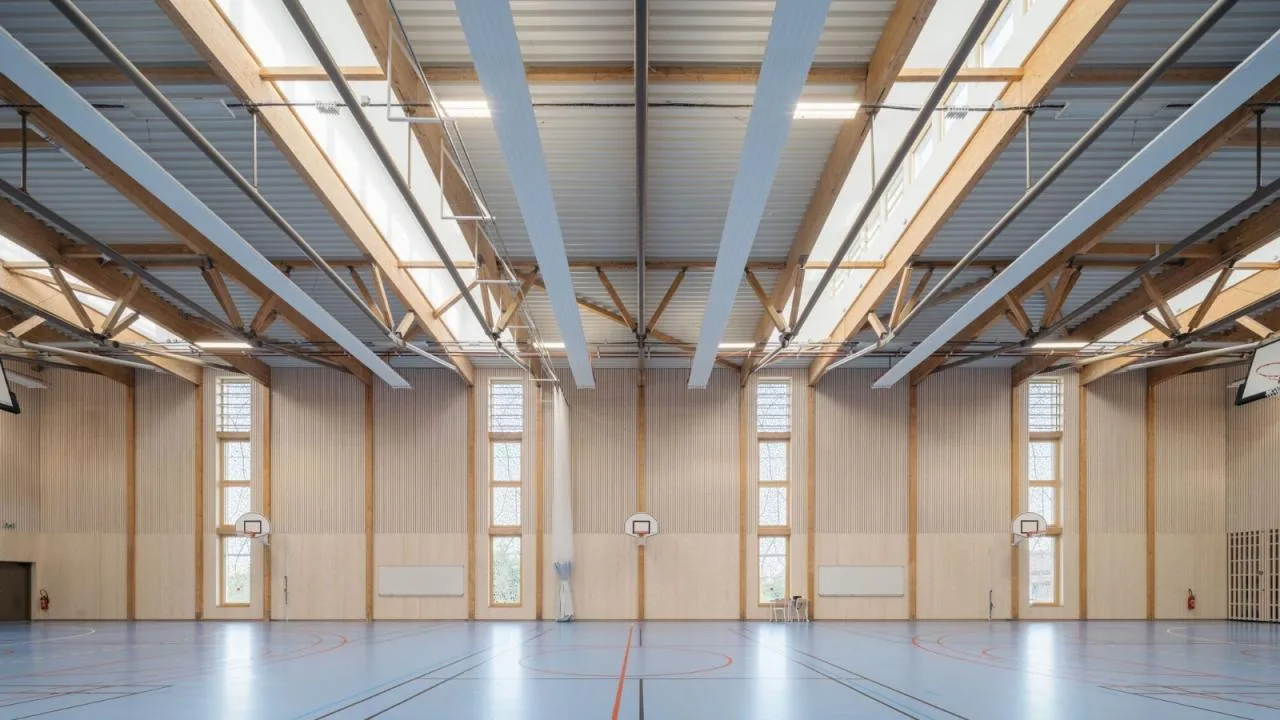
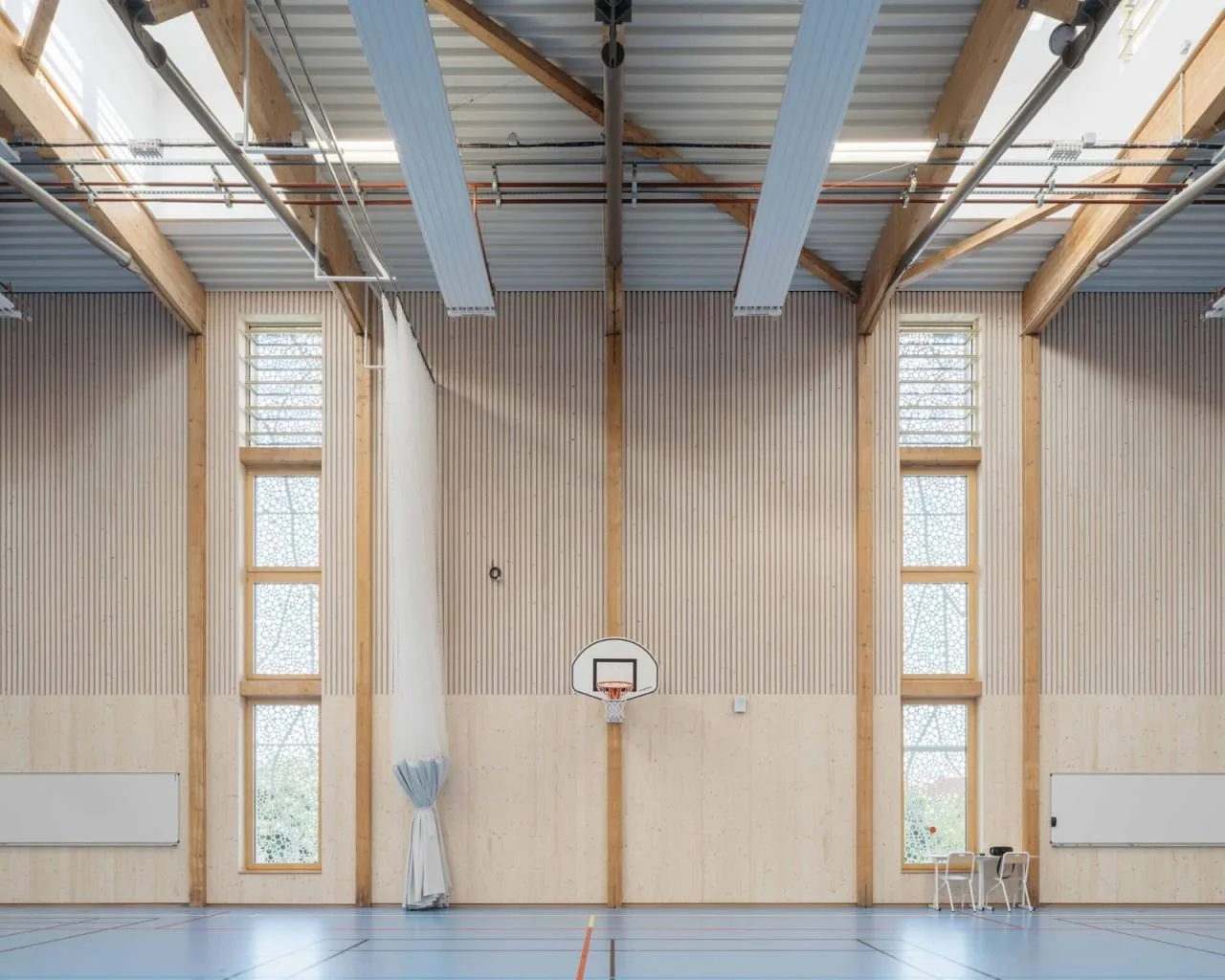
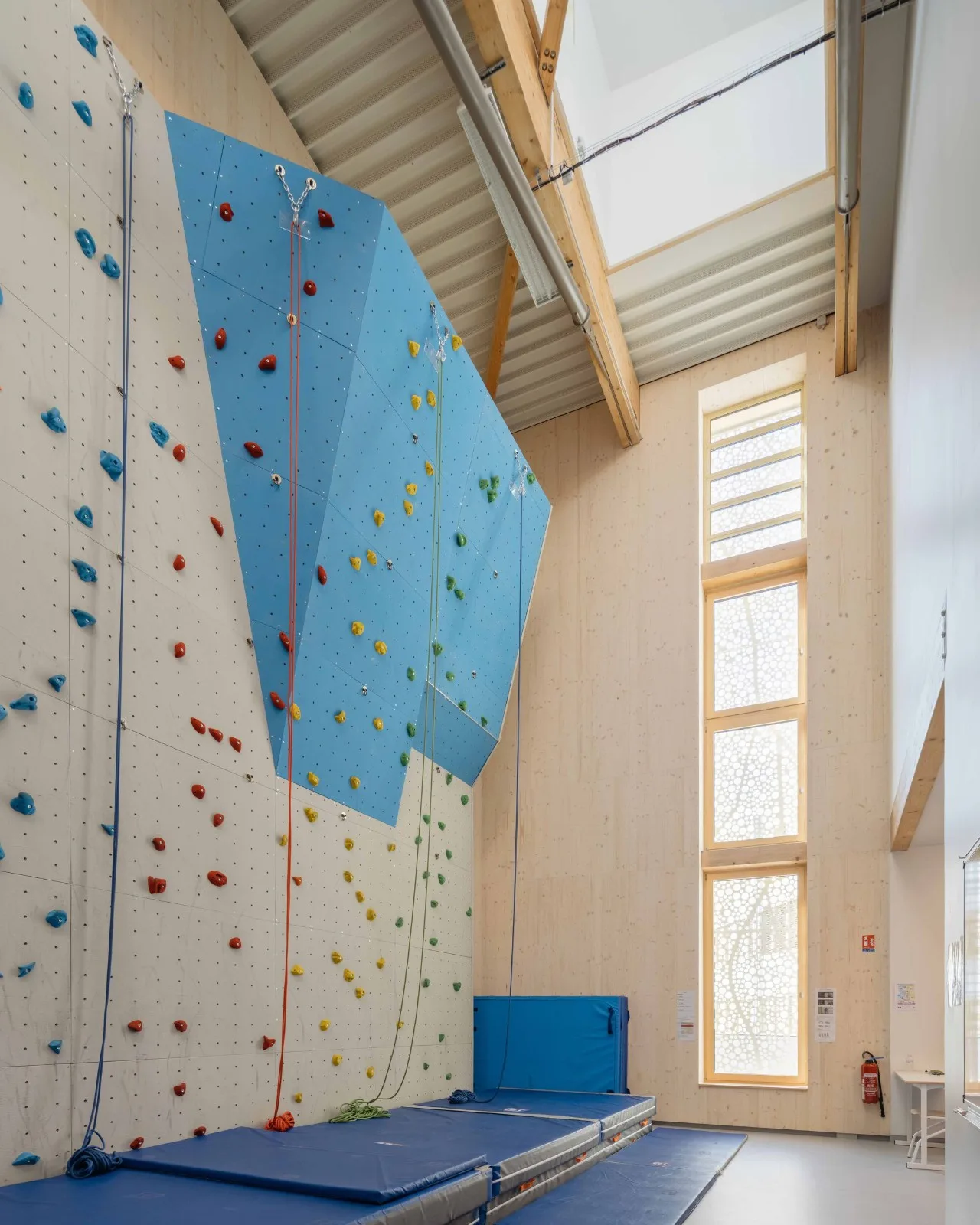
The gymnasium includes a versatile sports field accommodating team sports such as handball and basketball, a dance studio, and a climbing wall reaching 14 meters in height. It supports various modes of operation depending on the date, time, and user needs. Outside of school hours, it is available for community groups and sports clubs.
The first floor provides direct access from the campus, featuring a multifunctional hall, changing rooms, and restrooms. This level is dedicated to sports activities and is constructed with a wooden frame supported by lower crossbeams. The northwest facade incorporates a tall opening, complemented by five rectangular skylights facing northeast, allowing abundant natural light inside.
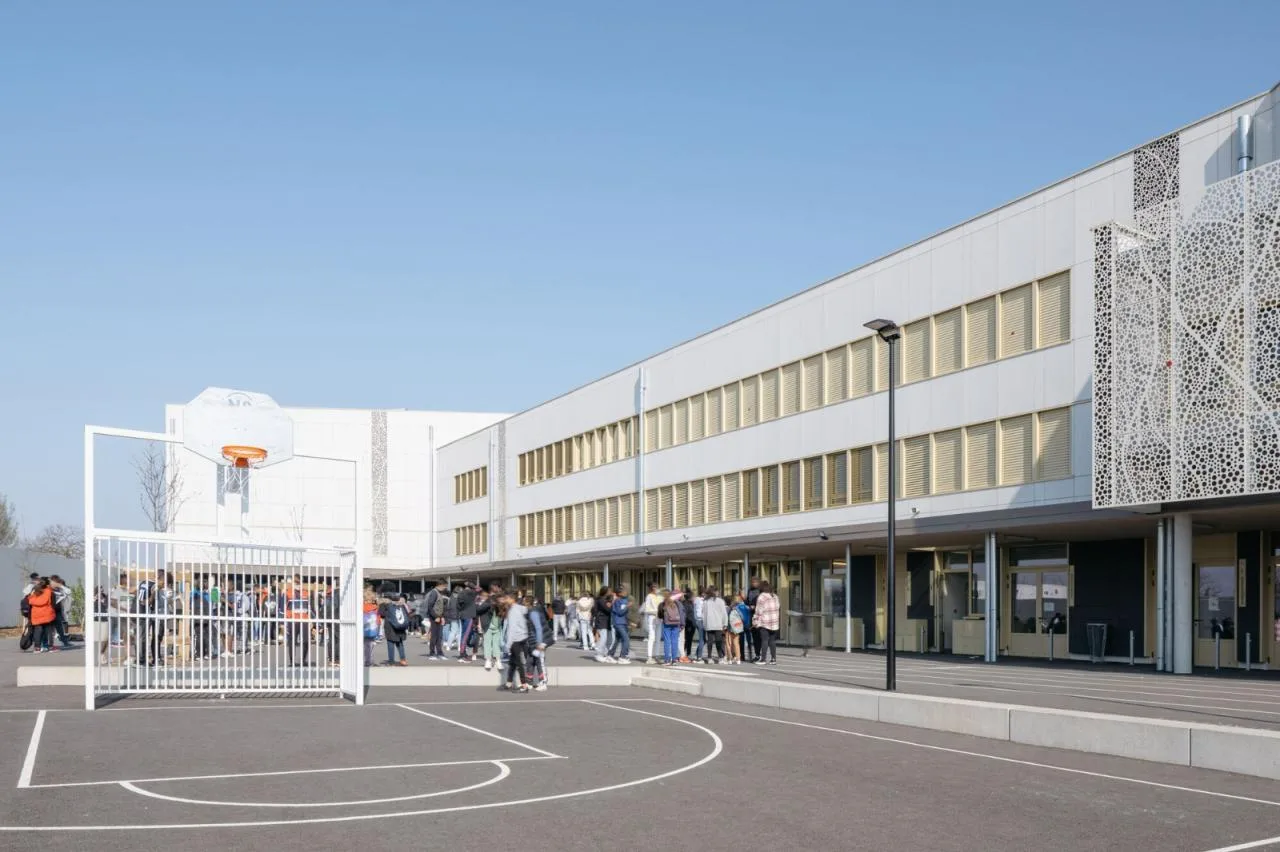
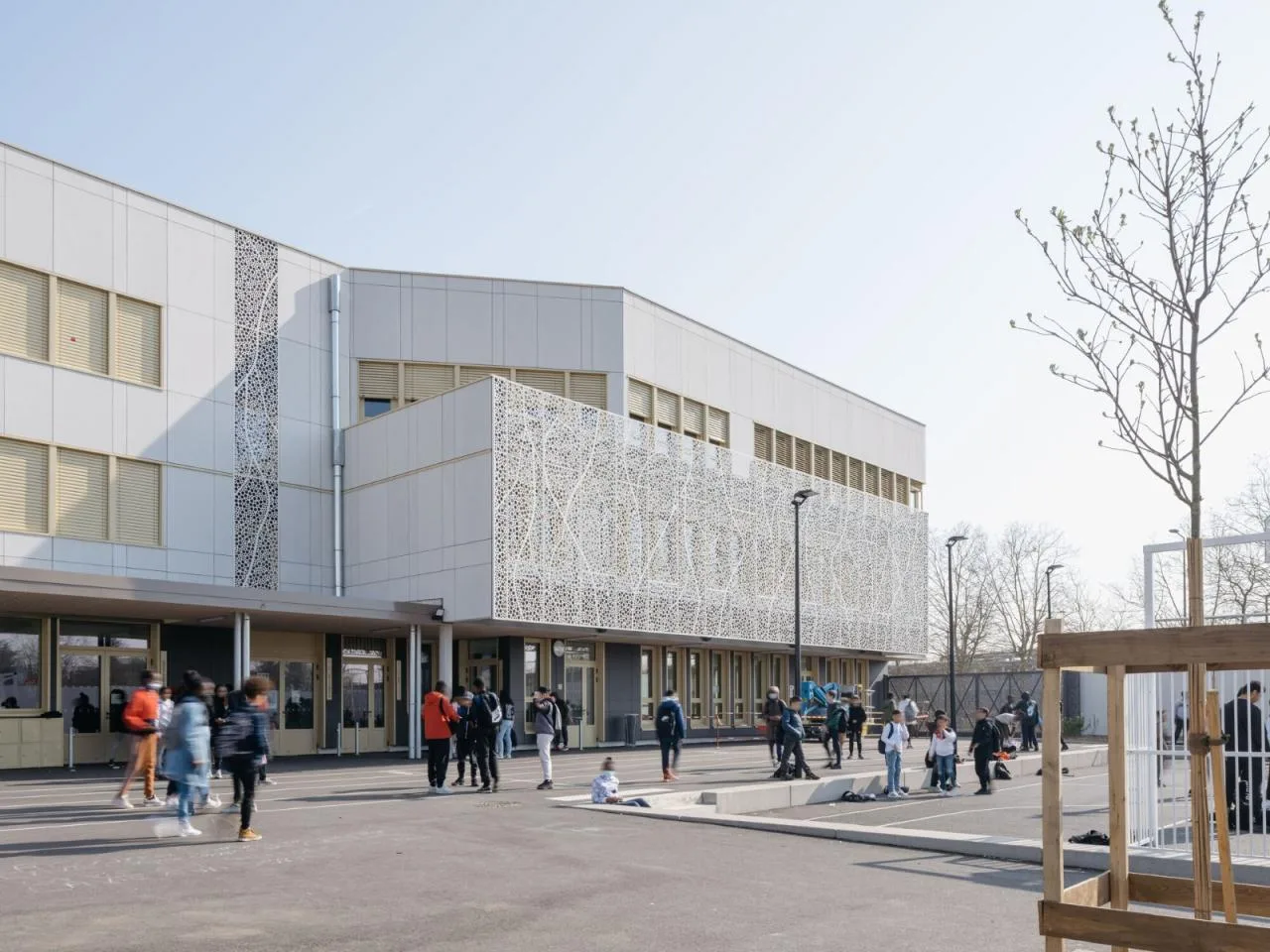
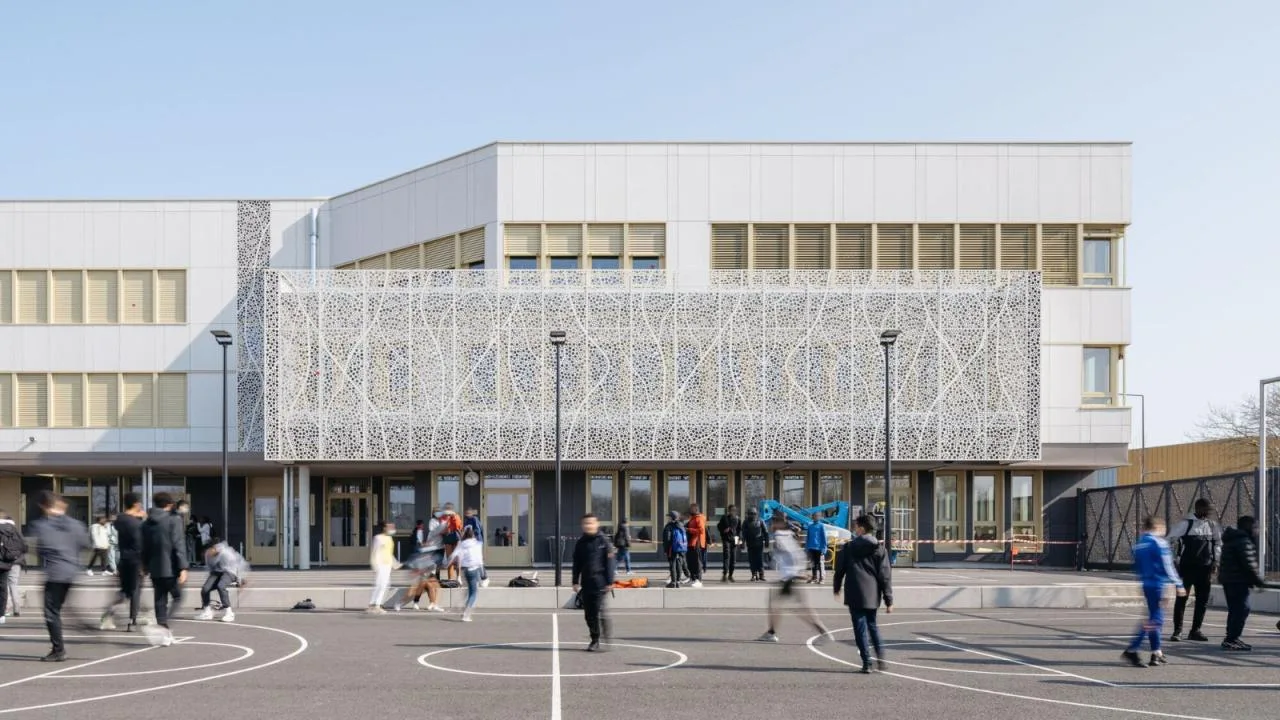
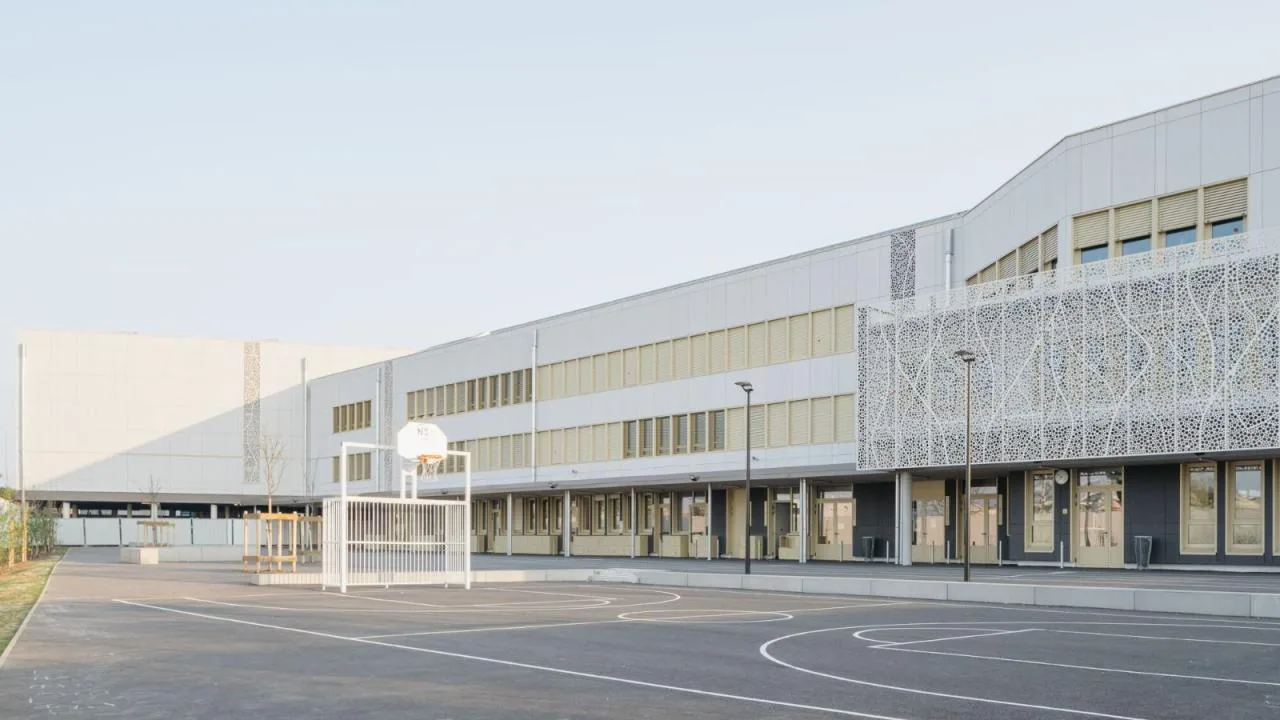
Middle school students have a bicycle and motorcycle parking area covered by a canopy near the entrance gate. They access classrooms from the playground—per project specifications—via a covered walkway beneath the teaching building. The building’s southern orientation maximizes solar gain during winter, while electric adjustable shutters protect classrooms from excessive heat in summer. The playground is mostly shaded by vegetation. Inside, the predominant colors are white, wood, and exposed concrete.
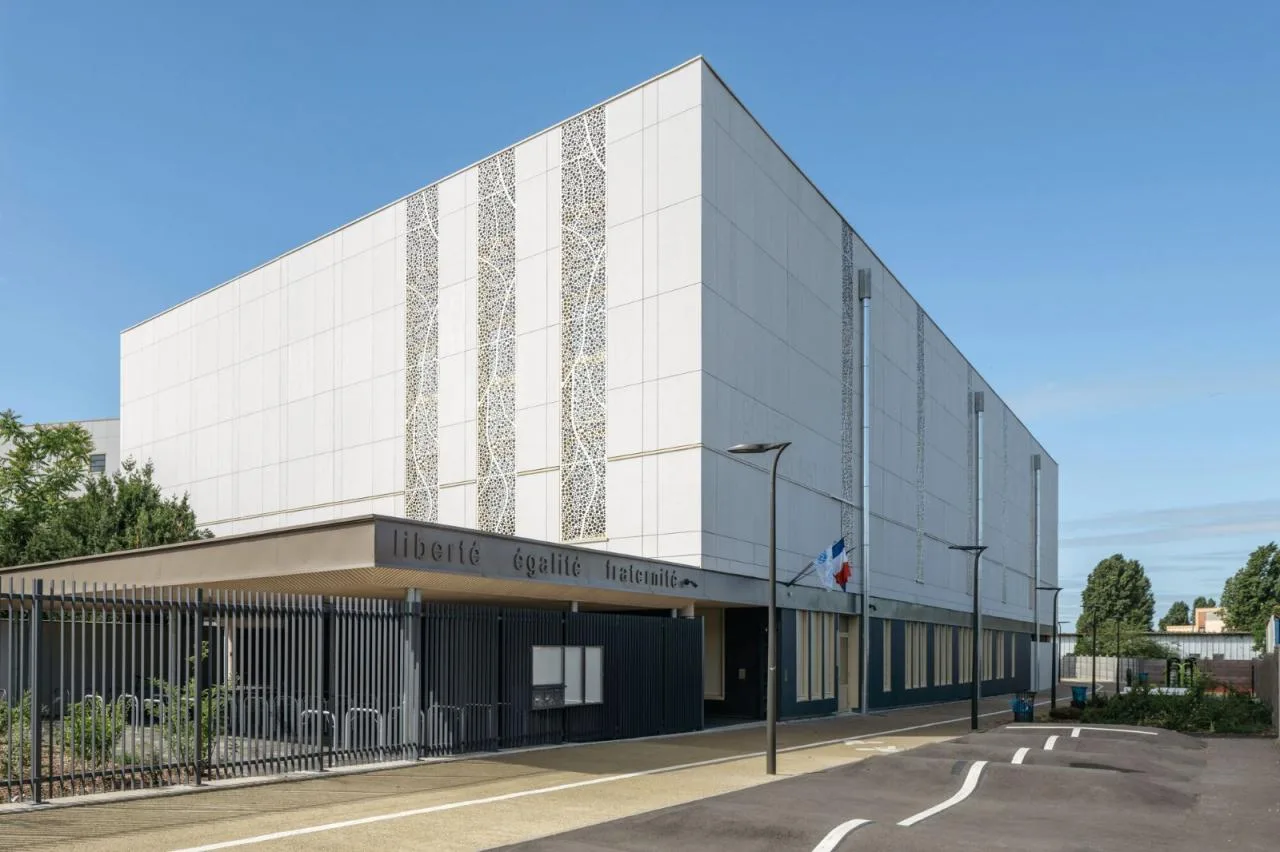
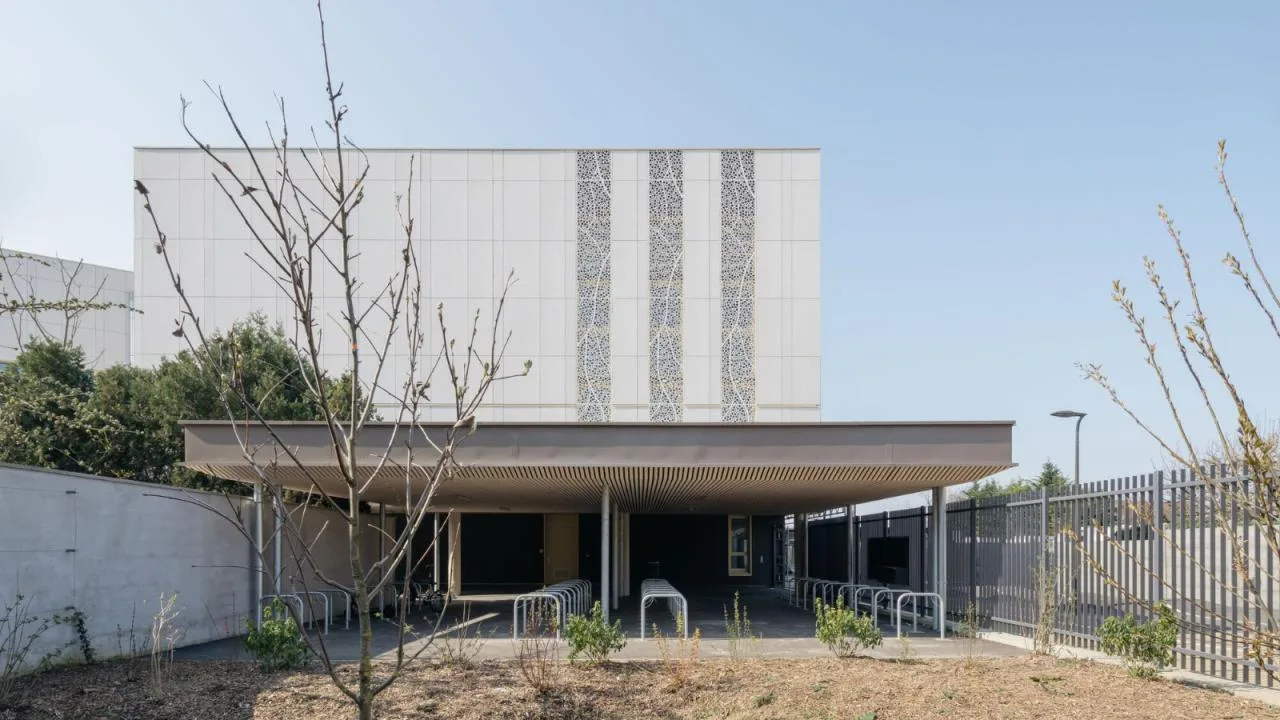
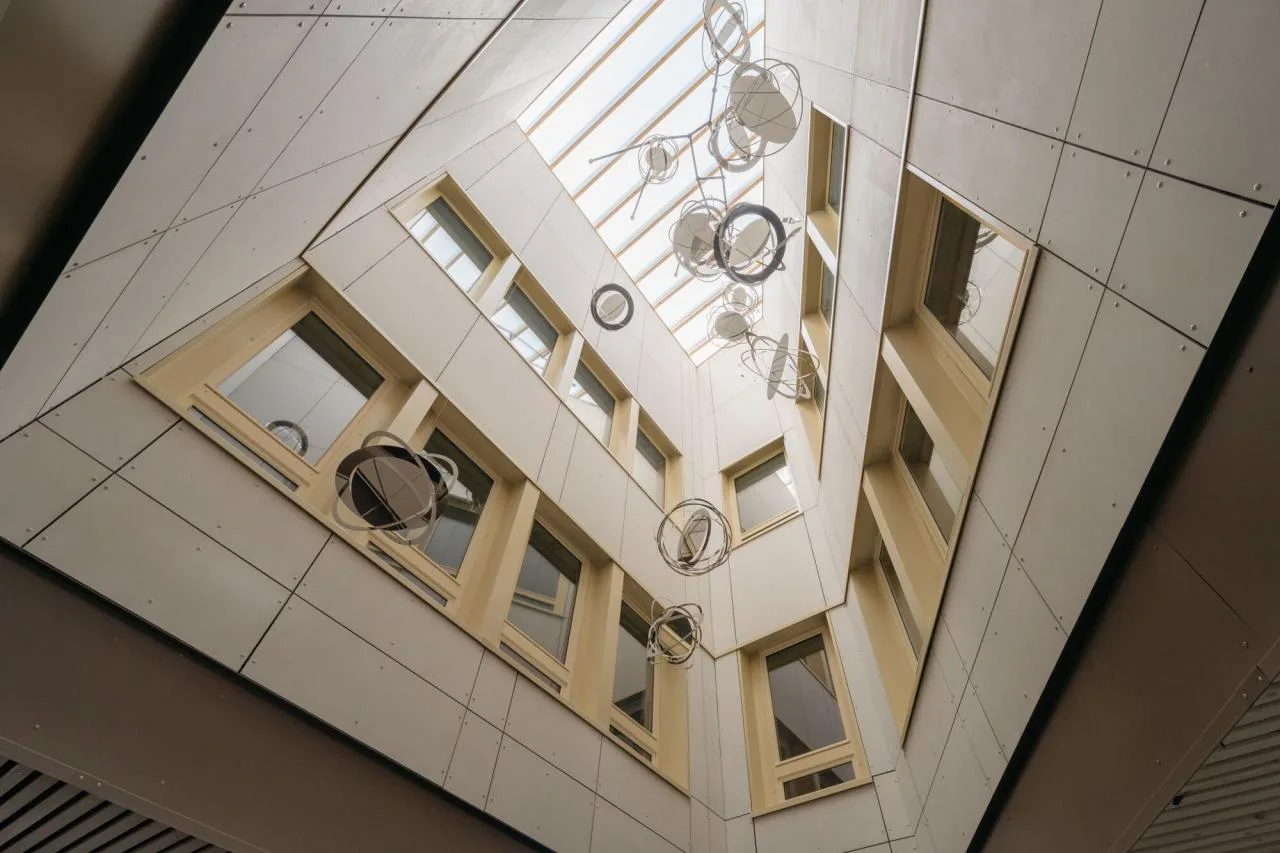
The elegant color palette enhances the bright interior spaces. Ample natural light is achieved through continuous triple glazing set within wood-aluminum hybrid frames. Over a hundred light pipes—made of stainless steel tubes, bent or straight—bring daylight to the rear of the central corridor and practical workspaces used for art and science education.
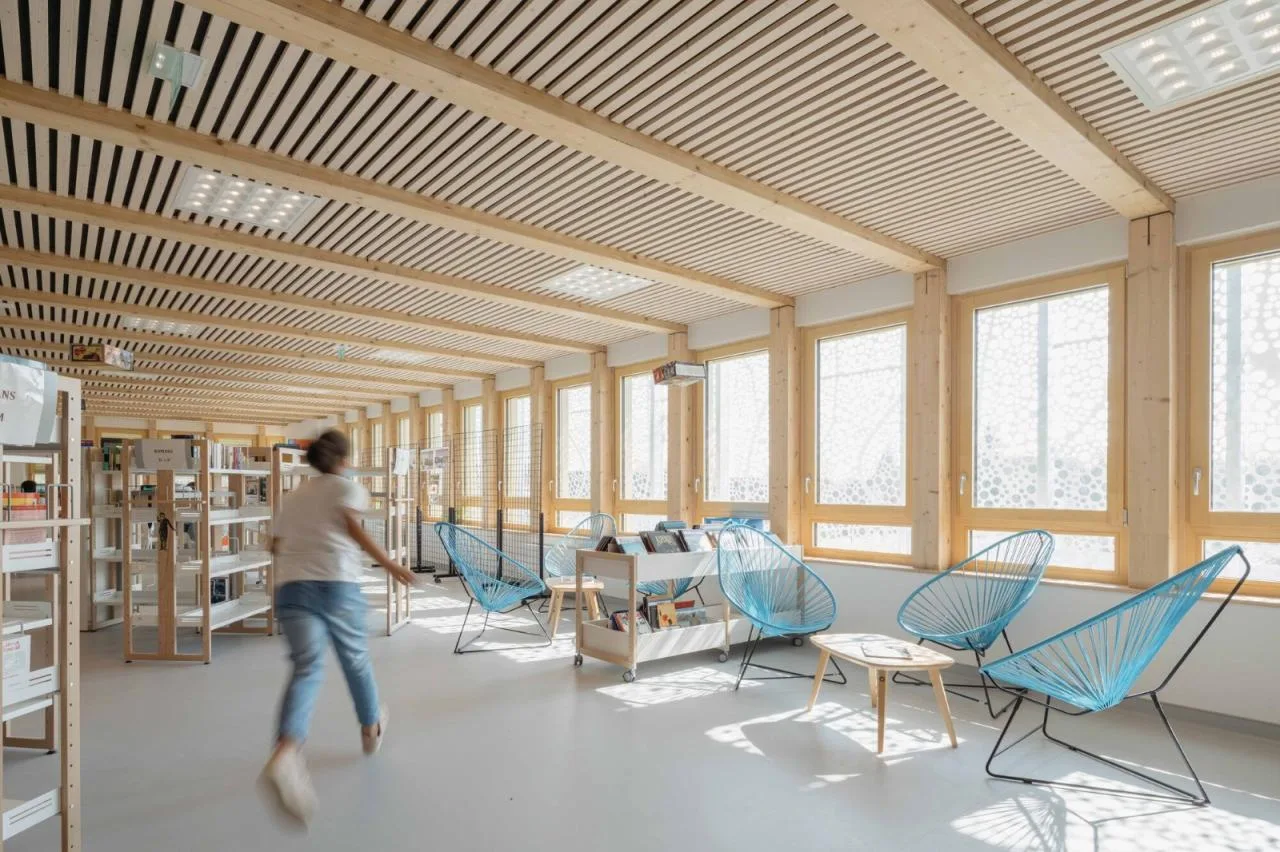
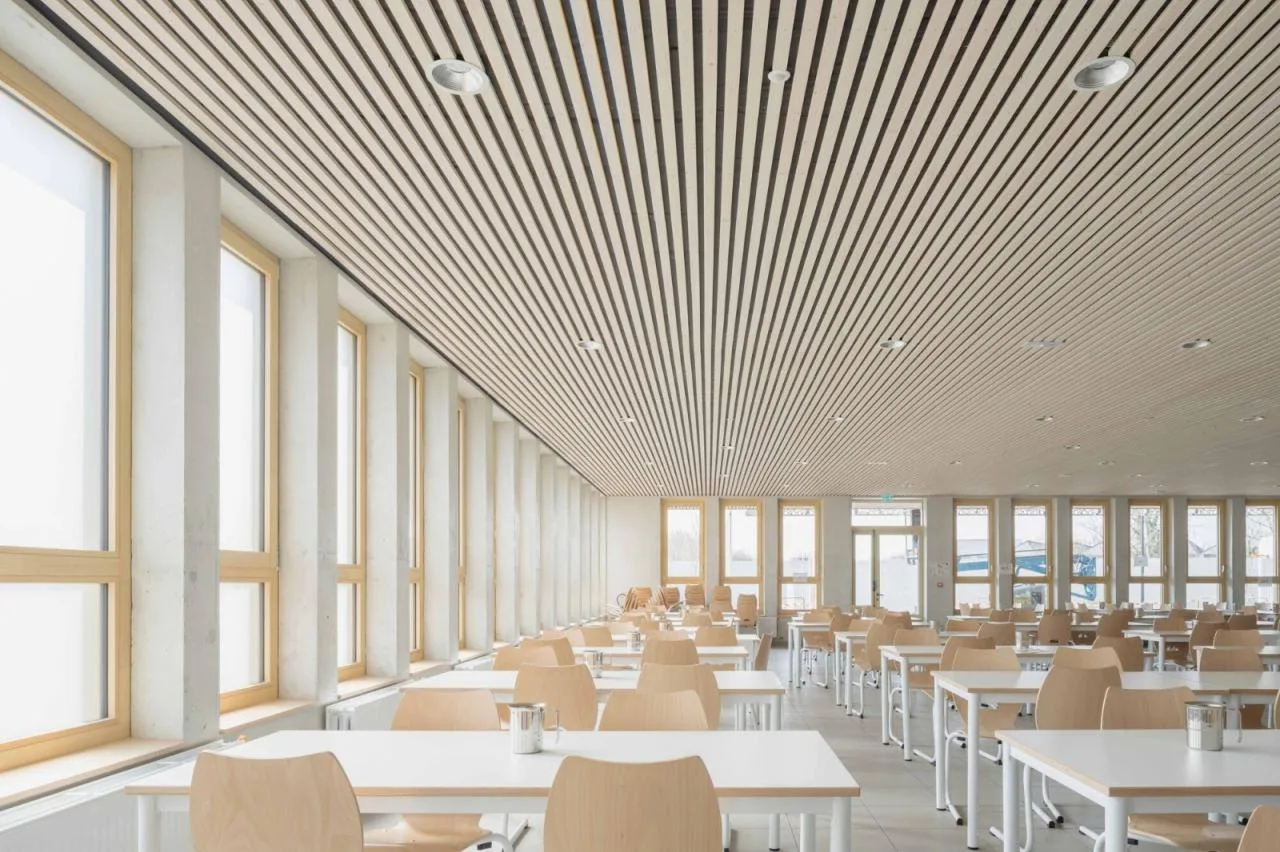
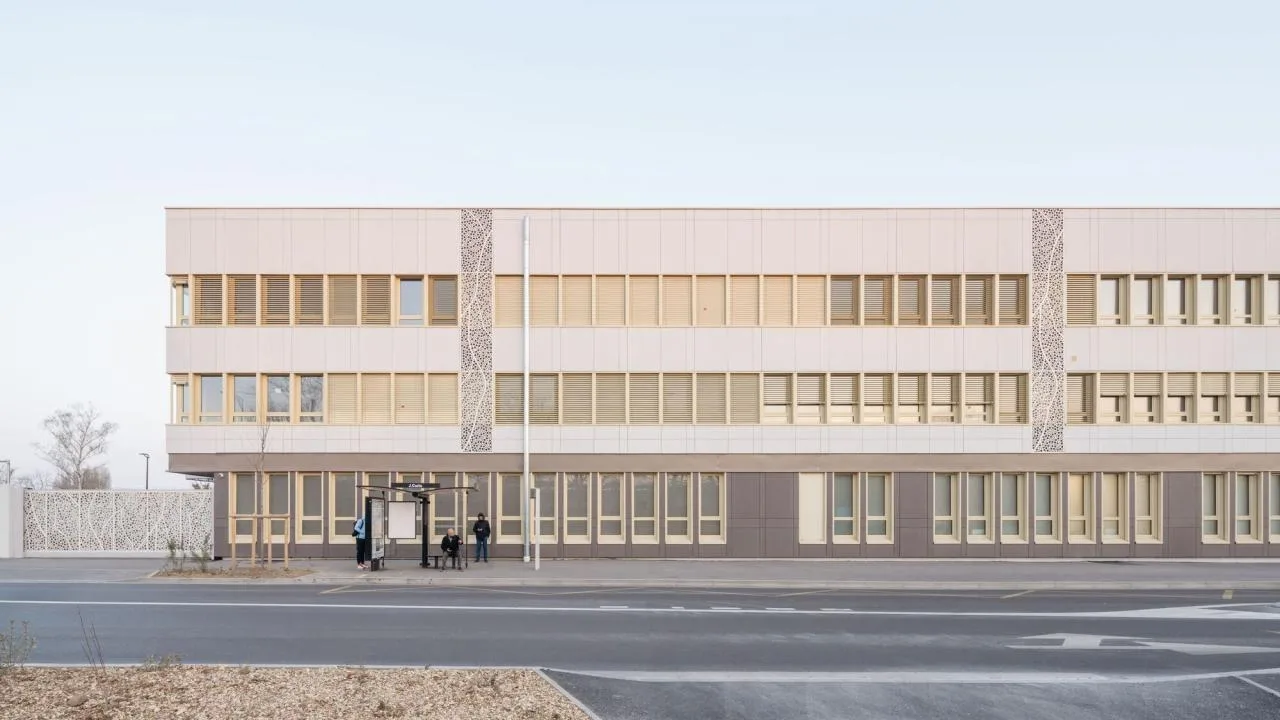
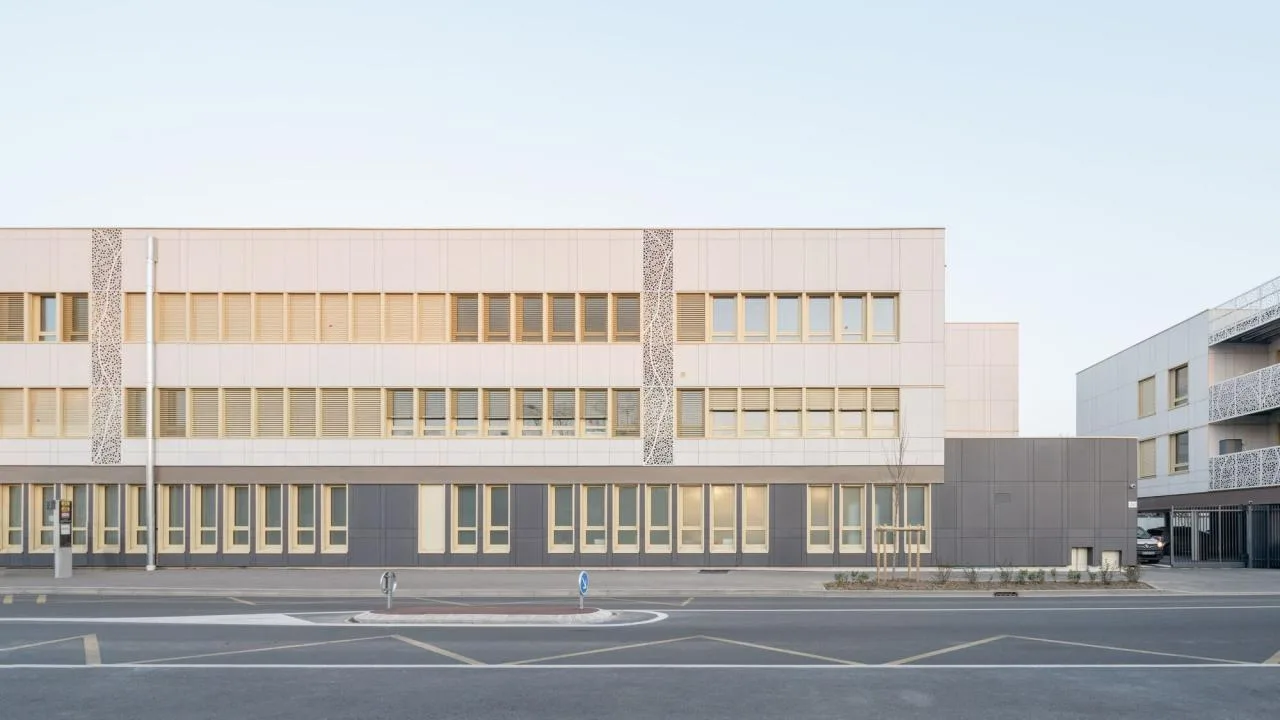
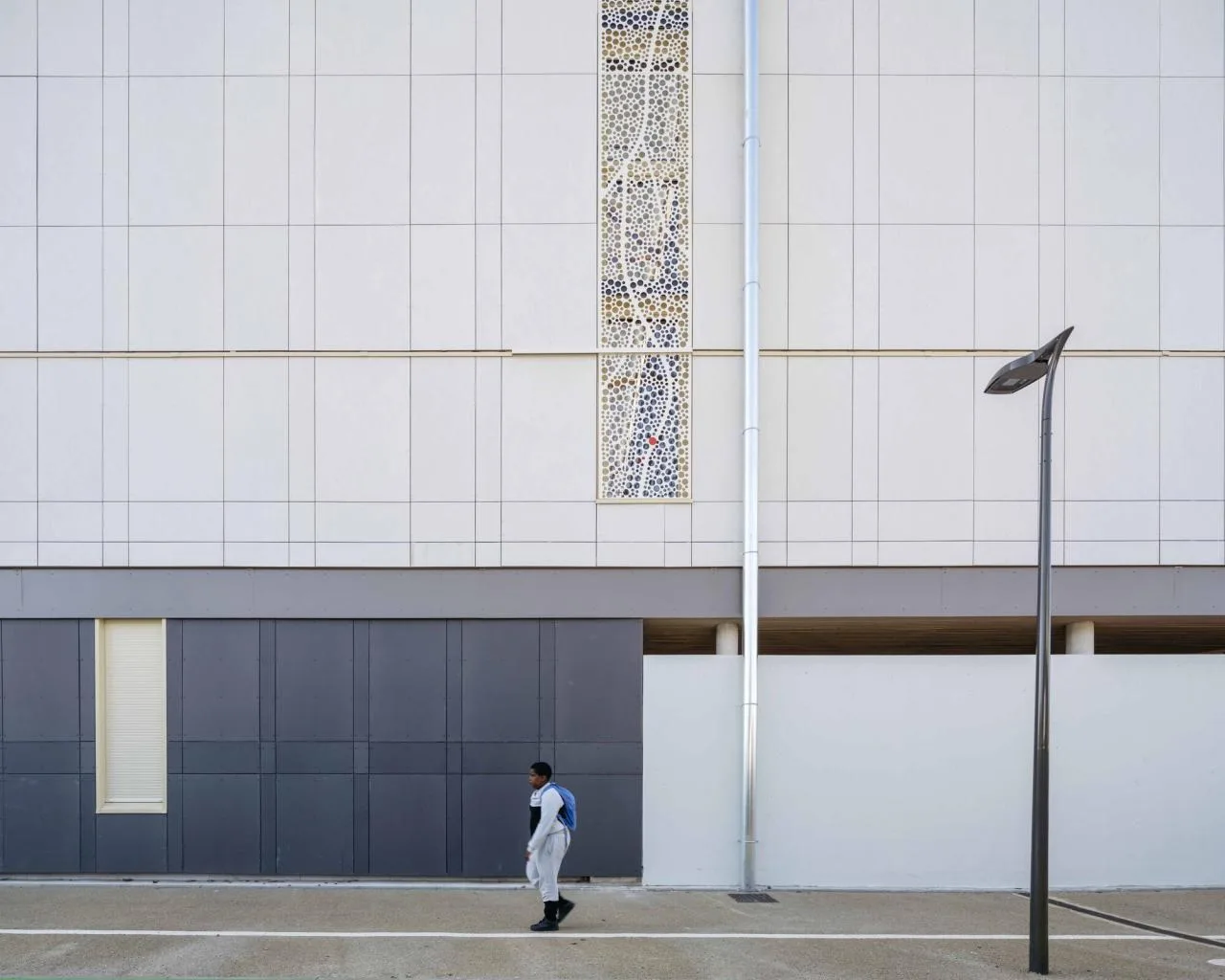
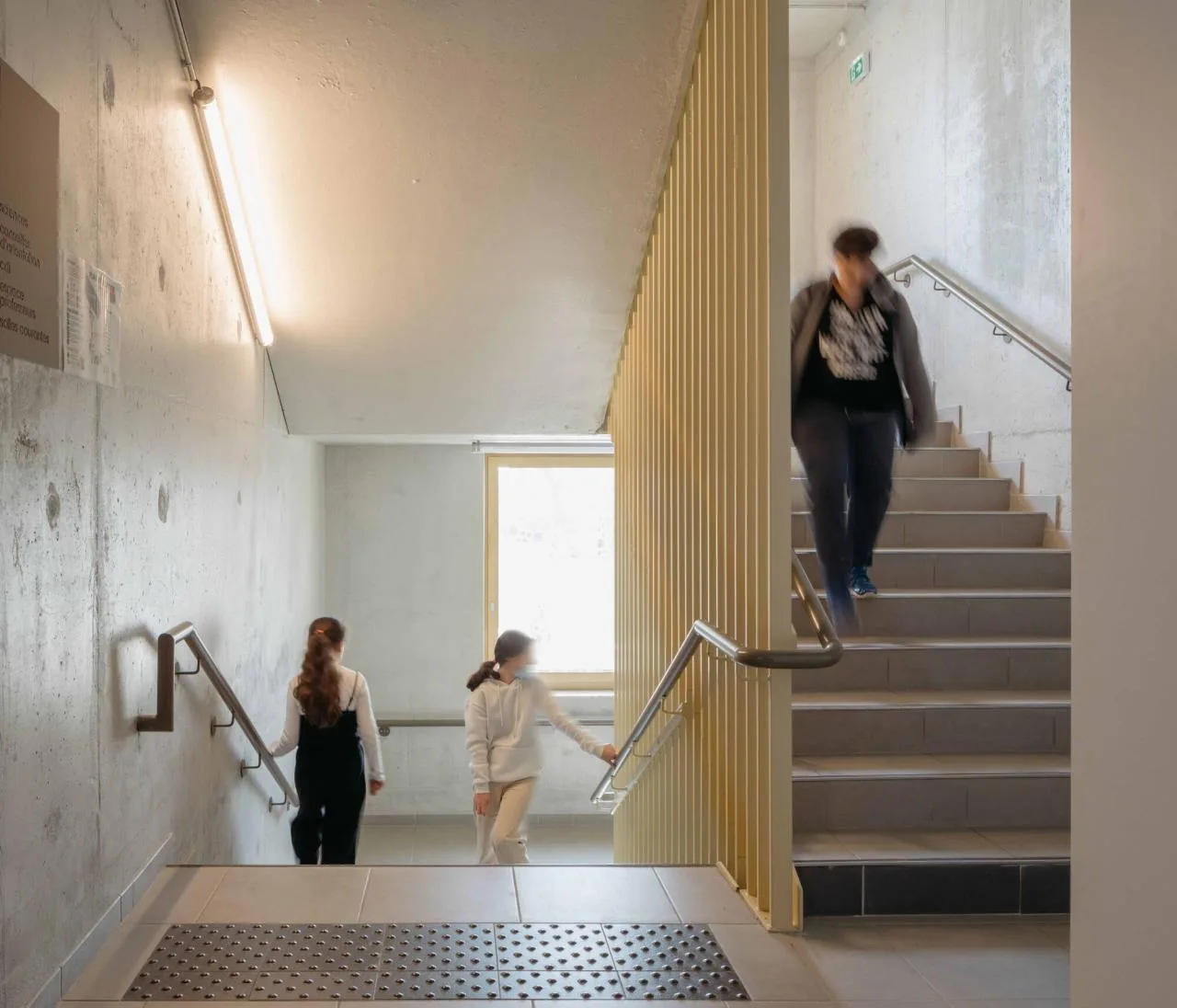
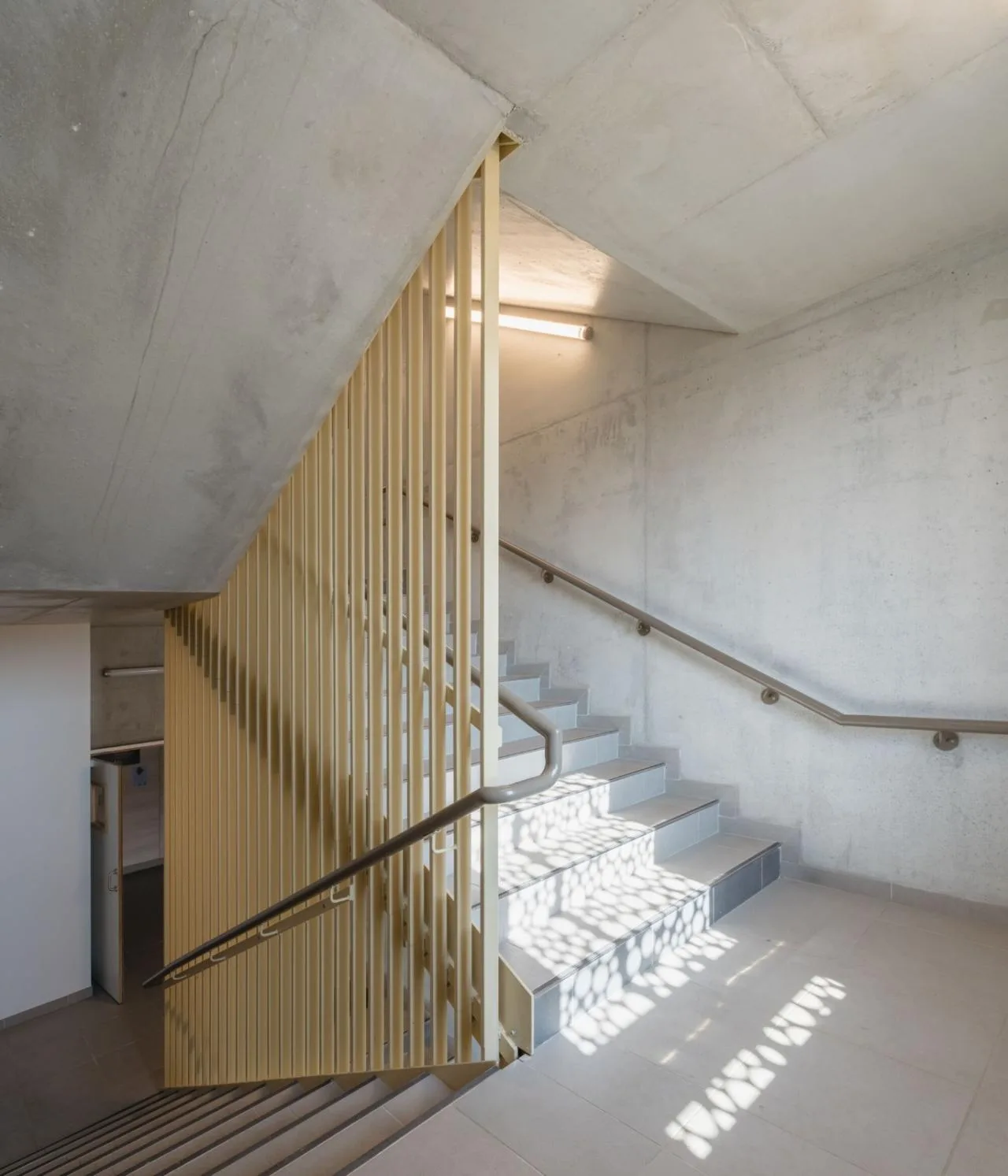
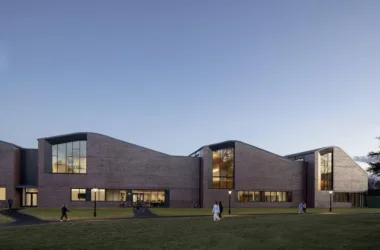
The exterior walls across all buildings—the educational facilities, sports arena, and staff residences—share a cohesive design language. Window frames, windows, and blinds are finished in milky white, harmonizing with the wooden interior. The wooden frame (MOB) is clad in light gray fiber cement panels (Equitone). Steel sunshades installed outside staircases and special areas such as libraries and gyms function as sun visors, creating dynamic lighting effects that respond to the time of day and sunlight direction.
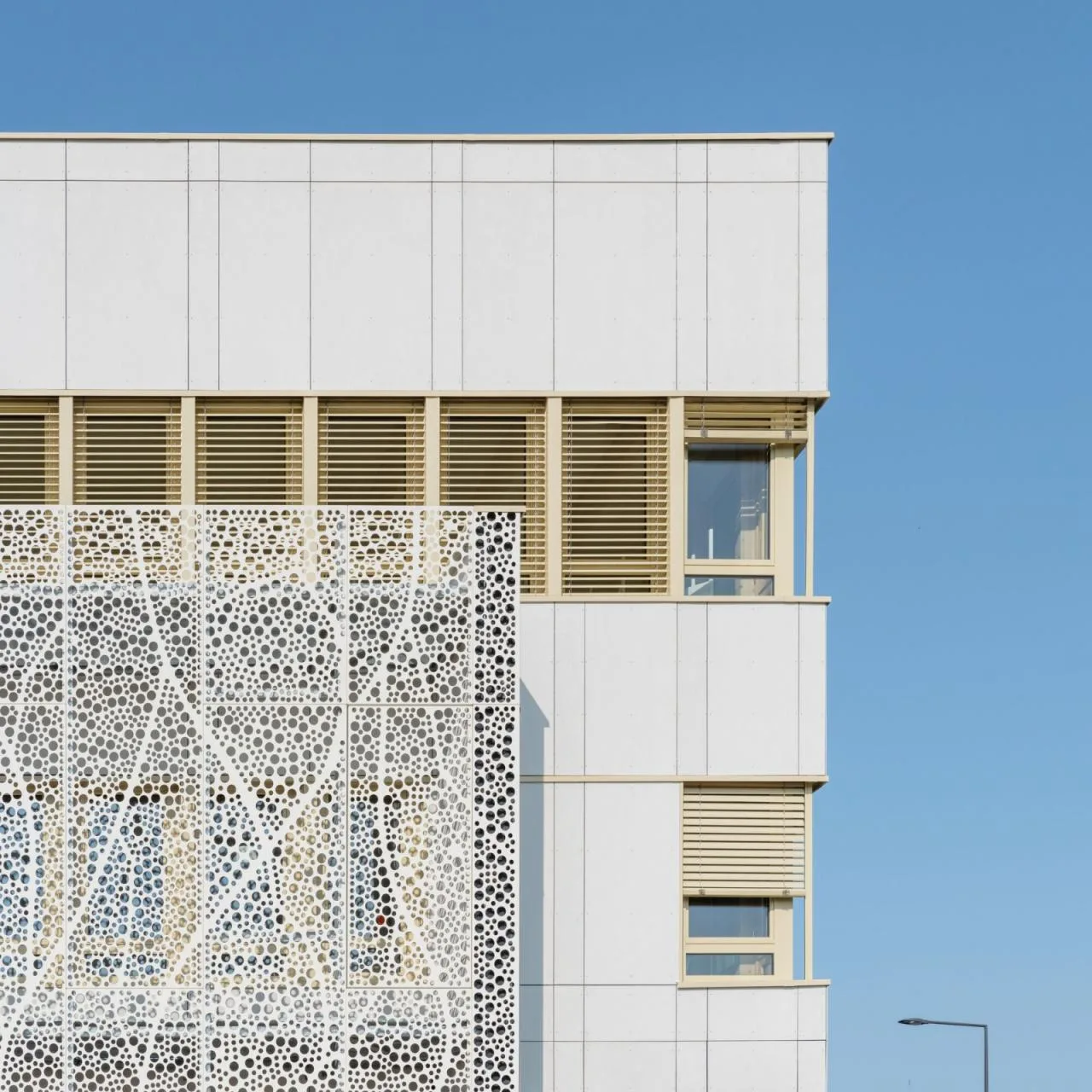
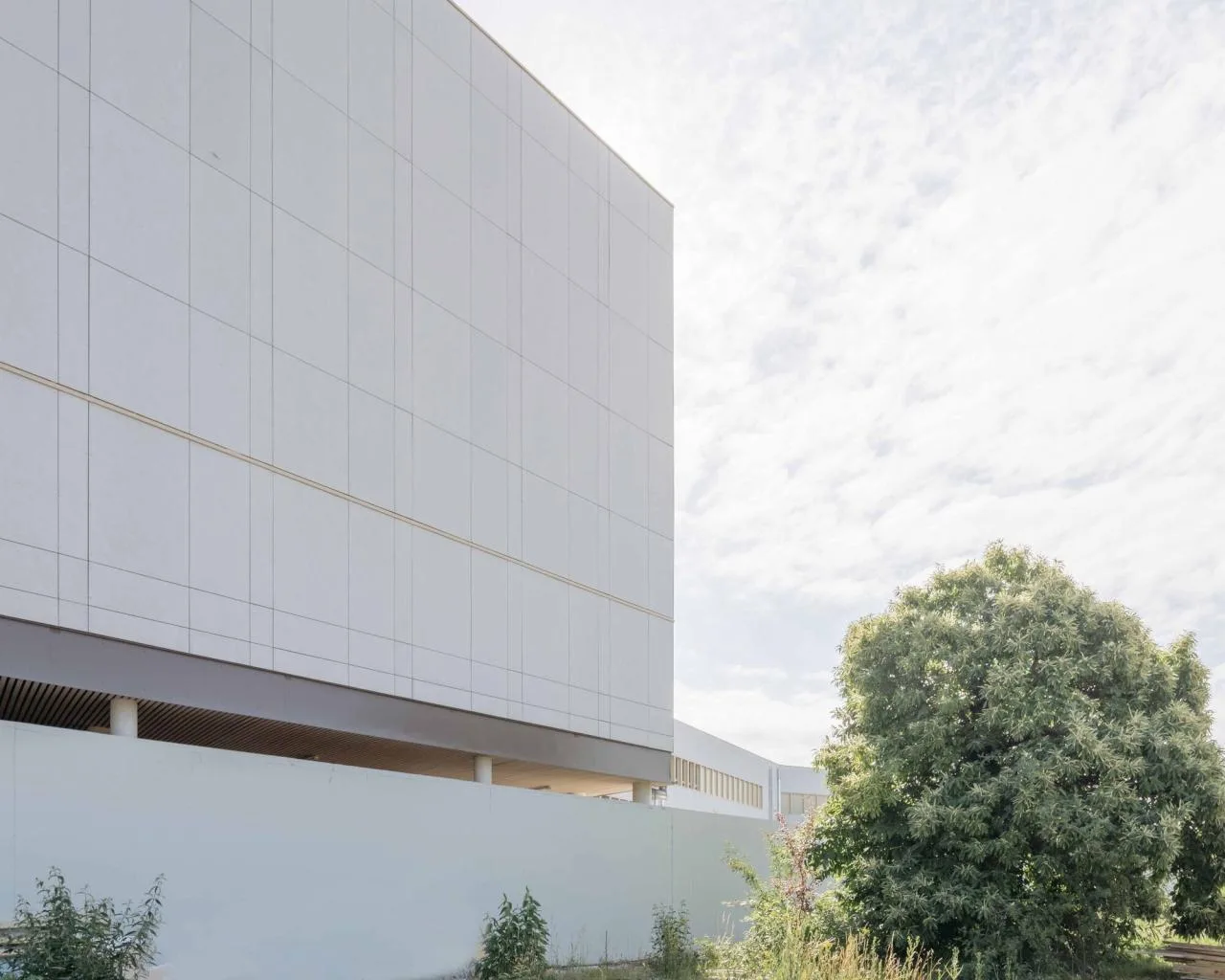
As part of the design, ARCHIPENTE anticipated the installation of photovoltaic panels on the building’s “fifth facade” — the roof. The south-facing roof slope, technical specifications, and structural dimensions were all designed to support the weight of solar panels and their mounting frames.
With energy prices rising significantly, the local authority has embraced the idea of generating its own electricity. A study to install a photovoltaic power plant on the school roof has been approved, aiming for the project to qualify for passive building certification.
There are generally two approaches to constructing energy-efficient buildings with open plans and positive frameworks. The first relies on thick insulation materials and advanced mechanical systems. The second emphasizes design optimization, allocating funds saved on technology towards material selection and spatial planning. The Valenton project clearly favors the second approach.
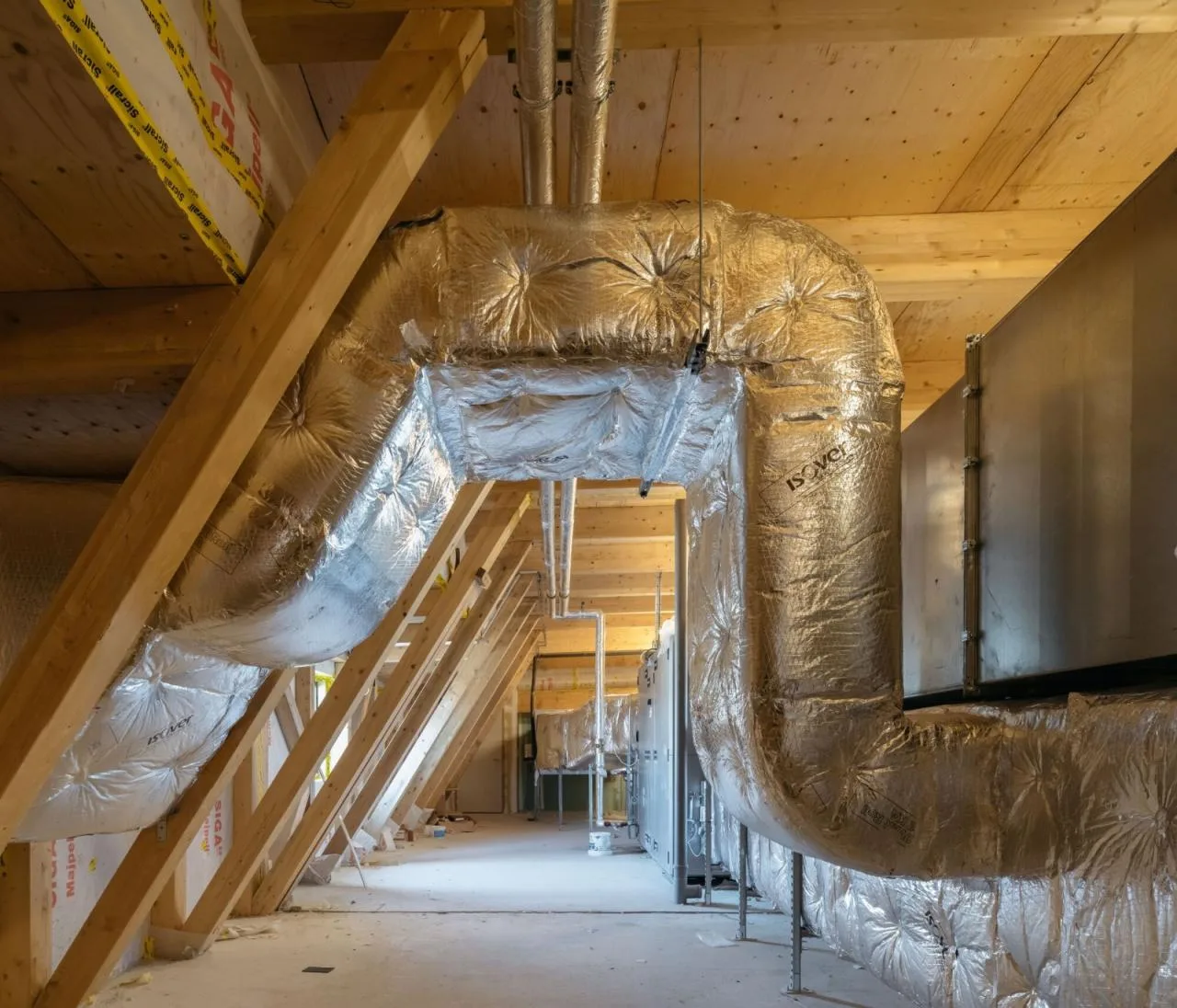
Wood plays a crucial role here. The wooden frame replaces traditional concrete structures, allowing most insulation materials to be accommodated within its framework. Approximately 1,000 cubic meters of wood were used in this project, with 85% sourced from France.
Constructing floors using dry building methods requires precise structural planning. All laminated wood frames are installed on a 120-centimeter grid, matching the standard width of wooden boards or derivatives. Consequently, all project dimensions are multiples of 30 centimeters (60 cm, 1.20 m, 2.40 m, 3.60 m, etc.).
The absence of partition walls supports the open architecture concept, allowing flexible modification of spaces according to evolving needs. The concrete core of the staircase and some diagonal bracing components provide sufficient stability for the wooden structure.
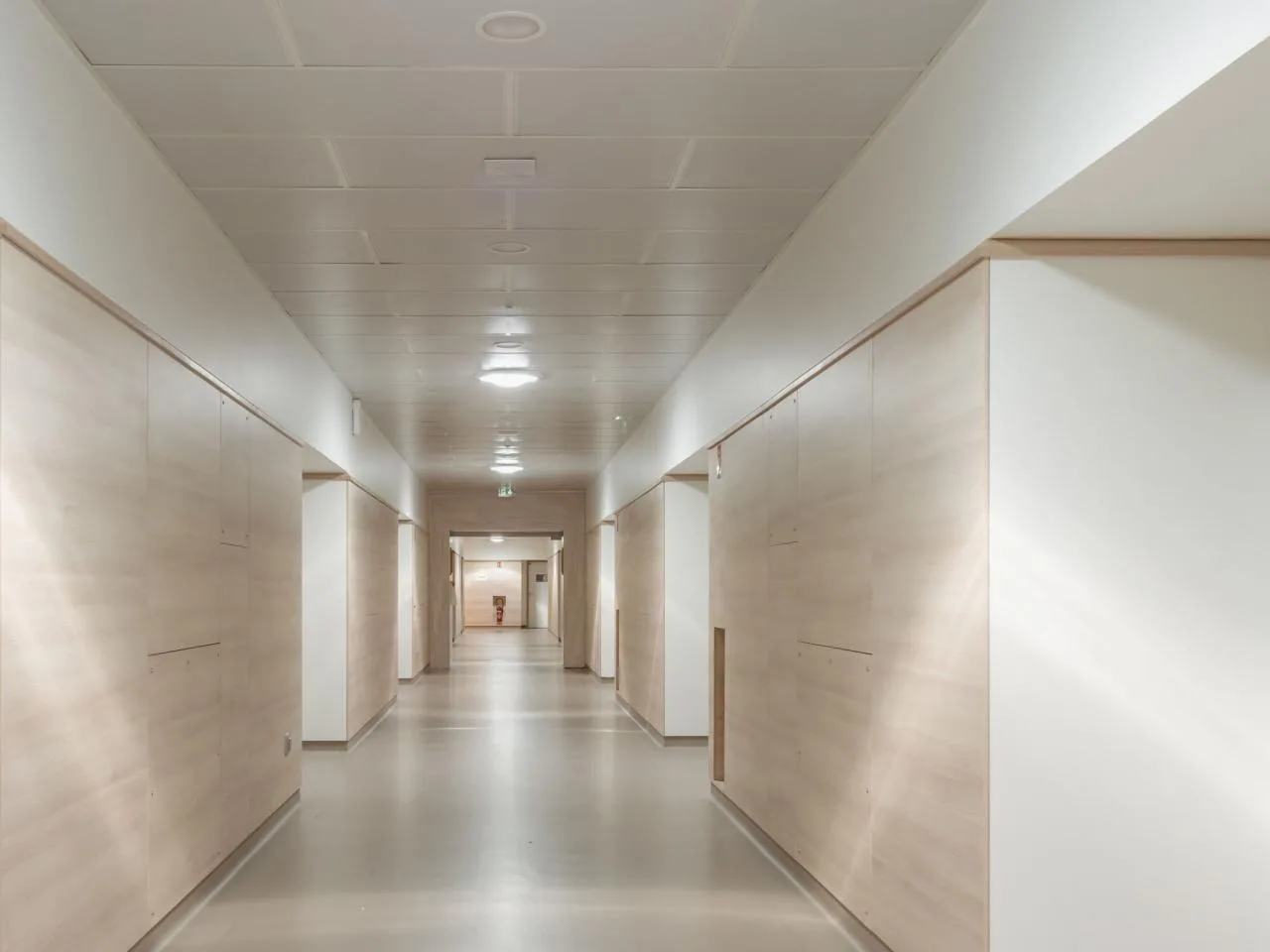
ARCHIPENTE’s concept of an “active framework” is another key feature that enhances project flexibility. This approach retains long service pipelines on either side of the central corridor to distribute electricity and utilities efficiently.
This strategy simplifies spatial management of dual-flow ventilation systems, reduces the height of suspended ceilings, and allows access to technical components without disrupting classrooms. It will prove especially advantageous when integrating photovoltaic power systems into the school.
As highlighted by the renowned architect Alvaro Cesar, “Architecture begins when all constraints are integrated.”
Project Drawings
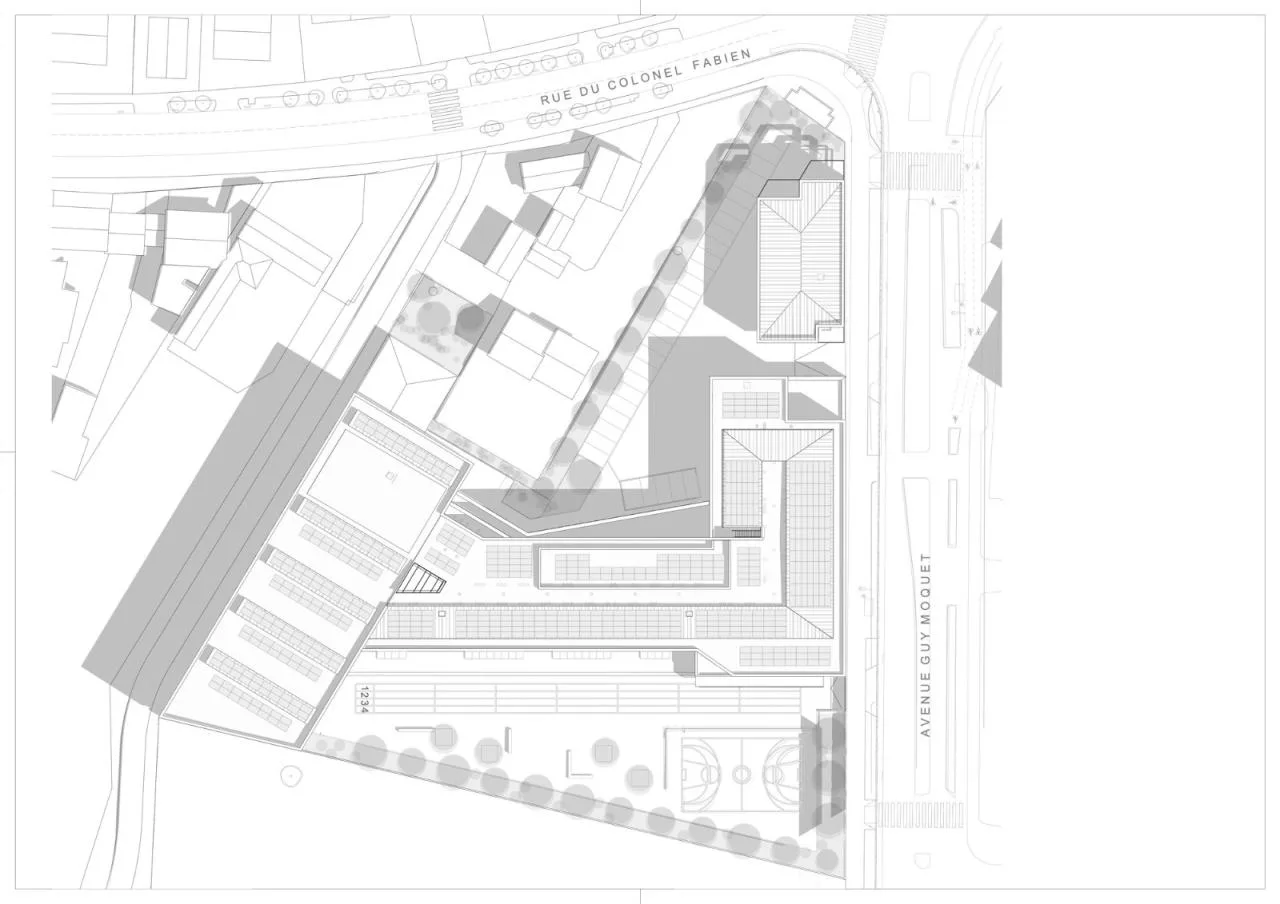
△ General Layout Plan
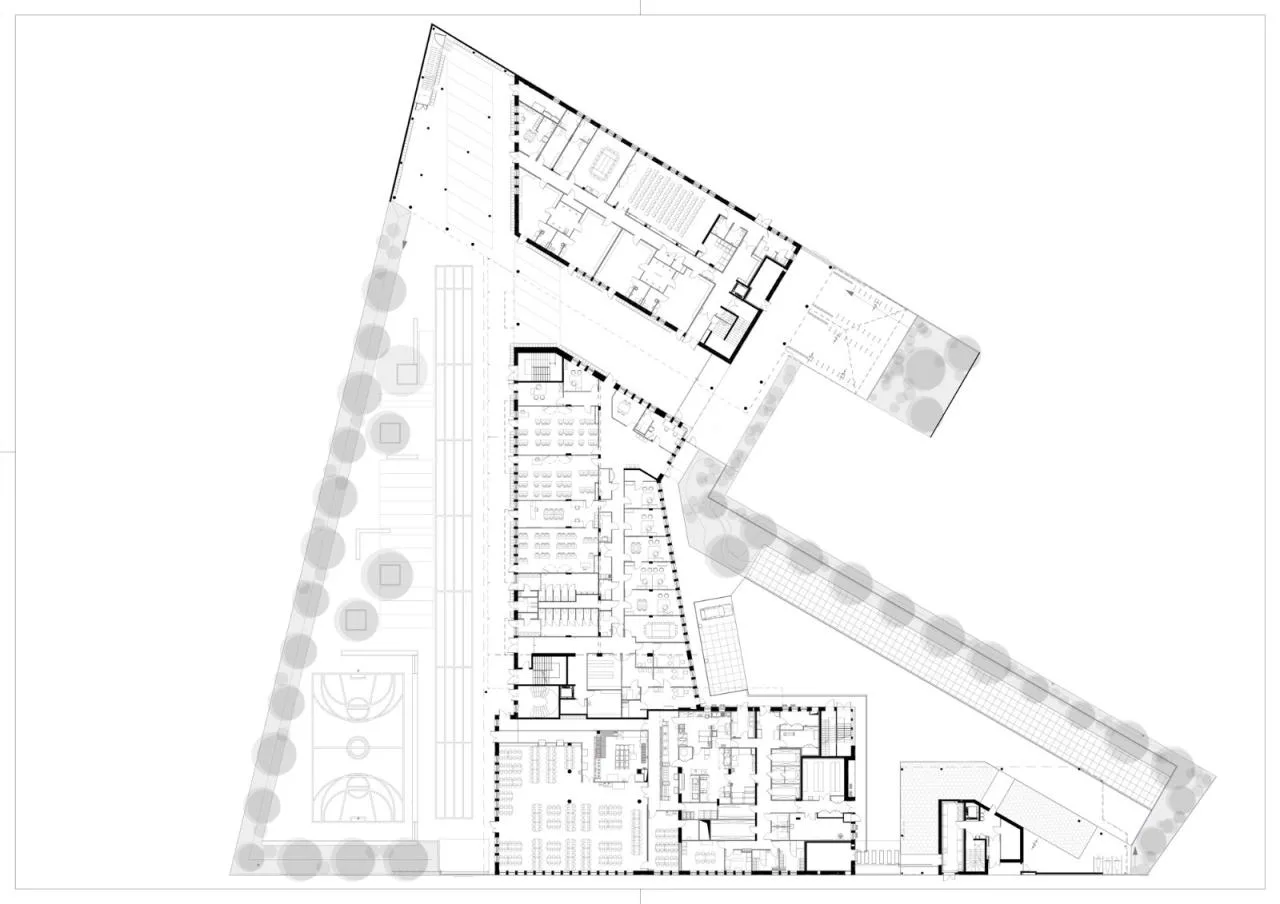
△ First Floor Plan
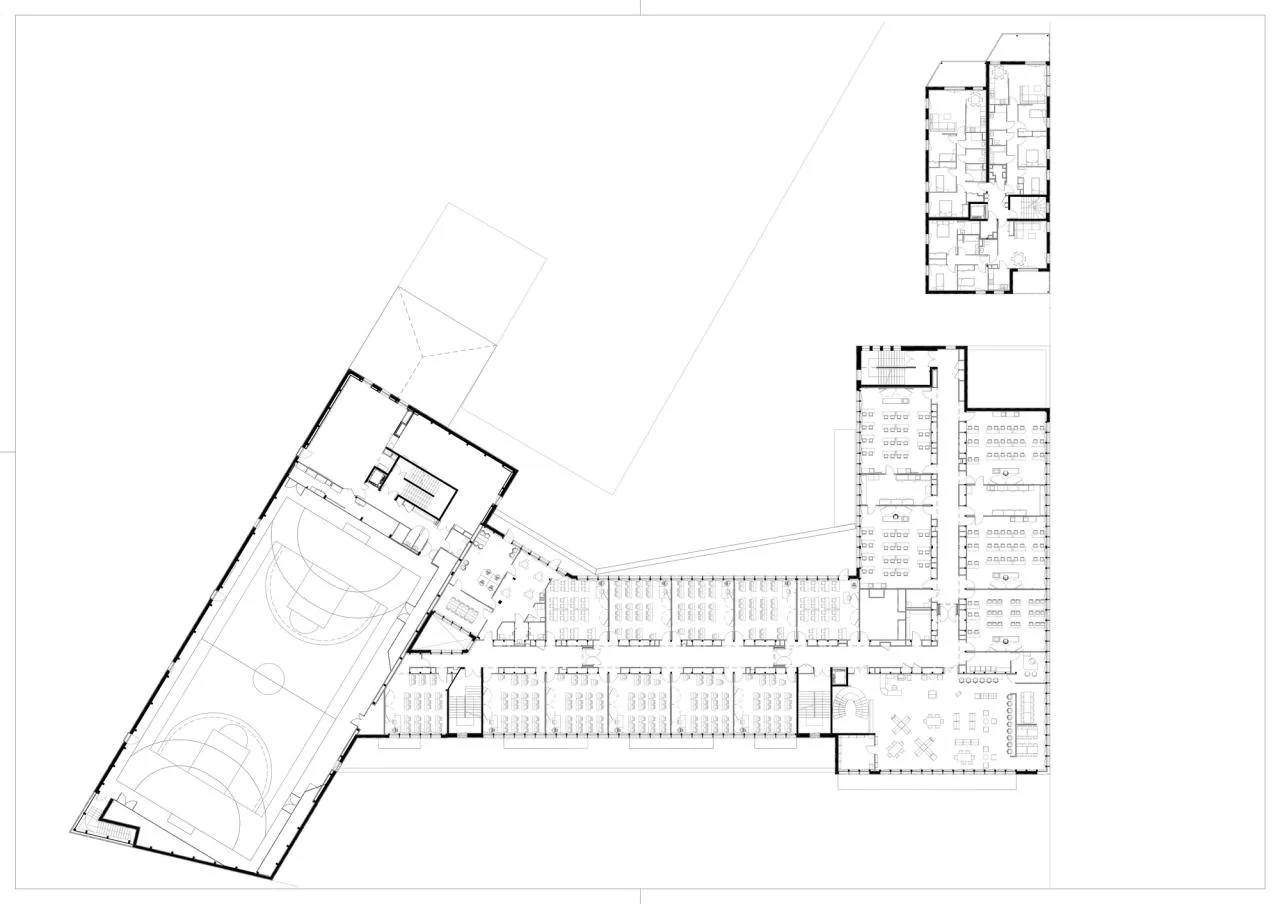
△ Second Floor Plan
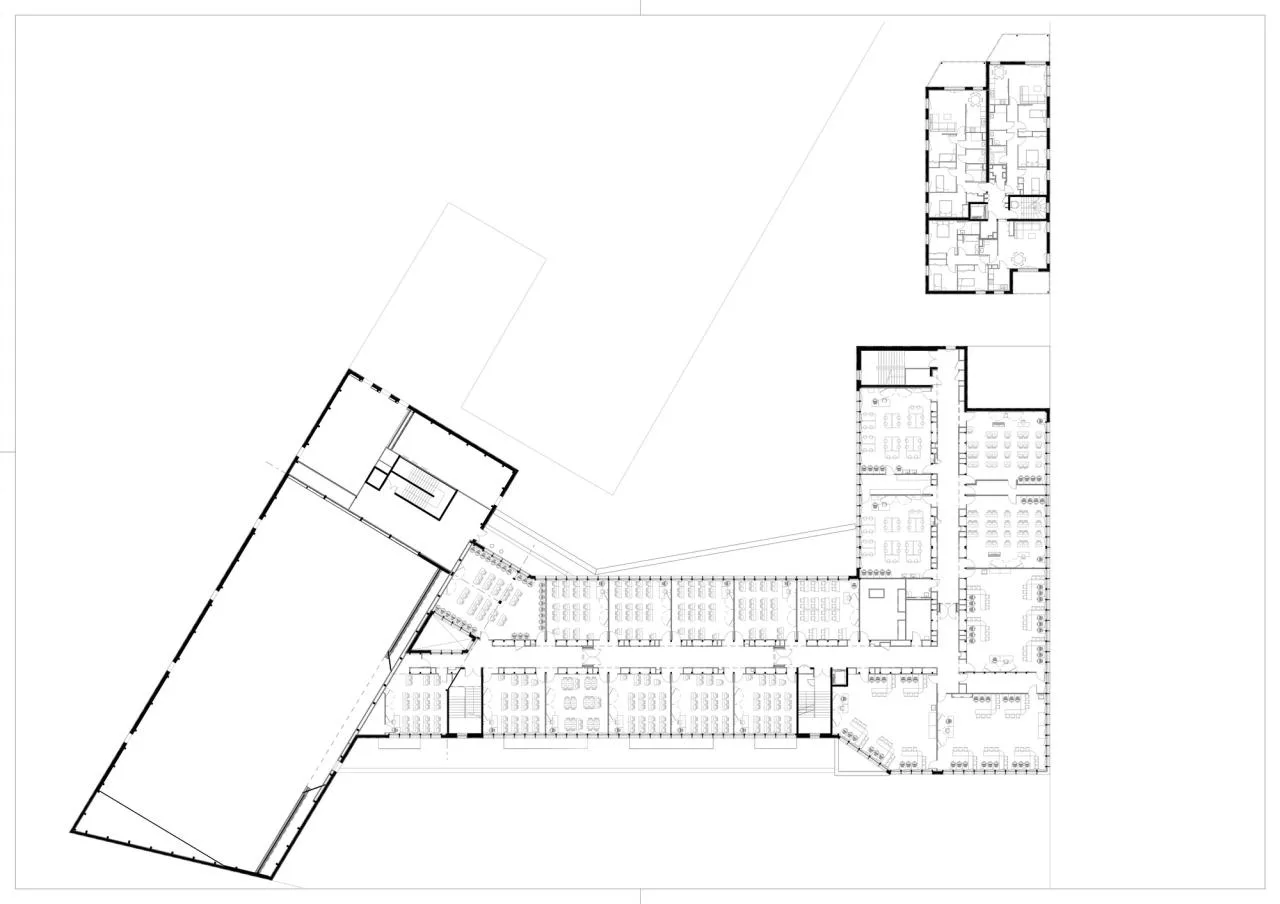
△ Third Floor Plan
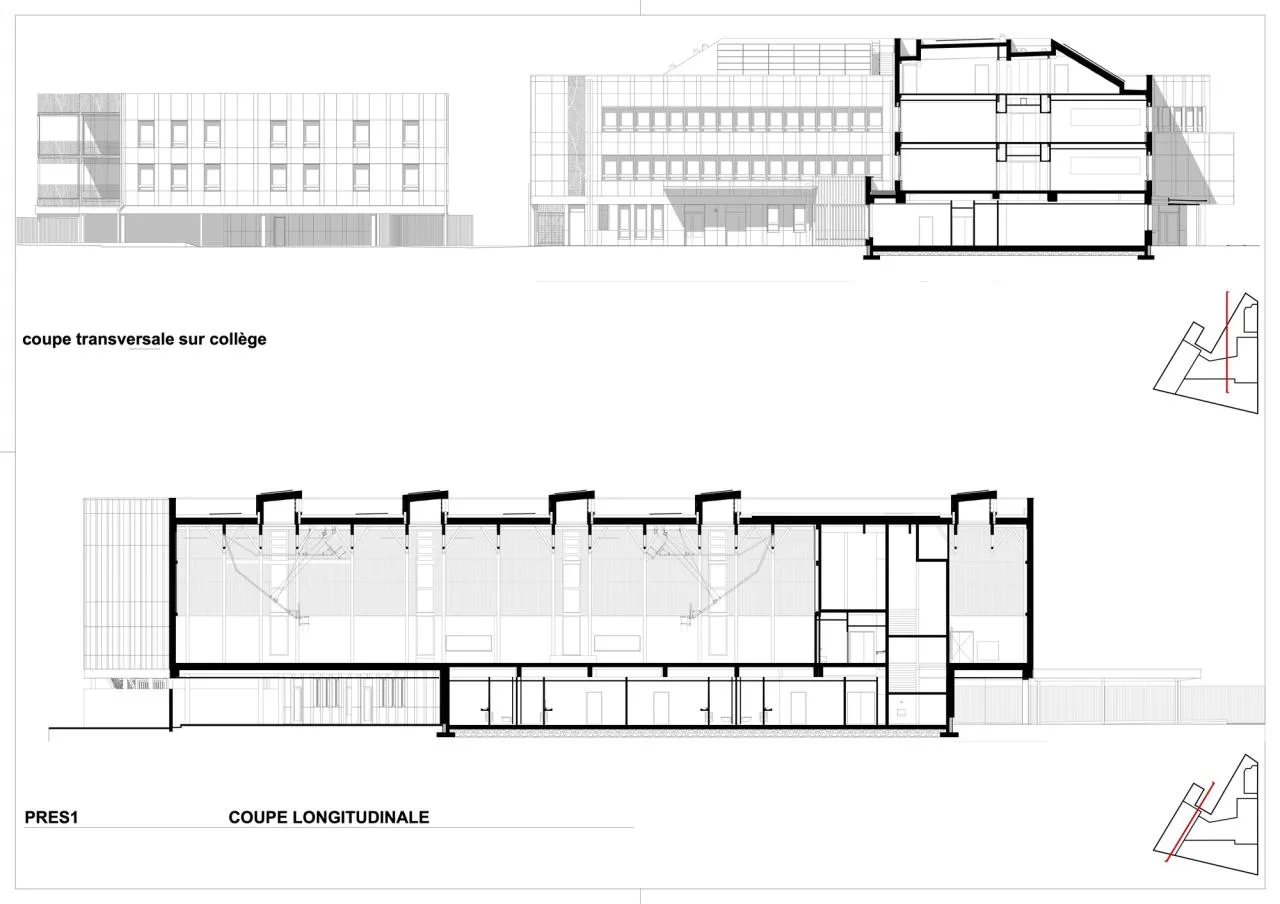
△ Section Diagram
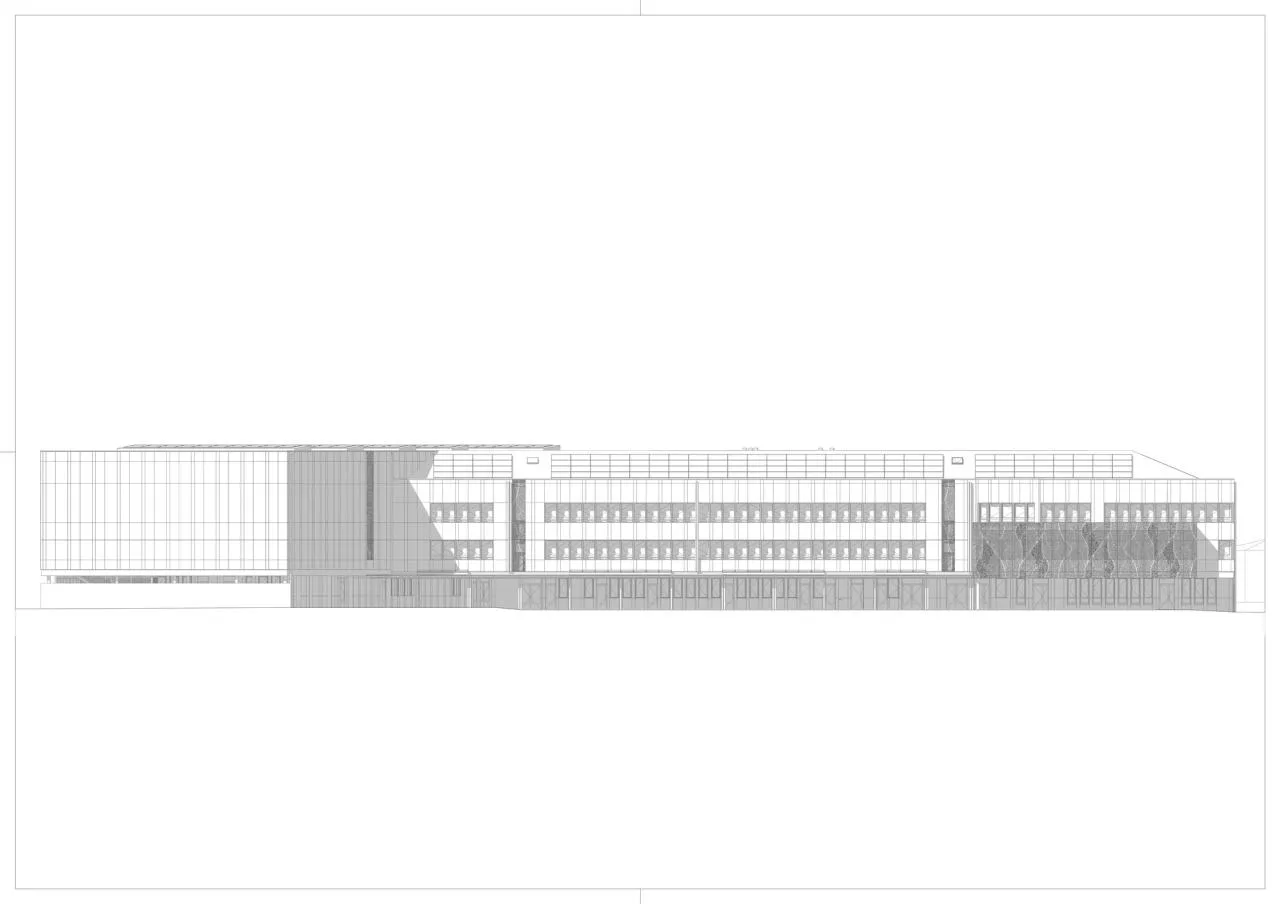
△ Elevation Drawing
Project Information
Architect: Archipente
Area: 8,500 square meters
Project Year: 2022
Photographer: Nicolas Trouillard
Architects: Edouard Molard, Christophe Lauer, Victor Caballero, Christian Pupier
Project Owner: Département du Val de Marne
Landscape Design: Omnibus
Structural Consultant: Betrec INGENIOR Structure
Fluid Engineering Consultant: Enertech
Acoustic Consultant: Rez’On
Ergonomics: Preventich Consulting
Location: Valenton, France













Must log in before commenting!
Sign Up