
The southeastern area of Qianhu Lake is truly stunning. At the heart of the lake lies the Mashan Wetland, spanning over 100 hectares, which is also the location of our project. The site is situated west of Huanhu East Road, separated by a 20-meter-wide evergreen forest belt. Surrounded by mountains on three sides, it offers a northern opening view towards Qianhu Lake. Additionally, a two-meter elevation difference between the site and the western surroundings provides a spacious visual experience, benefiting from its plateau position.
The exterior wall decoration of the original building is more than halfway complete, showcasing a modern Chinese architectural style that has emerged alongside the rapid development of Chinese tourist destinations. Because of the site’s significance, the government is eager to end the construction delays quickly. Although the new owner has yet to define a clear business direction, there is a strong desire to transform the current dull atmosphere by fully leveraging the superior natural advantages of Qianhu and creating a fresh, appealing style.
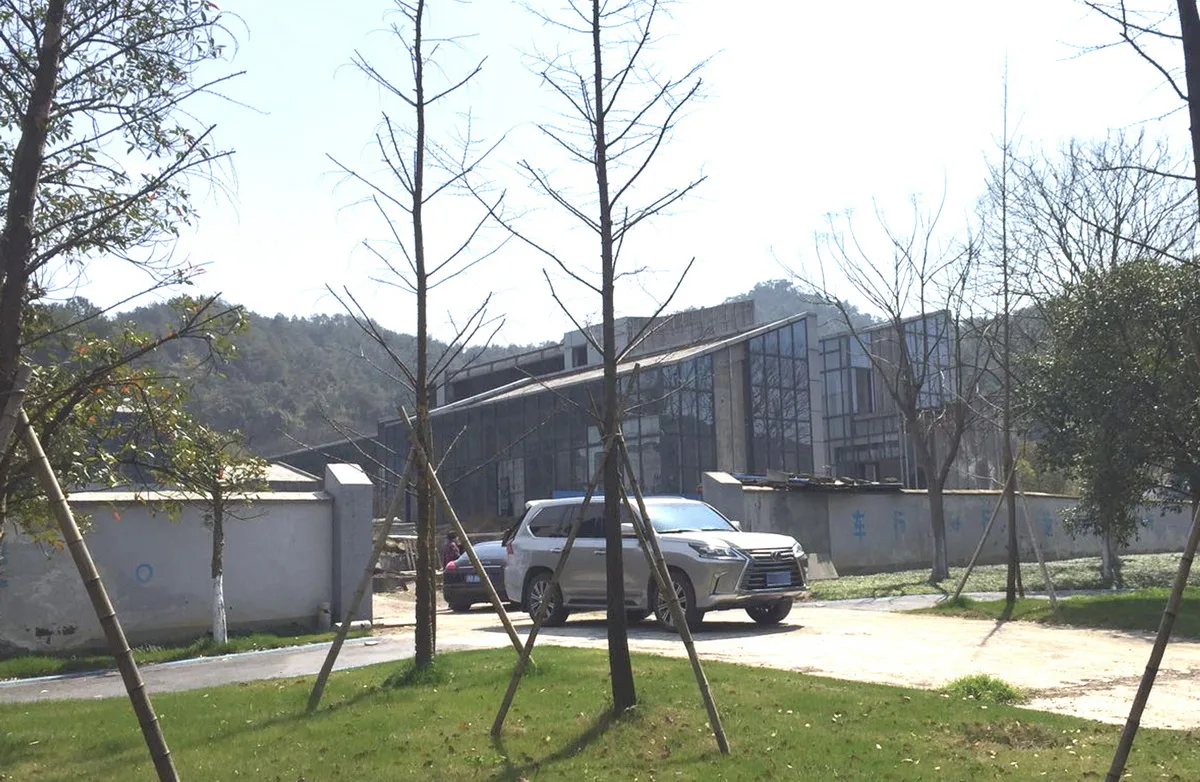
Before renovation of △ S1,3 © Hong Wei
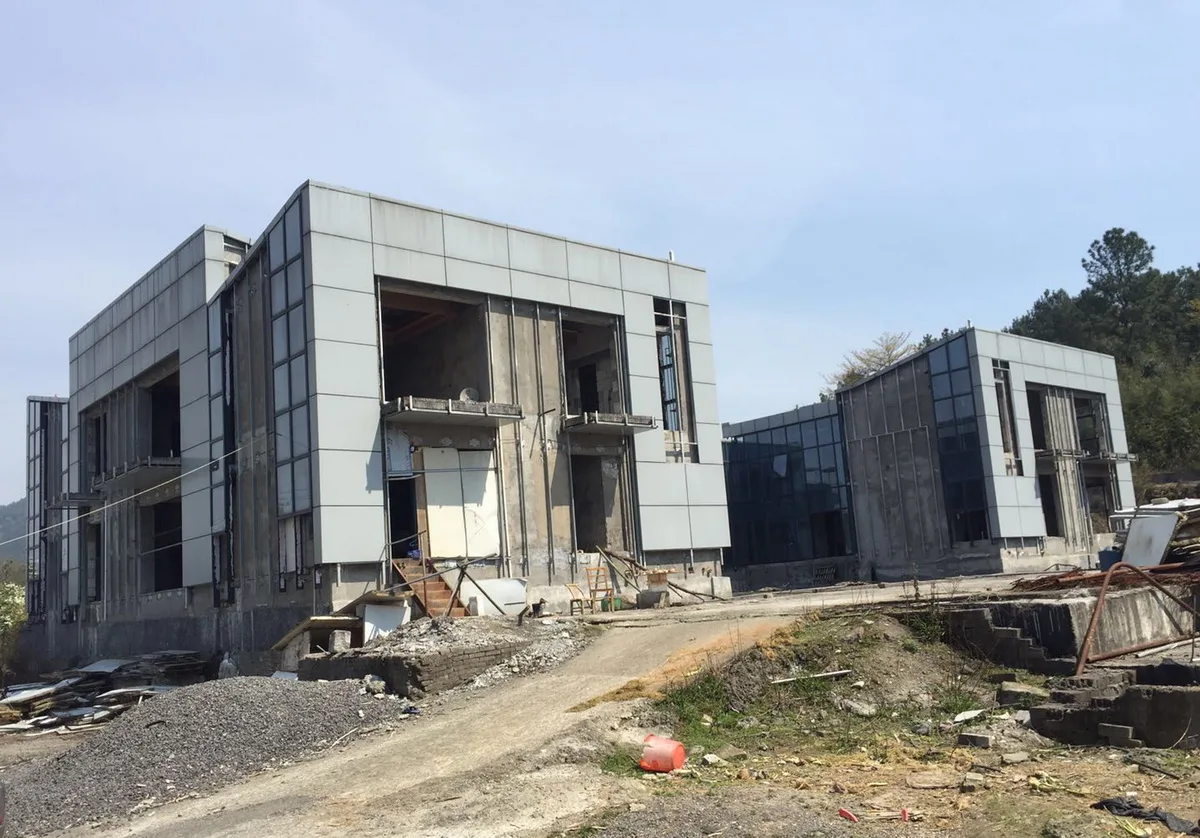
△ N2,3 before renovation © Hong Wei
Given the uncertainty surrounding the business model, our renovation approach begins with fundamental design principles. We analyze and utilize natural environmental resources, redefine the relationships among individual buildings, and reorganize pedestrian flow to create a coherent layout.
The architectural complex is divided into two groups: buildings N1, N2, and N3, which contain private internal areas, and buildings S1, S2, and S3, which serve as external public spaces.
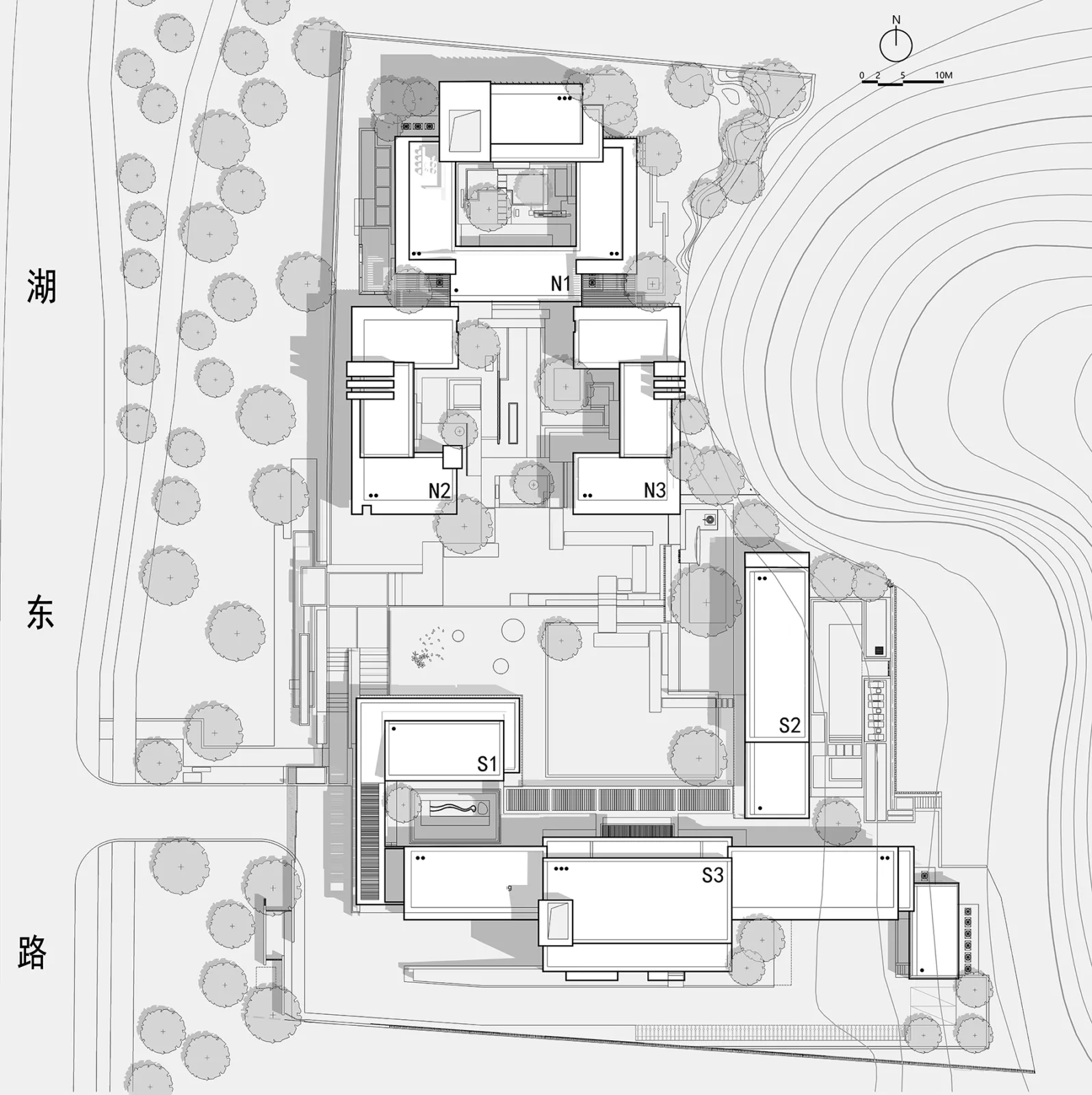
△ General layout plan
Our first priority is to maximize the area’s natural landscape advantages, encouraging interaction between indoor and outdoor spaces. The interior expands outward, creating a multi-level experience that connects the courtyard in the foreground, the urban greenway in the middle, and the distant mountain views, offering users an endlessly rich visual experience.
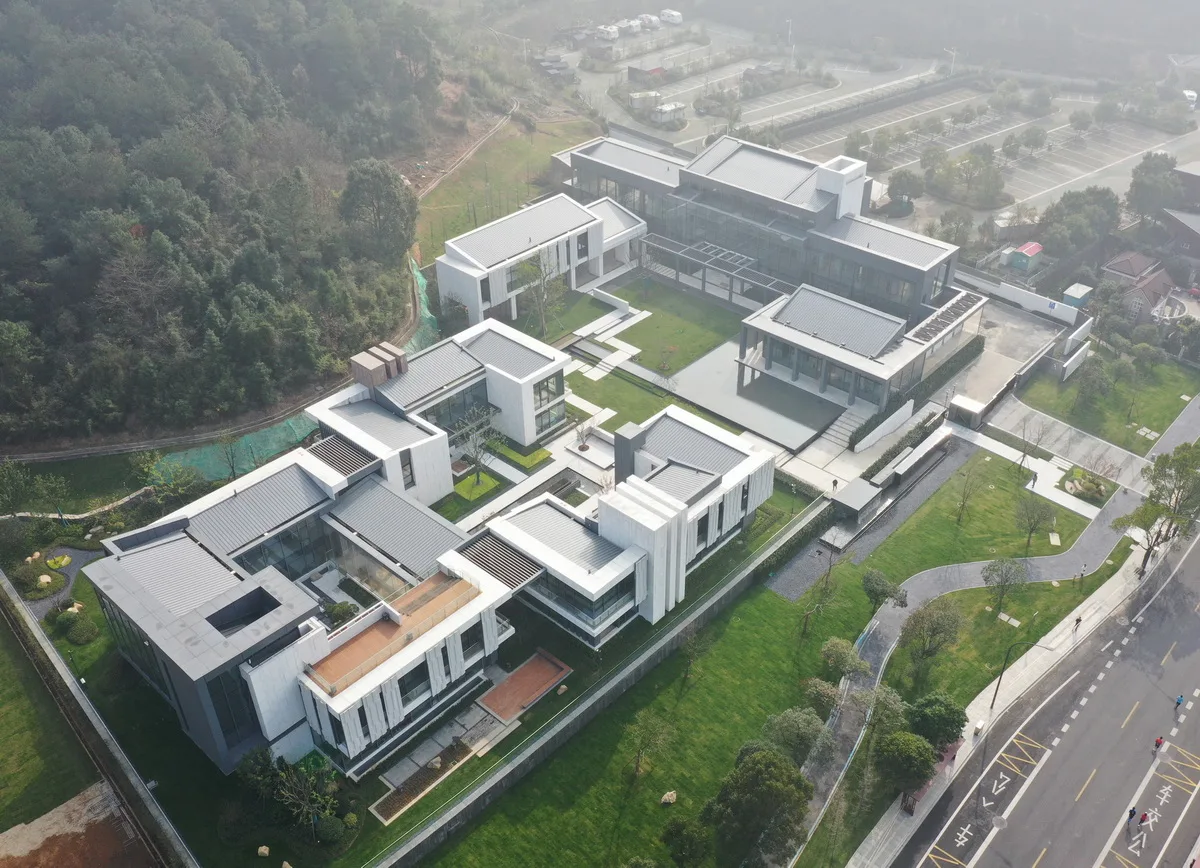
△ Northwest corner bird’s-eye view © Yang Jie
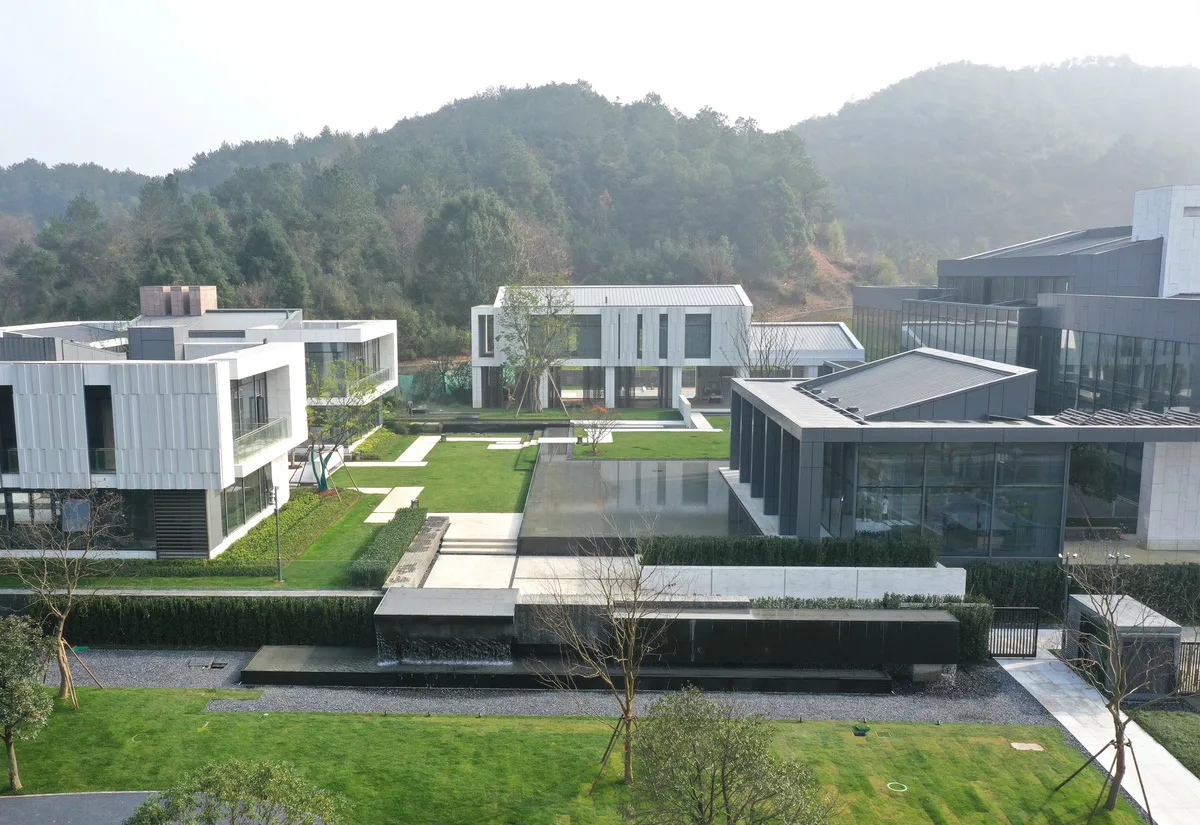
△ Aerial view of the low-angle entrance from Huanhu East Road on the west side © Yang Jie
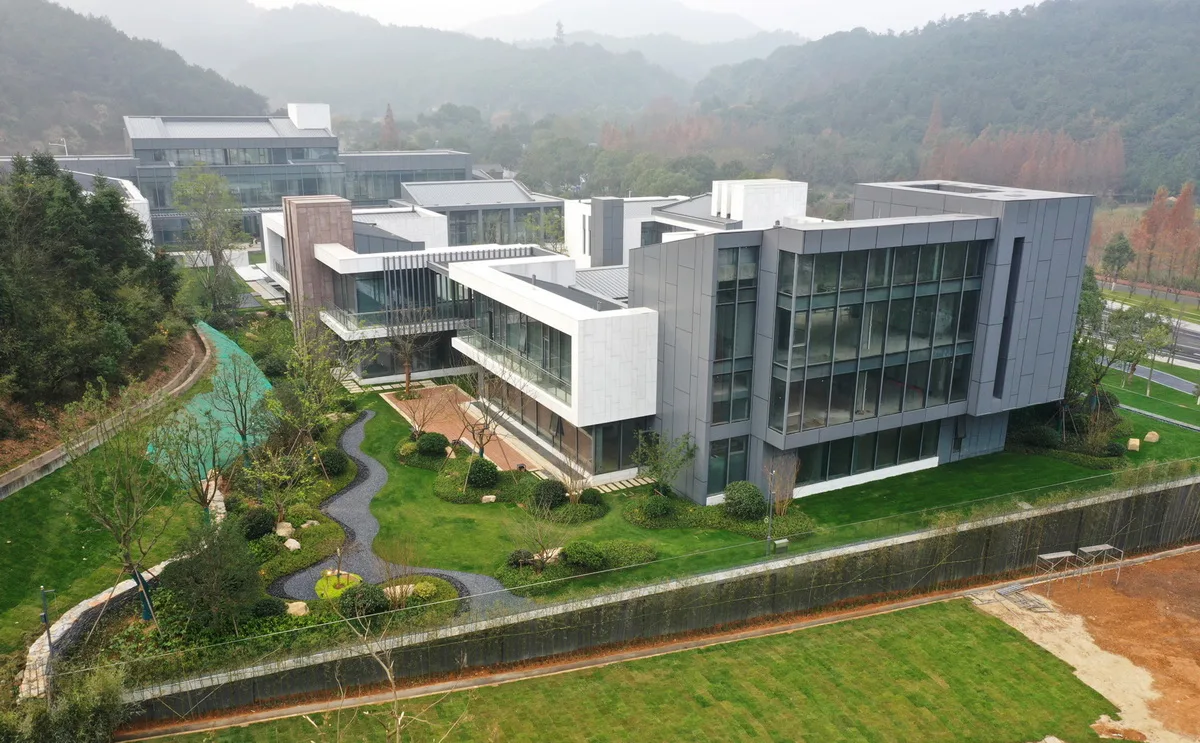
△ Aerial view from the northeast corner © Yang Jie
Addressing concerns about sun exposure and road noise, the original building features a relatively enclosed western exterior wall facing the road, mainly composed of small windows and two-point-style balconies. However, we believe the west side is the most scenic and should be fully utilized. The year-round green belt along the road already mitigates some traffic noise. By adding continuous sunshade perforated aluminum panel balconies and sound-insulating glass, we effectively resolve issues related to sun exposure and noise.
The concave-convex perforated aluminum window frames present a solid appearance from the outside but create a flowing ink-wash effect when viewed from the interior. After dark, indoor lighting shining through these perforated panels adds a warm and romantic ambiance.
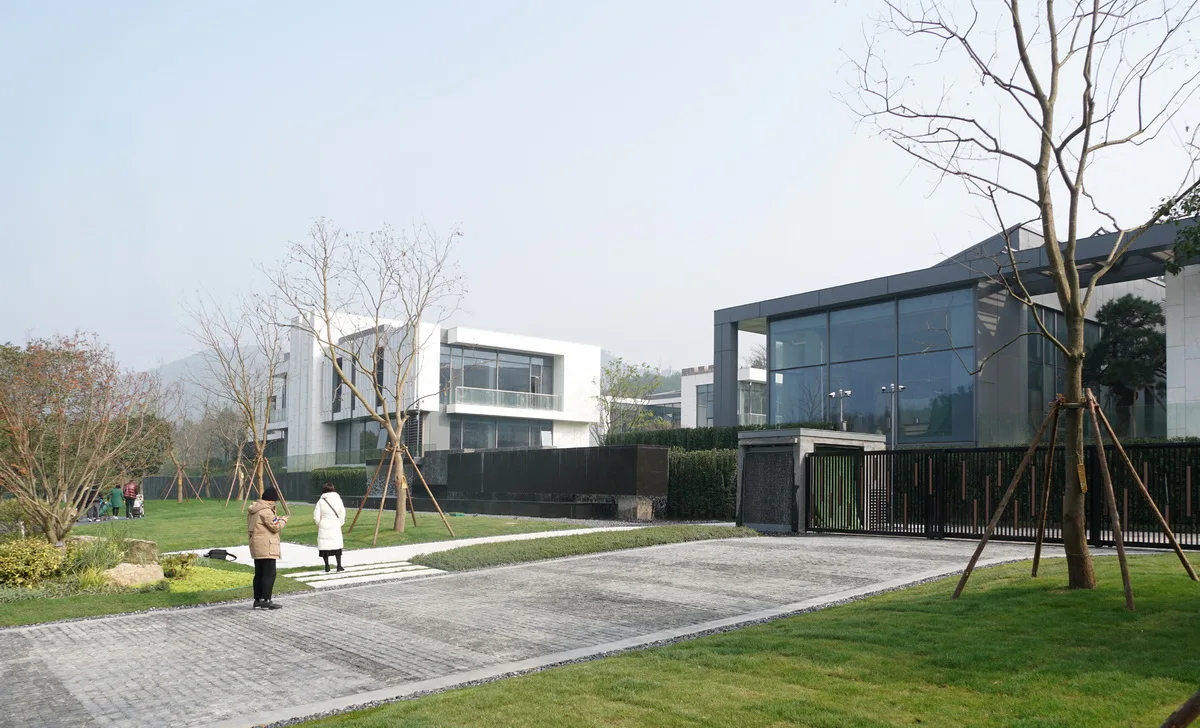
△ Ground-level perspective at the entrance © Hong Wei
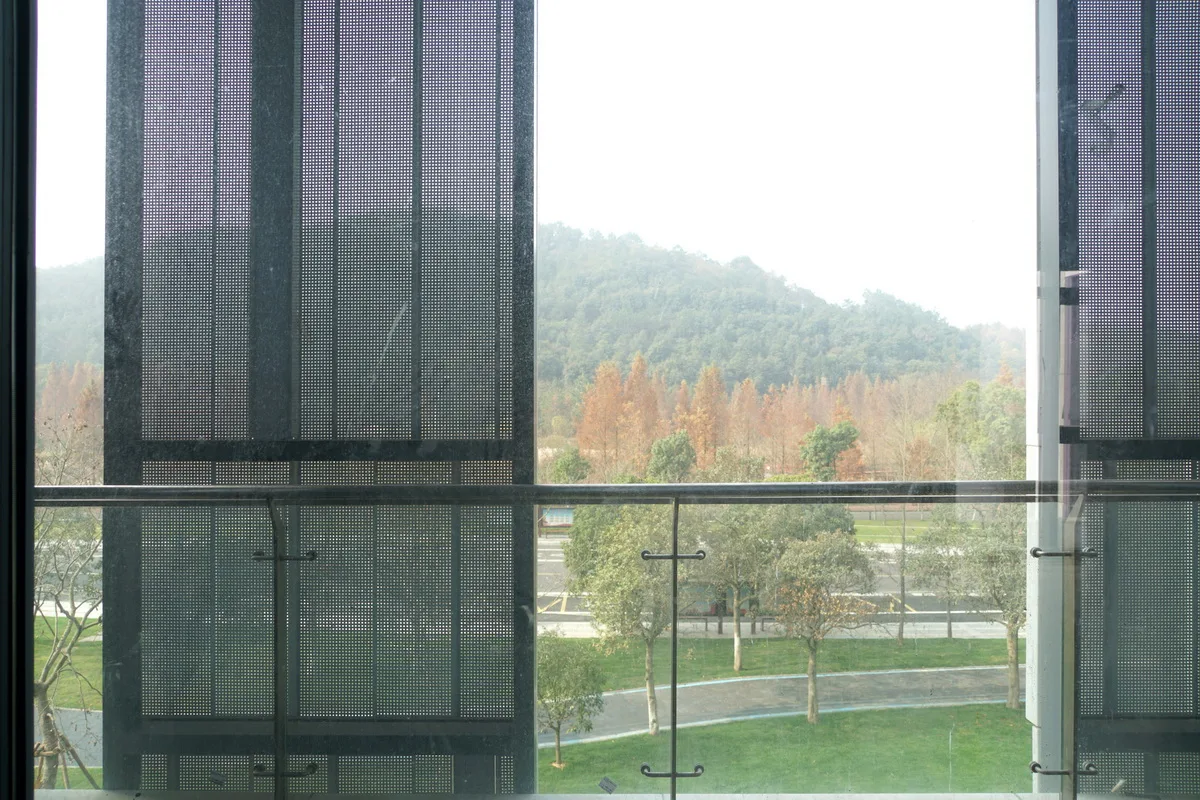
△ Second-floor view toward the west greenway © Hong Wei
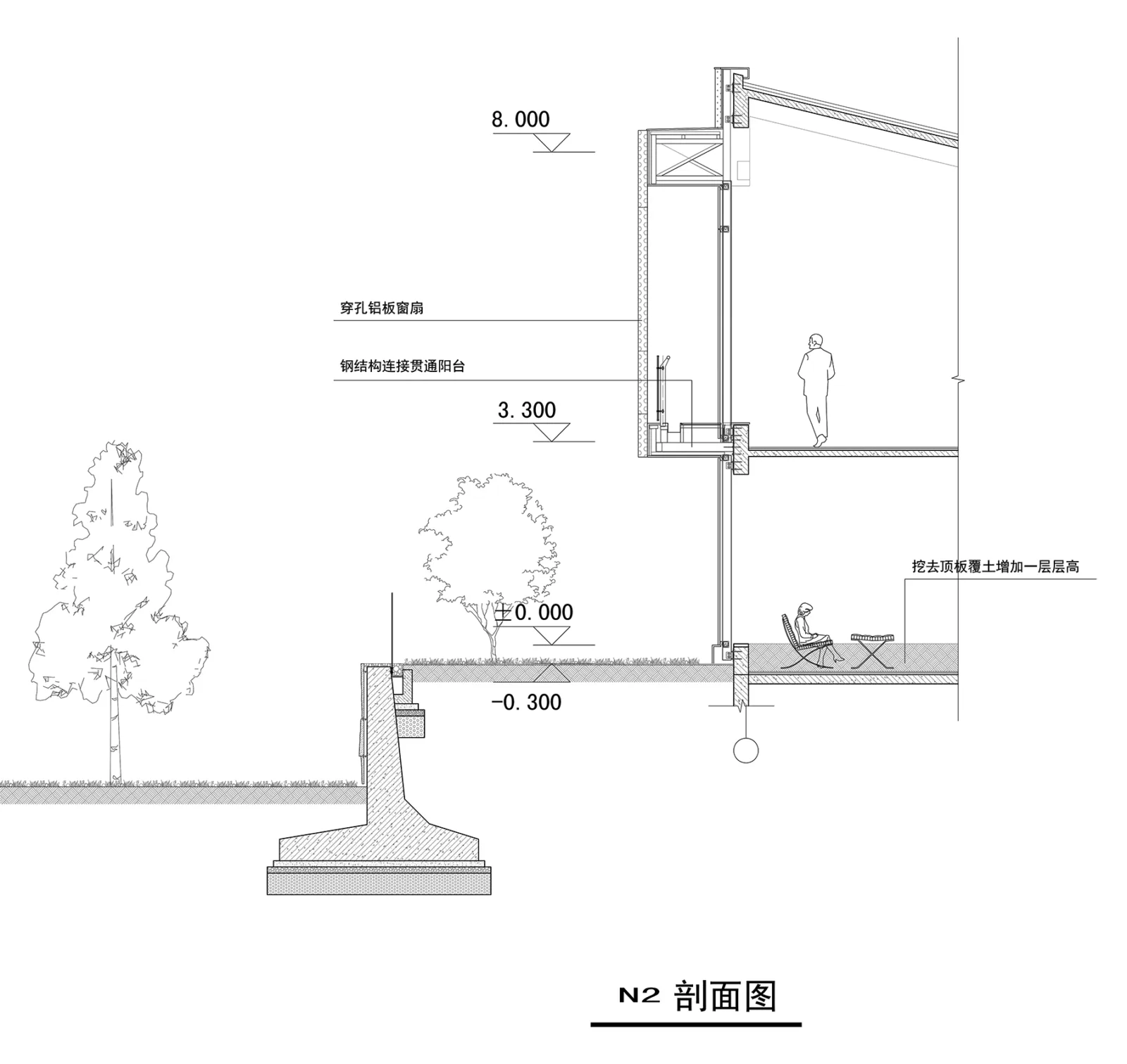
△ N2 profile
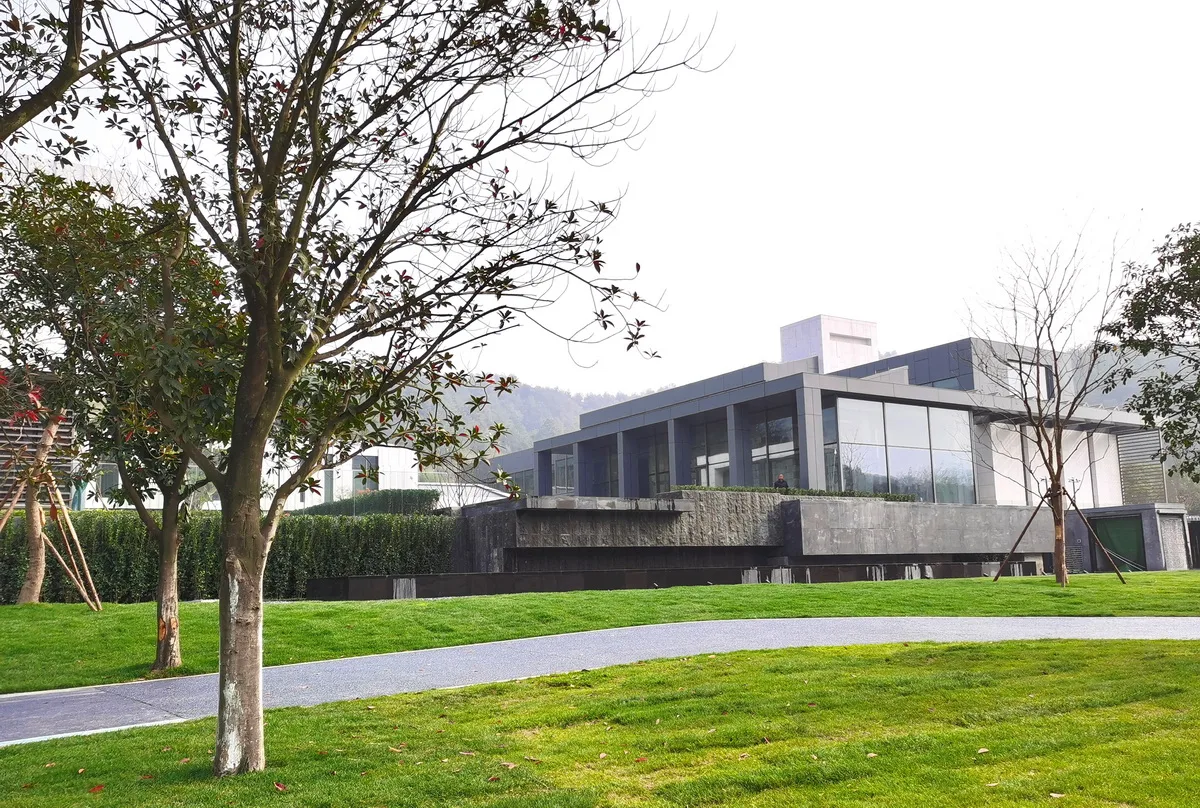
△ S1 © Hong Wei
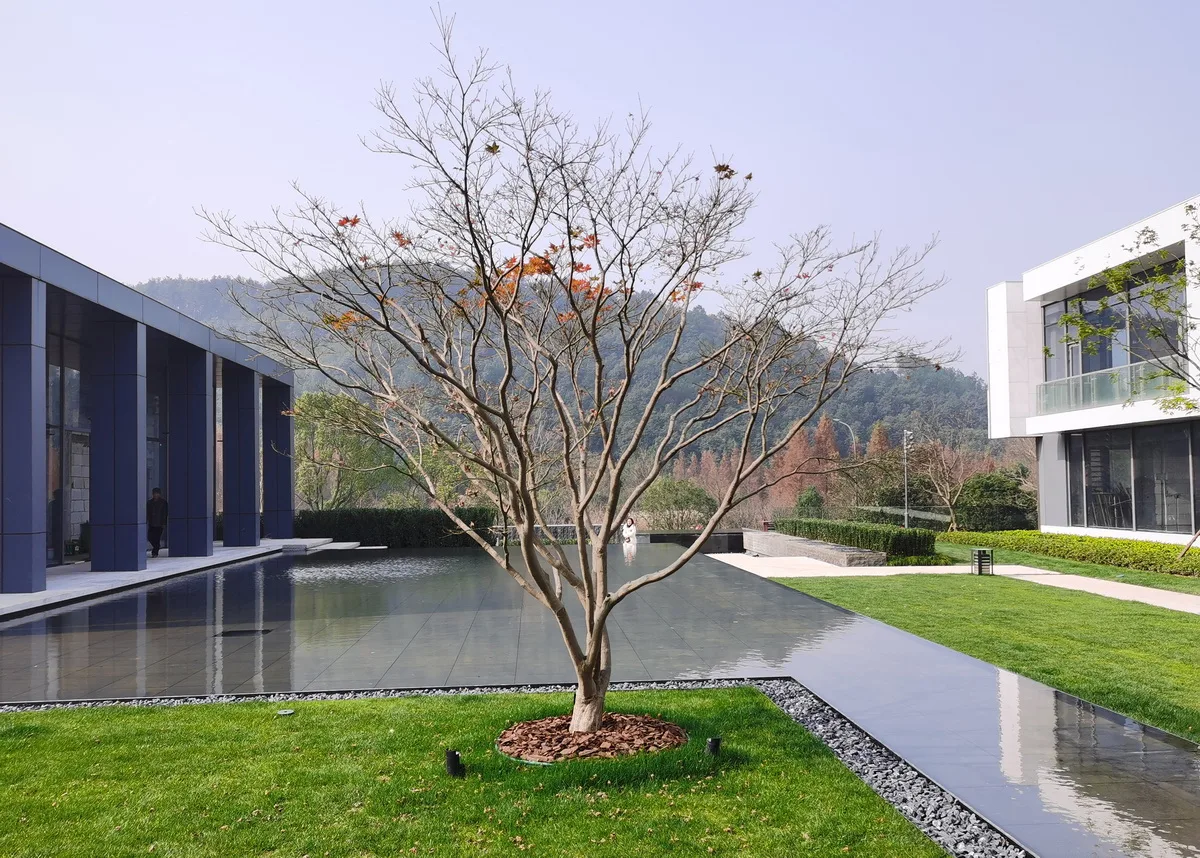
Looking west from the Grand Courtyard © Hong Wei
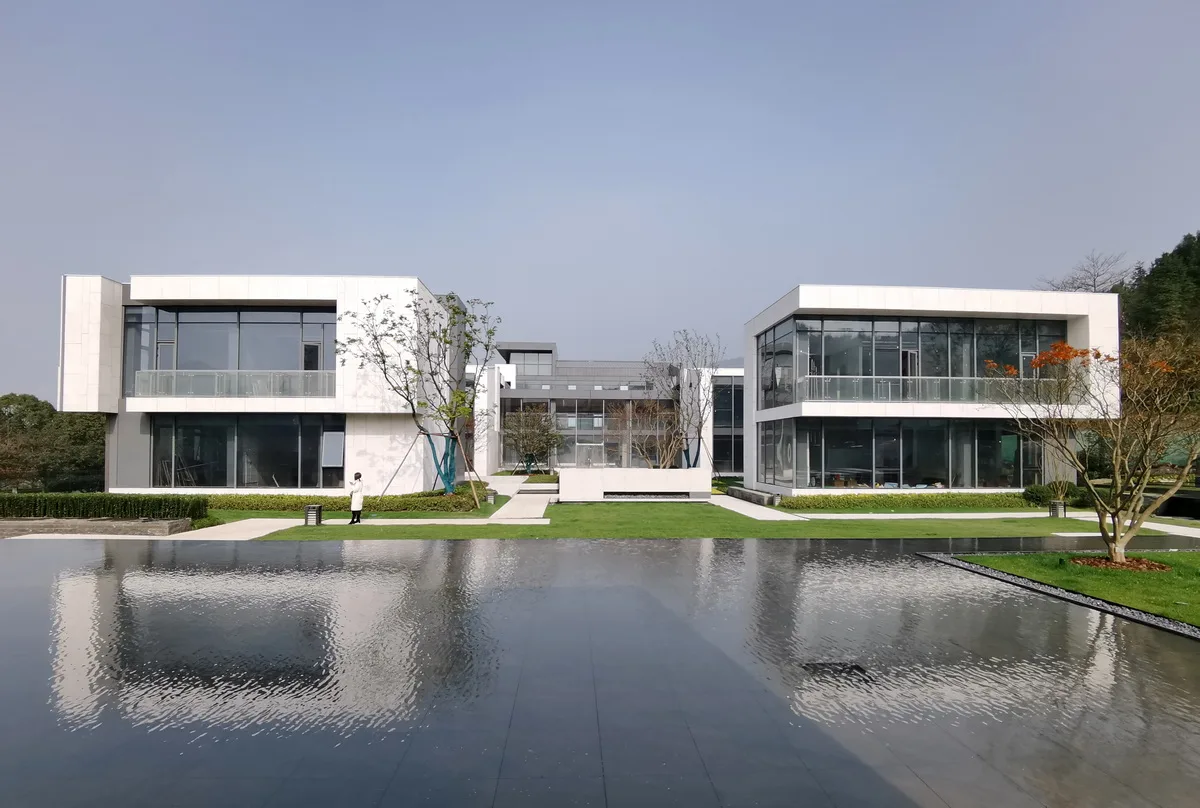
View of N2 from the S1 corridor, 3 © Hong Wei
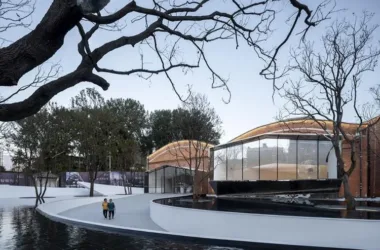
Borrowing and creating scenery simultaneously, originally independent units have been redefined through roof architecture and ground landscaping. This has transformed the outdoor connecting spaces between buildings into courtyard retreats, forming many poetic and inviting areas. This approach, which involves discarding corners and creatively reusing and strengthening space, is continuously explored throughout the project.
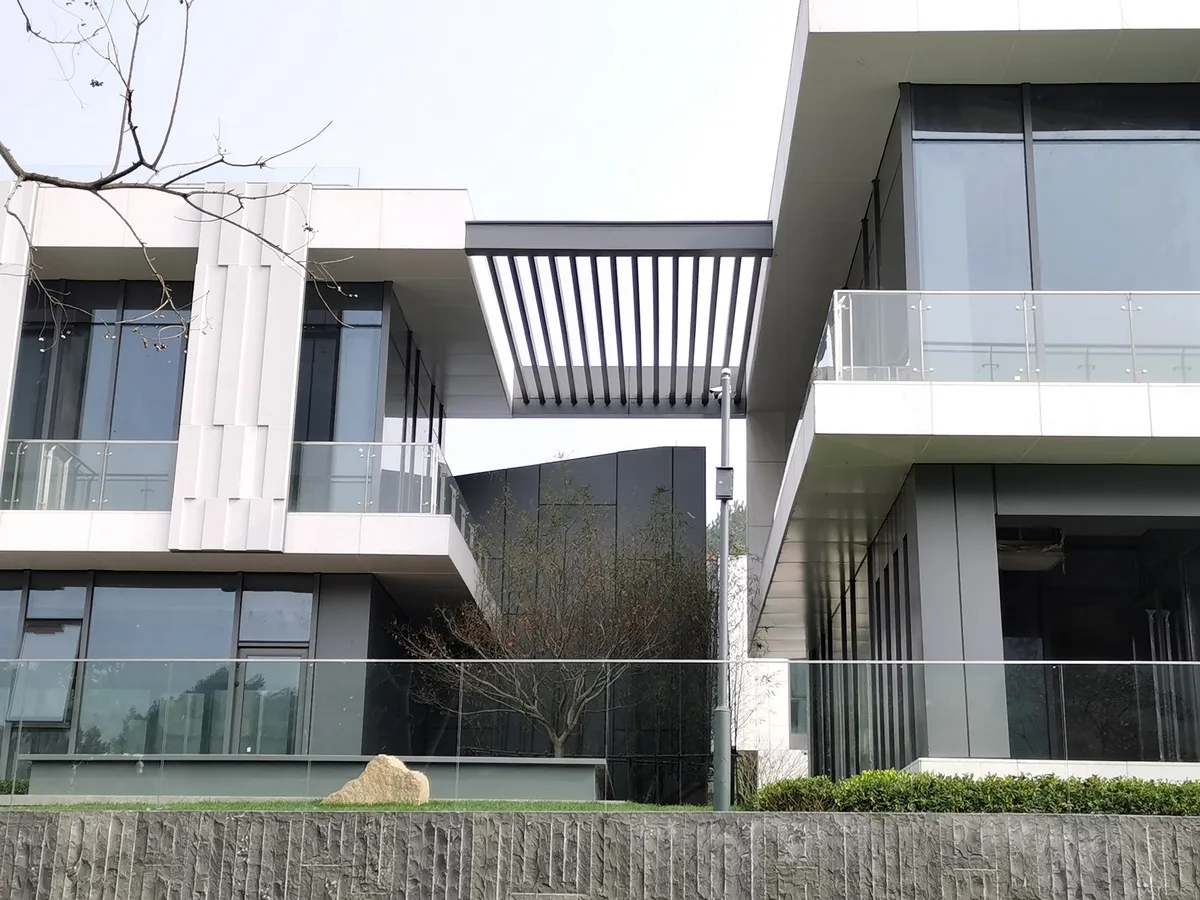
Outdoor connecting space between individual buildings △ N © Hong Wei
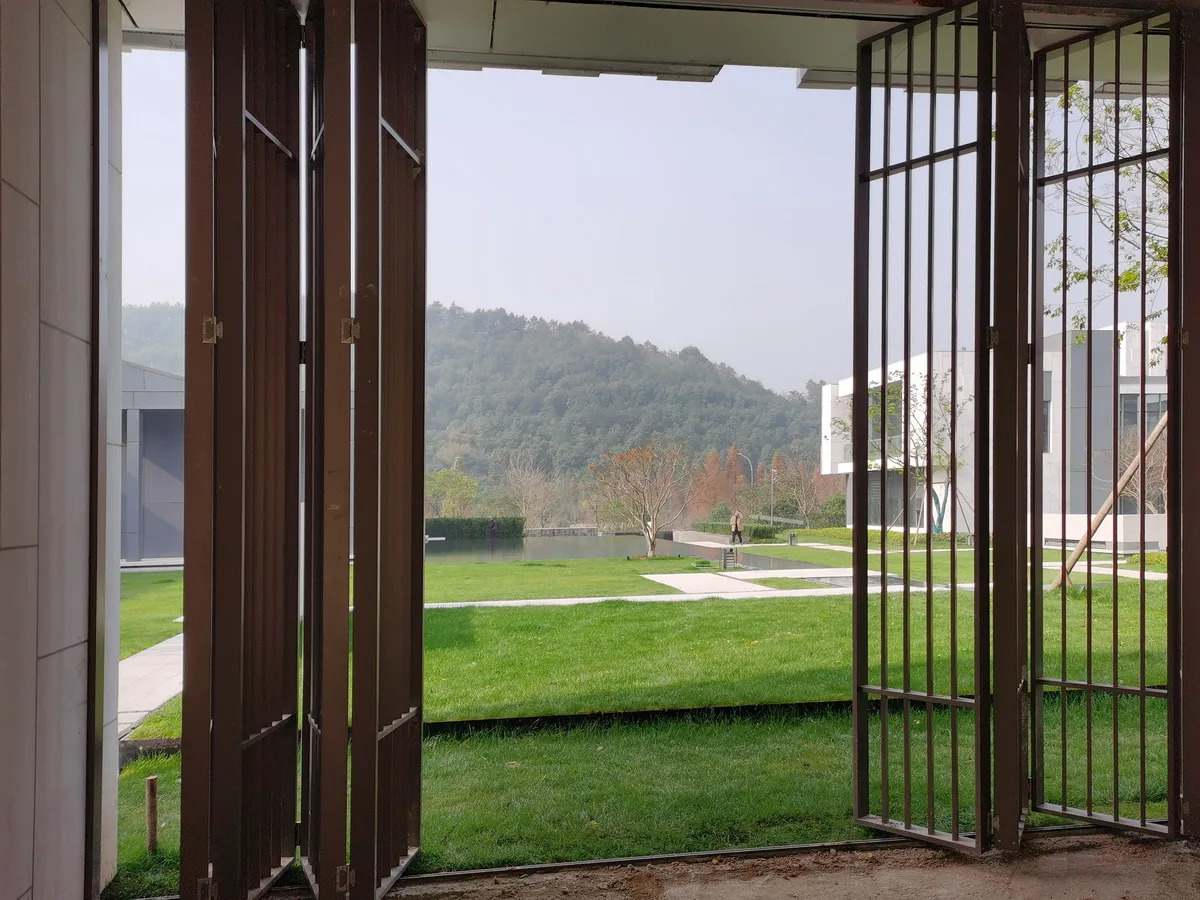
△ S2 upper level view outward © Hong Wei
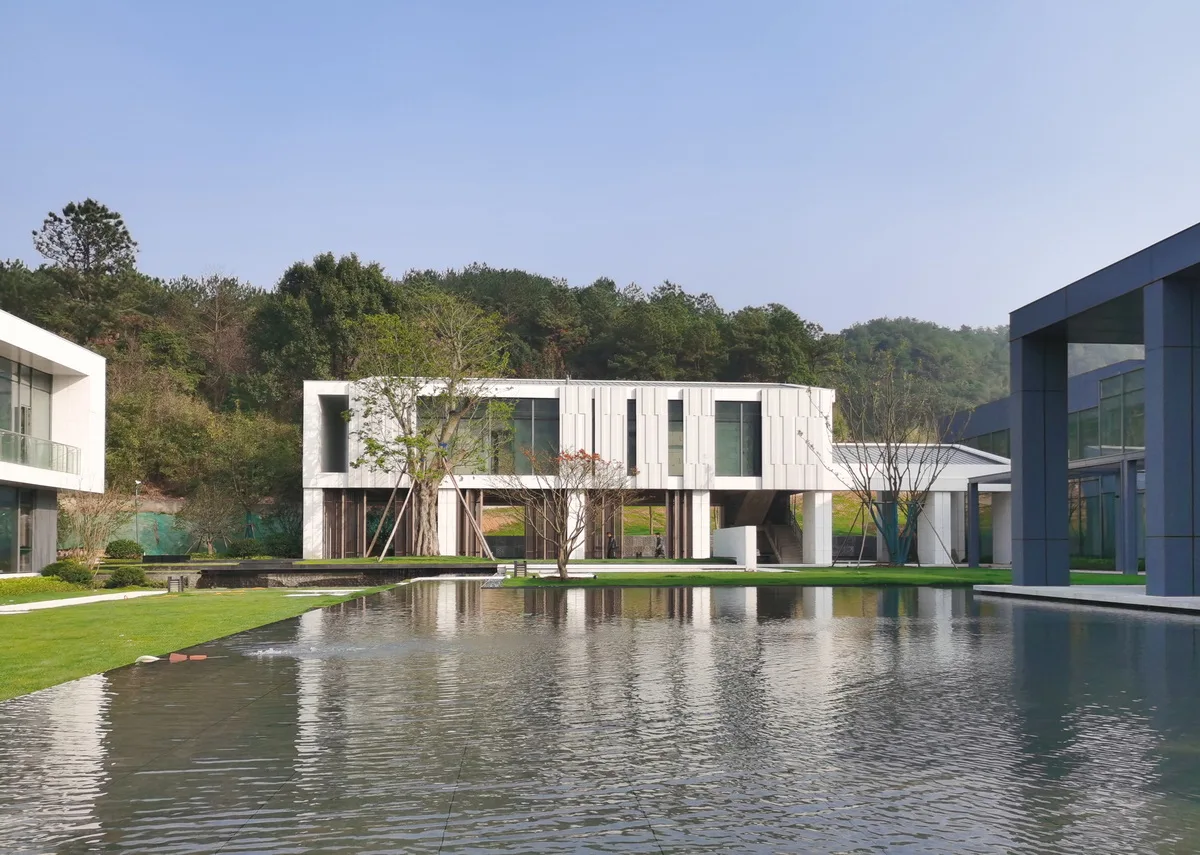
△ Large atrium pool + S2 © Hong Wei
Originally, the individual buildings in the complex were isolated and enclosed, lacking a strong spatial hierarchy. We redefined the spatial character of each building by manipulating exterior wall materials, adjusting light orientations, and modifying the relationship between eaves. Additionally, exterior corridors were designed along pedestrian pathways to connect landscape corridors, creating a cohesive overall group.
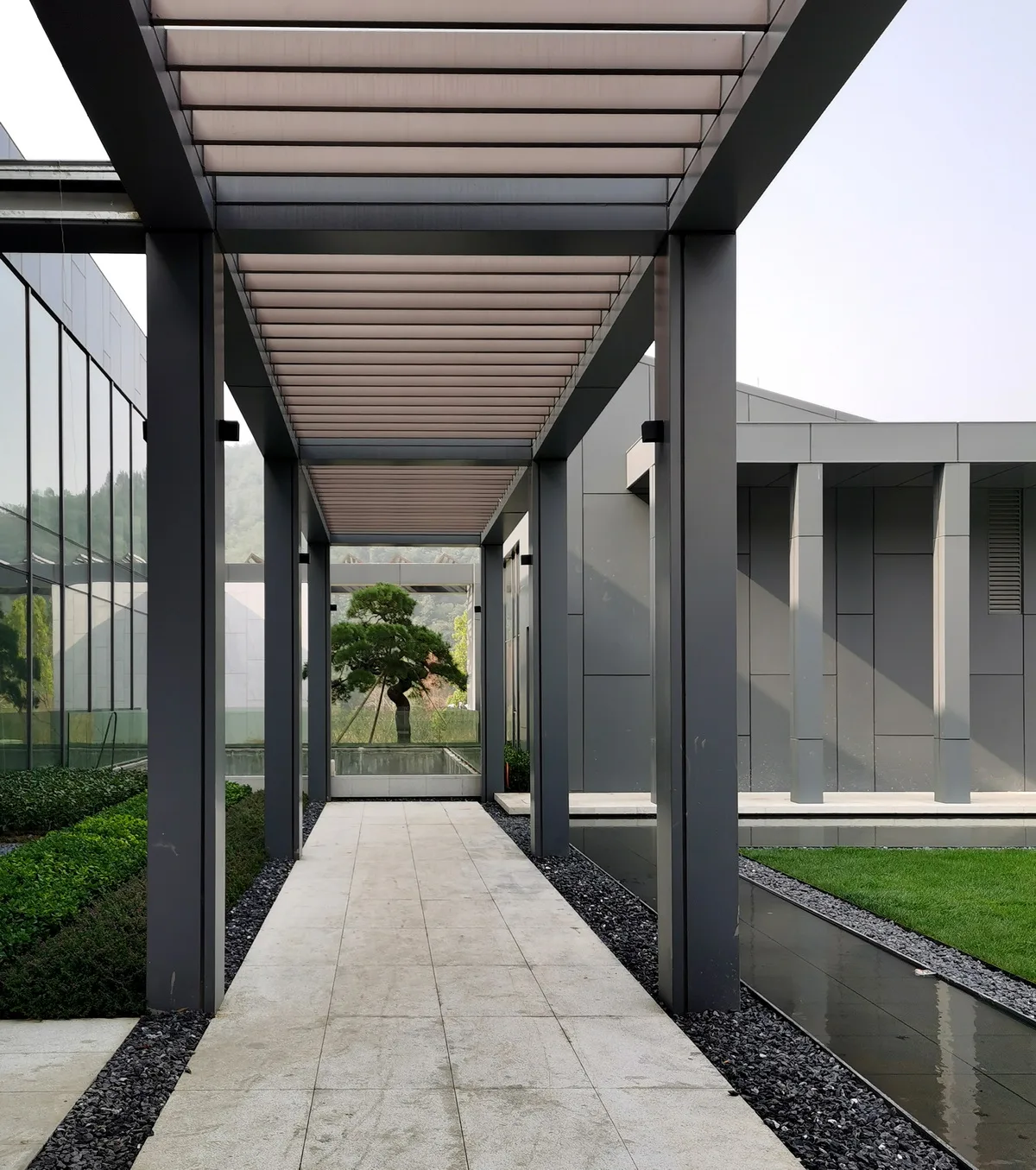
△ S group connected to the outer corridor © Hong Wei
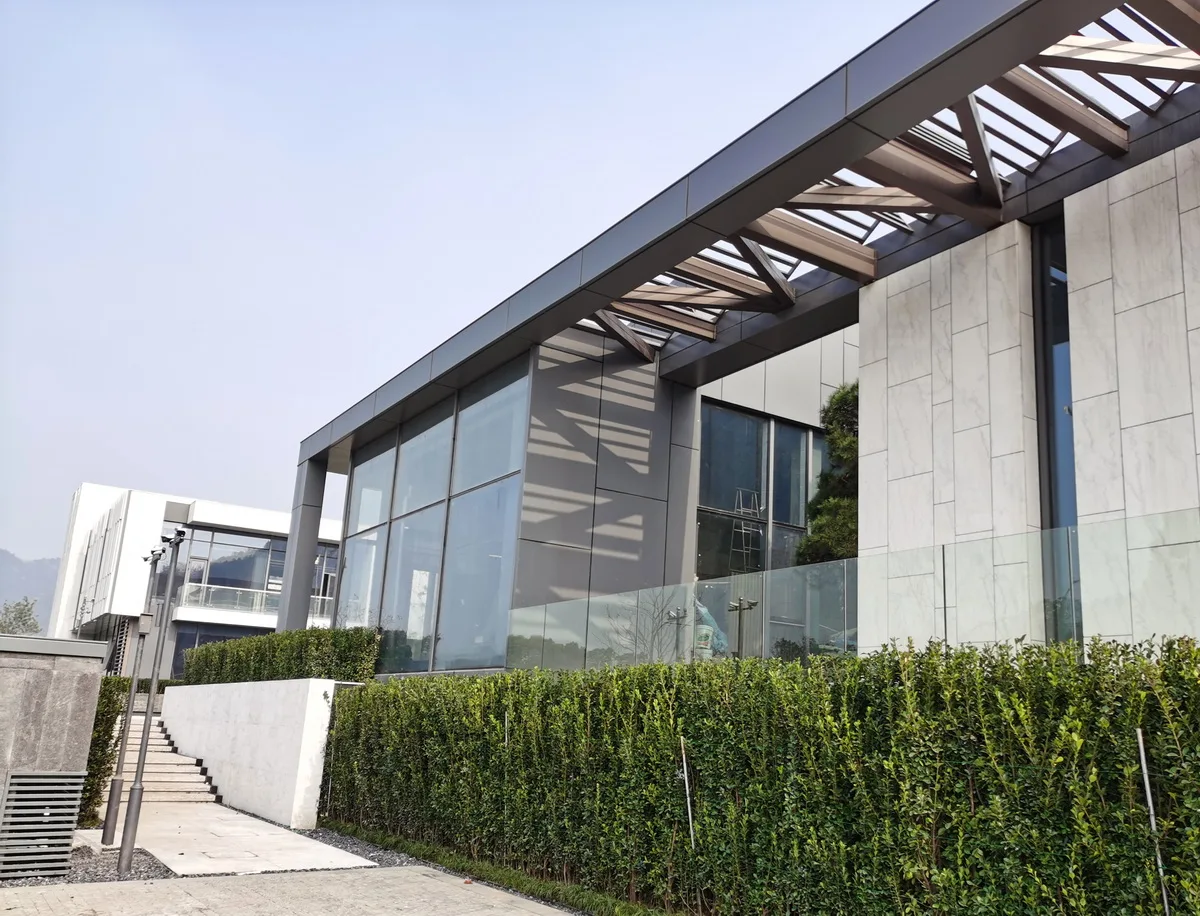
△ Integrated aerial architecture of S1,3 © Hong Wei
In the N area complex, we softened the physical presence of the centrally located N1 building by opening up the previously solid north and south walls. These walls were replaced with 6-meter-high frameless glass panels, allowing the enclosed garden space inside and the semi-enclosed small square outside to visually connect and borrow scenery from one another. This significantly enhances depth and spatial hierarchy.
Functionally, this space now serves as both a front hall and a garden corridor, bridging the past and future rather than functioning solely as an isolated small building.
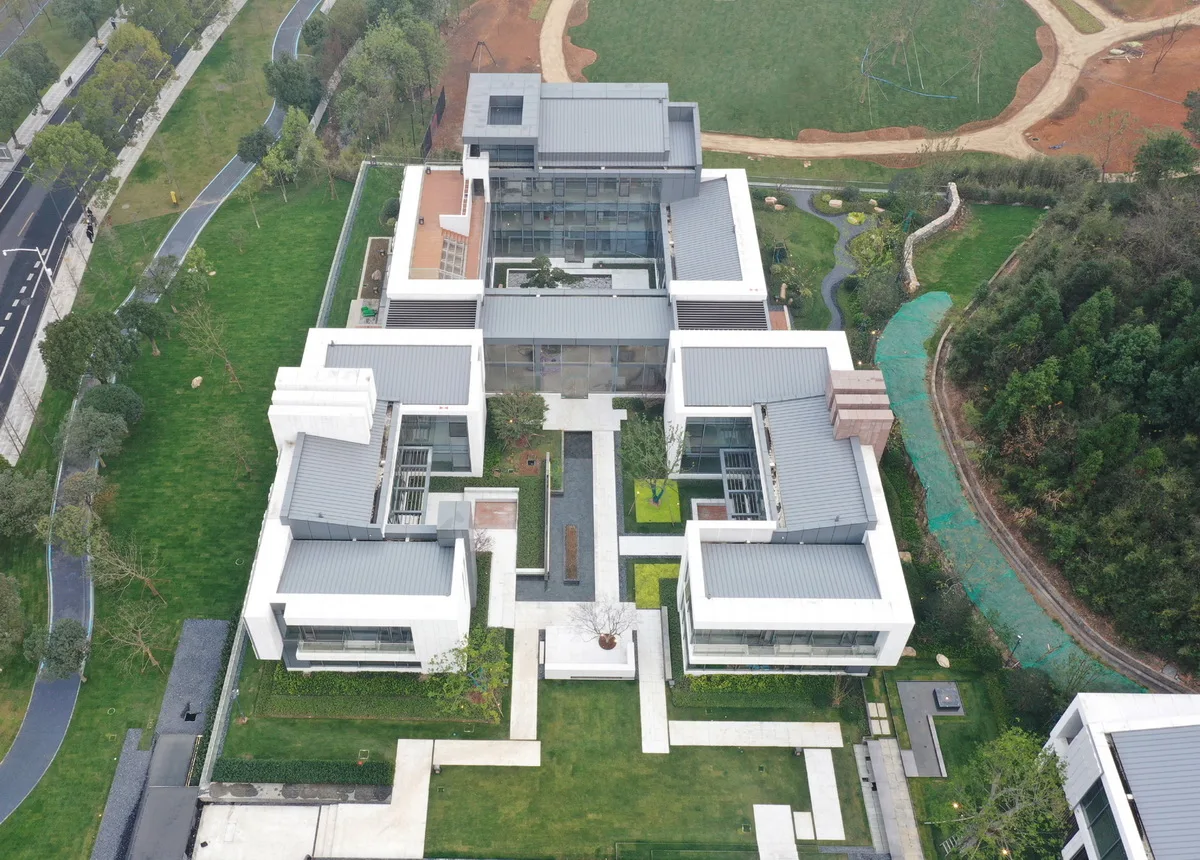
South side bird’s-eye view of Group N © Yang Jie
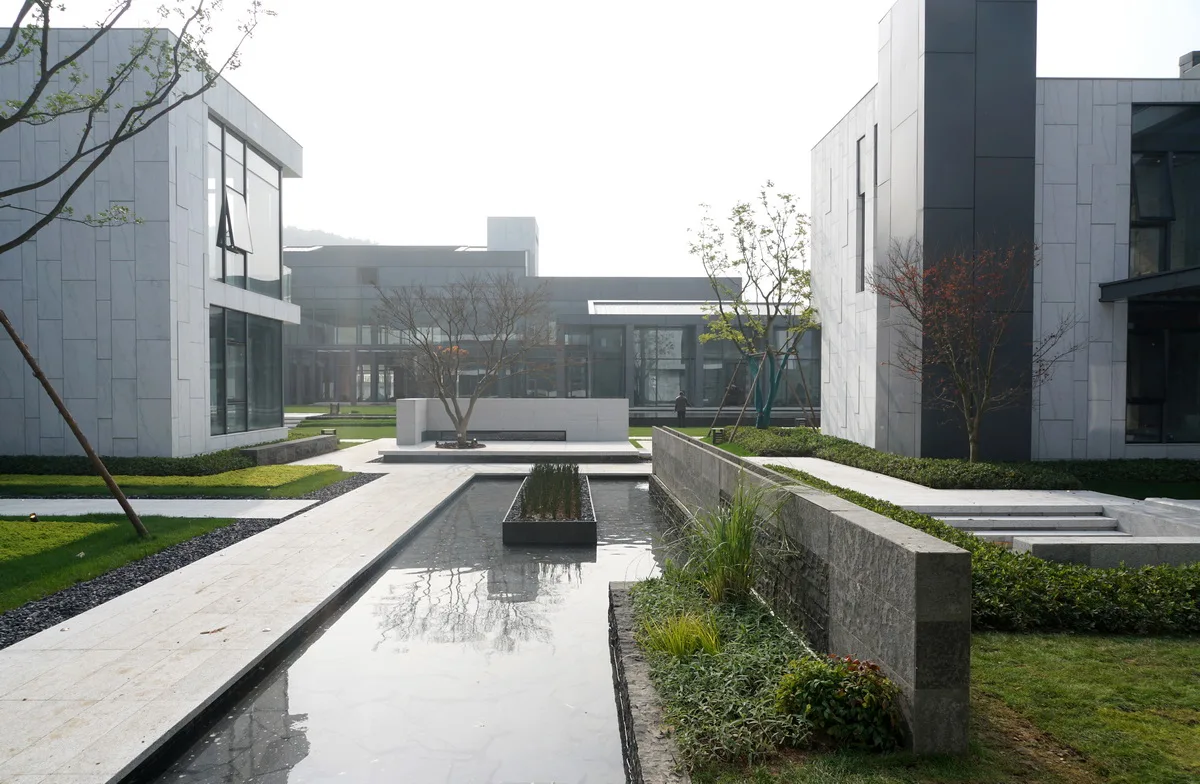
△ View south from N1 towards the outdoor courtyards of N2 and N3 © Hong Wei
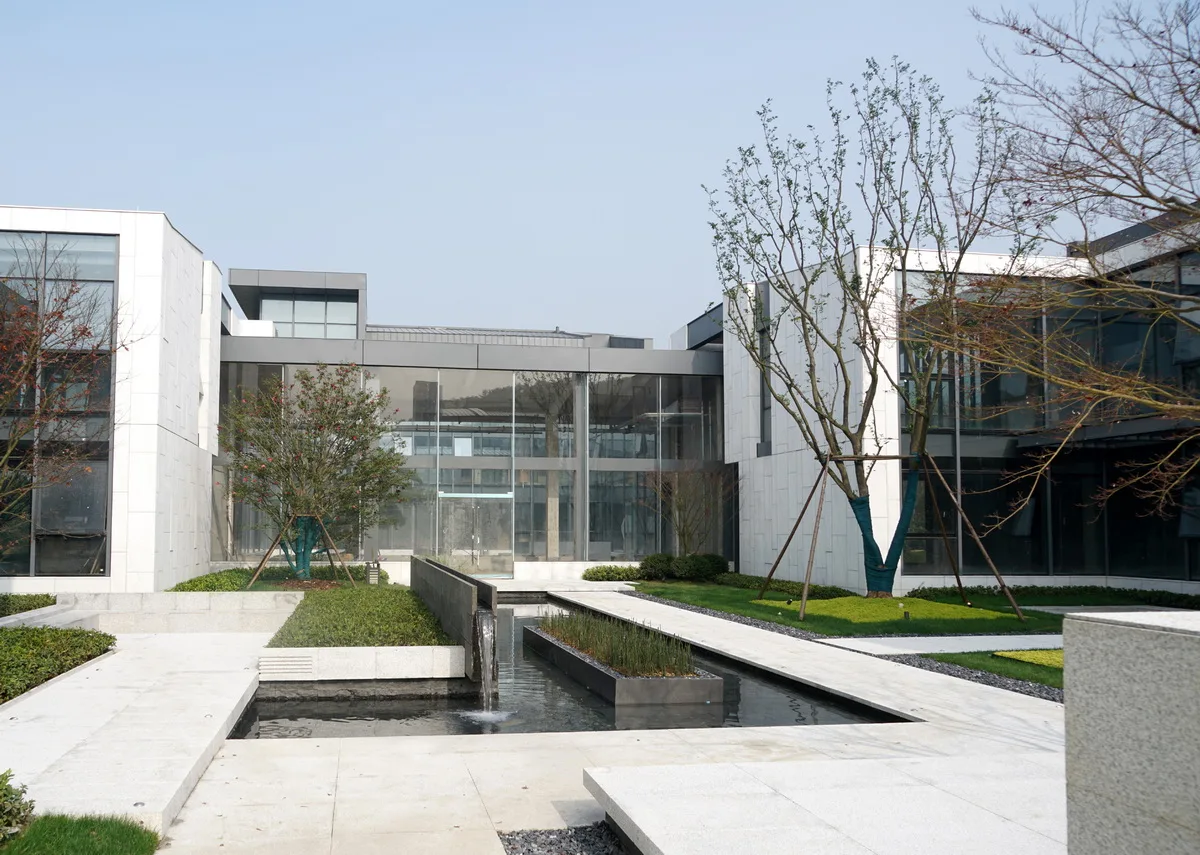
△ Outdoor atrium of N2 and N3 © Hong Wei
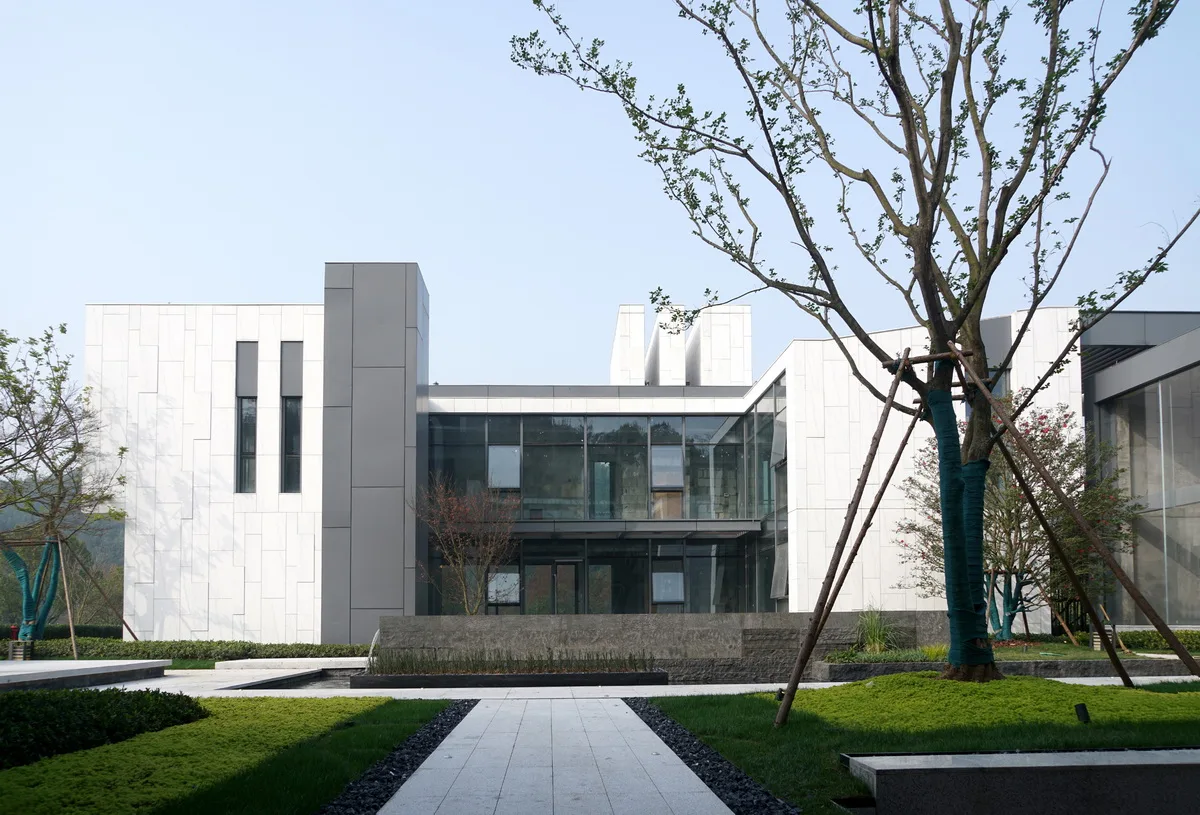
△ N2 outdoor courtyard © Hong Wei
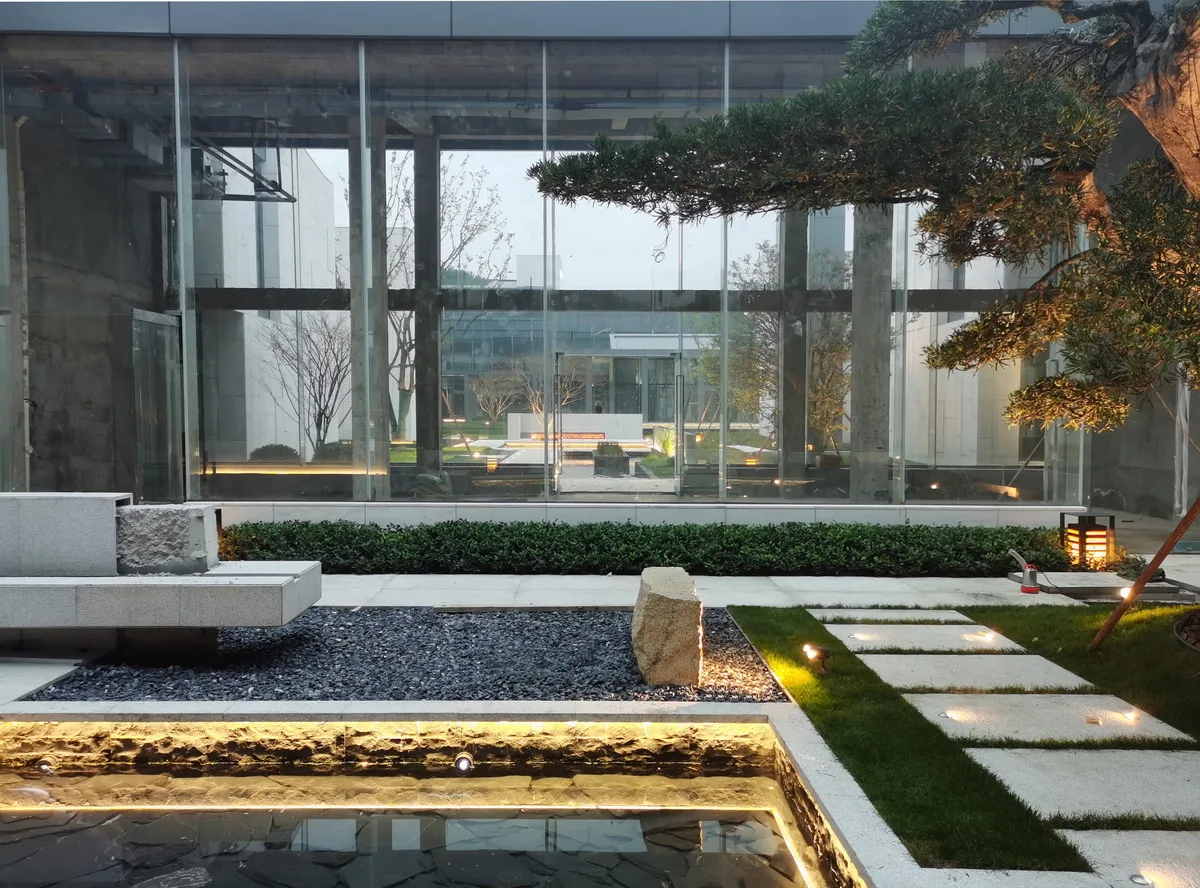
△ Interconnected inner atrium of N1 and outer atrium of N2,3 © Hong Wei
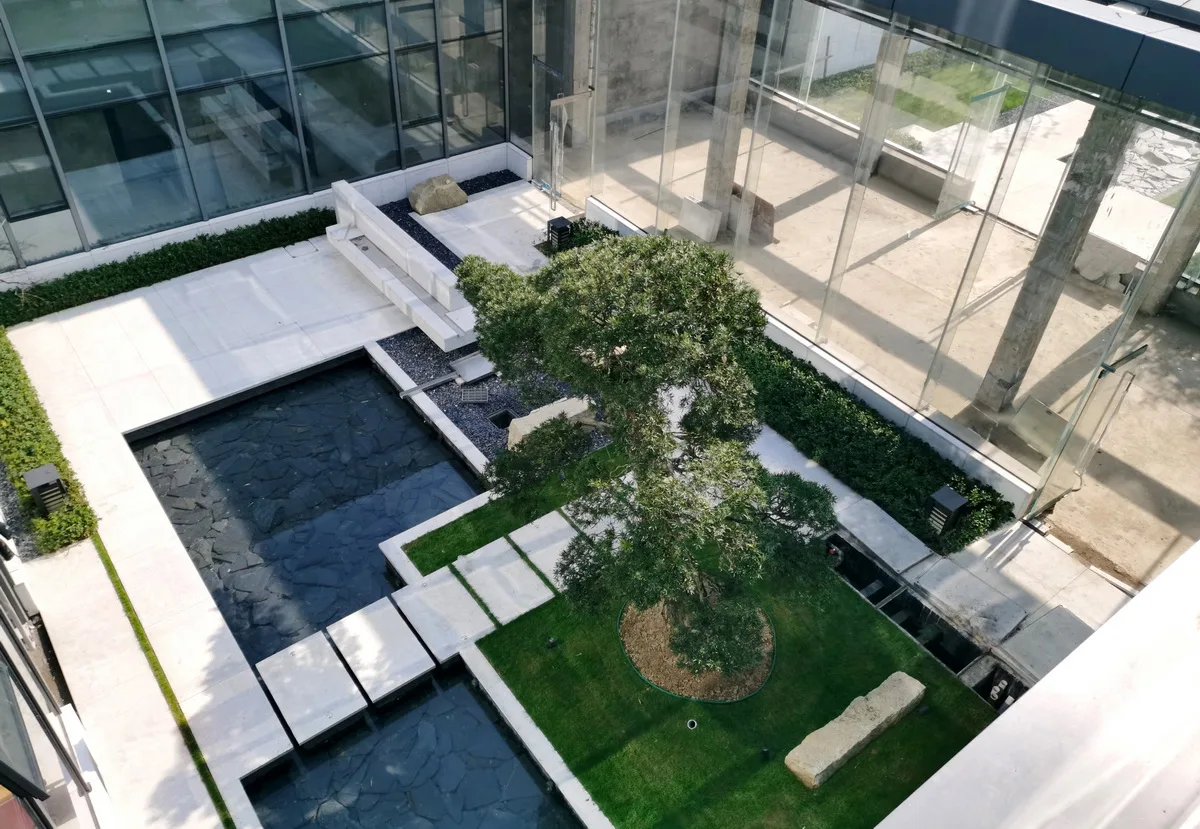
△ View of N1 courtyard © Hong Wei
The original sloped-roof building lacked a terrace and had only a small balcony. We constructed a steel platform on the northwest corner of the sloped roof to create a rooftop garden, offering spectacular views of Qianhu Lake. This rooftop garden provides a warm sunlit spot in winter and a wonderful gathering place to enjoy evenings with friends under the bright moon during summer. The rooftop garden serves not only as a functional space but also as a seamless integration of the building’s fifth façade with the surrounding wetland park environment.
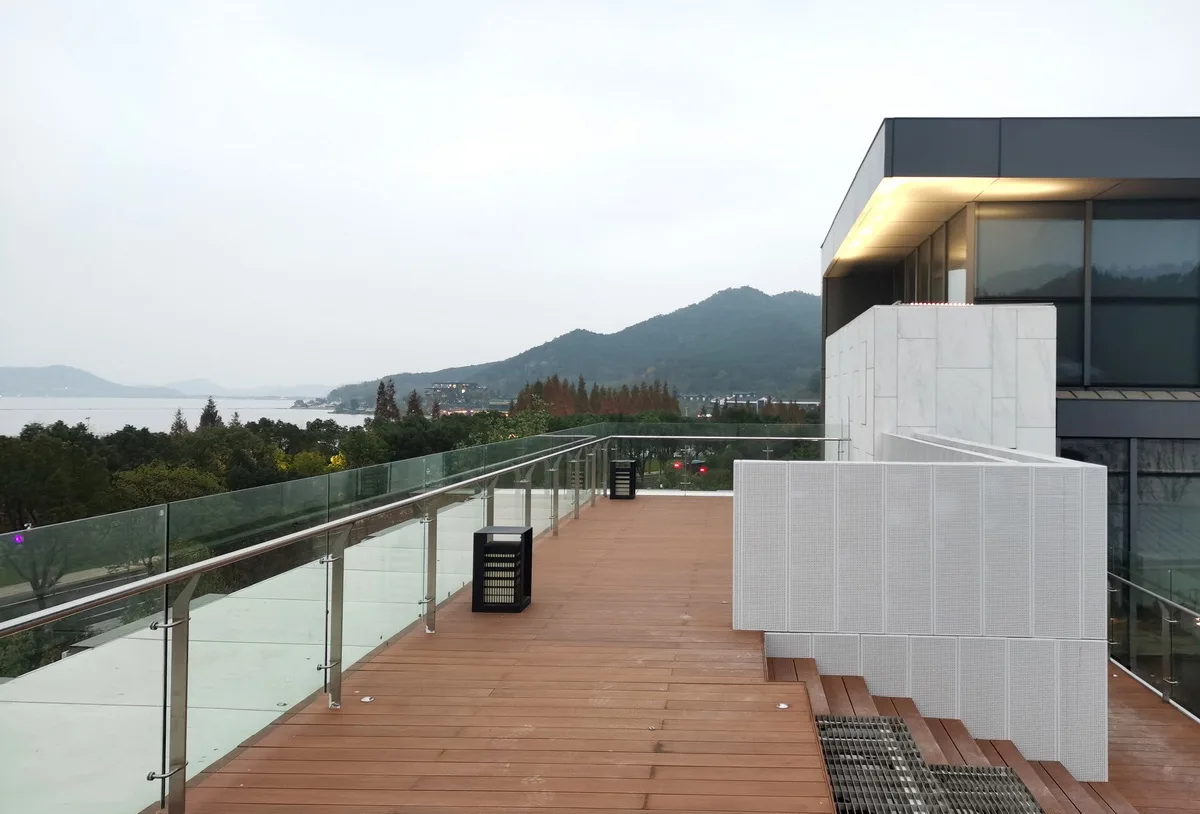
Looking northwest from the rooftop garden, overlooking Dongqian Lake © Hong Wei
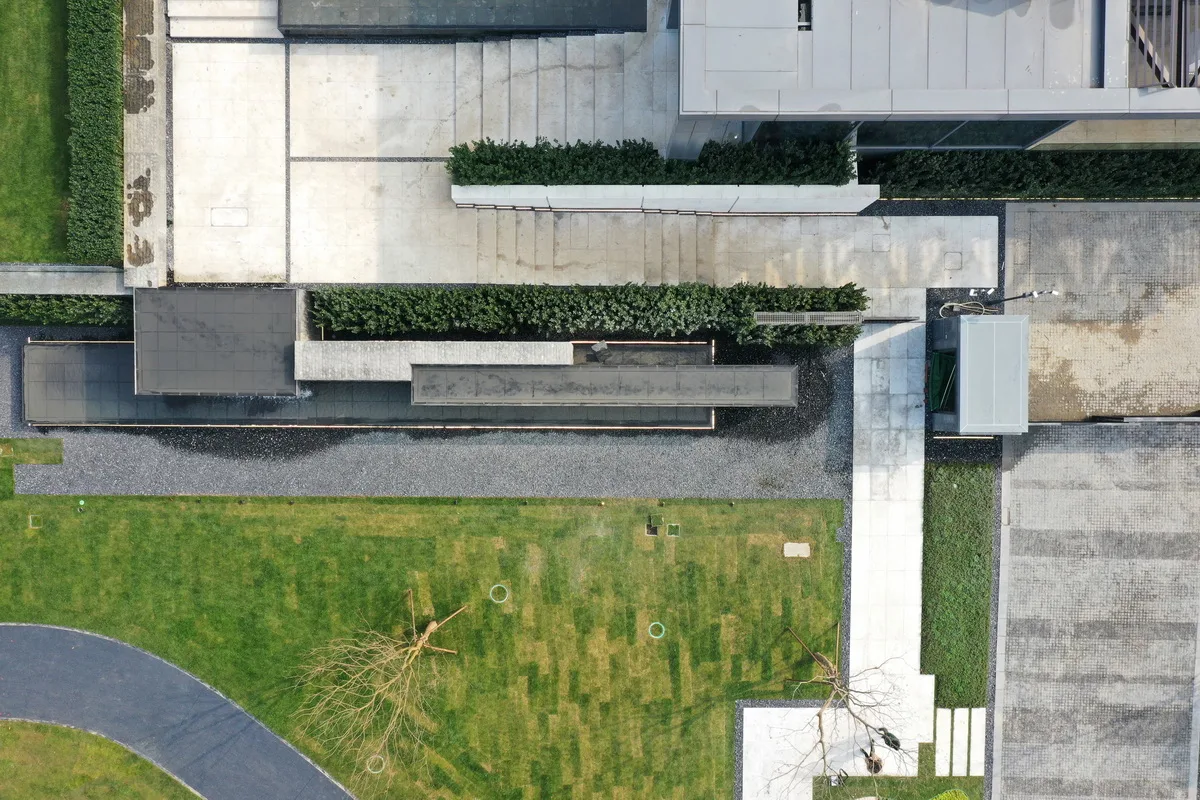
△ View from the main entrance © Yang Jie
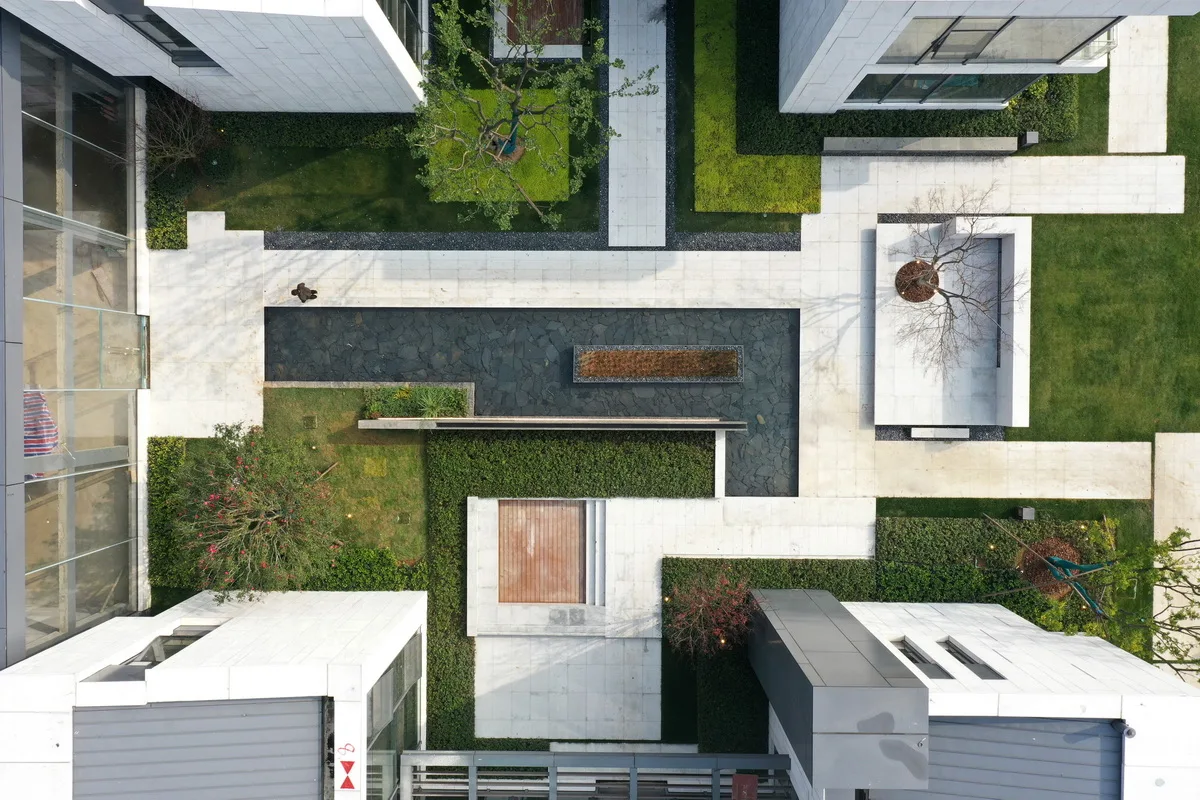
Top view of landscape in Zone N © Yang Jie
Design Drawings
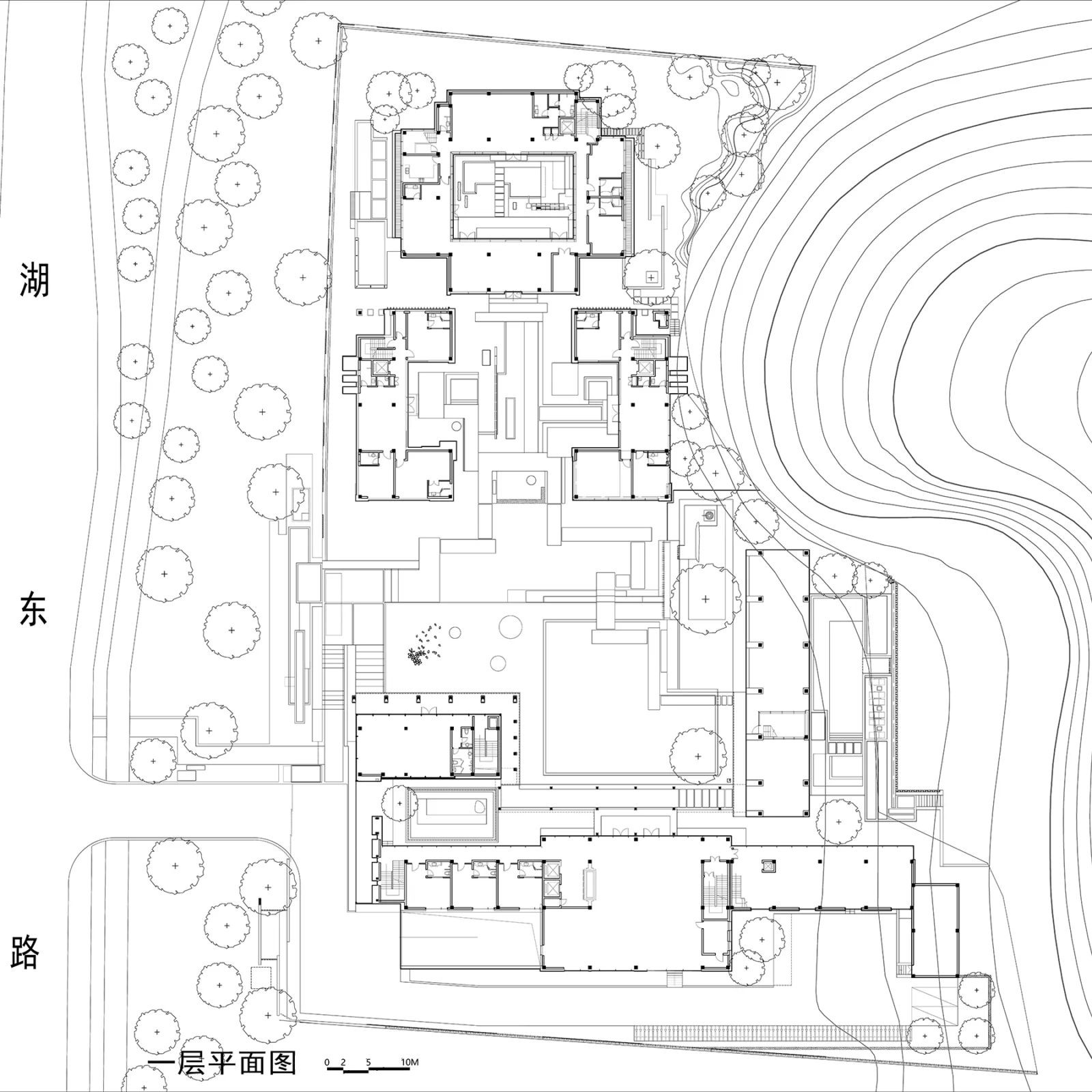
△ First floor plan
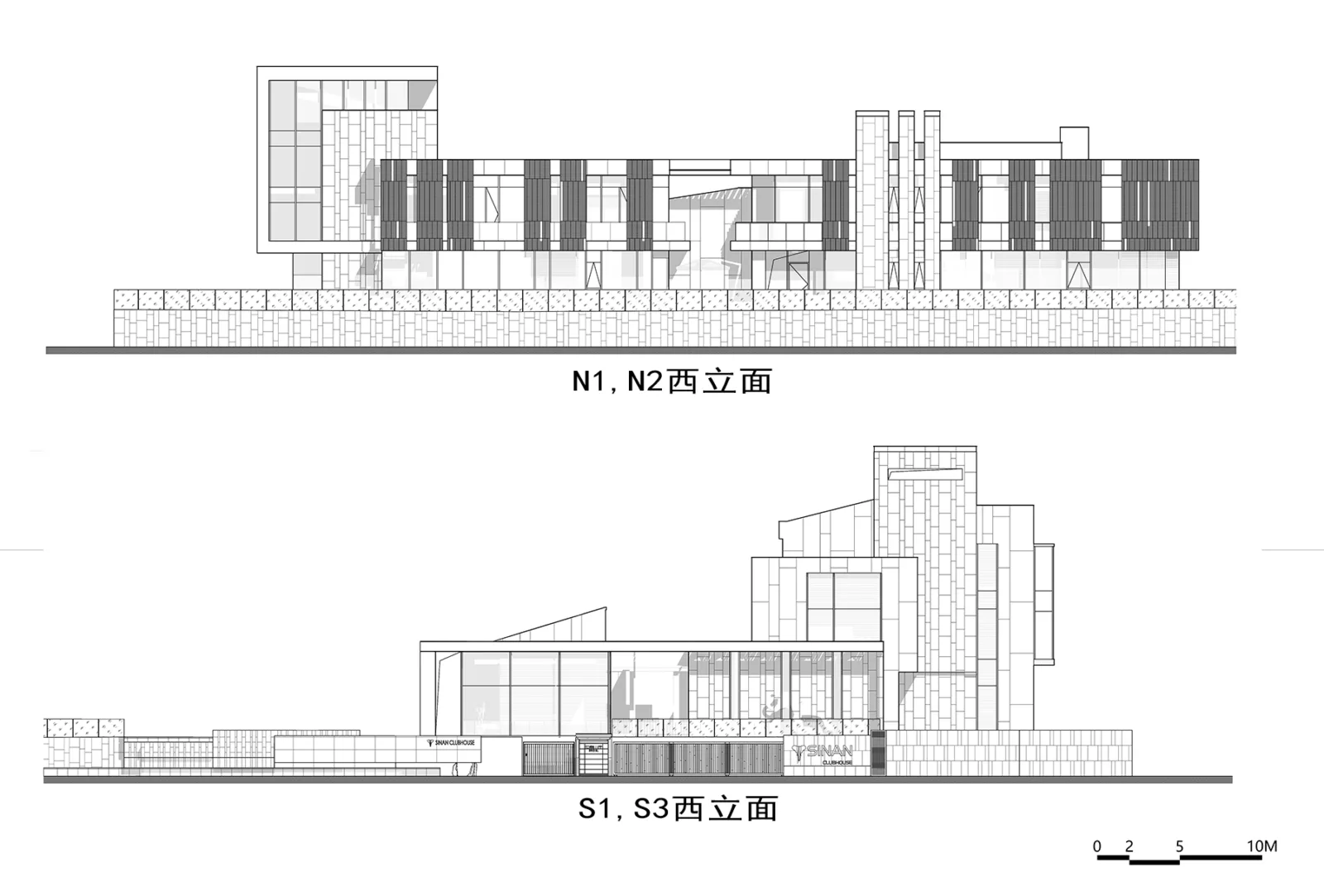
△ West facade
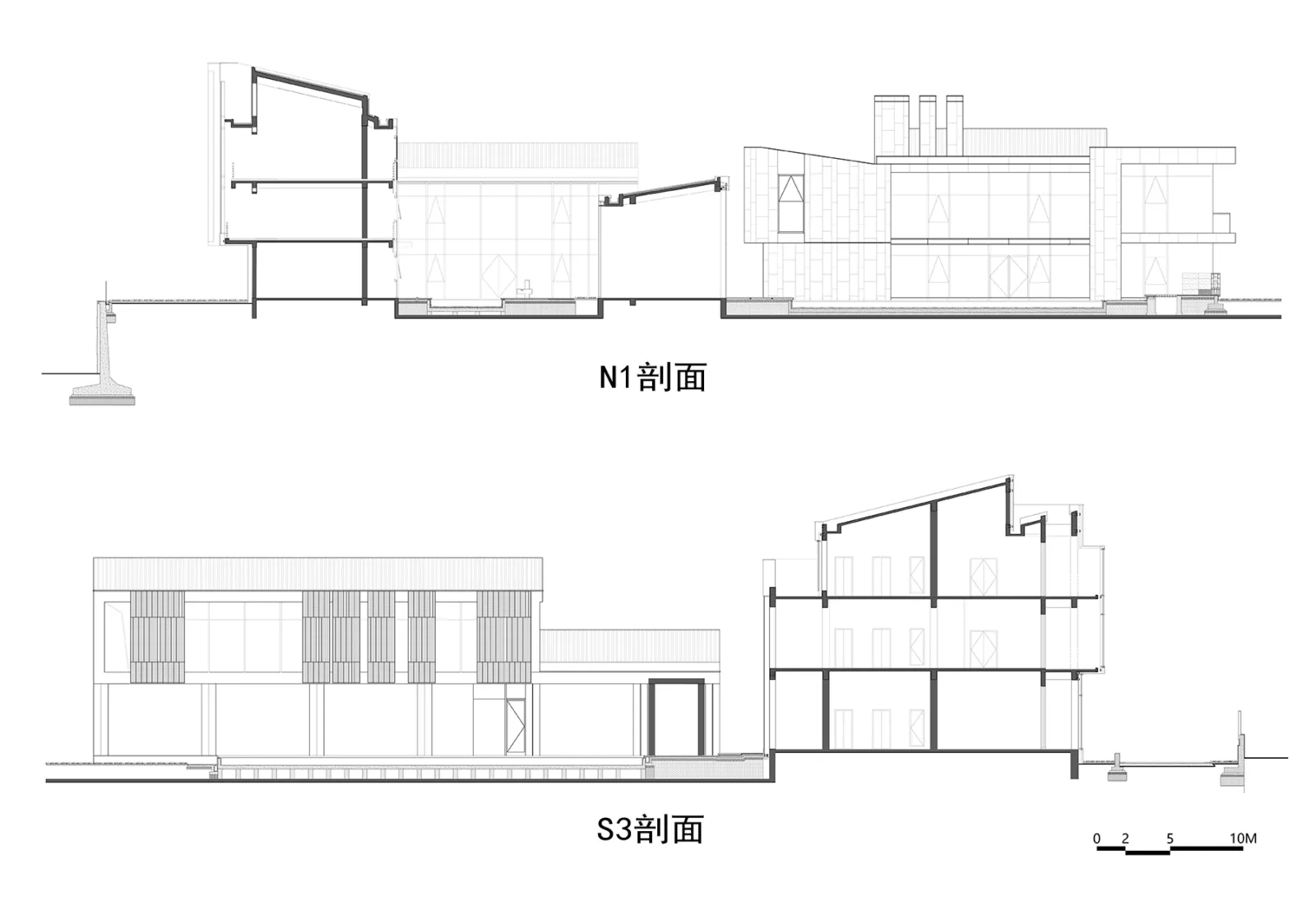
△ Cross-section of N1 and S3
Project Information
Project Name: Qianhu 02-3C Plot Project
Project Type: Architecture / Landscape / Renovation
Location: 960 Huanhu East Road, Dongqianhu Town Tourist Resort, Yinzhou District, Ningbo City
Design Studio: Hong Wei Studio
Lead Architect: Hong Wei
Structural Engineer: Su Huanchang
Landscape Design: Zhejiang Yimorandi Ecological Construction Co., Ltd
Landscape Team: Yang Jie, Wu Xucheng, Shao Zengli
Lighting Designer: Zhang Licheng
Construction Manager: Zhao Jihong
Photographers: Hong Wei, Yang Jie
Owner: Suiya Cultural Tourism Development (Ningbo) Co., Ltd
Design Period: July 2019
Construction Period: September 2019 to December 2020
Land Area: 8,667 square meters
Building Area: 4,245 square meters above ground, 4,659 square meters underground












Must log in before commenting!
Sign Up