
In the process of rapid urbanization, urban spatial innovation often results in homogeneous urban spaces and landscapes due to similar renewal paradigms. Consequently, cities lose their unique local characteristics and spiritual vitality, with old buildings playing a crucial role in this transformation. Addressing how to achieve the sustainable reuse of old buildings while meeting the evolving demands of urban development remains an urgent challenge. Beyond fulfilling basic functional needs, buildings must also embody technological, aesthetic, and spiritual qualities that can be experienced and preserved.
The 2020 renovation project of the Guiyang Bearing Factory offered an excellent opportunity to explore these ideas.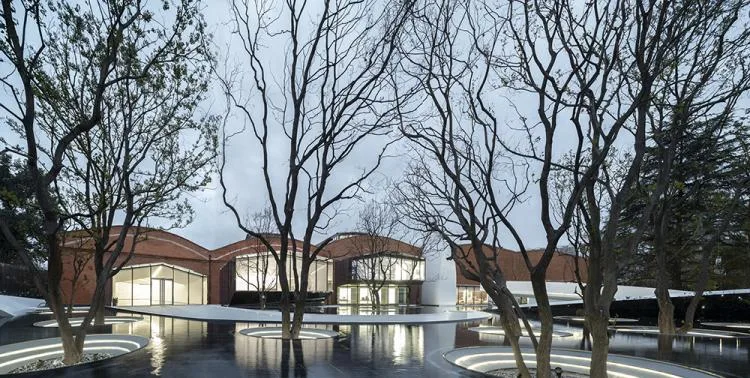
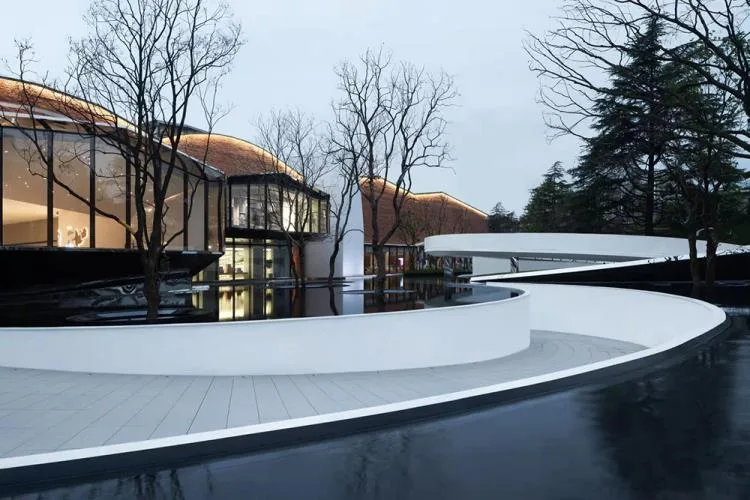
△ Guiyang Bearing Factory © Zhan Changheng
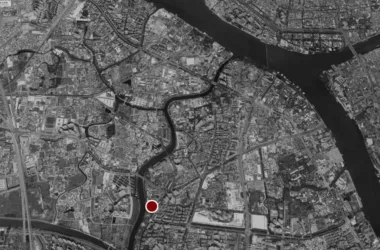
Established in 1958, the Guiyang Bearing Factory officially ceased production in 2019. The project involved a careful balance between the immense land value brought by urban renewal and the preservation of historical buildings. Five brick factory buildings, covering 5,500 square meters near a newly constructed subway entrance, along with over 10,000 square meters of surrounding land, were fully preserved.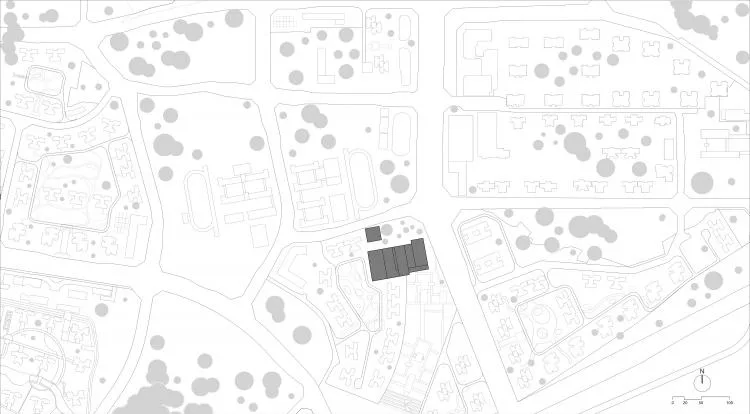
△ Site Location © self-drawn
As a former production facility, the original industrial function of Guiyang Bearing Factory has faded within the urban context. Alongside functional transformation and spatial improvements, the renovation also emphasizes spiritual intervention. The project aims to reconstruct a symbiotic relationship between the spiritual realm and urban life by integrating elements such as memories of cedar trees, an urban “life theater” landscape, and a timeline representing the spiritual world.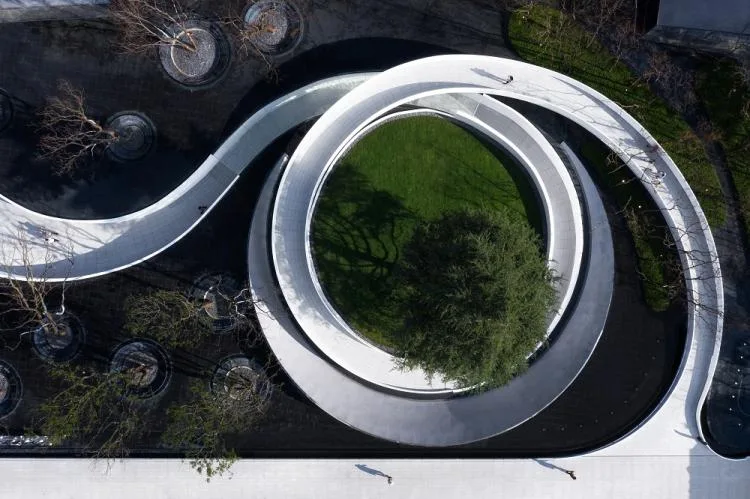
Cedar trees in the field © Lin Shuo
Architecture engages in dialogue with its natural surroundings. When architectural space harmonizes with its site environment, it gains a unique urban atmosphere. Within the factory area, a cedar tree has grown for decades. Though hidden within a dense thicket, this tree dominates the entire site. By organizing the space around it, the cedar becomes the central figure. Existing elements narrate their historical formation and context, inviting visitors to explore the spatial story.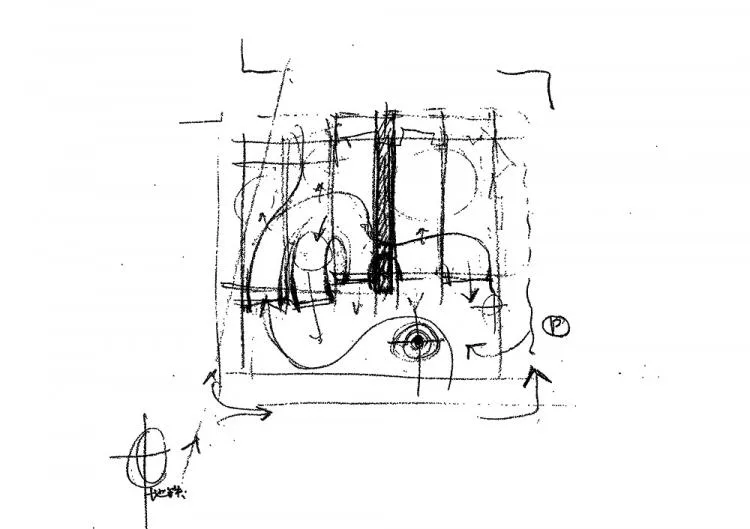
△ Design manuscript © Zhan Tao
A large, gentle white circular ramp was constructed in the site’s central area, surrounding the cedar tree and serving as a key guiding feature. The cedar, as the site’s centerpiece, remains fixed and acts as a memory point within the spatial composition. Visitors can walk, flow, and engage in a dialogue between old and new along this pathway.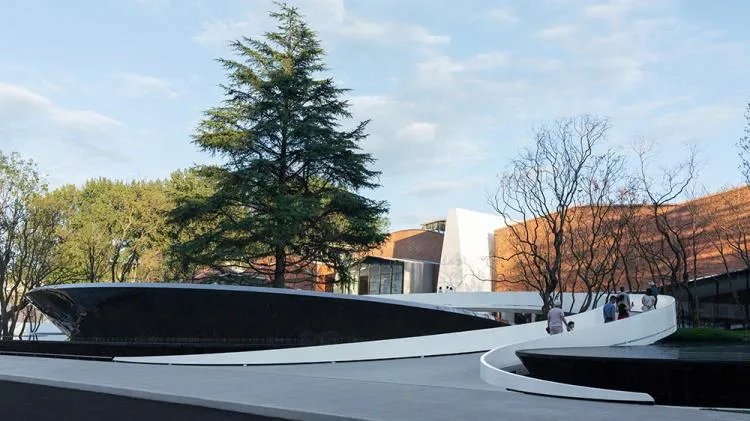
△ Circular ramp entrance © Qiu Ripei
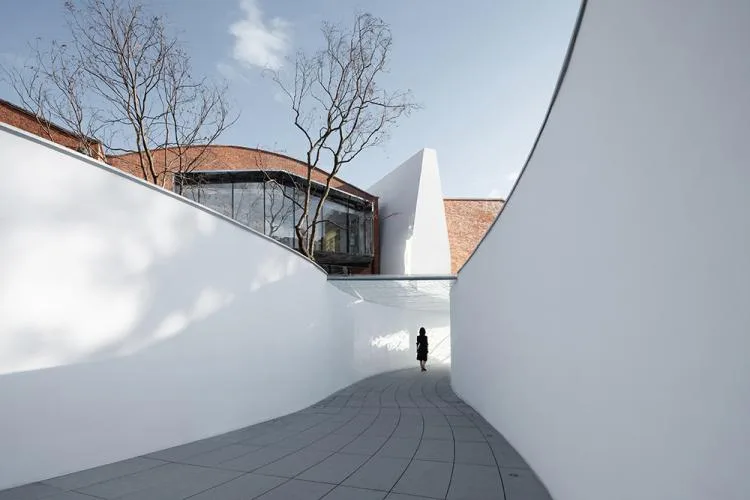
The relationship between circular ramp, water surface, and buildings © Qiu Ripei
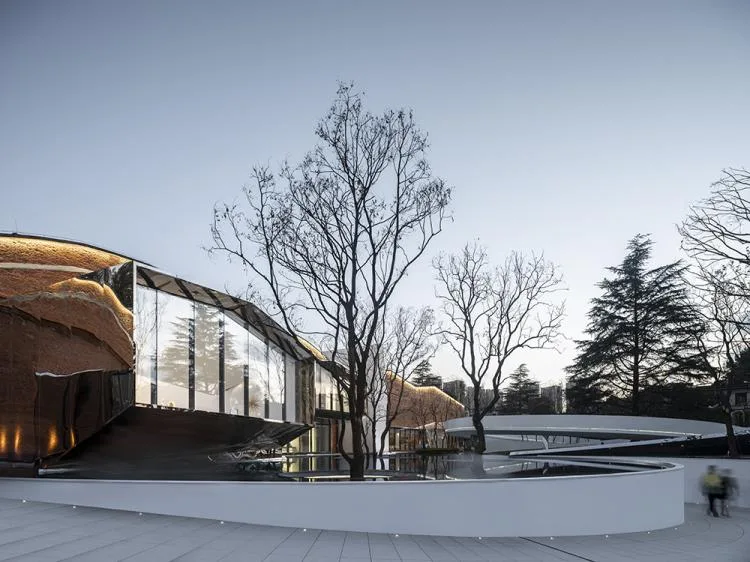
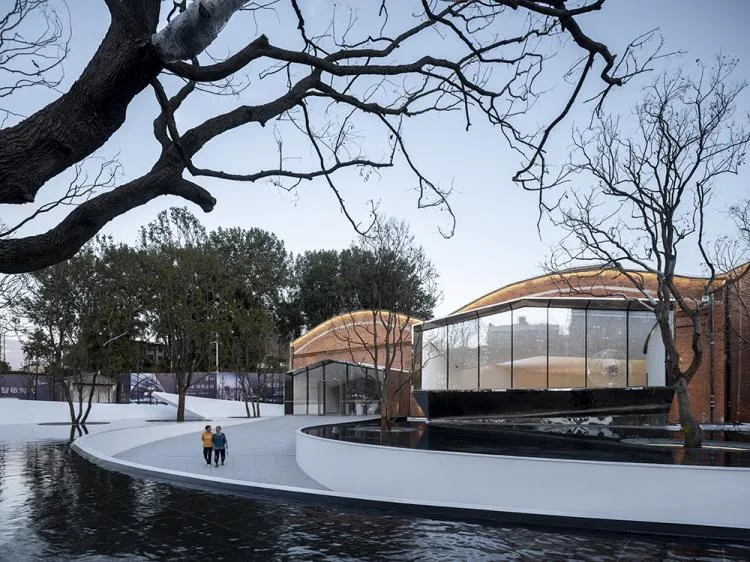
△ Entrance of the renovated bearing factory © Zhan Changheng
The corridor extending from the circular ramp continues into the interior of the factory building, connecting multiple functional areas: an immersive museum, exhibition hall, book bar, coffee shop, lecture hall, children’s playground, and sports center. Together, these elements form a vibrant urban living complex, transforming the factory into a lively container for city life.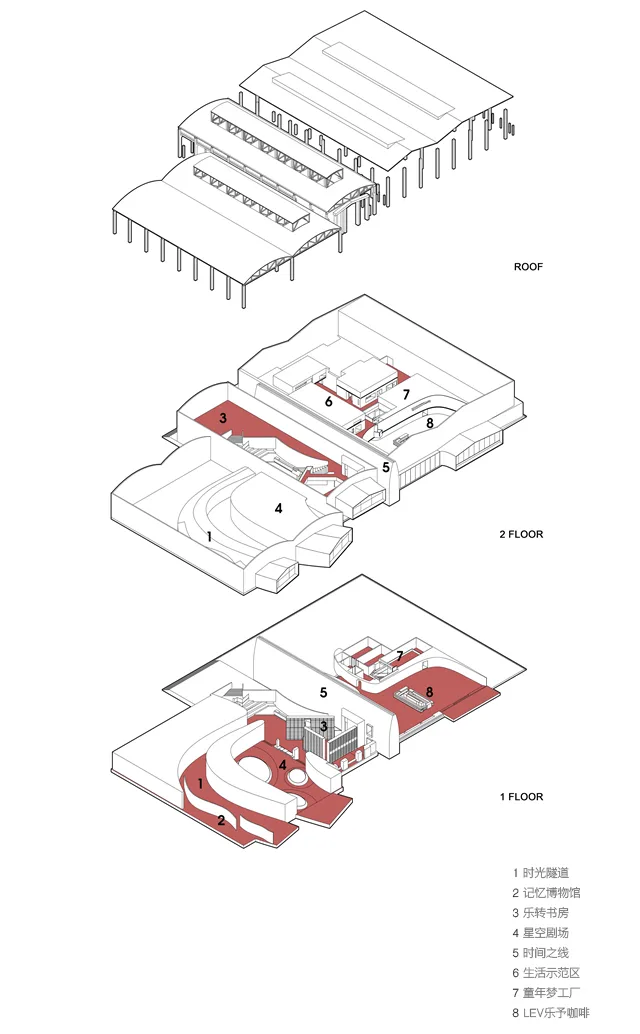
△ Indoor Space Analysis Diagram © Symbiotic form
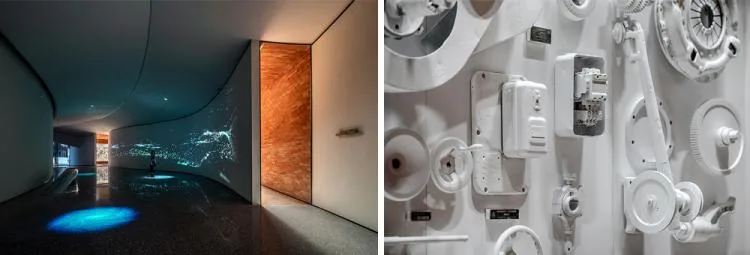
△ Memory Museum, Time Tunnel © Symbiotic form
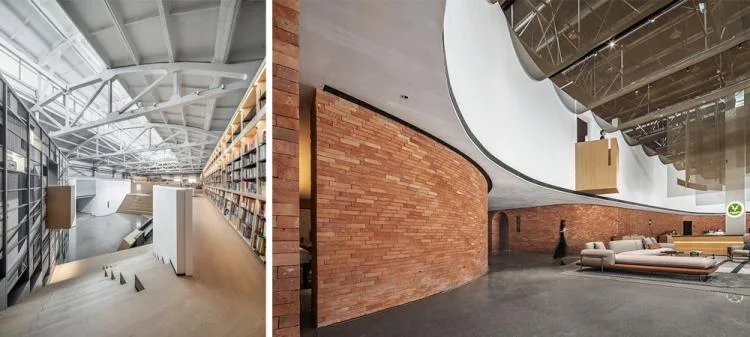
△ Le Zhuan Study, Le Yu Cafe © Symbiotic form
On the original factory’s enclosed mountain-facing wall, metal-textured spatial blocks of varying heights extend from the interior, forming an open “life theater” facing the city. The activities inside become visible to the public, integrating the building’s life into the urban landscape.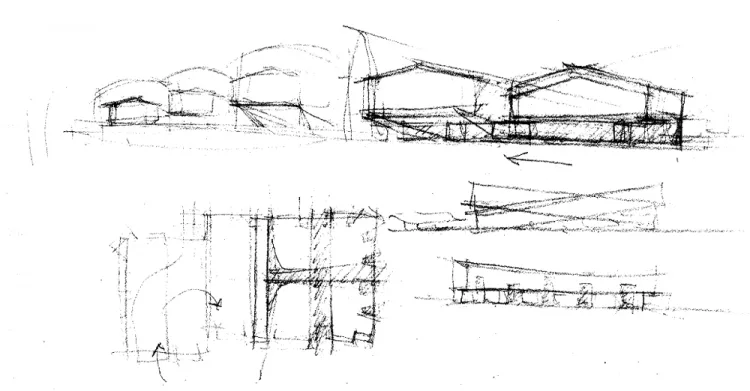
△ Design manuscript © Zhan Tao
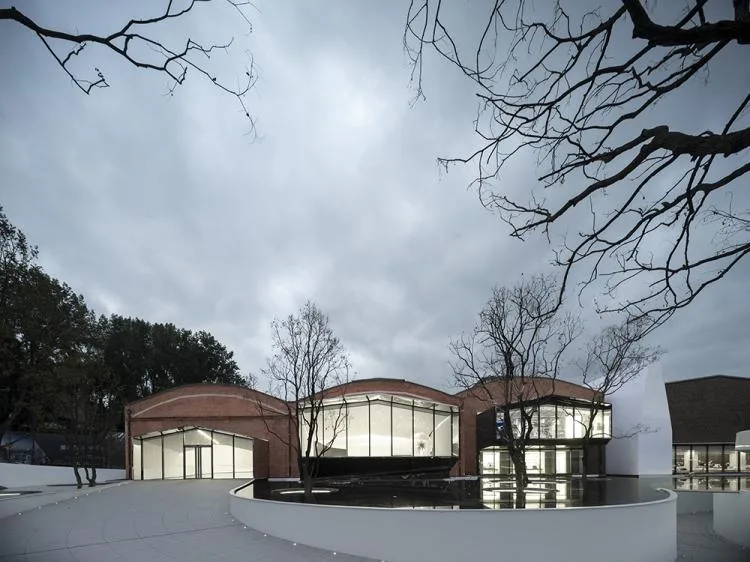
△ Newly renovated factories 1-3 © Zhan Changheng
The reflective stainless steel contrasts sharply with the factory’s rough red brick walls, blending new urban elements with the old landscape. The smooth metal surface creates striking visual and tactile contrasts, reshaping the urban space’s character.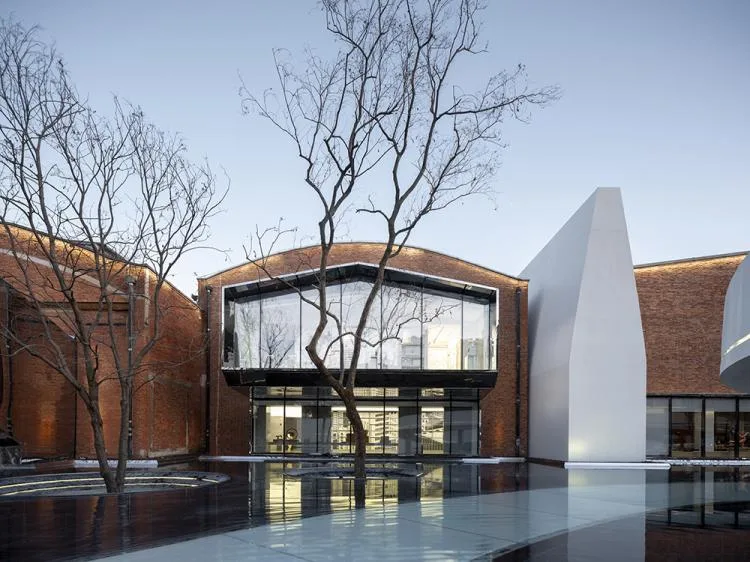
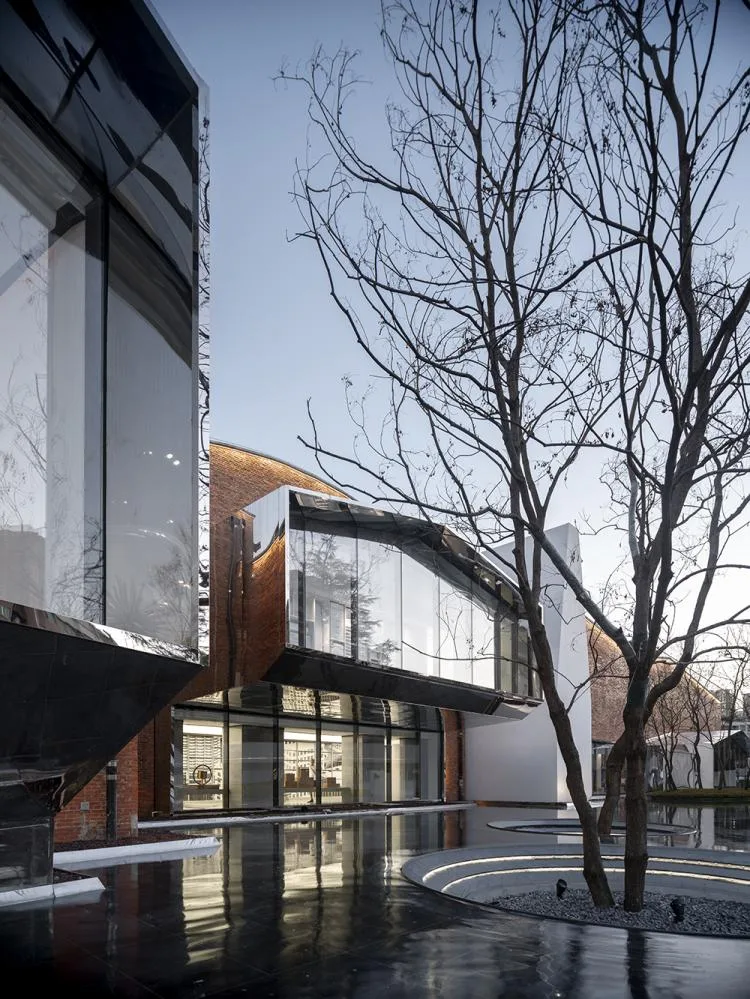
△ Renovated No.3 factory building © Zhan Changheng
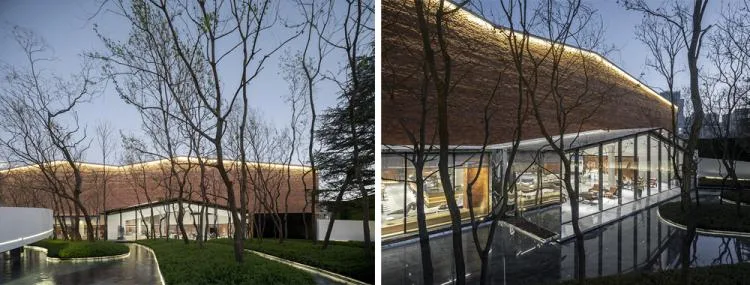
△ Upgraded Factory Buildings 4 and 5 – “Life Theater” © Zhan Changheng
Within this space, a ‘timeline’ is interspersed, providing a place for time perception and introspection inside the building.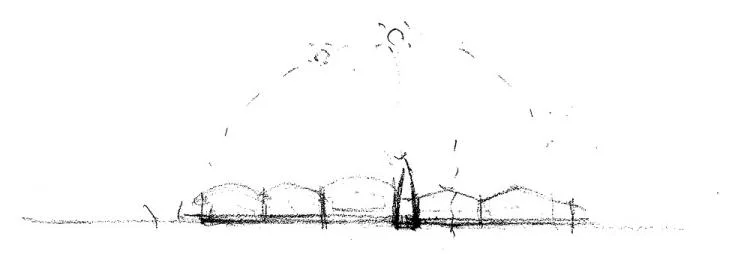
△ Design manuscript © Zhan Tao
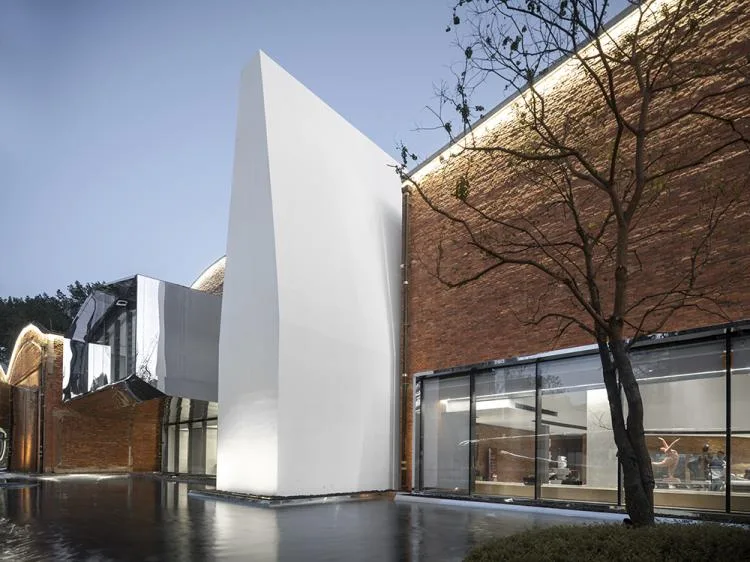
The relationship between timeline and architecture © Zhan Changheng
This narrow, elongated space—approximately 4 × 55 meters—is located between the third and fourth factory buildings and originally served as the equipment room. Through renovation and removal of the original brick horizontal walls, the tall slender volume gained depth and a sense of progression. Two curved walls gradually converge vertically, creating an upward pull within the space.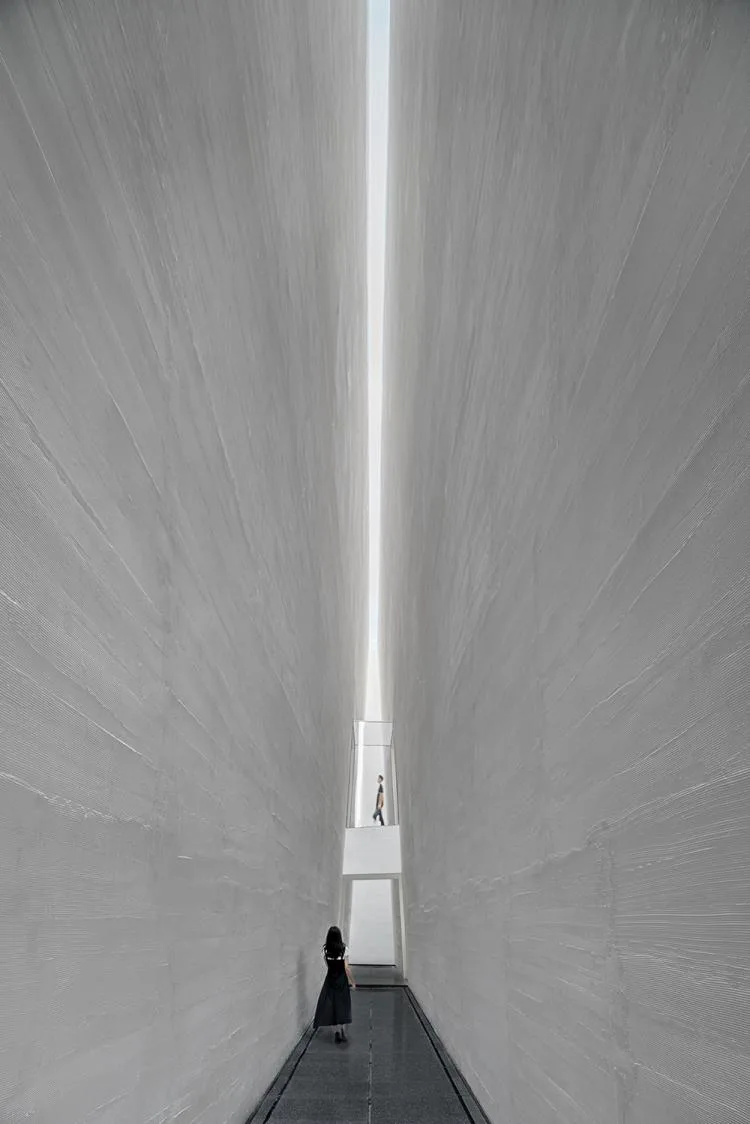
△ Spatial Light and Shadow Effects © Symbiotic form
The curved walls stop about 400mm short of the ceiling, allowing sunlight to filter through and fall onto the walls. Visitors can perceive the passage of time through the shifting light and shadow.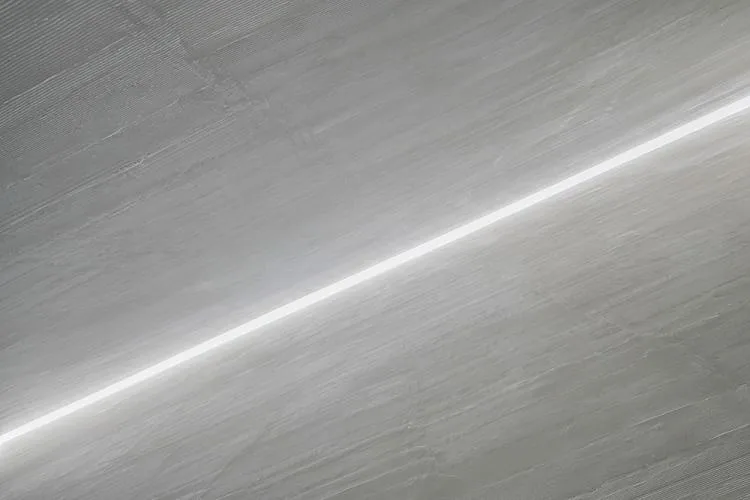
△ Gap at the top of the curved wall © Symbiotic form
Immersed in this space, visitors’ perceptions construct and are shaped by their surroundings. The white walls minimize distractions, encouraging introspection and a shift of focus from daily life to inner dialogue, inspiring endless imagination within a limited space.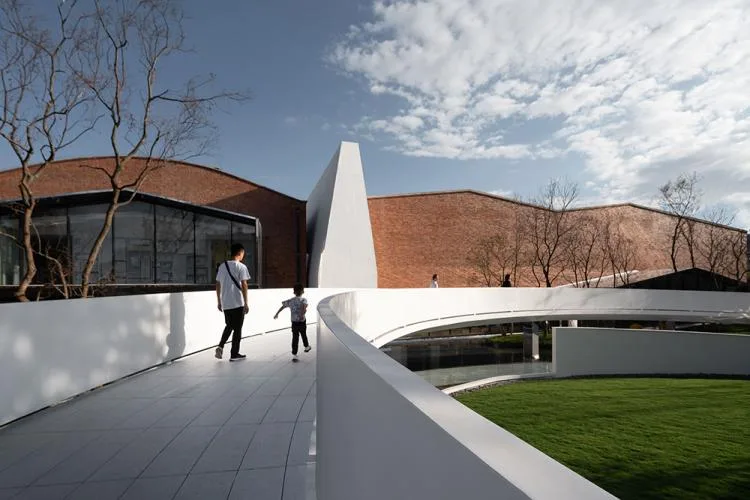
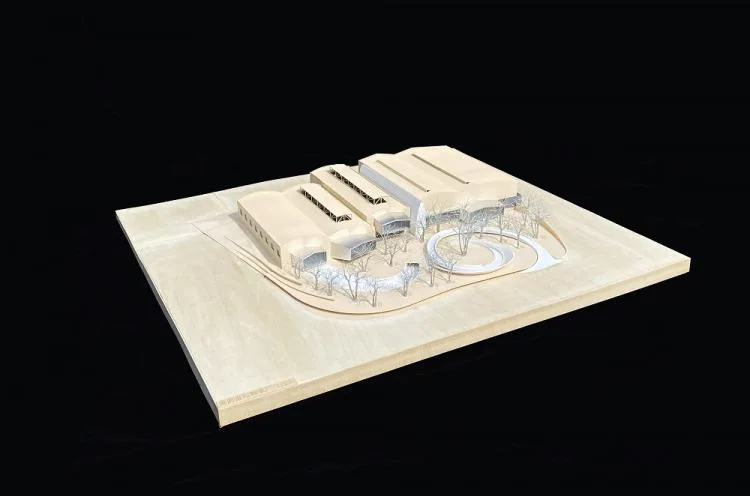
△ Model © Lin Shuo
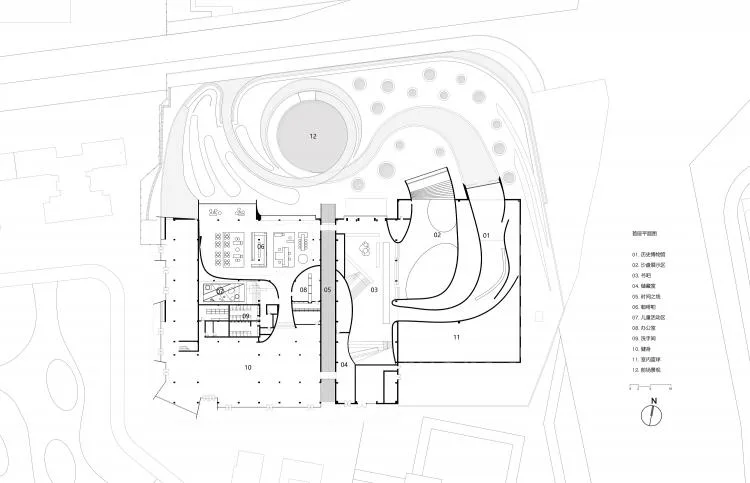
△ First floor plan
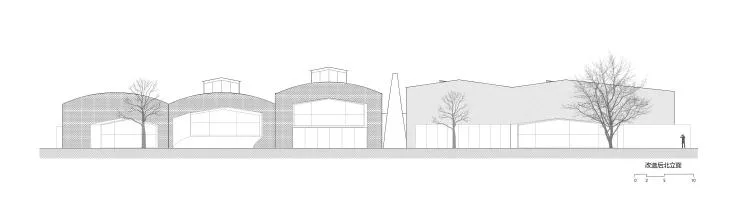
△ Elevation drawing
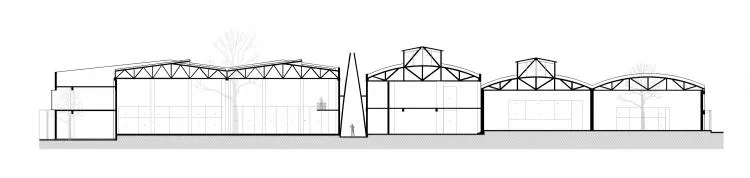
△ Section diagram
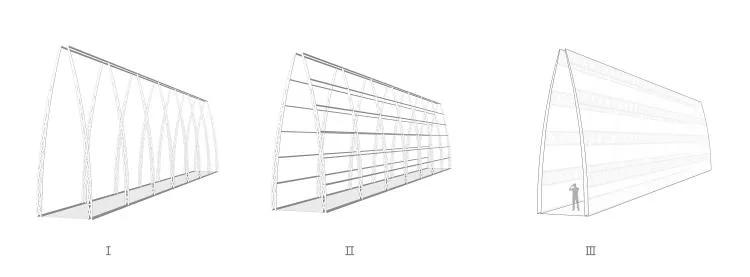
△ Timeline Diagram
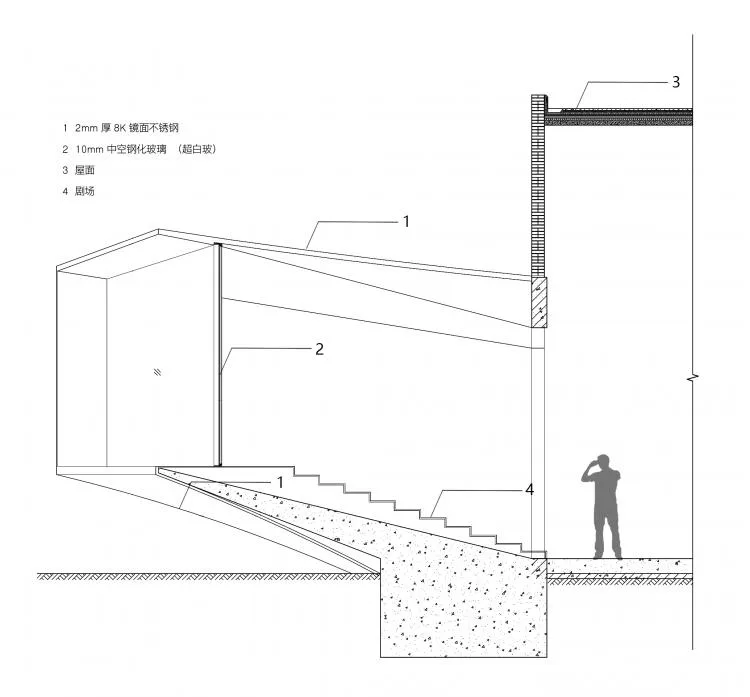
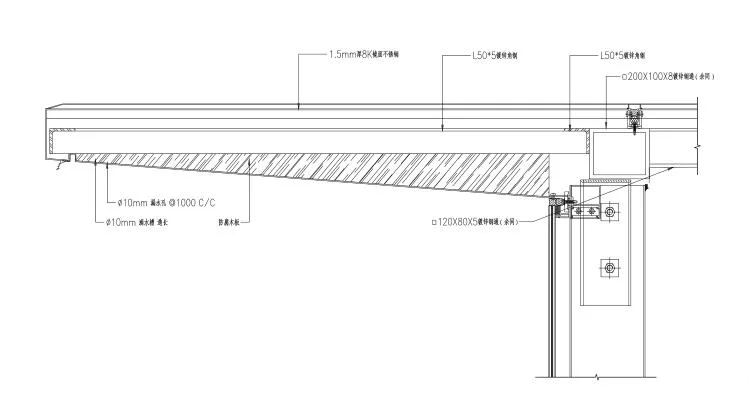
△ Detailed drawing
Project Overview
Project Name: Guizhou Bearing Factory Renovation
Location: Huaxi District, Guiyang City, Guizhou Province
Design Team: XAA Architecture Firm, Zhan Tao Studio
Lead Architect: Zhan Tao
Program Manager: Lin Shuo
Construction Team: Lin Shuo, Wu Jiedong, Wu Chao
Developer: Midea Property Southwest Regional Company
Design Period: May 2019 to November 2019
Construction Period: April 2020 to September 2020
Land Area: 14,827㎡
Floor Area: 7,960㎡
Interior Design: Guangzhou Symbiotic Form Engineering Design Co., Ltd
Landscape Design: Guangzhou Yudao Landscape Design Co., Ltd
Photography: Zhan Changheng and Qiu Wen Architecture Photography Studio












Must log in before commenting!
Sign Up