
During my time living in Europe, I resided in a small countryside town called Chirico, near the main island of Venice. This town is quite remote from the city center, with limited transportation options — only two buses run back and forth. It’s surprising that in the 21st century, even a highly developed country like Italy still has such isolated rural towns.
I often enjoyed walking along the country roads with friends, observing the variety of rural buildings, most of which were homes. What fascinated me was how each residence reflected the personality of its owner, showcasing diverse tastes, preferences, and unique interpretations of life.
The houses varied greatly in shape and color. One residence particularly stood out to me: it resembled the Venturi Mother’s House in design. Its brown, rough walls were covered with numerous scallop shells, affixed from the inside out, creating an astonishing decorative effect. This playful gesture seemed to explore new possibilities in postmodern architectural language. Whether or not the owner hired professionals, this straightforward decoration brought a warmth and emotional charm that many “designed” buildings lack.
These homes evoke an image in my mind: a hundred faces, a hundred ways of living. This contrasts sharply with the monotonous, cookie-cutter residential buildings commonly found in rural China, which are arranged uniformly and feel impersonal and rigid.
Residential buildings should be as unique and independent as the people who live in them, each with their own personality. This uniqueness doesn’t solely depend on design techniques, but on how people understand “living” and their own bodies within space. Essentially, space should provide subtle guidance. The placement of each staircase, the position of partitions, and the scale variations within different areas all influence how people move and behave — whether running, stopping, sitting, or leaning. Together, these behaviors form the essence of “life.”
If these behaviors occur randomly and without meaning, the resulting life is basic, functional, conventional, and uninspired. However, if space also guides people’s feelings — perceptions such as sight, hearing, and touch — life becomes richer and more complex. Each sensation can spark endless thoughts and behaviors.
A well-designed space can infinitely expand these possibilities, offering guidance without restriction. As human behaviors and feelings continuously interact and overlap, space responds and evolves, manifesting in new forms of “human behavior.” For example, planting a new tree in the yard or hanging a new painting on the wall — just like the scallop-covered house — are ways space and life poetically influence each other.
The original design intention of this project was to explore this concept of “poetry” in living. Inspired by the owner’s vision, the building will serve as both a private residence and a homestay, despite limited available space. This dual function poses an inherent conflict between privacy and public use. We want to avoid awkward encounters between hosts and guests, but also don’t wish to isolate residents strictly to their rooms. Instead, we envision a shared space where living experiences are balanced.
When “encounters” between hosts and guests are unavoidable, we aim to transform this contradiction into an acceptable form of “beauty” by creating appropriate contexts and spaces for these meetings.
Our design guidelines for these meeting spaces are:
1. Regardless of the route, hosts and guests should maintain a comfortable distance.
2. Meeting spaces should be concentrated and limited.
3. Spaces for encounters should be open and non-mandatory in function.
4. Encounter areas should serve as activity nodes, allowing freedom of movement.
5. Encounter spaces should have flexible uses, adaptable to the owner’s preferences.
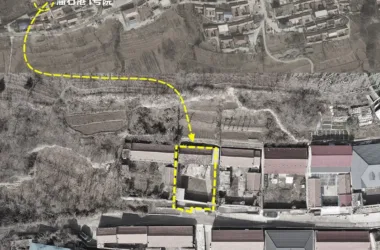
After analyzing the site and the spatial characteristics where encounters occur, we developed a simple zoning map. We finalized the basic layout by judging spatial proportions and organizing design themes. This concept of public space became the foundation of the entire project.
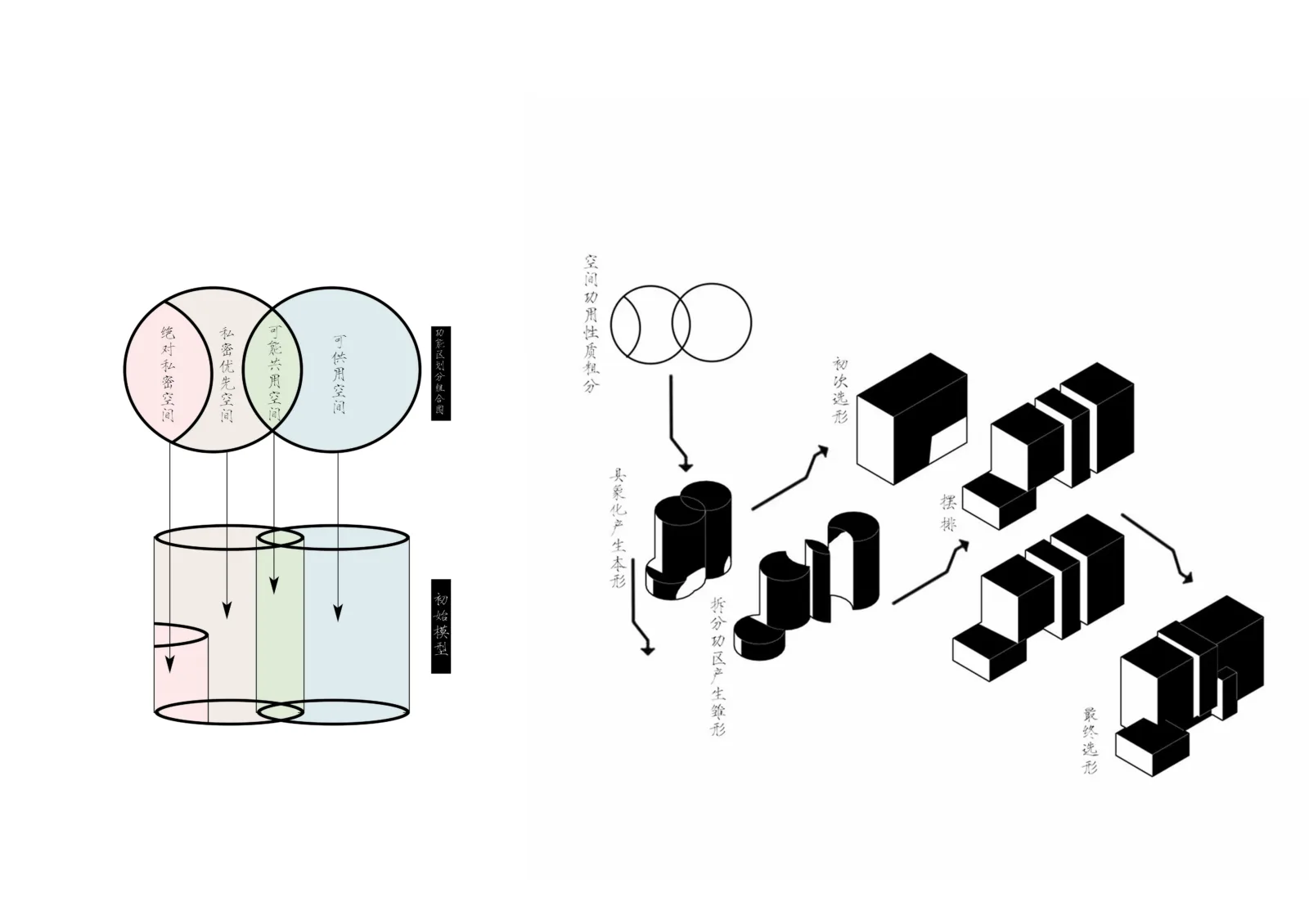
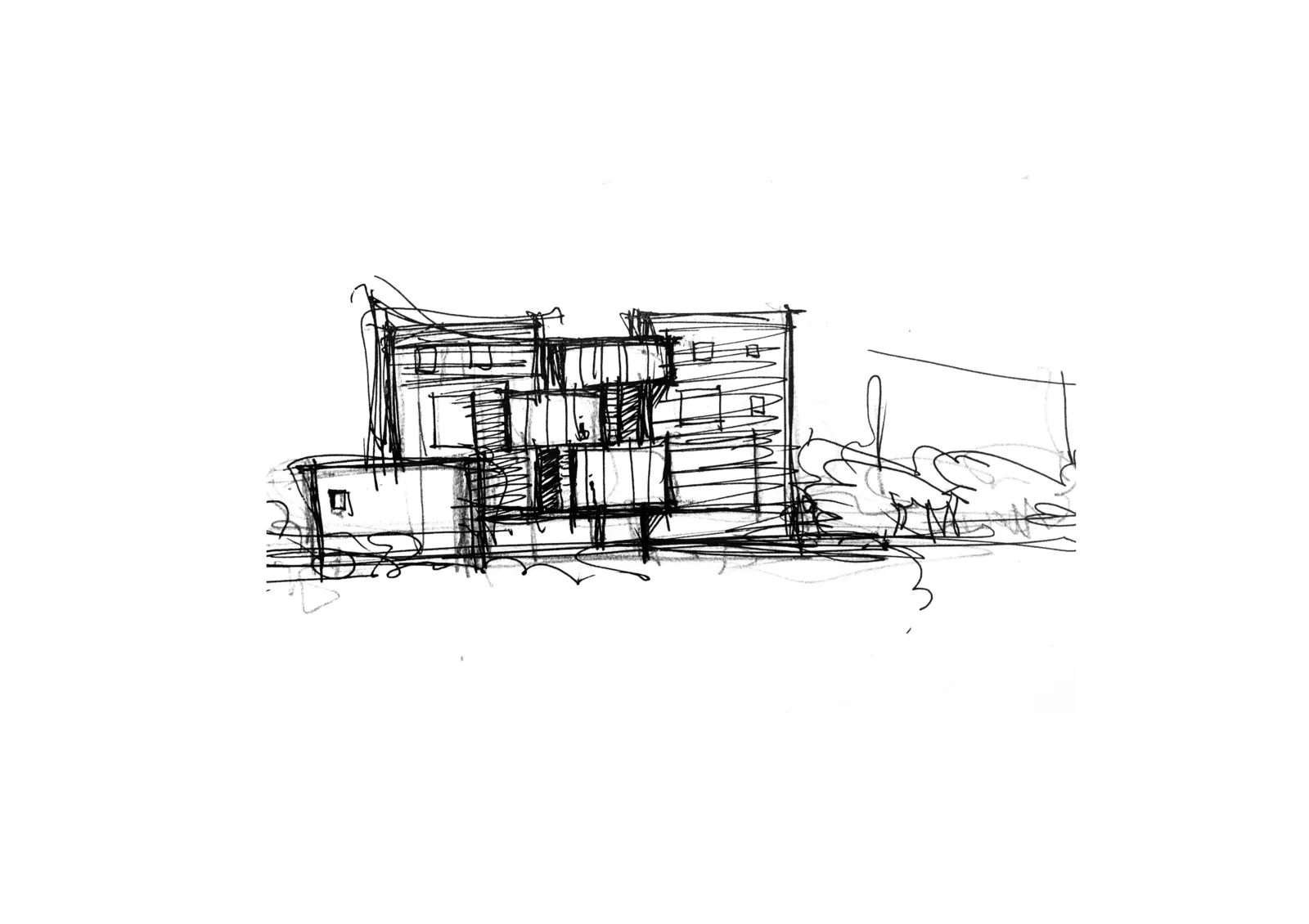
The residence is divided roughly into two parts: the main living area and the guest area, with a space in between designed to foster “encounters.” This space acts as a connector and shared zone, while also providing a subtle separation. We carefully controlled the frequency of its use by hosts and guests, adjusting usage rates across floors based on function. This space is designed to be extremely flexible.
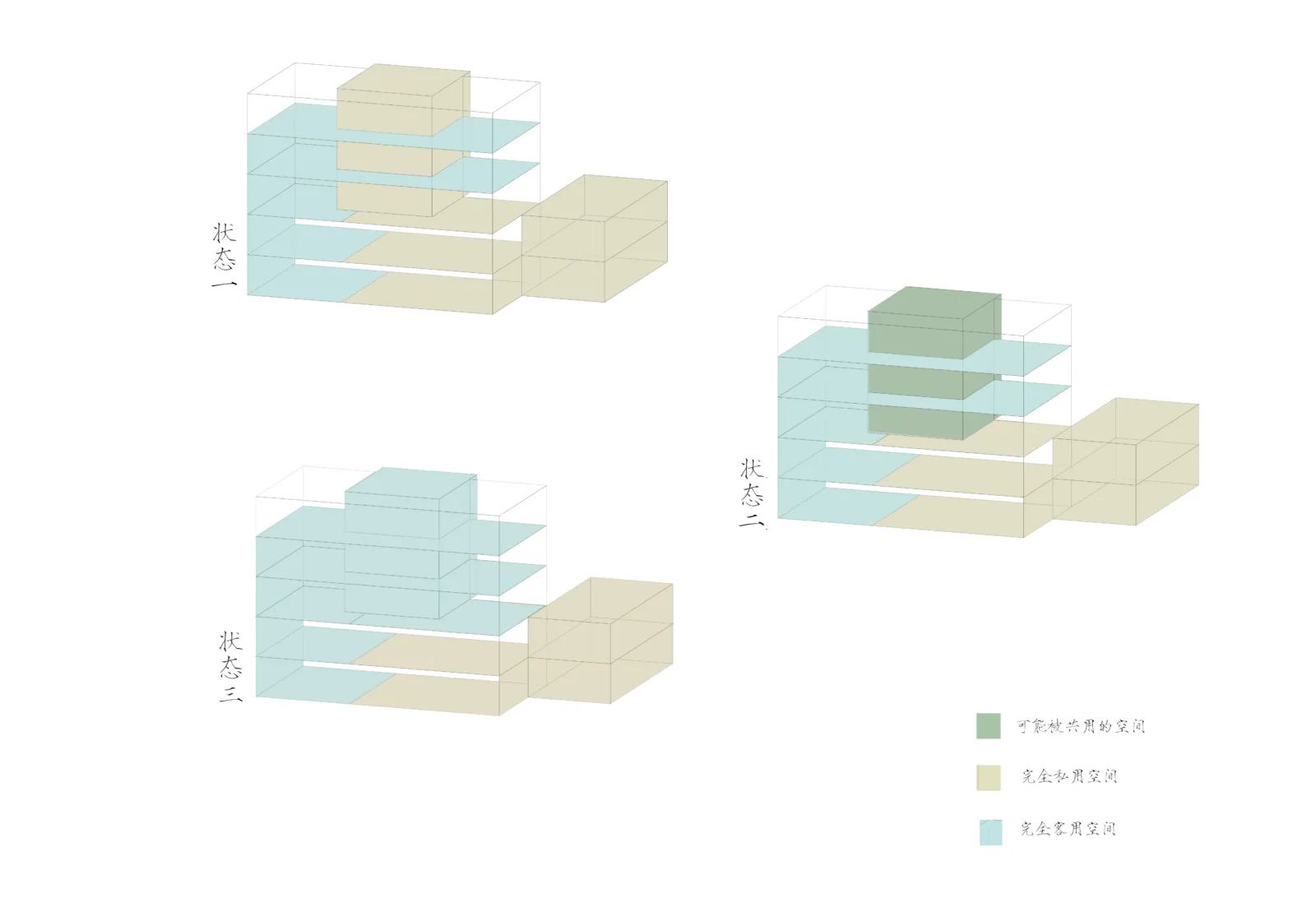
(Usage scenarios analysis: Status 1 — Few or no guests, with hosts gathering more. Guest rooms can be used by the host family or reserved for the future, granting hosts maximum freedom. Status 2 — Guests are present, and host family members are at normal numbers. Each space serves its role, with the tea room as a public area; hosts have slightly more freedom than guests. Status 3 — A small host family with many guests. The original master bedroom on the third floor can also serve as a homestay room, with privacy maintained by a long, sliding partition door. In this case, guests have more freedom than hosts.)
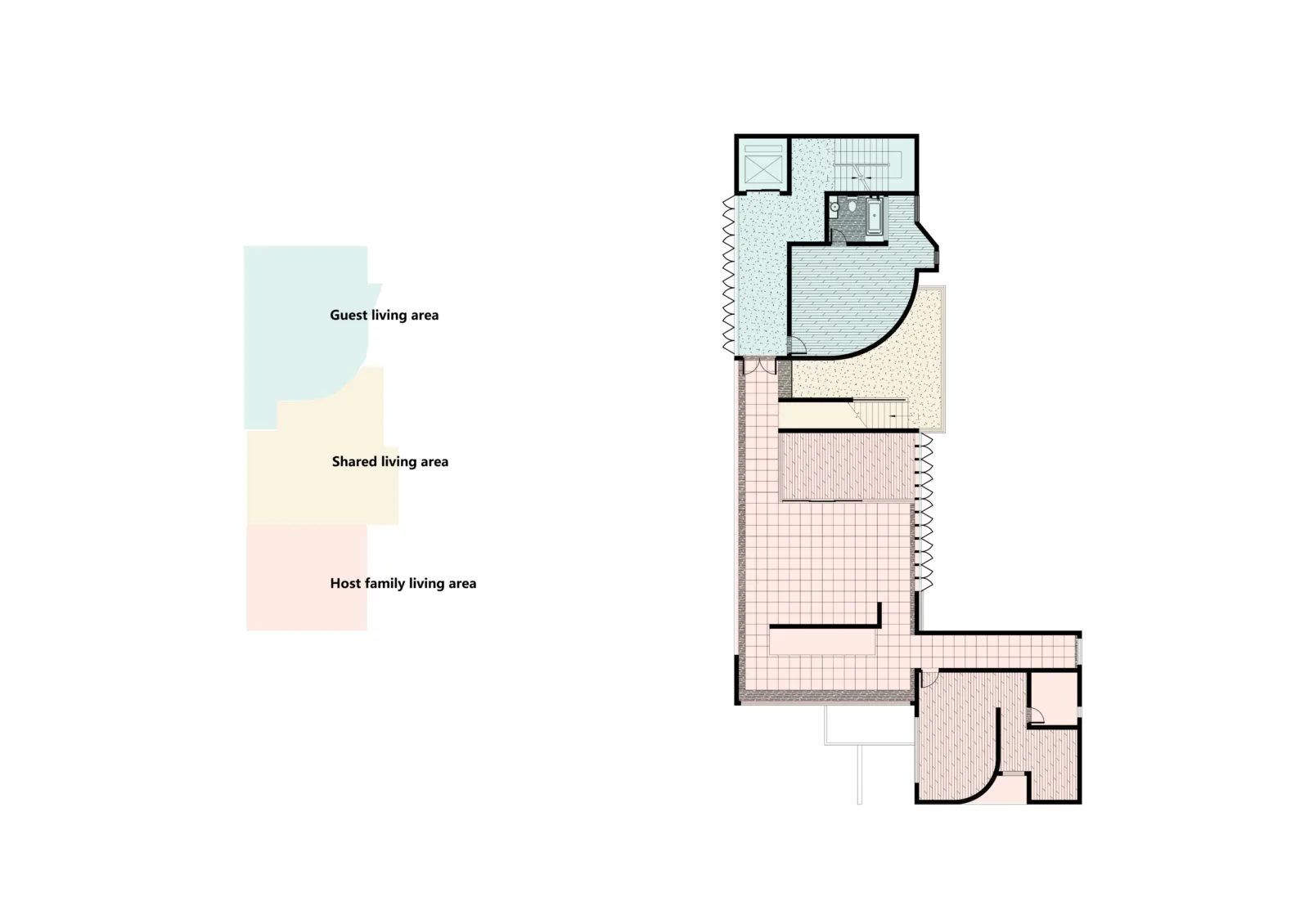
△ Excerpt from the second-floor plan partition during preliminary design
Located just a few hundred meters from the Tulou Scenic Area, the main public space faces east with full openness. We minimized the presence of “floors” within the public space, designing it as a large, fluid area free of rigid boundaries. This encourages residents on each floor to “participate” in the space, experiencing changes in perception — like sight — as they move through it. Participation varies by floor: on the fourth and fifth floors, residents engage mainly as “observers” from inner balconies, while on the second and third floors, they participate more actively as “users.”
This approach is deliberately flexible, with no behavioral restrictions. We encourage static activities like stopping, sitting, and lying down, but also welcome all other forms of interaction. The interplay of these behaviors and responses creates a poetic convergence between host and guest living.
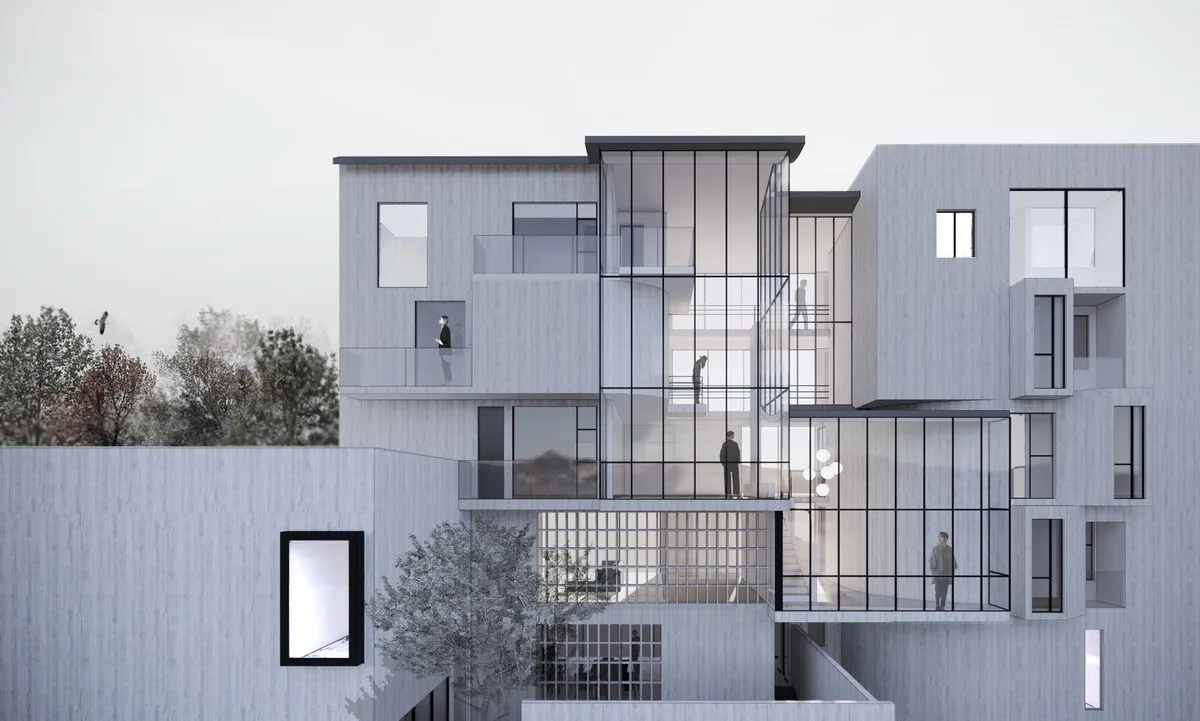
△ Exterior rendering
To guide residents during the initial occupancy stage, after discussions with the homeowner, we designated the “tea room” as a provisional function. However, this is merely an example of our imagination. As emphasized earlier, the space is intended to be flexible and ambiguous in function, adapting to different user needs and times.
Ultimately, this space acts as a blank canvas, evolving over time through the personal will and understanding of its users, acquiring varied meanings and character.
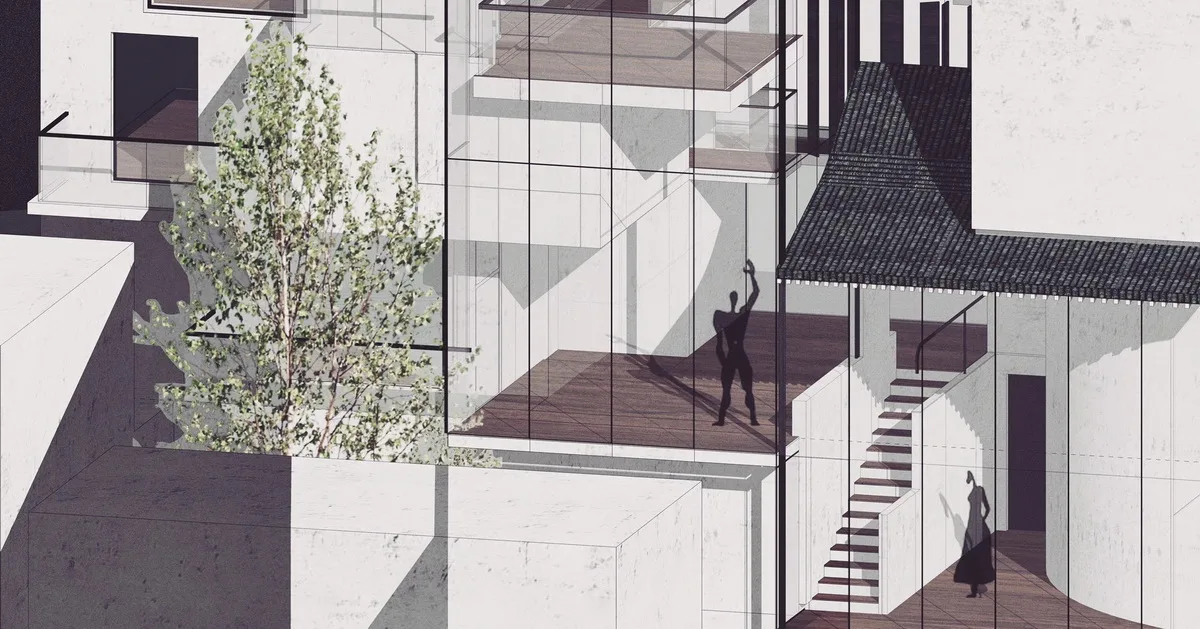
Concept design phase: public space concept map
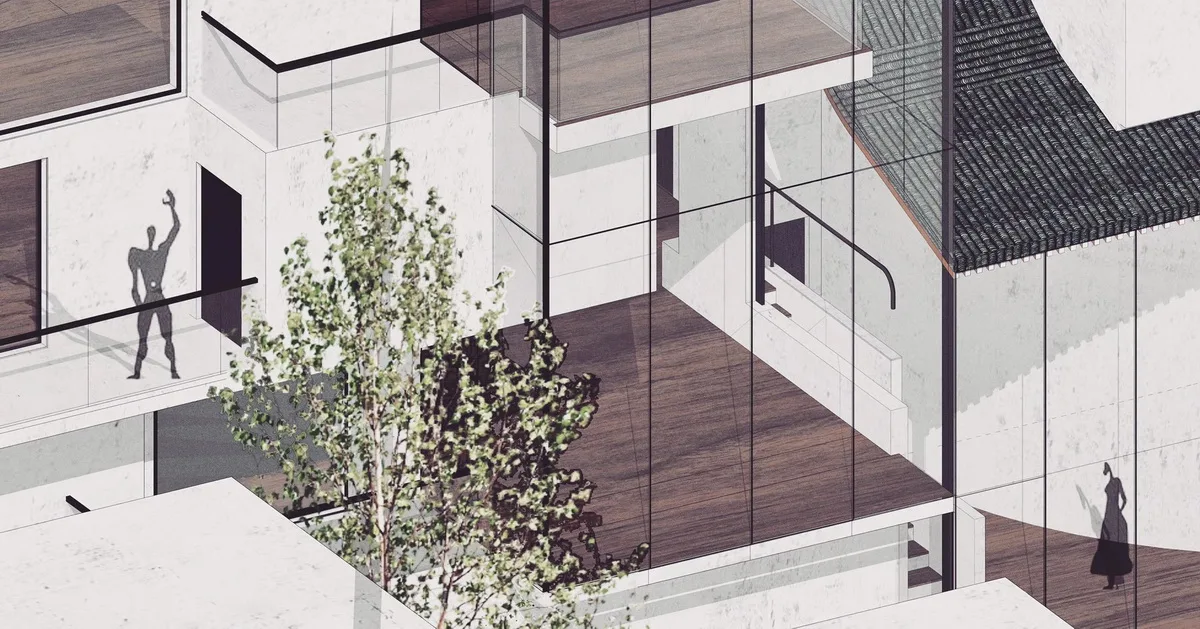
Concept design phase: public space concept map
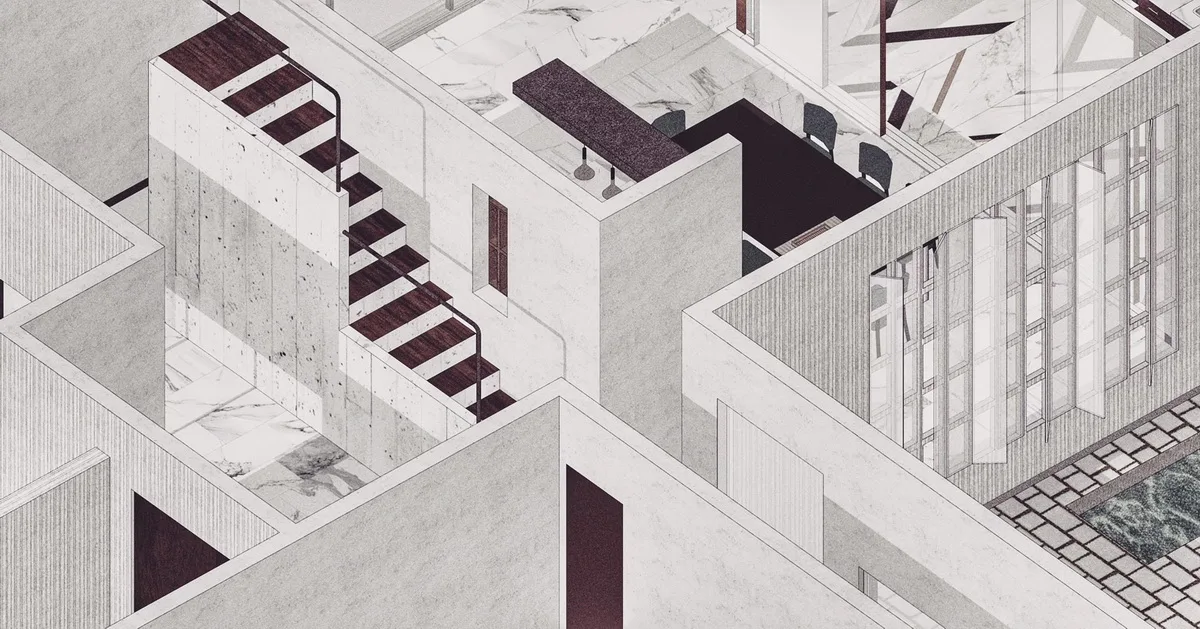
Preliminary design: entrance to private area on the first floor
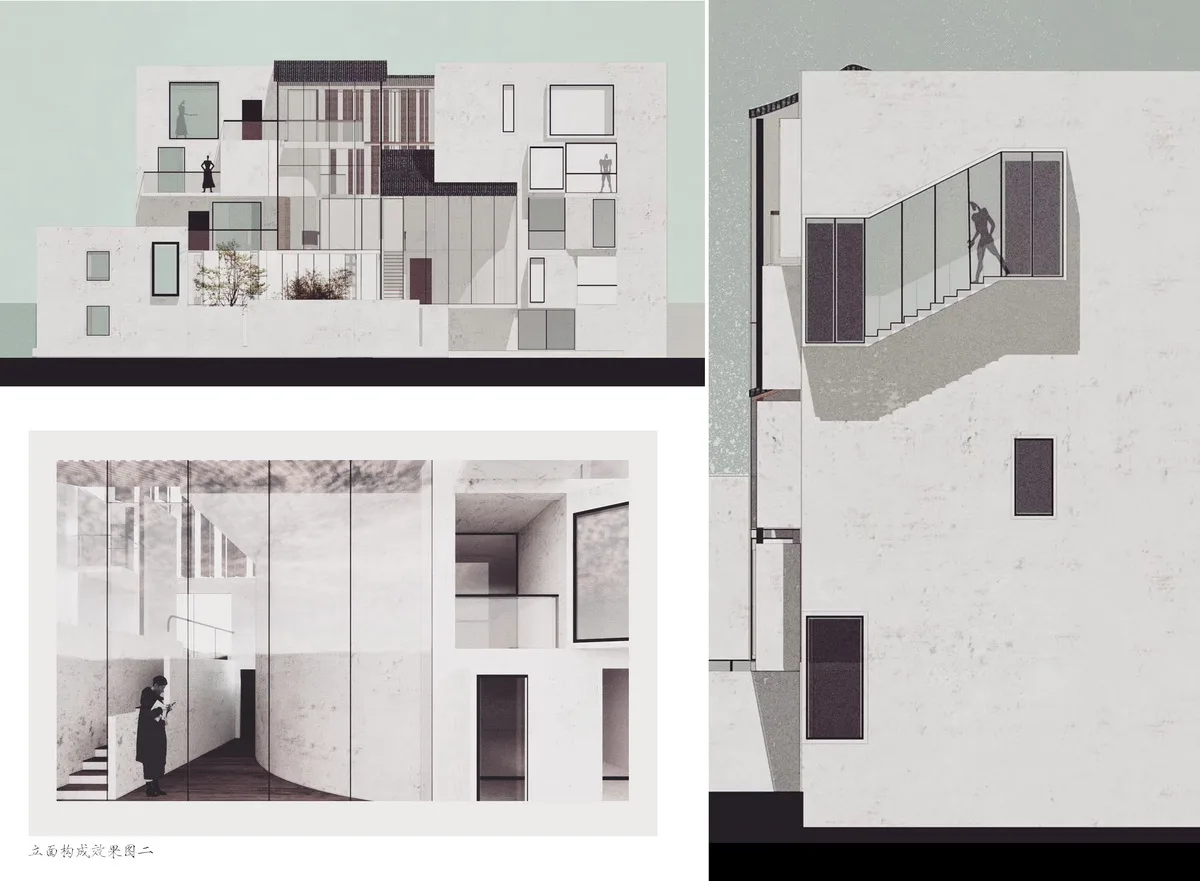
Preliminary design presentation
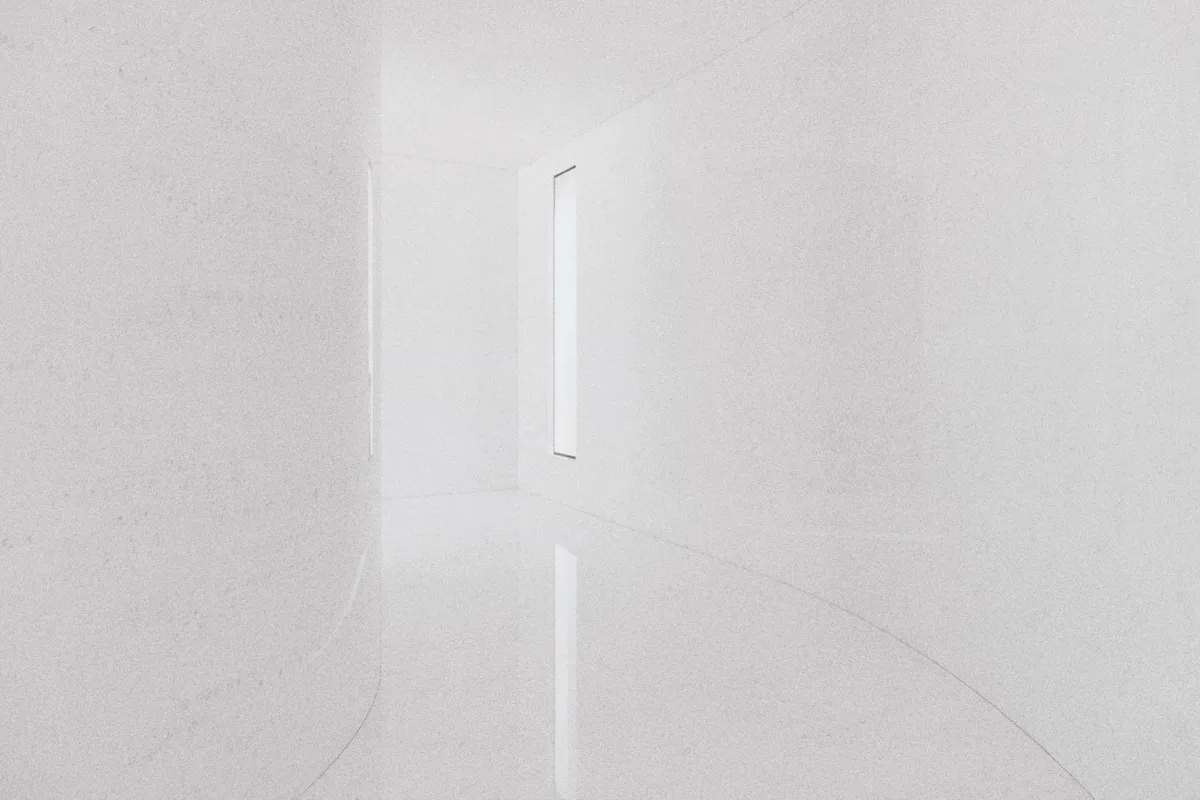
Preliminary design: local effect of the residents’ entrance hall
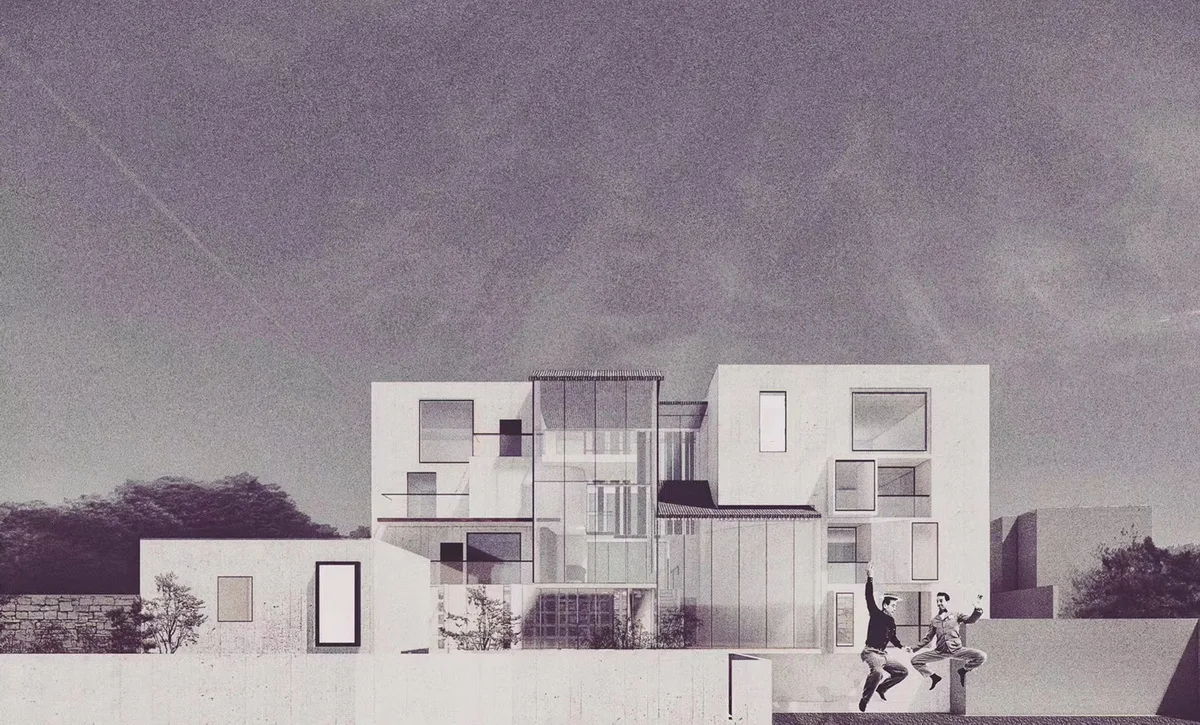
△ Preliminary design: East facade rendering
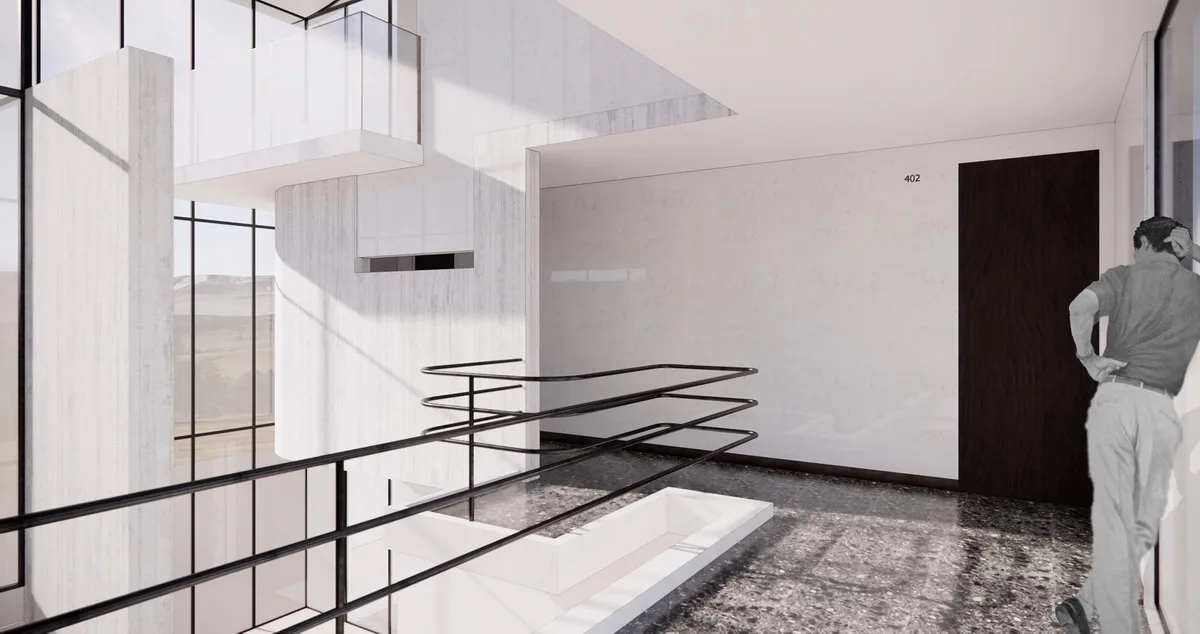
△ Preliminary design expansion: enhancing spatial effect of the four-story homestay area
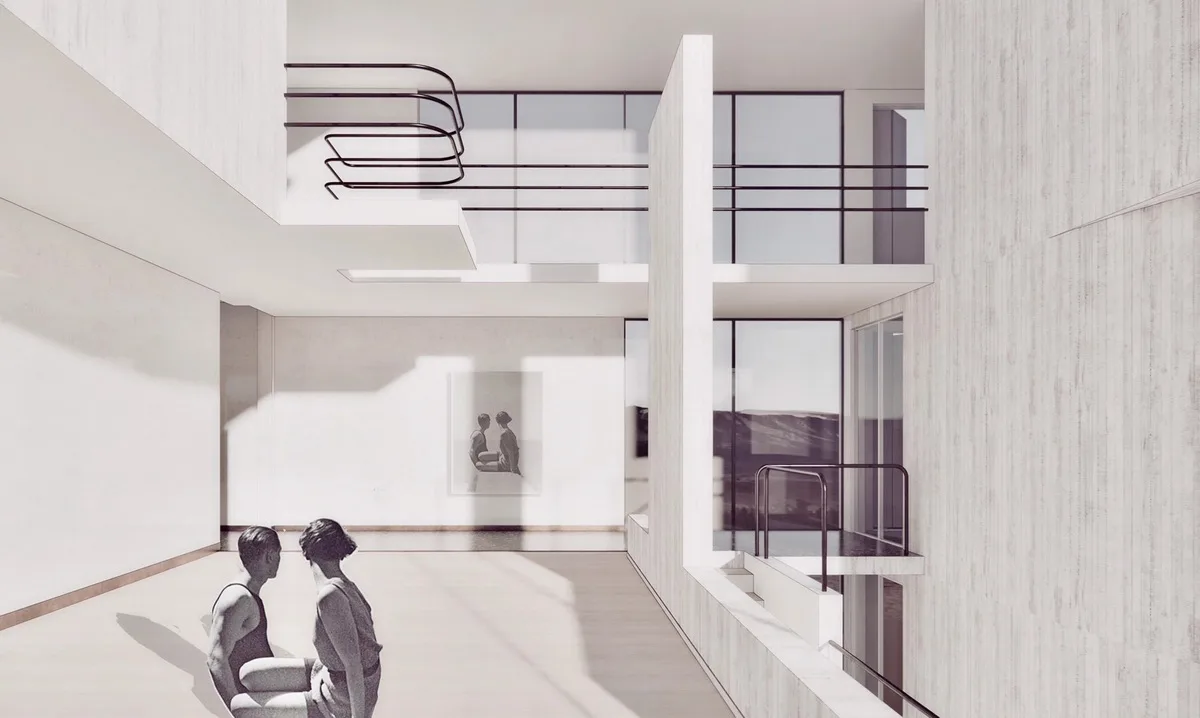
△ Preliminary design expansion: public space rendering on the second floor
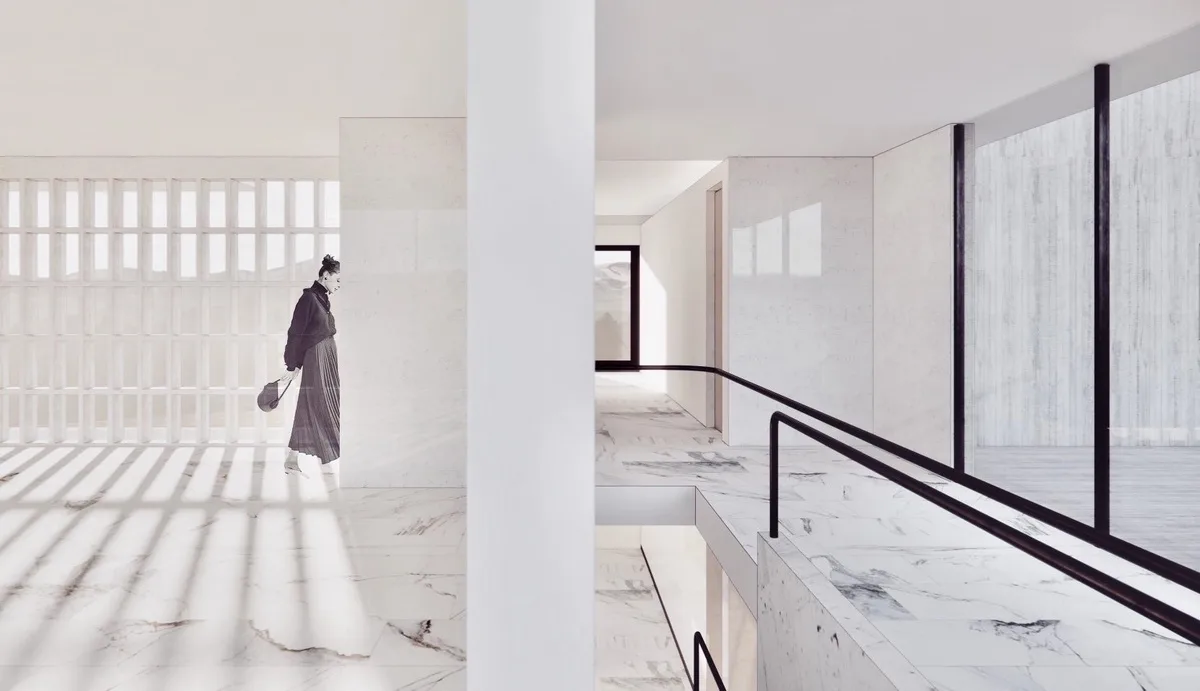
△ Preliminary design expansion: enhancing owner’s self-use space effect
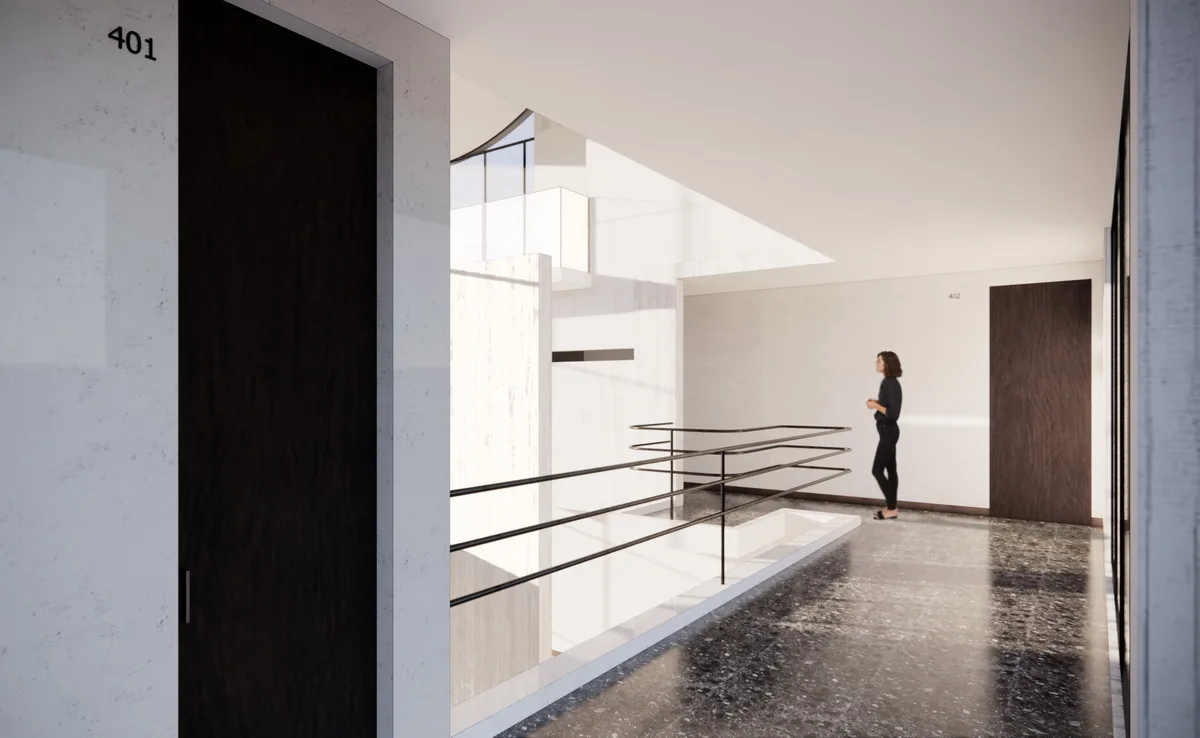
△ Preliminary design expansion: spatial effect enhancement of the homestay area’s fourth floor
Project Information
Project Name: Fujian Longyan Yongding Fushi Private/B&B Mixed-Use Residential Building
Project Status: Design Phase
Expected Completion: 2021
Owner: Private Commission
Design Team: Shanghai Lei Space and Architecture Design Studio / HANGHAI LEIAD STUDIO
Lead Designer: Cao Xiao
Structural Engineer: Wu Chenwei
Design Contributors: Zhou Minjie, Yu Yue
Total Building Area: 1,100 square meters
Building Footprint: 215 square meters
Awards: 2020 MUSE DESIGN AWARD — Second Quarter Silver Award, Residential Category (USA)













Must log in before commenting!
Sign Up