
On the morning of December 3rd, the final bridge deck of the main span steel beam was precisely lifted into place, marking a major milestone for the Jingzhou Yangtze River Public Railway Extra Large Bridge. Designed by the China Railway Major Bridge Institute and constructed by China Railway Major Bridge Bureau, the bridge successfully achieved precise closure of its main span steel beam. This accomplishment signifies the successful crossing of the Jingjiang section of the Yangtze River by China’s first heavy-duty railway bridge, the Mengxi to Central China Railway Passage, also known as the Menghua Railway. This marks significant progress in the project’s construction.
The lead official from China Railway Major Bridge Corporation, responsible for the construction, explained that the main bridge of the Jingzhou Yangtze River Highway Railway Bridge features a double-tower steel truss dual-use cable-stayed design with a main span of 518 meters. The bridge deck is arranged on two levels: the upper deck is a four-lane highway, 26 meters wide, with diagonal cables positioned on the outer edges, 26.7 meters from the bridge center. The lower deck carries a double-track railway with a line spacing of 4.2 meters and a design speed of 120 km/h.
The upper structure of the main bridge’s navigation channel consists of an “N”-shaped T-type steel truss beam made up of 77 sections, weighing approximately 32,000 tons in total. It uses welded integral nodes assembled on-site with high-strength bolts at the joints. During the main span steel beam construction, the China Railway Major Bridge Corporation team erected beams from both ends of the two main towers (Tower 3 and Tower 4) located on the north and south banks, progressing toward the center and completing the final closure in the middle.
The closure node completed that day was located at section 39 of the main span. Additionally, the bridge includes a continuous steel truss beam non-navigable upper structure consisting of four spans, each 94.5 meters long, totaling 28 sections and weighing over 10,000 tons. Due to multiple installation stages, tight schedules, high precision demands, and the complexity of construction, the successful steel beam installation on this bridge has provided valuable experience for similar projects in China.
The Menghua Railway starts at Haolebao Jinan Station in Ordos, Inner Mongolia, passing through seven provinces: Inner Mongolia, Shaanxi, Shanxi, Henan, Hubei, Hunan, and Jiangxi, ending at Ji’an Station on the Beijing-Kowloon Railway line. The railway stretches 1,814.5 kilometers and is designed as a Class I national heavy-load railway. There are 85 stations along the route, with a planned annual transport capacity exceeding 200 million tons and a construction period of five years. The Menghua Railway is a key transportation project under the national Twelfth Five-Year Plan, playing an important strategic role in optimizing the national energy layout, developing coal resources in Mongolian, Shaanxi, Gansu, and Ningxia regions, ensuring energy supplies in central China (Hubei, Hunan, Jiangxi), and supporting the Western Development and Central Rise initiatives.
The designer, China Railway Major Bridge Engineering Group Co., Ltd., noted that the Jingzhou Yangtze River Railway Bridge connects Jiangling County and Gong’an County on either side of Jingzhou City. It is a critical river-crossing and control project shared by the Menghua Railway and the Shashi-Gong’an Expressway. As the seventh dual-use railway and road bridge over the main Yangtze River and the first heavy-duty railway bridge spanning the river in China, it measures 6,317.8 meters in total length. The main bridge features a double-tower steel truss cable-stayed design with a main span of 518 meters, currently the longest of its kind worldwide.
The Hubei Provincial Railway Office highlighted that the completion of this bridge and the Menghua Railway is essential for advancing development in Hubei. It will enhance the region’s infrastructure, optimize the road network layout in the Jianghan Plain hinterland, strengthen transportation links within the ecological and cultural tourism circle of western Hubei, and serve as a strategic pivot for the rise of central Hubei Province.
The Jingzhou Yangtze River Grand Bridge and Dongting Lake Grand Bridge, both contracted by China Railway Group, were among the first construction nodes on the Menghua Railway. China Railway Group delegated construction to its subsidiary, China Railway Bridge Bureau, which plays a critical role in the project’s management and execution, applying targeted engineering pilot projects and advanced project management models.
A representative from China Railway stated that its subsidiary, China Railway Major Bridge Bureau, leveraged over 80 previous bridge construction experiences on the Yangtze River. Using advanced equipment such as a proprietary giant double-wall steel cofferdam, large-diameter fully automated drilling rigs, fully hydraulic climbing molds, large-scale rotating water cranes, and heavy-duty beam erecting cranes, the bureau completed all large-diameter drilled piles for the main towers in 117 days—all tested as excellent piles. The two main towers were topped out in 13.5 months, and steel beam installation in the main navigation channel took just over 9.5 months. These achievements set new records for similar bridge projects on the Yangtze River, achieving high-precision closure and ensuring construction safety and quality.
During construction, the China Railway Major Bridge Corporation team proposed and successfully implemented an overall technical solution tailored to the first heavy-duty railway bridge spanning the Yangtze River. They completed variable-diameter drilled piles exceeding 120 meters in depth, erected complex steel beams under tight schedules, and addressed embankment protection challenges in the Jingjiang flood control area. By the time of steel beam closure, three of five key technological research projects on the Jingzhou Yangtze River Highway and Railway Bridge for the Menghua Railway had been completed. Additionally, effective construction planning promoted on-site management, reduced soil excavation and backfilling, prevented erosion, protected the local ecosystem, and contributed to the ecological preservation of the renowned Jingjiang flood control region.
Extended reading:
Research on the Application of BIM Technology in Steel Bridge Engineering
Author | Dai Zhongquan
Source | Value Engineering
BIM (Building Information Modeling) technology is an emerging tool that has gained prominence in recent years. It serves not only as a platform for data sharing but also as an integral information system throughout the entire engineering project lifecycle—from design to construction. While BIM technology has been widely adopted in various fields such as machinery and construction in China, its development, promotion, and application in railway bridge engineering remain relatively recent. Therefore, advancing BIM implementation in railway bridge construction is a key concern for industry professionals.
Application of BIM Technology in Steel Bridge Engineering
1.1 3D Modeling
In BIM technology, 3D modeling forms the essential foundation, accurately depicting project details. These models typically derive from:
– Existing 2D design drawings used as a base for modeling;
– Direct design using advanced 3D modeling software, bypassing 2D drawings.
In practice, direct 3D design is often preferred as it overcomes limitations of traditional 2D design, reduces designers’ workload, and offers intuitive visualization. This helps bridge designers grasp structural details, minimizing errors caused by oversight.
For steel structure bridges currently under construction in China, detailed 3D models not only describe component shapes but also refine individual parts—such as columns, plates, beams, and connections. These units are editable and carry important data, allowing comprehensive consideration of design information.
Maintaining and modifying models is also vital. By offering multiple viewing options, structural design in 3D becomes more flexible and user-friendly. Designers must select appropriate software, with options like CATIA, Tekla Structures, and Bentley offering comprehensive capabilities tailored to steel bridge design needs.
1.2 Processing and Manufacturing
After completing the 3D model, linking it effectively with manufacturing processes is crucial. Three main approaches are available, with choice depending on manufacturing methods and automation level:
1.2.1 Exporting 2D drawings from the 3D model software for actual fabrication. This method ensures changes in the 3D model are promptly reflected in 2D drawings, maximizing accuracy. Most 3D software supports this function, making it suitable when manufacturing automation is limited.
1.2.2 Utilizing partial automation features for processing, such as Tekla Structures’ automatic nesting and layout functions or CATIA’s automatic G-code generation. While these assist production, manual processing remains necessary due to complexity. This approach reduces human errors and suits manufacturing environments with moderate automation.
1.2.3 Directly interfacing 3D models with CNC equipment using intermediate data formats—for example, Tekla Structures’ DSTV format compatible with CNC machines from Ficep and HGG. This enables precise, highly automated manufacturing, minimizing workload and errors but requires advanced equipment and high automation levels.
1.3 Material Management
Each component in a 3D model is independent and editable, allowing real-world products to be linked with their digital counterparts. This method visually represents the production, transport, storage, and usage status of materials, aiding efficient management and coordination.
Processing, manufacturing, and on-site installation stages have distinct focuses. To avoid confusion, material management should be divided into processed material management and installation material management, allowing independent and orderly control.
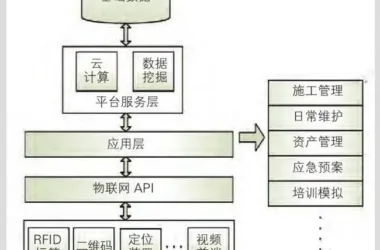
1.3.1 Processed material management tracks individual parts during manufacturing using unique codes, combined with RFID and QR code technologies. Real-time status updates are reflected in the 3D model.
1.3.2 Installation material management handles components assembled on-site similarly by assigning unique codes tracked throughout installation, also reflected in real-time in the model.
1.4 Virtual Pre-Assembly
Assembly failures during production and on-site construction are inevitable due to various factors. To mitigate this, virtual assembly testing can be conducted beforehand, minimizing costly rework by identifying issues early.
Component data can be obtained through single-point measurement or 3D scanning using total stations or 3D scanners. This method simplifies model acquisition compared to direct on-site measurements, balancing accuracy, efficiency, and cost. Although still under development, ongoing advances in measurement and digital technologies in China promise broader adoption of this approach.
2. Conclusion
Steel bridge engineering is a major infrastructure focus in China, requiring dedicated attention. This article provides an analysis of BIM technology applications in steel bridge projects. Practical implementation must align design and construction goals with scientific, reasonable methods tailored to project needs.
References
Shangmengtian. “Application of BIM-based Design Budgeting for Construction Projects.” China Survey and Design, 2012 (05): 95-97.
Cheng Jianhua, Wang Hui. “The Application and Promotion of BIM Technology in Project Management.” Business Economics, 2012 (06): 29-31.
Pan Jiayi, Zhao Yuanyu. “Analysis of Obstacles to the Development of BIM in China’s Construction Industry.” Journal of Engineering Management, 2012 (01): 6-11.
Li Hongxue, Guo Hongling, Gao Yan, Liu Wenping, Wei Xiaomei. “Research on Design and Construction Optimization of Bridge Engineering Based on BIM.” Journal of Engineering Management, 2012 (06): 48-52.














Must log in before commenting!
Sign Up