
Quote
I am deeply passionate about natural, simple materials and architectural design.
My design philosophy is grounded in respecting the heavens, valuing all things, and learning from nature. I firmly believe that “a house is a world.”
Location
Yibin, located in the upper reaches of the Yangtze River, is one of the earliest developed and oldest cities in the region. Historically known as “Bodao,” “Rongzhou,” and “Xuzhou,” it is often referred to as the “southwestern half of ancient Rongzhou.”
Upon arriving in Yibin, I was captivated by the mountains and the vast bamboo sea, surrounded by lush greenery. This inspired me to create a world centered around bamboo within this “ancient Rongzhou.” A place where one can hide among the bamboo, embrace the ten virtues of bamboo, brew a pot of clear tea, and enjoy the gentle breeze alongside the waving bamboo leaves.
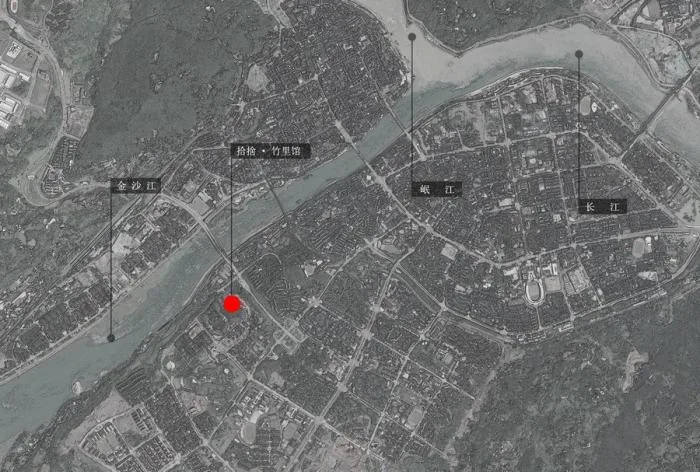
△ Location analysis
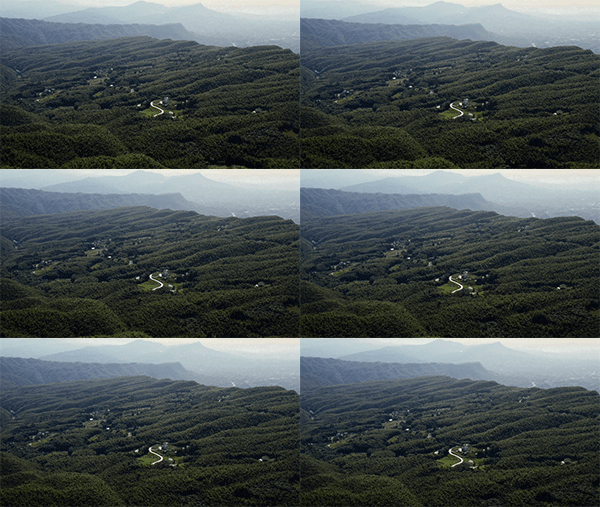
△ Shunan Bamboo Sea
Exploration
Inspired by the idea of building with bamboo, I searched throughout Yibin but found no spaces that used bamboo as the primary material. I explored domestic bamboo structures, interior spaces, and bamboo processing enterprises. Through this process, I gathered extensive information on bamboo design, treatment, and applications both locally and internationally, gaining valuable knowledge.
However, I realized that most bamboo-related designs rely heavily on traditional uses, with few large-scale indoor applications and scarce design interpretations that center bamboo as the main theme.
Origin
The essence of Shishe Zhuligan is bamboo itself. Emphasizing nature, simplicity, and environmental protection, my goal is to minimize harm to the environment and honor nature’s integrity—this is my unwavering commitment. I cherish natural materials and aspire to embody the spirit of bamboo and its world in every thought.
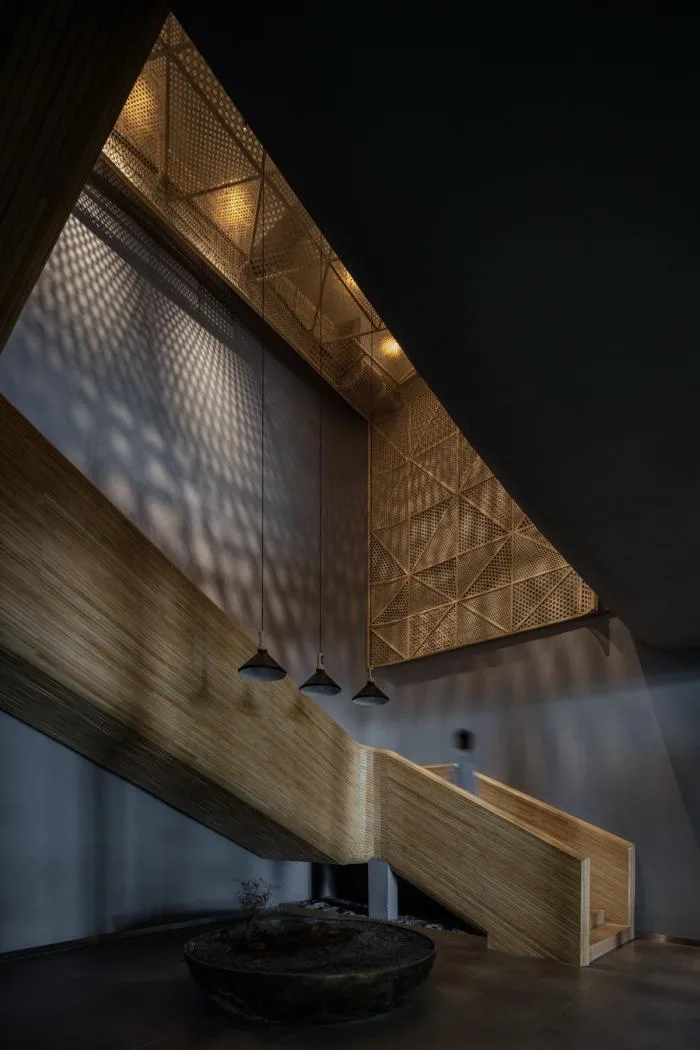
△ Entrance staircase
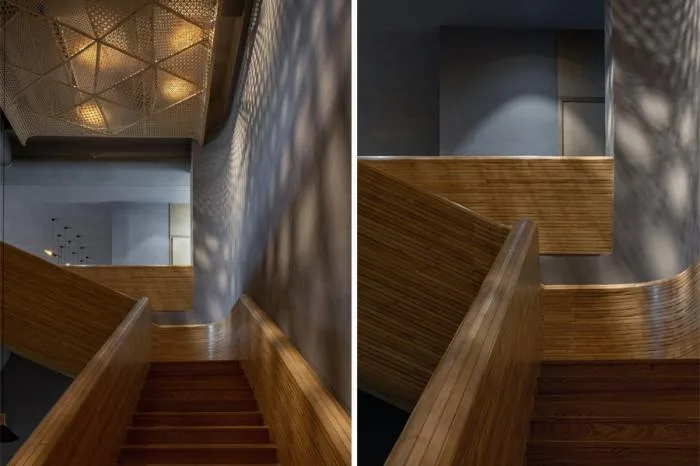
△ Entrance staircase
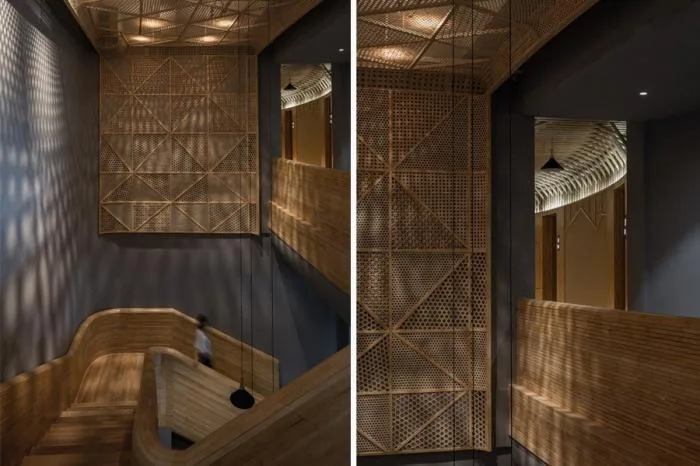
△ Staircase light and shadow
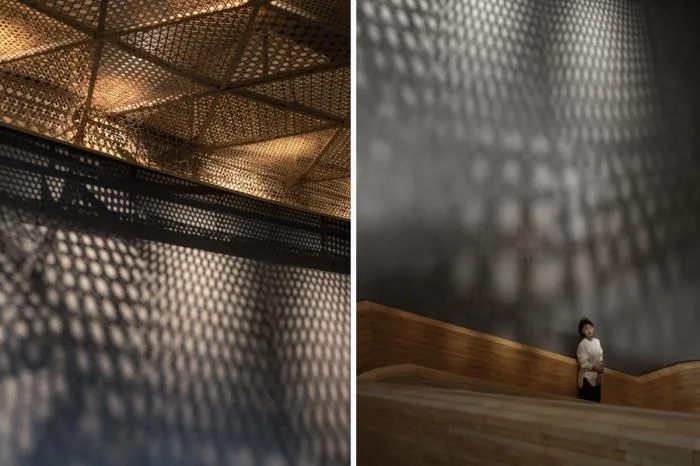
△ Staircase light and shadow
Conceptualization
My vision is to create a bamboo world.
How do we express and construct this world? What unique experience can it offer visitors? Does it convey warmth and humanity? What characteristics of this bamboo world will attract guests? What sensations and memories will visitors take away?
To turn these beautiful ideas into reality requires a deep professional process and an exchange of understanding between the designer and the design itself.
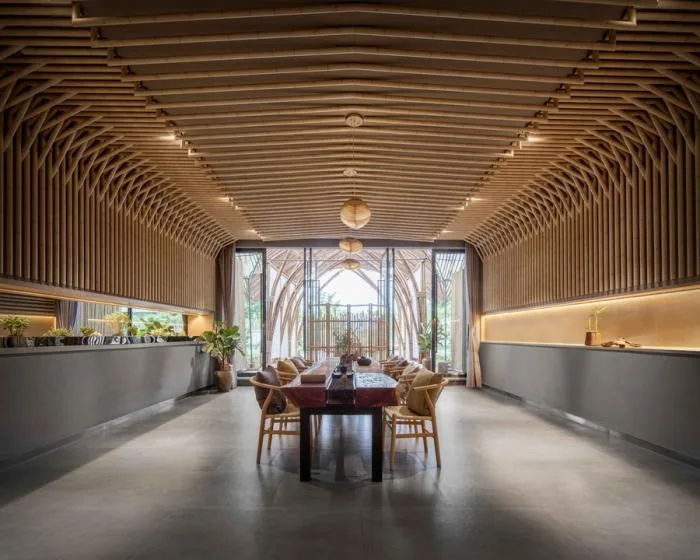
△ Reception Hall
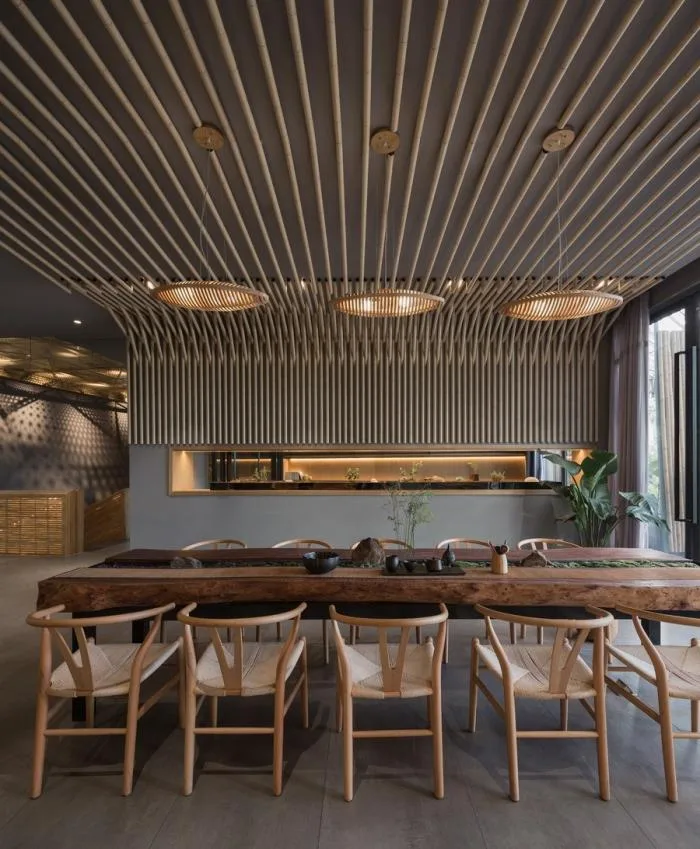
△ Reception Hall
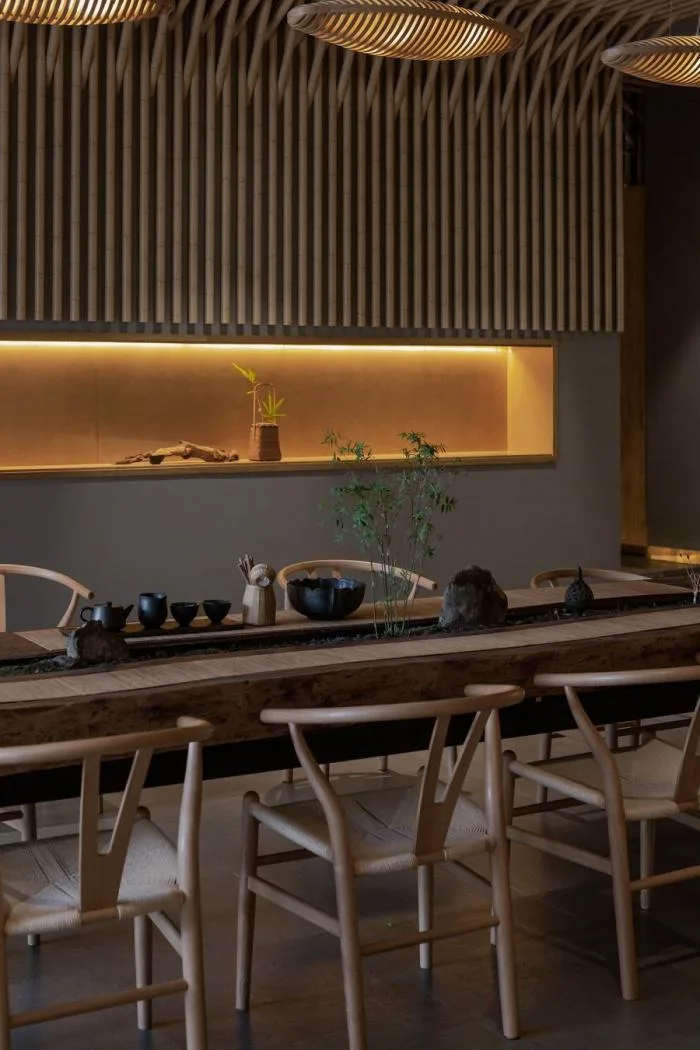
△ Hall Rest Area
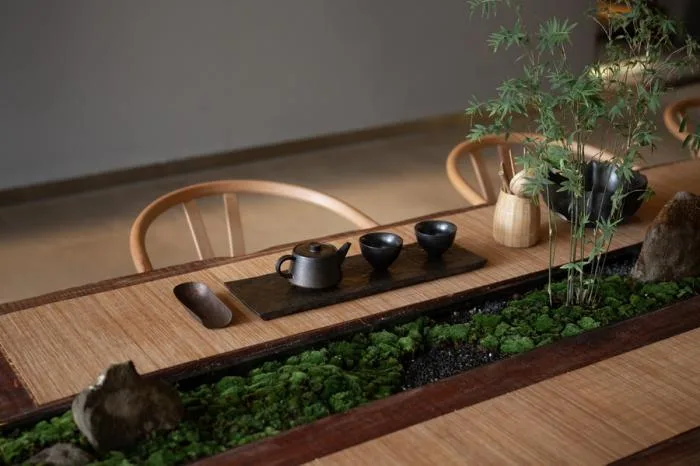
△ Close-up of the rest area in the lobby
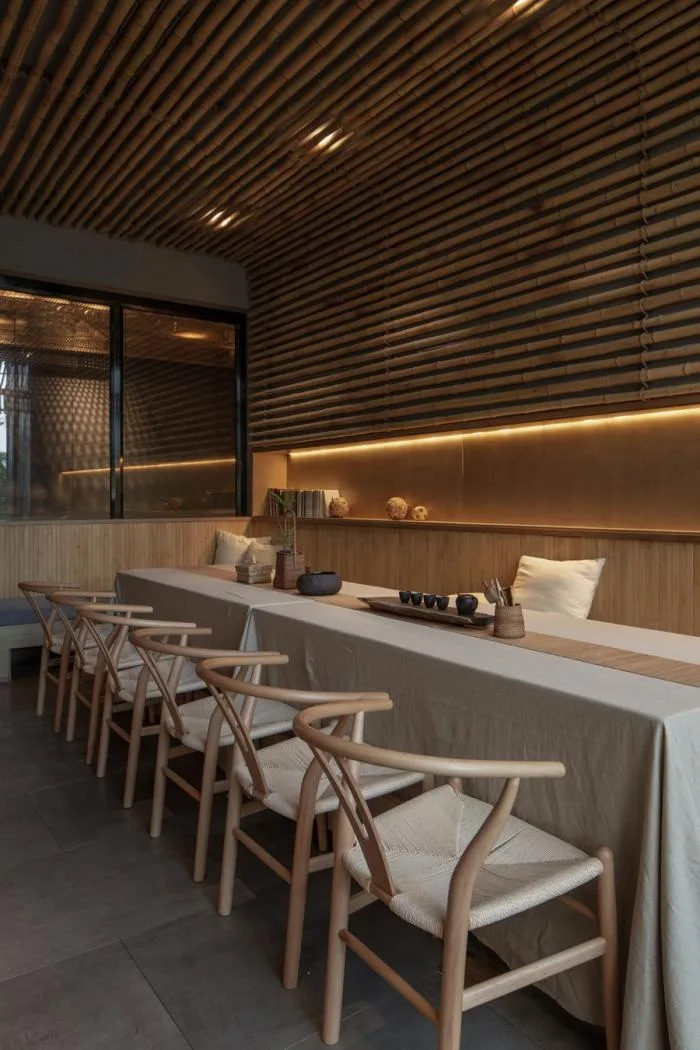
△ Hall Rest Area
Insights
From a professional standpoint, many hotels and lodgings appear similar, focusing mainly on wall, floor, and ceiling decoration. These spaces often become indistinguishable and mass-produced, lacking individuality.
I aim to break free from this mindset by addressing spatial challenges rather than simply decorating.
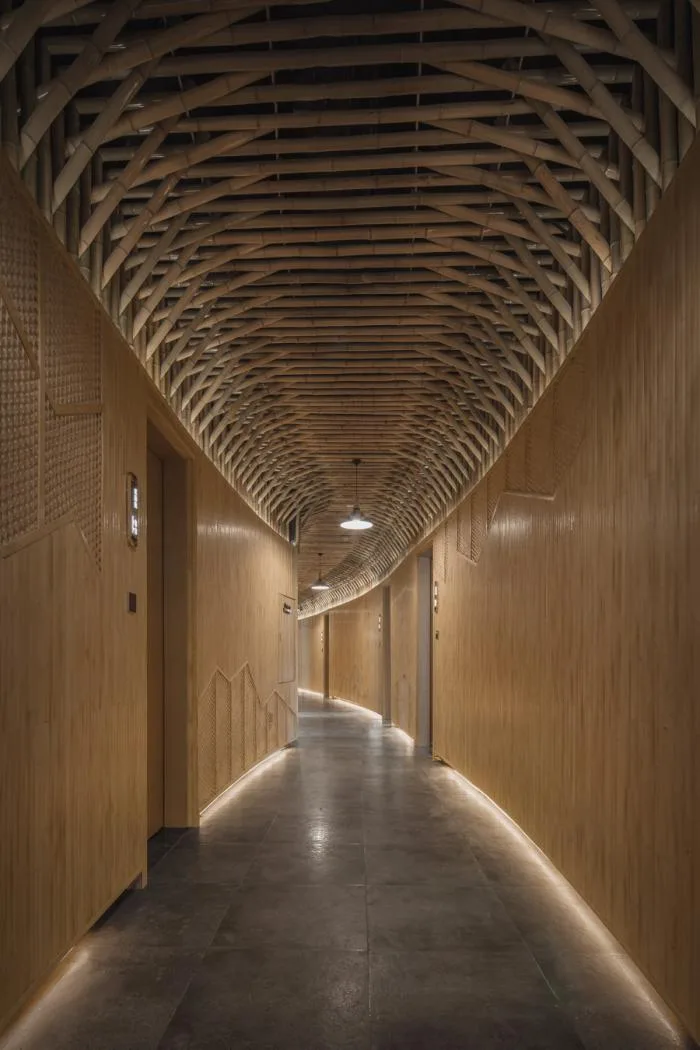
△ Hotel corridor
I envision creating a “skin” that embodies the spatial concept. Traditional “decorations,” often chosen to distinguish floors, walls, and ceilings, tend to be rigid and unnatural, concealing a lifeless core. In contrast, I seek to design a natural, open, and soft skin—much like the skins of humans, animals, and plants.” (Kengo Kuma, “Where I Am”)
Bamboo is processed into sheets, strips, and boards. It undergoes high-temperature steaming and lime water soaking to prevent insects, corrosion, and mold, followed by flame retardant treatment. To maintain environmental integrity, paints are avoided whenever possible.
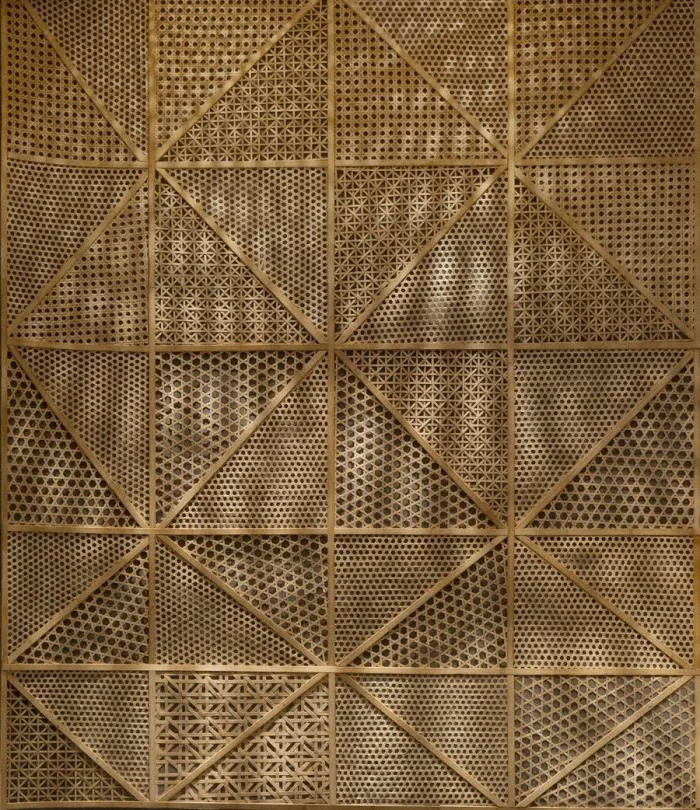
△ Bamboo weaving
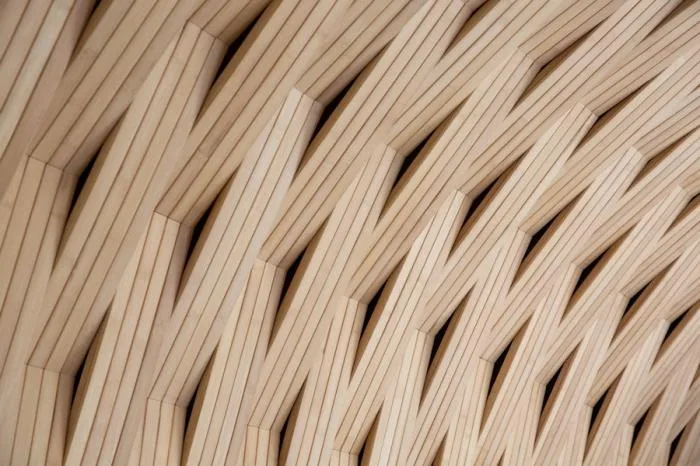
Bamboo strip
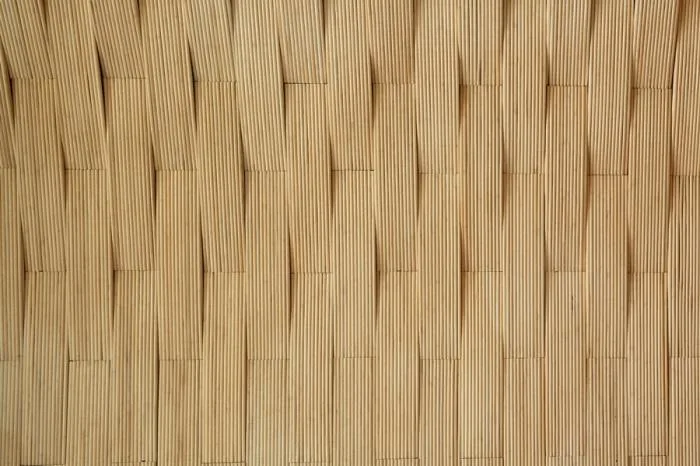
△ Bamboo strips
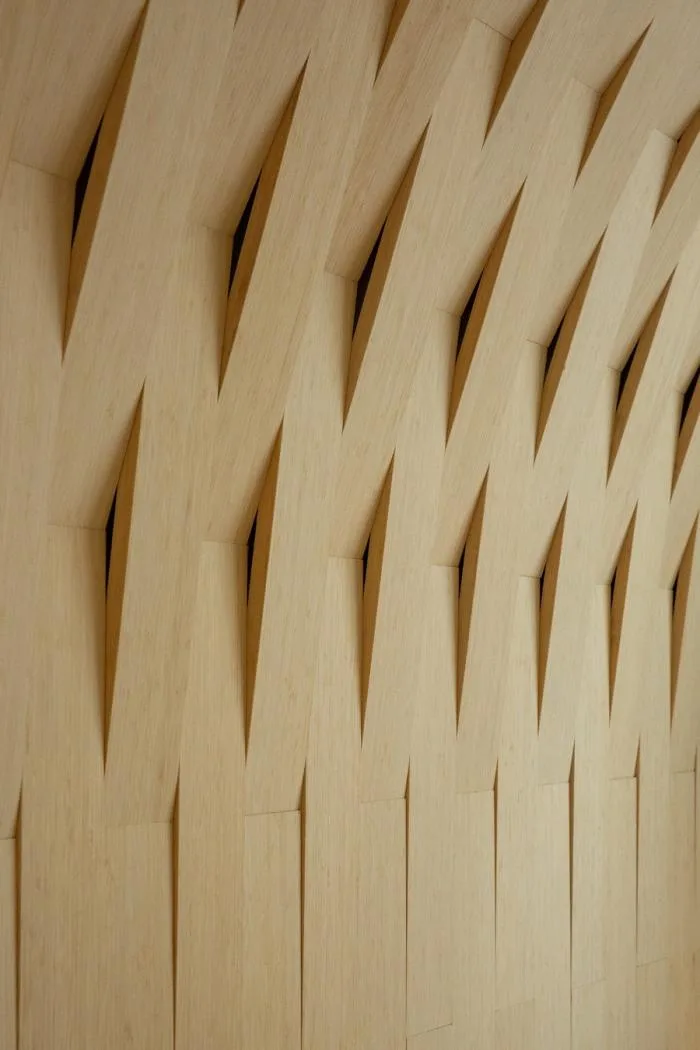
△ Bamboo skin
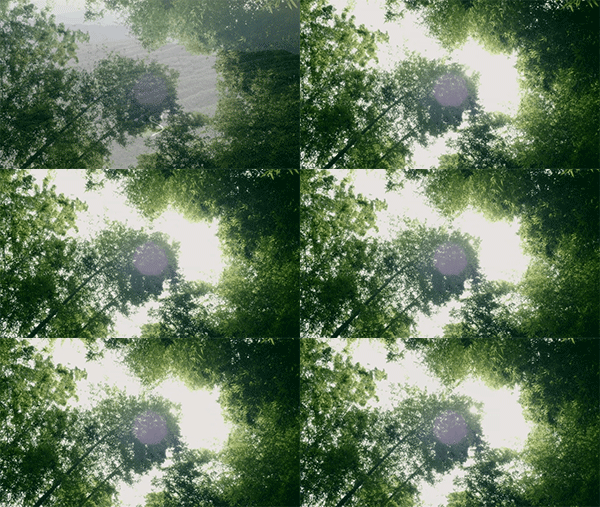
I strive to express space solely through bamboo’s varied textures. Guest rooms feature three distinct bamboo materials—strips, slats, and skin—woven into arched forms that create unique skins for each space. The corridor ceiling uses raw bamboo, evoking a sense of temporal and spatial “disorder,” as if wandering through a bamboo sea or resting in a “picking house.” The hall staircase is crafted with bamboo weaving, where lights cast shadows on the walls, reminiscent of sunlight filtering through bamboo leaves.
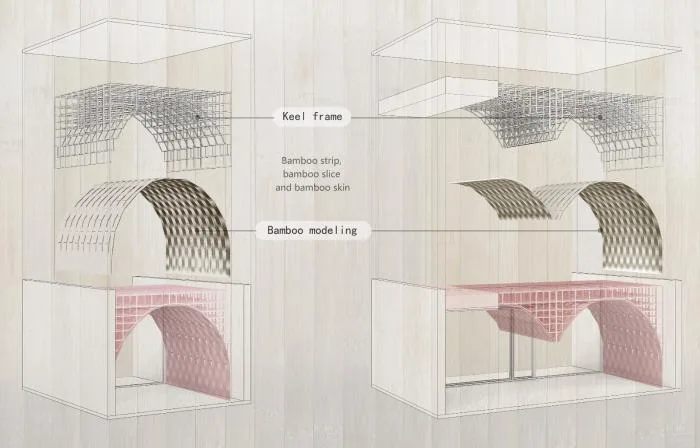
△ Room Analysis Diagram
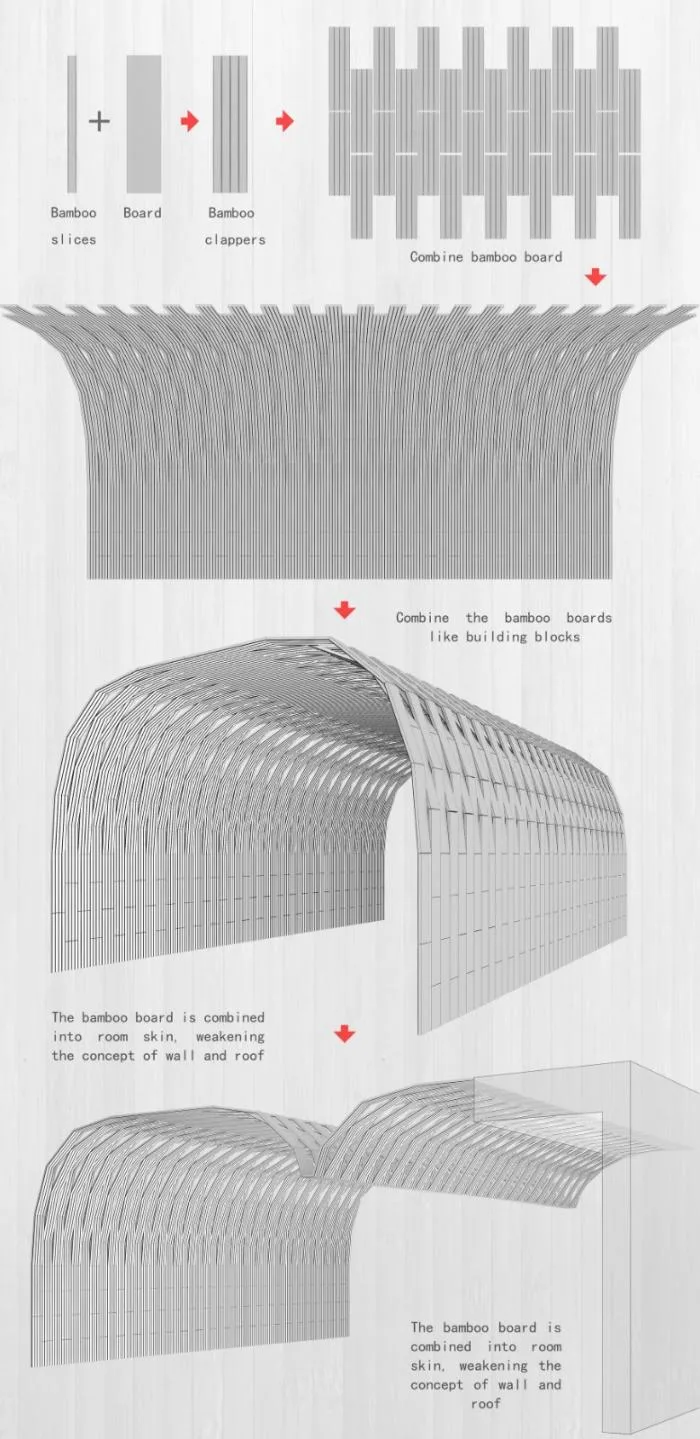
△ Bamboo skin composition
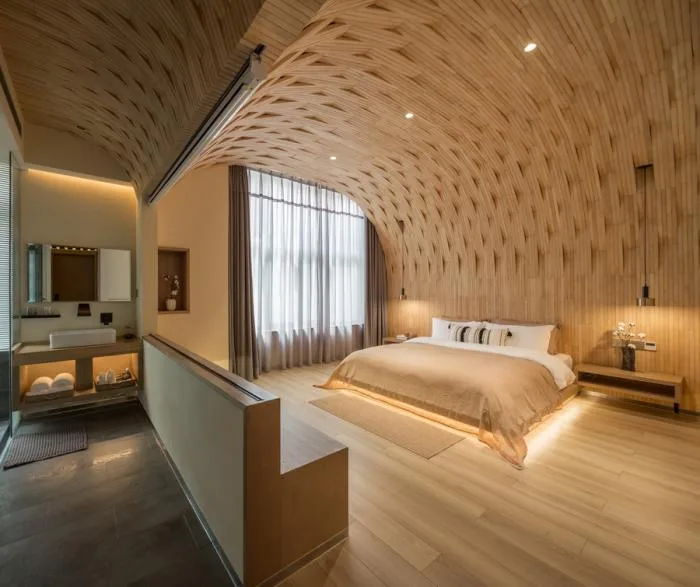
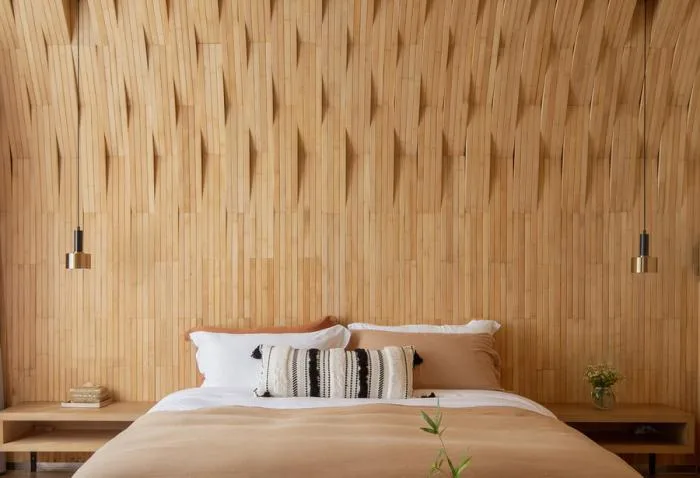
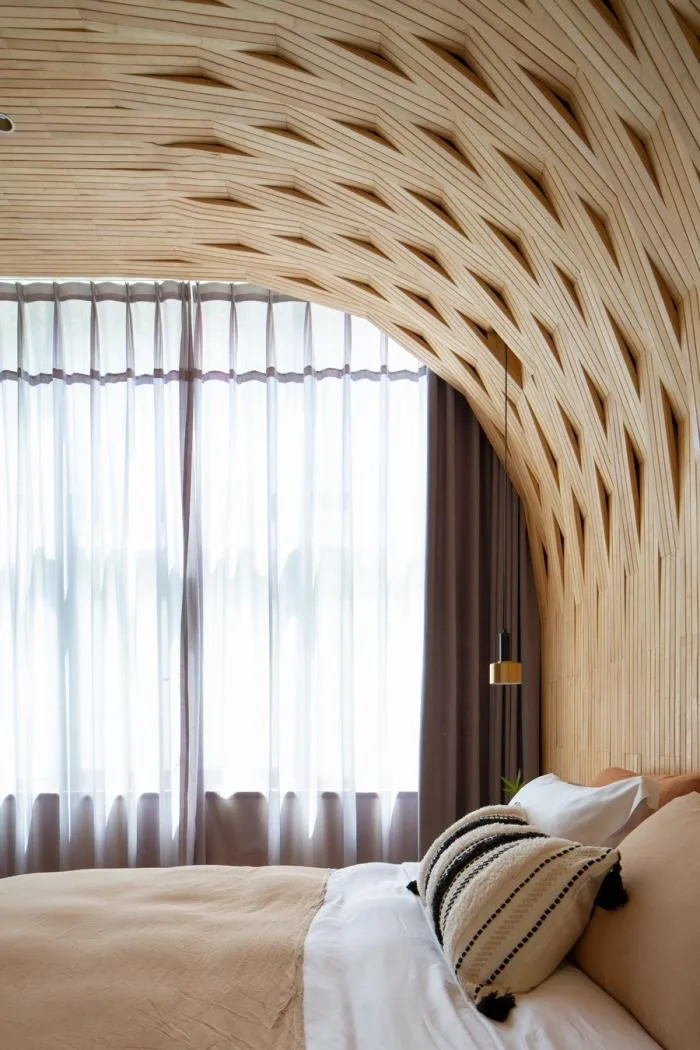
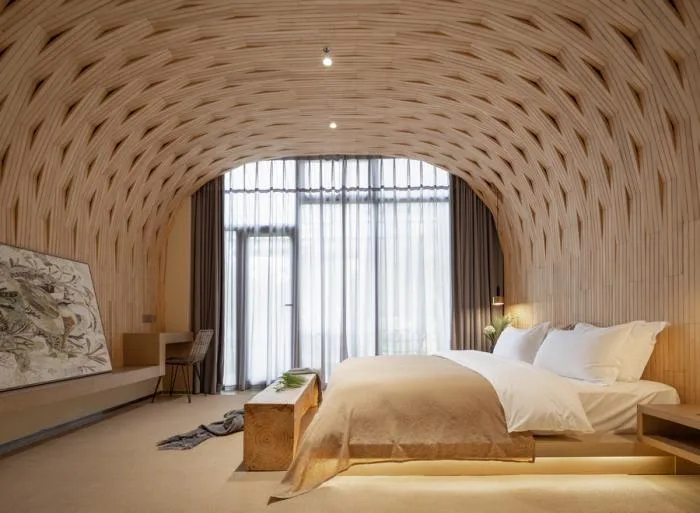
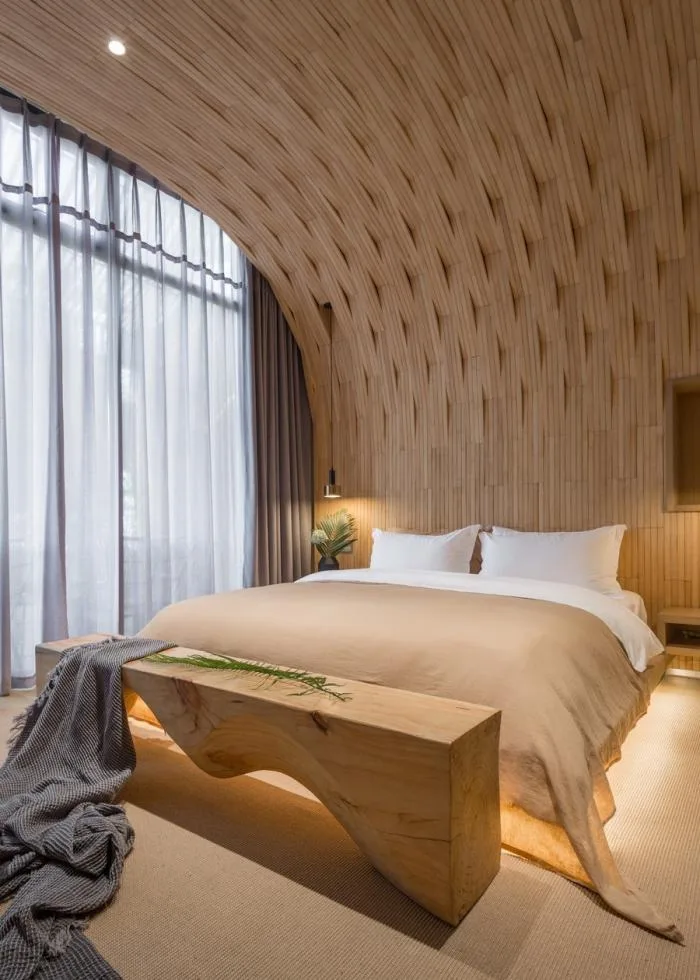
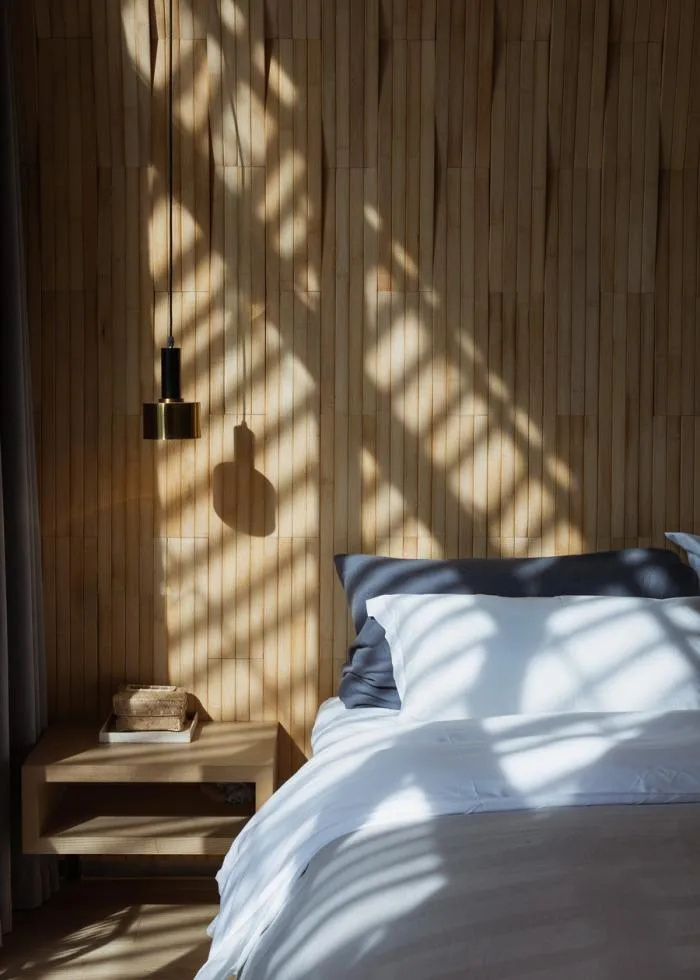
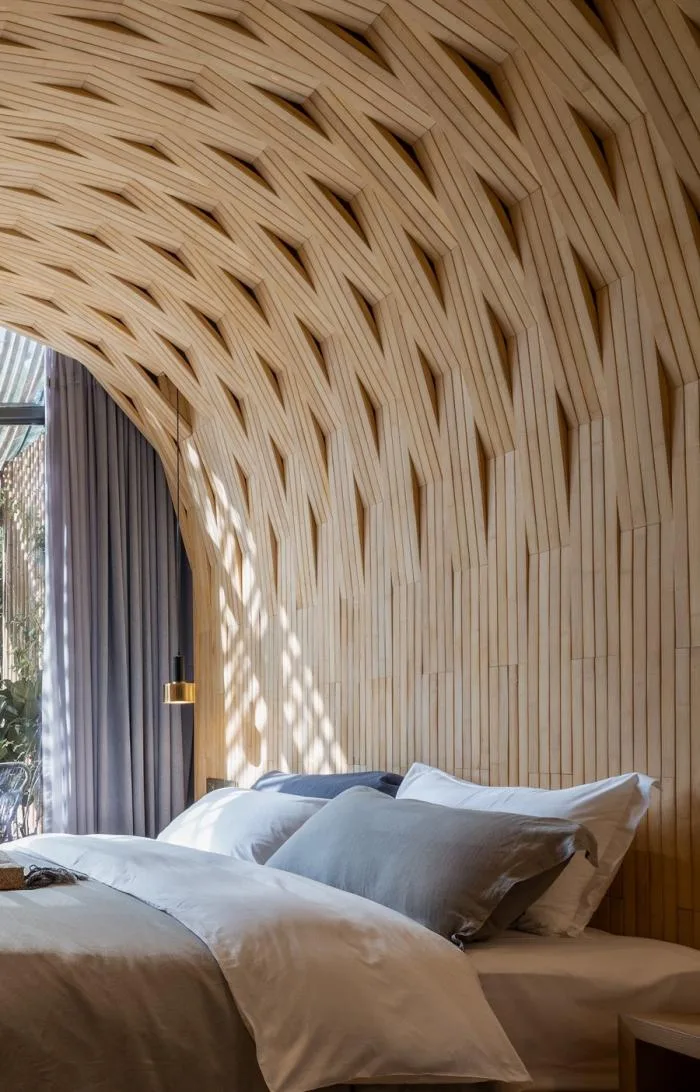
△ Bamboo room
The overall design resembles bamboo product design. Through architectural design, a new approach to using bamboo was discovered. I hope to revive bamboo as a natural, eco-friendly, and renewable material through this vision and effort.
While the design framework of Shishe Zhuligan is modern, it is deeply rooted in my understanding and respect for traditional Chinese culture.
Respect history and return to nature.
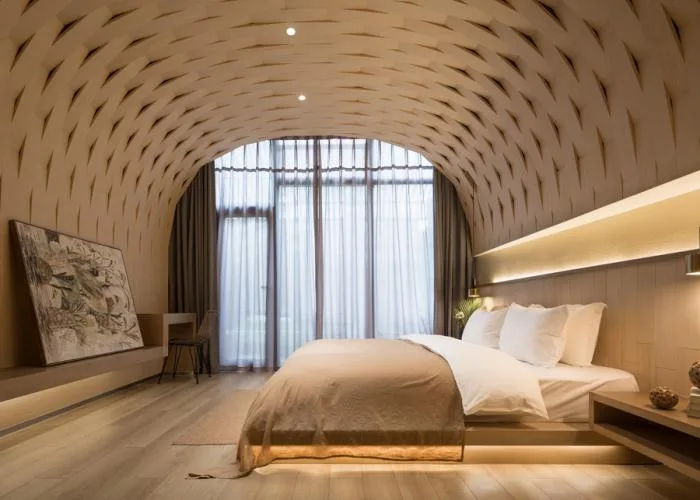
△ Bamboo skin house
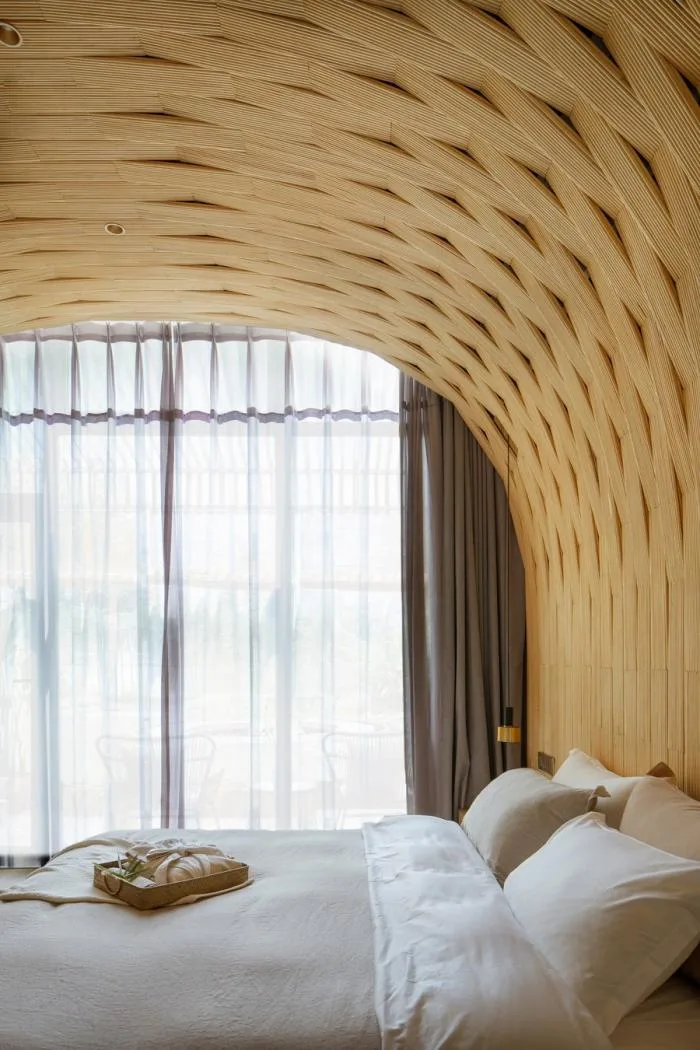
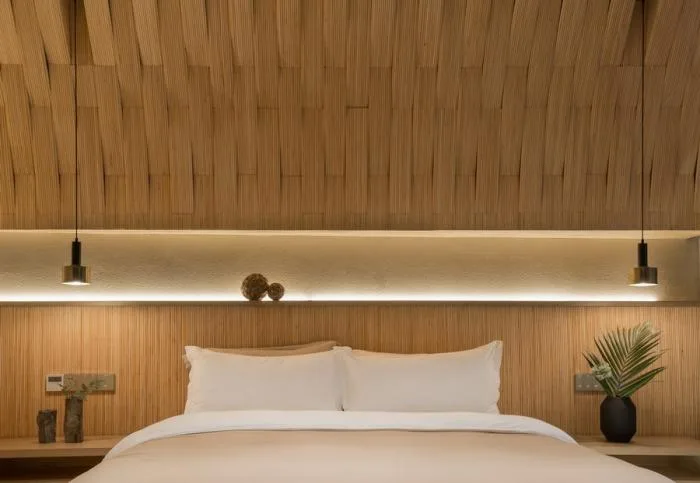
△ Bamboo house
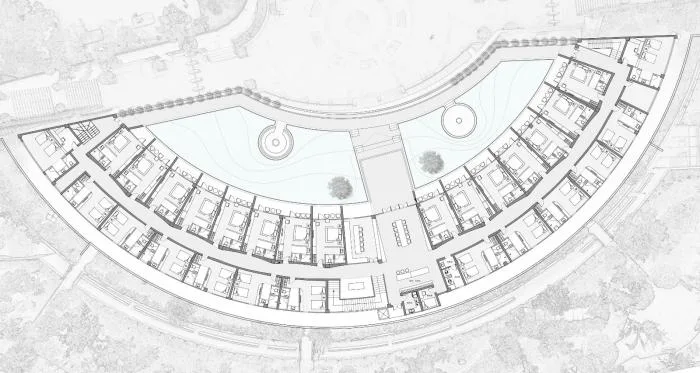
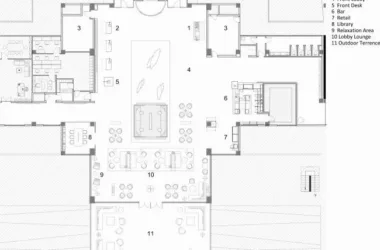
△ Plan view
Project Information
Project Name: Shishe Zhuligan
Location: Yibin, Sichuan
Project Type: Interior Design
Indoor Area: 1,150 square meters
Landscape Area: 900 square meters
Design Period: June 2018 to October 2018
Main Creative Team: Yunnan Yang Yongquan Architectural Design Firm (QAD)
Chief Designer: Yang Yongquan
Contact Email: [email protected]
Soft Decoration Design: Li Yinxian
Main Material: Bamboo-patterned aluminum alloy
Photography: Wang Ce, Long Junwu
Video: Wang Ce












Must log in before commenting!
Sign Up