
Project Background
The Tengnuo School at Dongxiao Campus of Shenzhen Luohu Cuiyuan Middle School was designed by He Chuan Architecture Studio, affiliated with Shenzhen University Architectural Design and Research Institute Co., Ltd. The detailed design and construction were handled by China Construction Technology, with the Luohu District Government of Shenzhen as the owner. Utilizing an integrated EPC (Engineering, Procurement, and Construction) design and build approach, the project significantly shortened the construction timeline while ensuring quality and cost control. The entire design and construction process was completed within three months. The project is composed of light steel box unit modules that can be dismantled and relocated to different sites in the future, supporting sustainable development.
Site Environment
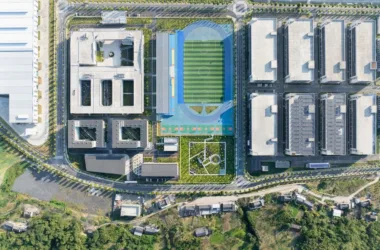
The project is situated on the south side of Dongxiao Campus of Cuiyuan Middle School along Donghu Road, Dongxiao Street, Luohu District, Shenzhen. The area is densely built and compact. To the east lies the Dongxiao Jiye Temporary Project Department; to the west, the Yangguangming Residence, a mid-rise residential complex; to the south, the Hangjia Building, a commercial office structure; and to the north, the school’s playground and main entrance (south gate). Chunhe Road, the only municipal road providing external access, runs to the north, while a terminal road lies to the west. A large banyan tree stands in the northeast corner of the site.
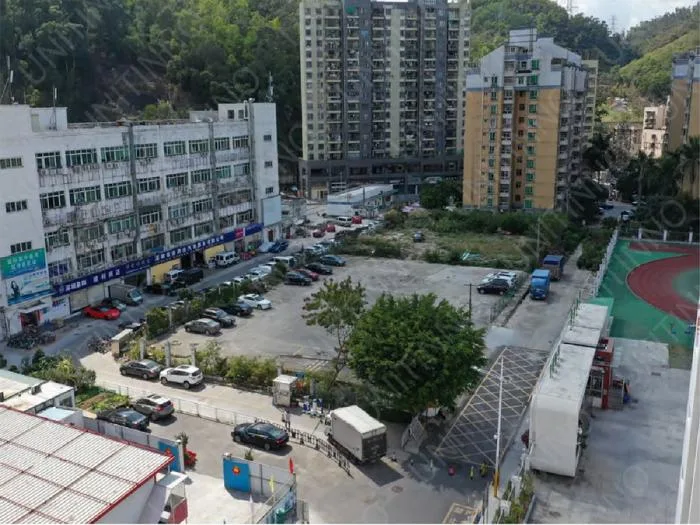
△ Aerial view of the site
Design Concept
The design and construction of Tengnuo School incorporate considerations of current and future teaching methods, user behavior, local climate, ecological energy efficiency, and sustainability. Using China Construction Technology’s light steel box modules as fundamental components, the design integrates elevated activity areas, a two-story sunshade atrium, and broad corridors with teaching modules to create versatile spaces with distinct characteristics. The original trees on site were preserved, fostering a learning environment that reflects local identity, relevance, engagement, and adaptability.
Emphasis was placed on stimulating students’ potential and fostering a sense of belonging within the school, while aligning with existing educational infrastructure. Throughout the project, the design team worked closely with construction and operational stakeholders to develop a cost-effective, time-efficient, and high-quality integrated design and construction system, leveraging prefabrication to match Shenzhen’s demand for rapid yet sustainable development.
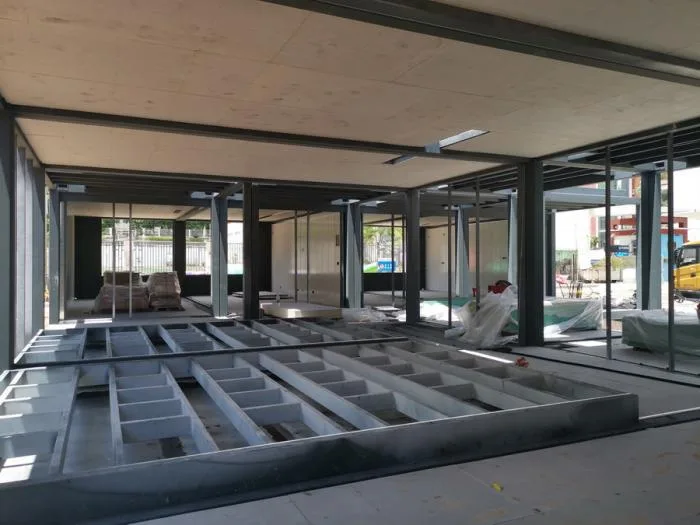
△ Unit module construction
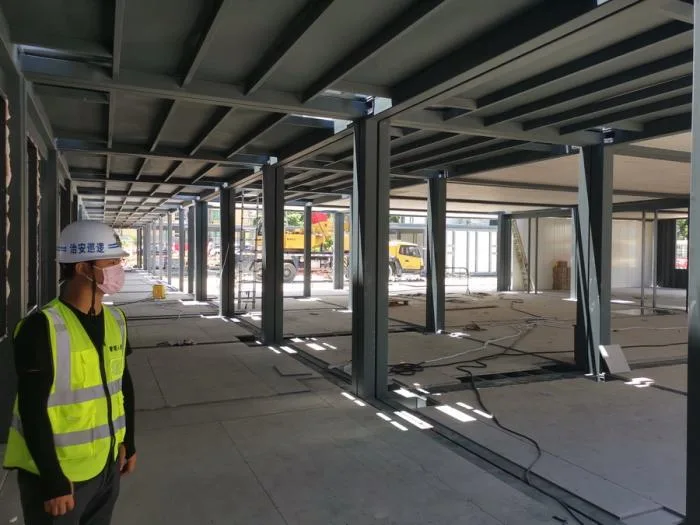
△ Spatial framework formed by the unit modules
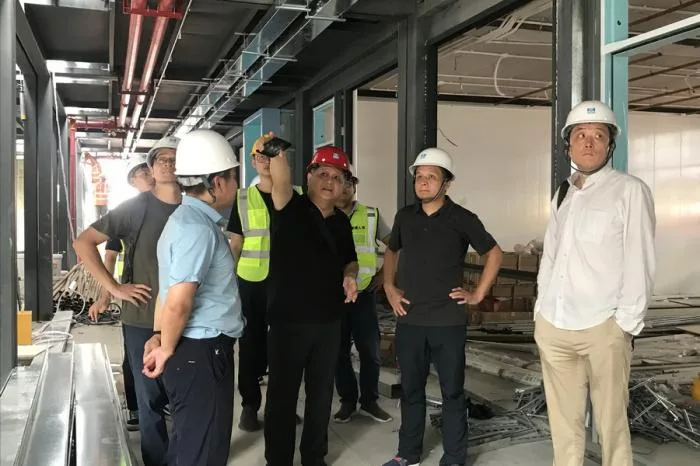
△ Collaborative design, construction, and on-site user involvement
The large banyan tree at the northeast corner was preserved to establish a natural, welcoming campus entrance that serves as a transitional buffer between the school grounds and the surrounding environment. This approach respects and continues the site’s environmental history.
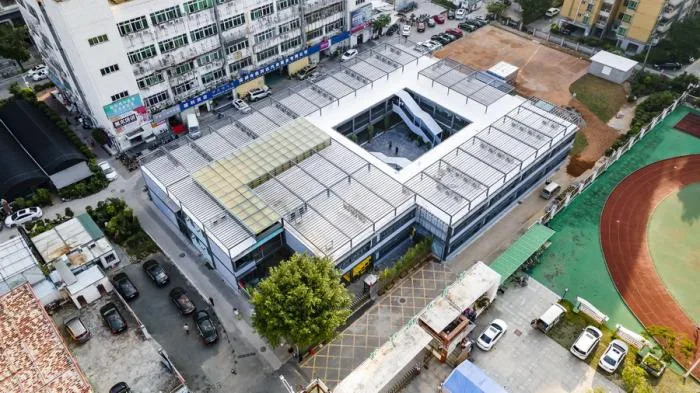
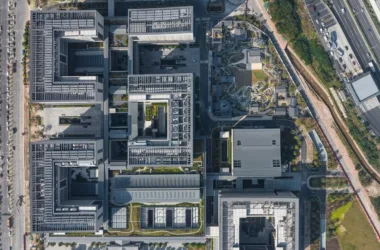
△ Aerial view from the northeast corner
The entrance atrium features a perforated ceiling that creates a tall, airy space filled with dynamic light and shadow. This design offers a refreshing sense of openness as visitors transition from the dense, crowded external environment into the campus.
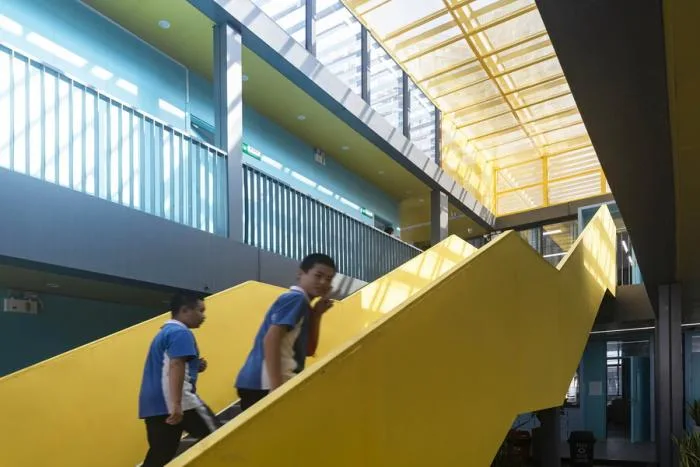
△ Main entrance atrium space
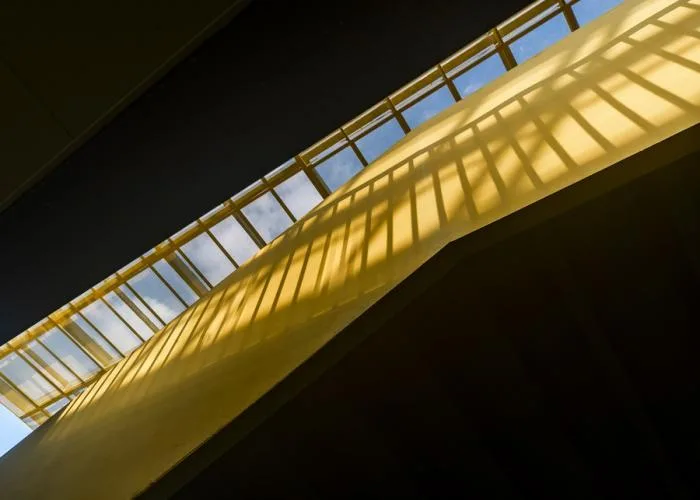
△ Main entrance atrium space
The design incorporates an elevated ground-level activity area to break from the traditional school layout of single-use spaces. This multi-functional area connects the east entrance courtyard and the west courtyard, creating a permeable spatial dynamic. The design suits Shenzhen’s subtropical climate by promoting ventilation and offering flexible use for teachers and students in various weather conditions.
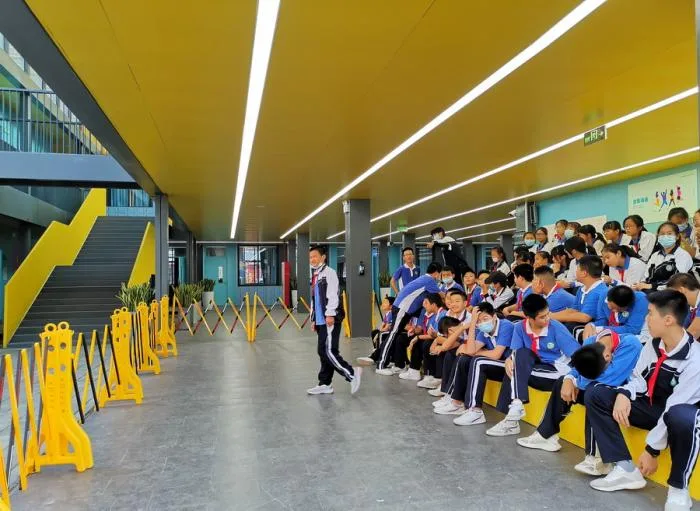
△ Waiting area on the elevated entrance level
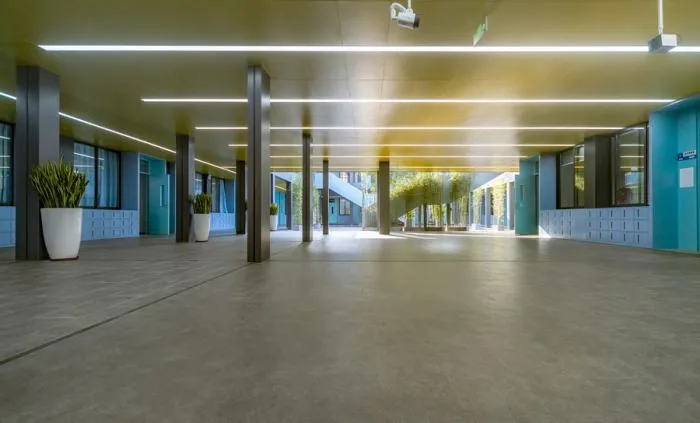
△ Lower level activity area
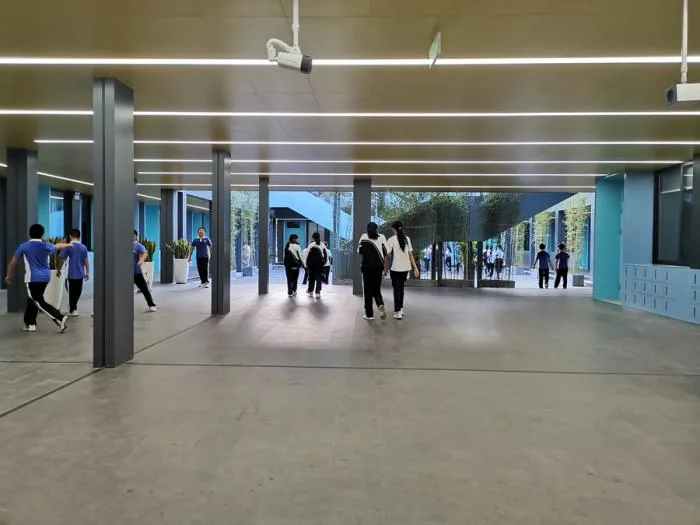
△ Lower level activity area
An outer corridor, measuring three meters in width, was designed to provide students with additional space for activities and social interaction. The corridor features a simple linear light strip and a yellow perforated ceiling, complementing the prefabricated industrial aesthetic.
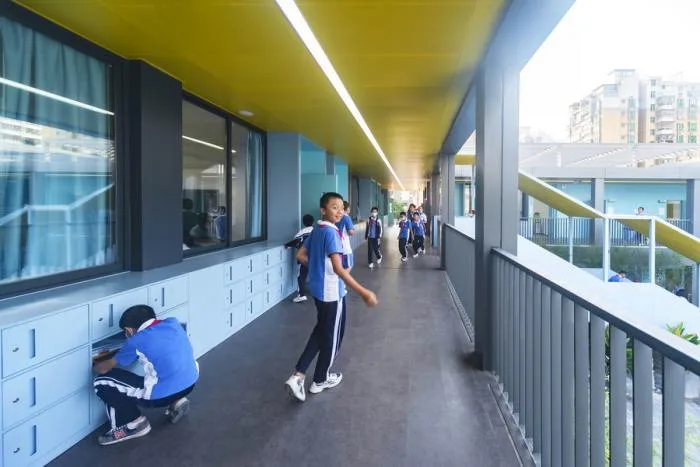
△ Corridor outside classrooms
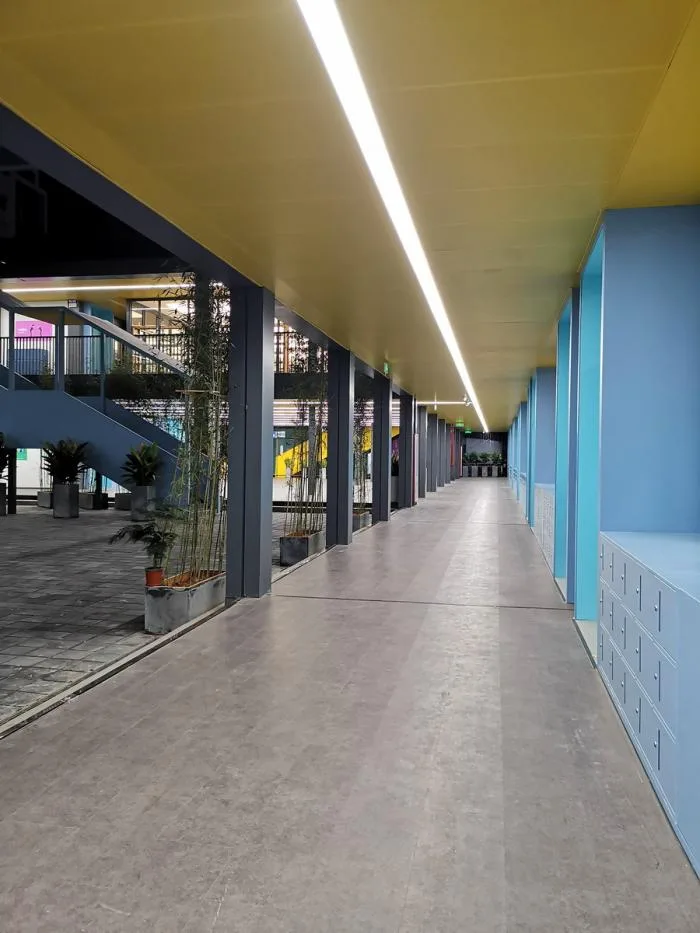
△ Night view of the outer corridor
Classrooms are constructed from modular unit components, with integrated storage spaces along the outer walls adjacent to the corridor. This design addresses student needs and behavior patterns, maximizing limited campus space. The modular approach allows flexible division of interior and exterior interfaces to accommodate current and future functional requirements.
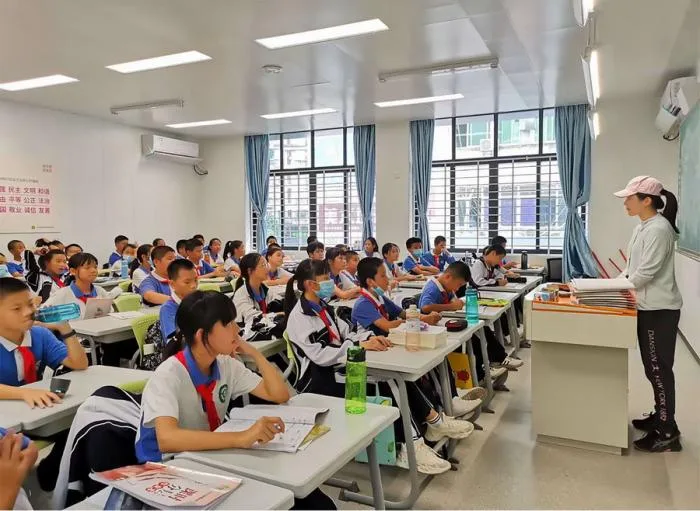
△ Classroom interior view
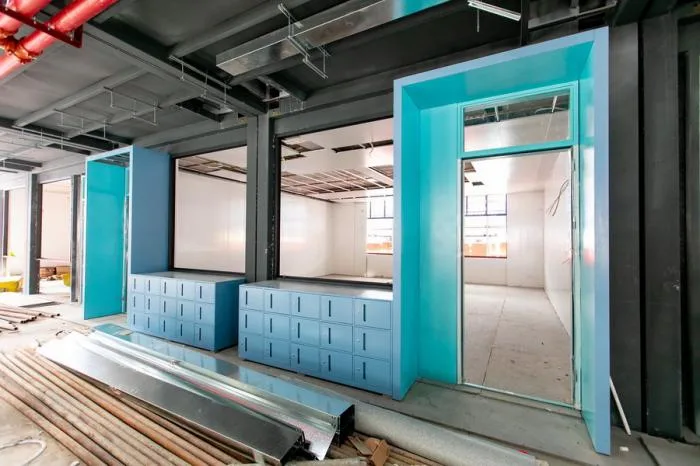
Installation of modular unit partition components
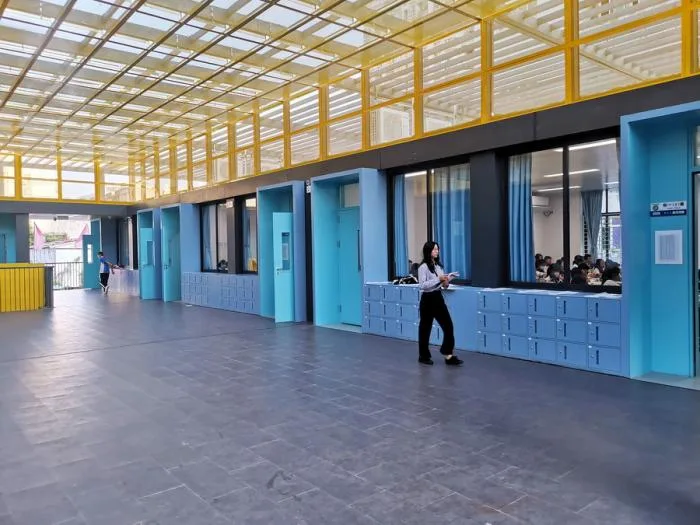
The modular components create flexible internal and external partition interfaces
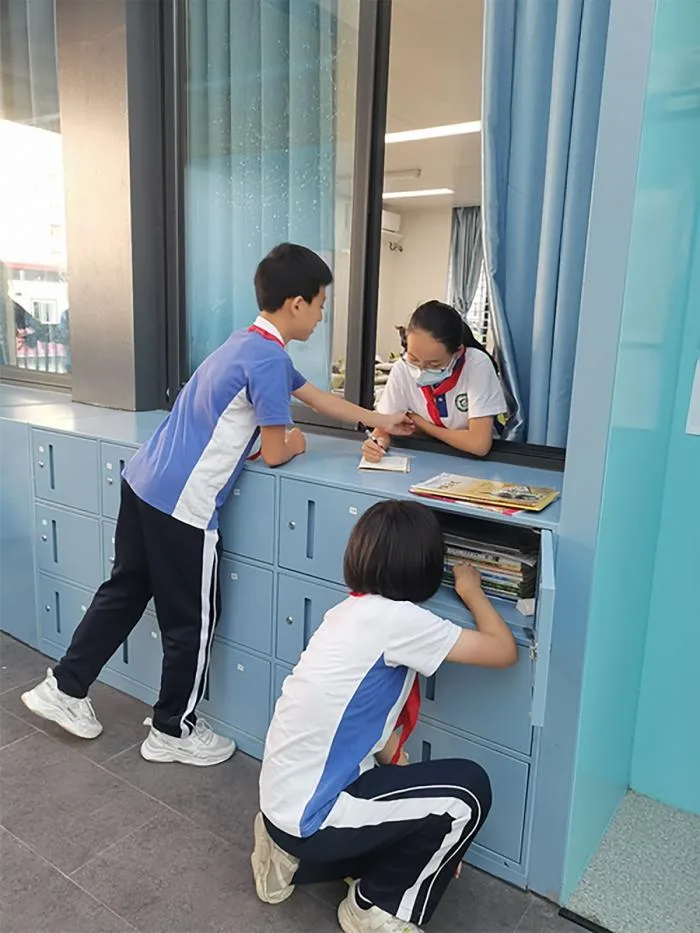
△ Student activities during breaks
Drawing inspiration from Lingnan architectural masters She Junnan and Mo Bozhi’s designs for external shading in subtropical climates, our project incorporates modular external shading components. The building’s primary colors are refreshing blue and dark gray, evoking a sense of coolness and approachability in Shenzhen’s hot climate. Structural elements are dark gray, while warm yellow accents, particularly on ceilings, add vibrancy and appeal suited to teenagers. The roof is designed as a light steel structure keel equipment layer, providing shading, support for air conditioning units, and minimizing vibration impact on classroom ceilings.
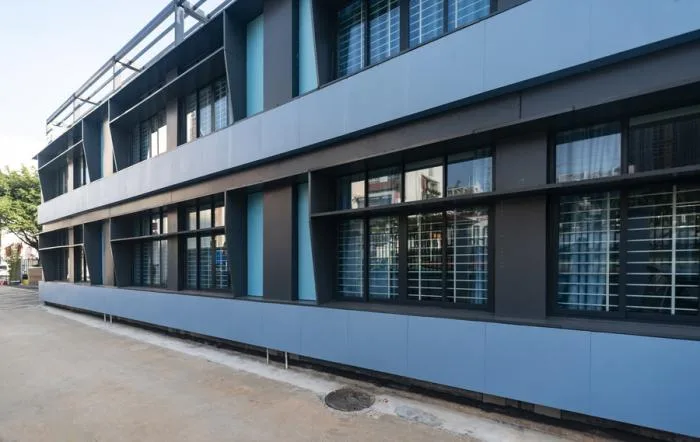
△ Exterior shading components
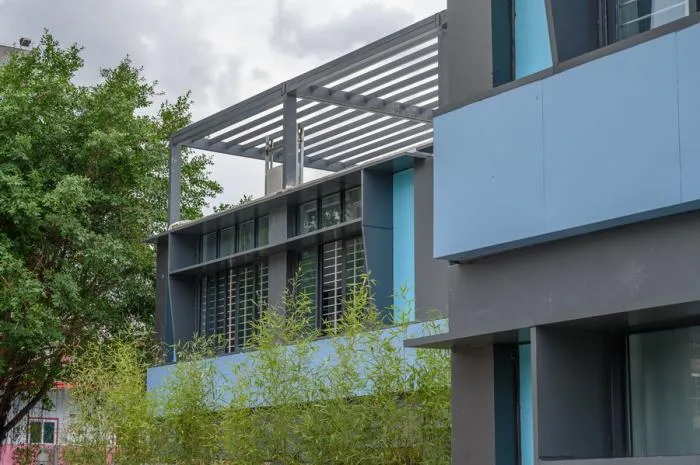
△ Roof shading components
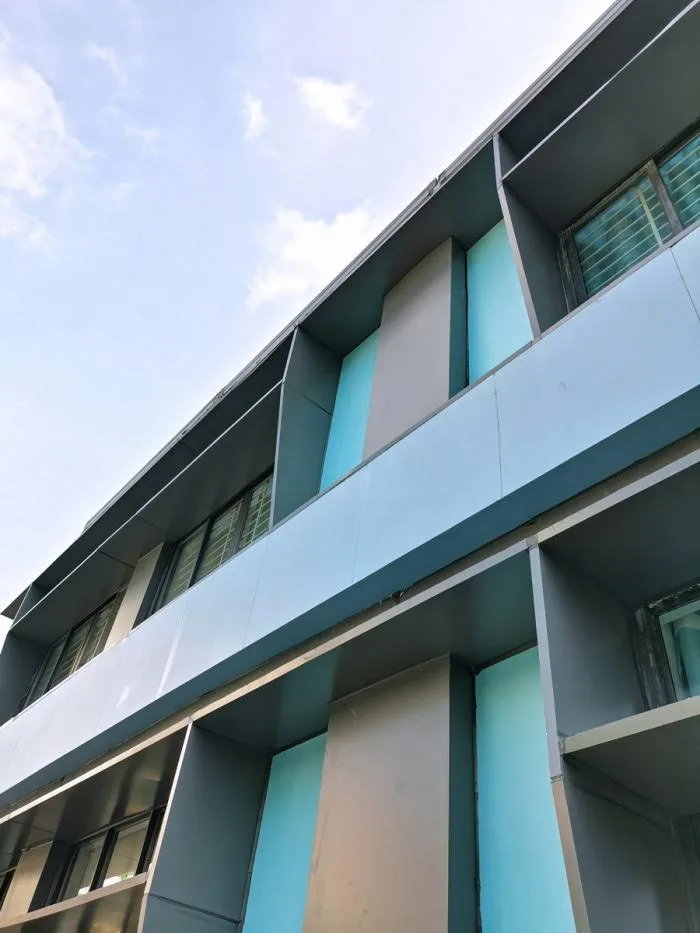
△ Exterior facade details
The project includes a reading room on the second floor, adjacent to a skylight atrium. The atrium’s ceiling is covered with yellow perforated panels for shading, creating a semi-open public space for reading, activities, and exhibitions. This design breaks away from traditional school layouts limited to traffic flow and classrooms. The reading room’s interface can be opened to the atrium, forming a larger flexible space that meets diverse school needs.
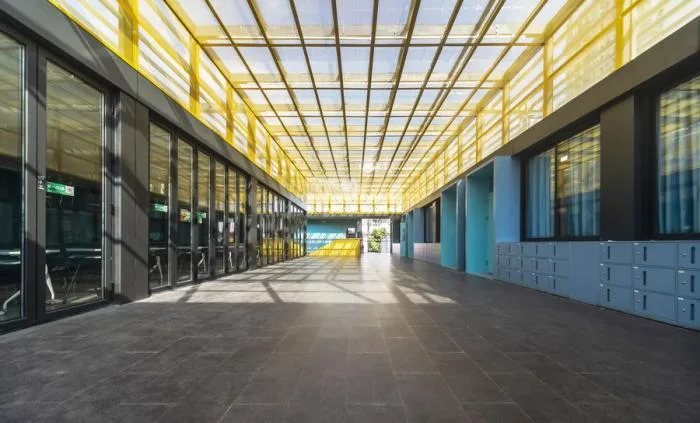
△ Second-floor atrium space
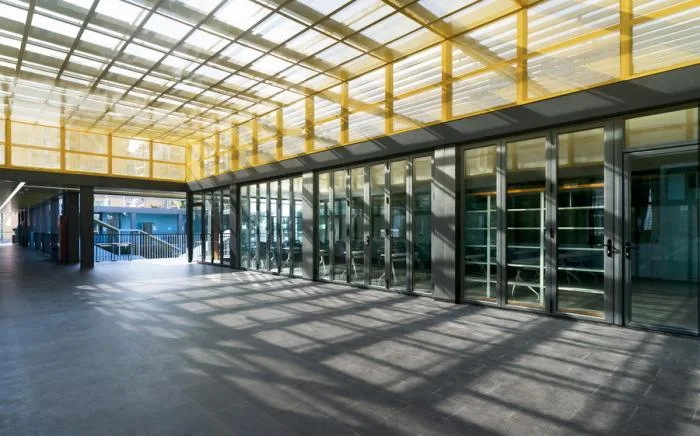
△ Second-floor atrium space
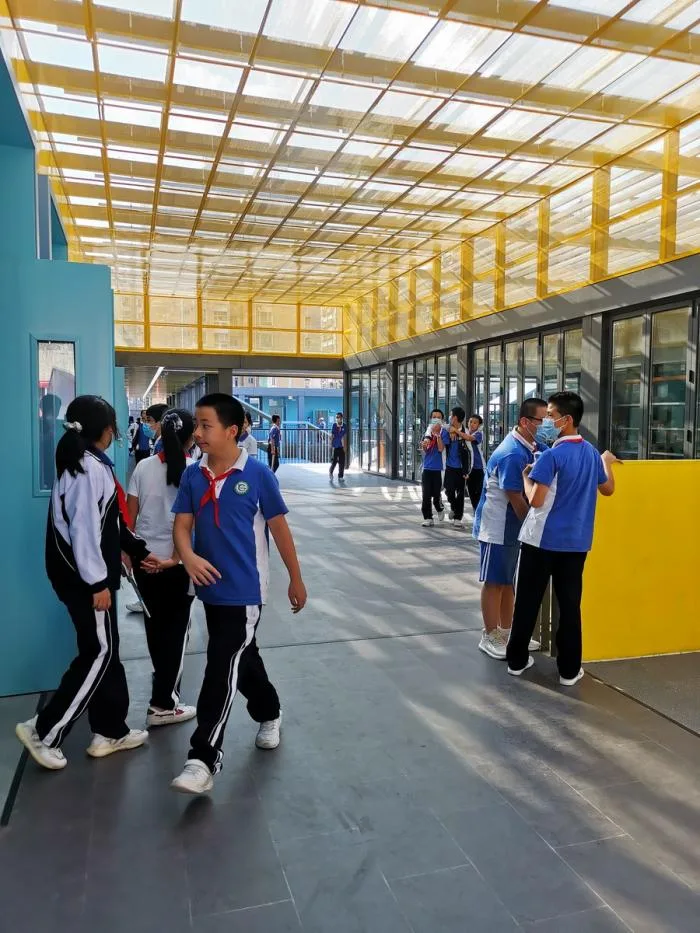
△ Student activity scene
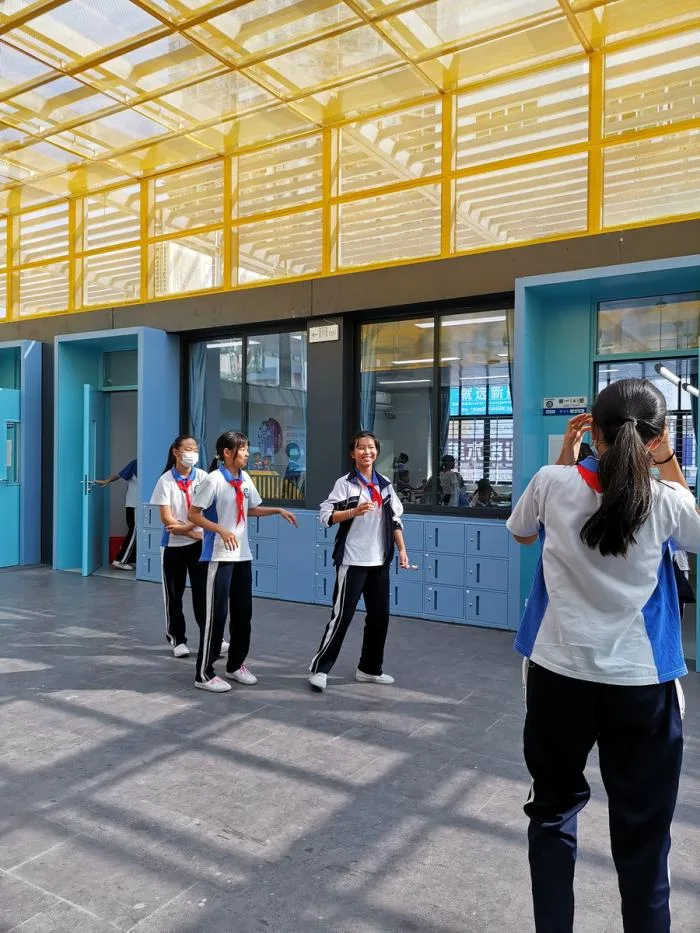
△ Student activity scene
The courtyards are designed to align with the school’s teaching style, exploring appropriate spatial scales and units that suit students’ behavior patterns. These spaces support extracurricular activities and enhance campus ventilation and natural lighting. A covered staircase was designed to prevent hazards associated with traditional uncovered external stairs, such as slipperiness and crowding during rain, better adapting to Shenzhen’s subtropical climate.
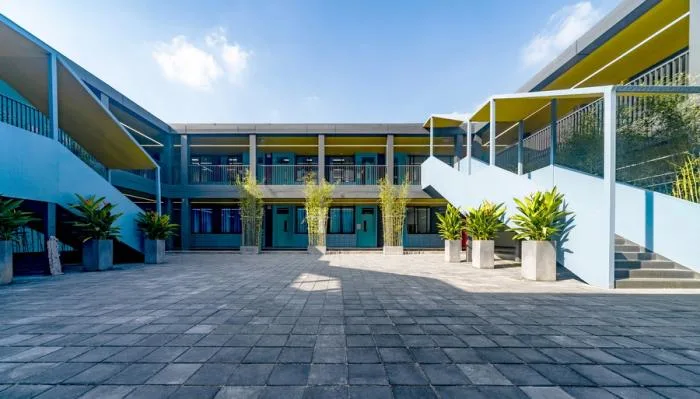
△ Courtyard interior view
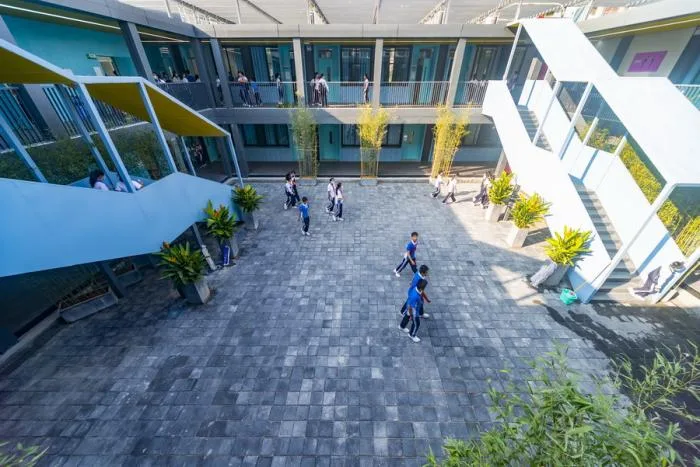
△ Courtyard interior view
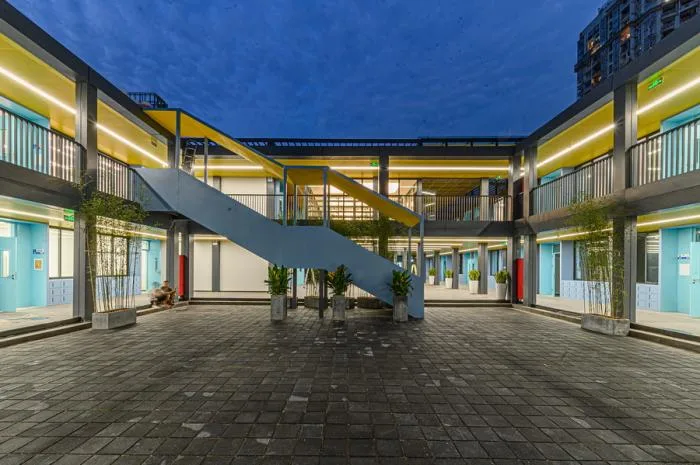
△ Courtyard night view
Conclusion
The “Flash Building School” experimental project, showcased at the Longgang Branch Exhibition Hall during the 2019 Shenzhen Hong Kong Bi-City Biennale of Urban/Architectural Design, proposed innovative approaches to rapid construction, iterative design, and integrated design/construction systems. It also emphasized the integration of digital and intelligent development pathways, aiming to develop construction methods suited to Chinese contexts while addressing urgent societal demands. The project balances social development goals with respect for individual needs, representing an extension of the theoretical and practical explorations from the 2019 Shenzhen Shuang Institute.
The Tengnuo School at Dongxiao Campus can serve both renovation and rapid enrollment expansion purposes. Additionally, due to its modular design, it can be relocated or repurposed into other building types such as community centers, daycare facilities, or youth apartments, supporting sustainable development goals.
Project Drawings
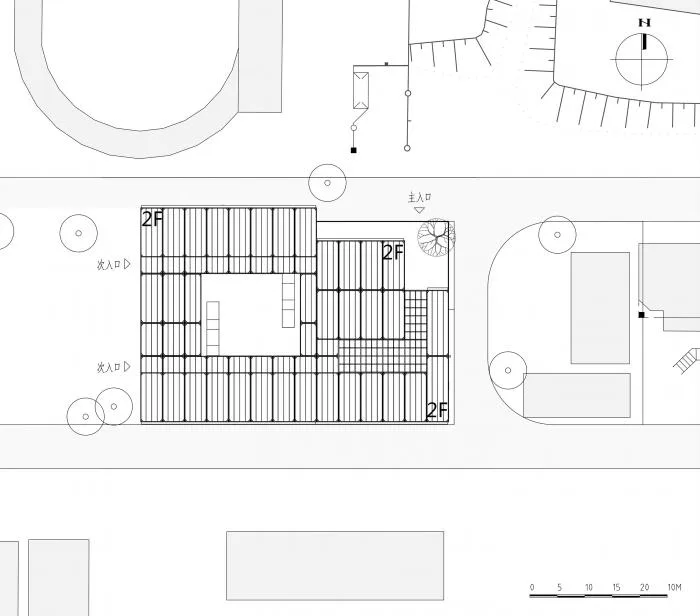
△ General layout plan
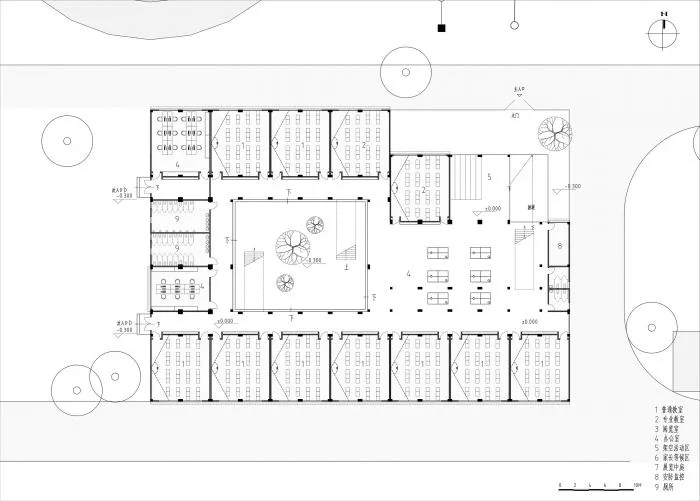
△ First floor plan
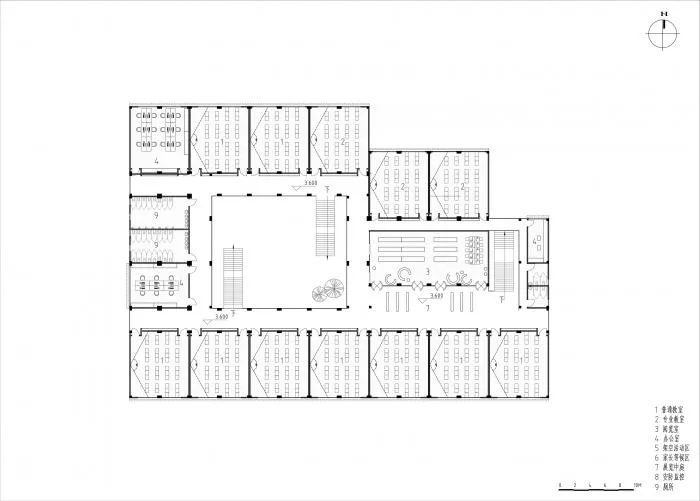
△ Second floor plan
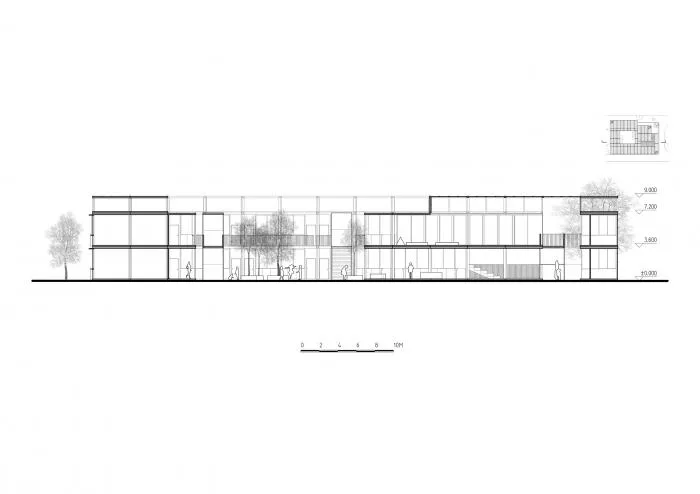
△ Section diagram
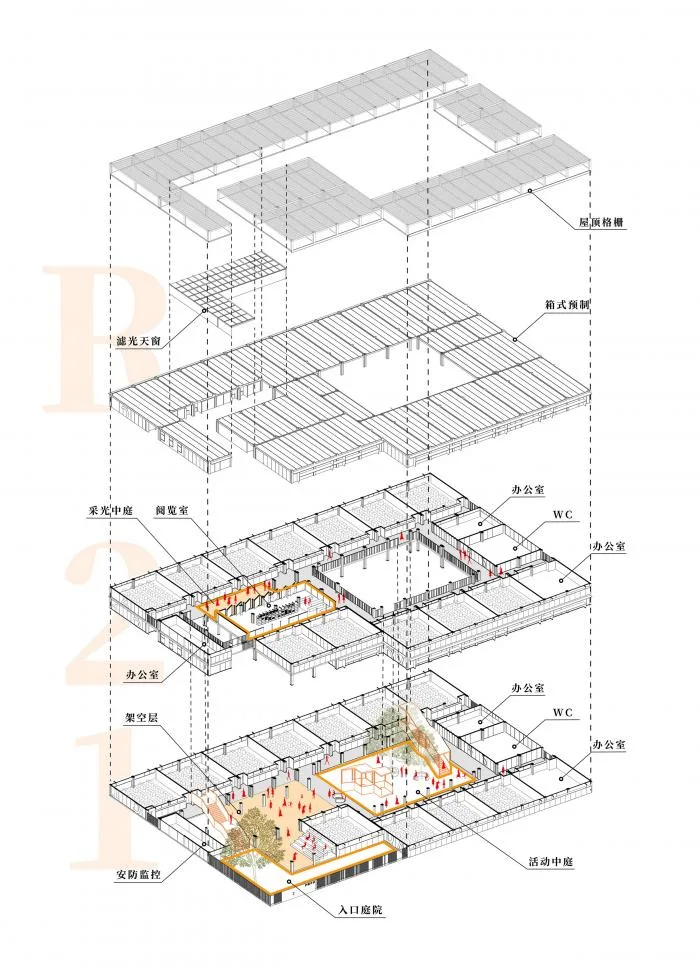
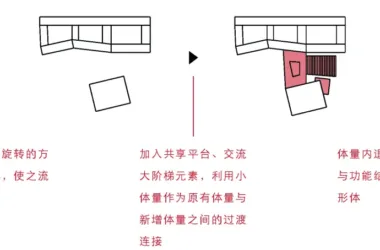
△ Spatial composition analysis diagram
Project Information
Project Name: Tengnuo School, Dongxiao Campus, Shenzhen Luohu Cuiyuan Middle School
Project Type: Architecture
Location: Luohu District, Shenzhen
Design Studio: Hechuan Architecture Studio, Shenzhen University
Design Studio Website: http://www.suiadr.com/indexhome.asp (Shenzhen University Architectural Design and Research Institute Co., Ltd.)
Lead Architect: He Chuan
Design Team: Ma Wenlongyin, Wen Hui, Jiang Rui, Li Wan, Chen Jing, Fei Mengyan, Song Bowen, Min Lihui, Su Zeyong
Owner: Luohu District Government, Shenzhen
Partner/Builder: China Construction Technology Co., Ltd.
Materials: Steel structure frame, aluminum-plastic composite panel exterior walls, rock wool insulation, aluminum alloy perforated ceiling panels
Photographer: Hao Lai
Status: Completed
Design Period: June 2020 – September 2020
Construction Period: July 2020 – September 2020
Site Area: 3,862 square meters
Building Area: 3,516 square meters












Must log in before commenting!
Sign Up