
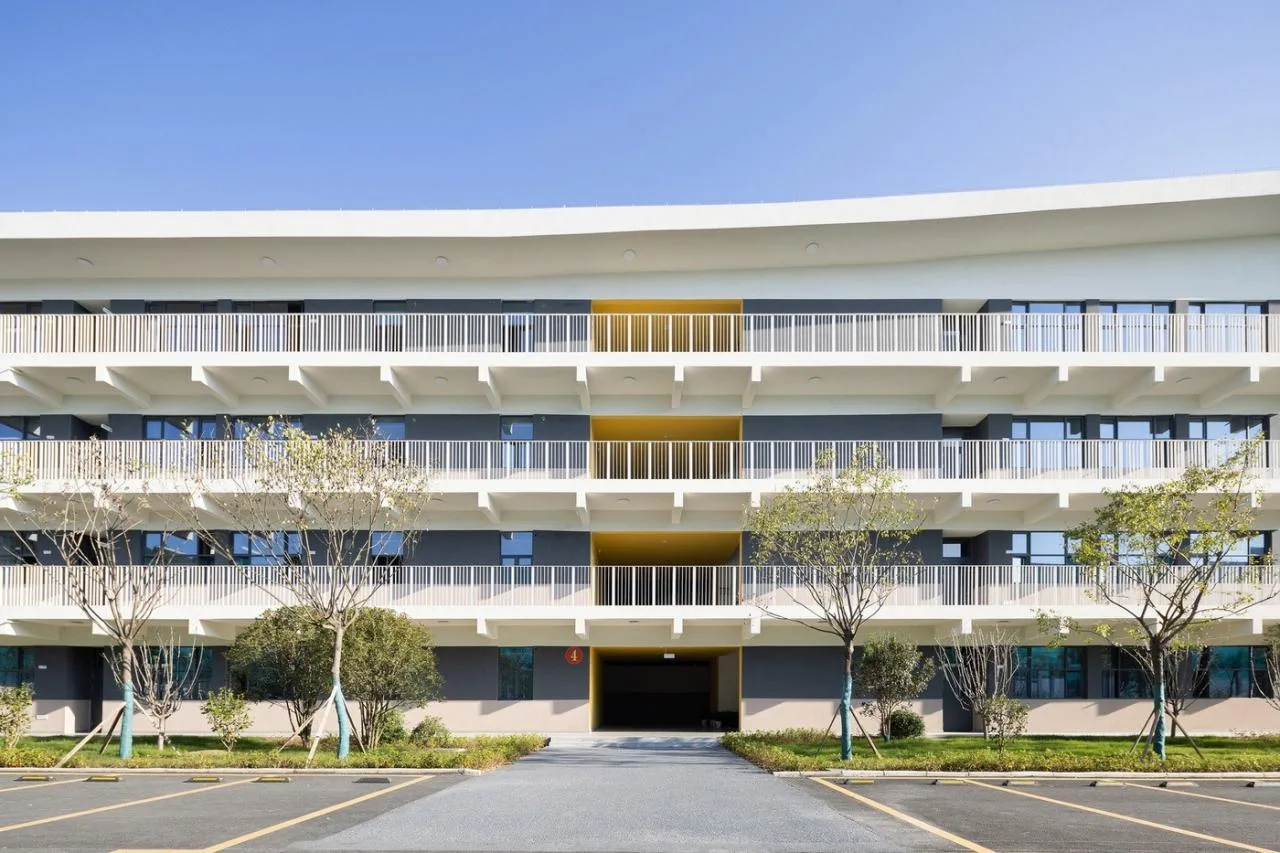
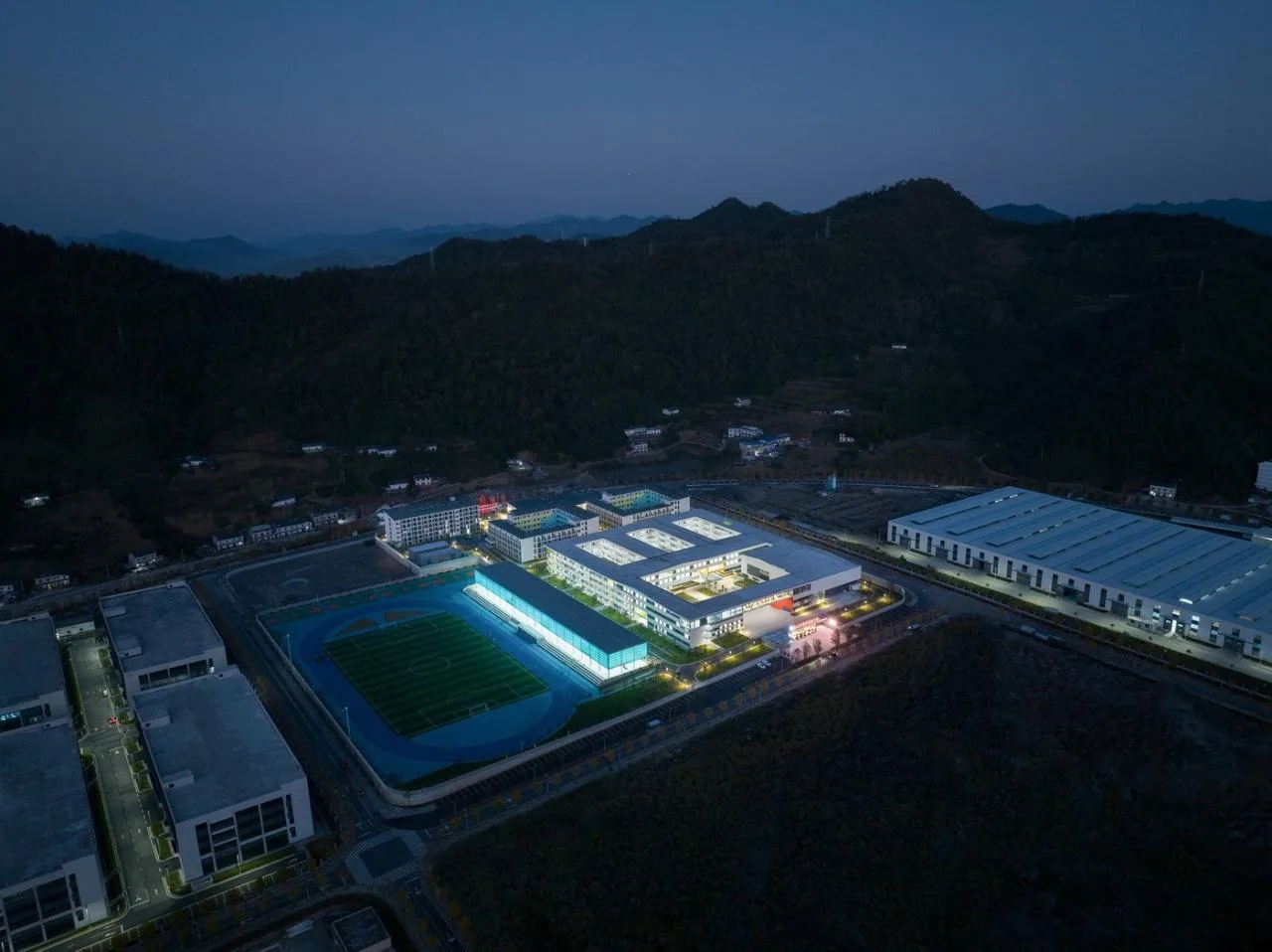
Nanshan Wufutang Senior High School is located in Zhushan County’s Yuling Industrial Park, Pankou Township, Hubei Province, approximately 6 kilometers from the main urban area. The new campus was established to separate the high school division from the original foreign language school’s primary and secondary departments, providing more ample educational space. Yuling Industrial Park is the only relatively flat site within the county’s current planning area, featuring complete municipal infrastructure.
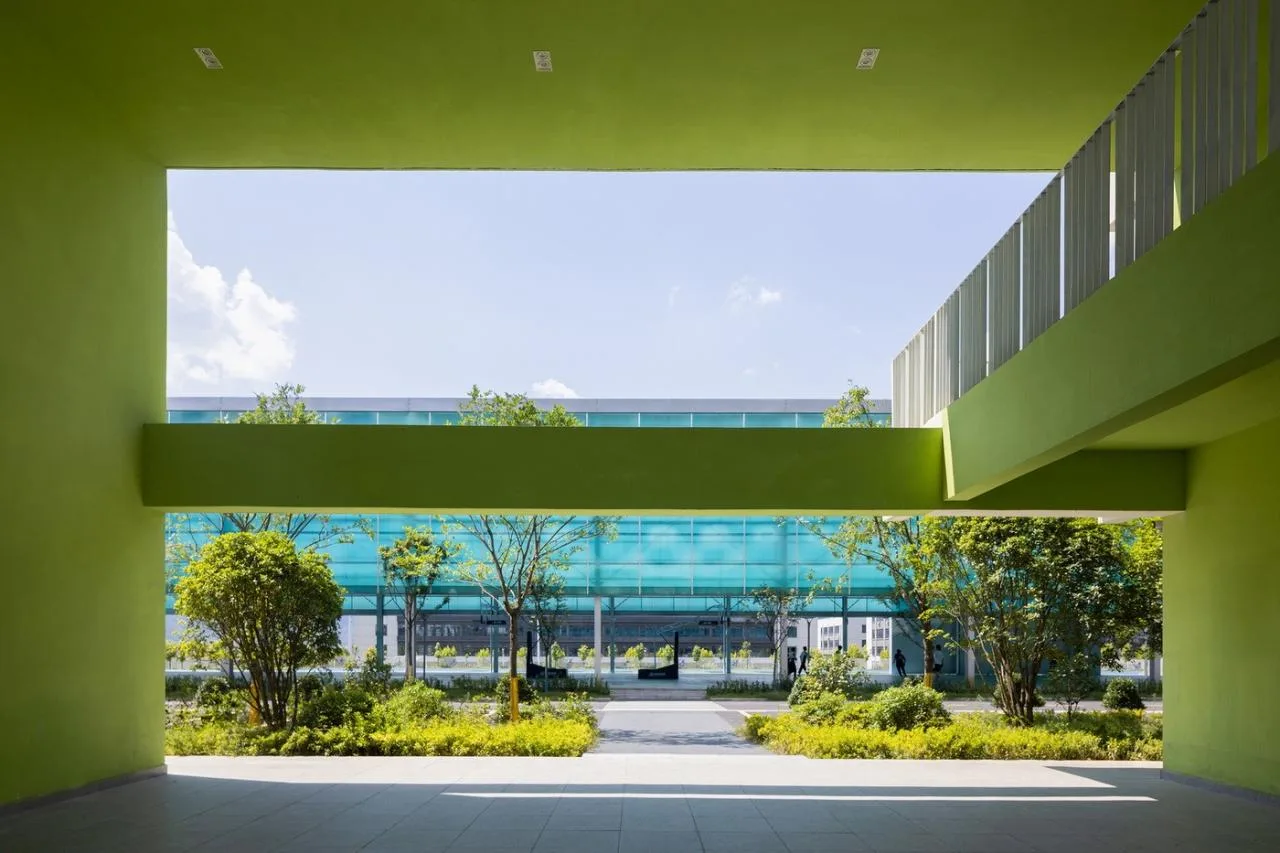
High school education outside of compulsory education tends to have a utilitarian and industrial character, especially prior to college entrance examination reforms. The boarding system further influences the selection of teaching locations, often favoring relatively isolated sites away from residential communities, particularly in county-level urban areas.
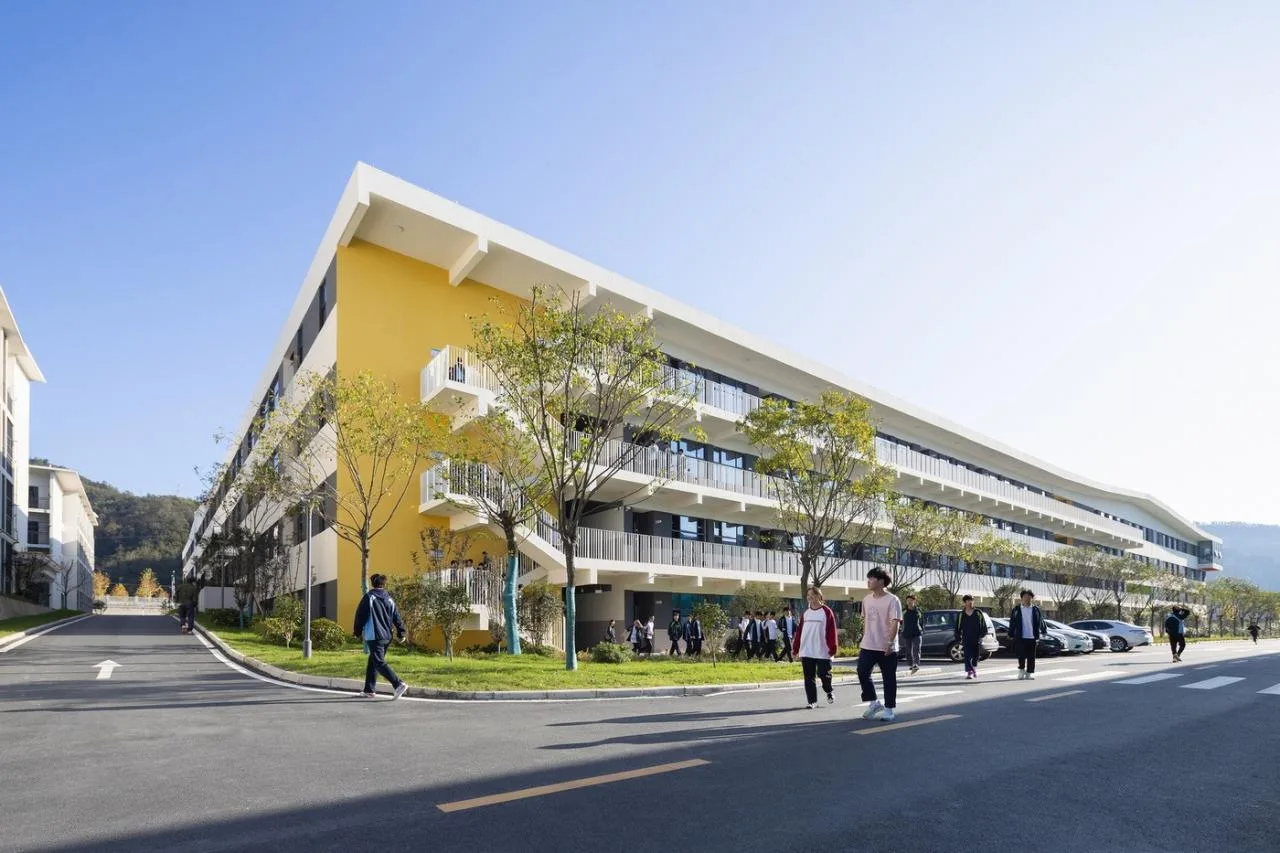
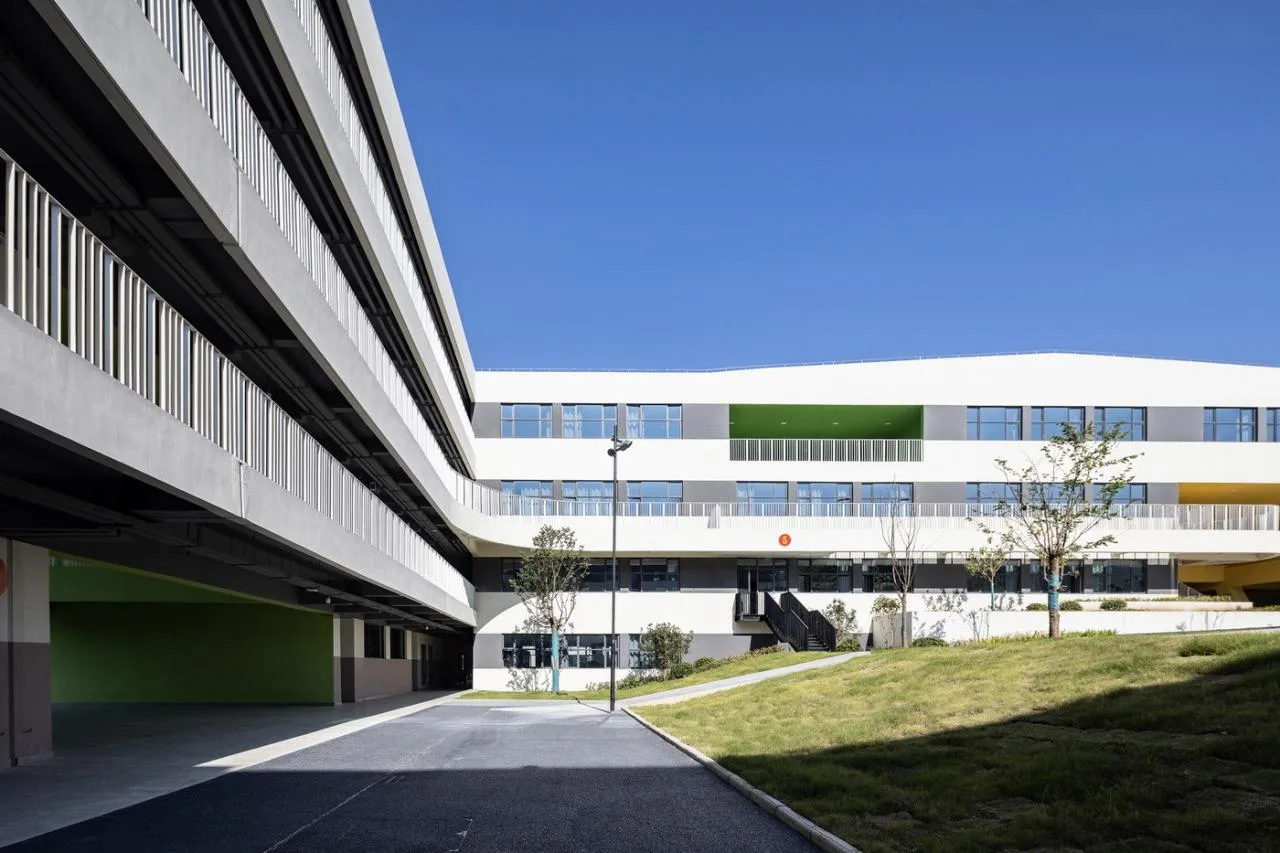
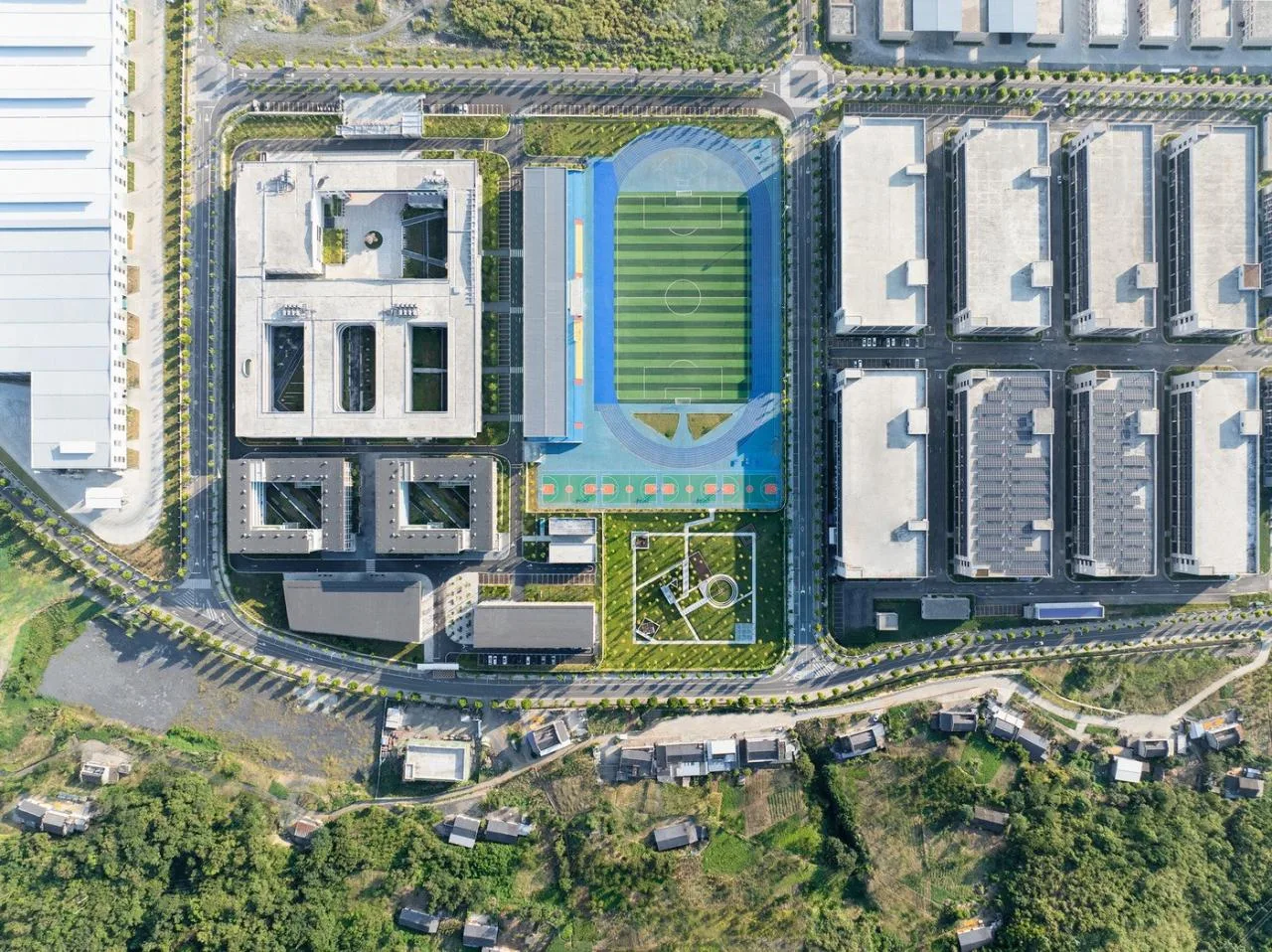
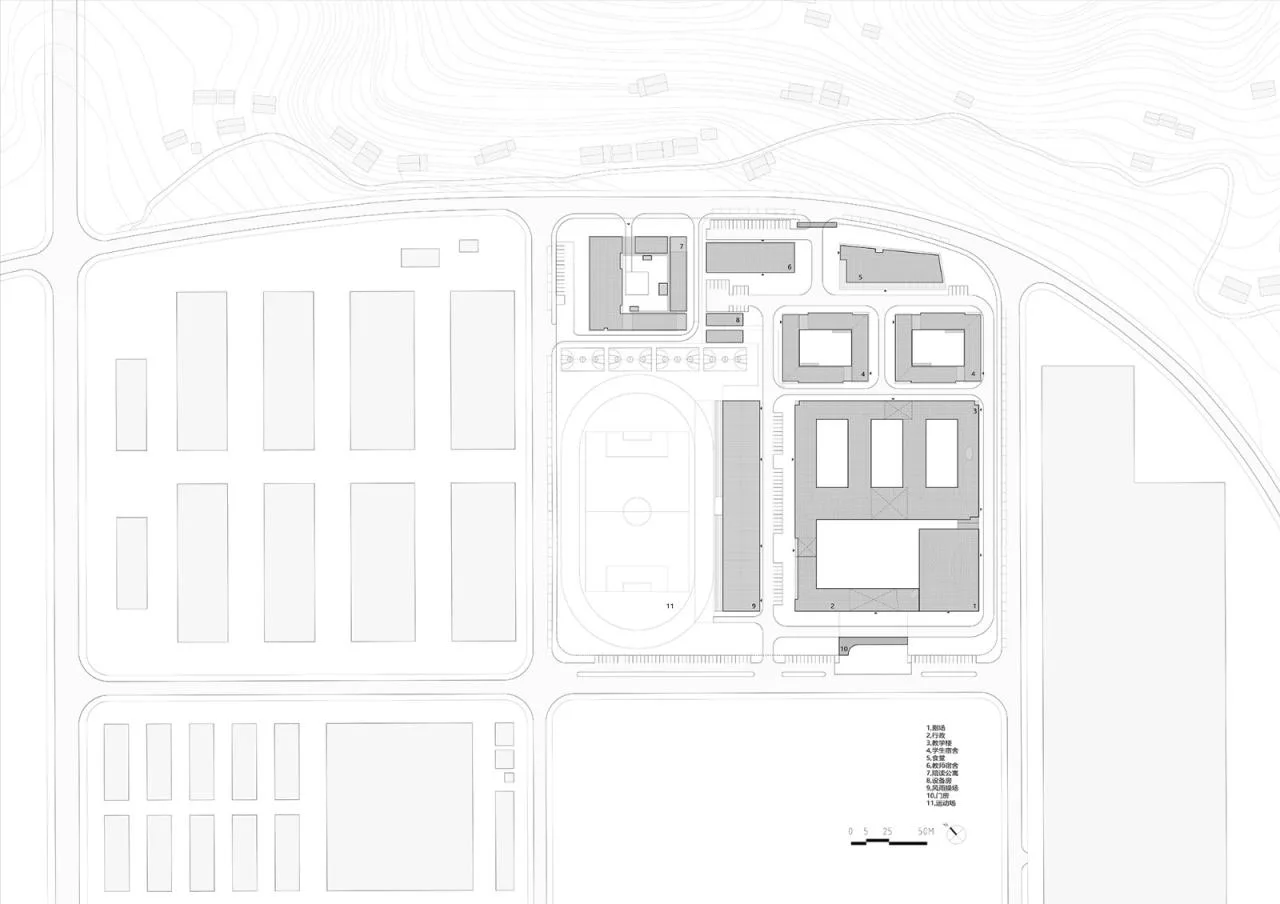
The industrial park is surrounded by mountains on three sides and features a road network angled about 45 degrees from the north-south axis. It connects externally through two tunnels. A private school already exists within the park, with most remaining land dedicated to light industrial plants. The site for the new campus lies in the park’s southeast, with the northwest side about 12 meters lower in elevation than the southeast. The total project area is approximately 86,916.45 square meters, with a planned capacity for 2,000 students and a total building area of 66,205.88 square meters, resulting in a floor area ratio of 0.76.
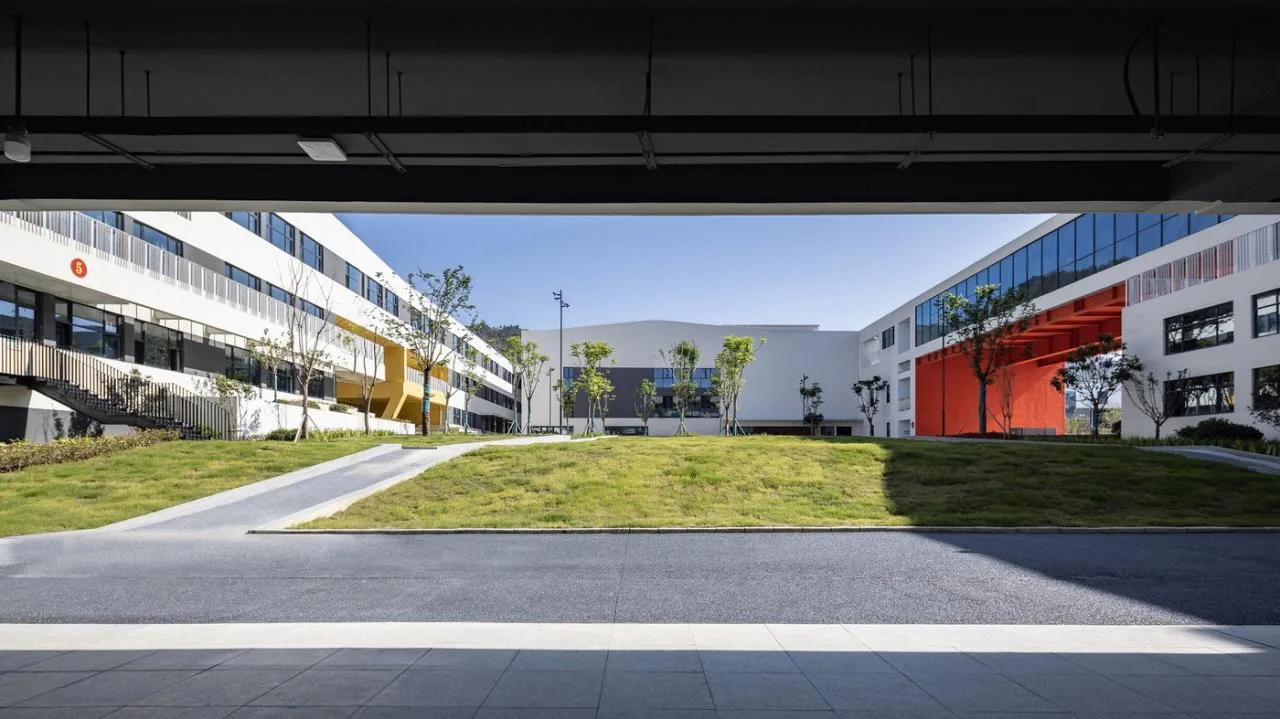
Besides academic facilities, the new campus includes student and teacher dormitories, as well as study apartments. As a private high school, the administration aims to provide ample sports venues to support students focused on athletic training. Drawing from past educational experience, the design emphasizes shared classrooms, accessible water sources, and efficient circulation routes between classes to enhance daily life and learning.
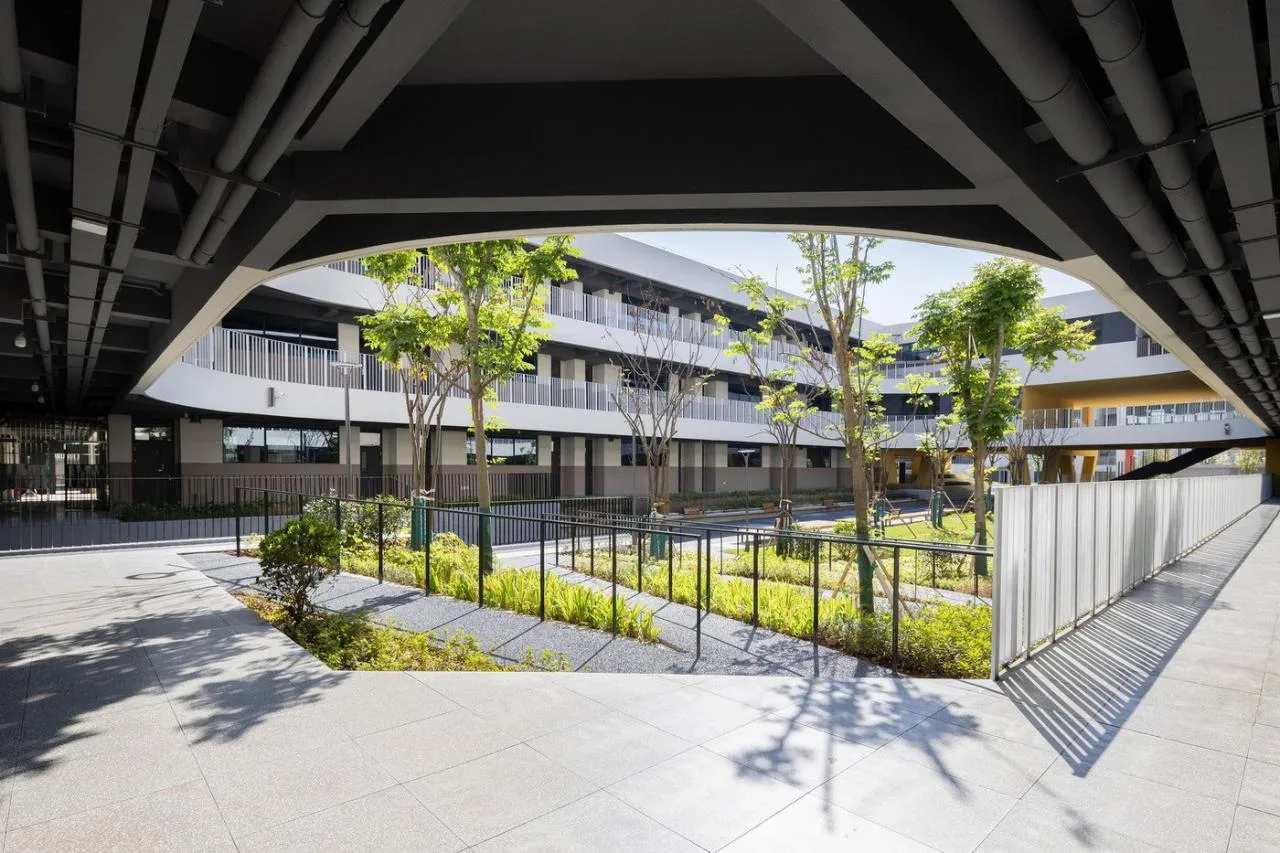
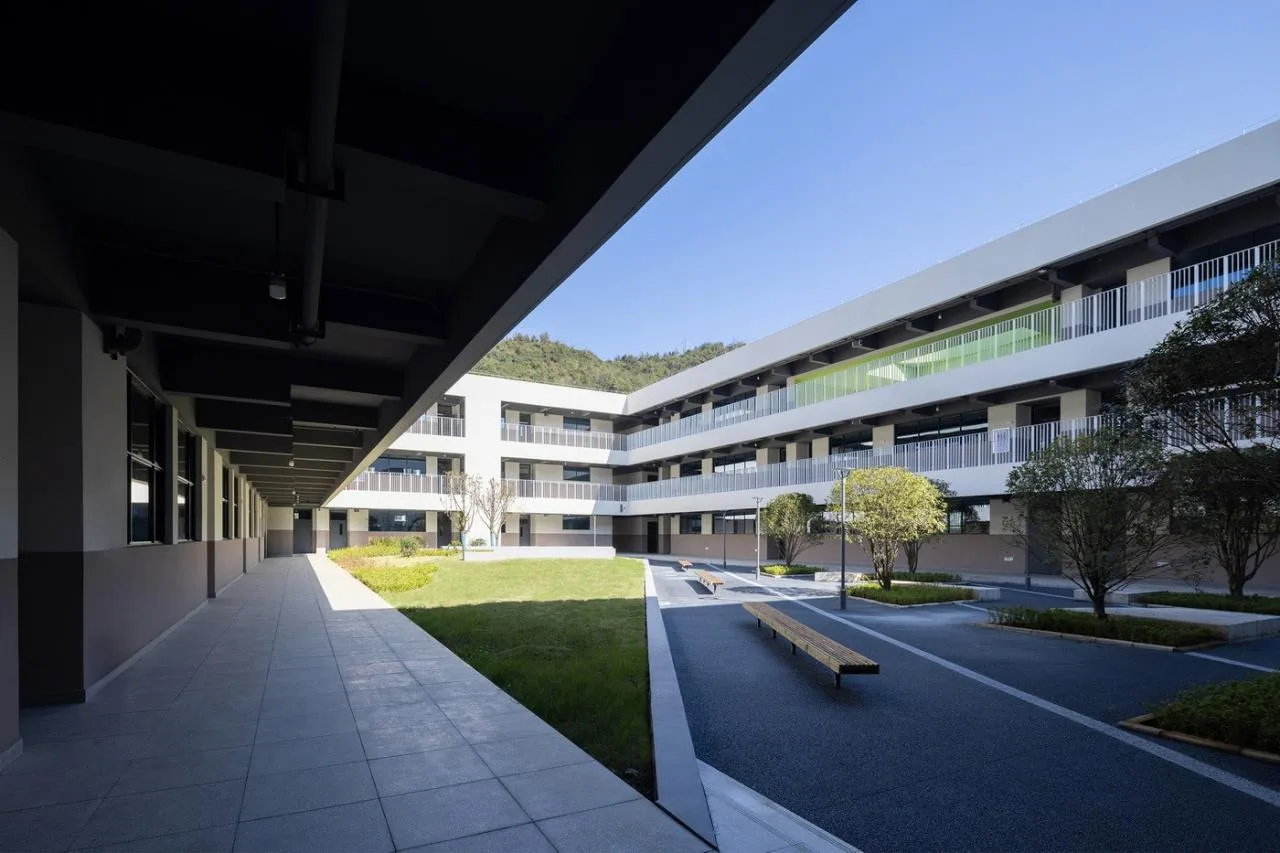
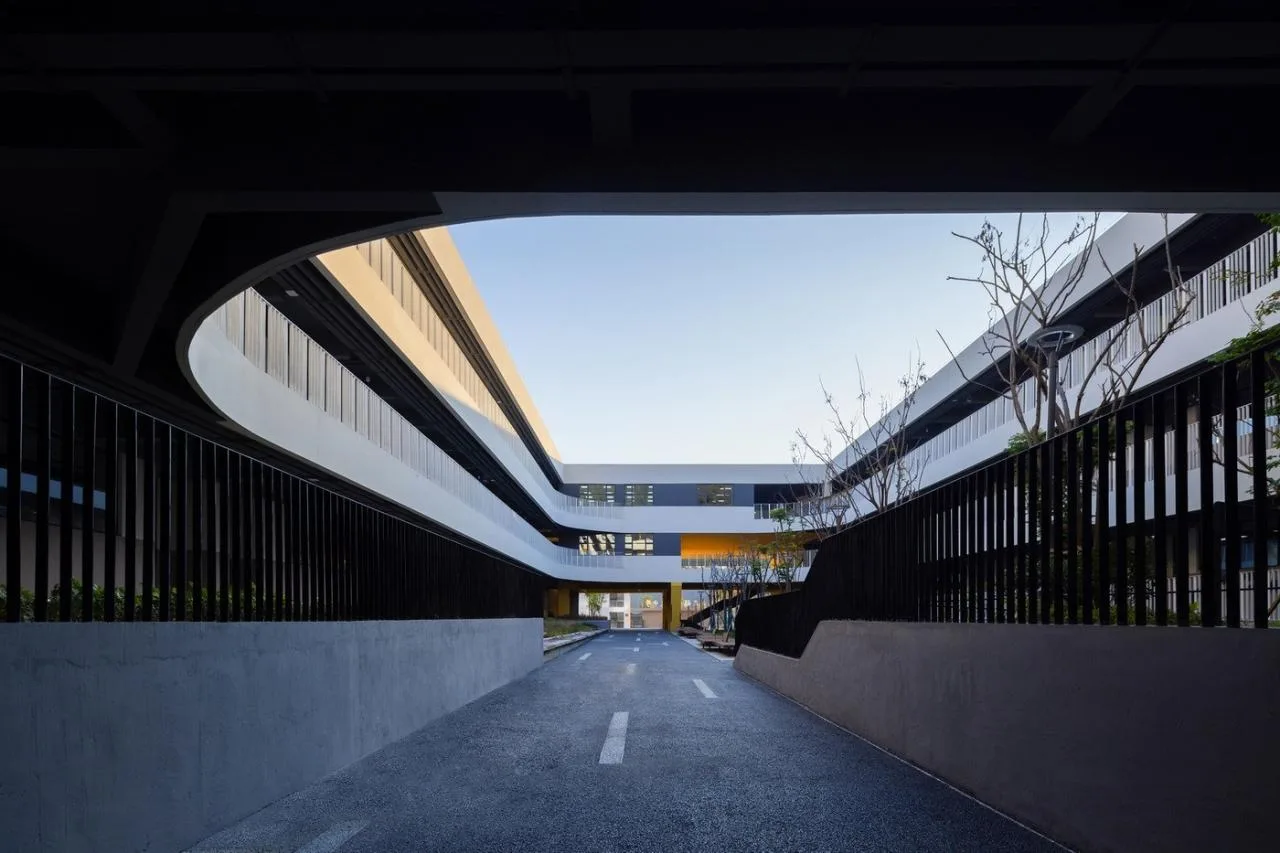
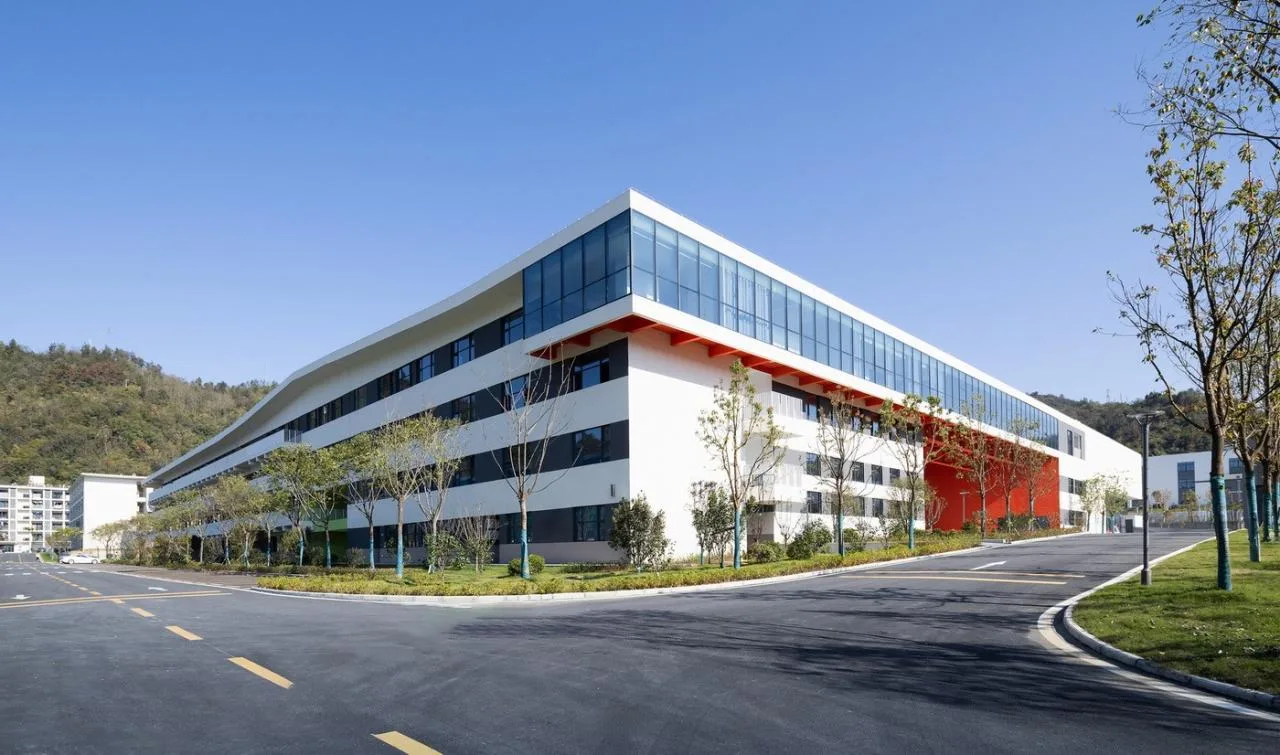
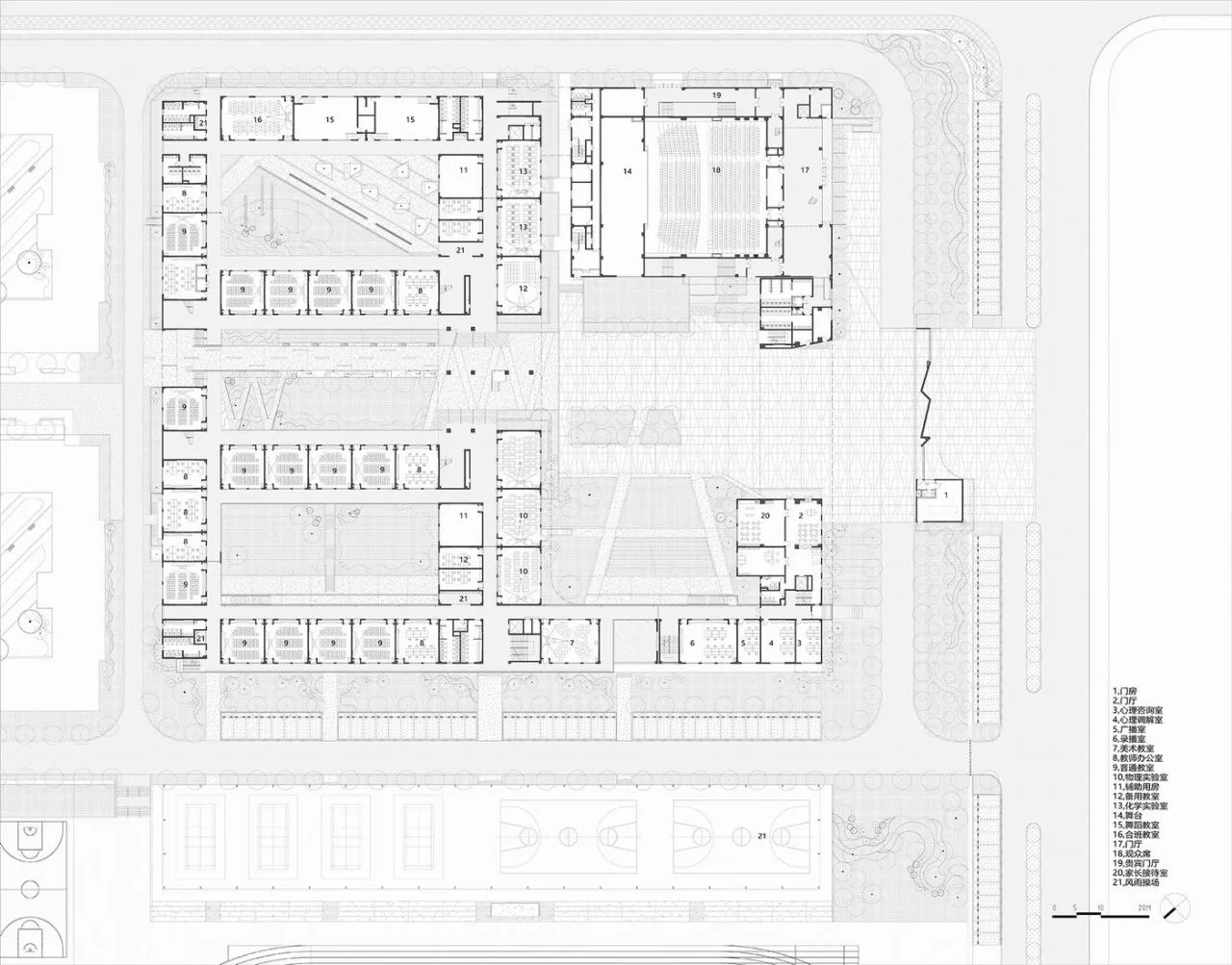
The planning strategy focuses on maximizing teaching space while minimizing the number of floors to reduce vertical traffic. The buildings contour the site, creating spacious areas that allow for a relaxed classroom layout. Teaching areas are integrated with administrative offices and theaters to form enclosed spaces, resulting in a shared courtyard and three separate teaching courtyards at varying elevations.
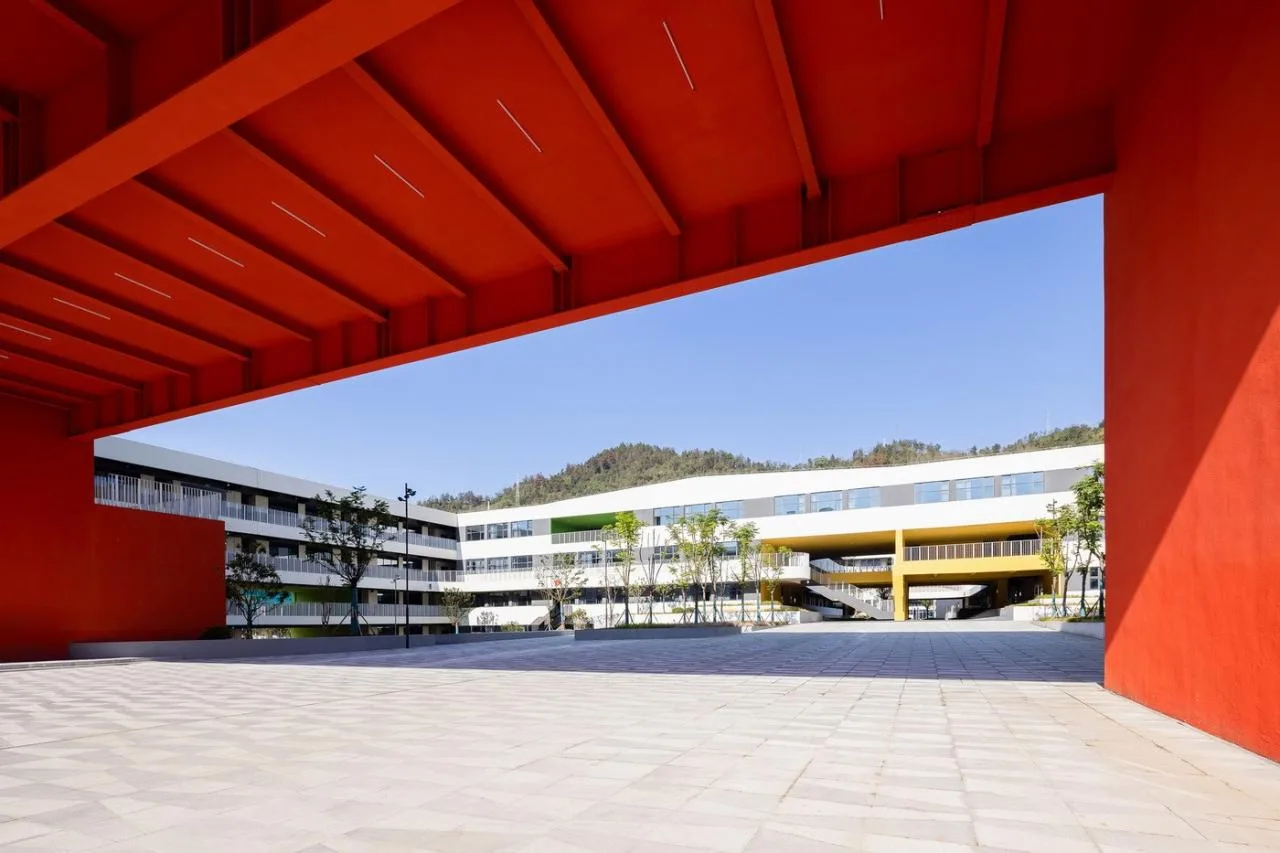
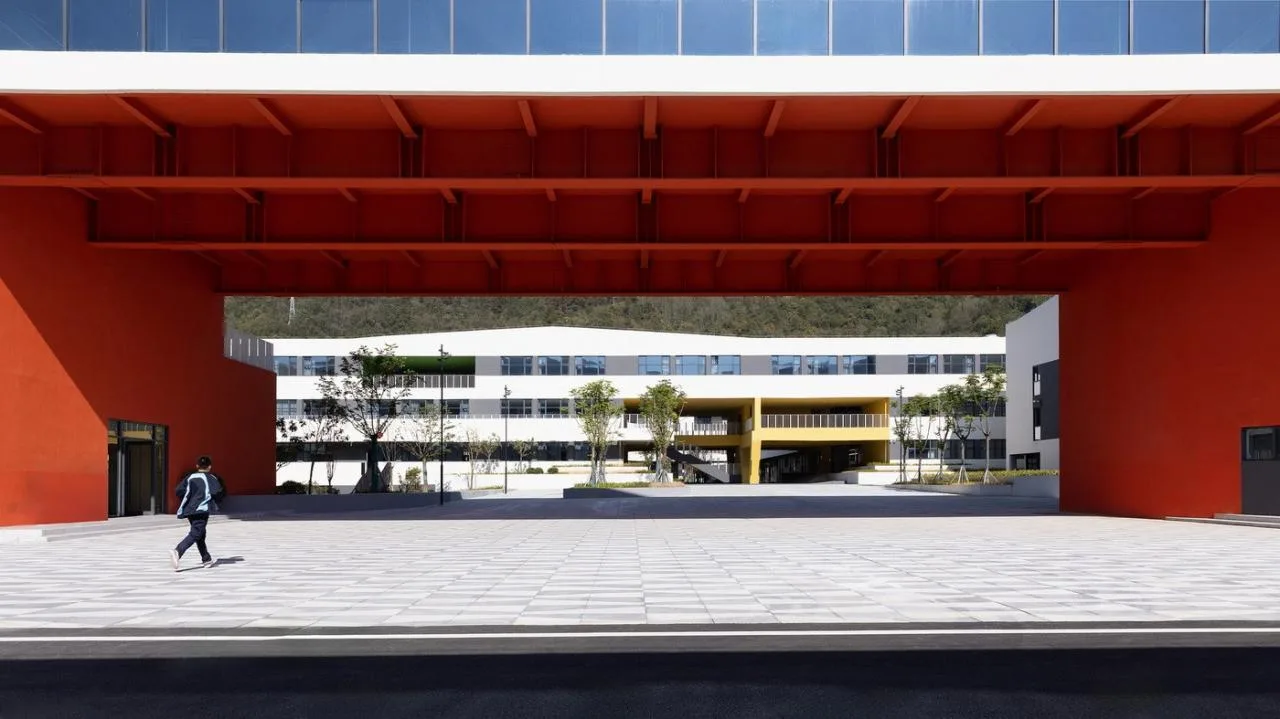
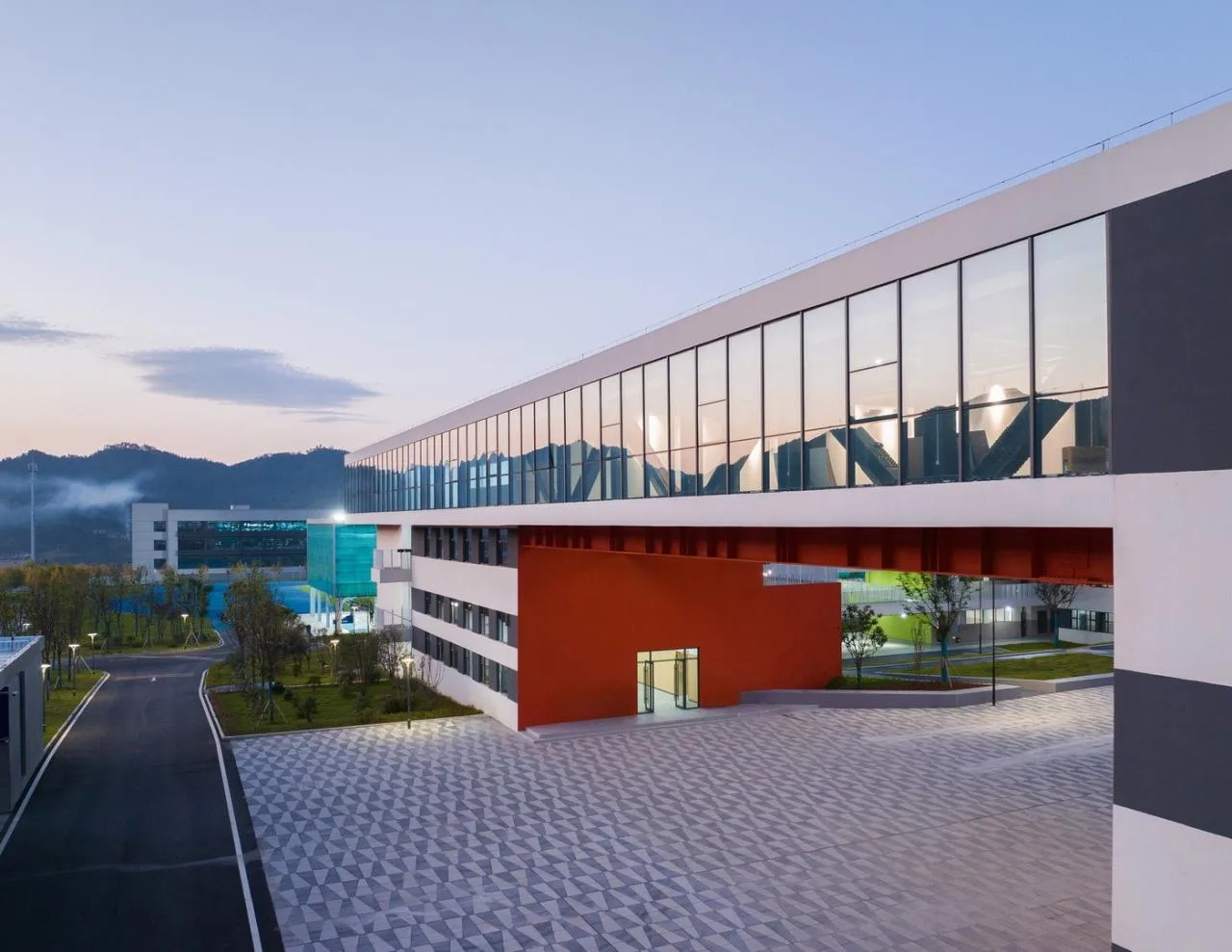
Connectivity is enhanced through ground-level and double-sided overhanging corridors, forming a convenient transportation network. The main entrance courtyard serves as a gathering space linking different functional zones across the undulating terrain. The three teaching courtyards address specific needs: the central courtyard meets fire safety requirements, the eastern courtyard is enclosed, and the western courtyard follows the natural topography, creating terraced courtyard landscapes.
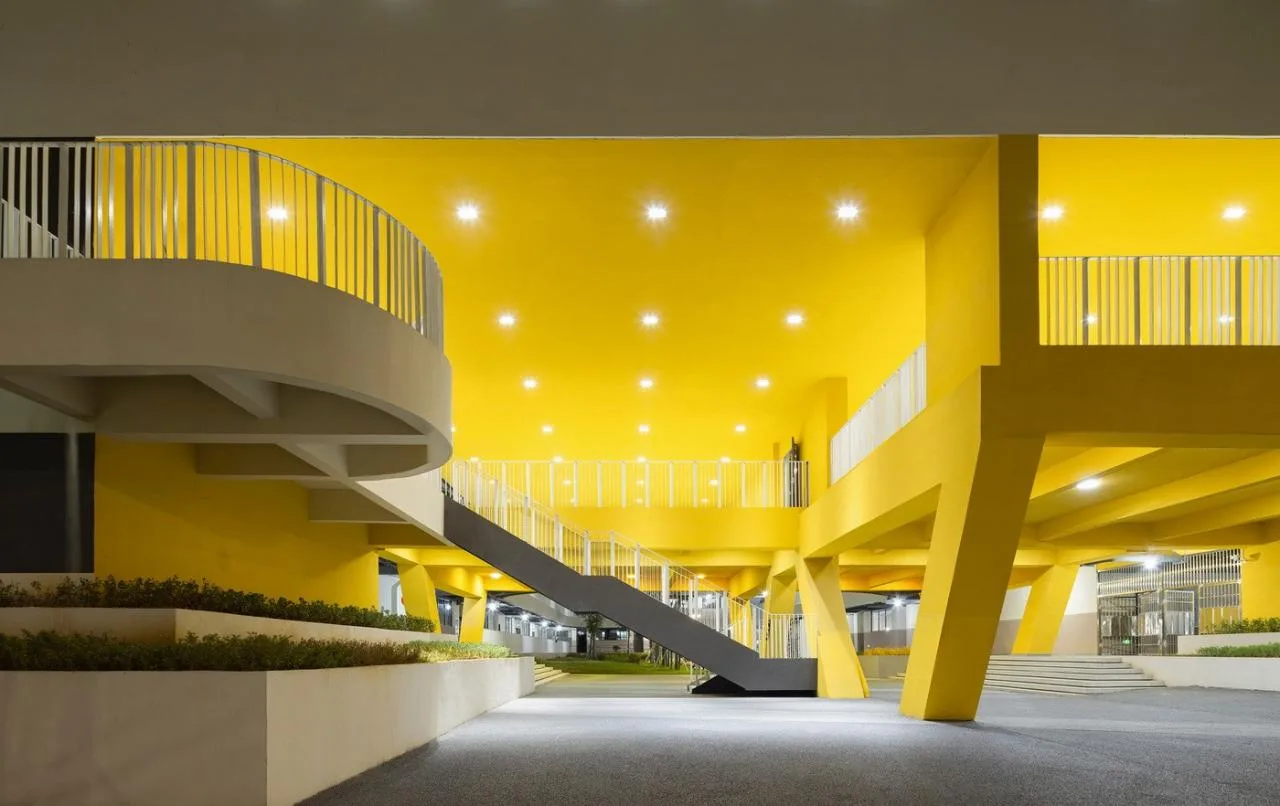
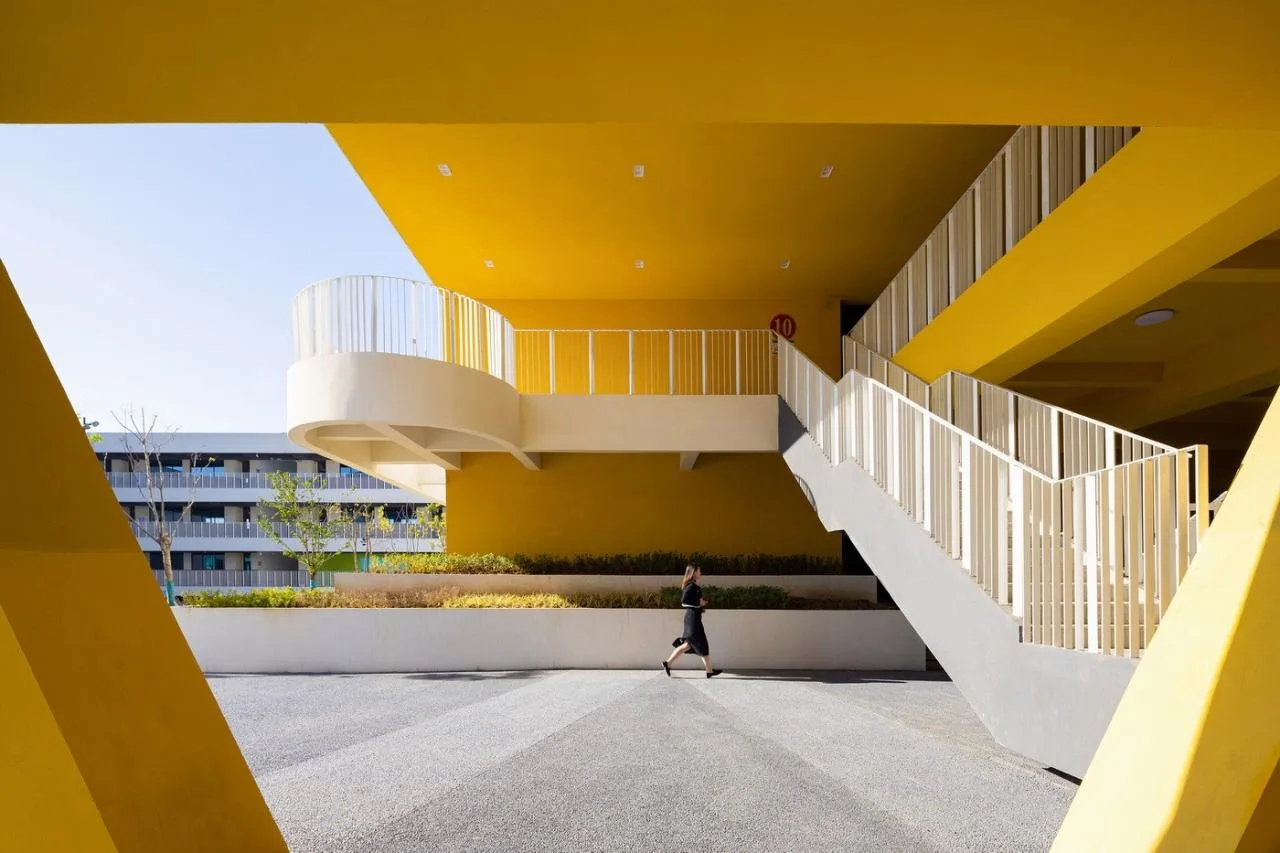
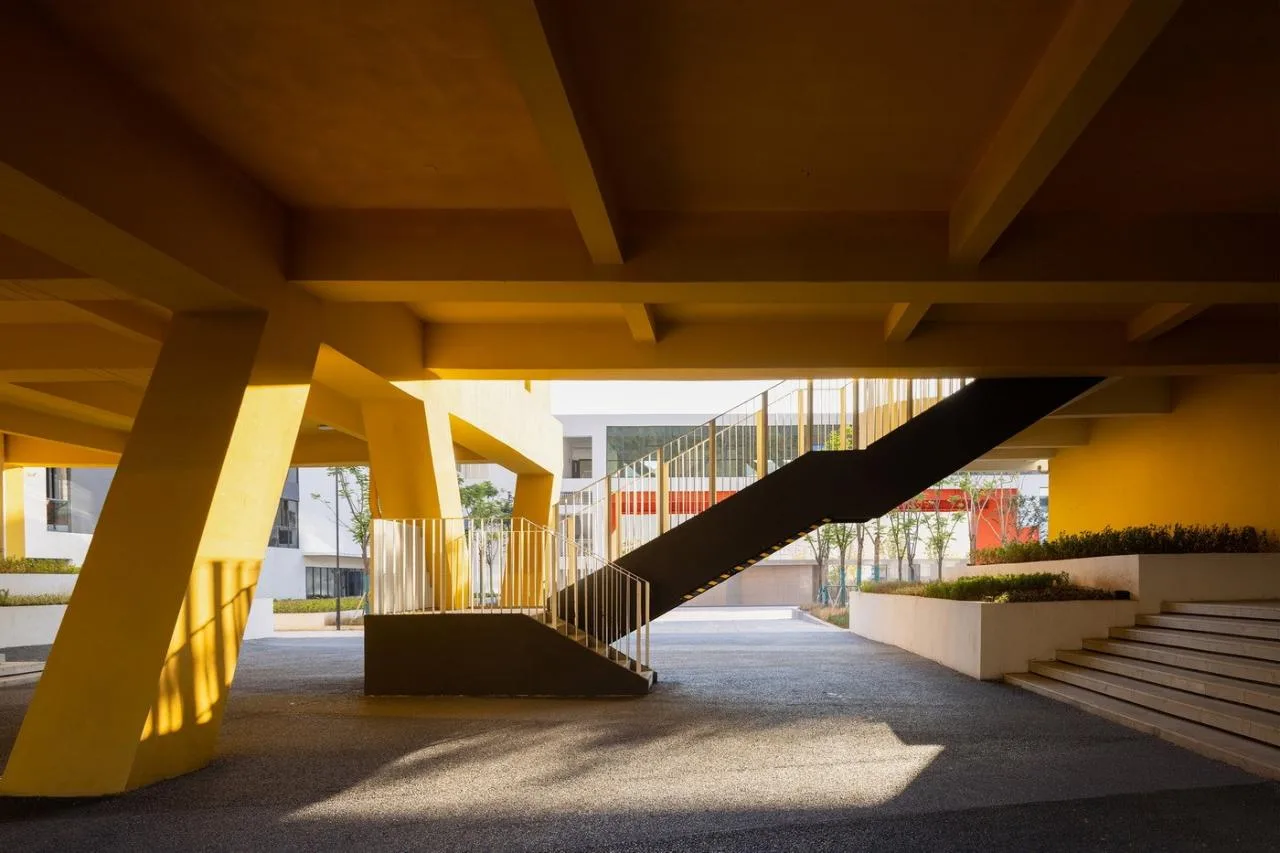
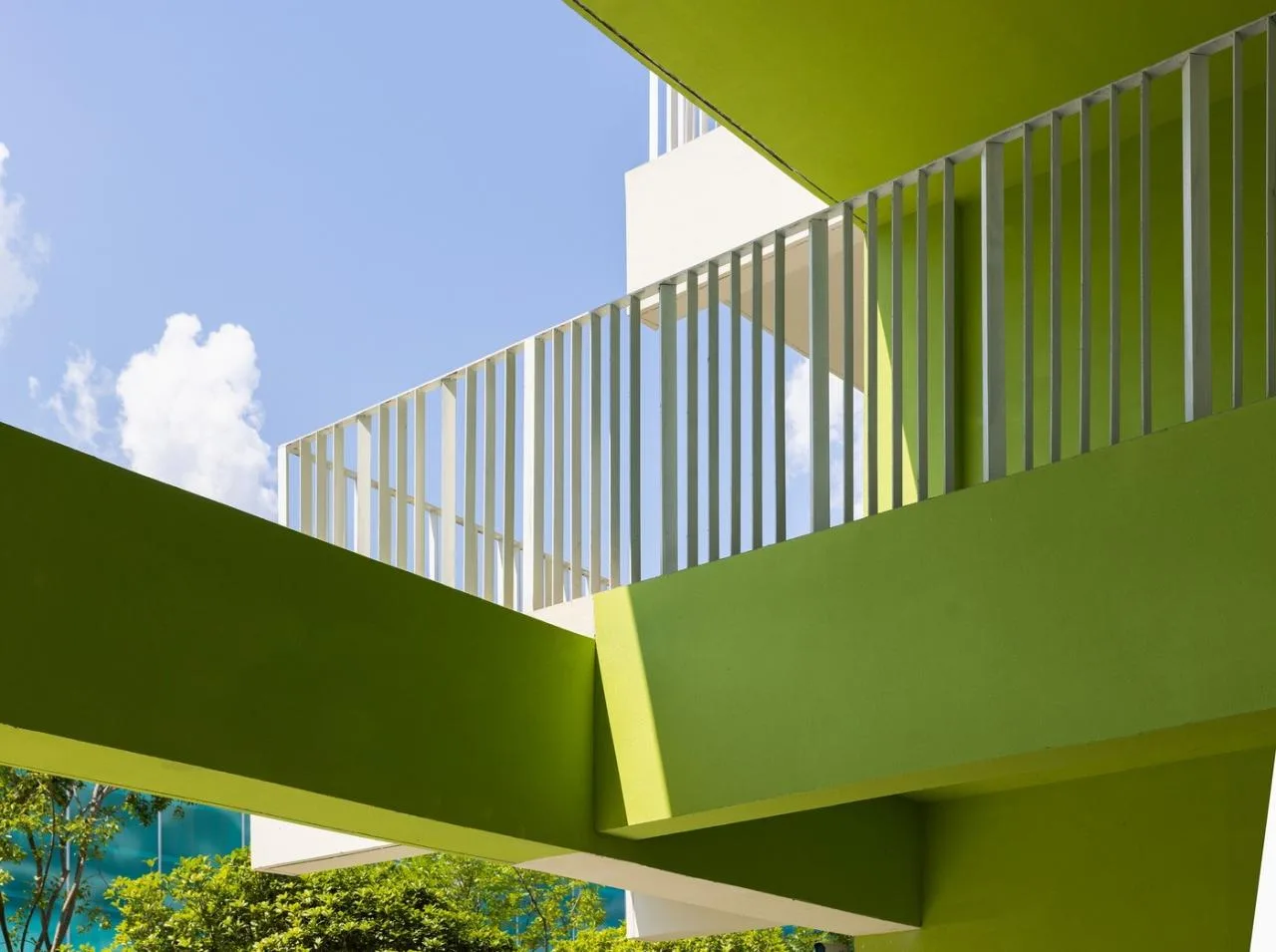
The main teaching buildings utilize a frame shear wall structure designed to dissolve colonnades and create a straightforward horizontal rhythm. Inside courtyards and external corridors are distinguished by beam design: internal courtyards use variable cross-section cantilever and edge beams to compactly organize pipelines hidden within clean ceiling lines. External cantilever beams, free of equipment pipelines, eliminate edge beams and establish a unique order through uniformly spaced cantilevers.
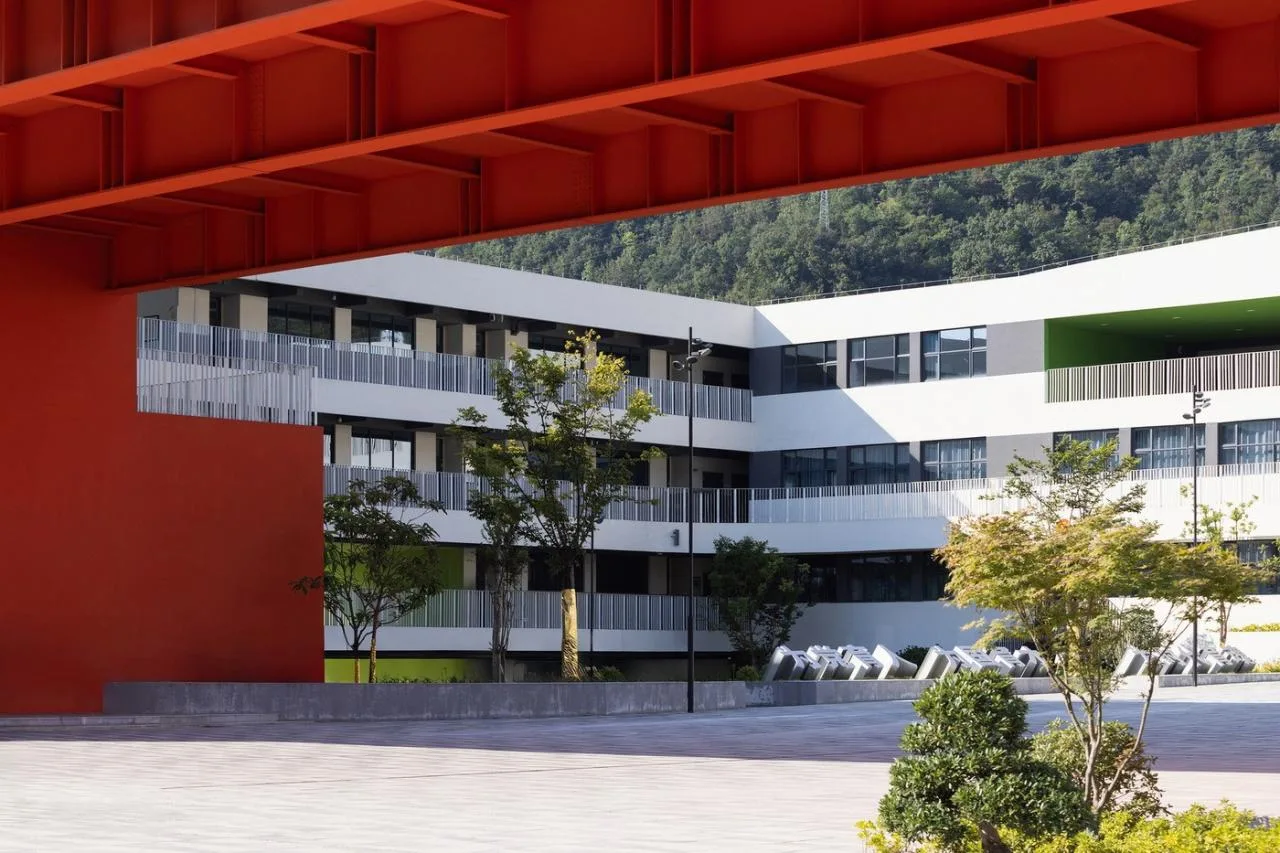
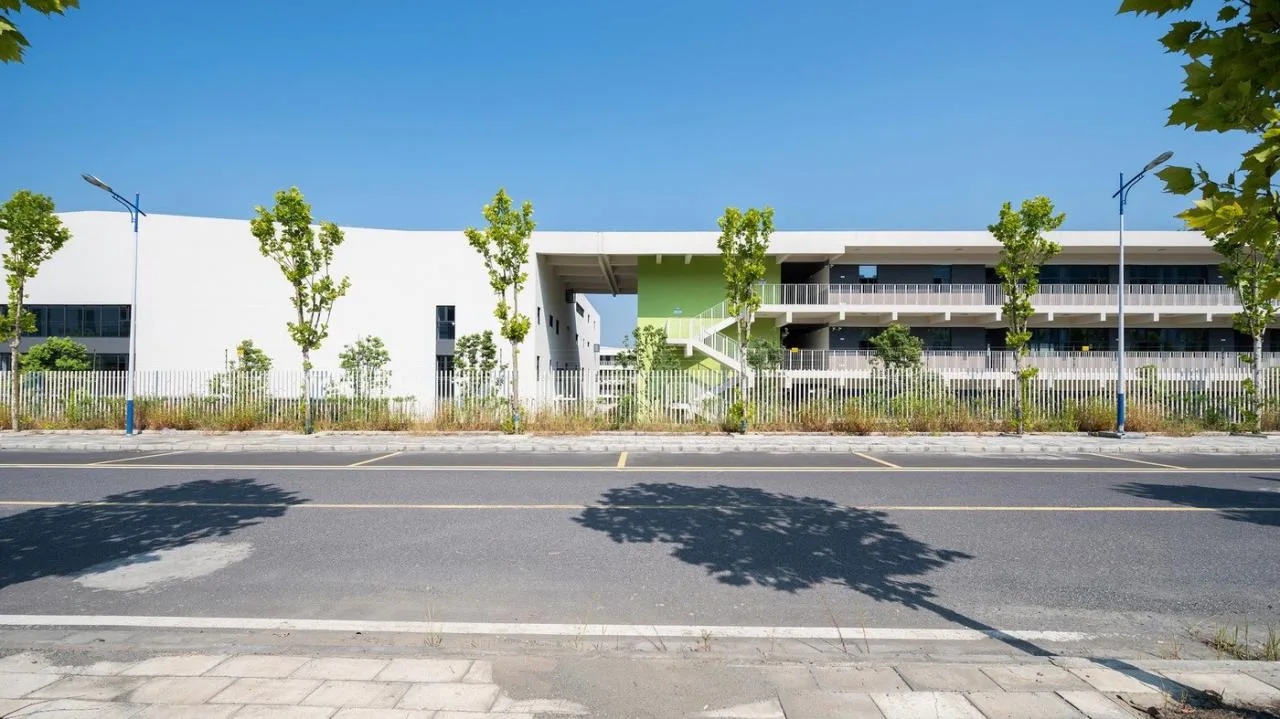
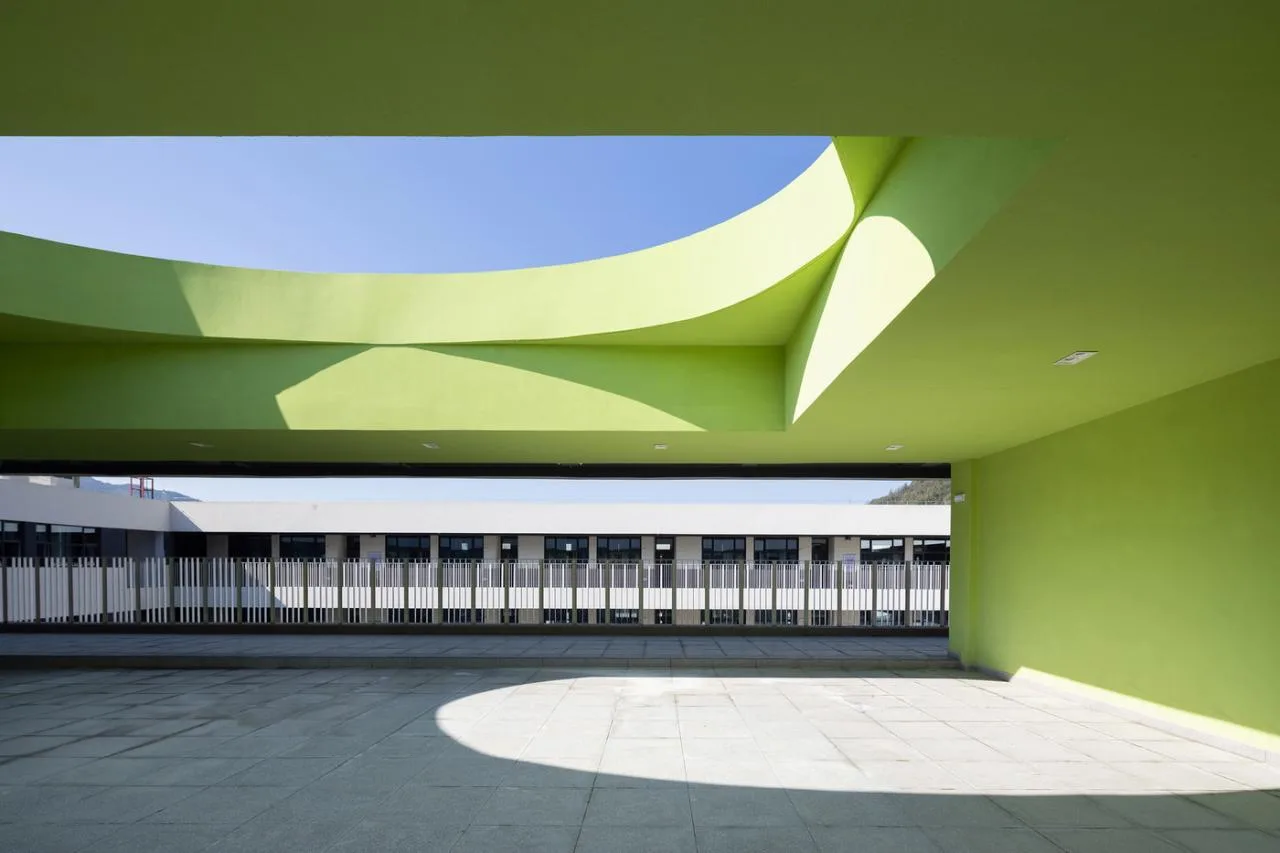
Textured coatings were selected as the primary material, addressing economic considerations. At the entrance, a large-span steel structure contrasts with the daily teaching scale to create a “heterogeneous” architectural feature. This design reflects the site’s industrial character and introduces a futuristic element within a typical county environment. Facade openings and color schemes are arranged to provide visual and physical breathing space in an efficient pattern.
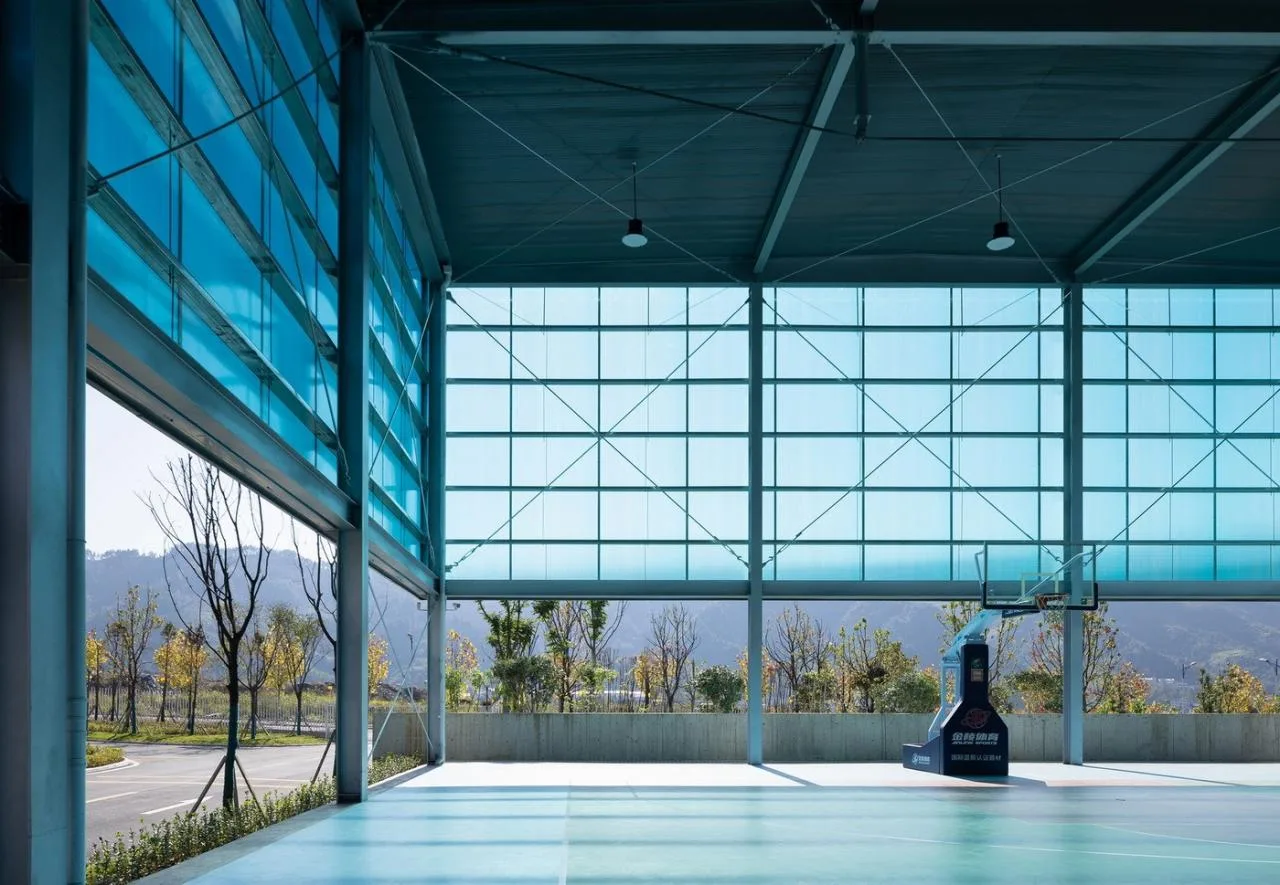
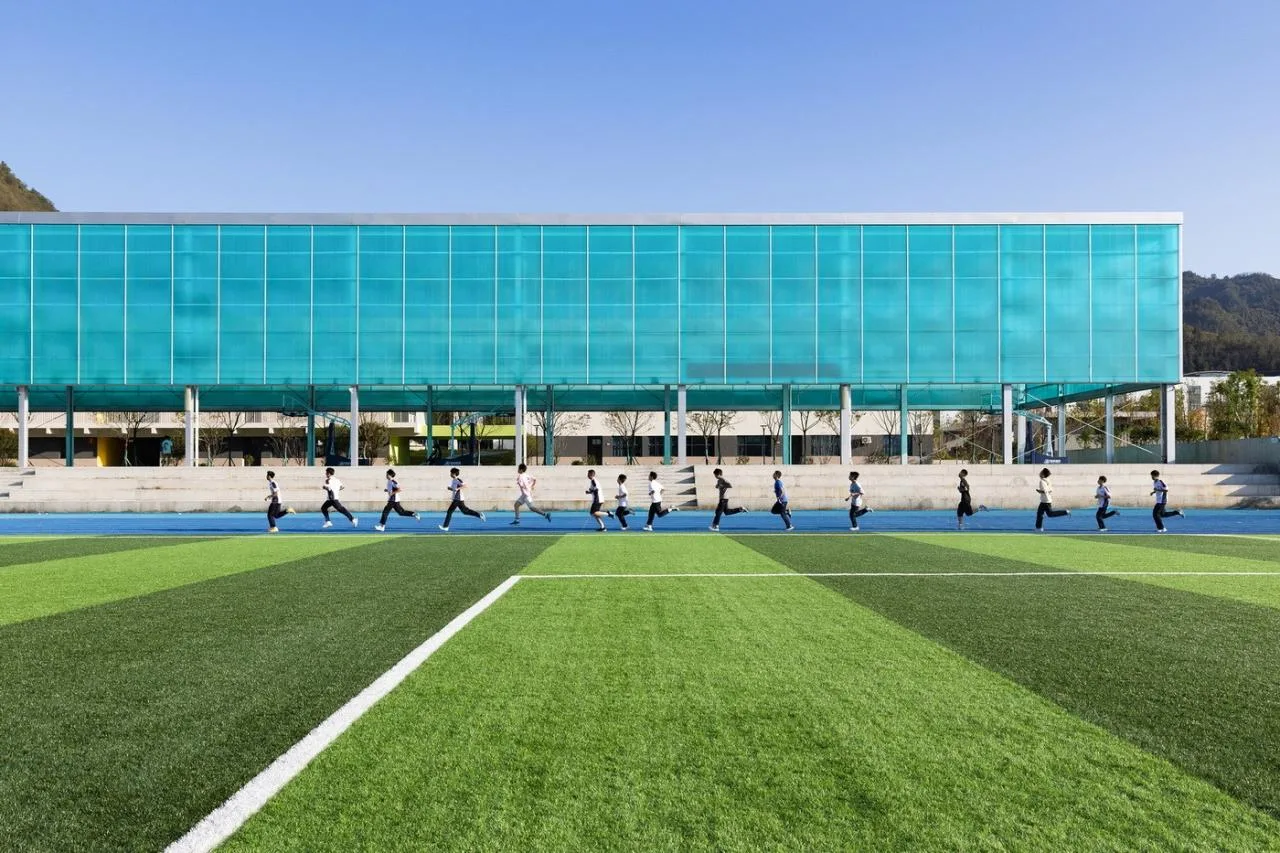
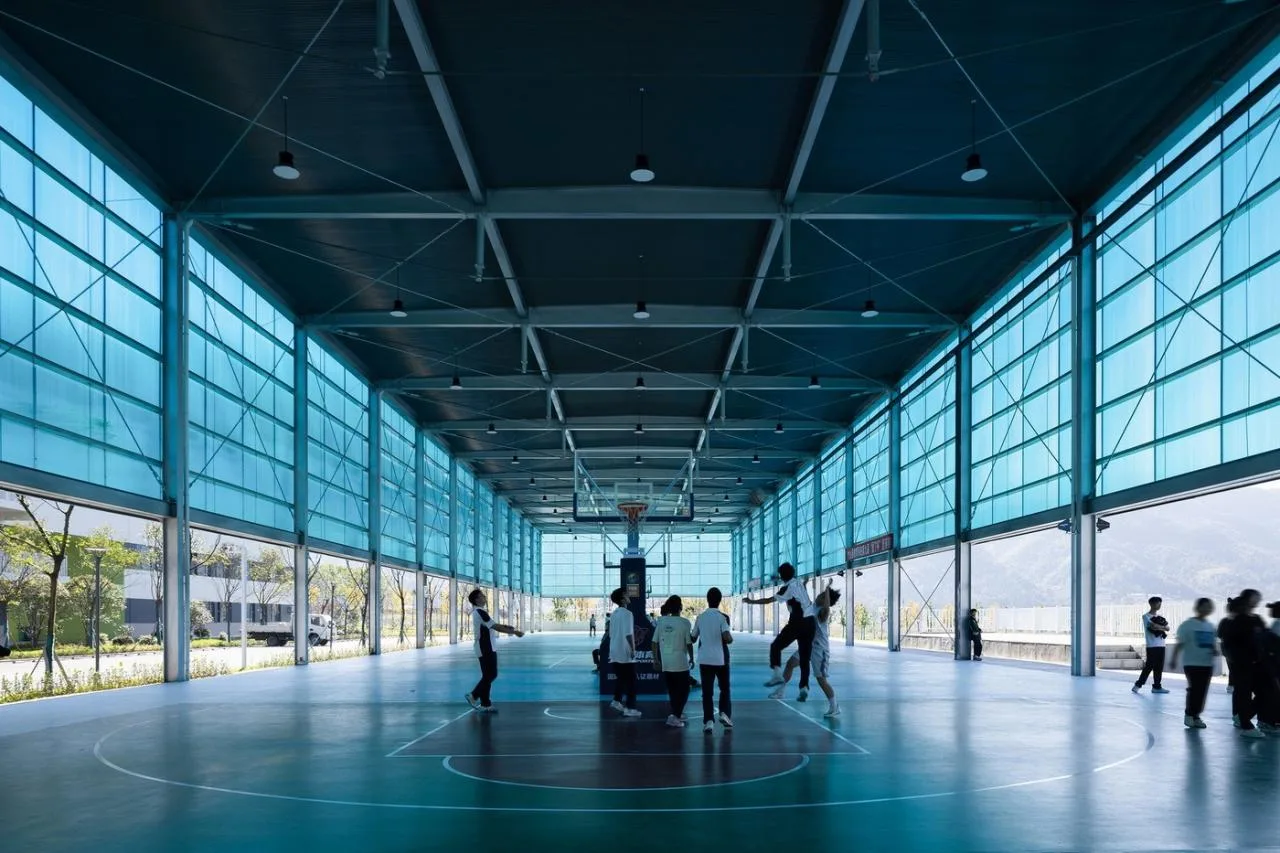
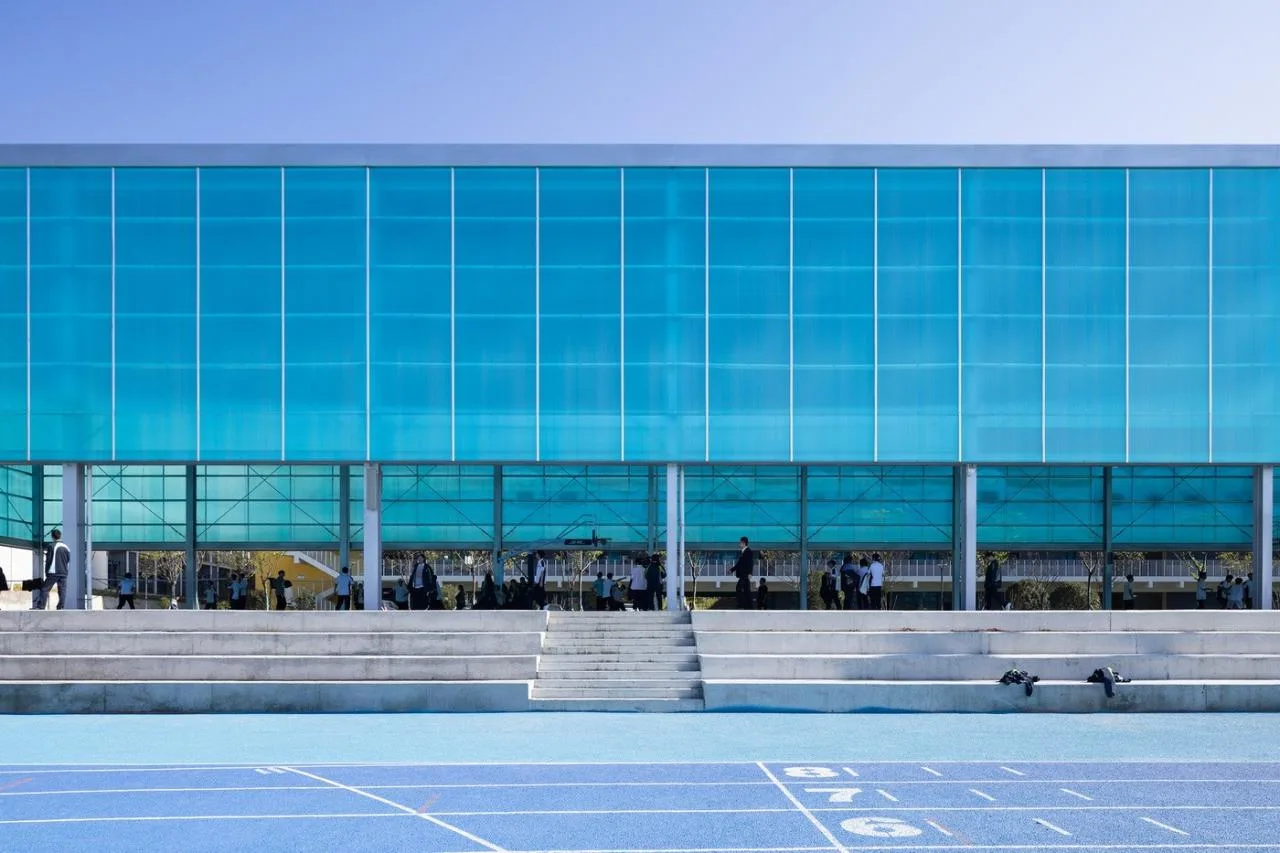
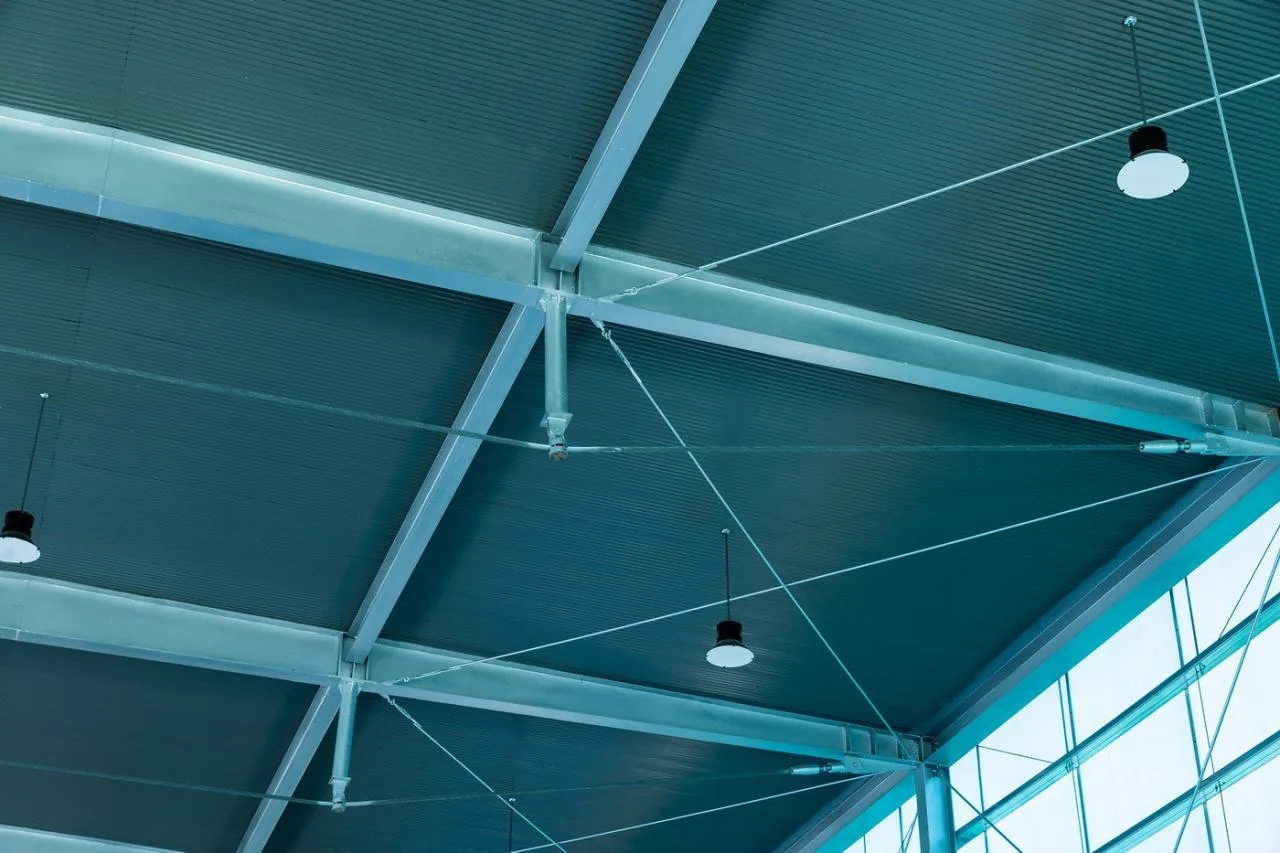
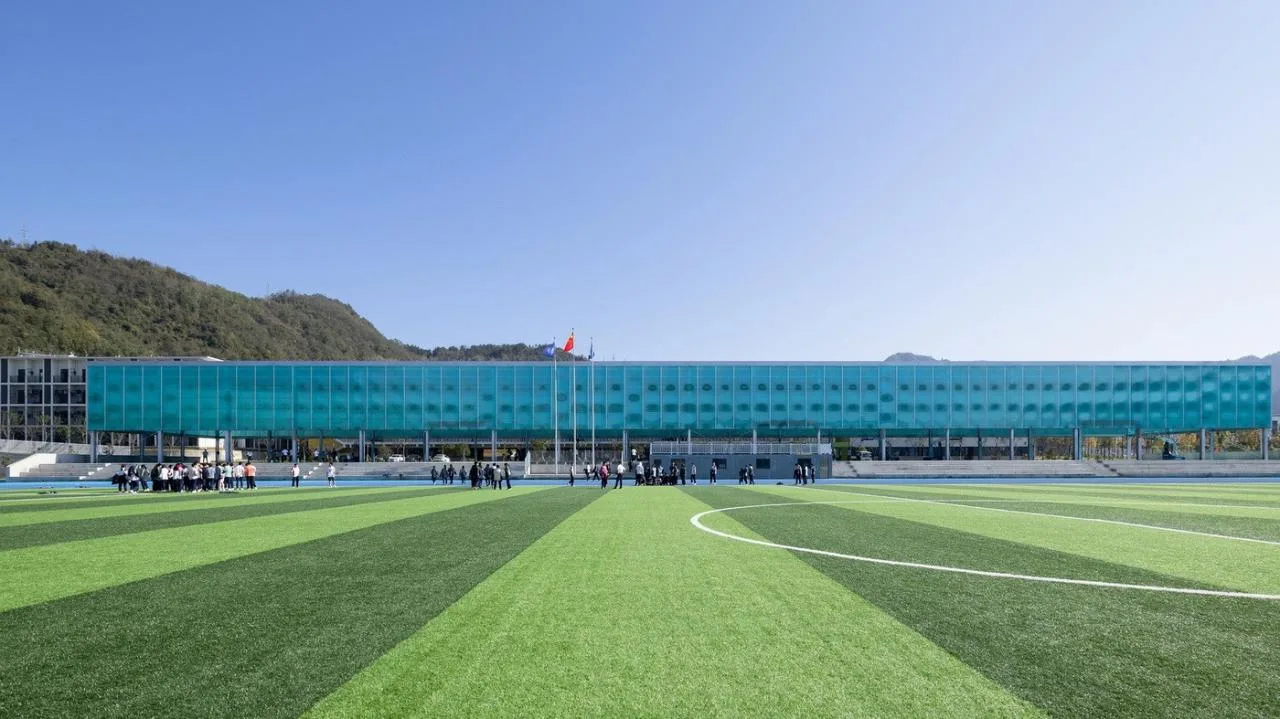
The Wind and Rain Playground stands as an independent structure offering numerous semi-outdoor sports facilities. Positioned between the 400-meter track and the teaching complex, it bridges the “building” and the “place.” Various ball courts accommodate different sports, creating a versatile and expansive factory-style space. The sports corridor features string beams as primary large-span supports, translucent sun panels above three meters high, and metal roofing, serving as a popular gathering spot for students after classes.
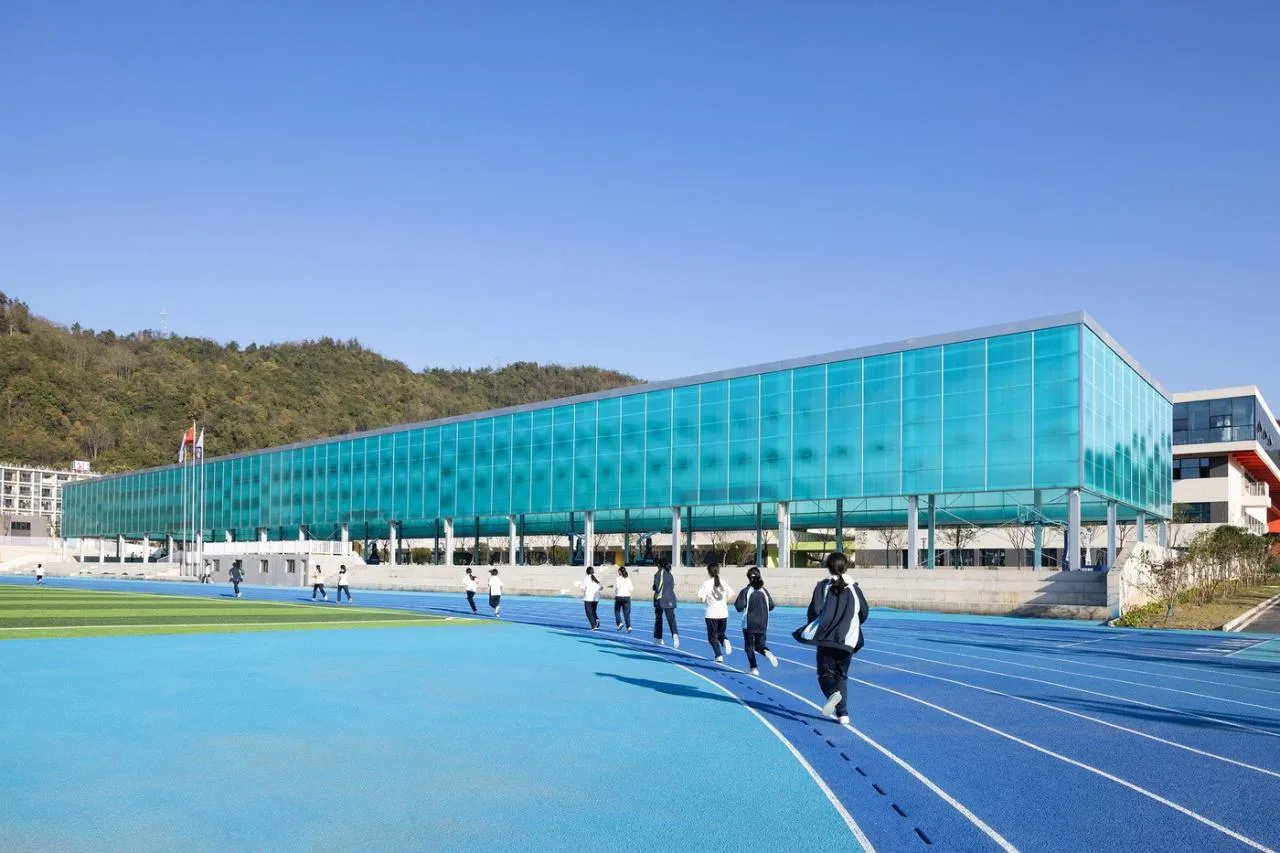
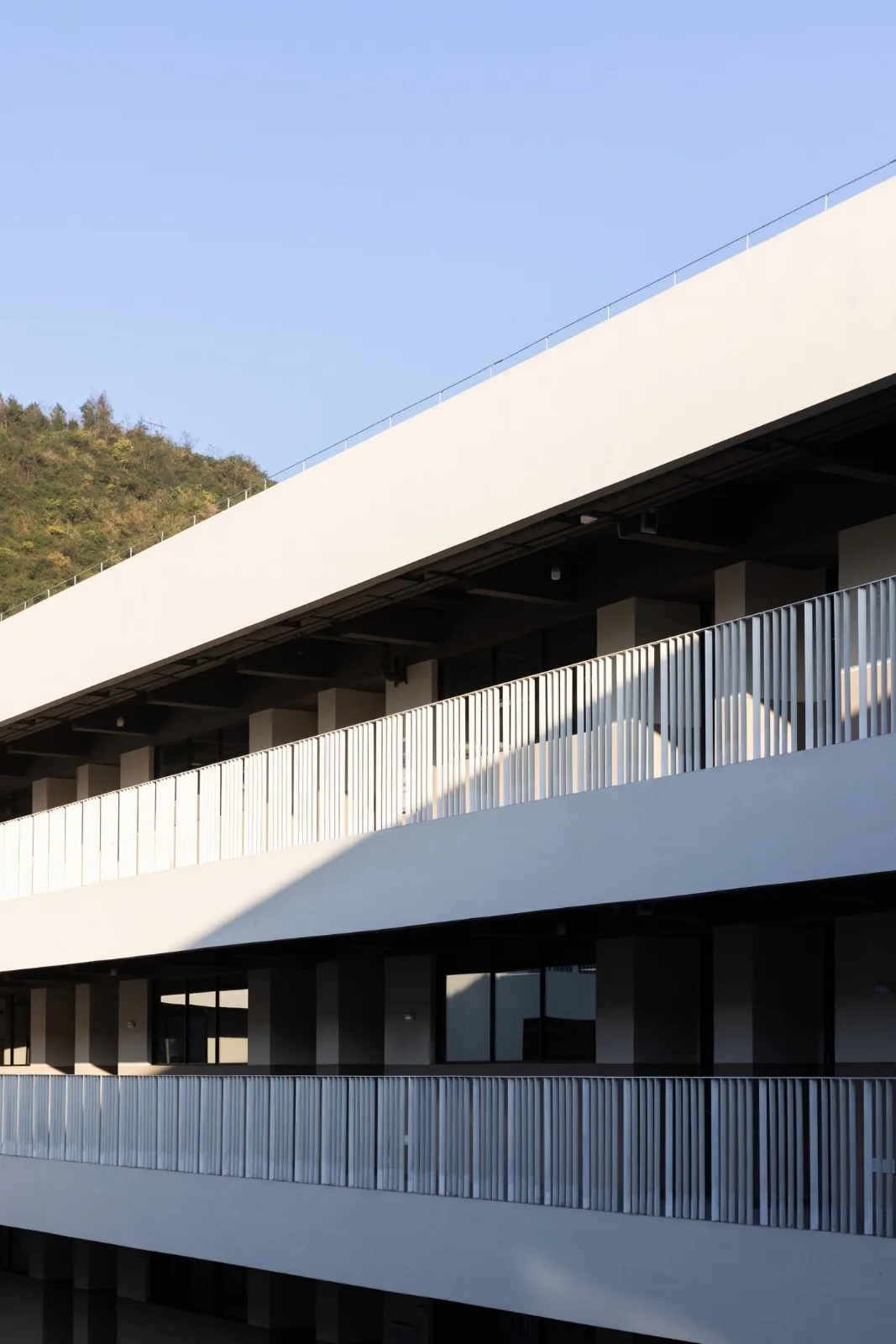
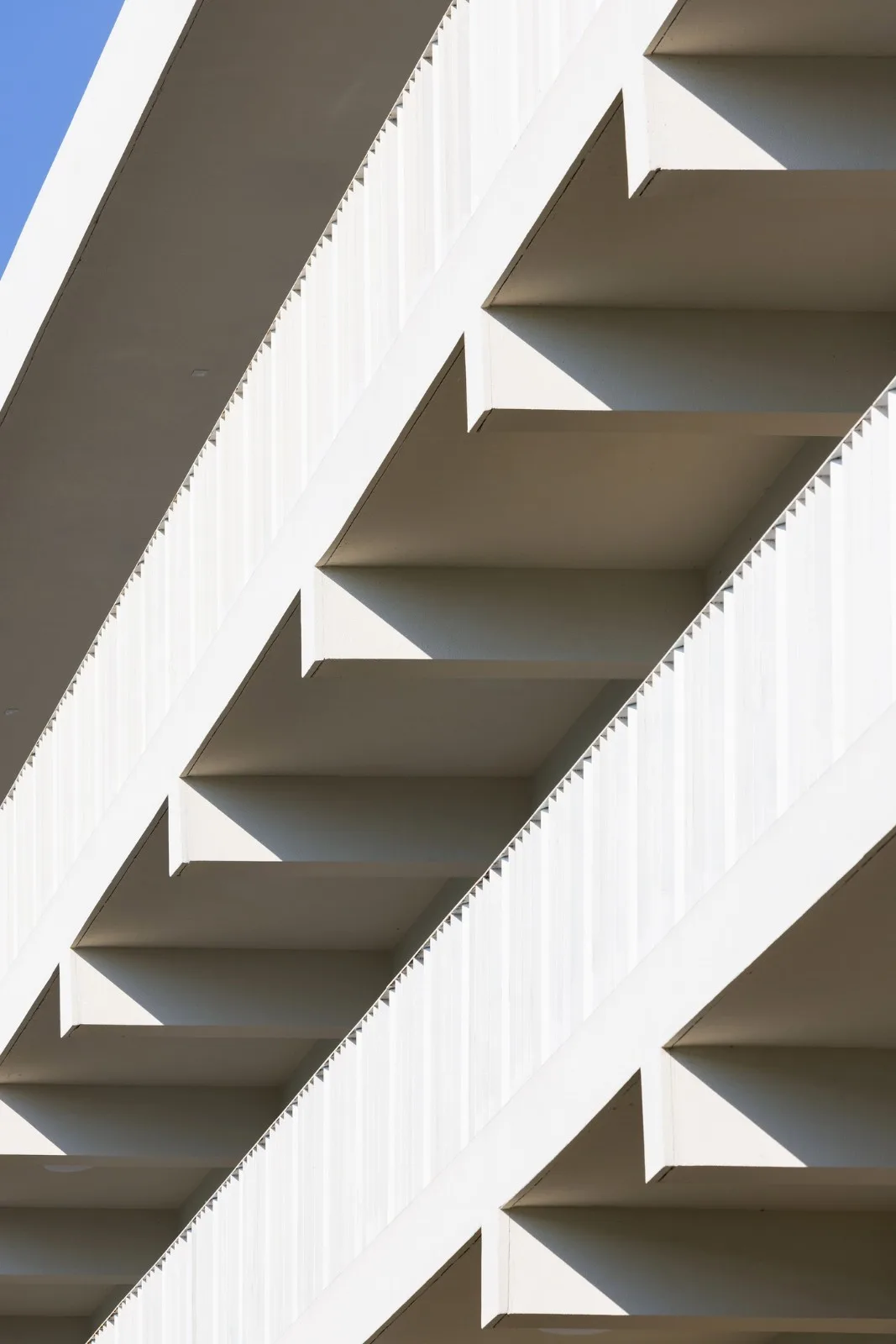
The overall design aims to create an unconventional campus landscape within an industrial setting. Continuous horizontal structures align with the park’s scale, while exposed structural elements replace intricate decorative details. This industrial, functional, and cost-effective approach explores new possibilities for contemporary educational architecture.
Project drawings
△ General layout plan
△ First floor plan
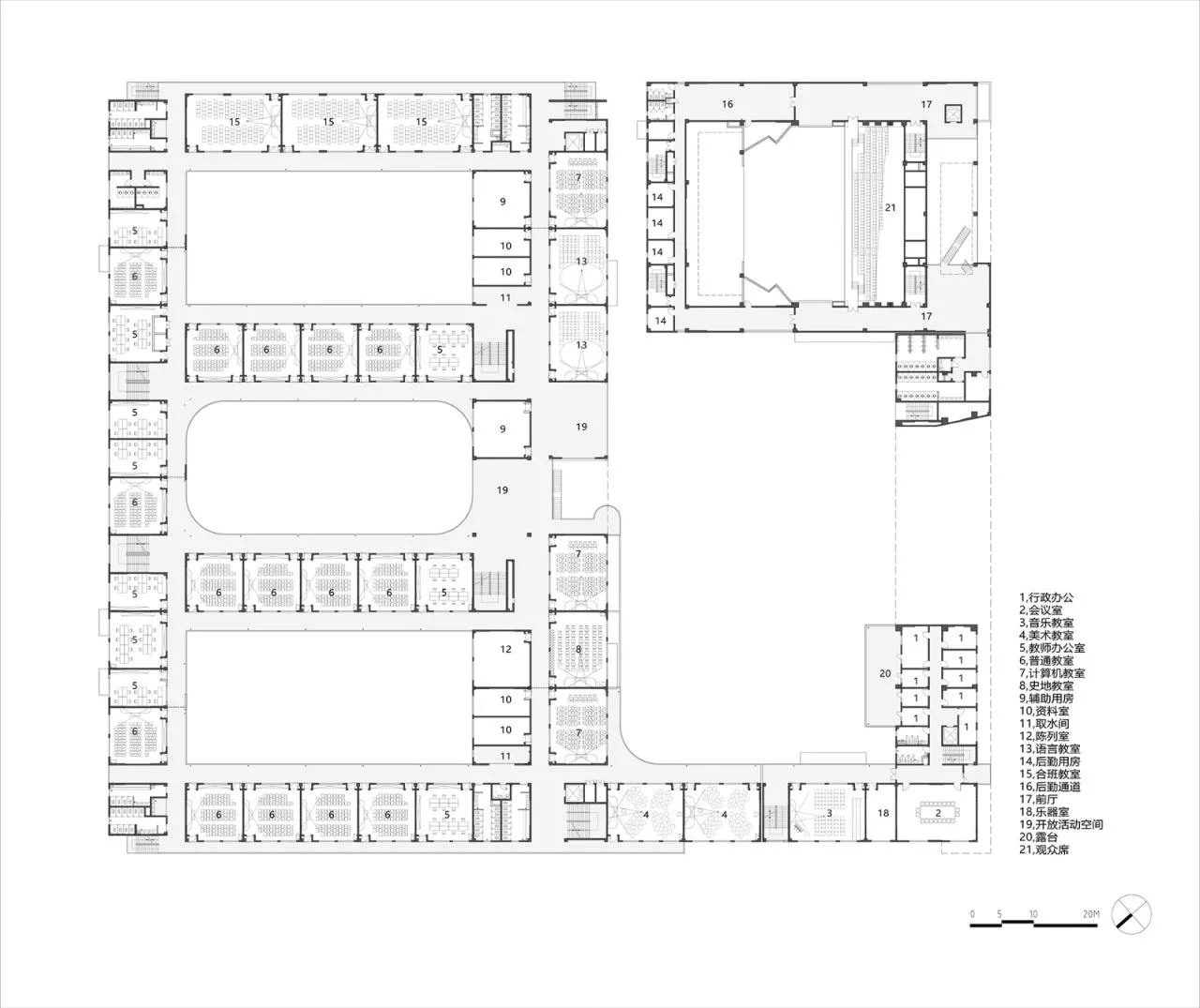
△ Second floor plan
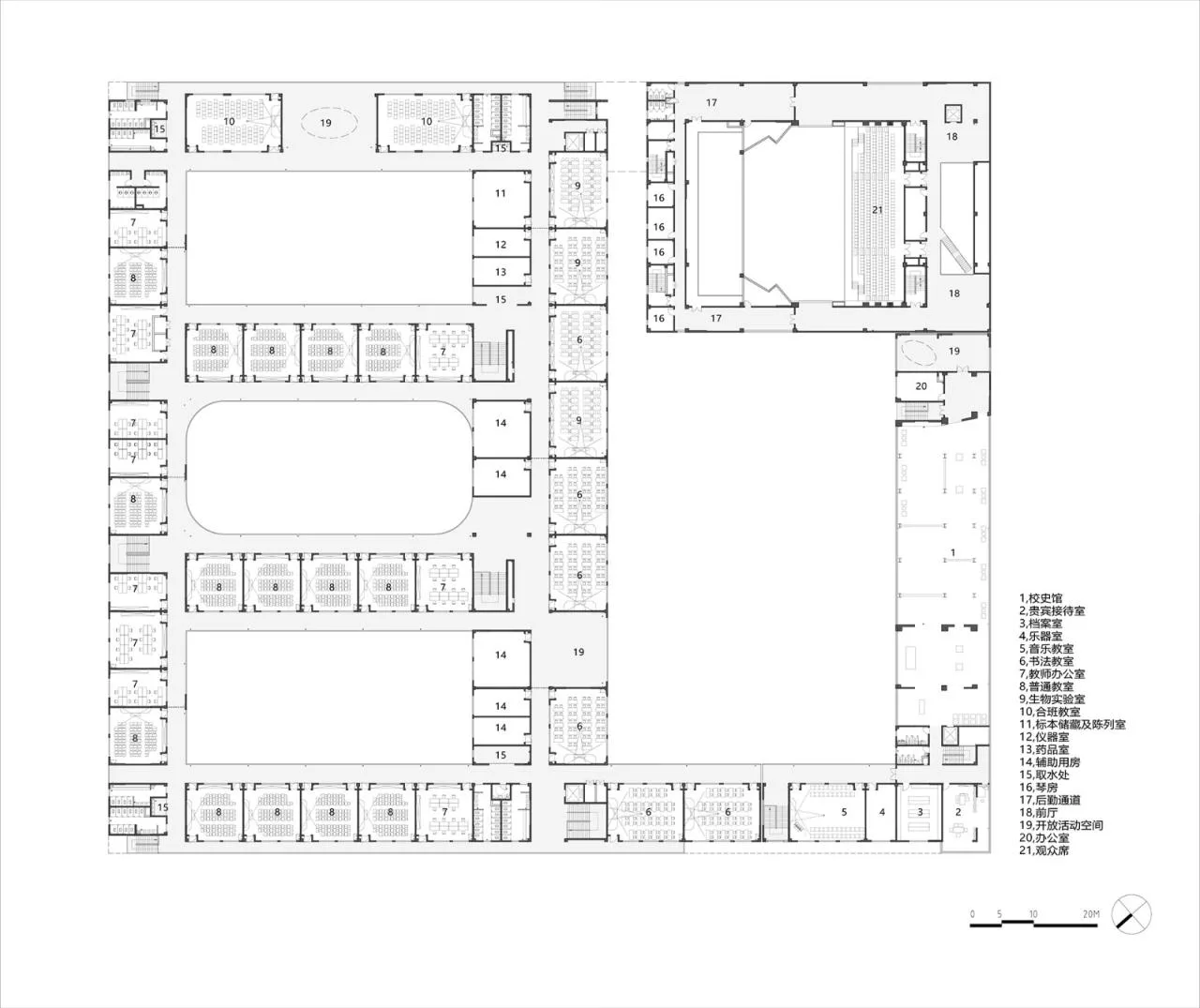
△ Third floor plan
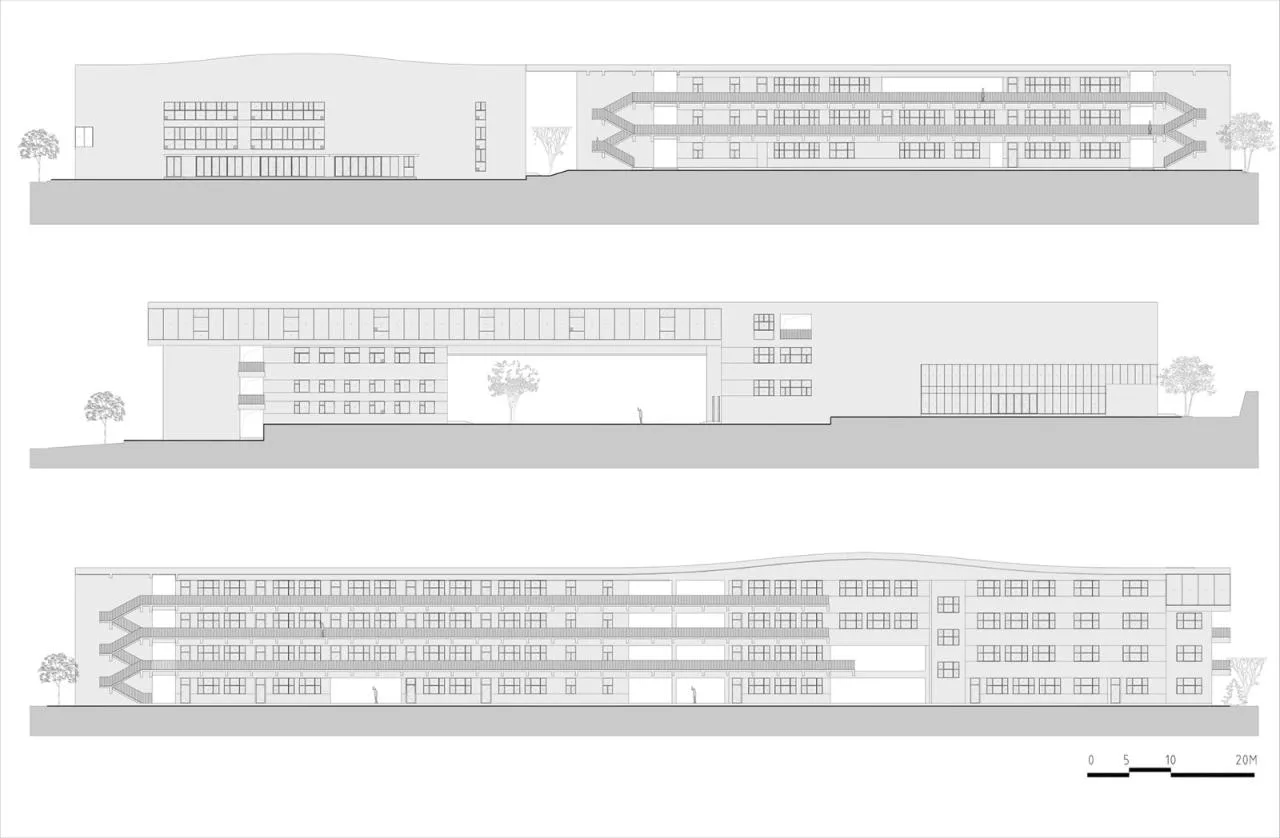
△ Elevation drawing
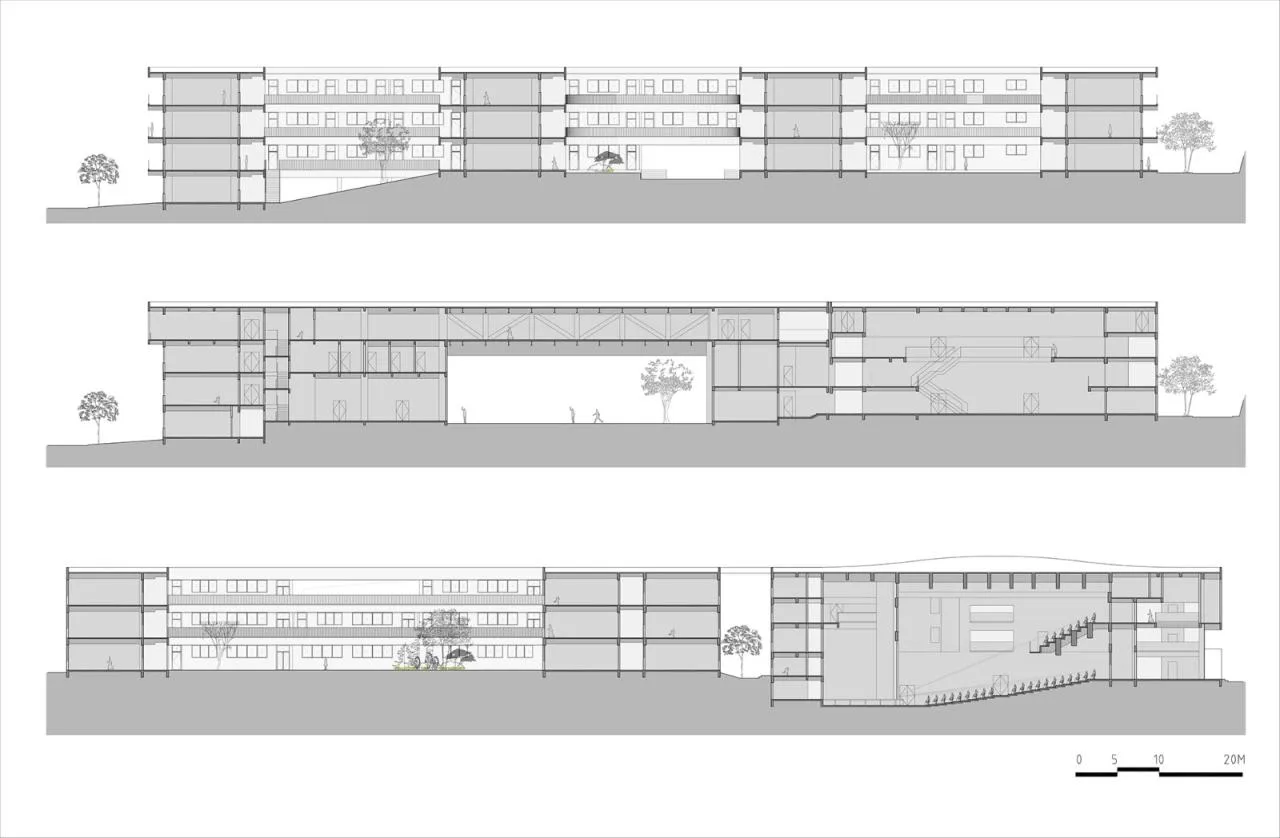
△ Section diagram
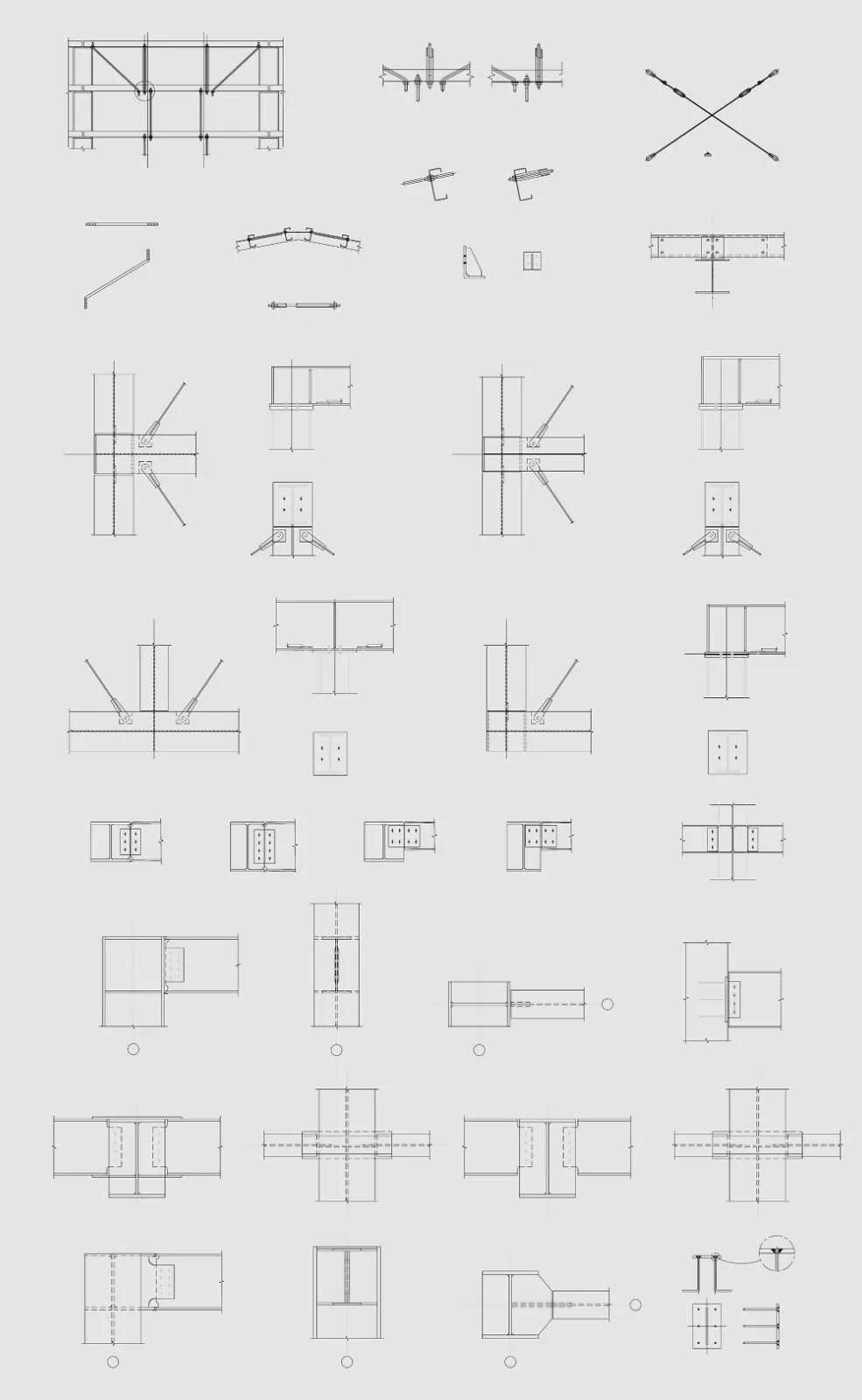
△ Analysis chart
Project Information
Architect: Lowercase Architecture Firm
Area: 66,205 m²
Project Year: 2023
Photographer: He Lian
Manufacturer: Three Trees, Jinghui, Luhang
Lead Architects: Li Wei, Yuan Yuan
Design Team: Xiao Xudong, Ma Wei, Yuan Shuai, Jiang Peng, Ye Zhi, Lei Ling, Fan Haitao, Wang Hao, Zhu Zhuqing, Li Liang, Wang Simin, Zeng Wenjuan, Lei Xiaozheng, Tian Meng
Client: Nanshan Wufutang (Zhushan) Education Management Co., Ltd
Structural Consultant: Wu Haisheng
Construction Manager: Huang Zhihong
Collaborative Designer: Hubei Haiye Engineering Consulting and Design Co., Ltd
Location: Zhushan County















Must log in before commenting!
Sign Up