
“The lights of Yunfeng at night are not only a beacon for travelers but also a guiding light for villagers returning home.” — Zhu Peidong
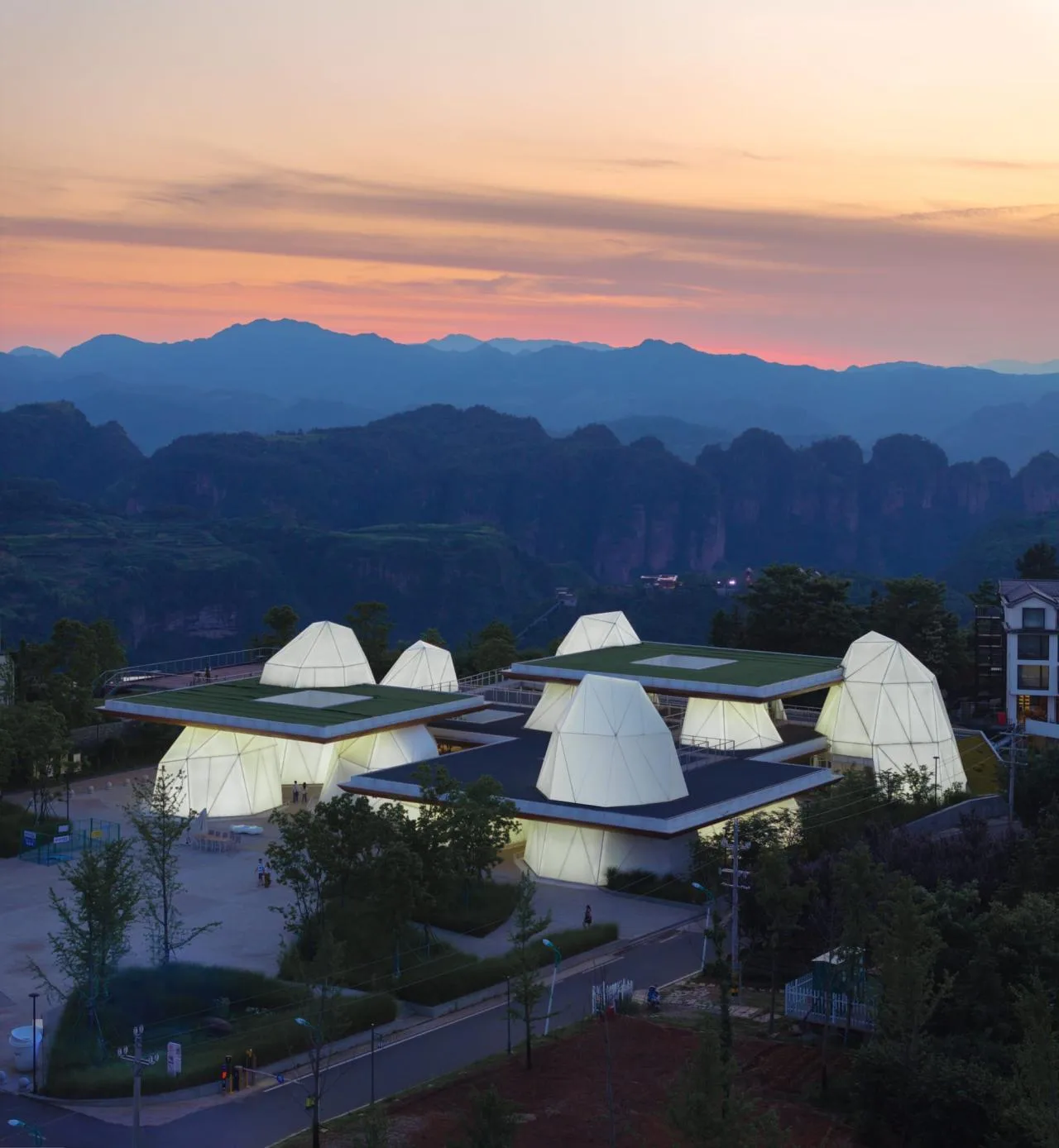
Xinchang Xiayanbei Village is nestled on the eastern mountain ridge of Zhejiang, perched at over 300 meters above sea level. In its early development, the village embraced Zhejiang Province’s comprehensive land improvement and rural tourism model. By leveraging idle lands and farmhouses, it cultivated a “tea town experience tourism” and a “rural slow life experience” area, gradually evolving into a model village for integrated tourism in Xinchang County.
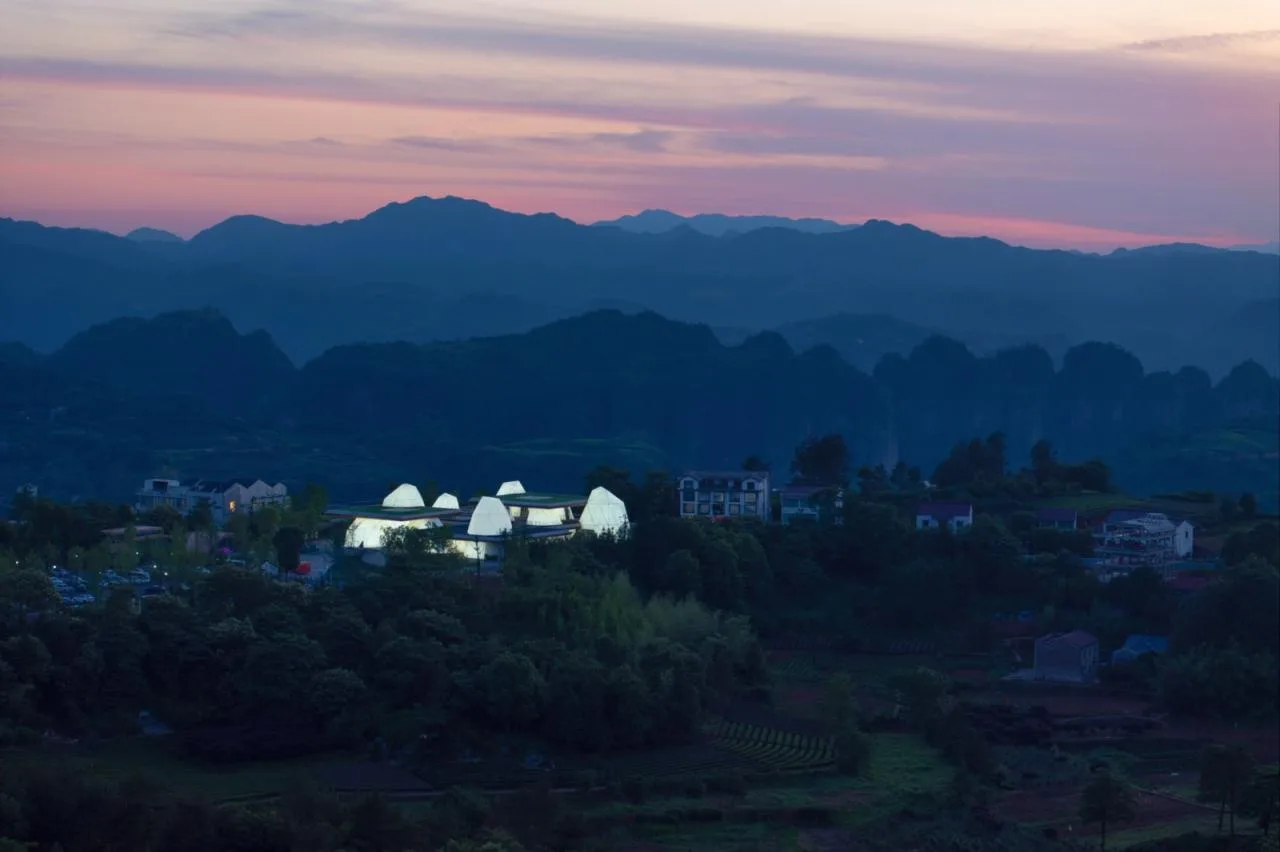
Recently, Xiayanbei Village has gained renewed popularity among outdoor enthusiasts due to its high altitude, favorable climate, and year-round access to stunning cloud sea views. This has attracted campers, hikers, and other outdoor lovers alike. In response to growing rural tourism demand, the local government plans to upgrade supporting facilities, diversify business models, stimulate rural development, boost villagers’ incomes, and explore new routes to shared prosperity.
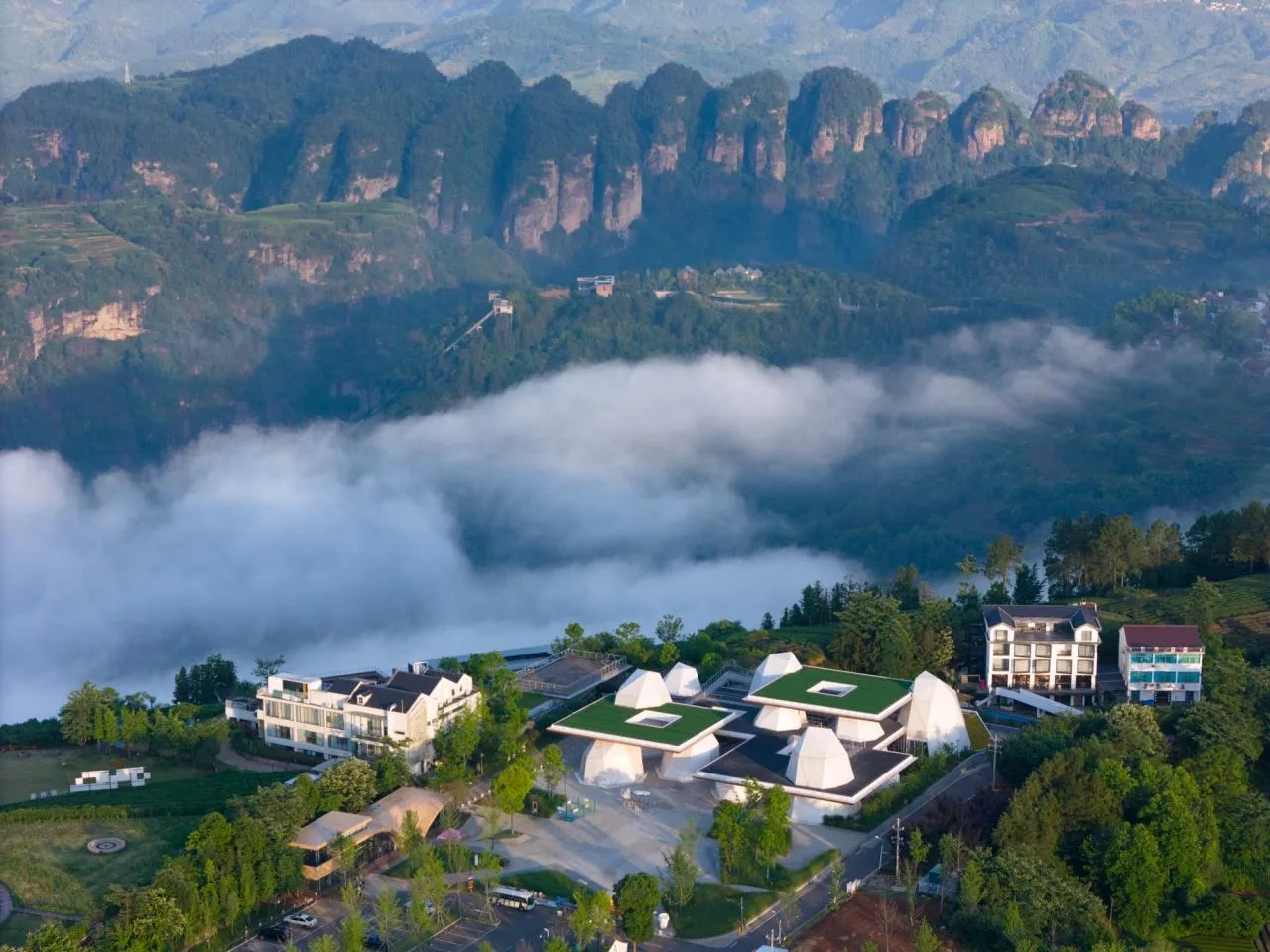
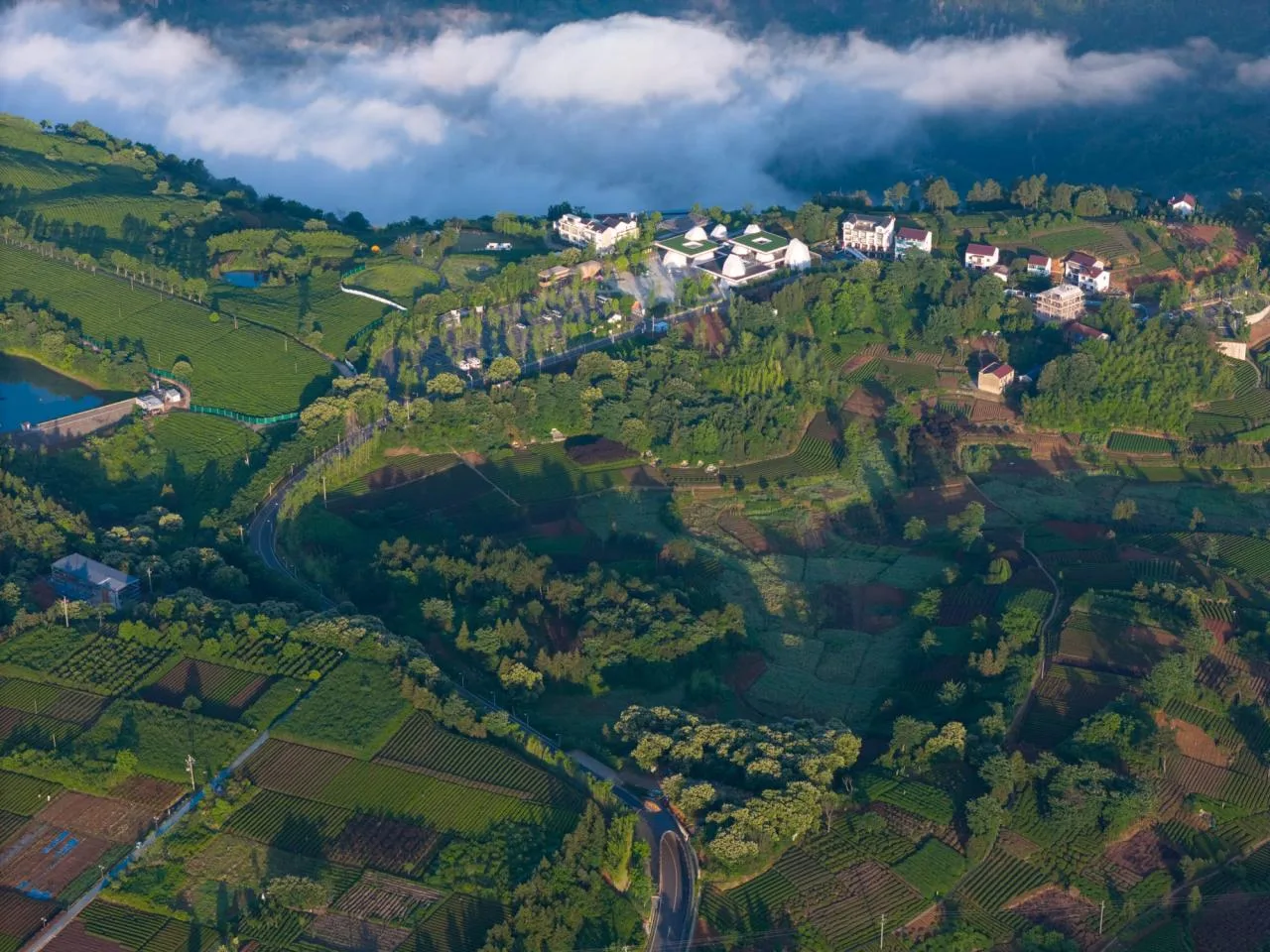
The integrated design team, led by Line+ co-founder and lead architect Zhu Peidong, confronted the challenge of limited rural construction land when upgrading the Yanbei Scenic Area. Their approach focused on two key strategies:
First, they implemented differentiated rural infrastructure designs that revitalized the environment through ecological restoration and aesthetic enhancements without using additional land quotas. Examples include the “Cloud Weaving Wooden Tunnel” and the “Tengyun Meteorological Environment” in Xiayanbei Scenic Area.
Second, they repurposed underutilized land to add functions such as tourist and village activity centers, camping and viewing platforms, and introduced new business formats to attract more visitors and stimulate local foot traffic.
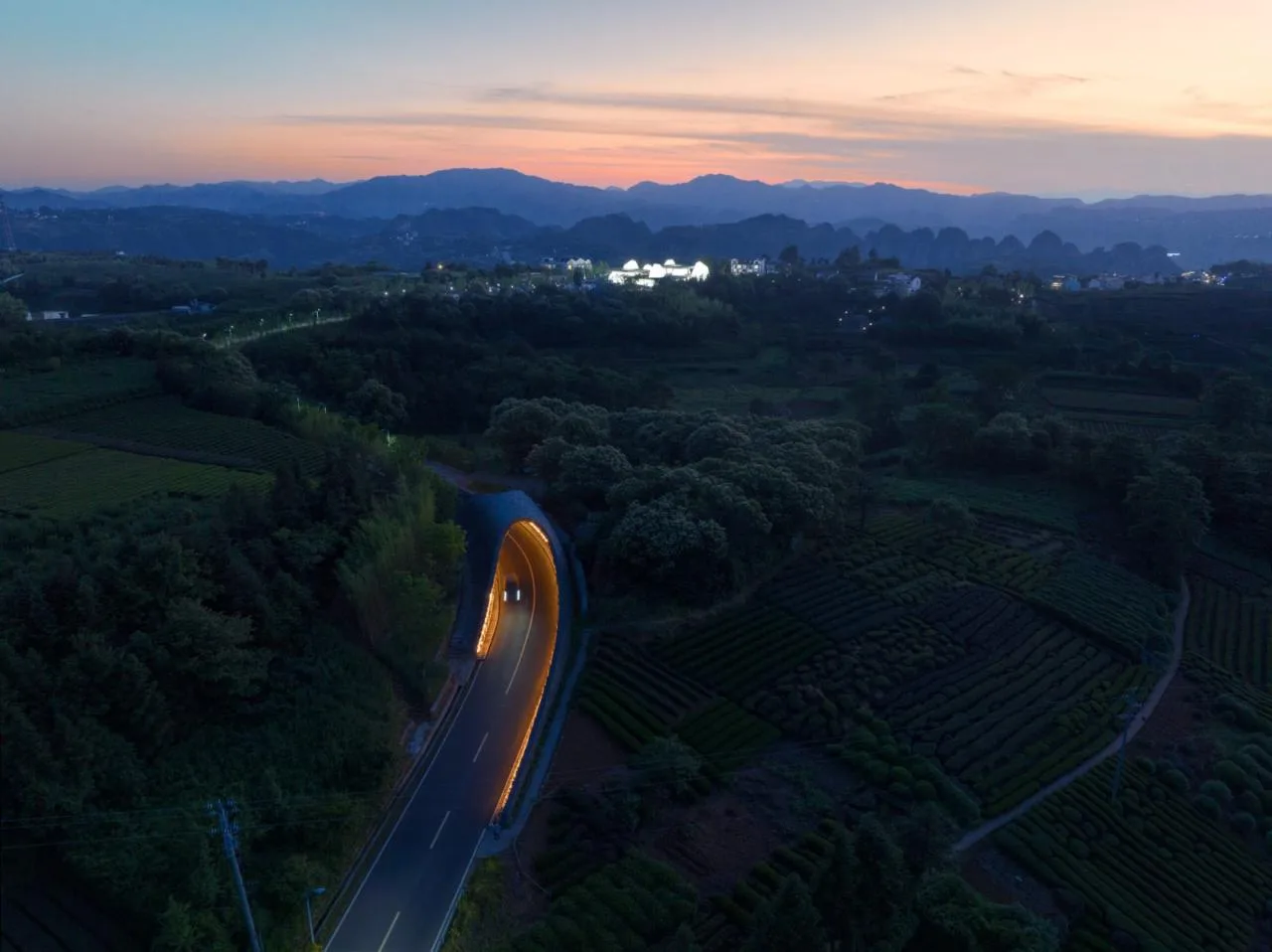
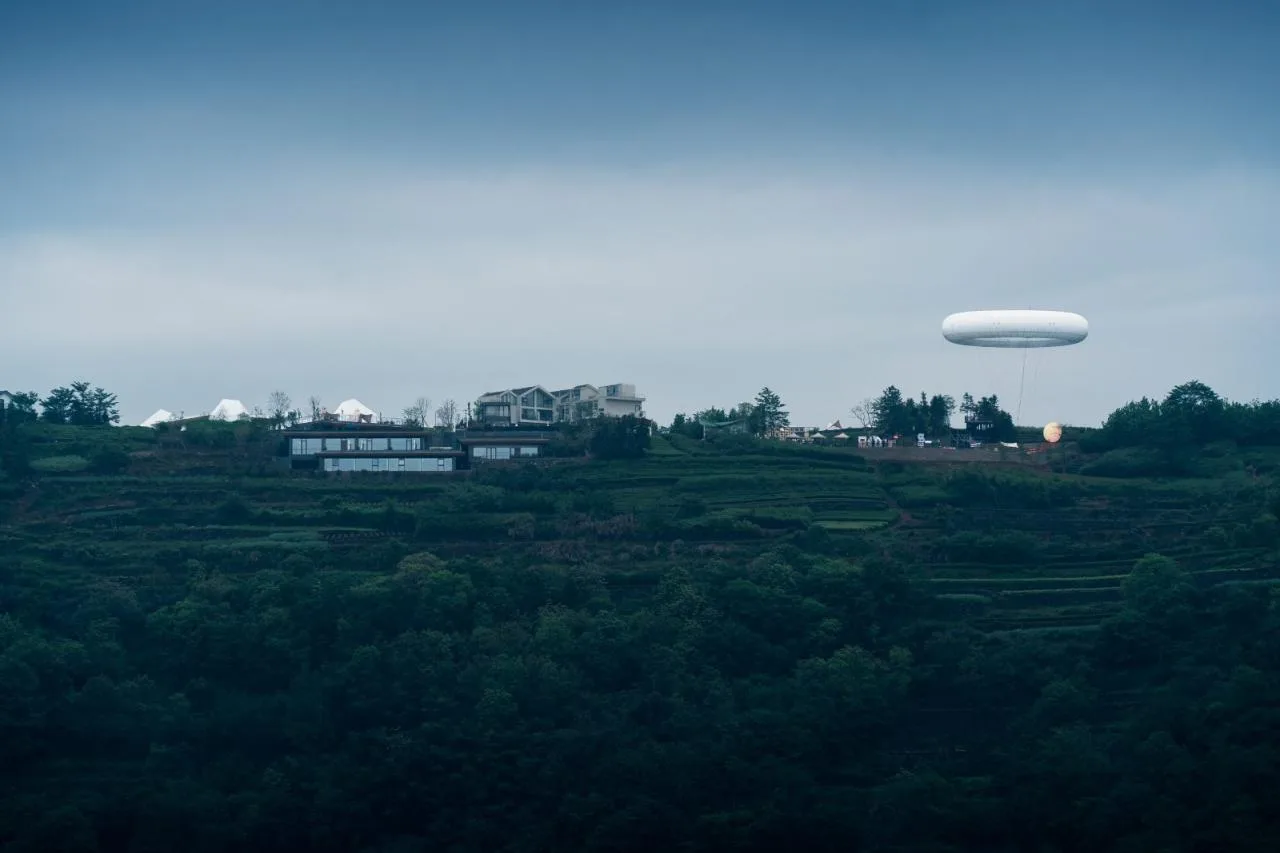
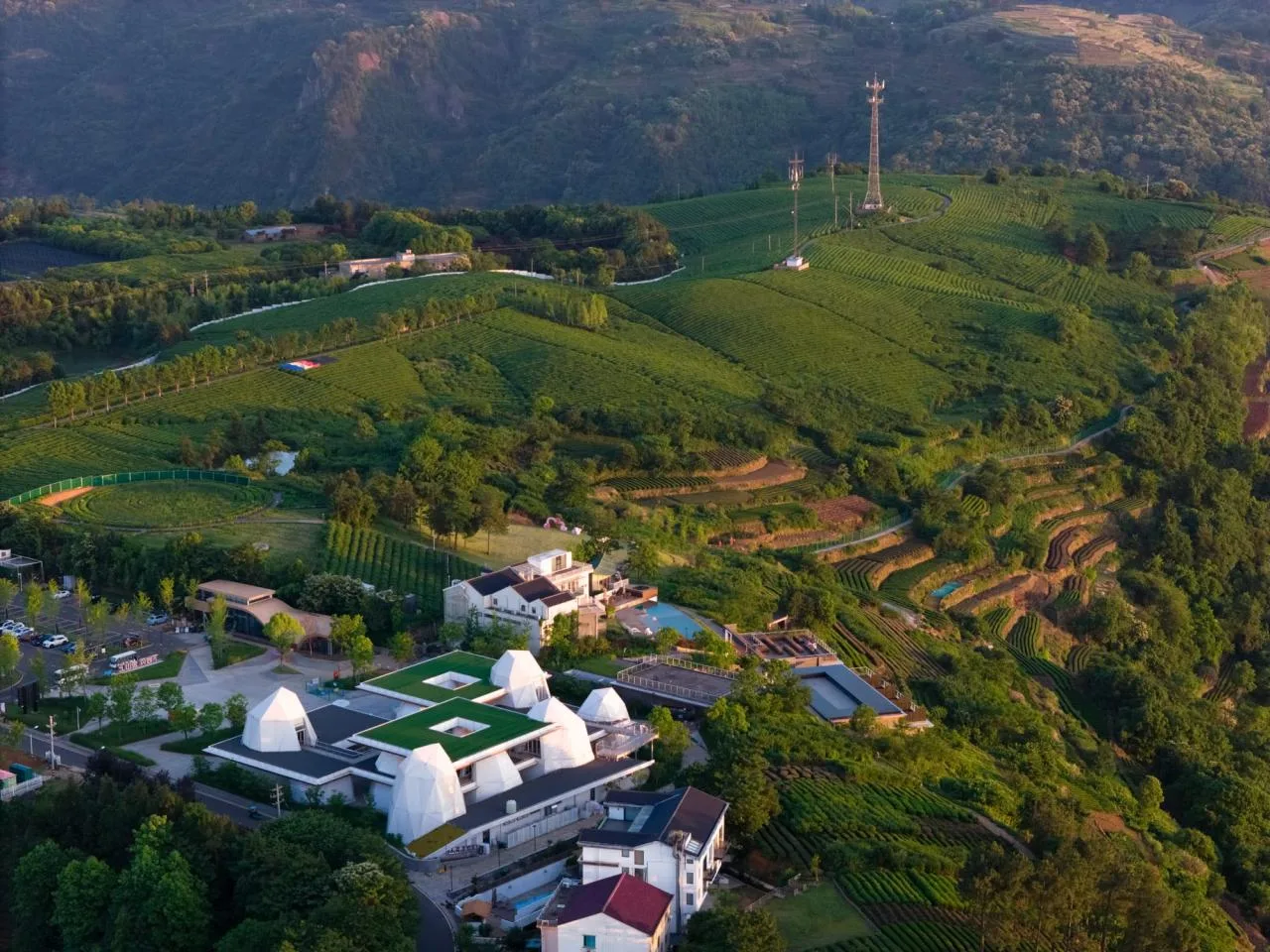
The “Twelve Heavens of Yunfeng” represents the cornerstone of the second strategy and a vital anchor for upgrading rural scenic spots. Formerly, this site was occupied by a large tea processing factory at the village entrance, which dwarfed surrounding residential buildings. Behind it lies a cliff offering prime views of the Cloud Sea and the Nineteen Peaks from Xiayanbei, but public access was obstructed by the factory, forcing visitors to take a detour.
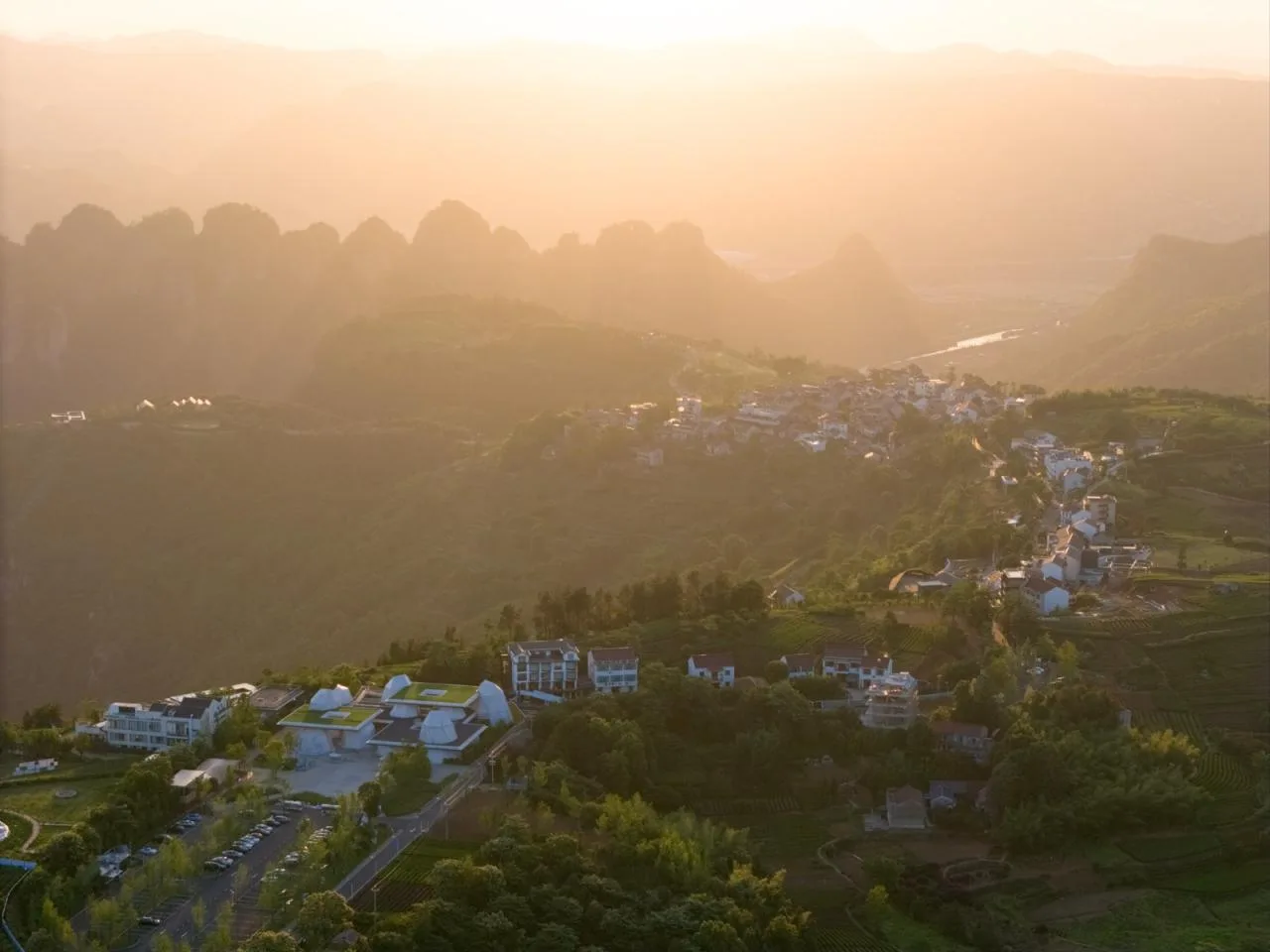
Following the relocation of the tea factory, the freed-up land was repurposed to develop this upgraded public space, supporting the village’s ongoing rural industry transformation.
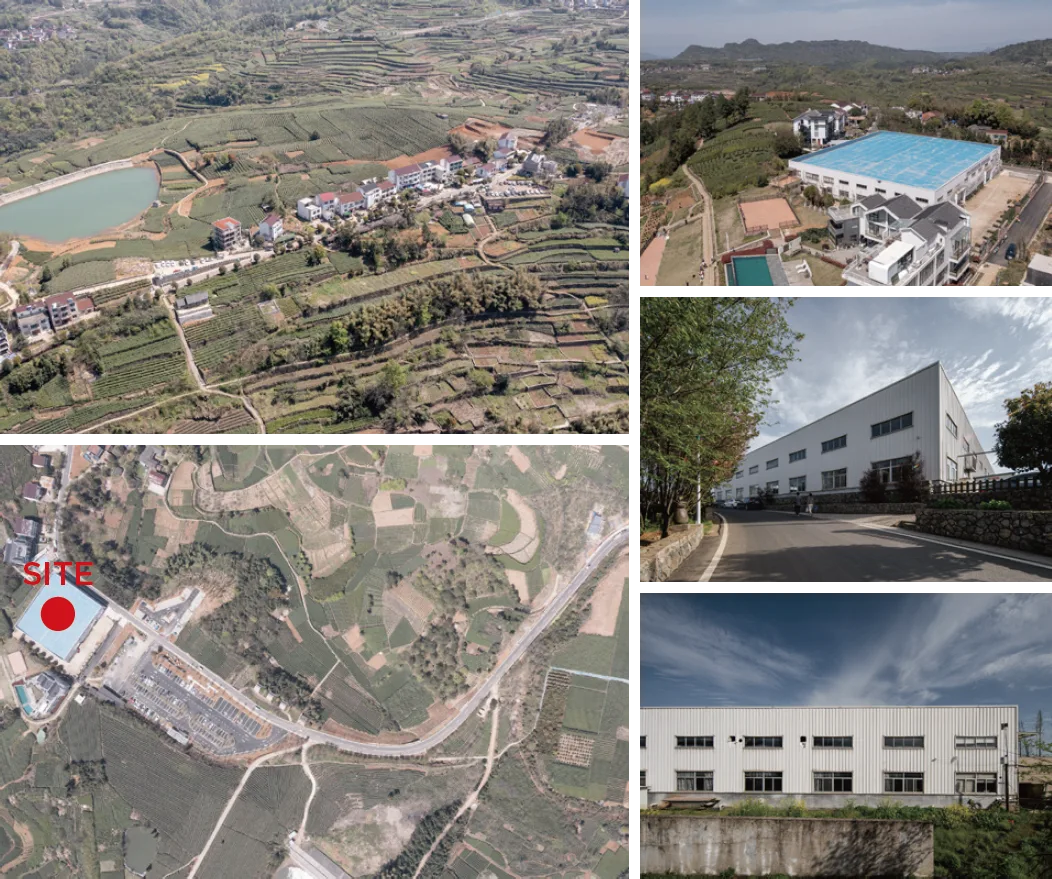
△ Original Tea Factory
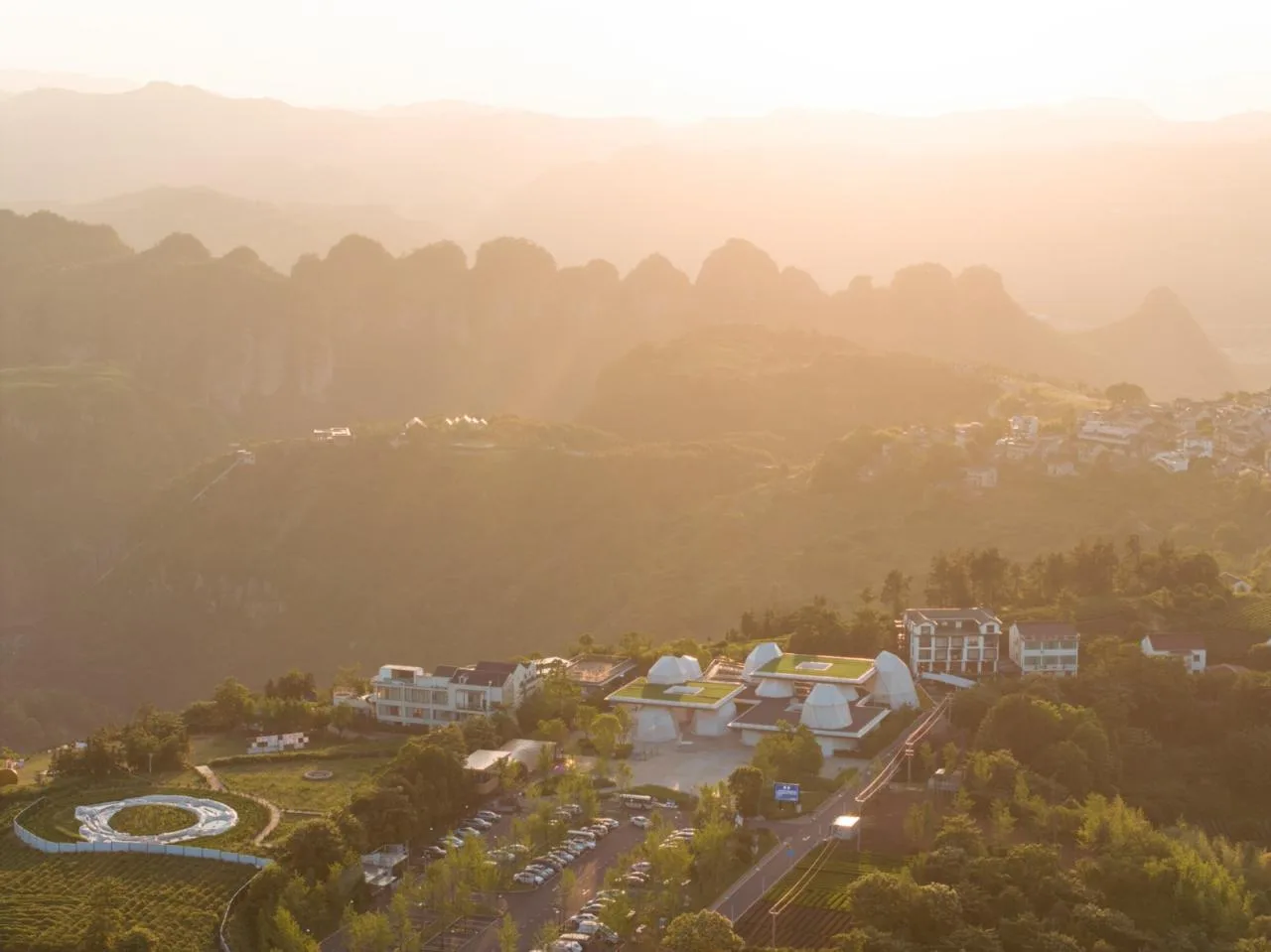
Traditional rural public spaces such as auditoriums, canteens, and ancestral halls often suffer from low usage, while typical retail spaces like small supermarkets tend to lack public accessibility. Considering the site’s location at the village entrance and its dual appeal to tourists and locals, the design aimed to create an open space system centered on public activities. This system integrates flexible, non-standard commercial spaces and connects multi-dimensional pathways through preliminary operational interventions. It supports a diverse range of village and rural tourism activities, establishing a new social hub for local life.
01. Scale Reduction and Scene Reconfiguration
The site is situated near the village entrance parking lot, connected to a cliffside hiking trail and adjacent to neighboring residential areas. The original land included a massive white, box-shaped factory and a staggered cliff viewing platform. After analyzing the terrain and flow of visitors and villagers, two architectural strategies were developed.
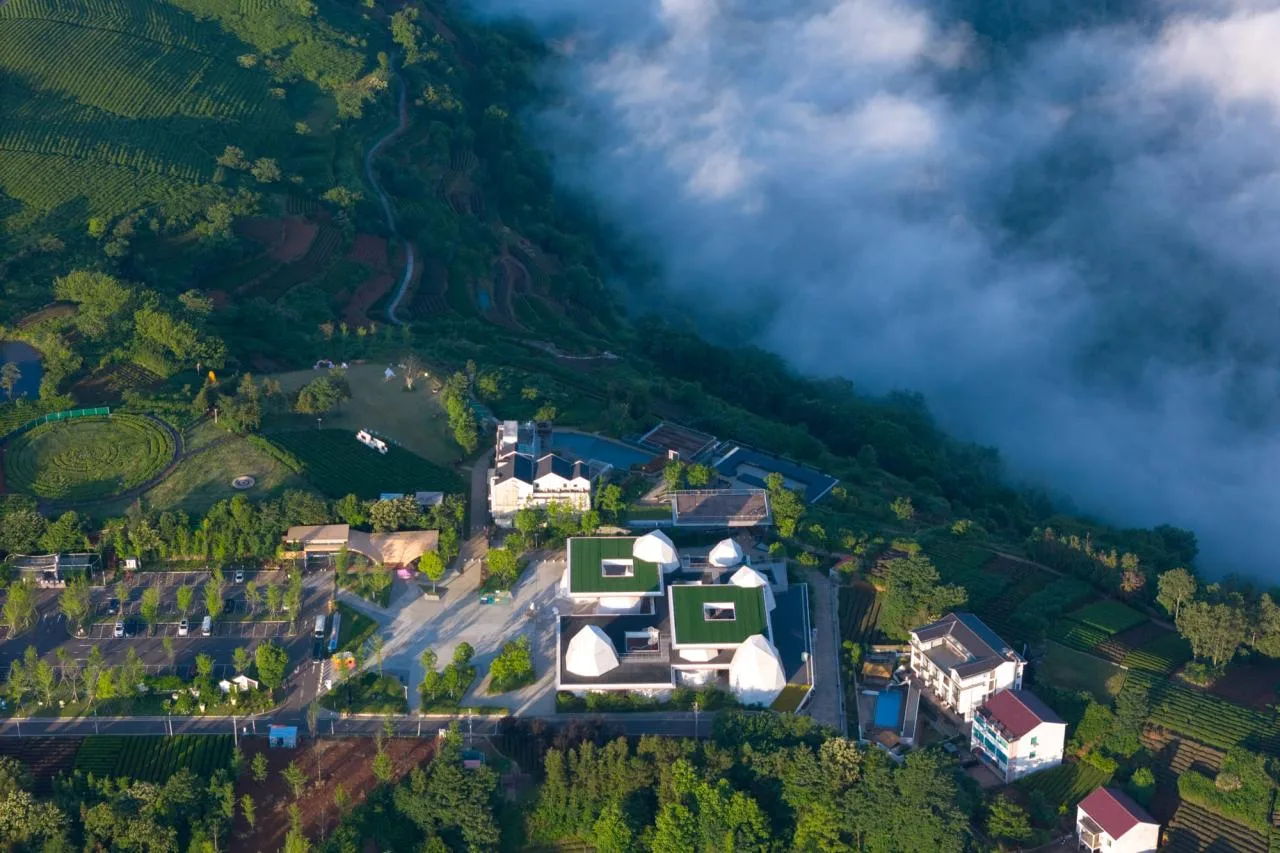
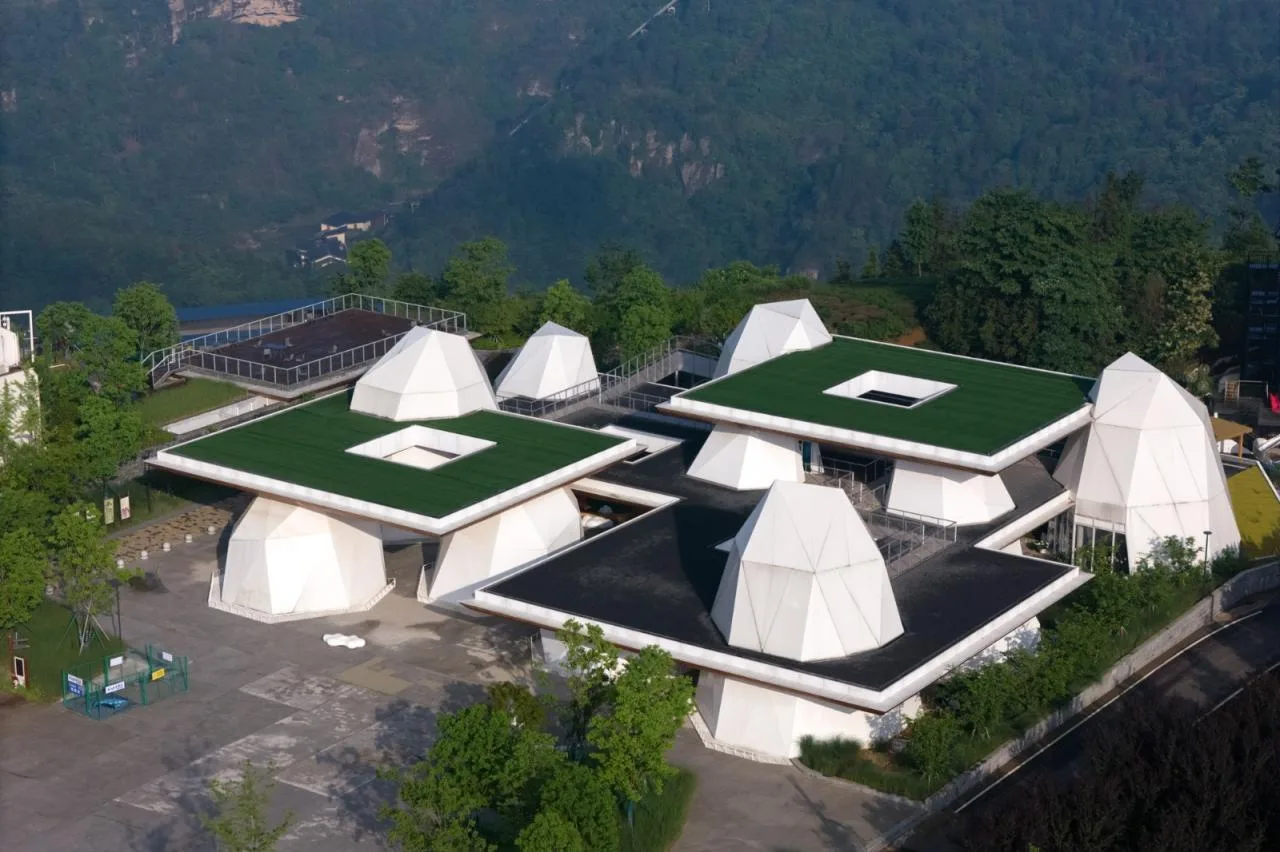
First, the design reconfigured the scale by breaking down the enclosed factory building (54.5 x 48.6 x 8.33 meters) into smaller units that blend harmoniously with the rural surroundings. The closed boundaries were replaced with fully open interfaces, creating a seamless flow from the parking area through the “Yunfeng Twelve Heavens,” viewing platforms, and hiking trails—integrating scenery and people.
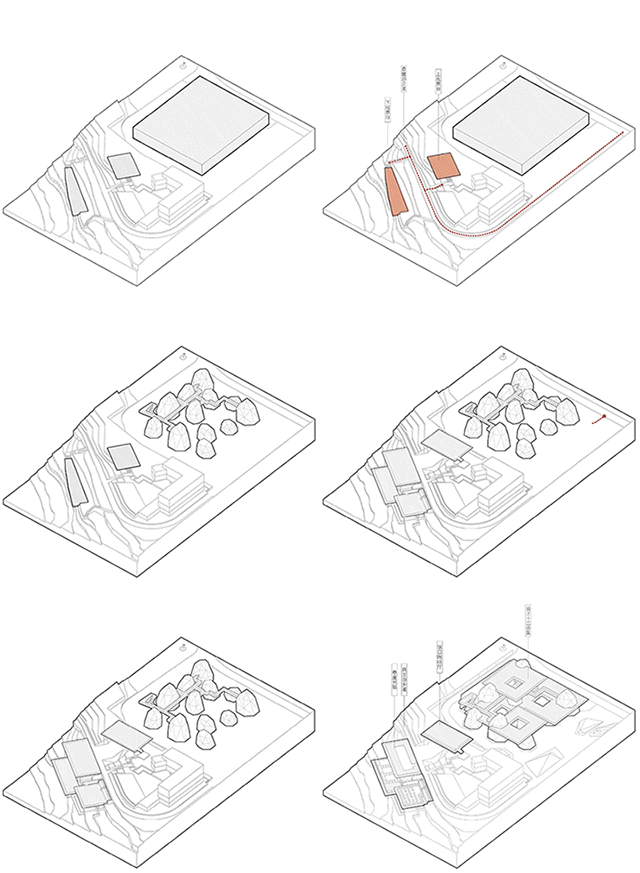
△ Site generation
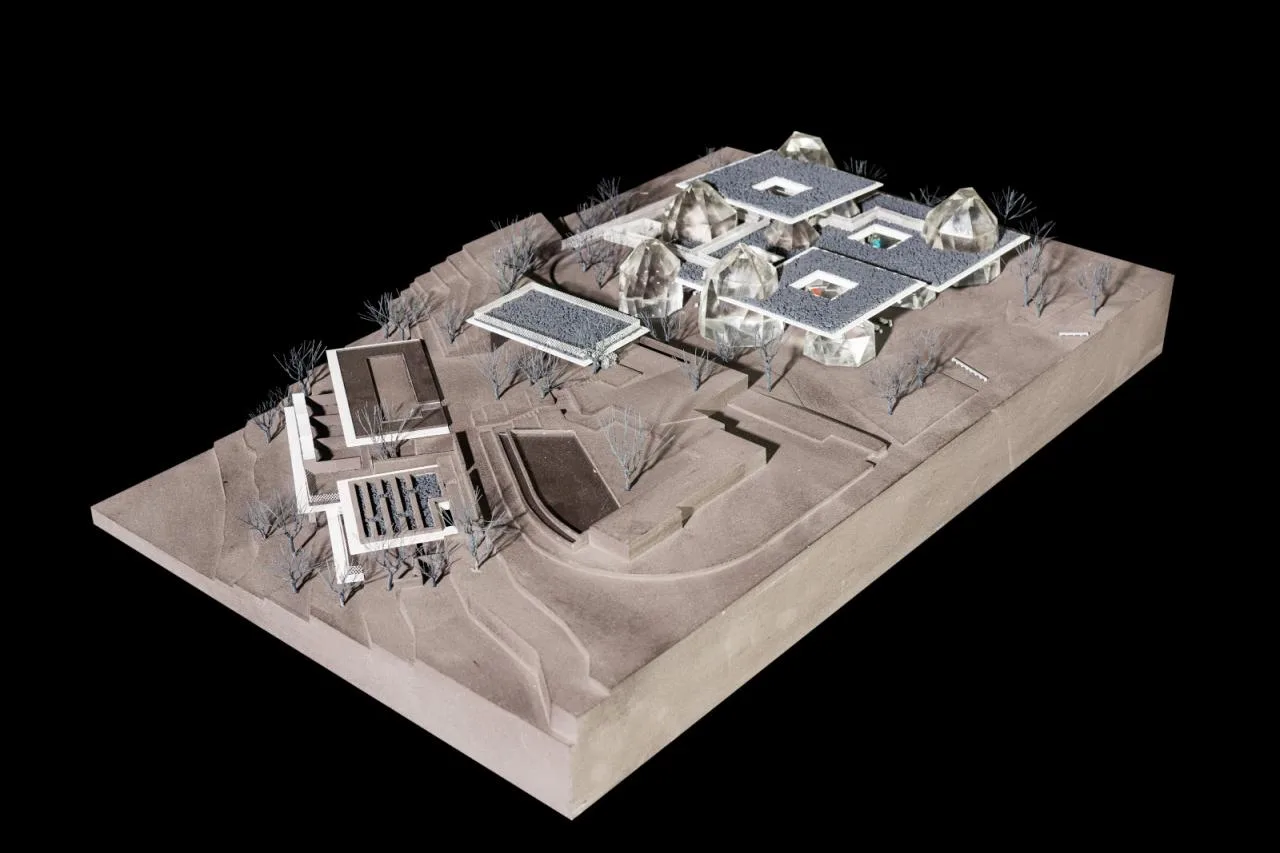
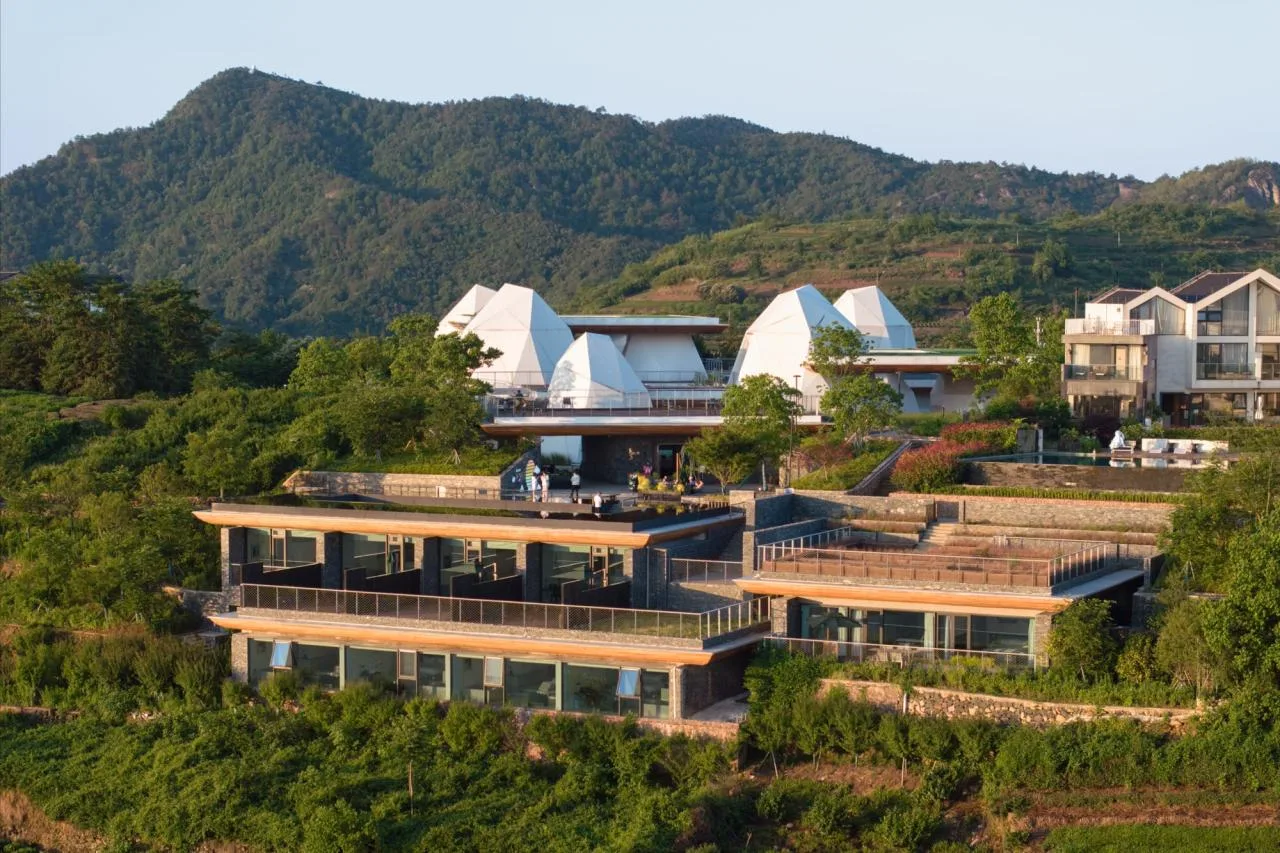
Second, due to hillside construction, multiple viewing platforms were created, beginning at the second-floor elevation of the original tea factory and cascading down to the cliff viewing platform. This sequence forms a series of stacked, open, sheet-like platforms overlooking the sea of clouds and the Nineteen Peaks. These platforms host diverse functions including homestays, restaurants, cafes, retail shops, and services for tourists and villagers.
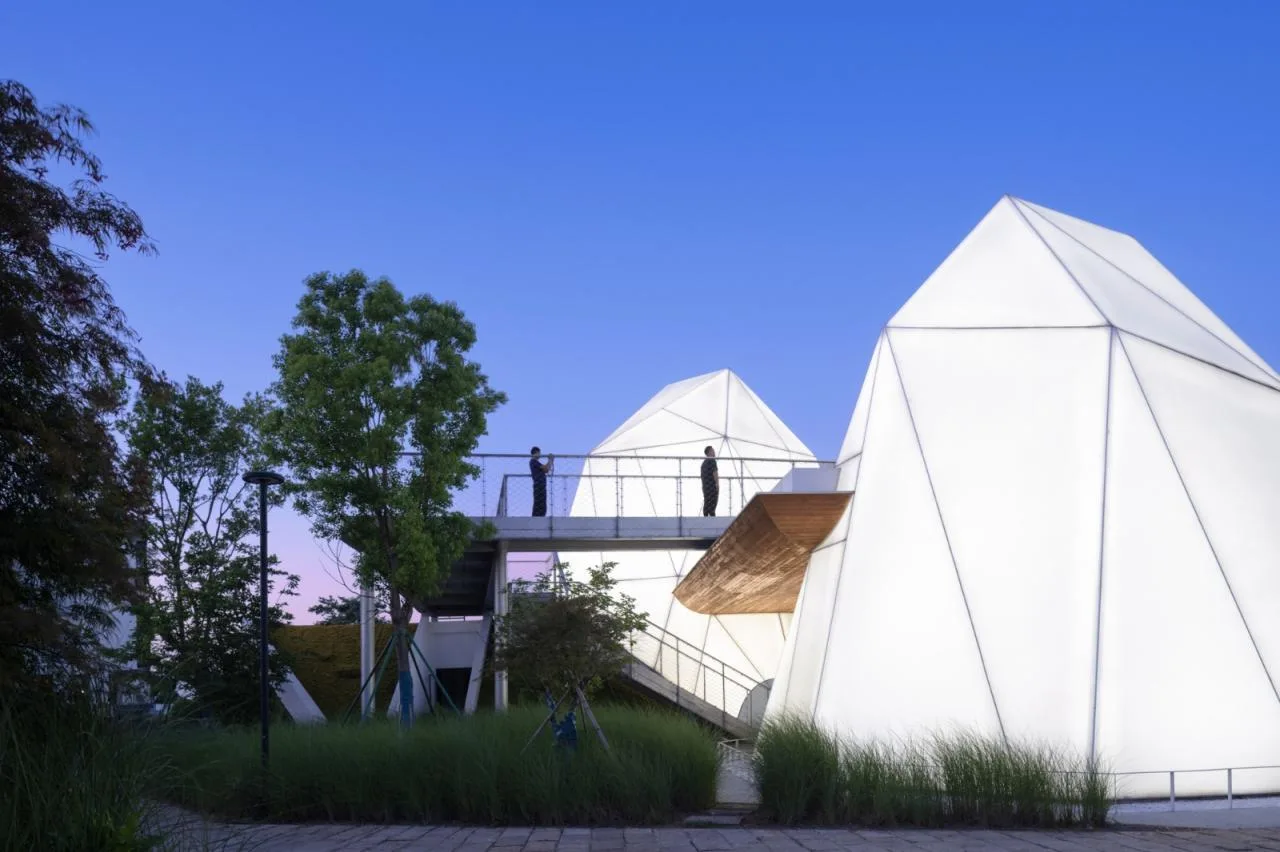
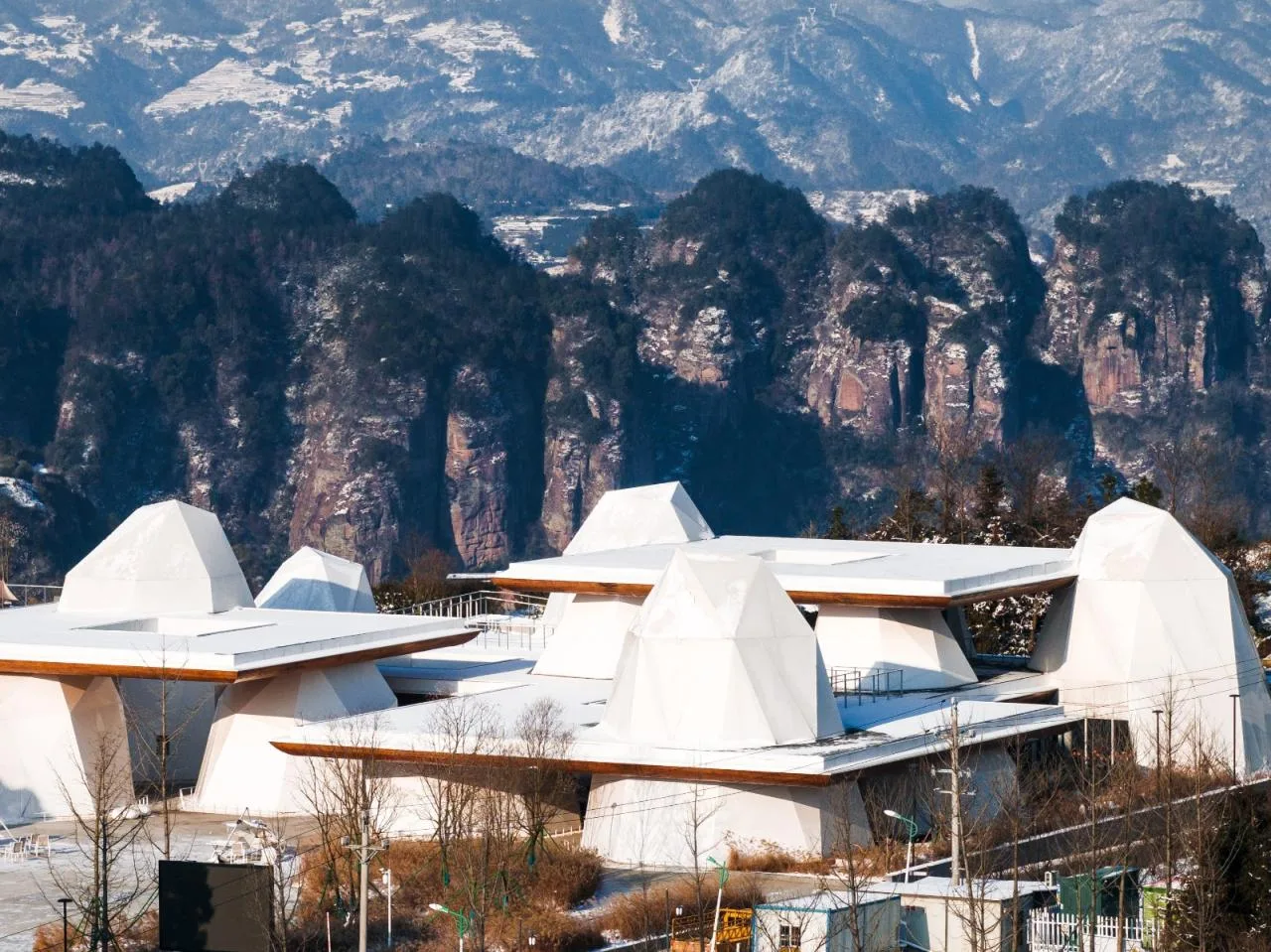
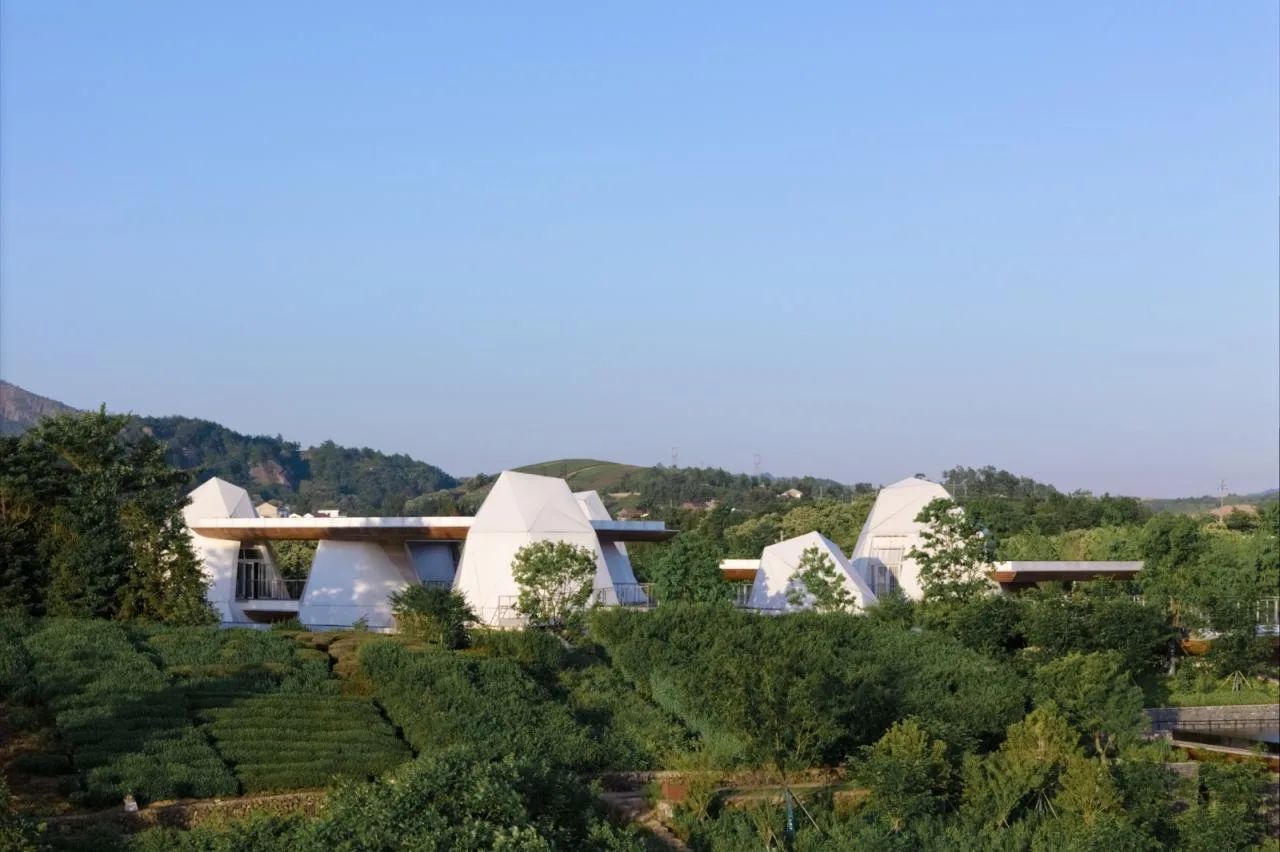
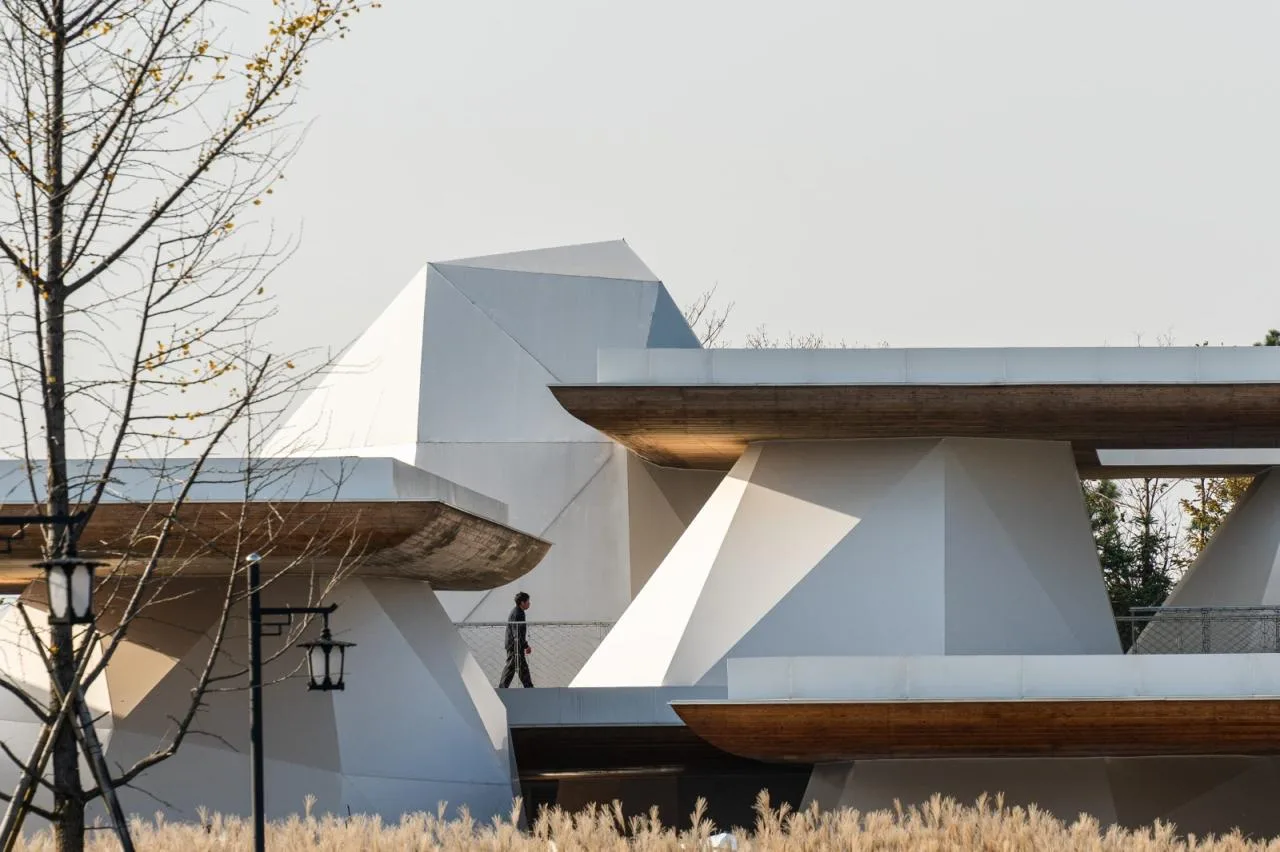
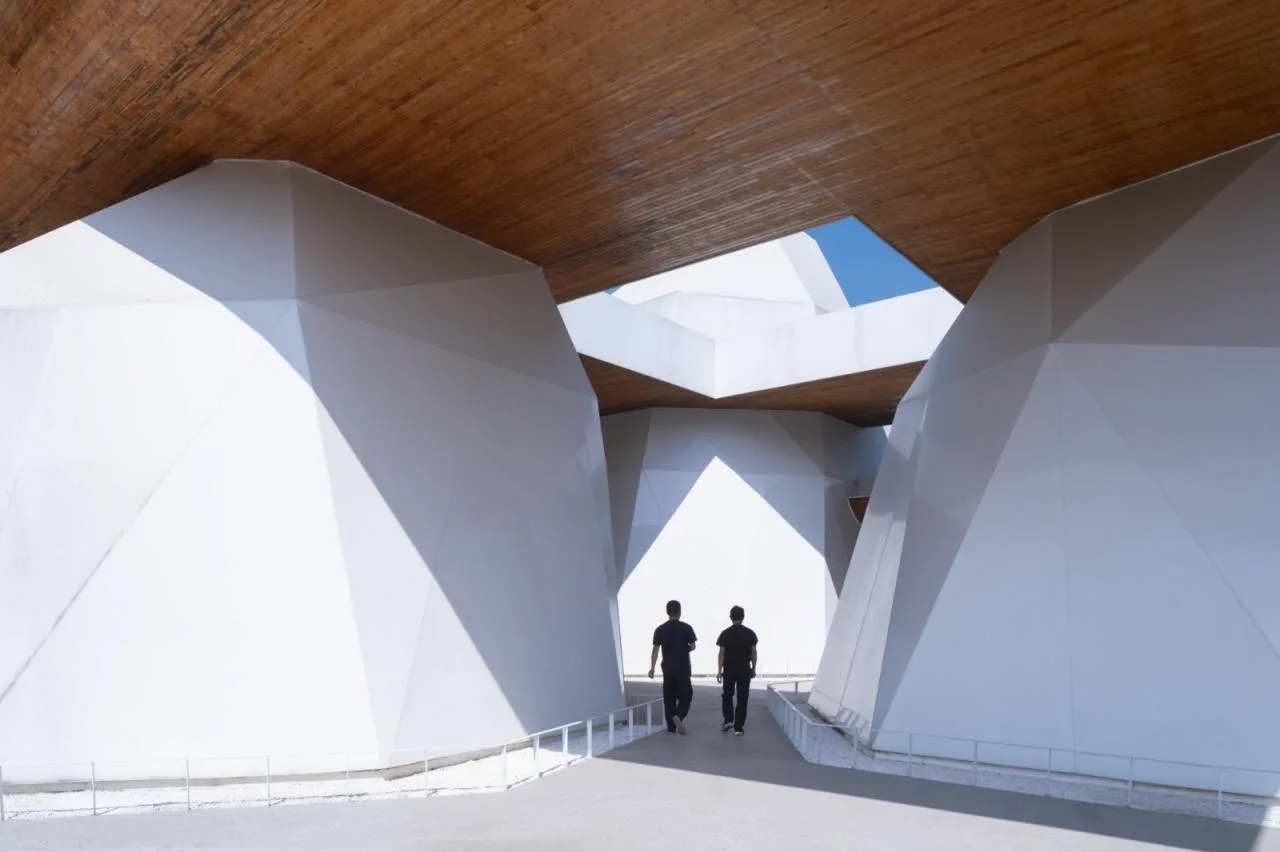
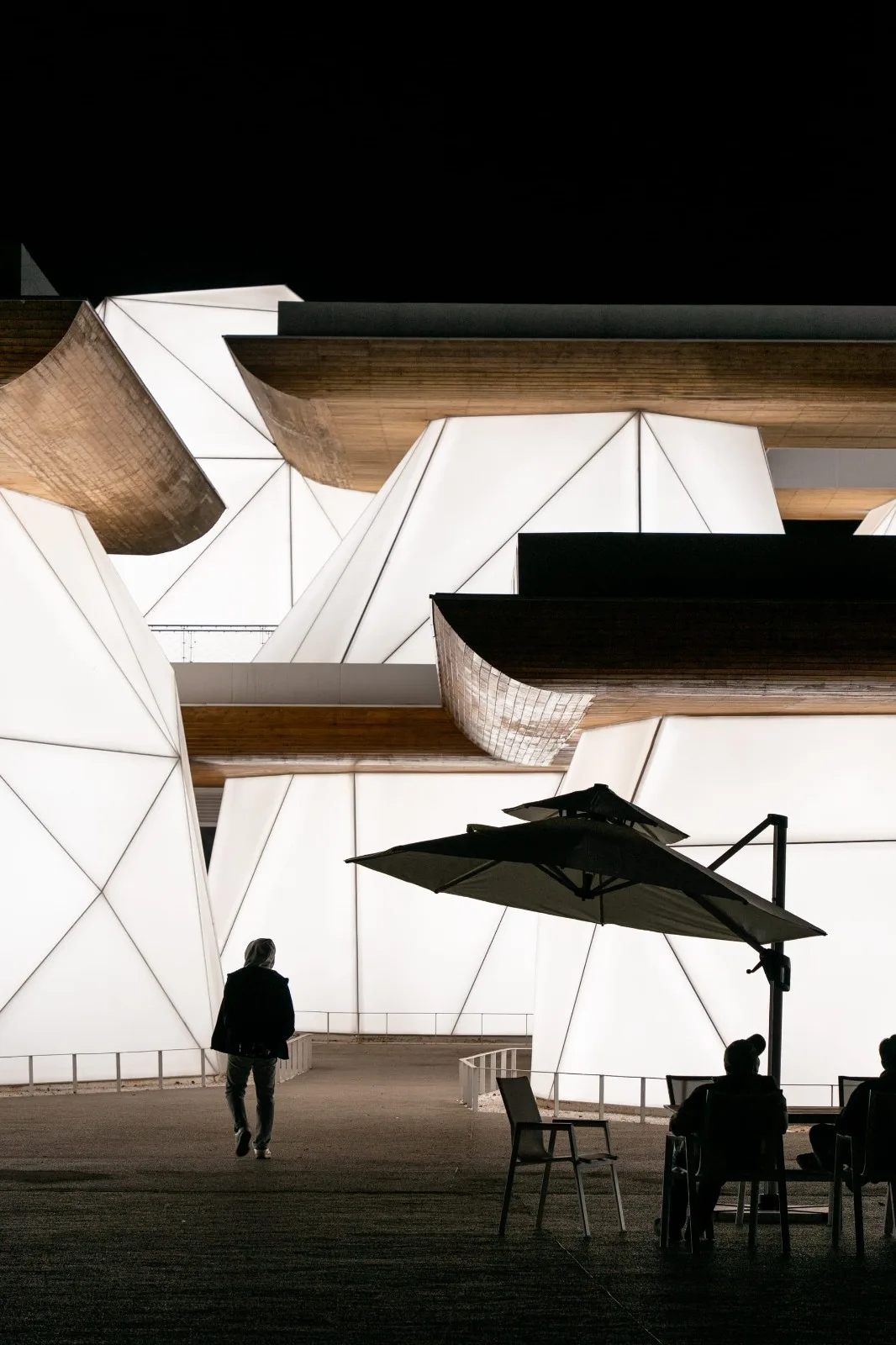
The architectural form of the “Yunfeng Twelve Heavens” draws inspiration from outdoor camping tents, shaped through simple geometric cuts. The sculptural volumes resemble twelve “flying” ice peaks of varying heights, echoing the distant Nineteen Peaks.
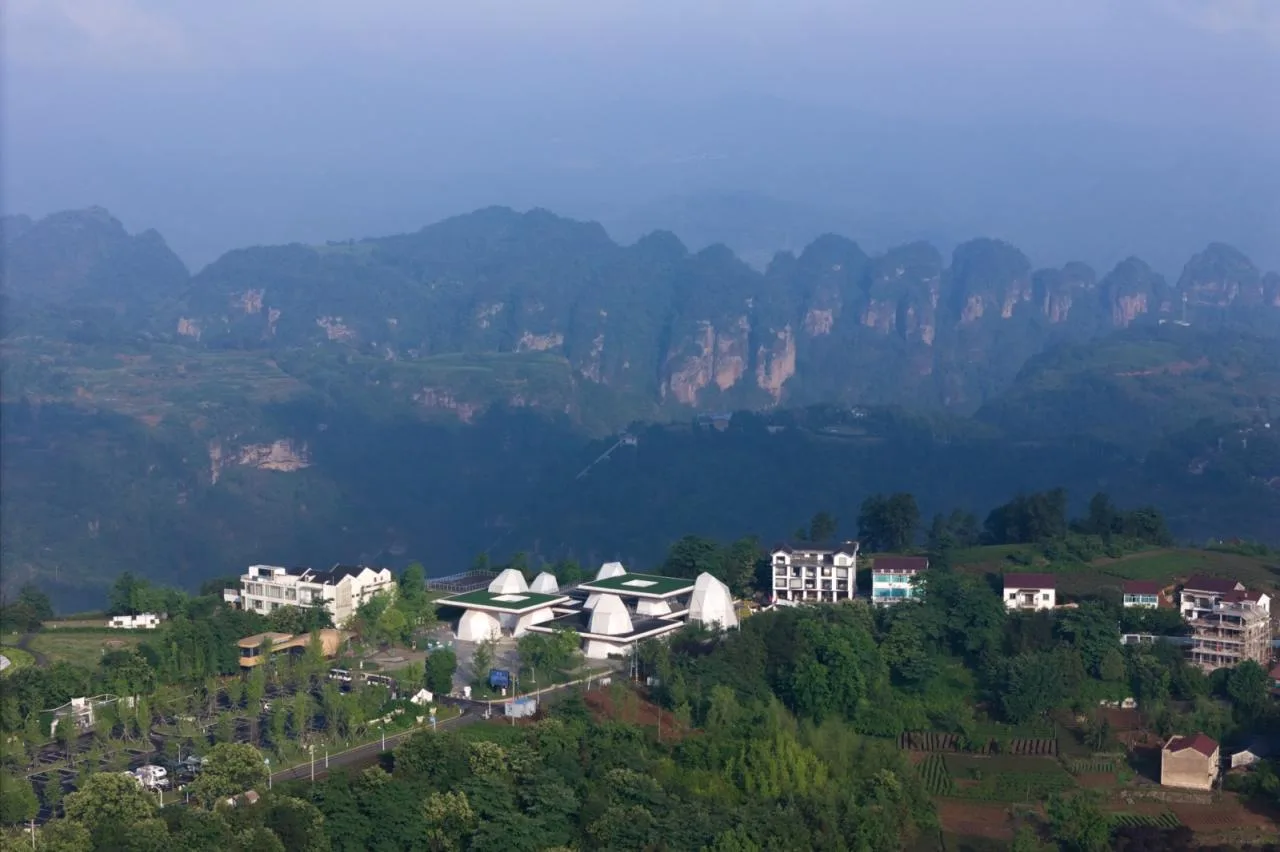
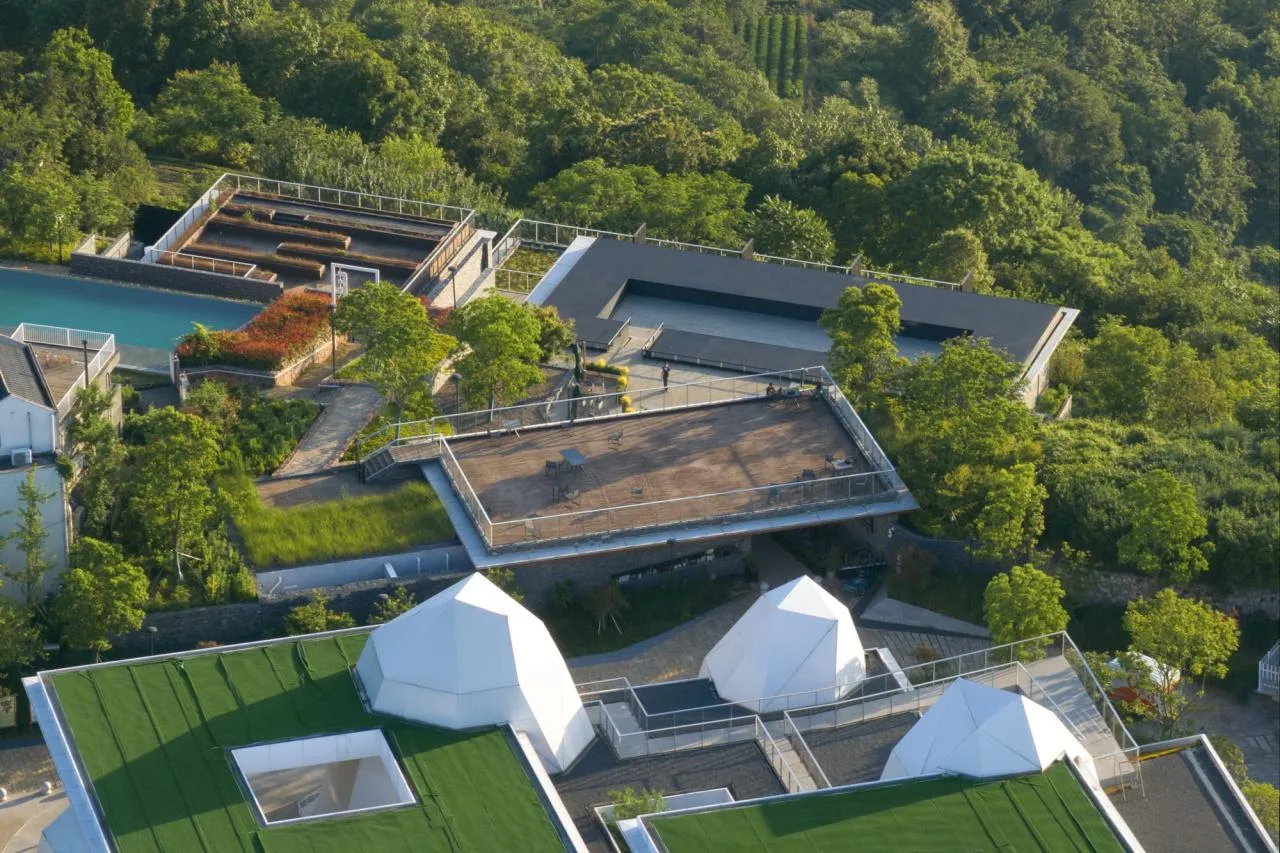
The twelve “Cloud Peaks” feature modular steel structures that accommodate various functional spaces. Platforms of different scales mimic layered clouds swirling among mountains, connecting the peaks to create open viewing platforms at varying heights. This design forms sheltered, flexible spaces optimized for commercial activities. A floating boardwalk of light steel connects vertical circulation points, weaving lightly between platforms and peaks, creating a free-flowing, three-dimensional open roaming experience.
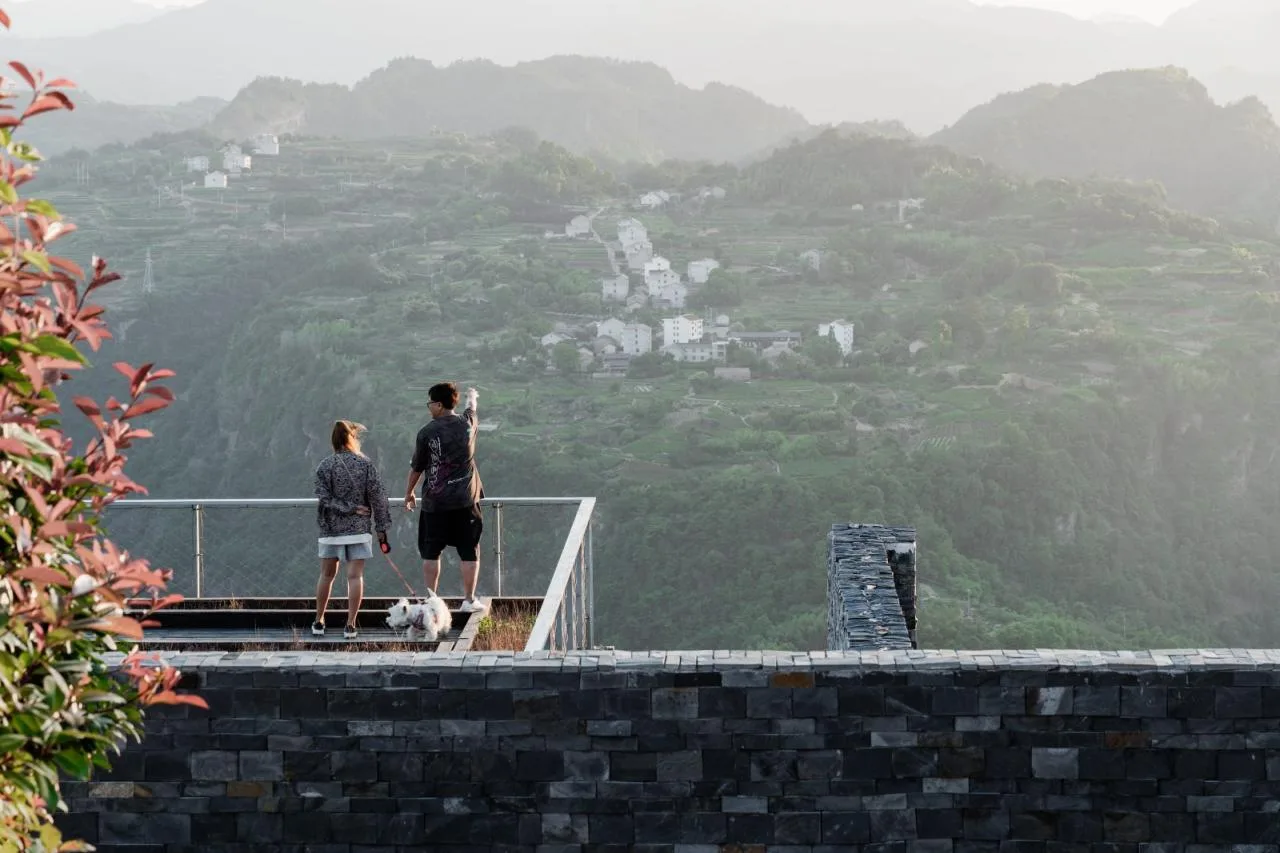
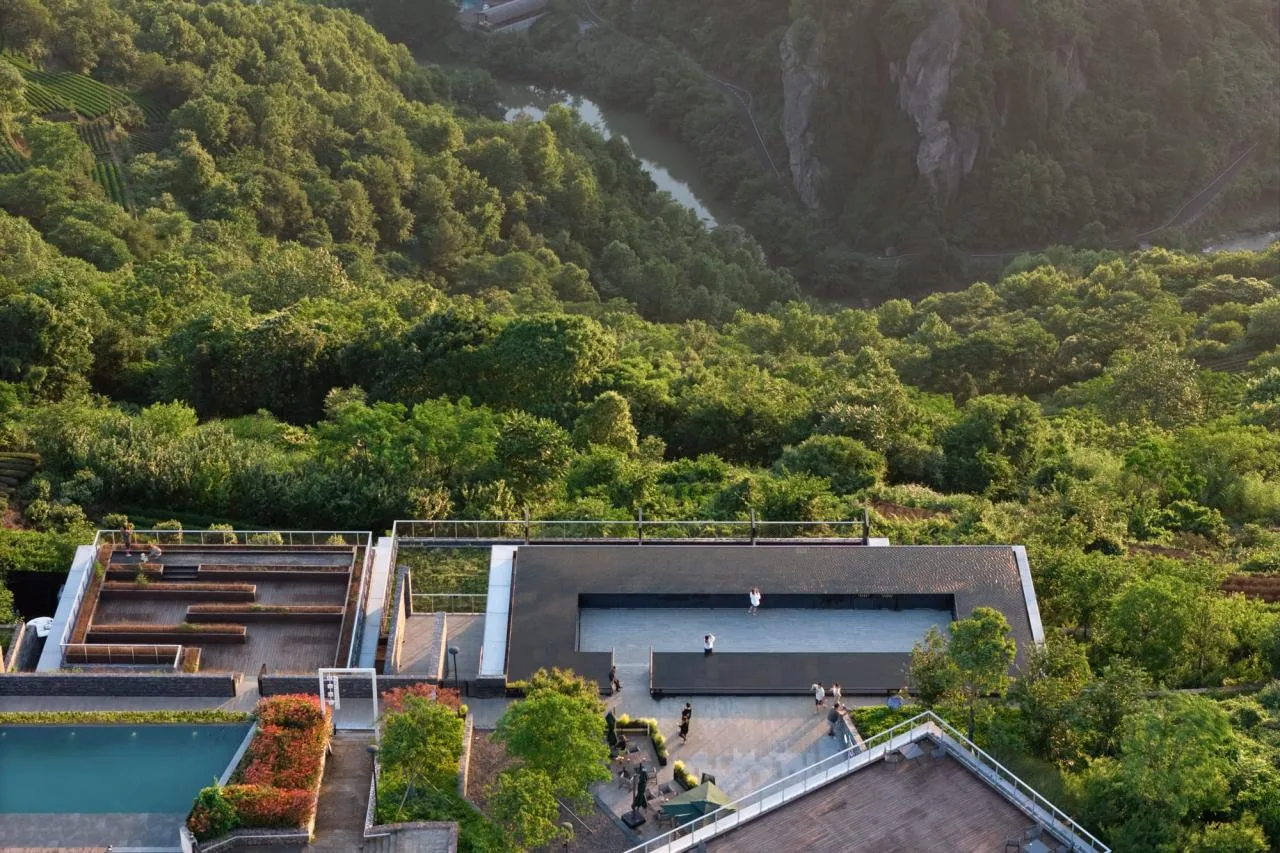
The paired viewing platforms near the cliff provide prime spots to overlook the Nineteen Peaks and catch the sunrise over the sea of clouds. Previously popular with backpackers for camping, these platforms remain public viewing areas connected by pedestrian walkways. Visitors can pass beneath the upper platform to reach the cliff viewing platform and adjacent hiking trails.
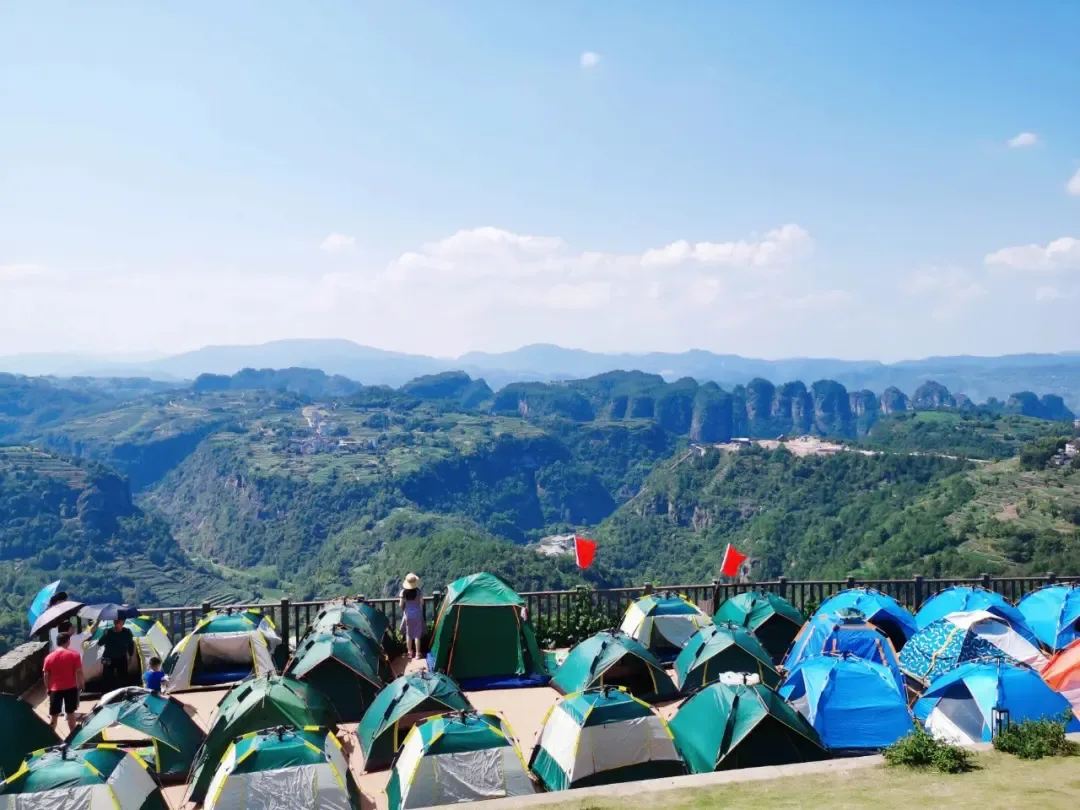
△ Old Observation Deck Camping Site (Now Closed)
02. Modular Design and Diverse Usage Scenarios
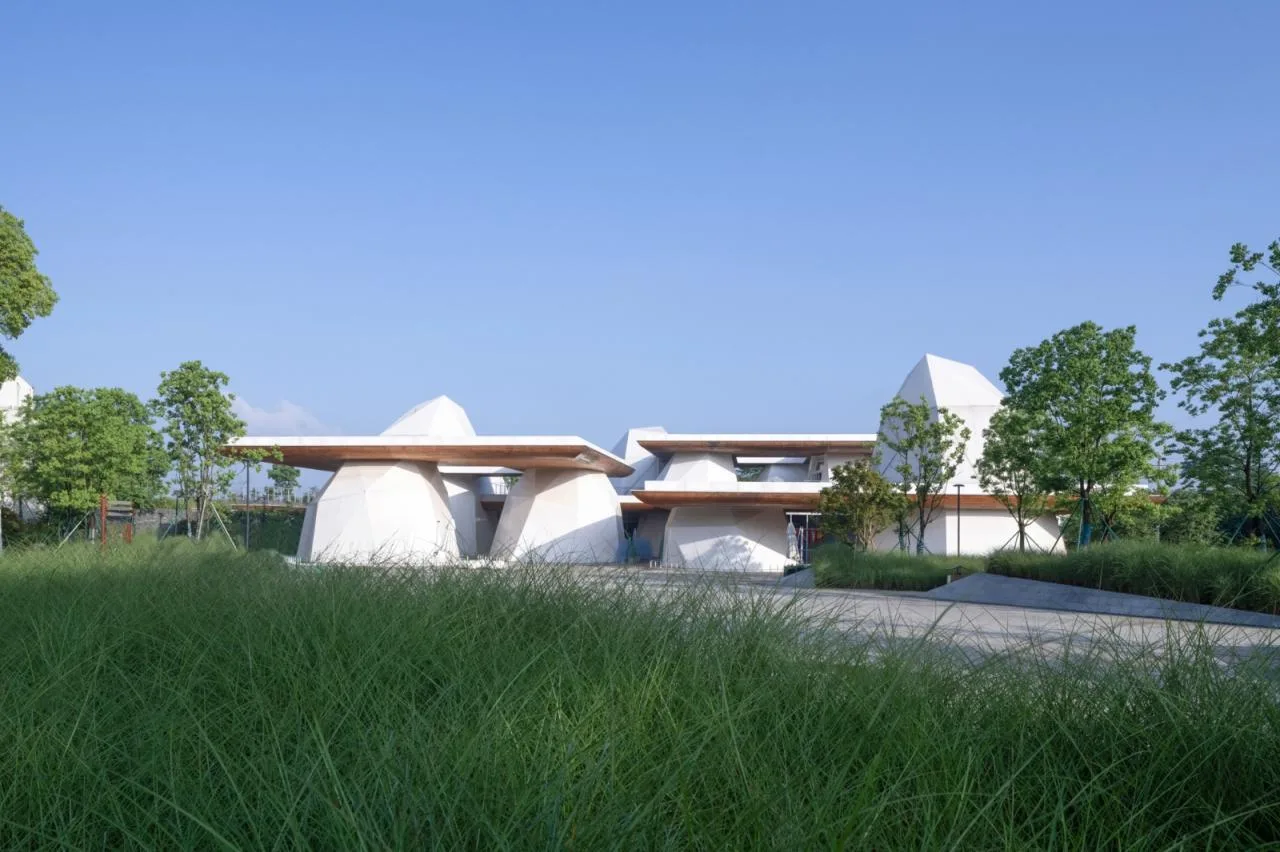
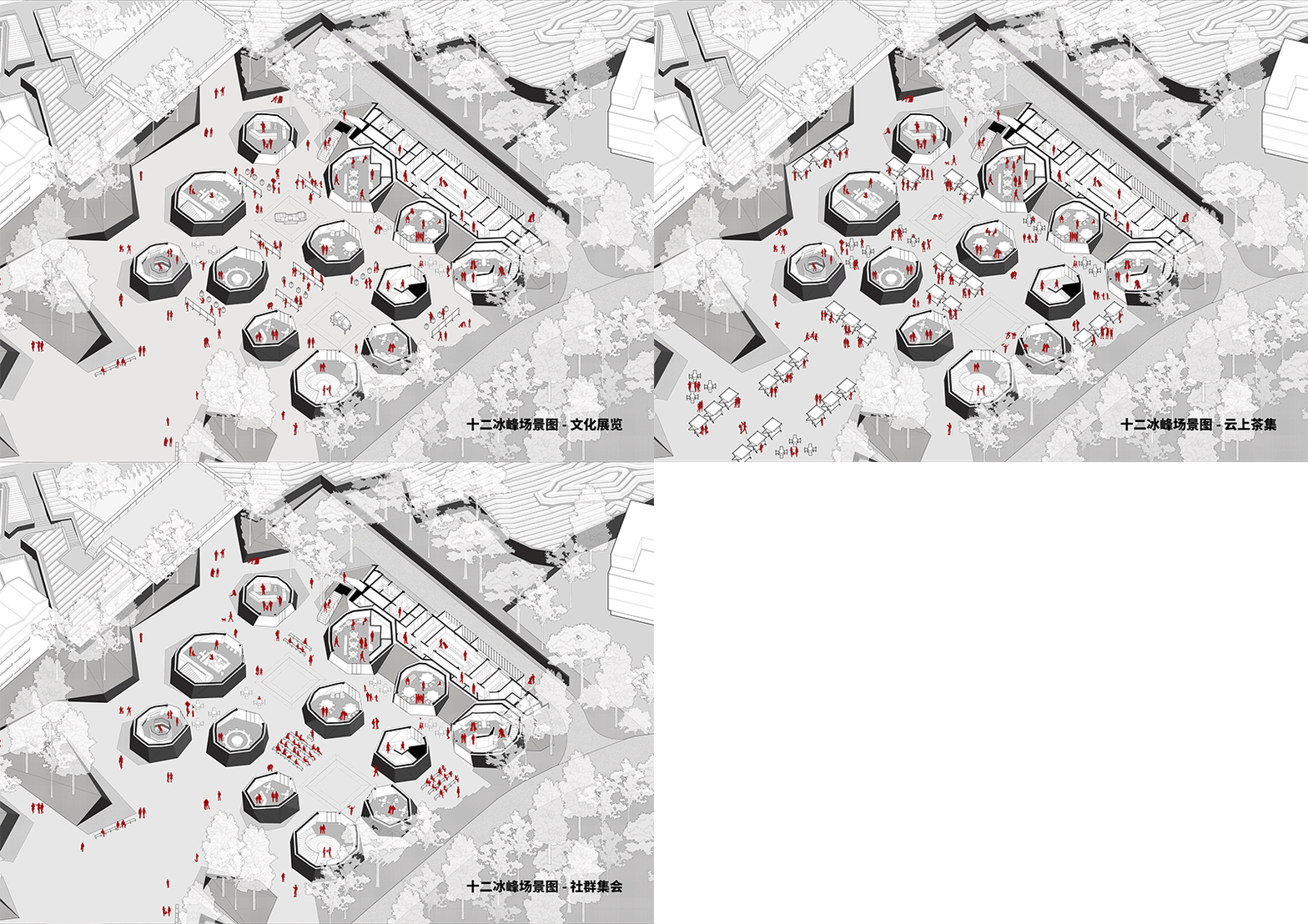
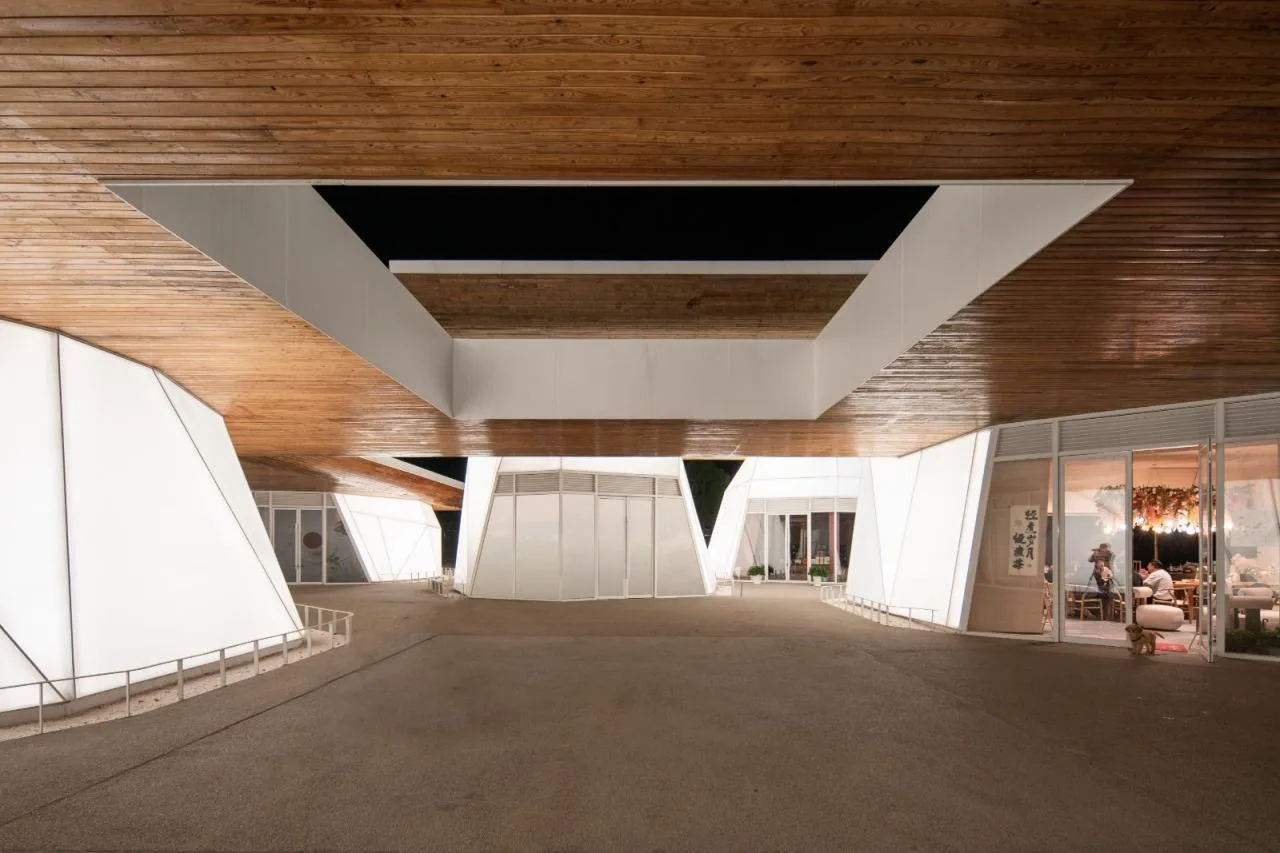
The “Yunfeng Twelve Heavens” layout emphasizes a seamless blend of architecture and environment, as well as indoor and outdoor spaces, achieved through scattered, clustered units. The twelve ground-floor units are grouped unevenly, each opening towards a central courtyard, creating a unified exterior façade and a rich internal display surface facing inward. Although the units share a similar form, their interiors are uniquely defined by their specific functions.
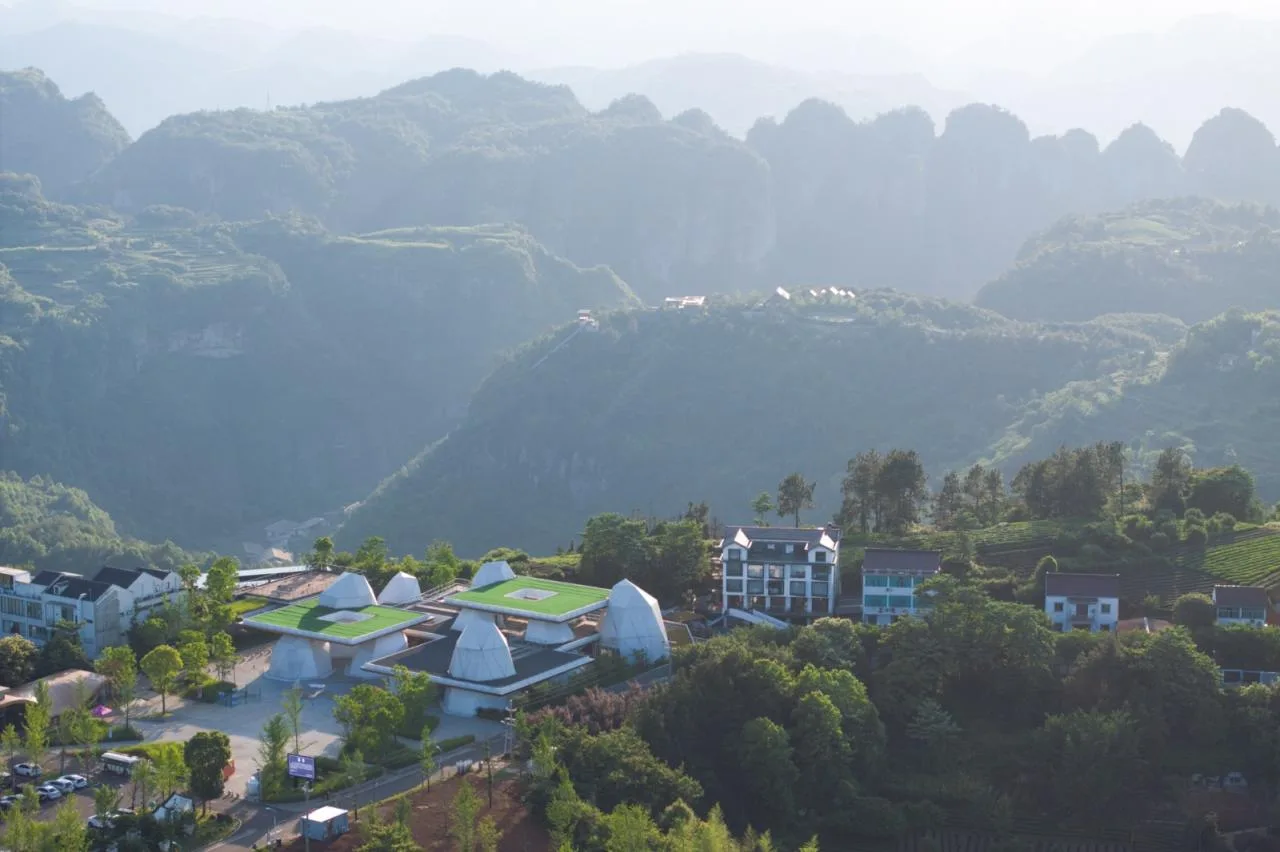
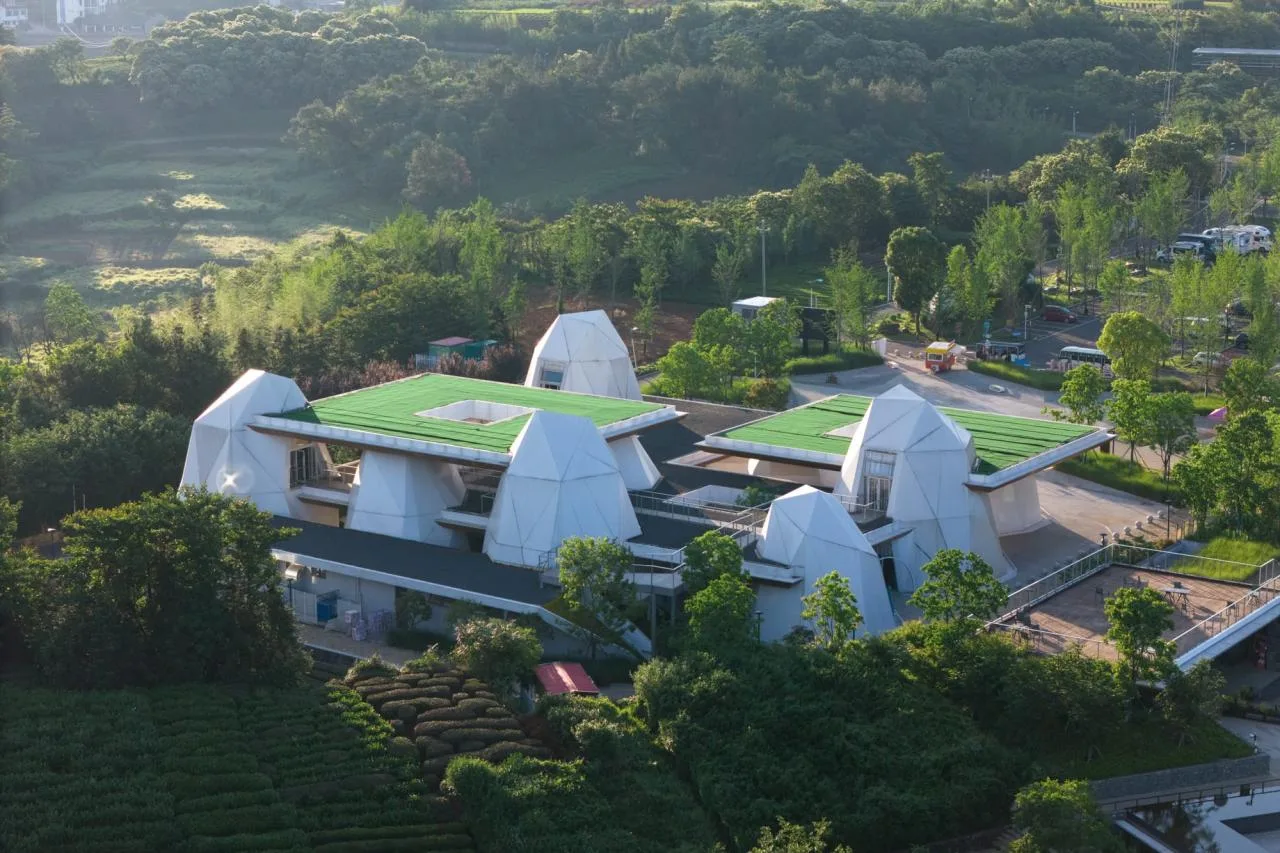
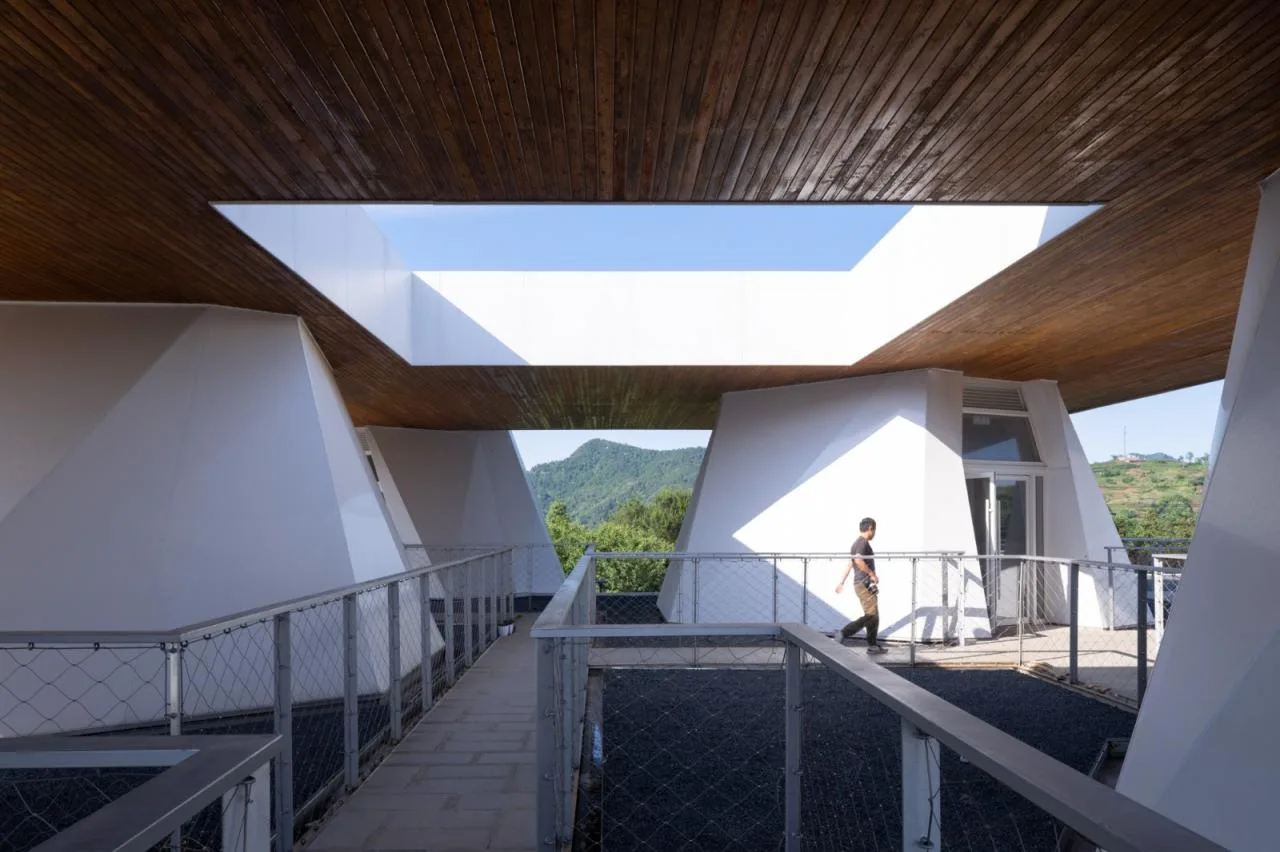
Overlapping panels above the courtyard create a roof-like spatial enclosure, while openings maintain an open courtyard form, allowing ample natural light and ventilation both at ground level and in the second-floor atrium. These layered gray spaces offer flexible, adaptable environments suitable for outdoor commercial displays, village gatherings, markets, exhibitions, and tourist activities.
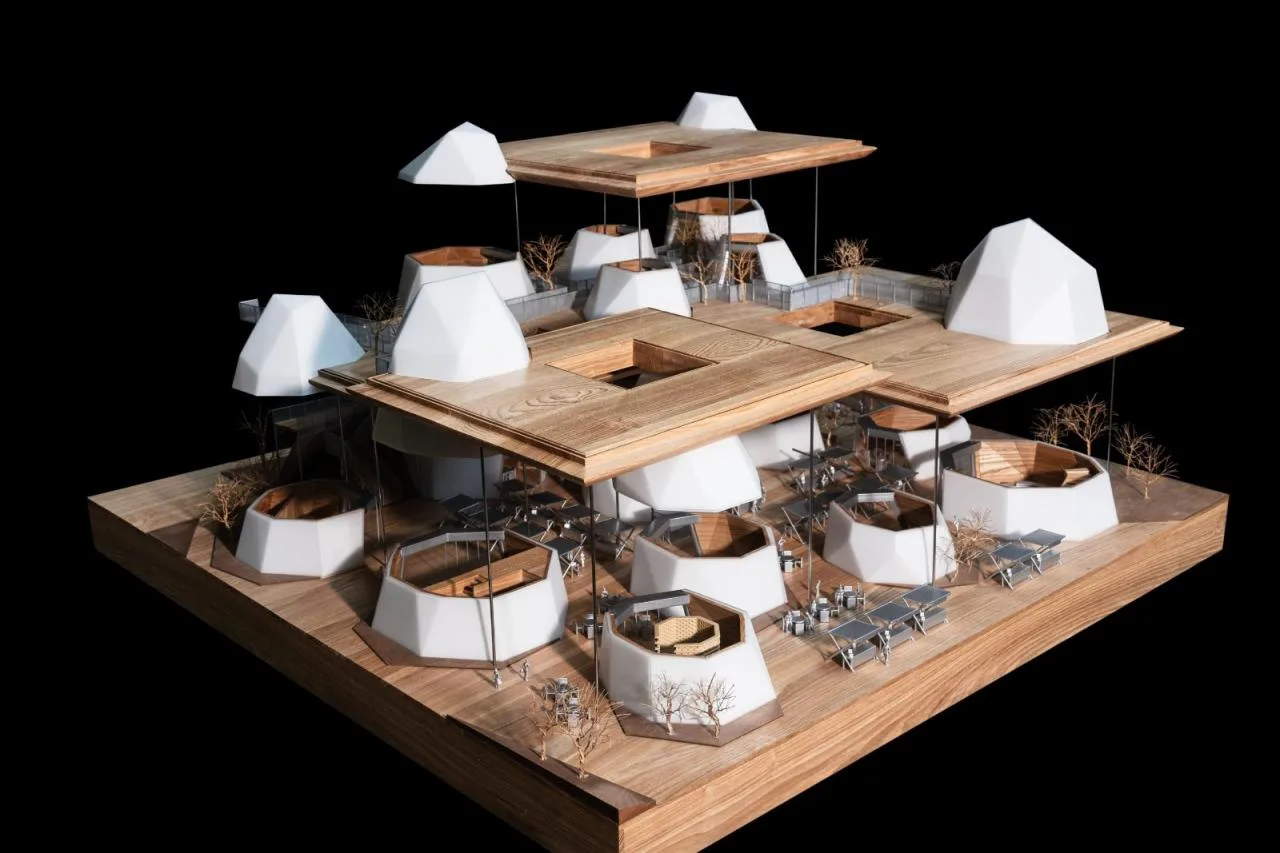
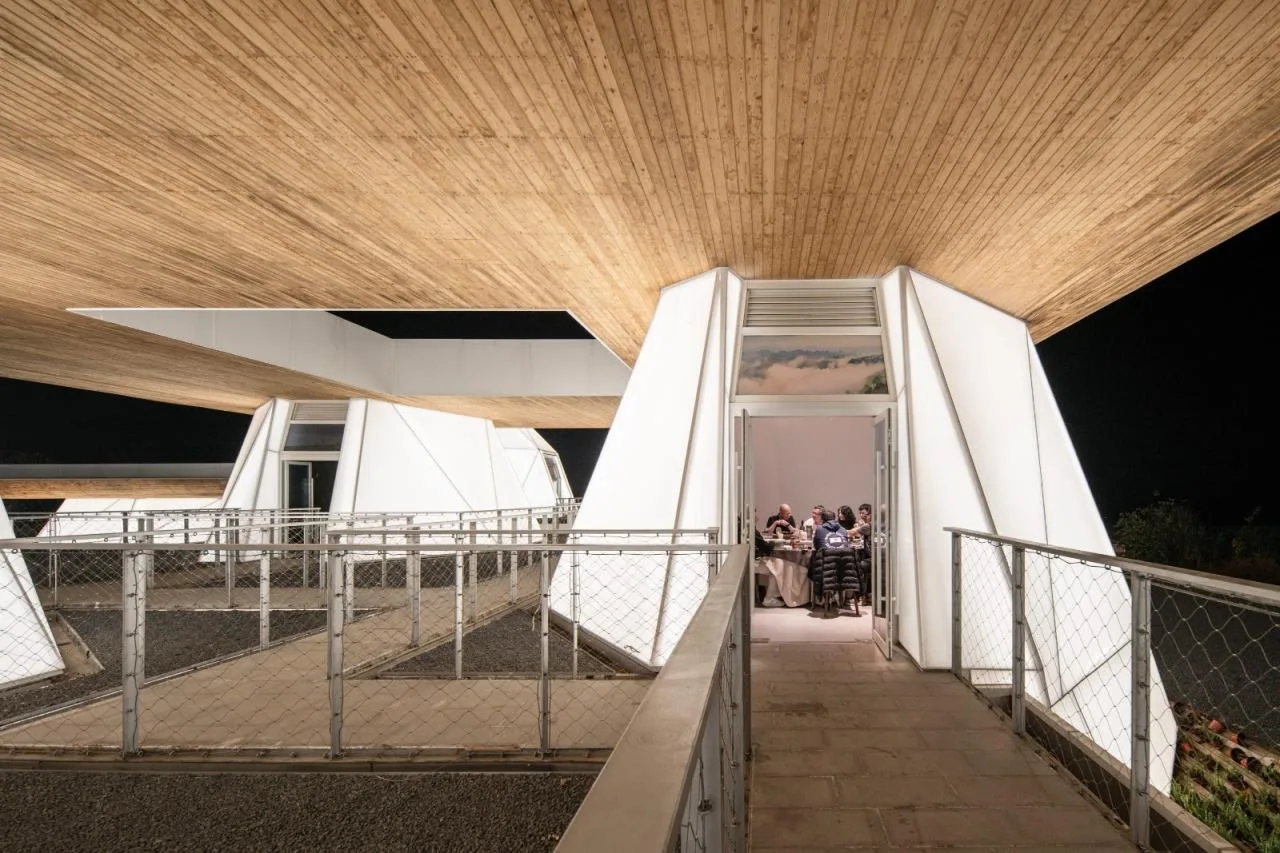
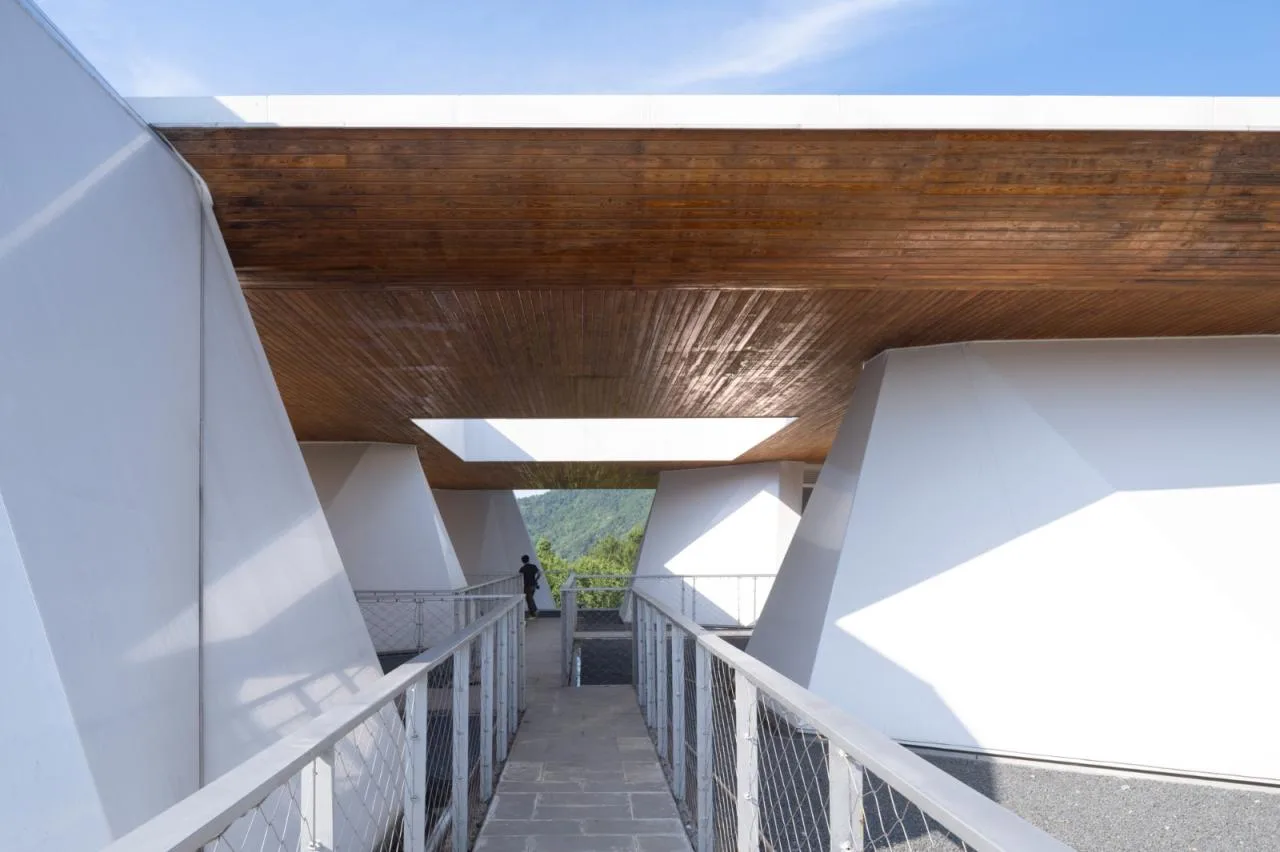
The second floor is interconnected by a boardwalk that functions both as a passageway and a multi-directional viewing platform. This creates a vibrant, three-dimensional social space, offering a distinct walking experience from the first floor by weaving among scattered white structures and beneath tiled roofs — like strolling through the clouds.
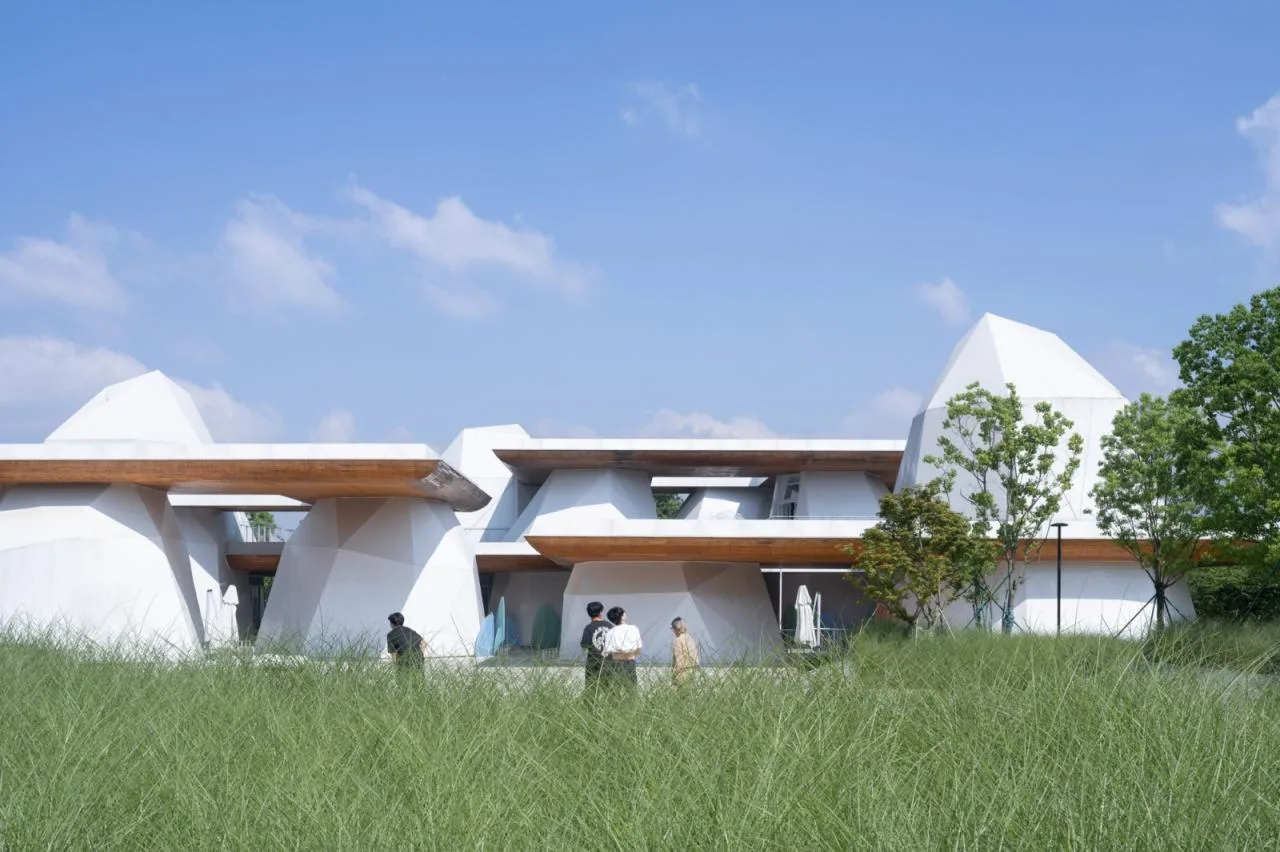
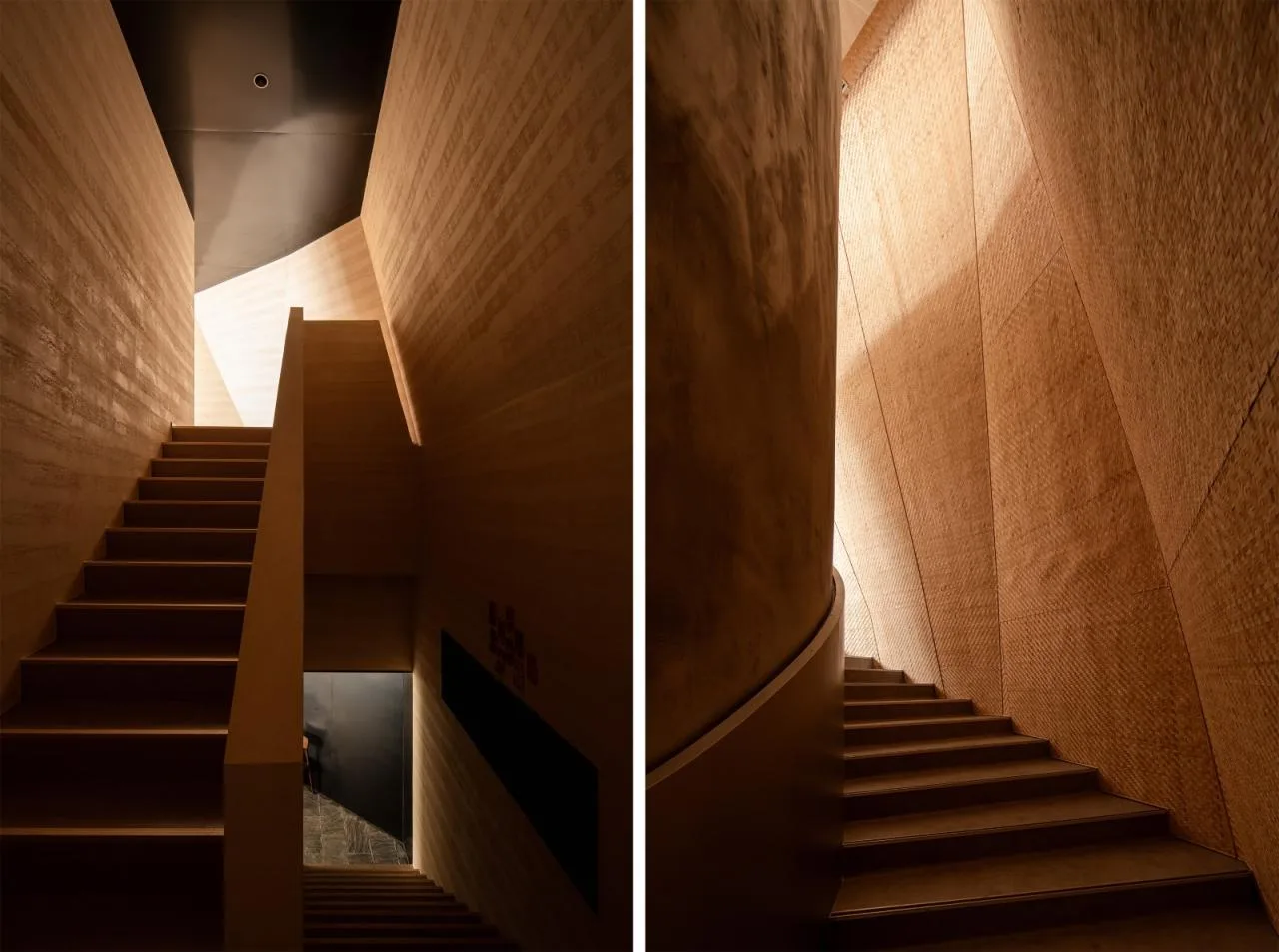
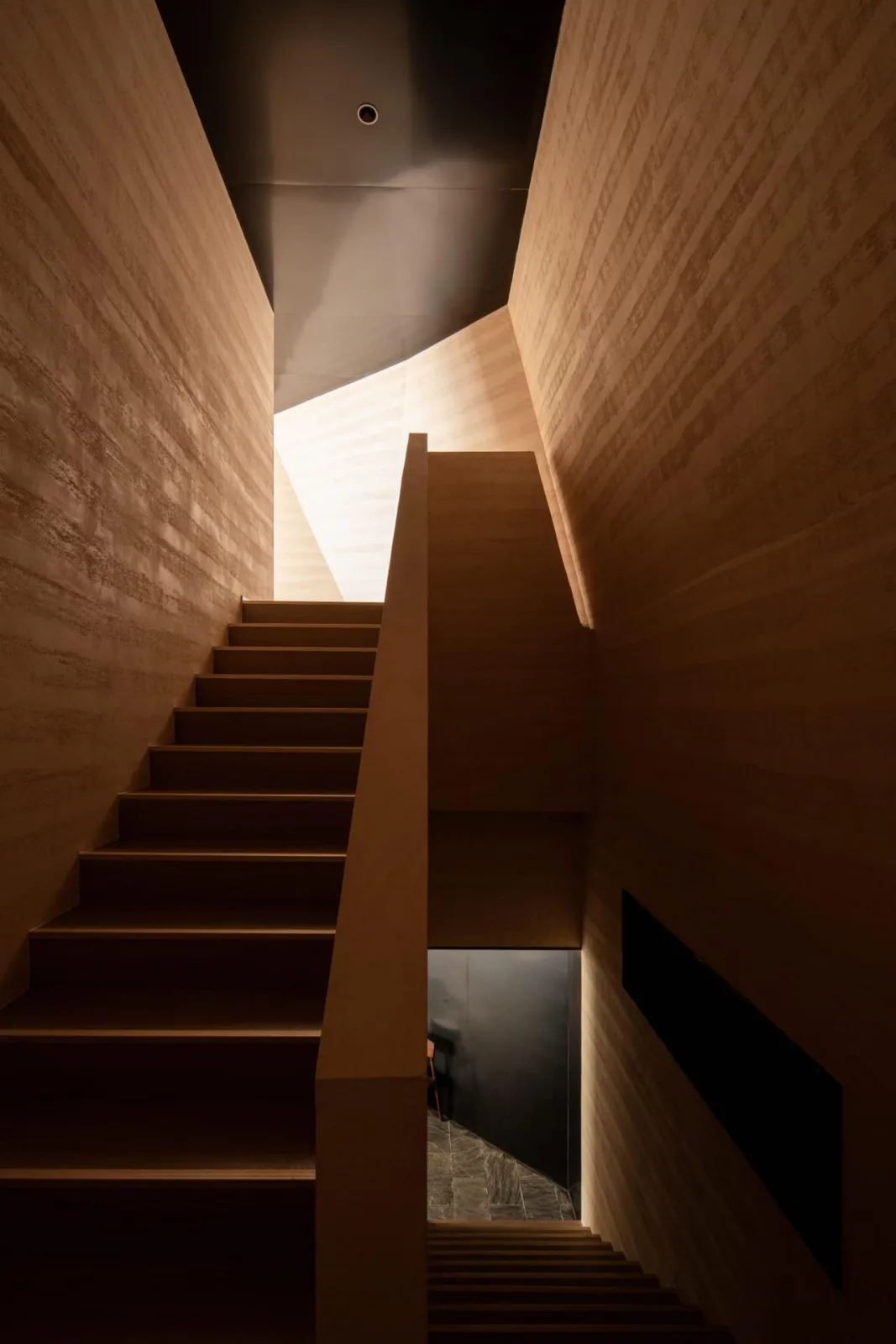
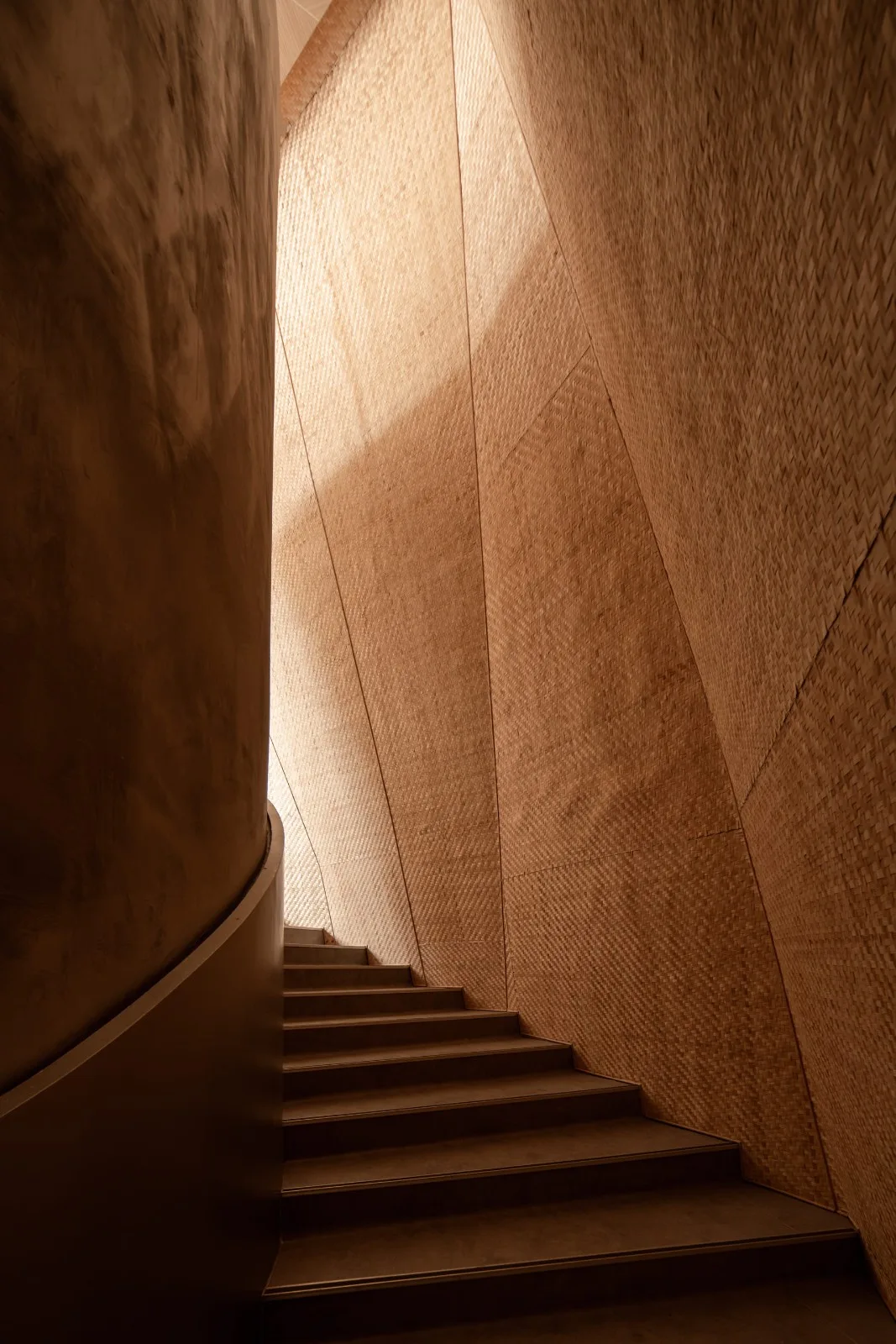
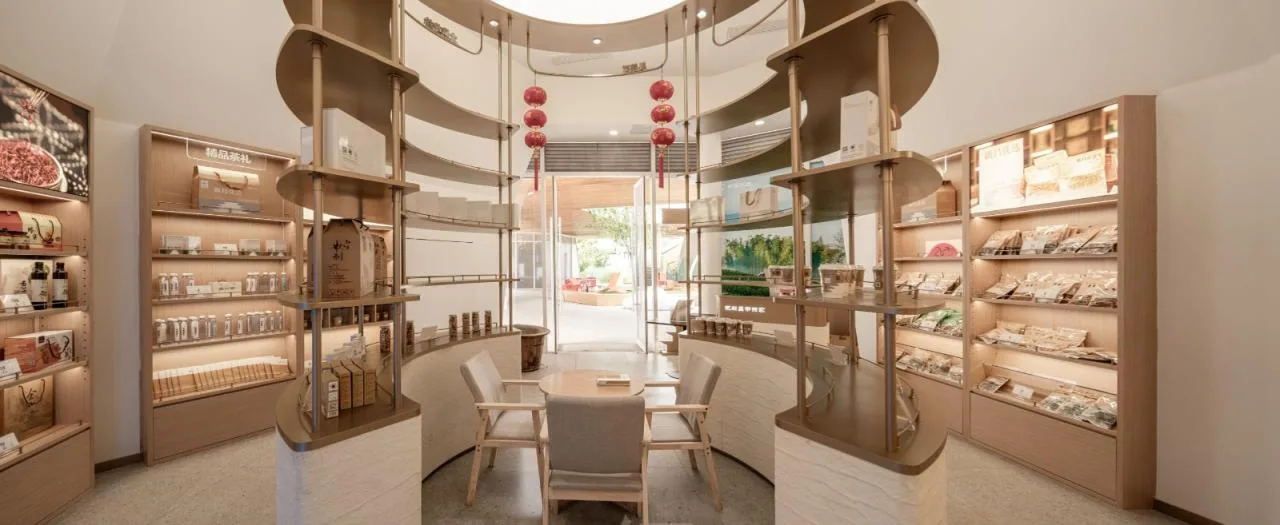
The Yunfeng units currently host public service facilities including tourist service centers and rural cultural stations, alongside unique non-standard commercial spaces like the Sunset Café, creative tea shops, local specialty dining, and boutique homestays. Sharing a roof, these spaces foster community by encouraging neighborhood interaction, transforming individual commercial units into a lively, popular market.
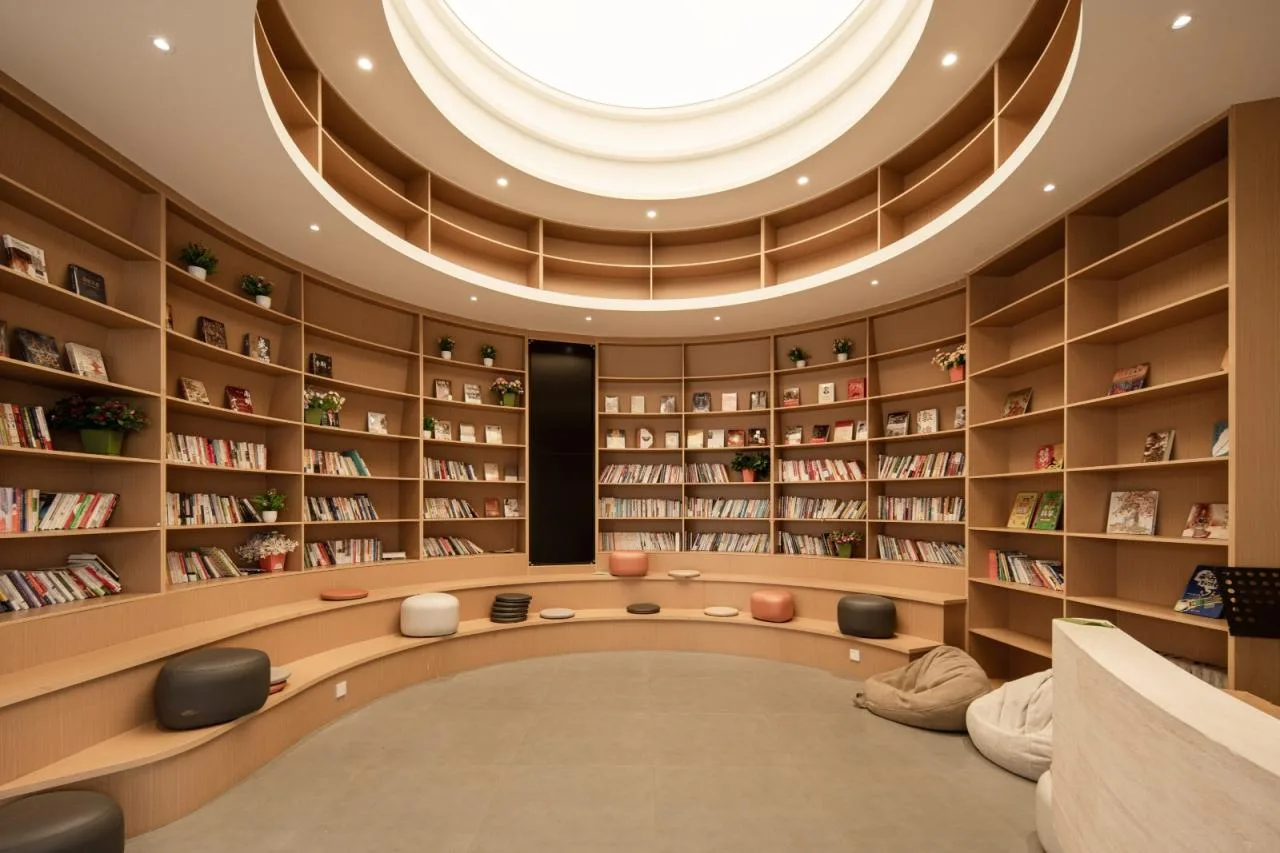
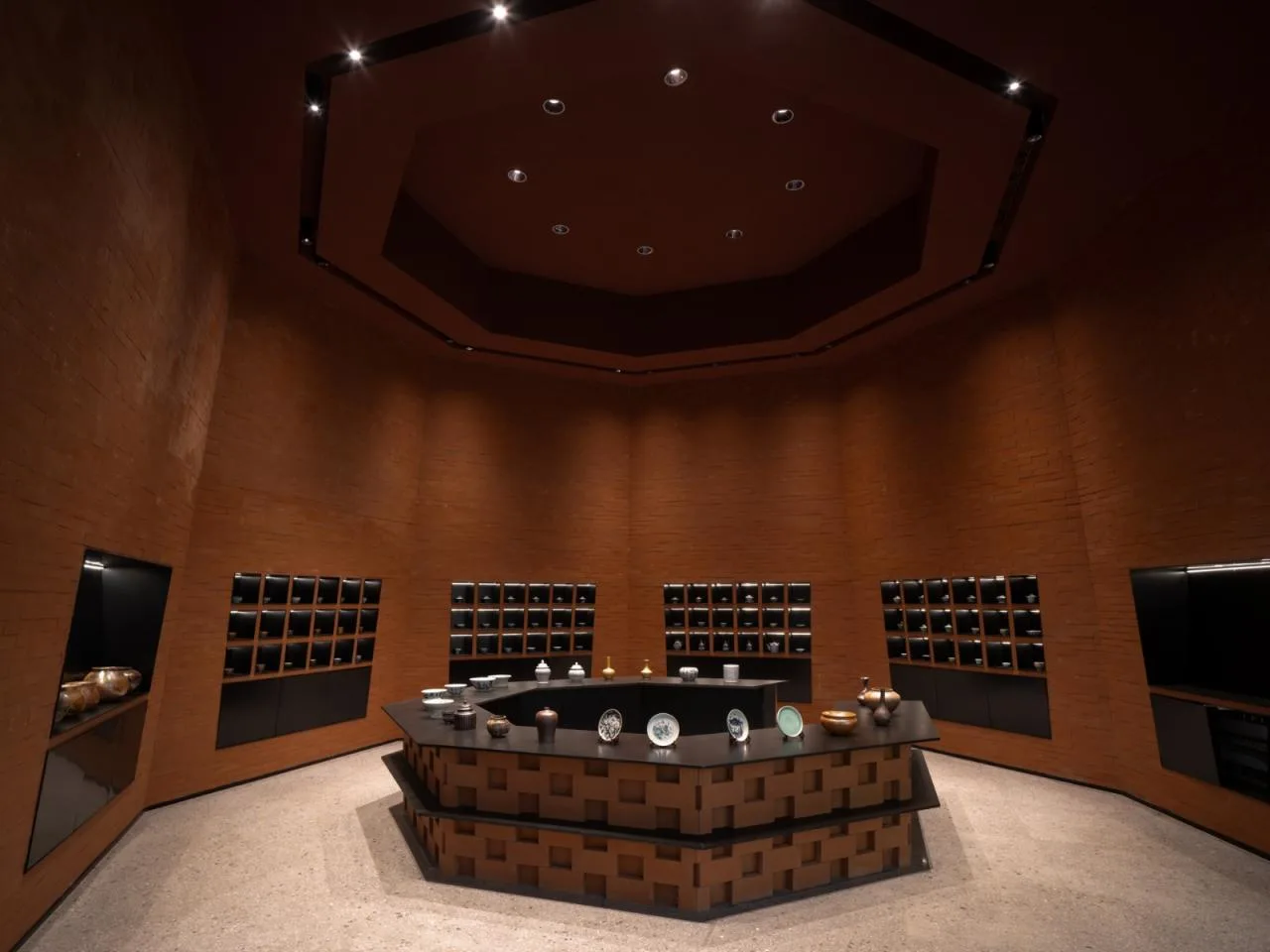
03. Varied Forms and Industrial Construction
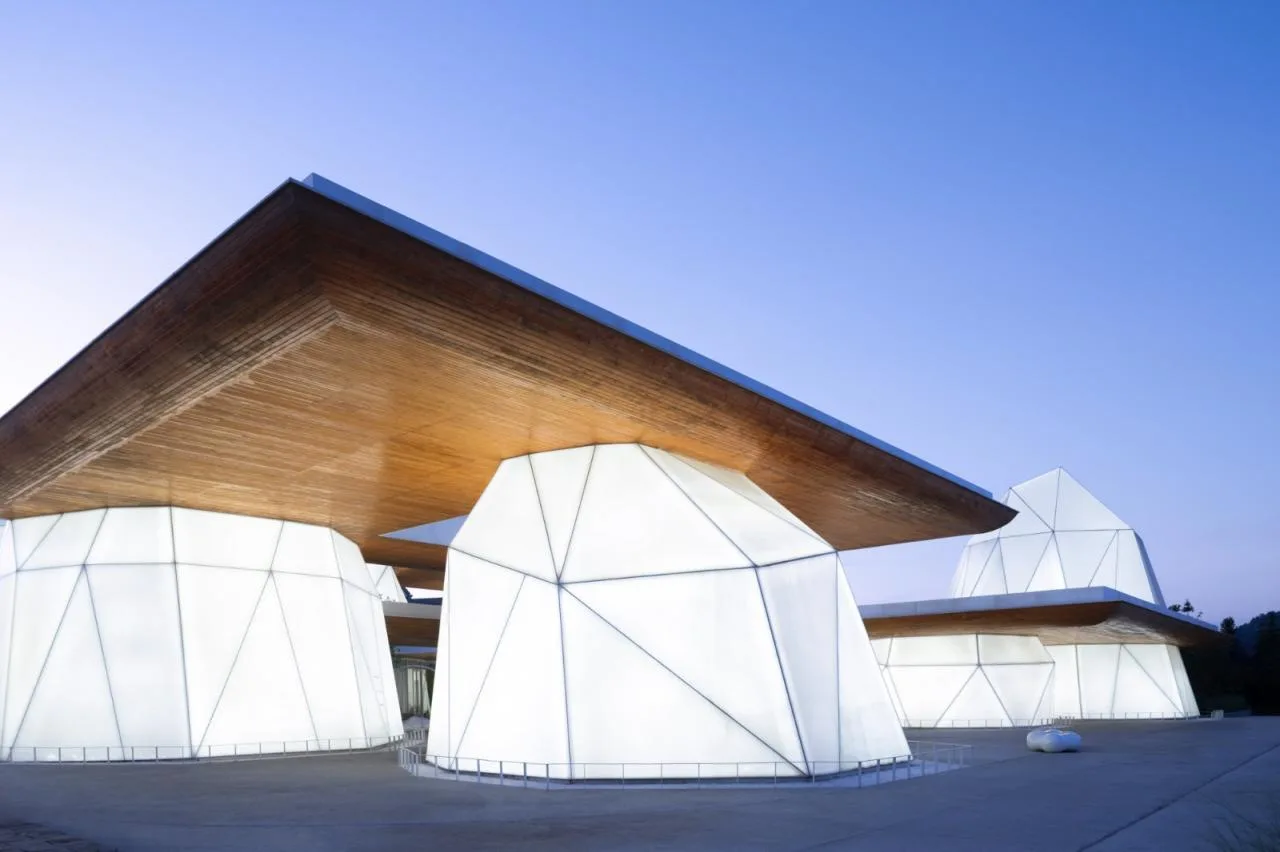
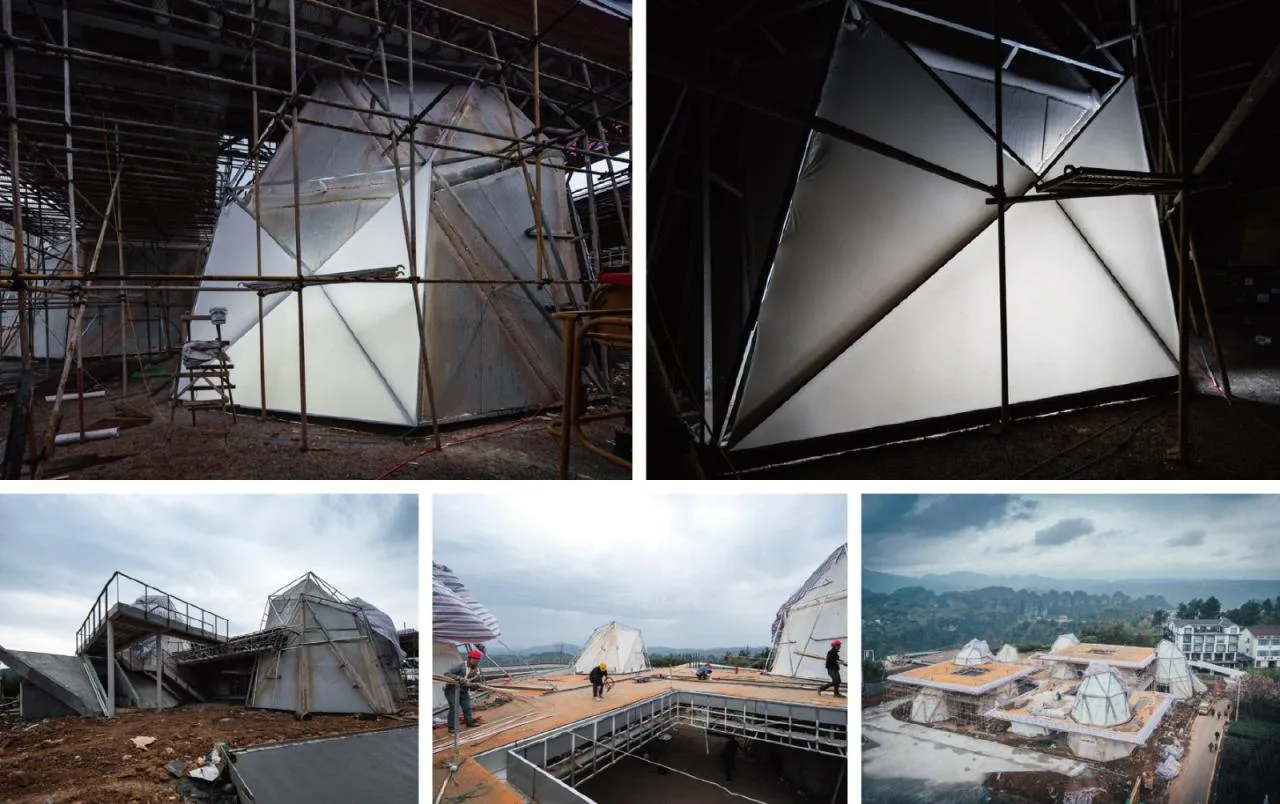
The choice of building materials considered the irregular shapes, environmental resilience, and ease of construction. Yunfeng’s distinctive forms use a steel framework clad with translucent PTFE fabric, which presents a soft, semi-frosted texture under natural light. Inside the fabric, evenly spaced LED strips create a semi-transparent, glowing effect at night, turning the building into a luminous landmark that animates the once quiet countryside.
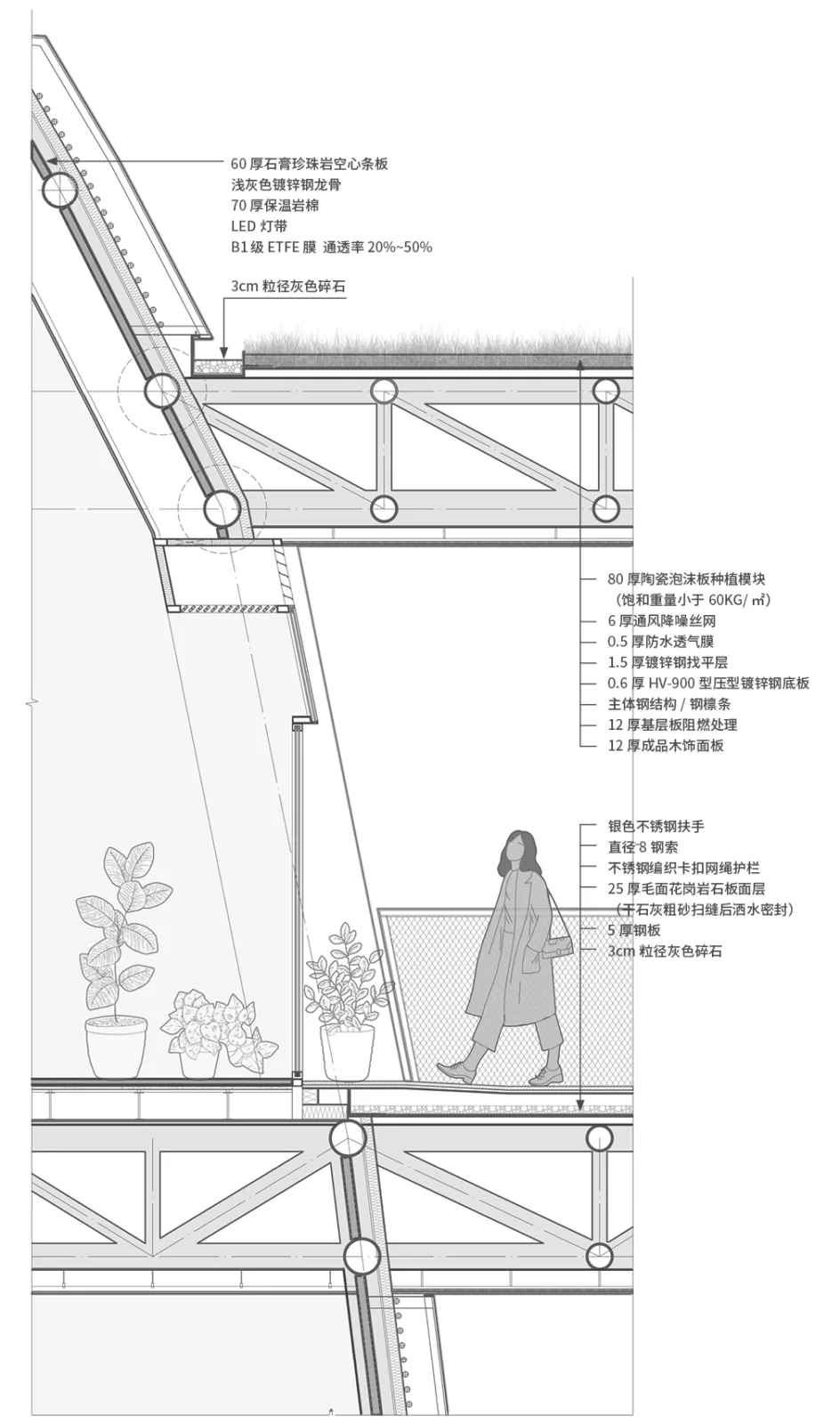
△ Wall section
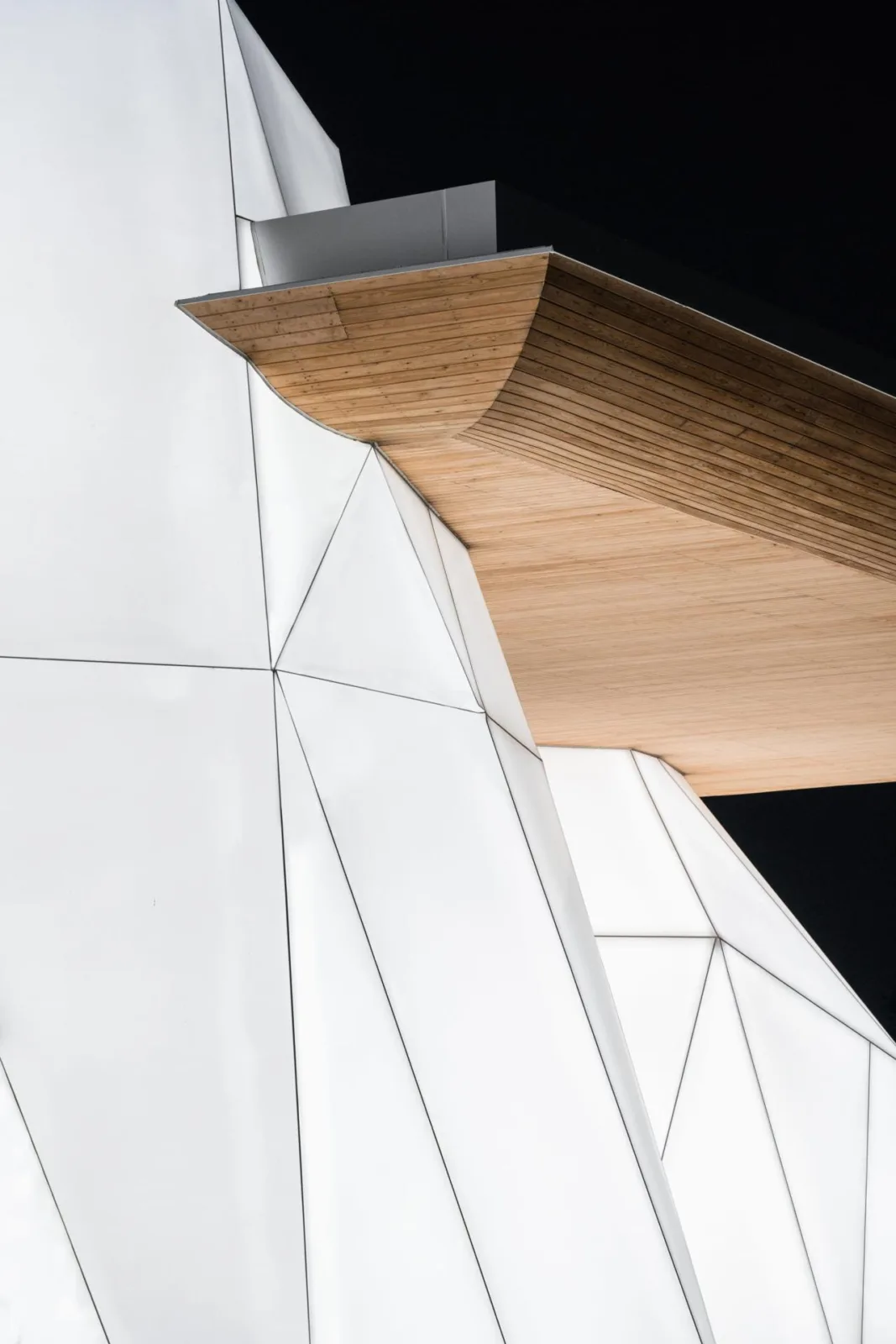
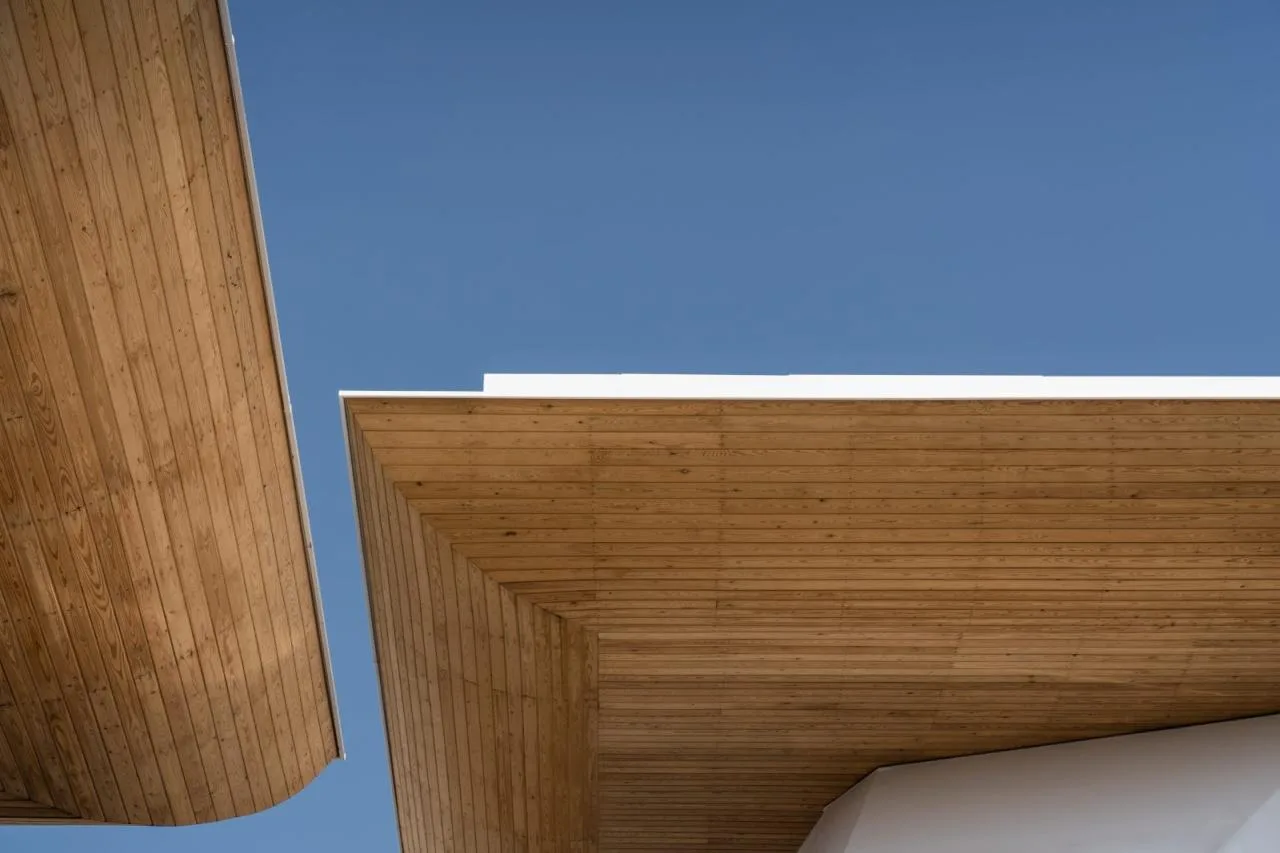
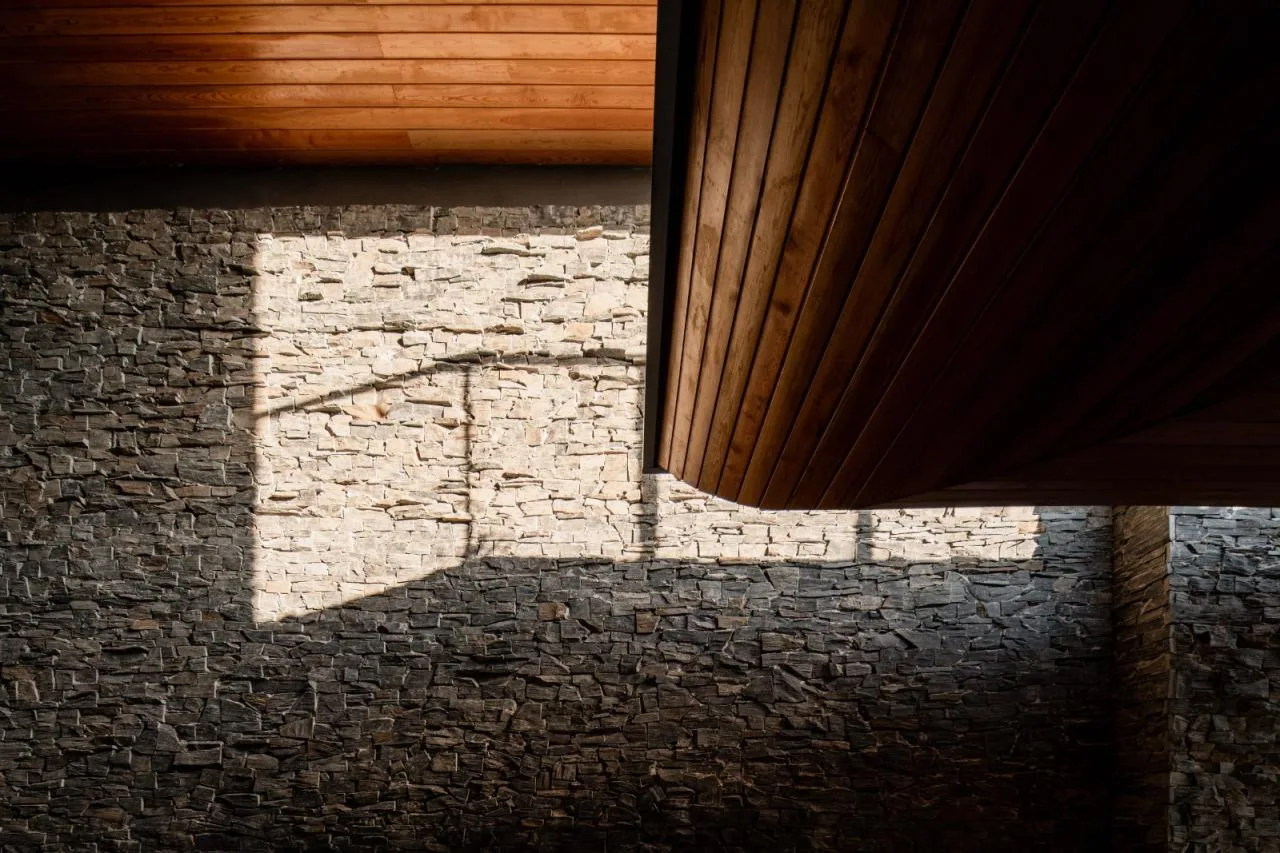
The underside of the large roof features natural wood-colored, carbonized, anti-corrosion pine boards, adding warmth and a simple, tactile feel at a human scale. The roof’s upper layer consists of metal roofing, with gravel-protected access areas and non-access grass roofs using modular foam planting units. This design reduces roof thickness and load while creating a visually appealing meadow-like effect.
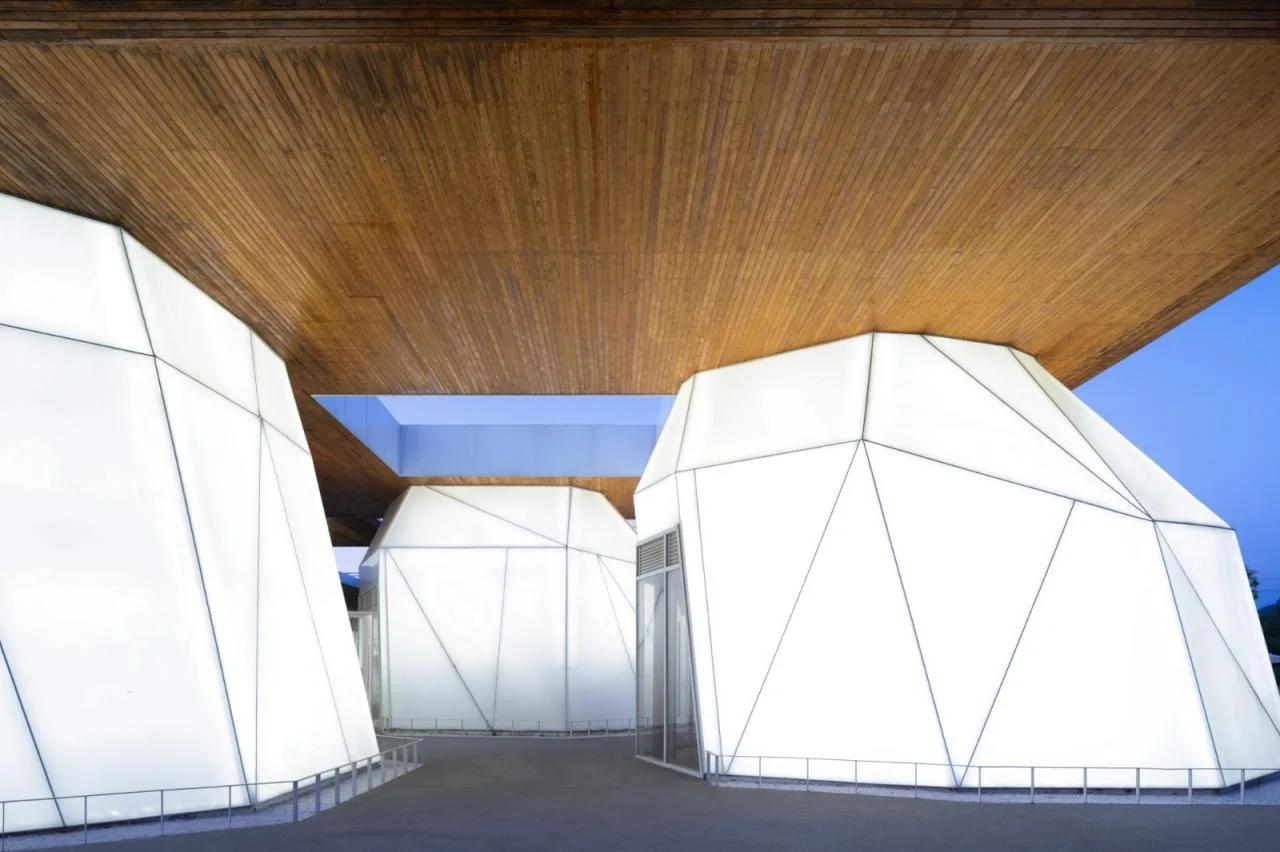
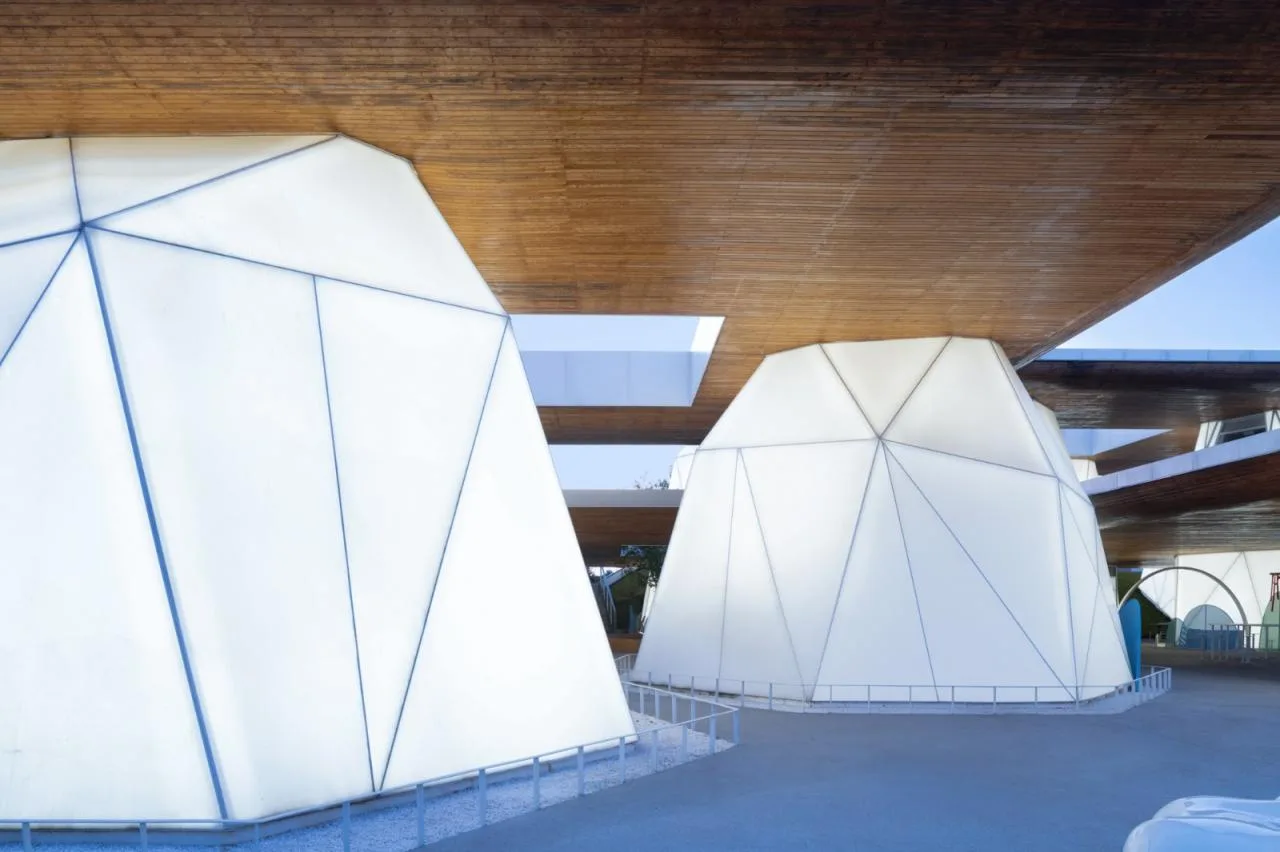
All major steel frame components were prefabricated off-site, minimizing on-site construction time and reducing disturbance to villagers and the environment. After rigorous testing for weather resistance, light transmission, and fire safety, PTFE membrane was chosen for the exterior cladding. Its lightweight texture and ease of transport allowed quick on-site installation after factory-cut shaping.
04. Embedded Landscape and Holistic Design
After opening the tea factory’s previously closed façade, the design integrates the adjacent small hill where the viewing platform sits. Through alternating and undulating spatial design, a narrative sequence unfolds, reconnecting the path to the Yunhai Nineteen Peaks landscape and making it accessible to tourists and locals alike.
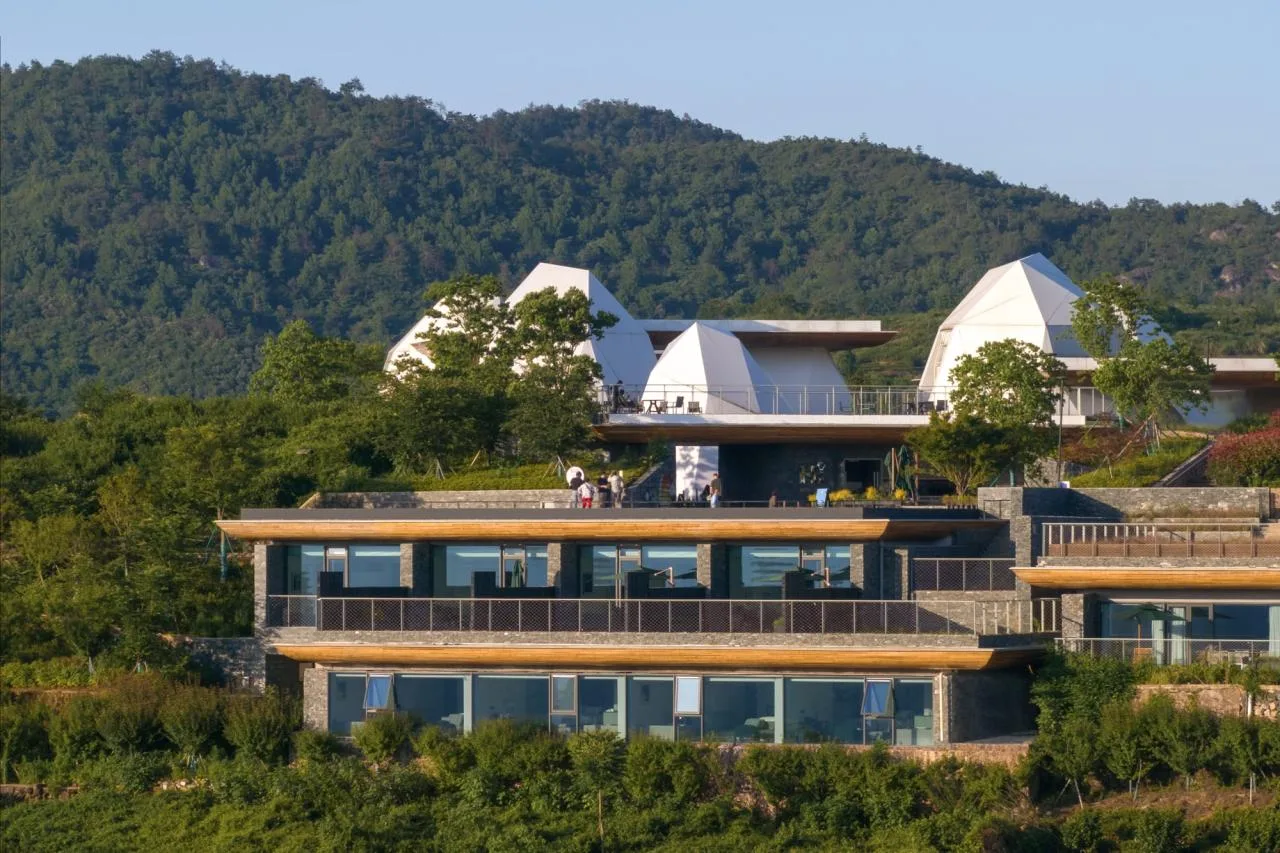
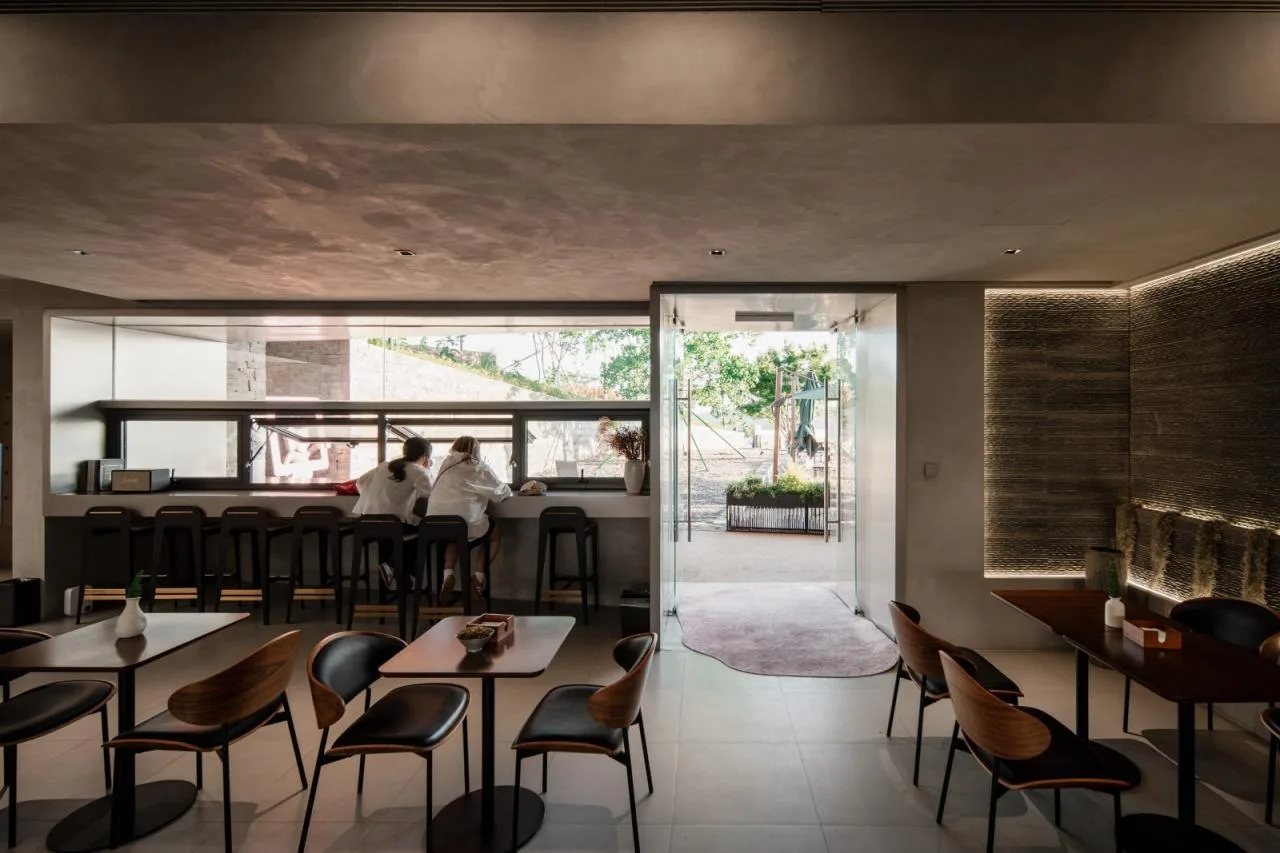
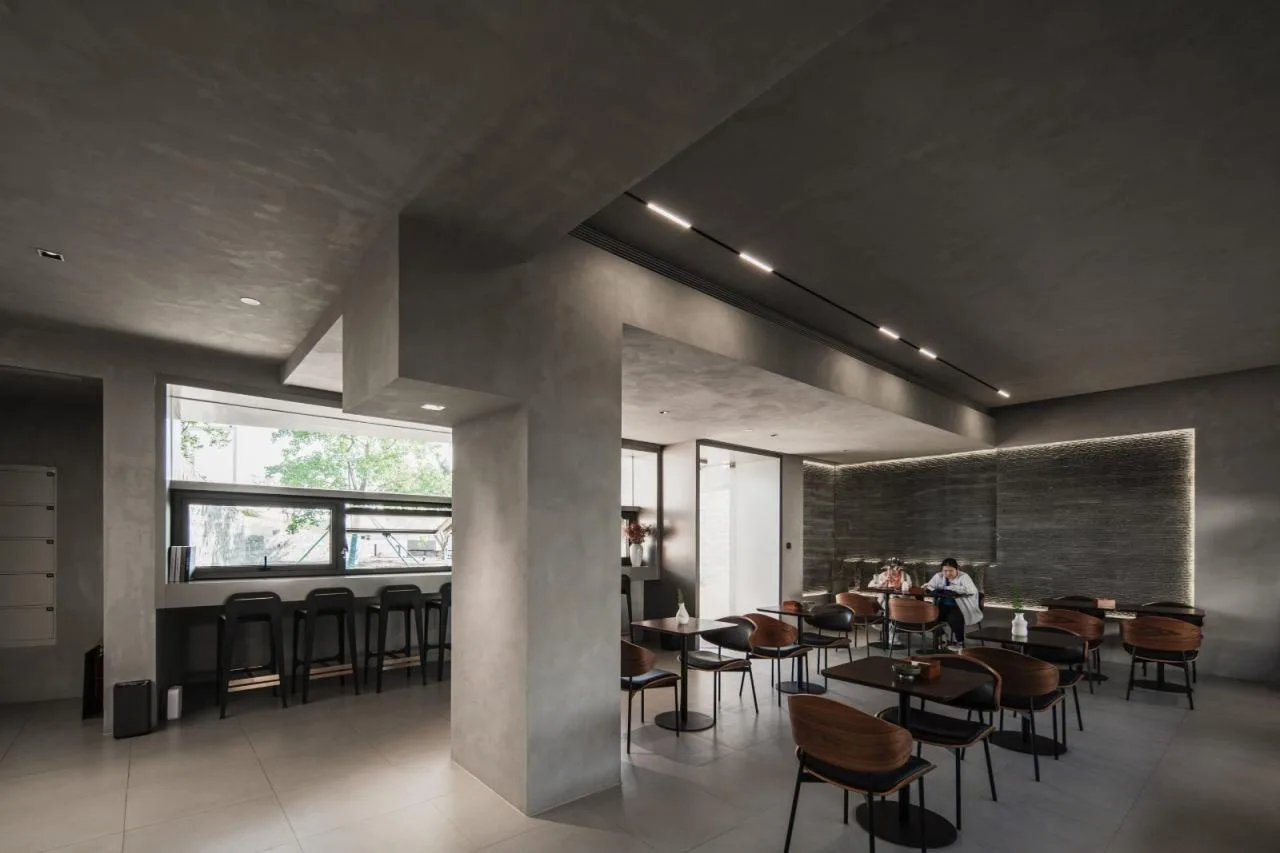
Within the rock that supports the viewing platform, a public Sunset Café and upgraded camping facilities have been embedded, enriching the cloud viewing and camping experience. The viewing platform, a must-see spot in Lower Yanbei, continues the “Yunfeng” design language. Its lightweight, cloud-like shape nestles among the twelve “Yunfeng” peaks, blending with the rocks and tea slopes to create a harmonious, layered cloudscape.
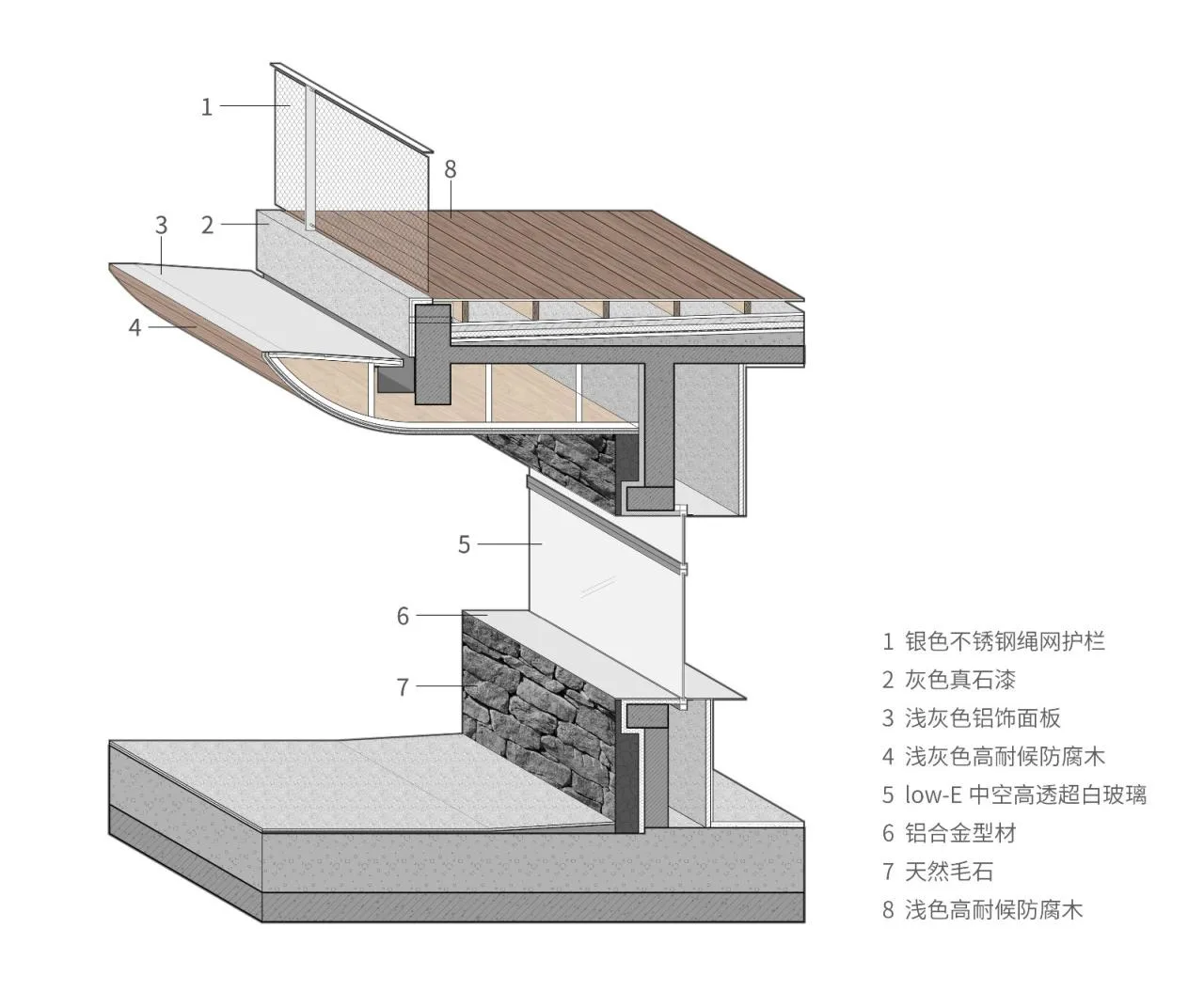
△ Sunset Café Wall
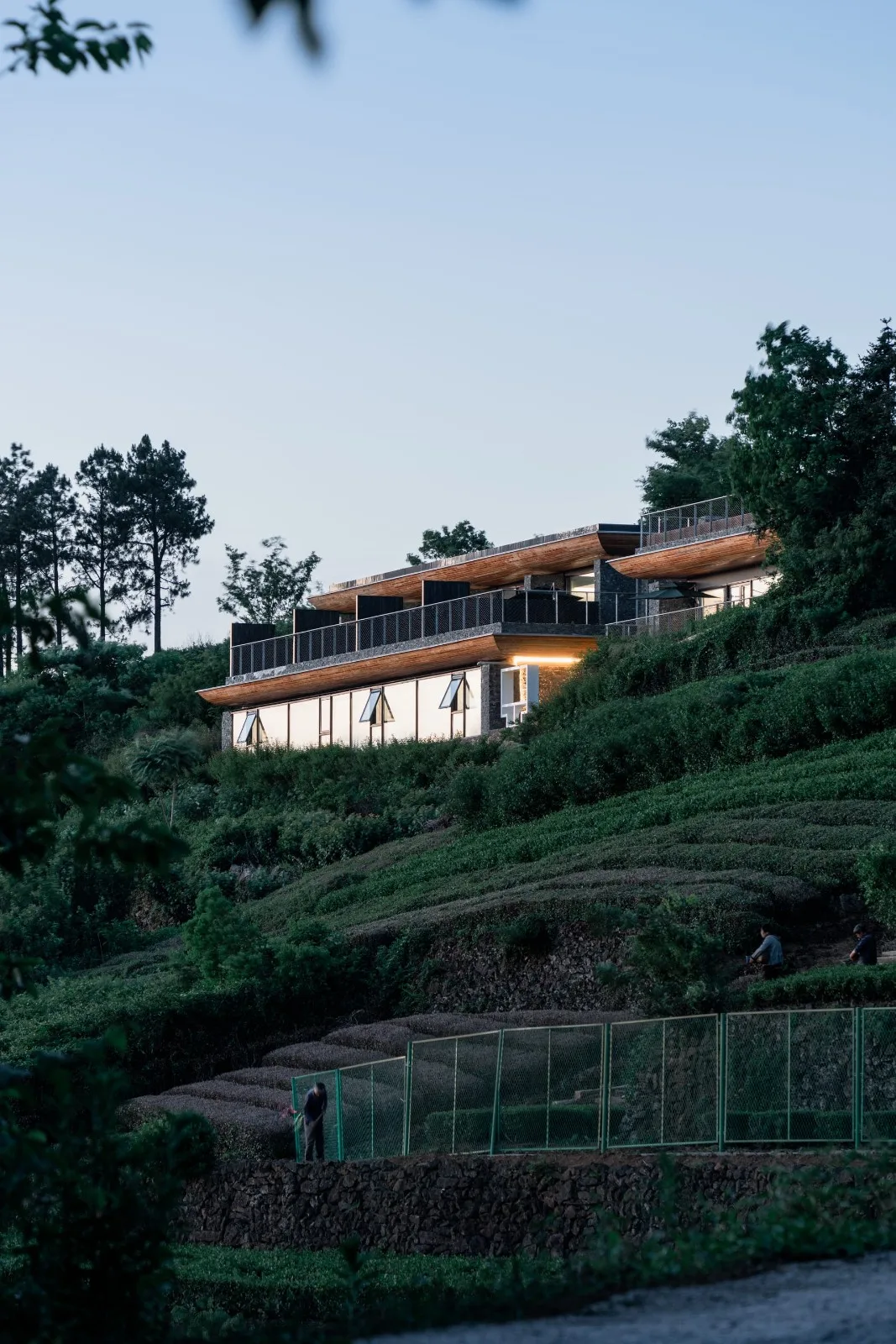
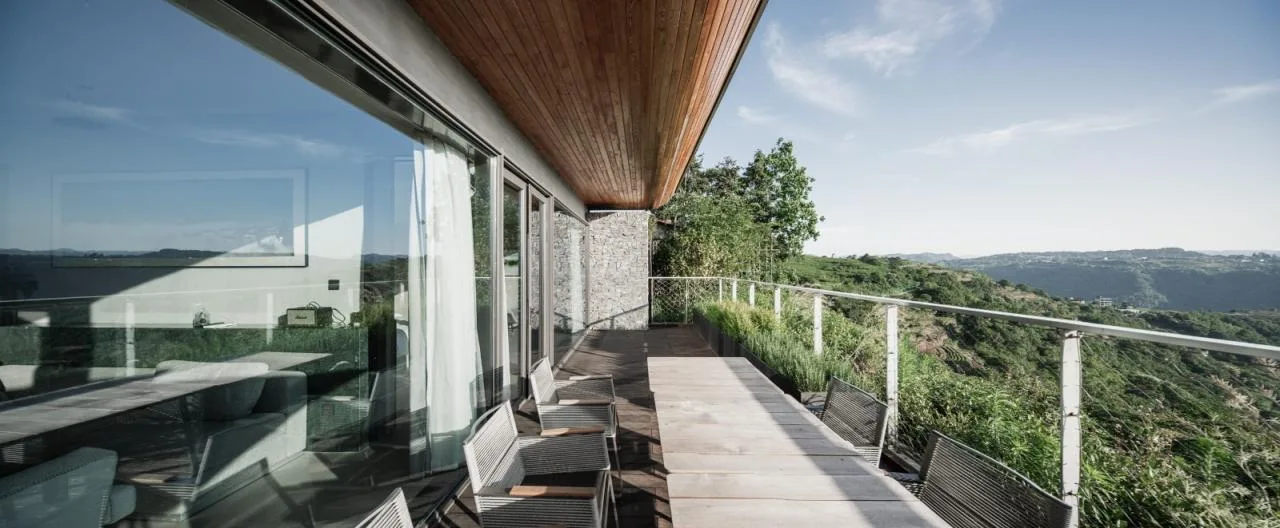
The lower observation deck extends outward, creating a new sheet-like platform that forms an additional building volume. The homestay building contrasts with Yunfeng by using local natural rubble and dark burnt fir boards, seamlessly blending into the mountain landscape.
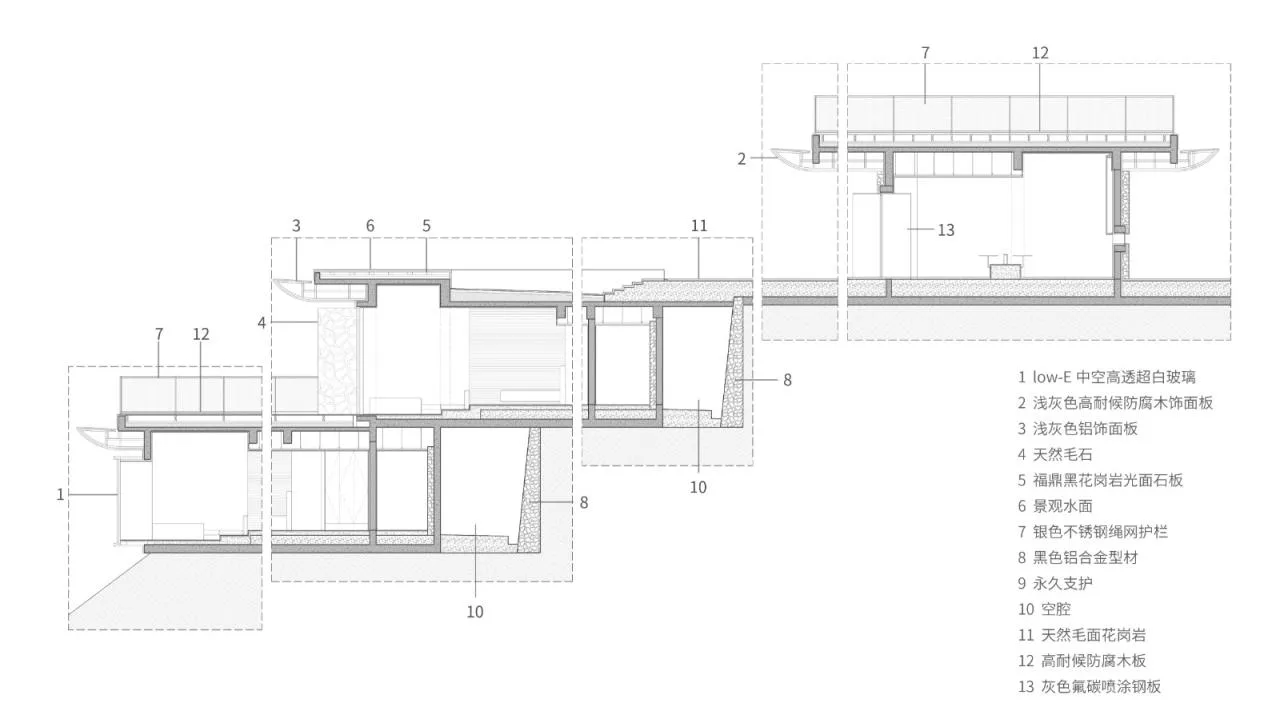
△ Cliff Homestay Profile
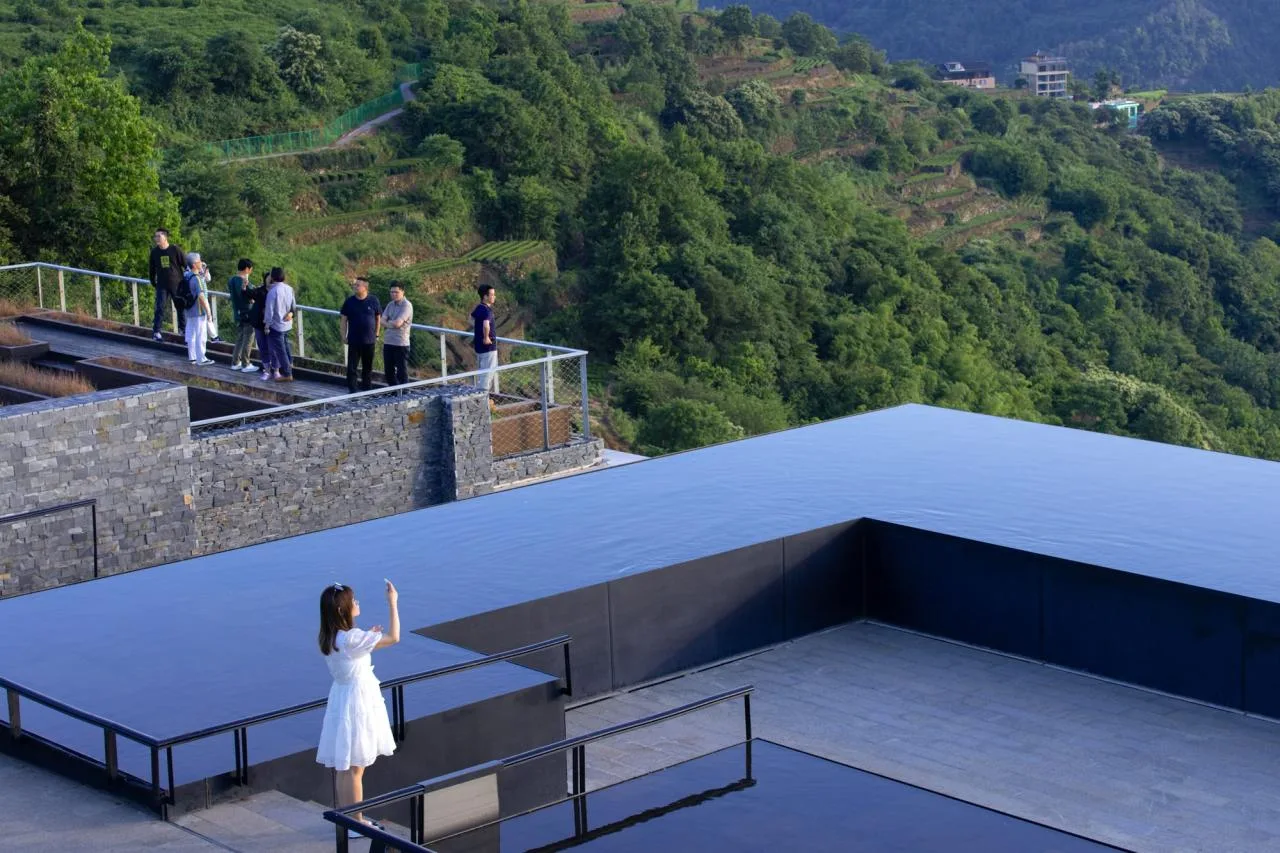
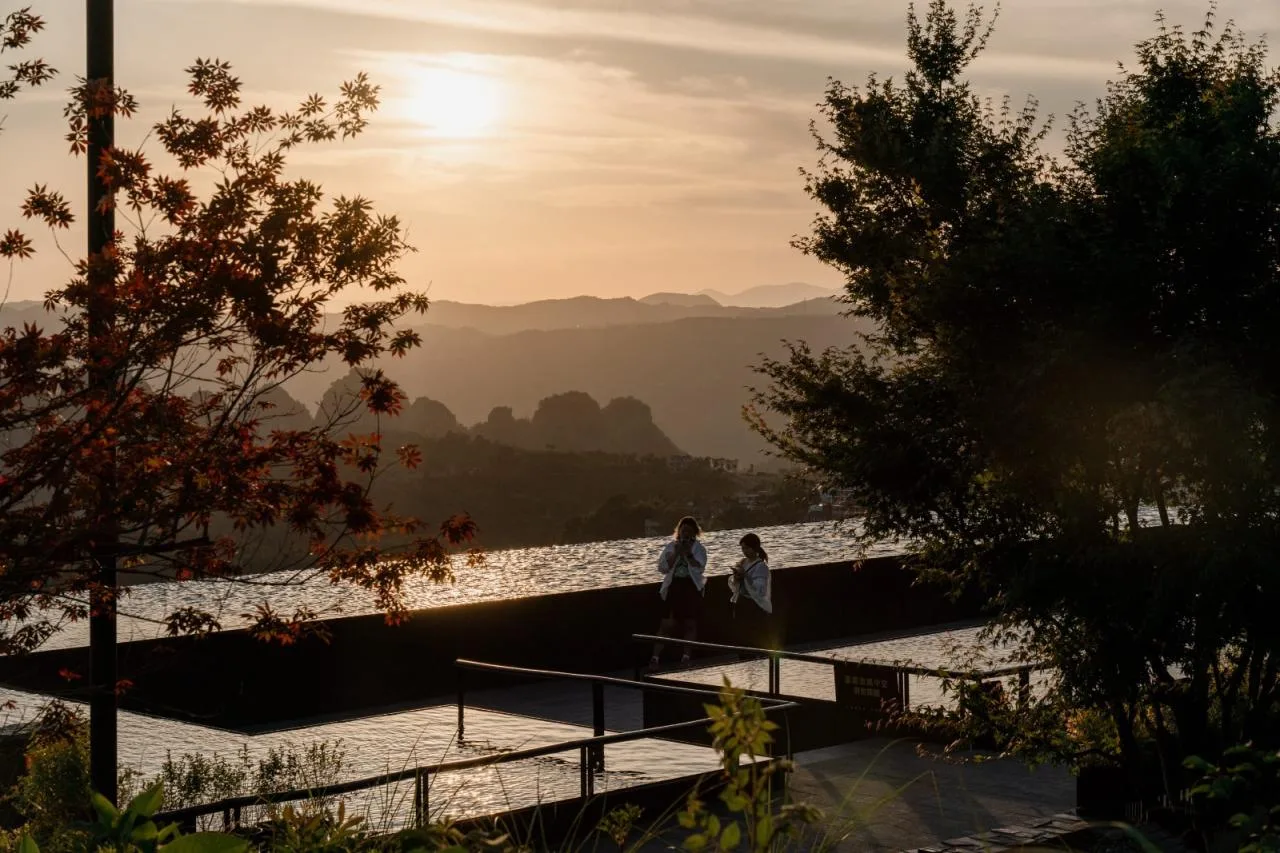
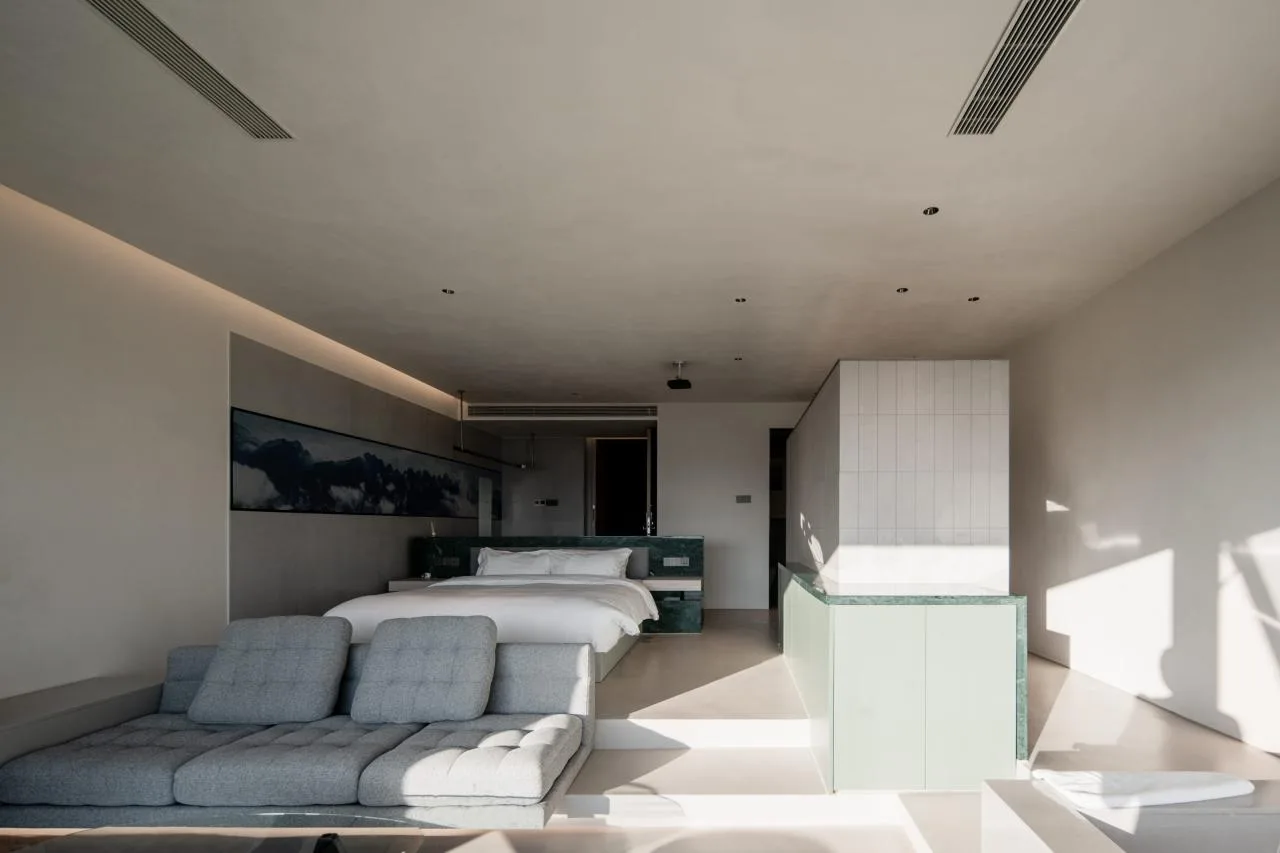
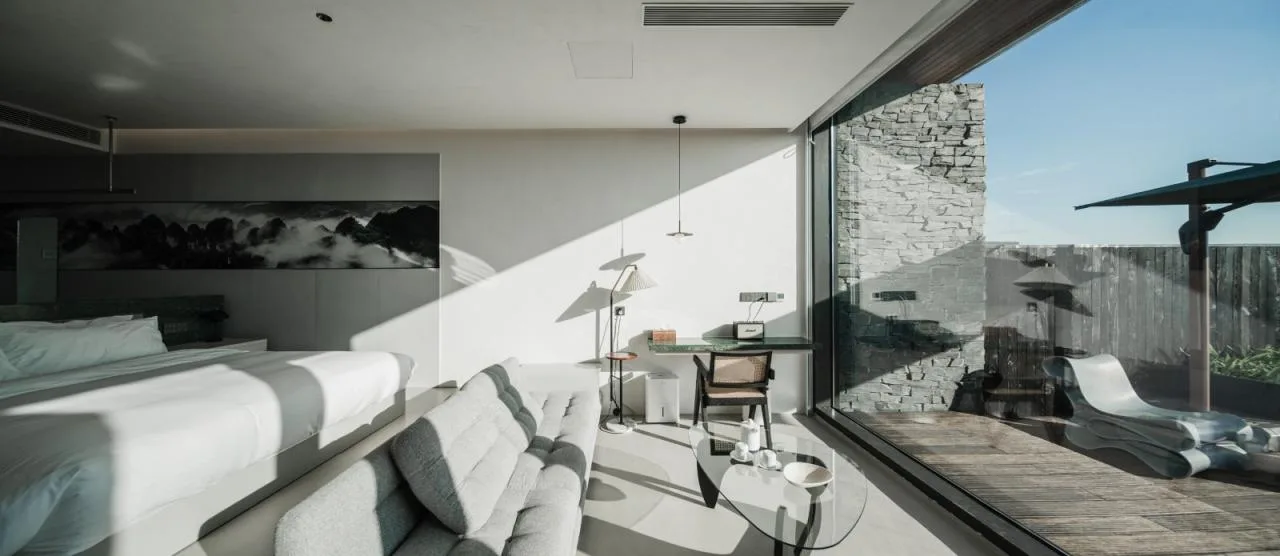
All guest rooms face the cliffs and sea of clouds, offering breathtaking views. The layered, sheet-like roofs continue the material language of Yunfeng. Their cascading form follows the slope, harmonizing with the natural tea fields on the cliff edge.
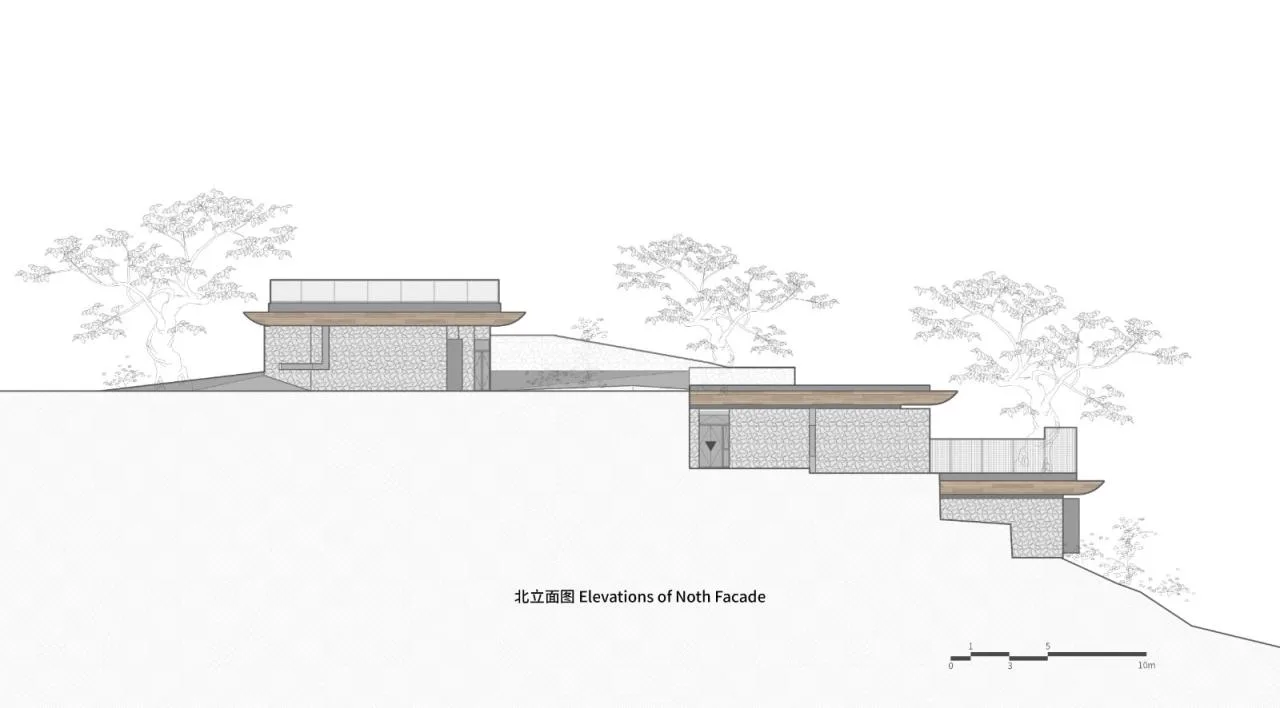
North elevation of Cliff Homestay
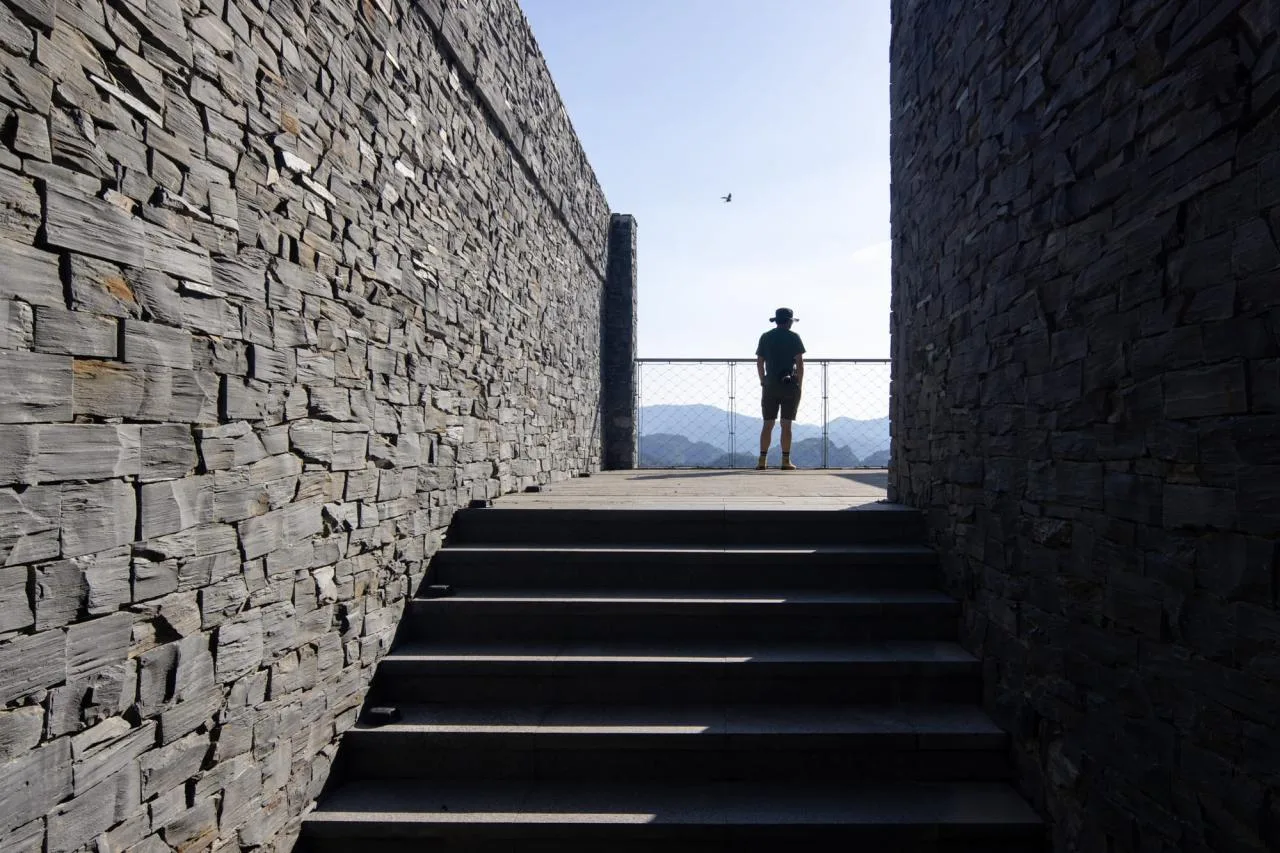
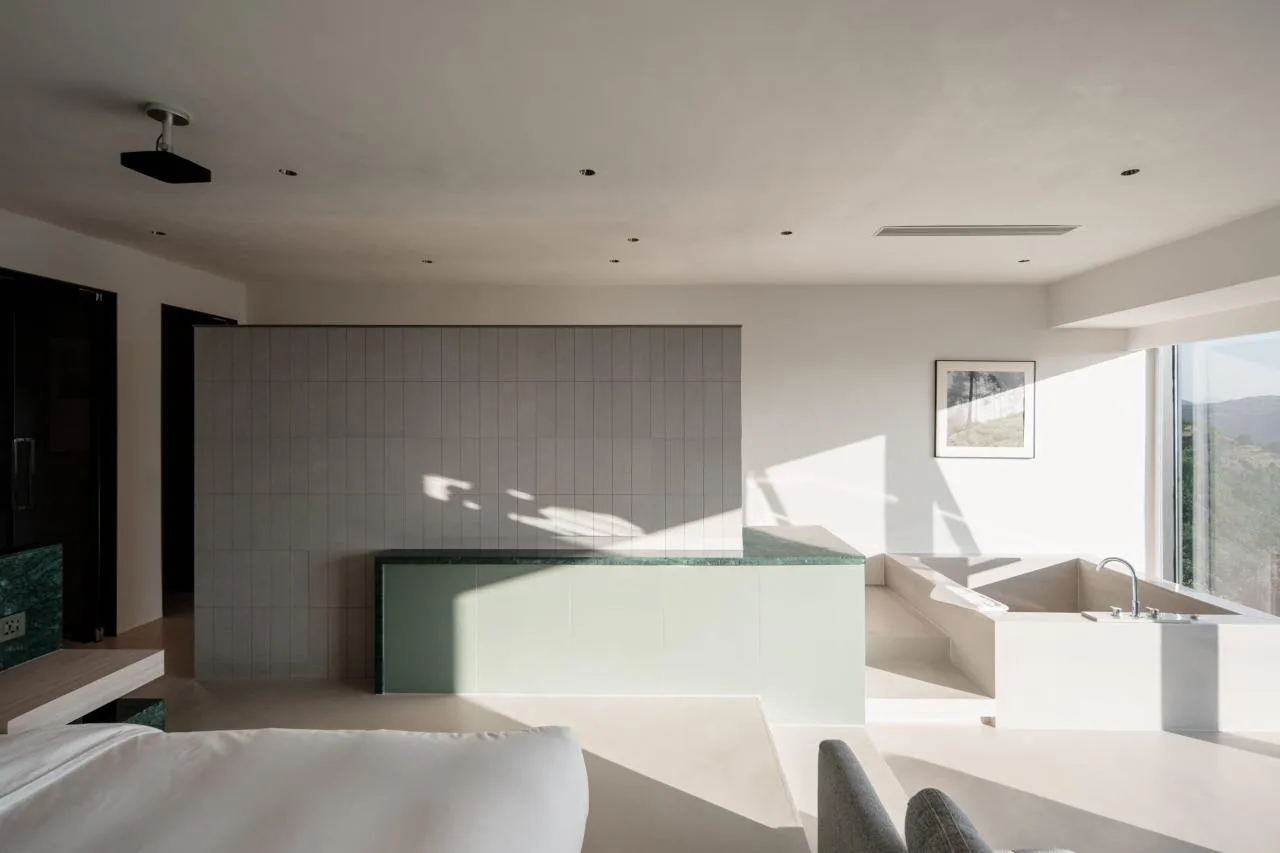
The interior design maximizes the stunning external views by drawing from the site’s “emerald green” landscape and “clouds and mist” atmosphere to inspire spatial language and material choices. A subtle, warm palette and soft furnishings cultivate a serene atmosphere that harmonizes humans with nature. As the saying goes, “Clouds travel unnoticed, trees stand quietly in the late breeze. At the end of the road, it’s time to enjoy the view.”
05. From Tea “Factory” to Gathering “Field”: Local Integration and Symbiosis
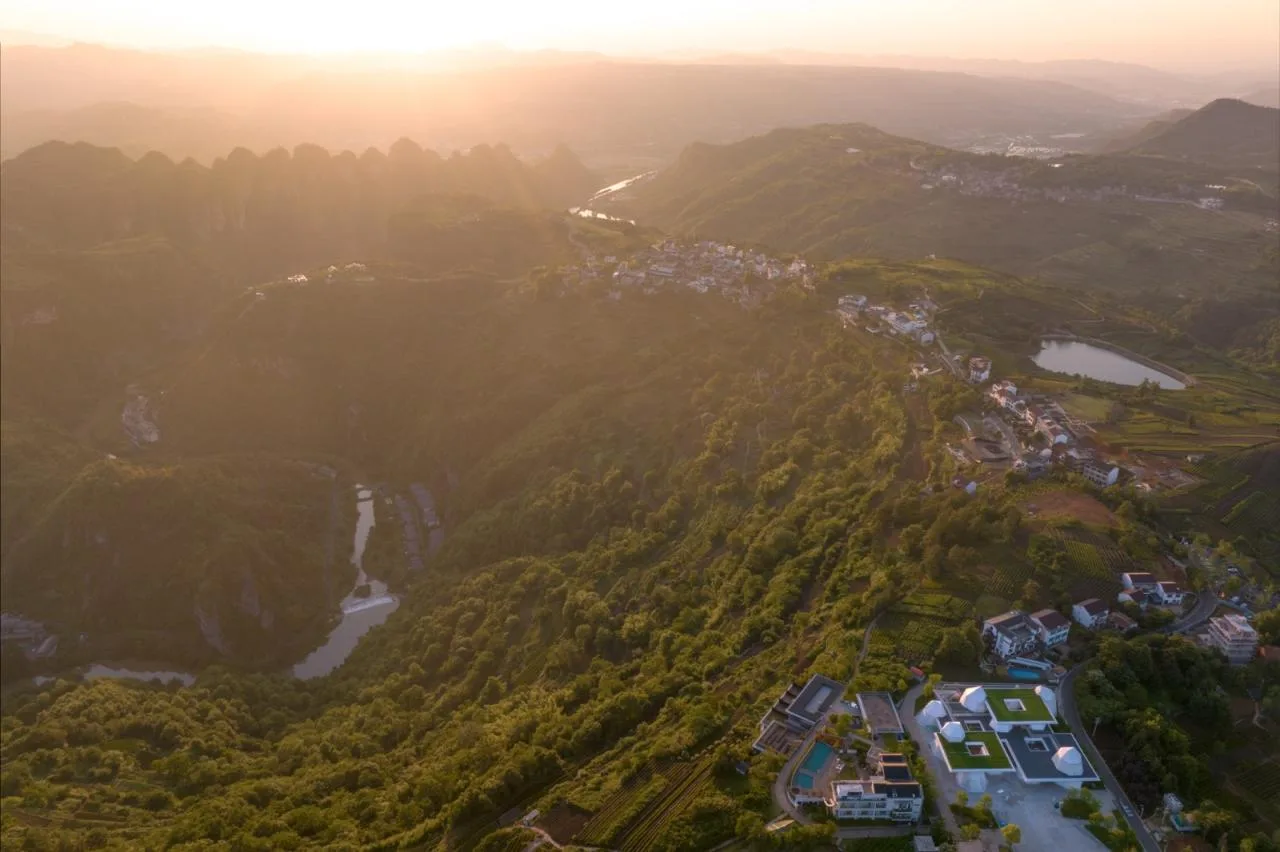
The “Yunfeng Twelve Heavens” have evolved commercially and publicly by transforming the closed tea factory into an open gathering space. This shift transformed the site from enclosed to transparent and from orderly to free-flowing, reshaping the scale, accessibility, and inclusivity of rural public spaces. It now accommodates diverse groups and fosters dynamic interactions.
The expansive viewing platform and pedestrian walkway integrate multi-level social, roaming, and unique commercial activities. This connection enriches building usage scenarios and strengthens the public character of the space.
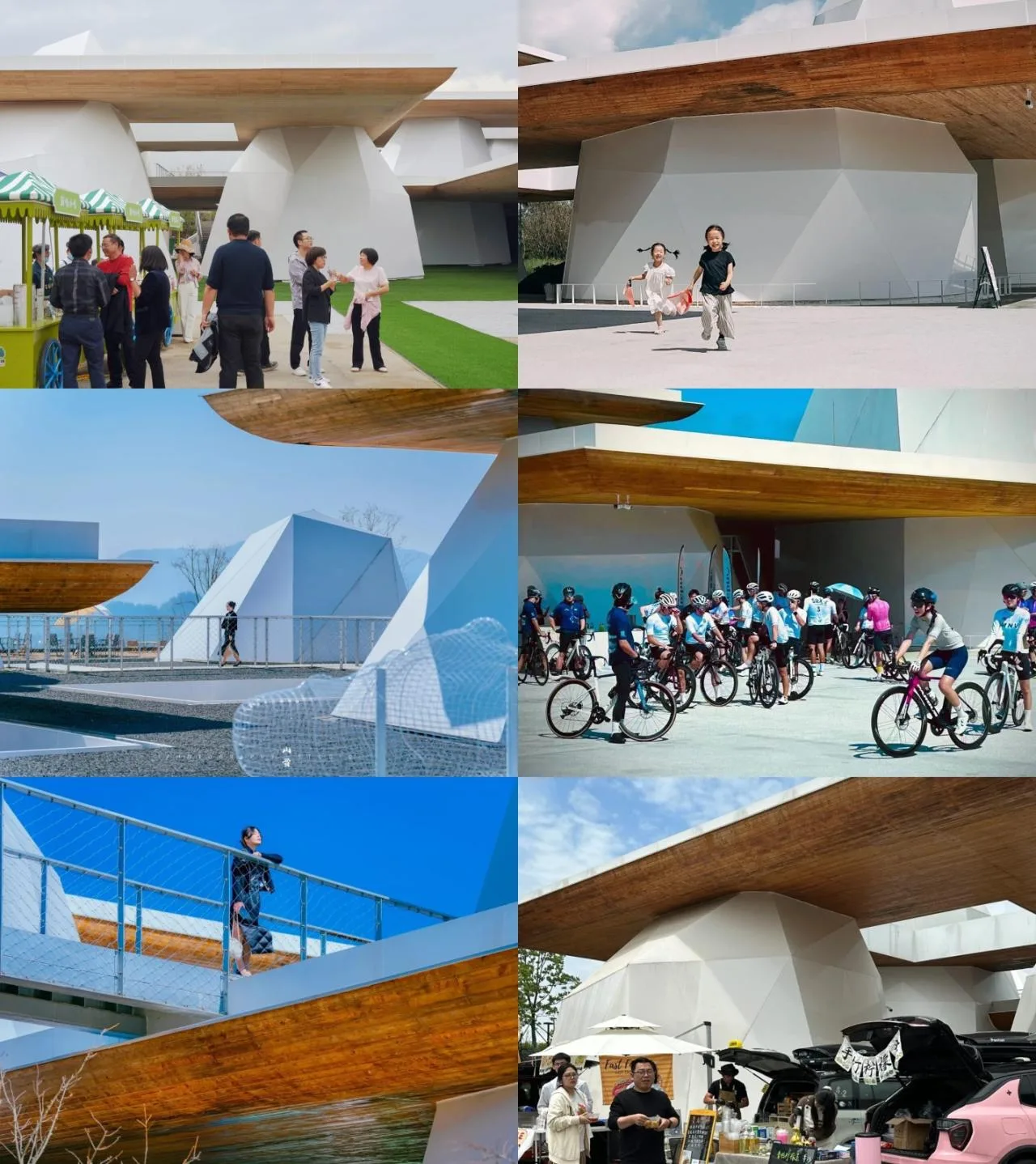
Moreover, “Yunfeng Twelve Heavens” draws new visitors through its distinctive appearance and atmosphere. Beyond its visual impact, the place crafts a memorable spatial experience—where modern diversity meets natural locality, the gentle, warm exterior blends with clouds and sunset hues. This unique environmental tension transforms into tangible feelings and lasting impressions, enriching the everyday lives of villagers and the journeys of tourists.
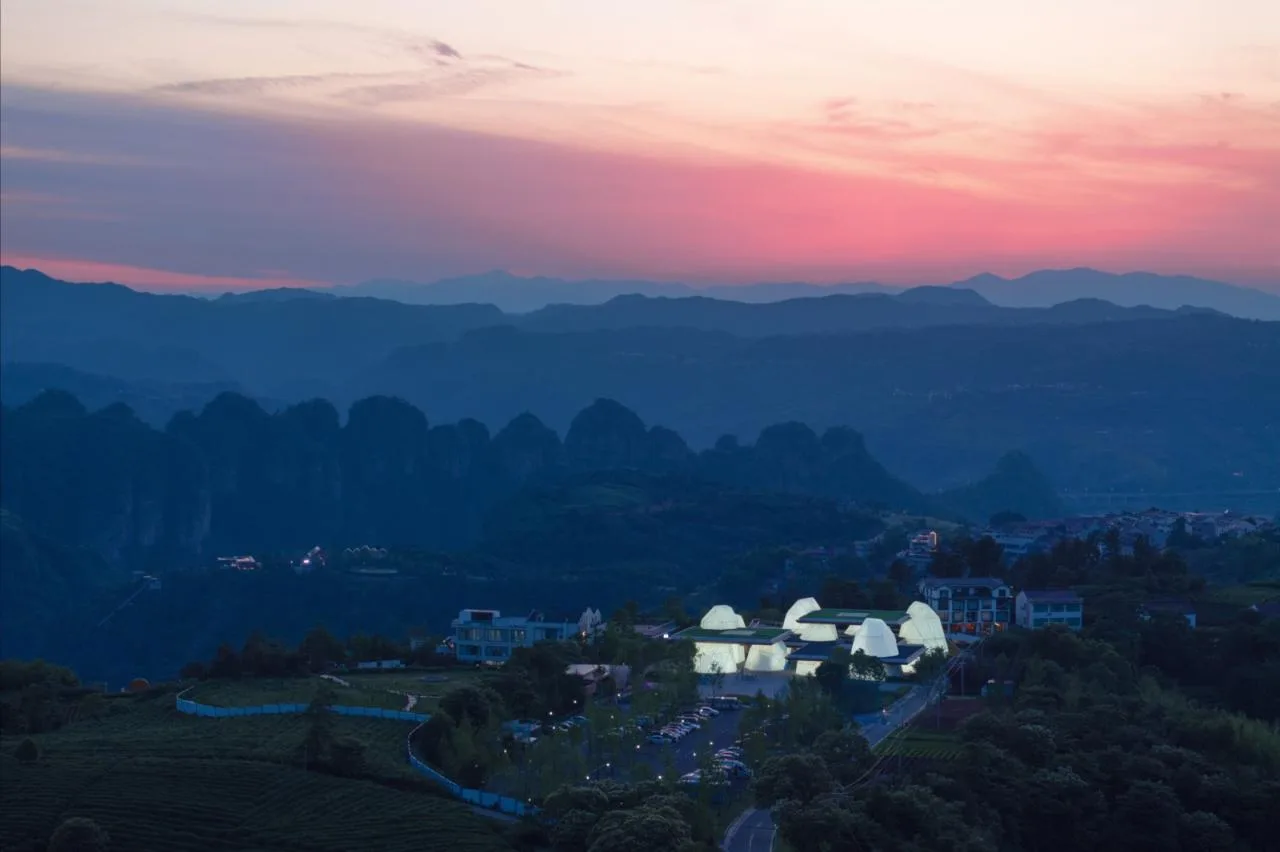
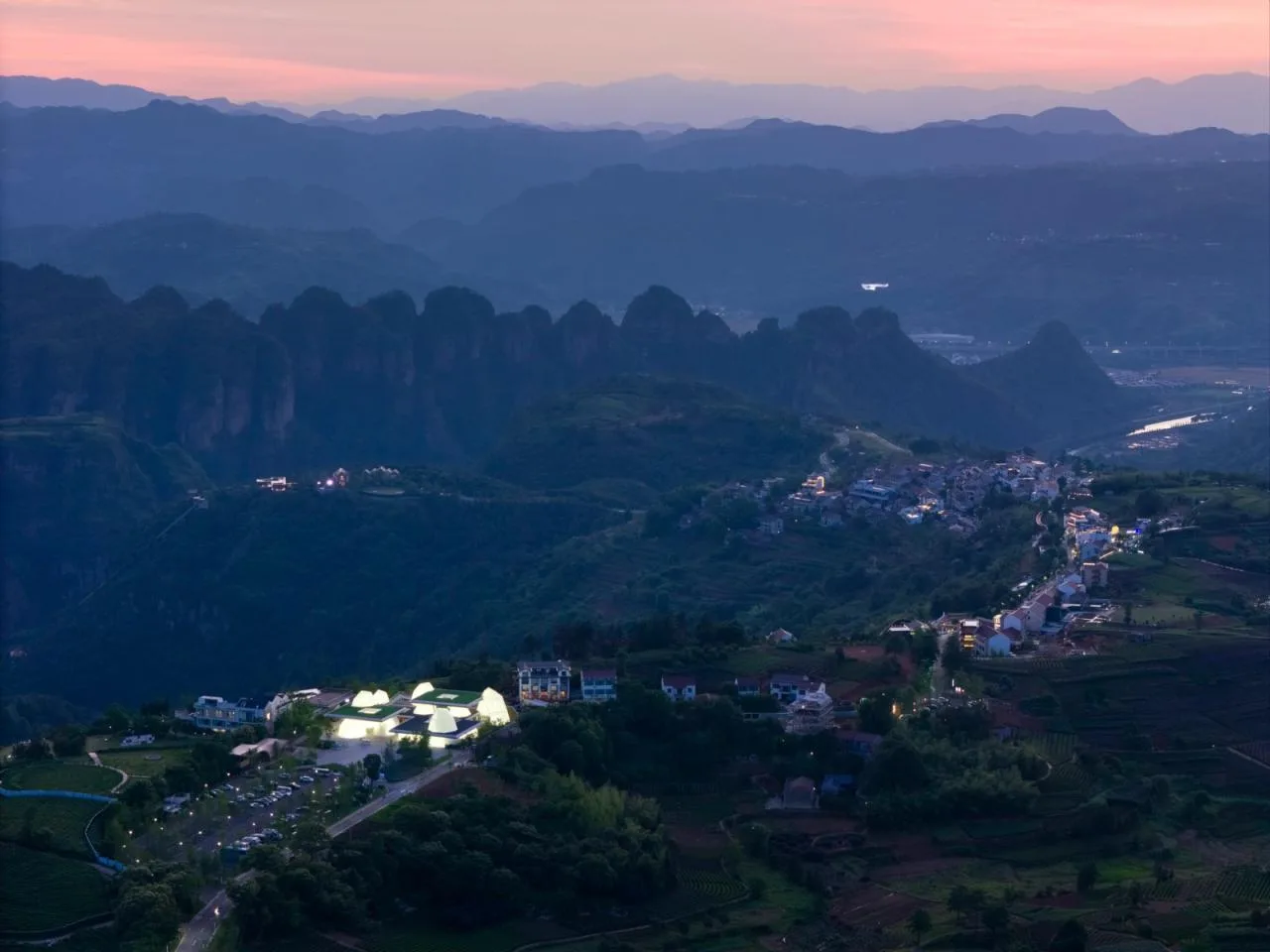
Whether serving as a backdrop for environment and activities or as a vessel for new commercial ventures, the design of “Yunfeng Twelve Heavens” fosters an innovative interaction between villagers, tourists, rural landscapes, and nature. It transcends traditional commercial spaces and tourism check-in points by responding to evolving village lifestyles, offering visitors compelling reasons to stay and villagers fresh opportunities to engage with the influx of visitors.
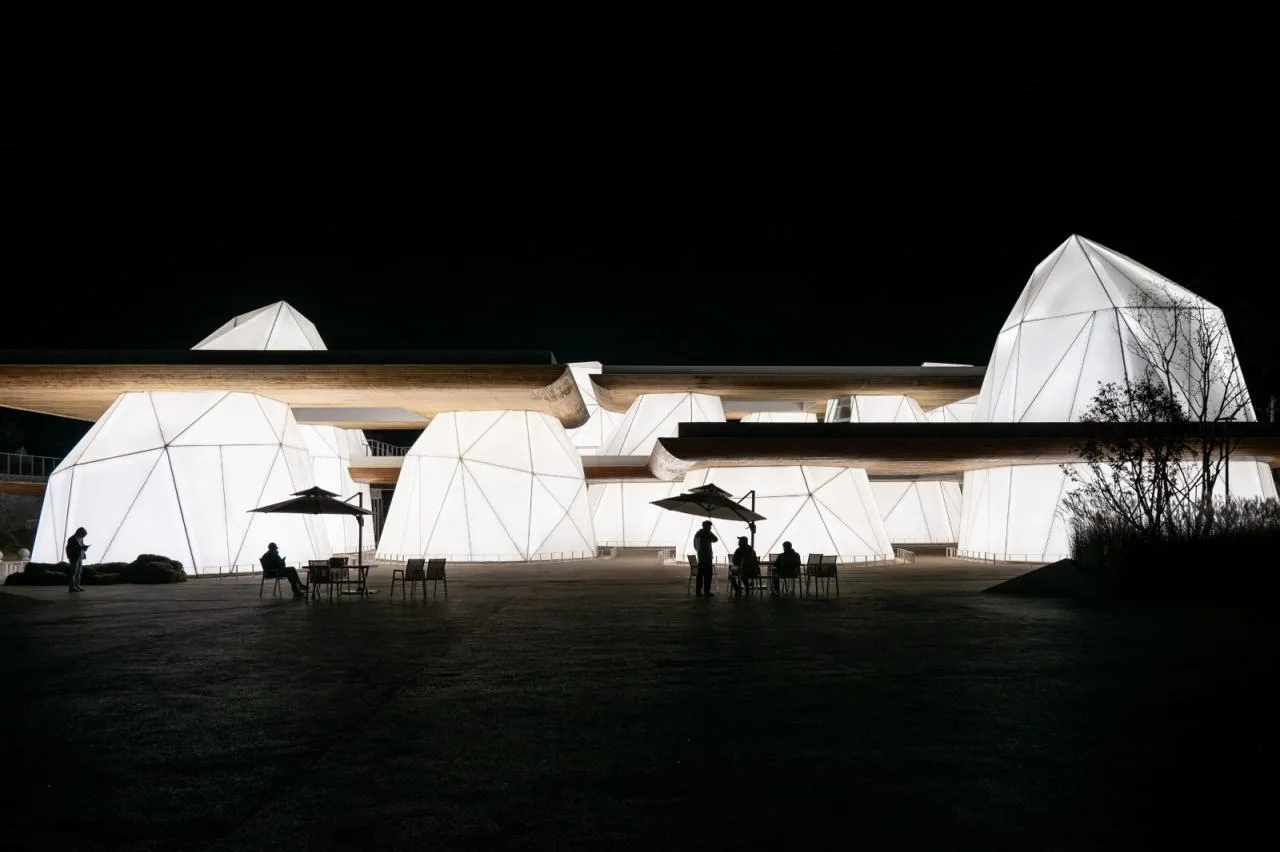
Technical Drawings
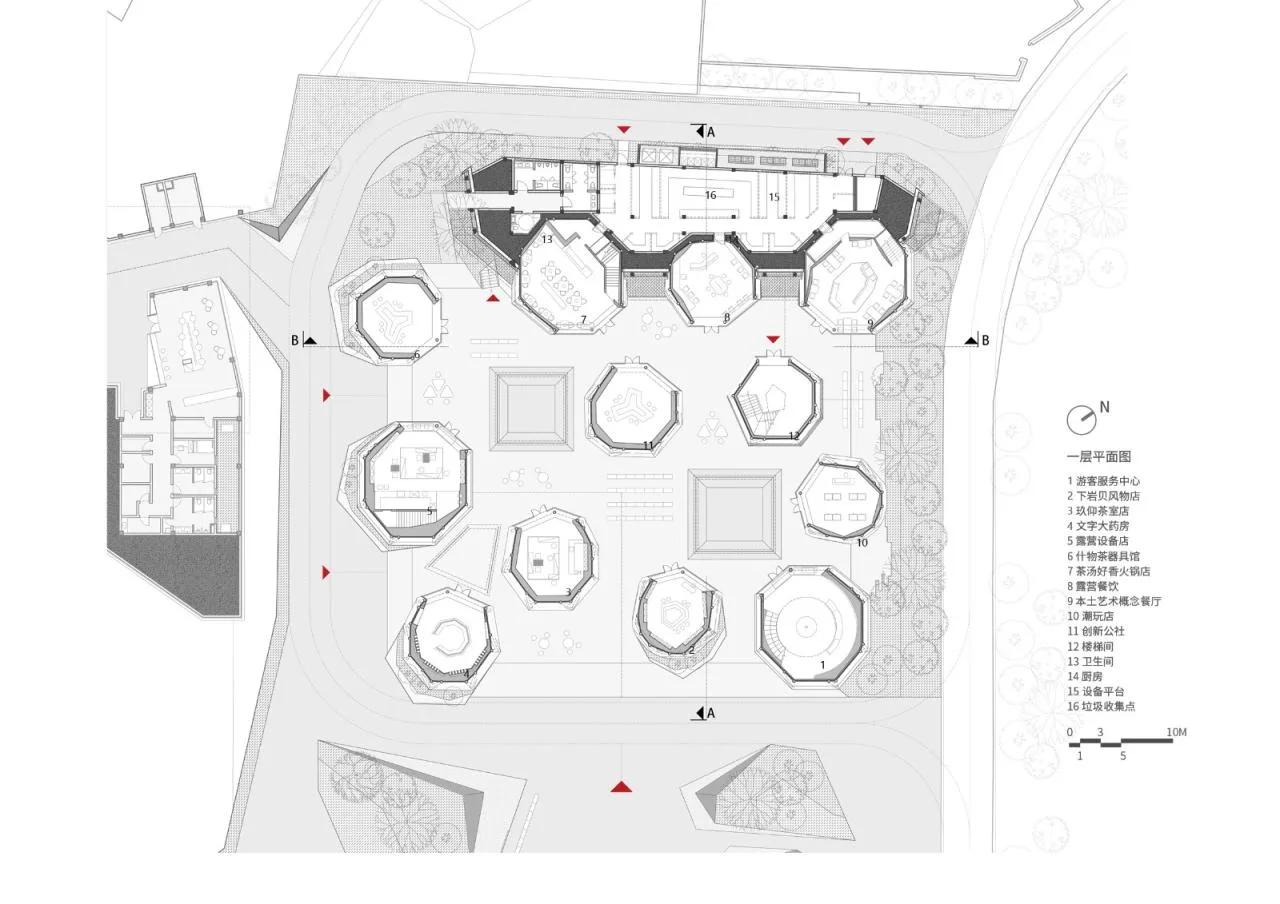
△ Yunfeng Twelve Heavens – First Floor Plan
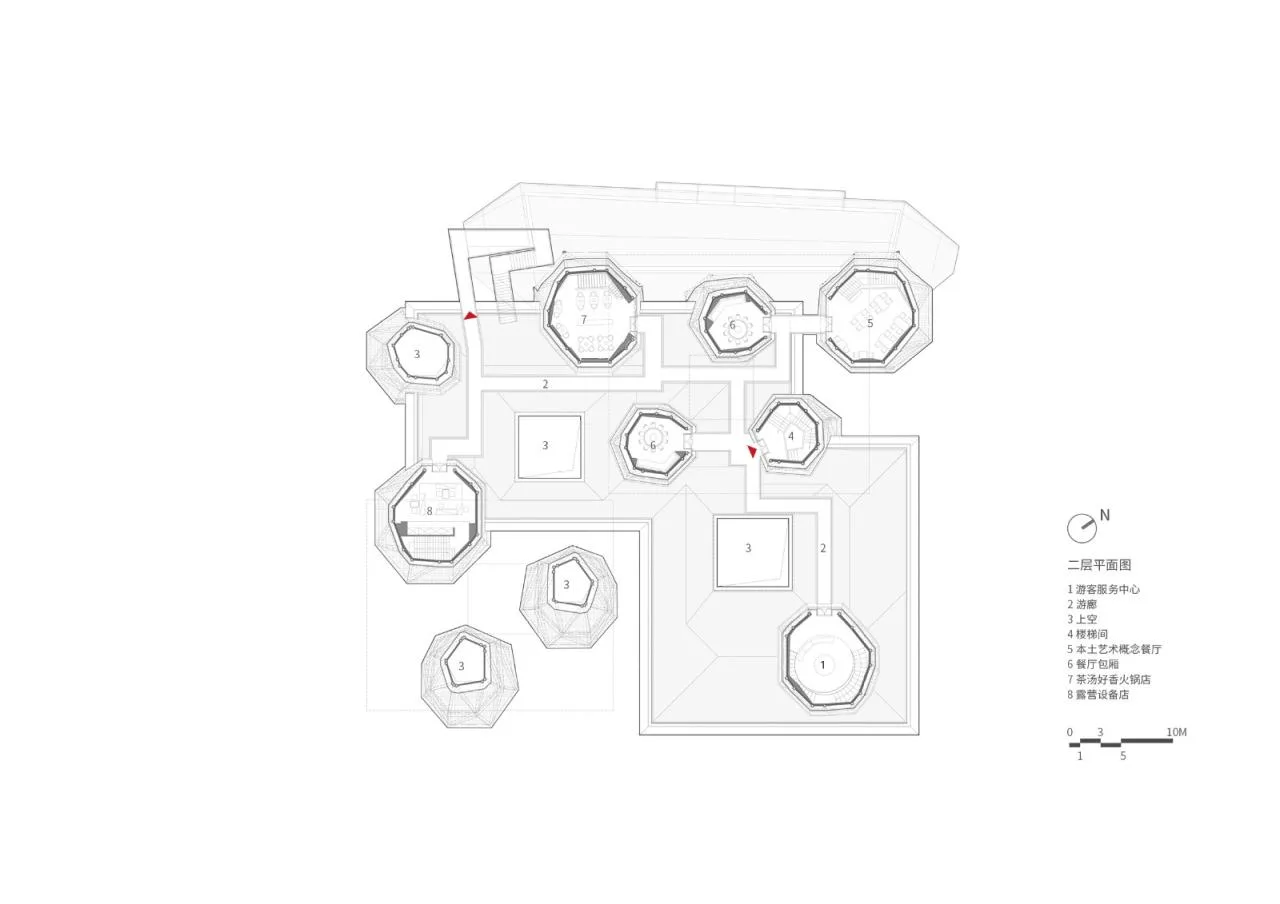
△ Yunfeng Twelve Heavens – Twelfth Floor Plan
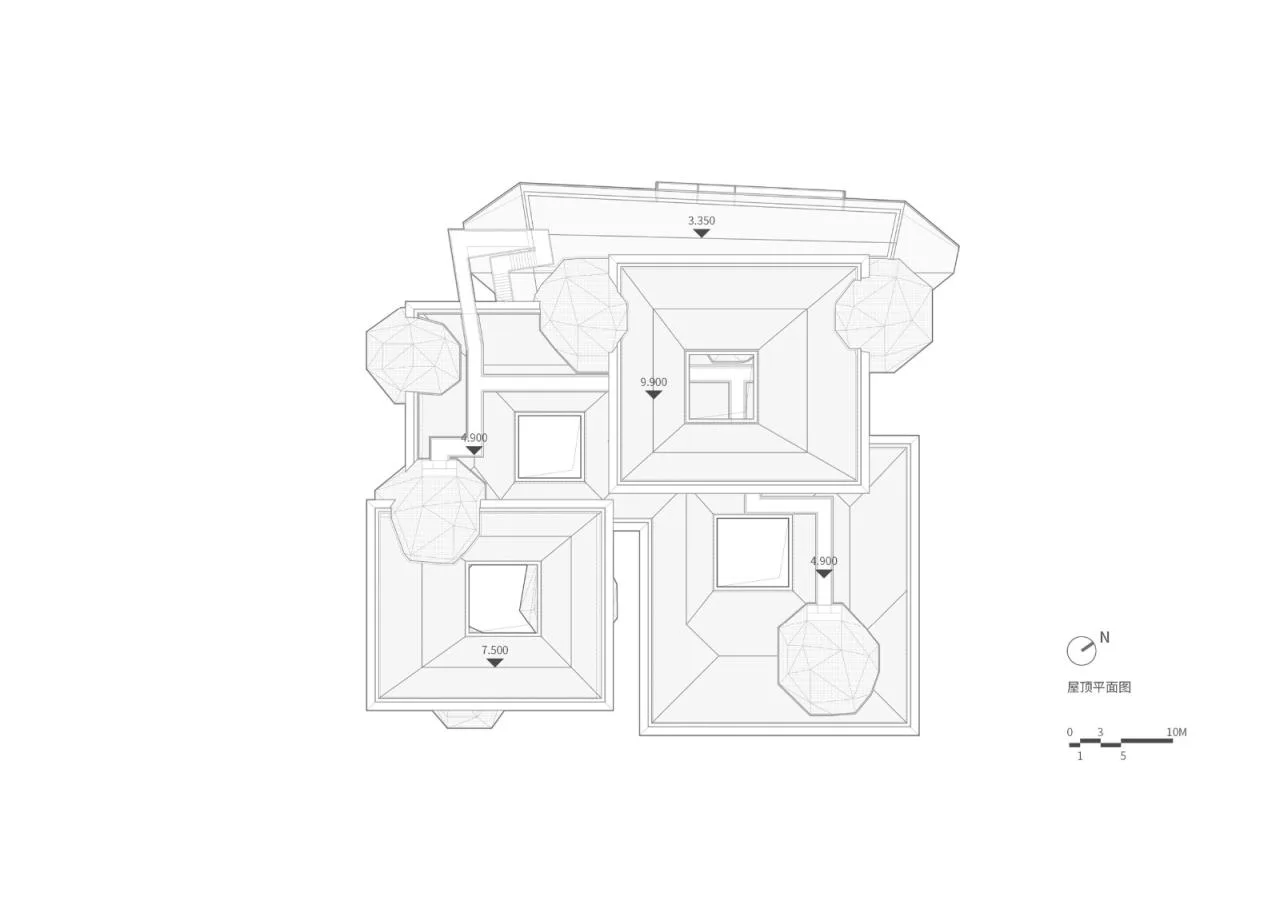
△ Yunfeng Twelve Heavens – Roof Plan
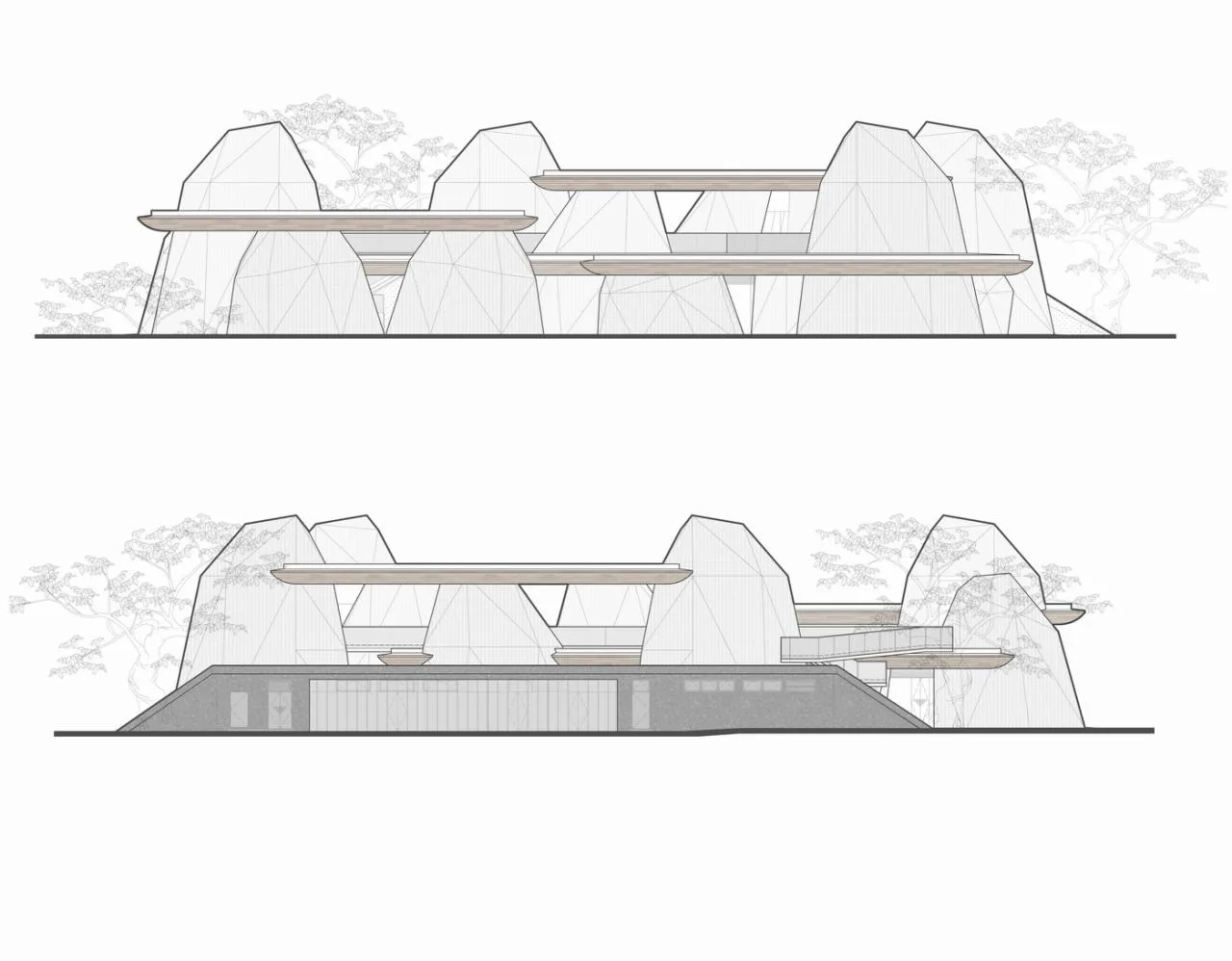
△ Yunfeng Twelve Heavens – Twelfth Floor Elevation
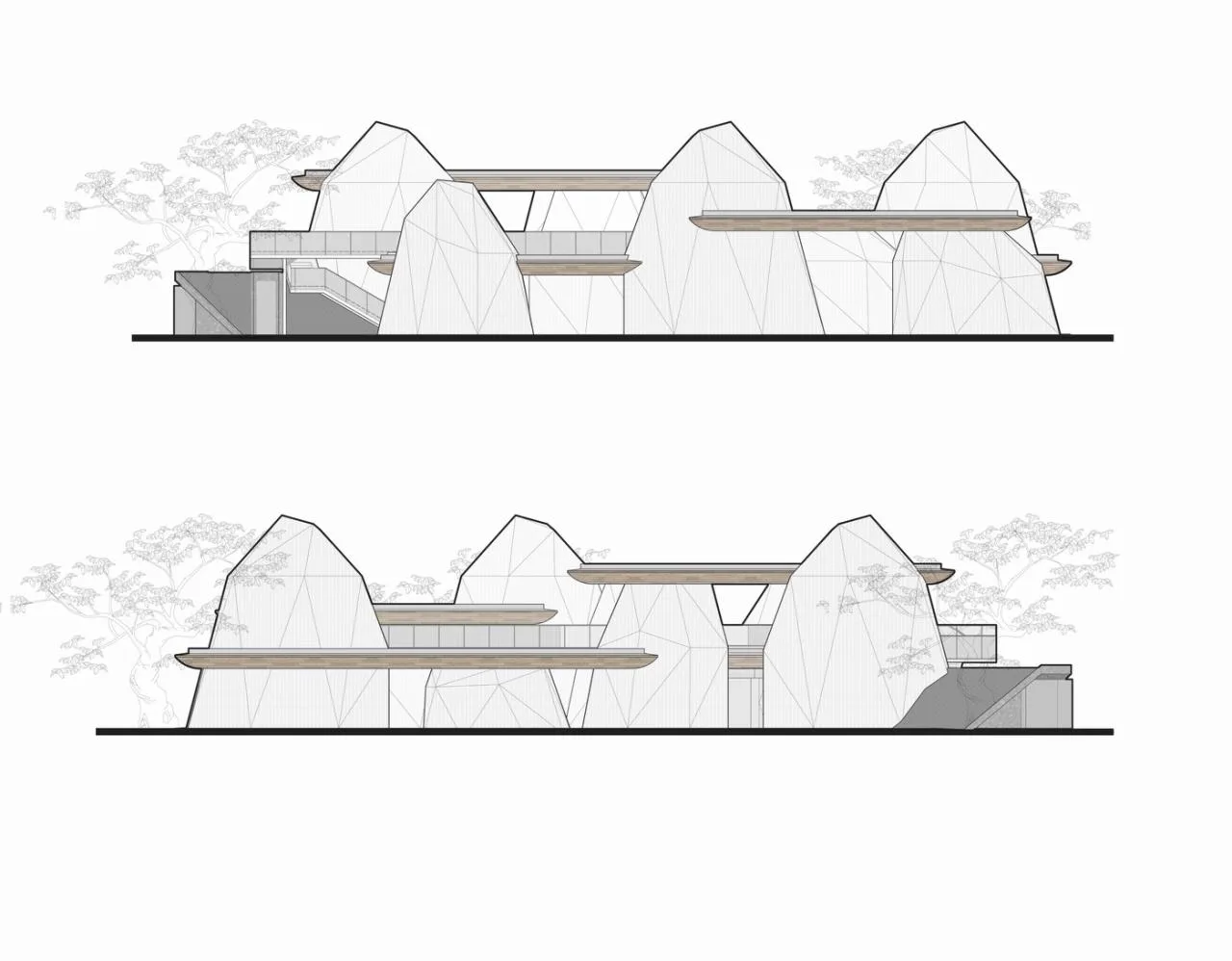
△ Yunfeng Twelve Heavens – Twelfth Floor Elevation
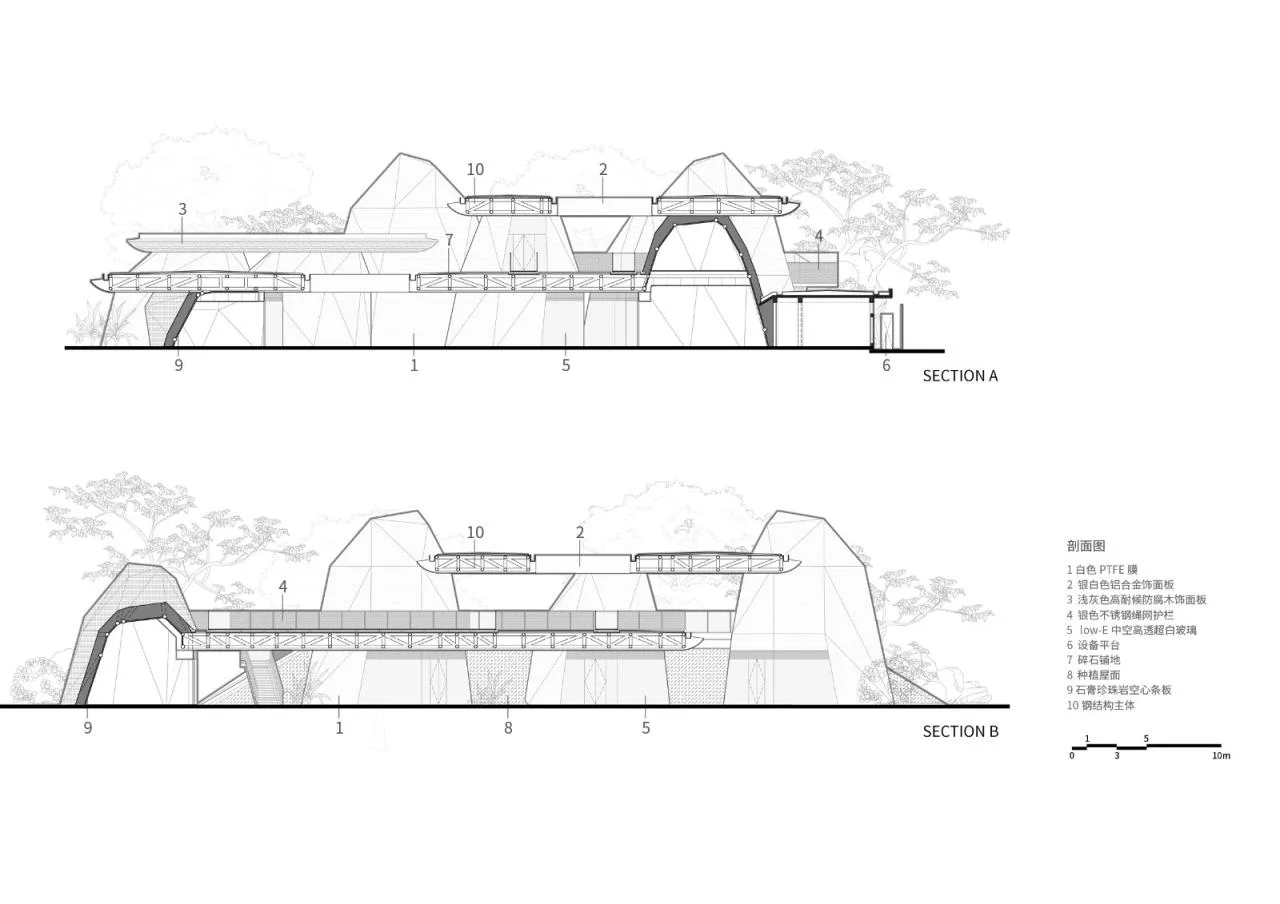
△ Yunfeng Twelve Heavens – Folded Profile Map
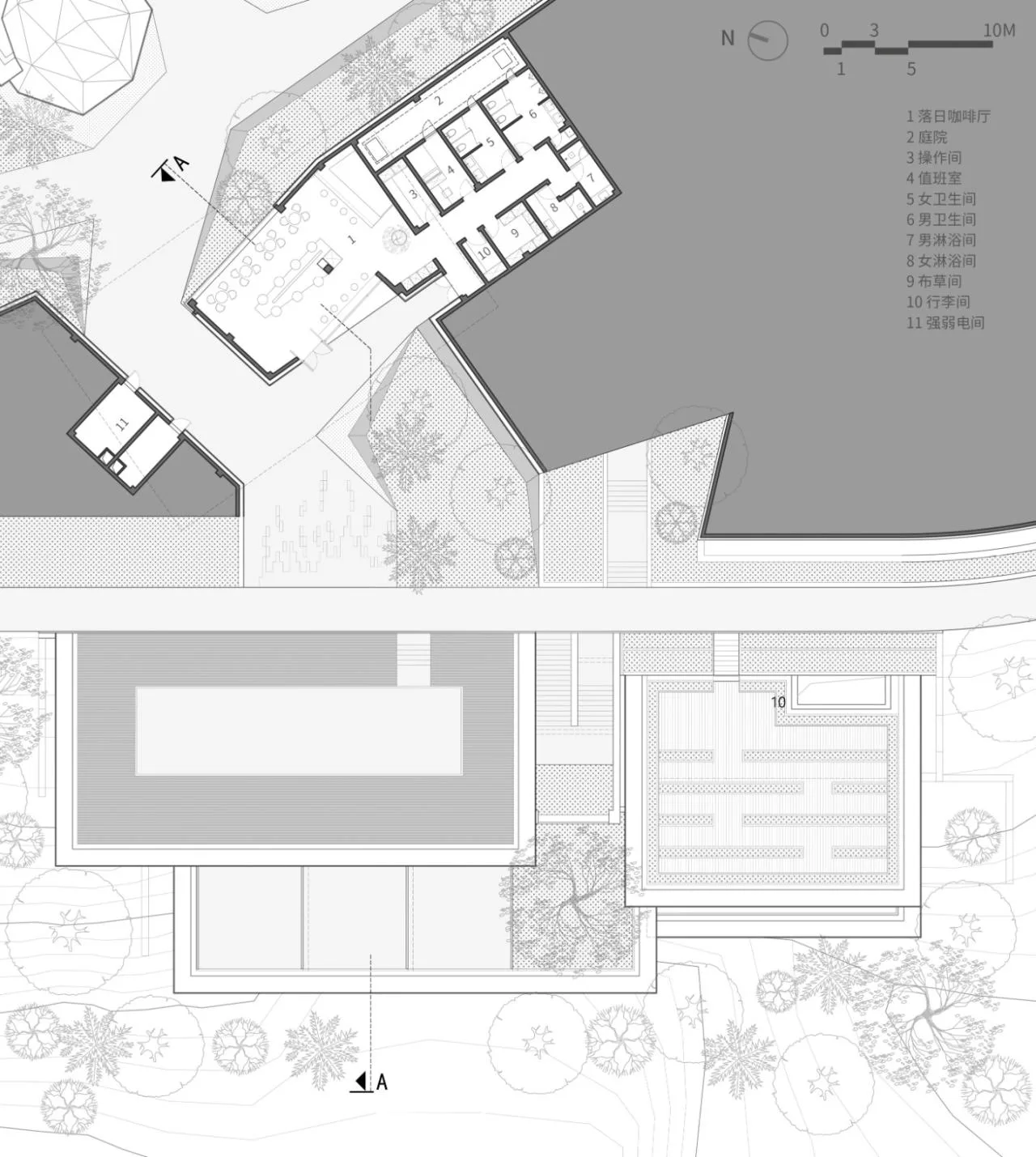
△ Sunset Café Floor Plan
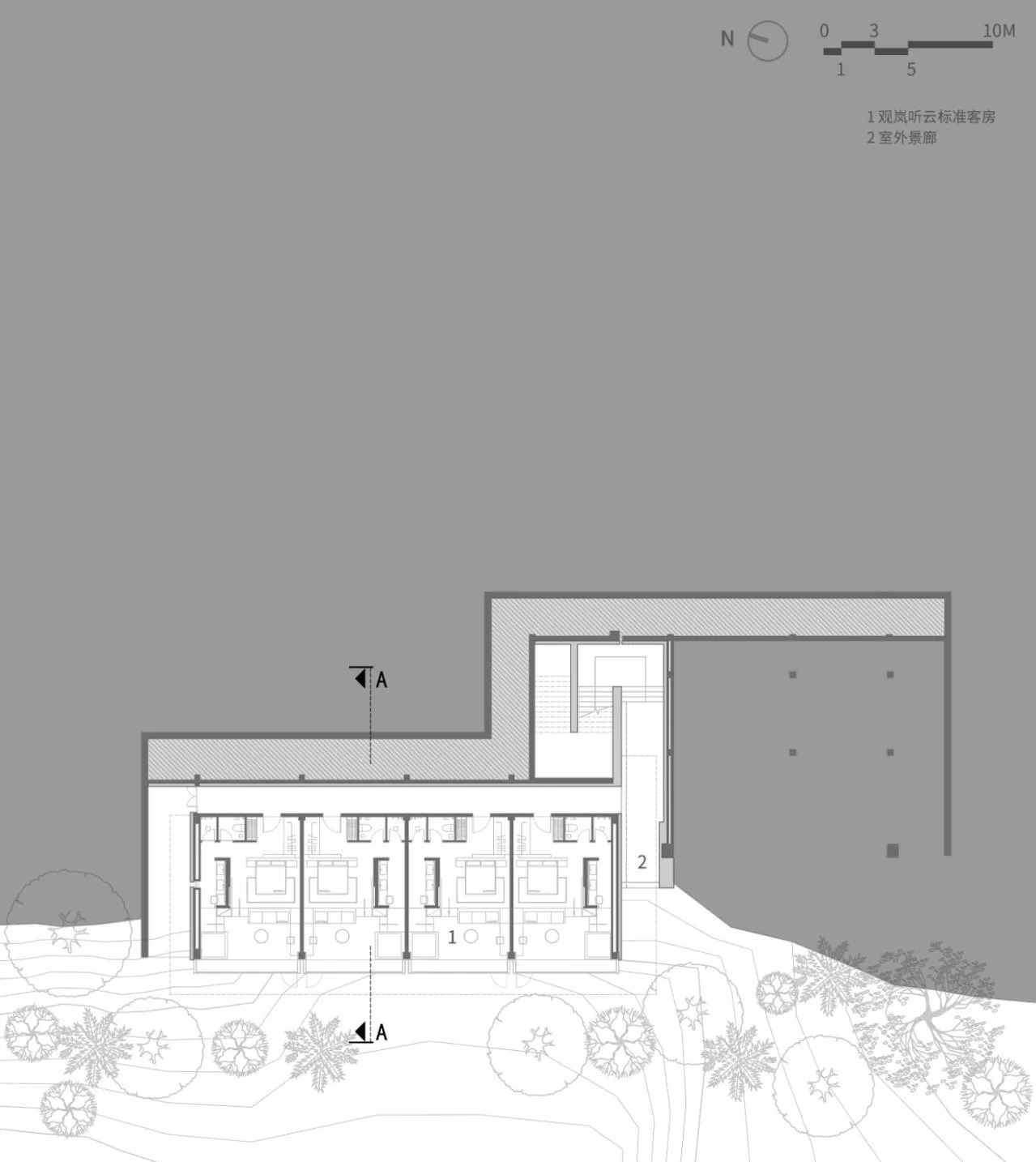
△ Cliff Homestay – Ground Floor Plan
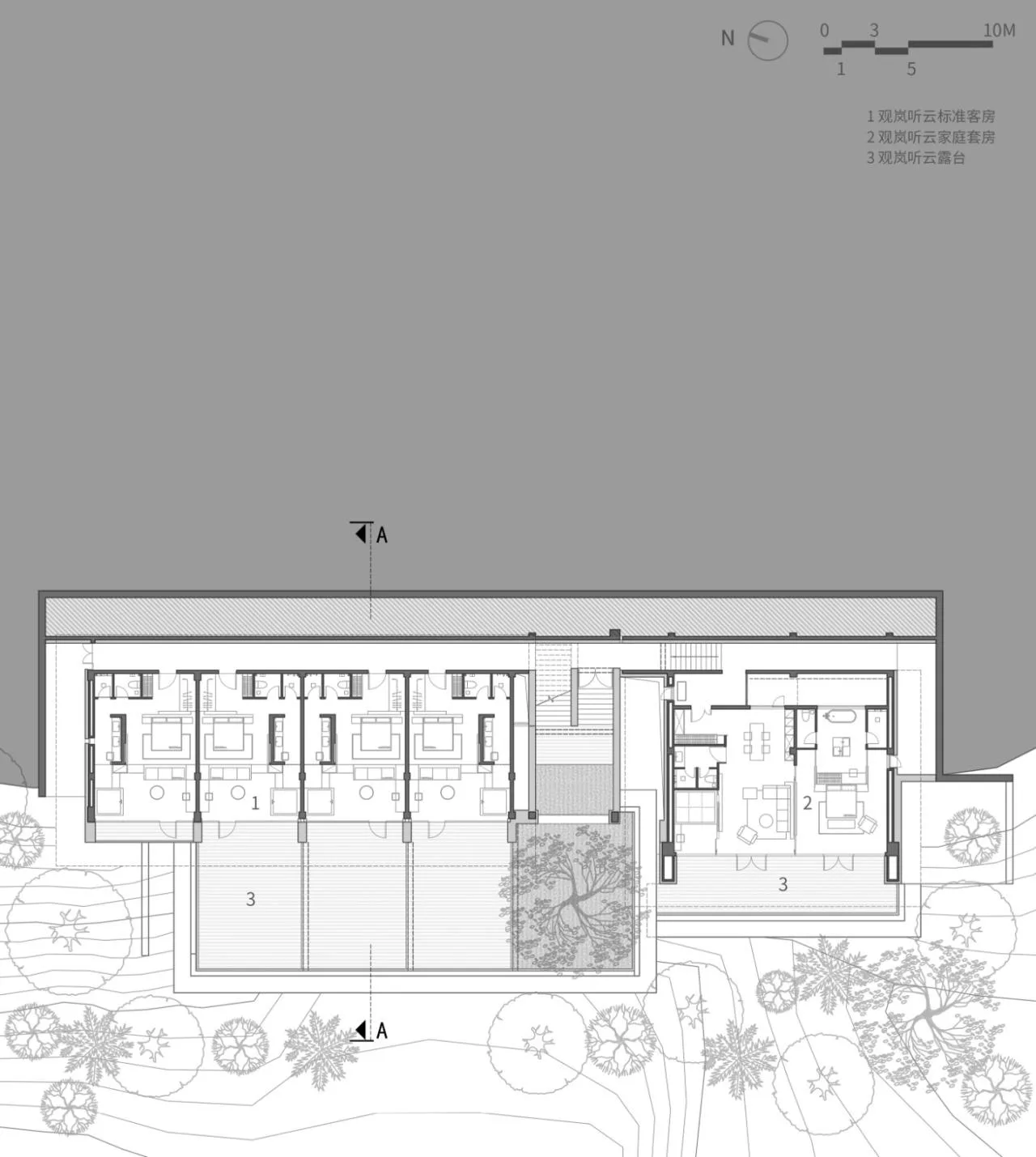
△ Cliff Homestay – Second Floor Plan
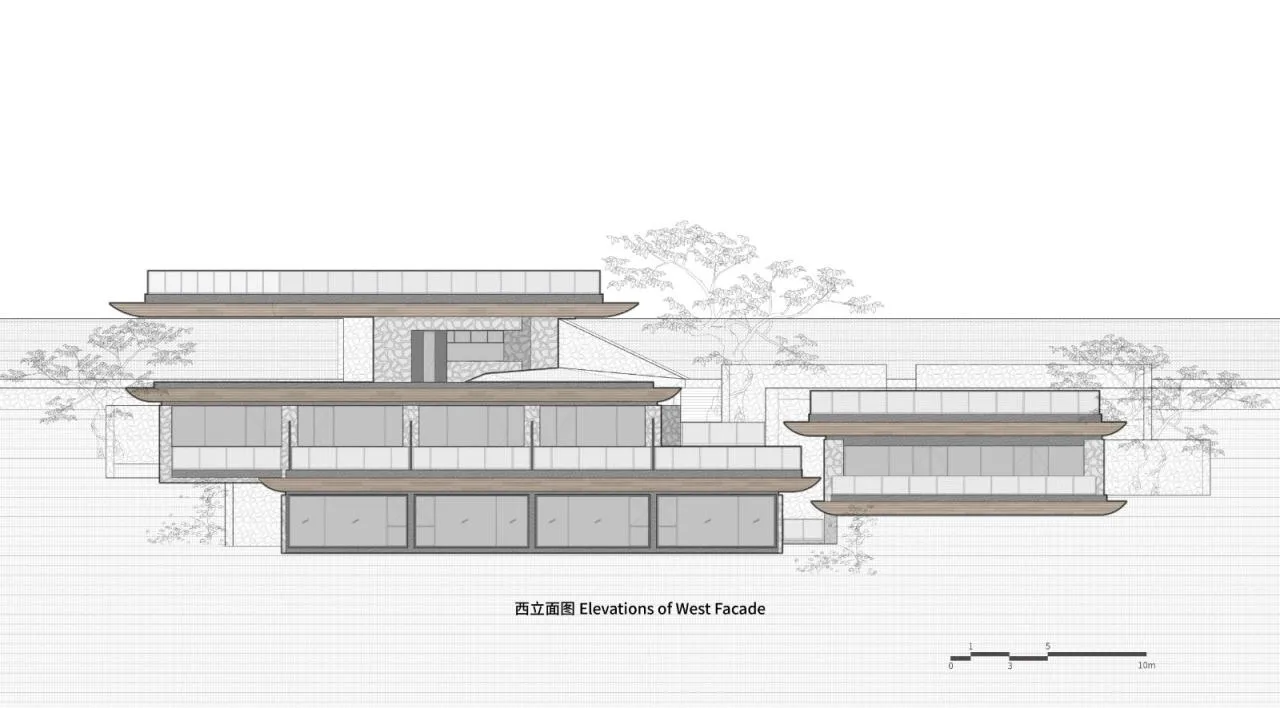
△ Cliff Homestay – West Front View
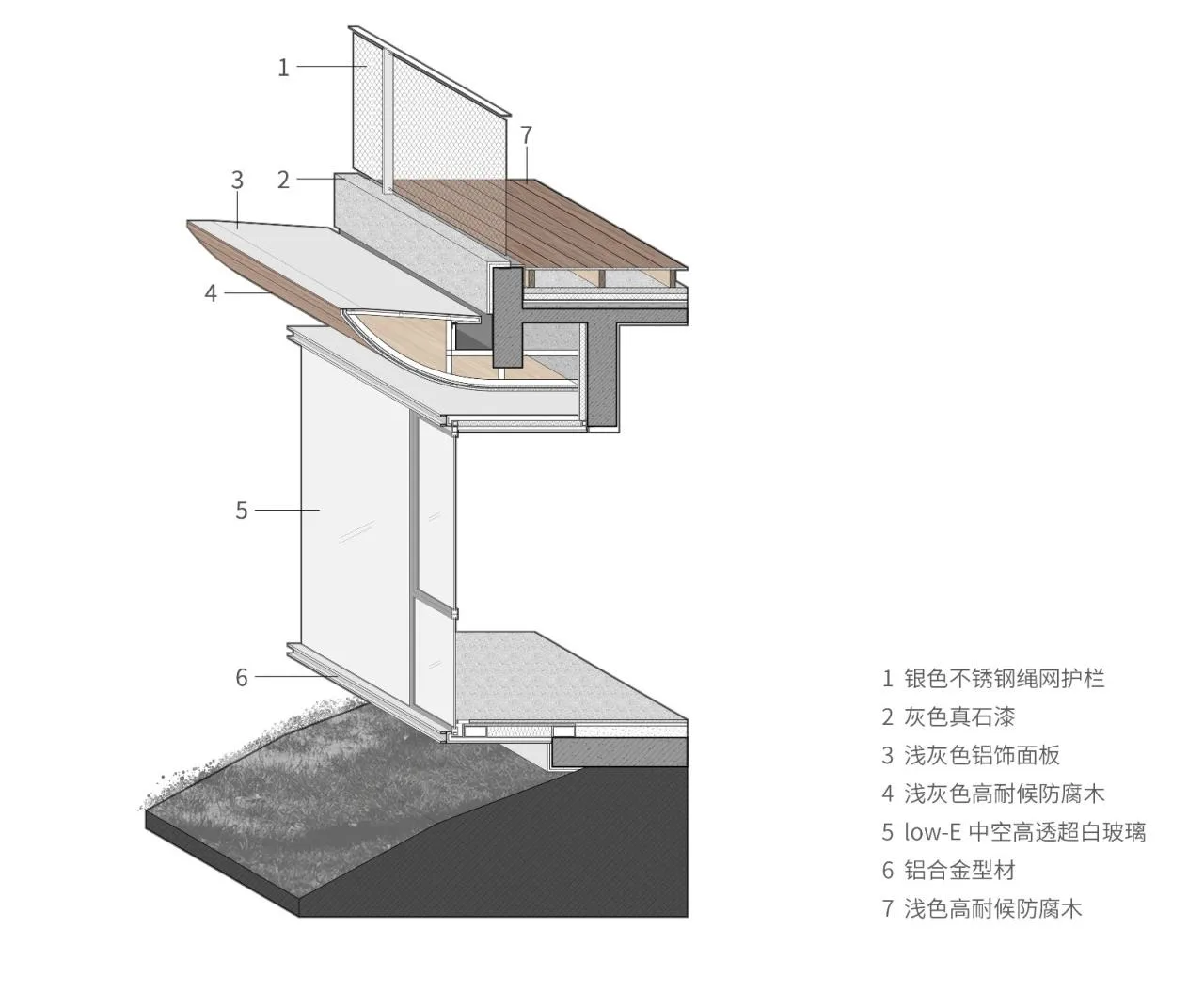
Cliff Homestay Wall Body
Project Information
Project Name: Yunfeng Twelve Heavens
Design Firm: Line+ Architectural Firm
Contact: pr@lineplus.studio
Lead Architect & Project Creator: Zhu Peidong
Design Team: Wu Haiwen, Du Mengying, Zhou Yang (Architecture); Li Shangyang, Rao Feier, Jin Jianbo, Zhang Wenjie (Landscape); Zhu Jun, Deng Hao, Ge Zhenliang, Fan Xiaoxiao, He Yukuan, Yang Li, Zhang Sisi, Lv Siqi, He Zhiyi (Interior)
Owner: Xinchang County Nineteen Peaks Scenic Area Development Co., Ltd.
Structural Engineering: Luan Ci Construction Design Firm
Construction Documentation: Zhejiang University of Technology Engineering Design Group Co., Ltd.
Construction Contractor: Qingdao Construction Engineering Group Co., Ltd.
Location: Xiayanbei Village, Xinchang, Zhejiang
Total Building Area: 2,603 m² (1,480 m² for Yunfeng Twelve Heavens, 226 m² for observation deck and café, 897 m² for cliff homestay)
Design Period: February 2022 – September 2022
Construction Period: September 2022 – March 2023
Structure: Steel frame
Materials: PTFE membrane, anti-corrosion wood, aluminum panels, rough stone
Photography: Existence of Architecture – Architectural Photography line+















Must log in before commenting!
Sign Up