
In the fourth year of Yuanyou during the Northern Song Dynasty, Hangzhou faced a severe drought and famine. At that time, Su Shi, the governor of Hangzhou, deeply empathized with the people’s suffering and personally raised funds to establish a clinic called “Anle Fang”. This became the first government-run hospital in history and the precursor to Hangzhou’s first social welfare institution. Though Anle Fang is now a part of history, the compassion and humanity it embodied continue to resonate through the ages.
The First Social Welfare Institute of Hangzhou is the city’s sole government-supported facility dedicated to caring for the social “three no” groups: individuals without family, orphans over 18, and homeless beggars. Nearly 85% of those served have mental, intellectual, or physical disabilities and are unable to live independently.
For the vast majority, this institute serves as their lifelong home—their entire world.
Our vision is to create a new, compassionate home environment through thoughtful, human-centered design—providing lifelong care, restoring warmth and confidence, and enabling residents to live with dignity and respect.
01 Mountain and Water Patterns and Regional Culture
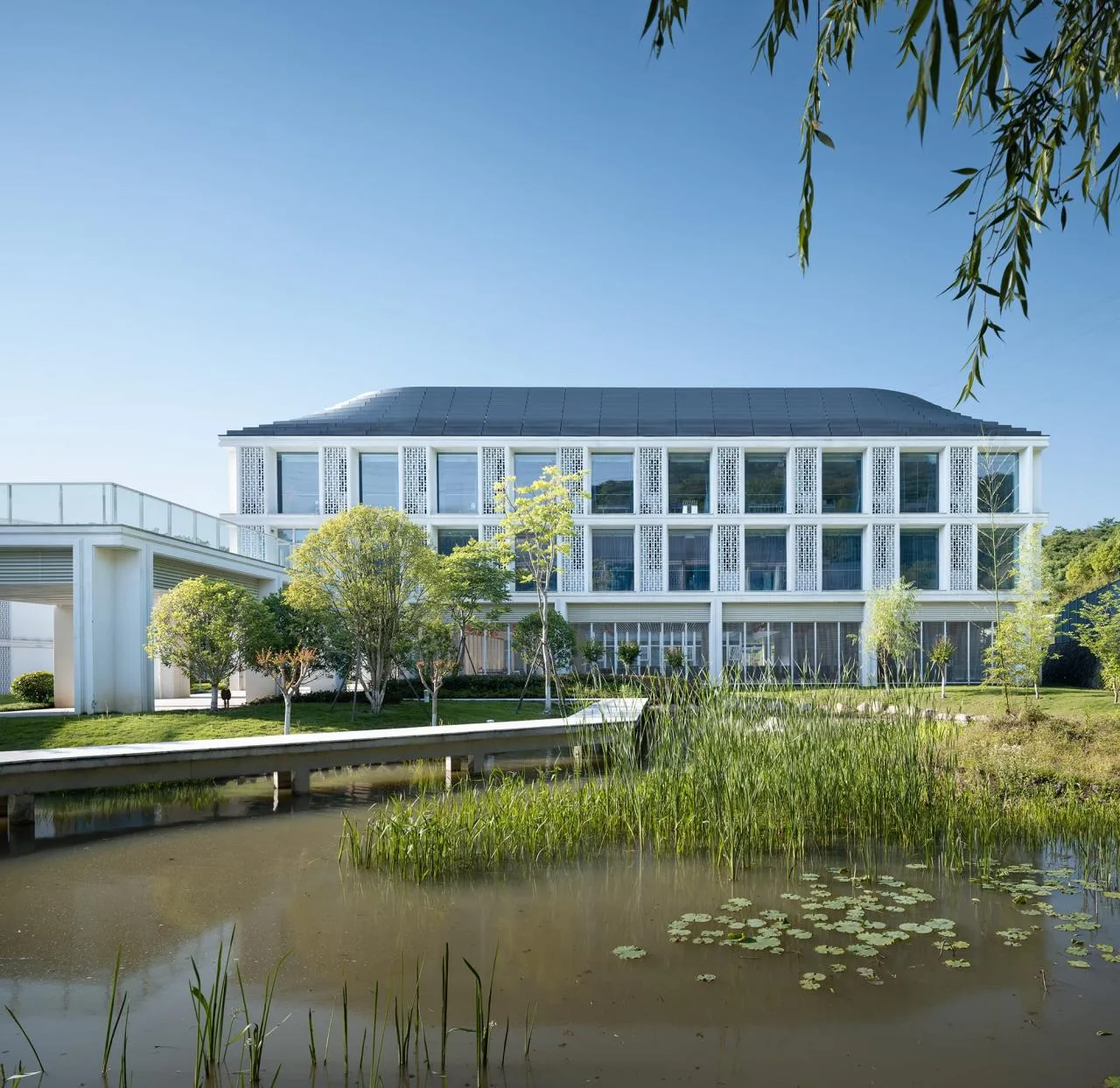
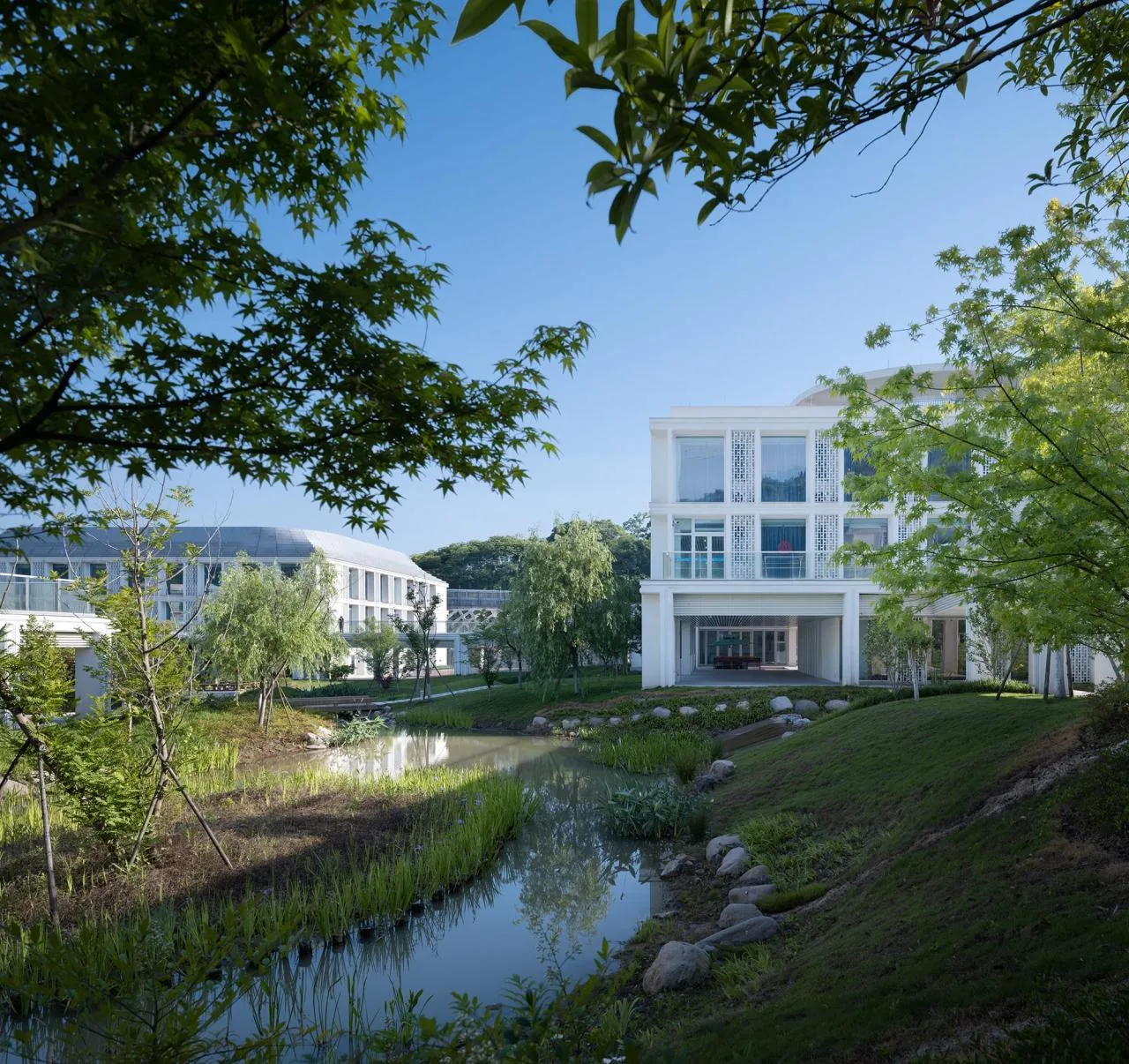
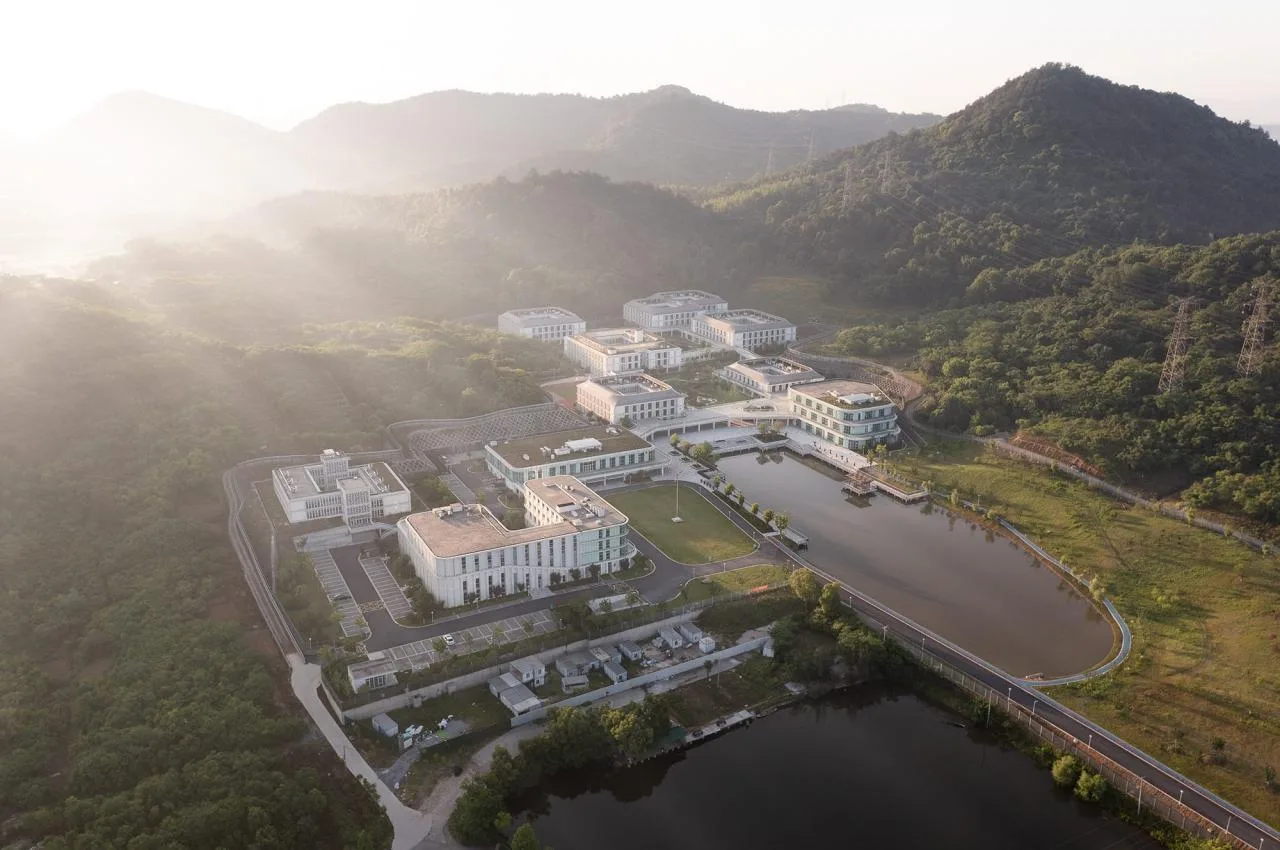
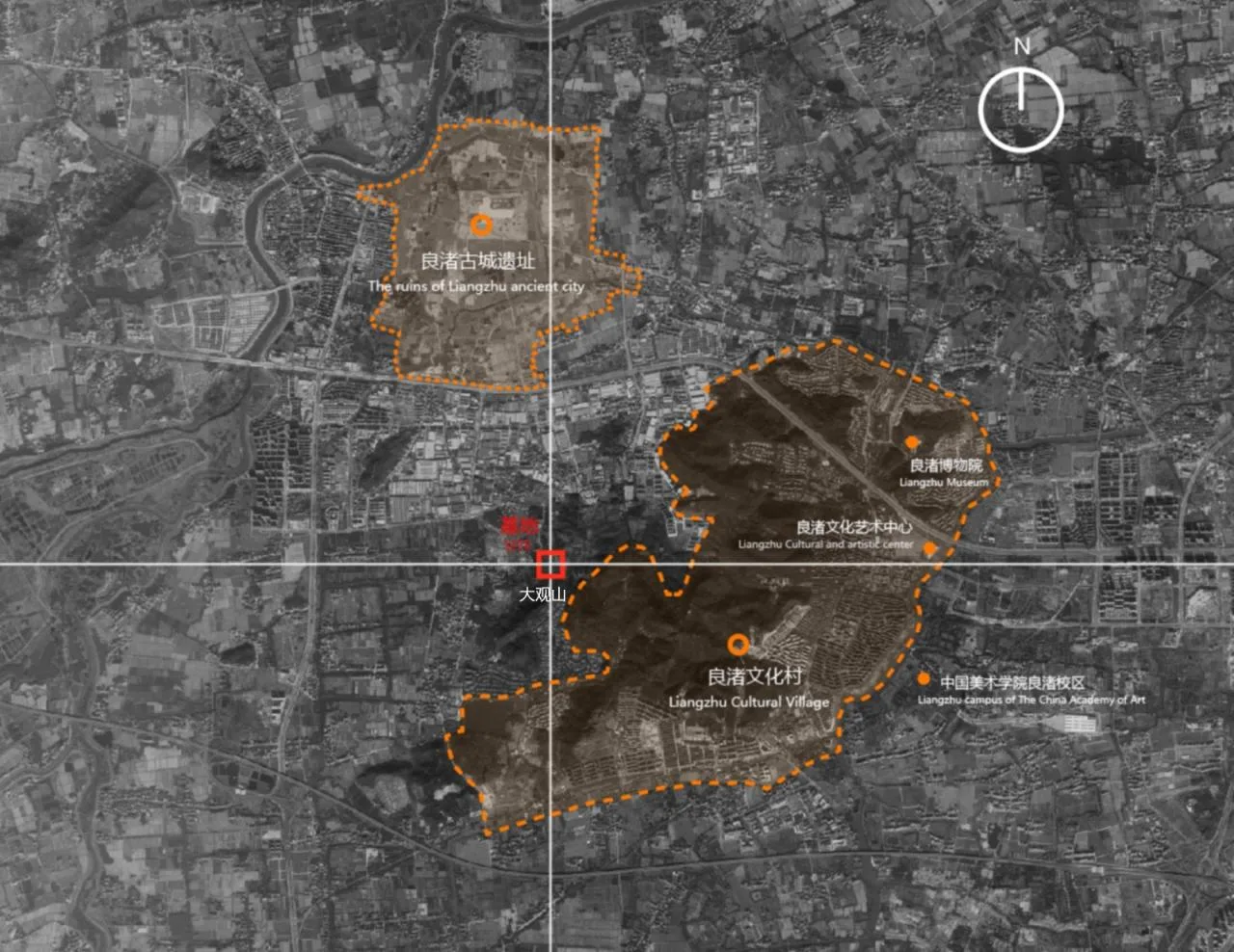
The project is situated in Daguanshan Orchard, Pingyao Town, Yuhang District, Hangzhou. Nestled among mountains, it features a shallow pond to the west, surrounded by lush forests and lakes, creating a distinctive mountain-and-water landscape.
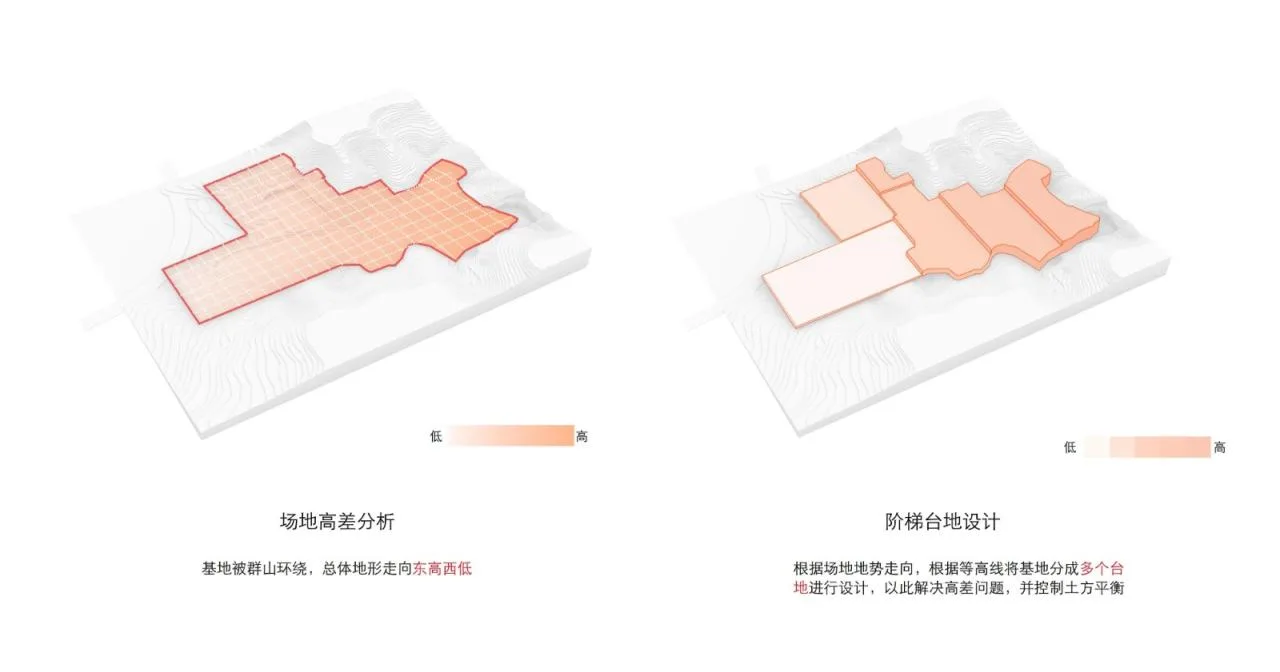
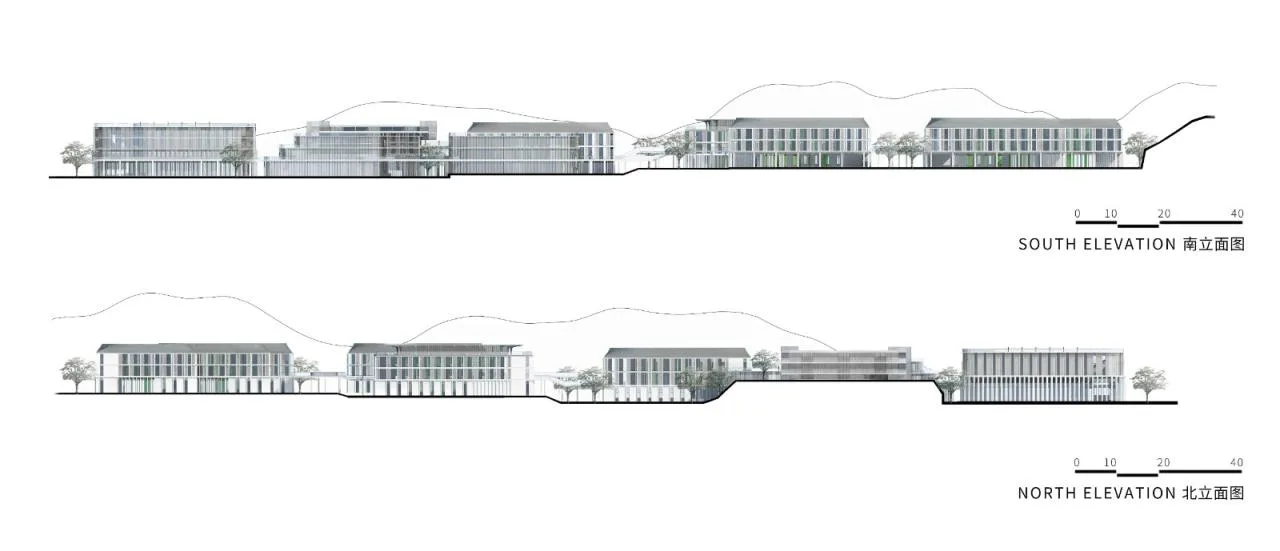
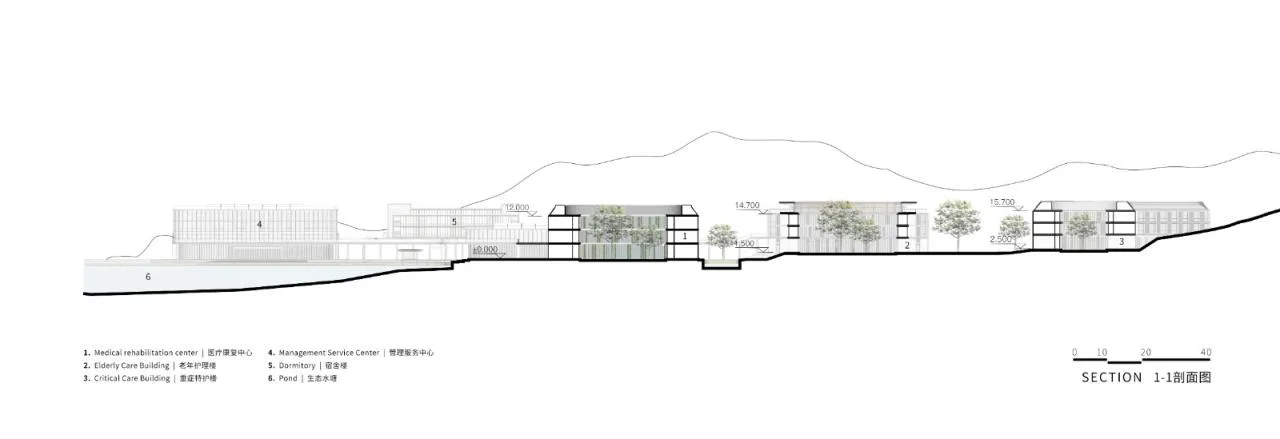
Respecting the site’s natural topography, the design divides the land into layered terraces to address elevation differences, minimizing earthwork excavation and transport. This unique terrain fosters distinctive architectural relationships and an integrated landscape environment.
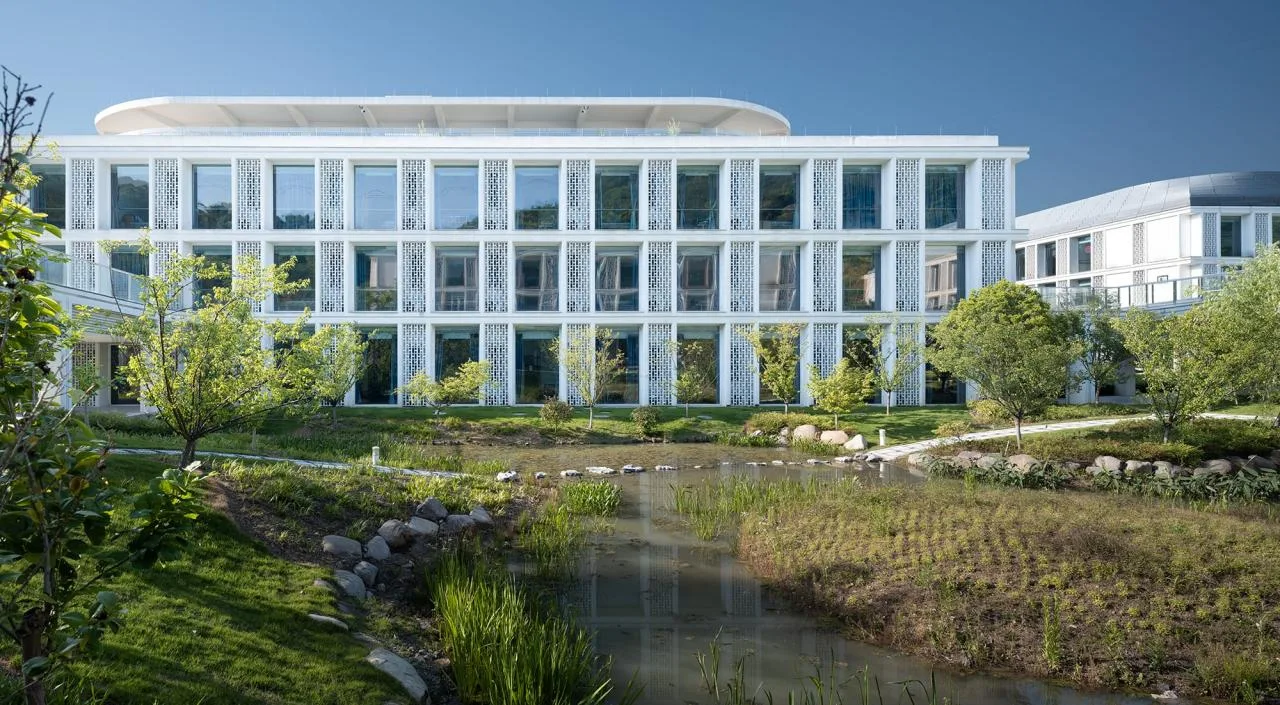
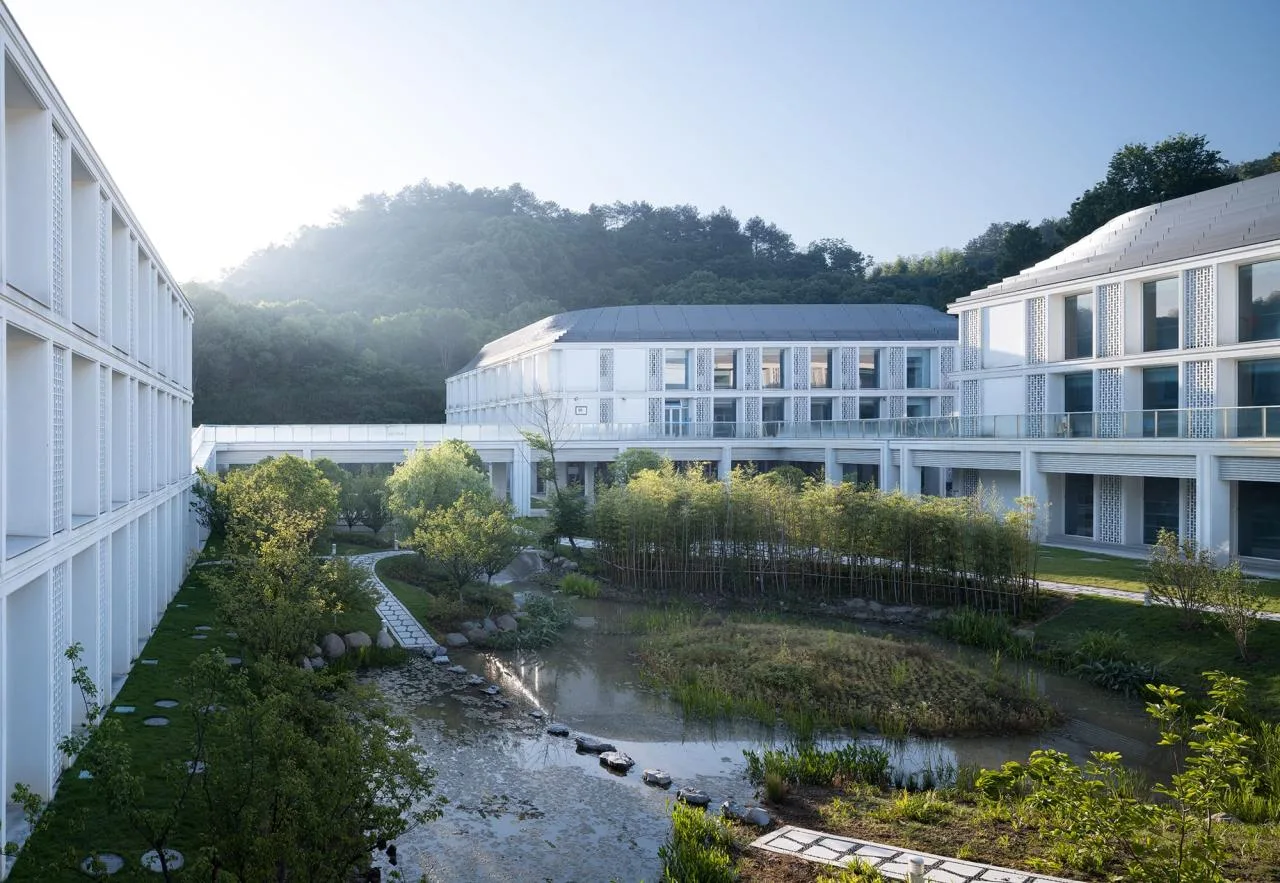
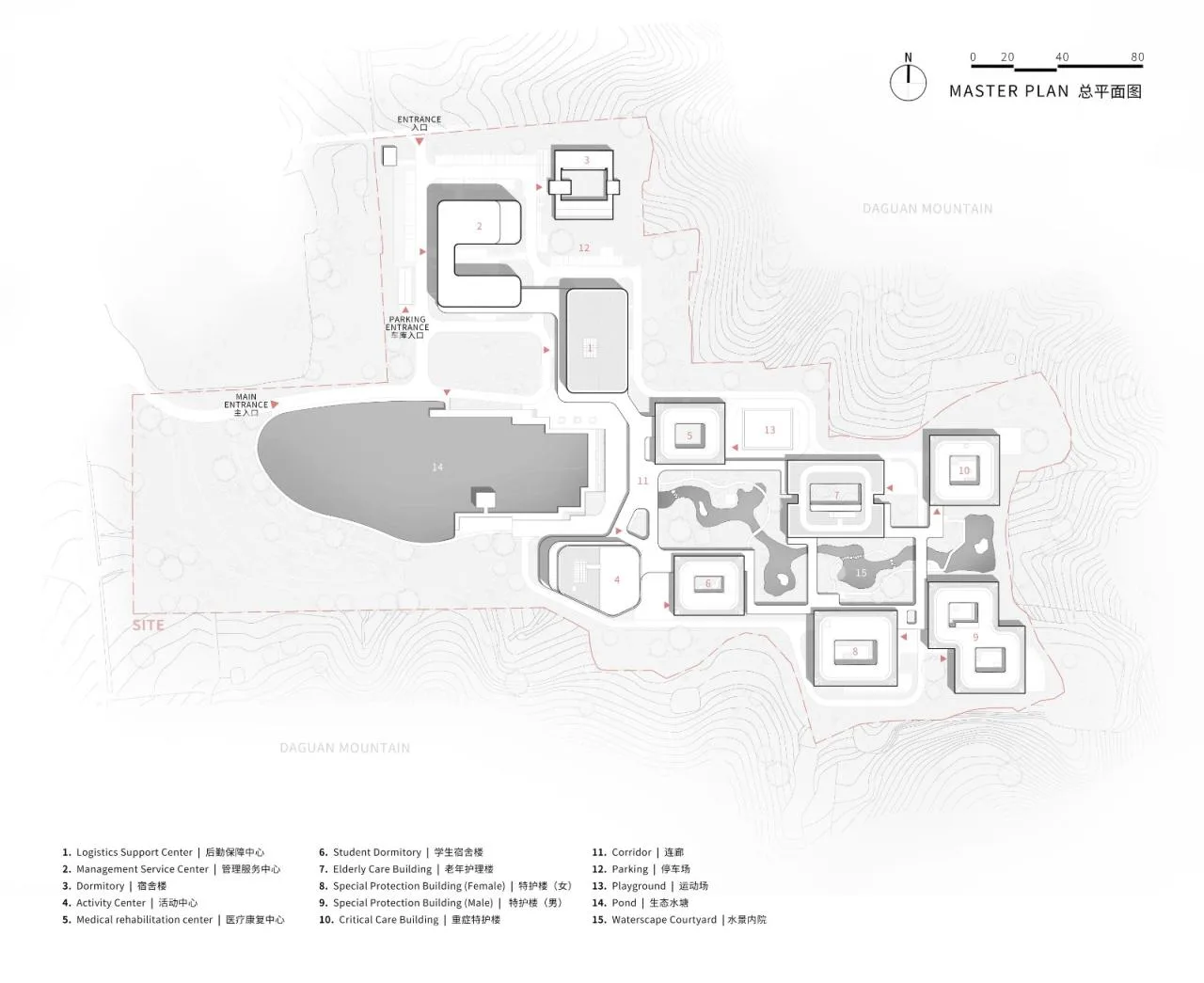
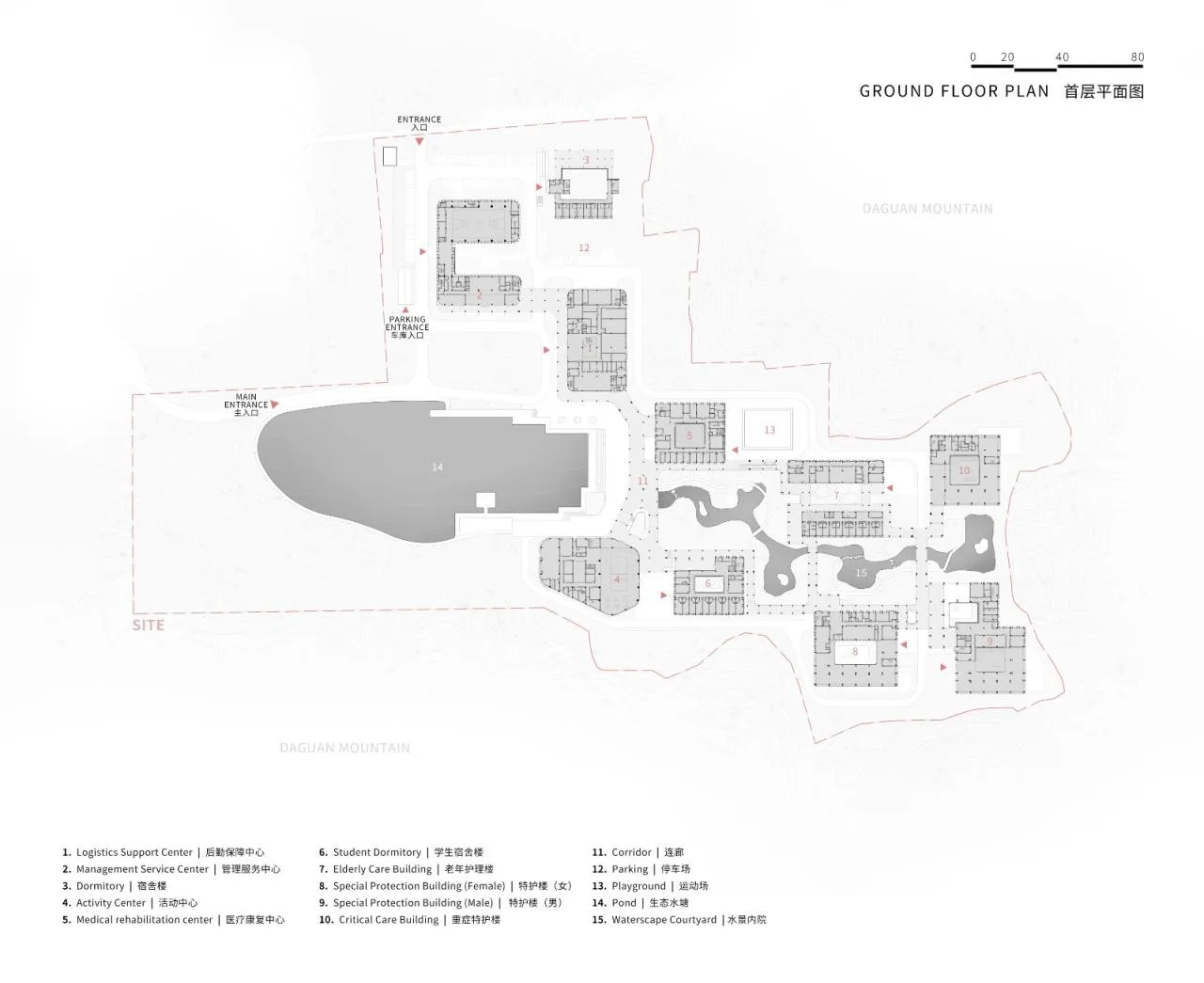
The western side of the site borders an external road and houses the administrative offices. The eastern side, offering greater privacy, is designated for residential use. The central area connects individuals with the environment through shared public facilities. This layout divides the space into active and quiet zones, facilitating effective management.
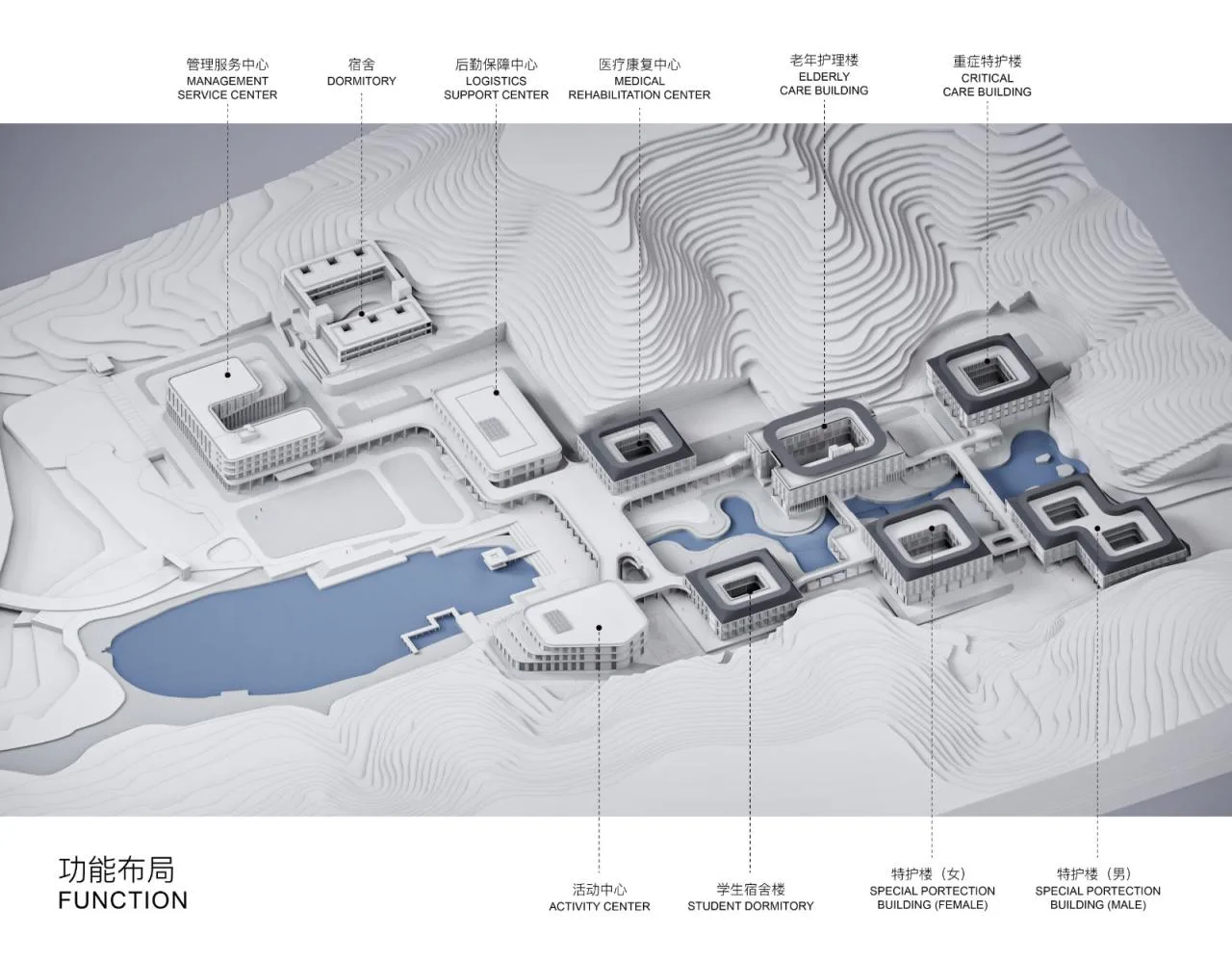
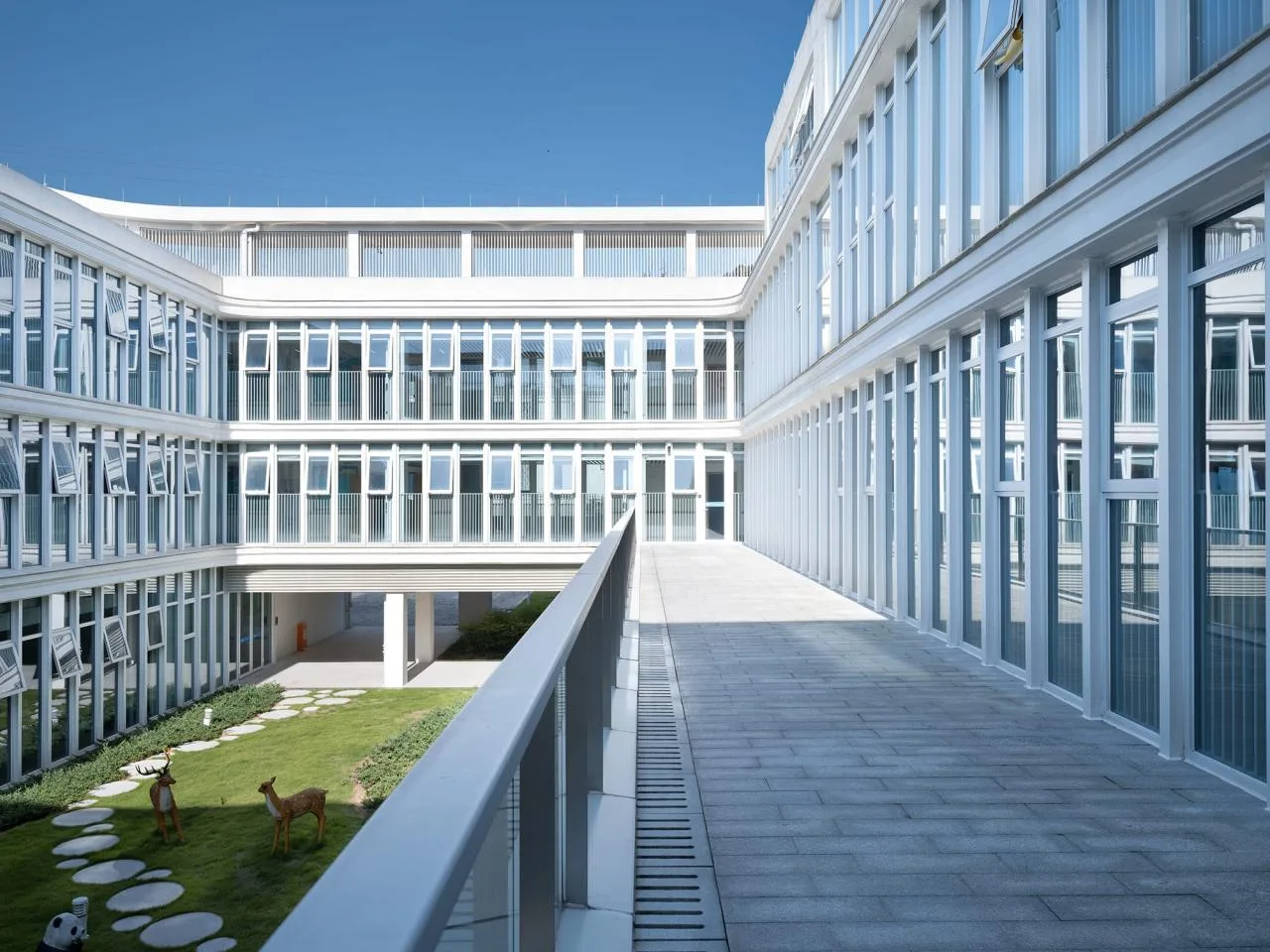
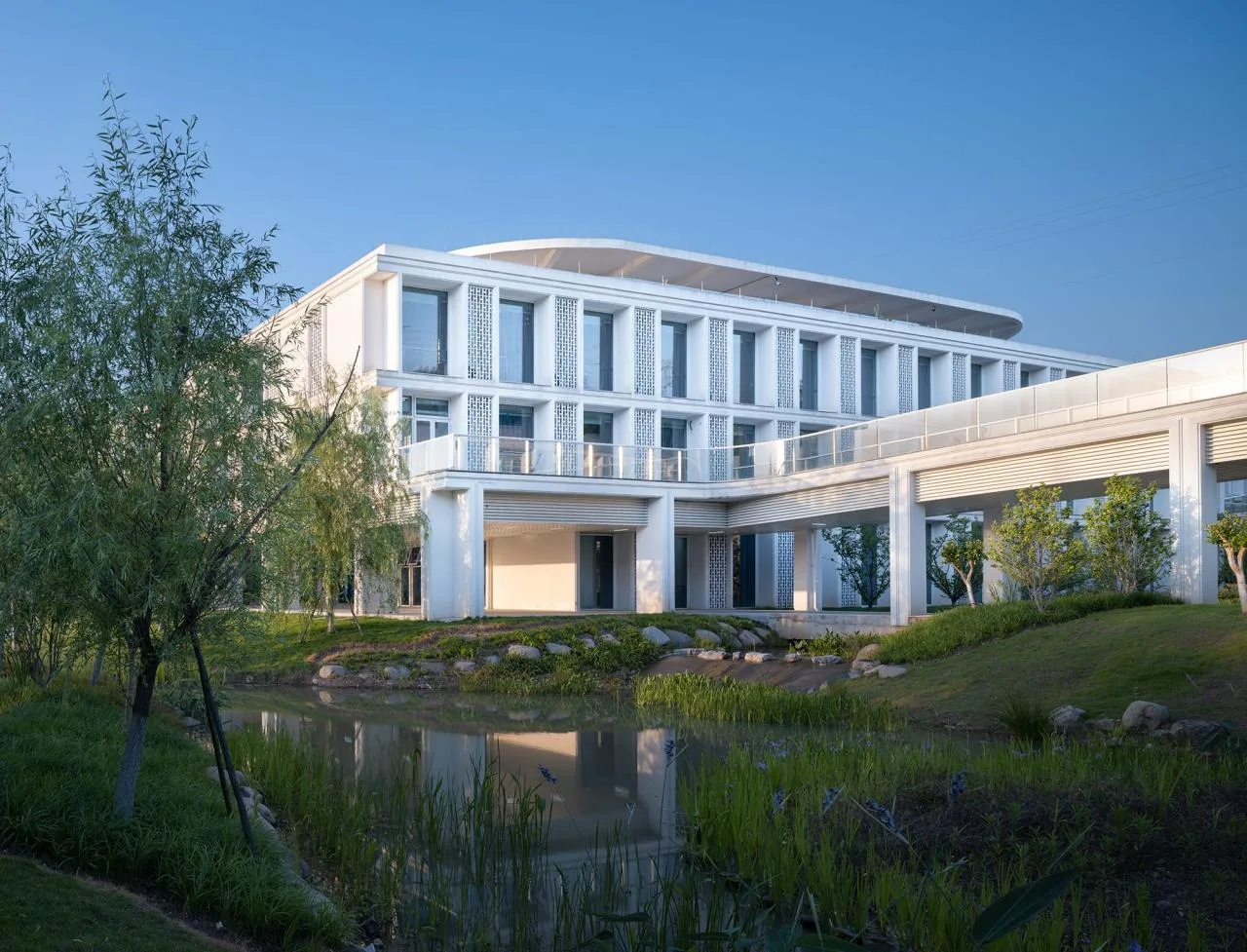
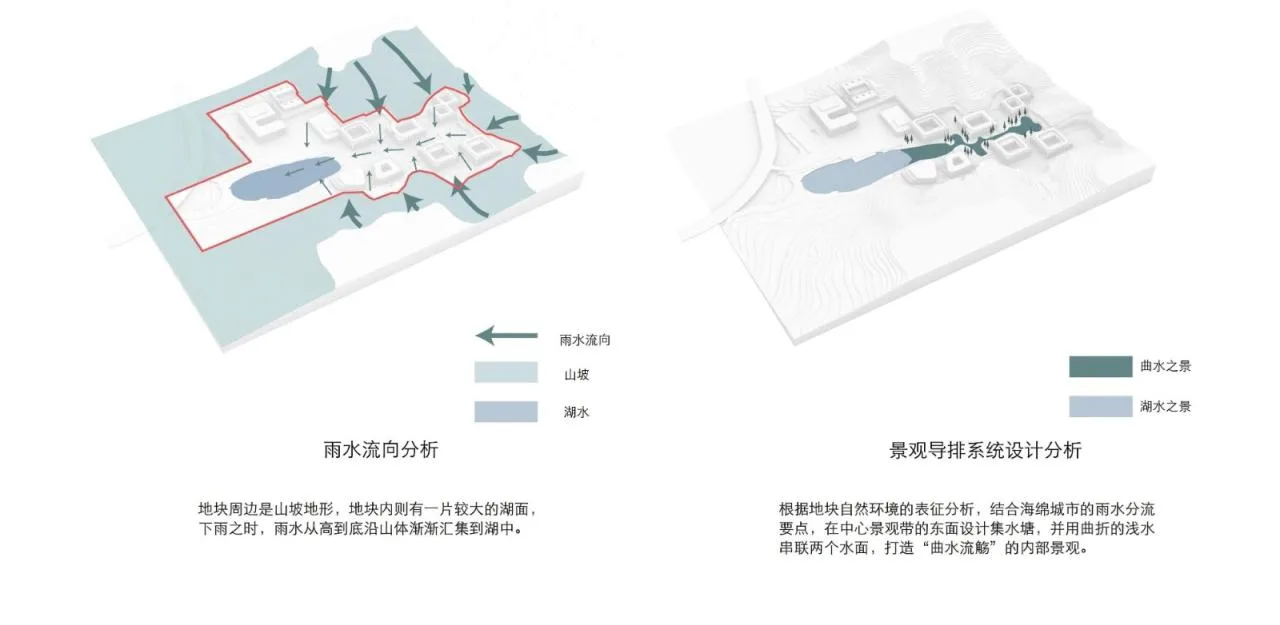
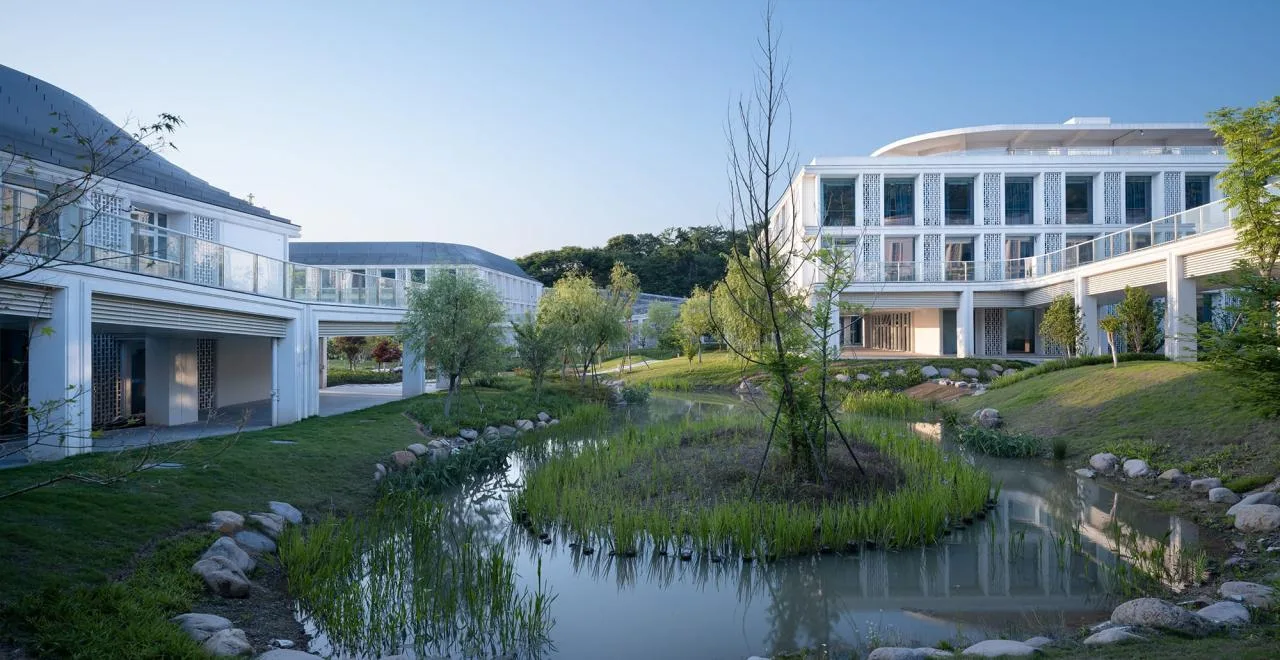
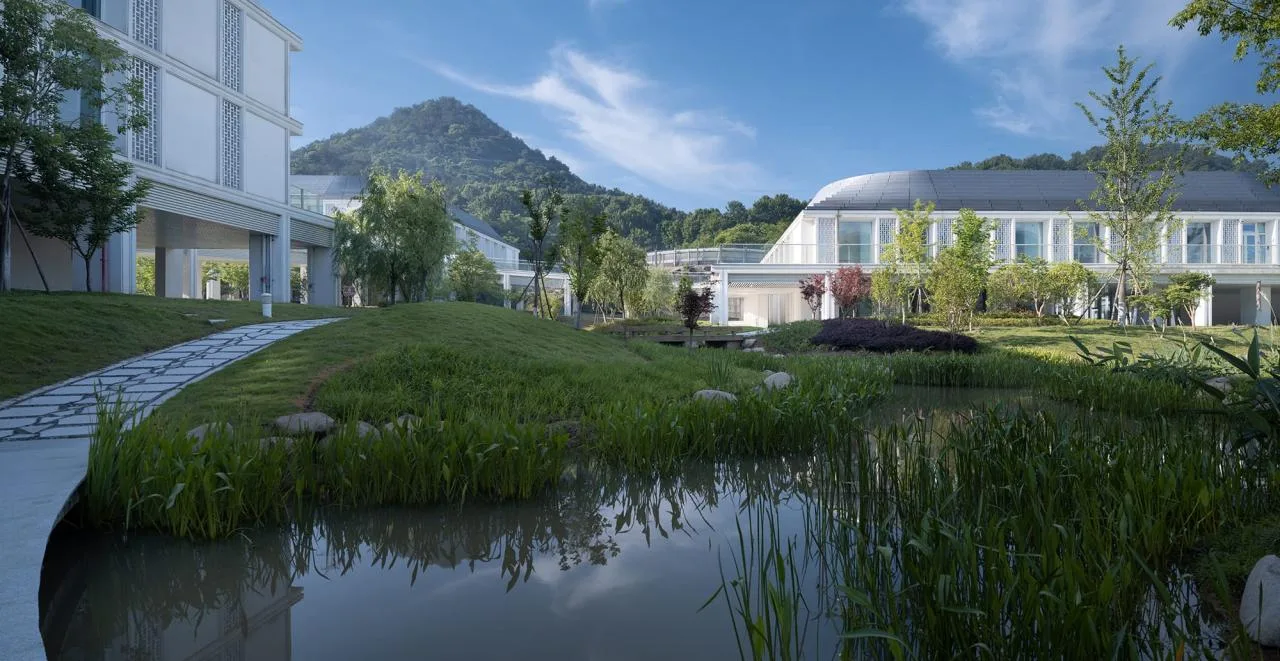
In the landscape design, the natural rainwater flow from the mountaintop heading west is preserved, ingeniously forming an internal “meandering water cup” landscape. Water serves as a guiding element, with streams gently winding and converging into the lake below.
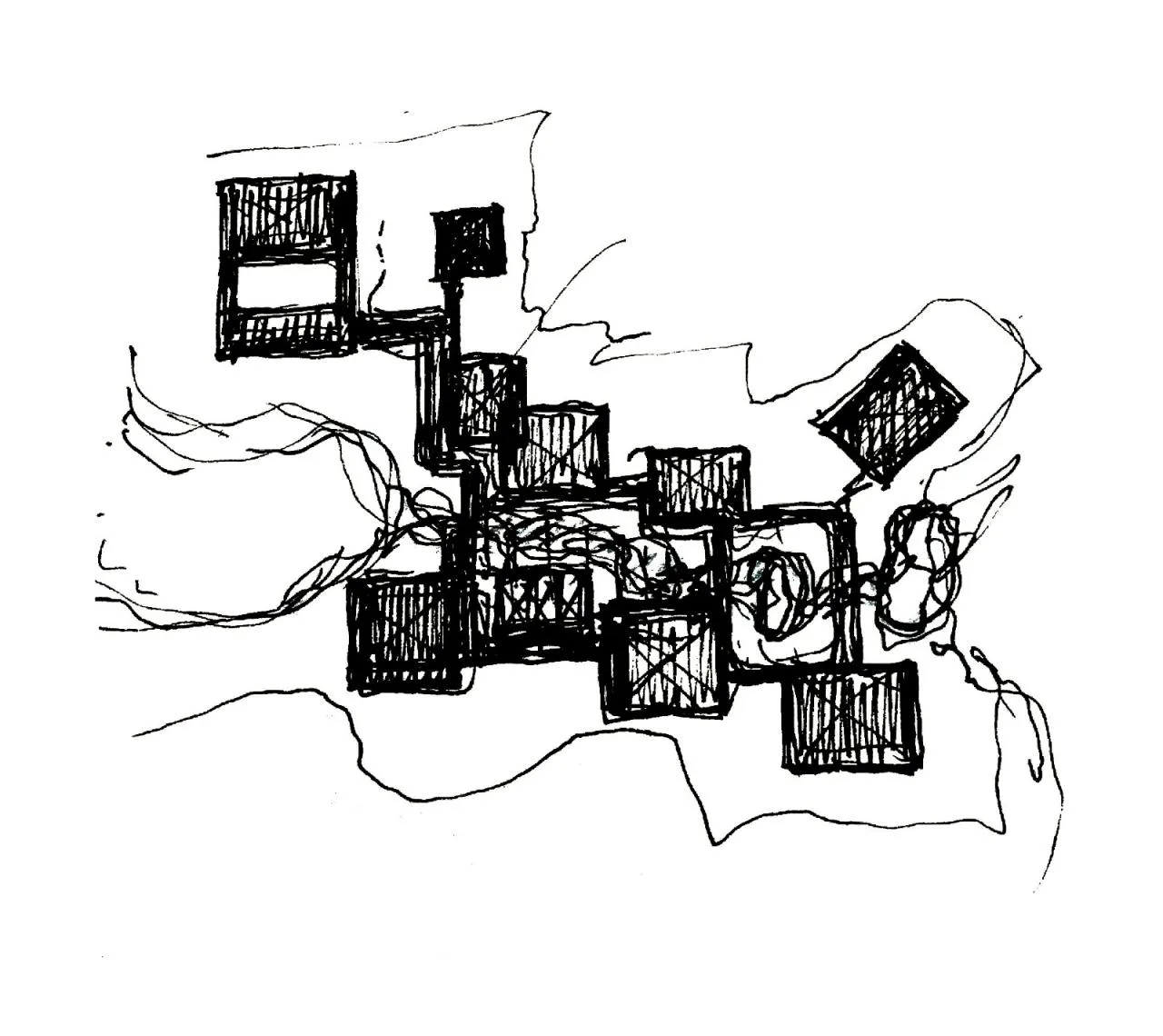
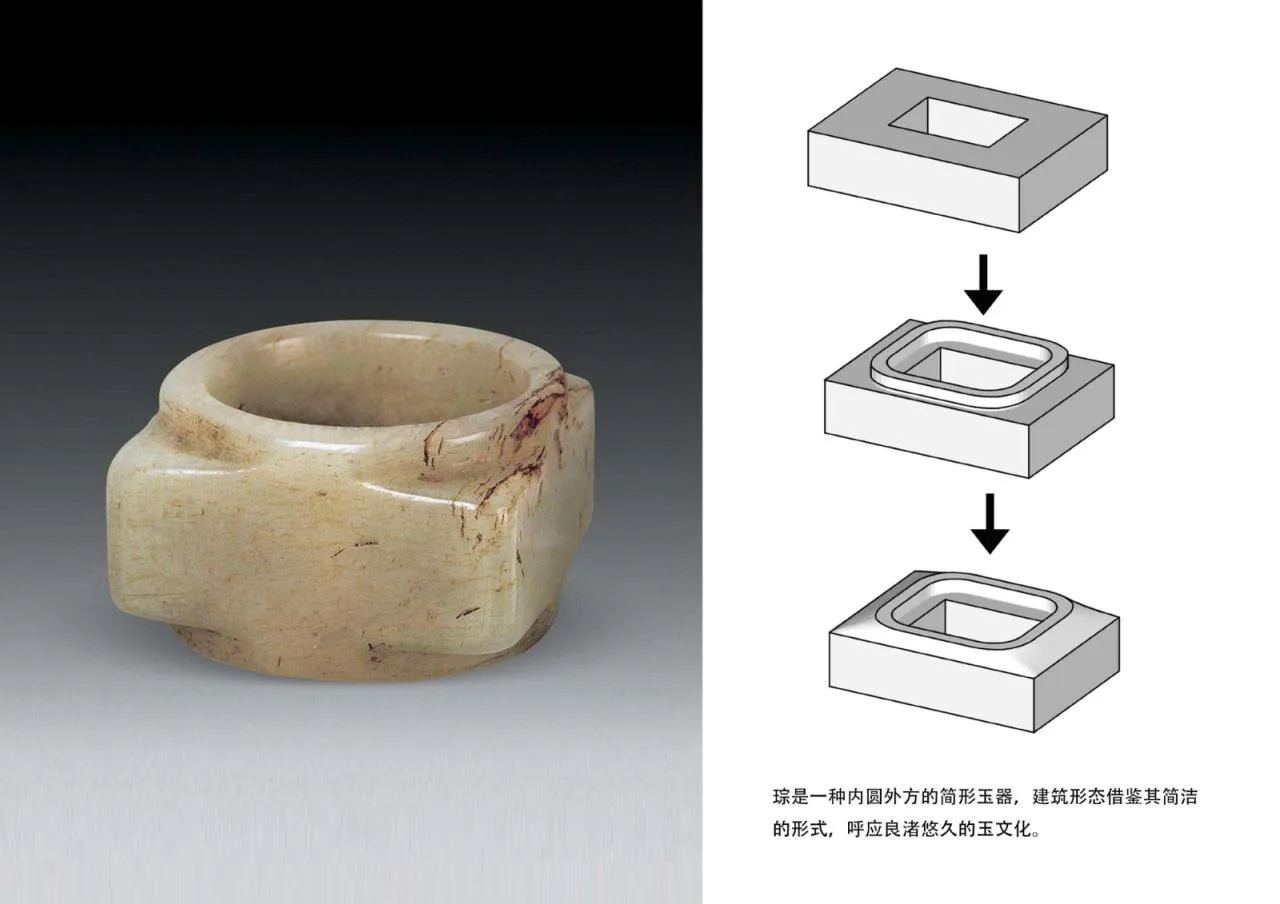
The Liangzhu culture is the region’s cultural heritage, with jade artifacts at its core. The design connects architecture with regional culture by drawing inspiration from the formal symbols of the inner and outer circles of the jade cong. These elements combine into a harmonious building group, scattered across the overlapping green mountains and extending continuously.
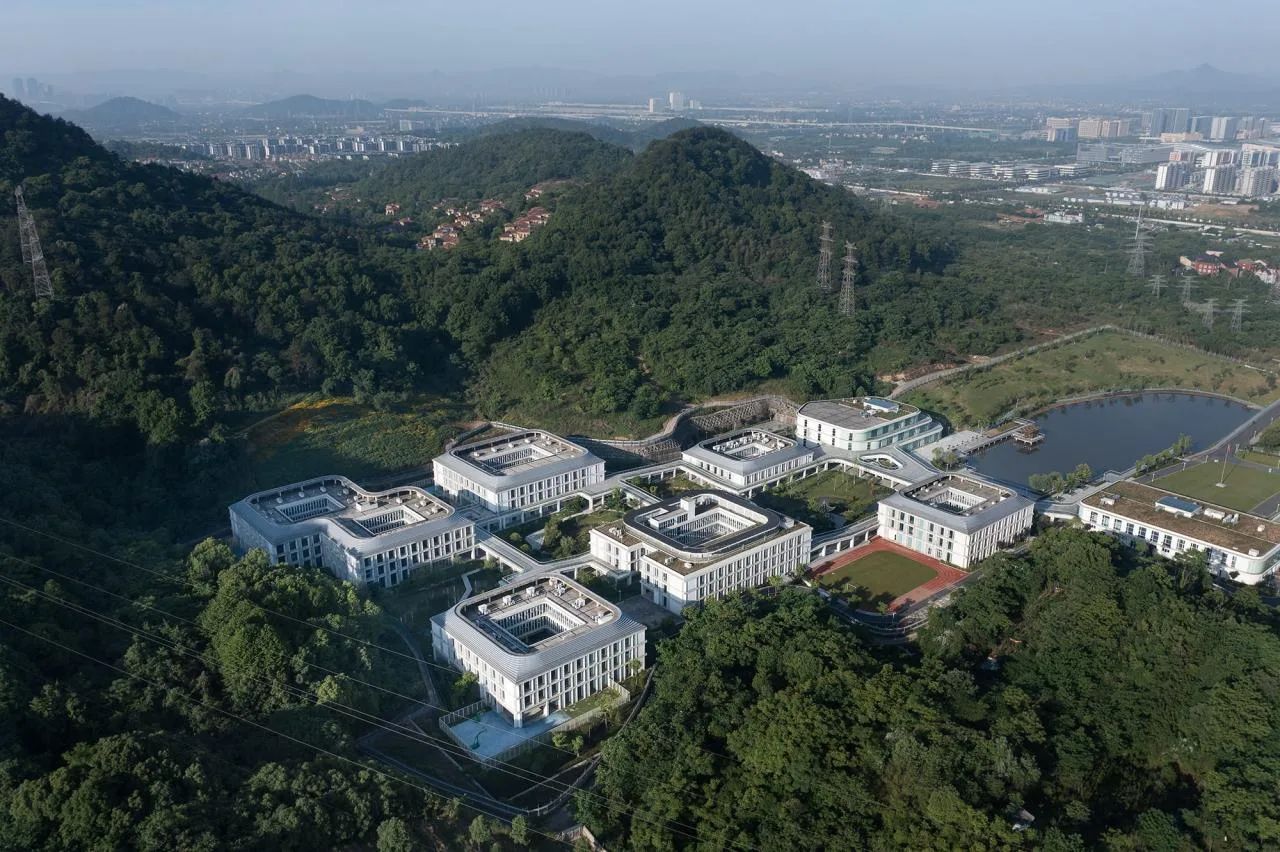
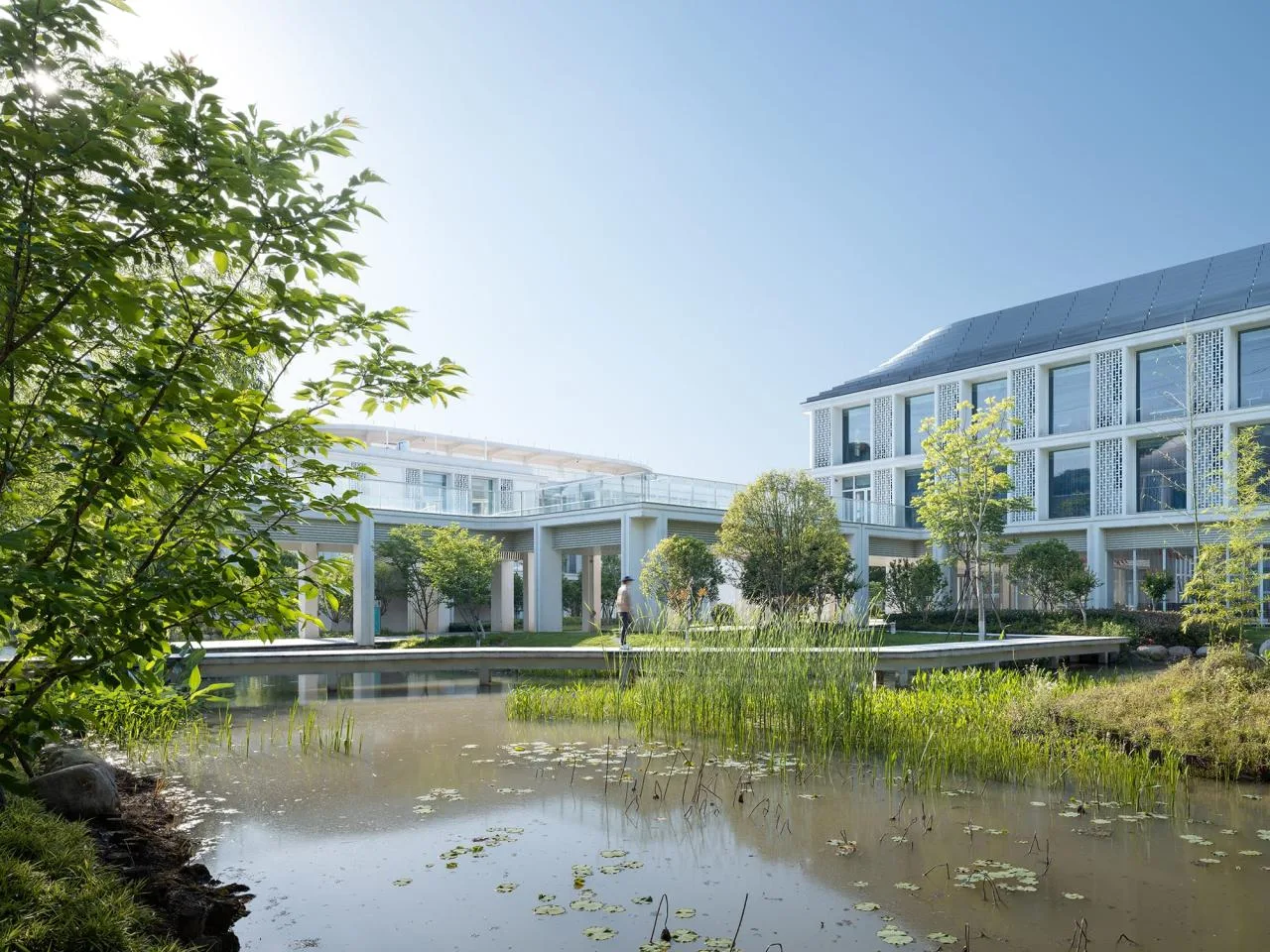
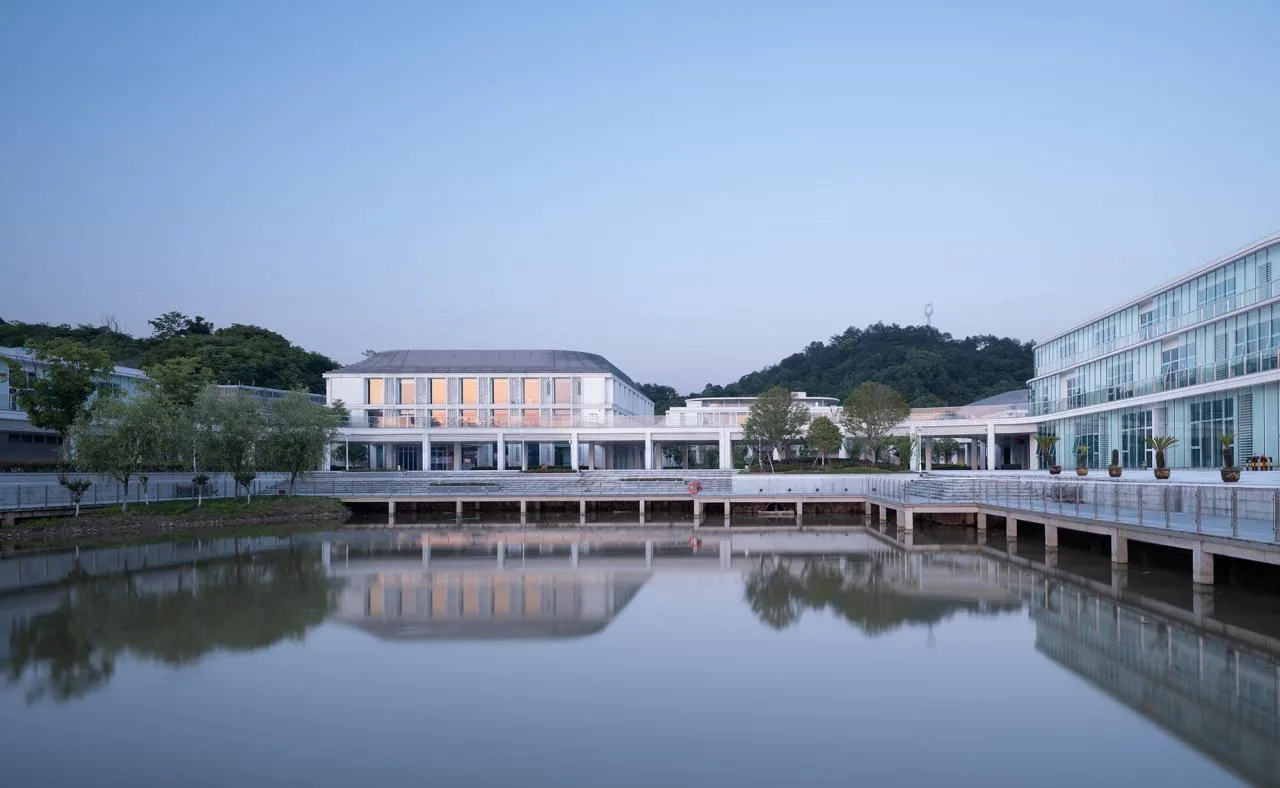
Incorporating classical garden design techniques, the architecture mimics the effect of ink dots and blank spaces, embodying traditional Chinese architectural elements such as deep courtyards and water pavilions. This approach captures the charm of landscape ink paintings. The building courtyards open freely to the central landscape, allowing the confined spirit to reconnect with nature.
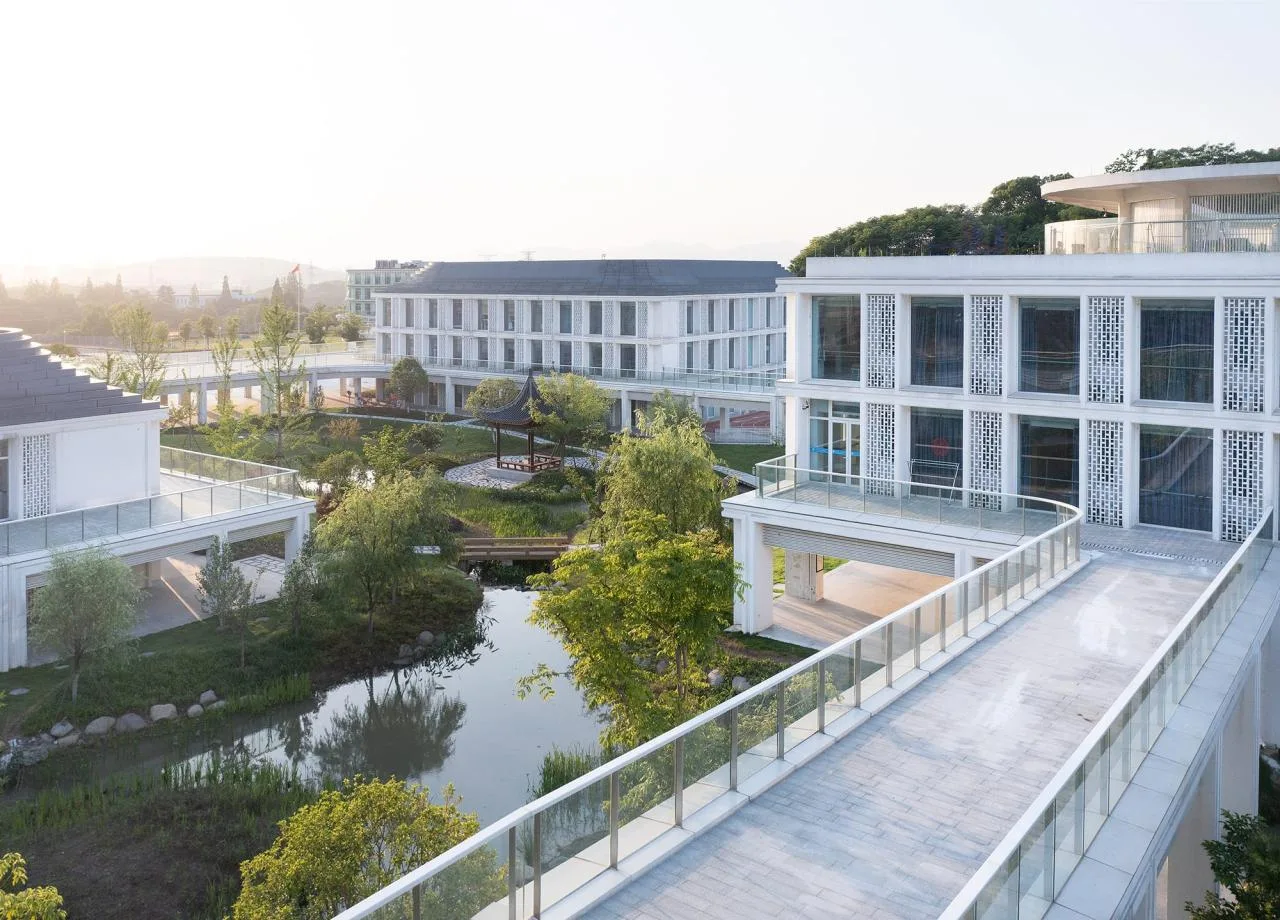
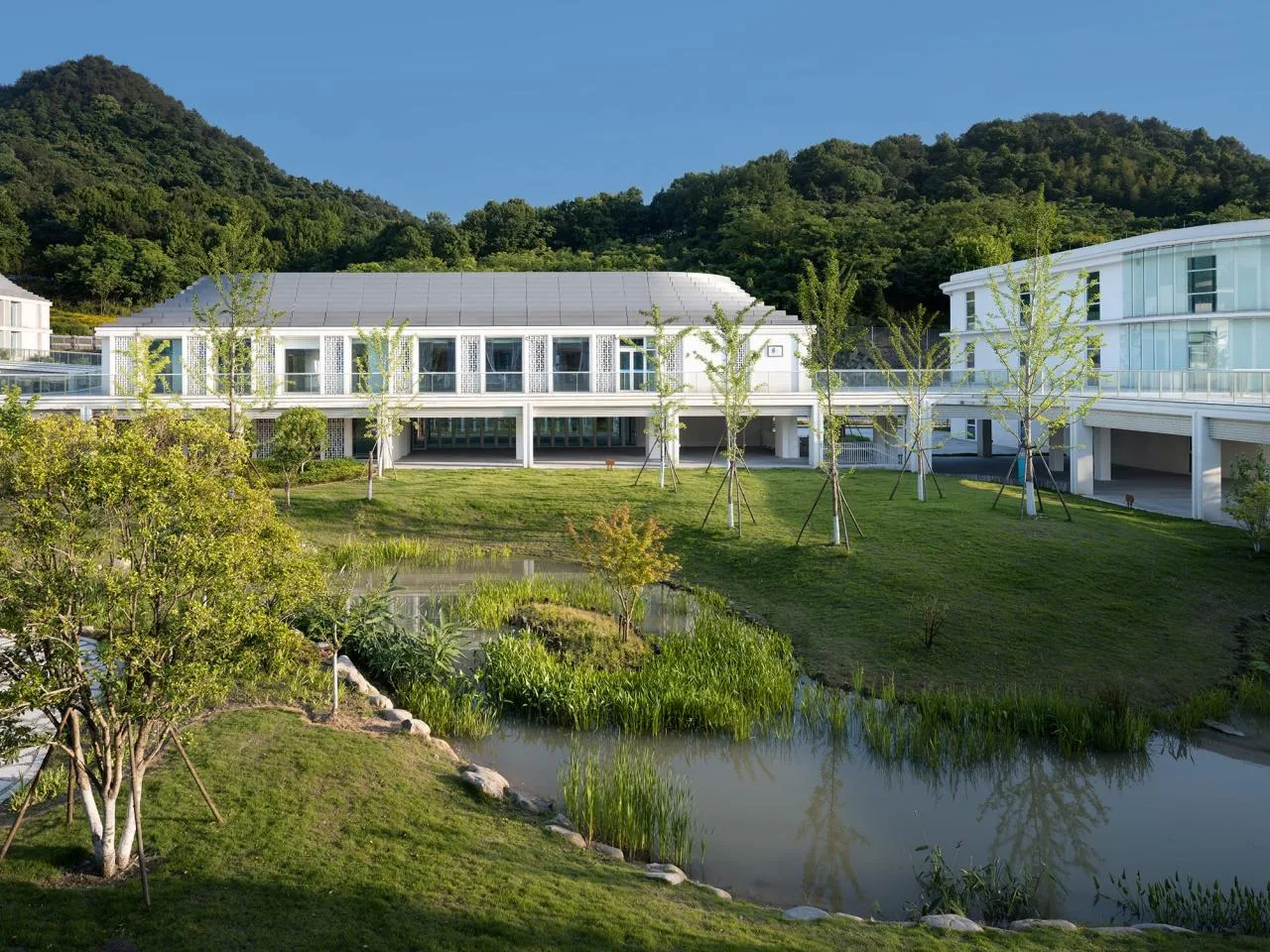
The calmness of the water and the richness of the mountains evoke a sense of vastness and mystery, responding nobly to the site and inspiring a poetic landscape experience for users. The architecture’s form and layout respect the original mountain terrain, water flow, and regional culture, revealing the inherent beauty of the landscape.
02 Humanized Design Care
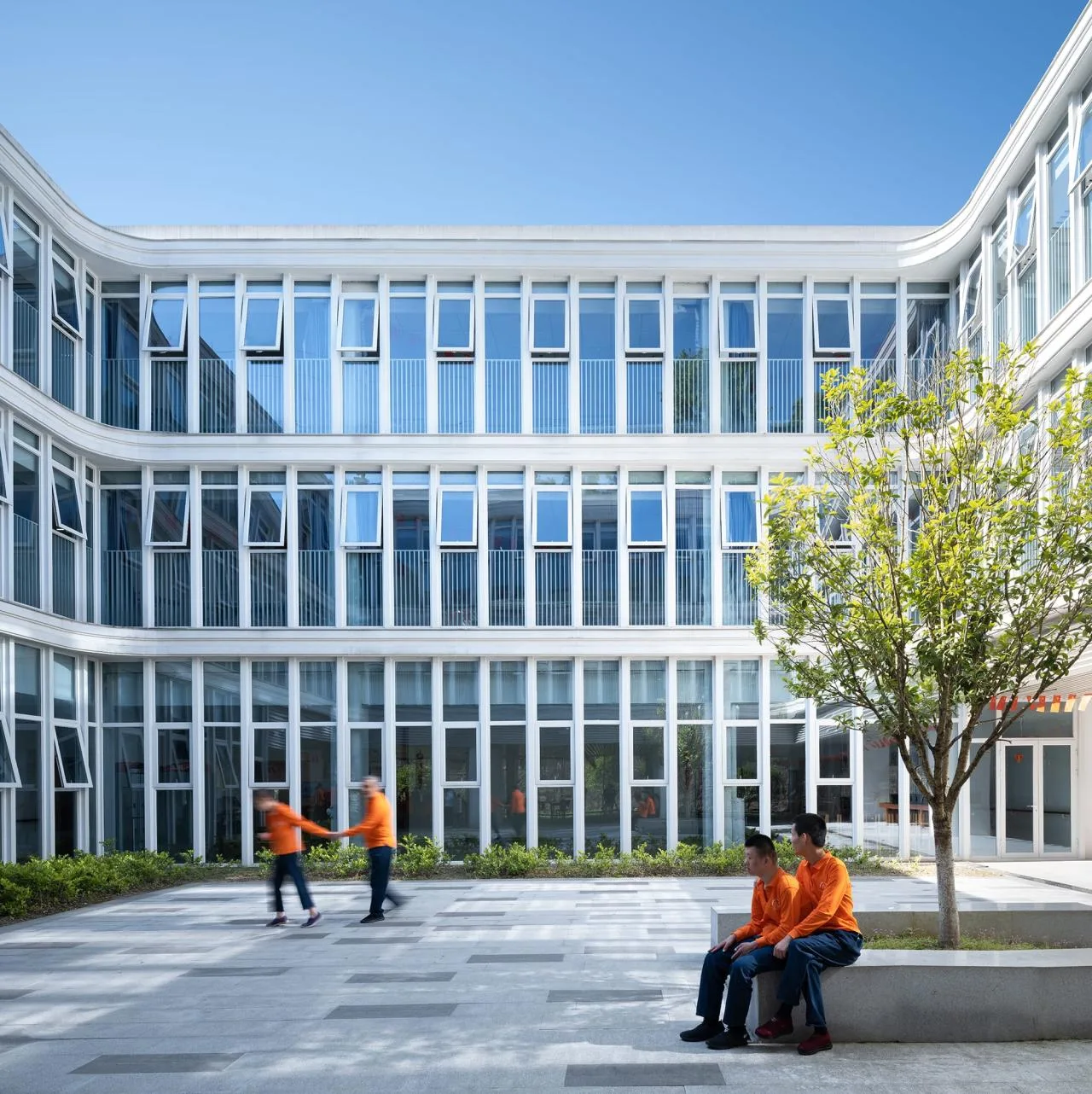
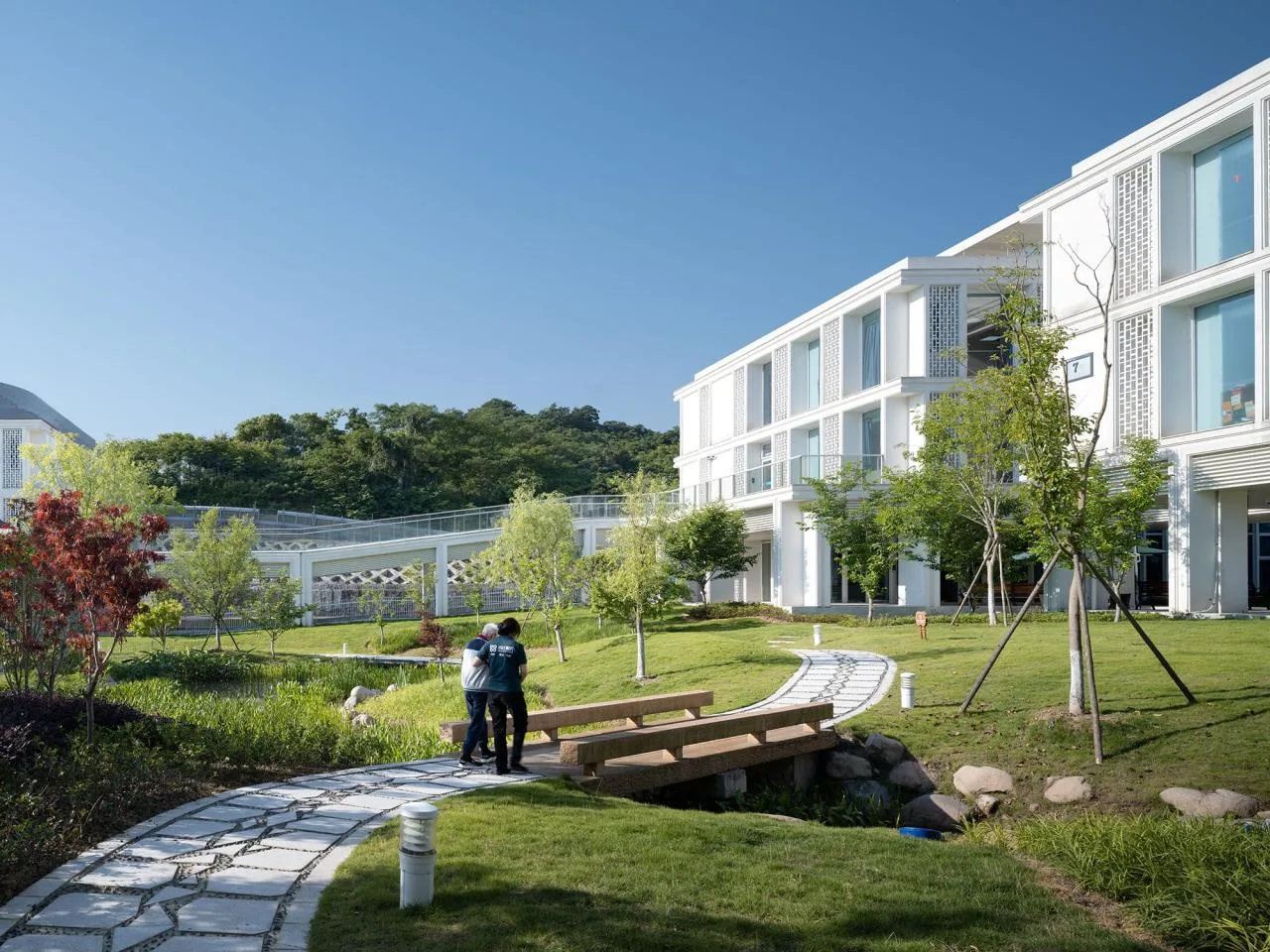
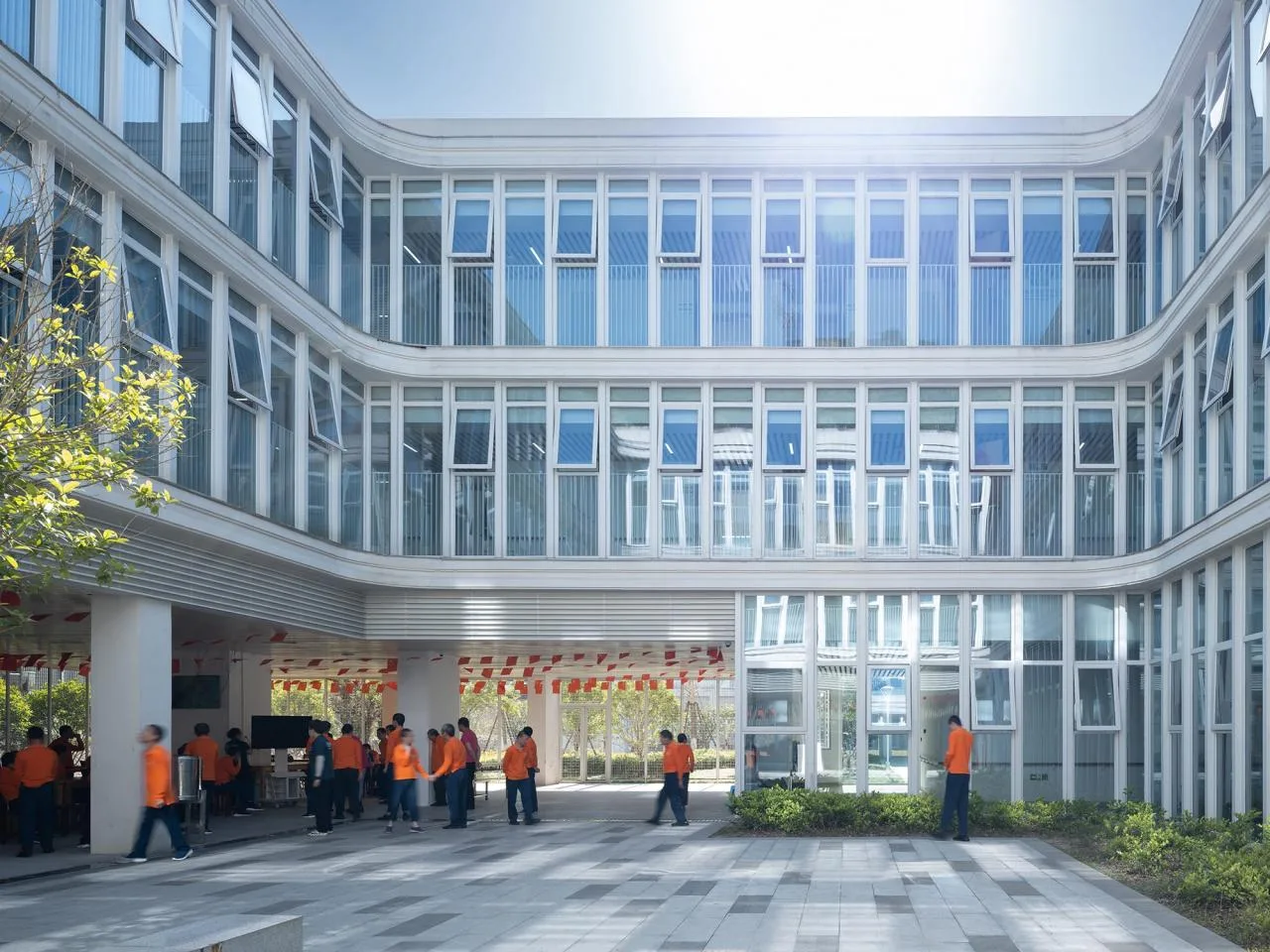
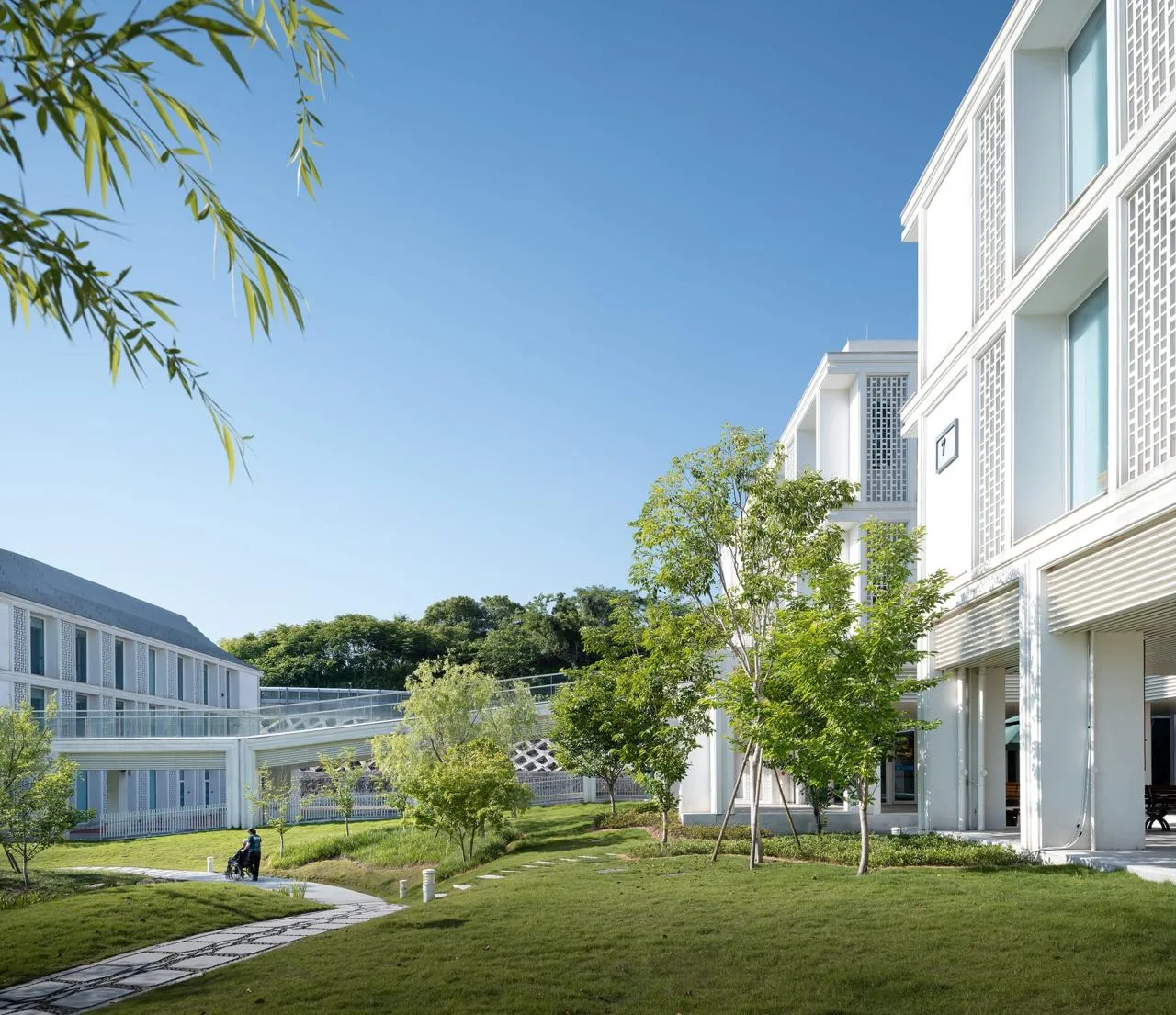
The garden-style spatial layout offers opportunities for human-centered design care. Moving away from the traditional closed solid-wall enclosures, the design introduces a semi-open “courtyard within a courtyard” enclosure model.
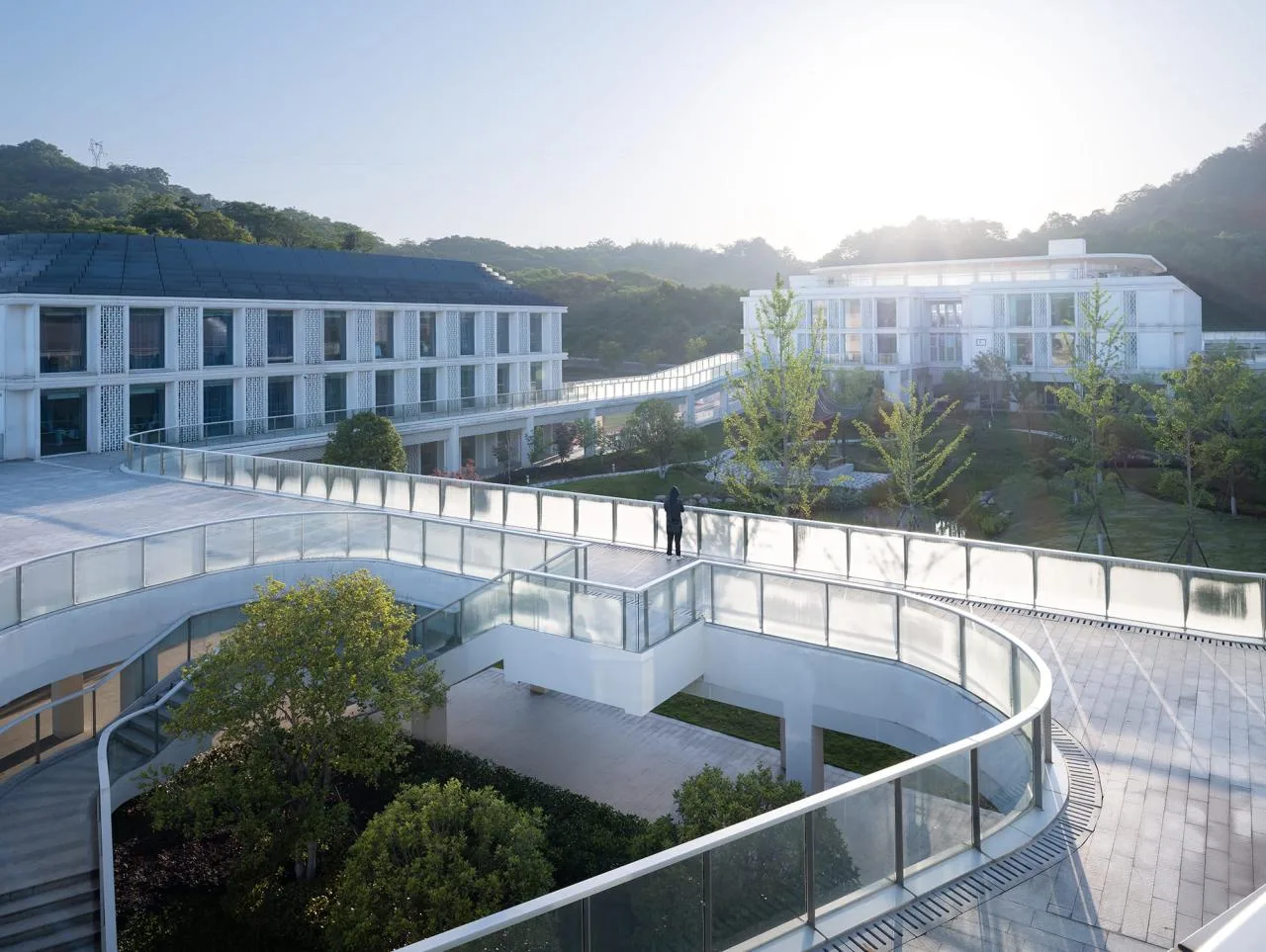
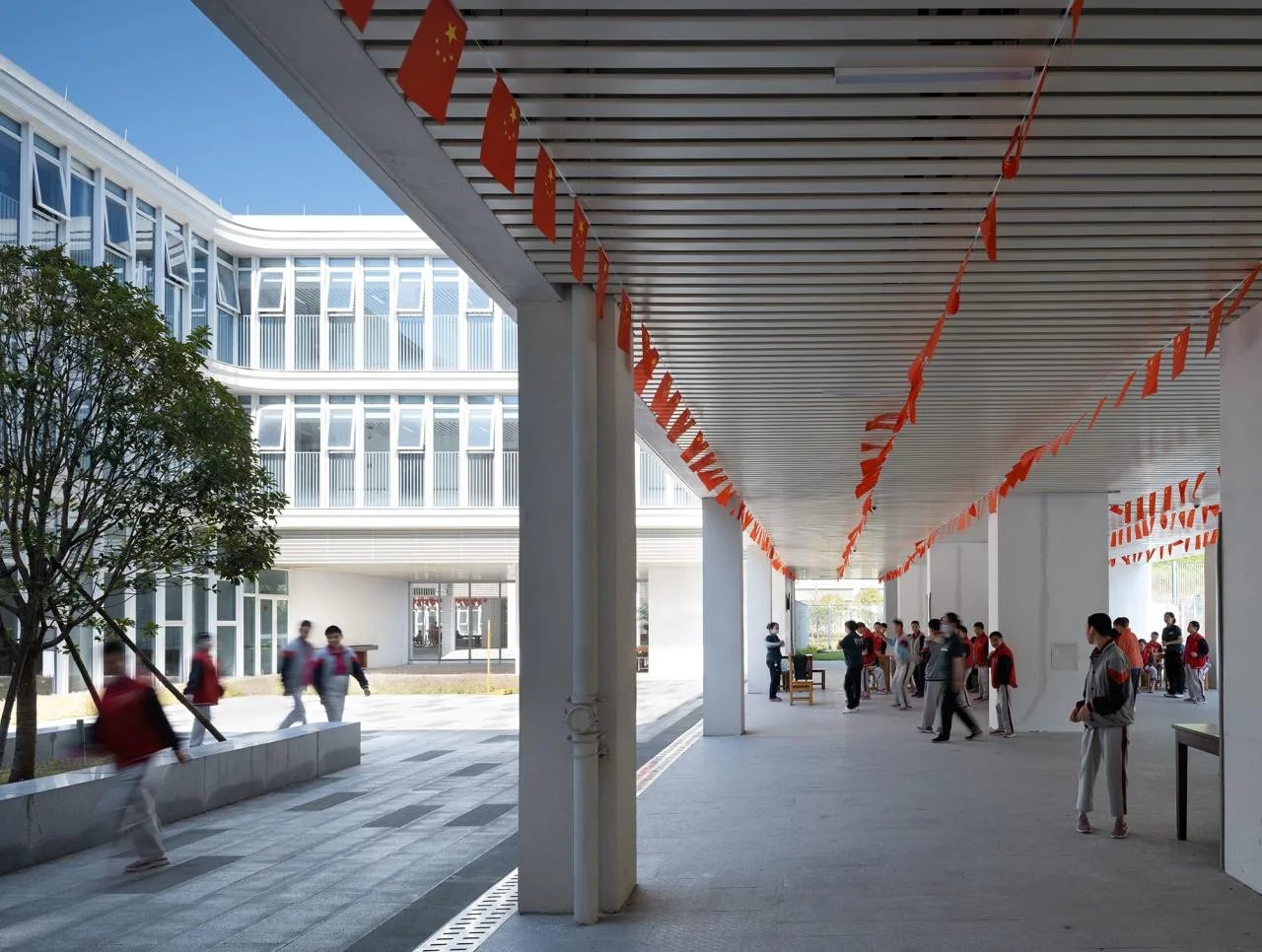
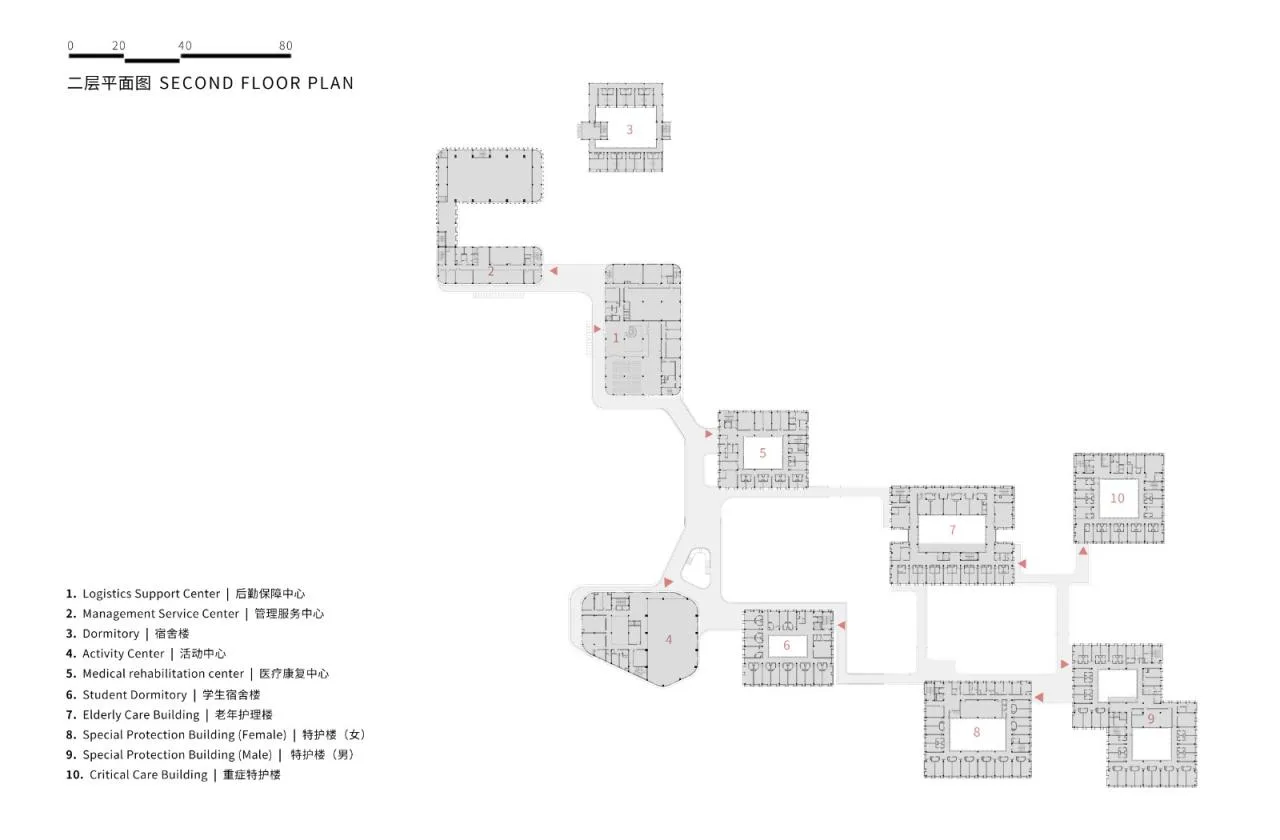
Each management unit centers around an enclosed courtyard raised slightly above ground level, fostering permeability between indoor and outdoor environments. All buildings connect via long corridors, allowing for easy, weather-protected passage that facilitates daily management and accessibility.
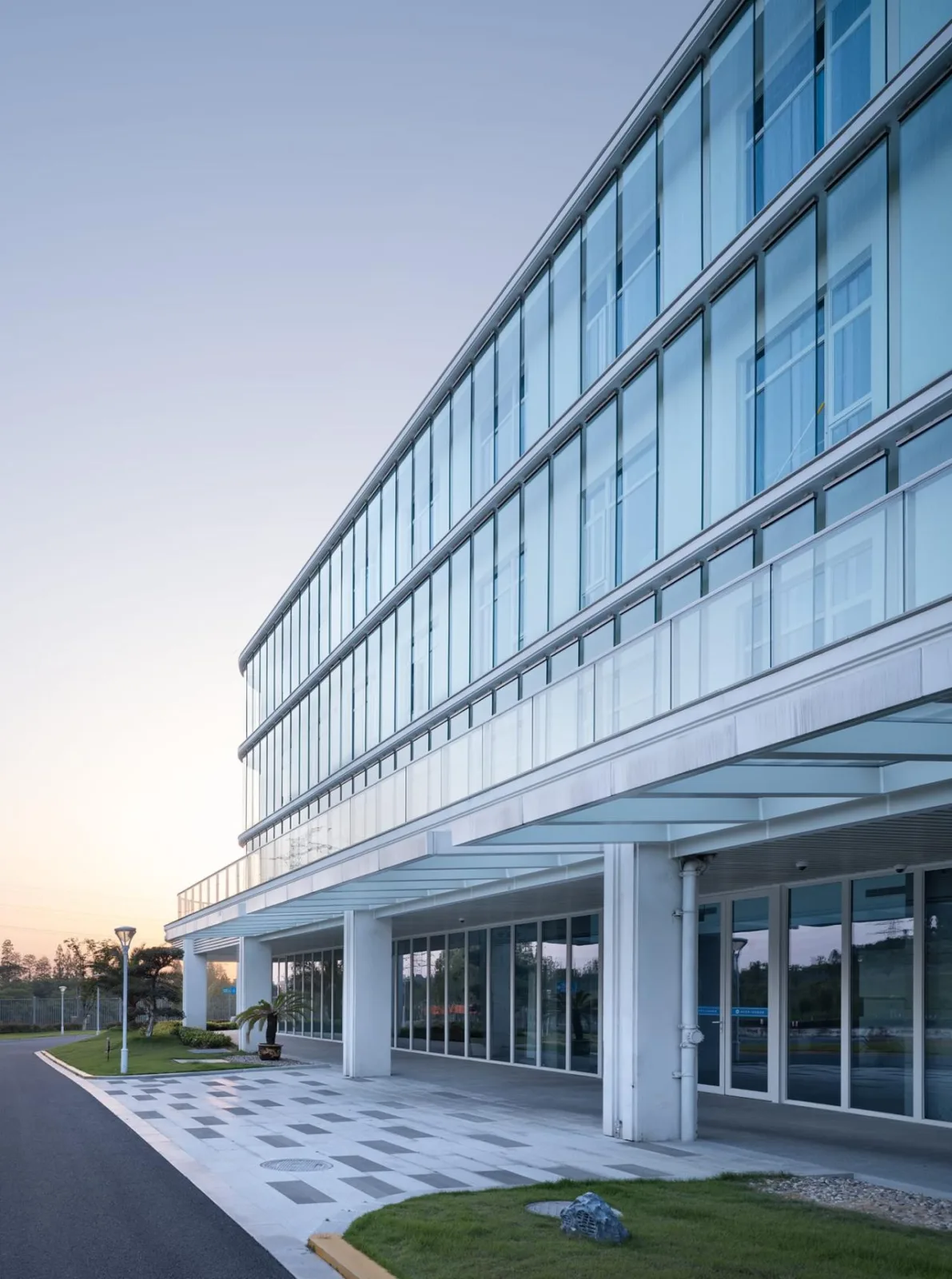
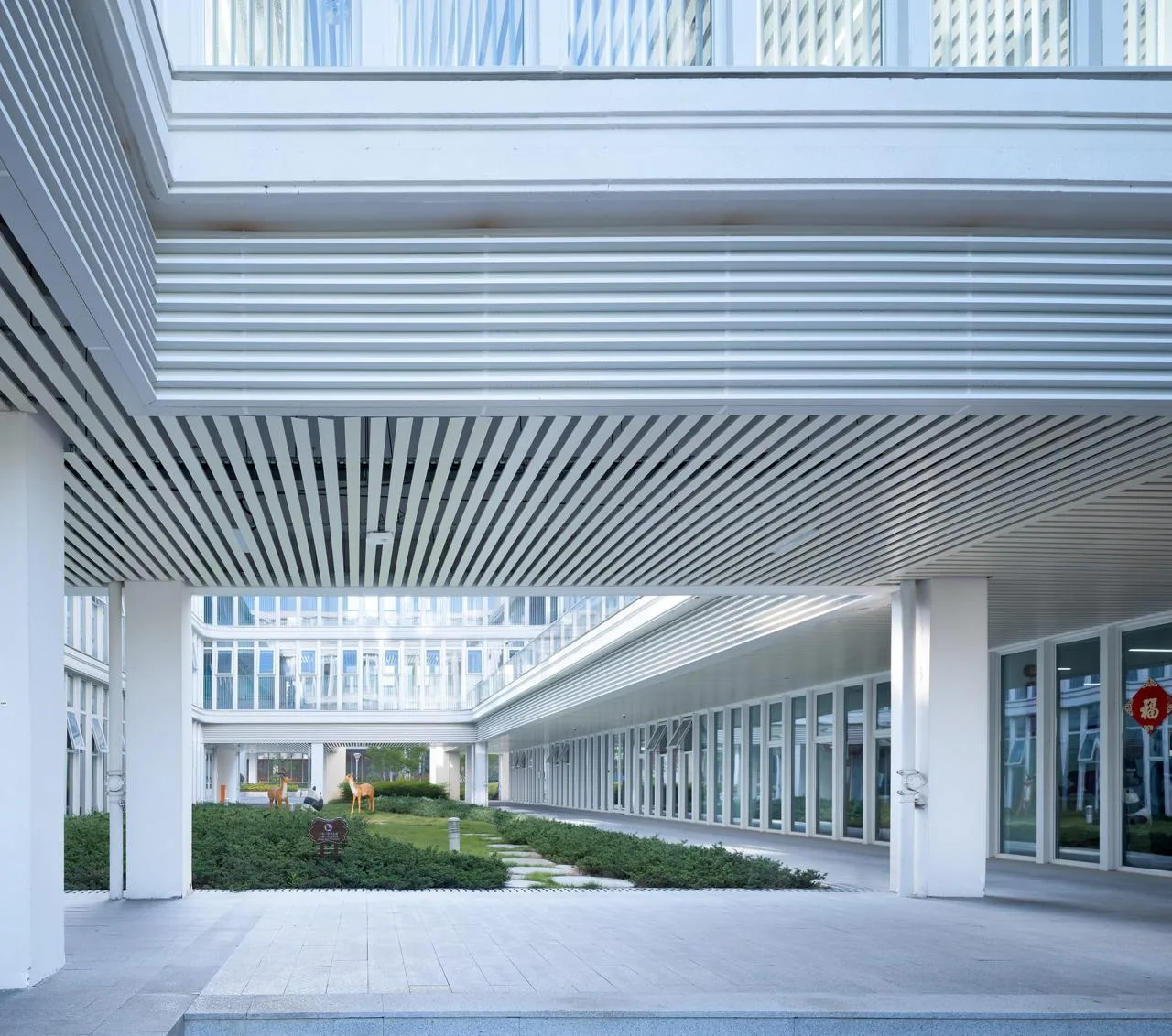
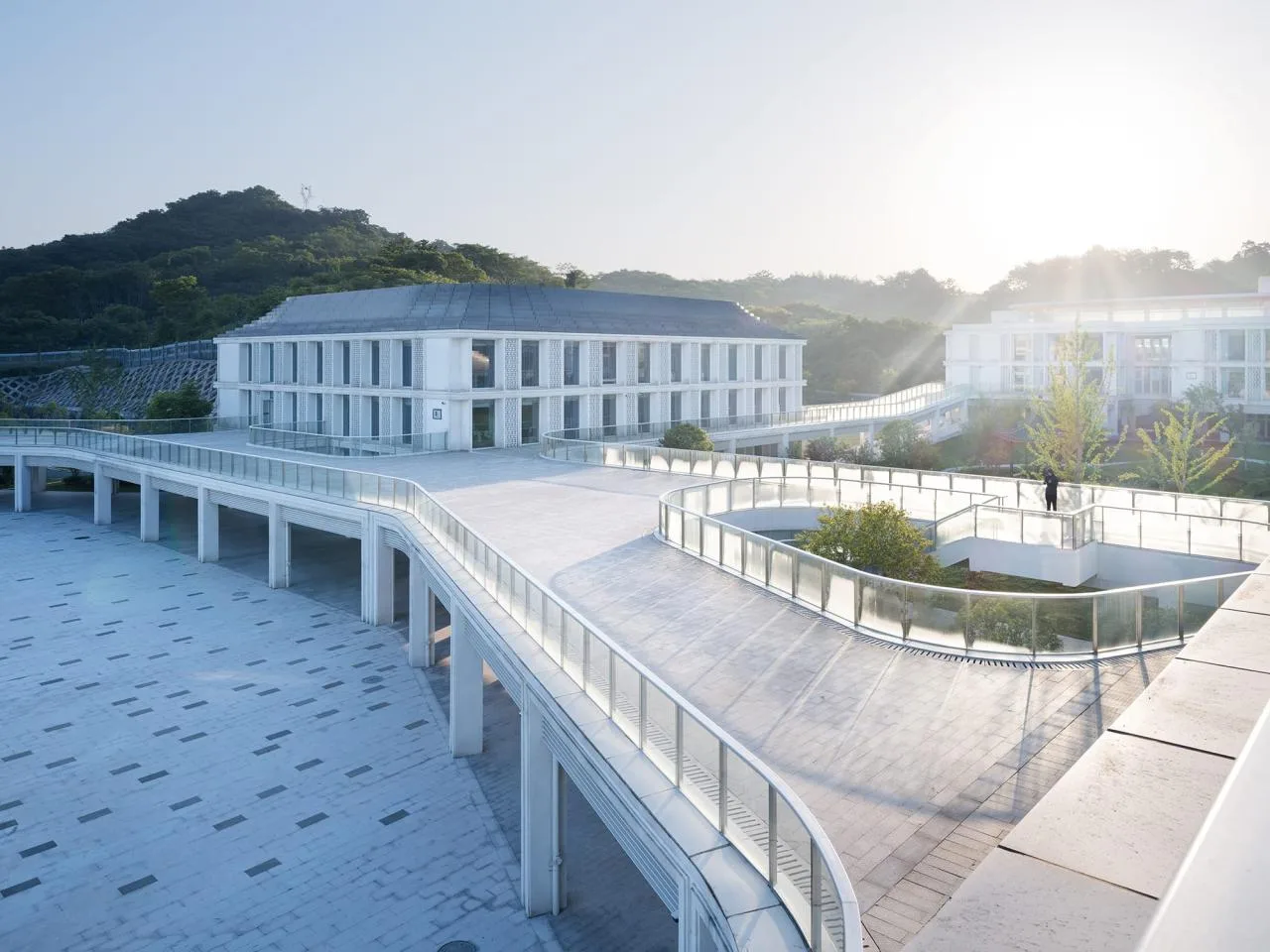
To avoid blind spots common at the ends of straight corridors, the design adopts a zigzag layout for the pathways. This circular corridor design prevents residents from becoming disoriented, enhances their sense of safety while walking, and facilitates staff supervision.
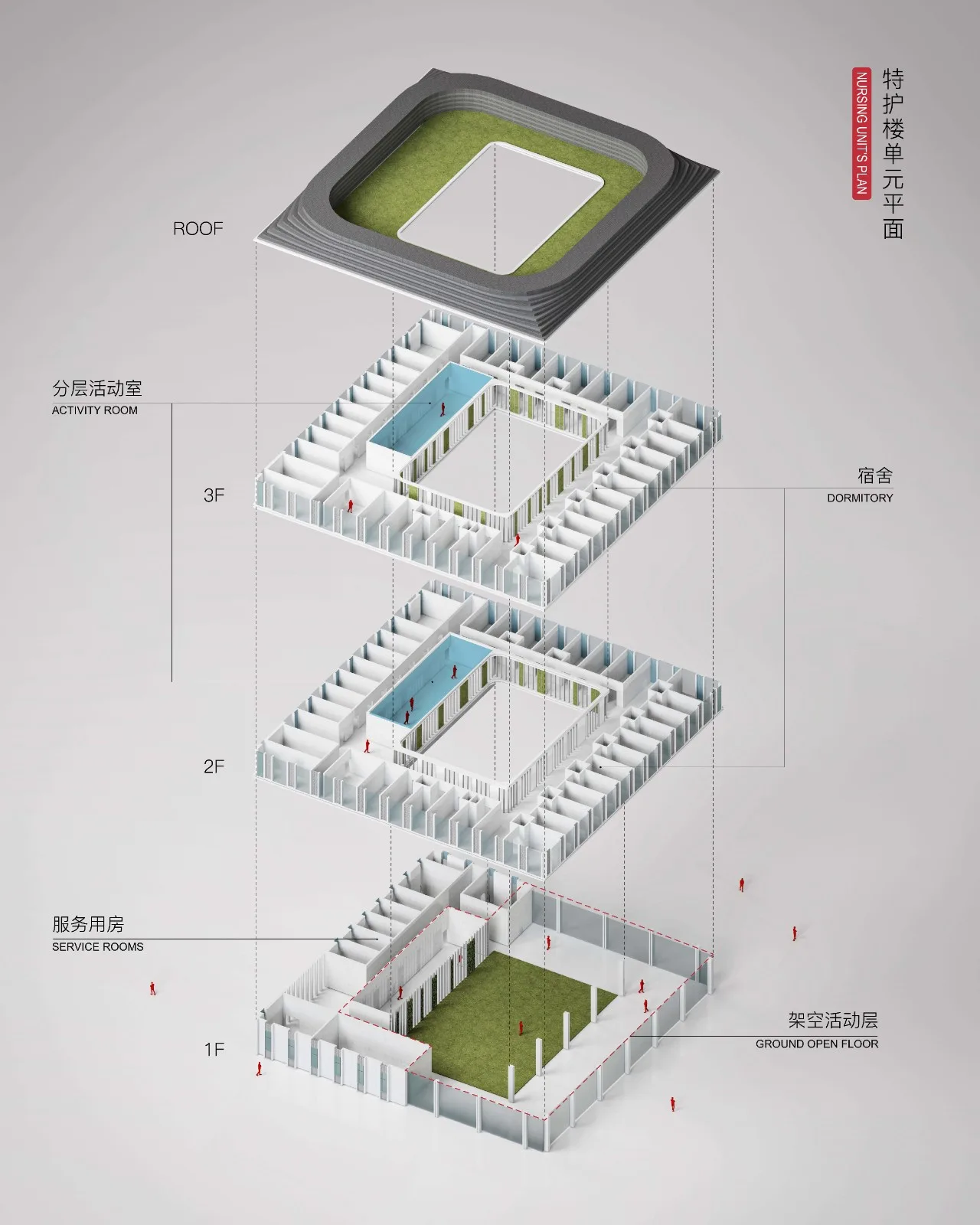
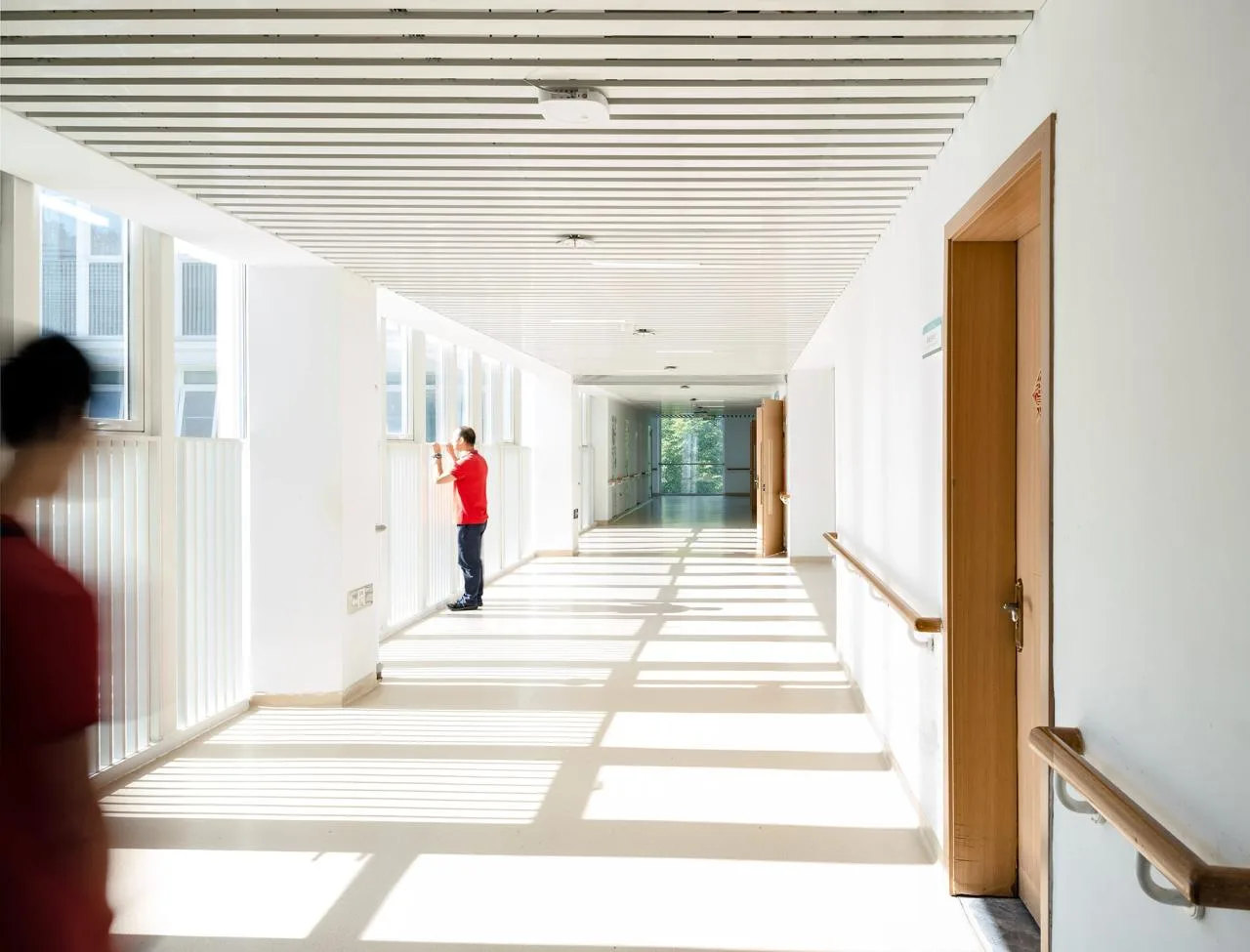
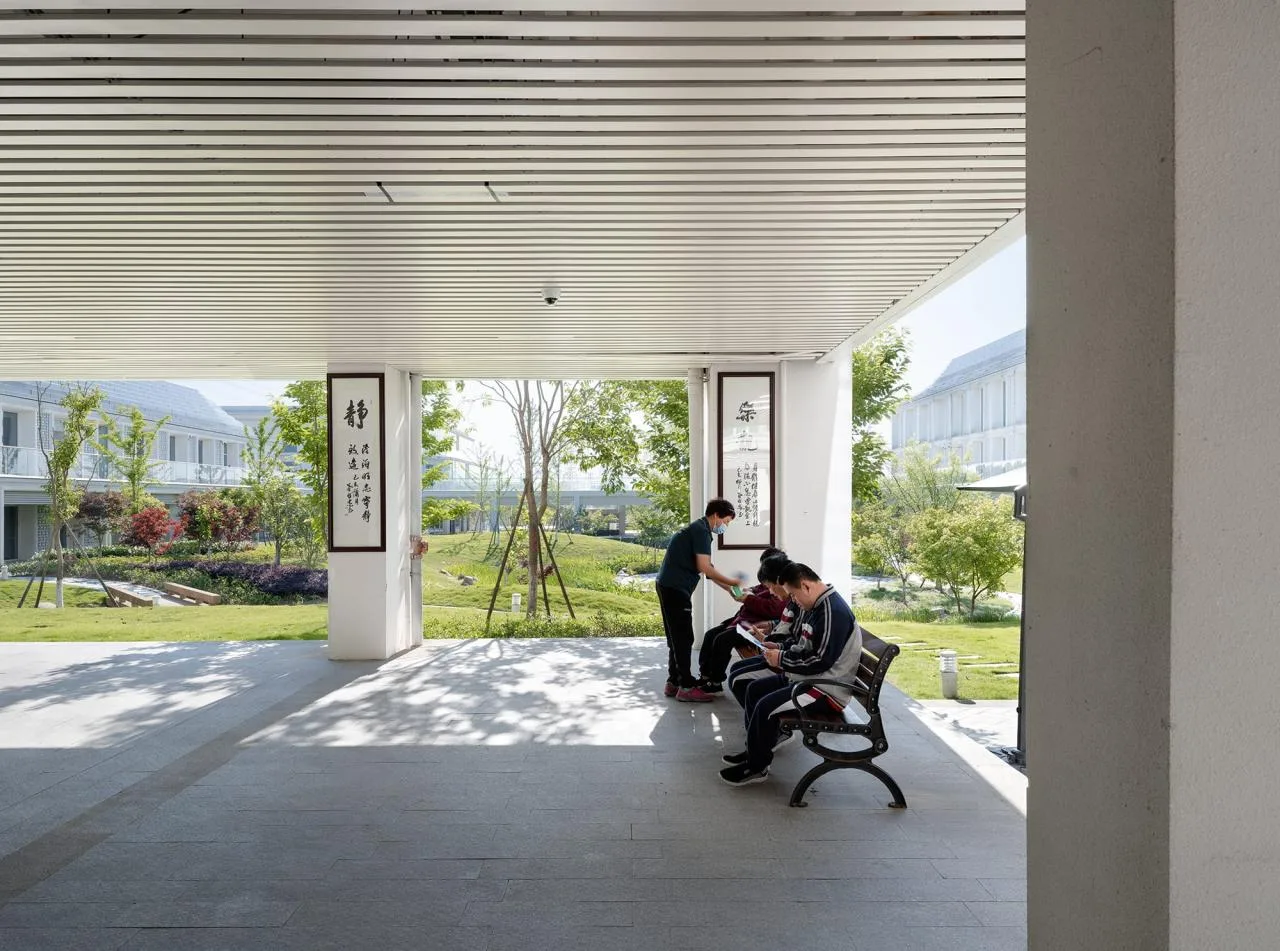
Considering the humid mountain climate, the main living quarters are located on the second floor or higher, with living spaces oriented east, west, and south to maximize sunlight. Service and activity rooms are positioned on the north side.
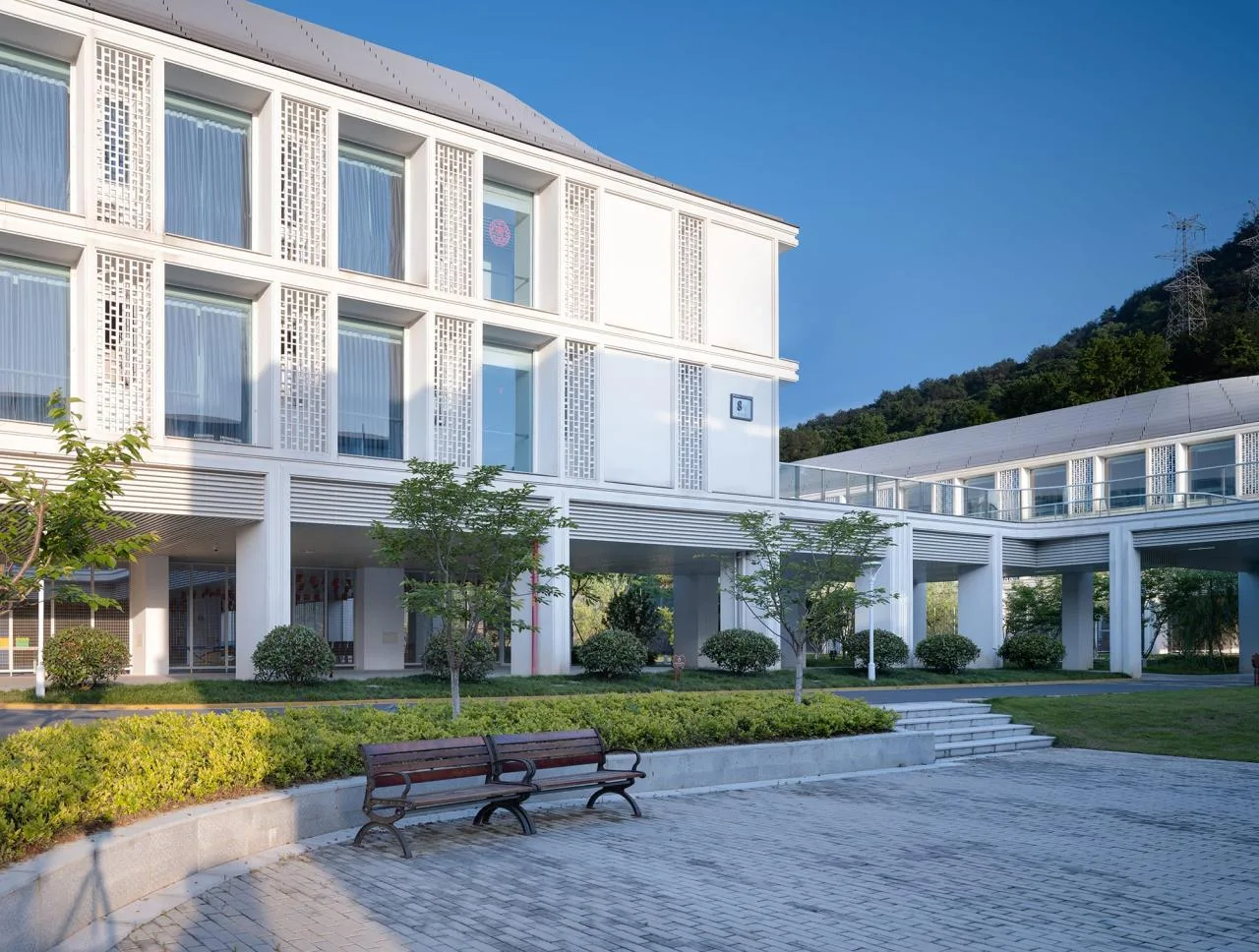
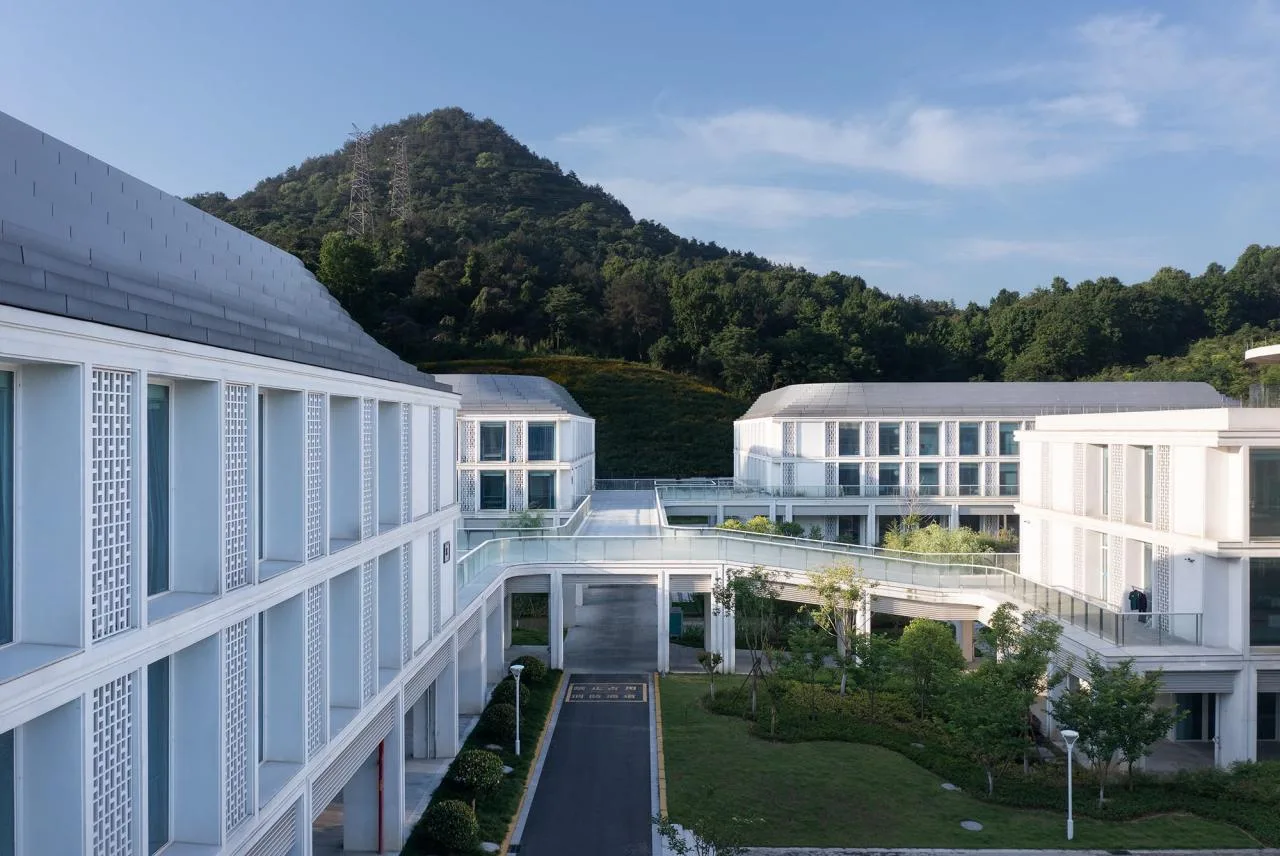
The lower elevated level serves as a semi-indoor activity space, extending outward into outdoor activity areas. This creates a variety of venues where residents can participate in individual or group activities, breaking the stereotype of closed, dull welfare homes.
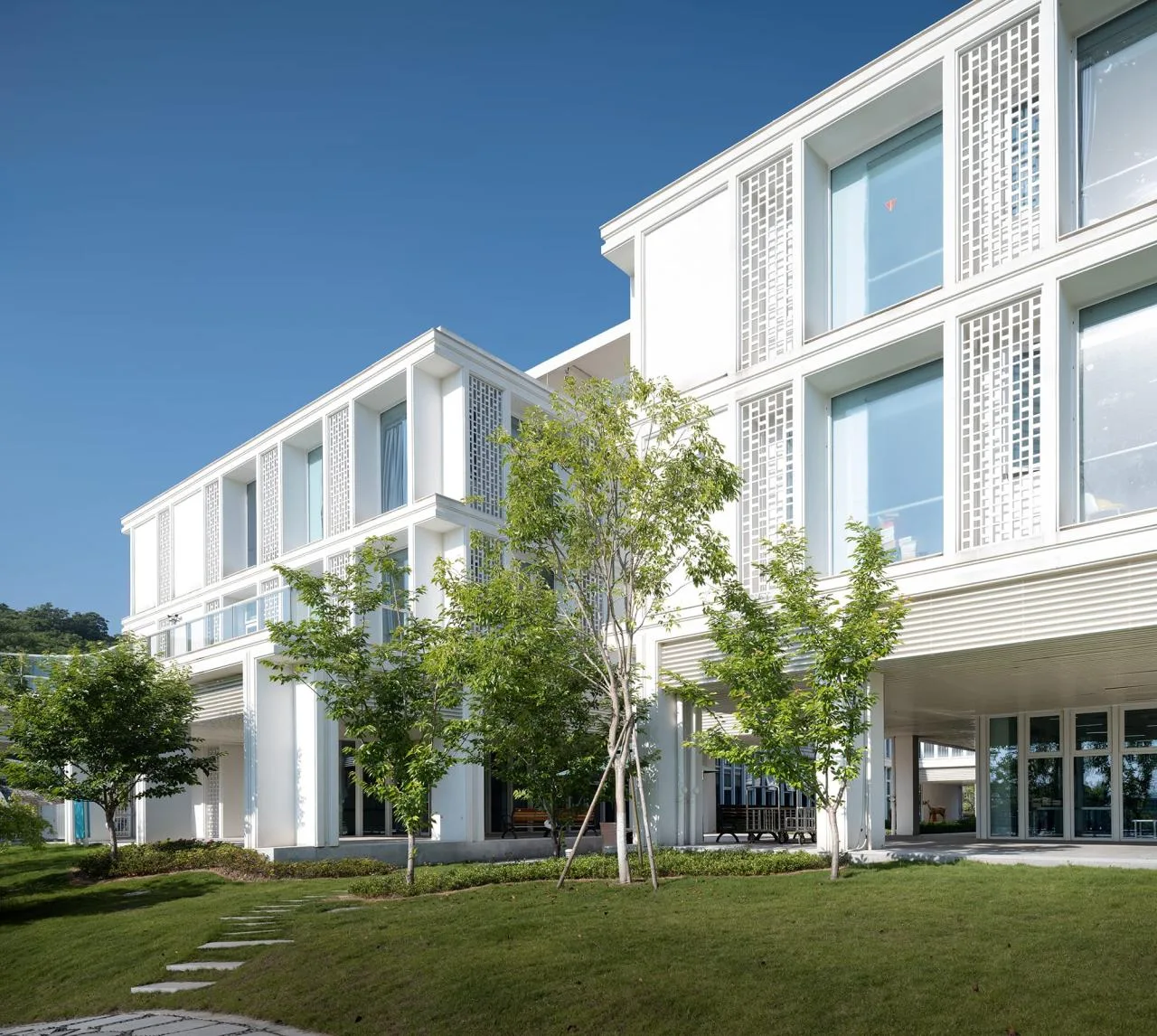
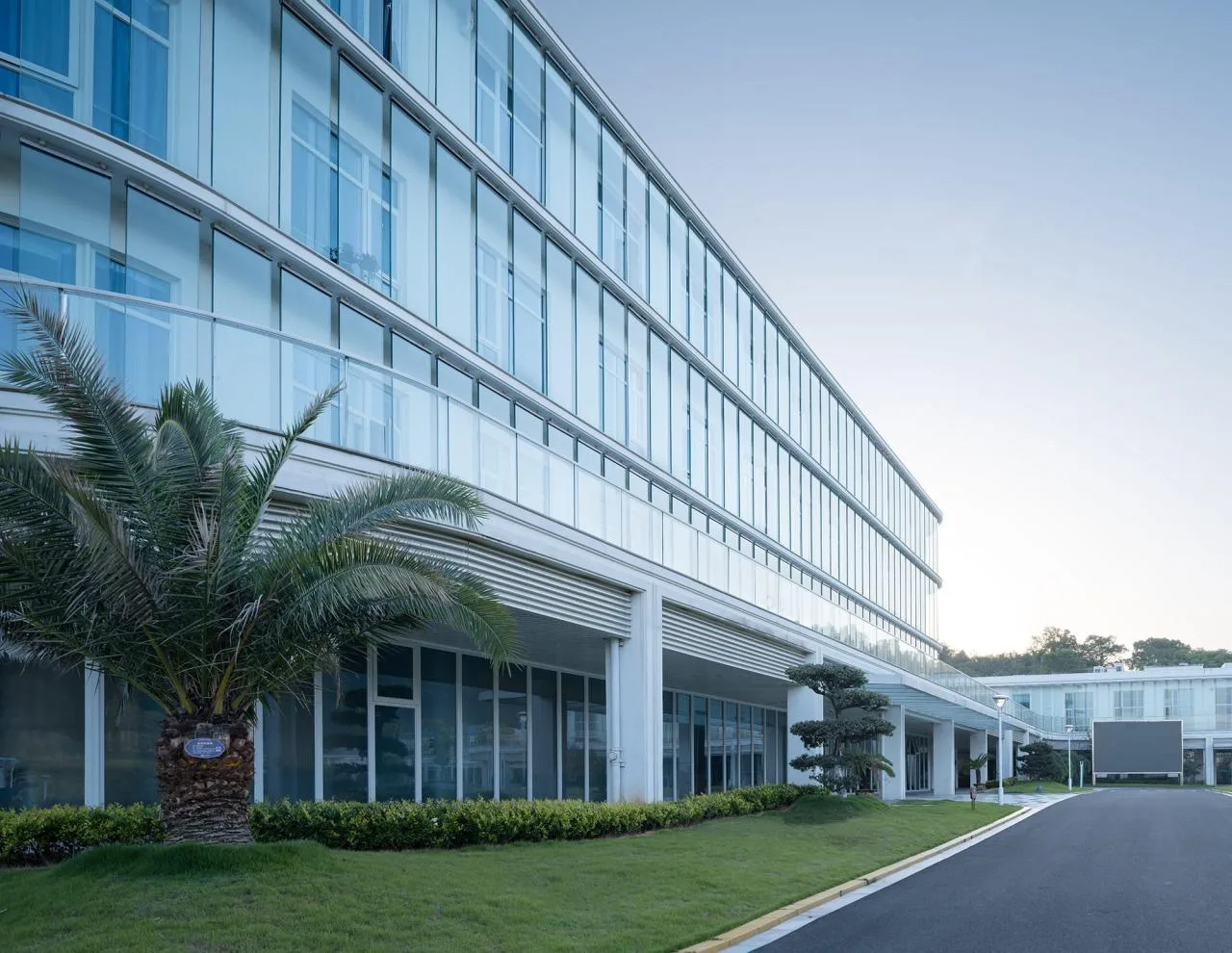
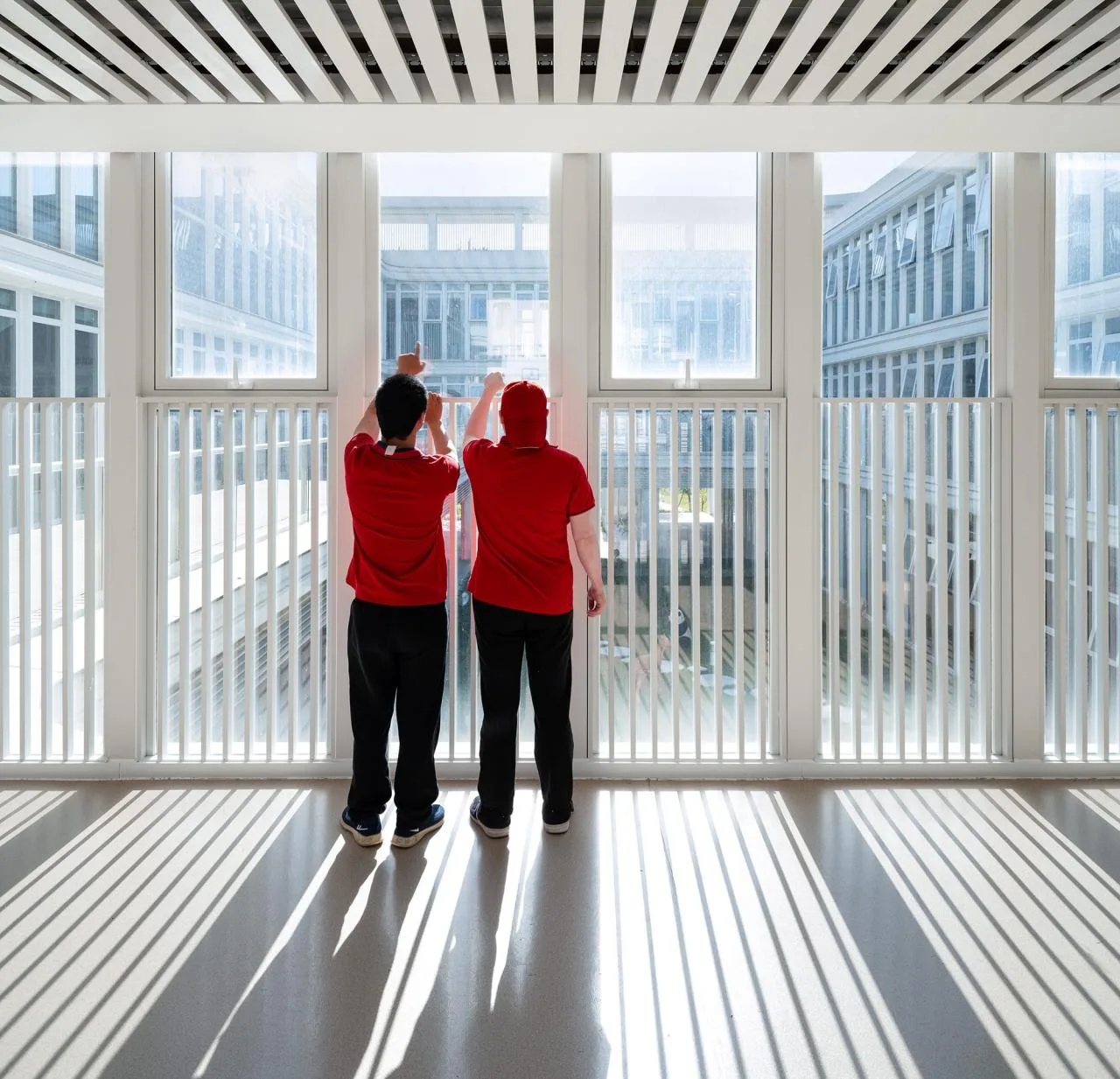
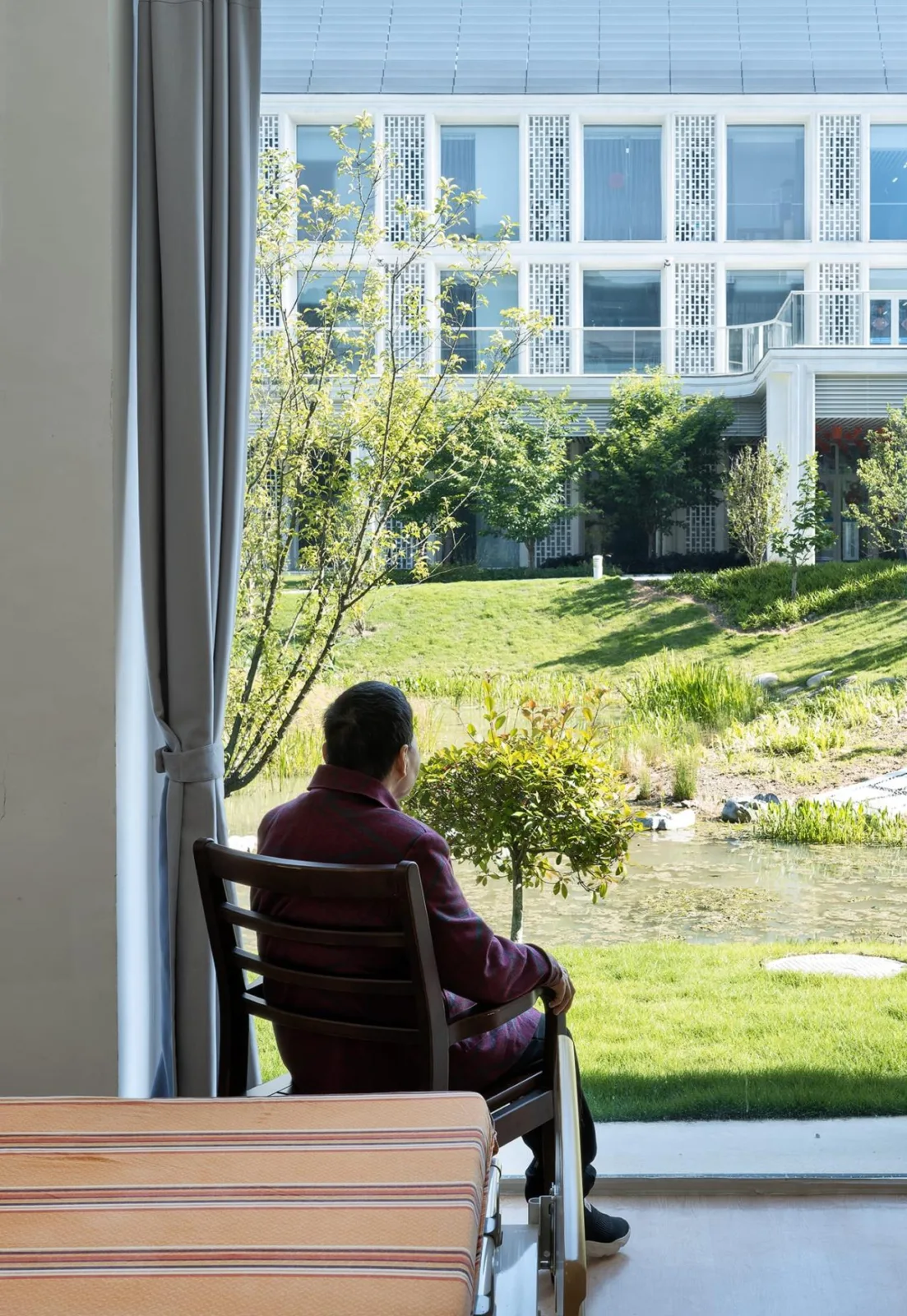
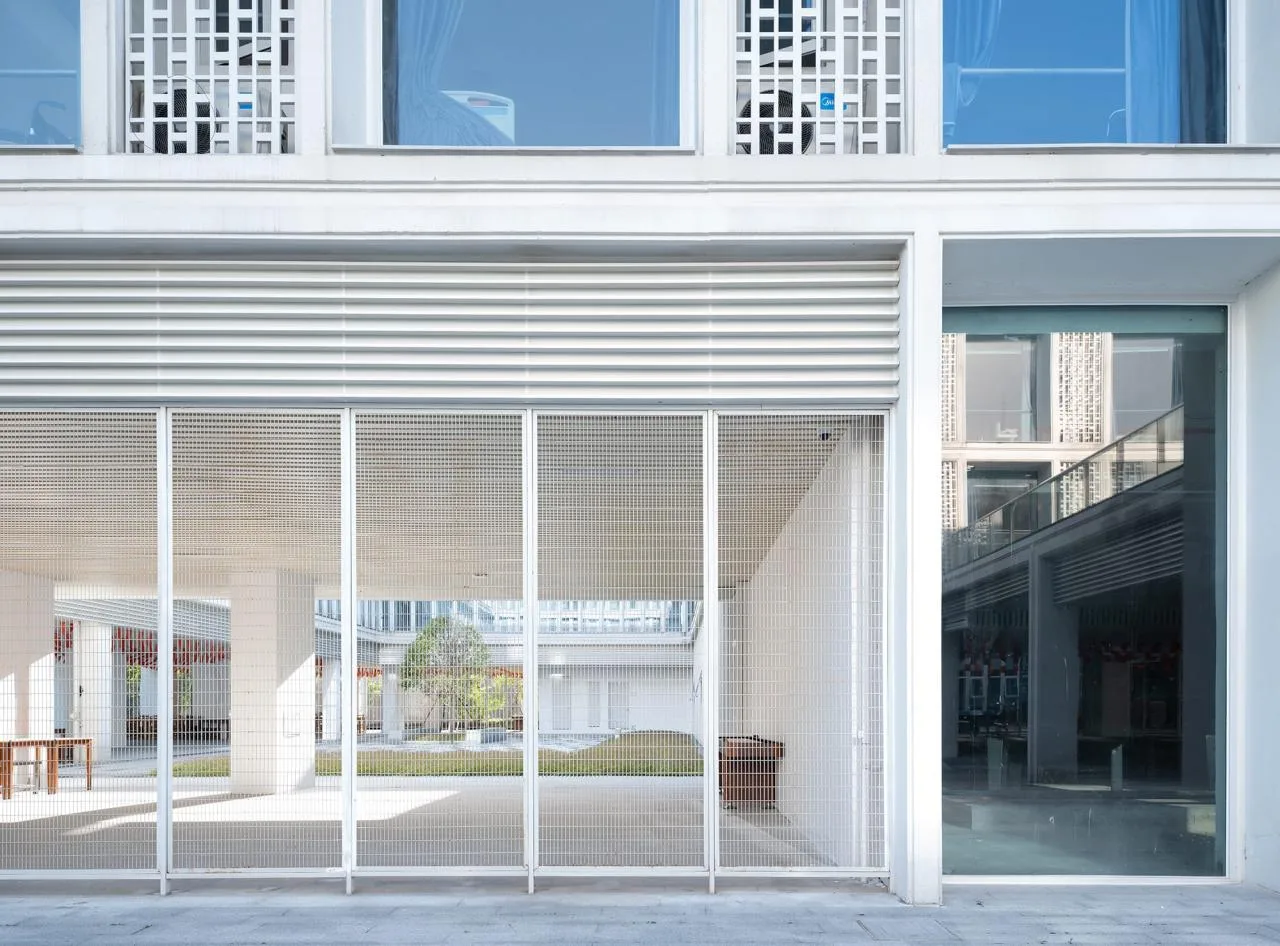
For security, the design moves away from traditional iron window bars, allowing residents to enjoy “scenic freedom” within their rooms. The living areas feature triple-layer tempered laminated insulated glass windows, providing protection while offering unobstructed views of the landscape.
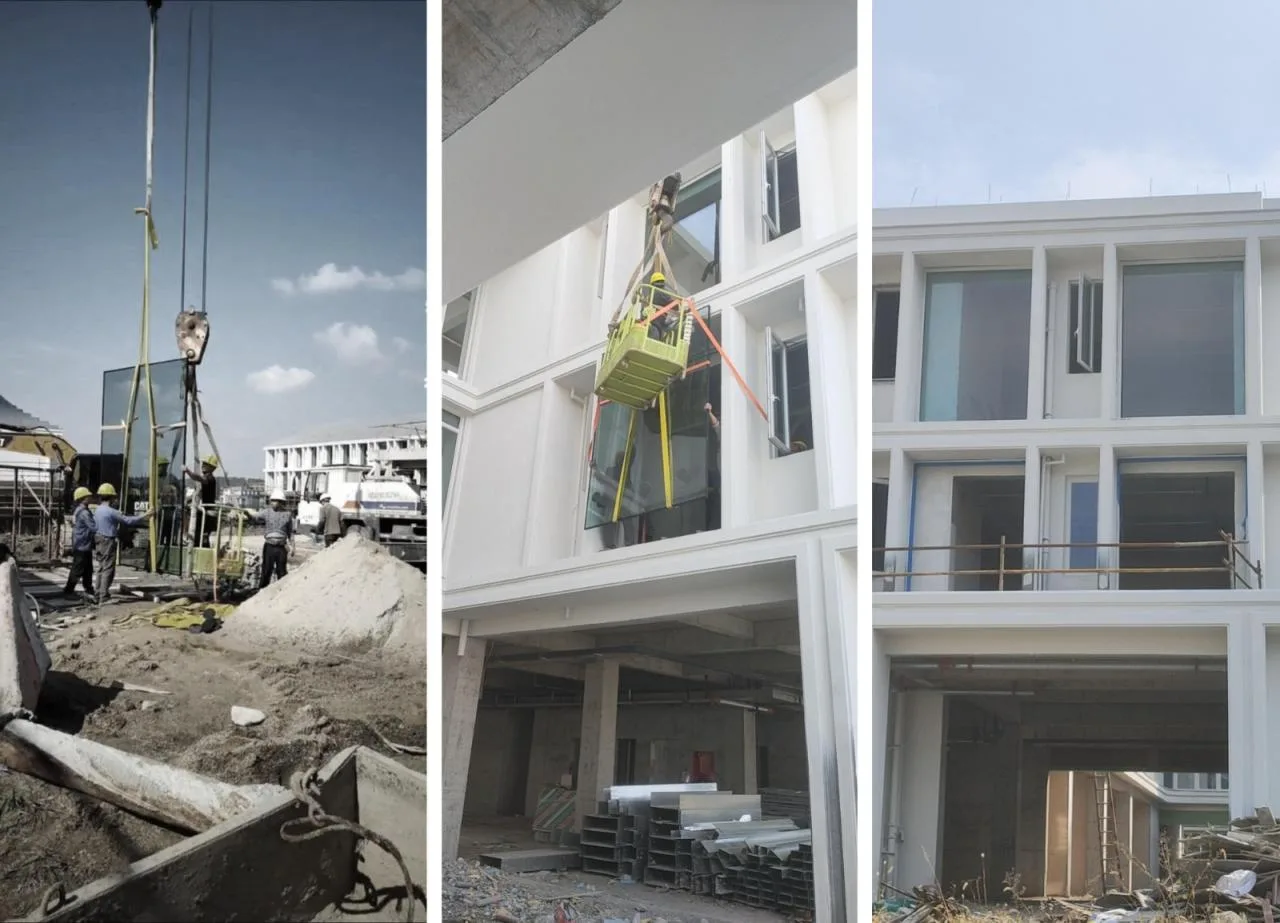
▲ Facade glass installation in progress
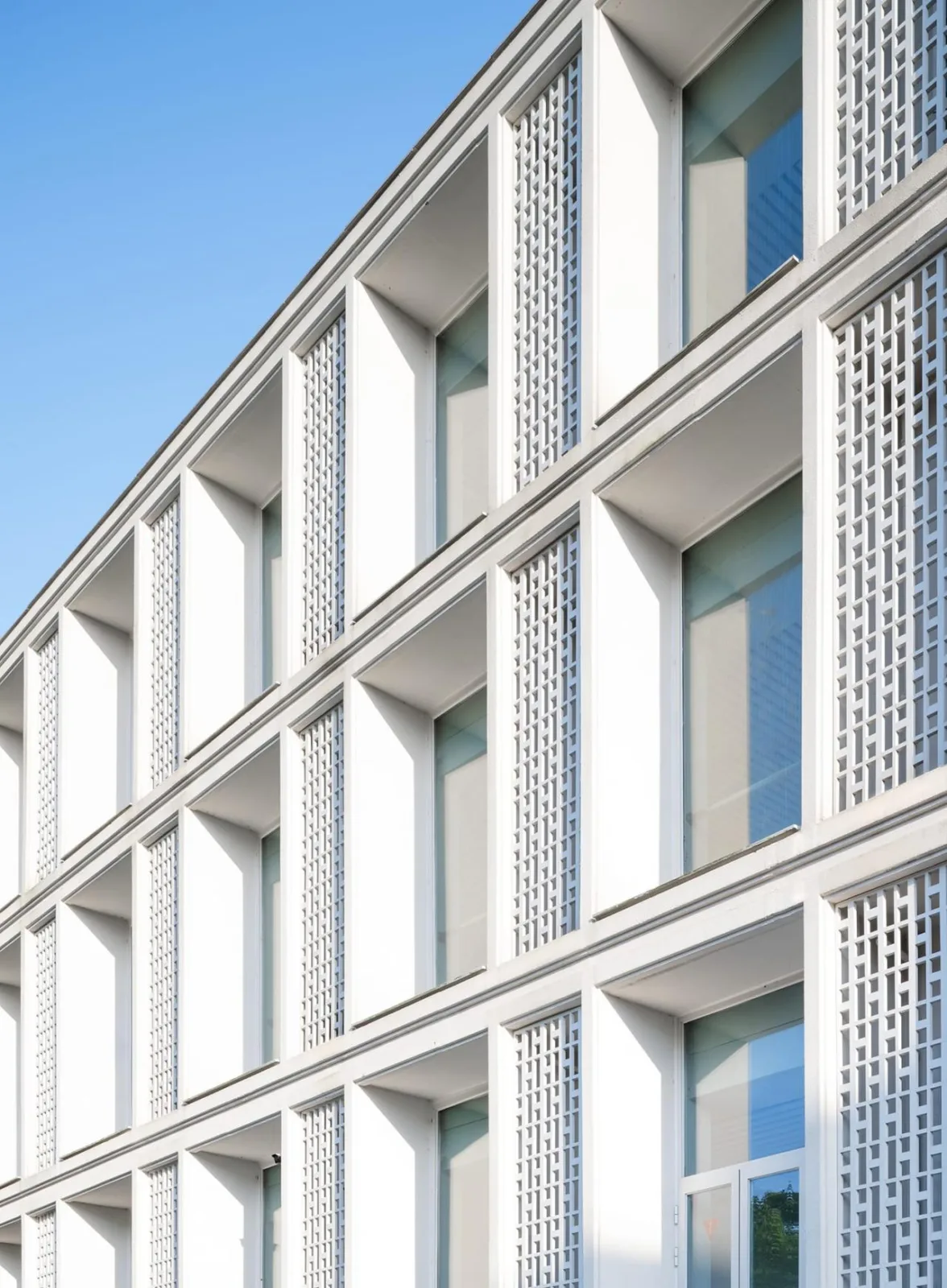
Traditional Chinese floral grilles decorate the exterior of glass window openings, ensuring safety without compromising aesthetics. The raised ground-level activity area uses transparent metal mesh fences, maintaining clear sightlines and eliminating a sense of confinement for residents.
Conclusion
Caring for special groups reflects the advancement of a civilized society. Although Anle Fang from thousands of years ago no longer exists, its spirit of kindness continues to ripple through time. Each floor resembles a small street, and each building a small community. The First Social Welfare Institute of Hangzhou places humanistic care at its core, embedding compassion into every detail, creating a timeless dialogue that transcends era and space. Just as jade is a precious stone, this landscape nurtures the heart, allowing every resident to witness the light of humanity at dusk and sunset from afar.
Project Information
Project Details
Location: Hangzhou, China
Owner: Hangzhou First Social Welfare Institute
Design Firm: Zhejiang University Architectural Design and Research Institute
Design Start Date: September 1, 2018
Completion Date: April 1, 2022
Total Construction Area: 36,880 m²
Land Area: 92,064 m²
Project Type: Welfare Building
Project Cost: 194.994 million yuan
Lead Designer: Qian Xidong
Architectural Team: Qian Xidong, Huang Kejie, Wu Jingjing, Xu Xiangxian, Zhang Mengyun, Zhou Jun
Structural Engineers: Kan Jianzhong, Li Jianli, Shen Handong
Water Supply & Drainage: Yi Jiasong, Shao Yuran, Cai Ang, Zhang Zhenyu
HVAC Designers: Pan Dahong, Li Yongmei
Electrical Engineers: Wu Xuhui, Zhang Wei, Yu Liang
Intelligent Systems: Zhang Wubo, Chen Jia
Interior Design: Huang Kejie, Wu Jingjing, Zhang Mengyun, Xu Xiangxian, Sun Zhenghe
Landscape Design: Liu Junfeng, Xu Jinpan (Hangzhou Green Wind Ecotourism Planning and Design Research Institute Co., Ltd.)
Geotechnical Engineers: Liao Kewu, Xu Quanbiao, Chen Gang, He Ming, Yu Wei
Curtain Wall Designers: Xiang Chun, Zhang Nan, Cao Dongqiu
Owner: Hangzhou First Social Welfare Institute
Construction Management: Hangzhou Municipal Public Construction Development Co., Ltd
Construction Contractor: Fangyuan Construction Group
Architectural Photography: Zhao Qiang















Must log in before commenting!
Sign Up