
Lansheng Siyuan Middle School, situated at No. 9 Dianhui Road in Qingpu District, Shanghai, spans approximately 54 acres with a building area of around 25,000 square meters, accommodating 36 teaching classes.
The school’s design embraces the unique ecological environment of Qingpu, centering on multi-level, three-dimensional public communication spaces. Despite challenging land conditions, the campus features clear functional zoning, an efficient spatial layout, thoughtfully designed landscapes, and a vibrant image. This approach aligns with modern educational reforms and fosters a welcoming, humanistic atmosphere.
Location in an Urban Bay and Depression
The project site lies at the intersection of Dianshanhu Avenue and Xidaying Port, west of Qingpu’s main urban area. It occupies a “depression under the Shuangqiao Bridge,” bordered by Dianhui Road to the north and east, and Dianshanhu Avenue to the south. Notably, Dianhui Road passes beneath Dianshanhu Avenue on its eastern segment.
Rivers flank the site’s east and north sides, providing natural landscape advantages that are fully utilized in the campus design.
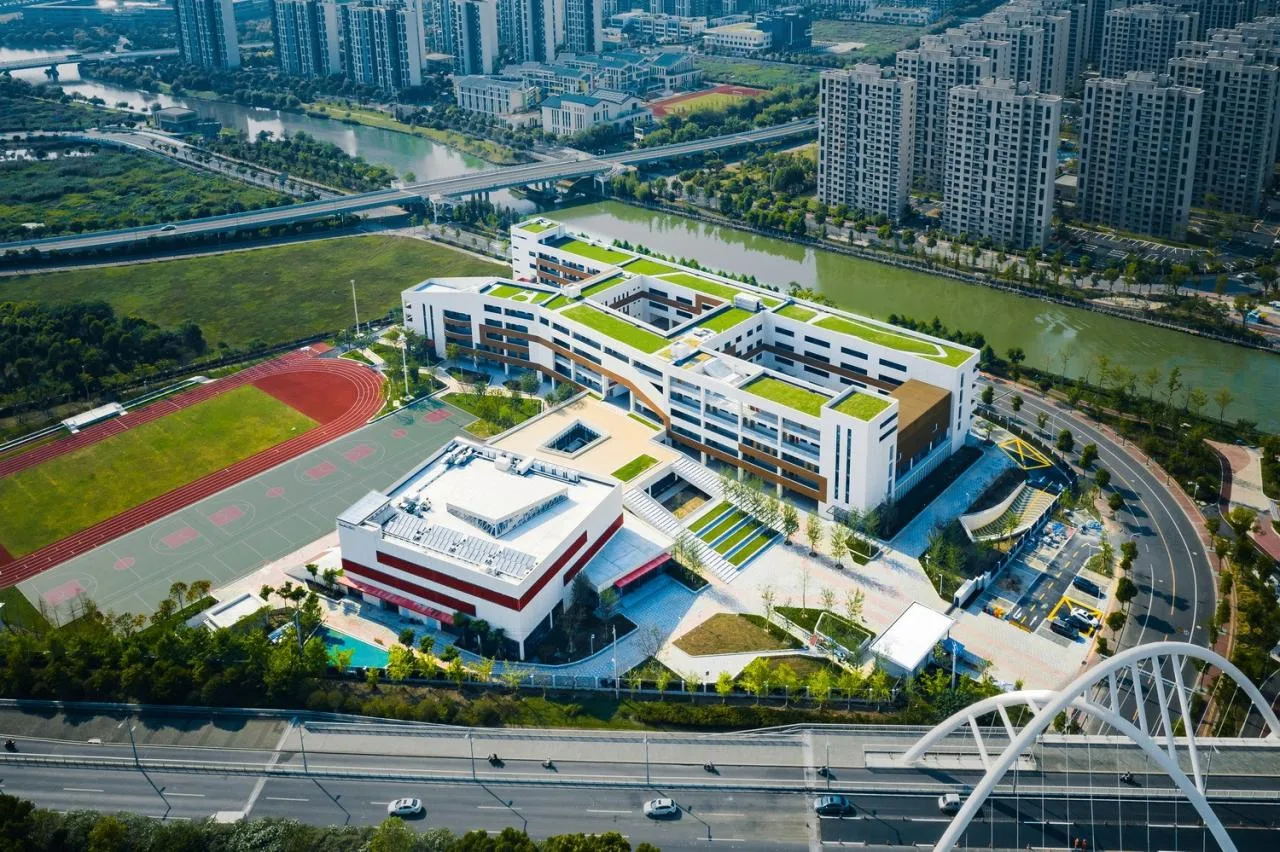
△ Aerial View of Project Vision © Peng Xiaokai and Zhang Yi
High-Density Campus Implementation Amid Constraints
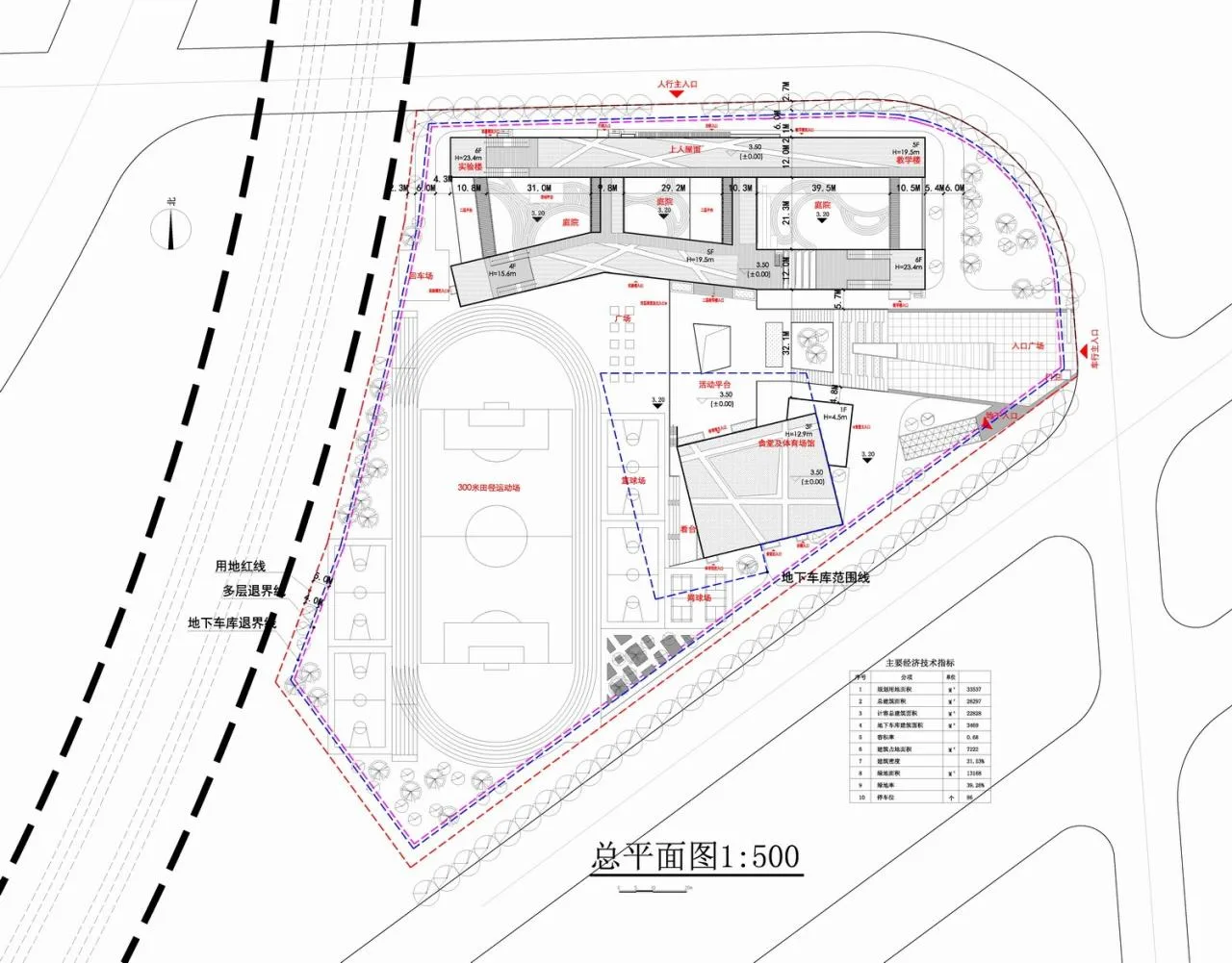
The site is flat and covers 33,500 square meters, with dimensions of 228 meters (north-south) and 238 meters (east-west), forming an irregular trapezoid.
Taking into account strict constraints such as playground orientation and spacing between teaching buildings, the overall layout design was carefully determined:
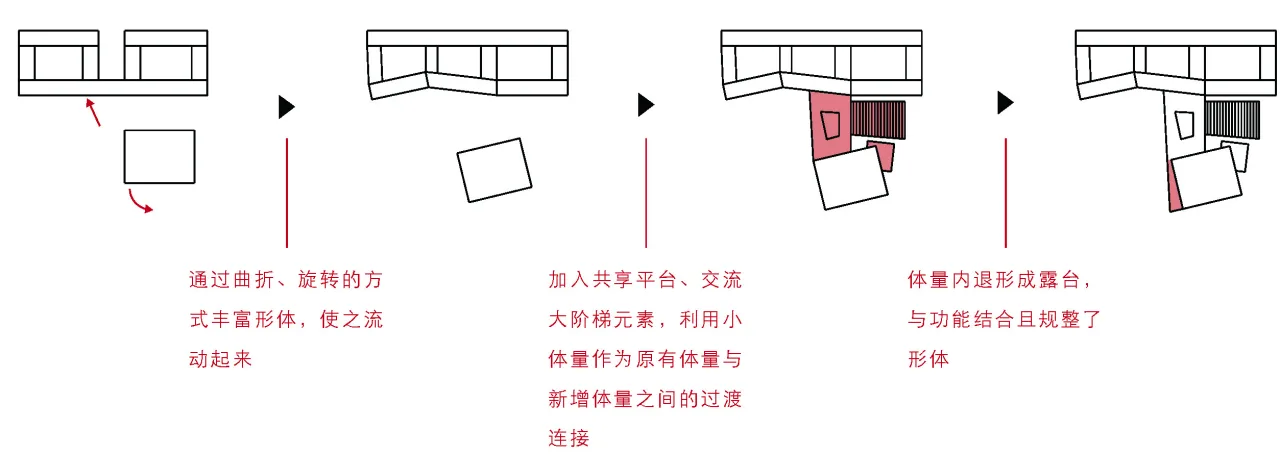
△ Scheme generation © Chuanglin Zebai
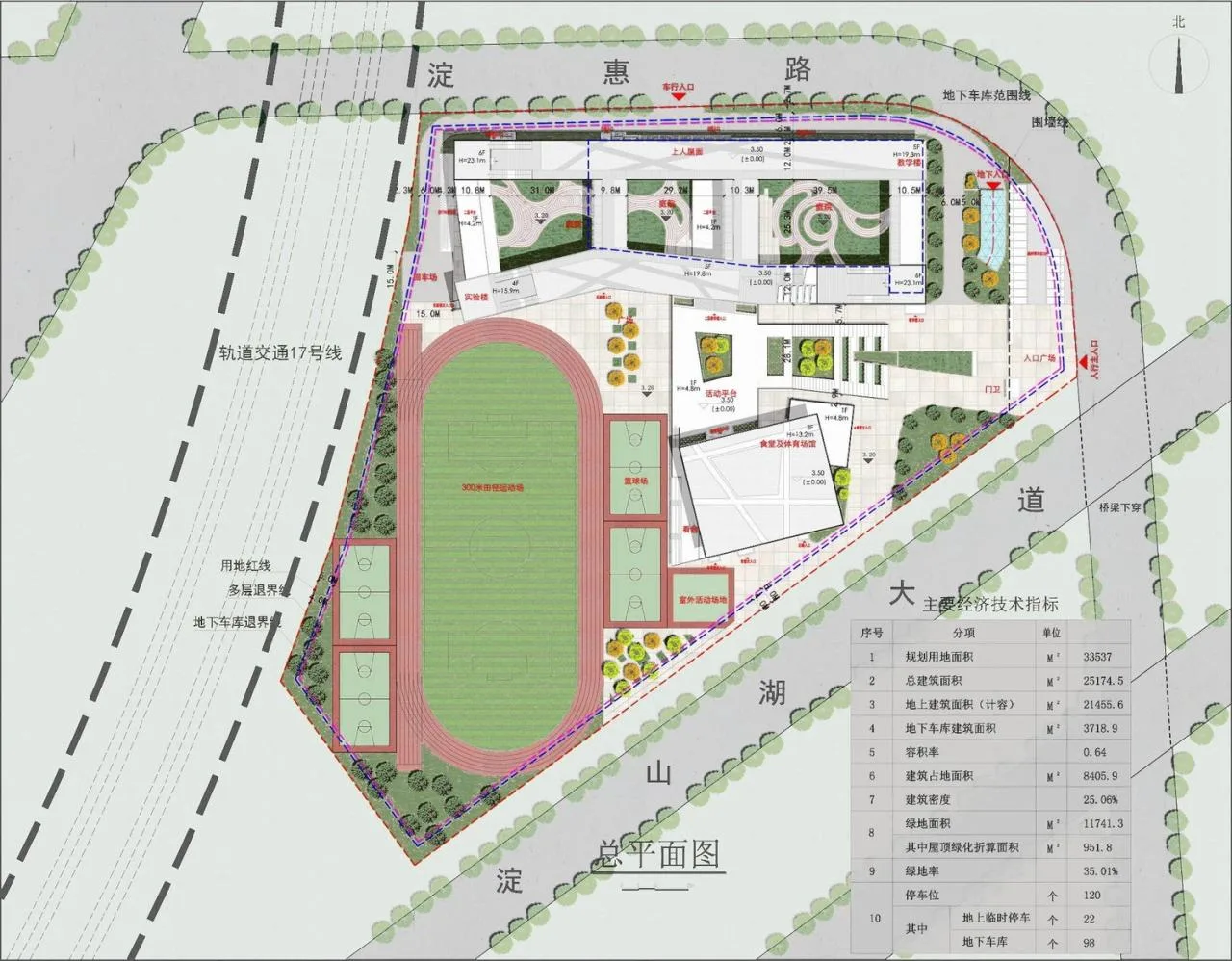
△ General layout plan © Chuanglin Zebai
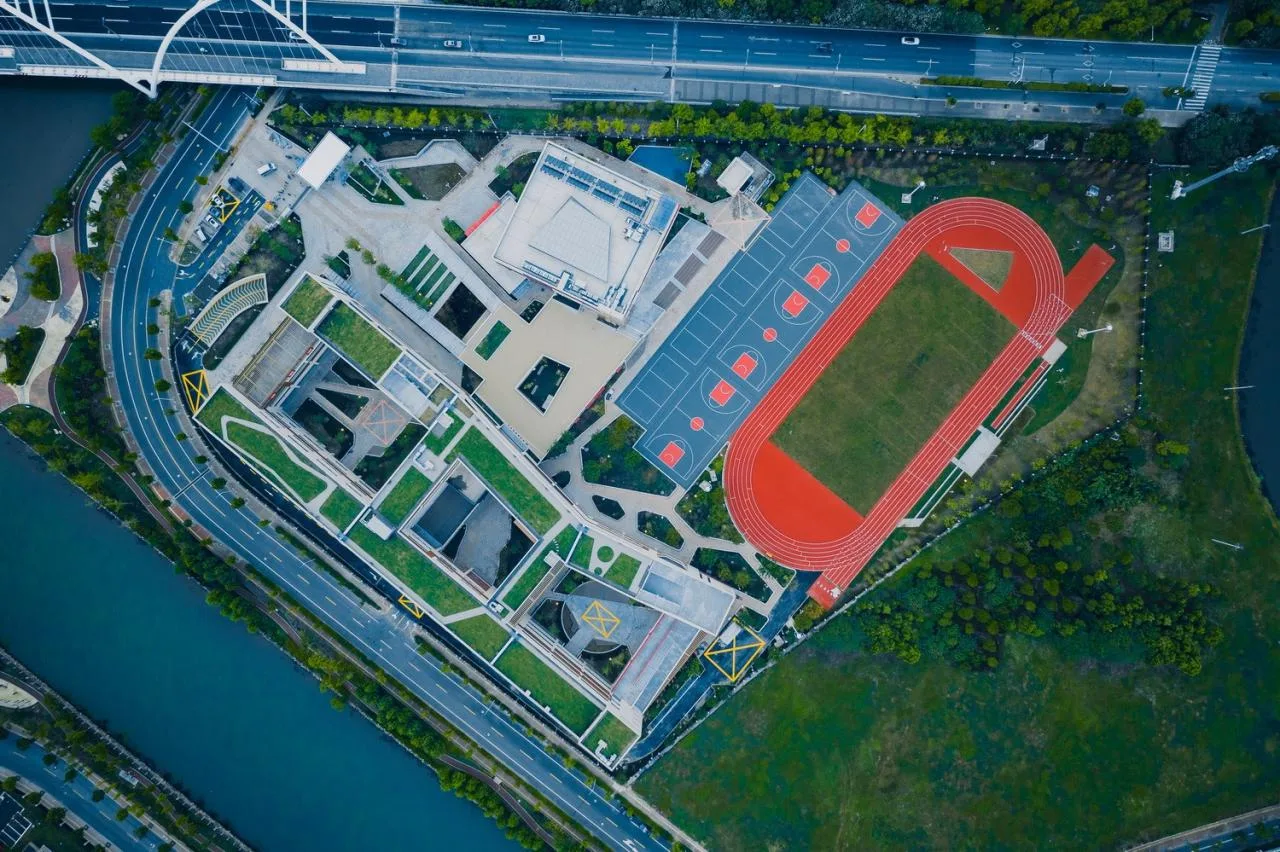
△ Aerial view of the venue © Peng Xiaokai and Zhang Yi
Urban-Facing Building Interfaces
(1) The southern boundary along Dianshan Lake Avenue and Pinghe School is a critical urban interface. Due to poor sunlight beneath the bridge, the gymnasium was strategically placed here, rotated to create a landmark visible to passing vehicles.
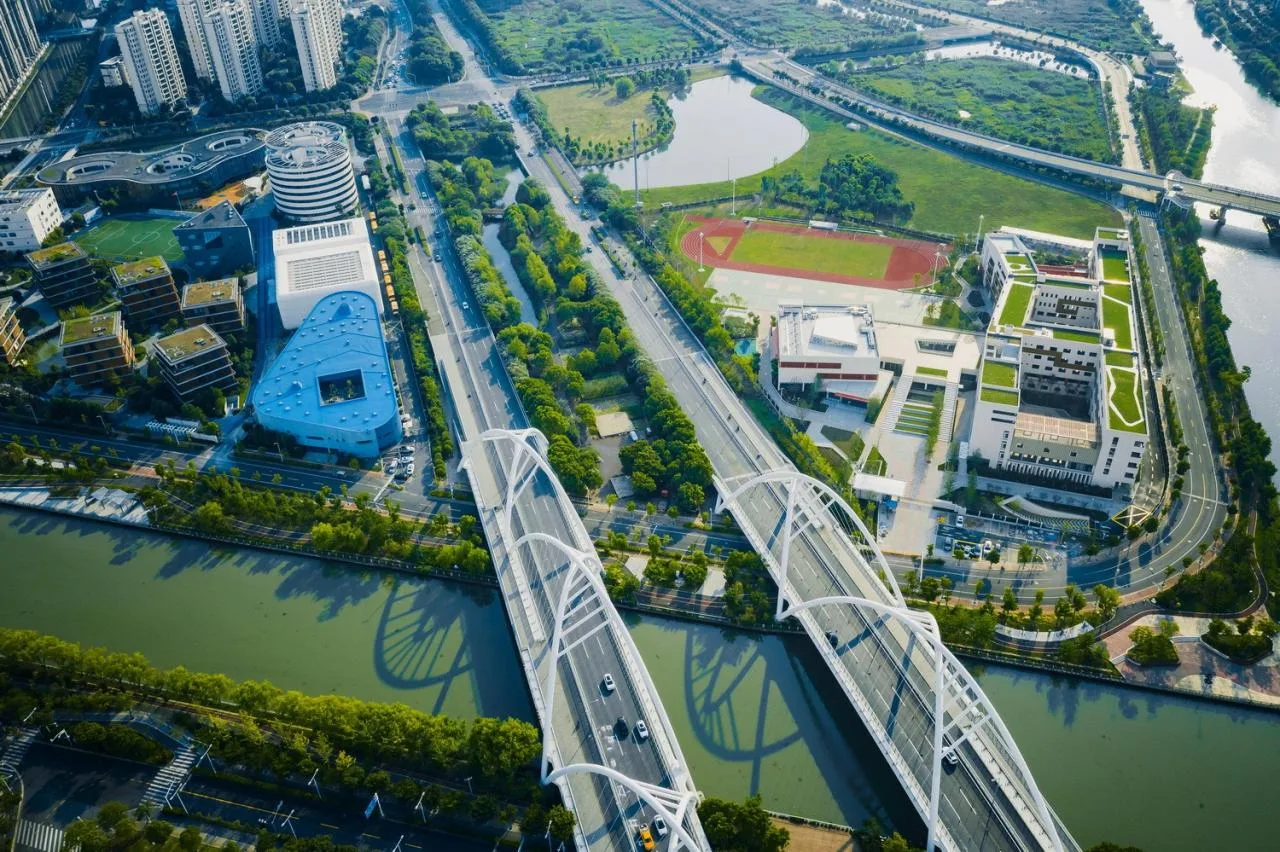
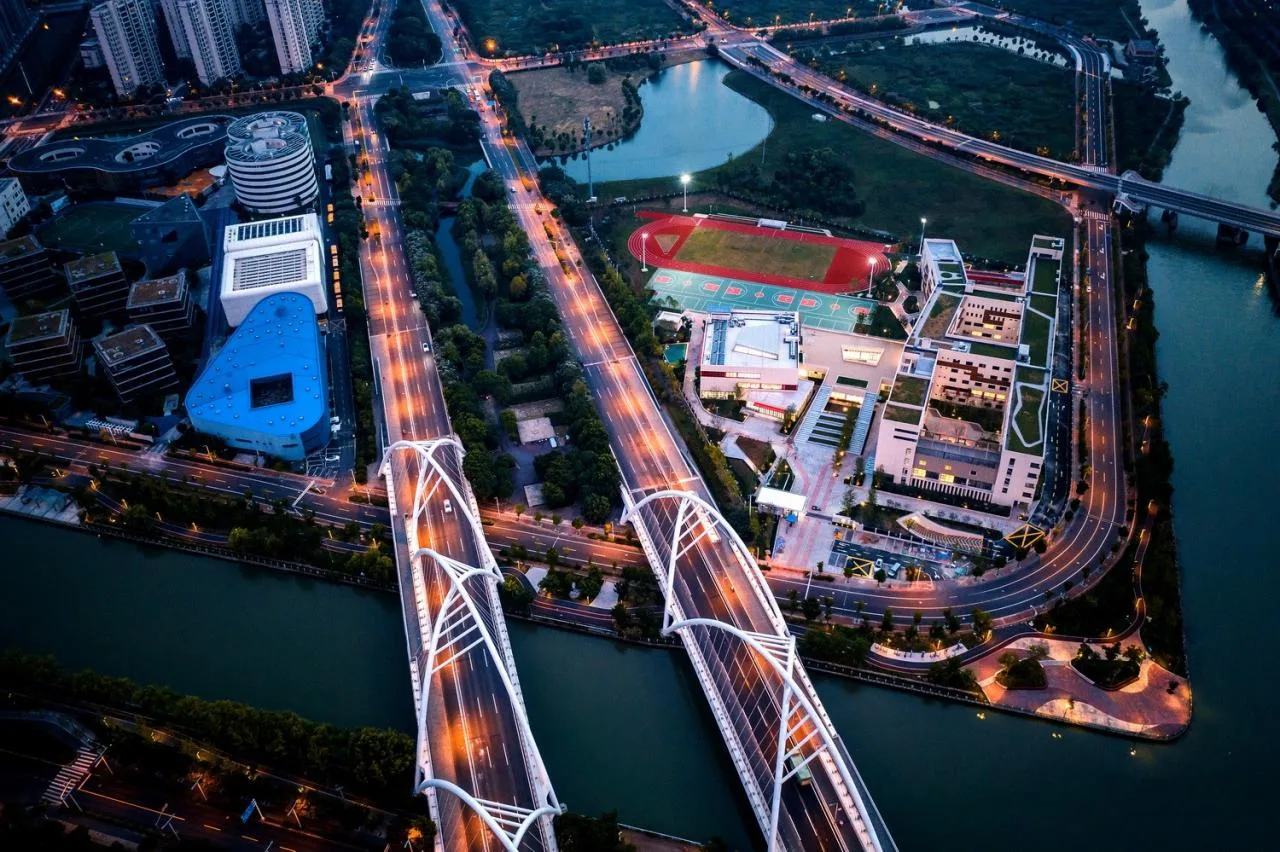
△ Campus during the day and evening © Peng Xiaokai and Zhang Yi
(2) The east-west axis functions as the main entrance, where the entrance square, staircases, shared platform, and landscaped playground create a smooth visual corridor through the campus center.
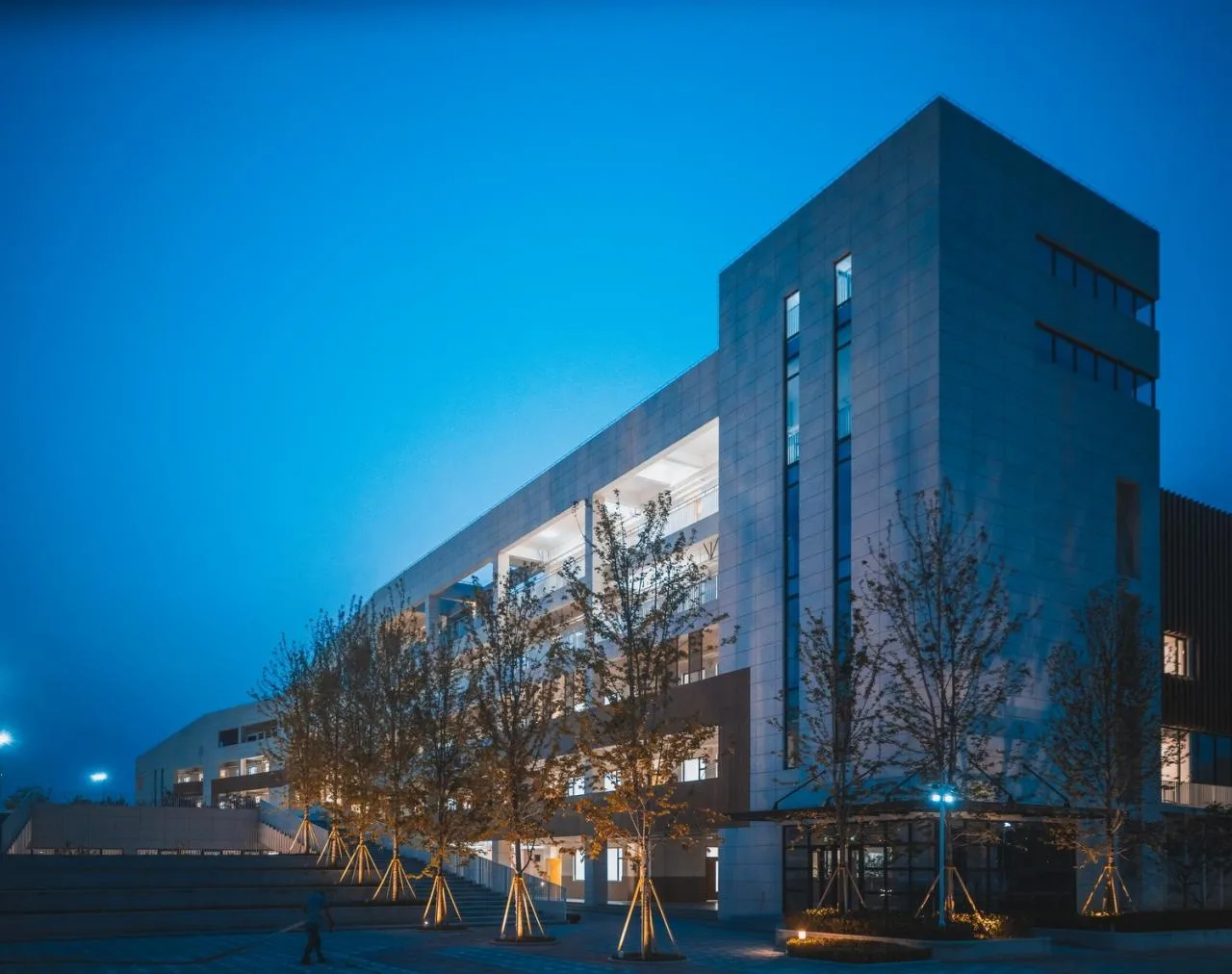
△ Evening view of teaching building © Peng Xiaokai and Zhang Yi
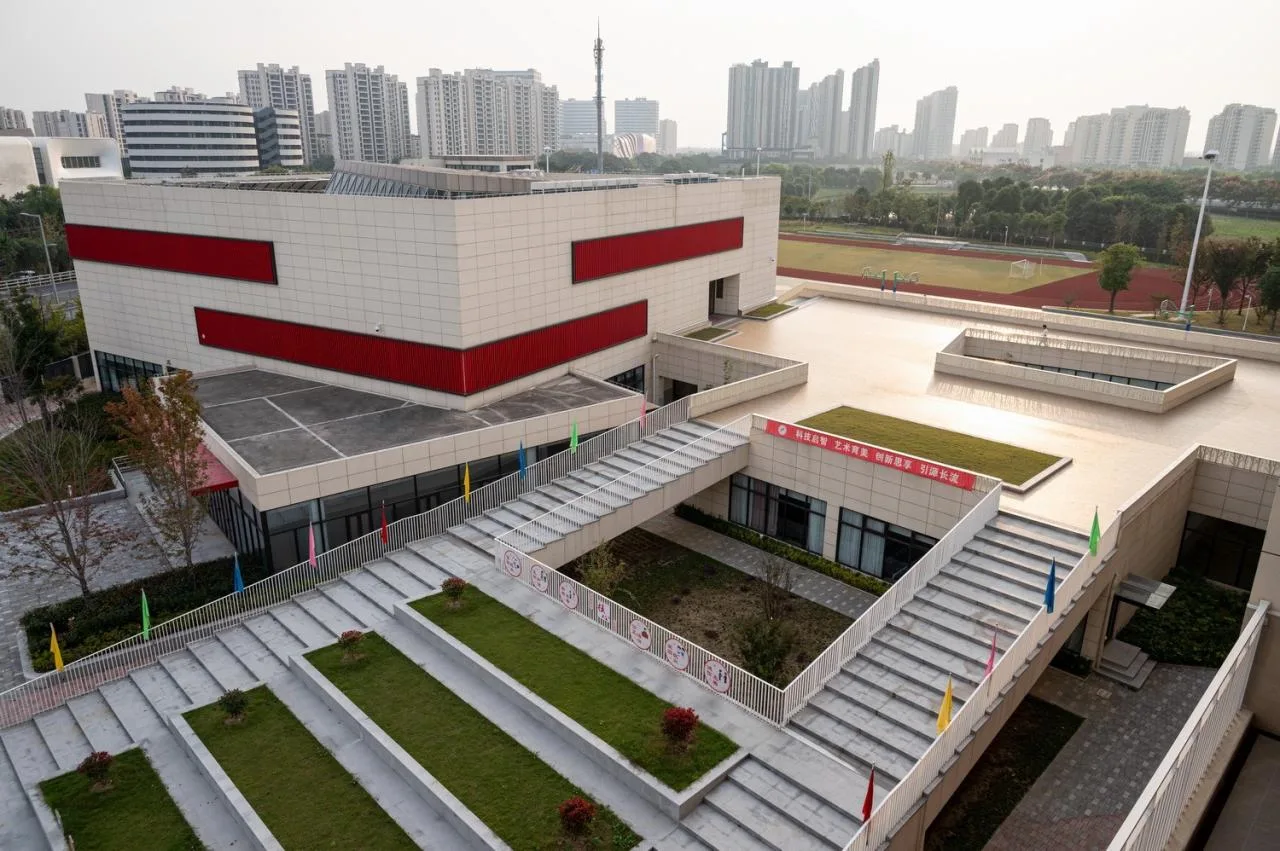
△ The Grand Staircase of Communication © Peng Xiaokai and Zhang Yi
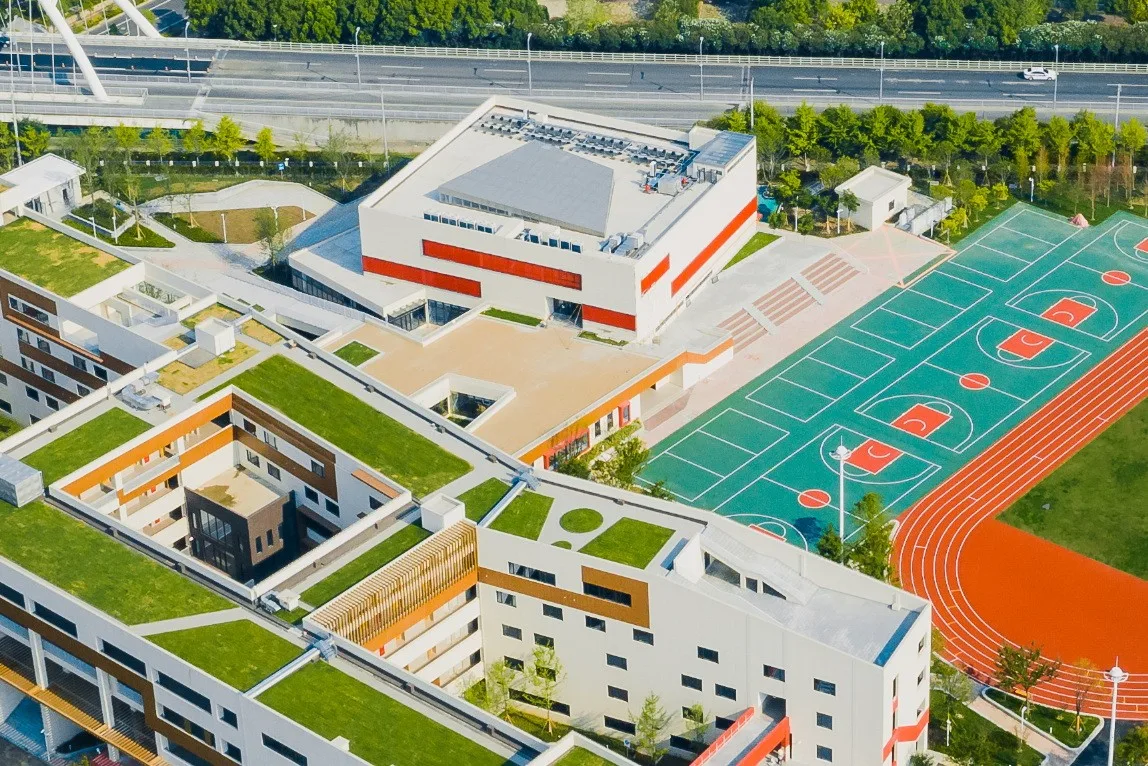
△ Playground Stand © Peng Xiaokai and Zhang Yi
(3) The quiet northern edge along Dianhui Road serves as the main pick-up and drop-off point for parents. A longitudinal teaching building with partial overhead covers this area, forming an open main facade facing the city.
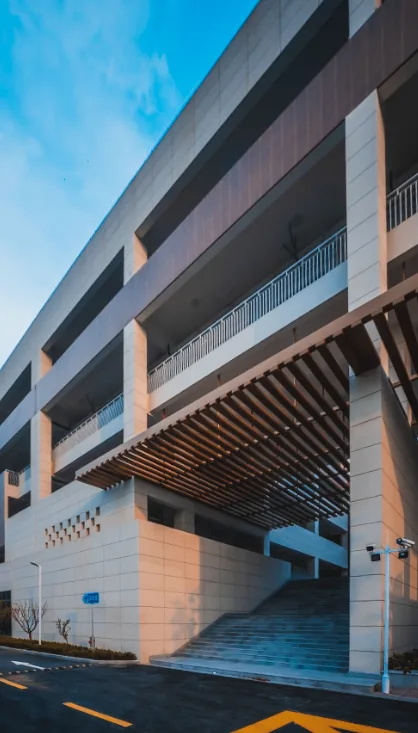
△ Elevated northern entrance © Peng Xiaokai and Zhang Yi
Functional Layout for Mobile Teaching
As a school focused on classroom teaching, Siyuan Middle School requires larger classrooms, laboratories, and specialized spaces compared to typical schools.
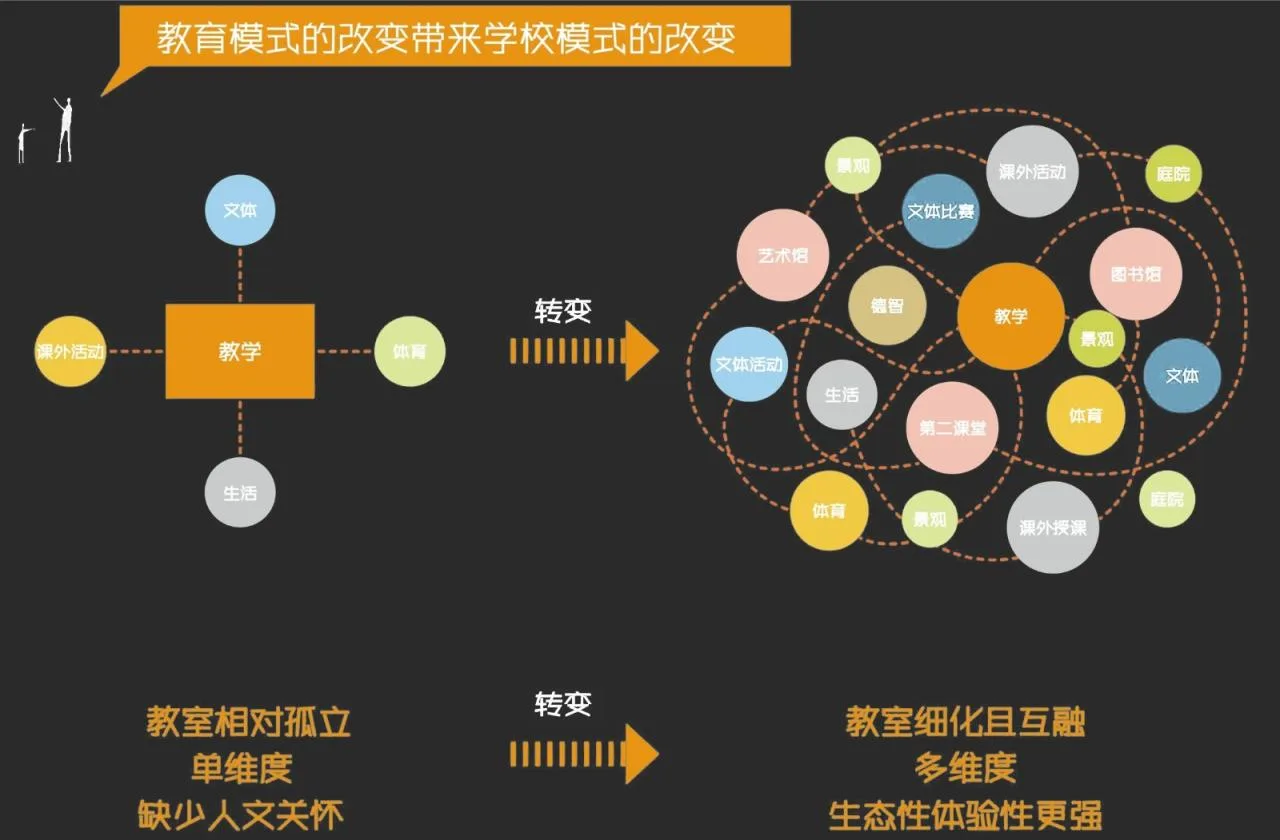
△ Mode change © Chuanglin Zebai
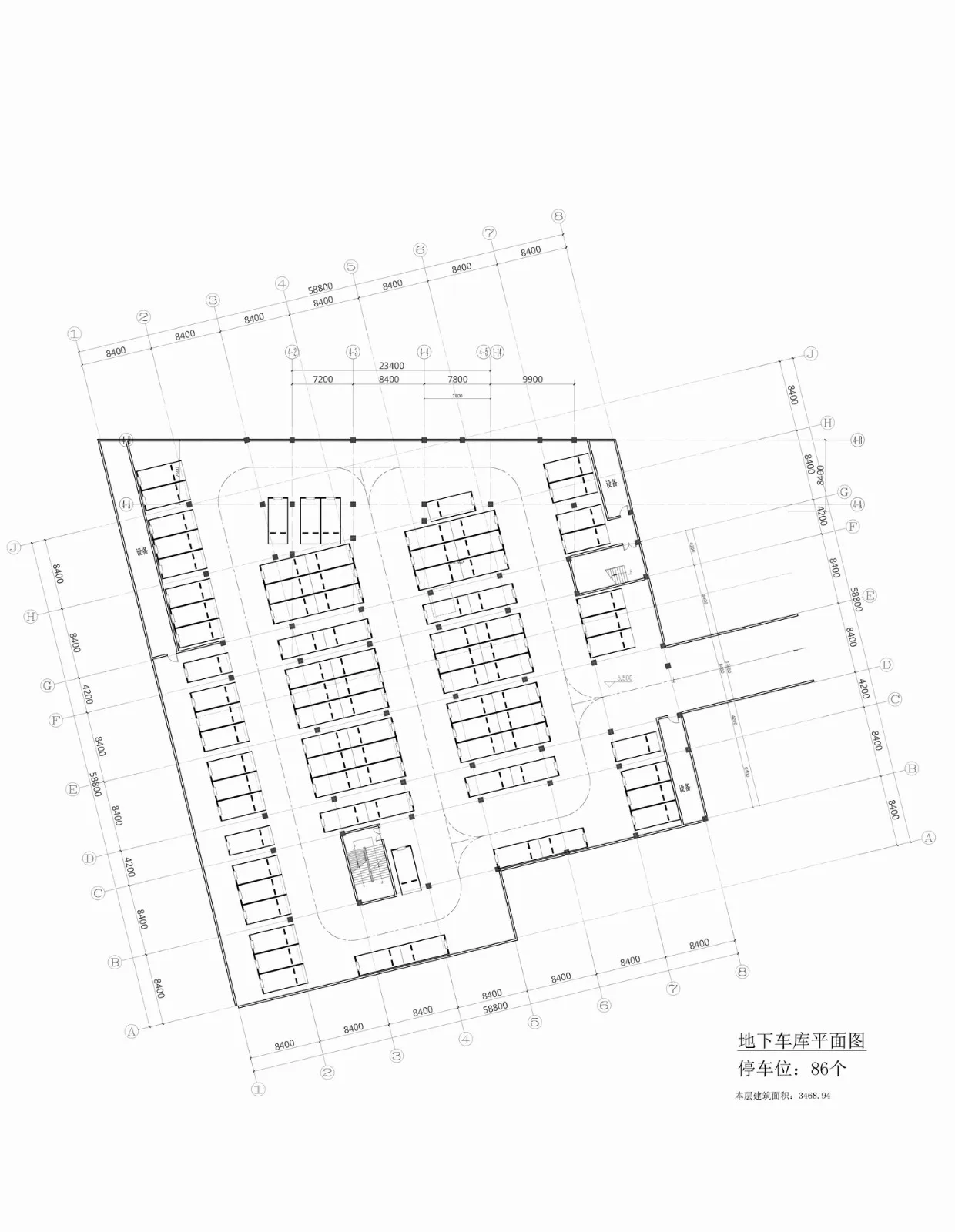
The school contains 40 standard classrooms, an indoor gymnasium, a small theater, a sheltered playground, and an underground parking garage. Additionally, over ten specialized classrooms have been incorporated, including a multifunctional studio, digital library and reading room, calligraphy innovation lab, dedicated historical geography classroom, technology innovation lab, music classroom, dance room, and psychological center. These facilities support the implementation of quality education within a high-density campus oriented toward classroom teaching.
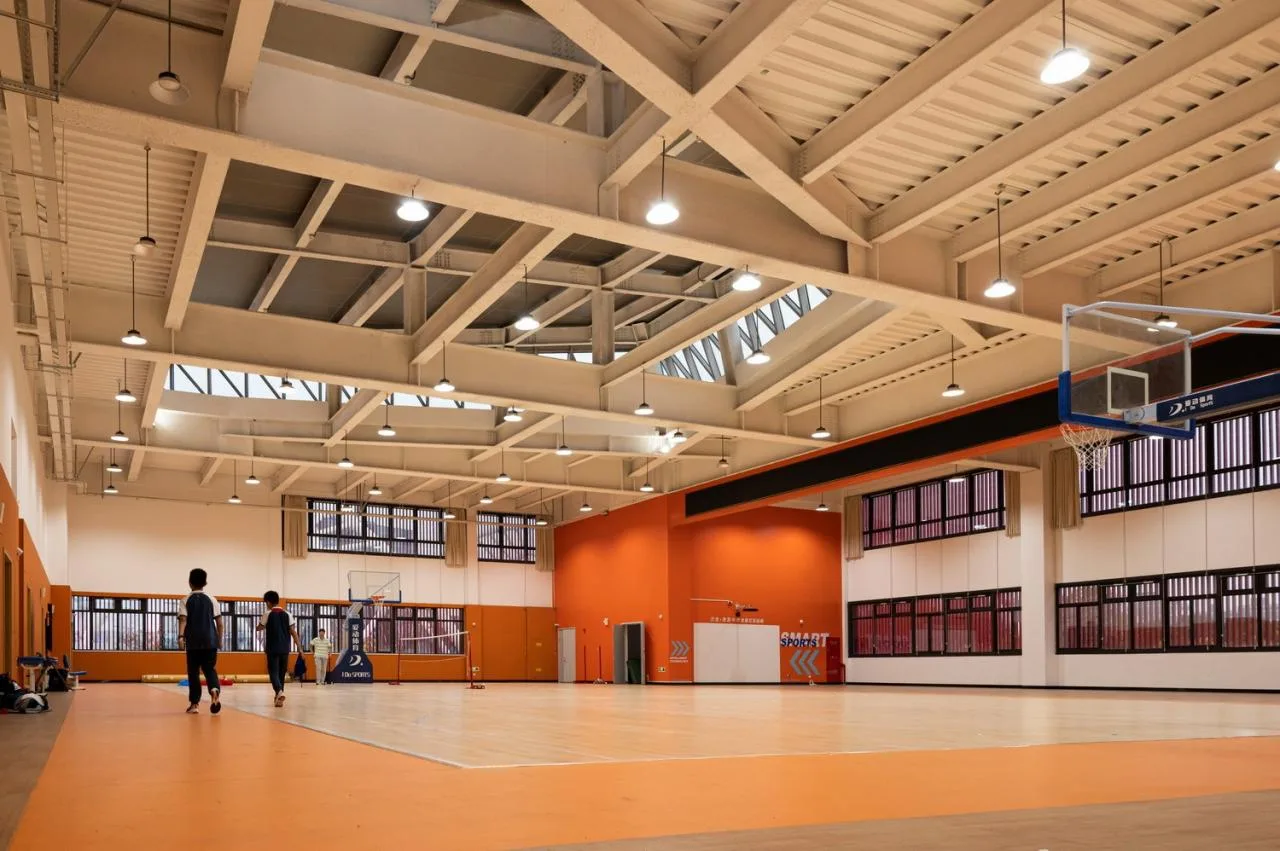
△ Indoor space of the Sports Center © Chuanglin Zebai
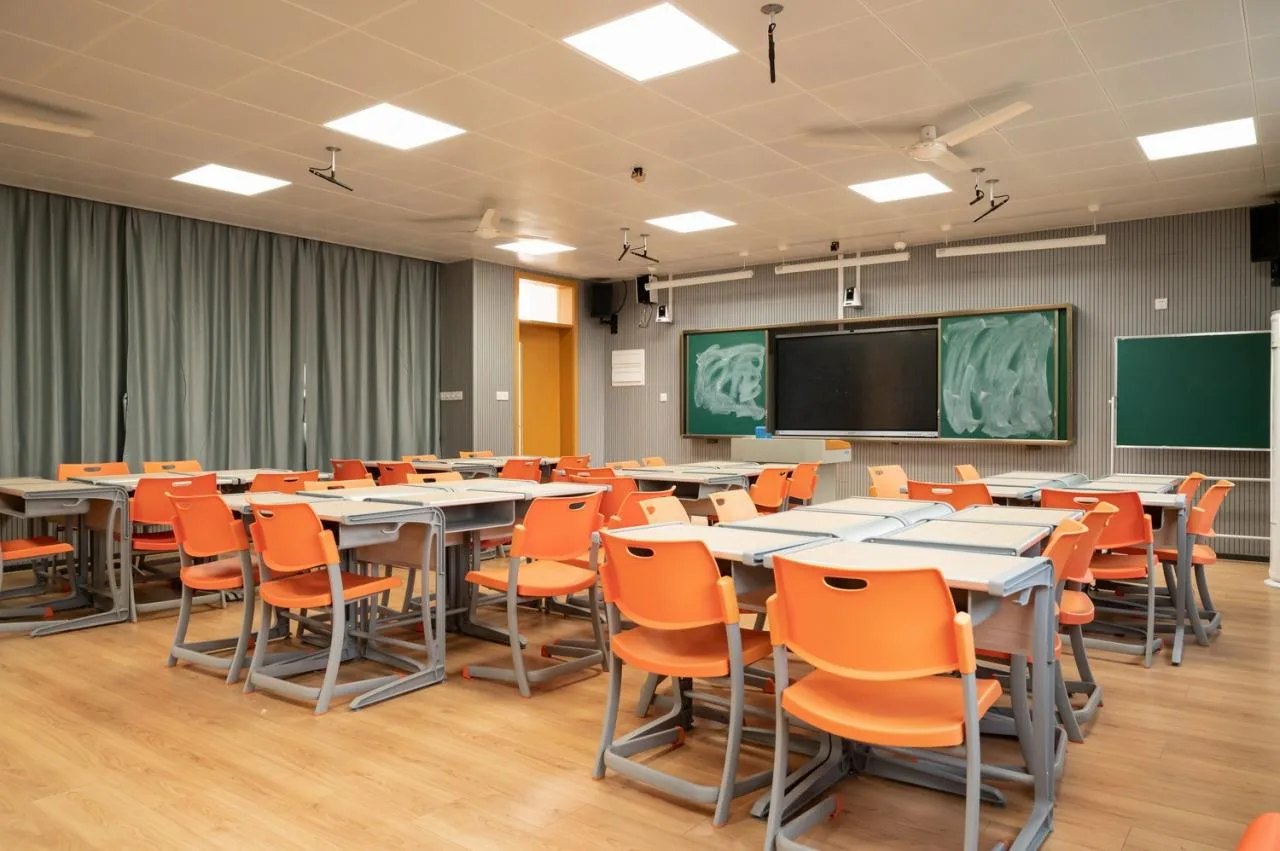
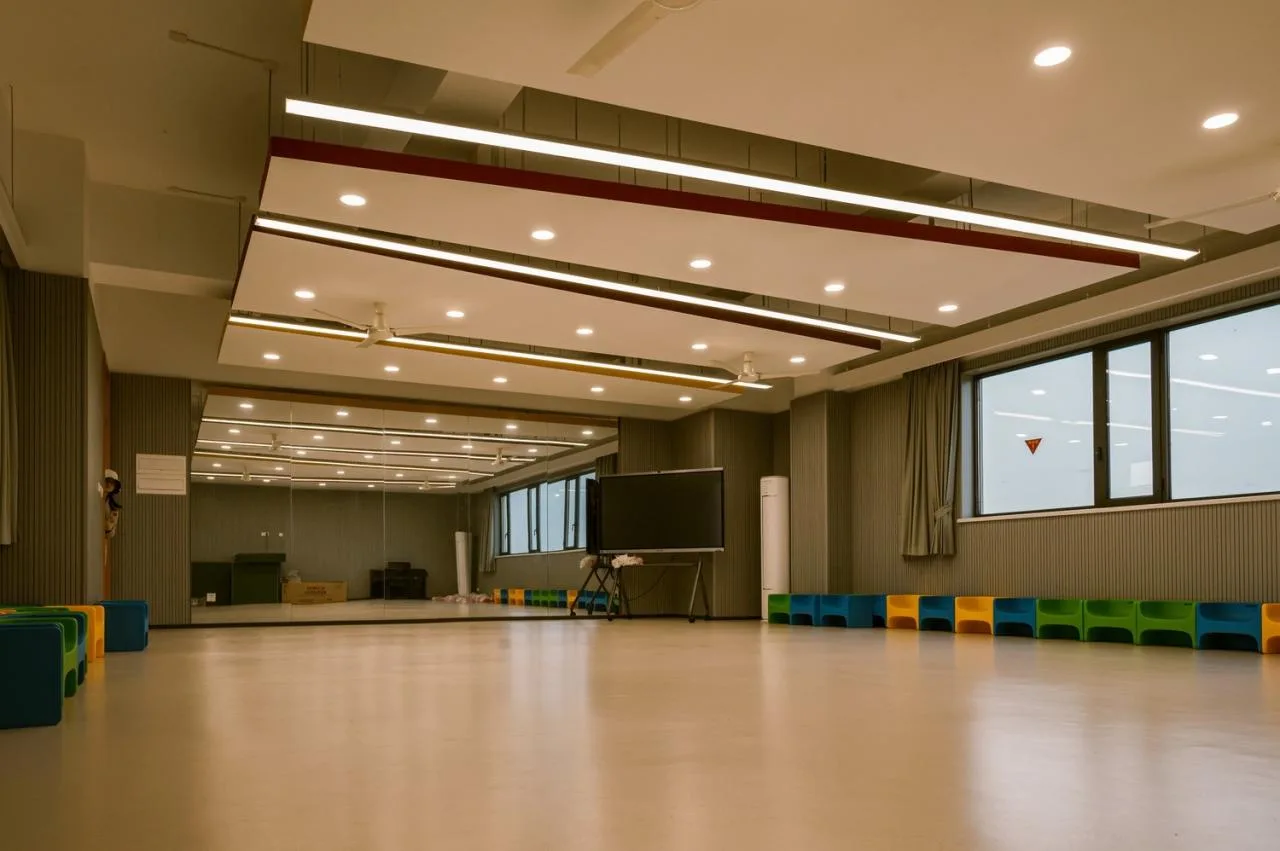
△ Specialized classrooms © Chuanglin Zebai
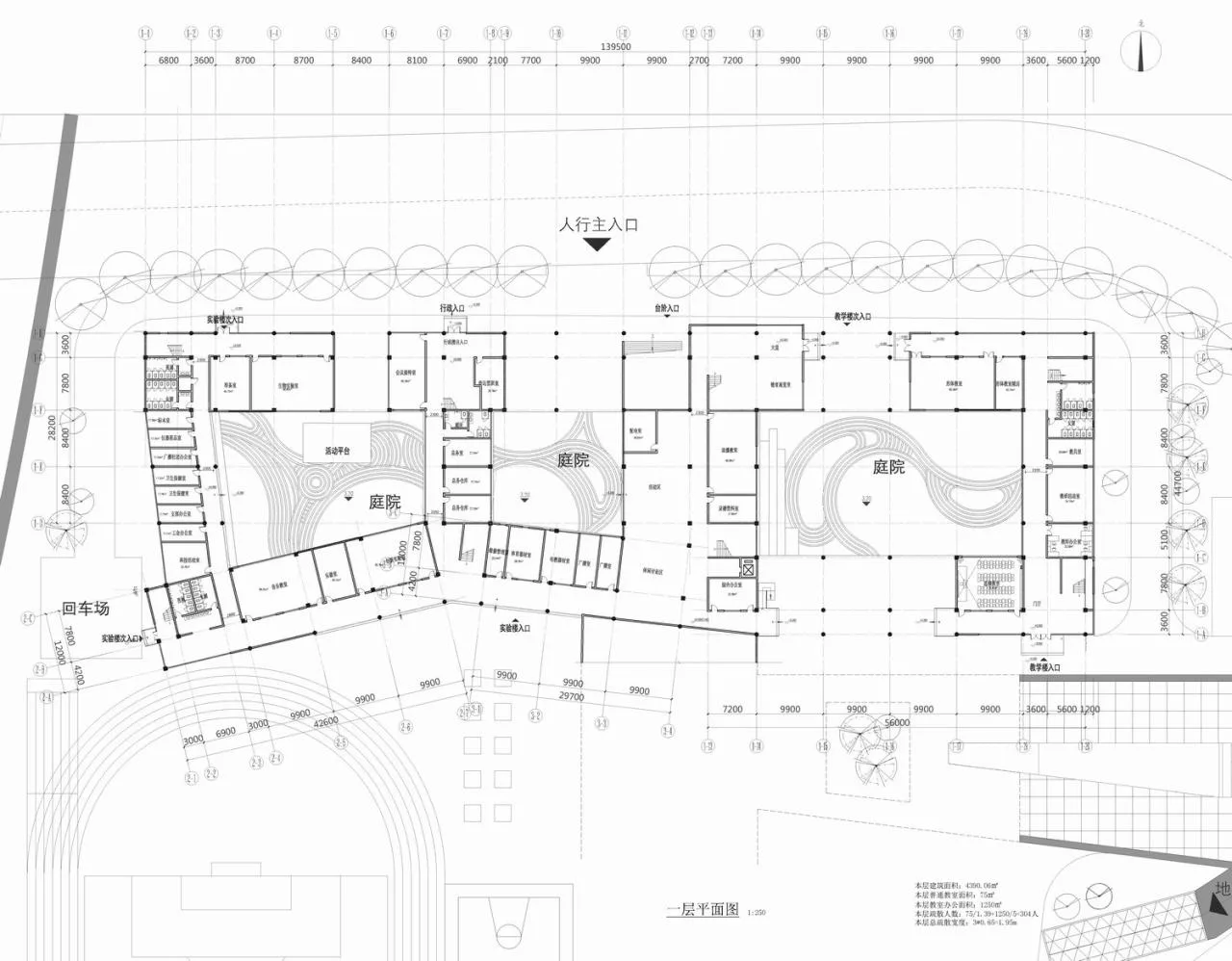
Given limited space for the main building, standard classrooms are positioned in the quieter northeast section as the teaching area, while the southwest section near the playground houses specialized classrooms as a comprehensive zone. The corridor connecting the north and south buildings contains administrative offices and related functions.
Multi-Level, Three-Dimensional Public Communication Space
The design connects the main teaching buildings, library, and sheltered playground into a staggered, flowing open campus complex via a shared platform, staircases, setbacks, corridors, and rooftop spaces. It also creates a “fifth facade” visible from various perspectives of the surrounding elevated bridges.
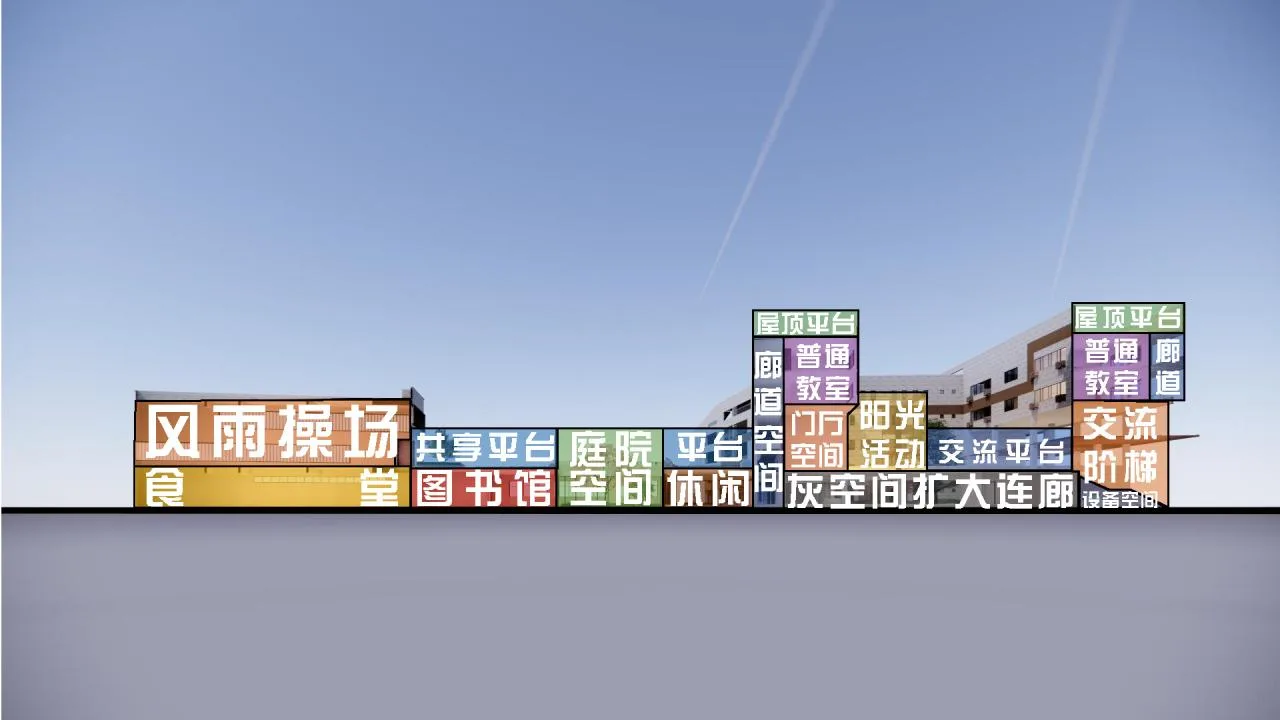
△ Functional profile © Chuanglin Zebai
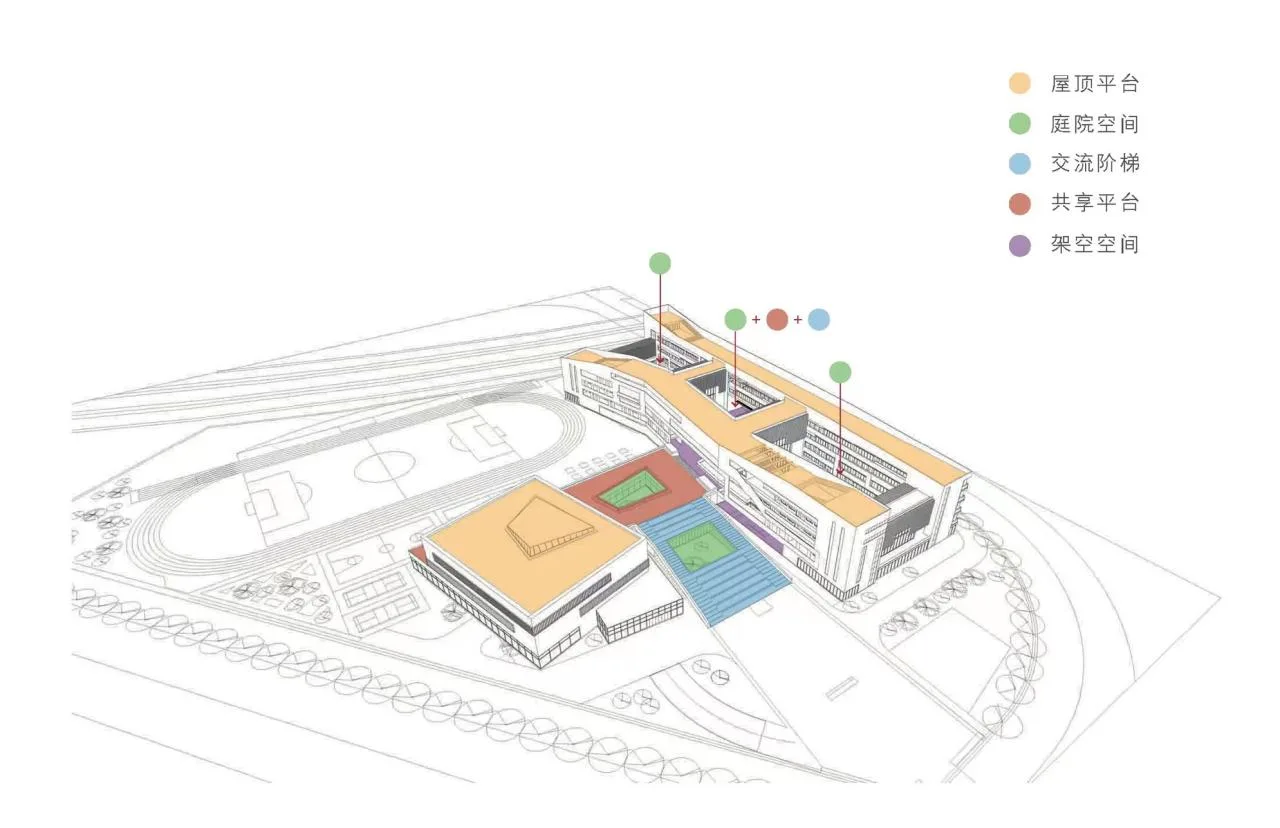
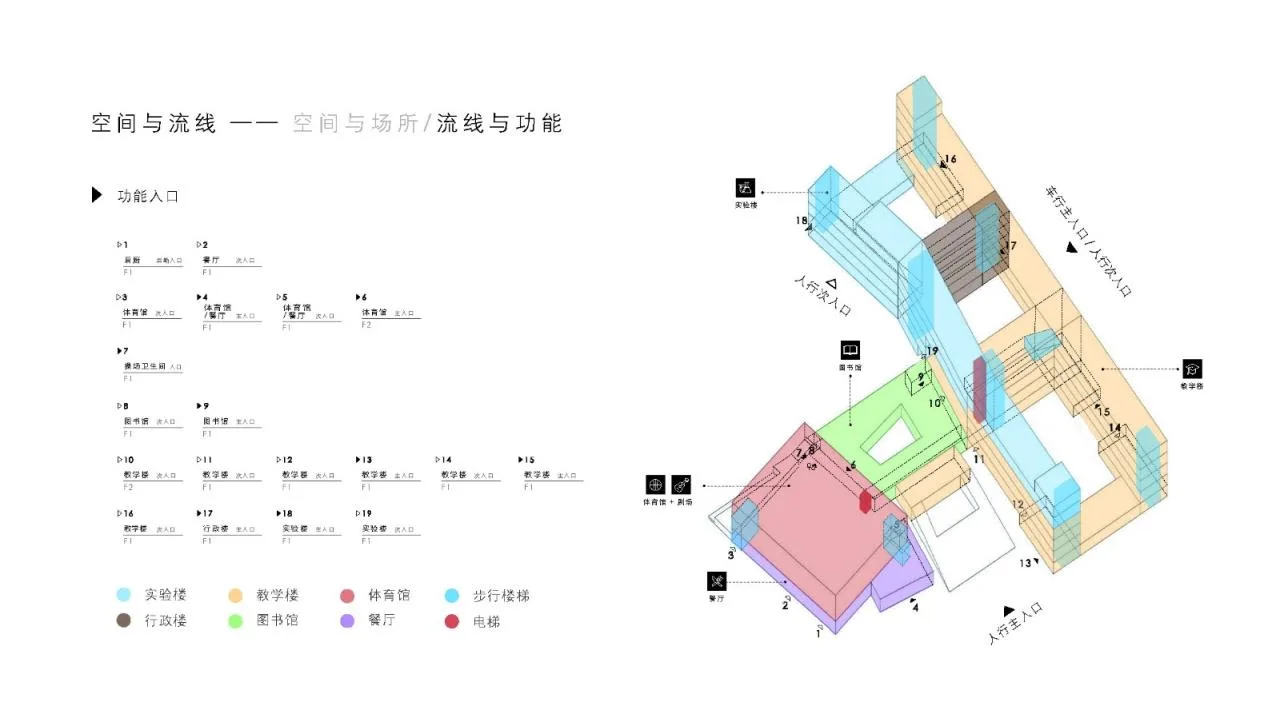
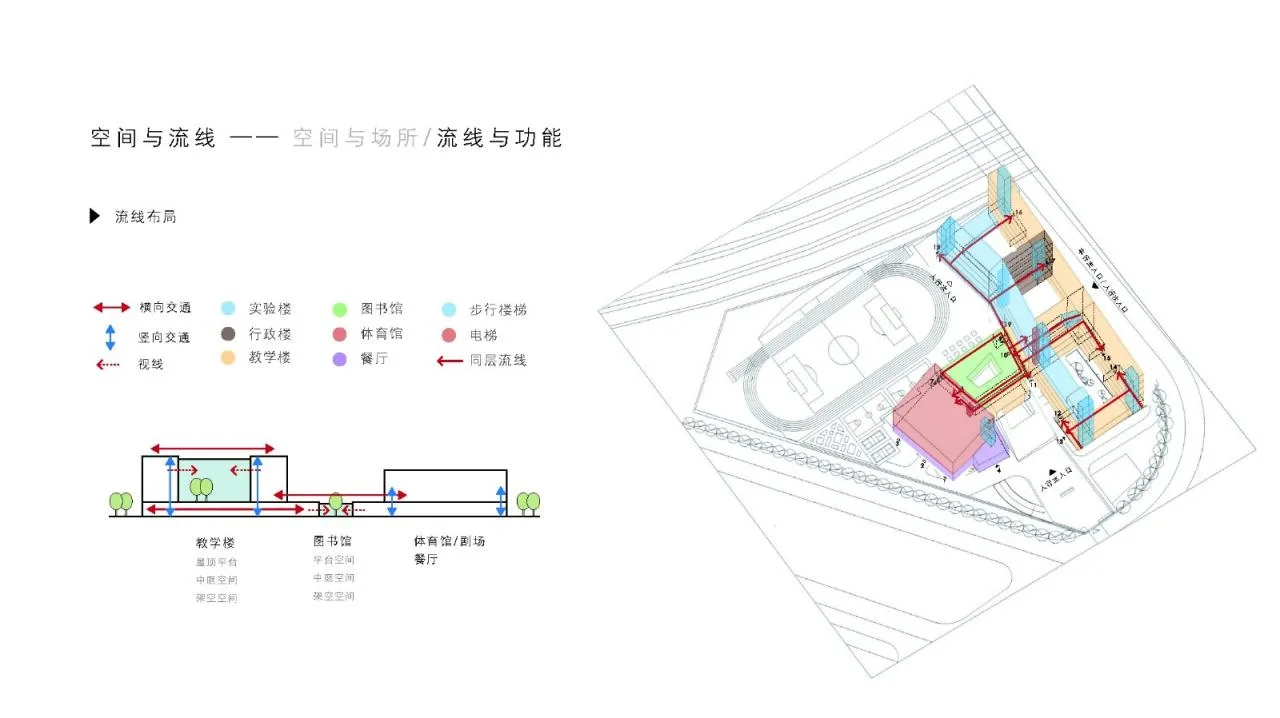
△ Space and flow lines © Chuanglin Zebai
The varied platform levels guarantee that during breaks, students can reach activity areas with minimal travel: floors 4 and 5 access rooftop platforms, floors 2 and 3 access shared activity platforms, and the first floor opens onto multiple courtyard spaces.
(1) By adding and subtracting architectural elements, and alternating between open and enclosed facades, viewing platforms and shared spaces interweave on each floor. This approach evokes traditional Chinese inward-looking architecture, extending outward while containing inward scenic views, organically linking all buildings.
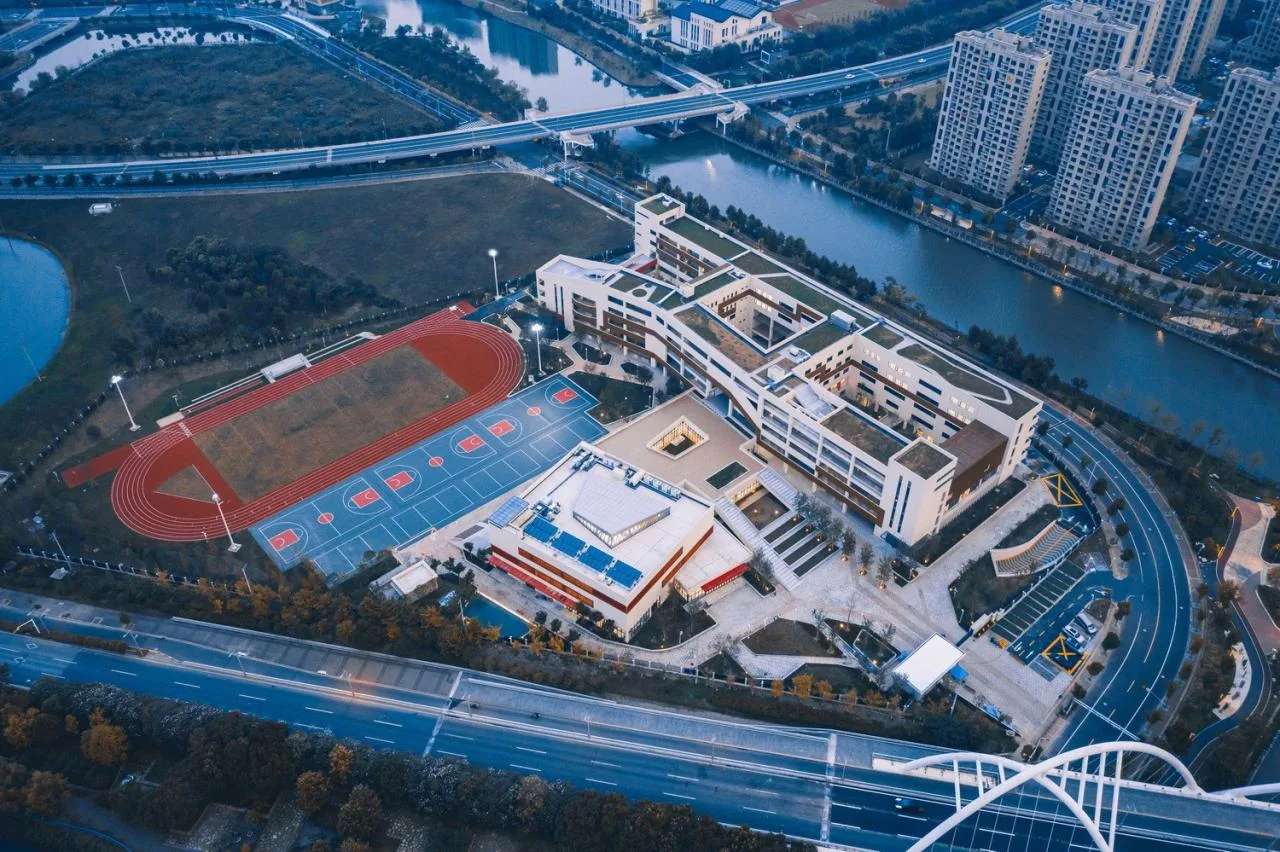
△ Aerial view of the venue © Peng Xiaokai and Zhang Yi
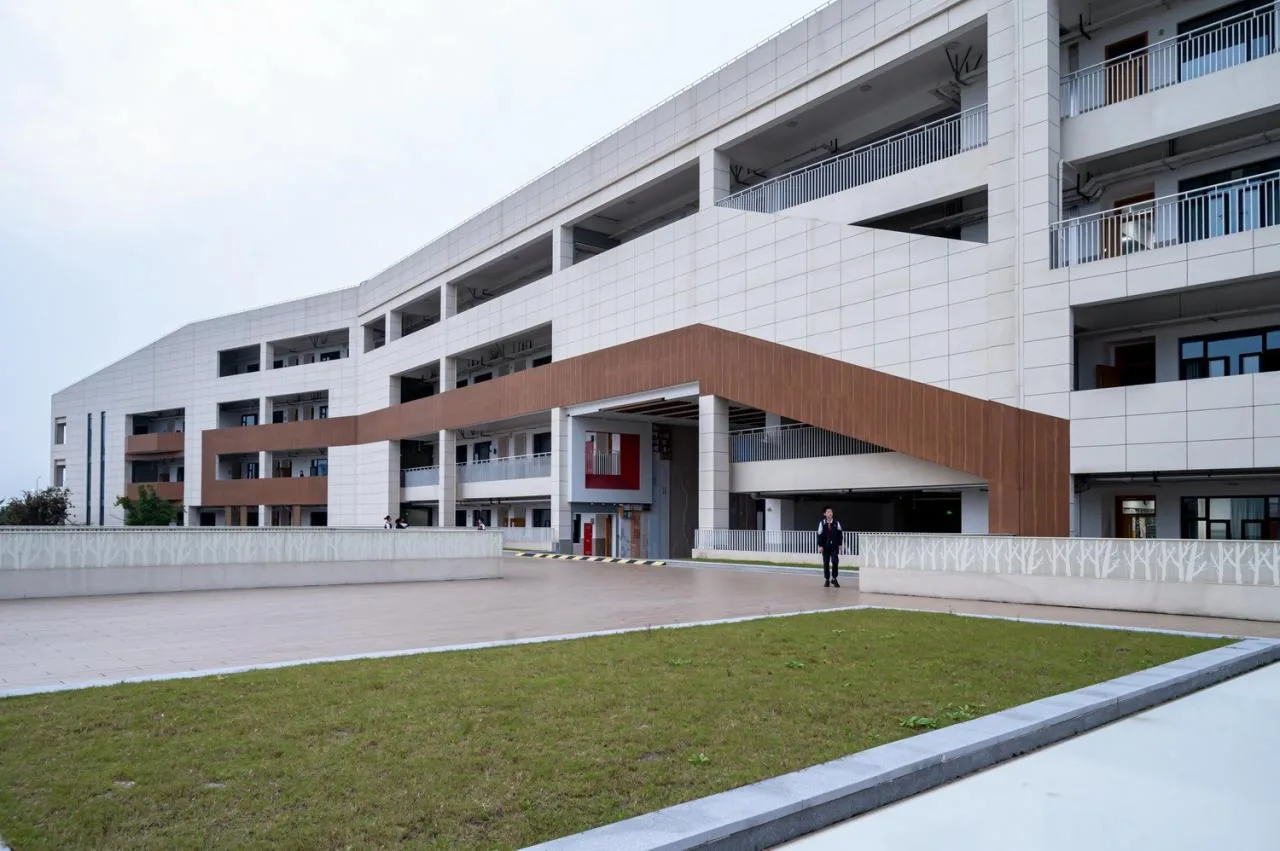
View of the teaching building from the terrace © Peng Xiaokai and Zhang Yi
(2) Inspired by the “ladder of knowledge” concept, the shared platform links the teaching buildings and sports arena, guiding visitors from the entrance to the interior. The platform’s first floor naturally accommodates the library and other public functions.
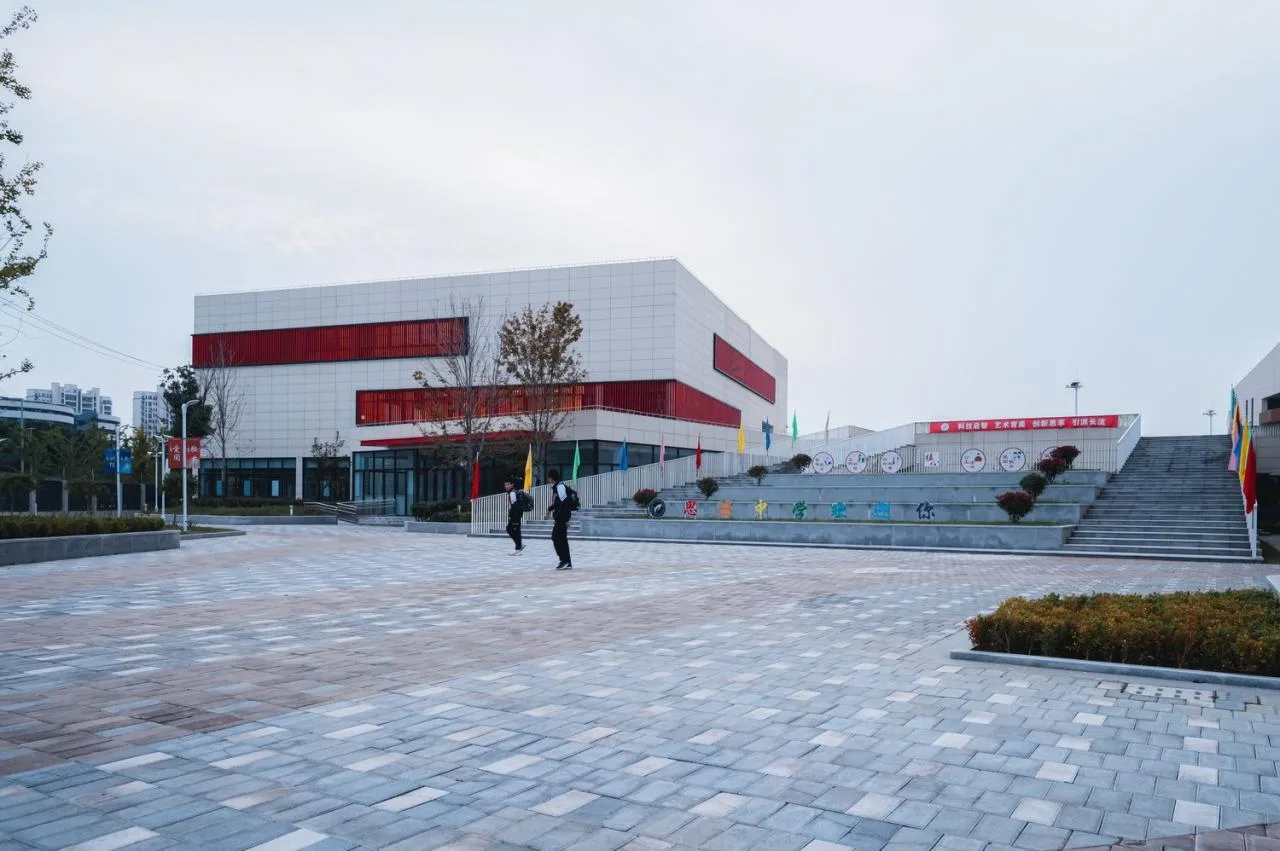
△ View towards the sports arena from the entrance © Peng Xiaokai and Zhang Yi
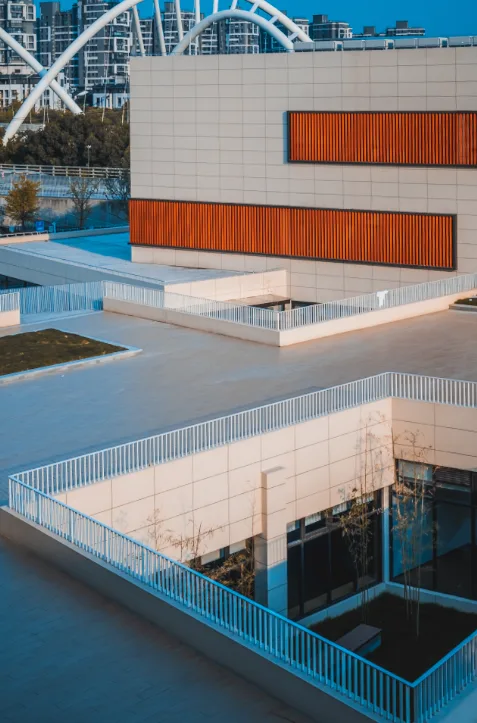
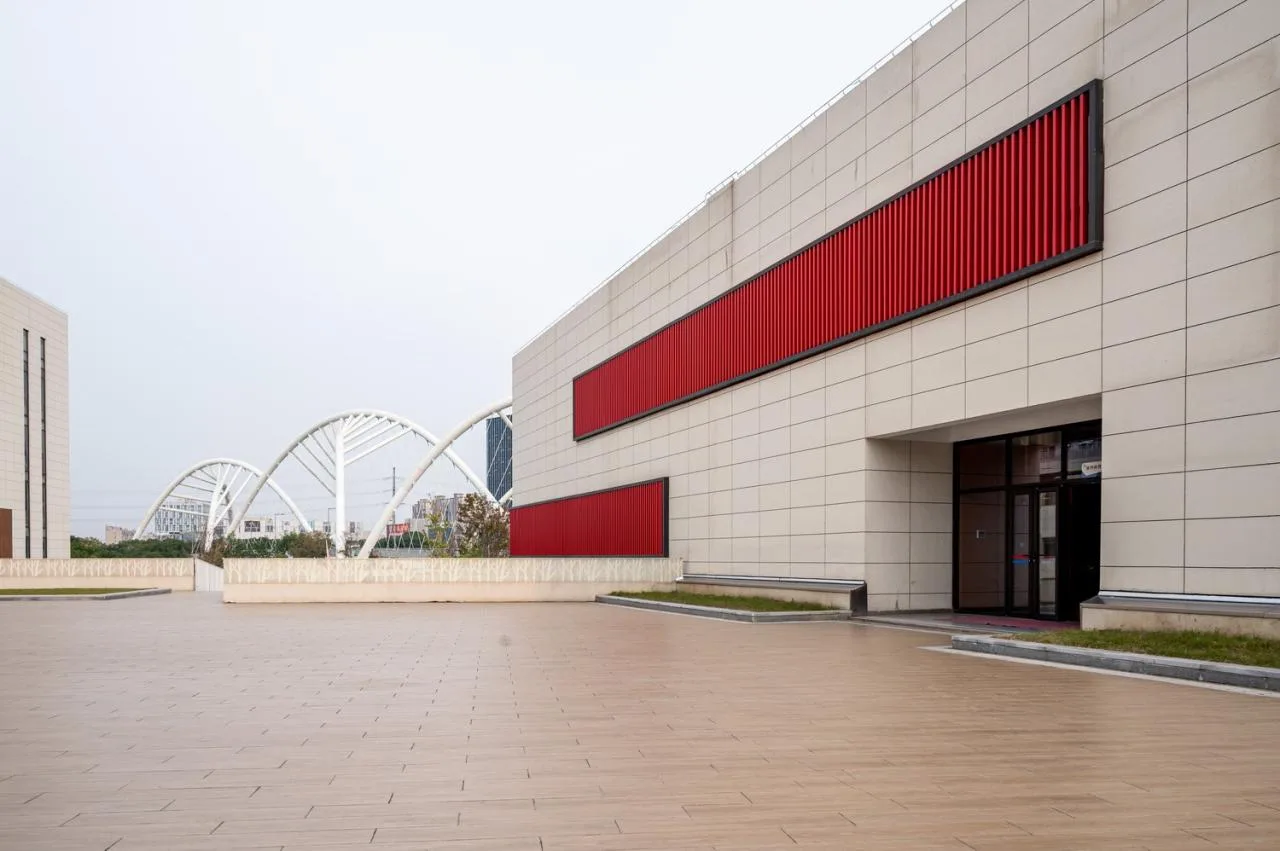
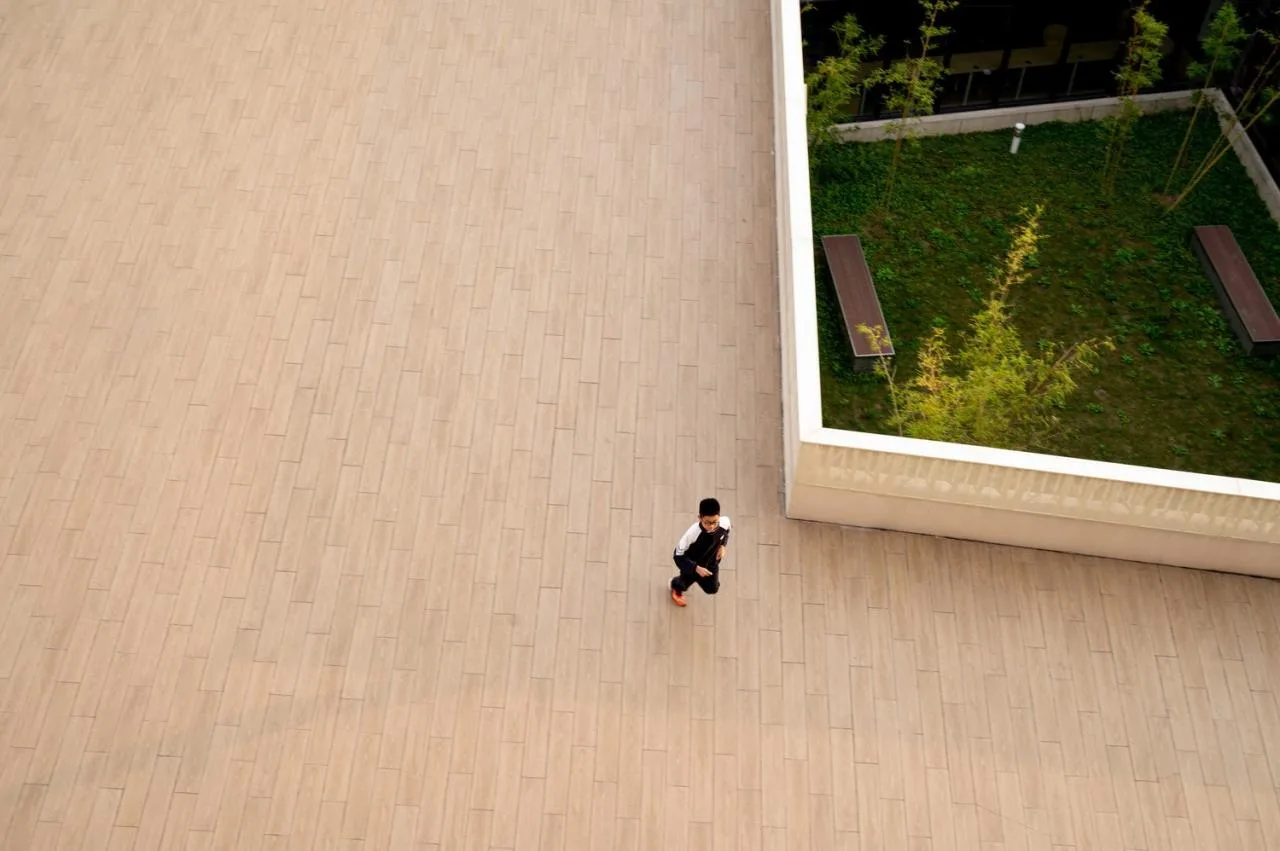
△ Shared platform © Peng Xiaokai and Zhang Yi
(3) The original sports hall was partially set back, reducing its impact on the adjacent venue and creating space for spectator stands. Stairs connect this area with the existing shared platform and communication staircase, forming a unified circulation system.
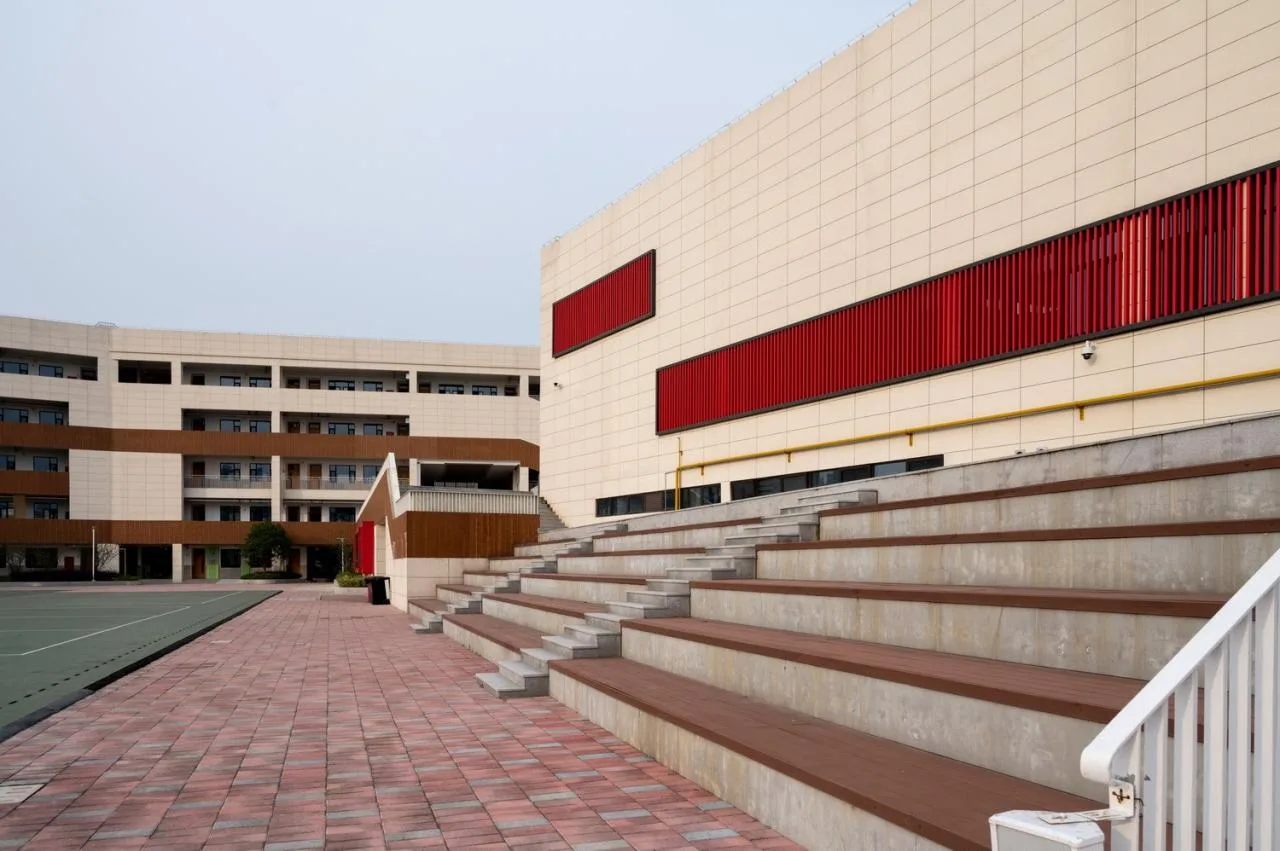
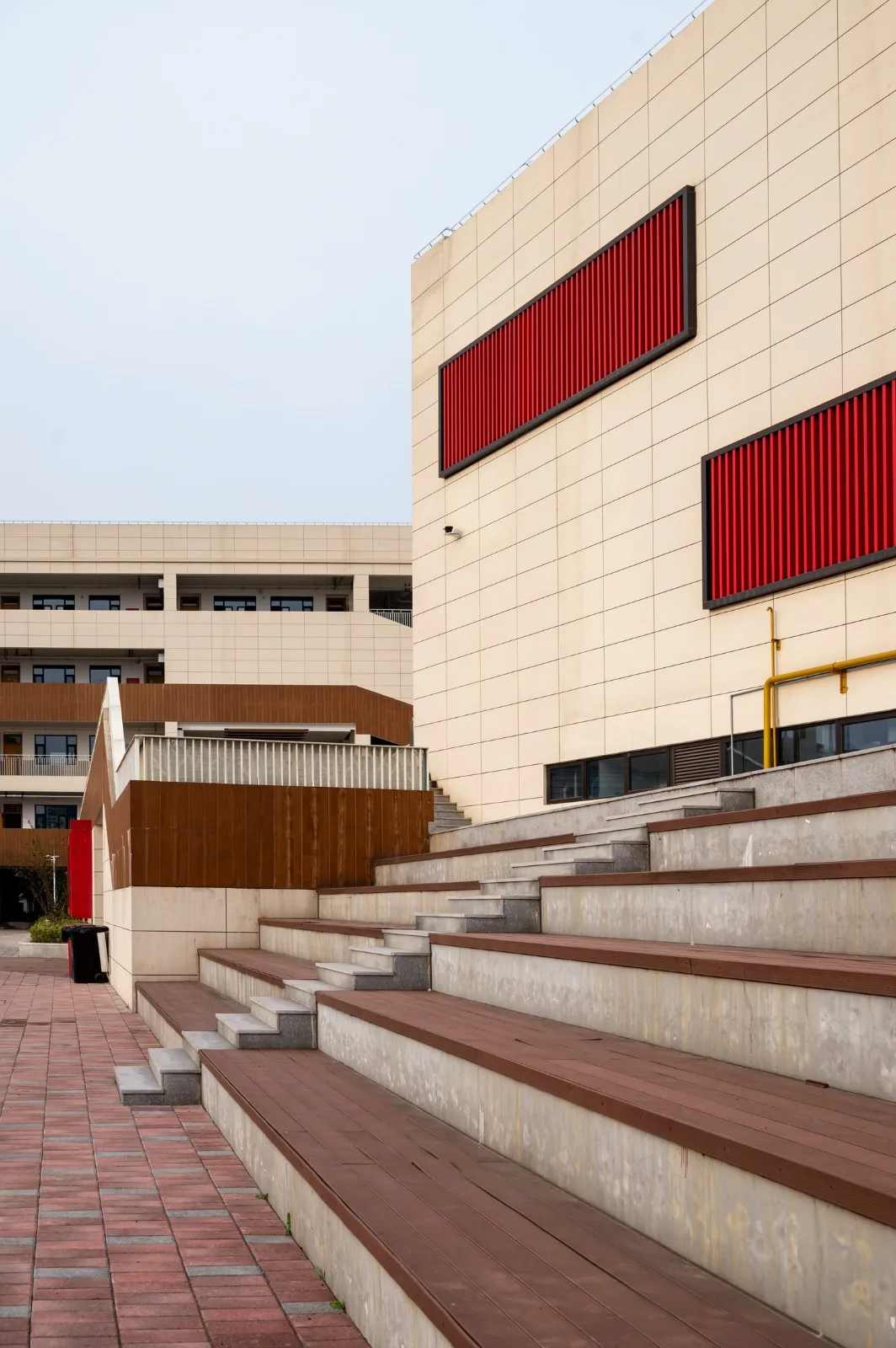
△ Playground Stand © Peng Xiaokai and Zhang Yi
(4) Part of the ground floor was elevated and sections of the facade opened, creating a large semi-outdoor shared space along the corridor. This not only enlivens the building’s interior but also offers an open setting for shared activities, allowing teachers and students to enjoy sunlight and views within the building.
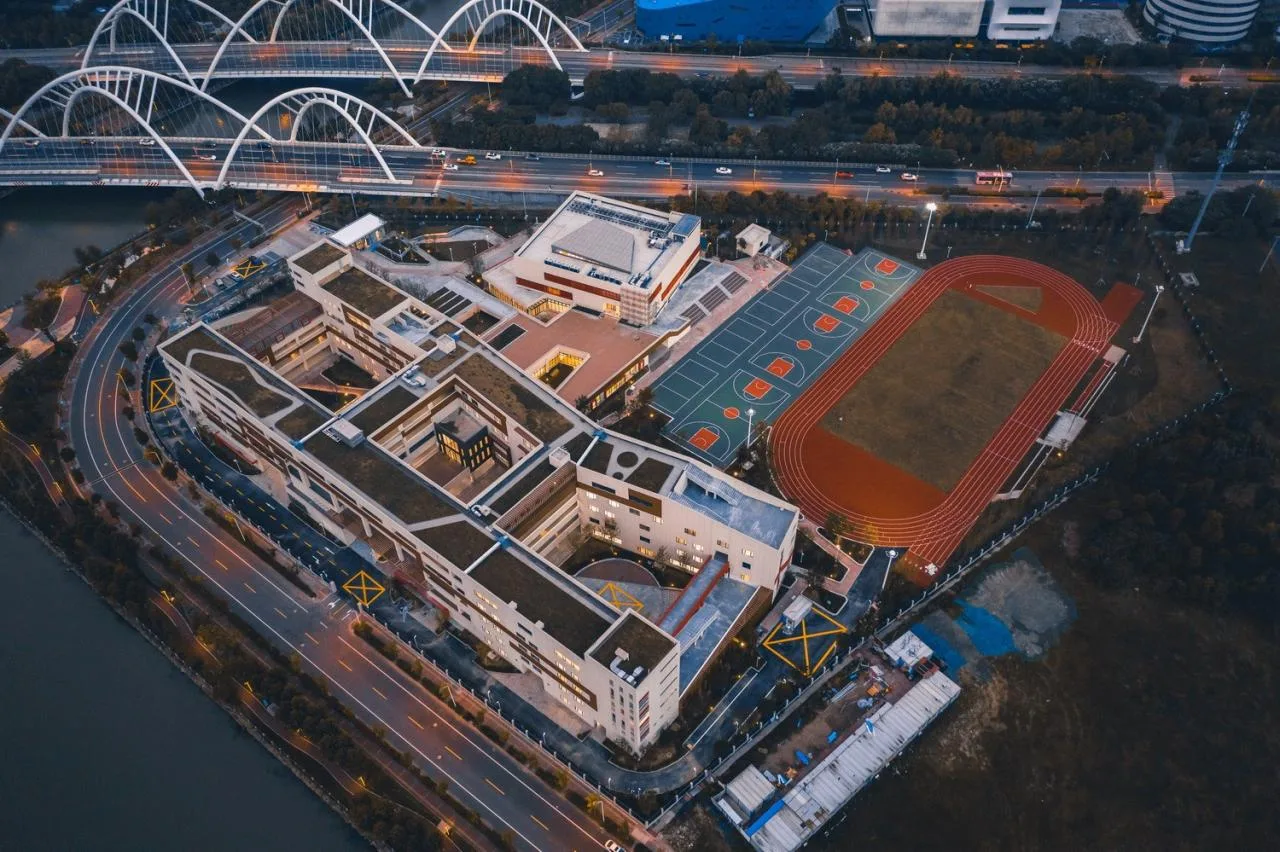
△ Aerial view of the venue © Peng Xiaokai and Zhang Yi
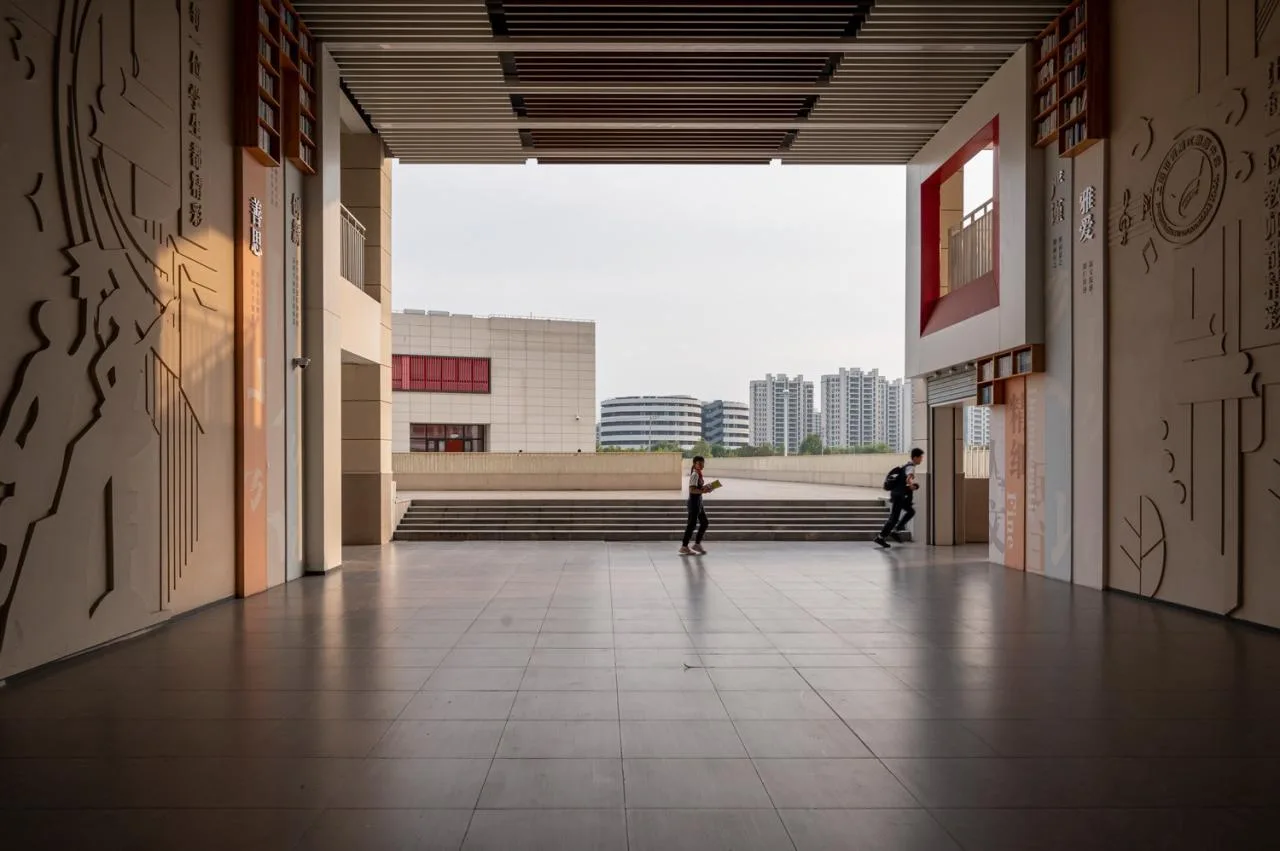
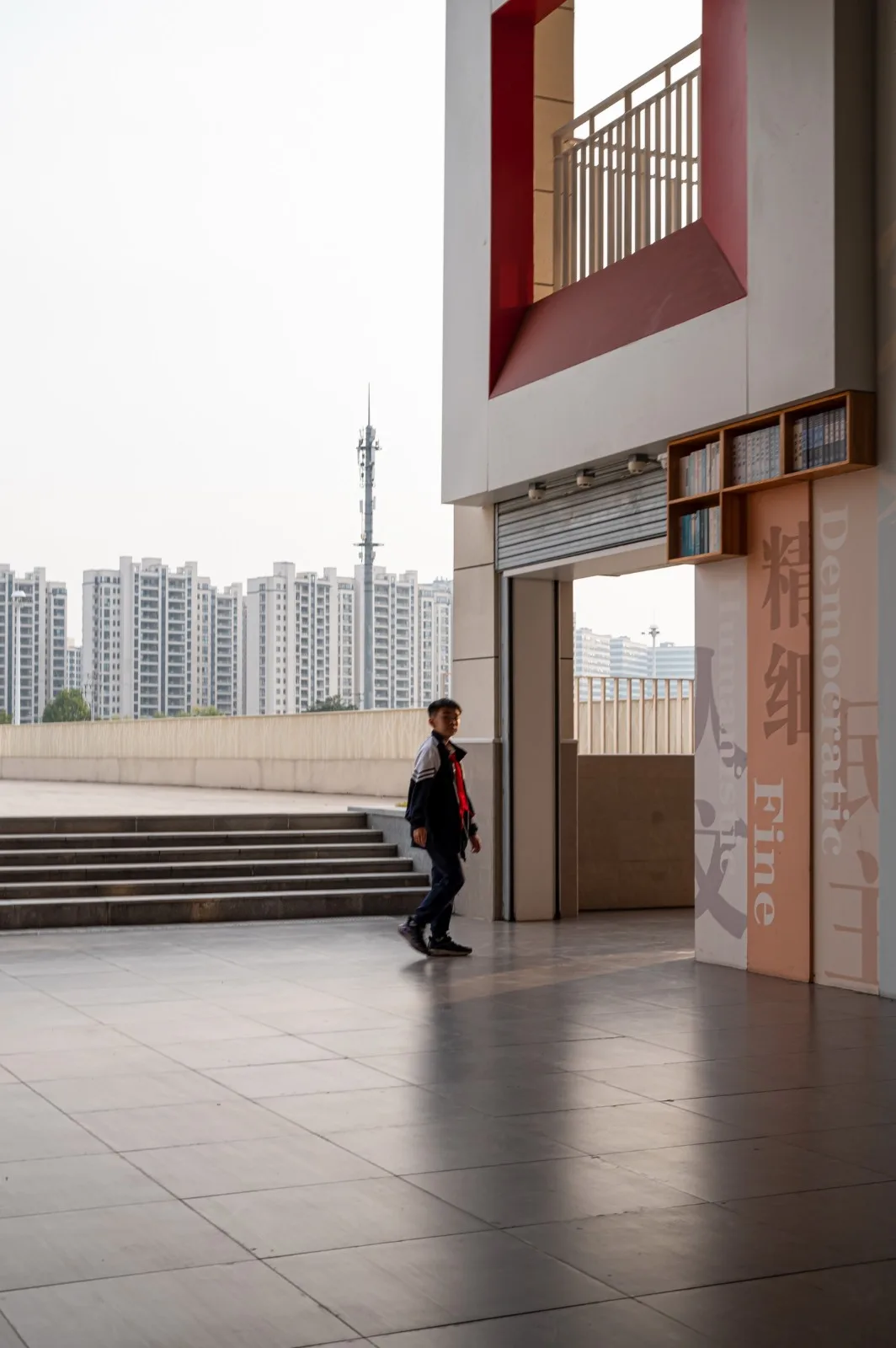
△ Activity space © Peng Xiaokai and Zhang Yi
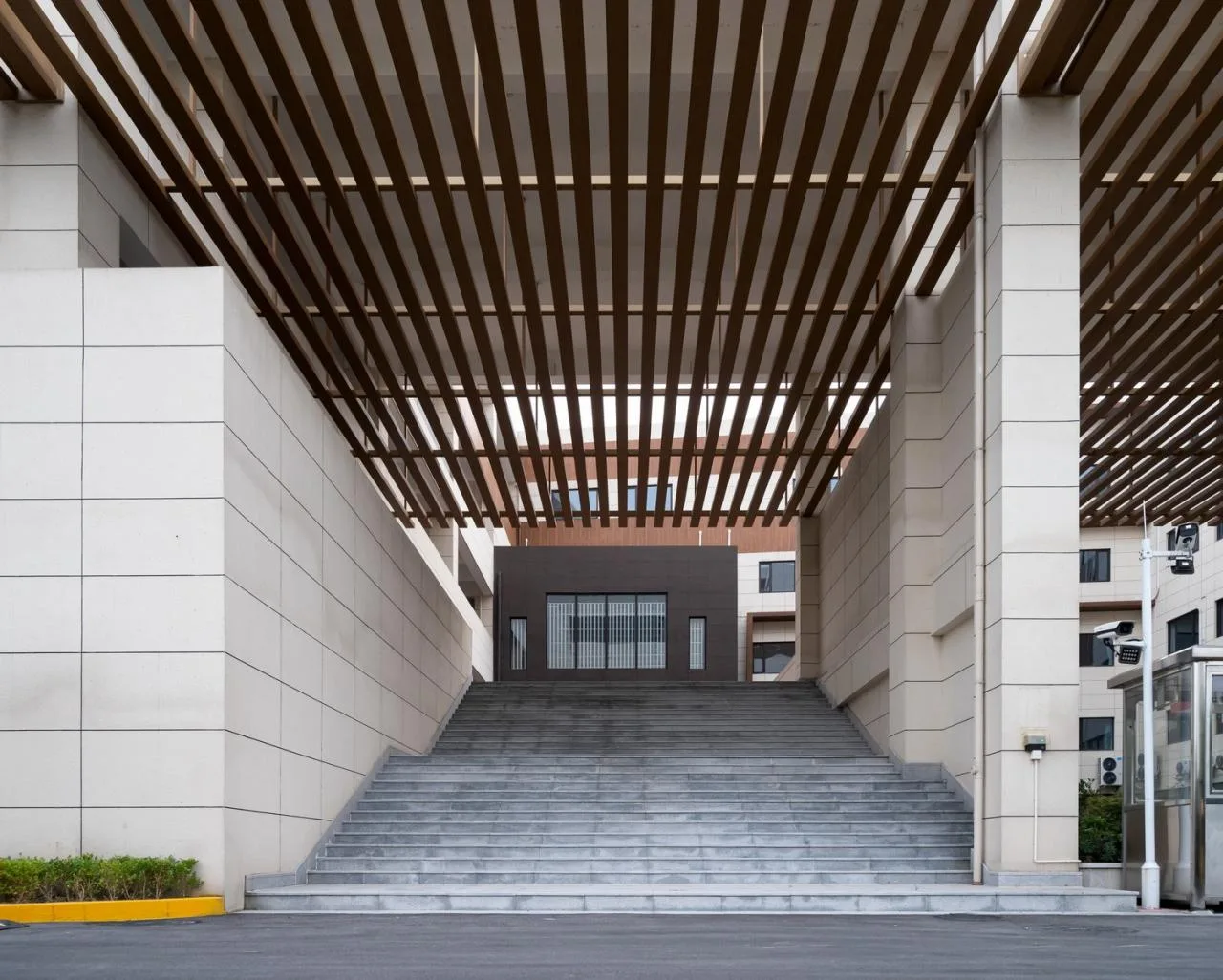
△ Elevated northern entrance © Peng Xiaokai and Zhang Yi
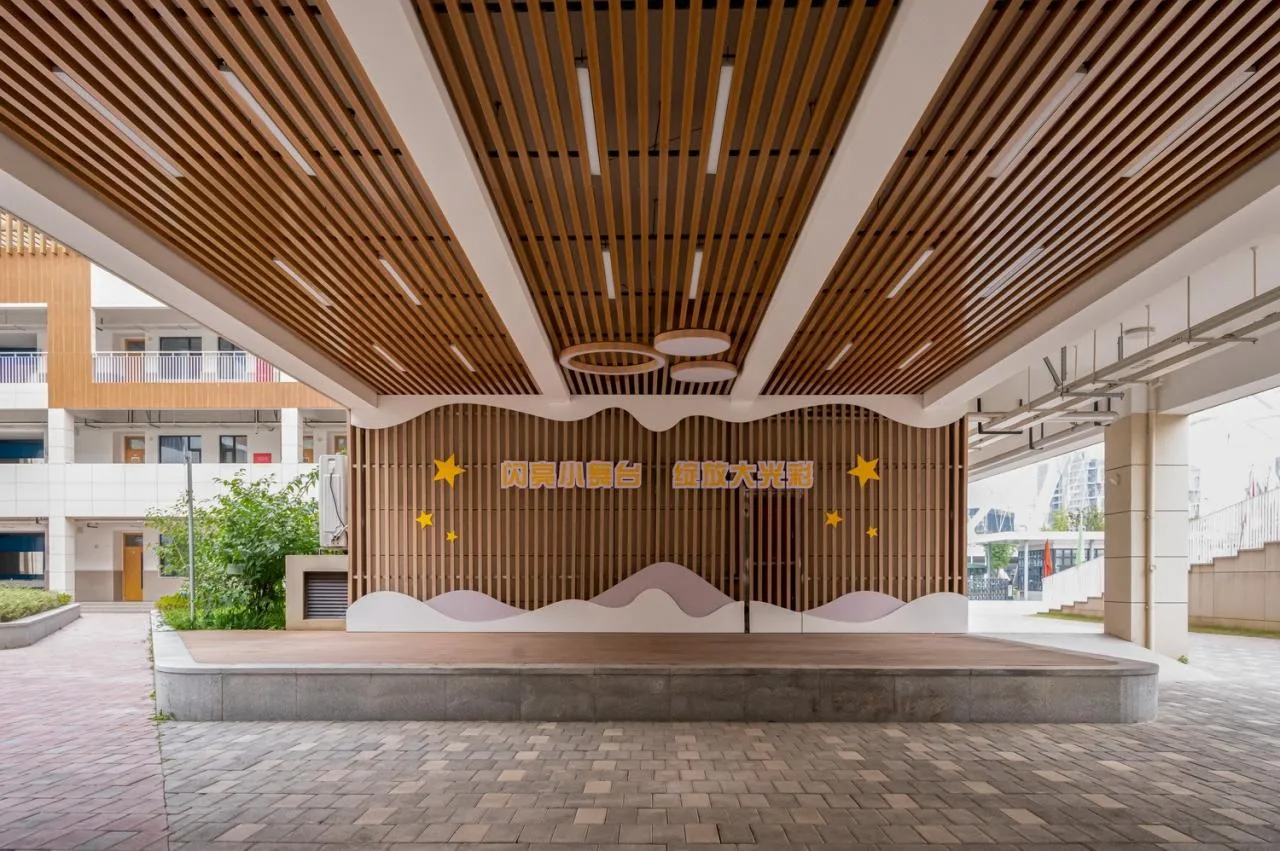
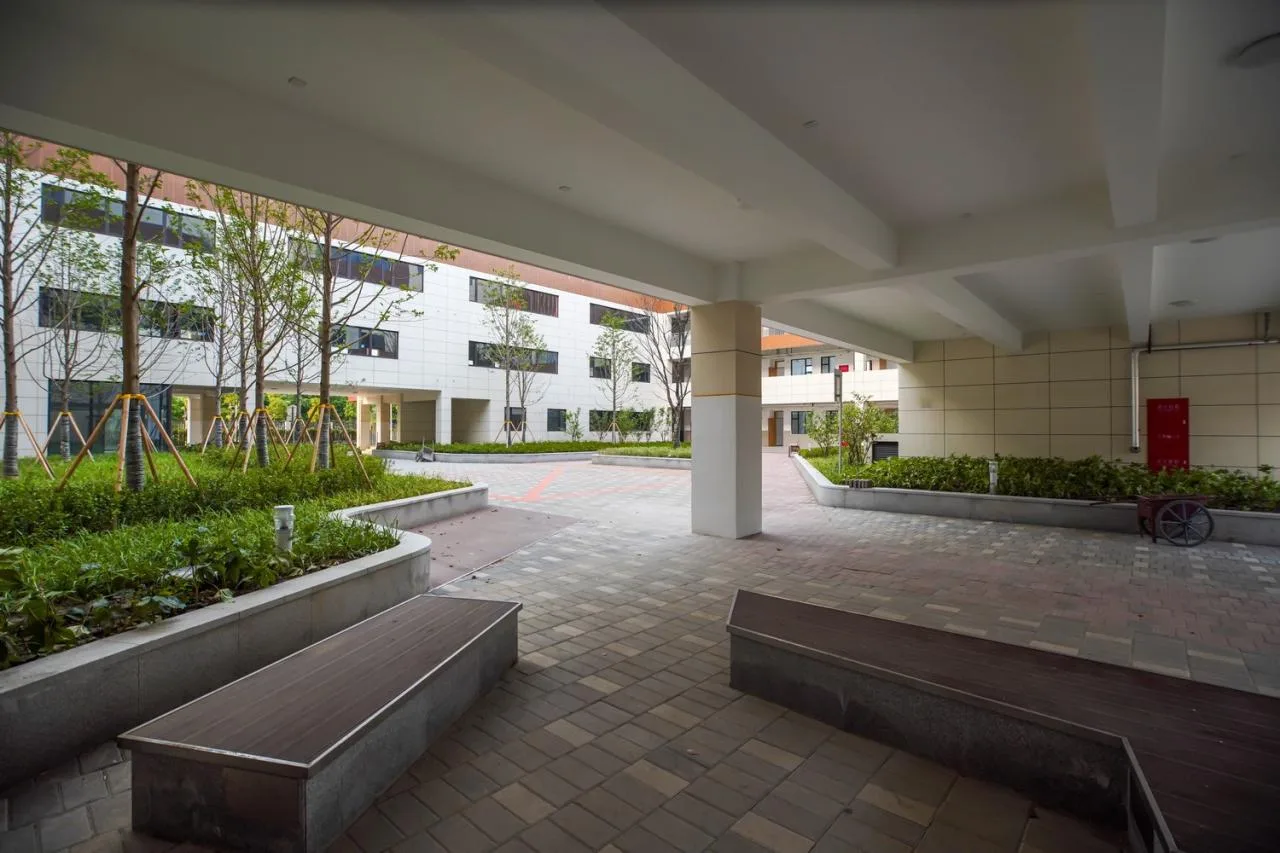
△ Overhead space © Peng Xiaokai and Zhang Yi
(5) The rooftop platform serves as a green space and activity area where students can relax during breaks. A rooftop walkway links various activity zones, forming a vibrant shared platform that fosters independent yet organic connections between areas.
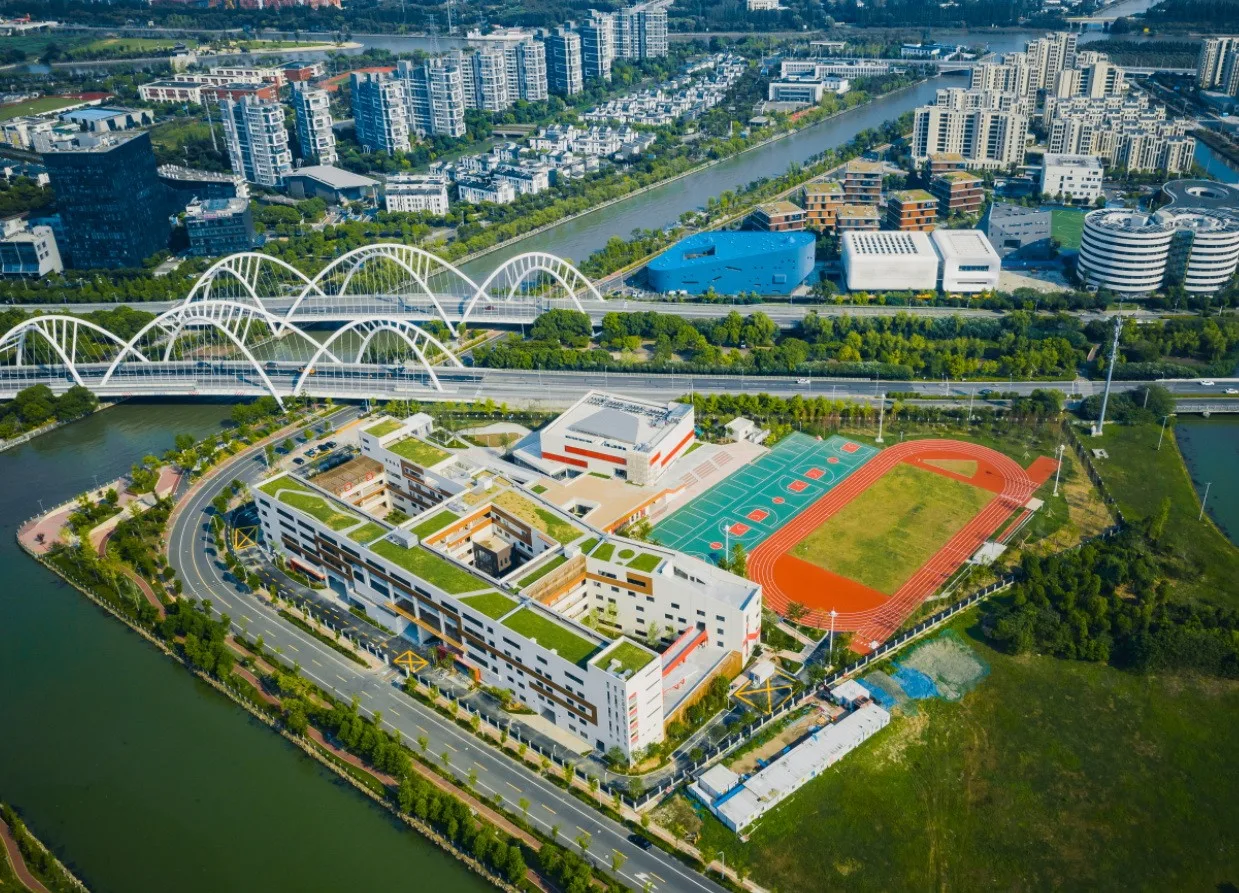
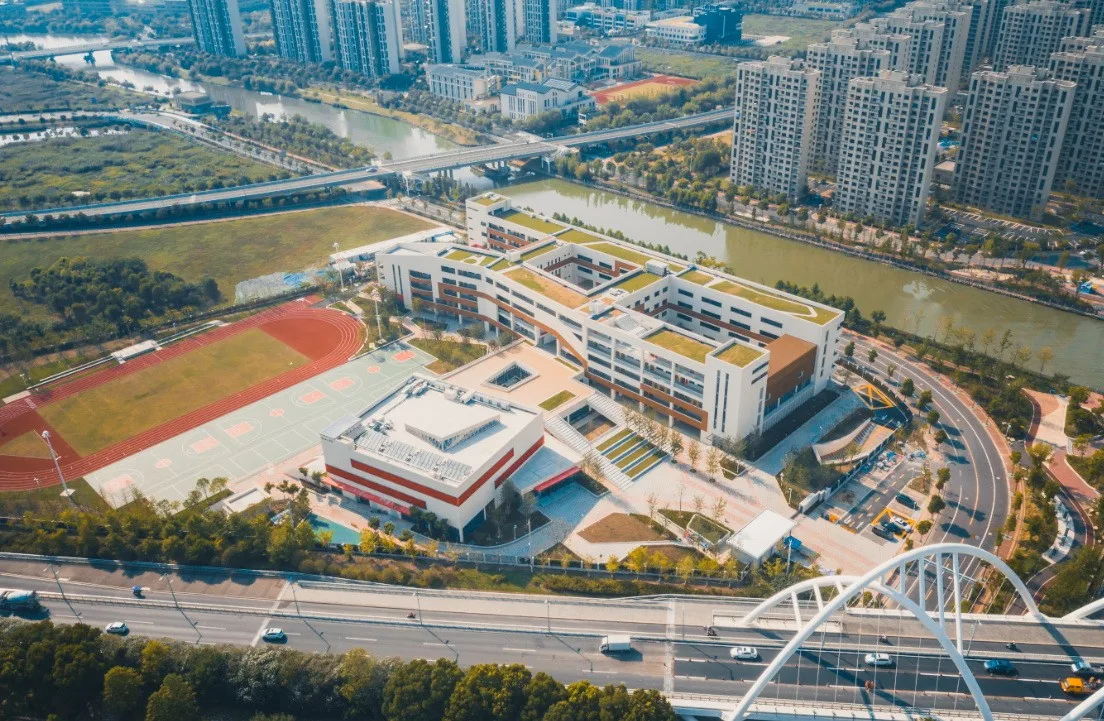
△ Aerial view of the roof © Peng Xiaokai and Zhang Yi
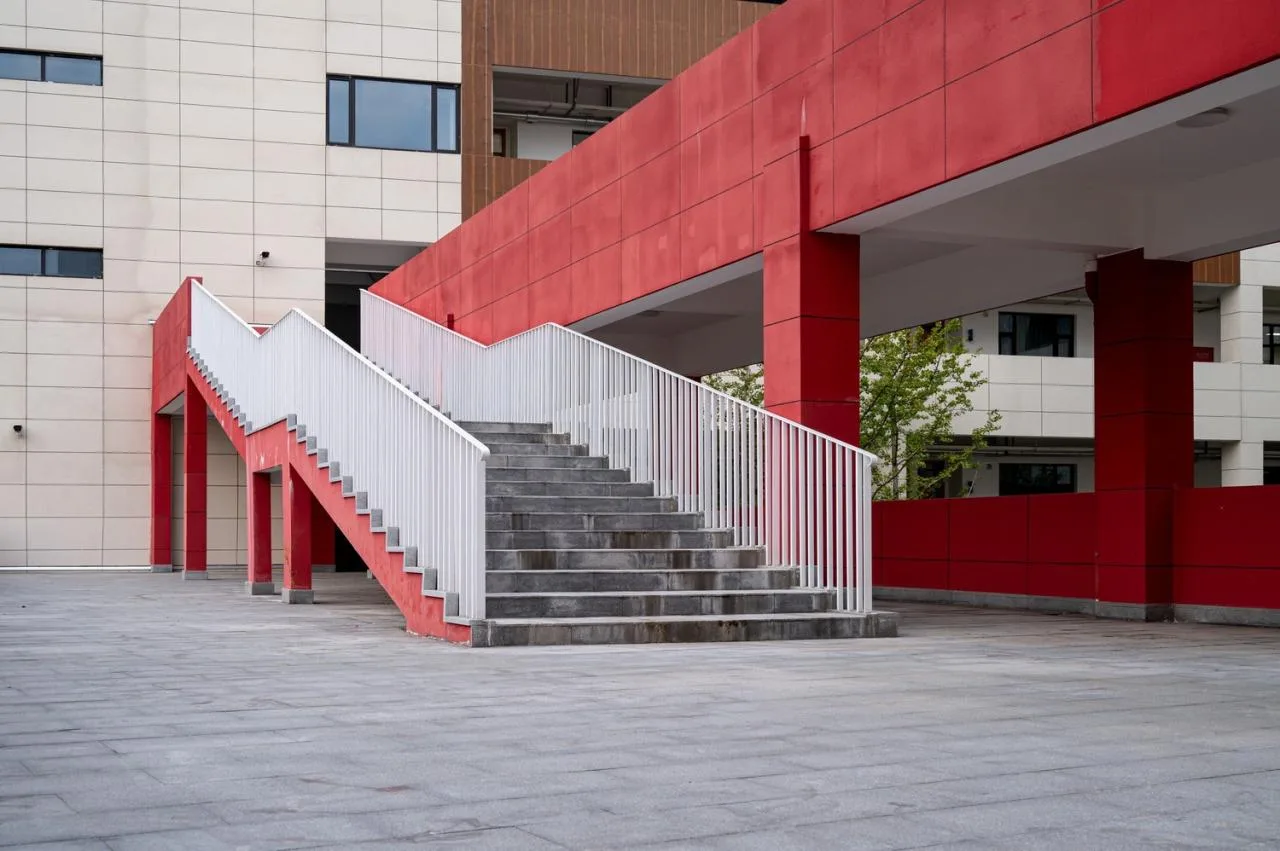
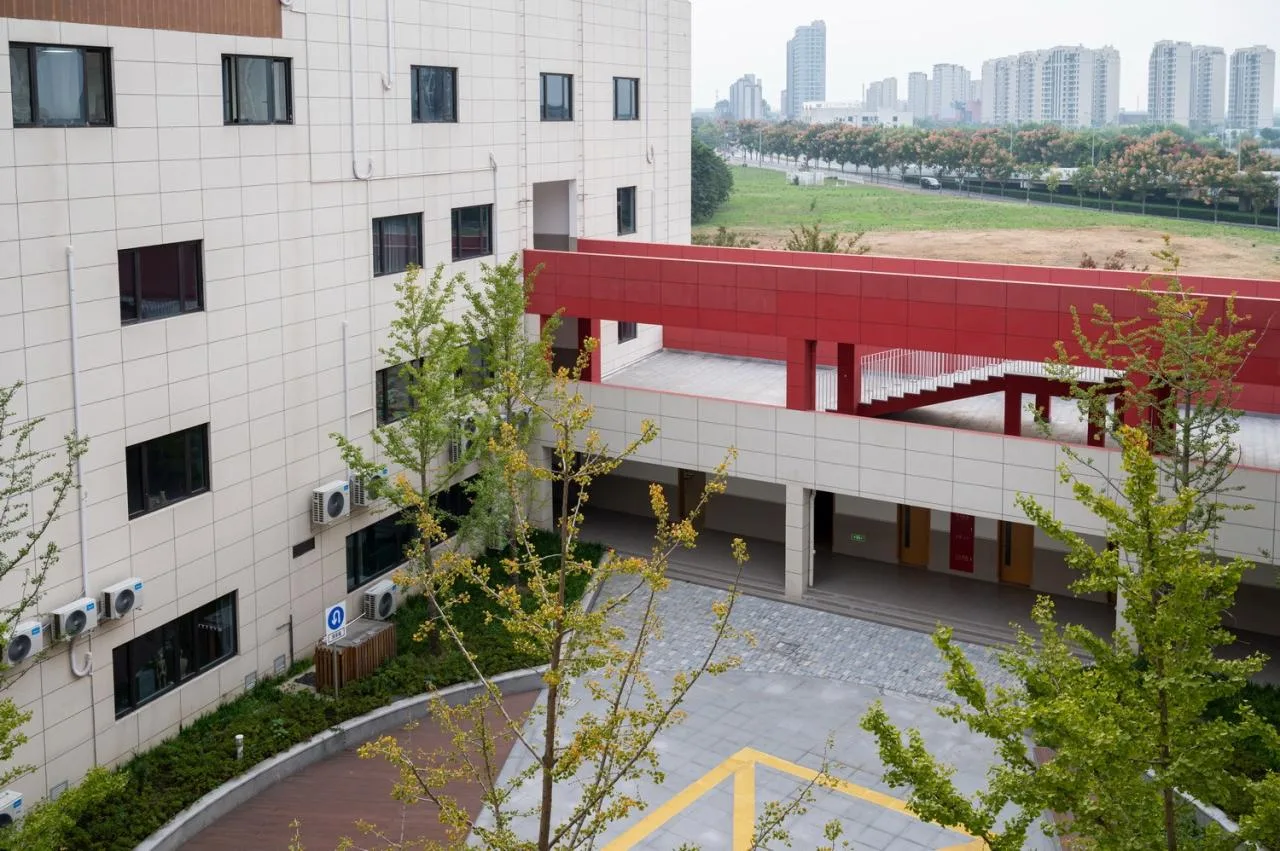
△ Platform and staircase © Peng Xiaokai and Zhang Yi
(6) The courtyard is a vital area for relaxation, social interaction, and communication. Its shape and size are adapted to local conditions; some courtyards are enclosed by buildings, while others are created through form subtraction, allowing natural scenery to blend in and visual interactions to weave throughout the teaching complex.
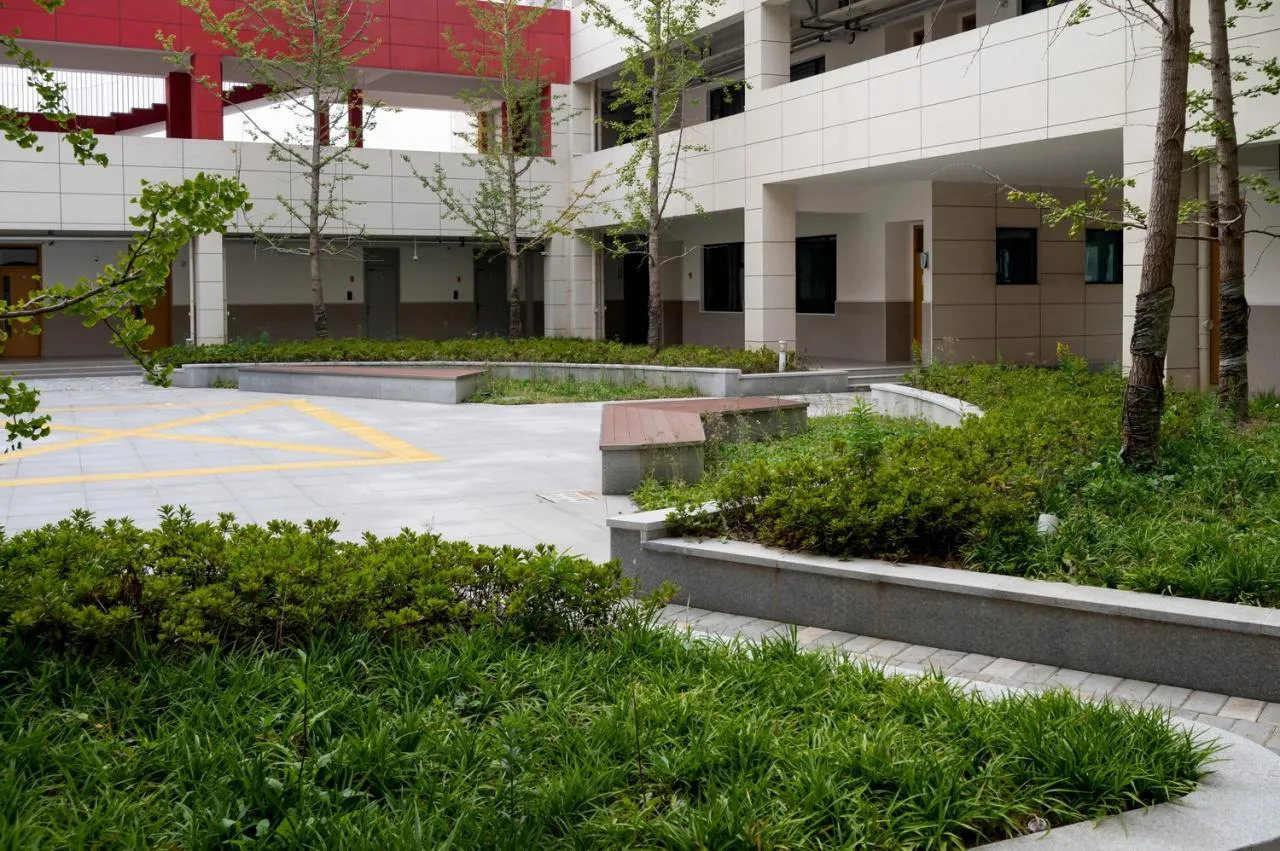
△ Courtyard space © Peng Xiaokai and Zhang Yi
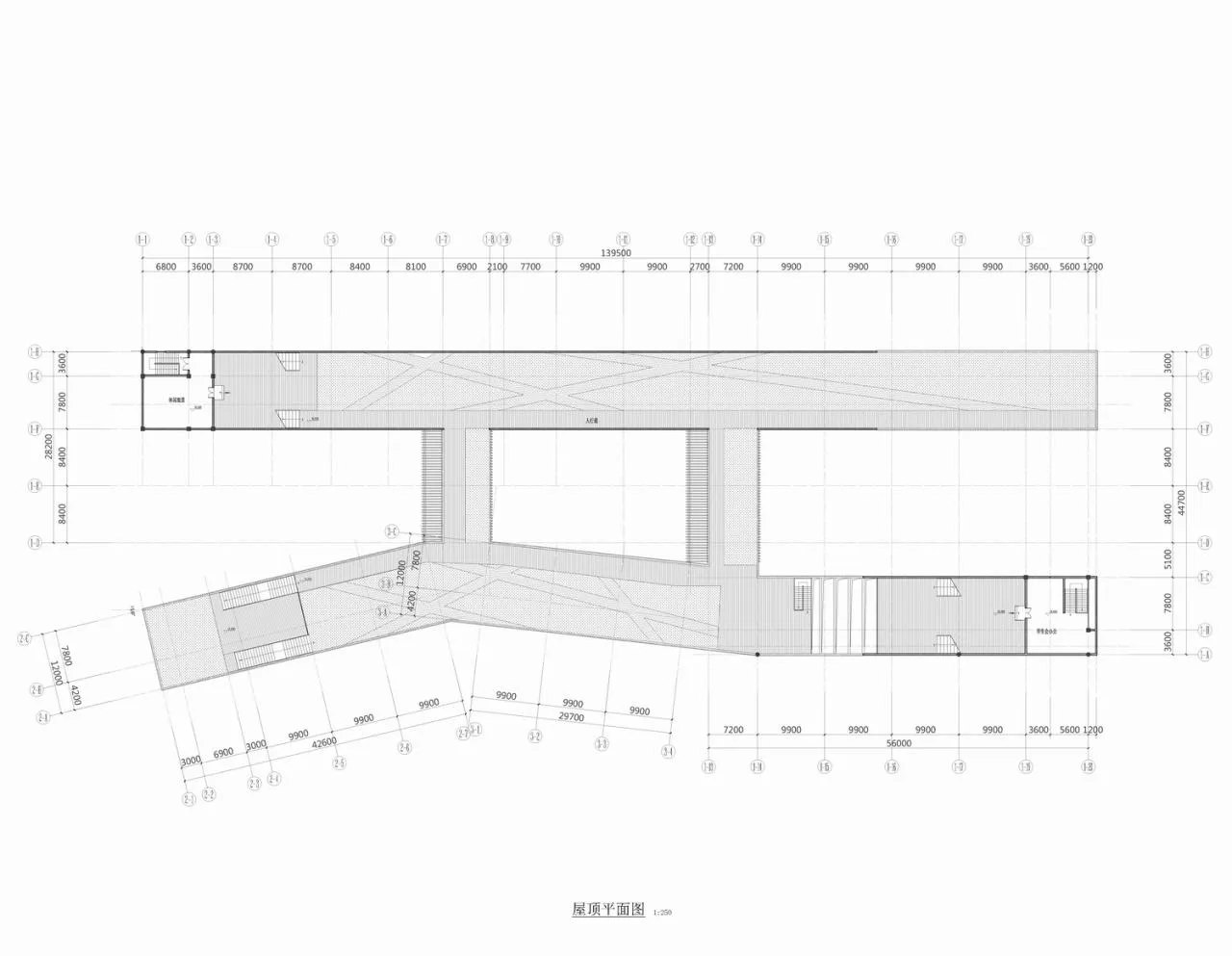
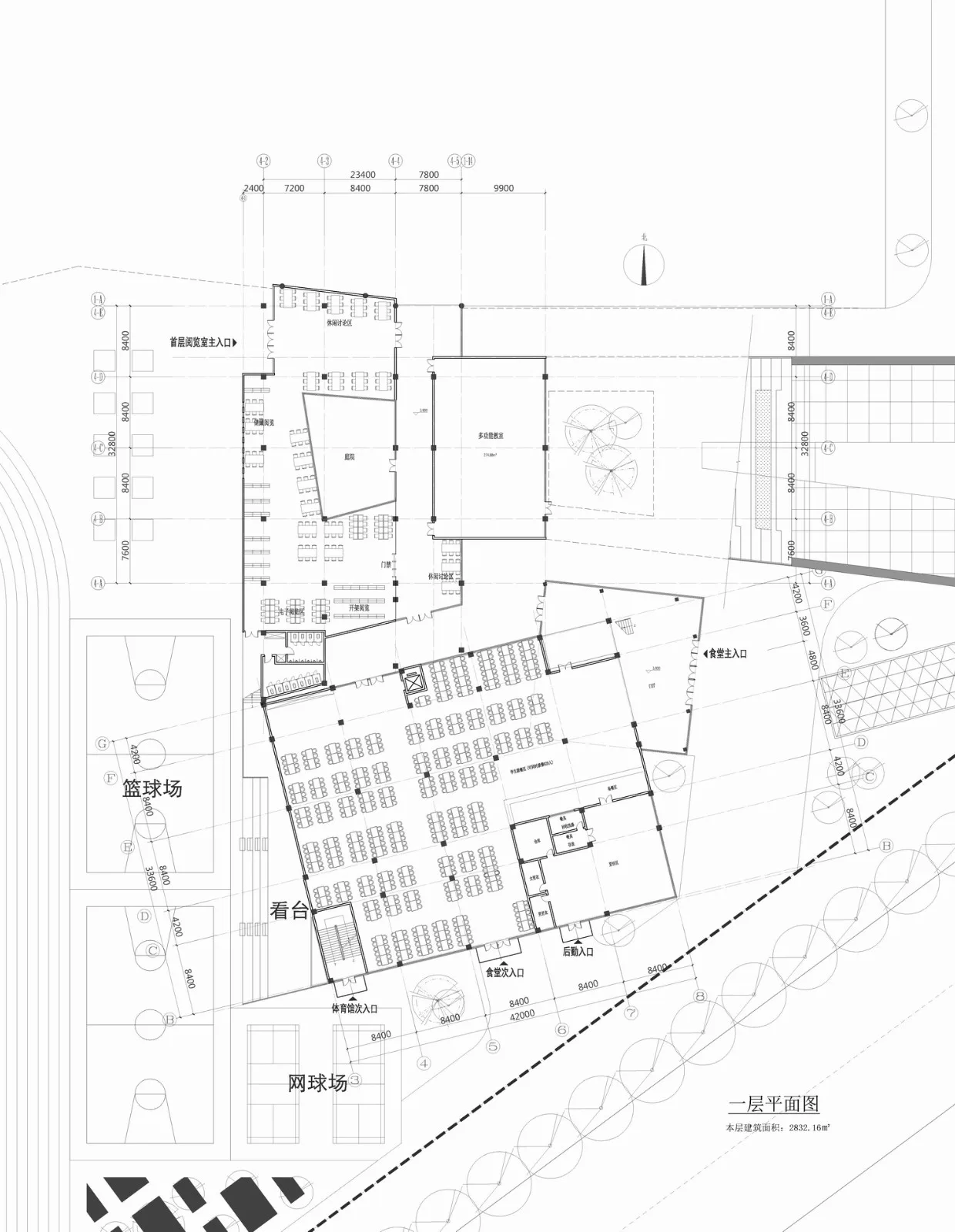
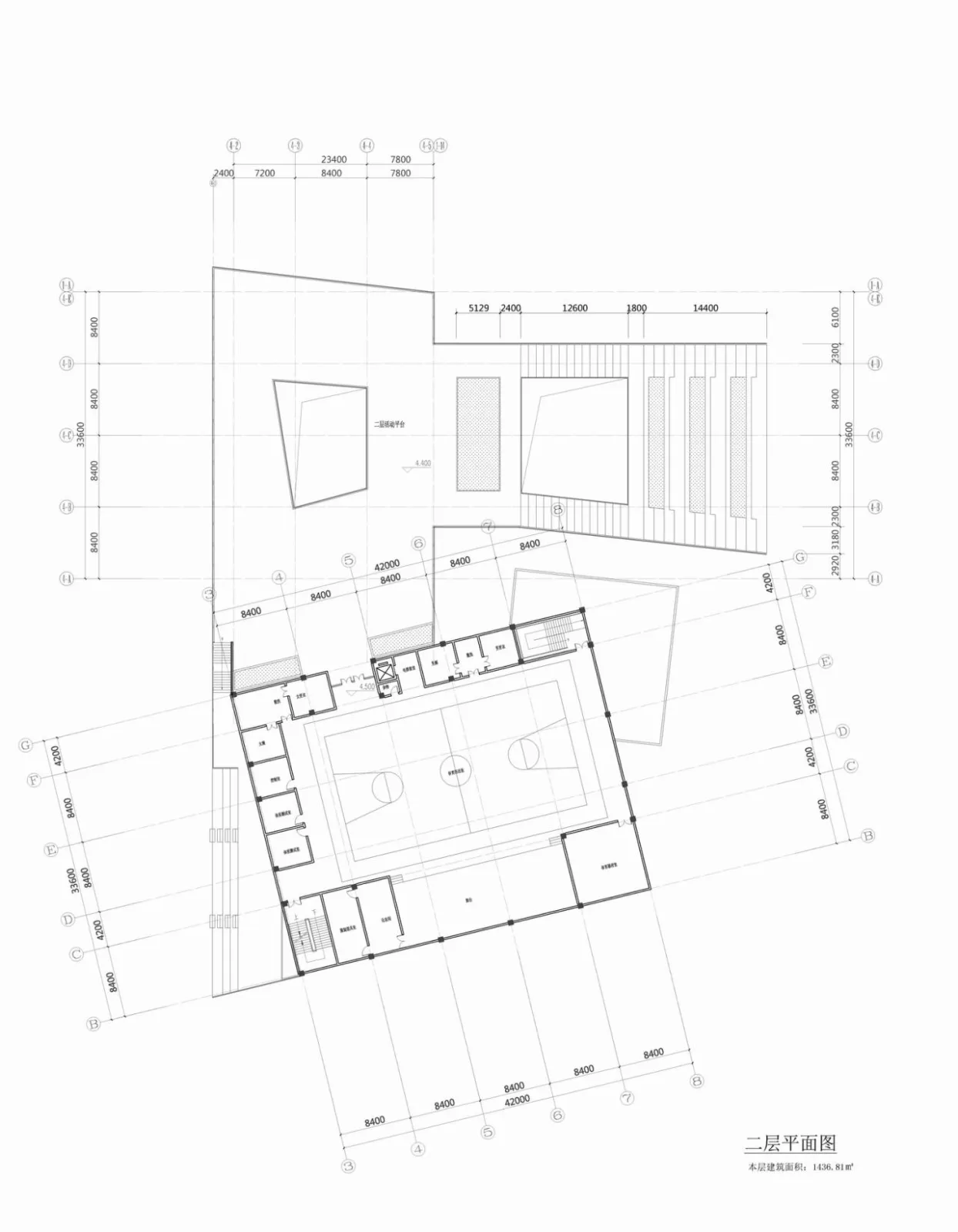
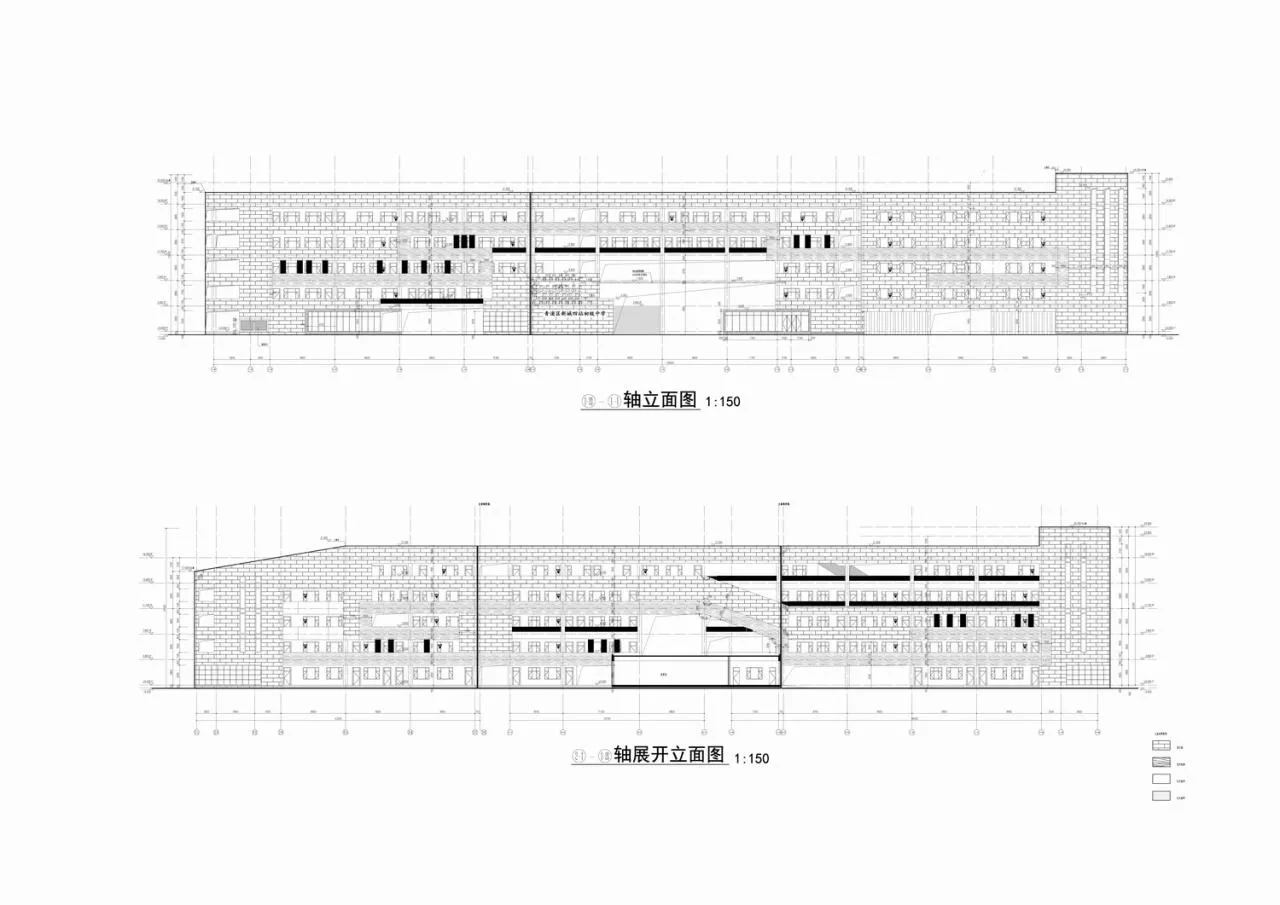
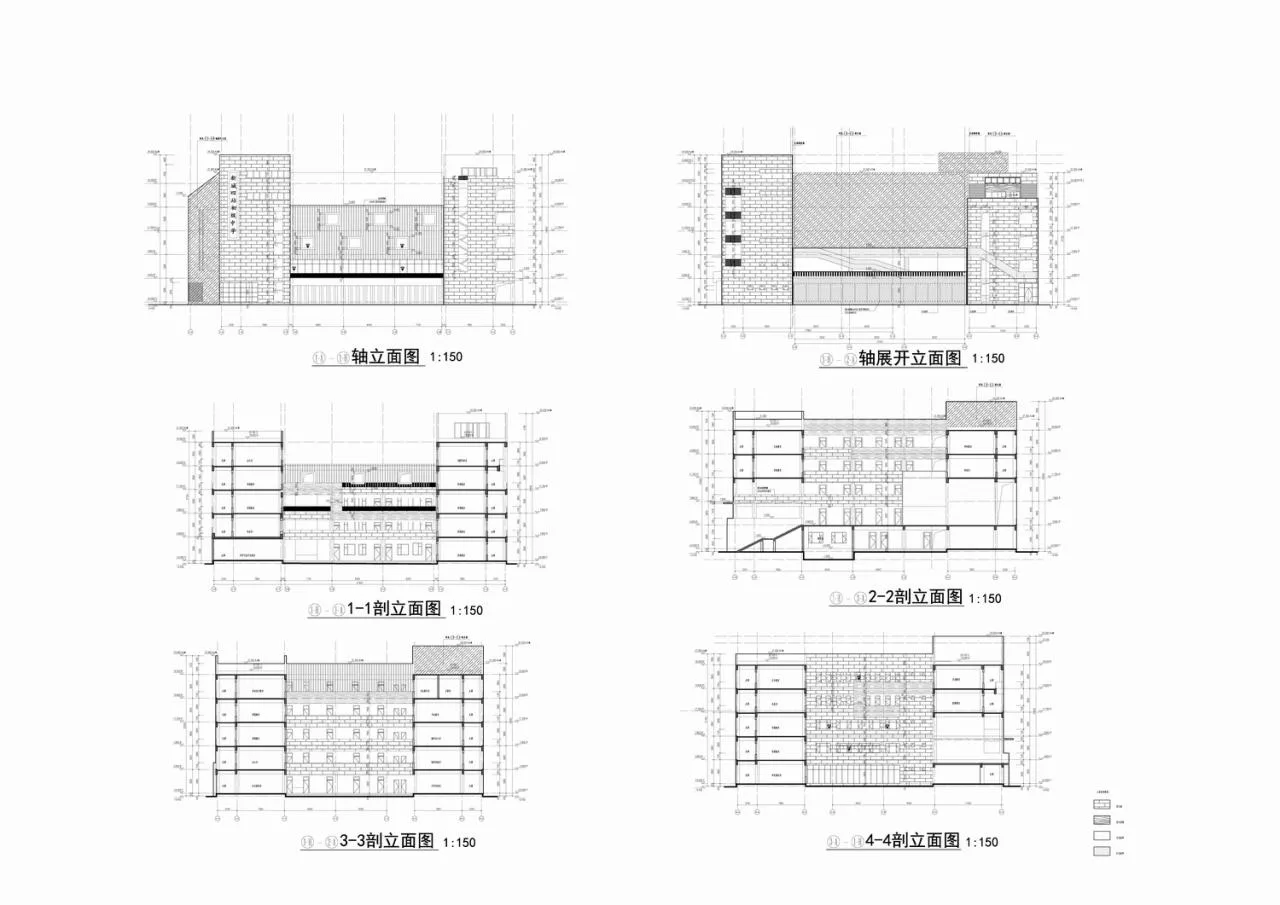
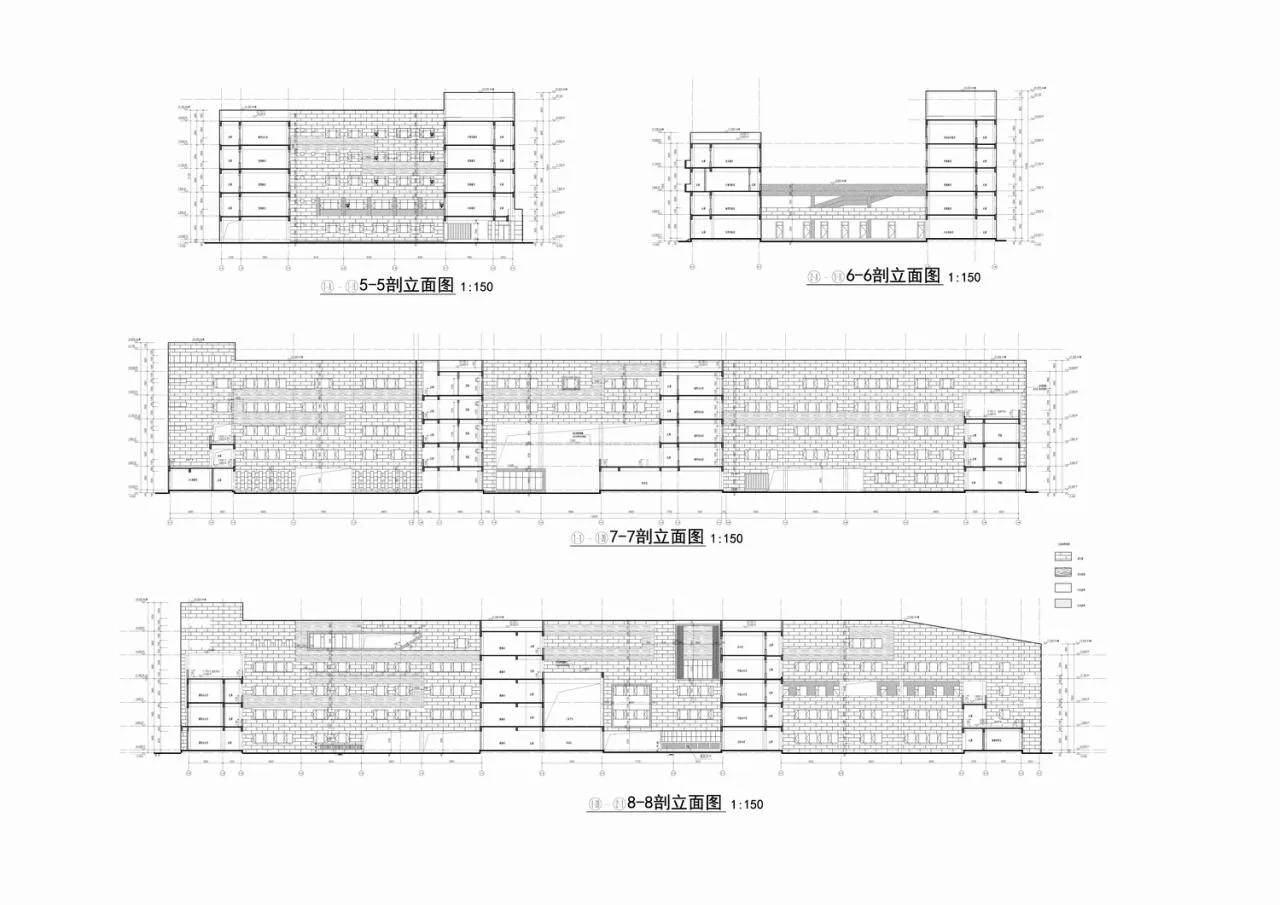
Project Drawings
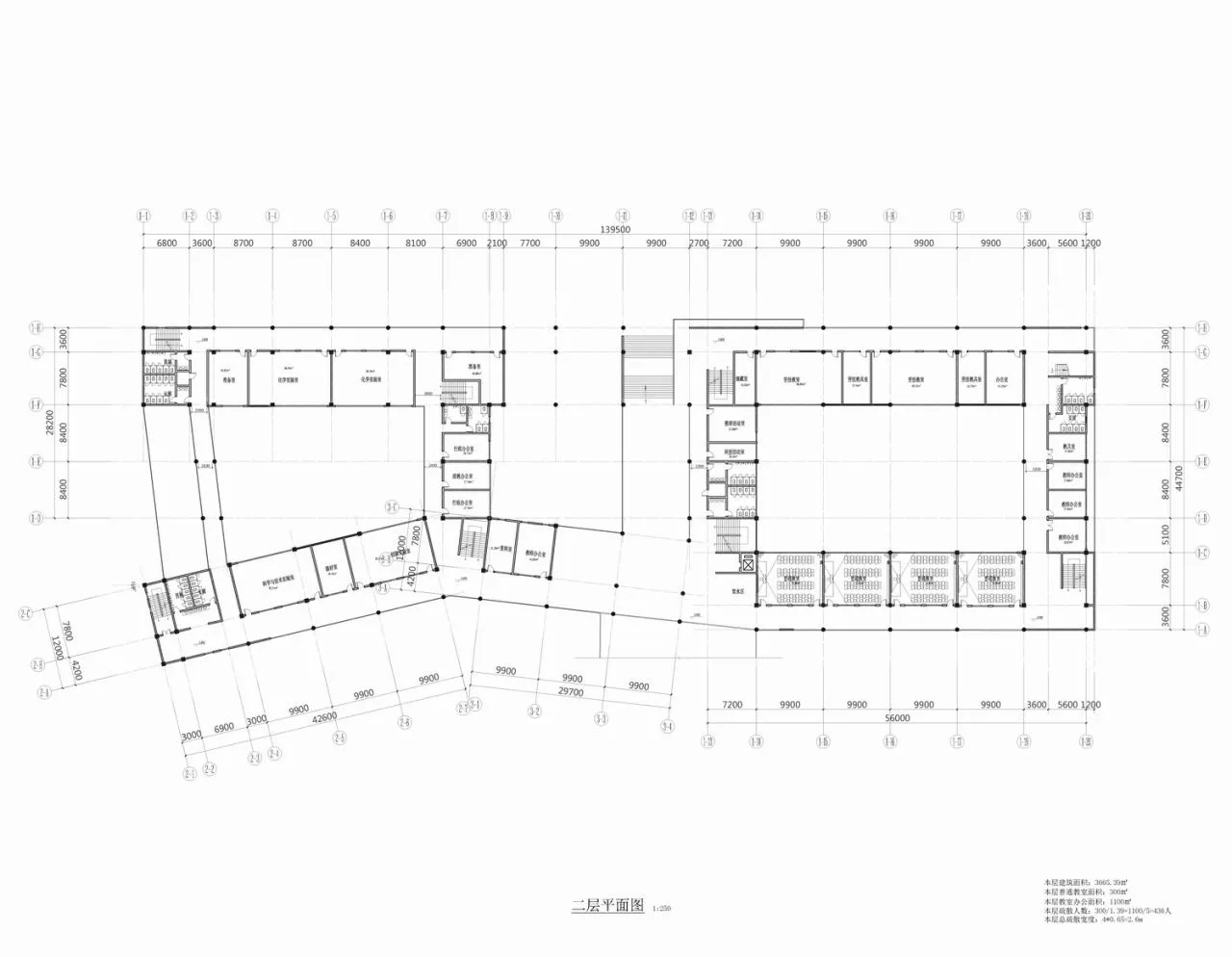
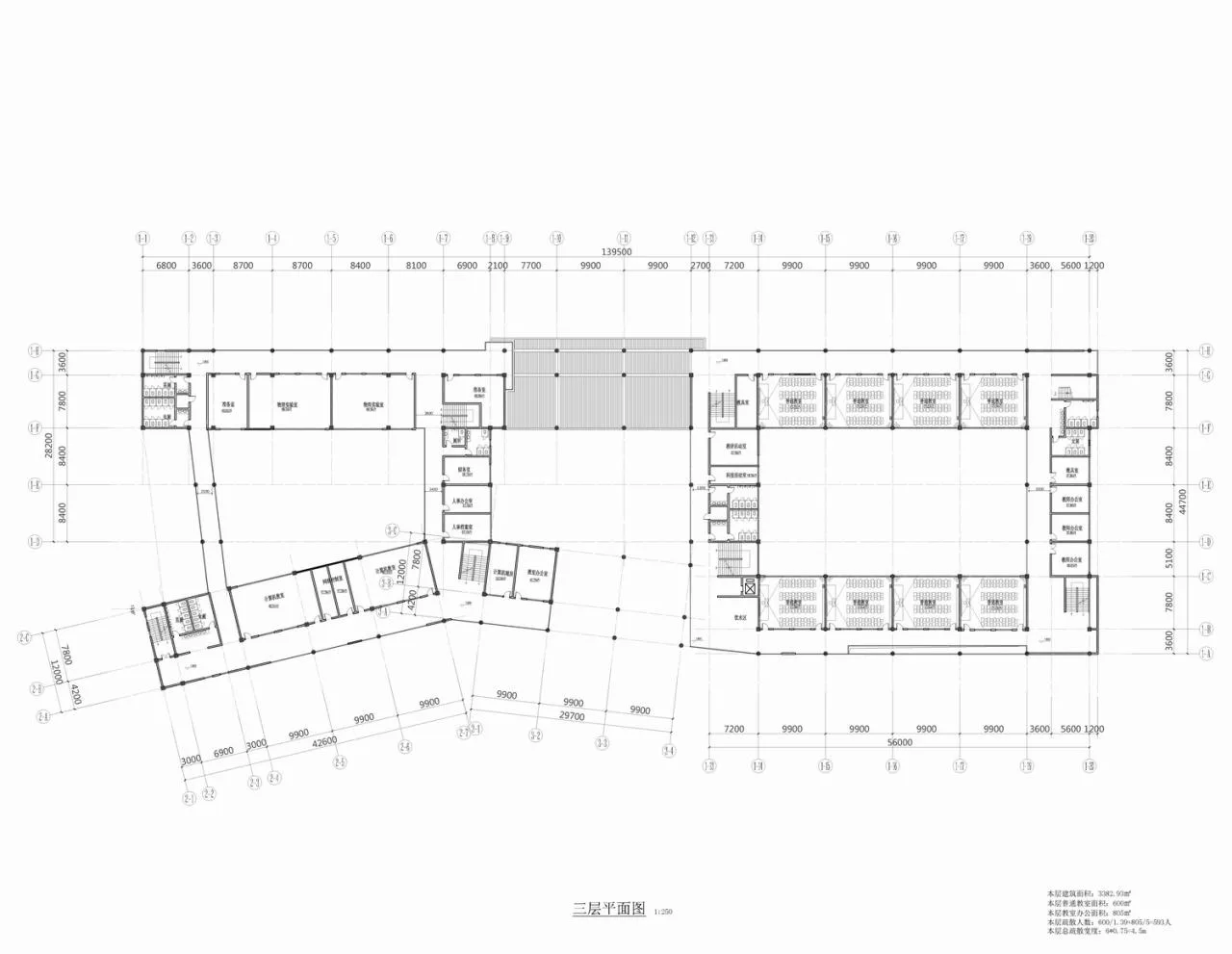
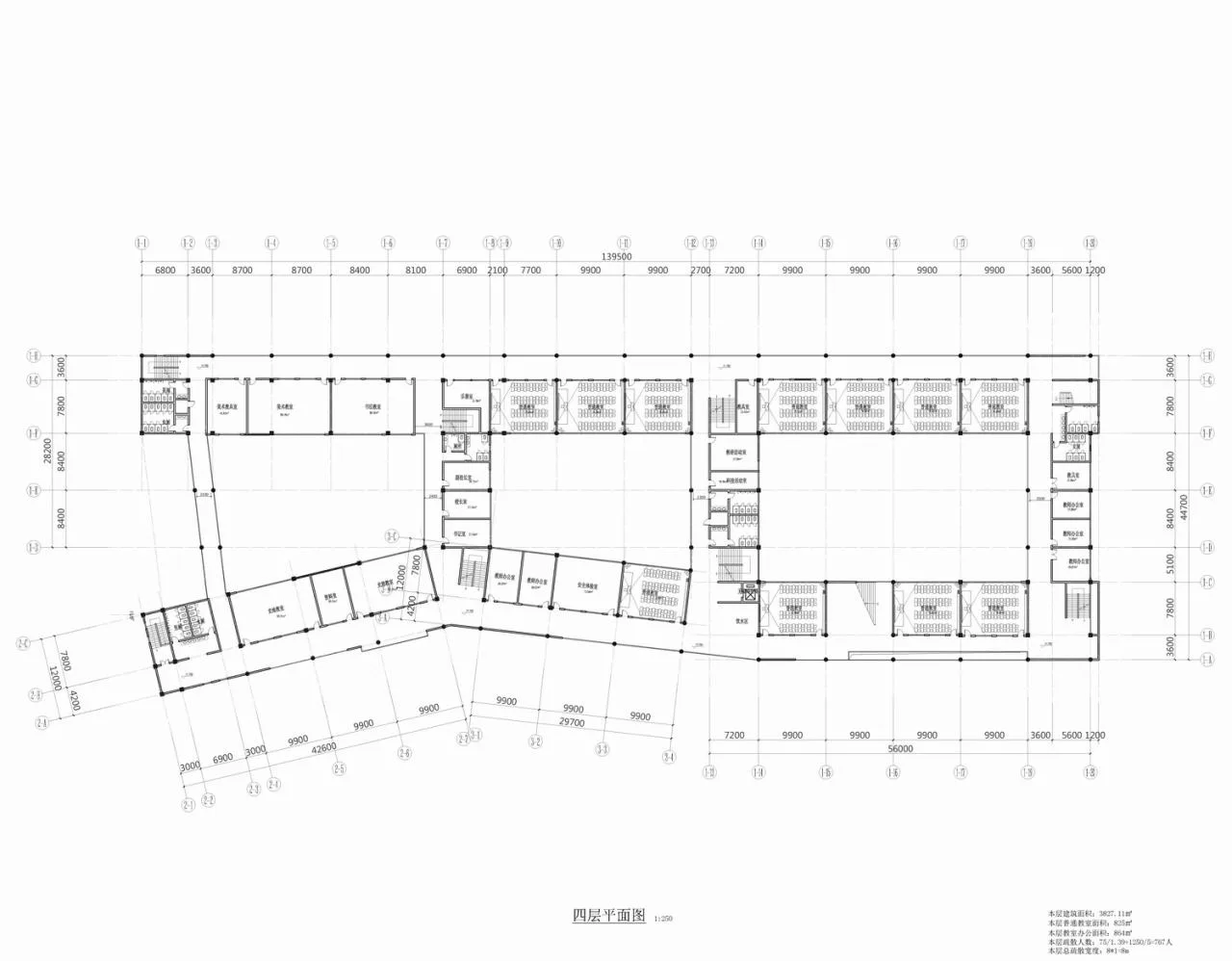
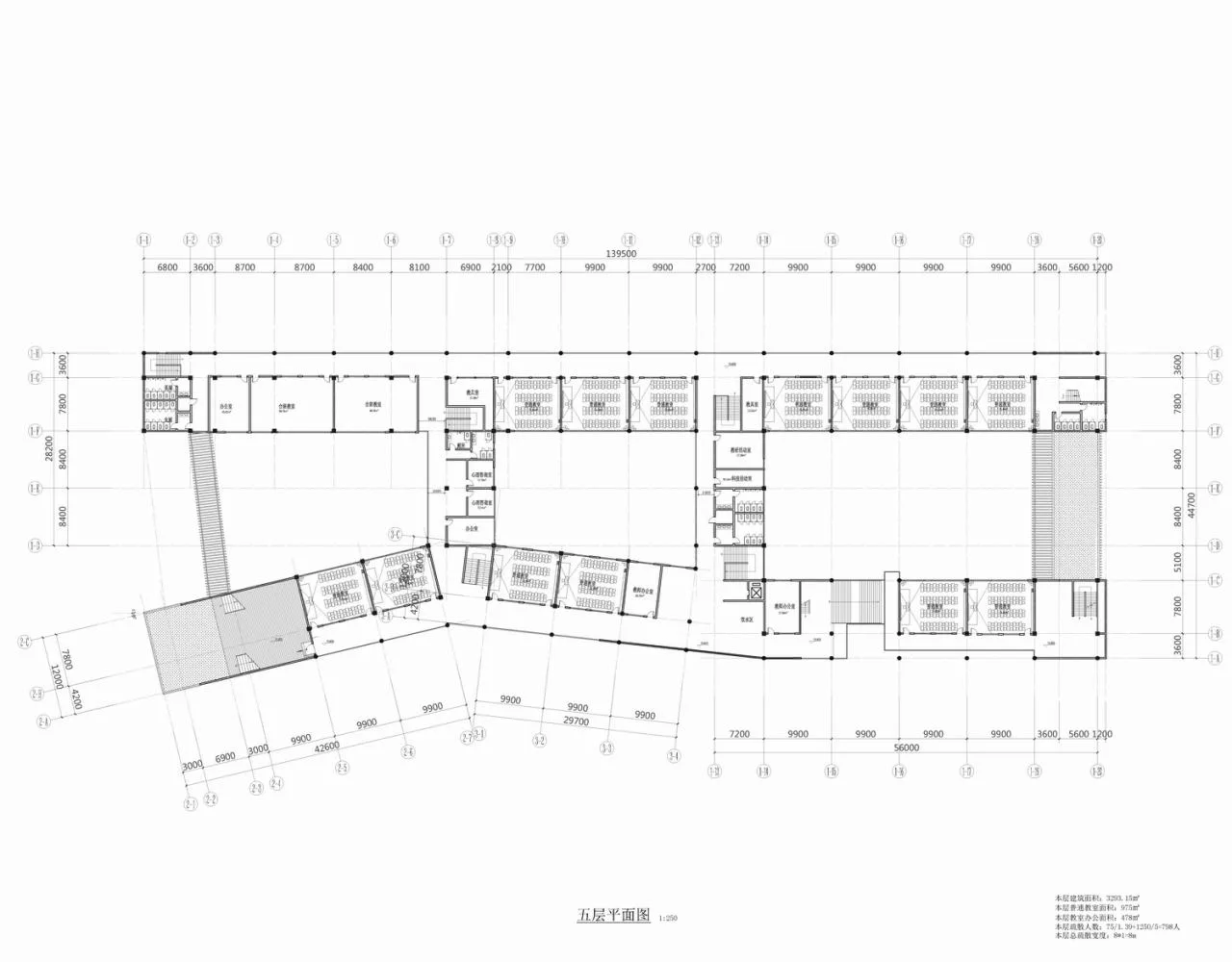
Project Information
Project Name: Qingpu Lansheng Siyuan Middle School
Designer: Shanghai Chuanglin Architectural Planning and Design Co., Ltd
Contact Email: slazebra@vip.sina.com
Chief Creative Designer: He Jia
Project Managers: Dong Xiaobo and Zhang Qin
Design Team: Qian Yuxin, Zhang Zemin, Hu Xiaoxia, Chen Hui, Peng Xiaokai
Project Design & Completion: June 2019 & June 2022
Project Owner: Shanghai Qingpu District Education Comprehensive Affairs Center
Project Location: Qingpu, Shanghai, China
Building Area: 25,174.5 square meters
Photography Copyright: Peng Xiaokai, Zhang Yi
Construction Drawing Design: Shanghai Shenlian Architectural Design Co., Ltd
Interior Design: Shanghai Dupin Architectural Design Co., Ltd














Must log in before commenting!
Sign Up