
Summary
In 2013, our company’s Seventh Engineering Institute undertook the 3D digital information system project for Chongqing Tobacco Industry Co., Ltd.’s Fuling Branch as a BIM technology service initiative. The project spans 500 acres with a designed annual production capacity of 20 billion cigarettes (approximately 400,000 boxes) and involves a total investment of 1.245 billion yuan.
The BIM technology services provided include creating BIM models, design verification, comprehensive pipeline optimization, and on-site technical support based on the BIM models. Additionally, the project incorporates model information resource management, facility equipment operation and maintenance management, and park guidance and display systems derived from the BIM completion models.
Currently, the project is in the final acceptance stage, with the BIM technology application during construction completed. Deployment and pre-acceptance of the self-developed software platform have also commenced.
Throughout the project, by applying BIM technology and on-site technical services based on BIM models, we collaborated closely with the client and design team to optimize design schemes, proactively resolve potential construction issues, and guide construction units using 3D comprehensive pipeline drawings and models. This approach effectively reduced rework and waste, ensured timely progress of mechanical and electrical installations, and received commendations from both the client and construction teams.
The following illustrates the application of BIM technology at the Fuling Tobacco Factory:
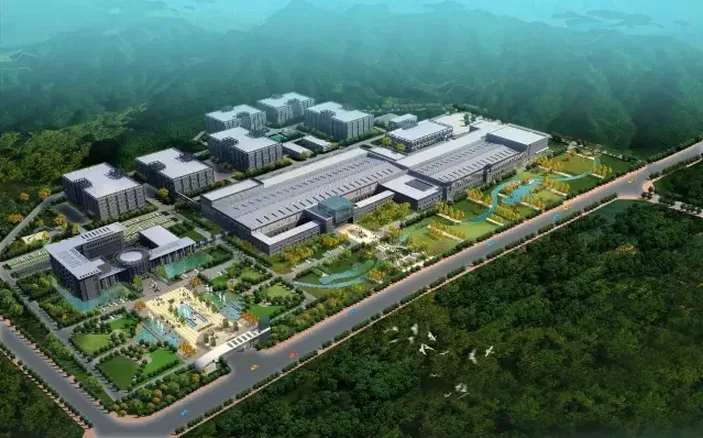
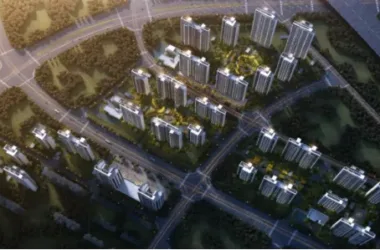
Aerial view of Fuling Tobacco Factory
1. Technical Consulting Services
1) Design Verification: During the model design phase, we verified the rationality of the design and construction drawings, assessing the feasibility and accuracy of design data. This process addressed issues such as misunderstandings of design intent, errors, omissions, conflicts, and deficiencies in the 2D construction drawings. We assisted the design team in optimizing drawings and enhancing their quality.
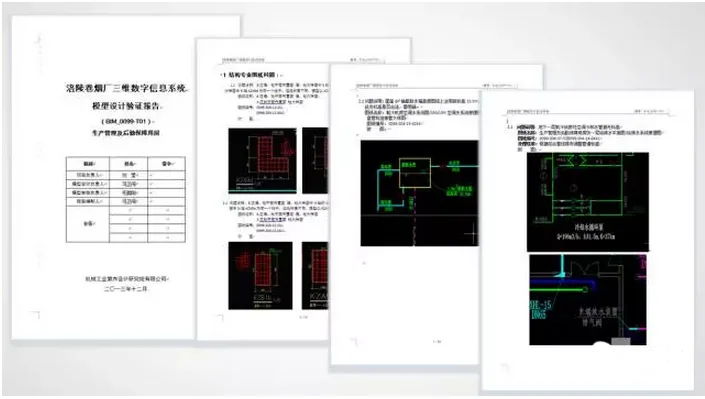
Design Verification Report
2) Collision Detection: We conducted collision detection in complex areas such as the joint workshop, power center, and production logistics support room. This involved identifying pipeline interferences within and across different disciplines, resolving potential conflicts in advance to avoid rework and waste, and ensuring timely project completion.
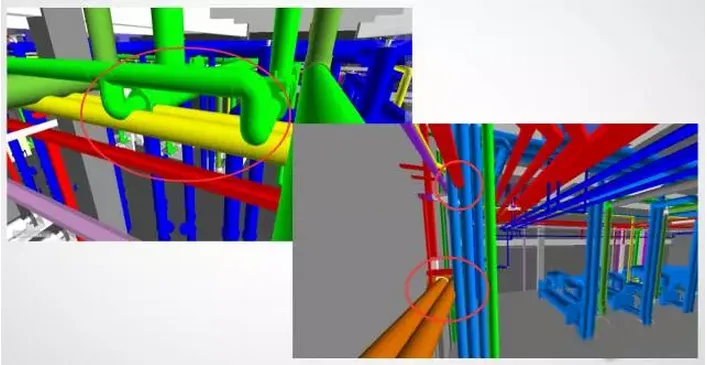
Collision Detection Analysis
3) Integrated Management Scheme Design: Utilizing BIM models, we coordinated the spatial arrangement of various professional pipelines, conducting comprehensive layouts and proposing optimization solutions. Particularly in densely packed areas such as underground pipe galleries, cable interlayers, and wire storage rooms within the power center, we resolved numerous unforeseen errors during the pre-construction phase by adjusting 3D pipeline layouts, thereby reducing rework and ensuring construction quality.
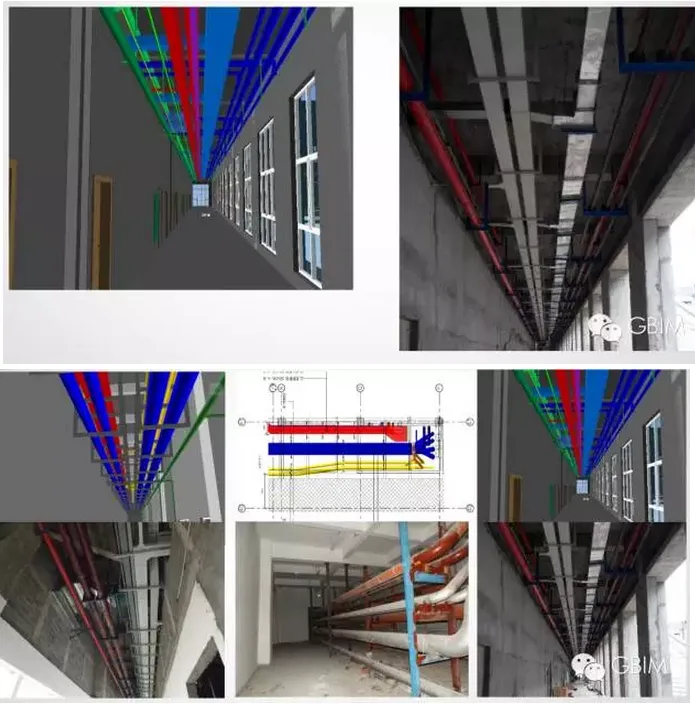
Comprehensive Pipeline Plan and On-site Comparison
4) Net Height Analysis: We provided advance data on controllable ceiling heights for corridors and other sub-areas to assist with secondary decoration. Heights of functional rooms such as the comprehensive warehouse and wire storage room were verified and optimized to ensure smooth forklift access and unobstructed maintenance pathways.
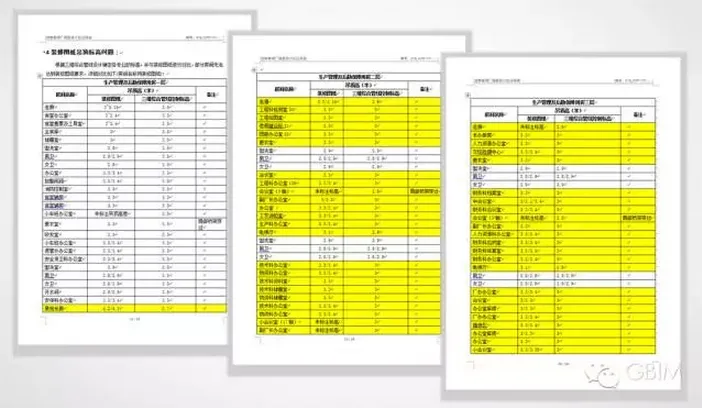
Net Height Analysis Report
5) Comprehensive Ceiling Design: We planned the placement of steel grille air vents, lighting fixtures, and light pipes in the joint workshop to ensure orderly alignment of ceiling devices, balancing functionality with aesthetics. The construction team prefabricated perforated grating panels based on our designs, improving installation efficiency.
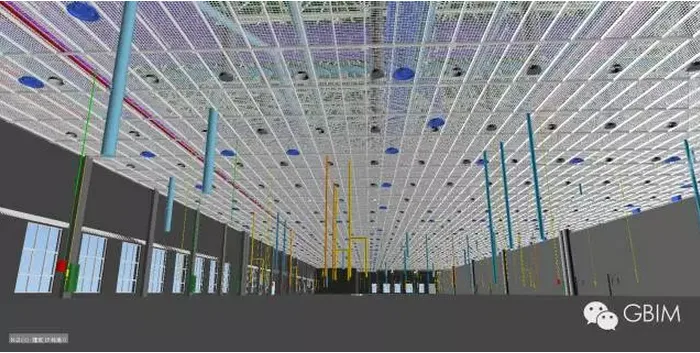
Comprehensive Ceiling Design for the Joint Workshop Silk Processing Area
6) Model Deepening Design: Based on detailed decoration drawings, we further verified the production scheduling center in the joint workshop, providing scheme references to the client. This coordination enabled multidisciplinary construction according to drawings, ensuring quality and meeting expected outcomes.
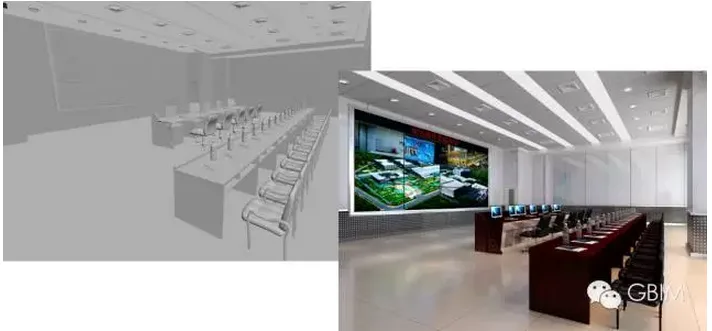
Deepening Design of Production Scheduling Center
2. On-site Coordination Implementation
On-site BIM Application Consulting and Training: Prior to installation by the construction team, pipeline positions and plans were reviewed using the BIM model. This allowed construction teams to integrate the model with their own construction schedules for accurate execution.
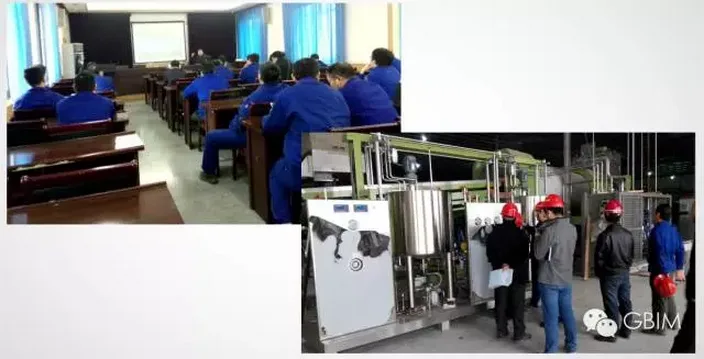
BIM Application Consulting and Training
3. Model Application Services (Based on Software Platform)
1) 3D Comprehensive Delivery System: After installing the 3D comprehensive delivery system for the equipment and electrical teams of the client, they were able to manage model and 2D drawing versions, traceability, and classification efficiently, facilitating easy access and utilization.
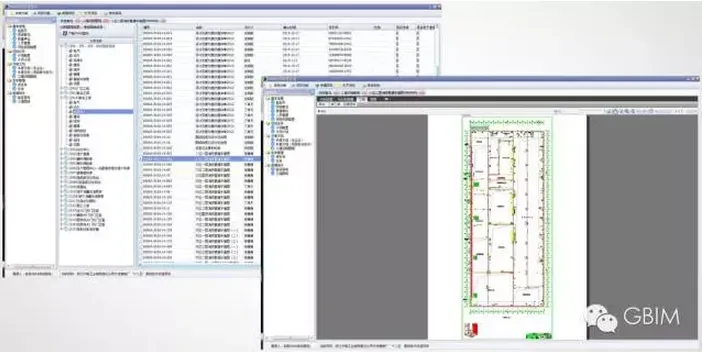
3D Integrated Delivery System
2) Facility and Equipment Operation and Maintenance Management System: This system was deployed and integrated with other information systems such as the energy control and air conditioning automatic control systems at Fuling Tobacco Factory. It serves as a digital display platform for technological transformation information related to facilities and equipment.
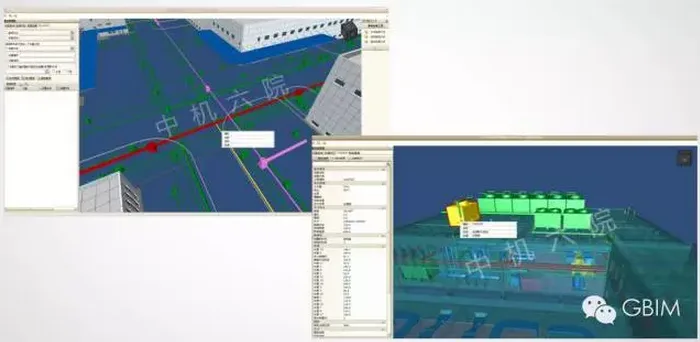
Facility and Equipment Operation and Maintenance Management System
3) Digital Display Subsystem: A digital display subsystem was established for the Fuling branch factory, enabling 3D visualization of the digital tobacco factory, 3D simulation walkthroughs, and guided 3D simulation tours.
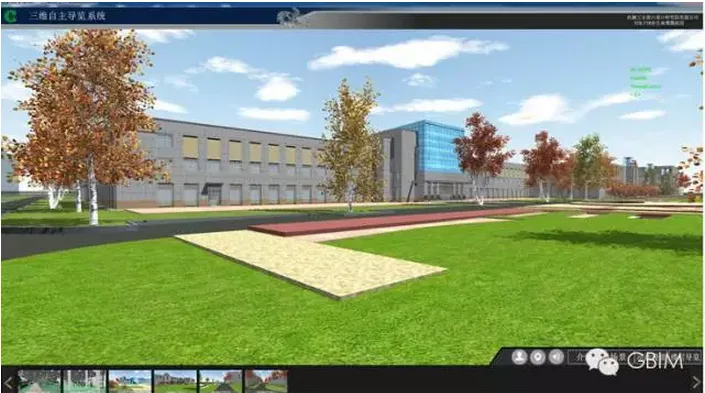
Digital Display Subsystem
4) As-Built Drawings: We provided model-exported CAD plan drawings for construction units to reference, simplifying the creation of as-built drawings and improving their accuracy.
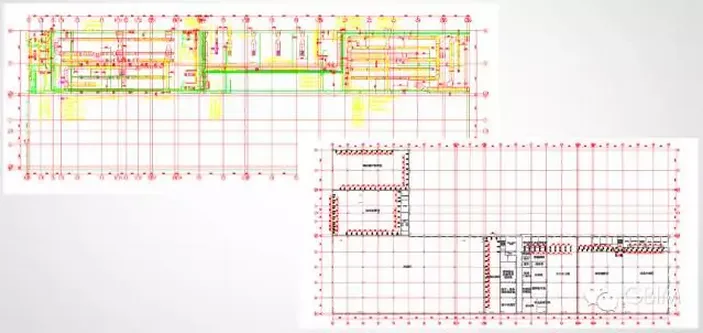
Exported CAD Drawings












Must log in before commenting!
Sign Up