
Research Objective: BIM technology is recognized as the second revolution in the construction industry and is essential for the digitalization and sustainable development of this sector. This article investigates the application of BIM technology in the structural design of subway stations in China. Traditionally, its use has been limited to structural modeling and clash detection. Here, we extend BIM’s application to structural calculations and quantity takeoffs, offering valuable insights for the full lifecycle use of BIM in subway station projects.
Research Conclusions:
(1) A BIM 3D model of a standard subway station section was created. This enhanced BIM model was imported into Robot Structural Analysis via Revit extensions for structural calculations, enabling seamless sharing of engineering data between physical and analytical models—demonstrating BIM’s core value.
(2) Using Revit to generate detailed wall schedules containing comprehensive structural information effectively addresses the challenge of quantity estimation in large-scale construction projects.
(3) The study’s findings enhance the overall capabilities of the BIM platform and provide practical guidance for applying BIM technology in the structural design of subway stations.
1. Introduction
BIM technology is a database centered on three-dimensional models, representing a collaborative environment of models and information. It integrates data from all stages of a building’s lifecycle, including physical attributes, geometry, engineering details, costs, and manufacturing and assembly information. BIM supports various stakeholders—government bodies, designers, constructors, operators, cost estimators, and project managers—by enabling access, modification, and storage of project information, thereby facilitating seamless information sharing throughout the lifecycle.
Currently, BIM’s application in subway stations largely focuses on structural modeling, clash detection, and 4D construction simulation, especially in underground transit projects. Compared to above-ground buildings, BIM utilization in underground structures remains limited.
This paper builds on the BIM modeling platform to explore integrating subway station BIM models with structural design calculations. By combining the BIM platform with structural analysis software, we implemented structural calculations based on BIM models and completed quantity takeoffs. The results demonstrate effective integration between BIM and structural design, improving efficiency and enhancing BIM platform functionality.
2. Current Status of BIM Technology Application
2.1 International Perspective
BIM research and application began earlier and is more mature internationally. Originating in the United States, the General Services Administration launched the National 3D-4D-BIM Program in 2003, followed by a series of BIM guidelines. Stanford University’s Center for Integrated Facilities Engineering (CIFE) has studied 32 projects using BIM, highlighting numerous benefits for construction.
Data indicates nearly 50% of North American construction firms use BIM or related tools, with rapid growth in recent years. In 2009, Wisconsin and Texas mandated BIM use for government-funded or major public projects. Nordic countries like Norway, Finland, and Germany report BIM adoption rates of 60-70%, leading global standards.
Today, BIM proficiency is essential for design and construction firms competing internationally, gradually replacing traditional design, construction, and management models.
2.2 BIM Application in China
In China, Hong Kong leads BIM adoption in subway engineering, with over 20 stations modeled and some projects applying BIM for lighting, smoke control, pedestrian flow, energy consumption, and clash detection—enhancing budgets and social outcomes.
For example, during the design of Taiyi Road and Xingqing Road Stations on Xi’an Metro Line 5, the China Railway Long Design and Research Institute developed architectural, structural, and pipeline models. Through clash detection, over 500 conflicts were identified and resolved promptly, improving quality.
Tianjin Metro’s Hongqi South Road Station used BIM for pipeline coordination, shortening design cycles and improving quality, supporting smooth construction.
Shanghai Metro Line 12’s Qufu Station leveraged BIM for pipeline clash detection, large equipment installation, and maintenance path design, enhancing construction quality through simulation.
Generally, BIM in China is applied mainly to landmark or large-scale buildings, with limited scope and stage coverage. Compared to international standards, BIM adoption is still in early stages, particularly in underground structures, where use remains focused on modeling, clash detection, and 4D simulation. Overall BIM platform functionalities for underground projects are still insufficient.
3. Advantages of BIM Technology
BIM offers key features including visualization (“what you see is what you get”), coordination (clash detection), simulation (building and operational simulations), optimization (design and scheme improvements), and automated drawing generation based on coordinated models.
Visualization: Unlike 3D visualization tools like 3ds Max or SketchUp, which focus on rendering, BIM supports detailed design development. Complex and large-scale buildings with intricate shapes benefit from BIM’s 3D design capabilities, improving design quality by enabling designers to think and work in three dimensions.
Coordination: BIM allows multiple disciplines to add, modify, and maintain consistent real-time building information within a shared model. It supports clash detection and 4D dynamic simulation, predicting construction conflicts such as site clashes and pipeline interferences early, thus reducing errors and omissions.
Simulation: BIM enables sustainable design simulations, including energy efficiency, sunlight exposure, and emergency evacuation, promoting resource conservation and safety. 4D simulations facilitate construction scheduling and logistics planning, while 5D simulations assist in cost control by quickly generating budgets based on design changes.
Optimization: By integrating design with investment analysis, BIM provides real-time feedback on how design changes affect returns, enabling decision-makers to select optimal solutions and enhancing project timelines and costs.
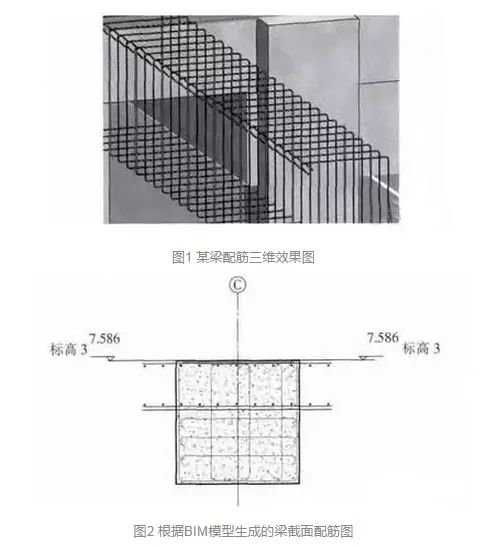
Through 3D visualization, coordination, simulation, and optimization, BIM assists designers and owners in producing comprehensive pipeline diagrams, structural reinforcement drawings, construction documents, clash detection reports, and improvement suggestions. Figures 1 and 2 illustrate a 3D rendering and a cross-sectional reinforcement diagram of a beam generated from a BIM model.
In recent years, several large Chinese cities have developed extensive underground spaces, often facing challenges related to human-centered design, complex structures, civil defense, energy conservation, and environmental protection. BIM’s visualization, coordination, and simulation capabilities have attracted strong industry interest as a solution to these challenges. Consequently, BIM research and promotion has become an inevitable trend to overcome the limitations of traditional design and construction methods in large underground structures.
Application of BIM in Subway Station Structural Design
This study focuses on a specific subway station, using Autodesk Revit Structure 2012 to create a BIM 3D model of a standard station section. The BIM model was refined through support inspections and consistency checks between physical and analytical models. The enhanced model was then imported into Robot Structural Analysis 2014 for structural force analysis.
Revit Structure, a core BIM software, supports parametric design, system analysis, simultaneous modifications, 3D collision detection, and collaborative workflows, improving accuracy, efficiency, and reducing costs. Robot Structural Analysis 2014 specializes in BIM calculations, handling complex models via automatic mesh partitioning, nonlinear analysis, and comprehensive design code compliance.
4.1 Station Structure Modeling
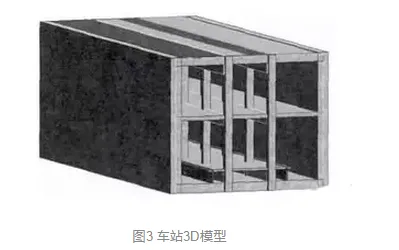
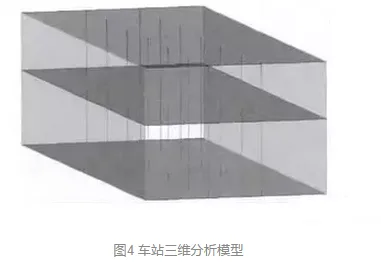
Due to limited default component families in Revit, especially for elements with special cross-sections like beams, columns, or walls, custom families were created first. A project was started using the Structure Analysis DefaultCHNCHS.rte template tailored for Chinese standards. Using these families, a 3D model of the station platform area was built, as shown in Figure 3. Revit simultaneously generated a 3D analytical model for structural analysis (Figure 4). Boundary conditions and load combinations were defined based on geological data.
4.2 Structural Analysis
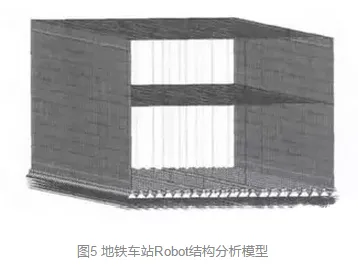
Support checks, consistency verifications between physical and analytical models, and clash checks were performed to enhance the BIM model. Using Revit extensions, the finalized model was exported to Robot Structural Analysis Professional. During export, parameters such as release conditions, self-weight considerations, materials, and model conversion were set. The resulting Robot structural analysis model is shown in Figure 5. Due to excellent compatibility, Robot recognized materials, loads, load combinations, supports, and spring constraints defined in Revit without reconfiguration. Robot also provides feedback to Revit, enabling bidirectional data exchange.
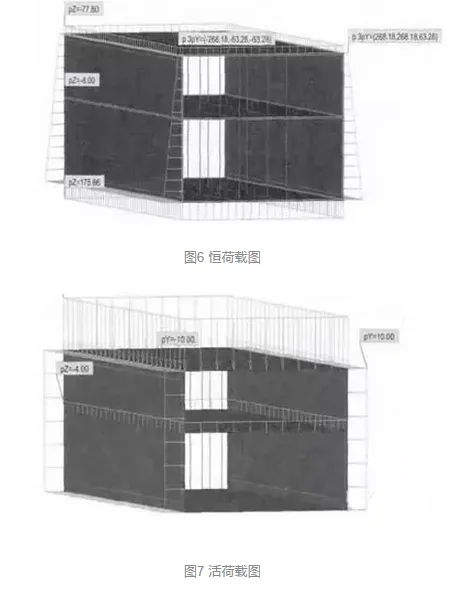
Loads and load combinations were defined in Robot, including dead loads (structural self-weight, equipment, earth pressure, water pressure, buoyancy) and live loads (vehicle loads, lateral forces, crowd loads). Figures 6 and 7 display the respective load diagrams. Robot can also automatically generate load combinations following the Chinese Load Code (GB5009-2012).
Structural analysis settings, such as unit formats, materials, design codes, and mesh divisions, were configured in the “Engineering Preferences” dialog. Analysis types—basic and standard combinations—were selected. Robot performed structural checks during mesh division, allowing model adjustments based on inspection results before final calculations.
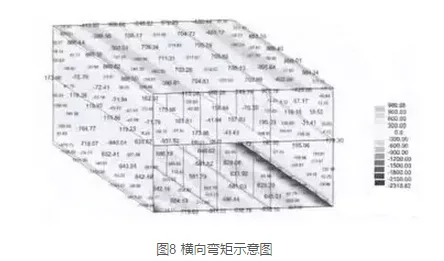
After analysis, results including reactions, displacements, forces, and stresses can be viewed via color maps, member diagrams, and tables. This study presents transverse and longitudinal bending moments (Figures 8 and 9). Due to space limits, shear force, axial force, and deformation results are not detailed here.
4.3 Generating Detailed Schedules
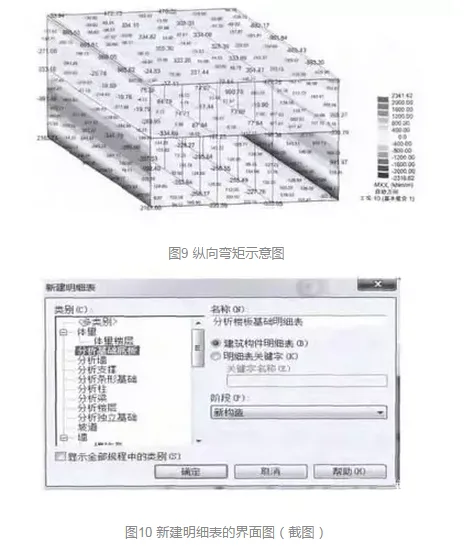
As construction projects grow in complexity and scale, traditional quantity estimation methods fail to keep pace. BIM models allow rapid generation of component schedules. Using the BIM model of the underground platform area at Shuangling Road Station on Hangzhou Line 2 as an example, this section demonstrates creating a detailed wall schedule. Figure 10 shows the interface for creating a new schedule.
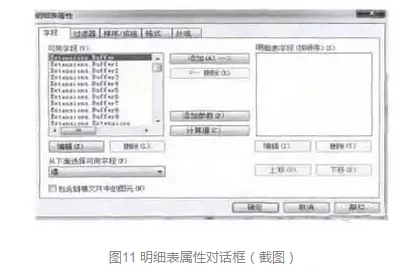
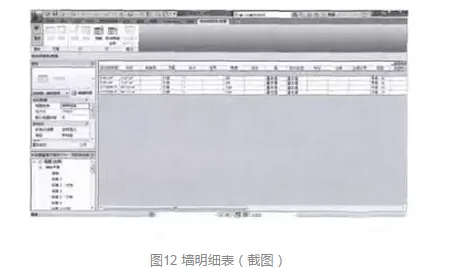
First, select the wall category and choose “New Construction” as the phase, then confirm to open the schedule properties dialog (Figure 11). Here, fields, filters, sorting, formatting, and appearance can be customized. Relevant parameters such as volume, manufacturer, function, total quantity, model, width, cost, structural purpose, fire rating, and area are included.
The resulting detailed wall schedule is shown in Figure 12. The schedule interface permits attribute management, grouping, hiding, highlighting within the model, and other adjustments.
5. Conclusion
BIM technology has matured internationally and is progressively replacing traditional design, construction, and management workflows. In China, BIM adoption is still emerging, especially in underground structure design. This study applied BIM to modeling, structural calculation, and quantity takeoffs for a subway station, demonstrating BIM’s benefits and enhancing platform functionality. It provides a reliable technical pathway for future BIM applications in subway station structural design, supporting BIM use throughout the project lifecycle.
References:
United States General Services Administration. General Services Administration (GSA) 3D-4D BIM Program. [EB/OL] http://www.gsa.gov/portal/category/21062.
Liang Zuopeng. The Development and Utilization of Building Information Modeling in Spatial Structures [D]. Beijing: Beijing Institute of Architecture and Civil Engineering, 2012.
Wang Huichen, Li Yanfeng, Zhao Xuefeng, et al. Research on the Application of BIM Technology in Underground Building Construction [J]. China Science and Technology Information, 2013 (15): 72-73.
China BIM Portal. China Railway Long BIM Technology Assists in the Design of Xi’an Metro Line 5 [EB/OL].
Liu Xiaodong, Li Chunhong. Technology Intelligence Development and Economics, 2006 (19): 159-161.
China BIM Portal. The Application of BIM Technology in Shanghai Metro Line 12 [EB/OL]. http://bimii.com/school/cases/2014-05-08/6229.html.
Chai Jiayuan. Research on the Overall Design of Large and Complex Underground Spaces [J]. Journal of Railway Engineering, 2012 (7): 77-81.














Must log in before commenting!
Sign Up