
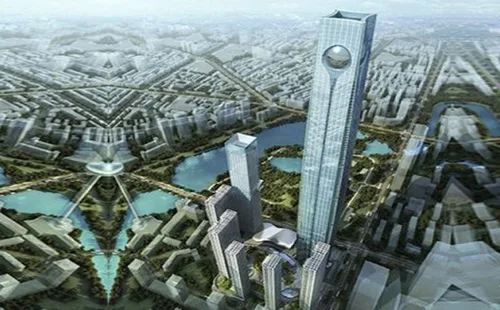
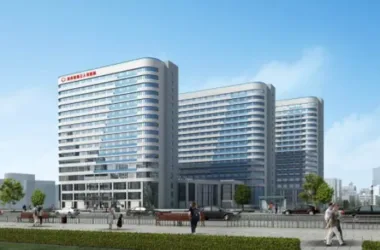
Baoneng Global Financial Center
The Baoneng Global Financial Center, currently under construction, stands as the tallest building in Northeast China. It reaches 568 meters in height and consists of 113 floors. The concrete floor pouring is set to begin on November 16th, with a massive single pour volume of 40,000 cubic meters. This will create the largest concrete base slab in Northeast China, with the thickest section measuring 11 meters.
Continuous Pouring Over 168 Hours
The concrete floor has an average thickness of 6 meters, with the thickest parts reaching up to 11 meters. The total volume of concrete poured will be approximately 40,000 cubic meters, making it the largest concrete floor volume in Northeast China to date. Due to limited space on the construction site, concrete pouring can only occur from one side. To facilitate this, a transport pipeline 25 meters high and 68 meters long will be used to deliver concrete to the site.
This massive concrete pour will continue nonstop for a full 7 days and nights (168 hours). Despite the harsh cold weather in Shenyang during November, this continuous pour will set a new record for the longest continuous large-volume concrete pouring in Northeast China.
Steel Usage Reaches 100,000 Tons
As the tallest building in the region, besides the enormous concrete base slab, the Baoneng Global Financial Center will consist of over one hundred stories. The total steel used in the building’s construction will reach an impressive 100,000 tons, marking the highest steel consumption for a single building in Shenyang.
Additionally, the building’s internal systems differ from typical designs. Both water and power supply are managed through a “relay” system. Four pump stations within the building lift tap water floor by floor, delivering it to the uppermost levels using a relay operation method.
A High-Rise That Sways with the Wind
Despite the massive concrete base, the 100-story skyscraper will naturally sway with the wind once completed. However, this movement will be imperceptible to the people inside.
It’s normal—and even beneficial—for super-tall buildings to sway slightly. Most high-rise structures use steel frameworks that act as buffers against lateral forces. The building’s “swaying with the wind” serves as a safety feature to absorb wind pressure. A building that does not sway could be at greater risk.
Generally, the taller the building, the more it will sway. This tallest building in Northeast China is expected to move over half a meter in response to wind forces.












Must log in before commenting!
Sign Up