
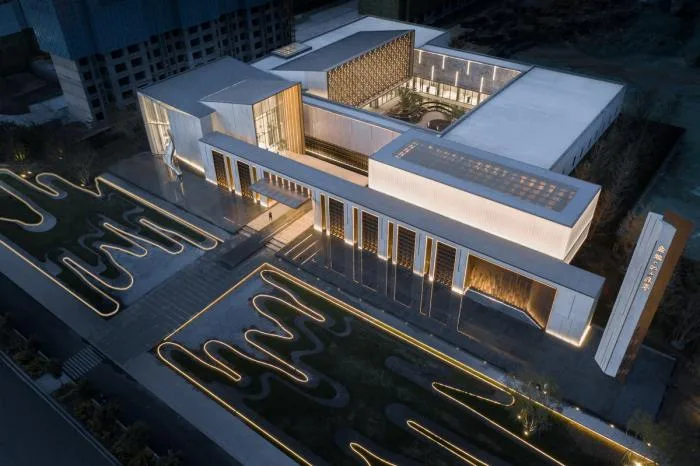
The design concept evolves from exploring ethnicity to culture, transitioning from regional to urban contexts, and finally from the environment to architecture itself.
Through sculptural blocks, the project emphasizes the purity and organic qualities of contemporary architecture by combining dynamic movement with interwoven forms. This creates a collection of buildings that embody modern aesthetic characteristics. The expansive and complex building, covering nearly 10,000 square meters, is deconstructed into several concise geometric volumes. These volumes are then reordered systematically, harmonizing with the vast, boundless natural surroundings.
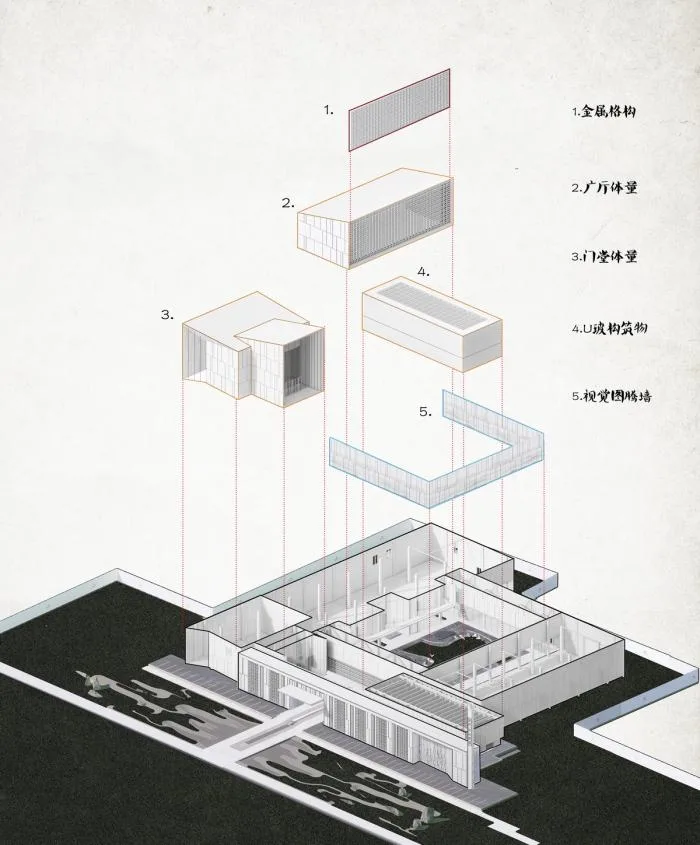
△ Block composition
The design deliberately rejects the traditional architectural aesthetic of strict axial symmetry. Instead, it embraces asymmetric balance, expressing a dynamic stability and a fragmented sense of community that resonate better with the distinctive character of the grassland environment.
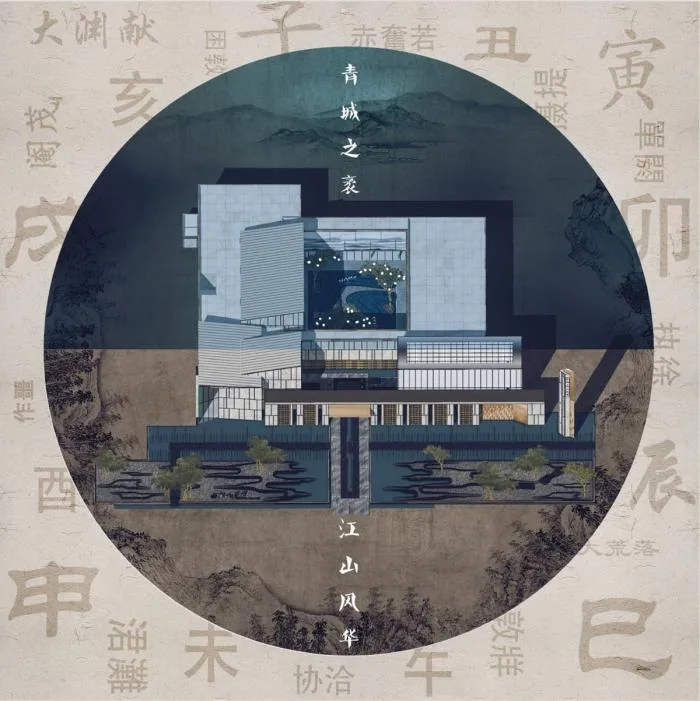
△ Illustration – Hu Jin
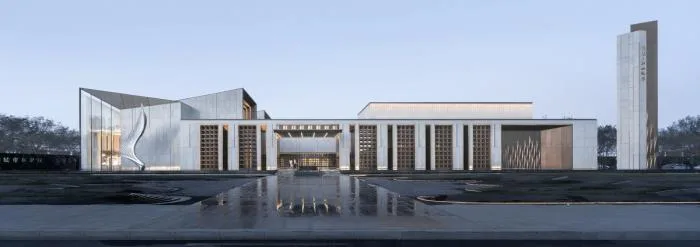
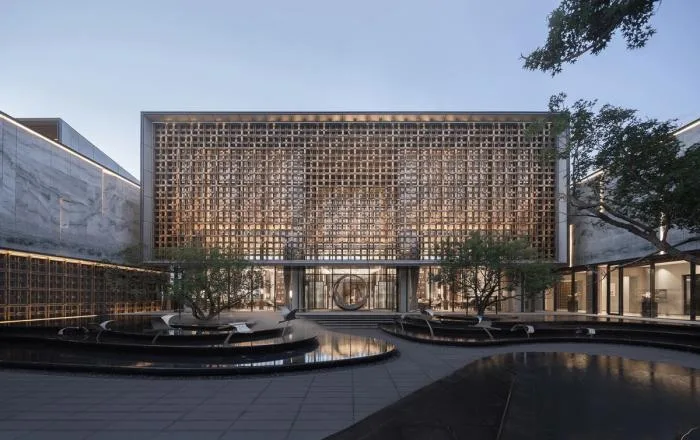
The building’s grand scale is highlighted by a 9-meter-high colonnade, a 12-meter-high portal, and a 100-meter-long visual totem wall. These features echo the vastness of the grasslands and the boldness of the regional character, creating a powerful visual impact at varying distances.
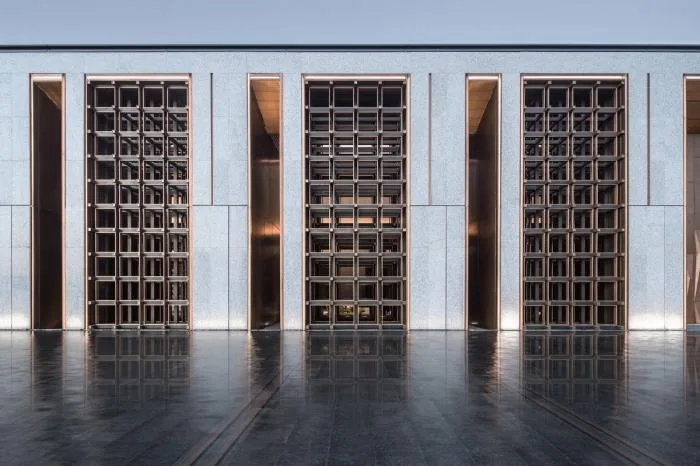
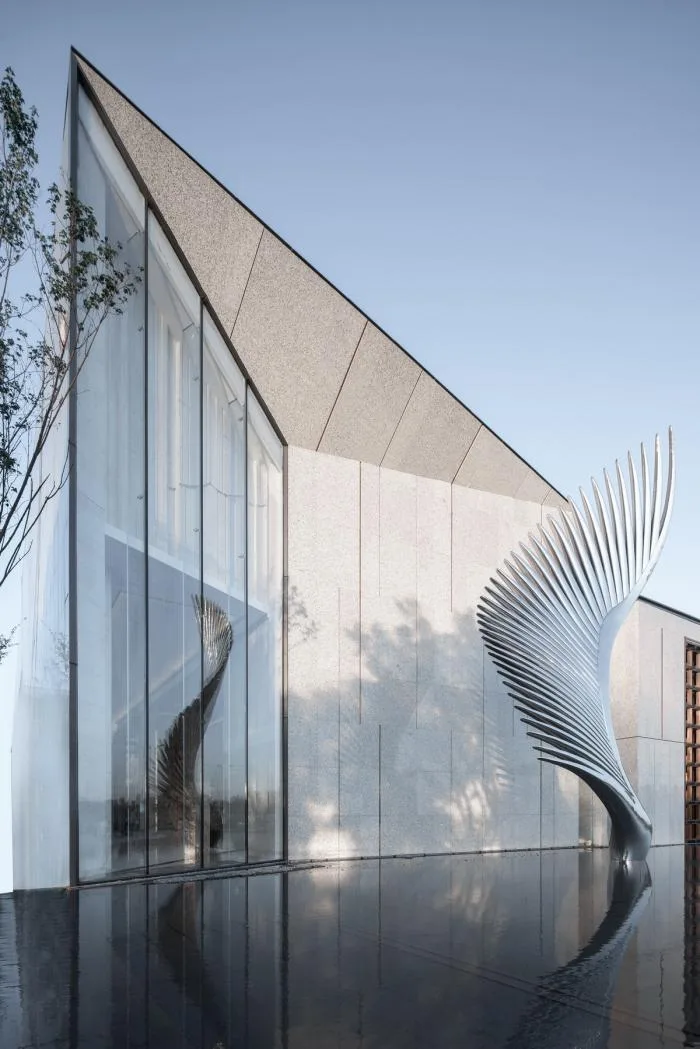
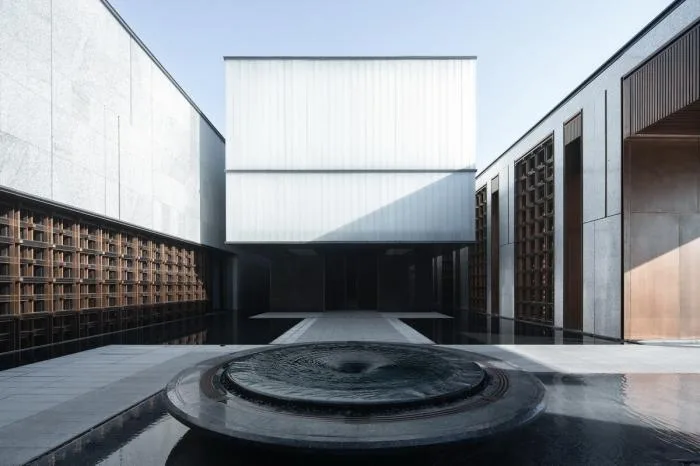
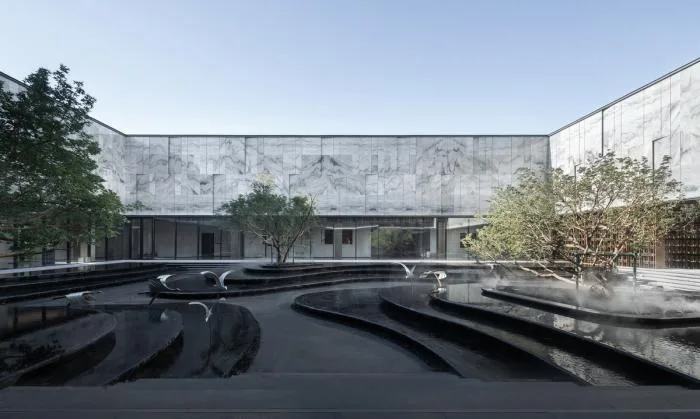
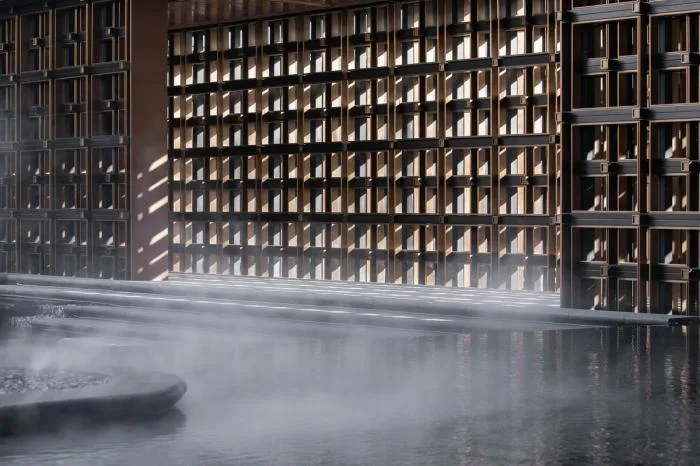
The architectural composition, defined by two horizontal and three vertical lines, clearly delineates three spatial zones: the front, middle, and interior. This arrangement is orderly and well-structured. By reshaping the courtyard and façades, a corridor is formed that encloses a circular courtyard. Metal grids are utilized to effectively separate spaces—visible yet inaccessible—creating a rhythmic and progressive spatial experience.
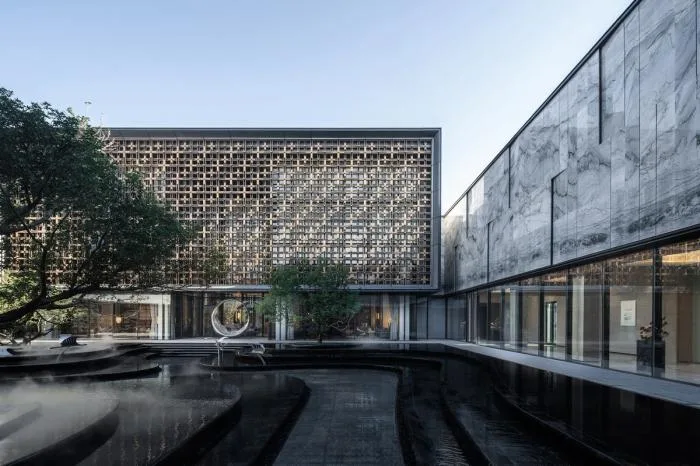
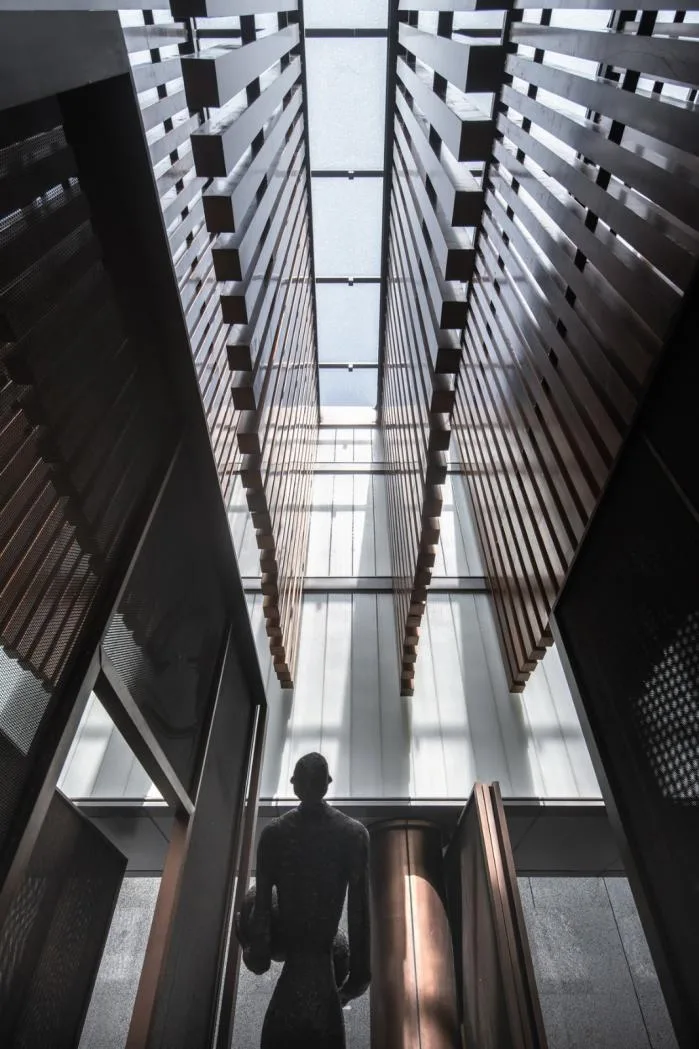
The metal lattice is a three-dimensional spatial structure made from stainless steel square tubes measuring 100mm by 100mm in cross-section. These tubes connect in a 60cm square matrix pattern and are organized into three layers: front, middle, and back. The three metal frames support one another like keels, achieving both stability and refined aesthetics.
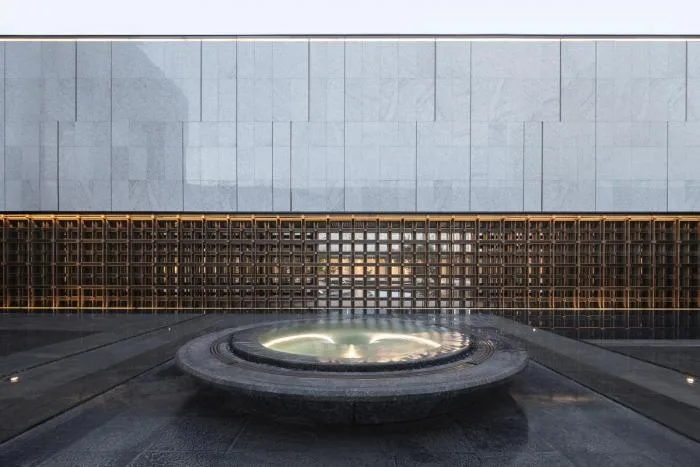
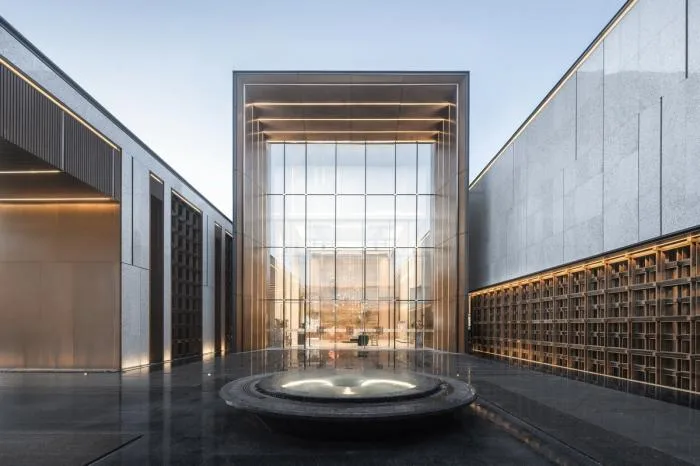
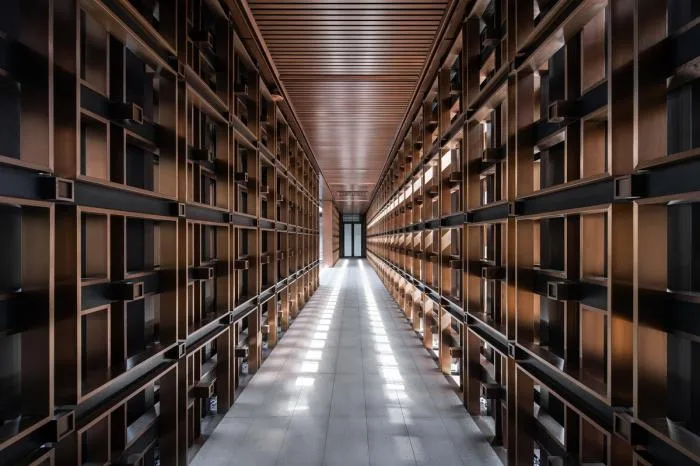
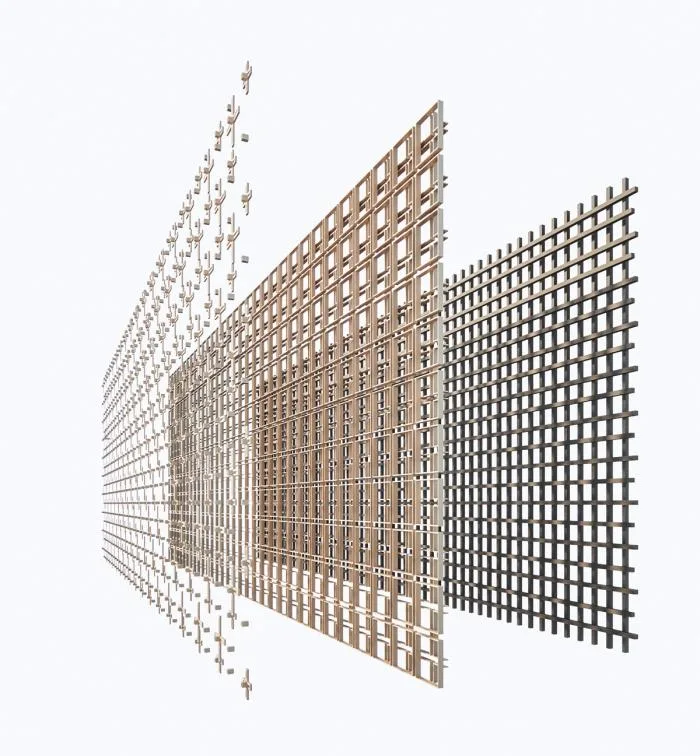
△ Metal lattice structure
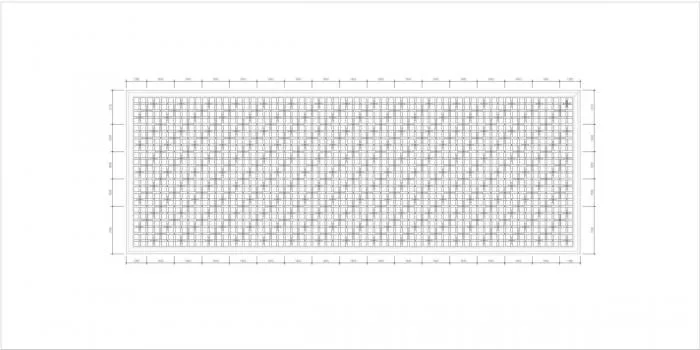
△ Metal lattice structure
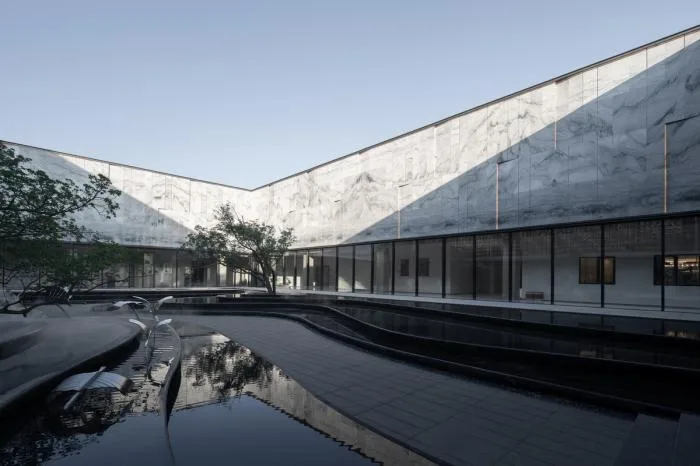
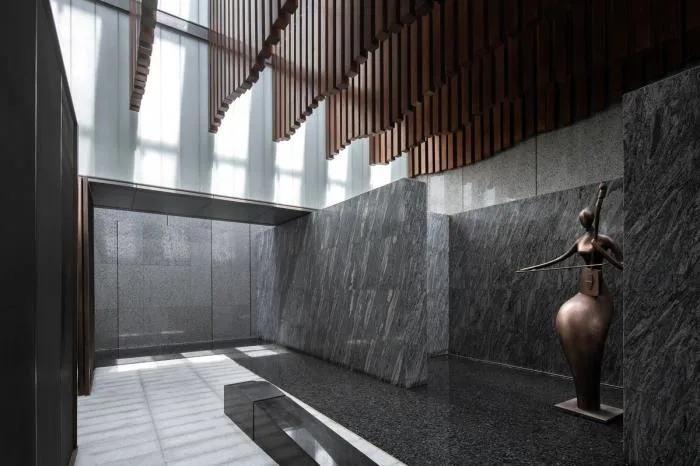
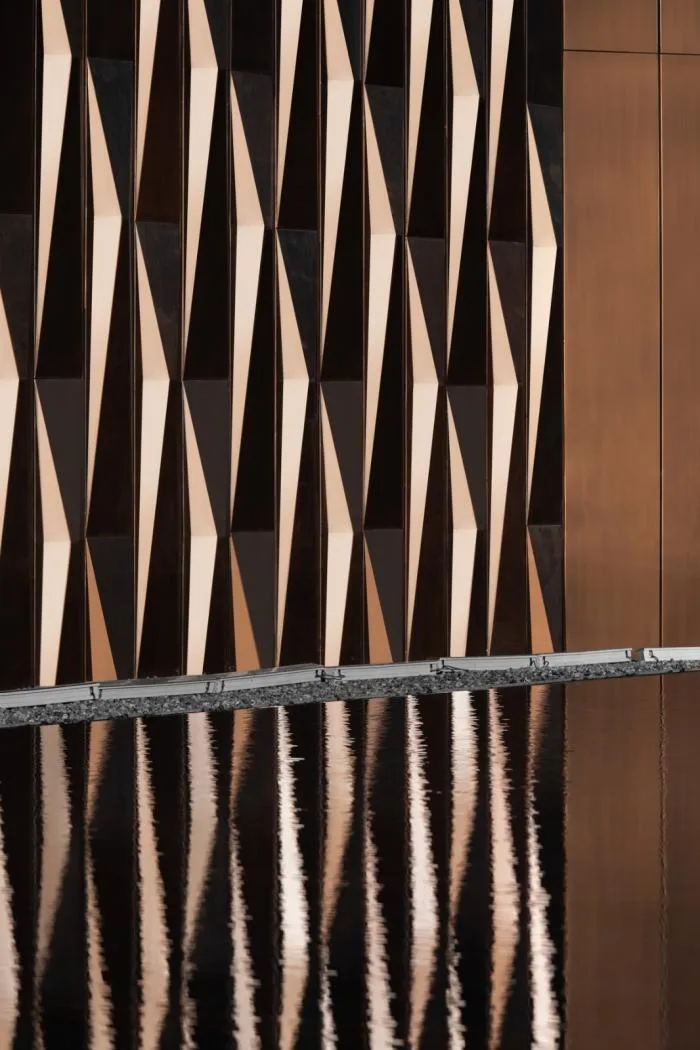
The cultural significance of the architecture is conveyed through abundant metaphorical design elements: the winding, continuous three-dimensional landscape; the cross-shaped metal lattice components of varying lengths; and the recreation of expansive mountain and river scenes using 586 natural stone textures. These features aim to leave visitors with a more tangible, interpretable, and emotionally engaging experience.
Design Drawings
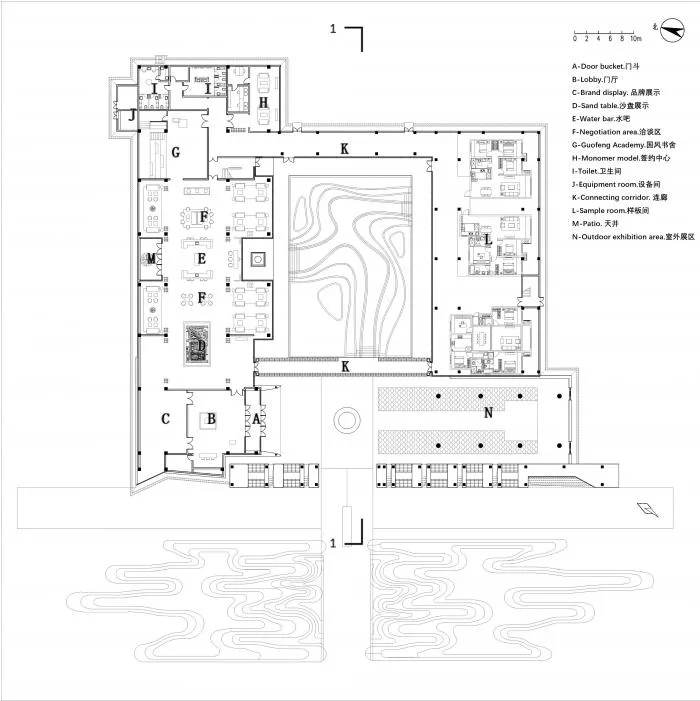
△ First Floor Plan
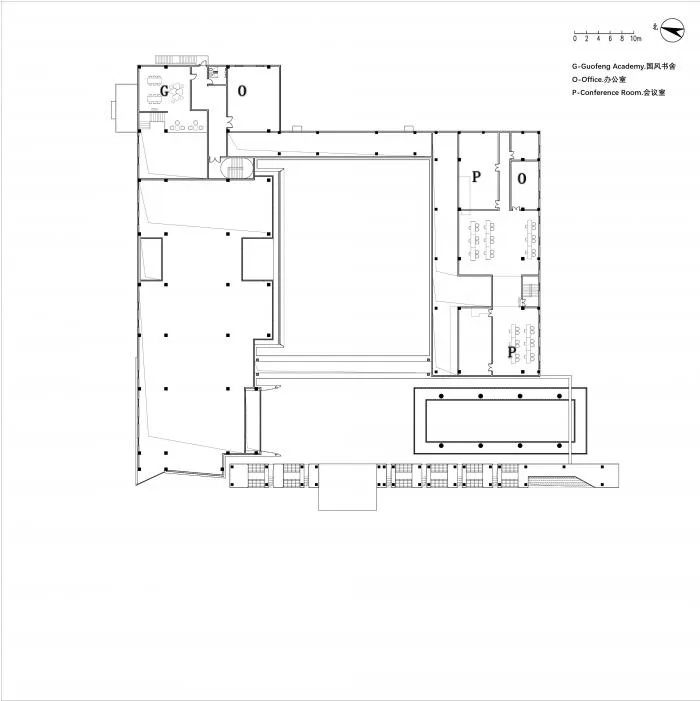
△ Second Floor Plan
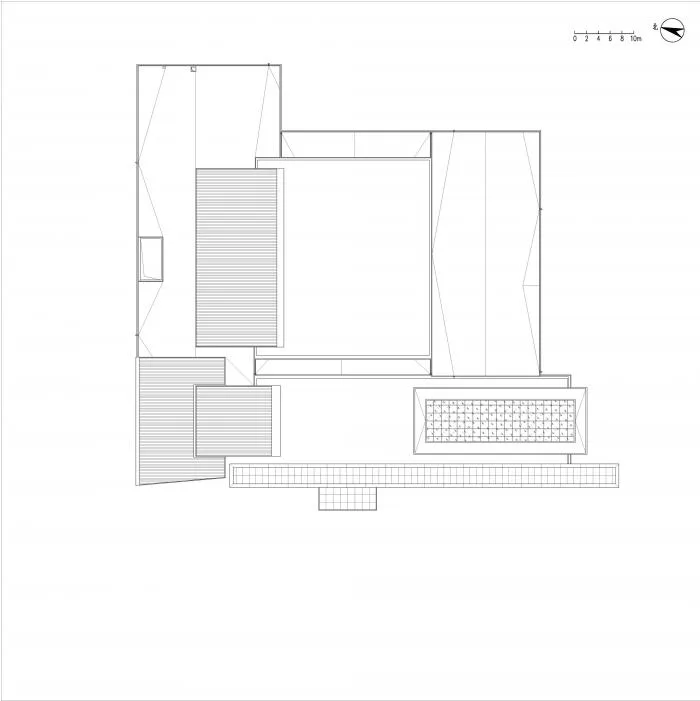
△ Roof Plan
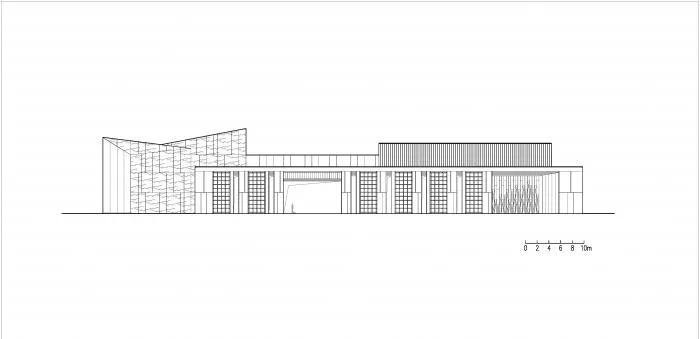
△ West Facade
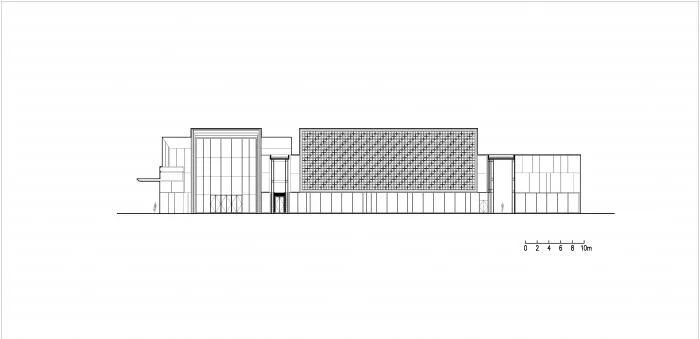
△ Section Diagram
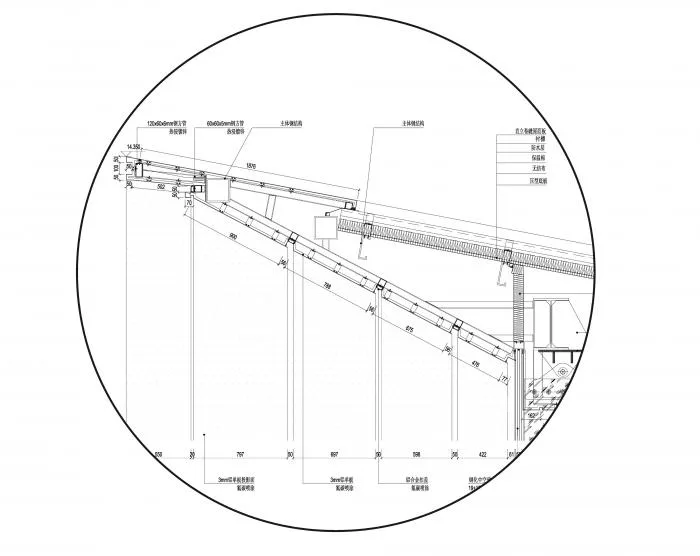
△ Entrance Profile
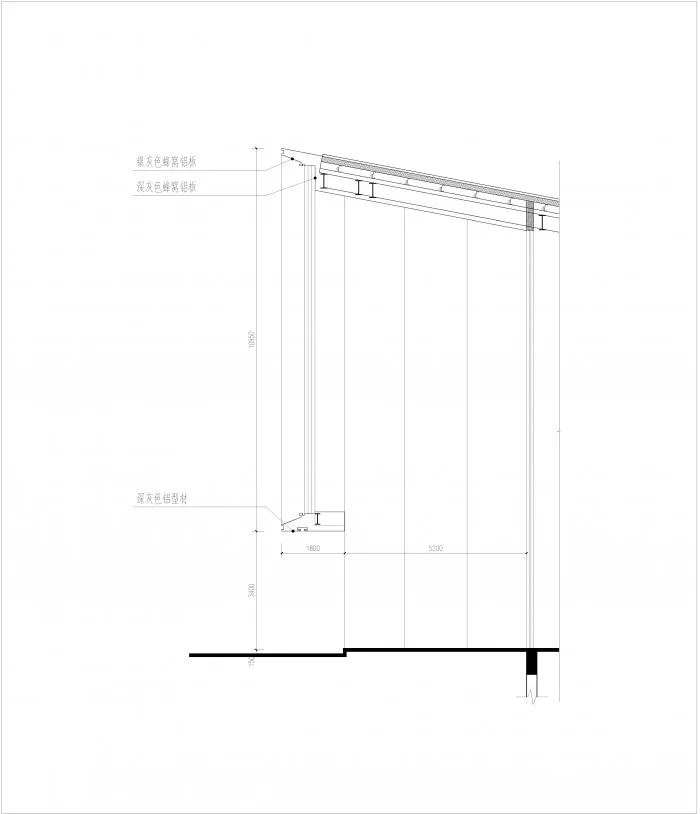
△ Window Section
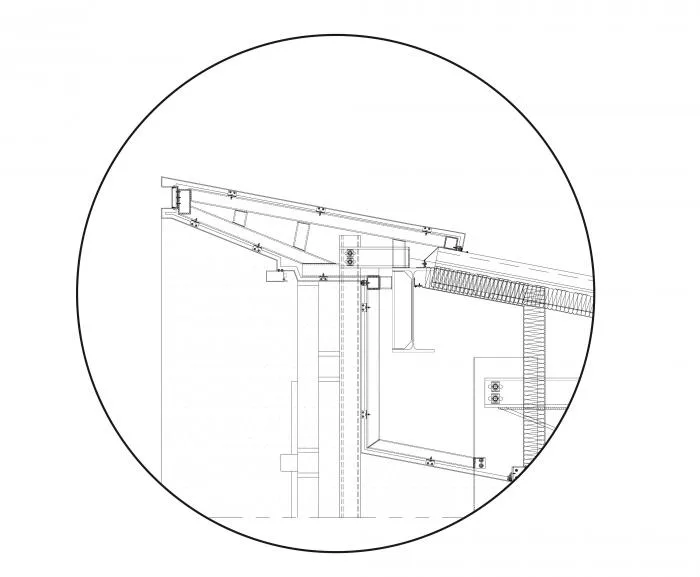
△ Wall Sample
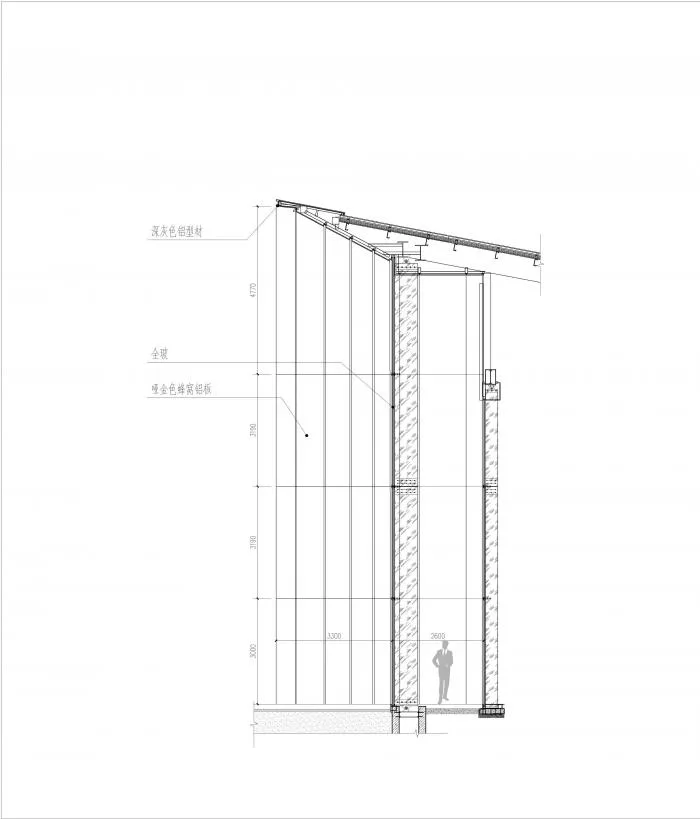
△ Wall Sample
Project Information
Project Name: Jindi Jiangshan Fenghua Urban Art Center
Location: Intersection of Hulunbuir South Road and Shuaijiaying, Saihan District, Hohhot
Land Area: 10,200 square meters
Building Area: 2,700 square meters
Design Period: April – September 2019
Completion Date: May 2020
Designer: PTA Shanghai Botao
Lead Architects: Yu Xiaolei, Zhang Lifu
Design Team: Feng Zihang, Wang Xin, Yuan Zheng, Sun Miao, Ding Chuanwu, Zhang Suwen, Liu Jiayi, Zuo Peng, Wang Xiang, Cai Jian, Liang Jinhui
Client: Jindi Group Northeast Region
Landscape Design: Andao Design
Interior Design: Shanghai Yijiafeng
Construction: Liaoning Longze Construction Technology Group Co., Ltd
Photographers: Shrimp Studio, Xu Ran Photography, Wu Tao
Main Materials: Bala white stone, imitation copper stainless steel, landscape white jade
Material Supplier: Liaoning Longze Construction Technology Group Co., Ltd












Must log in before commenting!
Sign Up