
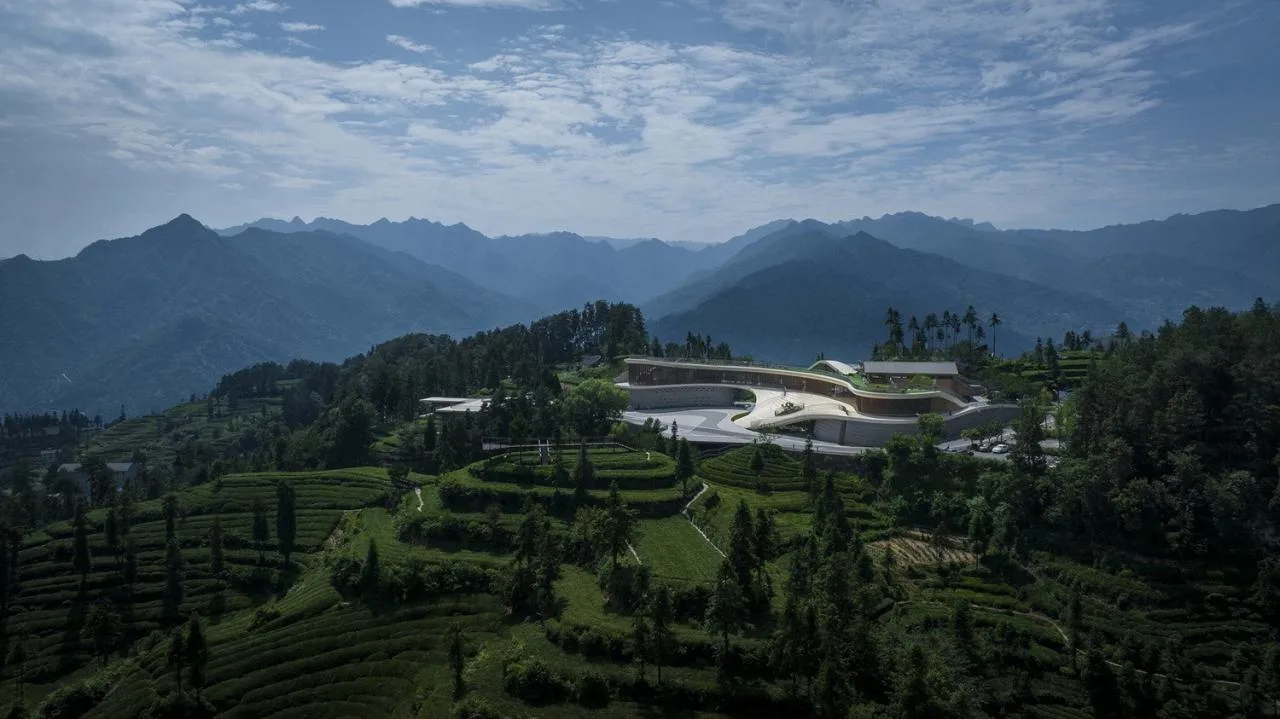
△ Vision © Jin Weiqi
△ Project video © Xiao Shiming
Project Background
The Three Gorges Tea Tourism Town is nestled within the vast tea gardens of Dengcun Township, Yichang City, Hubei Province. Located just 19 kilometers in a straight line from the Three Gorges Dam, the town benefits from exceptional ecological resources. It serves as a key area for implementing the Three Gorges ecological civilization system along the Yangtze River.
The town’s overall master plan envisions creating a premium ecological tourism and vacation destination that combines outdoor exploration, pastoral experiences, forest wellness, and upscale leisure activities.
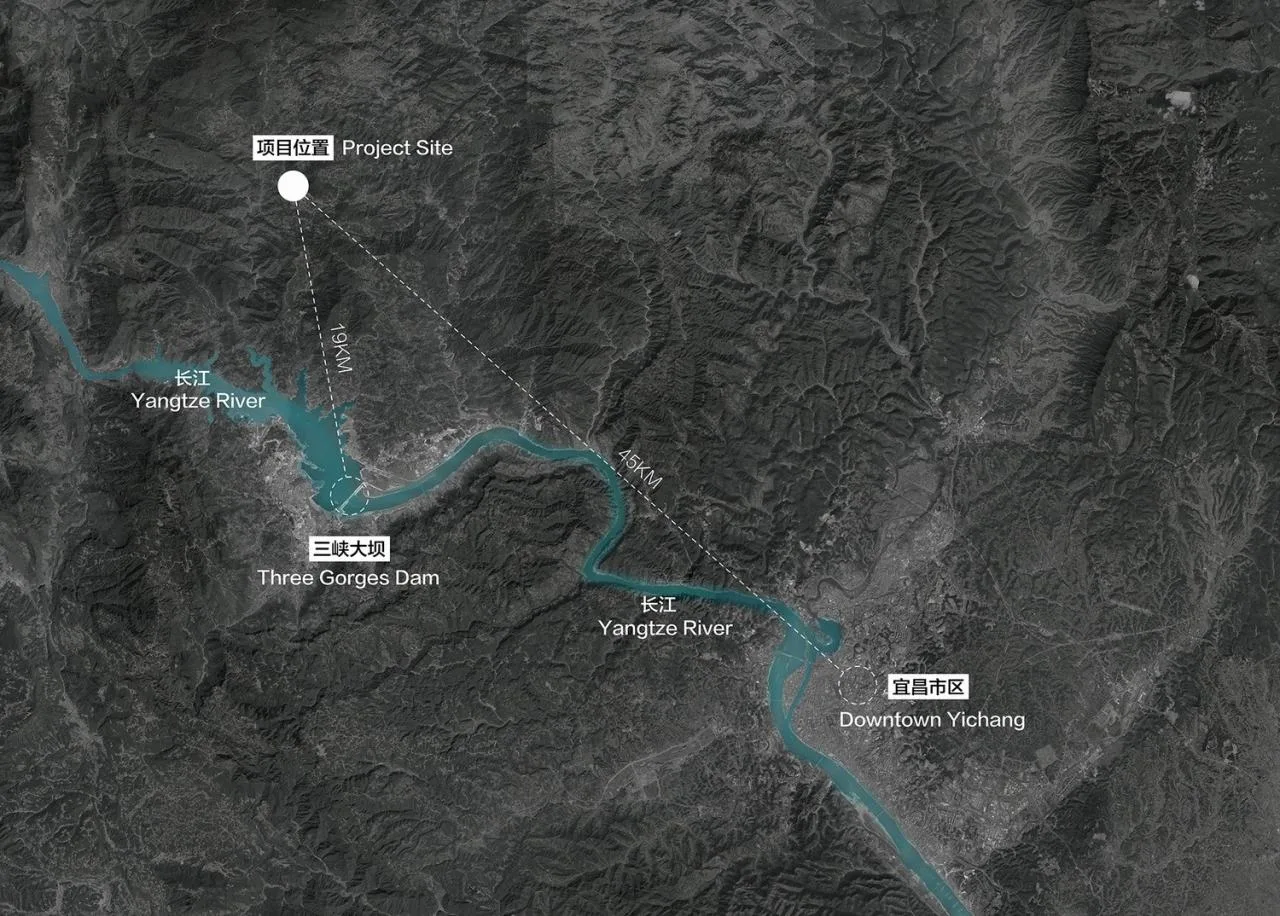
△ Location analysis chart © Architectural Camp Design Studio
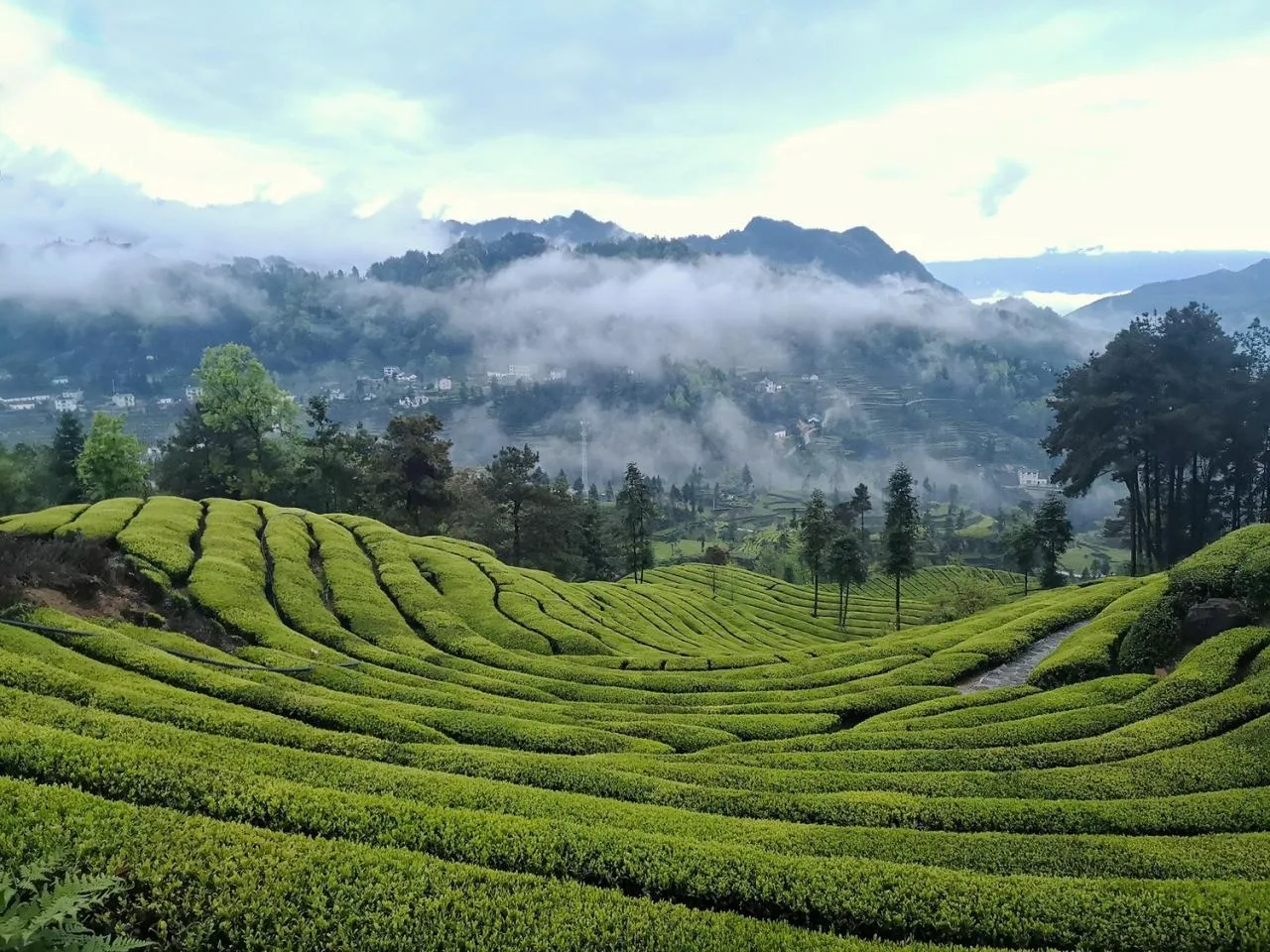
△ Landscape photos © Hubei Culture and Tourism
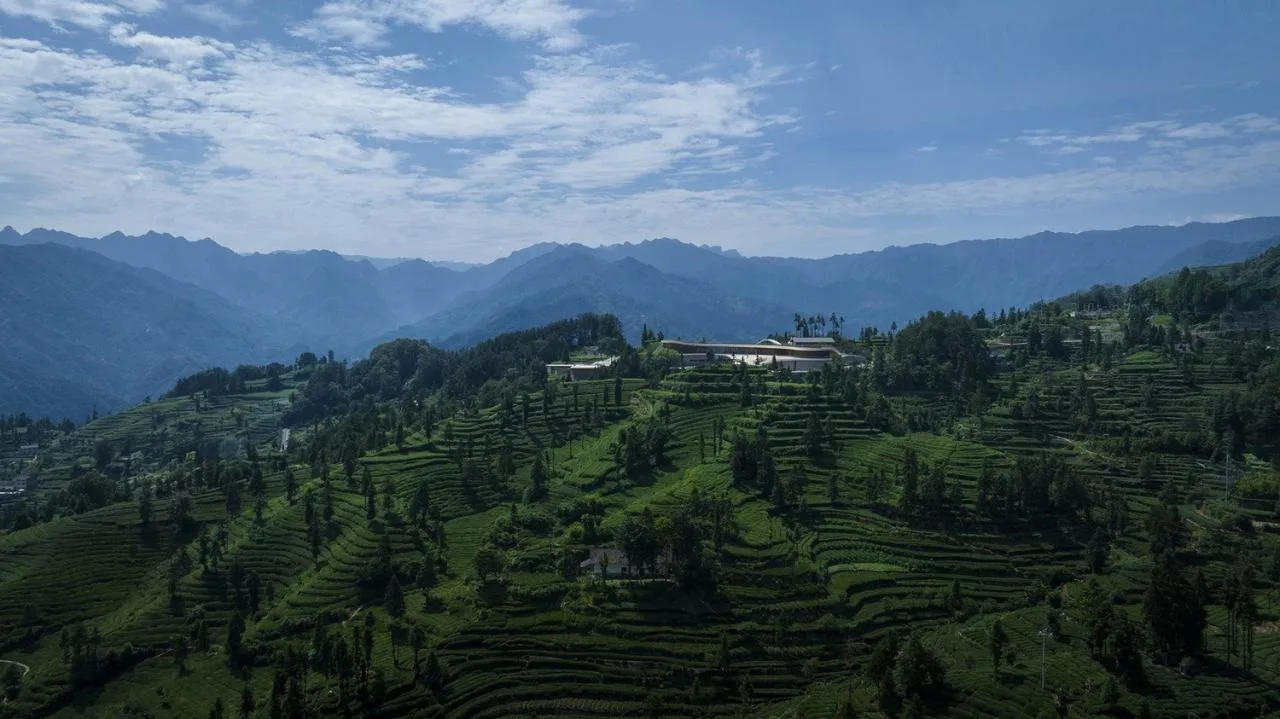
△ Vision © Jin Weiqi
The exhibition center is a key architectural landmark, initiated early in the development of the Three Gorges Tea Tourism Town. Covering approximately 5,000 square meters, it accommodates a variety of functions including reception and dining, cultural and creative retail, exhibitions, a performance theater, shared office spaces, and more.
This center not only provides cultural and tourism services for the Three Gorges Town but also acts as a prominent showcase of the unique Three Gorges Tea Valley culture.
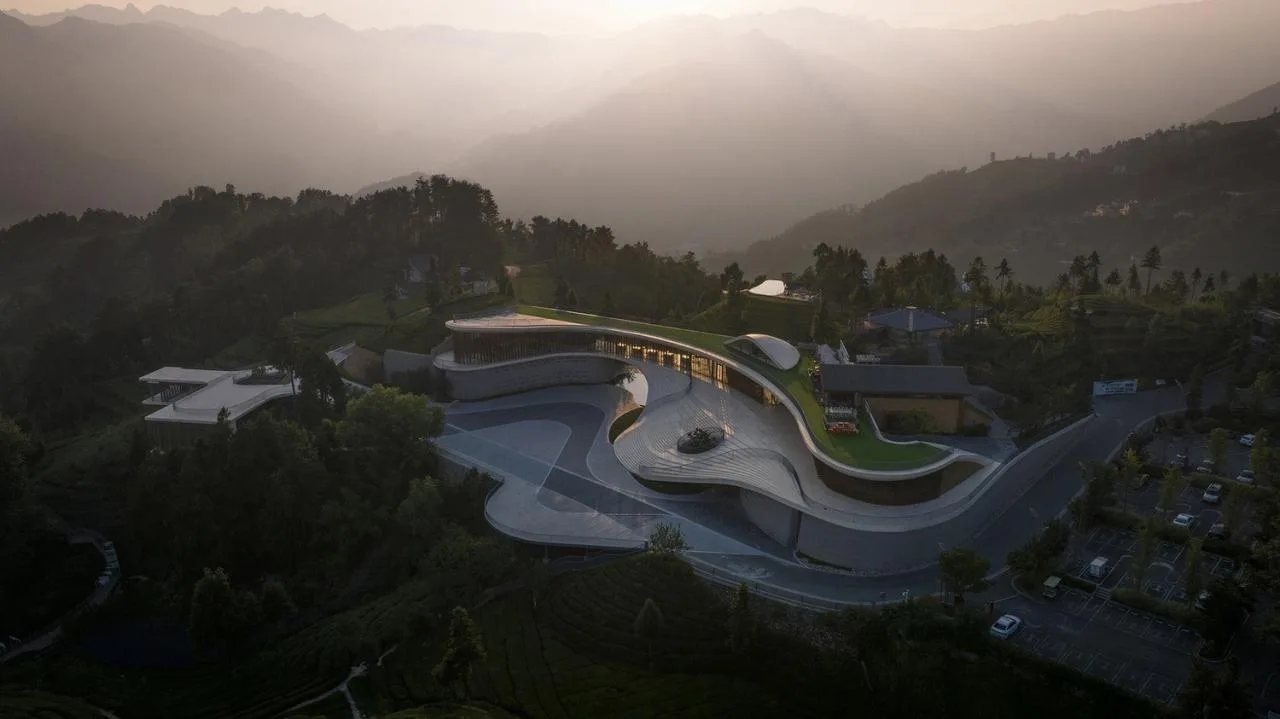
△ Long Range Dusk © Jin Weiqi
Dialogue Tea Garden
The design strategy integrates scarce vacant land within the tea garden by arranging building volumes in a fragmented manner, seamlessly blending the architecture into the tea garden landscape. This approach connects and weaves through the existing natural landforms, balancing identity with functionality.
Following thorough site analysis, the exhibition center was divided into two plots, A and B, located along both sides of the public road.
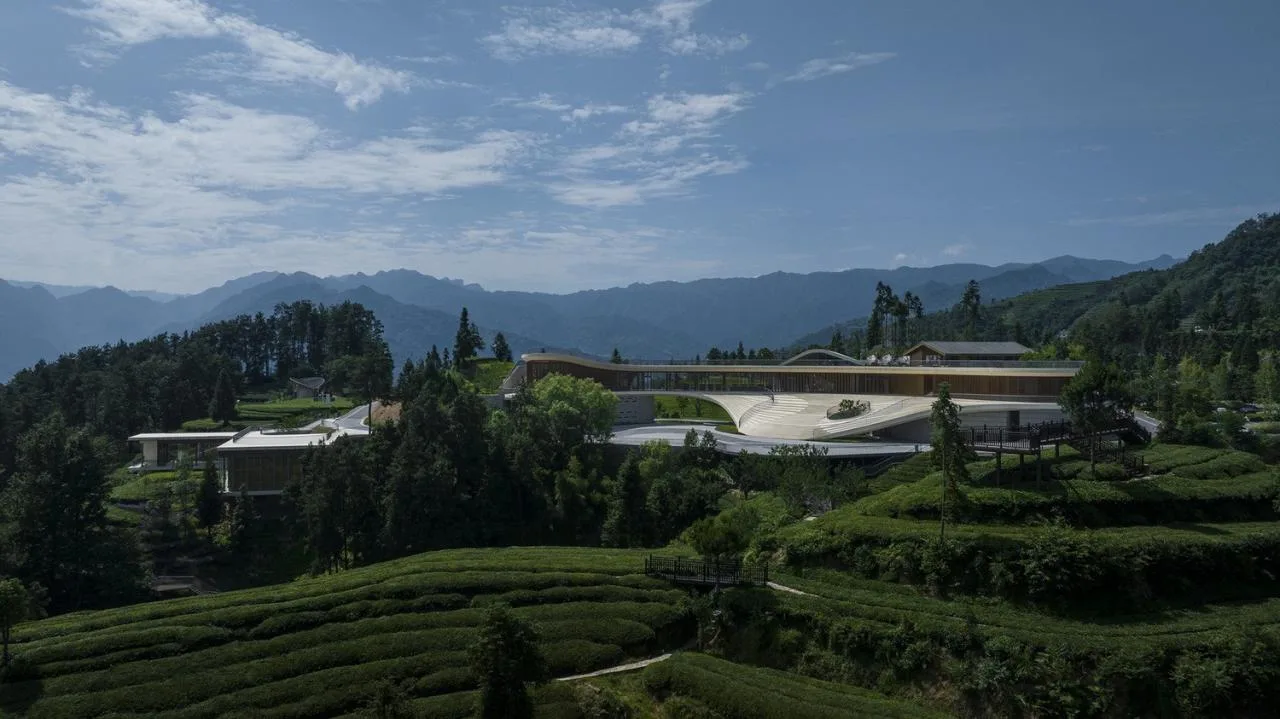
△ Long Range Main Map © Jin Weiqi
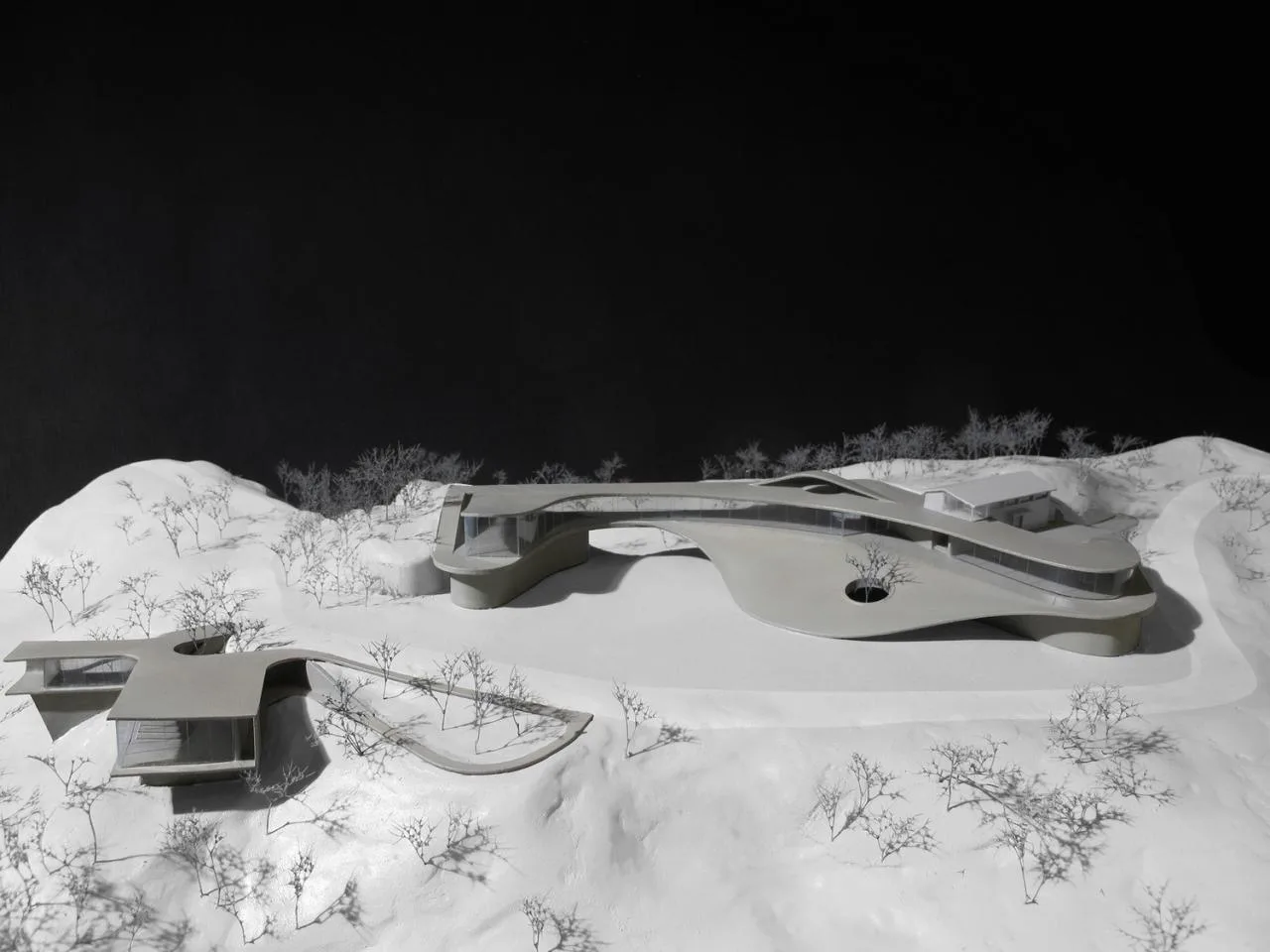
△ Model © Architectural Camp Design Studio
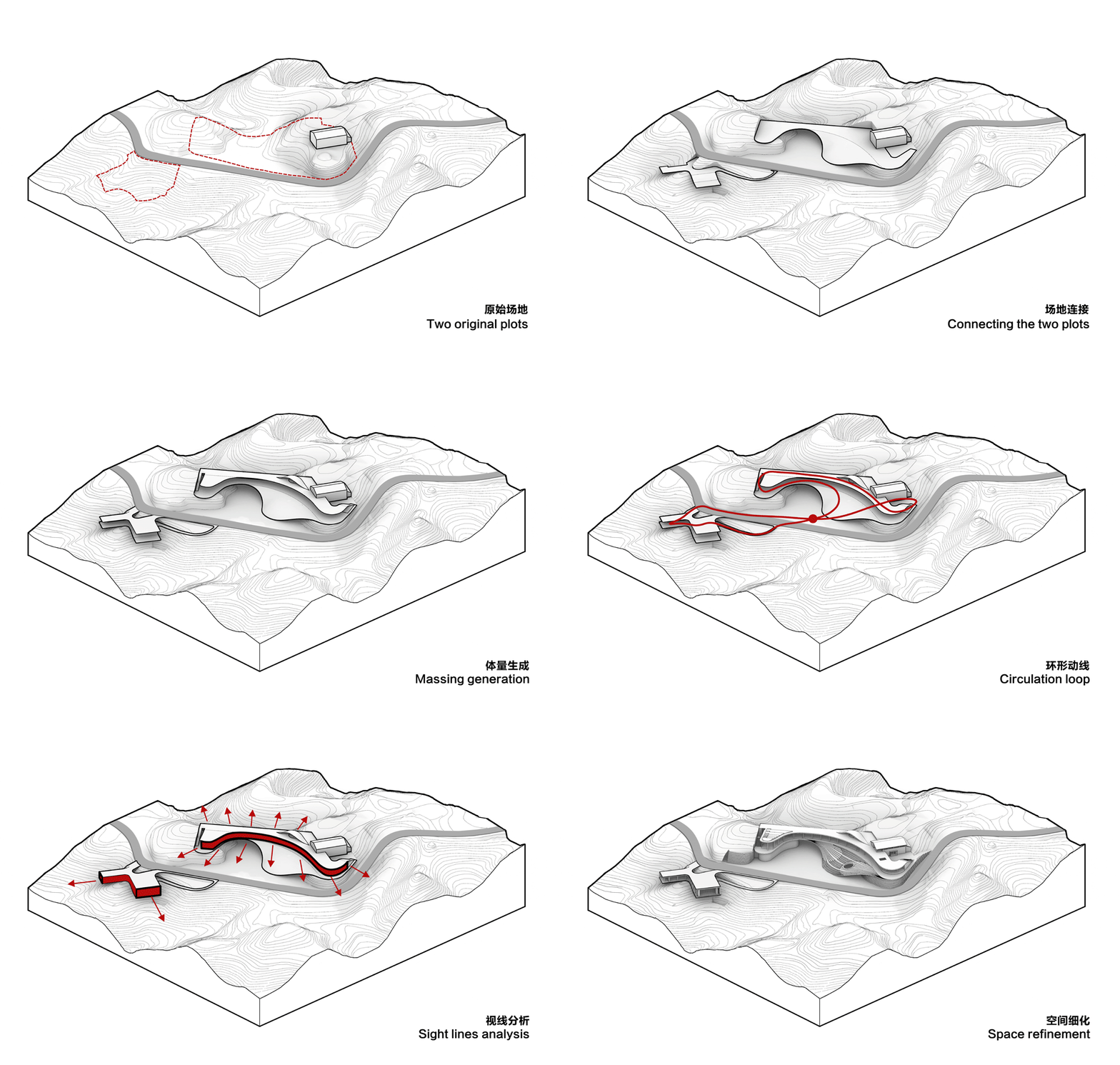
△ Dynamic analysis diagram © Architectural Camp Design Studio
Plot A is a relatively flat vacant lot flanked by two small hills approximately 7 meters high. To the south, adjacent to Panshan Road, visitors can enjoy sweeping views over continuous tea fields and distant mountains. To the north, a deep small tea valley opens up, with tea fields scattered across the hills. A traditional local residential building with mud walls and gray tiles stands on the eastern hill.
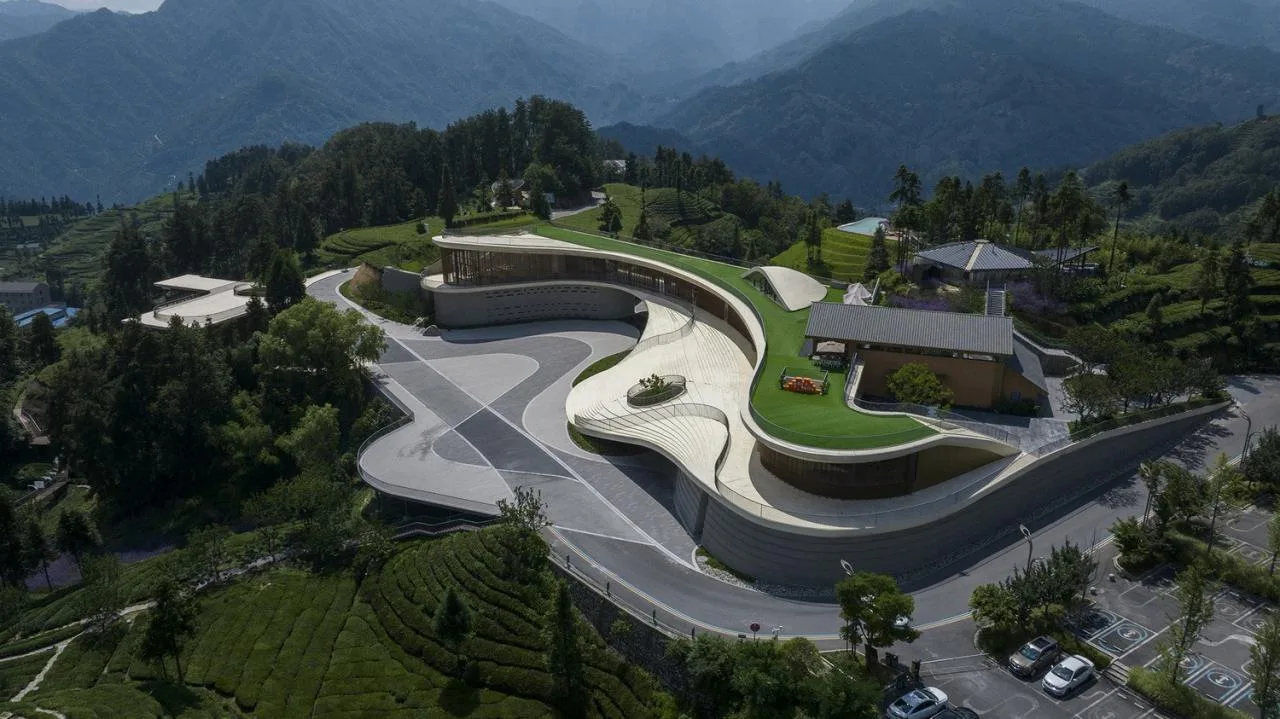
△ Mid-view bird’s eye © Jin Weiqi
Given the scarcity of flat terrain amid the expansive tea mountains, the design preserves the square in front of the hill and connects it to the hilltop by constructing a “bridge”-shaped building spanning between the hills.
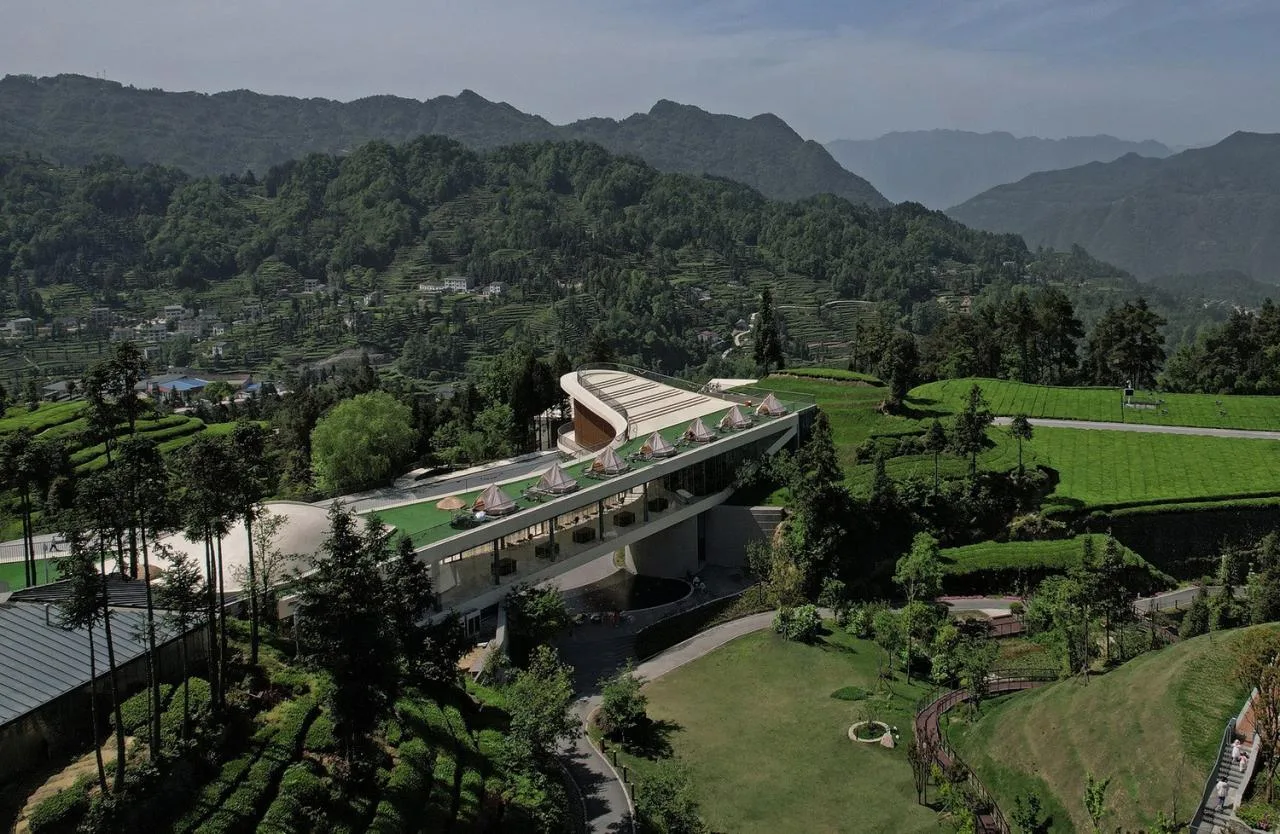
△ Mid-view bird’s eye © Jin Weiqi
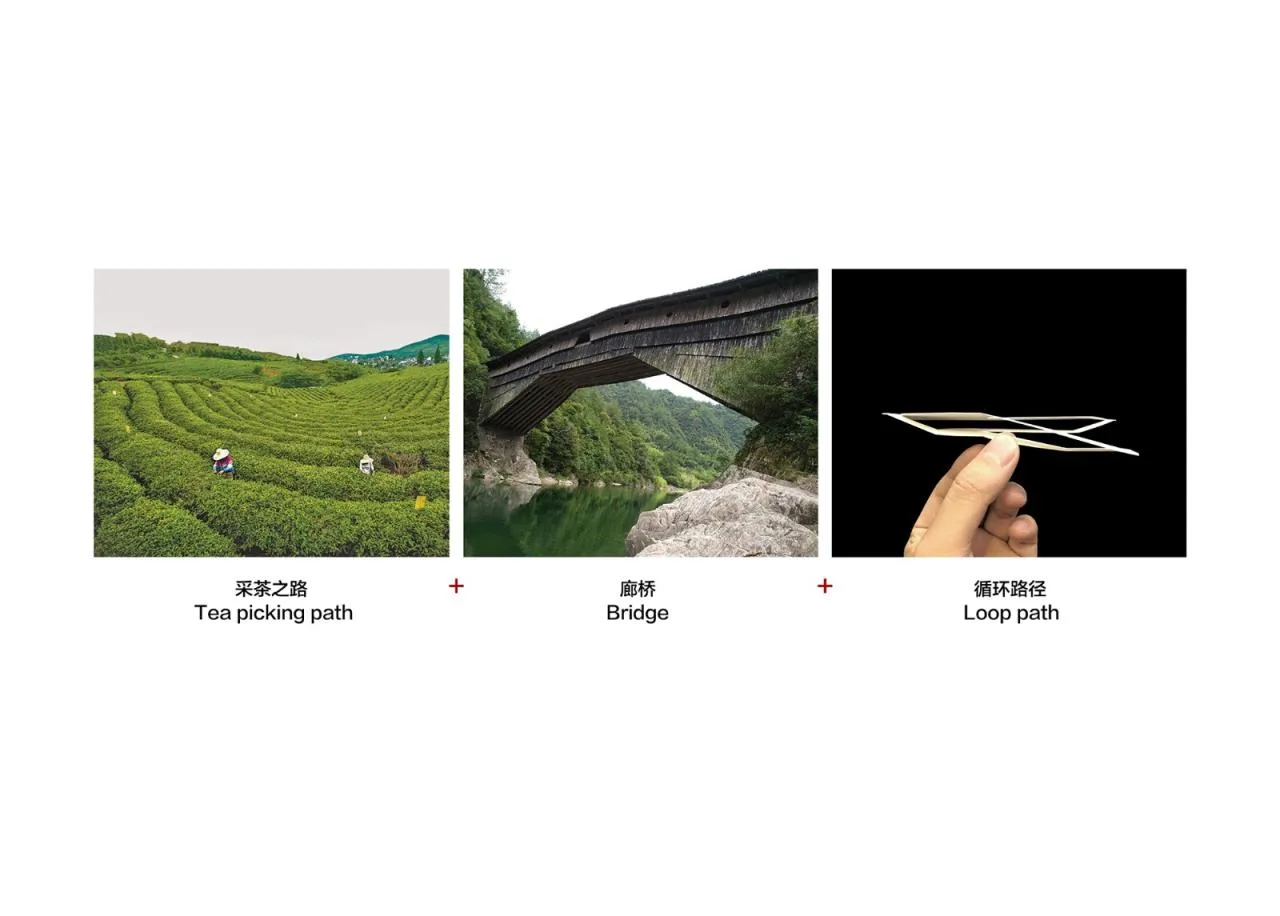
Concept diagram © Architectural Camp Design Studio
The bridge structure follows the contours of the hills. On the south side, it features a winding arc that connects traditional residential buildings and the multi-level terrain, while maximizing views of the tea garden landscape within its internal spaces. On the north side, a straight edge enhances the bridge’s volume and conceals it within the hills.
Underneath the bridge, an open square has been created to accommodate large gatherings and tourist activities.
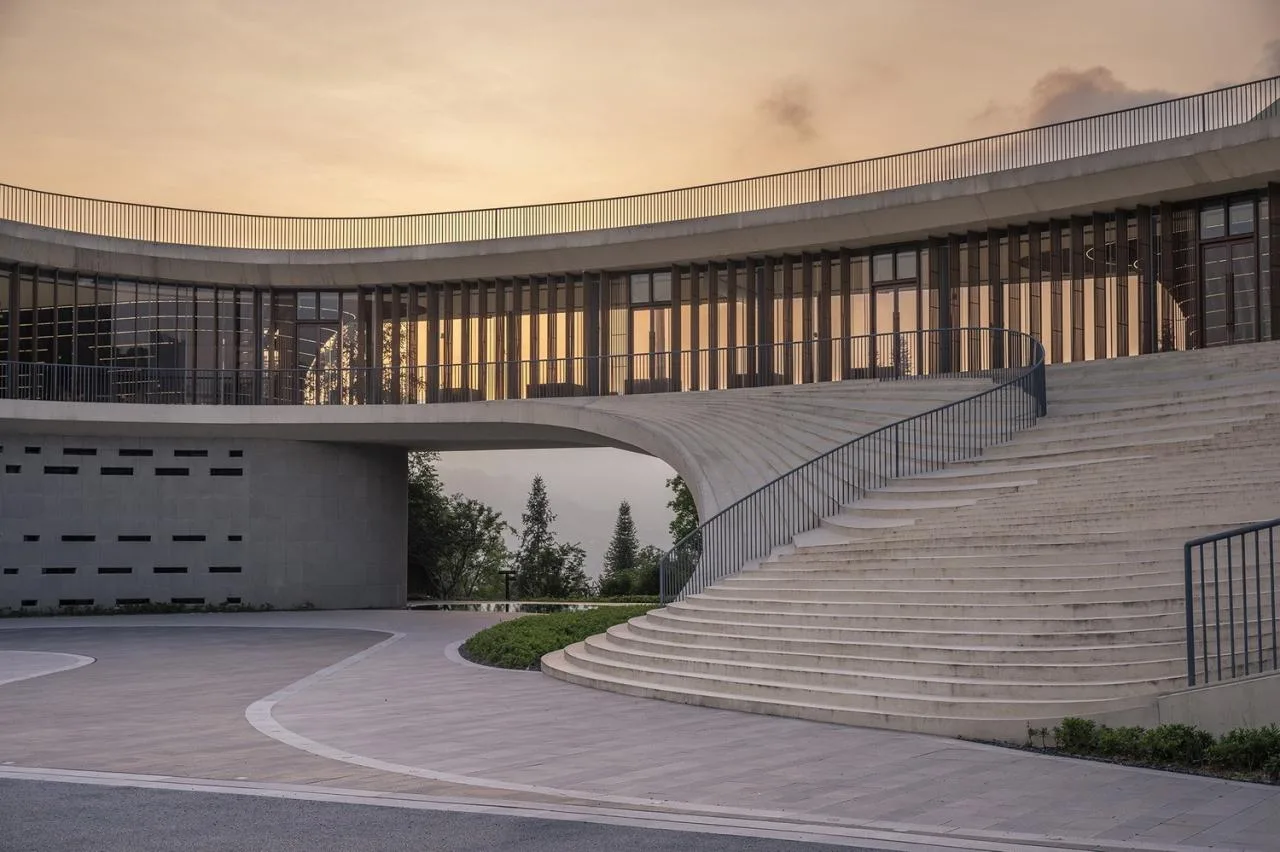
△ Close-up of Bridge Space © Jin Weiqi
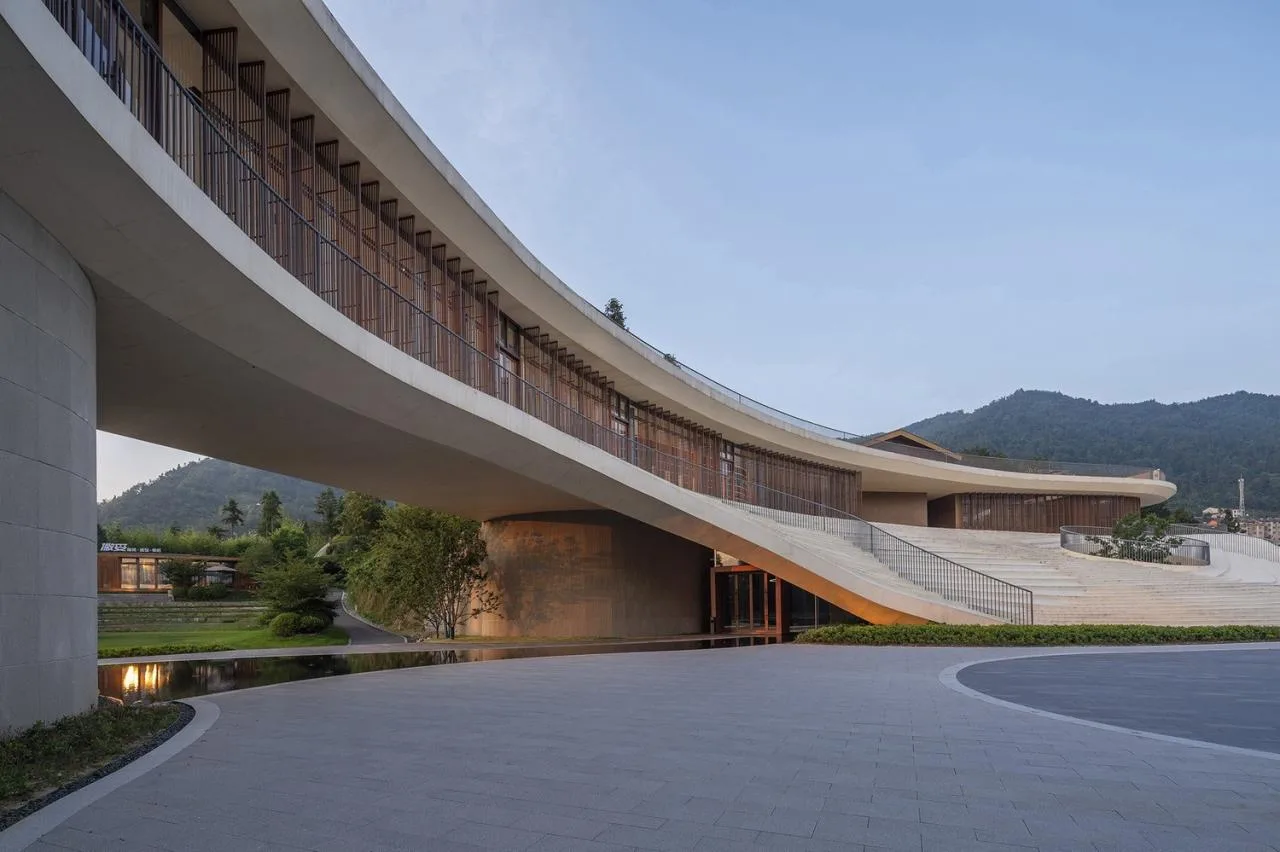
△ Close-up of Bridge Space © Jin Weiqi
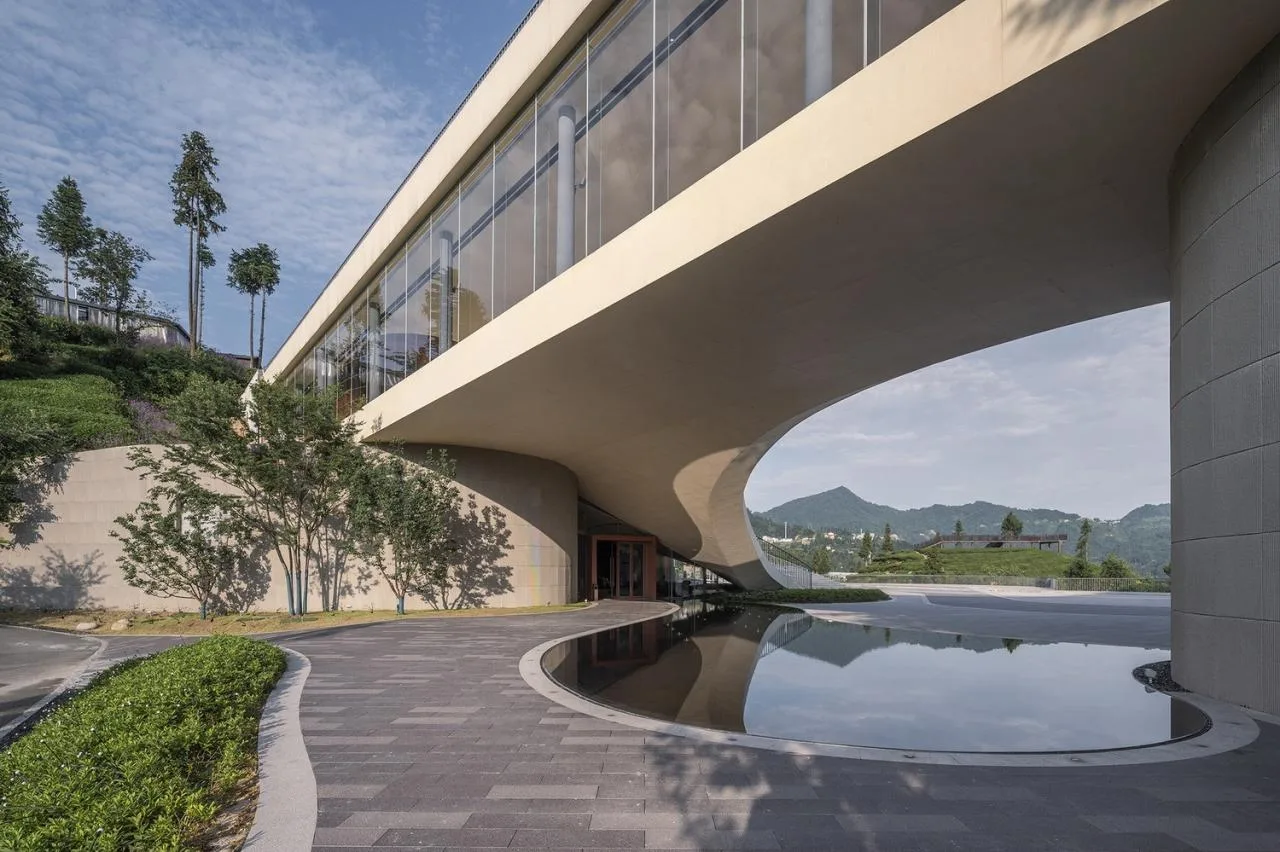
△ Close-up of Under-bridge Space © Jin Weiqi
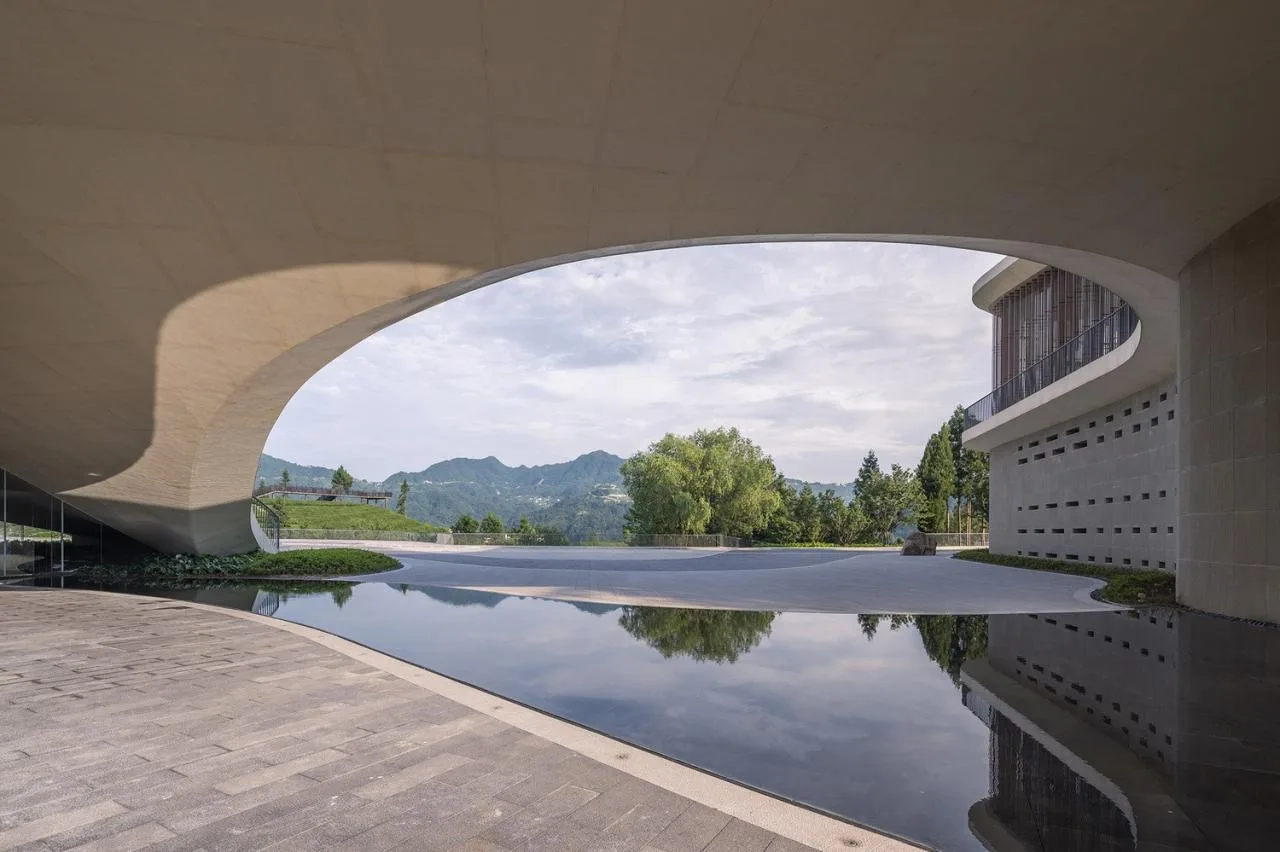
△ Close-up of Under-bridge Space © Jin Weiqi
Plot B is adjacent to the distribution square, positioned near a road turning point. The terrain slopes downward sharply here, interspersed with occasional forests, creating an ideal vantage point.
The design highlights two viewing windows—one wide and one narrow—that frame representative close-up tea fields and distant mountains. These form a small performance building resembling branching trees. Its roof aligns with the road, doubling as a public viewing platform.
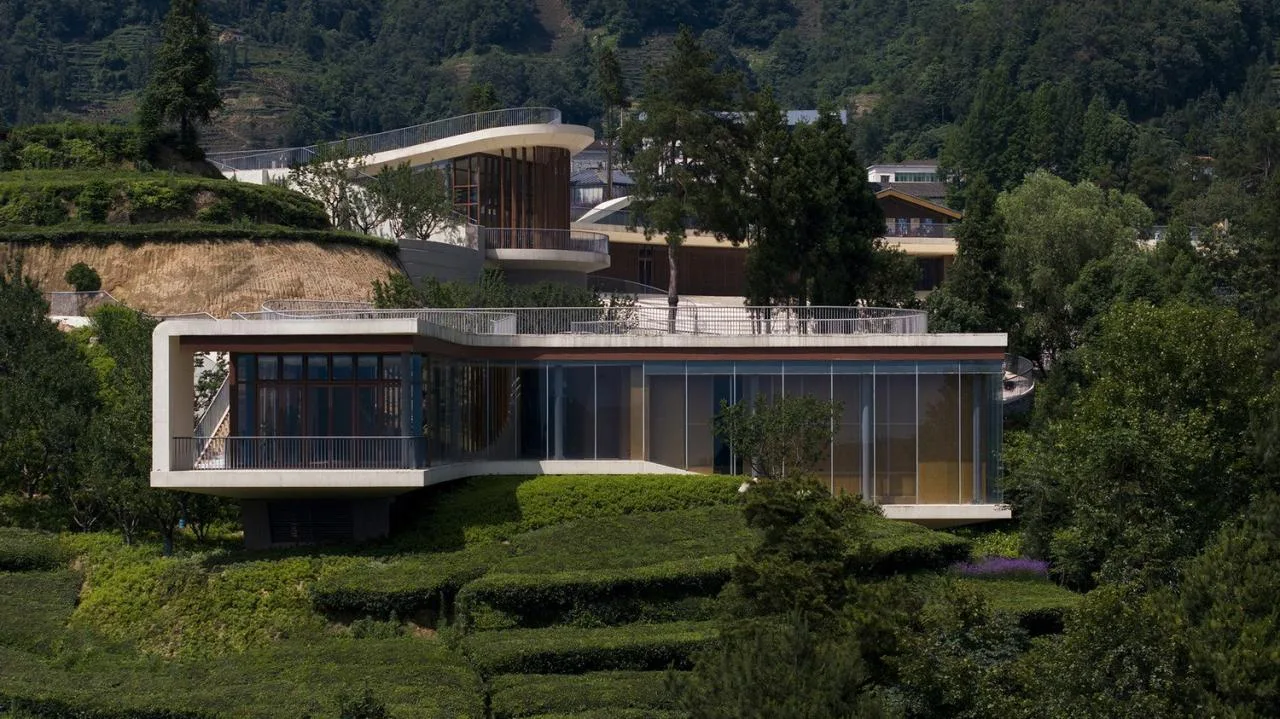
△ Close-up view of the performance hall © Jin Weiqi
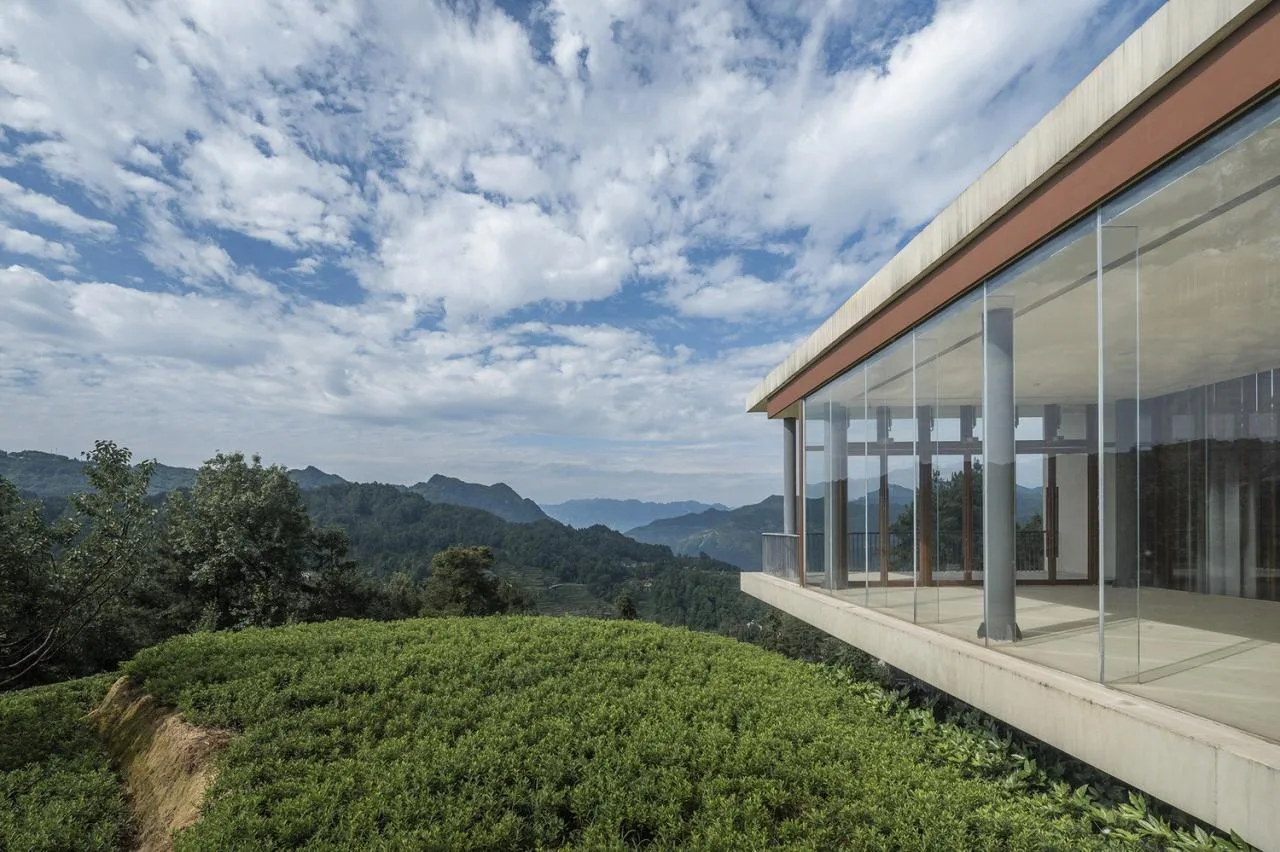
△ Viewing Hall View © Jin Weiqi
Loop Path
The architectural vision extends beyond creating a beautiful visual landmark; it aims to harmonize with the surrounding scenery. The design forms a traversable path through the tea fields, offering multidimensional sensory experiences via three-dimensional roaming.
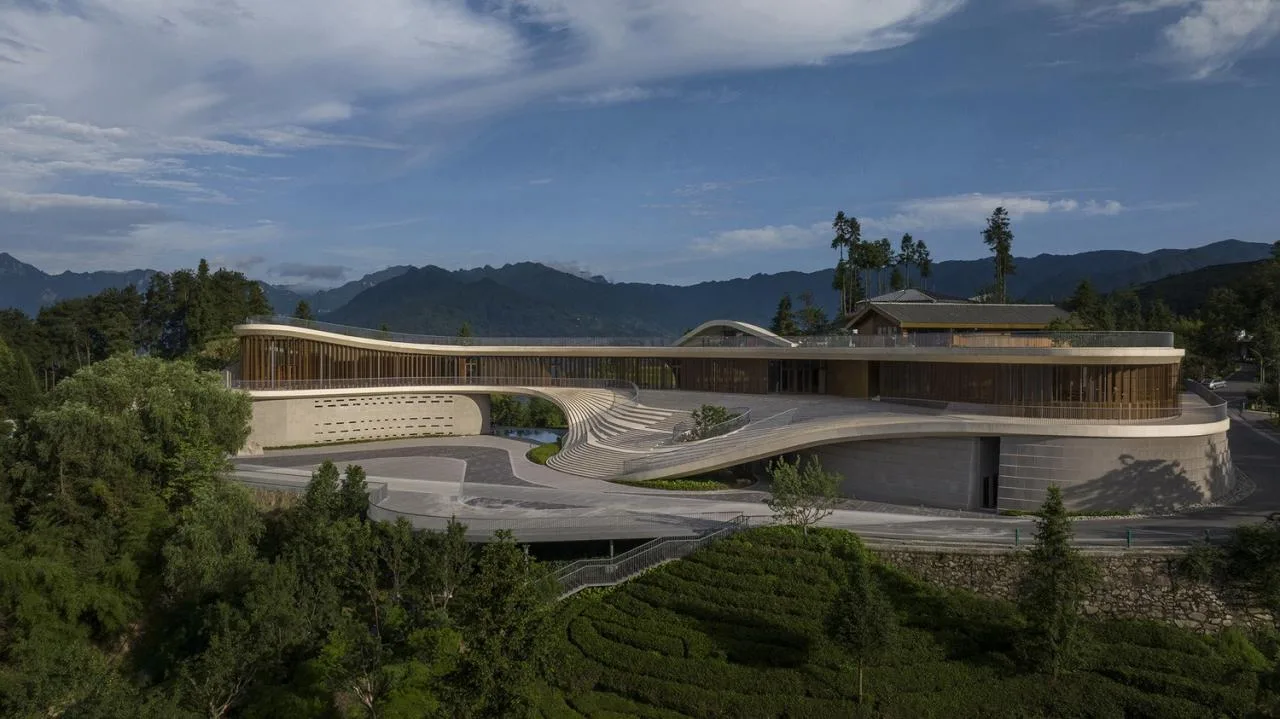
△ Zhongjing © Jin Weiqi
The buildings emphasize openness, featuring transparent facades and multiple entrances and exits at different levels. Internal circulation lines are organized to form a continuous loop, reminiscent of a Möbius strip.
Soft, undulating large steps, echoing the rhythm of tea fields, connect to the distribution square, warmly welcoming visitors and providing a natural backdrop for square activities. Ascending these stairs leads to the main leisure space on the second floor.
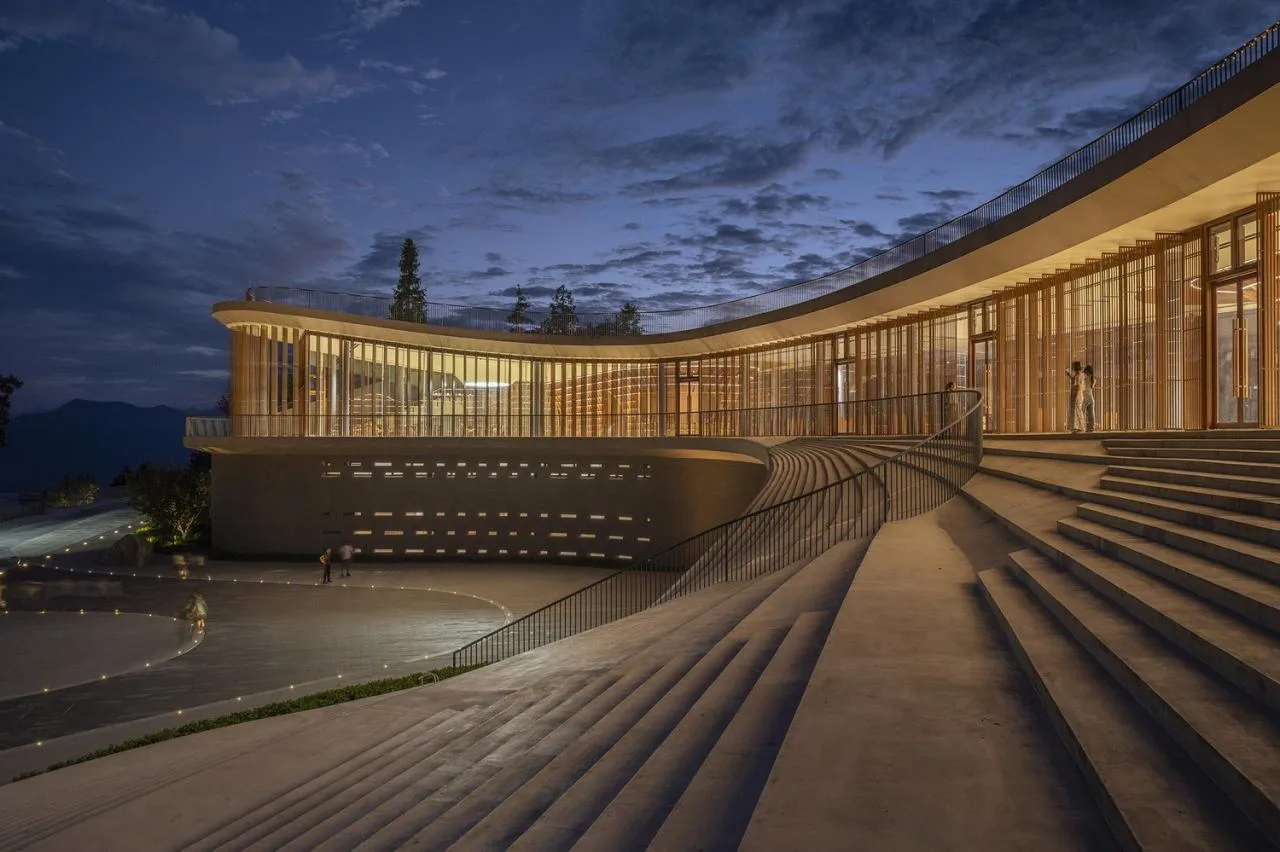
△ Close-up – Stairway © Jin Weiqi
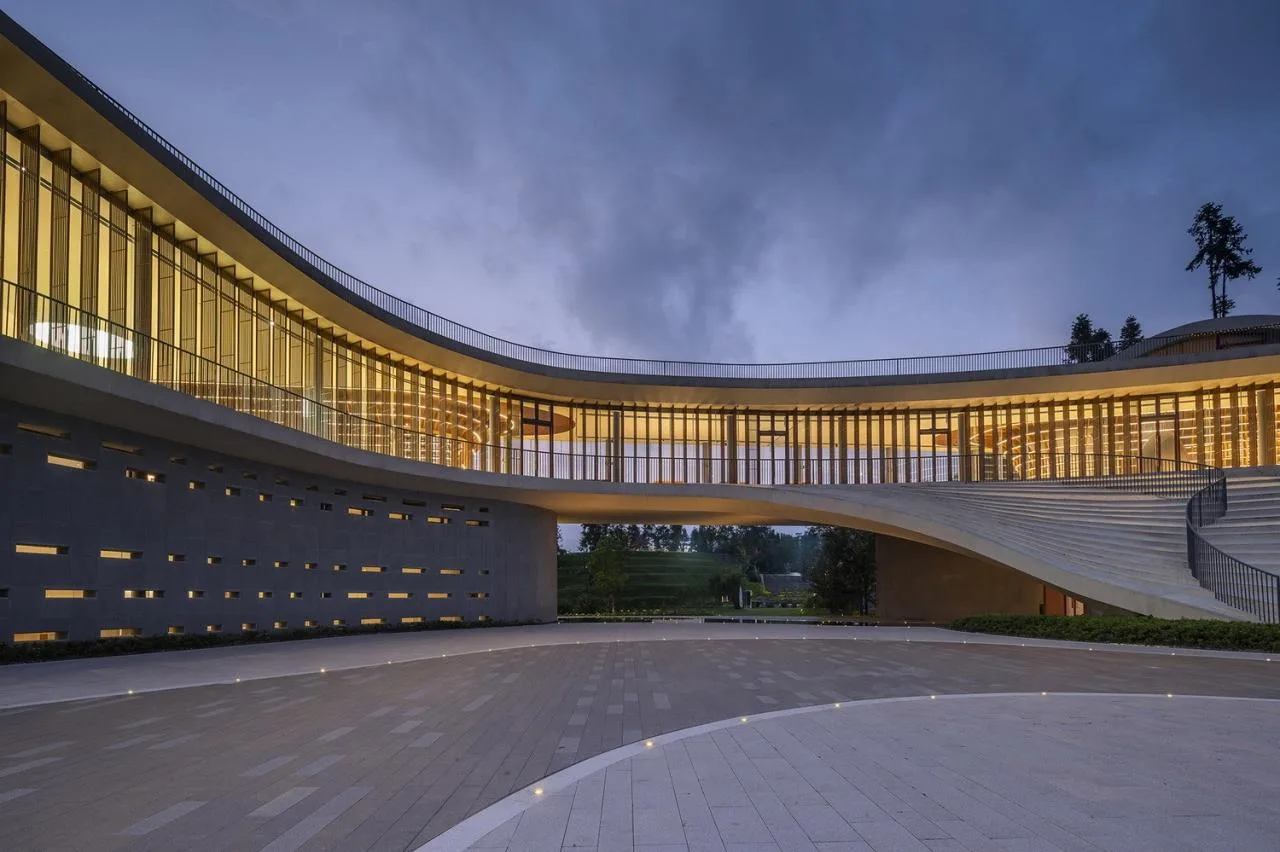
△ Close-up – Dusk © Jin Weiqi
The elegant architectural curve extends beyond the outdoor corridor toward the building’s east and west ends. At the east end, a gentle sloping outdoor staircase creates a small courtyard with adjacent traditional residences, inviting visitors to ascend freely to the rooftop platform.
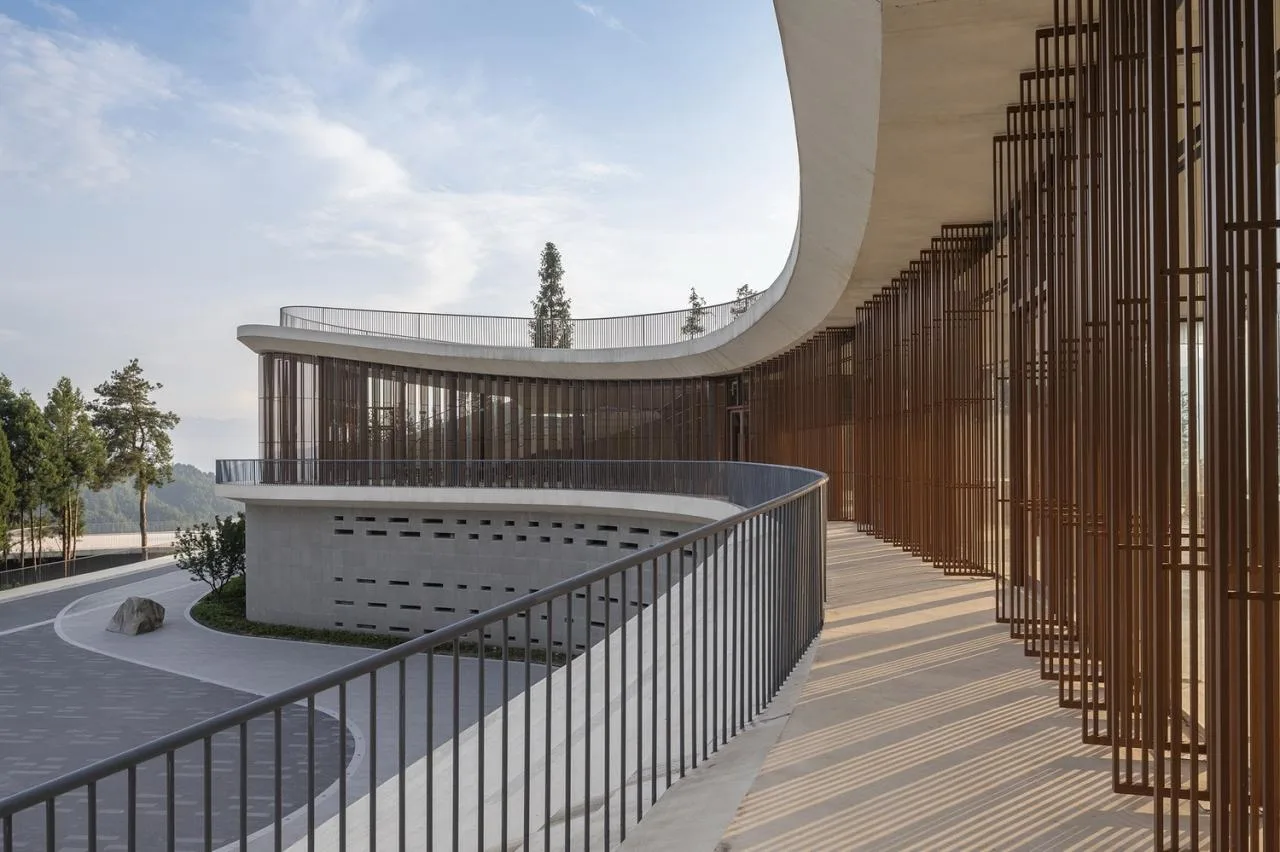
△ Close-up – Outer Gallery © Jin Weiqi
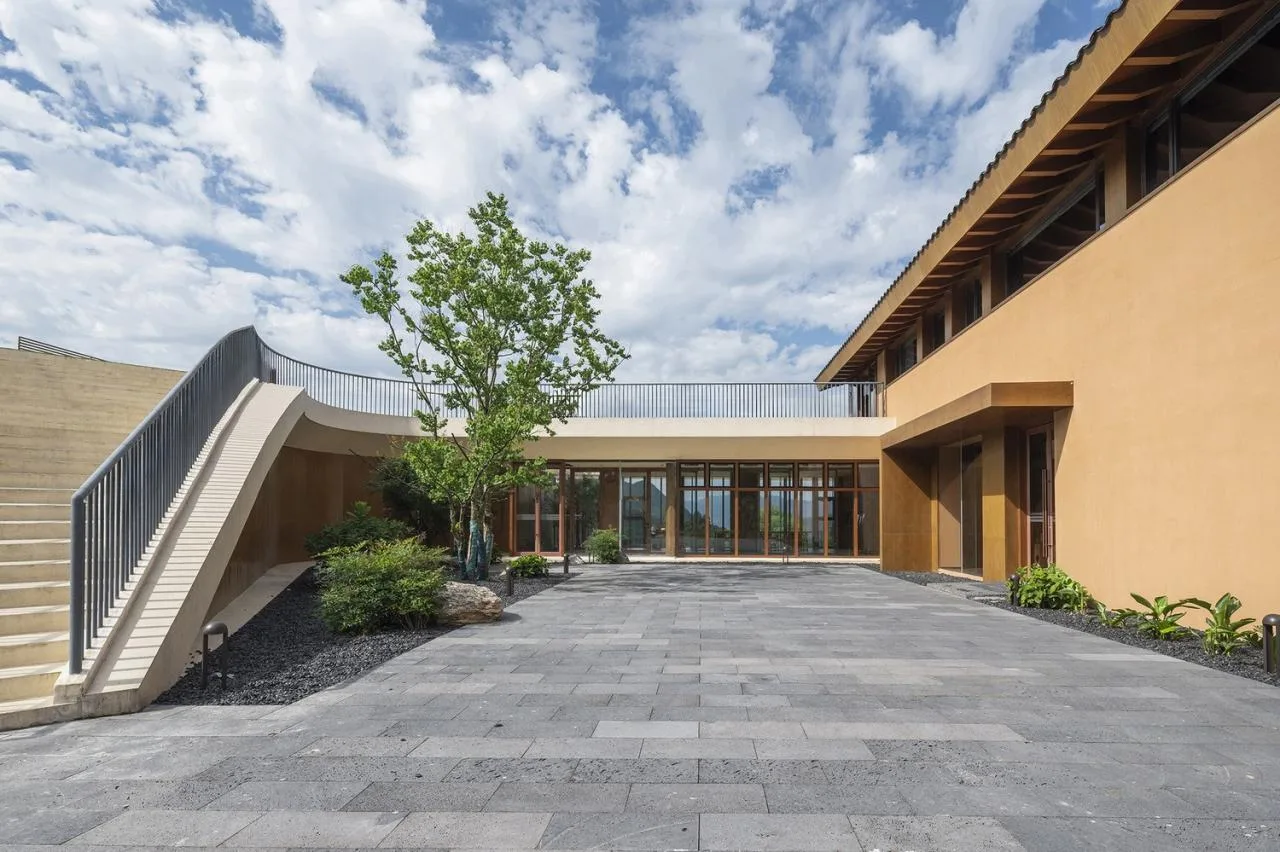
△ Second floor dining area courtyard © Jin Weiqi
The building’s west side roof gently curves upward to form a stairway, creating a small outdoor activity plaza facing the northern landscape. Outdoor stairs here also connect to the second-floor interior. The building’s core features a spiral staircase and elevator, vertically linking the first floor, second floor, and rooftop platform.
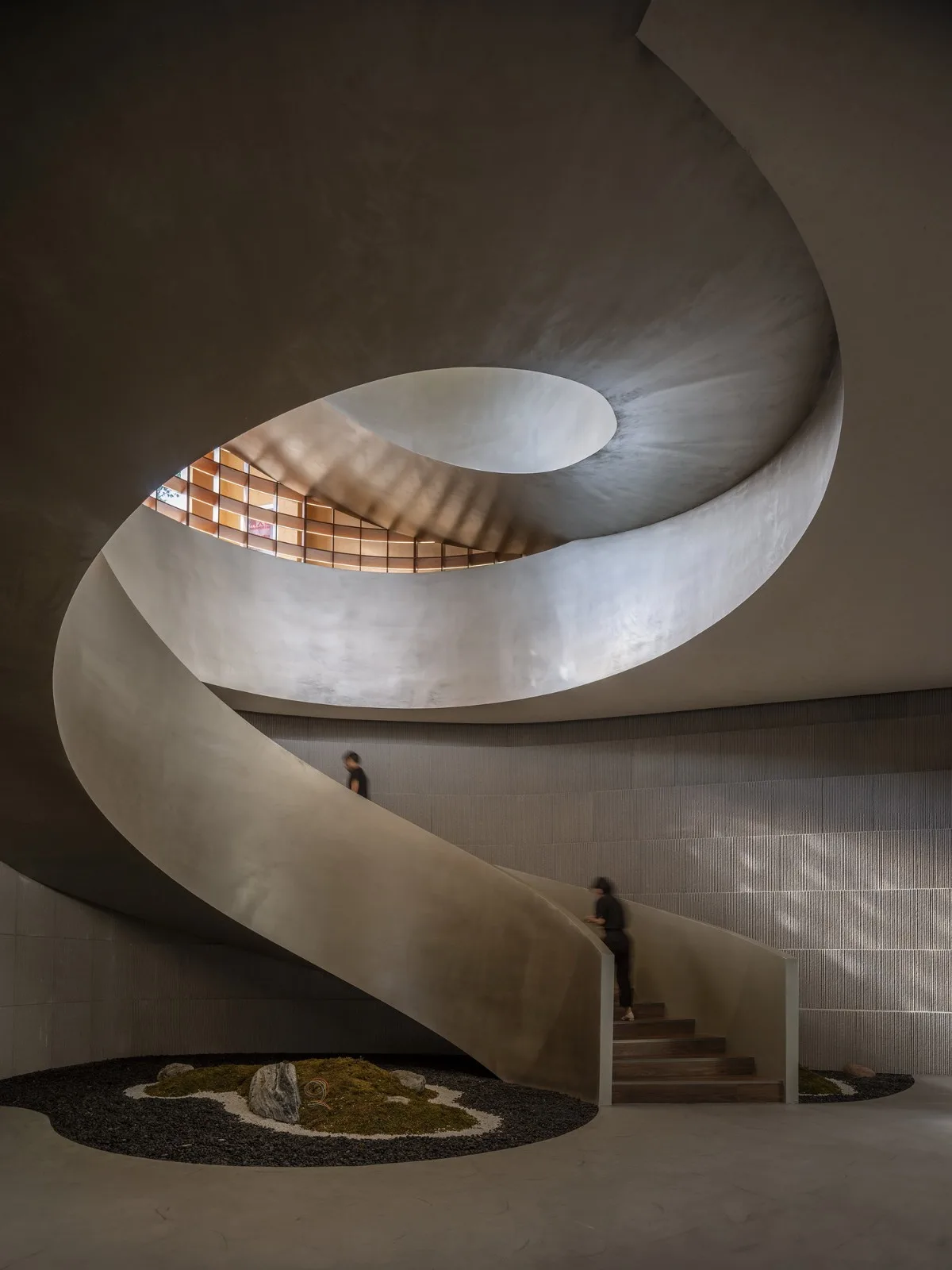
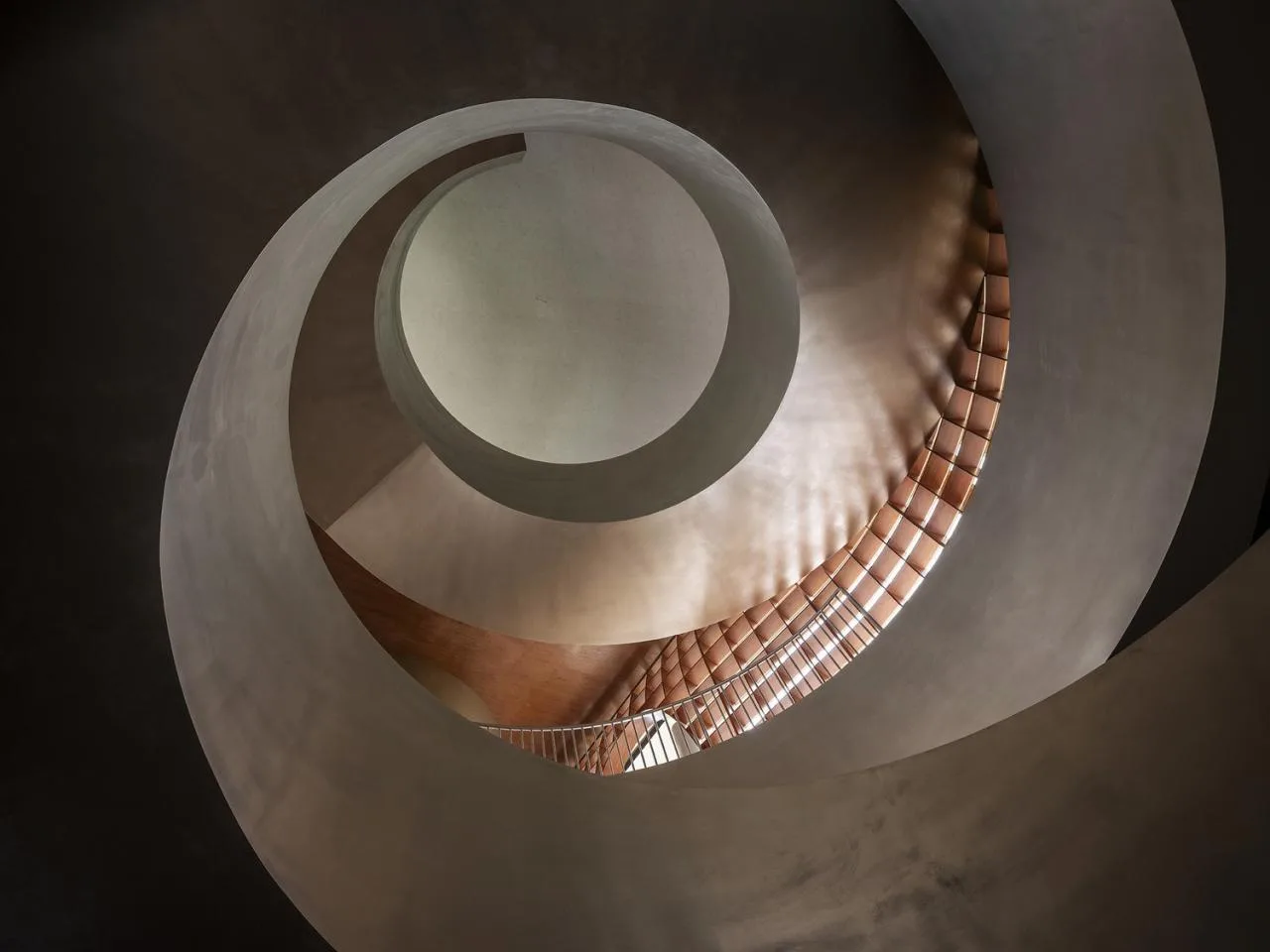
Spiral staircase © Jin Weiqi
Composite Functions
The east side of Building A’s first floor, located beneath the large staircase, functions as a tourist reception center. It offers reception and display areas, resting and waiting spaces, and agricultural product retail.
The design preserves the full curved shape beneath the steps, with a circular tea tree courtyard marking the main entrance.
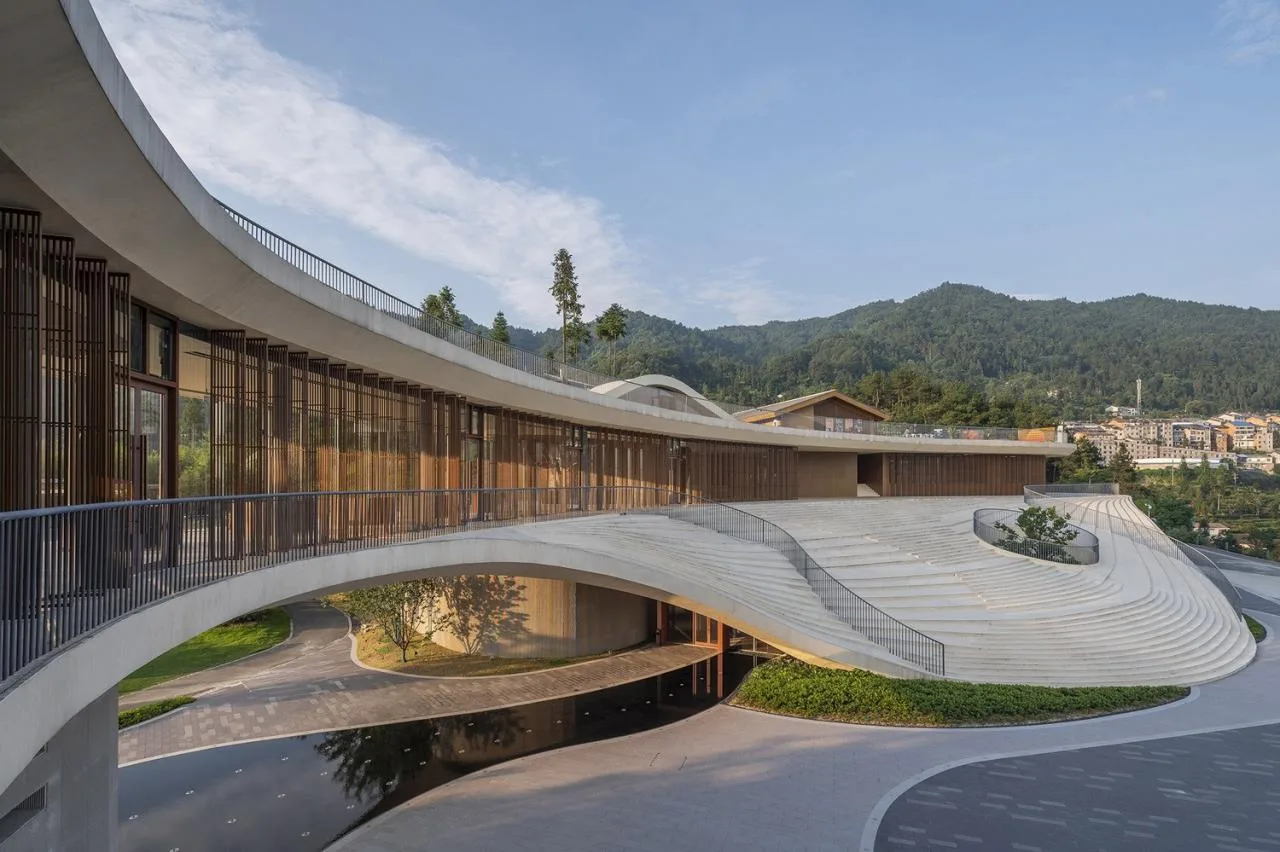
△ Close-up – Stairway © Jin Weiqi
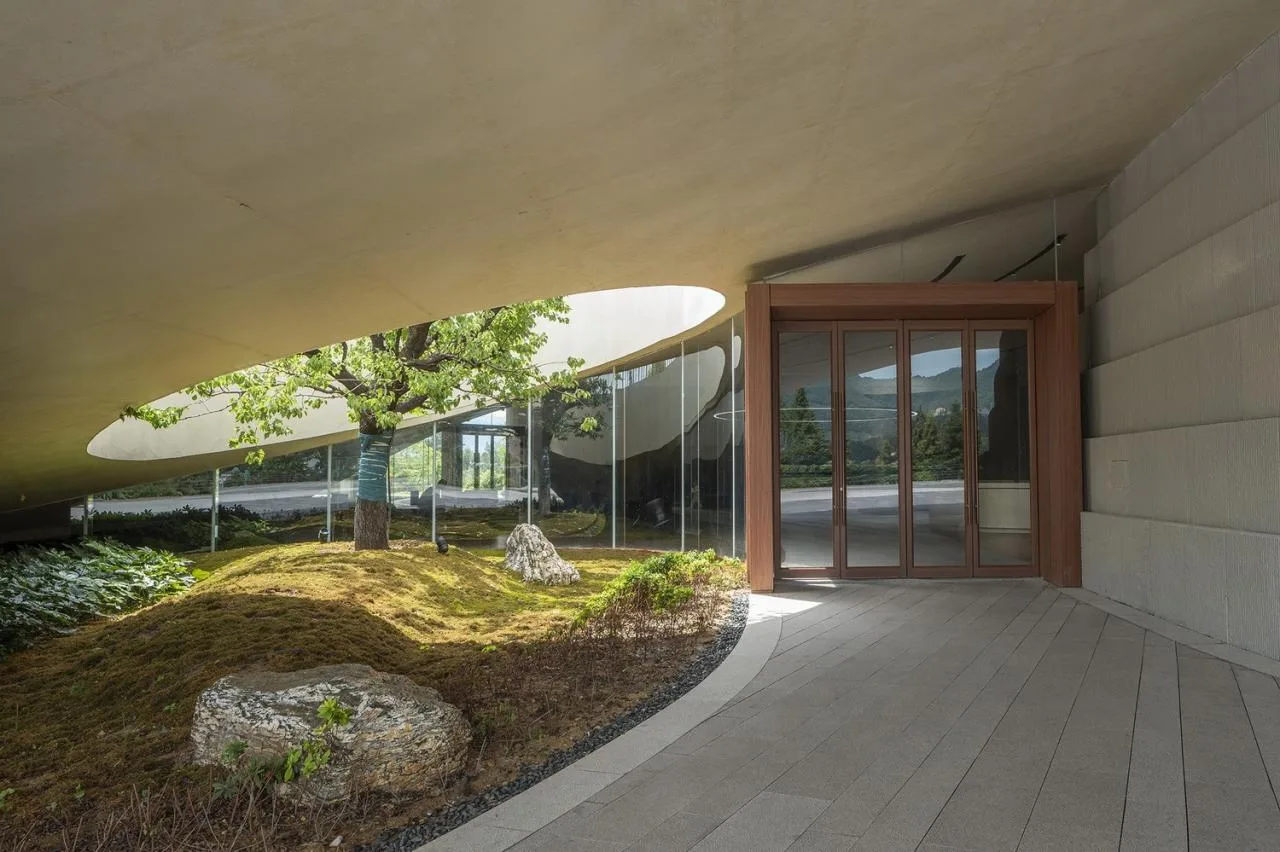
△ First floor entrance © Jin Weiqi
Indoor functional areas are organized in an island layout, with LED screens on the walls to support multifunctional activities. The west side first floor serves as a shared office space, designed for independent operation.
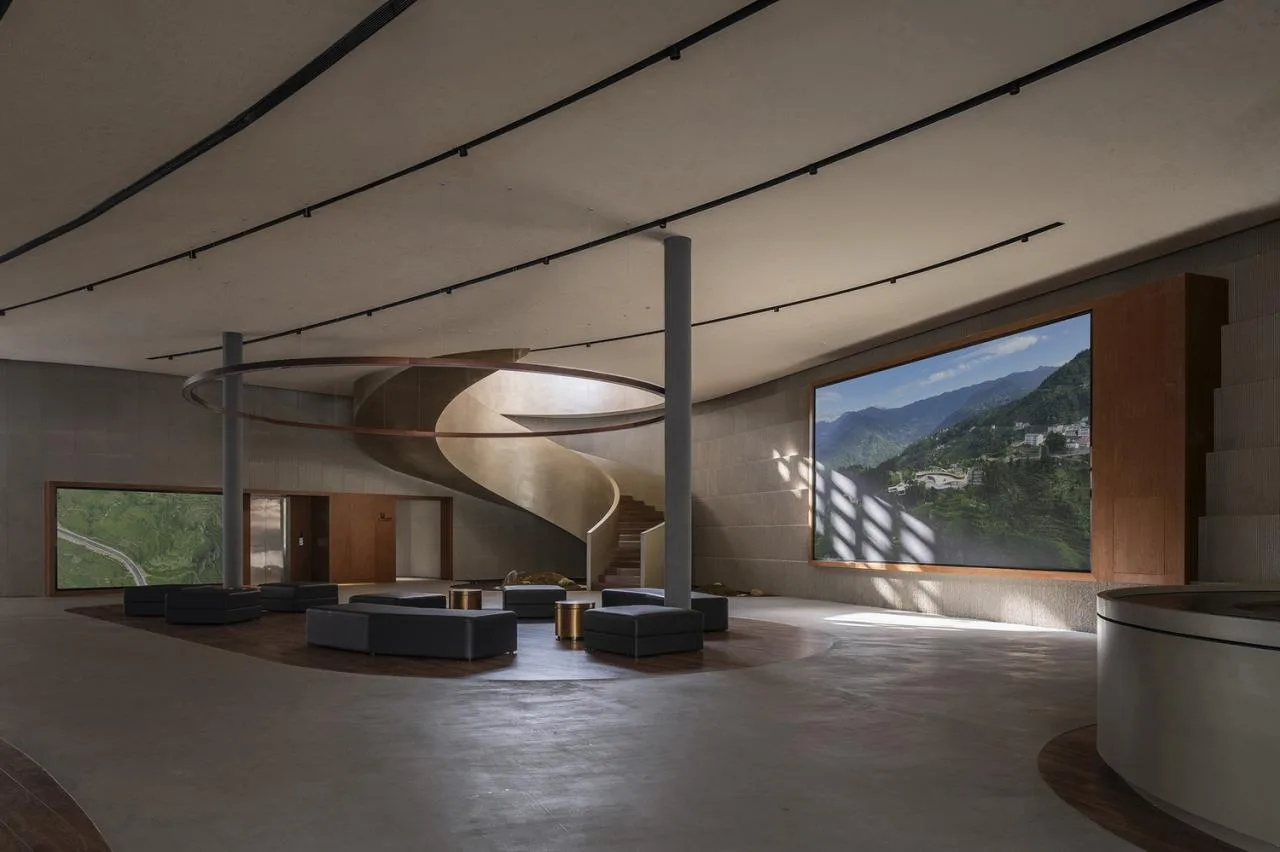
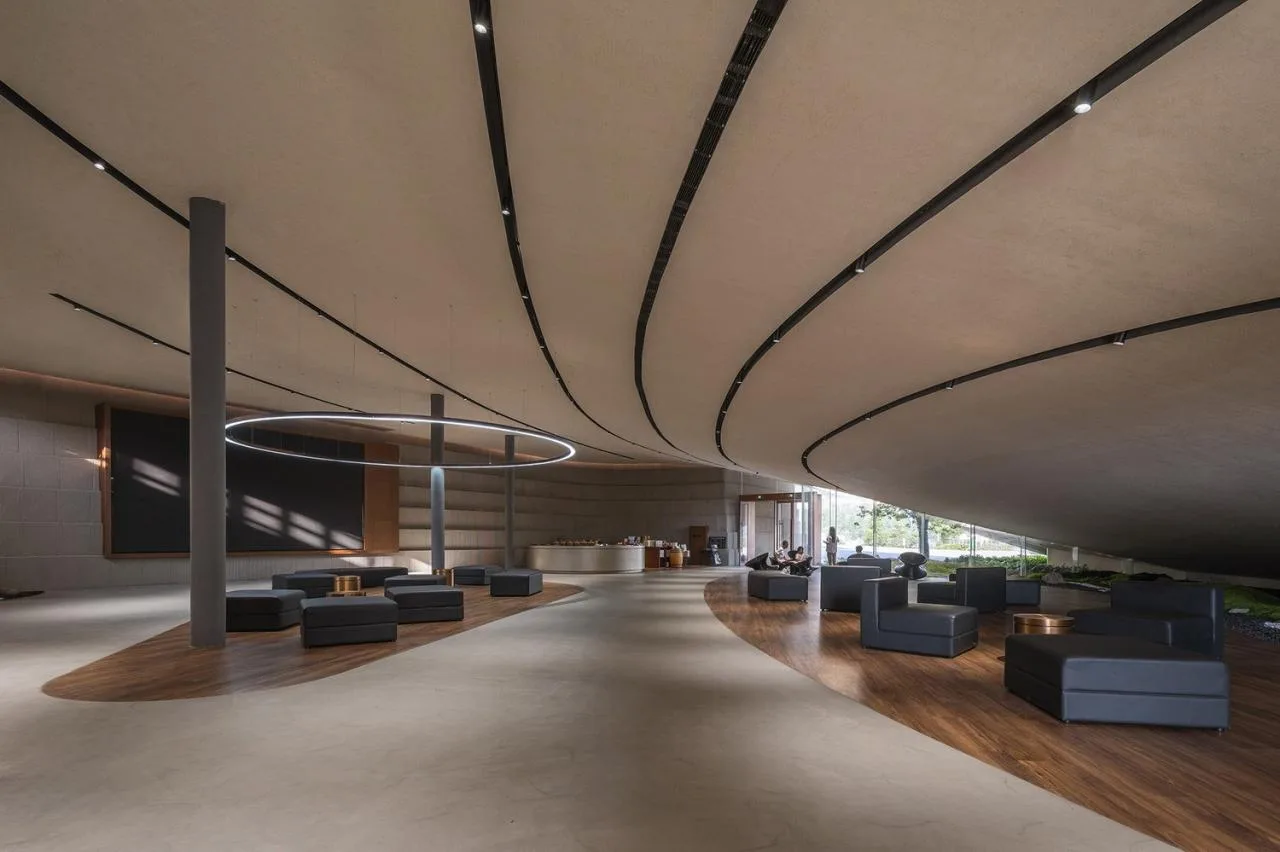
△ First floor exhibition hall © Jin Weiqi
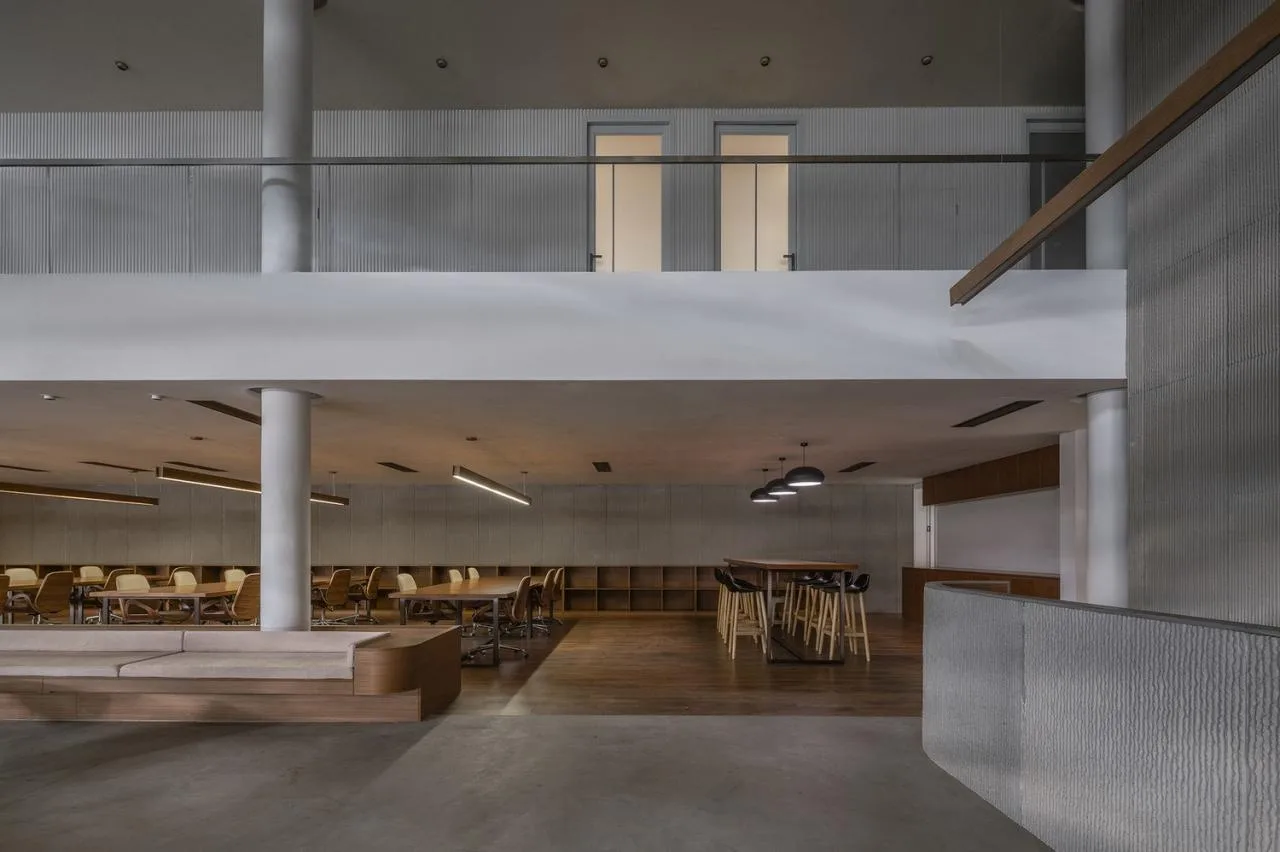
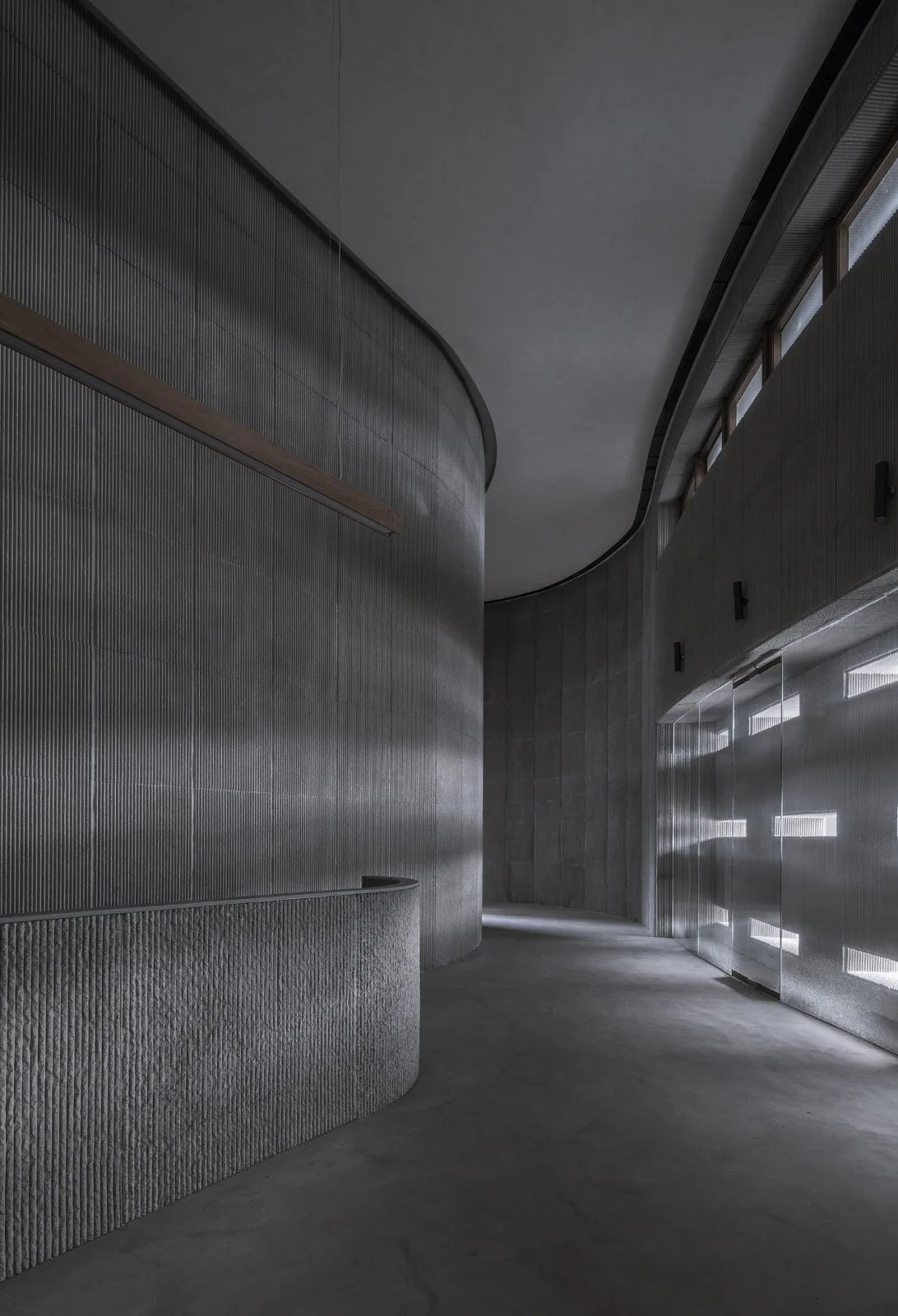
△ First floor office area © Jin Weiqi
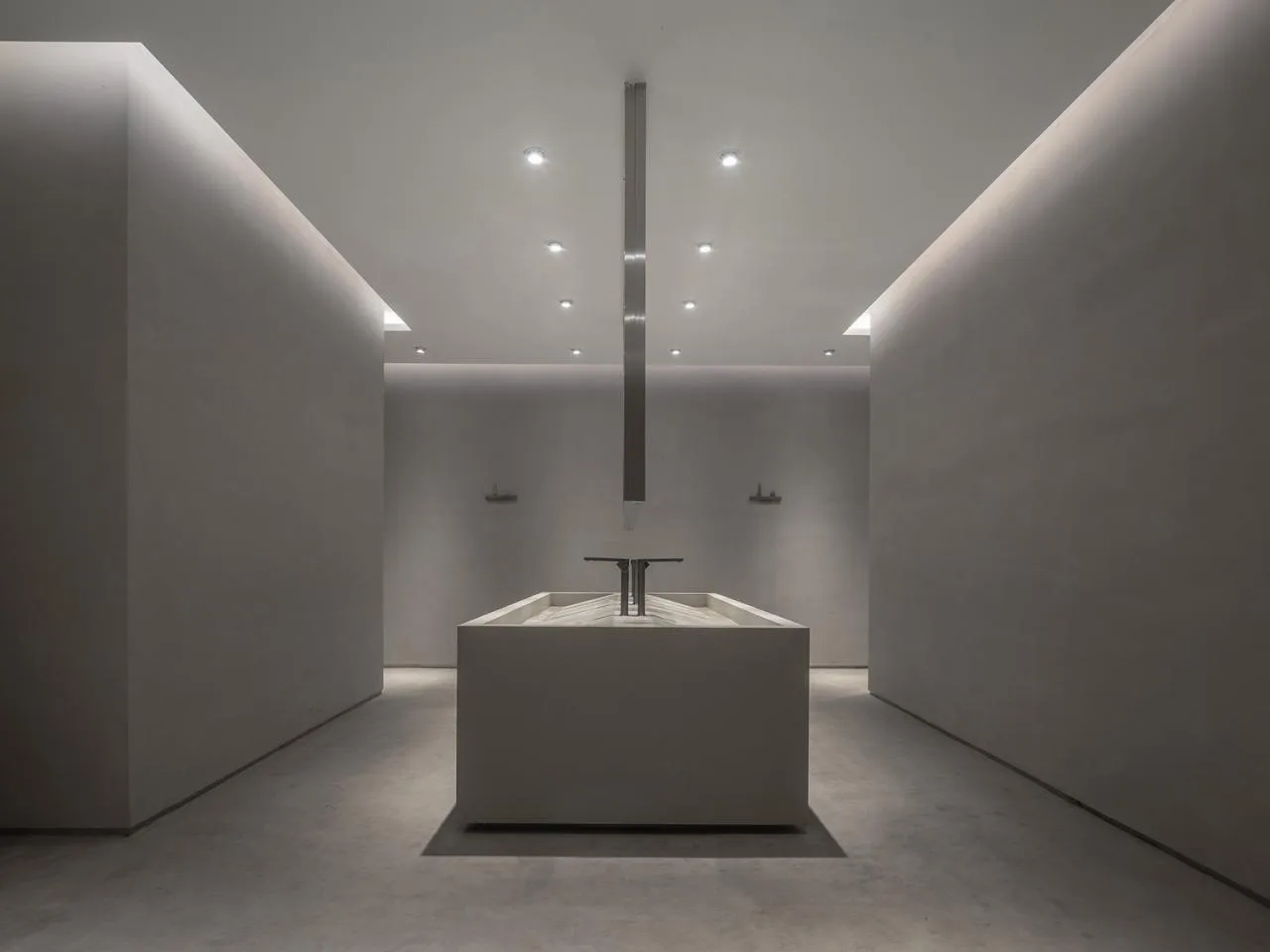
△ First floor public restroom © Jin Weiqi
The two-story bridge functions as a coffee and book bar, featuring curved bamboo and steel bookshelves inspired by the tea field landscape. Paired with coffee tables, it creates multiple distinct areas where visitors can enjoy reading and coffee with scenic views.
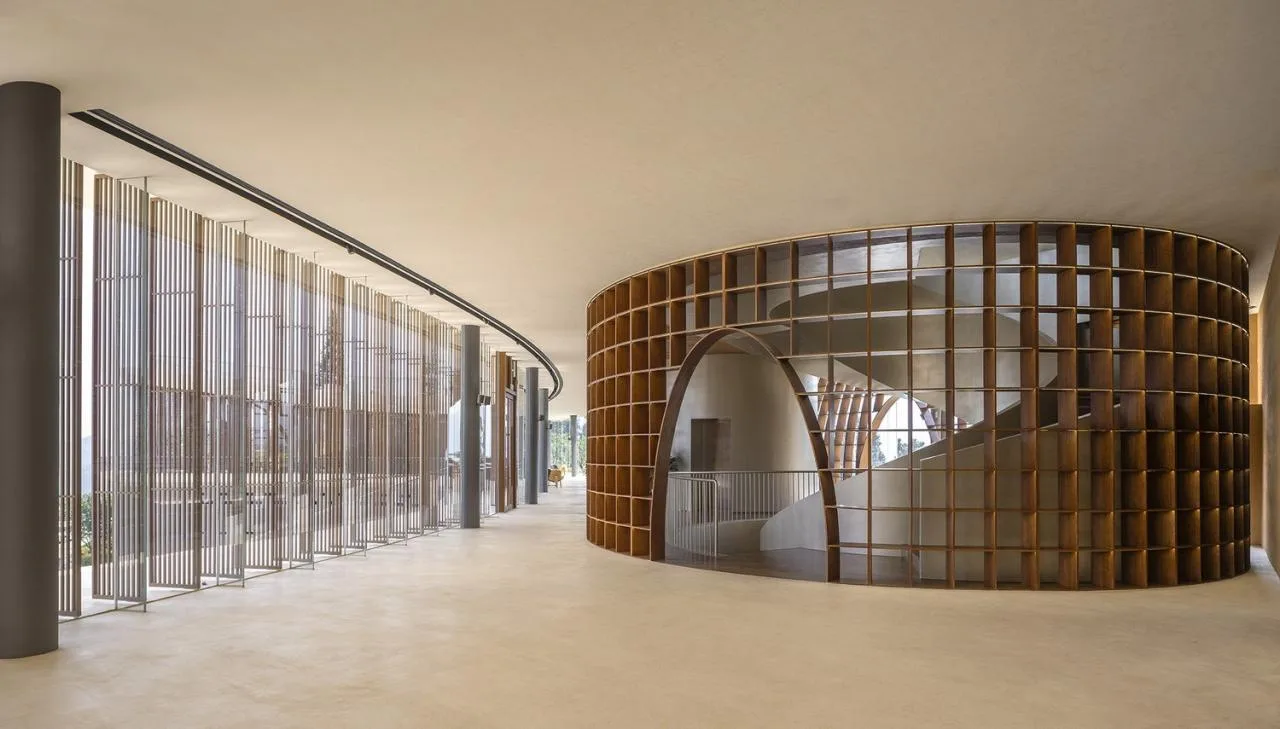
△ Second floor foyer © Jin Weiqi
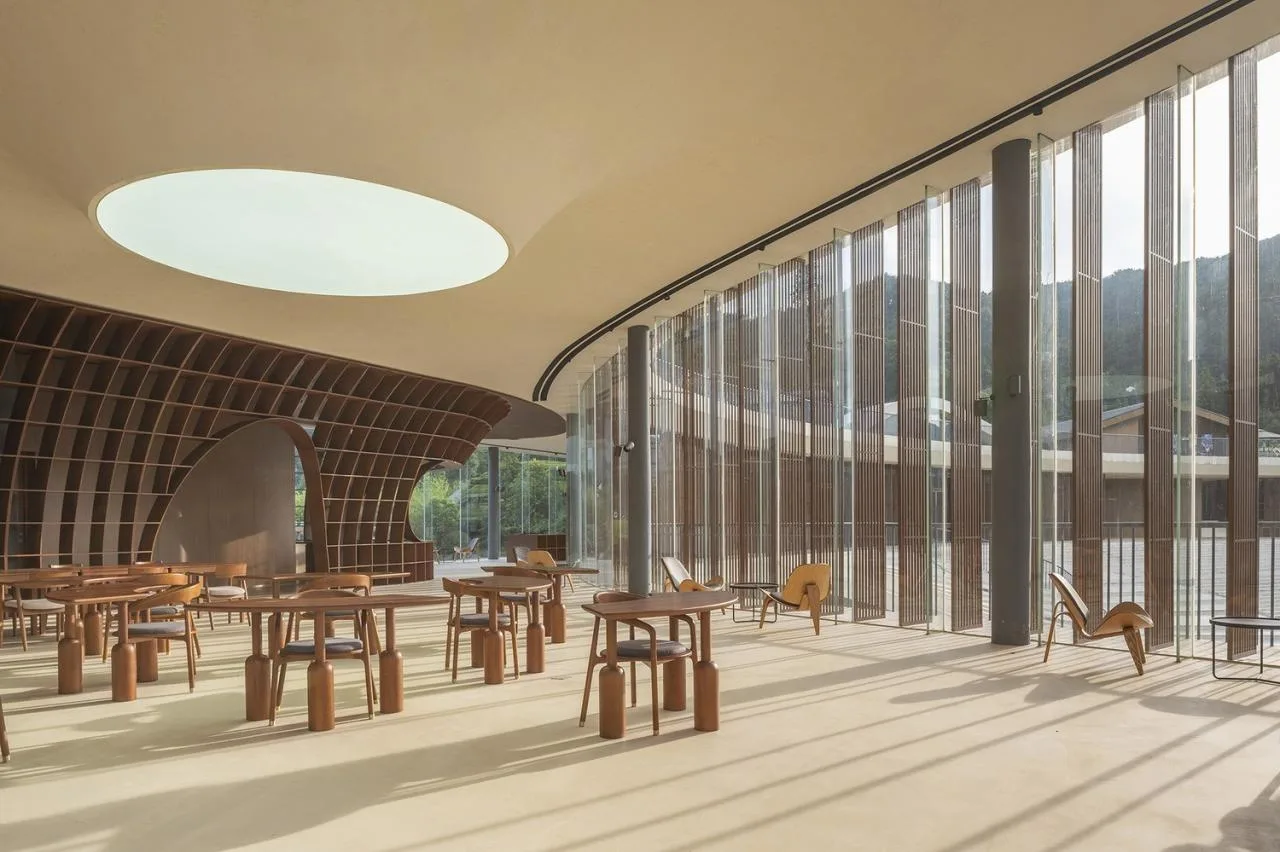
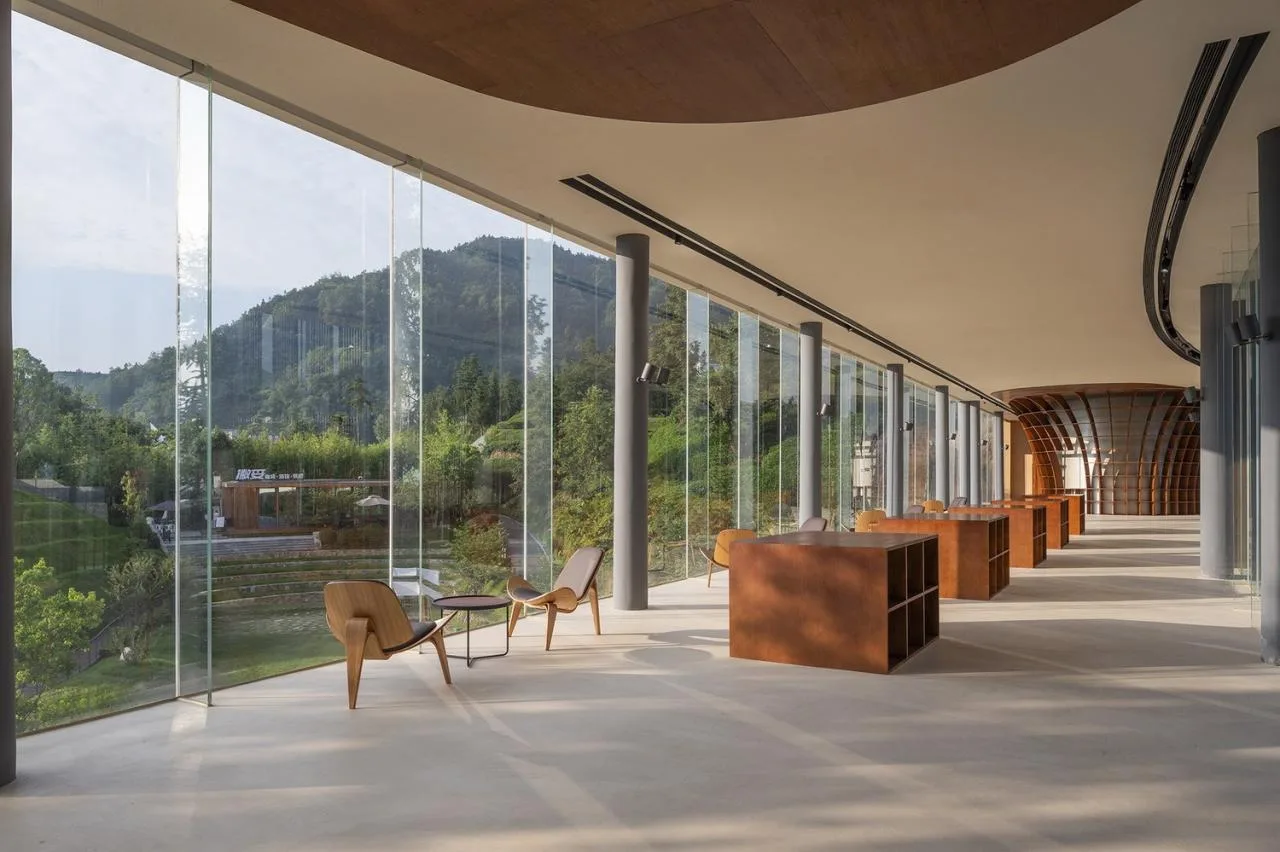
△ Second floor book bar © Jin Weiqi
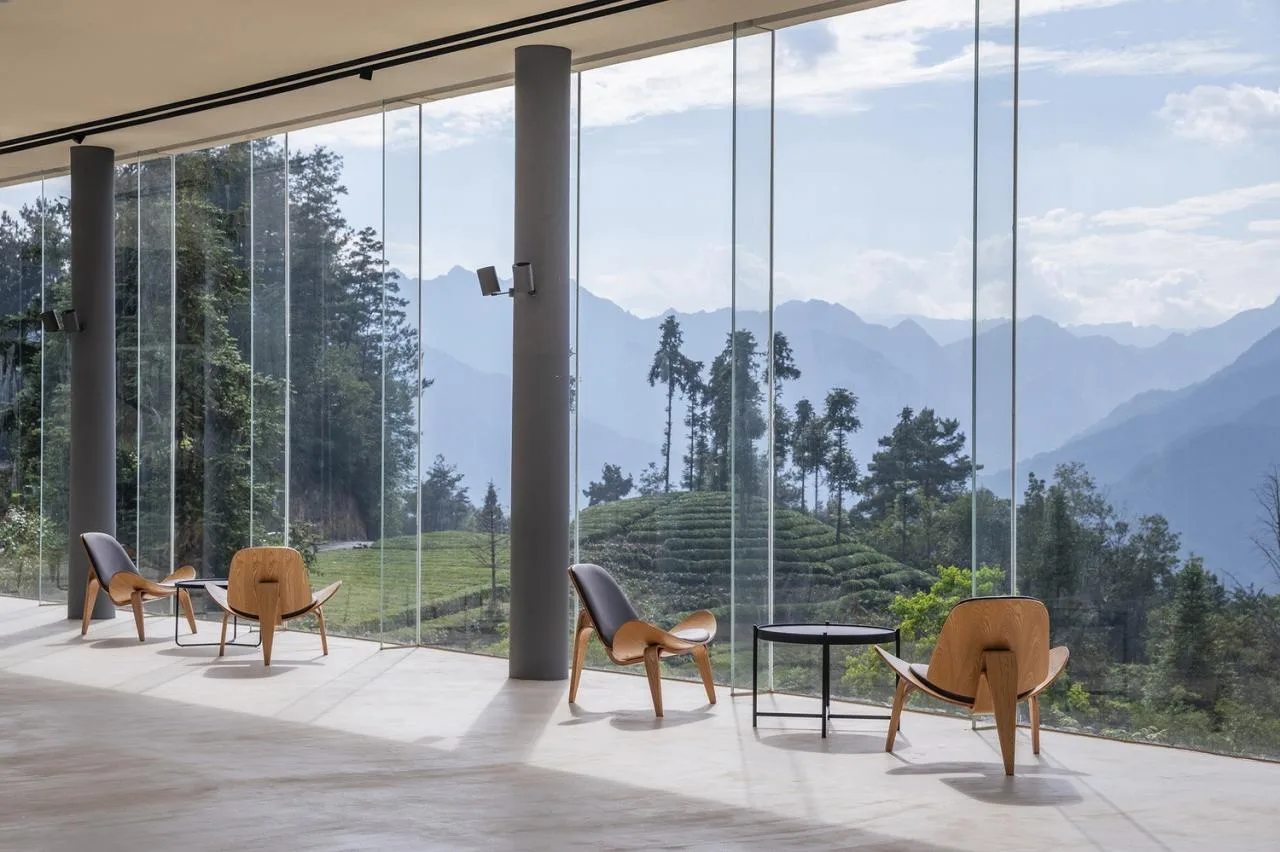
△ Part of the second floor book bar © Jin Weiqi
The traditional residential building on the east side of the second floor has been renovated and integrated with the main building. It serves as the primary dining area, featuring an open dining space, private rooms, tea rooms, and chess and card rooms.
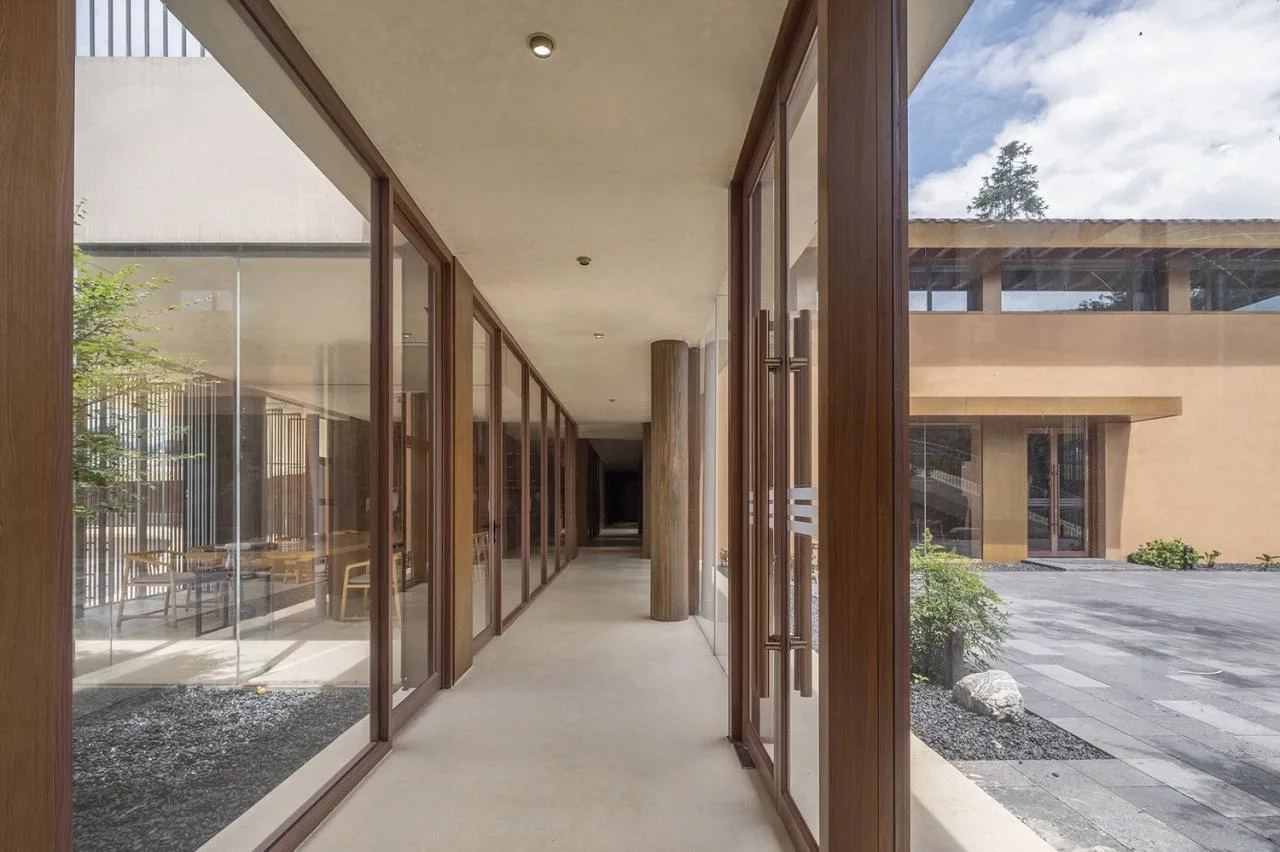
△ Second floor dining corridor © Jin Weiqi
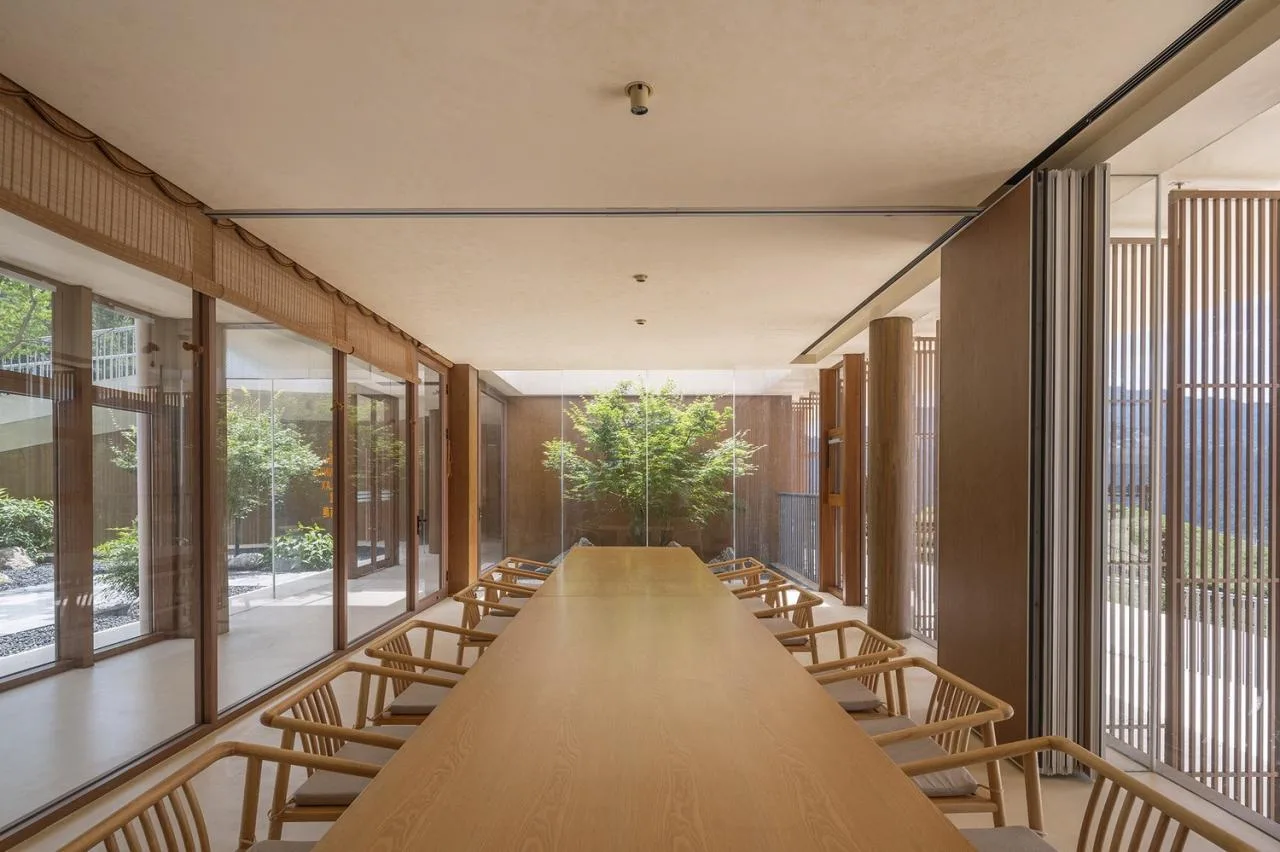
△ Second floor tea room © Jin Weiqi
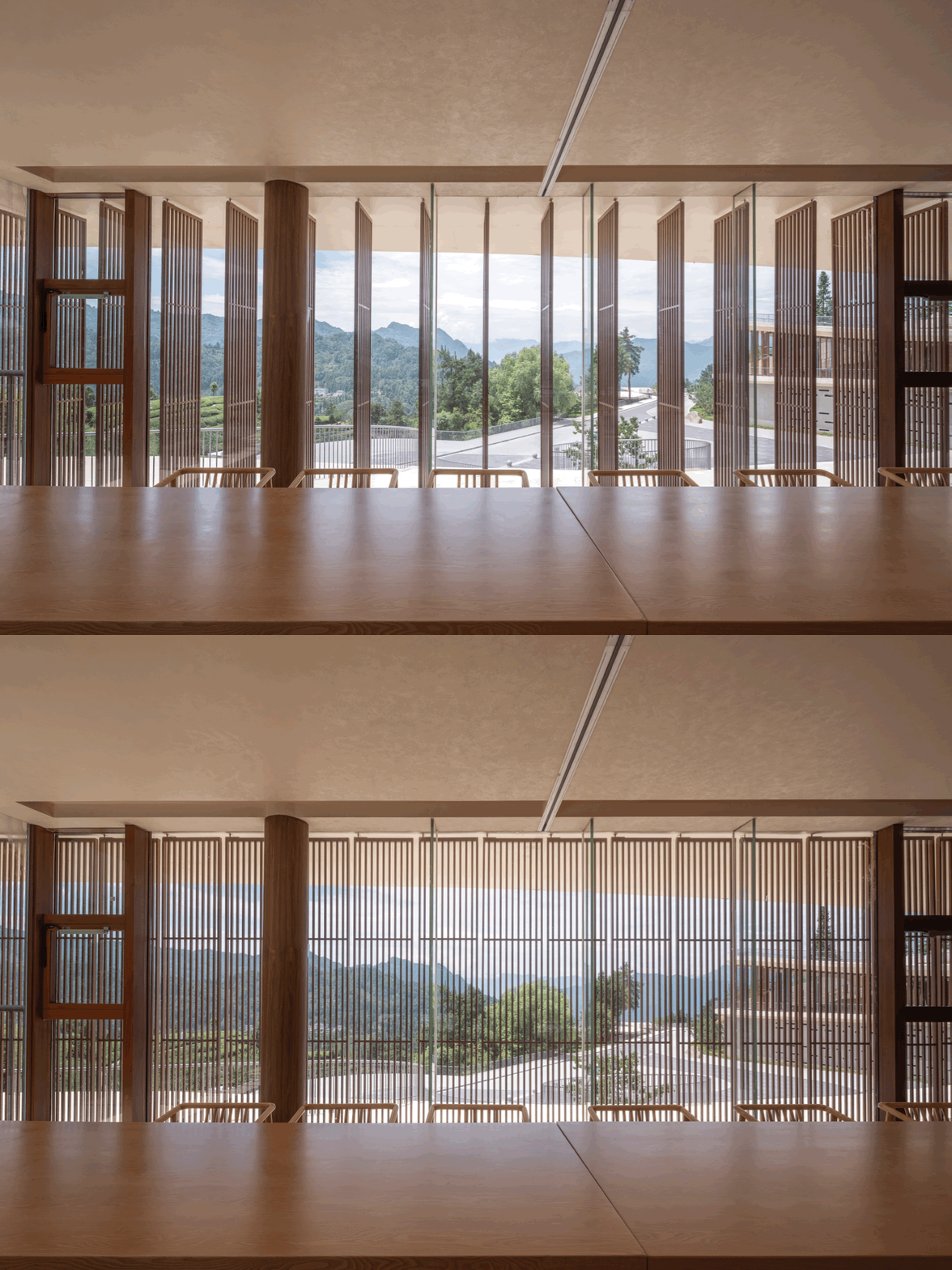
△ Second floor tea room © Jin Weiqi
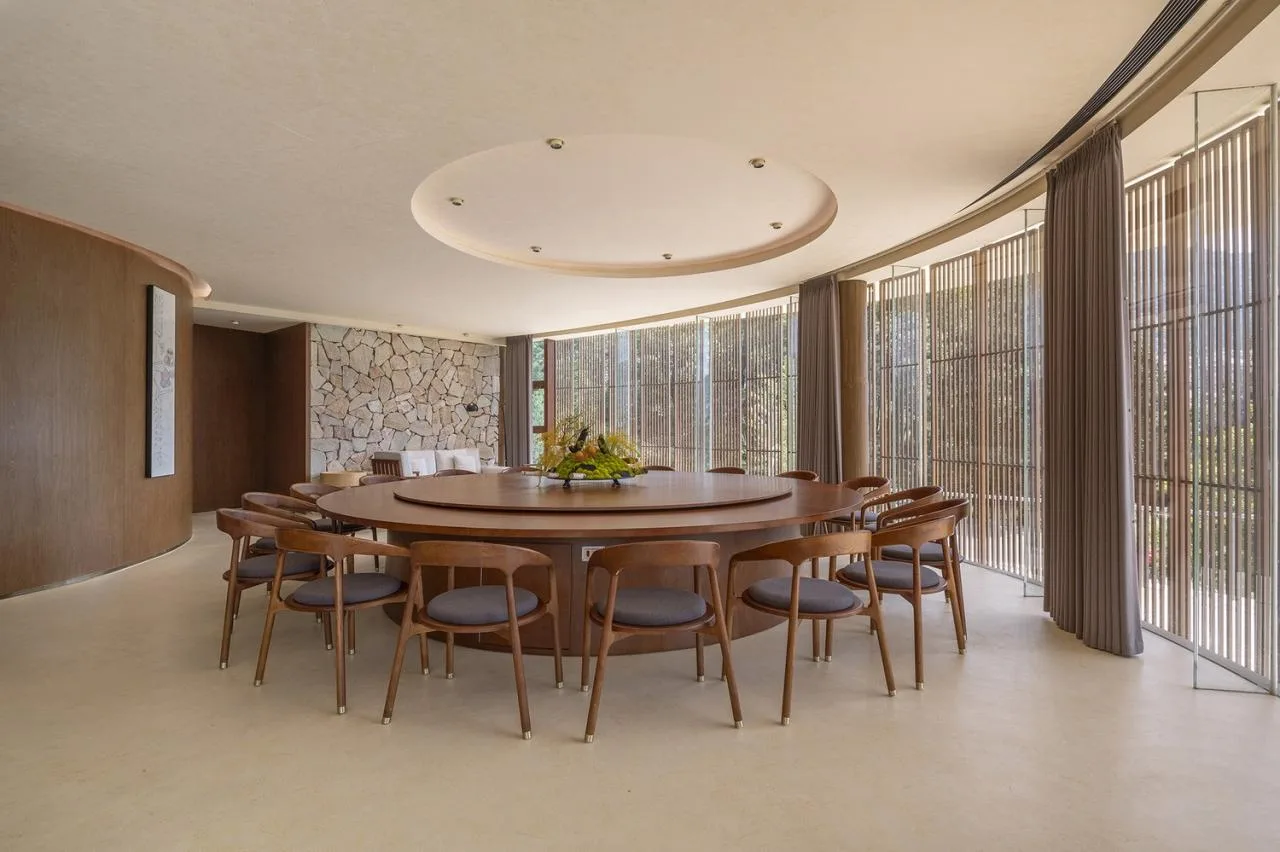
△ Private dining area on the second floor © Jin Weiqi
The restaurant’s interior prominently features materials such as logs and rammed earth paint, reflecting the building’s regional character. The rooftop platform offers panoramic views and hosts tent camping and stargazing events, becoming an essential part of the architectural experience.
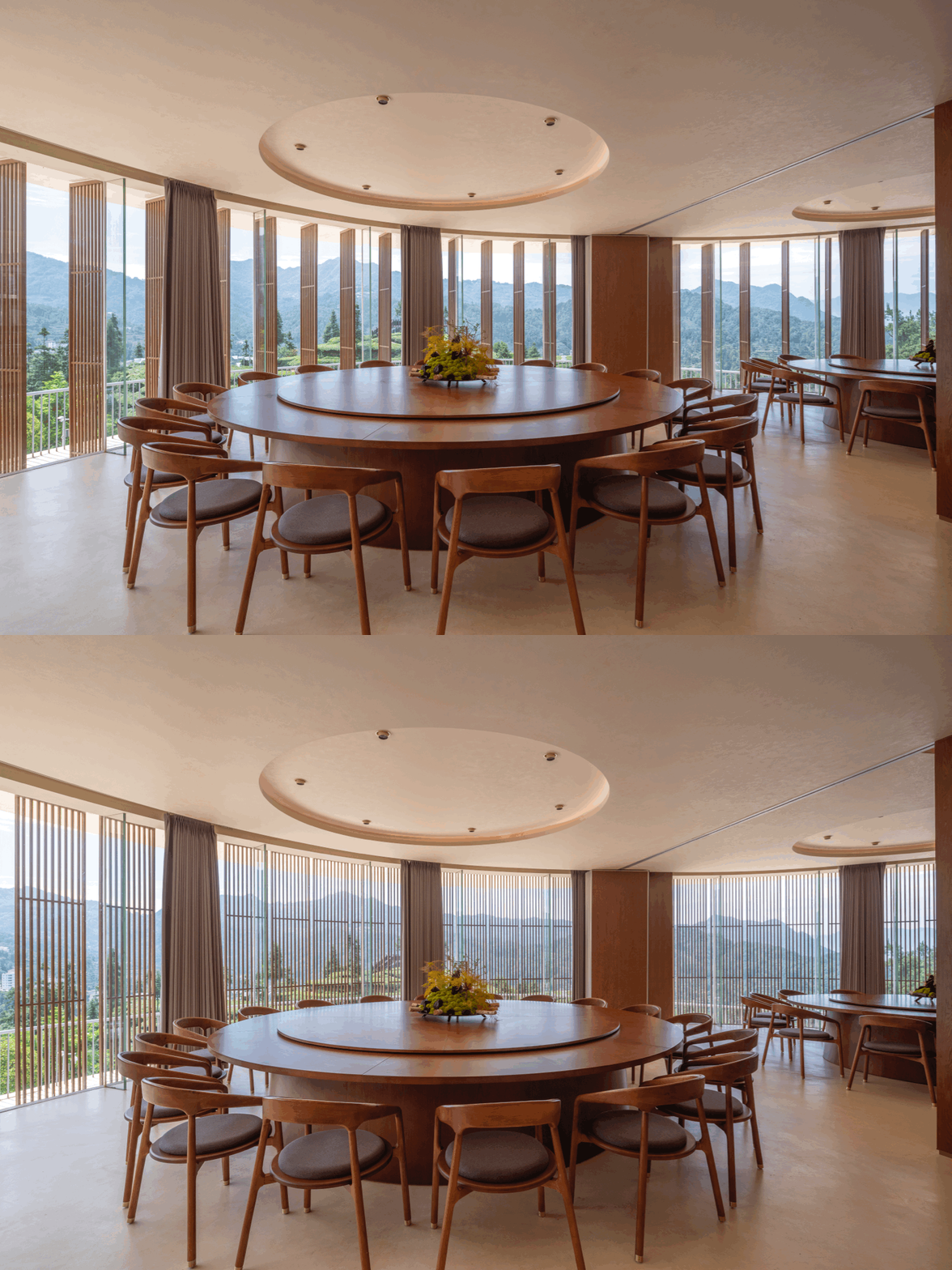
△ Private dining area on the second floor © Jin Weiqi
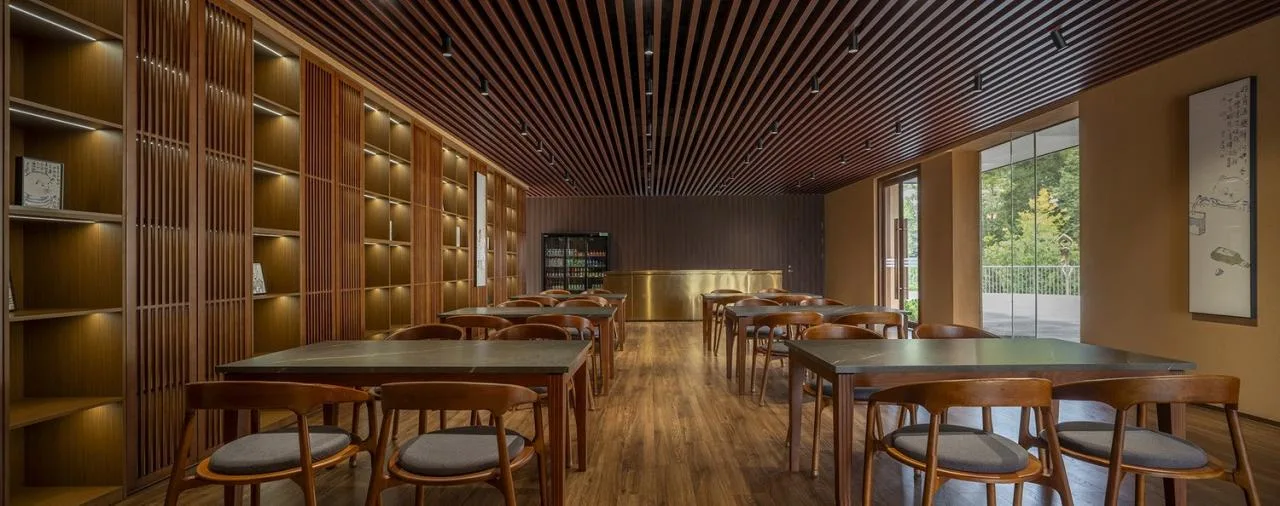
△ Second floor public area © Jin Weiqi
Plot B’s audiovisual facilities complement the leisure and entertainment functions of Plot A. It includes a 100-seat audiovisual hall and a multifunctional hall, accommodating film screenings, performances, weddings, and other events.
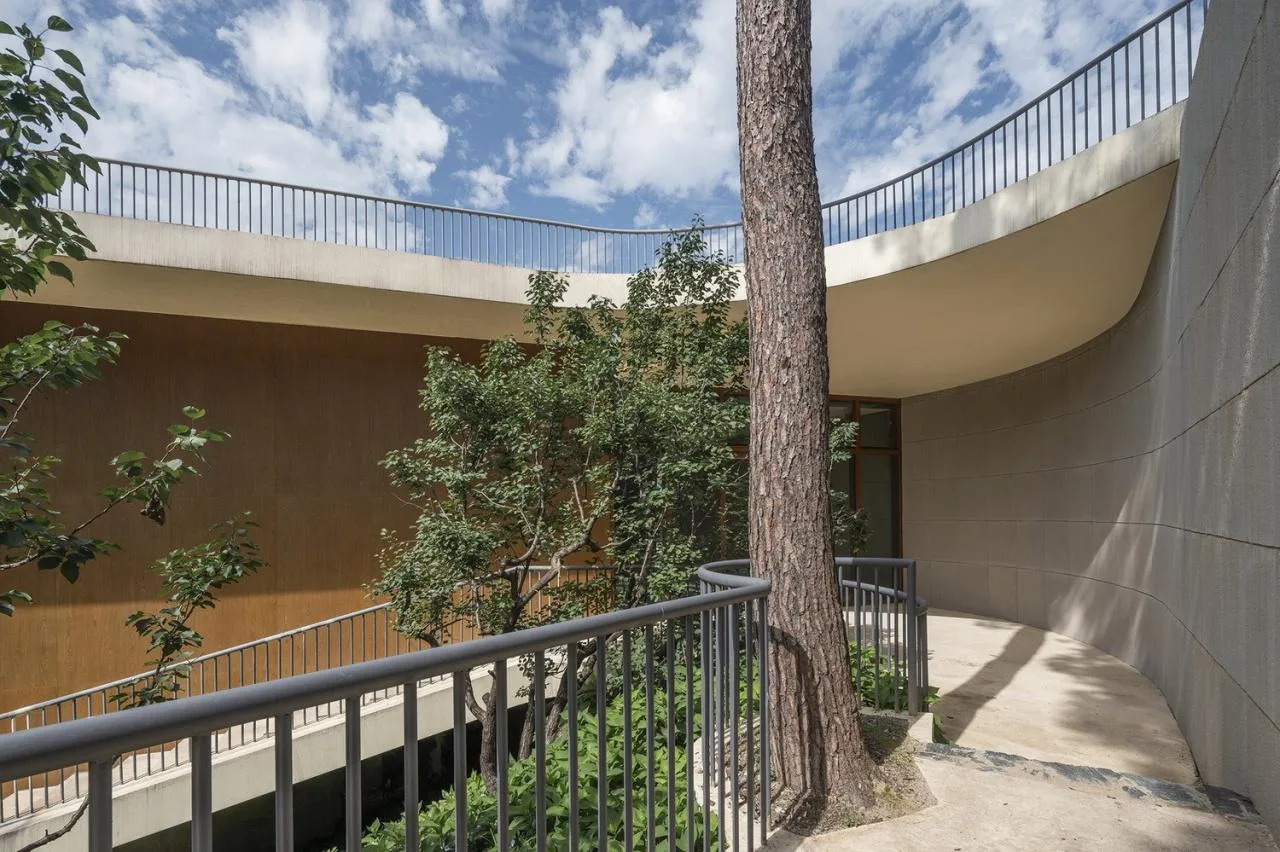
△ Entrance to the performance hall © Jin Weiqi
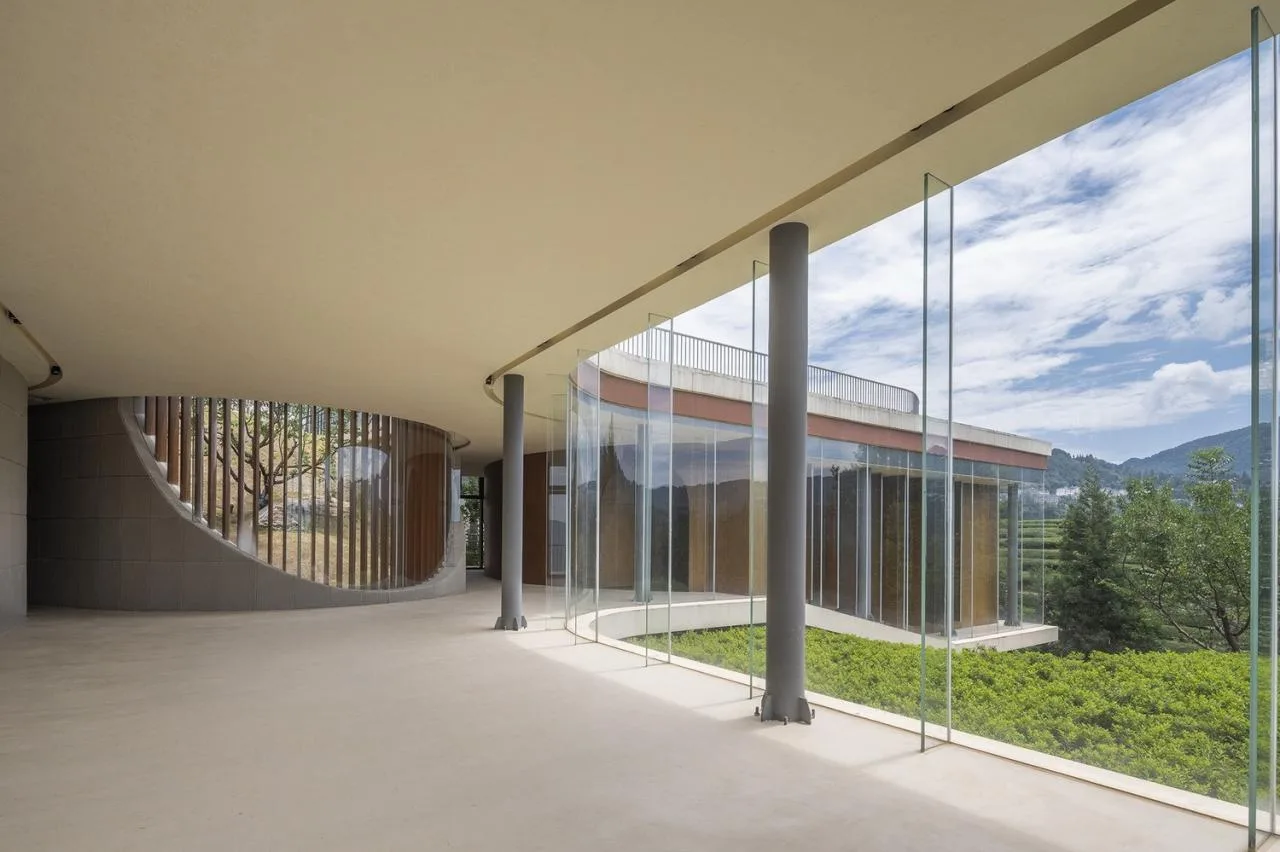
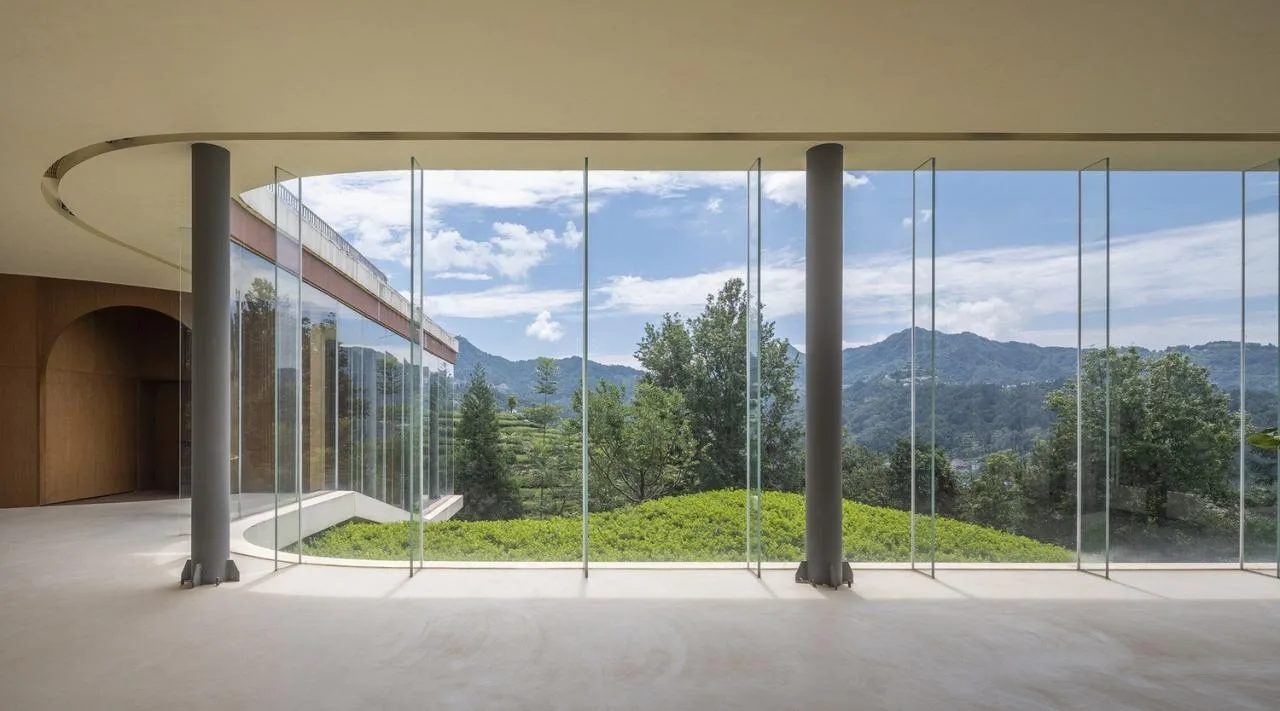
△ Viewing Hall View © Jin Weiqi
The rotating sliding flip board offers flexible configuration for the audiovisual hall. When open, it reveals the tea garden landscape, providing a natural backdrop for musical performances. When closed, it creates a fully shaded environment ideal for projection screenings.
The multifunctional hall features wide sightlines and can support the audiovisual hall or serve as an independent small exhibition space.
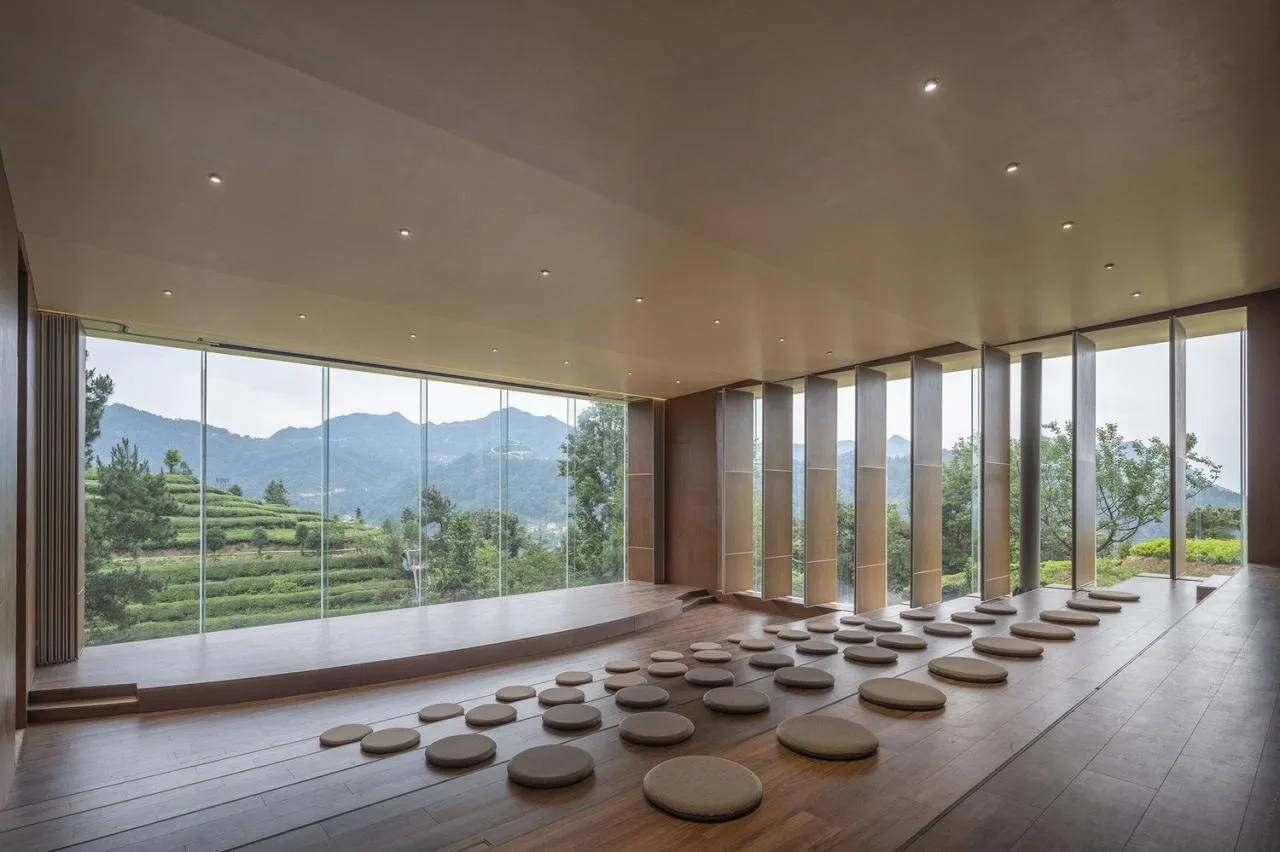
△ Performance Hall © Jin Weiqi
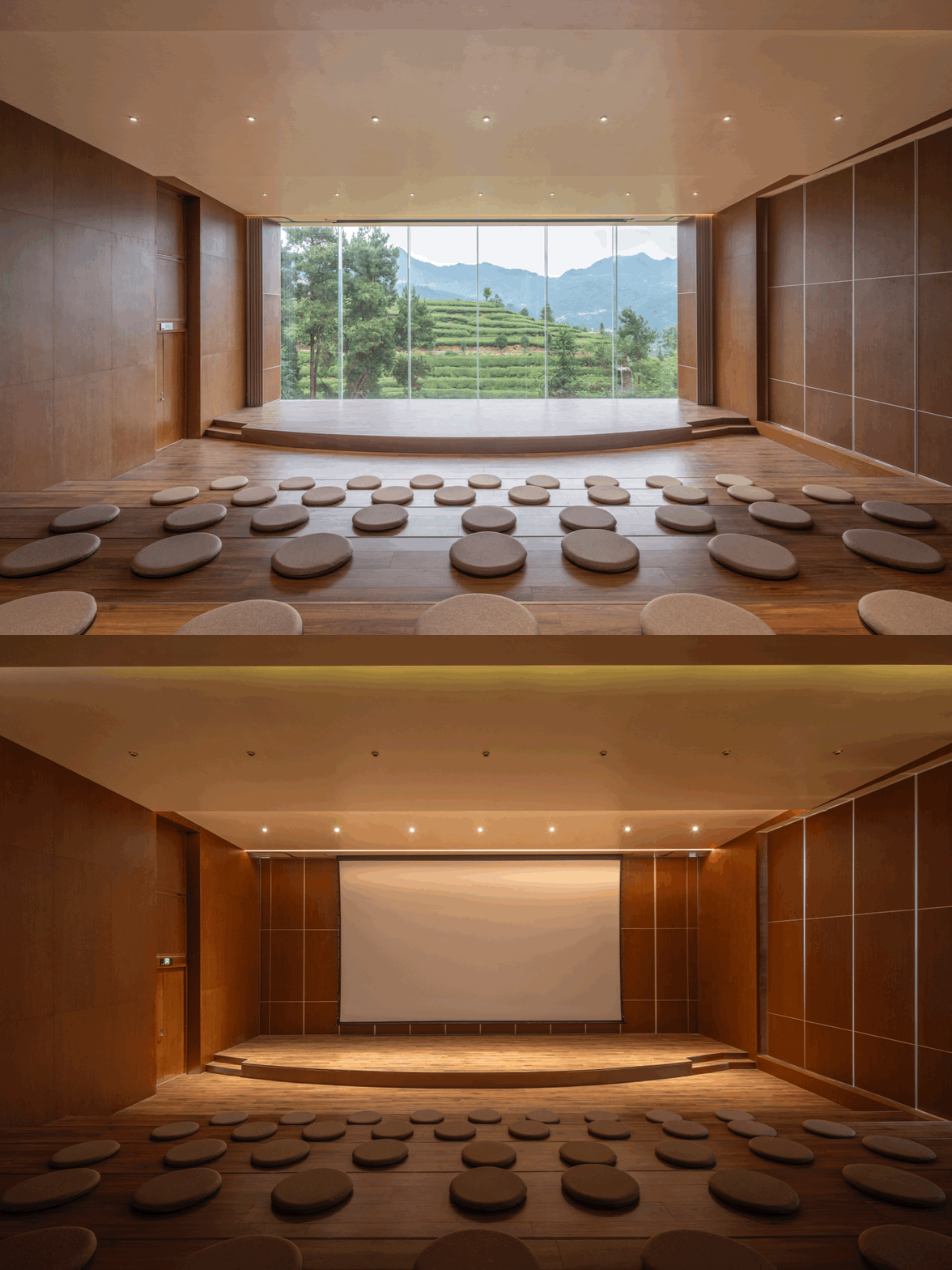
△ Performance Hall © Jin Weiqi
Project Drawings
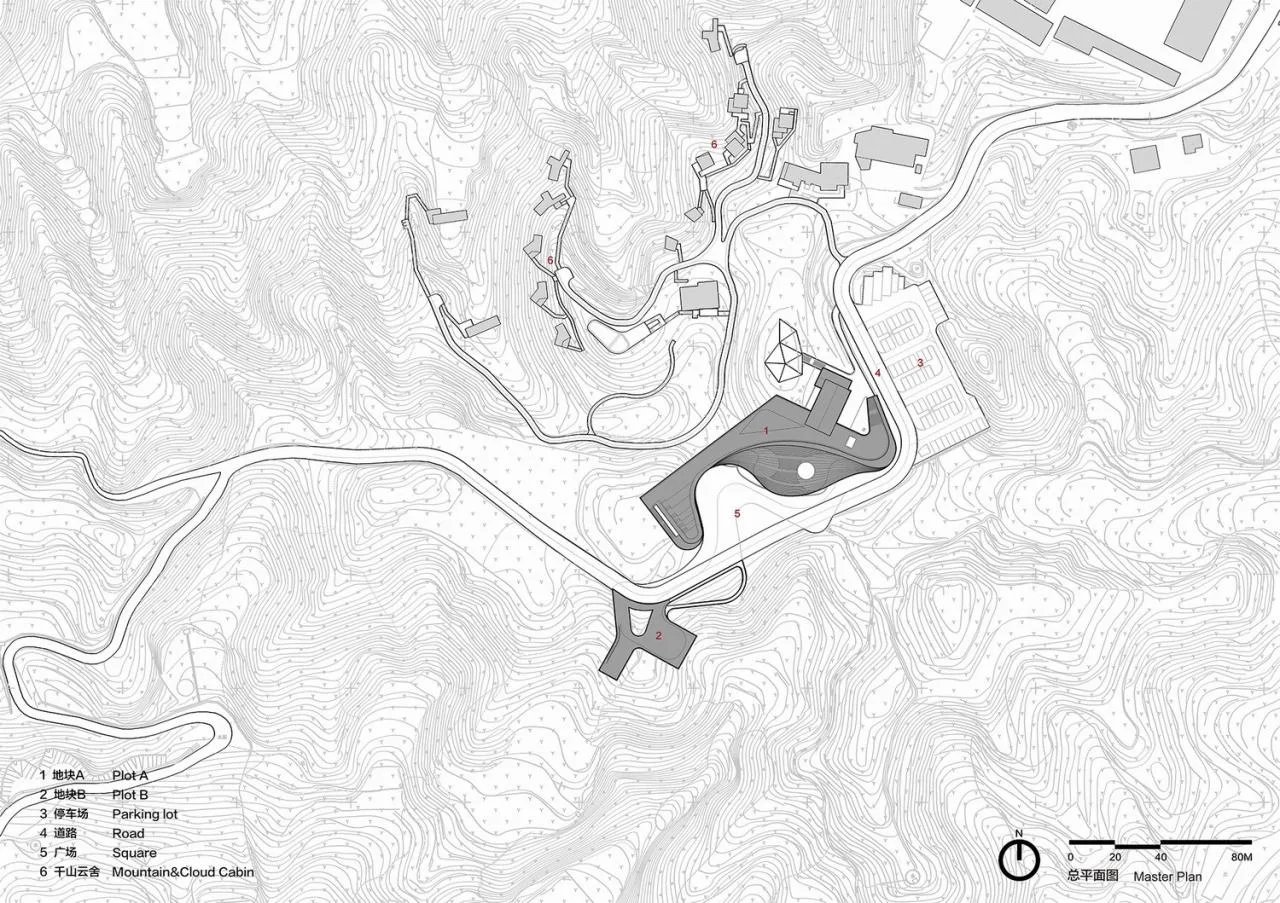
△ General layout plan © Architectural Camp Design Studio
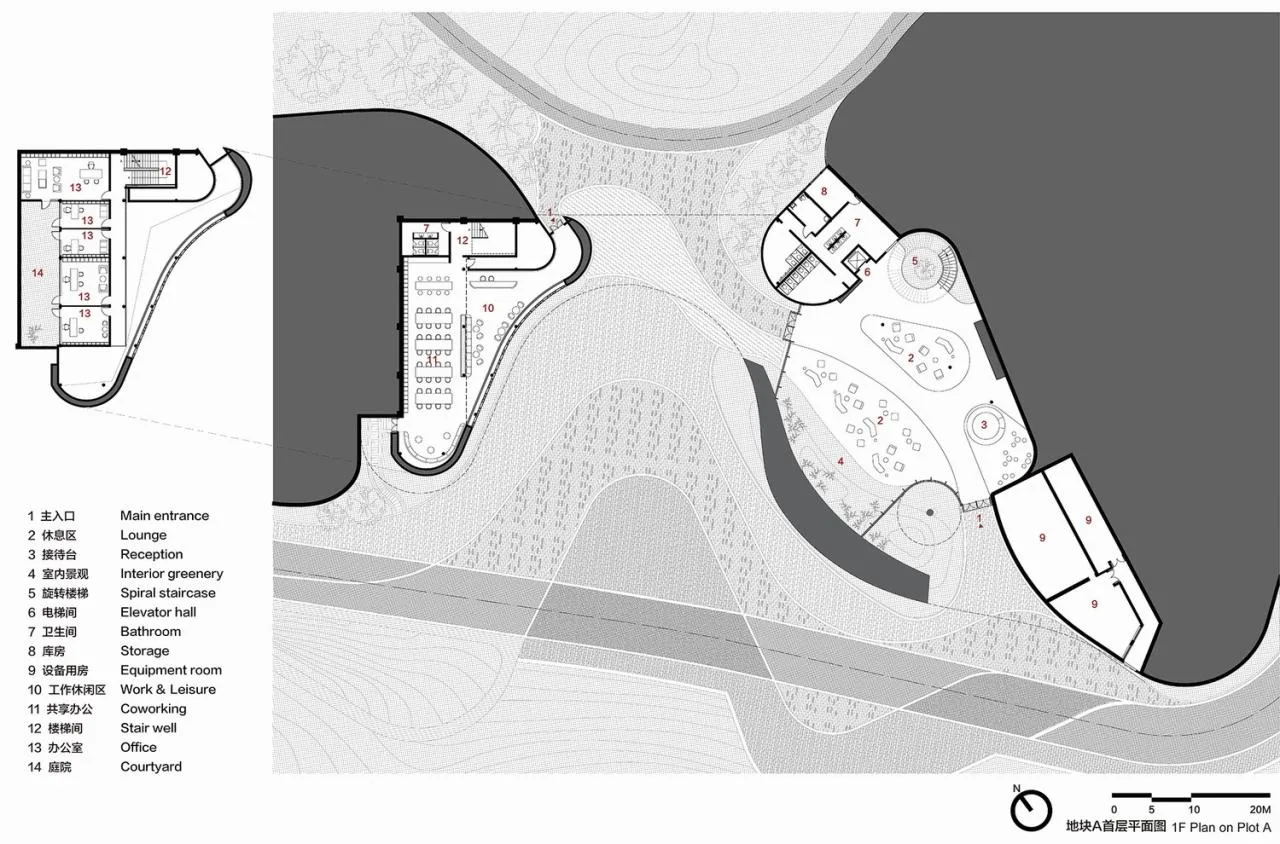
△ Plot A First Floor Plan © Architectural Camp Design Studio
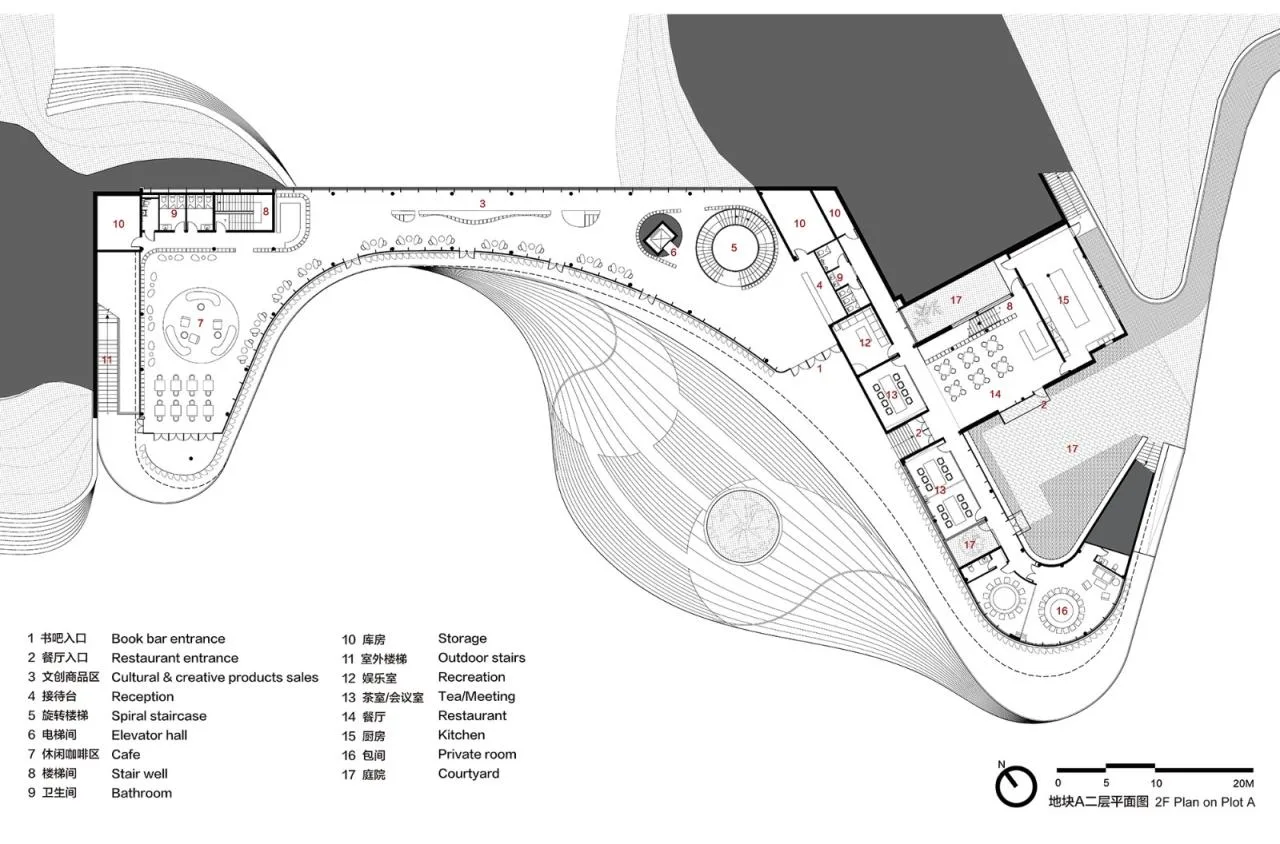
△ Plot A Second Floor Plan © Architectural Camp Design Studio
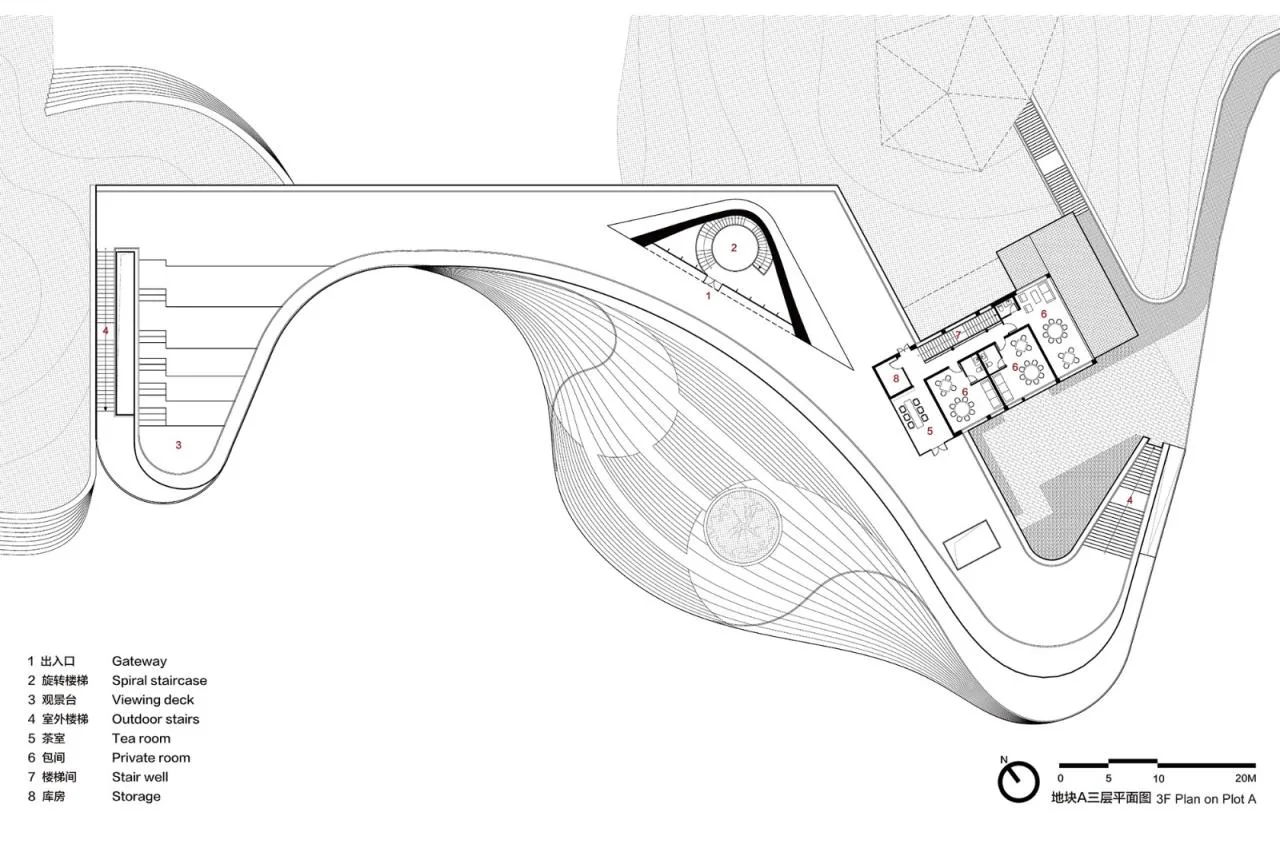
△ Plot A Third Floor Plan © Architectural Camp Design Studio
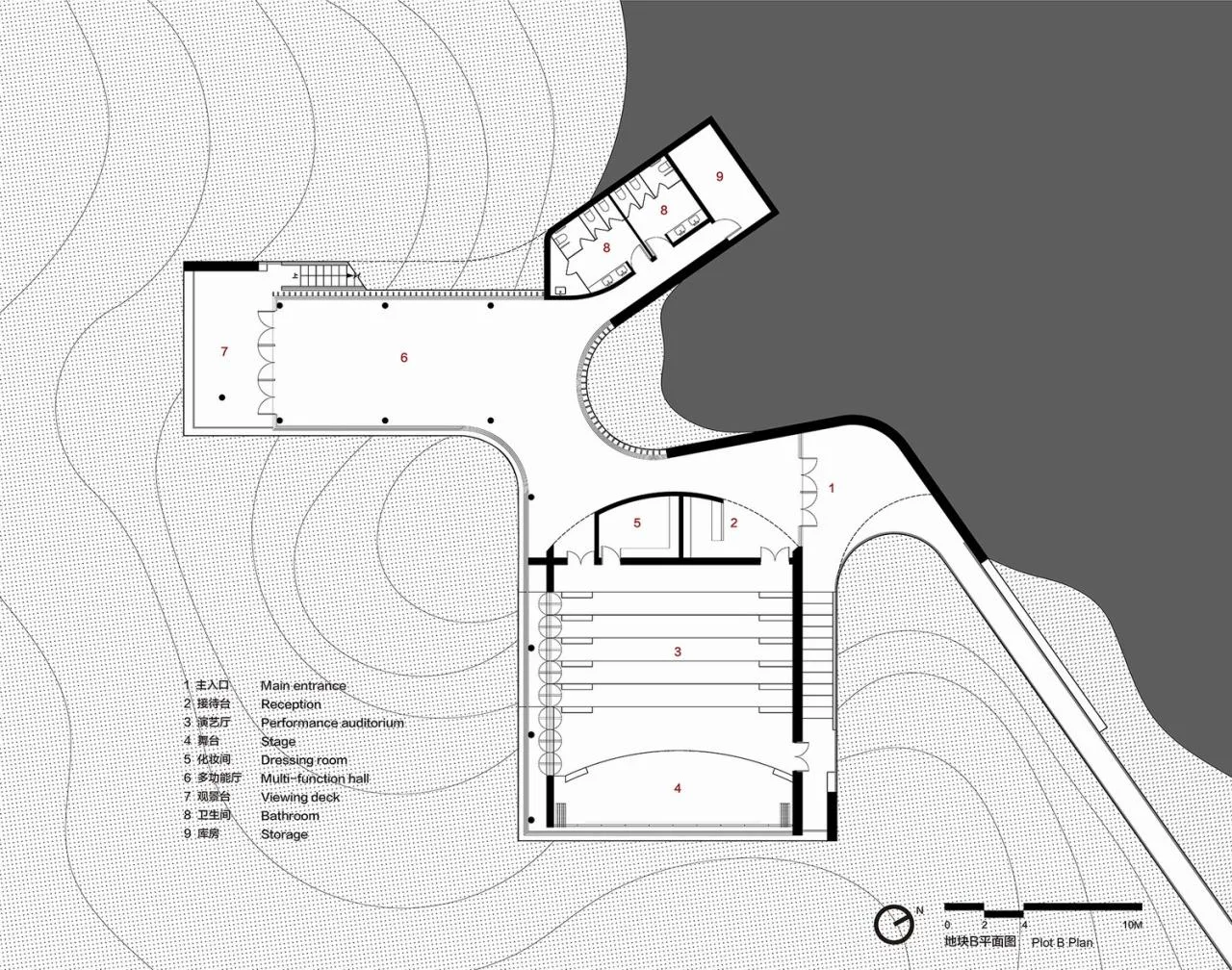
△ Plot B Plan © Architectural Camp Design Studio
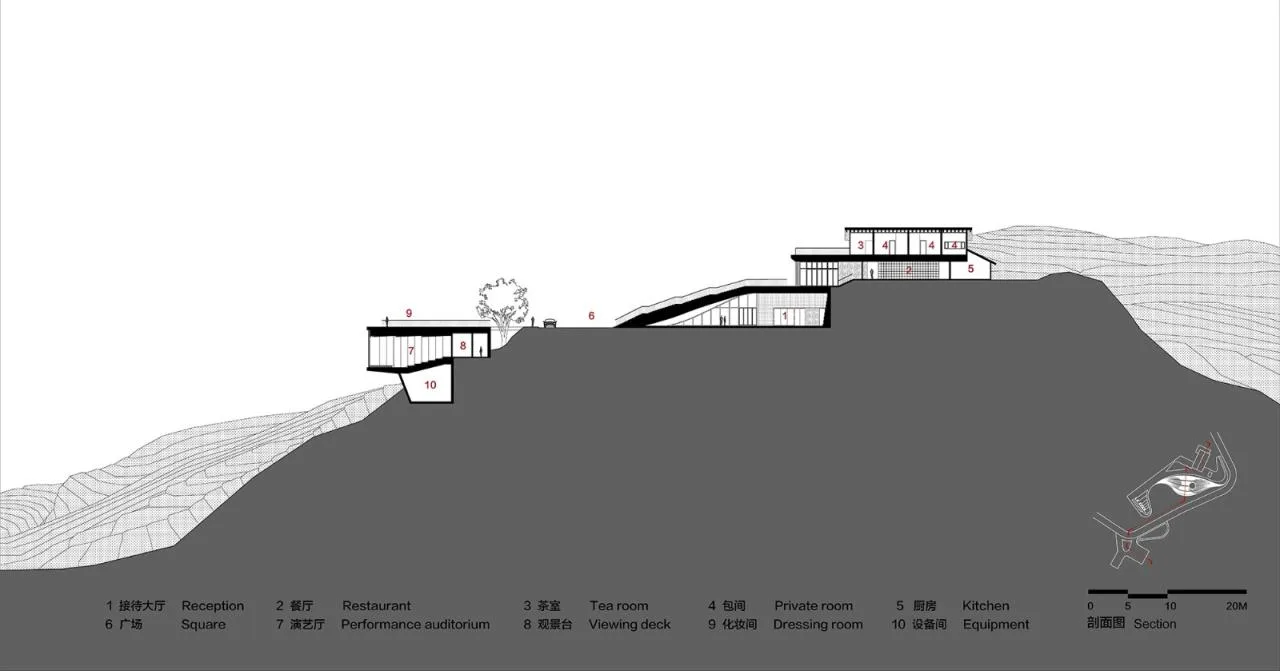
△ Section diagram © Architectural Camp Design Studio
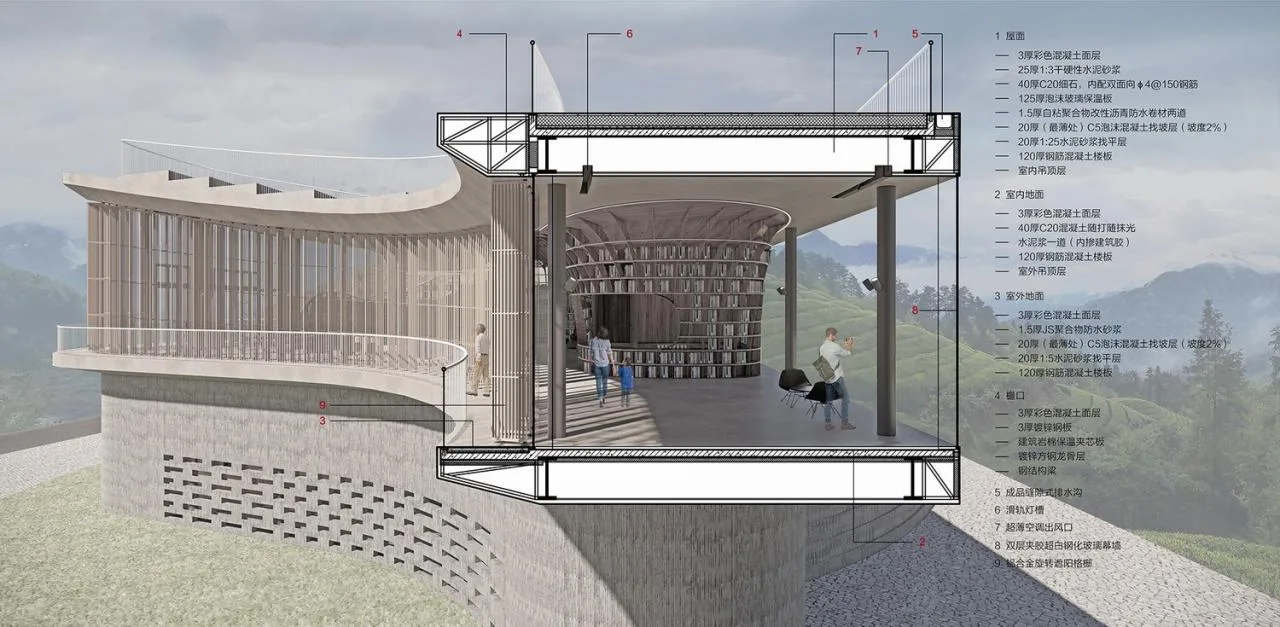
△ Perspective view of sectional nodes © Architectural Camp Design Studio
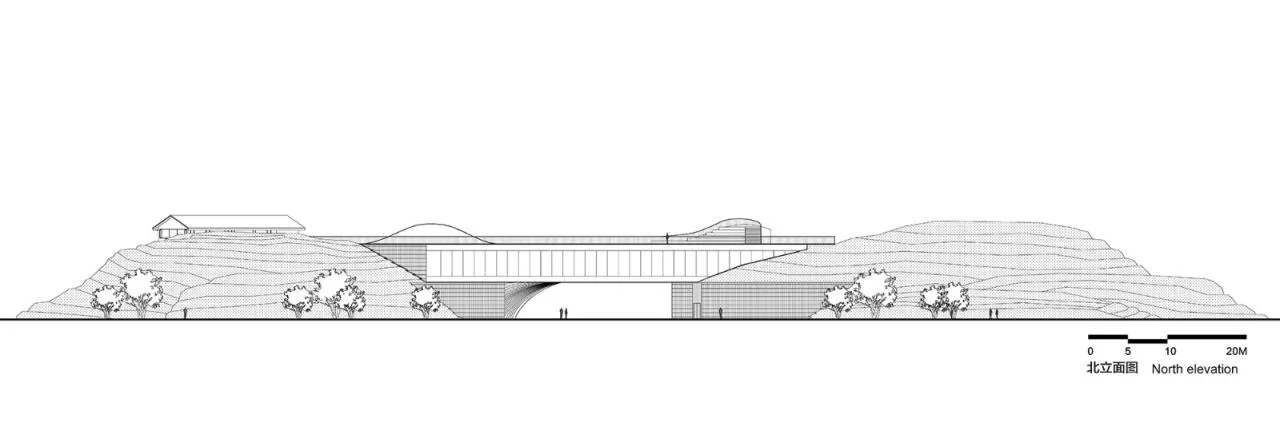
△ North elevation view © Architectural Camp Design Studio
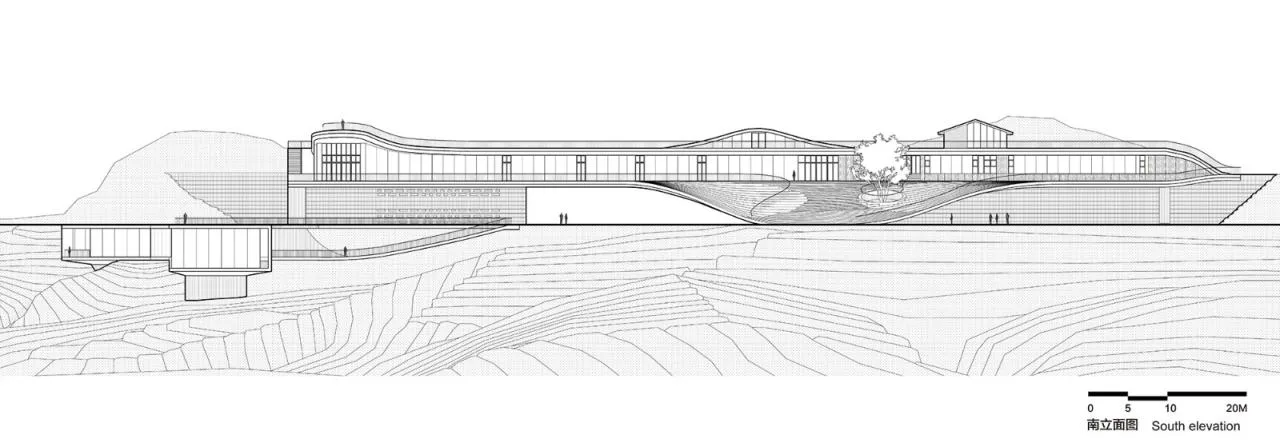
△ South elevation view © Architectural Camp Design Studio
Project Information
Project Name: Three Gorges Tea Tourism Town Exhibition Center
Location: Yichang City, Hubei Province
Building Area: 4,917 square meters
Design Period: March 2019 to August 2021
Construction Start: April 2023
Owner: Hubei Culture and Tourism / Hubei Yunhua Rural Culture and Tourism Development Co., Ltd.
Architecture and Interior Design: Architecture Camp Design Studio
Lead Architects: Han Wenqiang, Li Xiaoming
Design Team: Jiang Zhao, Wang Tonghui, Cao Chong, Wen Chenhan
Image Editors: Jiang Zhao, Zhang Guoshui (Intern), Wang Hanfeng (Intern), Yin Wenfeng (Intern)
Construction Drawing Coordination: Wuhan Light Industry Building Design Co., Ltd.
Landscape Design: Shanghai Garden (Group) Co., Ltd.
Overall Planning: Zhejiang University Architectural Design and Research Institute Co., Ltd.
Construction: Hubei Metallurgical Construction Co., Ltd.
Interior Construction: Hubei Guangsheng Construction Group Co., Ltd.
Main Materials: Microcement GRC, aluminum plate, bamboo steel, rammed earth paint, among others.
Project Photography: Jin Weiqi
Project Videography: Xiao Shiming















Must log in before commenting!
Sign Up