
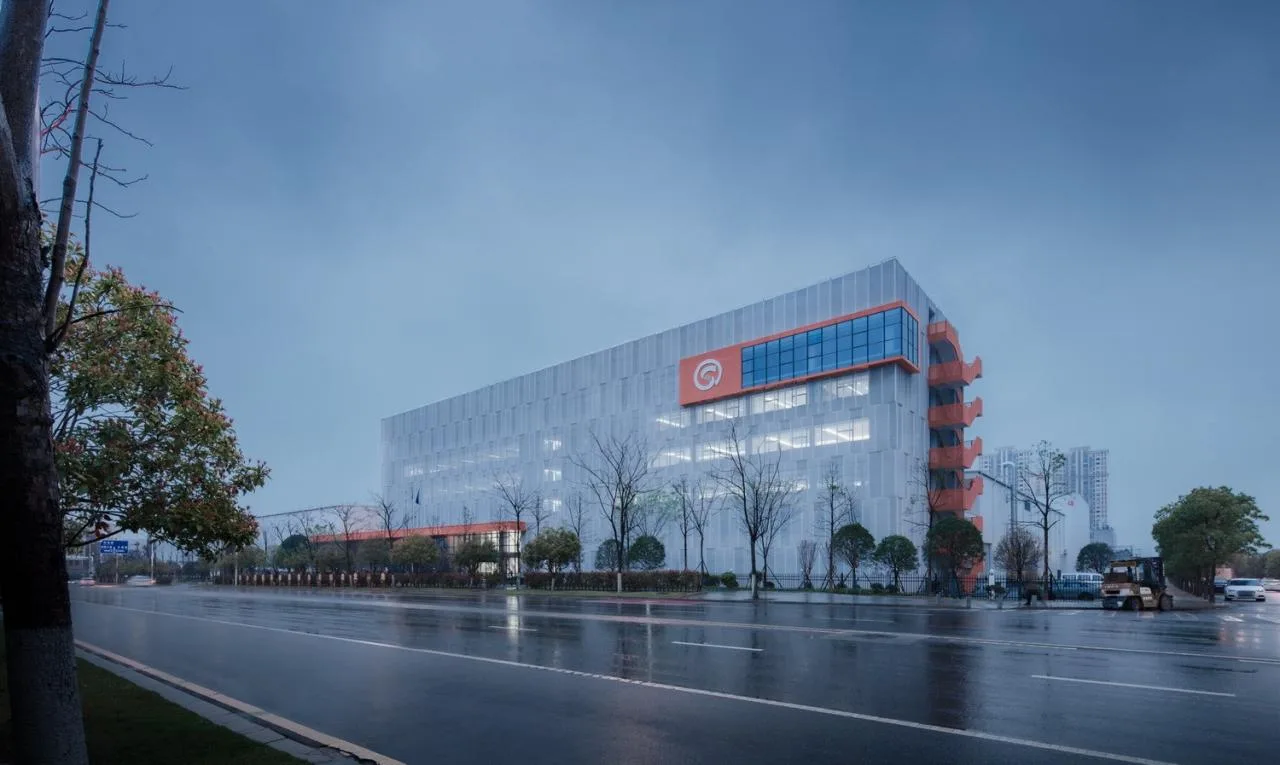
The smart factory illuminated at dusk
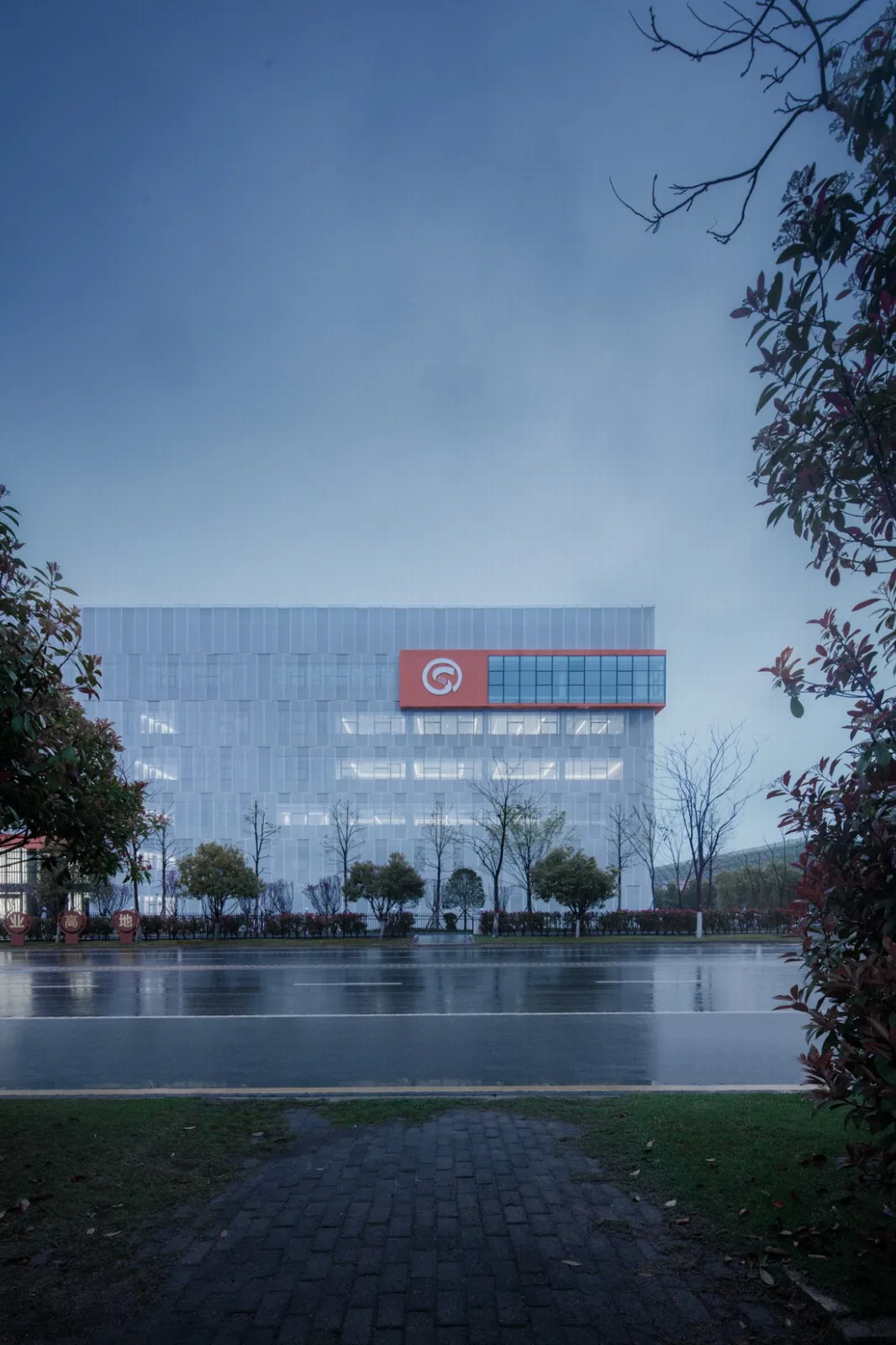
View of the office building from across the street
Prologue
After three challenging years marked by the pandemic, the Shenyi Smart Factory was finally completed and operational by early 2023.
Situated in the Yuhua Economic Development Zone of Changsha City, adjacent to the Changsha-Zhuzhou-Xiangtan Green Heart area, Shenyi Smart Factory stands as a leader in the domestic standard parts industry.
Driven by innovation, the factory’s design emphasizes streamlined processes and scalable spaces. The project balances functionality with aesthetics by carefully integrating interfaces and spatial arrangements.
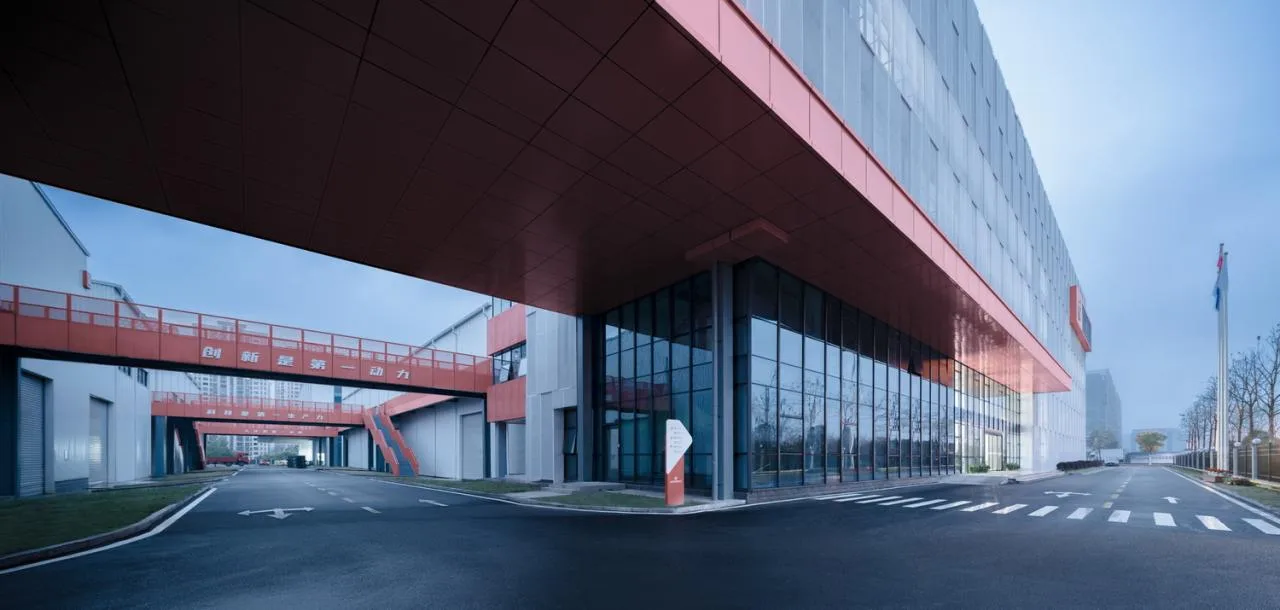
△ Entrance area of the industrial park
Streamline Reconstruction: An Interconnected Factory
The park’s overall layout is function-driven. The primary production facilities and warehouses occupy the core of the site.
Two parallel production lines follow the workflow sequence. Along the city’s main roads, research and office buildings create the public-facing image of the park. At its southern edge, supporting amenities such as cafeterias and dormitories are located.
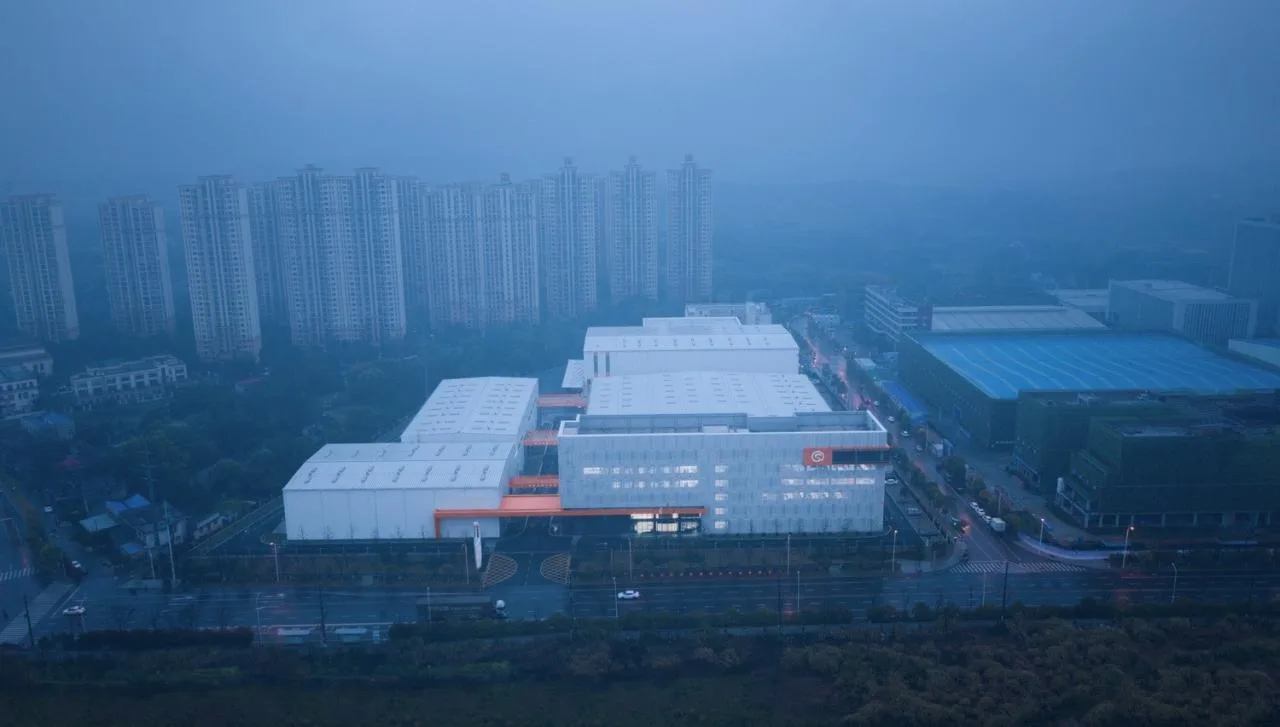
△ Aerial view of the Shenyi Smart Factory
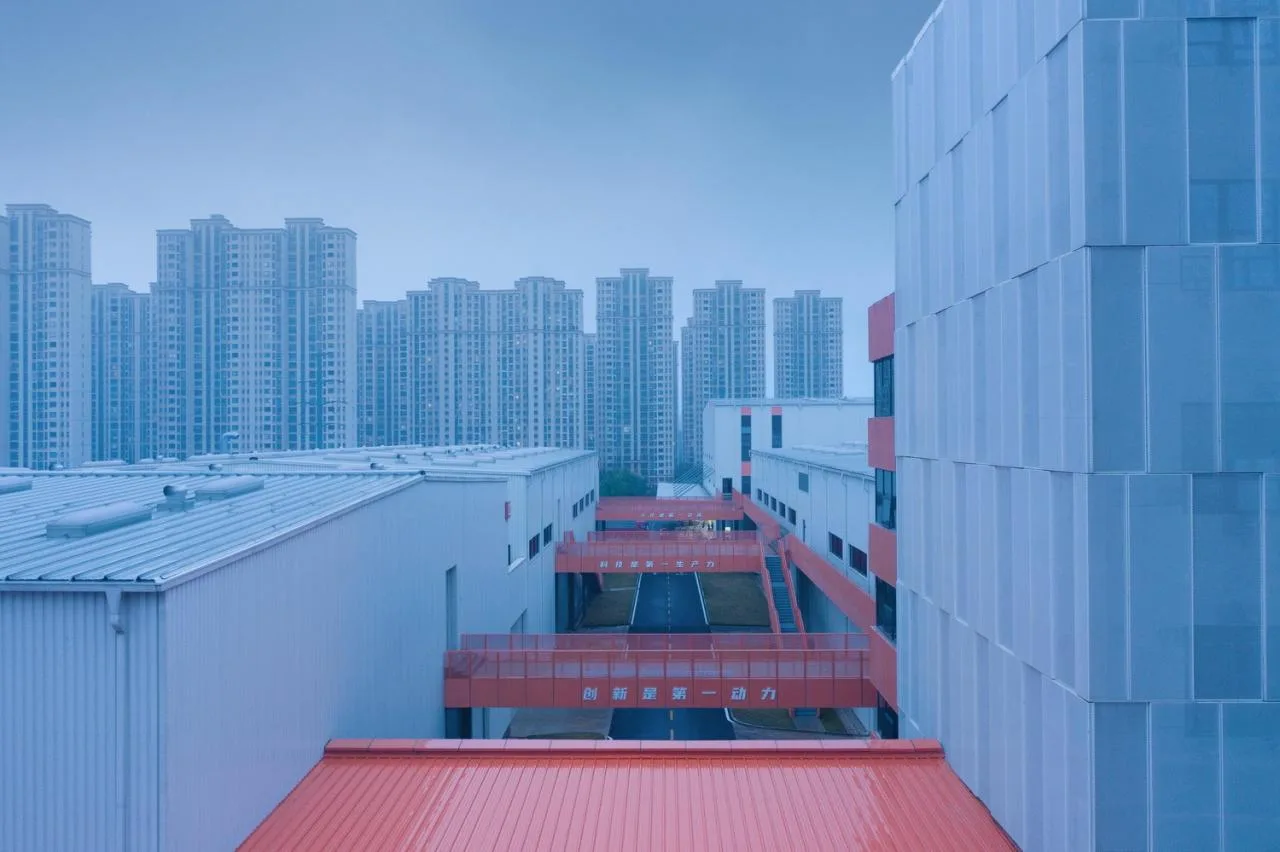
△ Overlooking the elevated corridor
At the project’s outset, the client requested a visitor pathway for tours and display purposes. To meet this, a red perforated aluminum aerial corridor was installed between the two parallel factory buildings.
This elevated walkway reimagines the traditional production streamline by connecting various production rooms at mezzanine level, allowing visitors to observe operations directly. Outdoor stairs provide access to the ground level.
Stacked, multi-layered corridors span the site’s main roads, establishing a strong rhythm and spatial order. These corridors also serve as transitional elements that humanize the large-scale industrial buildings, creating inviting spaces for rest and interaction, thereby enlivening the park’s mechanical atmosphere.
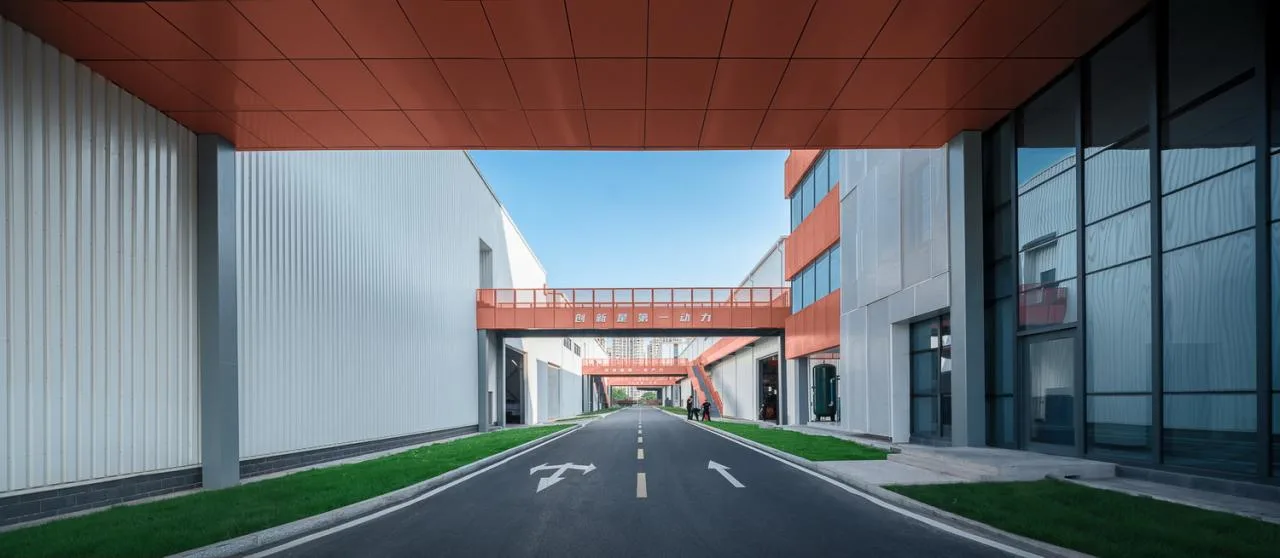
View of the aerial corridor from beneath the canopy
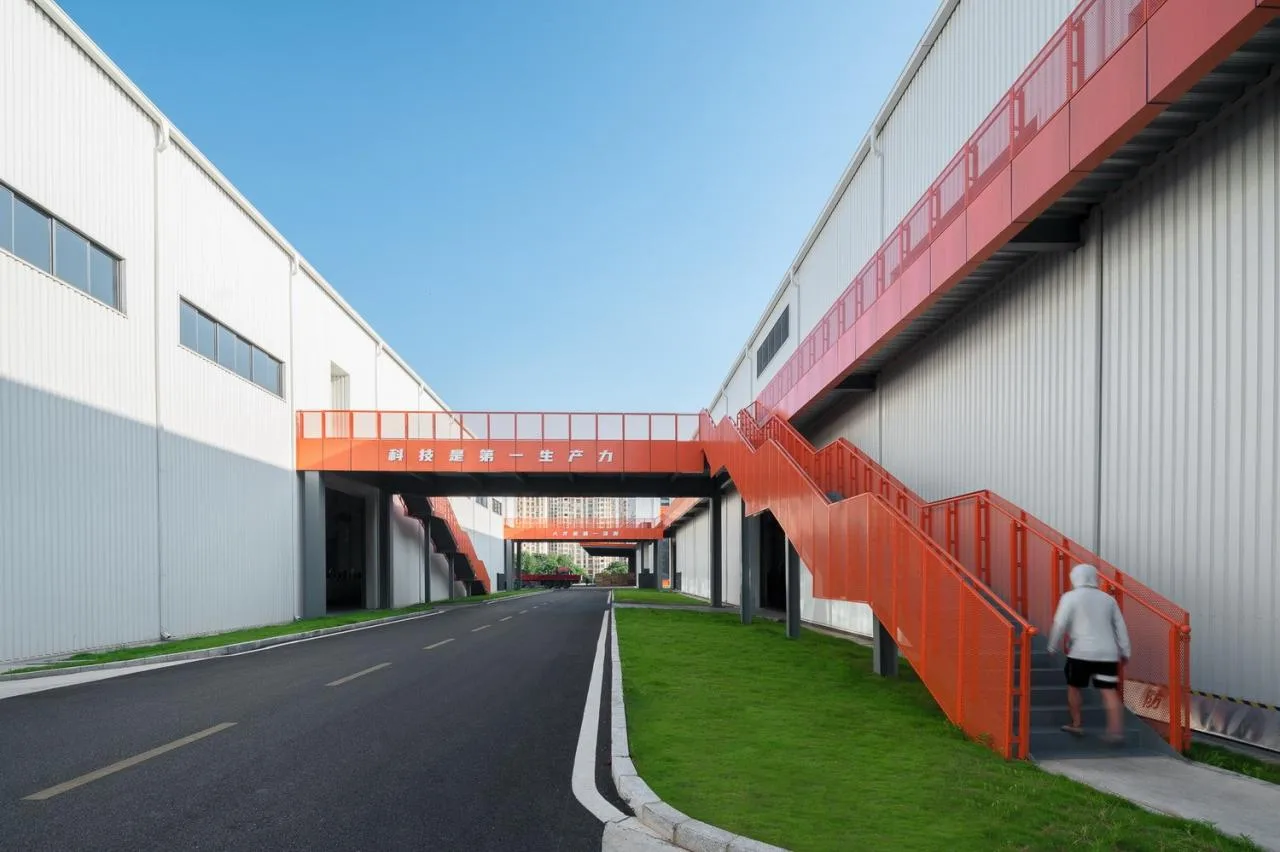
△ Connecting stairs, linking different levels
Industrial Scale: Gateway to the City
Industrial buildings, designed primarily for machinery use, inherently require grand spatial scales.
Extending the rhythmic pattern of cascading aerial corridors, a monumental “door” structure was designed along the street façade. The office building’s cantilevered canopy bridges the road, linking buildings on either side of the main axis and forming a striking gateway facing the city.
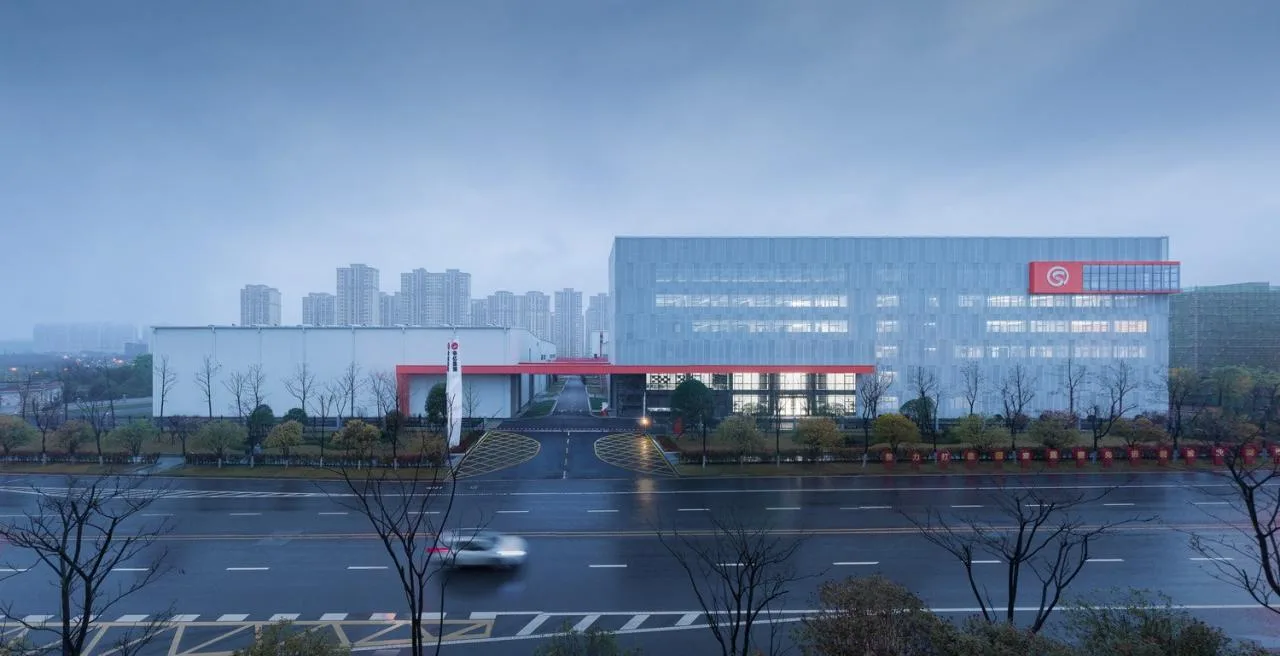
The imposing “door” welcoming the city
Serving as the main entrance, this 70-meter-wide gateway creates a grand urban scale, expanding the park’s display presence. It acts as the first transitional spatial node when entering the industrial complex.
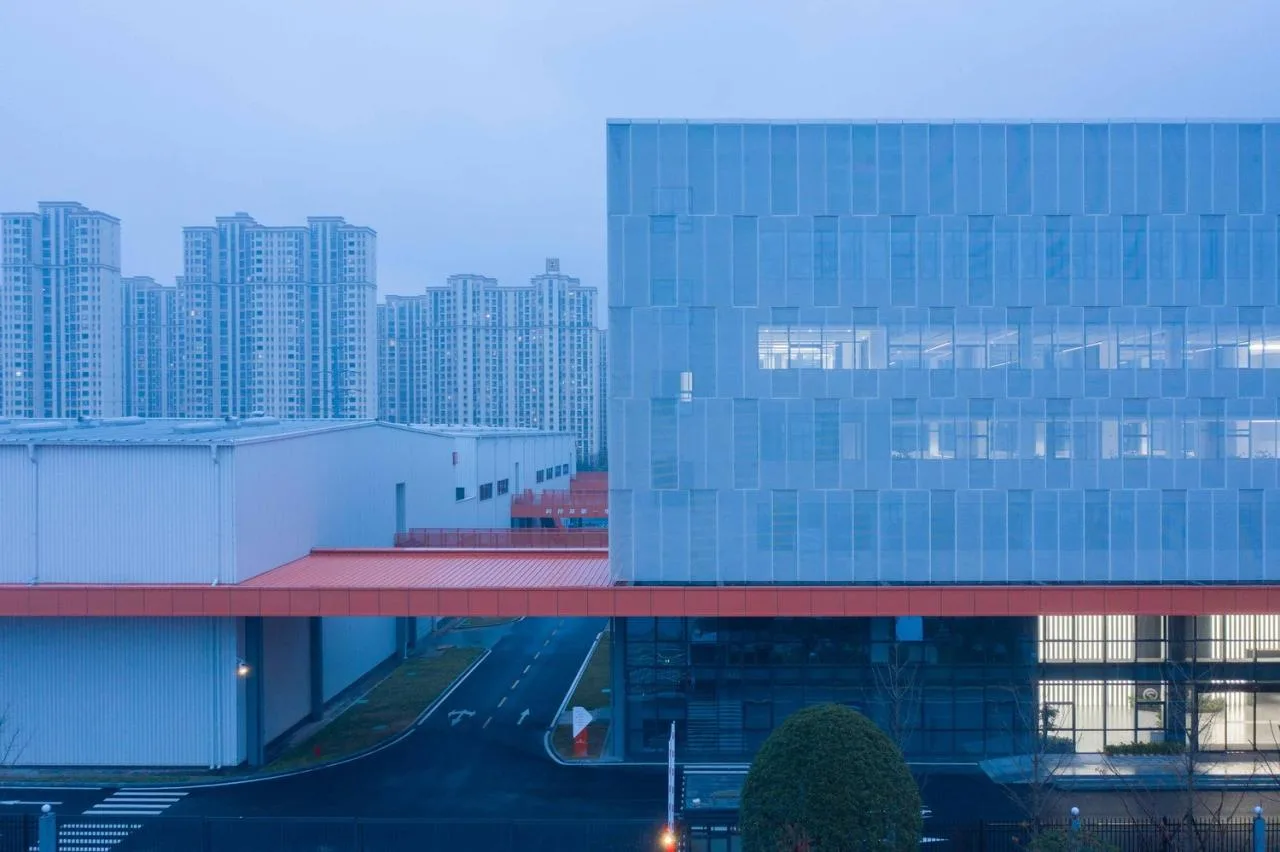
The park’s grand “Gate”
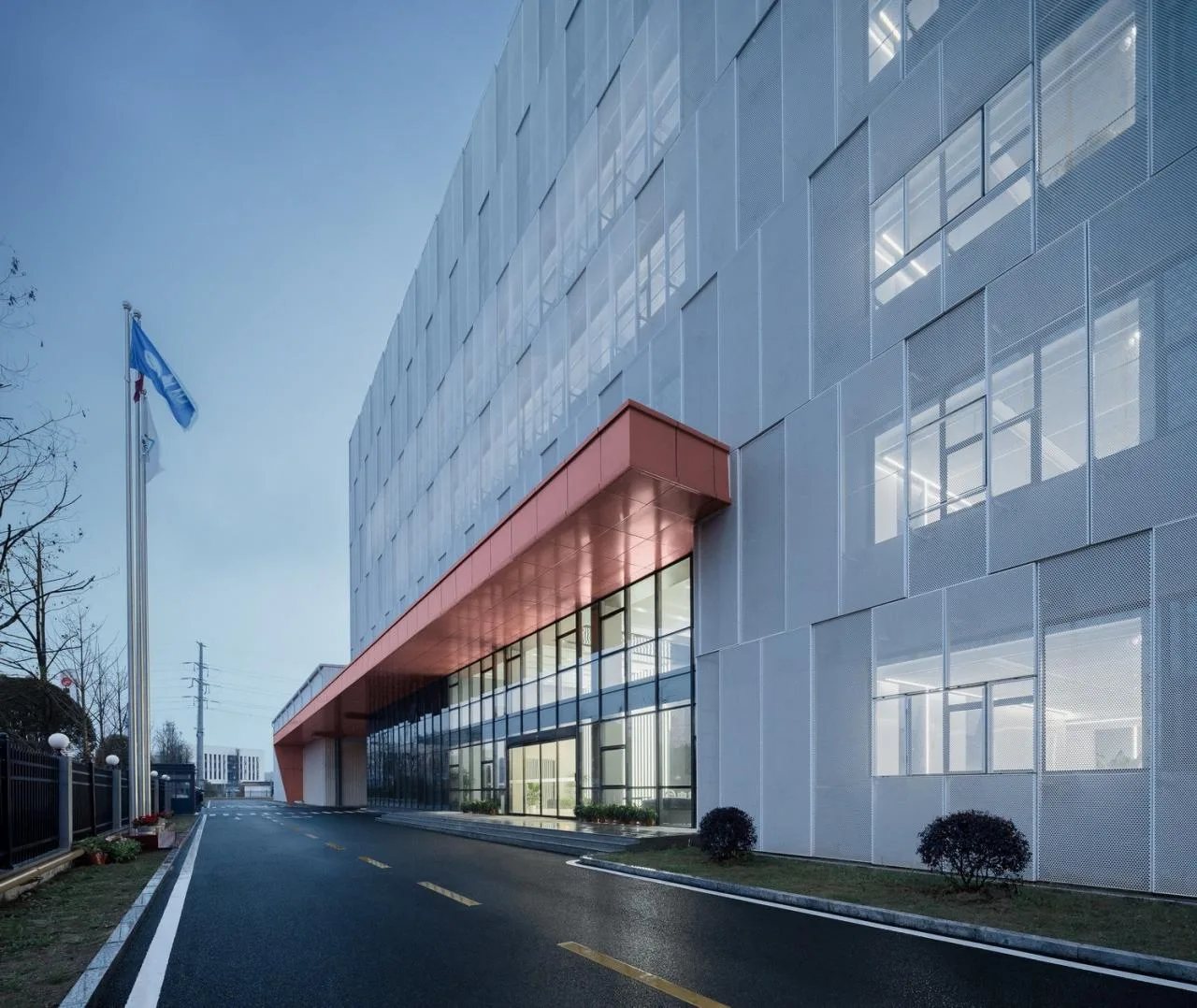
△ Office building entrance
Urban Interface: A Translucent Façade
The office building faces the city street, designed with a clean and minimalist aesthetic. A red rectangular volume protrudes from the top, serving as a visual focal point.
The remaining façades are composed of uniform flat surfaces.
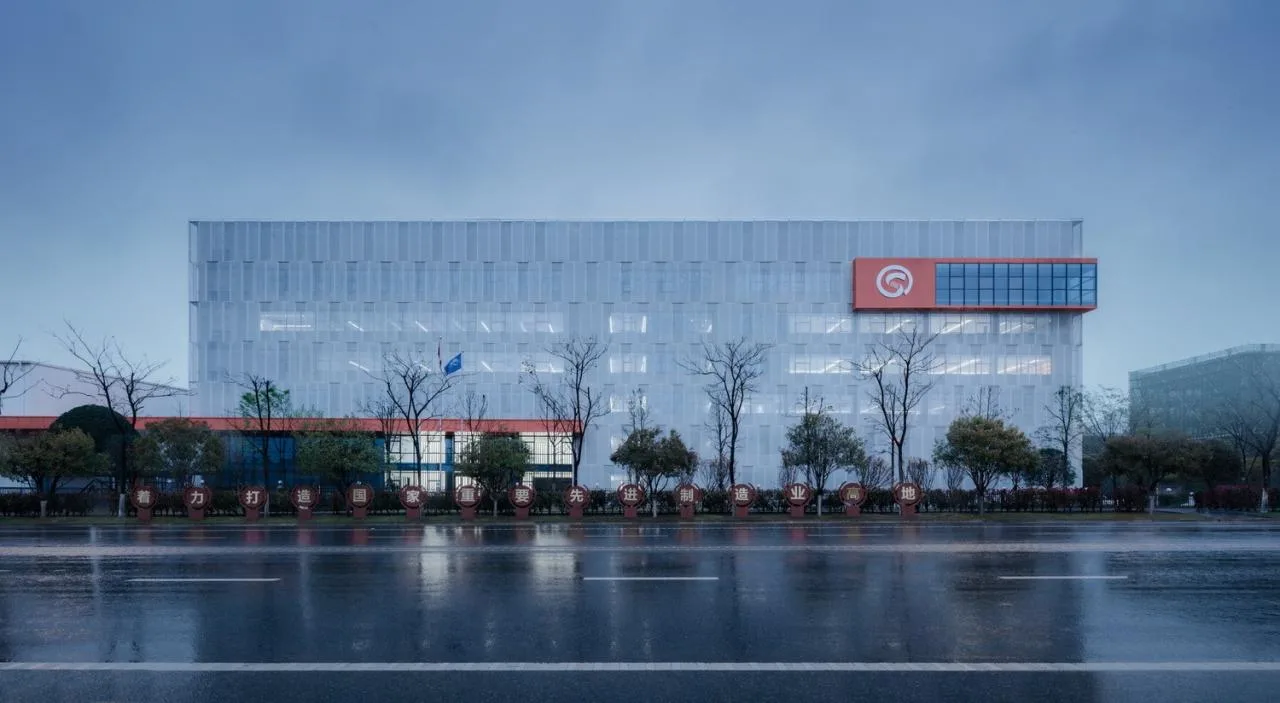
△ Office building façade
The façade primarily employs circular perforated aluminum panels, reflecting the industrial character through material choice. Functionally, these panels facilitate ventilation and natural lighting.
The gap between the aluminum panels and the exterior walls allows airflow, reducing energy consumption and enhancing sustainability.
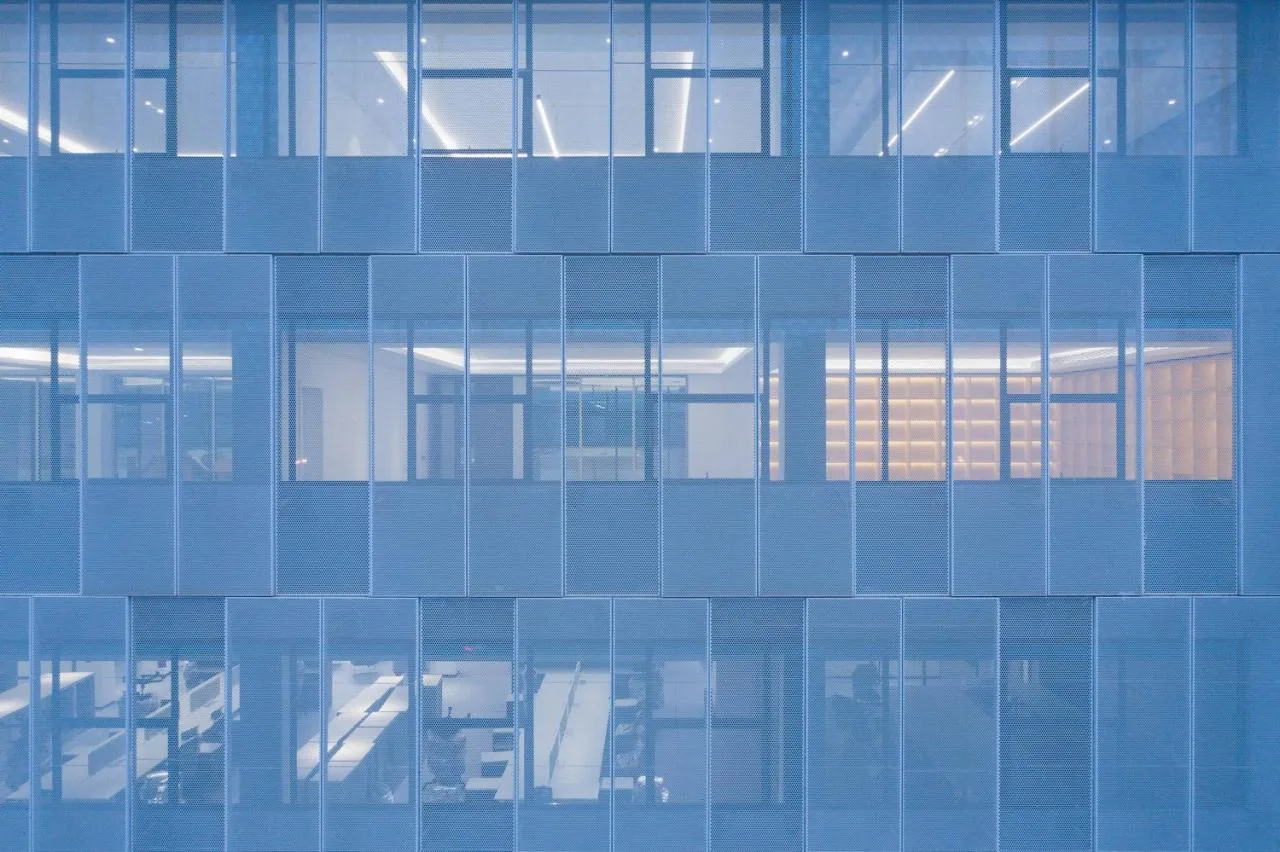
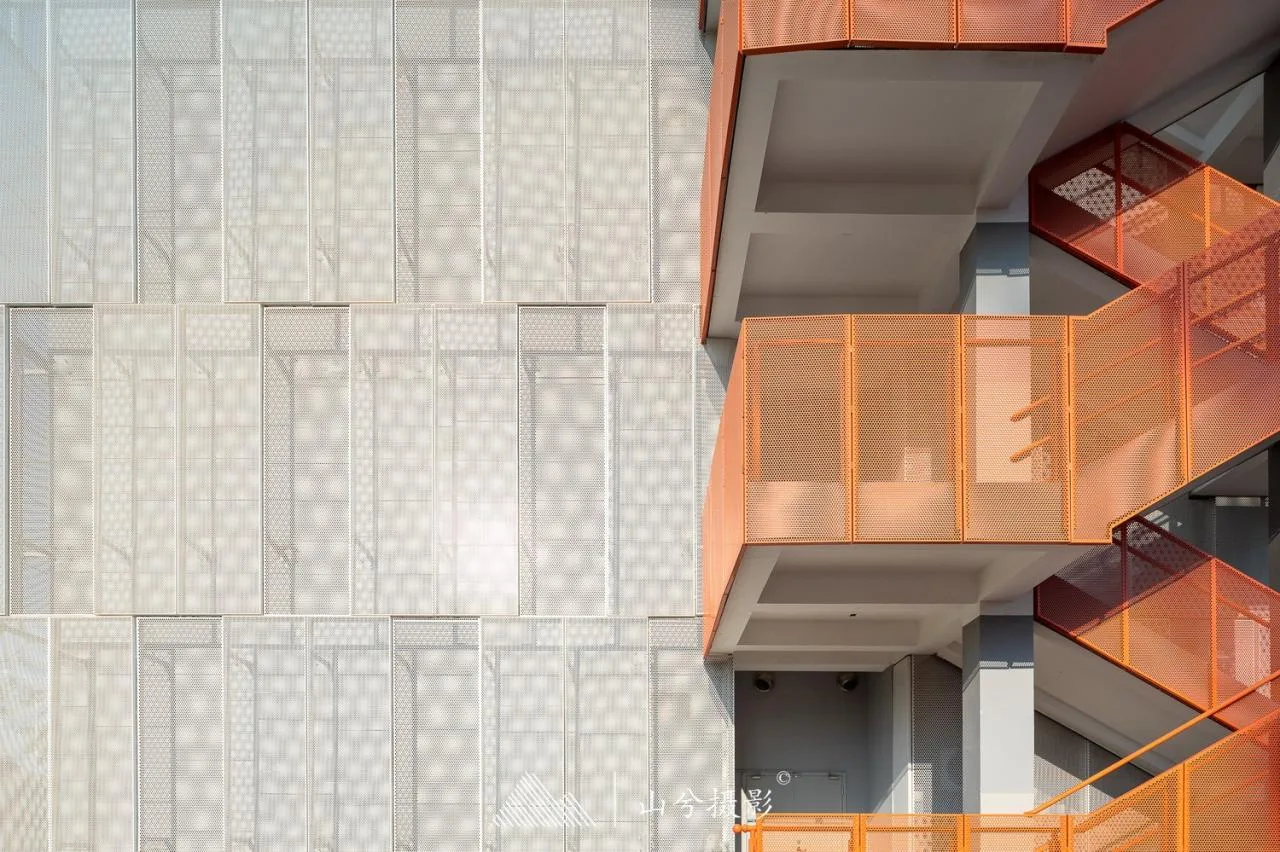
△ Façade details
The aluminum panels vary between two perforation sizes, arranged alternately to break façade monotony and add visual interest.
Corresponding to the perforation variation, some panels are slightly recessed or advanced, creating a rhythmic play of light and shadow under illumination.
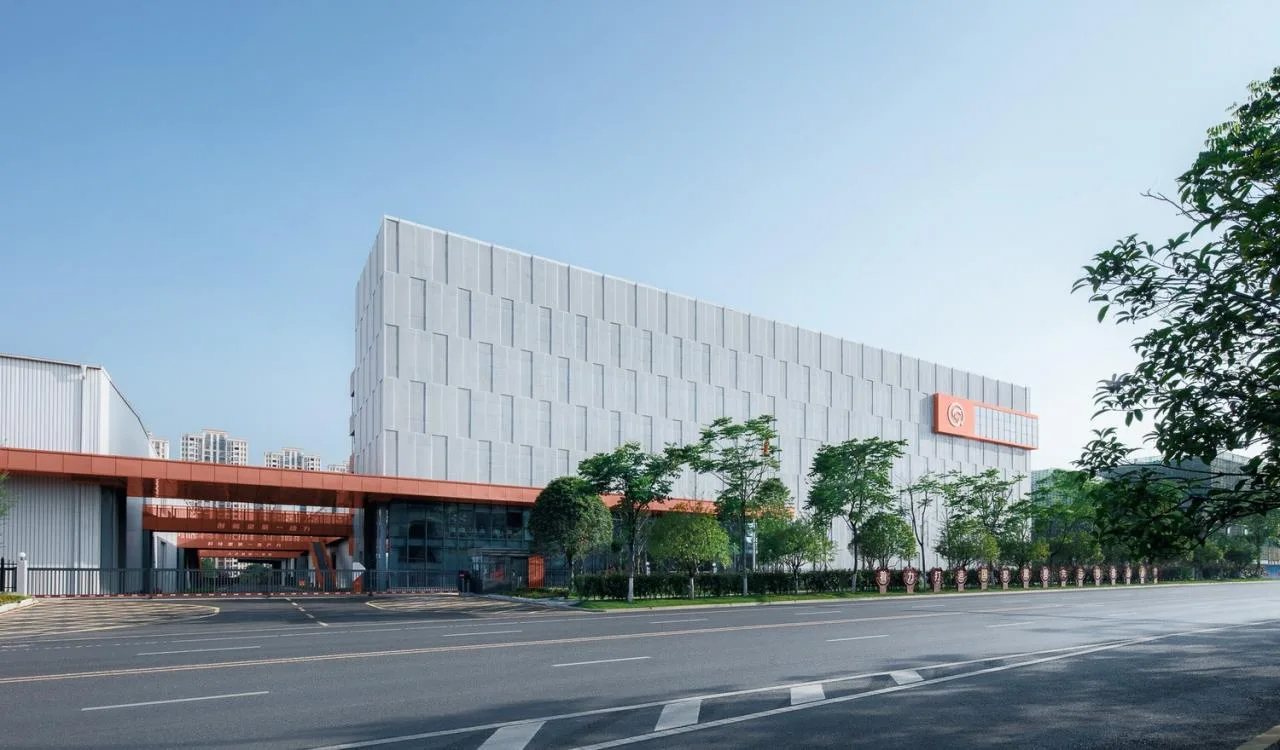
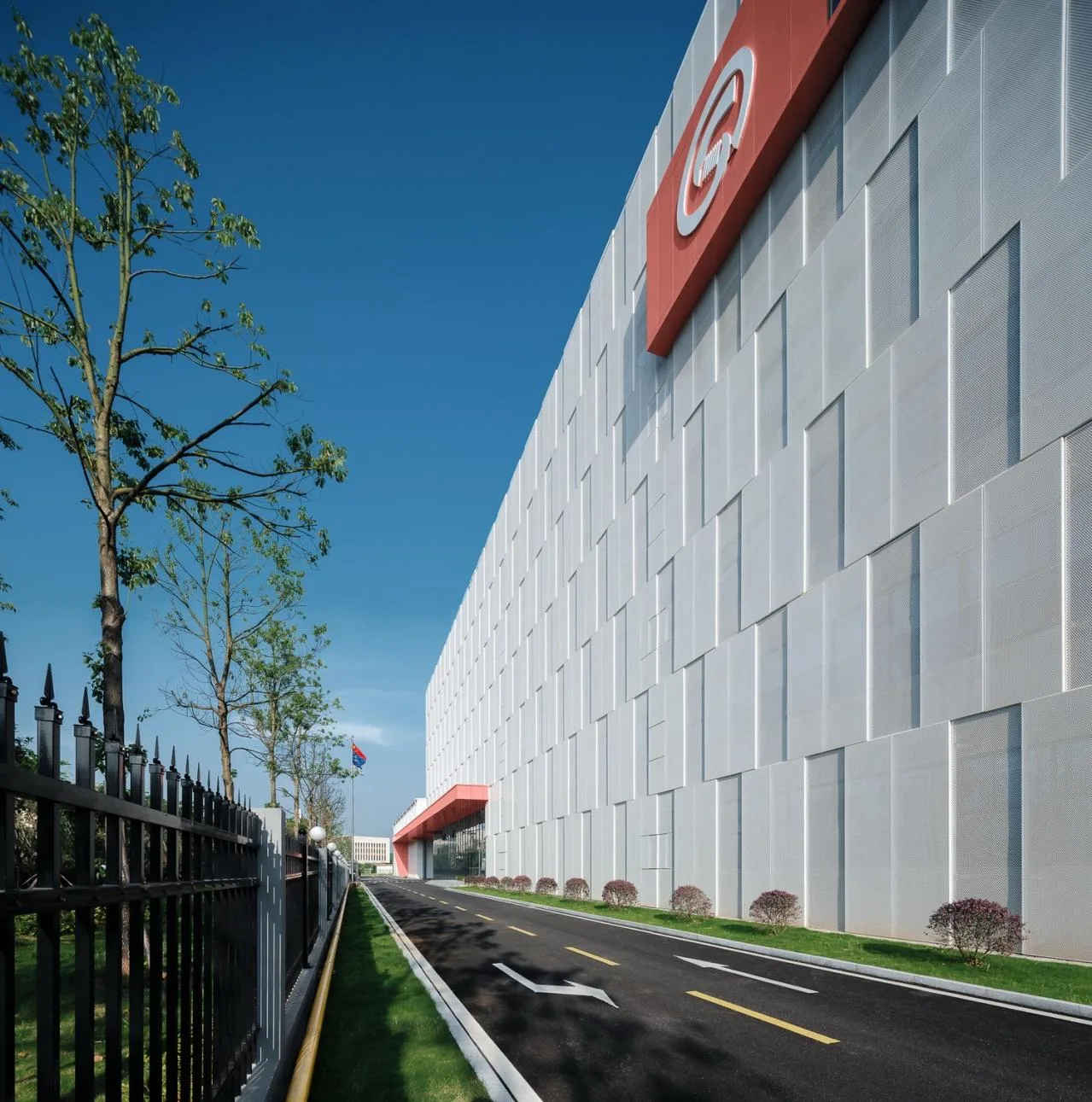
△ Alternating light and shadow on perforated aluminum panels
Internal lighting filters through the panels, producing a semi-transparent effect that enhances the façade’s ethereal atmosphere.
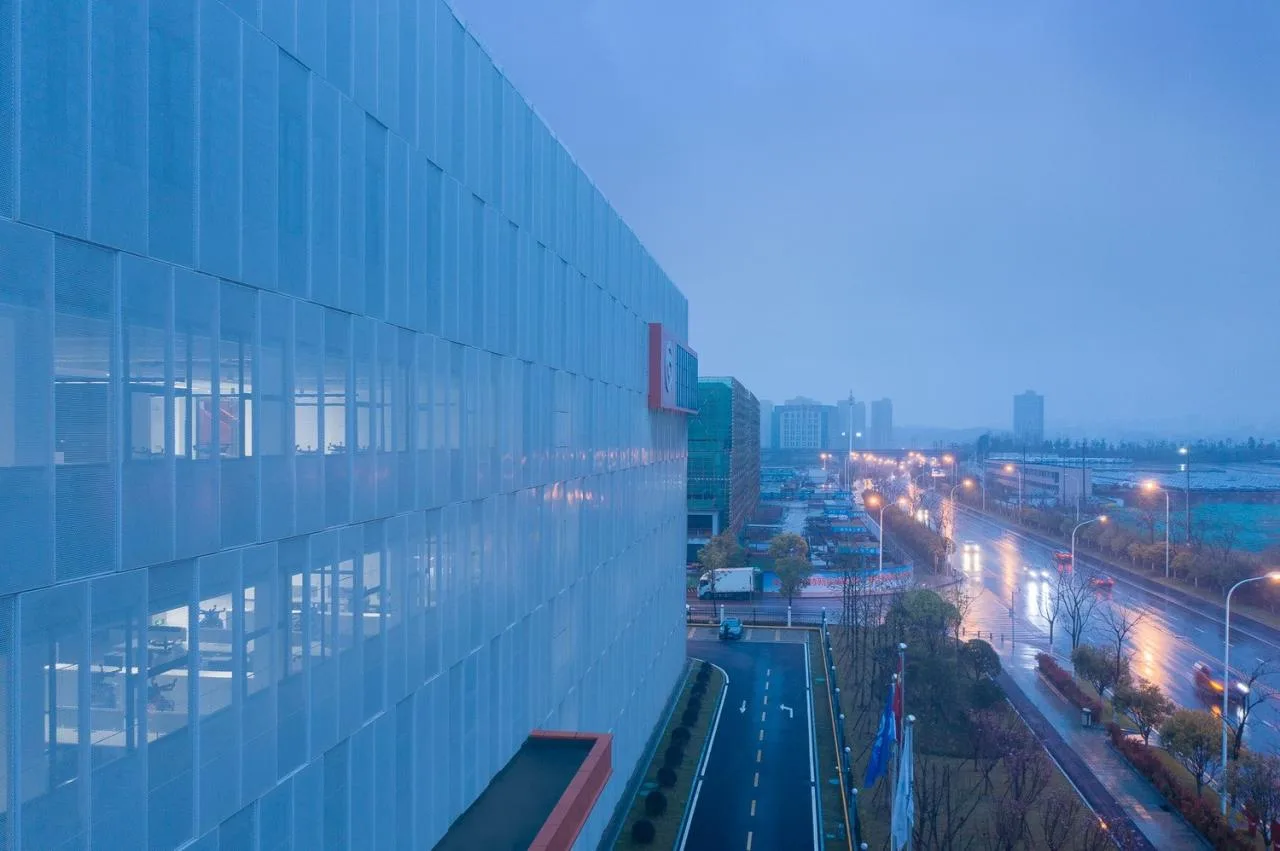
△ Night view of the architecture integrating with the city
Public Space: Staircases Linking Inside and Outside
Centered on production, the park integrates office buildings as hubs for public activities.
An outdoor aerial corridor connects the office and production buildings. Inside the office building, a six-story atrium with aerial platforms on each floor offers communal spaces for relaxation.
One side of the atrium features an external staircase clad in red perforated aluminum panels, linking all floors vertically.
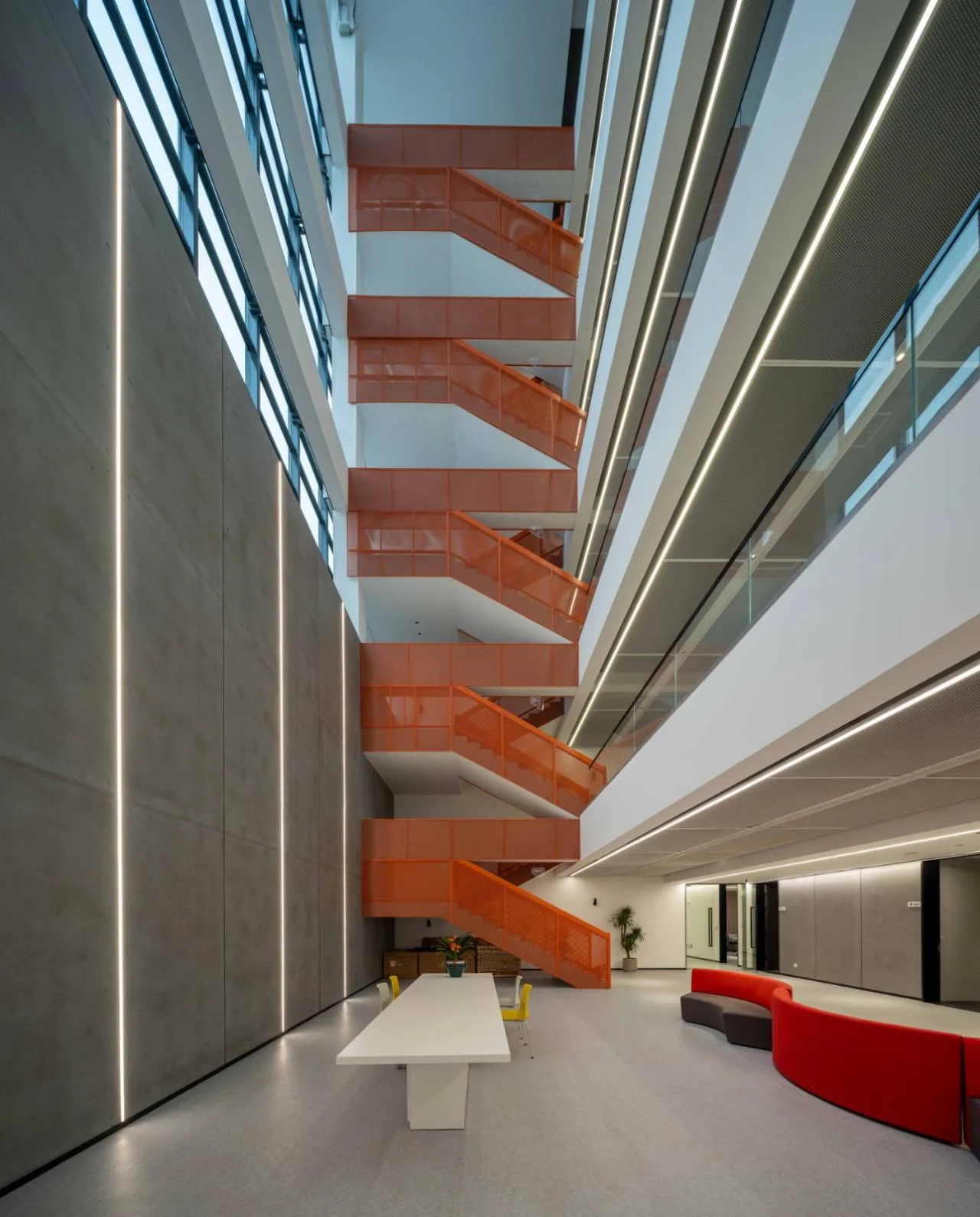
△ High-rise indoor atrium
Along the city branch road side of the office building, a matching six-story outdoor staircase extends to the street corner. It shares the same design language and materials as the indoor staircase.
This external staircase not only serves as an emergency exit but also functions as a component of the outdoor public space.
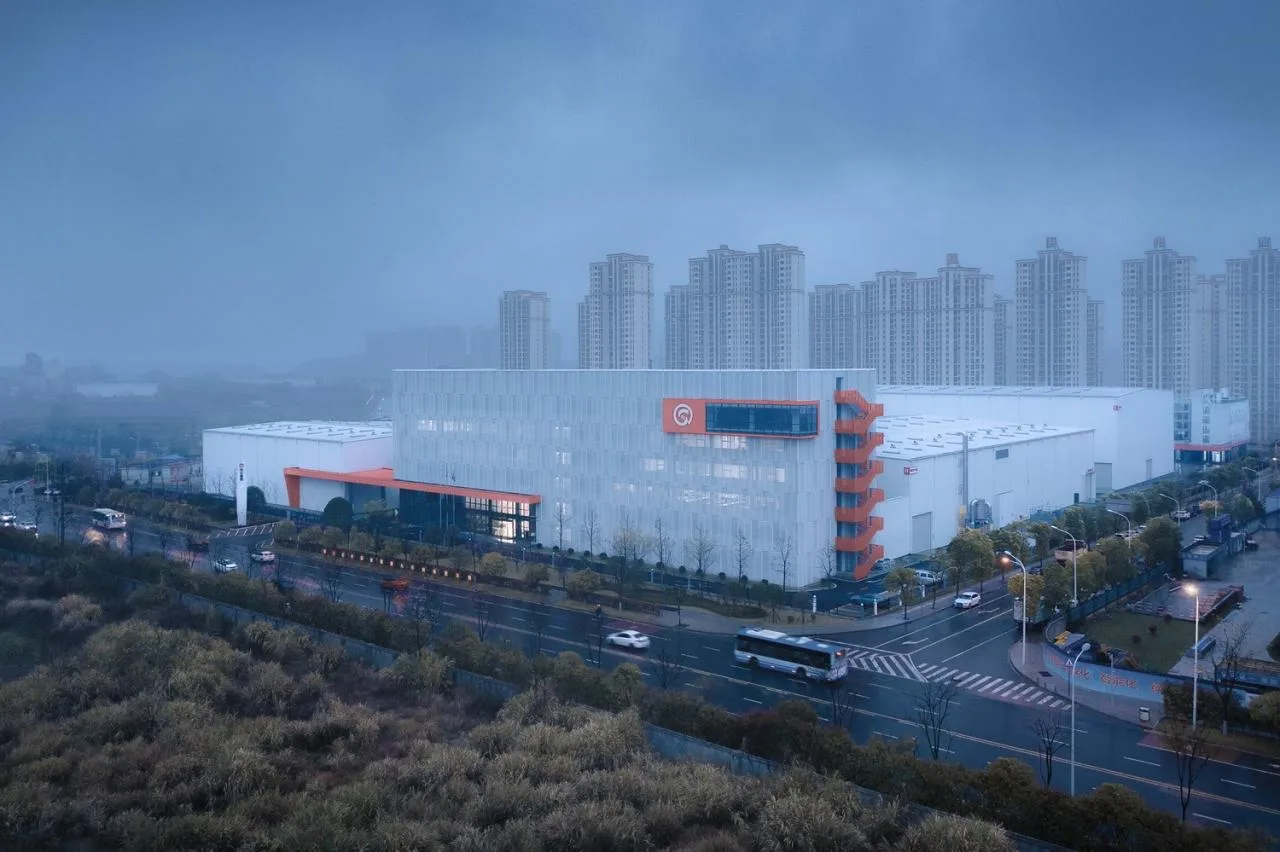
View illustrating the relationship between architecture and urban context
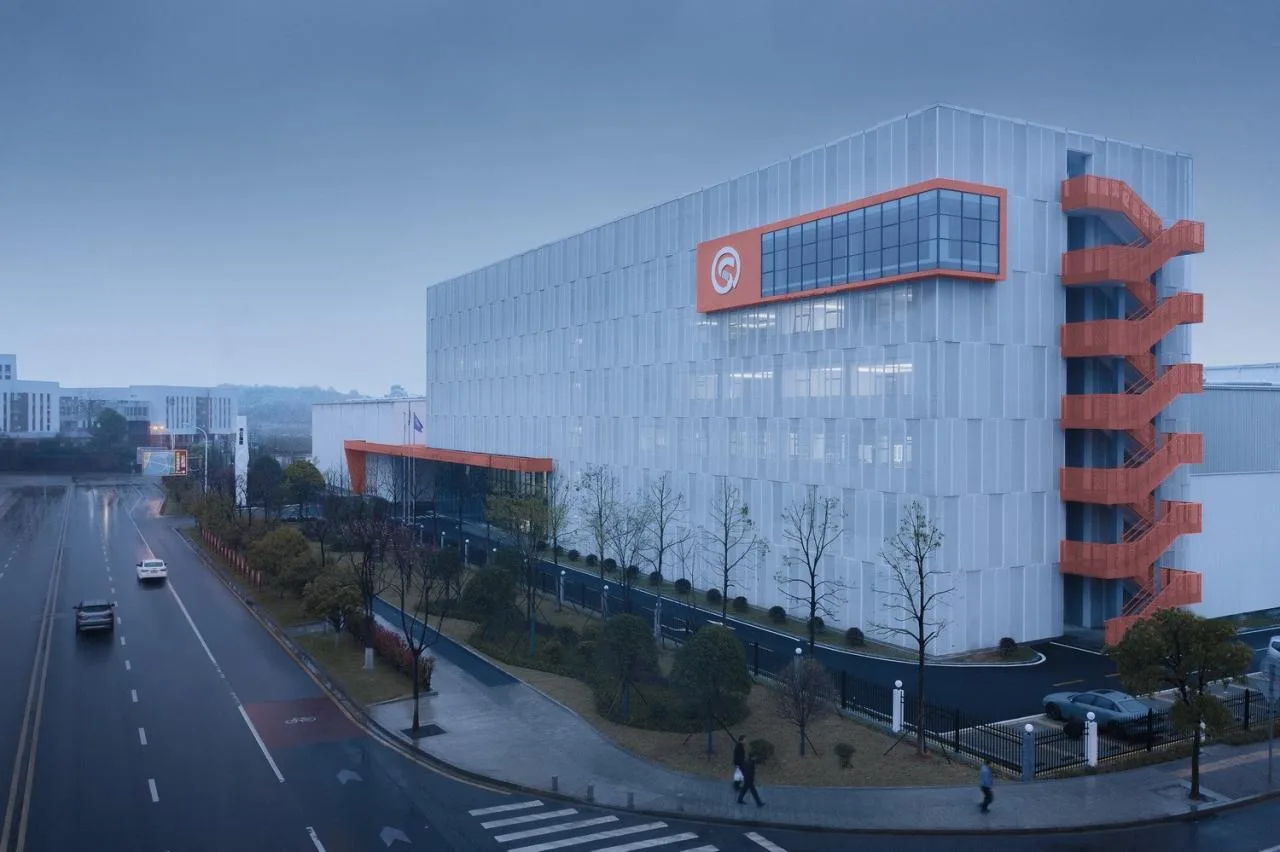
Outdoor staircase positioned at the street corner
The park’s circulation design seamlessly guides visitors from the exterior into the office building, and within the building, the flow extends from interior spaces to the façade, creating a continuous, integrated pathway throughout the complex.
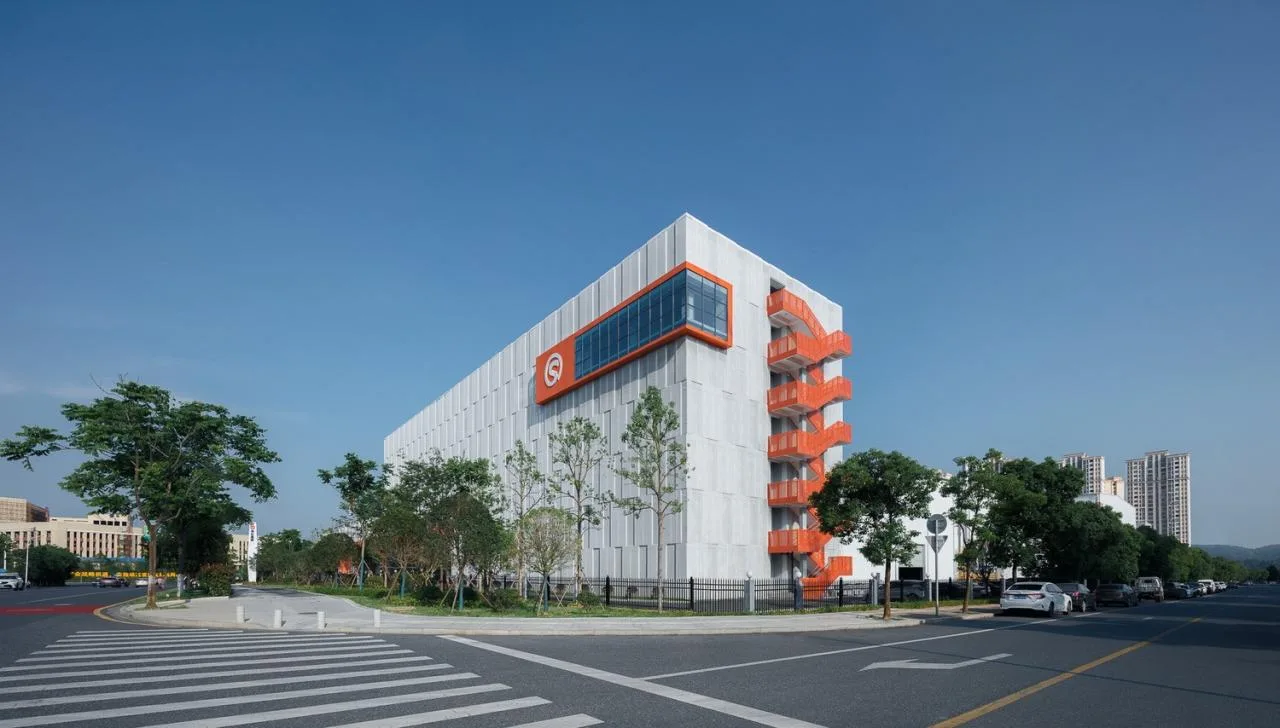
View of the office building at the corner
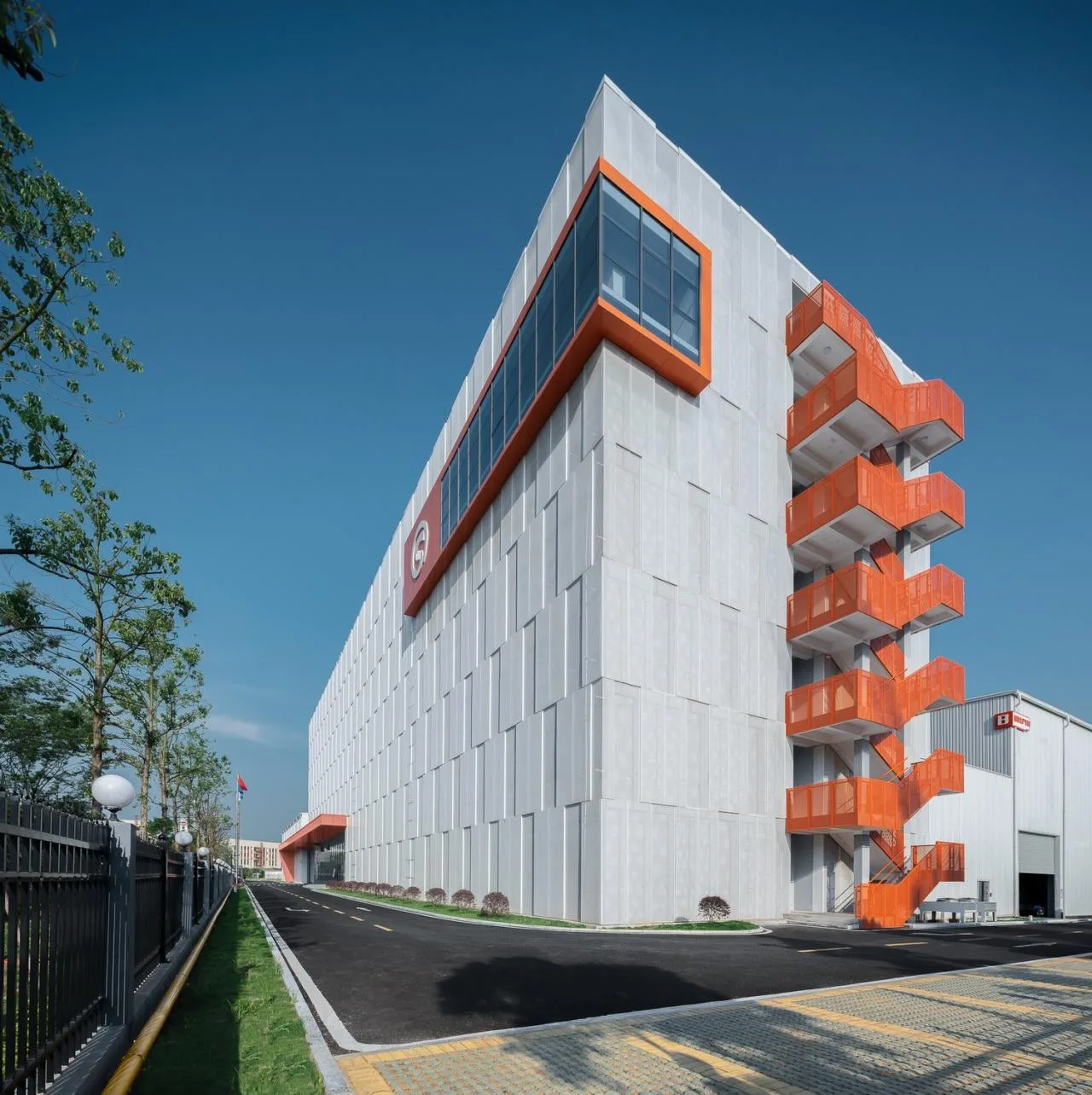
△ Close-up of the outdoor staircase
Conclusion
This project represents a thoughtful exploration of the relationship between industrial and public architecture.
The design endows industrial buildings with public qualities through the reimagining of spatial circulation. By responding to tall spaces and urban scales, the factory fosters a stronger connection between users and the city.
Additionally, the façade design challenges the conventional industrial stereotype, offering a fresh and engaging visual identity.
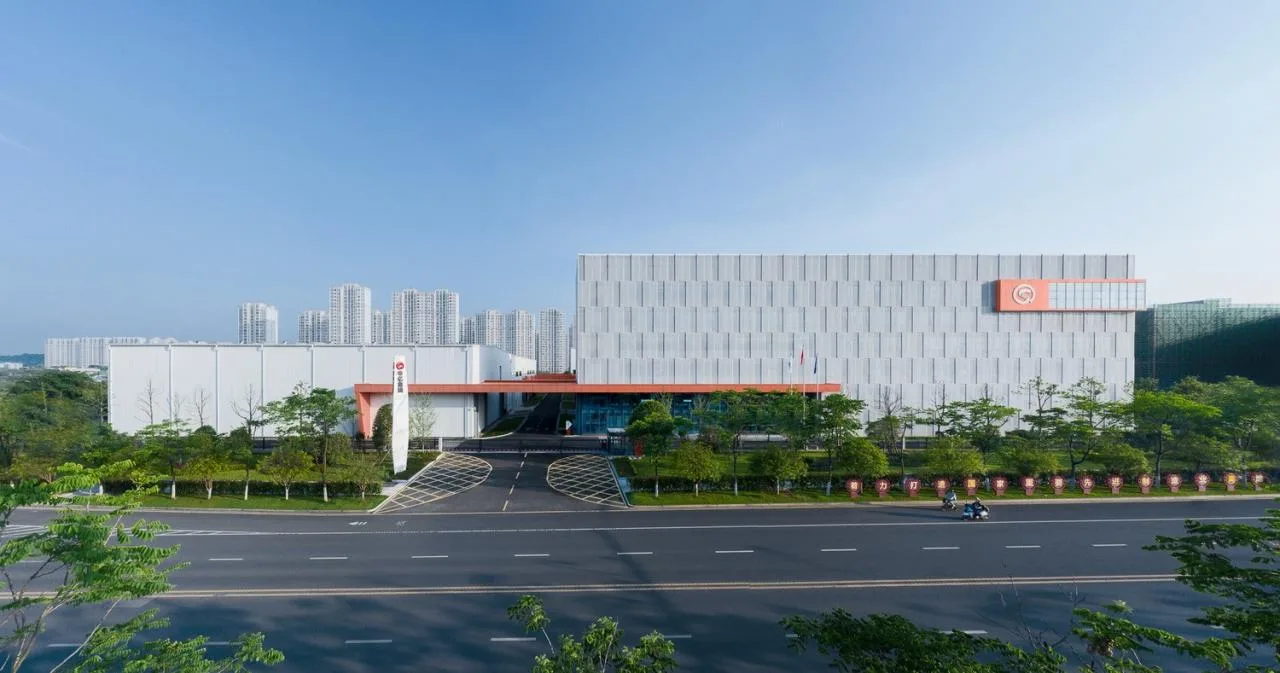
After some time in use, the red overhead corridor has become an iconic feature of the park. According to feedback from the property owners, it now serves as a popular photo spot for visitors from the surrounding areas.
This project demonstrates that architecture can transcend pure functionality, adding value and enhancing user experience—an inspiring goal for design professionals.
Project Drawings
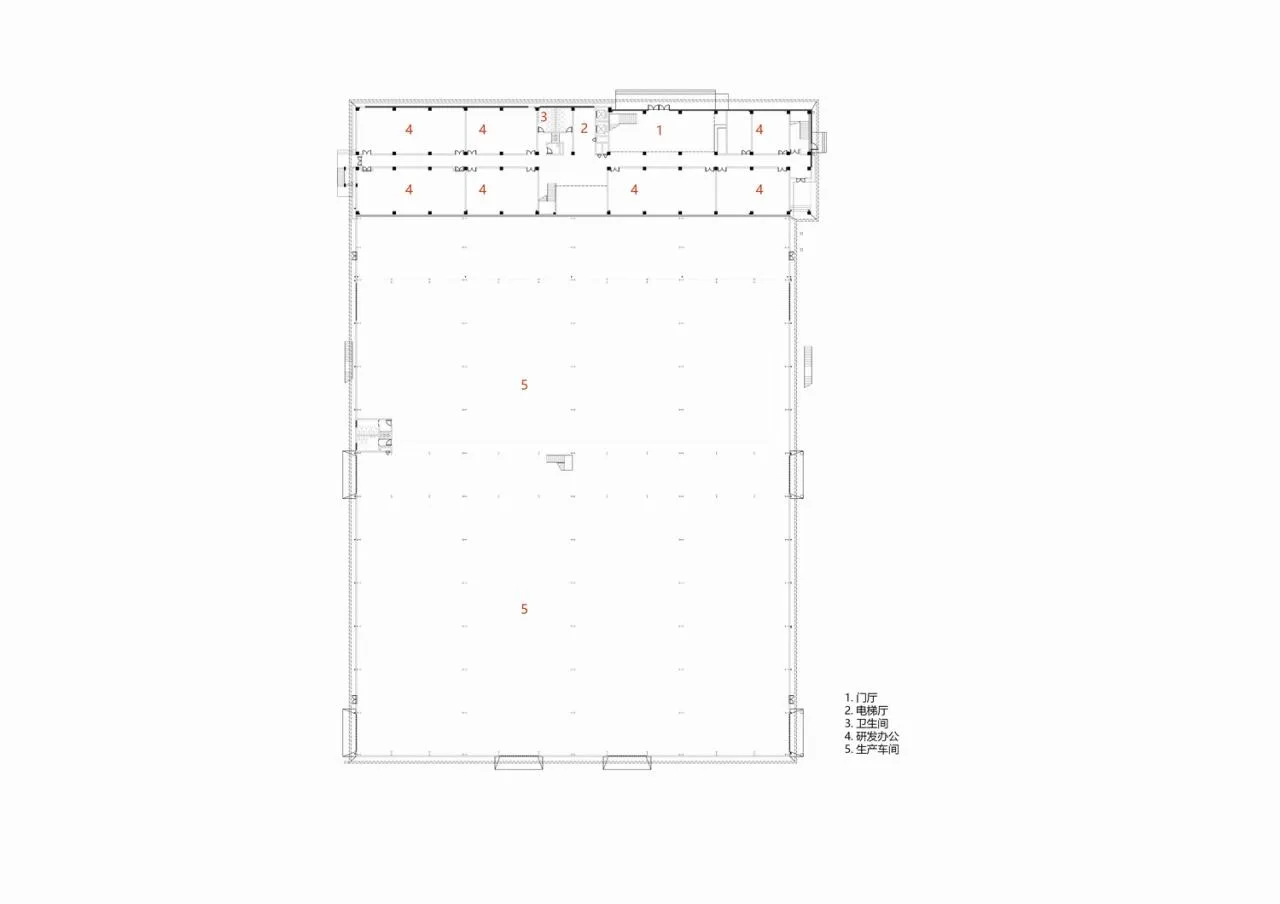
△ First floor plan of R&D office and production workshop
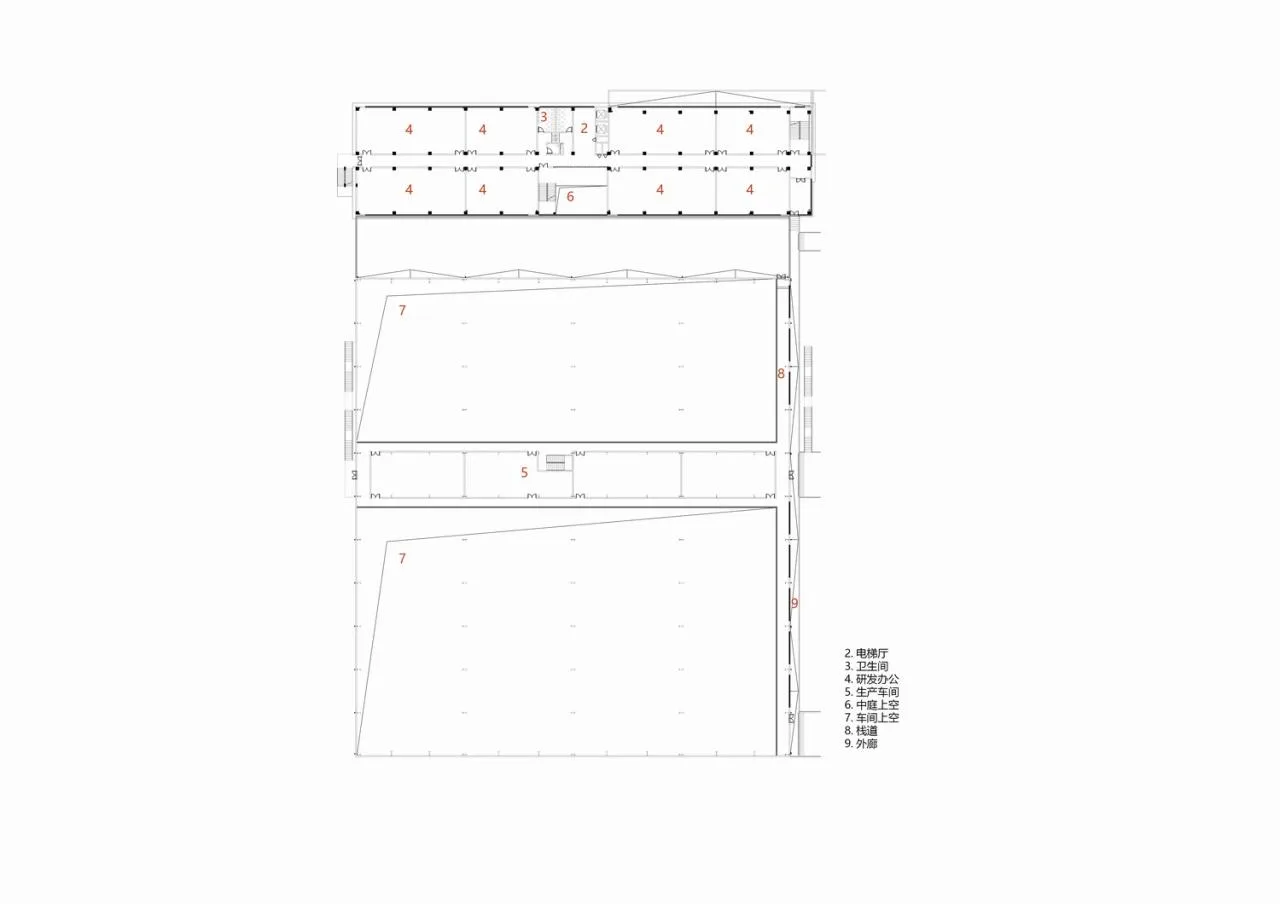
△ Second floor plan of R&D office and production workshop
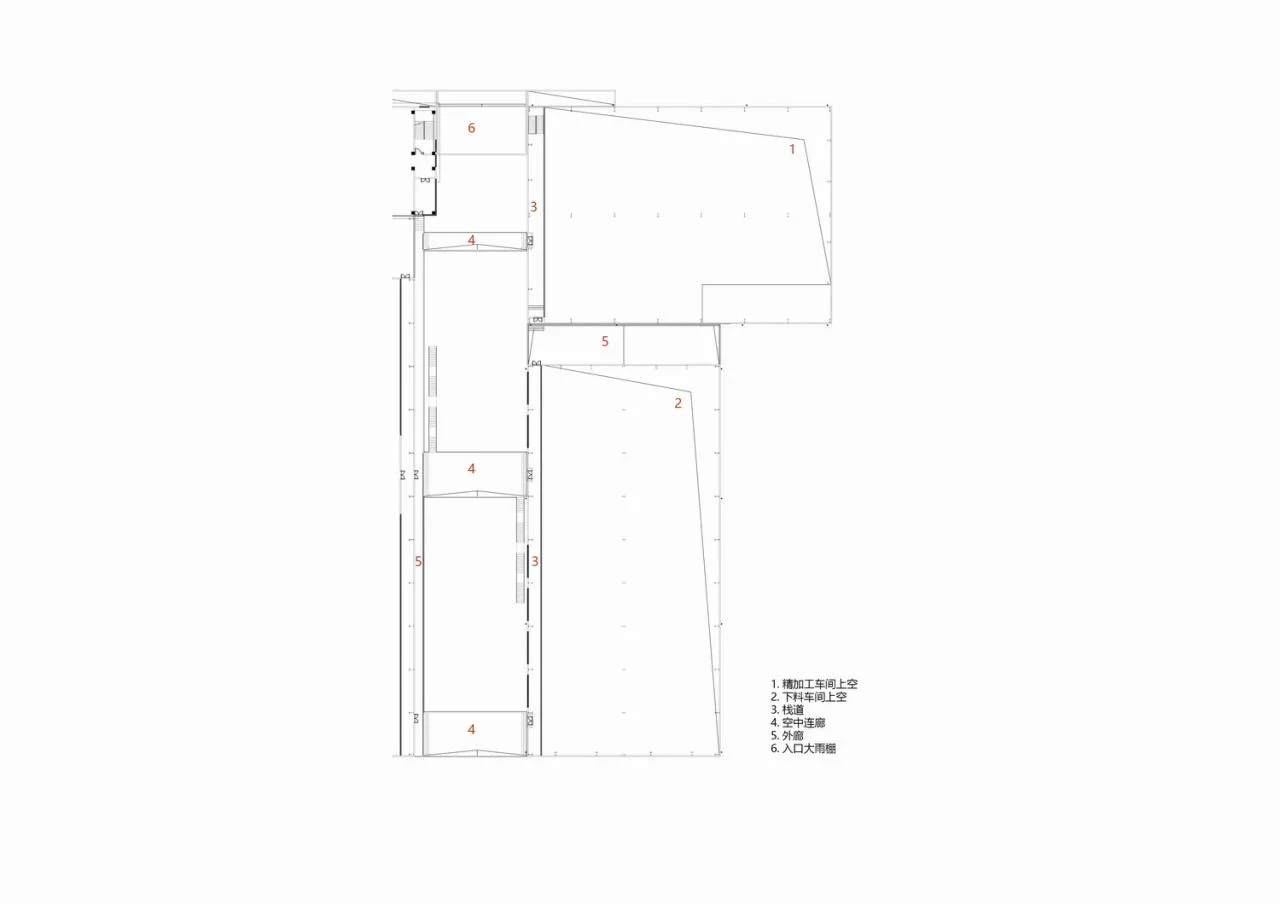
△ Second floor plan of cutting workshop and precision machining workshop
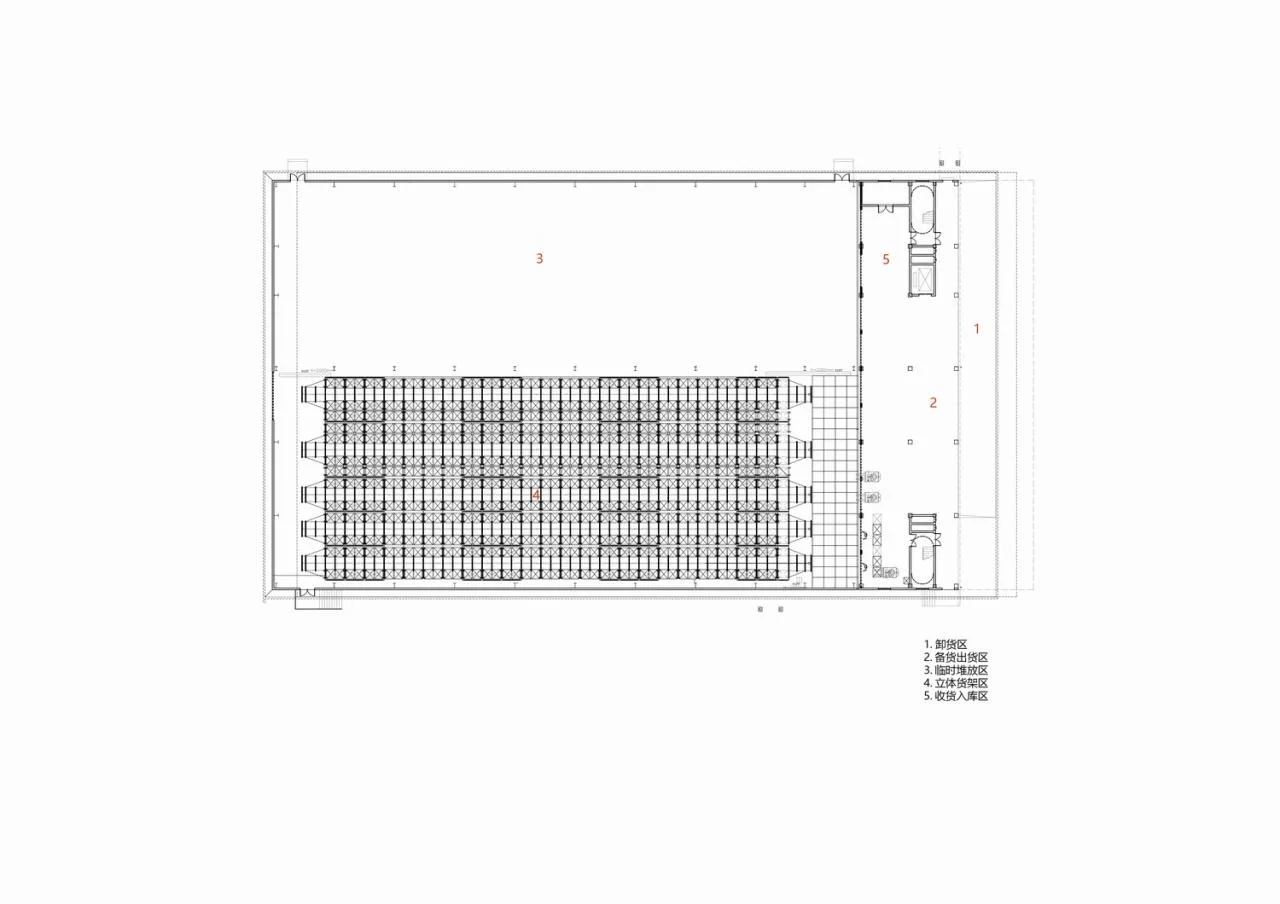
△ First floor plan of the three-dimensional finished product warehouse
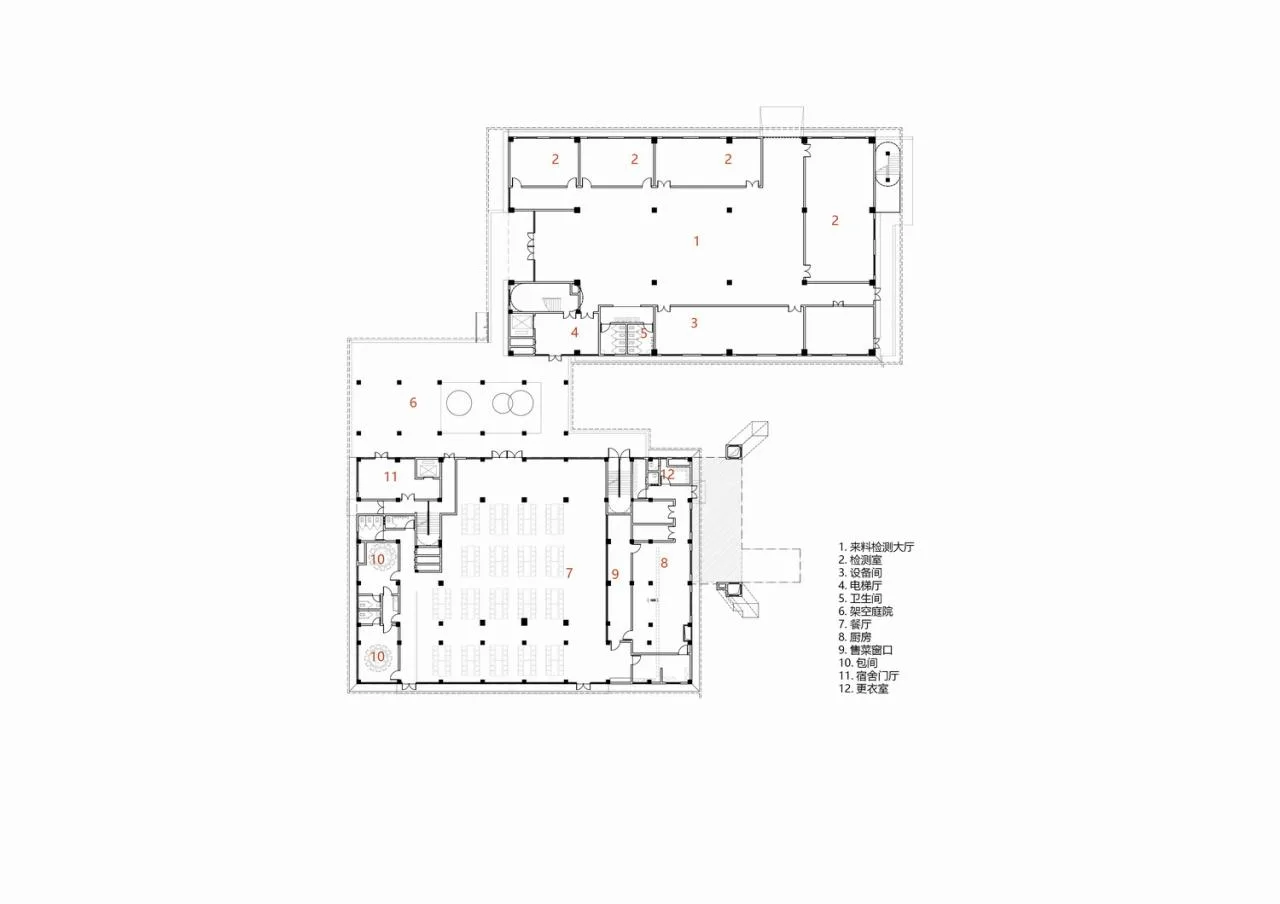
△ First floor plan of incoming material inspection, cafeteria, and dormitory
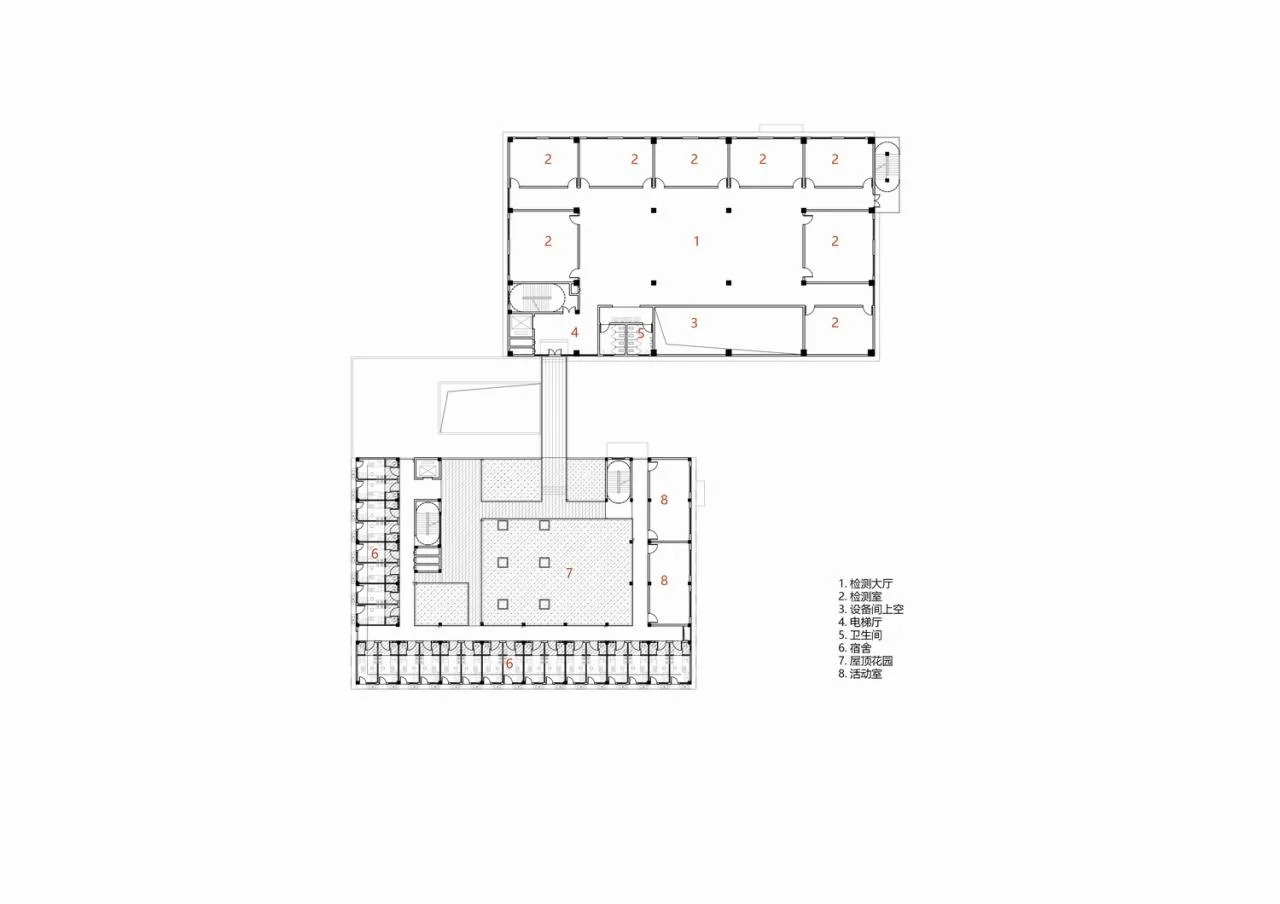
△ Second floor plan of incoming material inspection, cafeteria, and dormitory
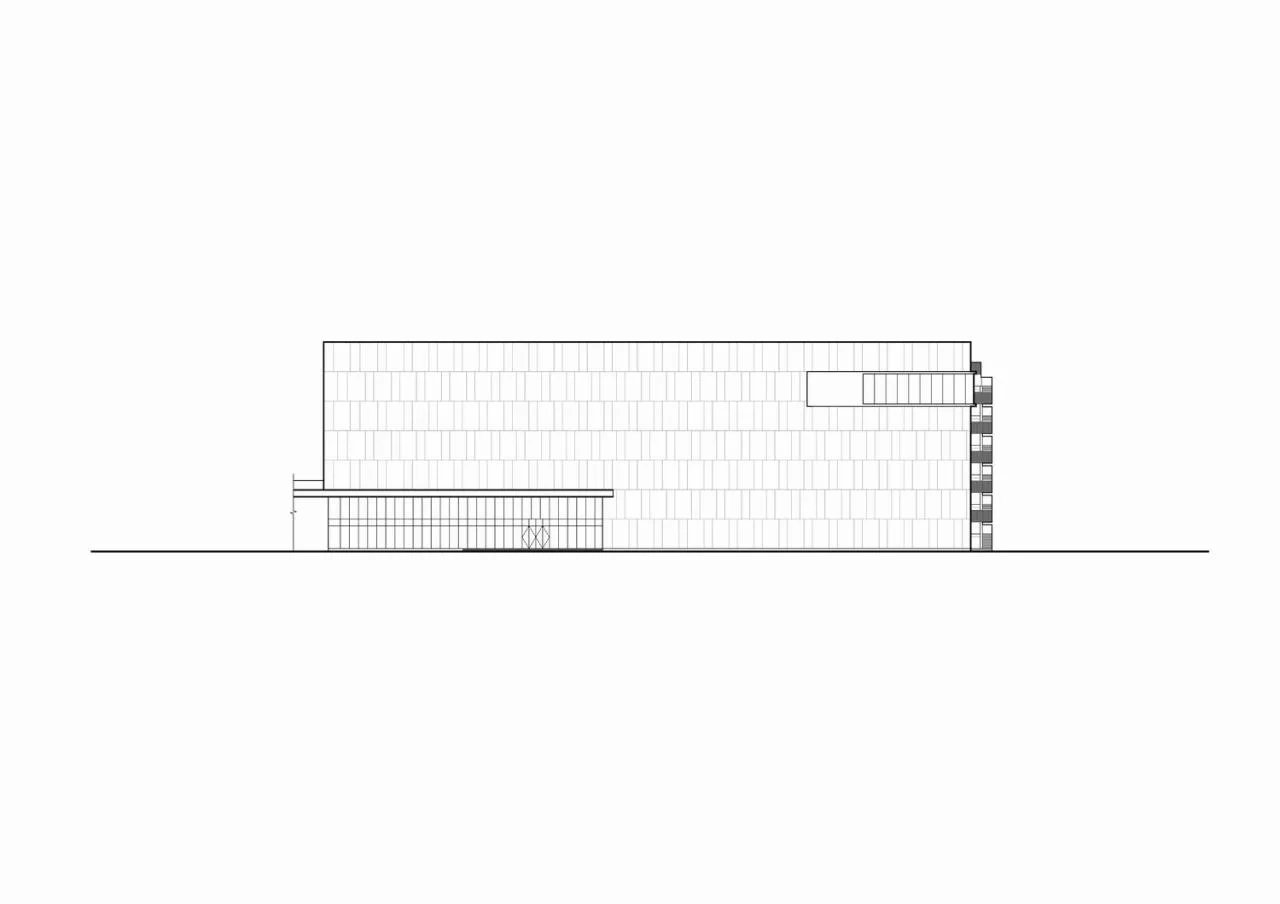
△ North elevation of R&D office
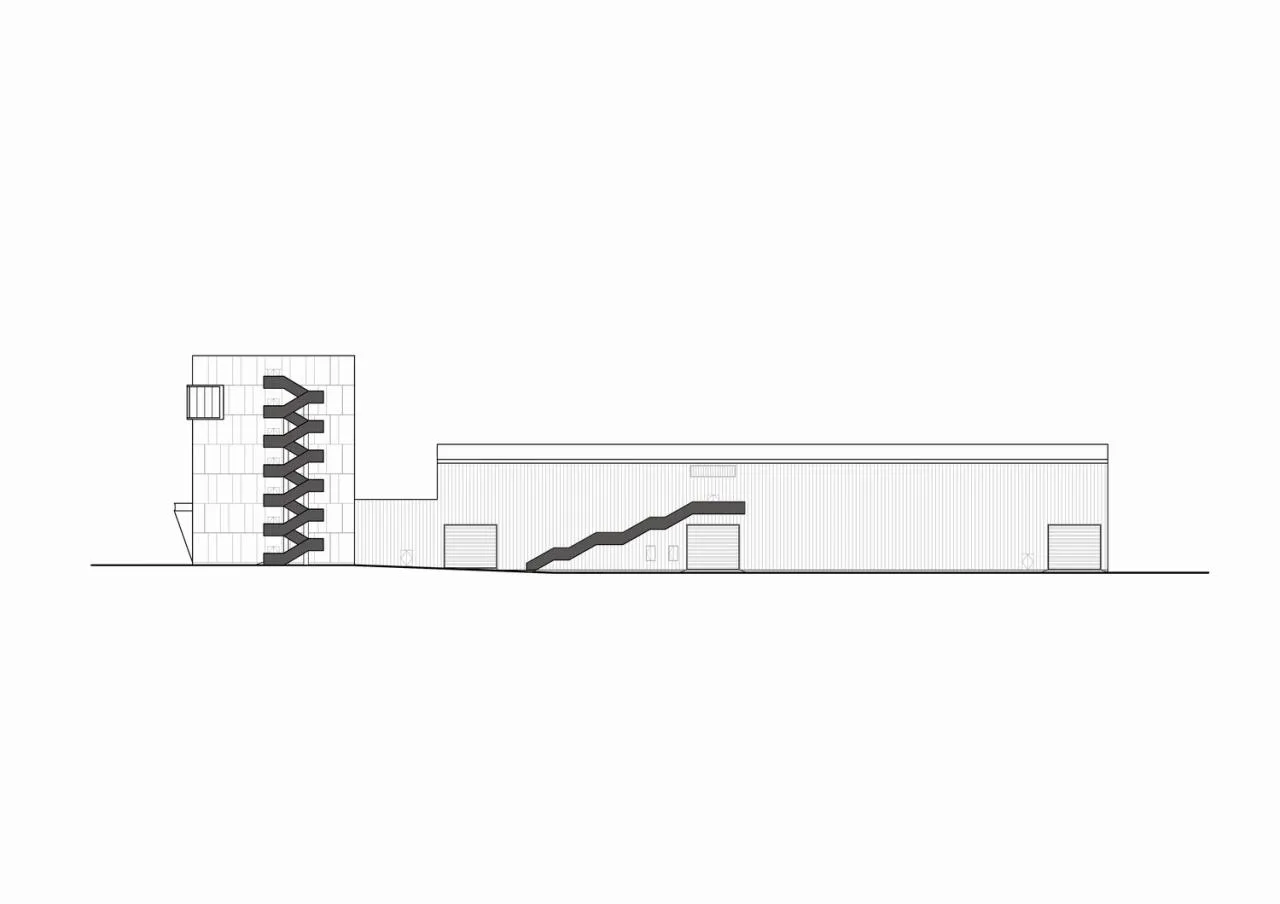
△ West elevation of R&D office and production workshop
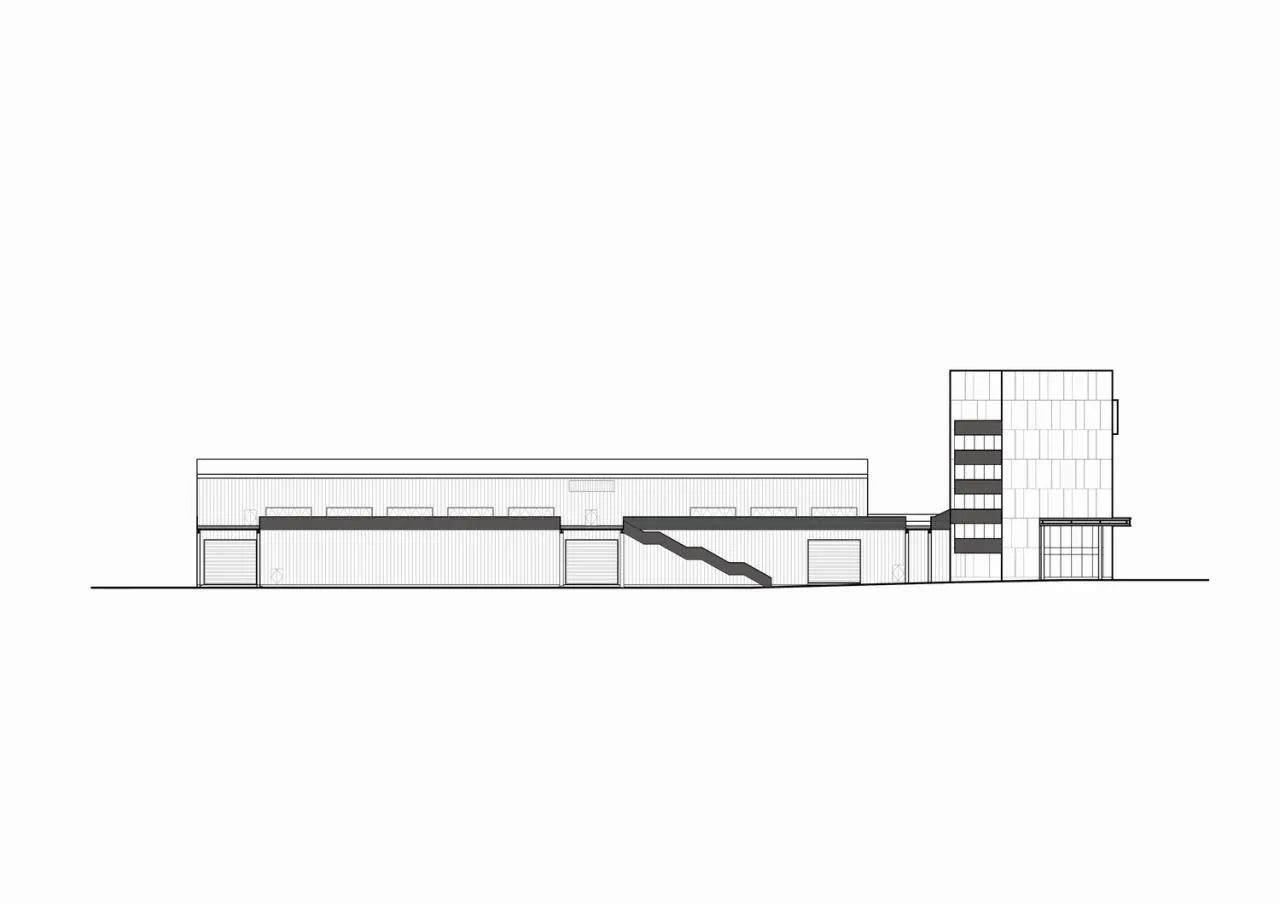
△ East elevation of R&D office and production workshop
Project Information
Project Name: Shenyi Smart Factory
Location: Changsha, Hunan
Design Firm: China Railway Construction Engineering Group Changsha Planning and Design Institute Co., Ltd
Chief Architect: Ma Qing
Project Manager: Ding Jing
Project Team: Zhu Lin, Jin Chao
Design Team Members: Xiao Jing, Luo Yingsong, Zhang Xiaotong, He Bin, Li Zhiqi, Wang Tongtong, Zhou Yi, Jin Wenjie, Wu Jie, Mo Shuijian, Zhang Tiantian, Liu Huafeng
Design Period: June 2020
Construction Completion: June 2023
Total Floor Area: 38,358.45 square meters
Structural System: Reinforced concrete and steel structure
Photography: Shanxi Photography















Must log in before commenting!
Sign Up