
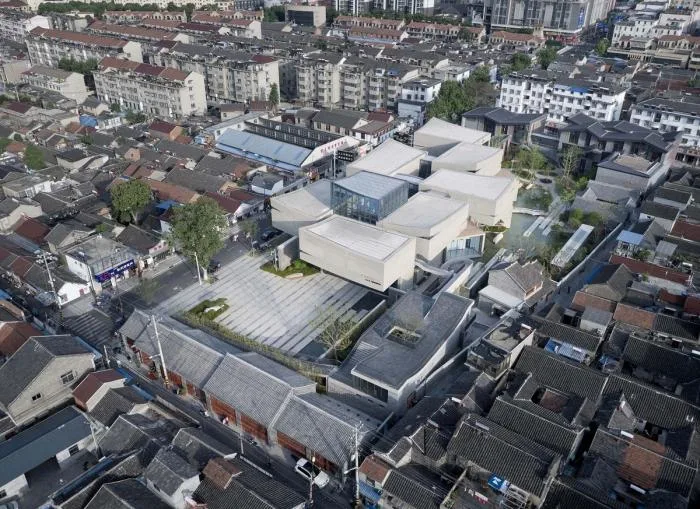
The Wang Zengqi Memorial Hall Cultural Characteristic Block is situated in Gaoyou City, Jiangsu Province, a historically rich city located along the Grand Canal. The site lies within the scenic Gaoyou Ancient City area, where the Grand Canal flows through the western part of the city. The surrounding old streets and alleys are tightly interwoven, dense, and lively, capturing the vibrant yet simple atmosphere typical of traditional Chinese urban life.
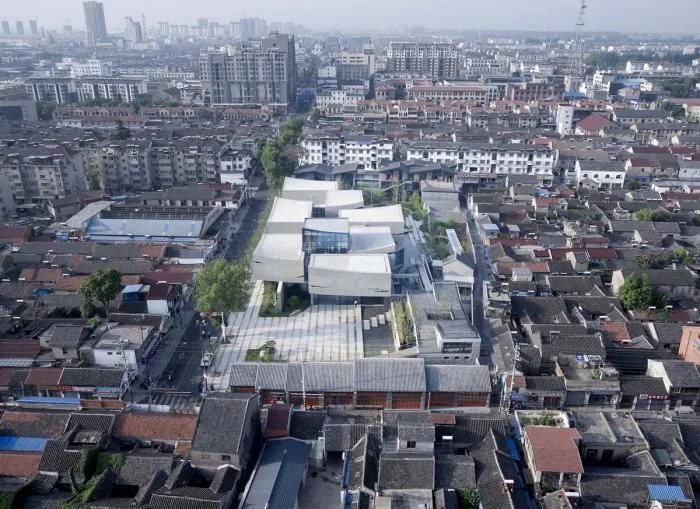
© Chen Hao
Wang Zengqi (1920-1997), a celebrated contemporary Chinese writer, is often referred to as the “last scholar official in China” and a “lyrical humanist.” Born and raised in a water town, Wang grew up by the water’s edge, where the presence of water deeply influenced his personality and literary style.
In his works, he vividly resurrected every blade of grass, tree, person, and event from his hometown, infused with a gentle nostalgia. The design of the memorial hall reflects both Wang Zengqi’s rich literary and artistic legacy and the regional culture and natural environment of Gaoyou.
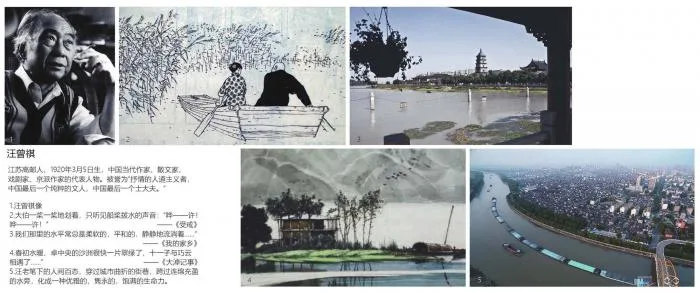
Introduction to Wang Zengqi
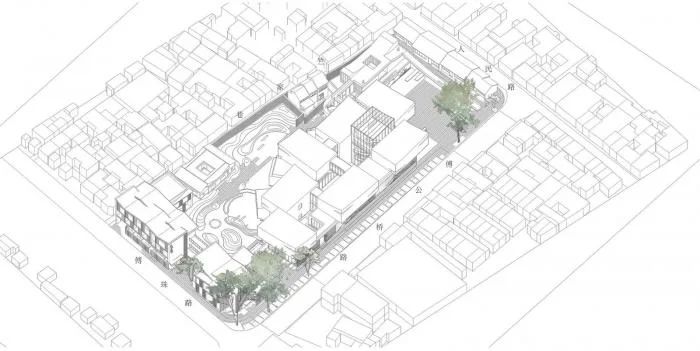
On the eastern edge of the site, several mature trees have been preserved, while the western side features Qing Dynasty-era old houses and Wang Zengqi’s former residence, which have been carefully maintained and restored. To the north, Renmin Road runs westward to the Grand Canal and eastward to the renowned Wenyou Terrace—a memorial dedicated to Qin Shaoyou, a poet from the Northern Song Dynasty. The shops lining Renmin Road evoke Wang’s childhood memories. Many of his literary inspirations stem from the canal and the ancient water-connected city.
△ Axial side view
△ Site layout plan
© Chen Hao
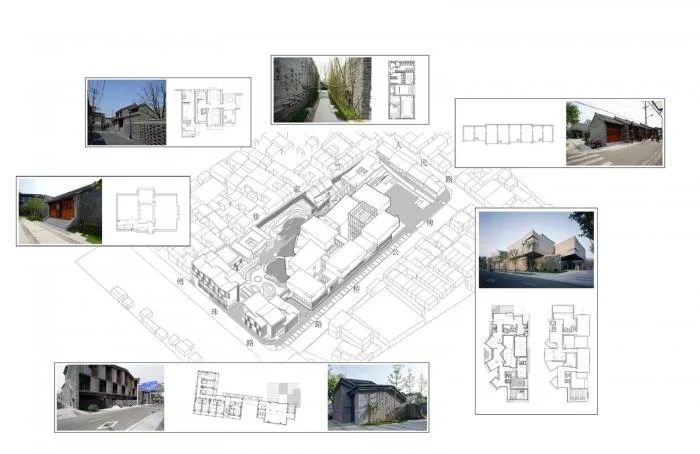
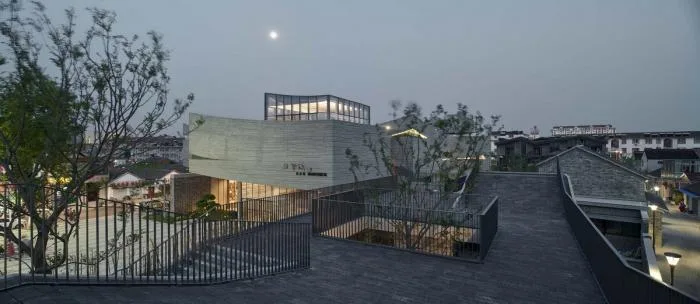
The design positions key functions such as the Wang family banquet hall, Wang family inn, and Wang fan tribe along the south and west edges of the cultural block, featuring traditional gray walls and tiled roofs. The northern street preserves existing shops, while Wang Zengqi’s former residence and Qing Dynasty houses on the west side collectively form the “background” of the block, harmonizing with the ancient city fabric.
The concept of the block is to “anchor” the urban texture, seamlessly blending design with everyday life. It aims to awaken Gaoyou’s urban memory as depicted in Wang Zengqi’s works, restoring the origins of his artistic life and showcasing his multifaceted insights into literature, life, and existence.
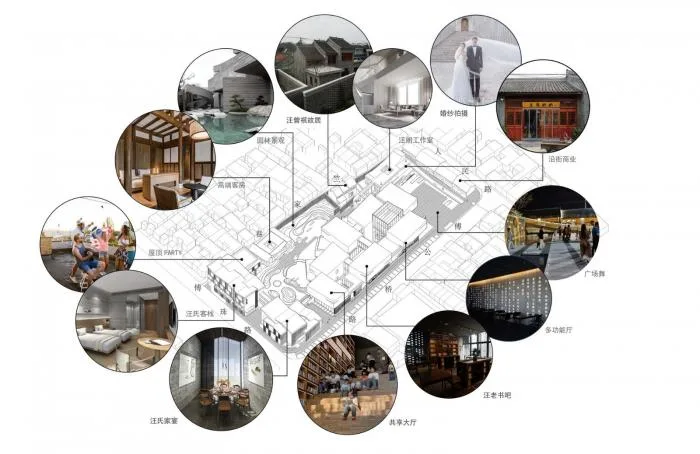
△ Conceptual diagram of “open sharing” within the cultural block
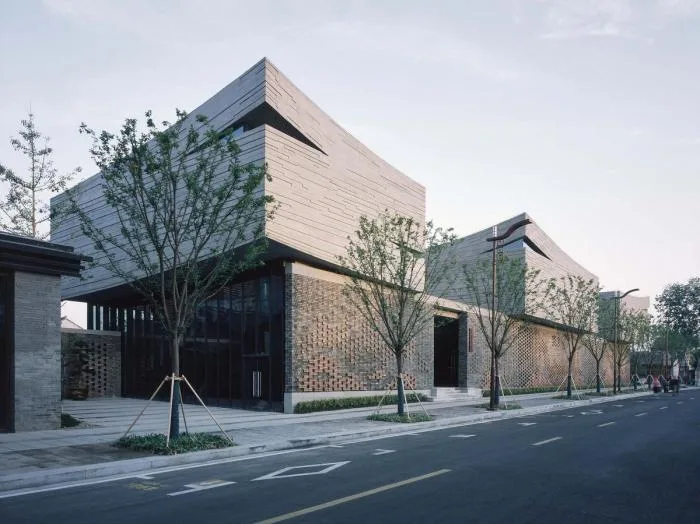
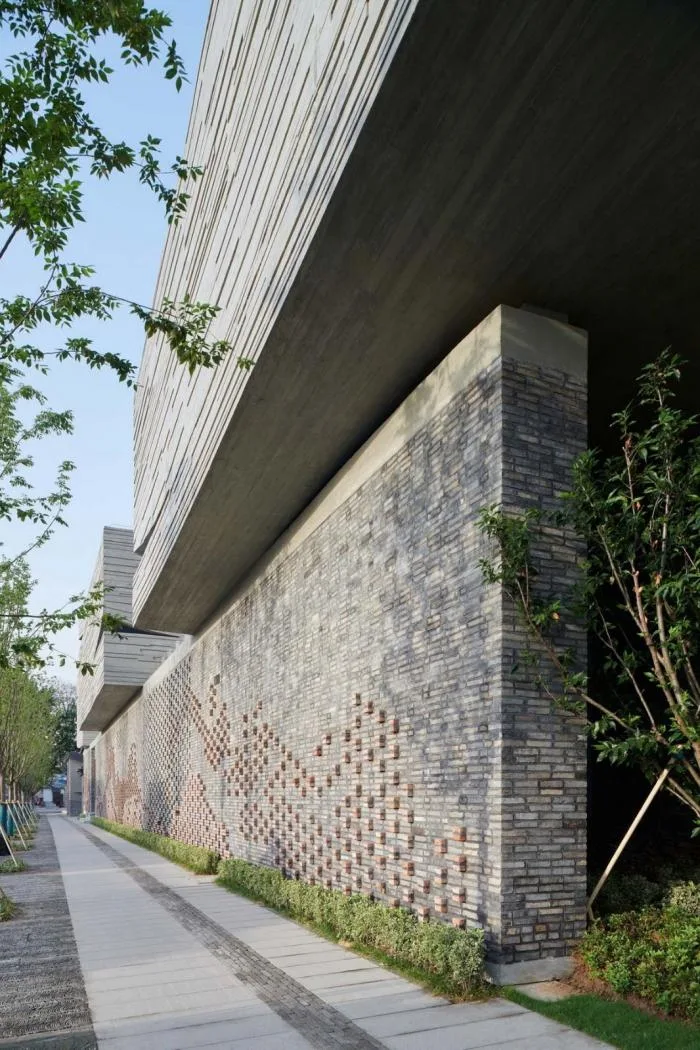
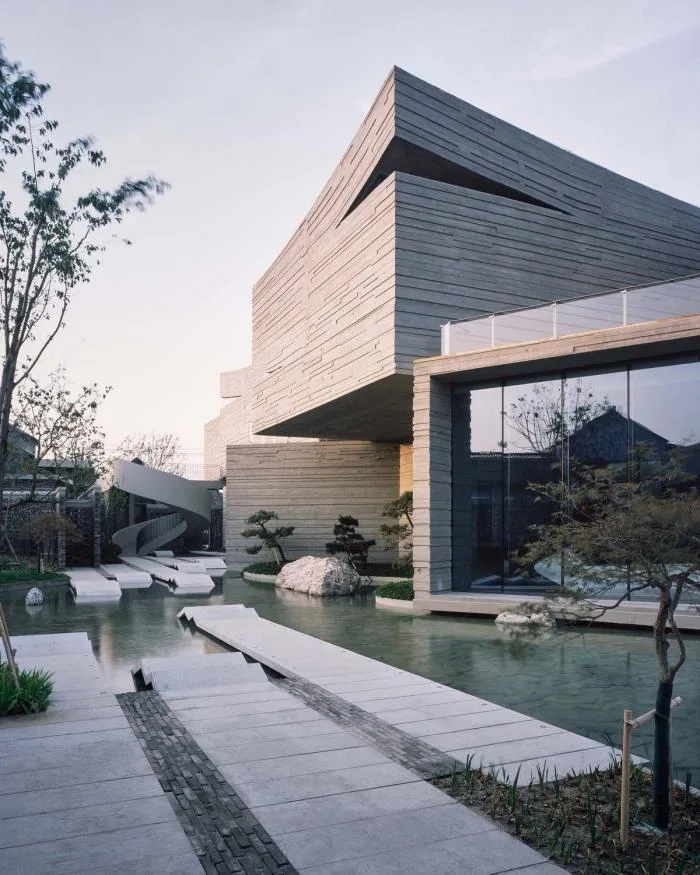
© Chen Hao
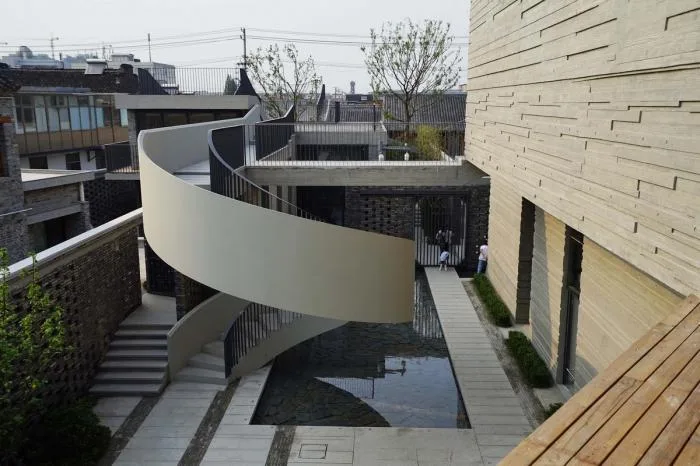
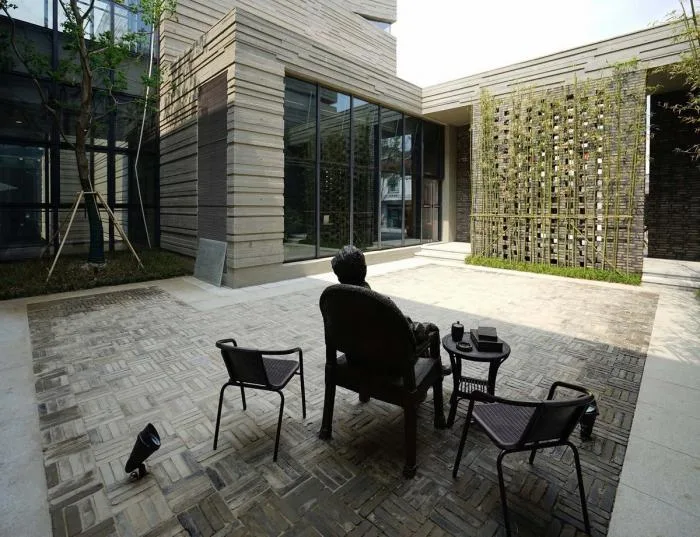
© Dai Yuhang
Wang Zengqi’s writings and conversations often describe his hometown’s landscape: “The city lies low, and they say the canal’s riverbed stands as high as the wall pillars. As children, we could see over the rooftops from the canal embankment.” This reveals how “water,” “city,” and “space” form the core spatial and environmental themes in his literature, perfectly aligning with Gaoyou Ancient City’s texture.
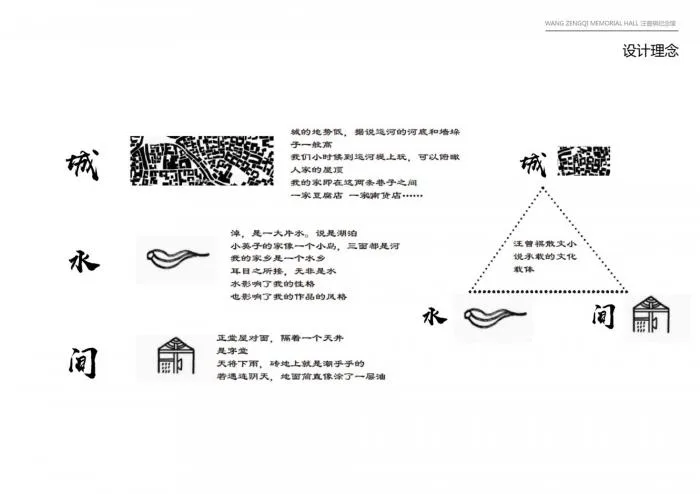
△ Design concept
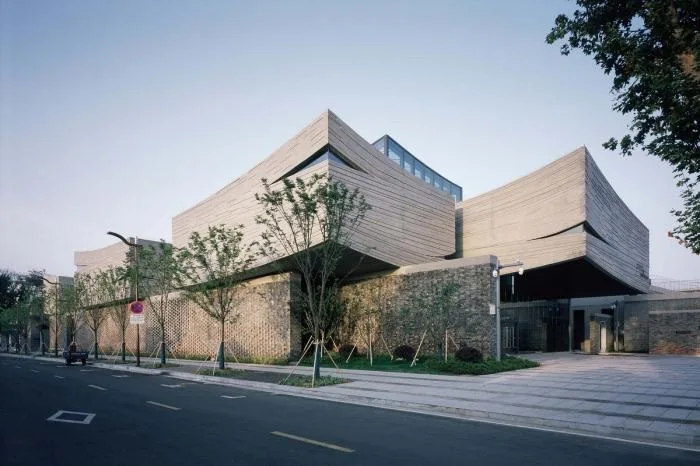
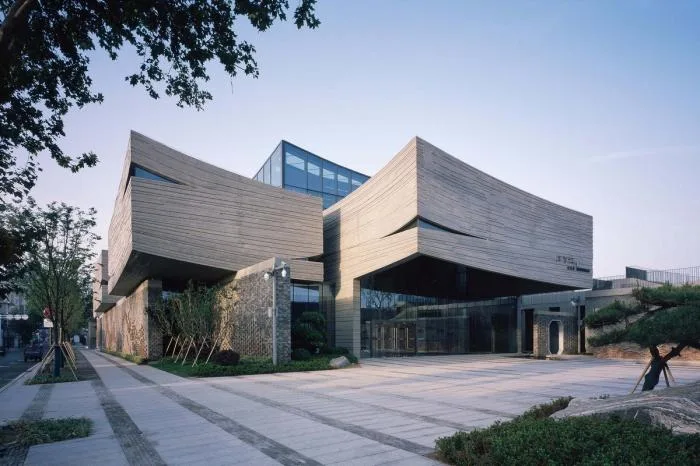
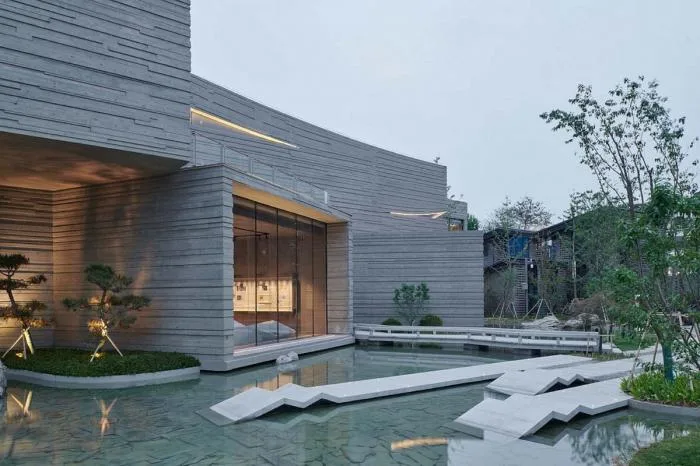
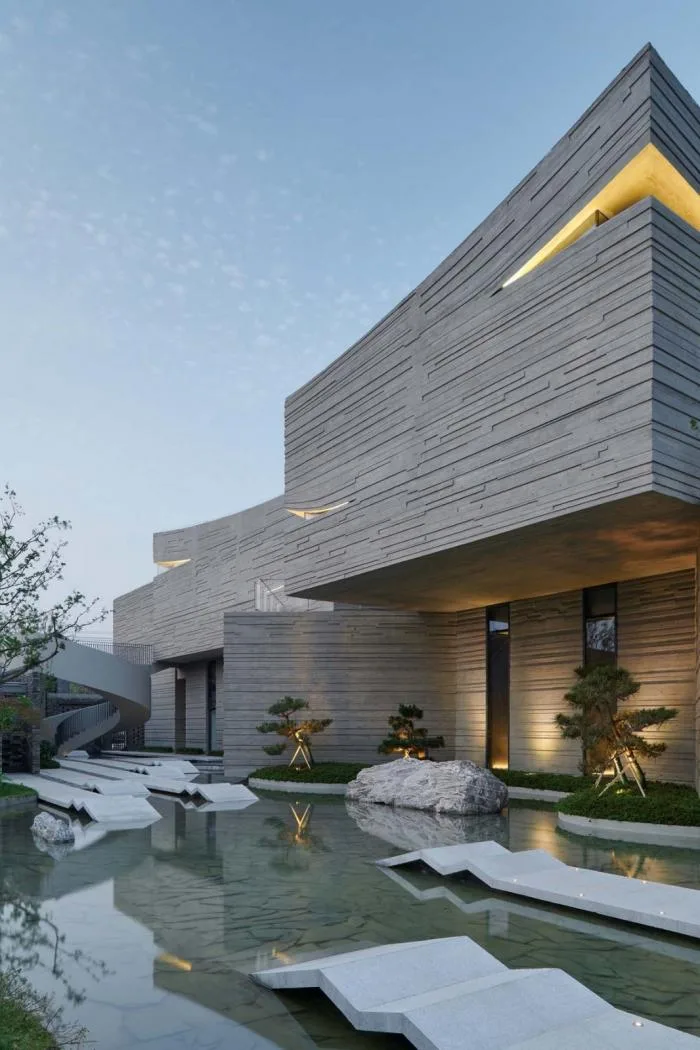
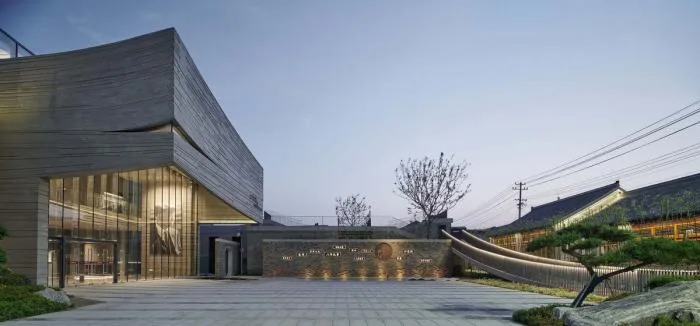
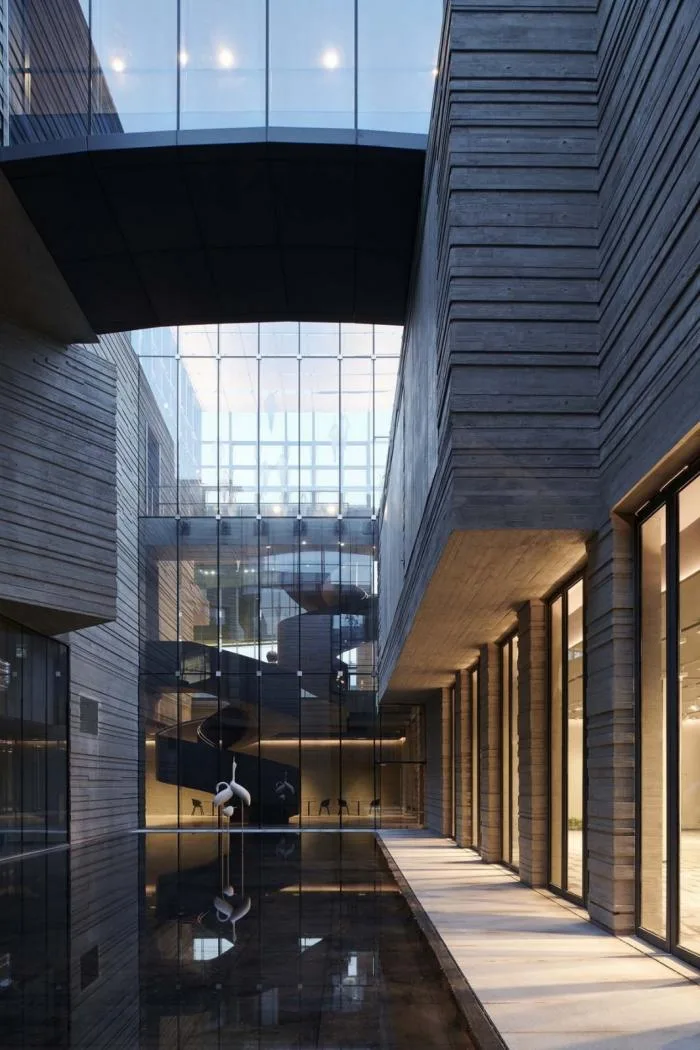
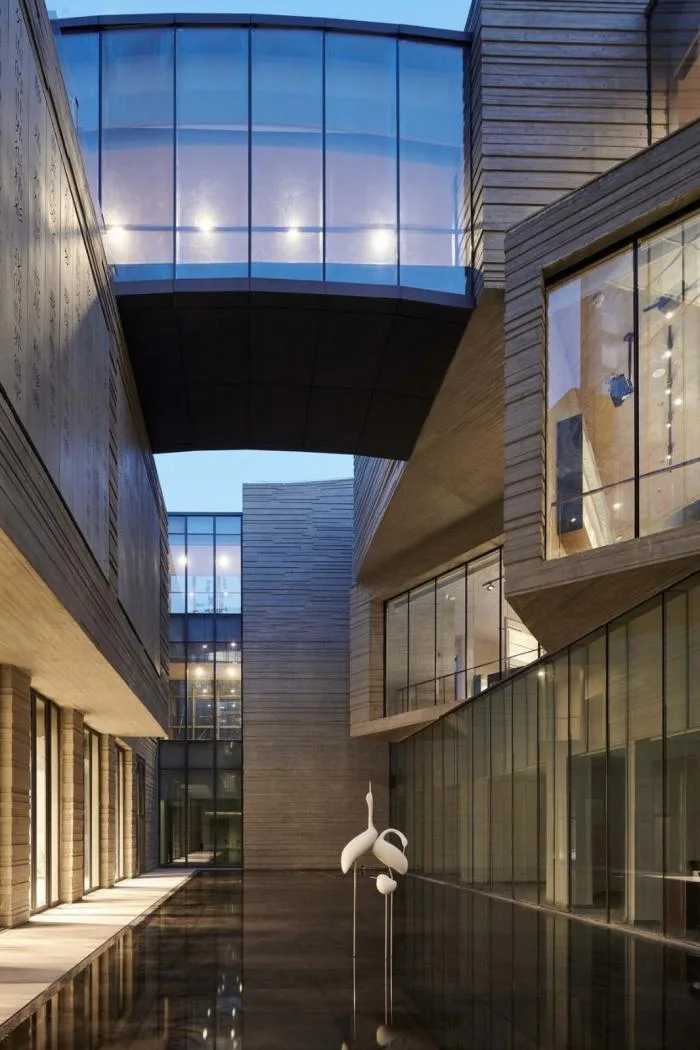
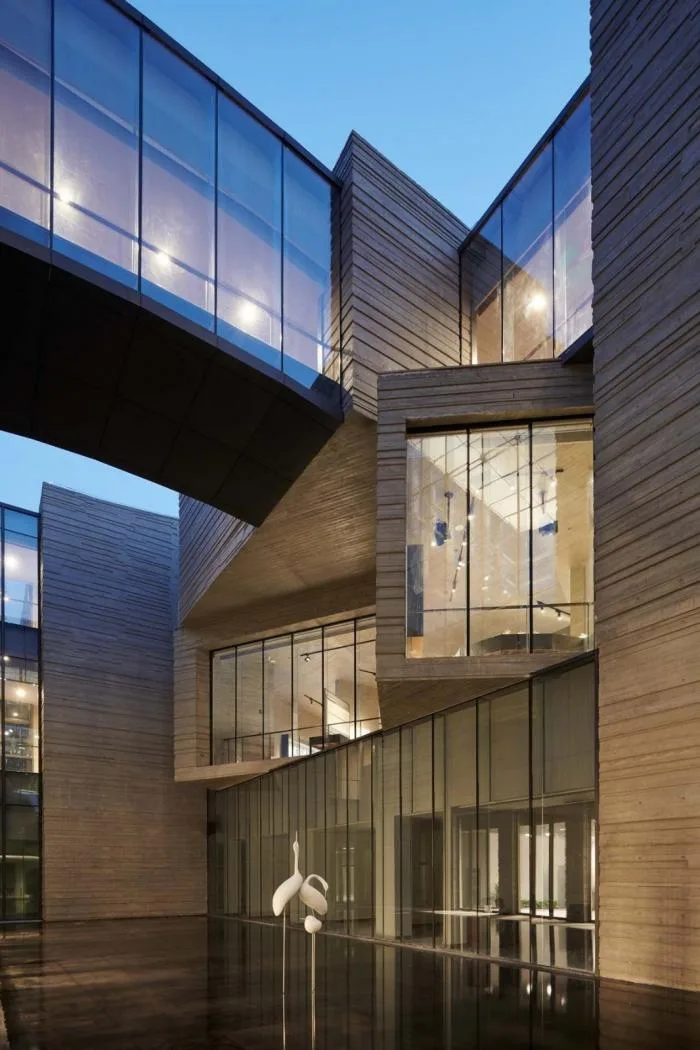
The memorial hall’s first floor features intersecting walls, with the west-facing wall rotated slightly to align with Wang Zengqi’s former residence, Qing Dynasty houses, and the Wang family inn. The second floor is designed as a “pavilion” that appears to float above the first floor, blending with the ancient city’s texture while showcasing the literary achievements of various authors—referred to as “placing pavilions to hide pearls.” Two courtyard spaces, a water courtyard and a tree courtyard, pay homage to traditional residential courtyard designs.
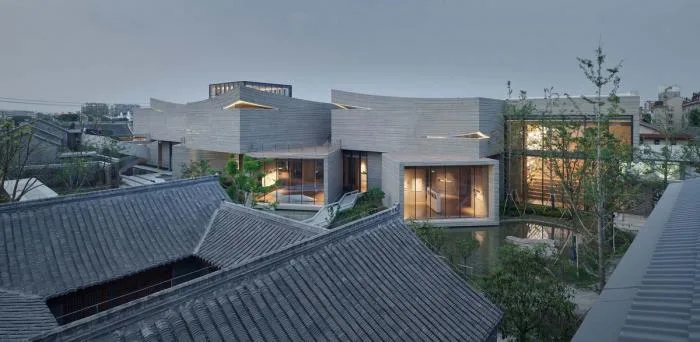
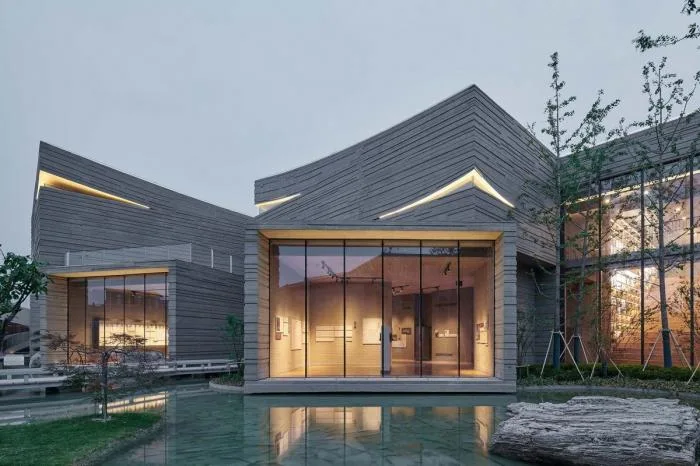
© Chen Hao
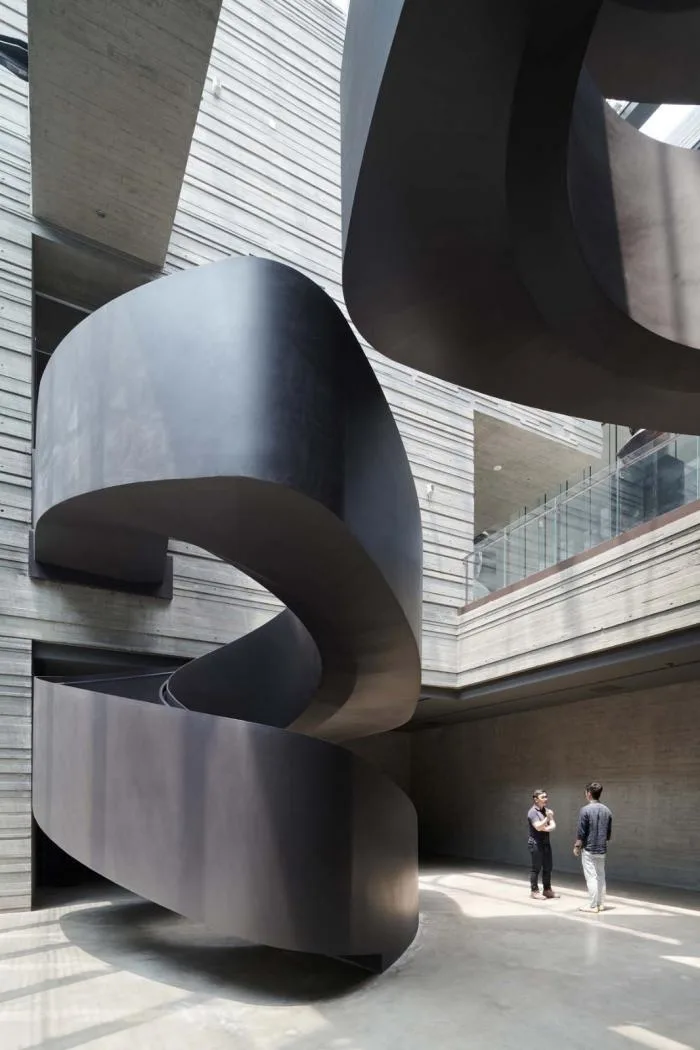
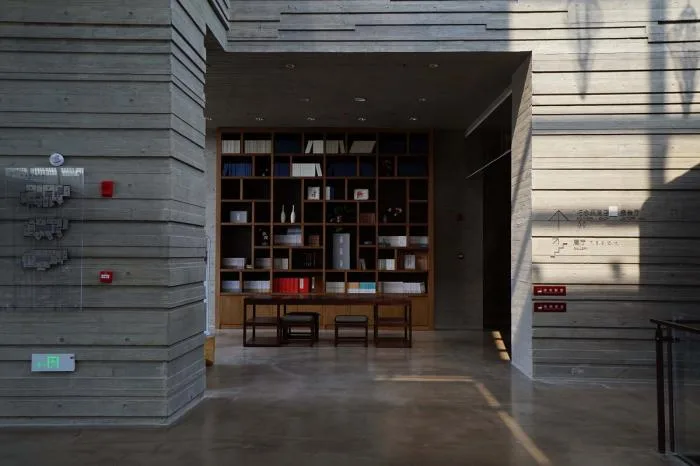
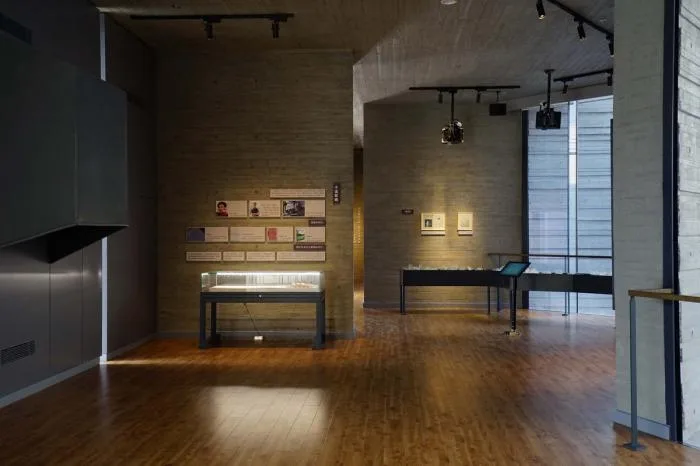
The interior layout centers on an entrance hall and a stepped lounge, with the exhibition flow weaving between them to create a dynamic spatial rhythm. The double spiral staircase serves as the visual highlight in the entrance hall, while the L-shaped corridor, suspended by steel cables, defines the character of the stepped lounge.
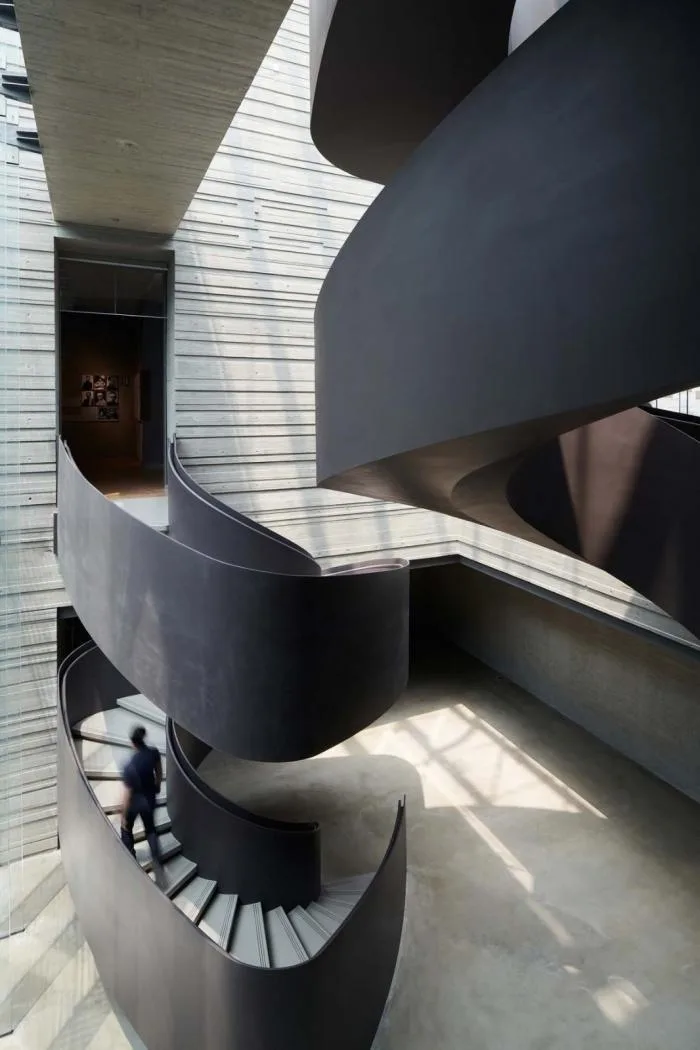
© Chen Hao
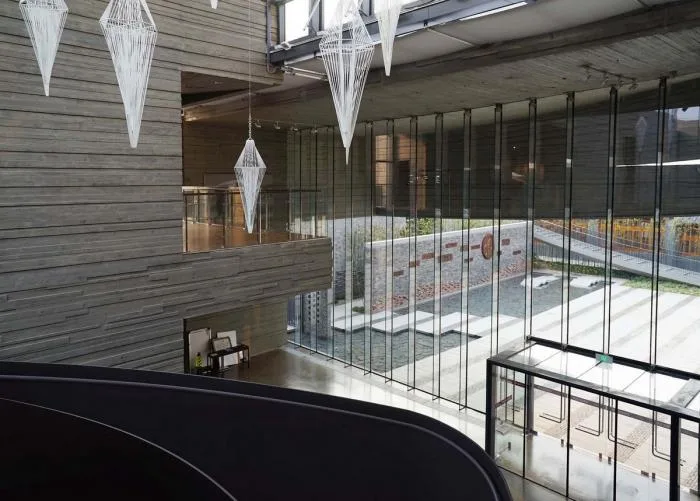
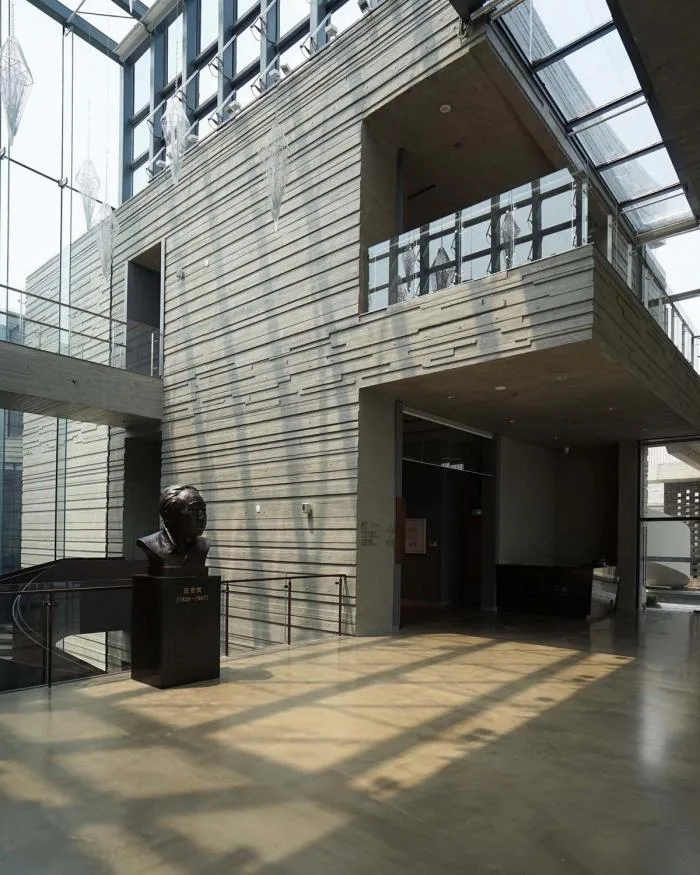
© Dai Yuhang
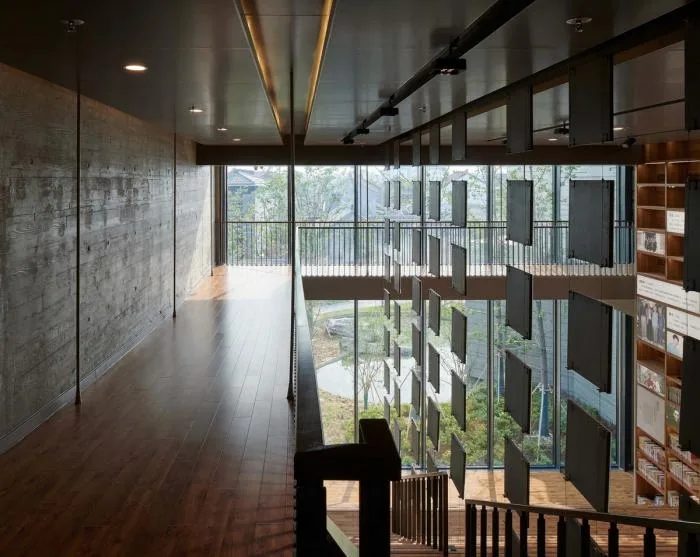
© Chen Hao
© Dai Yuhang
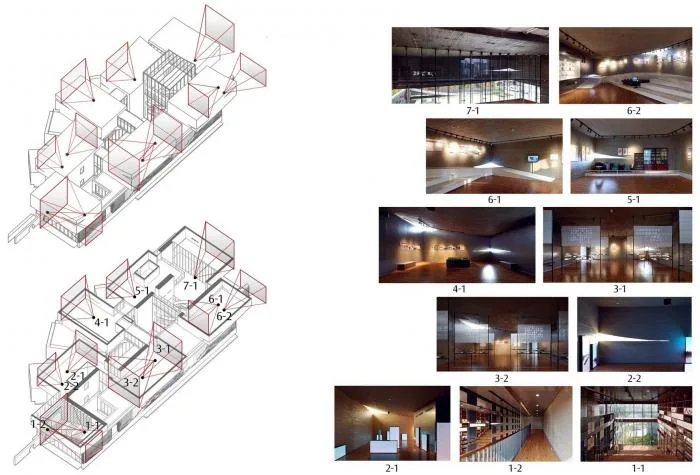
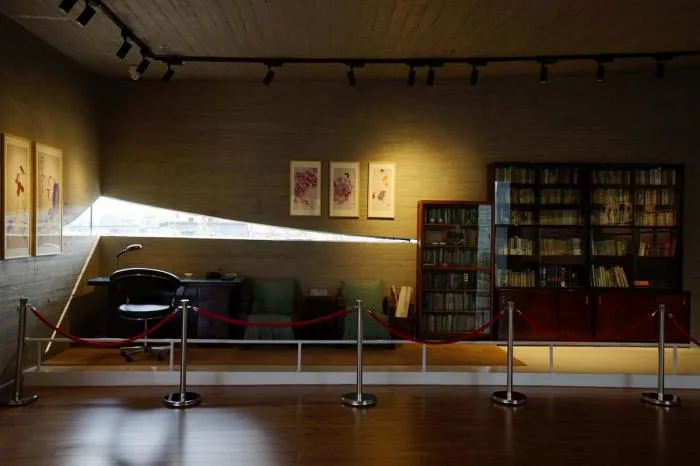
The memorial hall’s signature feature is a triangular window with an upturned corner, which gives the concrete structure a dynamic and elegant form reminiscent of a crane in flight. This long, raised triangular window breaks the boxy solidity of the building, allowing the literary world of Wang Zengqi to be displayed inside, while the real world is visible outside.
Sunlight beams through the triangular window onto Wang’s desk, creating a poetic dialogue between the inner and outer worlds, bridging time and space. Visitors can also catch glimpses of the rooftops beyond, as if “overlooking the rooftops” during their visit.
△ Interior view of the triangular window in the exhibition hall
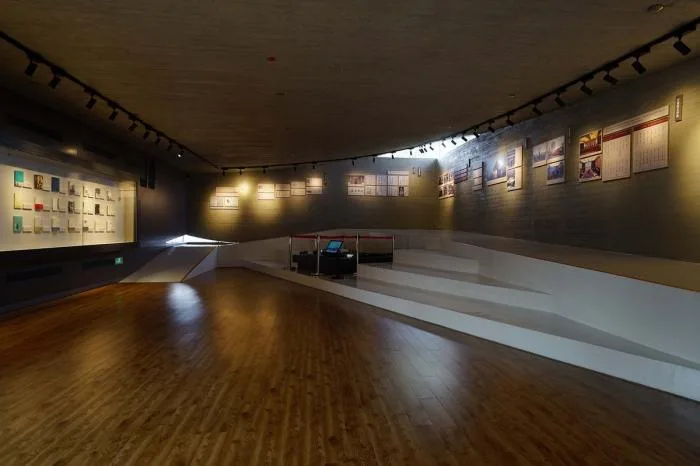
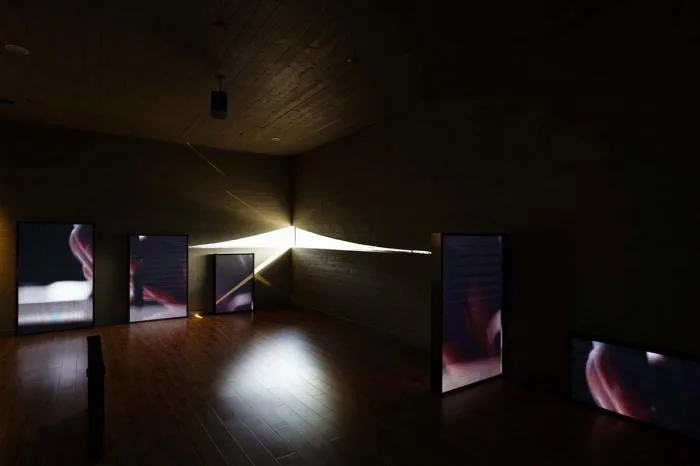
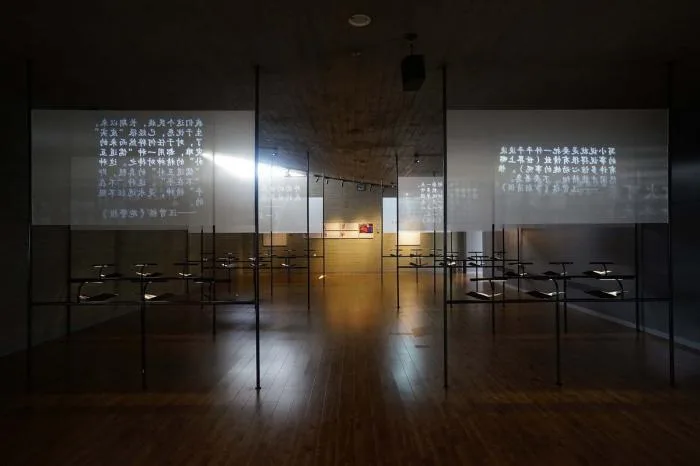
© Dai Yuhang
The spiral staircase descends to the basement, which houses a coffee lounge and a temporary exhibition hall surrounding the water courtyard. Visitors can contemplate Wang’s profound writings displayed on the walls or observe the flow of people in the entrance hall. Beyond the lecture hall on the first floor, guests can visit the Wang Lao Shu Bar, a quiet space for reading and intimate conversations with the figure of Wang Lao through the window overlooking the tree courtyard.
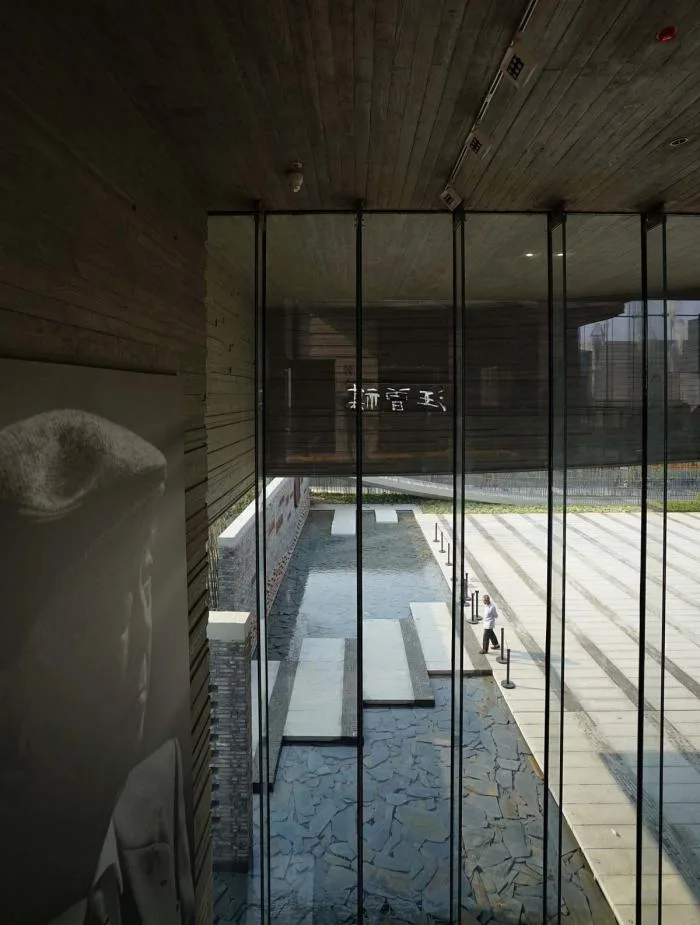
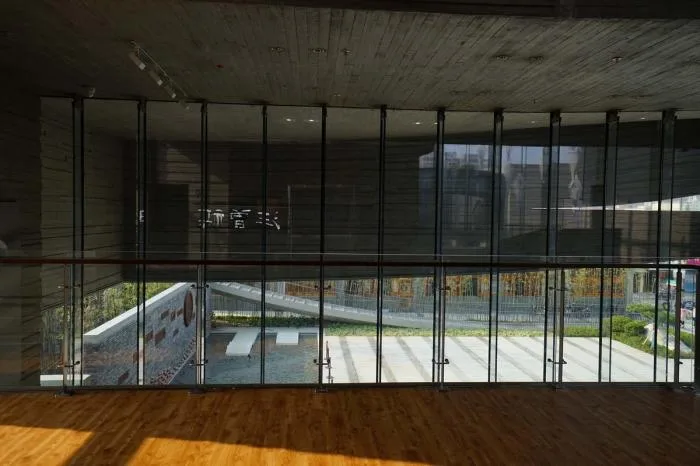
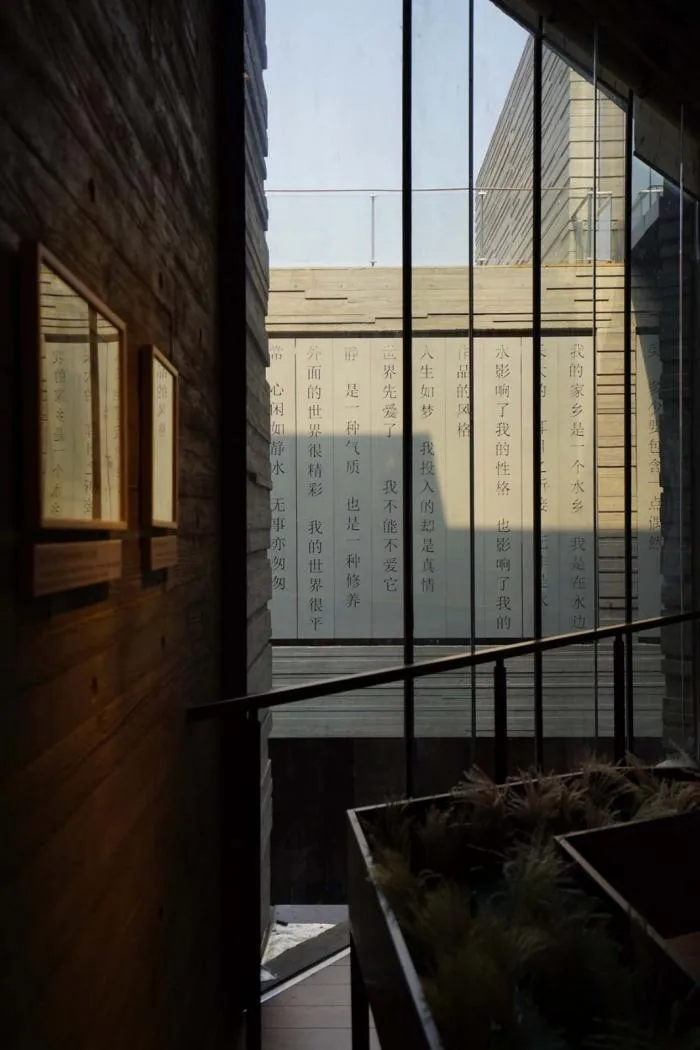
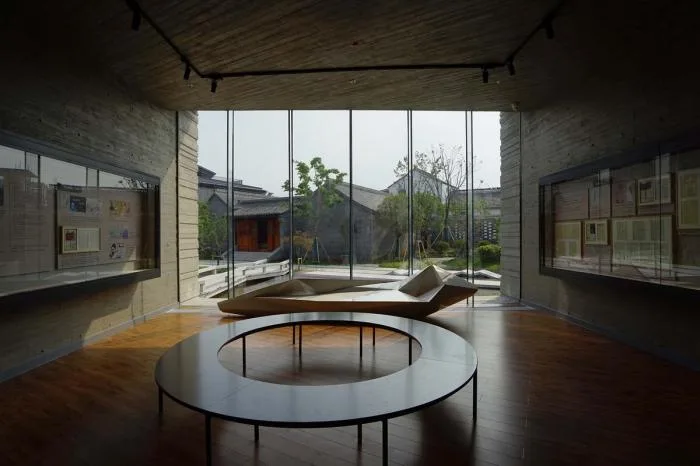
© Dai Yuhang
Regarding building materials, the architect repurposed old bricks from various historical periods recovered during on-site demolition to create the “Gaoyou Landscape Map” along the street facade. These reclaimed bricks and tiles were also used for paving, ramps, and the roofs of the Wangmi tribe buildings. Walking through the site, visitors are immersed in the continuation of the site’s cultural “genes.” These elements preserve Gaoyou’s cultural traditions and evoke collective memories of the place.
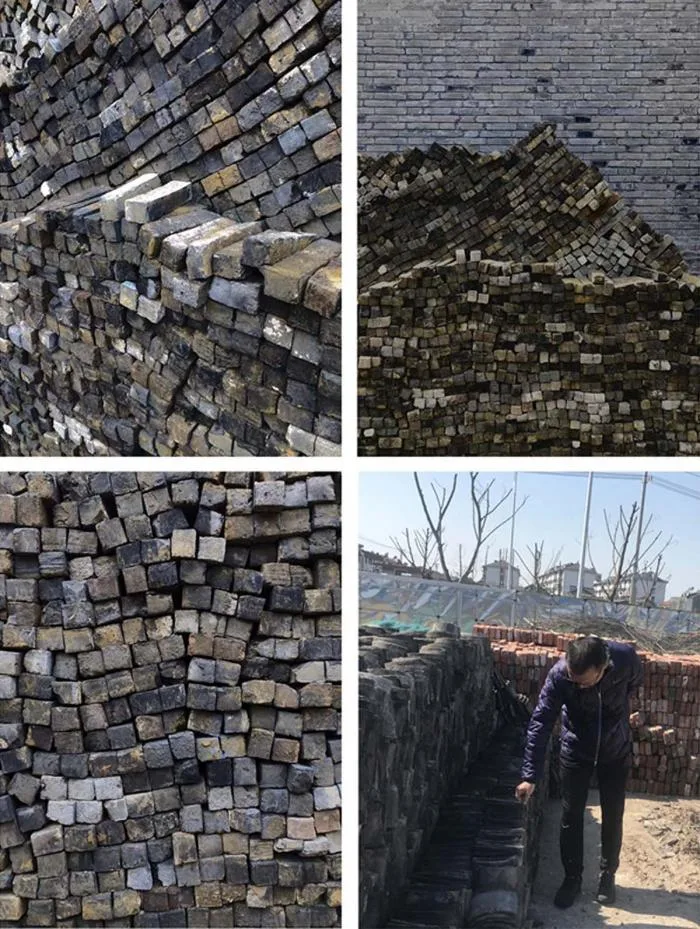
△ On-site material preservation
The memorial hall’s main theme employs warm gray exposed concrete, paying homage to Wang Lao’s literary sentiment of “sending Xiao Wen to the world.” The concrete’s intricate wood-grain texture enriches the architectural expression, evoking a poetic atmosphere.
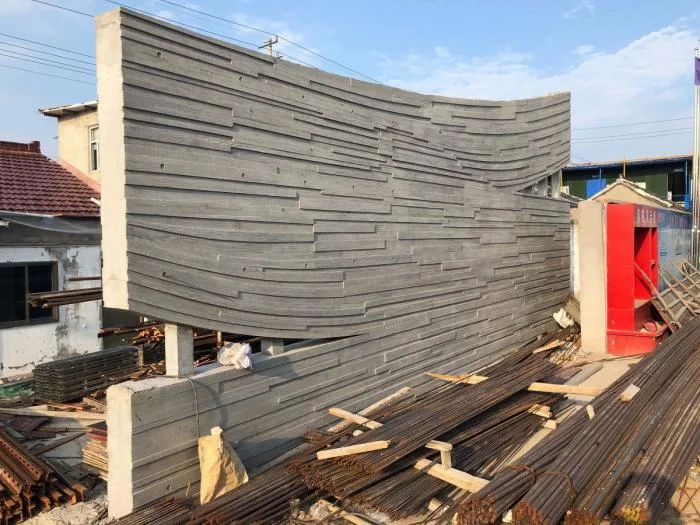
△ Detailed clear water concrete sample wall
The Wang Zengqi Memorial Hall Cultural Characteristic Block—from block layout to memorial hall design, spatial composition, materials, and detailing—aims to bring visitors closer to Wang Zengqi’s spirit and the ancient city of Gaoyou. As Mr. Wang said, “I hope to achieve a fusion of uniqueness and simplicity, integrating foreign and traditional elements, neither modern nor ancient, neither central nor western.”
Design Drawings
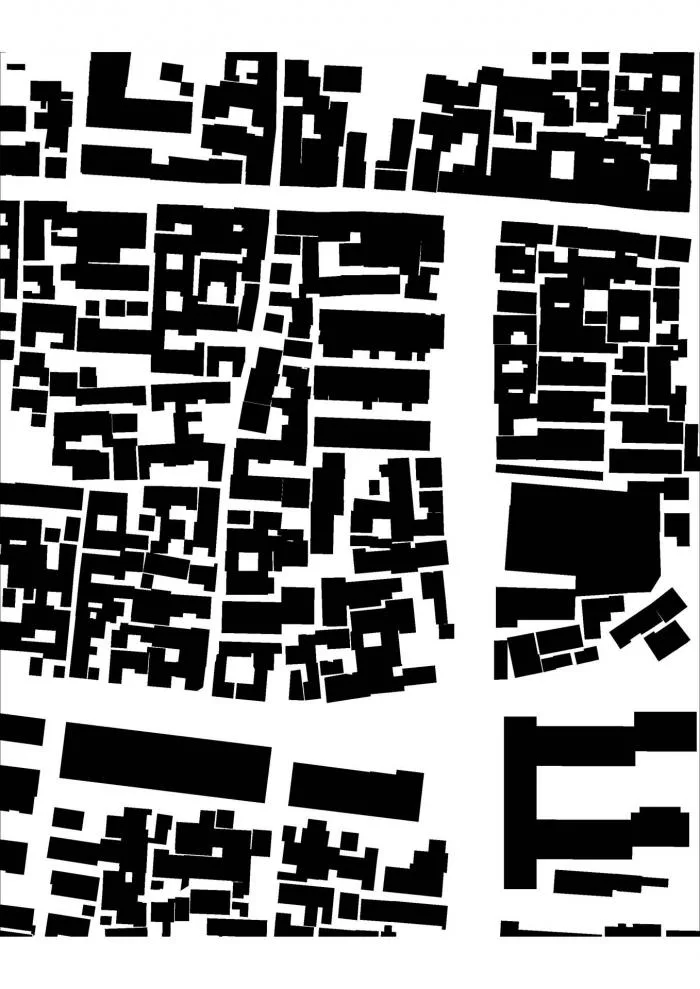
△ Pre-construction diagram relationship
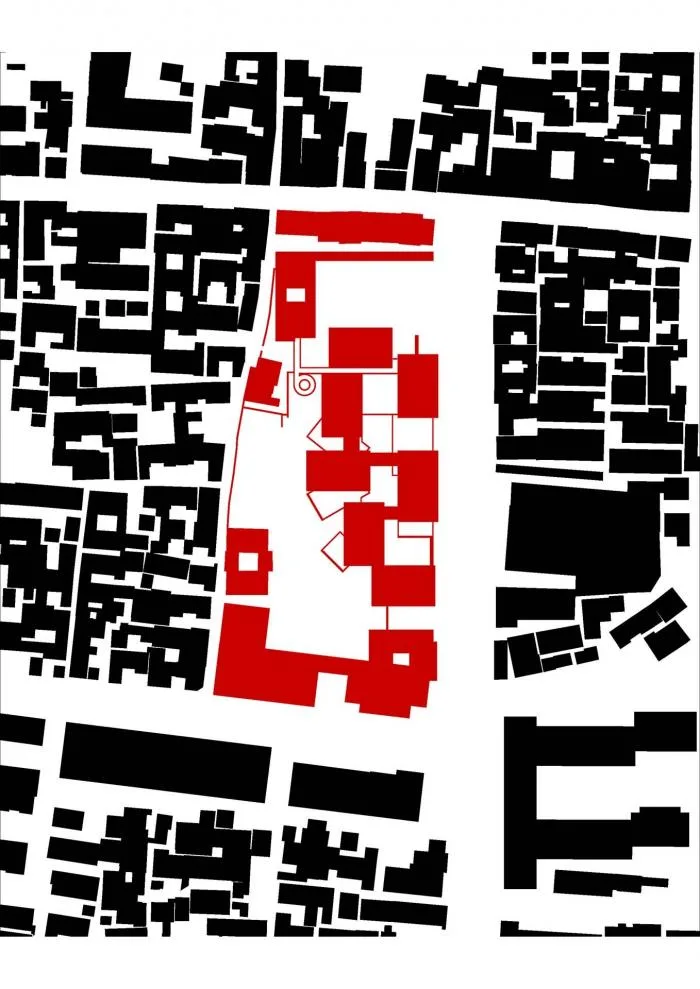
△ Post-construction diagram relationship
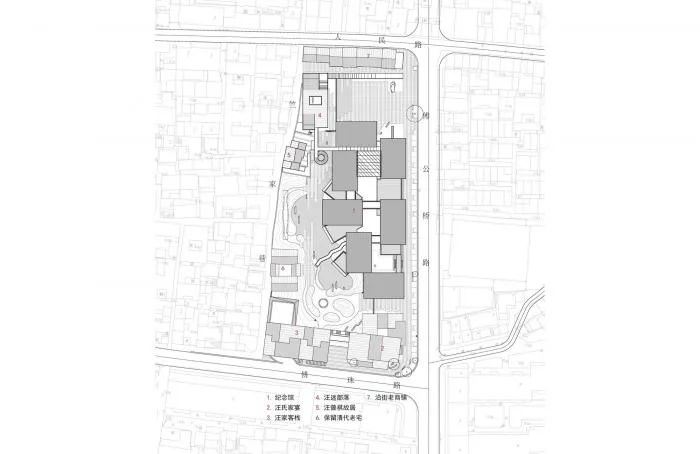
△ Overall plan
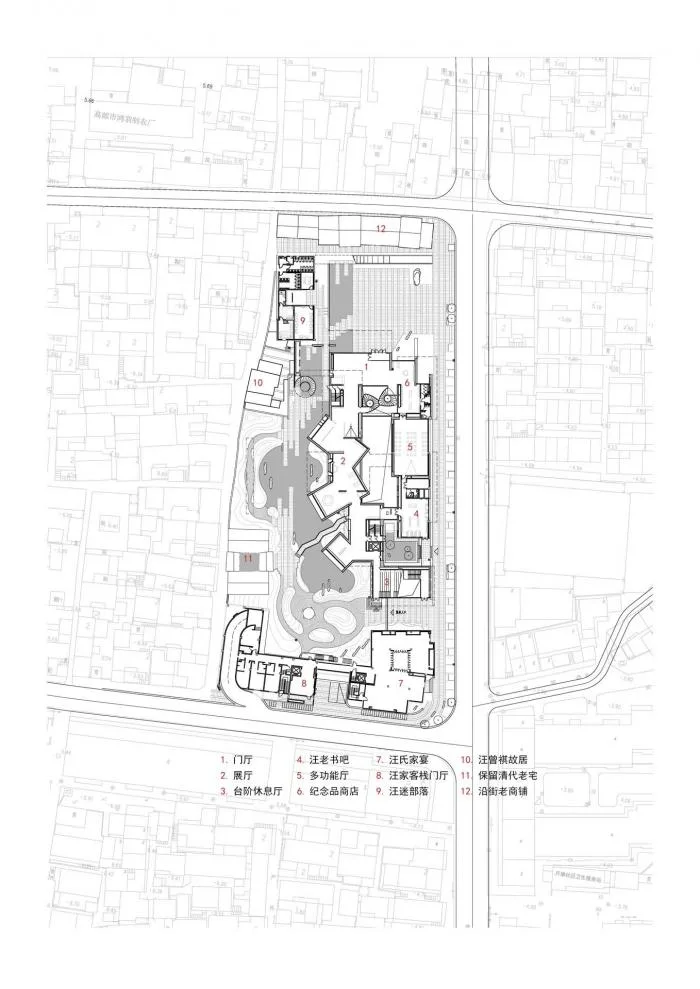
△ Memorial hall first floor plan
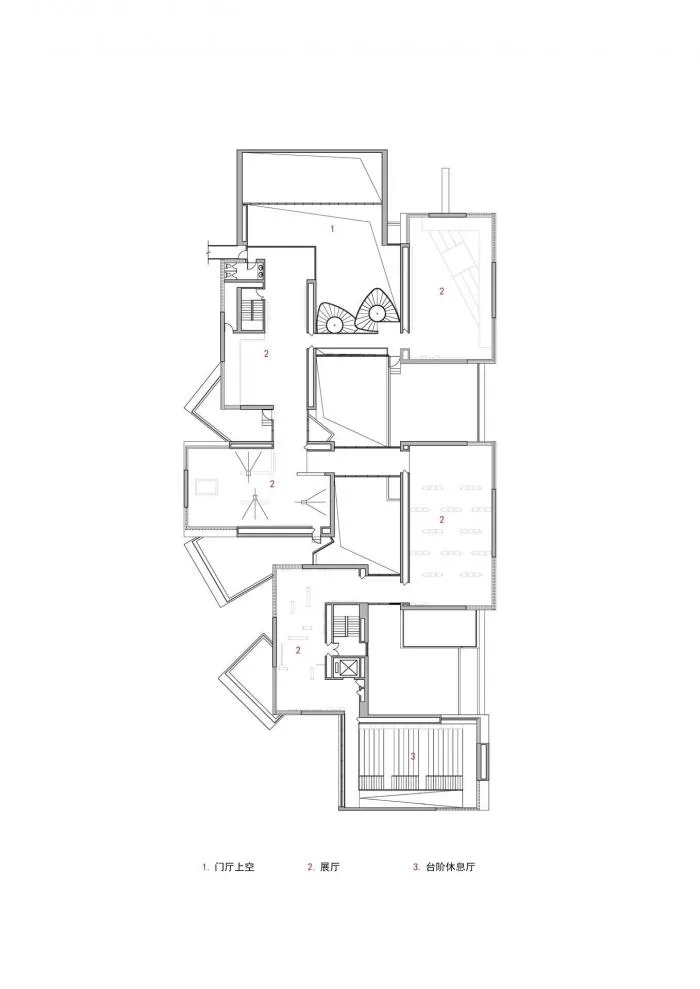
△ Memorial hall second floor plan
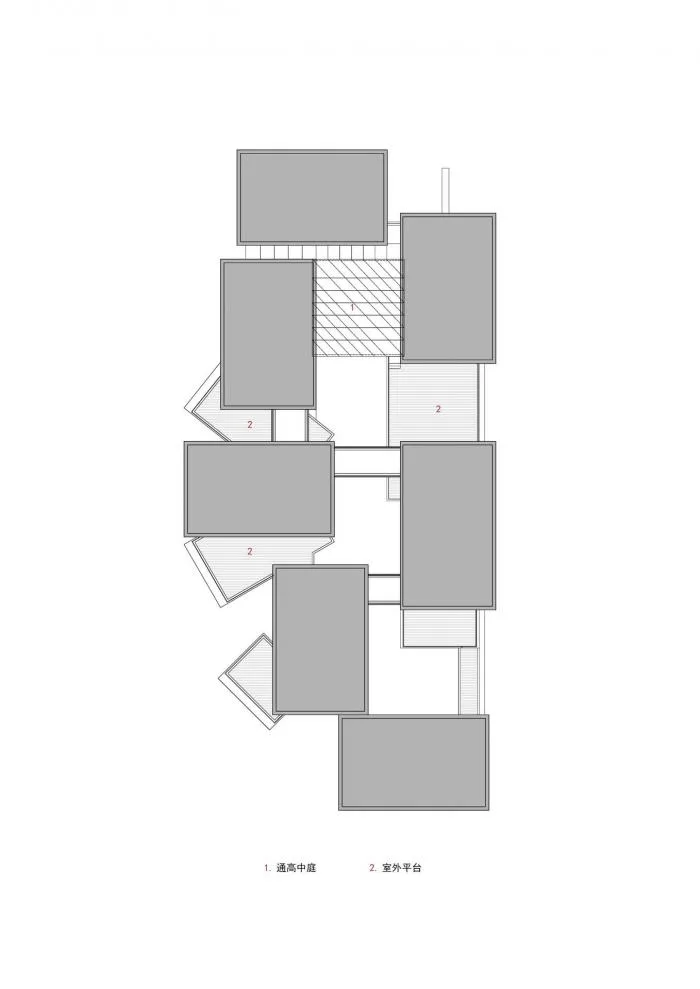
△ Memorial hall roof plan
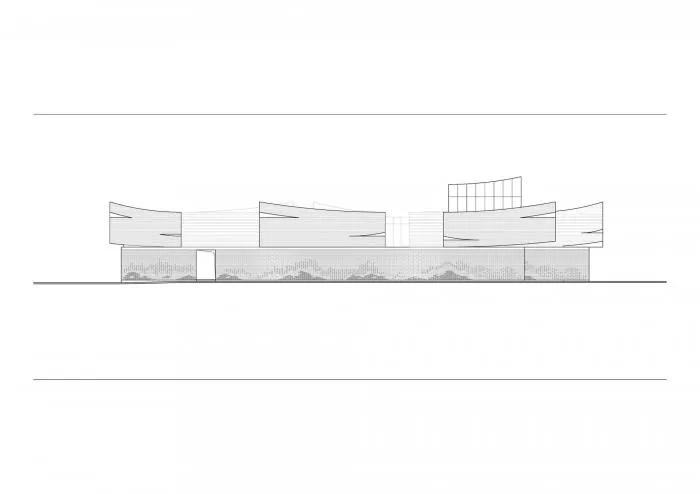
△ Elevation drawing
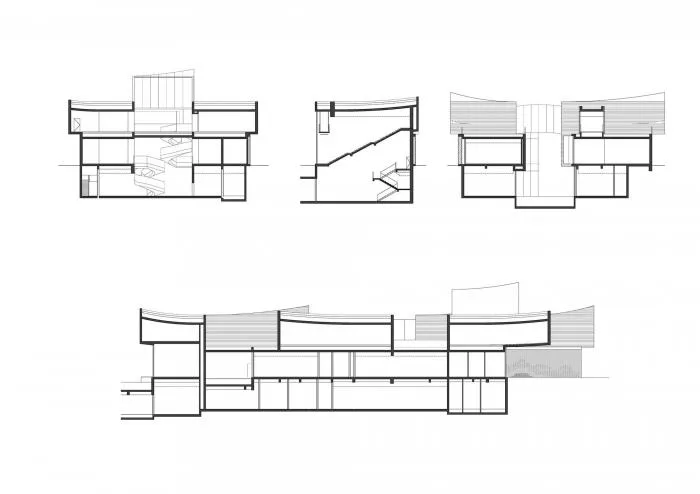
△ Section diagram
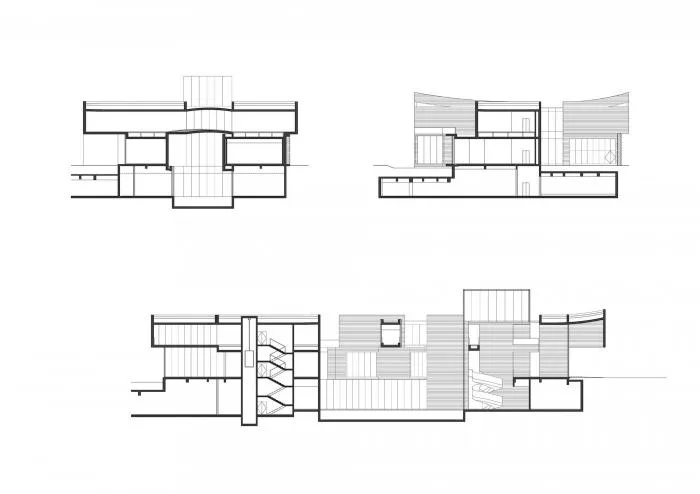
△ Section diagram
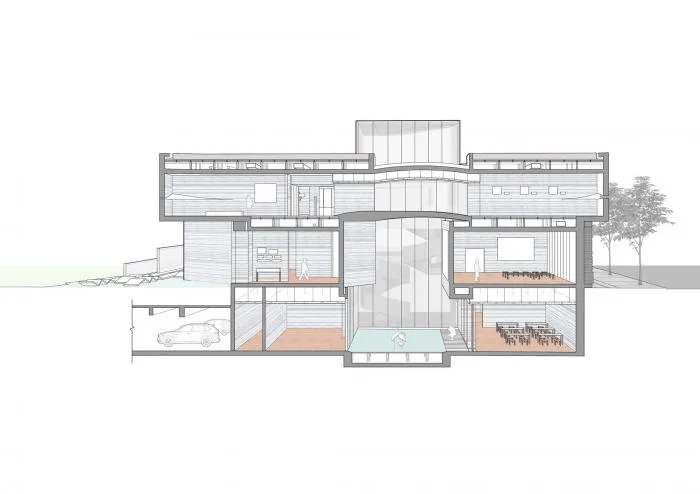
△ Profile
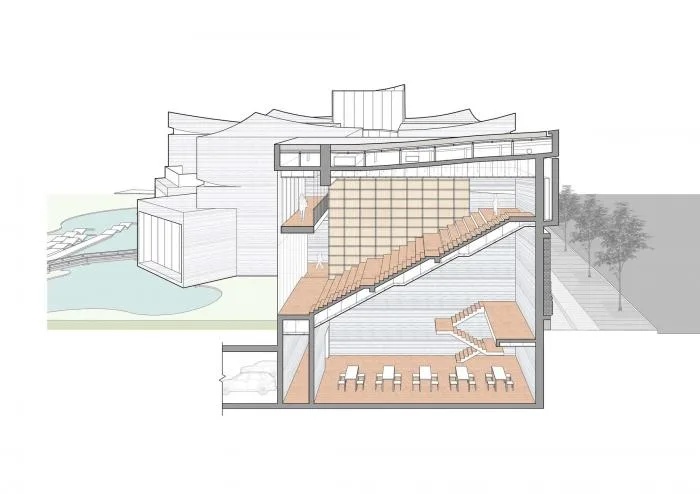
△ Profile
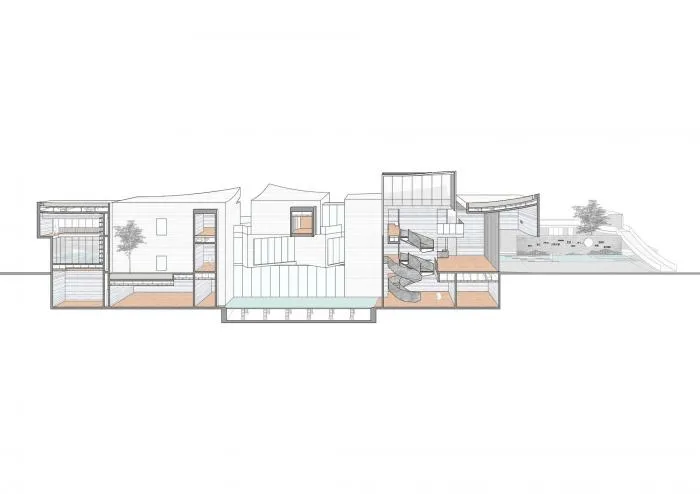
△ Profile
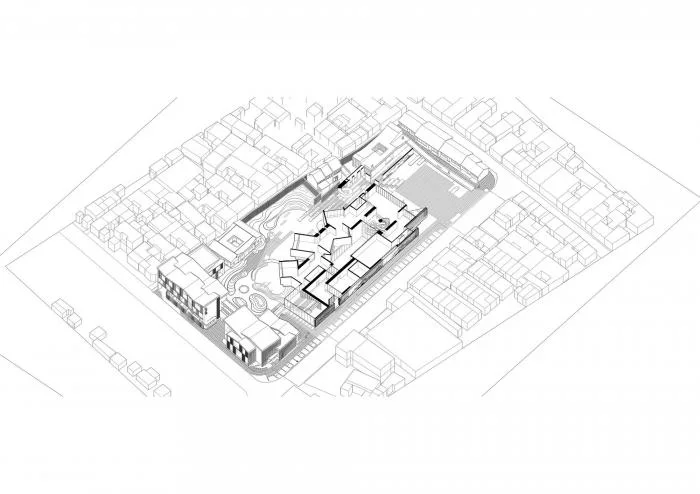
△ Profile
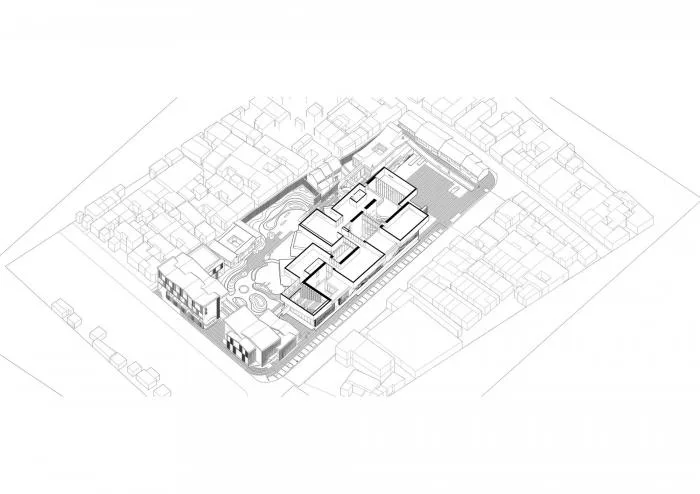
△ Profile
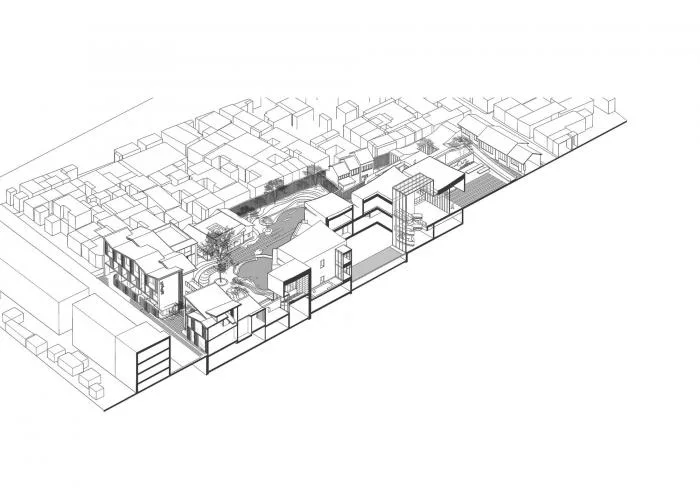
△ Profile
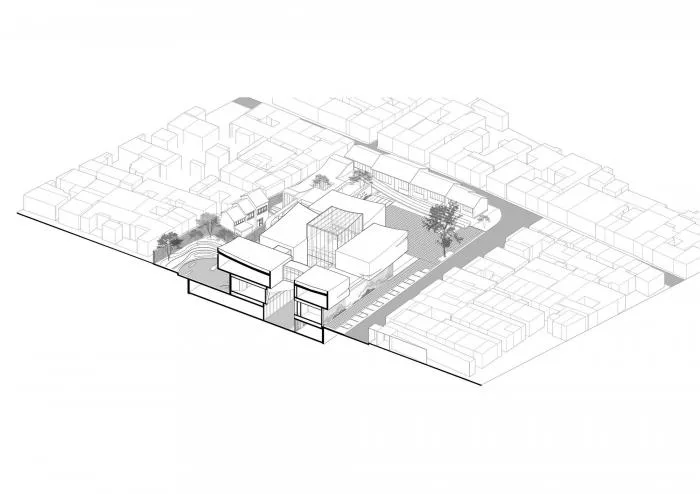
△ Profile
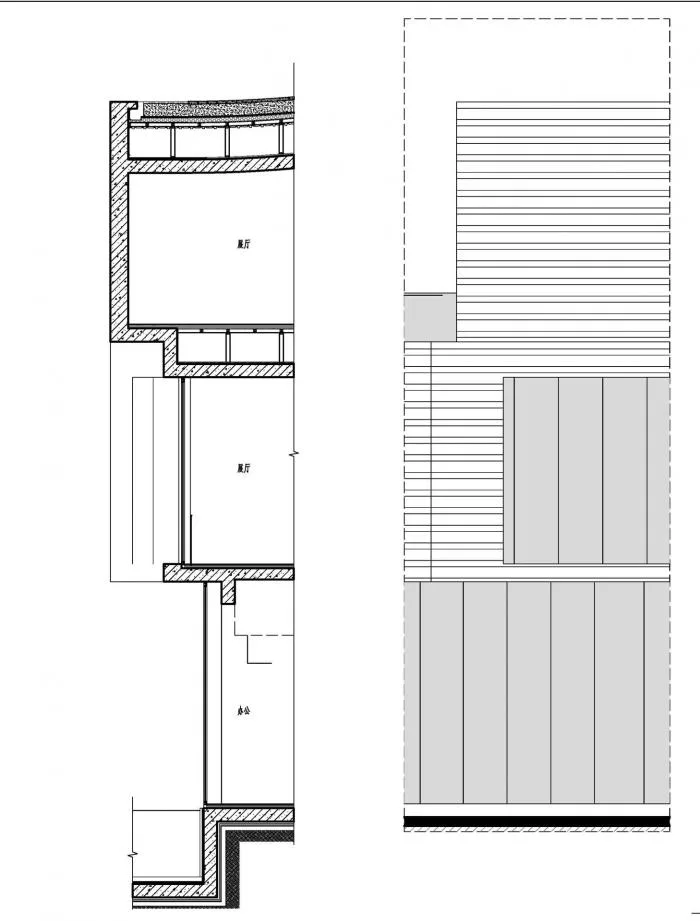
△ Detailed design
Project Information
Project Type: Cultural Architecture
Location: Gaoyou City, China
Architect: Tongji University Architectural Design and Research Institute
Area: 9,487 m²
Year: 2020
Photographers: Chen Hao, Yuhang Dai
Lead Architects: Jiang Limin, Wang Difei, Dai Yuhang
Design Team: Jiang Limin, Wang Difei, Dai Yuhang, Cui Renlong, Wu Bin, Xiong Zhuozhi
Structural Design: Zhu Liang, Liu Bing, He Xinwei, Zhang Shuo, Yang Hui
Water Supply & Drainage: Li Liping, Wang Naxin, Xu Zhongjun, Jin Weige
HVAC: Qian Bihua, Wang Yu, Qin Zhuohuan, Zhang Ping
Electrical: Song Haijun, Zhu Yajun, Li Yuzhi, Yang Yuanxin
Exhibition Curation: Li Xiangning, Zhang Ziyue, Mo Wanli, Deng Yuanye, Yang Xiaodong
Interior Implementation: Zhang Wei, Chen Lei, Yang Jinyu, Lin Fan
Landscape: Jiang Limin, Wang Difei, Dai Yuhang, Zhang Yuhui
Lighting: Yang Xiu, Chen Xingru, Xu Xiaqing, Ge Xueting, Zhou Wanyuan, Du Yiting
Curtain Wall: Tian Lijun, Zou Kai
Sculpture: Qin Pu (Central Academy of Fine Arts)
Client: Gaoyou Qinyou Tourism Development Co., Ltd.












Must log in before commenting!
Sign Up