
△ Project Video: Overhead footage captured after completion
WDD Dimension Point Design recently completed the renovation of the “Jushe Tea Collection” project in Xiamen. This project is housed in a historic Nanyang Overseas Chinese villa featuring an independent courtyard. Located adjacent to Nanputuo Temple, the villa has been transformed into a café. The redesigned space now functions as a multifunctional commercial area, combining a tea room, an artifact exhibition hall, and venues for cultural and artistic events.
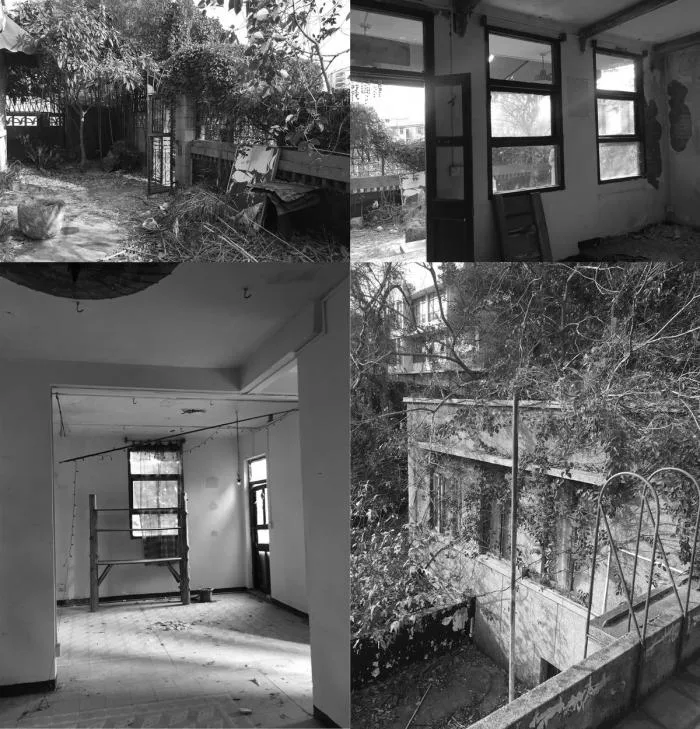
△ Original condition of the site
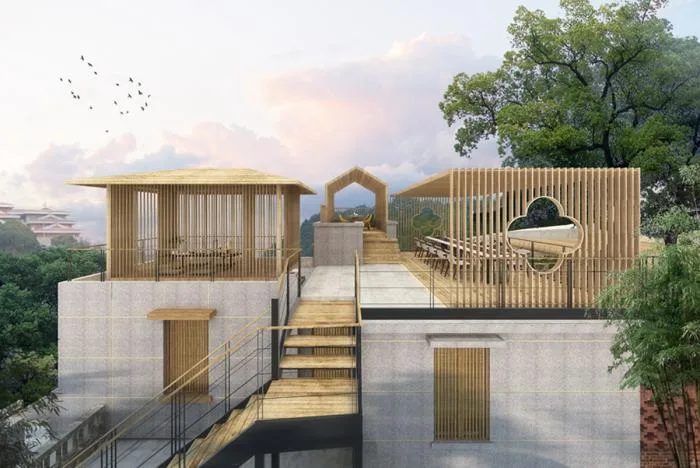
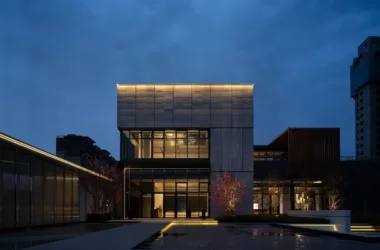
Top view of the renovated project
Project Background and Original Appearance
Accessing the project site involves ascending stone steps after crossing an intersection on Nanhua Road in Xiamen. Upon entering through the courtyard gate, two courtyards—one in front and one behind the building—are connected by a narrow path. The building itself has two floors indoors, each featuring a mezzanine level, along with two outdoor terraces on the second floor. Prior to renovation, the structure was long abandoned, with peeling walls both inside and out, resulting in a state of disrepair and disorder.
Design Strategy
The initial focus of WDD’s design was to preserve and restore the historical and cultural essence of the original building. Through structural reinforcements and other careful interventions, the authentic appearance of the Nanyang Overseas Chinese architecture was maintained, while ensuring the safety and functionality of the commercial spaces designed to accommodate heavy foot traffic.
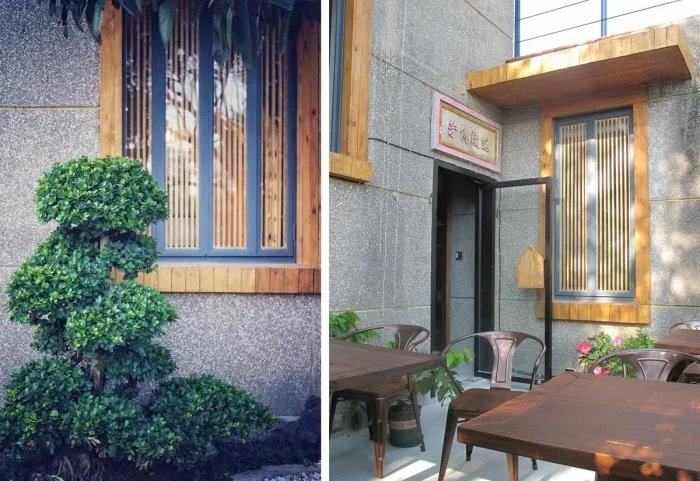
△ Photos documenting façade protection
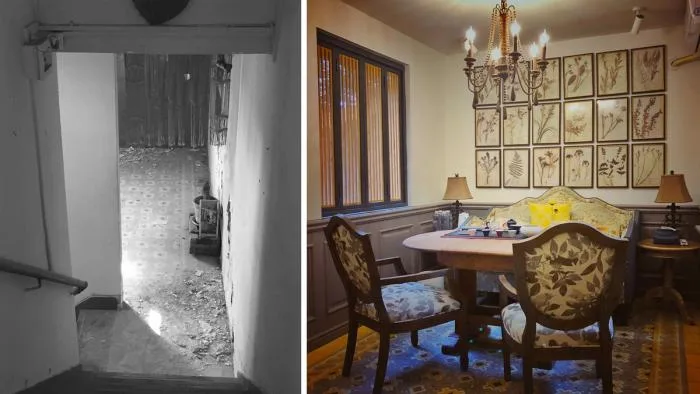
△ Indoor preservation of characteristic ceramic tiles from the Nanyang villa
Following this, WDD approached the site planning with a focus on minimal intervention. By selectively retaining and sealing walls and door openings, the design harmoniously integrates indoor activities with the outdoor courtyard tea gardens. Functions related to tea, utensils, culture, and art were systematically organized to enhance spatial flow and natural lighting.
The front and back courtyards connect seamlessly with the indoor study, while access is provided from the terrace and backyard to the rooftop garden respectively. This upgraded circulation route facilitates smooth transitions between indoor and outdoor spaces, creating a unique spatial experience and an efficient service path.
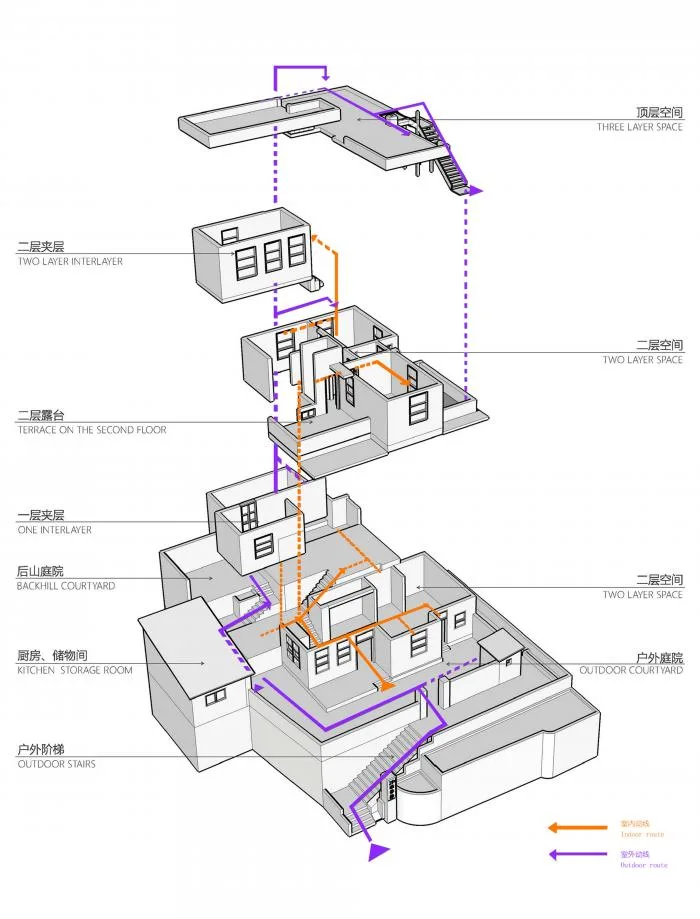
△ Analysis of line transformation
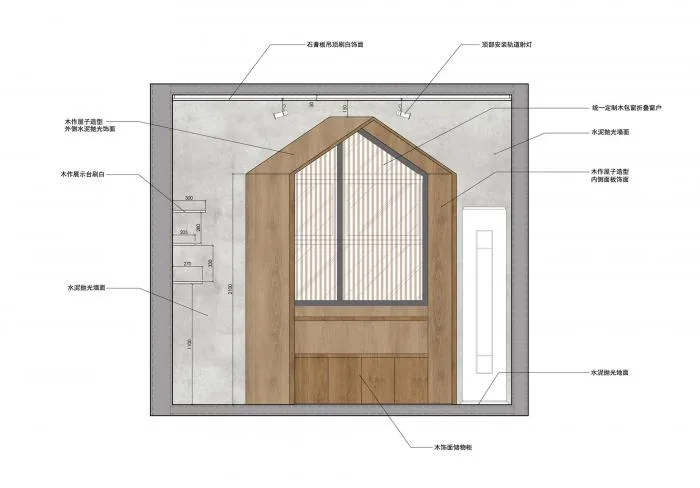
WDD selectively incorporated new functions while respecting the original site features. On the first floor entrance wall, where multiple windows exist but lacked display surfaces for tea utensils, WDD introduced the client’s “Jushe LOGO” shaped like a small house to serve as a display platform, without obstructing the original windows.
This visually striking house form intertwines with doorways and windows, creating a distinctive visual and sensory experience. The wooden room structure adds depth to the display space and forms a rich layered interior frame.
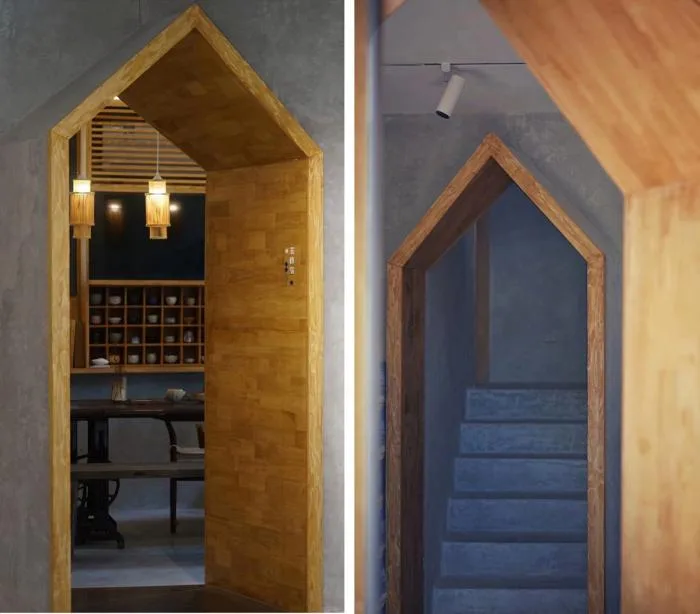
Indoor space nested with real-life scenes
The main trees in both the front and back courtyards were fully preserved. New functional elements were introduced at key nodes, serving as visual and spatial anchors. An open tea room was created at the corner connecting the first floor vestibule and the backyard.
The tea room’s orientation follows the original ornamental trees planted in the courtyard, positioned at an inclined angle to foster a harmonious relationship with nature. The terrace adjacent to the tea room is furnished with chairs along the wall, providing panoramic views of the courtyard.
The rooftop landscape terrace features safety handrails and a sunshade structure designed to accommodate height differences, offering visitors a comfortable and pleasant viewing experience.
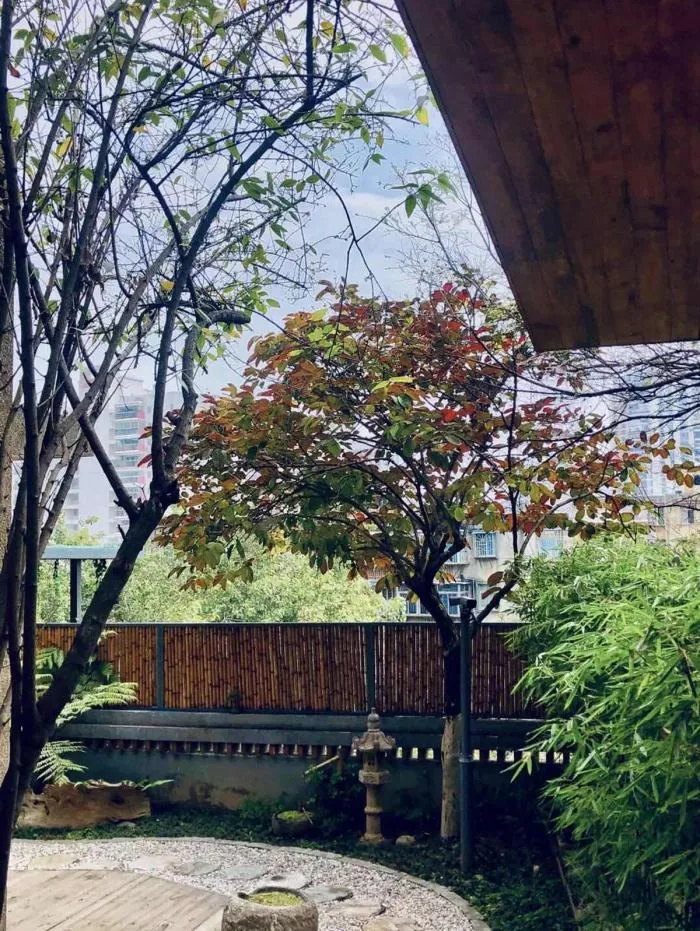
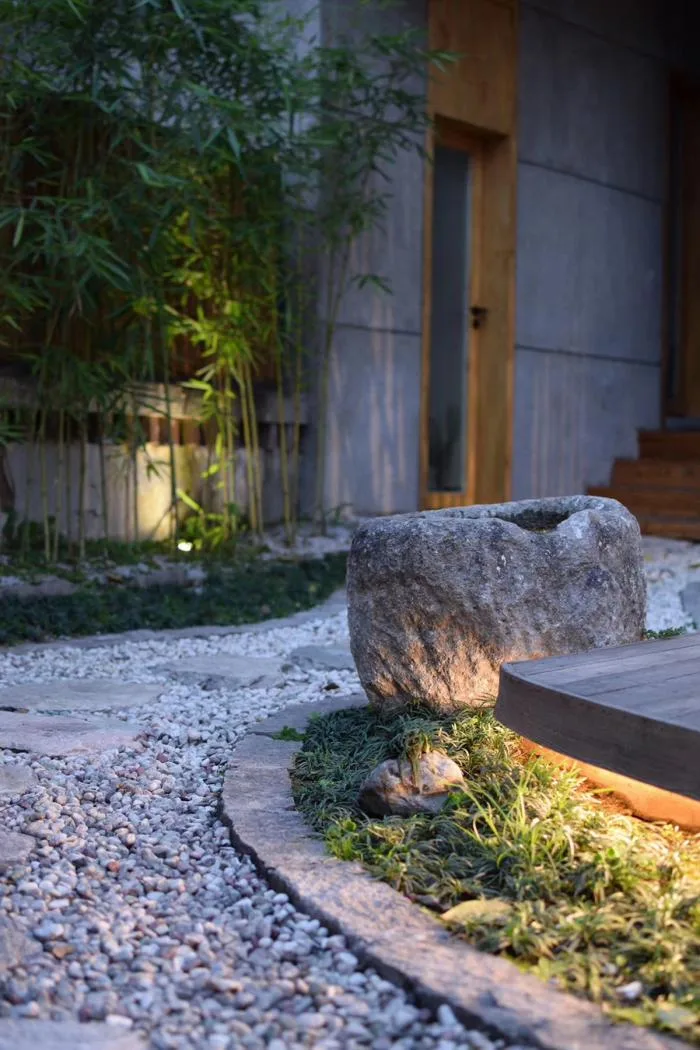
△ Realistic courtyard scene
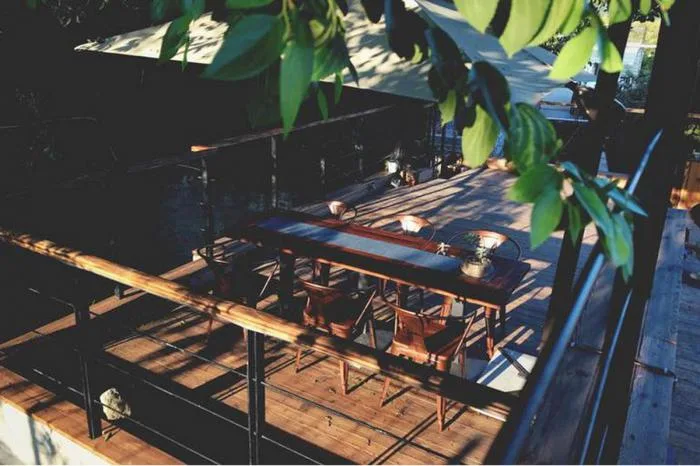
△ Realistic view of the rooftop terrace
Conclusion
This project represents a contemporary effort to revitalize architectural heritage while safeguarding the legacy of Overseas Chinese architecture in Southeast Asia. WDD’s subtle interventions successfully protect and transform the historic building, imbuing it with new functions and breathing new life into the space.
The design balances modern features and lifestyles with historical continuity, allowing time to flow and reconstruct. This fusion generates dynamic energy within the space, offering a unique experiential environment that connects the past with a vision of the future.
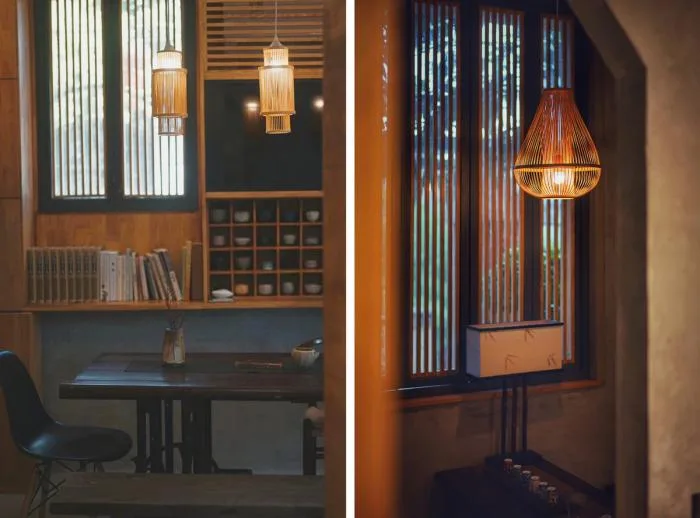
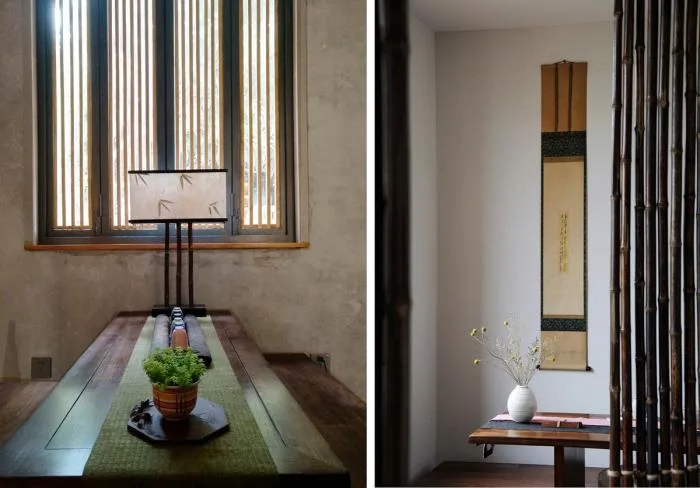
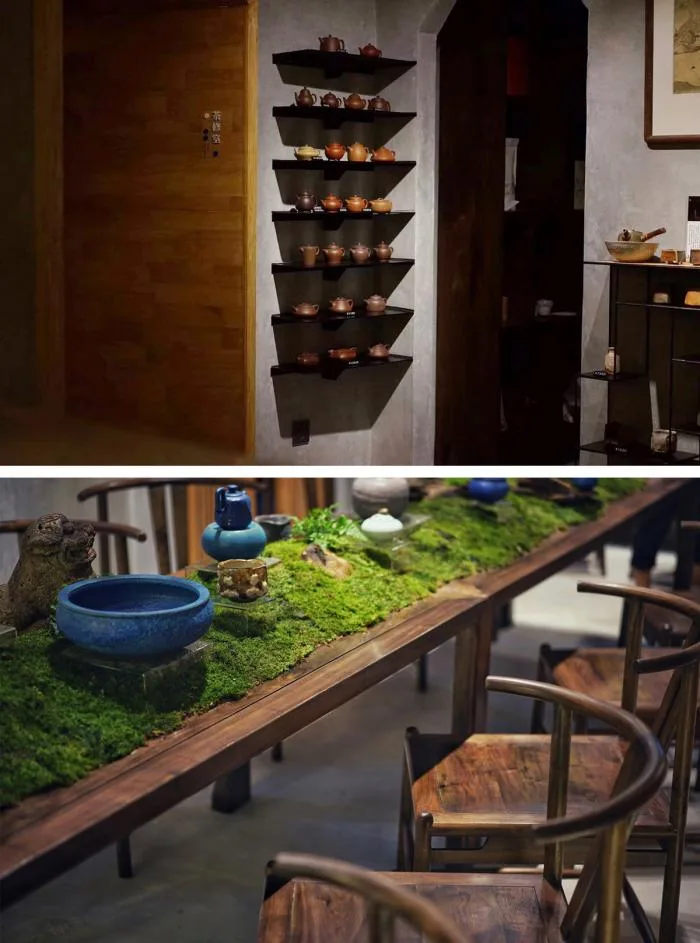
△ Indoor reality
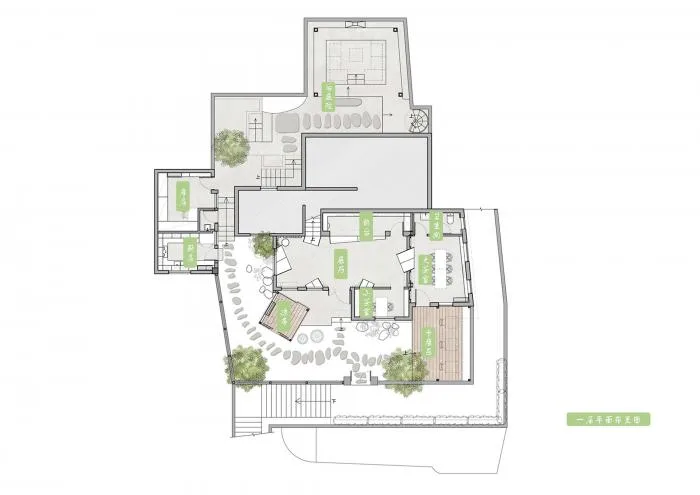
△ First floor plan
Project Information
Project Name: Renovation Design of Jushe Tea Collection Space
Project Location: Xiamen, Fujian
Project Area: 470 square meters
Completion Date: September 2018
Main Materials: Wood, self-leveling cement, steel plate
Design Firm: WDD Interior Design Consultant (Beijing Dimension Point Decoration Design Co., Ltd.)
Lead Designer: Lin Qiaoqin
Design Team: Wang Feng, Niu Hailong, Jian Huayao, Zhang Lingling, Xiao Bozhong
Contact Email: __AI_S_SC0__












Must log in before commenting!
Sign Up