
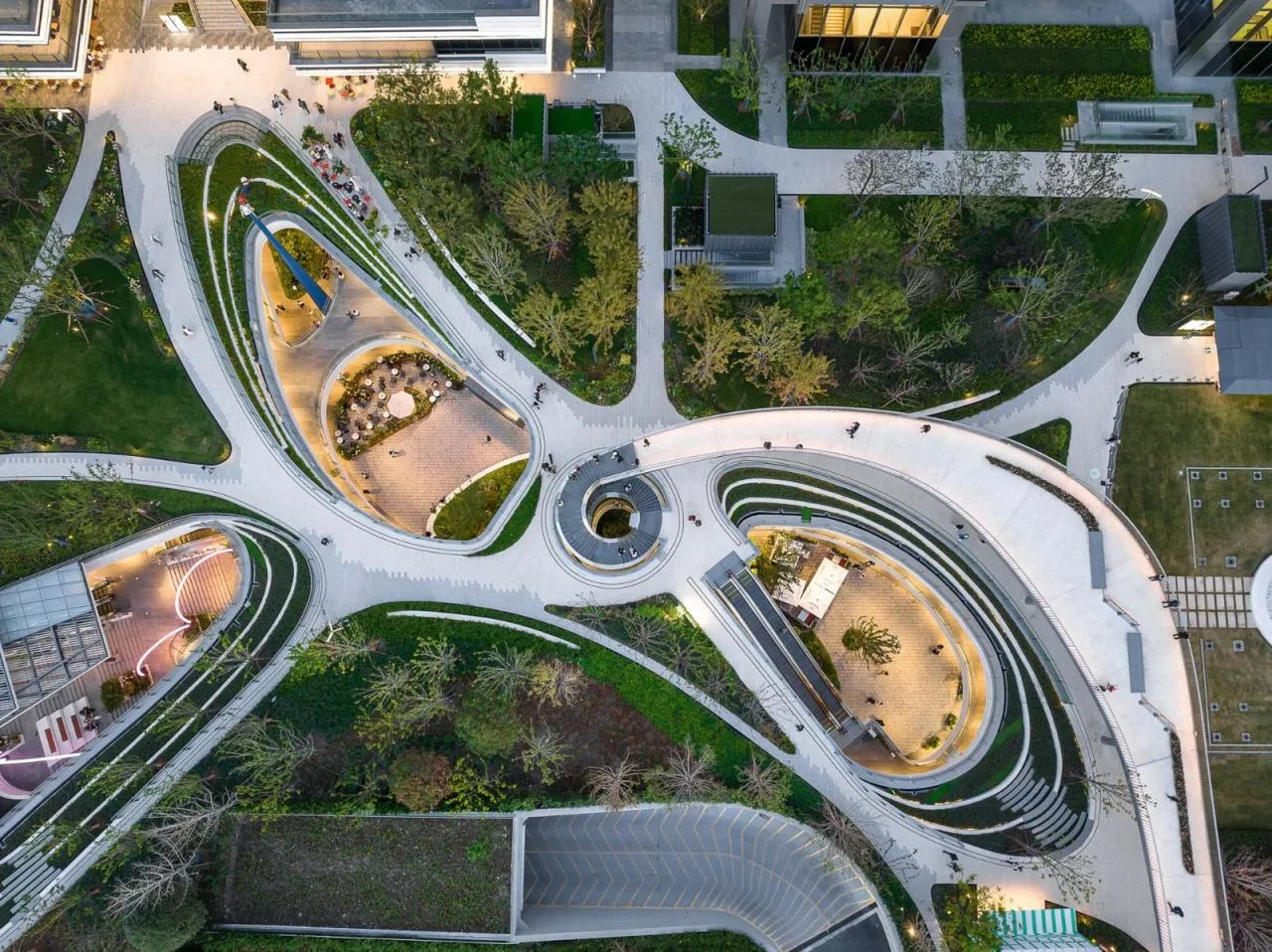
Shanghai Suhewan Wanda Plaza, designed by Kokaistudios, is situated along the Suzhou River in Shanghai. This project transcends the boundaries between the city’s past, present, and future. Its primary goal was to explore how commercial spaces can be better integrated with the surrounding environment. The innovative “Urban Canyon” concept has created a new type of urban public space, setting a precedent for similar developments in Shanghai.
In 2016, Kokaistudios was invited to participate in the design competition for an underground commercial project within Suhewan Green Space. The final design went beyond merely creating commercial areas; it introduced a vibrant public open block that combines cultural and leisure facilities within the riverside green space. China Resources Land selected Kokaistudios’ visionary proposal to develop an “urban canyon” — an underground commercial zone seamlessly integrated with the green space through a series of terraced landscape public areas.
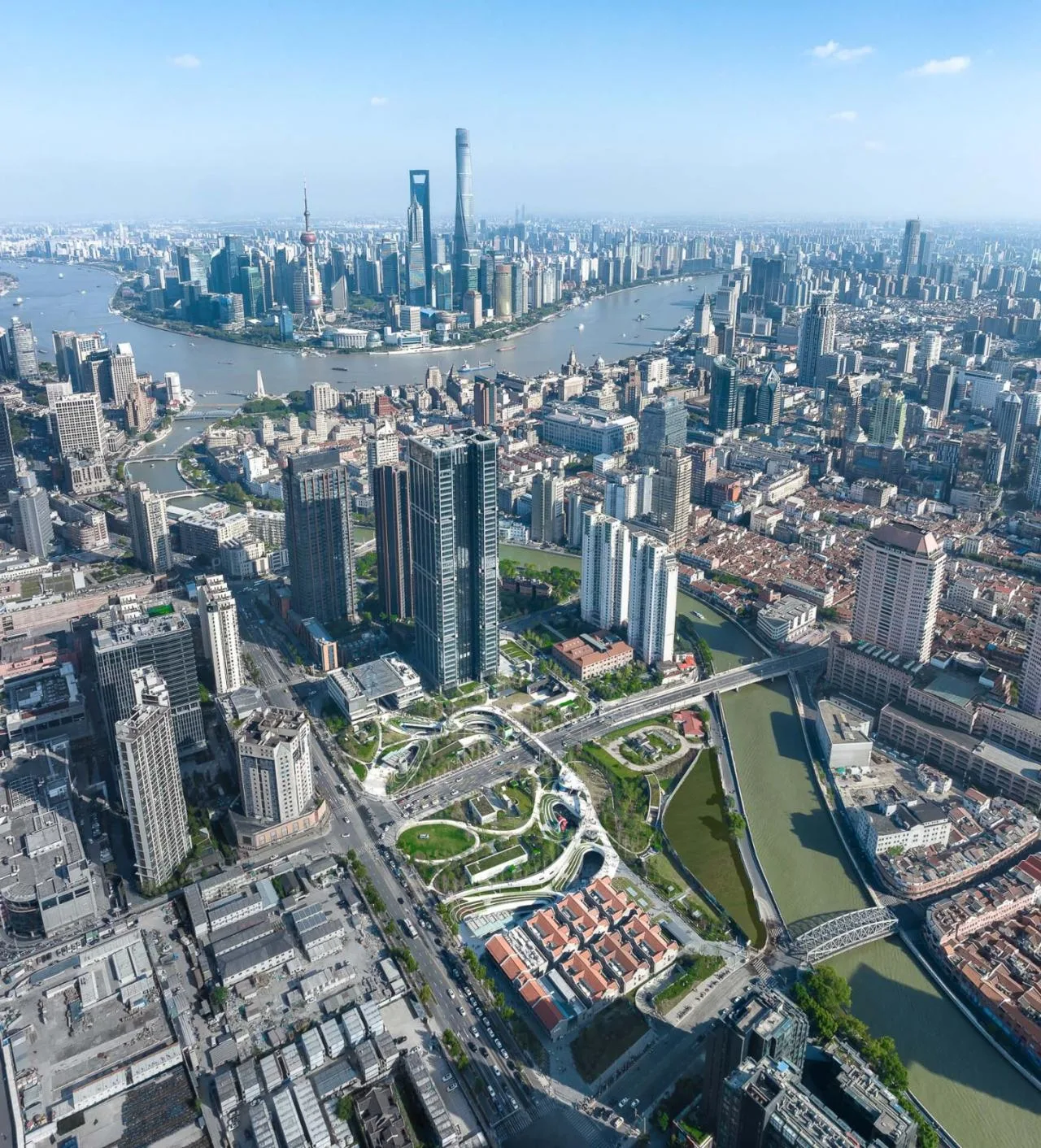
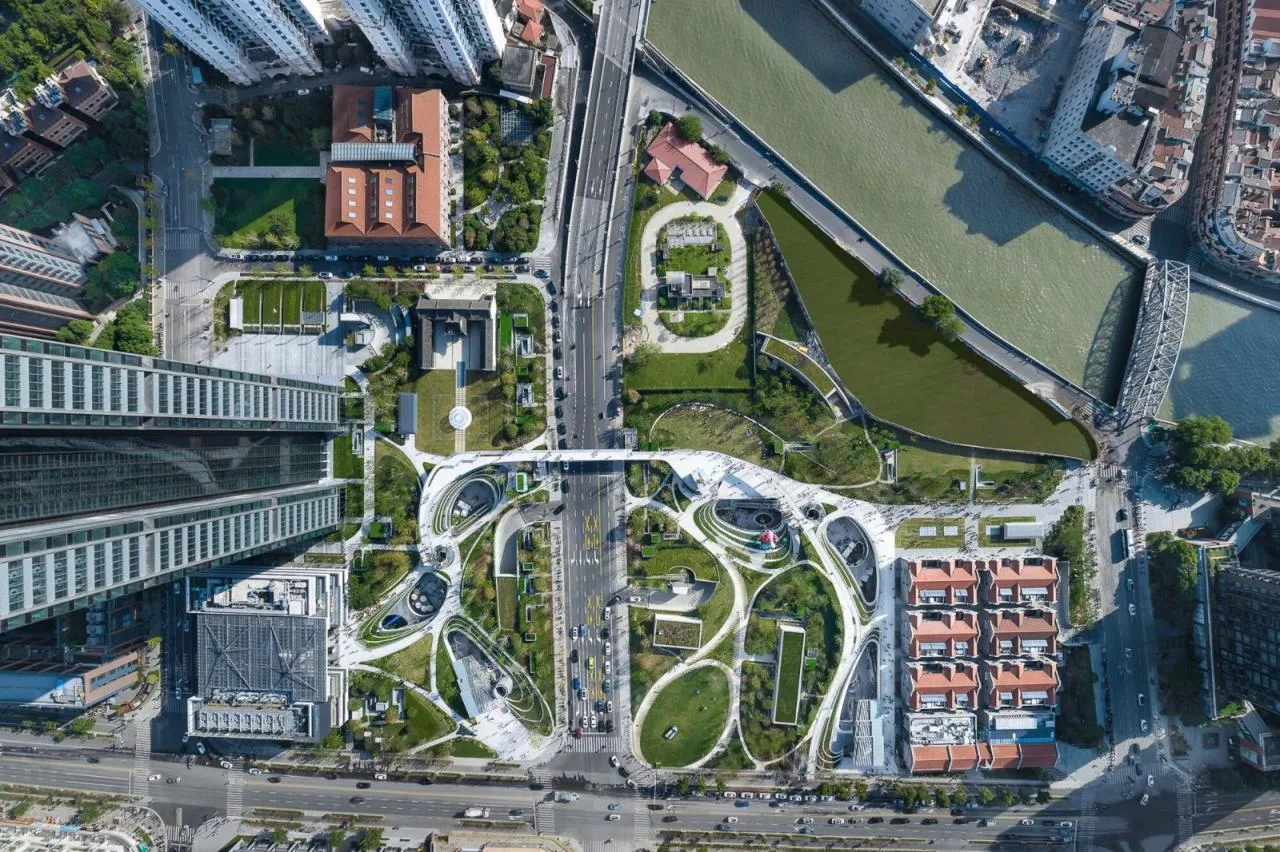
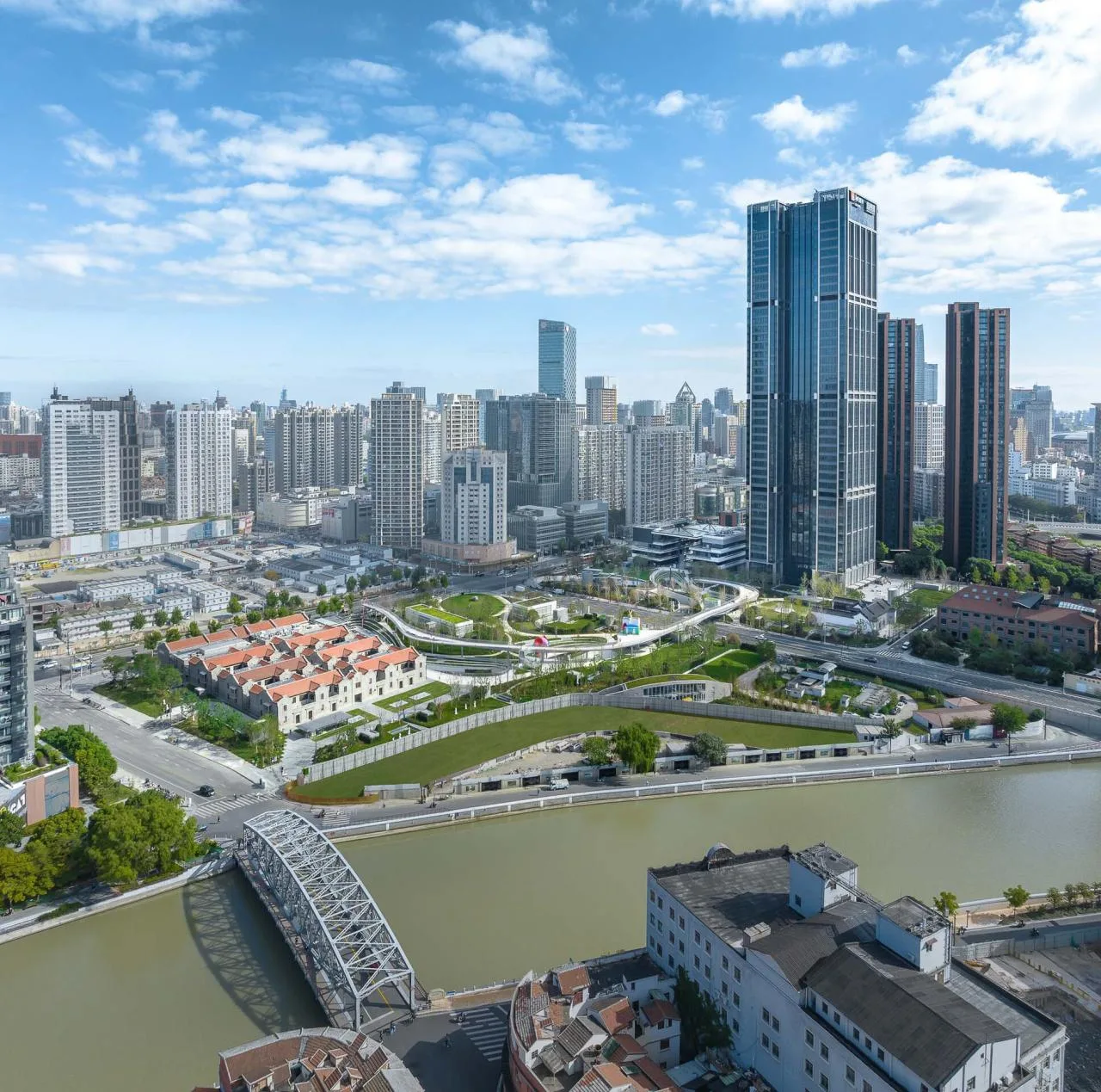
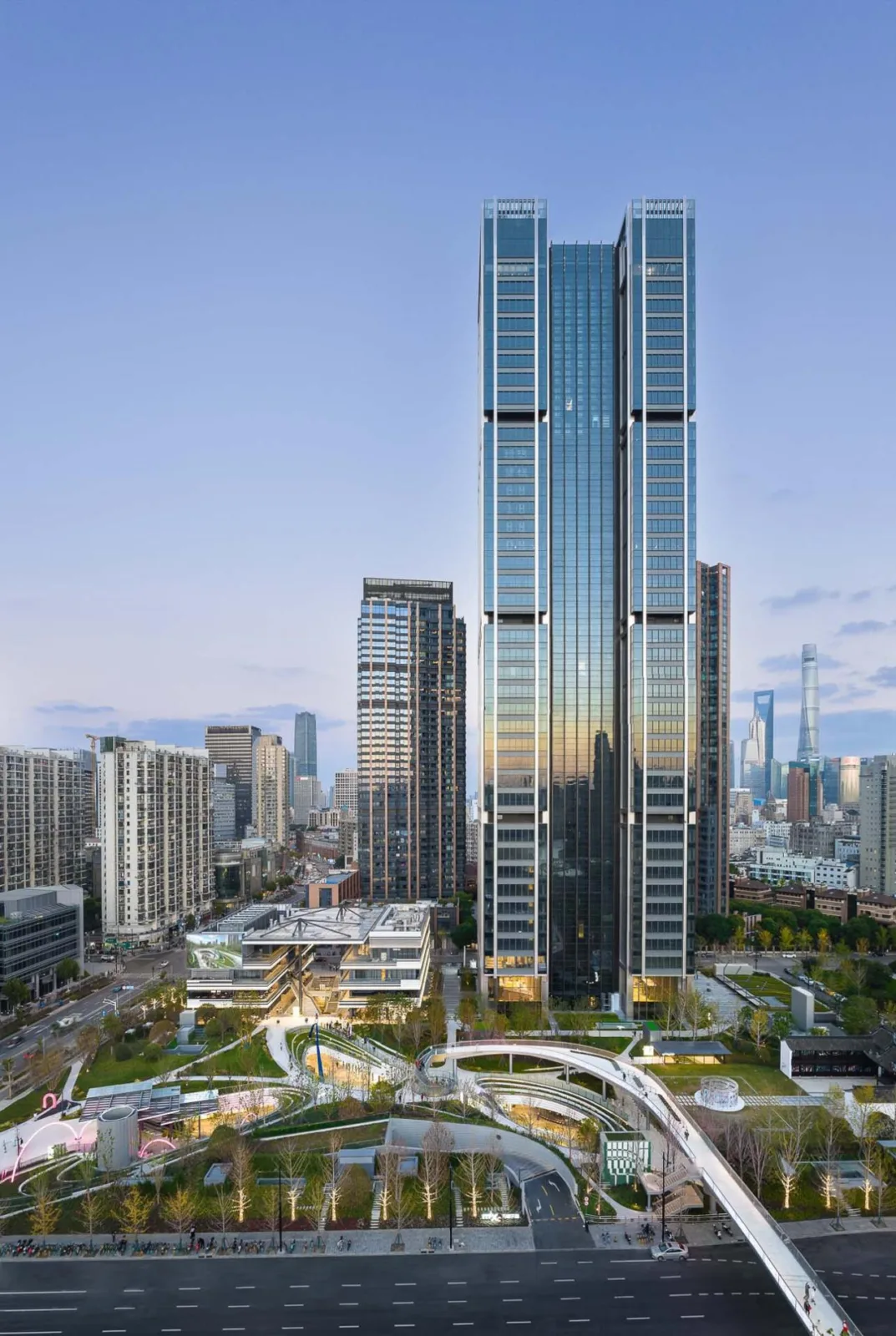
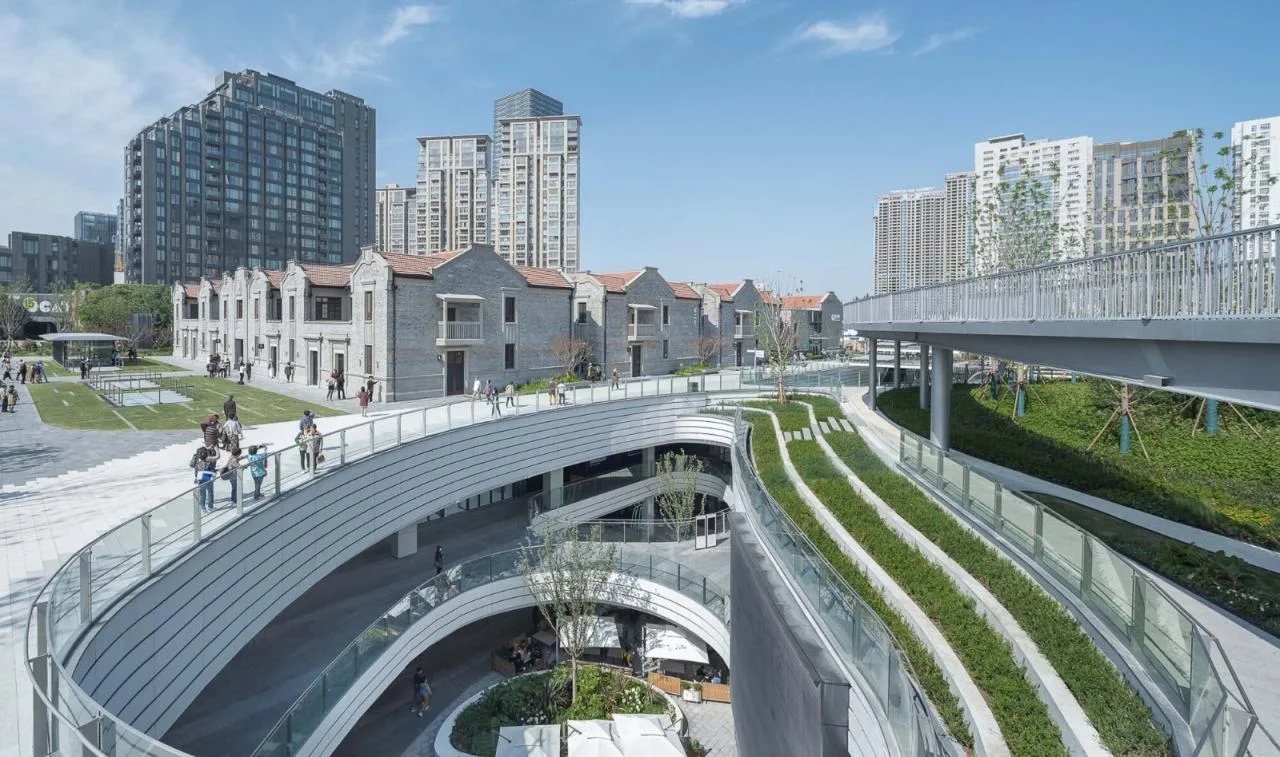
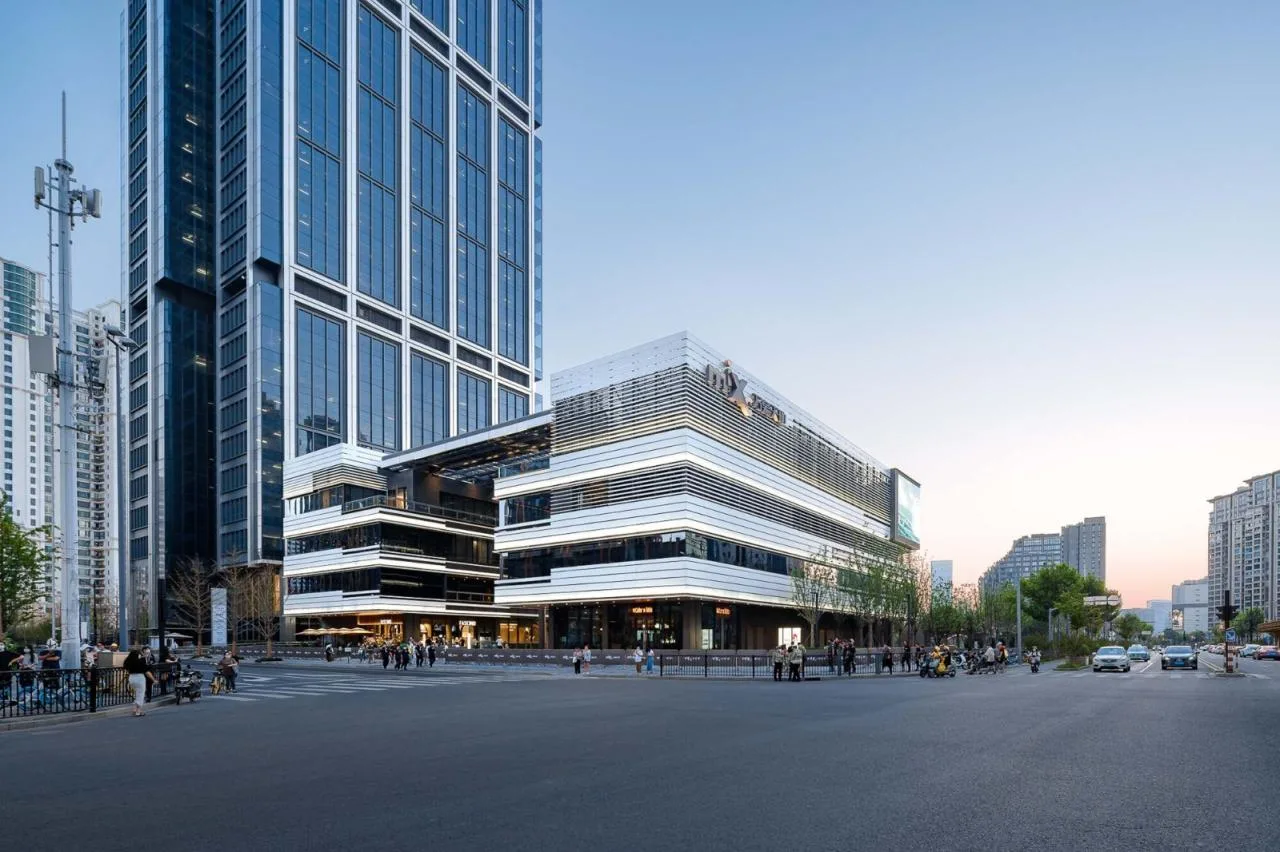
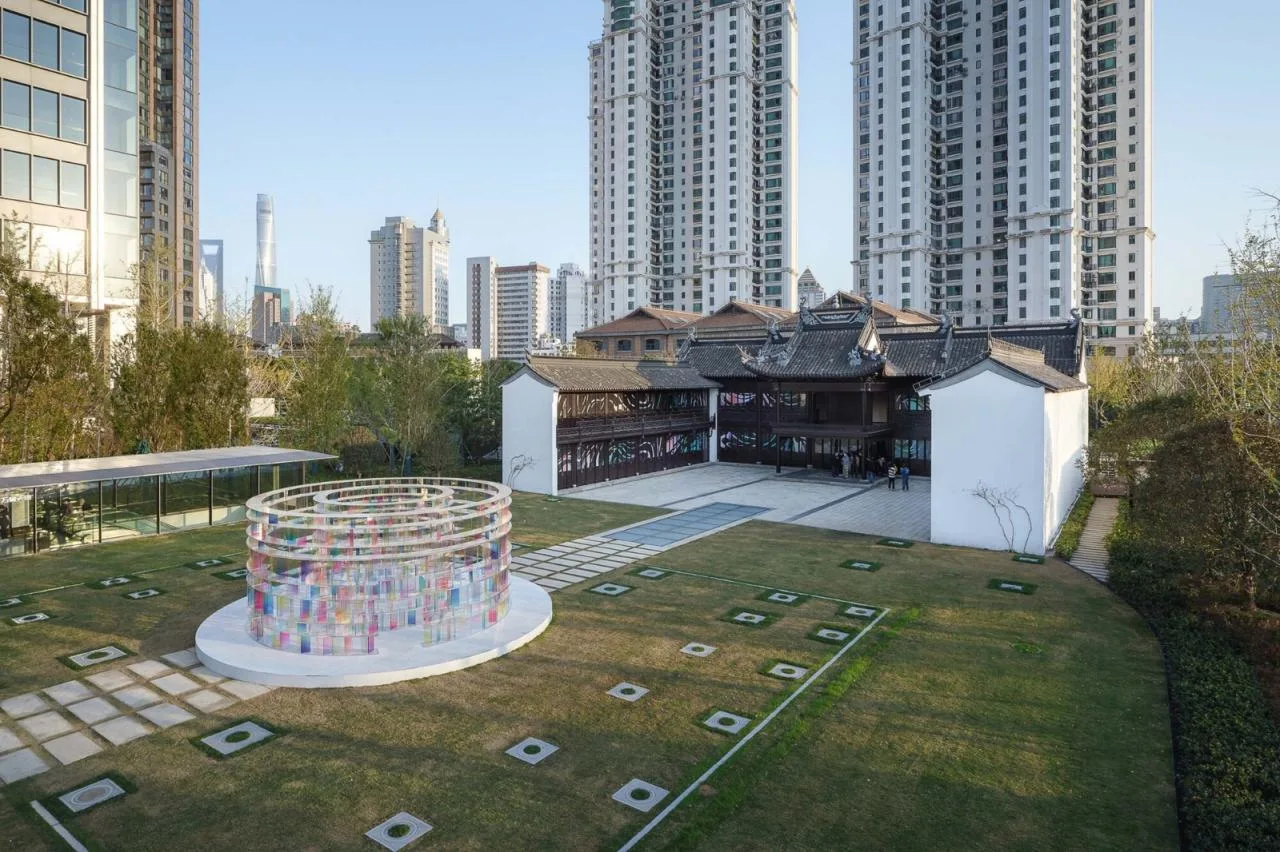
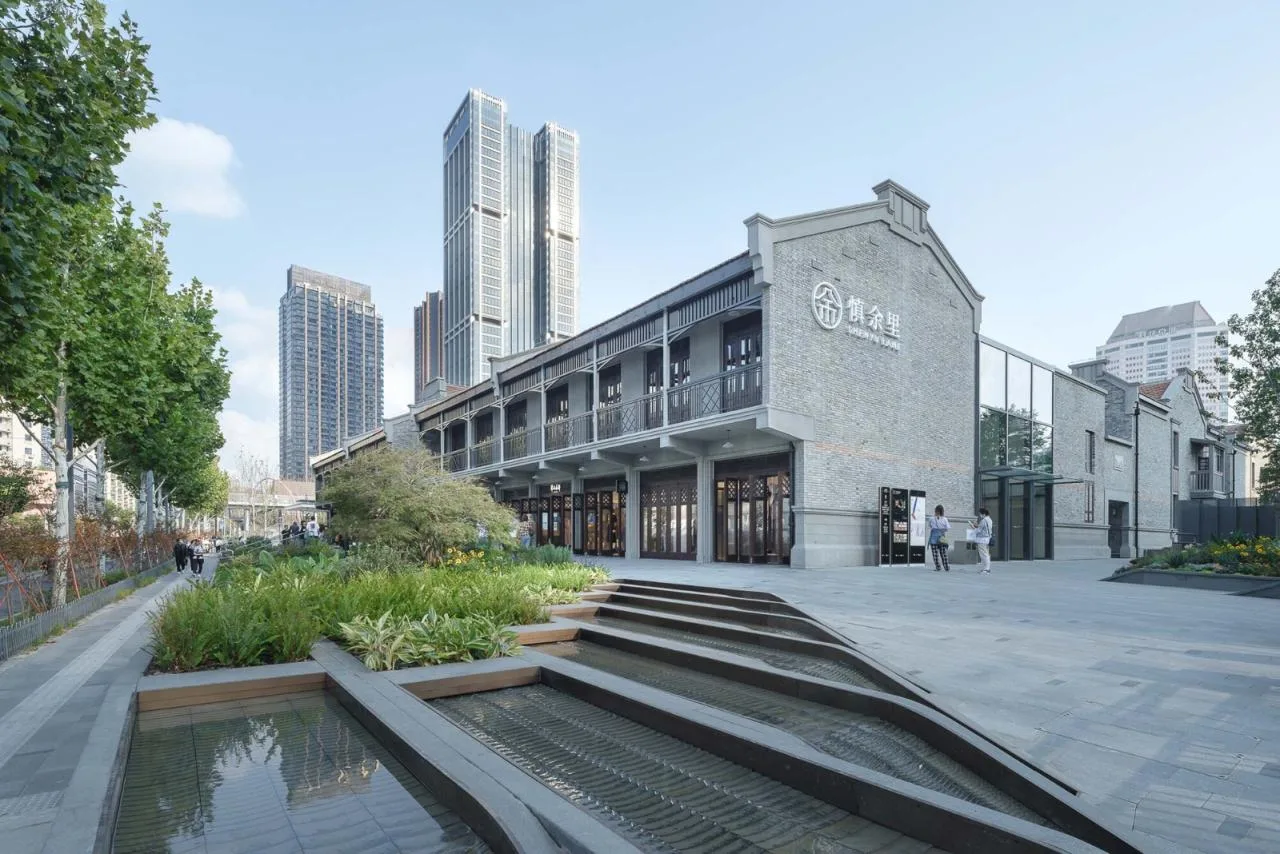
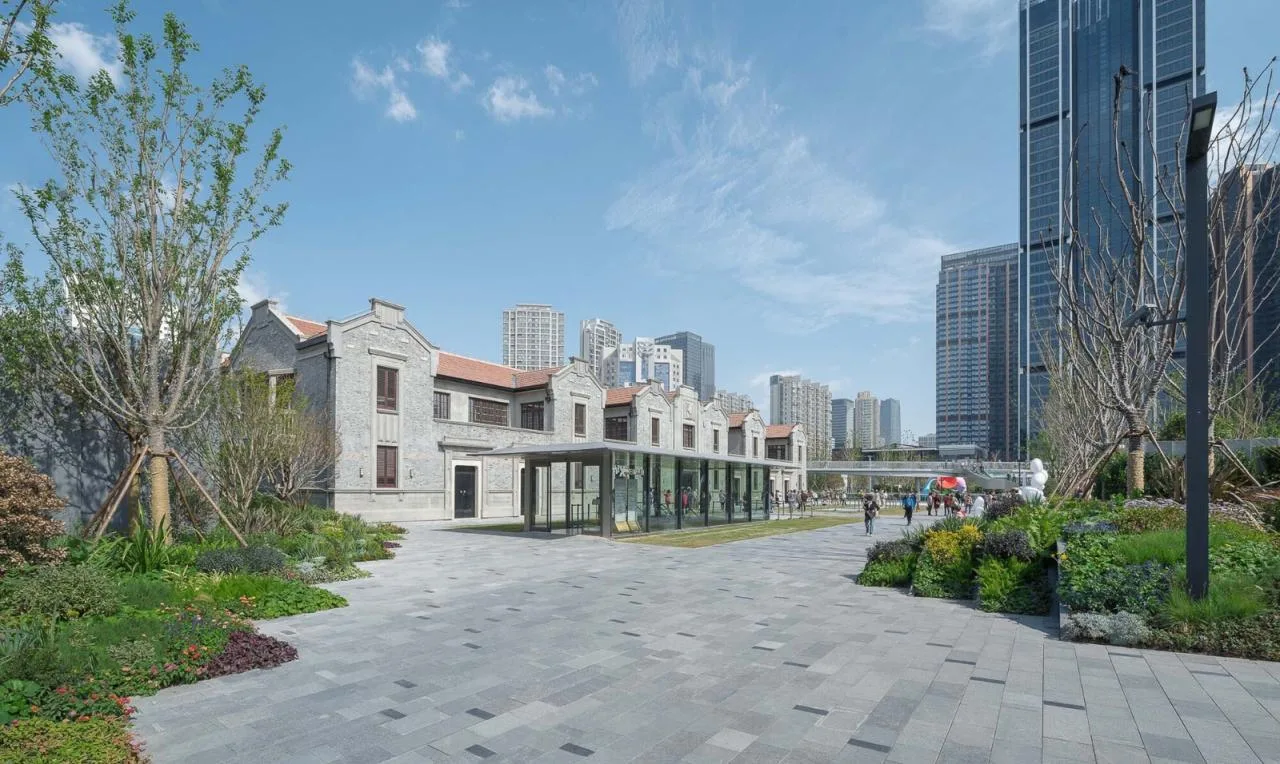
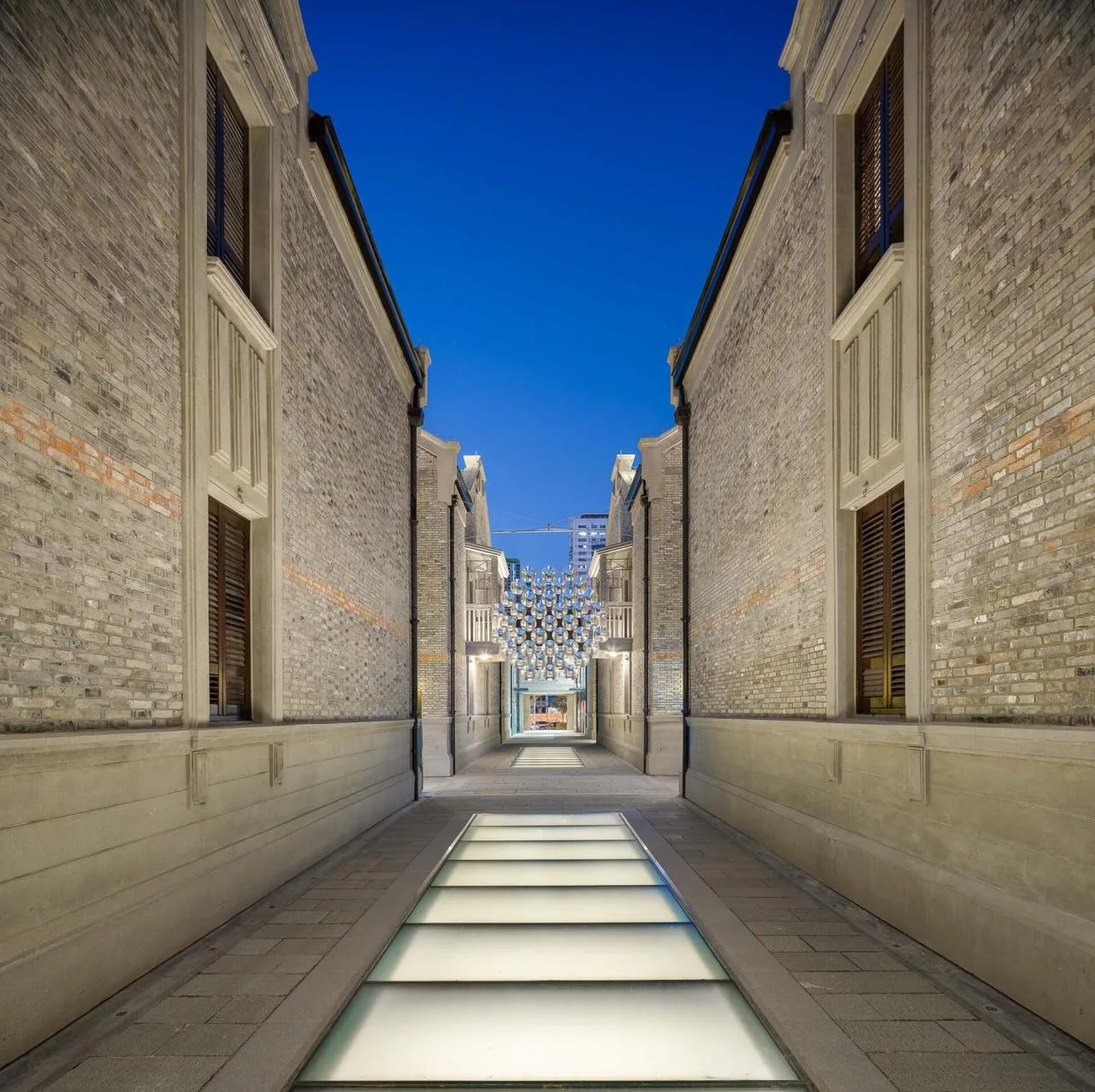
Occupying approximately 42,000 square meters of urban green space, Shanghai Suhewan Wanda Plaza is surrounded by significant historical landmarks. These include the protected and restored Shenyu Lane, a historic lane group, and Tianhou Palace, the city’s only official Mazu temple. The area is also defined by a 42-story tower designed by Foster+Partners, the tallest landmark in the district, along with a newly planned four-story portal building at the site’s northeast corner. Together, they frame the eastern boundary of the green space.
The development of Suhewan exemplifies the local government’s visionary strategy to reconnect the two banks of the Suzhou River and revitalize its northern shore. This area acts as a pivotal junction between Shanghai’s historical legacy and its future ambitions. Kokaistudios’ design embraces this by linking the riverfront with the inland, enhancing the functional diversity and land value of the waterfront.
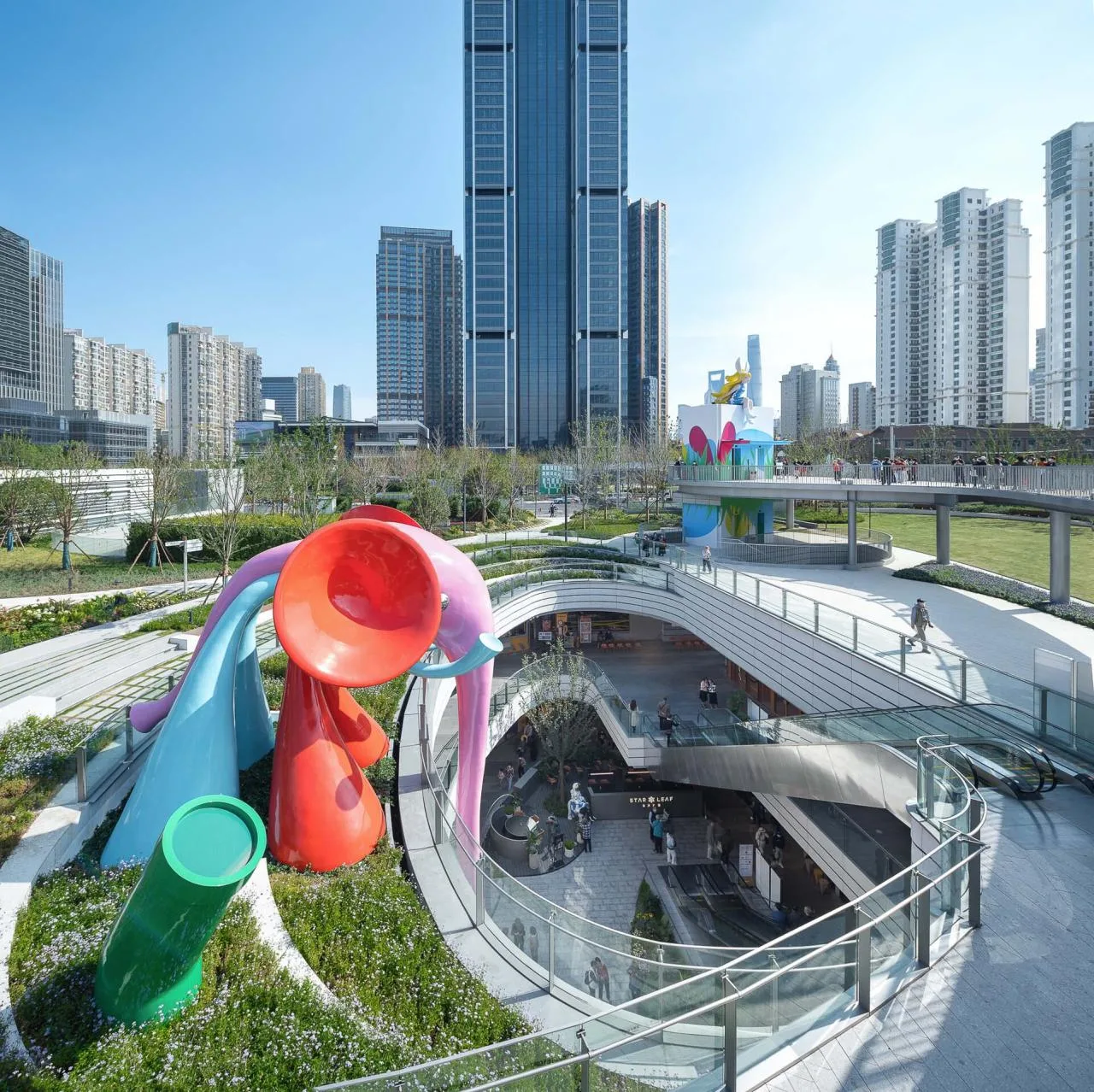
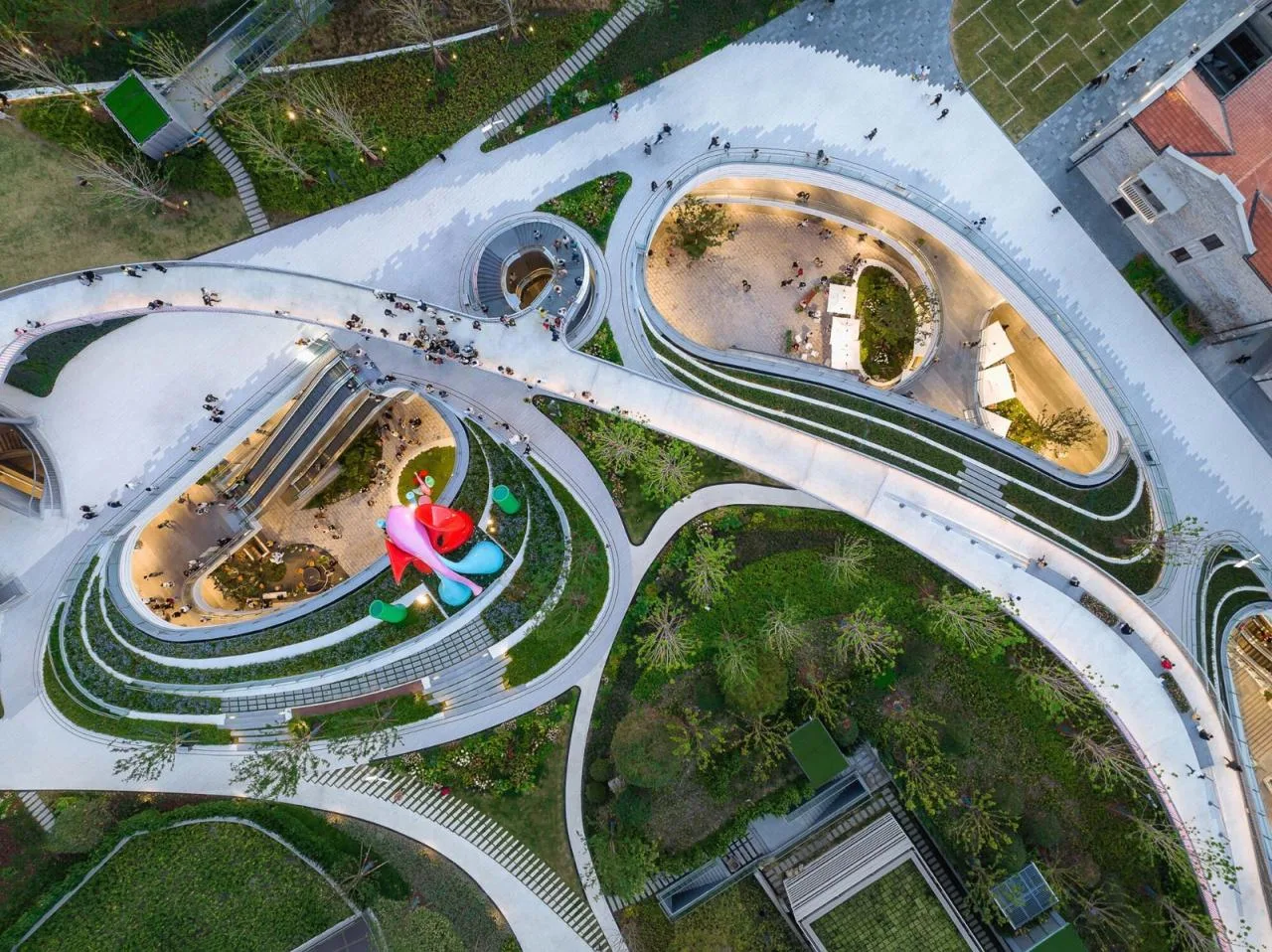
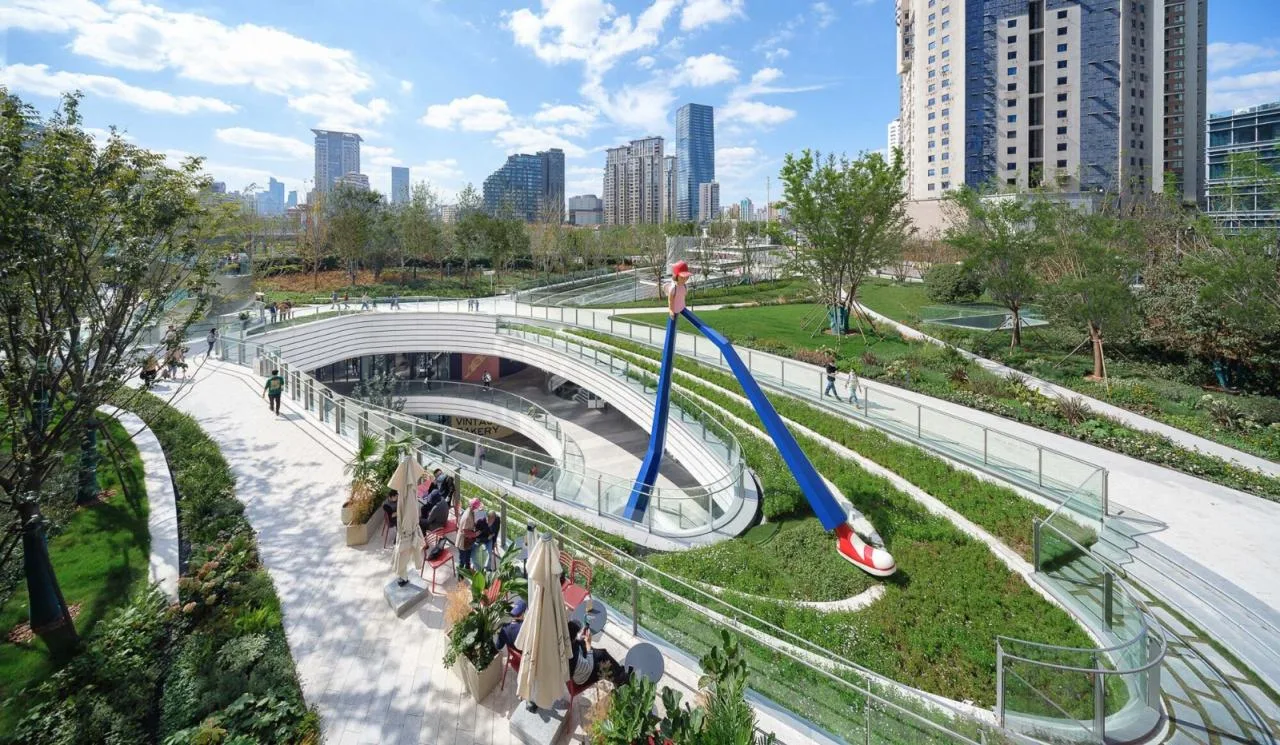
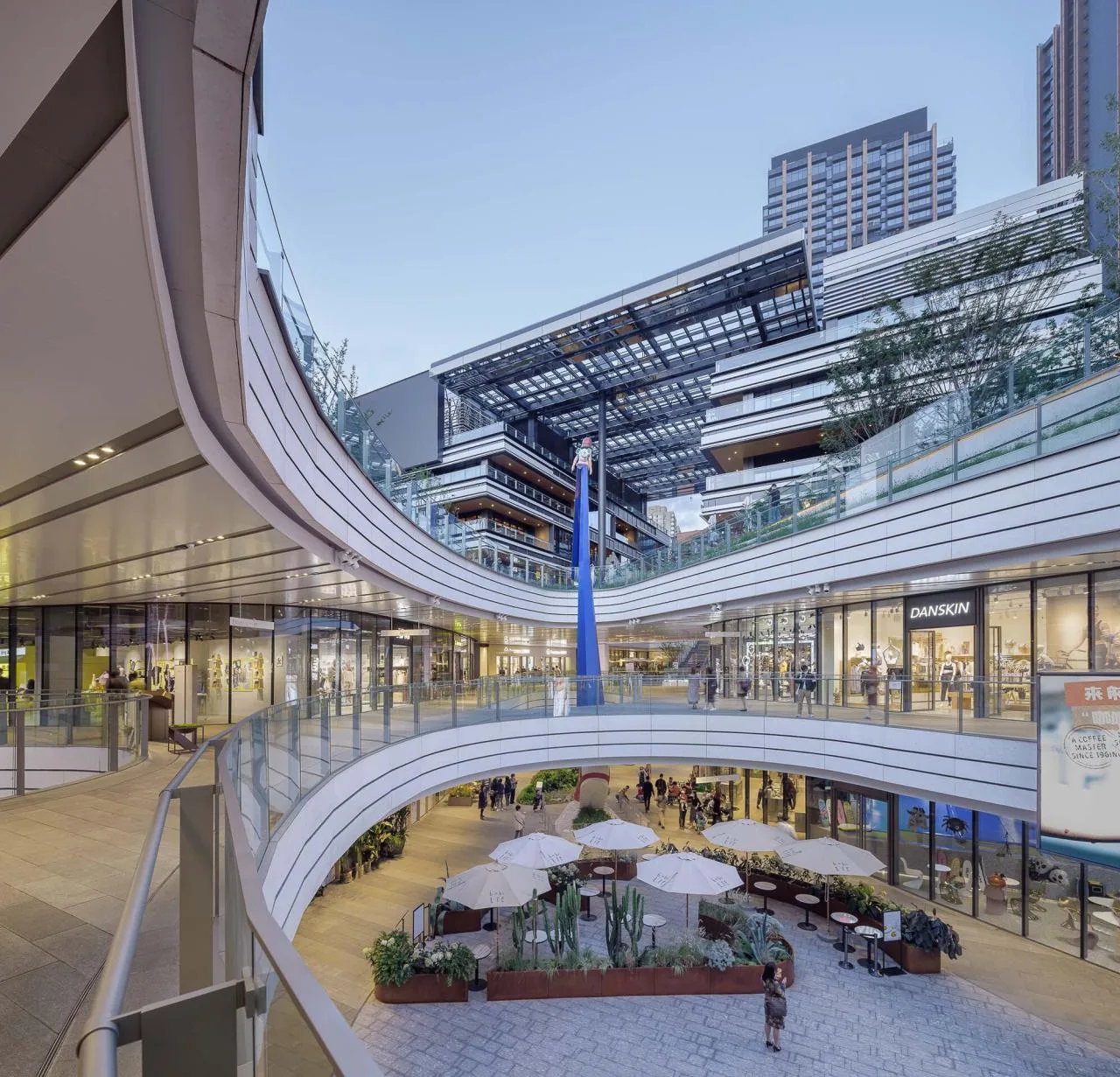
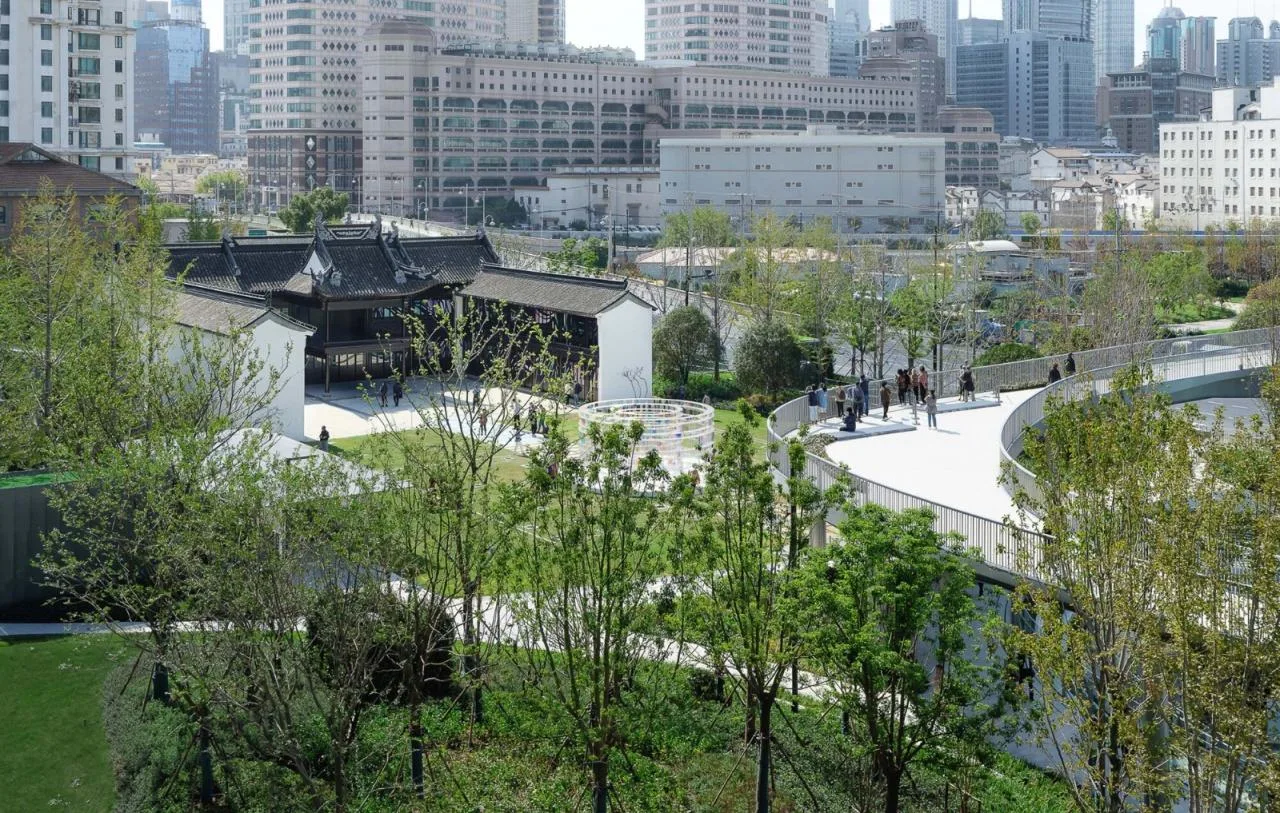
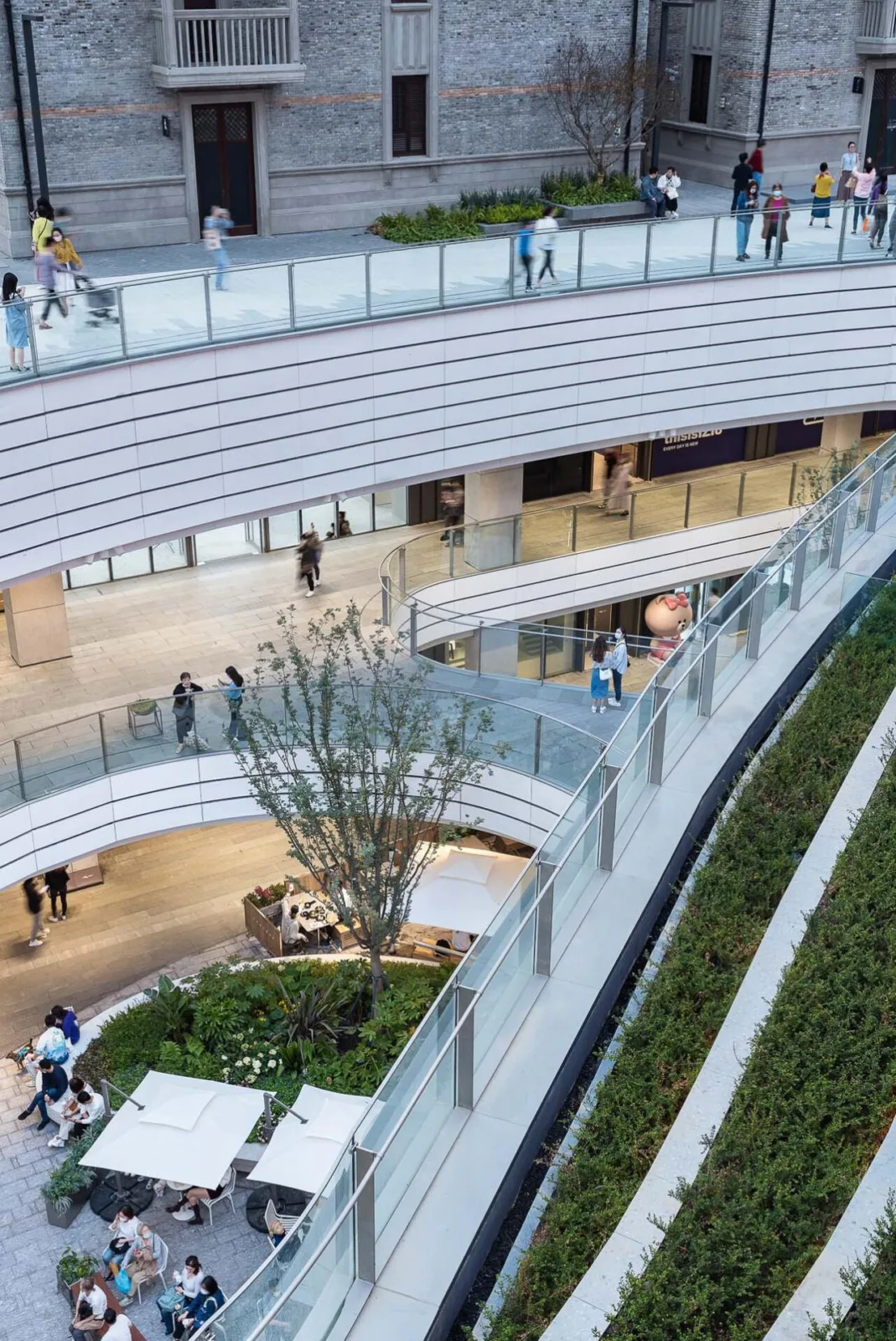
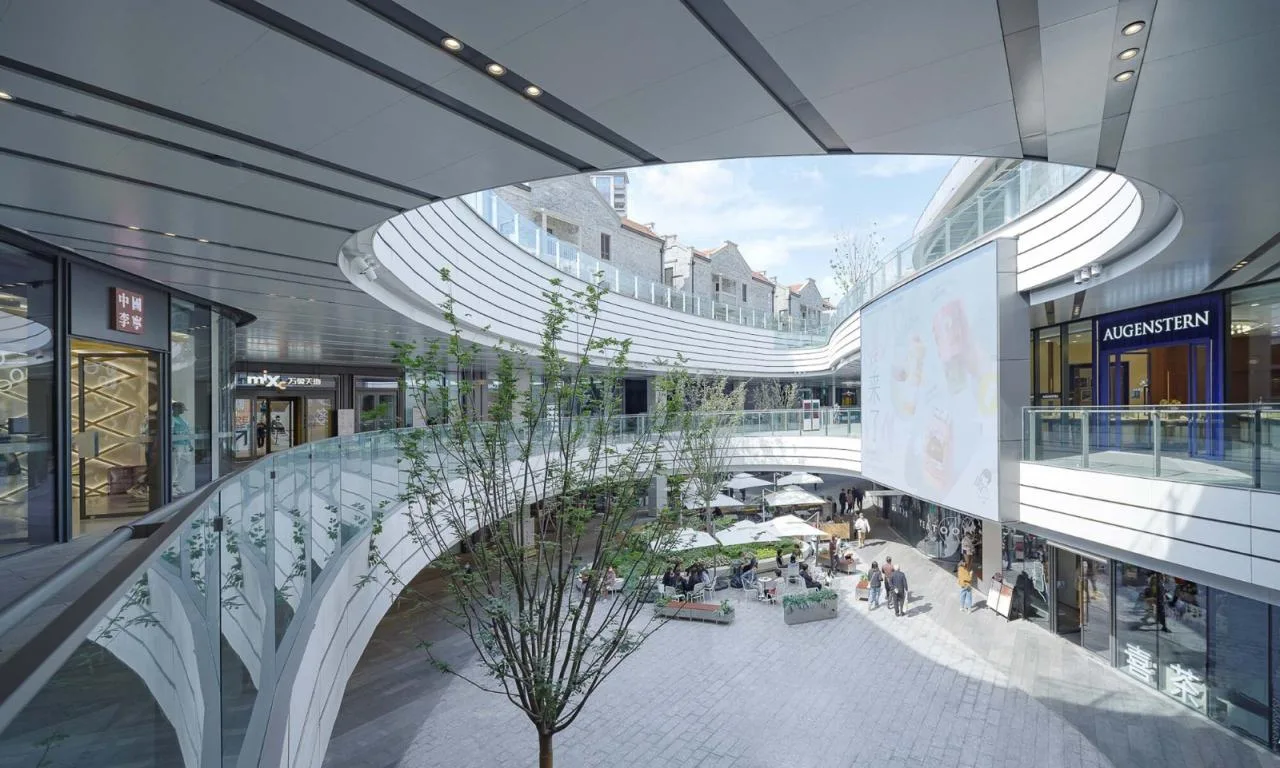
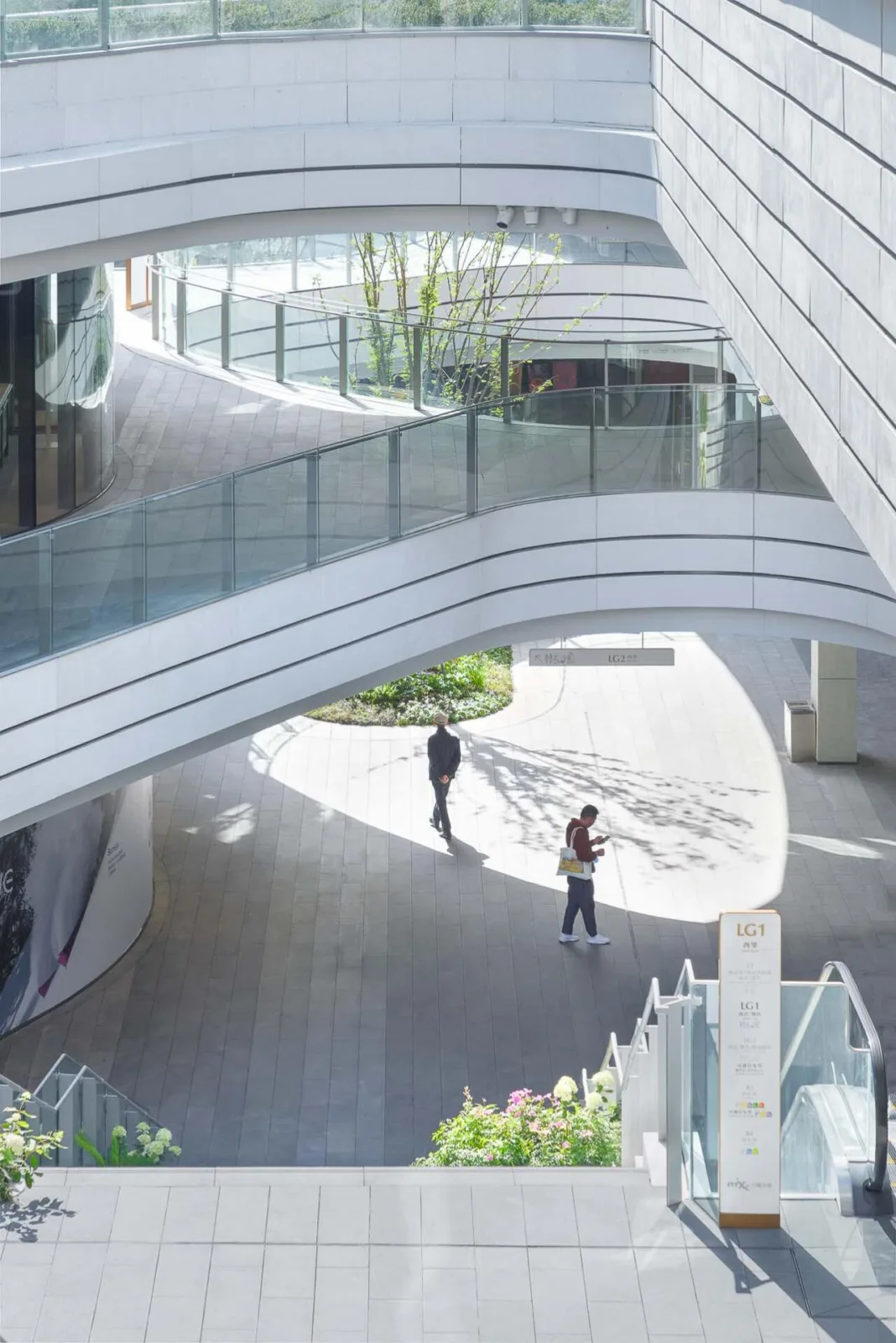
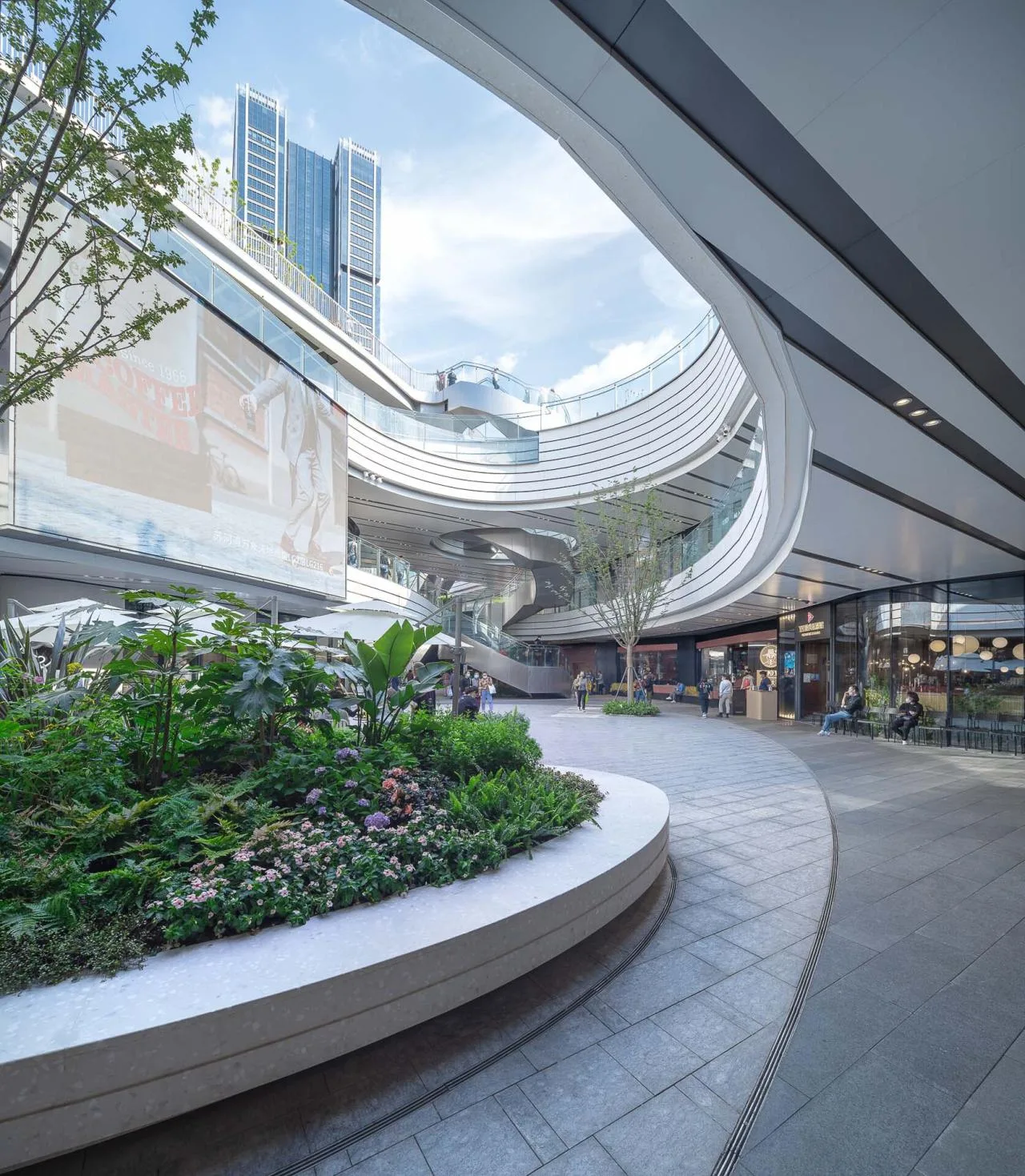
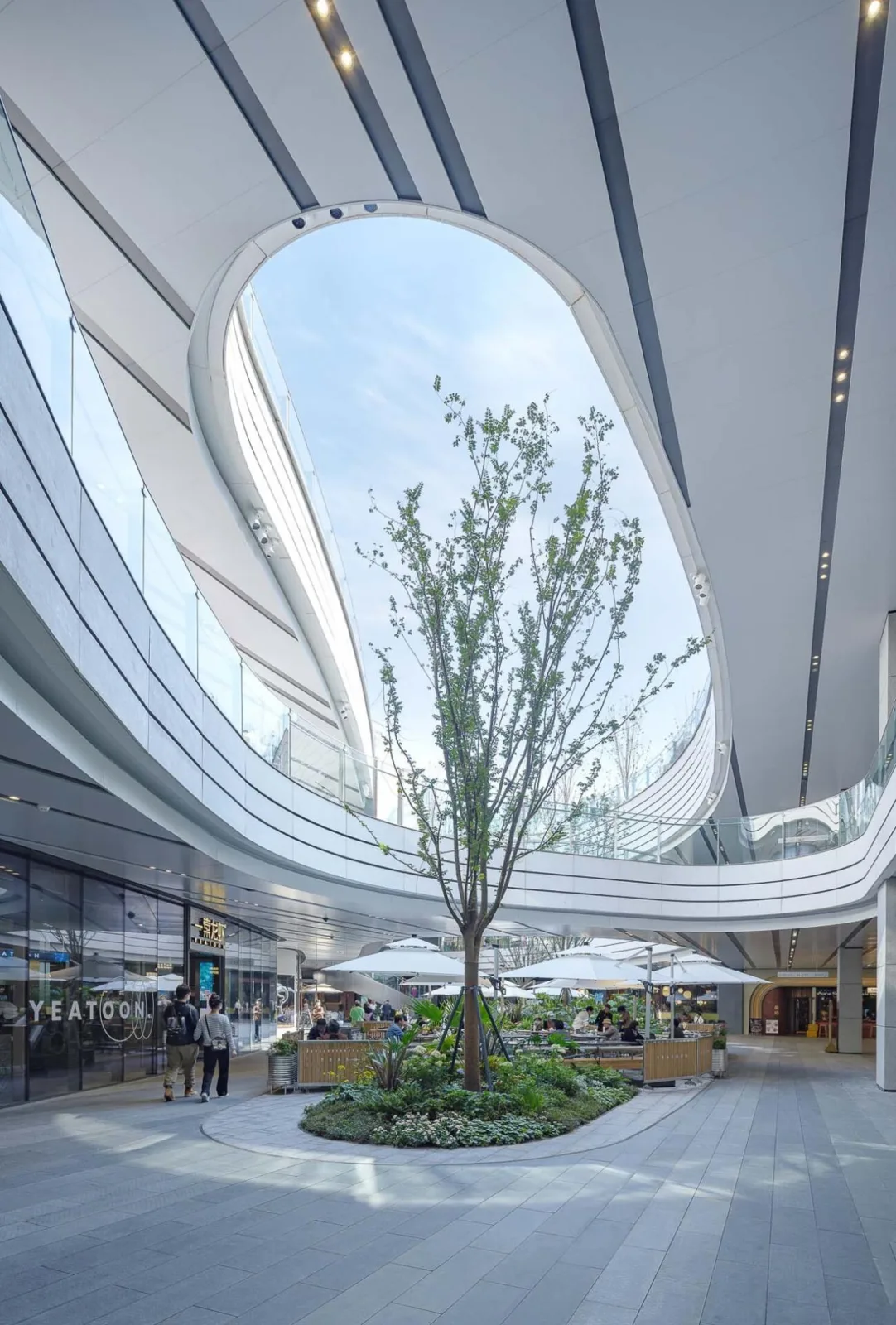
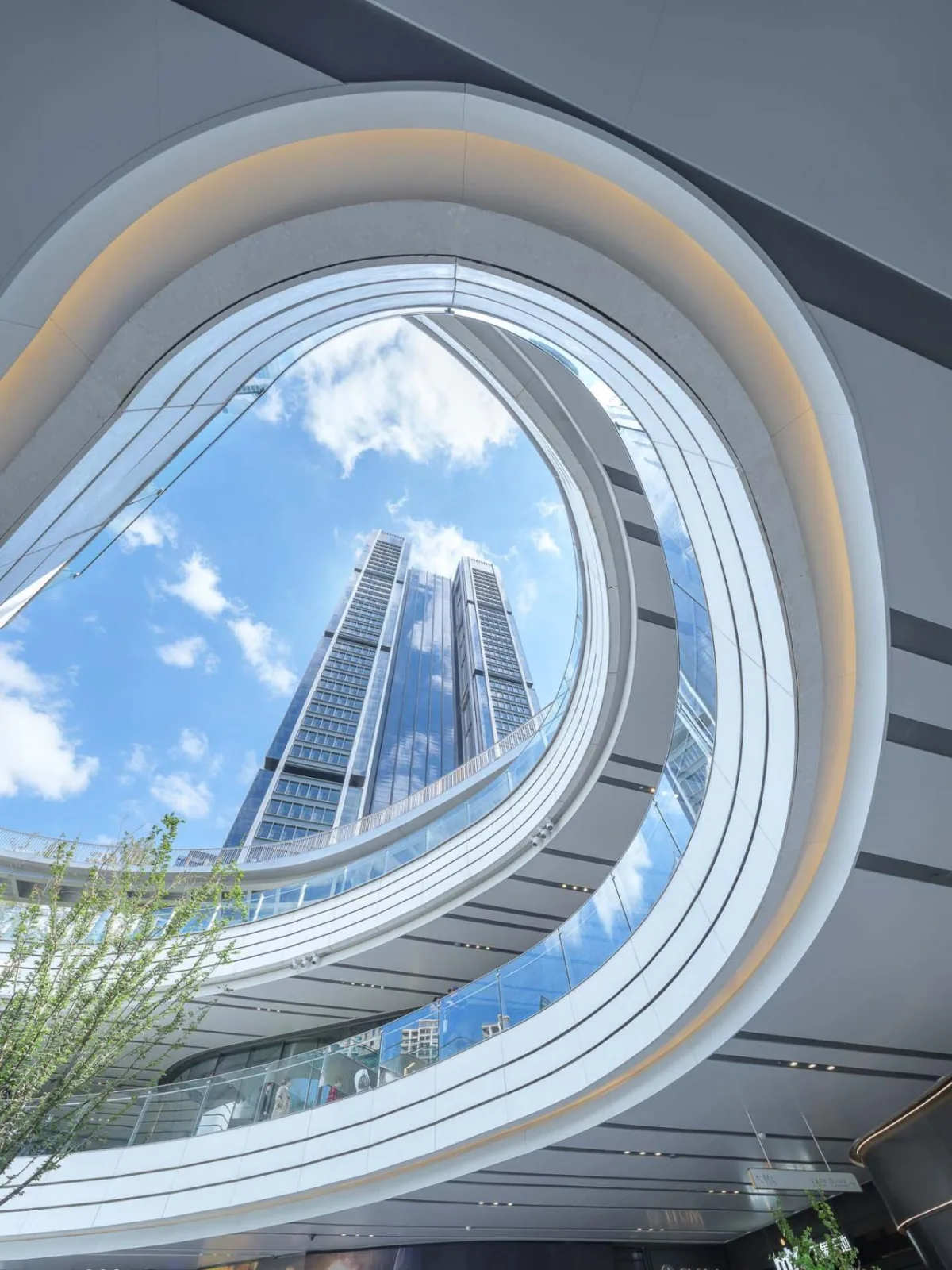
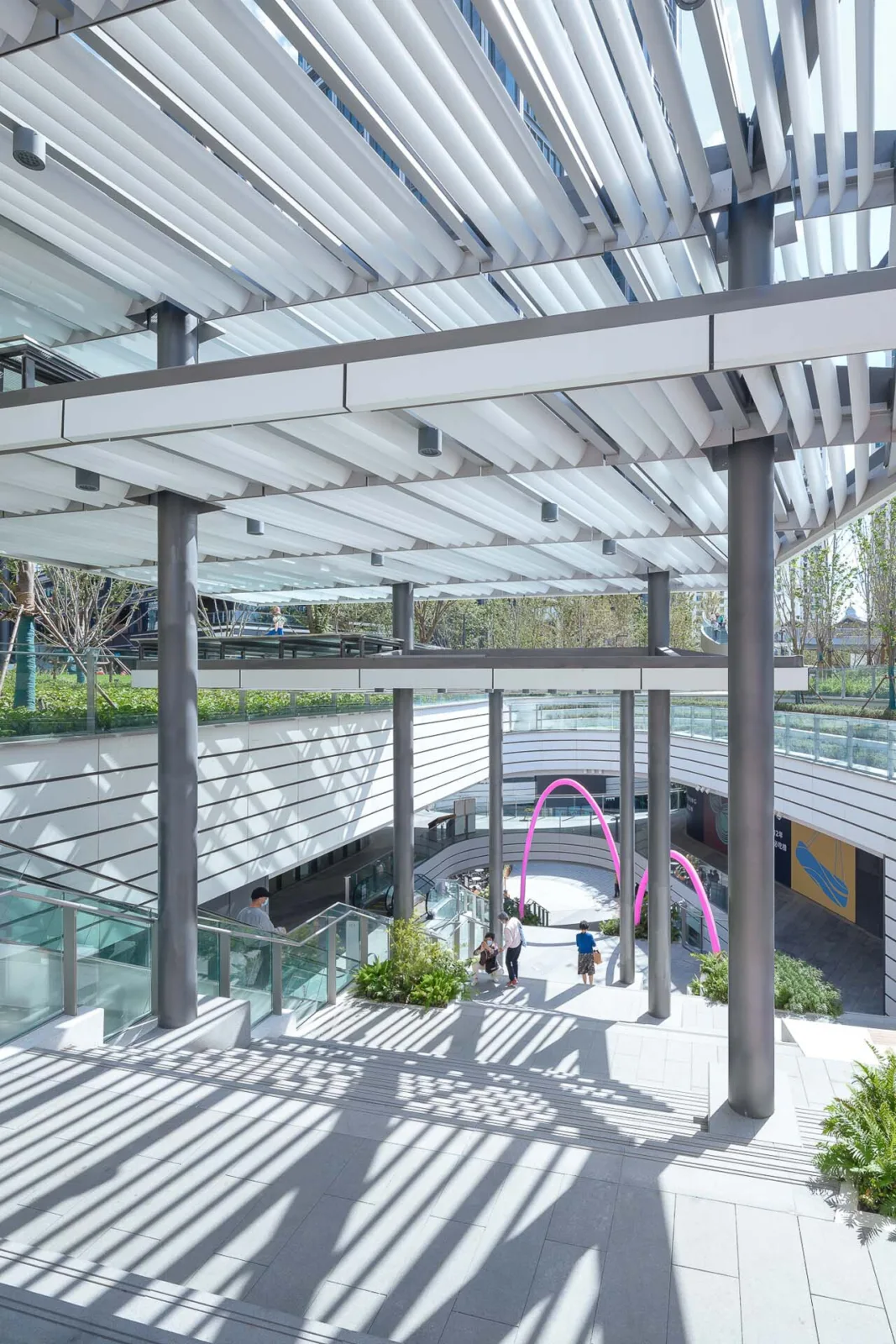
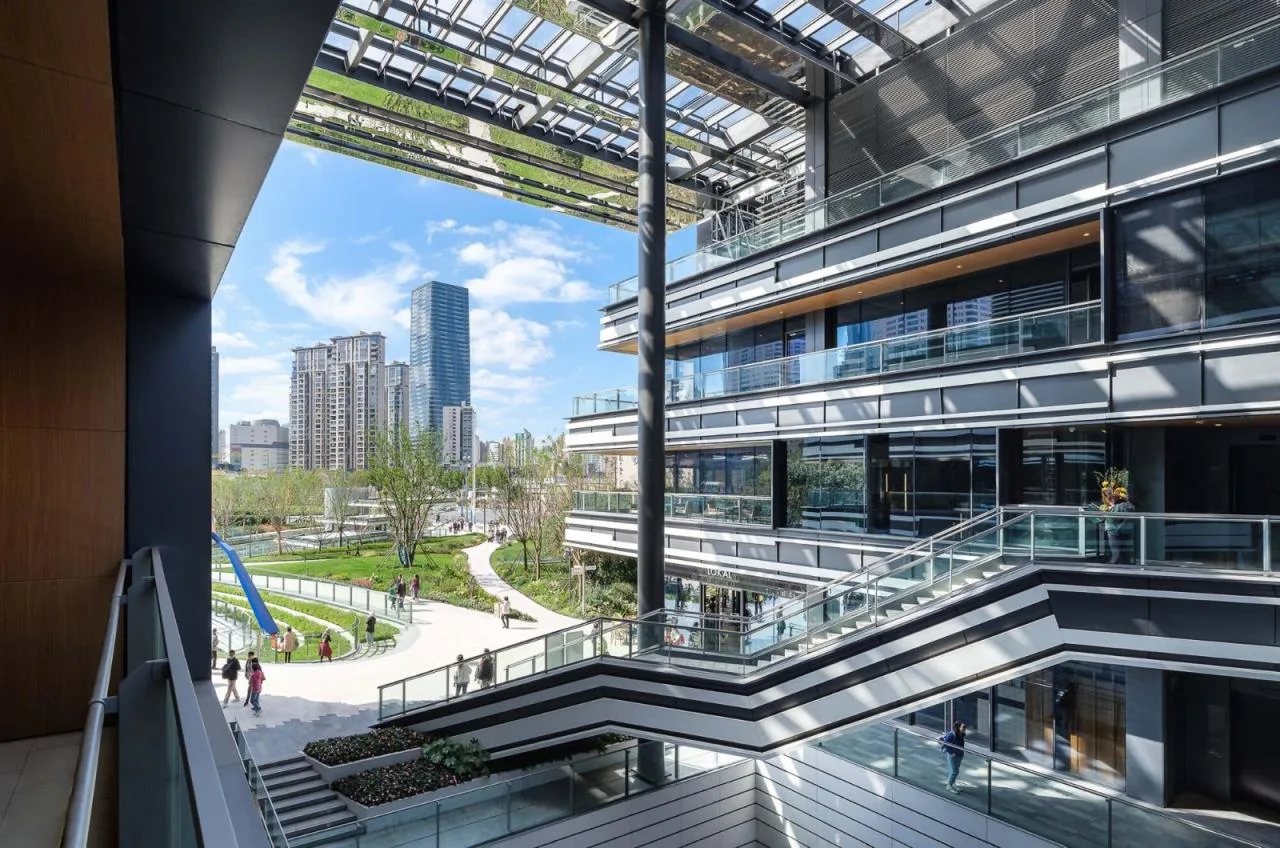
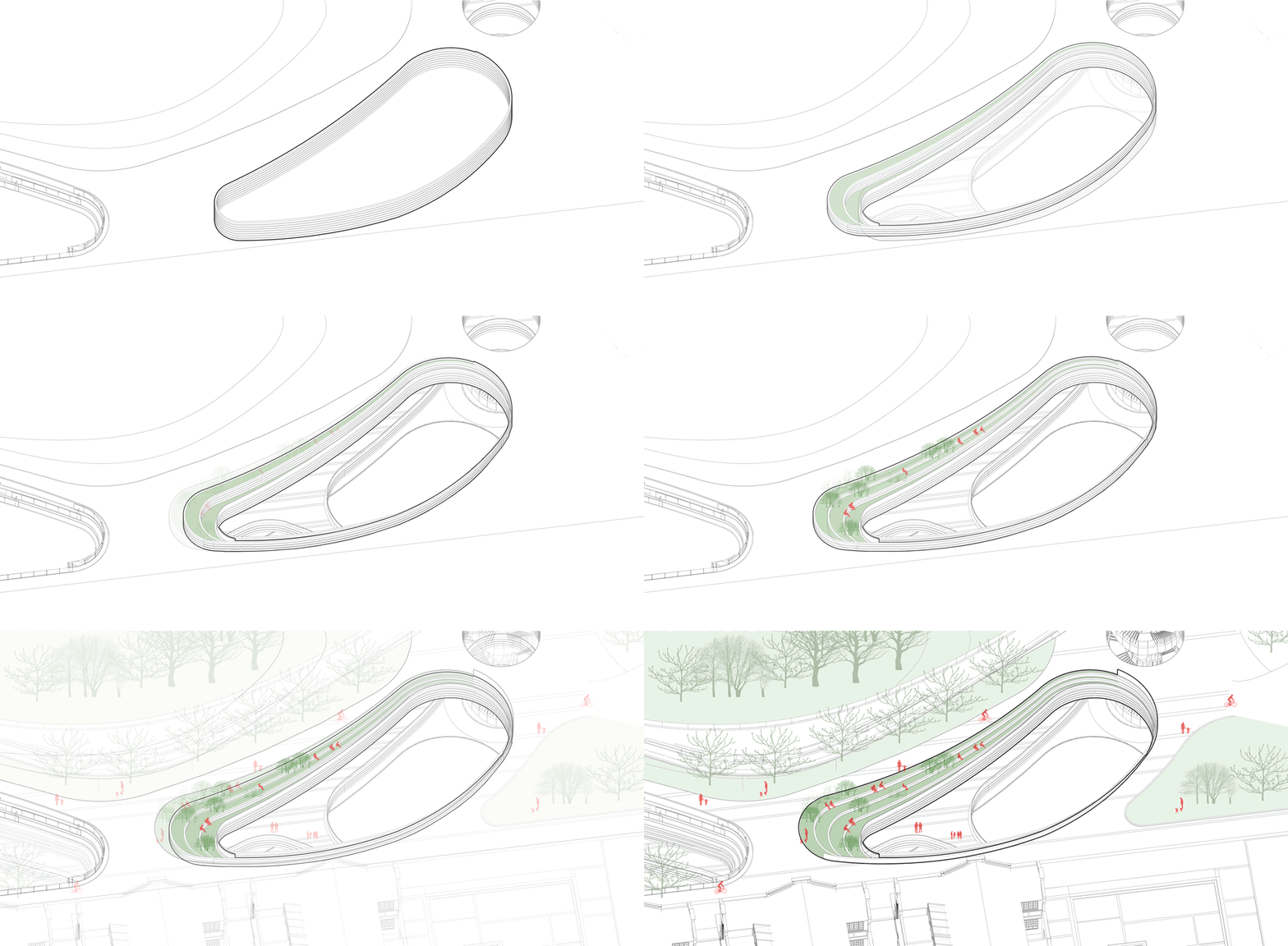
Central to the design is the concept of an “urban canyon.” The two-story underground commercial space is nestled within this canyon, with its entrances seamlessly connected to the above-ground green space through layered, stepped setbacks. Besides the newly constructed four-story entrance building, the most integral feature is the ground-level green space itself. This inviting public area brings lush vegetation and vibrant color to what was once a neglected city corner. Six entrances, or “canyon entrances,” connect the surface green areas with the underground commercial spaces, creating a harmonious relationship between nature and commerce. The gently curving entrances naturally transition from green terraces to shared commercial spaces, blurring the line between above and below ground.
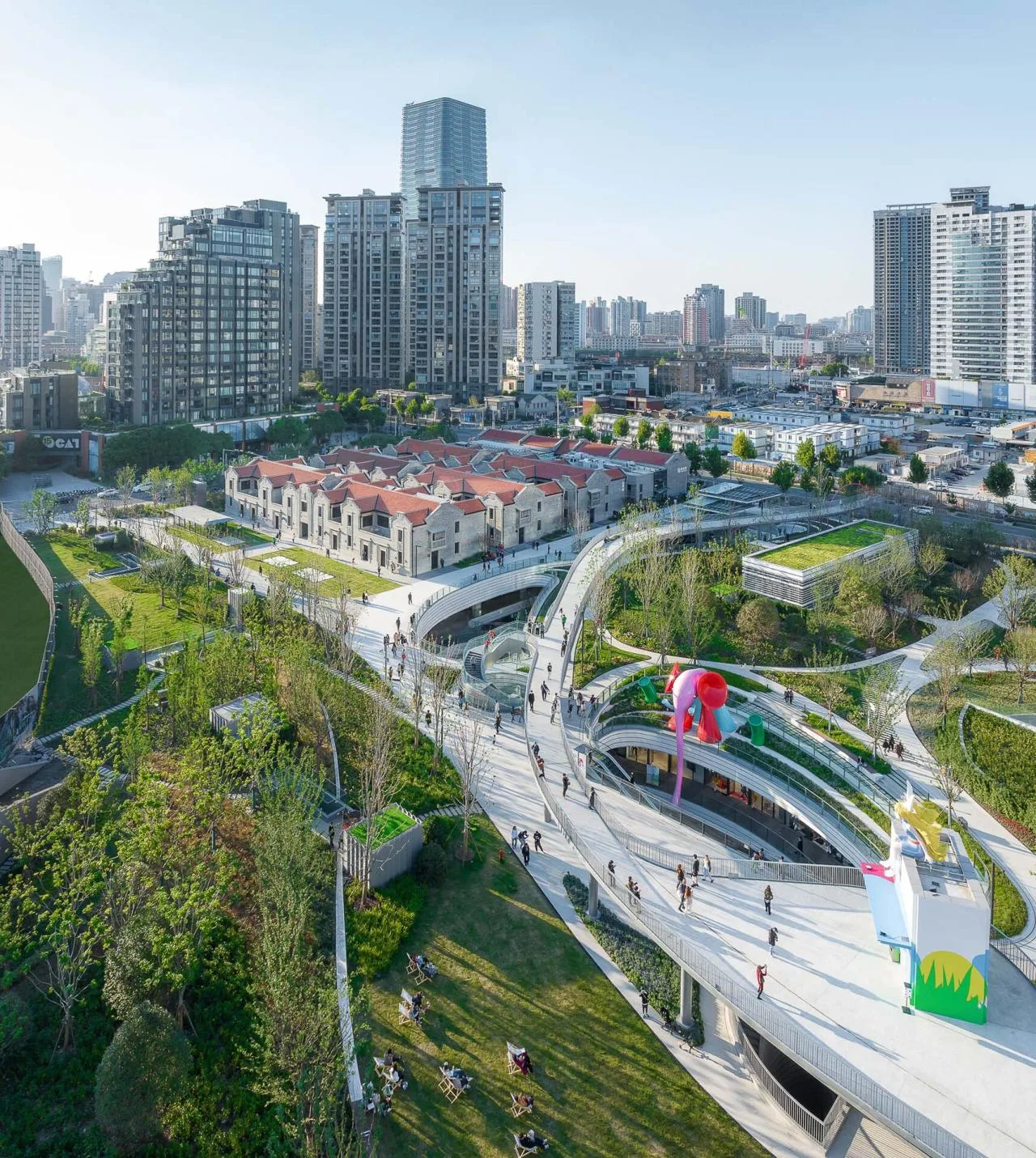
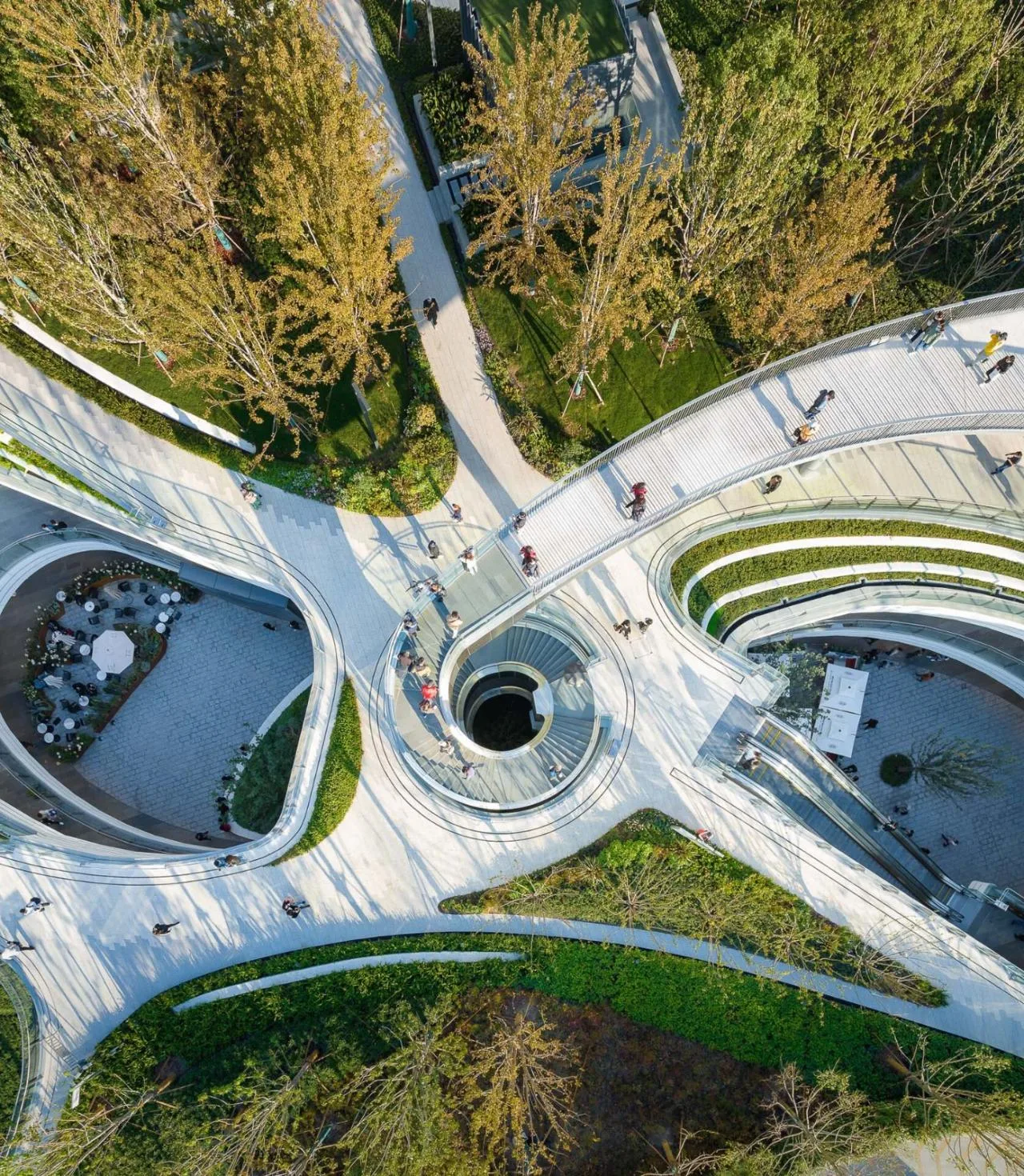
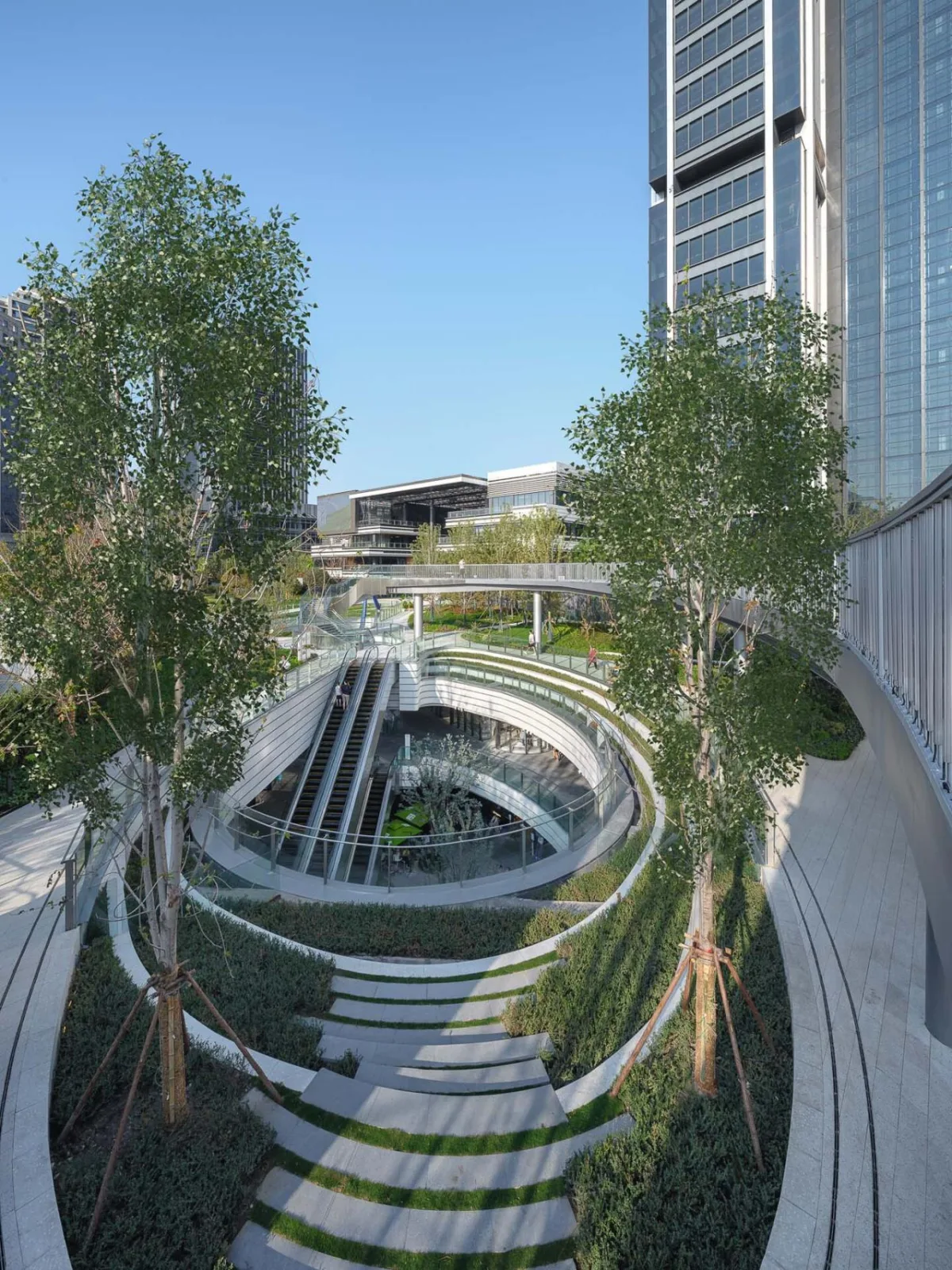
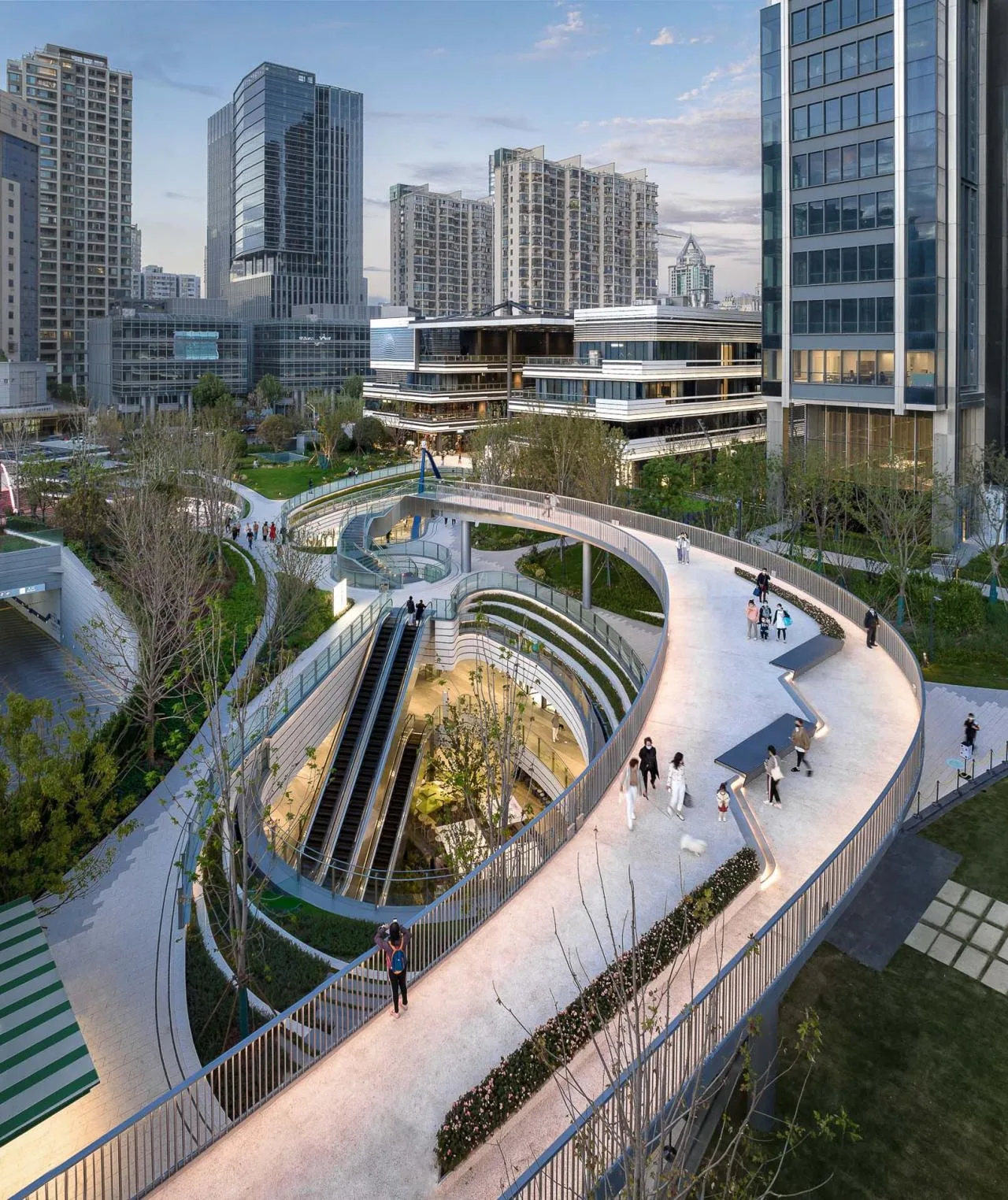
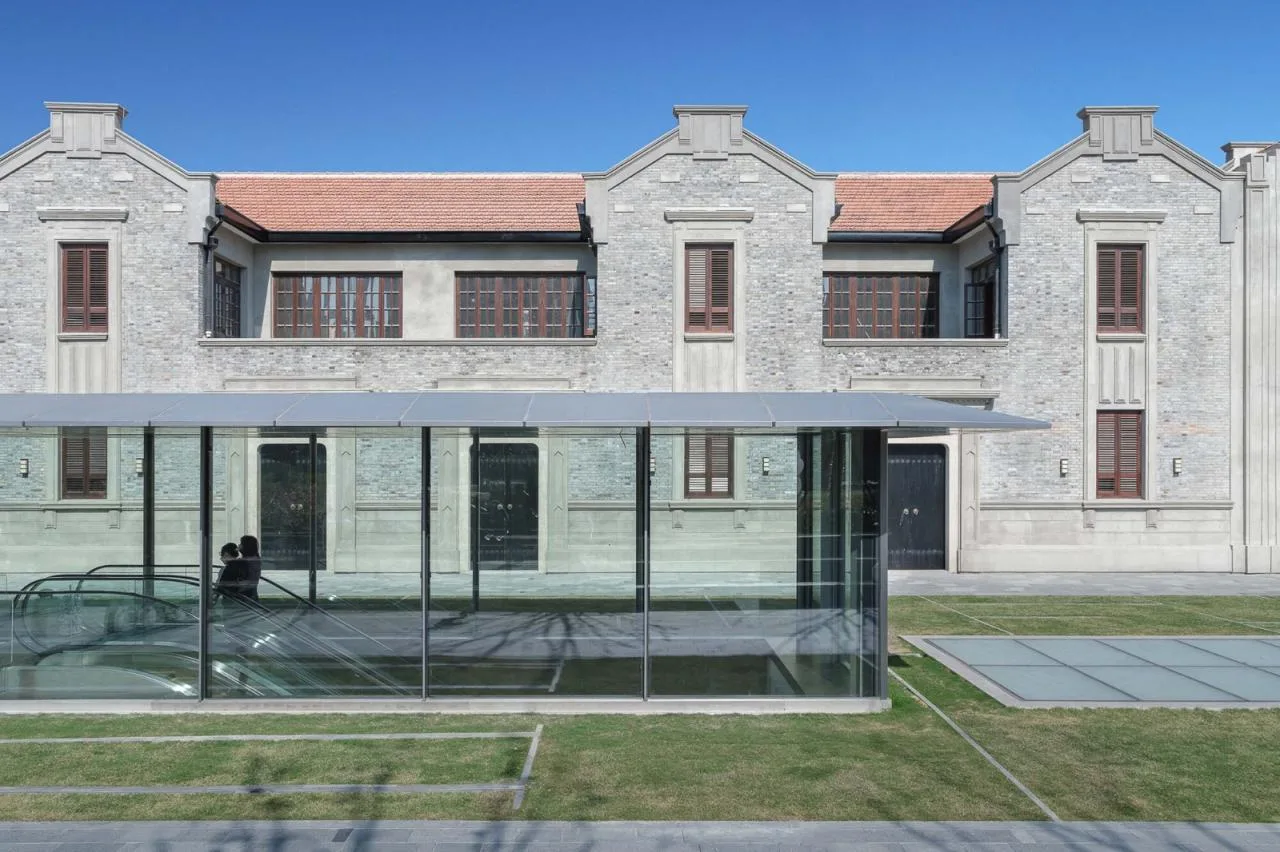
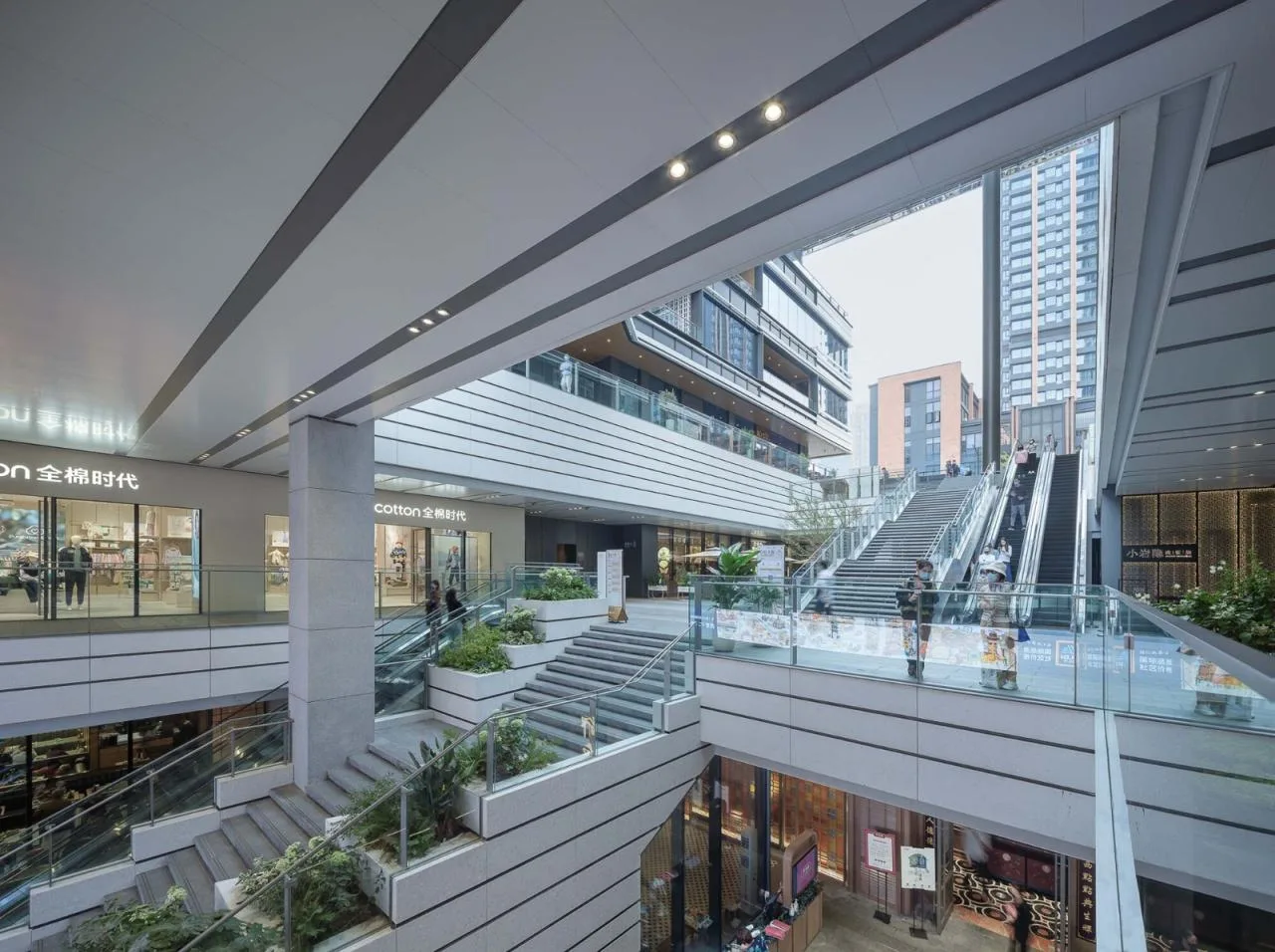
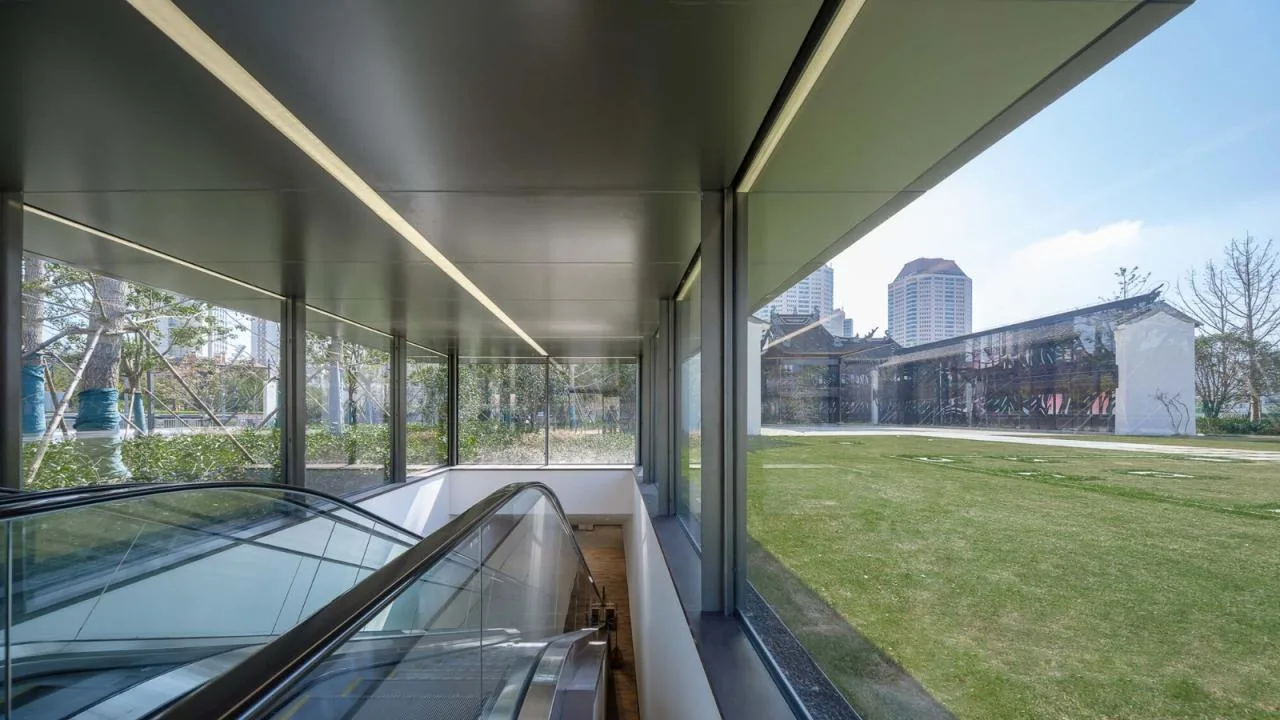
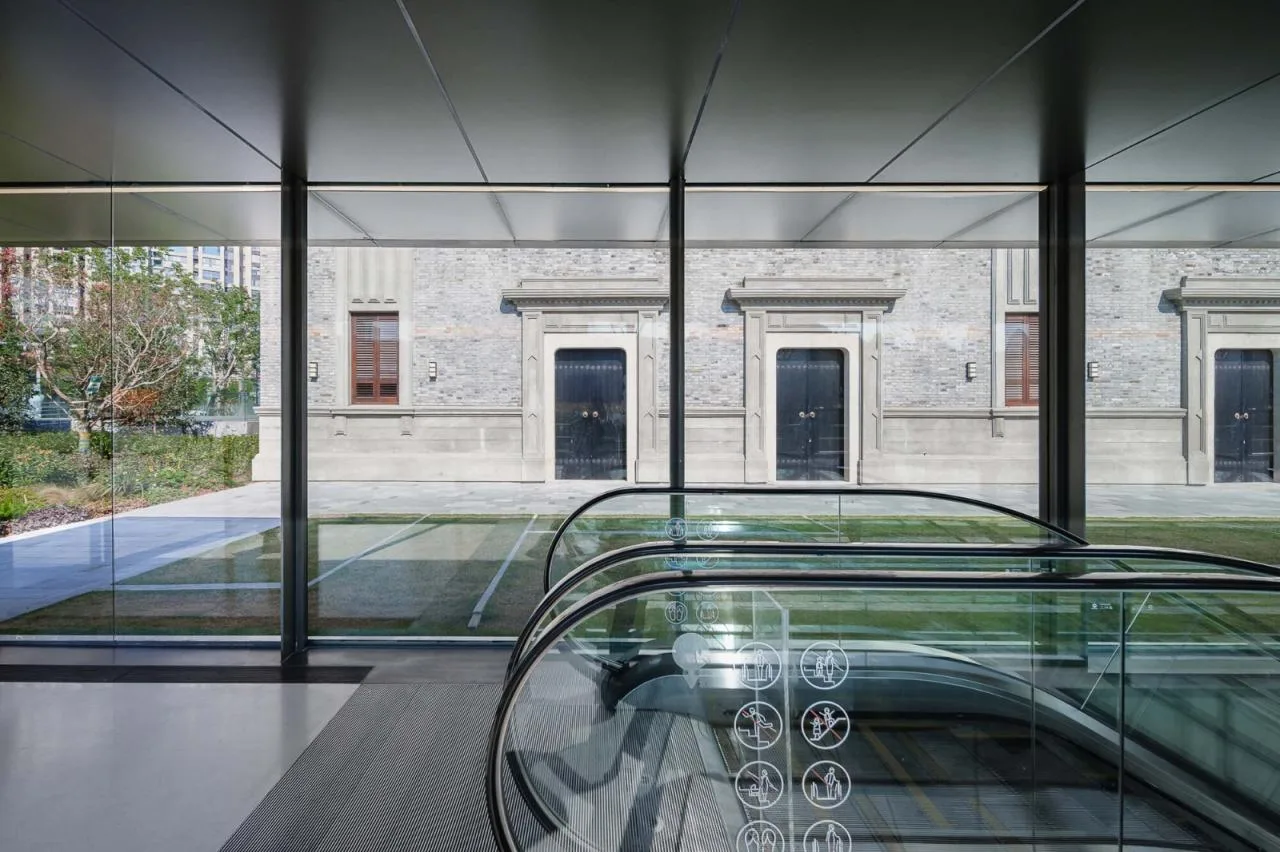
A city road divides the green space in the center of the site. Pebble-shaped openings on both sides lead to entrances of the underground commercial areas. Along the commercial pathways within the canyon, green plantings, public seating, and coffee spots evoke the gentle slopes and terraced tea gardens reminiscent of a valley landscape. At the eastern and western canyon entrances, escalators discreetly descend alongside scenic walls into the commercial zones, blending seamlessly into the surrounding landscape. From a distance, only the cascading roofs above the entrances hint at the underground “canyon” below.
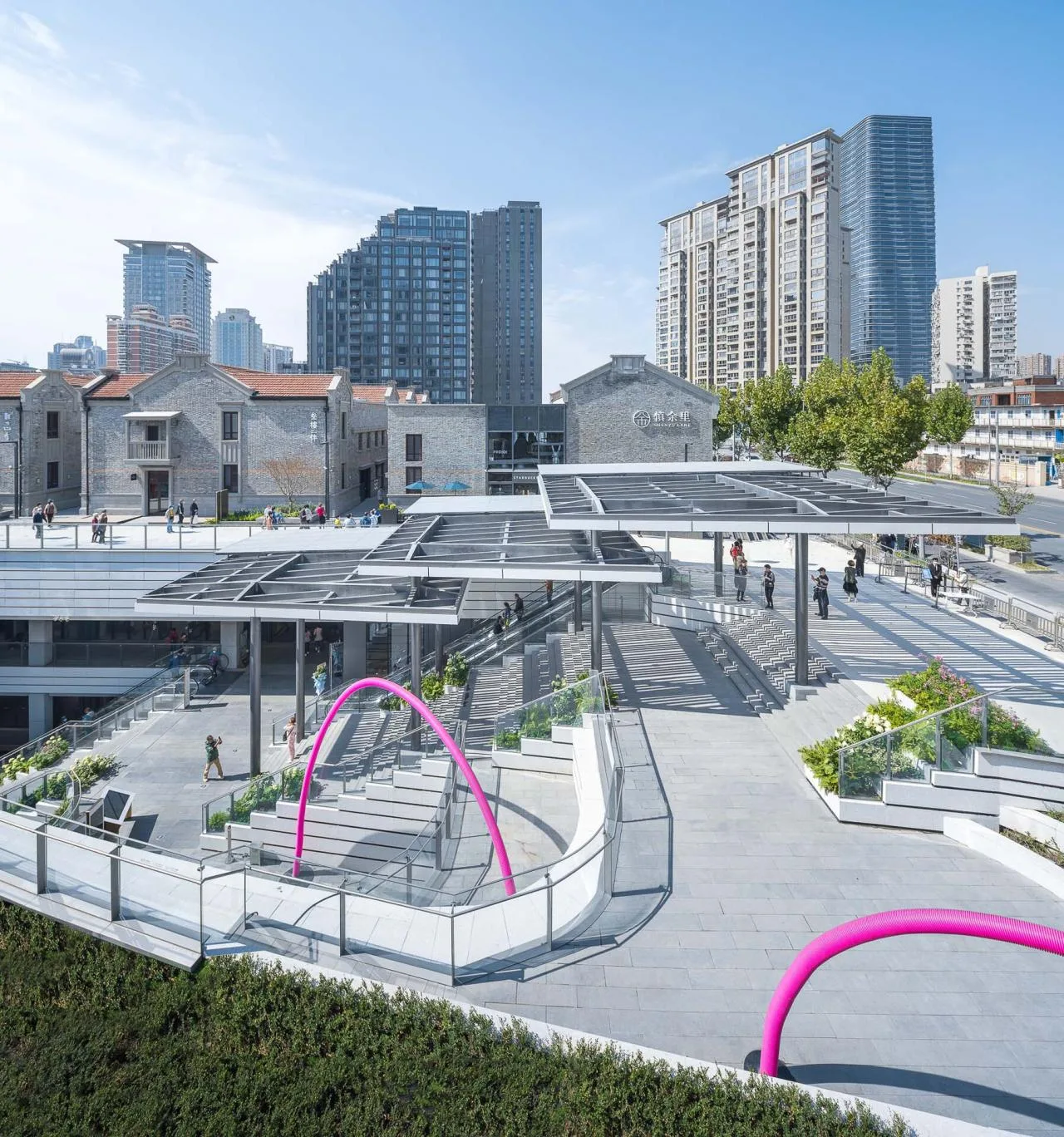
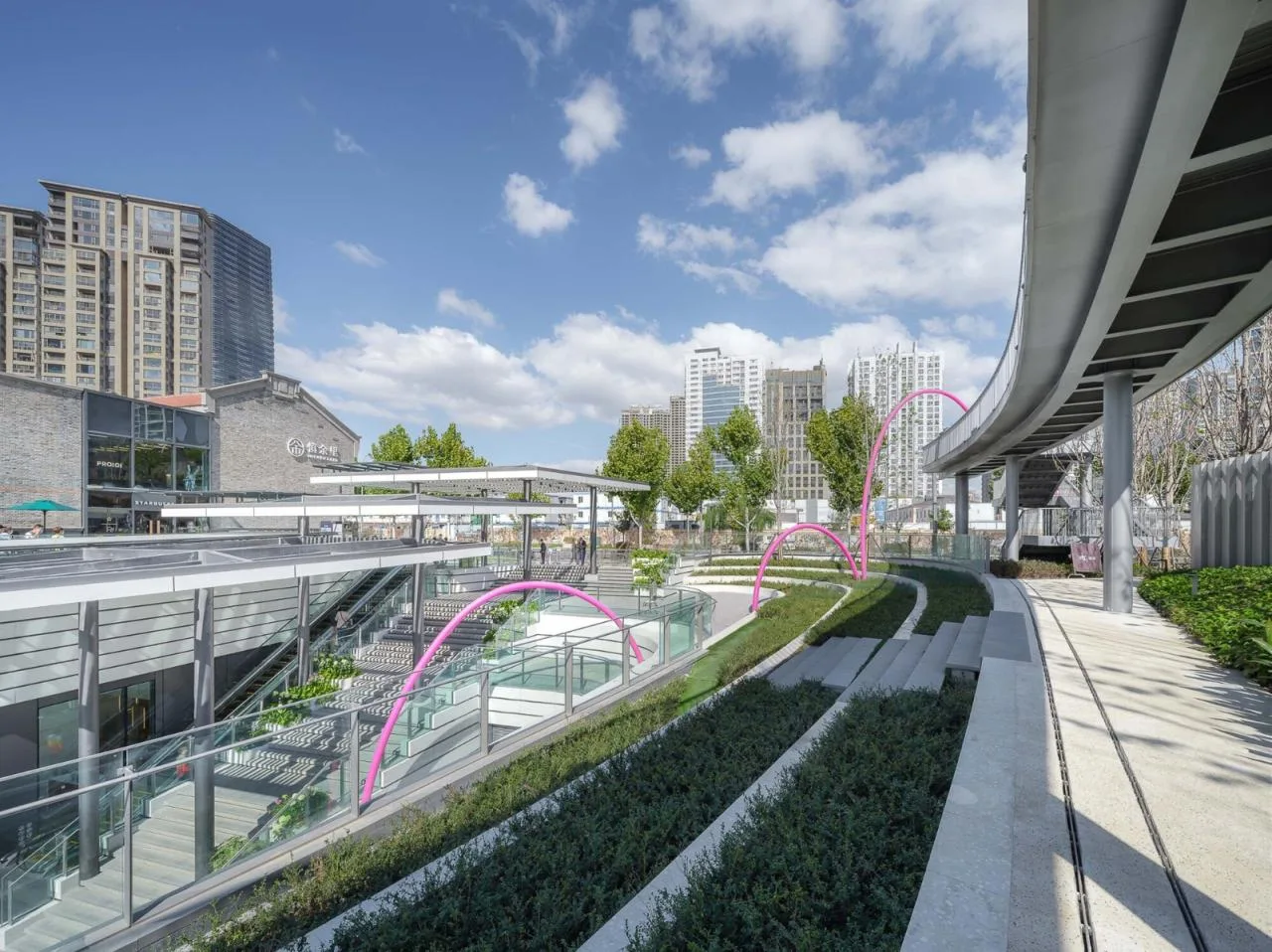
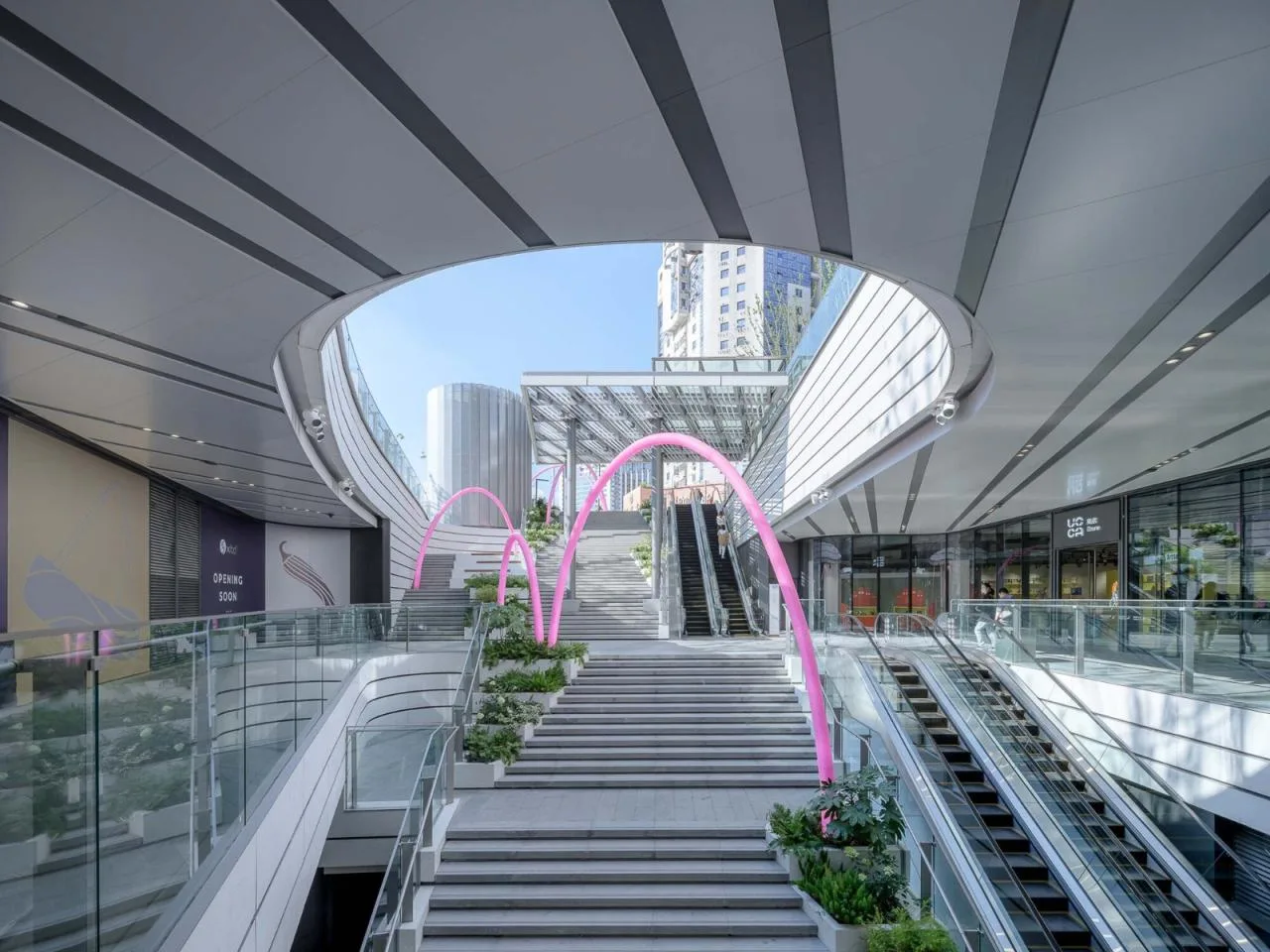
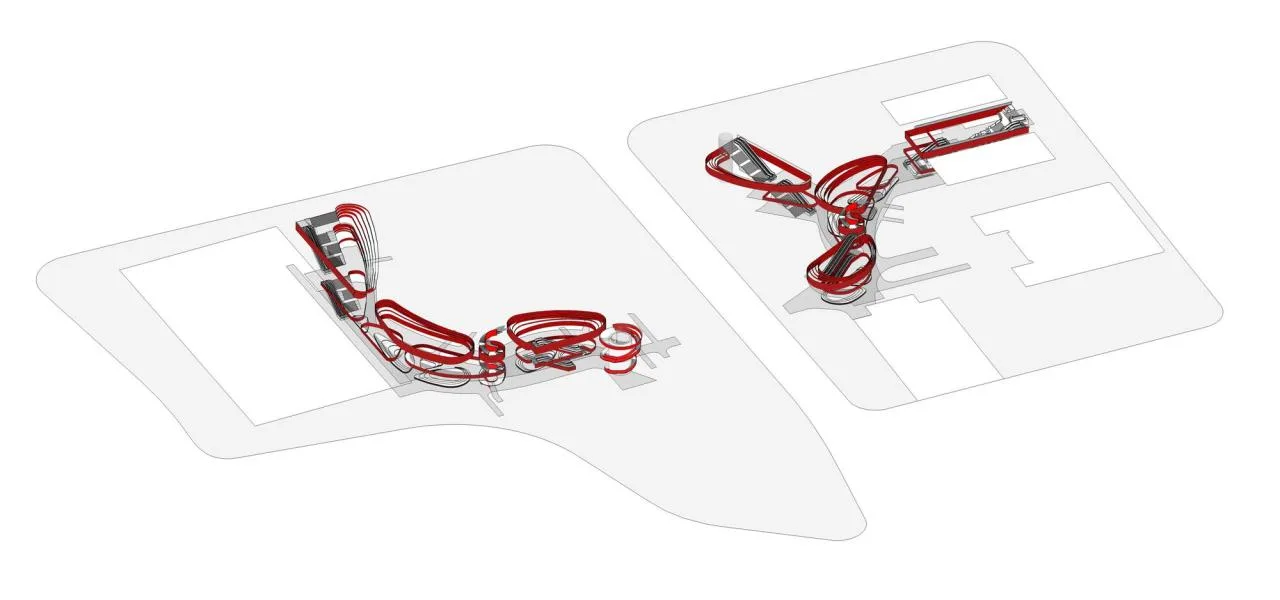
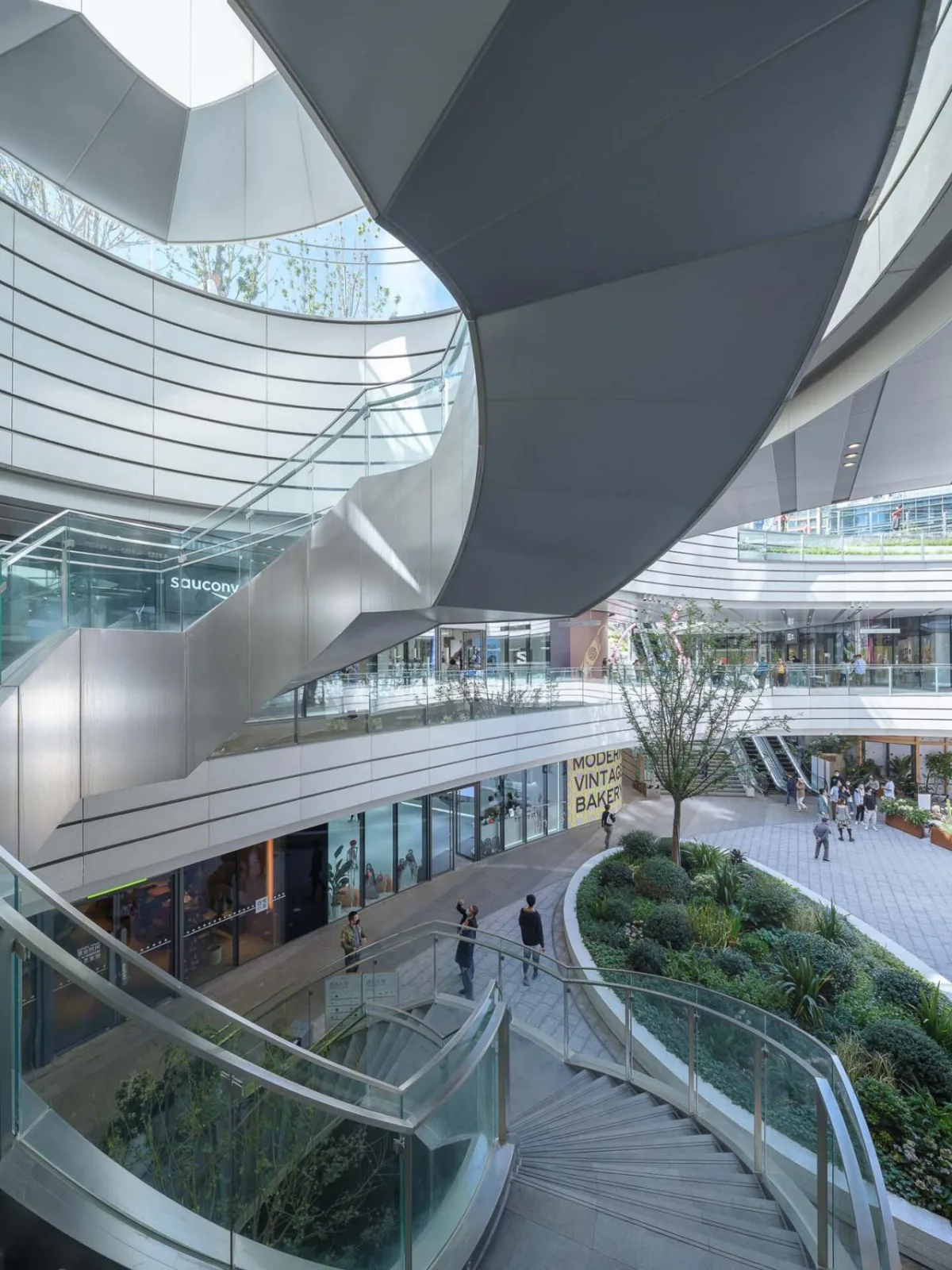
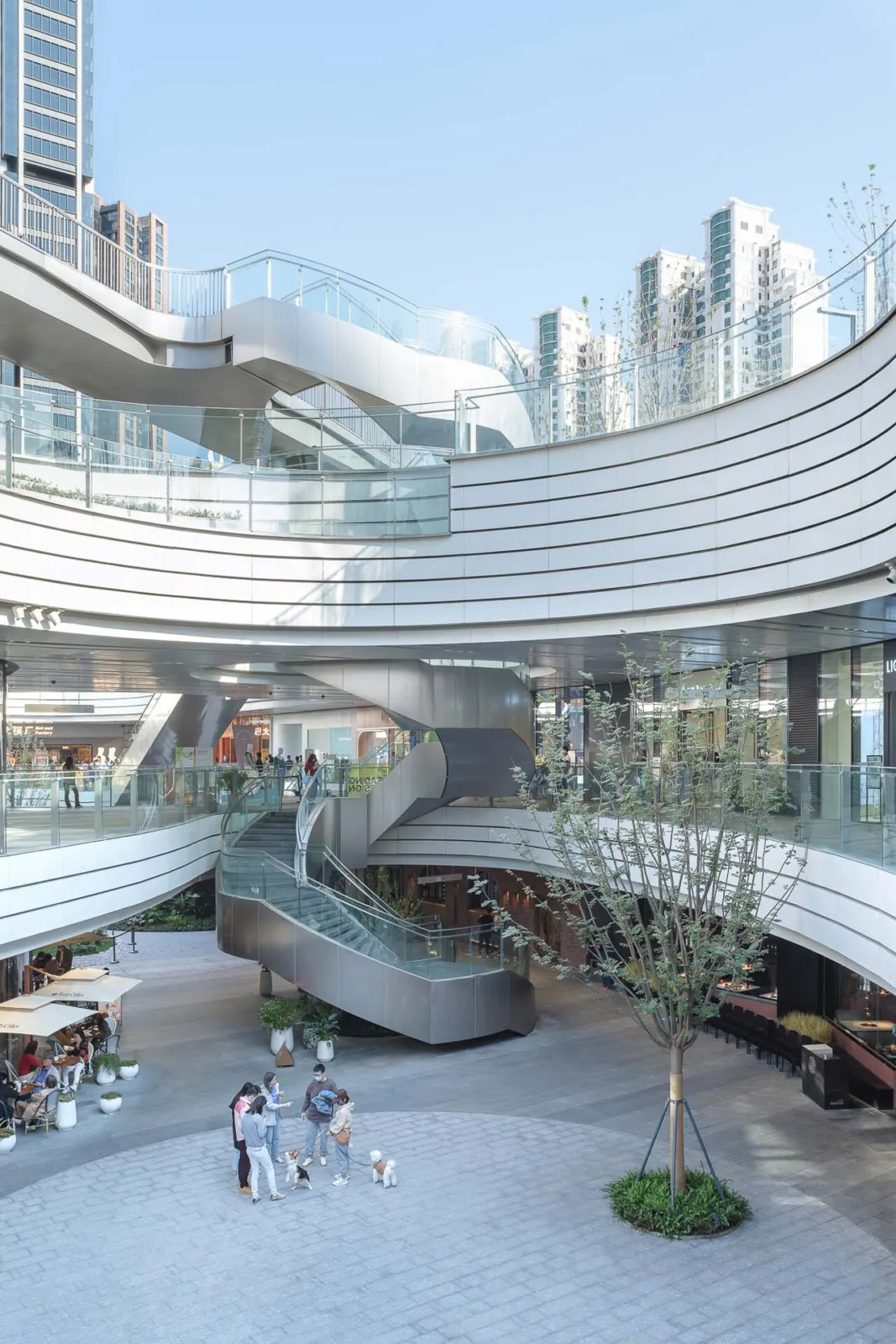
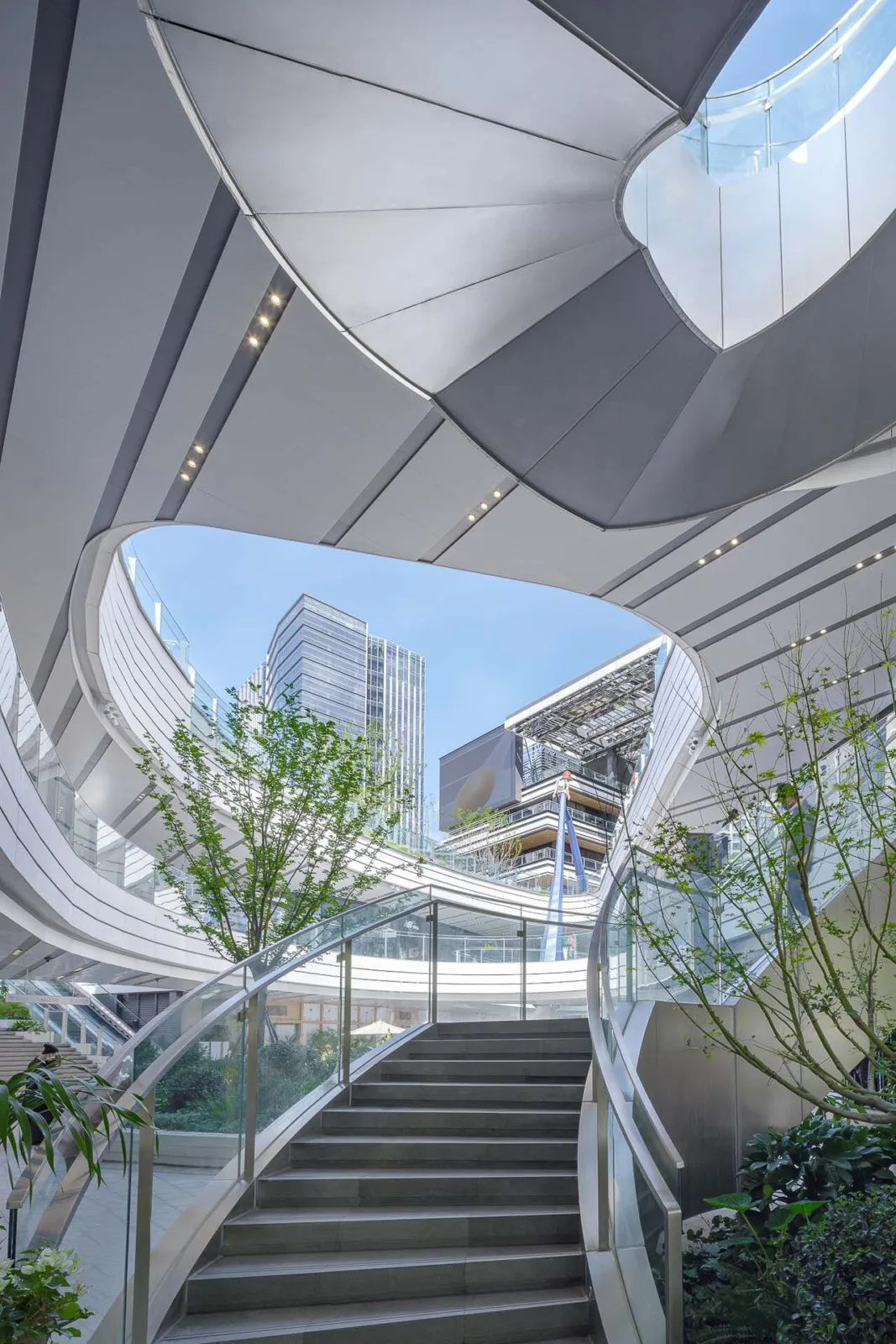
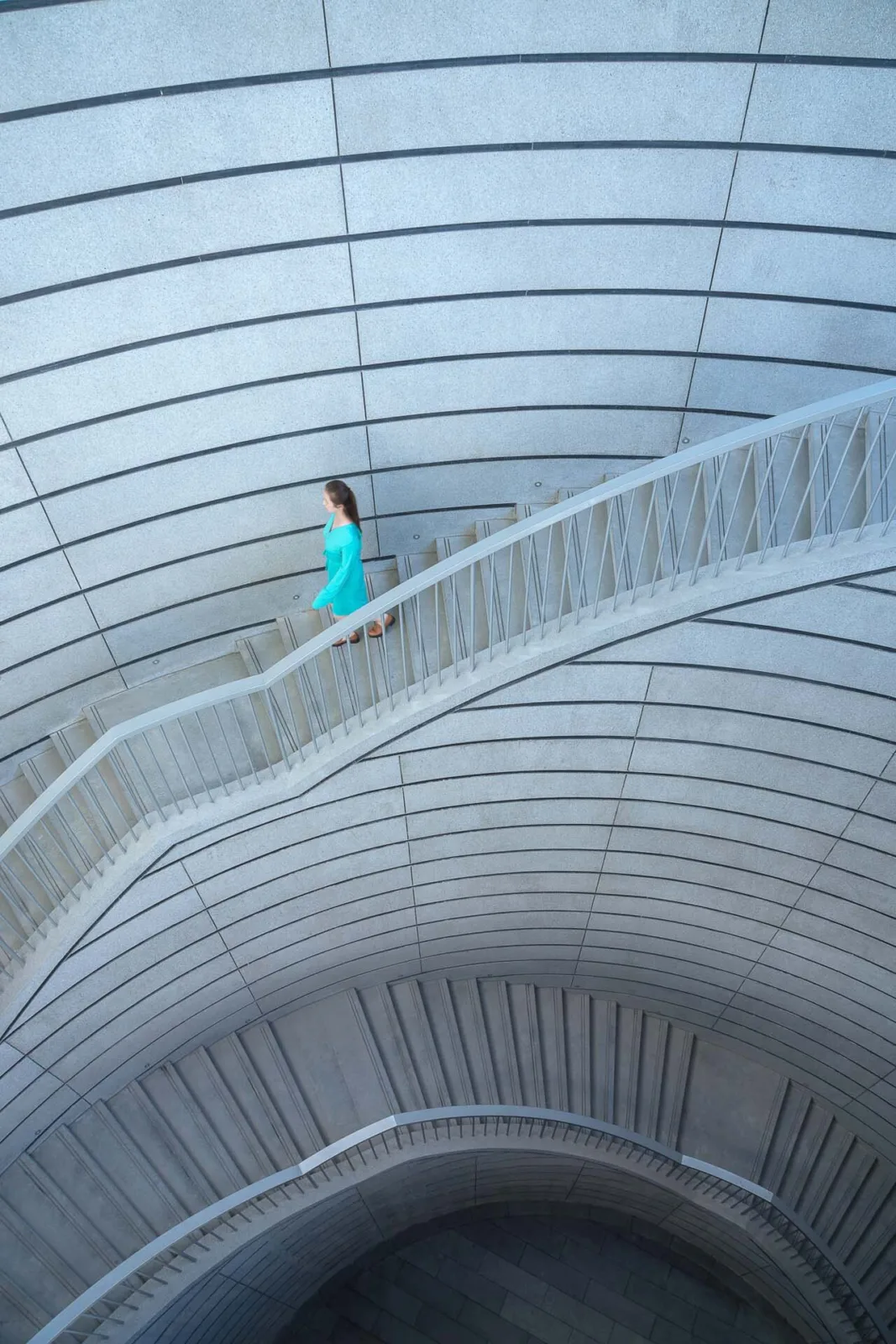
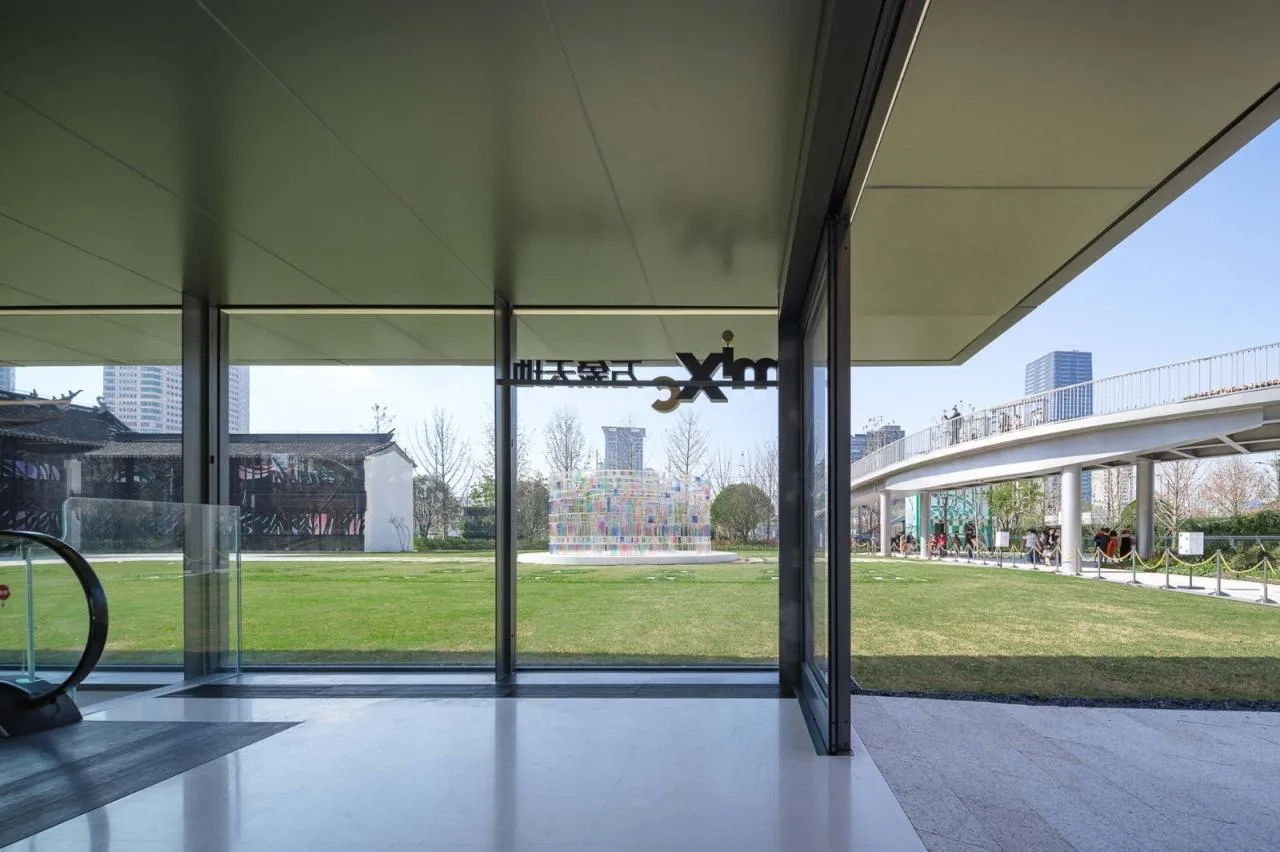
Another significant entrance is through the newly built four-story podium, which connects directly to the underground commercial space. This grand portal frames the boundary between the green space and commercial area. Its horizontal lines and carefully selected materials aesthetically unify it with the adjacent tower and surrounding architectural complex. A pedestrian overpass crosses Fujian North Road, linking the two parts of the project. From this bridge, visitors can enjoy stunning views of the urban landscape on both sides of the Suzhou River. The pedestrian bridge also serves as a main entrance to the underground shopping mall, with a vertical staircase and an adjacent open spiral staircase providing direct access to the commercial level below.
Hong Kong Creative Studio All Rights Reserved collaborated with German artist Inges Idee to create two sculptures that enhance the connection between the canyon’s commercial and green spaces. The first, “Elephant Parent Child Band,” features two cartoon elephants, one large and one small, facing each other. This sculpture links the above-ground green space with the underground commercial area, inspired by musical elements like speakers and bassoons. Its smooth, flowing form echoes the curved entrance designs.
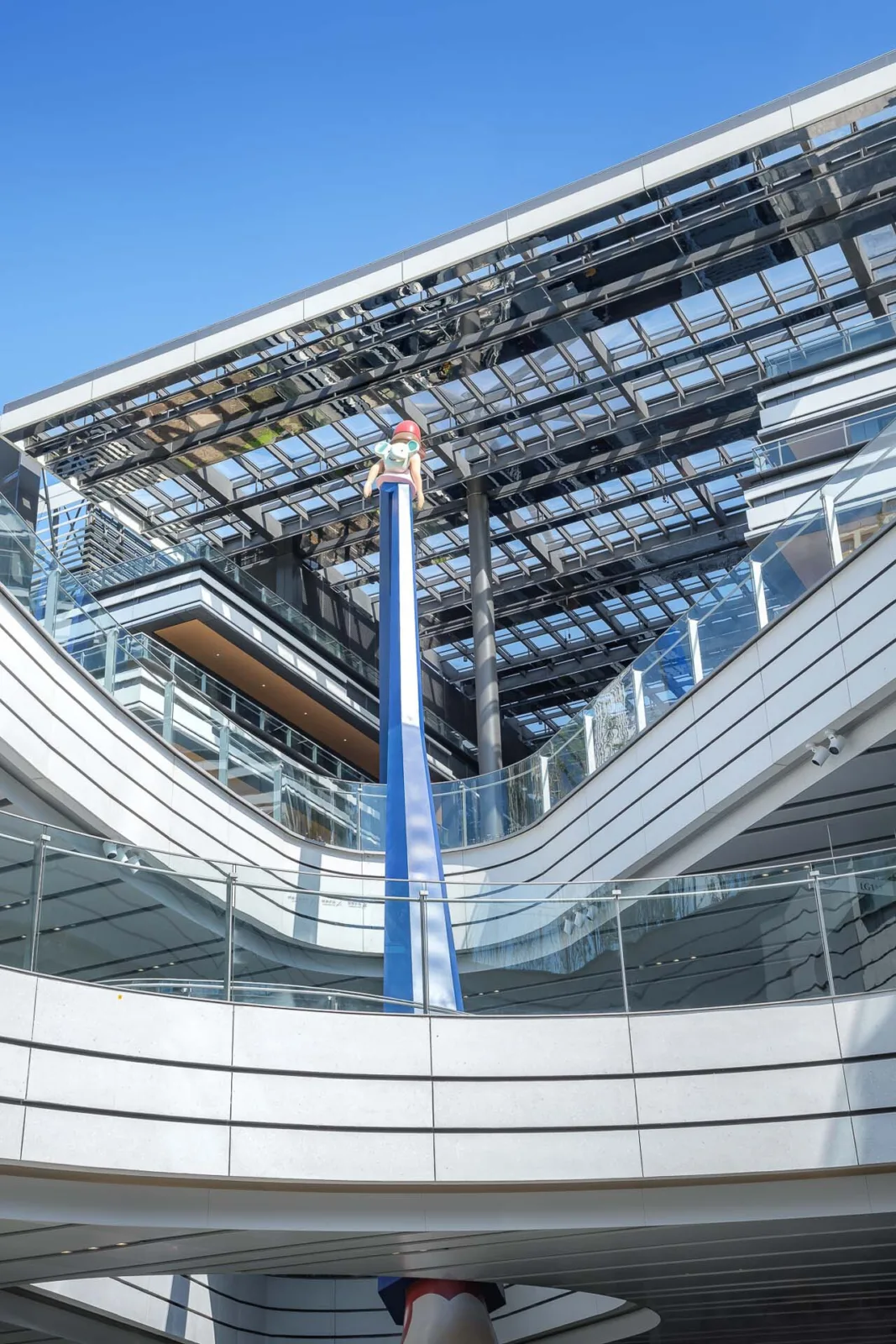
The second sculpture, “Step Up!,” depicts a child briskly walking through the green spaces toward the street. The figure’s elongated legs stretch across two levels of the commercial canyon before reaching the terraced landscape above. These artistic installations emphasize the permeability and seamless connection between the ground-level green spaces and the subterranean commercial areas.
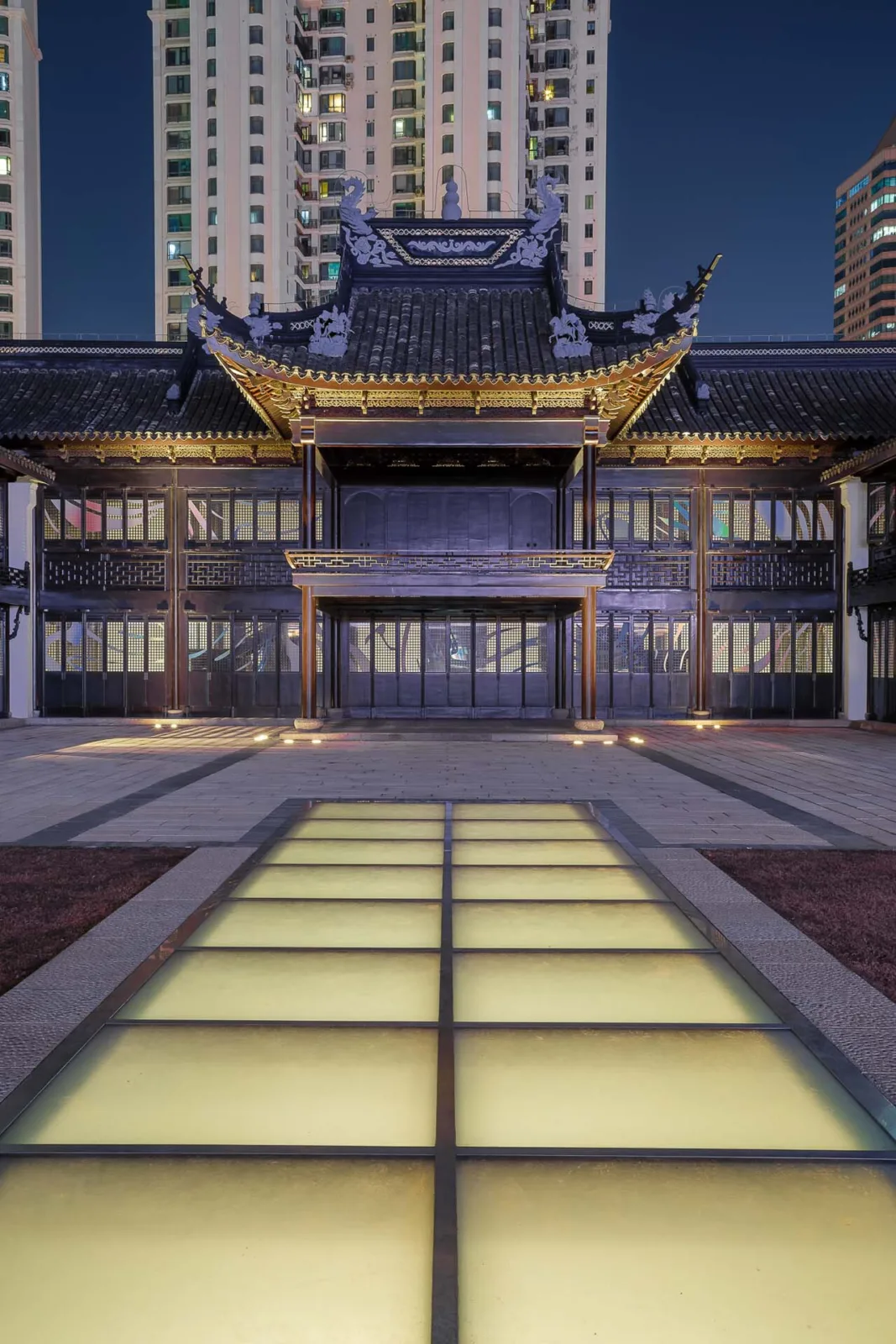
Within the shopping center, two enclosed indoor areas maintain spatial and visual connections to significant cultural heritage sites: Shenyu Lane and Tianhou Palace. The commercial spaces directly below integrate seamlessly with the historic structures above, aligning entrances, axes, and the underground public atrium.
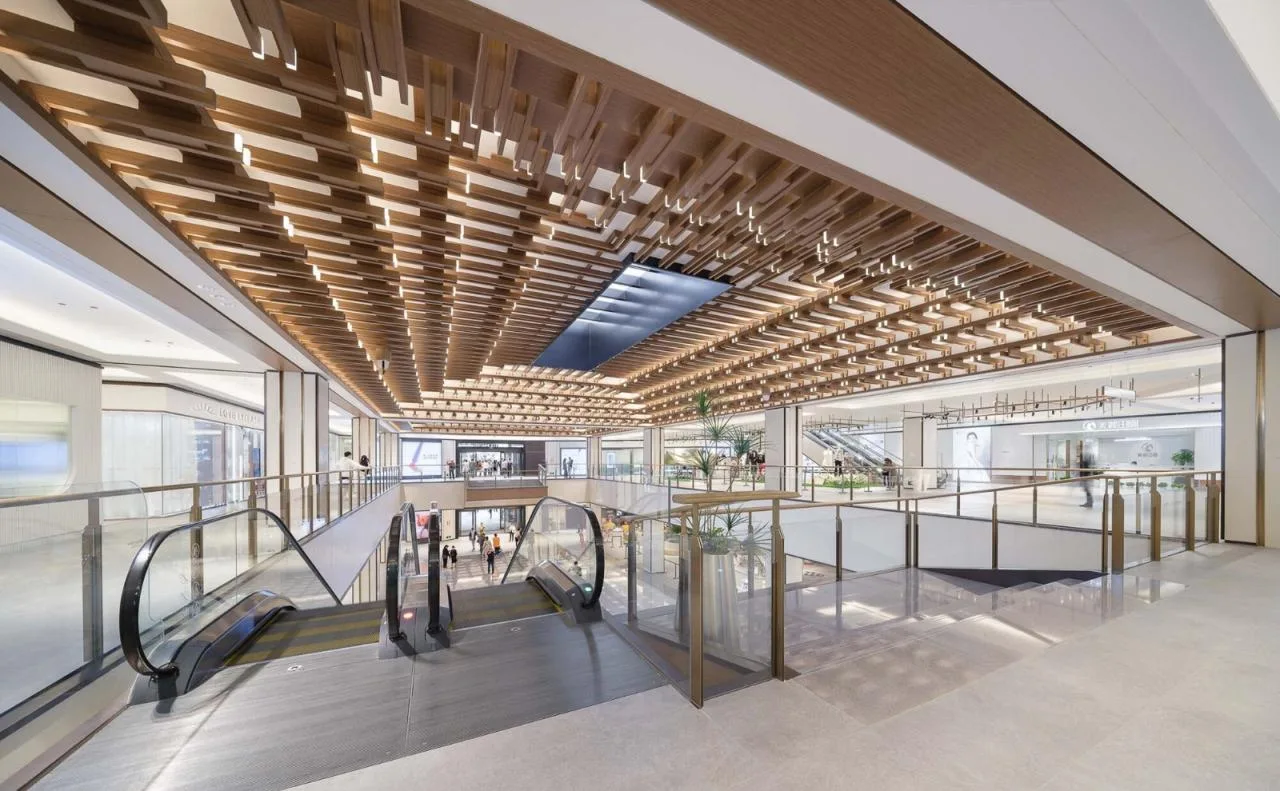
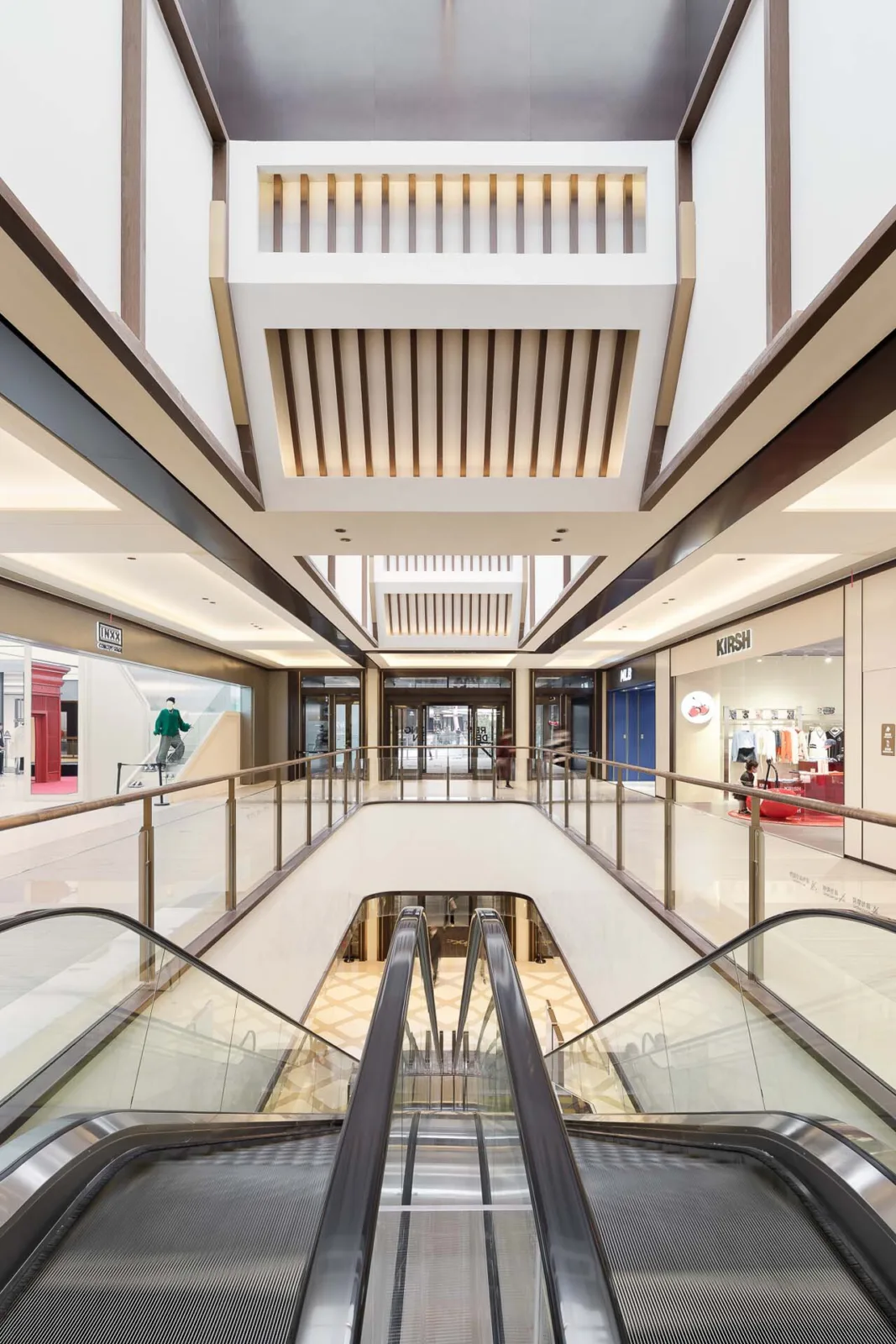
Kokaistudios’ interior design team drew inspiration from traditional alleyway residential architecture. Combining skylight glass roofs with lightweight wooden rafters, the design evokes a dialogue between commerce and heritage. This approach unites the preservation of historic buildings with the creation of vibrant commercial public spaces, achieving a harmonious blend of cultural significance and modern functionality.
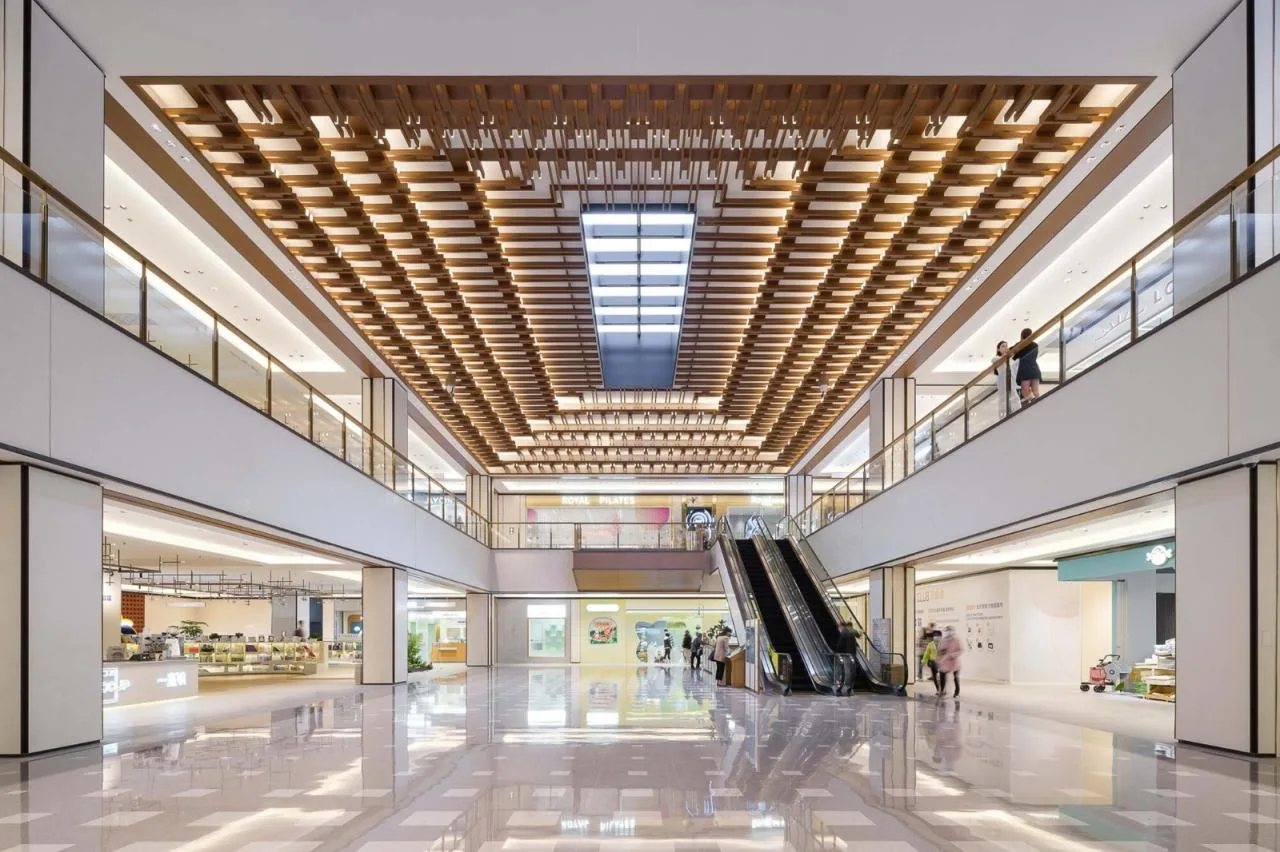
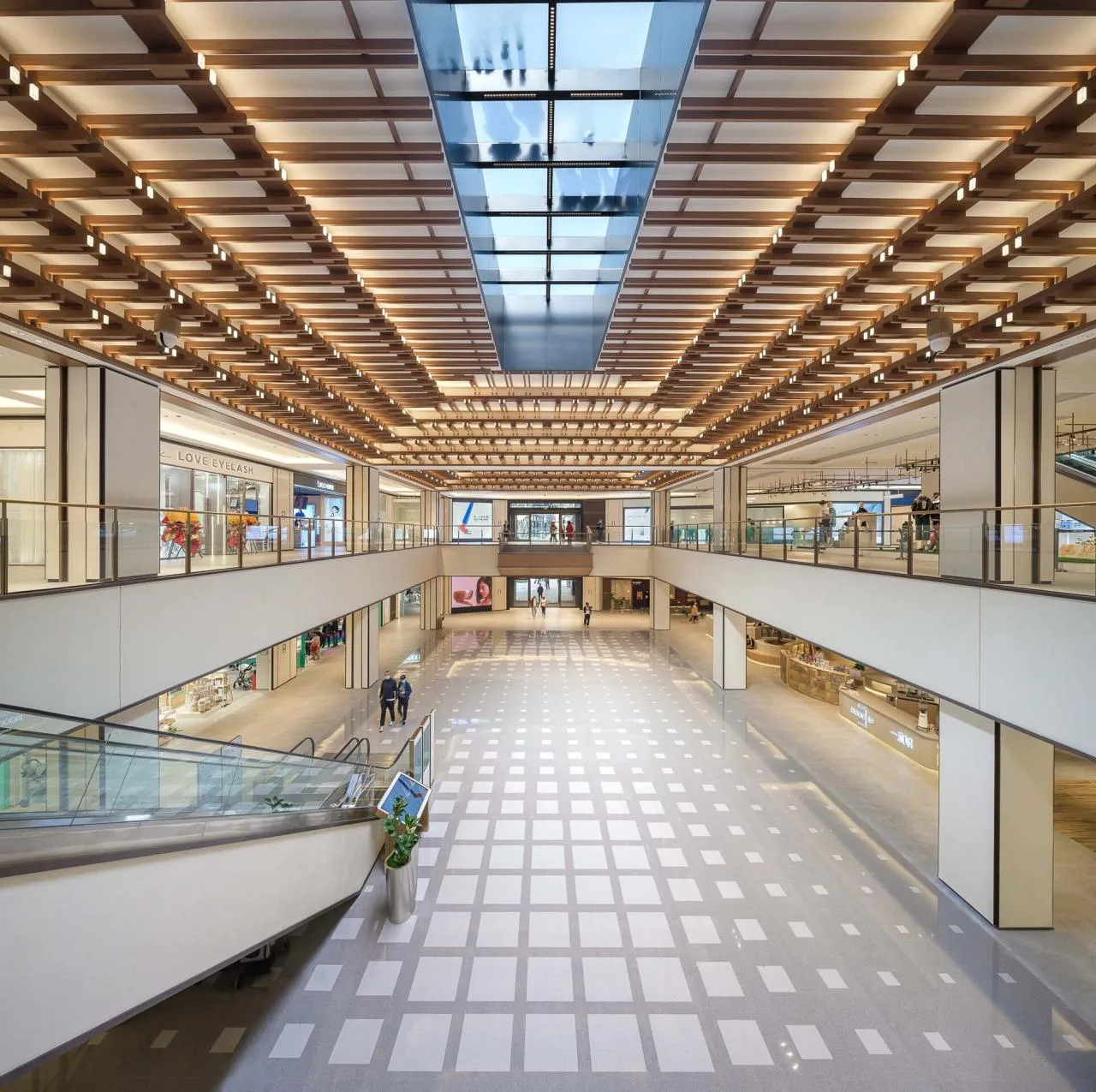
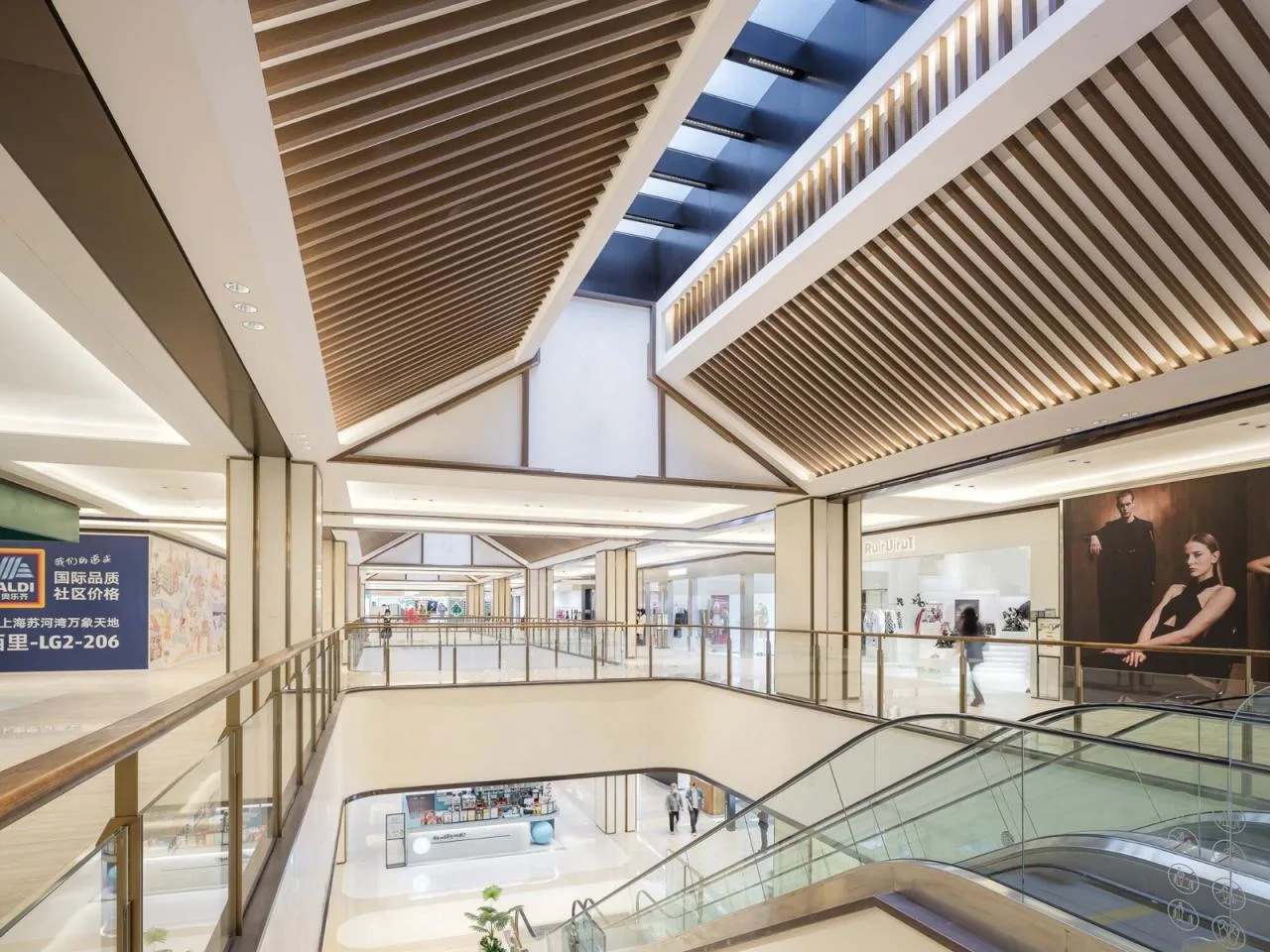
Shanghai Suhewan Wanda Plaza stands as one of Kokaistudios’ most innovative shopping center projects to date. Serving as a public urban space for entertainment and relaxation, the site’s transplanted trees are designed to grow robustly, eventually providing comfortable shade and a pleasant environment for visitors.
In a densely populated city like Shanghai, green spaces and their associated urban public areas are vital for residents’ leisure, health, and the preservation of local biodiversity. The concept of “shared vitality and win-win value” between green spaces and commerce relies on close collaboration among designers, government departments (including green space management, planning, cultural preservation, and fire safety), owners, commercial operators, and engineers.
The scale and shape of the canyon entrances, in particular, required careful calculation and a dynamic balance of multiple factors to optimize the overall quality of the urban public space and landscape environment. This process also maximized the efficiency of urban infrastructure, equipment, and emergency evacuation routes.
Following the pandemic, cities increasingly favor spaces that prioritize high-quality green living, making projects like Shanghai Suhewan Wanda Plaza important catalysts for the future growth of the urban economy.
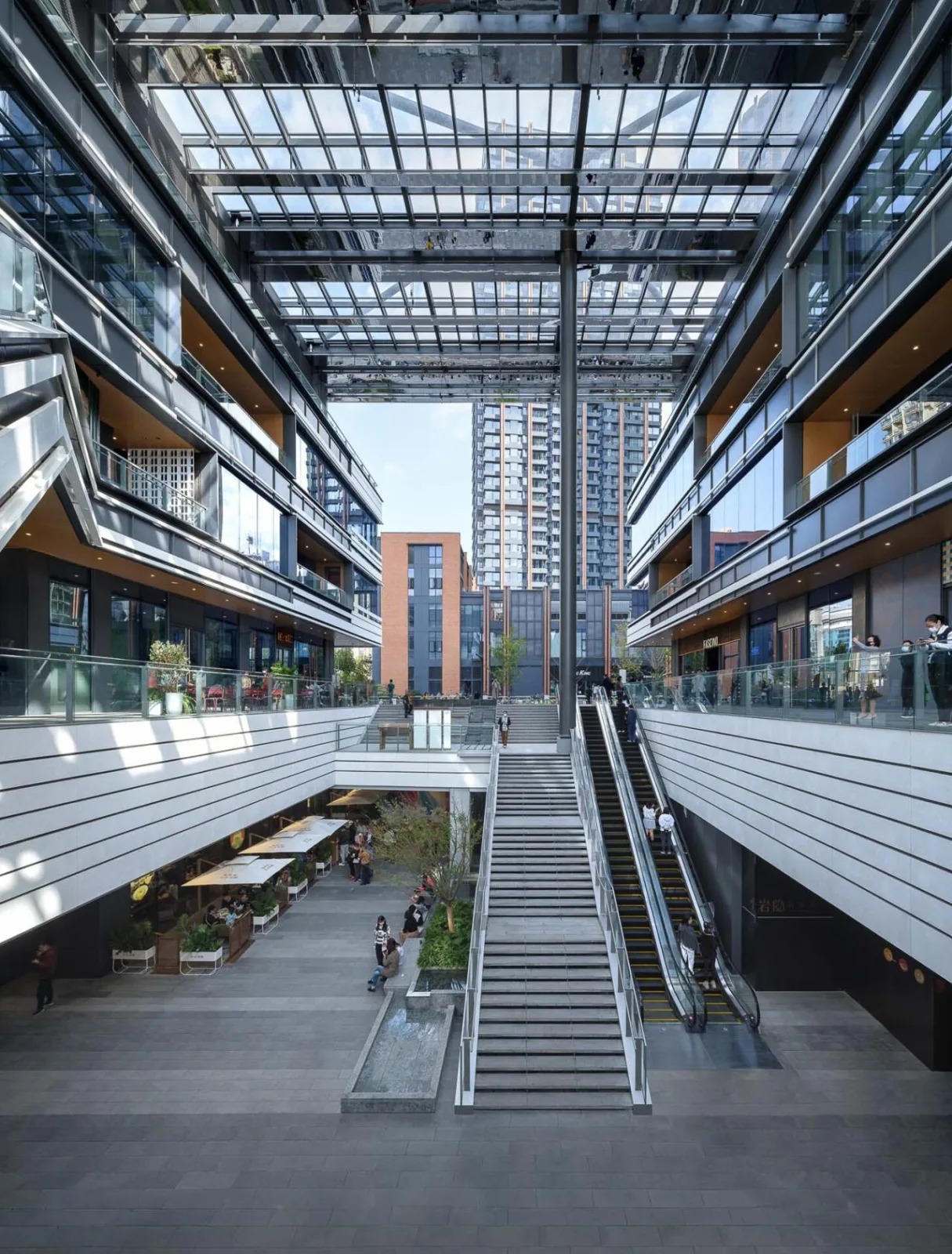
The design concept of Shanghai Suhewan Wanda Plaza, centered around the “urban canyon,” is deeply tied to the city’s urban renewal efforts. When urban areas require the creation of attractive public green spaces to address deficits in surrounding neighborhoods, city planners demonstrate foresight by encouraging the integration of green spaces with commercial developments.
This project organically integrates green space and commerce through the public “canyon” concept, aligning them vertically and implementing a unified design and construction approach. Through coordinated efforts between government and developers, the project successfully combines urban infrastructure, rail transit, cultural heritage sites, office towers, public green spaces, and commercial hubs.
As a “stone thrown into water,” this integrated development is expected to spark the comprehensive renewal of the surrounding neighborhoods. Kokaistudios was honored to play a key role and witness the entire design-driven transformation process of this landmark project.
Project Drawings
△ Conceptual Diagram
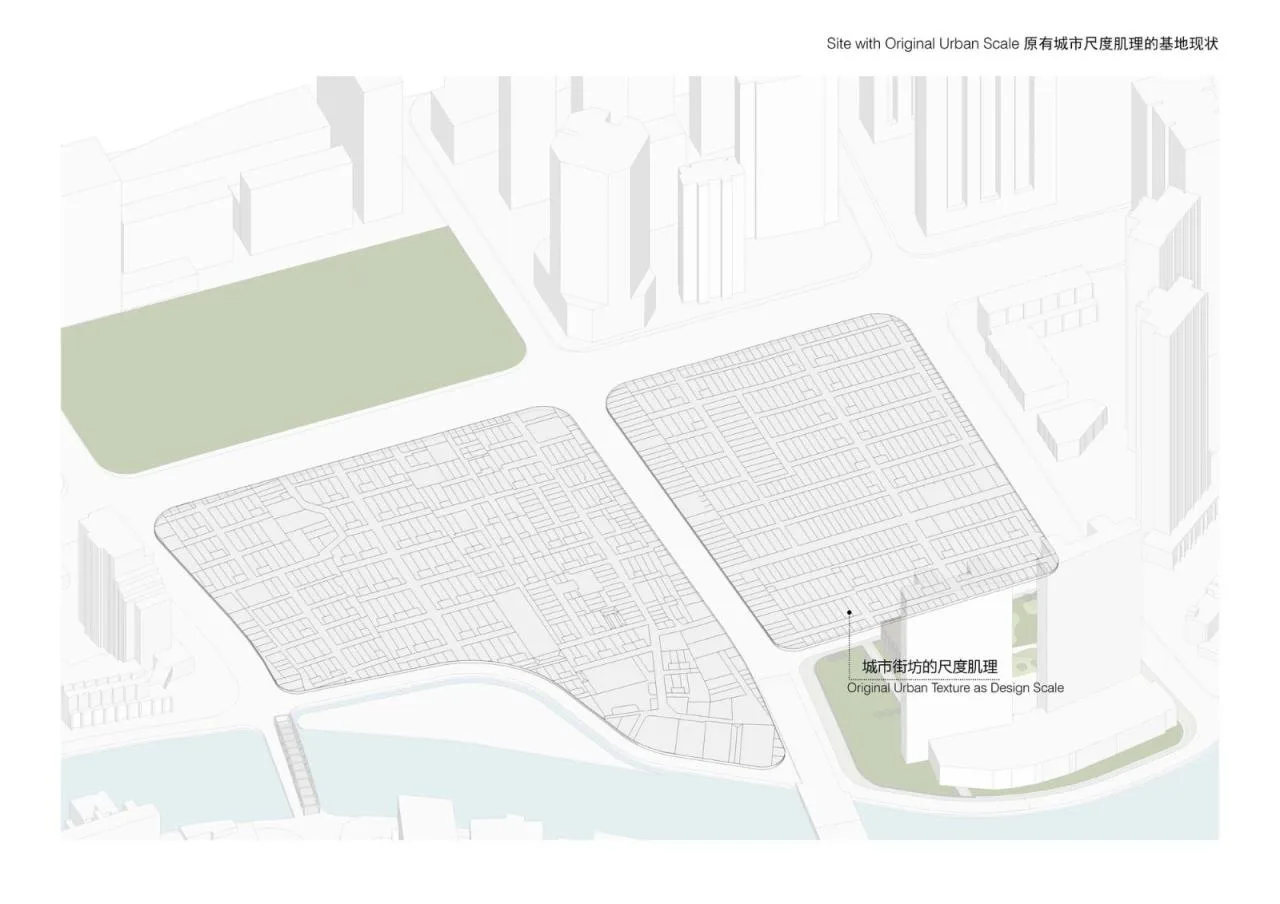
Existing Urban Fabric
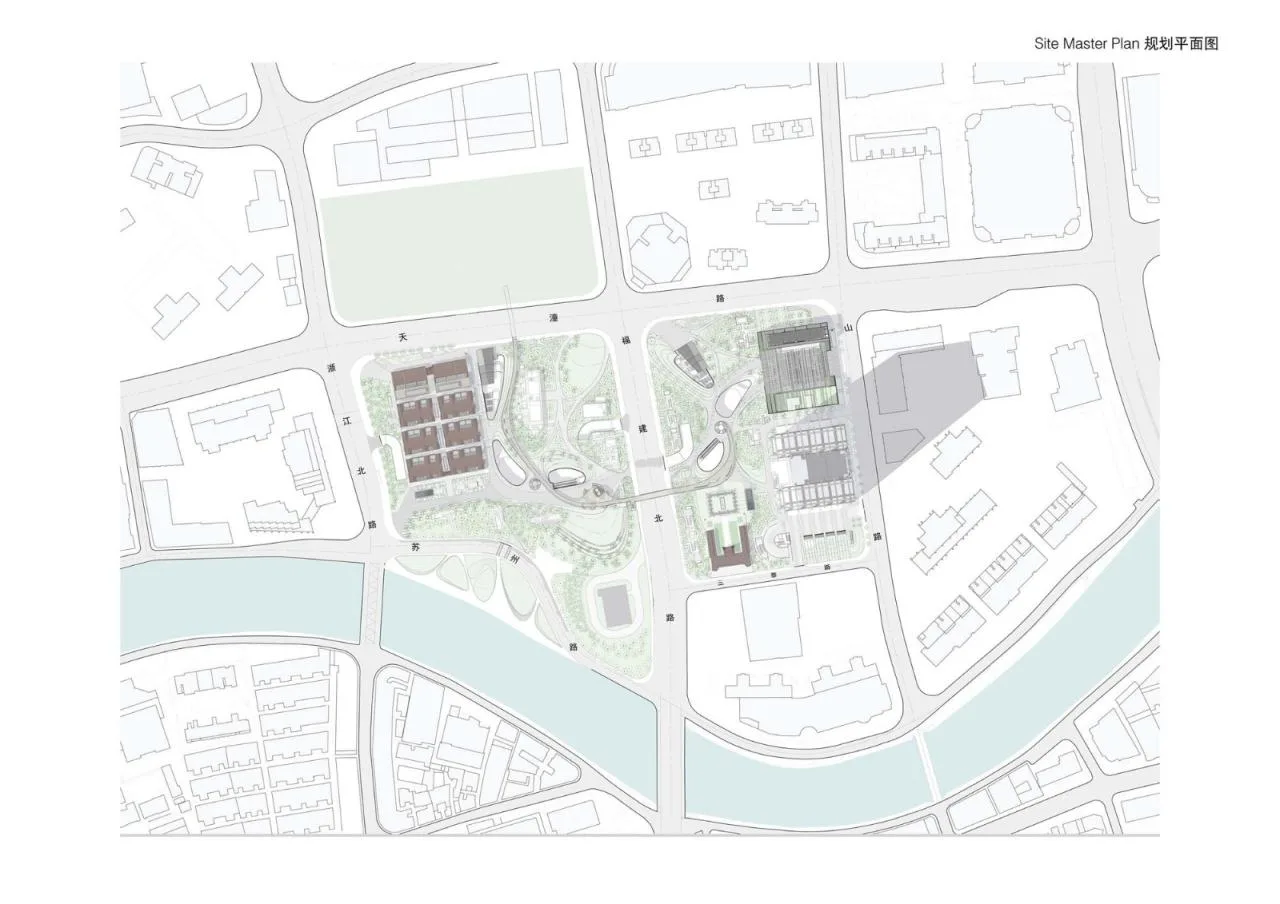
△ Planning Scheme
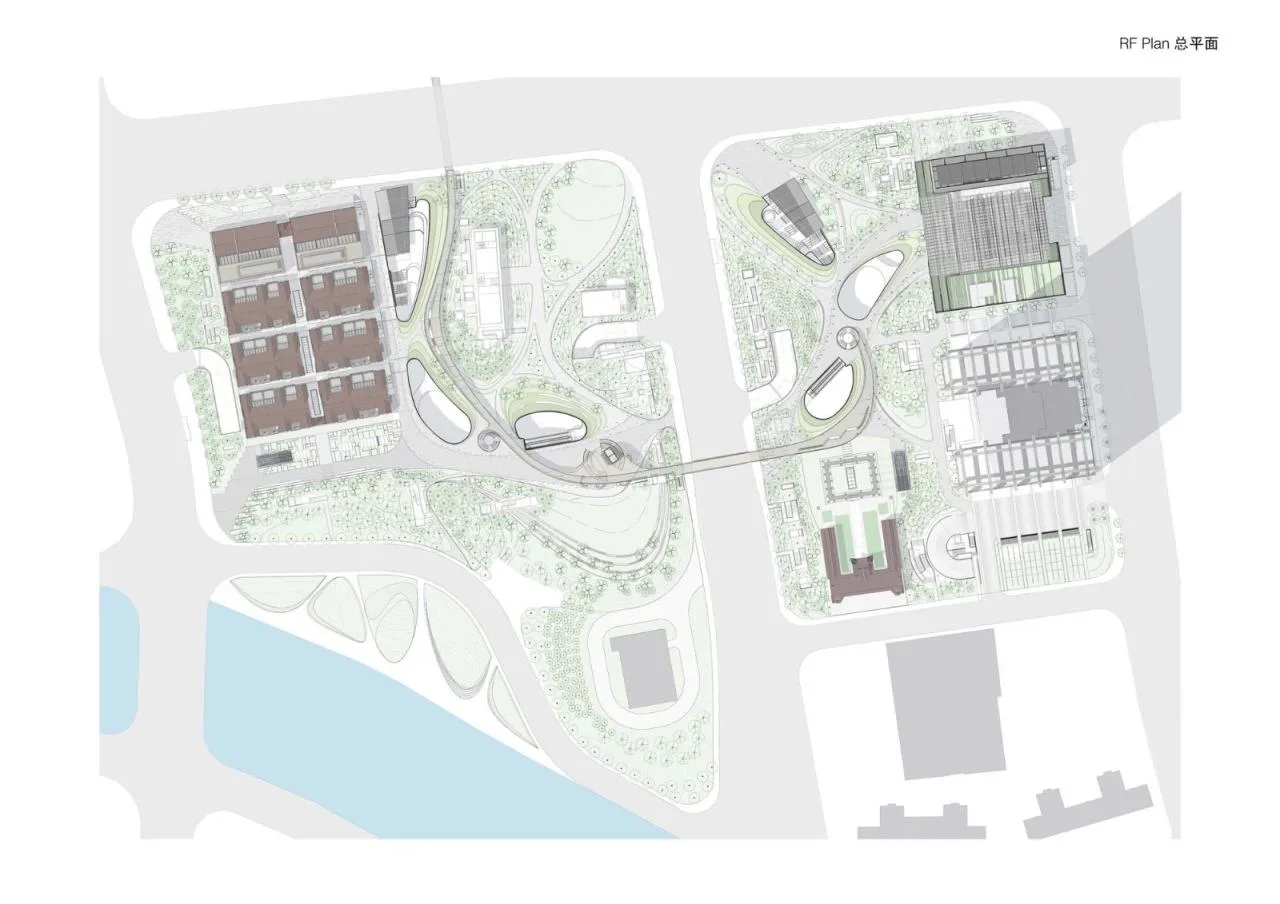
△ Master Plan
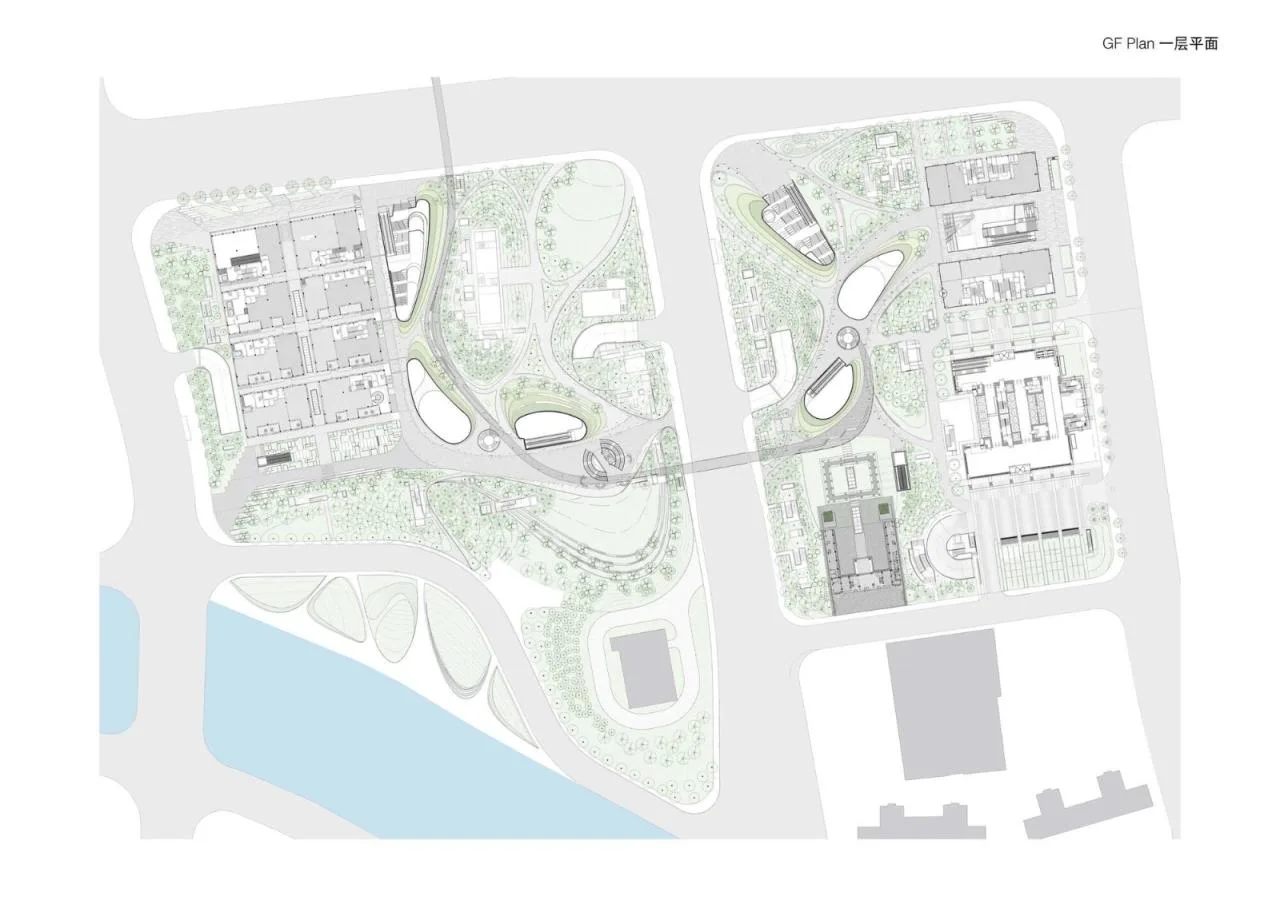
△ First Floor Plan
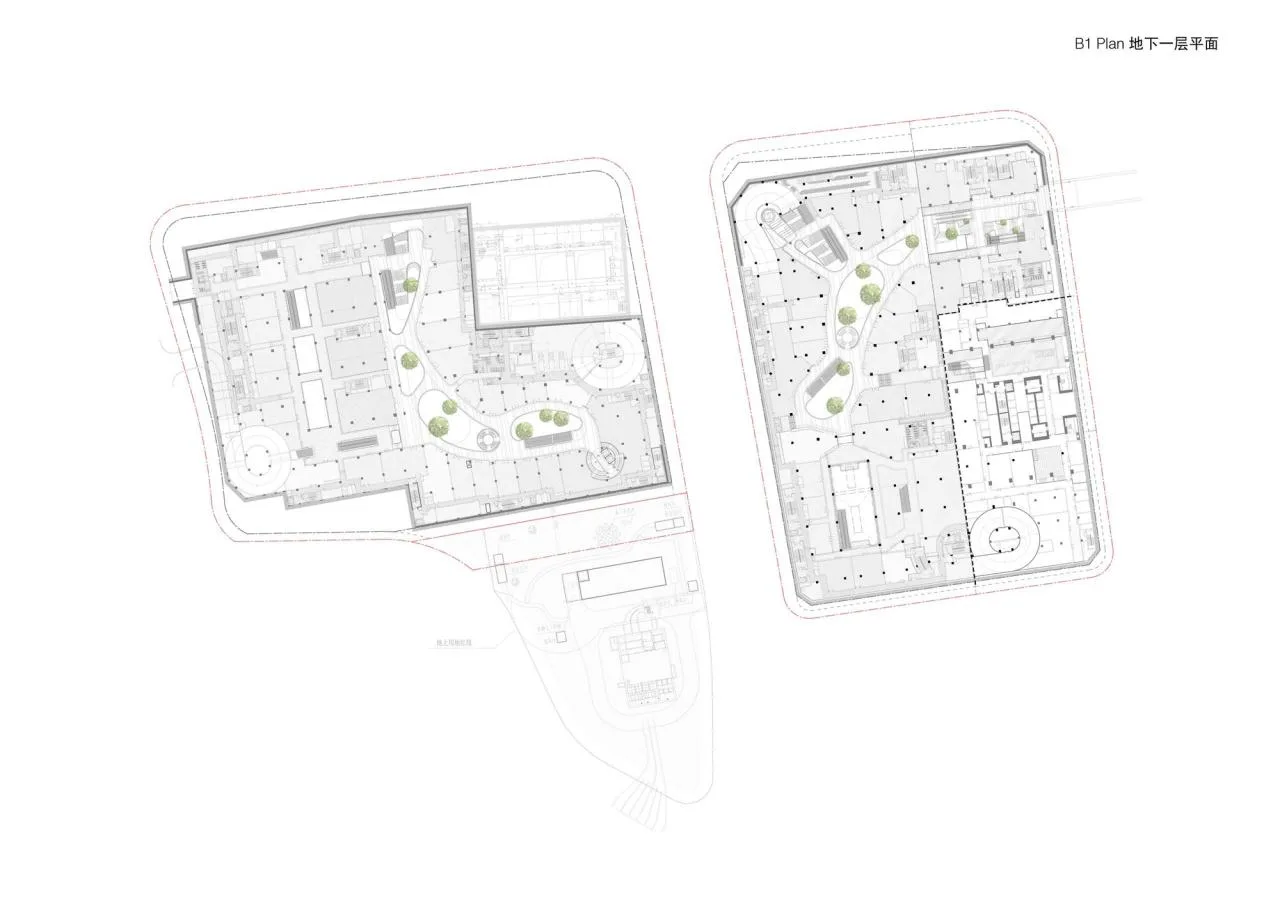
△ Underground Level Plan
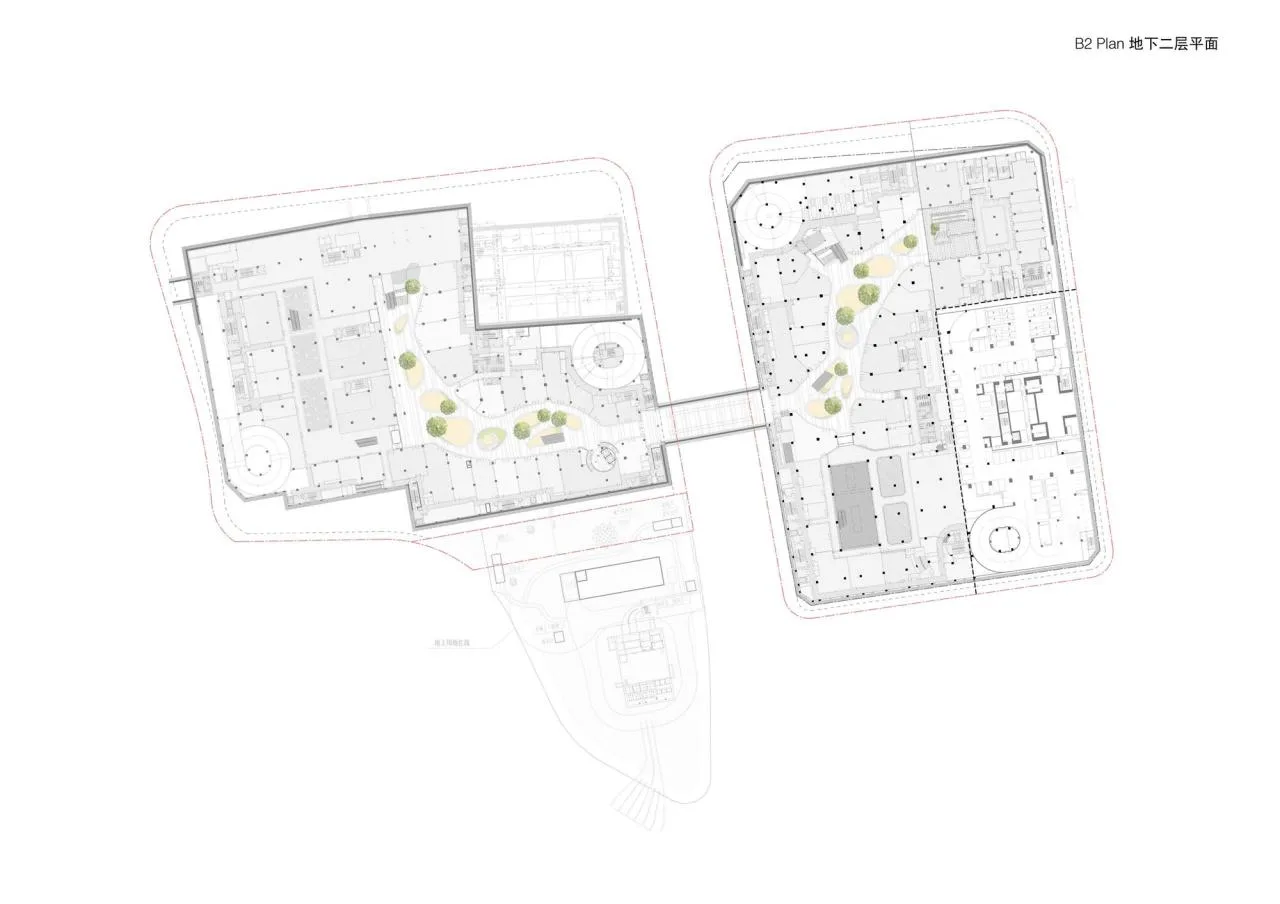
△ Second Underground Level Plan
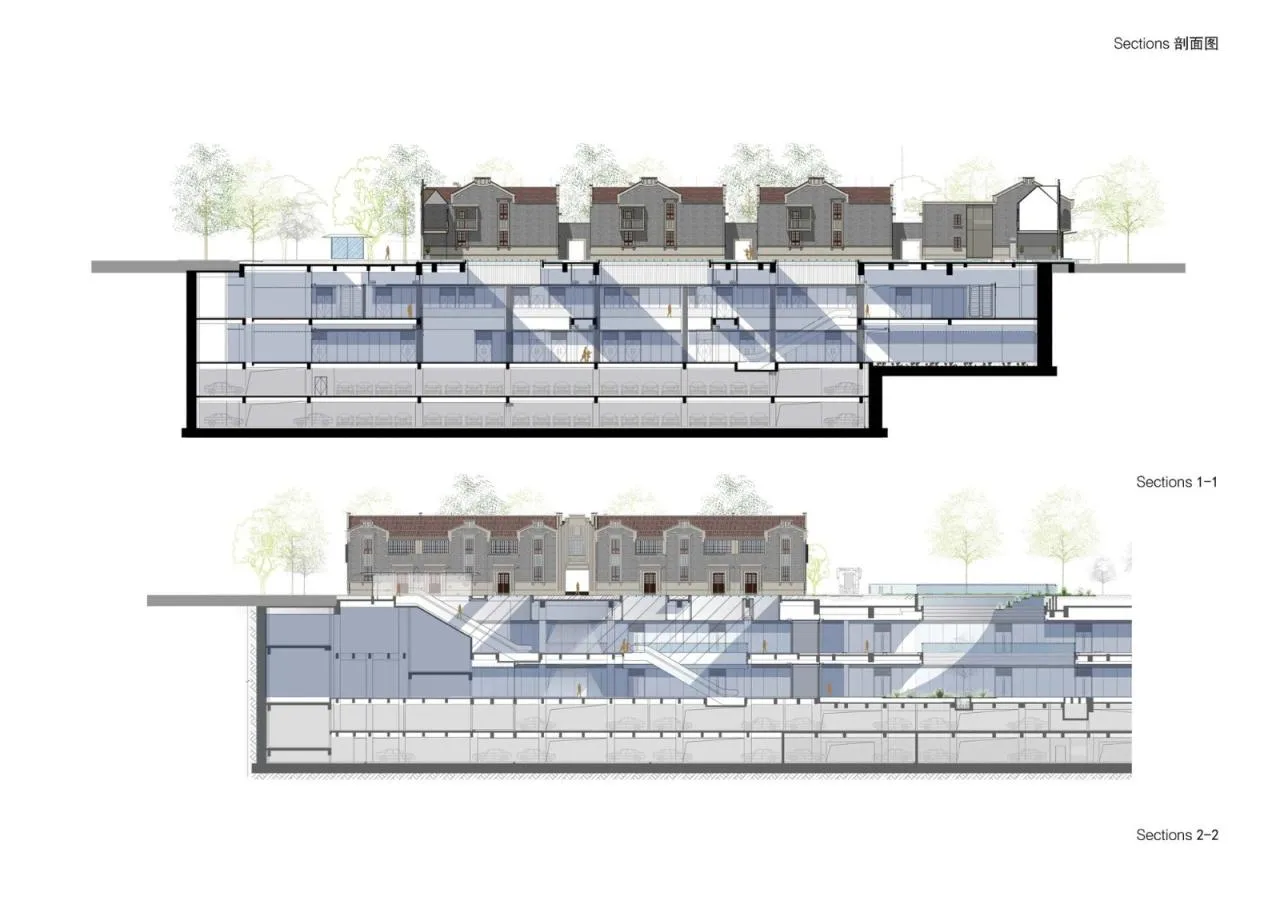
△ Section
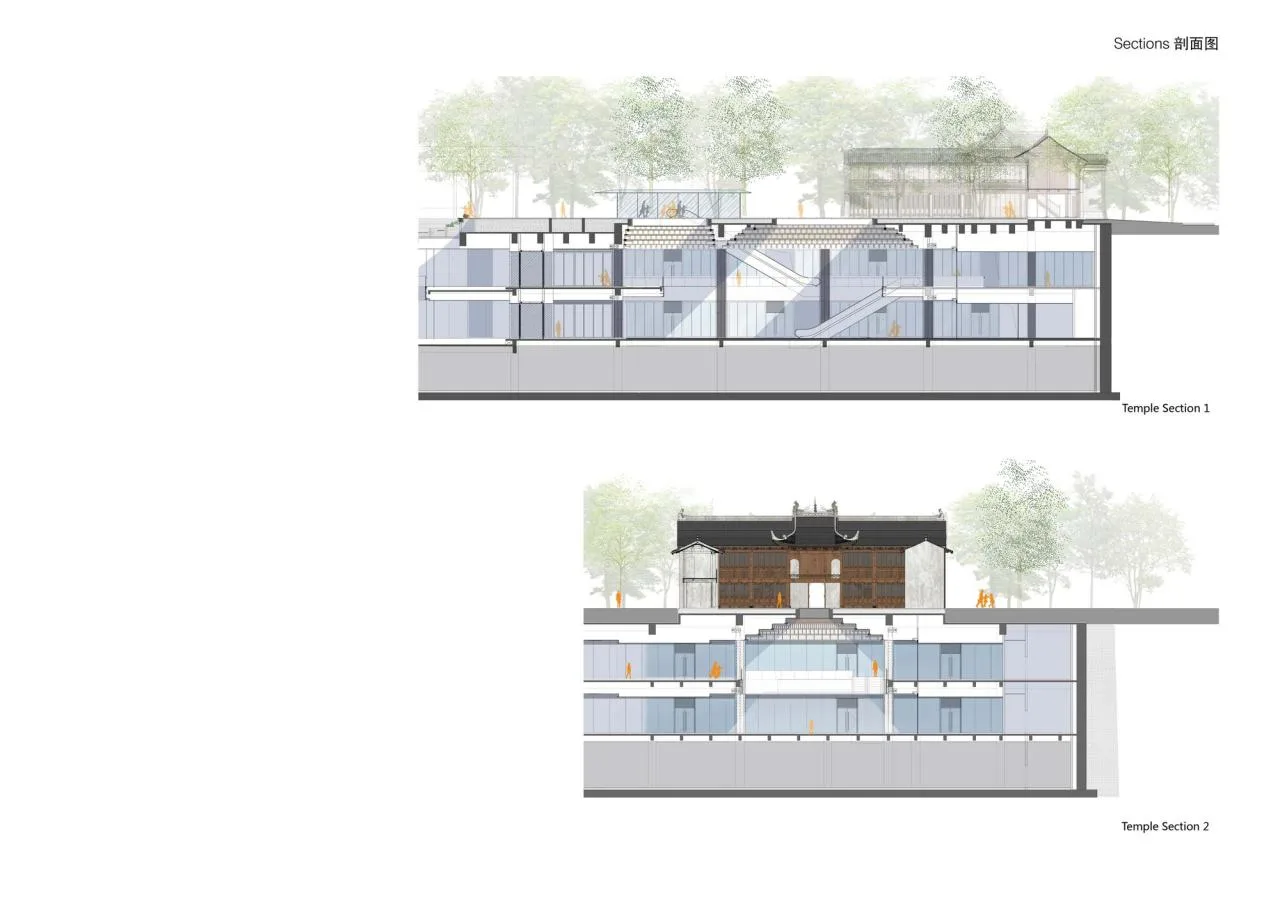
△ Section
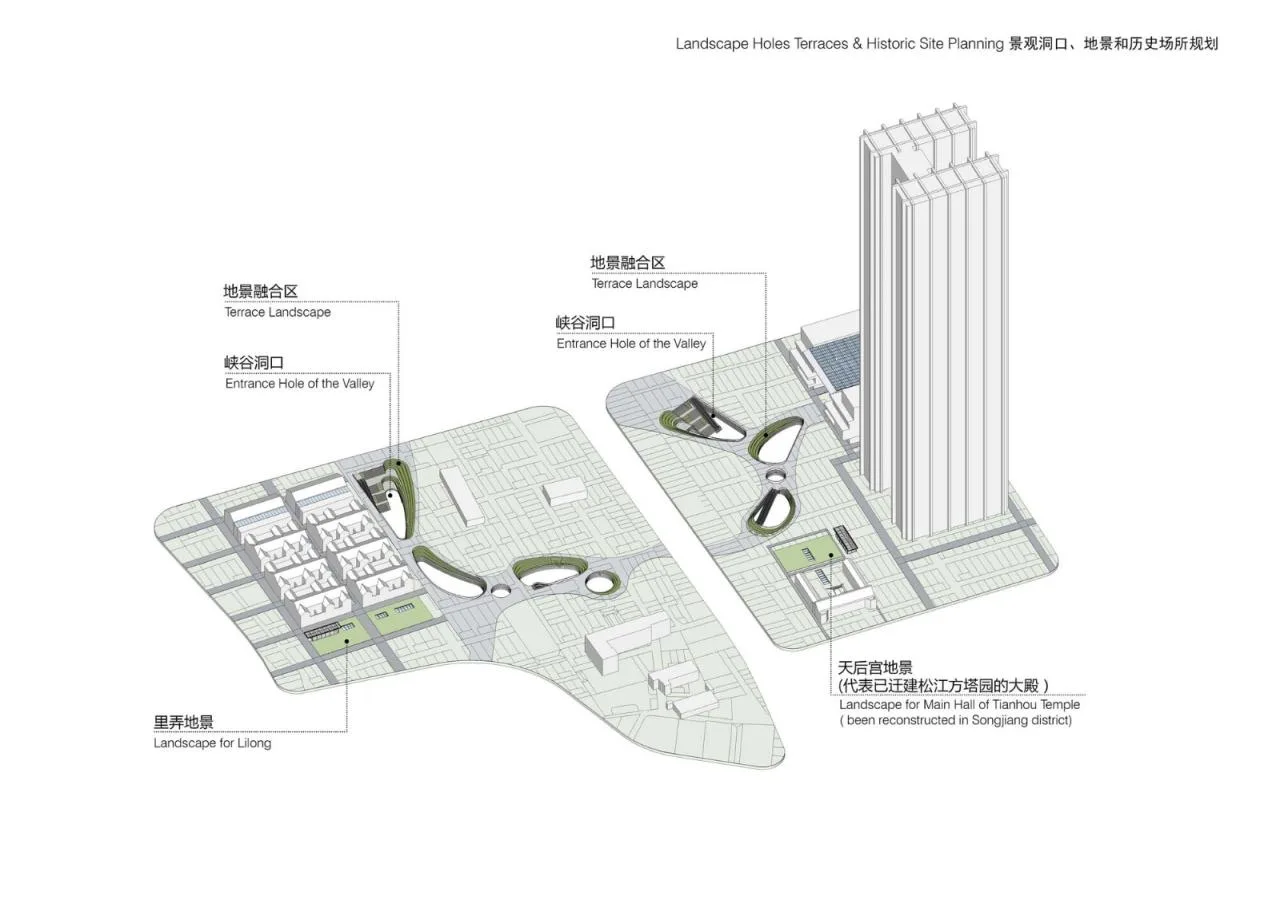
△ Planning of Landscape Entrances, Green Spaces, and Historic Sites
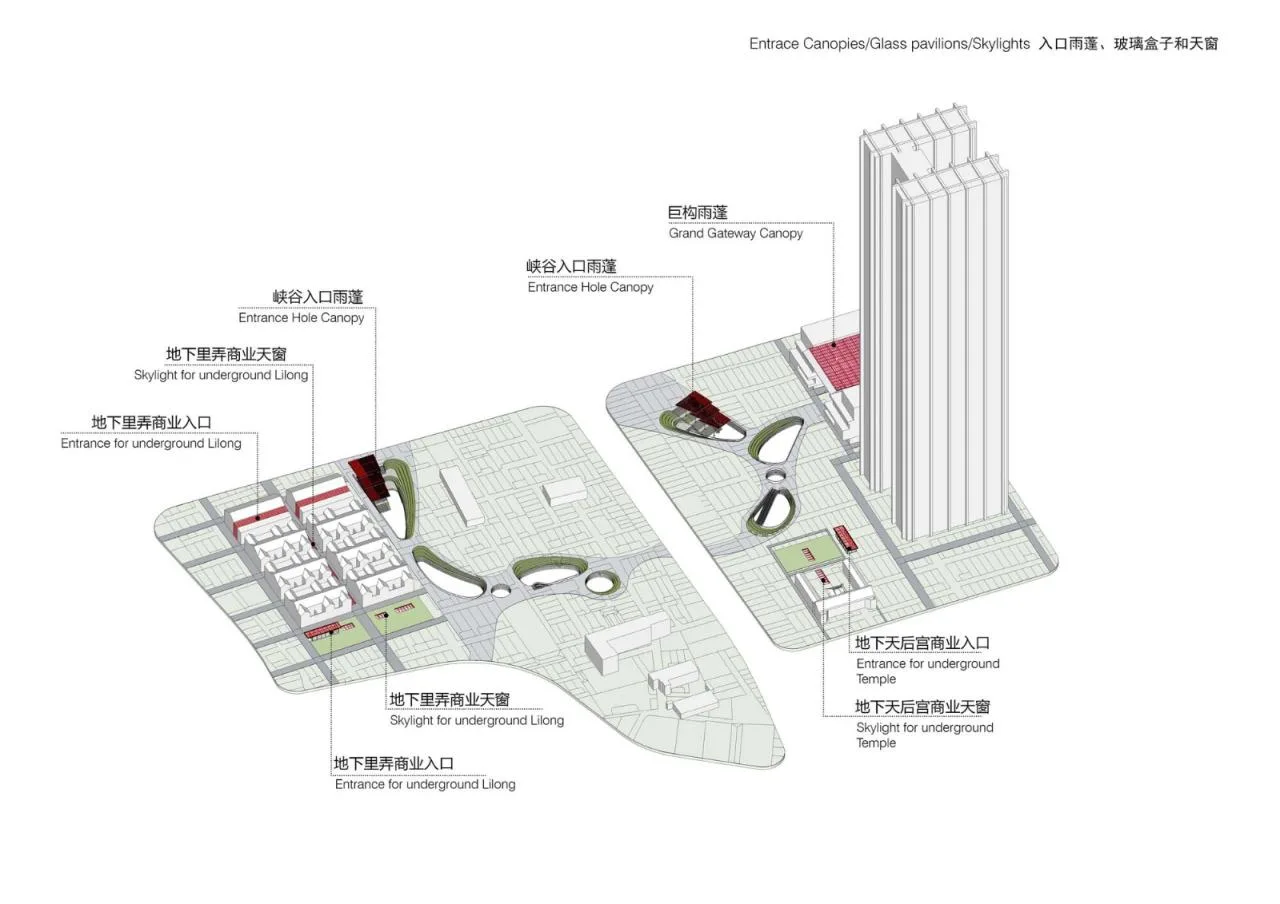
△ Entrance Canopy, Glass Box, and Skylight
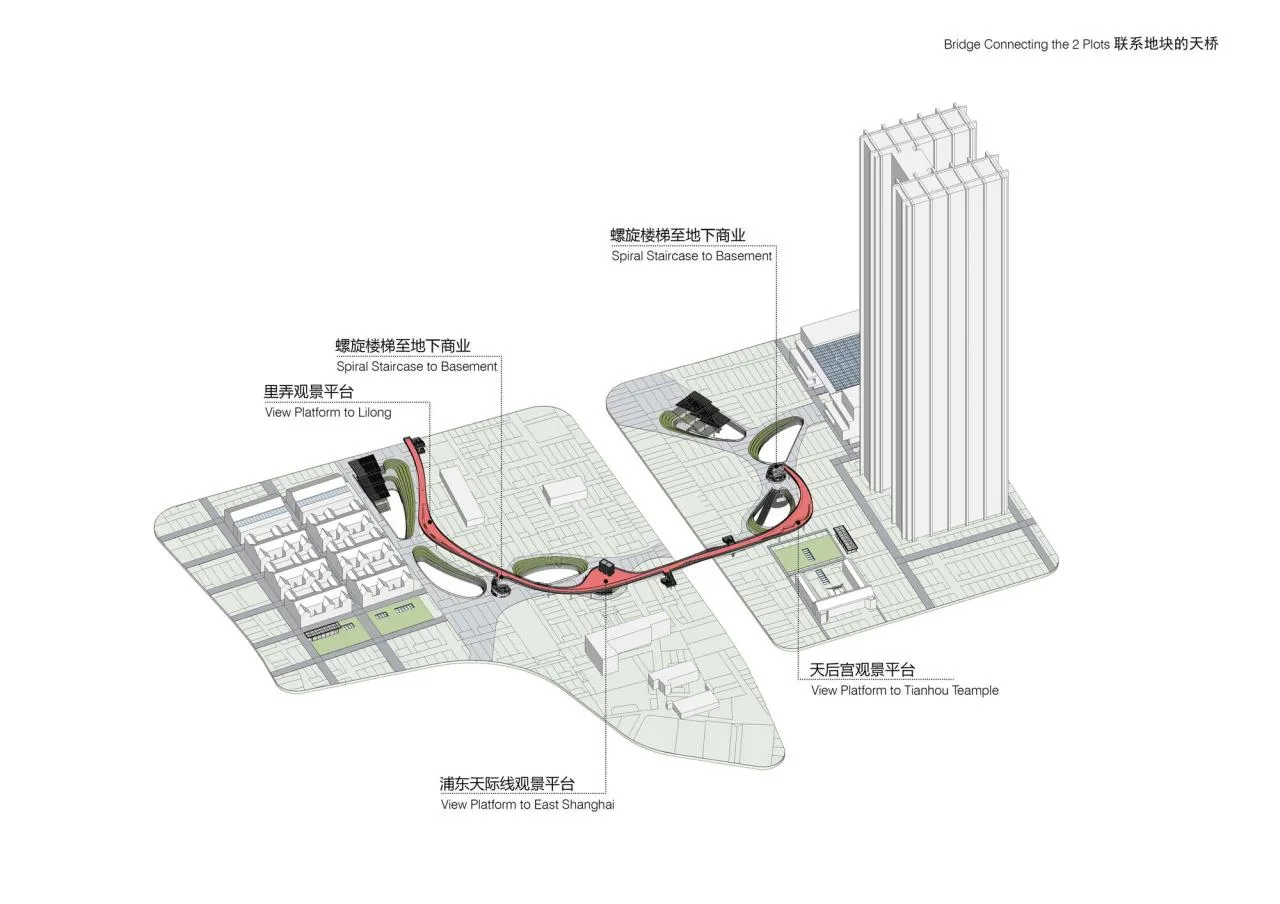
△ Connection to Pedestrian Overpass
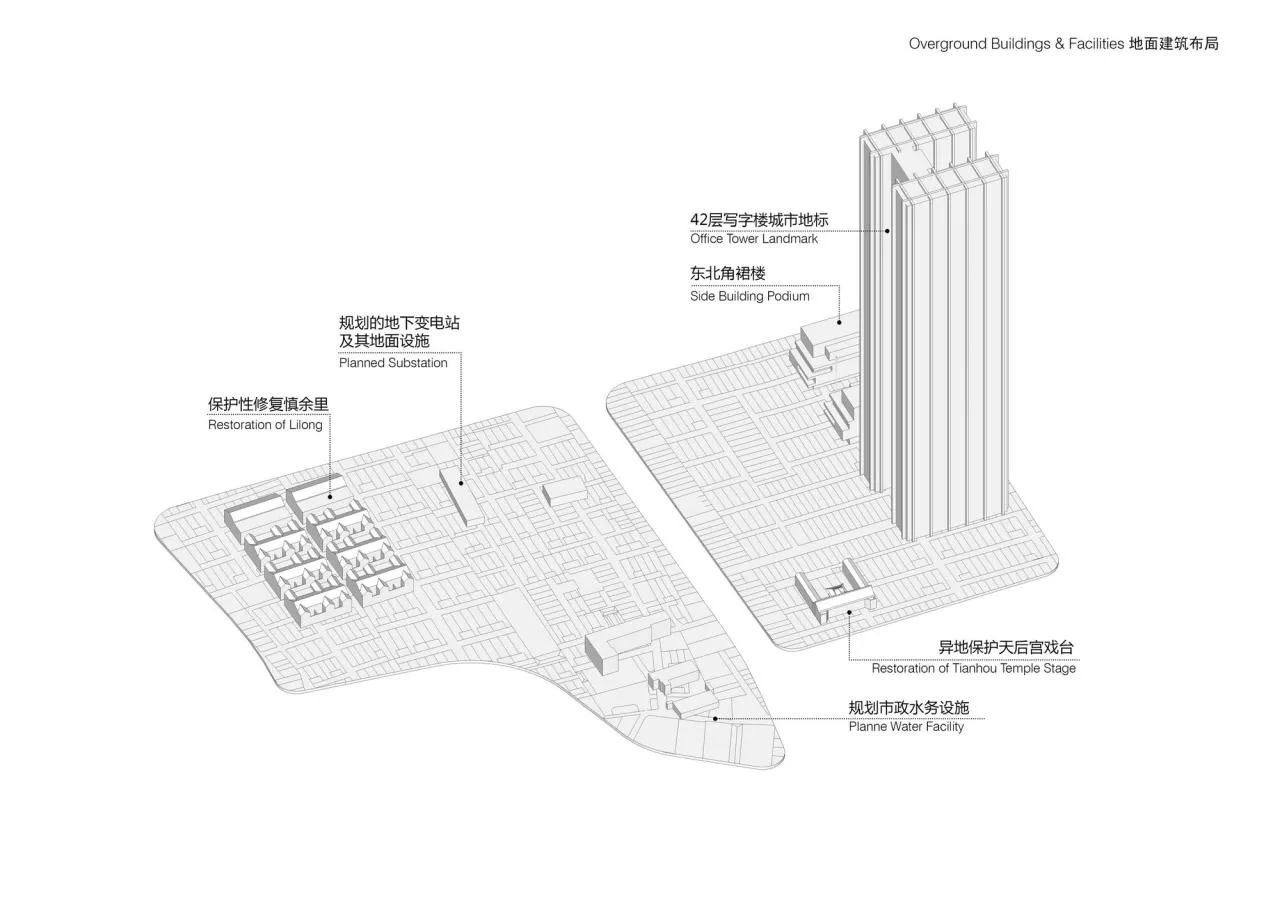
△ Ground Building Layout
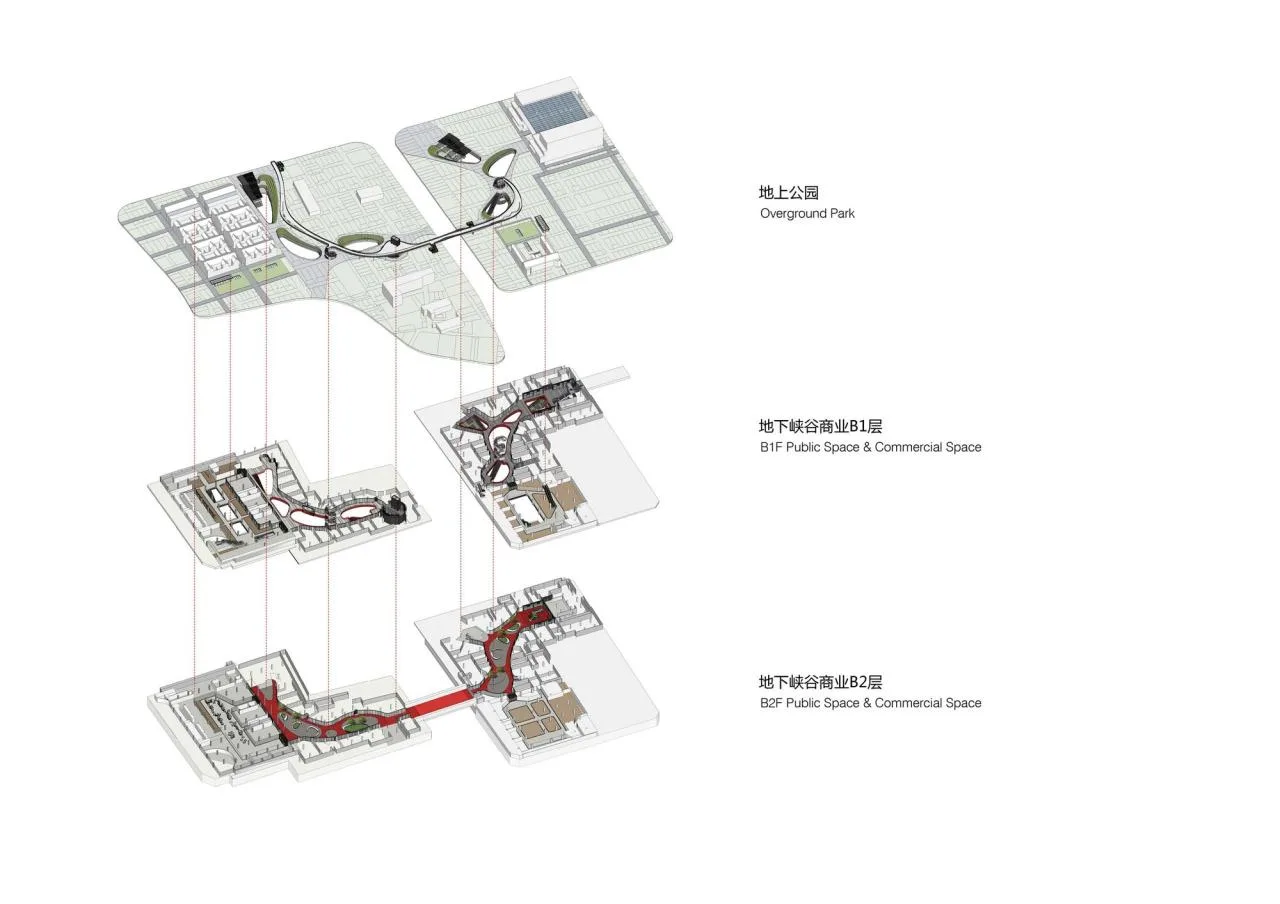
△ Analysis Diagram

△ Entrance Profile
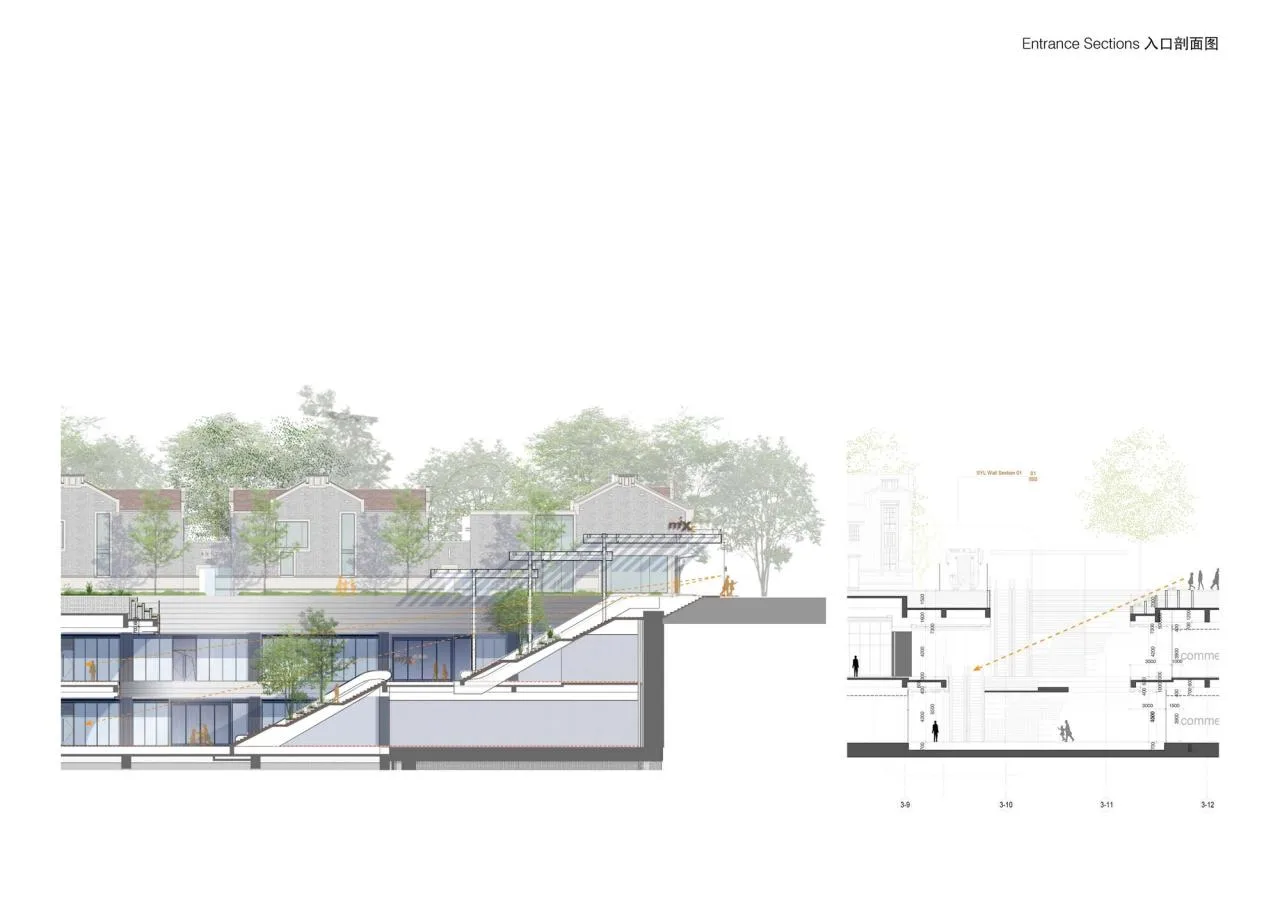
△ Visual Analysis
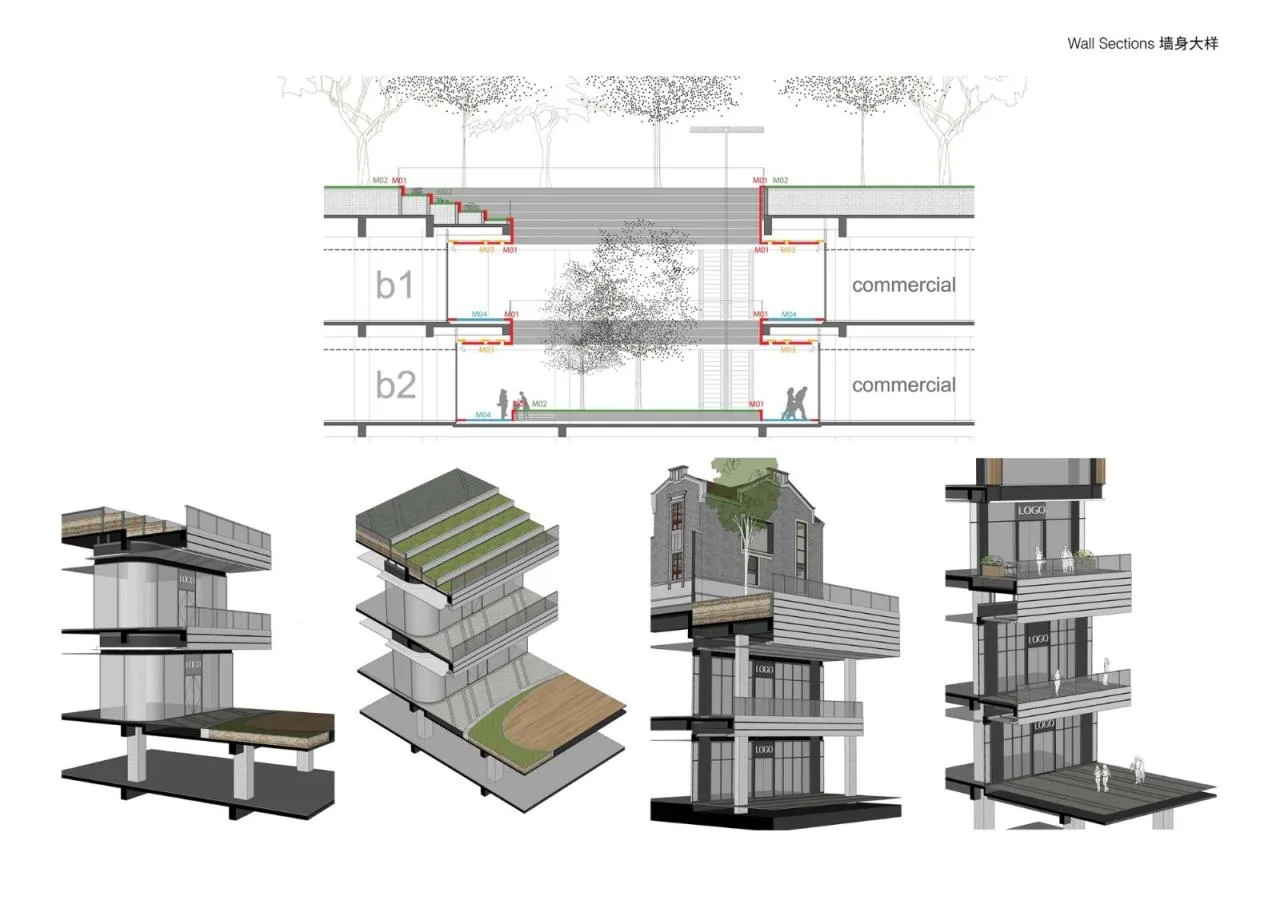
△ Wall Sample
Project Information
Architect: Kokaistudios
Area: 60,000 square meters
Project Year: 2022
Photographer: Zhang Qianxi
Chief Designers: Andrea Destefanis, Filippo Gabbiani
Architectural Design Director: Li Wei
Architectural Design Team: Qin Zhantao, Eva Maria Paz Taibo, Zhang Weiyangzi, Guan Bohua, Anna-Maria Austerweil, Wang Rui, Jiang Jingjing, Ding Xiang, Wang Chenhao, Li Dongyin, Xu Wanli, Zhao Qing, Cheng Ziyu, Jiang Xinlu, Pietro Peyron
Interior Design Director: Wang Siyun
Interior Design Team: Zhang Congsang, Chang Qing, Huang Chenyu, Xie Chengru, Li Jiaqi, Chen Shuhao
Author: Frances Arnold
Mechanical and Electrical Consultants: Meinhardt, Platinum Engineering Consulting (Shanghai) Co., Ltd
Structural Consultant: Oyana
Curtain Wall Consultant: Alpha Architectural Design Consulting (Shanghai) Co., Ltd
Landscape Design (Planning): Lab D+H
Landscape Design (Construction Drawings): Shanghai Landscape Design and Research Institute Co., Ltd
Lighting Consultant: Oyana
Art Consultant: All Rights Reserved. Limited
Art Exhibition Consultant: UCCA Edge
Identification Consultant: GK Shanghai
Local Design Institute: ECADI
Owners: China Resources Land, Xinde Group
Location: Shanghai















Must log in before commenting!
Sign Up