
Background and Site Overview: Two Courtyards in Erhai Bay
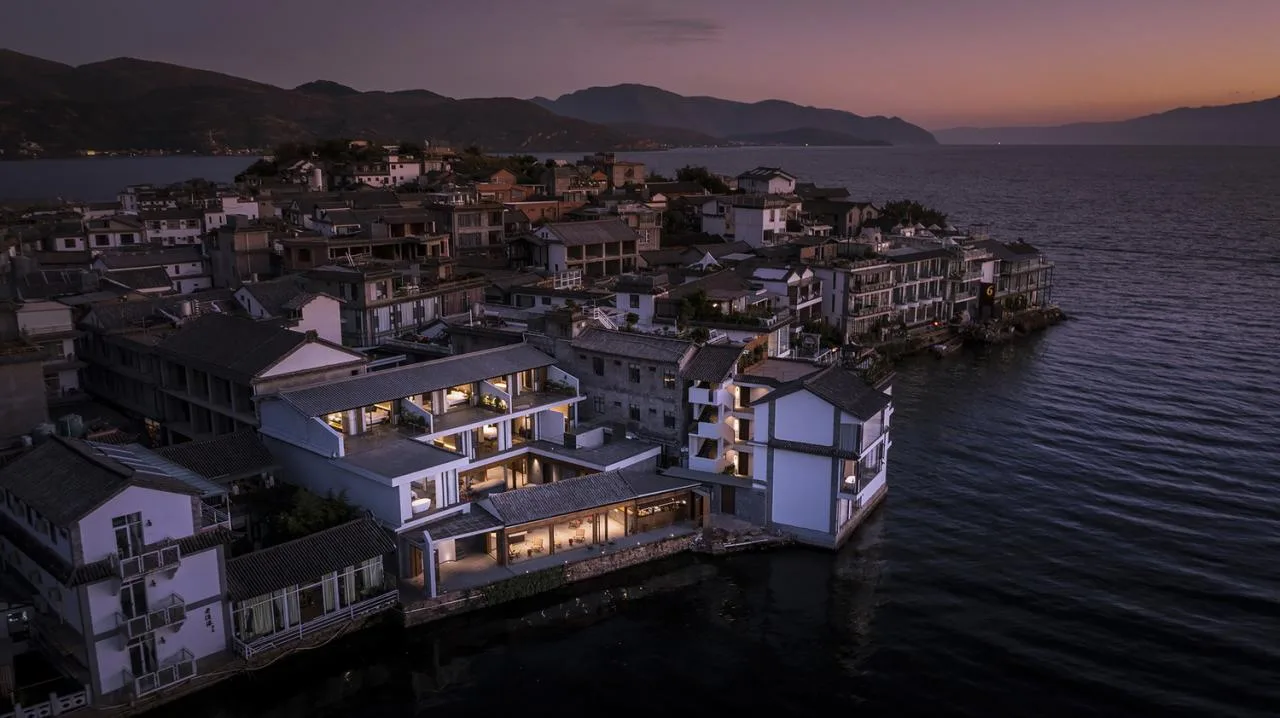
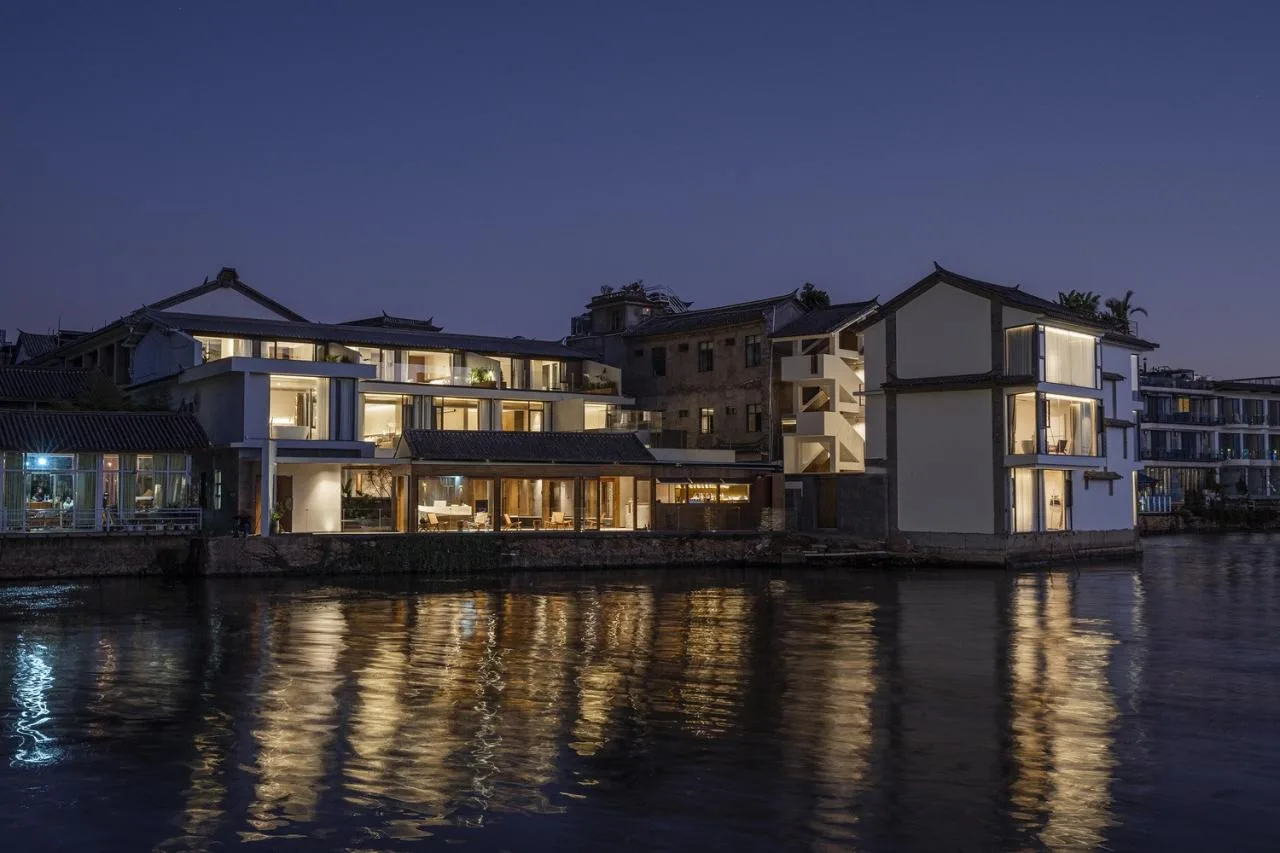
This renovation project is situated in Dajianbian Village, Shuanglang Town, within the Dali Bai Autonomous Prefecture, nestled in a small bay of Erhai Lake. The homestay comprises two independent courtyards separated by a narrow alley. Each courtyard boasts unique features: one includes a three-story building offering superior views of Erhai Lake, referred to as the “sea view house,” while the other features a larger inner courtyard enclosed by buildings of varying heights, known as the “courtyard house.”
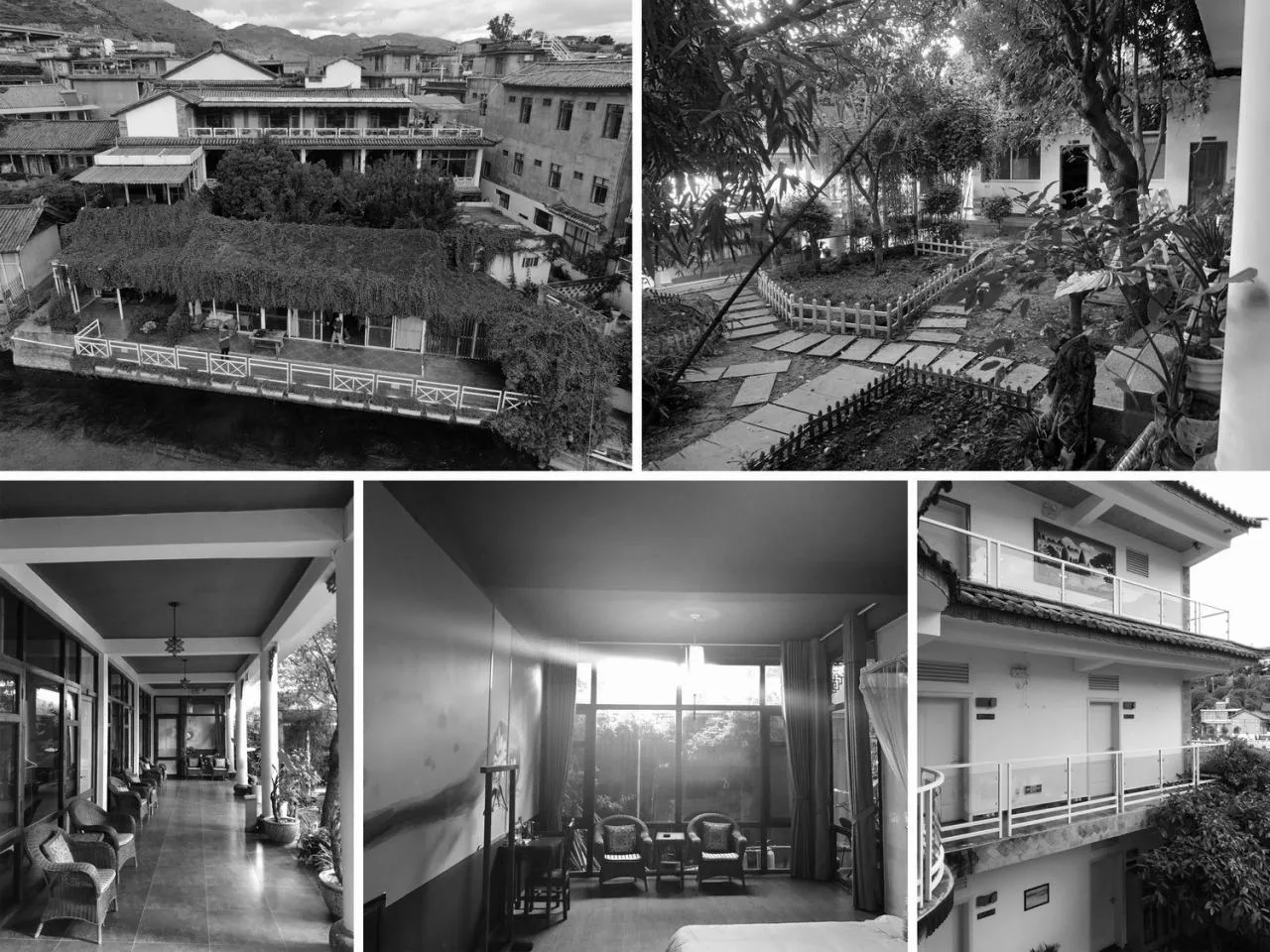
The previous owner was one of the earliest settlers in Shuanglang, leasing two courtyards from different landlords to operate a homestay. Over time, with the renovation of Erhai Lake and the impact of the pandemic, the homestay industry has evolved toward professionalism, networking, and visualization. However, this once-thriving homestay revealed challenges such as small room sizes, limited public spaces, and outdated decor—all of which hampered its transformation into a refined resort hotel. Consequently, Mangshu Hotel Management Company, a professional team, took over the two courtyards to revitalize the property.
Overall Concept and Spatial Layout: A Cultural Fusion of Pre-Qin Classics and Modern Living
The new homestay, named Tao Tang Zhi Qiu, draws inspiration from the “Shan Hai Jing” and the concept of being at the center of the nine hills. This central location, also known as the observation point of the Four Classics of the Great Wilderness, is linked to Emperor Yao and Tao Tang. Accordingly, guest rooms are named after exotic flora, Feng Shui treasures, and mythical elements from the Classic of Mountains and Seas, with names reflecting different room types.
The architect’s material palette centers on “wood, stone, pottery, and soil,” symbolizing a return to human simplicity. Varying textures, roughness, and materials evoke different tactile sensations, enriching the sensory experience throughout the project.
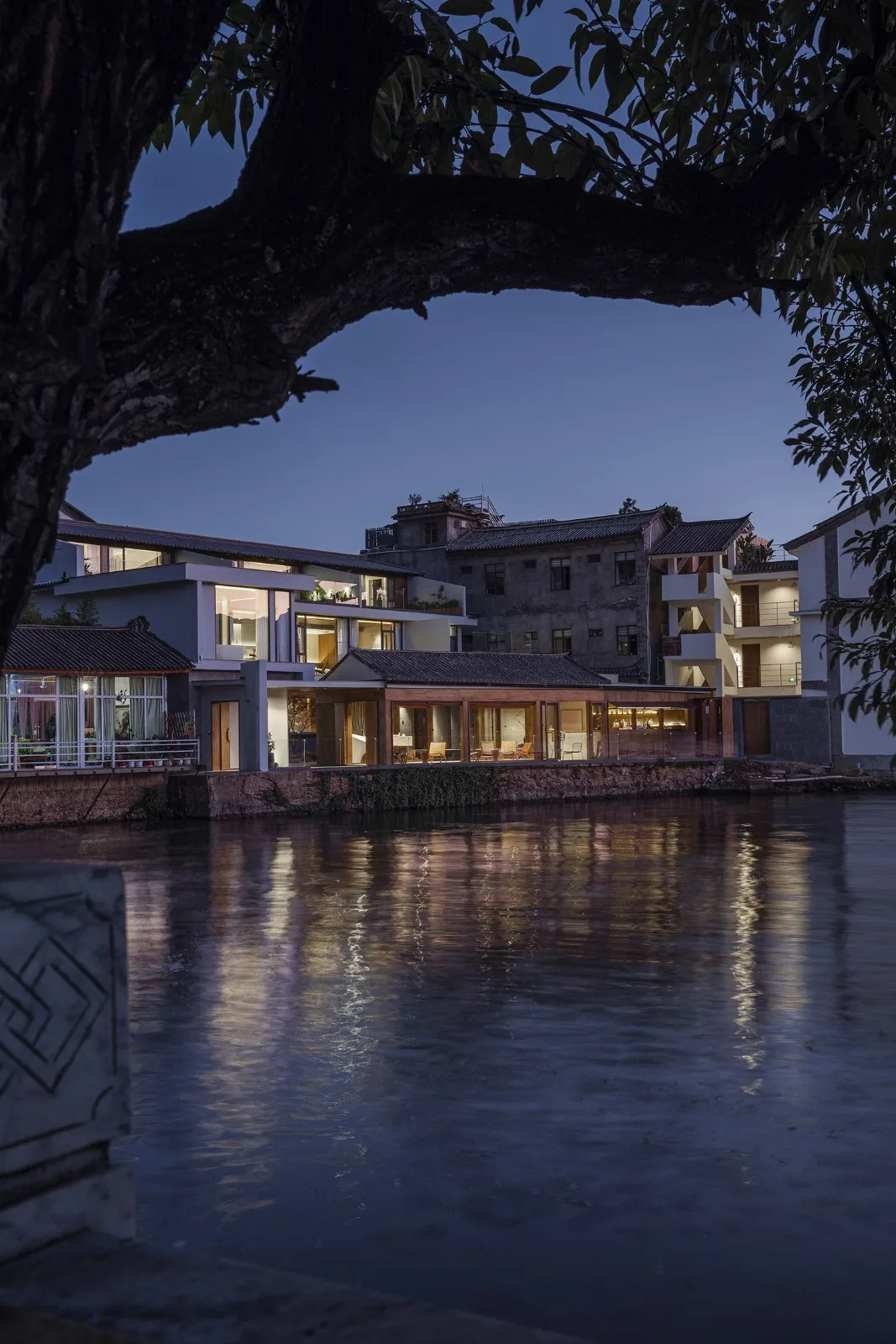
Regarding the layout, the architect reorganized the traffic flow between the two courtyards. The alley on the north side of the courtyard house offers better accessibility and views compared to the alley separating the two courtyards. This alley was selected as the main entrance route for guests. Upon entering, visitors first encounter the hotel lobby, serving as both reception and coffee bar, and acting as a key distribution point. From the northwest exit, guests can walk south along Erhai Lake to enter the small courtyard of the sea view rooms. Alternatively, from the southeast side, they can access the inner courtyard housing the gym, VIP tea room, and restaurant.
The original guest rooms on the first floor were opened up and transformed into a spacious dining area. The restaurant and lobby sit adjacent, both overlooking the courtyard, which acts as a natural buffer space. Staff offices and lounges are conveniently located on the north and south sides of the first floor, allowing efficient management. Upstairs, the courtyard house offers four guest rooms with courtyard views on the second floor, and three rooms with private terraces overlooking Erhai Lake on the third floor. The previous sea view building had 18 smaller rooms; the redesign consolidated these into nine spacious king-size rooms with stunning views.
The architect and owner agreed to reduce room numbers to prioritize comfort and view quality, while enhancing public facilities to meet growing demands for high-quality vacation experiences. The design embraces simplicity and minimalism, aiming to provide guests with a spiritual retreat reminiscent of ancient times.
Main Entrance and Lobby: Entering a Secret Realm, Inviting Pause and Reflection
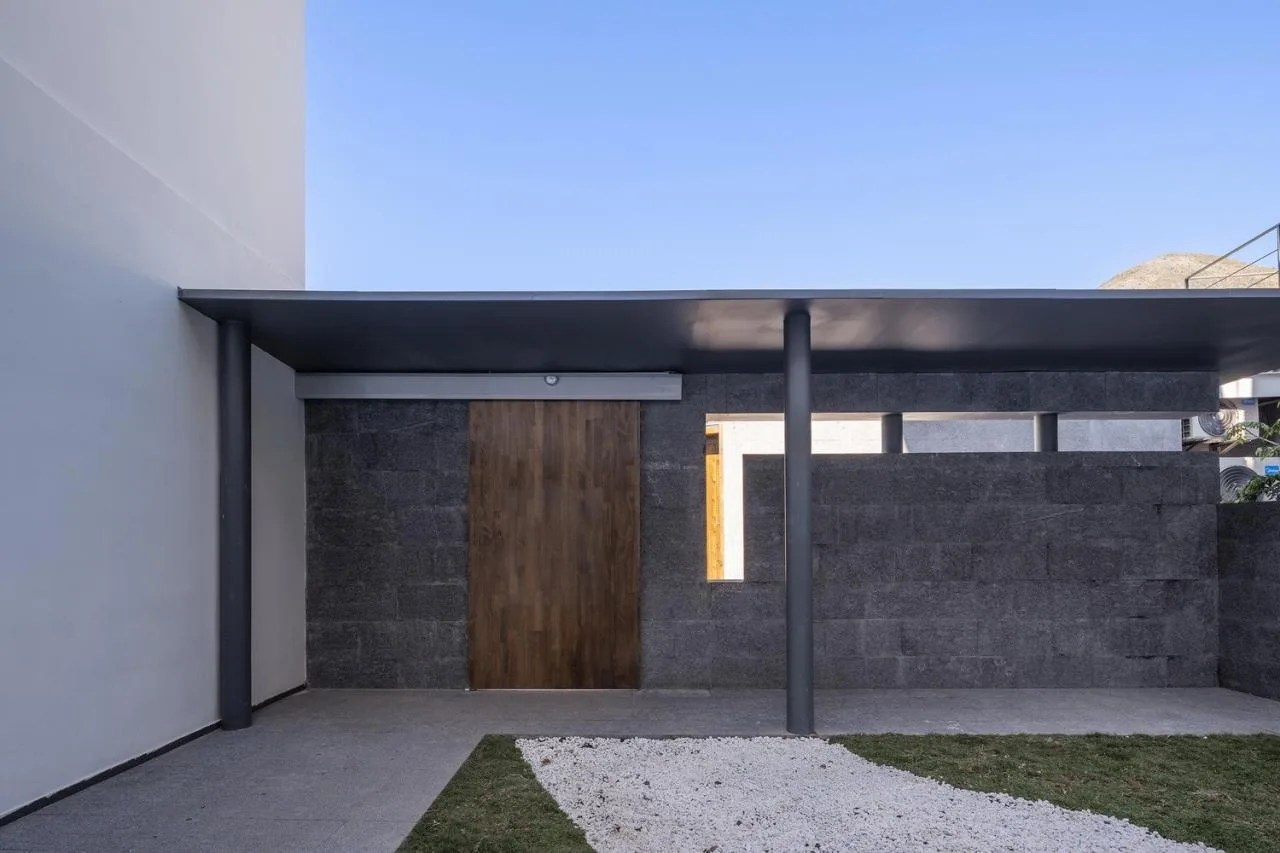
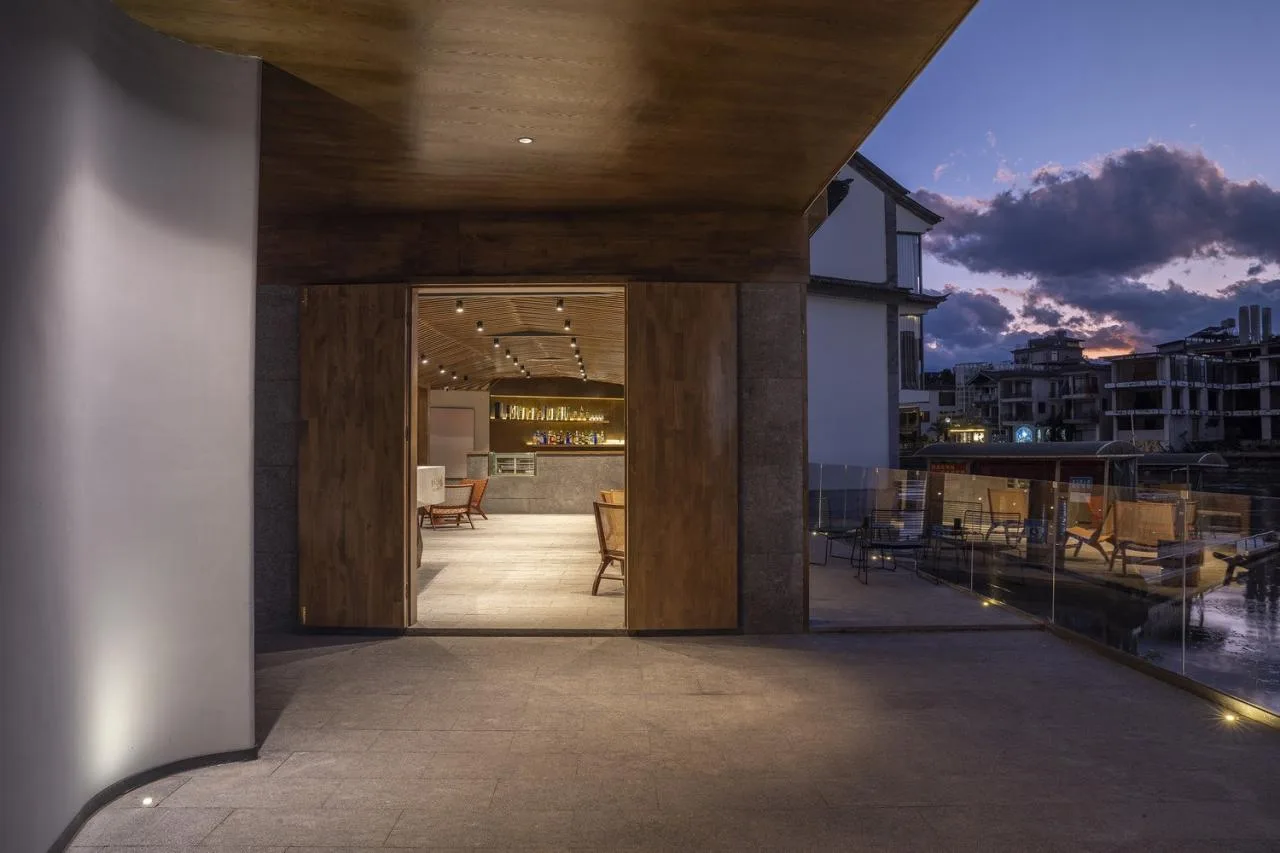
Walking down the alley toward the water, the hotel’s exterior wall on the left is clad with local Dali stone. At the alley’s end, the entrance gate is modestly recessed. The adjacent wall extends toward Erhai Lake, featuring a narrow opening that offers guests a fleeting glimpse of the lake’s beauty, tempting them to step inside and uncover its secrets.
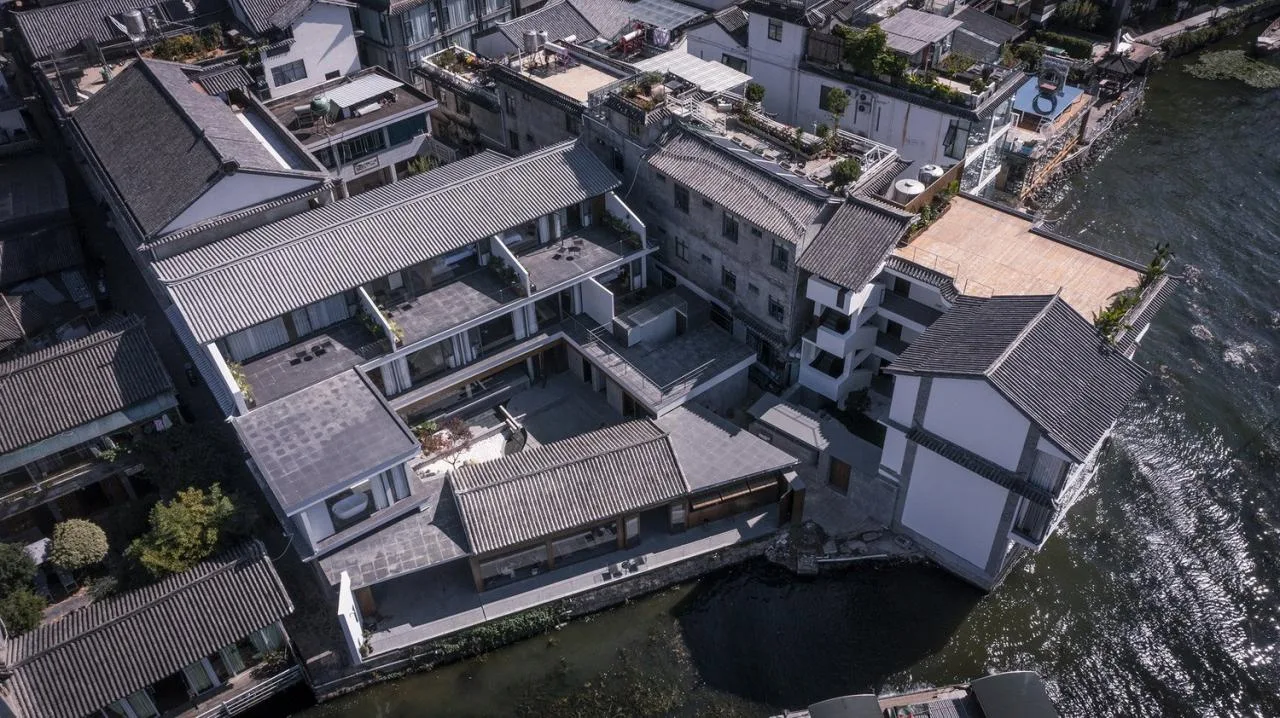
The lobby warmly welcomes guests upon entry. Initial plans called for demolishing the original building’s sloped roof to create a flat leisure platform with a rooftop infinity pool overlooking Erhai Lake, highlighted by a colorful glass installation spanning from floor to ceiling as a dramatic centerpiece. However, due to ecological regulations and architectural style controls in the Erhai Lake area, these plans were not realized.
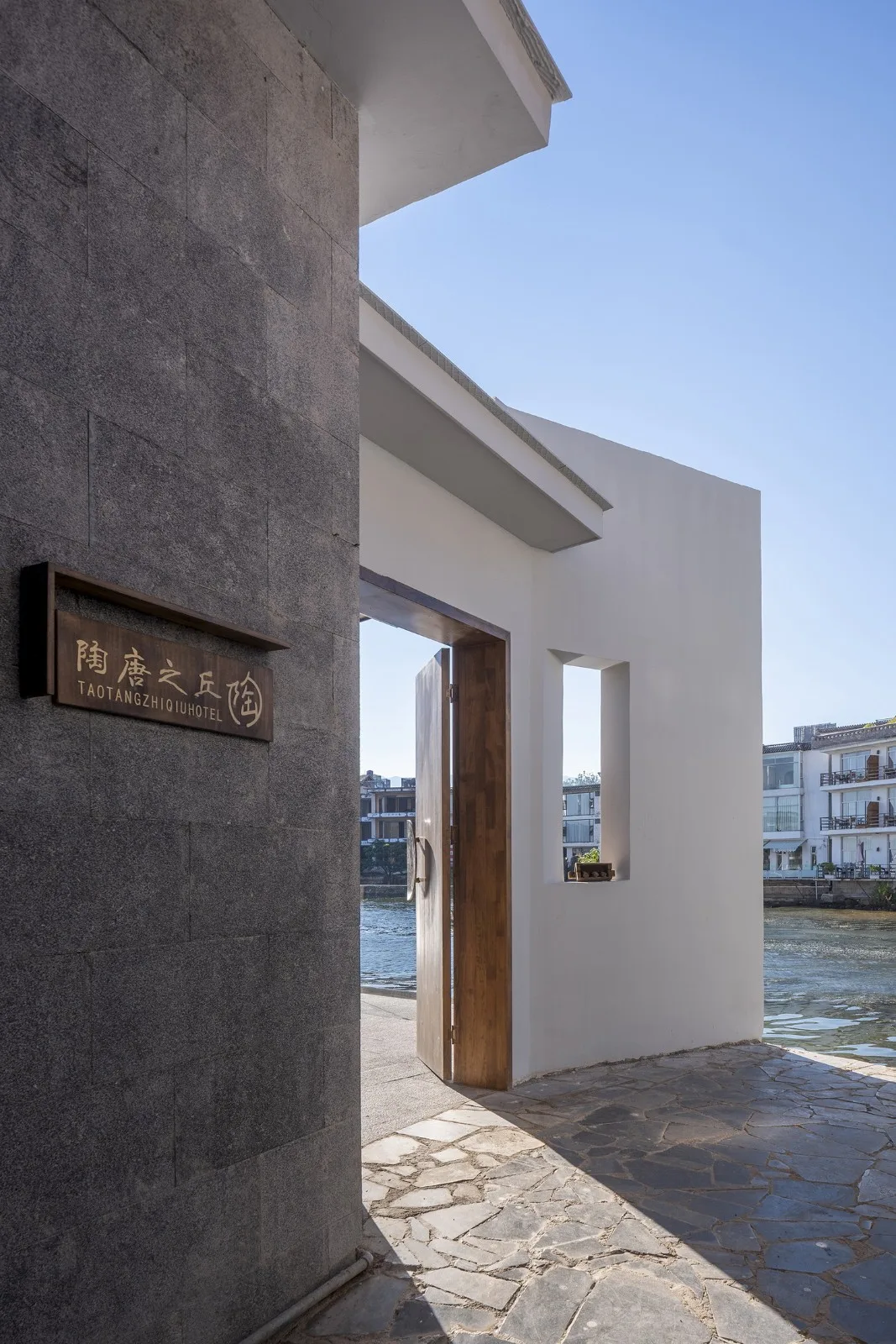
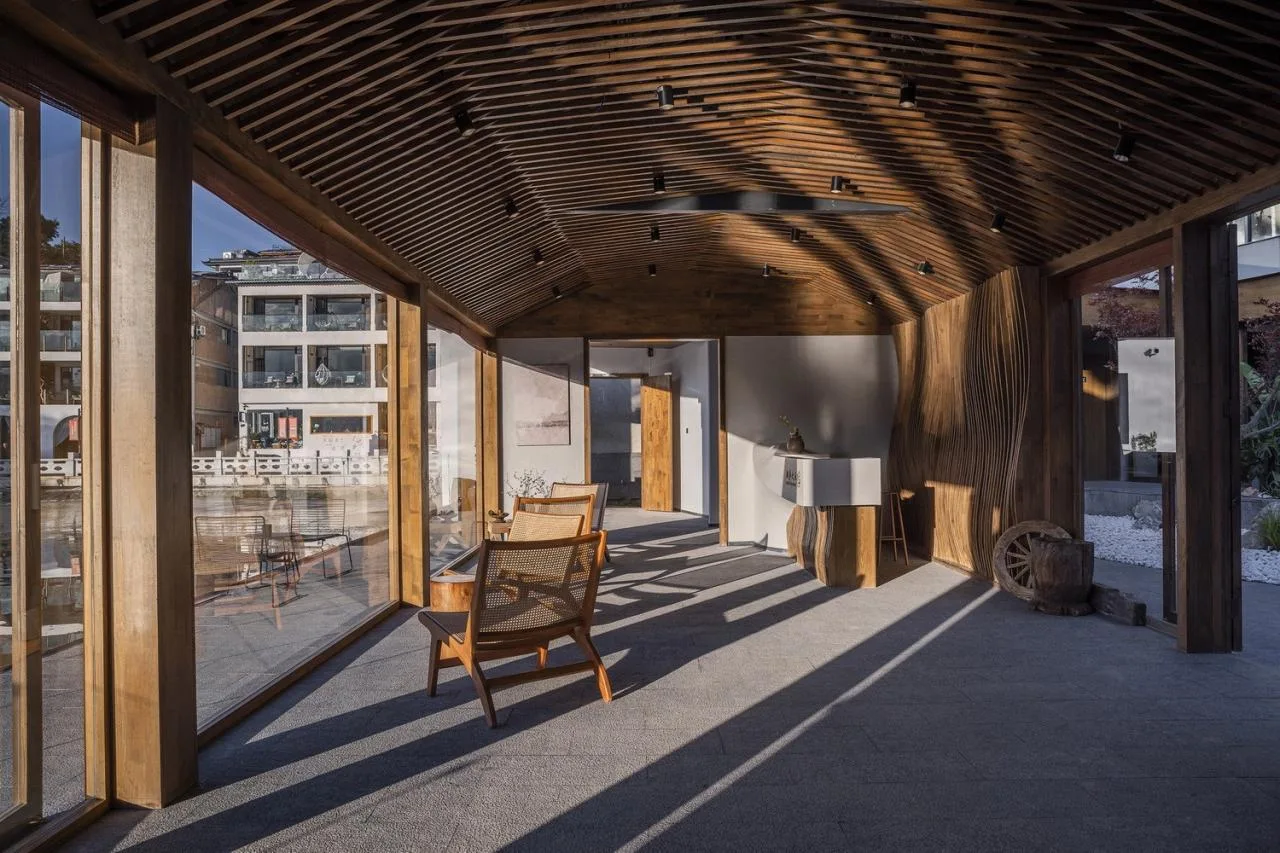
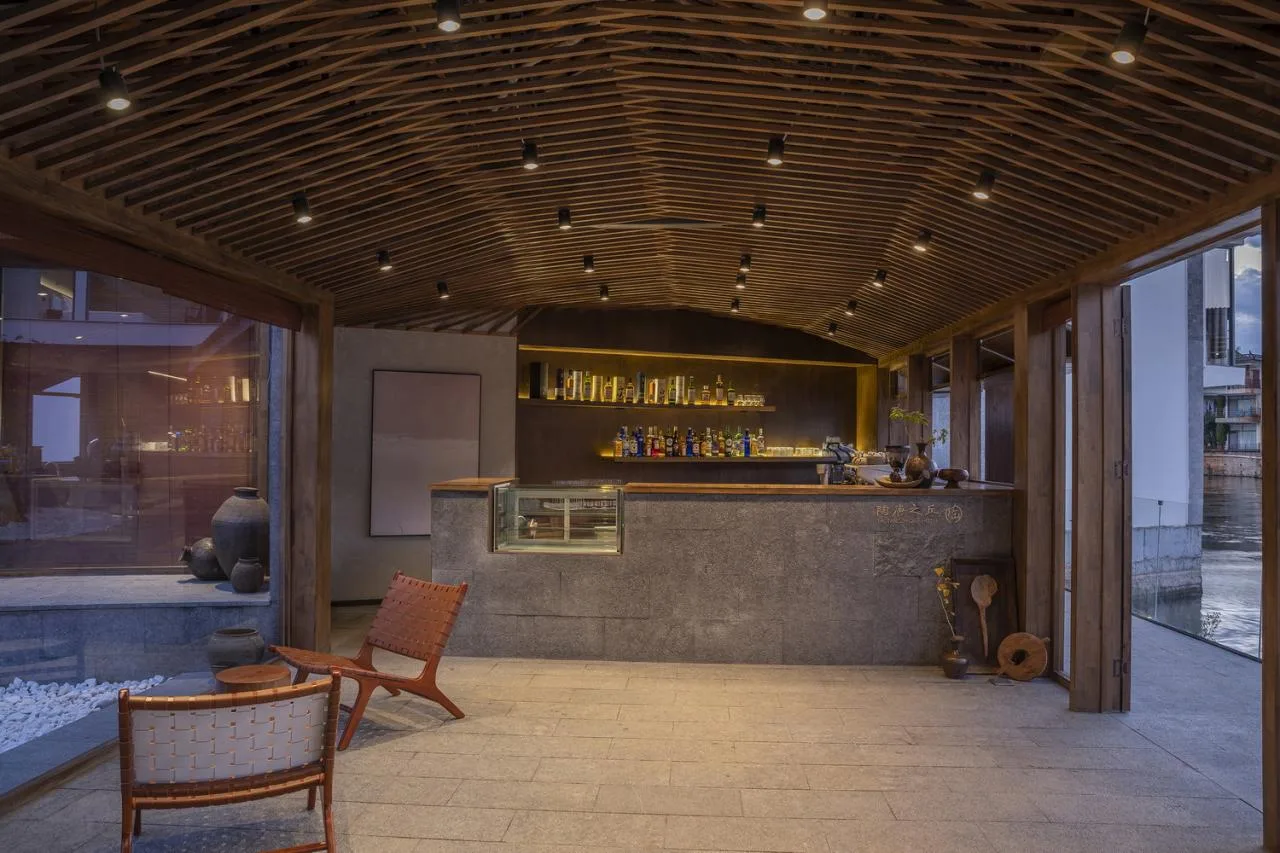
Instead, the design focused on reinforcing the existing structure and updating the facade. A solid wall at the lobby entrance preserves a sense of mystery. Once inside, floor-to-ceiling glass offers unobstructed panoramic views of Erhai Lake. The front desk and coffee bar are positioned on opposite sides to streamline guest flow. The wooden grid ceiling features subtle curves that elegantly echo the building’s original framework.
Restaurant and Courtyard: The Play of Light and Shadow and the Ritual of Dining
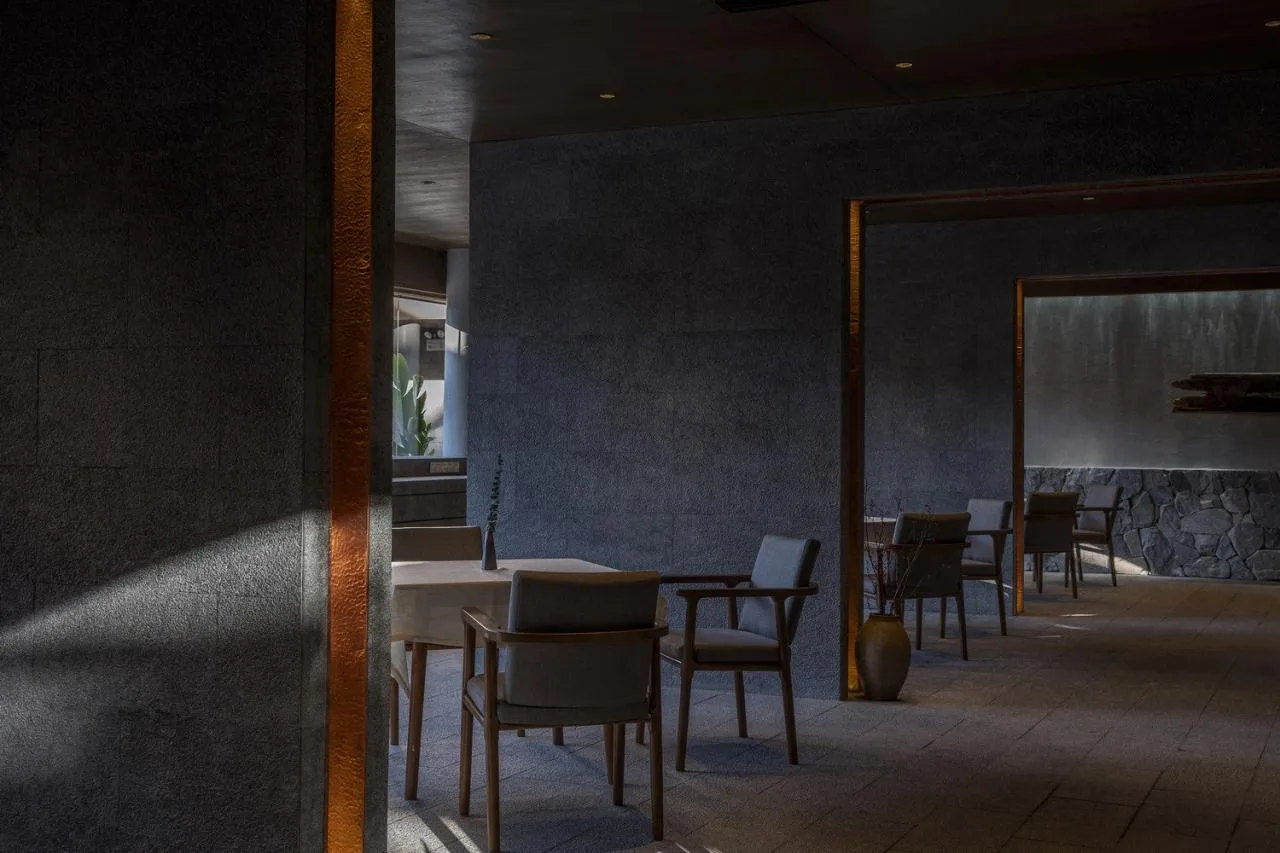
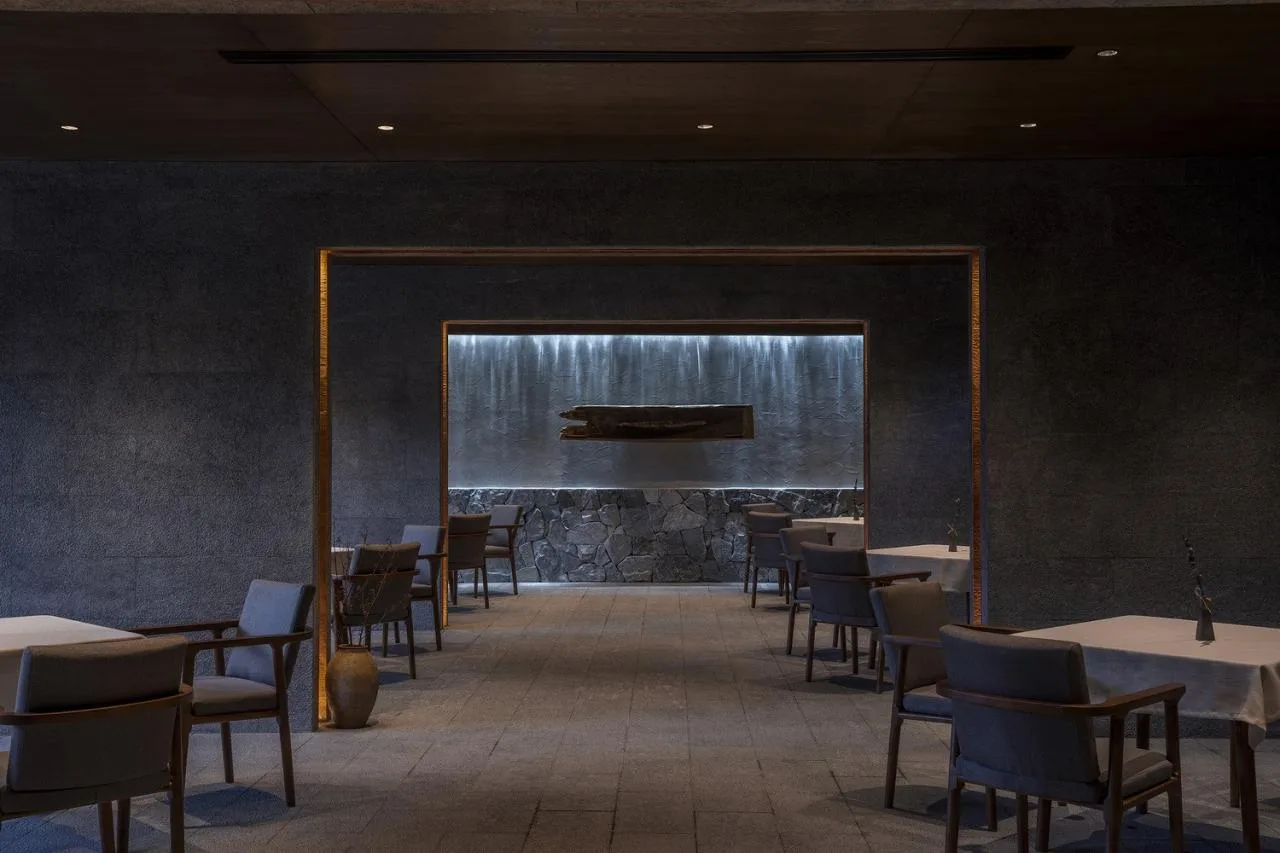
The restaurant is crafted mainly from local stone and dark wood veneer. Original wall openings were reconfigured to create a sequence of spaces. The lowered French windows at the dining tables frame the courtyard like a continuous scroll painting. The entrance to the courtyard is accented with handmade hammered copper plates by local artisans, which, under spotlighting, shimmer with reddish-purple hues. Water-patterned lighting on the main wall and an image of an old wooden boat evoke the shimmering sea landscape, reflecting the region’s cultural heritage. This design blends natural textures, craftsmanship, and modern technology, offering both visual and emotional enjoyment.
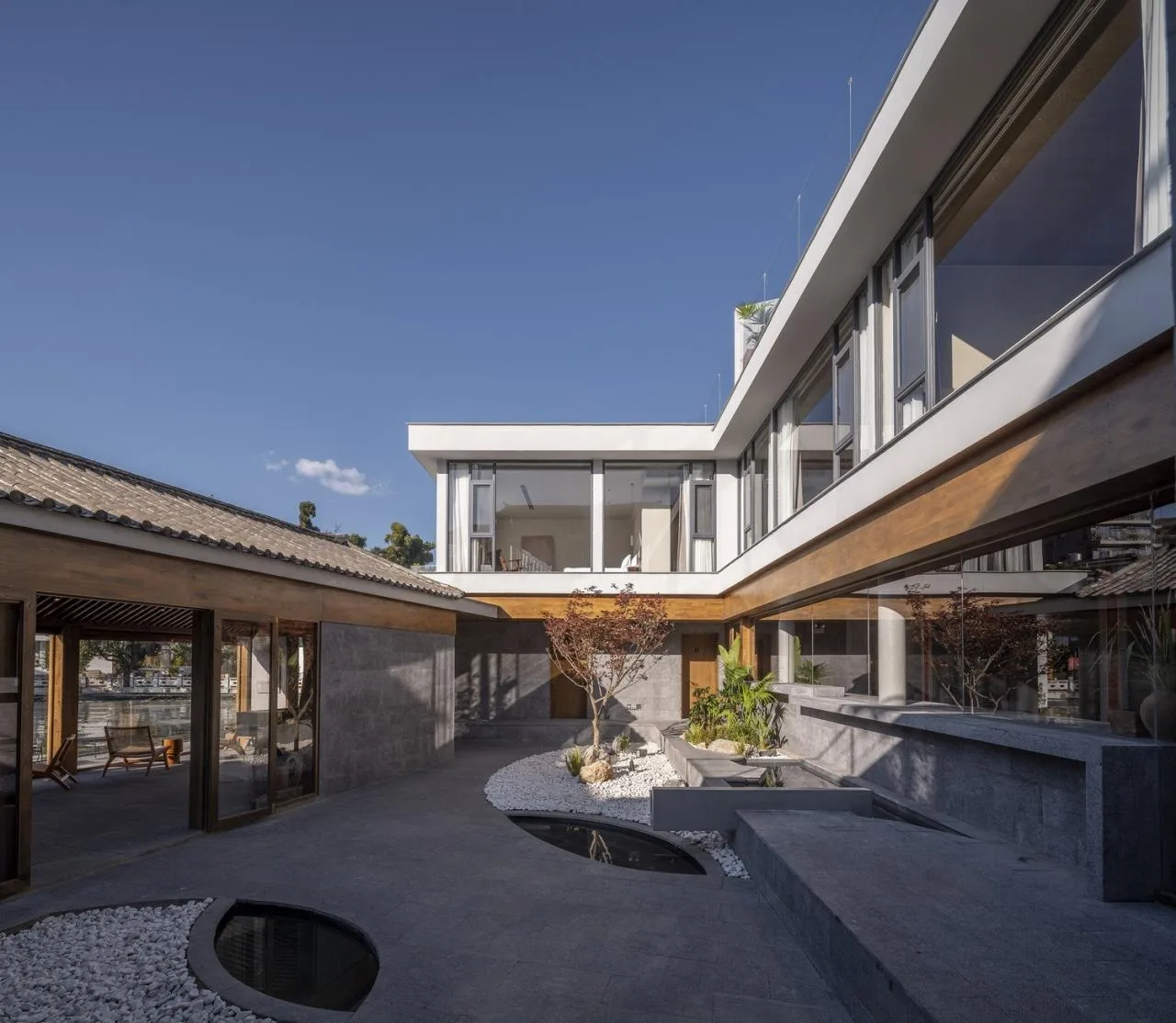
The outdoor courtyard extends the restaurant space, with dining tables that flow from indoor to outdoor and become a storytelling backdrop. Water gently cascades from the table, nurturing lush ferns before flowing into a circular pool. Curved walkways guide guests from the lobby to the restaurant, accompanied by bluestone paving, red maple trees, gravel, and the serene pool—truly embodying the saying, “food inside, wine outside.”
Staircase: An Emotional Secret Passage
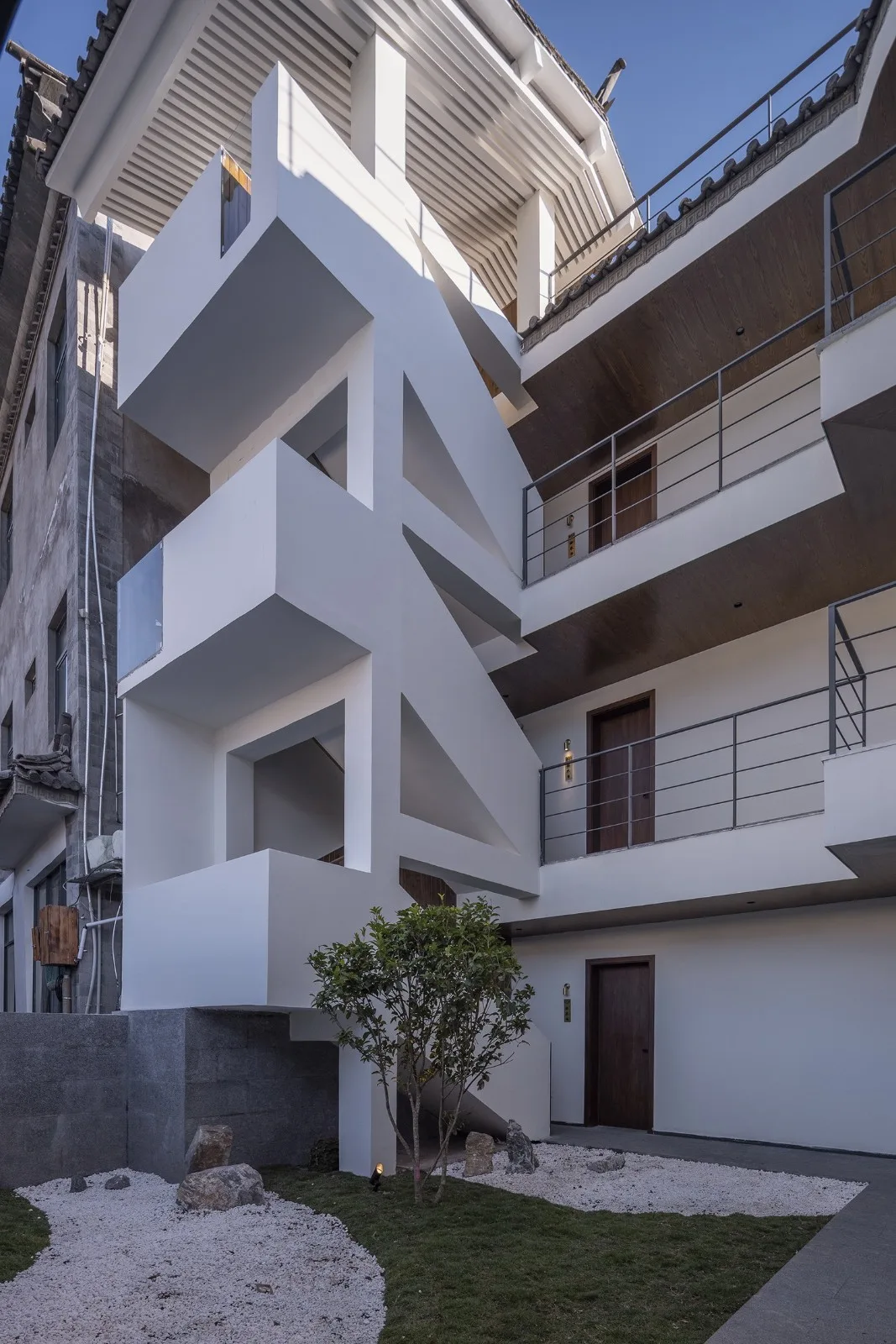
The semi-outdoor staircase in the sea view house was originally designed to present a modern, geometric aesthetic without traditional tile roofs. Each landing was angled differently, some toward alleys, others toward the rooftop infinity pool, adding visual interest to the transitional space and strengthening connections with both the surroundings and the hotel’s interior. However, due to preservation regulations, this concept was scaled back.
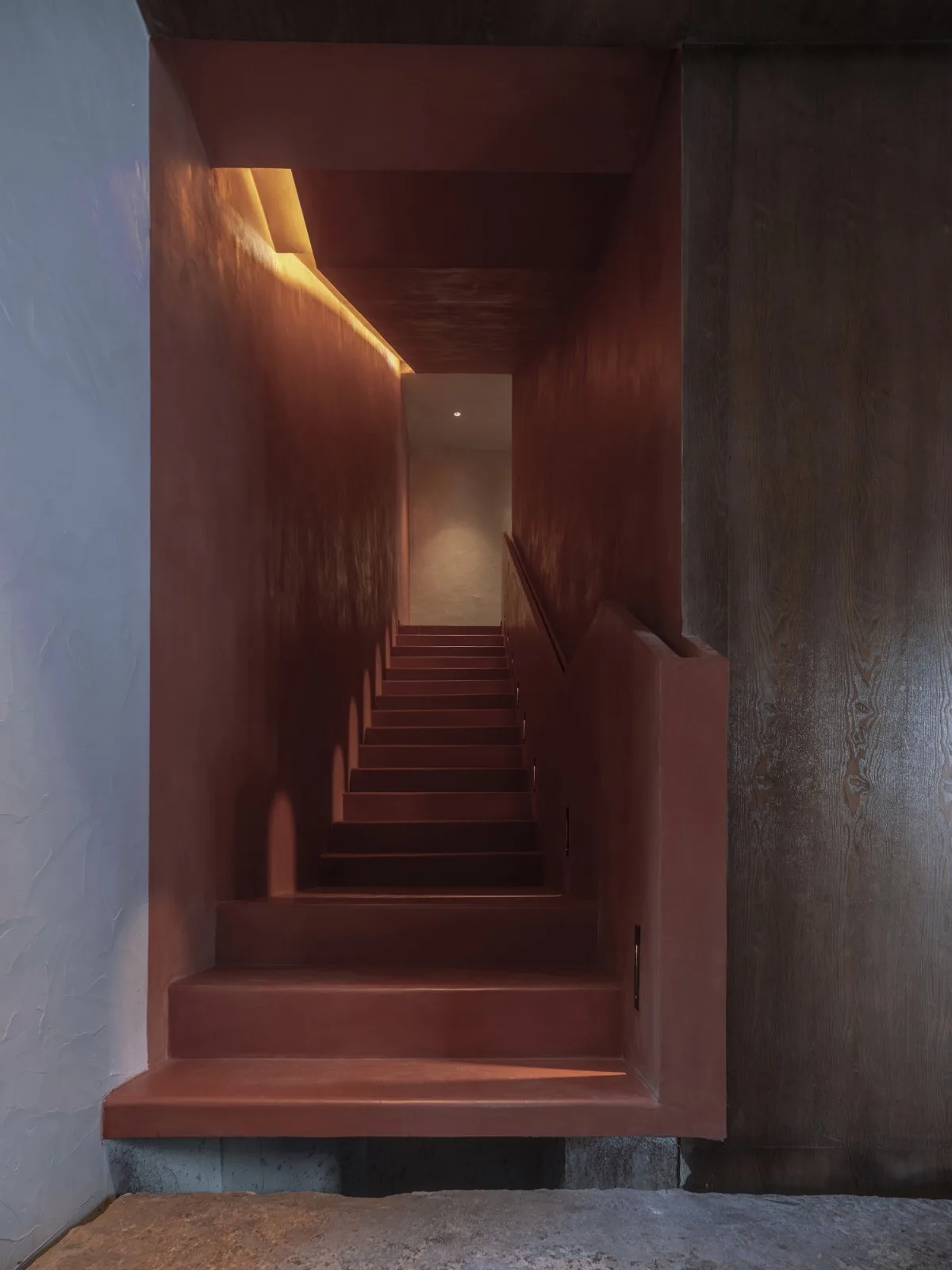
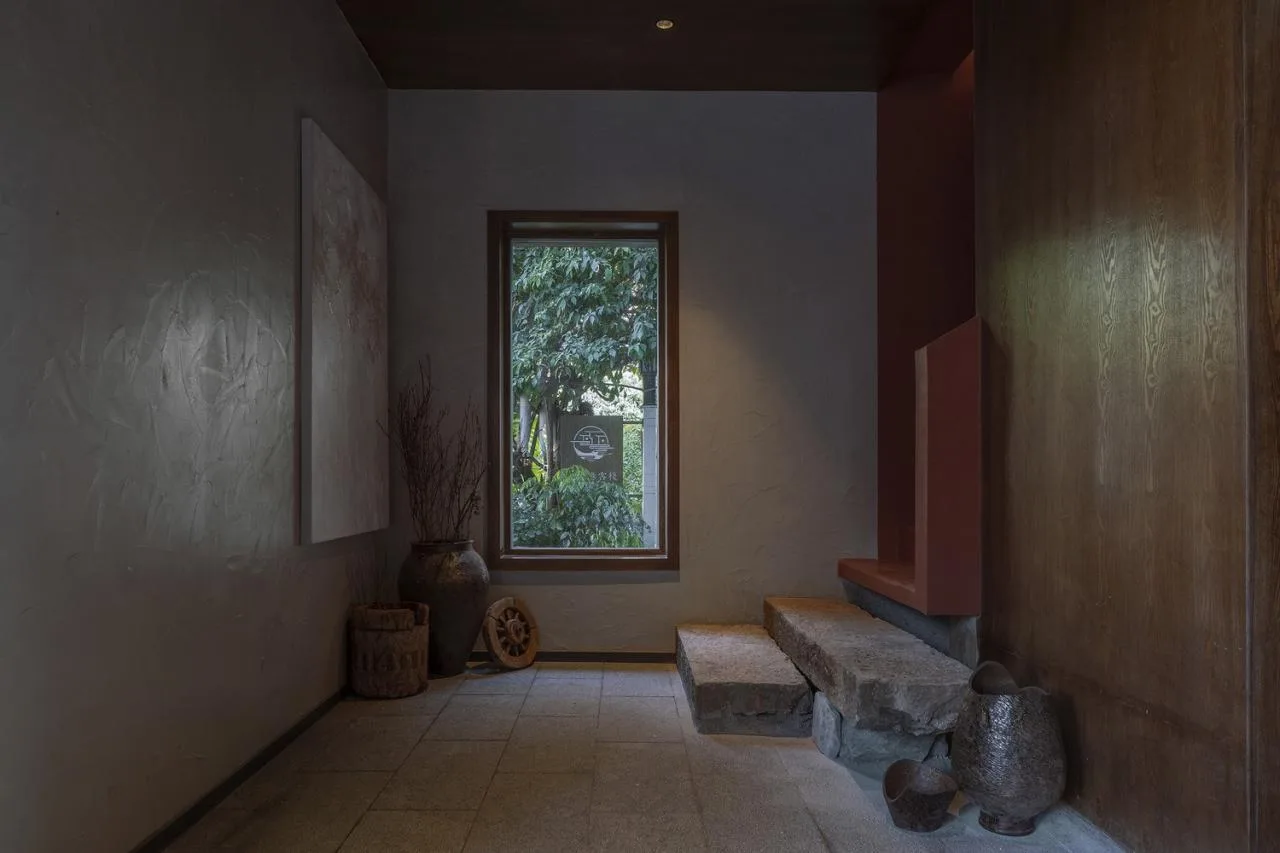
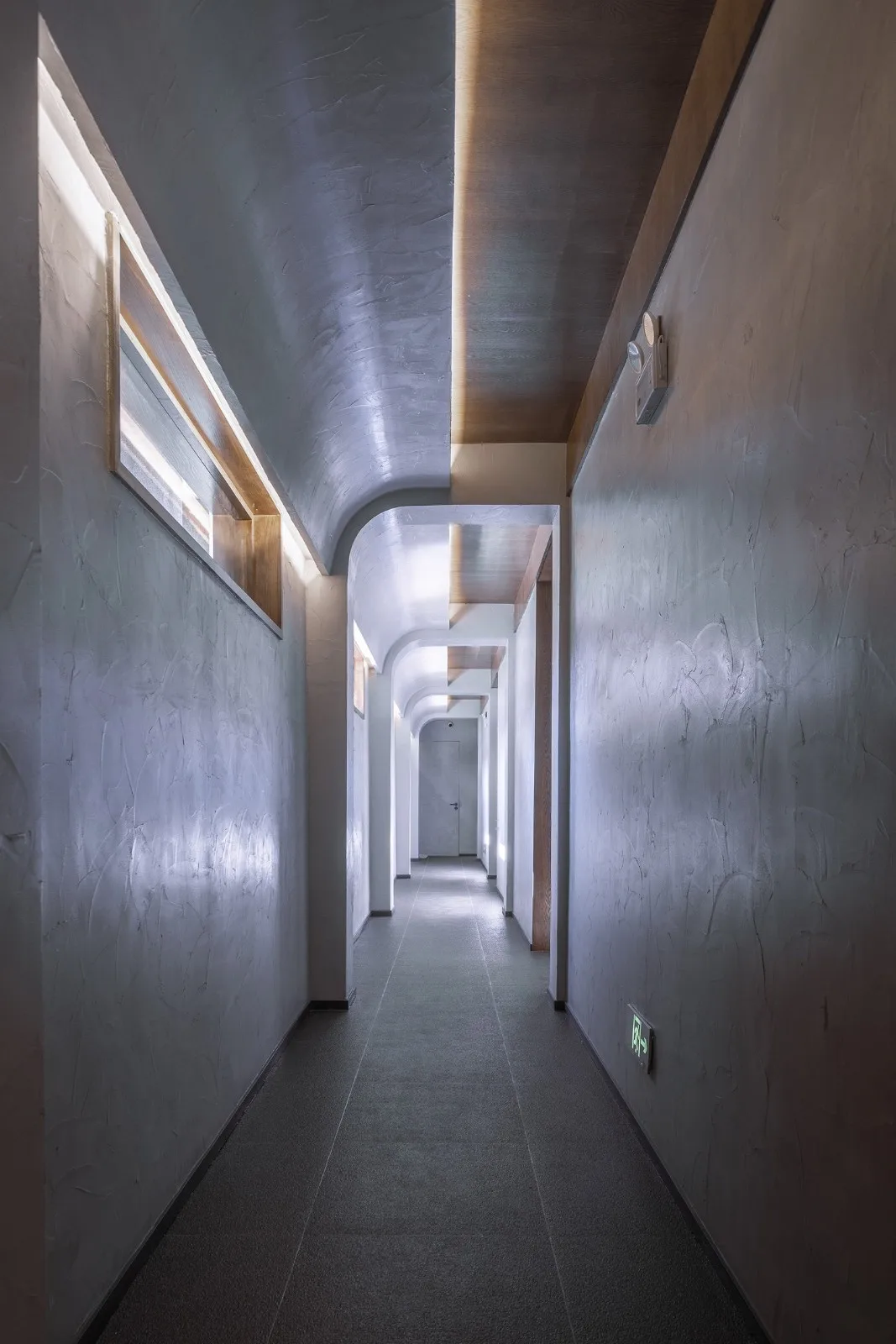
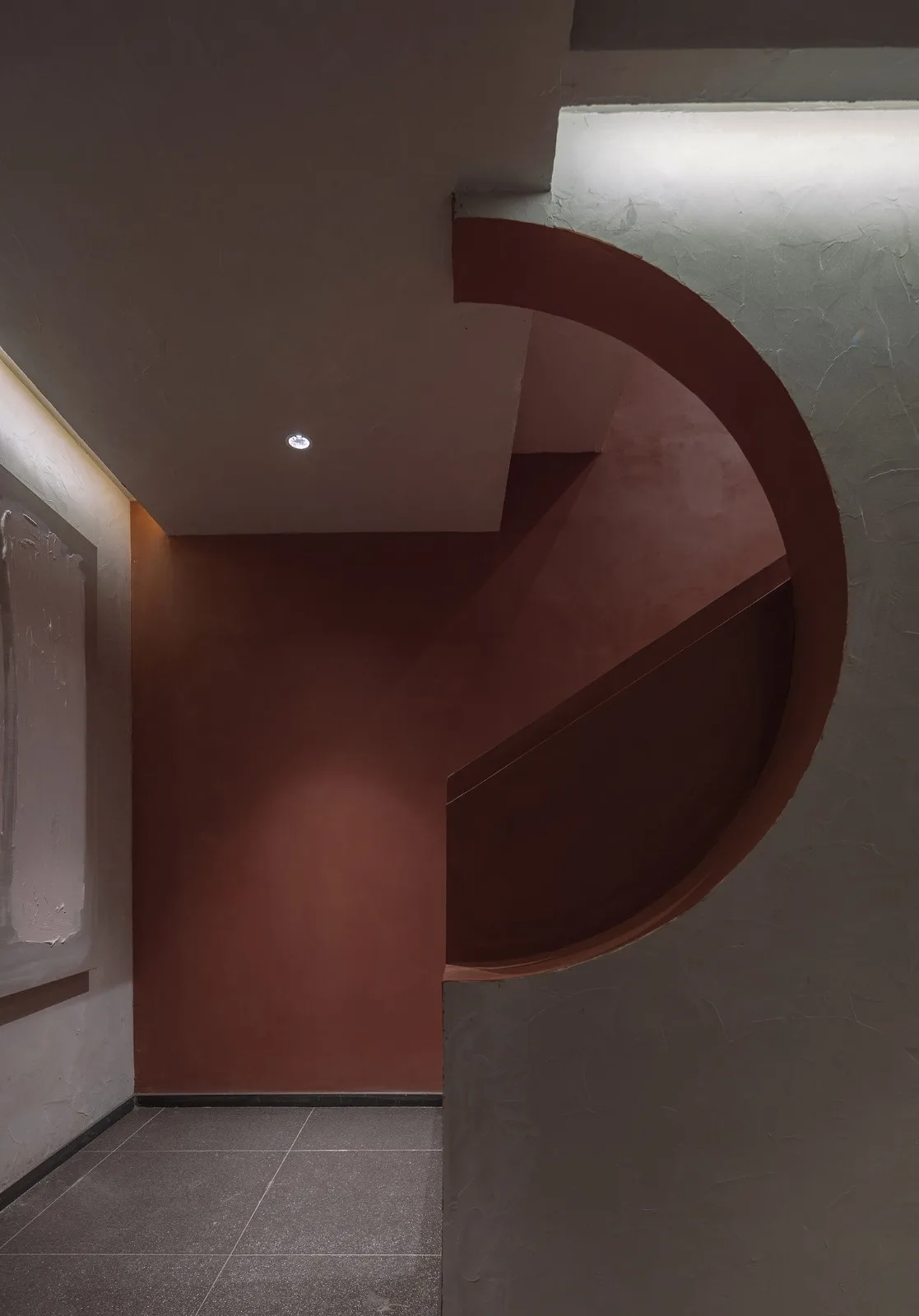
The staircase in the courtyard house guides guests from public areas to the more private rooms. Its design evokes drama and emotional transition: the first two steps are crafted from rough stone, imparting a sense of time’s passage. The remaining steps are tall, sturdy steel plates painted dark red, accompanied by mysterious sculptural forms. This staircase invites anticipation for the spaces ahead. The corridor features a semi-arched ceiling inspired by the beams, enhancing spatial rhythm and breaking the monotony of a long hallway.
Guest Rooms: Serenity That Nourishes the Soul
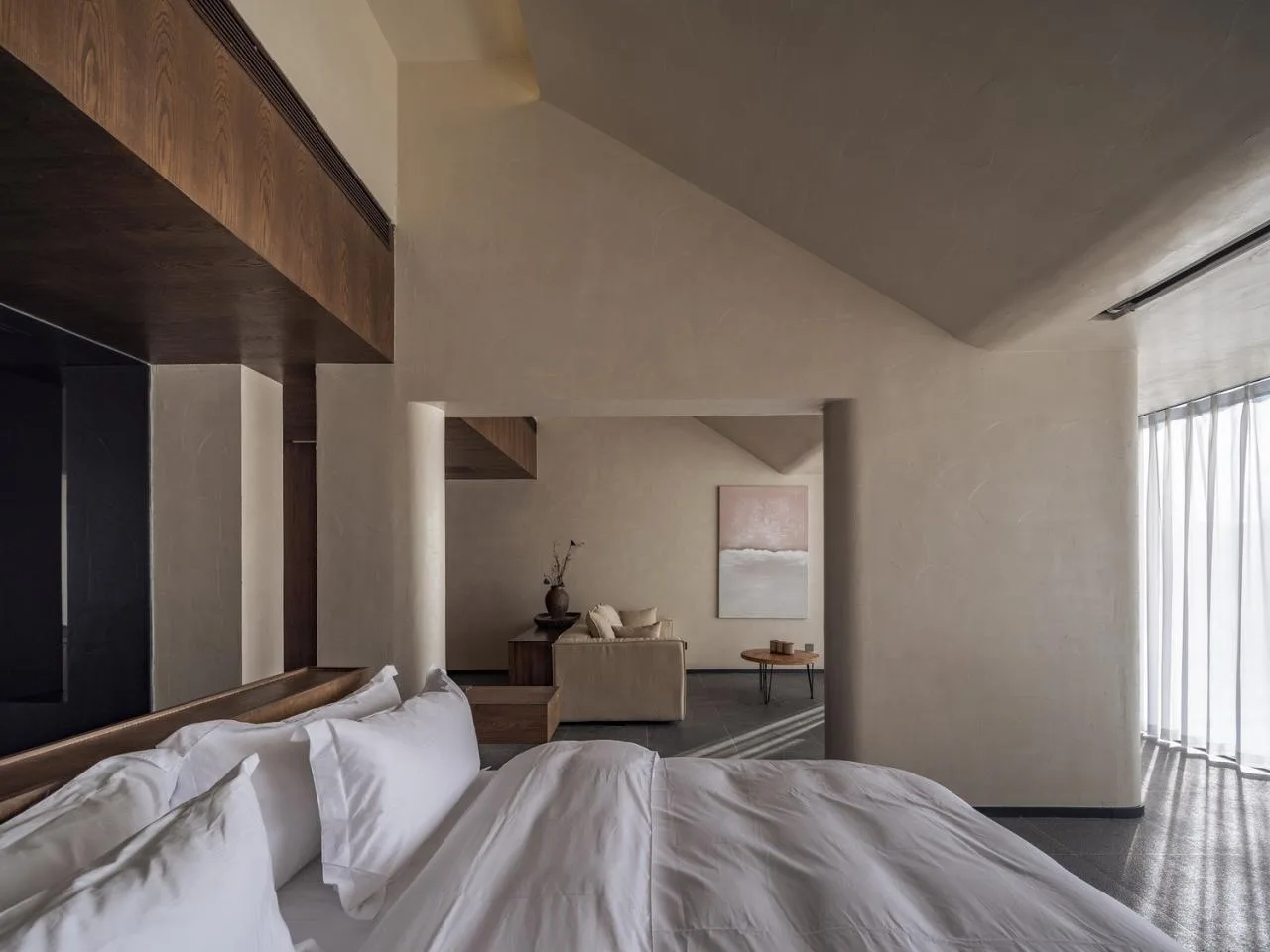
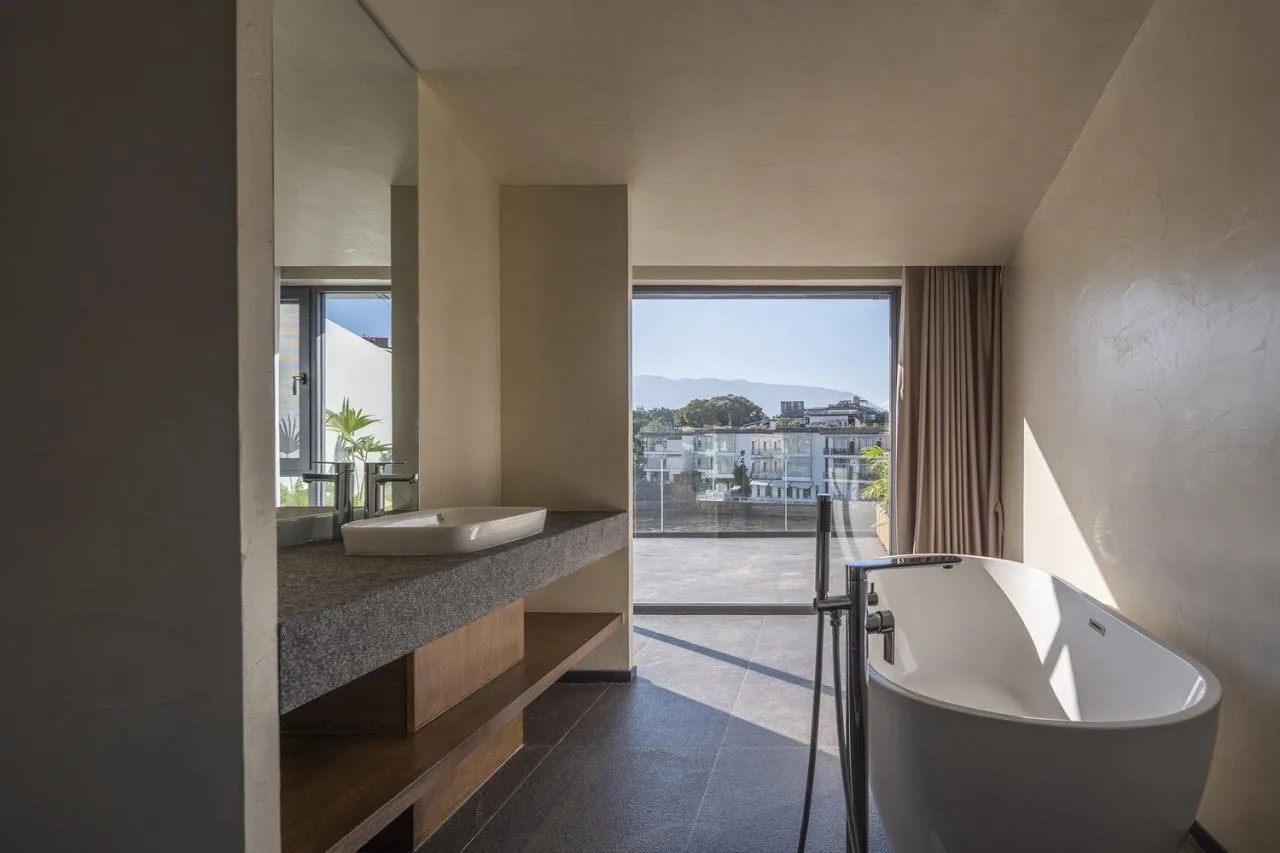
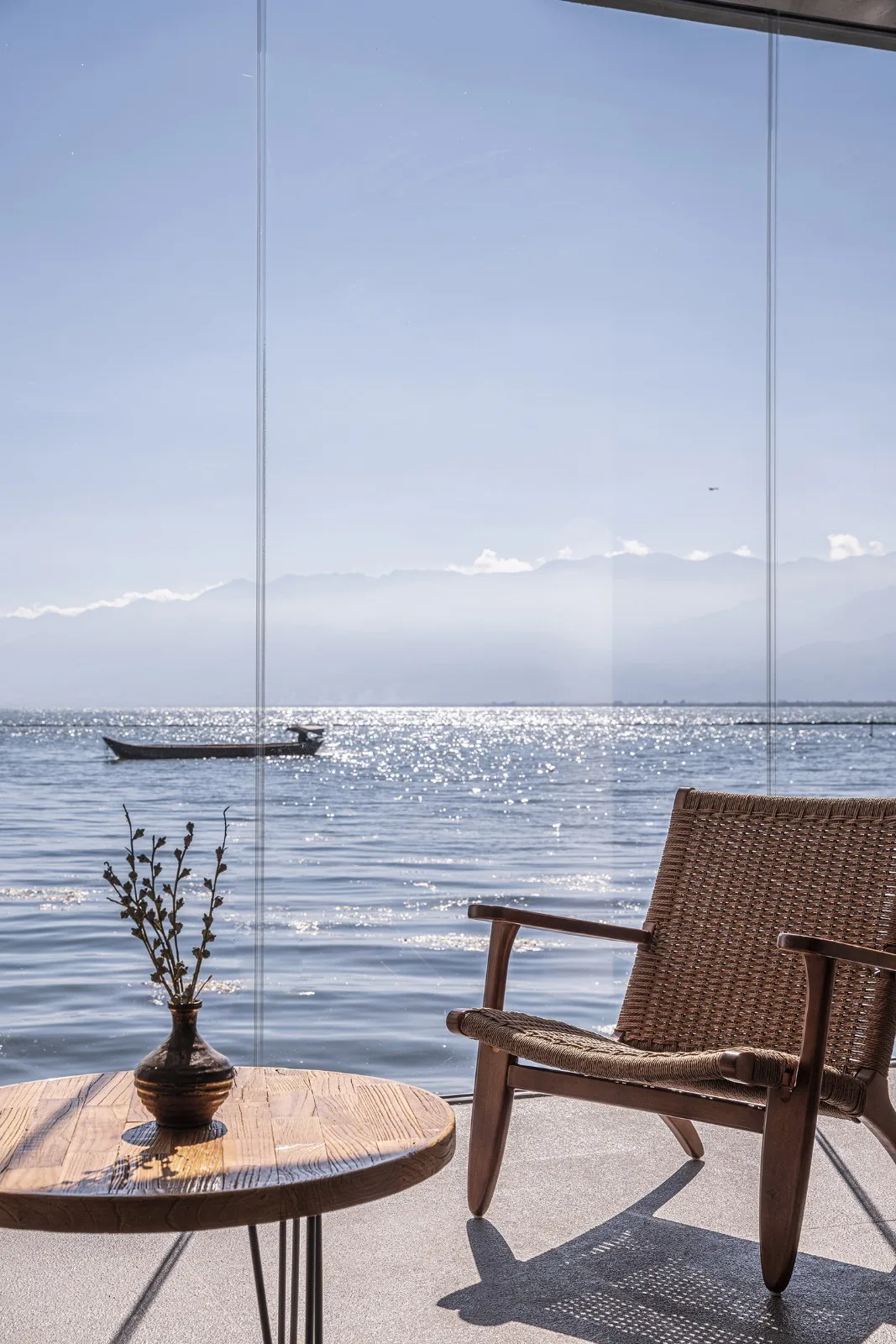
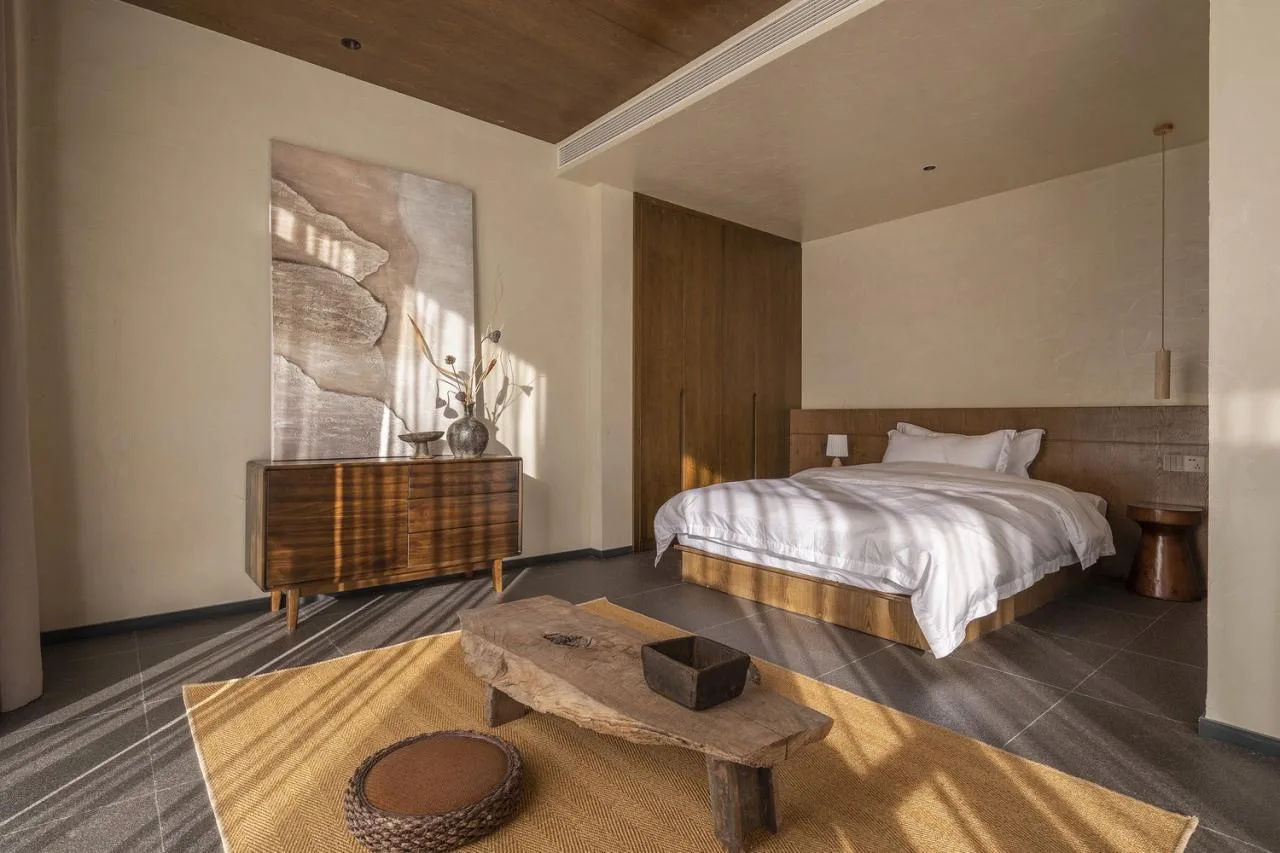
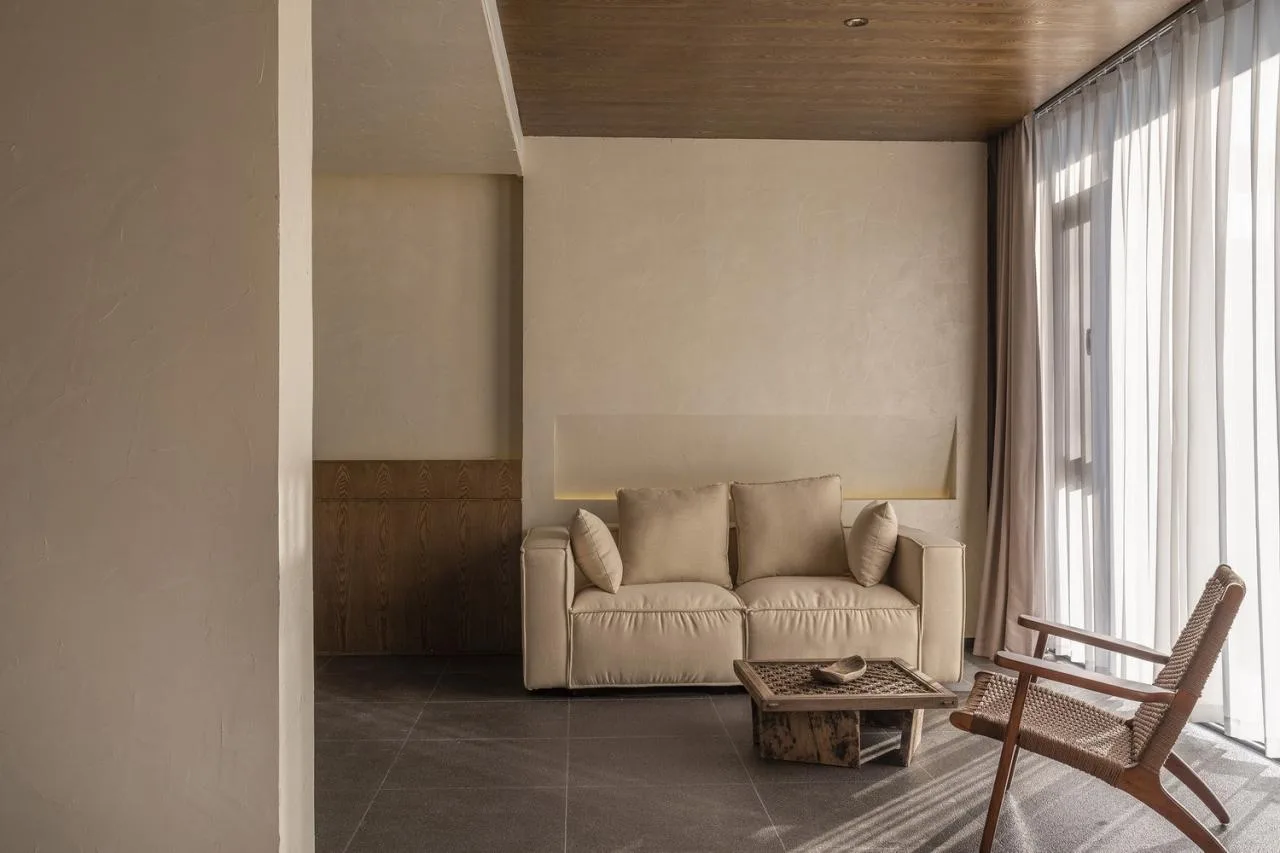
The guest rooms showcase warm beige walls paired with walnut wood accents, complementing the blue hues of Erhai Lake. The 16 rooms are designed across various types: sea view suites, courtyard family rooms, courtyard king rooms, sea view terrace king rooms, and accessible rooms. Nine sea view suites overlook the lake from the sea view courtyard. Given the original building structure, only minimal wall removal and reinforcement were possible. Rounded corners at entrances create a welcoming, homely atmosphere, contrasting with the restaurant’s rugged entrance. Sofas and beds face Erhai Lake, with bathtubs placed at the foot of beds. Expansive French windows blur the indoor-outdoor boundary, flooding rooms with natural light and uplifting guests’ spirits.
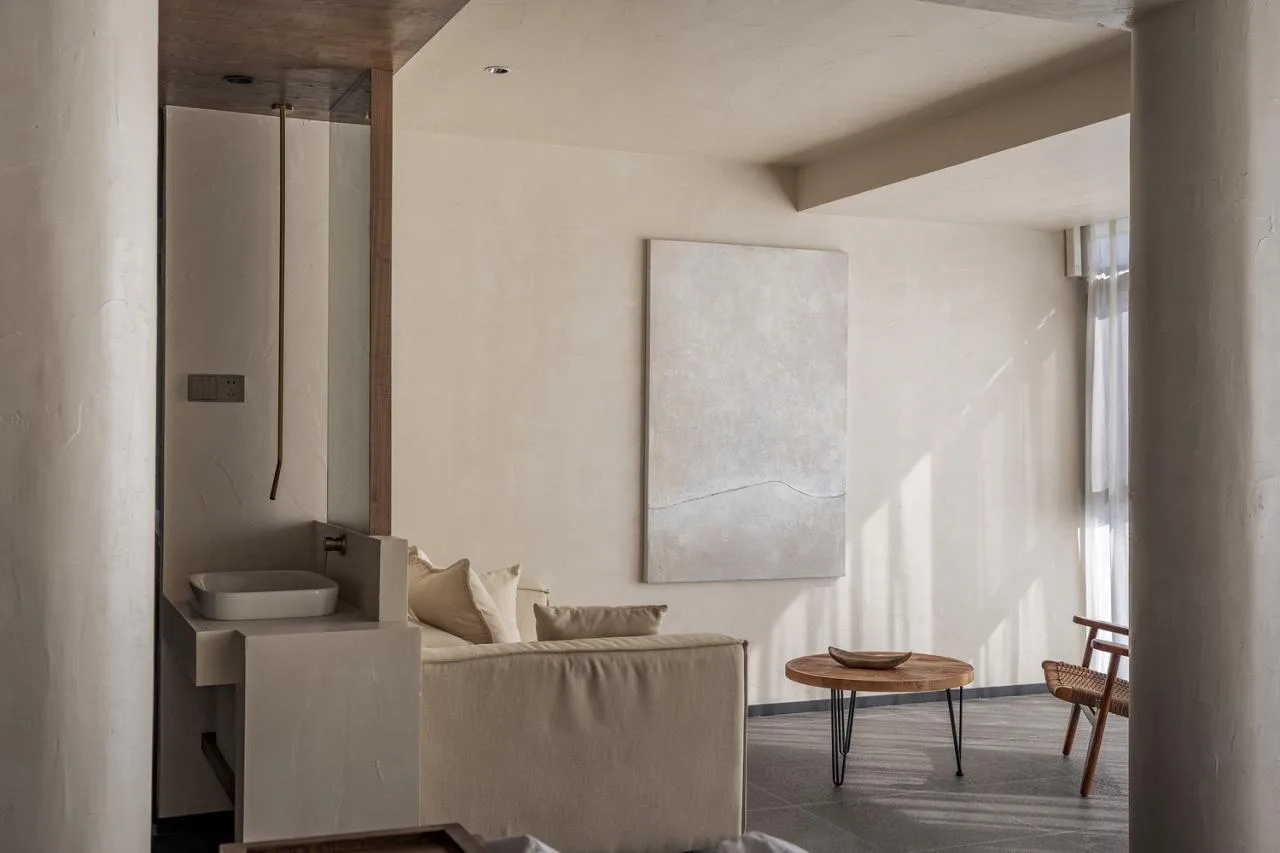
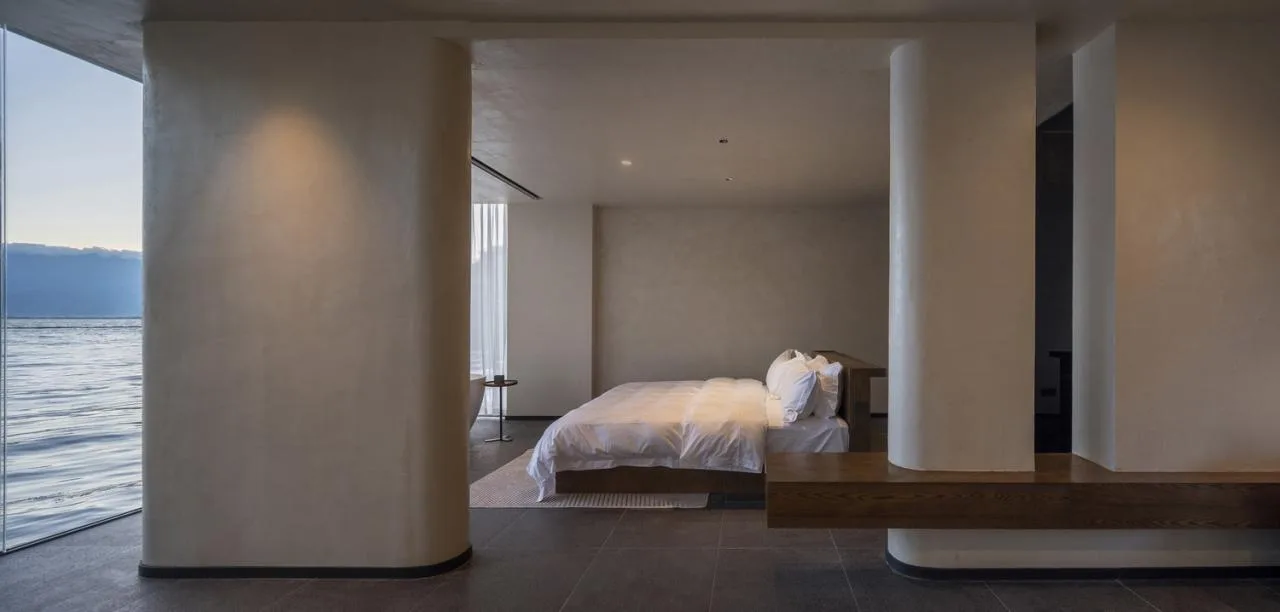
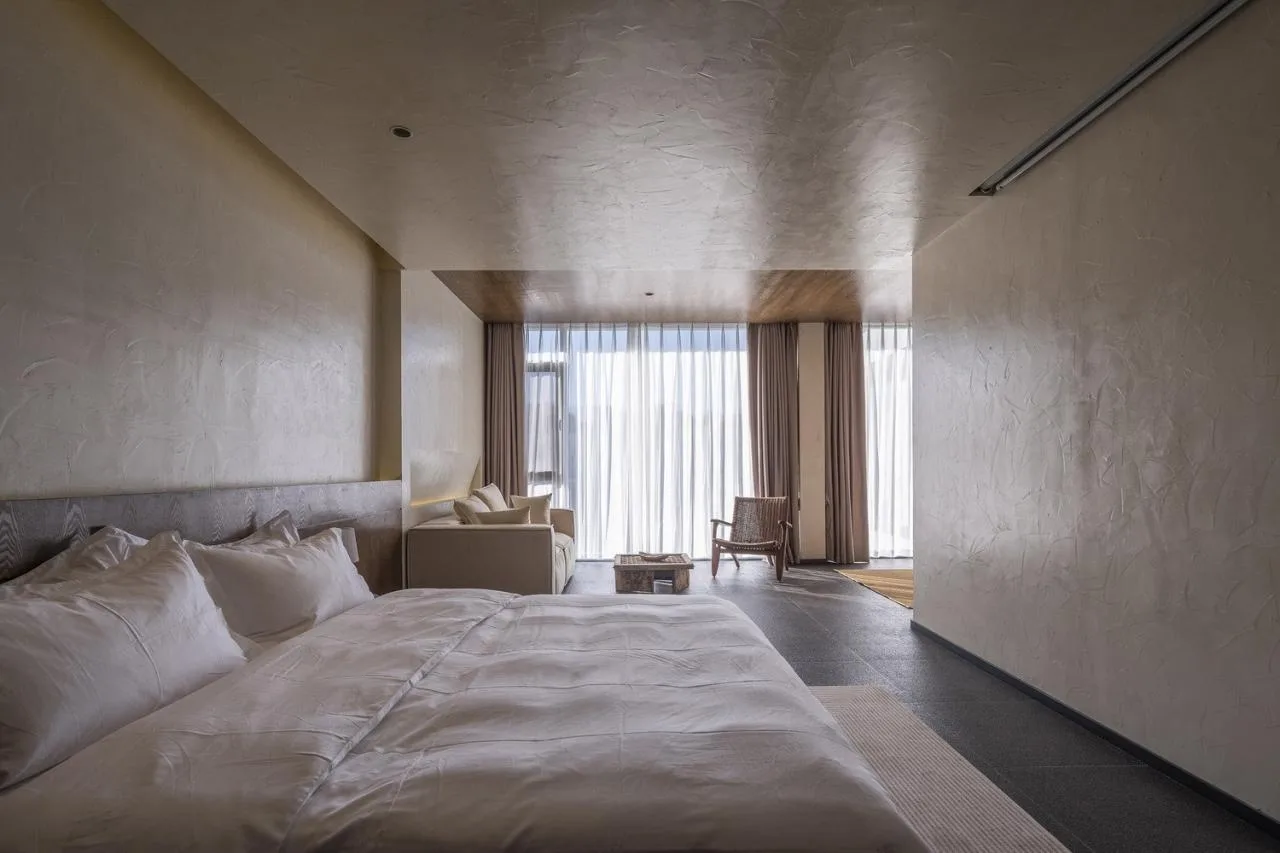
On the second floor of the original courtyard house, the corridor runs along the west side, offering good views but requiring guests to pass through other rooms to reach their own, which is impractical for a high-end hotel. The redesign shifted the corridor to the back, improving privacy and saving space. The family rooms feature bathrooms near the entrance, with bathtubs accommodating guests’ privacy needs. Existing walls naturally divide twin bed areas, ensuring private zones.
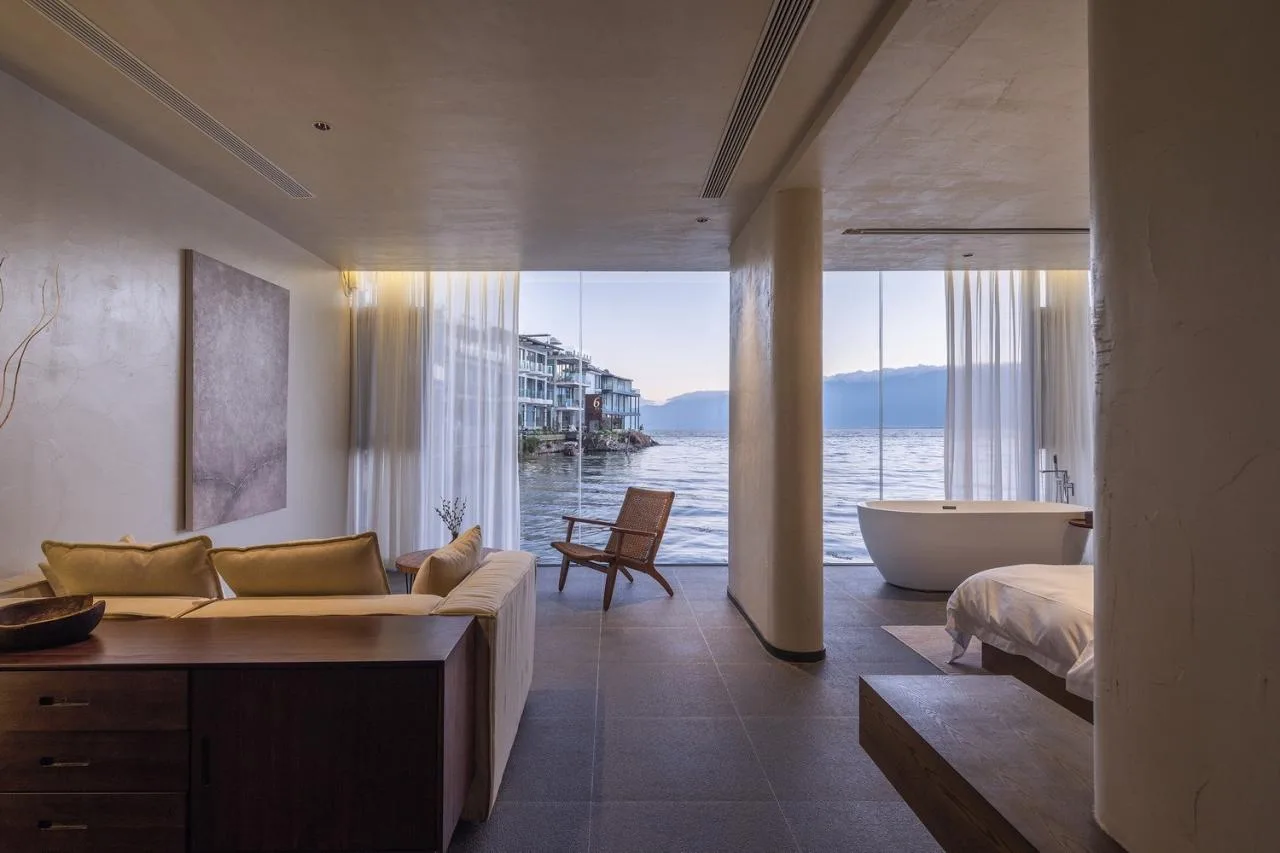
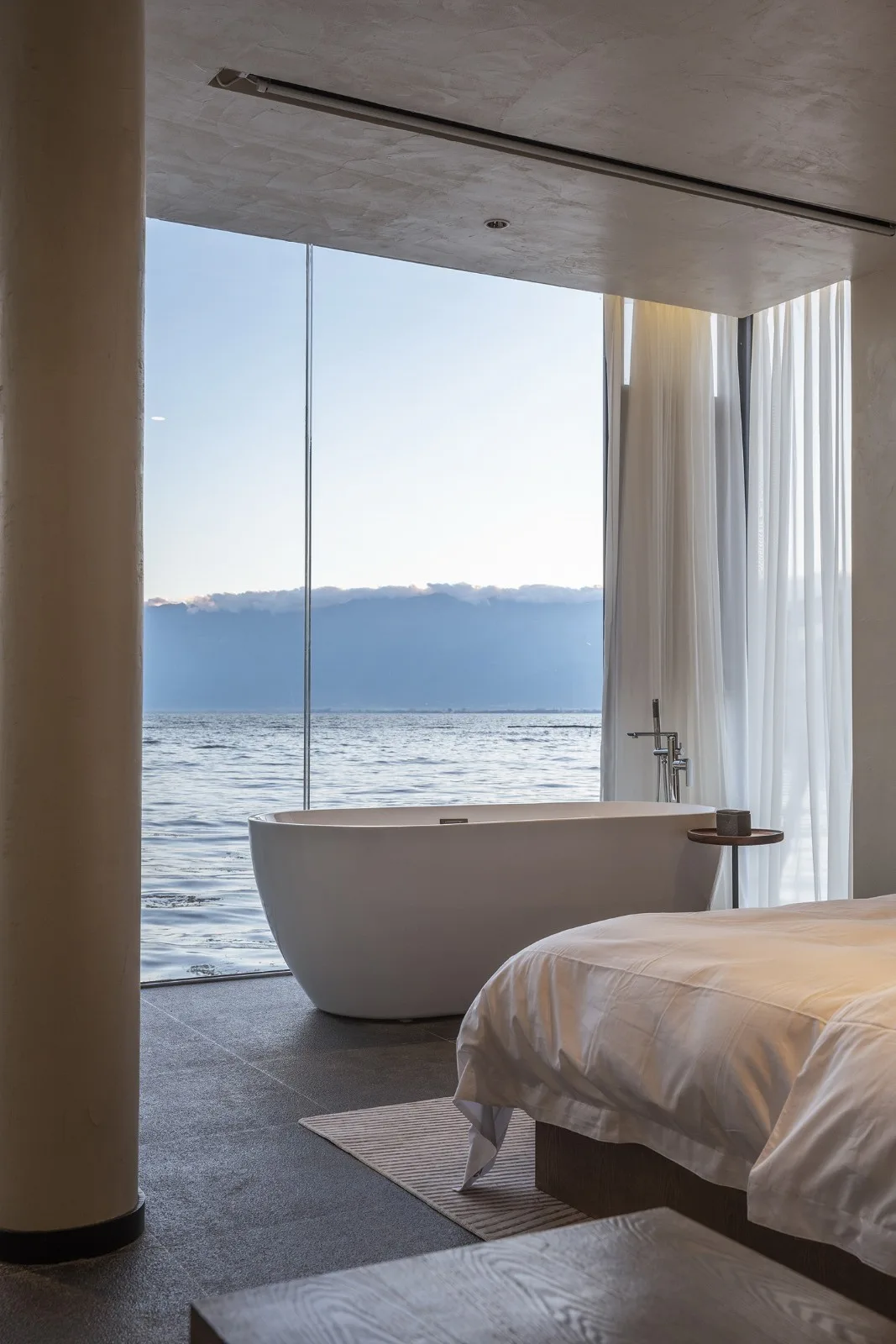
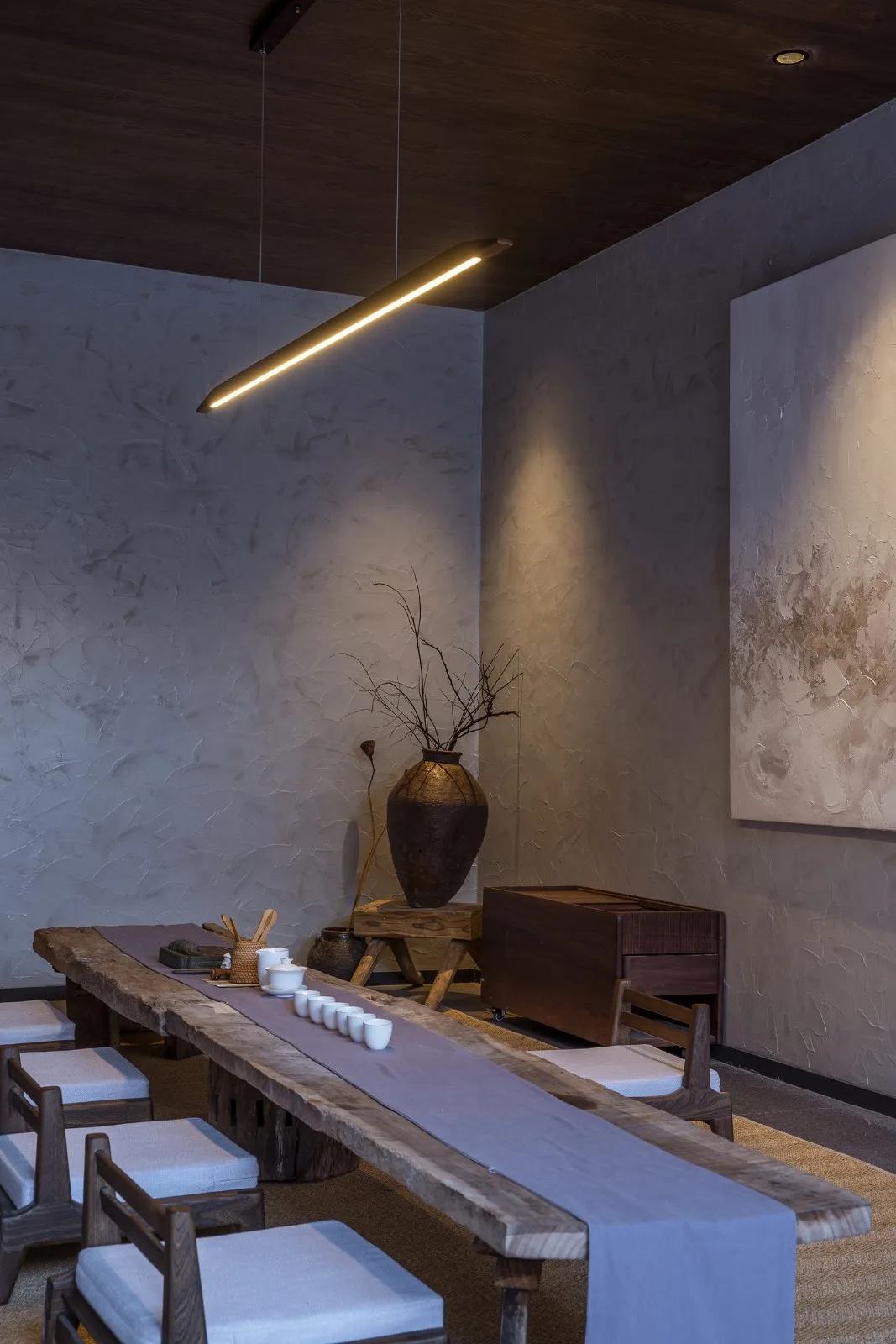
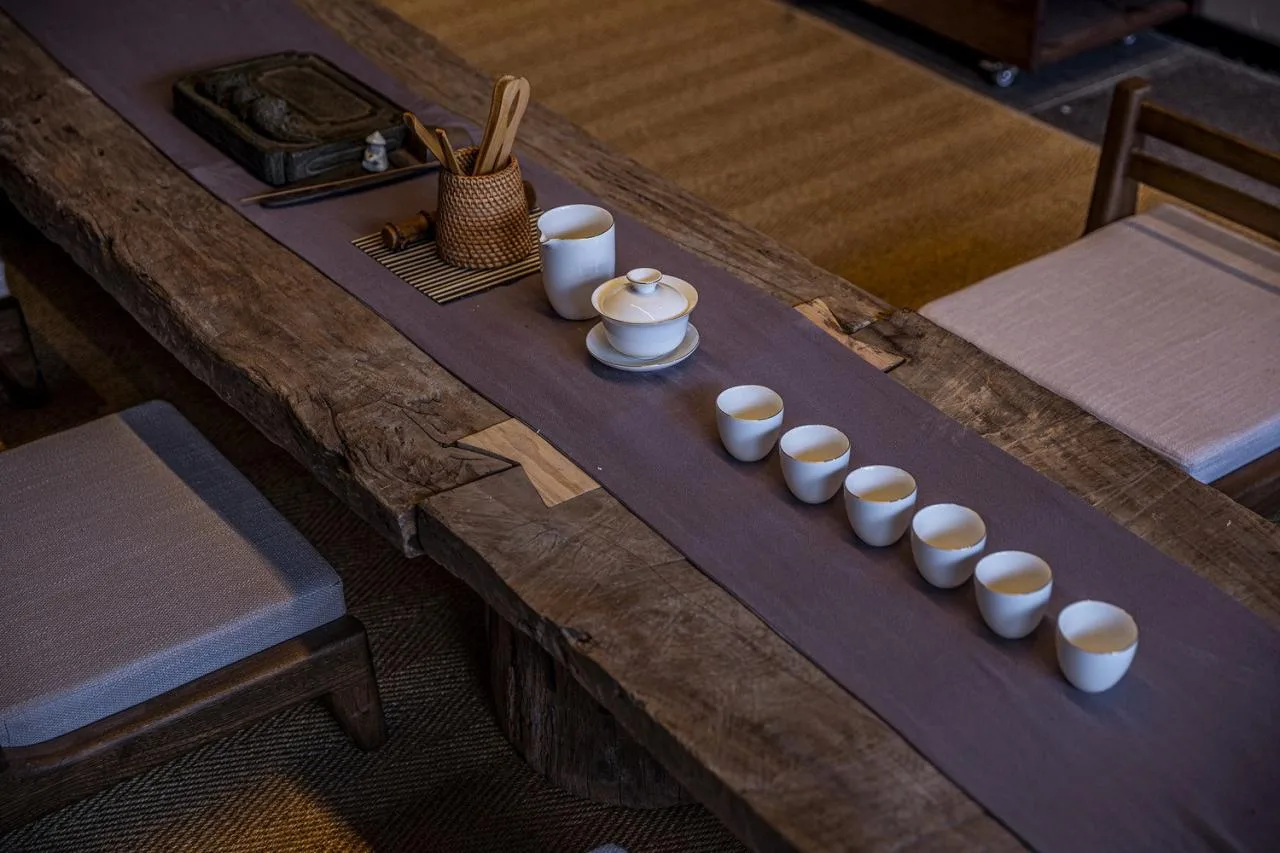
For furnishings, the architects sought to reflect regional character. Together with the owners, they explored villages around Dali, collecting vintage items such as sunken wood, pottery jars, and more. These were redesigned and repurposed to serve new functions. A tea table made from sunken wood sits by the family room window, recalling life in the double-gallery fishing villages. The architects believe that the marks on these aged objects, carrying the weight of time, offer a healing respite for weary modern souls.
Conclusion: A Seaside Retreat for the Spirit
Increasingly, young people are seeking escapes from urban life to places where they can embrace a slower pace. The architect and owner share a belief that the charm of slow living lies in the worn, mottled, and faded textures of time. They hope this waterfront resort will offer a quiet, simple seaside haven for those yearning to leave the city’s hustle behind.
Project Drawings
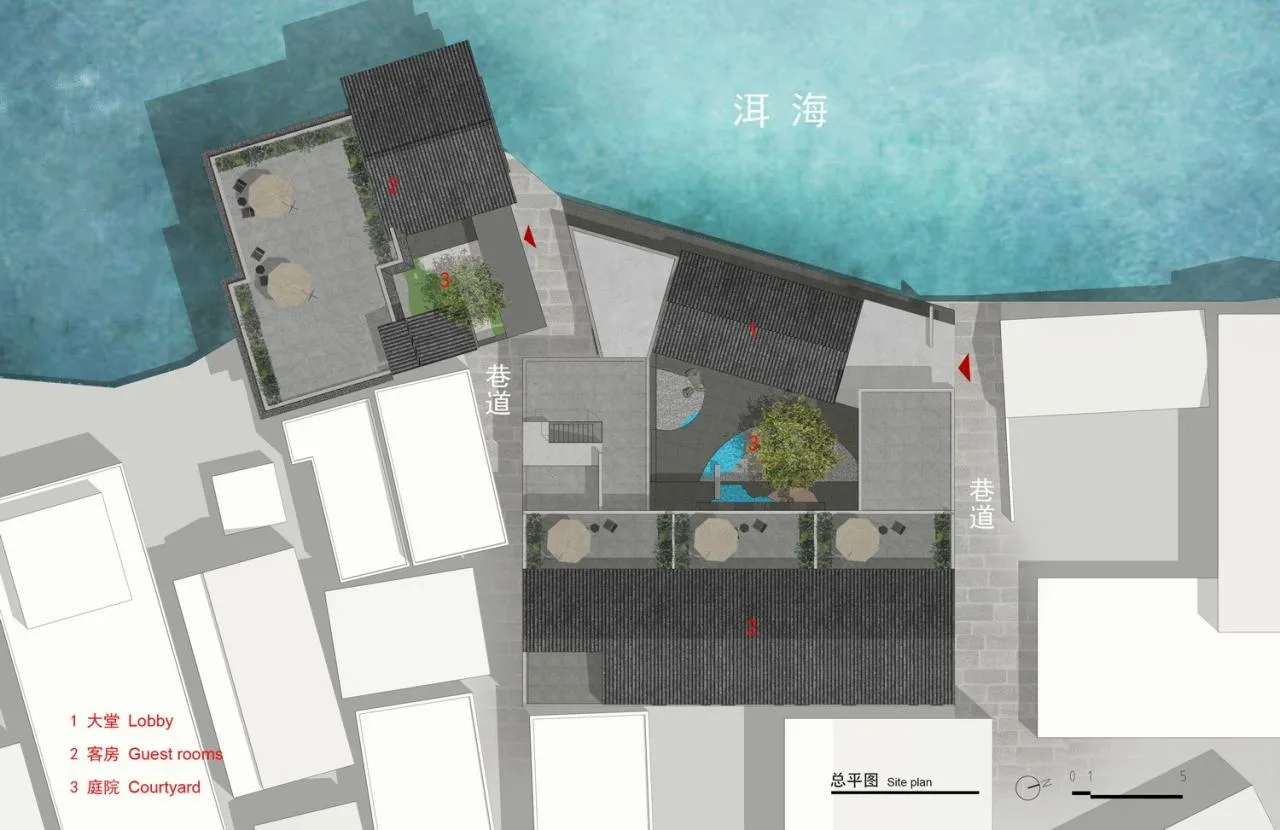
△ General Layout Plan
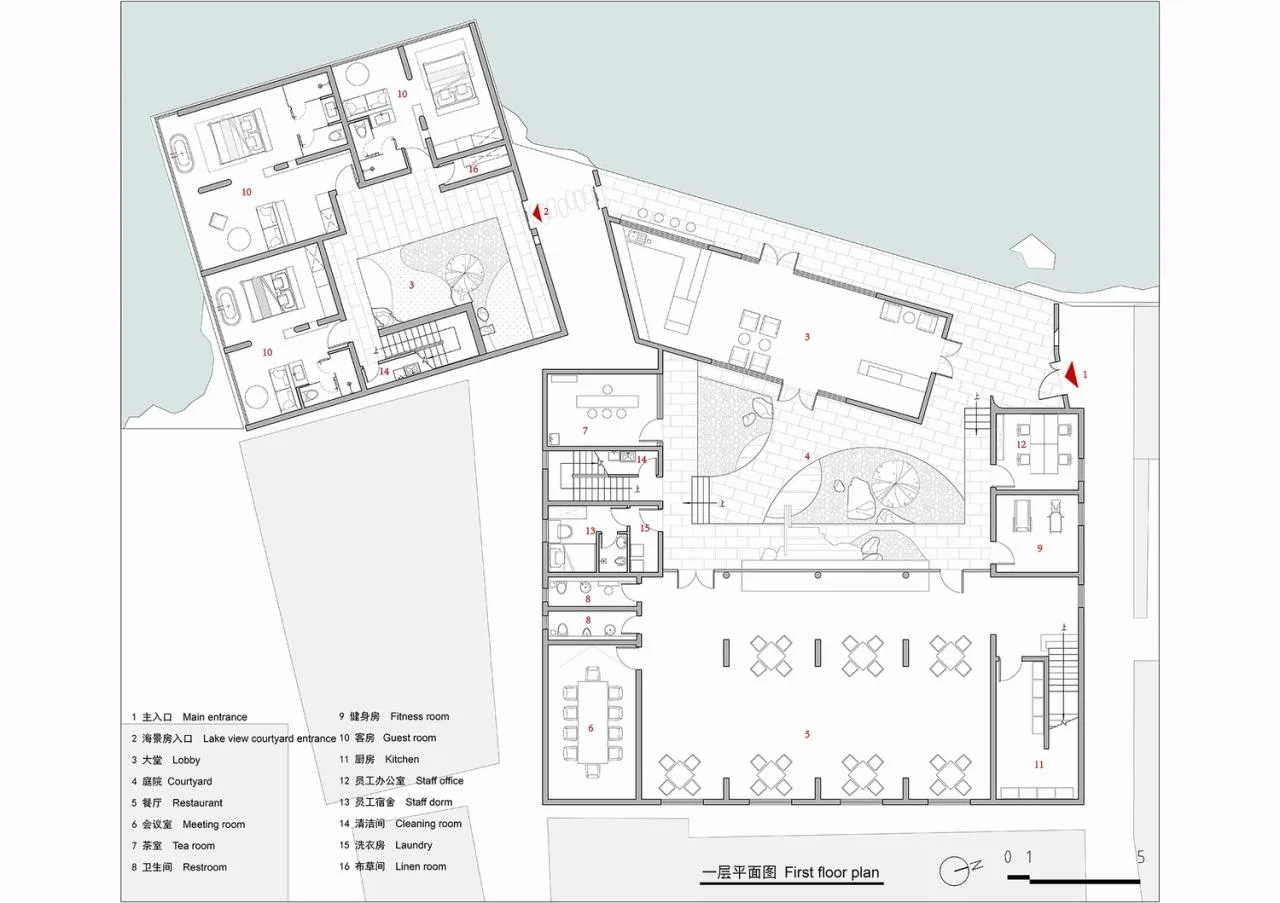
△ First Floor Plan
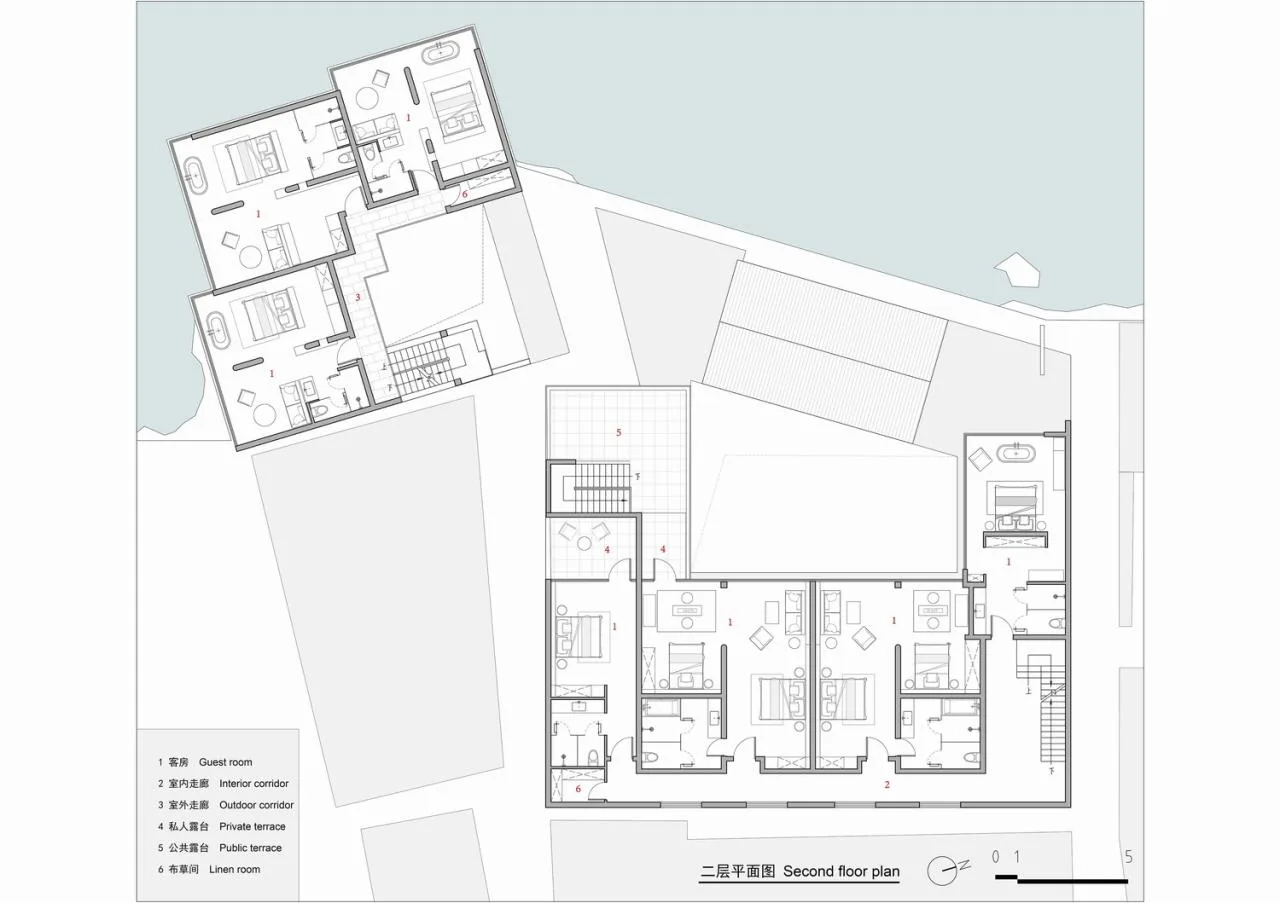
△ Second Floor Plan
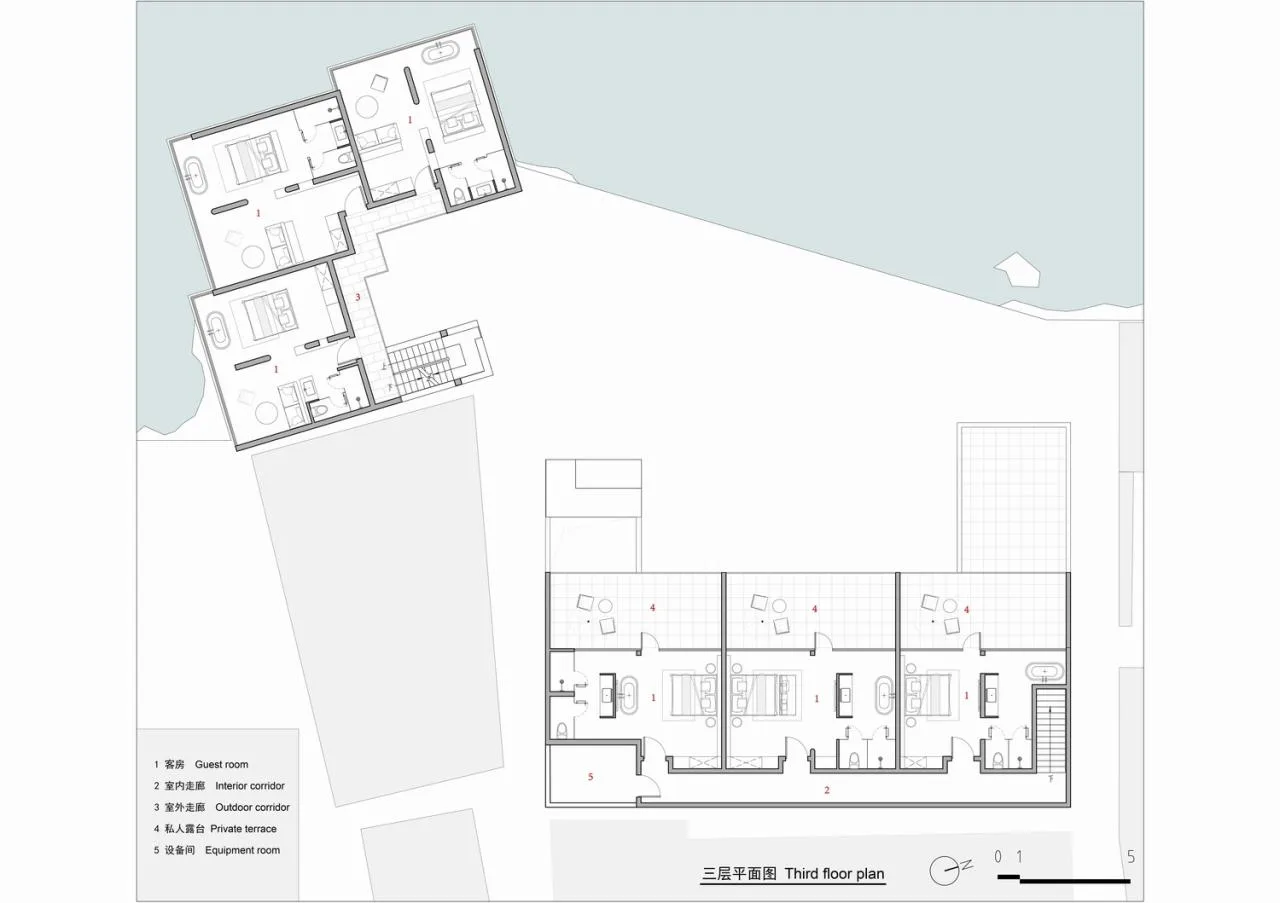
△ Third Floor Plan
Project Information
Project Name: Taotang Hill Resort Hotel
Location: No. 108, Group 3, Dajianbian Village, Shuanglang Town, Dali Bai Autonomous Prefecture
Owner: Yunnan Mangshu Hotel Management Co., Ltd
Lead Architects: He Wei, Chen Long
Project Architect: Meng Xiangting
Team Members: Liu Yong, Zhu Yanming, Wang Ziyi, Wang Dongsheng, Ji Ran (intern)
Operations Team: Yunnan Mangshu Hotel Management Co., Ltd
Construction Unit: Dali Hongye Building Decoration Engineering Co., Ltd
Building Area: 1200 square meters
Design Period: September 2021 – December 2021
Construction Start: October 2022
Photography: Jin Weiqi















Must log in before commenting!
Sign Up