
In construction engineering, numerous factors must be considered when developing construction plans. BIM technology offers effective solutions that can accelerate construction speed, reduce costs, and extend the lifespan of structures, ultimately maximizing the economic benefits for enterprises.
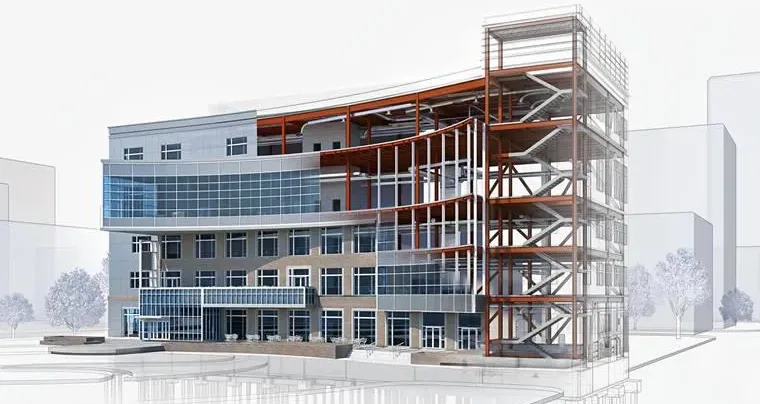
Analysis of Construction Methods for Large-Span Steel Structures
1. High-Altitude In-Situ Installation Method
This method involves installing support structures based on the construction progress to ensure the overall project’s stability. Once the structural work is complete, these temporary supports can be safely dismantled, ensuring the structure meets design standards.
Installation components in this method are classified into two types:
① Loose component installation, which does not require large cranes, offers high installation accuracy, and is relatively easy to execute. This typically involves erecting scaffolding on the structure to support in-situ assembly at high elevations. It is commonly used for structures with smaller heights and spans.
② Unit installations often use point supports, which simplify construction, reduce risk, and improve efficiency.
2. Sliding Construction Installation Method
This technique uses synchronously controlled traction equipment to move structural segments along predefined tracks from the assembly area to their final position. It demands adequate structural stiffness and track installation, making the process somewhat complex.
The sliding construction method is an evolution of synchronous control technology and generally includes three approaches: winch, hydraulic jack, and hydraulic jack pushing. This method minimizes high-altitude work and reduces the need for supporting materials, which helps maintain structural quality.
3. Improved Construction and Installation Methods
This approach involves assembling components and nodes on the ground or in controlled environments, then transporting and installing them at designated positions using specialized machinery. It offers advantages such as enhanced safety, reduced labor intensity, and superior welding quality, while minimizing the use of scaffolding and lowering overall construction costs.
Moreover, this method requires the structural units to have a certain regularity and stability, adhering to established standards to ensure successful implementation.
That concludes our overview of how BIM technology applies to construction methods for large-span steel structures. I hope this article has been helpful!
















Must log in before commenting!
Sign Up