
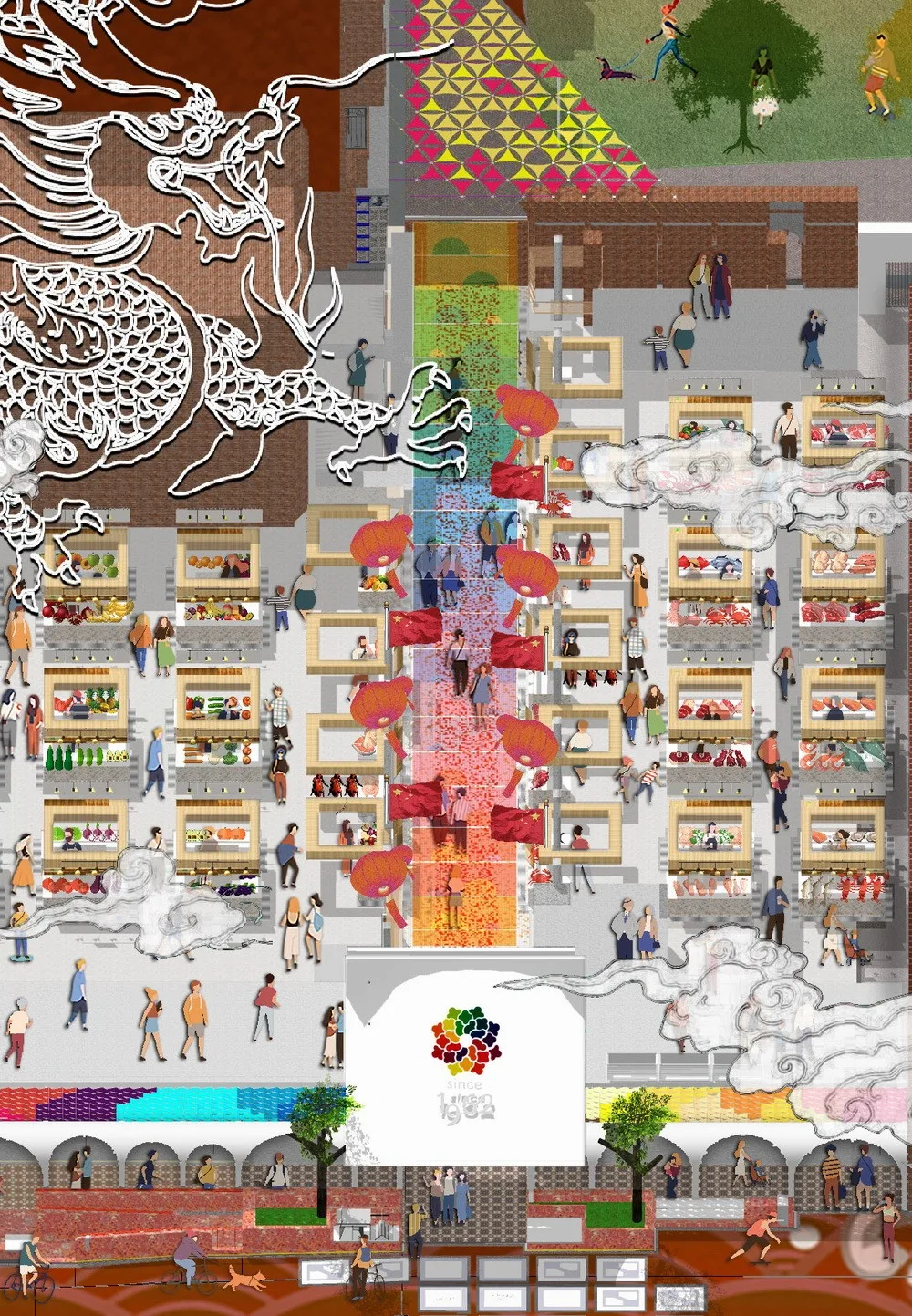
△ A colorful and poetic slice of everyday life
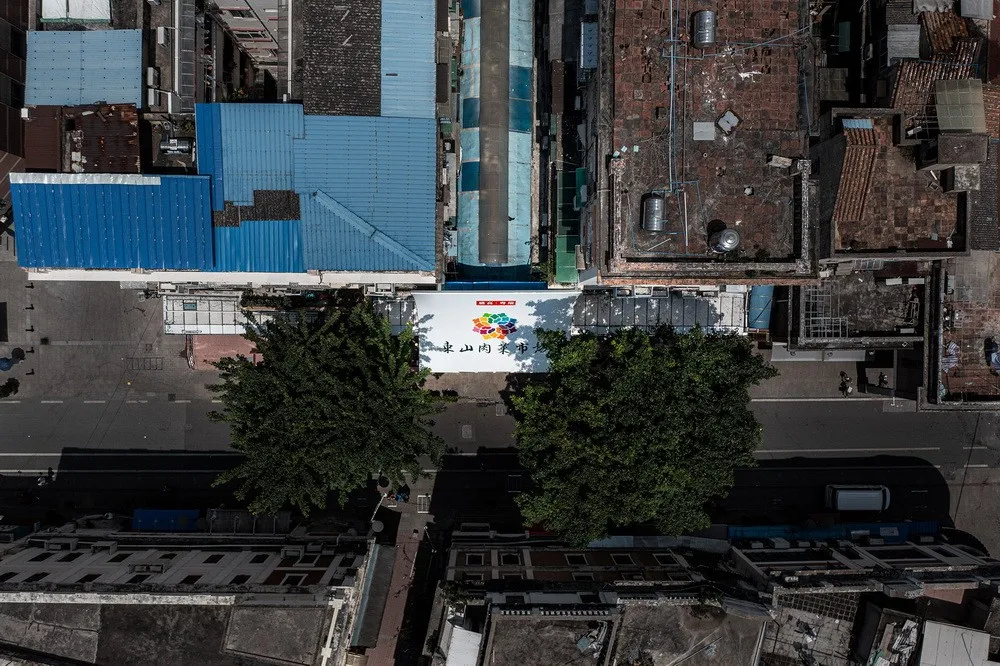
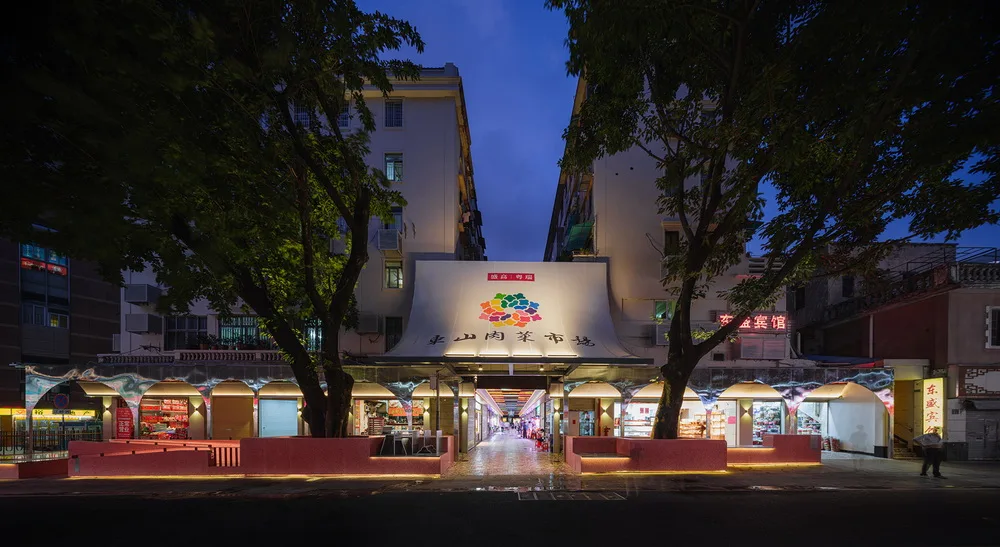
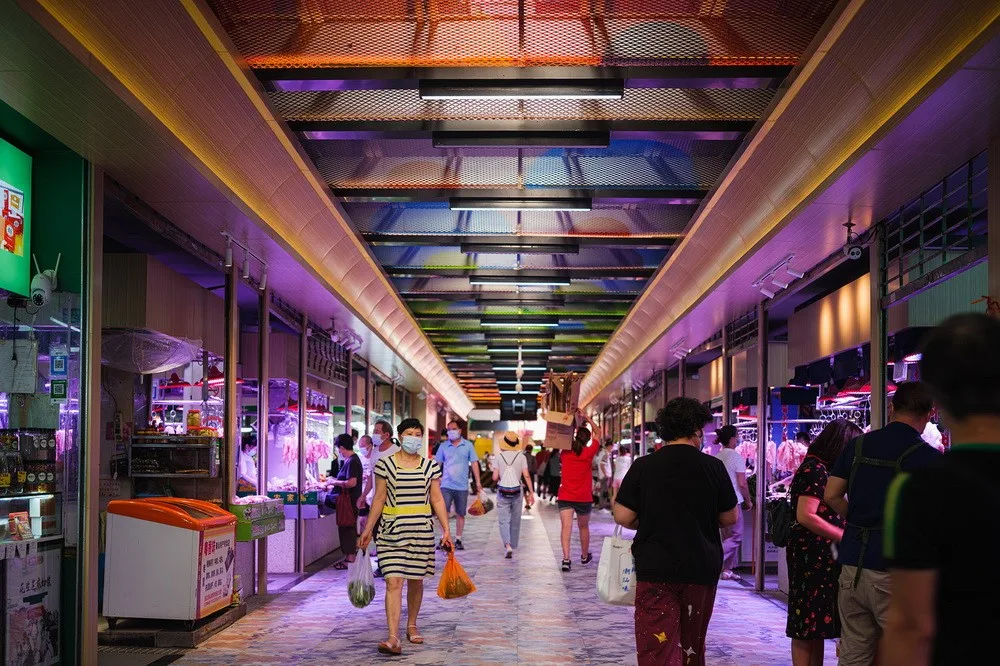
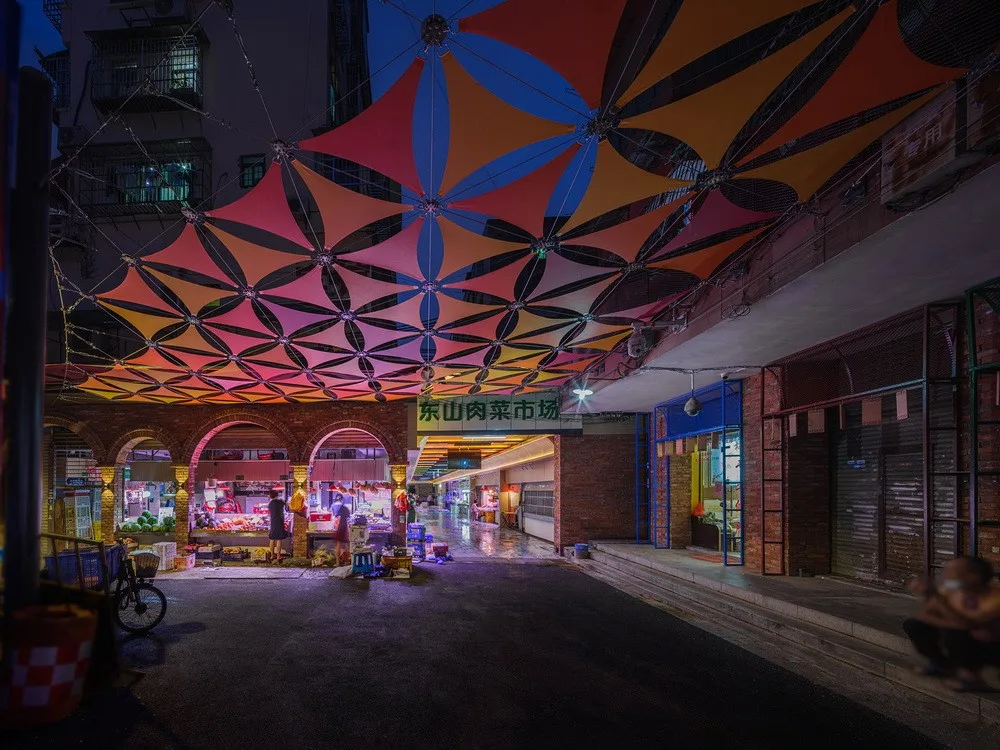
△ Dongshan Meat and Vegetable Market Project
Aoming Studio was recently commissioned to lead the urban renewal of the Xinhepu Historical and Cultural District in Guangzhou. They completed an integrated interior and landscape redesign of the Dongshan Meat and Vegetable Market. Drawing from extensive experience and academic insights in urban micro-renewal, the project applied design strategies such as cultural background exploration, daily life shaping, spatial context clarification, creation of activation points, and extraction of regional elements. Through expert design, the goal was to enhance spatial quality while revitalizing the cultural identity of the Xinhepu district.
The essence of traditional spatial renewal transcends mere physical transformation; it also revives the everyday life scenes of essential living elements like firewood, rice, oil, salt, sauce, vinegar, and tea. The rejuvenated historic site, blending practical needs with modern lifestyles, redefines traditional market culture.
Having previously renovated the Yuyuan Road vegetable market, the Aoming design team is well-versed in vegetable market projects. In rapidly urbanizing areas, vegetable markets serve as vital community hubs, embodying the saying “food is the most important thing for the people.” They act as social anchors for migrant workers’ livelihoods and preserve urban diversity and vibrancy. Unlike other micro-renewal types, vegetable market renovations address daily living challenges, fostering relaxation, social interaction, neighborly communication, and community culture activation, thereby boosting belonging and vitality.
Daily Life: A Glimpse of Guangzhou’s Spirit
The project uses the metaphor of a typical day to reflect a city’s rise and fall, highlighting that while a city’s history may seem brief, its essence is rooted in everyday life. Cities should offer enduring guidance, day and night.
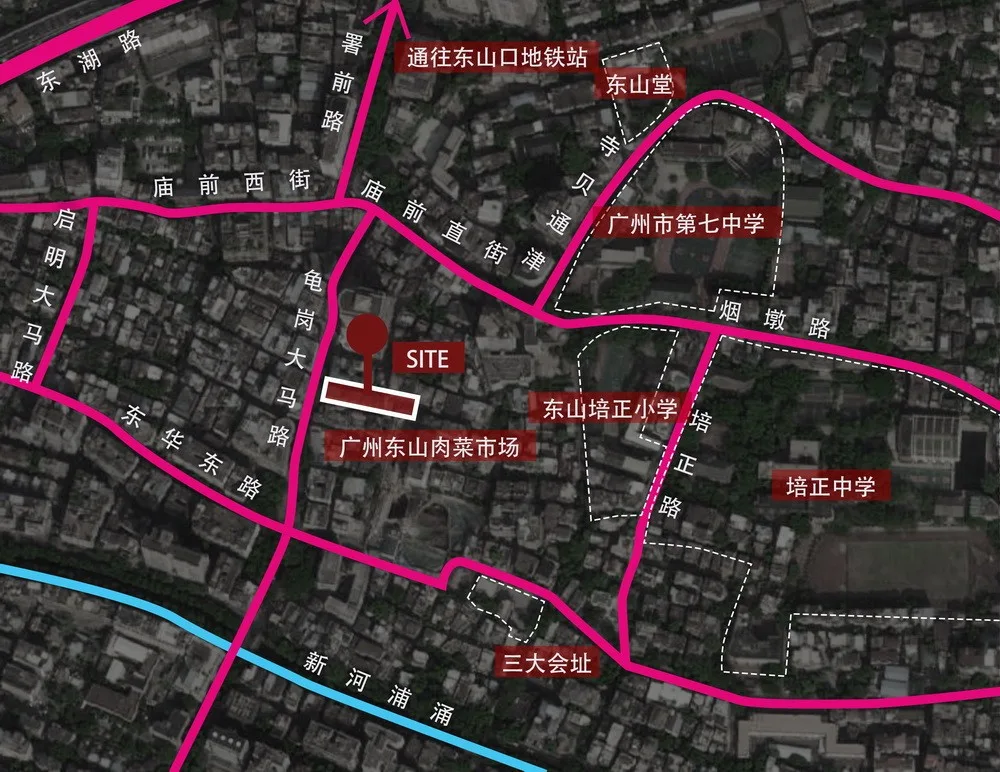
△ Location Map
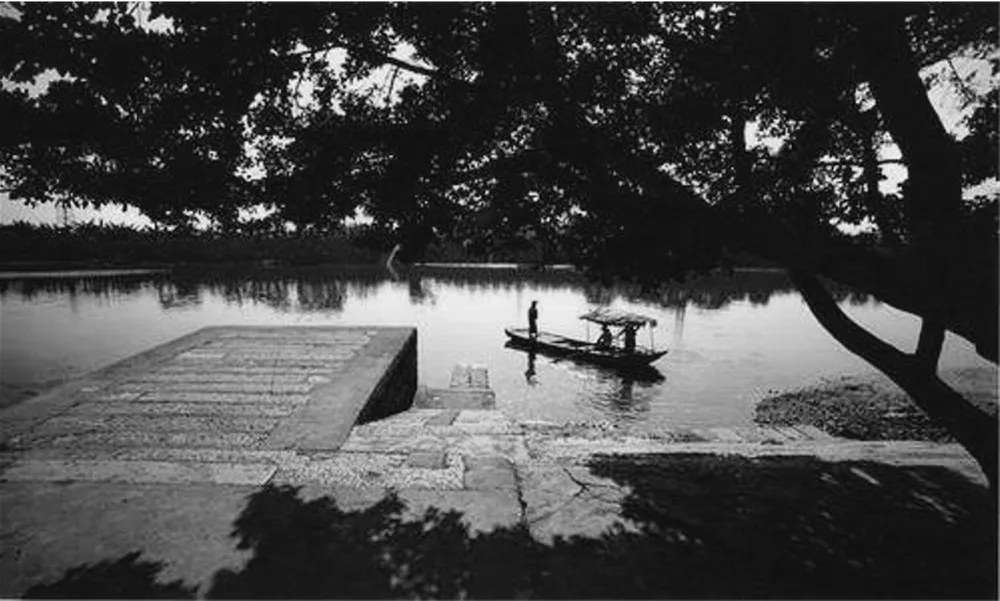
Millennium Guangzhou Huangpu Ancient Port
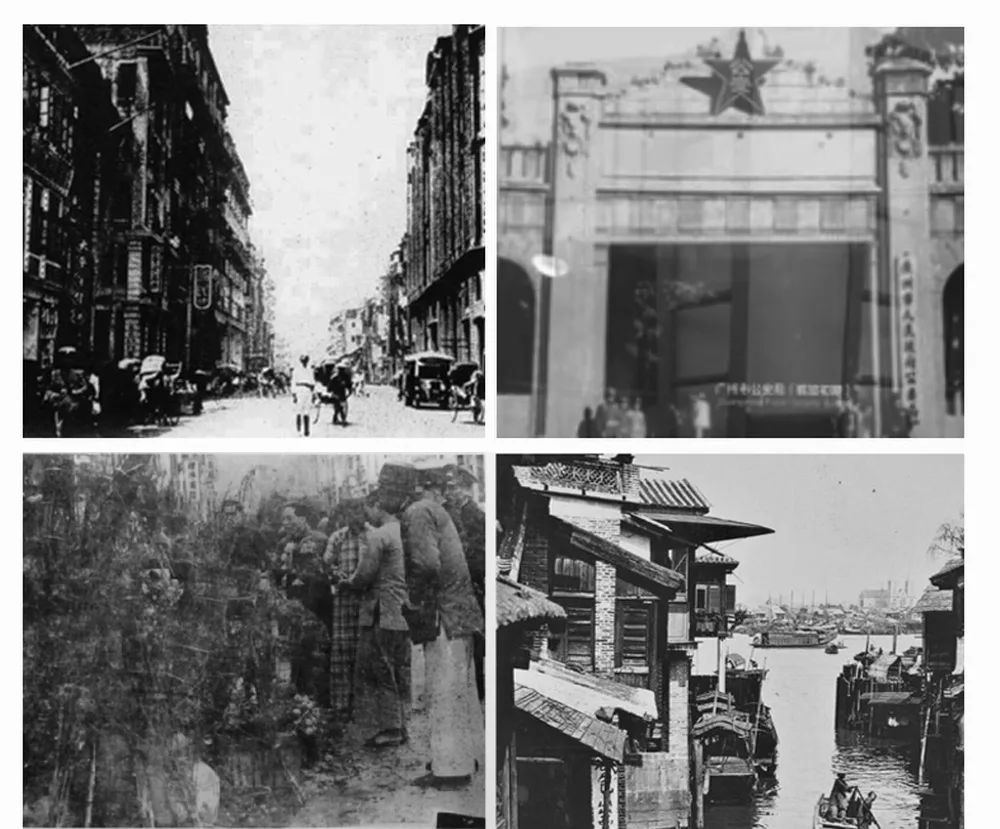
Red Culture and Lingnan Folk Customs in Modern Guangzhou
Dongshan represents the heart of Guangzhou’s spirit. The “Guangzhou Spirit,” shaped through centuries of foreign trade and modernization since the late 19th century, unfolds through traditional Lingnan scenery, arcade streets, and modern cultural landmarks. It also manifests in globalization phenomena such as red culture tourism and everyday scenes like residents chatting and shopping, collectively narrating the city’s vibrant daily life.
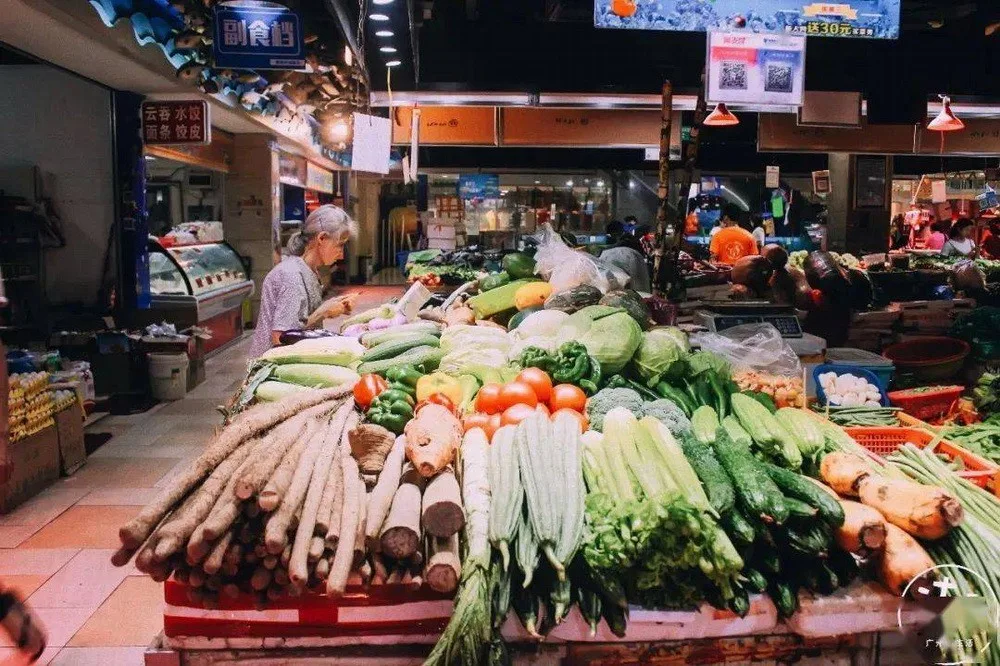
Contemporary urban life in Guangzhou
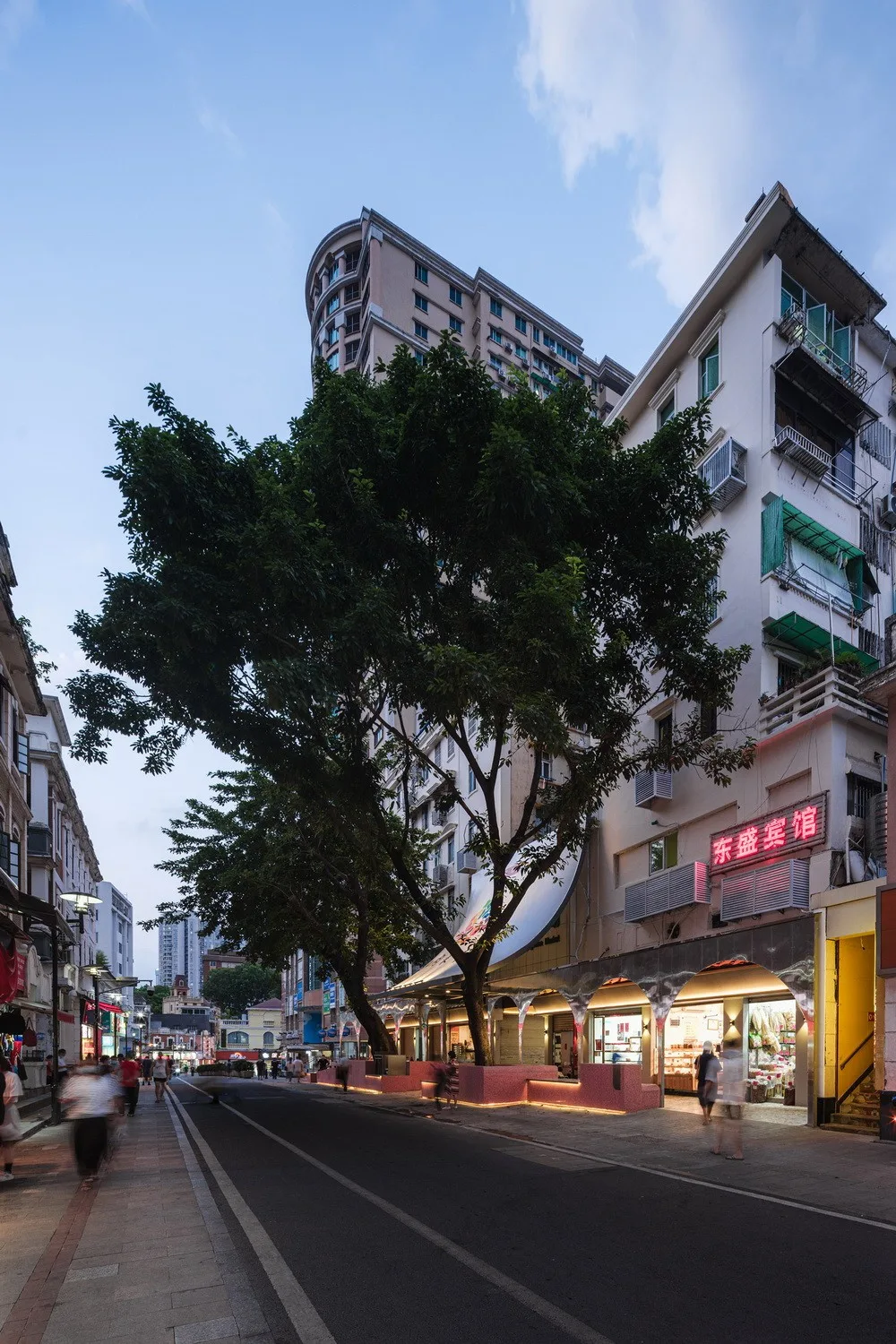
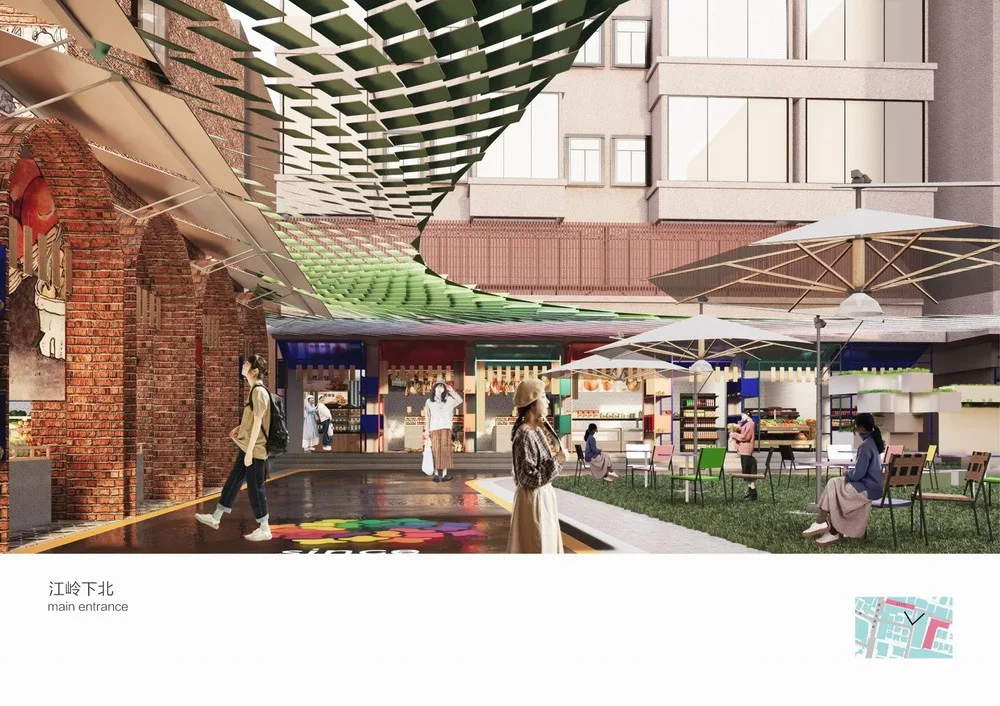
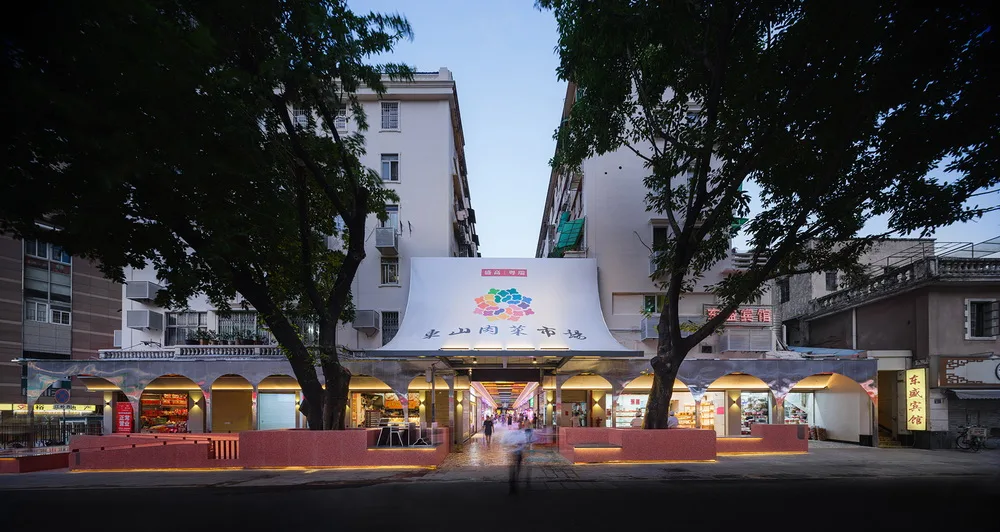
Main entrance of Dongshan Meat and Vegetable Market after renovation
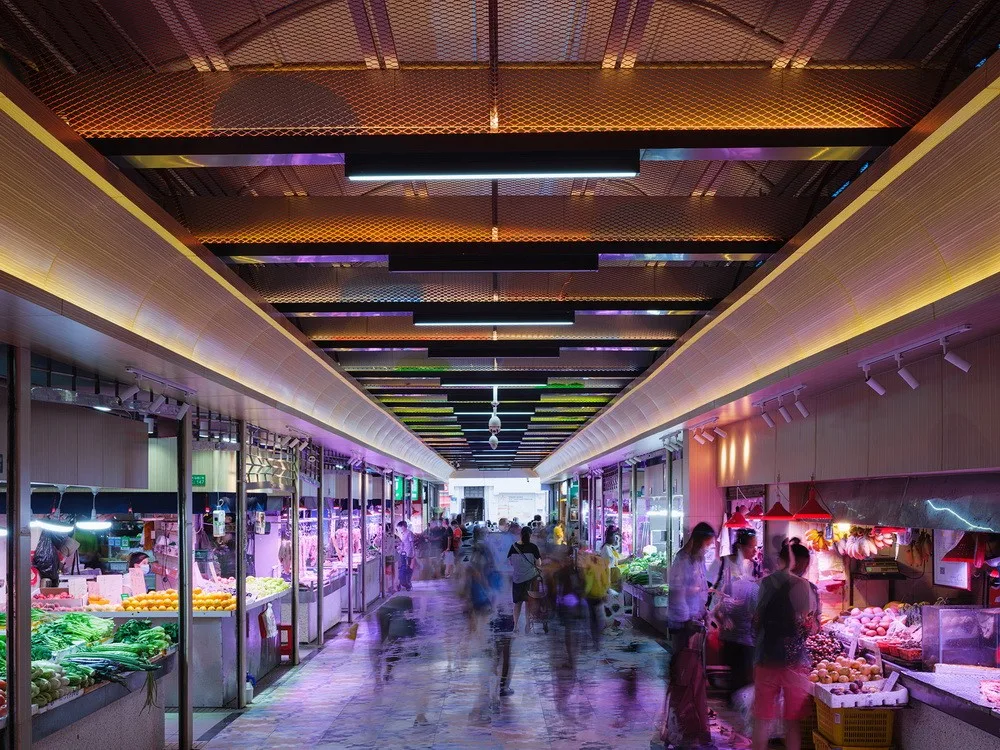
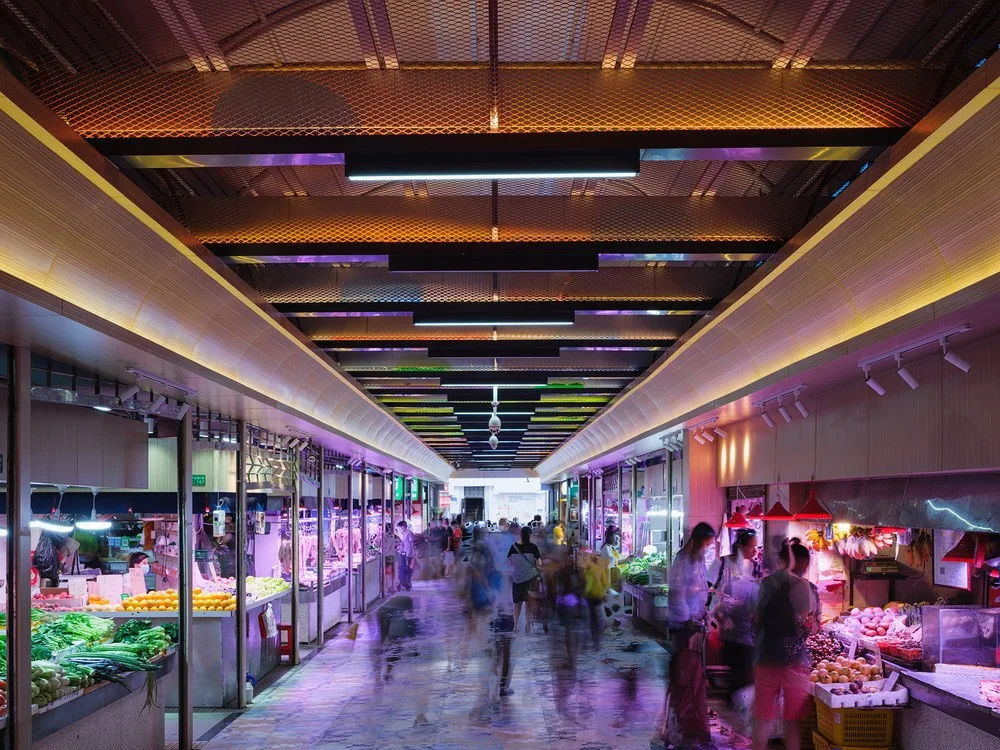
Renovated corridor of Dongshan Meat and Vegetable Market
Rising like a mountain amidst urban bustle
Outdoor Renovation Strategy: Arcades
The Dongshan area, now the Xinhepu Historical and Cultural District, boasts over two millennia of history. Named during the Ming Dynasty and developed in the 1920s-30s by overseas Chinese, it evolved from a quiet district into a vibrant economic and commercial hub. It holds many historic relics from political and cultural figures, marking it as a key cultural landmark in Guangzhou.
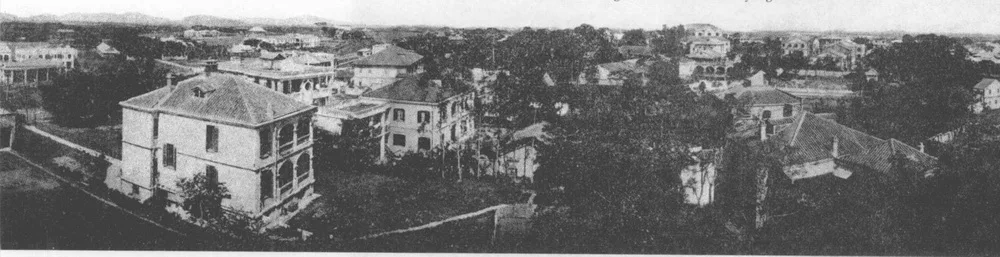
Panoramic view of Dongshan Mountain, 1923
Time flows and prosperity endures. Guigang Avenue, near the market, has seen vibrant commerce since the mid-20th century. The traditional arcade buildings lining the street are key spatial features. The original vegetable market emerged organically between residential buildings, serving local residents and preserving a vital daily life atmosphere.
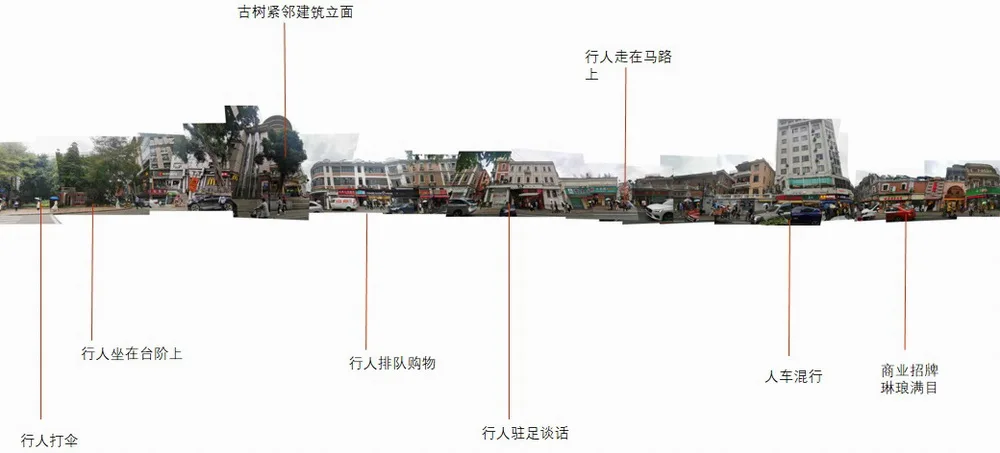
Observing activity on Guigang Avenue
The rich tapestry of red revolutionary culture, overseas Chinese heritage, and urban life along Guigang Avenue form the design’s foundation. Balancing these cultural layers while improving basic infrastructure and reshaping cultural identity was paramount.
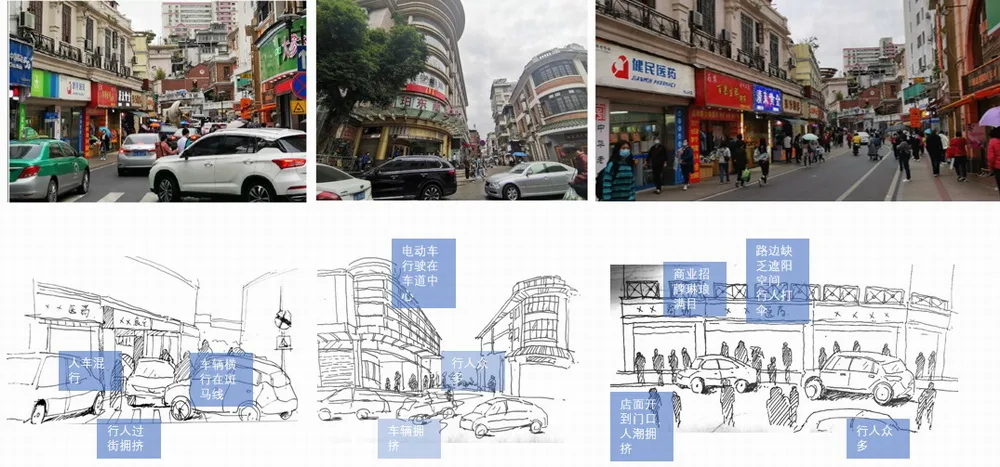
A lively commercial atmosphere
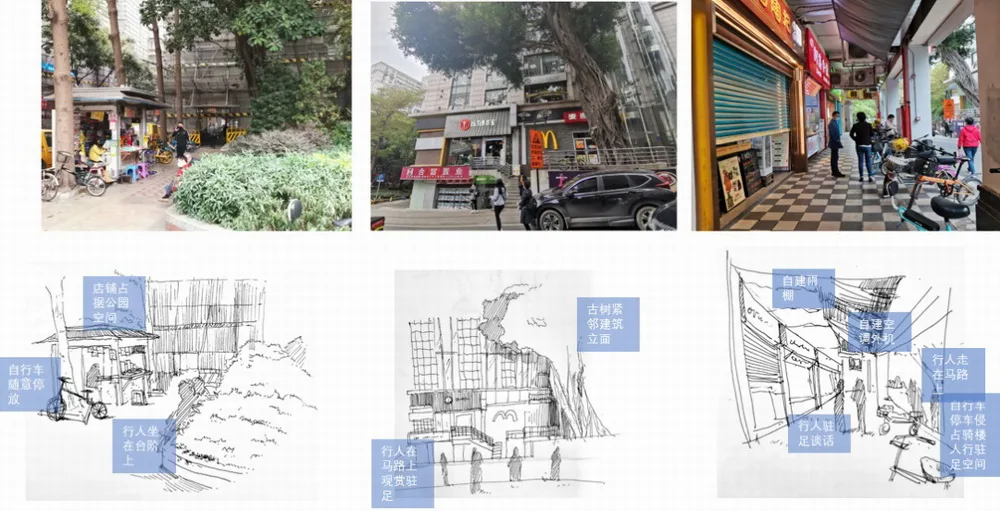
Crowded public spaces
Before renovation, the market was chaotic and cramped, failing to meet expectations for red culture, overseas Chinese heritage, or modern living standards. Visitors hesitated to linger, and shopping experiences were subpar due to cramped entrances, mixed traffic flows, dim and damp corridors, disorganized signage, and haphazard electrical installations. This called for urgent spatial quality improvements.
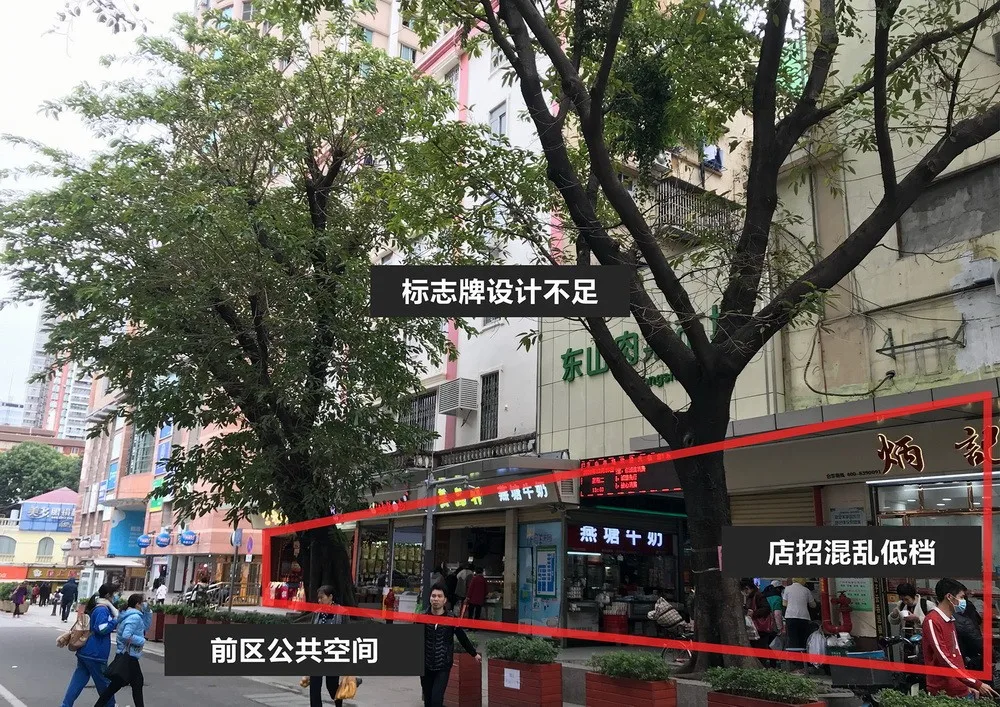
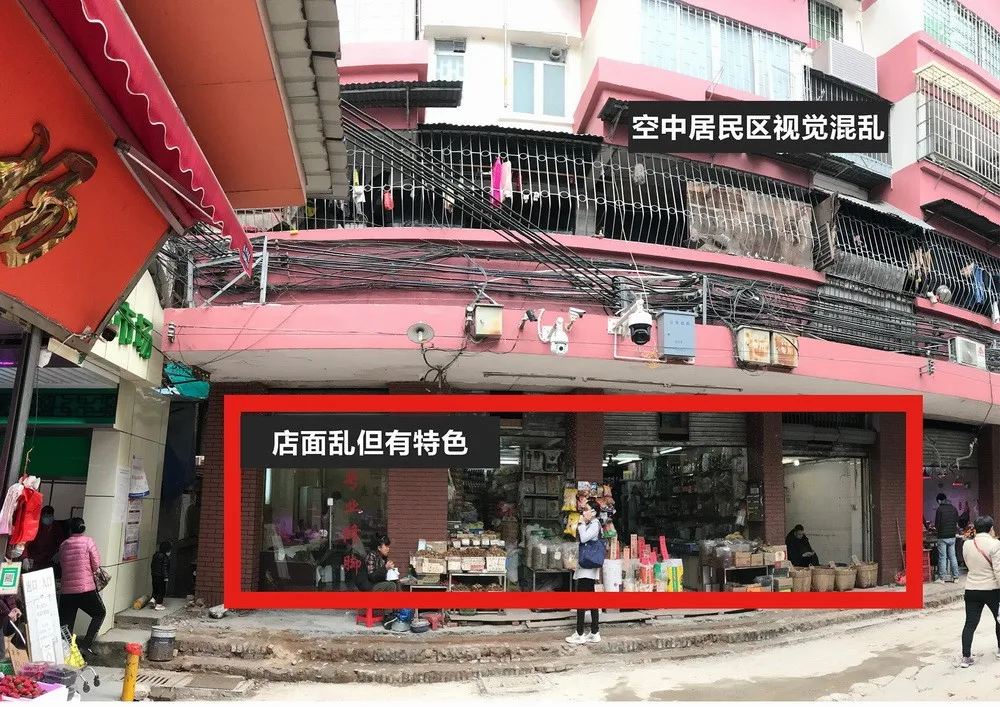
△ Current challenges
The owners also requested a rapid renovation without closing the market, limiting construction to nighttime hours. Hence, prefabrication and rapid installation methods were prioritized.
Design Strategy: Creating Vibrant Public Spaces
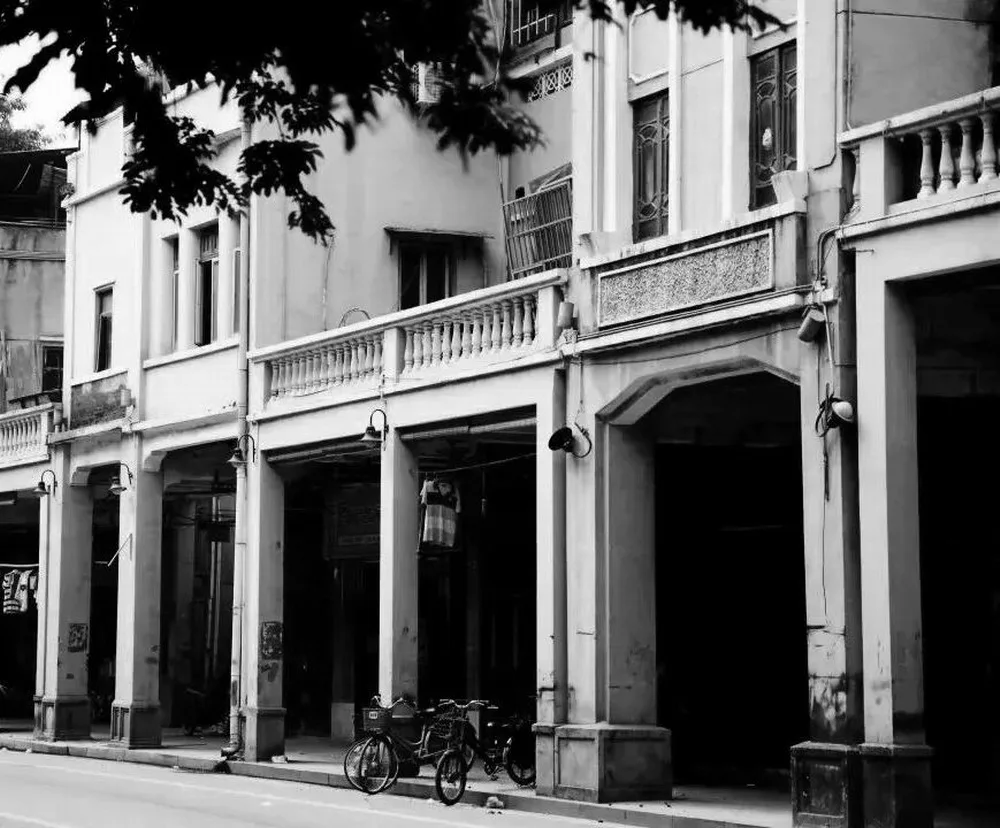
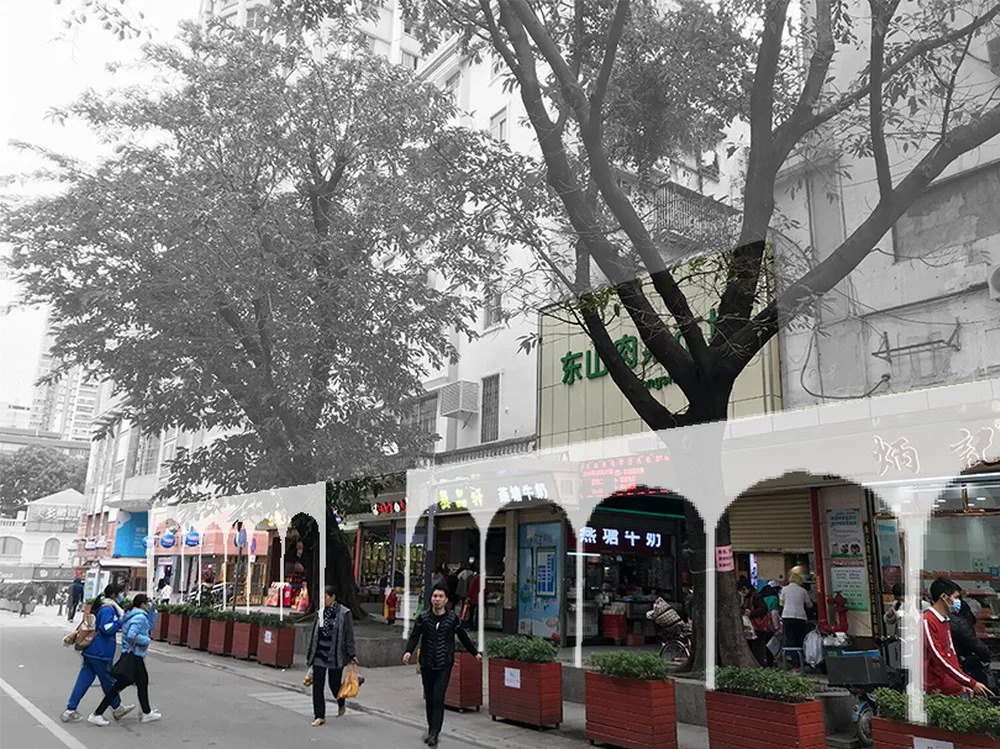
△ Arcade facade design analysis
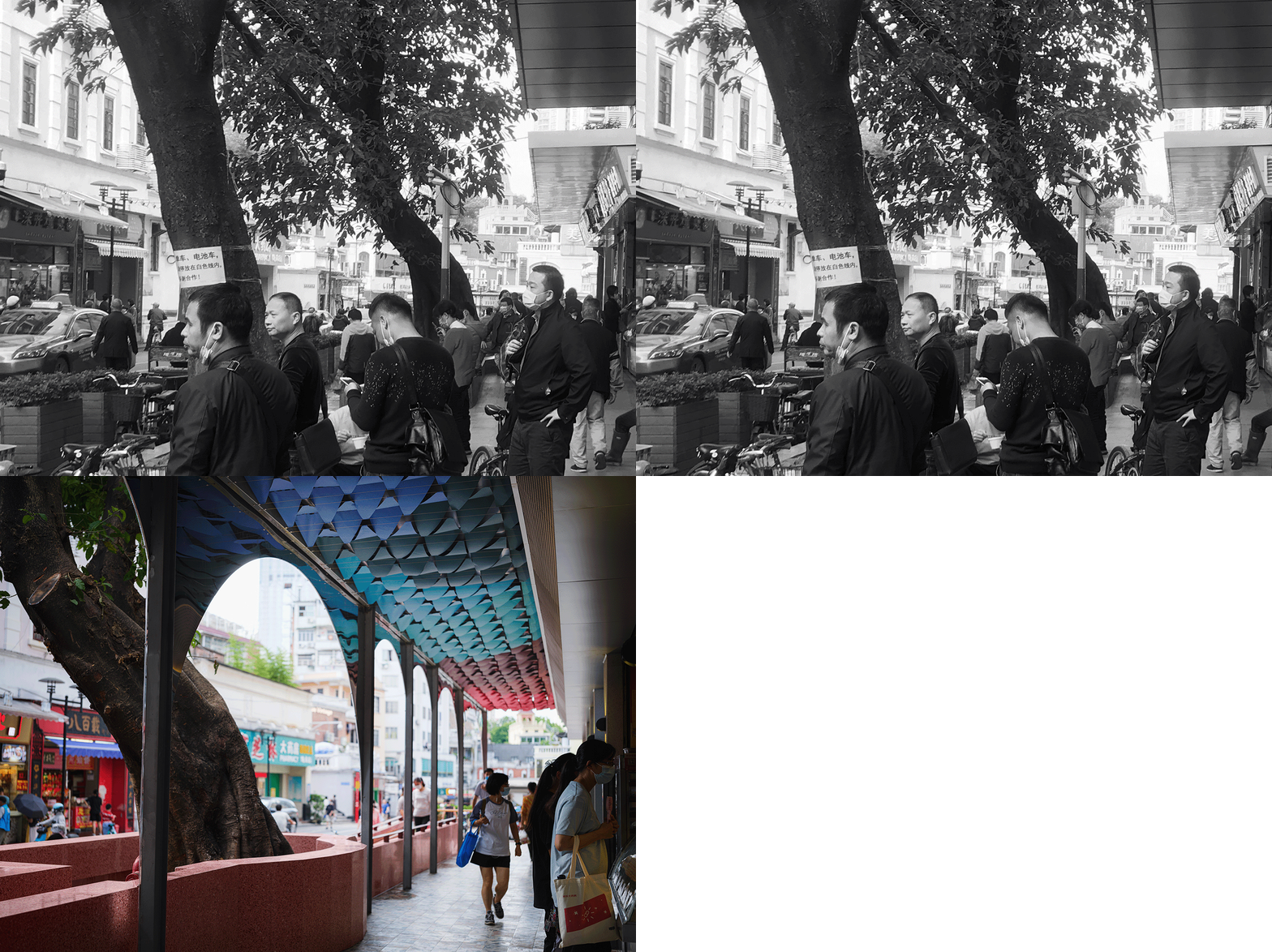
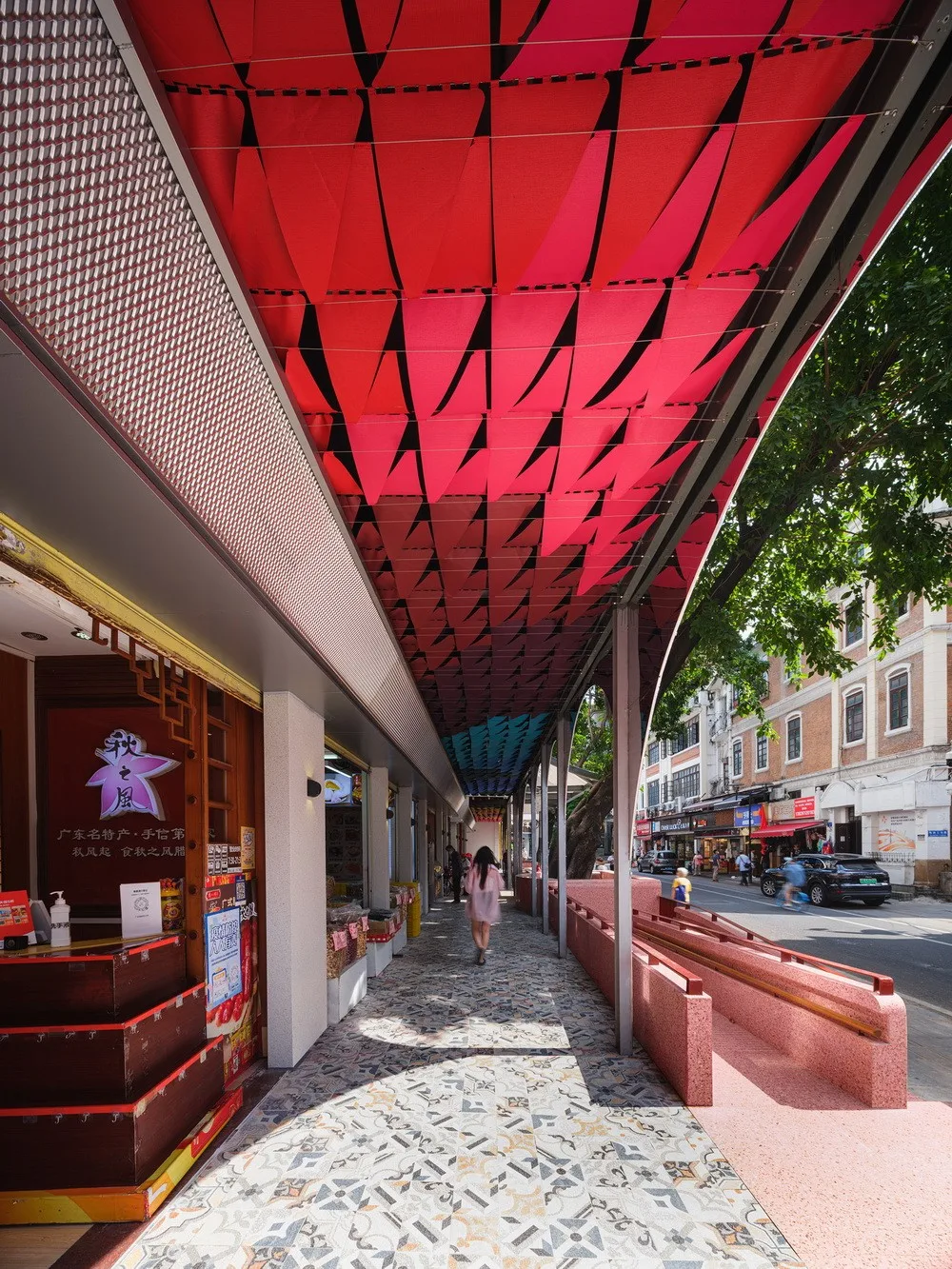
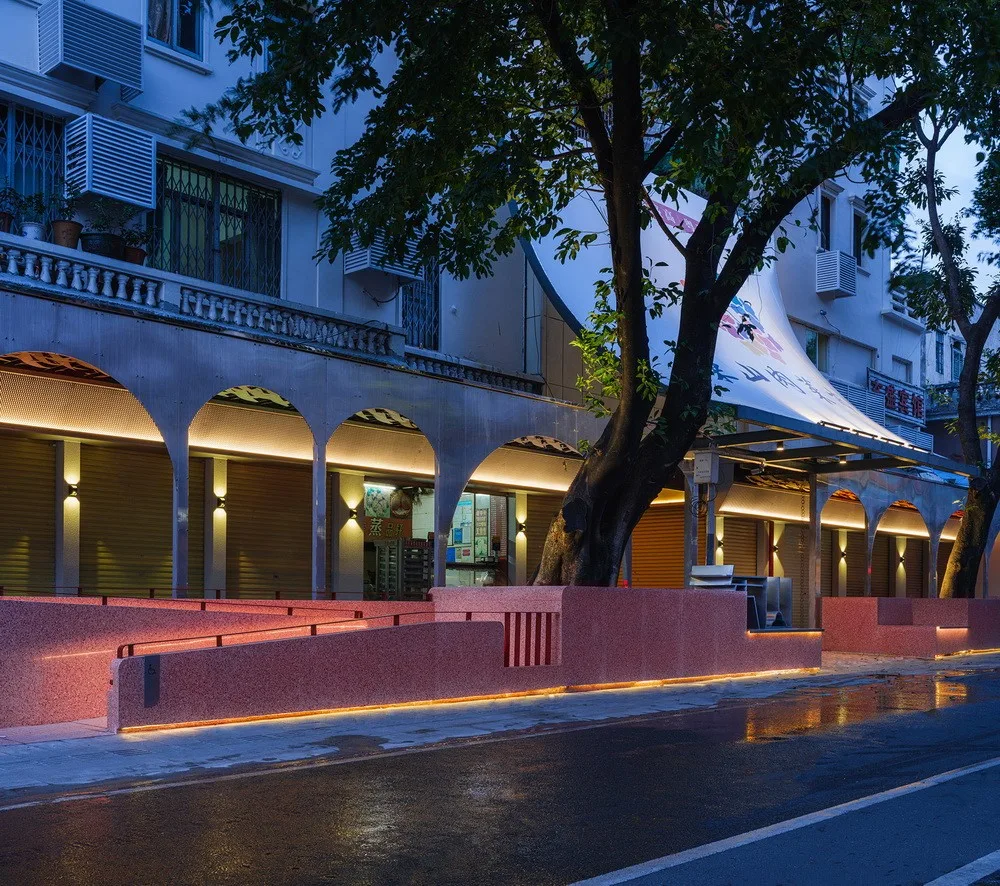
Guangzhou’s signature arcade style features recessed ground floors creating shaded pedestrian spaces—a classic Lingnan architectural form well-suited to the hot climate. The design reinstated arcade spaces along the street facade to enhance the building’s image and provide sheltered, social zones for respite. These arcade spaces enrich the spatial experience.
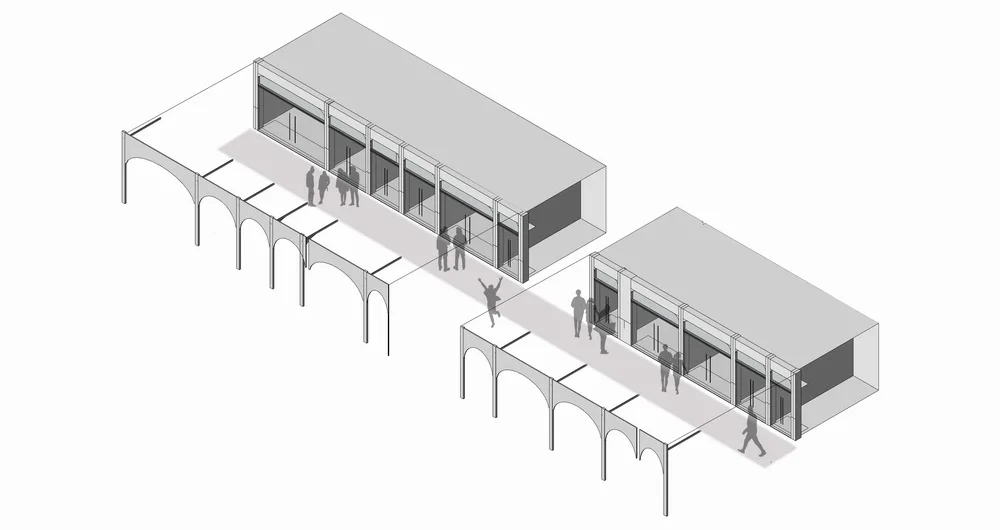
△ Axonometric view of arcade facade
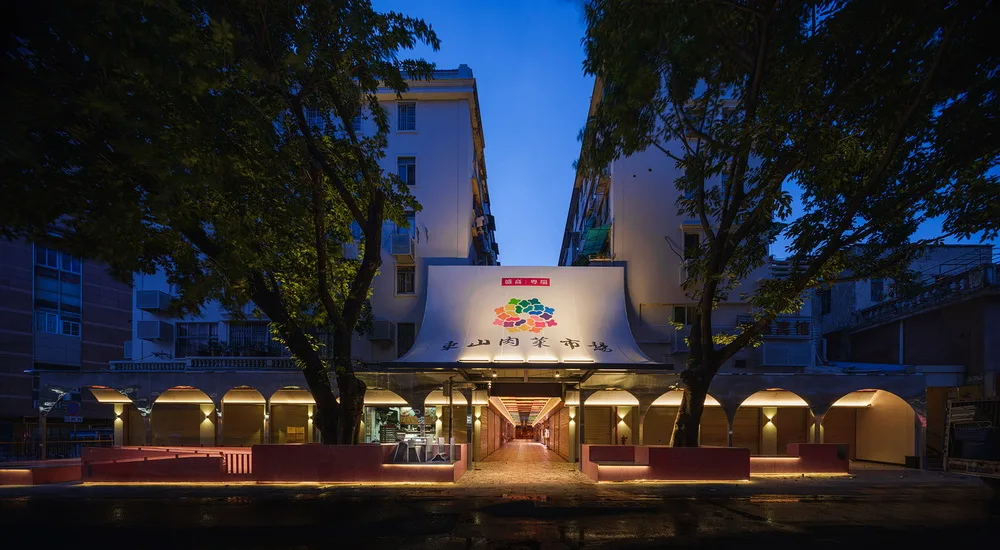
A striking canopy was added at the main entrance, inspired by traditional Guangzhou architecture with sloping roofs and wide eaves to create a strong landmark. The lightweight membrane structure complements Guangzhou’s climate. The entrance was reorganized by removing illegal structures and enlarging the space to form an inviting node. Public art installations were incorporated to meet traffic needs and enhance recreational opportunities. Additionally, community art co-creation spaces were reserved to encourage future business participation.
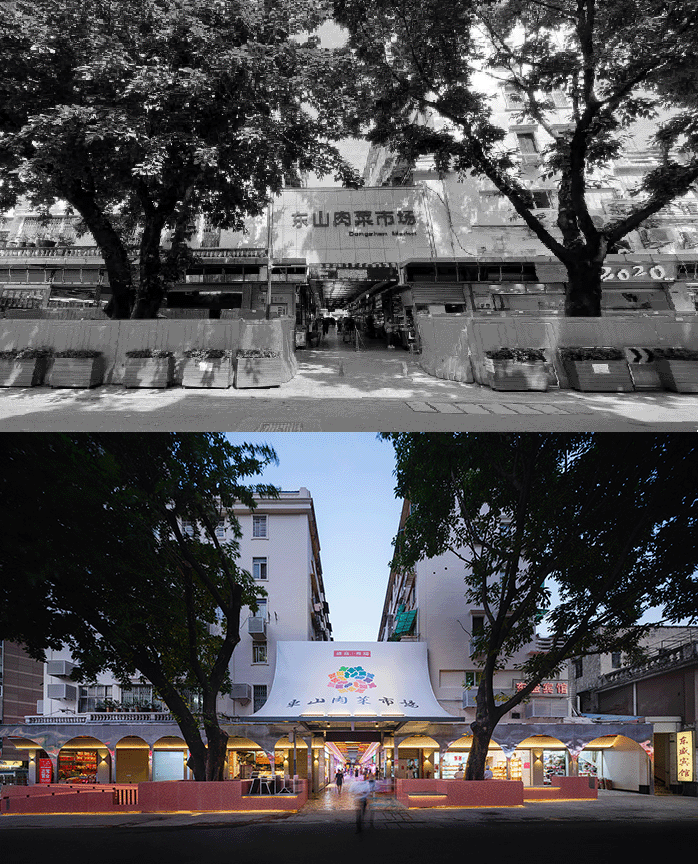
A before-and-after animation of the street renovation
Street-facing facade after renovation
This multi-functional entrance space can host commercial and artistic events, attracting younger audiences and enriching the surrounding community’s offerings. The entrance features colorful terrazzo mixed with glazed glass, echoing traditional Cantonese colored glass windows.
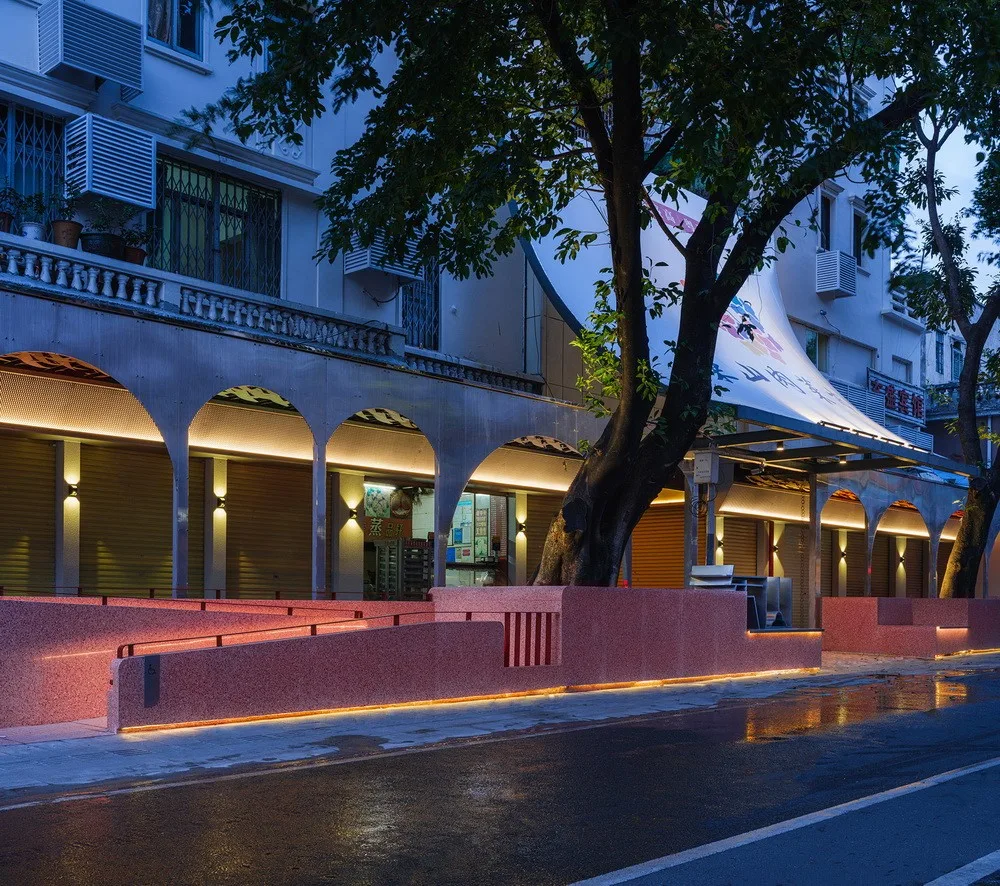
△ Arcade
Indoor Renovation Strategy: The Cold Lane
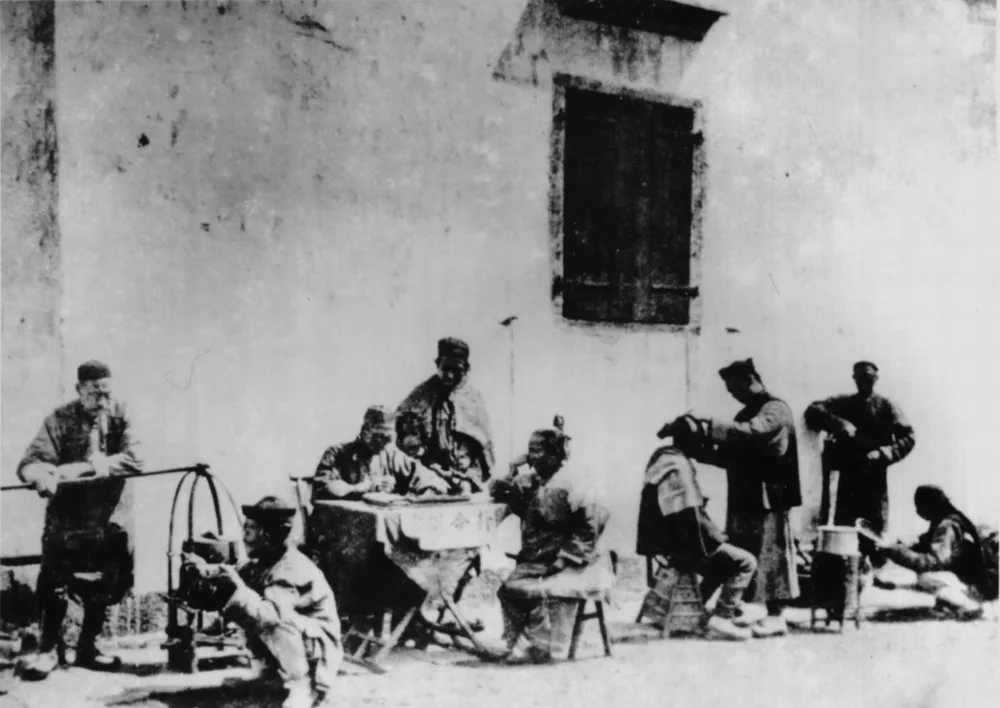
Late Qing Dynasty street market in Guangzhou
Vegetable markets should never be equated with dirtiness, disorder, or low quality.
Essentially, vegetable markets are gathering places where agricultural and sideline products are bought and sold—an activity dating back to primitive society. The Zhou Dynasty’s Book of Rites described organized market layouts, illustrating early urban planning. However, in modern China, vegetable markets were often unplanned, spontaneously developed adjacent to residential areas. Not until the 1980s, amid economic reforms, were vegetable markets formally included in urban construction plans.
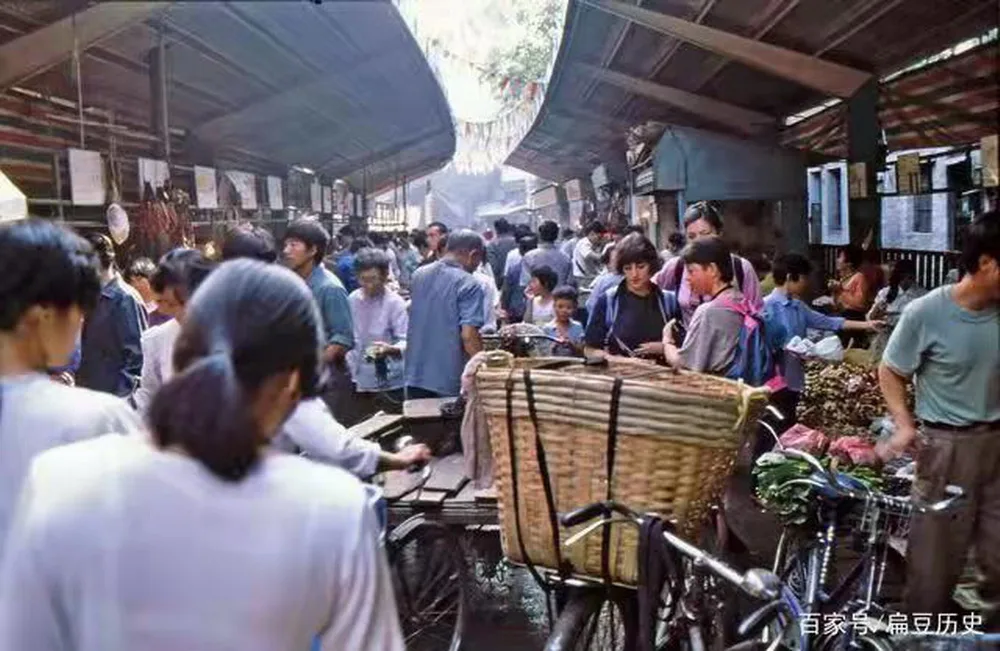
The original Guangzhou Dongshan Meat and Vegetable Market
Compared to supermarkets, vegetable markets offer fresher, more diverse, and affordable local ingredients, while reflecting regional culinary cultures. They also function as crucial social spaces where residents and vendors form close relationships, fostering a warm community atmosphere. Many market workers are low-income migrant laborers; preserving space for them supports urban functionality and helps prevent gentrification.
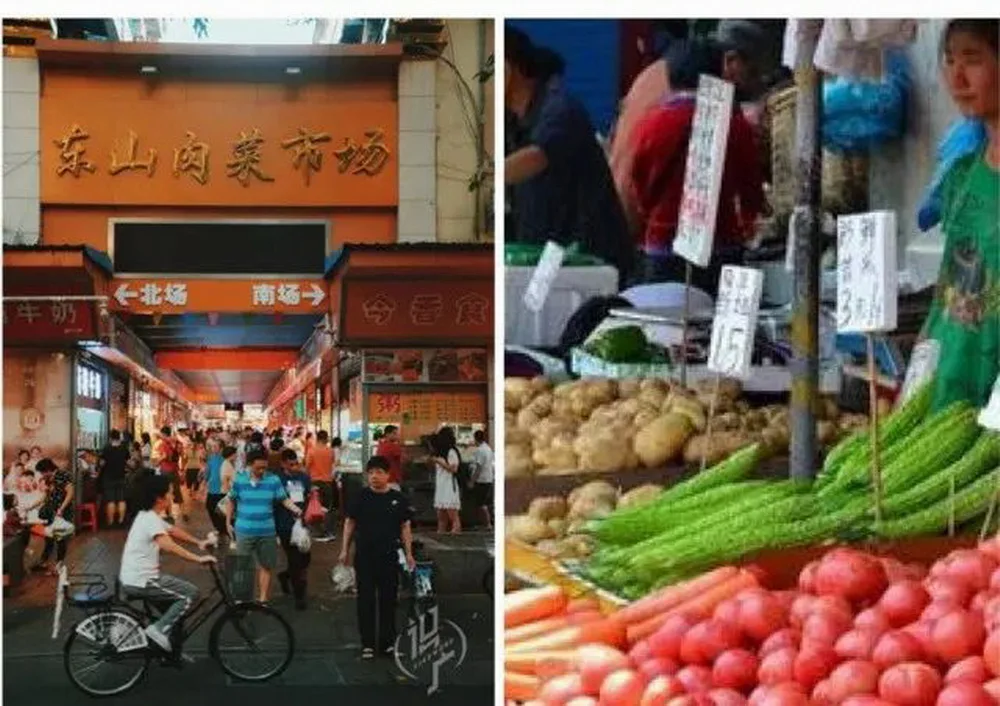
△ Historical photos of Dongshan Meat and Vegetable Market
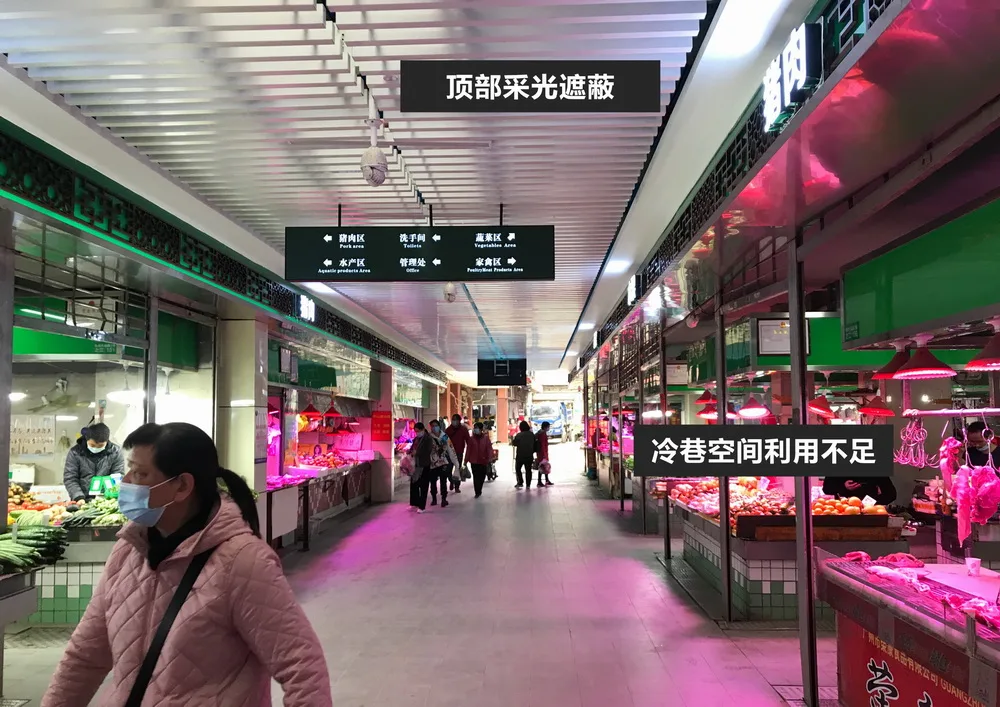
Before internal renovation of Dongshan Meat and Vegetable Market
The design team reorganized the market’s original circulation, introducing the Diaolou Cold Lane—a classic Guangzhou garden spatial form. By studying this traditional space, the team improved lighting atop the corridor to tame chaotic interiors and restructured signage to create a more comfortable environment.
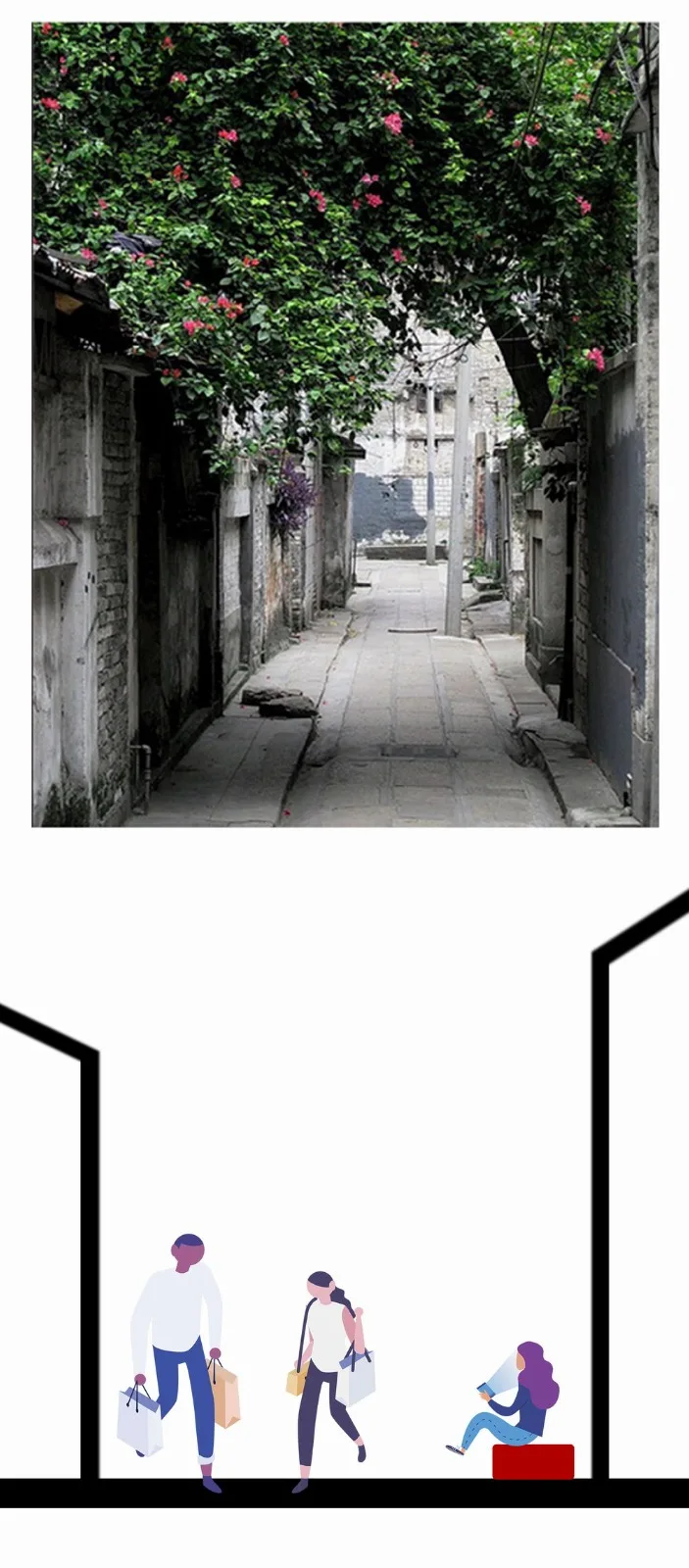
Cold Lane interface design analysis
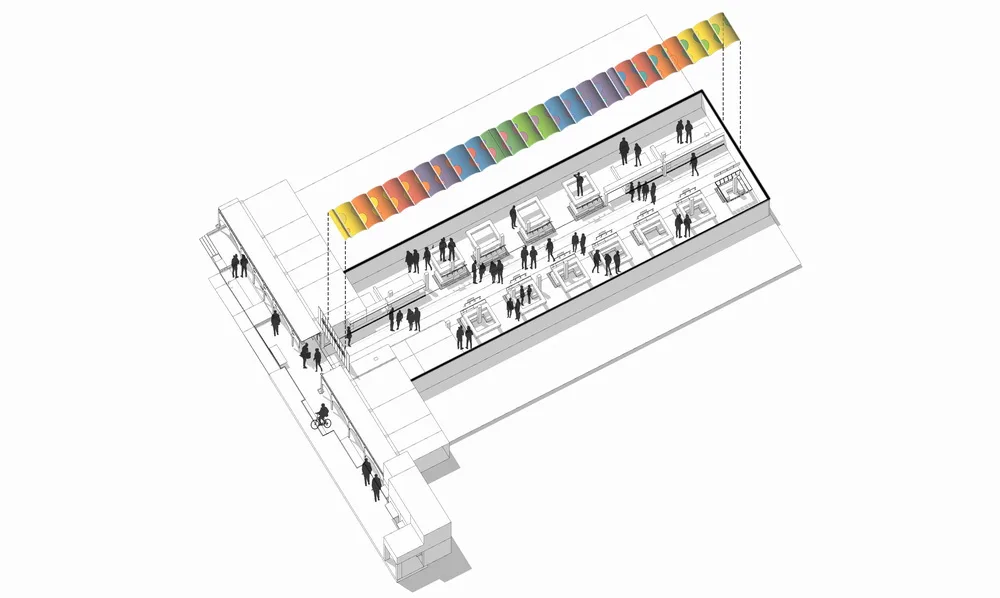
△ Axonometric diagram of the renovated cold alley
The value of traditional spatial renewal lies not only in physical transformation but also in restoring the living scenes of everyday essentials—firewood, rice, oil, salt, sauce, vinegar, and tea. Revitalizing historical sites by integrating functional needs with contemporary lifestyles redefines traditional market culture.
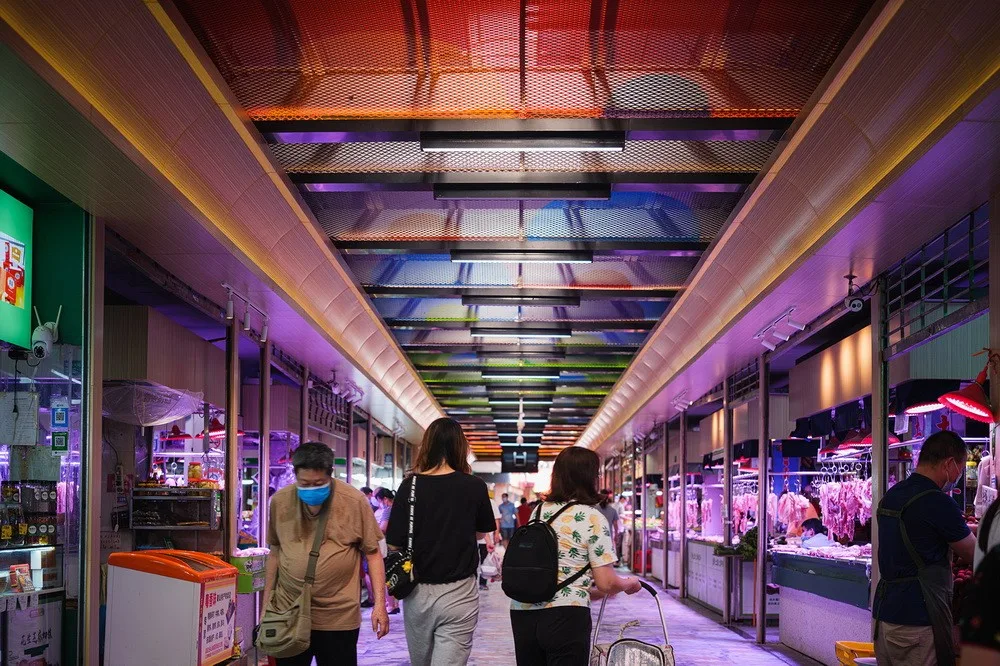
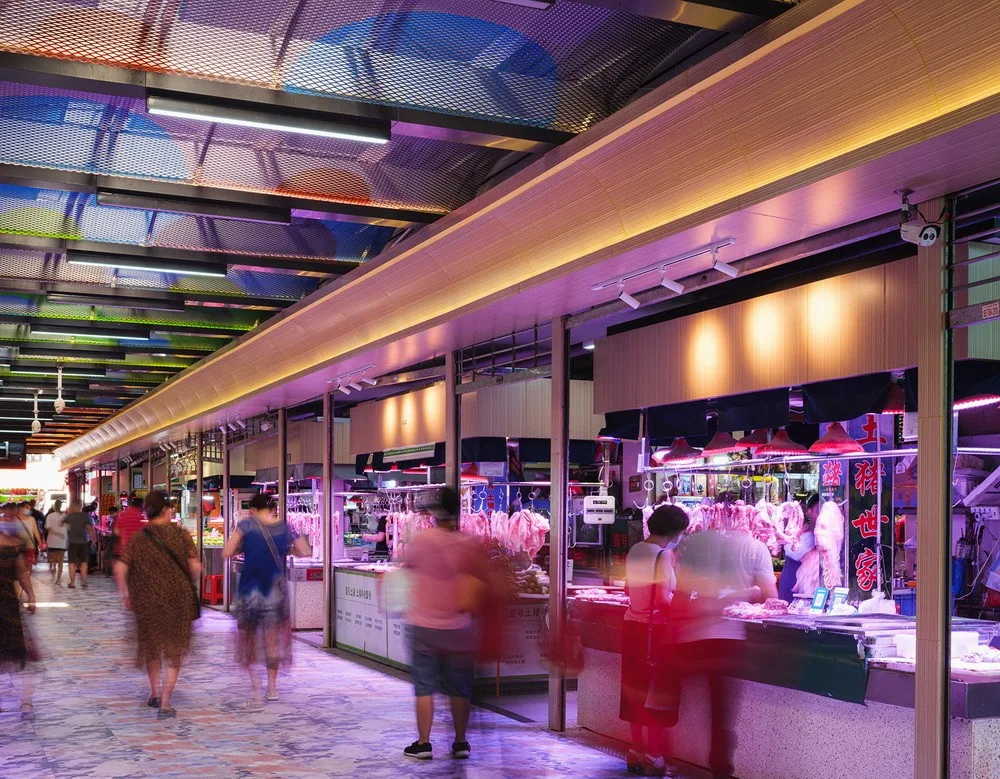
△ Cold Lane
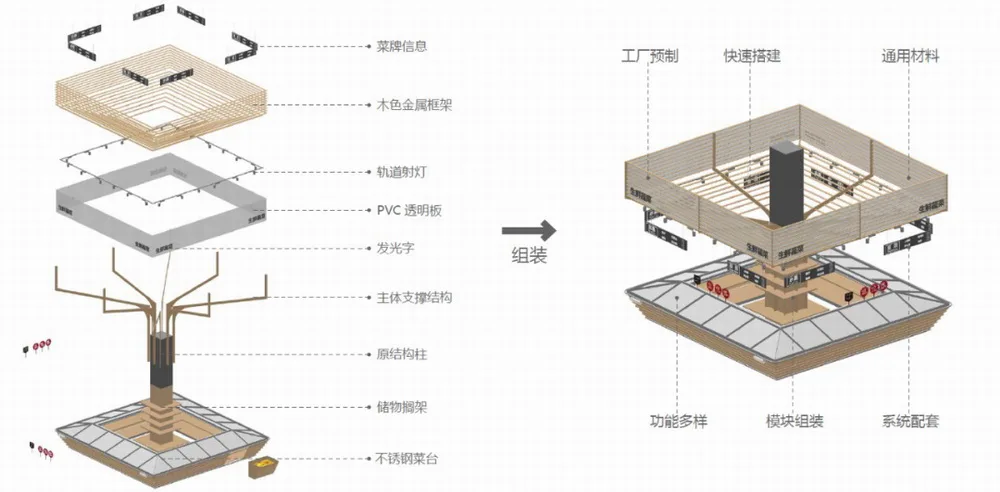
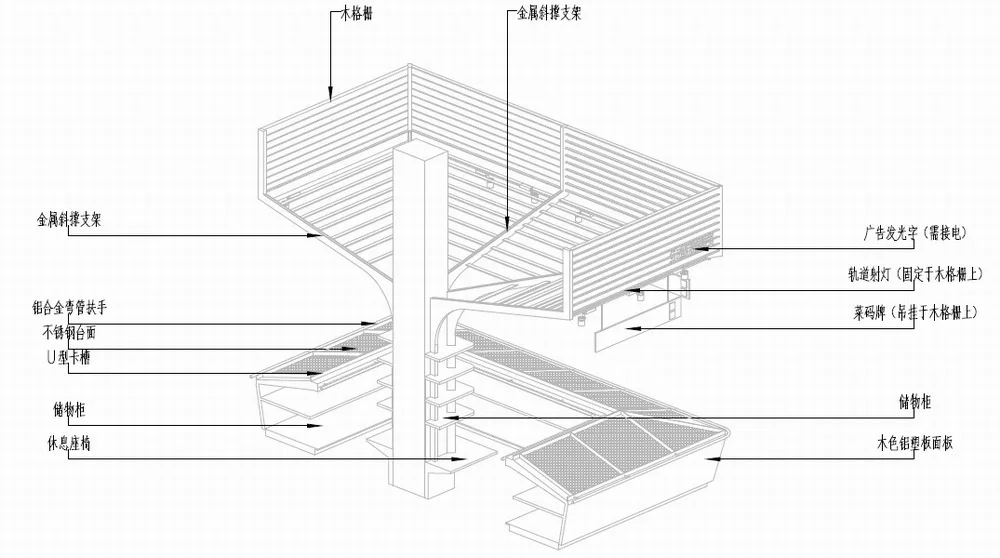
△ Modular booth unit
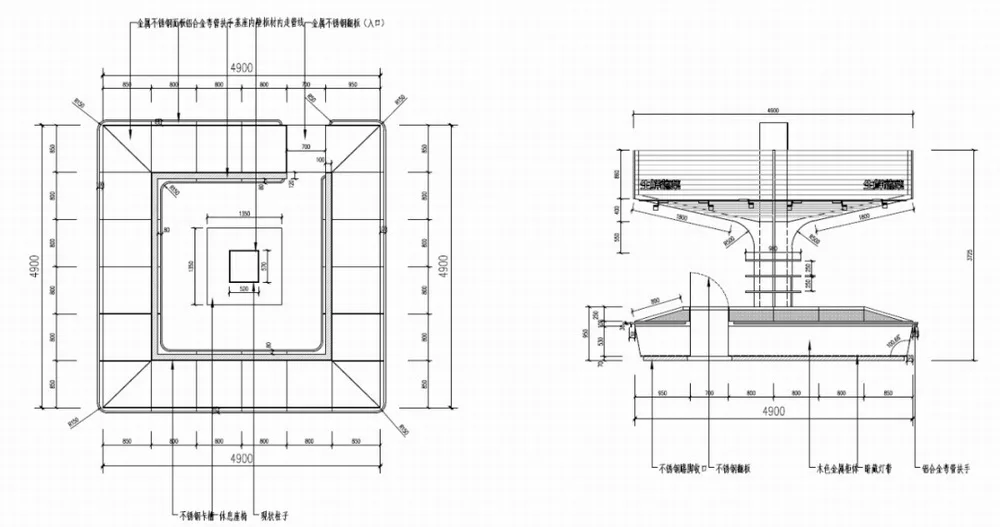
△ Booth facade
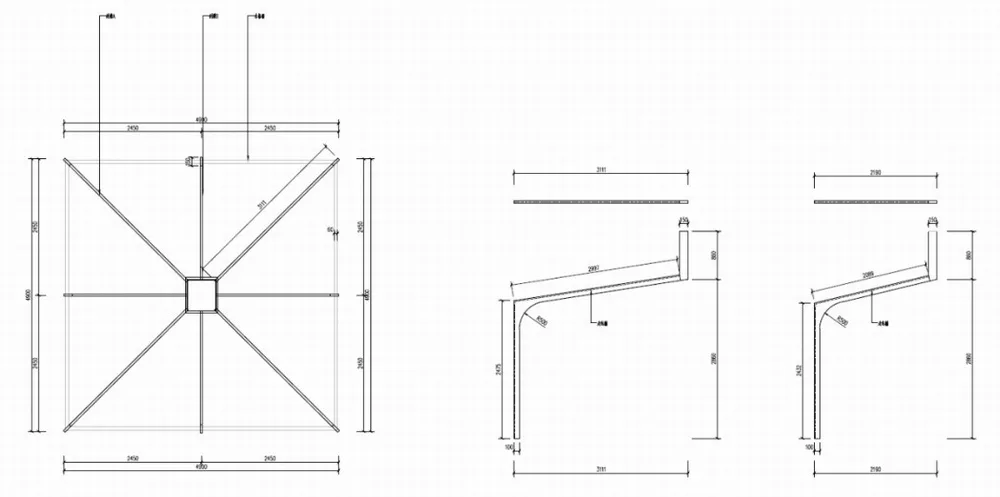
△ Structural diagram of angled support
△ Booth section
Colorful, Poetic Everyday Life
Construction and Color
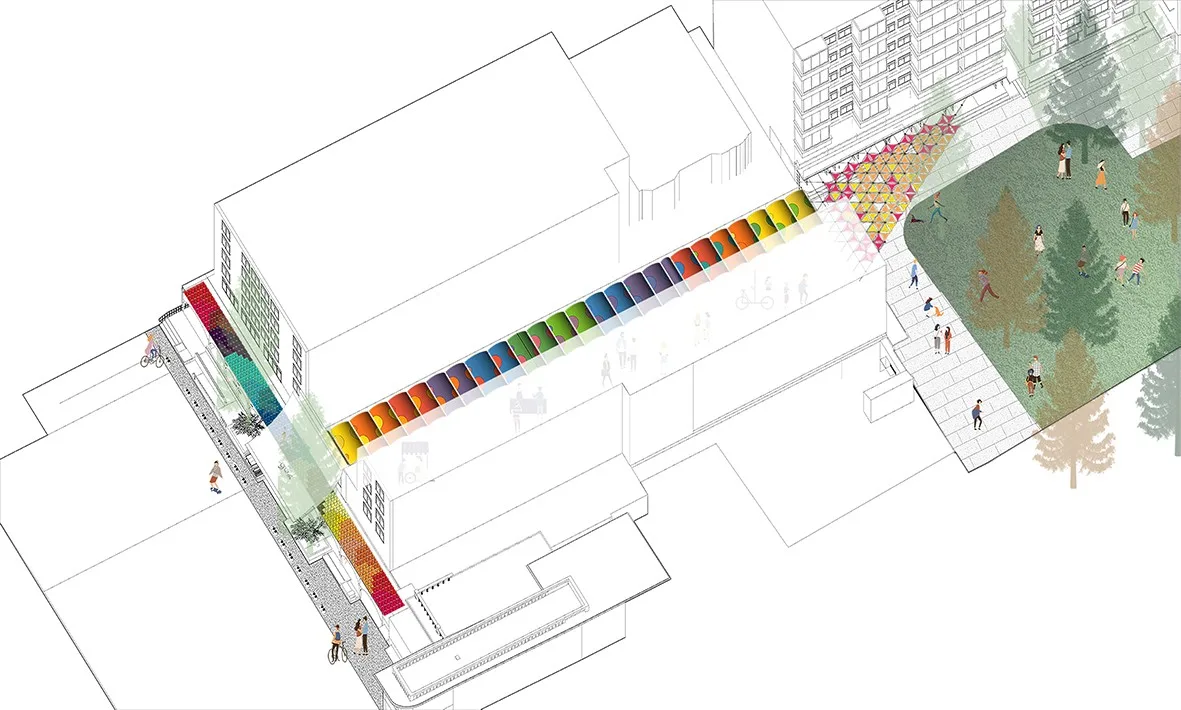
△ Color structure diagram
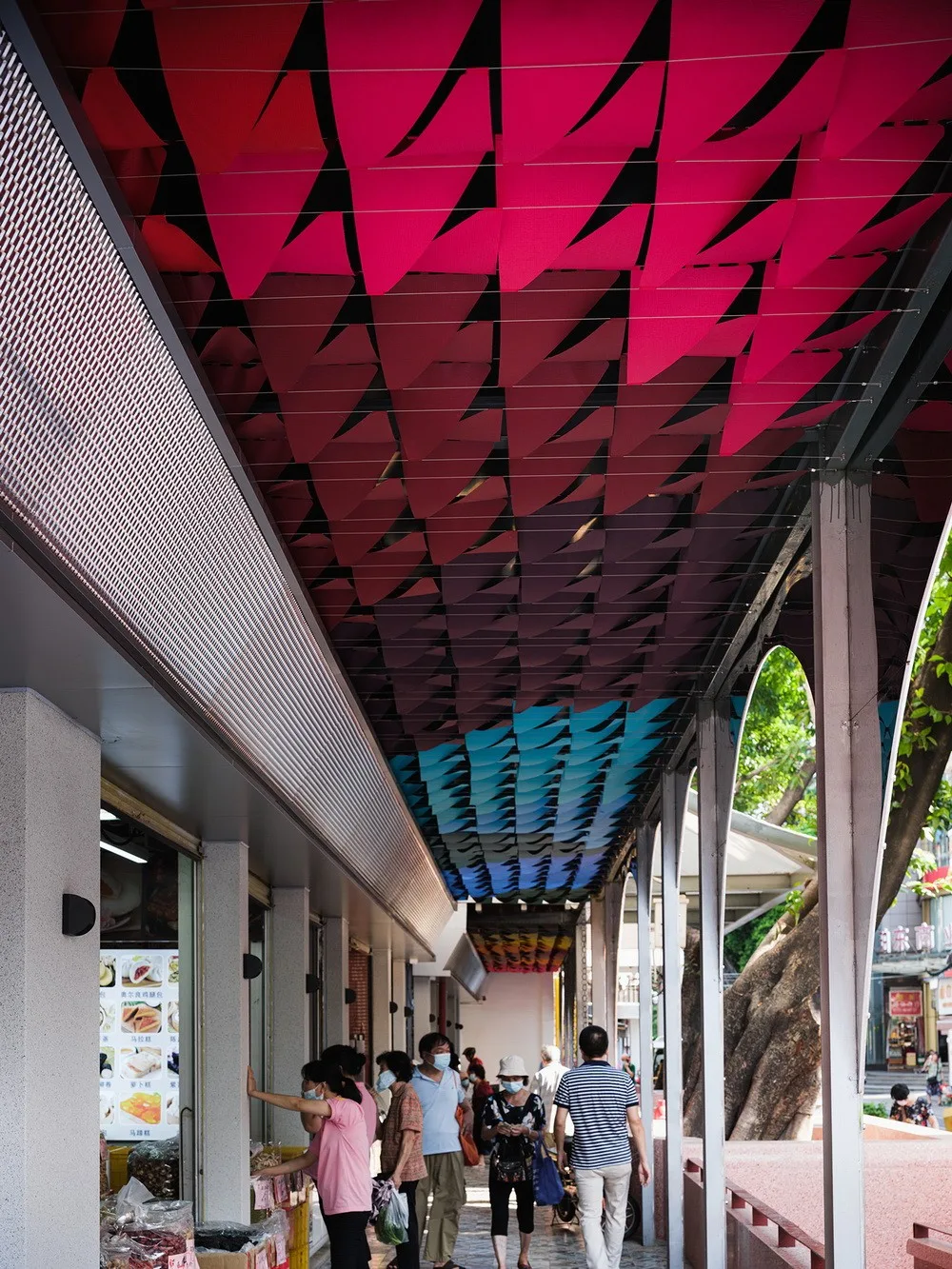
This renovation embraces a comparative design approach, paying homage to the original rich culture by replacing literal replication with abstract likeness. Visually pleasing and relaxed, the design offers users a refreshing experience. Along the site’s circulation paths, a colorful, dynamic “color corridor” flows. Colorful shading systems were installed at key nodes—building entrances, courtyard entries, and corridors. Bold use of modern materials like membrane structures and fish scale nets creates fashionable, simple, and visually impactful geometric forms within traditional spaces, bringing poetry to reality.
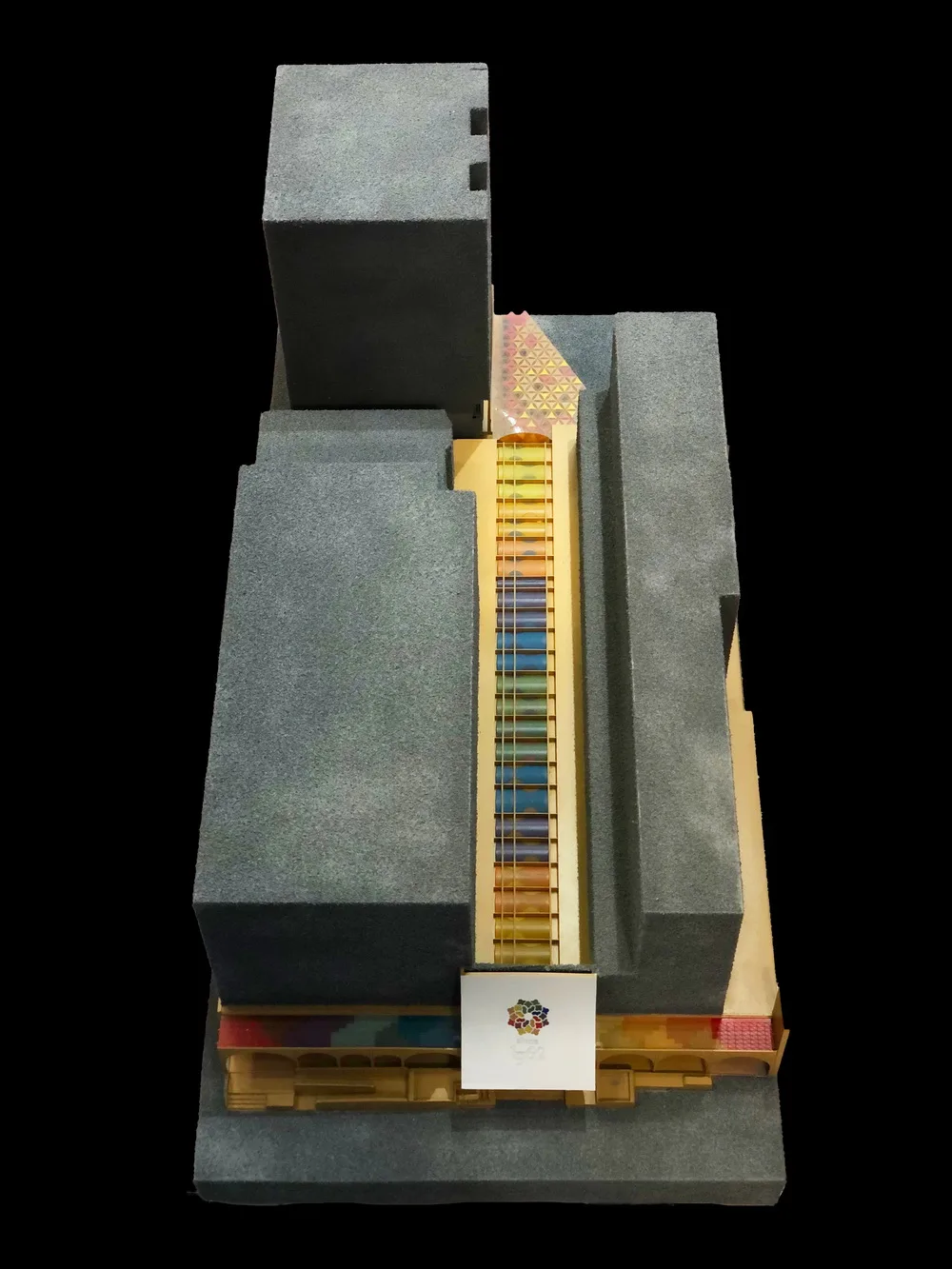
Overall model
The design concept draws inspiration from a kaleidoscope, constructing a new spatial experience by scattering elements and employing lightweight interventions to create a vibrant environment. The interplay of colored light and shadow deconstructs and recombines traditional Guangzhou cultural elements—red bricks, colored glass windows—into abstract decorative patterns applied to roofs, facades, entrances, and corridors. This approach also leaves room for future re-creation, inviting users to co-create artistic facades that reflect red culture, history, fashion, and everyday life, evoking a kaleidoscope effect along Guigang Avenue.
Daily life itself resembles a kaleidoscope—beautiful, vivid, unpredictable, and ever-changing. This architectural concept aims to awaken local cultural regeneration, break spatial conventions, offer fresh visual experiences to daily users, rekindle memories of traditional architecture, and shape the ritual of everyday life.
Membrane Structure: Colors of Fruits and Vegetables
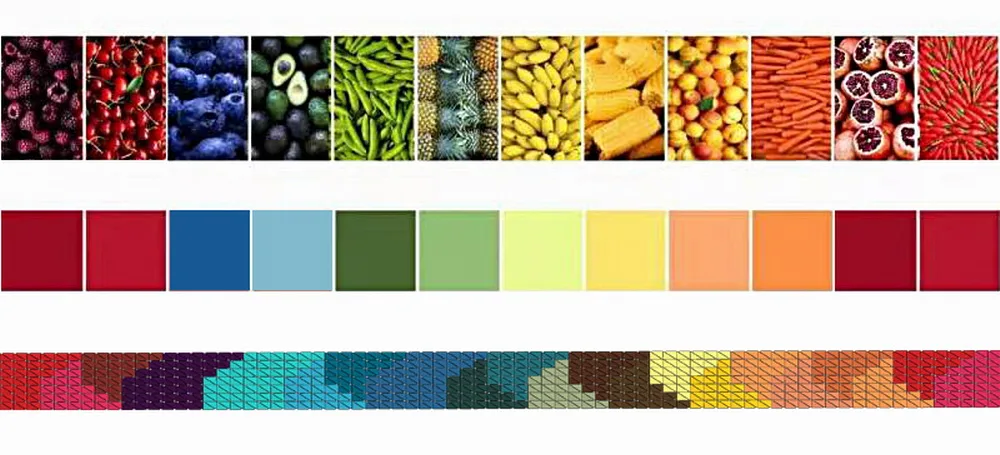
△ Membrane structure inspired by fruits and vegetables
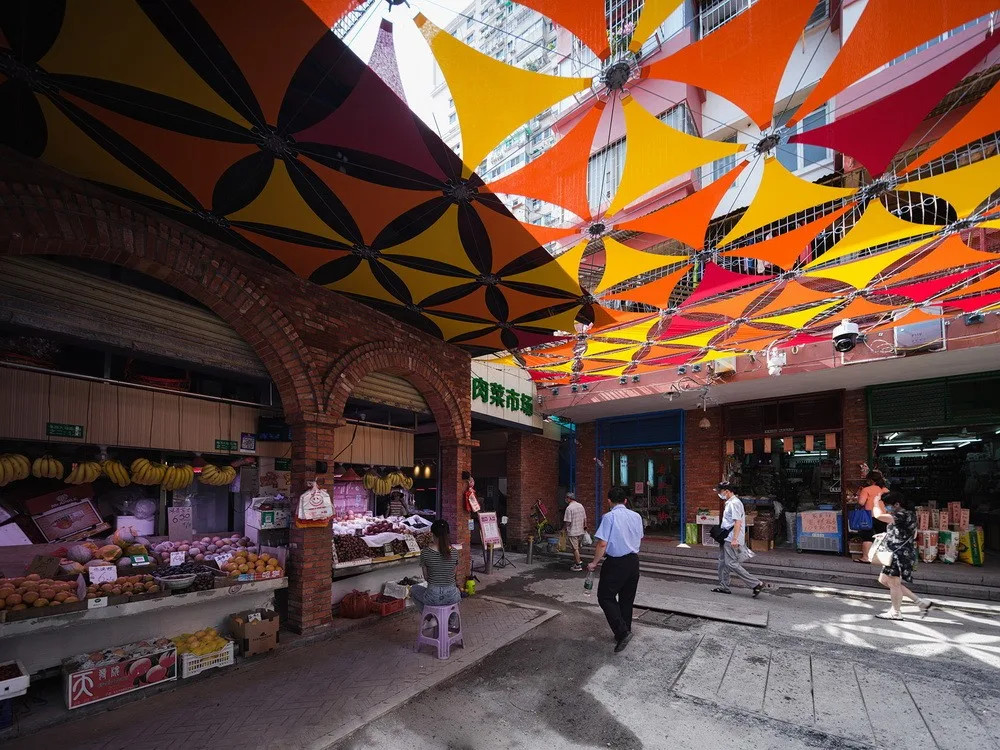
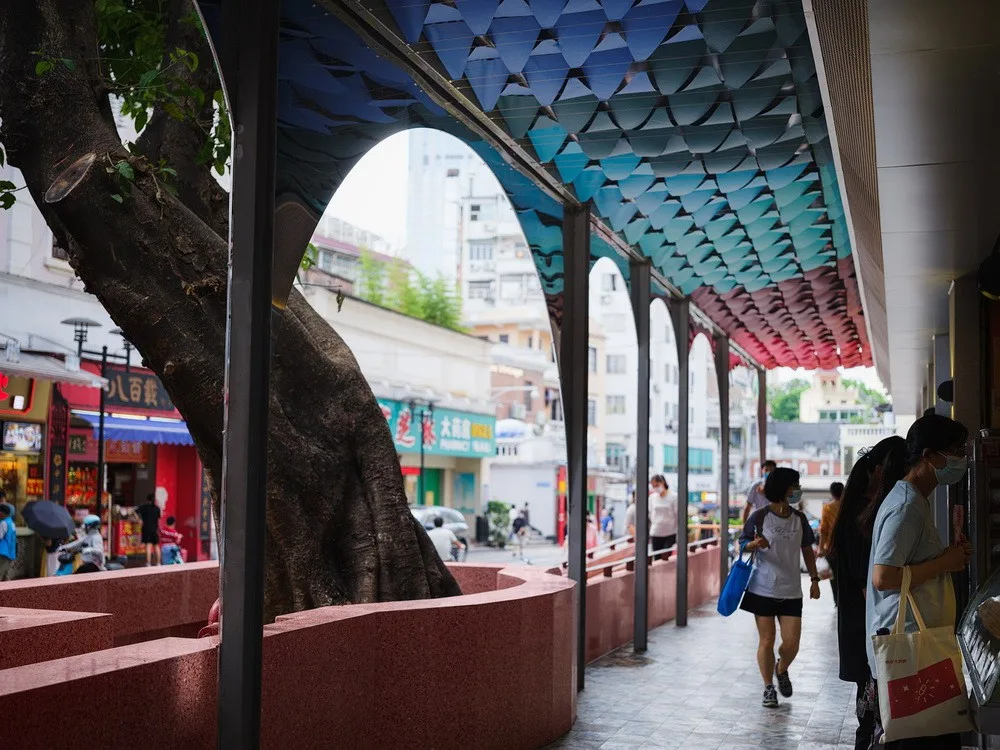
The colored membrane structure beneath the arcade ceiling draws colors from common produce found in the market, instilling vitality in a familiar environment. This lightweight shading system uses a cable structure for an airy feel, aligning with the market’s spatial intentions. The detachable design offers flexibility, and the ceramic tube drainage system honors traditional market atmospheres while symbolizing a forward-looking vision.
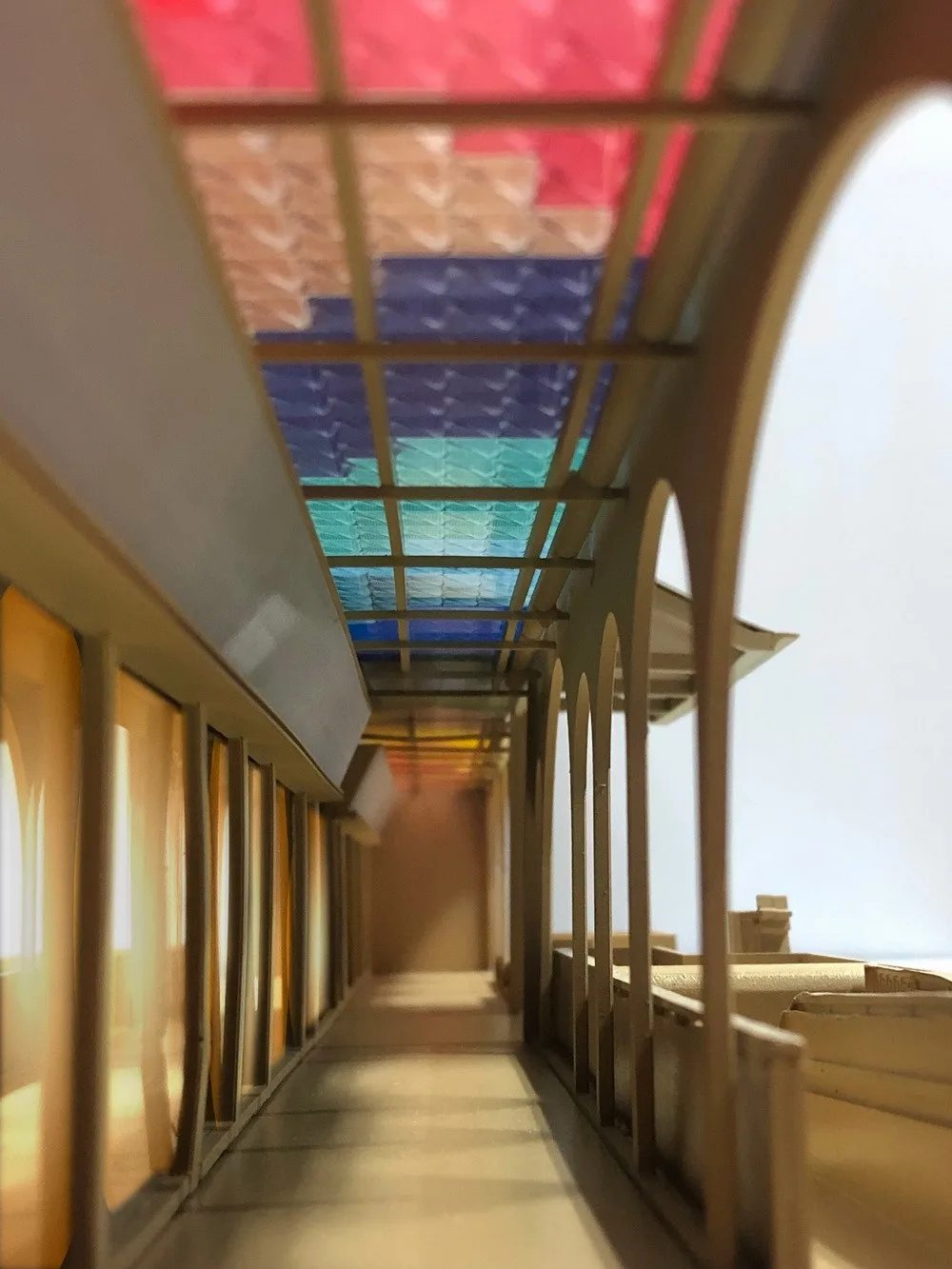
△ Model
△ Membrane structure construction in progress
Colored ceramic pipes serve as a custom drainage system integrated with the membrane structure. Combined with the detachable membrane design, this solution exemplifies ecologically sustainable architectural detailing.
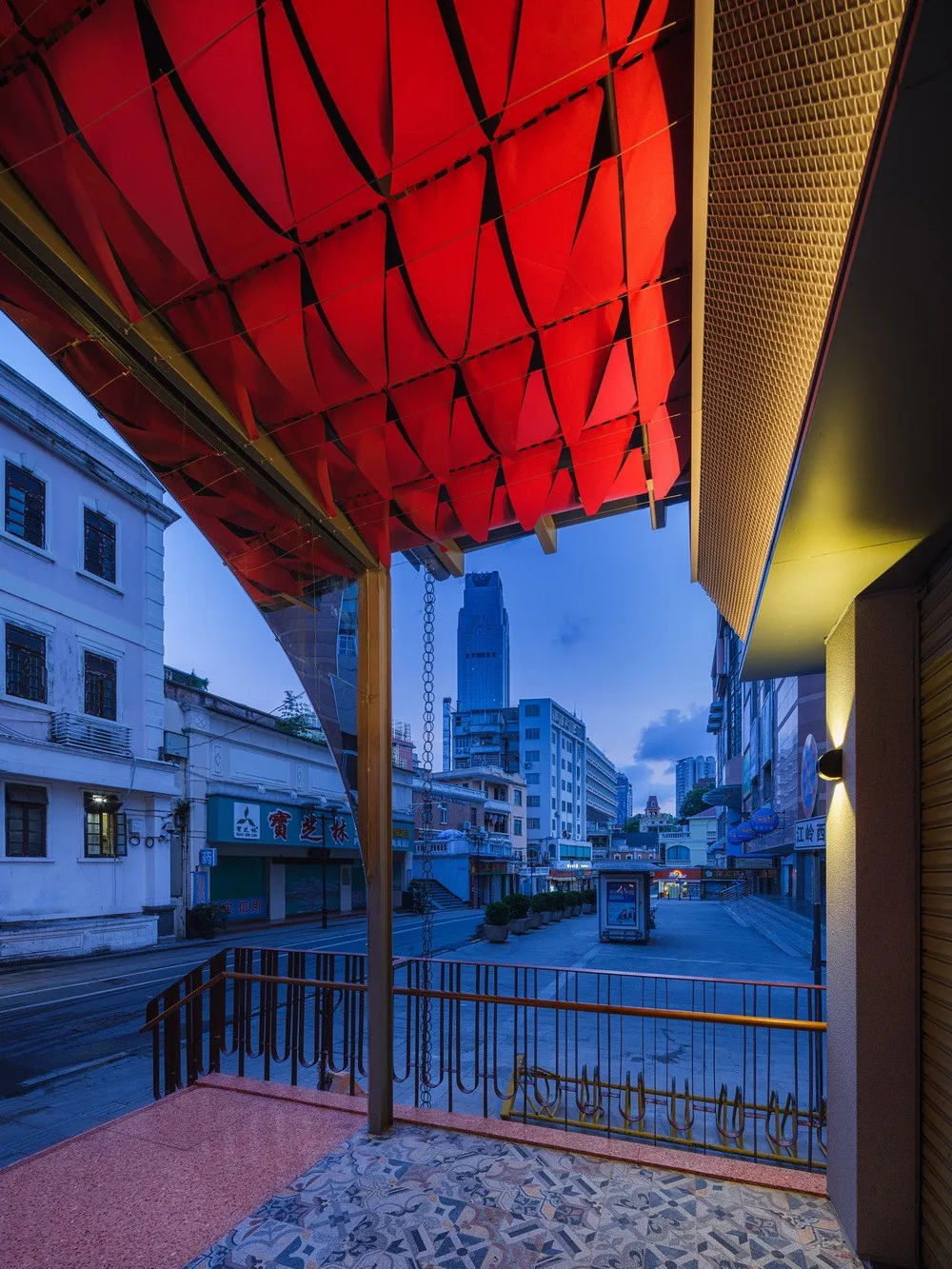
Customized drainage system
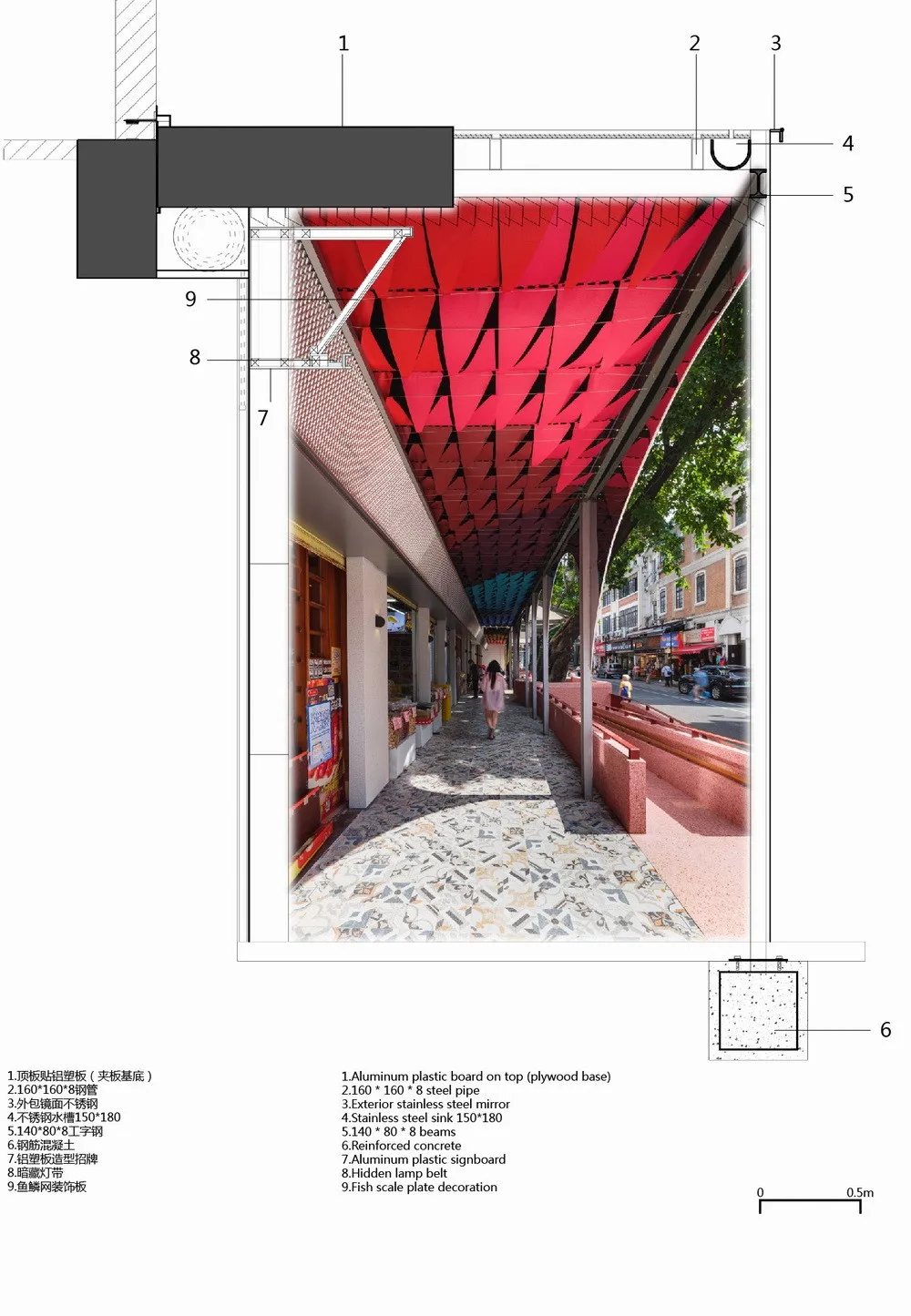
△ Detail nodes
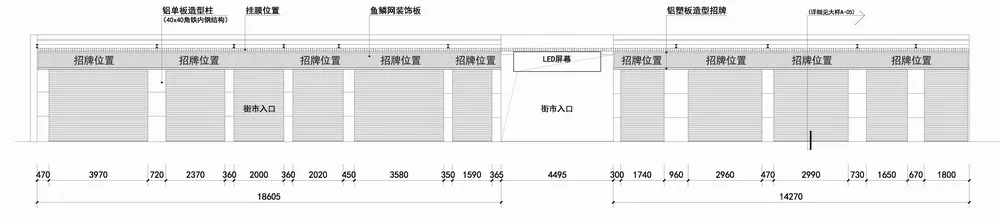
△ Interior elevation of arcade
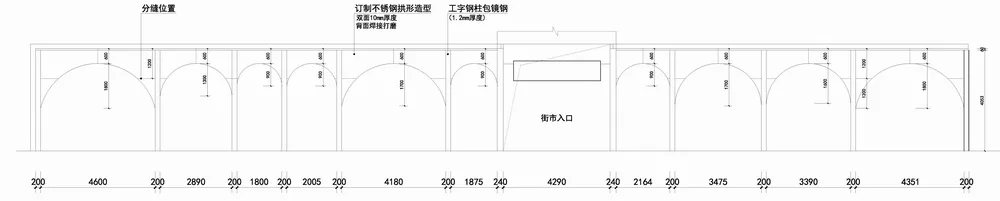
△ Arcade facade view
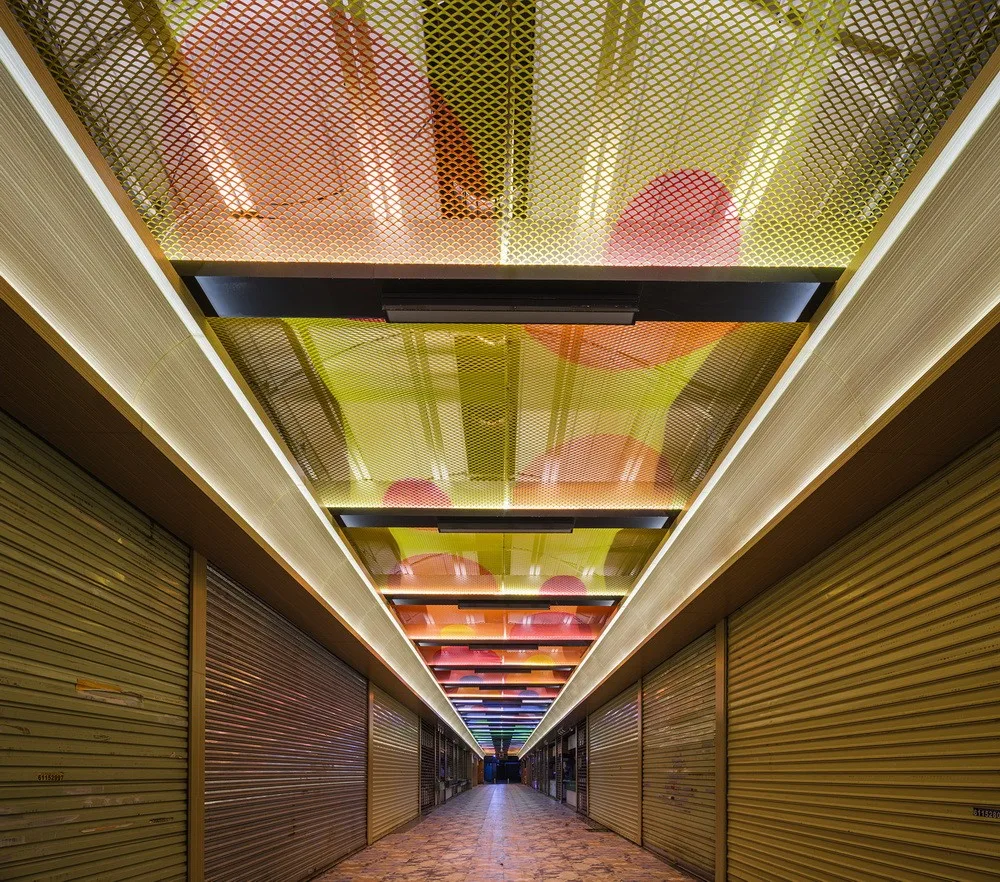
Fish Scale Net: Complementary Rhythms
The indoor market corridor ceiling features colors inspired by fruits and vegetables, enhanced by complementary color schemes. The combination of fish scale mesh and collage introduces a fashionable rhythm and texture.
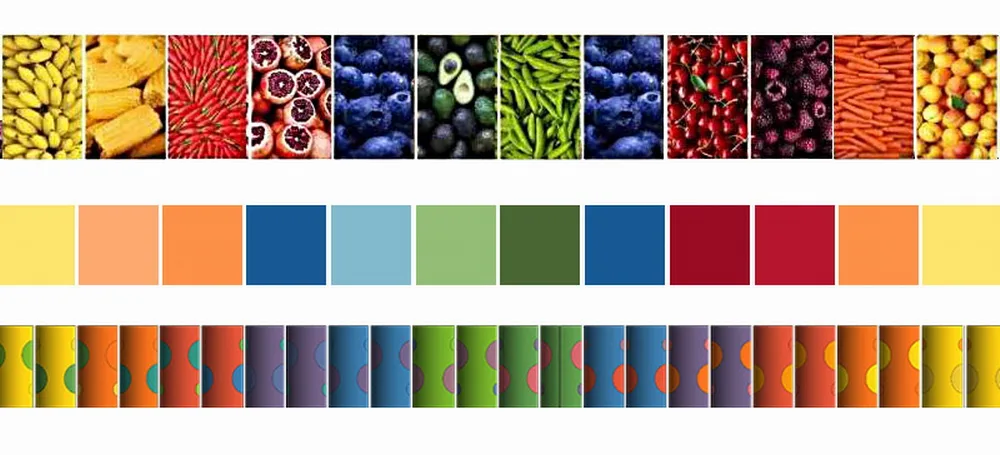
△ Fish scale net: complementary color rhythm
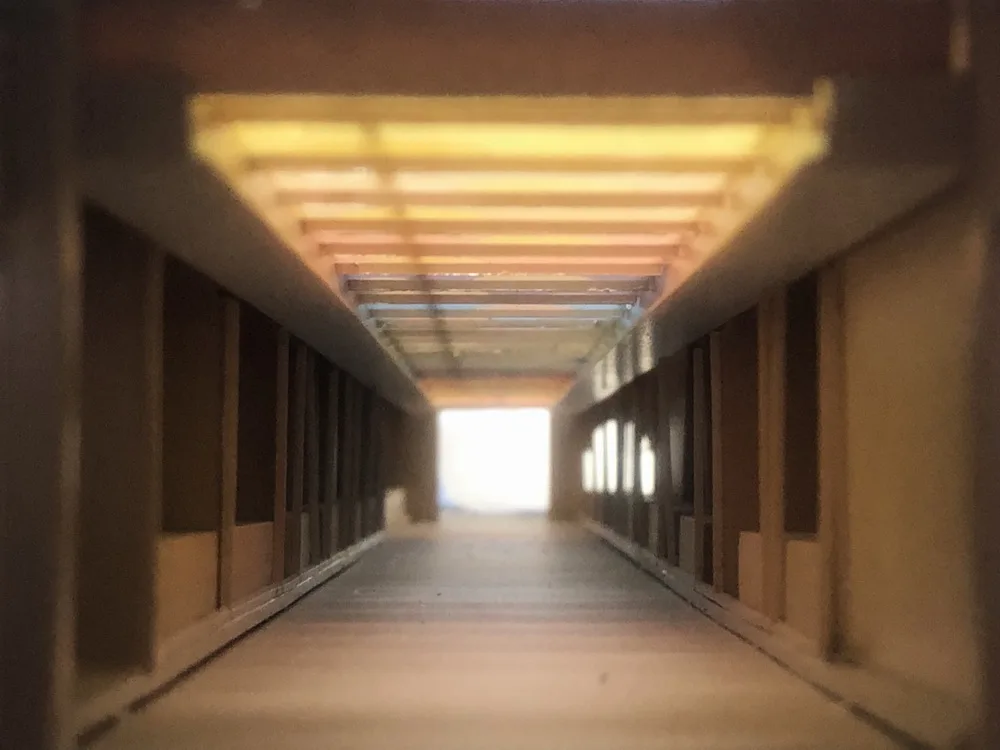
△ Model
△ Fish scale net construction effect
The project incorporates flexible formats like distinctive cuisine and artistic creativity, blending contemporary materials such as brushed stainless steel with traditional red brick arches and wooden signage.
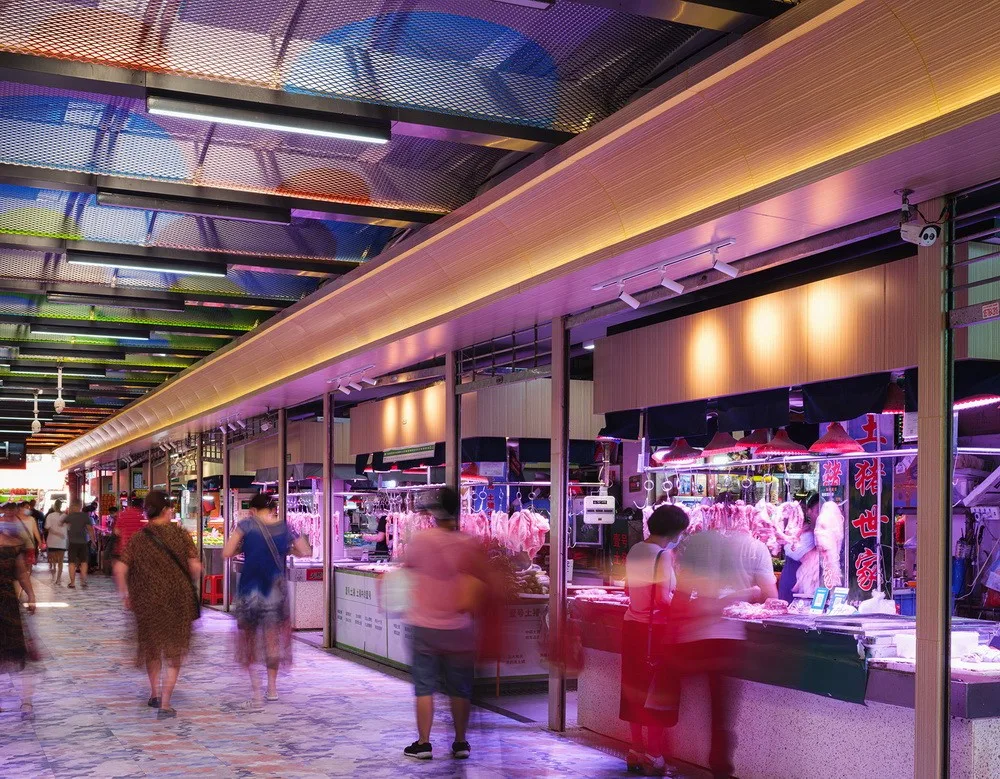
△ Local cuisine
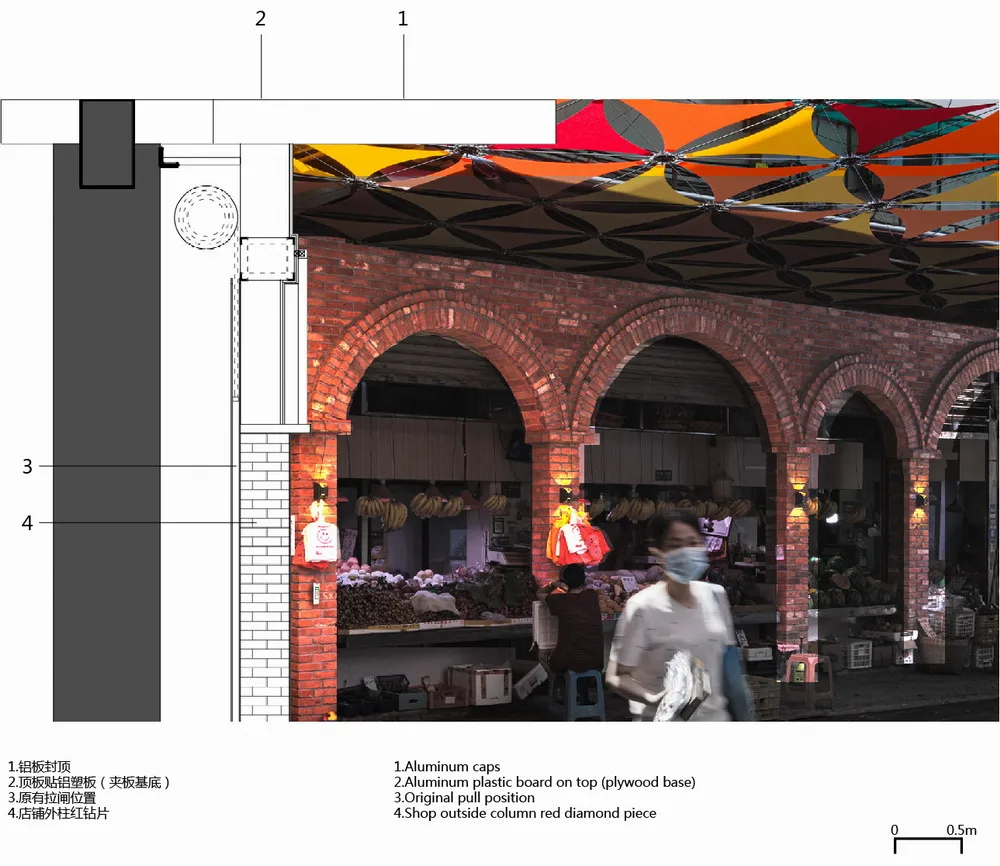
△ External arcade storefront nodes
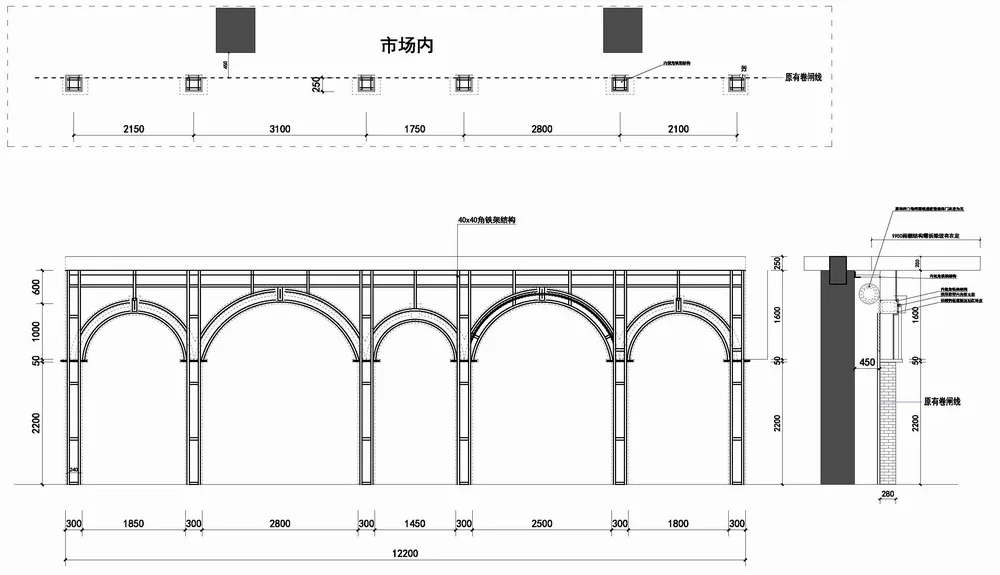
△ Front view of external arcade steel frame structure
Lasso Film: Kaleidoscopic Light and Shadow
At the entrance of Guigang vegetable market, a Lasso art installation integrates the previously chaotic storefront signage and cluttered residential visual elements into a cohesive visual experience. The design merges outdoor specialty food and beverage storefronts with arcades and traditional red brick elements, simplifying the street complexity.
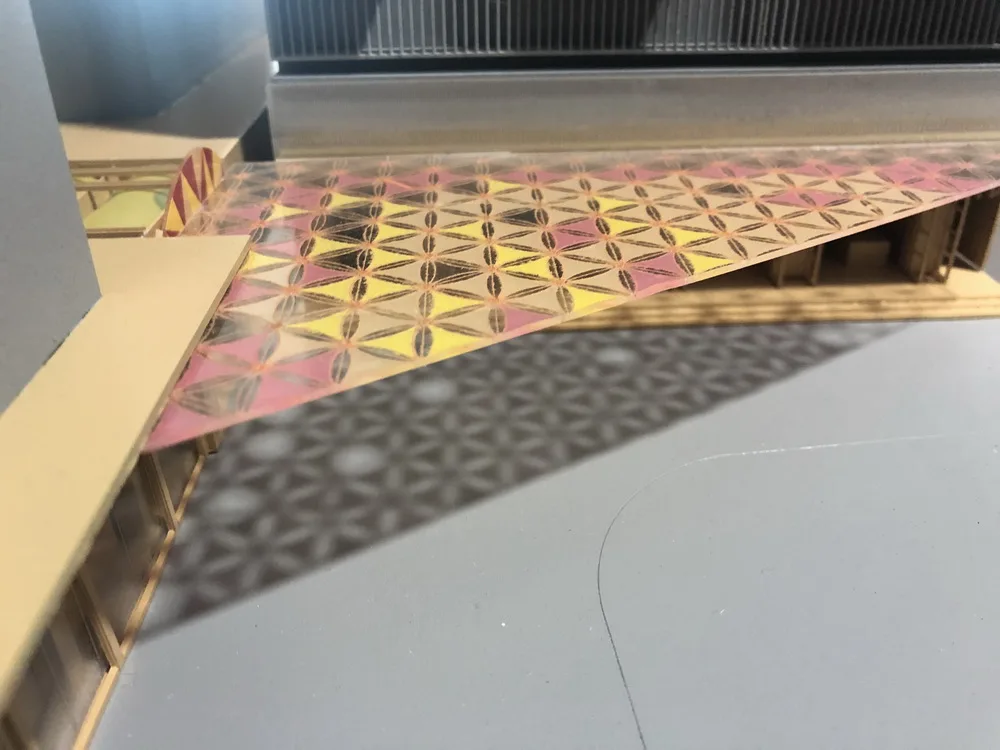
△ Model
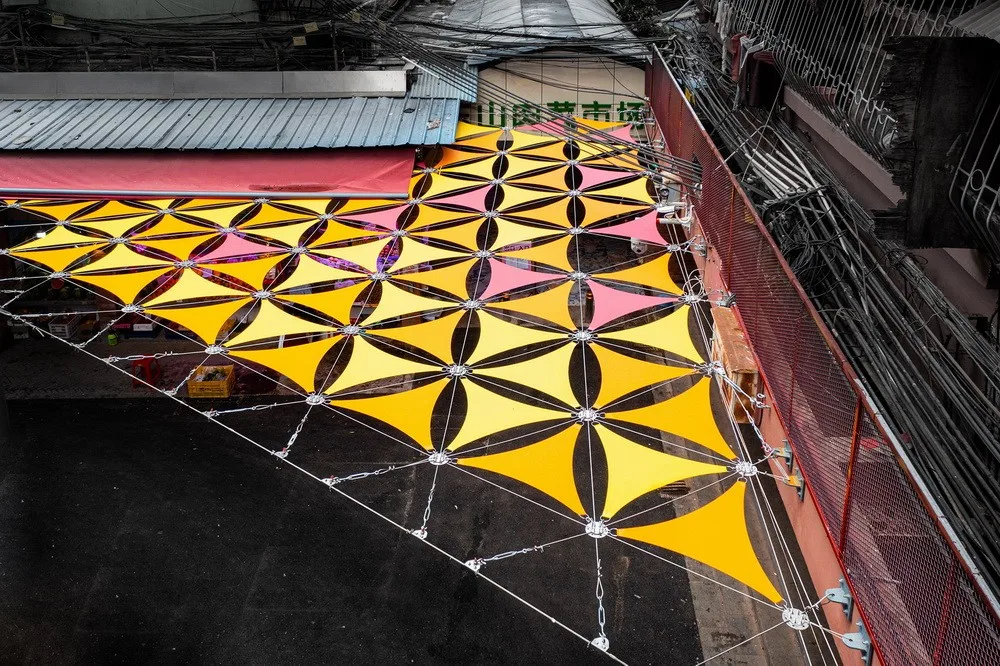
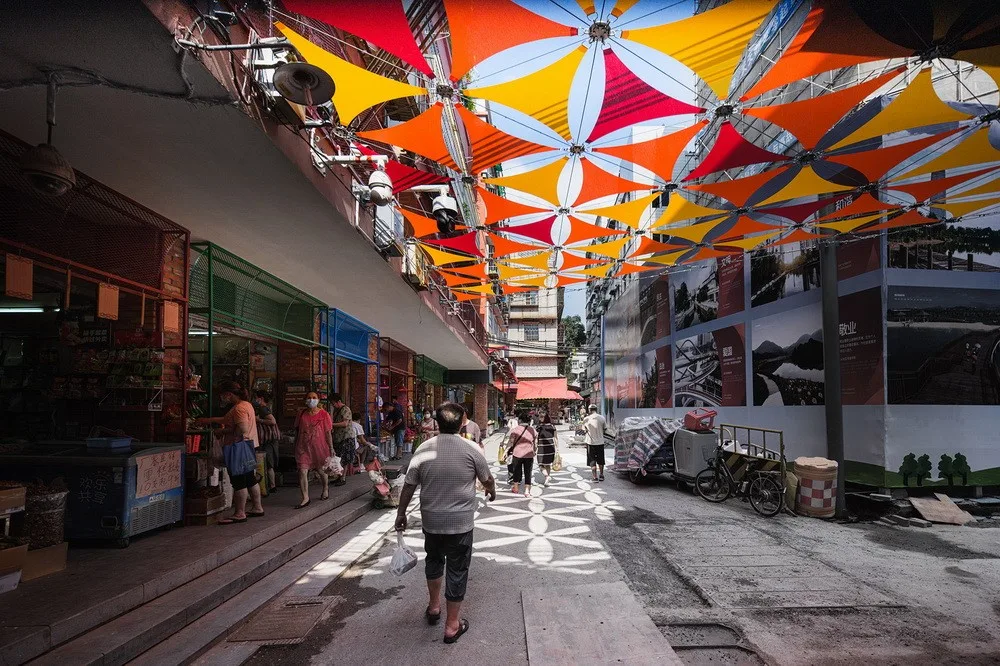
△ Construction effect of cable-stayed structure
Under the colorful membrane structure, sunlight projects vibrant light and shadows onto the ground, creating a daily poetic experience.
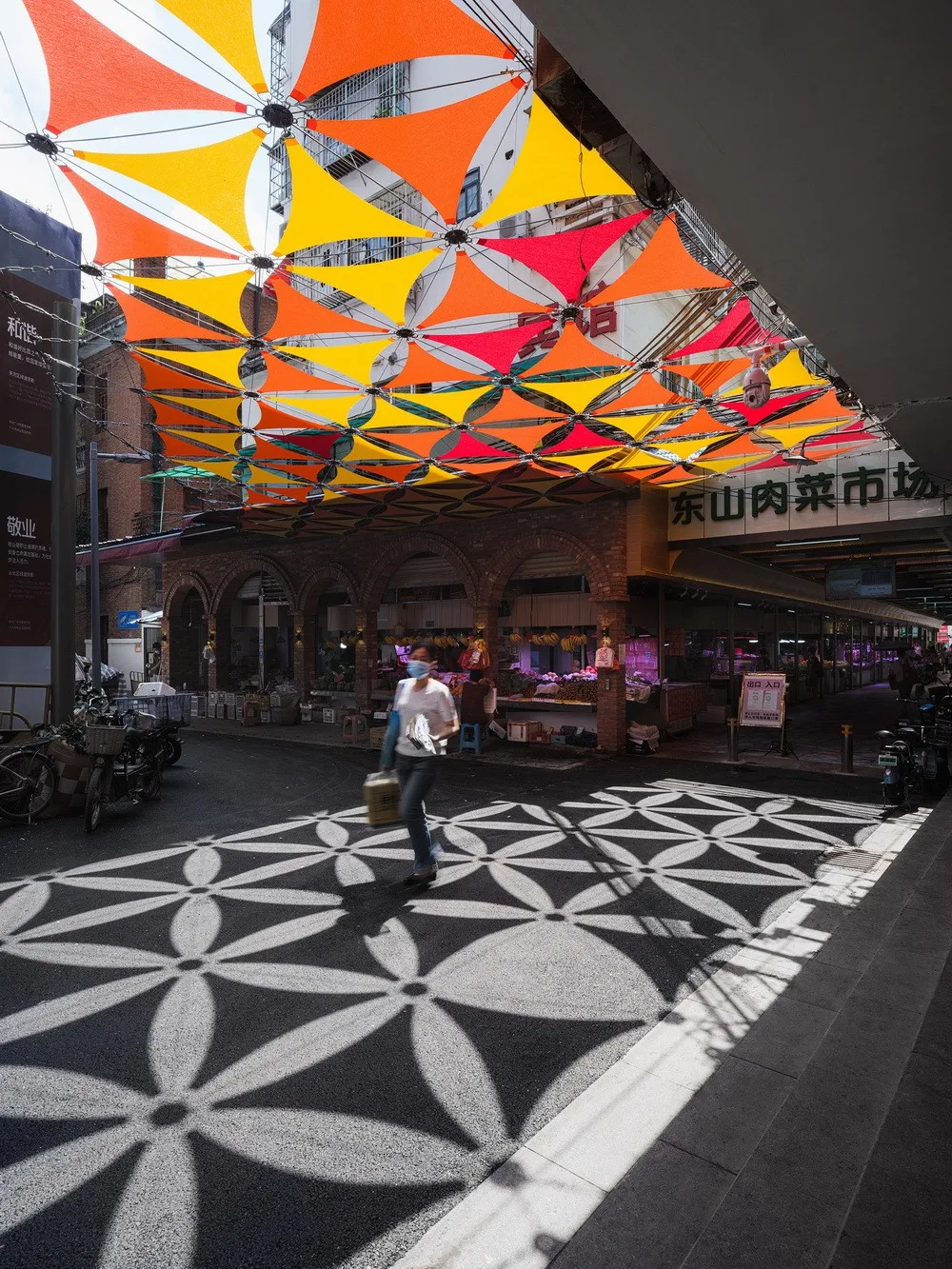
△ Sunlight casting colorful shadows
Tree Pool Entrance: Red Memory
The barrier-free tree pool entrance features tiled flooring with traditional Cantonese patterns. Ancient trees around the site create a serene environment. Considering the local aging population, barrier-free access and ground floodlighting enhance community comfort and mobility. The red cultural hues and spatial proportions resonate with the nearby three major conference sites, harmonizing with the Lasso membrane structure.
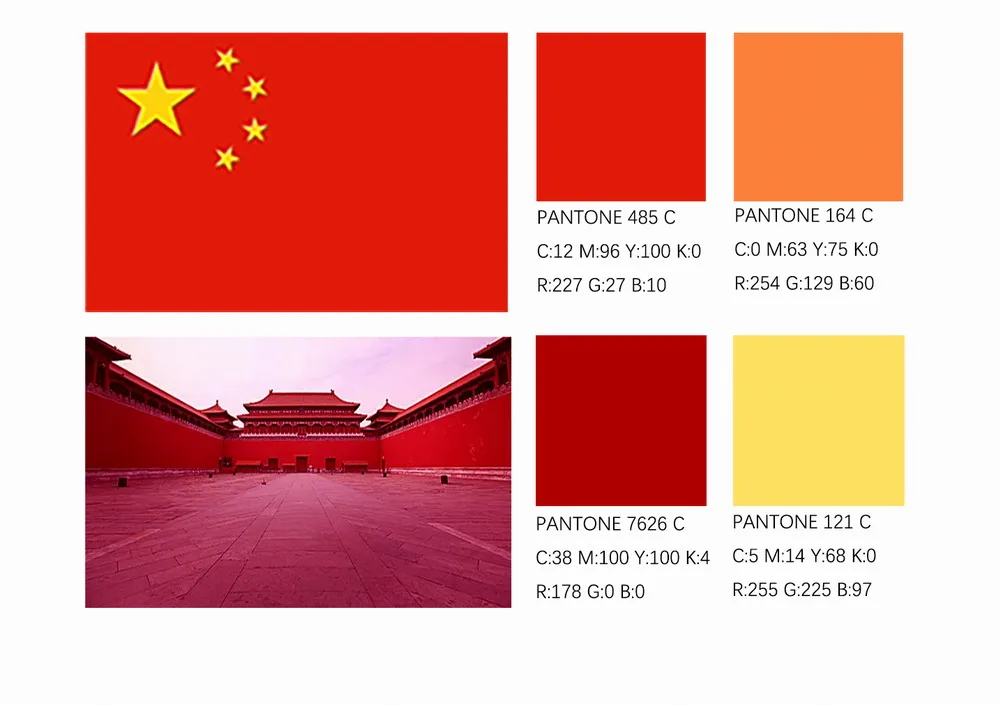
△ Red cultural color elements
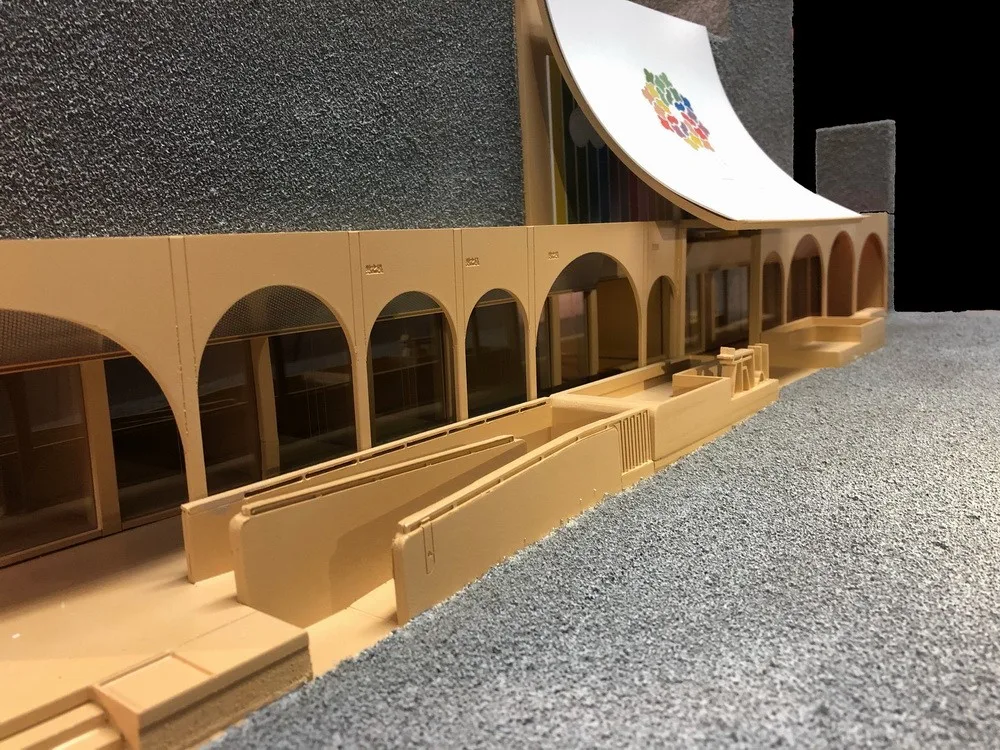
△ Model
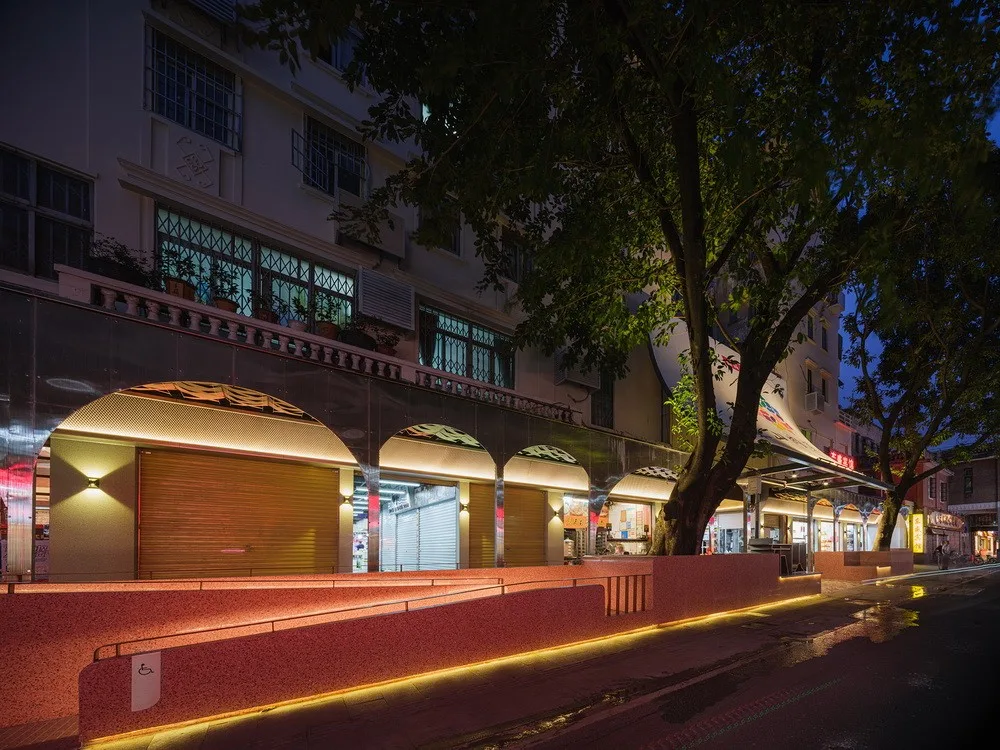
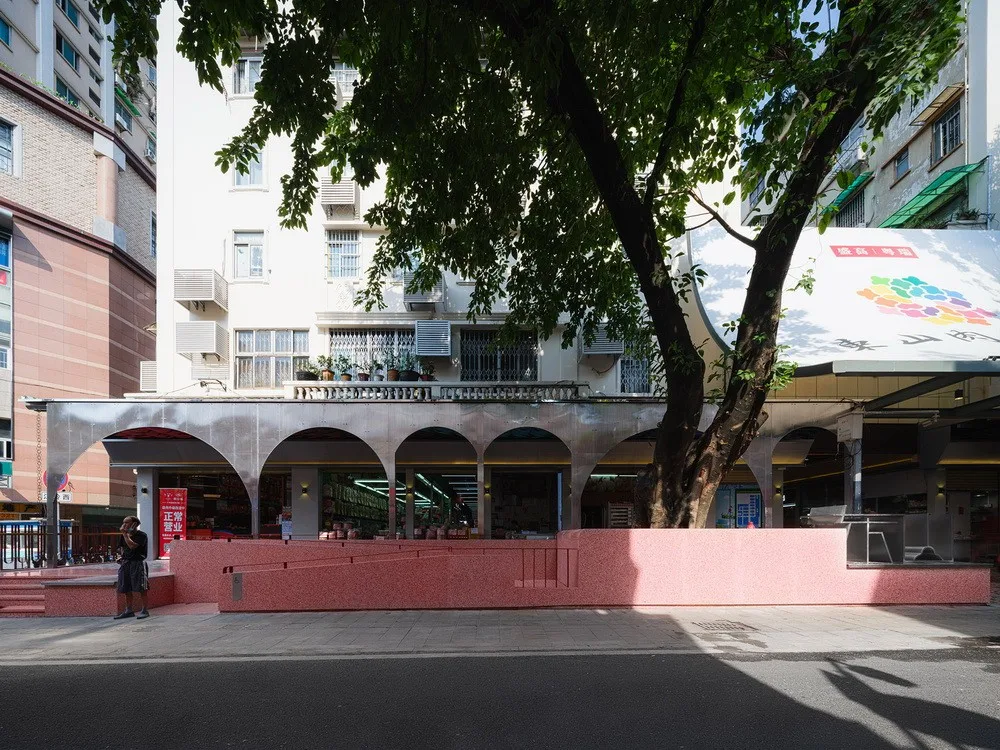
△ Barrier-free entrance combined with flower bed and tree pool
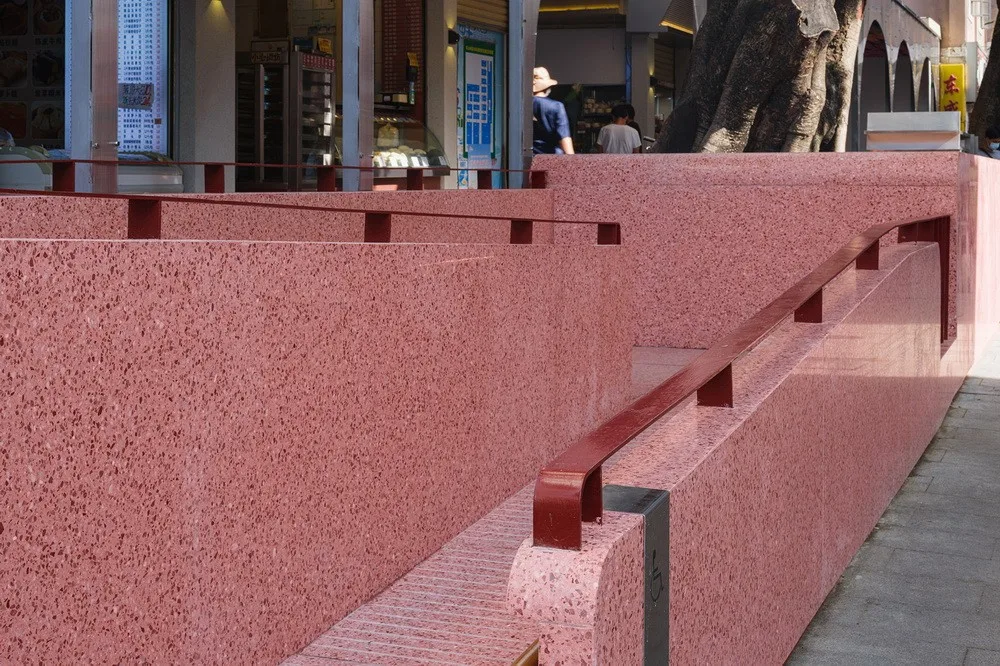
△ Detailed node construction
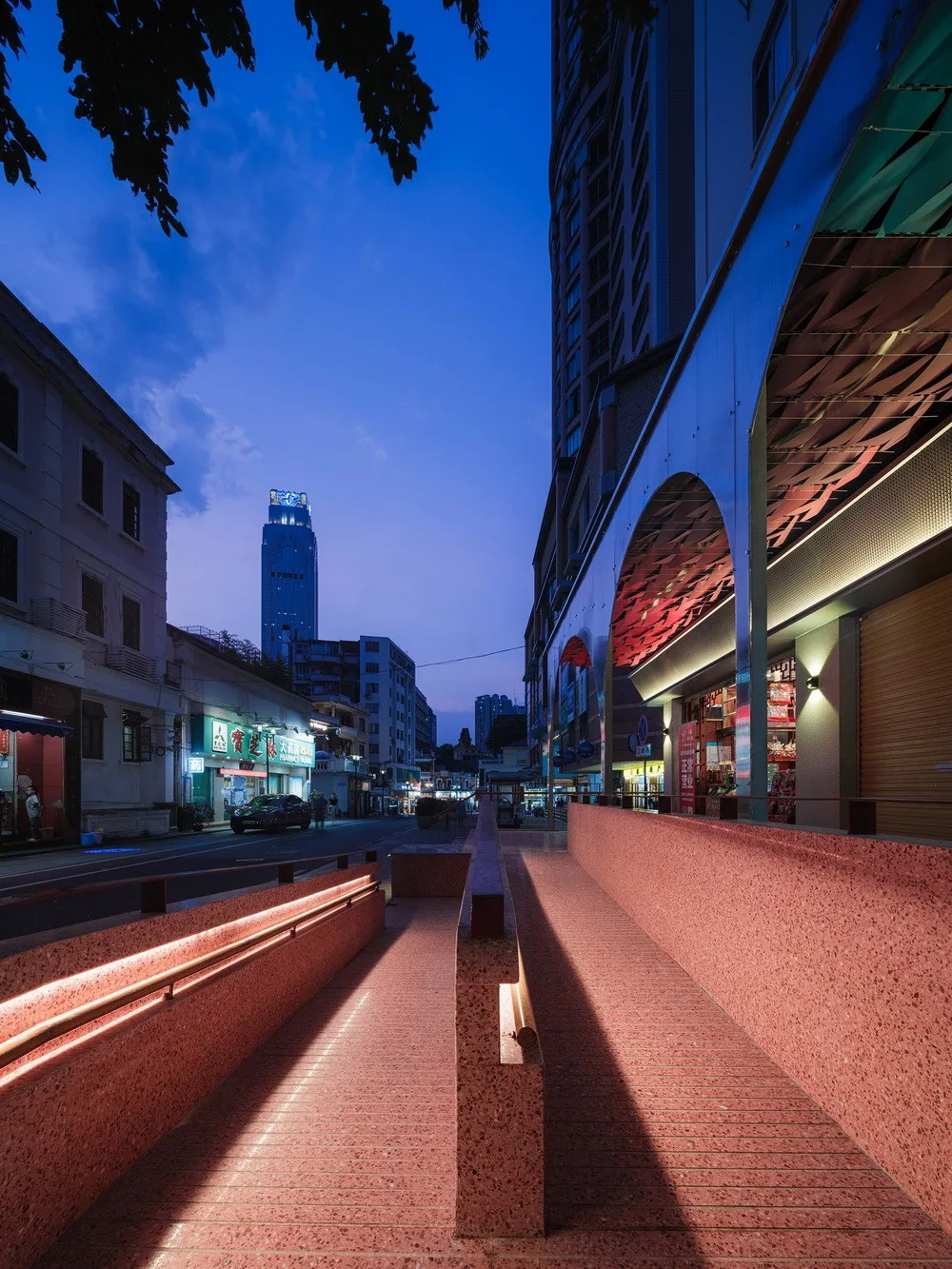
View looking into the distance from the entrance
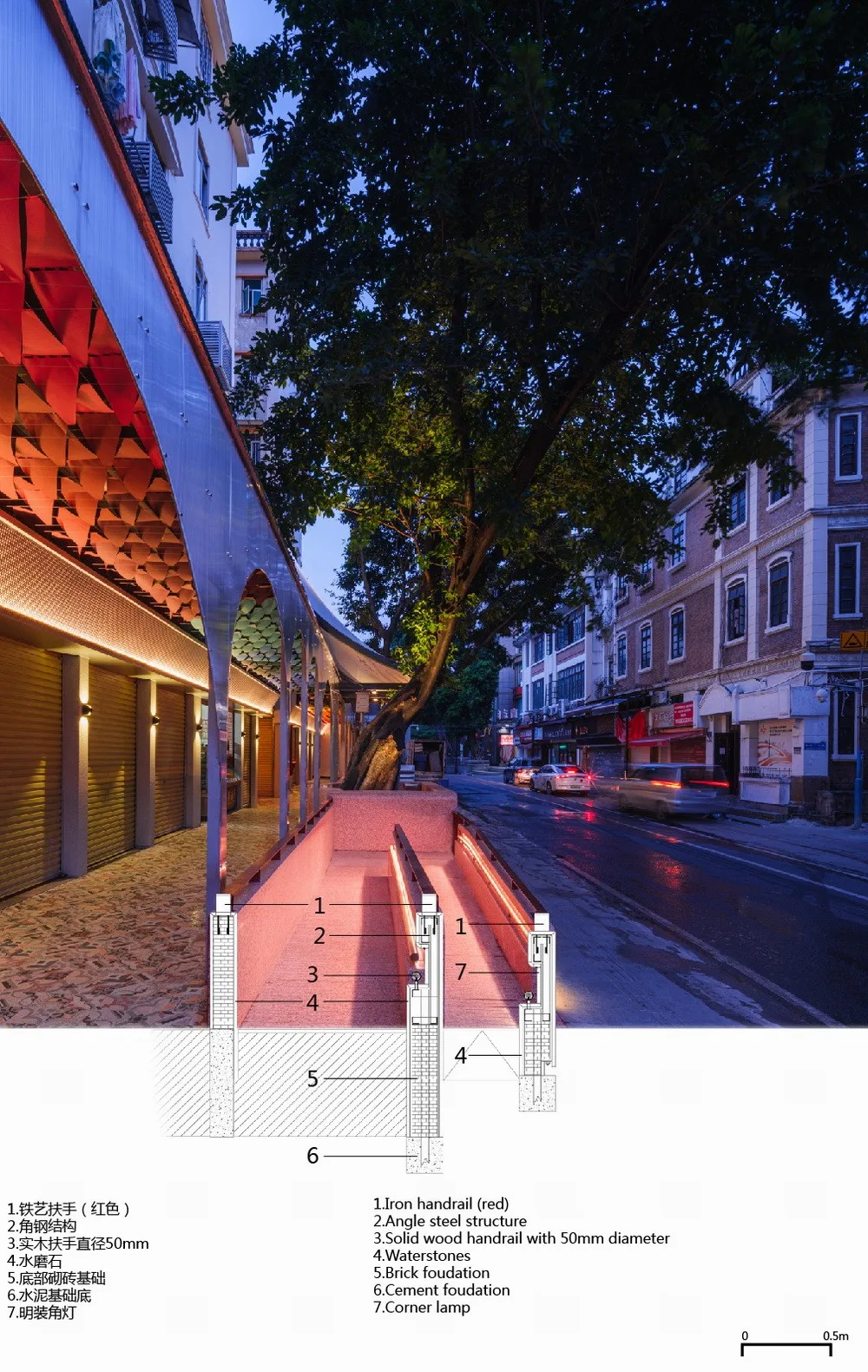
Accessibility design detail
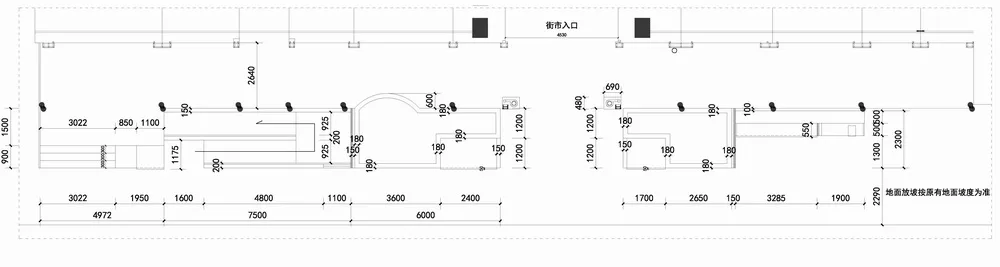
Flower bed and tree pool plan

△ Front view of accessible entrance
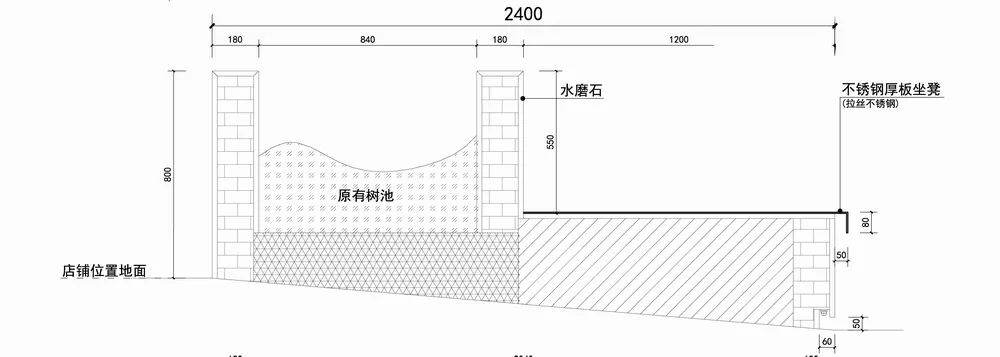
△ Accessibility Entrance Profile B
Rising to the Challenge: Construction Process
Initially, market tenants and nearby residents were cautious about the design. Through extensive research, site visits, and workshops, users gradually engaged with the design team, voicing their needs and becoming proactive partners. During construction, they participated in supervision and communicated openly about issues, trusting the designers to find optimal solutions. Many unconsidered details were refined through this collaborative process. From research to construction, local users unwittingly contributed to rediscovering hidden historical information, reclaiming cultural belonging, and fostering long-term co-creation and governance.
Urban micro-renewal projects often undergo multiple revisions due to limited historical information; this project was no exception. For example, the main entrance arcade height was adjusted to accommodate storefront signage better.
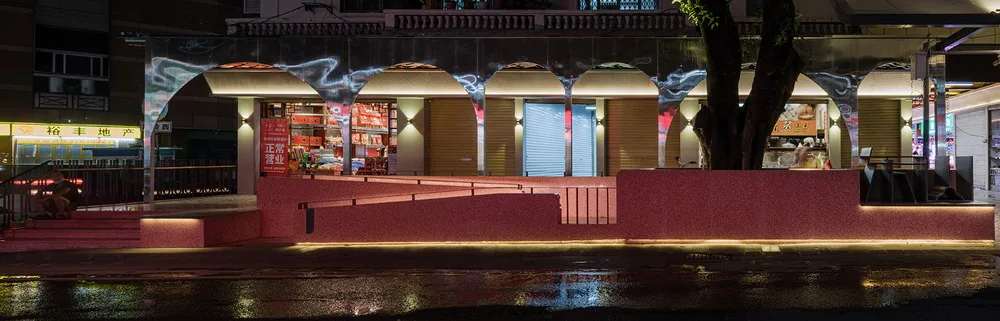
Main entrance facade materials after initial construction
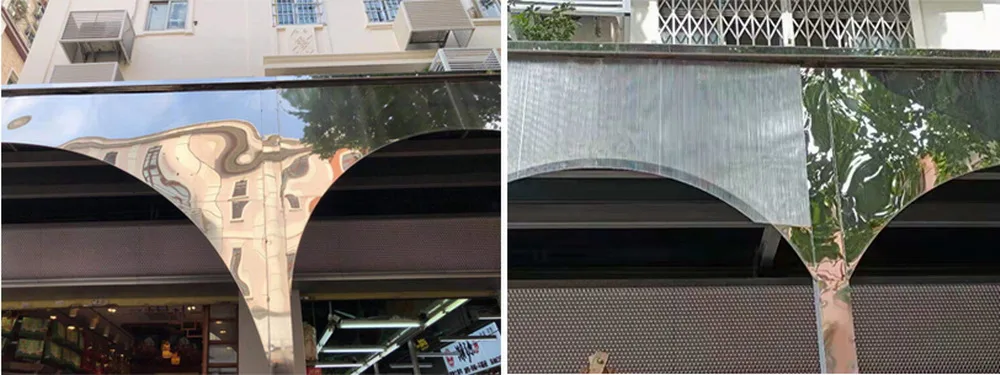
Material replacement comparison on facade
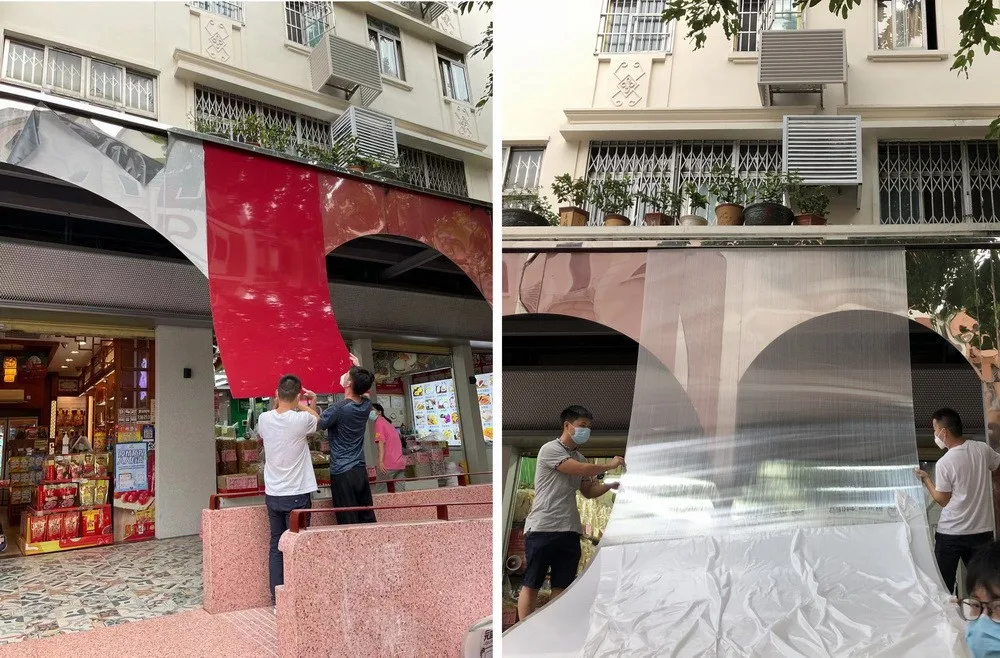
△ Facade material construction site
Due to material distortion, the facade material changed from mirrored stainless steel to frosted stainless steel, and finally to polycarbonate panels, which offer a cleaner, more transparent effect. Time constraints led to assembly with nails; workers arranged nails rhythmically, achieving an aesthetic pattern.
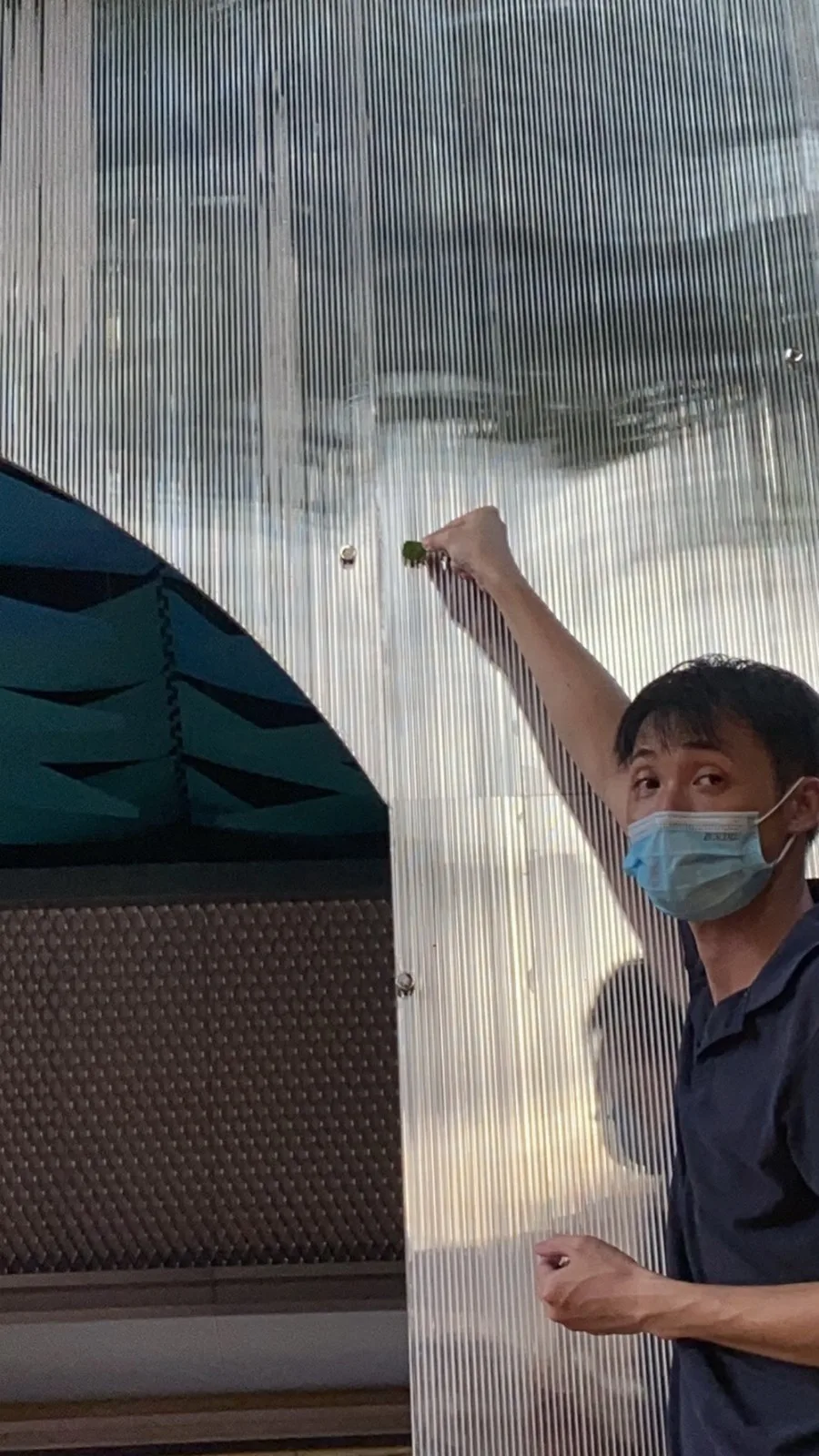
△ Nail arrangement on-site

Construction drawing for nail arrangement
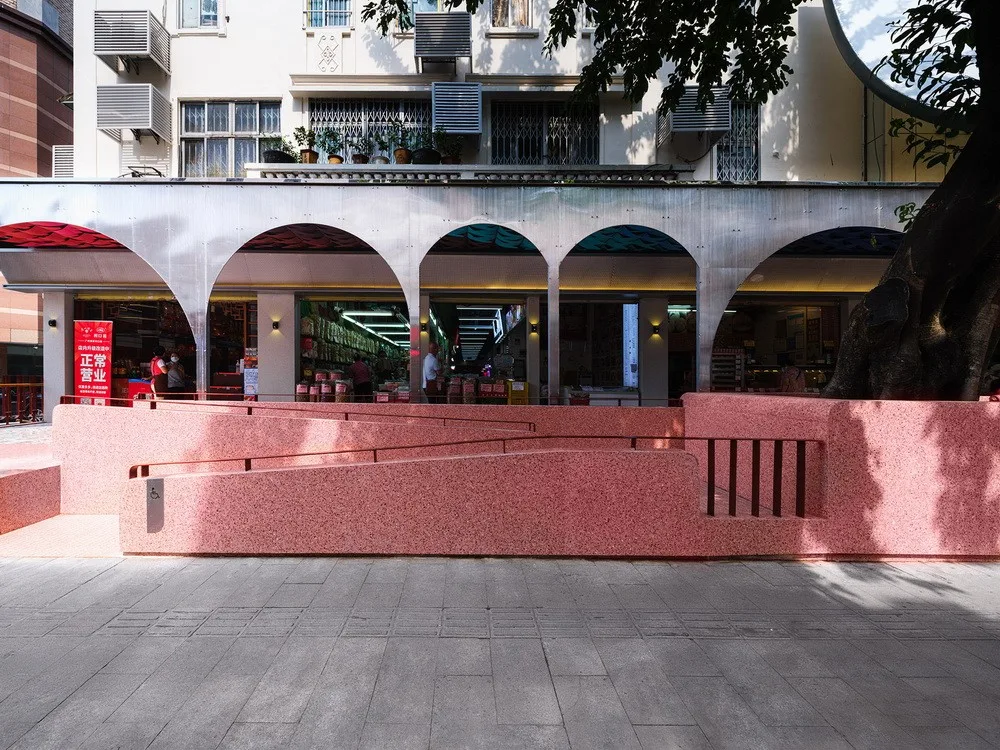
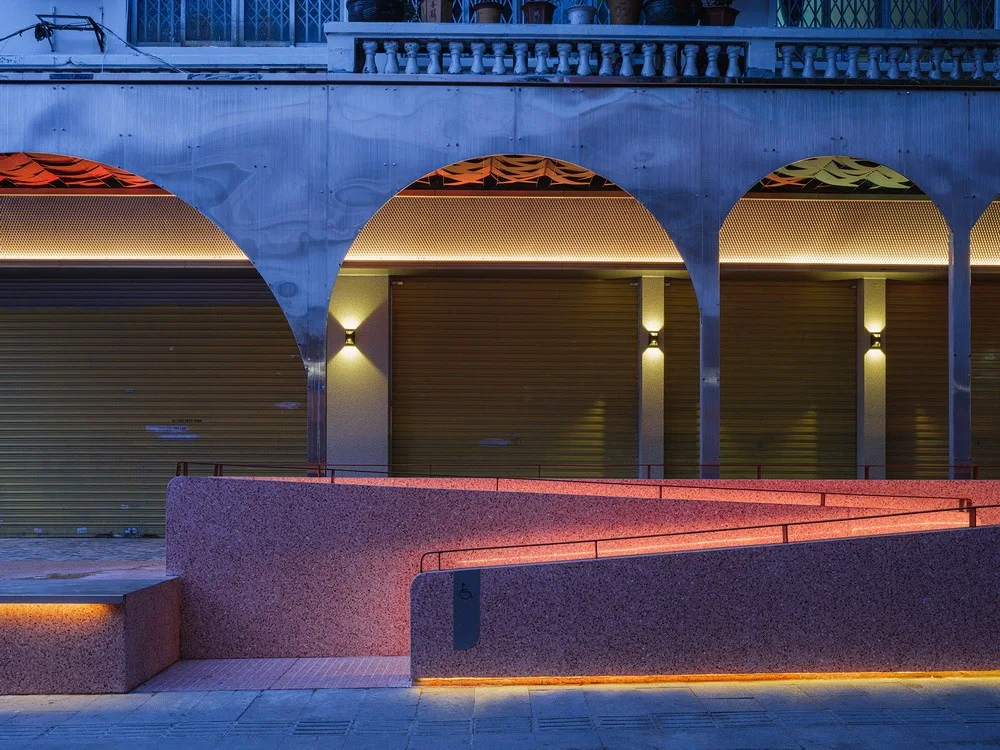
Final facade material installation
The indoor market corridor ceiling underwent three revisions: from an initial dome to flat top, then an optimized dome. The planned arch membrane ceiling was replaced with fish scale mesh due to existing beam and column conditions; surface color printing ensured better site adaptation.
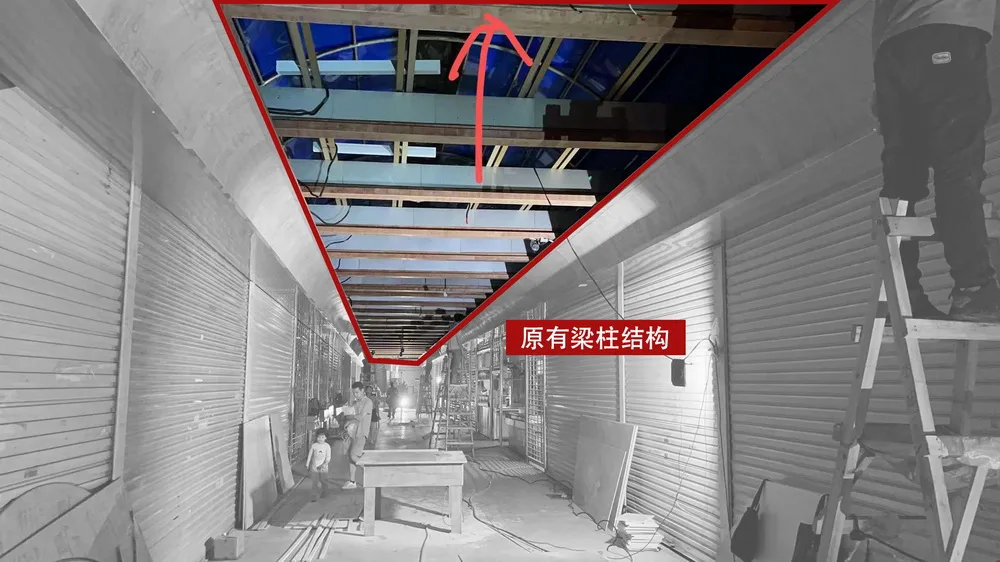
△ Original beam and column structure
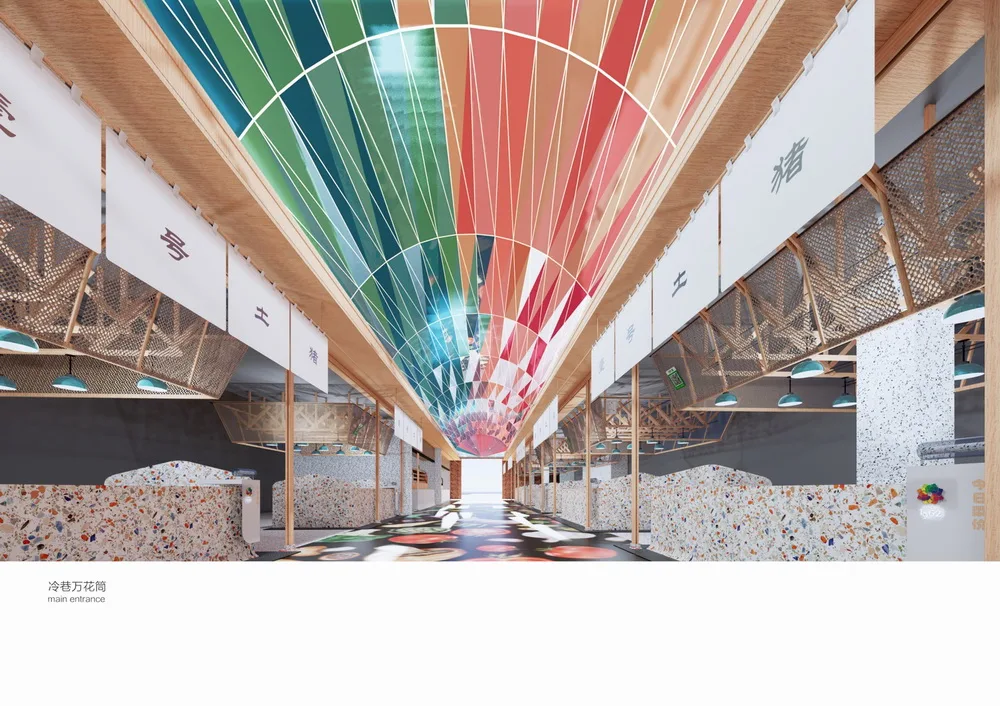
Initial plan
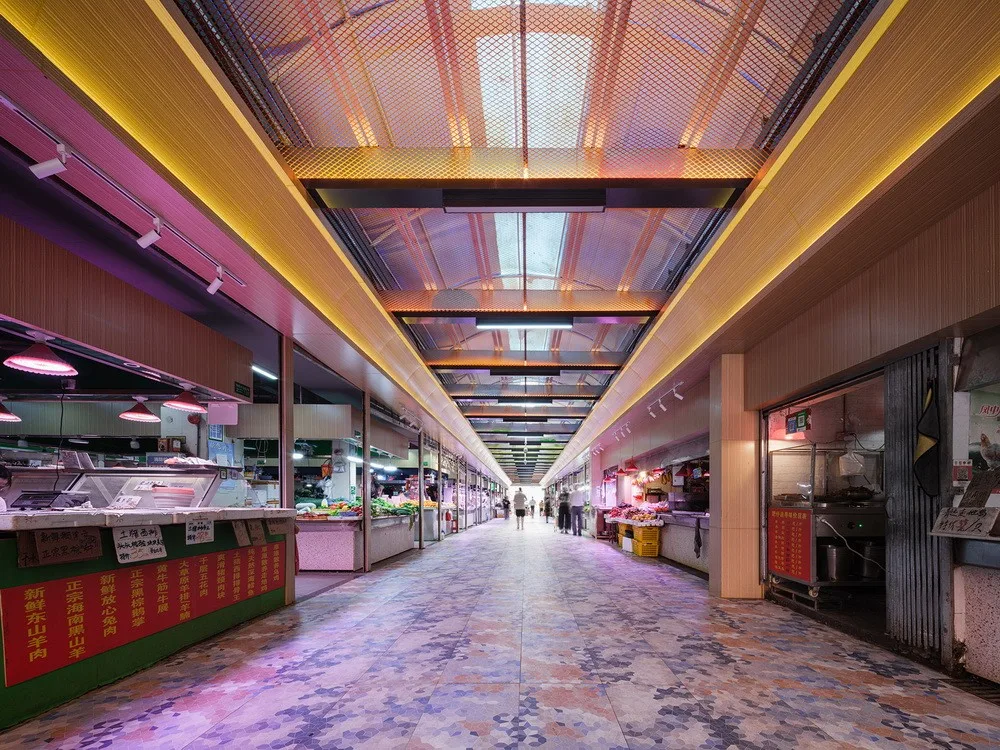
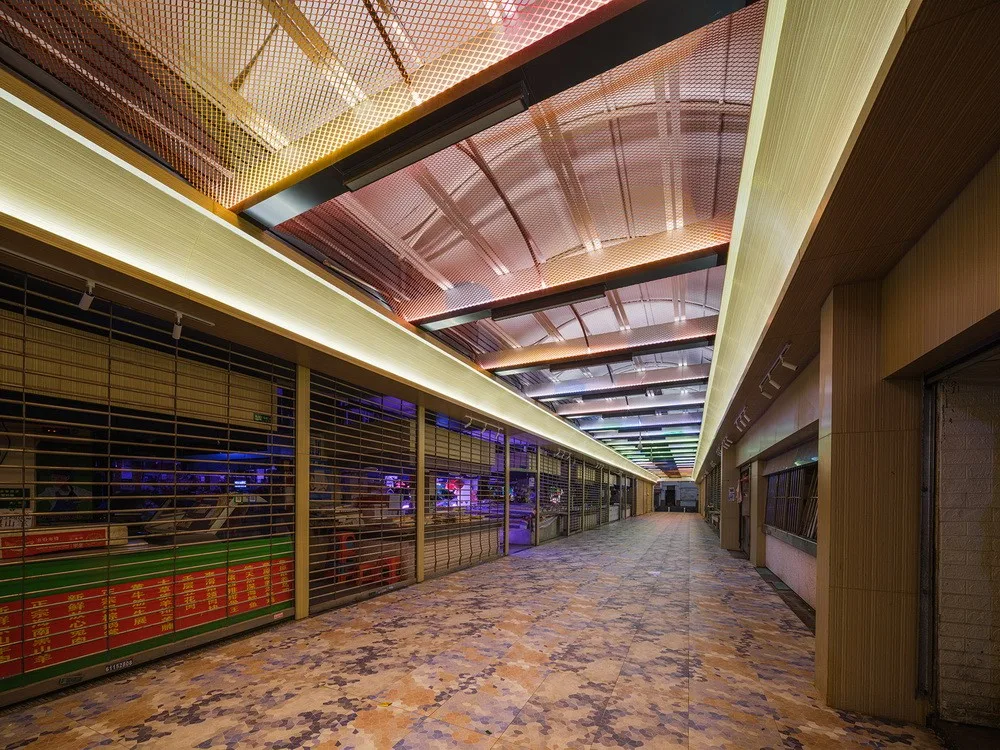
Final construction plan
Due to the building’s age and unknown structural pipelines, the cable membrane’s fixing points were uniquely adapted, leading to a reduced design scope. The original dual cable layers were reduced to one.
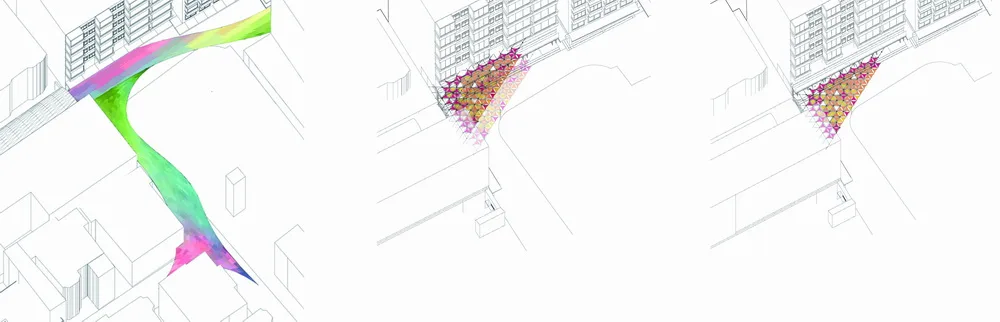
△ Cable membrane form changes during design
Initial plan
Final construction plan
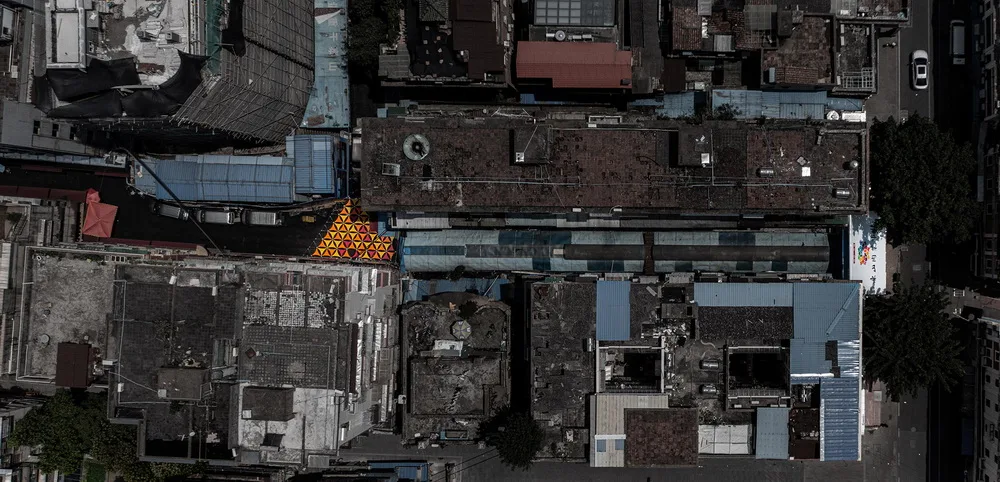
△ Aerial view
Urban Renewal as an Expression of Guangzhou Spirit
The aim of this urban renewal is to enable residents and migrant workers to better utilize this traditional public space, enhancing its cultural significance while adapting to contemporary needs. The revamped vegetable market now attracts tourists and foreign artists eager to experience Dongshan’s regional culture. This diverse user base injects vitality into the community, transforming the market from a cluttered, outdated space into a vibrant, contemporary cultural hub.
In today’s postmodern tourism society, residents, migrant workers, tourists, and artists alike experience Dongshan’s traditional atmosphere, cultural traits, and modern lifestyle both personally and through social media. The renewal embodies a contemporary narrative of everyday life.
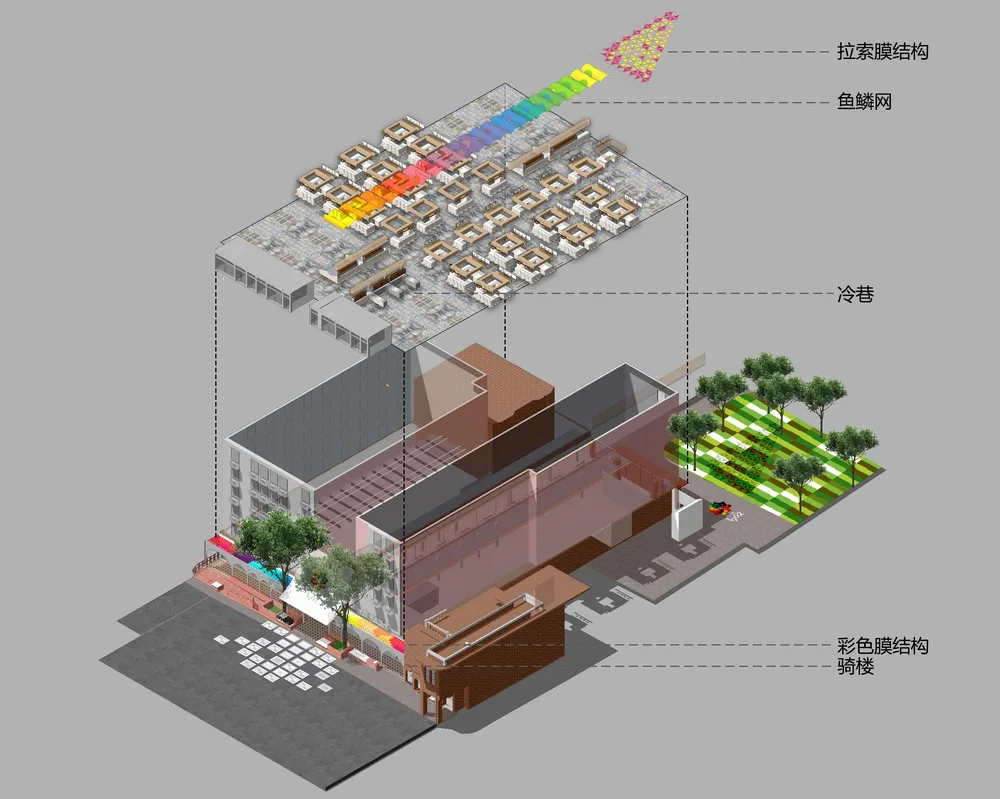
△ Exploded axonometric diagram
Dongshan Meat and Vegetable Market
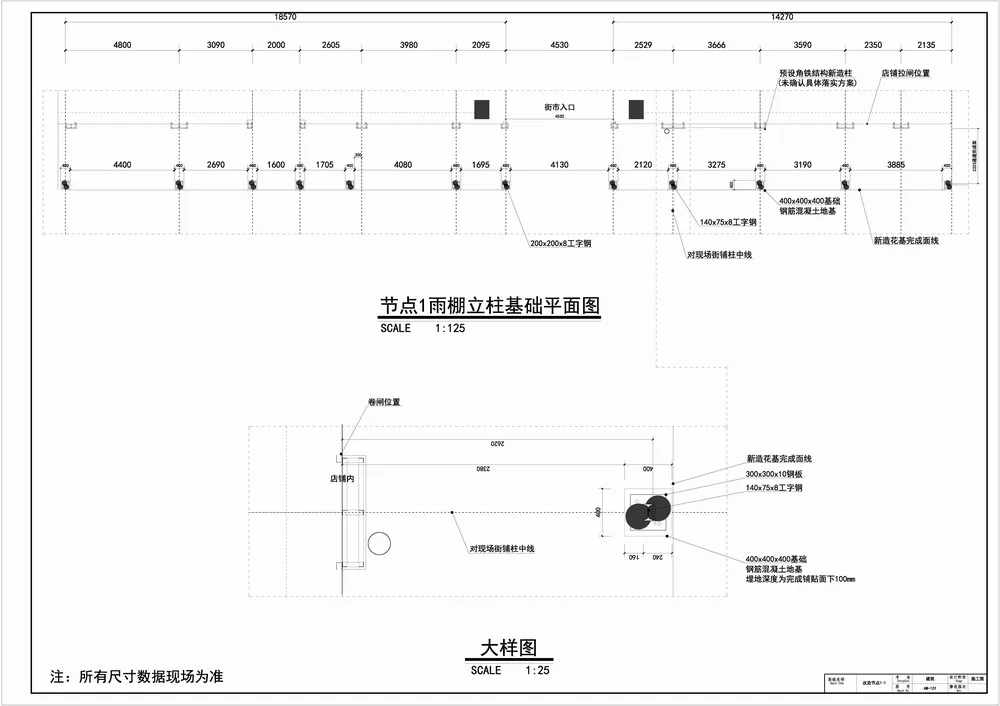
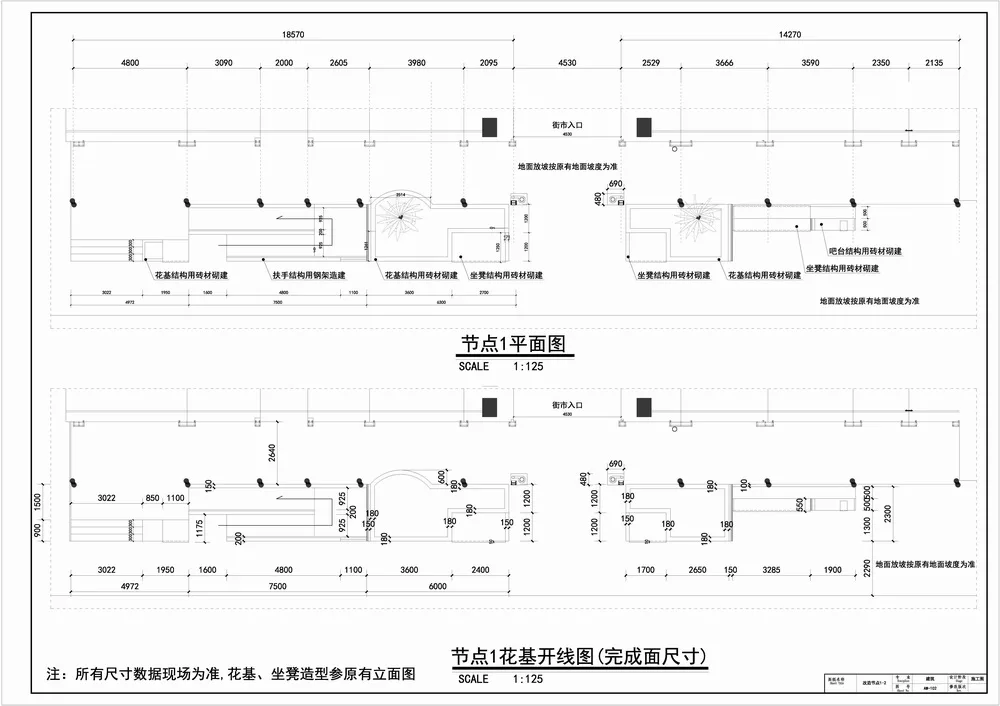
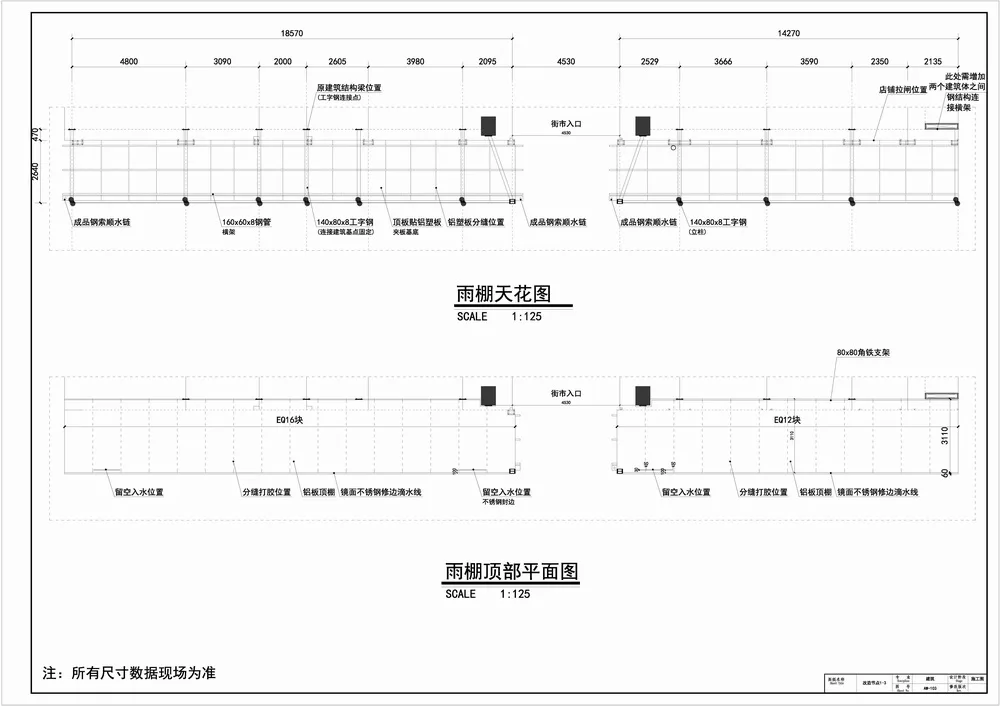
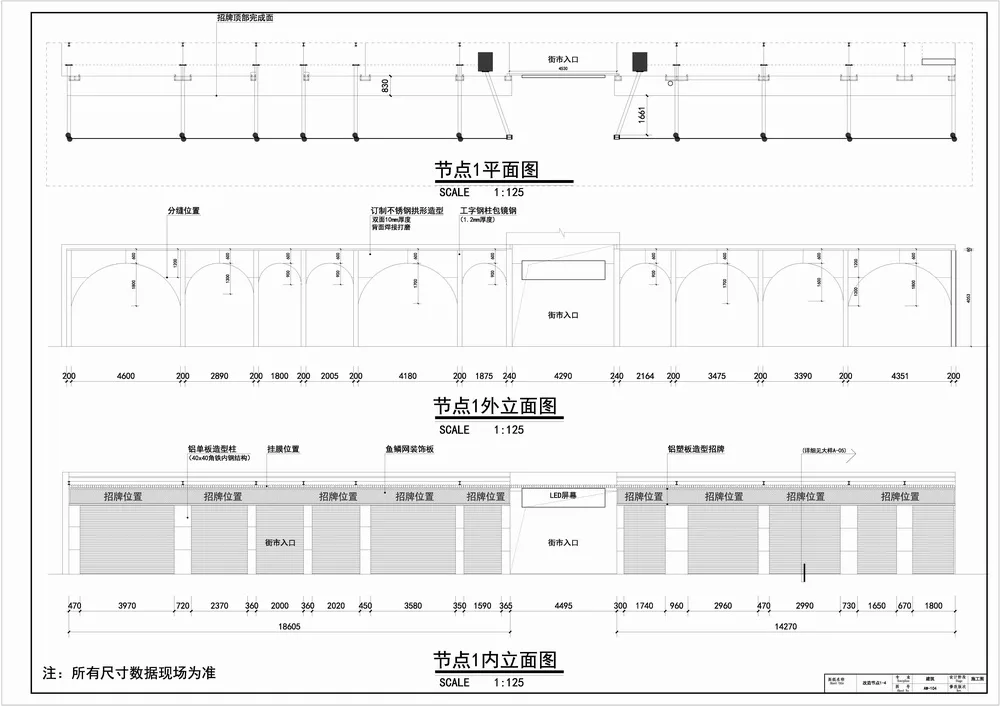
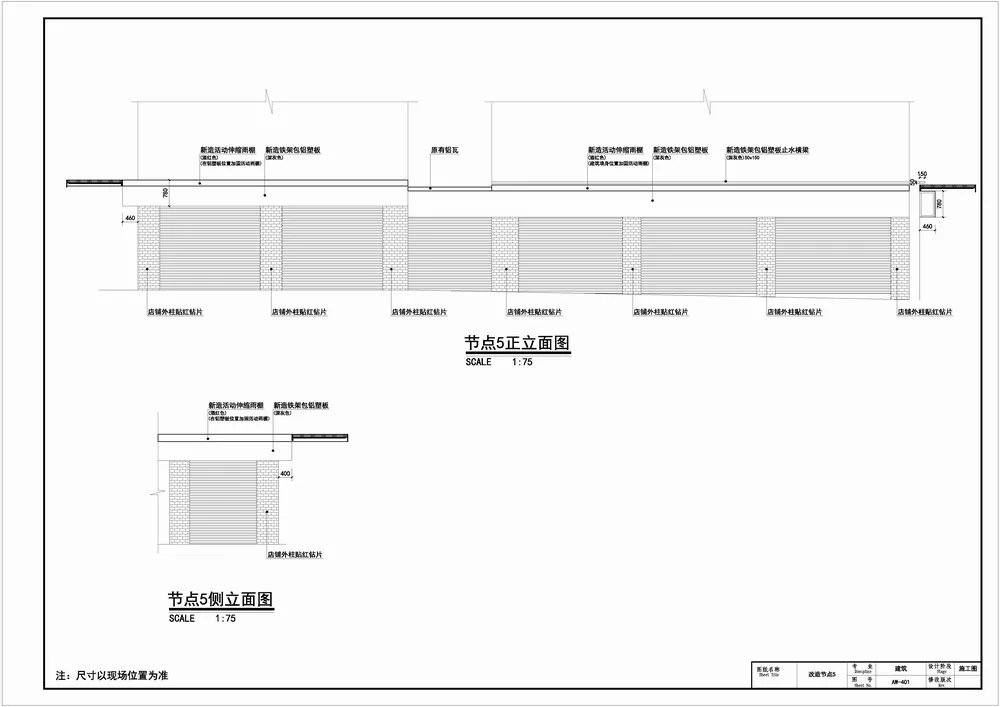
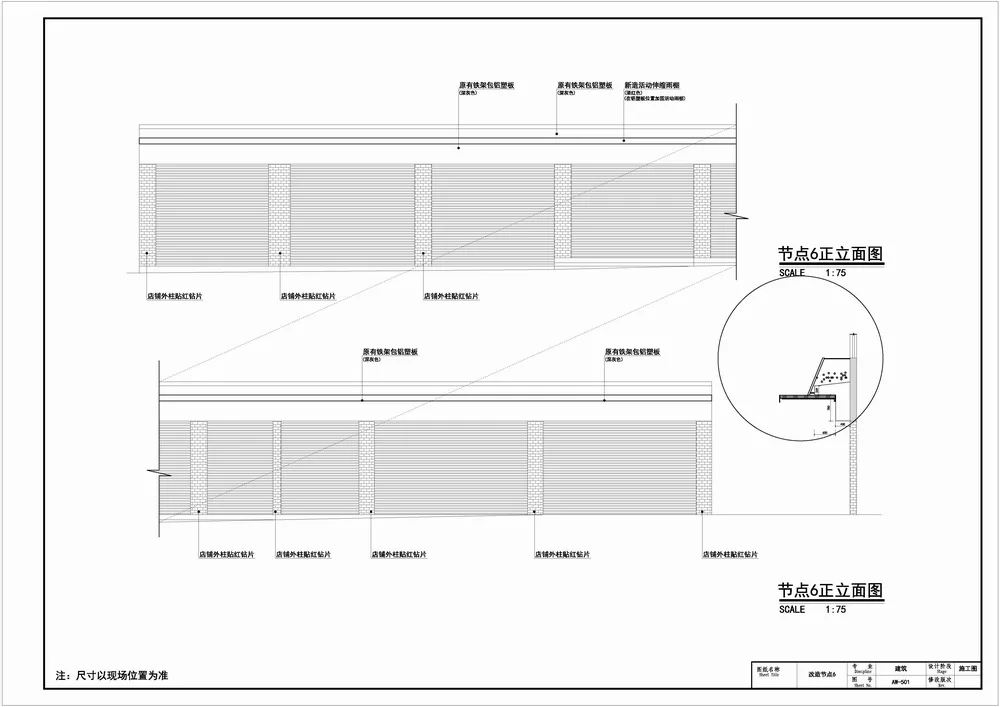
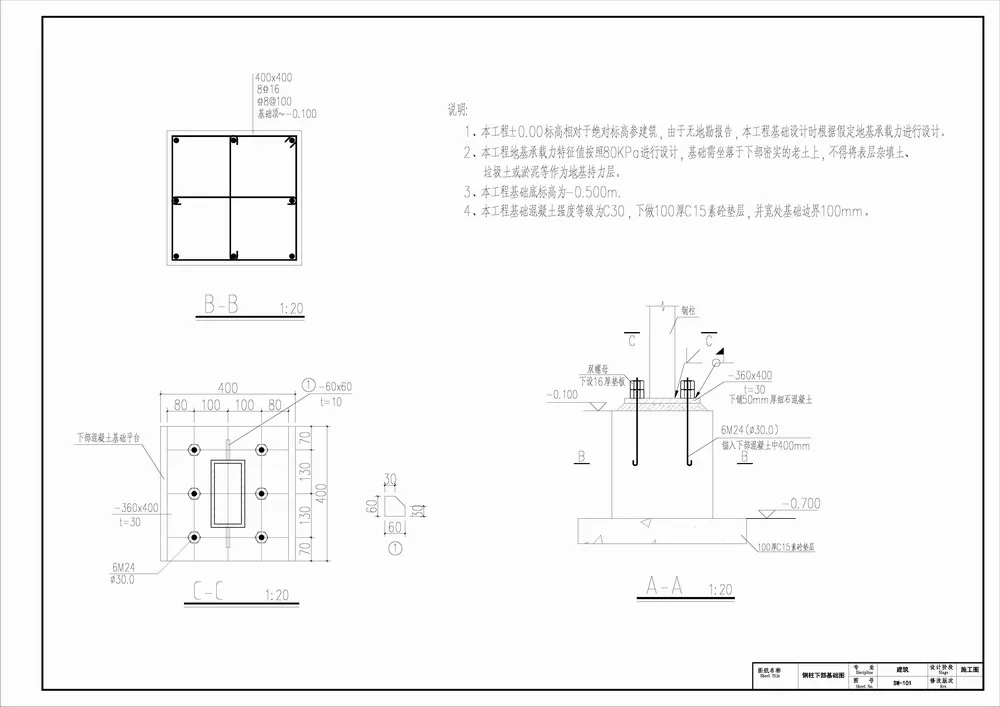
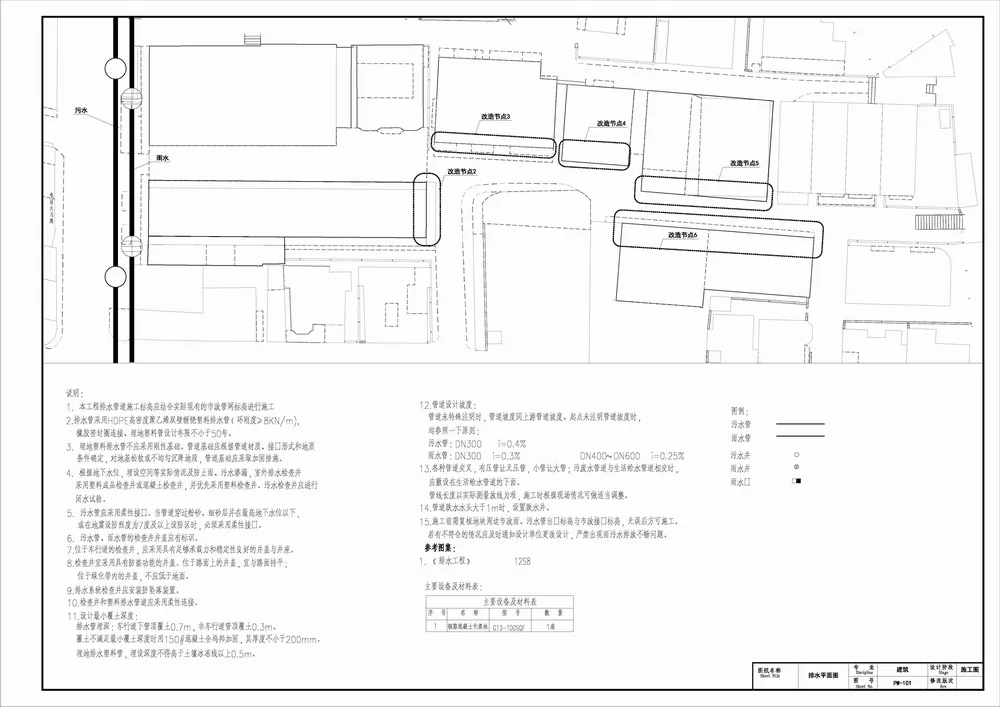
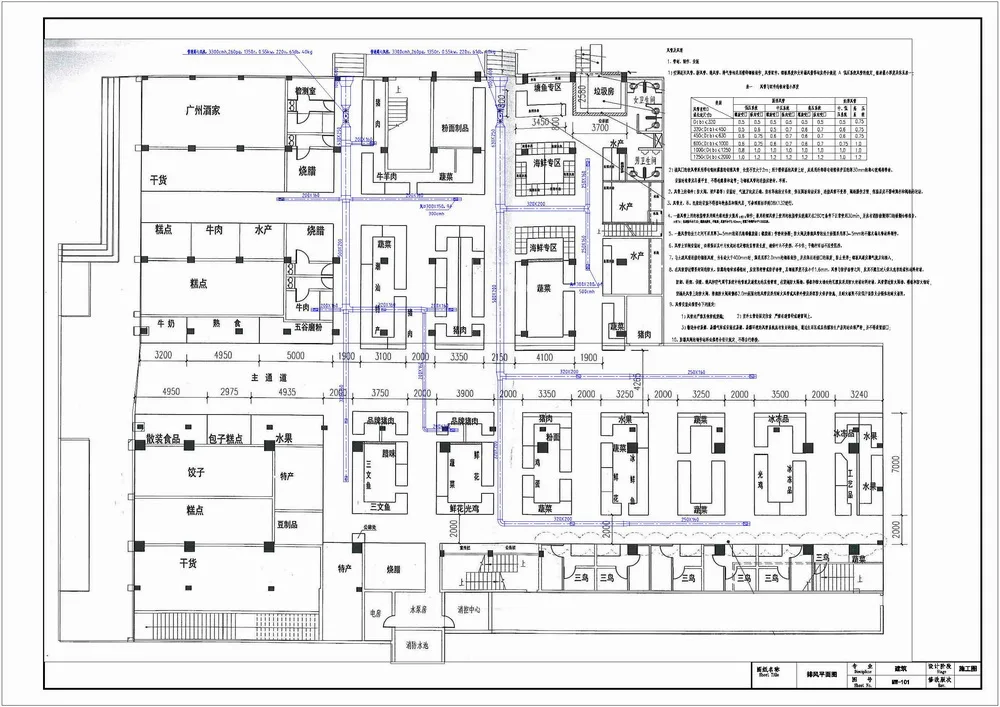
Technical Drawings
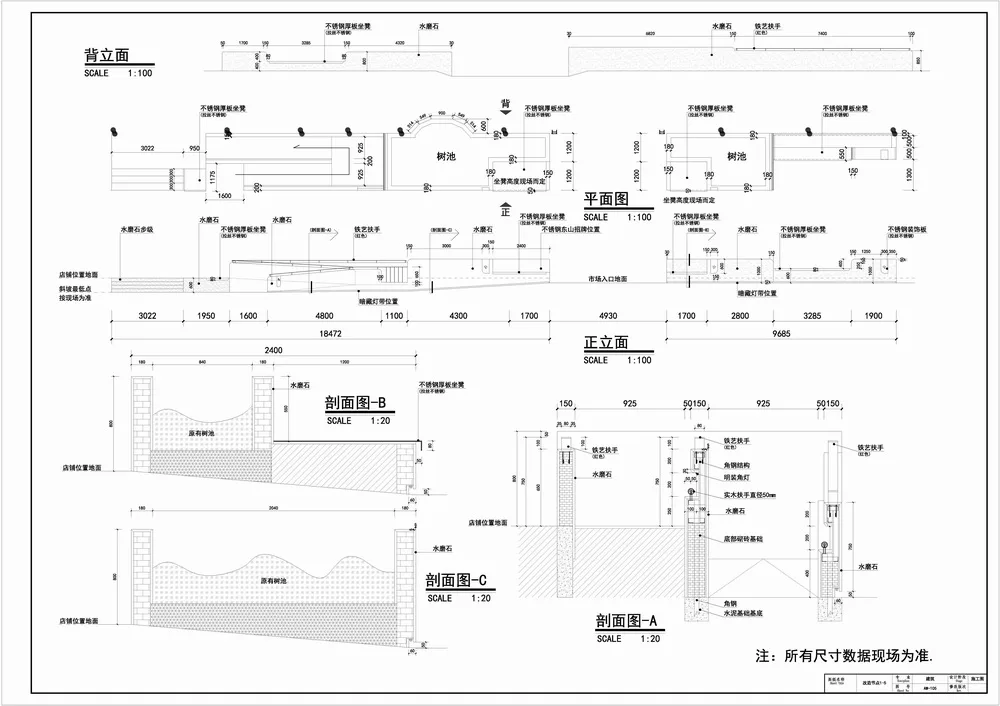
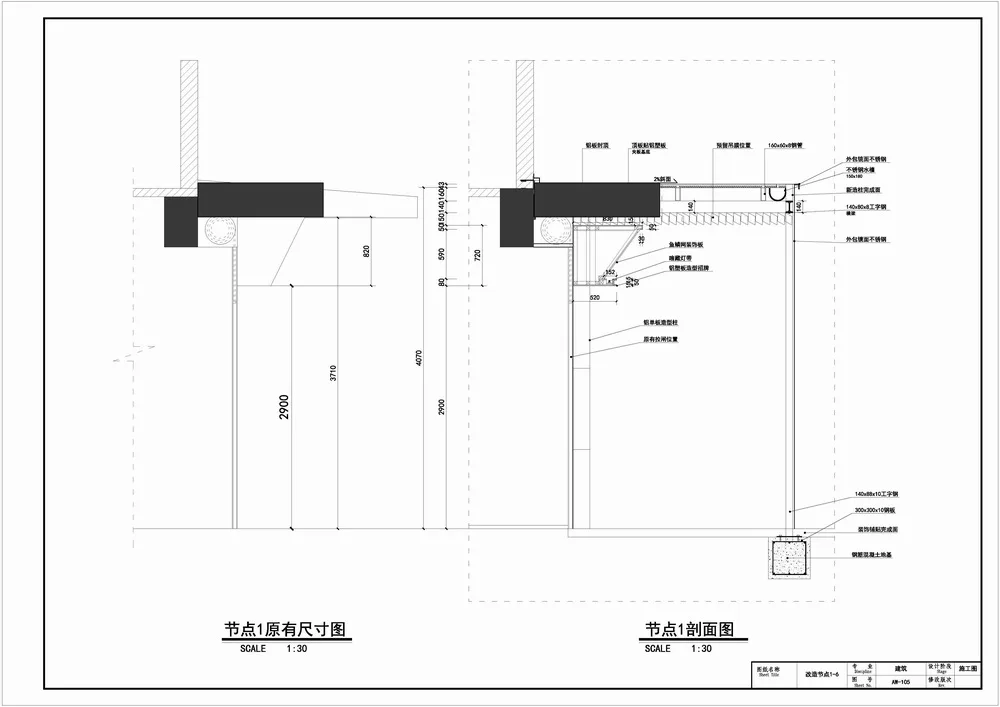
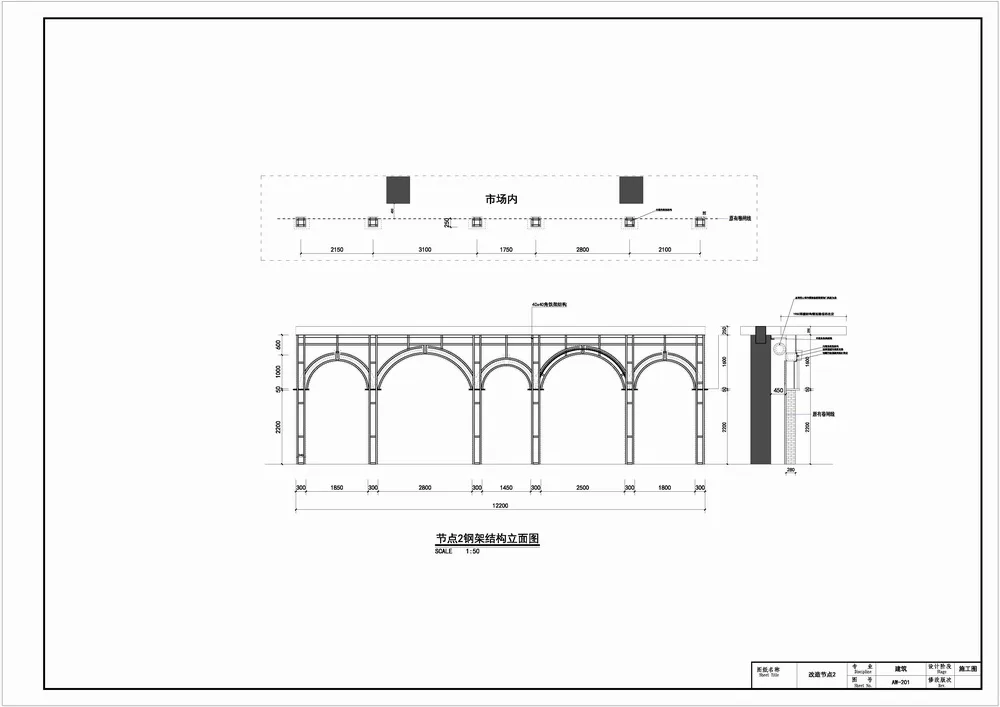
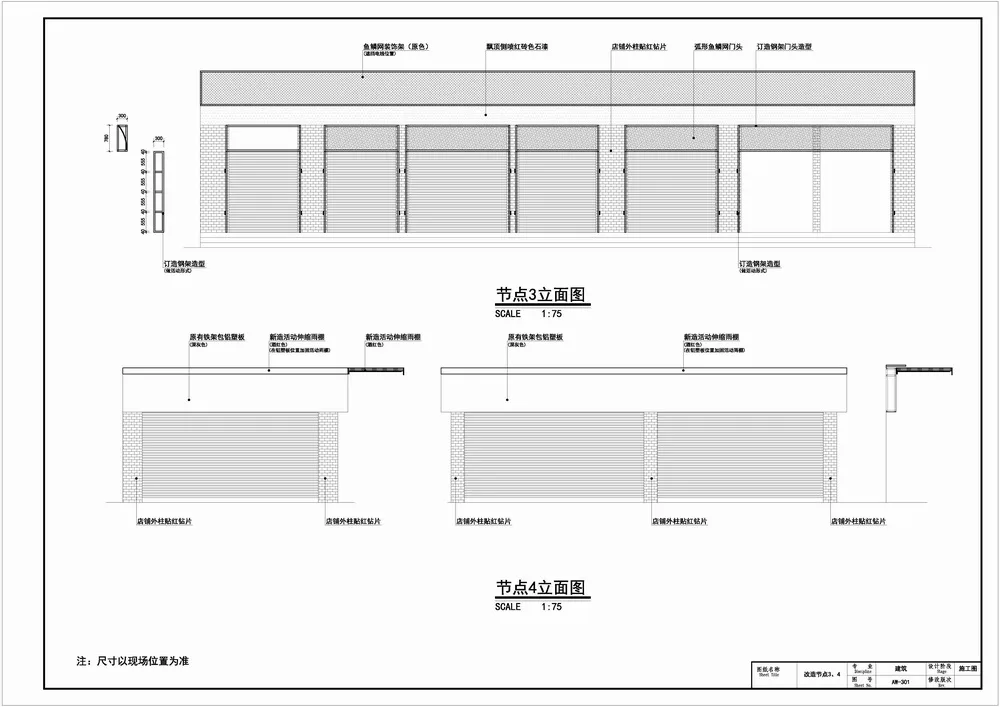
Project Information
Design Unit: Aoming Studio, Shanghai Jiao Tong University
Project Location: Guigang Avenue, Yuexiu District, Guangzhou
Building Area: 400 square meters
Project Timeline: September 2020 – July 2021
Project Creators: Zhang Haiao, Xu Hang
Design Team: Qu Jianji, Yang Ge, Pan Wenqi, Xiao Ningfei, Liu Jingru, Qian Kun, Wang Weiya
Owner: Guangzhou Shenggao Investment Co., Ltd
Construction Unit: Guangzhou Panyu Dashi Construction Engineering Co., Ltd
Membrane Structure Supplier: Ferrari Technology Fabric x Guangzhou Kenobier
Authors: Xiao Ningfei, Dong Yi
Photography: Guan Jiangchi (Guangzhou Lichi Vision)















Must log in before commenting!
Sign Up