
As winter approaches, migratory birds begin their annual journey, and the largest Guanting Reservoir National Wetland Park near Beijing becomes a vital sanctuary for hundreds of these birds. Within this park lies the Huailai Wetland Museum, dedicated to celebrating and preserving this unique ecosystem.
The Guanting Reservoir National Wetland Park hosts an impressive diversity of wildlife, including 236 species of terrestrial vertebrates and 191 bird species. The Huailai Wetland Museum’s design focuses on minimizing disturbance to the wetlands by integrating buildings harmoniously with nature. Employing a circular floating structure that suspends the buildings above the wetland, the design incorporates low-energy architecture, self-sustaining water systems, and prefabricated construction. This approach follows the principles of “micro impact, zero emissions, and full circulation” to create a nurturing habitat for migratory birds on the wetlands.
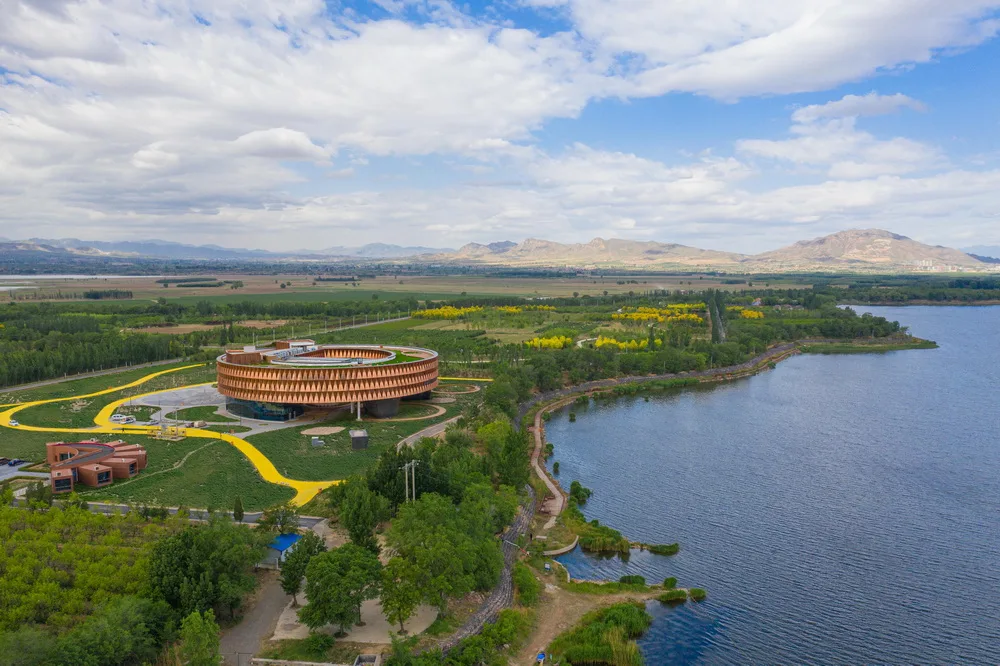
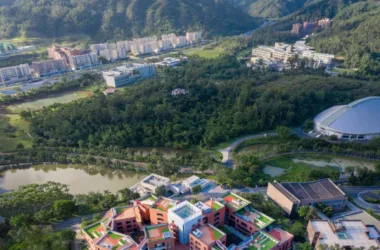
△ Aerial View of the Museum
Green Ecological Nest for Migratory Birds
The Huailai Wetland Museum is a multifunctional facility that showcases the wetland ecosystem, the history and culture of Huailai, the construction process of Guanting Reservoir, science education, and special exhibitions.
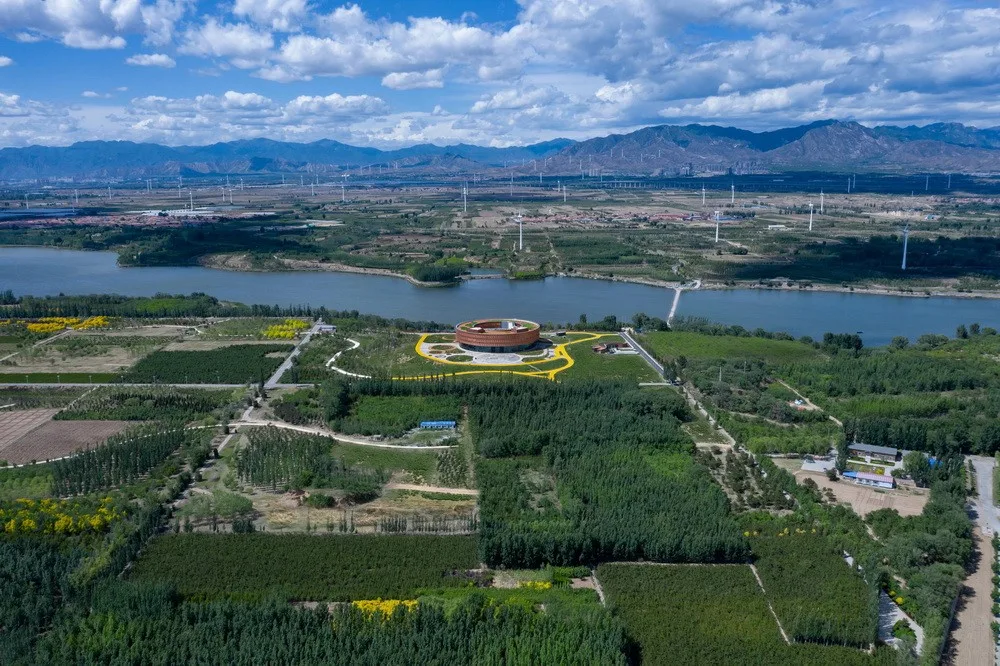
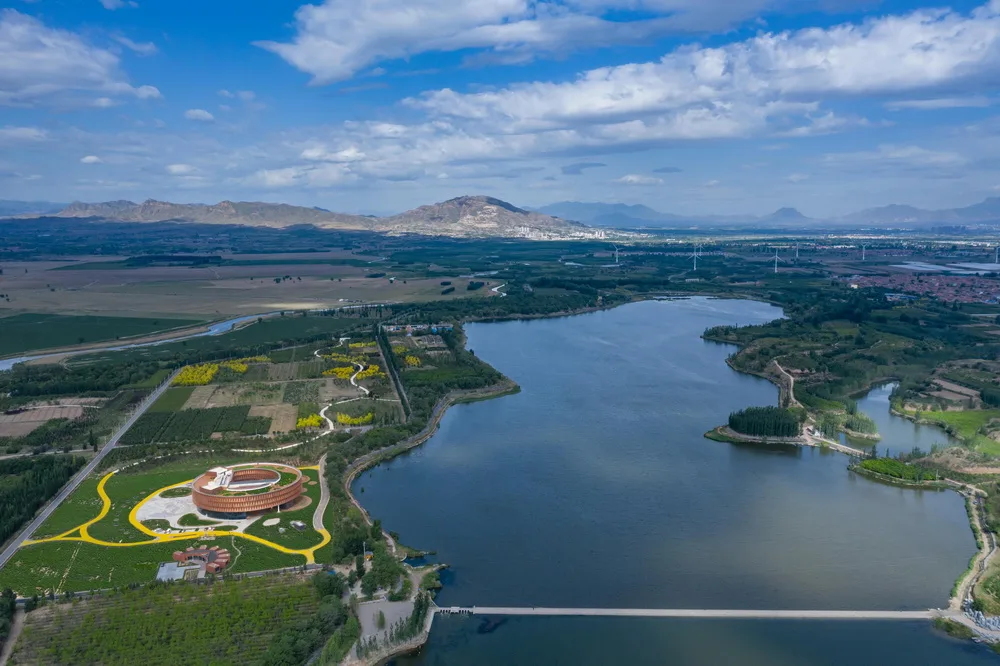
△ Museum Aerial Views
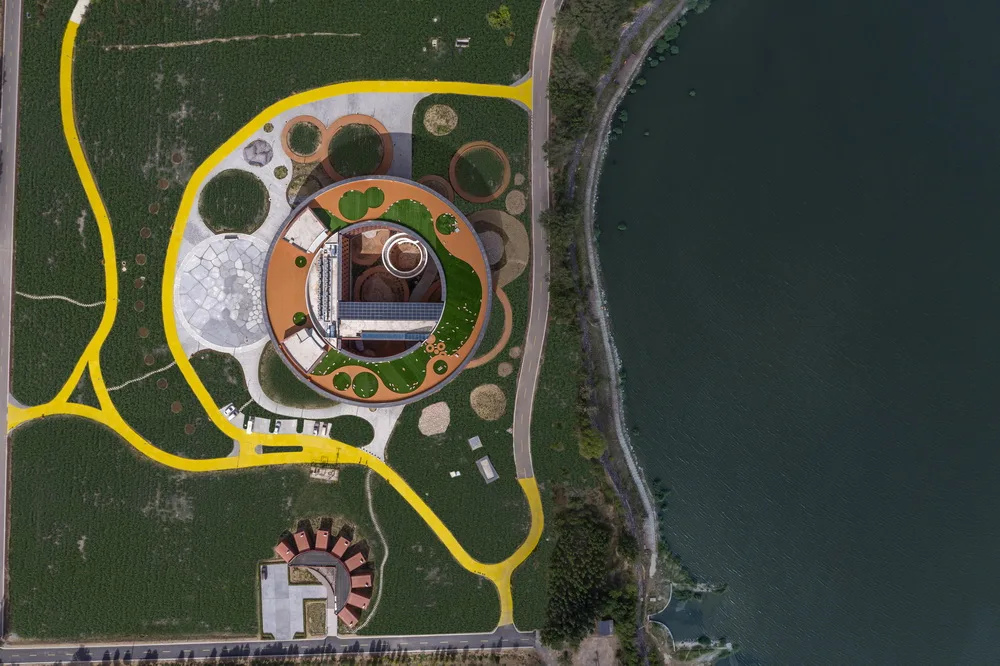
△ Top View of the Museum
The museum’s structure features a steel frame combined with a colored thin-film photovoltaic system. It includes solar heating and water supply systems, a panoramic rooftop garden with rainwater wetlands, and intelligent building controls paired with indoor air quality monitoring. The outdoor layout embraces the “sponge city” concept, emphasizing technology, energy efficiency, environmental protection, and sustainability.
Micro Impact
The museum building is elevated to protect the natural wetland below, with wetland landscapes restored on the roof to compensate for any disturbance, achieving zero net wetland loss. This design minimizes the museum’s footprint within the wetland park.
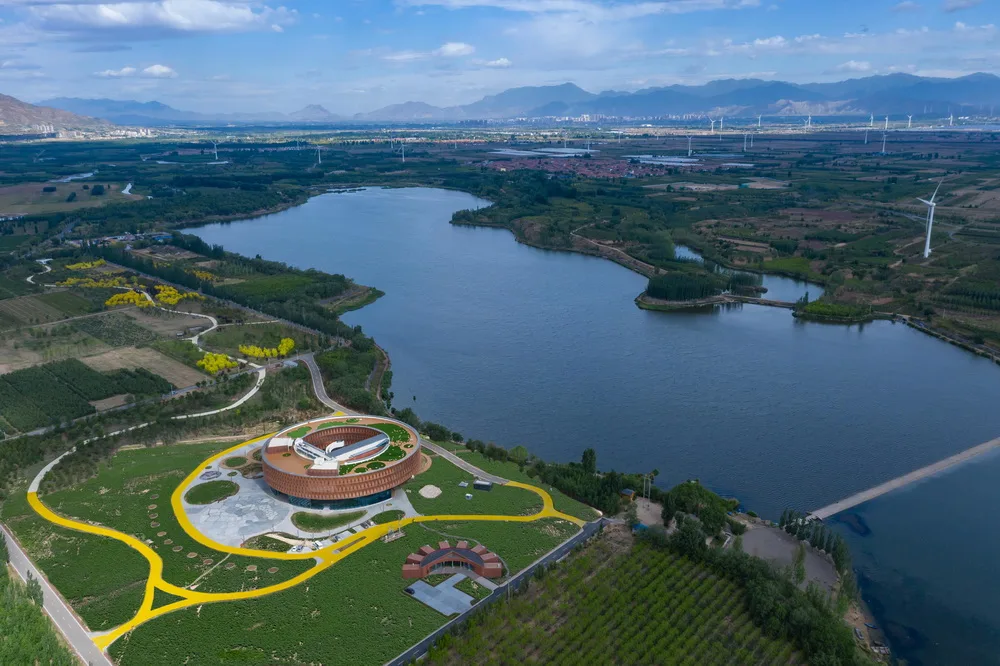
△ Museum Aerial View
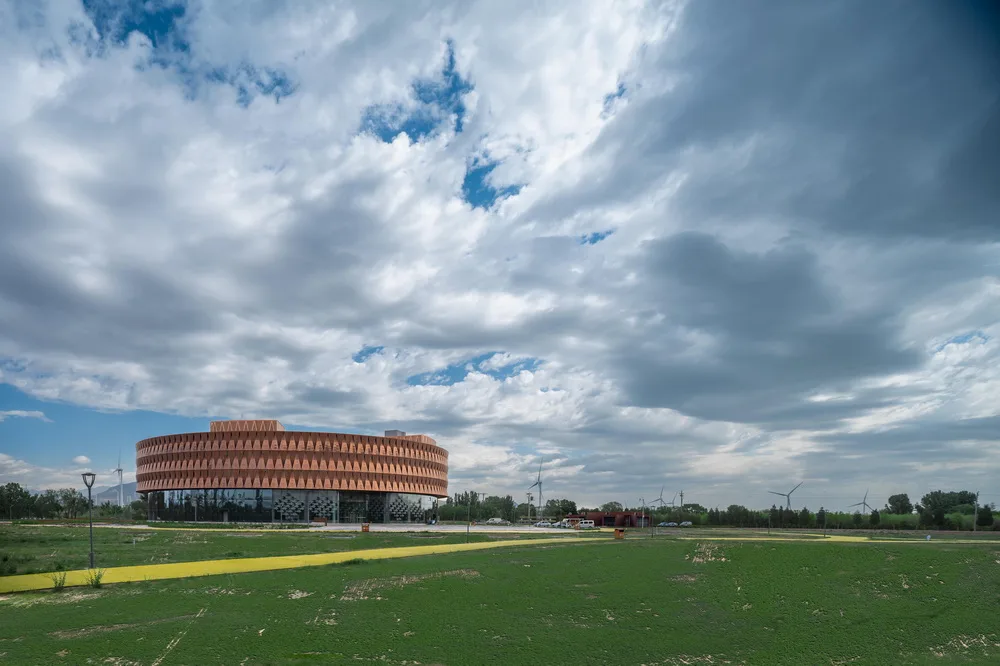
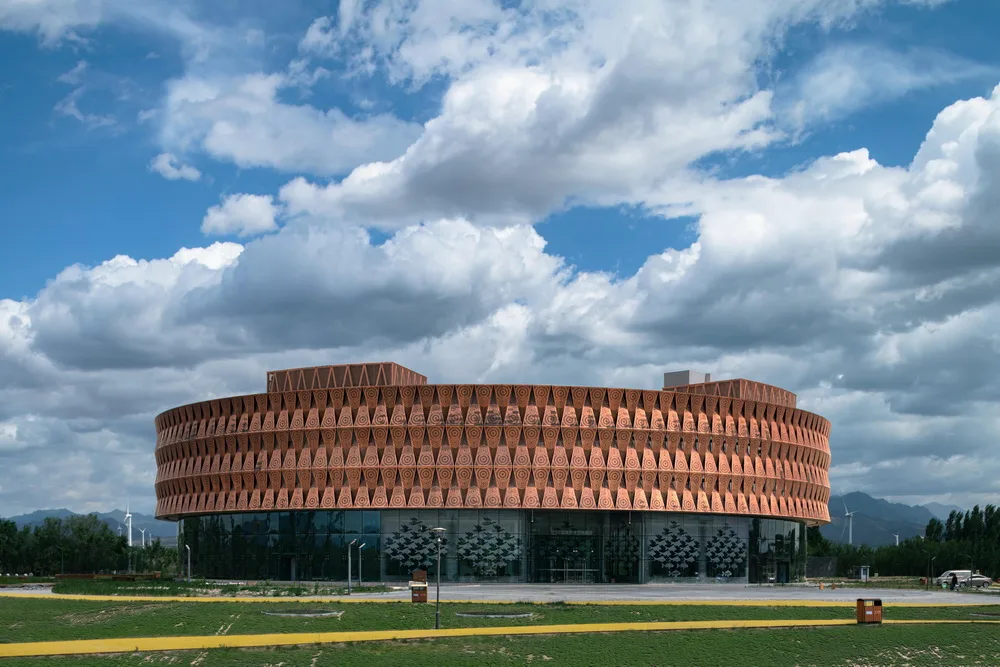
△ Main Structure of the Museum
Low-impact development strategies such as rain gardens and artificial wetlands, combined with landscape-based sewage purification systems, address water treatment challenges without relying on traditional sewage pipelines.
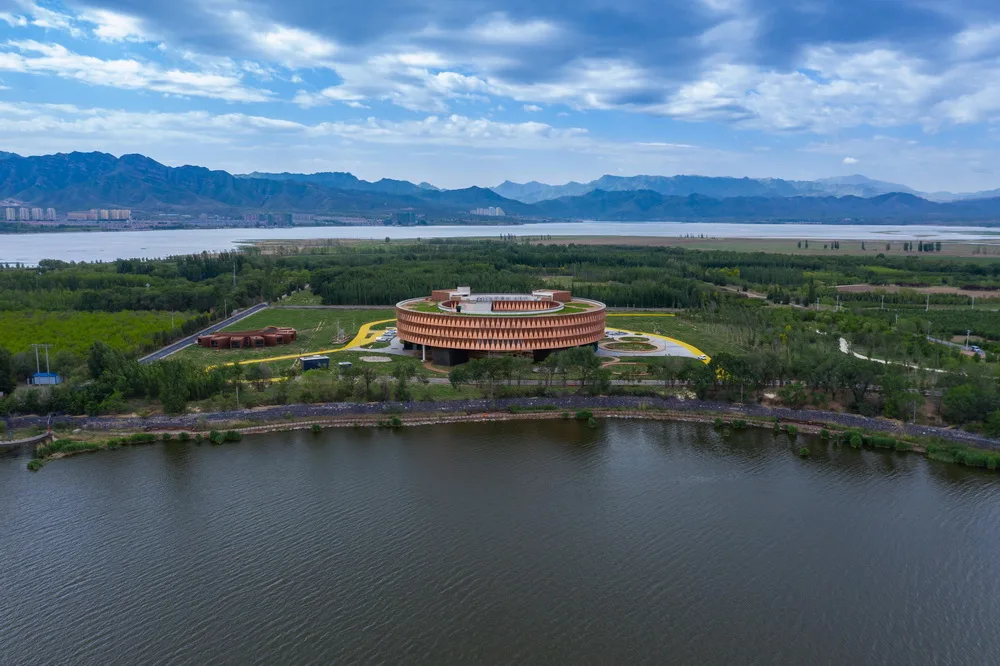
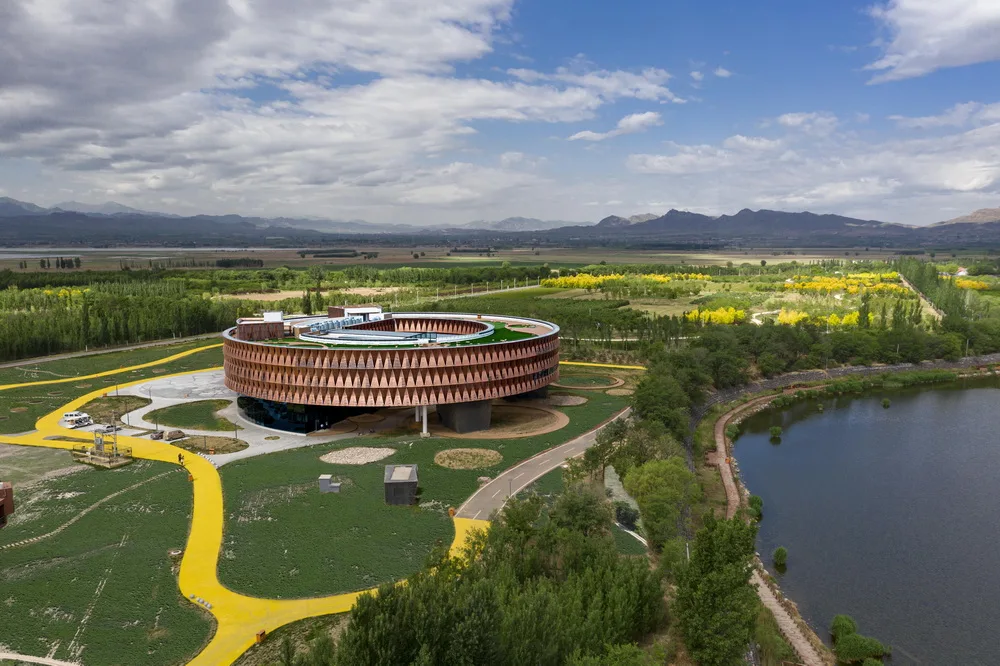
△ Museum Aerial Views
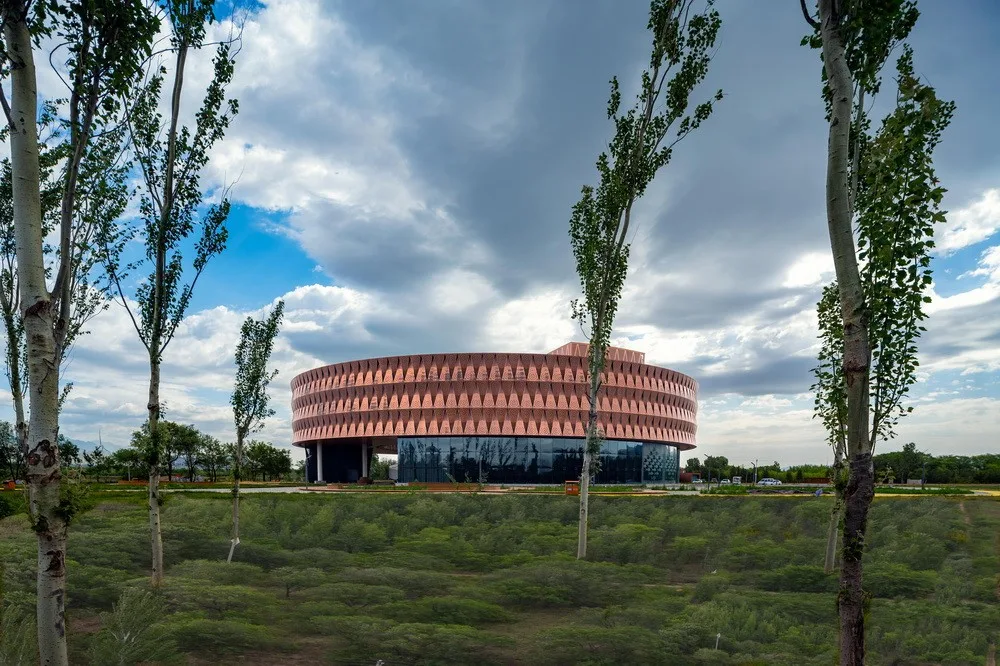
△ Main Structure of the Museum
The compact circular design supports passive low-energy architecture. Prefabricated steel construction enables 20% of materials to be recyclable. The copper cladding, a durable and healthy material with a 100-year lifespan, develops a natural patina over time. The glass curtain wall includes patterns that reduce bird collisions.
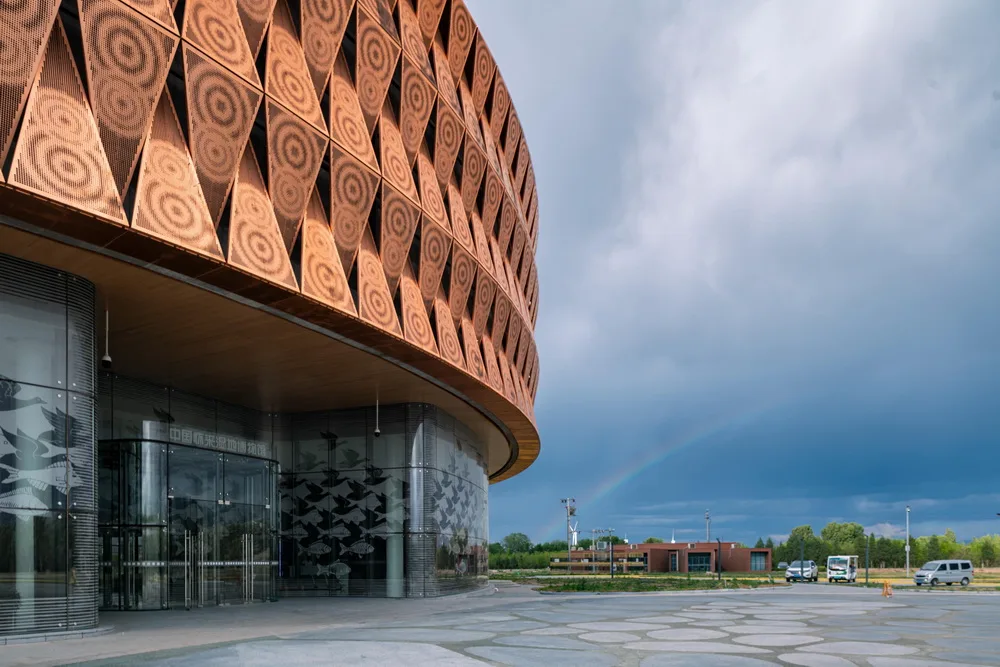
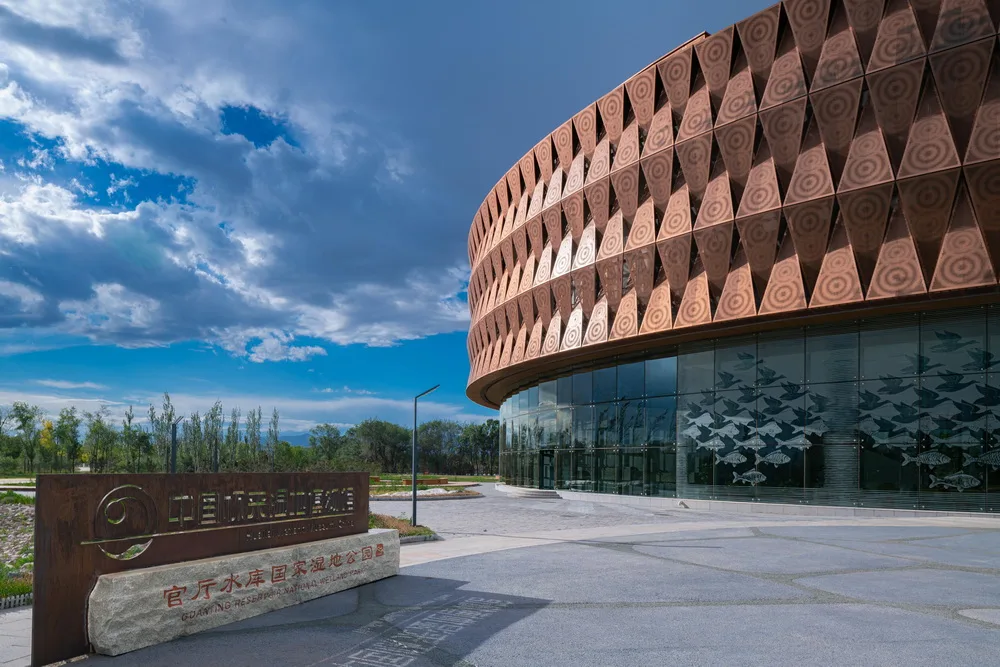
△ Glass Curtain Wall Pattern (Inspired by Escher’s “Fish and Bird”) to Prevent Bird Collisions
Full Cycle
The building implements three integrated circulation systems—water, material, and energy cycles—to achieve zero emissions and pollution, safeguarding the wetland environment.
Water Cycle – Sponge Landscape
Rainwater is collected through low-impact development features like rain gardens and artificial wetlands. Reclaimed water is treated onsite, enabling water recycling. Due to the absence of sewage pipelines, a buried system filters and purifies wastewater, ensuring no sewage is discharged into the wetland ecosystem.
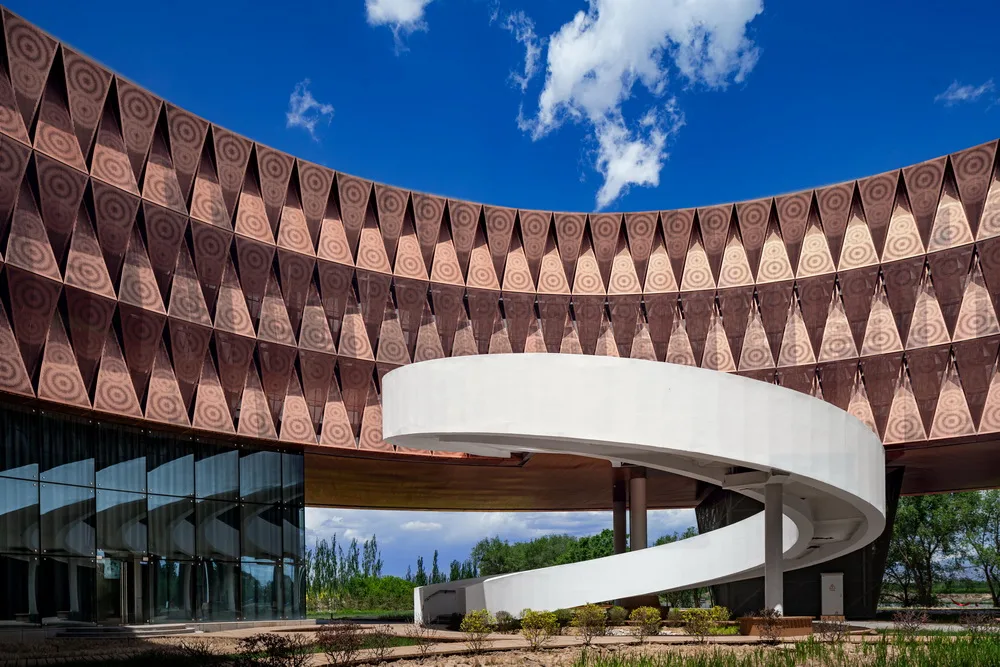
△ Wetland Compensation with Introduced Wetland Landscapes
Material Cycle – Prefabricated Steel Structure and Recyclable Materials
The steel prefabricated assembly uses standardized skin units clad with copper plates featuring a ripple pattern. Over time, the copper oxidizes from golden yellow to green, blending seamlessly with the environment.
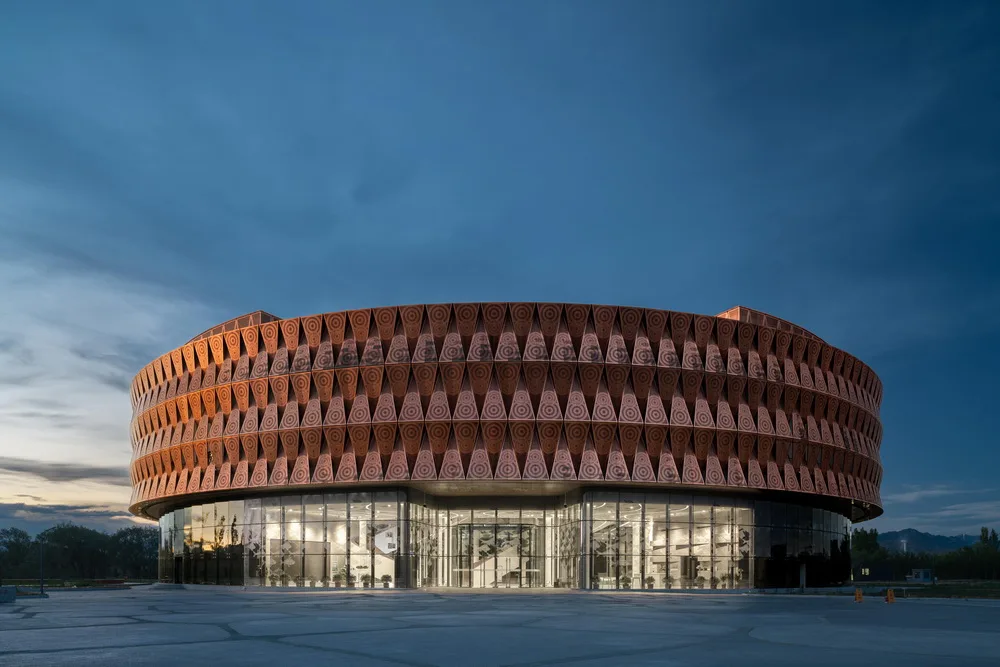
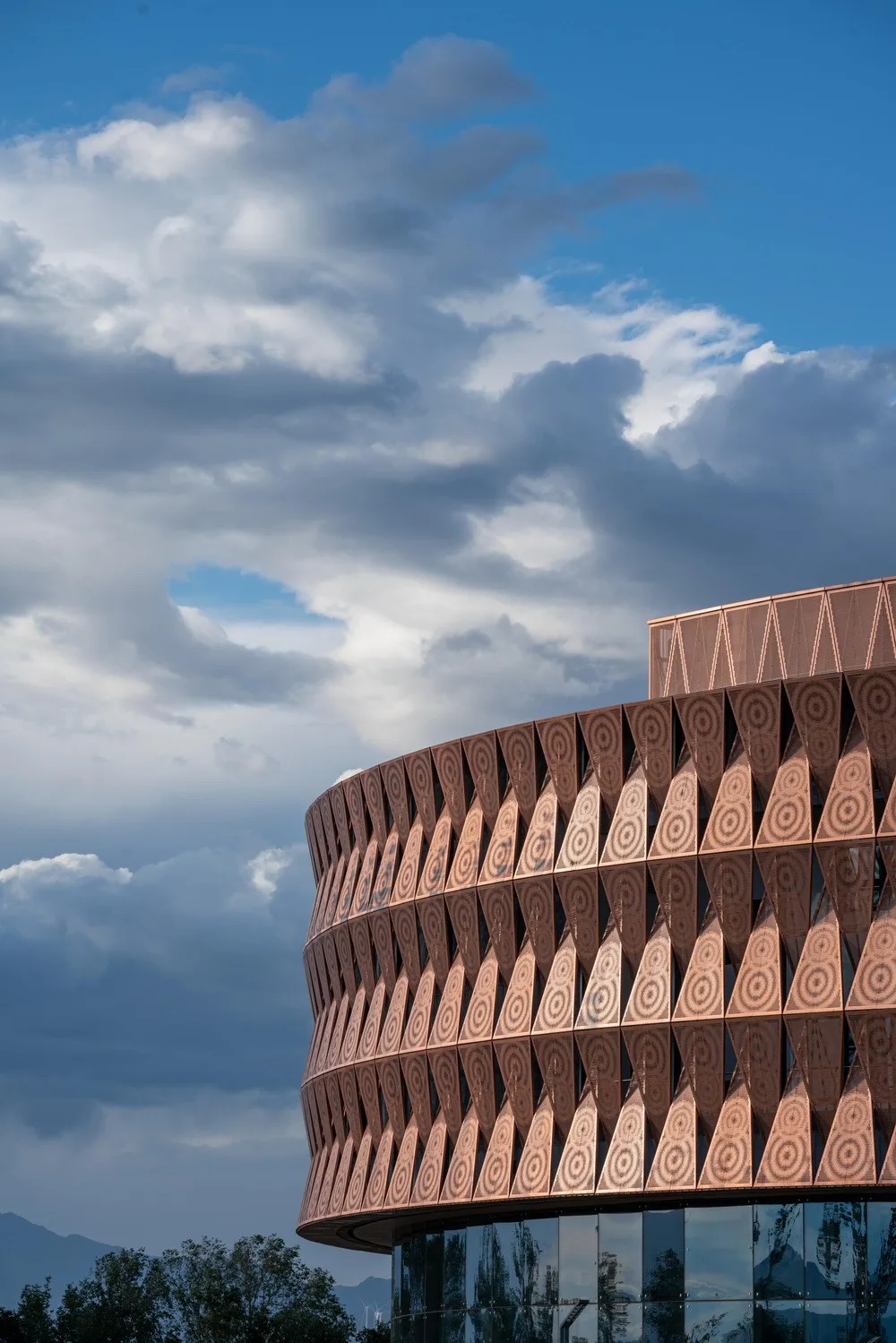
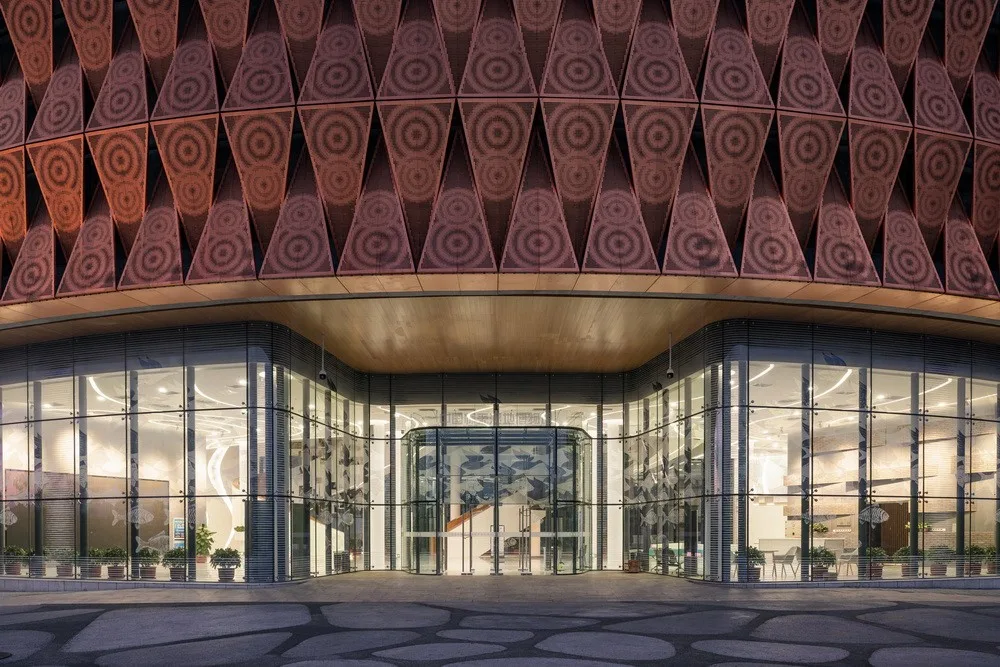
The gap between the outer skin and the building, as well as the outdoor ceiling, is designed to become a natural bird’s nest.
For the cold climate, a circular shape with a low surface-to-volume ratio was chosen to enhance insulation. High-performance enclosure and curtain wall systems reduce window openings to minimize energy loss. The building utilizes a VRV system powered solely by the wetland park’s electricity supply and employs LED lighting. Additionally, a thin-film photovoltaic corridor generates renewable energy.
Energy Cycle – Low Energy Building
Natural lighting is maximized in public spaces and exhibition halls through curtain walls that also provide scenic views. The entrance features an “8”-shaped staircase designed with dynamic lighting simulations to optimize the spatial atmosphere, creating a distinctive visitor experience.
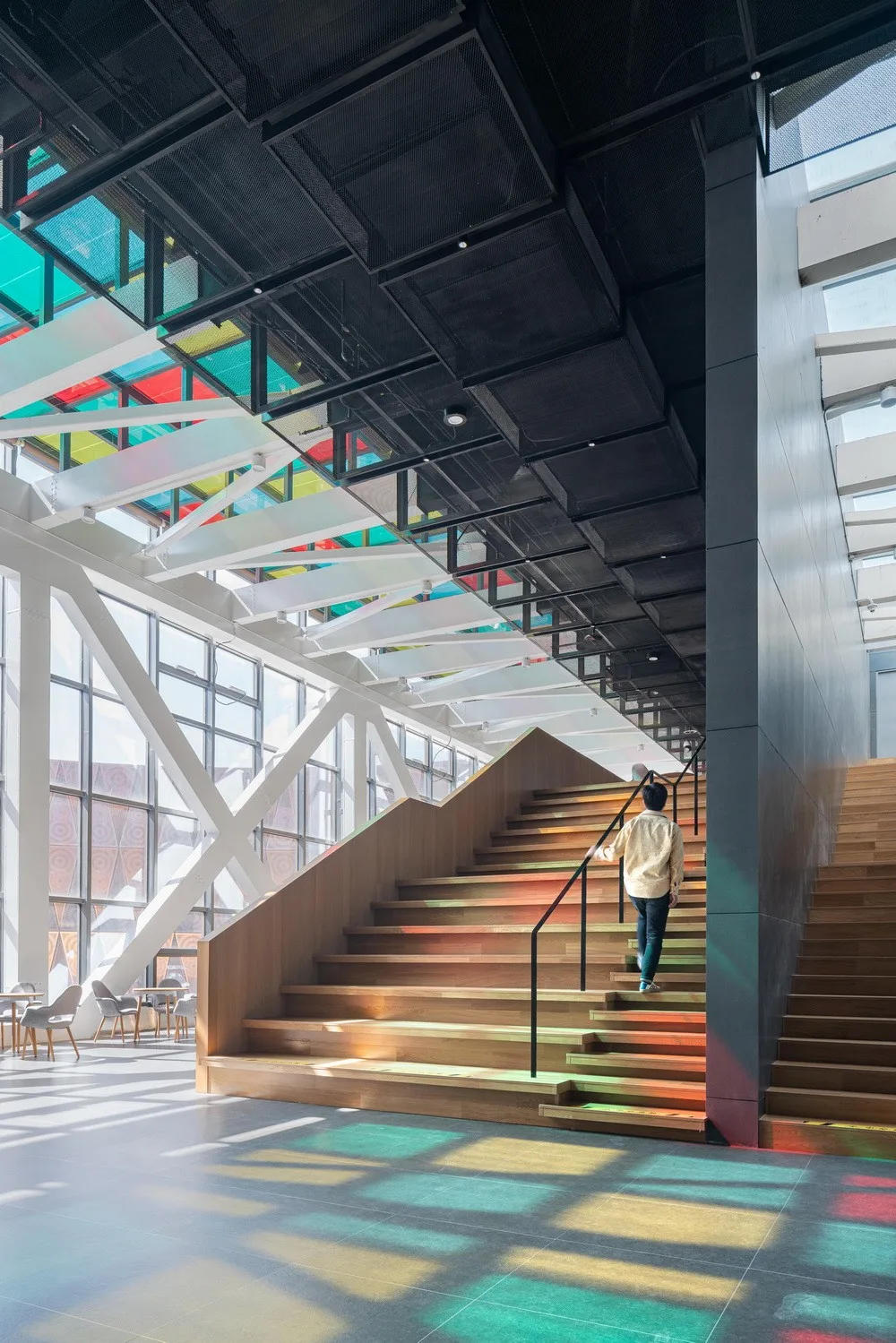
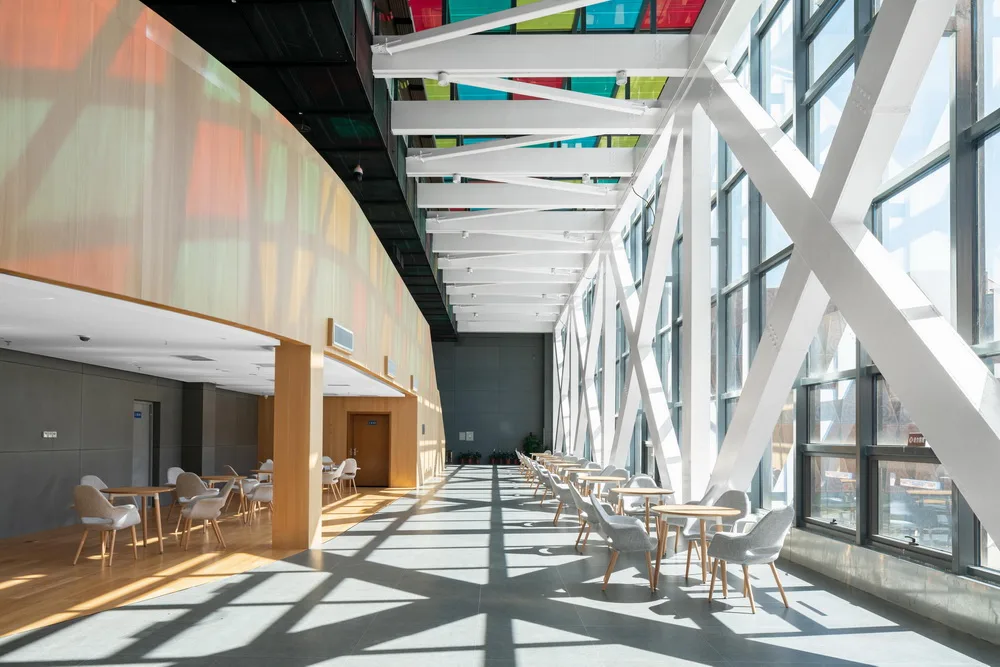
△ Colorful Thin-Film Photovoltaic Corridor Bridge
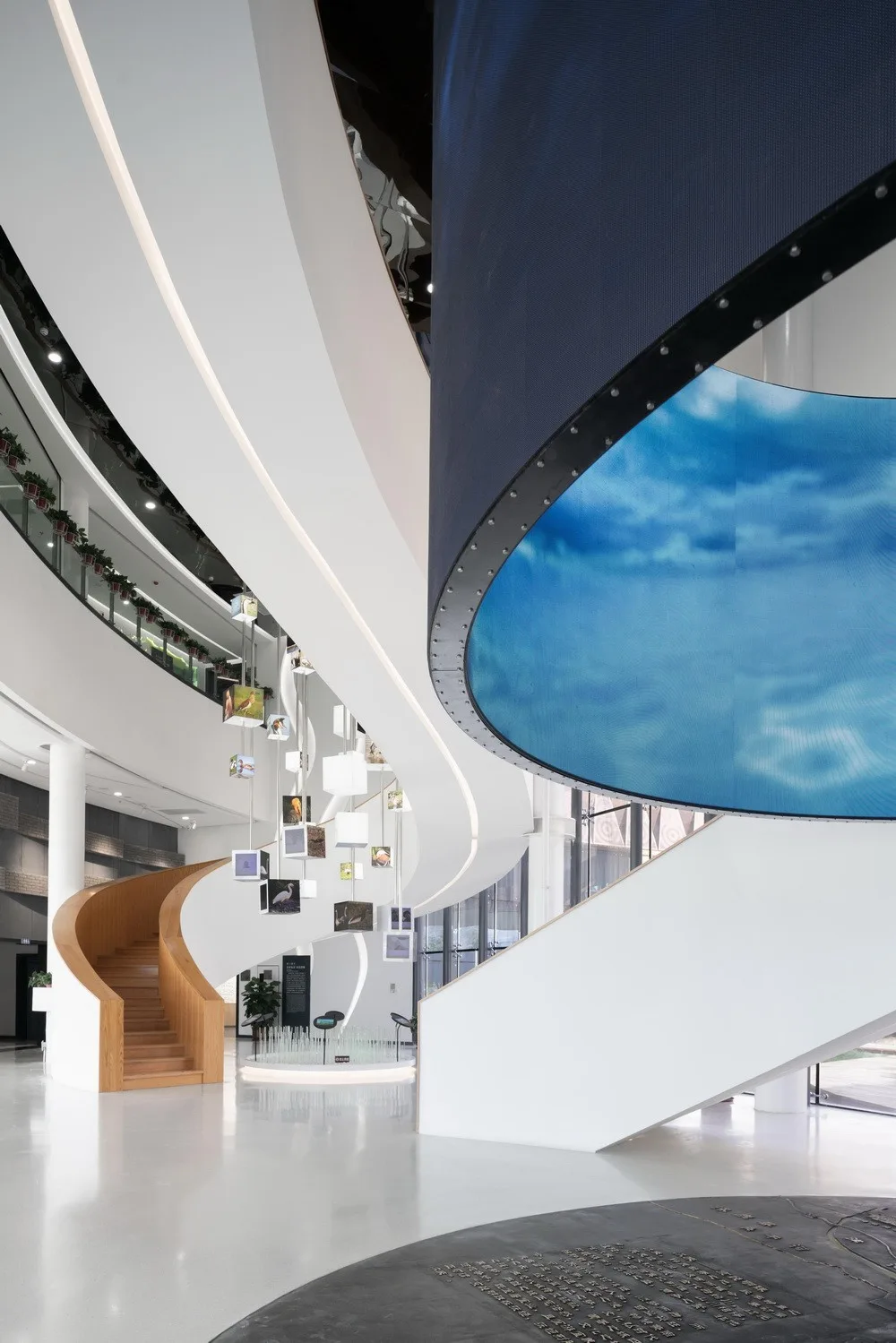
△ Entrance Atrium Lighting Simulation
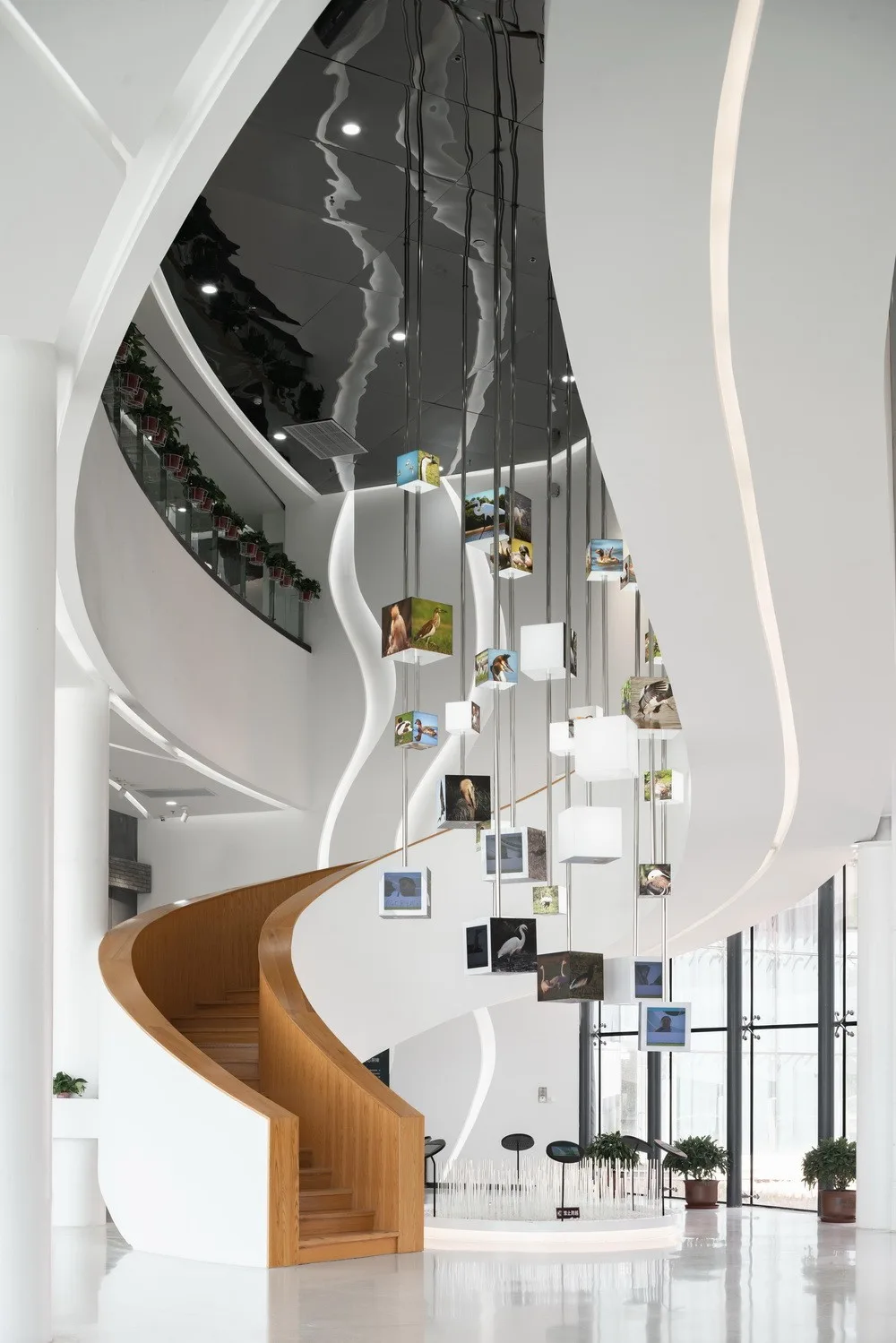
△ Entrance Atrium “8” Staircase
The building’s public spaces blend natural light, vibrant photovoltaic corridors, and the striking main staircase to create an inspiring architectural environment. The exhibition halls maintain visual connections with the surrounding wetlands, making the vast natural landscape the museum’s most spectacular exhibit.
Project Information
Project Name: Huailai Wetland Museum, China
Building Area: 8,446 square meters
Location: Guanting Reservoir National Wetland Park, Huailai, Zhangjiakou, China
Design Firm: Tianyou Design Group
Architects: Ren Jun, Jiang Nan, Fu Yingjun, Guo Runbo, Chen Ran, Di Yang
Structural Engineers: Wang Zhiyong, Meng Lesa
Equipment Engineers: Liu Bing, Chen Jian, Yang Hui
Construction Unit: Huailai County Forestry Bureau, MCC Tiangong Group Co., Ltd
Construction Drawing Design: Tianyou Design Group, Beijing Zhongwai Construction Architectural Design Co., Ltd
Landscape Design: Tianjin Huafang Zhujing Environmental Landscape Design Co., Ltd
Curtain Wall Design: Shenzhen Jiaxin Decoration Design Engineering Co., Ltd
Exhibition Design: Shanghai Fengyuzhu Cultural Technology Co., Ltd
Copper Curtain Wall: Shanghai Huayuan Composite New Materials Co., Ltd
Park Planning: China Academy of Urban Science Planning and Design
Project Photography: Creating Culture with Heart















Must log in before commenting!
Sign Up