
Background and Original Appearance: Aesthetic-Led Rural Revitalization and the “Three Nos” of Ordinary Villages
Xiuwu County, located in Jiaozuo City, Henan Province in northern Henan, has recently embraced a rural revitalization approach driven by aesthetics, achieving remarkable progress.
Zaiwan Village, part of Qixian Town, is a typical flatland village relocated in the 1960s. Its spatial layout resembles a fishbone, lacking historical buildings or distinctive scenery. The village borders a national highway to the west, while hills on the east belong to restricted military land. Zaiwan has no remaining arable land or collective economy. Villagers mostly work in the Yuntai Mountain tourism service sector or nearby mines. Though not impoverished, the community lacks long-term internal motivation.
Facing this “three no’s” condition—no scenery, no style, no industry—the challenge was to improve the village without resorting to superficial decoration, instead creating a new identity within limited costs.
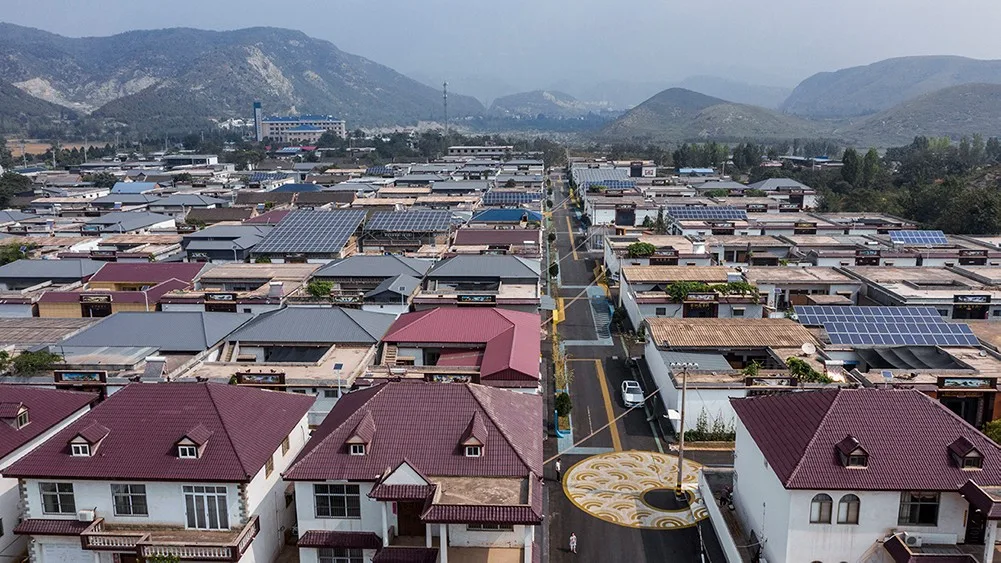
A bird’s-eye view of Zaiwan Village, depicting a truly ordinary rural landscape © Jin Weiqi
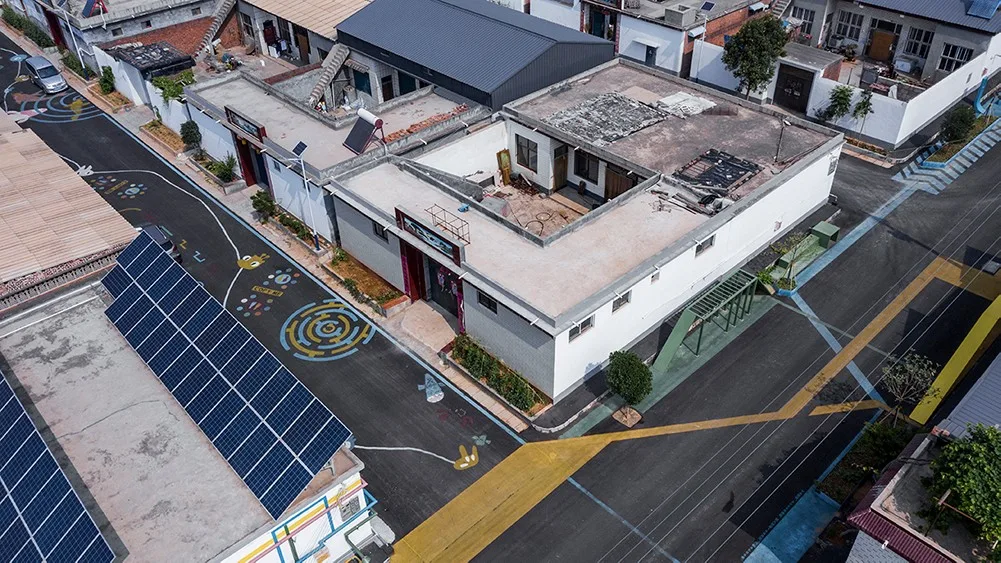
The main street and alleys are painted with various artistic techniques © Jin Weiqi
Title: The Living Museum of Northern Henan Residential Buildings in 40 Years of Reform and Opening Up
The architect observed clear chronological layers in the village’s residential buildings, forming a “sliced” pattern. Numerous signs of spontaneous construction, such as steel sheds and photovoltaic panels, contribute to a chaotic yet authentic atmosphere. This living museum captures the evolution of residential buildings in northern Henan over four decades. At a deeper level, these traces reflect residents’ independent pursuit of a better life post-reform, alongside government efforts to improve livelihoods.
This project aims to clarify and systematize this organically developed sample through aesthetic design.
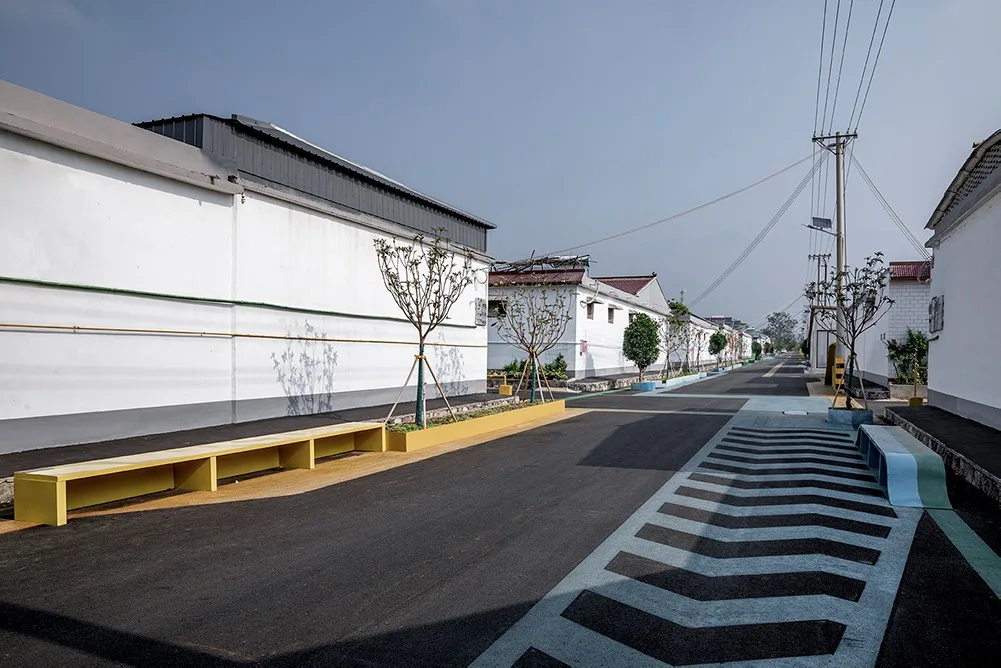
△ Upgraded Main Street © Jin Weiqi
Planning and Design Approach: Point-Line-Surface Structure and Implementation Path
The design process involved several phases: first, preserving the village’s texture and self-built traces to establish the foundation of a living museum. Next, enhancing environmental sanitation, village roads, house fronts and backs, lighting, and more to improve living conditions. Finally, creating quality routes and spatial nodes.
Infrastructure upgrades included replacing white cement roads with black asphalt, increasing greenery, grounding weak electrical currents, installing photovoltaic streetlights, treating bare walls, and concealing sewage pipes. The boutique route serves as a “timeline” linking 40 years of village construction, featuring artistic treatments on pavement, walls, and other elements. Street furniture and play installations transform the route into a vibrant public space. Key nodes include the Yubei Residential Exhibition Hall, village signage, renovated health center facade, the “Spring Warm Blossoms” art installation, and the “Wedding and Fish” square—forming a node sequence anchored by the village committee in the south.
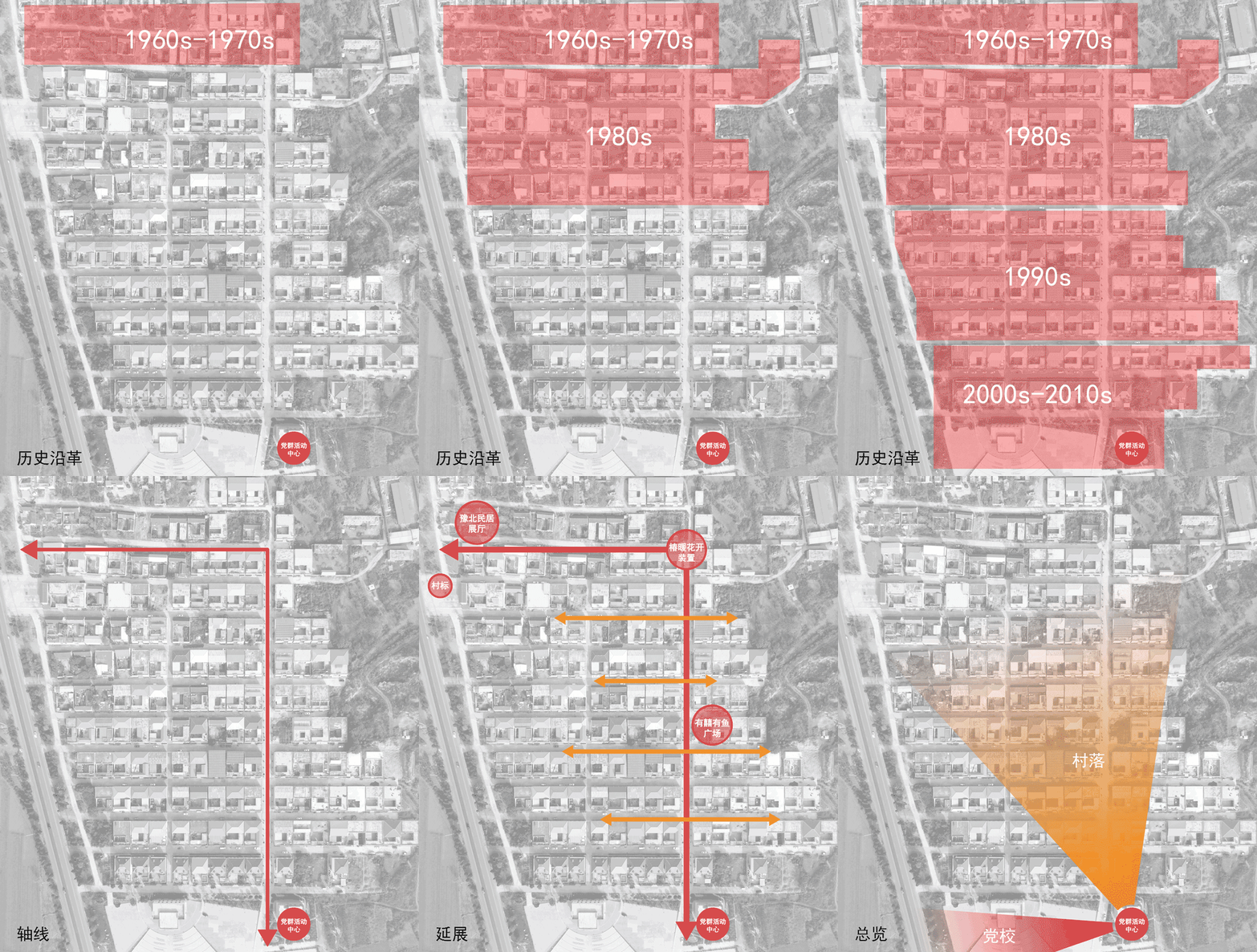
△ Schematic diagram of planning structure © Sanwen Architecture
Narrative Landscape and Public Art: Enhancing Spatial Quality with Storytelling
The newly designed landscape and public art present a strong narrative, guiding visitors through this unique living museum via four elements: pavement, walls, installations, and street furniture.
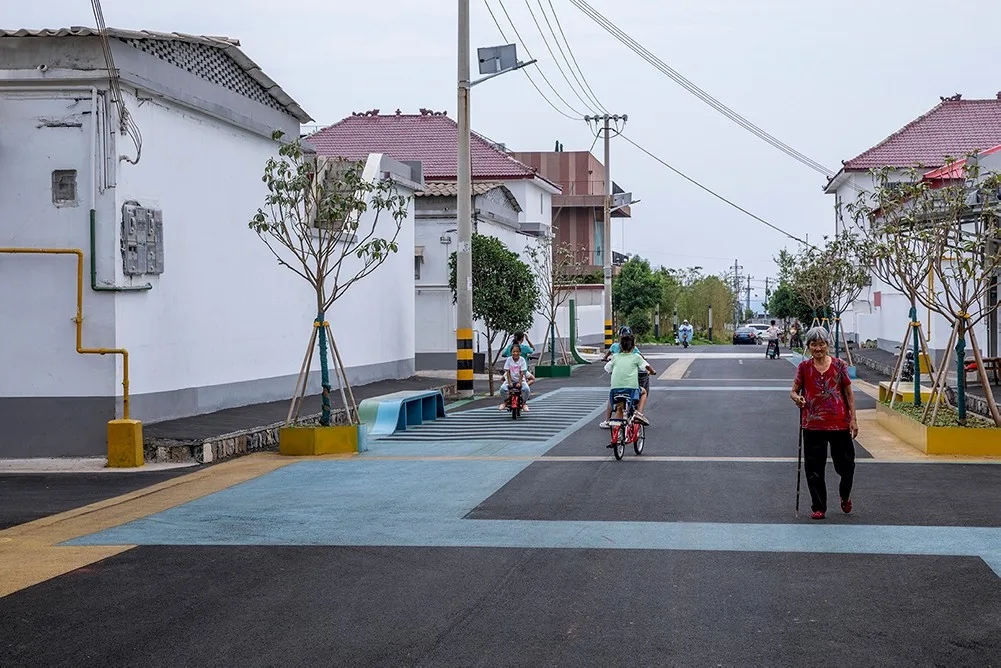
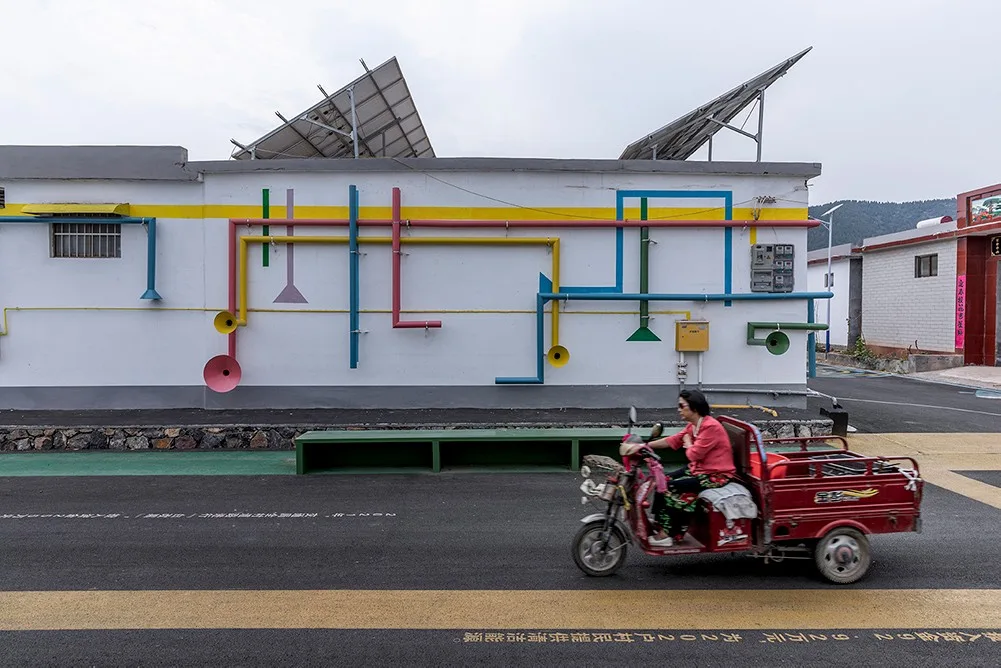
△ Ribbon, explanatory text, and installations collaborate with the residential base to create a narrative landscape along the main street © Jin Weiqi
The main north-south street pavement features three-color stripe graphics: yellow for gas pipelines, green for weak electrical lines, and blue for sewage pipes, accompanied by explanatory text. This design transforms the “scars” of multiple pipeline installations into artistic storytelling. Street furniture mirrors these colors and continues the narrative, integrating with pavement stripes. Streets and alleys are easy to navigate, enhanced with children’s drawings and playful patterns such as hopscotch and mazes, creating village playgrounds.
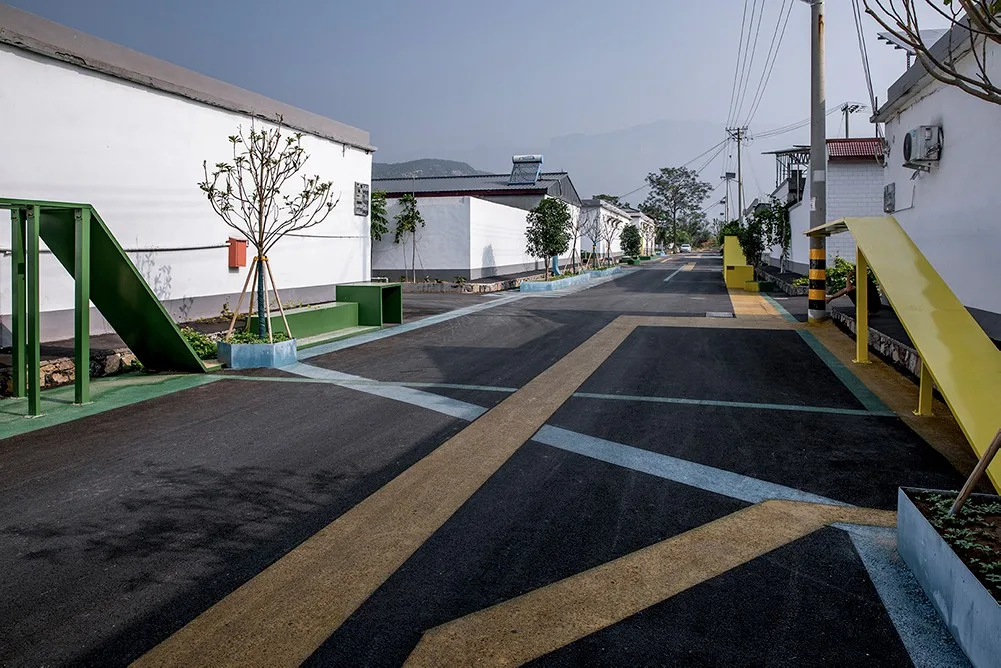
The main street pavement and street furniture intertwine and parallel in dynamic ways © Jin Weiqi
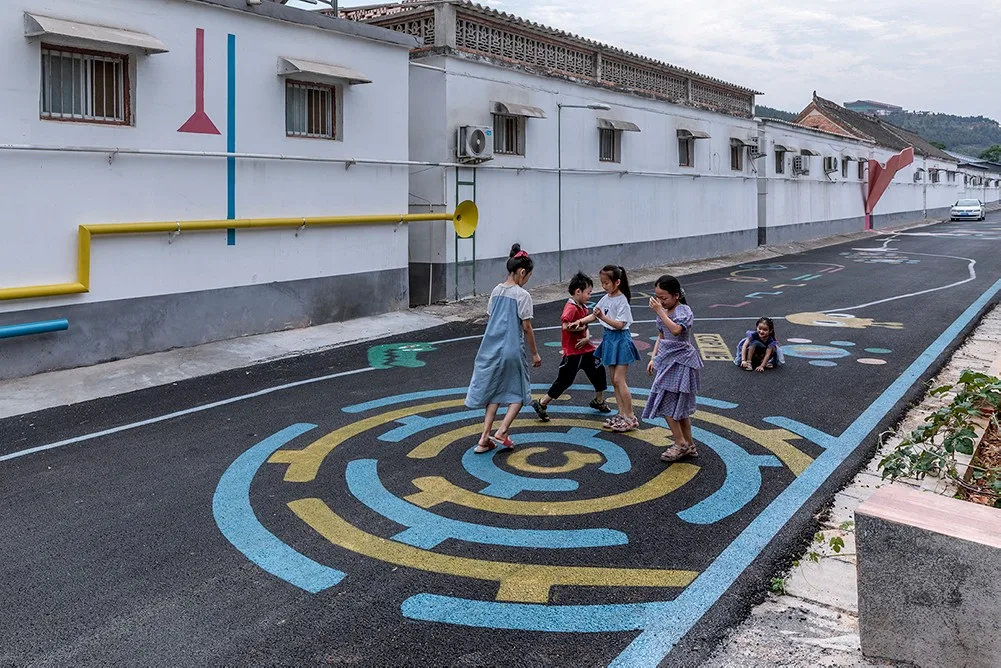
Maze patterns adorn streets and roads, inviting exploration © Jin Weiqi
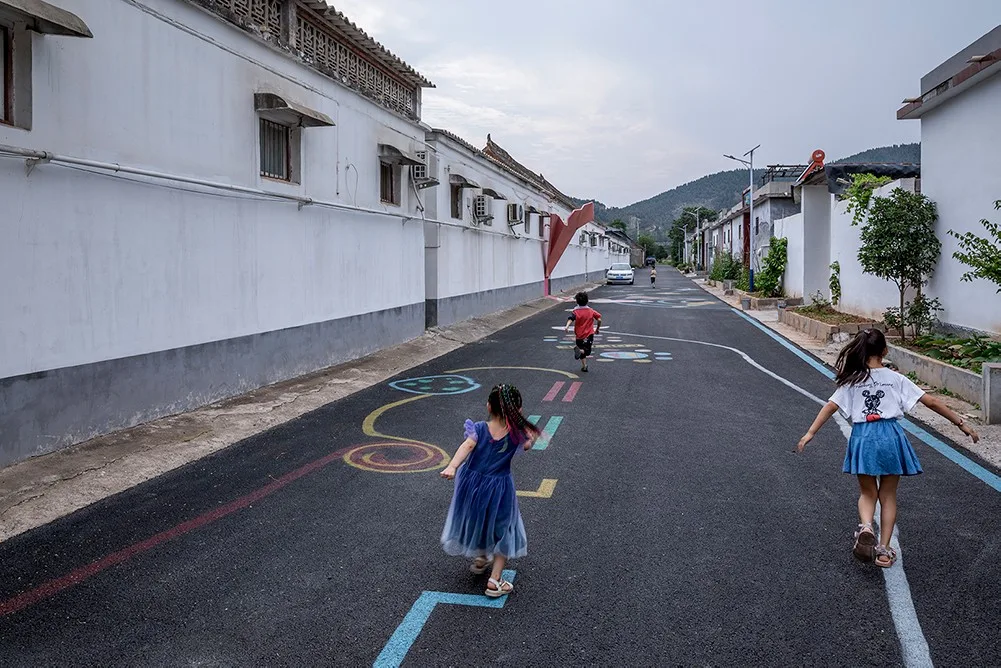
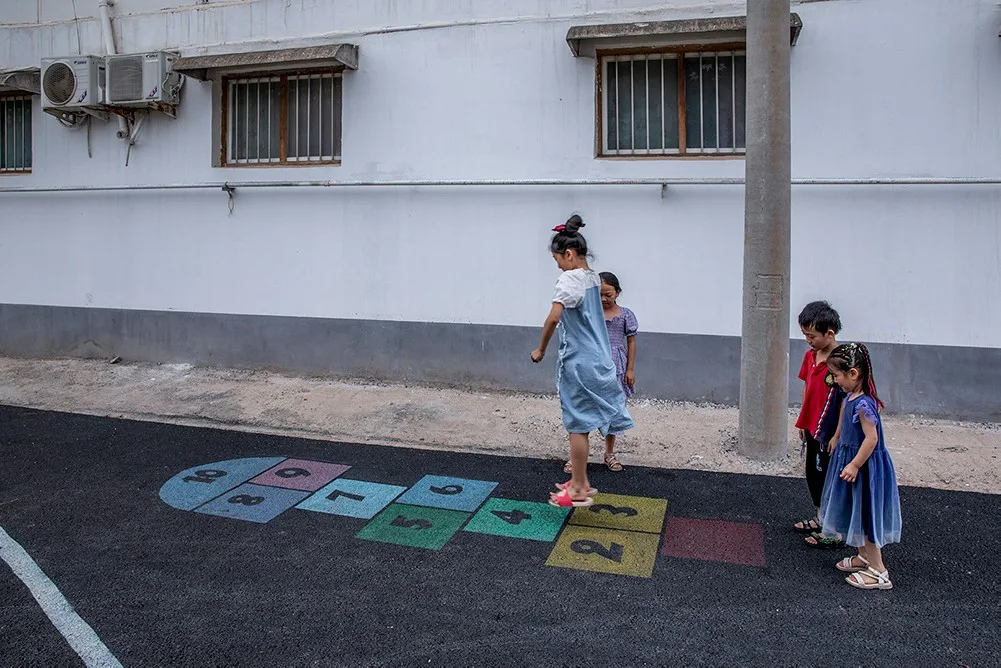
Children play and run along the painted ground patterns © Jin Weiqi
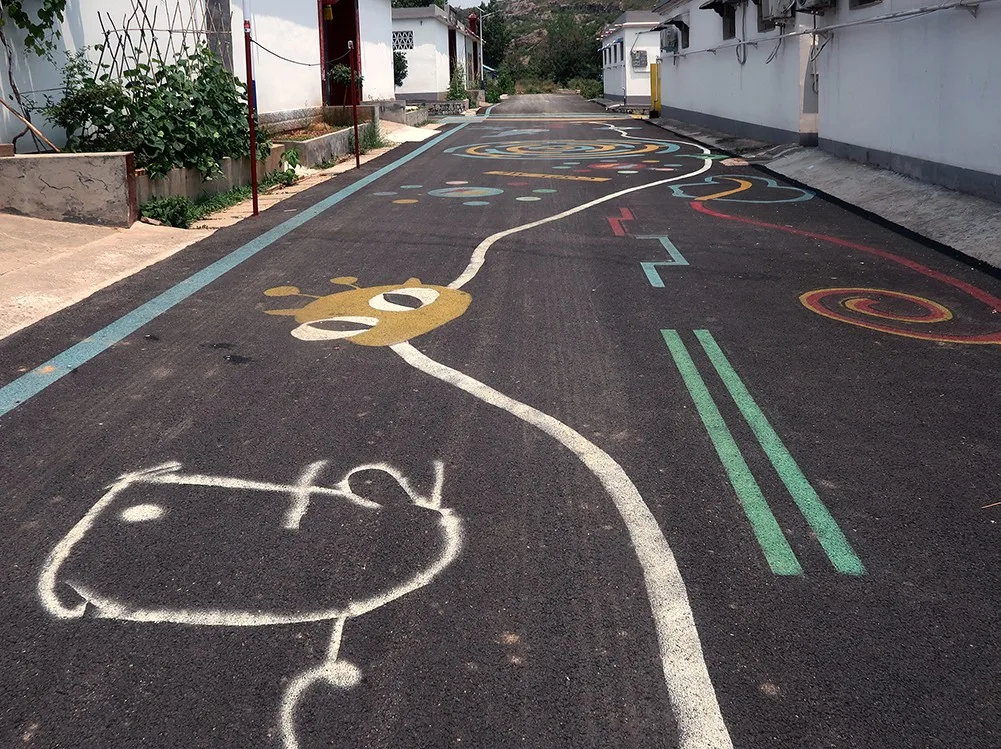
A mouse motif hand-painted by local children at their doorstep © Jin Weiqi
The wall murals emphasize storytelling and playfulness. For the street lamp murals, the architect noticed numerous lamps protruding from building walls. Murals depicting lighting and lamp posts were painted at these points, symbolizing the insulation upgrade and lamp shielding efforts.
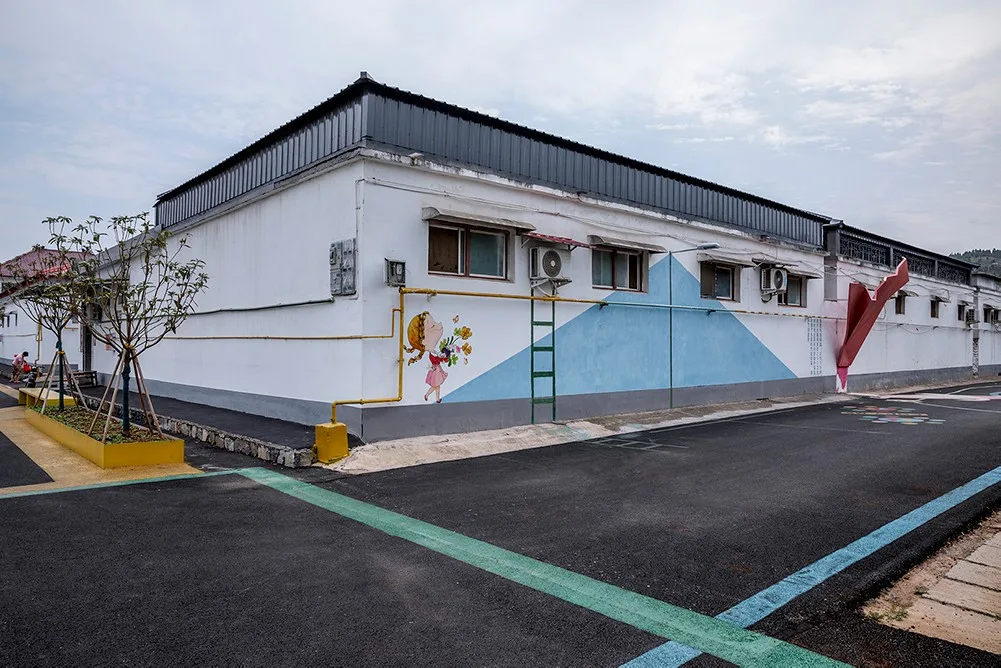
The street lamp-themed mural reveals the story of external insulation upgrades © Jin Weiqi
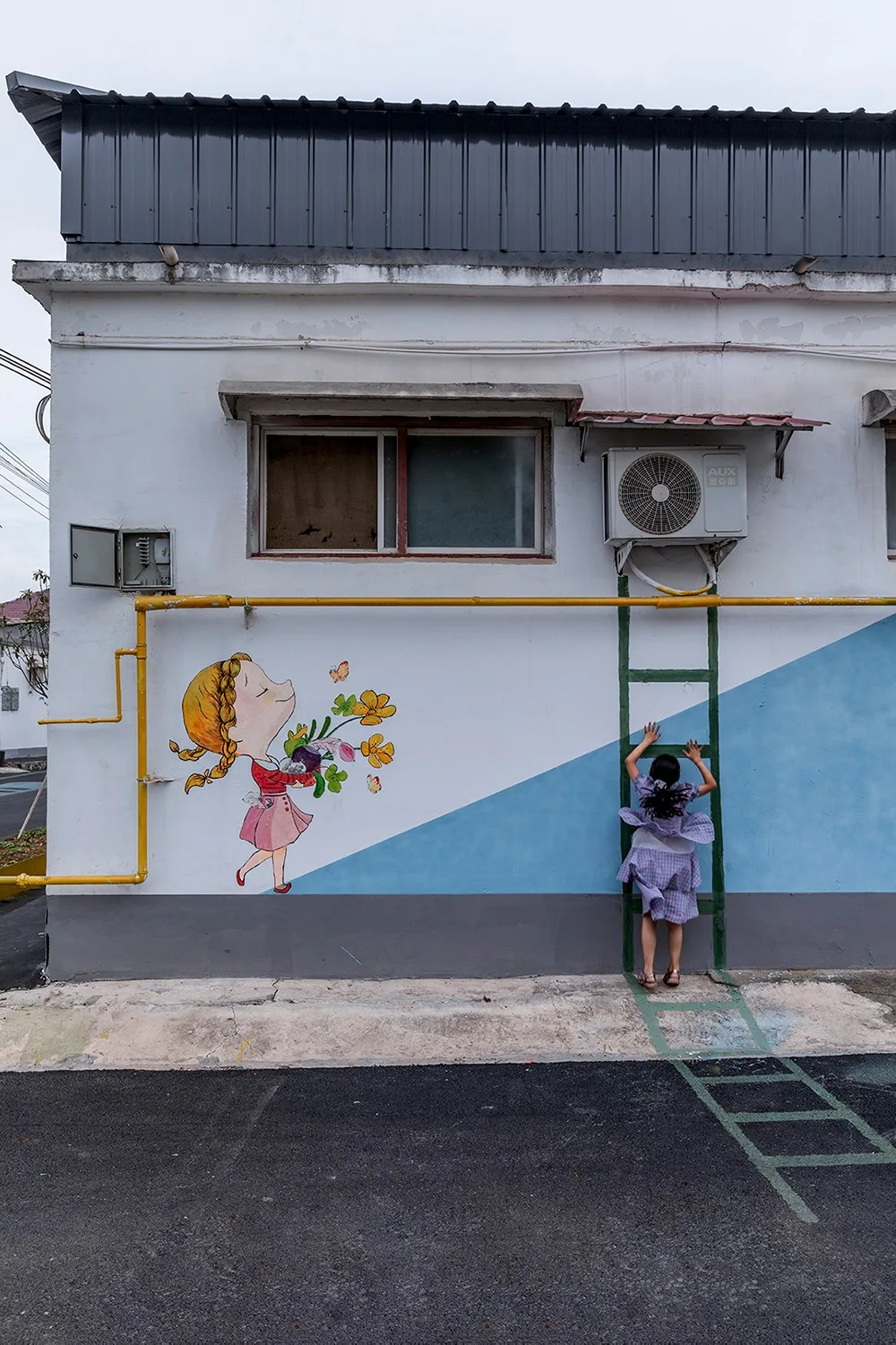
△ Children interacting with the wall paintings © Jin Weiqi
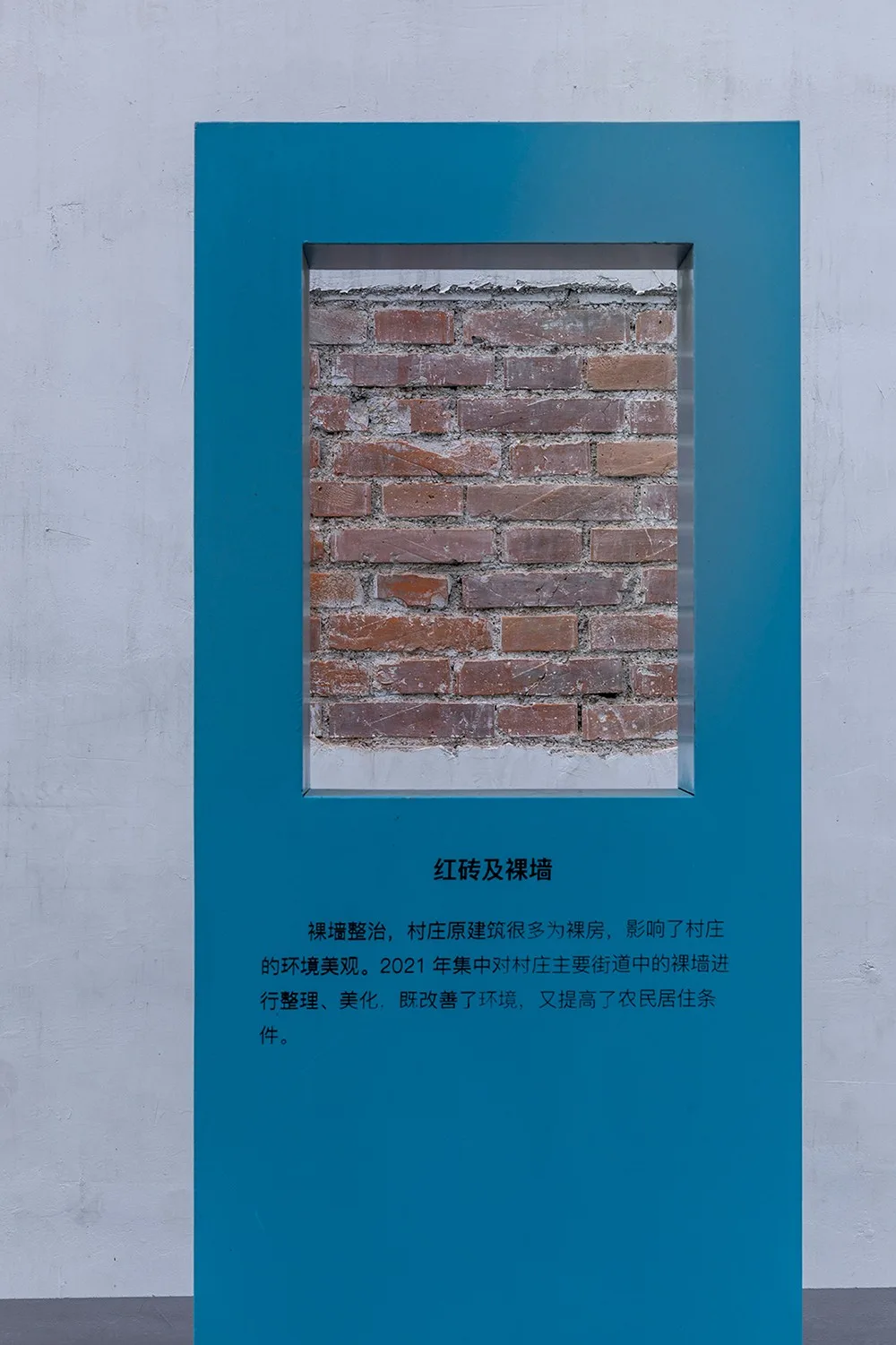
△ Renovated bare walls with explanatory signage © Jin Weiqi
A set of simple play installations made from pipes and sound tubes was placed mid-main street, artistically extending the village’s visible infrastructure pipelines. These installations connect murals, existing pipelines, and floor ribbons, creating a three-dimensional spatial narrative across walls and ground.
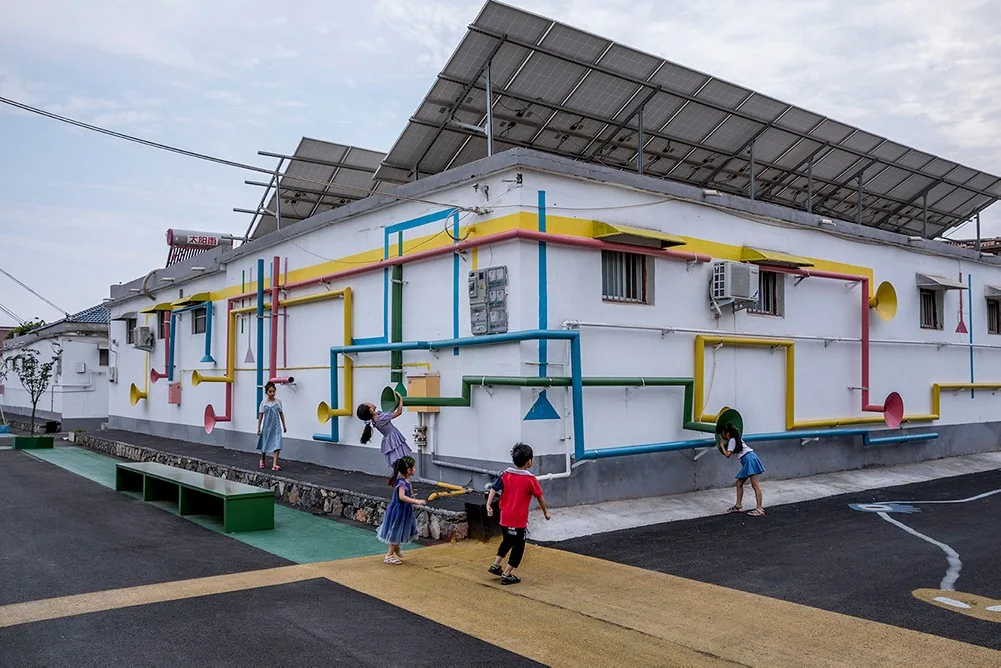
△ Play equipment, floor paintings, and street furniture collaborate to create a new village landscape © Jin Weiqi
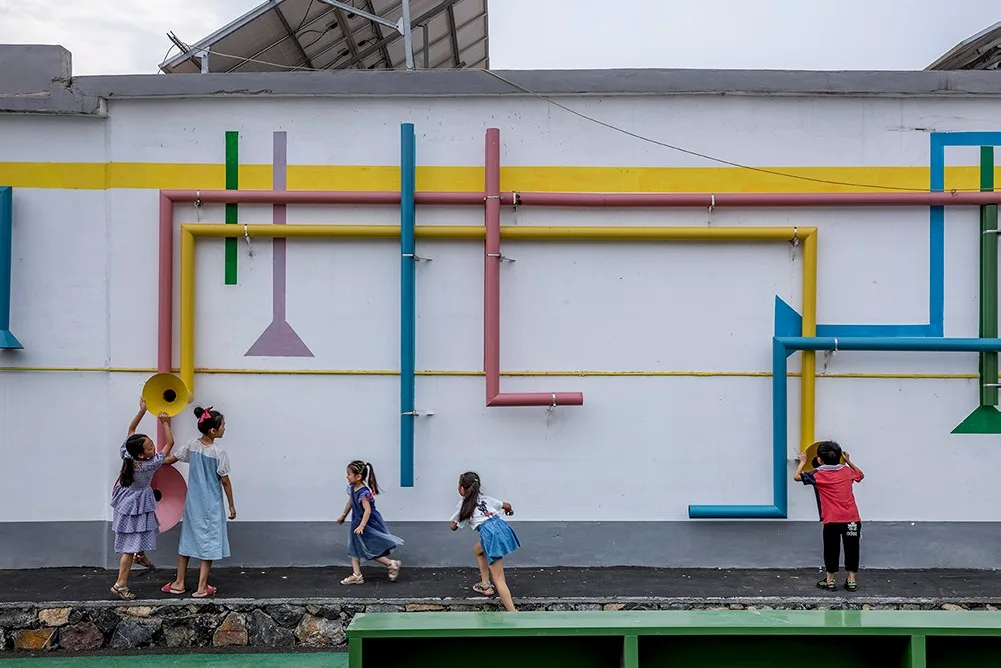
△ This device artistically amplifies the relationship between gas pipelines and walls © Jin Weiqi
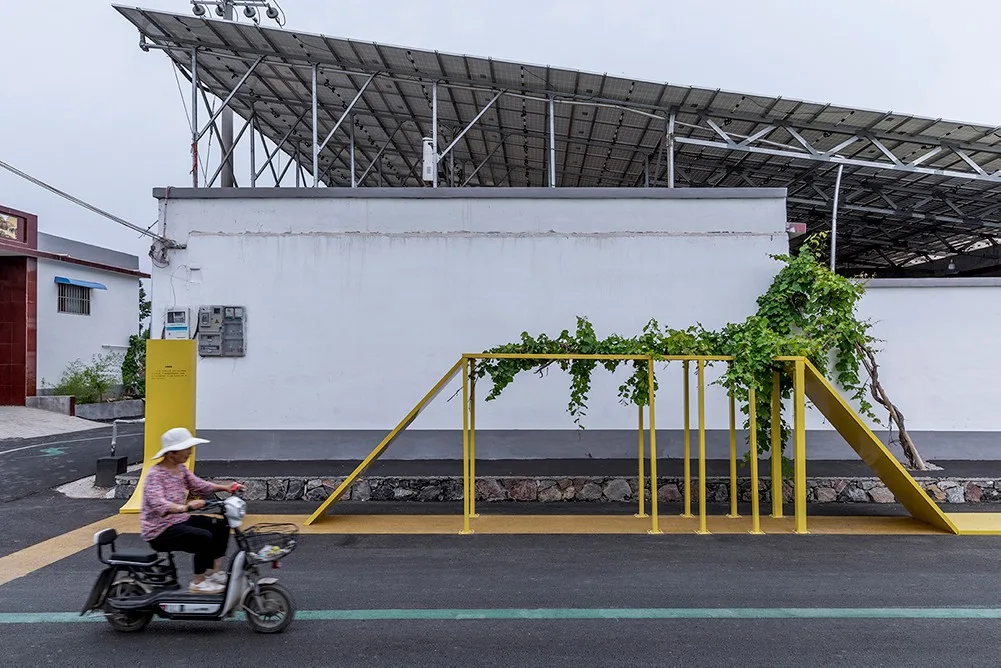
Street furniture gradually integrates into daily rural life © Jin Weiqi
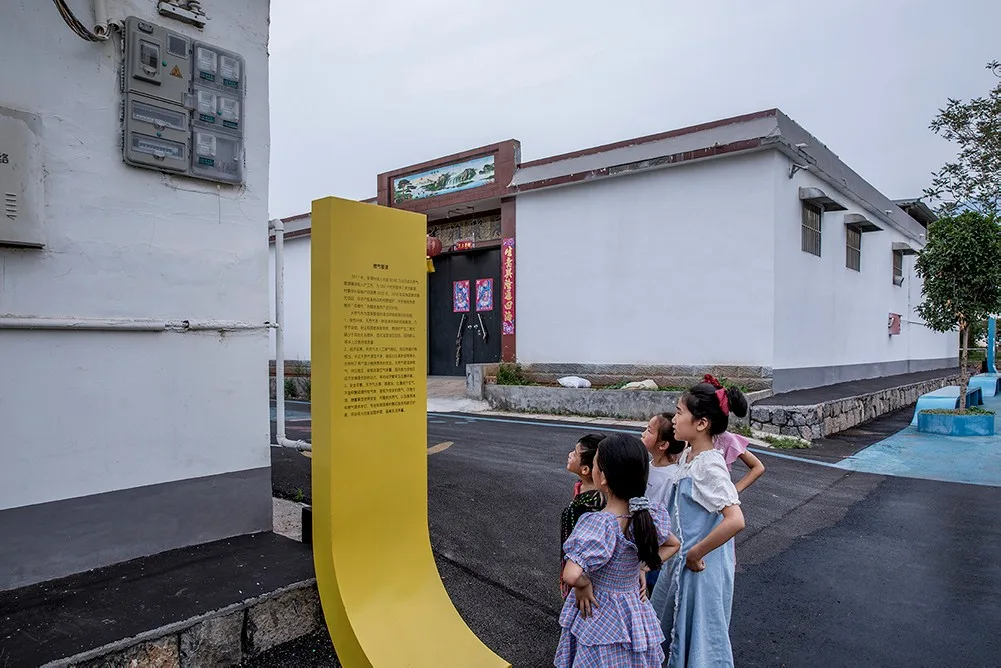
△ Signage records key infrastructure projects © Jin Weiqi
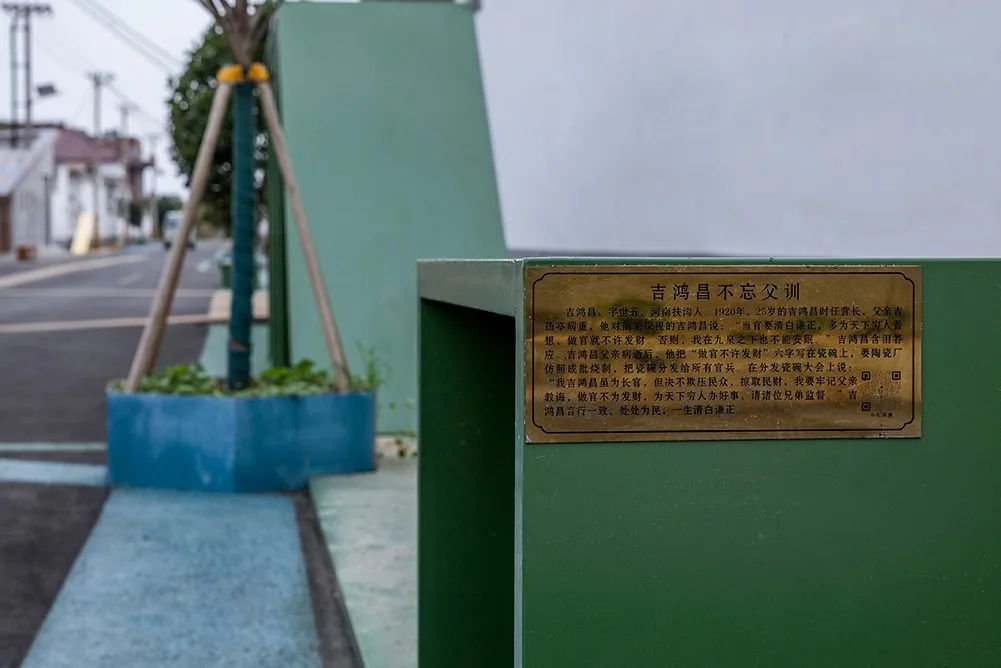
Historical stories displayed on street furniture help revive village culture © Jin Weiqi
Spatial Nodes: Highlights of Overall Improvement and Hubs for Public Activity
Alongside village-wide upgrades, key nodes were established to serve as focal points for future public activities in Zaiwan Village.

△ General plan of Main Street landscape © Sanwen Architecture
Village Logo
Located on the west side of Zaiwan Village between the health center and Yubei Residential Exhibition Hall, visible from the national highway, the village emblem features columns of varying heights symbolizing Zaiwan’s thriving development and steady rise. The pillars record important village milestones, including the construction of the village and school.
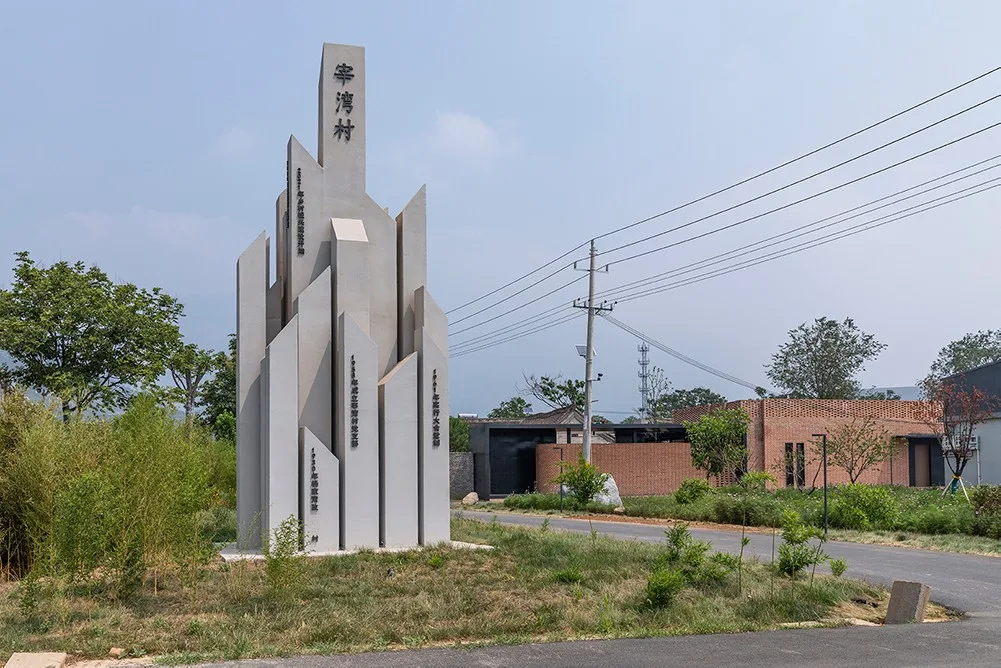
△ Village logo © Jin Weiqi
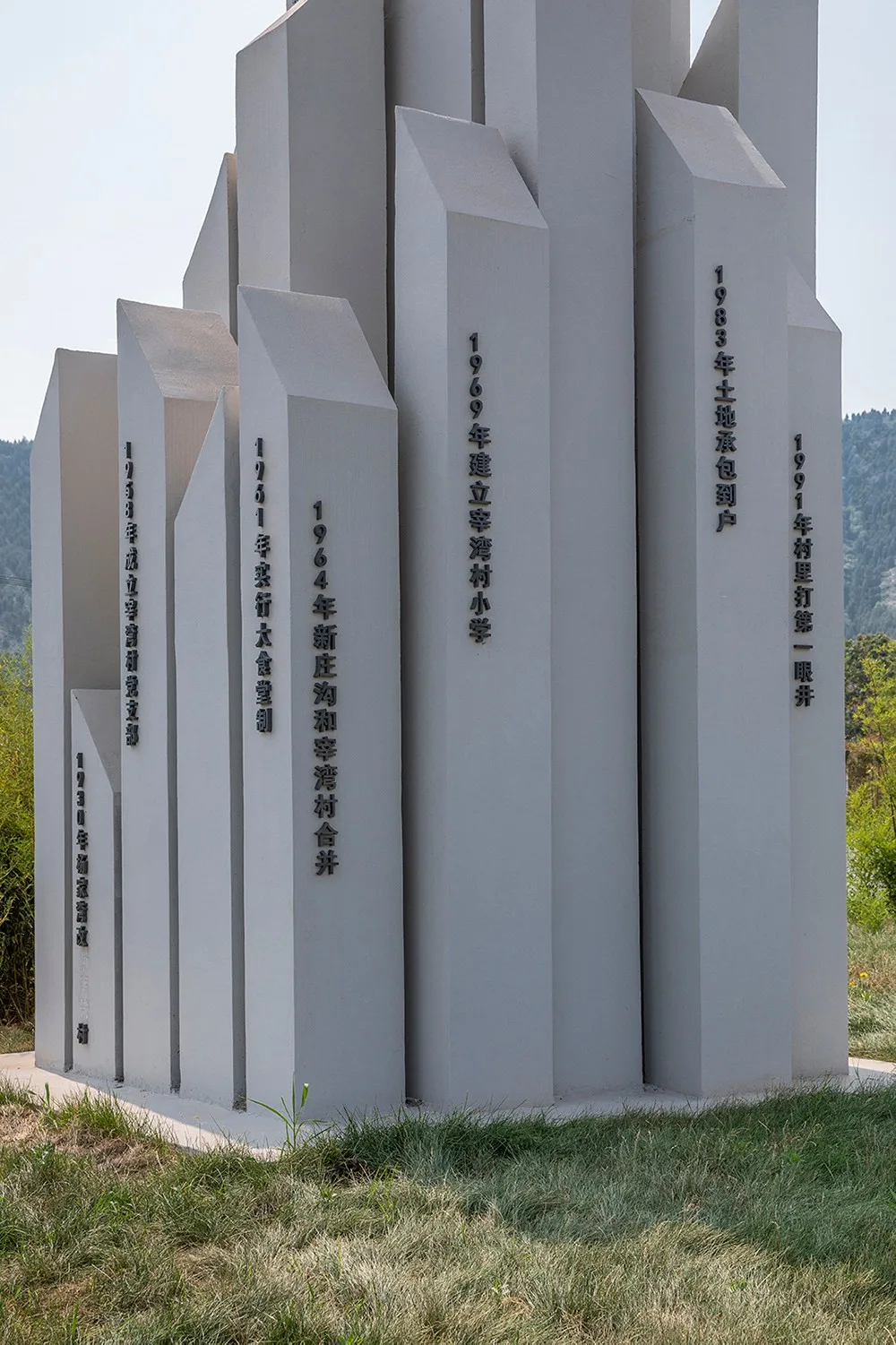
△ The village logo records important milestones in development © Jin Weiqi
Yubei Residential Exhibition Hall
The Yubei Residential Exhibition Hall was converted from two traditional courtyards. The architect preserved three old buildings as representatives of 1960s residential architecture. New structures, including an entrance foyer, corridors, and outdoor recreational spaces, were added to streamline visitor flow.
The street-facing facade combines red bricks matching the nearby 1960s courtyard with black steel plates that symbolize the modern era. The horizontal emphasis creates a clean, understated look, while brick details add subtle variation.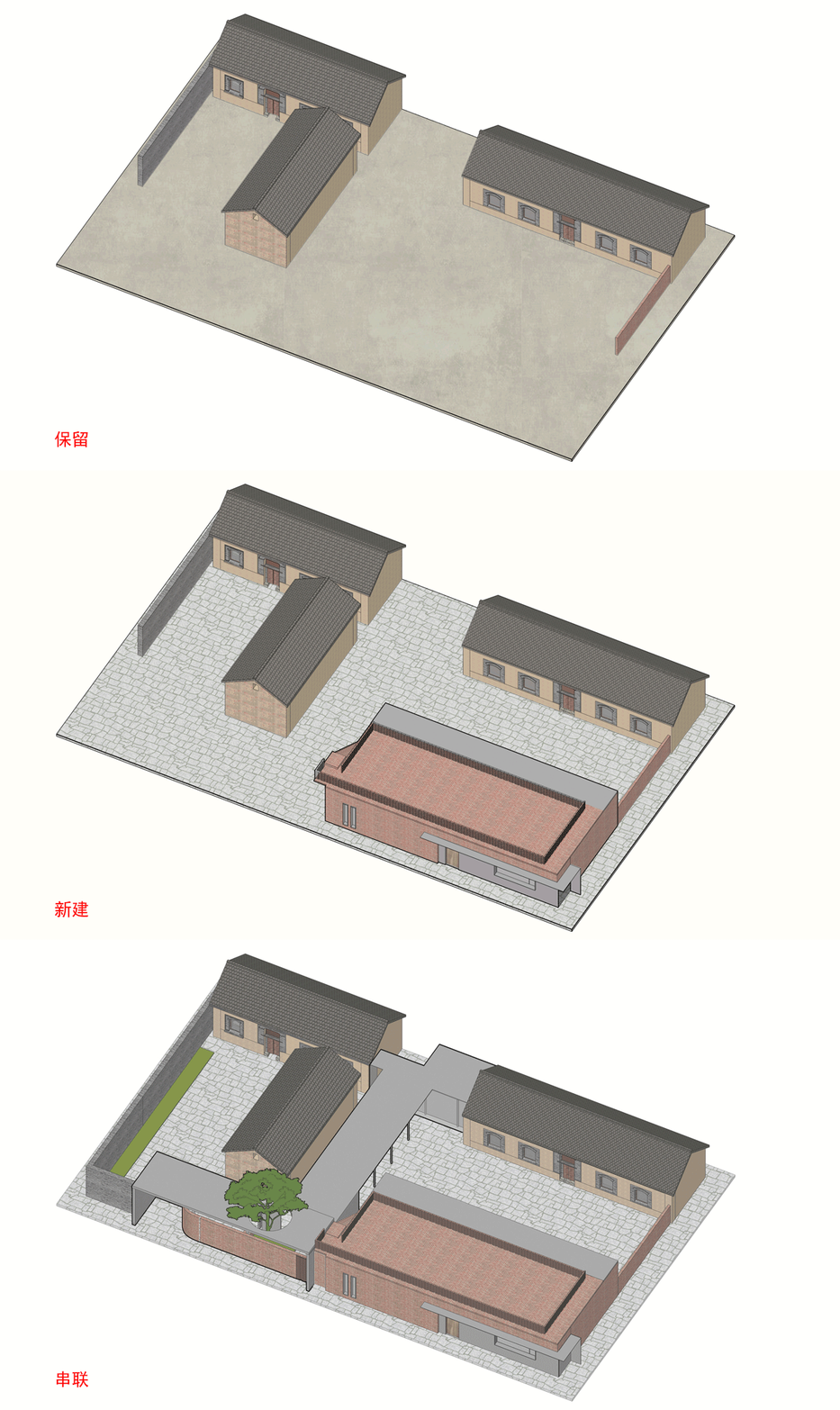
△ Site map of the Northern Henan Residential Buildings Exhibition Hall © Sanwen Architecture
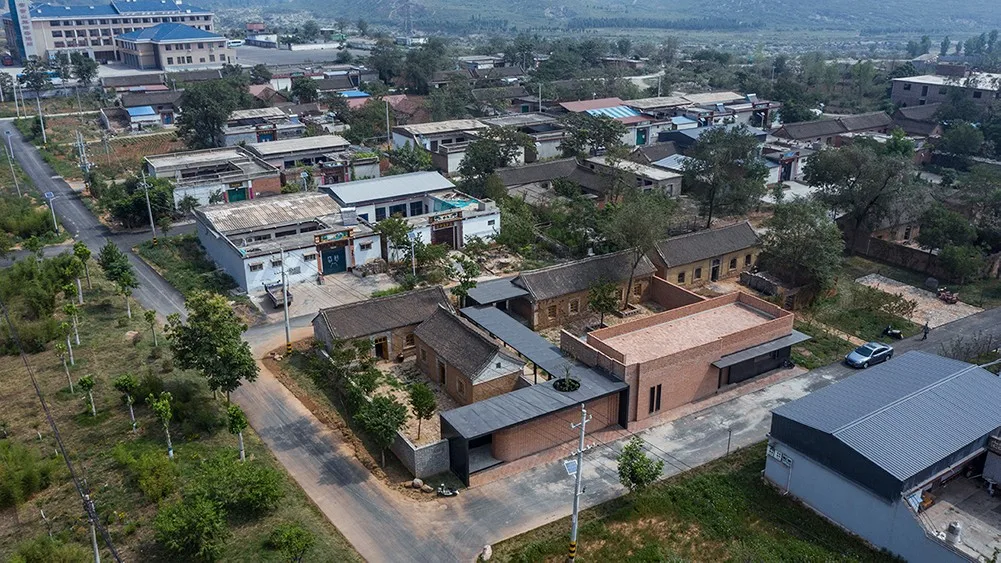
△ Aerial view of the Northern Henan Residential Buildings Exhibition Hall © Jin Weiqi
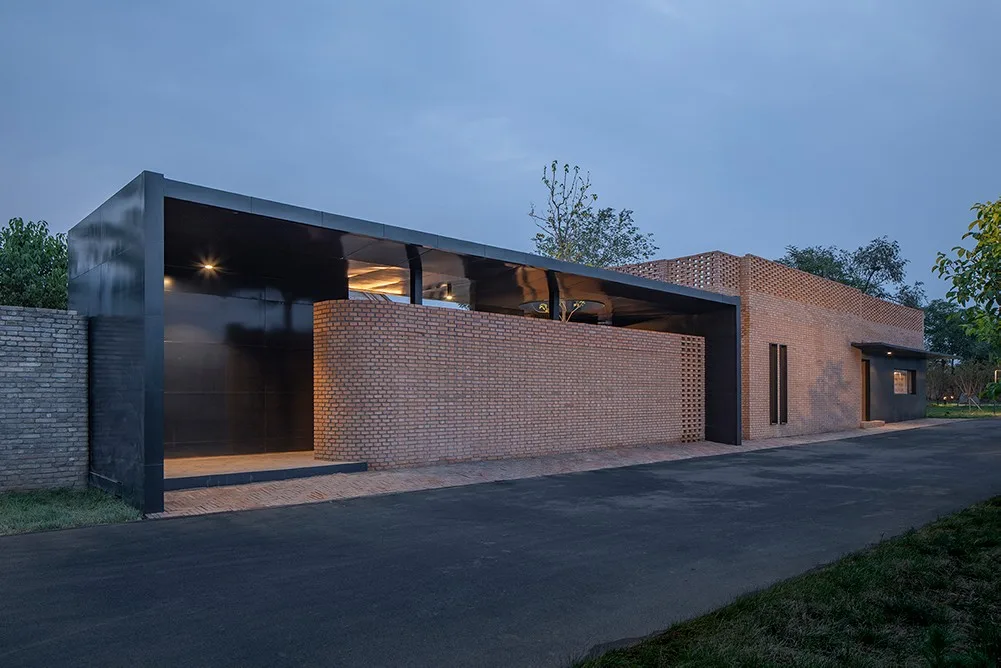
△ Street-facing facade of the exhibition hall © Jin Weiqi
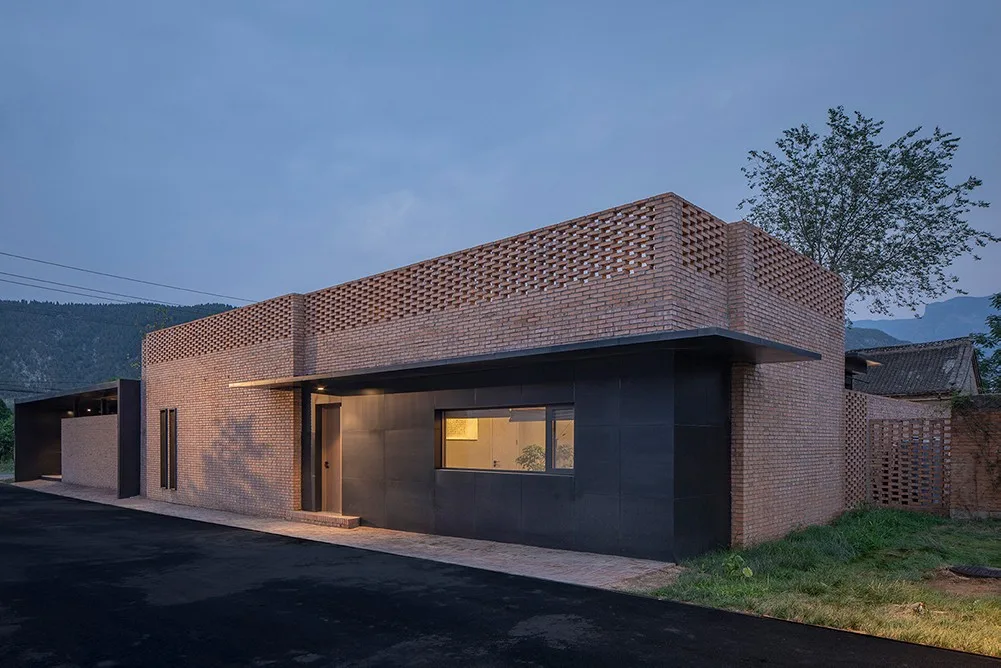
The exterior facade features red bricks and black steel plates © Jin Weiqi
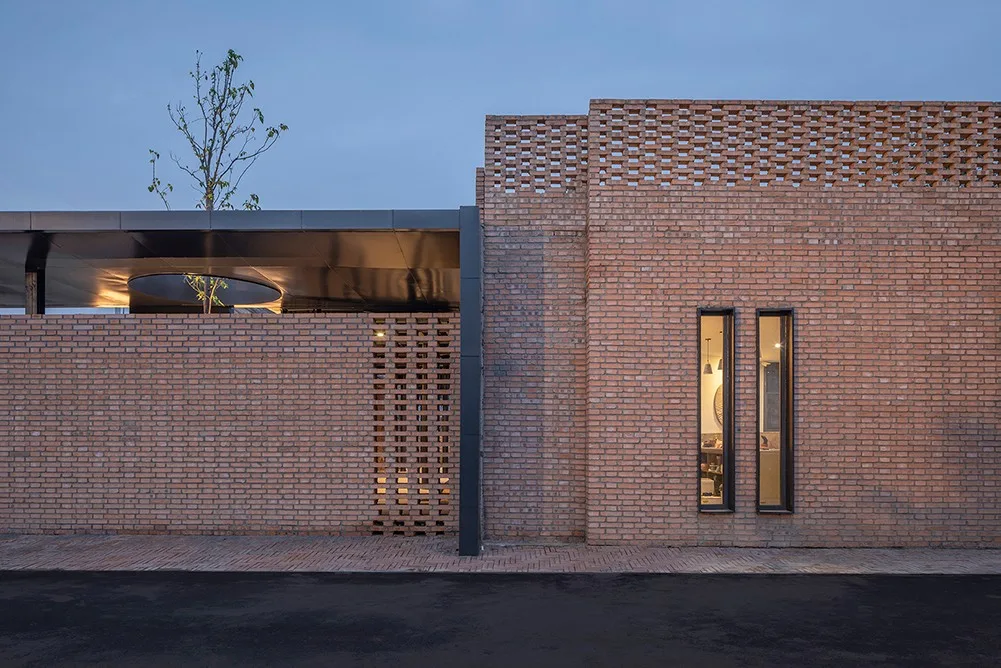
Details of the exhibition hall’s exterior facade © Jin Weiqi
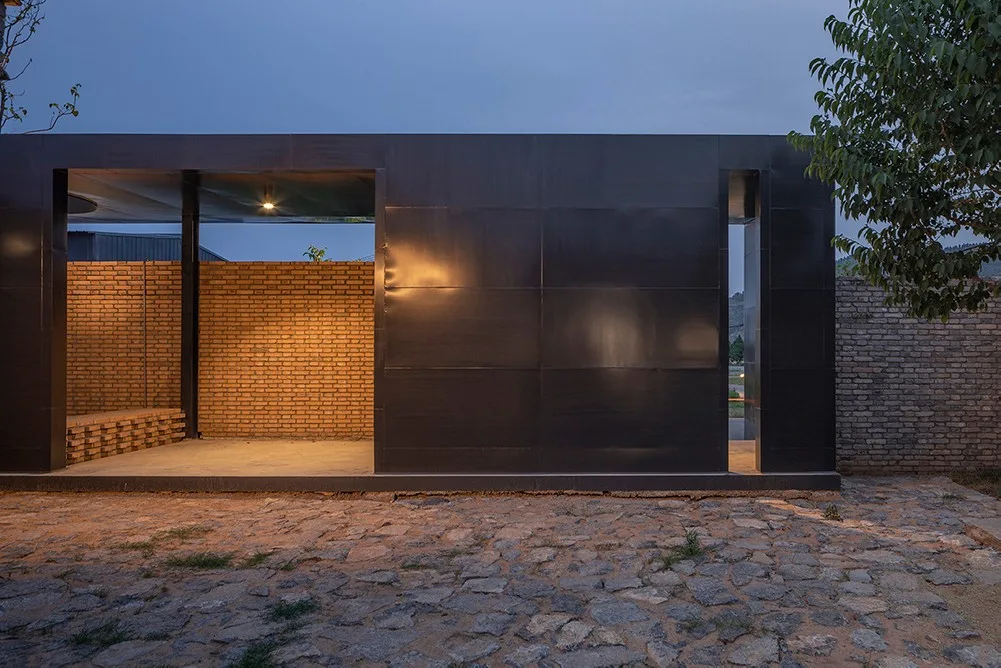
△ View of entrance foyer from courtyard © Jin Weiqi
The main entrance is in the west courtyard, requiring visitors to enter via a winding path. Original main and side rooms were preserved and adapted as exhibition spaces. The east courtyard retains the historic north building and adds a new south building housing a coffee shop, tea room, and cultural product display and sales area. Old and new buildings face each other, connected by a corridor on the west side. The old structure maintains its rammed earth exterior, the new uses red bricks, and the connecting corridor employs black steel plates. Intentional gaps between materials avoid conflict and enhance light’s dramatic effect.
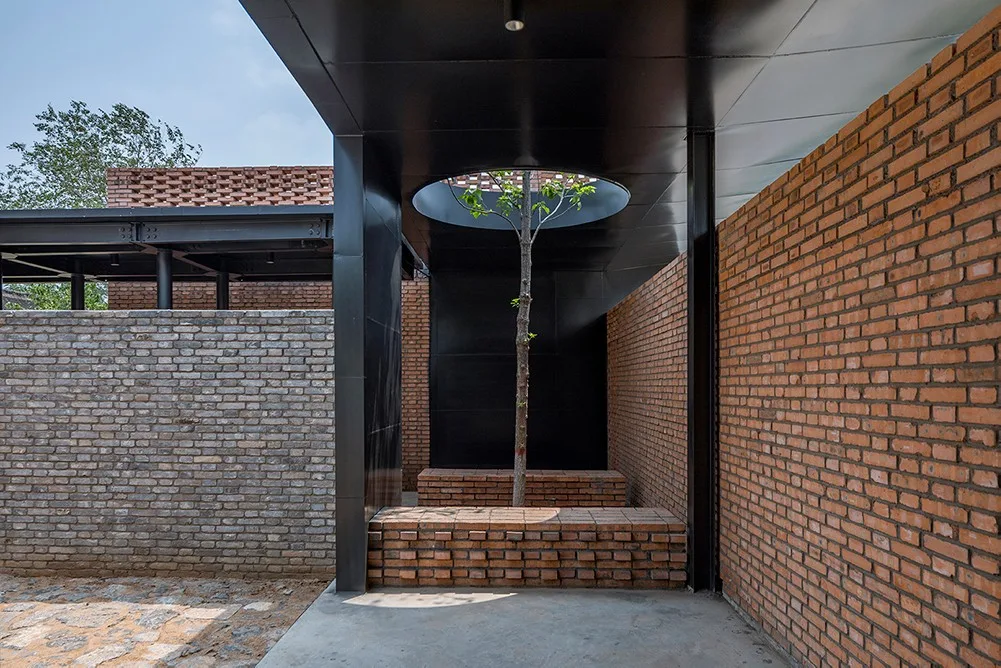
△ Entrance foyer © Jin Weiqi
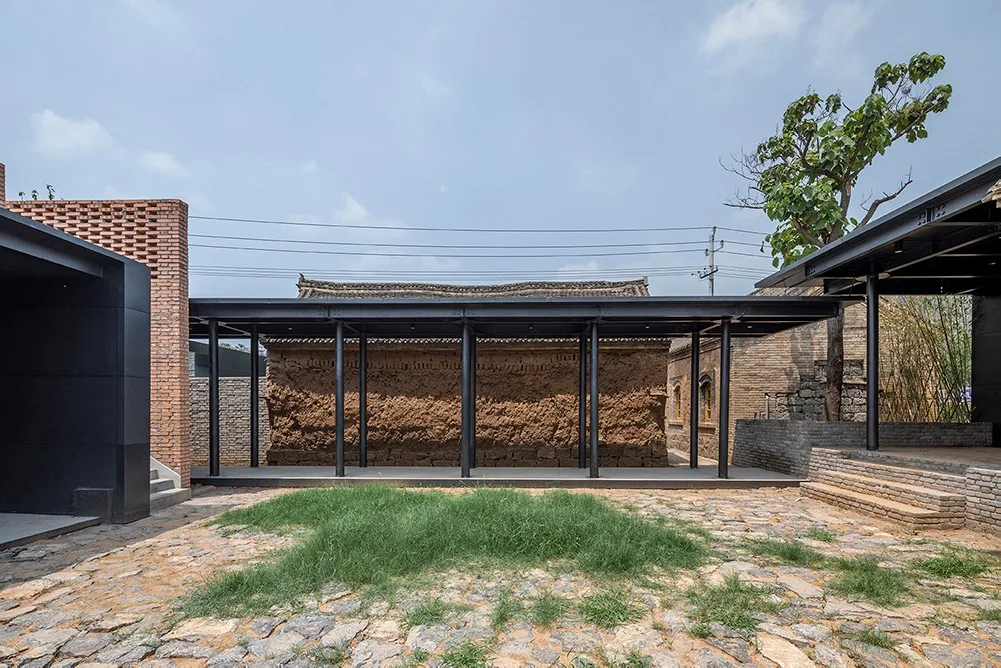
Overview of courtyard utilizing site elevation changes to create spatial movement © Jin Weiqi
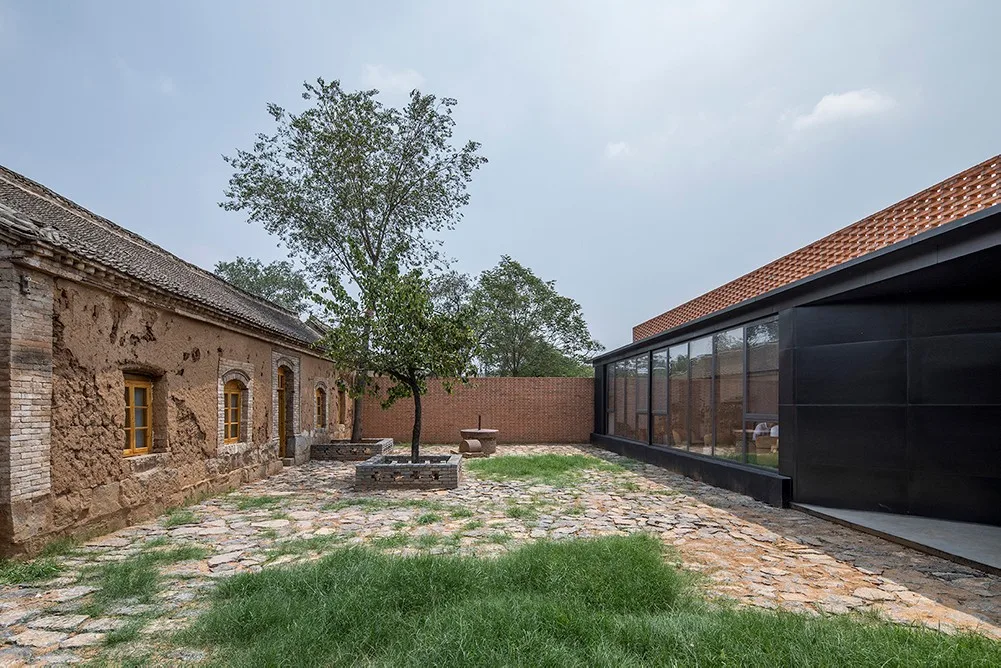
The new and old buildings in the east courtyard engage visually, with rammed earth, red bricks, and steel plates creating a material and temporal dialogue © Jin Weiqi
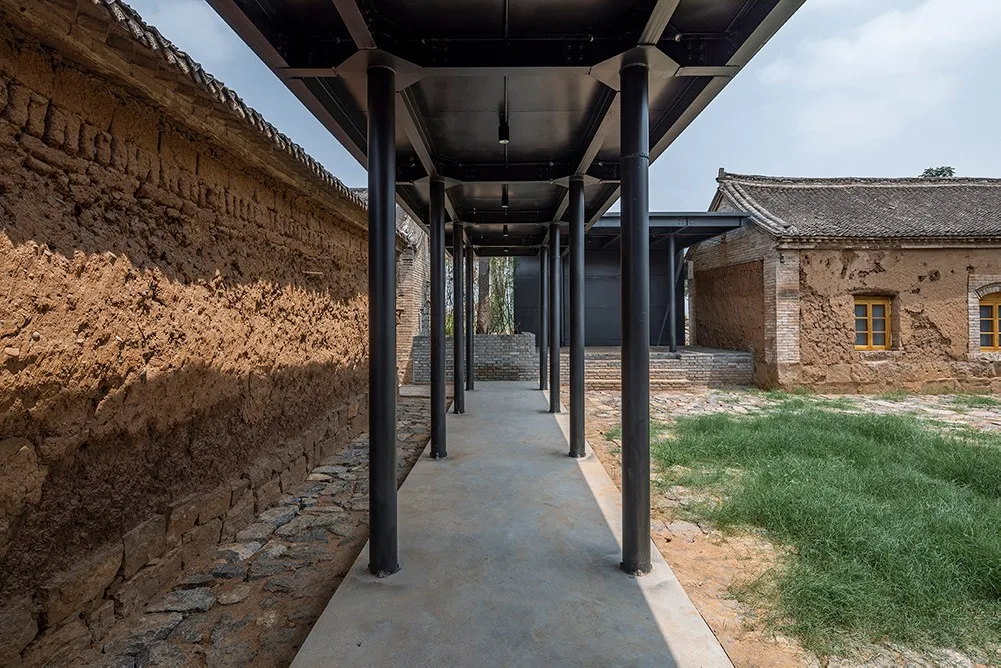
The outer corridor in the east courtyard © Jin Weiqi
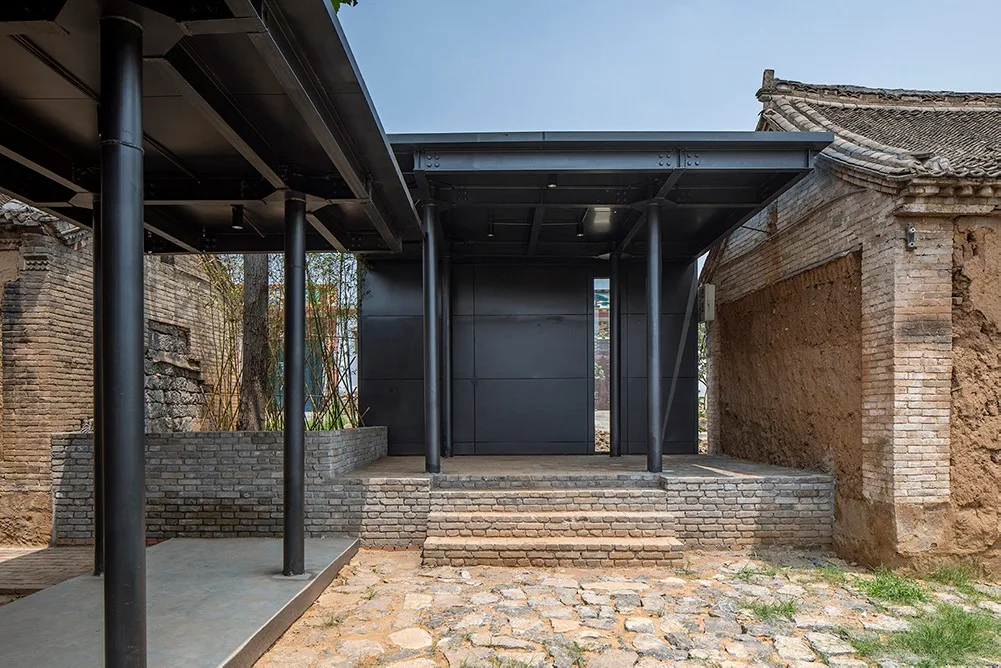
Outdoor leisure area © Jin Weiqi
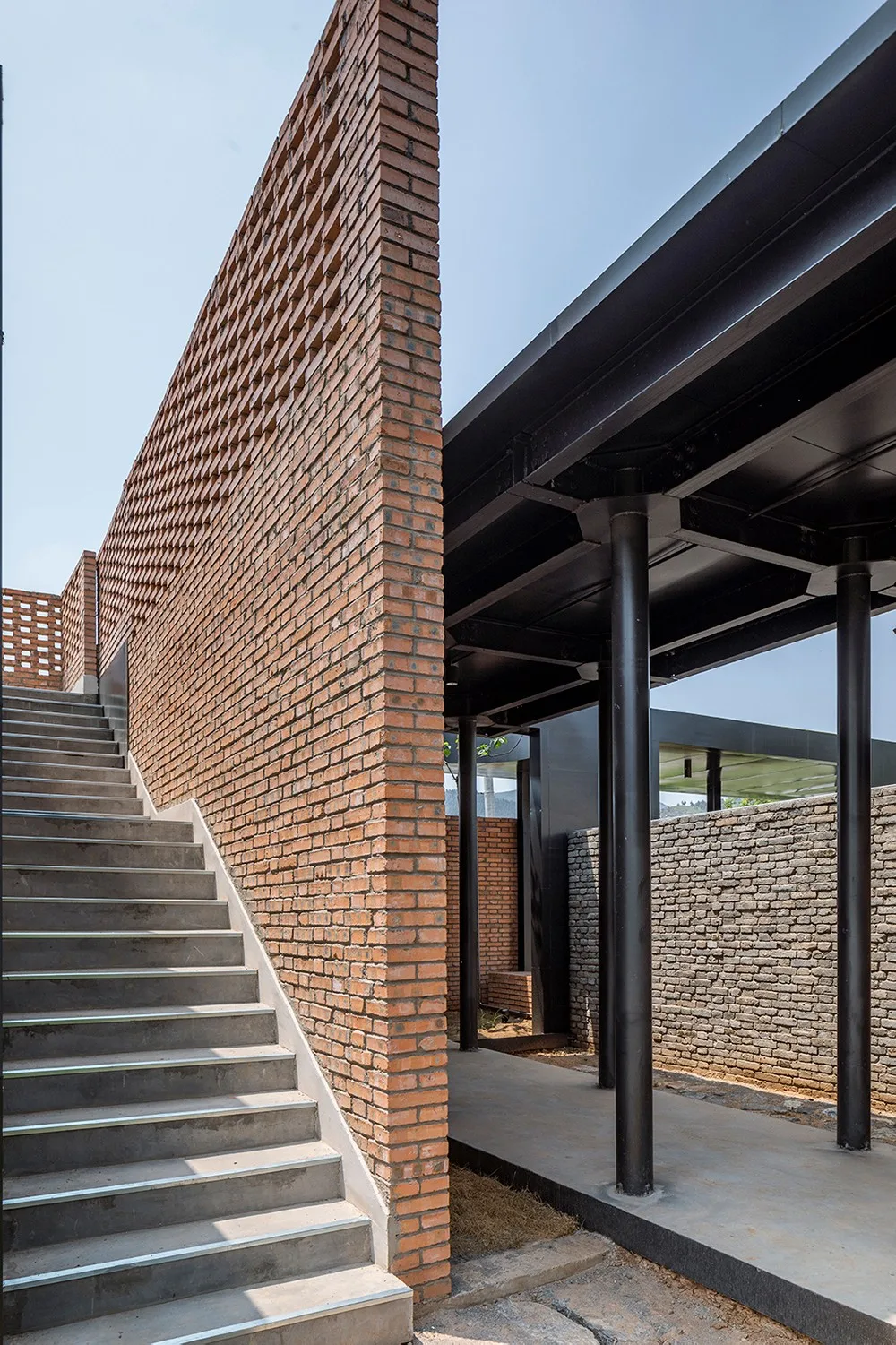
A staircase leads to the rooftop, echoing the inverted shapes common in local houses © Jin Weiqi
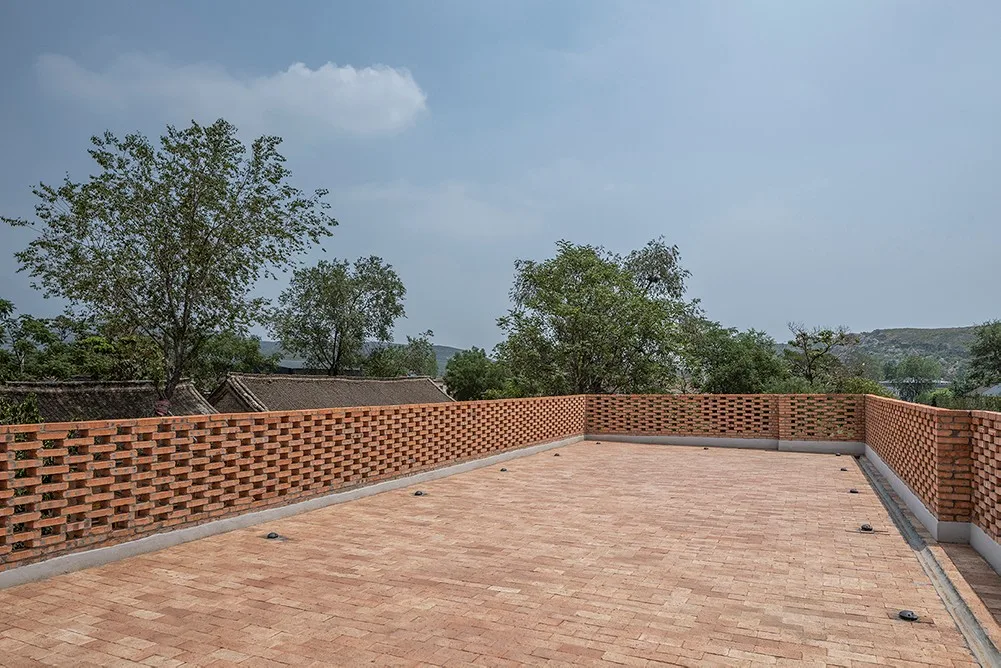
The rooftop platform expands usable space and offers elevated views of the building and surroundings © Jin Weiqi
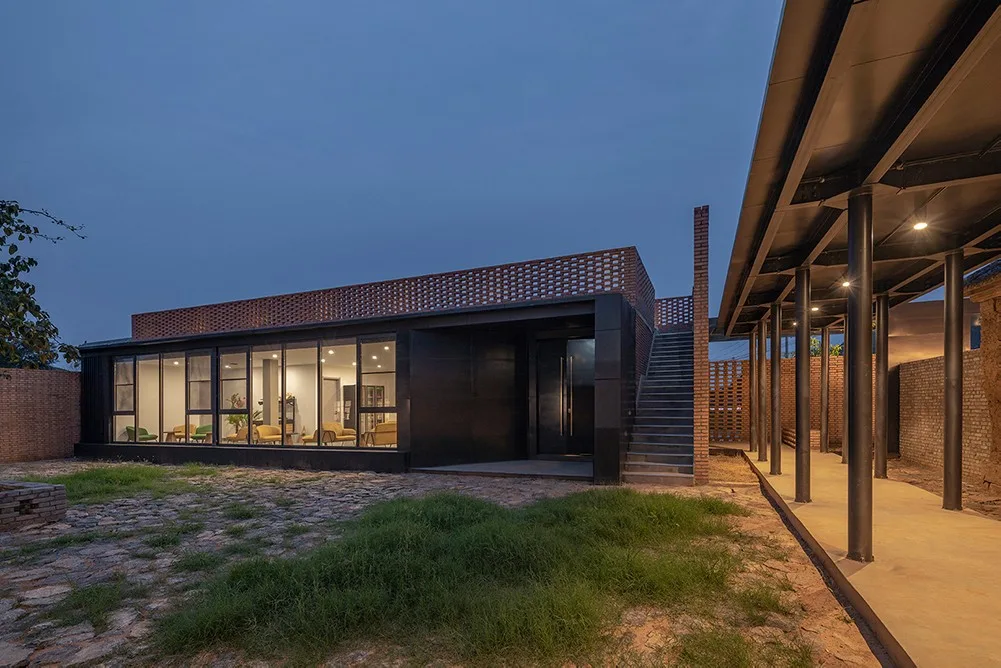
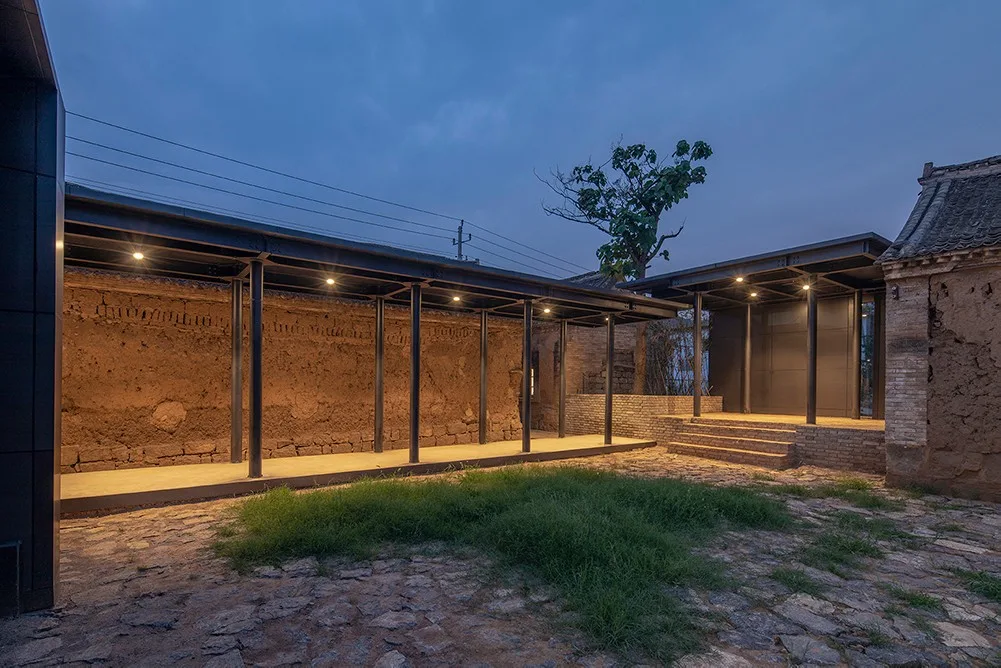
△ Night view of the courtyard, with the new building’s facade featuring floor-to-ceiling glass © Jin Weiqi
Inside, the old building functions as an exhibition hall, preserving its original spatial layout and restoring historical features to recreate traditional northern Henan living scenes. The new building offers leisure and retail spaces, providing visitors with areas to relax and interact.
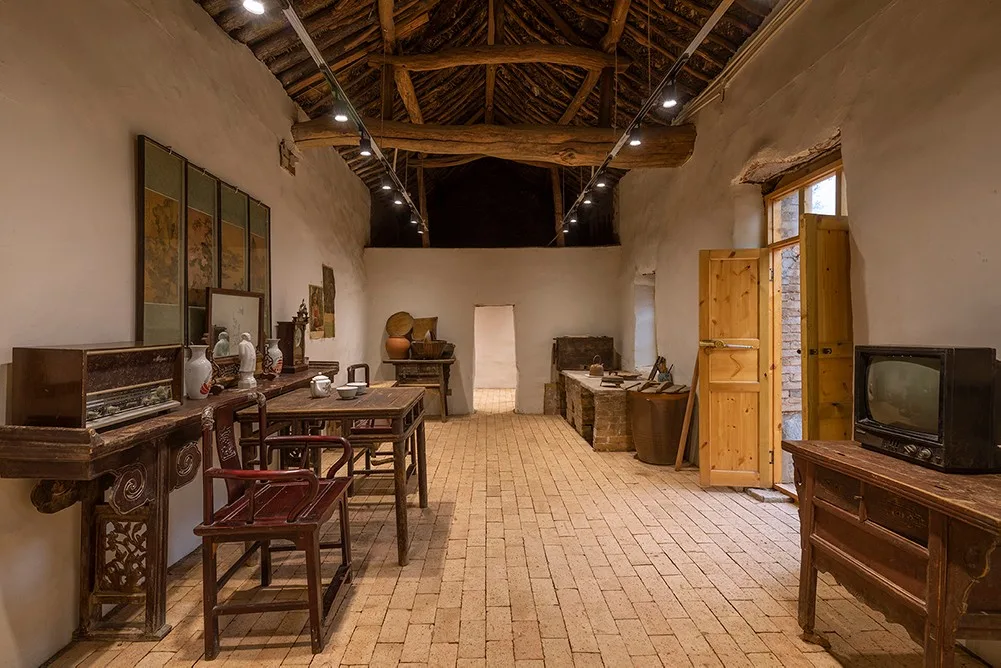
△ Preserved residential interiors restore traditional living scenes © Jin Weiqi
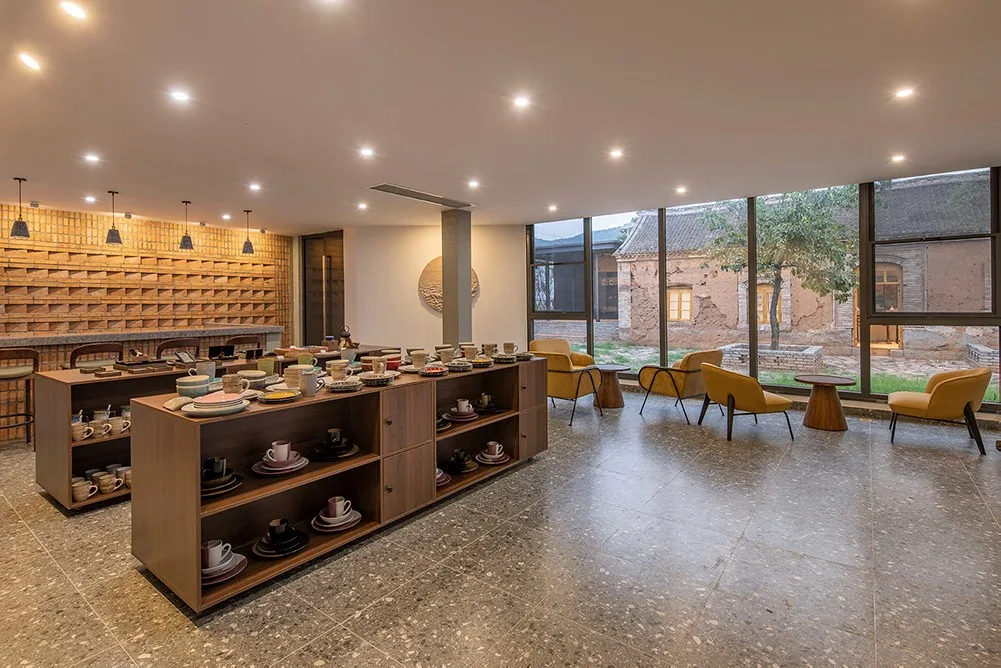
The central open space serves as a display and sales area for cultural and creative products © Jin Weiqi
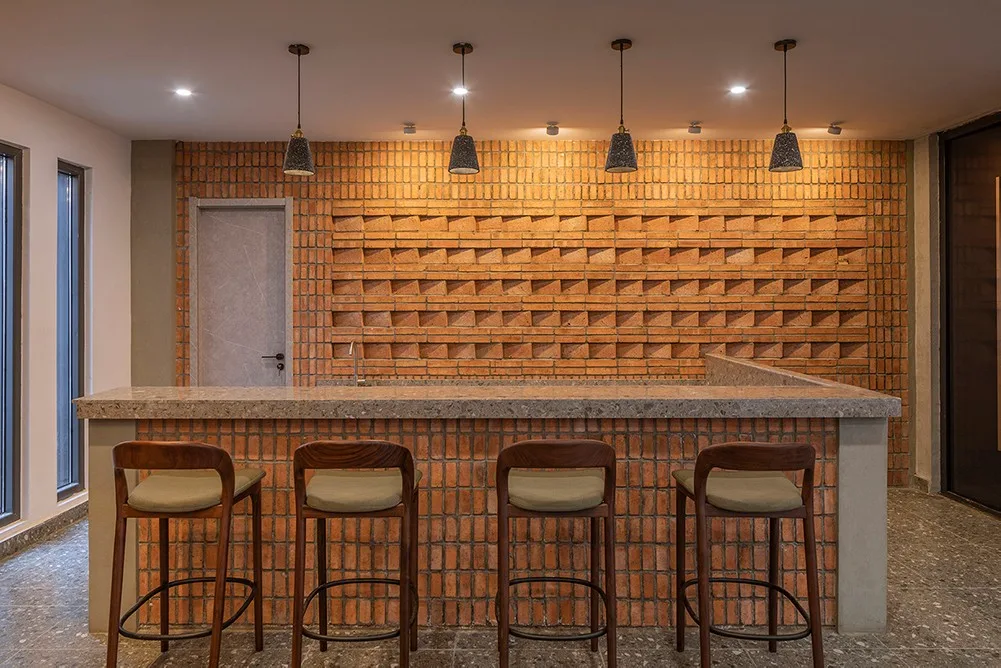
Equipped with a water table, this area offers coffee and beverages to visitors © Jin Weiqi
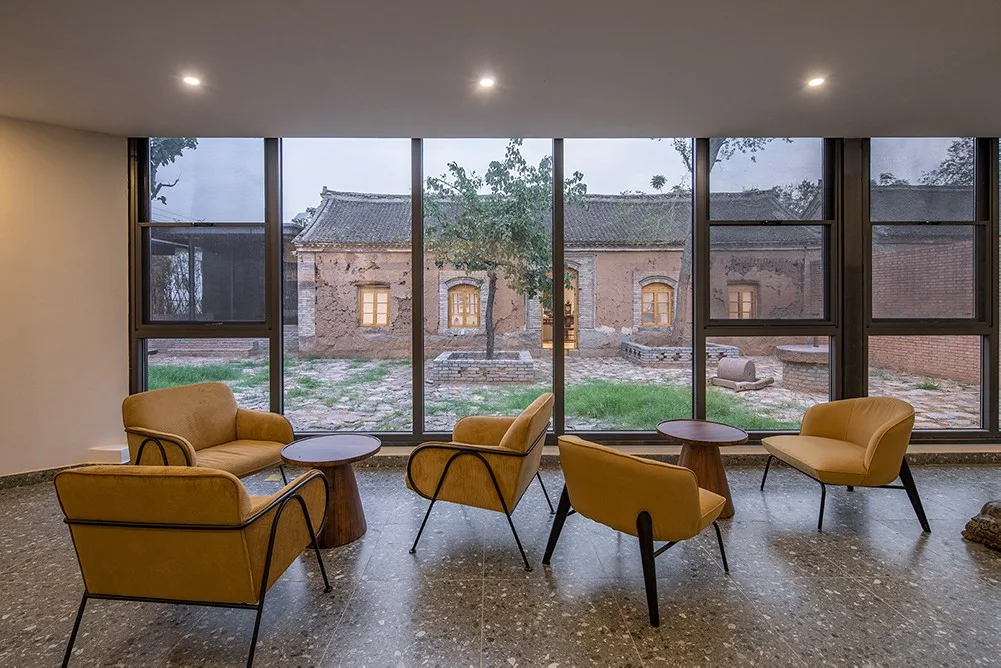
Views of courtyards and historic residences from the new building © Jin Weiqi
‘Spring Warm Blossoms’ Art Installation
‘Spring Warm Blossoms’ is a landscape art installation built around an existing oak tree in the village. Situated at the bend of the planned L-shaped boutique route, it marks the start of the north-south main street landscape. The installation symbolizes the onset of reform and opening up, the arrival of spring, and the revival of life.
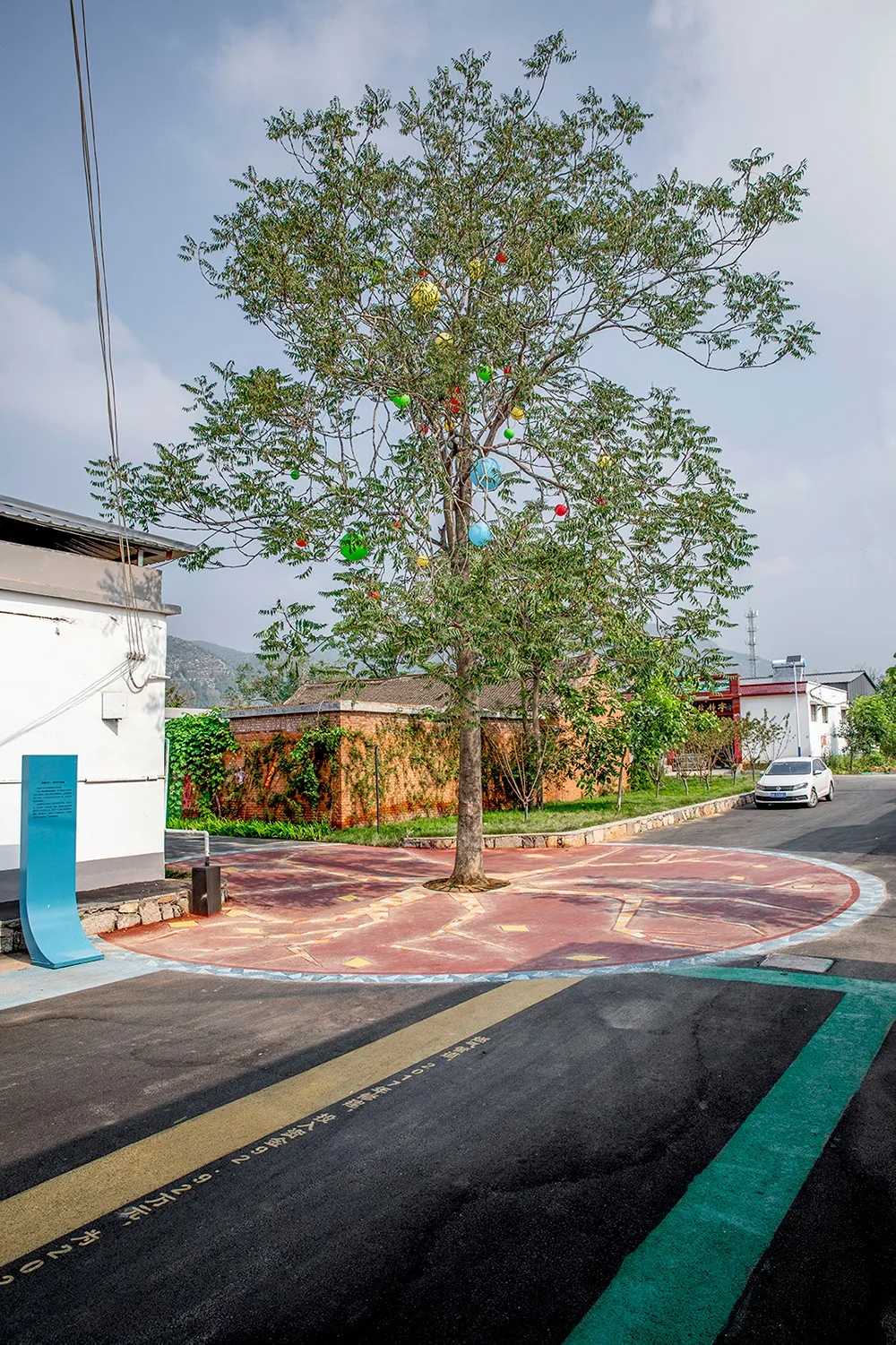
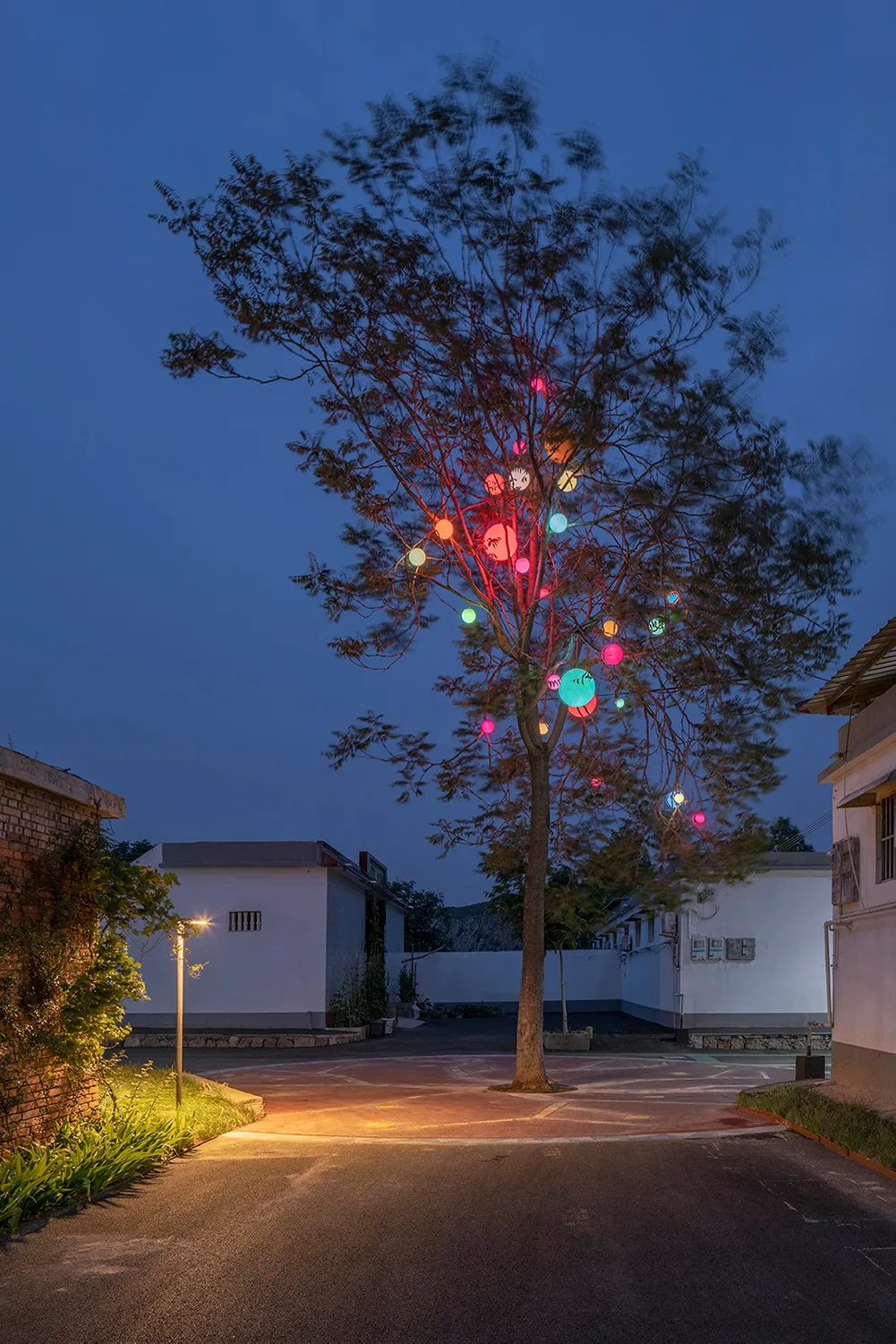
The acrylic spheres on the tree canopy represent the villagers’ hopes for beautification and renewal © Jin Weiqi
‘Wedding and Fish’ Square
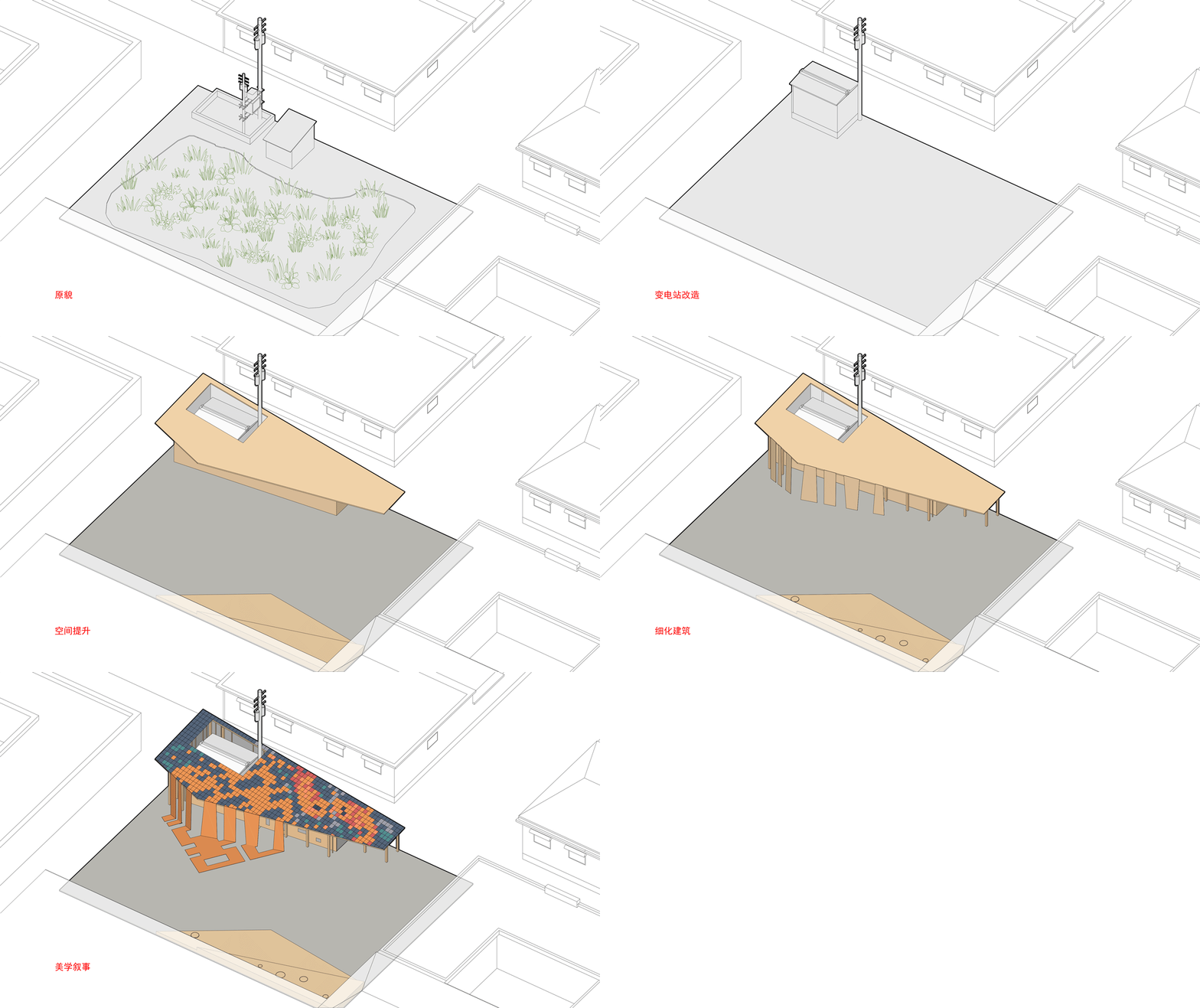
△ Rendered image of the Wedding and Fish Square © Sanwen Architecture
Located mid-main street, the ‘Wedding and Fish’ Square occupies former collective farmland used for vegetable growing, flanked by a substation and grocery kiosk. The architect transformed this area into a leisure square for villagers.
The surface was hardened to accommodate square activities. A bulletin board was installed in one corner and a rest platform in another. A convenient service point was added between the square and main street for express delivery and retail. The substation remains in place but was enclosed with safer box transformers integrated into the new building, which features a trapezoidal wooden structure with a single-slope roof rising from northeast to southwest. Glazed tiles on the roof and facade form “?” and Pisces patterns, symbolizing the villagers’ aspirations for a happy life.
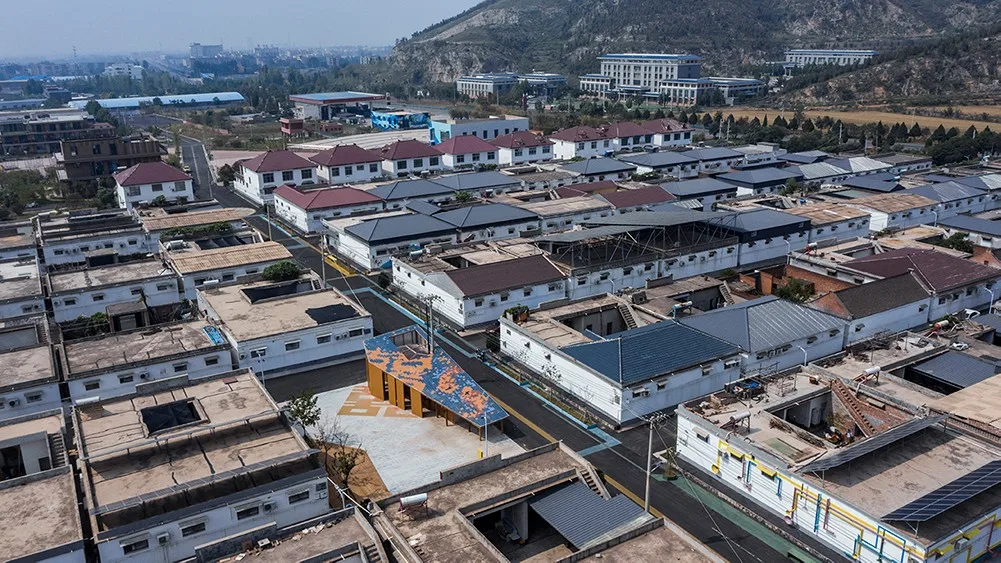
From above, the new Wedding and Fish Square serves as a vibrant public space in the village © Jin Weiqi
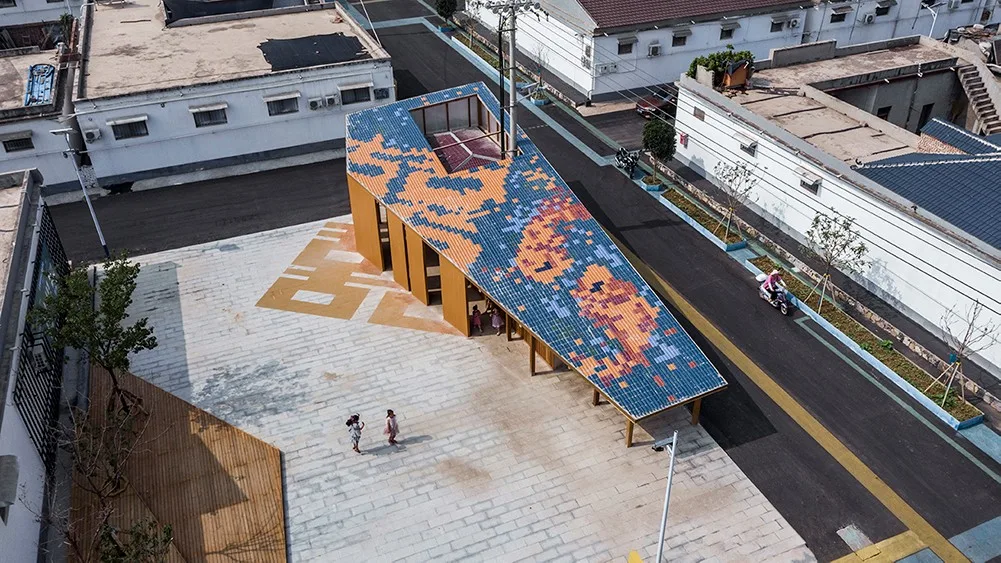
△ Bird’s-eye view of the Wedding and Fish Square © Jin Weiqi
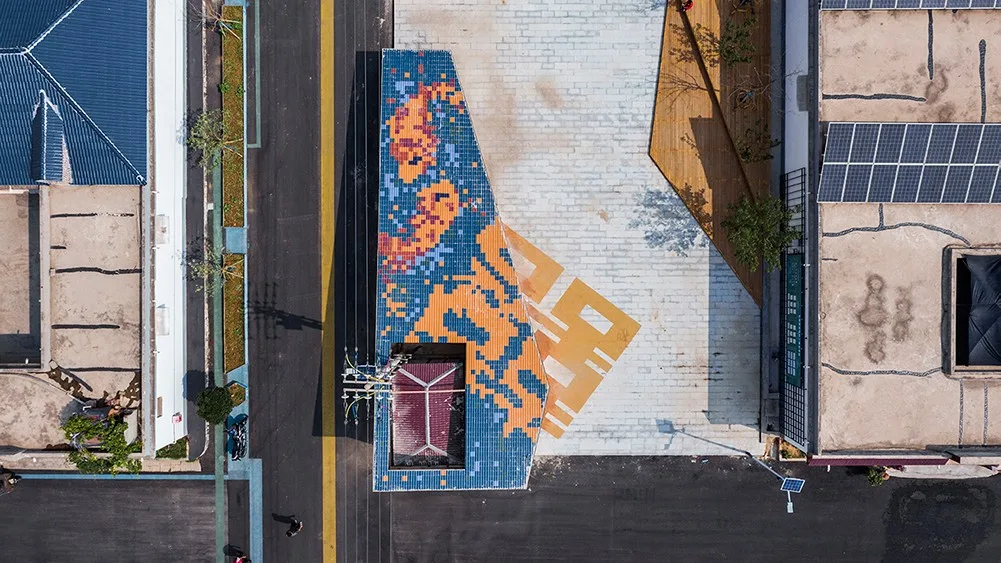
△ The glazed tiles on roof and facade create the “Xi” and Pisces motifs © Jin Weiqi
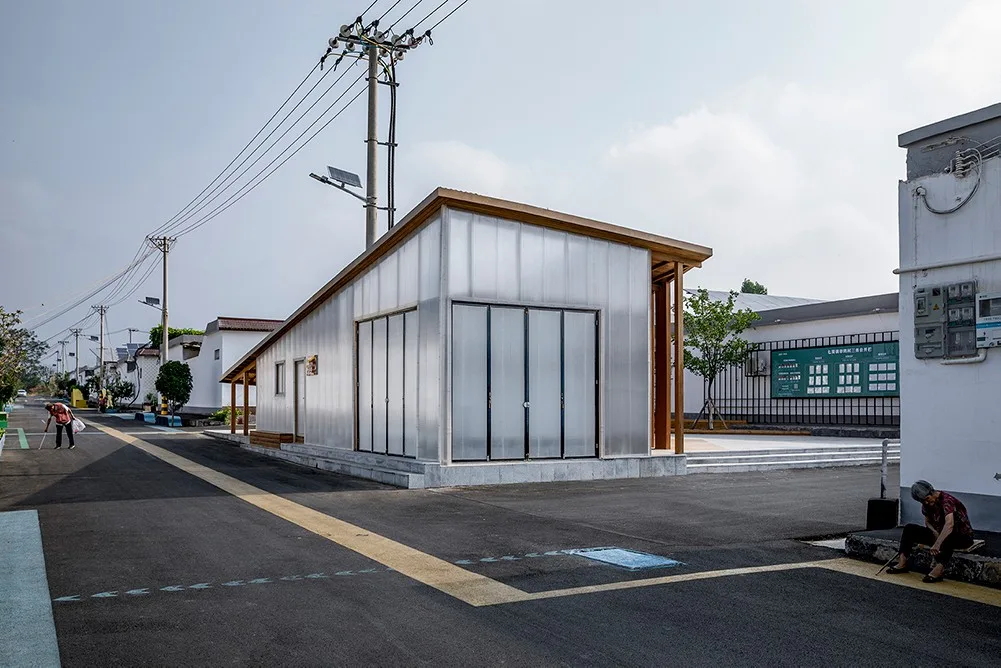
△ View of convenience service station and substation from main street © Jin Weiqi
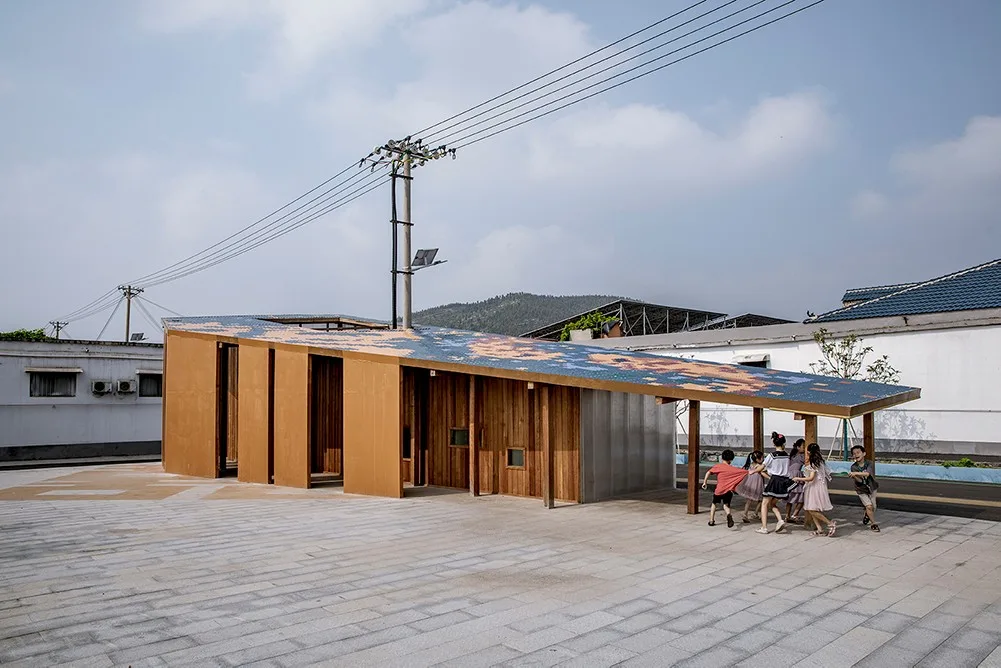
△ The convenience service station doubles as a playful structure for children © Jin Weiqi
Conclusion: A Model for Spatial Improvement in Ordinary Rural Areas
Villages like Zaiwan Village are widespread in Xiuwu County and across China—lacking notable scenery, historical features, or major industries, inhabited by ordinary people with ordinary lives. How to design for such villages is a pressing question for architects engaged in rural construction.
In Zaiwan Village, the design team discovered the theme of the Yubei Residential Living Museum, reflecting 40 years of reform and opening up. By preserving the village’s authentic texture, rural landscape, and spontaneous construction marks, and enriching them through architecture, landscape, public art, and narrative, the project offers both a clever approach and a reference for revitalizing ordinary Chinese villages.
Technical Drawings
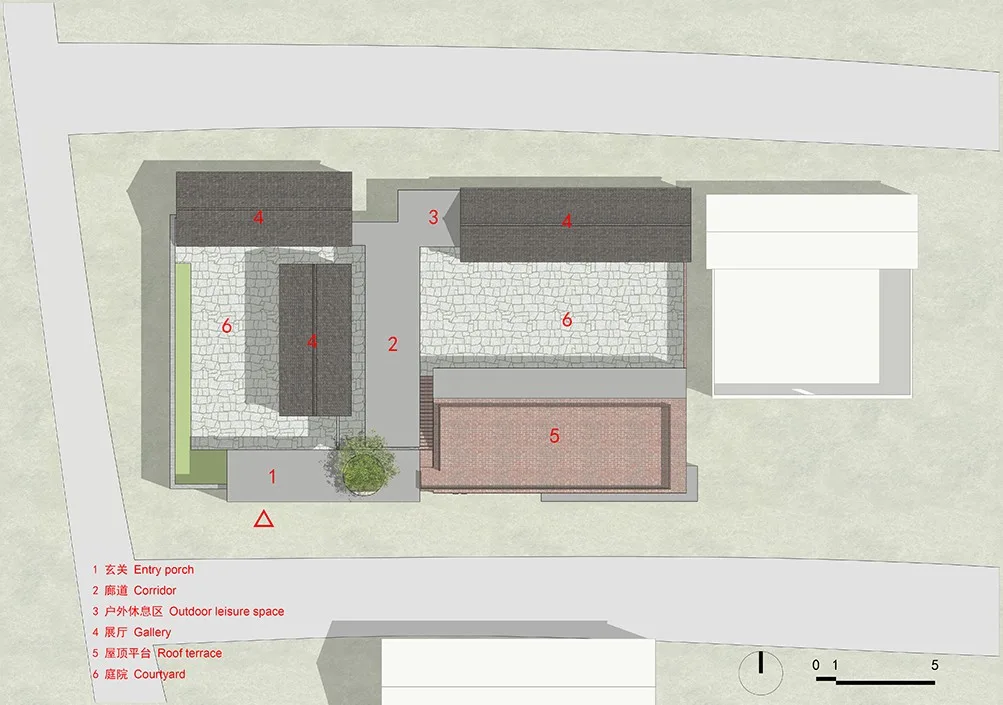
△ General plan of the Northern Henan Residential Buildings Exhibition Hall
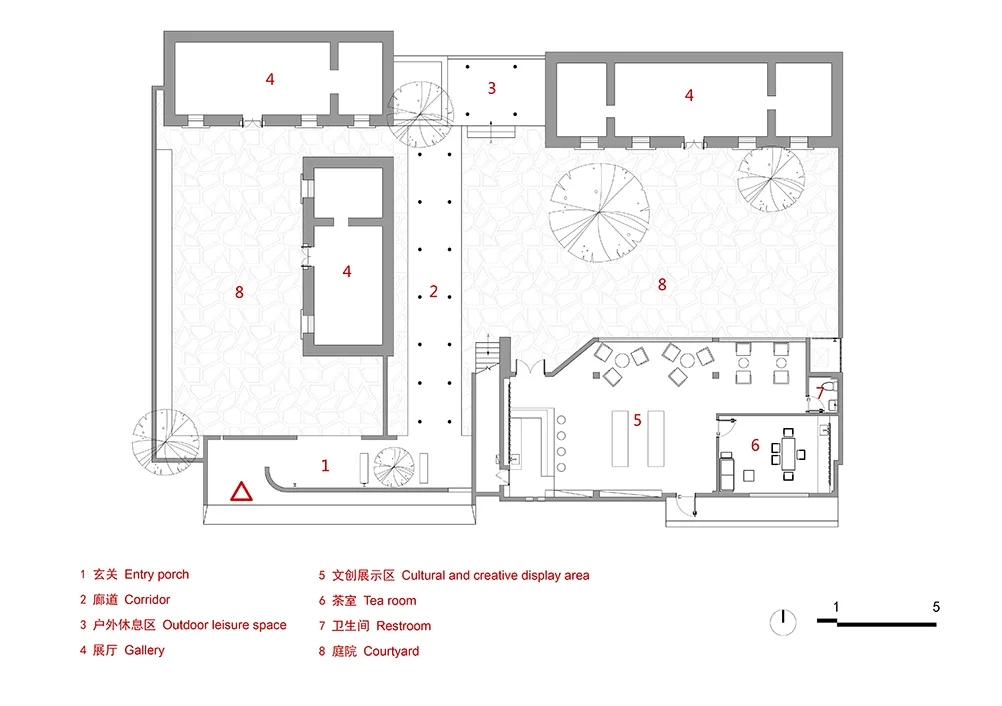
△ Floor plan of the Northern Henan Residential Buildings Exhibition Hall
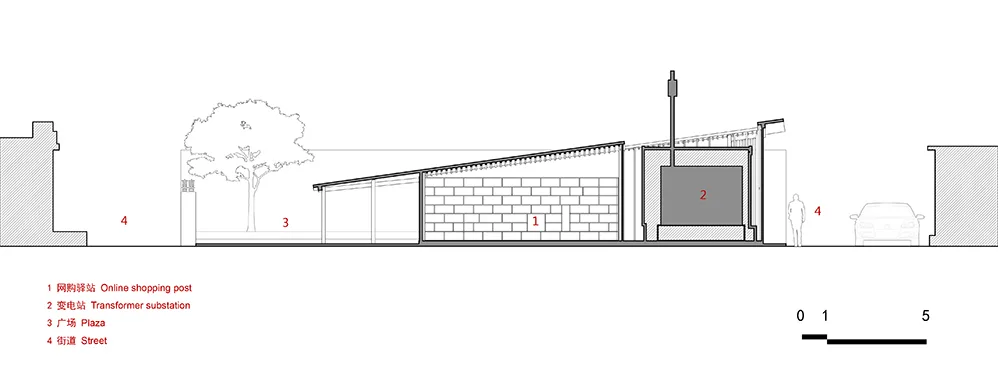
△ Sectional view of the convenience station at Youxi Youyu Square
Project Information
Location: Qixian Town, Xiuwu County, Jiaozuo City, Henan Province
Owner: People’s Government of Qixian Town, Xiuwu County
Architecture and Landscape Design: Three Culture Architecture
Lead Architect: He Wei
Project Architect: Liu Mingyang
Design Team: Chen Long, Meng Xiangting, Wang Ziyi, Liu Yong, Zhao Dongyu (Intern), Wang Chenyu (Intern), Chen Mingxu (Intern)
Resident Engineer: Liu Weidong
Collaborating Firms: Beijing Huaju Architectural Planning and Design Institute Co., Ltd., Beijing Hongshang International Design Co., Ltd.
Design Period: November 2020 – January 2021
Completion Date: May 2021
Photography: Jin Weiqi, He Wei















Must log in before commenting!
Sign Up