
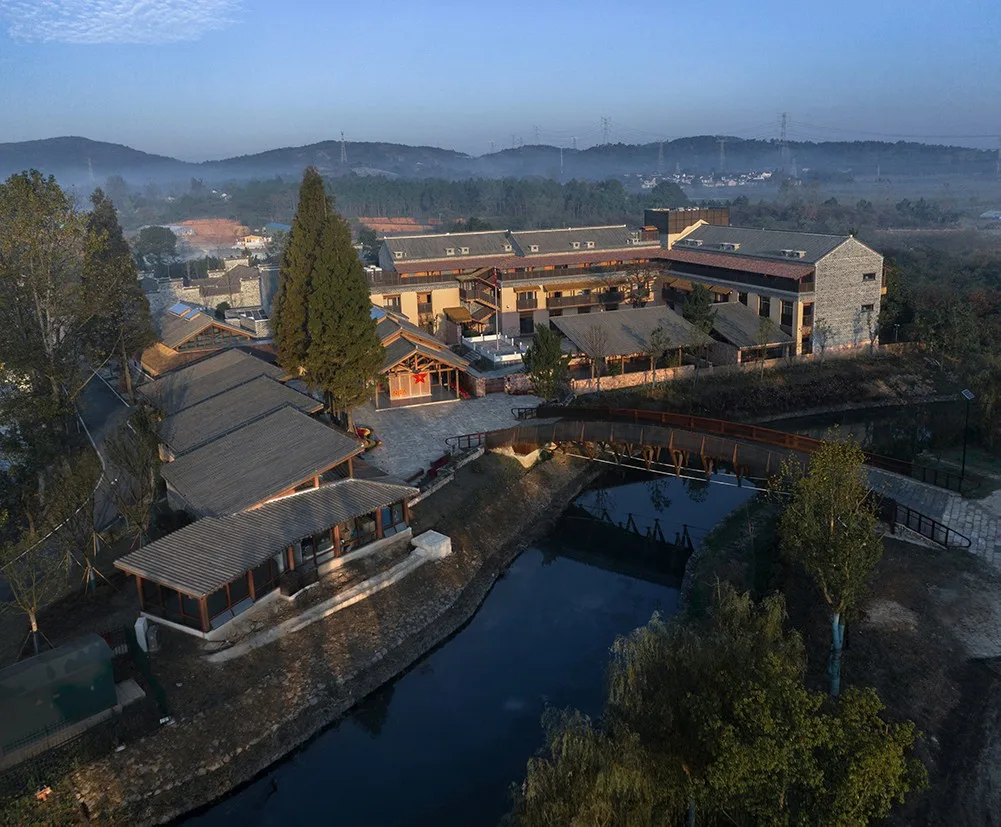
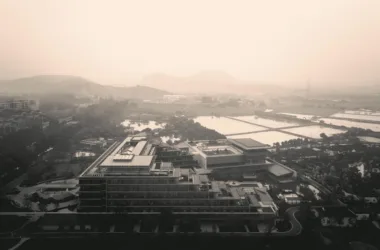
△ Aerial view of the project ©️ Time difference image
Project Background
Lixiang Village is a suburban community located about 60 kilometers from Nanjing’s city center, nestled near the plains and mountains. A mountain river meanders through rice paddies and village lands, creating irrigation canals and ponds. Recently, the village has attracted many visitors, drawn by its blueberry farms and rich historical culture.
However, public facilities have struggled to keep up with the growing tourism demand. In response, the ATA design team renovated abandoned residential houses in 2016 to establish a new village lane. This lane connects the village’s interior and blends tourist services, dining, historical and cultural exhibitions, and creative spaces. Rather than isolating itself, this lane integrates with existing residences. The influx of tourists has encouraged many locals to return and open businesses such as hotels, agricultural shops, and homestays.
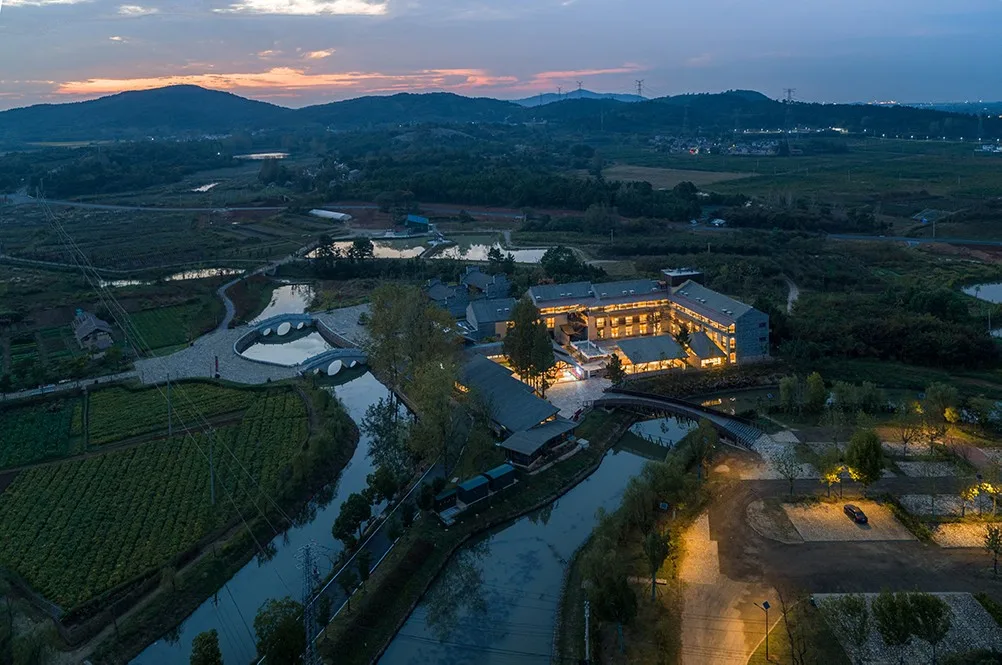
△ Buildings, canals, and distant mountains ©️ Time difference image
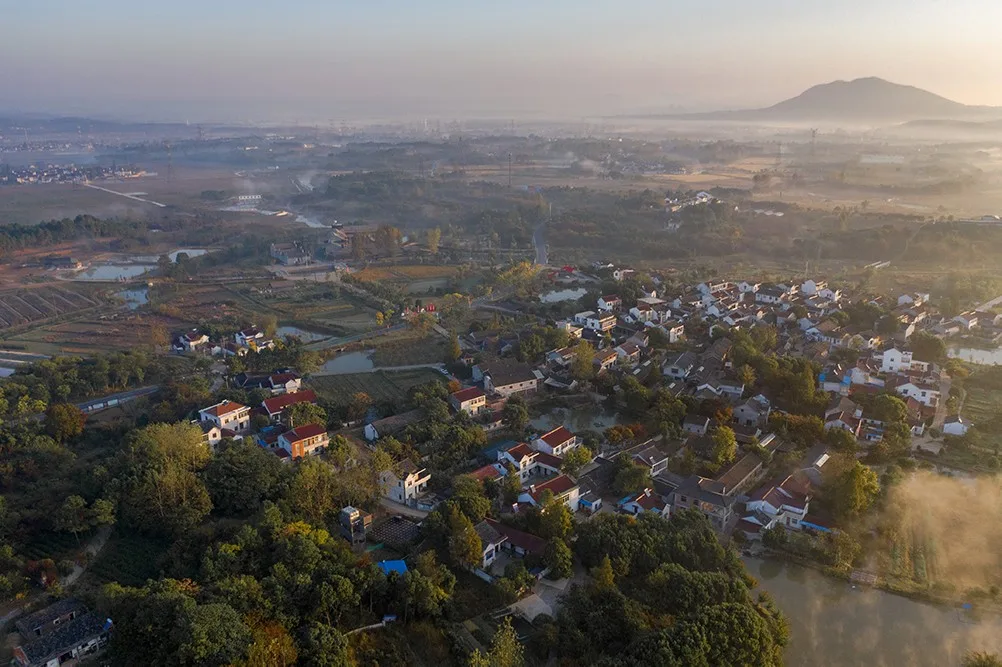
Geographical setting of Lixiang Village ©️ Time difference image
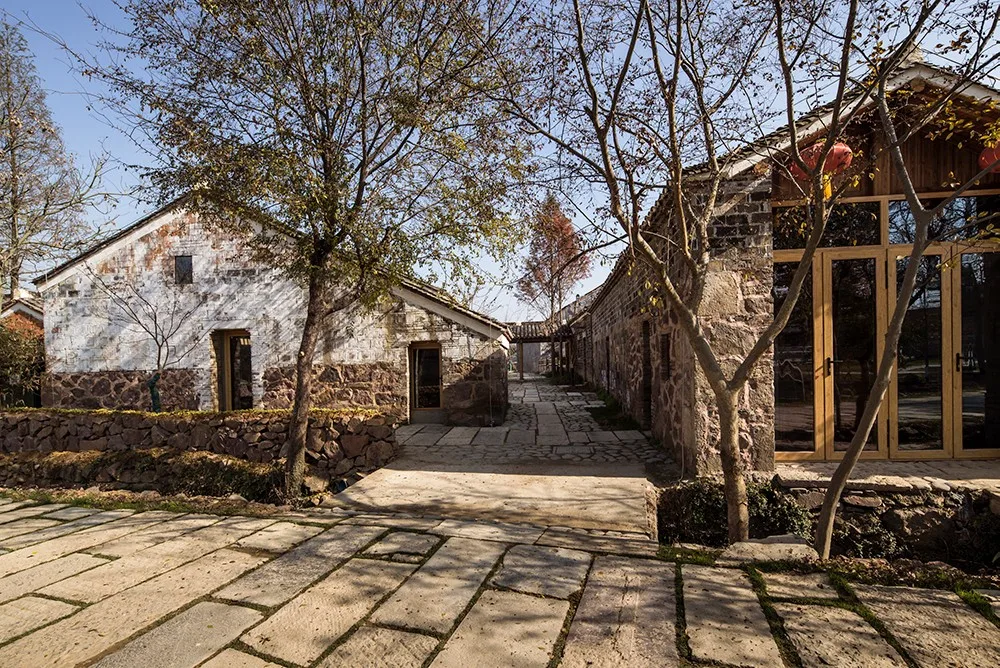
The new village lane created through renovation ©️ Zhong Ning
Despite revitalization efforts, the project revealed three key challenges. First, parking congestion arose as tourists gathered. To prevent road jams near the village entrance, authorities built a centralized parking lot outside the village, but pedestrian routes from the lot to the village needed better planning. Second, the dense village layout lacked adequate space for centralized tourist accommodations, presenting a pressing need for lodging solutions. Third, as tourism and villagers’ return increased, public spaces for daily community activities became increasingly limited.
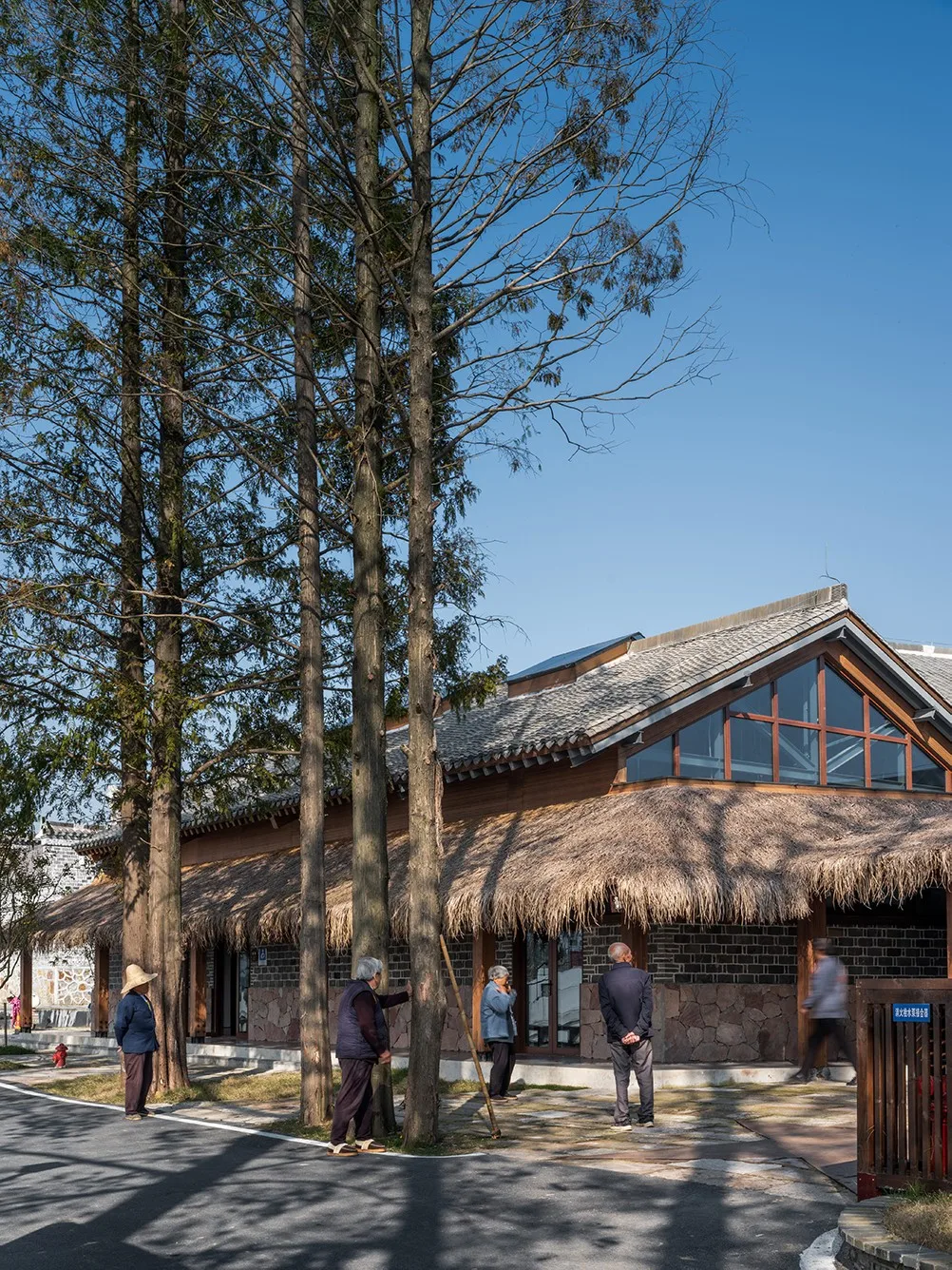
Under the water fir tree, villagers still gather to chat ©️ Time difference image
These challenges highlight the broader context of rural revitalization in China. Suburban villages must accommodate urban tourists seeking pastoral landscapes and authentic local culture, while simultaneously improving villagers’ quality of life by preserving rural characteristics and modernizing public services. Therefore, rural public spaces must serve both residents and visitors effectively.
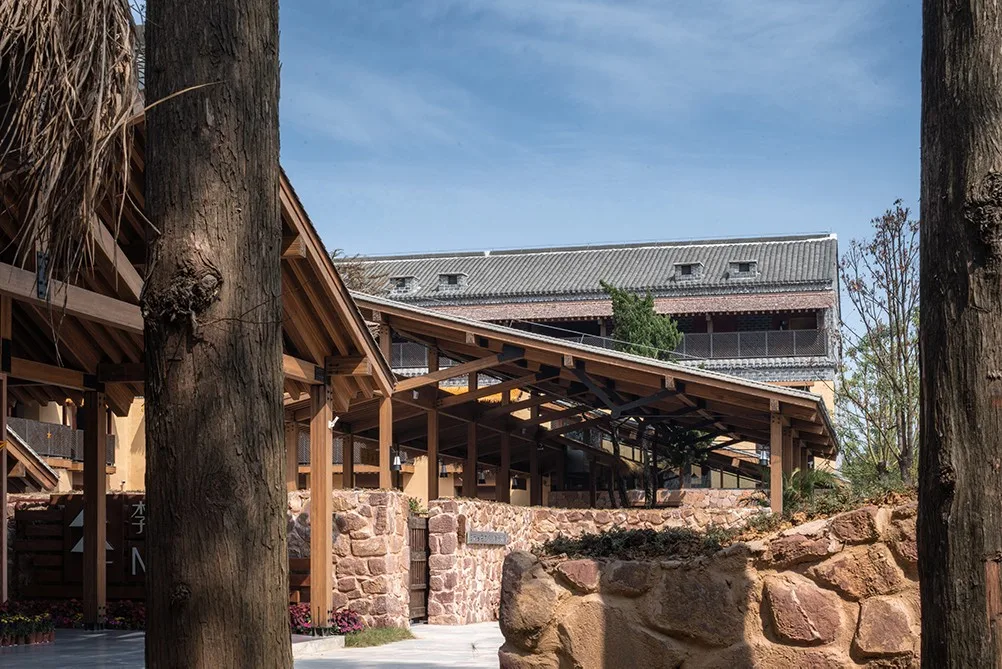
Blending local materials with modern craftsmanship ©️ Time difference image
In 2018, the ATA design team undertook further renovation and expansion of the village committee courtyard. The project introduced rural hostels to provide centralized accommodation, designed pedestrian bridges to reorganize visitor flow, and added village activity centers to enhance tourism while revitalizing daily rural life.
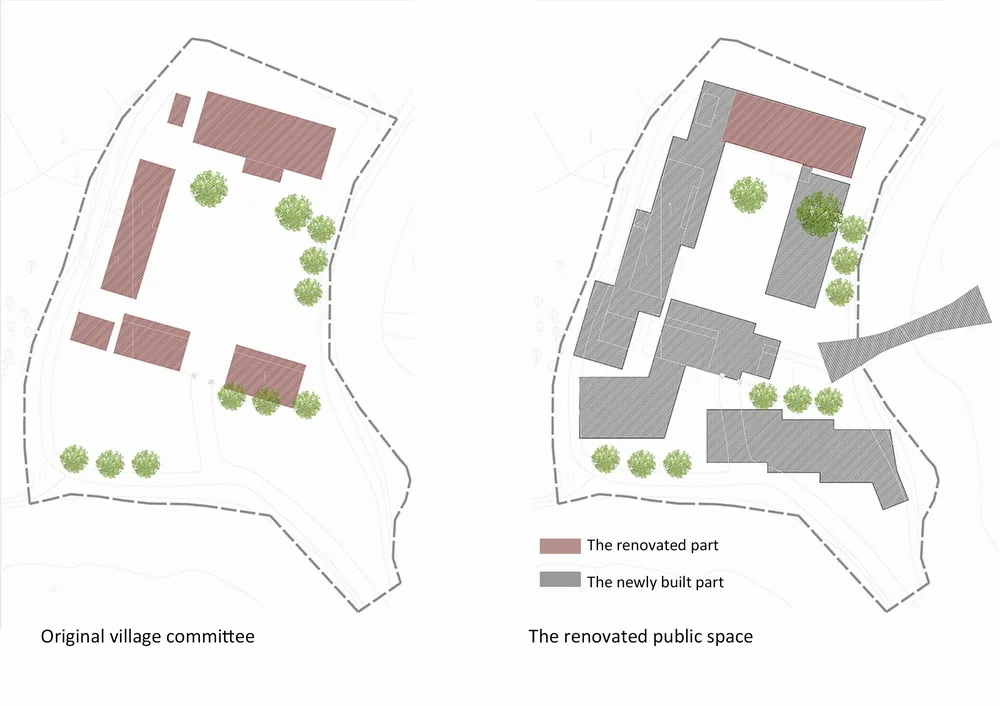
Before and after renovation comparison
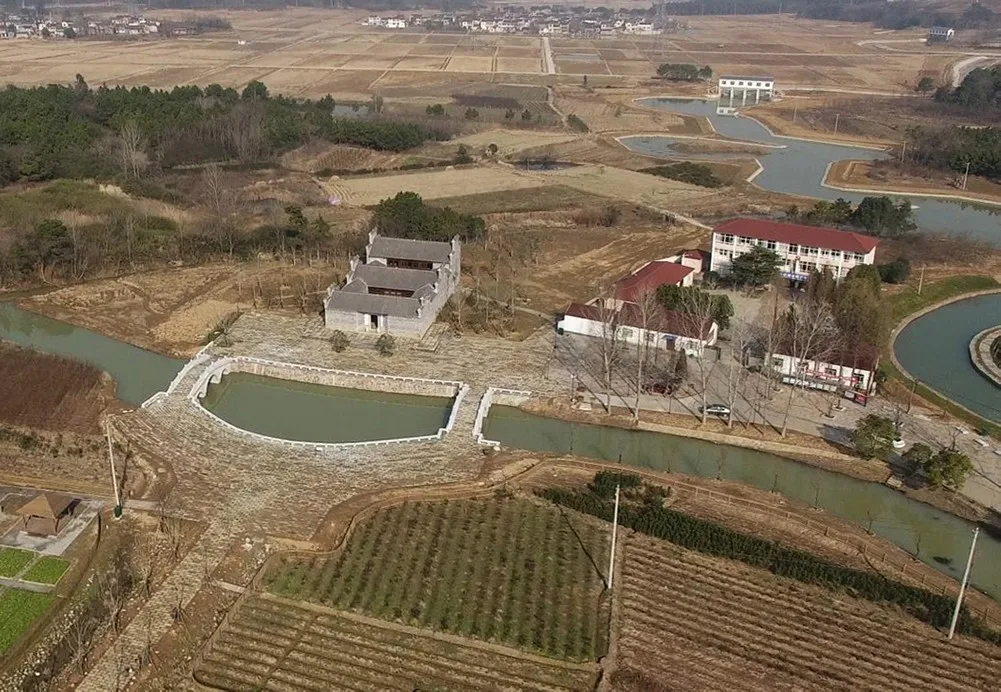
Former village committee courtyard adjacent to the ancestral hall ©️ Li Zhu
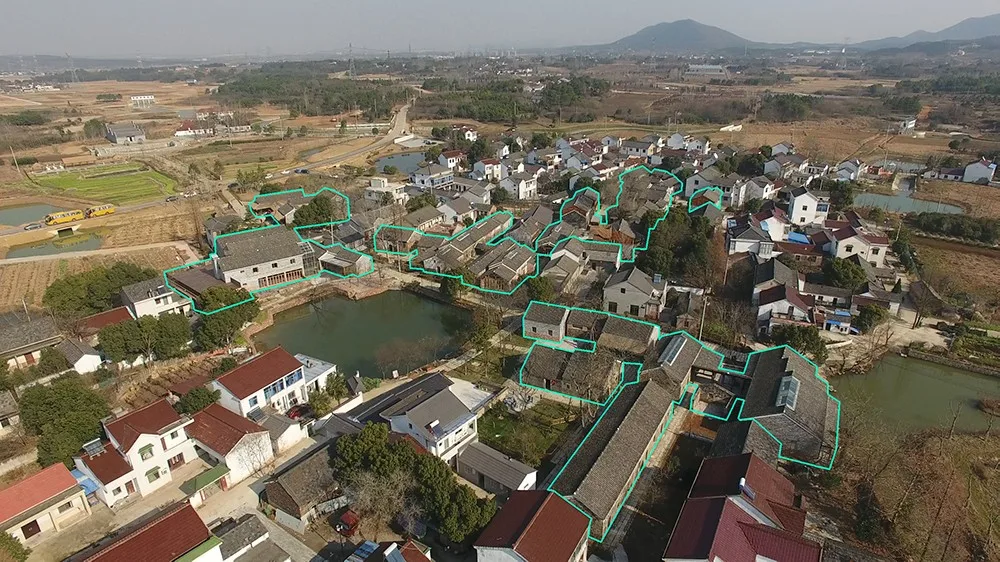
Scope of village internal renovation ©️ Li Zhu
New Village Tour Route
Lixiang Village’s ancestral hall is located on the northern edge, separated from residential areas by farmland. The village committee courtyard lies to the east of the ancestral hall, bordered by rivers and canals to the southeast. Traditionally, this courtyard served as a place for villagers to discuss community matters. Notably, the courtyard hosts one pine tree, one cedar, and two rows of water spruce, preserving important site memories.
The tourist parking lot sits across a canal facing the committee courtyard. To improve access and visitor experience, a pedestrian bridge over the river was planned to connect the parking area, ancestral hall, fields, and village, creating a new village entrance public space centered around the bridgehead.
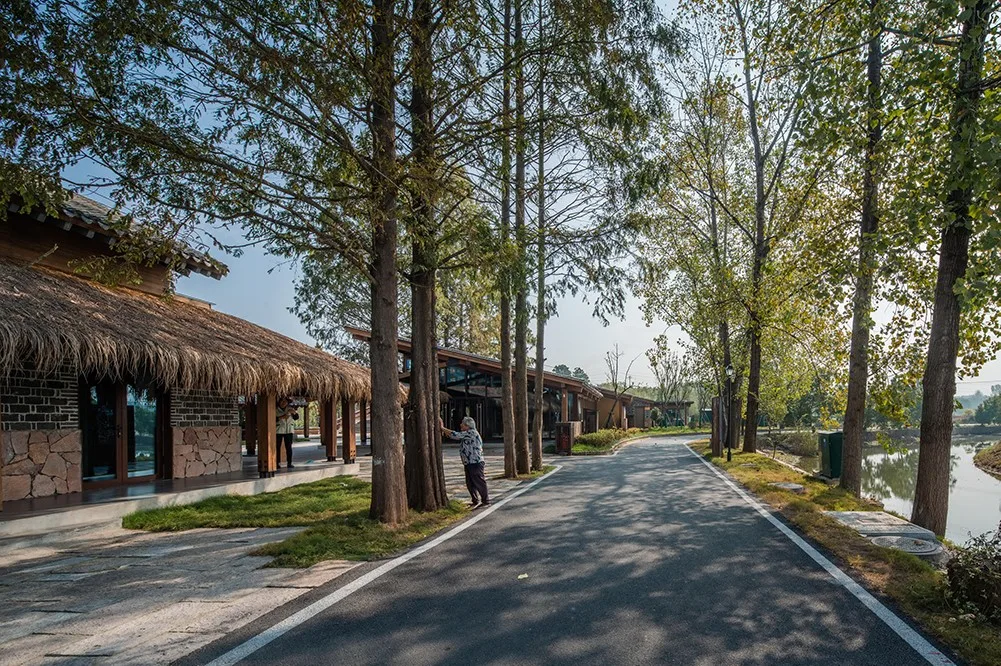
Preserved water spruce trees hold important site memories ©️ Time difference image
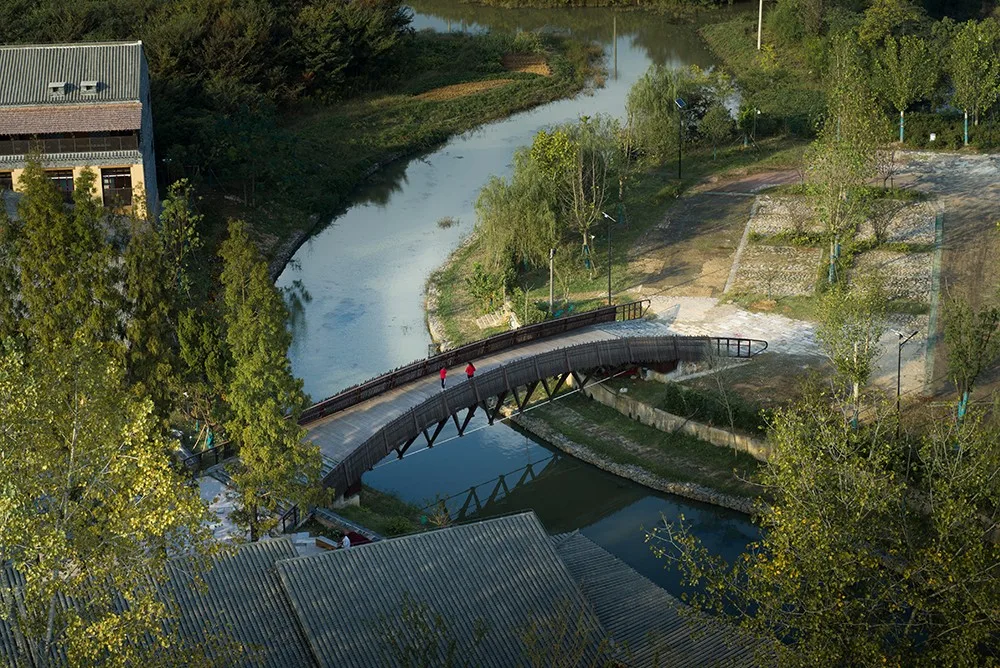
Aerial view of the pedestrian bridge ©️ Time difference image
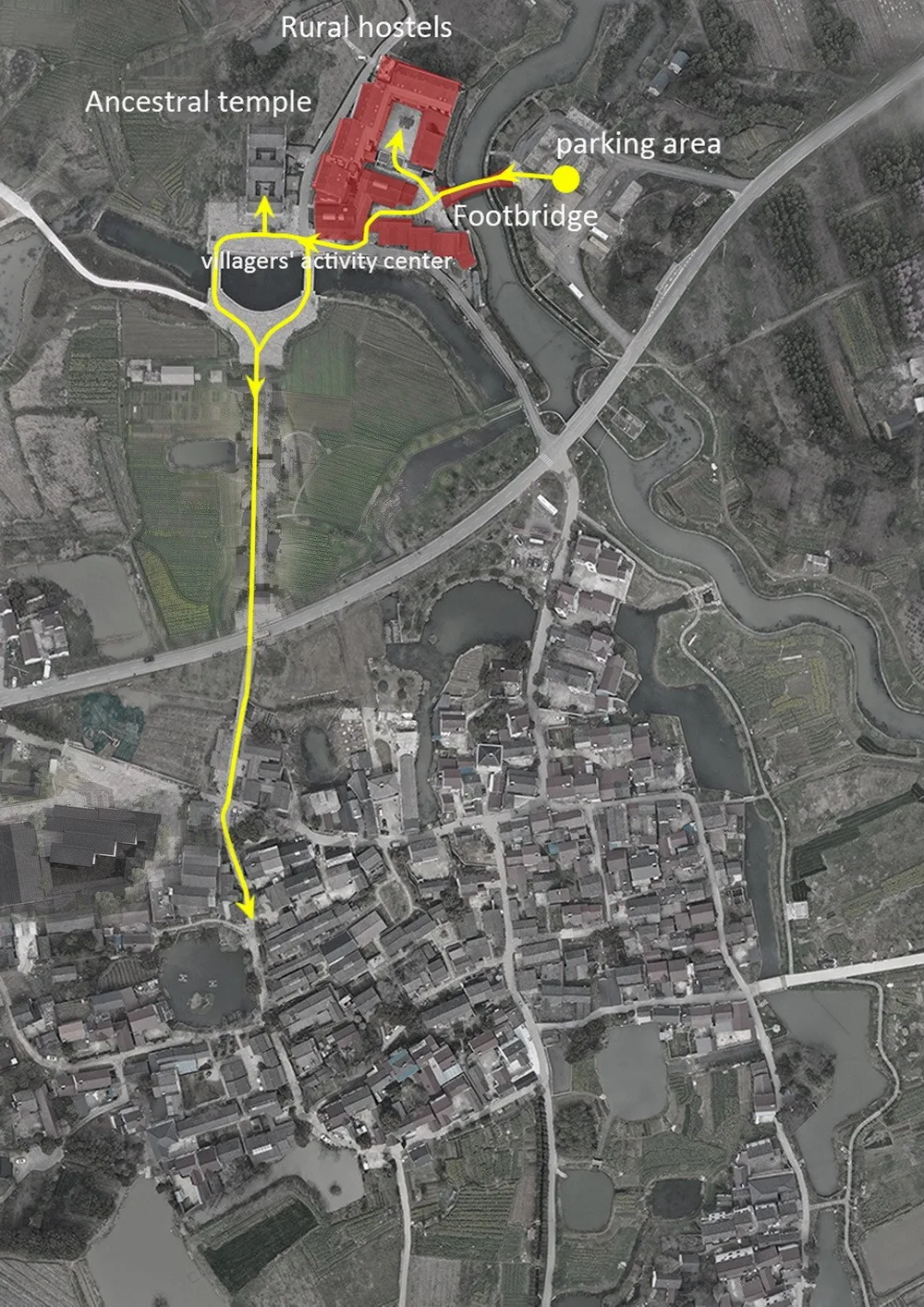
New tourist route into the village
Pedestrian Bridge
The irrigation ditch crossing the village is nearly 30 meters wide and serves a critical flood discharge function. To protect this, no bridge piers were allowed within the water channel, requiring a single-span pedestrian bridge of 30 meters. Additionally, the bridge width had to accommodate groups of tourists comfortably.
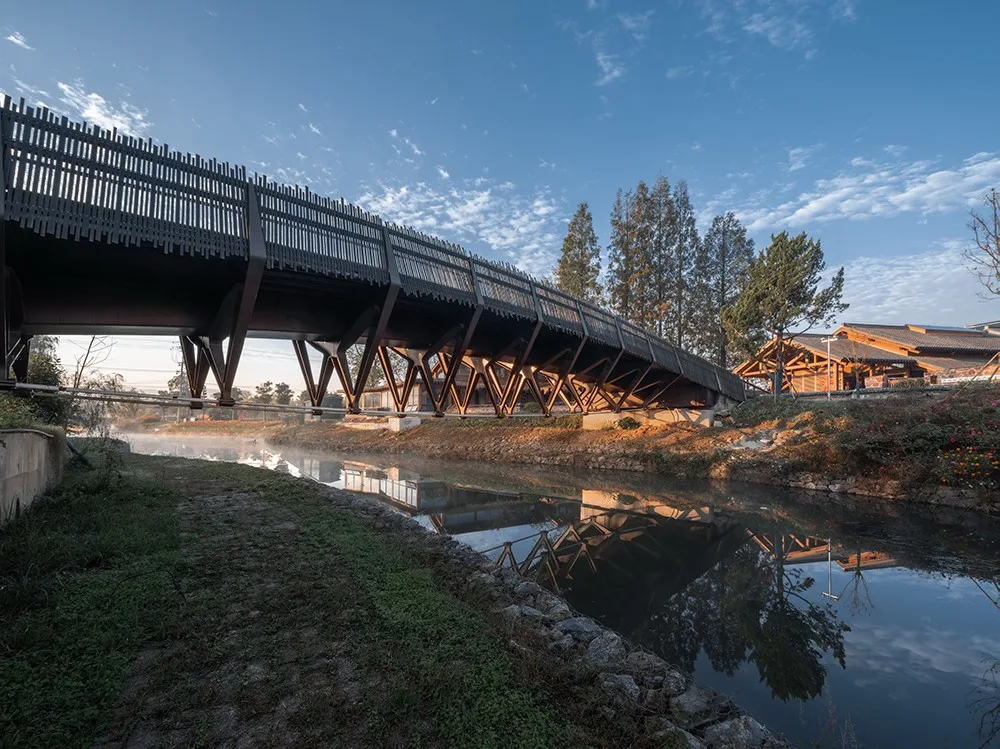
The butterfly-shaped web members create a distinctive visual effect ©️ Time difference image
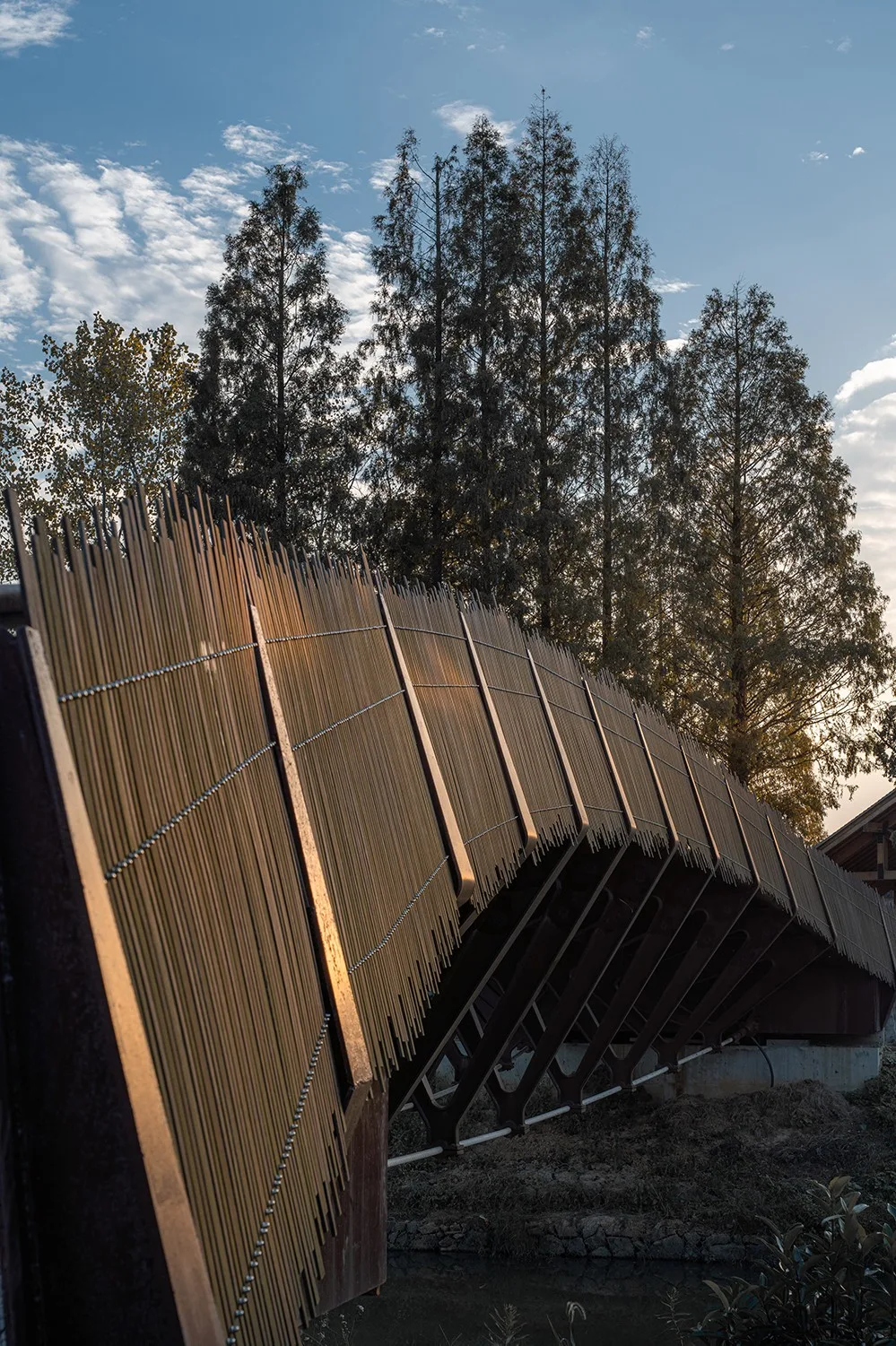
Randomly arranged bridge railings harmonize with the natural surroundings ©️ Time difference image
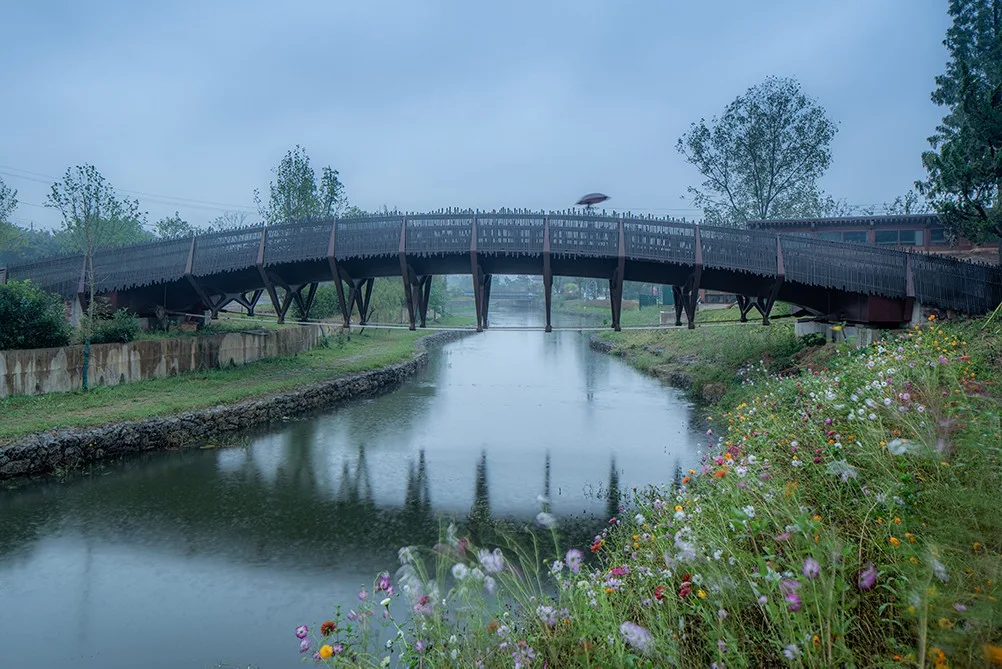
Rural pedestrian bridge shrouded in misty rain ©️ Time difference image
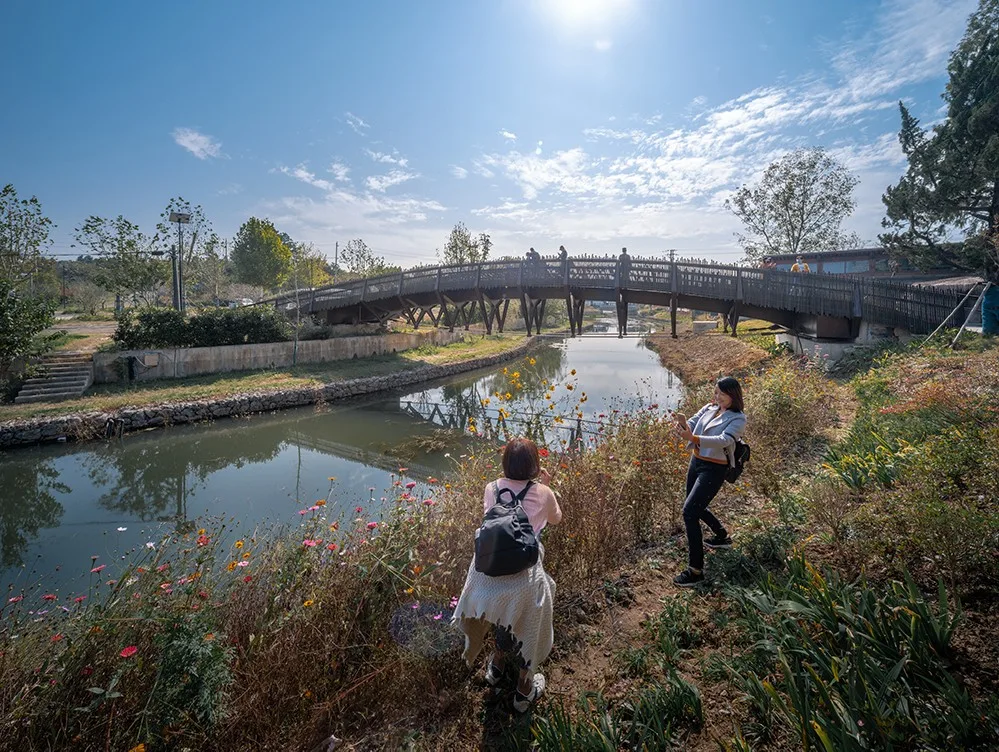
The bridge is popular among tourists ©️ Time difference image
Structural constraints related to transportation, installation, and rural construction conditions influenced the bridge design. Ultimately, a cable-stayed steel structure was selected, considering Lixiang’s suburban rural setting and the developed road network of the Yangtze River Delta.
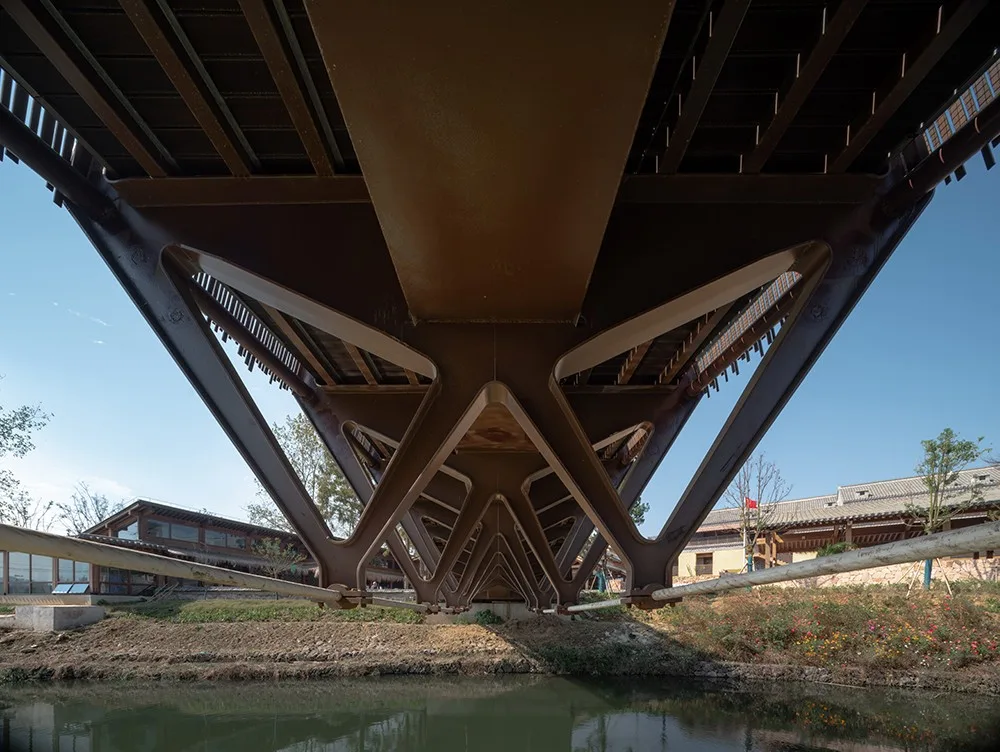
Steel box girders, butterfly web members, and lower chord cables in the structure ©️ Time difference image
The Beam String Structure, an efficient large-span system, combines rigid upper chord beams with high-strength tension cables connected by struts. This hybrid system relies on form resistance and pre-tension to withstand loads. For Lixiang, this approach keeps the upper chord slim, preventing the pedestrian bridge from appearing bulky and out of place in the rural landscape.
Viewed from the side, the upward-curved steel box girder deck and downward-curved cables form a fish-belly shape; from above, inward-curved bridge and cable lines create spatial tension.
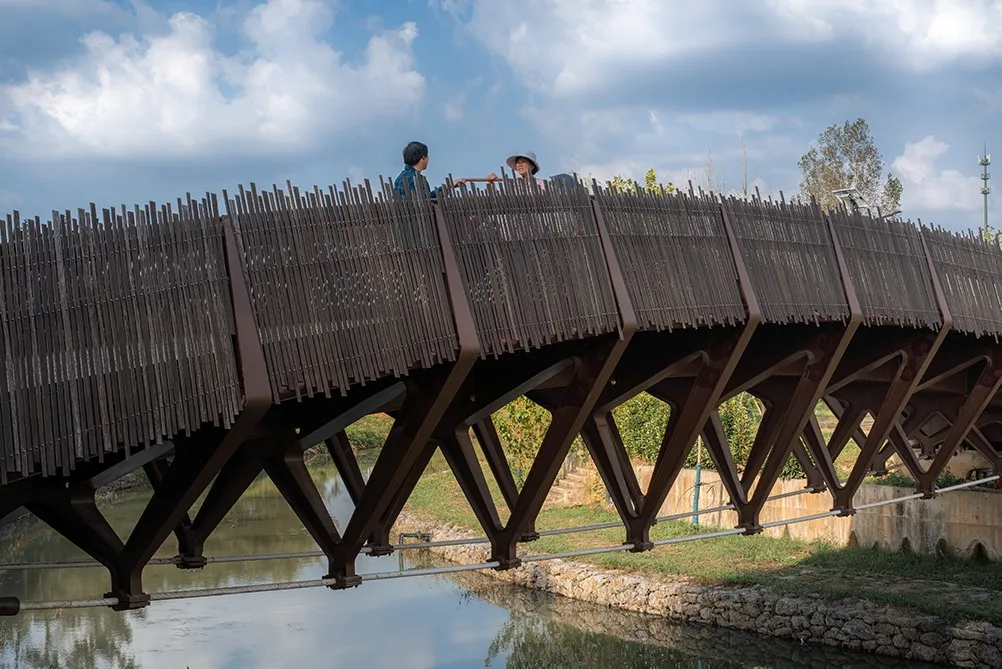
The bridge also serves as a social gathering place for villagers ©️ Time difference image
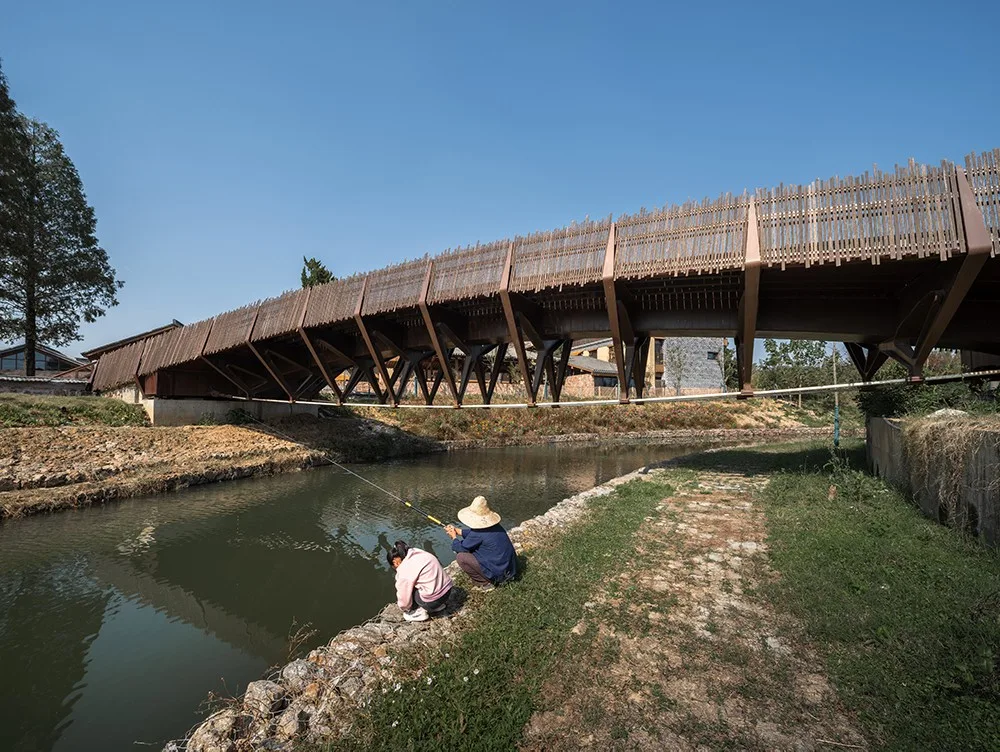
Lower string beam and villagers fishing beneath the bridge ©️ Time difference image
Nine butterfly-shaped web members gradually vary in form, producing a unique spatial effect. The bridge railings are crafted from glued bamboo strips of varying lengths arranged randomly, emphasizing the bridge’s light and natural aesthetic.
The bridge was prefabricated in a shipyard in Zhangjiagang, 180 kilometers from Lixiang, then transported by heavy trucks and installed using a large crane. Villagers witnessed the installation day, which was celebrated with traditional firecrackers and blessings akin to erecting a house’s main beam.
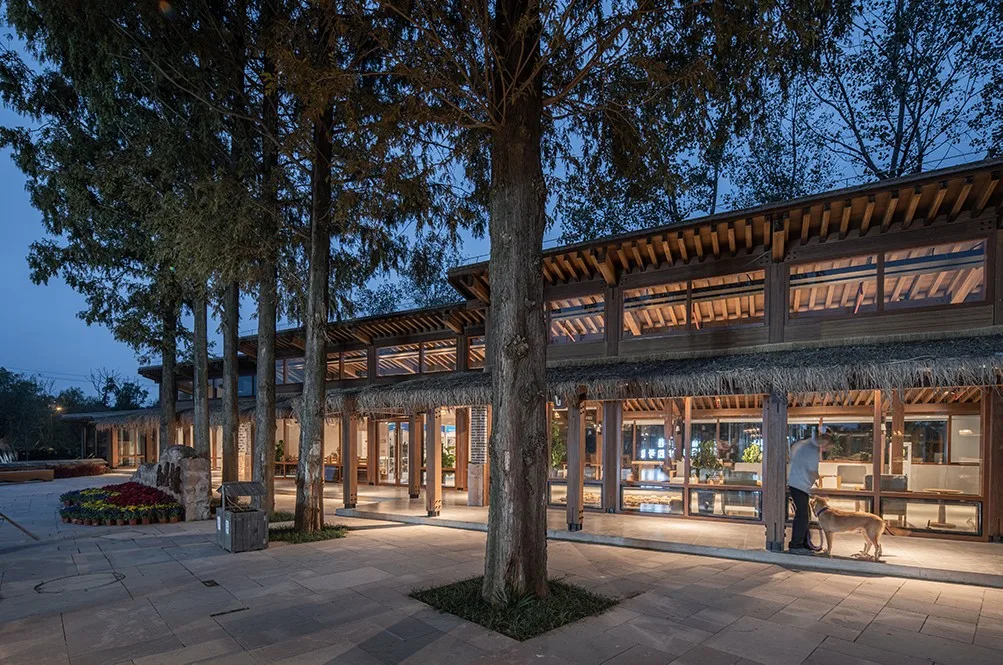
△ Night view of the rural activity center ©️ Time difference image
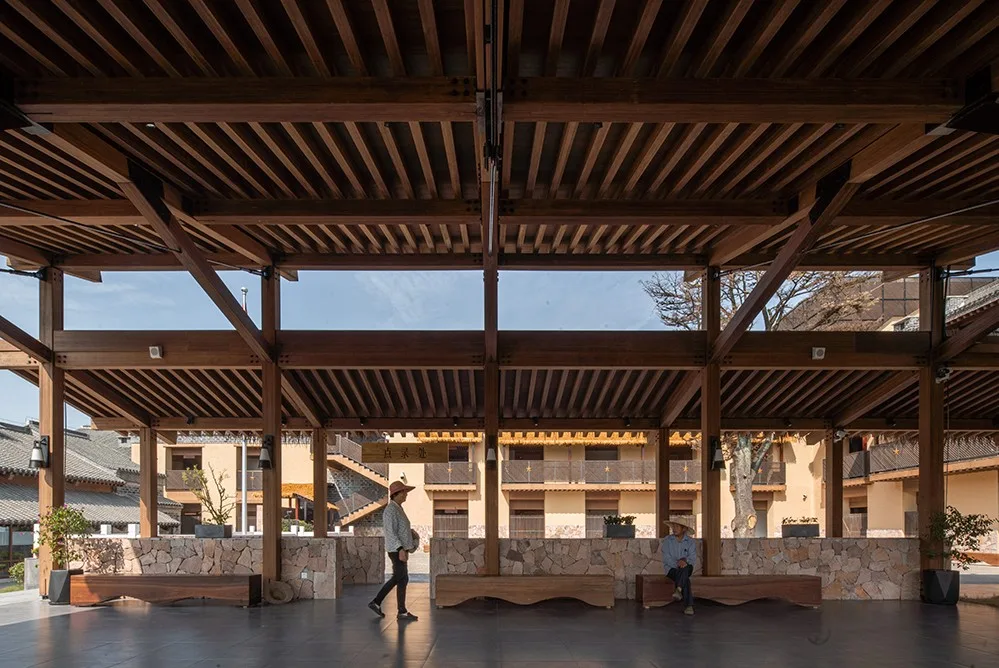
The pergola is a shared space for villagers and tourists ©️ Time difference image
Public Space at the Village Entrance
Before renovation, the village committee courtyard was a hub for villagers to discuss and handle community affairs. Residents visited the government window for various services, picked up medicine from the village clinic, and socialized under the water fir tree. This courtyard has long served as an essential public space, with the two rows of tall water fir trees preserving strong site memories.
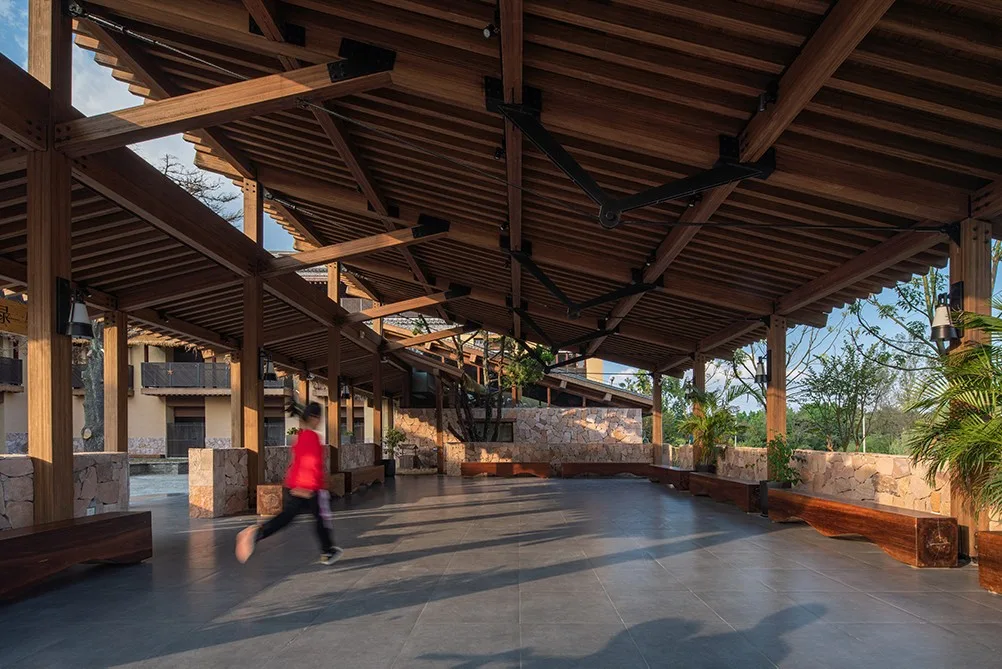
Locking mechanism of the laminated bamboo structure complements the string beam system ©️ Time difference image
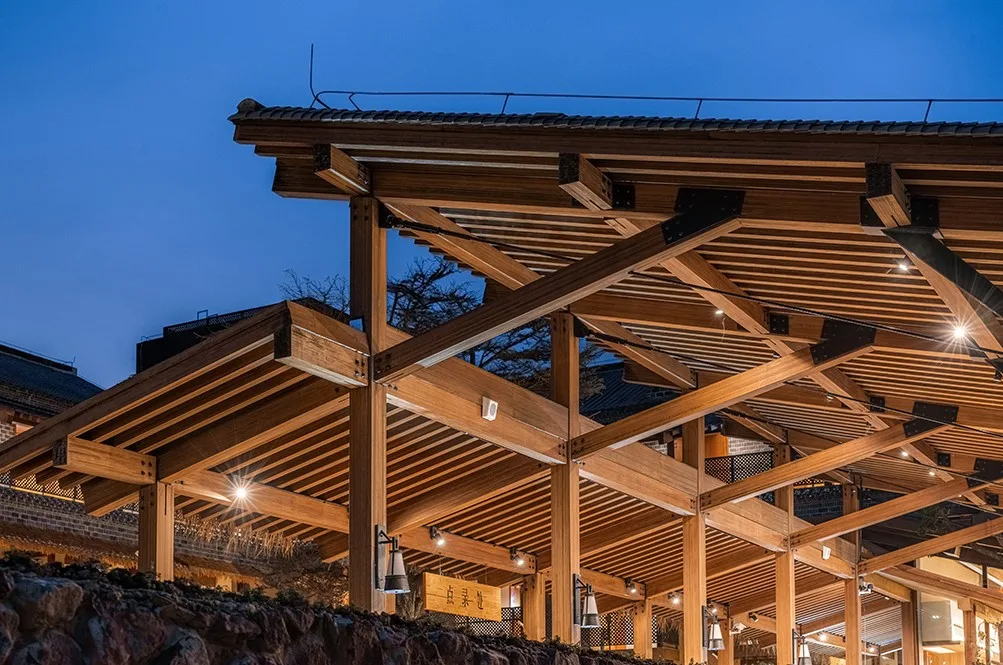
Structural elegance displayed through the glued bamboo framework ©️ Time difference image
Research revealed that villagers prefer outdoor and semi-outdoor communal spaces over formal indoor settings. Places like the village entrance bridge, shaded areas under trees, the eaves corridor beside the entrance passage, and the pergola offer fresh air and opportunities to observe passersby. These spaces serve as vital social hubs for locals and represent the “village entrance” atmosphere sought by nostalgic visitors.
Within the new village alley, framed by buildings and water fir clusters, visitors are guided from the bridge to the small square in front of the ancestral hall.
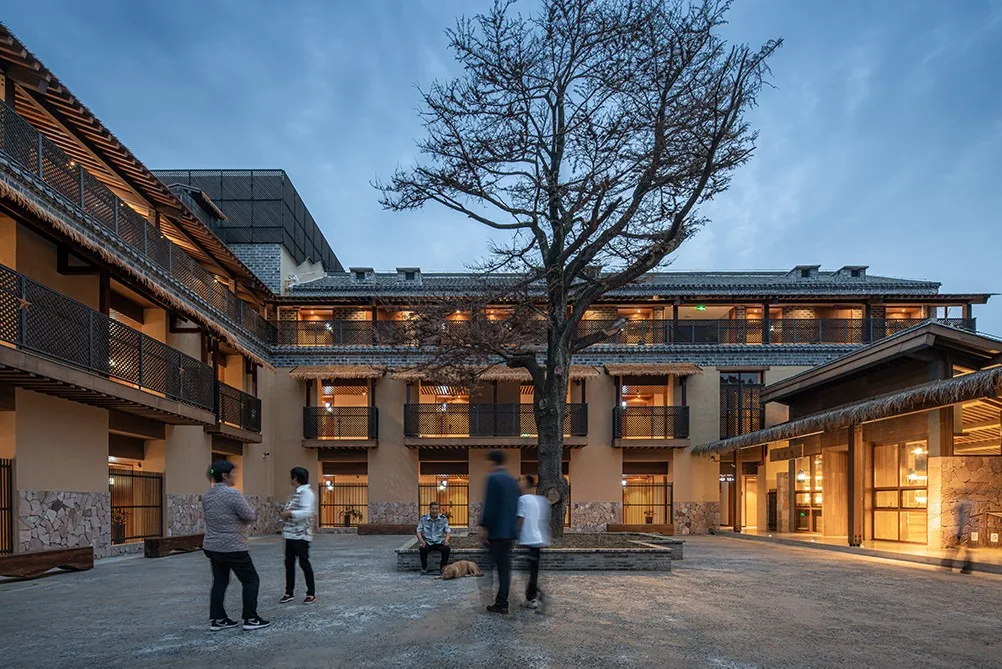
The hotel’s small square also serves as a gathering spot for villagers ©️ Time difference image
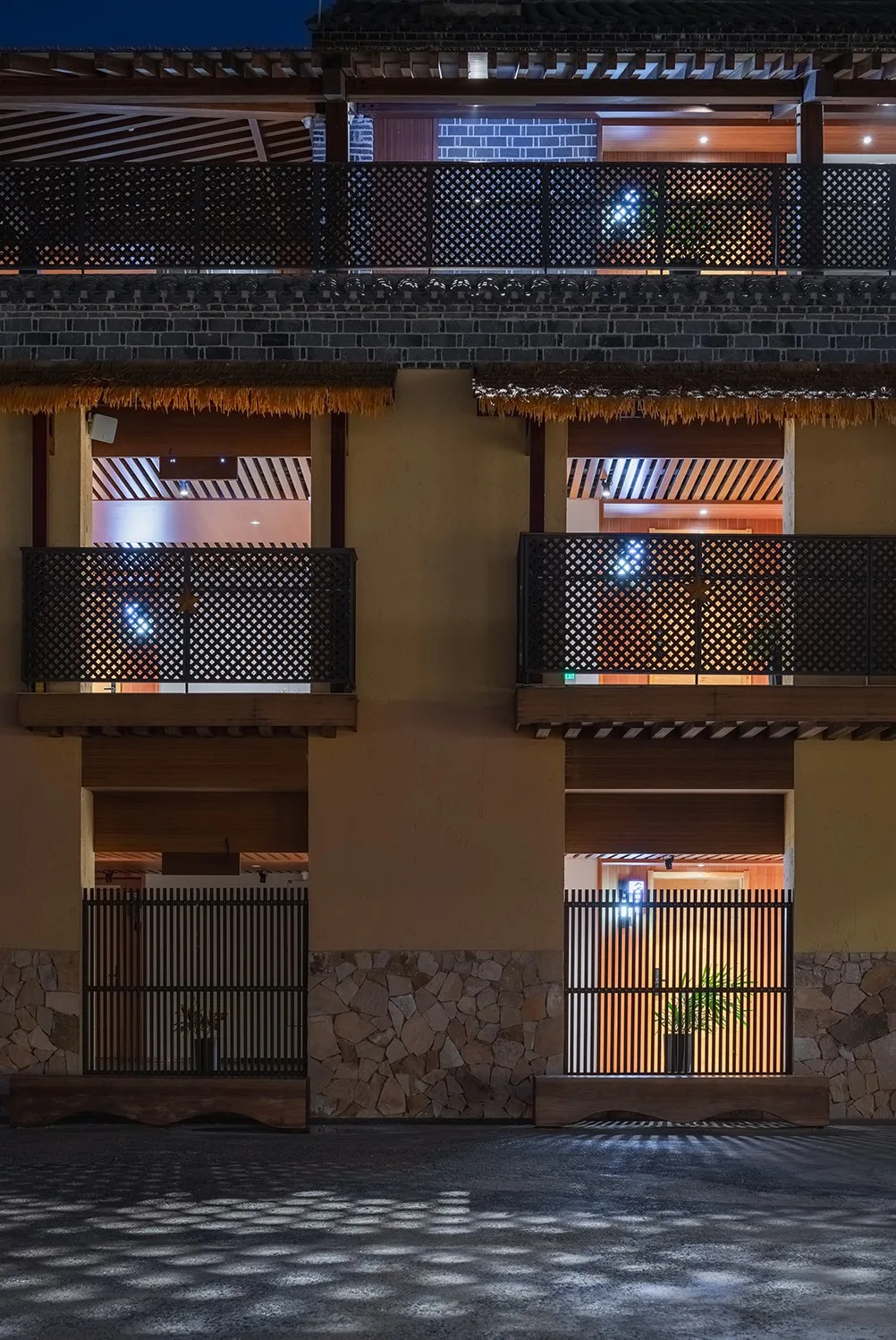
Shadows of the fence cast onto the square by the sunlight ©️ Time difference image
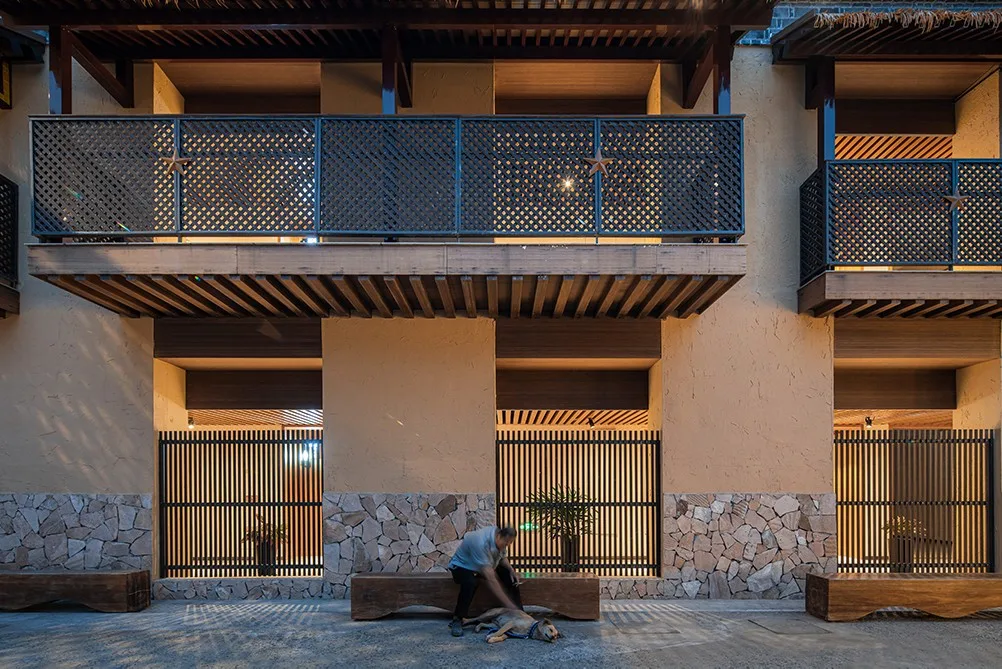
Outer corridor of rural hostel rooms ©️ Time difference image
The design rationally organizes functions and preserves the villagers’ gathering places, presenting them as unique features to tourists and fostering interaction between locals and visitors. The small public buildings at the village entrance offer rest areas, tourist information, public restrooms, rural canteens, multifunctional halls, and open greenhouses for shared use.
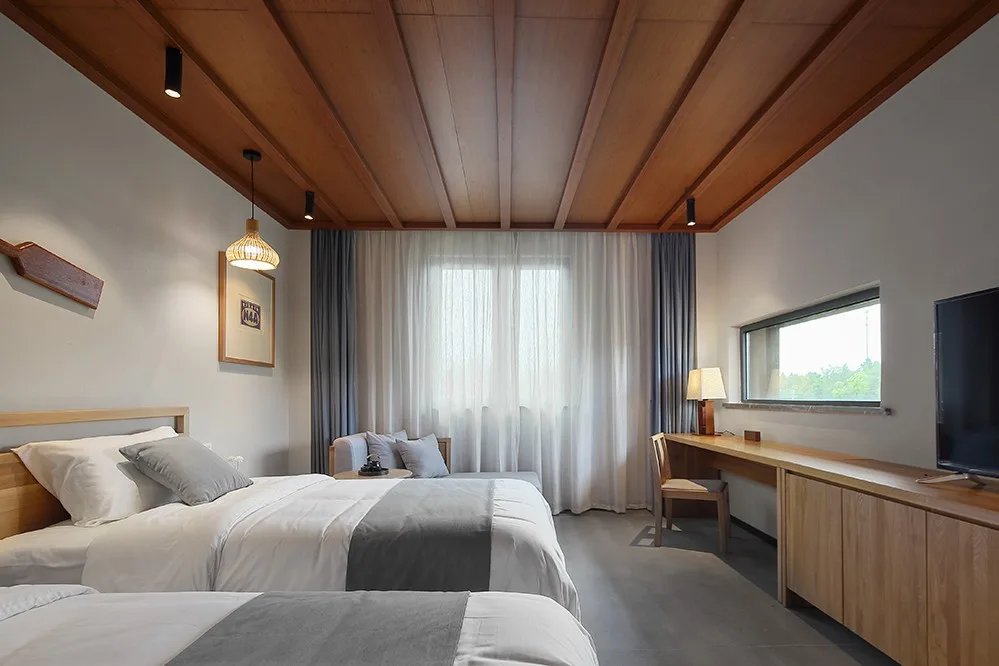
△ Interior view of a standard room ©️ Obsidian photography
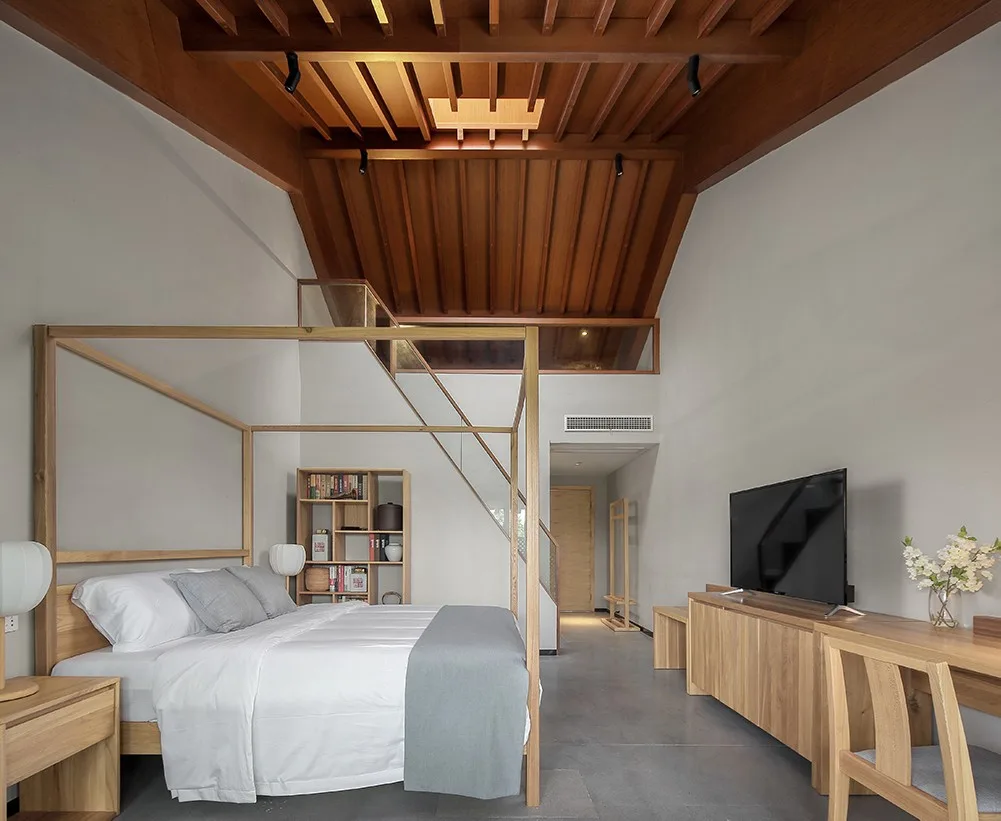
△ Guest room with attic ©️ Obsidian photography
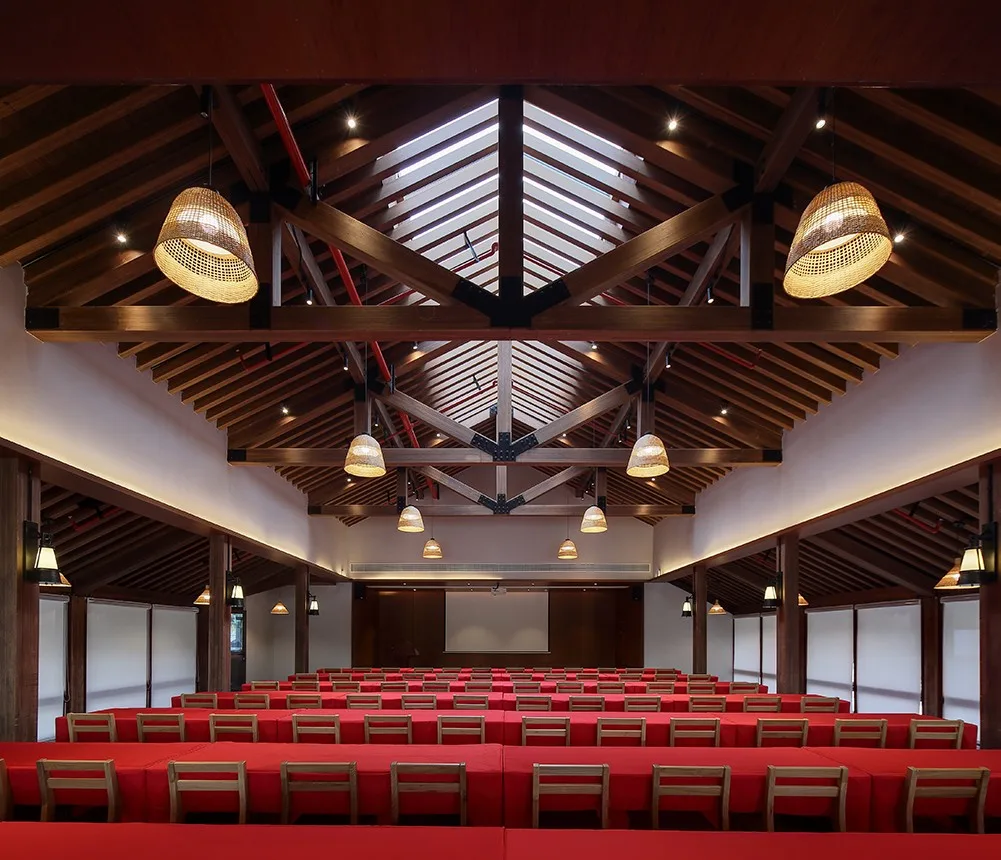
△ Rural multifunctional hall ©️ Obsidian photography
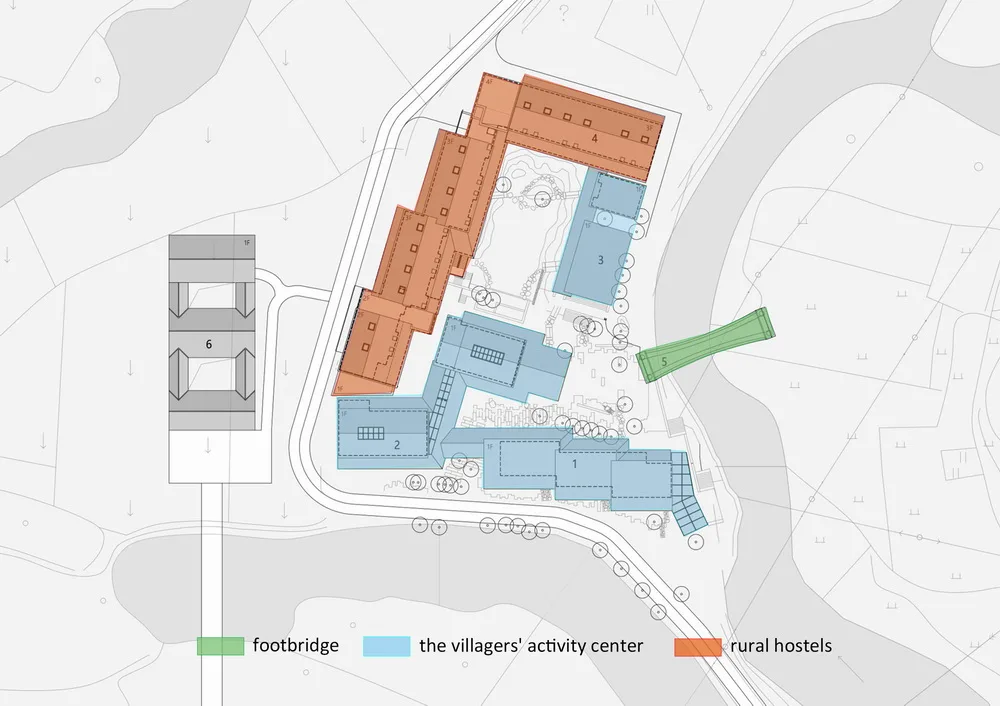
△ Functional zoning diagram
Rural Hostel
As a key service for visitors, the rural hostel balances tourist accommodation with villagers’ activities within limited space. The ATA team renovated and expanded the original three-story office building, converting its “I”-shaped layout into an “L” shape to form guest rooms.
The inner courtyard, enclosed by an eastern pergola, preserves the original site’s memory and functions as a small village square for daily use by locals and tourists. During harvest seasons, it also serves as a drying area. The pergola and multifunctional hall are shared spaces for both groups.
The hostel’s restaurant doubles as a rural canteen, hosting folk performances and banquets for villagers. This design intends for villagers’ cultural activities to be experienced firsthand by tourists, showcasing local customs.
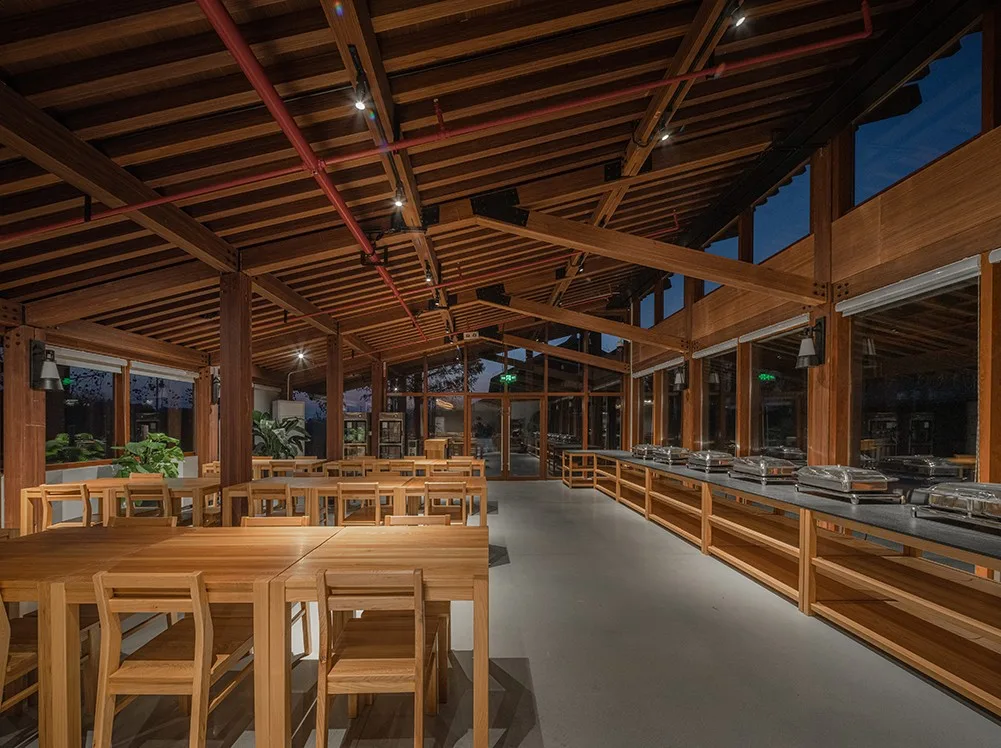
△ Restaurant in the rural hostel ©️ Time difference image
Rural Construction
China leads the world in bamboo production and processing. Bamboo’s fast growth and low carbon footprint make it an environmentally friendly material suited to the country’s conditions.
The project extensively uses engineered bamboo materials and prefabricated construction technologies to reduce carbon emissions. Rather than replicating traditional local styles, the design draws inspiration from local methods but employs modern processing and construction techniques to enhance rural architecture quality and technology.
By combining glued bamboo and steel components, the design achieves the use of small structural members suitable for rural conditions, creating spacious interiors. This approach modernizes rural public space construction while preserving cultural identity, reflecting contemporary rural development thinking.
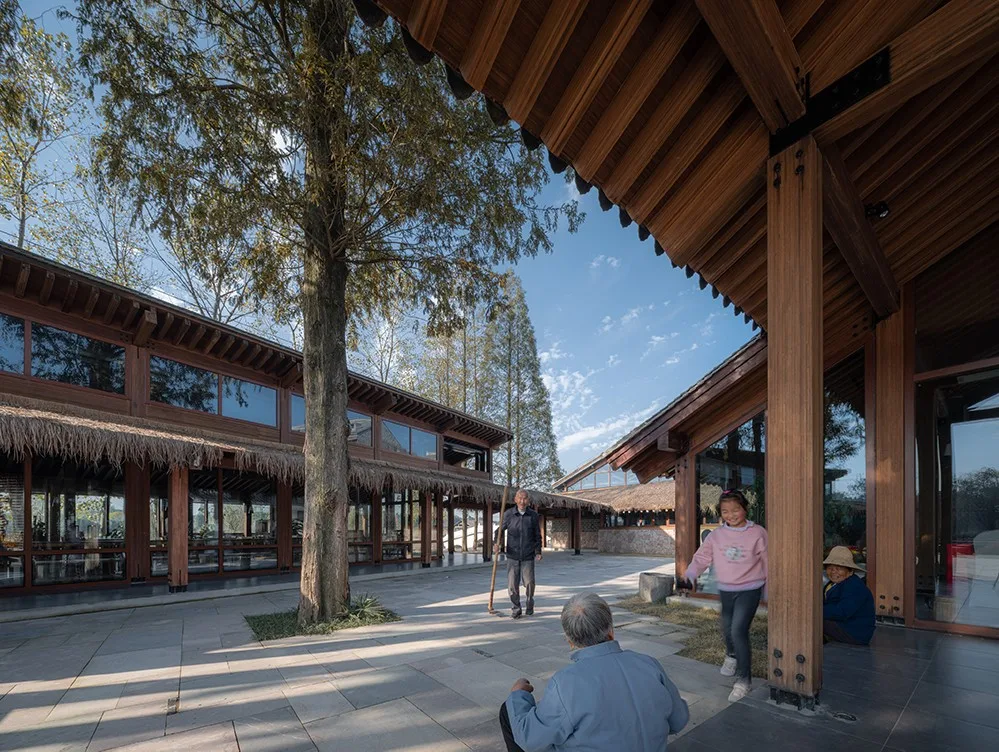
△ Communication spaces for villagers under trees and corridors ©️ Time difference image
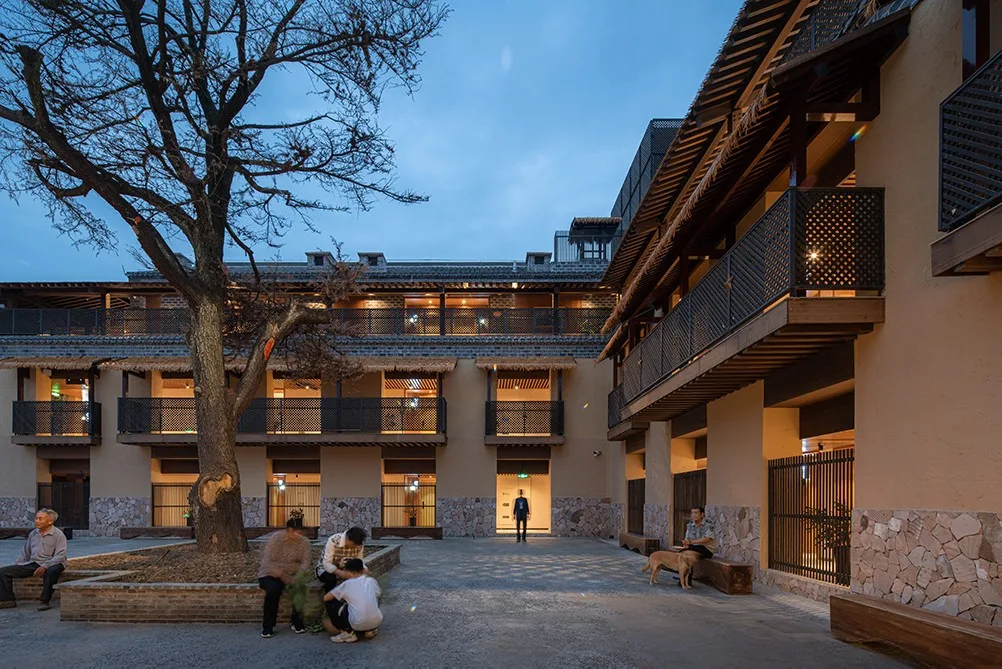
The rural living environment is a key attraction for tourists ©️ Time difference image
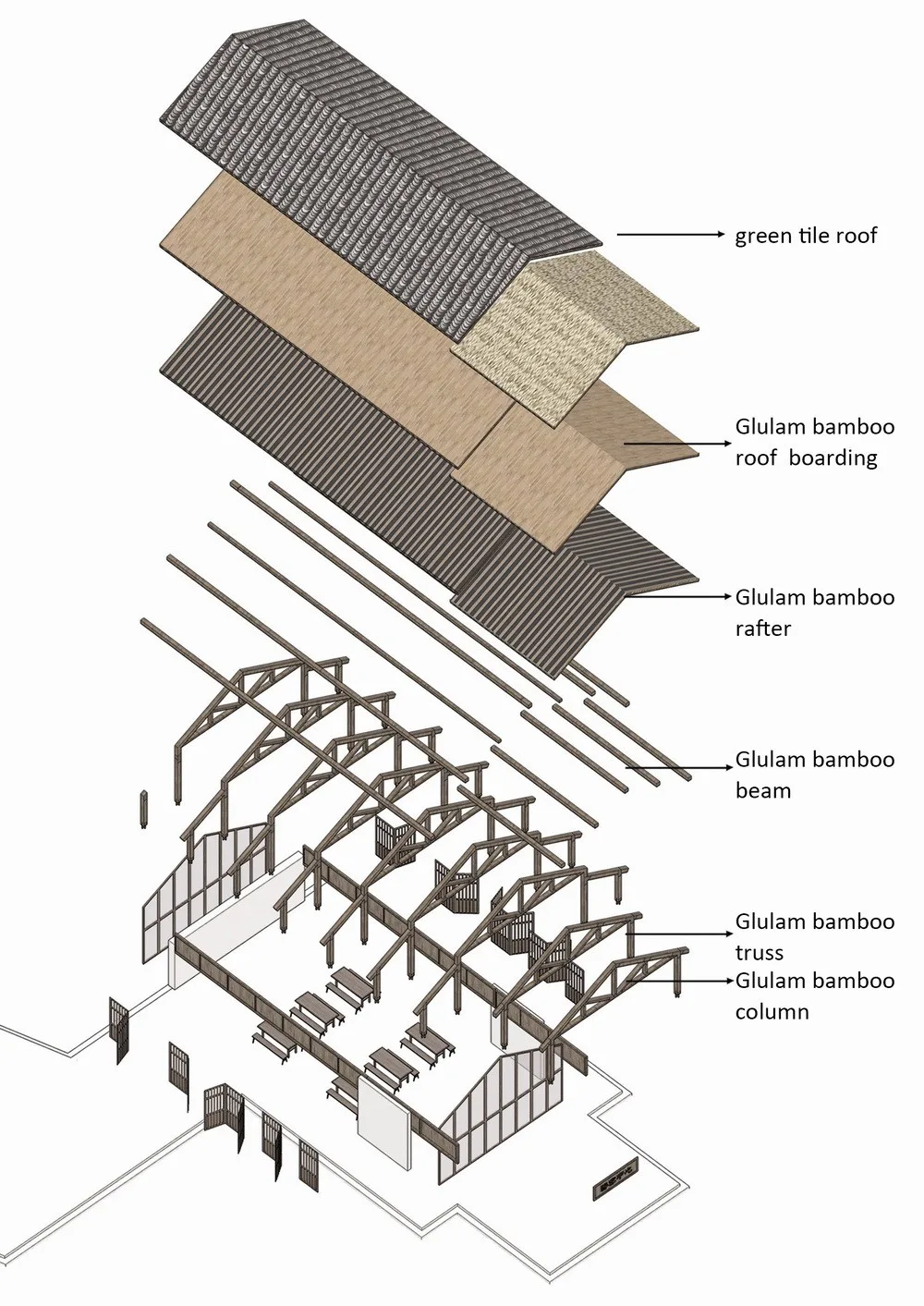
Analysis of laminated bamboo structural components
Project Significance
The development of rural architecture is a vital element of rural revitalization. This effort goes beyond urban curiosity or tourism; it strengthens connections between rural areas and the modern world while preserving local customs and culture. It improves villagers’ quality of life and encourages migrant villagers to return, fostering revitalization paths grounded in rural identity.
Integrating villagers’ daily activities with tourists’ sightseeing in new rural public spaces offers locals a window to the outside world and gives visitors authentic cultural insights. This approach balances rural development with villagers’ welfare, supporting the sustainable growth of the rural economy and society amid urbanization.
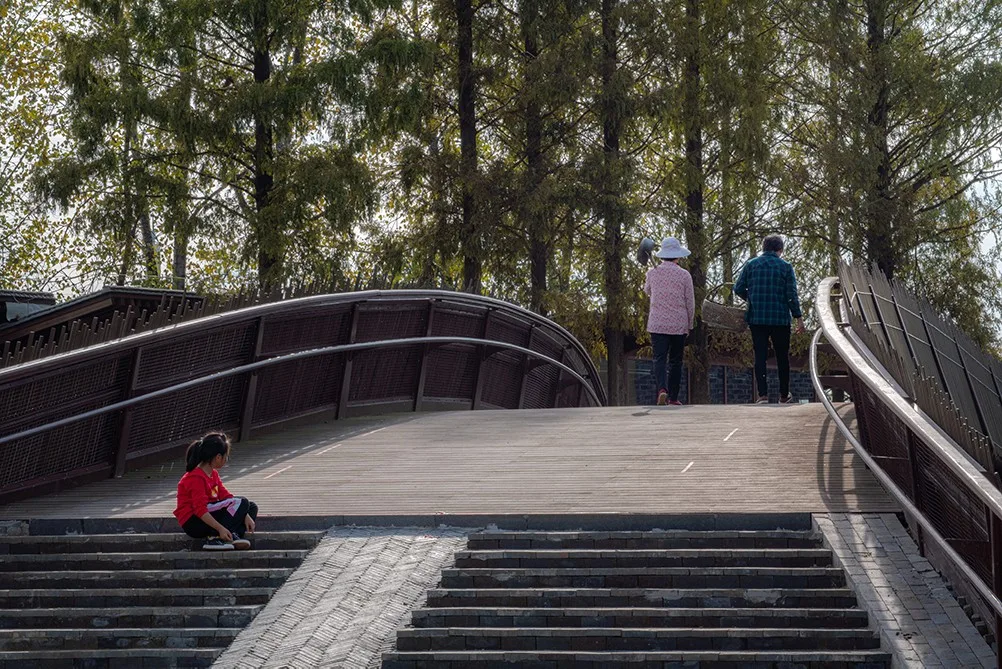
The pedestrian bridge has become a daily route for villagers ©️ Time difference image
Technical Drawings
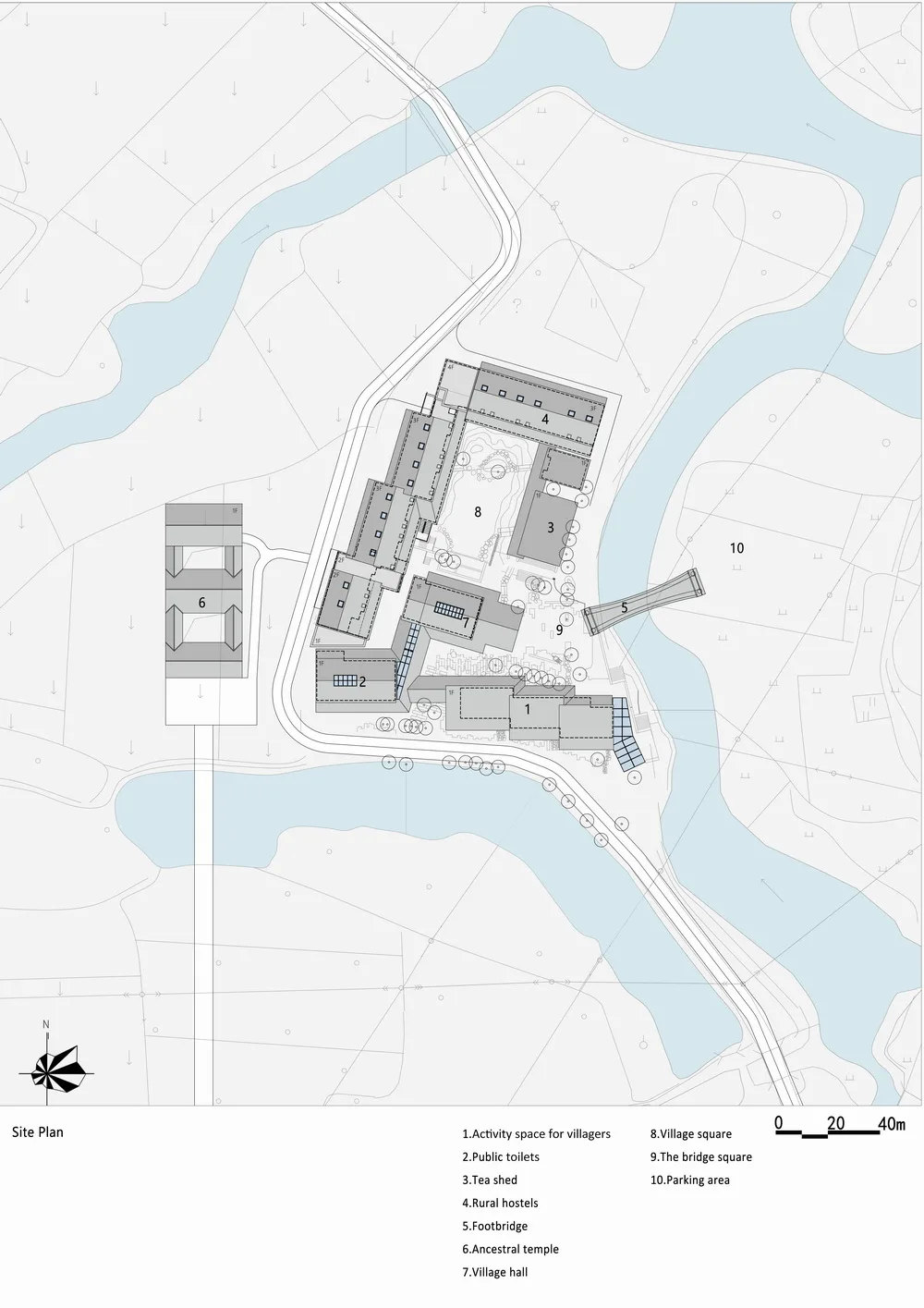
△ General layout plan
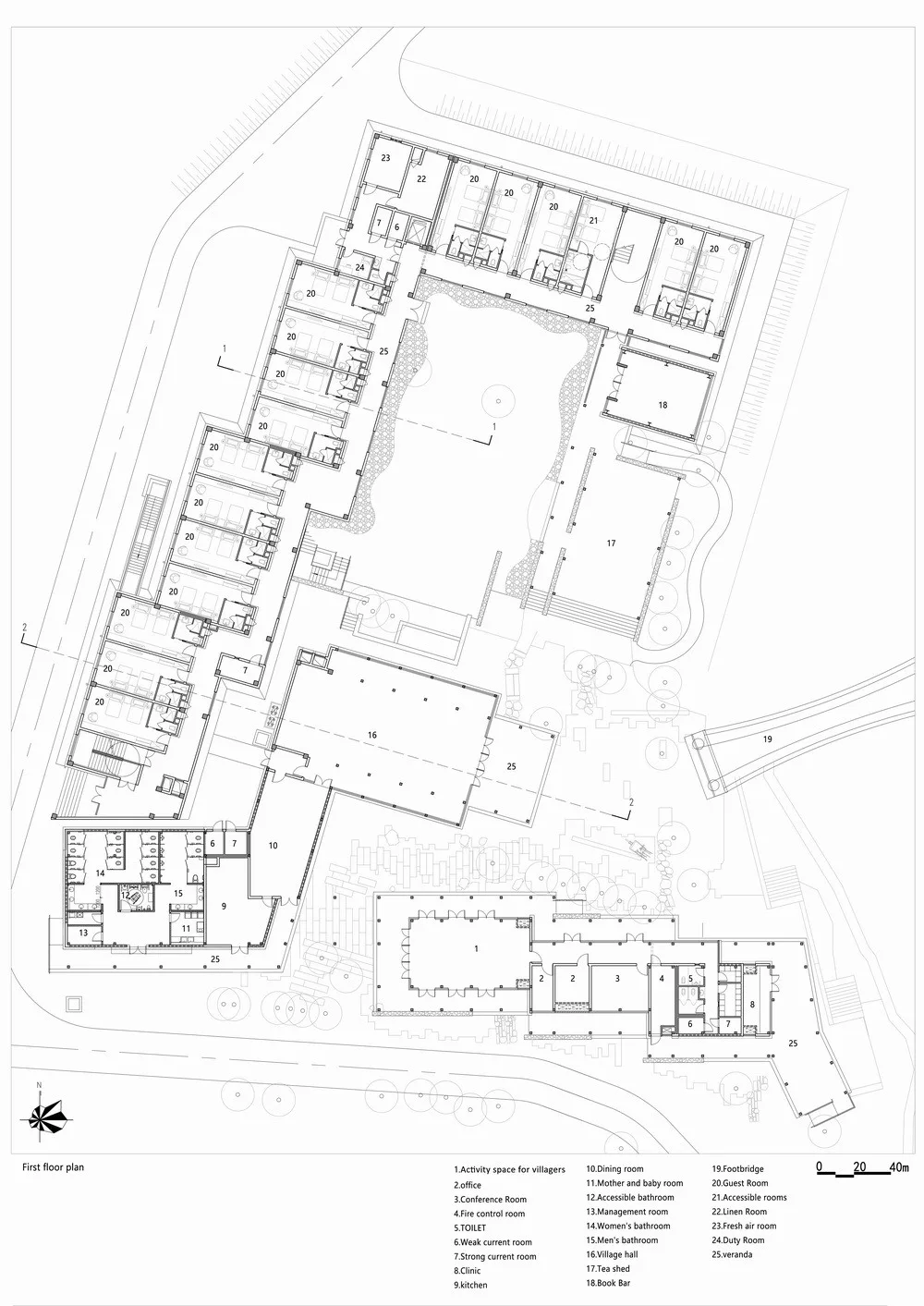
△ First floor plan
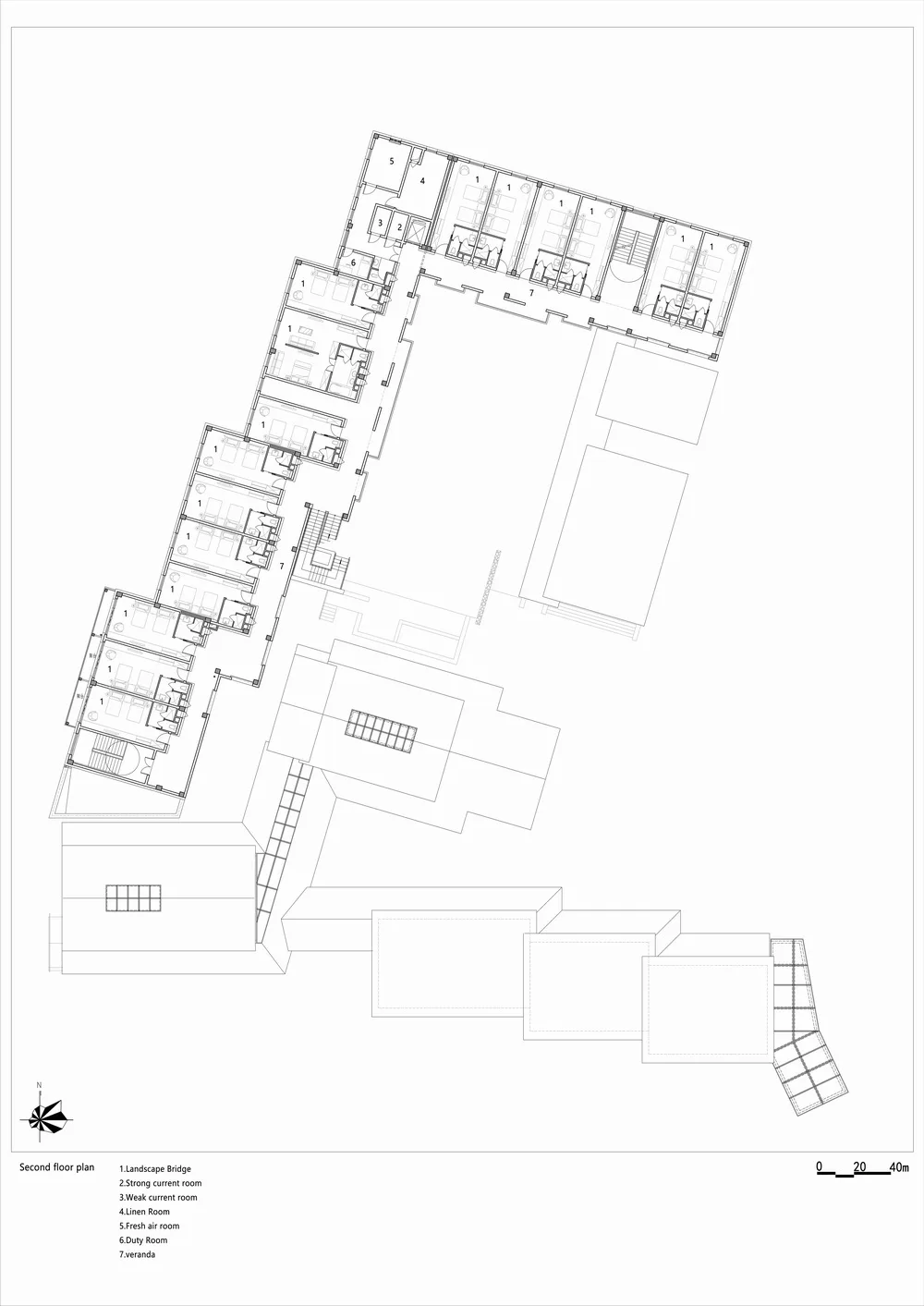
△ Second floor plan
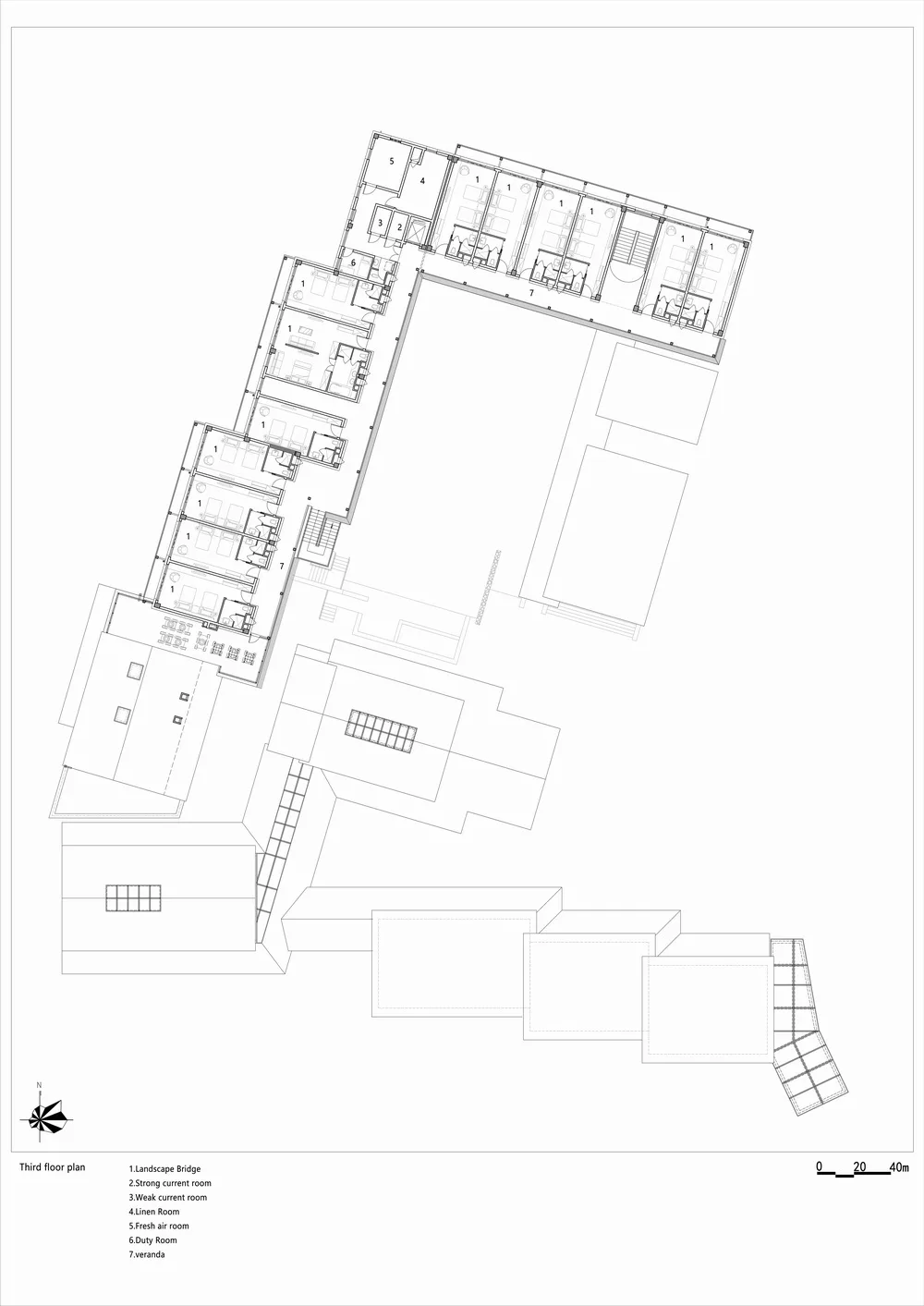
△ Third floor plan
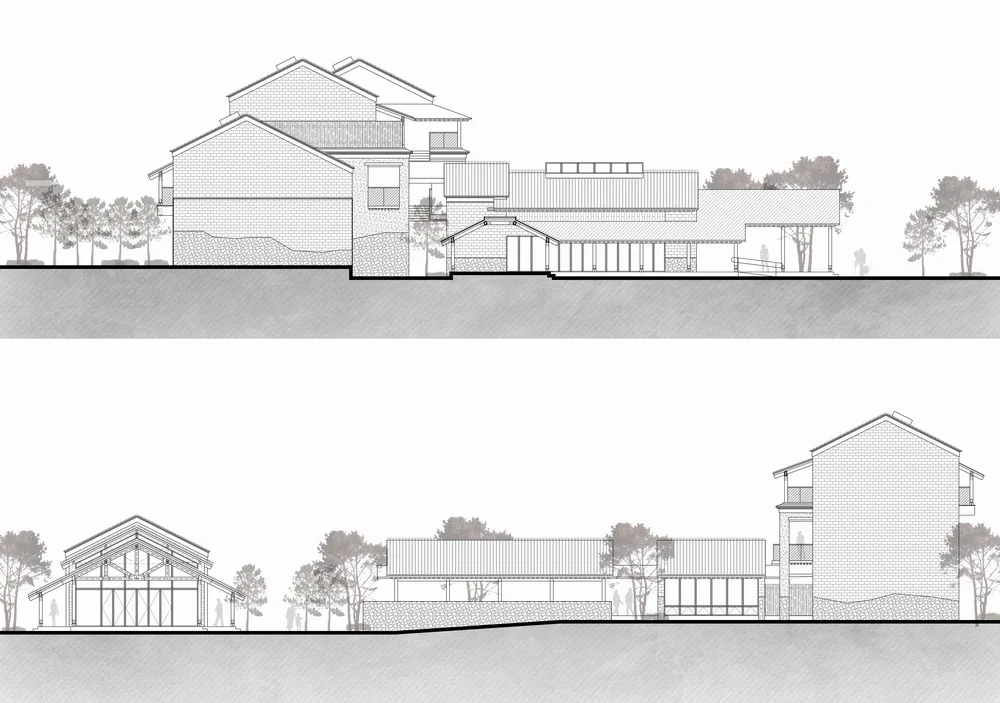
△ East-West elevation
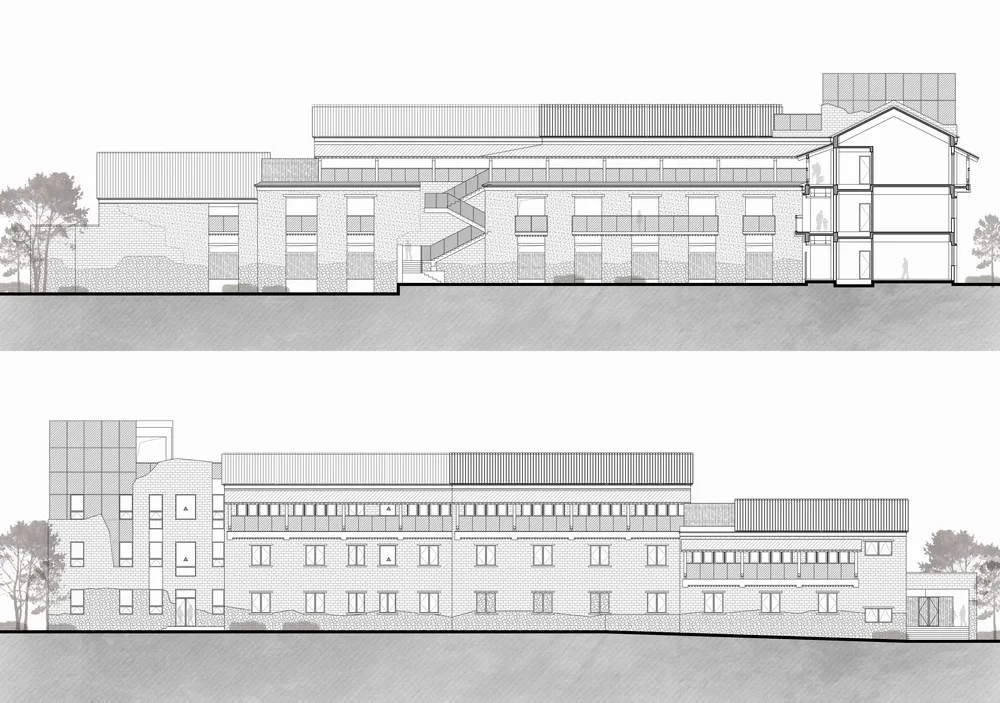
△ North-South elevation
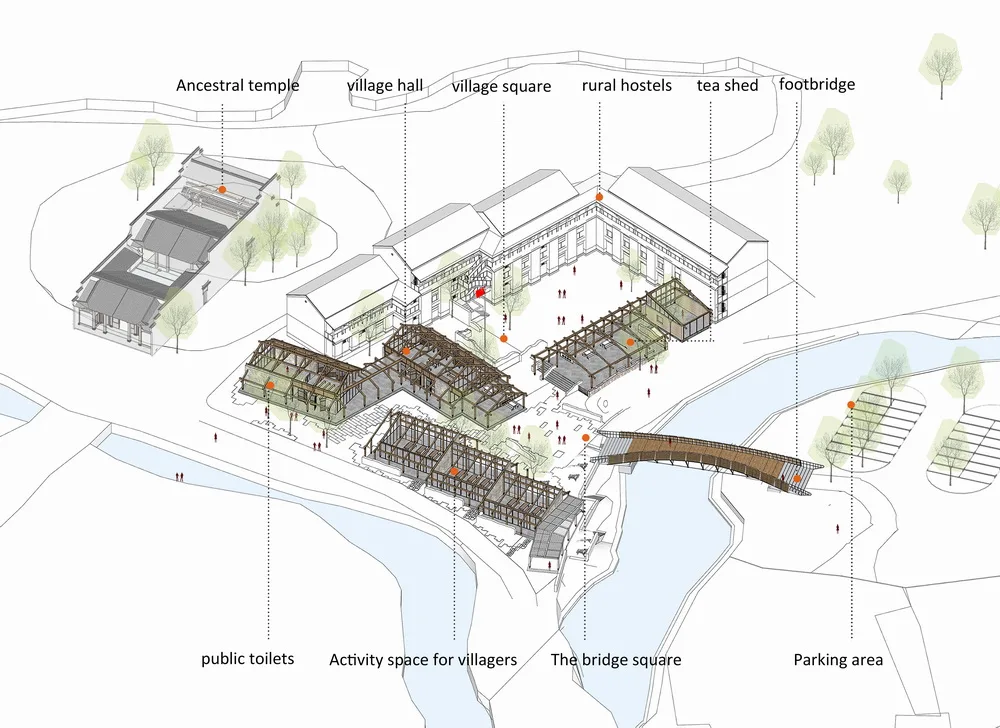
△ Spatial axonometric diagram
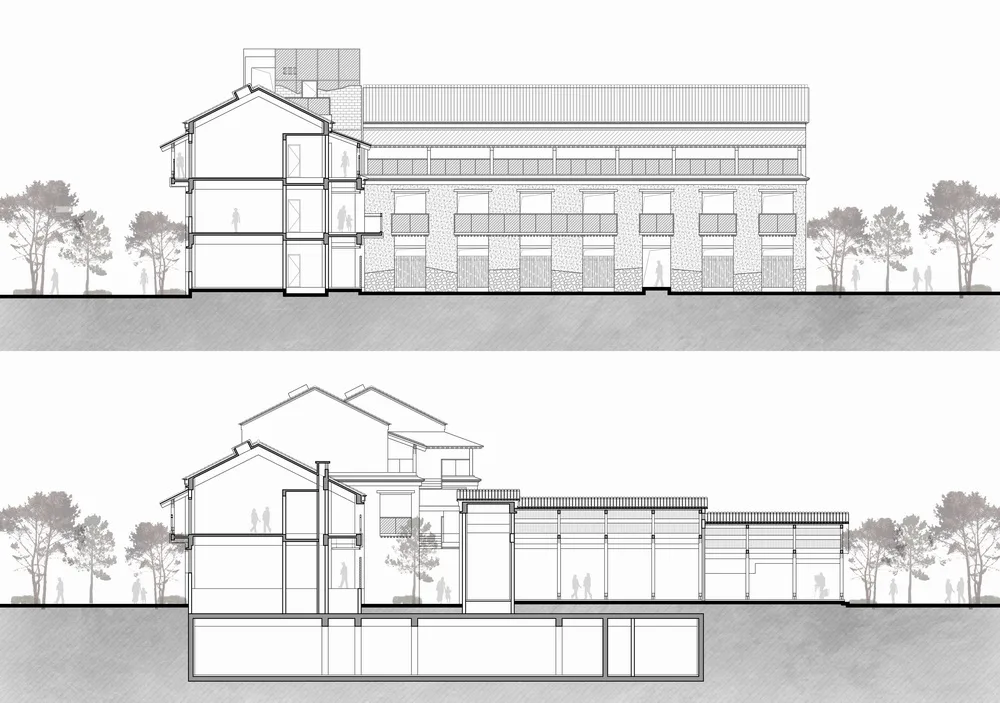
△ Section diagram
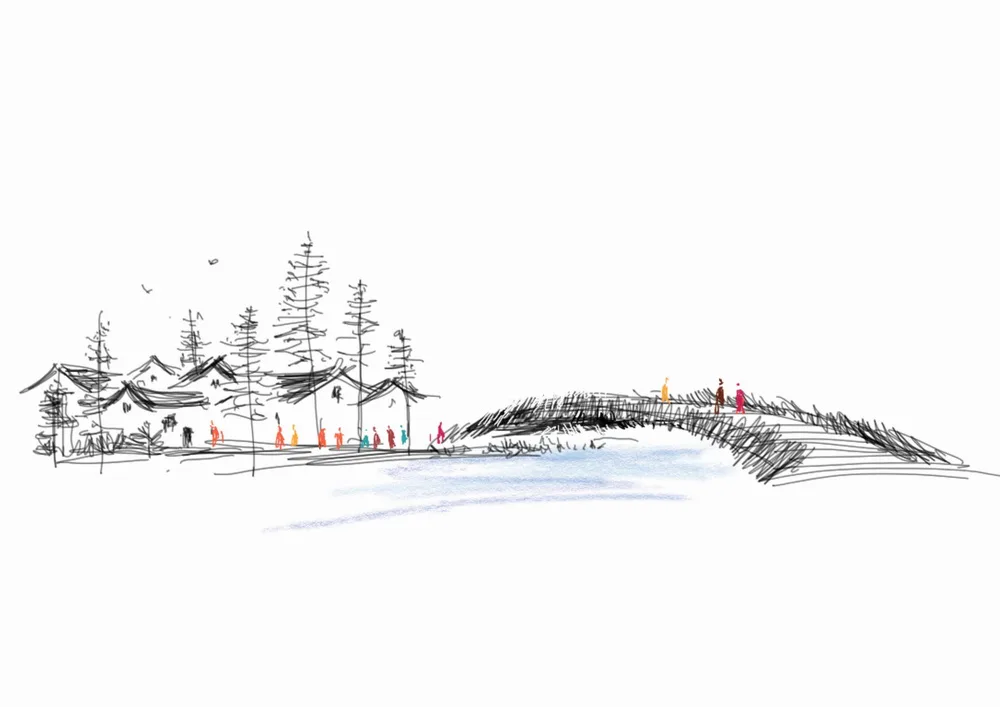
△ Concept sketch
Project Information
Project Name: Lixiang Brigade Renovation Project
Location: Lixiang Village, Baima Town, Lishui District, Nanjing City
Design Completion: 2018
Construction Completion: 2019
Floor Area: 6006.5 m²
Building Area: 4950 m²
Design Agency: Architectural Technology and Art (ATA) Studio, Southeast University Architectural Design and Research Institute Co., Ltd.
Main Designers: Li Zhu, Wang Jiajun, Wu Wei
Partner: Nanjing Anti Ji Architectural Design Firm (Interior Consultant)
Photographers: Time difference imaging, Obsidian photography, Zhong Ning, Li Zhu
Materials: Concrete, steel, glued bamboo, brick, rubble, tile













Must log in before commenting!
Sign Up