
Origin
As a metropolis with a population of 20 million, Beijing faces a critical challenge in urban development: how to blend nature with urbanization and how modernization can coexist with tradition. During the Ming and Qing dynasties, as well as the Republic of China era, Beijing was much smaller. From the Forbidden City to the foot of the Western Hills, the city and countryside were harmoniously integrated with the natural landscape of mountains and rivers. Residential courtyards and royal gardens combined to create a picturesque forest city where heaven and humanity were in harmony.
Today, West Chang’an Avenue has extended, lined with countless boxy buildings and courtyards on both sides; urban parks have followed a similar pattern. While these parks provide leisure and sports facilities, their environments and architectural designs are often straightforward, even somewhat rigid. The only parks still captivating visitors are the former royal gardens now open to the public—places where people and nature engage in dialogue, offering a natural living experience enriched by traditional wisdom. Our goal in this “new urban construction” is to continue this historical and cultural legacy on a large scale, recreating public spaces full of traditional humanistic charm through a fresh perspective.
The project is located within the Beijing International Sculpture Park, a newly established large urban park extending along West Chang’an Avenue. The park stretches nearly 1.5 kilometers east to west, bordered by Yuquan Road to the east and Shangzhuang North Street to the west, while Shijingshan Road and Lugu Road border it north to south, spanning about 500 meters. Surrounded by dense clusters of urban buildings, including residential complexes, offices, and hospitals, the sculpture park serves as a true green core in the city.
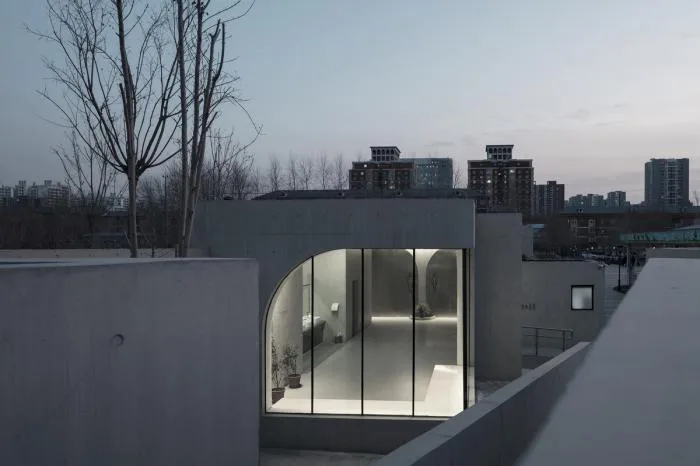
△ Courtyard night view
Breakthrough
The park is divided by an urban road, so planners created a sunken plaza as a passageway connecting the east and west sections. Visitors descend a slope, pass through dimly lit tunnels, and emerge into other park areas. This change in elevation introduces a natural, valley-like “cave sky” experience to an otherwise flat and monotonous park, becoming the starting point of our design.
From the sunken plaza in the east yard (Dongyuan) to the surface level in the west yard (Xiyuan), a small earth mound—originally created for soil balance—stands nearby. At its base, a shallow water square invites visitors to wade and play. We embraced this terrain variation, envisioning a “cave sky” space nestled at the foot of the earth mound to highlight the forest’s charm. The park owners and planners supported this idea. Coincidentally, an old public restroom in Dongyuan needed relocation due to planned road conflicts. We chose to rebuild it at the foot of Tushan Mountain, aiming to foster a dialogue between nature and urban life through architecture.
Traditional Chinese architecture emphasizes seamless integration between nature and built environments. Whether in courtyards, gardens, or mountains, architecture faces nature directly, borrowing and complementing each other. Using similar materials and language, natural and artificial elements coexist in harmony. As users, we embrace a concept of mutual forgetting, striving to embody this philosophy in the project.
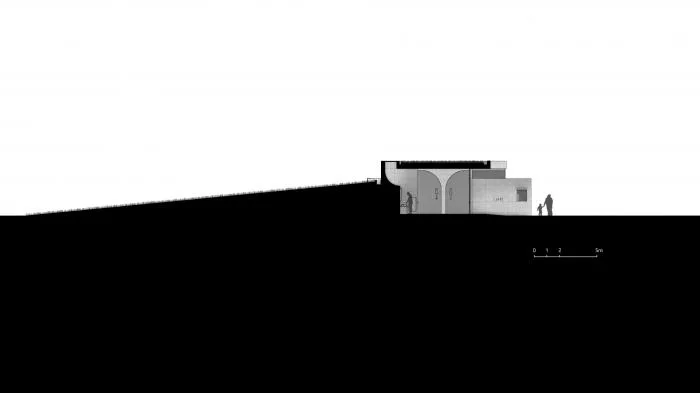
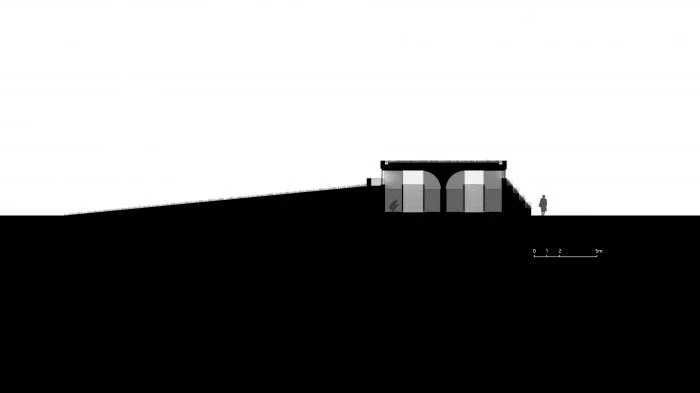
The design incorporates a gentle slope adjoining the small earth mound, covering approximately 600 square meters with a 6-meter elevation difference. The building itself occupies around 200 square meters and rises nearly 4 meters high, keeping a close scale with the mound. To avoid the building facing away from the mountain, we integrated it with the earth mound, forming a covered earth structure that connects the mountain and accommodates the “cave sky.” The building is partially concealed and partially exposed within the mountain, balancing accessibility with privacy—an essential consideration for public restrooms.

△ City profile representation map
Visual Impression
The building’s exterior is clad in plain concrete, evoking the natural texture of hard rock with a soil-like opening. Inside, shifting light and shadow conjure images of gardens, lakes, and mountains.
This earthen house aims to create an architectural space with a simple outward appearance yet a rich, immersive interior, reminiscent of Jiangnan-style gardens. Upon entering the lobby, visitors see a washbasin with a mirror above the countertop. A recessed niche in the mirror refracts natural light, subtly conveying the changing seasons of the sky. Looking down reveals one’s reflection; looking up reveals the sky.
To the right, a dimly lit corridor lined with mirrored stainless steel walls and a skylight on the ceiling creates reflections that enhance the spatial experience. Toilet signs hang on the walls, while male and female entrances are discreetly tucked behind side walls. Occasionally, visitors emerge without visible doors, emphasizing the privacy of the toilet rooms.
The restroom is divided into male and female sections, each with curved ceilings. Interior walls are finished with faux plain concrete paint, while the lower portions are clad in black ceramic tiles. Frosted glass windows positioned high on the exterior walls softly filter natural light inside. The restroom feels like a shaded pavilion, fostering a calm and serene atmosphere.
A third restroom, serving both disabled users and mothers with babies, is located in the main hall. It is covered with a transparent glass ceiling, filling the space with sunlight and creating a joyful “sky-watching” atmosphere.
The rest area is tucked into a corner of the building, featuring an opening that leads to an outdoor courtyard with trees planted within the soil. Although hidden, this courtyard offers views of a mountain trail. Layered design allows visitors to see both the courtyard and passersby on the mountain path, creating a picturesque scene reminiscent of lakes and rocks.
Additionally, there is accommodation for duty personnel: a closed square room about 3 meters high, with observation windows. It resembles a stone block embedded between the interior and exterior of the main lobby.
The main building entrance features a gently sloping walkway that blends into the mountain and leads visitors into the natural surroundings. From within the mountains, visitors can look back to see the building’s corner and the rest area. After ascending, they can turn back onto the mountain path and descend to reach Jingshui Square.
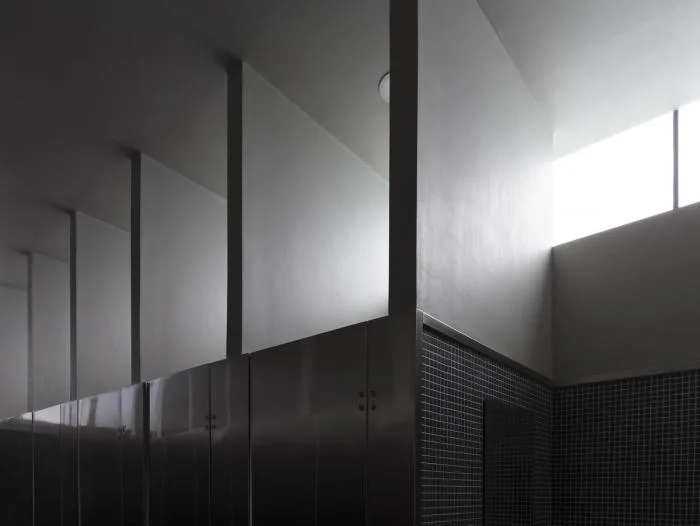
△ Toilet room light
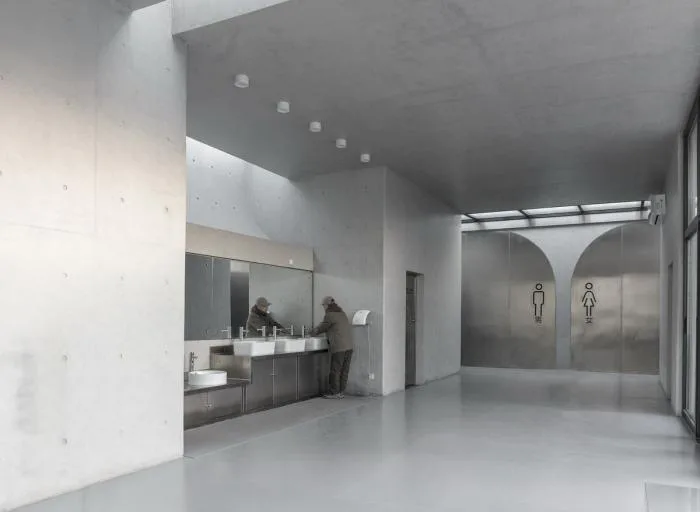
△ Light in the restroom
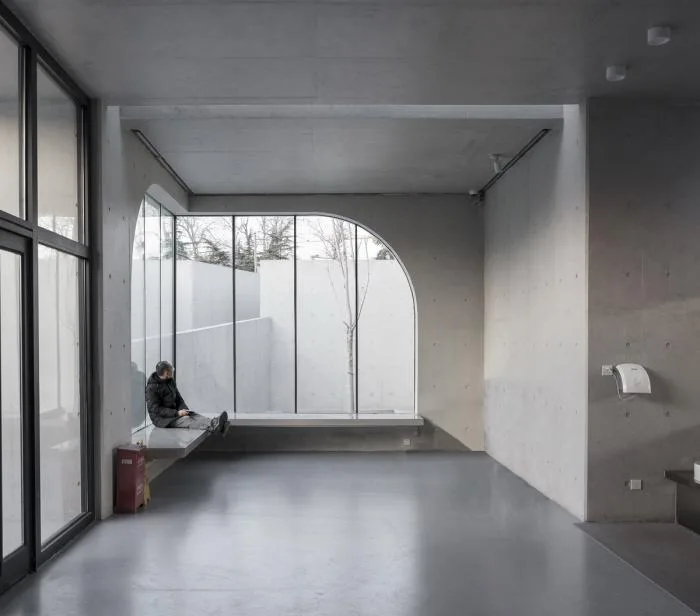
△ Light in the Rest Area
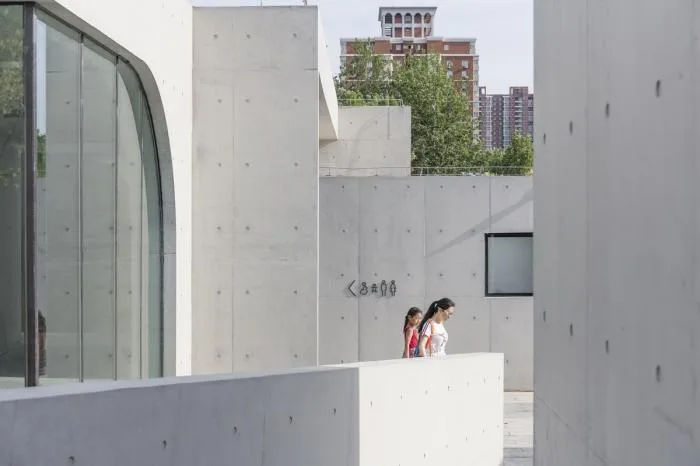
△ Entrance and exit snapshot
Light Effects
Light Leakage. Above the washbasin, light filters through a small recessed groove. When sunlight passes between the roof slab and retaining wall, this concealed light is visible.
Light Transparency. From the main hall, the restroom appears translucent due to a light strip from a flat skylight. The dark hallway connecting the main hall and restroom intensifies the brightness of this light strip.
Hidden Light. Soft, quiet light enters the restroom through three high windows, creating a calm atmosphere.
Light Appearance. The wide-open northern side of the restroom building allows glimpses of light, as if peering out from a cave.
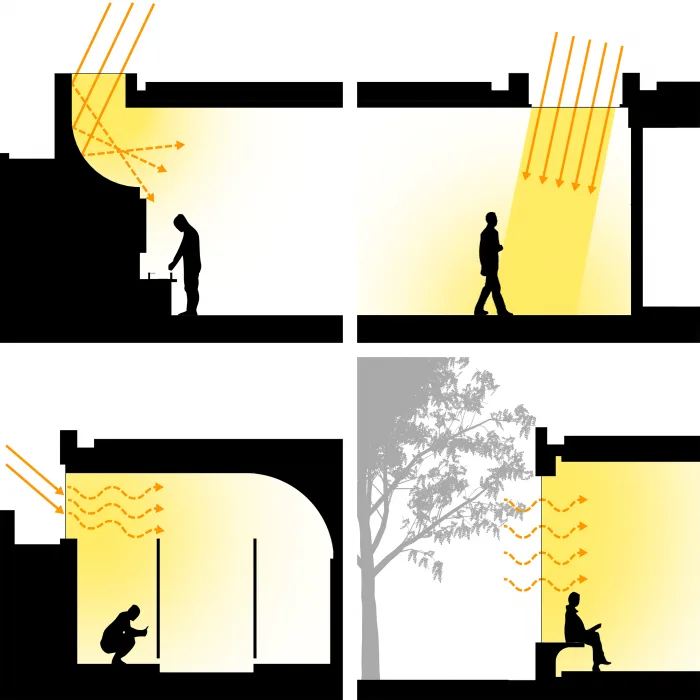
△ Diagram illustrating different light irradiation modes
Additional Remarks
Embedding the restroom building within the earthen mound creates a “hidden introspection” viewpoint, crafting a garden-like atmosphere that mimics the surrounding landscape and engages in dialogue with nature. Furthermore, the project leverages the excellent thermal insulation properties of raw soil, combined with natural lighting design, to reduce energy consumption and enhance ecological sustainability.
We believe a well-designed building should be a vivid microcosm. Urban construction guided by garden principles opens new possibilities. Gardening embodies traditional Chinese philosophy, literature, and painting, continuously fostering dialogue between humans and nature to develop spatial experiences.
With rapid urbanization, the importance of public spaces and facilities grows. By innovating traditional concepts and adapting to local conditions, we can improve urban space quality and respond to contemporary demands for reconnecting nature and tradition within city life.
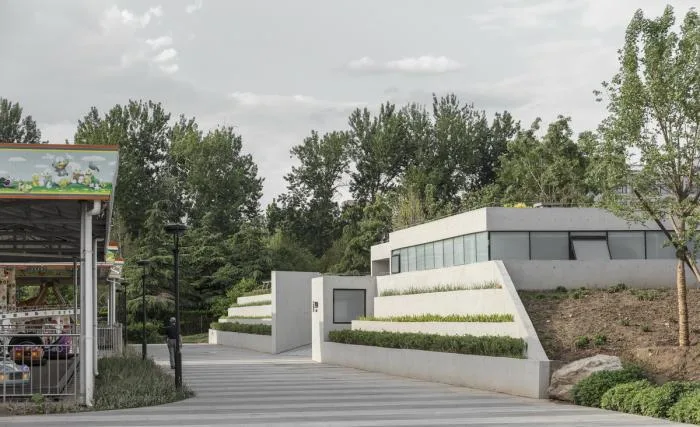
△ Architectural appearance
Design Drawings
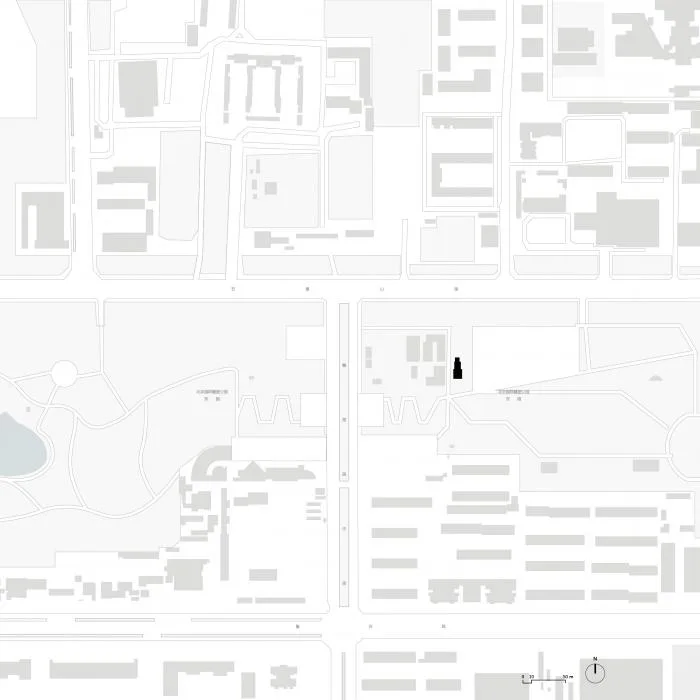
△ General layout plan
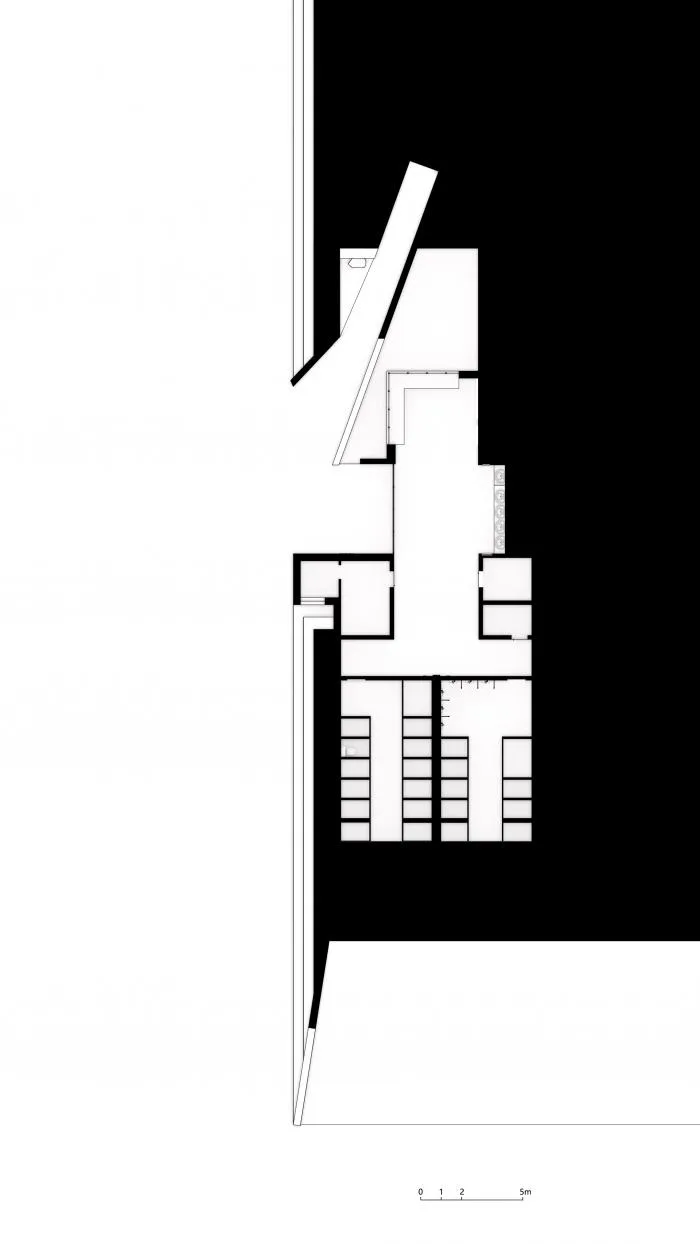
△ Floor plan
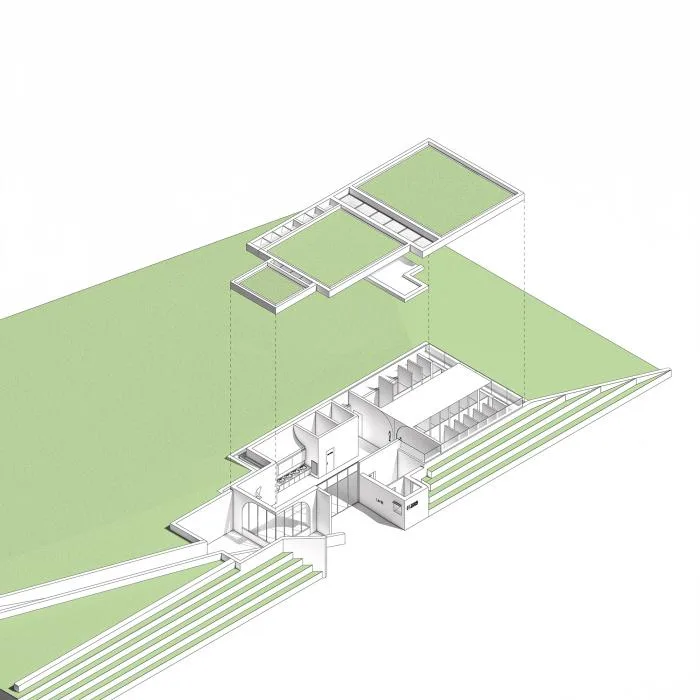
△ Axonometric diagram
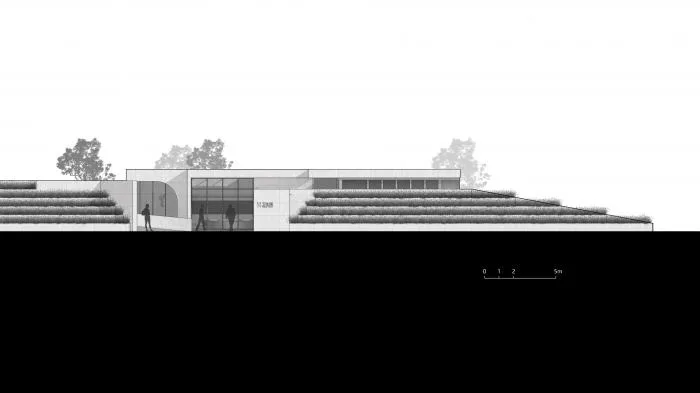
△ Main facade
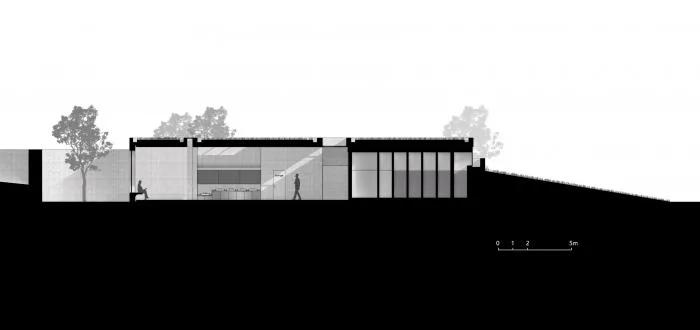
△ Section 1
△ Section 2
△ Section 3
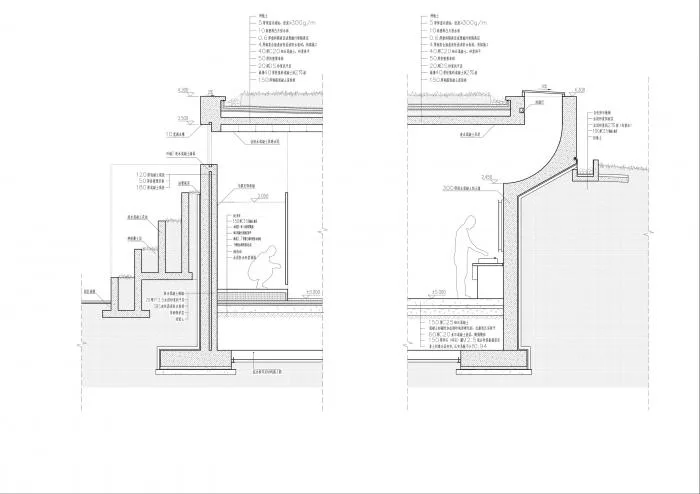
△ Wall detail drawing
Project Information
Project Name: Public Toilet at Beijing International Sculpture Park
Design Team: Ru Shi Architecture
Lead Partners: Xing Di, Yang Zhaokai
Company Website: www.rushiarchitects.com
Contact Email: __AI_S_SC0__
Architectural Design: Xing Di, Wang Xing, Yang Yuxing, Feng Xin
Structural Design: Gu Hao
Lighting Design: Ding Zhiqiang, Wang Xing
Architectural Photography: Chi Zenglei
Project Location: International Sculpture Park (East Park), Shijingshan District, Beijing
Owner: Beijing International Sculpture Park
Clear Water Concrete & Technical Support: Beijing Yihuida Qingshui Decoration Engineering Co., Ltd.
Main Materials: Plain concrete, glass, steel
Building Area: 202 square meters
Completion Date: April 2019












Must log in before commenting!
Sign Up