
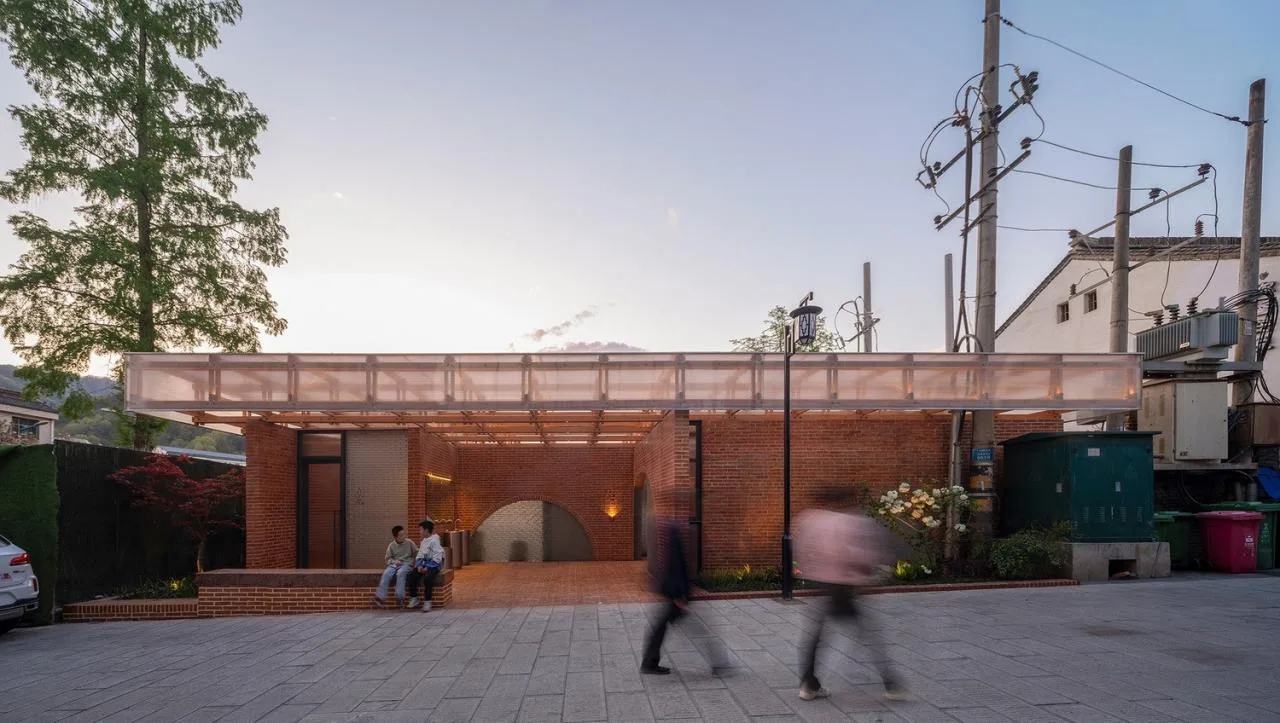
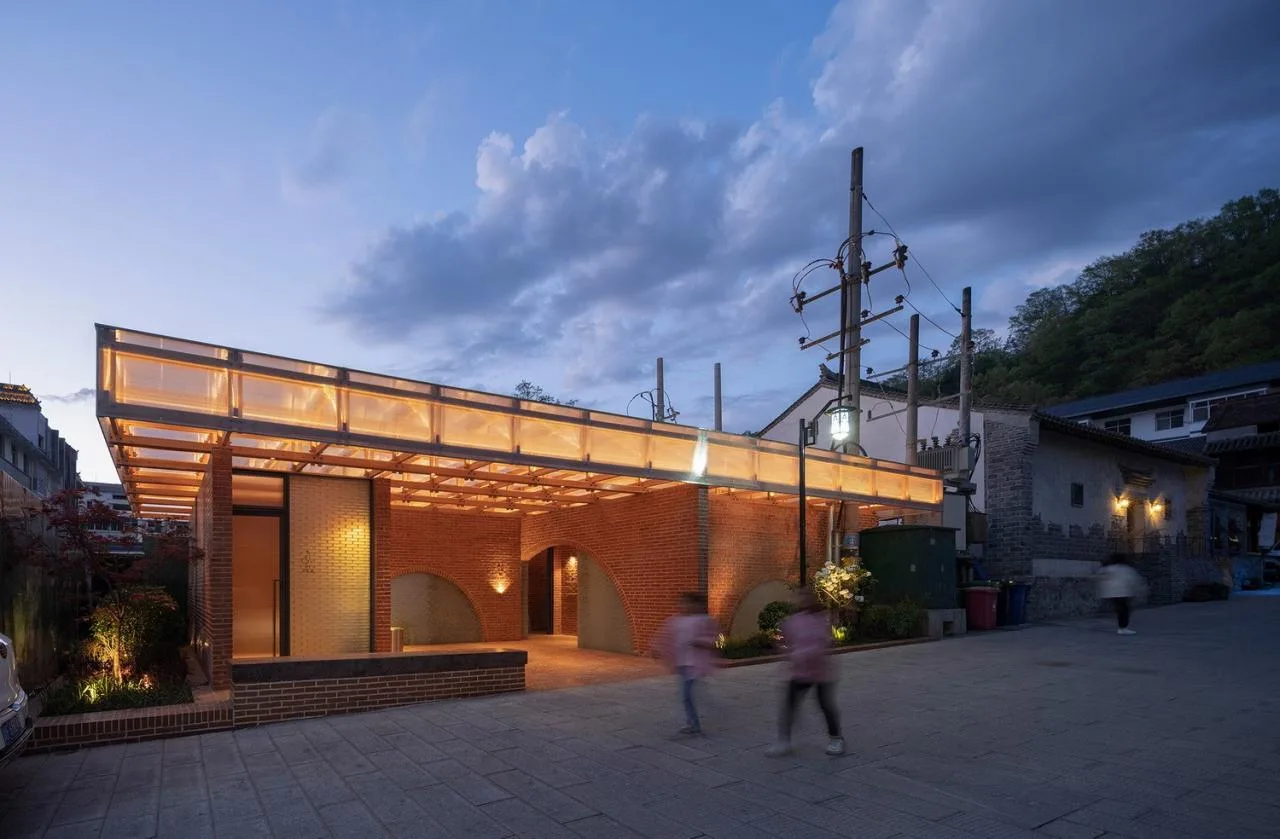
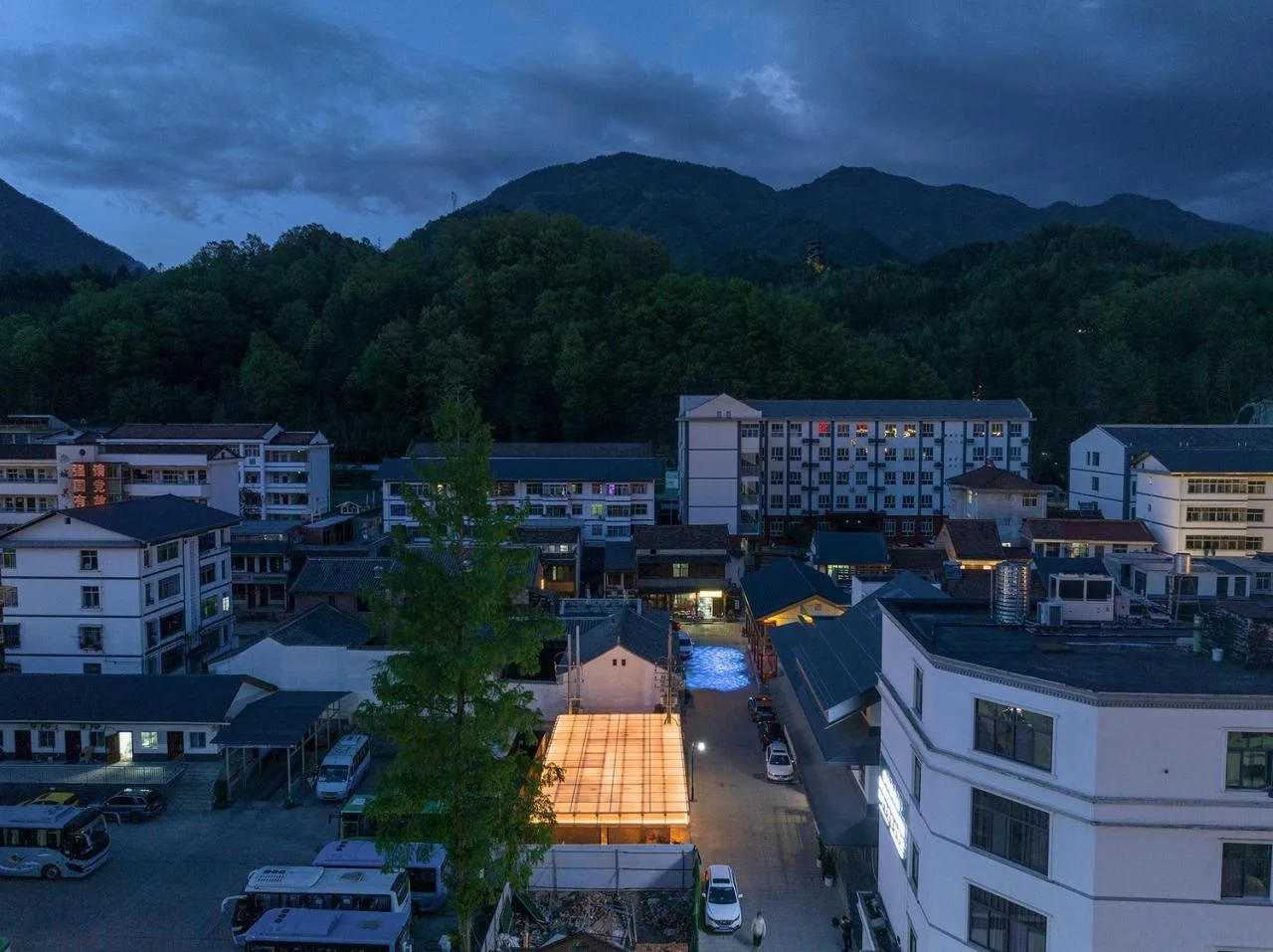
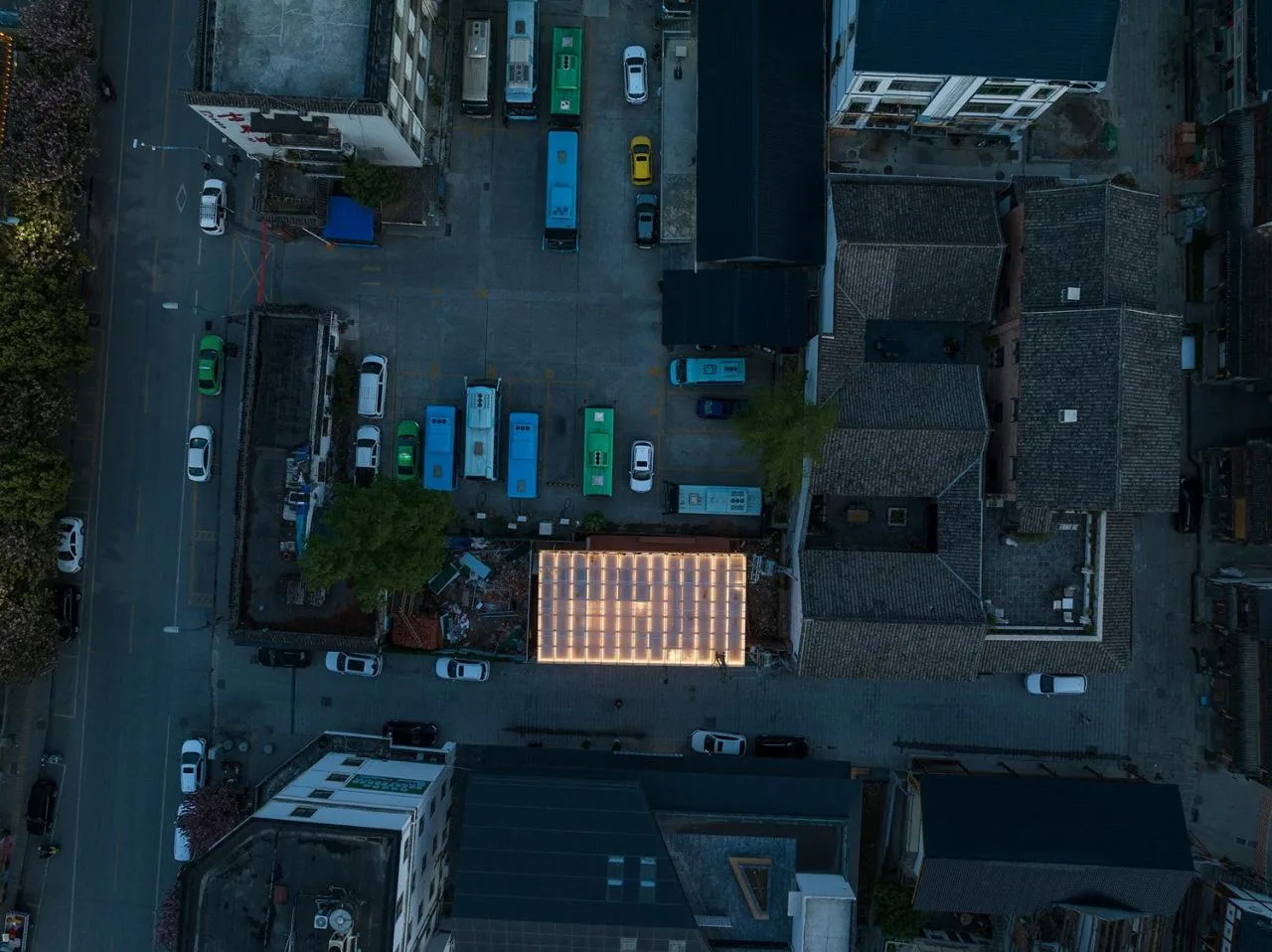
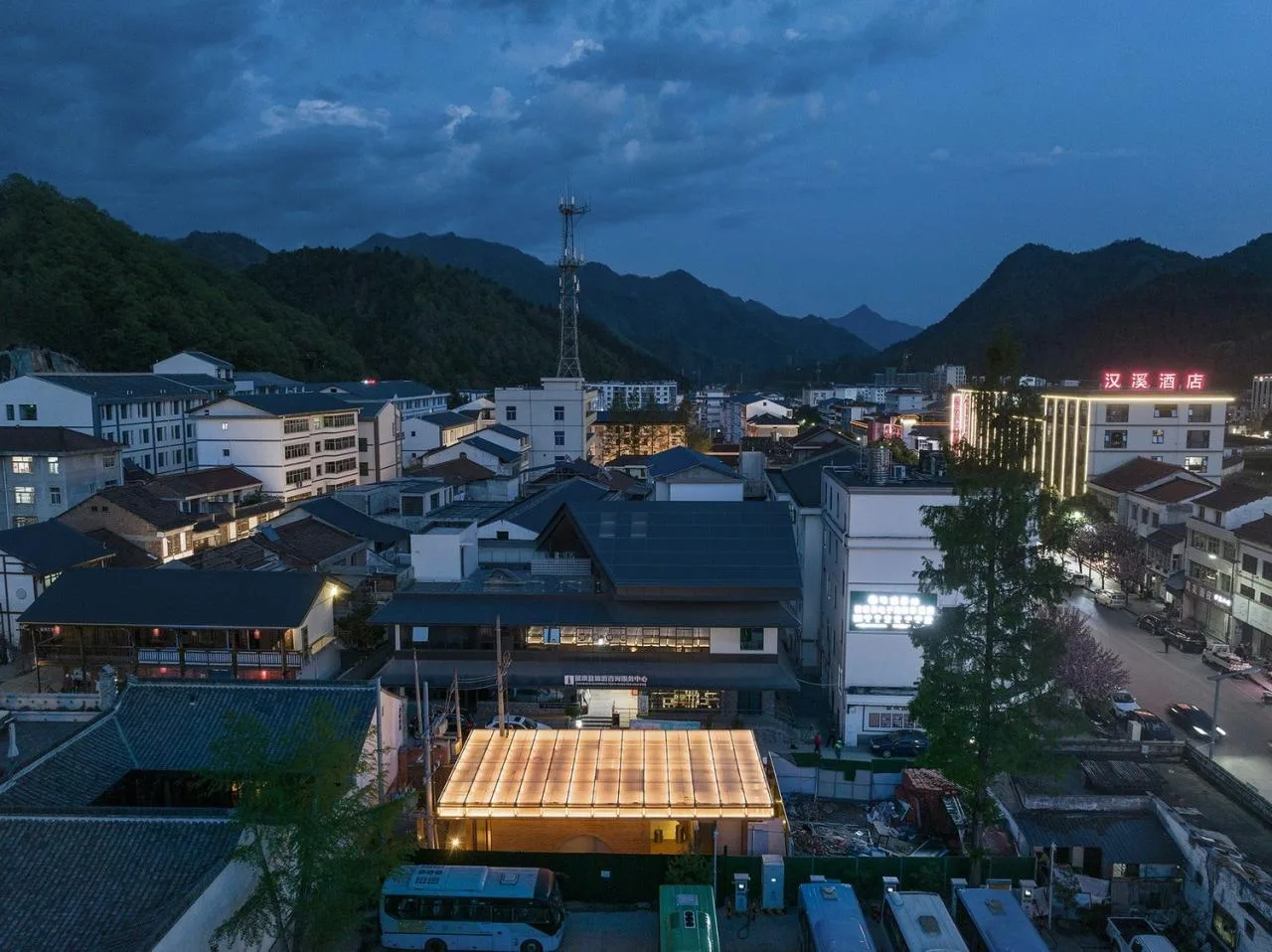
Liuba County is nestled in a mountain valley. The red brick public restroom is situated along an auxiliary road beside the county’s old street. It is surrounded by schools, residential buildings, and bus stops, creating a mixed-use environment with heavy foot traffic. Directly across from the restroom is the Liuba Tourist Service Center, which is set to become a key tourist hub in the future.
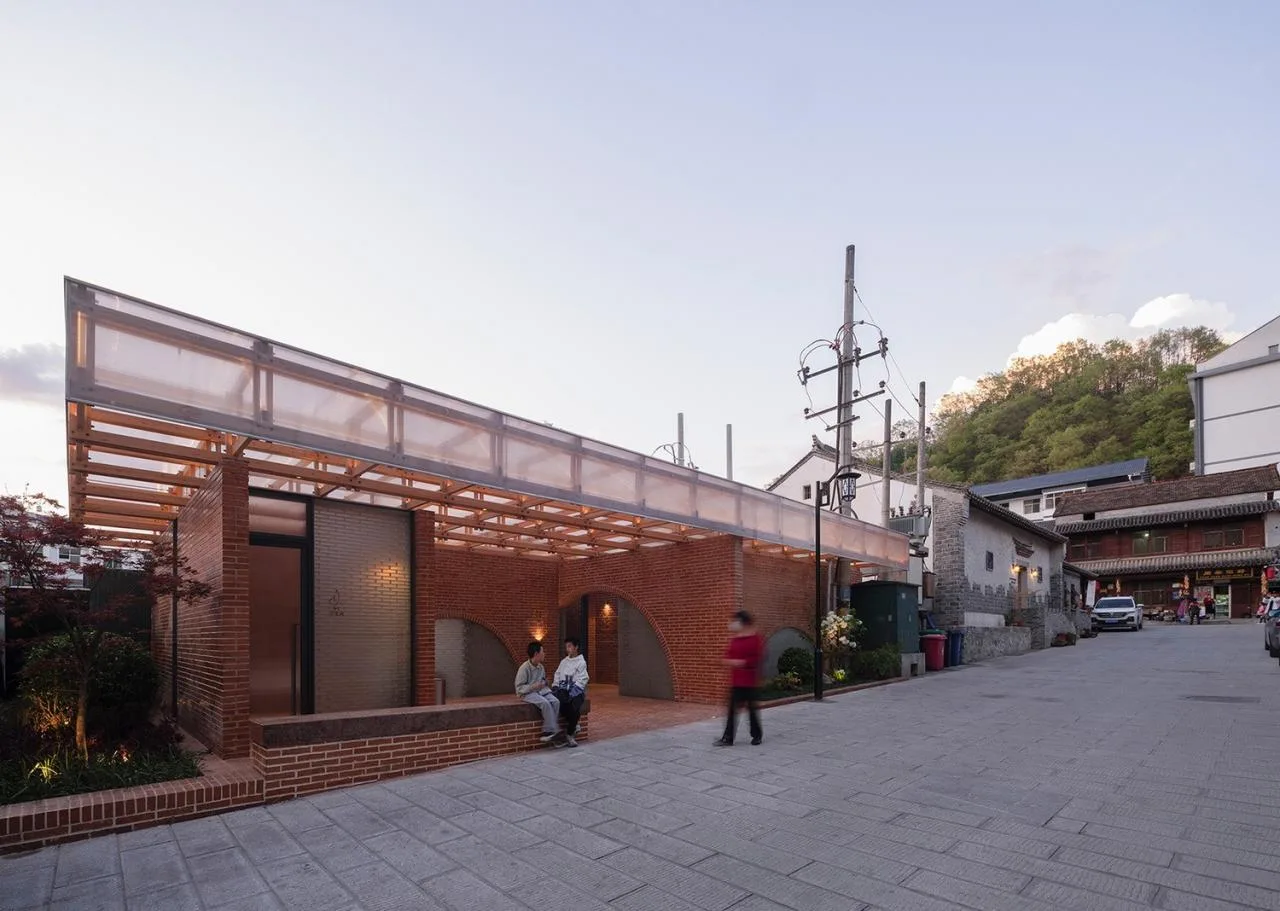
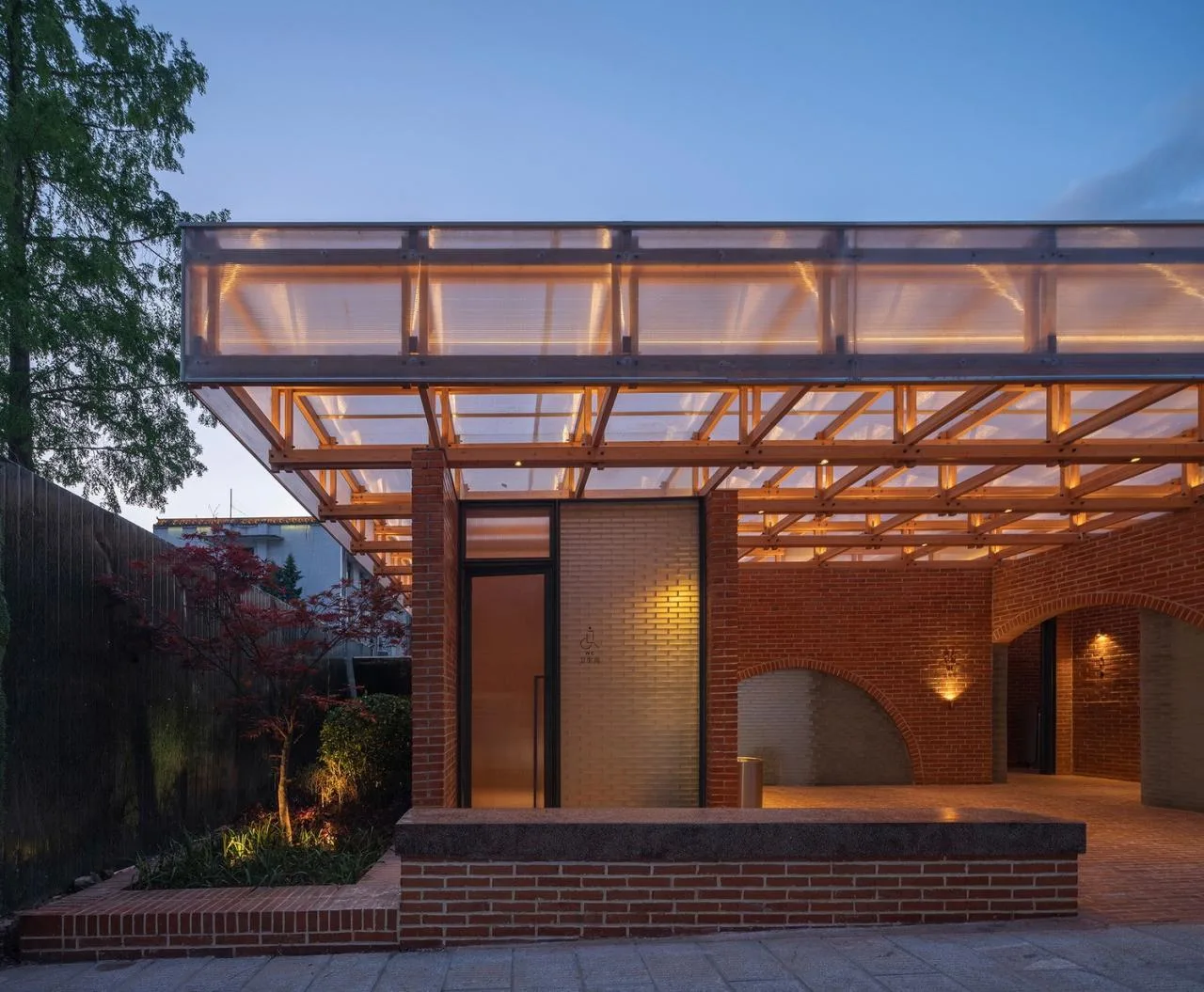
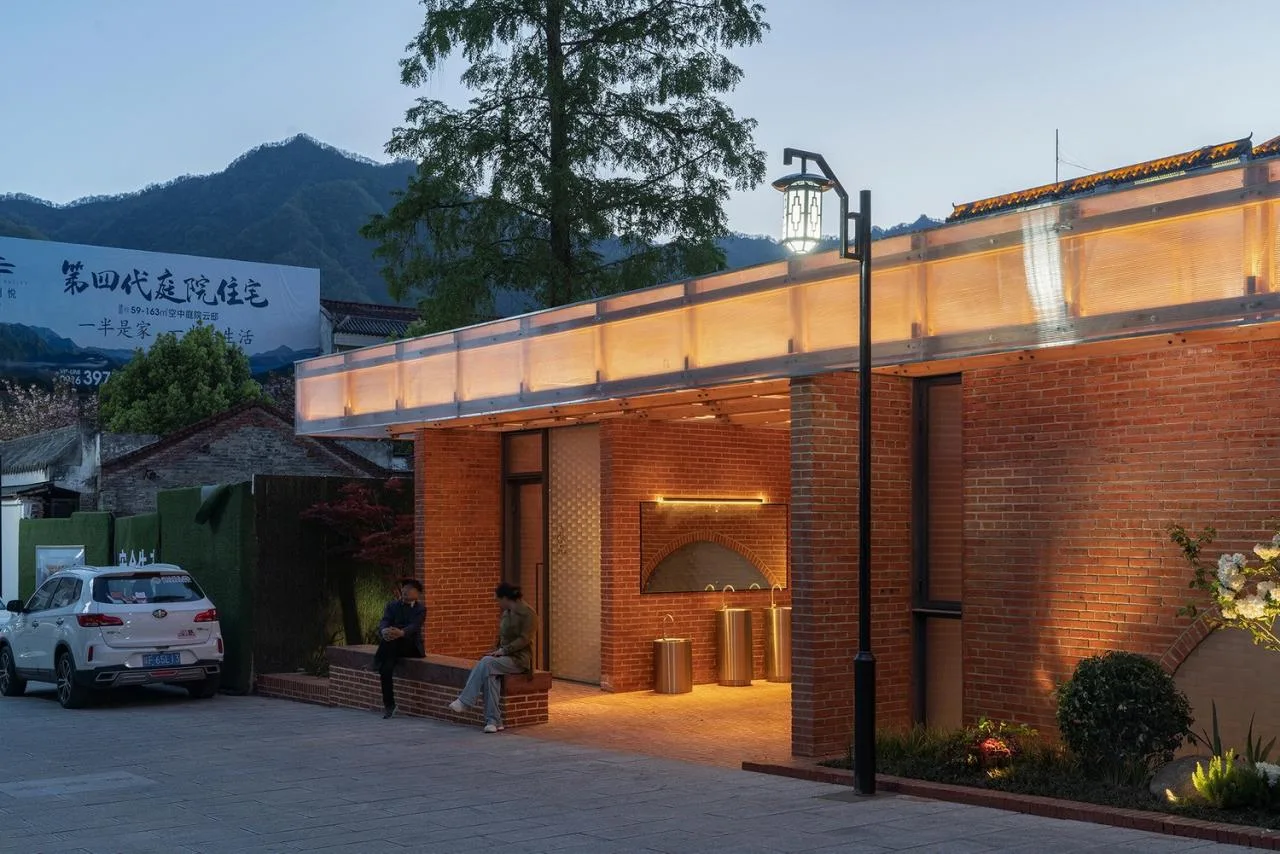
This restroom was designed as a dual-purpose facility, serving passengers at the inner bus stop as well as residents and tourists on the outer street. Additionally, a third restroom and a dedicated mother-and-baby room have been included to accommodate people with disabilities. A row of benches is placed at the entrance area, offering a resting spot for residents.
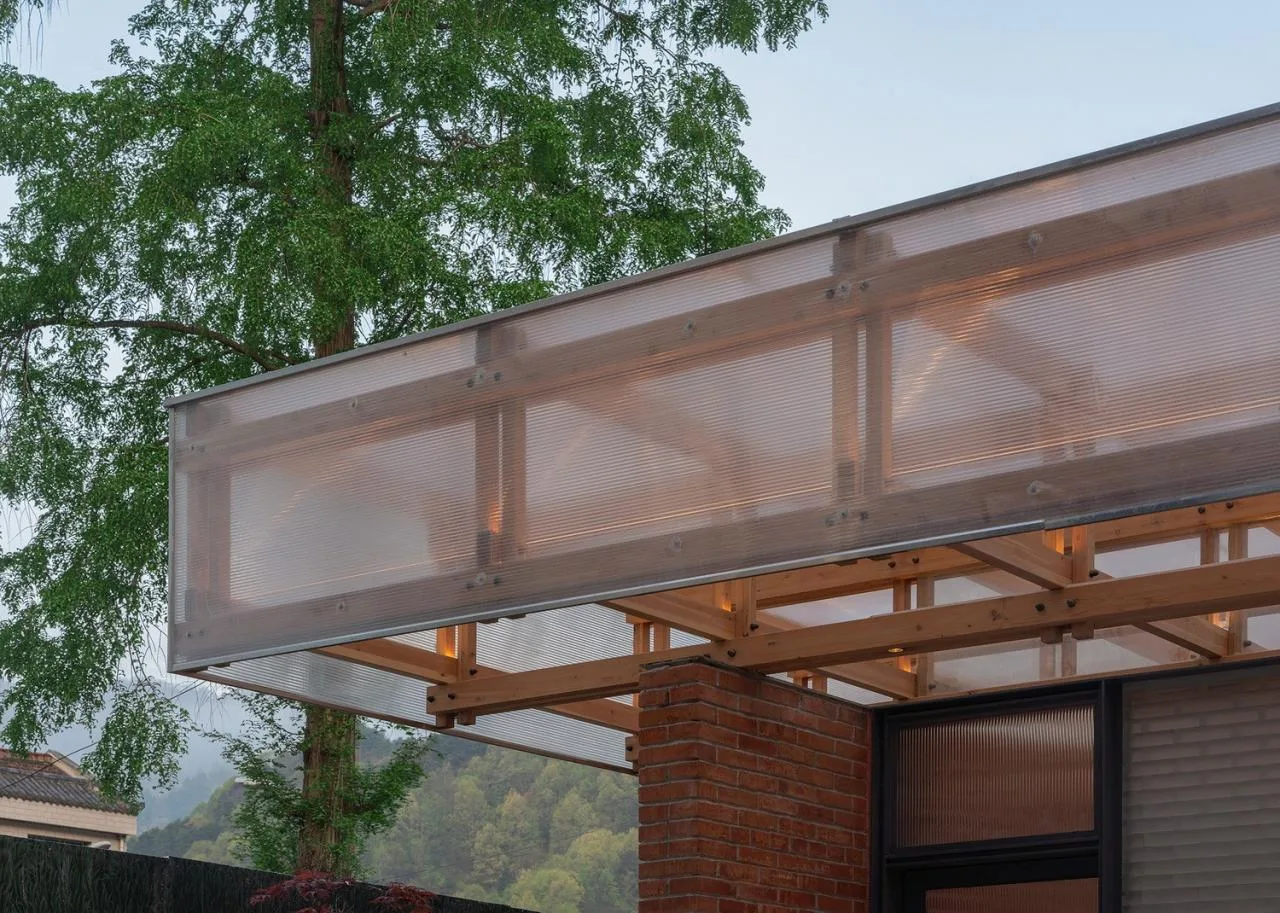
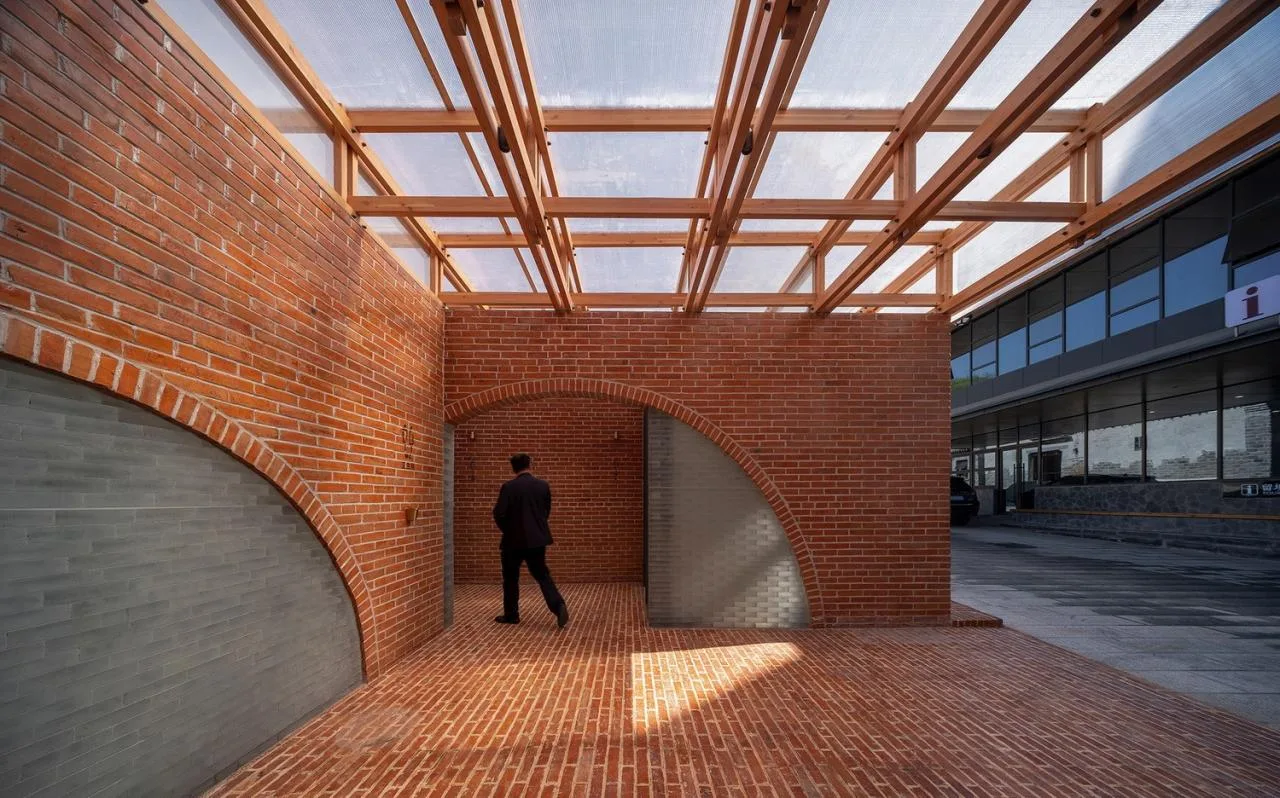
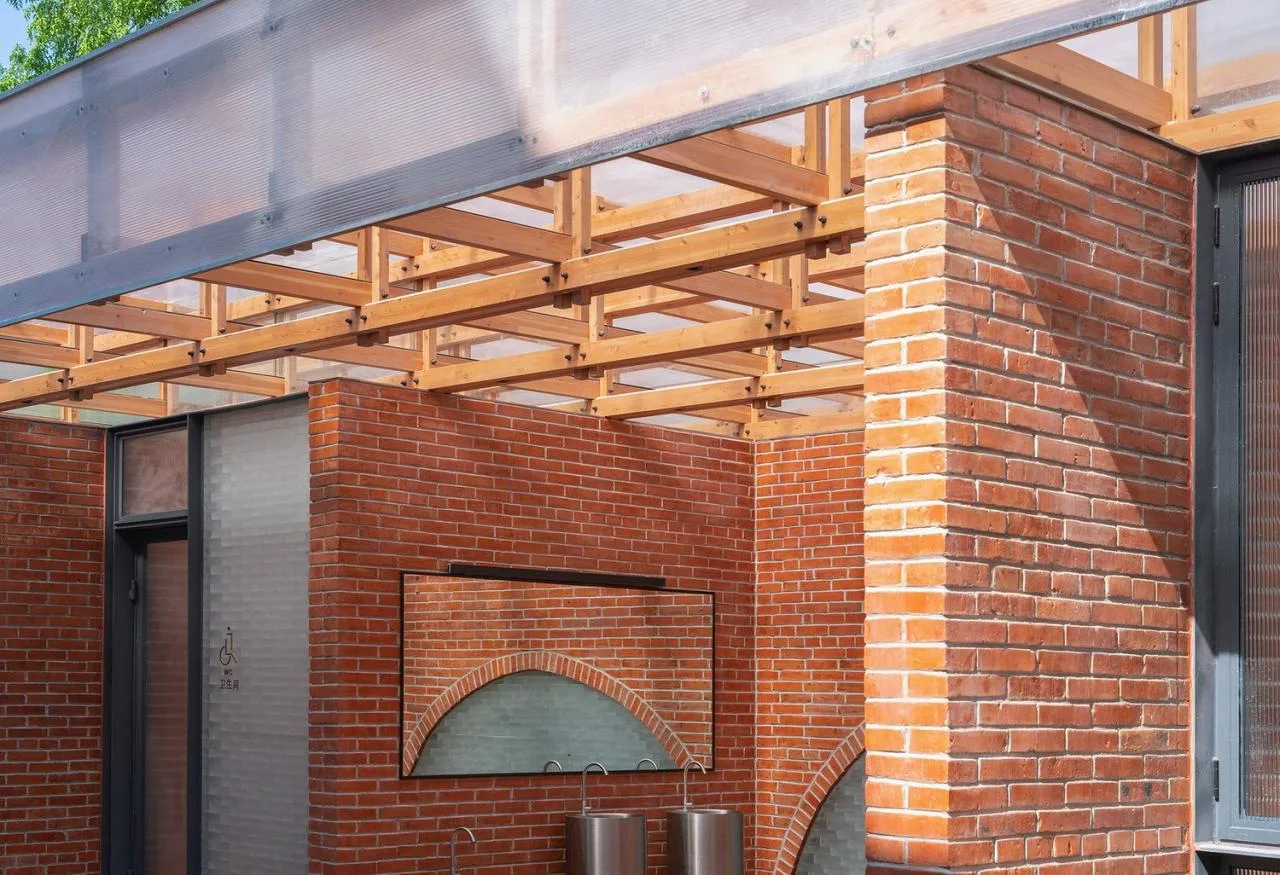
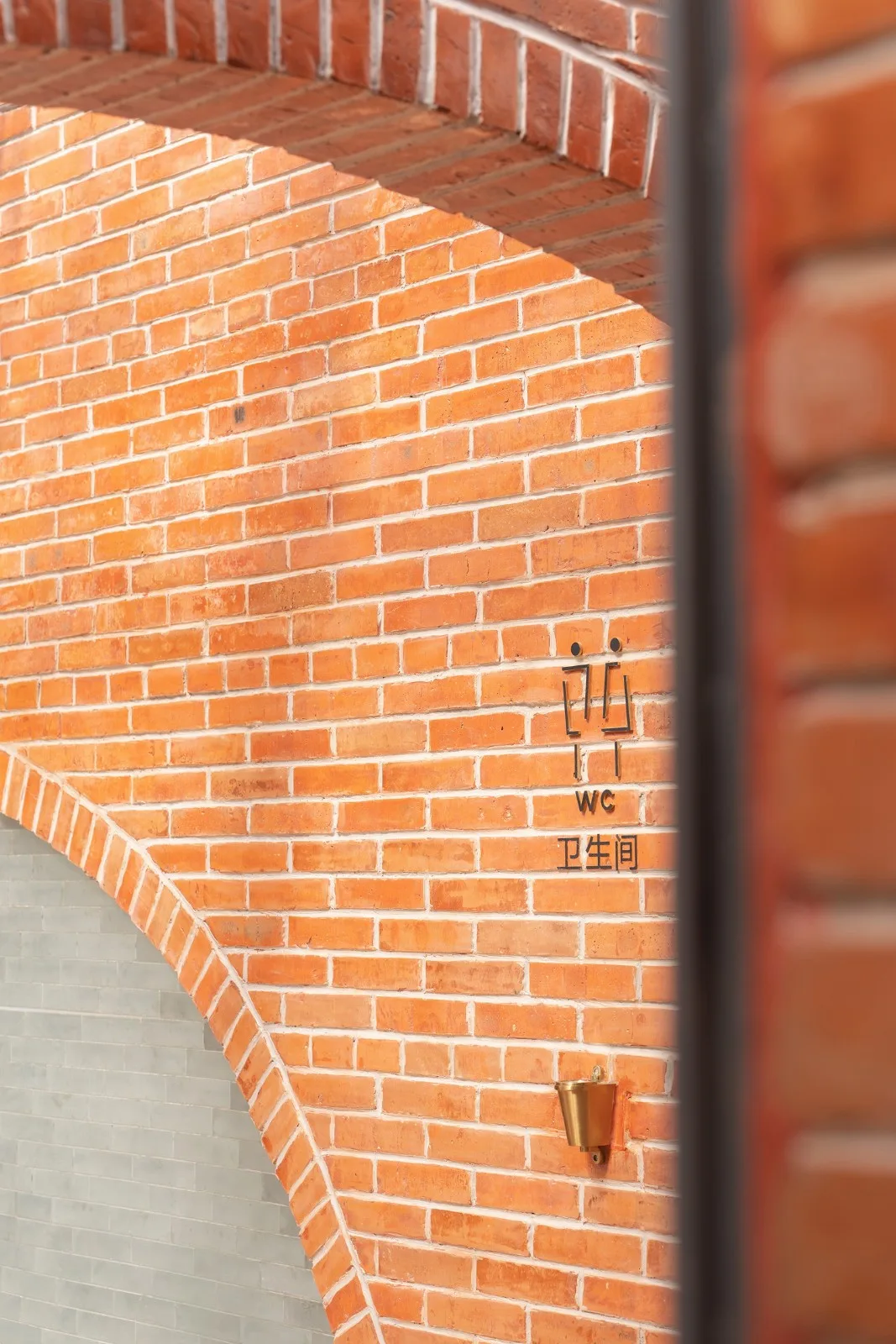
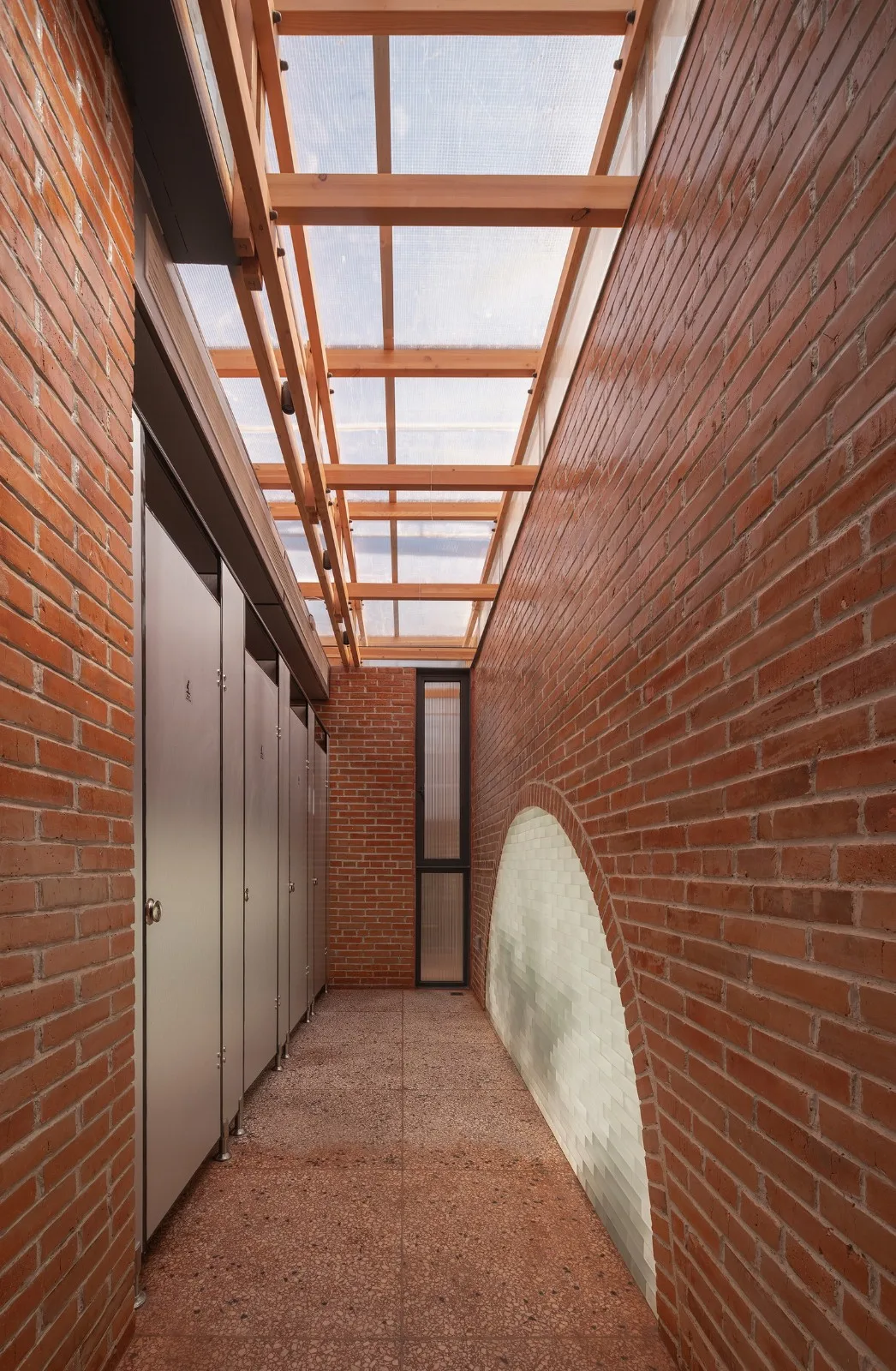
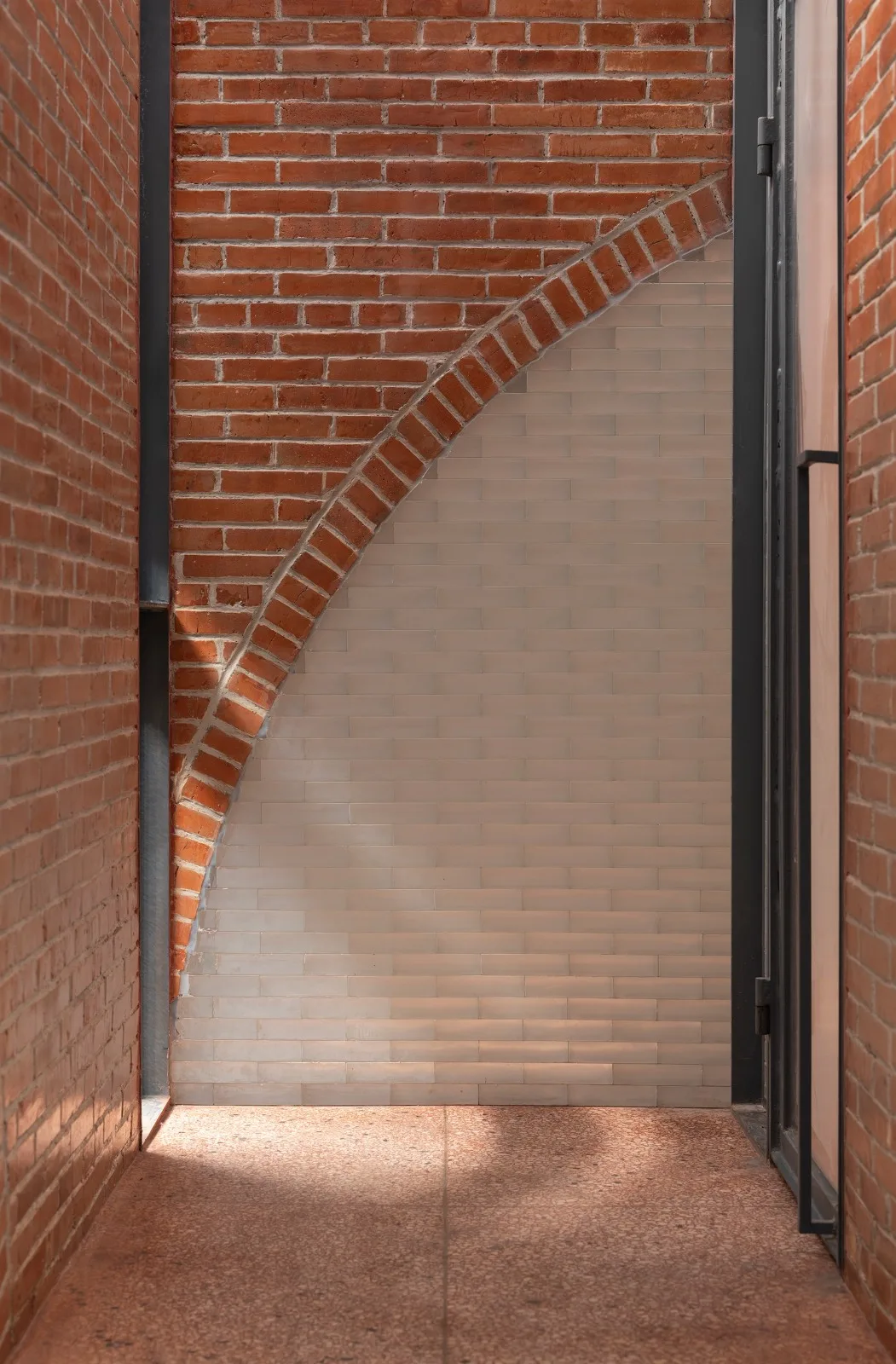
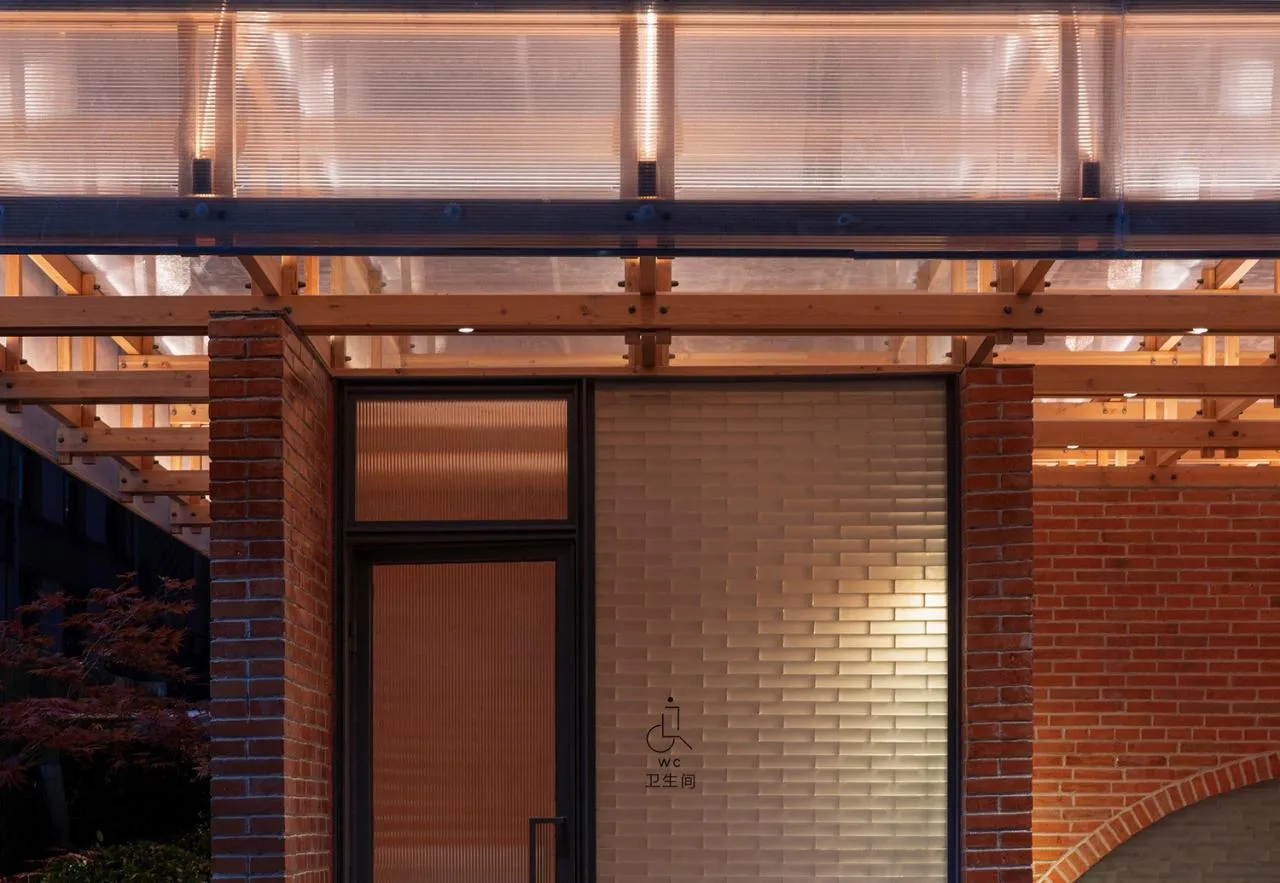
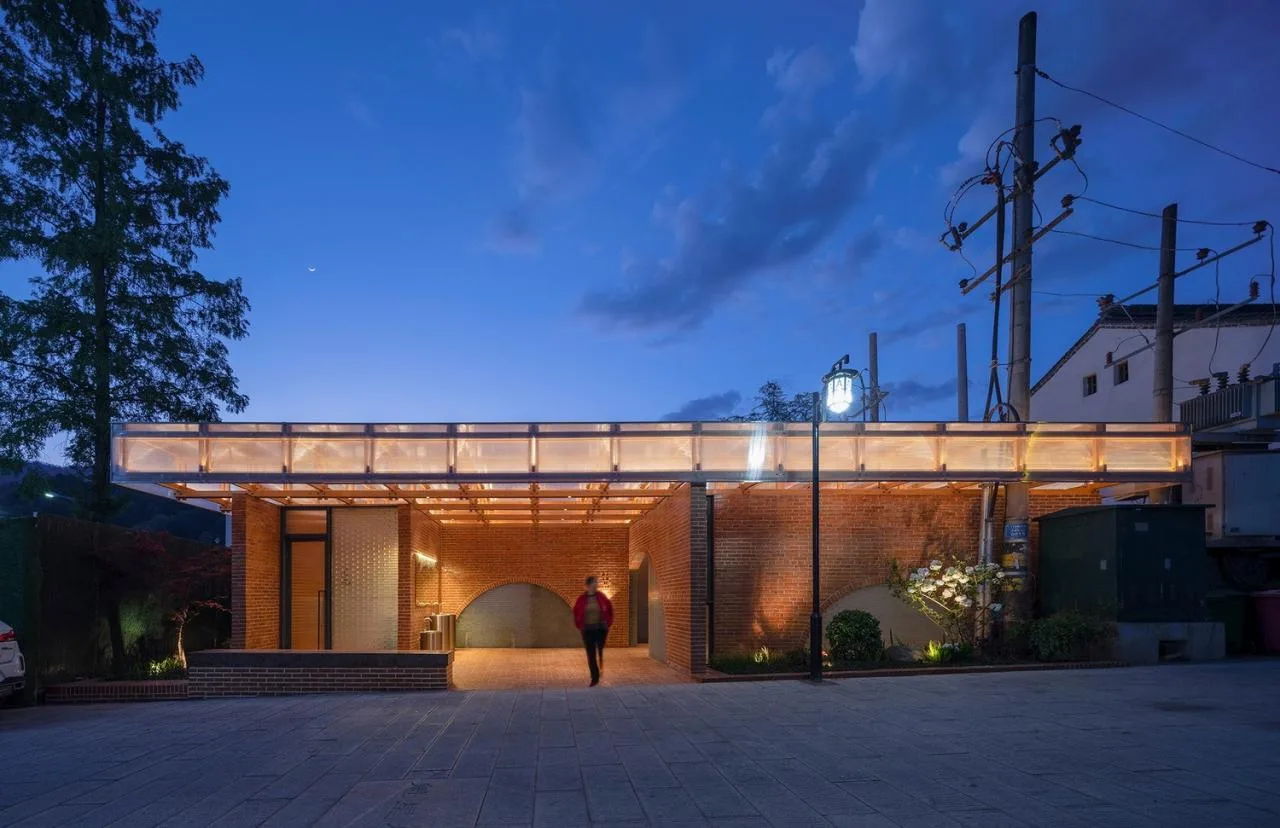
The building’s structural elements are clearly defined: red bricks form the ground and walls, while the roof is supported by a wooden truss system. The red brick walls are designed as panels, featuring semi-circular arch openings that serve as entrances. Some of these openings are filled with glass bricks, allowing natural light to illuminate the interior.
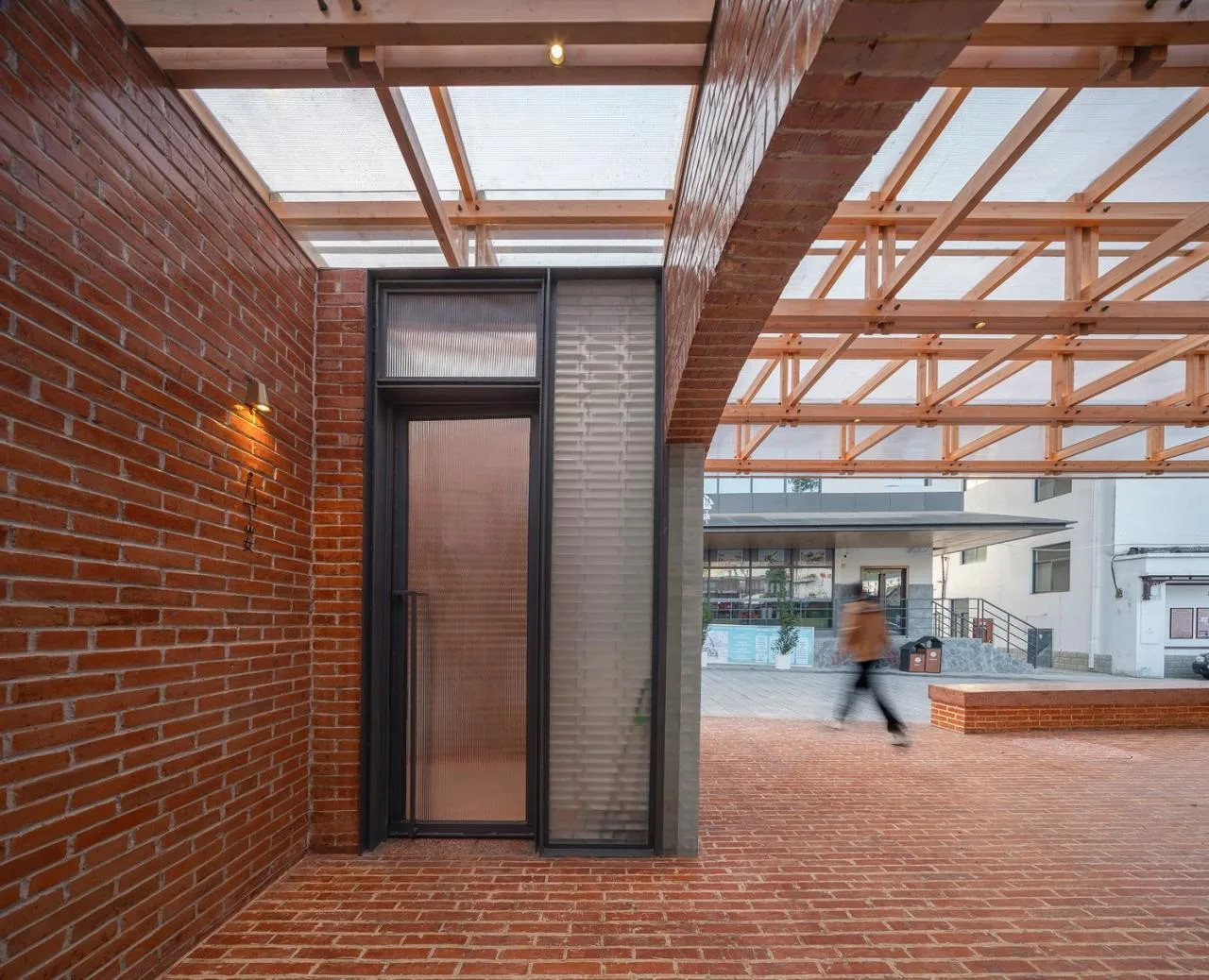
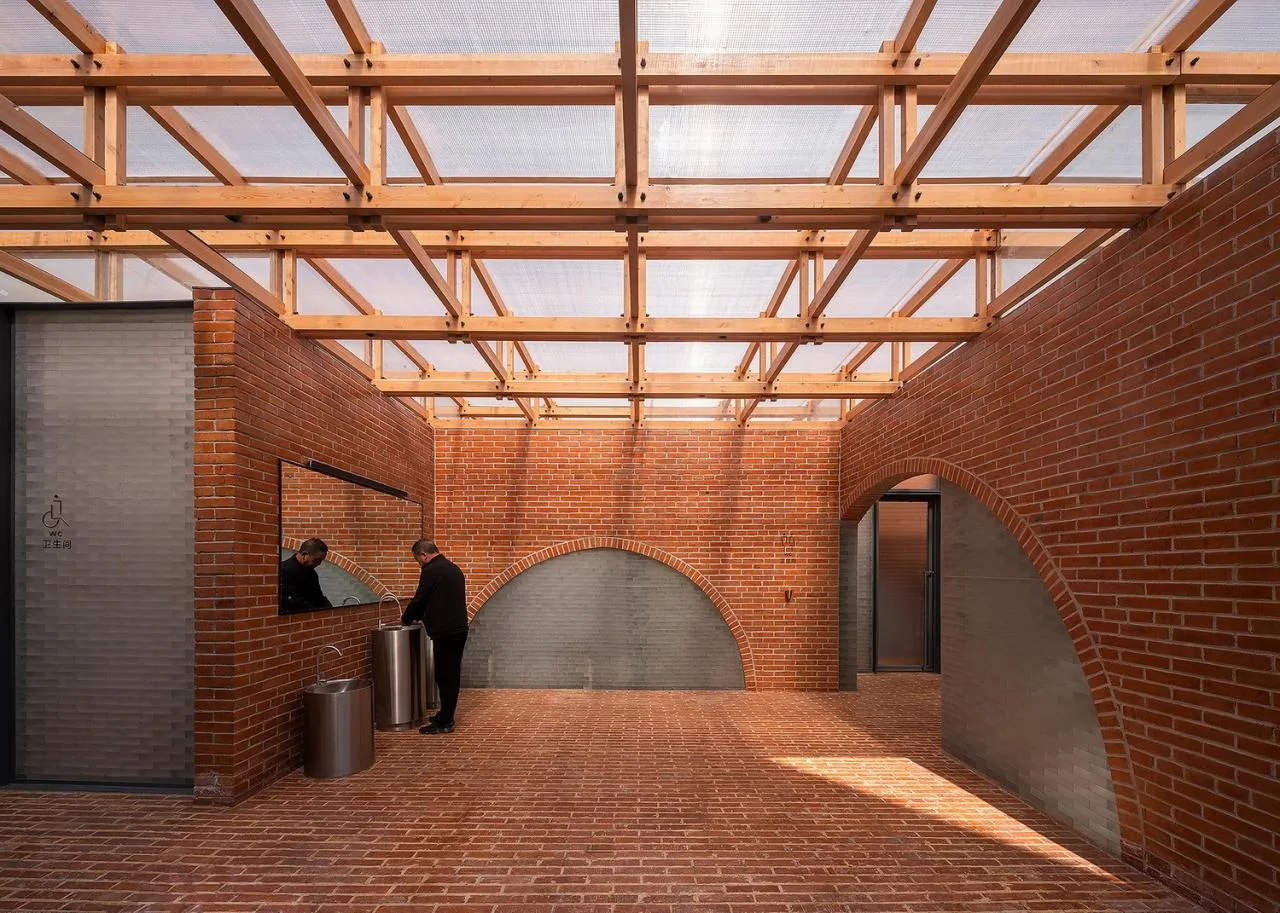
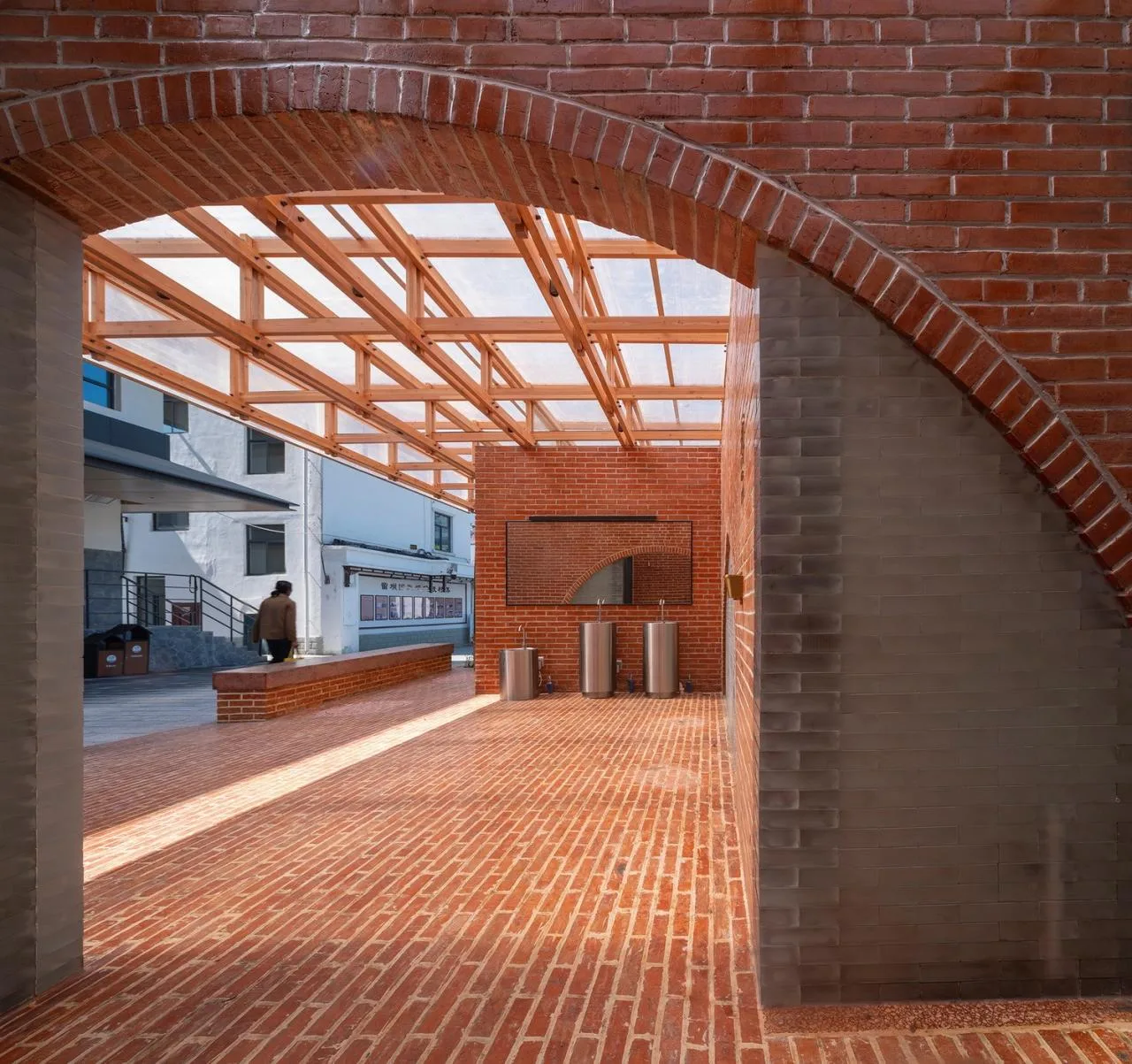
The building incorporates three types of semi-transparent materials. Polycarbonate panels cover the roof, while frosted glass bricks and corrugated glass are used for facade infills, doors, and windows. The roof is topped with two overlapping layers of solar panels arranged in a grid-like pattern. This layering refracts light softly, creating a comfortable and inviting interior atmosphere.
Using these semi-transparent materials enriches the interplay of light and shadow inside, making the building an experimental exploration of this relationship.
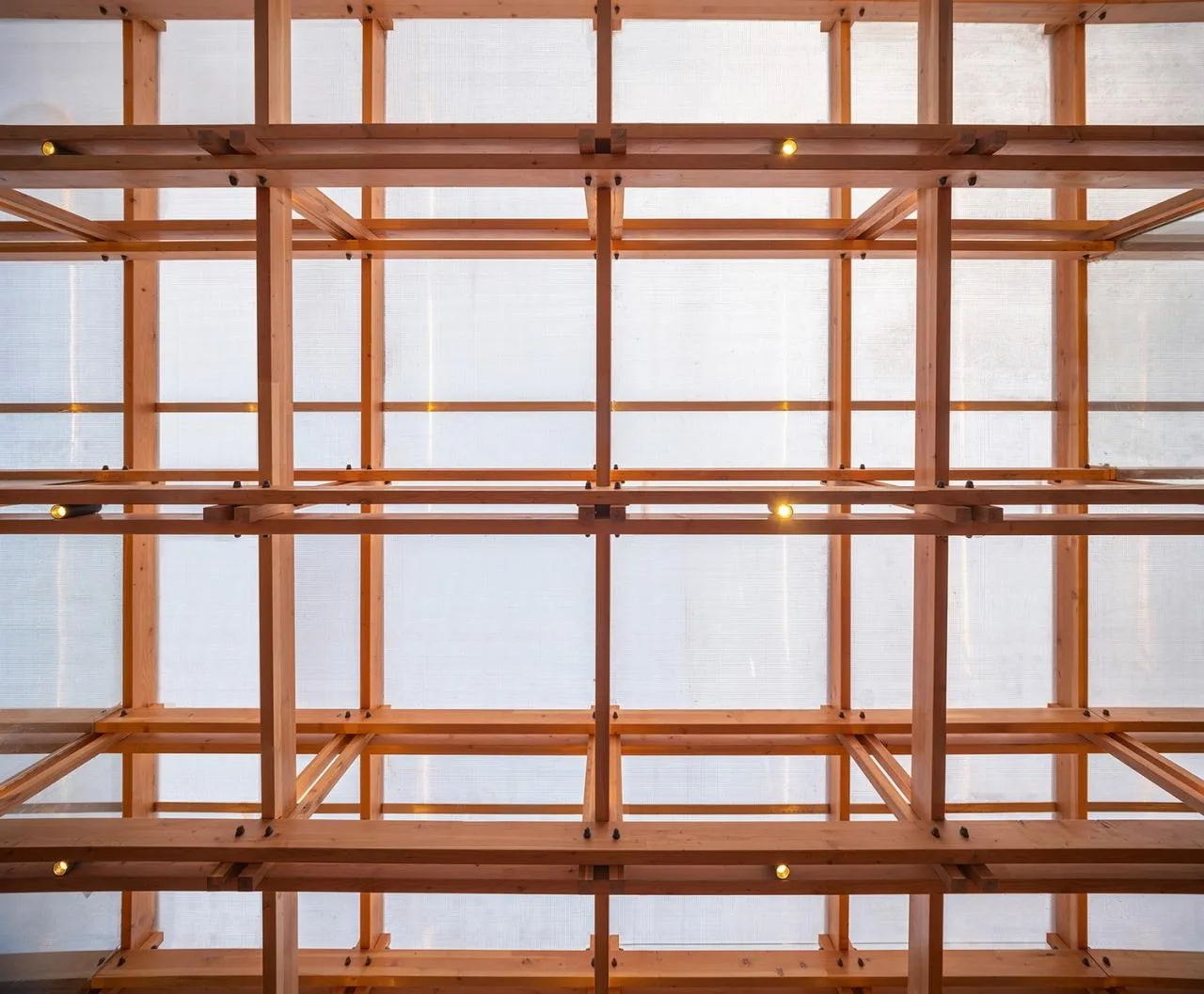
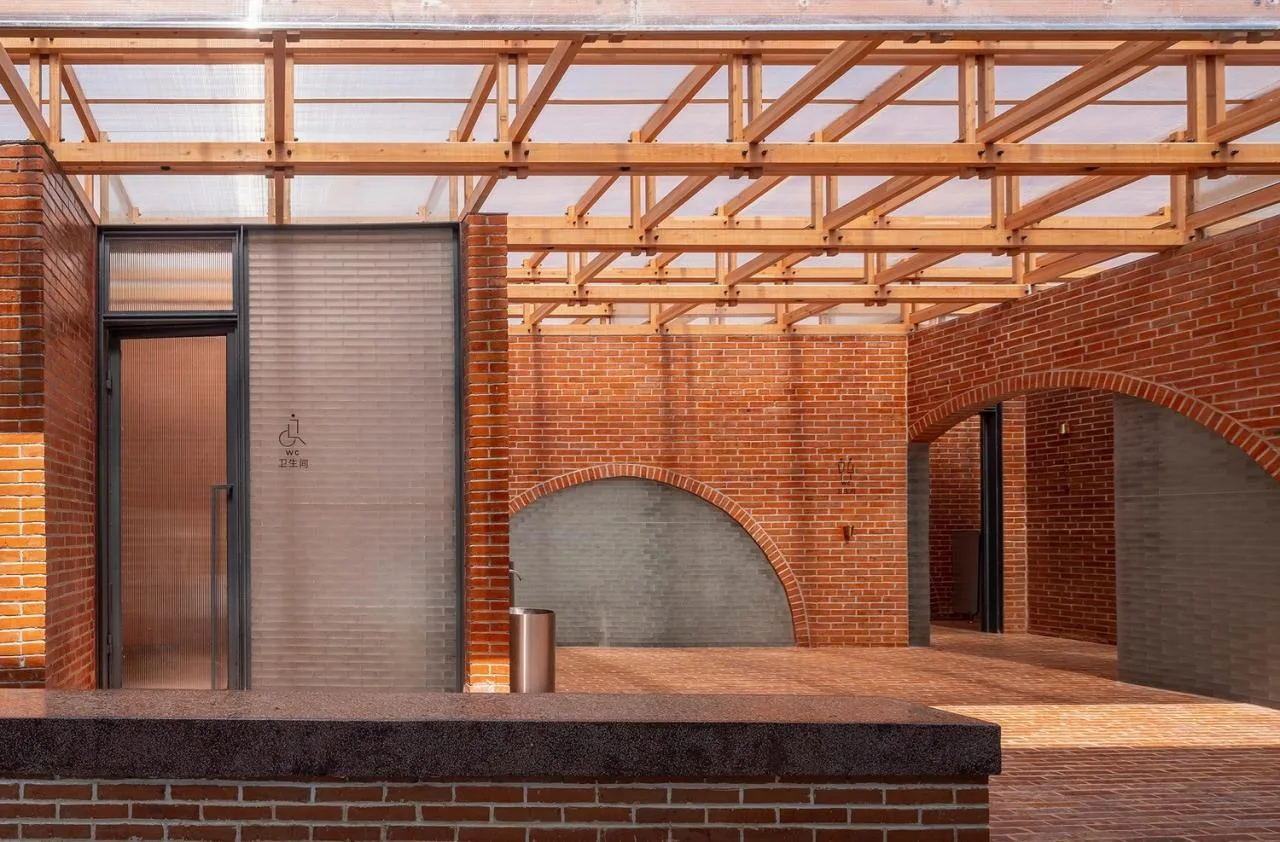
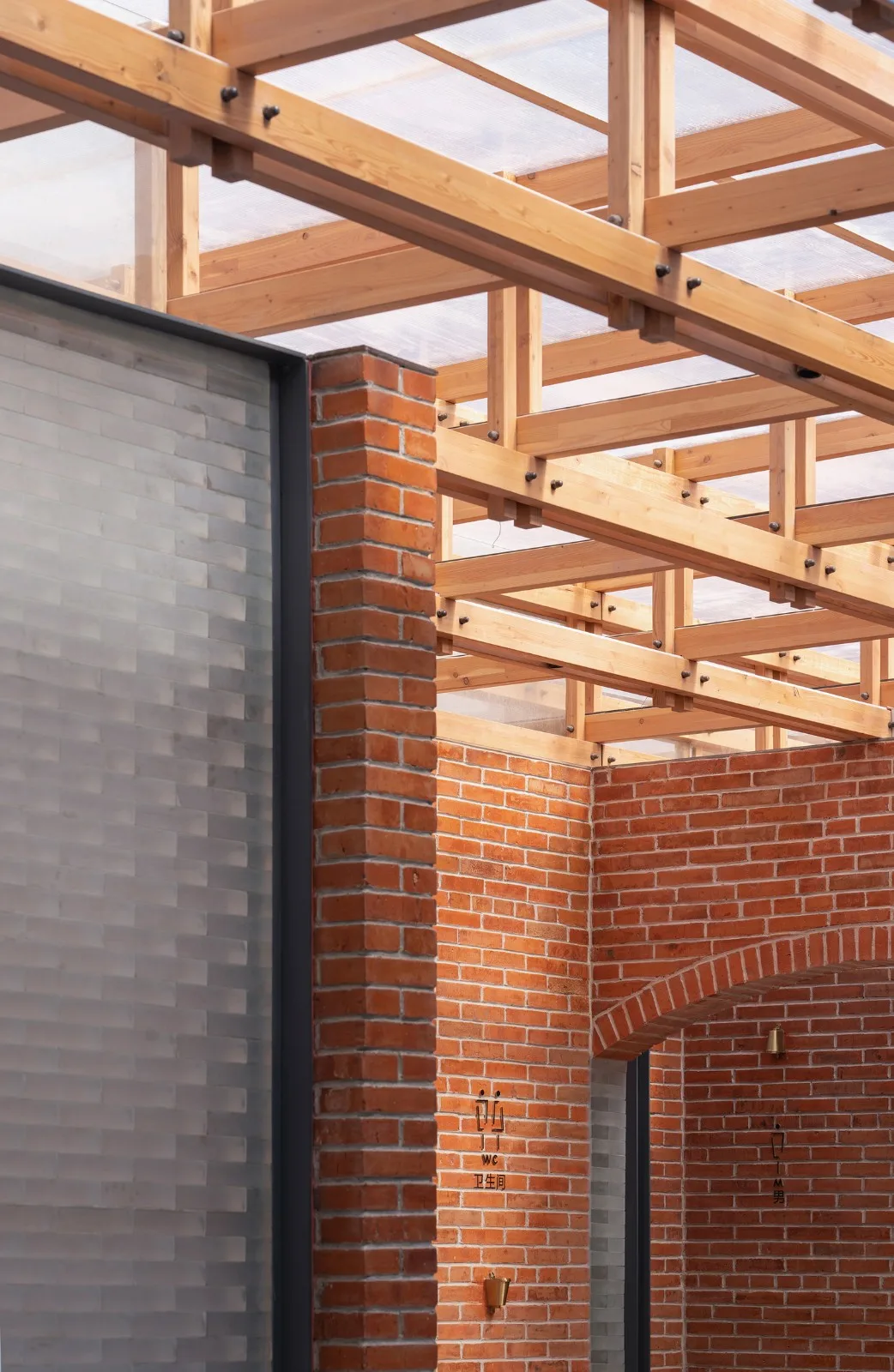
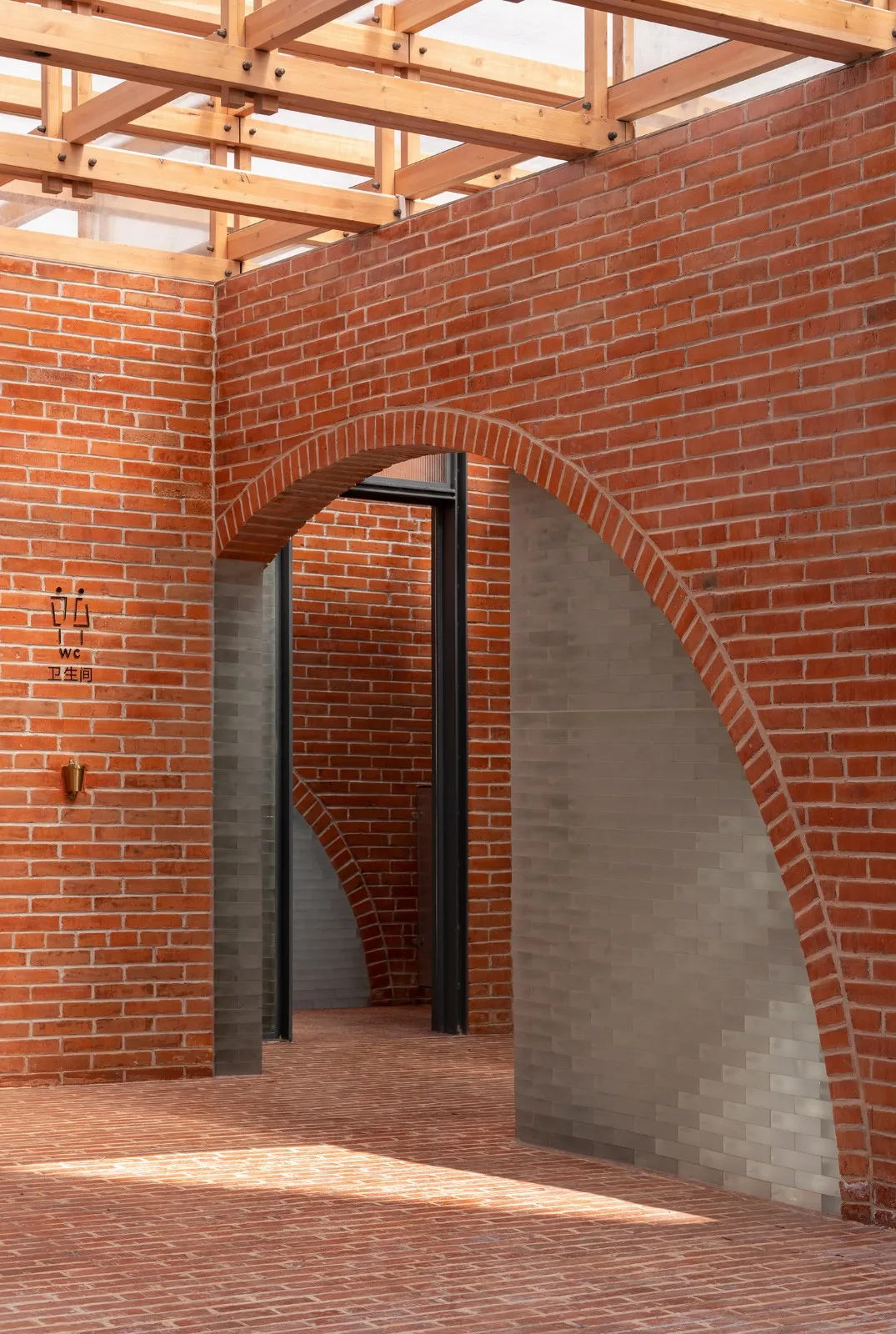
My design philosophy for small buildings like public restrooms emphasizes visible, honest materials and exposed construction details. The building is not masked by decorative elements. Instead, the relationship between materials is consistent throughout both interior and exterior spaces, governed by a cohesive design language. This approach gives the building a sense of “readability.”
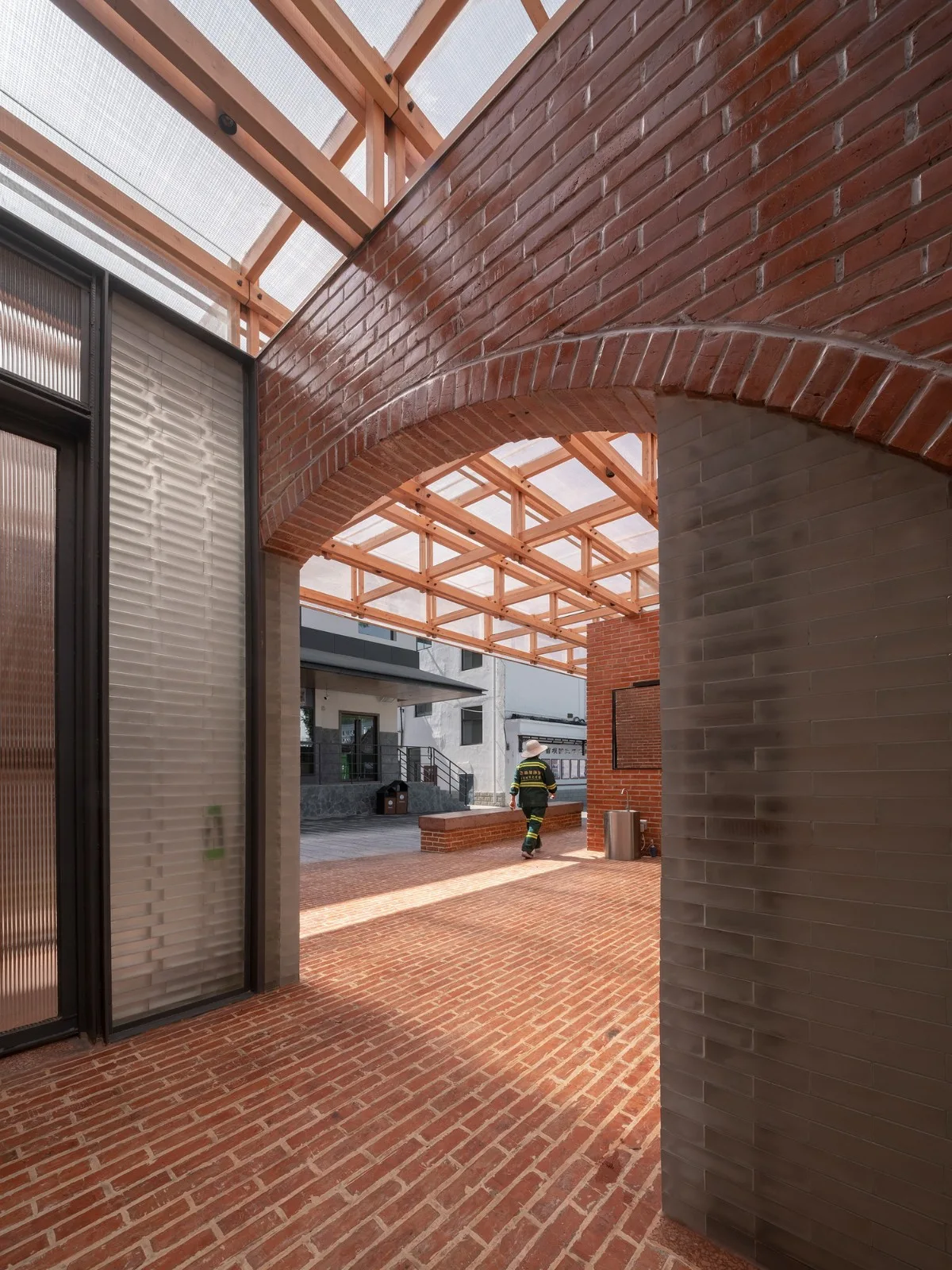
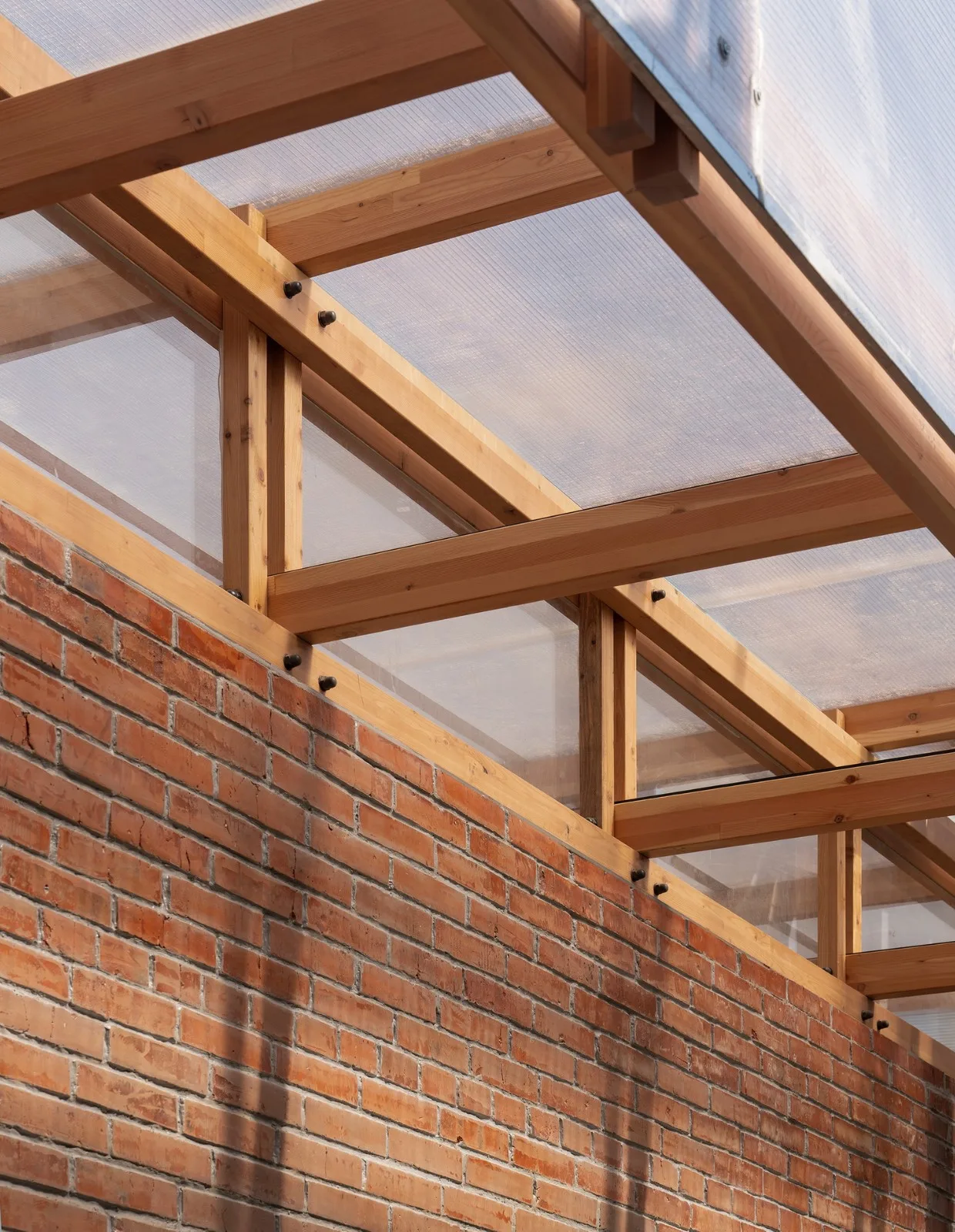
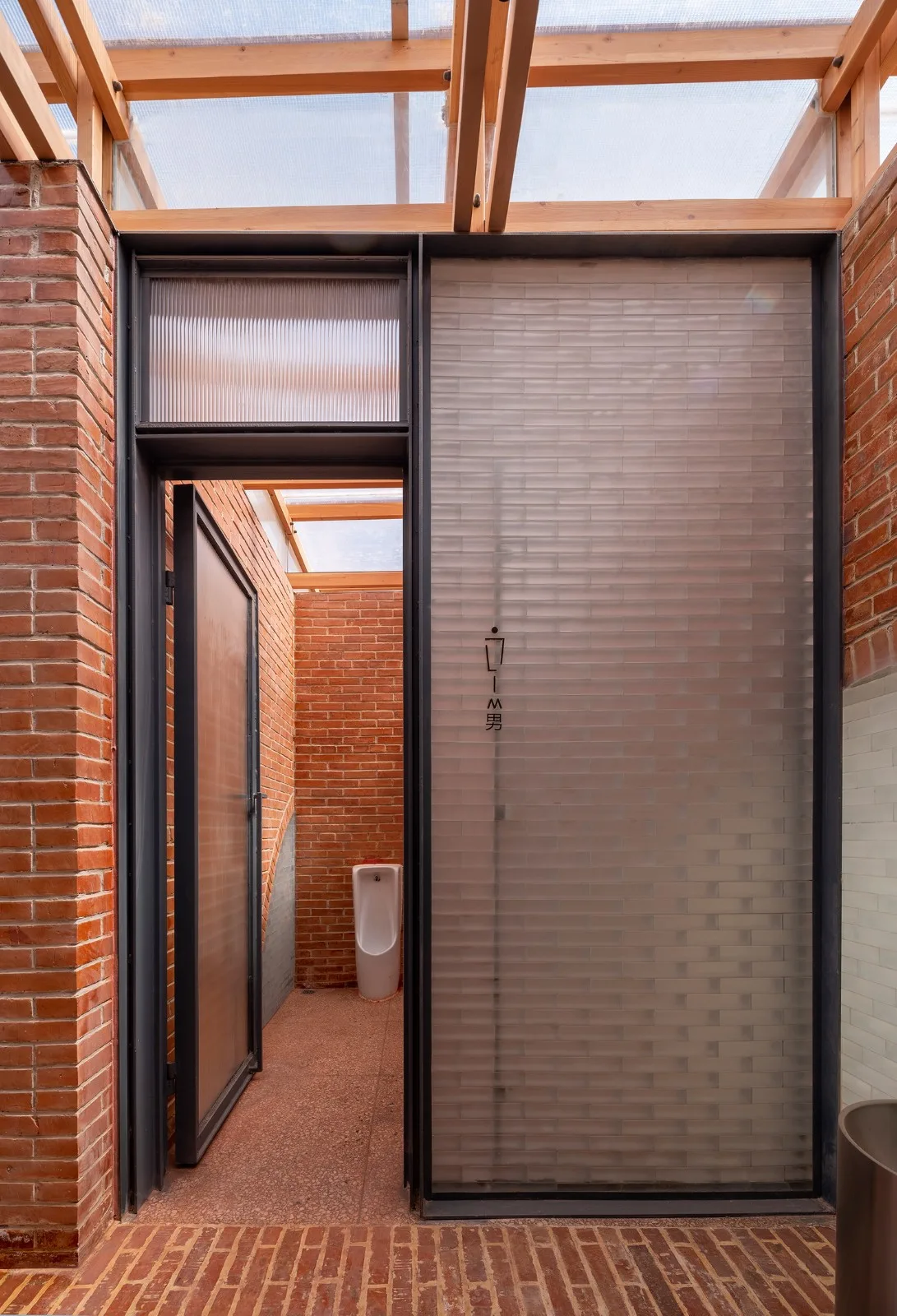
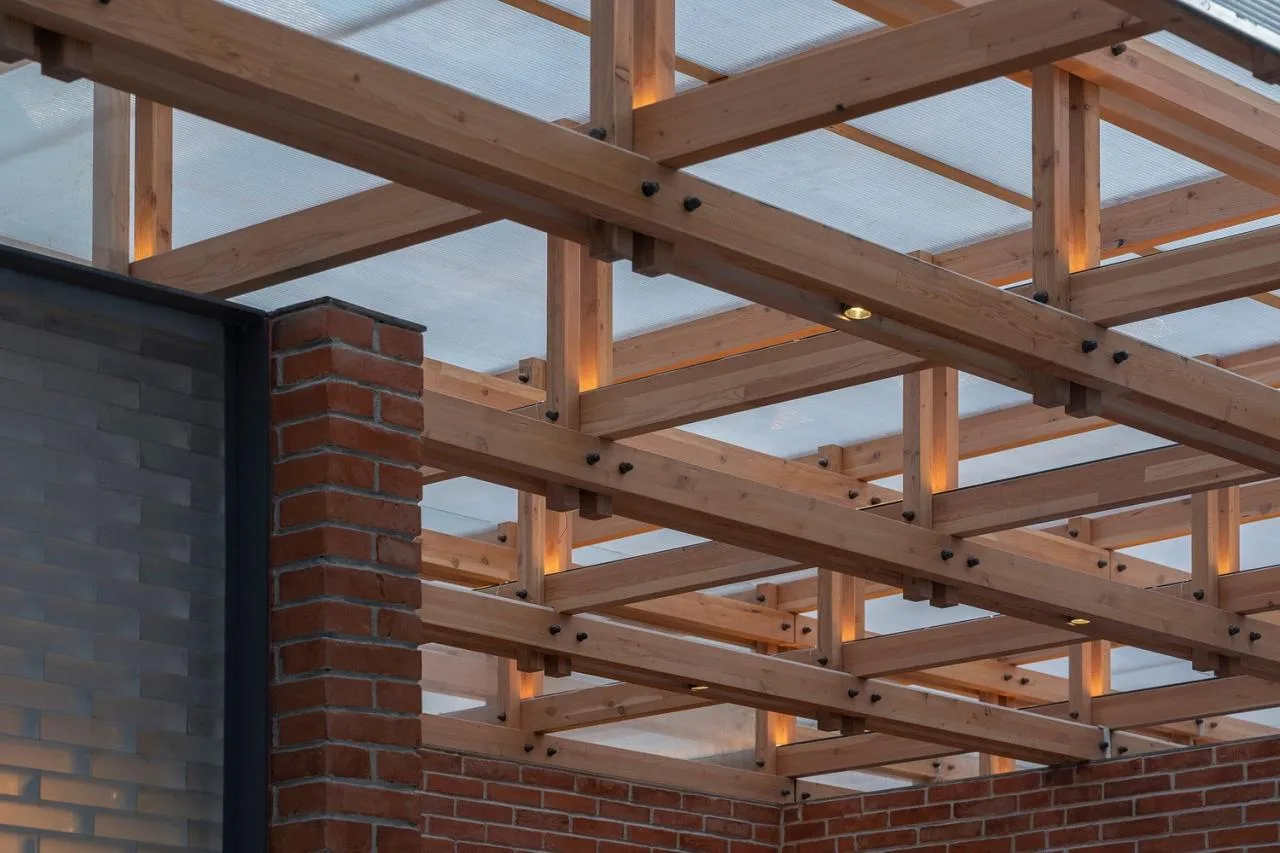
The exposed construction method demands a highly skilled construction team, as there are limited opportunities for rework—usually only one chance to get it right. Mistakes require starting over, and any errors remain visible. For example, red bricks naturally have imperfections; glass bricks vary in manufacture depending on their placement, leading to irregularities; and the solar panels on the roof are not perfectly aligned with the wooden structure. While these issues are regrettable, they do not detract from the overall presentation of the building.
Learning to accept certain imperfections and compromises is an essential part of an architect’s growth.
Project Drawings
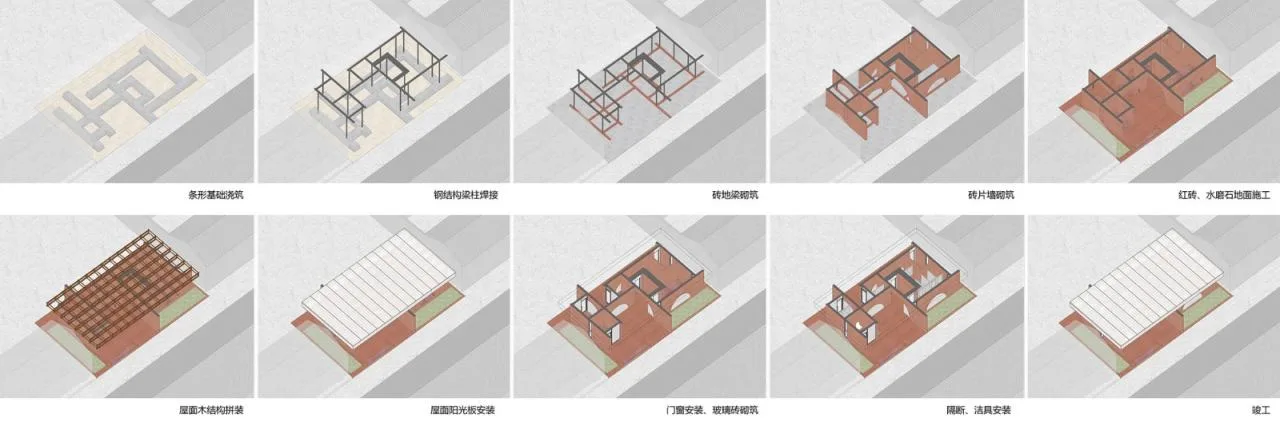
▲ Project Generation Diagram
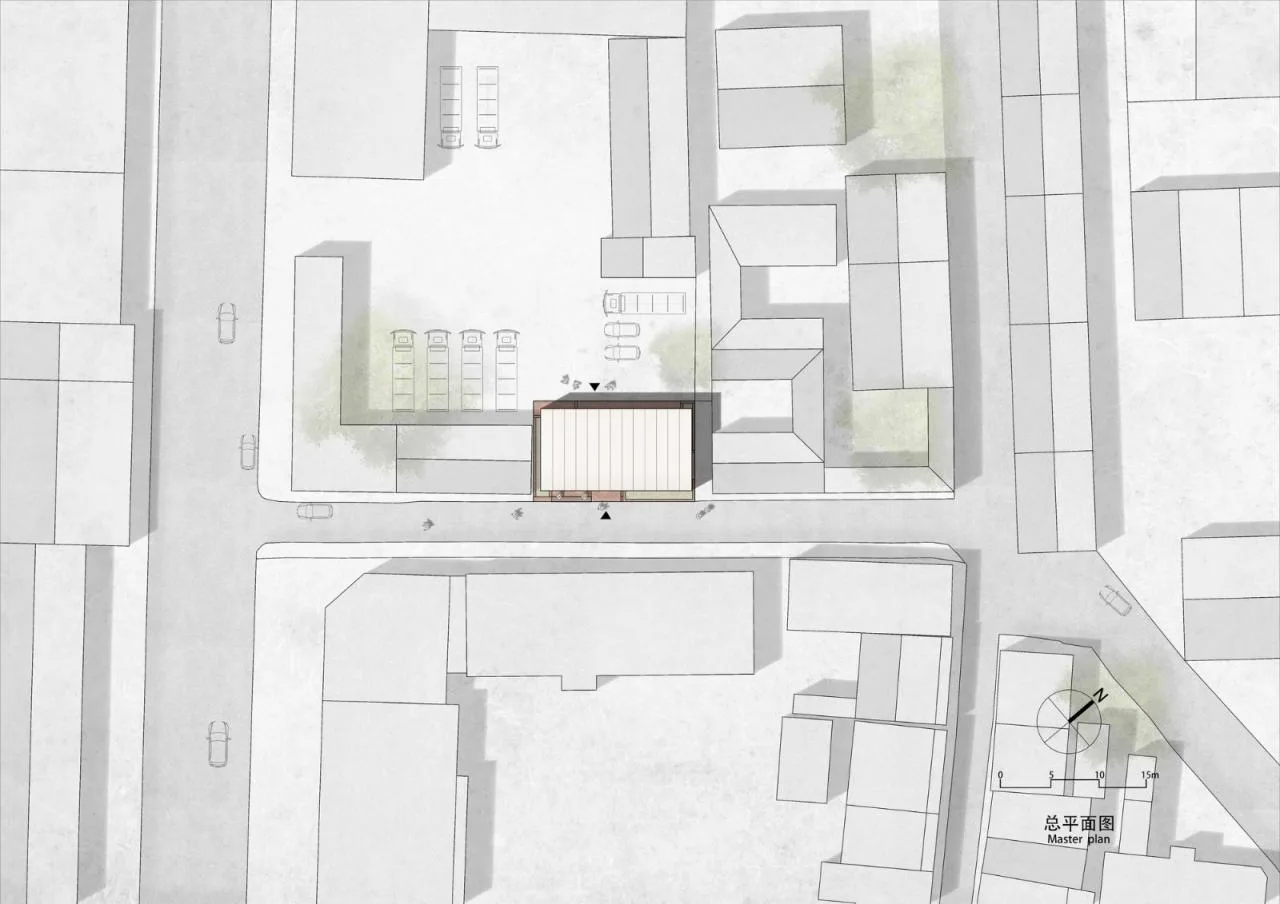
▲ General Layout Plan
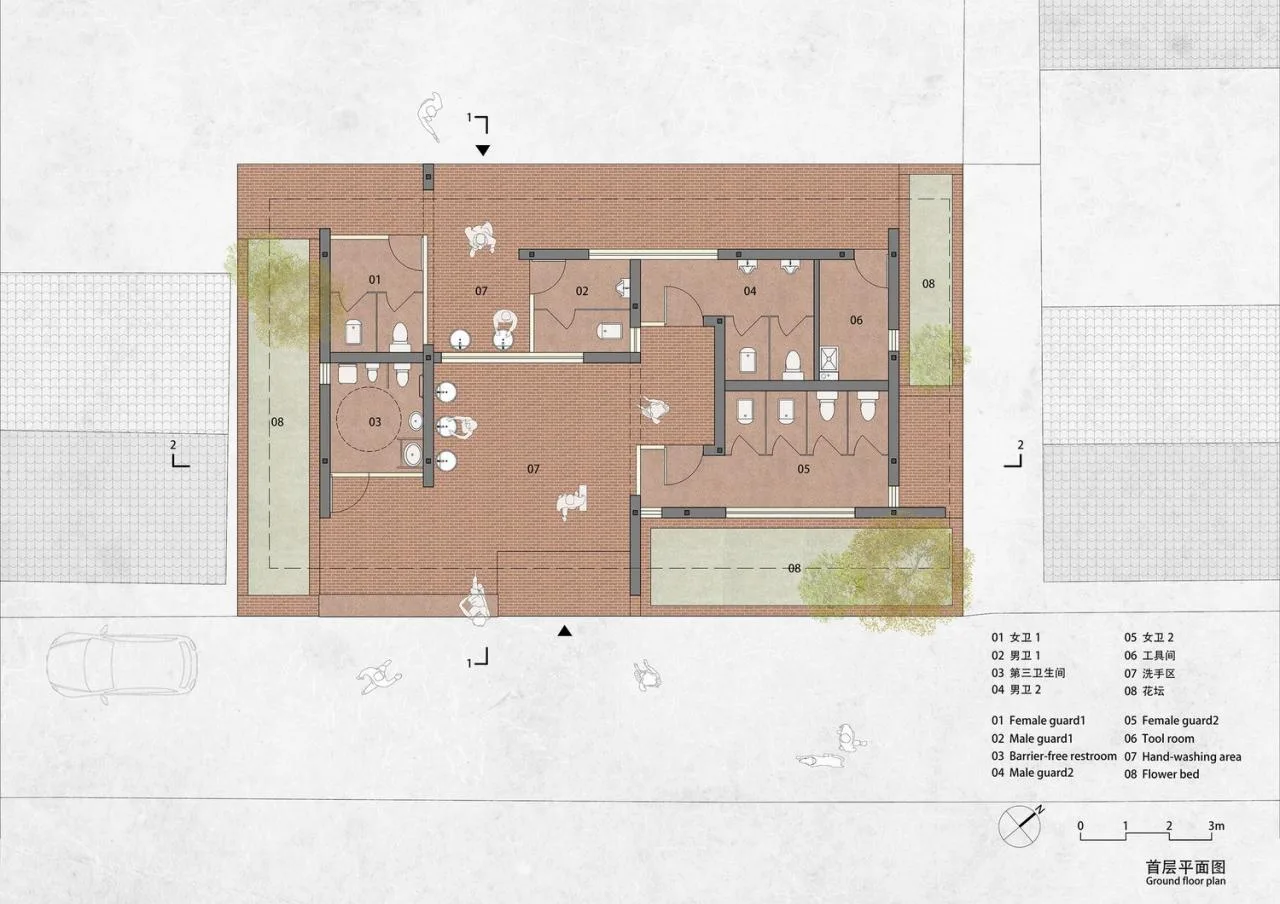
▲ First Floor Plan
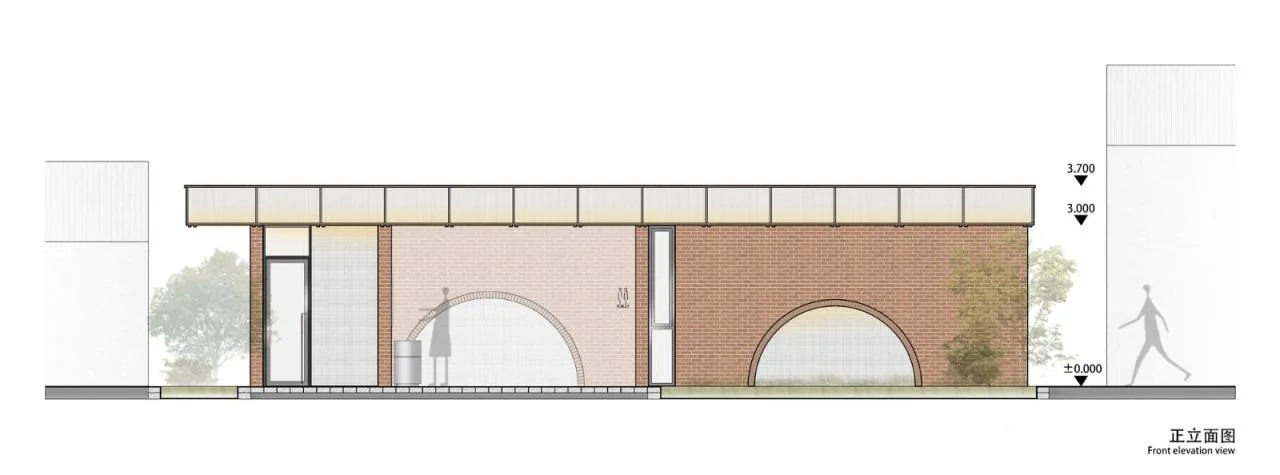
▲ Elevation View
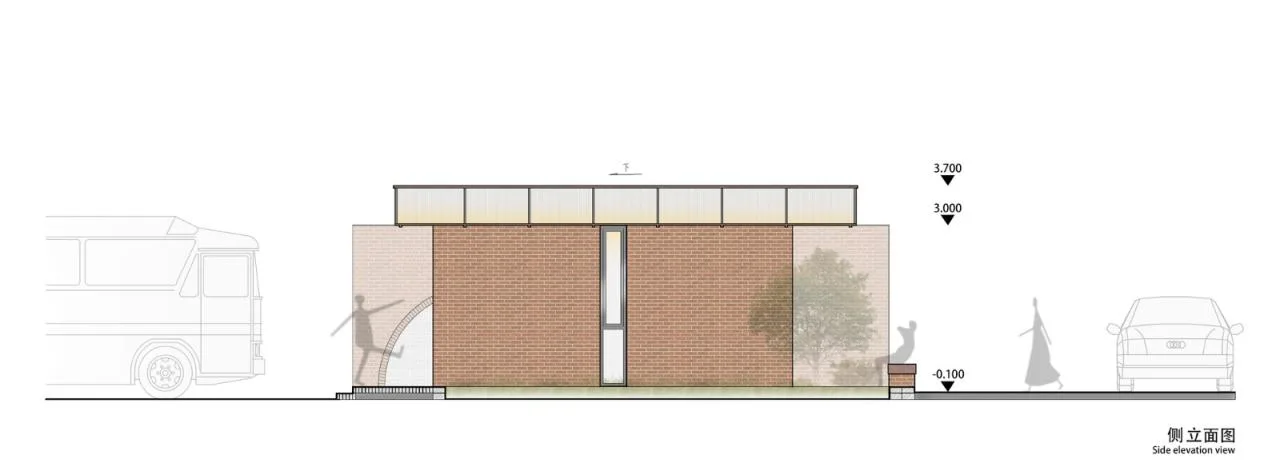
▲ Elevation View
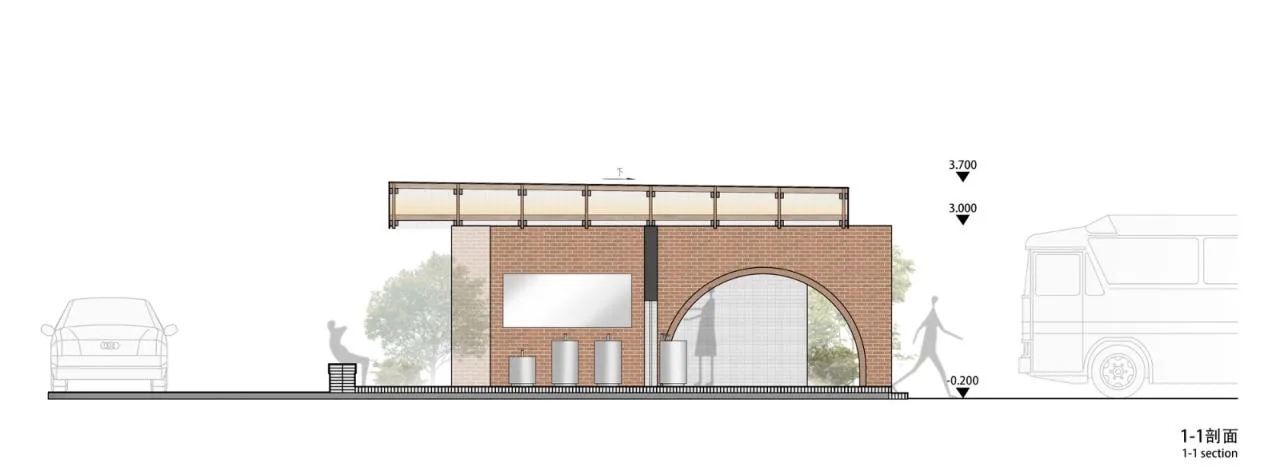
▲ Sectional View
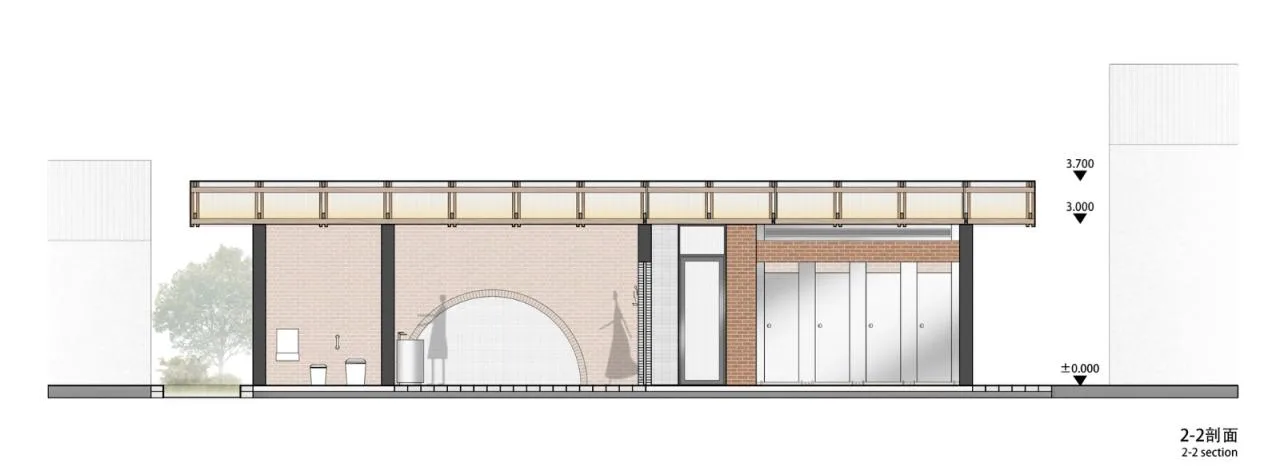
▲ Sectional View
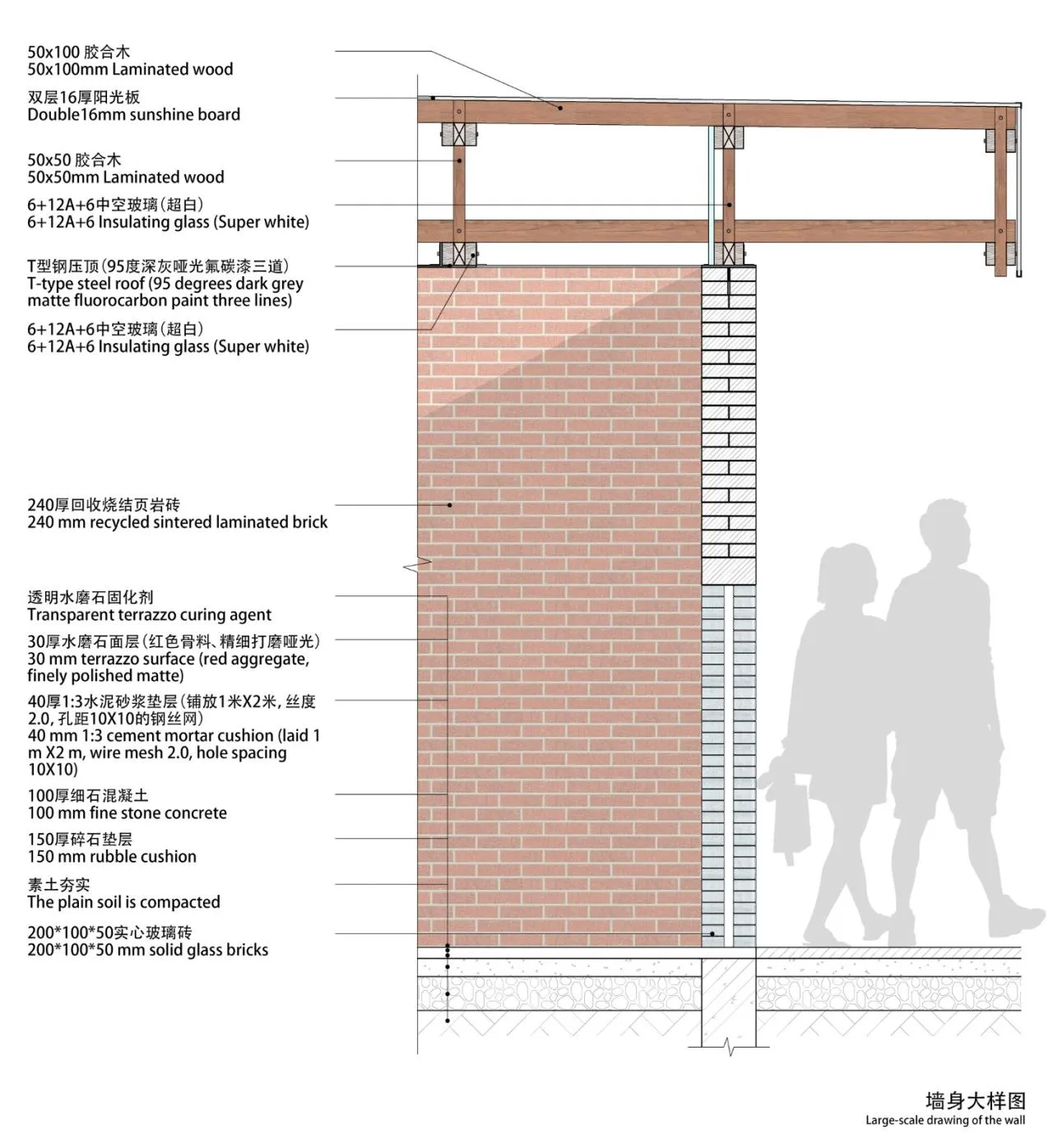
▲ Detailed Wall Drawing
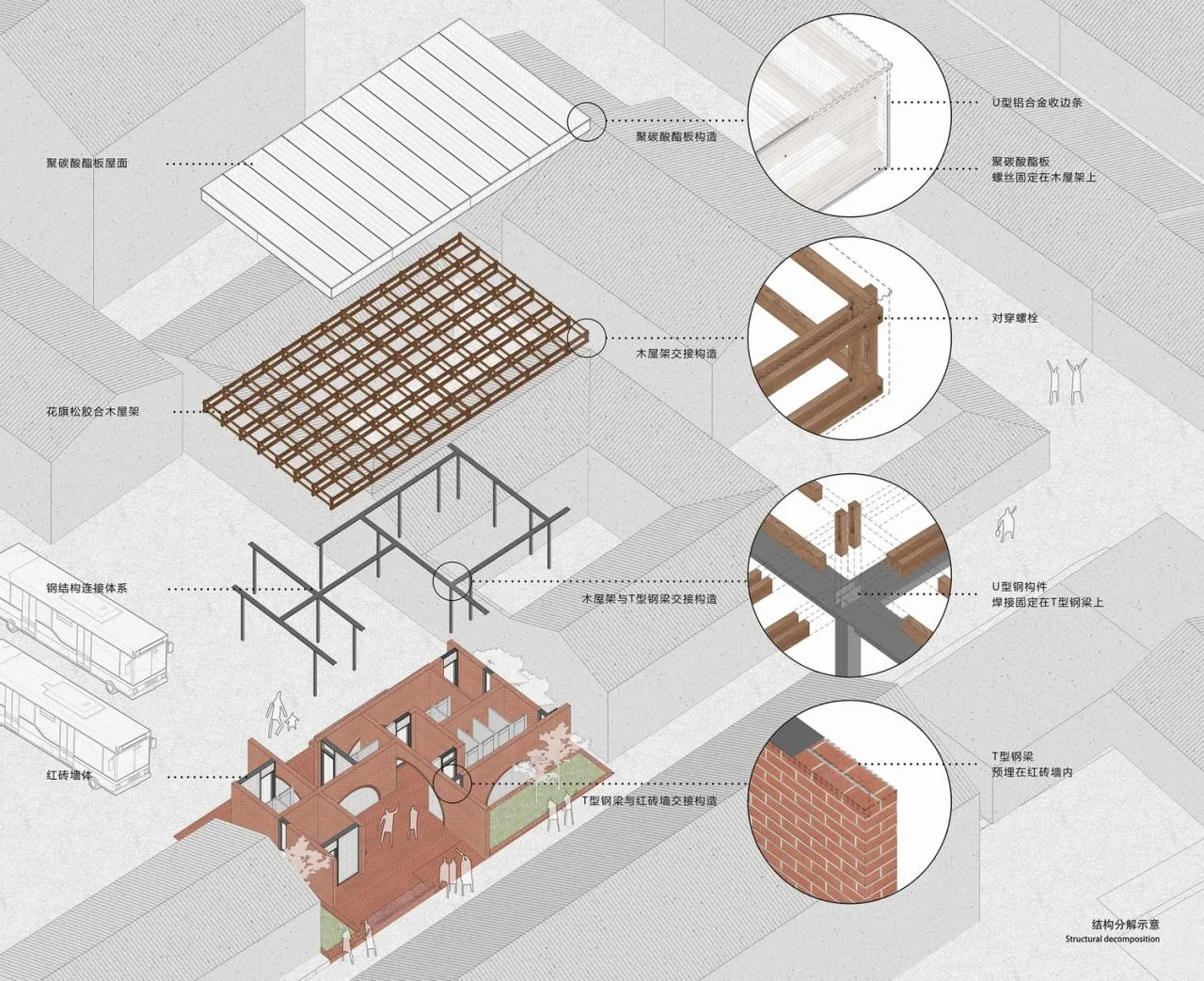
▲ Structural Decomposition Diagram
Project Information
Architect: Jian Lin Architectural Design Firm
Area: 110 m²
Project Year: 2024
Photographer: Zhao Yilong
Design Team: Chen Lin, Shi Weiquan, Chen Song, Fang Xiaoling
Client: Housing and Urban Rural Development Administration Bureau of Liuba County
Engineering Partner: Jiangsu Qianshu Assembly Construction Co., Ltd
Construction Contractor: Shaanxi Tengbang Construction Engineering Co., Ltd
Location: Hanzhong














Must log in before commenting!
Sign Up