
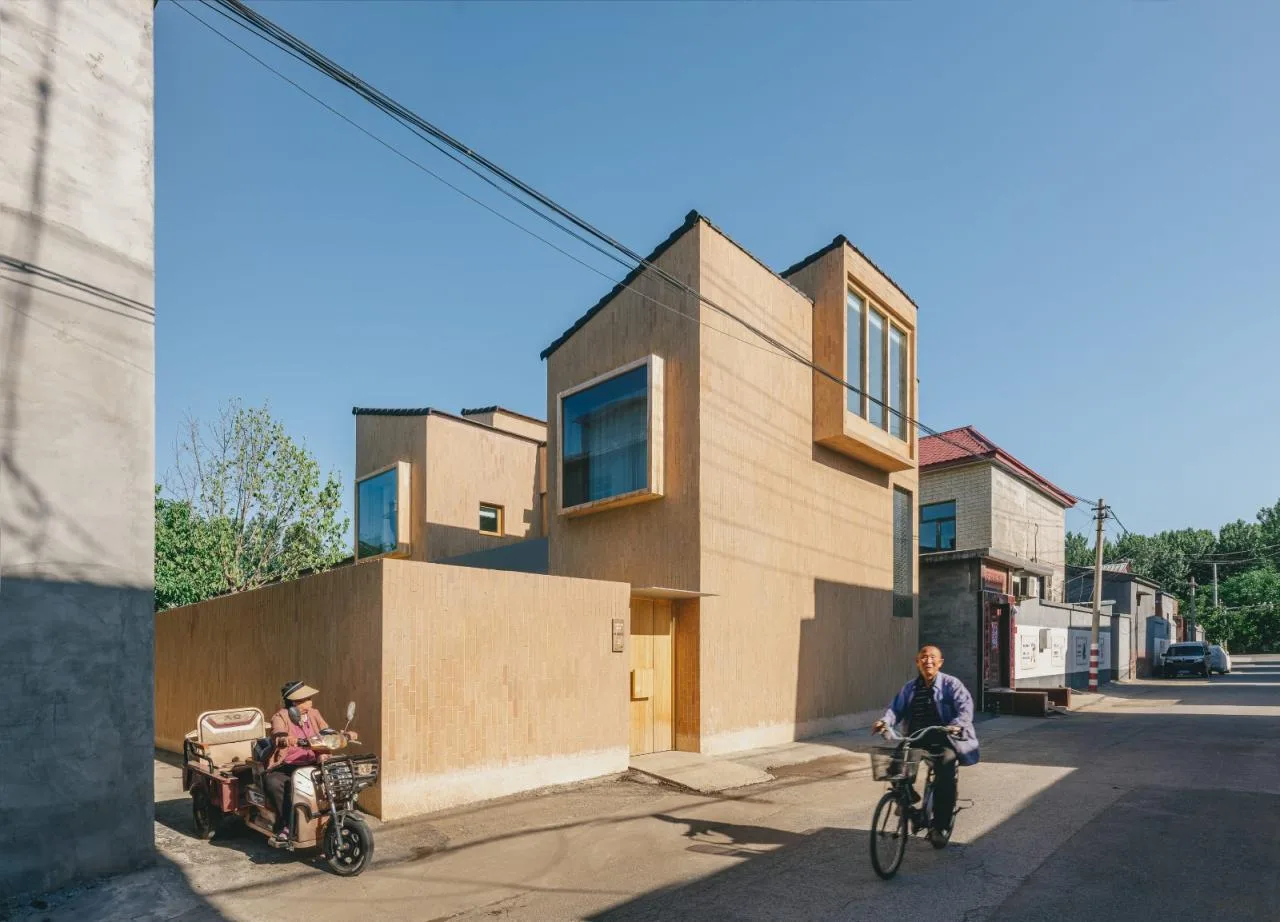
Preface
As urbanization transforms rural areas into city-like environments, these regions lose their nostalgic charm without gaining significant benefits. With rural populations aging and diminishing, revitalizing rural life through thoughtful design has become a pressing issue. The challenge lies in reigniting rural vitality and showcasing its appeal to urban dwellers.
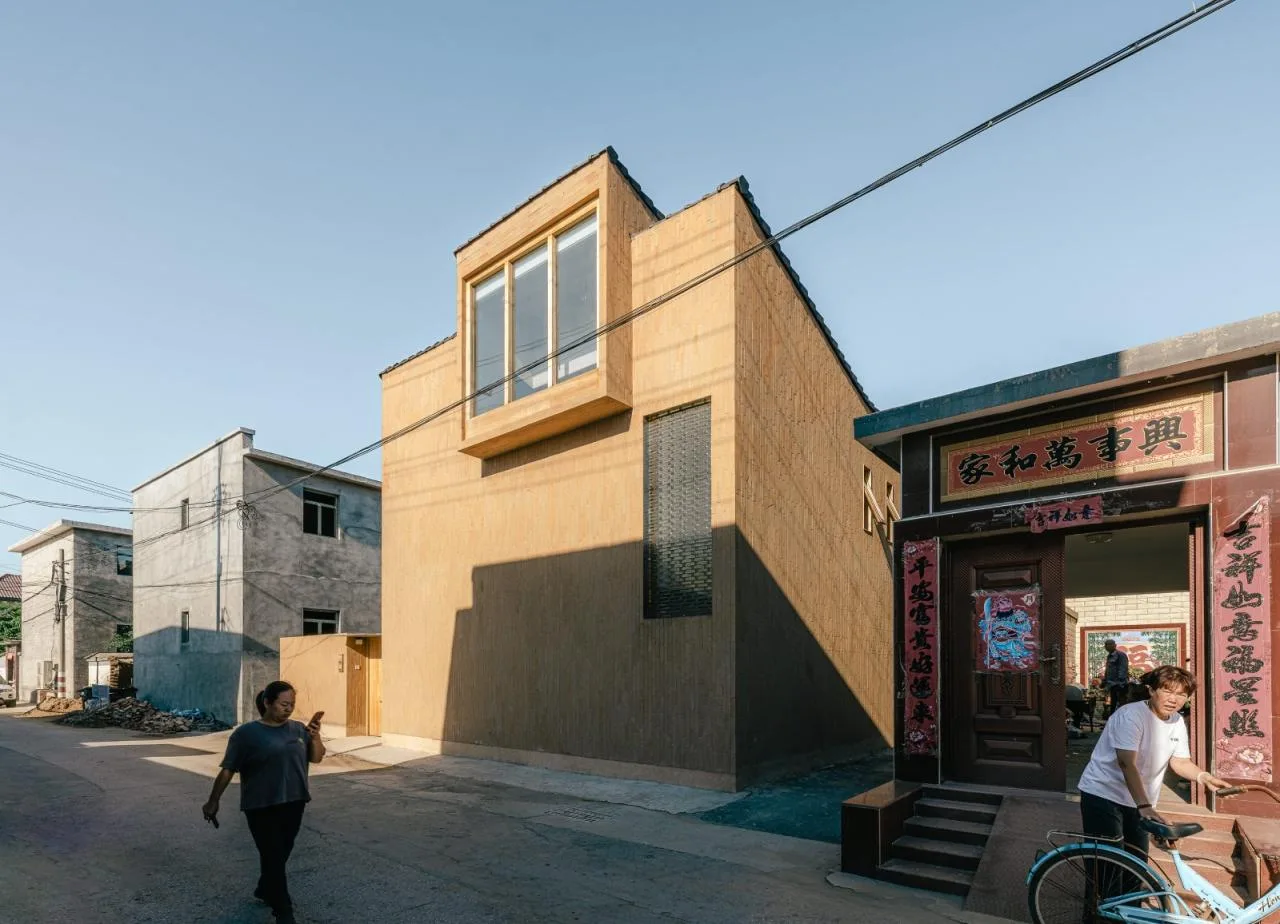
▲ Street View of “Mother’s Residence” © Zhu Yumeng
With improvements in rural infrastructure and the removal of logistical and informational barriers, rural areas now have the opportunity to complement and connect with nearby cities. Young urban professionals seeking additional housing close to their parents, and a respite from hectic city life, often turn to suburban areas for a sense of family and spiritual comfort.
▲ Residential Concept under the New Rural Life © Zhu Yumeng
Looking ahead, rural areas are set to become hubs of mobility, diversity, and connectivity, offering unique spatial experiences and lifestyles absent in urban settings. These emerging rural communities attract new residents and foster fresh social dynamics. The “Mother’s Residence” project serves as an independent experimental model aimed at aiding rural revitalization by reimagining the modern rural family lifestyle and strengthening ties between Fangshan West Camp Village and urban Beijing.
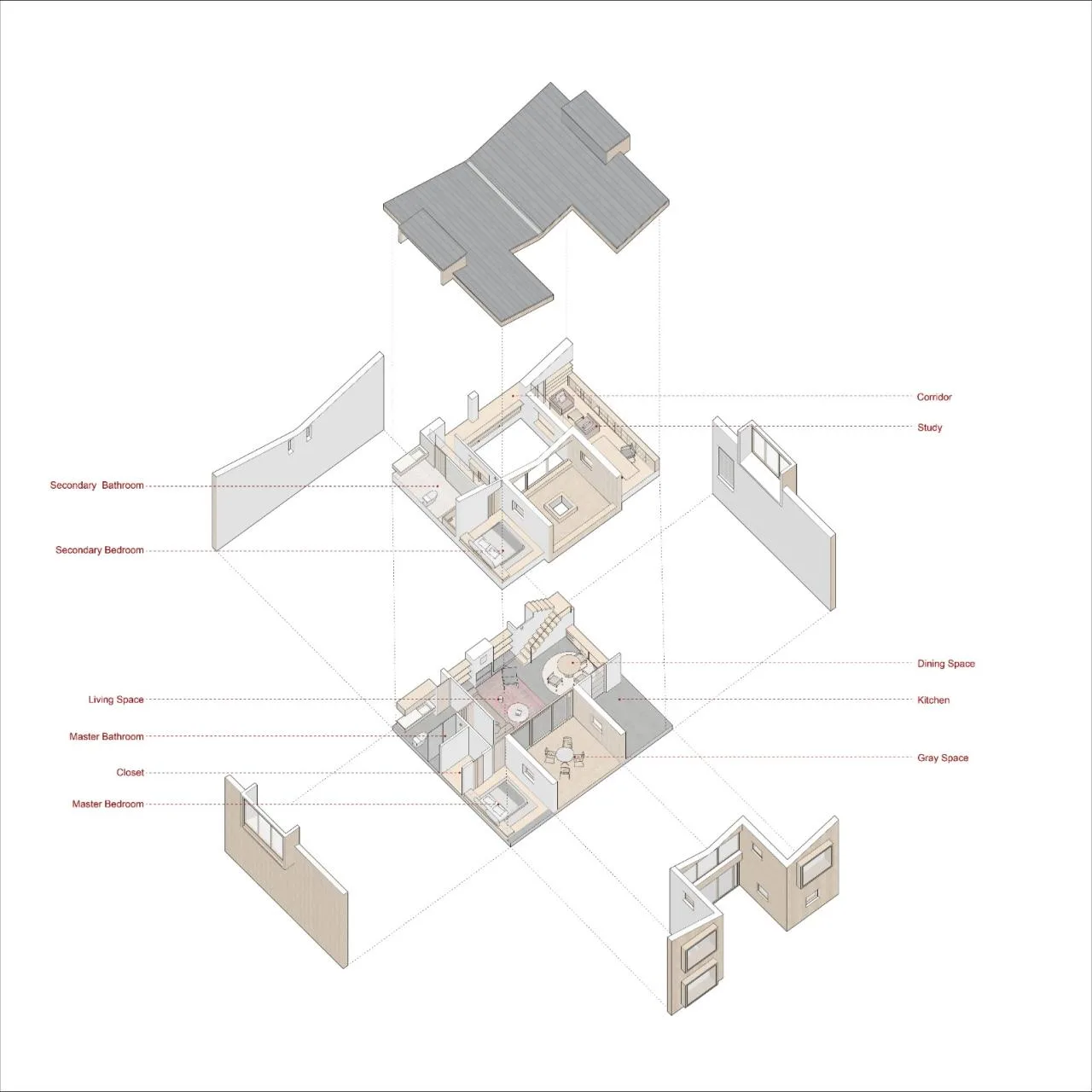
▲ Exploded Diagram of “Mother’s Residence” Axis Measurement © CPLUS
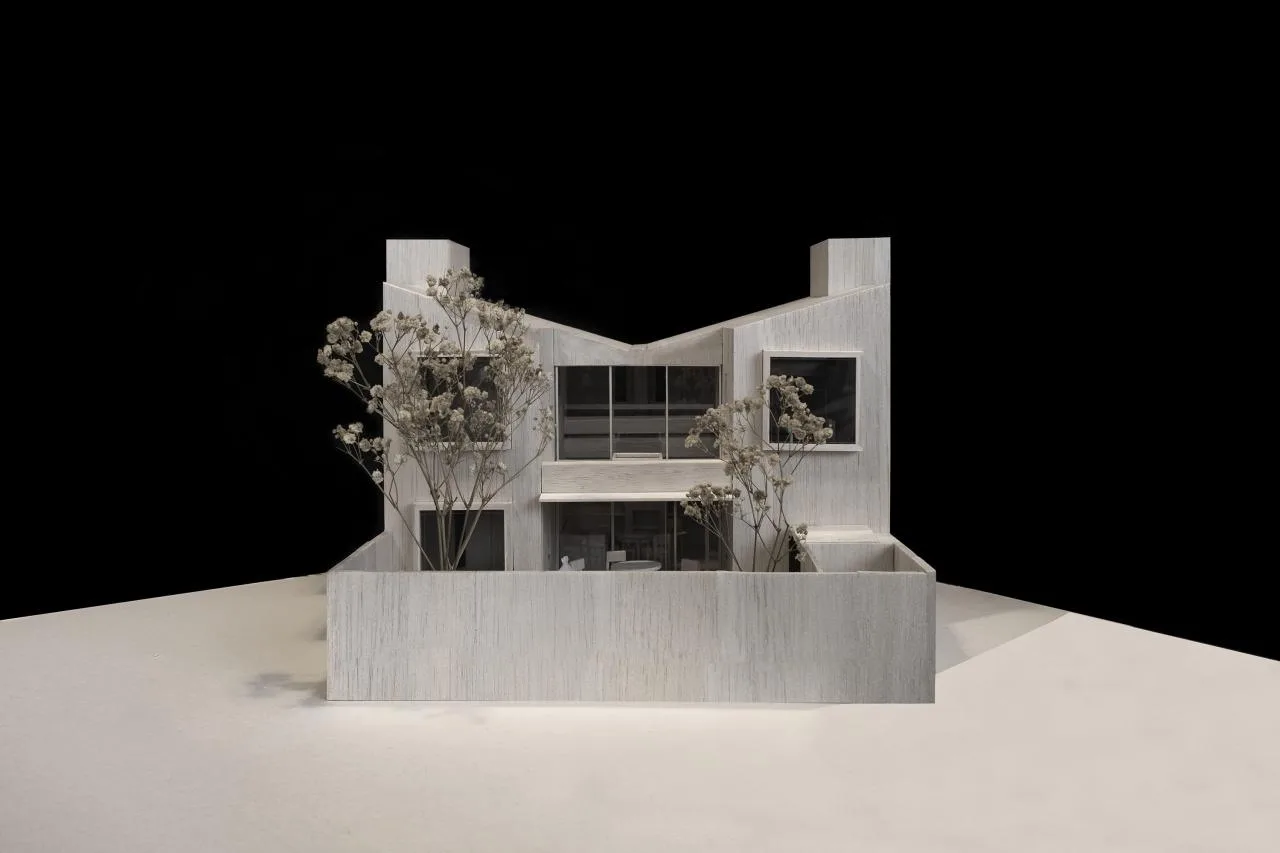
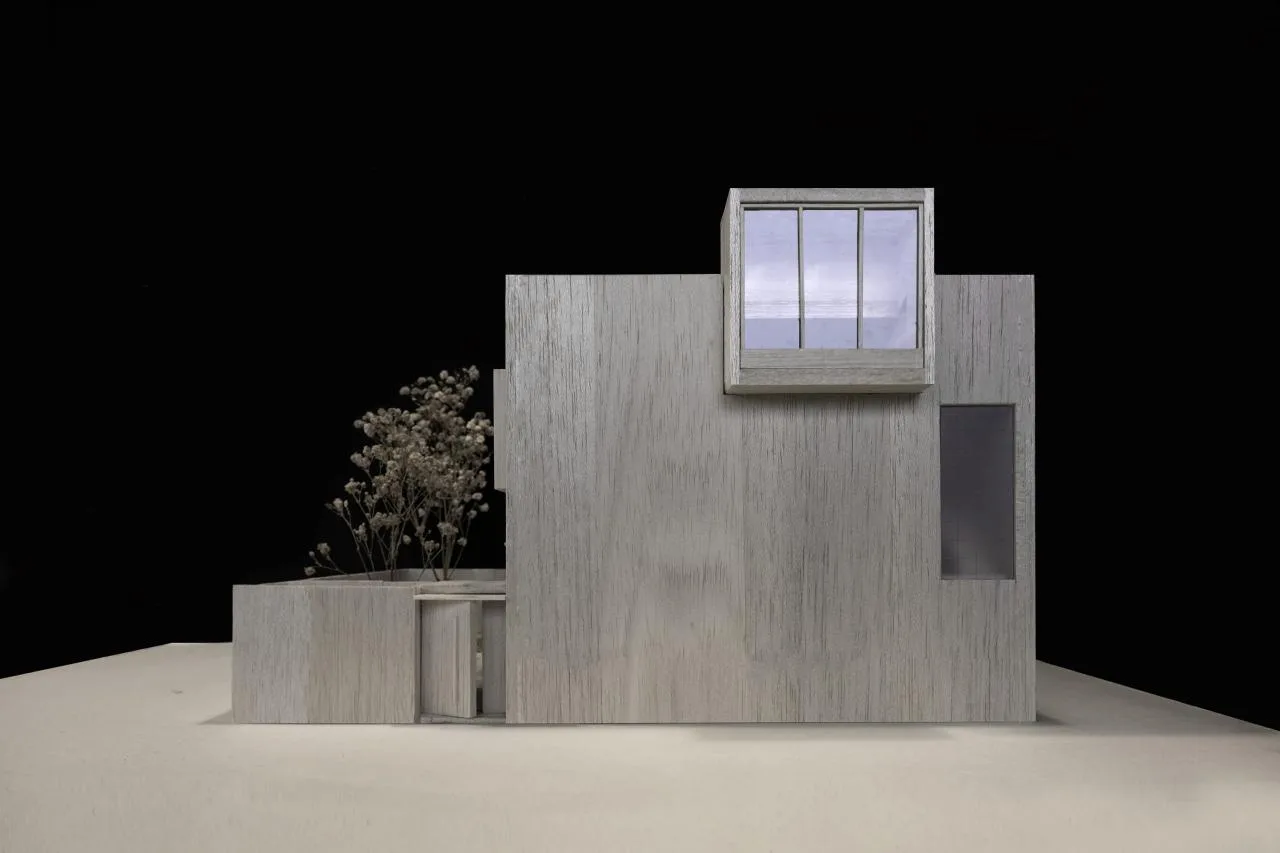
▲ Handmade Model © CPLUS
Mother’s Residence
Towards a New Rural Life
A standalone home featuring a courtyard represents the dream of many Chinese urban families for an ideal living space. While high-density urban environments often lack exclusive courtyard areas, suburban lands still offer vast potential.
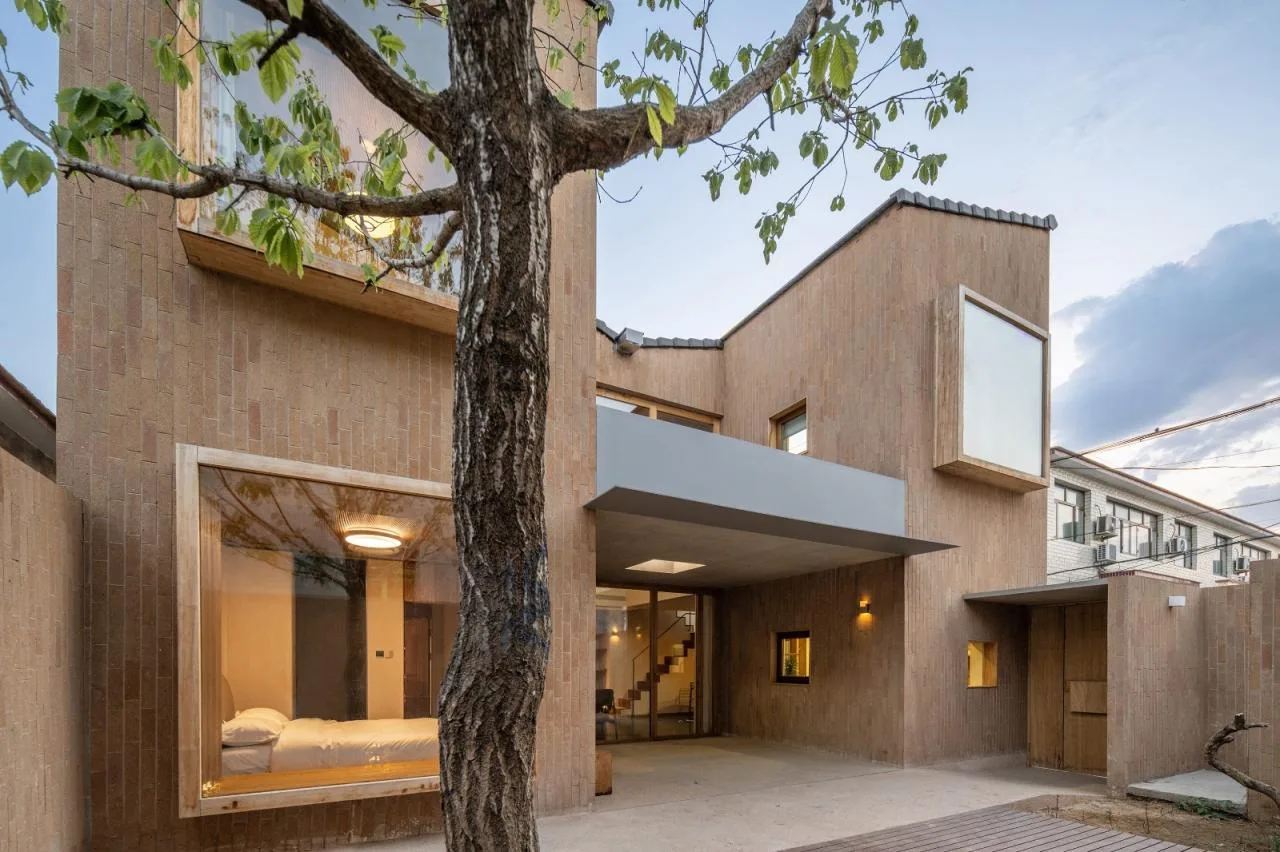
▲ Mother’s Residence at Twilight © Liu Jing
Located at the foot of the outer slope of Beijing’s Sixth Ring Road in the southwest, Xiying Village is one of several scattered villages where “Mother’s Residence” is situated. Originally designed as a courtyard home for retired elderly residents, it also serves as a weekend gathering place for three generations of family members. Named to honor the nurturing role of mothers, it is called “Mother’s Residence.”
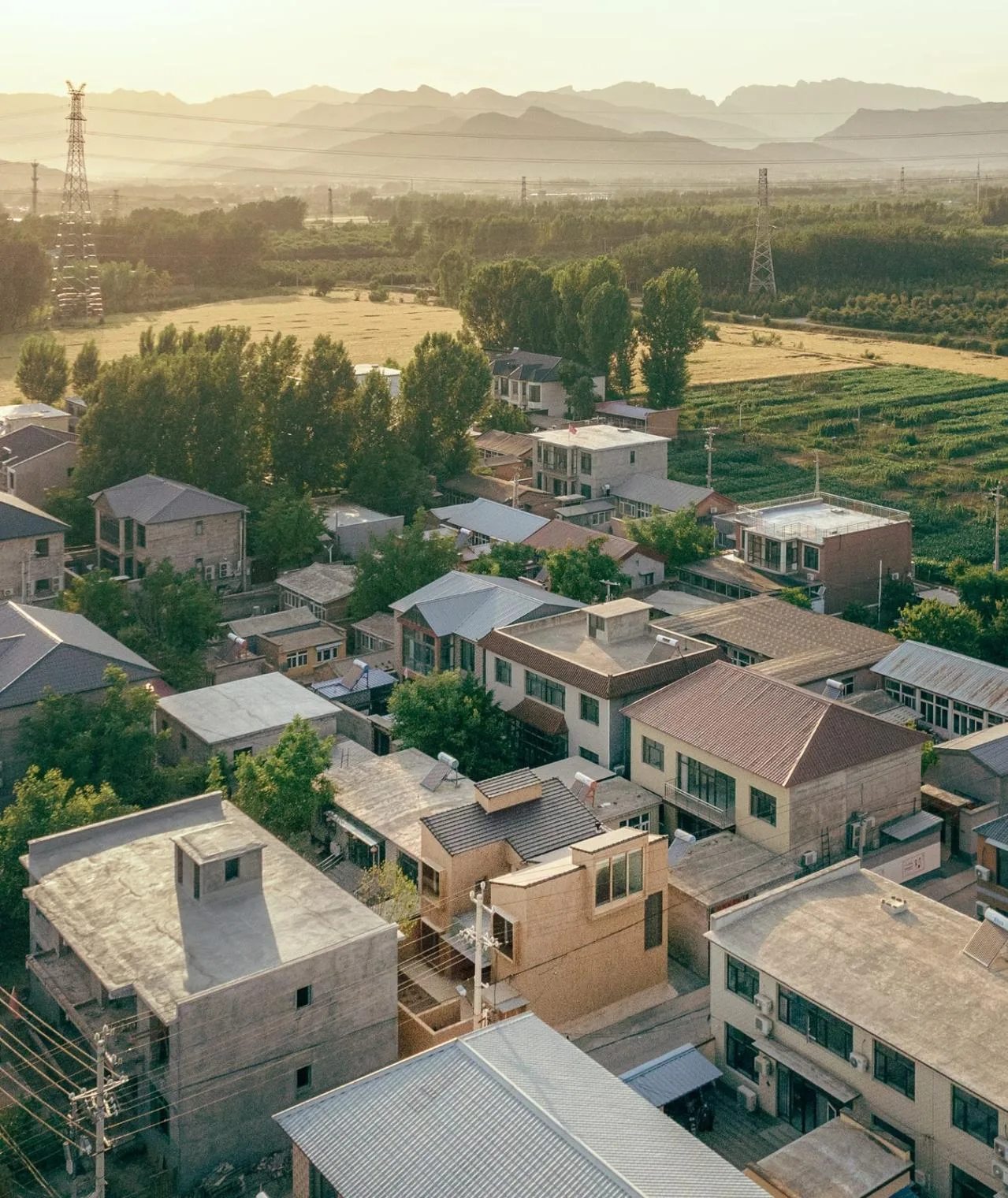
▲ Grid Streets and Alleys © Zhu Yumeng
Most village houses face north-south with clearly defined homestead boundaries. The dense cluster of farmhouses and grid-patterned road networks create a woven texture of streets and alleys. The main entrance of “Mother’s Residence” faces the main street on the east side, with alleys to the north and south and sharing the west courtyard wall with neighbors. Surrounded by fields, the architects envisioned an ideal rural living environment, considering how buildings might fulfill this vision and how life here could evolve.
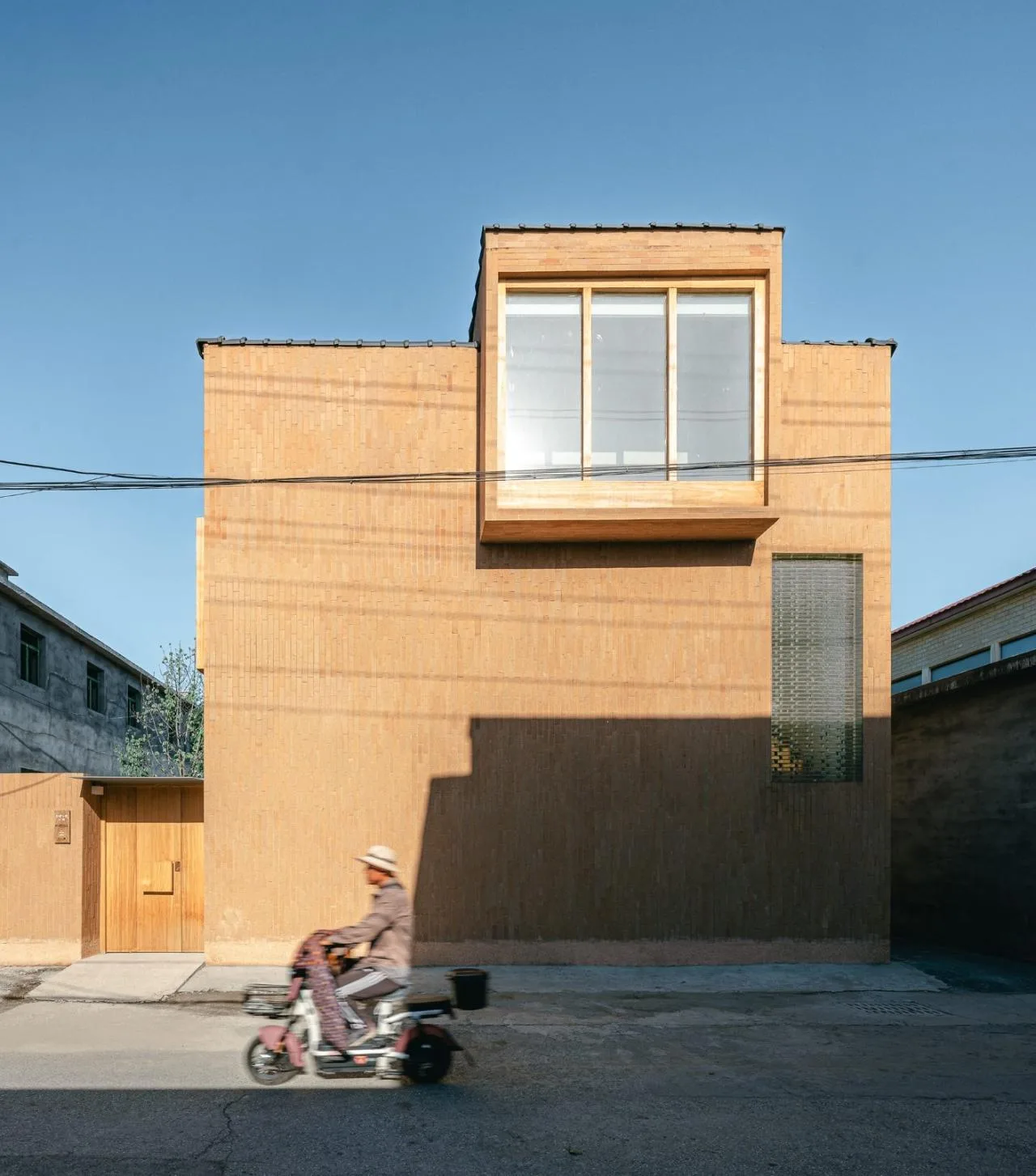
▲ East Side Street Facade of Residential Building © Zhu Yumeng
Internal and External Growth
Housing serves not only as a functional living space but also as a cultural extension. The relationship between the “inside” and “outside” of a residence is central to traditional Chinese architecture, akin to the interdependent forces of “yin” and “yang” in ancient philosophy. Neither is subordinate; instead, they support and enhance one another. The “Mother’s Residence” balances built space and courtyard nearly equally, demonstrating dynamic harmony through its concave and convex design elements.
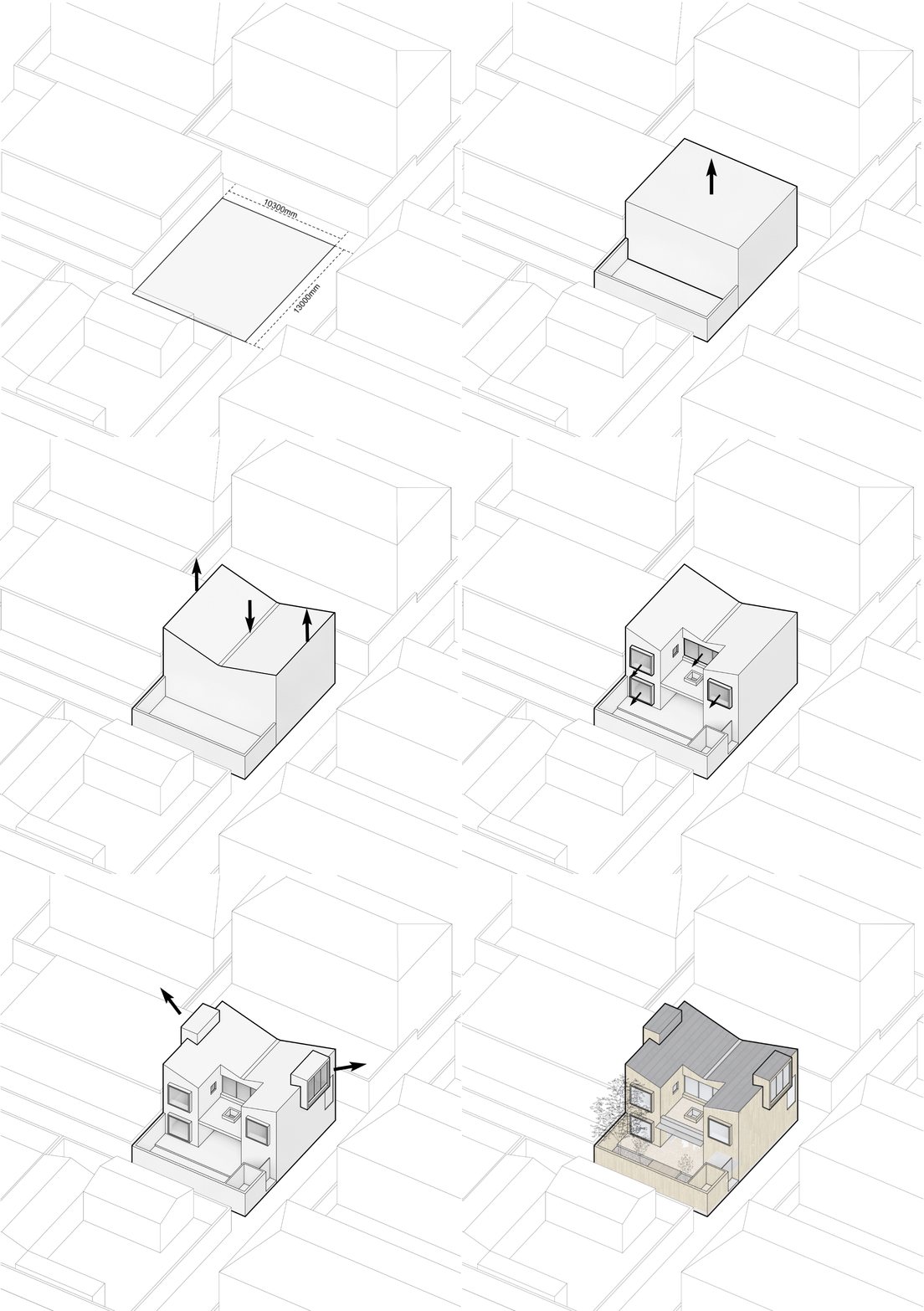
▲ Space Generation Diagram © CPLUS
The grey space under the eaves at the entrance forms the courtyard’s visual and spiritual center, symbolizing family unity. This sheltered area allows residents to extend their daily activities outdoors year-round—enjoying summer breezes at night, brewing tea by the stove in winter snow, or celebrating special holidays together.
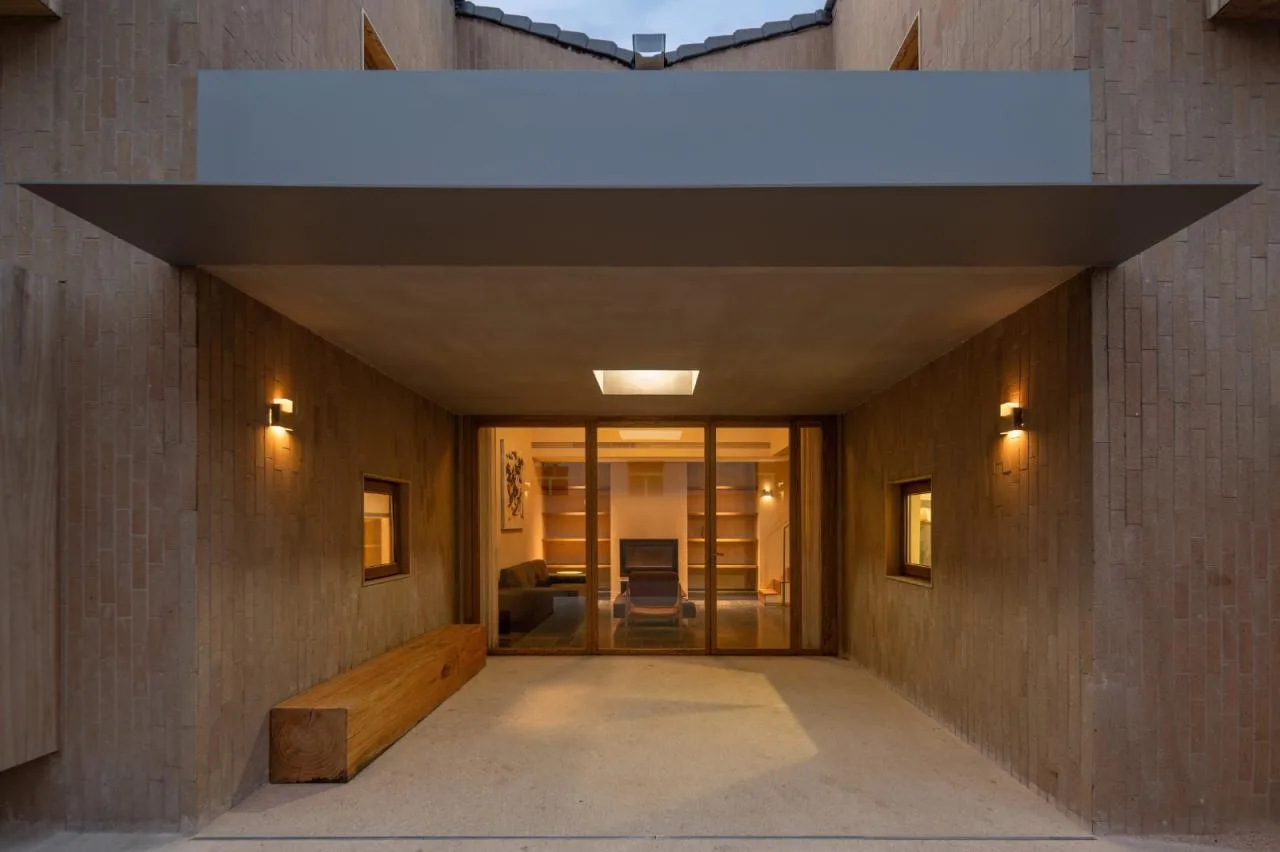
▲ Grey Space Under the Eaves © Liu Jing
On the southern facade, windows in the main rooms frame views of the courtyard, blending indoor and outdoor spaces. This inward-facing courtyard fosters interaction with nature while preserving indoor privacy, creating a serene “introverted universe” shielded from external noise.
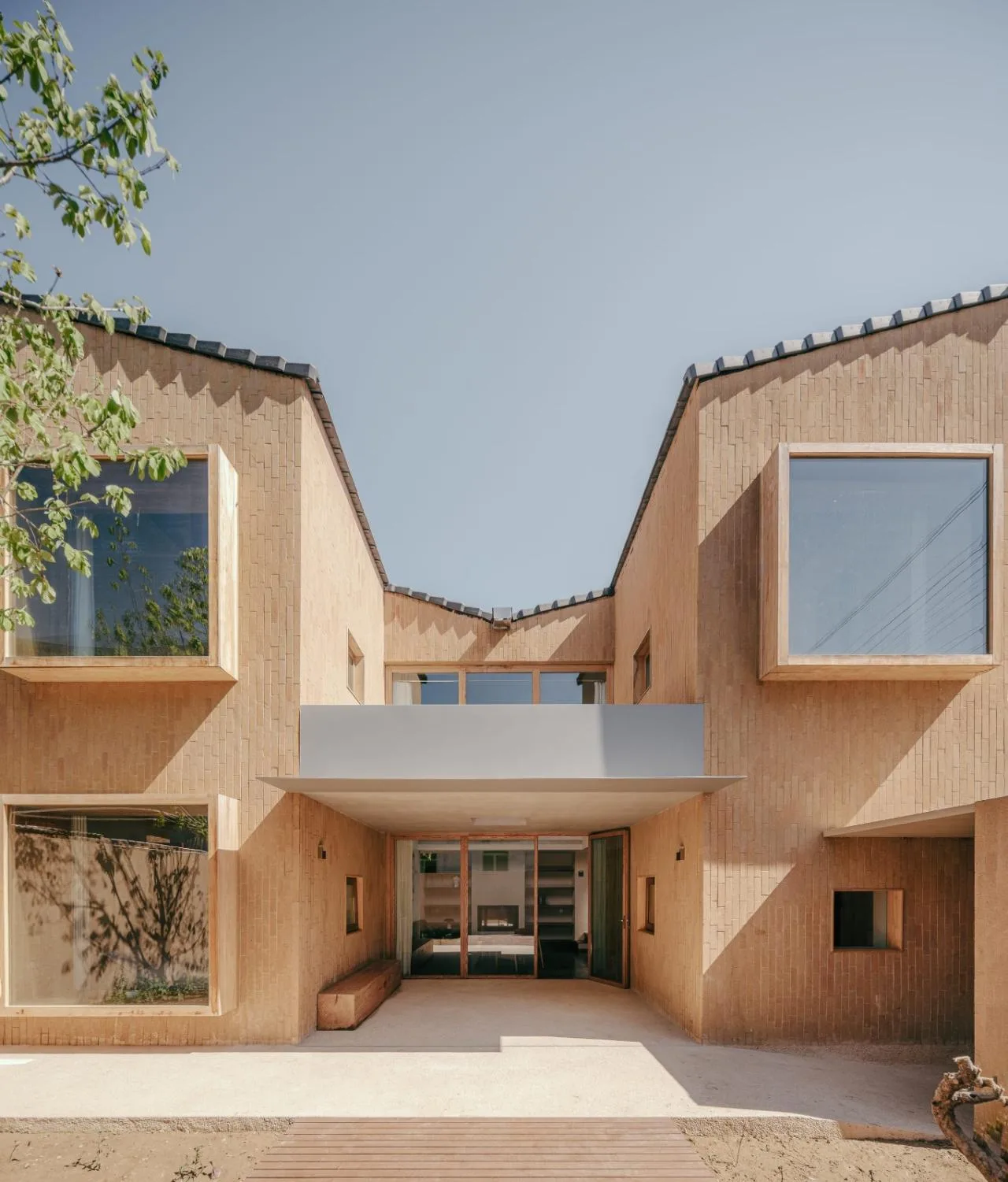
▲ Residential South Facade Close-up © Zhu Yumeng
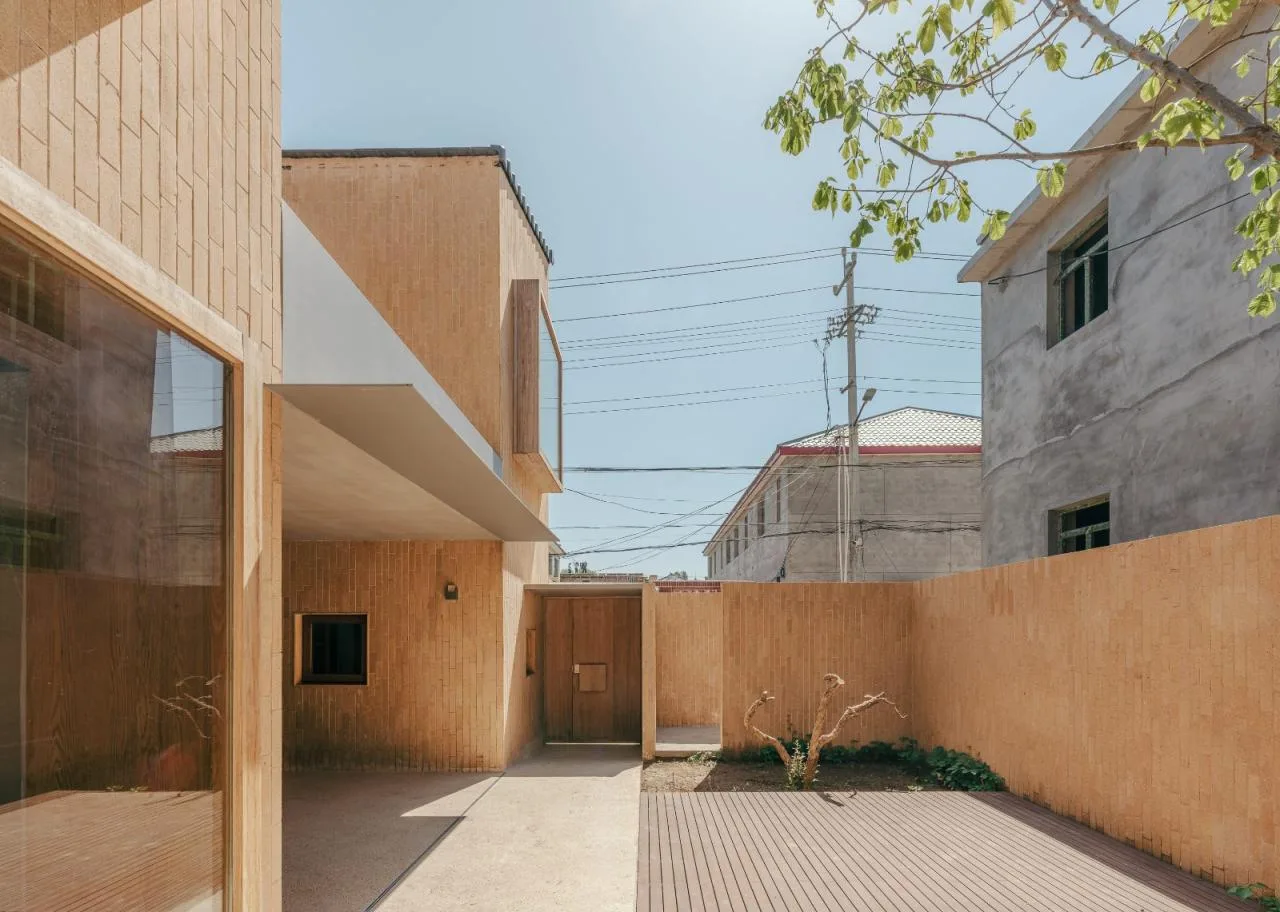
▲ Introverted Courtyard Space © Zhu Yumeng
Horizontal and Vertical Isomorphism
The architectural design draws upon traditional Asian spatial concepts, expanding the horizontal spatial hierarchy while offering a rich vertical experience centered around a lofty atrium.
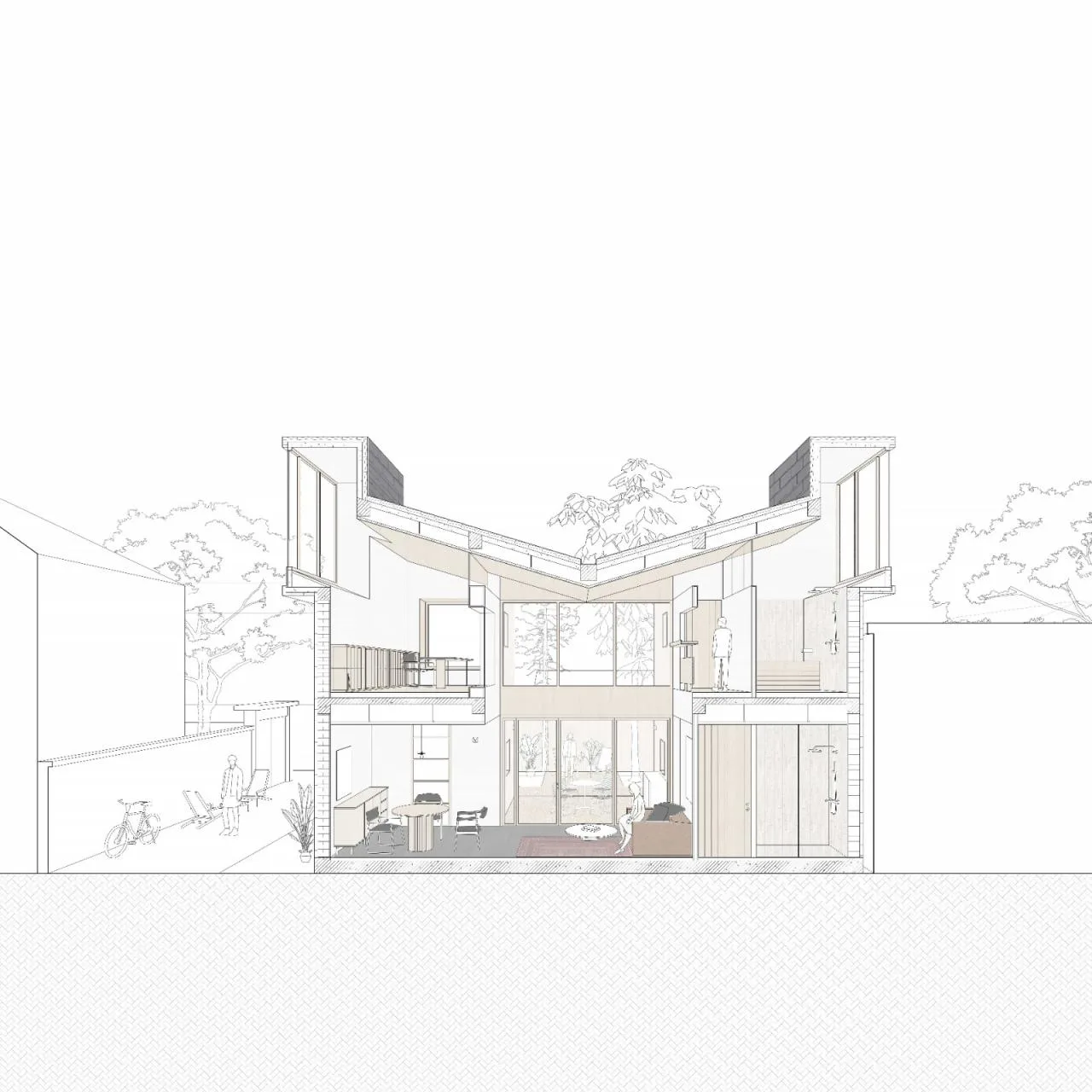
▲ Perspective View of “Mother’s Residence” © CPLUS
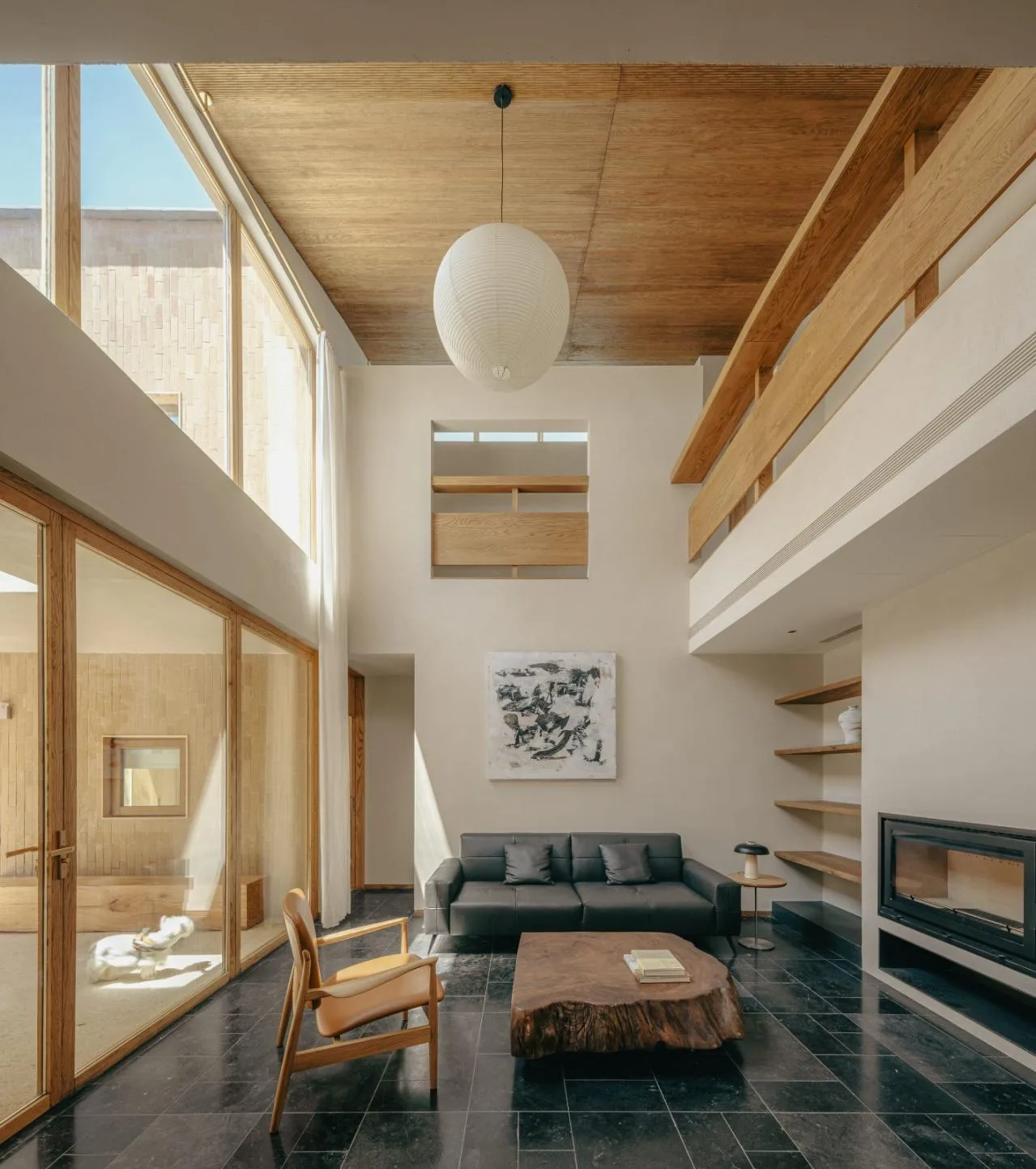
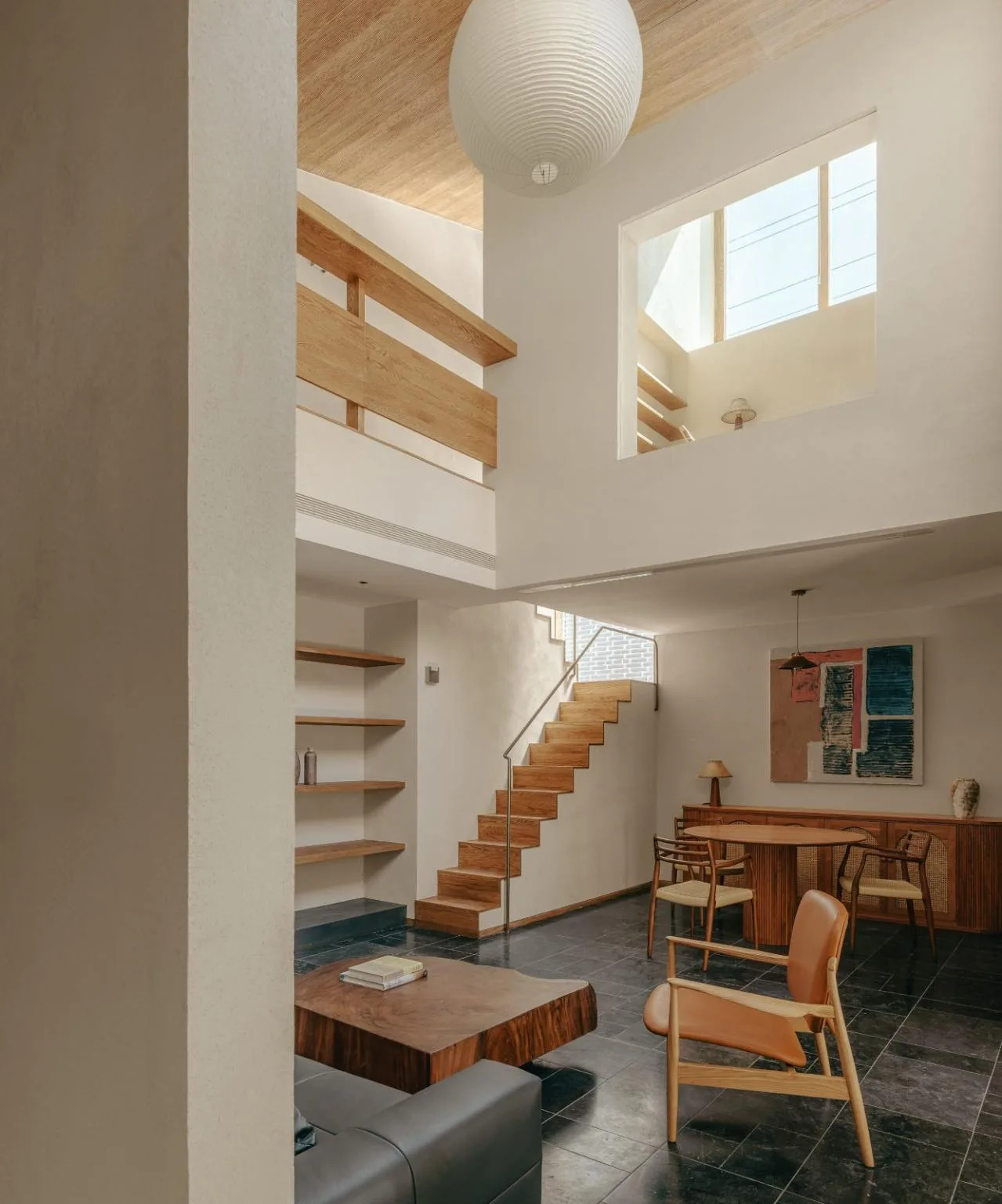
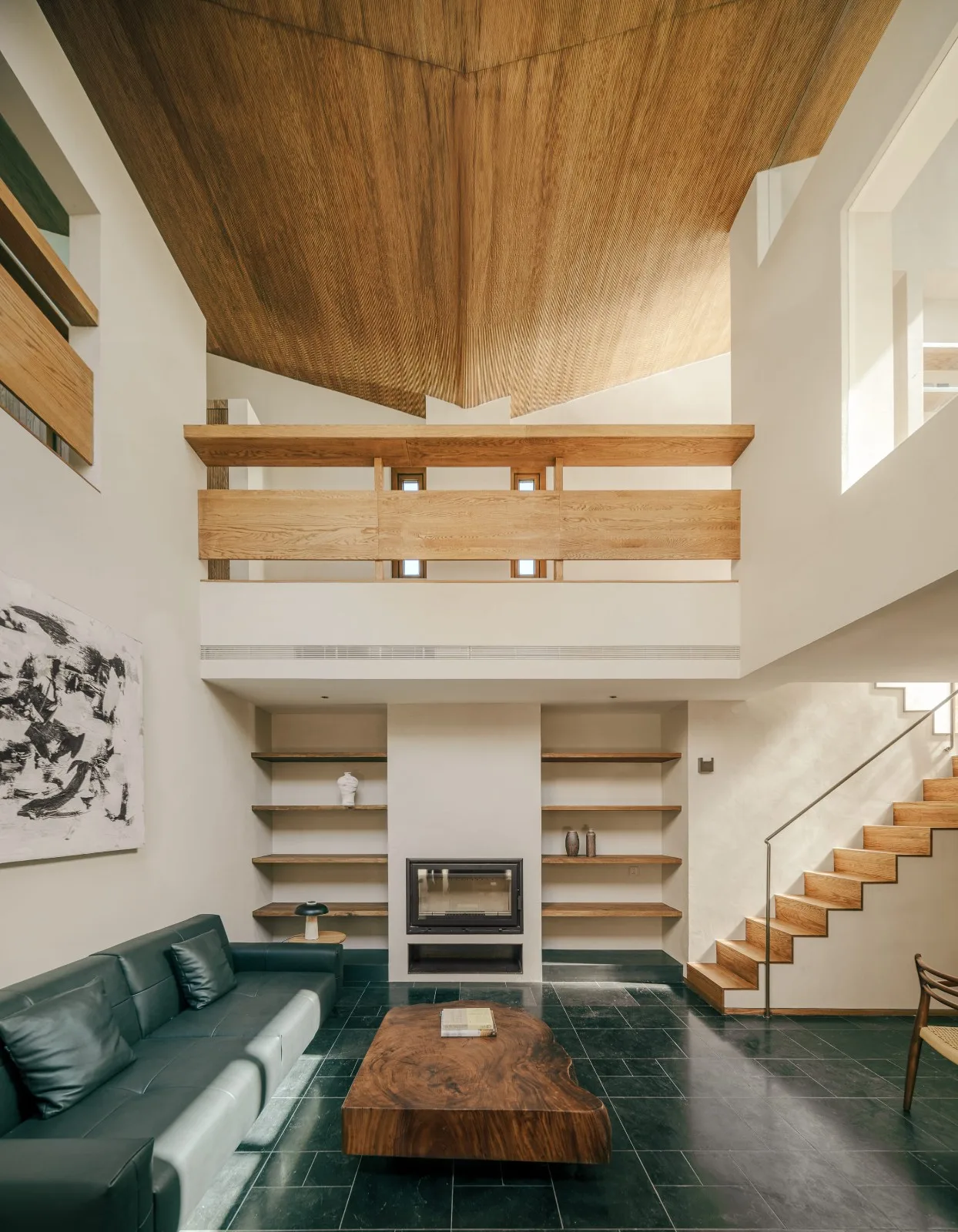
▲ High-Rise Living Space © Zhu Yumeng
The residence is arranged into three sections from east to west. The kitchen and dining areas face the main street and are lively spaces, offering views of the yard through the kitchen window. The central elevated atrium serves as a living and activity hub connecting various rooms. The west side contains two levels of bedrooms and bathrooms, providing quiet privacy. On the east side of the second floor is a study, which residents can adapt as an activity room or additional bedroom.
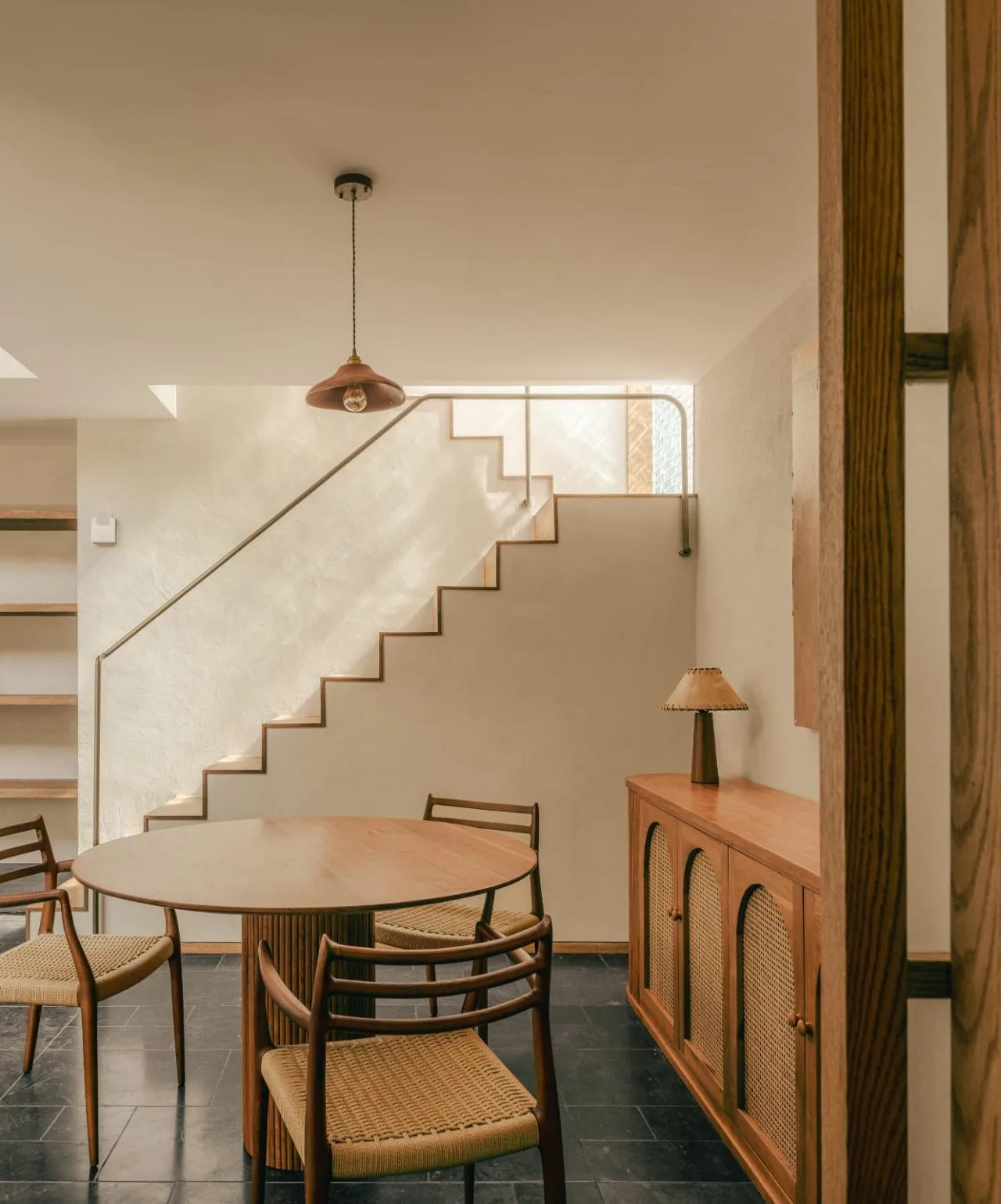
▲ Corner of the Restaurant © Zhu Yumeng
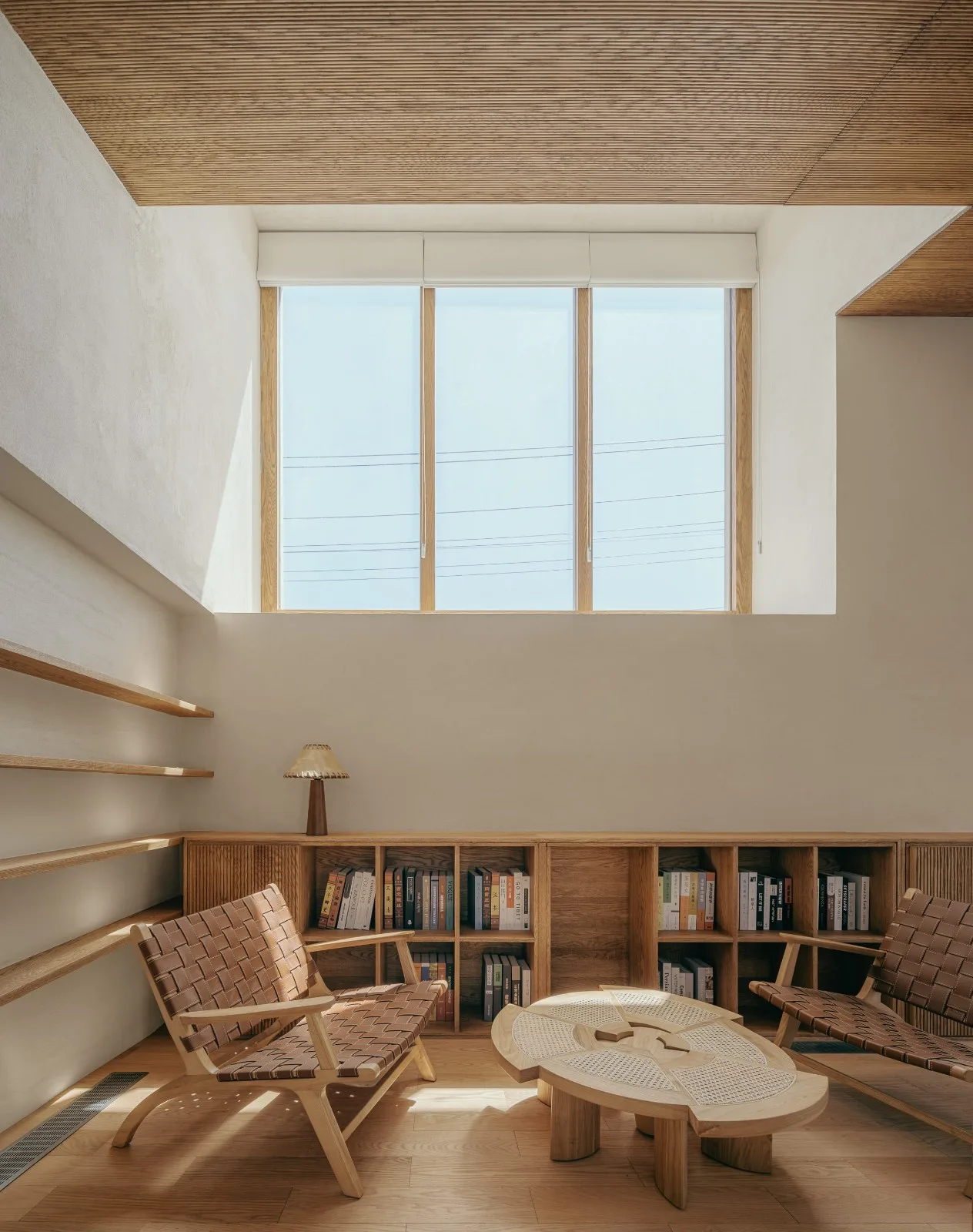
▲ Second Floor Study Room © Zhu Yumeng
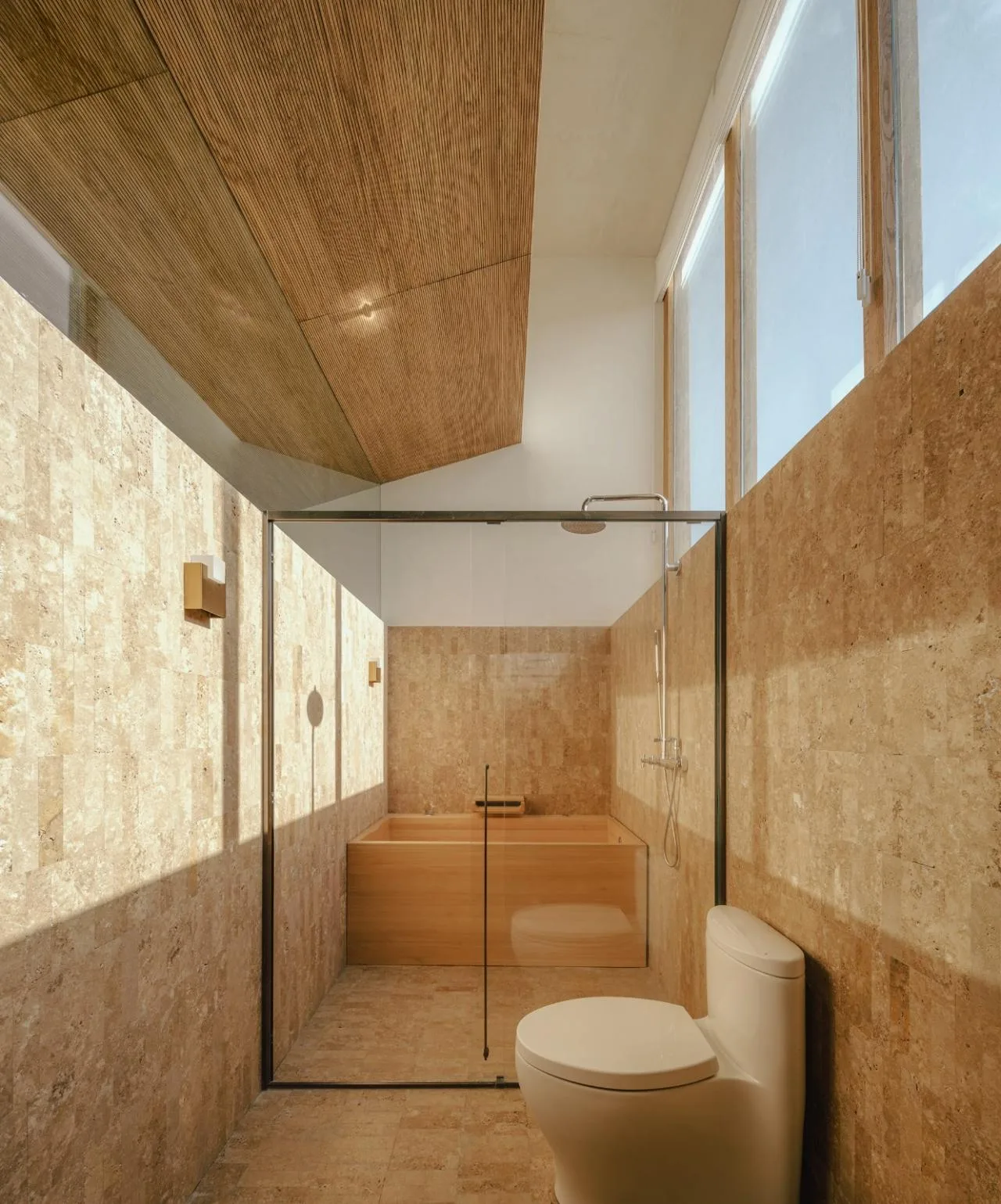
▲ Second Level Guard © Zhu Yumeng
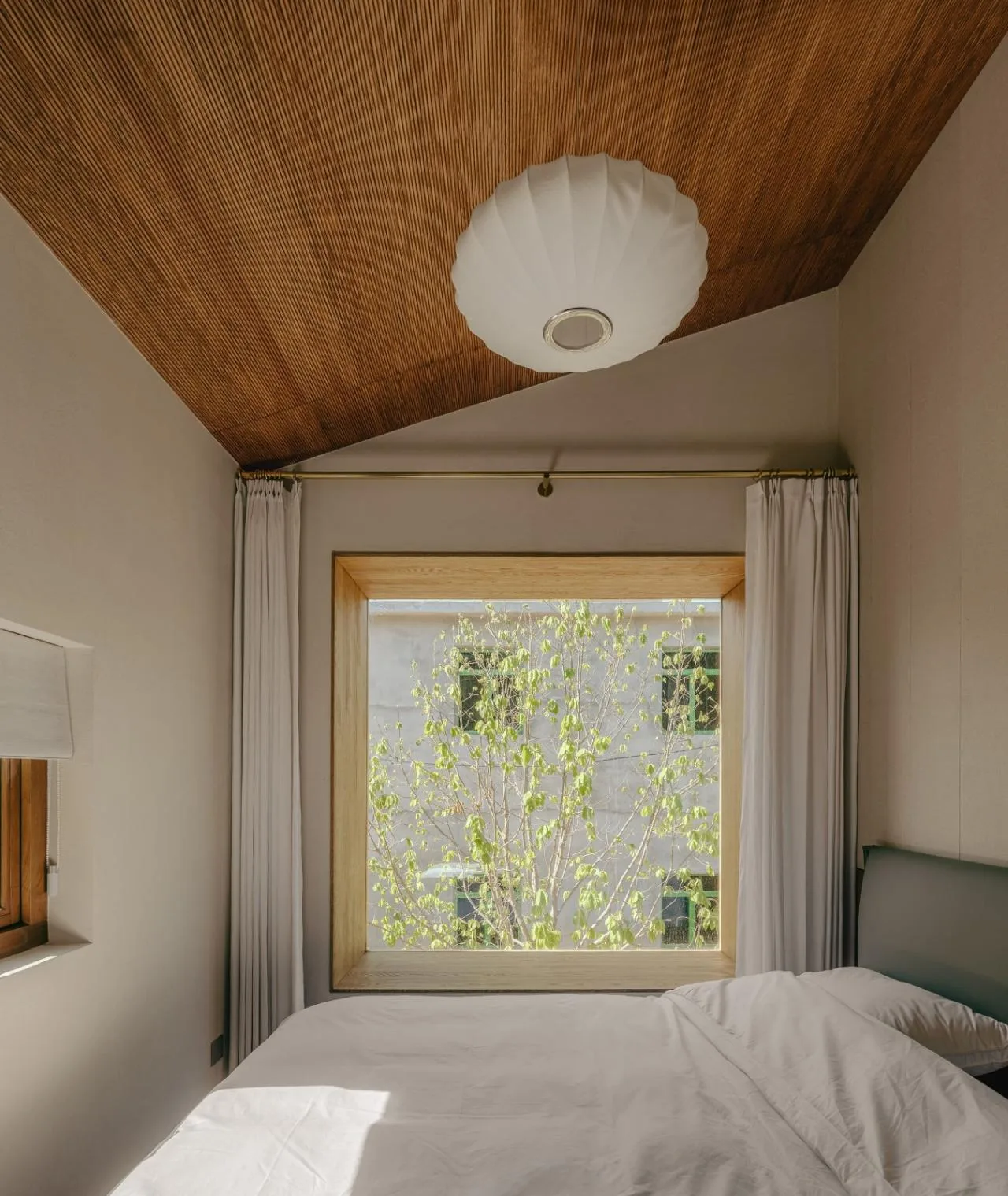
▲ Second Level Bedroom © Zhu Yumeng
Designed specifically for a mother, the first floor layout accommodates all daily living needs for elderly residents without any steps inside or outside. Ramps address height differences to ensure accessibility.
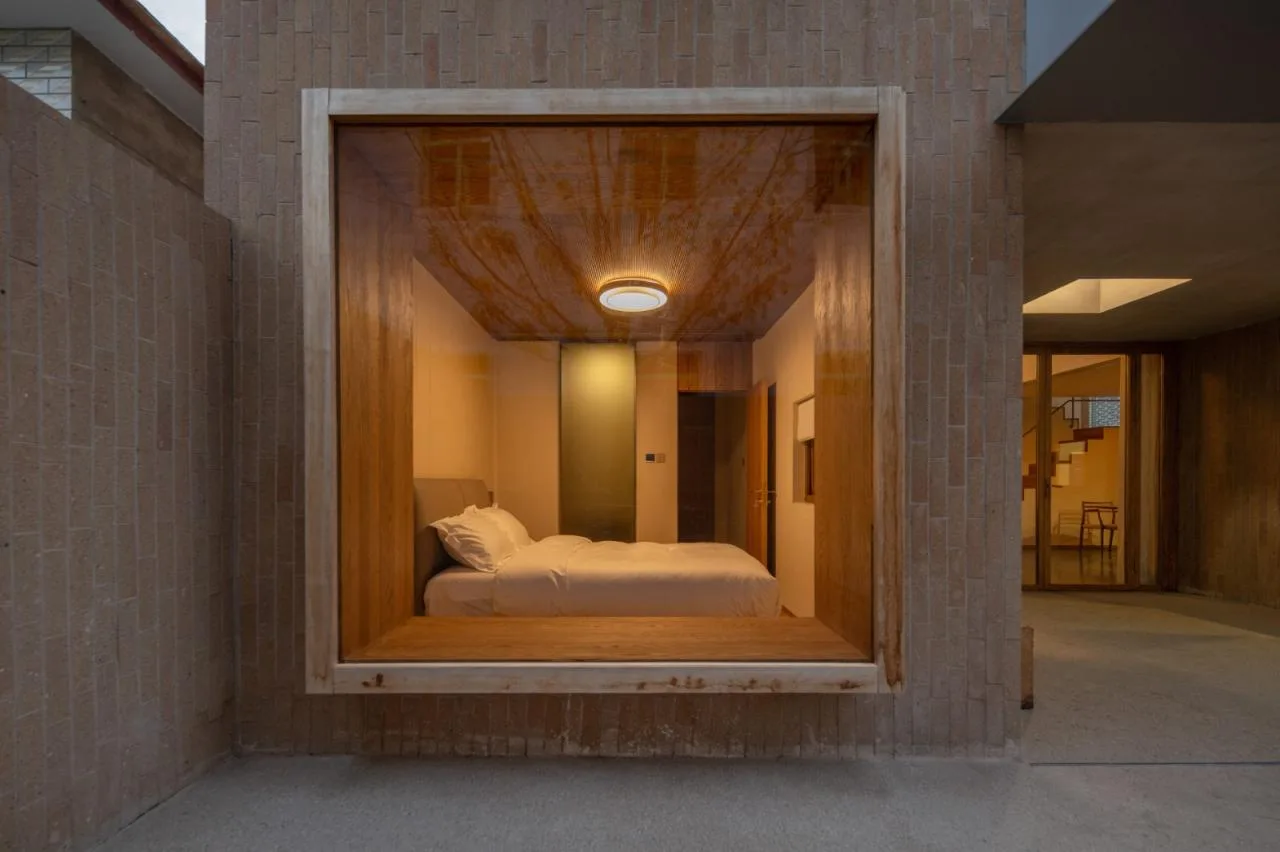
▲ Elderly Bedroom on the First Floor © Liu Jing
The vertical circulation space around the atrium was intentionally opened up to create intersecting sightlines, fostering multidimensional and engaging family interactions. Additionally, the transparent glass facade on the south side extends the spatial depth, allowing residents to enjoy the courtyard and sky views from indoors. Covering over 100 square meters, this residence balances functional diversity with enhanced family connectivity.
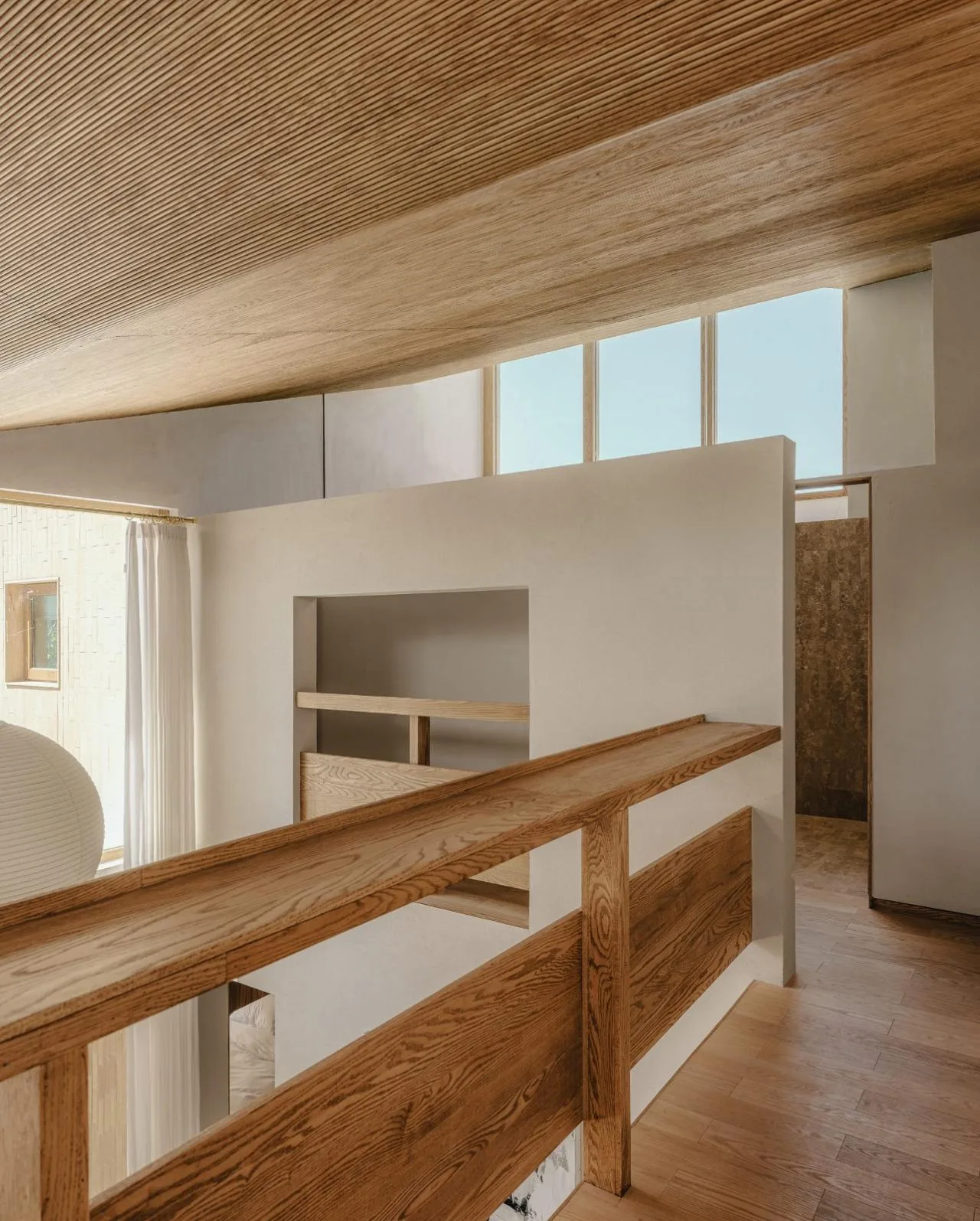
▲ “L”-Shaped Corridor © Zhu Yumeng
V-Shaped Roof and Light Interaction
To balance scale and lighting, the roof of “Mother’s Residence” features a “V” shape with a lowered ridge and outward-extending east and west wings. This reverse-sloping roof maintains comfort for the second-floor rooms while preventing spatial redundancy and scale imbalance caused by a high atrium. From the street, the “V”-shaped roof presents a light, agile silhouette, while its lower edges preserve views and daylight access for neighboring houses to the north, minimizing interference.
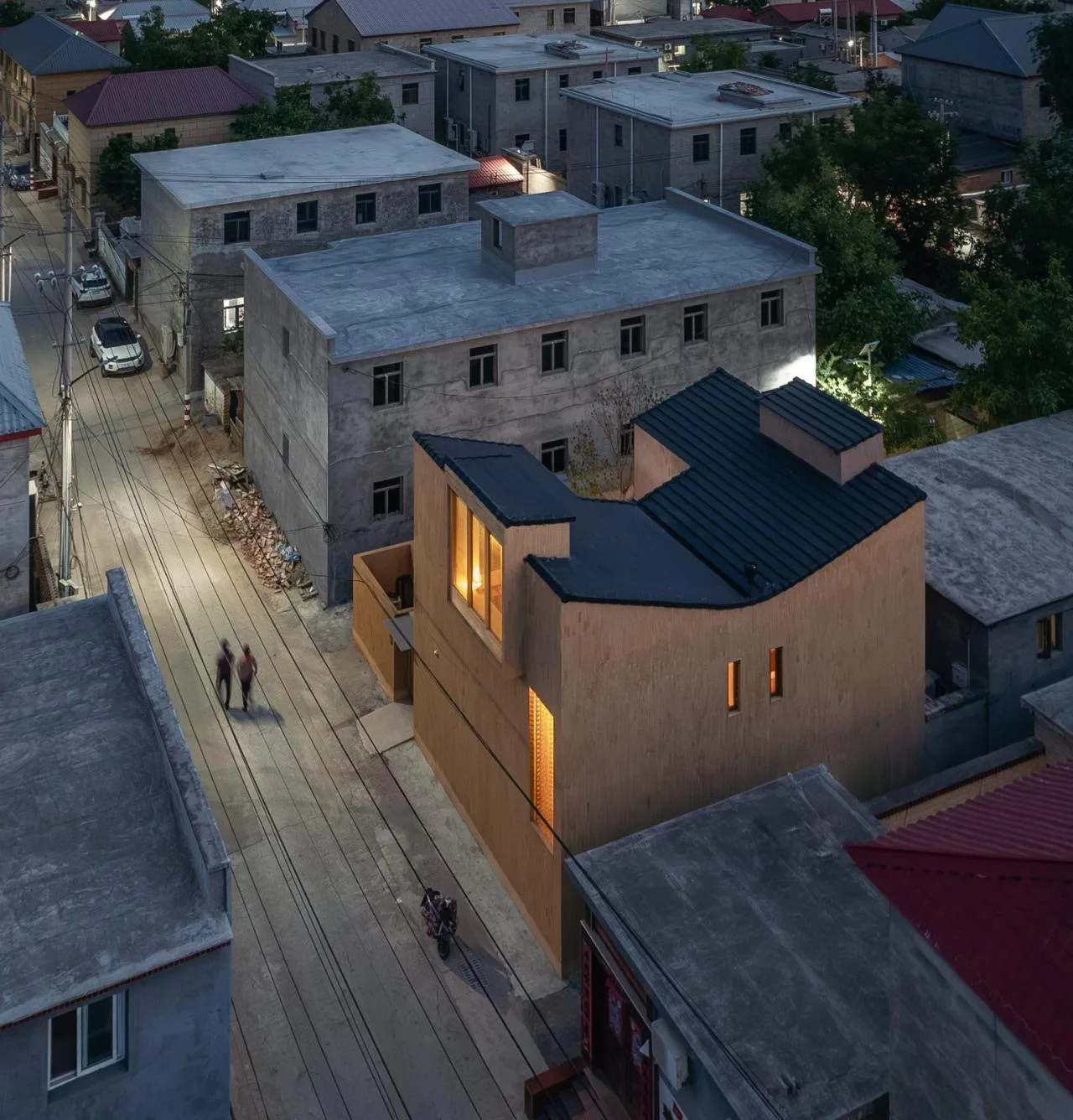
▲ “V”-Shaped Roof © Zhu Yumeng
Protruding windows on the east and west walls add depth and interest to the facade. Alongside tall window openings in the courtyard’s partition walls, they create a “passage of light” that moves throughout the day along the sloped ceiling, flooding the living spaces with natural vitality from morning to night.
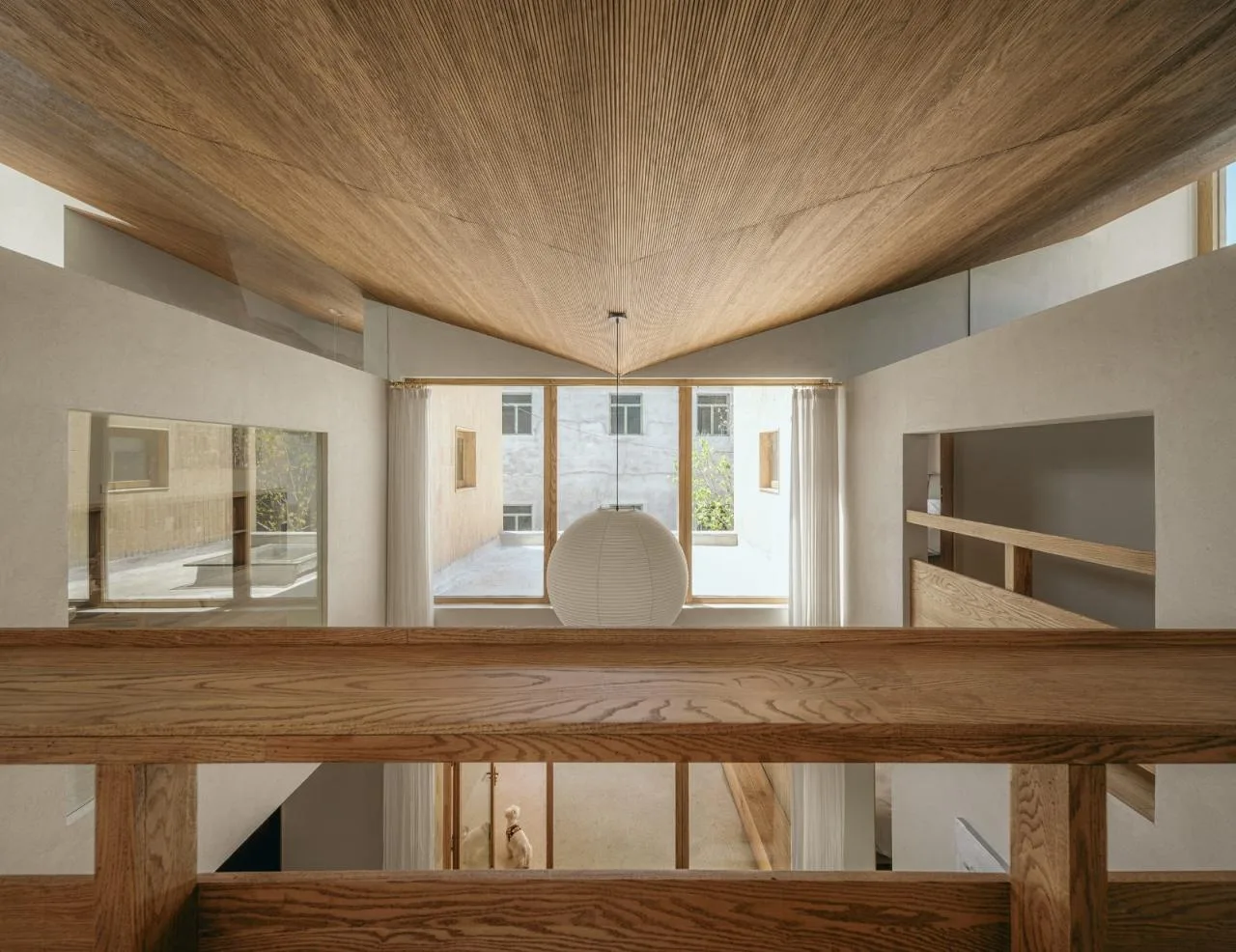
▲ Channels of Light © Zhu Yumeng
Material and Color Coordination
The building’s interior and exterior primarily feature earthy tones, blending harmoniously with the rural surroundings. Materials such as brick, stone, wood, metal, fabric, and coatings combine to create varied textures and temperatures under shifting light, delivering a natural, rustic, warm, and inviting atmosphere.
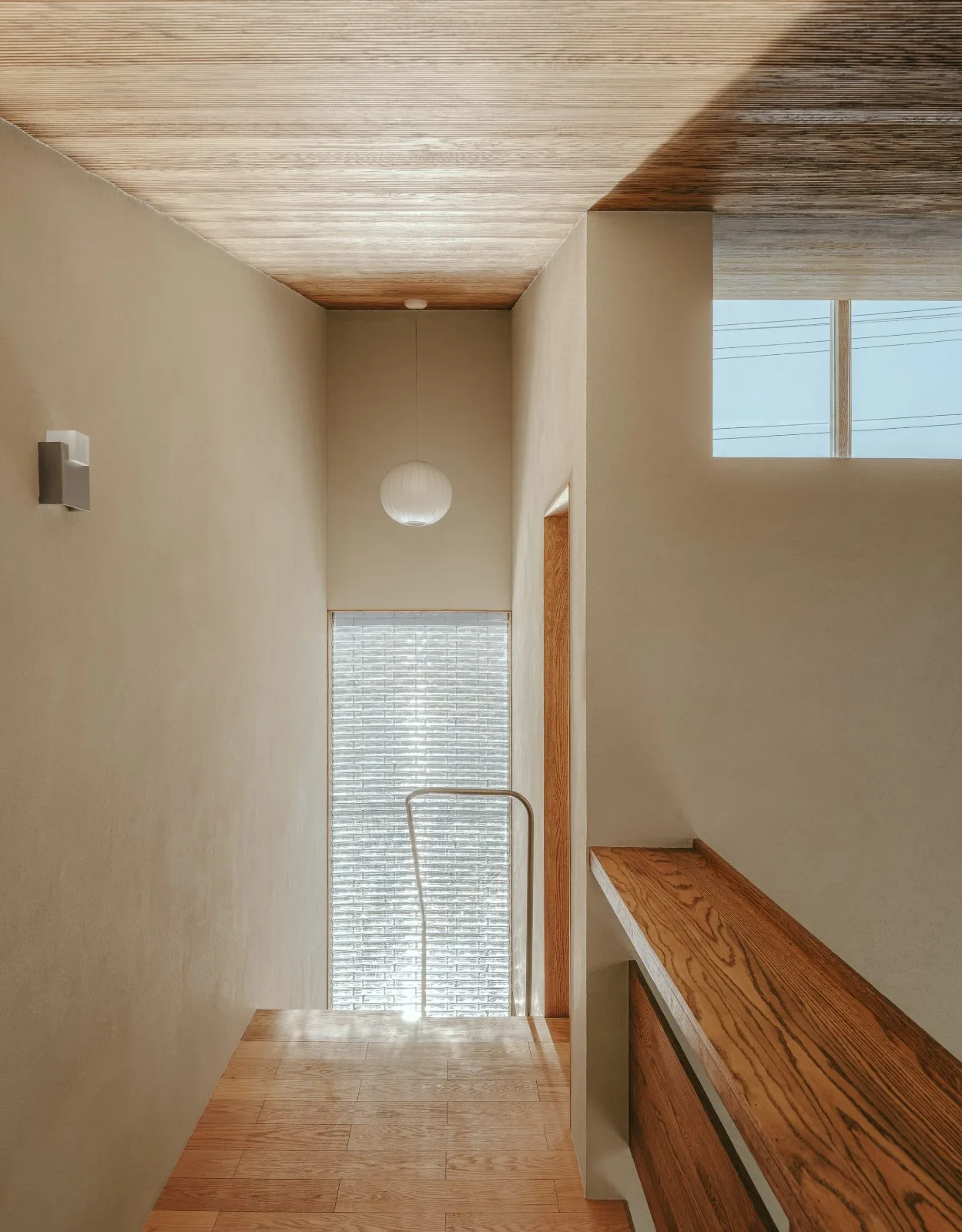
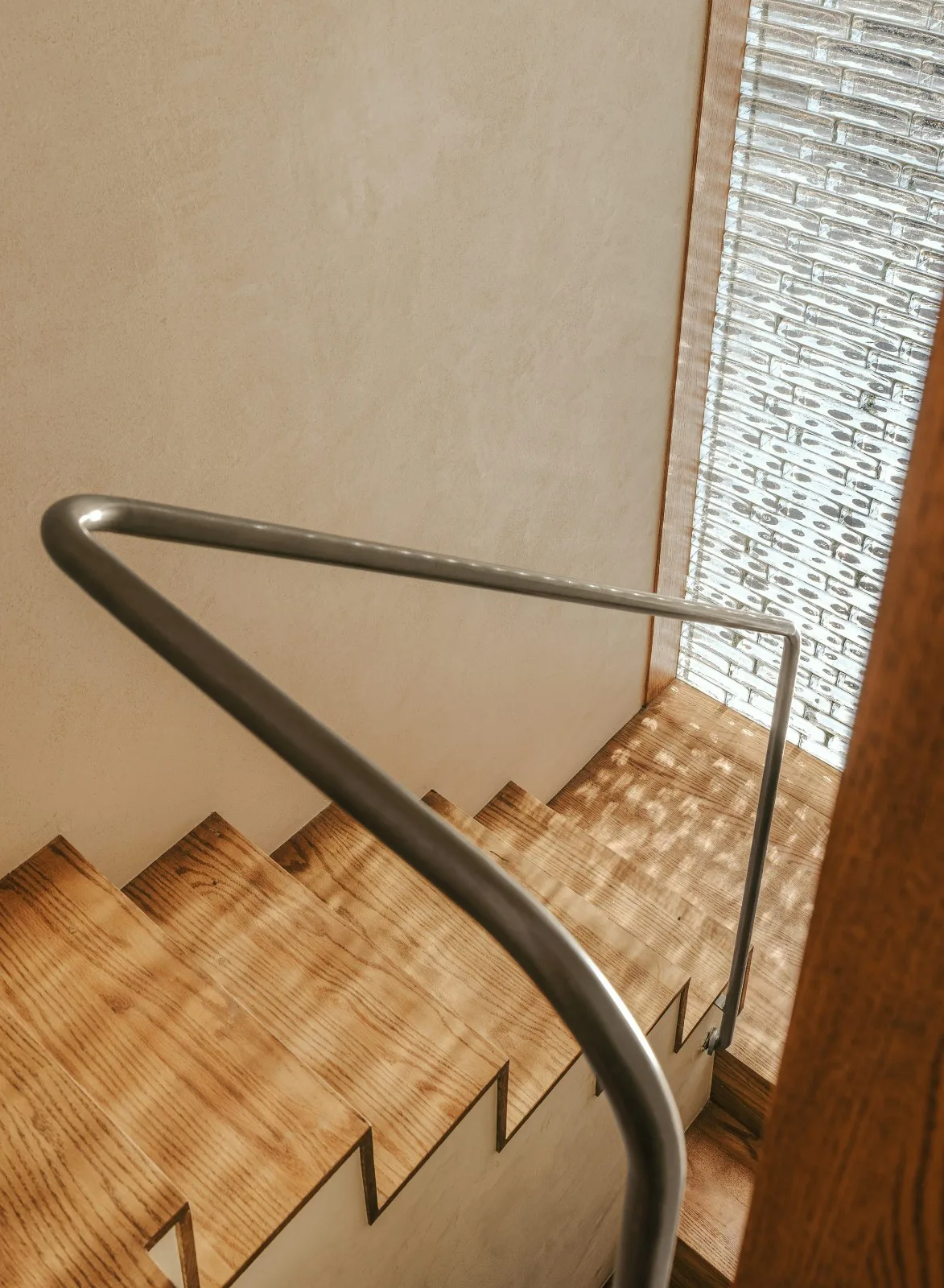
▲ Glass Brick Wall and Brass Handrail at Staircase Corner © Zhu Yumeng
Project Drawings
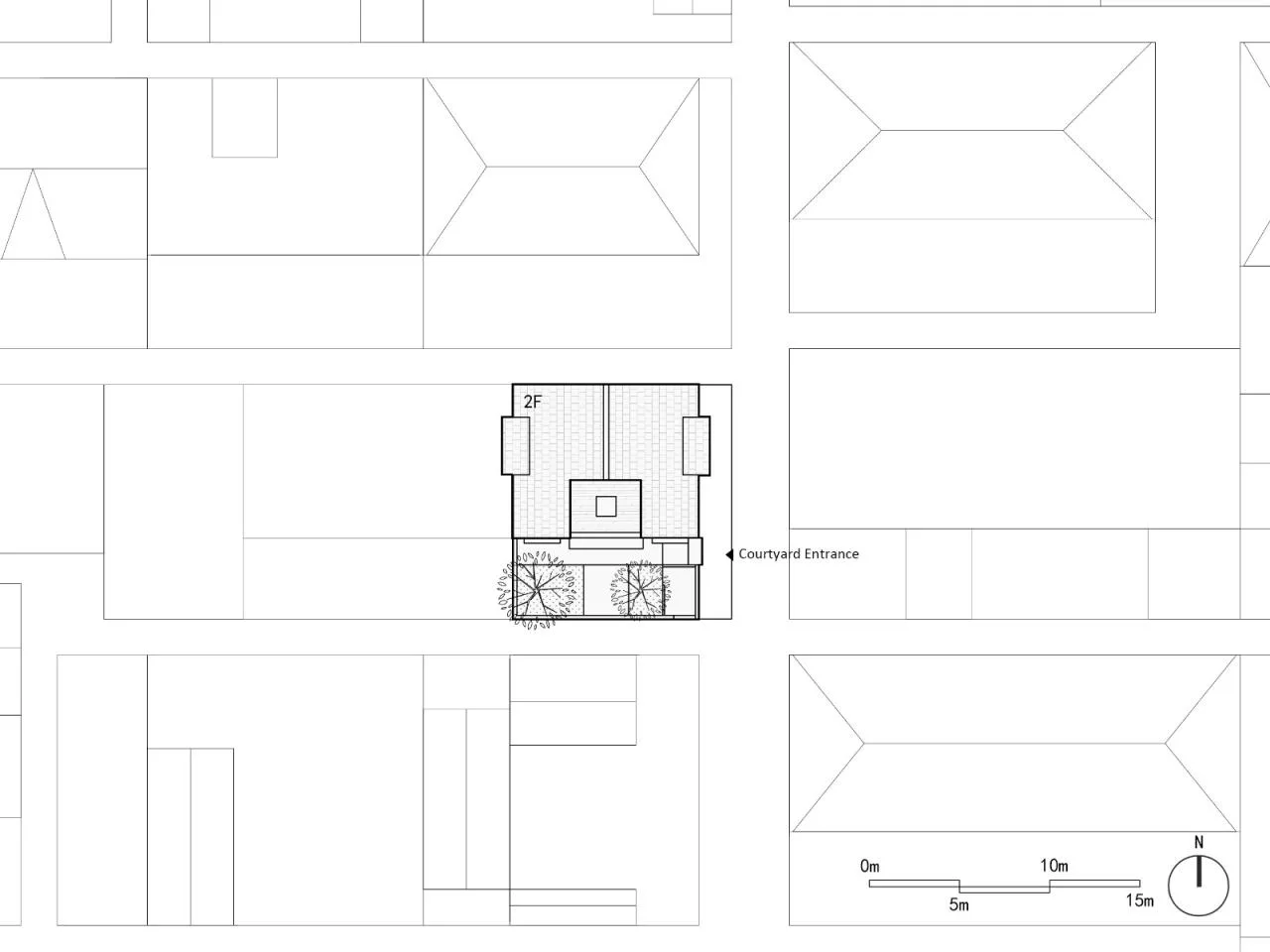
▲ General Layout Plan
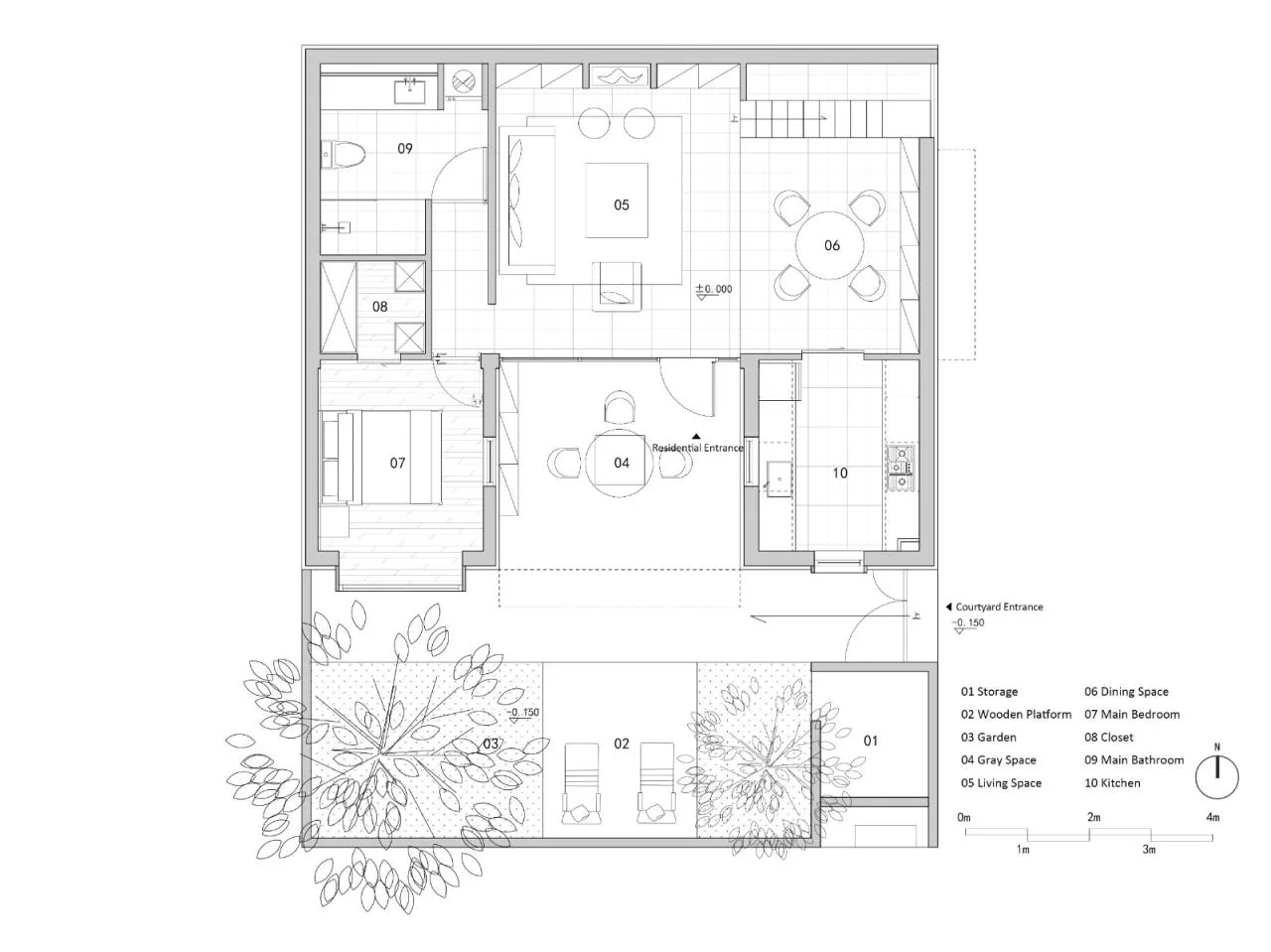
▲ First Floor Plan
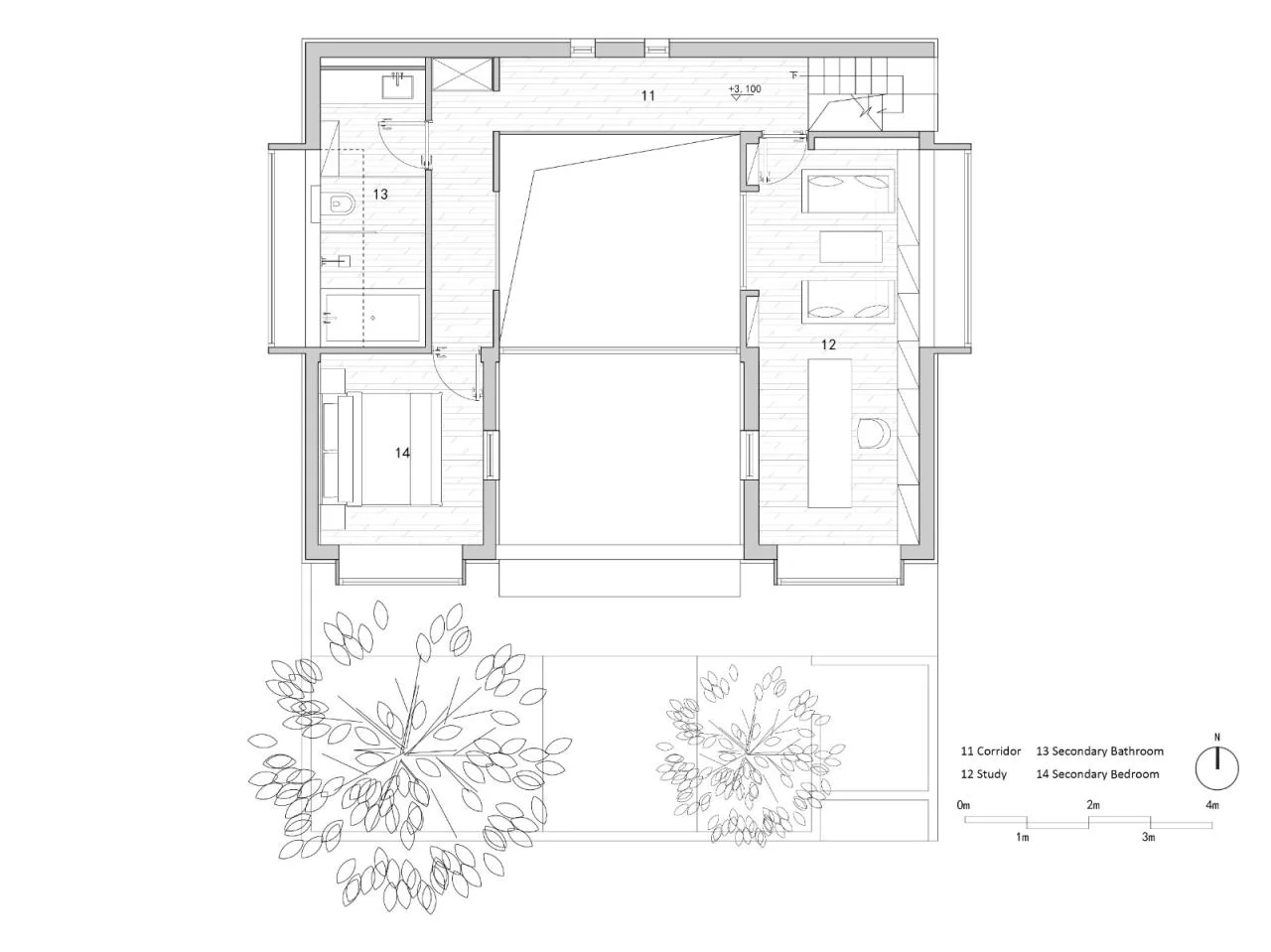
▲ Second Floor Plan
Project Information
Designer: CPLUS
Founding Partners: Cheng Yanchun, Li Nan
Lead Architect: Cheng Yanchun
Design Team: Bo Chen, Liu Xiaoguang, Zhou Kefan
Project Type: Residential
Status: Built
Timeframe: April – November 2023
Location: Beijing, China
Building Area: 144.2 square meters
Photography: Liu Jing, Zhu Yumeng
Video: Brewing Image Studio














Must log in before commenting!
Sign Up