
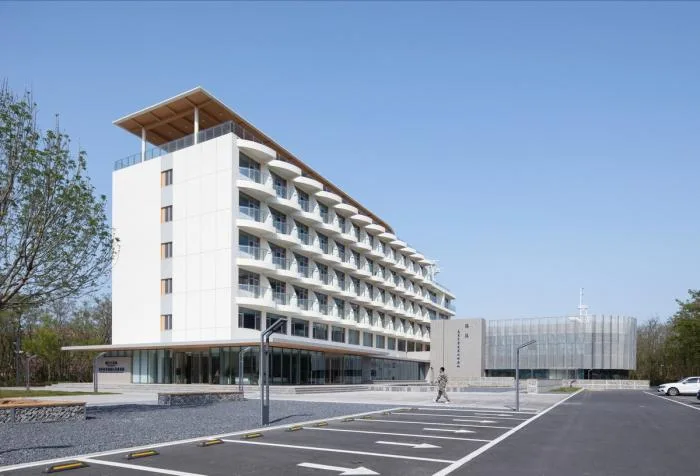
View after renovation of the main building’s urban façade.
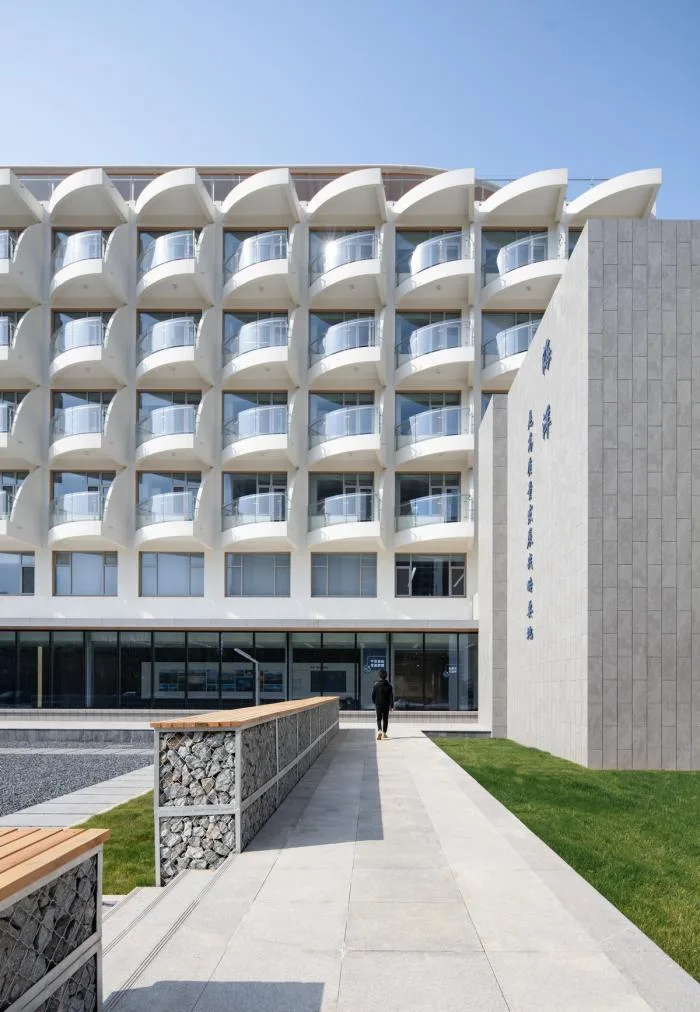
Main building entrance following renovation.
Project Background: Urban Renewal Amid Industrial Transformation
This project is situated within the Yantai Development Zone by Bohai Bay. When the main building was first constructed, the area was a deserted beach with no inhabitants. Since its establishment in the early 1990s, the development zone has experienced multiple waves of industrial renewal and growth, evolving into one of Shandong Province’s leading economic hubs. The once barren beaches have transformed into thriving communities featuring urban parks and public beaches. The building itself has transitioned from a training facility to a guesthouse, and now has been upgraded to serve as a research and office headquarters. Its revitalized appearance reflects the ongoing industrial and urban development.
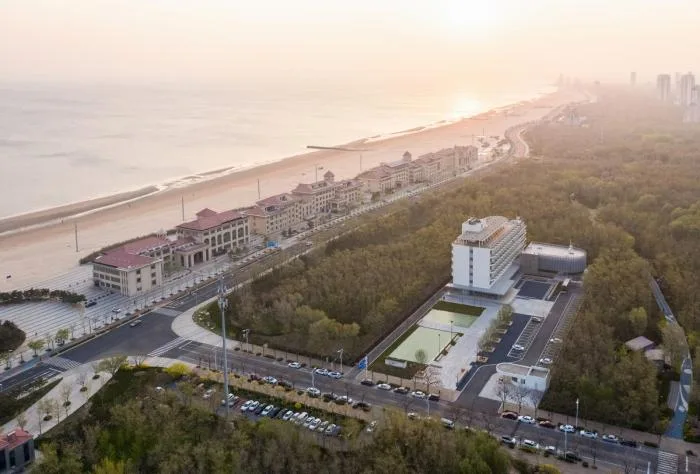
Yantai Marine Economy Headquarters Base alongside the scenic Bohai Bay.
In 2019, responding to China’s burgeoning marine industry, Yantai City planned to establish the first national-level economic development demonstration zone in the Bajiaowan area. This zone emphasizes blue seed industries, marine science and technology innovation as its driving force, and positions the modern marine economy as its key sector. As a flagship project within this plan, the Yantai Marine Economic Innovation Zone headquarters base is located in the development zone’s core area. Idle hotels are being transformed into an urban renewal showcase, highlighting the zone’s economic and technological strengths.
Vision: Harmonizing Economic and Social Development
Alongside the headquarters base renovation, the development zone has initiated a new phase of urban renewal. A central focus is the creation of community-friendly open spaces. In June 2019, the Shuishi design team was invited by the Agricultural and Marine Bureau of the Development Zone to conduct site inspections. They proposed the strategic goal of “achieving the common development of economic and social values,” aiming to set a new standard for industrial growth and community environment enhancement within the Binhai urban area.
Designing Community-Friendly Spaces
The building’s shift back to office and R&D functions presents new design challenges compared to 13 years ago. The surrounding residential areas have matured, Haiphong Forest remains a beloved urban park, and the newly established coastal park and beach attract thousands of visitors annually. A key design priority was to integrate the R&D functions with the vibrant community life and leverage industrial upgrades to activate urban public spaces.
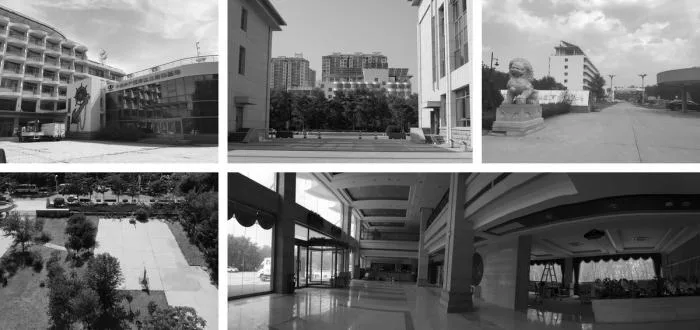
△ Photographs of the site before renovation.
The main building is situated within a protected forest by the seaside, surrounded on three sides by dense woodland and connected to the city road on the remaining side. Though the natural environment is excellent, guardrails isolate the site from the community, making it feel like an enclave. Upon first visit, the design team aimed to connect this site’s resources with the adjacent parks and neighborhoods.
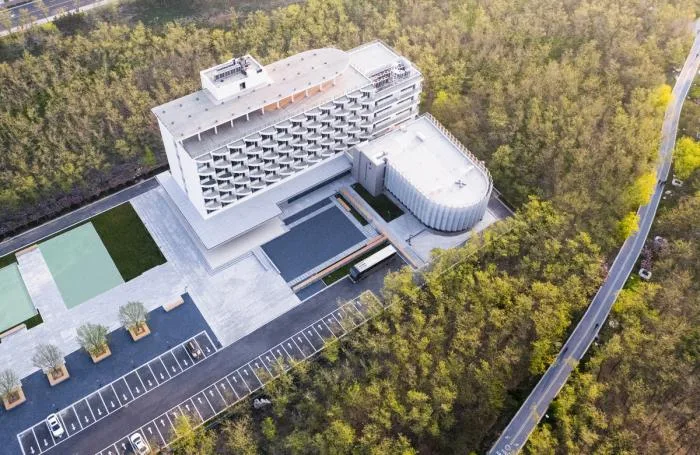
△ Aerial view of the site.
Integrated Regeneration: Creating a ‘Living Room’ within the Park
The renovated headquarters base is envisioned as an open office park—a place that supports R&D activities while fostering interactions between enterprises and the local community. To this end, the entire ground floor is designed as an exhibition hall and communal living room within the coastal forest. It is publicly accessible, showcasing the development zone’s latest research achievements and offering a welcoming environment for informal gatherings amid scenic surroundings. Shuishi’s multidisciplinary team—including architecture, landscape, interior, mechanical and electrical, and navigation experts—developed an integrated, full-cycle design update.
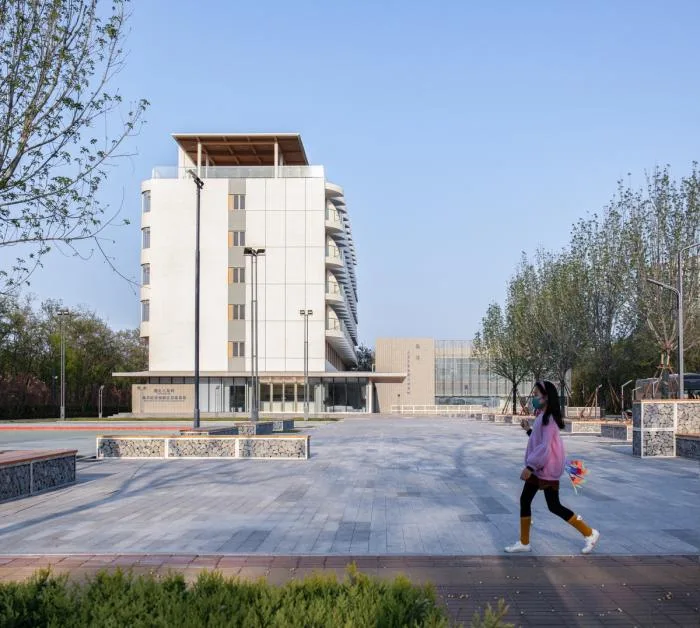
△ Main façade facing the plaza.
Design Strategy: Transformation and Innovation Within Strict Budget Constraints
Though the project attracted significant attention from government and stakeholders, tight budget limitations—less than 500 yuan per square meter—imposed strict renovation requirements. Drawing from extensive experience, Shuishi’s strategy focused on selectively renovating key areas to maximize the original site’s value without extensive structural changes.
Enhancing Pathways and Sightlines
The original entrance faced directly onto the parking lot. The renovation reoriented the entrance path to align the main entrance’s line of sight with the landscaped courtyard beneath the building, creating a stronger first impression.
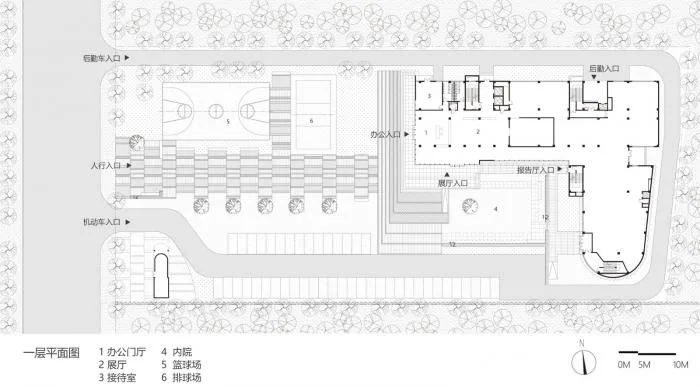
△ First floor plan.
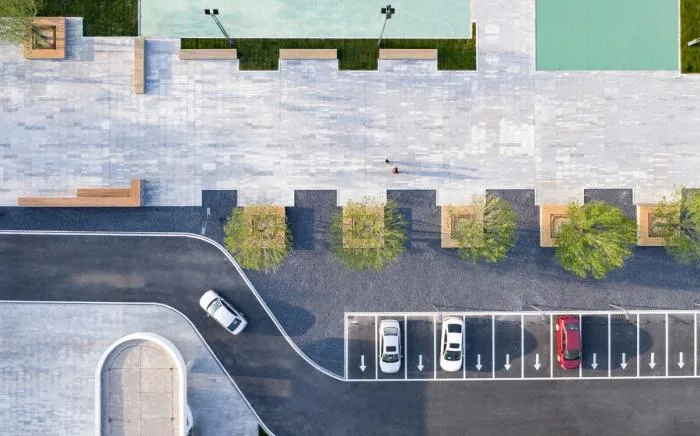
△ Pathway optimization.
Adaptive Facade Transformation
The original building façade was plain and unremarkable. Due to budget constraints, major structural changes were not feasible. Therefore, the renovation focused mainly on the ground floor, introducing a transparent façade combined with warm-colored eaves to create an interactive indoor-outdoor space. For the upper façade, different textured coatings and localized detail adjustments were applied to soften the original rigid appearance. The auxiliary building’s exterior was enhanced by installing folded wire mesh panels, adding dynamic light and shadow effects while revitalizing the façade without structural alterations.
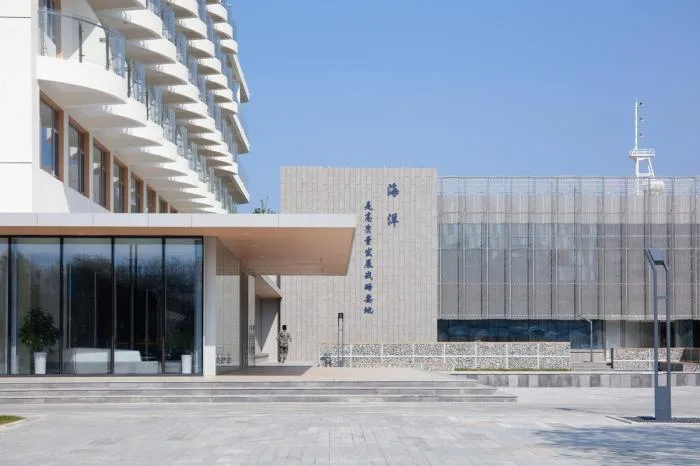
Main building entrance after renovation.
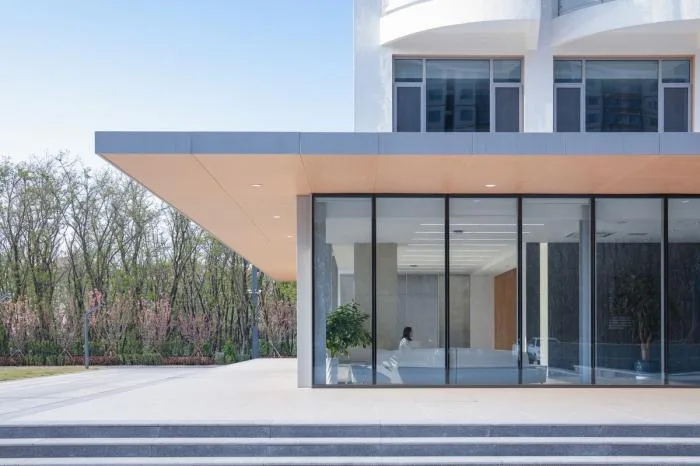
△ Renovated ground floor of the main building.
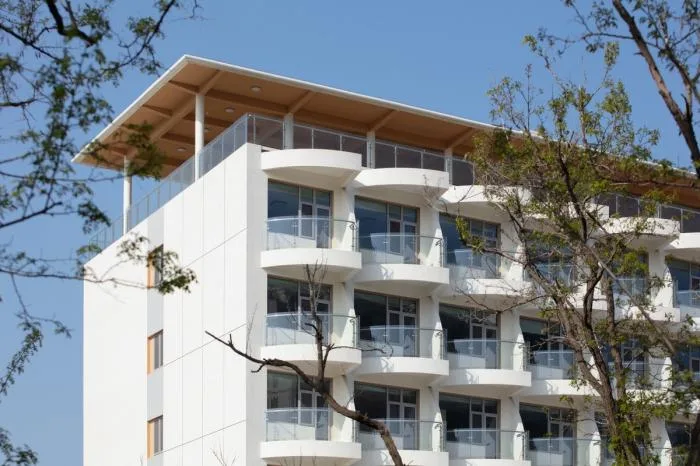
△ Building details.
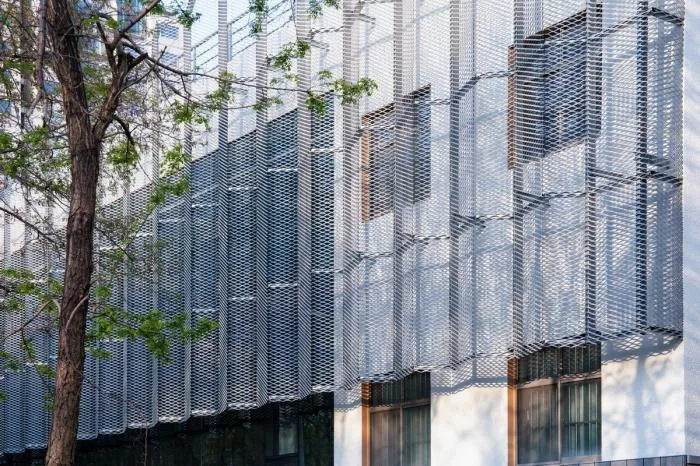
△ Folded brushed mesh adds rich light and shadow effects to the original façade.
Promoting Sustainable Environmental Development
The project embraces advanced ecological design principles such as recycling and sponge city concepts. The renovation preserved and reused the original electromechanical systems, significantly reducing costs. Demolition was carefully controlled with waste recycled where possible. Partially demolished concrete was repurposed as key landscape material, and gabion walls serve as a public demonstration of material reuse. The front courtyard employs a gravel pool design that effectively manages rainwater drainage and uneven terrain, while minimizing ground excavation.
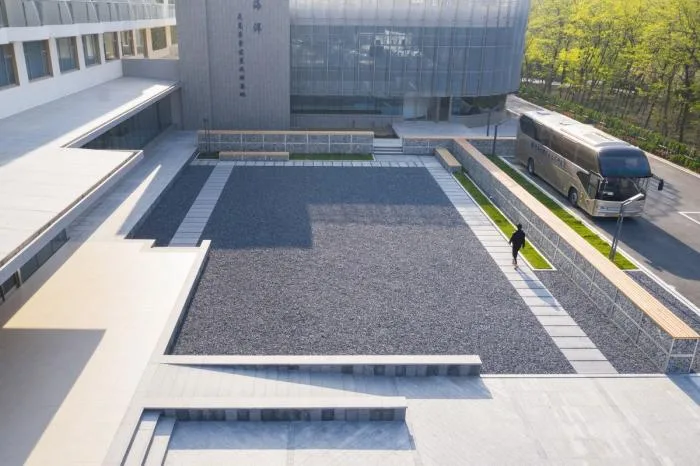
The gravel pool cleverly addresses elevation differences and rainwater runoff.
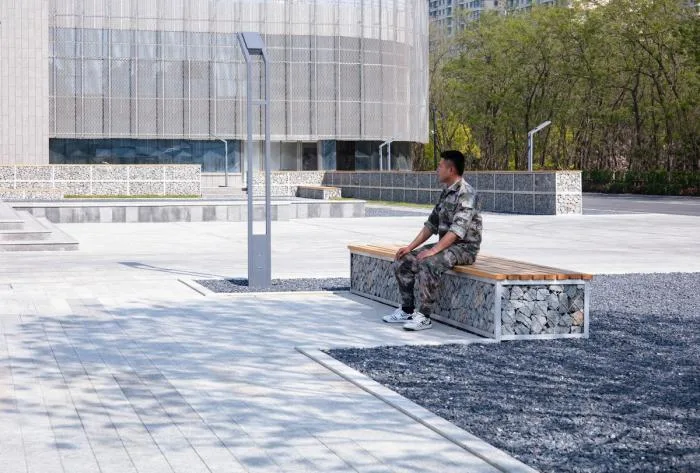
Stone cage seating inspired by recycled materials.
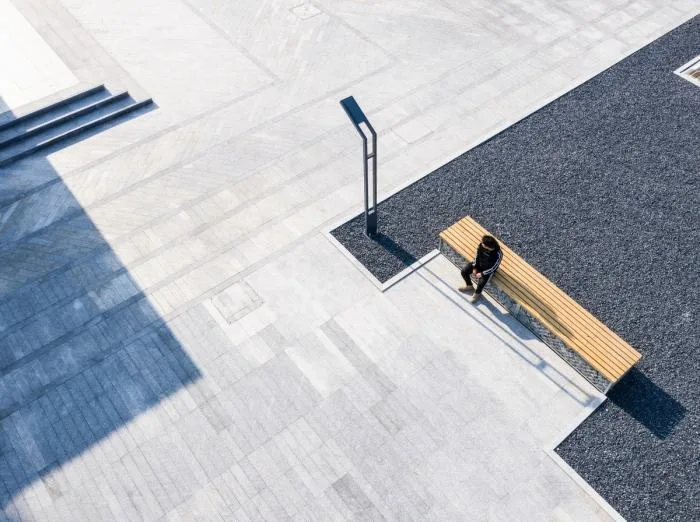
Refined flooring design.
Signature Logo Design
In urban regeneration projects, thoughtful signage elevates cultural identity and enhances visual impact. Shuishi Design created a logo for the headquarters base that reflects the project’s character and improves brand recognition. The circular logo symbolizes the ocean’s healthy ecological cycle. Abstract elements inspired by aquatic organisms and waves are combined into an infinity symbol, representing the limitless future growth of the marine industry.
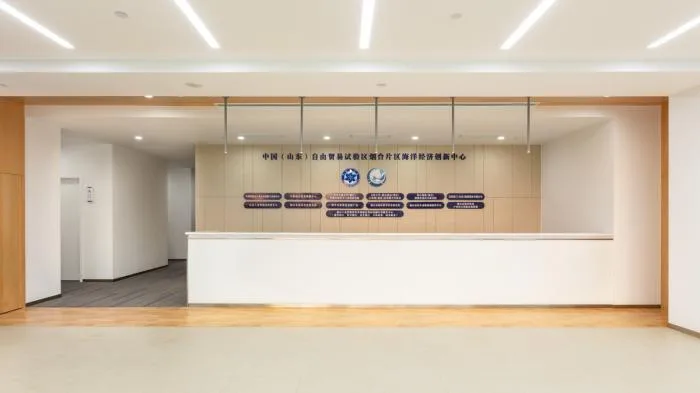
△ Logo display.
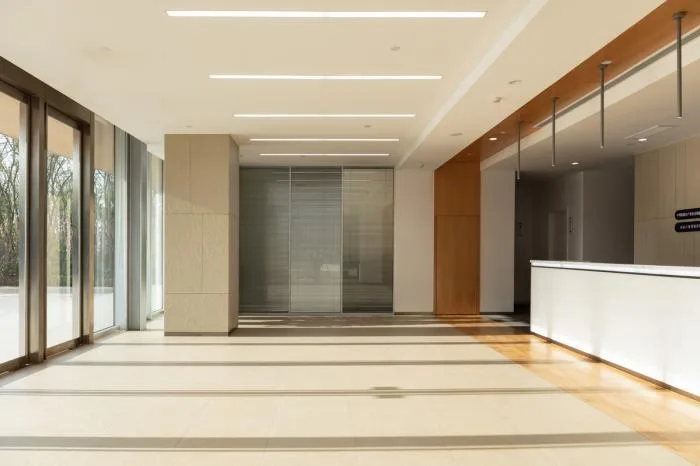
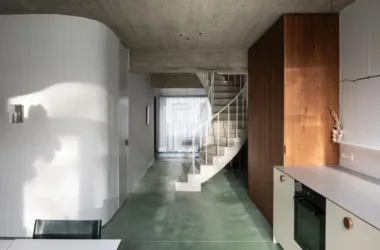
△ Interior space.
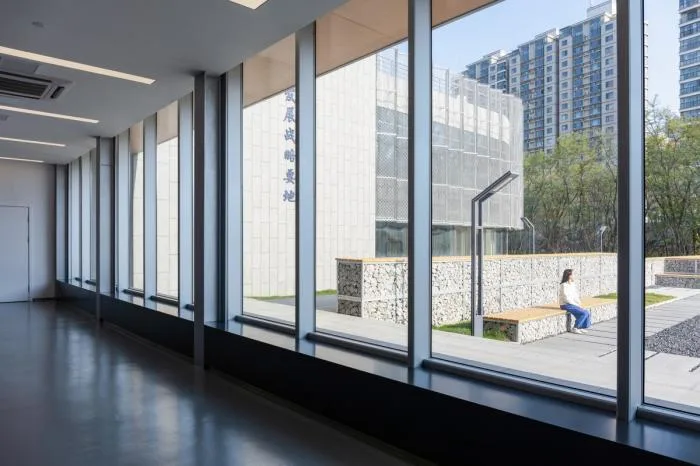
△ Renovated ground floor interior of the main building.
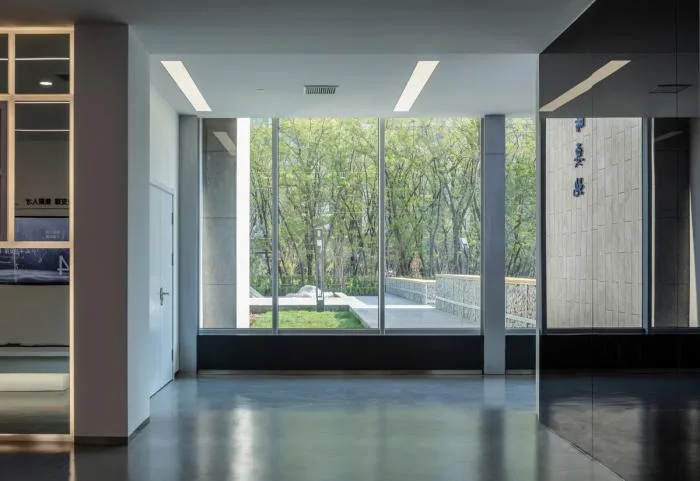
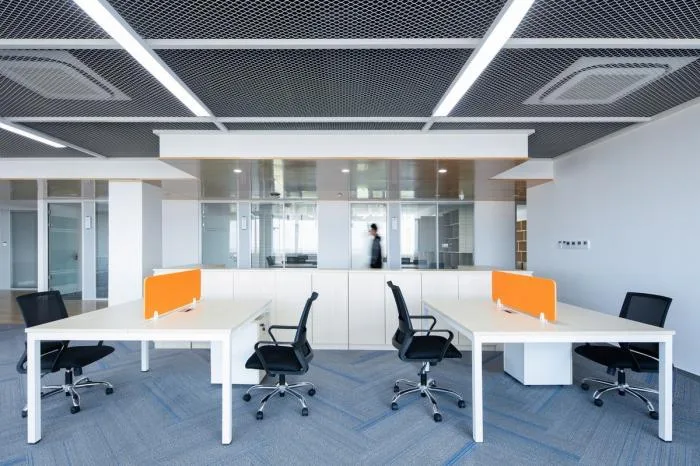
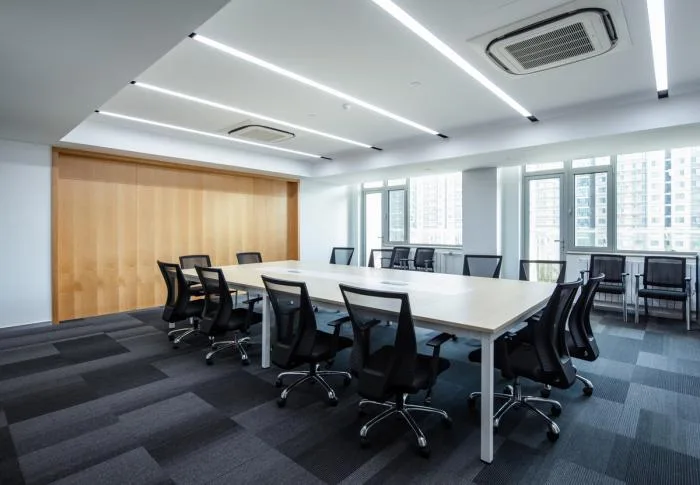
△ Interior spaces.
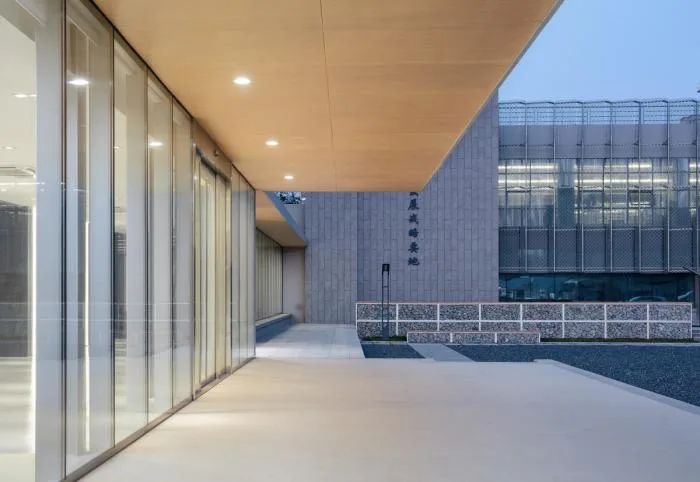
Main building entrance after renovation.
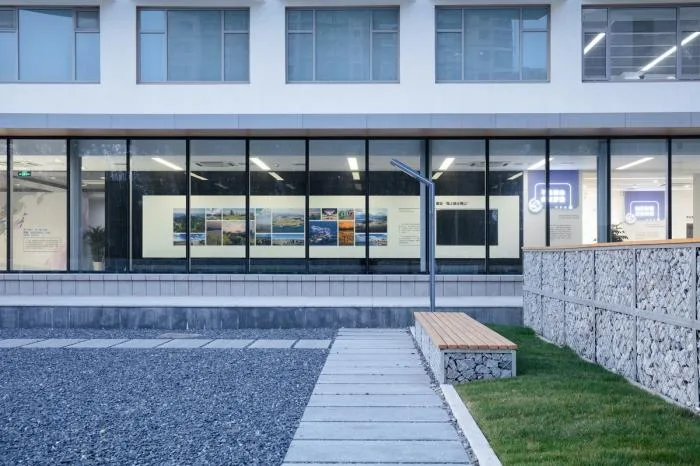
△ Courtyard landscape integrated into the lower interior façade.
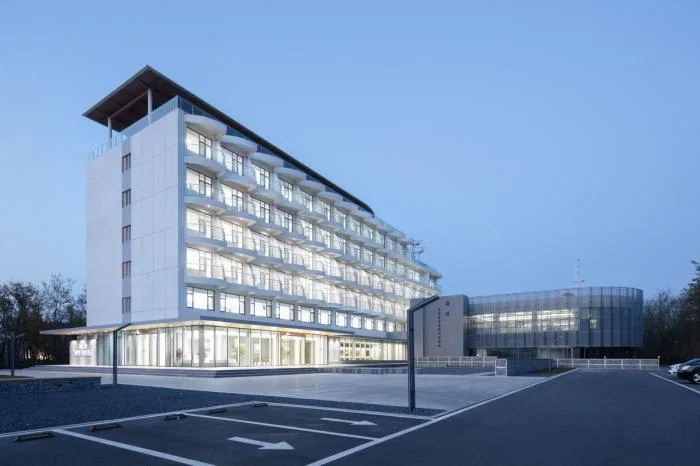
△ Night view of the renovated main building’s urban façade.
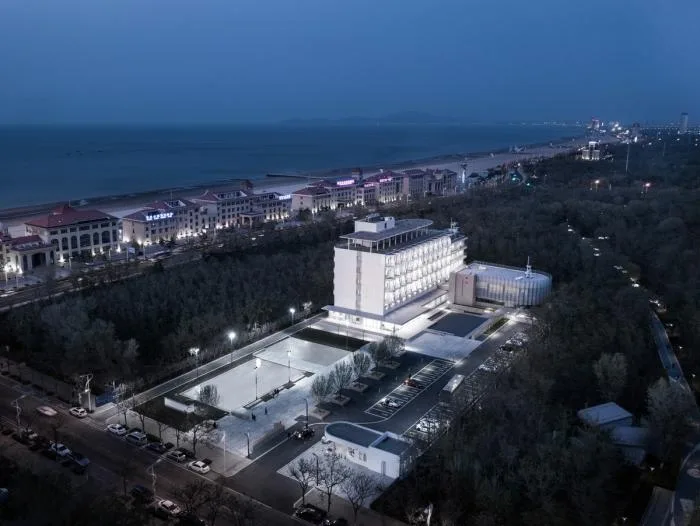
The Yantai Marine Economy Headquarters Base illuminated at night.
Project Details
Project Type: Office Facilities, Renovation
Location: Yantai, China
Architectural Firm: Shui Shi Design
Area: 9,500 m²
Year: 2019
Photographer: He Lian
Manufacturers: BROWNIES, Feilong Dezhu, Tianli
Project Manager: Dong Yijia
Design Team: Urban Regeneration Center, Water Stone Engineering, Graphic Design Expression Room
Integrated Scheme, Architectural, Landscape, and Interior Design: Urban Regeneration Center (Dong Yijia, Yang Yang, Chen Xin, Yang Yang, Ren Jiahao)
Logo Design: Graphic Design Expression Room (Lu Qi, Chen Hewen)
Principal: Agricultural and Marine Bureau of Yantai Development Zone
Structural Renovation Consultant: Shuishi Engineering (Wang Shilin)
HVAC Renovation Consultant: Shuishi Engineering (Yin Jin, Cui Jun)
Electrical Renovation Consultant: Shuishi Engineering (Li Hui, Fan Linmin)
Water Supply and Drainage Renovation Consultant: Shuishi Engineering (Yu Gang, Hu Di)












Must log in before commenting!
Sign Up