
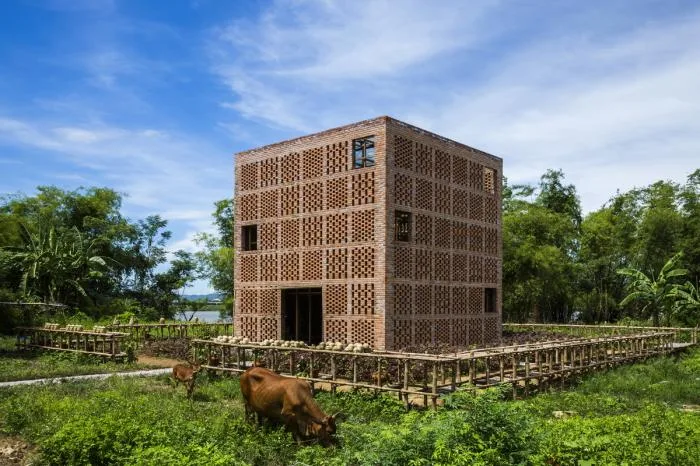
The project is situated near the Tu Bon River in Dien Ban District, Quang Nam Province. This river plays a vital role in the daily lives of the local communities on both sides. While most residents depend on agriculture, several villages also preserve traditional crafts such as pottery, mat weaving, and silk production.
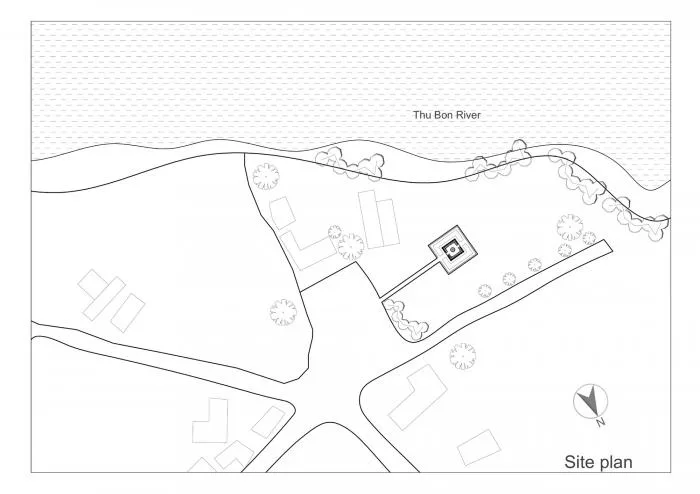
△ General layout plan
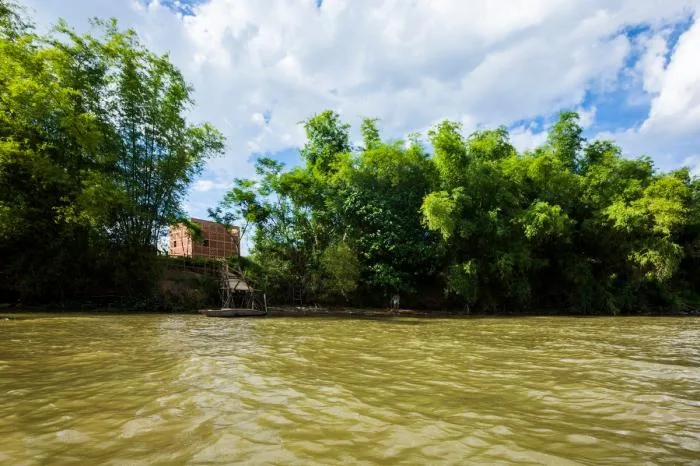
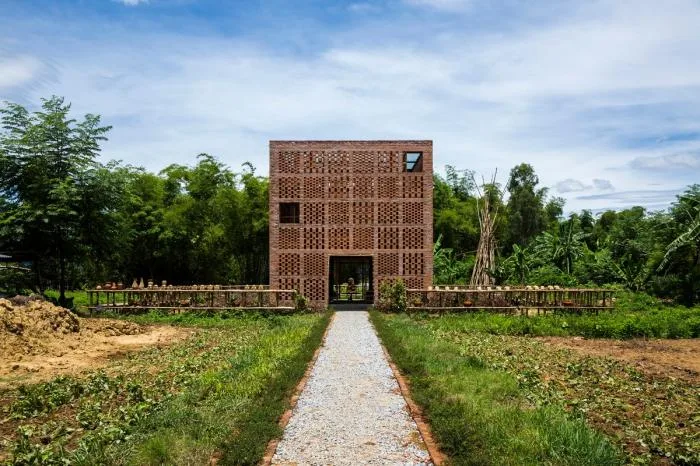
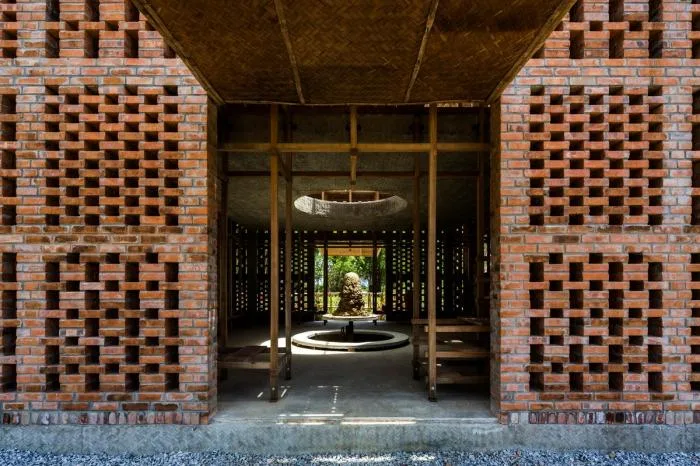
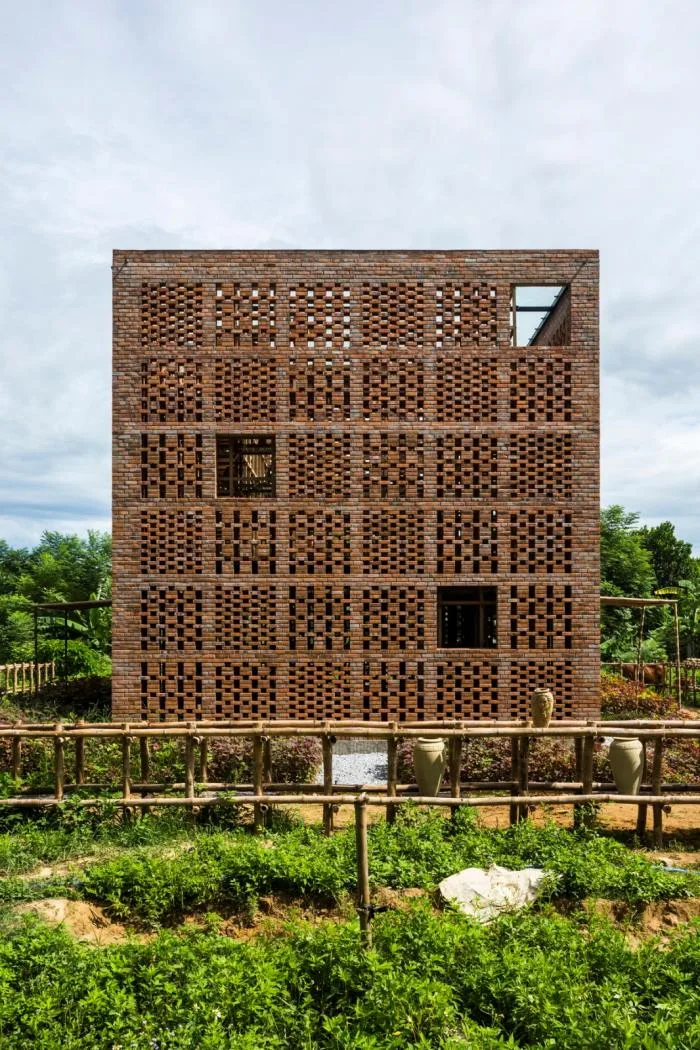
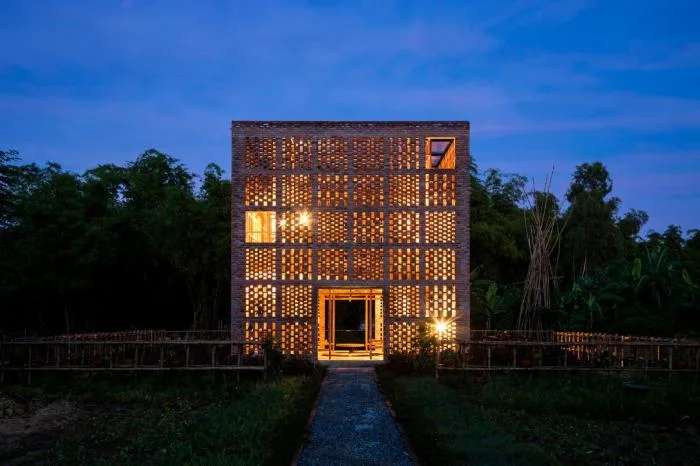
This red clay pottery workshop thrives thanks to the proximity of the river. It serves as the studio of the renowned artist Le Duc Ha. The building is a cube, measuring 7m on each side. Surrounding the workshop is bamboo scaffolding used for drying pottery. Two large benches adjacent to the scaffolding provide resting spots and spaces for tea tasting. Additionally, this bamboo structure divides workspaces, functioning as a natural fence.
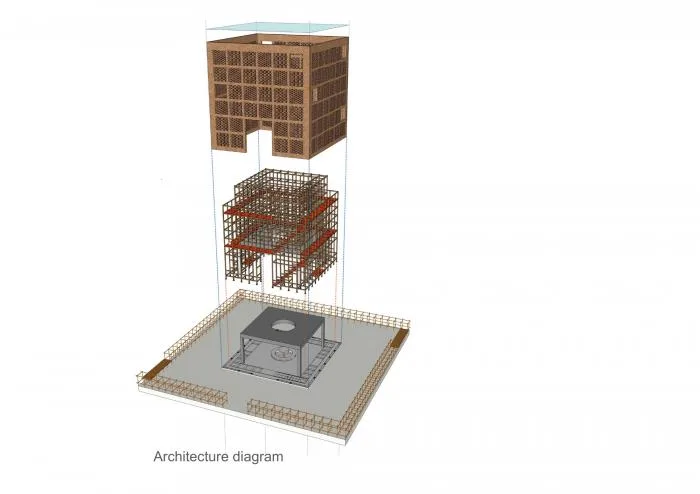
△ Axis Measurement Analysis Diagram
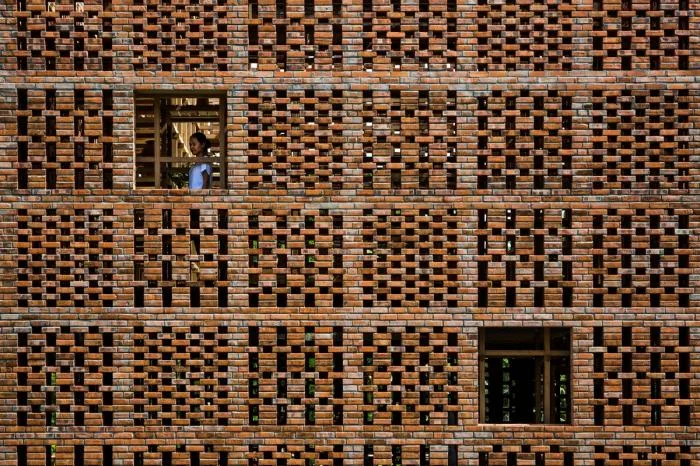
The studio’s exterior features hard clay bricks, reminiscent of traditional Vietnamese stoves. This element connects to Tra Kieu, the historical capital of the Champa dynasty from the 4th to 7th centuries. The design subtly reflects the cultural spirit of Champa.
The staggered arrangement of bricks creates holes that facilitate air circulation and temperature control. Since this brick layer is not a solid windproof barrier, artists inside can enjoy the breeze, the coolness from the river, and the natural ambient sounds, while still maintaining a degree of privacy.
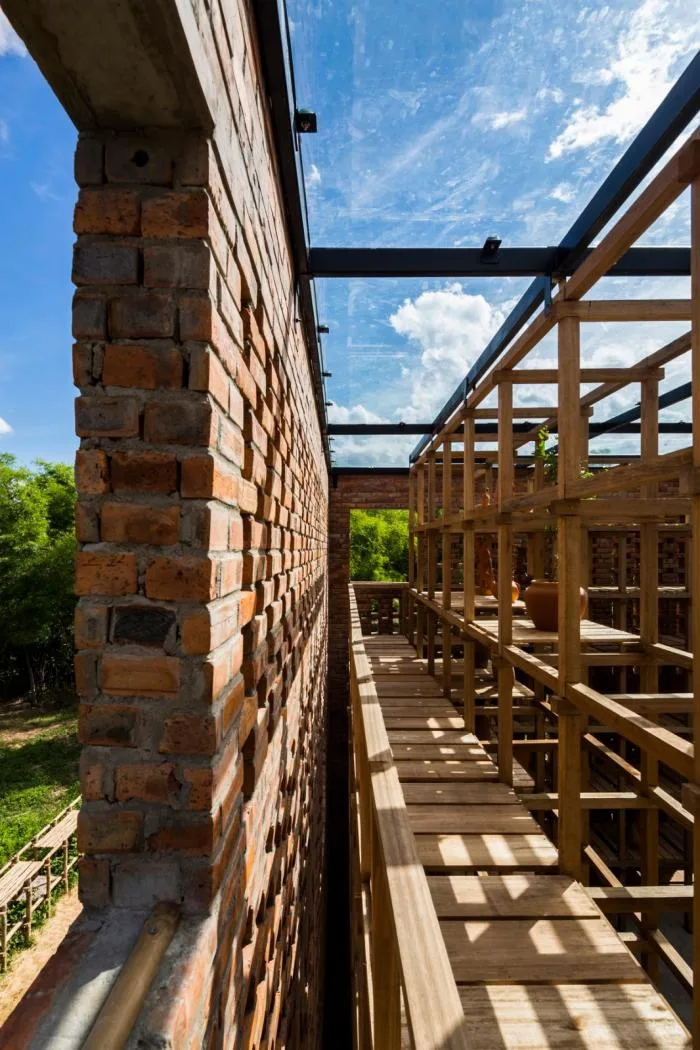
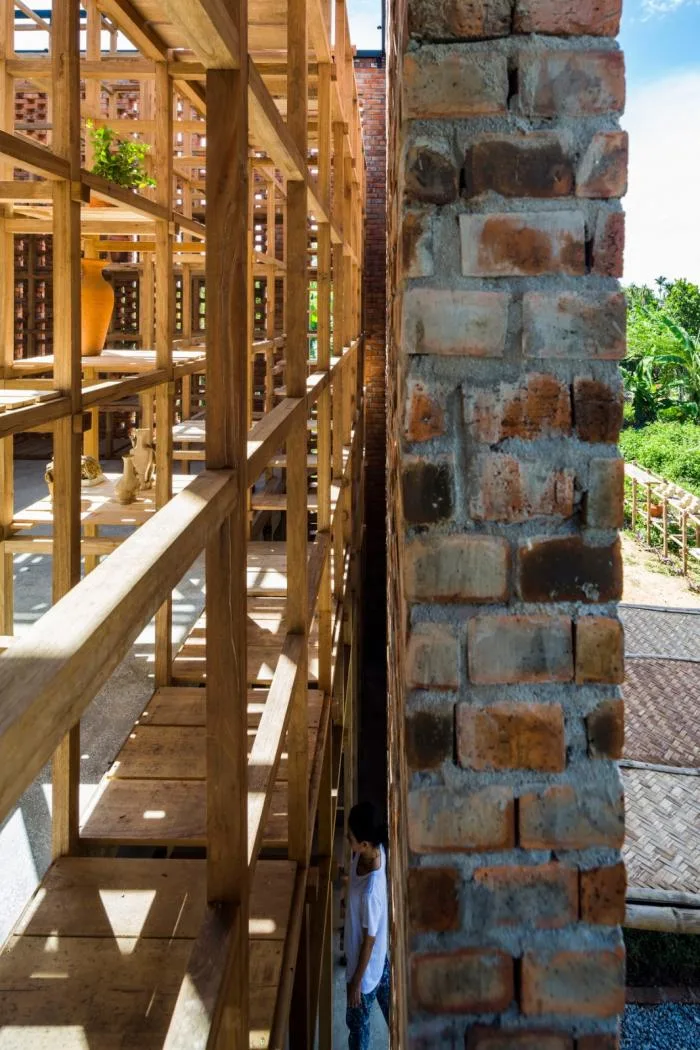
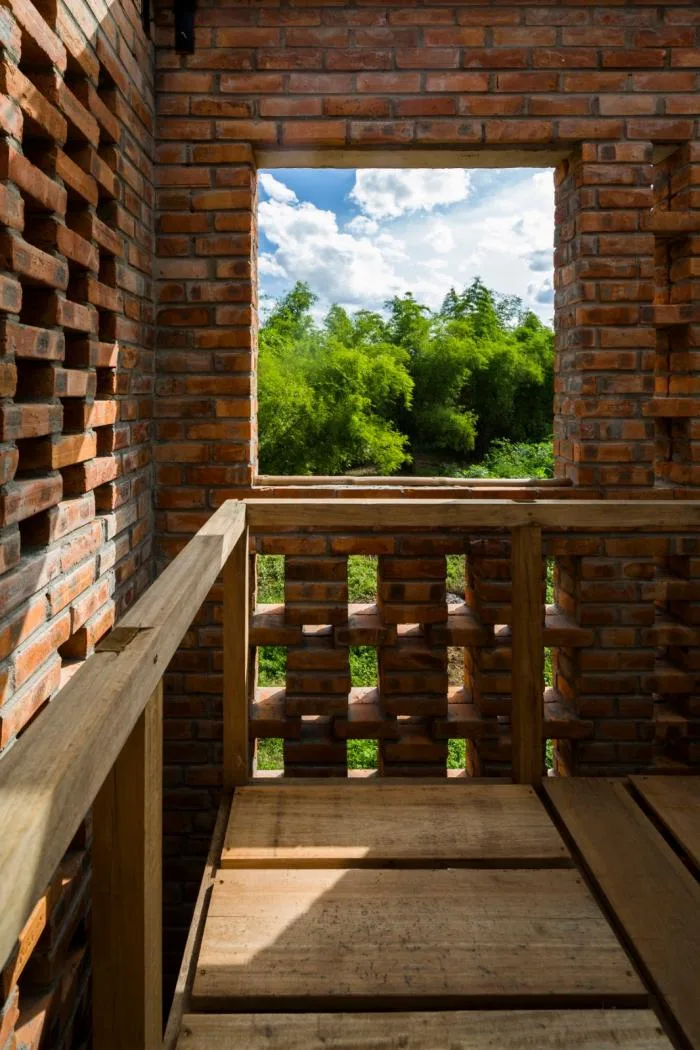
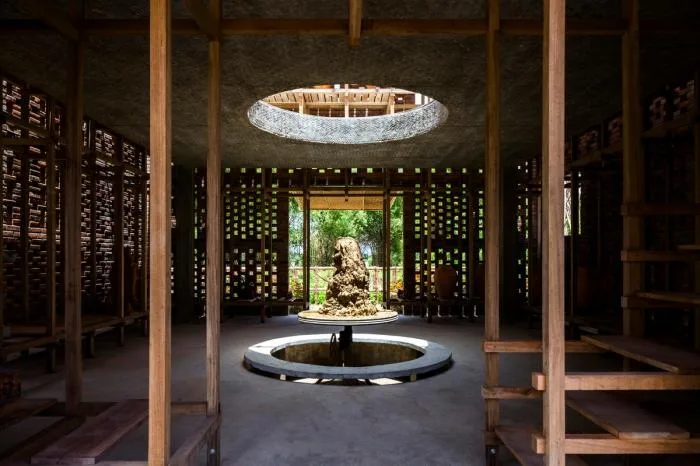
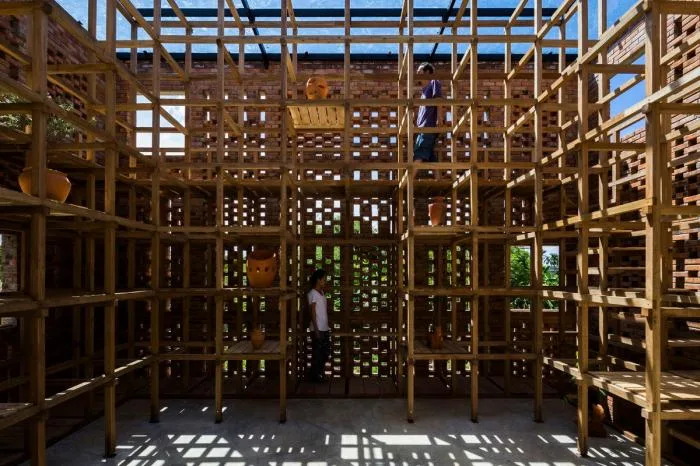
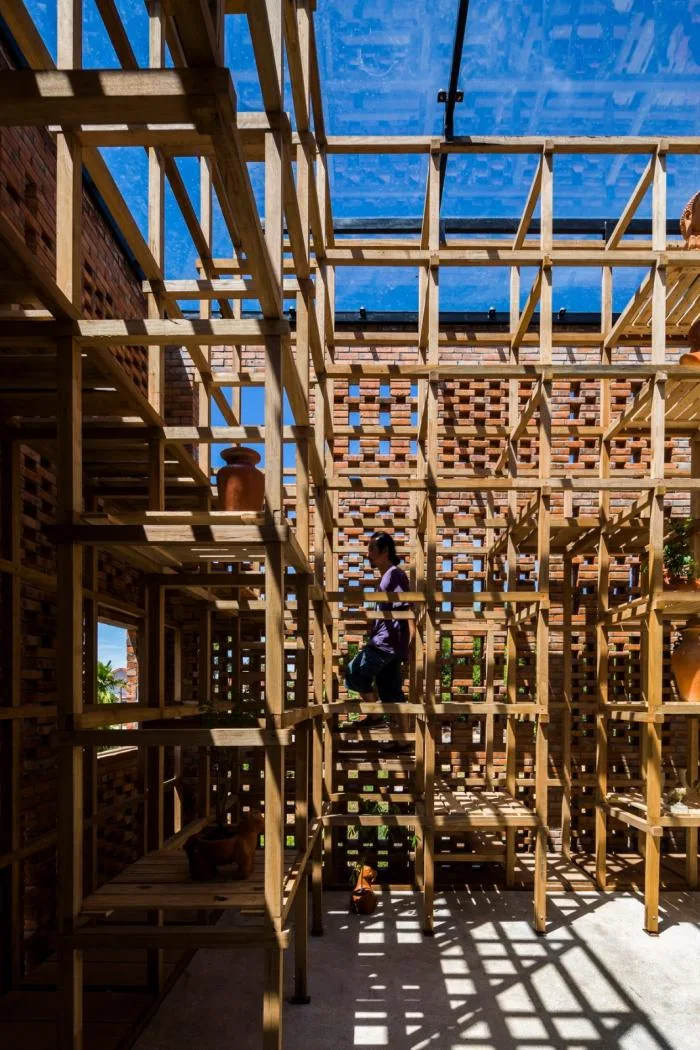
The interior consists of a three-story wooden structure that creates numerous small compartments measuring 60cm by 60cm. These spaces function as shelves for ceramic pieces, corridors, and staircases. The wooden frame reaches a height of 7 meters. From the corridors, visitors can view the studio, the riverbank, and the surrounding garden through the windows.
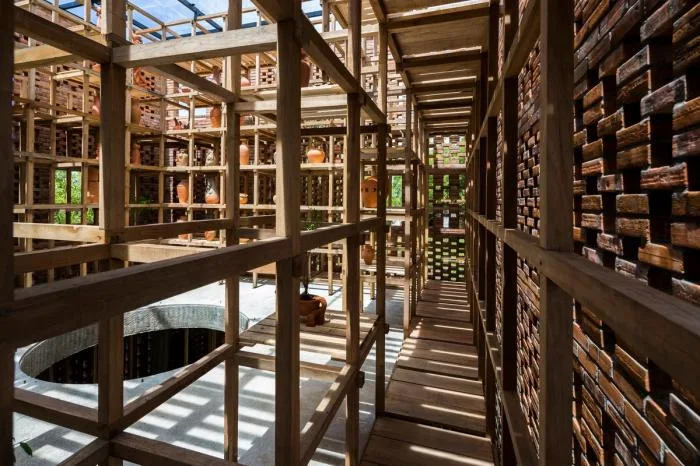
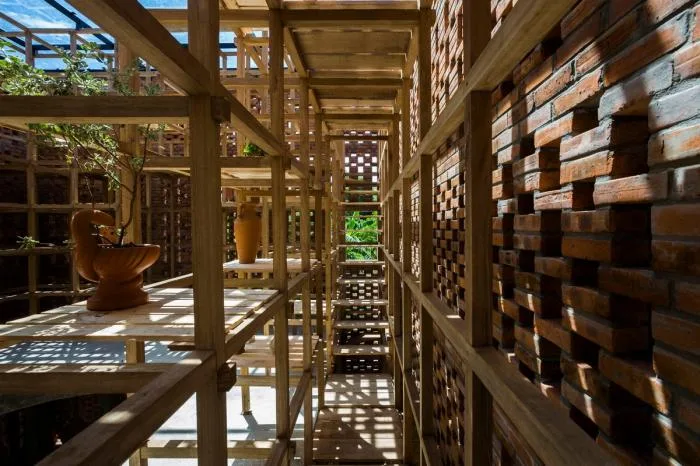
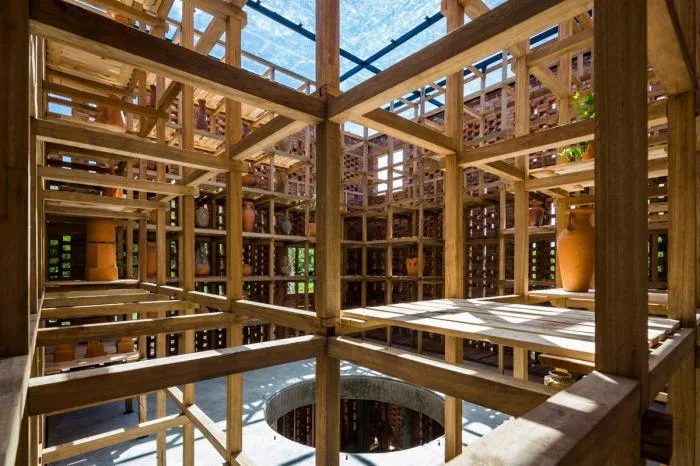
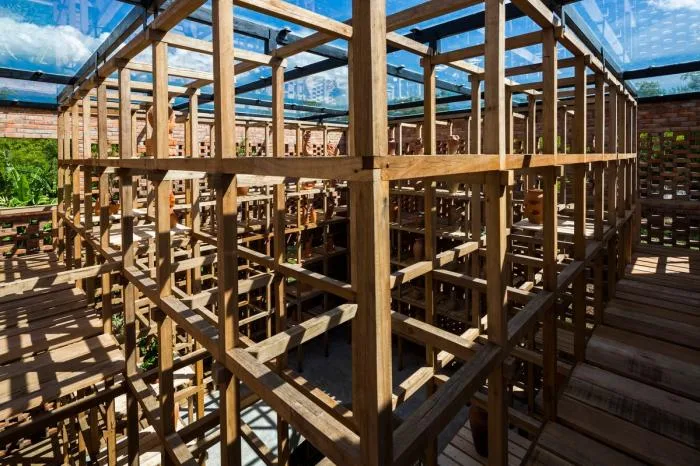
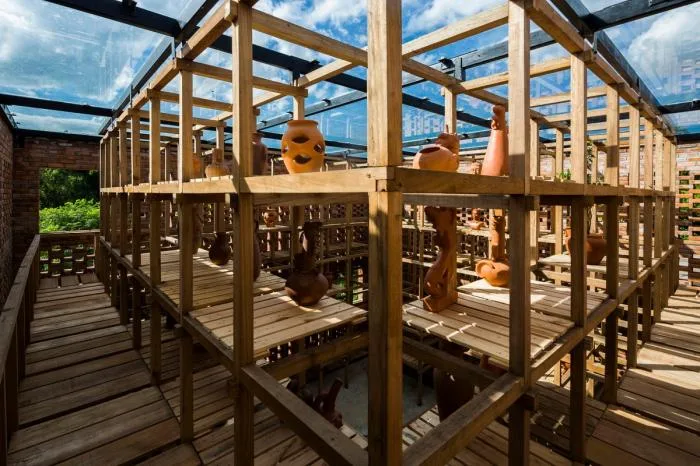
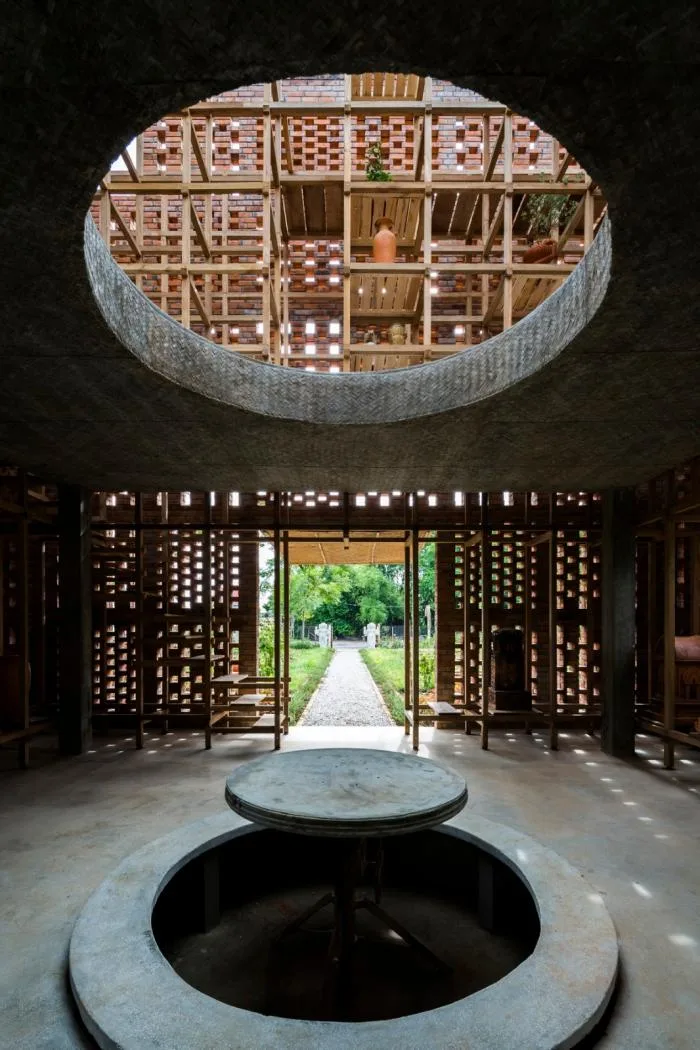
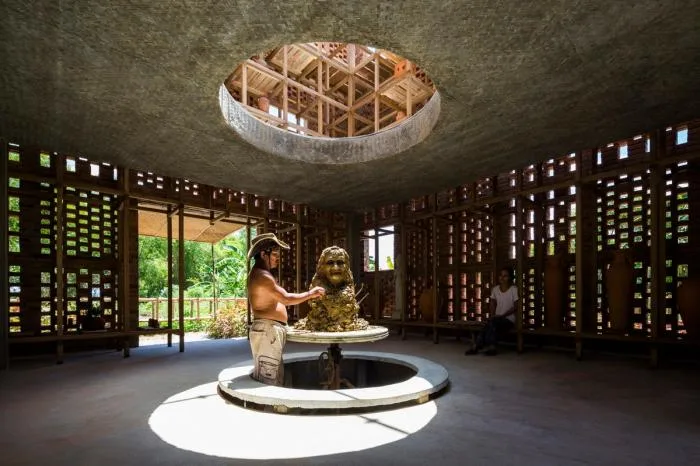
At the heart of the studio, there is a two-story space housing machinery for the artist’s creative process. Natural sunlight floods this area from sunrise to sunset, allowing both the artist and their works to interact intimately with light and shadow. This space invites quiet reflection and conversation between the artist and their creations, marking the passage of time within the pottery studio.
On the middle level, visitors can observe various spaces both inside and outside the studio, as well as witness the artist at work through a circular hollow opening. This void also serves a practical purpose, providing shelter for artworks during the annual floods.
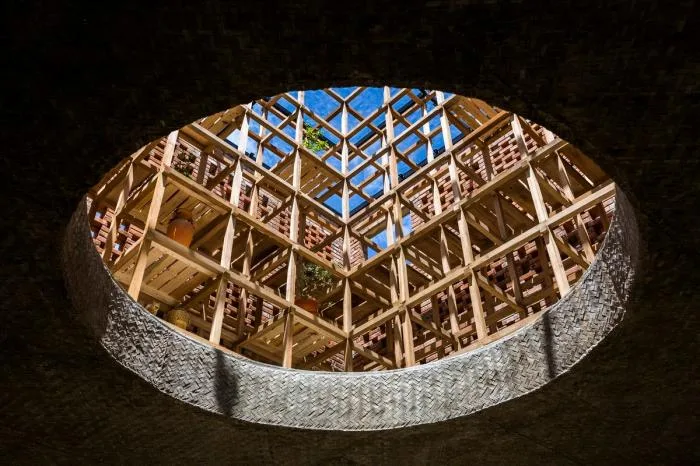
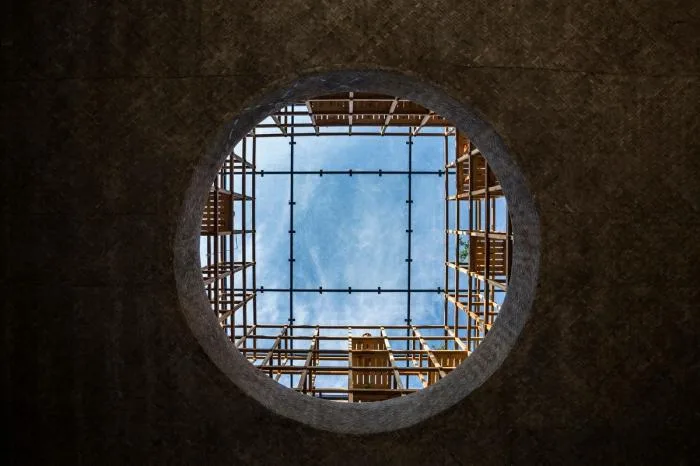
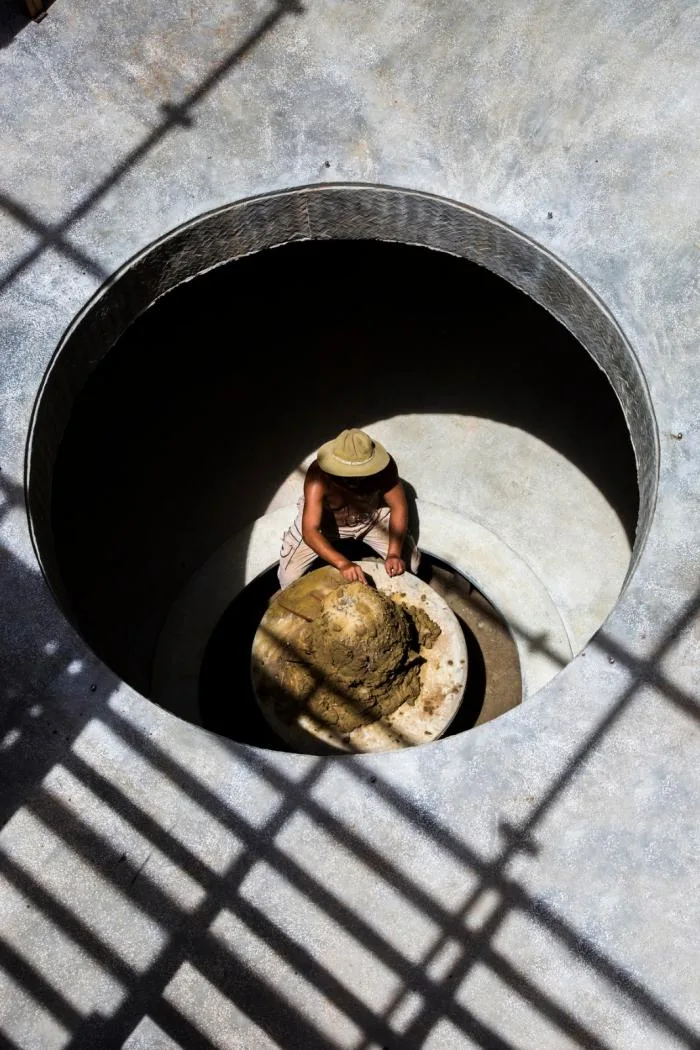
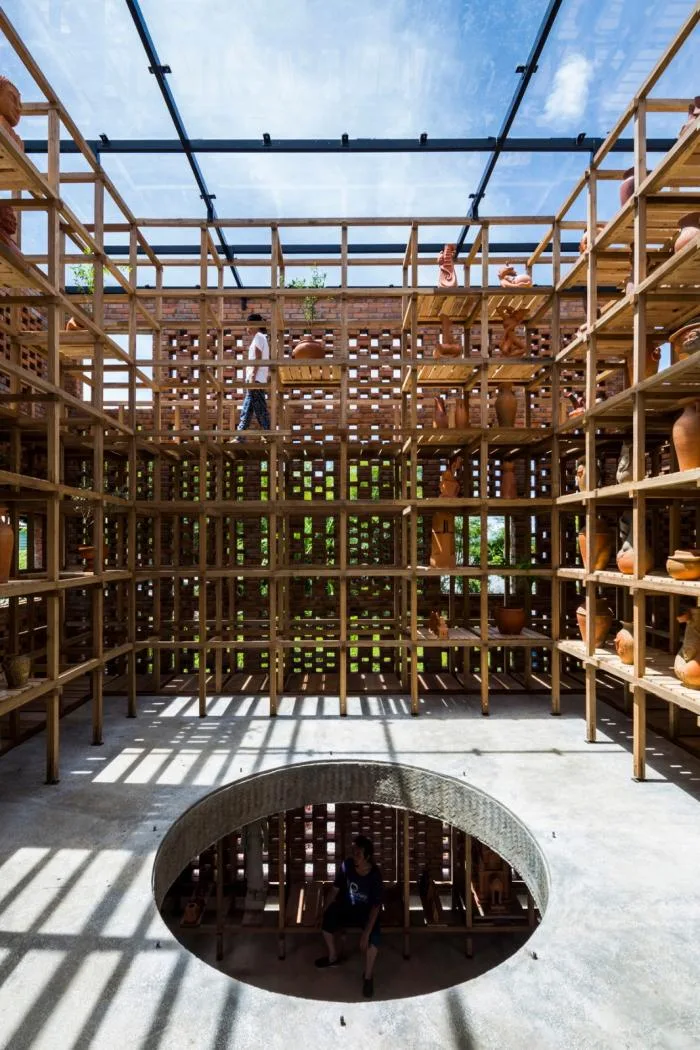
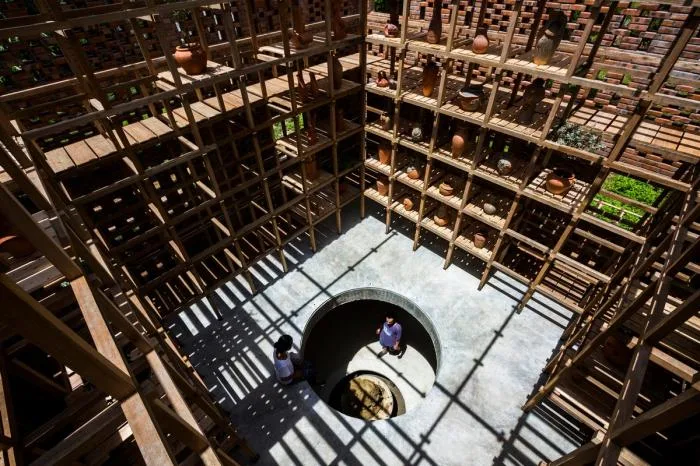
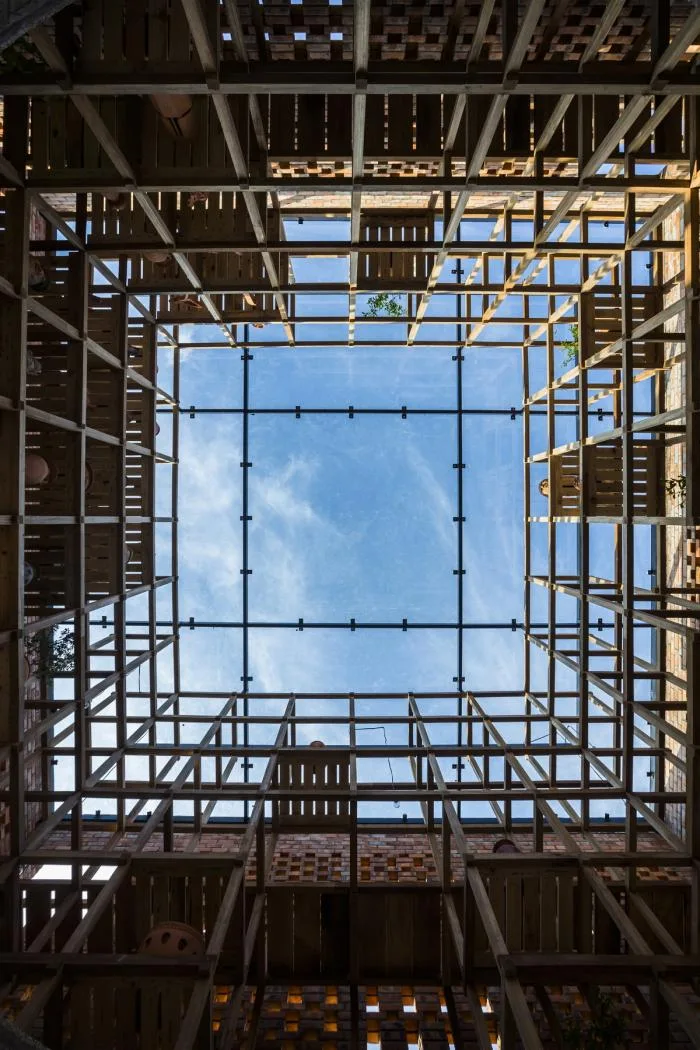
The design team envisions the studio as a place of openness, reflection, and emotional expression, where both finished and unfinished works are displayed. This project invites visitors to witness the artistry of pottery, share in the passion for clay, and actively engage in the creative experience.
Design Drawings
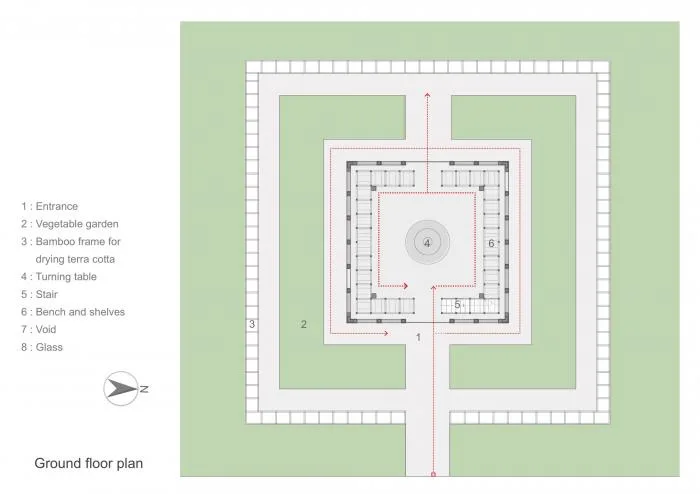
△ First floor plan
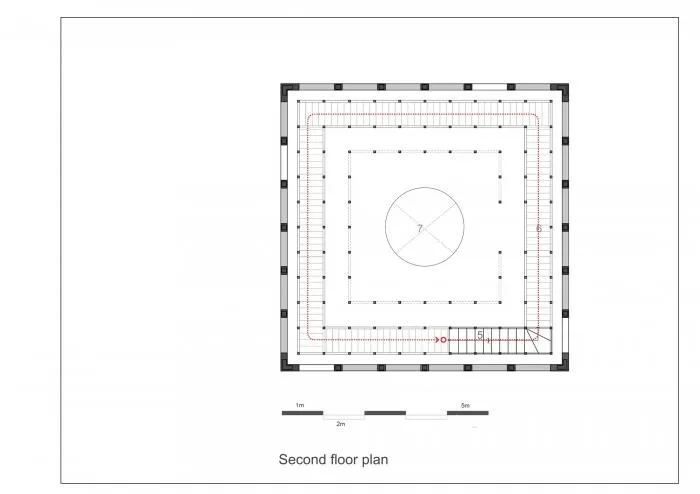
△ Second floor plan
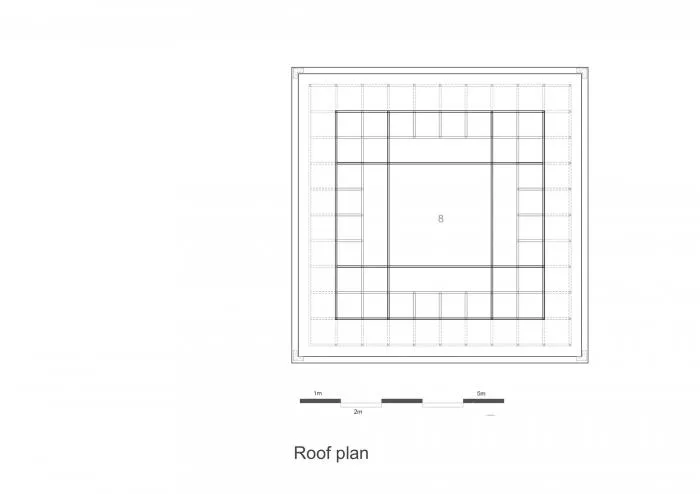
△ Roof plan
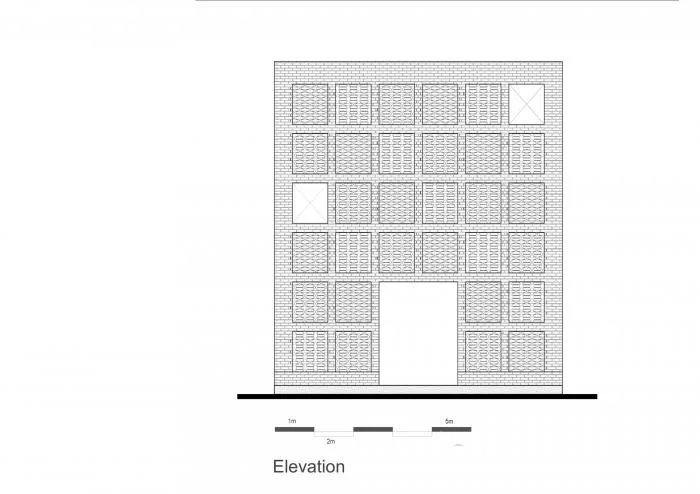
△ Elevation drawing
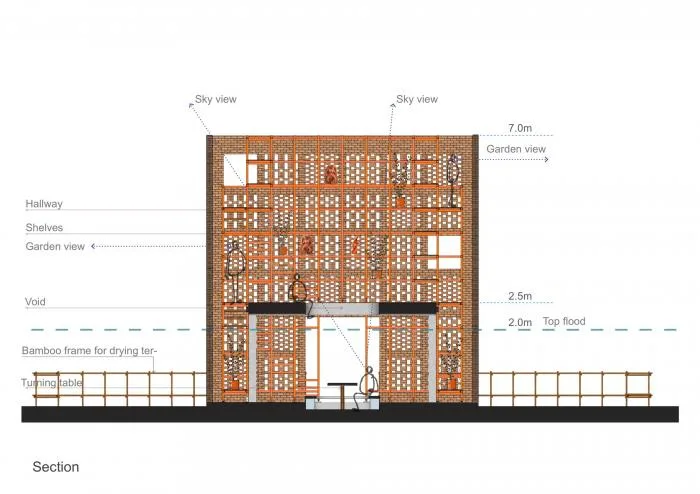
△ Section diagram
Project Information
Project type: Studio
Location: Dien Phuong, Vietnam
Architectural firm: Tropical Space
Year: 2016
Manufacturer: Dai Hiep, Dong Lam
Lead designers: Nguyen Hai Long, Tran Thi Nguyen, Nguyen Anh Duc, Trinh Thanh Tu
Construction: Local workers
Text: Le Thi Hanh Nguyen
Site area: 49 square meters
Building area: 98 square meters












Must log in before commenting!
Sign Up