
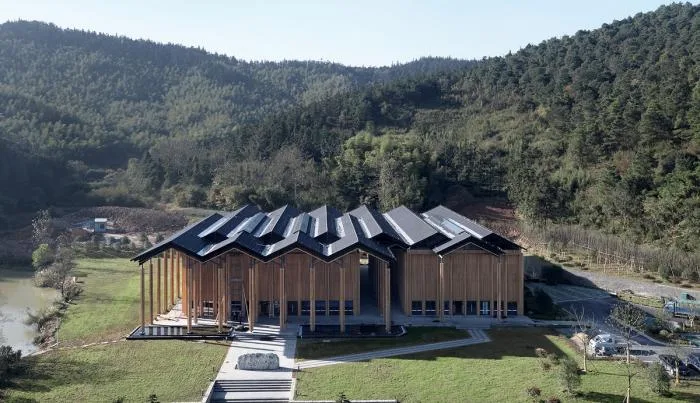
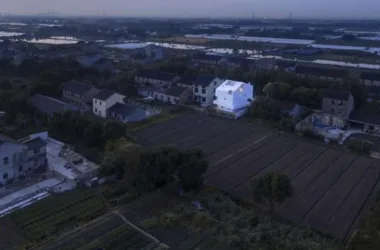
△ North side bird’s-eye view © Hou Bowen
The ongoing modernization and urbanization of rural areas call for new types of functional buildings. One such example is the Internet Conference Center and other large multi-functional spaces. The Shitang Village project in Jiangning reimagines rural public spaces by drawing inspiration from traditional “communal halls” and “greenhouses.” Utilizing an industrialized rapid construction system and advanced prestressed slender column technology, the project selectively reduces the physical presence of the building. This approach restores the original tactile qualities of the countryside and serves as a rapid rural revitalization architectural experiment.
Small Town, Big House
Shitang Village’s “Internet Town” plan reflects the current challenges in China’s rural urbanization. Despite favorable geography and abundant natural resources, the village—located 40 kilometers southwest of Nanjing—has experienced complex dynamics between rural modernization and urbanization. The village has completed planning and renovation, including the development of unique homestays and restaurants. As part of this “beautiful countryside” initiative, the Internet Conference Center was proposed by local authorities to meet future demands for a permanent venue supporting internet entrepreneurship events, meetings, and performances. However, the project’s site selection and construction followed a somewhat spontaneous, rather than meticulously planned, development process.
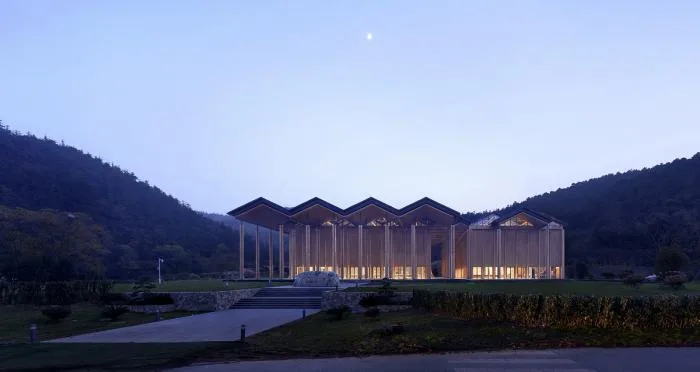
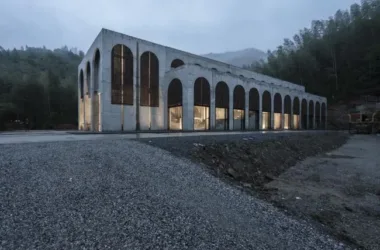
△ Entrance facade distant view © Hou Bowen
Redefining Architectural Types
Traditional large houses are rare in rural China. Instead, communal halls serve as public spaces and greenhouses function as production facilities. Analyzing these two prototypes has been central to the design process. Vernacular architecture is deeply linked to the materials and structures used, providing not only a physical foundation but also a medium for formal expression and a vessel of cultural and spatial experience.
The revival of the communal hall’s memory inspired the use of sloped roofs as a fundamental spatial element. The conference center’s large open space is designed to accommodate villagers’ traditional gatherings. The prefabricated rod structure builds upon the lightweight steel frame construction typical of greenhouses. While more complex and reliable, it maintains a rational construction logic that minimizes environmental disruption.
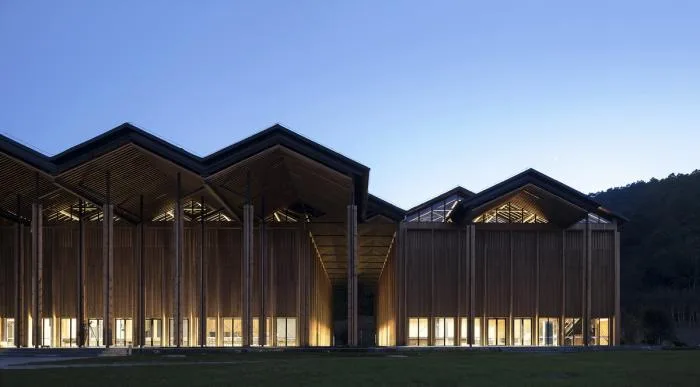
△ North facade night view © Yao Li
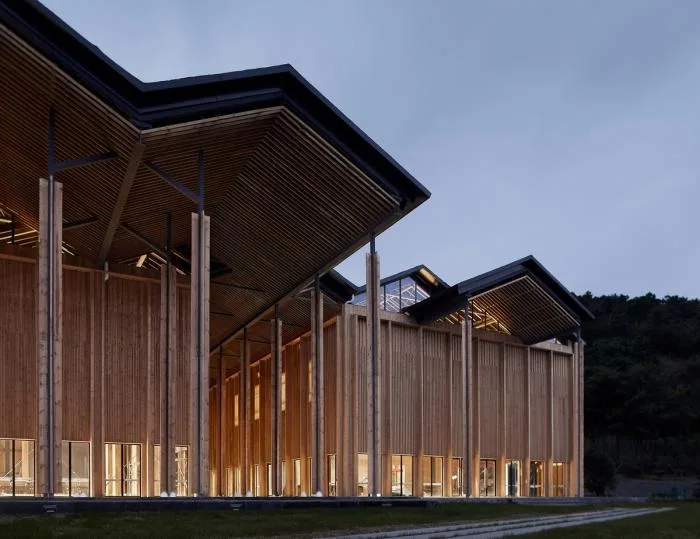
Partial porch © Hou Bowen
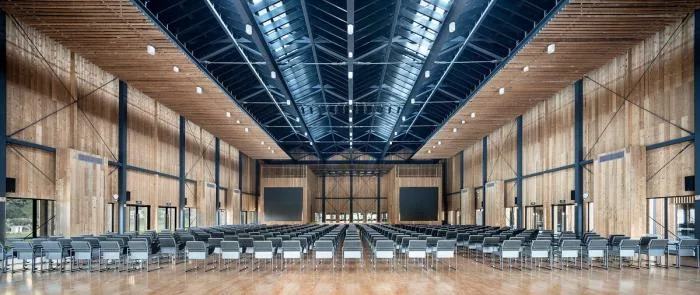
Inside the conference hall © Yao Li
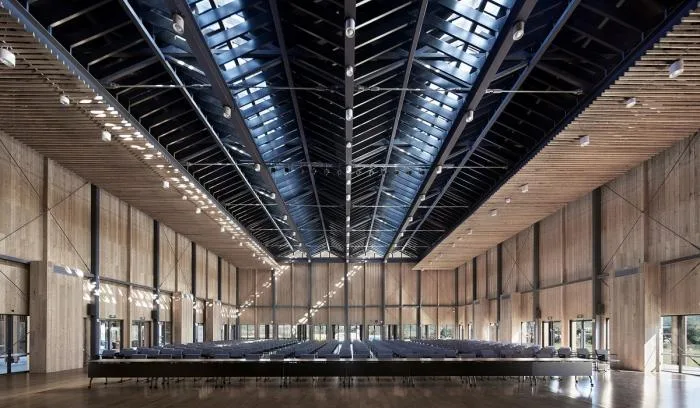
Indoor conference hall © Hou Bowen
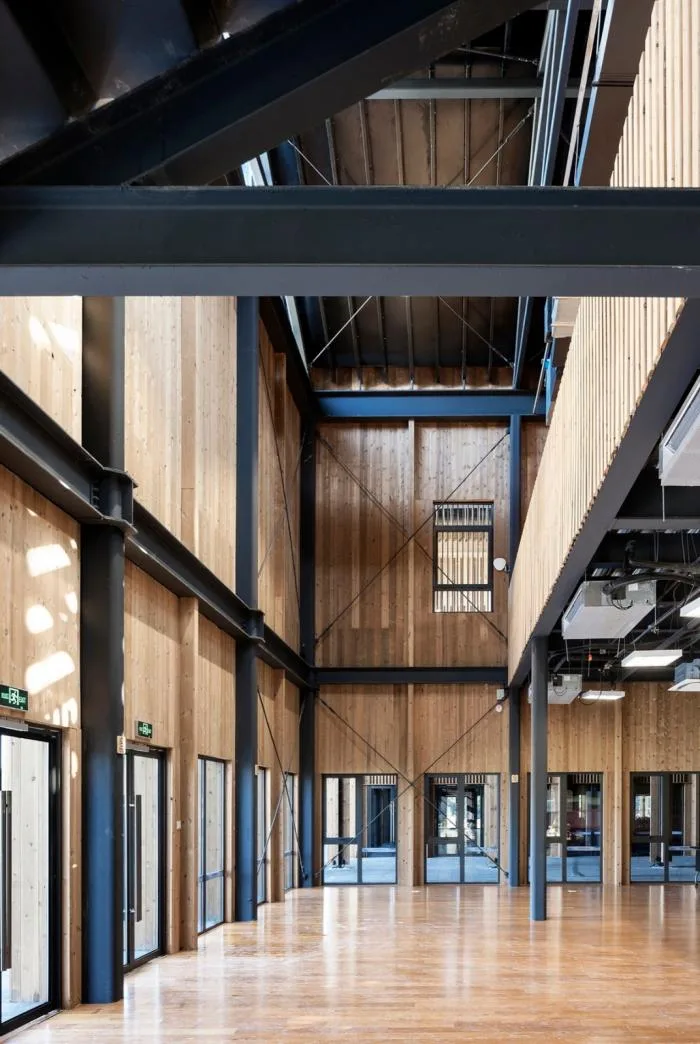
Indoor auxiliary room © Yao Li
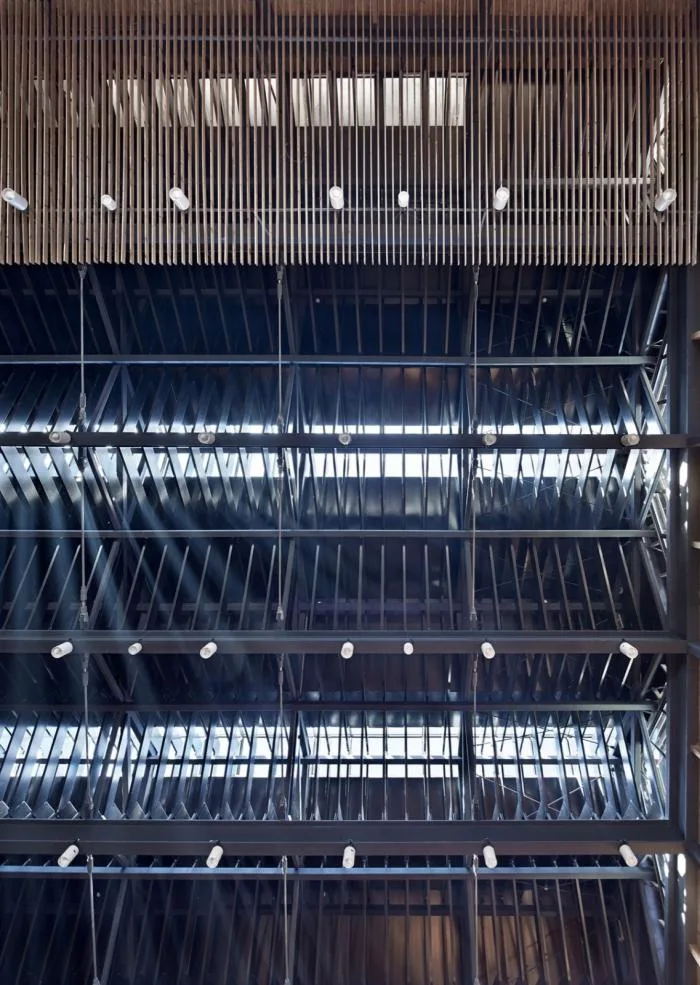
△ Roof structure and partial ceiling © Hou Bowen
Technology Rooted in Local Context
Structural engineer Yuan Xin, known for his expertise in spatial and tensioned structures, creatively applied the principles of “tensegrity” to column compression. By breaking down the traditional single-axis force into tension and compression components, the balanced forces offer enhanced resistance to deformation. This approach exceeds Euler’s critical load limit and enables the use of slender, overloaded columns with minimal cross-sectional dimensions.
The ideal support structure for the conference center resembles the dense, upright bamboo surrounding the site. Using prestressed thin column technology, the project achieved slender columns measuring just 14 centimeters in cross-section and standing 10.45 meters tall, with an impressive slenderness ratio of 1:75. This enabled rapid construction within 45 days, maintaining high building quality through an industrialized construction system and advanced design management.
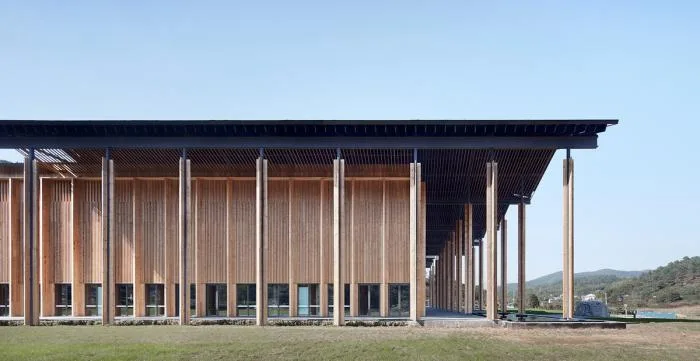
△ East facade © Hou Bowen
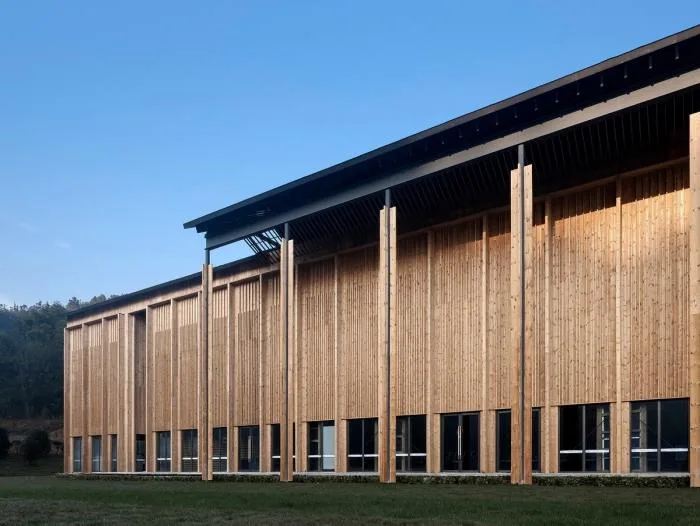
Partial eastern colonnade © Yao Li
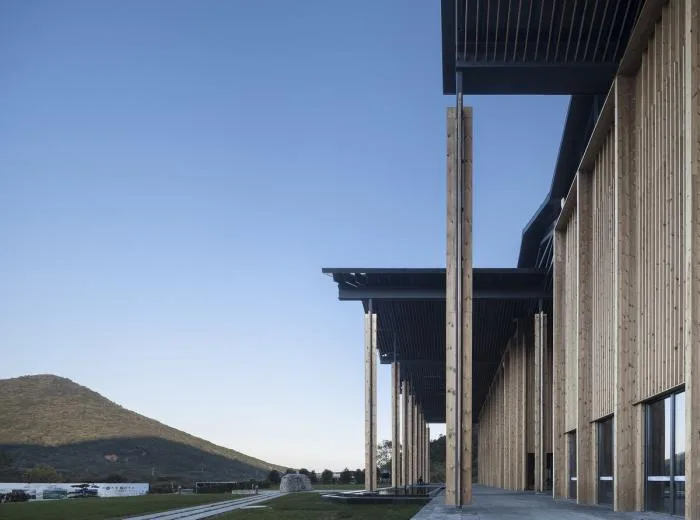
View eastward from the entrance colonnade © Yao Li
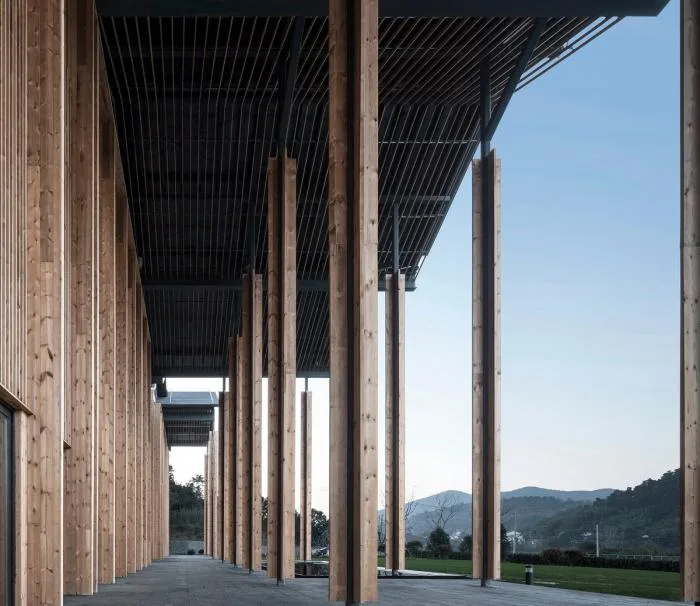
△ Entrance colonnade © Yao Li
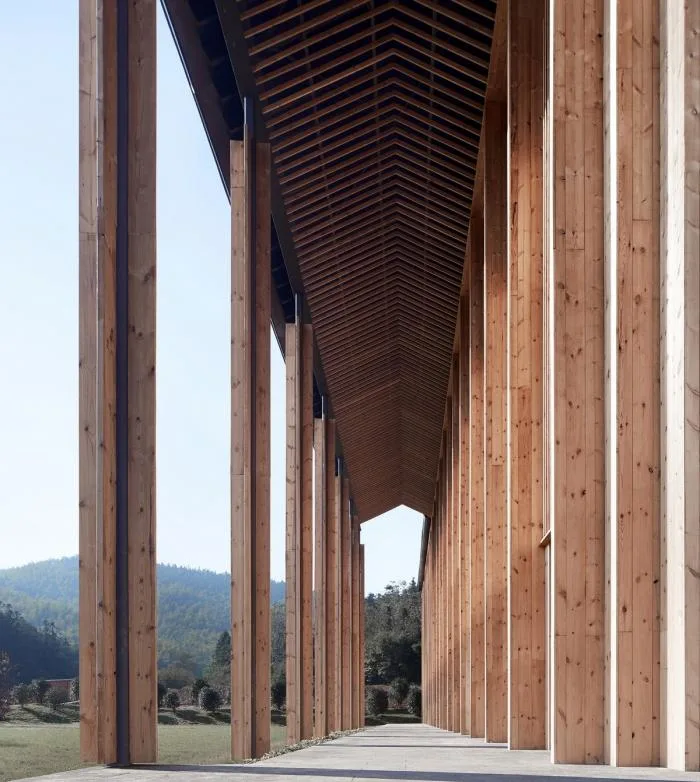
△ East Rest Corridor © Hou Bowen
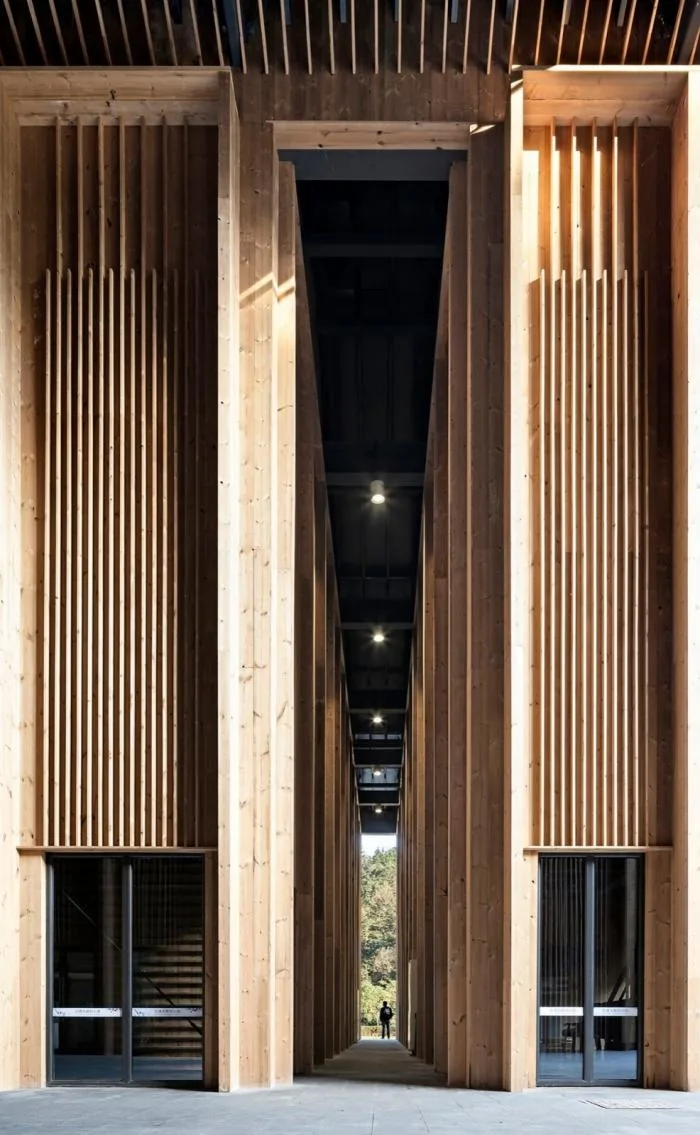
△ Local perspective © Yao Li
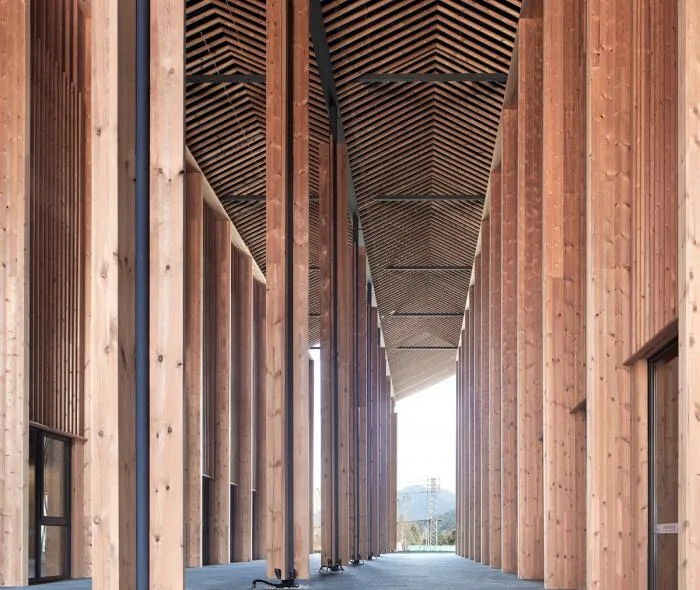
△ Inner corridor © Hou Bowen
As a new rural typology, the “Internet Conference Center” represents a timely response to the evolving needs of rural communities. The process of “transforming” and “evolving” architectural types remains essential, emphasizing the integration of new technologies with local conditions. This approach sustains the inherent spatial and environmental order, driving development forward.
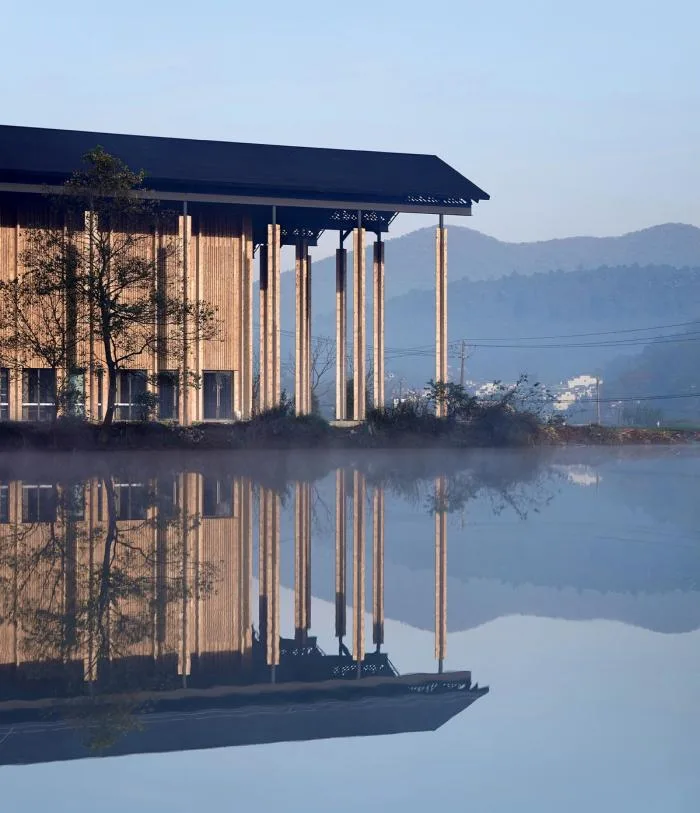
East facade in the morning © Hou Bowen
Design Drawings
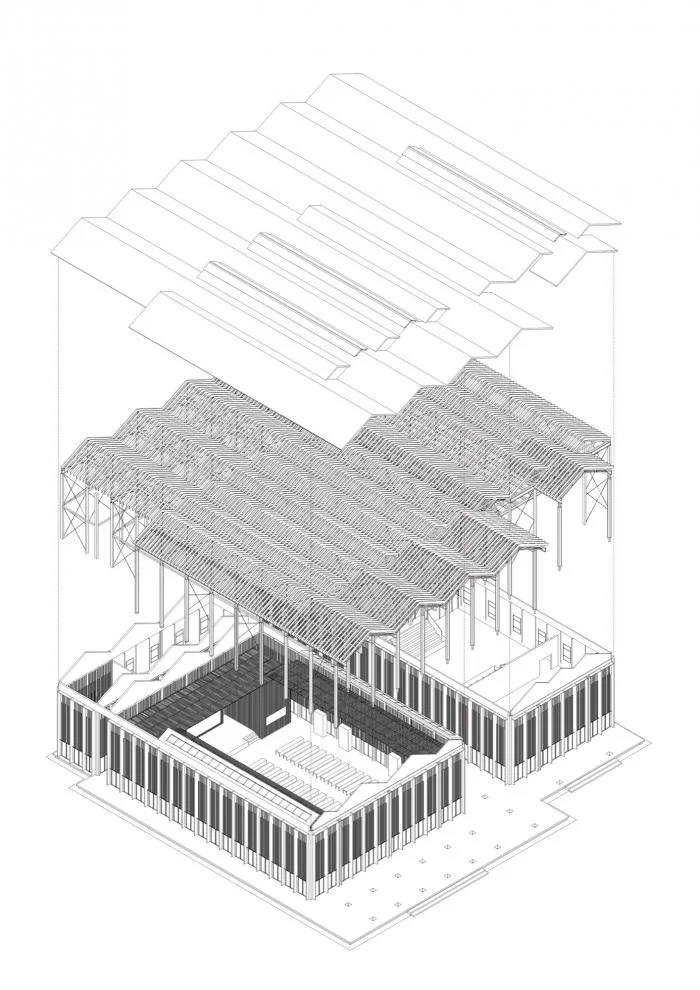
△ Axonometric decomposition diagram
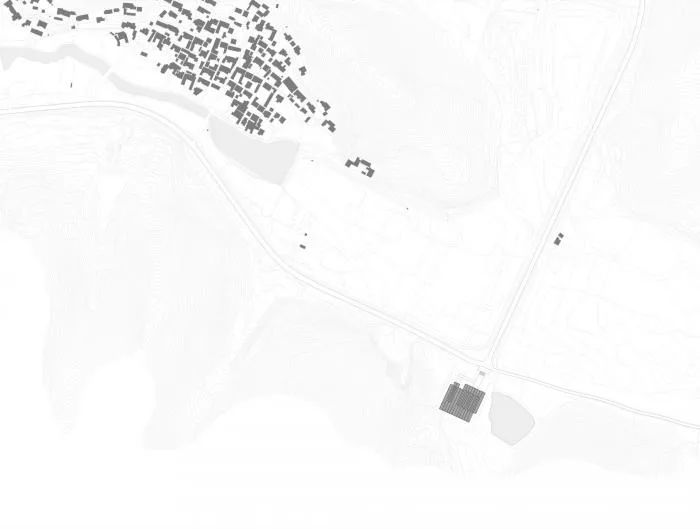
△ General layout plan
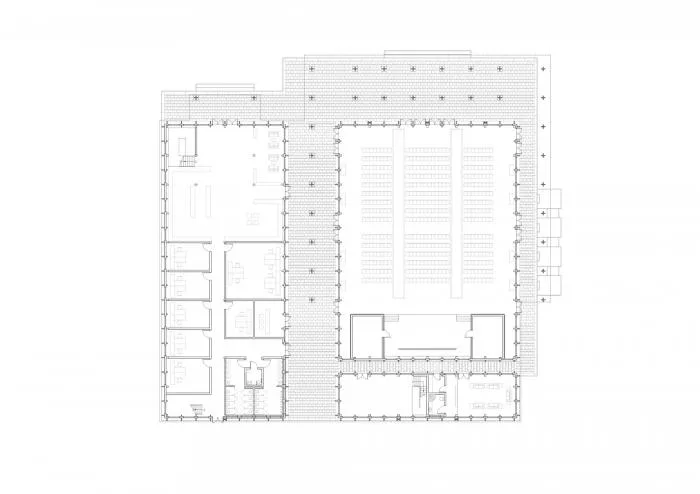
△ First floor plan
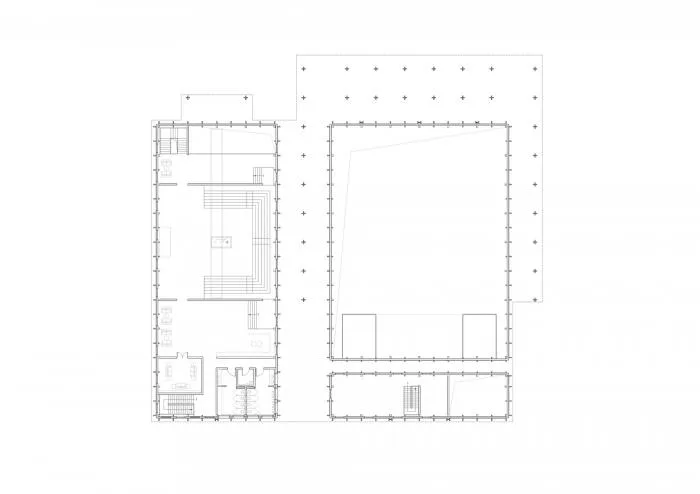
△ Second floor plan
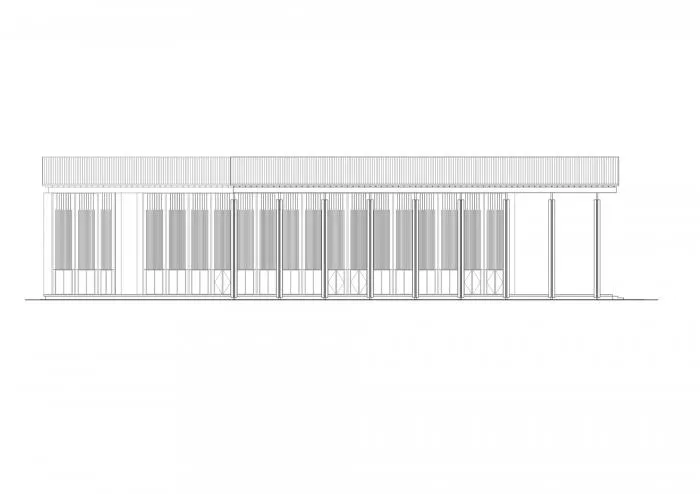
△ East elevation view
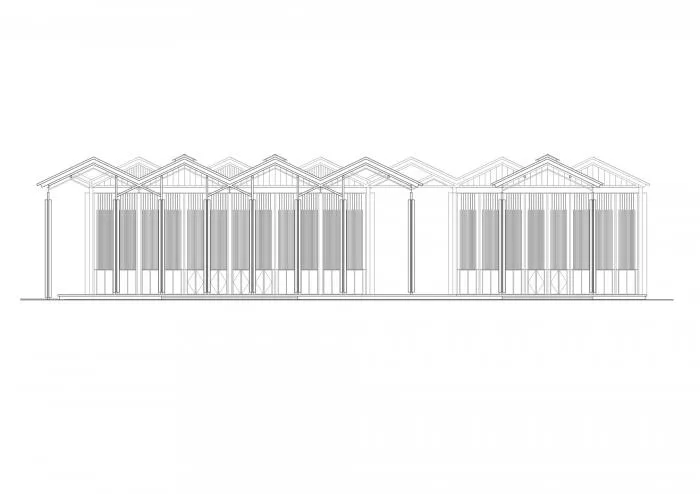
△ North elevation view
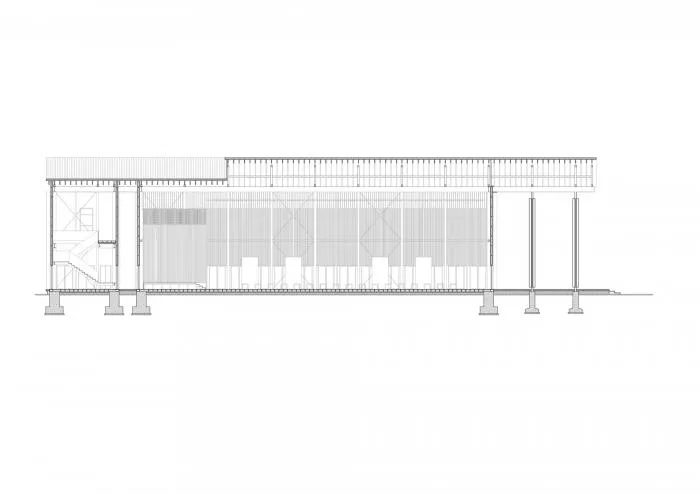
△ Section diagram
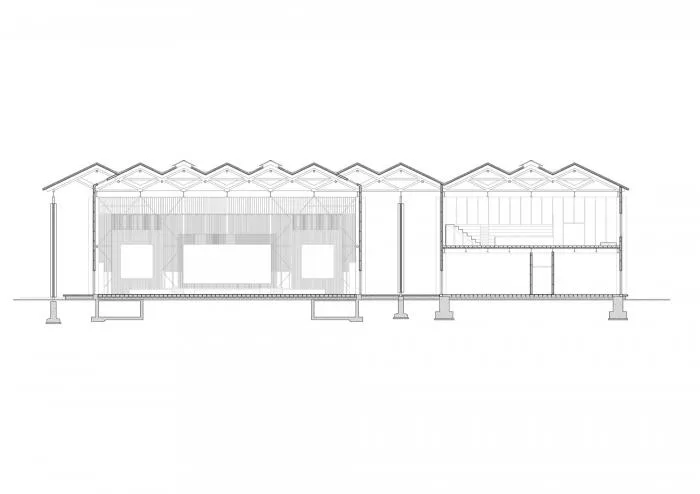
△ Section diagram
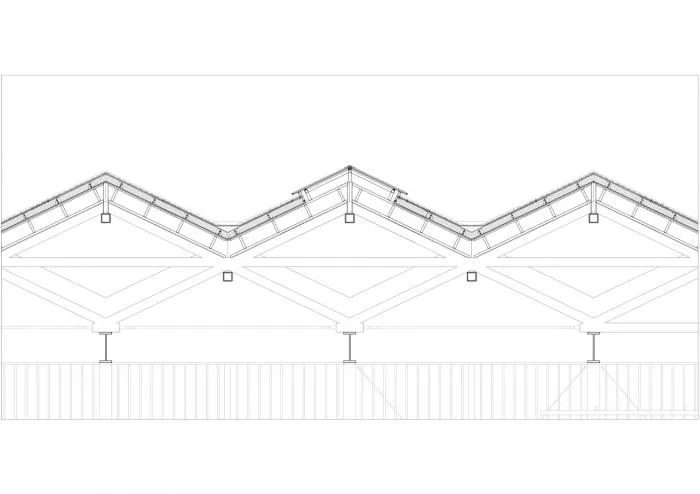
Details of roof truss
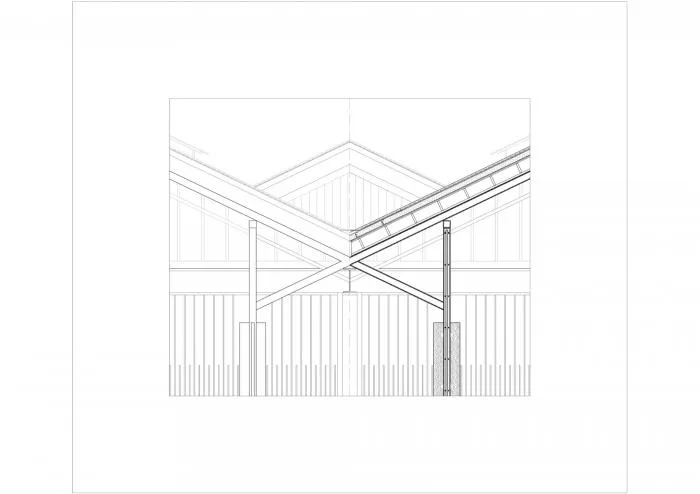
Details of roof truss
Project Information
Project Type: Community Center
Location: Nanjing, China
Architectural Design: Zhang Lei United Architectural Firm
Area: 3,000 m²
Project Year: 2016
Photographers: Hou Bowen, Yao Li
Suppliers: NANQI INDUSTRIAL, XINWU FLOOR
Project Leaders: Zhong Huaying and Zhang Lei
Design Team: Zhong Huaying, Zhang Lei, Xi Hong
Design Unit: Zhang Lei United Architectural Firm
Collaborators: Nanjing University Architectural Planning and Design Institute Co., Ltd.; Shanghai Tongji Steel Structure Technology Co., Ltd.












Must log in before commenting!
Sign Up