
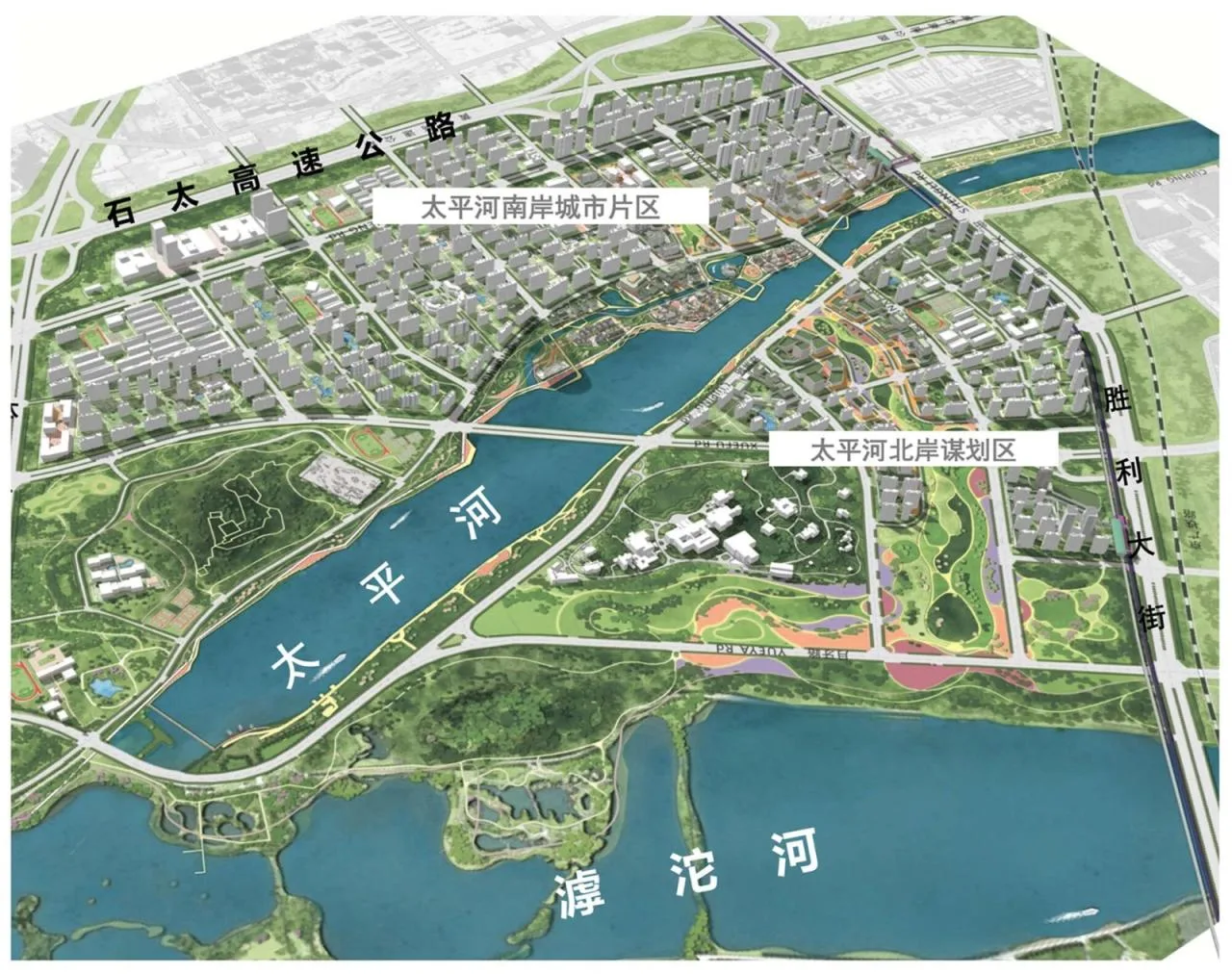
The project is situated west of Tiyu North Street, north of Gucheng East Road, east of Shengli North Street, and south of the southern bank of the Hutuo River in Shijiazhuang City, Hebei Province. Covering approximately 5.53 square kilometers, the area currently consists predominantly of small-scale industrial and commercial logistics lands. This results in a disorganized urban landscape, low land use efficiency, and abundant available land resources.
Taipinghe Urban Area is one of six comprehensive urban renewal zones in Shijiazhuang, designated as a pilot, demonstration, and leading development area for the Yangtze River region. Future plans include establishing waterfront public cultural spaces, commercial entertainment, leisure and vacation facilities, as well as high-quality residential communities.
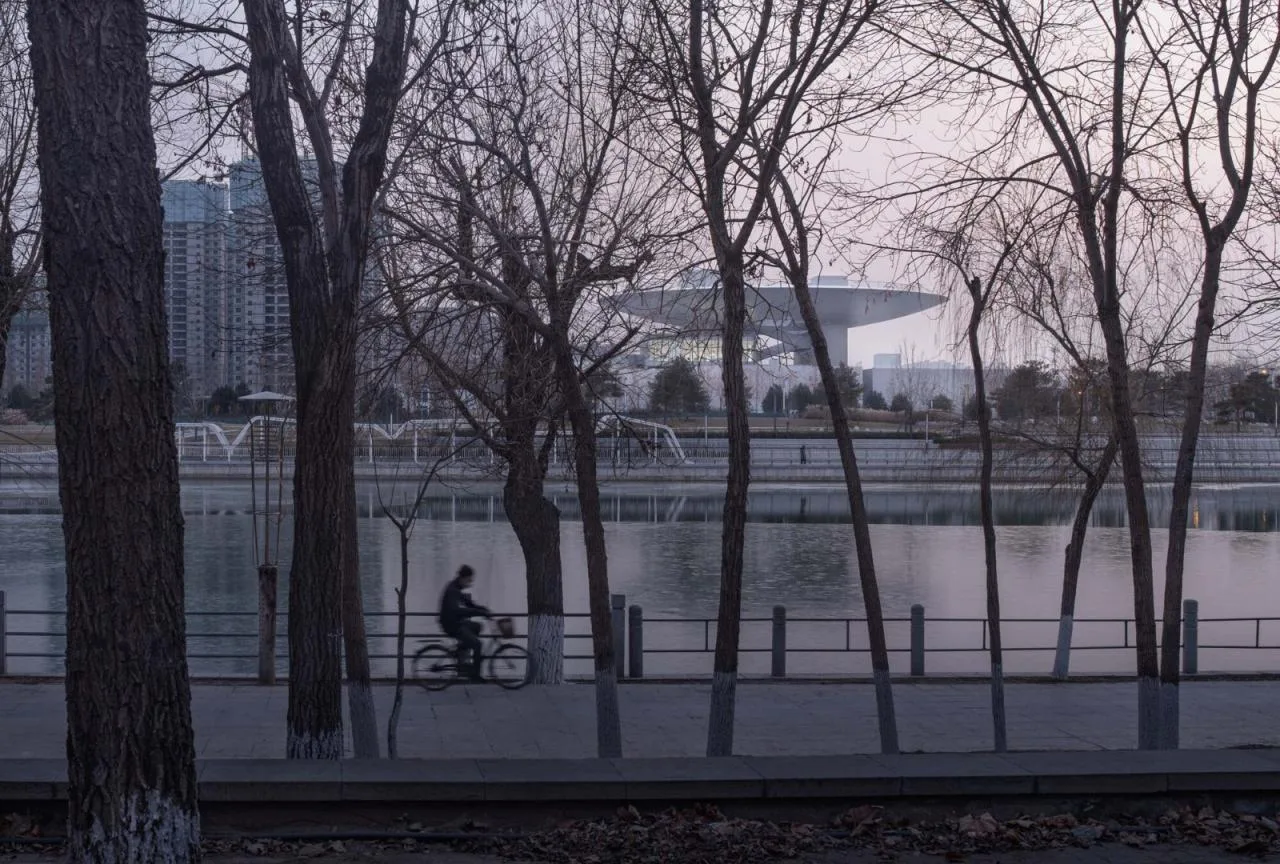
As the inaugural project within the Taipinghe Urban Area, the exhibition center serves primarily for area planning and cultural display. Positioned uniquely at the southeast corner of the intersection of Shengli Street and Taiping River, it faces the confluence of Shijiazhuang’s mother river, the Hutuo River, and its tributary, the Taiping River. The north bank of the Hutuo River hosts Zhengding Ancient City, a historic site over 1600 years old, with Ming Dynasty city walls extending 8,106 meters.
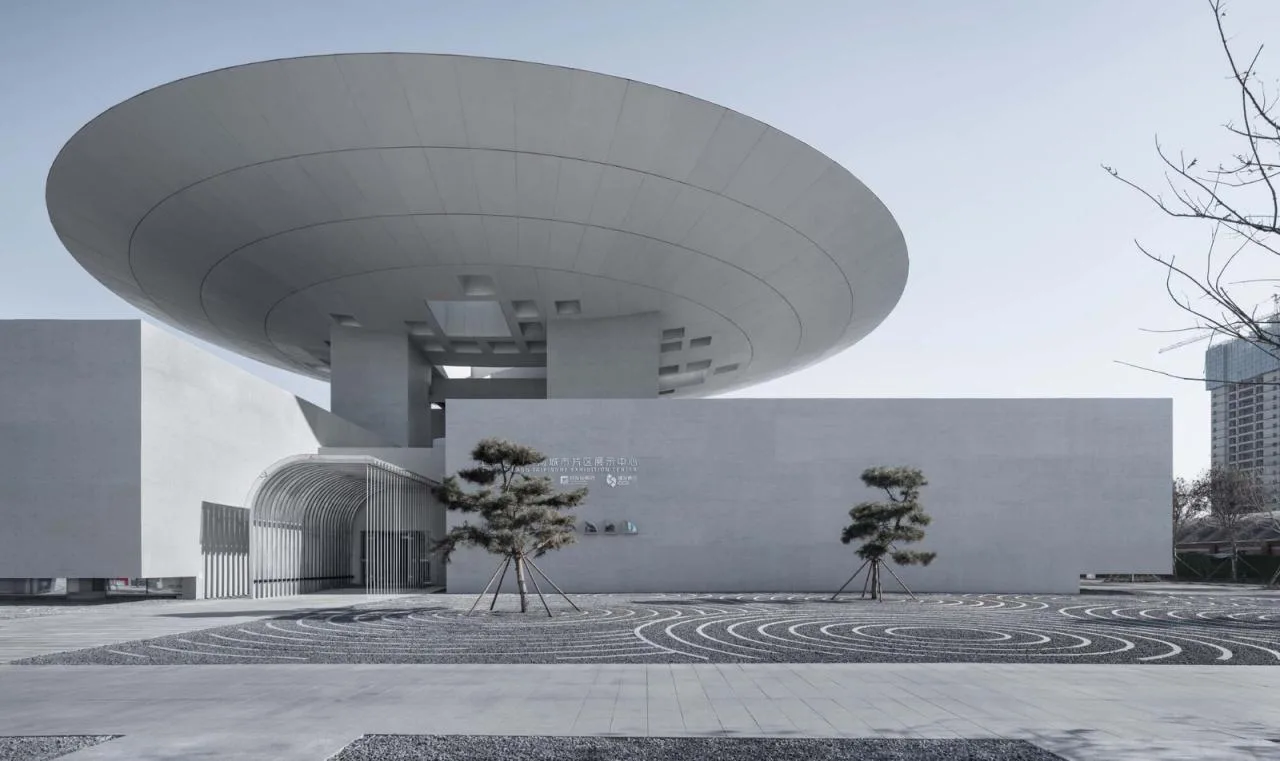
Facing the natural landscapes of the Taiping and Hutuo Rivers, the Open and Closed Exhibition Center emphasizes spatial openness and the integration of architecture with nature. Historically, Chinese settlements evolved from fully open villages to walled communities during the Longshan Culture, later developing city walls in the Spring and Autumn Period to delineate state boundaries. This evolution reflects a continuous balance between openness and enclosure in spatial design.
City walls and courtyard walls are traditional Chinese architectural elements, characterized by being closed externally but open internally—symbolizing spatial confrontation and harmony. Architecture here is conceived as a landscape with defined boundaries.
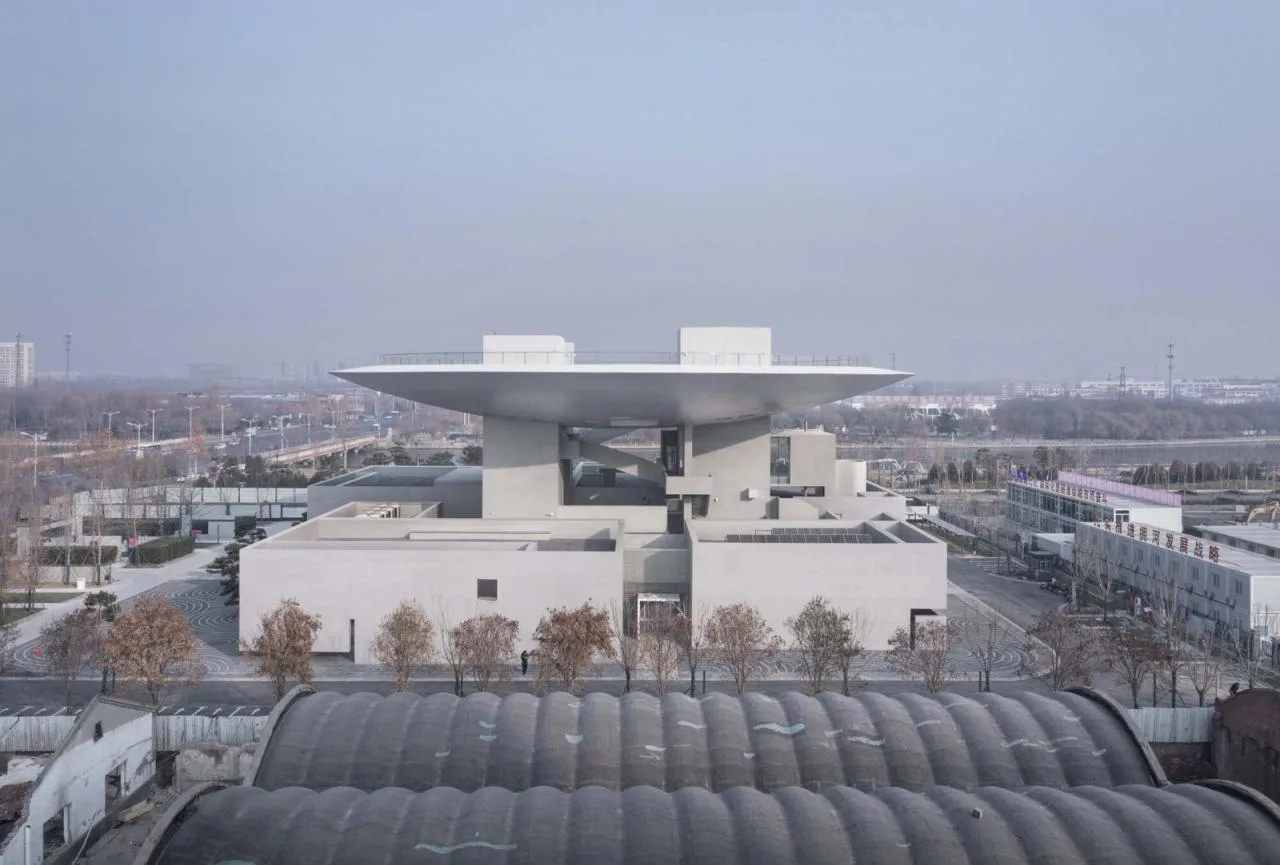
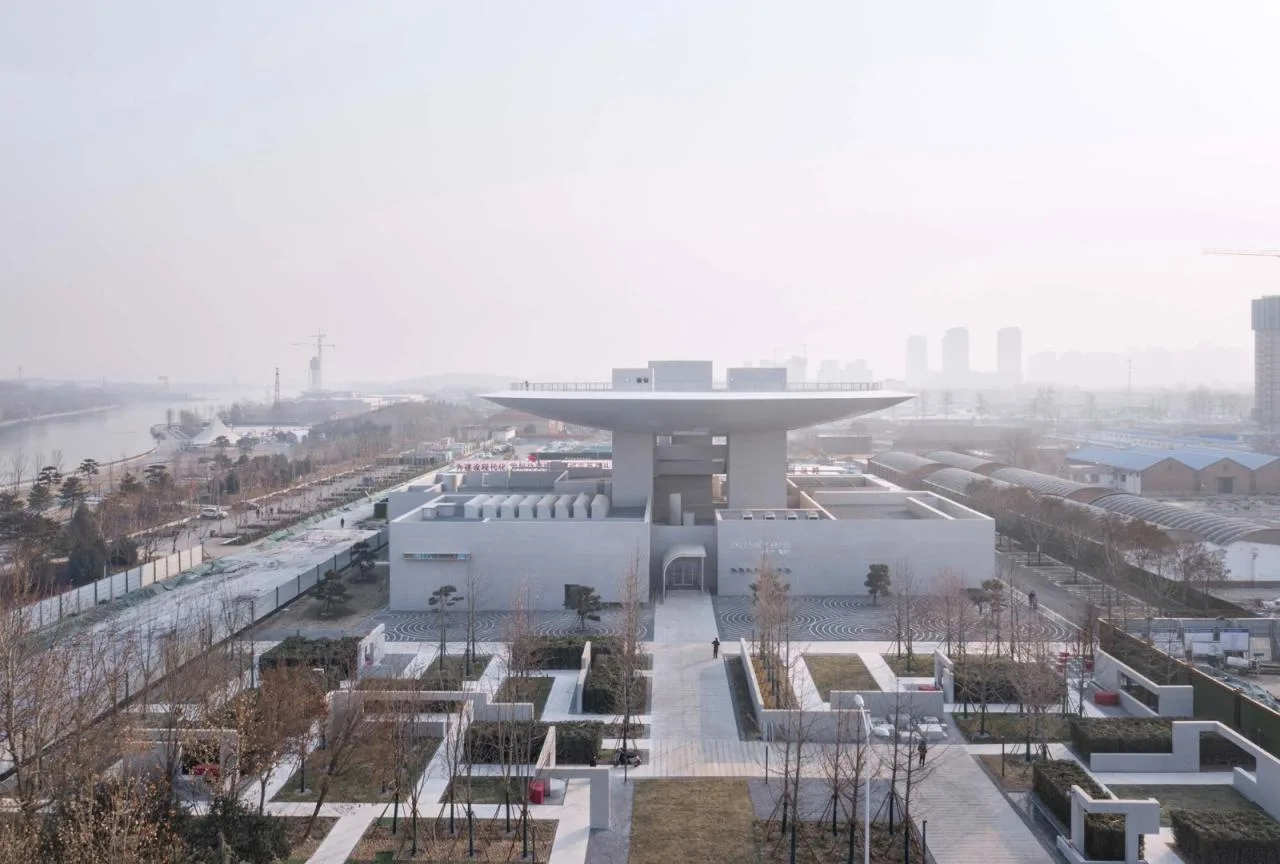
The spatial exploration of openness and enclosure is manifested in two distinct parts. The lower section reflects a strong sense of closure, inspired by the texture and blocks of the Zhengding Ancient City Wall. This section aims to reconstruct the ancient city ruins, preserving and continuing the traces of history.
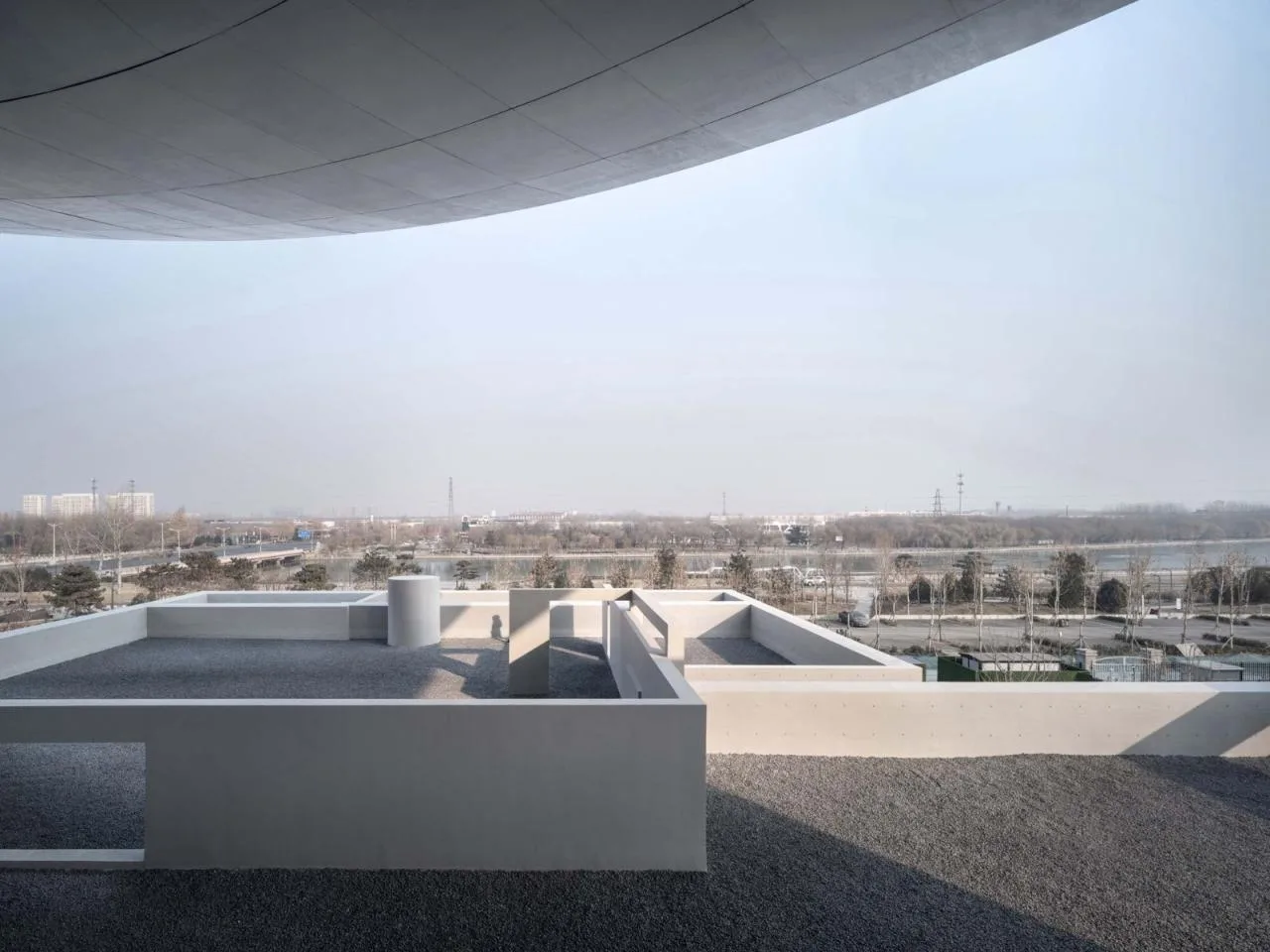
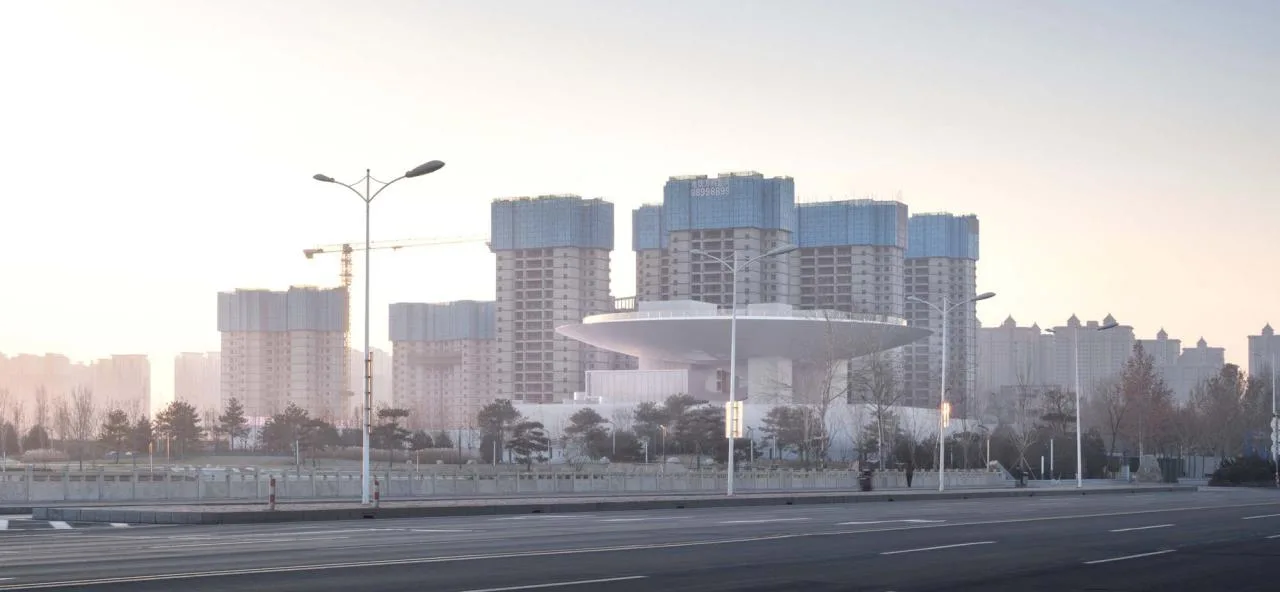
The building’s base features staggered volumes that connect directly to the earth, creating an “anchorage” to the site. Above, the exhibition center culminates in a flying saucer–shaped “suspended” public space. This elevated vantage point offers views of the rapidly developing Taiping River urban area, the natural landscapes of the Taiping and Hutuo Rivers, and the ancient city of Zhengding, effectively linking the city’s past and future.
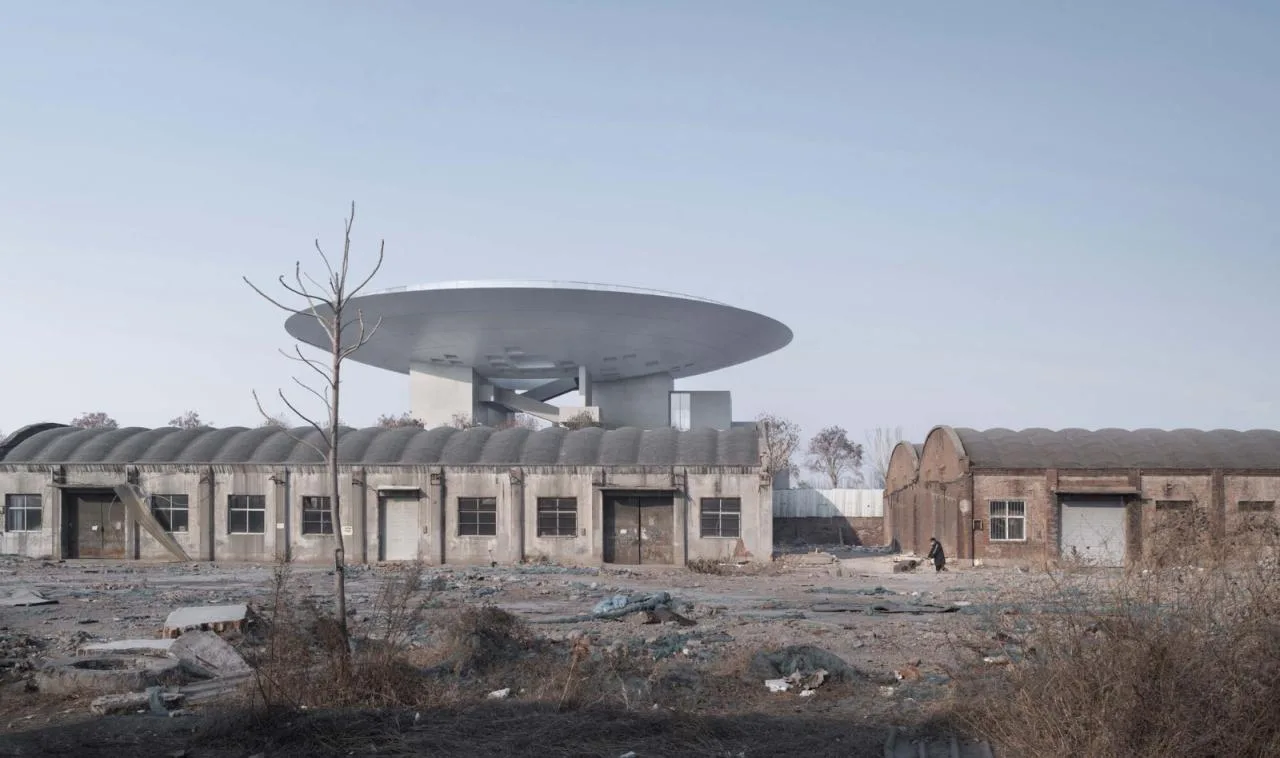
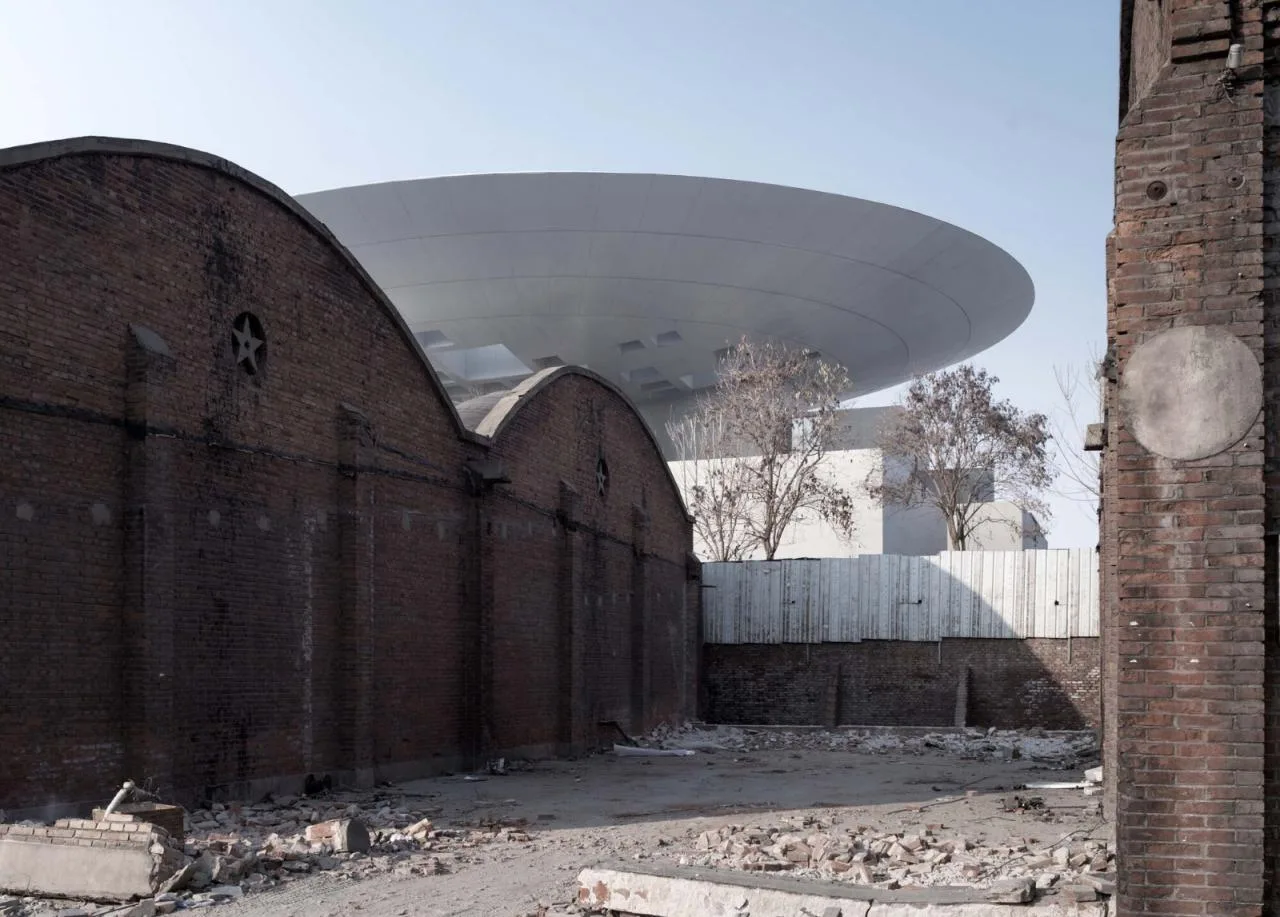
The dynamic between enclosure and openness is clearly expressed through the contrast of “anchoring” at the base and “suspension” above. The anchored base grounds the building, defining its place and context, while the suspended upper space releases the energy accumulated in the enclosed area, transforming it into a vertically open urban public space.
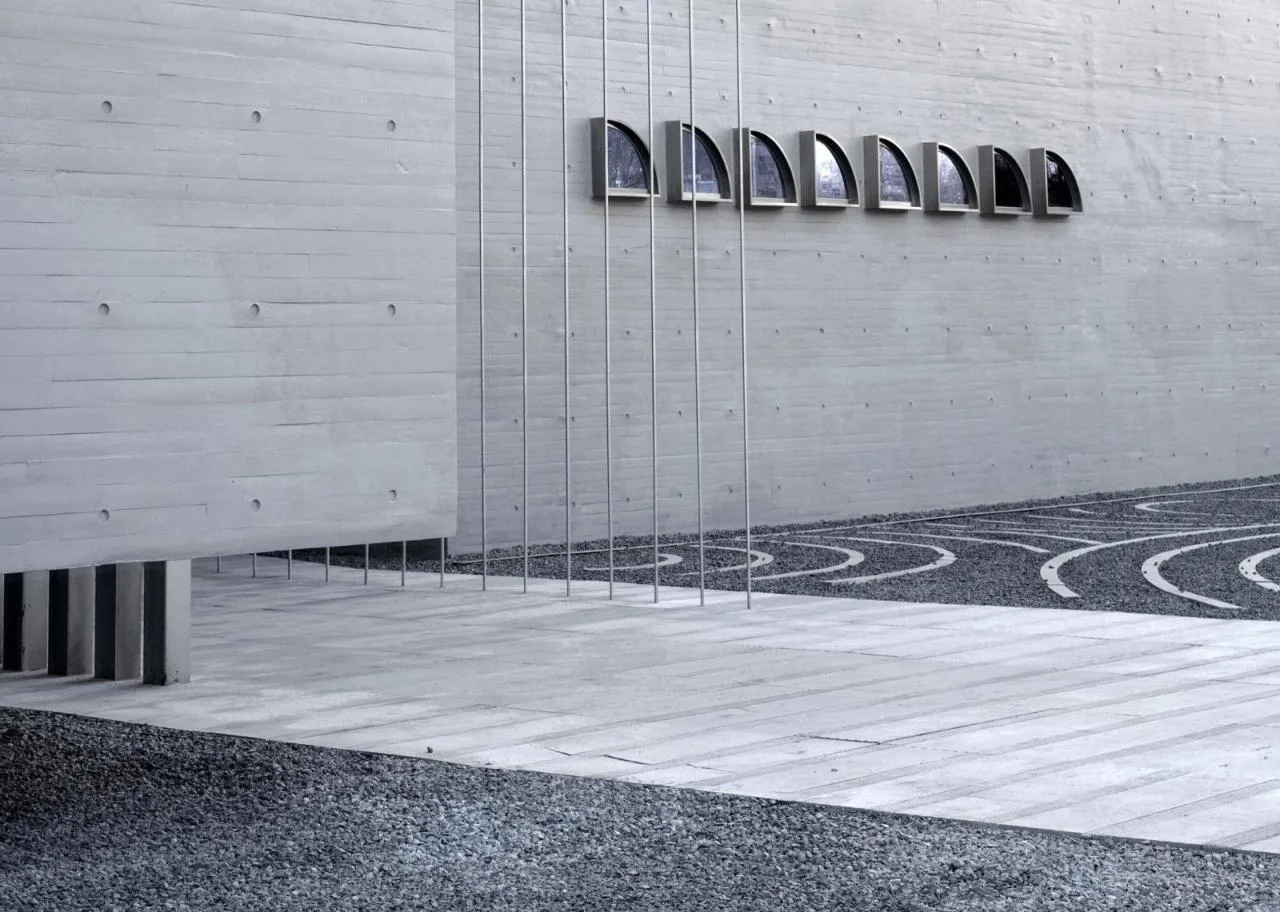
A key objective of the exhibition center is to bridge real nature and the city. As a landmark exhibition venue and urban living room within the district, it is designed to offer ample openness and public accessibility to its surroundings. Horizontally, the display center features a continuous concrete solid wall at the base, which appears enclosed and inward-facing but uniquely reshapes the boundaries with nature, guiding visitors toward the authentic natural environment.
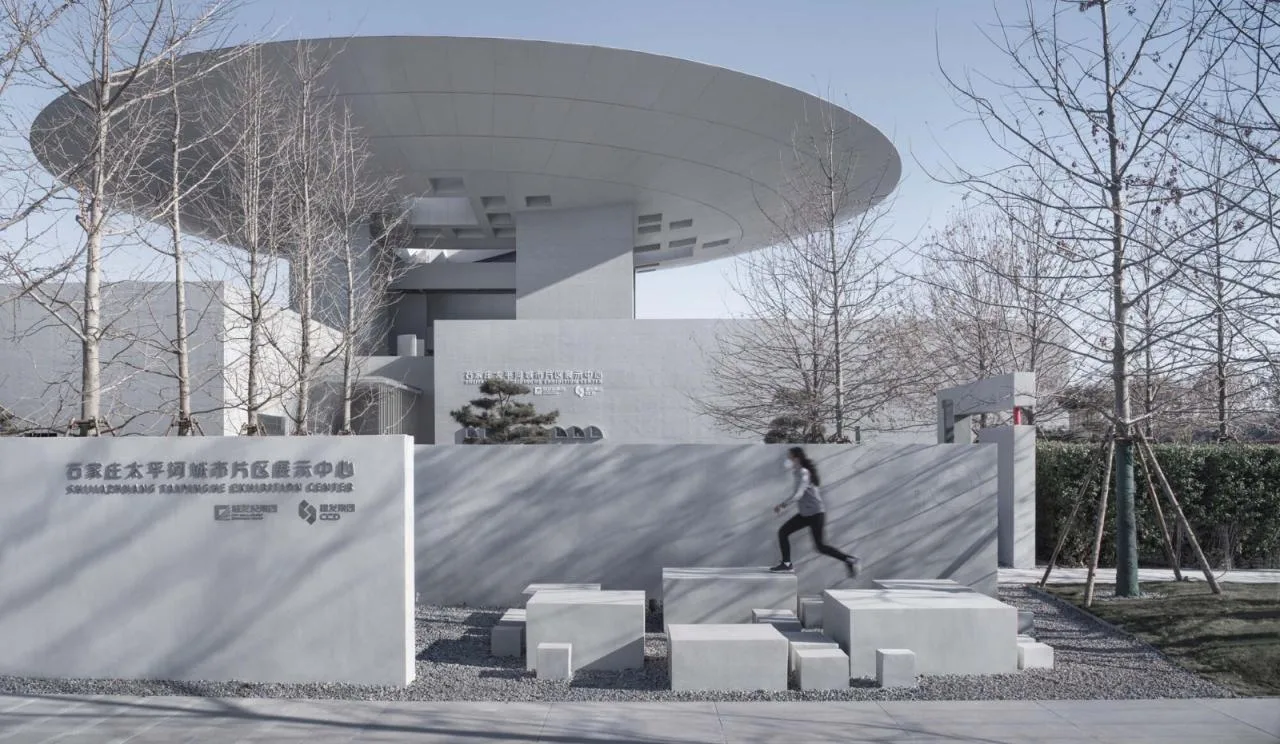
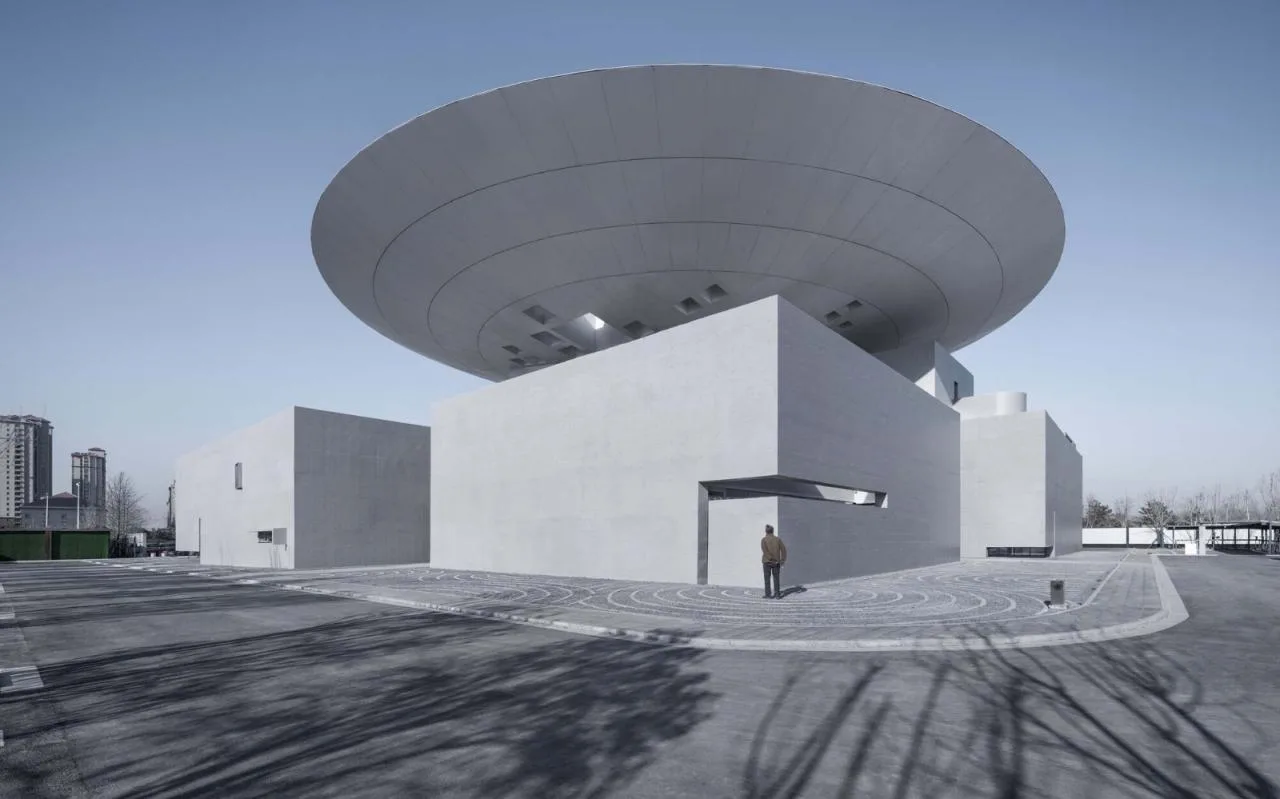
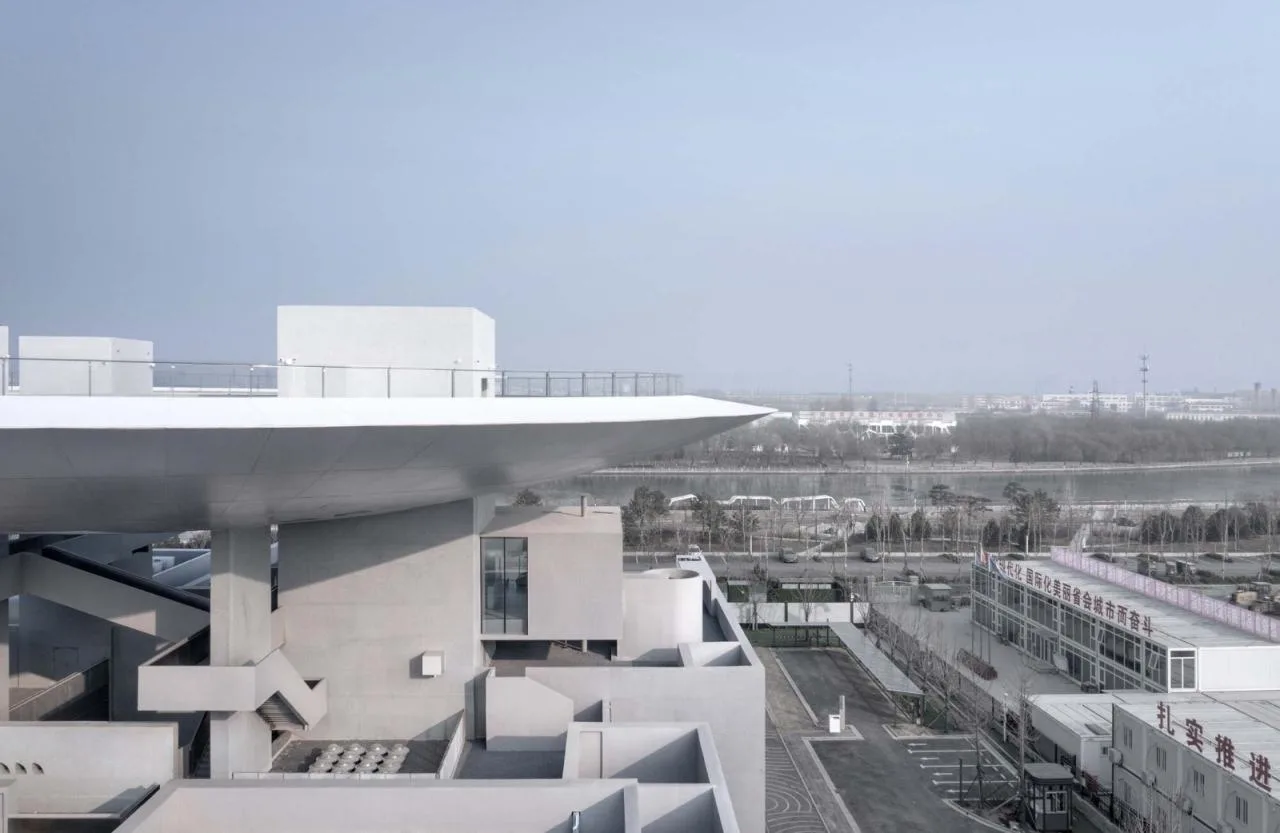
The external form of the emotional space display center is distinguished by continuous boundaries, suspended roofs, and dispersed “emotional space” elements integrated within the site, building, and interior. These spatial components disrupt the building’s commemorative geometric order, acting as a catalyst for transitioning from enclosure toward nature.
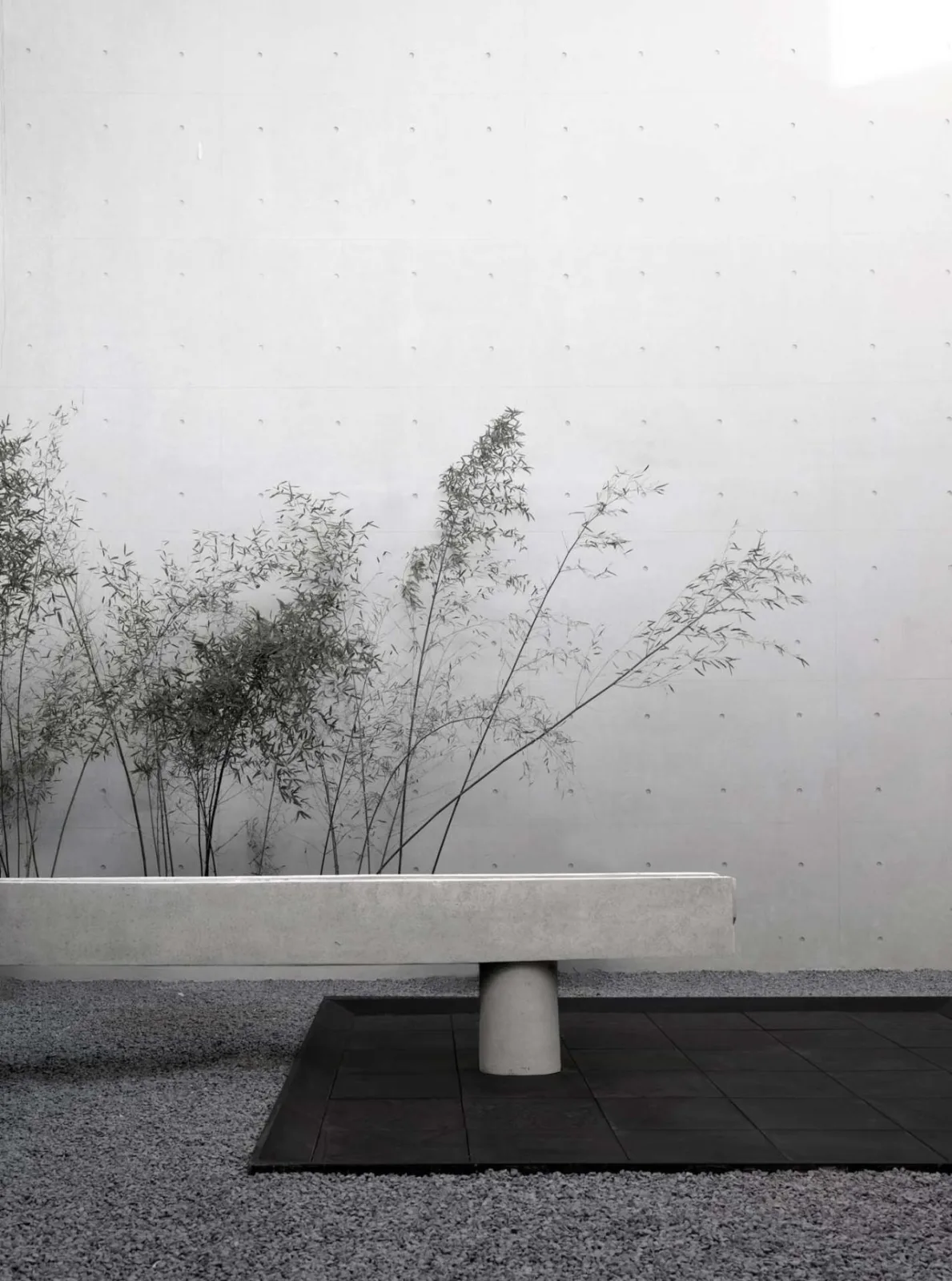
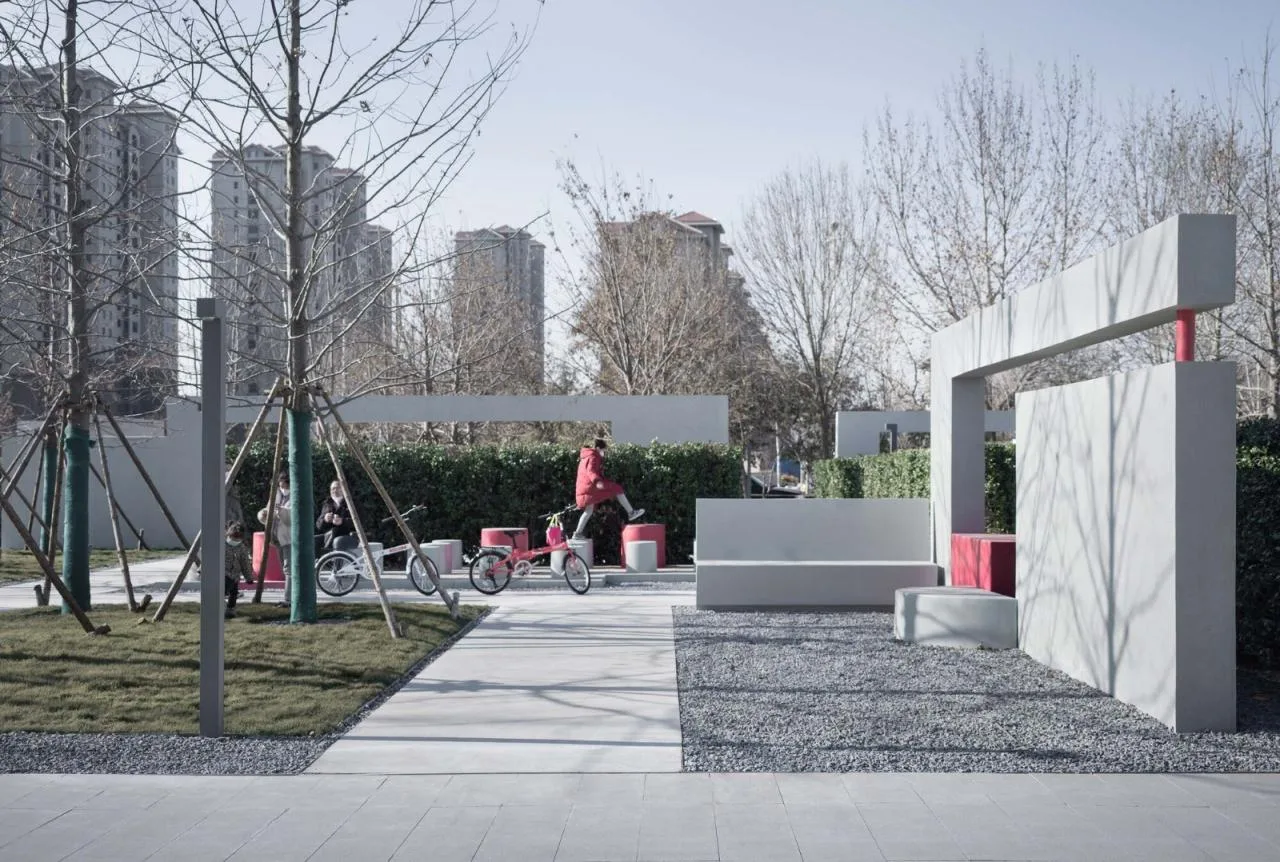
Elements such as low walls, benches, and frames function like extensions of the building, bridging interior and exterior spaces. These deliberately crafted emotional scenes foster connections between the building and its environment, blending nature, landscape, interiors, and rooftop areas into a cohesive whole.
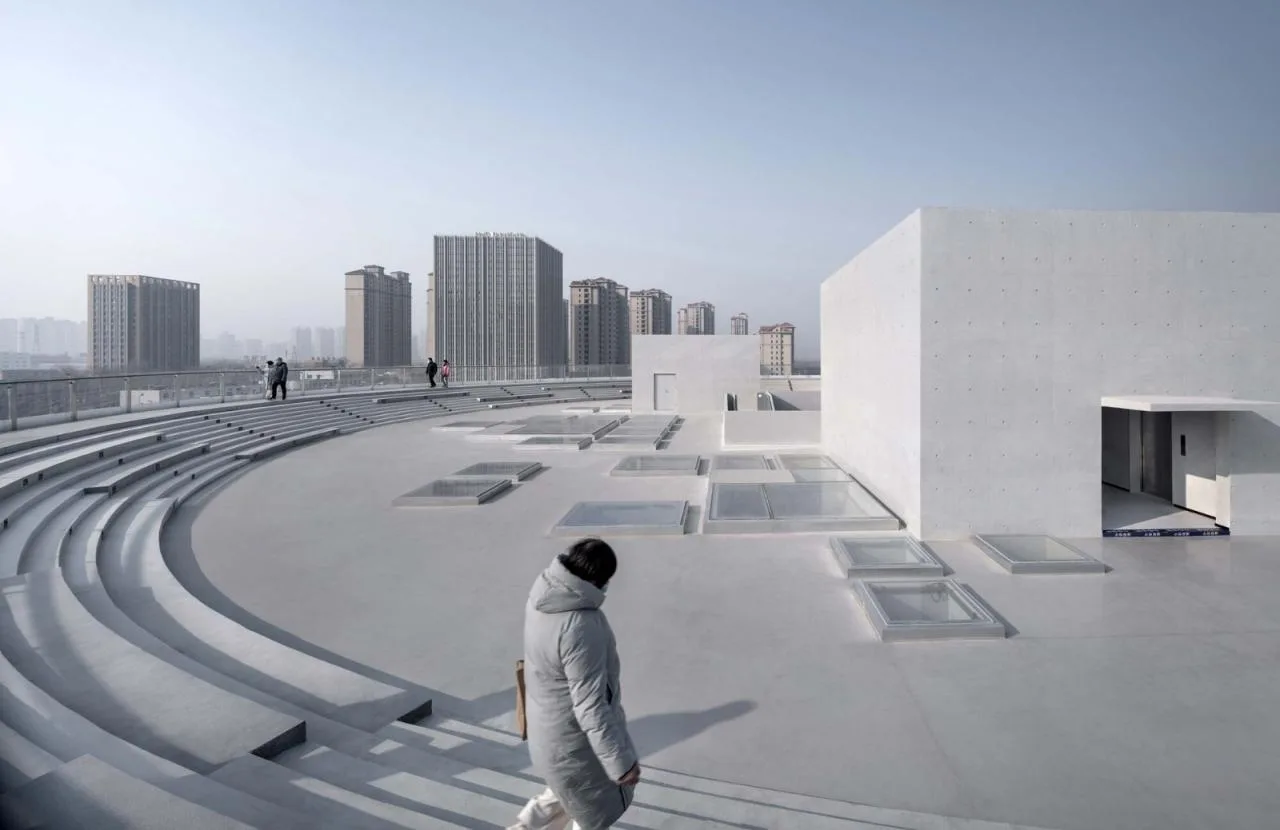
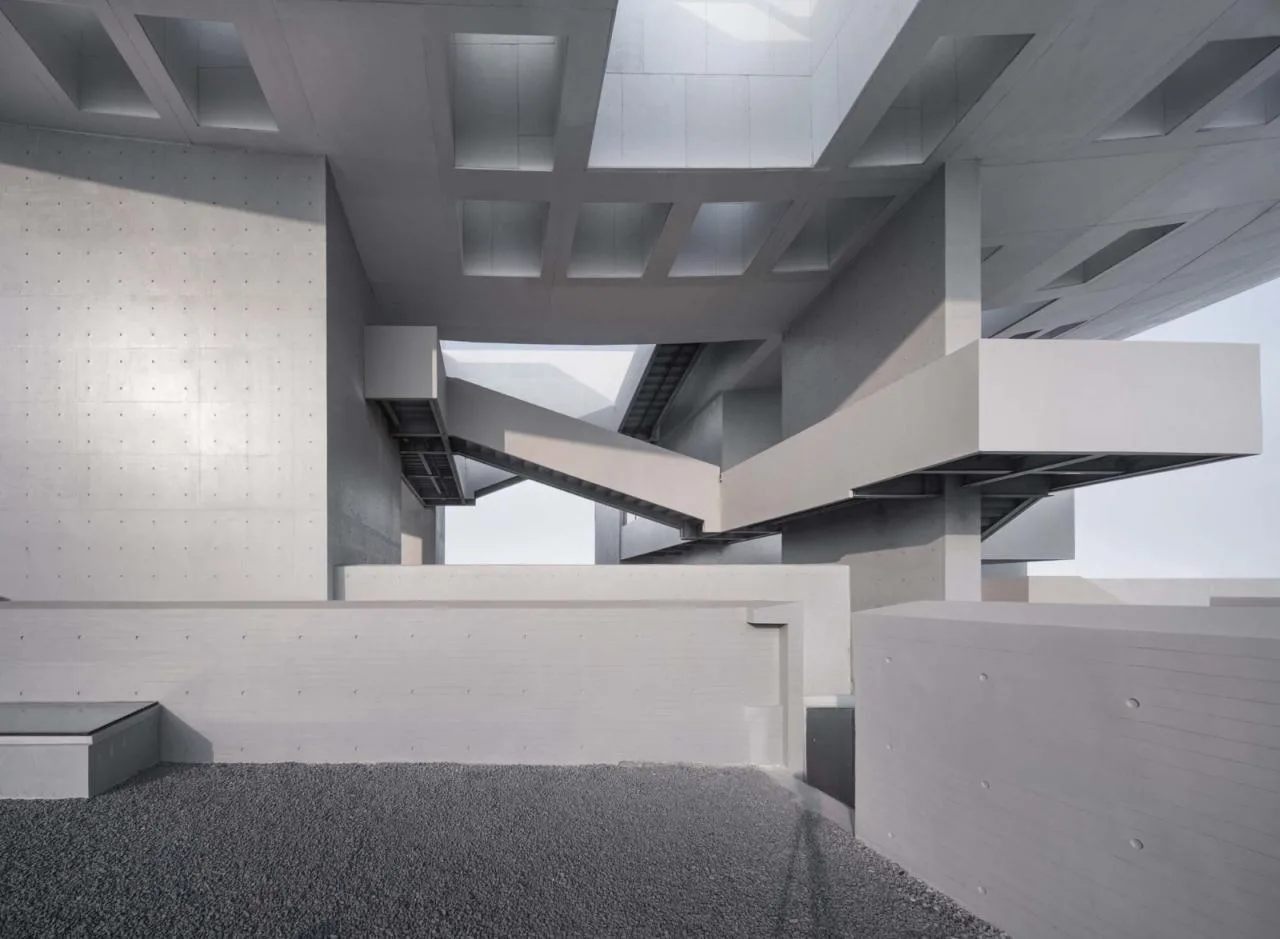
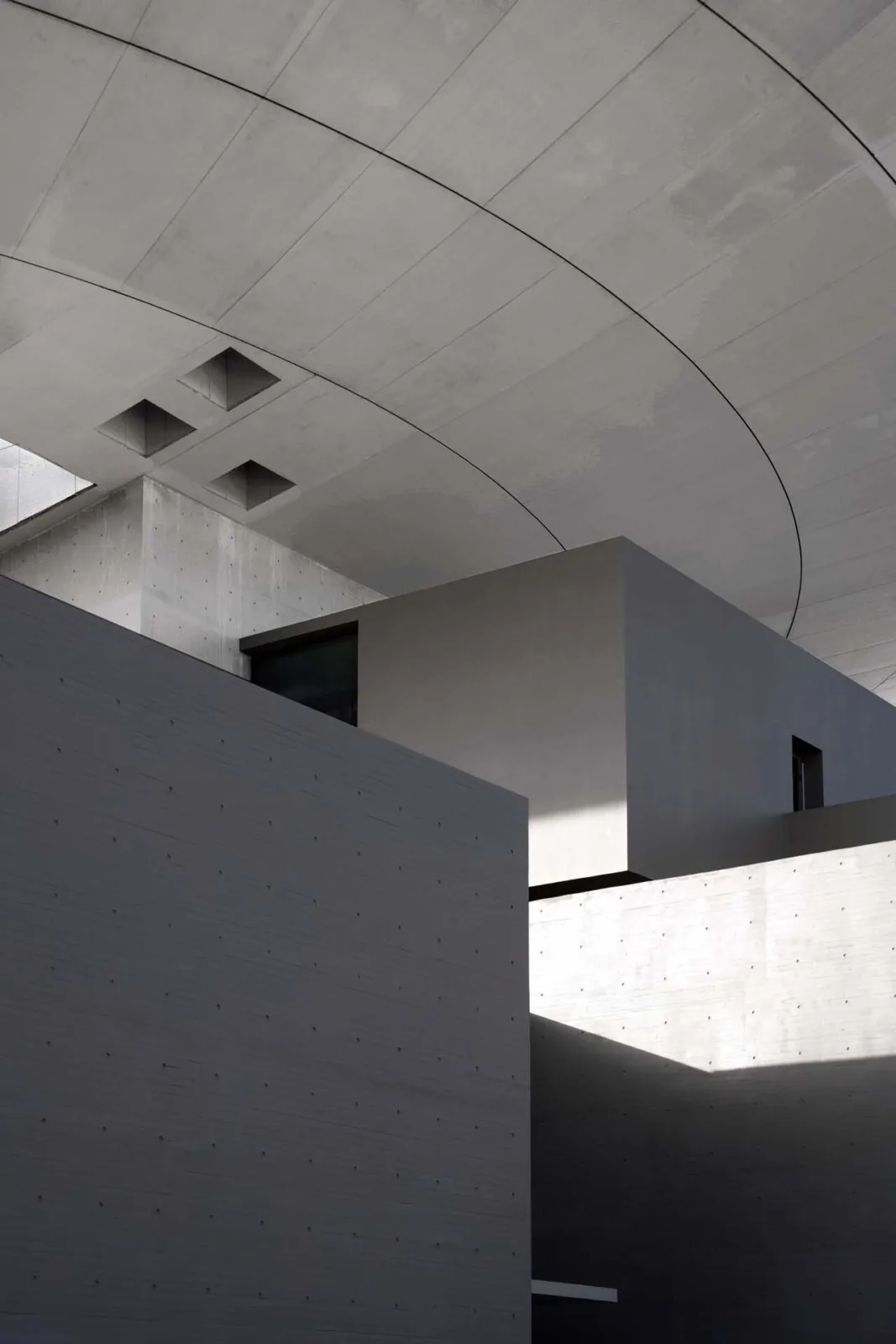
Imagine a snowy winter day spent comfortably indoors, warmed despite expansive glass windows. Snowflakes viewed on postcards or screens remain a distant, indirect experience, separated by an invisible barrier between humans and nature.
Yet, when we unexpectedly see benches and frames dusted with snowflakes outside, resembling charming snowmen, we might feel compelled to “go out and build a snowman.” These “emotional spaces” invite visitors to step into the real outdoors—to feel the sun, air, breeze, and the dynamic atmosphere of changing seasons.
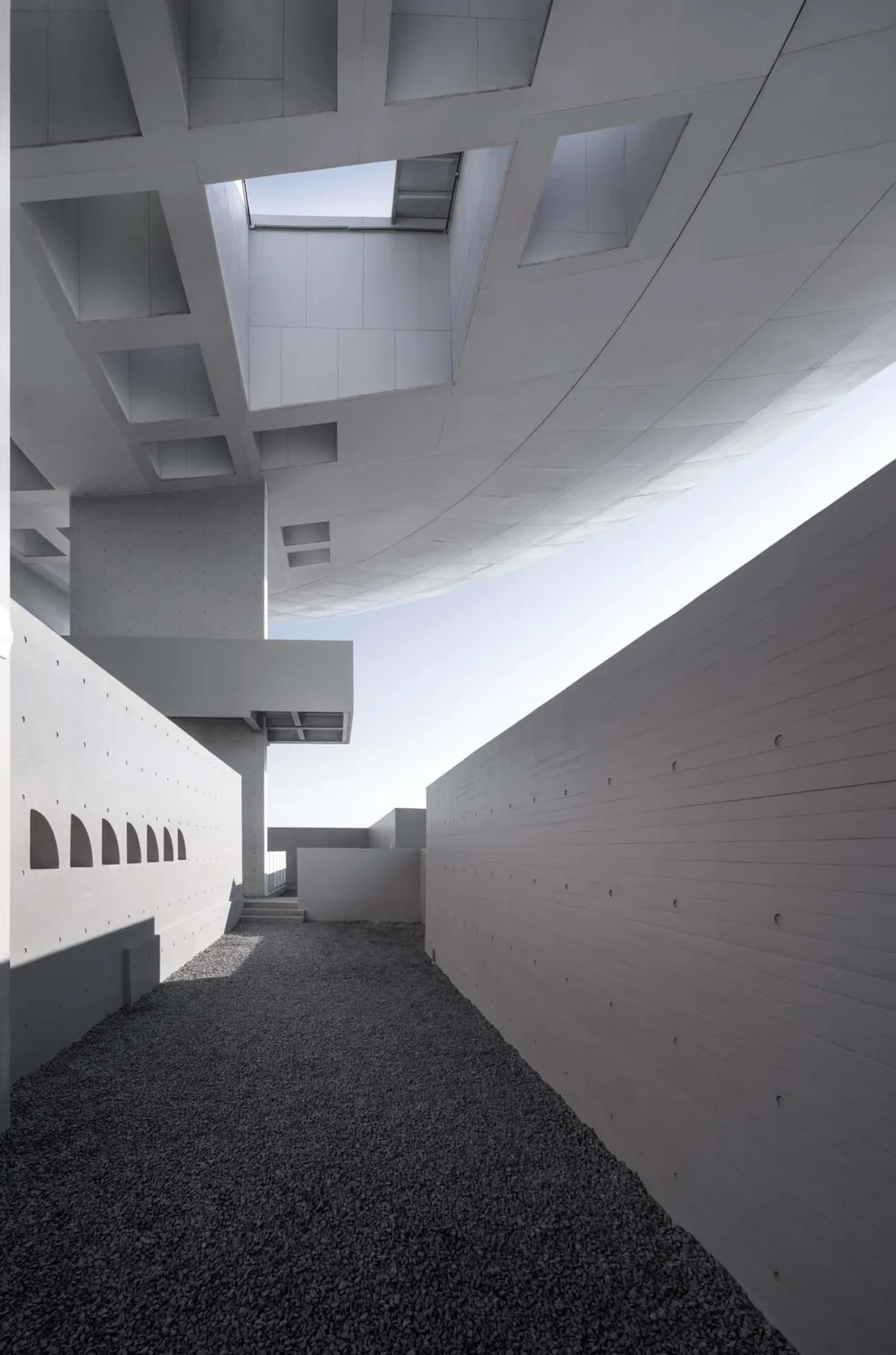
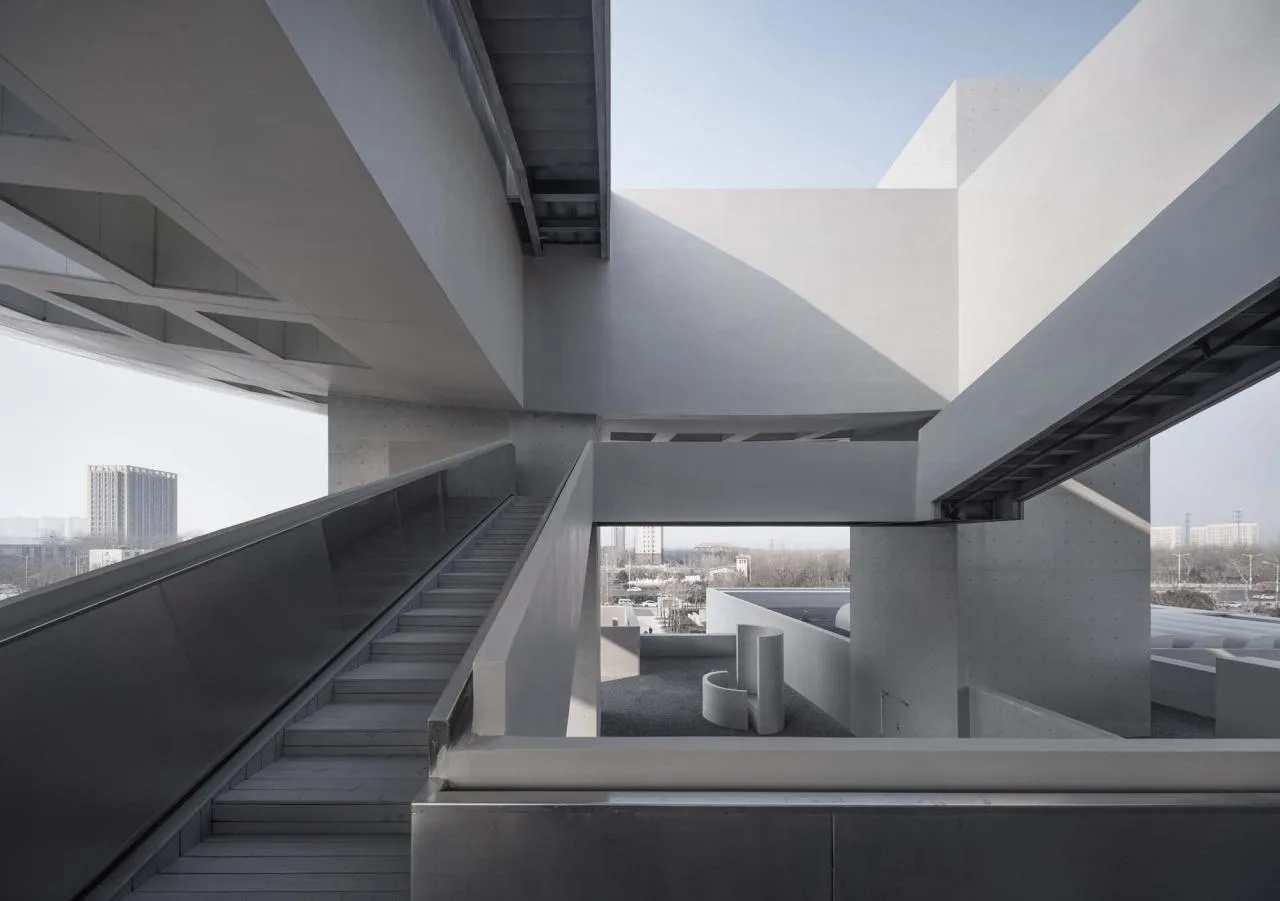
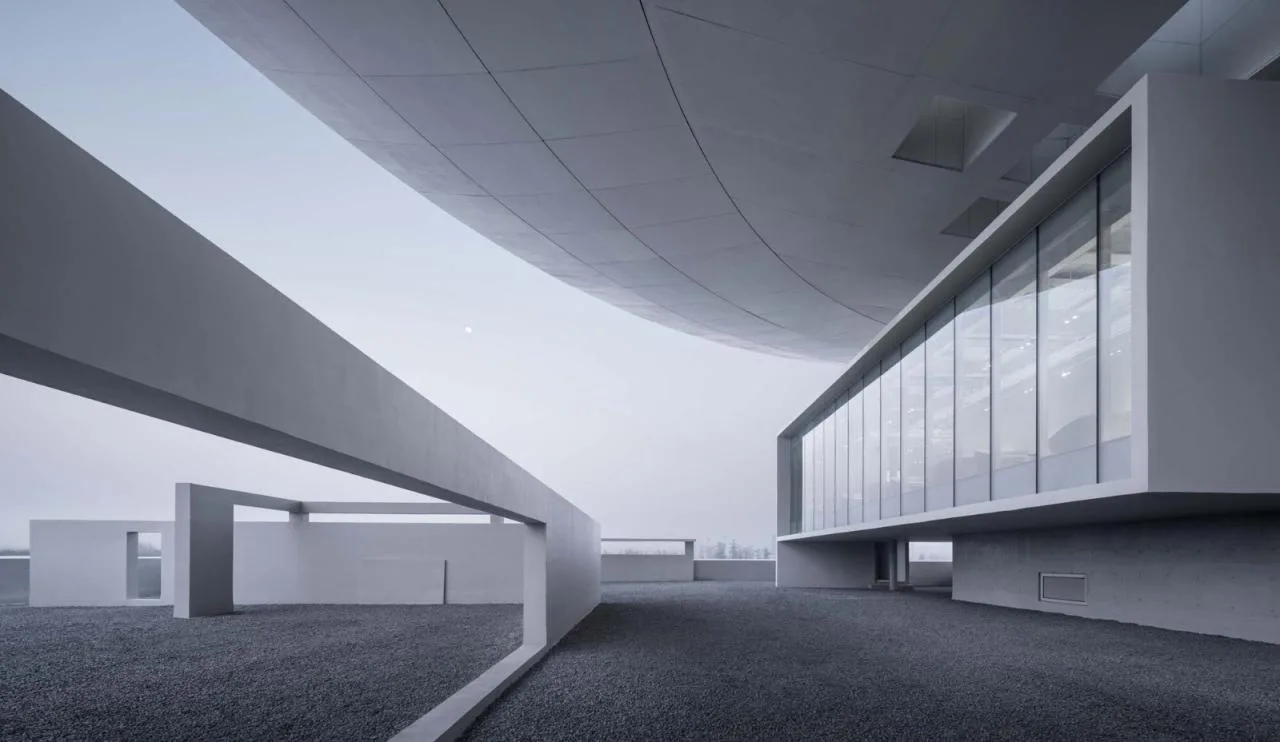
The Taipinghe Urban Area Exhibition Center spans a total construction area of 5,000 square meters, with 4,400 square meters above ground. The ground floor hosts the main functional spaces including the lobby, front hall, exhibition hall, and other external display areas, alongside auxiliary facilities such as VIP reception, meeting rooms, and offices.
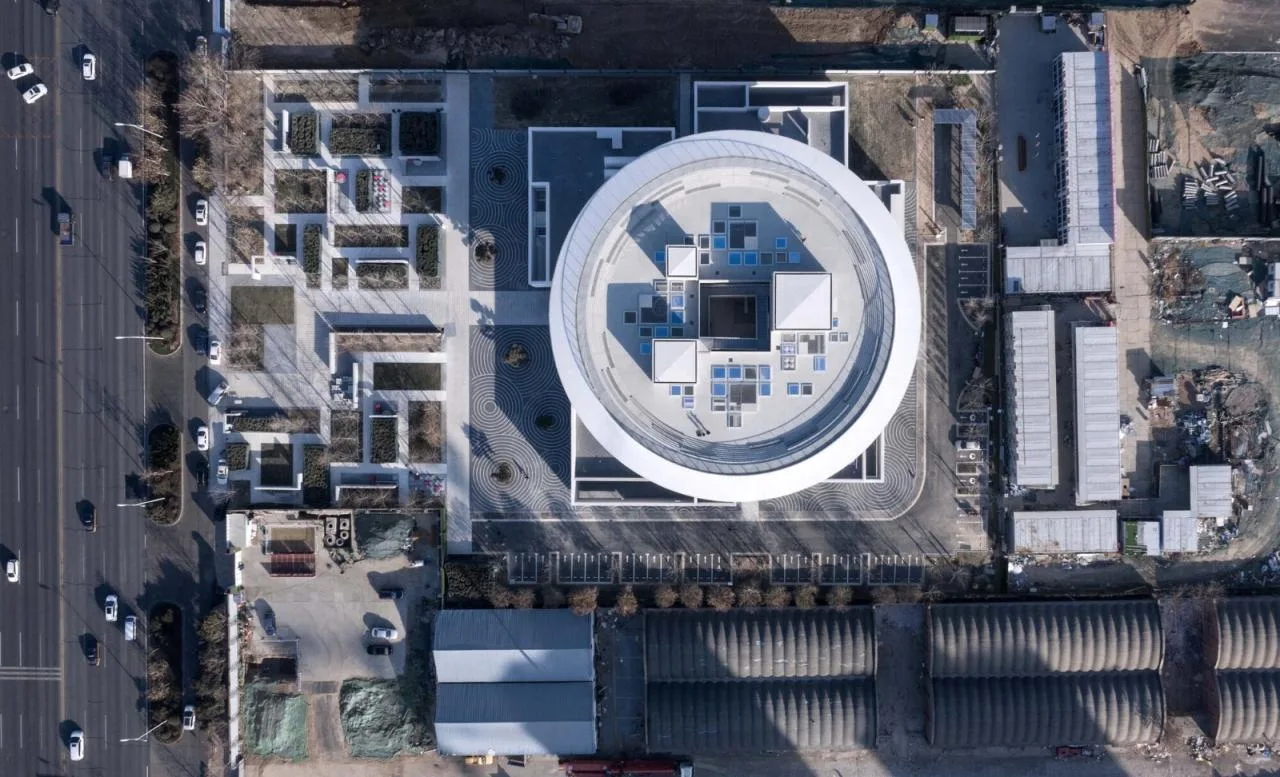
Four inward-facing enclosed volumes are arranged around a central courtyard, creating an efficient circular circulation path. A small bookstore and coffee bar occupy the northeast corner of the second floor, overlooking the north side of the Taiping River with full openness.
The building’s rooftop features a suspended public rest and observation platform. The underground level covers 600 square meters and contains auxiliary equipment rooms, including power distribution and fire pump rooms.
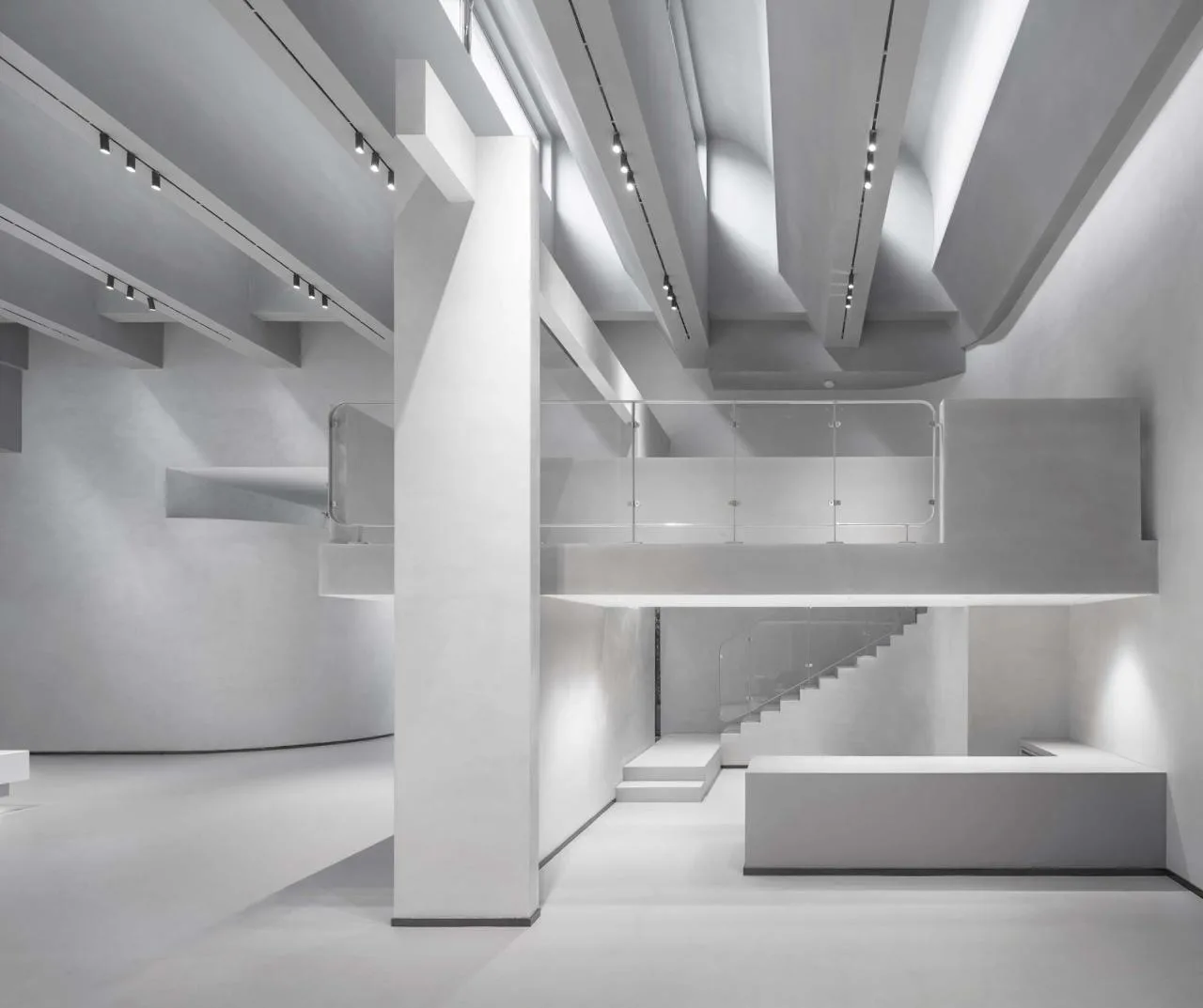
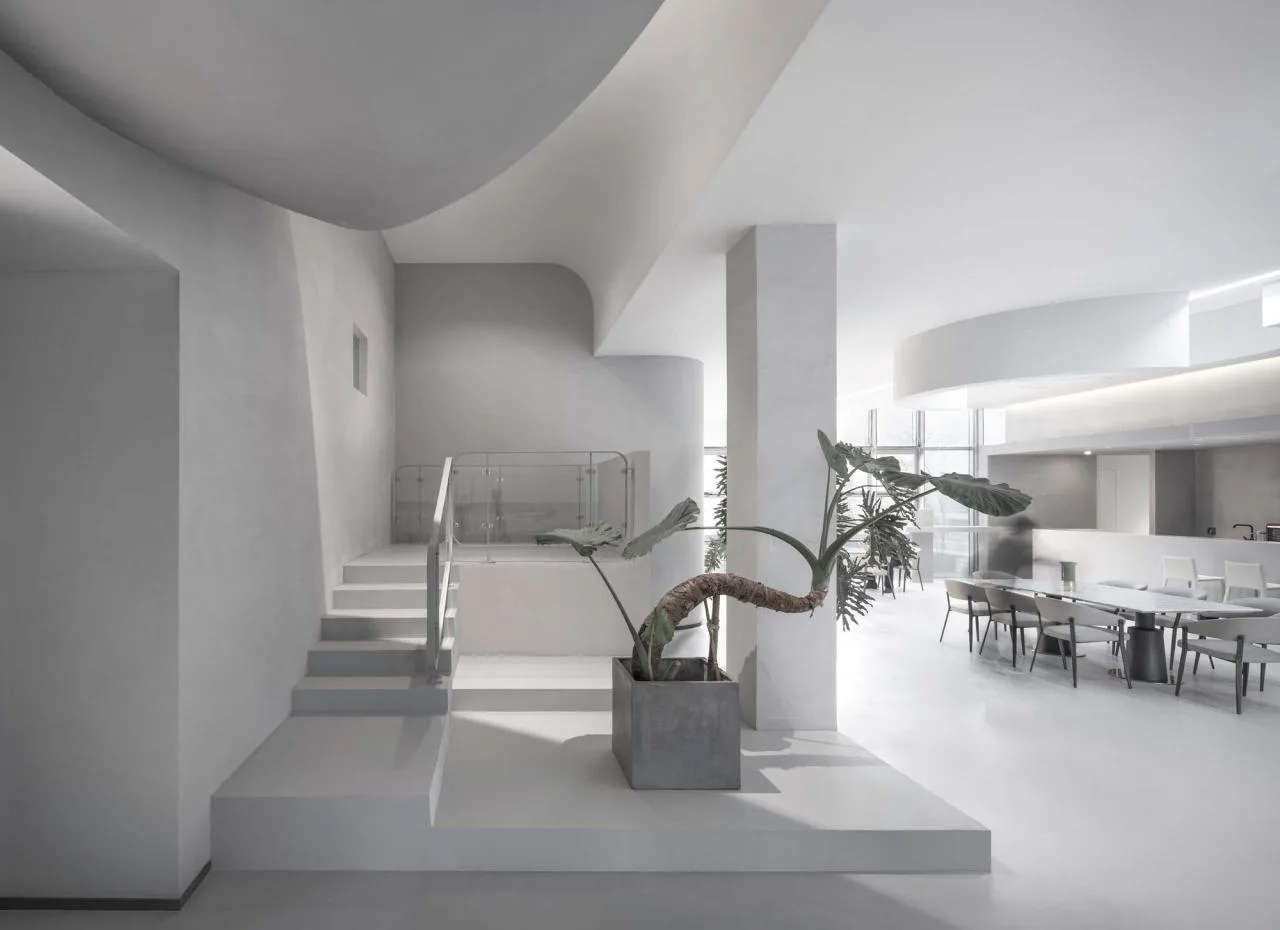
The exhibition center’s main public entrance is located on Shengli Street, the primary urban road on the site’s west side. Visitors follow a landscape wall and “emotional space” ornaments, passing through a rich urban public landscape and natural surroundings before entering the lobby.
Opposite the lobby lies the central courtyard, surrounded by water and delicate bamboo. Light and shadow play through large and small openings in the rooftop viewing platform and gaps in the outdoor stairs, enriching the courtyard’s ambiance.
The main exhibition route enters the exhibition hall lobby from the lobby’s left side. The connection between these spaces is designed as a carefully crafted spatial scene, encouraging visitors to rest, explore, and take photos. The concept of “a house outside the house, and a house inside the house” is embodied in the front hall roof, which features a sail-shaped skylight that evenly distributes natural light, creating a welcoming atmosphere at the exhibition hall entrance.
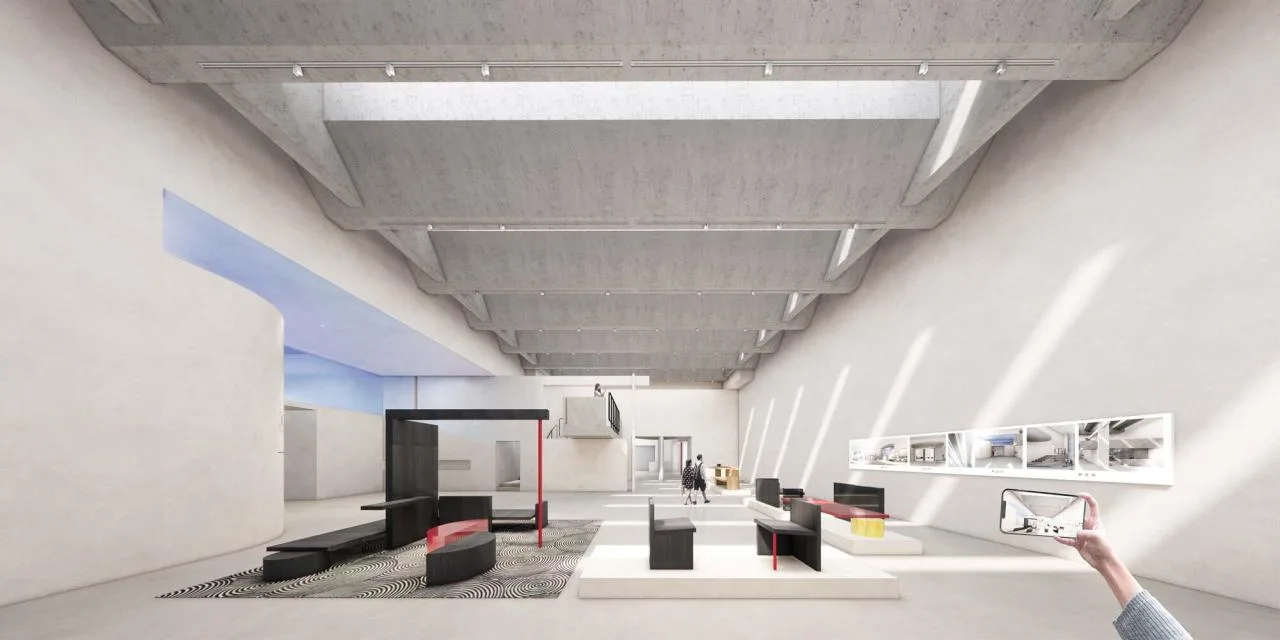
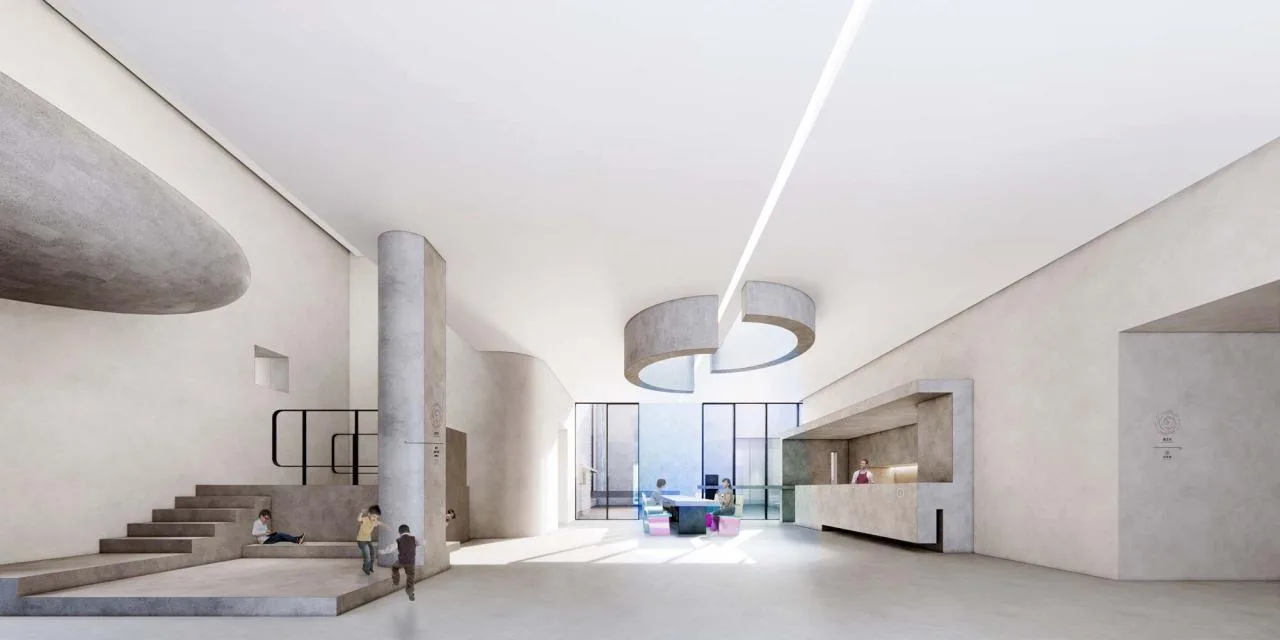
The building’s lower structure utilizes a reinforced concrete frame, while the viewing platform is supported by a cantilevered steel truss structure anchored to three core tubes and a shear wall.
The continuous enclosed wall at the base is constructed from plain concrete, using pine wood formwork panels measuring 800 to 1200 mm in length and 150 mm in width. The rooftop viewing platform’s exterior is clad with light gray GRC hanging panels, designed to reduce mold costs through orthogonal division on the inner side and sector-based division on the outer ring.
Urban spaces are shaped by symbols and meanings, rich in emotional significance. The exhibition center expresses the dialectic between enclosure and openness through the elements of “suspension” and “anchoring.” It connects architecture and nature via “emotional space,” offering the city a multifaceted cultural, leisure, and personal experience that enhances place identity, belonging, creativity, and spatial vitality.
Project Drawings
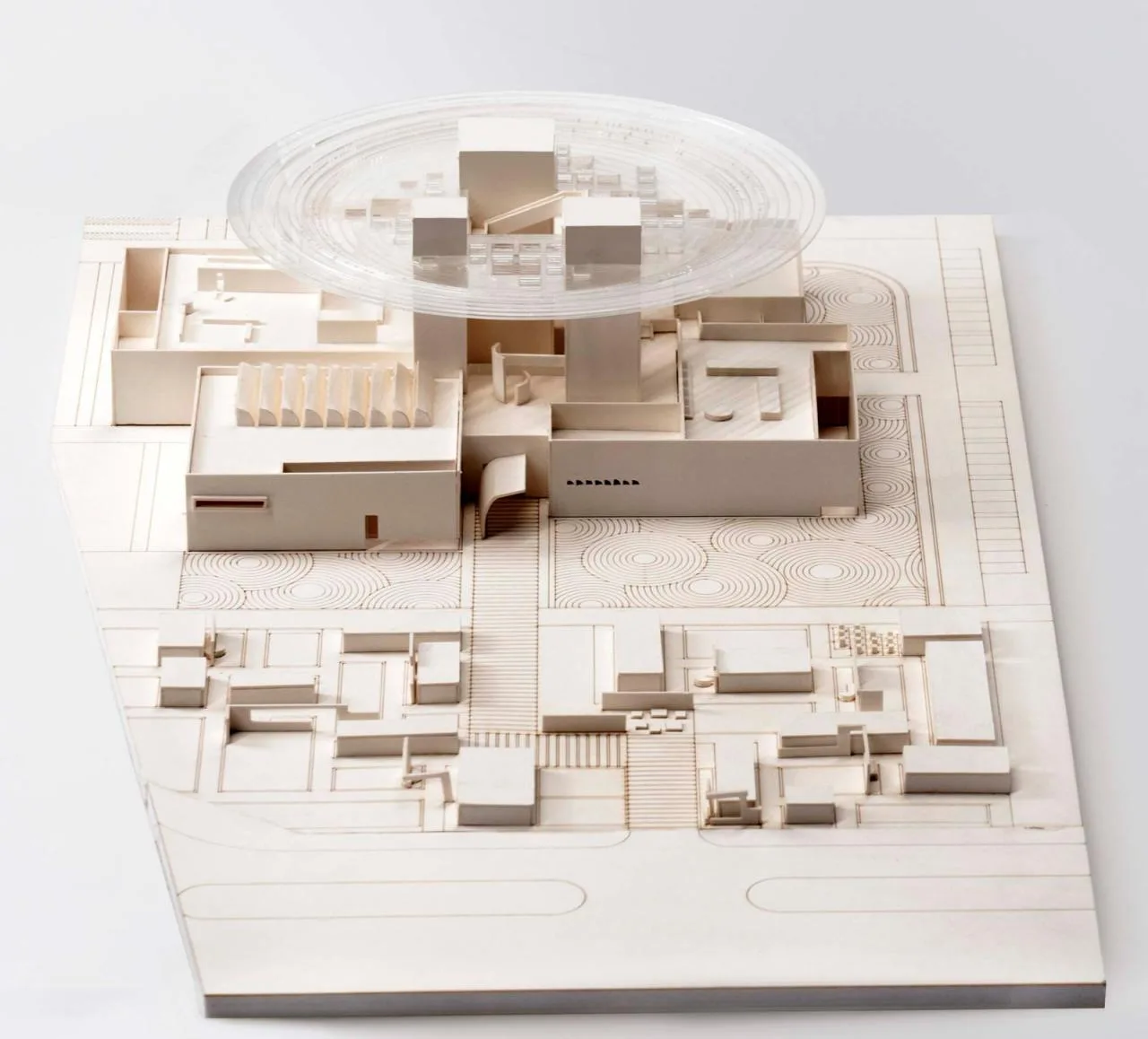
△ Model Diagram
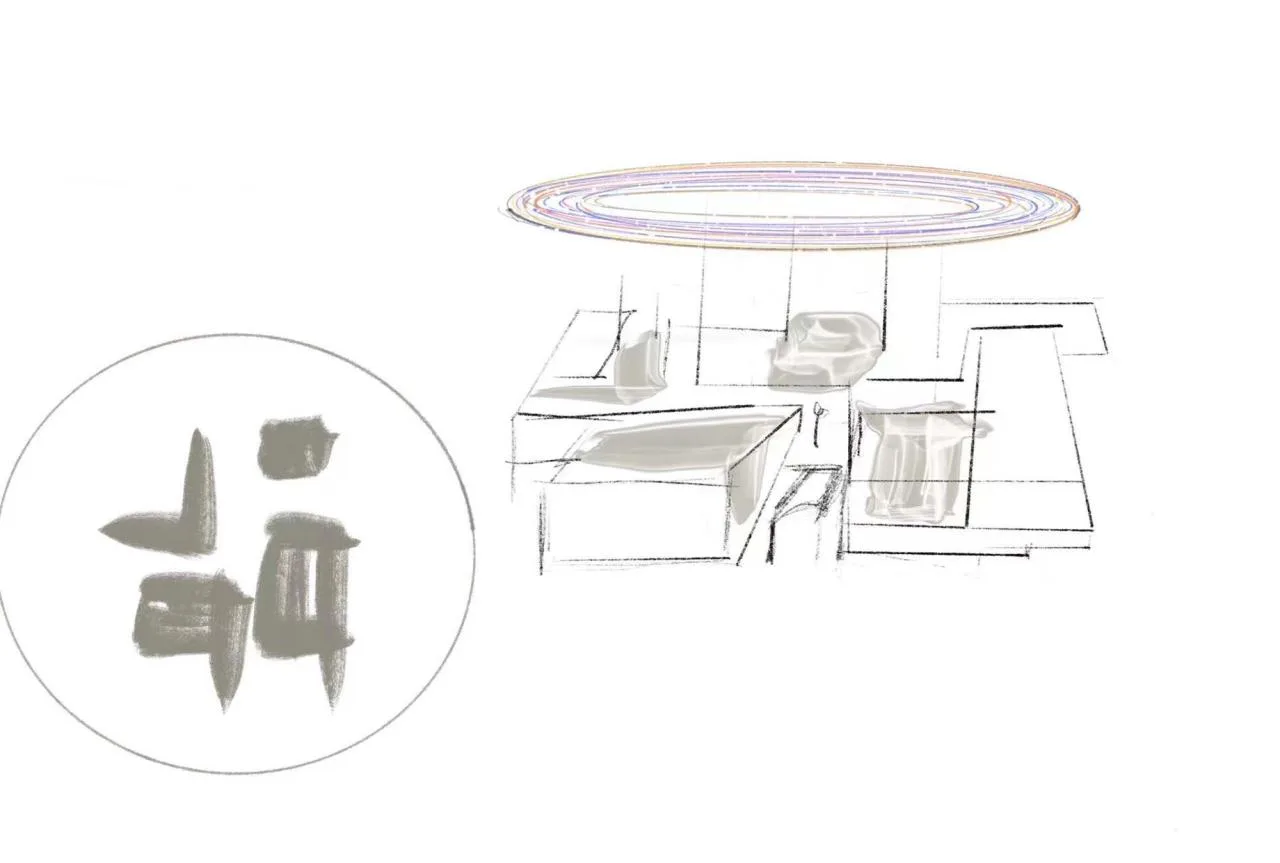
△ Concept Hand-Drawn Diagram
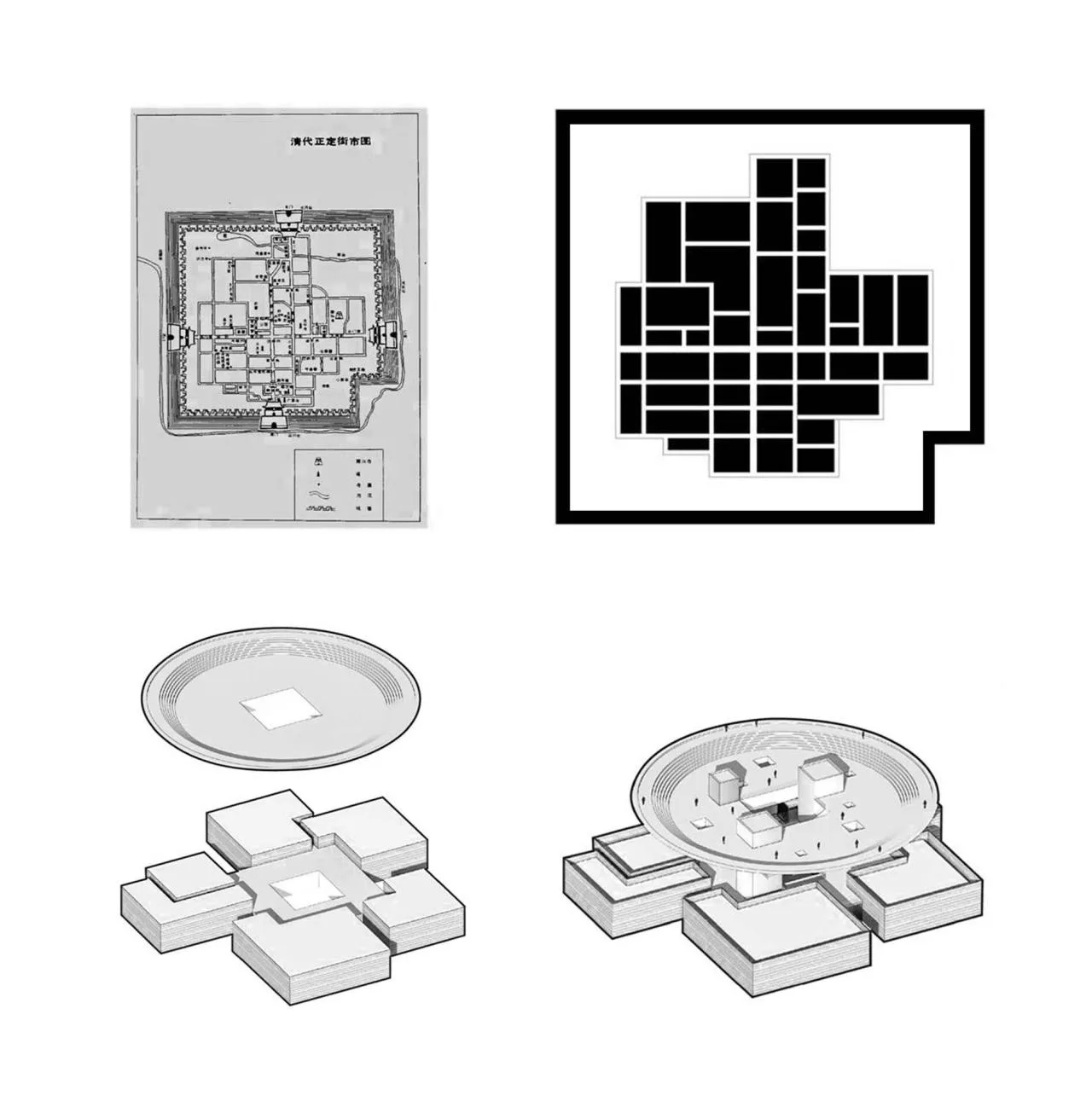
△ Shape Generation Diagram
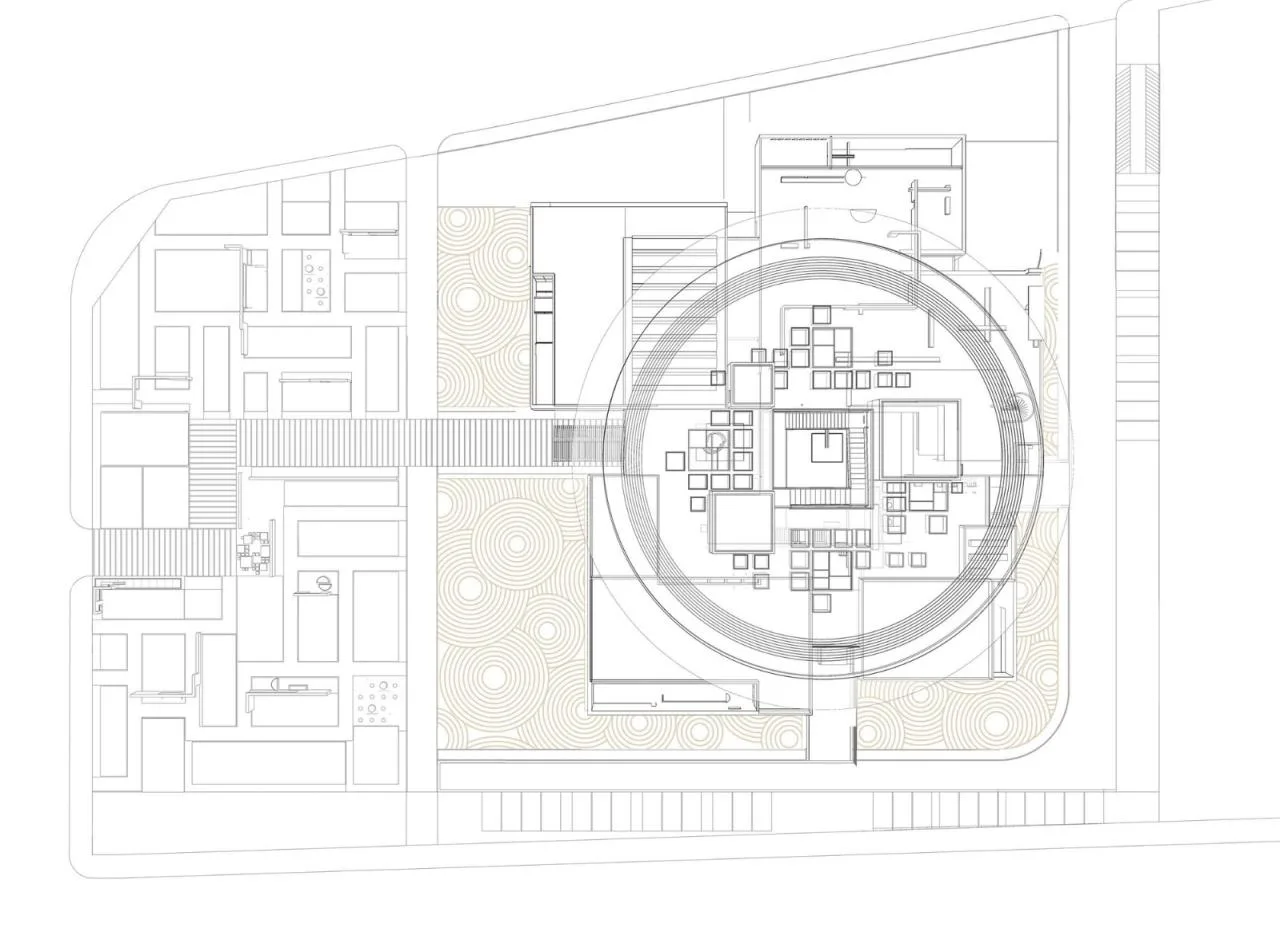
△ General Layout Plan
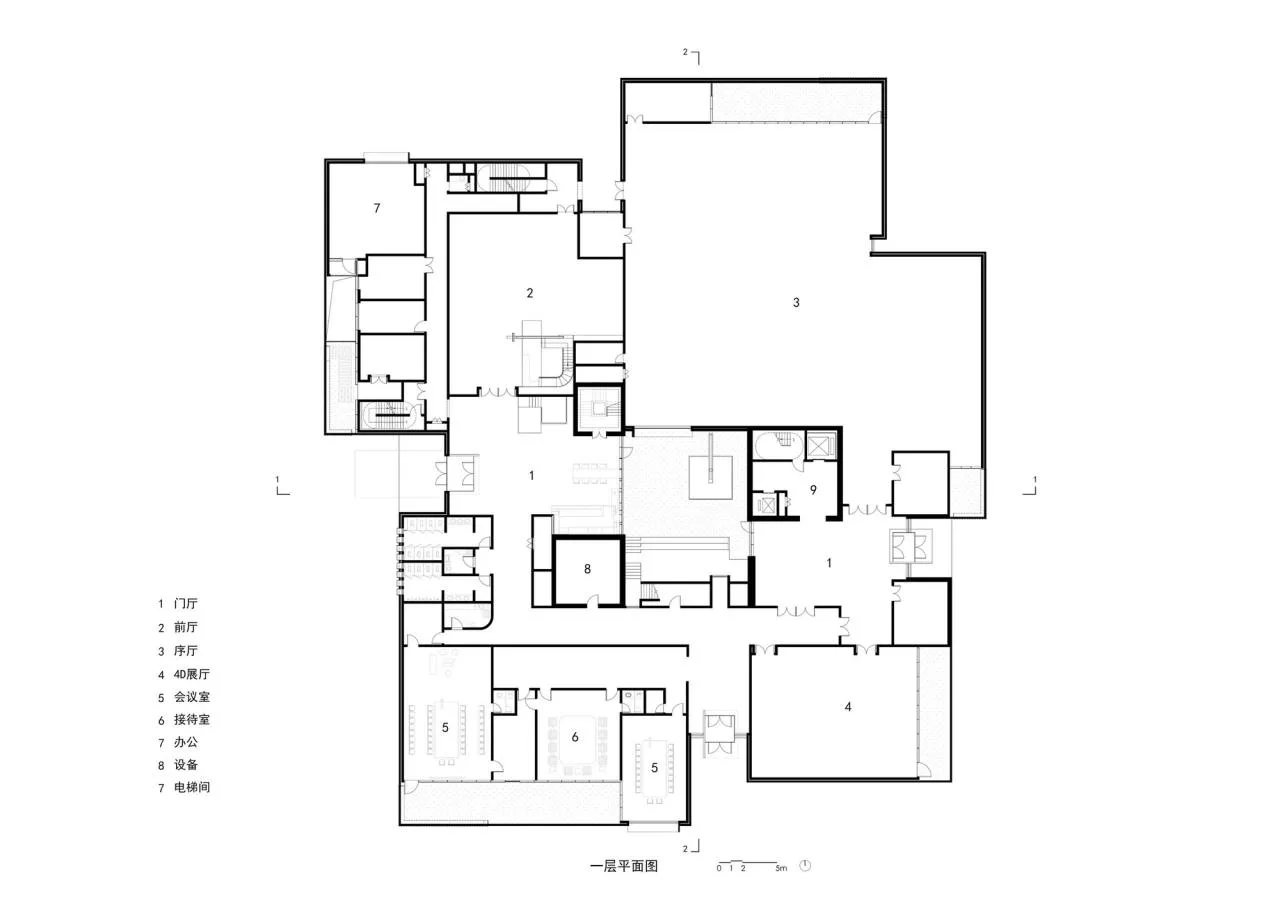
△ First Floor Plan
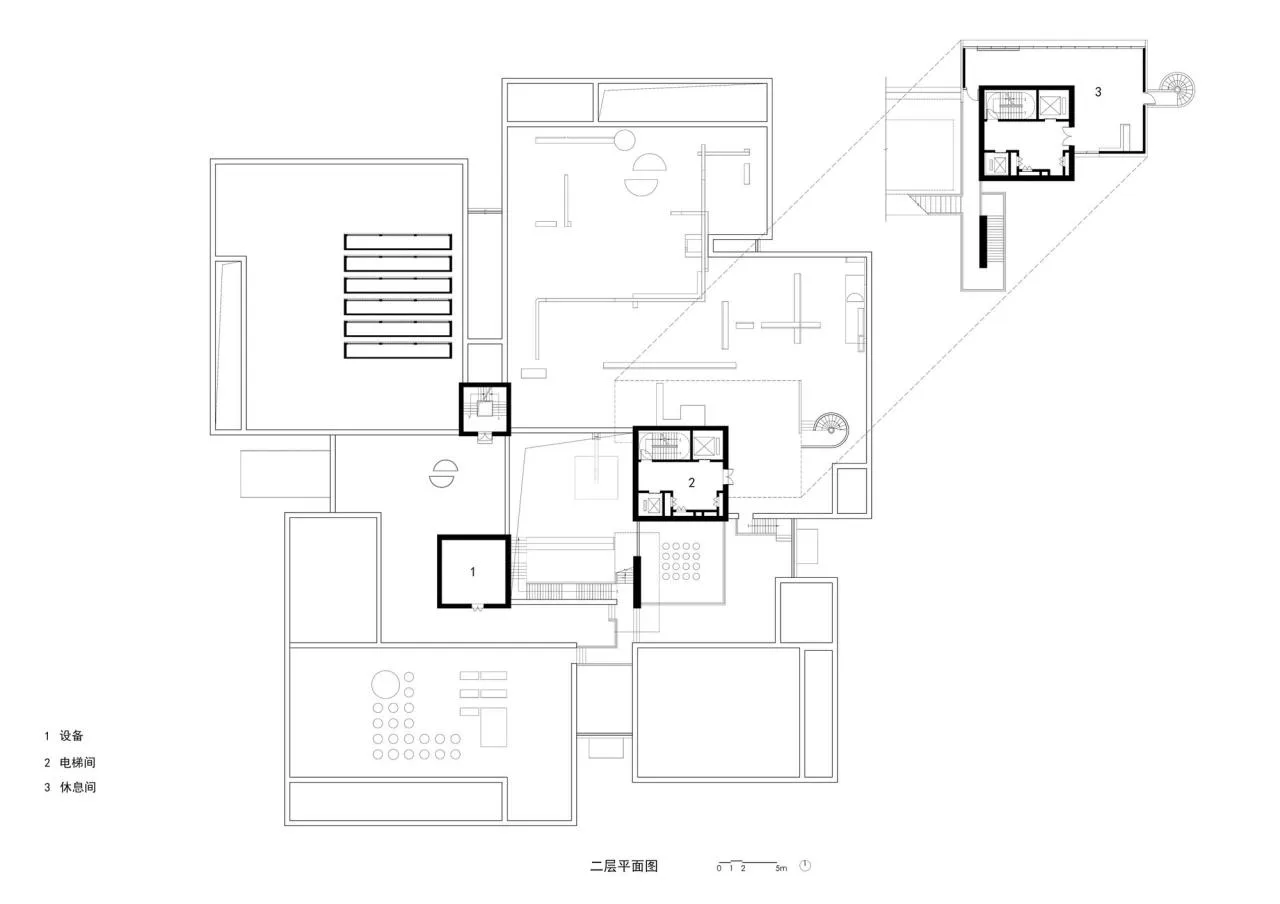
△ Second Floor Plan
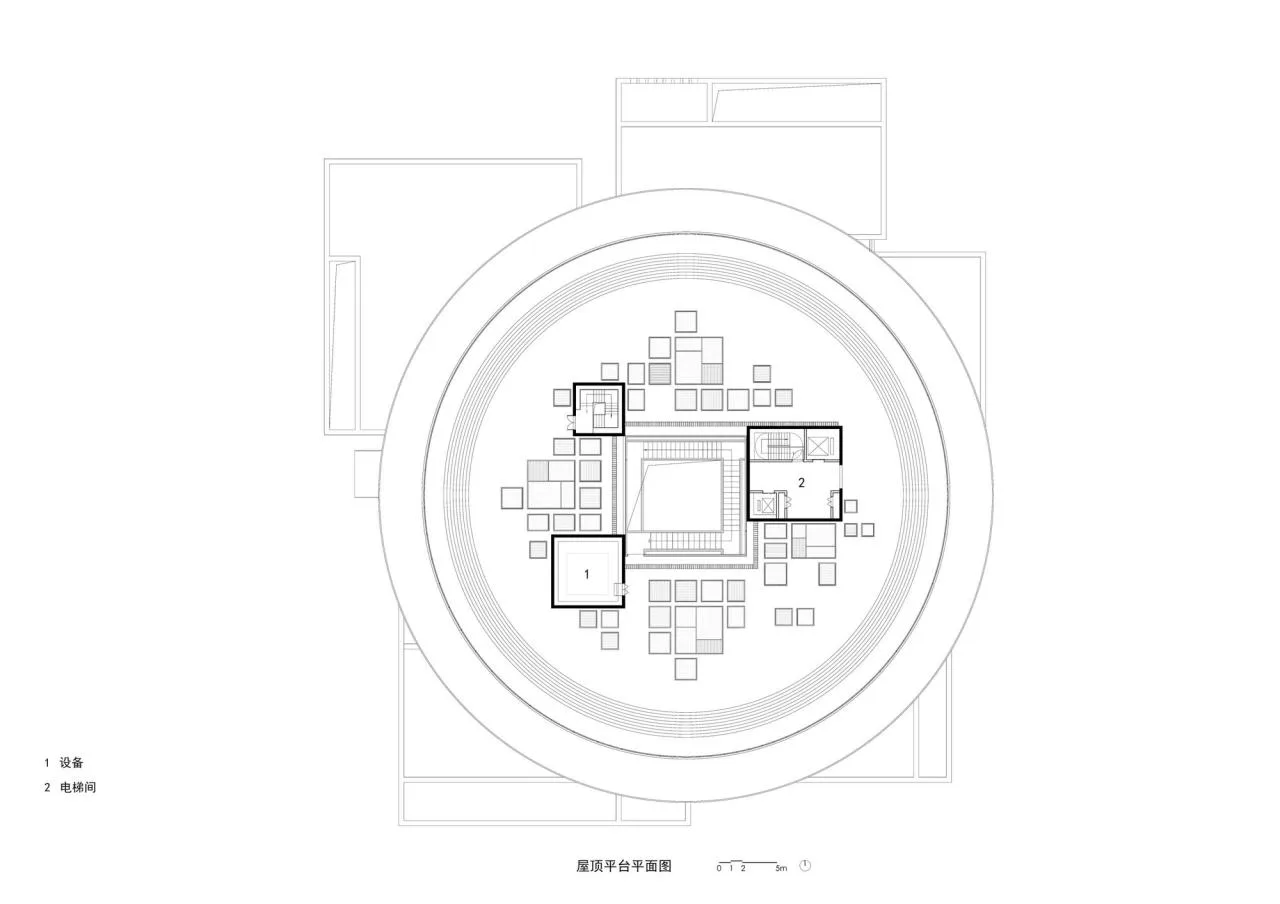
△ Roof Plan
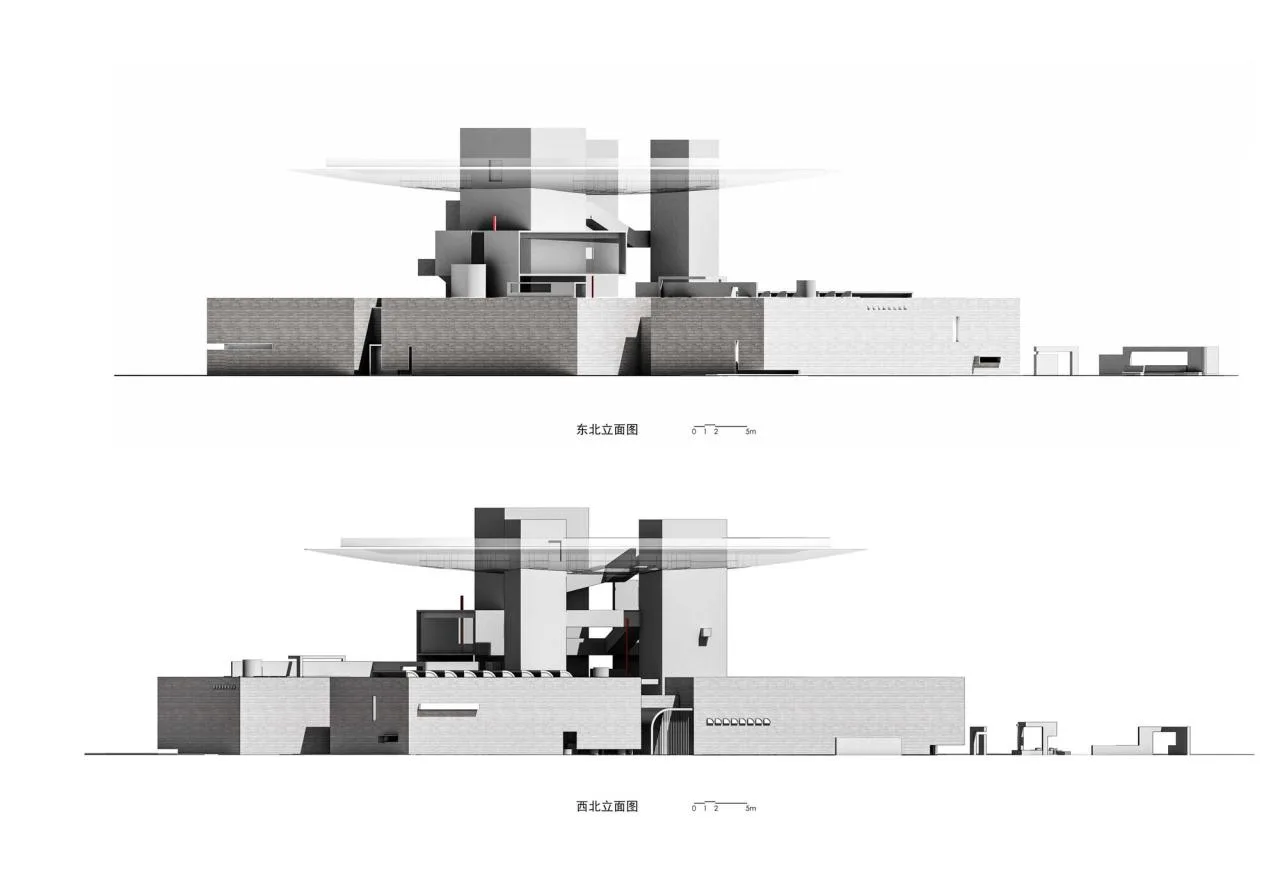
△ Elevation Drawing
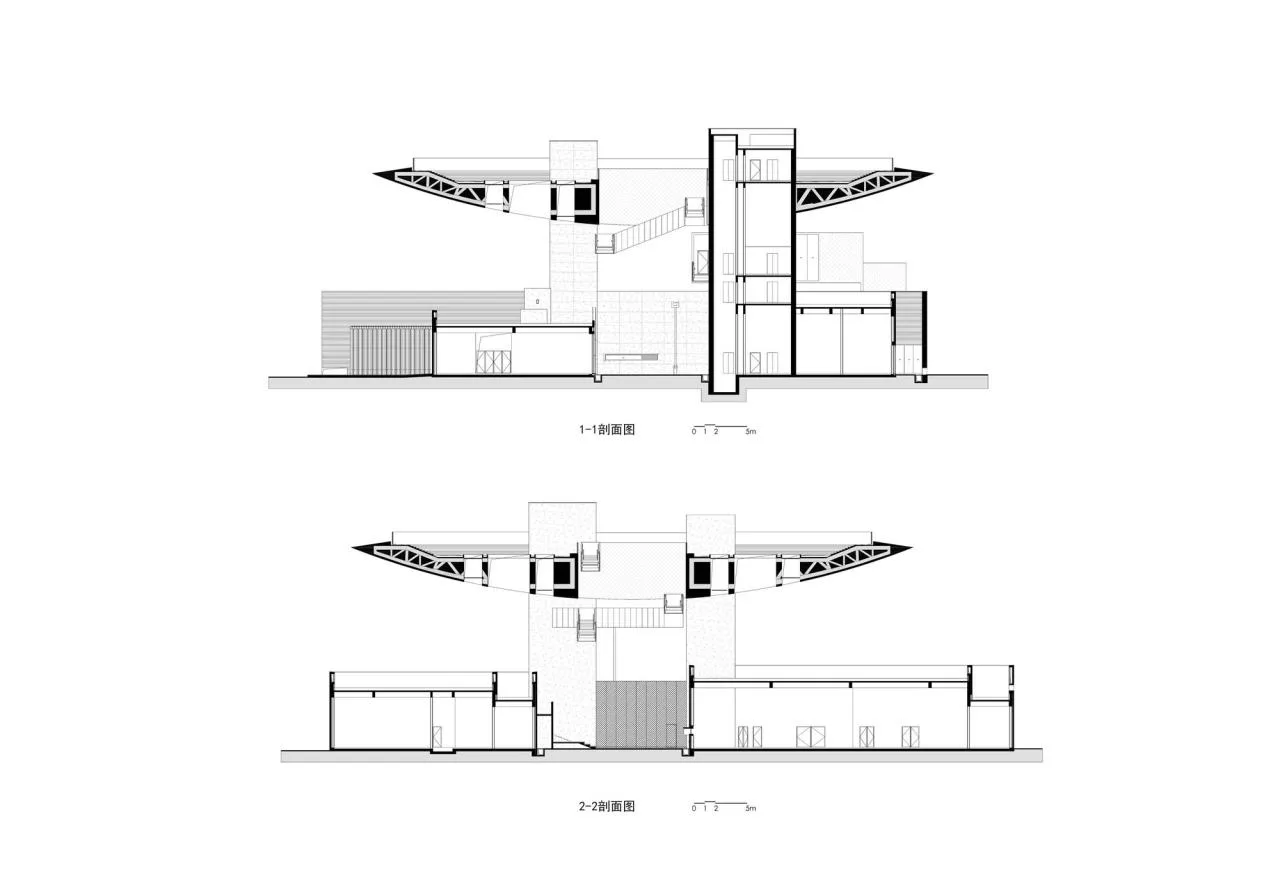
△ Section Diagram
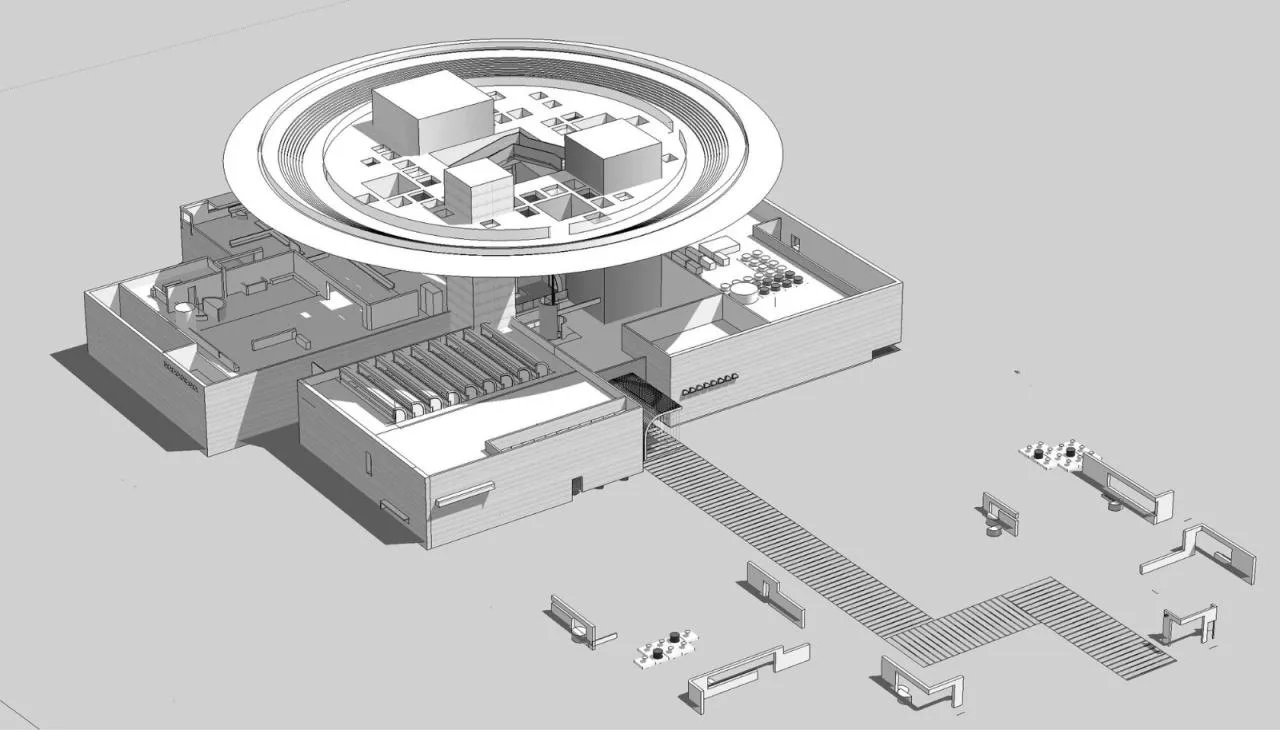
△ Axonometric Diagram
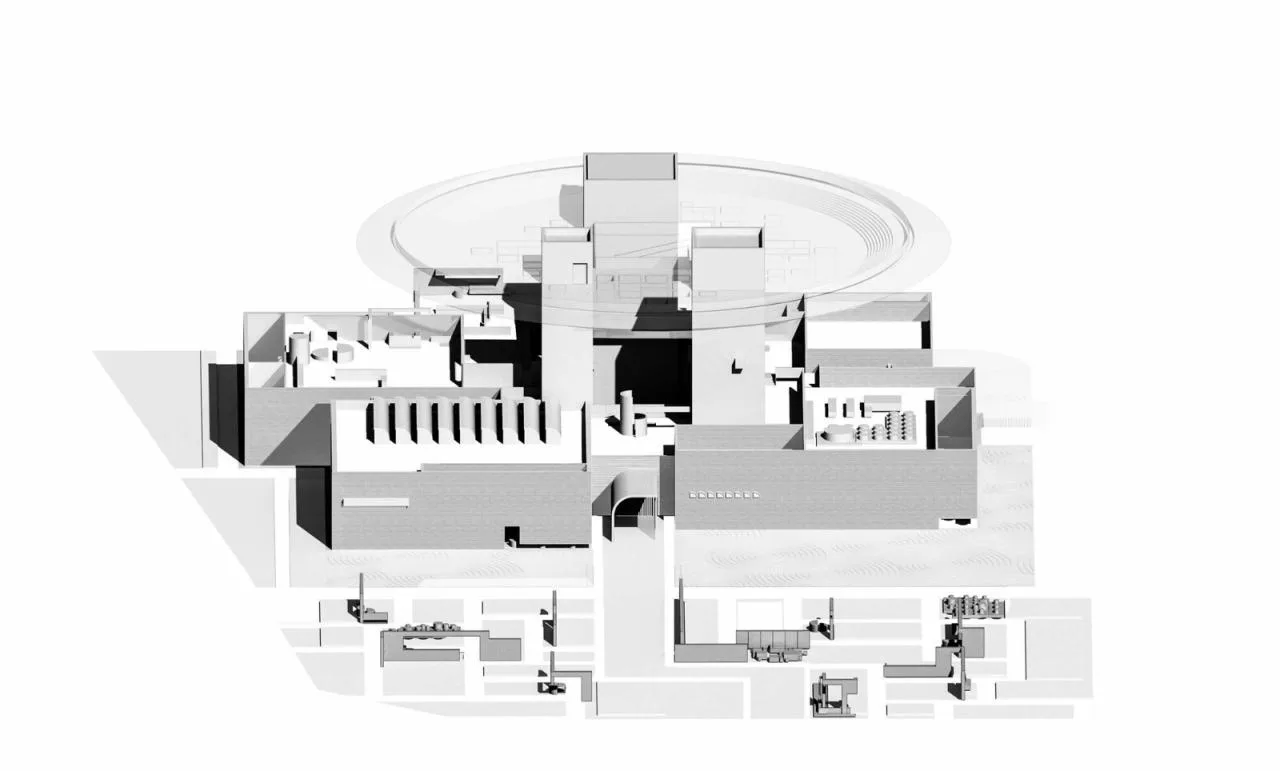
△ Model Diagram
Project Information
Architect: Zhang Lei United Architectural Firm
Area: 5,000 square meters
Project Year: 2022
Photographers: Hou Bowen, Yang Zeyu
Lead Architects: Lei Xiaohua, Zhang Lei
Project Leaders: Fan Xinwo, Jiang Lei
Design Team: Fan Xinwo, Zhao Jining, Liang Jiabin, Yu Liuqing (Architecture); Du Yue, Che Sujing (Interior); Zhao Min, Liu Zhilei, Lian Hao, Jiang Zhiyuan (Landscape)
Construction Drawing Team: Jiang Lei, Chen Genlin, Yin Wencan, Li Jun, Tang Junhua, Zhu Liuyan, Yao Yongsheng, Liu Caiqin, Zhang Gongzhi, Gu Jialei, Qiu Yue
Owner Team: Guo Fei, Luo Junxin, Jin Xianzhuang, Jiang Haibin, Ma Hui, Gu Feng, Li Yue, Li Jiantao
Owners: Shijiazhuang State-Owned Urban Development Investment Group Co., Ltd., Shijiazhuang Urban Construction Development Group Co., Ltd.
Location: Shijiazhuang















Must log in before commenting!
Sign Up