
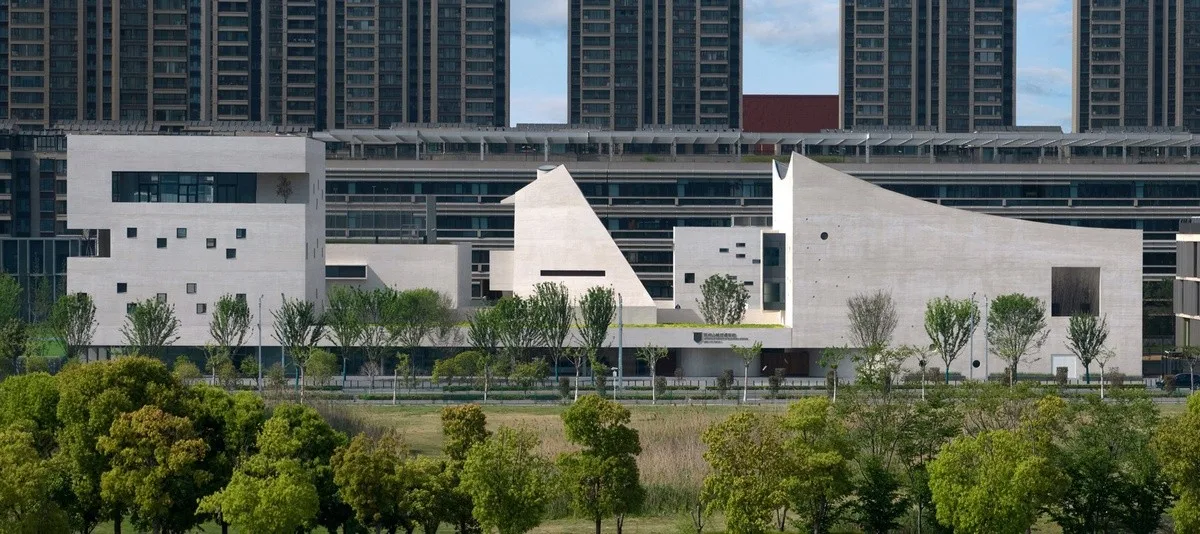
Located in Xiangcheng District, Suzhou City, Shanfeng Academy serves as the central building of the Shanfeng Bilingual School. This multifunctional cultural and sports center also provides essential cultural amenities for the surrounding new urban area. Inspired by traditional landscape paintings, particularly the infinite layers of time and space intertwined with the use of blank space, the design pays a spiritual tribute to Suzhou gardens.
The project evokes traditional memories while addressing the practical challenges of modern urban life and education. Within a limited space, it successfully accommodates a variety of activities through rich spatial design, bringing the changing seasons and elements of nature into everyday life.
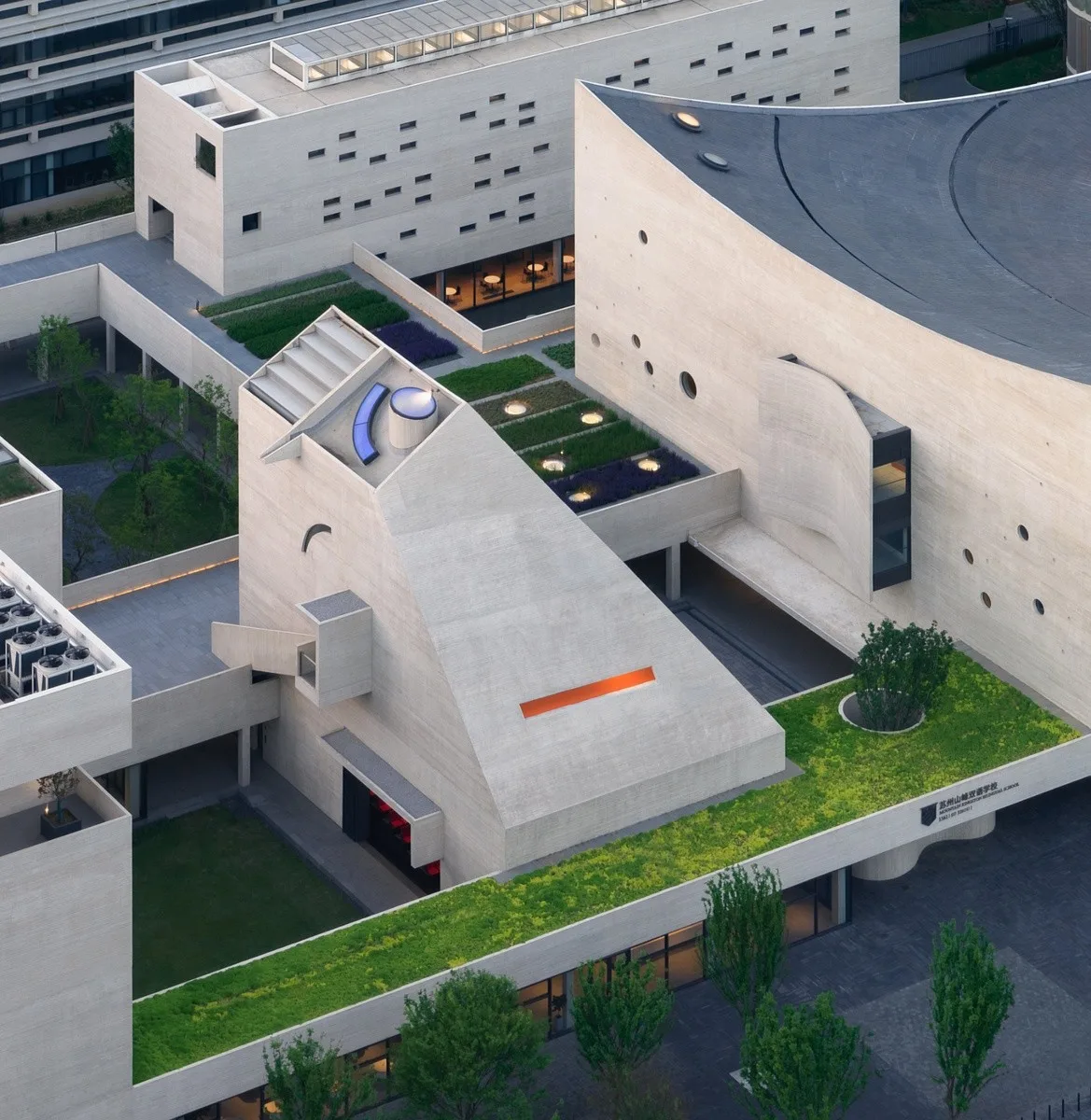
The “Real” and “Empty” Mountain Peak Academy provides nearly 2,000 students with vital shared public spaces on campus. These include a theater, exhibition halls, library, gymnasium, dance and fitness studios, swimming pool, coffee shop, and other complex facilities.
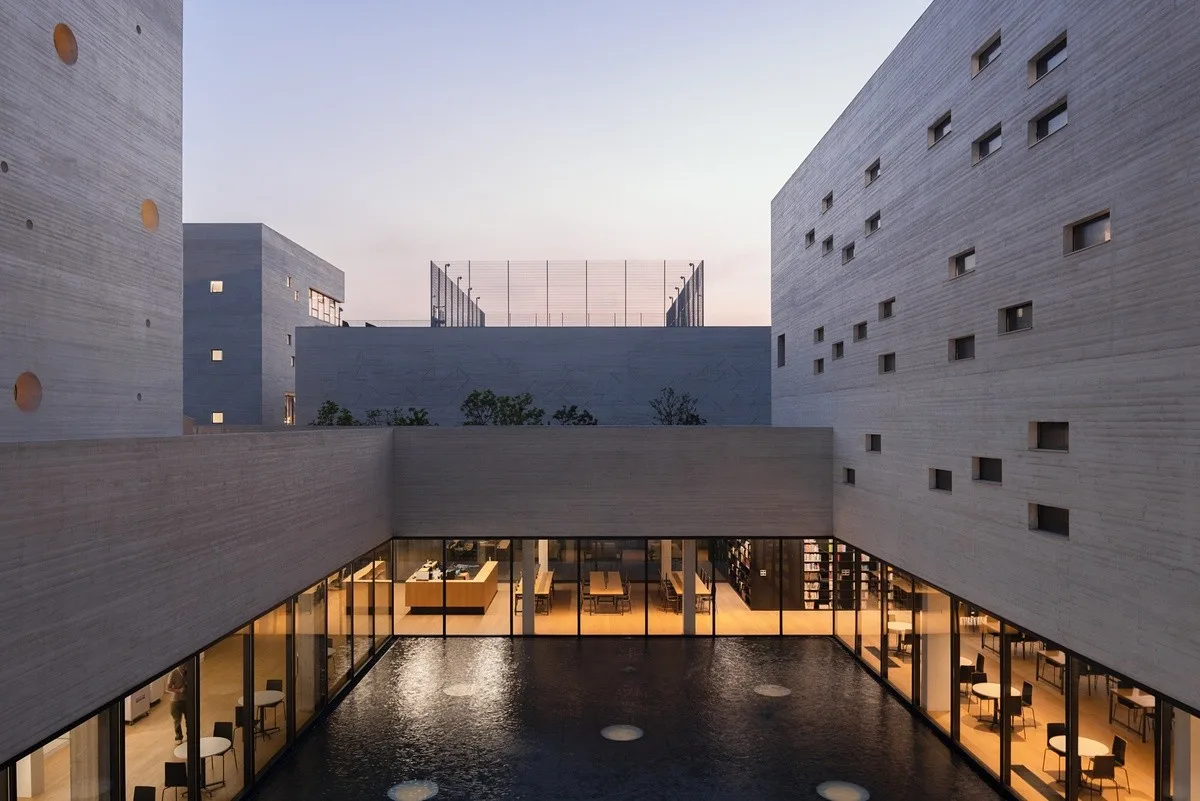
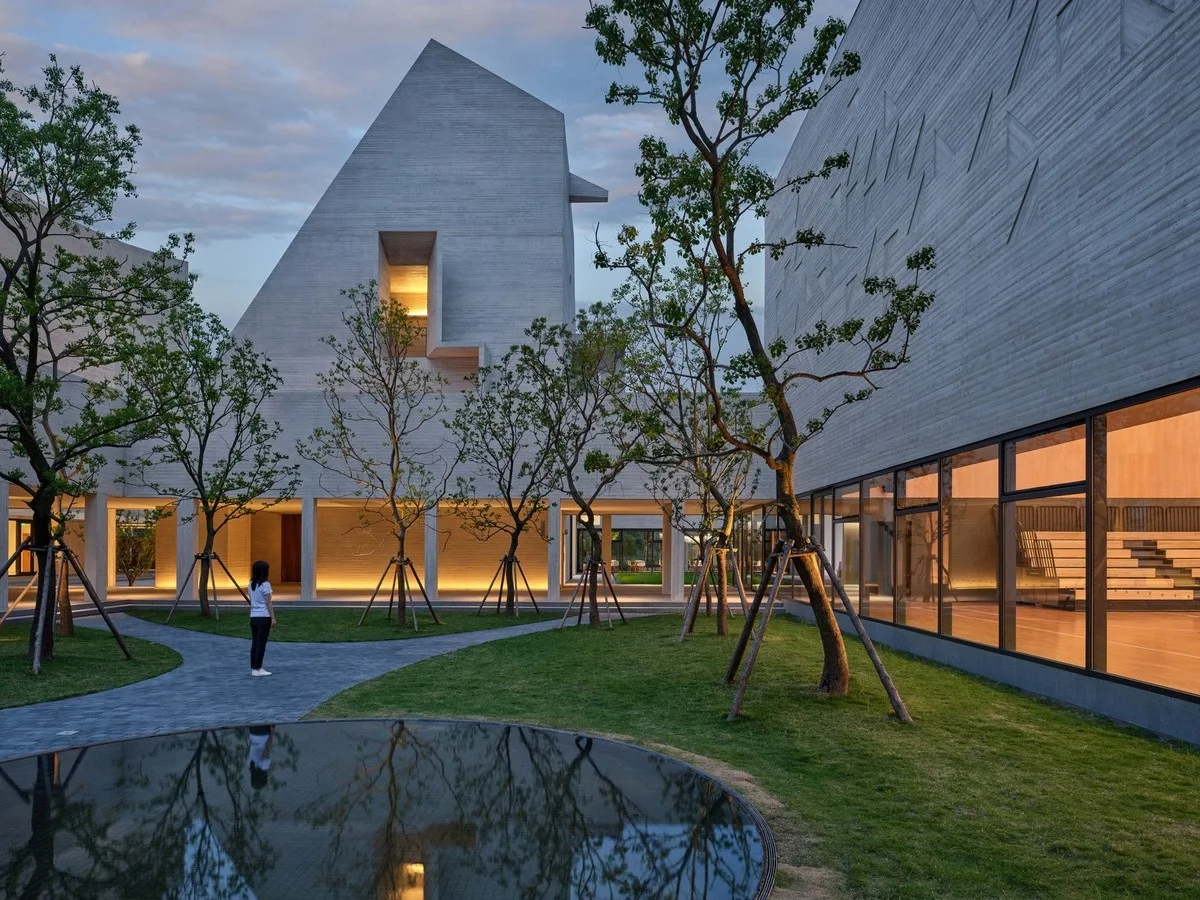
Given the high usage and diverse user base—from elementary to high school students and staff—the architect divided the typical core building into five distinct volumes. By increasing the space between them, four gardens were created: Spring, Summer, Autumn, and Winter. Between these open gardens and the actual buildings lies a flat-roofed corridor, defined by columns casting moving shadows.
On top of this corridor is the fifth garden, Baicao Garden, where herbaceous plants and spices are cultivated. This garden serves as a leisure and social area, conveniently connecting the main building functions both above and below.
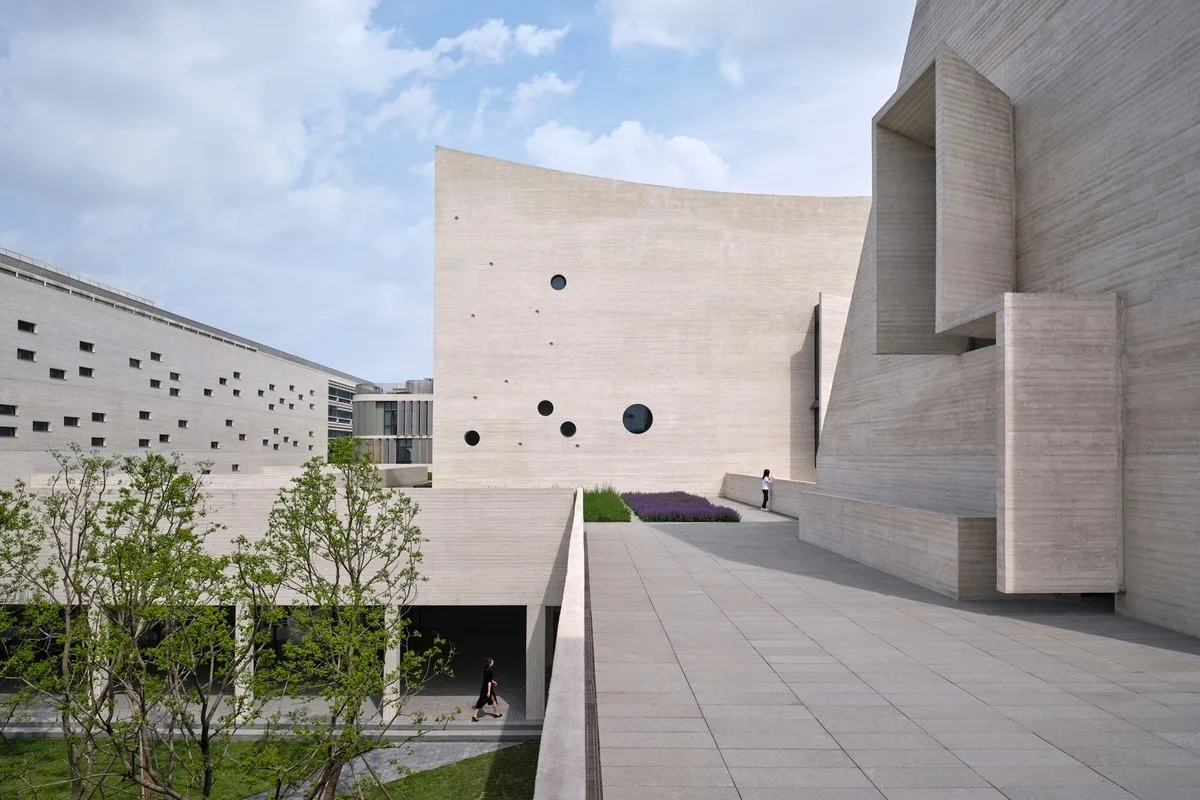
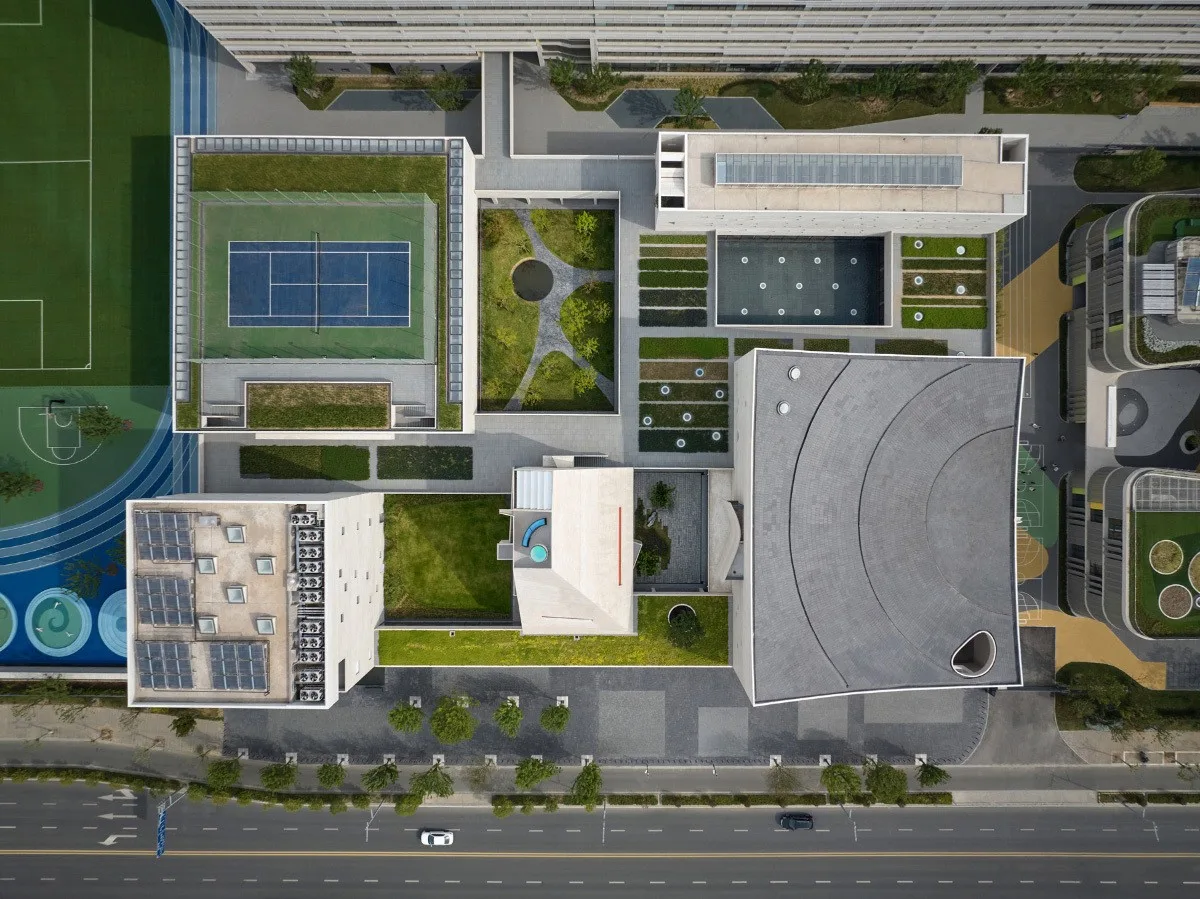
The courtyards and corridors intentionally created within this dense campus act like blank spaces in traditional landscape paintings, offering moments of relaxation and breathing room. Sunlight, tree shadows, sky, rain, and falling leaves—the subtle changes of nature—are all captured within these spaces.
During Suzhou’s frequent rainy days, these well-connected corridors provide shelter for students and teachers moving about the campus. The overlapping of tangible spaces and the intangible flow of time creates a natural rhythm—an interplay of past memories, present experiences, and future possibilities.
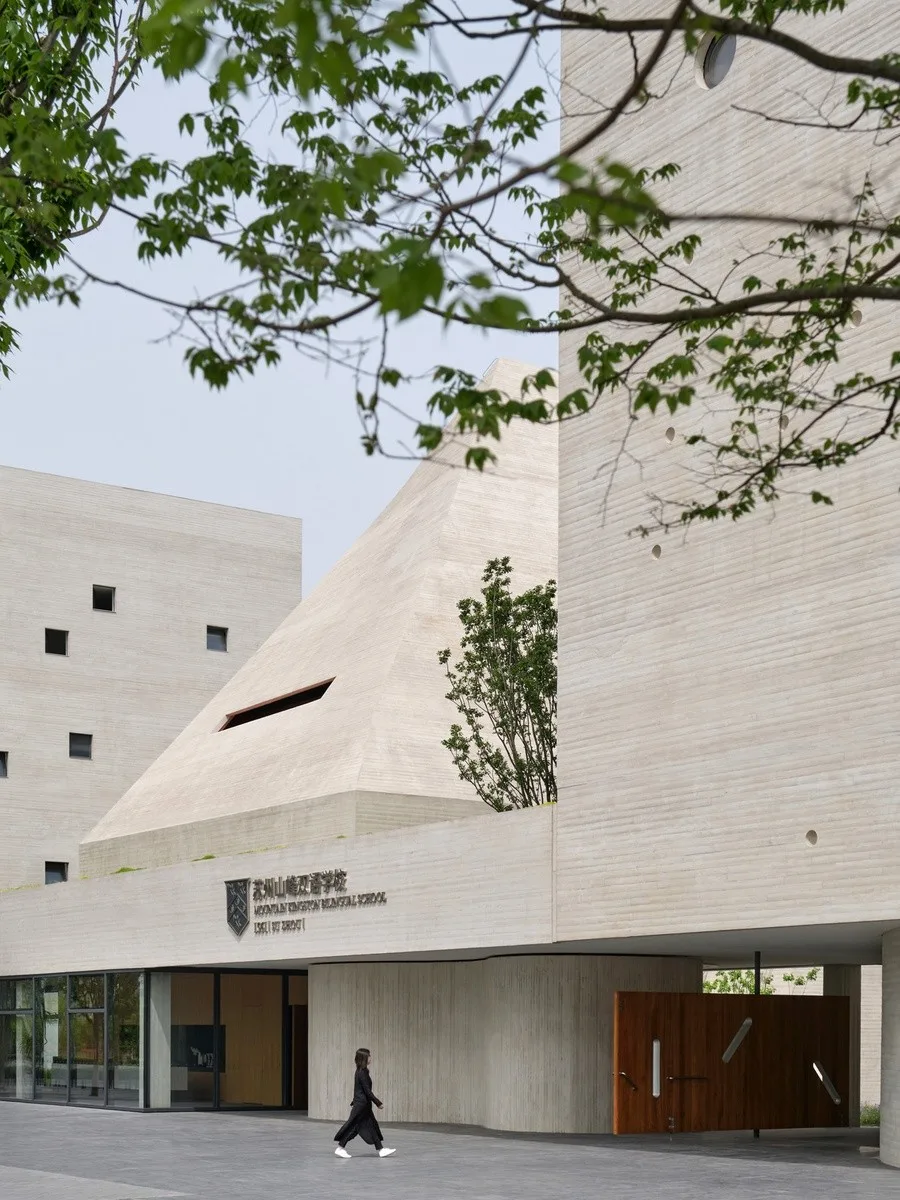
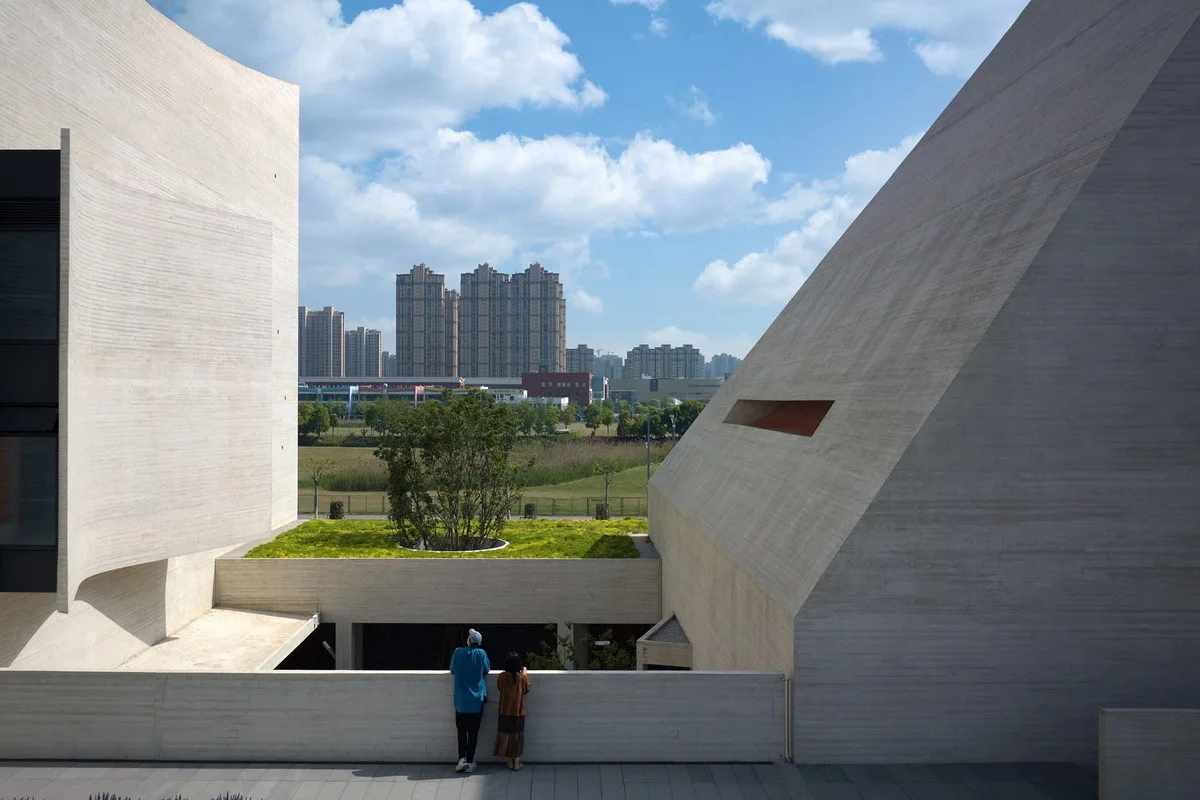
The design balances the “inside” and “outside” by facing the dense urban environment while using the physical buildings themselves to form an inward-focused space, isolated from the bustling city noise. Within this calm environment, people reflect on themselves and engage in a dialogue with nature.
Despite this inward focus, the building maintains openness toward the city, without compromising school safety.
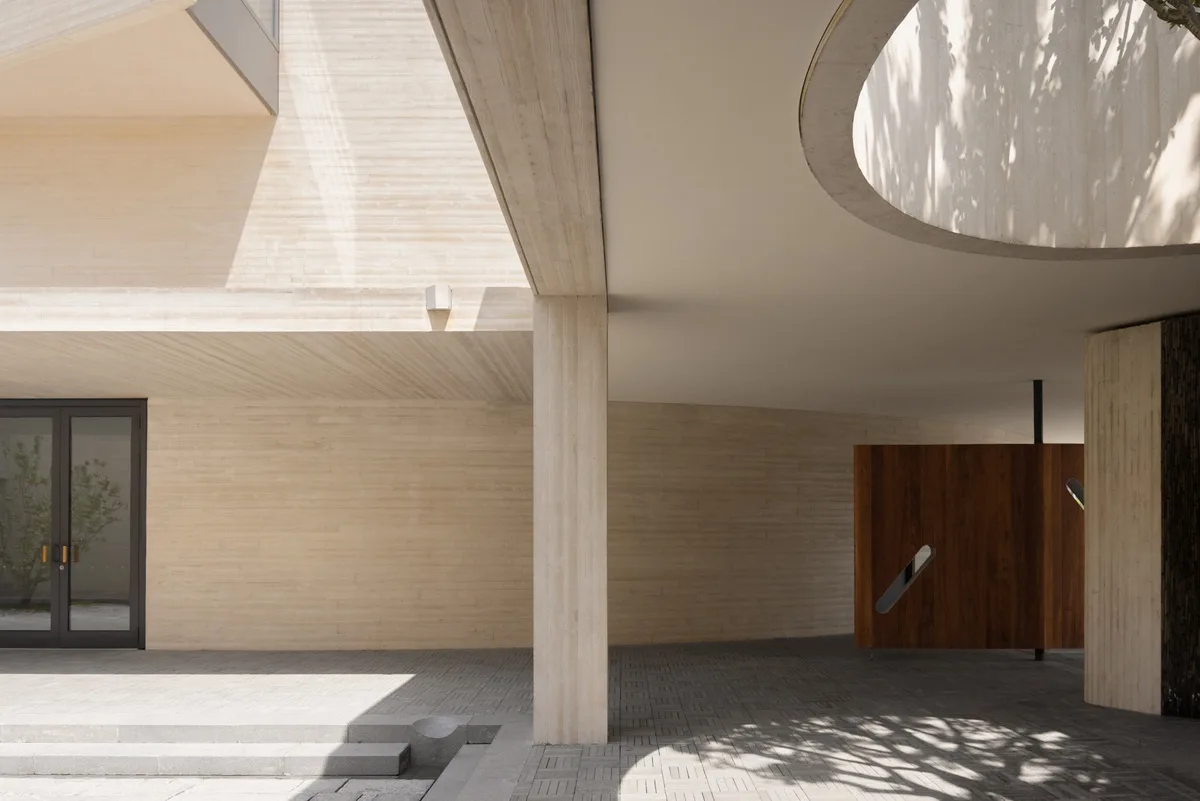
During the early design phase, the architect collaborated closely with Tongji University Architectural Design and Research Institute, responsible for campus planning, to position the building near the main street and align the college gate as the main campus entrance.
Serving as a bridge between campus and city, Shanfeng Academy shares many of its facilities with the surrounding community. The small theater features separate entrances and exits, allowing it to be opened independently to the public. The coffee shop faces the street, offering a welcoming waiting area for parents. Additionally, the Thousand-Person Theater and Sports Center can be accessed by the public during holidays.
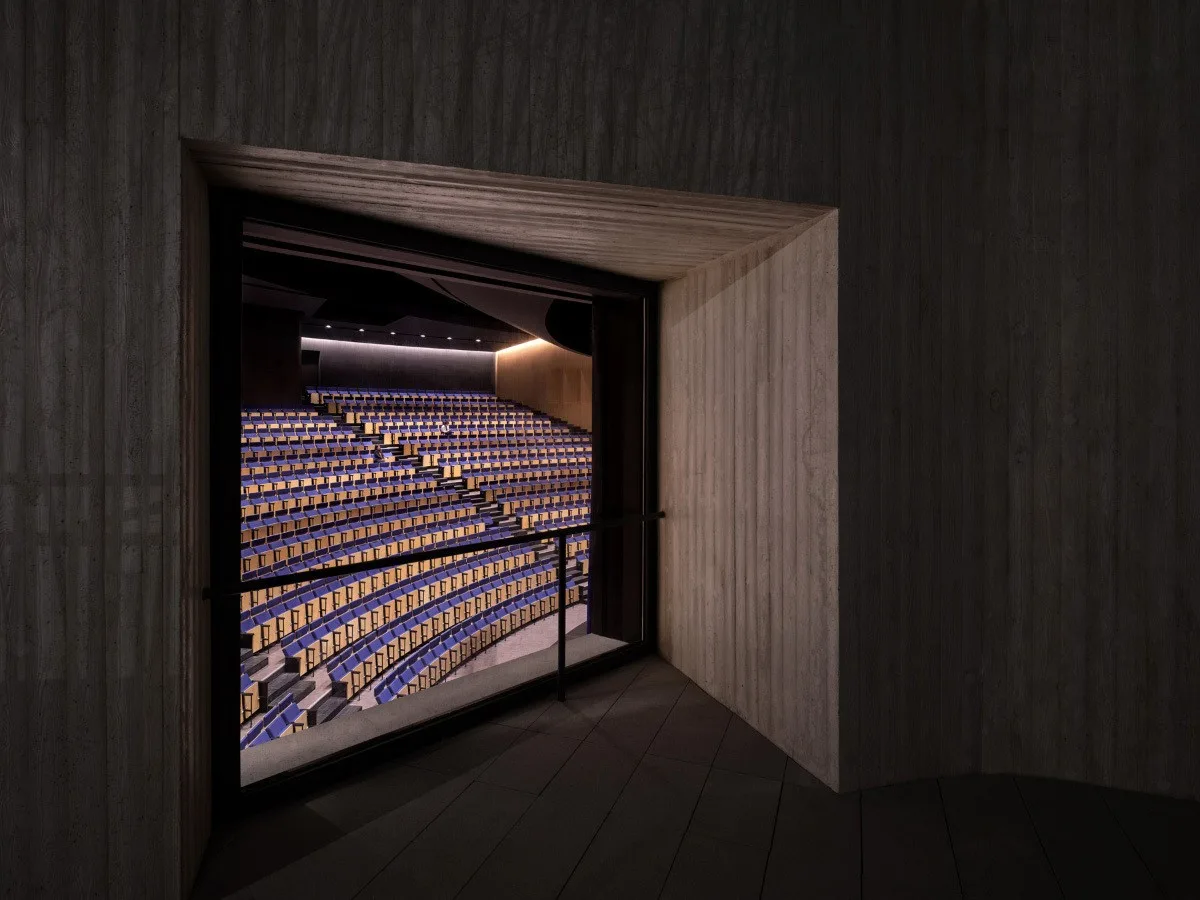
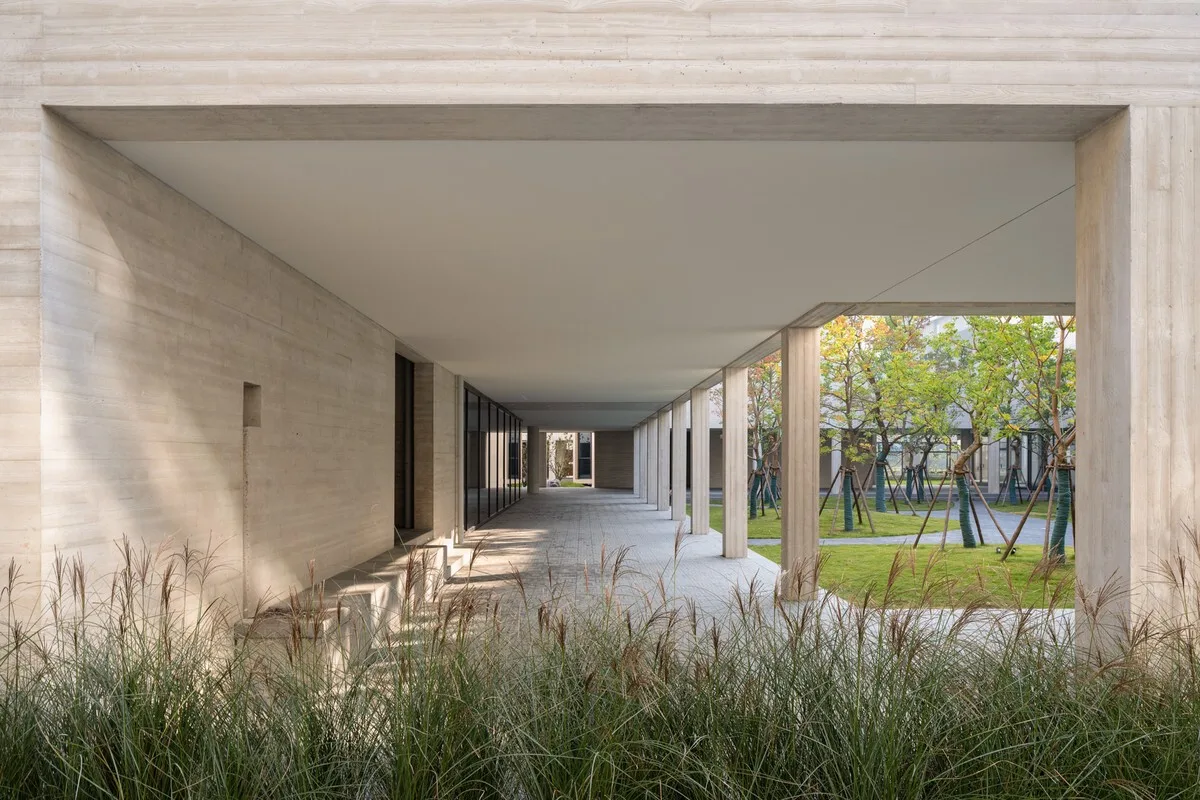
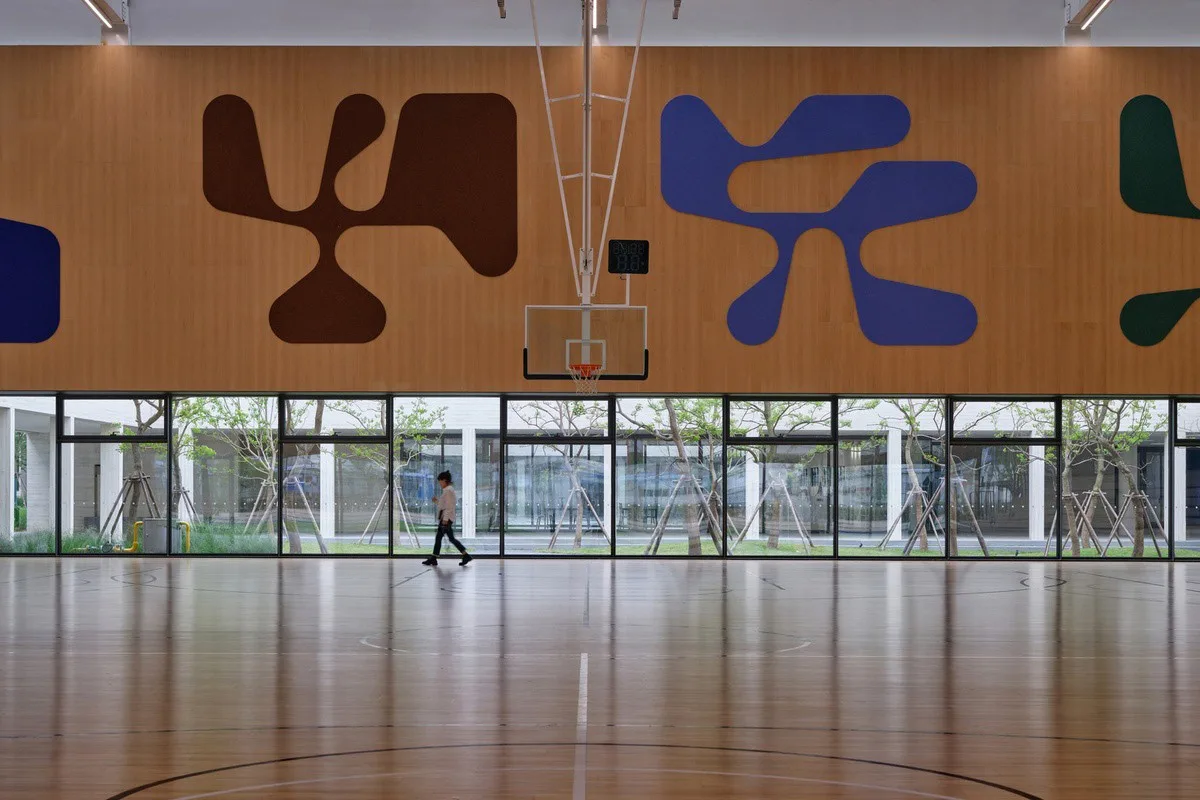
The five buildings in the “Dynamic” and “Static” Mountain Academy house reading, sports, and performing arts functions. Characterized by an alternating pattern of light and shadow and a blend of movement and stillness, these structures unify as a whole while maintaining distinct personalities.
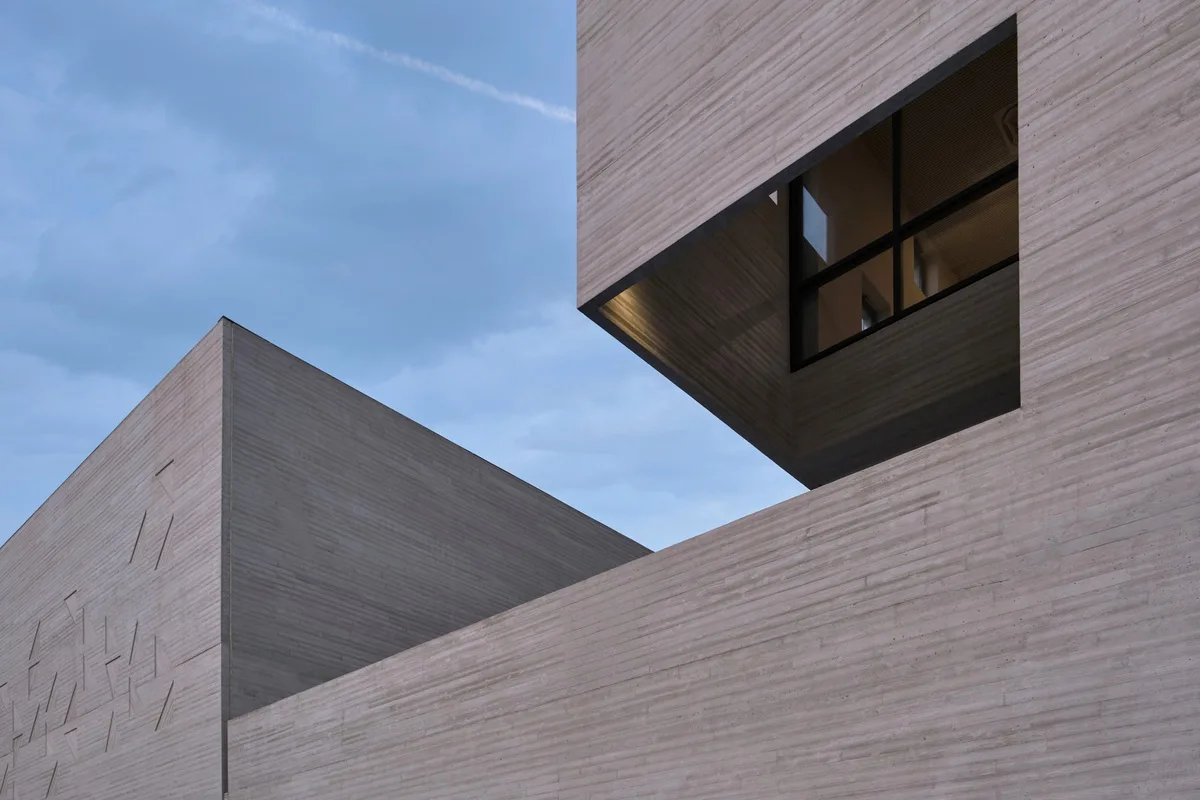
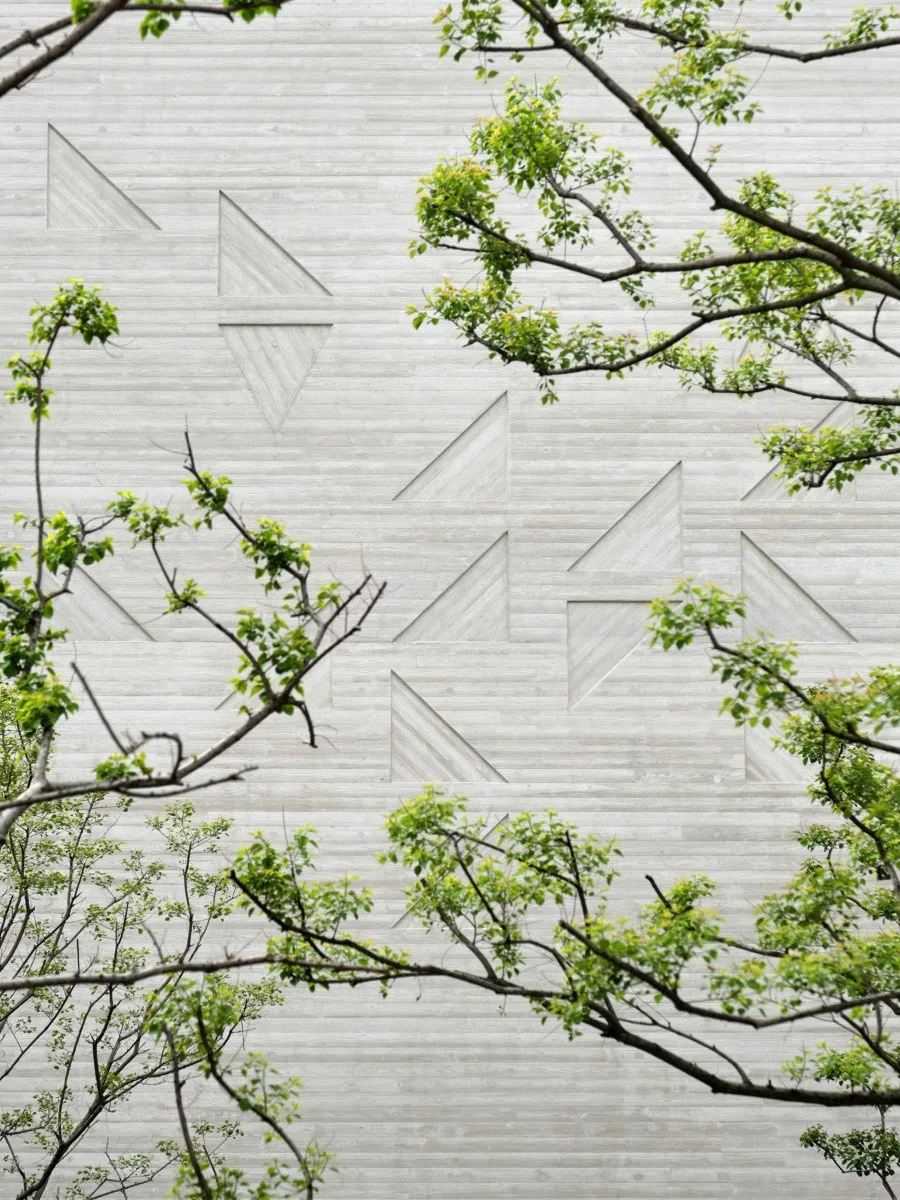
The gymnasium, a floating box with a transparent floor facing the autumn garden and school playground, allows students to move freely. Its upper concrete facade features a concave triangular pattern, creating an abstract texture. An outdoor tennis court is thoughtfully located on the rooftop of the sports arena.
The Energy Cube features a semi-underground swimming pool. Sunlight reflects off the landscape pool outside and onto the white aluminum ceiling inside the pool area through continuous floor-to-ceiling glass, creating dynamic waves of light. Above the pool, small gyms and dance studios are distributed across several floors.
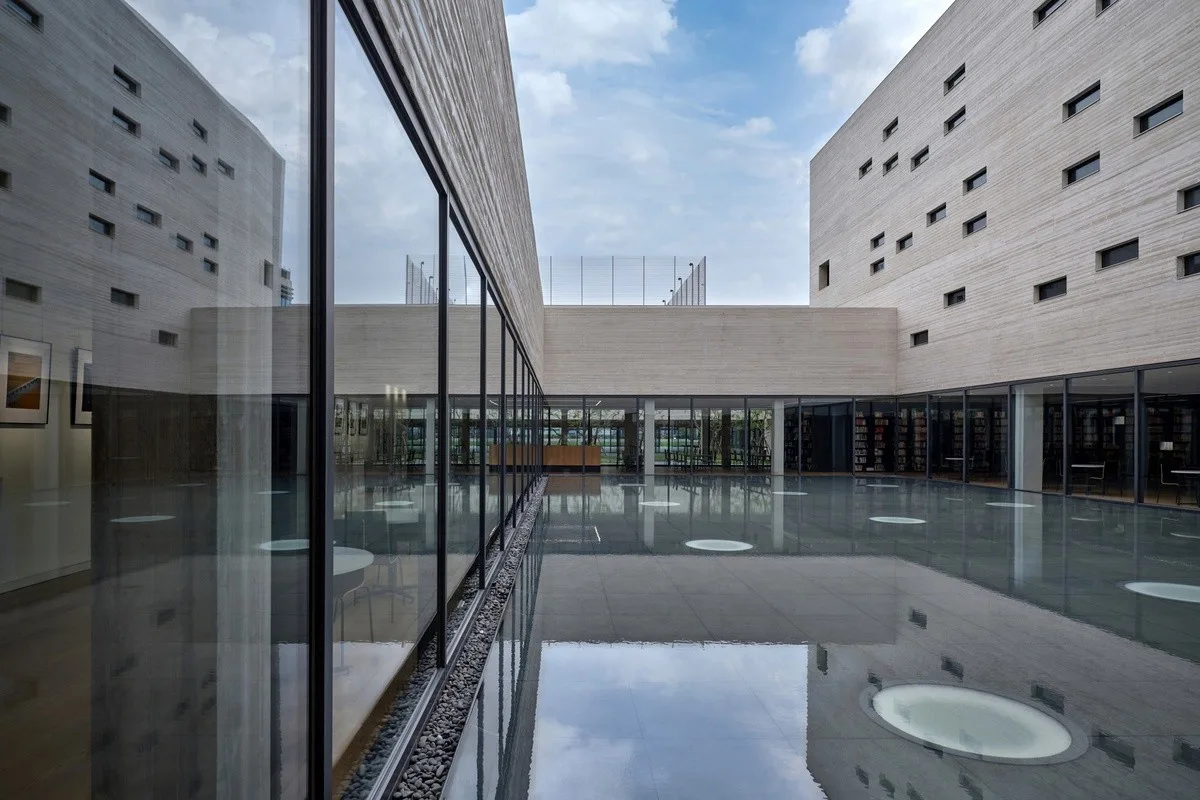
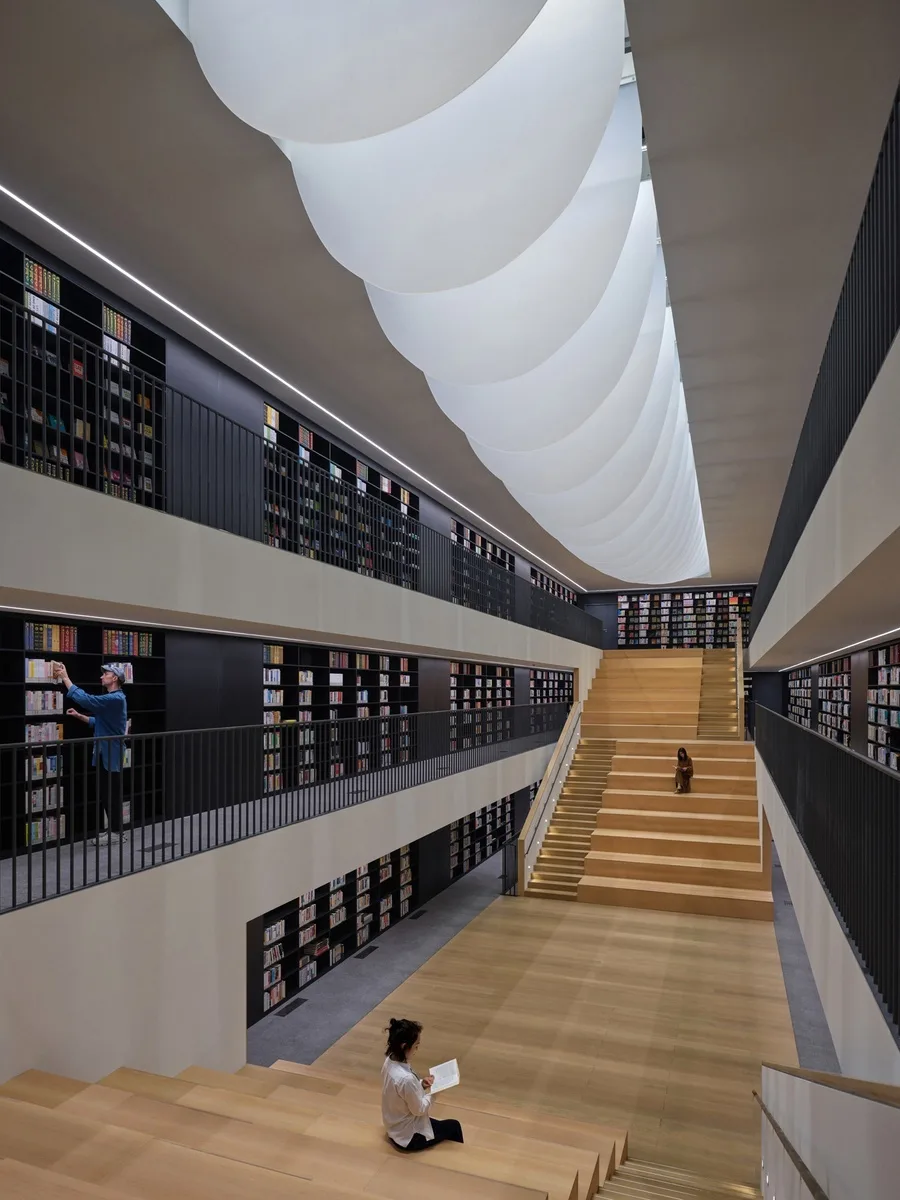
The library combines a vertical reading tower with a horizontal courtyard-style reading space surrounding the Summer Garden Water Garden. Bookshelves are interspersed with horizontal windows, and a stepped reading area in the center is softly illuminated by diffused natural light. The rippling spring in the water garden reflects onto the ceiling and walls, enhancing the tranquil atmosphere.
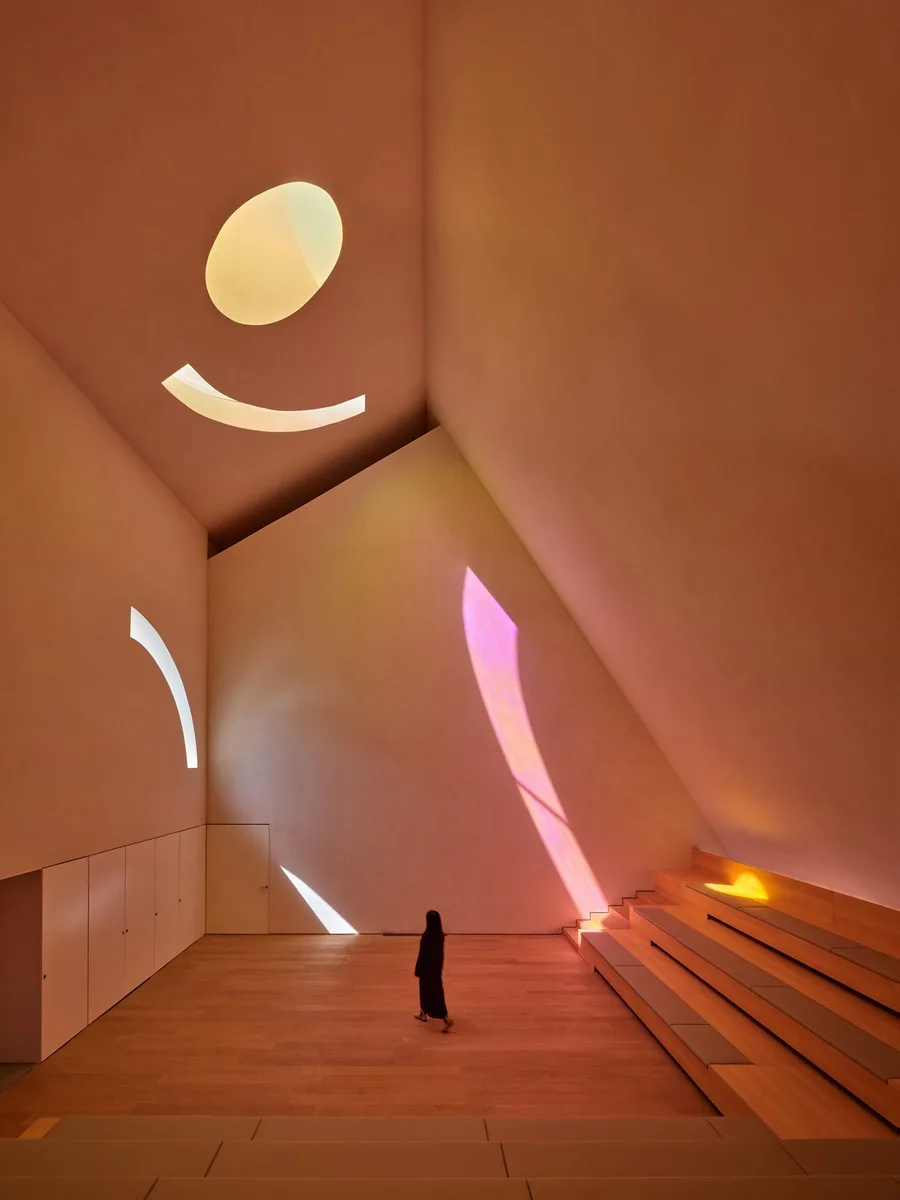
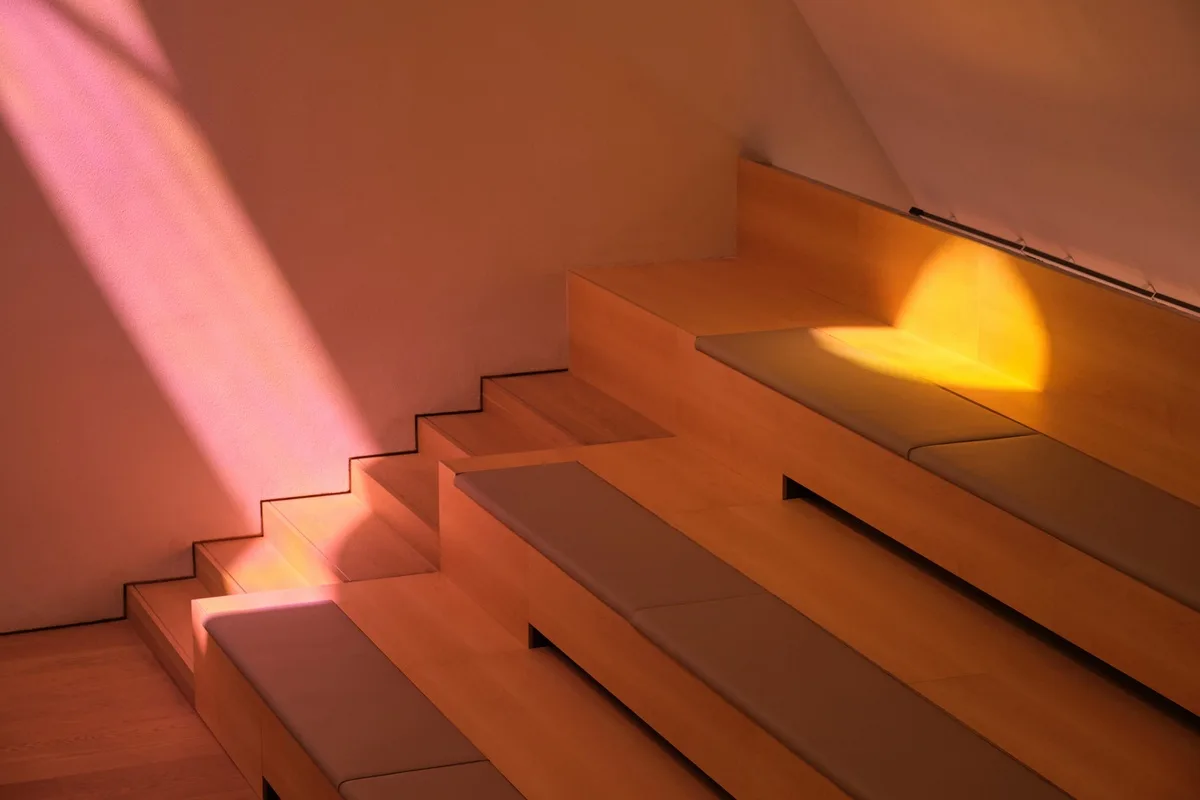
A special building sits between the Spring and Winter Gardens, featuring a light-filled lecture hall illuminated by skylights that change colors with the movement of light. Beneath it lies a multifunctional black box theater that can be closed for performances or opened up to the Winter Garden.
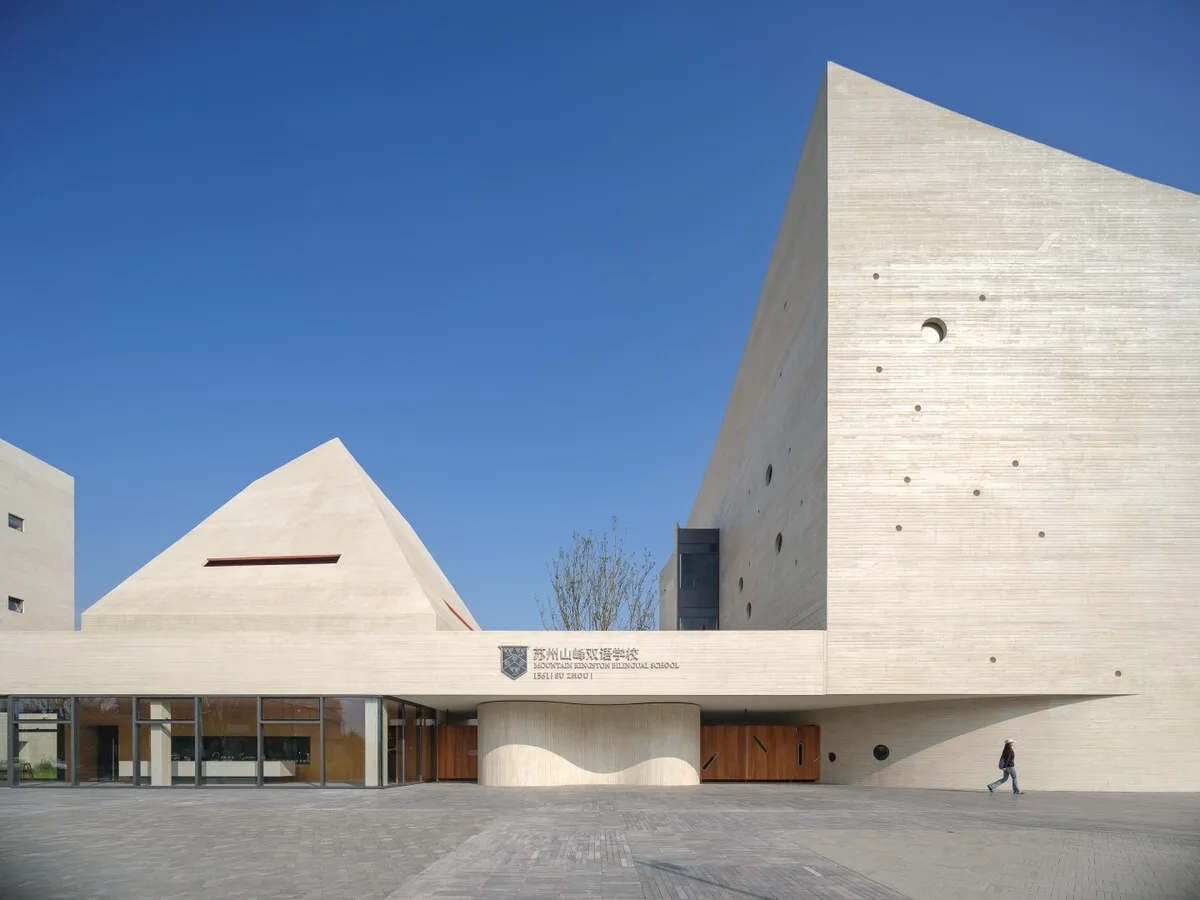
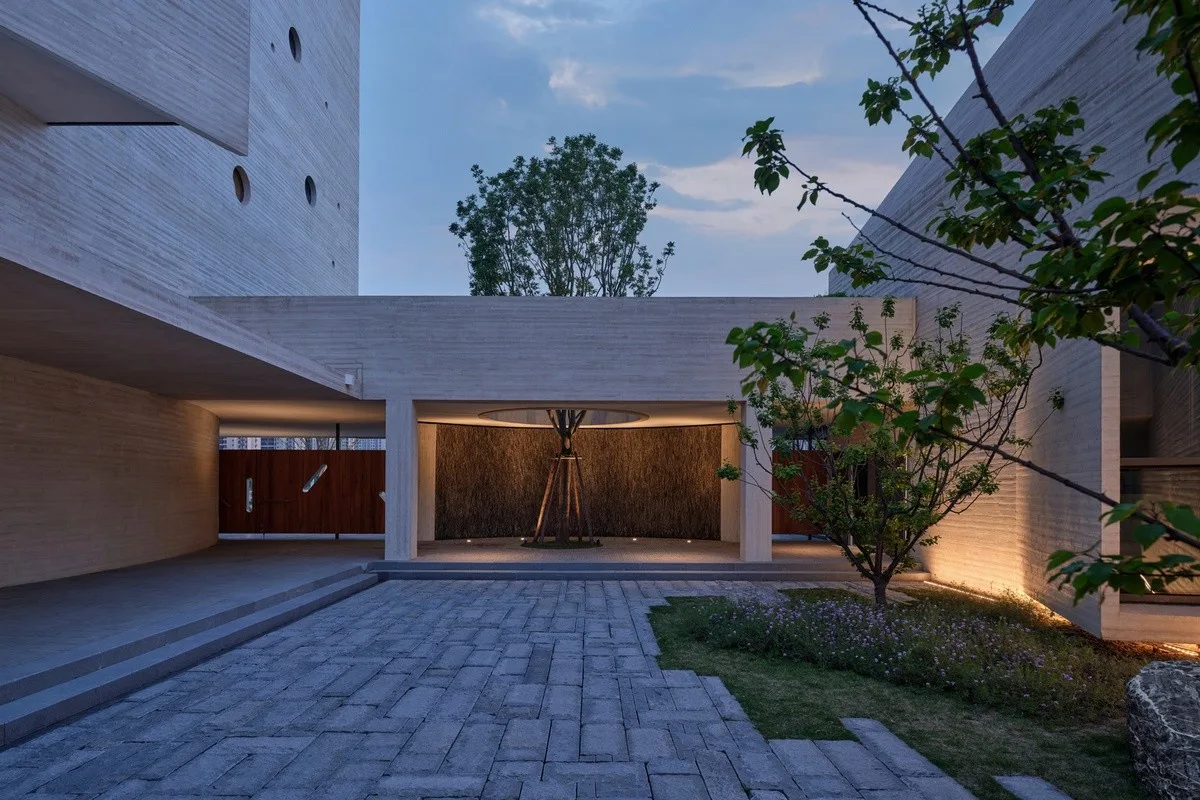
The largest volume is the theater, with a striking curved roof that peaks near the main entrance. An oval-shaped opening on the roof reveals an outdoor bamboo garden below. This bamboo garden faces the city and the street on the outside, while internally it sits above the theater’s side platform, serving as a terrace where young actors can rest and relax.
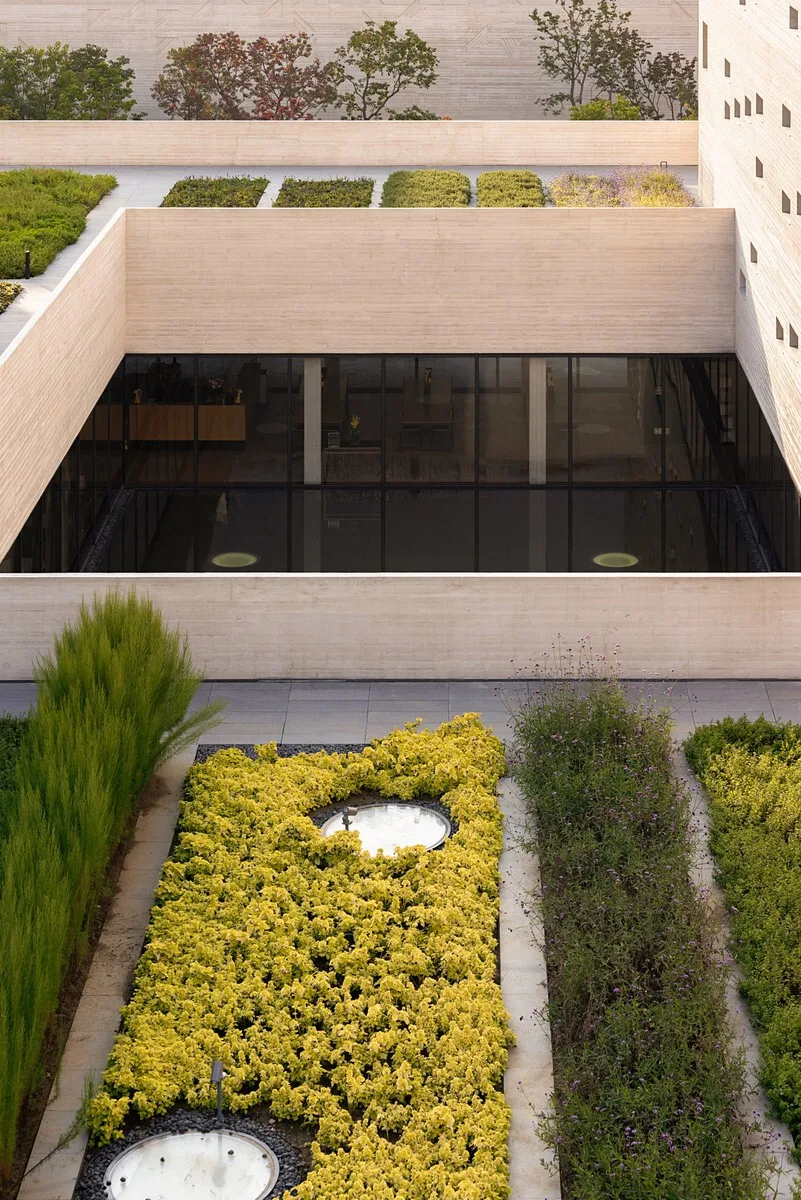
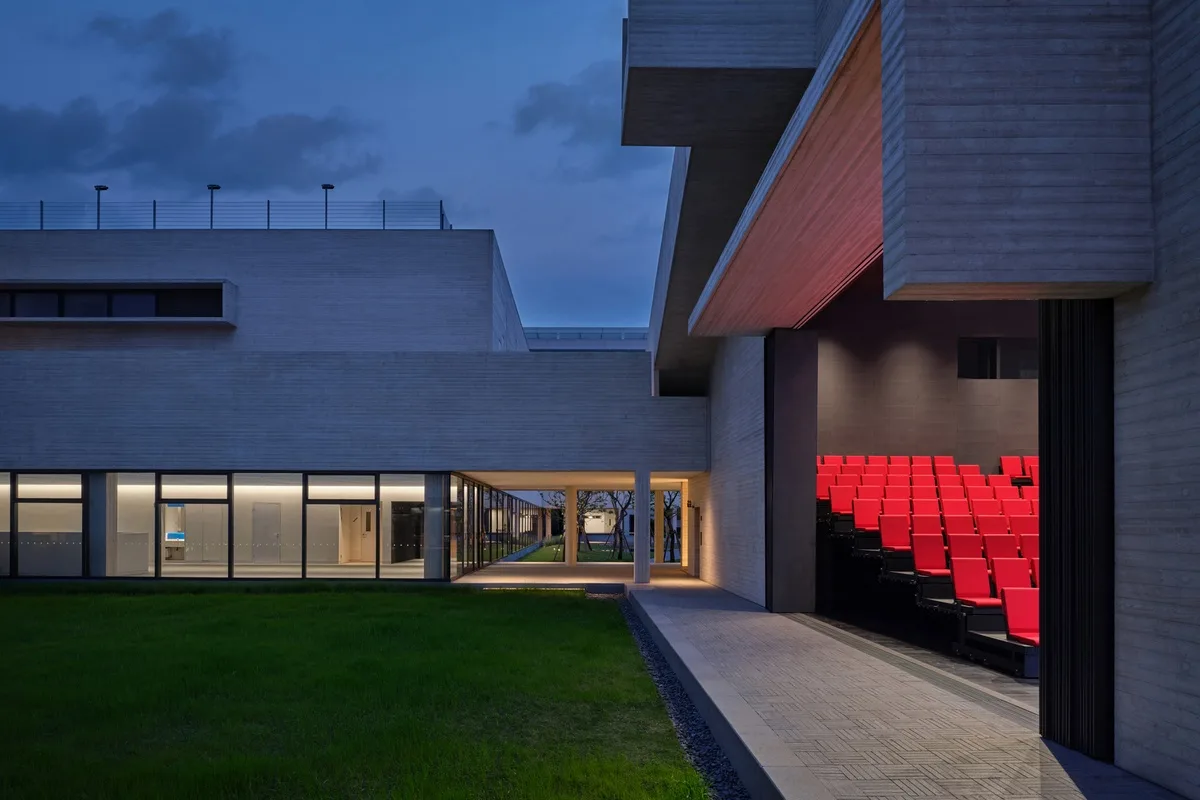
The facades of both traditional and contemporary buildings are crafted from white concrete cast with small wooden templates, evoking the iconic white walls of Suzhou gardens. Unlike traditional whitewashed walls that require frequent maintenance to prevent mold and cracking, this concrete finish is durable and weather-resistant, reducing future upkeep costs for the school.
The wood grain texture imprinted on the concrete adds warmth and tactile quality to the surfaces.
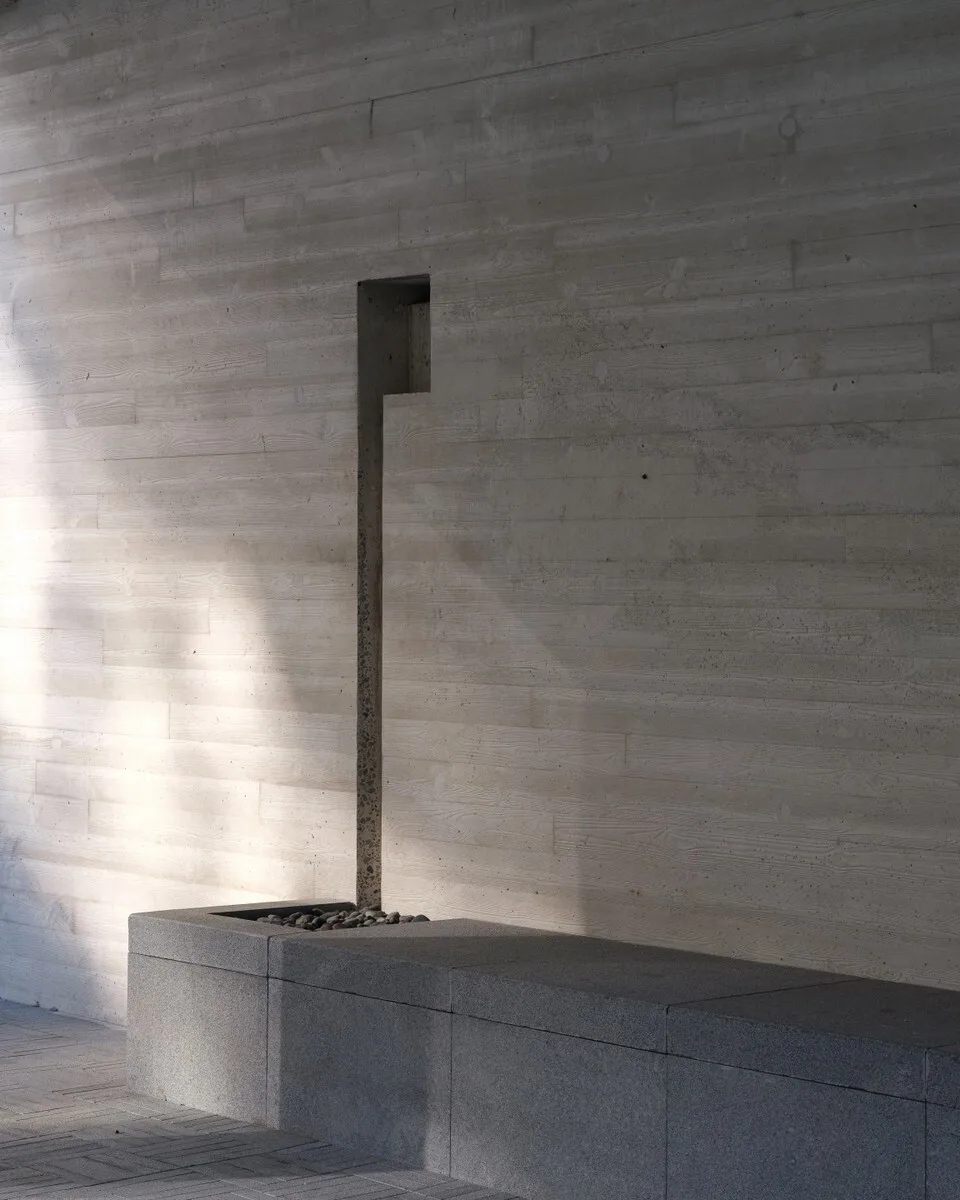
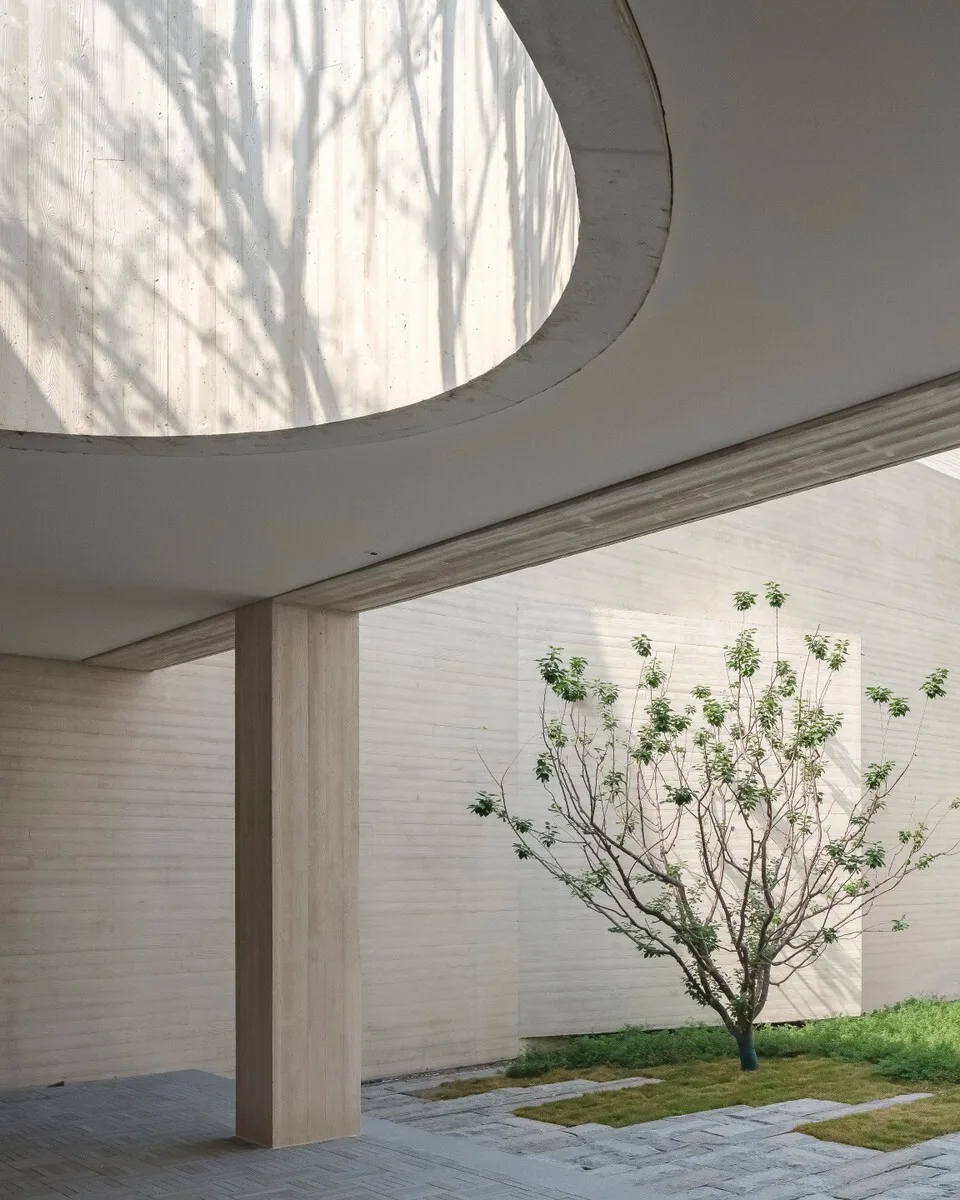
Considering Suzhou’s rainy climate, the design incorporates special overflow outlets and drainage points throughout the site. The landscape integrates unique stones, native Jiangnan plants, traditional paving, and various water features.
On the street-facing plaza, diverse paving materials, water elements, and shaded greenery seamlessly extend the garden into the urban interface.
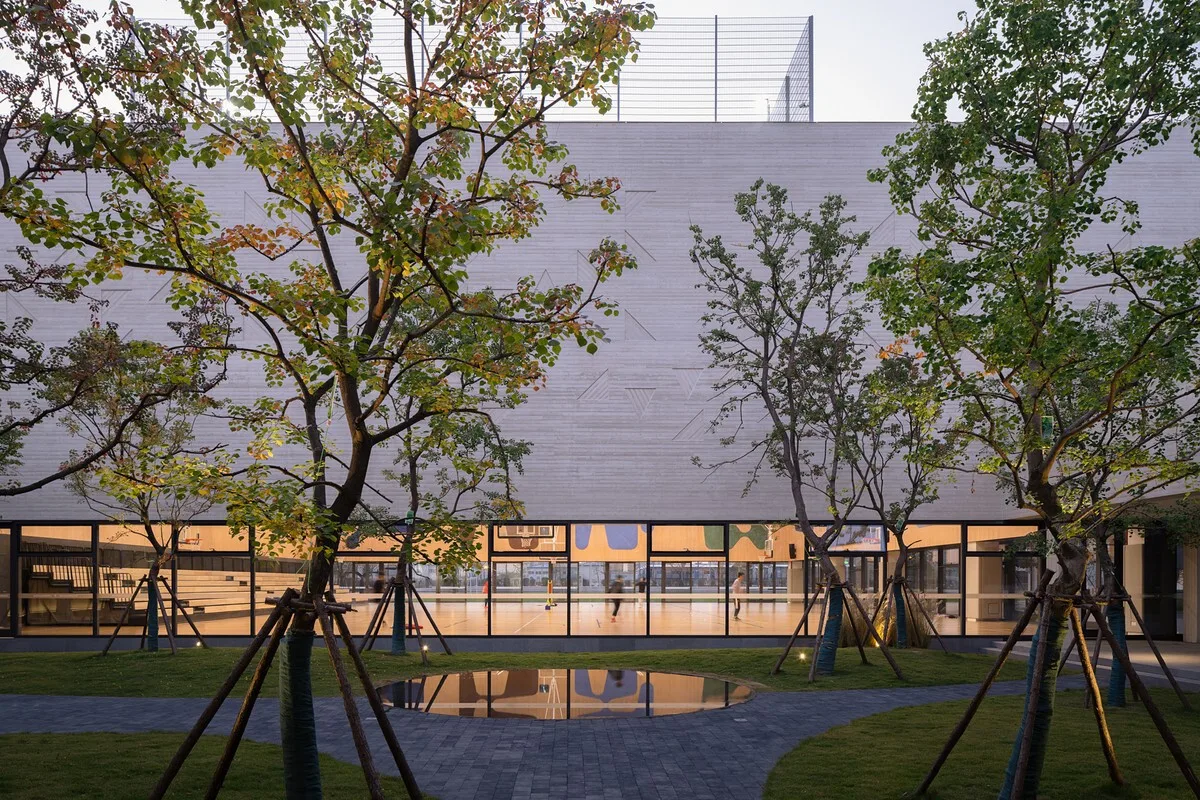
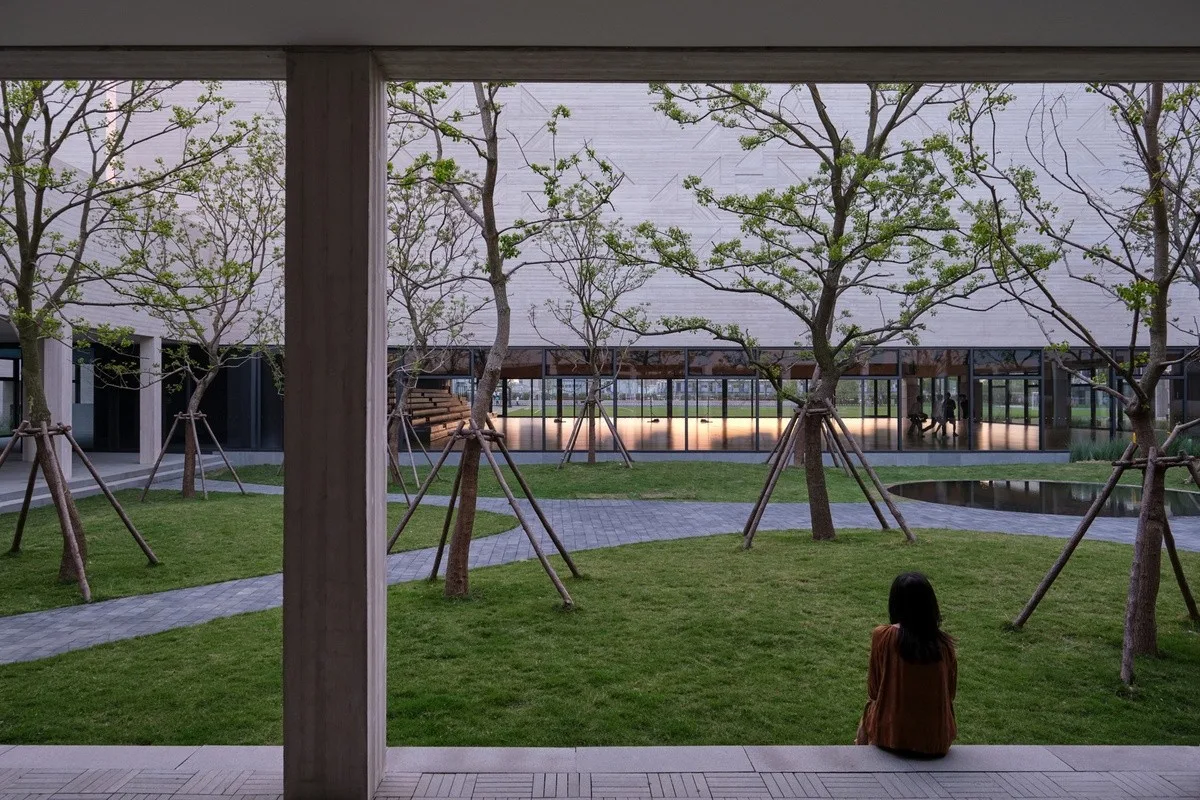
As visitors walk through the Mountain Academy, the architecture frames evolving views—close-up, mid-range, and distant—allowing experiences to shift fluidly between reality and emptiness, interior and exterior, movement and stillness, tradition and modernity.
This stream-of-consciousness effect intertwines multiple temporal and spatial elements, creating a rich, sensory journey.
Project Drawings
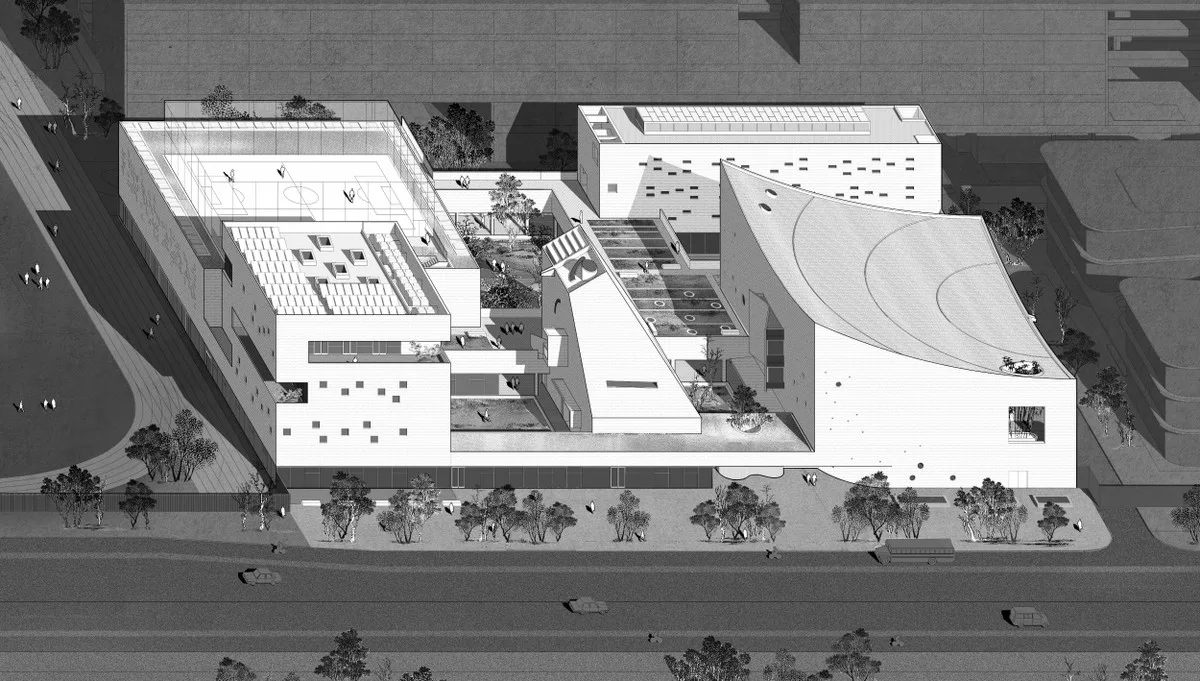
△ Model Diagram
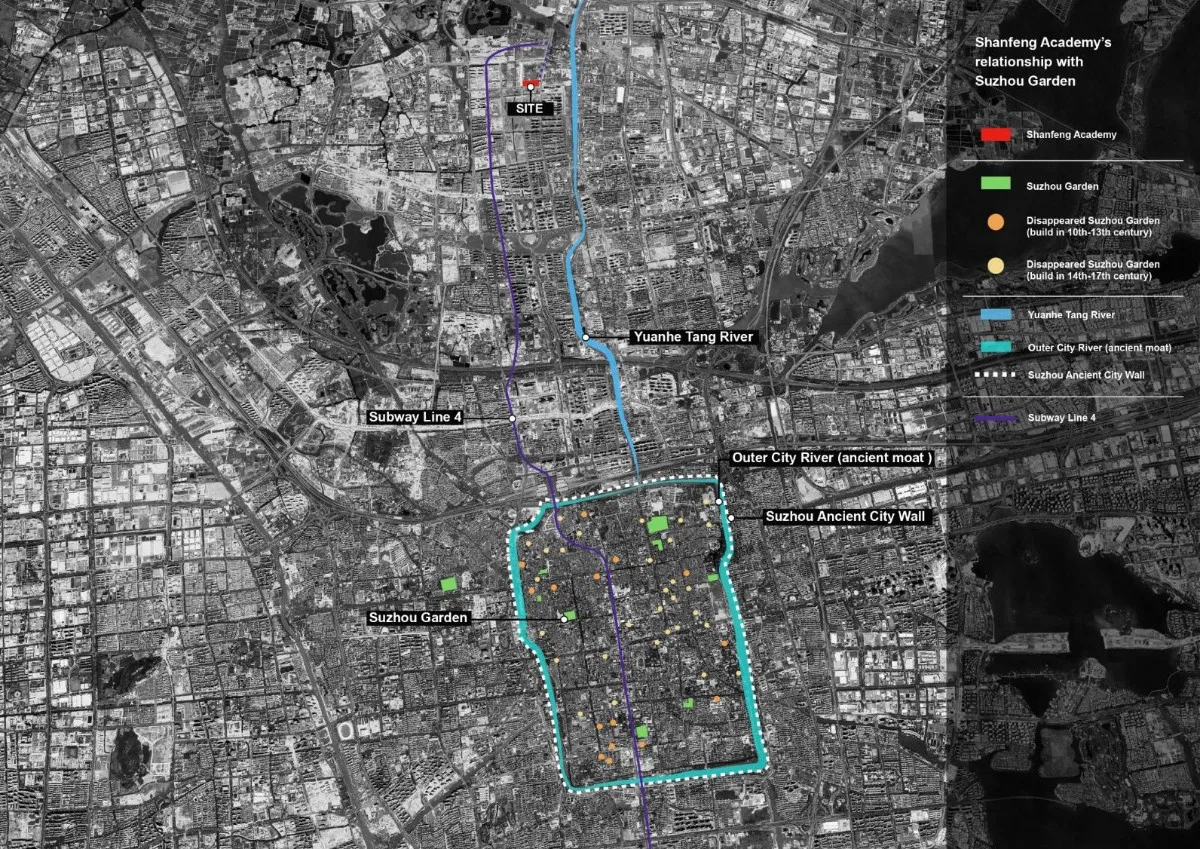
△ Location Analysis
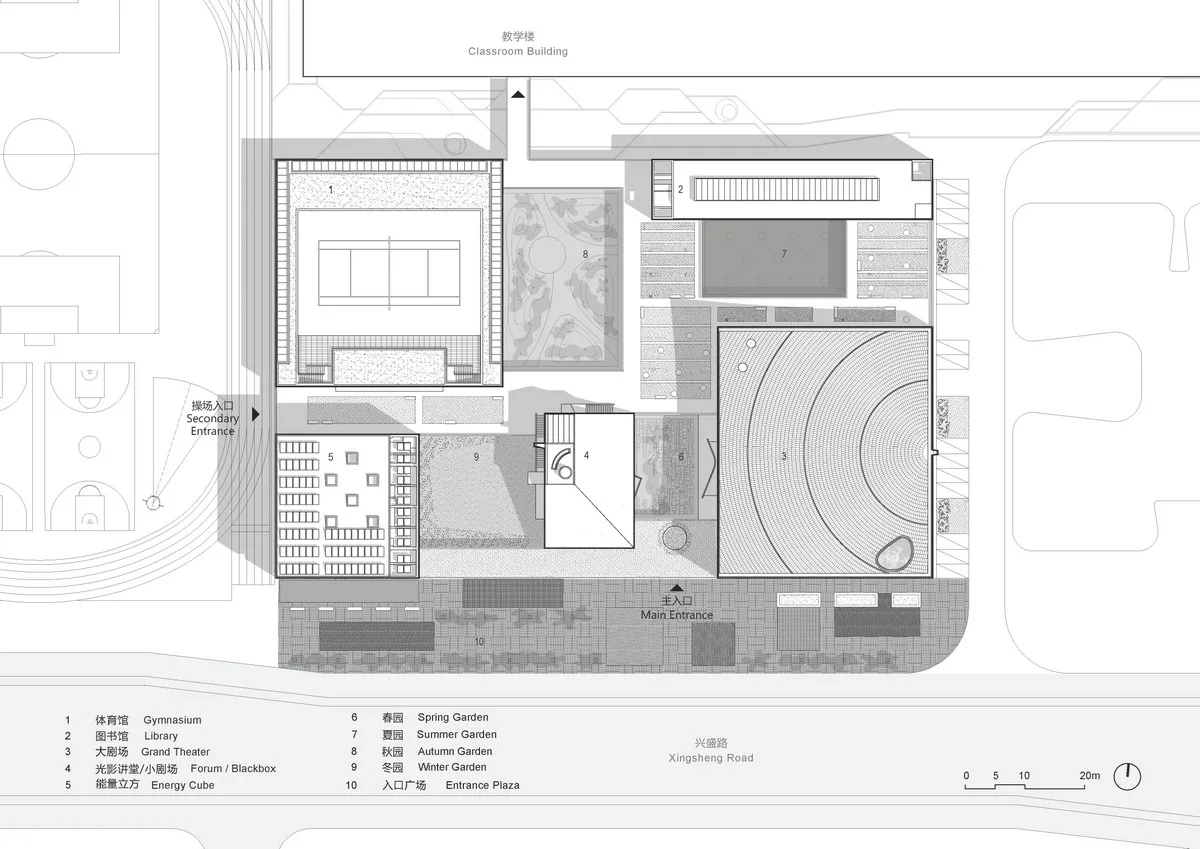
△ General Layout Plan
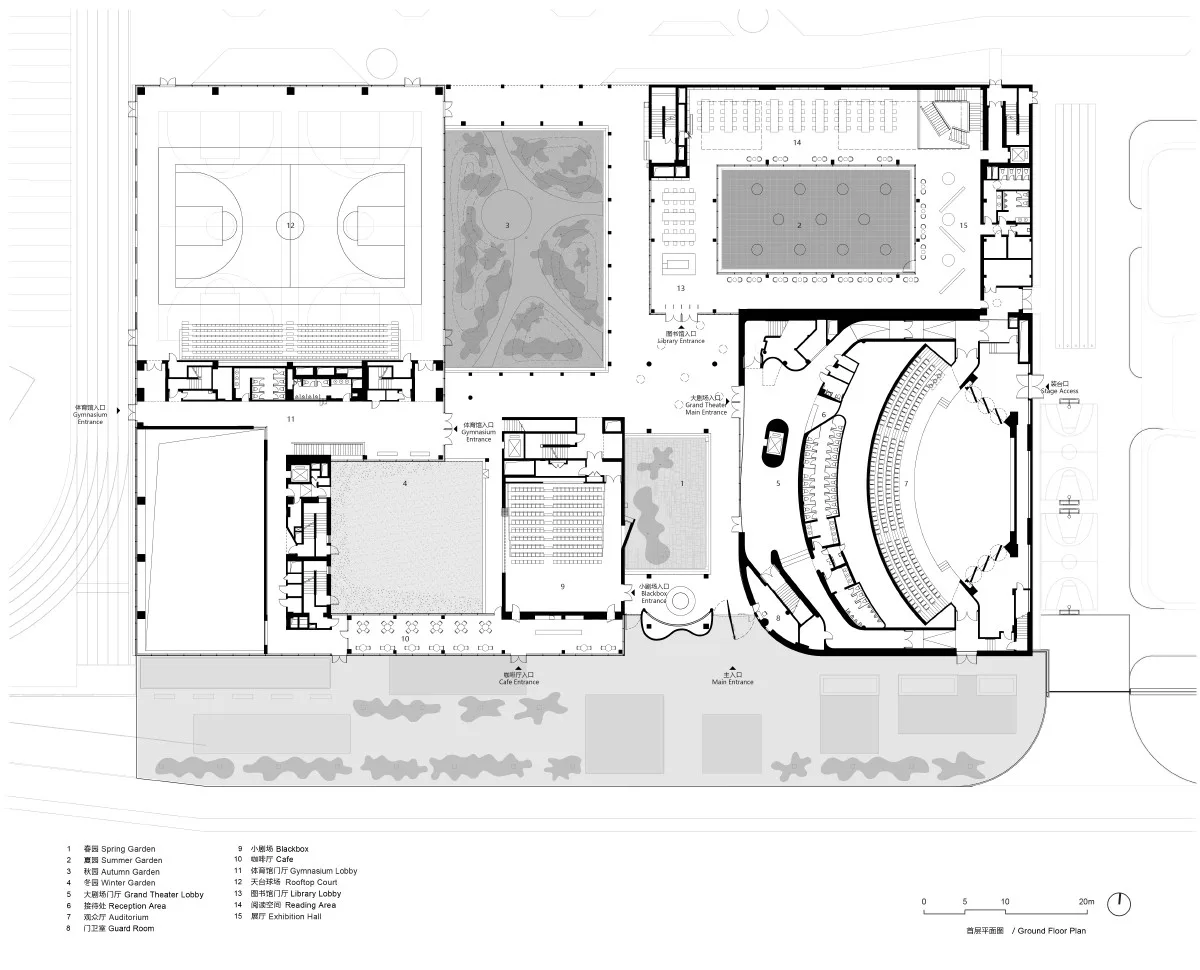
△ First Floor Plan
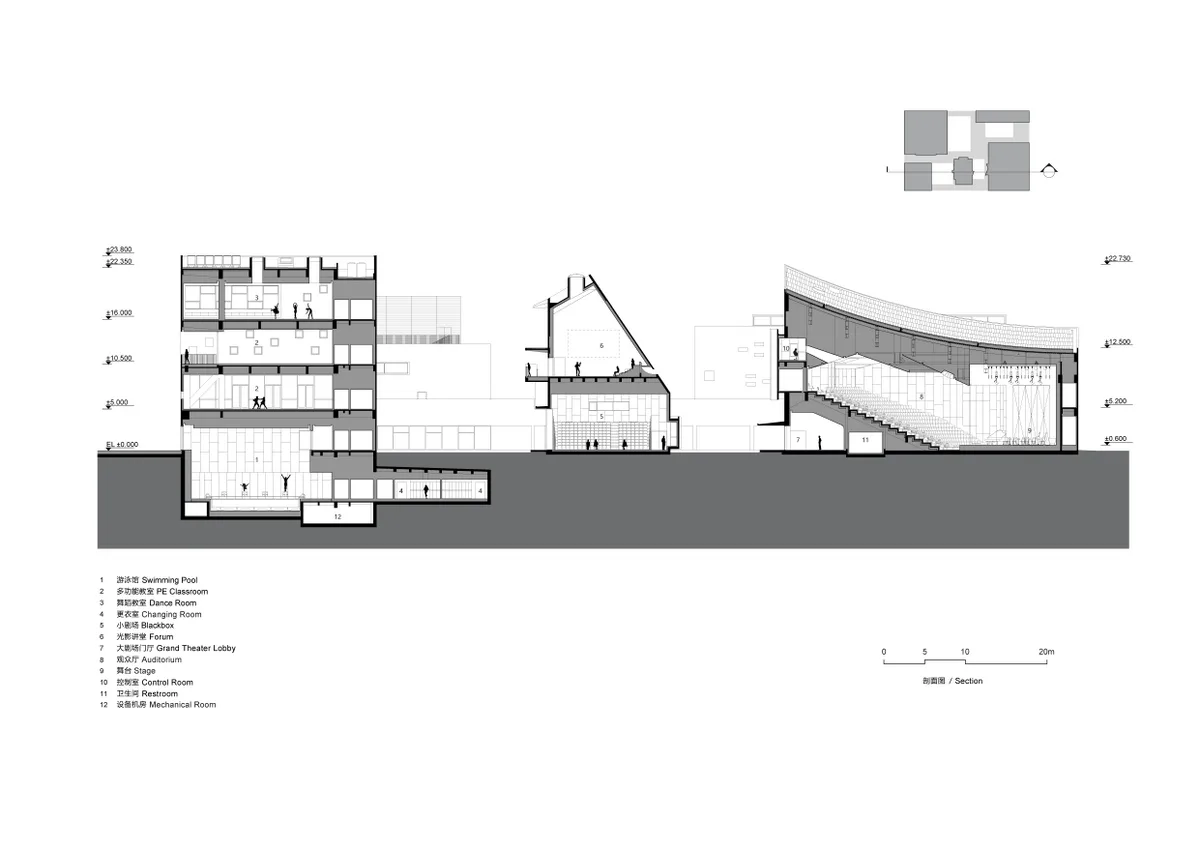
△ Section Diagram
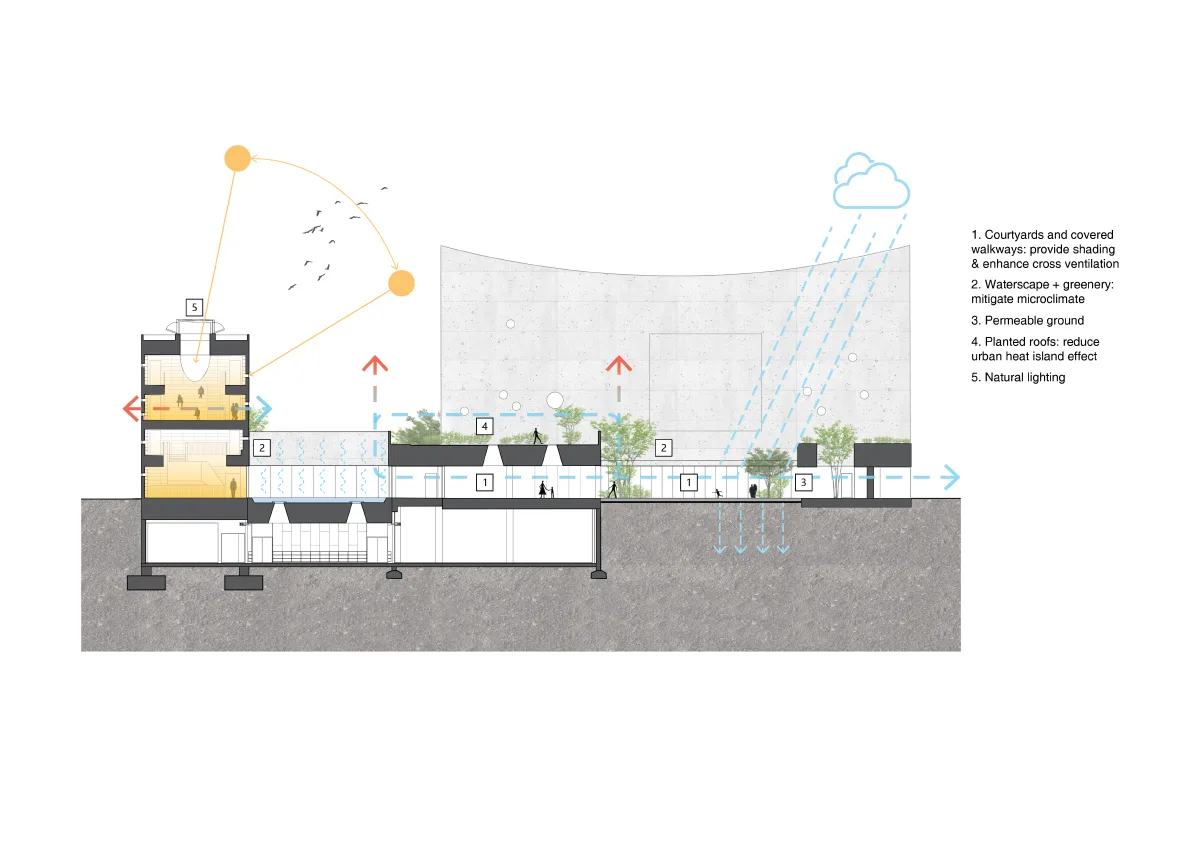
△ Analysis Chart
Project Information
Architect: OPEN Architects
Area: 13,676 m²
Year: 2023
Photographers: Lei Tantan, Architecture – Architectural Photography, Zhu Runzi
Lead Architects: Li Hu, Huang Wenjing
Design Team: Shi Bingjie, Daijiro Nakayama, Jia Ke, Ye Qing, Huang Zetian, Fan Jianglong (stationed), Giovanni Zorzi, Shou Chengbin, Wang Fengya, Lu Di, Tang Ziqiao, Jia Han
Client: Shanfeng Education Group
Interior Design: OPEN Architecture
Collaborative Design Institute: Tongji University Architectural Design and Research Institute (Group) Co., Ltd
Landscape Design: Zhishe Landscape
Theater and Acoustic Consultant: Huang Zhanchun Theater Architectural Design Consultant (Beijing) Co., Ltd
Lighting Consultant: Gree Lighting Design Co., Ltd
Location: Suzhou















Must log in before commenting!
Sign Up