
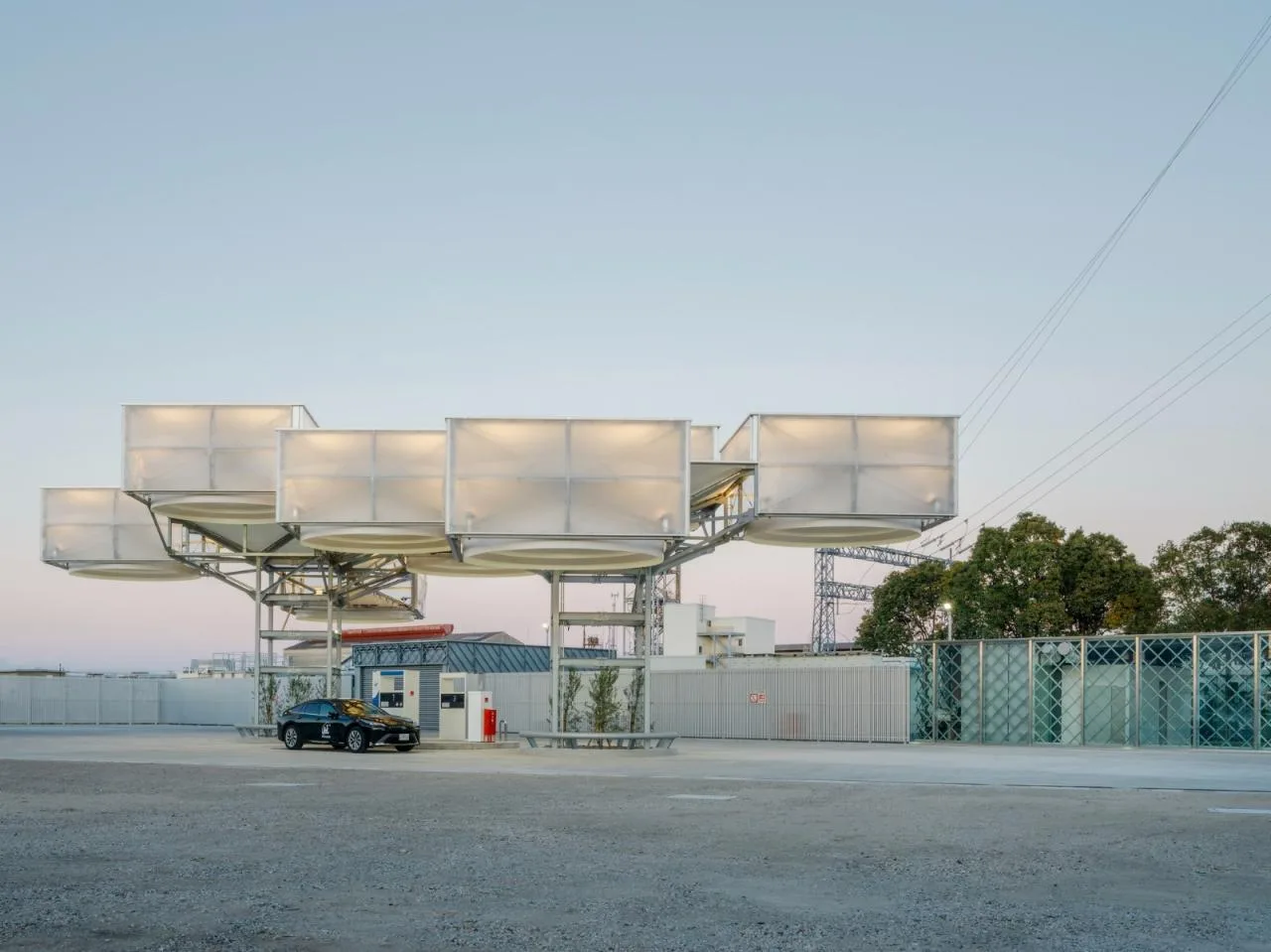
Architects aim to preserve the precious and harmonious environment of our planet for future generations while carefully protecting it today. This vision aligns closely with that of the project’s owner. The principles of the United Nations Sustainable Development Goals (SDGs) have become deeply embedded in society, and all companies involved in this project are committed to contributing towards a sustainable and prosperous future. Their goal is to “create new values that ensure children can live happily in the future.”
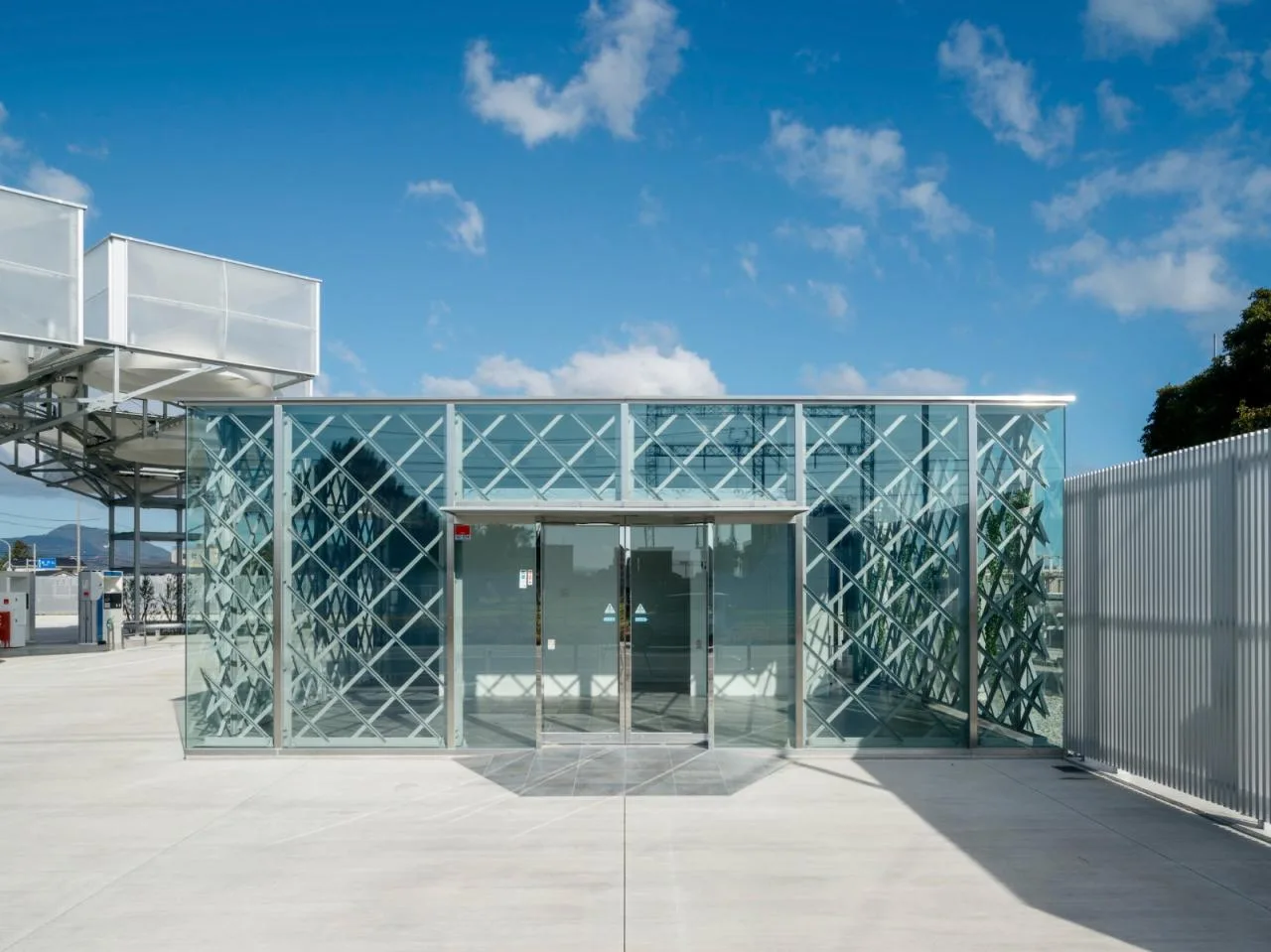
Hydrogen stands out as the most promising new energy source for the next generation. It generates electricity through chemical reactions with oxygen, enabling vehicles to operate without emitting carbon dioxide. The East Asia Synthetic Tokushima Hydrogen Station efficiently supports carbon neutrality. This hydrogen gas station is directly connected to nearby factories, allowing hydrogen to be transported through pipelines.
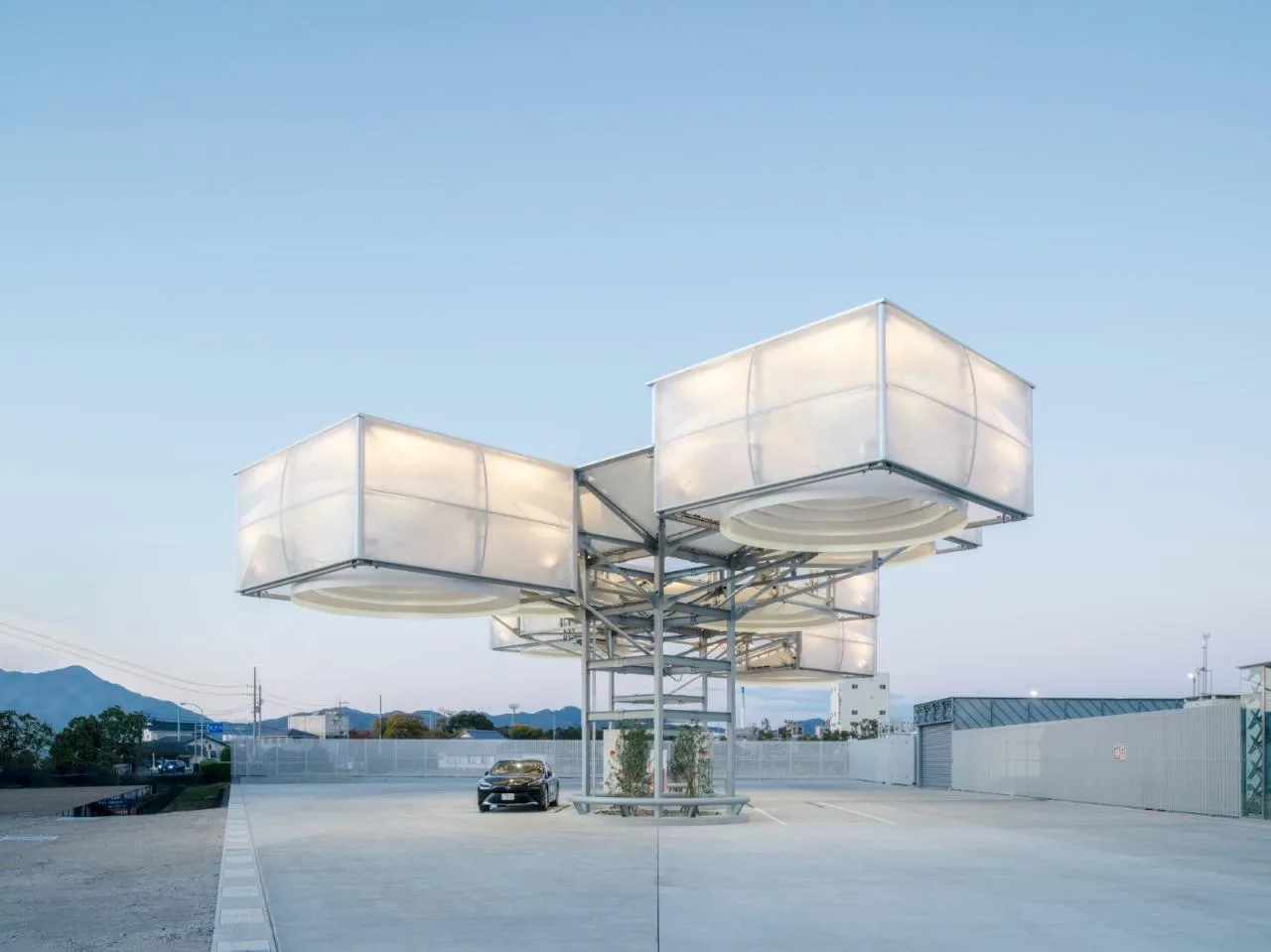
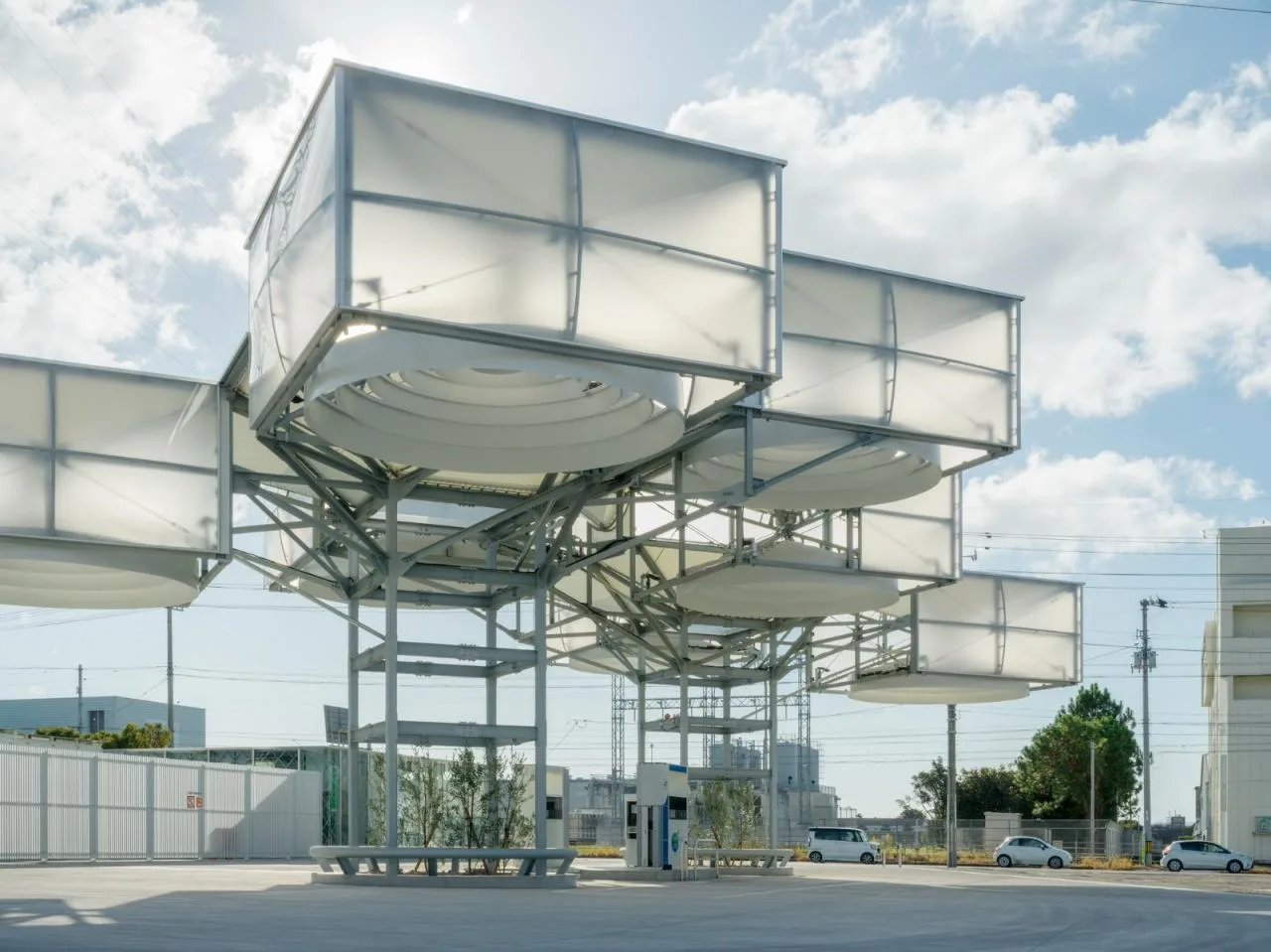
The East Asia Synthetic Tokushima Hydrogen Station produces and supplies hydrogen energy without emitting carbon dioxide, both during fueling and transportation. It is Japan’s first facility to directly operate hydrogen production using salt electrolysis for refining and supply. Hydrogen is a critical energy medium in Japan and worldwide, significantly reducing environmental impact.
With today’s serious electricity shortages, demand for power is rising daily. Utilizing hydrogen energy alongside electricity helps balance supply and demand and offers an important alternative among various energy solutions. Employing multiple, diverse energy systems enhances societal stability. Interestingly, as the world faces the challenges of centralized control focused solely on efficiency, embracing diversity becomes a vital path toward stability. Architects and project owners alike aspire to foster peace for future generations.
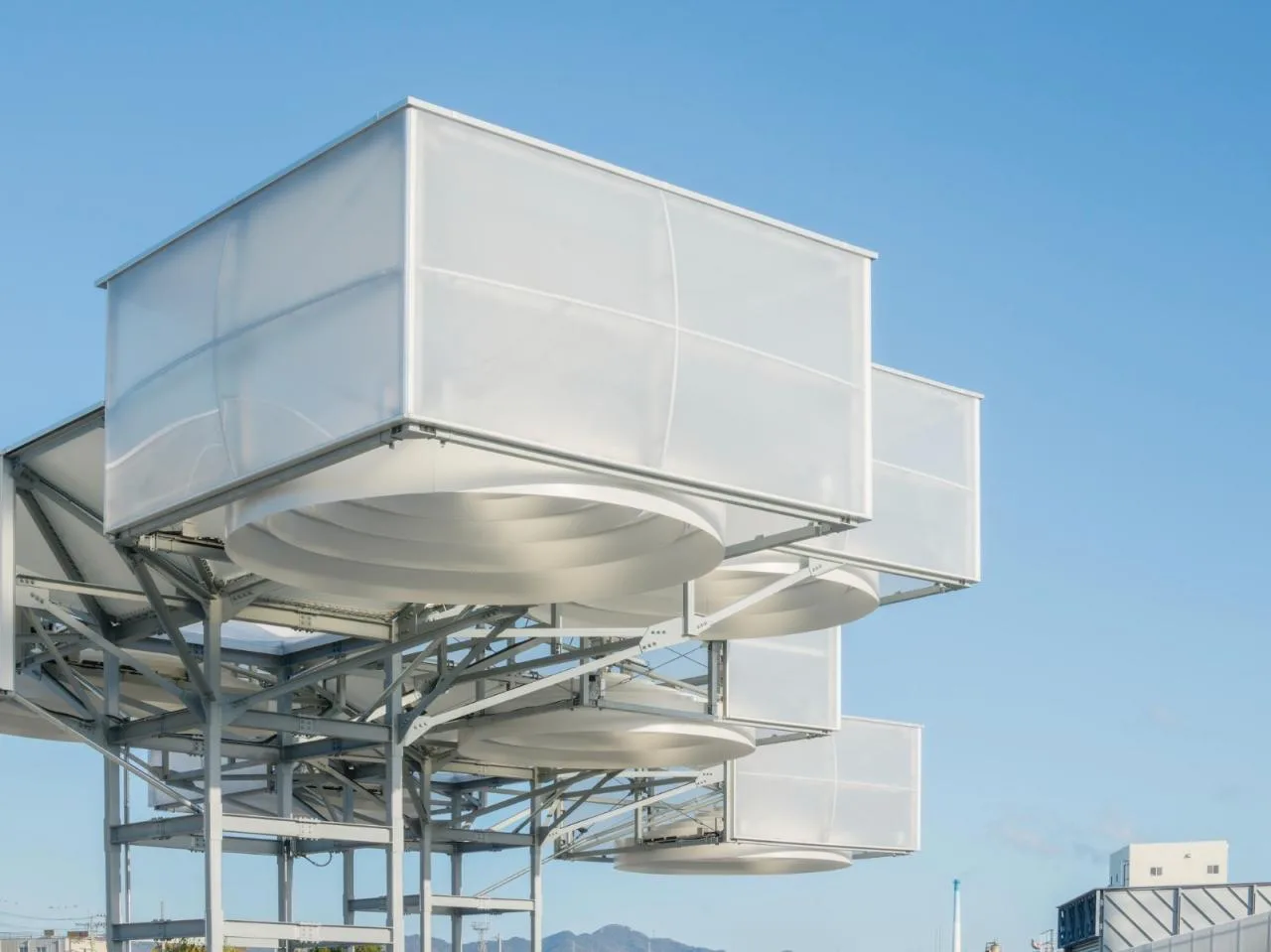
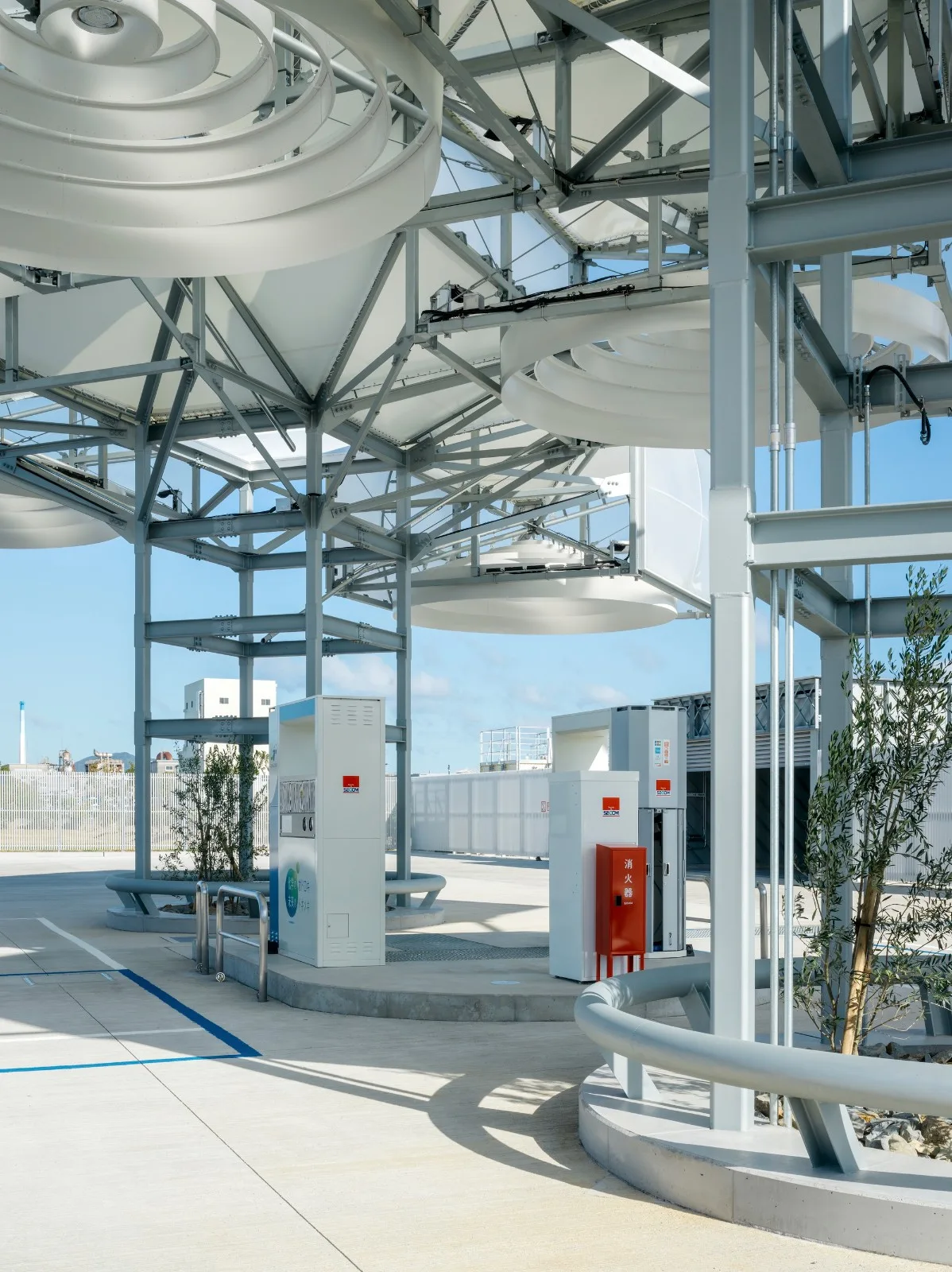
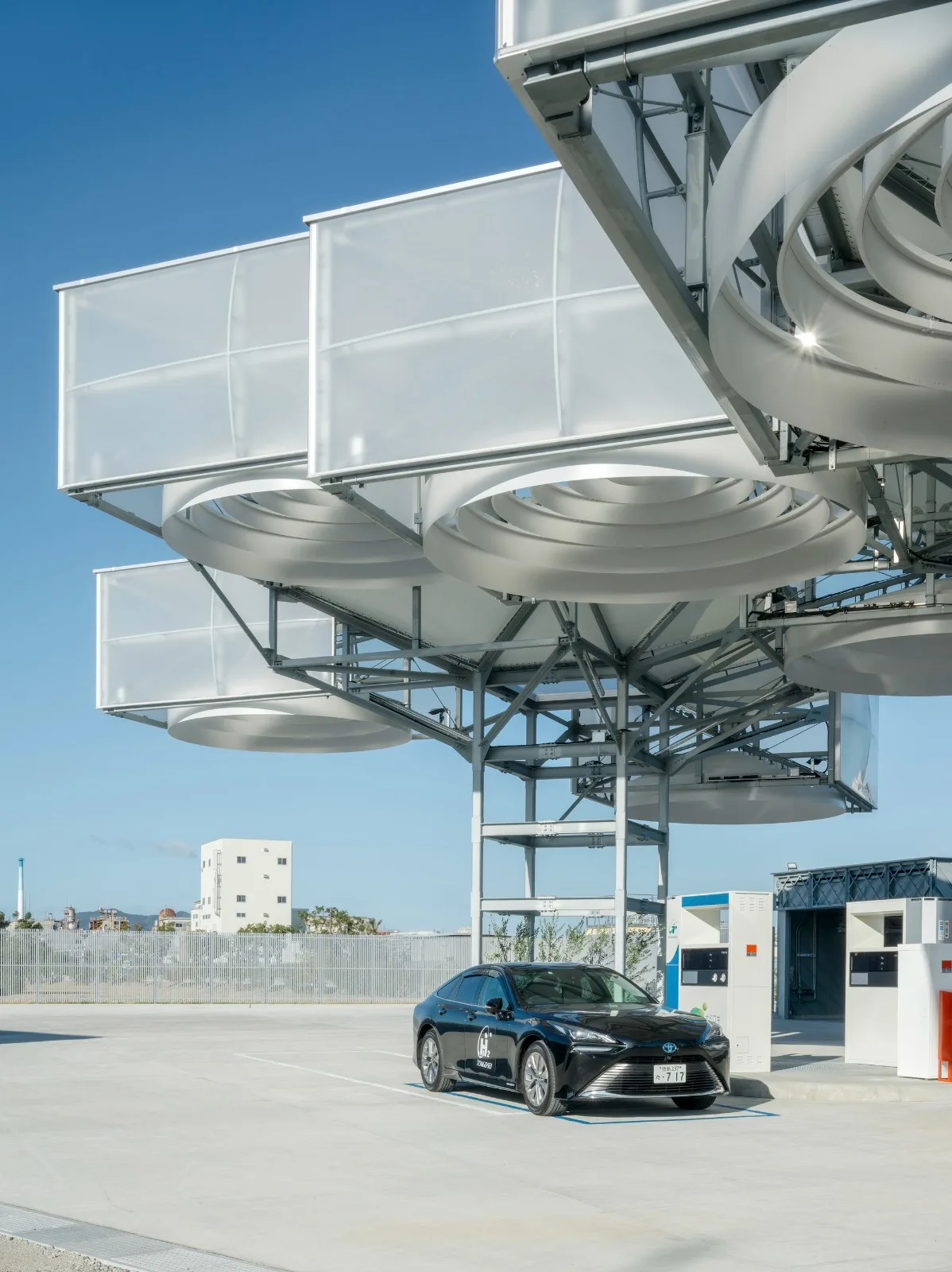
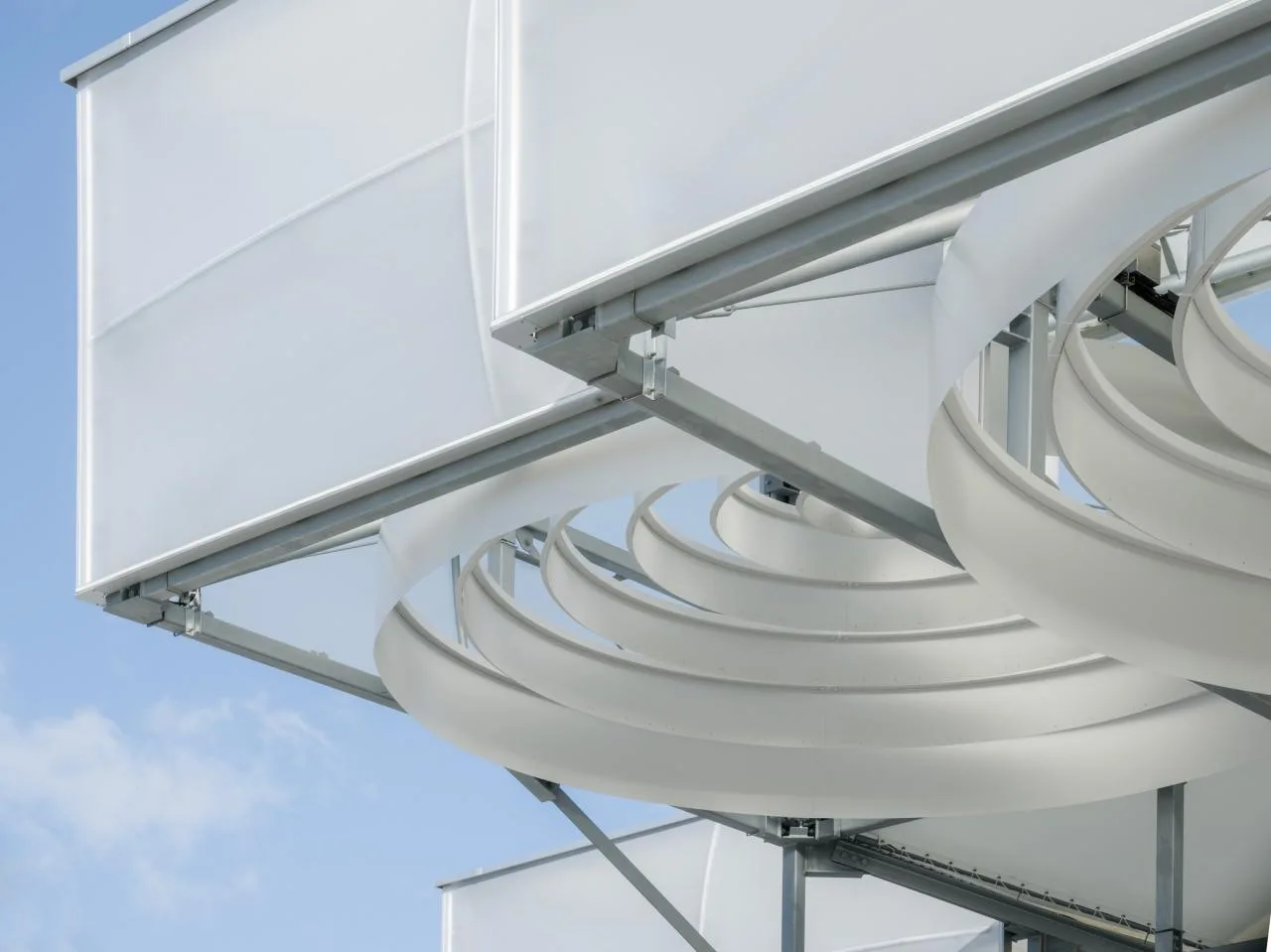
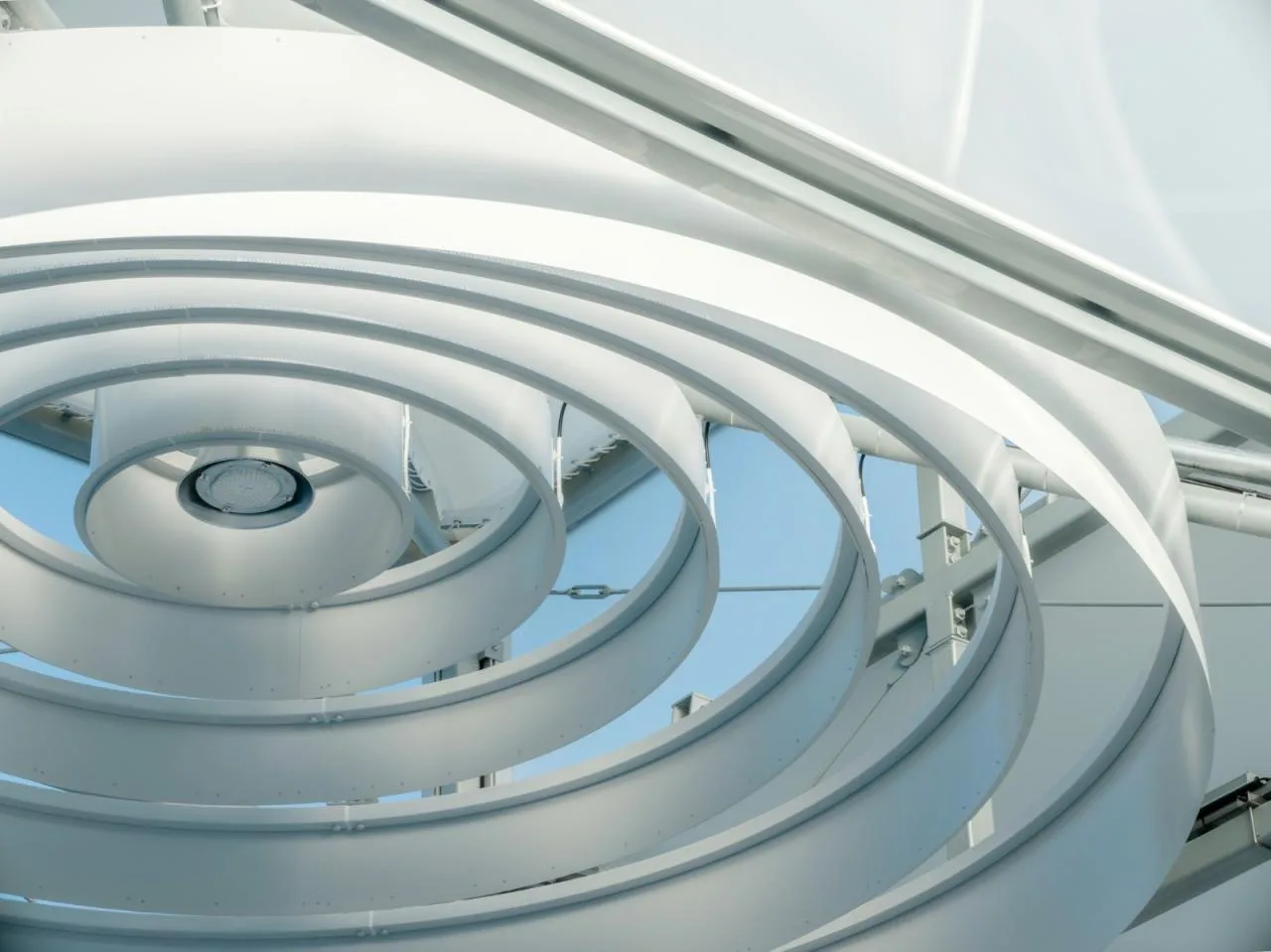
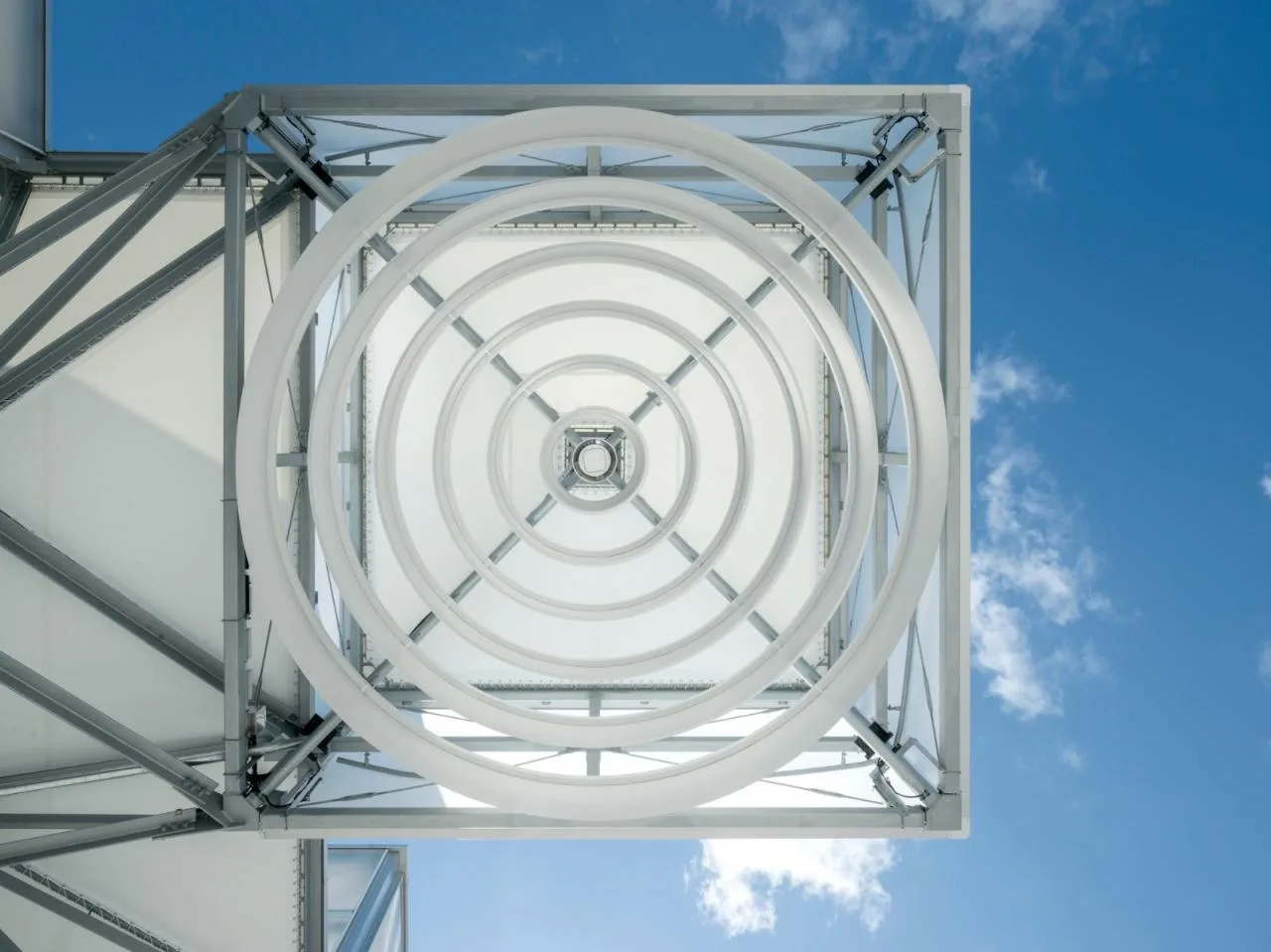
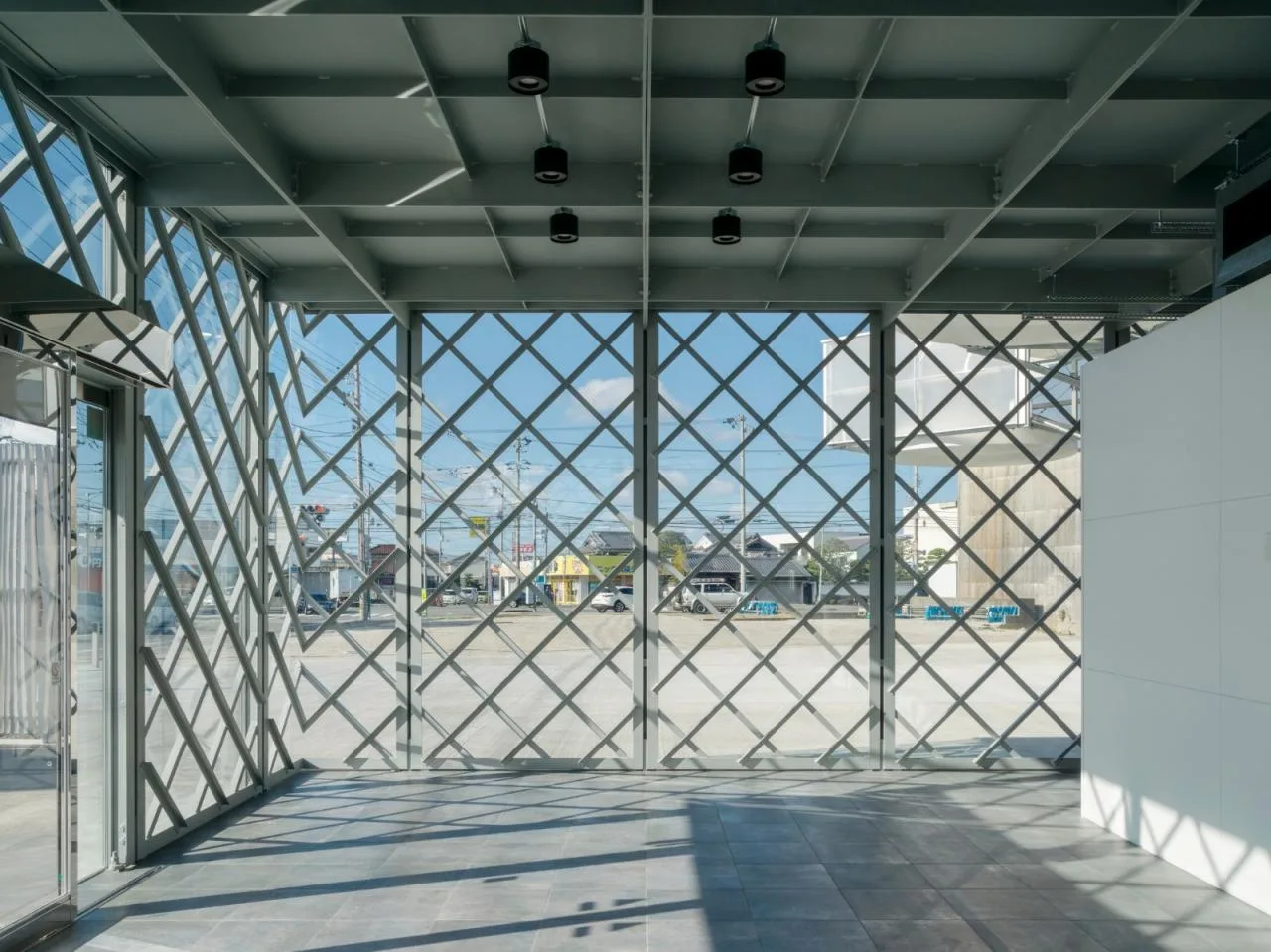
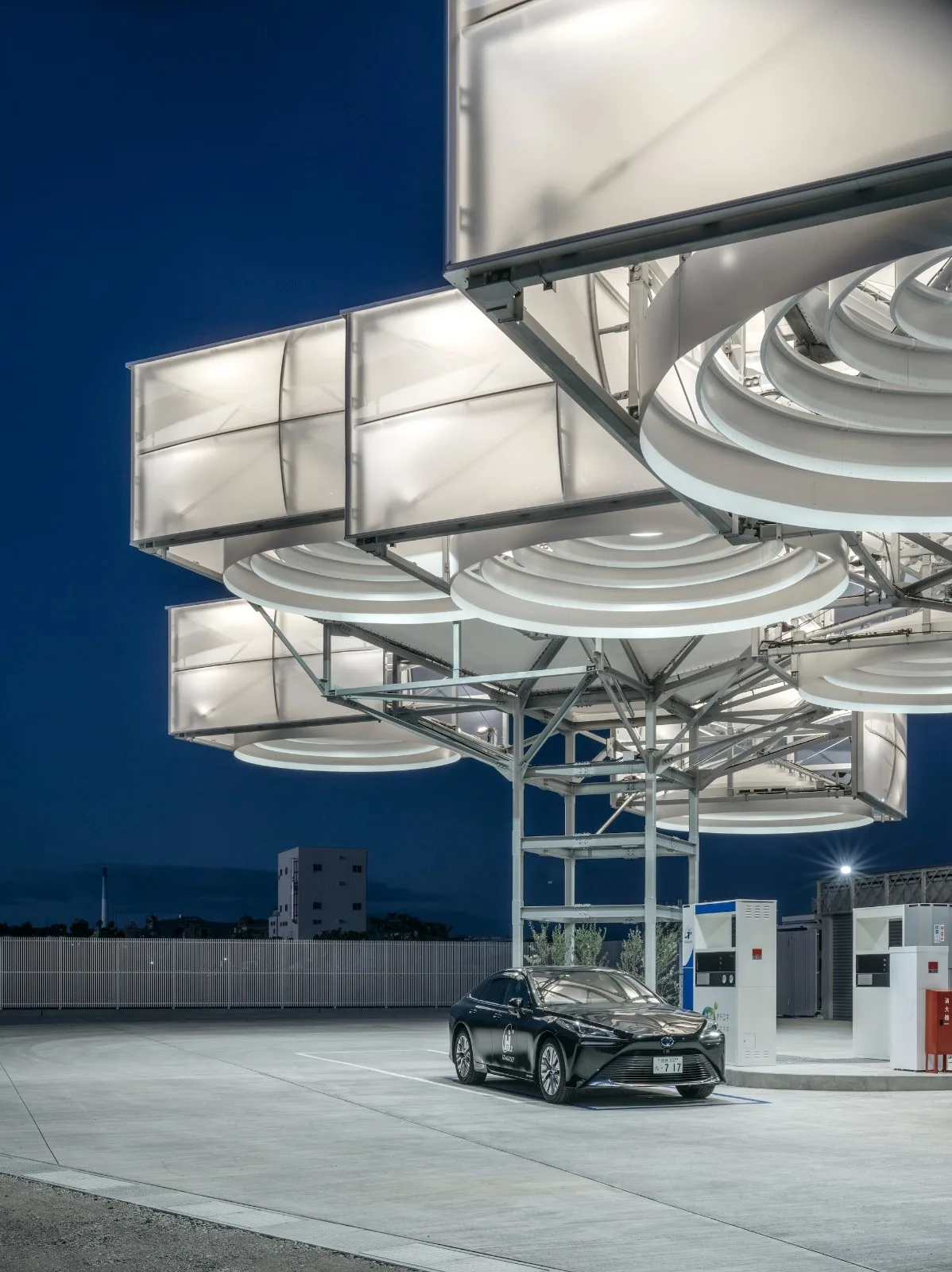
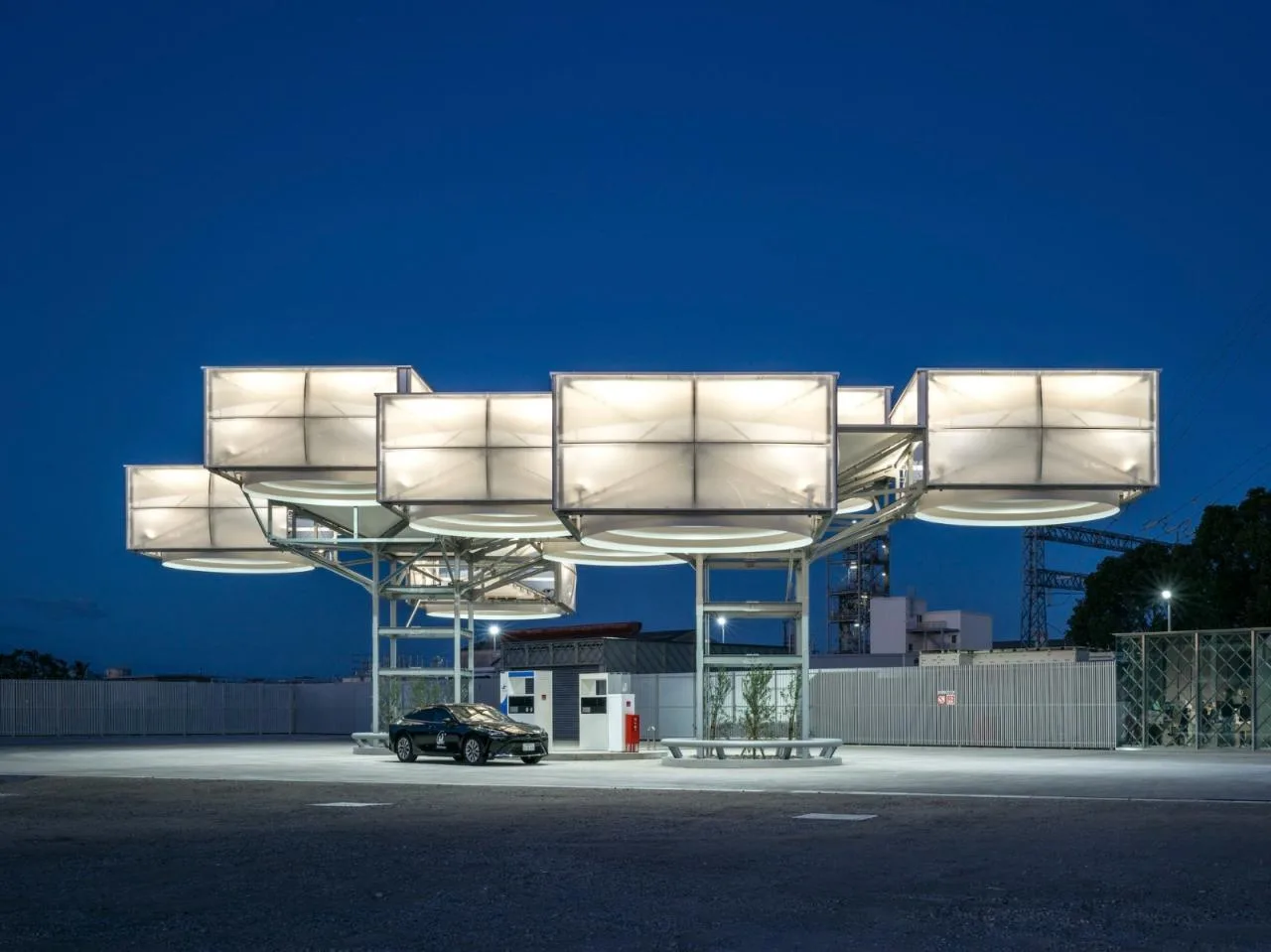
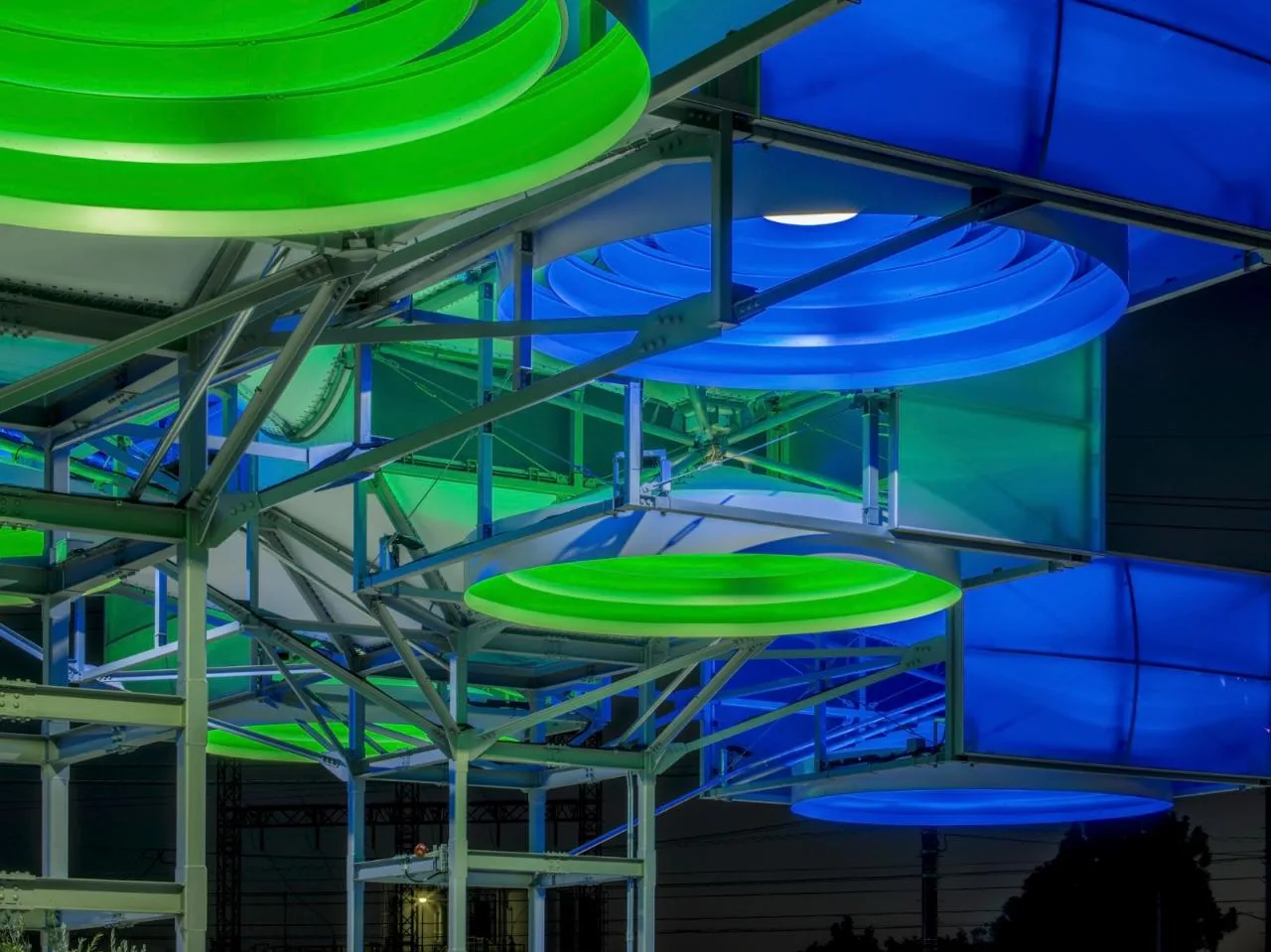
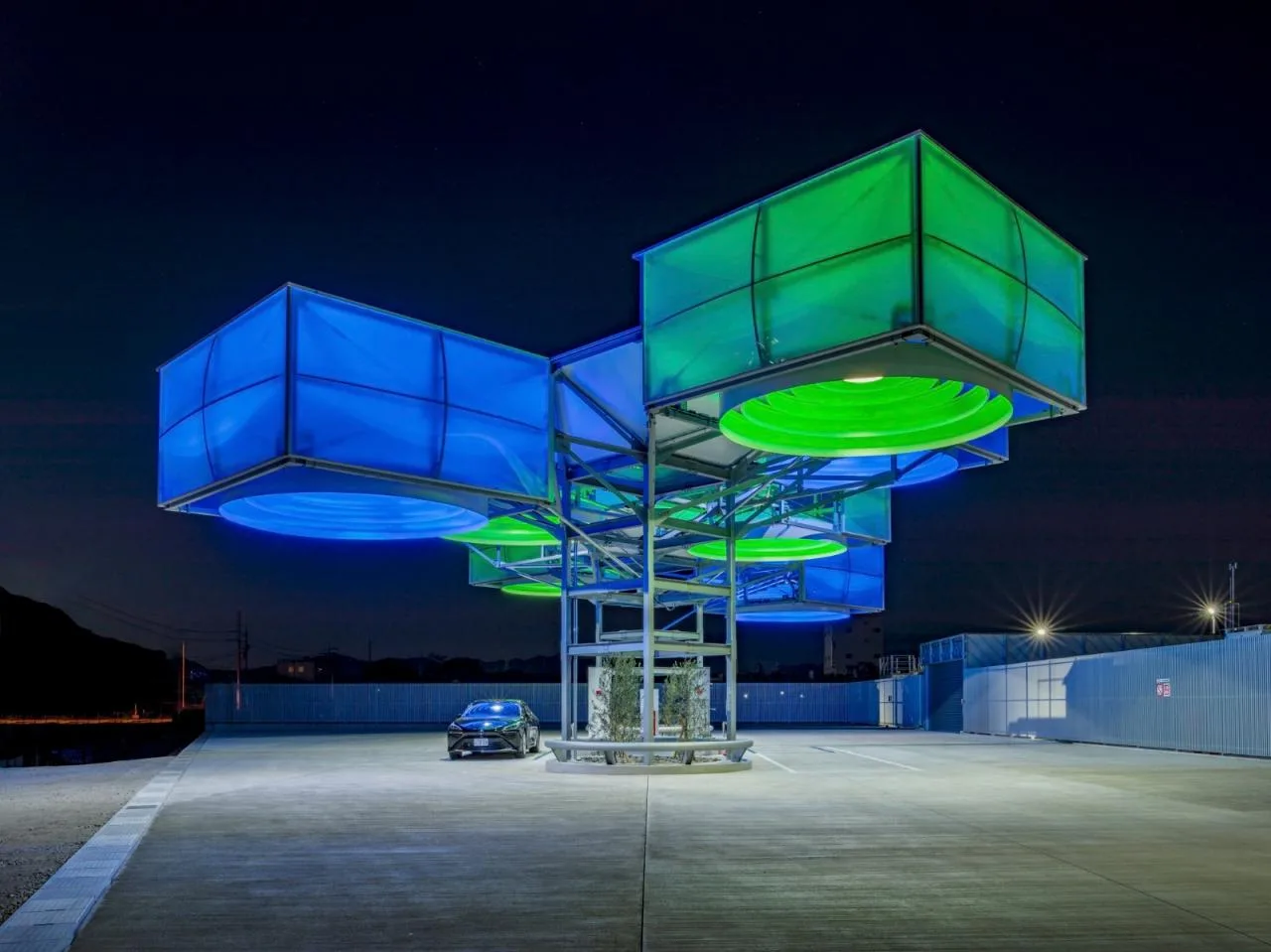
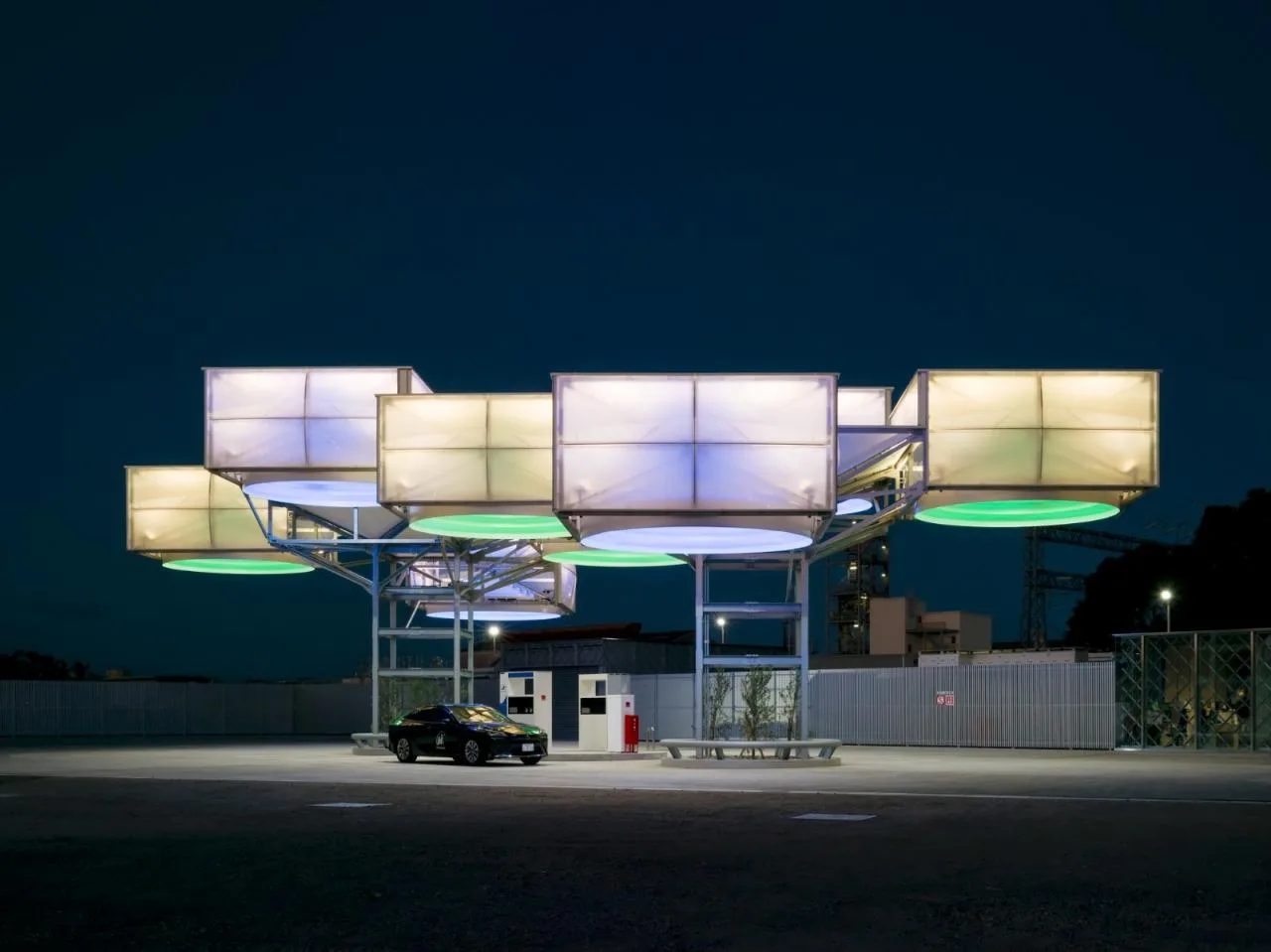
The semi-transparent, cloud-like ceiling floats above, symbolizing “hydrogen gas.” These square “cloud” units are covered with an ETFE membrane, creating a light, airy sensation reminiscent of balloons. Each cloud unit encircles a group of ‘tree’ columns, collectively forming a canopy-like structure. This design does not prioritize form alone but seeks to create a system that covers “tired” spaces while harmonizing with the environment. The architecture appears to float like a cloud, evoking a sense of mystery for viewers.
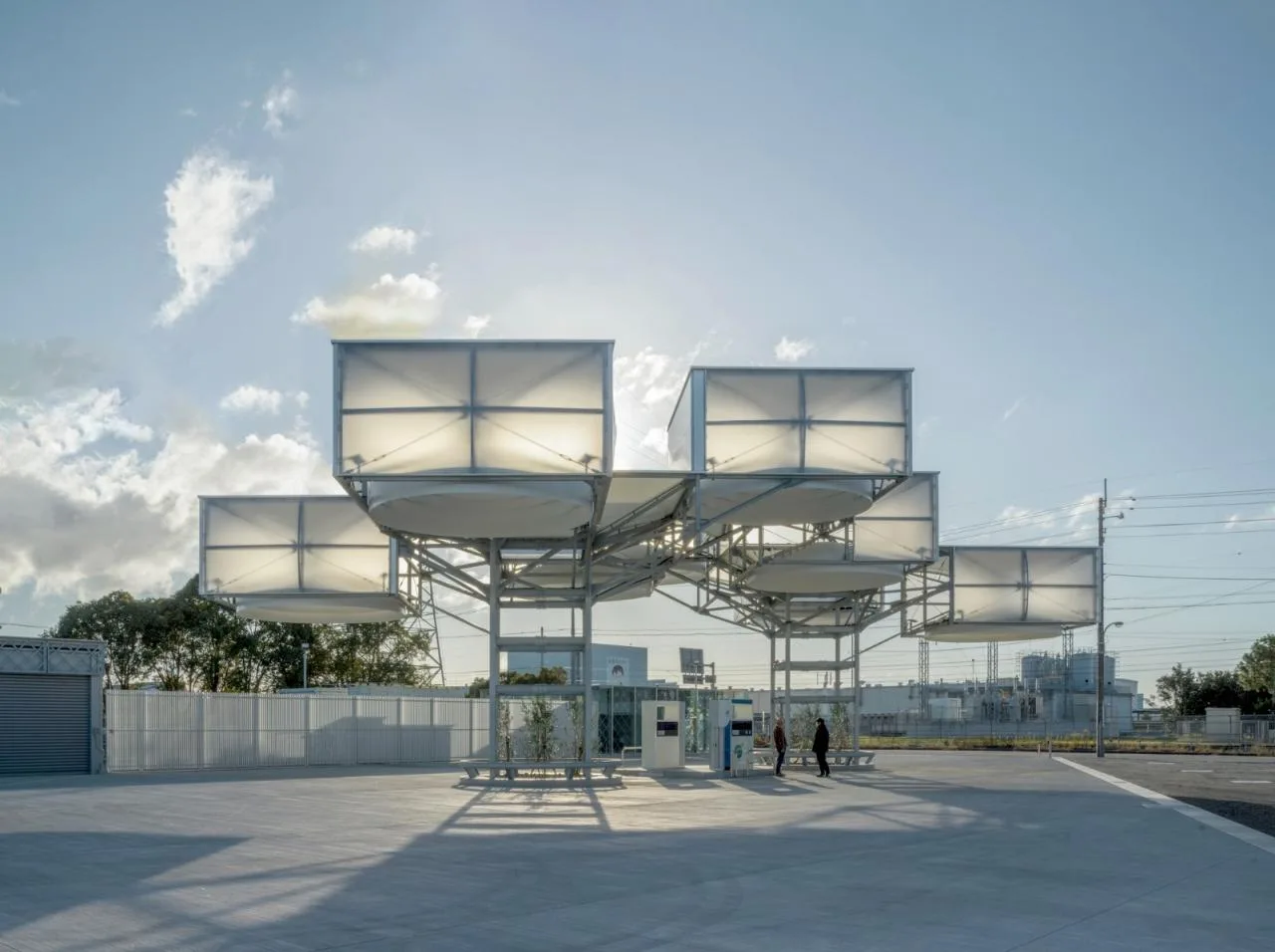
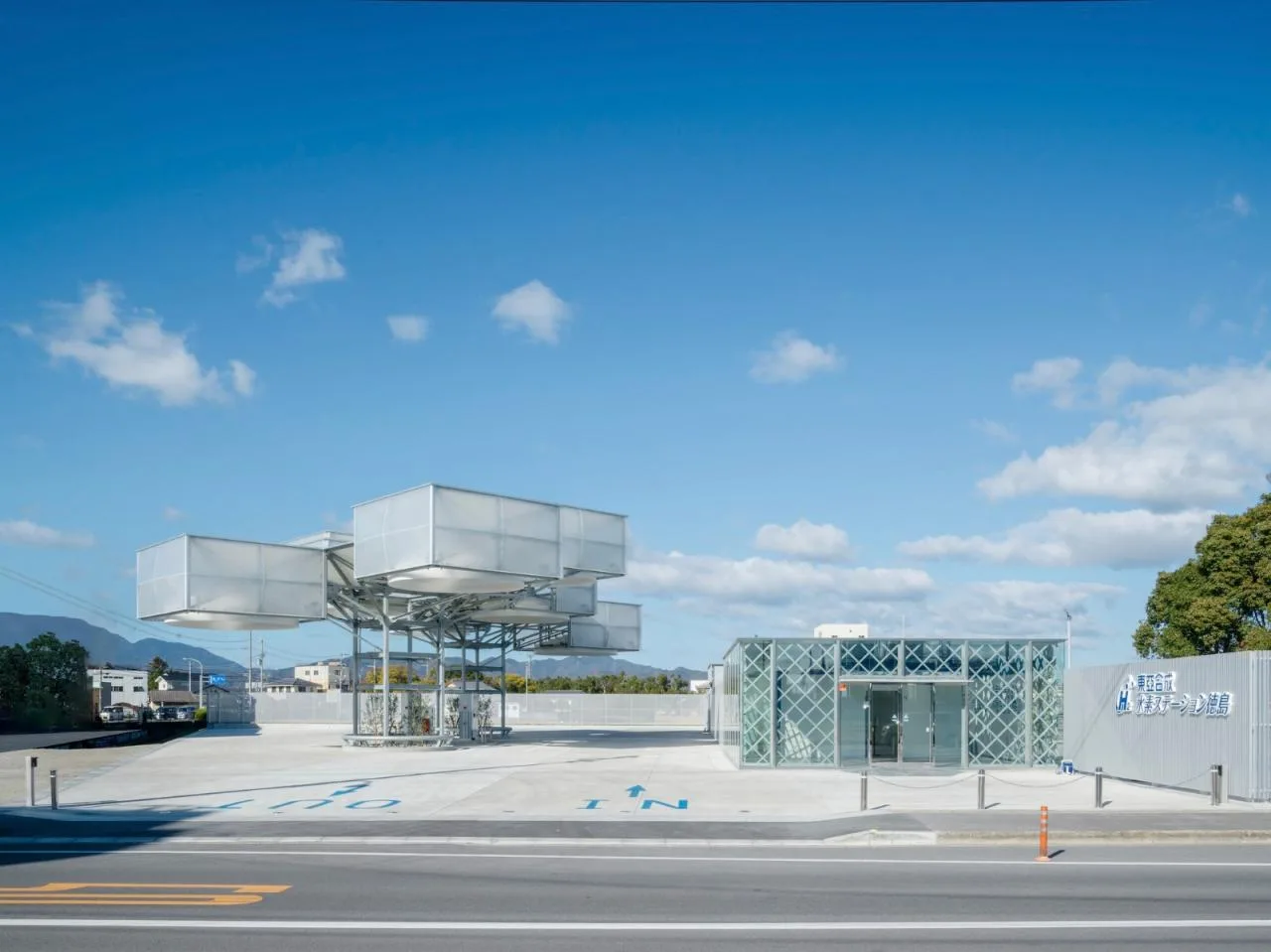
A certain volume of gas functions as a buffer to protect the environment. Similar to insulation or a thermal barrier, the cloud units regulate the atmosphere beneath them, shielding the covered space like a natural cloud layer. Hydrogen, as a gas, gently protects the future of our global environment. The architects hope to share this vision with the public.
Moreover, considering energy consumption throughout the building’s lifecycle, this lightweight architecture proves efficient from construction through operation. Beyond functionality, this design plays a crucial role in inspiring global awareness of hydrogen energy.
We aim to communicate the importance of protecting our precious planet.
Project Drawings
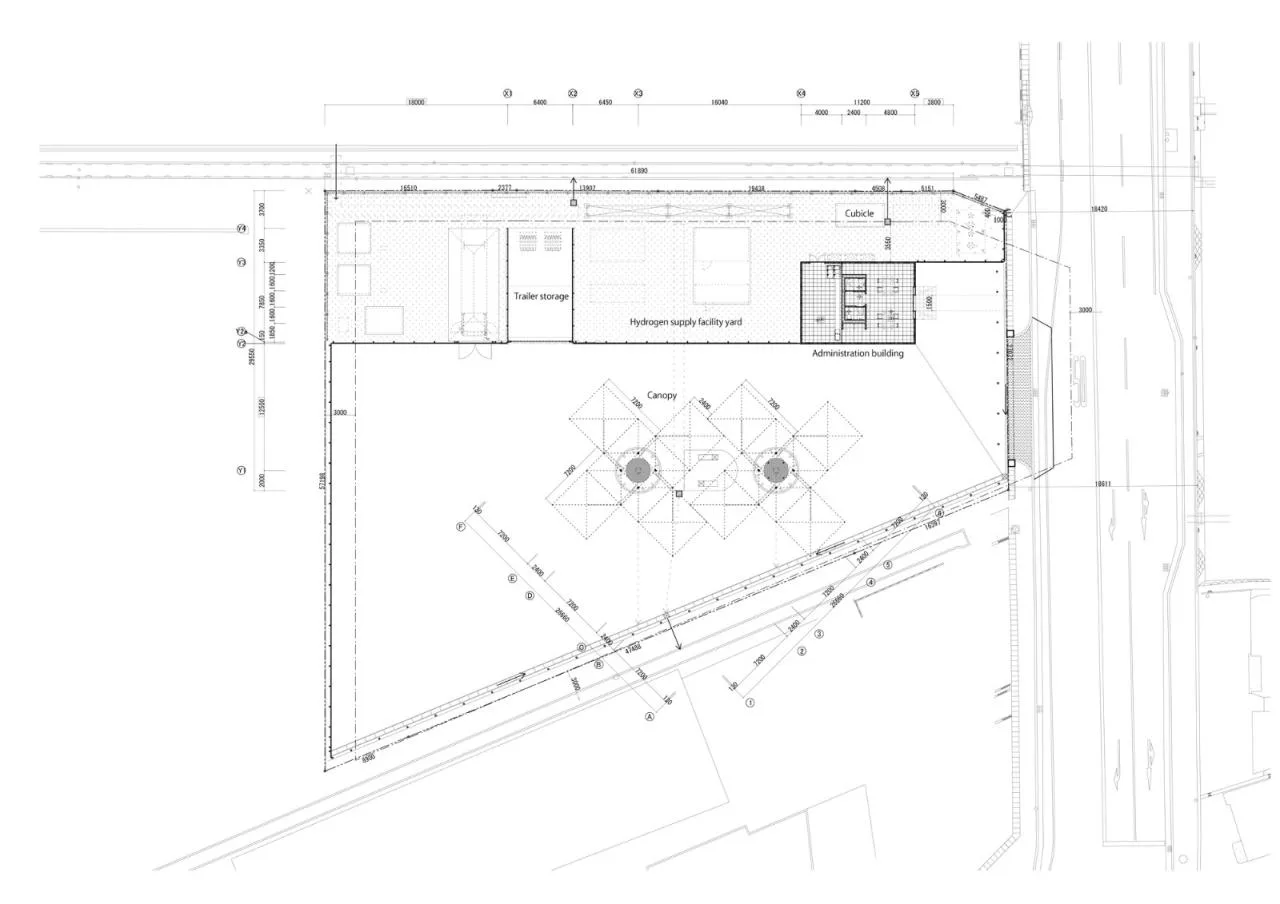
△ General Layout Plan
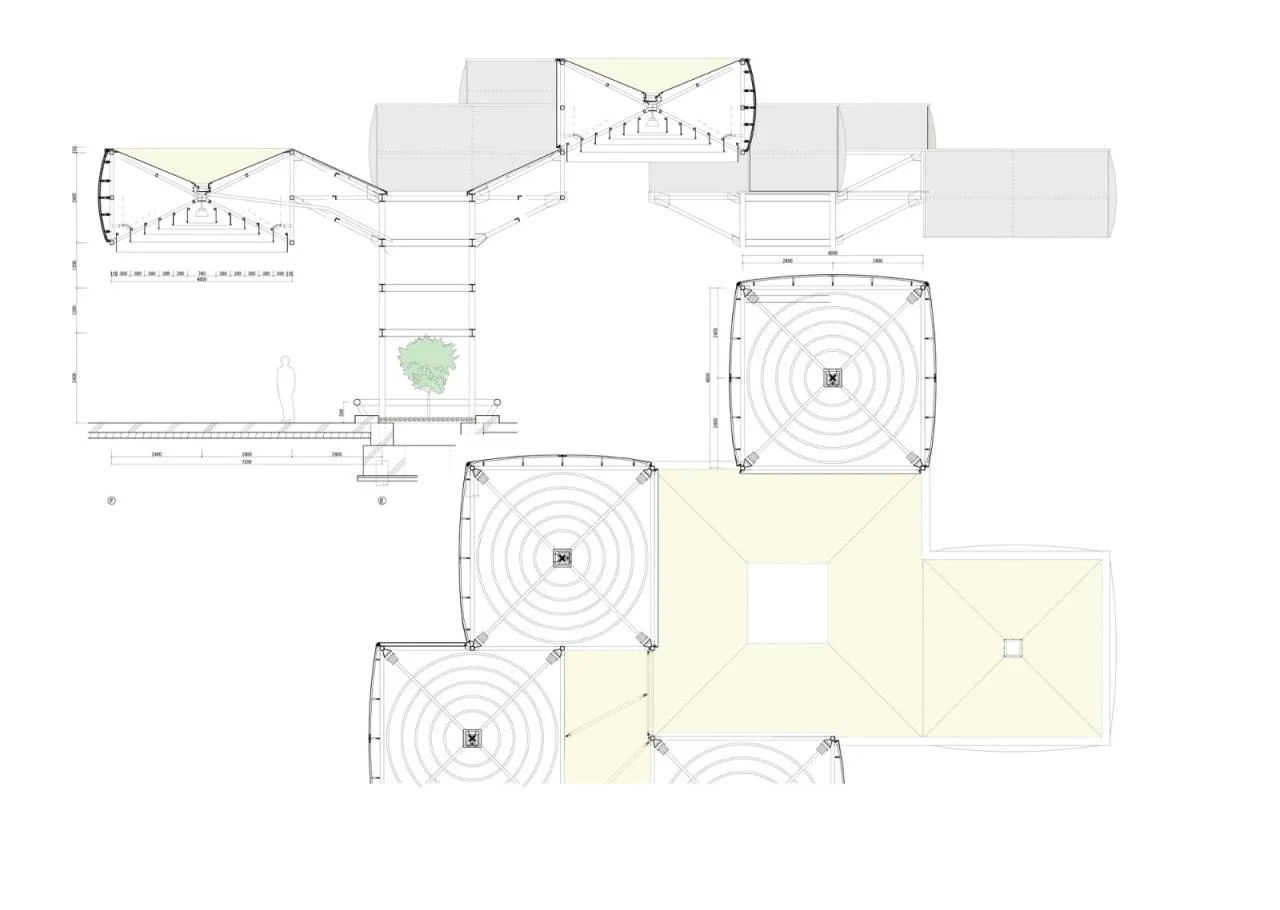
△ Plan View
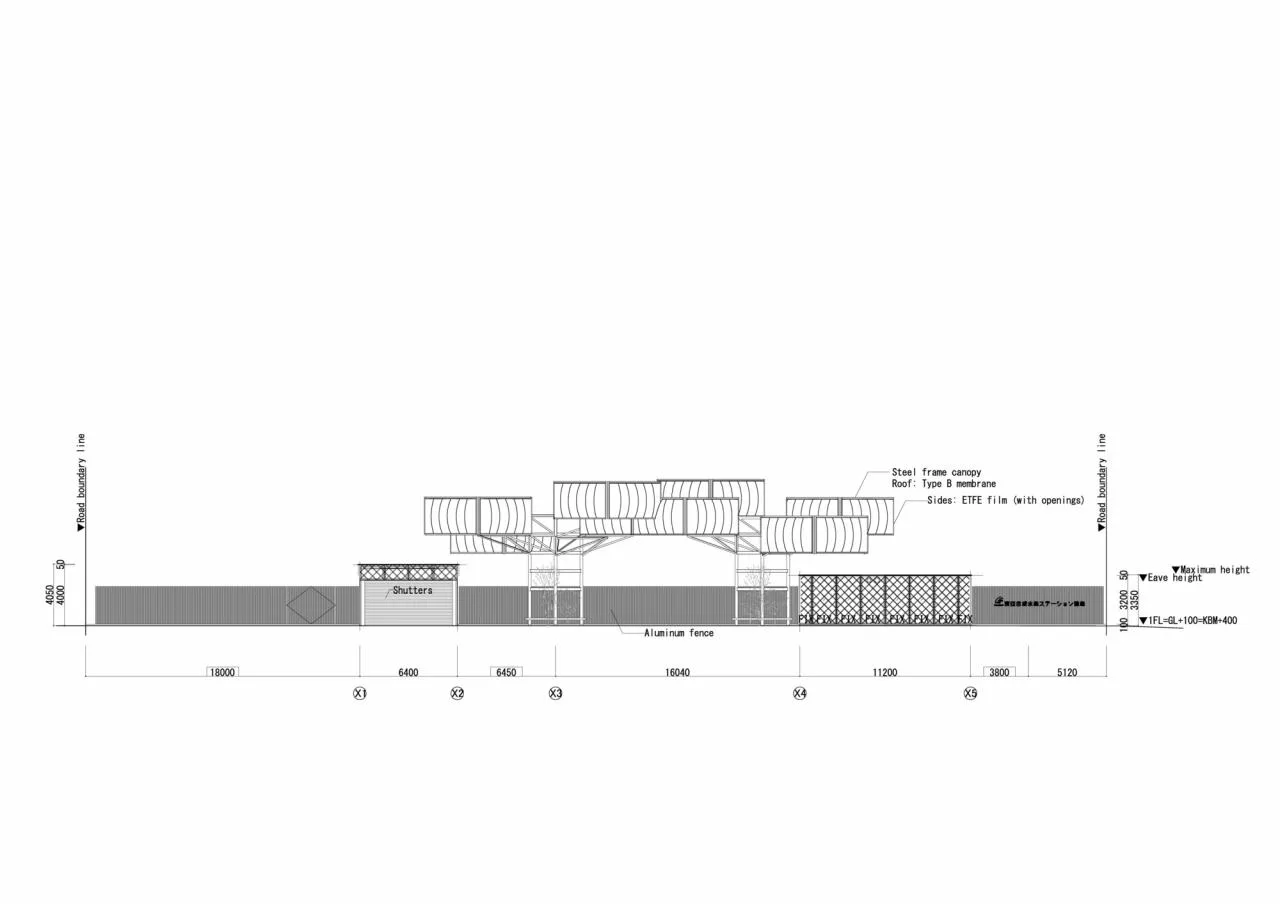
△ Elevation Drawing
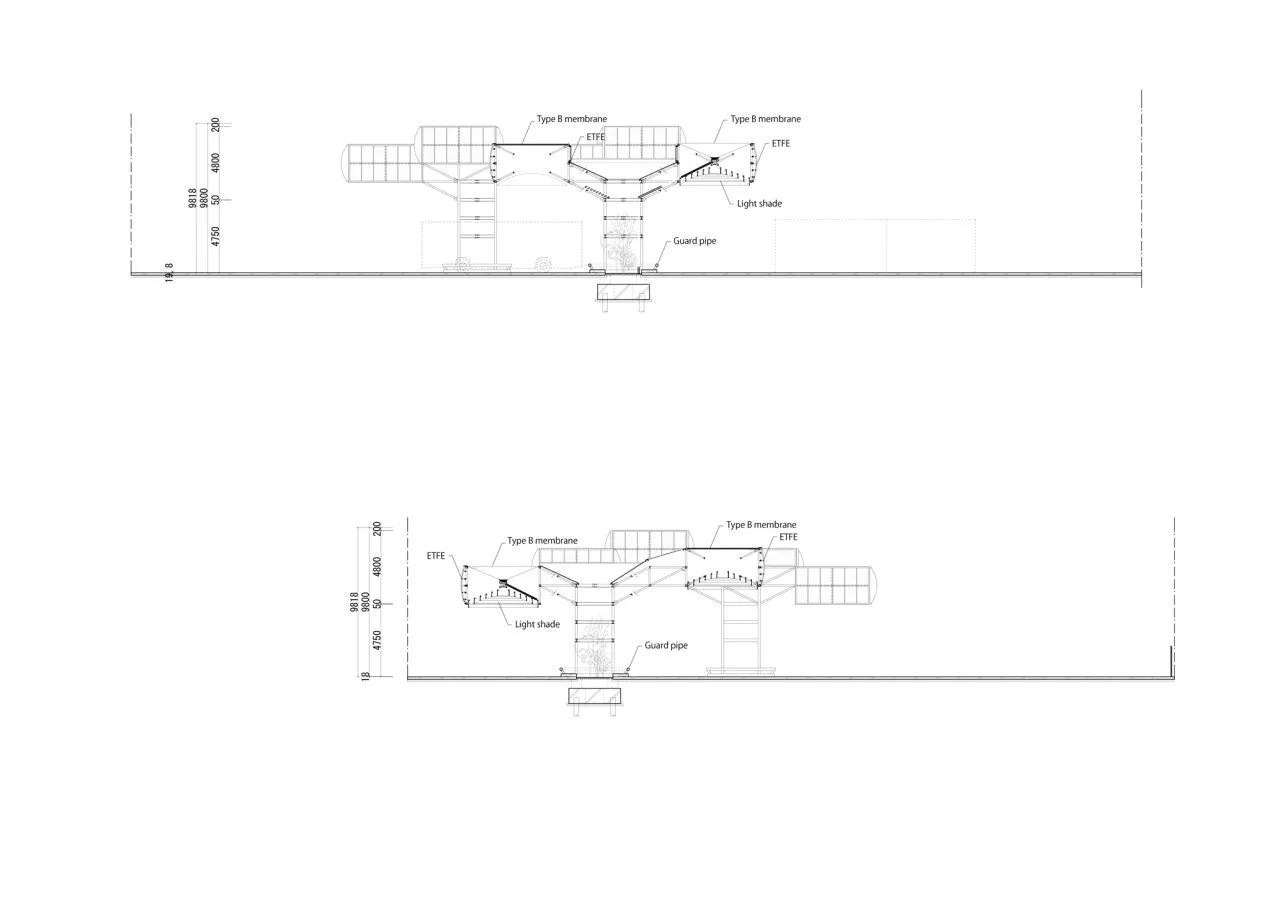
△ Section Diagram
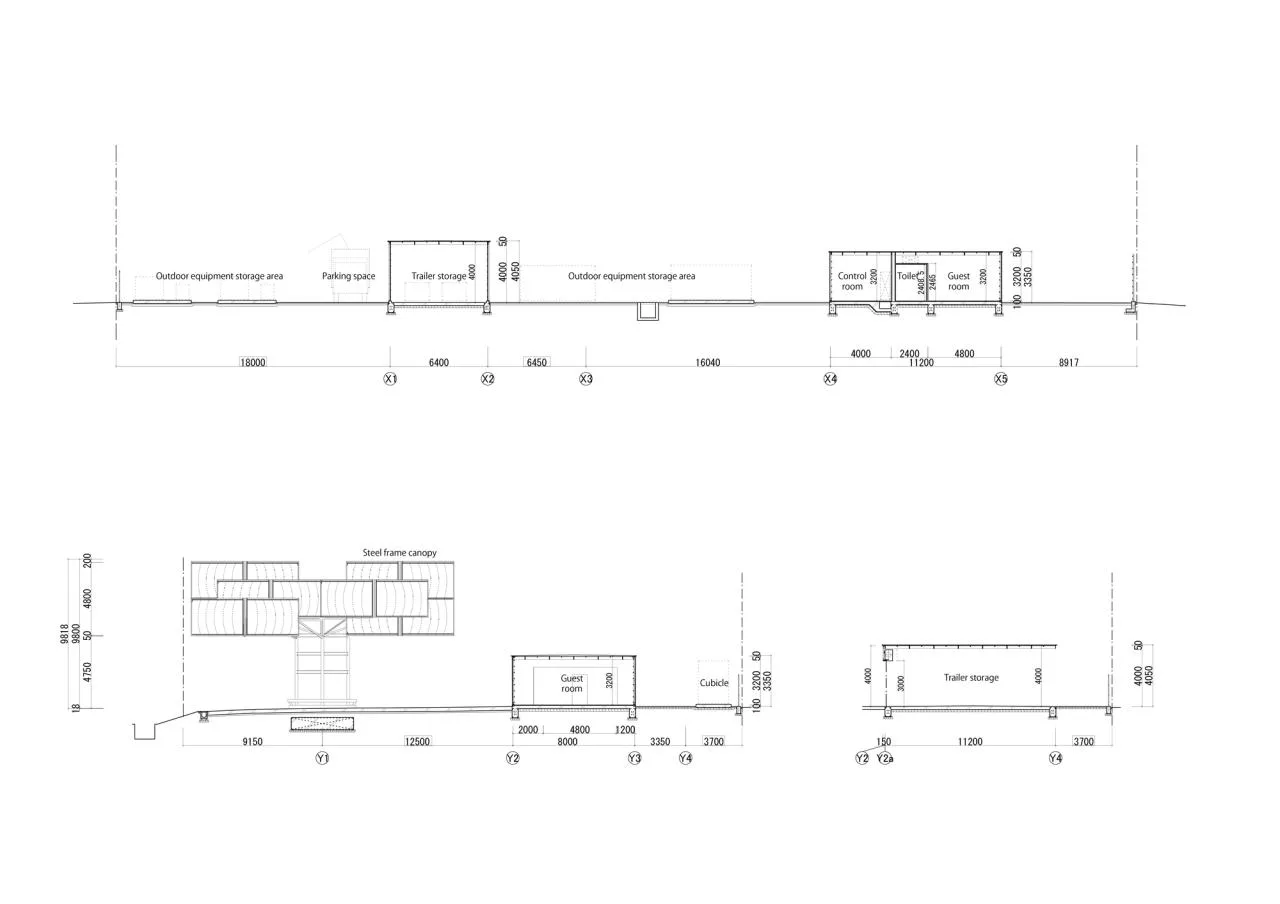
△ Section Diagram
Project Information
Architect: Osamu Morishita Architect & Associates
Area: 47 m²
Year: 2022
Photographer: Katsumasa Tanaka
Lead Architect: Shuo Morishita
Architects: Morishita Institute of Architecture, Shuo Morishita, Nakama Qitai, Utsu Shohei
Structure: KAP
Equipment: Building Equipment Design and Research Institute
General Contractor: North Island Group
Location: Tokushima City, Japan












Must log in before commenting!
Sign Up