
MAD Architects has unveiled the design for the Qondesa high-rise building in Ecuador, South America. This marks MAD’s first publicly announced project in South America. Once completed, it will stand as Quito’s tallest urban landmark.
Quito, the capital of Ecuador, is nestled in a valley at the eastern foot of the active Pichincha volcano within the Andes mountain range. It holds the distinction of being the closest capital city to the equator worldwide. Sitting at an elevation of 2,850 meters, Quito is the second highest capital city globally. Its plateau location ensures a mild climate with an average monthly temperature around 15°C (59°F) and an annual temperature variation of just 1°C. This pleasant climate has earned Quito a spot among the “Top Ten Spring Cities in the World.”
Founded on Inca ruins during the 16th century, Quito boasts Latin America’s largest and best-preserved historic center. The city features an extensive collection of buildings from various Latin American eras. In 1978, Quito became the first city to be inscribed on the UNESCO World Heritage List.
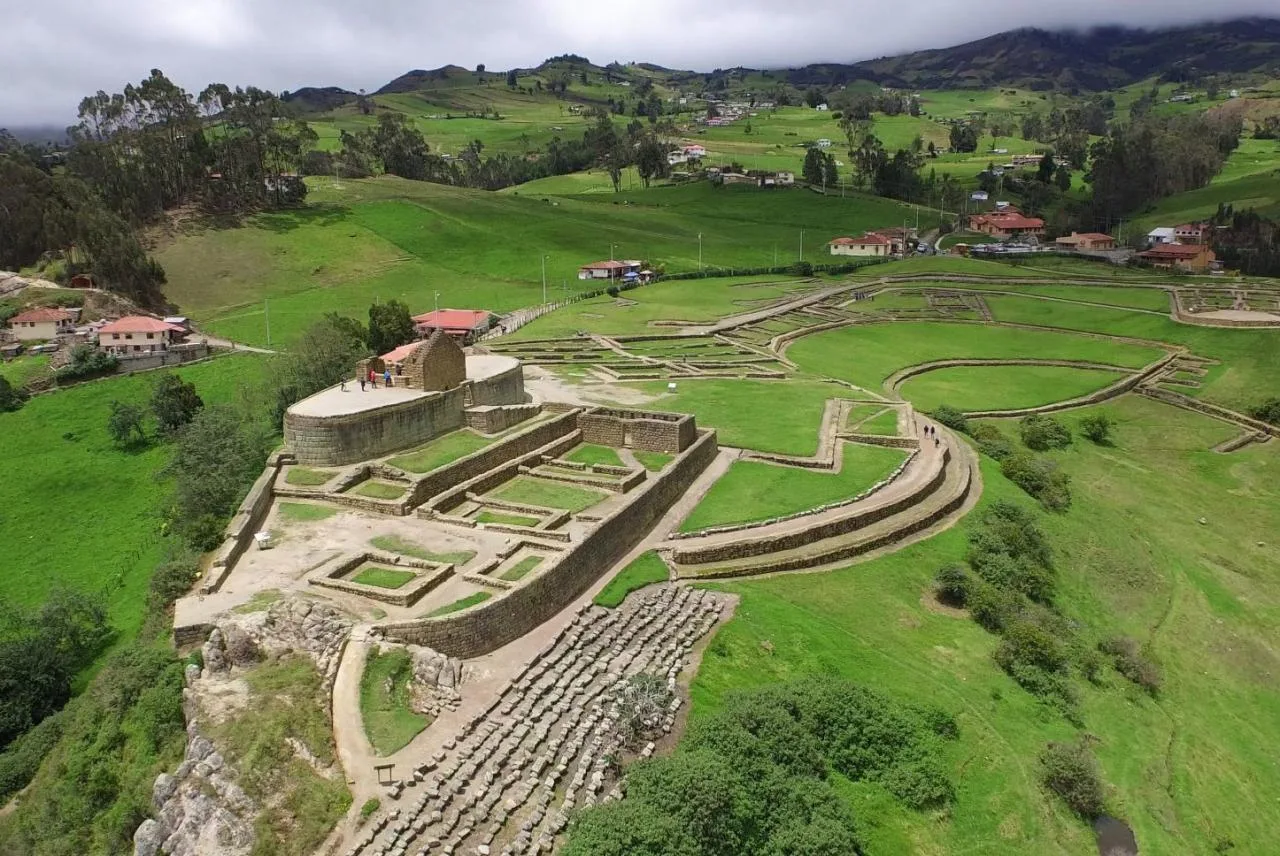
Ingapirca Inca Site in Ecuador
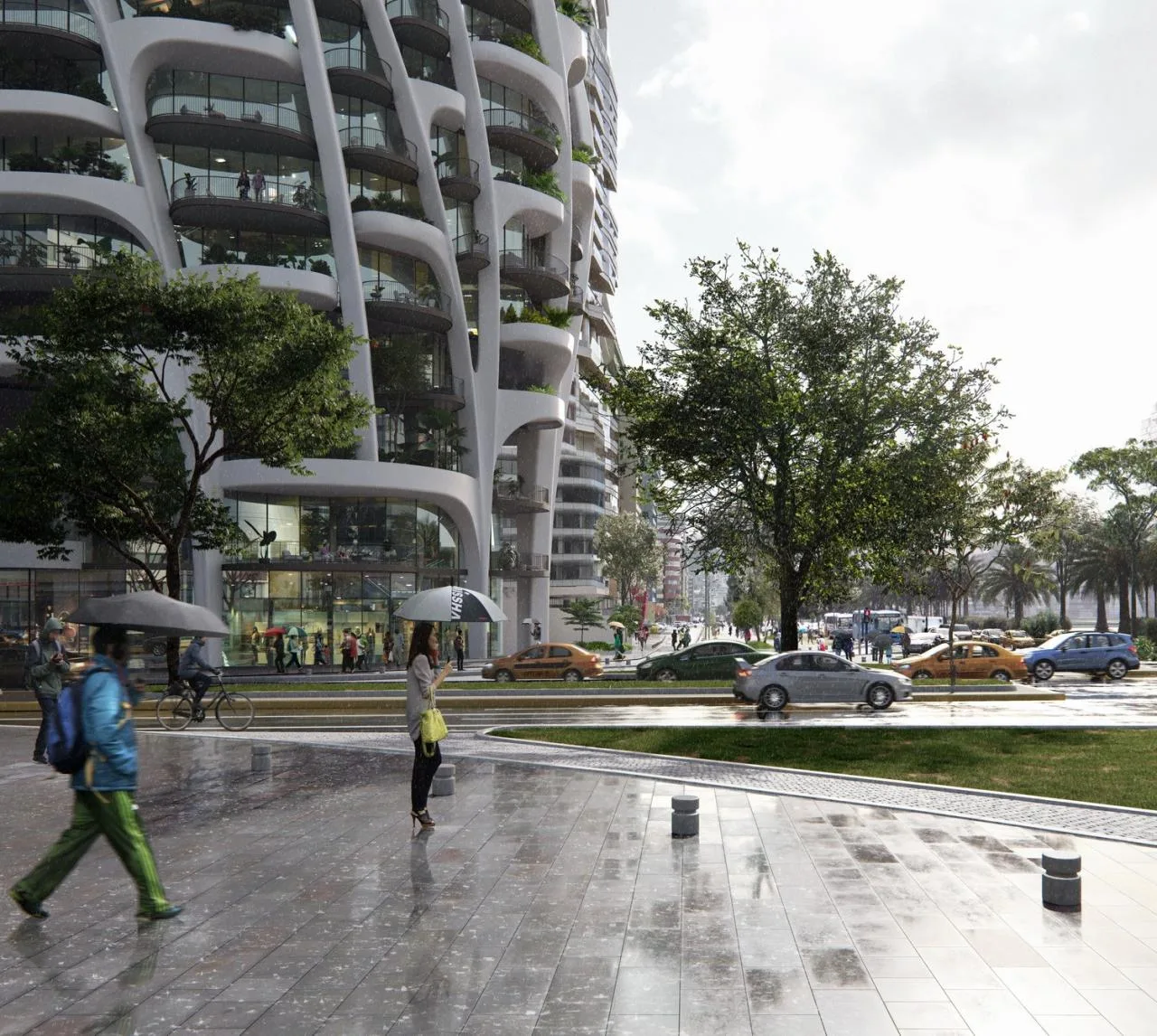
Qondesa is situated adjacent to La Carolina Park, the largest urban park in Quito. Covering 67 hectares, La Carolina Park serves as the city’s central public green space. It features lush natural vegetation, small lakes, botanical gardens, professional cycling trails, various sports fields, and skate parks, providing abundant recreational areas for Quito’s residents.
Against this unique natural and cultural backdrop, MAD aims to extend the greenery of the surrounding mountains and La Carolina Park into the building’s design. Through organic architectural forms, the project seeks to connect residents’ lives with the beauty of nature.
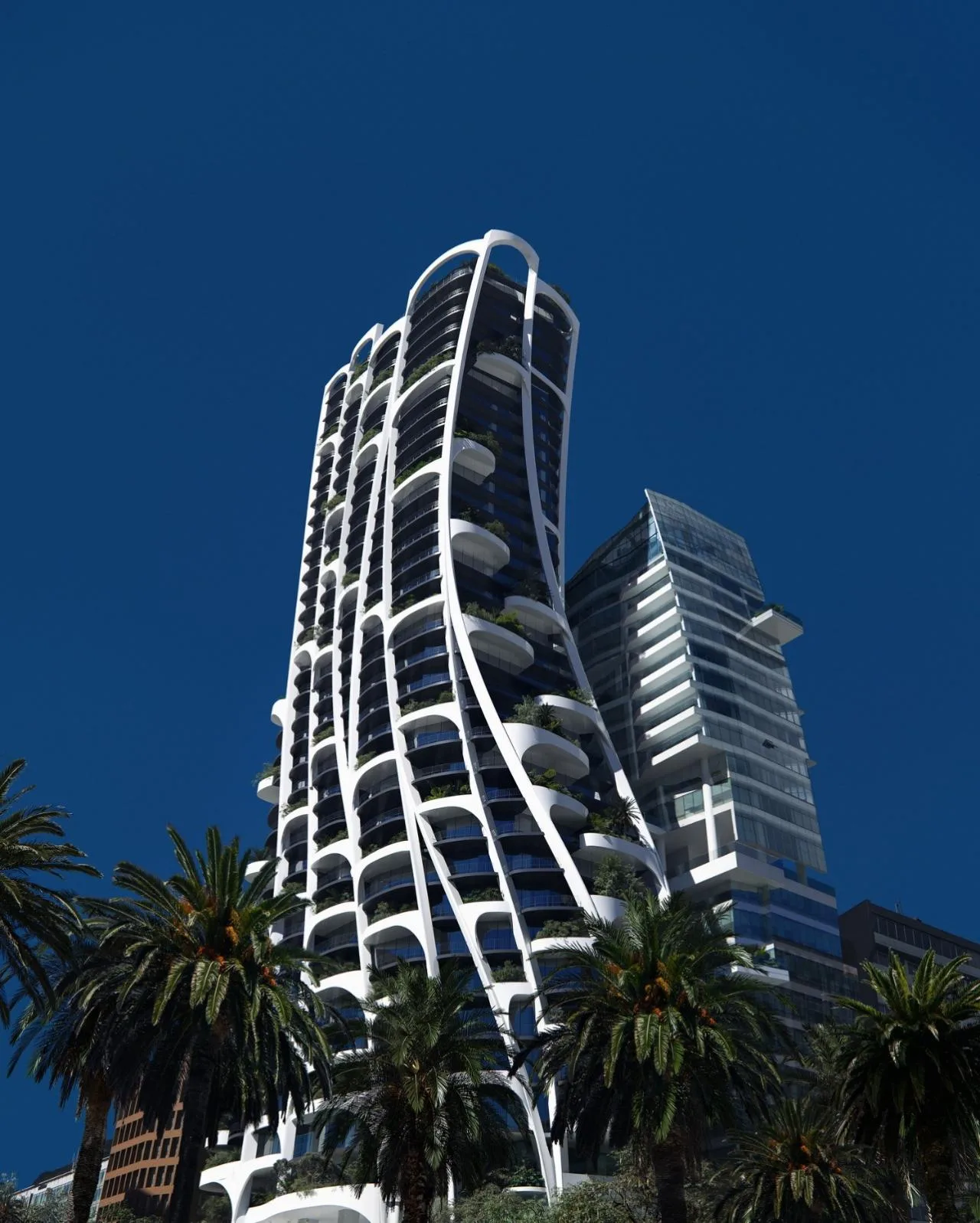
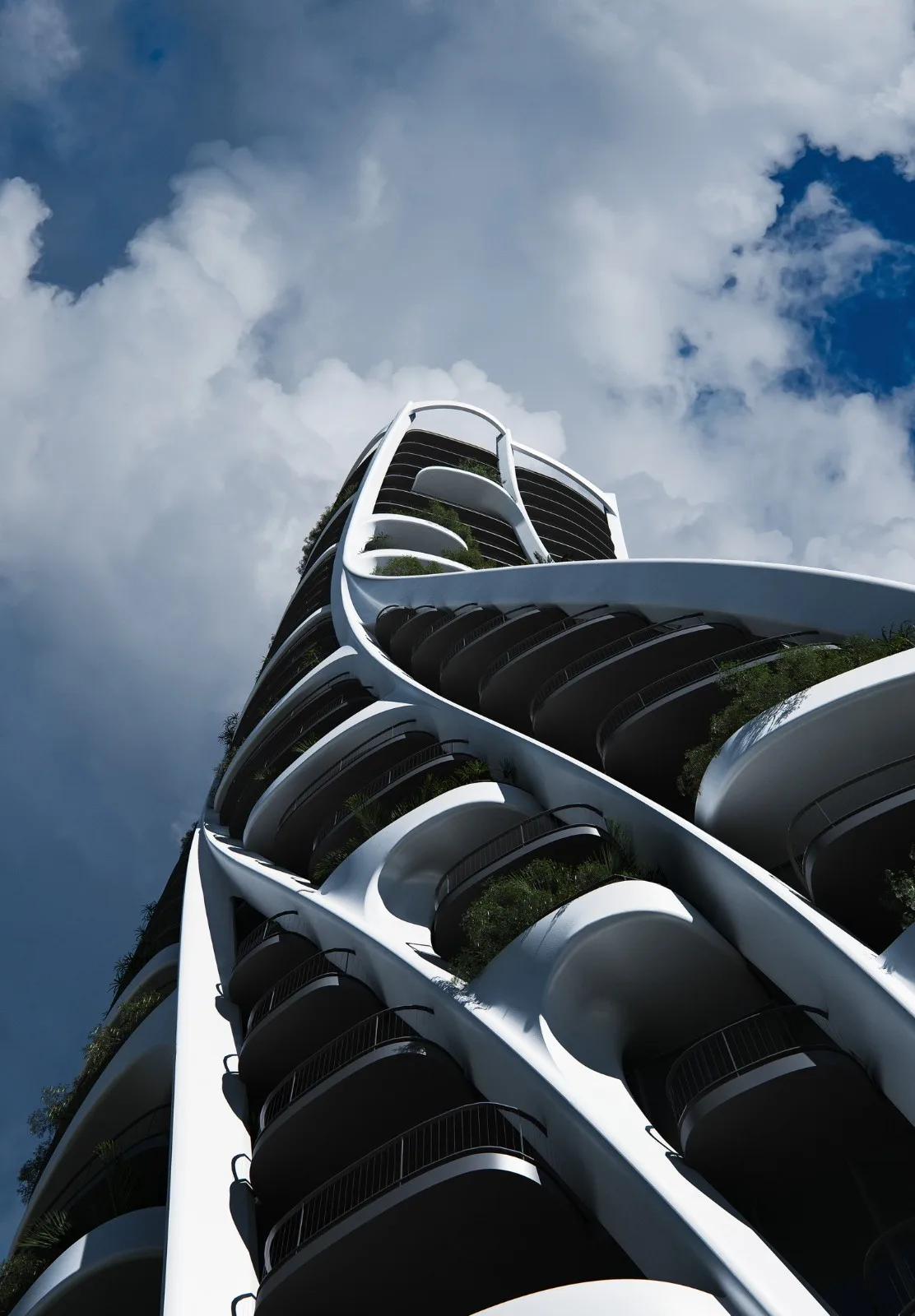
Standing 142 meters tall with 36 floors, Qondesa dedicates floors 1 through 7 to commercial and office spaces. Above the 7th floor, it offers 271 residential units of varying sizes and efficient layouts. The building’s organic contours and dynamic shapes fully integrate nature into this high-density vertical community.
The project’s limited site area and L-shaped layout posed design challenges. The building rises boldly from the earth, reaching skyward. To preserve sunlight and views for neighboring buildings, Qondesa’s form gradually tapers inward from bottom to top. This dynamic shape also reduces the building’s visual mass, easing the impact of its height on the cityscape.
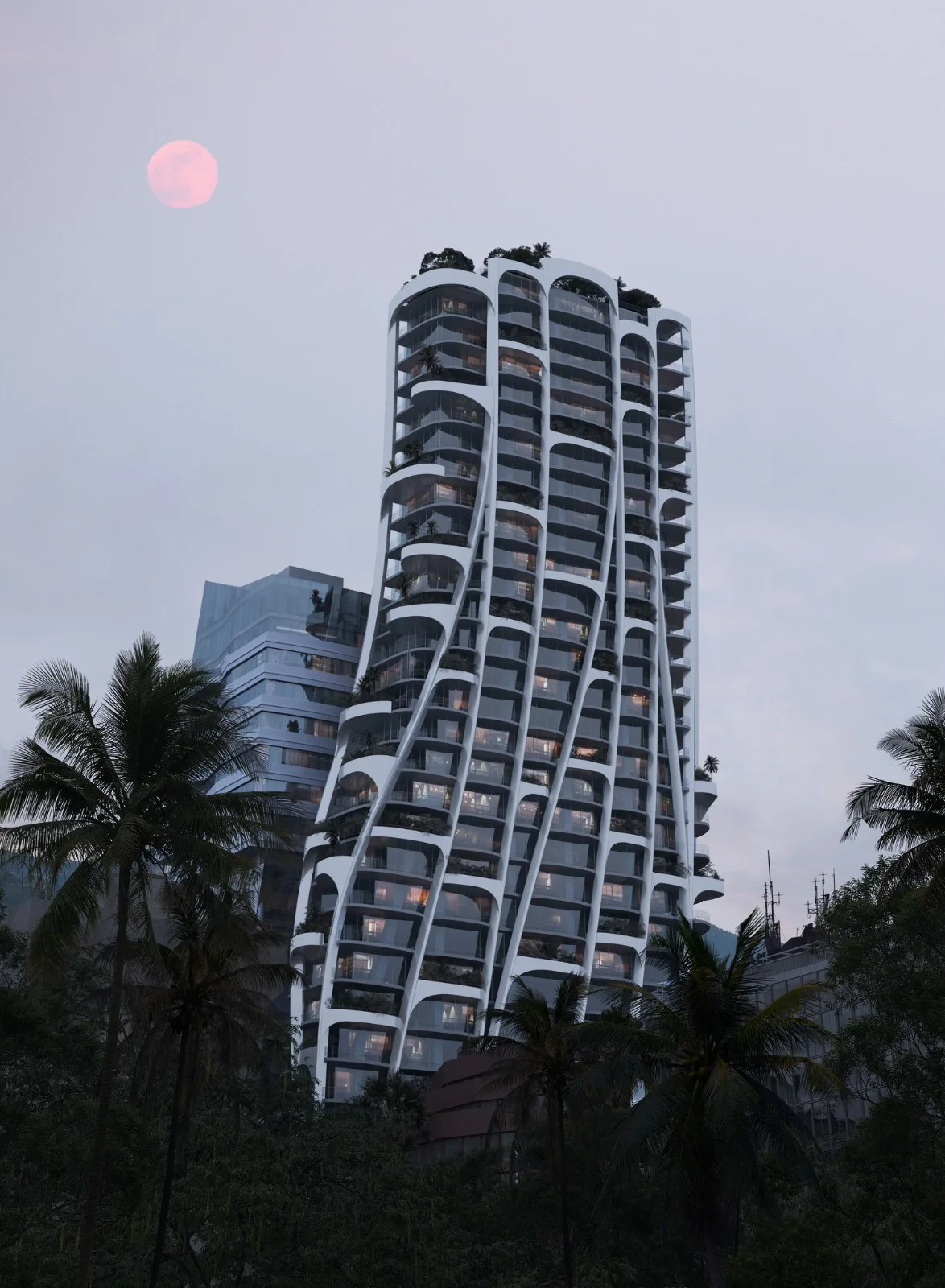
The building’s exterior features upward-growing lines resembling interwoven vines that converge at the top. These flowing white “veins” create multiple landscaped balconies throughout the façade. The main building units, shaped like cells within leaves, are brought to life by this organic façade. This vibrant design complements Quito’s native vegetation, infusing the urban skyline with a unique natural vitality.
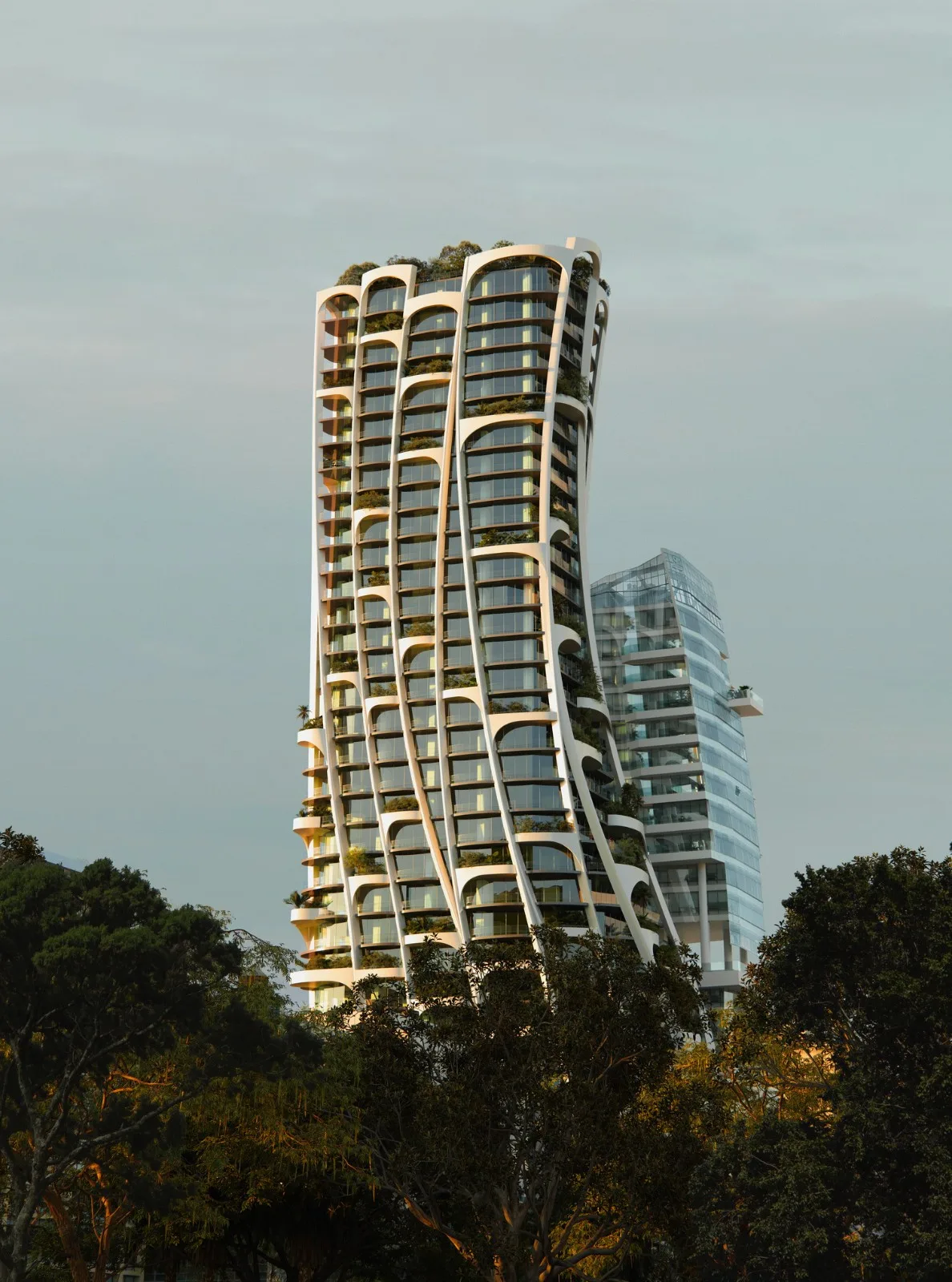
Open terraces and large French windows blur the boundary between indoor and outdoor spaces. Residents on the northeast side of the upper levels enjoy views of the lush greenery of La Carolina Park, while those on the southwest side can admire the natural beauty of the Pichincha volcano along with the cityscape.
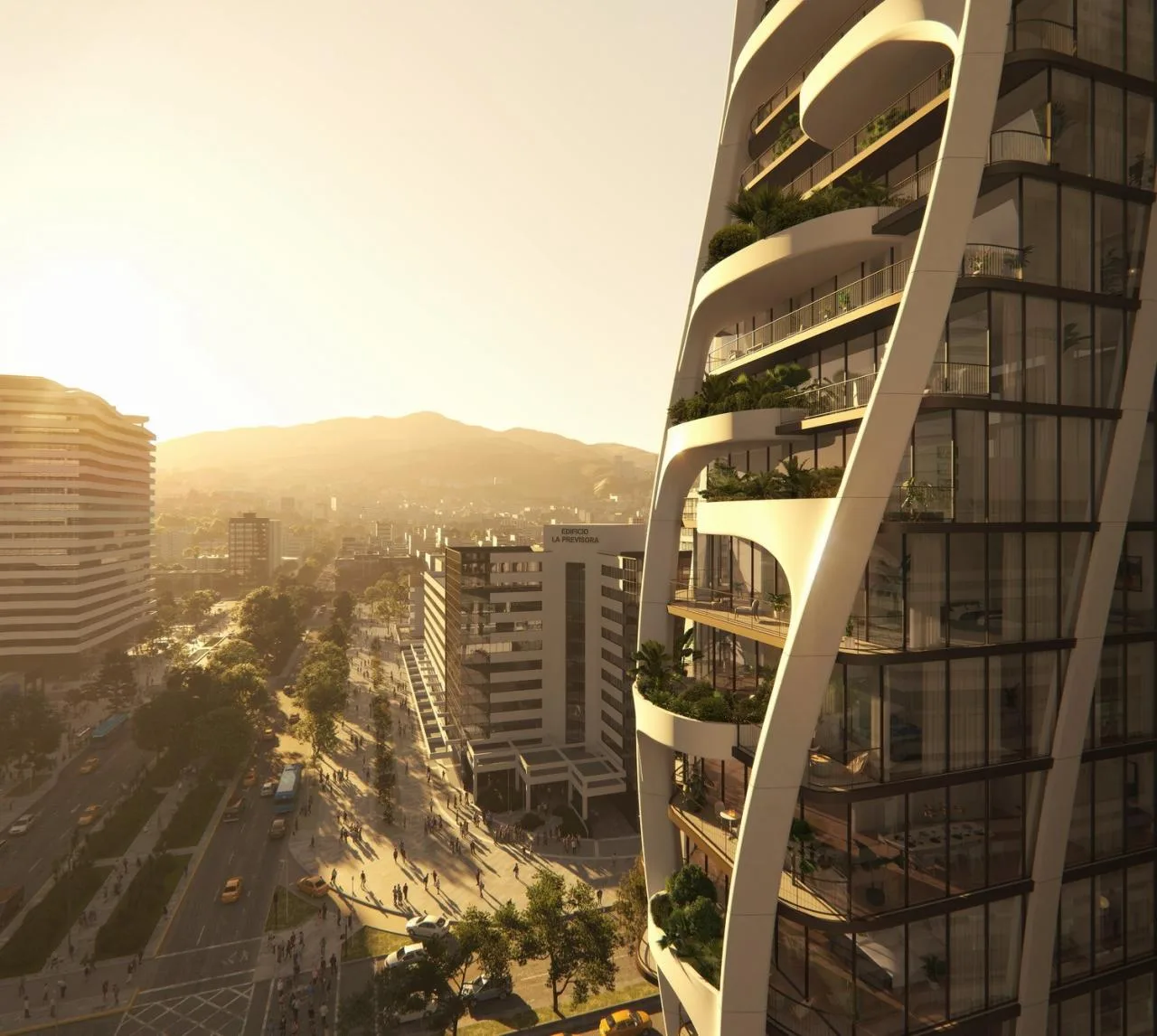
The “leaf vein” lines on Qondesa’s façade are crafted from GFRC material, with a light gray tone that echoes the volcanic stones used in Quito’s historic buildings. The terrace floor slabs feature a dark gray, glass-like finish, emphasizing the vertical organic growth of the exterior design.
Qondesa is currently advancing through the design development stage.
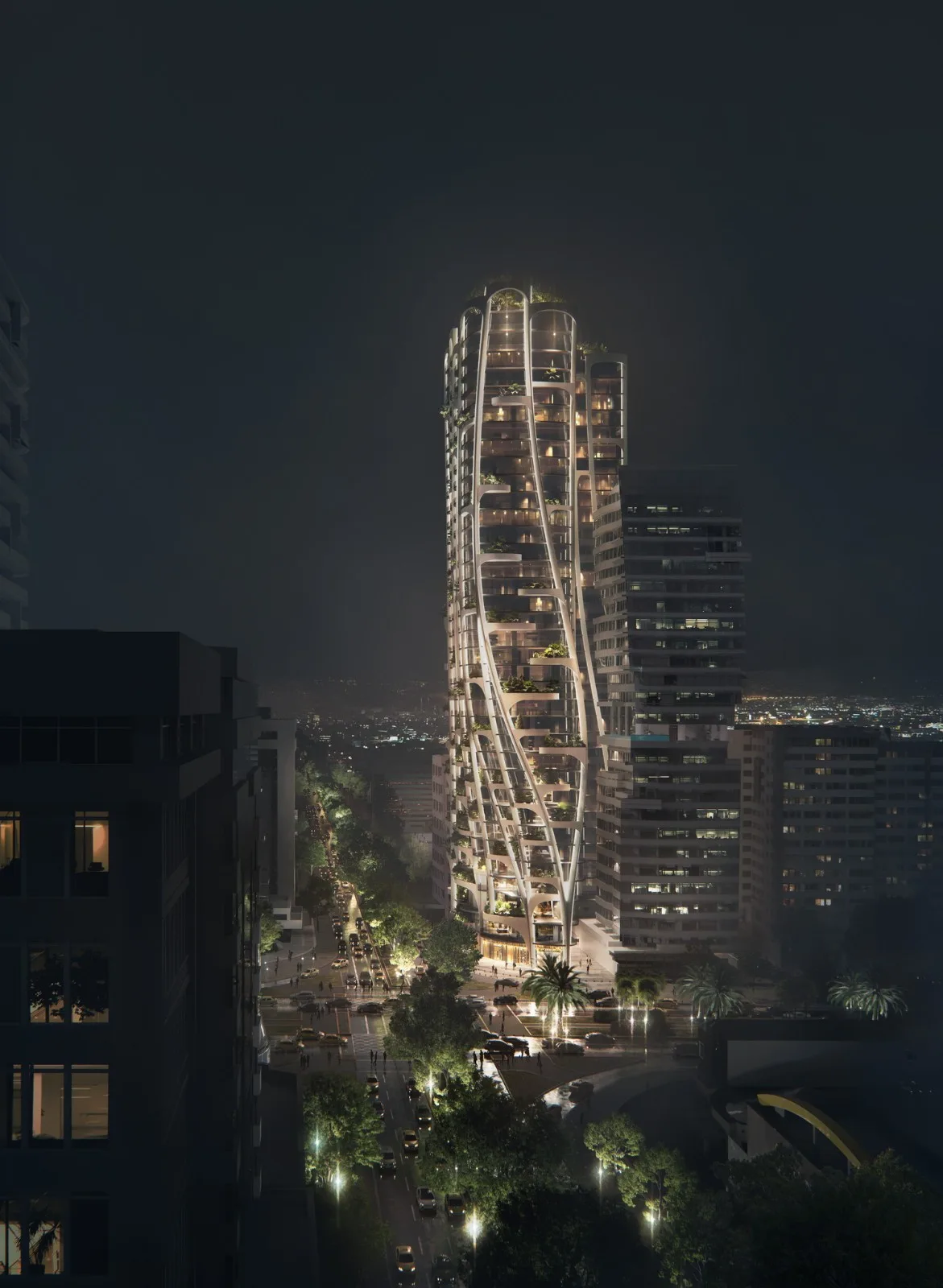
Project Information
Type: Residential, Commercial & Office
Lead Collaborators: Ma Yansong, Party Masses, Yokosuke Hayano
Associate Partners: Tiffany Dahlen, Dixon Lu
Design Team: Jon Kontuly, Xie Peng, Horace Hou, Edwin Cho, Matthew McFetrick
Owner: Uribe Schwarzkopf












Must log in before commenting!
Sign Up