
The advancement of civilization and the happiness index do not always correlate directly. Shanghai, the city with the highest GDP in China and a globally recognized international metropolis, faces unique challenges and conflicts between its urban and suburban areas (BIM work). Despite the hard work of ordinary citizens, the pressures of reality remain overwhelming. Meanwhile, rural communities and their living environments continue to decline.
The story begins with Lao Song, a client living in Fengxian’s countryside who needs to care for his elderly mother in a dilapidated old house. Lao Song’s residence in urban Shanghai struggles to provide comfortable, independent living conditions for the elderly, who cannot adapt to the cramped attic space on the top floor.
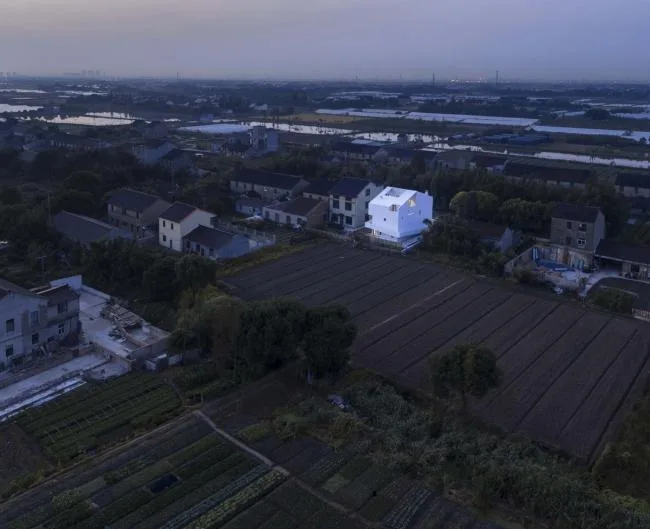
▲ Northwest aerial view
Lao Song and his wife dream of retiring from urban Shanghai and returning to their hometown in Nansong Village, Fengxian. They plan to demolish and rebuild the unsafe houses, creating a new home tailored for the elderly and loved by the entire family, to better care for their 82-year-old mother.
To support their daughter and son-in-law working in Shanghai, Lao Song and his wife discussed inviting their ailing in-laws to move back to Fengxian, so they can care for and support each other in their old age. As a working-class family, nearly all their savings have been dedicated to this goal. This house embodies their hopeful vision and anticipation for a future rural life spanning four generations and eight family members.
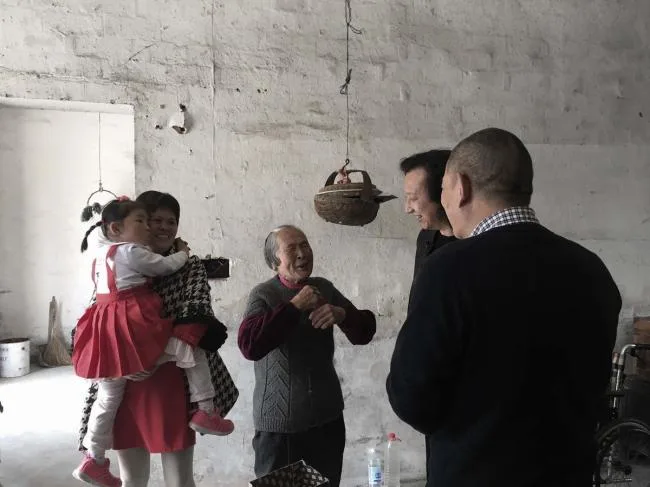
Discussion between the architect and the Song family before renovation
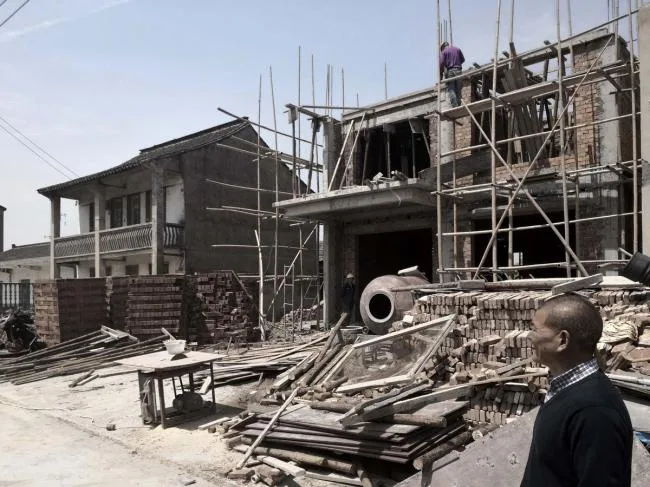
Old Song standing in front of his newly built house
Land Scope and Construction Area
The project is located on the original homestead, with an approved self-built house covering 104 square meters. The total area spans 208 square meters over two floors (actual construction may not exceed 213 square meters).
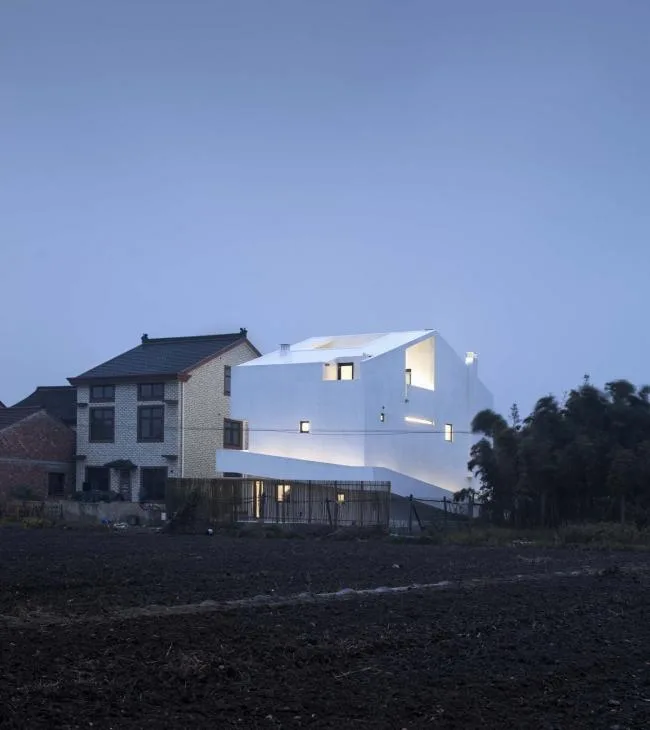
▲ Night view
Local Building Regulations
Height limit: For a two-story building, the height limit is 6.7 meters, with eaves elevation at 8.0 meters and ridge elevation at 8.0 meters plus one quarter of the house depth.
Exclusions: For floors above the first, balconies (protruding no more than 1.5 meters), bay windows (up to 0.6 meters), and stair platforms (up to 1.0 meter) are excluded from the building area.
Household Residents
The house is occupied by five permanent residents:
- Lao Song, 55, electrician, in good health
- His wife, 53, retired, in good health
- Mother, 82, farmer, rural insurance beneficiary, suffers from heart disease, dizziness, limited mobility, hearing impairment, illiterate, non-Mandarin speaker
- In-laws: 68, retired, poor health, two major surgeries, sometimes wheelchair-bound
- Mother-in-law: 66, retired, suffers lumbar and cervical spondylosis, neurasthenia, poor sleep quality
Three additional family members visit on weekends and holidays:
- Daughter, 31, civil servant
- Son-in-law, 36, telecommunications professional
- Granddaughter, 5
The design respects Fengxian’s traditional south-facing spatial layout, featuring a central courtyard uncommon in new residential buildings. This courtyard forms the heart of the home’s life and space. Five bedrooms, each designated for specific family members, and variously sized public areas surround the courtyard, creating a balance of independence, privacy, and communal living with a strong sense of belonging.
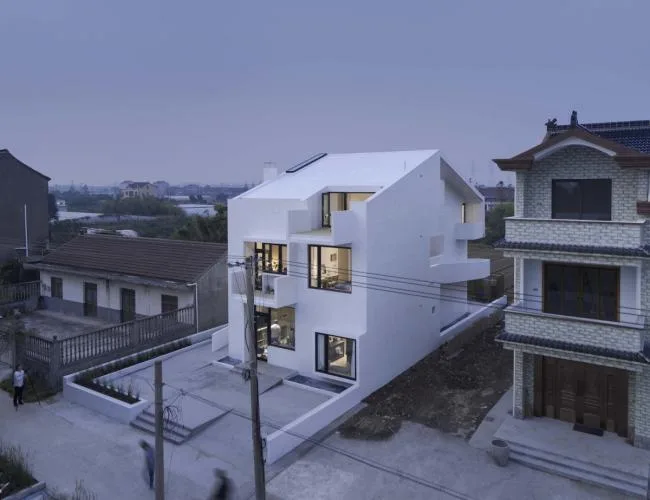
▲ Exterior panoramic view
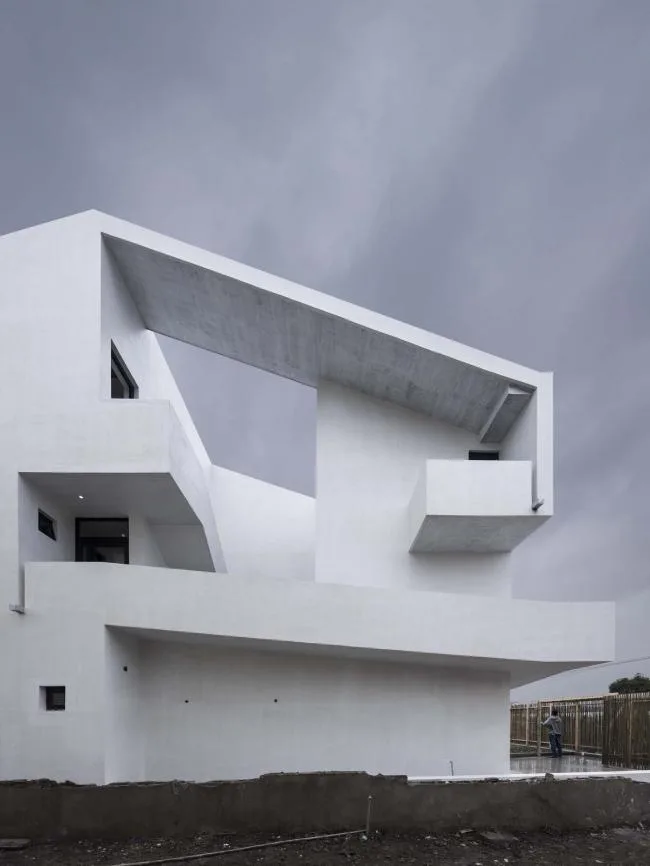
▲ Exterior detail
The first-floor living room and the elderly mother’s bedroom face south. The bedroom retains the old carved wooden bed and furniture she used before, serving as a place full of warm family memories and storytelling. An adjacent bathroom features an enlarged shower room for two, offering assistance when needed. The living room is the family’s main gathering and entertaining space, centered around a fireplace where the family can enjoy cozy conversations during winter nights.
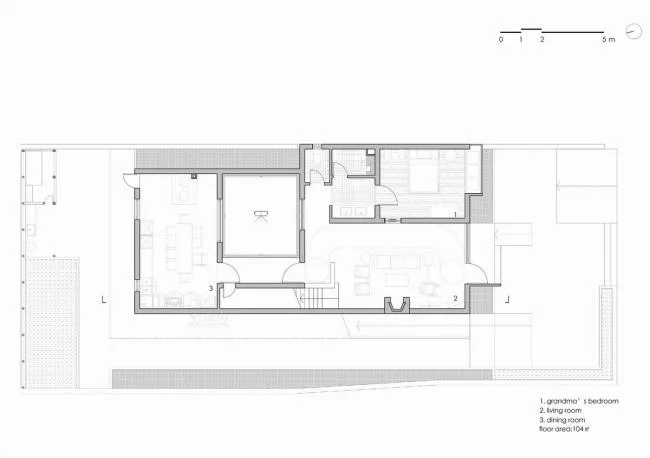
▲ First floor plan
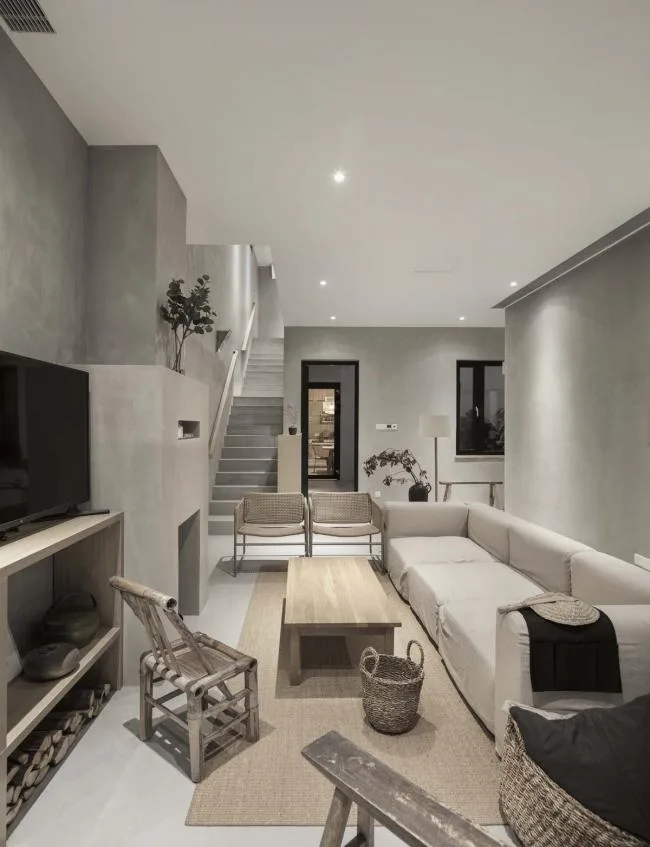
▲ Living Room
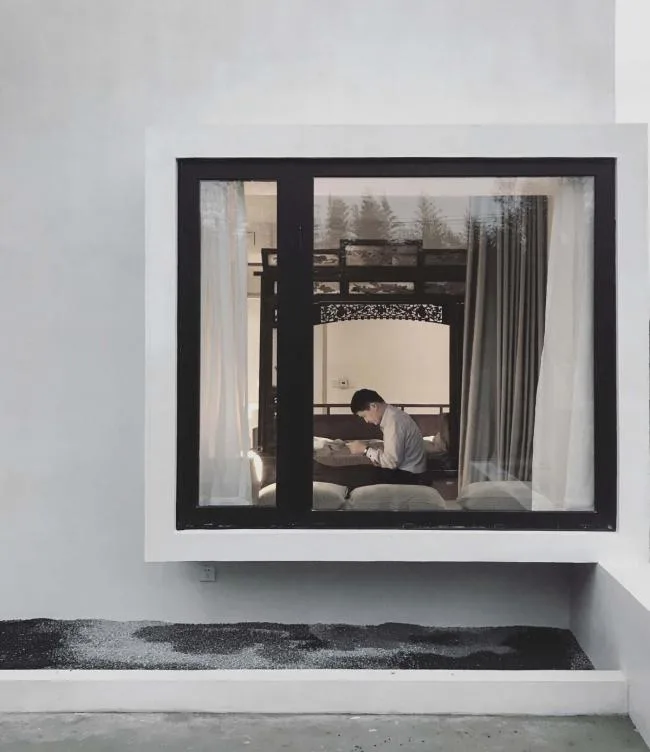
▲ Elderly mother’s bedroom on the first floor
Beyond the central courtyard, the north side houses the dining room and open kitchen — a large, inviting space for cooking, chatting, and family meals. To accommodate the elderly who may not know how to use a gas stove, the kitchen is equipped with both a gas stove and a traditional clay stove. This blend creates a smooth transition between modern and traditional lifestyles.
The courtyard is the spiritual and functional center of the home. Embedded in the ground are stainless steel characters representing the Song family name, symbolizing the heart of their home. The rooms on the north side face south to maximize ventilation and natural light. The courtyard also serves as a daily outdoor area for family activities, drying clothes, and relaxation.
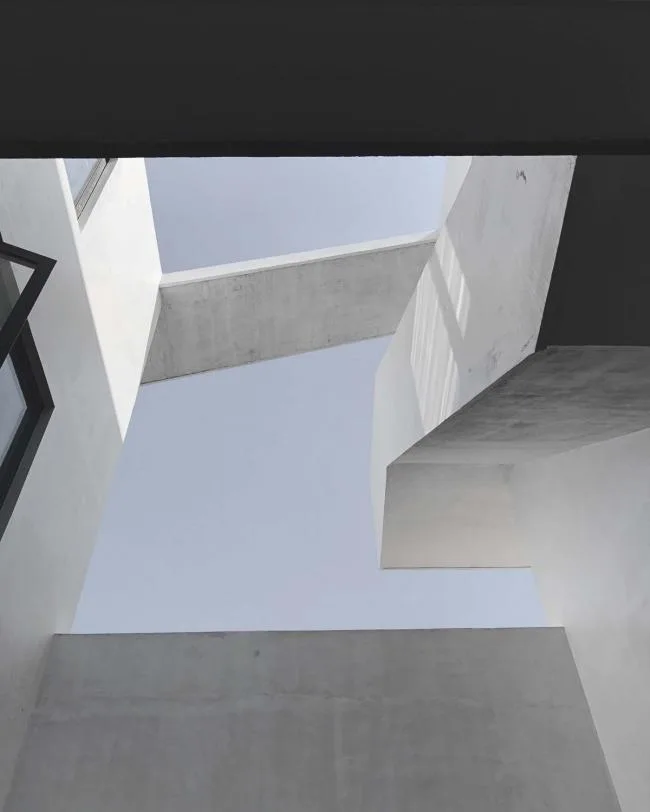
▲ Courtyard
The second floor’s south side features two adjacent bedrooms occupied by Lao Song and his in-laws. This arrangement facilitates care for the ailing family members. These bedrooms connect to an open family room where the in-laws can rest and socialize without needing to go downstairs. The ramp leading from the first-floor gate encircles the building, allowing wheelchair access from outside to inside.
Next to the family room is an accessible bathroom designed for wheelchair use, enabling the in-laws to assist each other. On the north side of the second floor is the bedroom for Lao Song’s daughter and son-in-law, providing them with a private space when they visit during holidays — convenient for visiting and caring for the elderly.
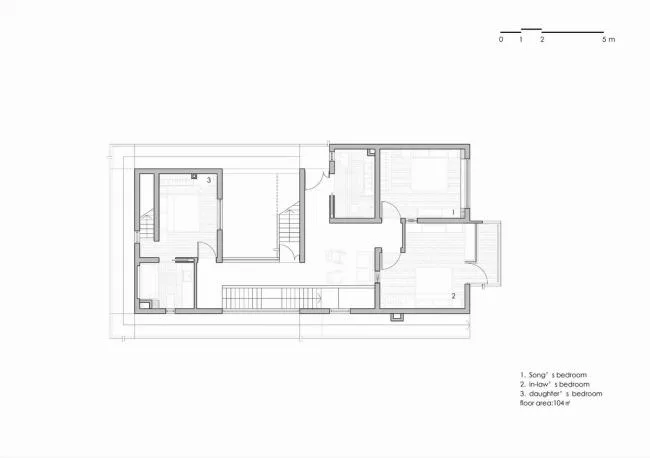
▲ Second floor plan
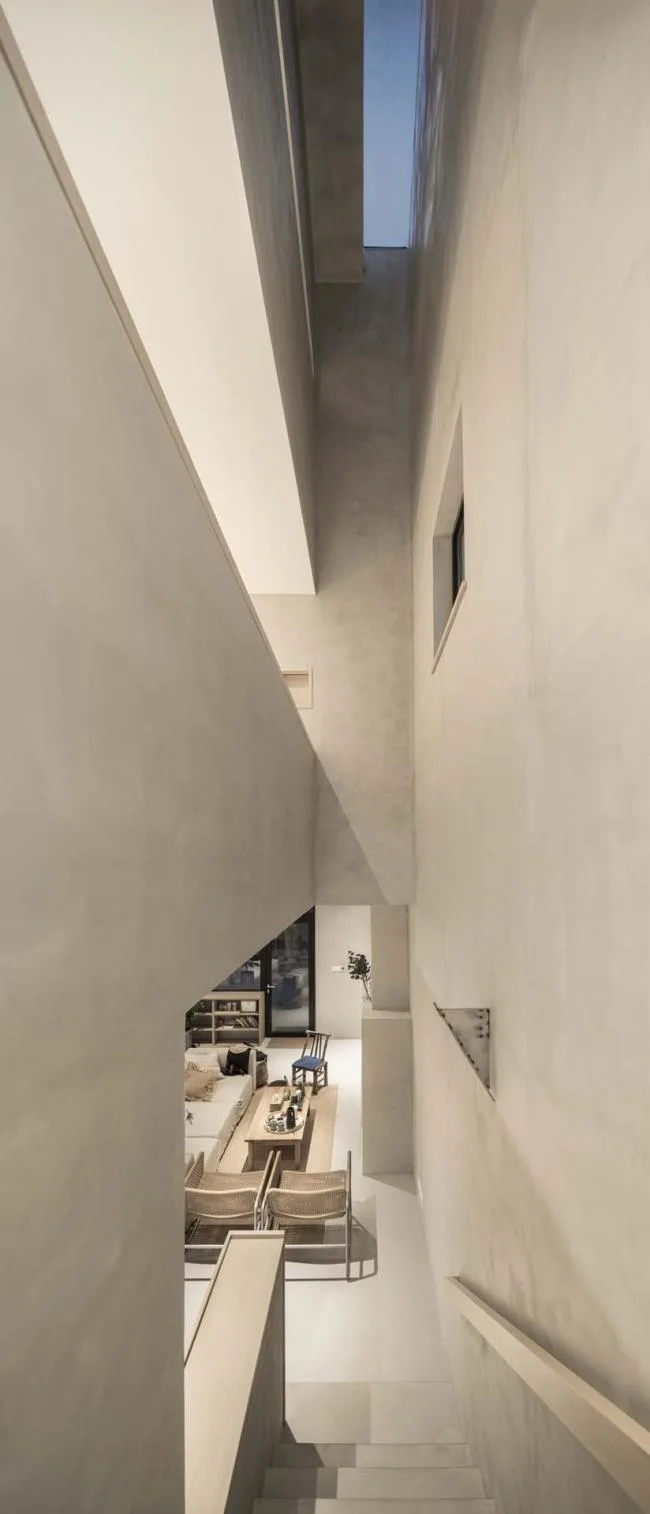
▲ Natural light on the stairs
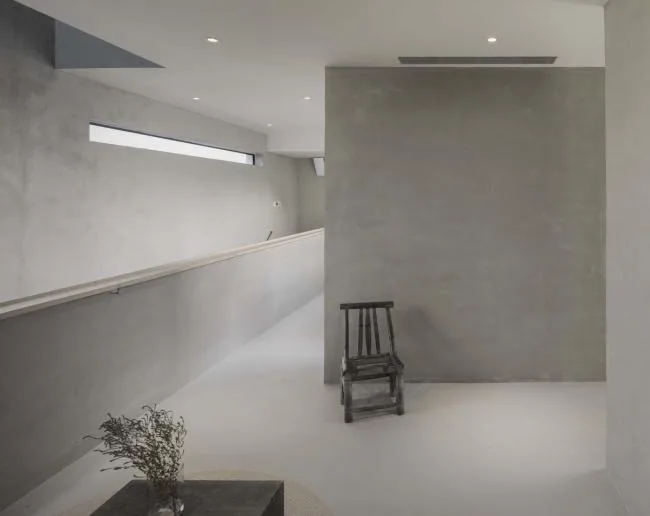
▲ Corner of the second floor family room
By judiciously applying local building codes, the third floor gains depth through the courtyard layout, increasing the volume under the sloping roof. Most of this space is fully usable. The south side houses an audio-visual and activity room, along with a large terrace offering views of the surrounding countryside.
The north side of the third floor contains the granddaughter’s bedroom and playroom, creating a vertical connection with her parents’ bedroom below. A separate small staircase from the parents’ room leads to this upper level, forming a distinct, modern, and private space. This design encourages the younger generation to visit frequently, sometimes alone or bringing family and friends.
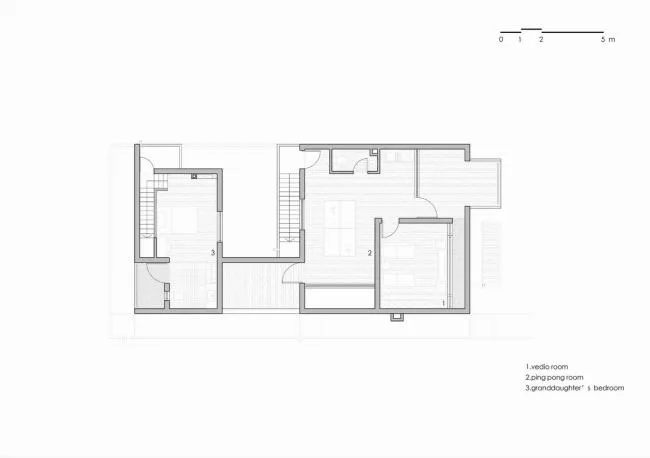
▲ Third floor plan
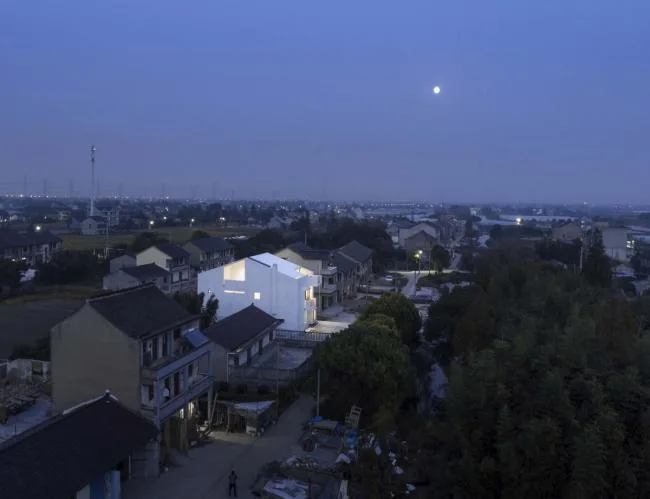
▲ Panoramic night view
Since Lao Song and his wife sometimes use wheelchairs and their urban Shanghai residence lacks elevators, they rarely go outside. The ramps in this house are designed to accommodate wheelchair access and encourage the elderly to enjoy outdoor activities, appreciate rural scenery, and connect with neighbors and nature.
The ramp also offers an alternative way to experience the architectural space. The design creates numerous semi-outdoor and outdoor areas, enriching recreational and sensory experiences.
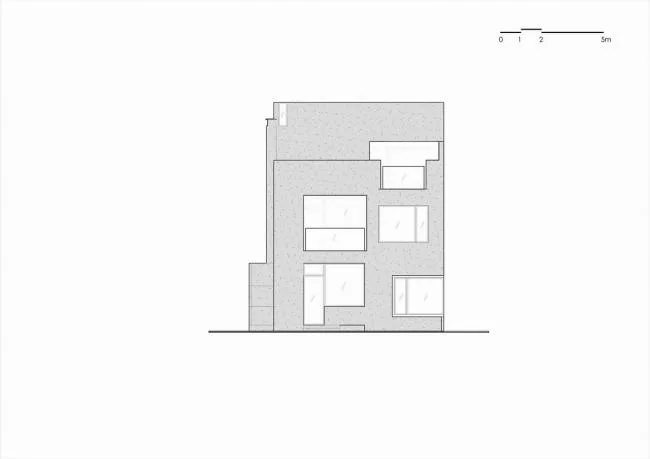
▲ South elevation view
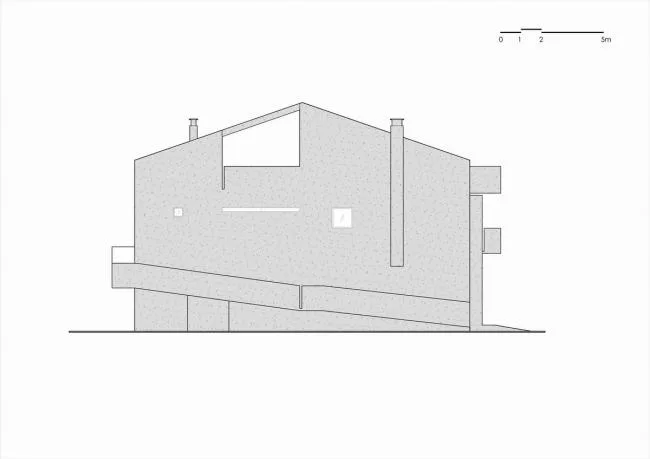
▲ West elevation view
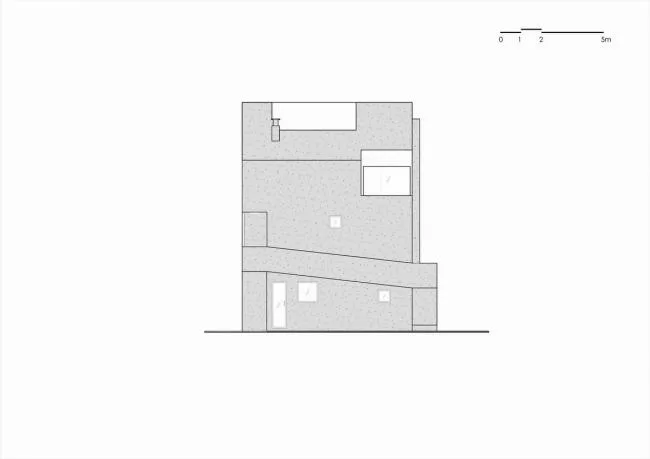
▲ North elevation view
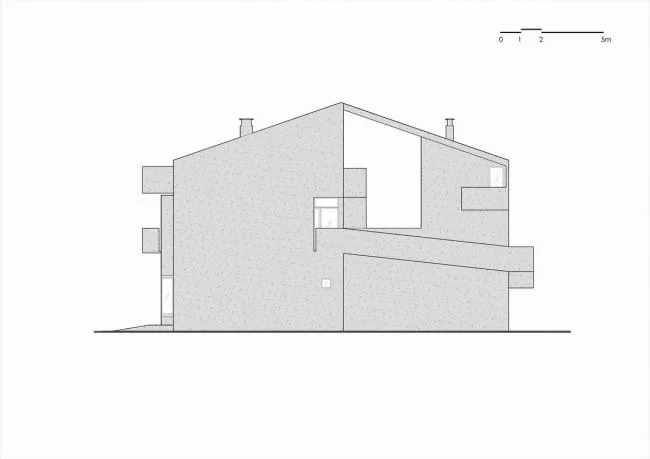
▲ East elevation view
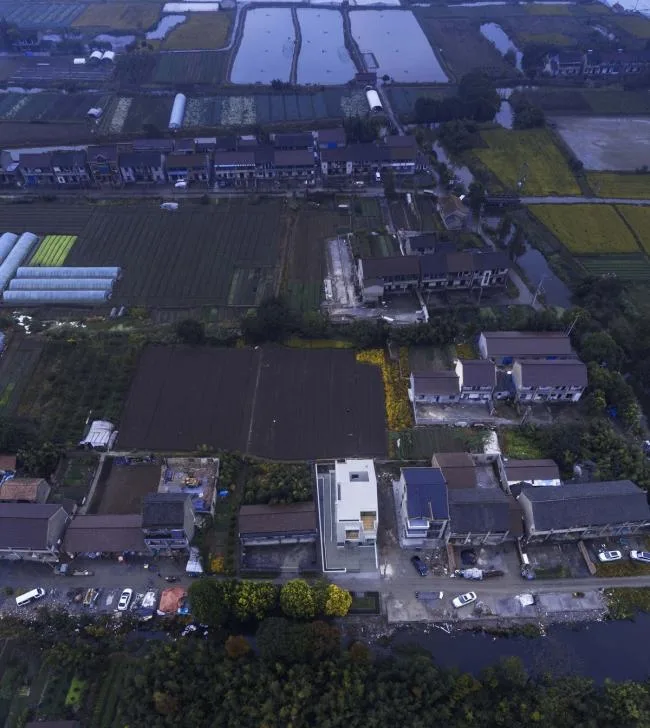
▲ Aerial view of the house and its surroundings
The first-floor living room, dining room, and courtyard, along with the second-floor family room and outdoor balcony, and the third-floor activity room and large terrace, form a rich network of multi-level indoor and outdoor public spaces. Two staircases, located inside and within the courtyard, connect these spaces, fostering a strong sense of family belonging.
Daily interactions among the elderly, and between the elderly and younger generations, are vital for maintaining cognitive health and overall well-being. Elderly-friendly housing must be functional and comfortable for seniors while also appealing to younger family members, encouraging them to visit and bring children, which brings great joy to the elderly.
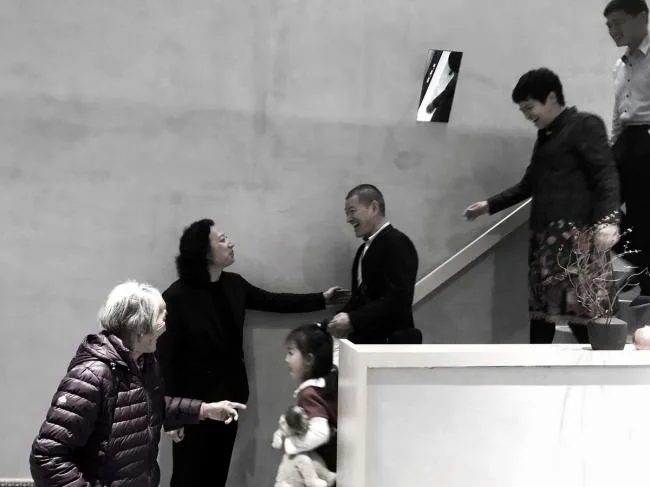
Excited family members in the new house
Observation windows are strategically placed between the elderly mother’s bedroom and living room on the first floor, and between the in-laws’ bedroom and family room on the second floor. This design enables family members to easily monitor the elderly’s activities from public spaces, while also allowing the elderly to feel connected to family life from their bedrooms.
Mirrors are installed at corners of stairwells and corridors on the first and second floors, eliminating blind spots and facilitating mutual care between the elderly and children. Additionally, young family members enjoy taking selfies in front of these mirrors, sharing happy moments.
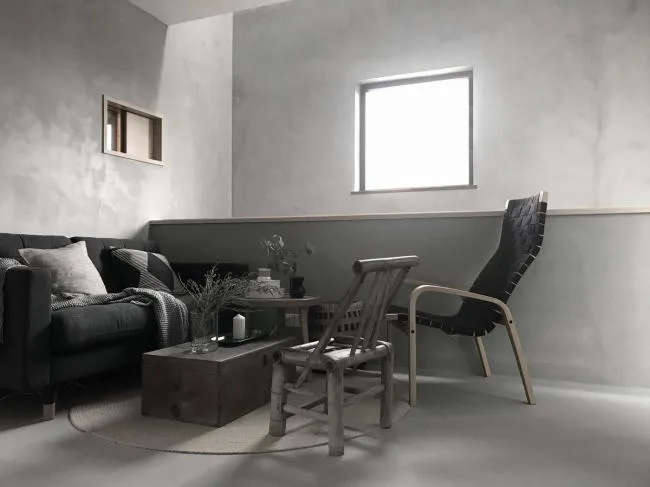
▲ Small window on the wall
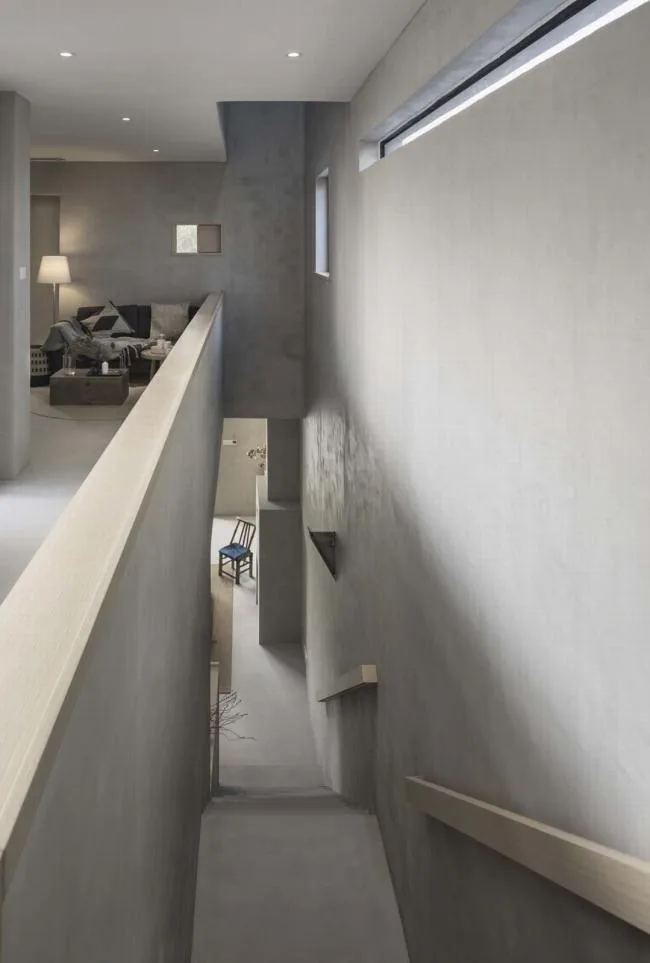
▲ Staircase leading to the second floor family room
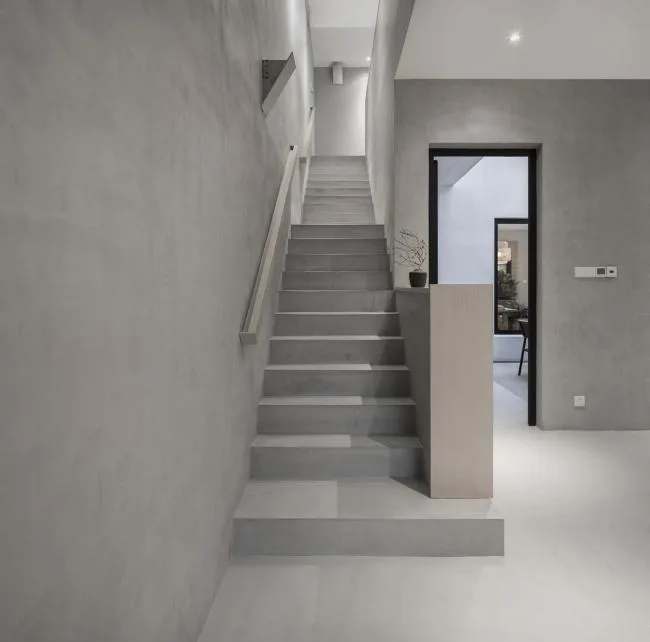
▲ Staircase leading to the second floor
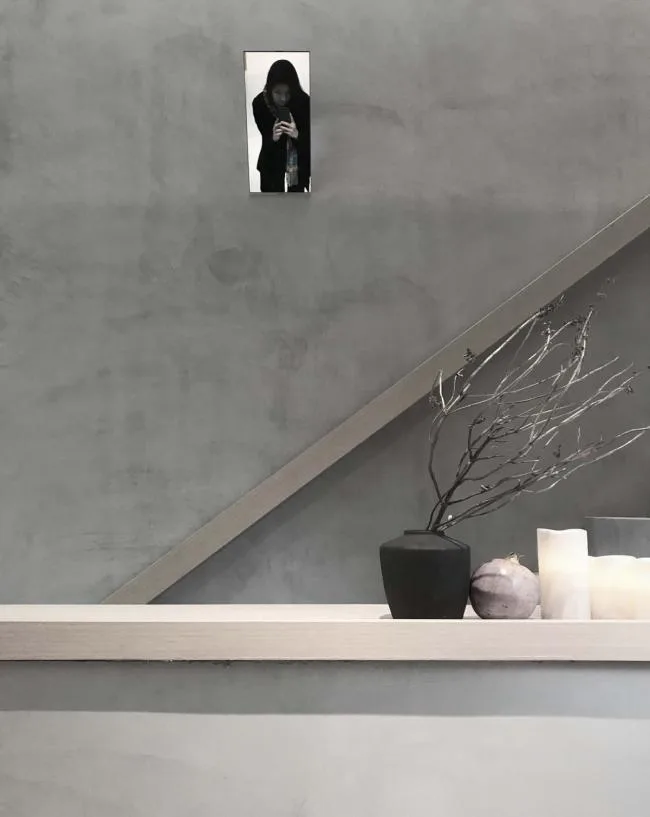
▲ Mirror in the stairwell
Behind the house lies a small private vegetable garden, a Wulong garden customized for the elderly mother’s daily activities. A semi-outdoor auxiliary room surrounded by bamboo fencing supports rural outdoor cleaning habits and stores daily agricultural tools.
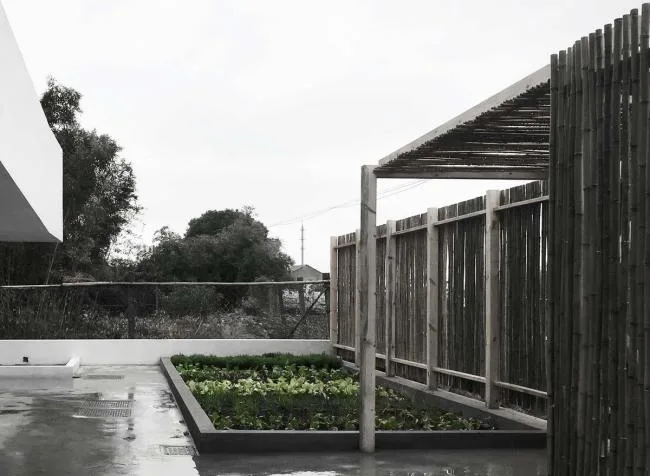
A garden with small planting plots
The scenic Jiangnan region, with its green waters, lush mountains, pink walls, and countryside, inspired the design concept. Initially, the plan was to use white cement and plain concrete soil walls (BIM training) to express the building’s pure texture, creating a romantic retirement home amid greenery.
Due to budget and schedule constraints, the actual construction shifted to a brick concrete structure. The demolished old house walls and floors were cement mortar. The white cement veneer strategy aimed to respond closely to the familiar cultural environment.
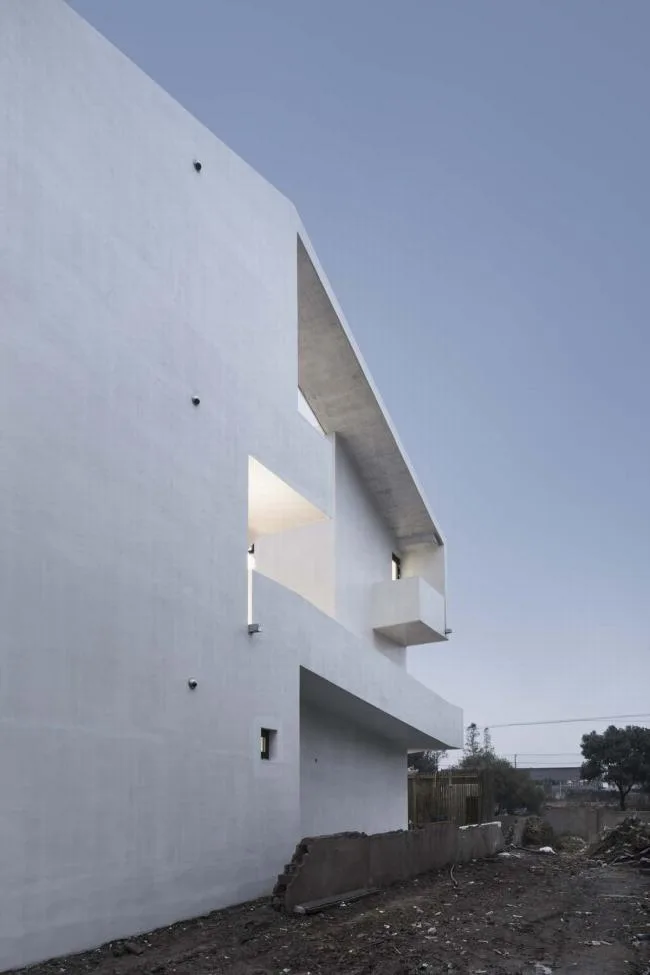
▲ Local Eastern region
Ten years ago, the studio completed the Concrete Seam House project and collaborated successfully with Liu Juan from Shanghai Hetai Building Materials on repairing and protecting plain concrete walls. Similar materials and techniques were later used in the CIPEA No. 4 Residence.
This time, with tight deadlines and low costs, the brick concrete structure required careful treatment of the base layer with elastic waterproof film. Liu Juan once again ensured the exterior facade was protected with white plain water materials. Zhu Yongbin from PanDOMO Building Materials overcame challenges to complete the indoor public area’s floor and wall finishes, creating a natural cement texture.
The integration and revitalization of urban and rural areas is a long-term mission. For Lao Song, living in Shanghai’s urban area, the simple pursuit of a happy life is becoming a reality, making him part of this era’s tide.
While young family members work and live happily in the city, just 50 kilometers away, the elderly enjoy security and support in their Fengxian hometown. The close bonds of a large family tightly connect urban and rural spaces.

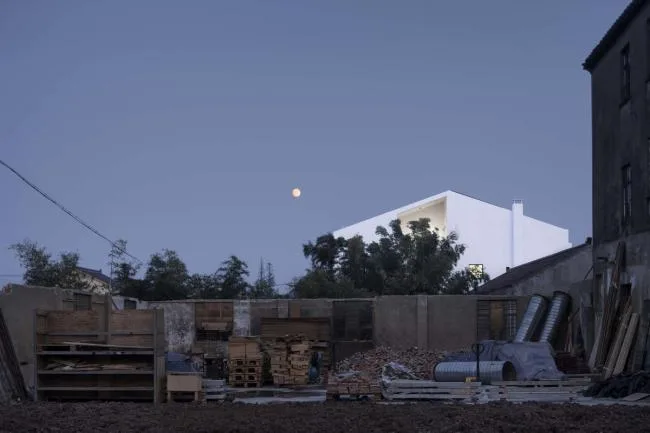
▲ Morning scenery
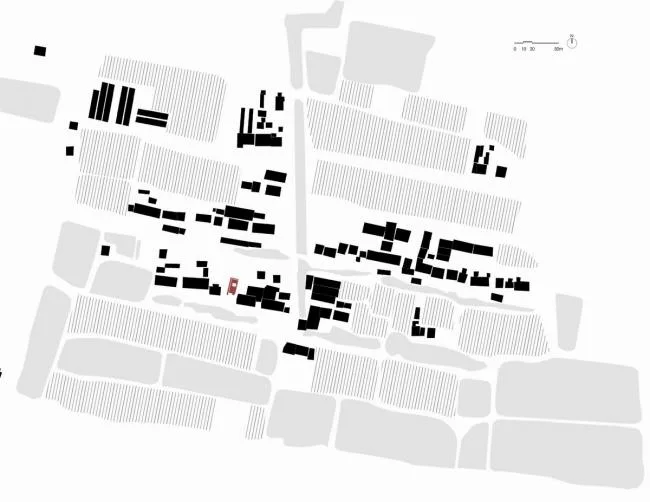
▲ General layout plan
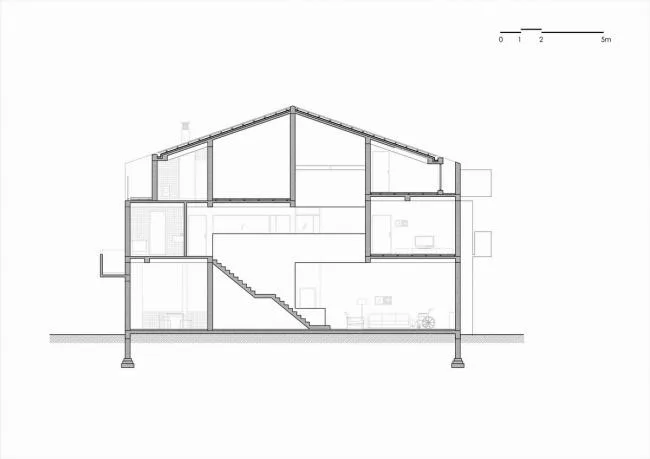
▲ Sectional view
Project Information:
Architectural Firm: Zhang Lei United Architectural Firm
Location: Fengxian, China
Category: Independent Residential Building
Lead Architect: Zhang Lei
Design Team: Hong Siyao, Charter, Yuan Ziyan
Interior Design: Ma Haiyi, Huang Rong
Building Area: 280.0 m²
Project Year: 2018
Photographer: Yao Li












Must log in before commenting!
Sign Up