
Introduction
The Dharma represents the universal principles that govern the world. Yet, those skilled in upholding the Dharma, bound by close relationships and accountability, often hesitate to wield it forcefully or violate its tenets.
History as a Mirror
In Chinese culture, visiting a court has long been viewed as a formidable and intimidating experience, often avoided if possible. This fear is rooted in China’s millennia-old feudal system. Architecturally, it relates to the traditional lawsuit venue—the yamen. These feudal government offices were imposing and heavily guarded. Despite the idea of justice being served, the harsh sounds of drums and the striking of the executioner’s baton filled the air, creating an atmosphere of unrelenting authority. Plaintiffs and defendants were made to kneel in the hall, unable to lift their heads, instilling fear and submission. No matter how justified one’s case was, apprehension lingered. Naturally, this discouraged many from pursuing litigation unless absolutely necessary.
After the founding of the People’s Republic of China, the yamen system was abolished. Yet, the architectural style known as “yamen style” remains familiar. Today’s courts no longer resemble the old yamen, but the impression of majestic buildings and strict security persists. Tall platforms and towering structures create an intimidating presence, often discouraging people from pursuing justice.
A Long-Held Aspiration
As an architect, driven by a sense of social responsibility, I have always hoped to inspire change through architecture. Designing a courtroom that breaks away from the traditional yamen style has been a persistent dream. Whenever I approach court-related projects, my initial concept focuses on creating non-yamen style buildings. However, due to well-known constraints, the final design often reverts to the yamen style—a pattern that has repeated for over twenty years. Despite this, I have never forgotten my original intention and have patiently awaited the right opportunity to bring this vision to life.
The Opportunity
The saying goes, “Opportunities favor the prepared.” Some years ago, I designed a county-level court. Although it began with the hope of a non-yamen style building, it ended up following the traditional style. However, the project involved a forward-thinking court president who valued architectural innovation and aimed to break away from the yamen aesthetic. Though the outcome was limited by external factors, this collaboration forged a connection. Years later, when the president was reassigned to oversee a township court requiring renovation, he sought me out again. Given the smaller scale and fewer stakeholders, the president had the authority to make decisions, presenting a real chance to realize the dream of a small, beautiful alternative court.
Challenges
The court is located in Mohei Town, Ning’er County, Pu’er City—an unassuming small town. However, it is historically and culturally significant due to its salt production and as the hometown of renowned 1950s actress Yang Likun, celebrated for her roles in “Five Golden Flowers” and “Ashima.” While the openness of the client suggested no barriers to creating a non-yamen style court, the design still needed to respect the town’s historical and cultural traditions. Balancing these considerations posed a serious challenge requiring thoughtful and practical solutions.
The Design Challenge
The proposed court sits on a small, island-shaped lot surrounded by a narrow road in Mohei Town’s old district. The site covers only 830 square meters with a 3-meter elevation difference and the building itself occupies 750 square meters. The facility includes a courtroom, mediation room, exhibition hall, offices, legal service station, garage, staff dormitory, kitchen, dining area, gatehouse, and public restroom. Although modest in size, the court must accommodate a wide range of functions—no small feat given the limited land. The goal was to create a “small and beautiful alternative court,” which brought both opportunity and significant design challenges.
Understanding the Township Court
To design an effective township court, it is essential to understand its role. Although small, grassroots township courts in China extend beyond handling litigation cases. They are venues for promoting democracy, legal education, dispute mediation, and safeguarding citizens’ rights. This multifaceted role informs the architectural approach.
Design Approach
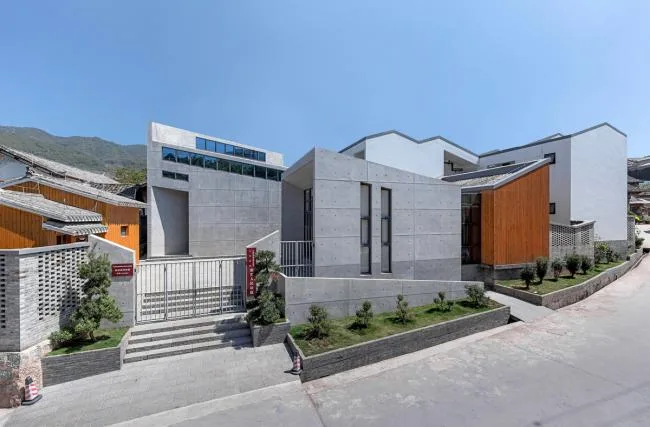
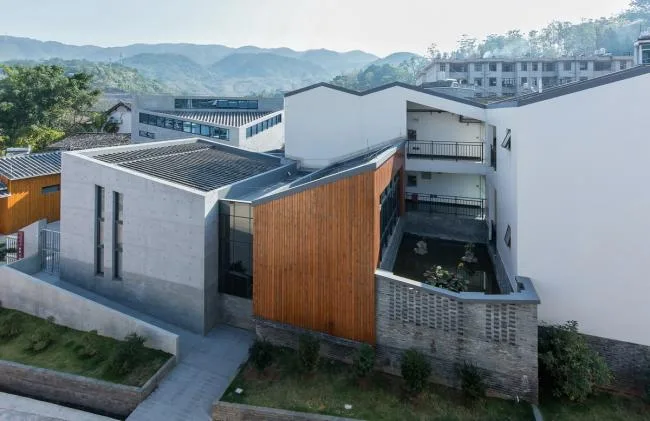
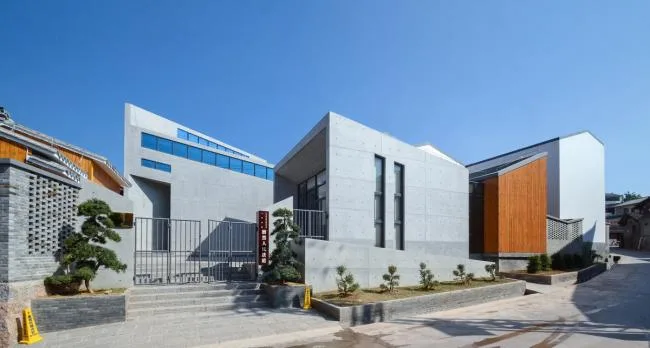
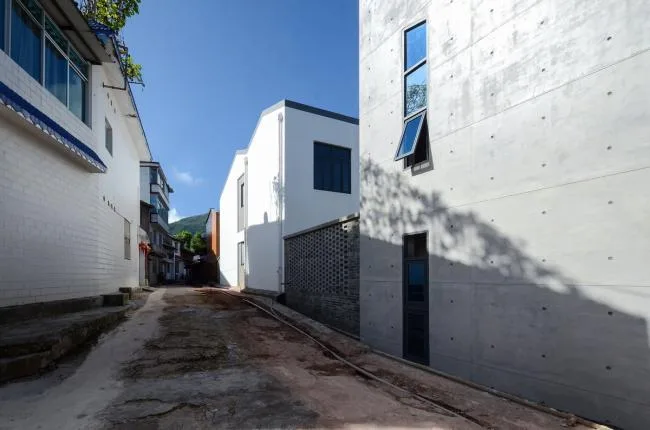
With these functions in mind, the court was intentionally not placed in a grand, central position facing the entrance. Instead, it leans to one side, preserving a small square despite the tight site constraints. This square, together with the courtyard, creates a spatial dynamic described as “one virtual, one real, mutually arising,” integrating the building harmoniously with its small-town context.
Furthermore, the square facilitates efficient evacuation. Given the courtroom’s limited size—only 60 square meters—the small square serves as an extension during large gatherings, allowing overflow audiences to listen via open sliding doors. This design adds flexibility and enhances the court’s usability.
When the sliding doors are closed, the square faces a large wall that acts as a “big screen” for legal education, displaying informational posters or hosting community film screenings.
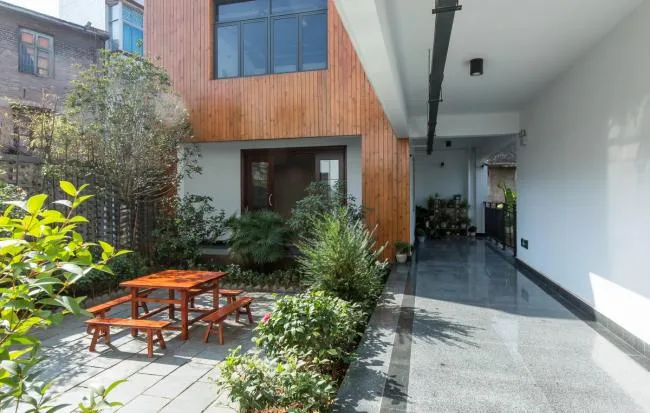
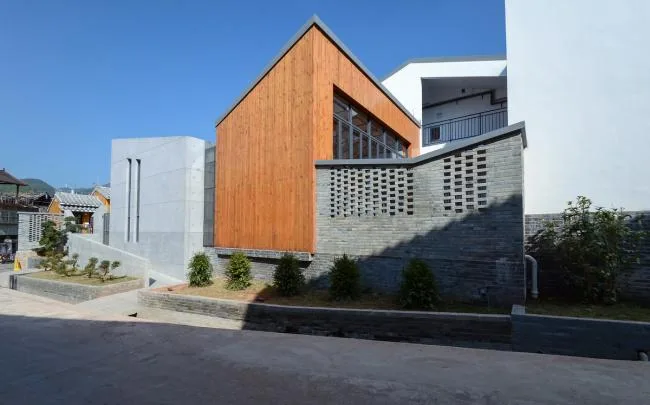
Adjacent to the courtroom is the mediation room, a key component of China’s democratic and legal framework. Mediation effectively resolves many minor disputes outside the courtroom, fostering social harmony. The mediation room features a “water yard” with a large French window overlooking the water, creating a calming environment that helps ease tensions during mediation.
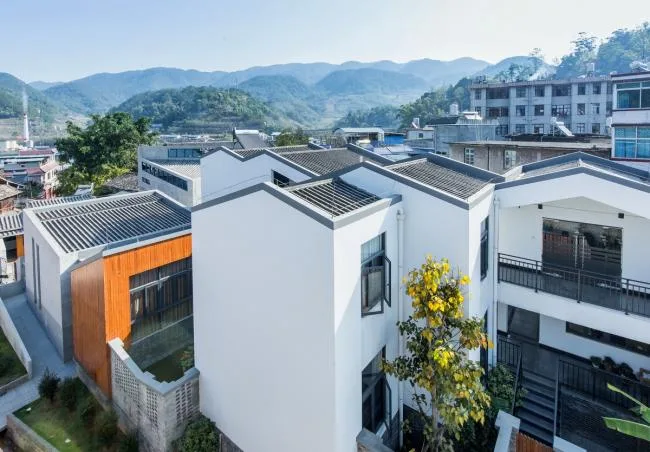
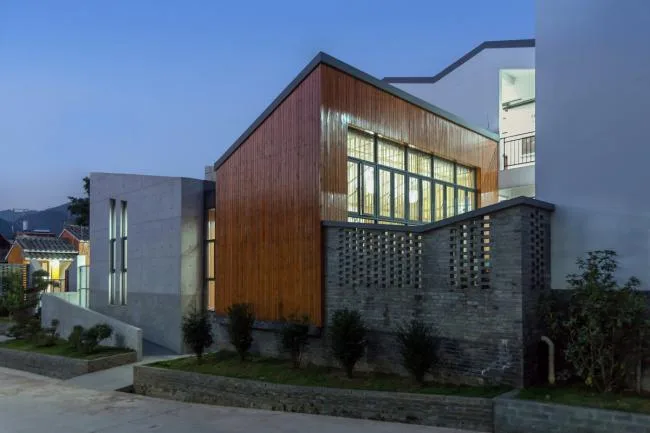
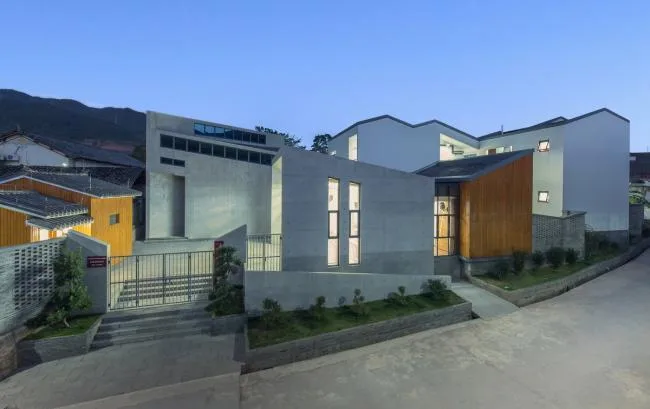
The building materials reinforce these concepts: plain concrete symbolizes simplicity and solidity in the courtroom, while natural wood in the mediation room adds warmth and strength. The trial bench, positioned between the gallery and mediation room, is designed as a transparent glass structure, promoting natural ventilation and lighting, and symbolizing “transparent law enforcement.” The combination of contrasting materials and the sloped roof shape creates an organic, unified architectural form.
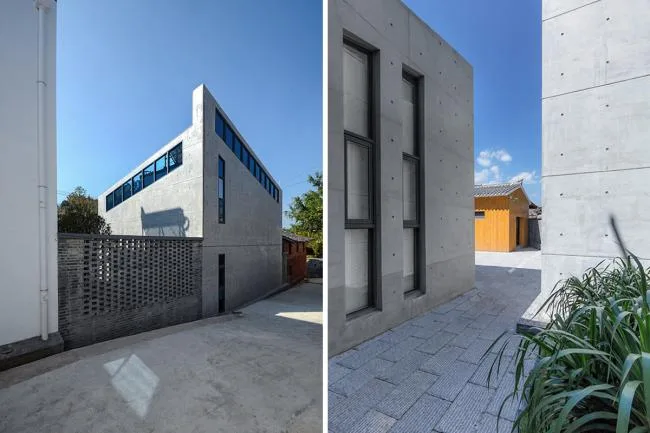
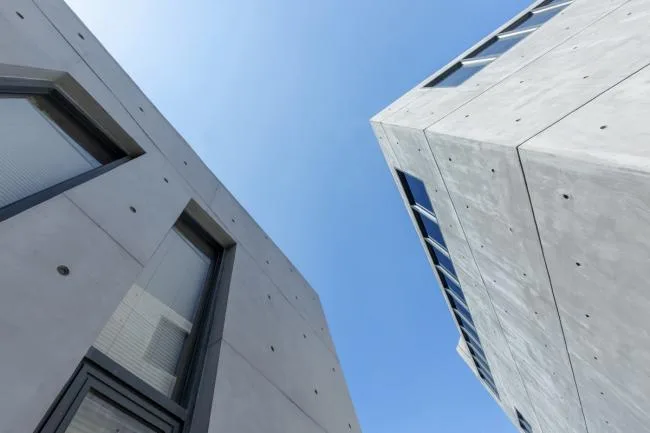
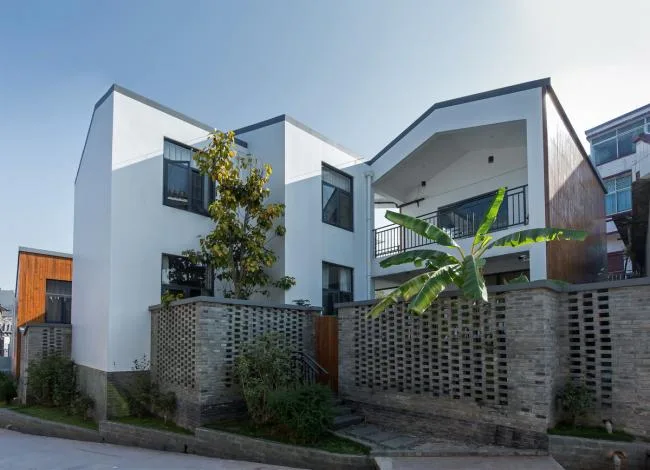
The office area is conveniently located next to the courtroom to facilitate communication. A courtyard separates the office space from the living quarters, creating independent zones. This “living courtyard” offers a private space for grassroots legal workers to relax, enjoy tea, appreciate flowers, and meditate, reflecting thoughtful humanistic care.
Behind the living area, a small backyard provides residents the opportunity to grow vegetables such as onions, ginger, leeks, and garlic, offering a pleasant respite from the otherwise dry small-town life. A back door enhances evacuation routes and provides separate entrances to the office and living areas, preventing interference between the two zones.
The architectural style of both the office and living areas employs residential design techniques. Wooden decorations in the dining area harmonize with the mediation room and gatehouse, creating a warm and inviting atmosphere.
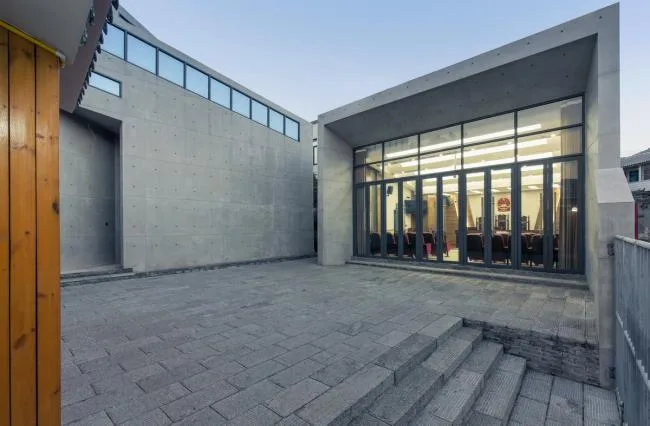
The exhibition hall, serving as the primary venue for legal education, is located directly opposite the site entrance. Though modest in size, the building features innovative forms and spatial arrangements to bring a sense of enjoyment to an otherwise serious institution. Constructed of plain concrete, it resonates with the courtroom’s materiality, avoiding unnecessary ornamentation.
The interior connects vertically and includes high side windows to accommodate exhibitions. The gatehouse and public restroom, situated across from the courtroom, together with the exhibition hall, enclose the small square, creating a cohesive positive space. The gatehouse’s residential-style design, adorned with natural wood, complements the dining area and contributes to a unified whole.
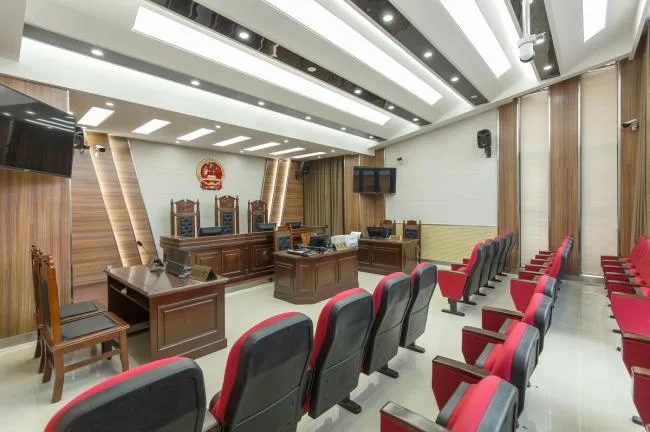
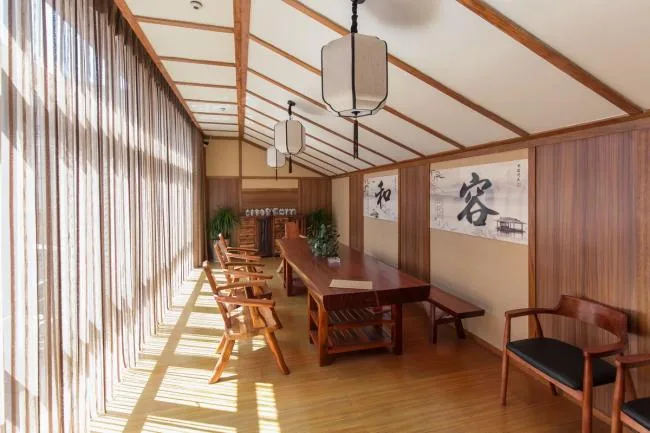
This project features a total of five courtyards, including the small square. Each courtyard varies in size and function but they all interact spatially, creating the “qi” and “eyes” of the building. This dynamic interplay enriches the external environment and enhances the positive spatial quality of the outdoor areas.
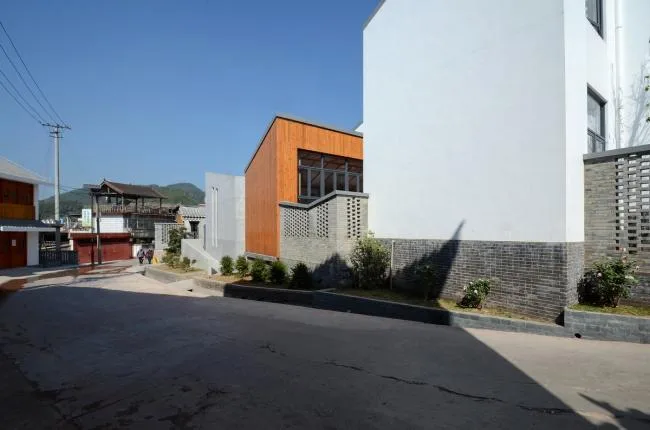
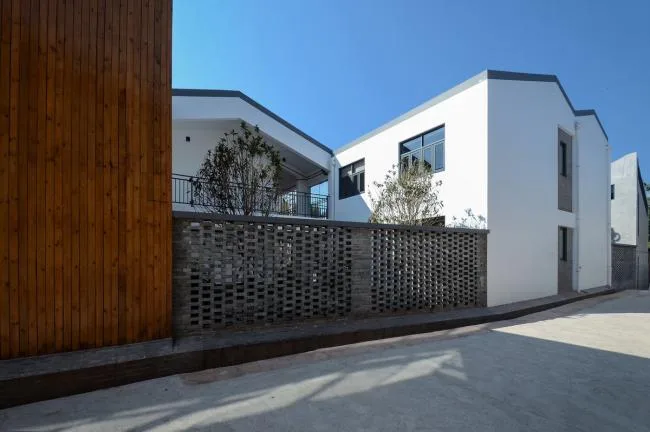
Since courtyards require enclosure, walls are necessary. However, solid walls would make the already narrow spaces feel more confined. To address this, all walls are constructed as perforated or hollow walls. This design alleviates the sense of enclosure, improves ventilation, and supports healthy plant growth within the courtyards.
Reflection
After completion, the project naturally stands out as somewhat unconventional compared to typical courts. Although limitations in construction and other factors prevented some design details from fully materializing, the result is still a “small and beautiful” court that embodies the spirit of citizenship.
This design reflects the author’s commitment to architectural citizenship and taste, guided by logical analysis and a rational approach rather than novelty for its own sake. The project has been widely praised by owners and stakeholders alike, becoming a local landmark. As the court dean described it, the reception has been “rave reviews.” This outcome embodies the principle: “Never forget the original intention, and you will remain true.”
Project Drawings
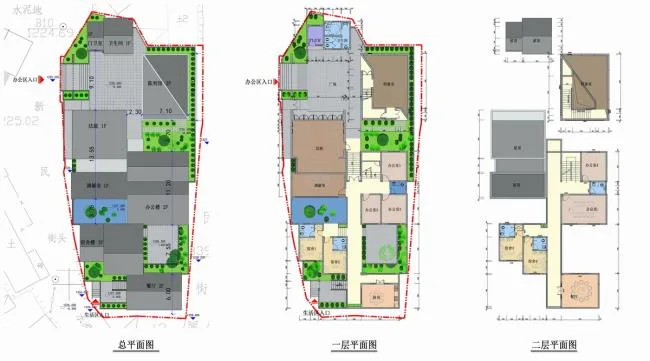
▲ Plan View
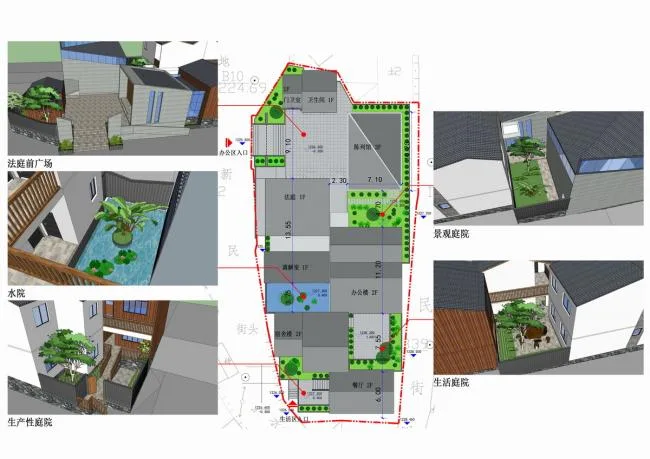
▲ Courtyard Analysis Diagram
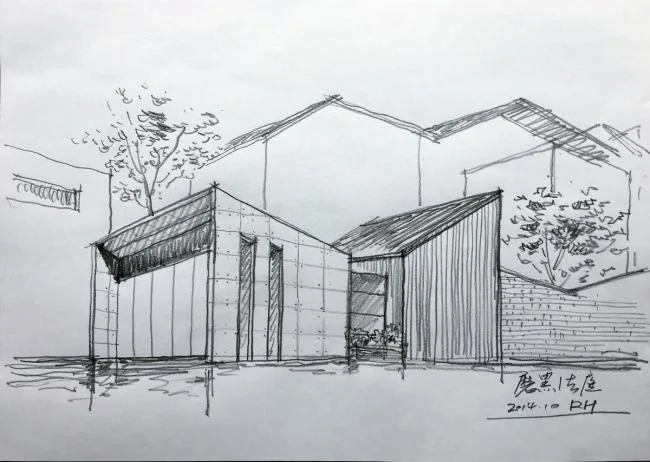
▲ Design Sketch
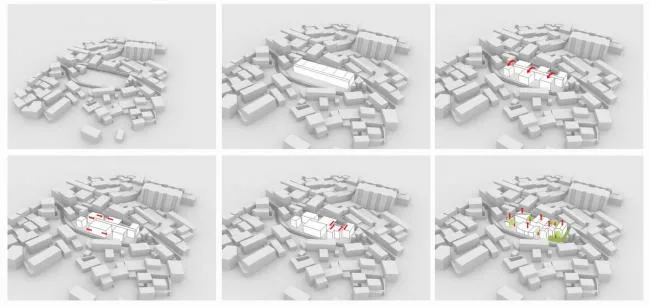
▲ Logical Analysis of Building Form Generation
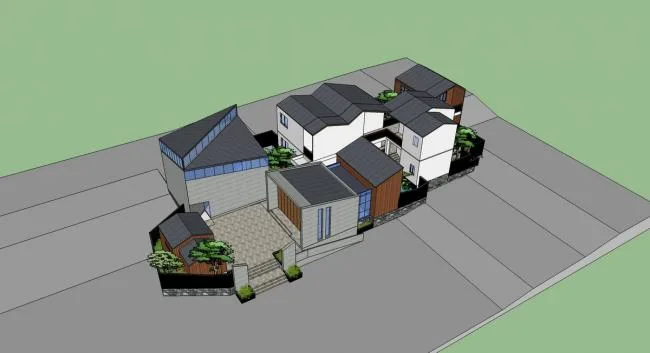
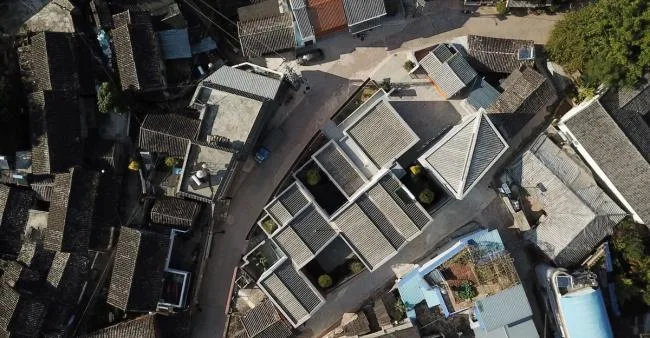
▲ Model Bird’s-Eye View
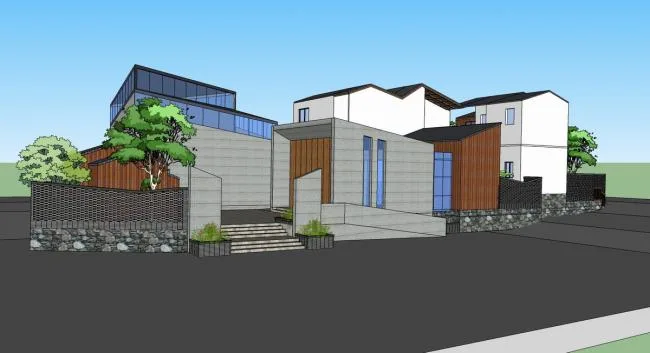
▲ Architectural Model
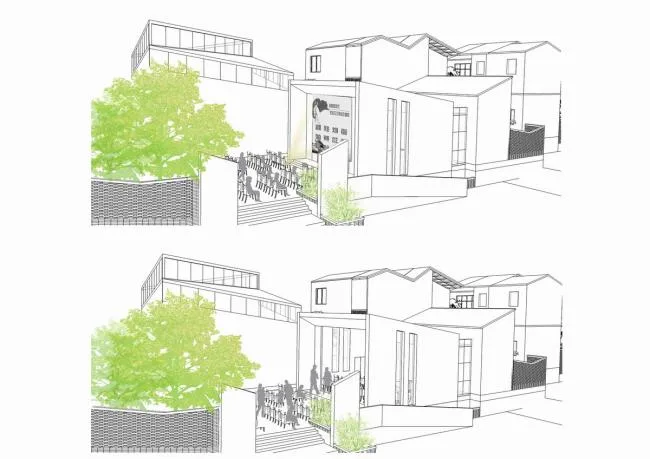
▲ Flexible and Versatile Usage
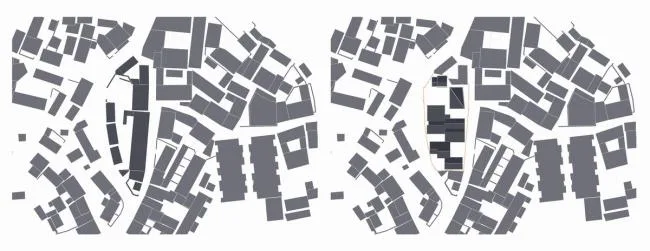
▲ Before and After Renovation: Relationship Between Building and Surrounding Environment
Project Information
Project Name: Grinding Black Court and Supporting Facilities
Location: Xinmin Street, Mohei Town, Ning’er County, Pu’er City
Project Scale: Site Area: 830 m²; Total Construction Area: 750 m²; Floors: 1-2
Client: Ning’er County People’s Court
Architectural Design: Zhida Architecture Studio / Zhengdong Design
Landscape Design: Zhida Architecture Studio / Zhengdong Design
Lead Architect: Rao Hong
Main Contributors: Rao Hong, Li Shipeng, Wei Ling, Zhao Yunjie
Author: Rao Hong
Contact Email: __AI_S_SC0__
Photographers: Rao Hong, Liu Yang, Liu Yancheng
Design Period: October 2014
Completion: January 2018












Must log in before commenting!
Sign Up