
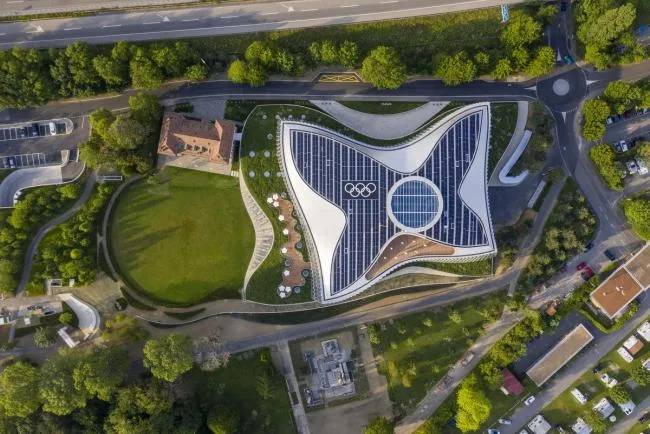
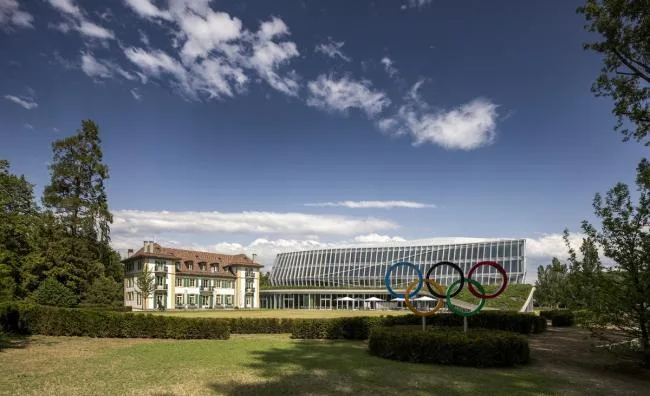
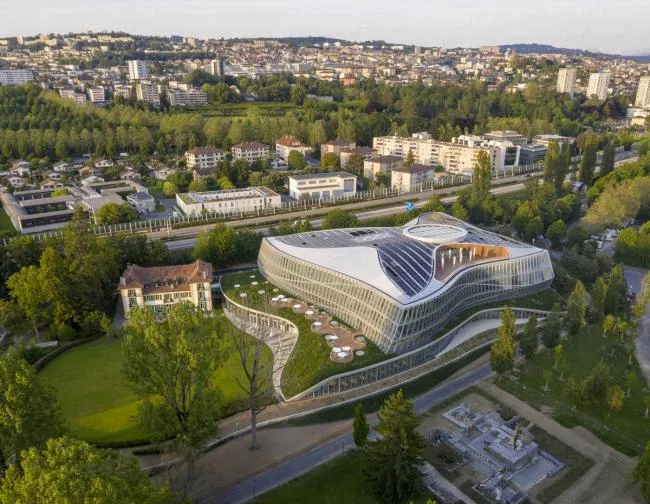
The design thoughtfully incorporates the historic elements of the park, home to the 18th-century Château de Vidy. Situated in a vibrant public space welcoming visitors from all directions, the Olympic House is set to become both a local landmark and a symbol of accessibility and institutional transparency.
Located along the protected shores of Lake Geneva, 3XN collaborates closely with the International Olympic Committee to ensure seamless integration between the building and its surrounding environment. The nearby Château de Vidy, a historic structure listed in the Canton de Vaud building census, has been carefully renovated to restore its original façade.
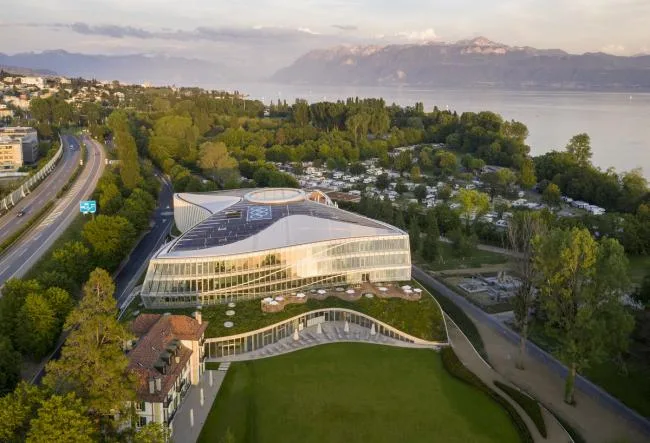
The design respects both the castle’s heritage and the park’s natural environment, creating a smooth transition between green public spaces and the Olympic House. The castle, located on the east side alongside a dense forest to the west, acts as the central axis, reinterpreting classical symmetry in a modern context.
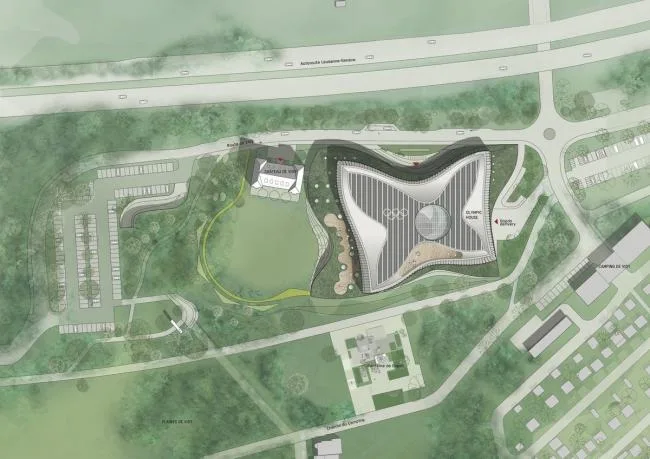
▲ General layout
By combining the functions of the existing Olympic Building and Exhibition Hall, the new headquarters doubles the building area while preserving the same amount of green park space. The design integrates nature and landscape to maximize the site’s beauty, using plant elements of various scales to create pathways and viewing points, all while maintaining local biodiversity.
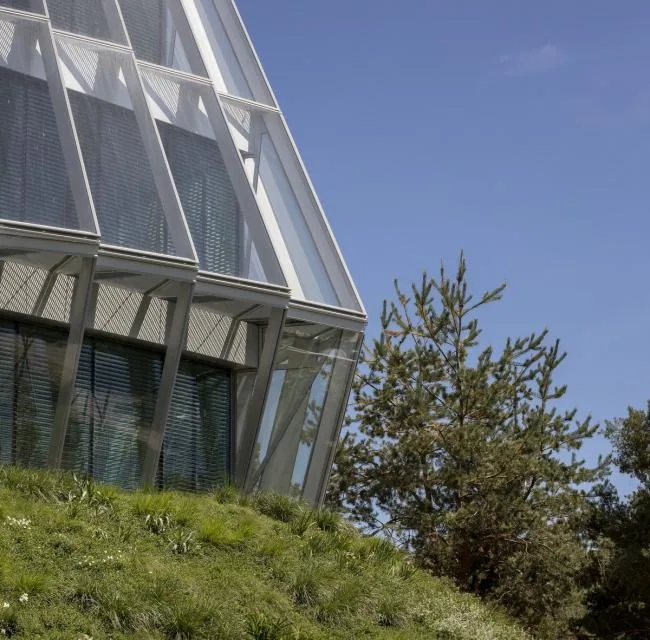
The building’s base is cleverly integrated with the landscape, covered by vegetation to minimize environmental impact.
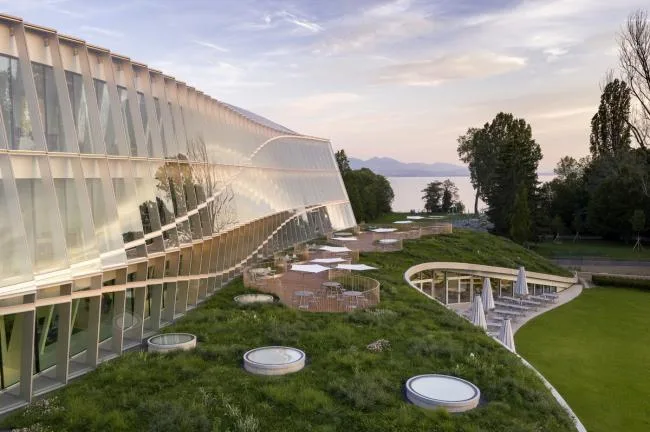
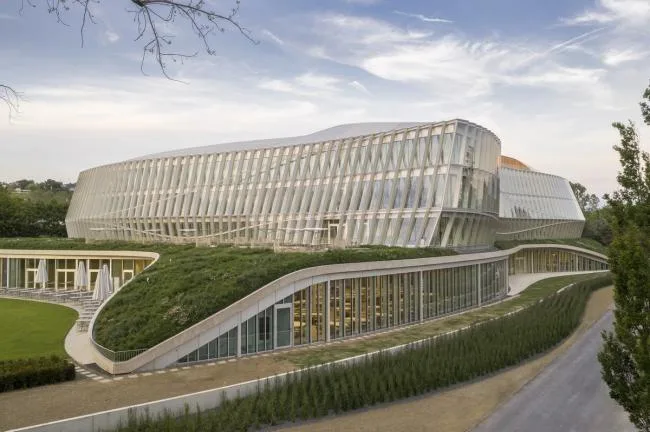
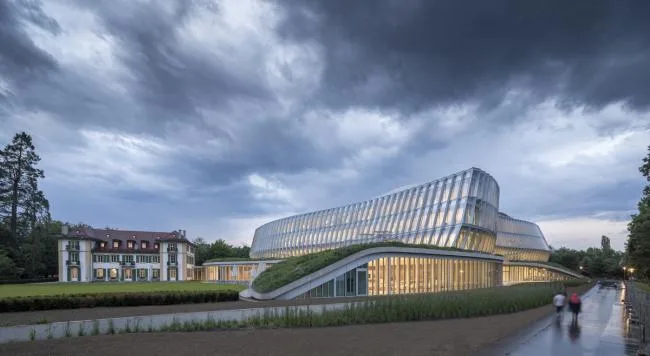
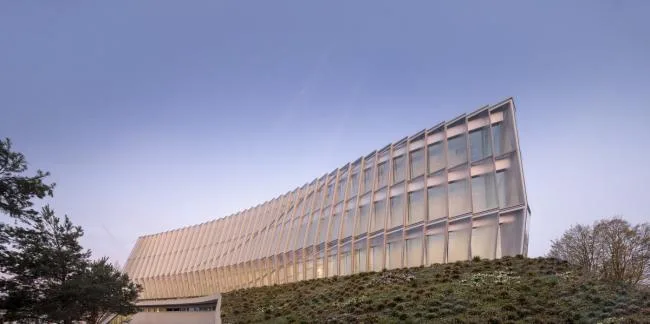
The building’s transparency represents the International Olympic Committee’s openness. A fully transparent floor-to-ceiling glass curtain wall floods the interior with natural light, while a double-layer skin system optimizes insulation.
An exterior notch allows the park to visually and physically extend into the office space. This glass structure symbolizes the Committee’s commitment to transparency, reflecting the organizational changes of the 2020 Olympic Agenda.
The design invites the public to witness the daily work and activities of the IOC staff through its facades.
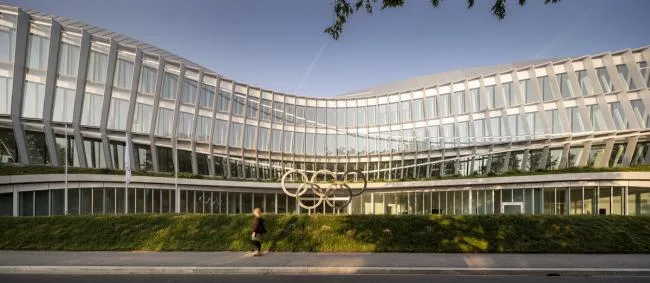
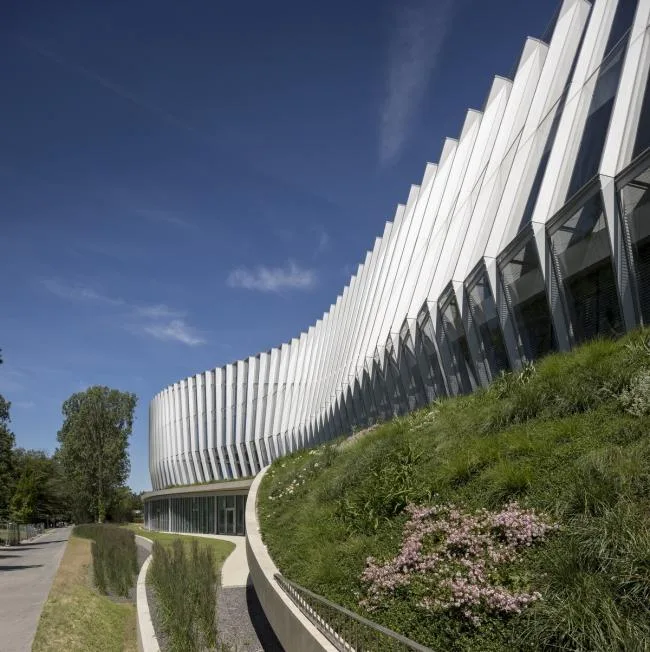
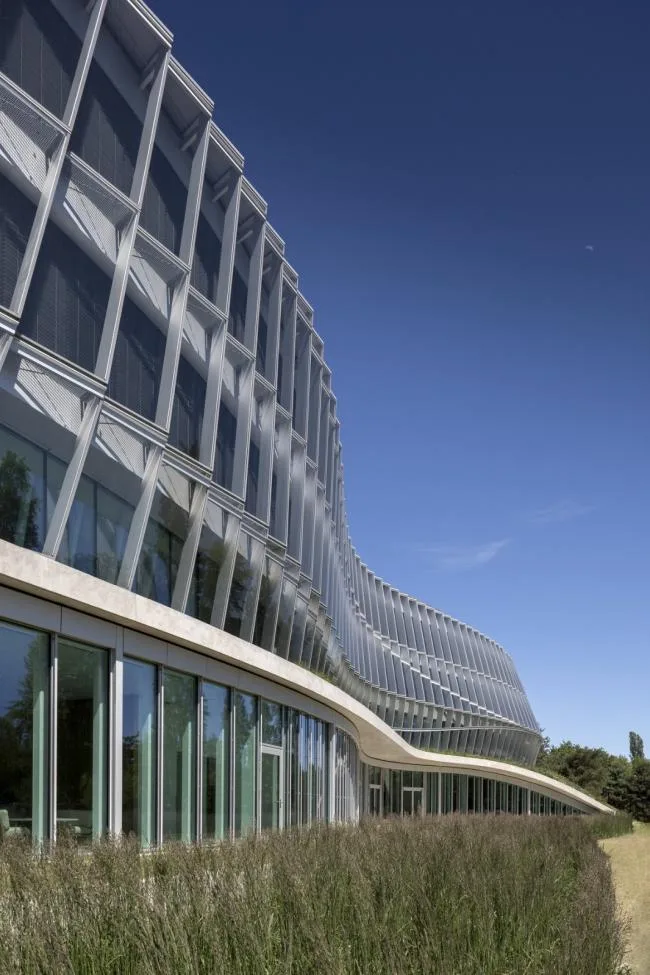
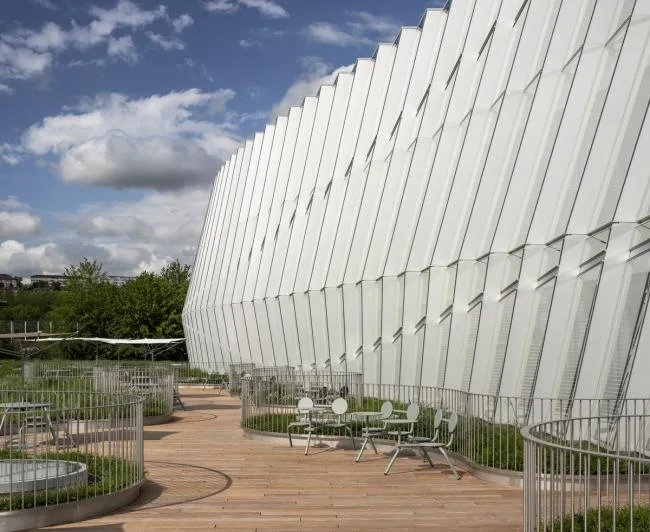
A standout feature of 3XN’s design is the facade, inspired by the fluid movements of athletes, paying homage to the Olympic spirit. The dynamic waves on the facade shift with different viewing angles, expressing athletic energy.
In addition to aesthetic considerations, the façade’s performance is optimized for functionality. While the Olympic House stands as a global landmark and symbol of the International Olympic Committee, it also fulfills the demands of a busy office environment.
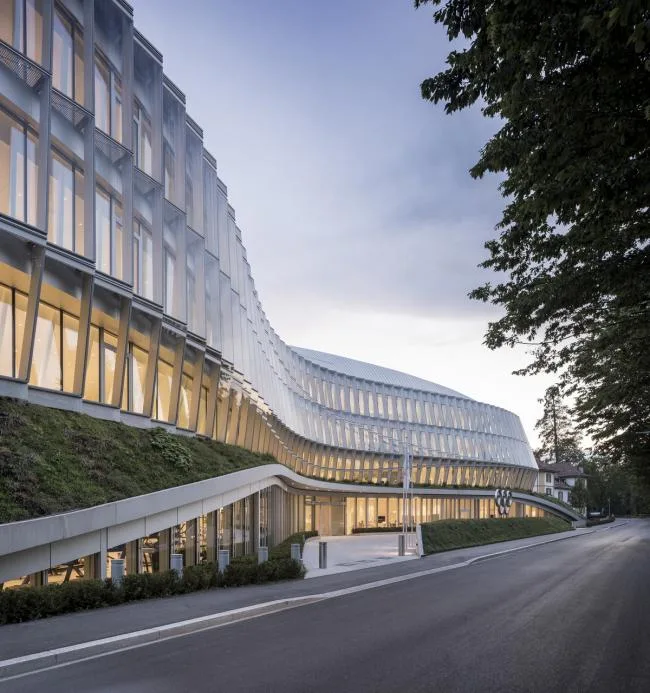
Throughout the design process, 3XN prioritized its core concept of architectural shaping behavior, emphasizing transparency and fluidity to foster interaction, communication, and knowledge sharing among employees.
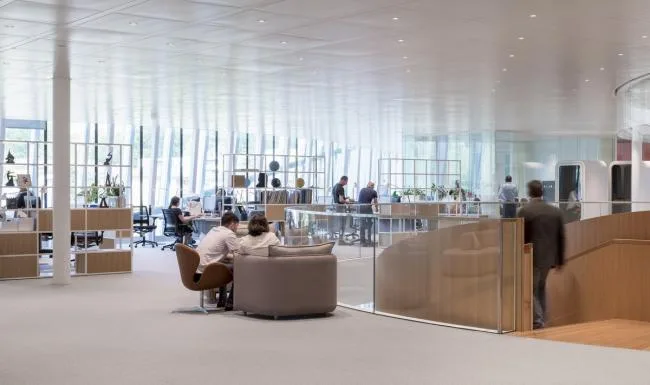
The streamlined design serves as a catalyst for collaboration and unity within teams. Structurally, the building minimizes internal constraints, supported by four service core tubes and fourteen pillars.
Its systematic equipment and electrical layout create a flexible work environment, adaptable to the evolving needs of mobile work teams and future organizational changes.
The open-plan workspace allows smooth reconfiguration, supporting collaboration among the International Olympic Committee staff.
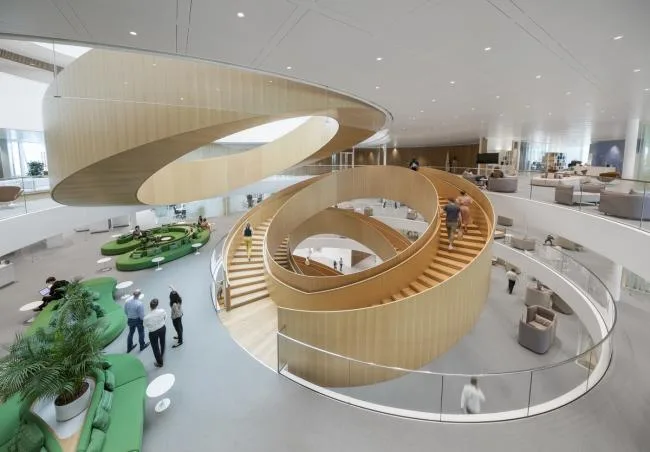
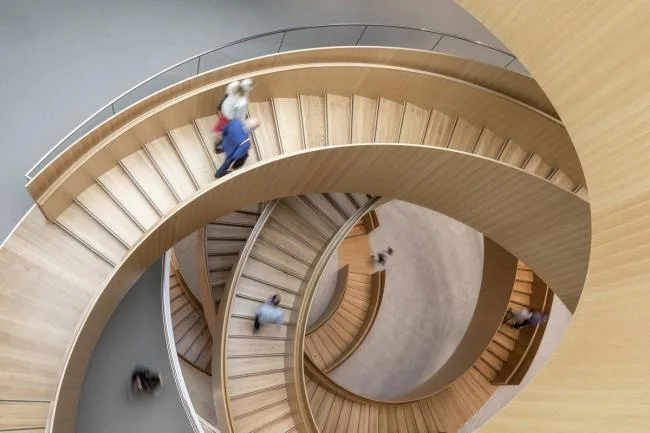
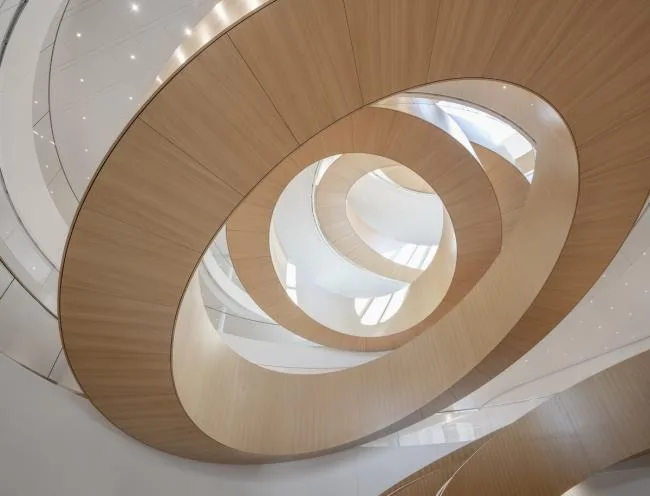
The ‘Union Staircase’, inspired by the Olympic Rings created by Baron Pierre de Coubertin, spans the entire building, connecting all floors through a grand atrium.
Following principles of active design, the oak staircase and its edges define a central hub for social and athletic activities. This staircase visually represents solidarity and collaboration between IOC staff and partners.
Surrounding the staircase are exhibition spaces, self-service restaurants, and conference rooms, creating a vibrant community space for the 500 daily users.
Olympic House stands as an exemplar of innovative collaboration among a diverse group of partners, including IOC commercial partners (Dow, Toyota, Panasonic), sustainability certification bodies, local governments, suppliers, scholars, and IOC staff.
The International Olympic Committee’s commitment to sustainable development is deeply embedded in 3XN’s architectural design and the operational philosophy of Olympic House.
Innovative design strategies minimize the building’s environmental impact while maintaining a high-quality working environment.
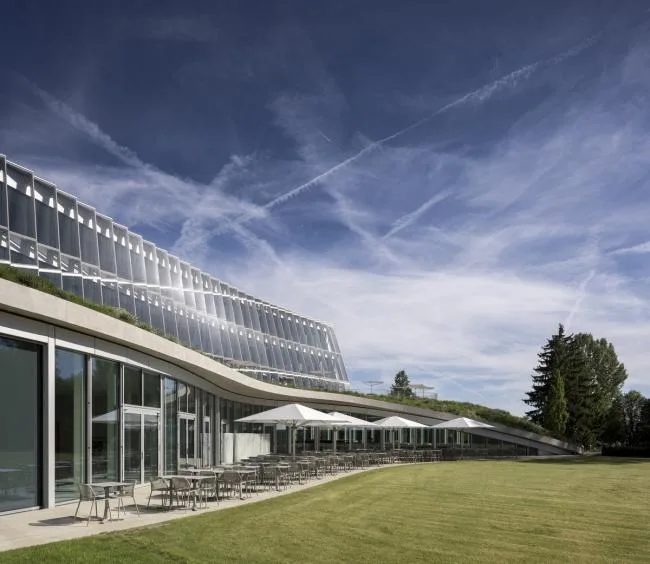
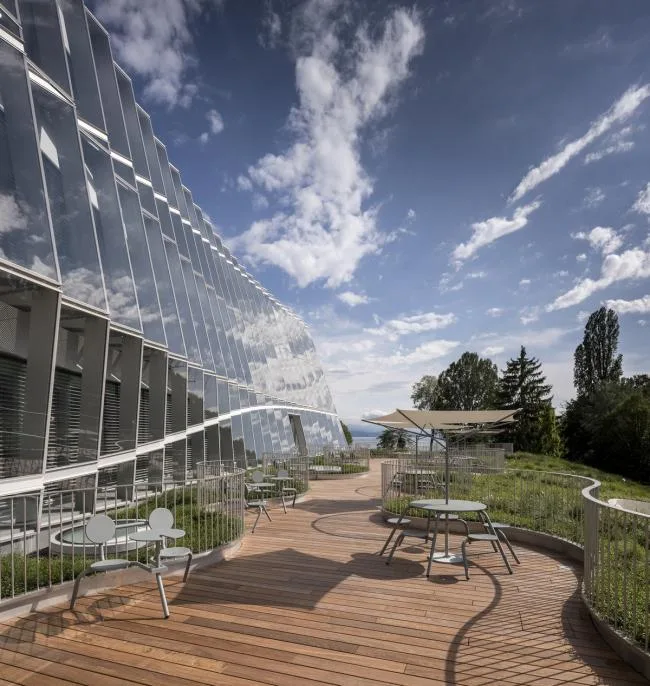
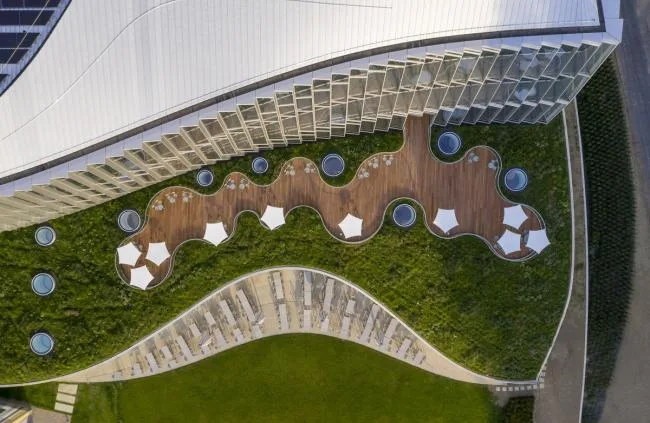
The building’s exterior achieves excellent insulation thanks to an airtight design and triple layers of glass. The inner facade layer provides thermal insulation, while the outer layer is shielded by an integrated shading system that enhances insulation and reduces noise from nearby highways.
Distinctive inward concave and outward protruding patterns on the facade increase surface area to improve daylighting and views.
Design Drawings:
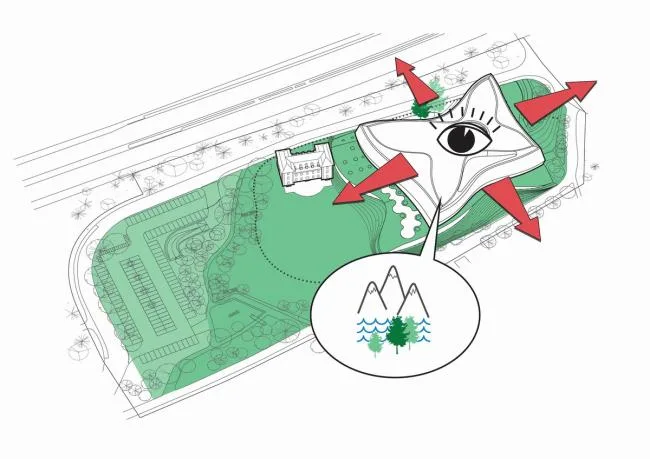
▲ (BIM Learning) Design Concept – Perspective
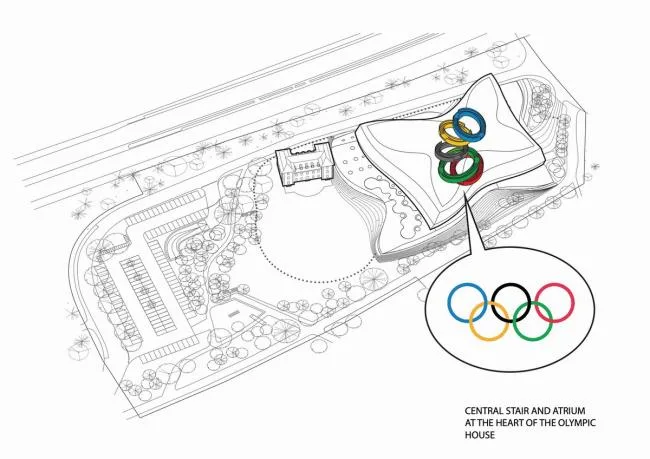
▲ Design Concept – Stairs
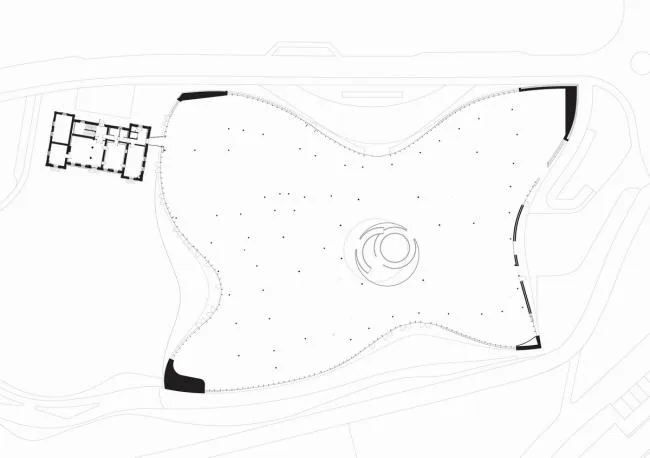
▲ Plan View
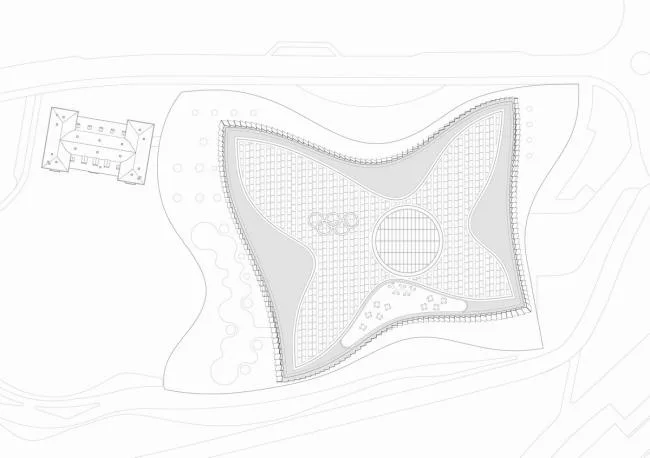
▲ Roof Plan
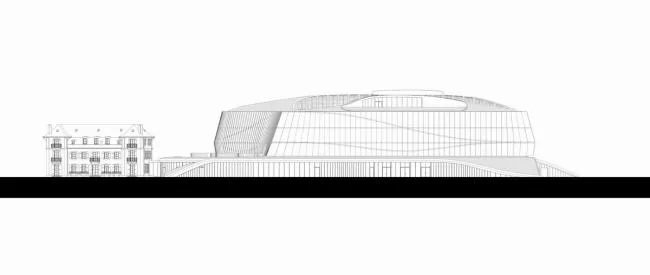
▲ Elevation View
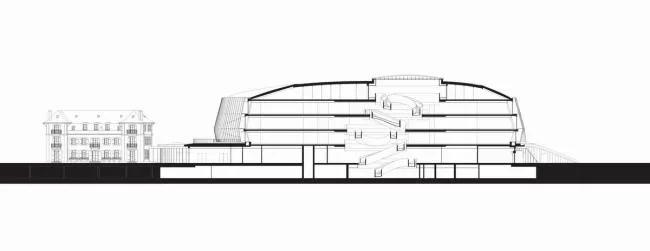
▲ Sectional View
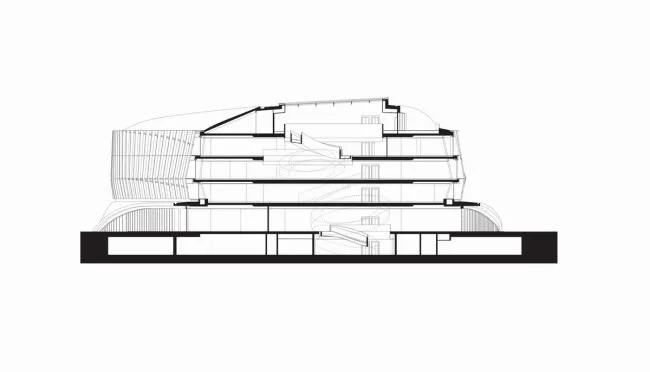
▲ Sectional View
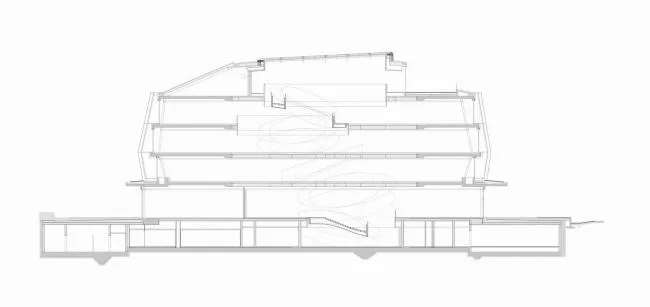
▲ Sectional View
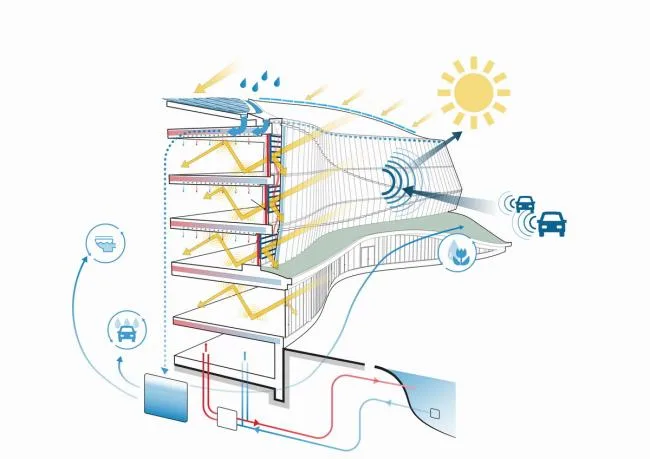
▲ Sustainability Analysis
Project Information:
Architectural Firm: 3XN Architects, Itten+Brechbühl
Location: Lausanne, Switzerland
Category: Public Institution Facilities
Design Architect: 3XN Architects
Local Architects: Itten+Brechbühl
Building Area: 135,000 m2
Project Year: 2019
Photographer: International Olympic Committee (IOC) / M Ø RK, Adam
Landscape Designer: Hüsler & Associés
Interior Designer: RBSGROUP
Architectural Lighting Engineer: Jesper Kongshaug
Kitchen Consultant: SCHÉMA-TEC












Must log in before commenting!
Sign Up