
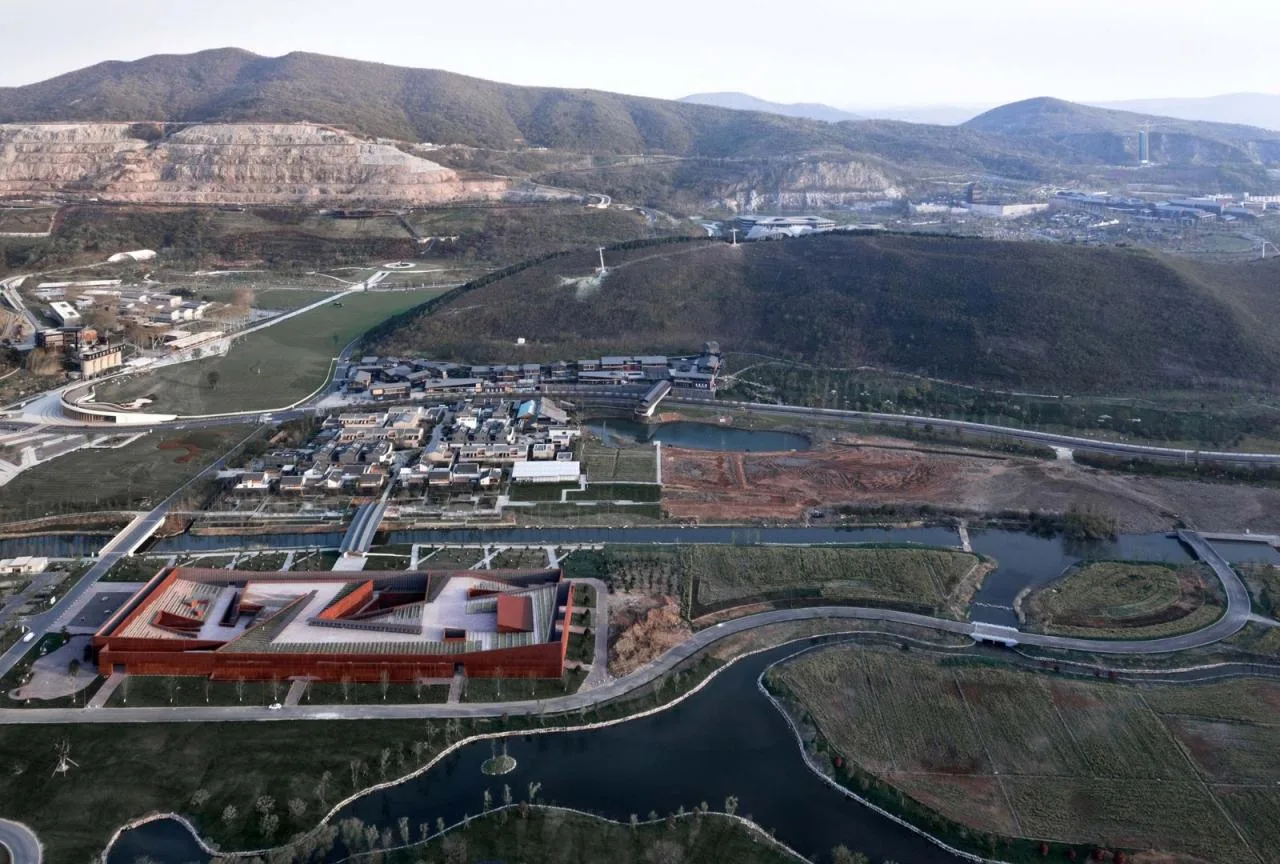
The Jiangsu Garden Expo Treasure Museum (hereafter referred to as the Treasure Museum) is situated at the northernmost edge of Jiangsu Garden Expo Park. Its primary function is to showcase traditional and folk arts and crafts. The building occupies a site of 15,000 square meters, with a total construction area of approximately 15,500 square meters.
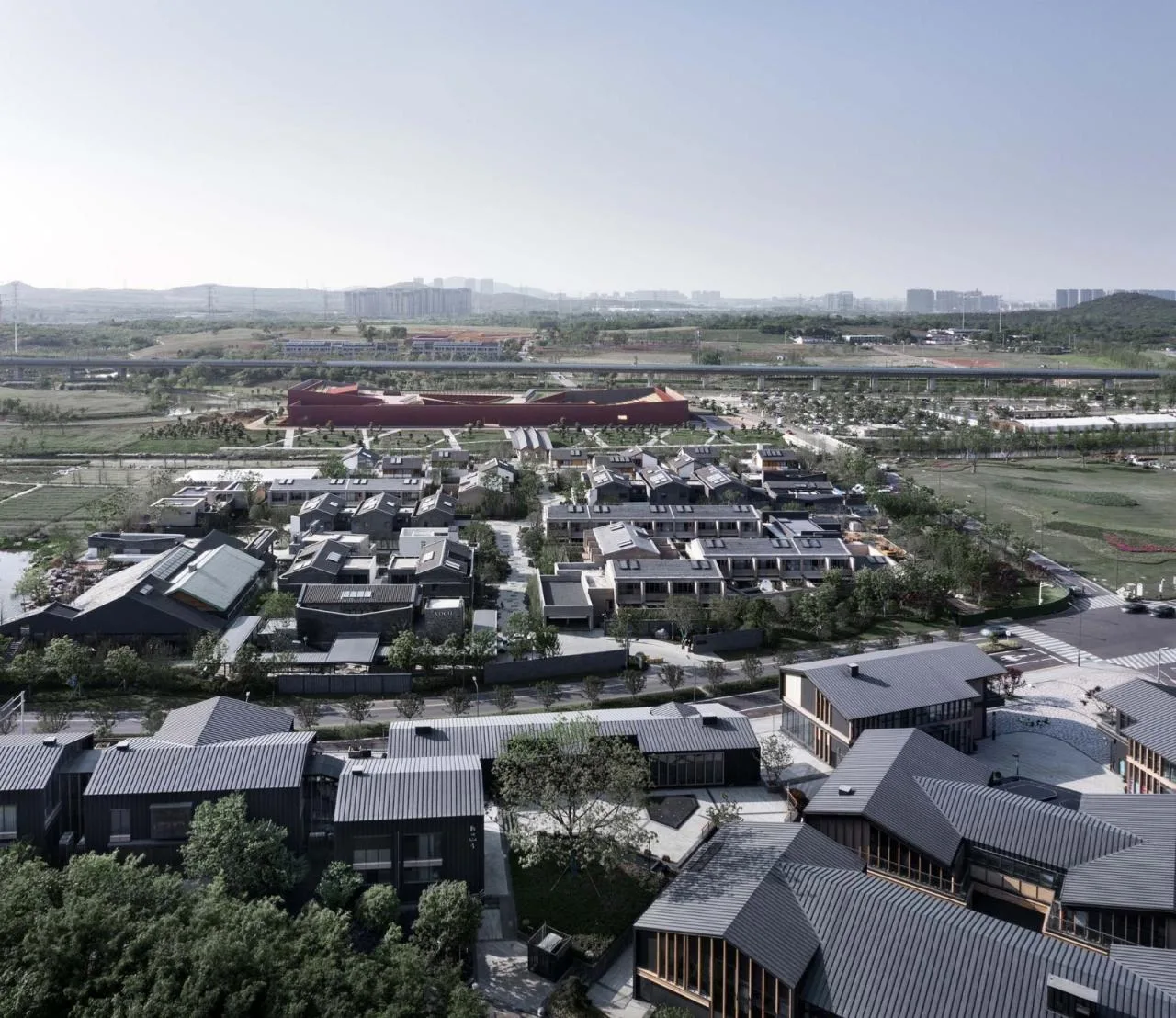
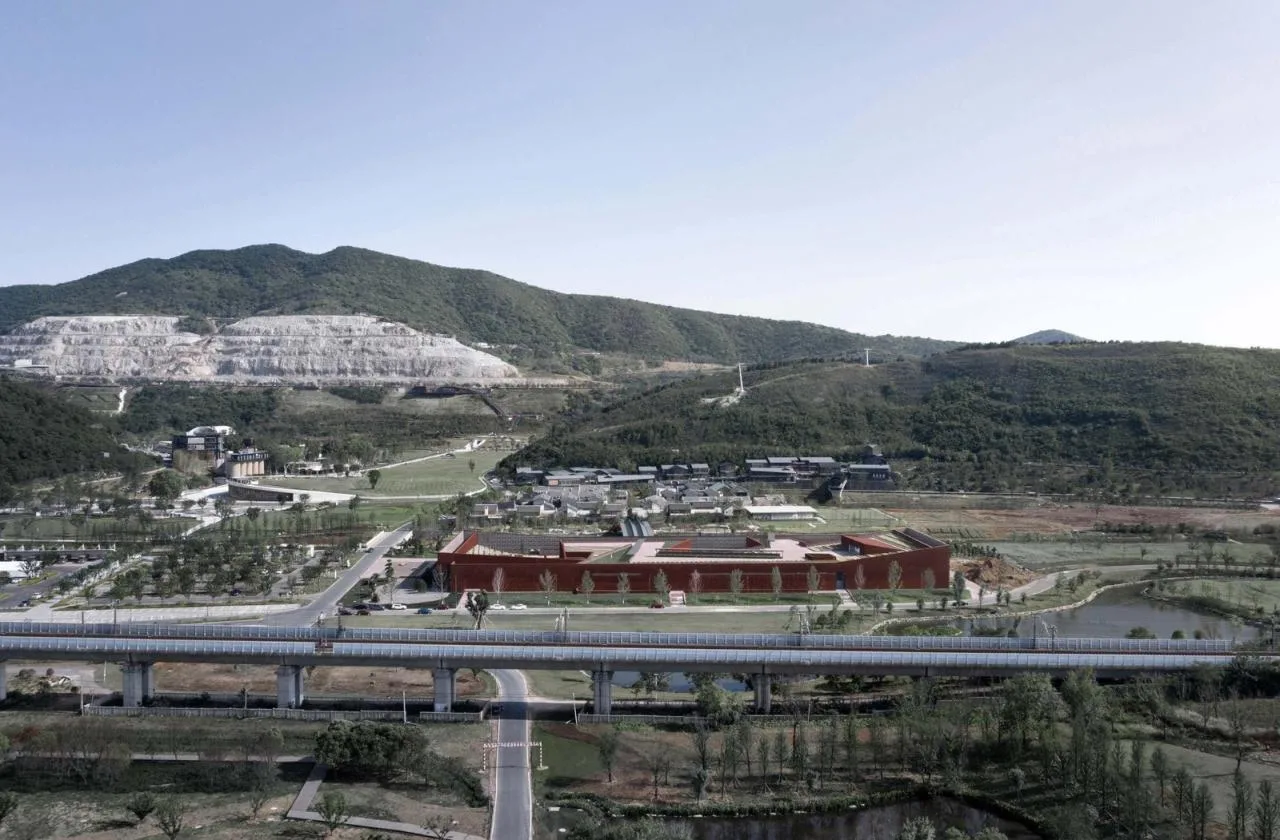
Positioned on the park’s boundary, the Treasure Museum faces a complex and contrasting environment: to the north lies the Beijing-Shanghai high-speed railway, with trains frequently passing by, while across the river to the south stands the VOCO Garden Expo Village Hotel, a tranquil village-style apartment hotel. This site represents a unique intersection of urban and rural landscapes.
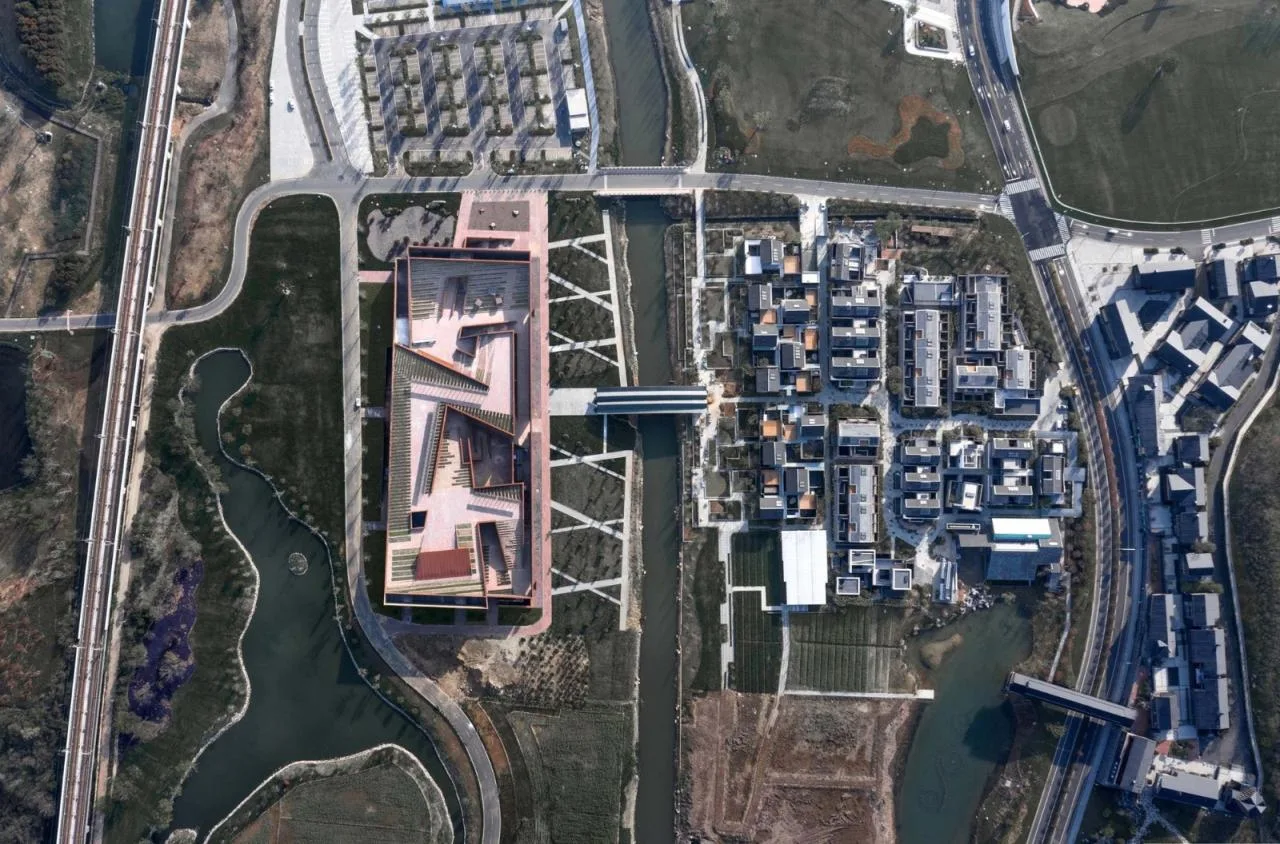
The concept of “folding” originates from geology—where the movement of the earth’s crust compresses rock layers, creating folds that bend and change the terrain. Located in Tangshan Fangshan Geological Park, known for its six major stratigraphic sections used in geological education and practice, this project draws from the local geological memory.
Inspired by this, the design concept of “folding” emerges. It integrates regional context, site conditions, circulation paths, and materials to harmonize the architecture with its surroundings. The design plans visitor routes, evokes a sense of place and temporality, and uses folding as a unifying concept to create a simple exterior form paired with rich spatial experiences inside.
The Garden Expo Park area was once home to a prominent Chinese cement plant, which has since been relocated due to urban expansion and ecological preservation efforts. The park’s ecological restoration strategy supports sustainable development. The former cement production left the terrain in the park’s center flattened and slightly depressed, surrounded by mountains.
The Treasure Museum sits on the park’s northern edge, on a narrow green strip between the mountains and the high-speed railway. The site measures approximately 190 meters in length, 75 meters in width, with an 8-meter height restriction.
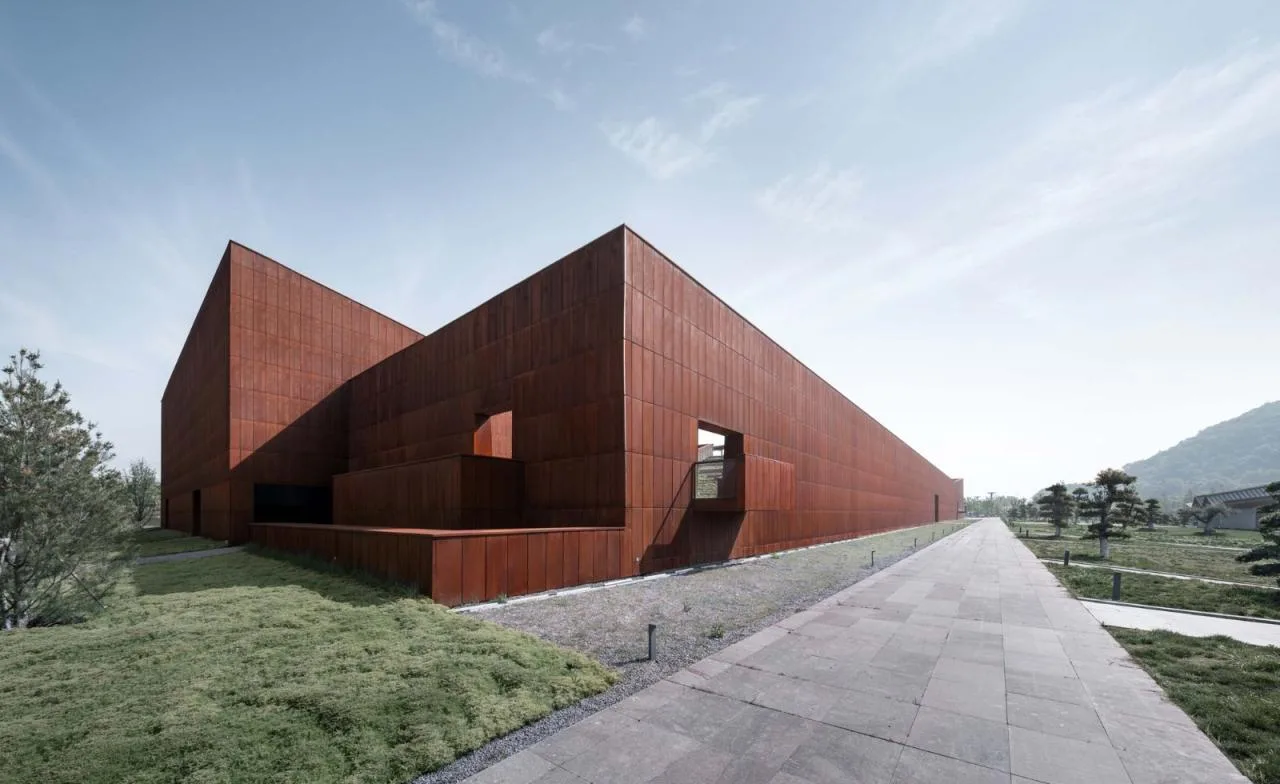
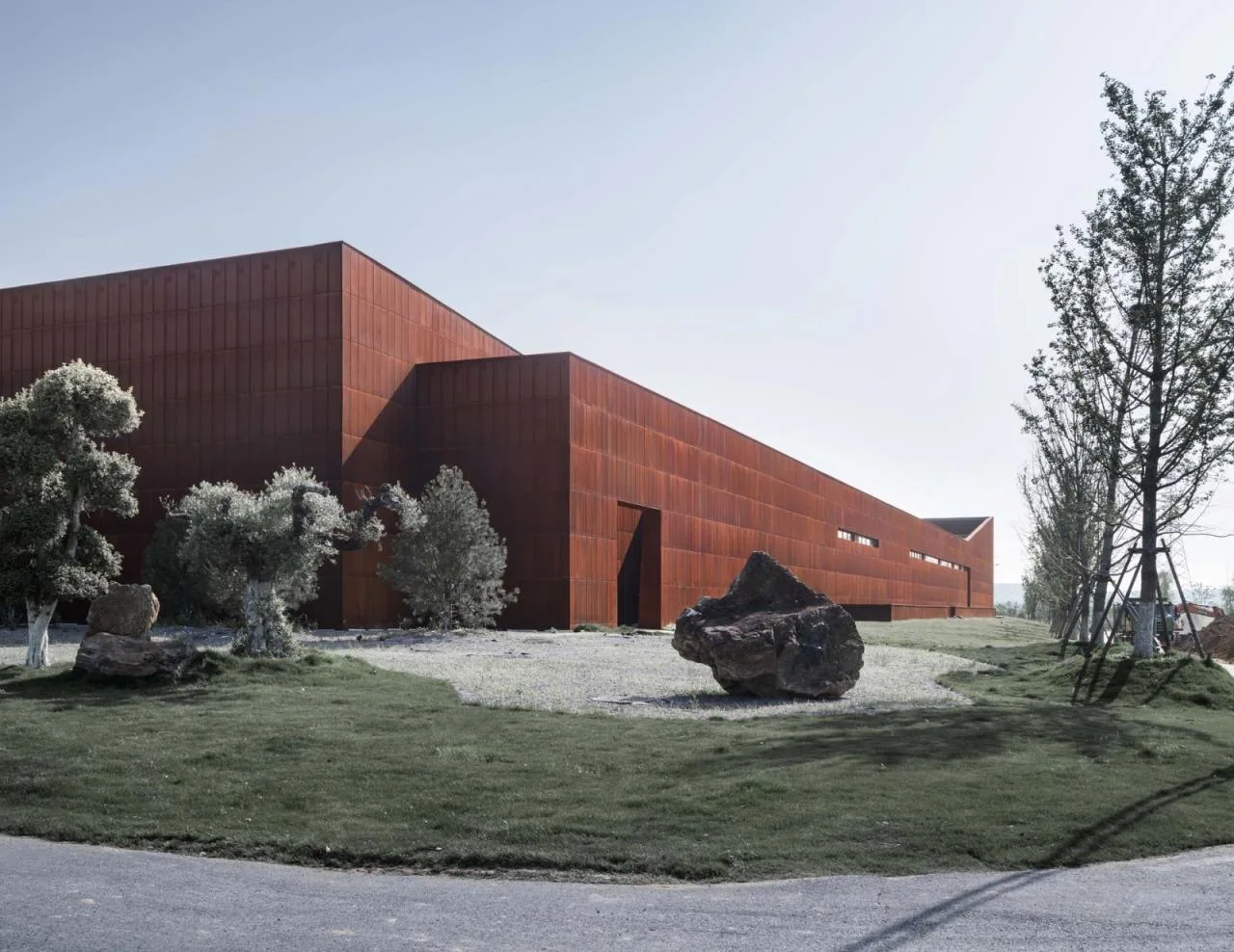
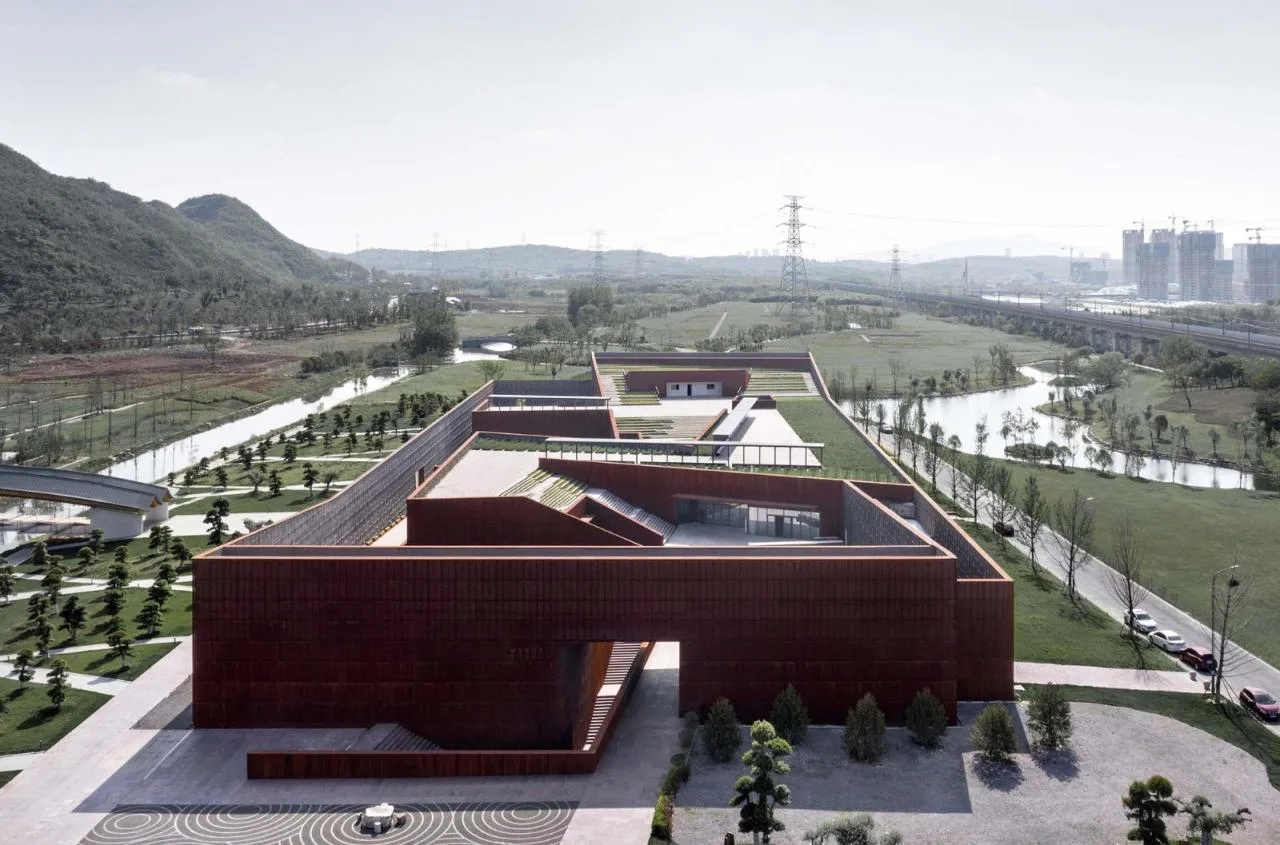
To address the challenges posed by the site and design constraints, the architects employed a “heavy” strategy, embedding the building into the ground to blend with the earth. The folding concept manifests in a dynamic roof and floor design, where freeform lines divide the roof and floor into three nested sections with varying heights from east to west.
The east and west ends are subtly elevated, allowing pedestrian walkways to be tucked into these raised volumes from multiple directions. The central zigzag form seamlessly connects the entrance plaza with the rooftop garden.
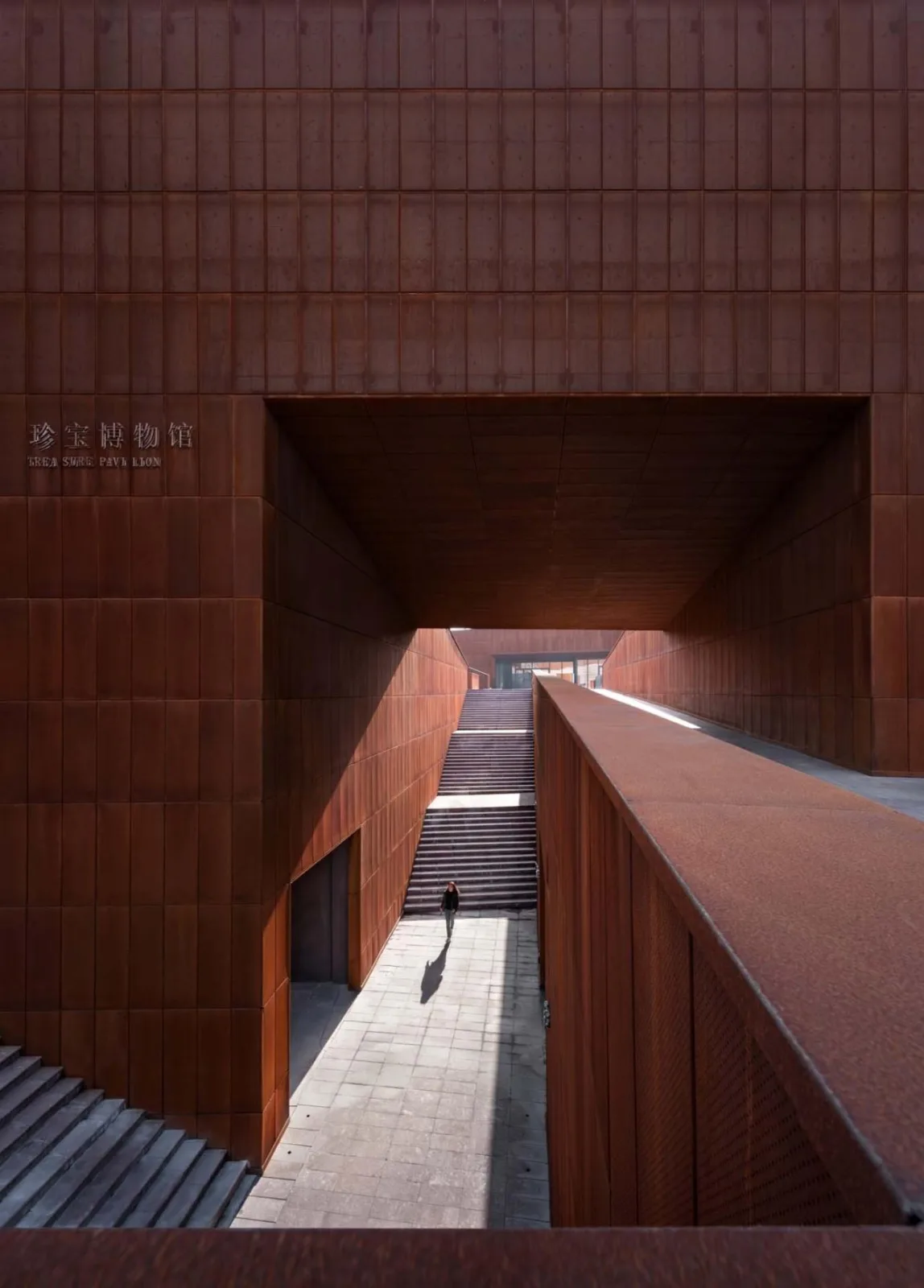
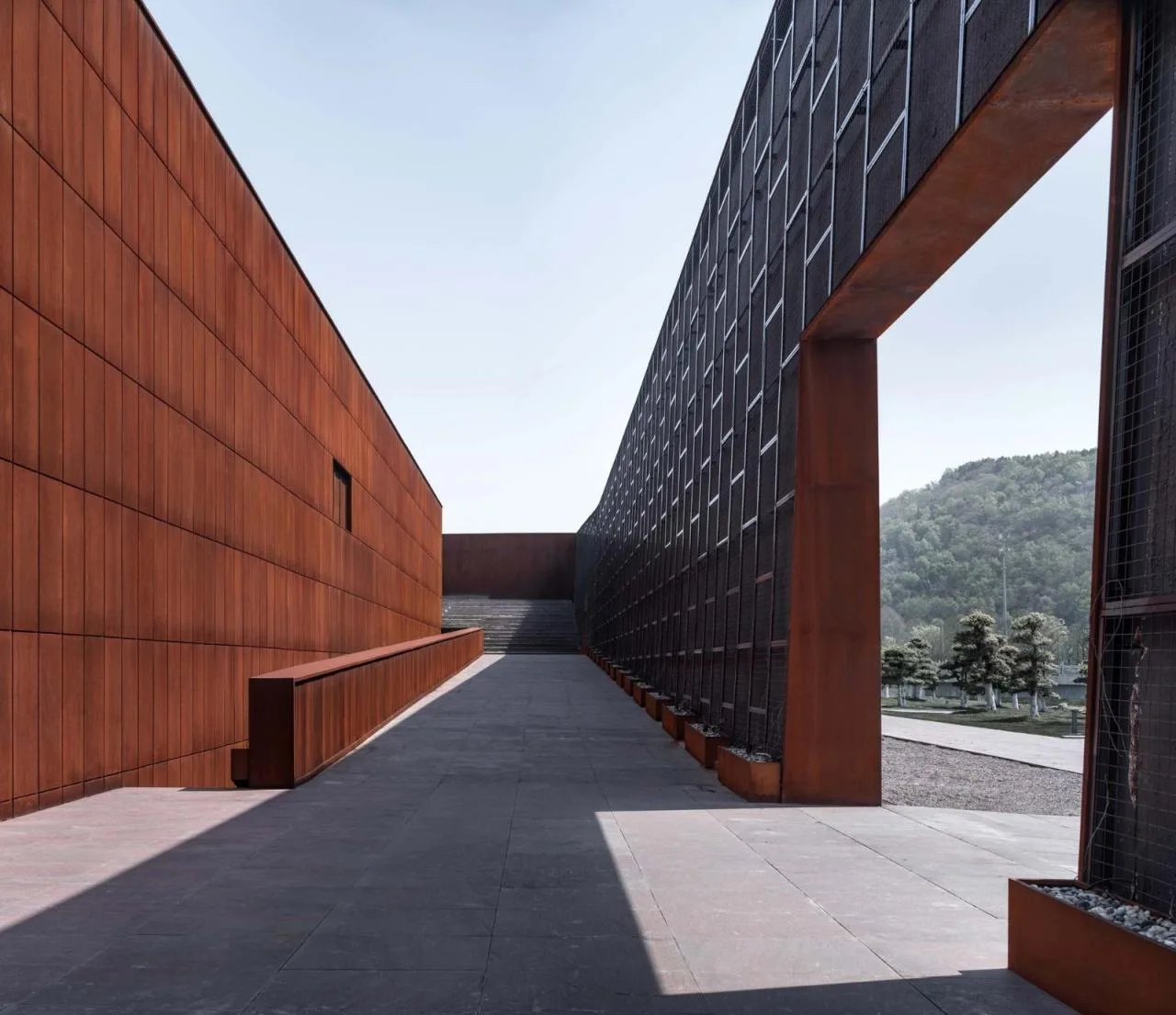
The main exhibition hall is located on the basement level, featuring an open sunken courtyard, curved walls, and landscape-style stepped walkways that naturally lead visitors underground. Large and small openings on the first-floor exterior walls allow the surrounding environment to extend into the building, creating a seamless connection between interior and site.
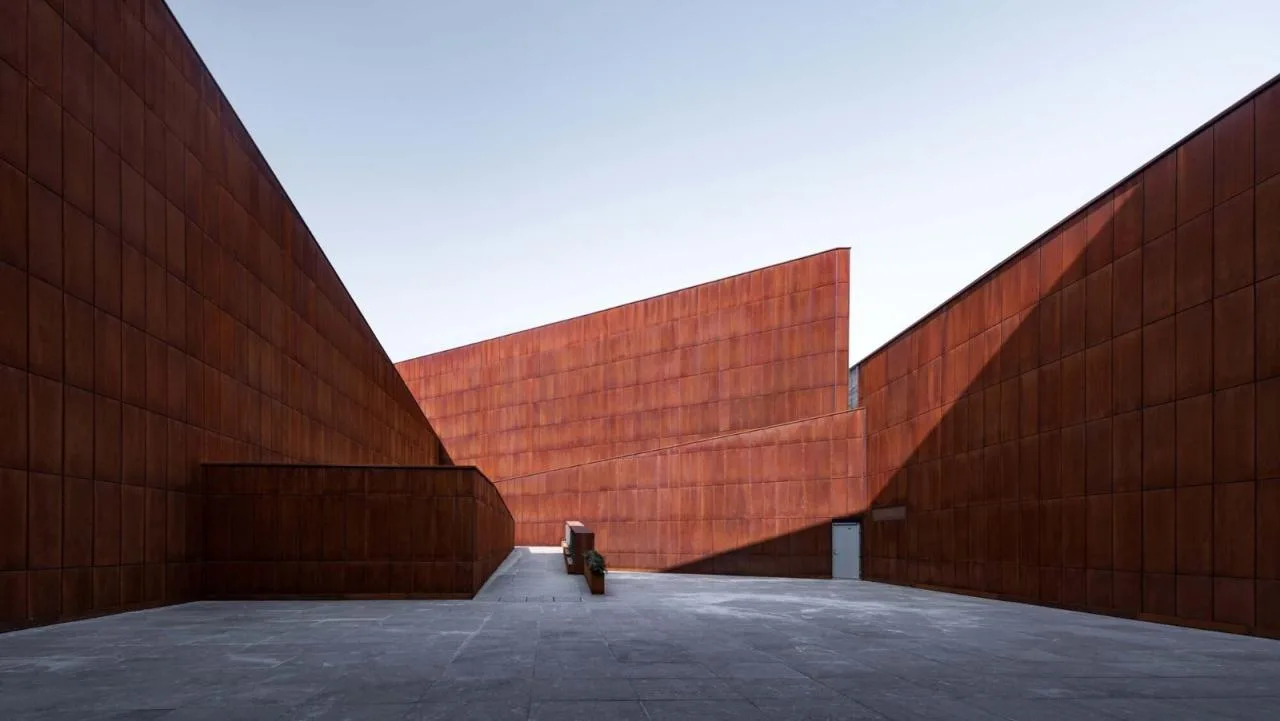
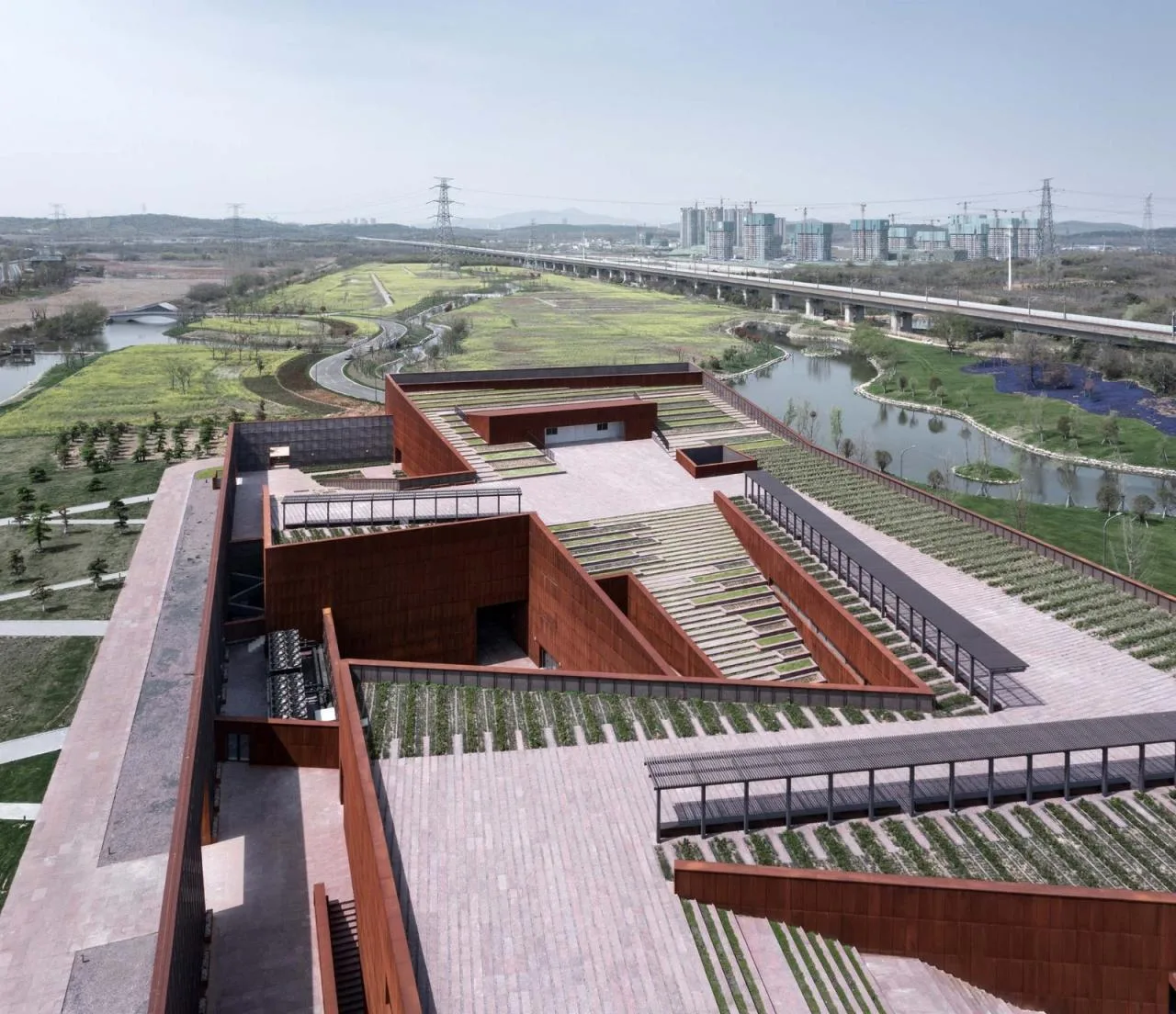
The relationship between the architecture and site is expressed through varying visual experiences—both fast and slow. From the vantage point of the high-speed railway on the north side, the winding rust-red folding walls, shifting light and shadow, and linear green plantings resemble natural brushstrokes on the landscape canvas.
The building’s fifth facade opens freely to the sky. A walking path formed by landscaped steps begins at the sunken courtyard and weaves through several bends to reach the rooftop garden on the second floor. These bends blend naturally with the flat, open ground when viewed from above.
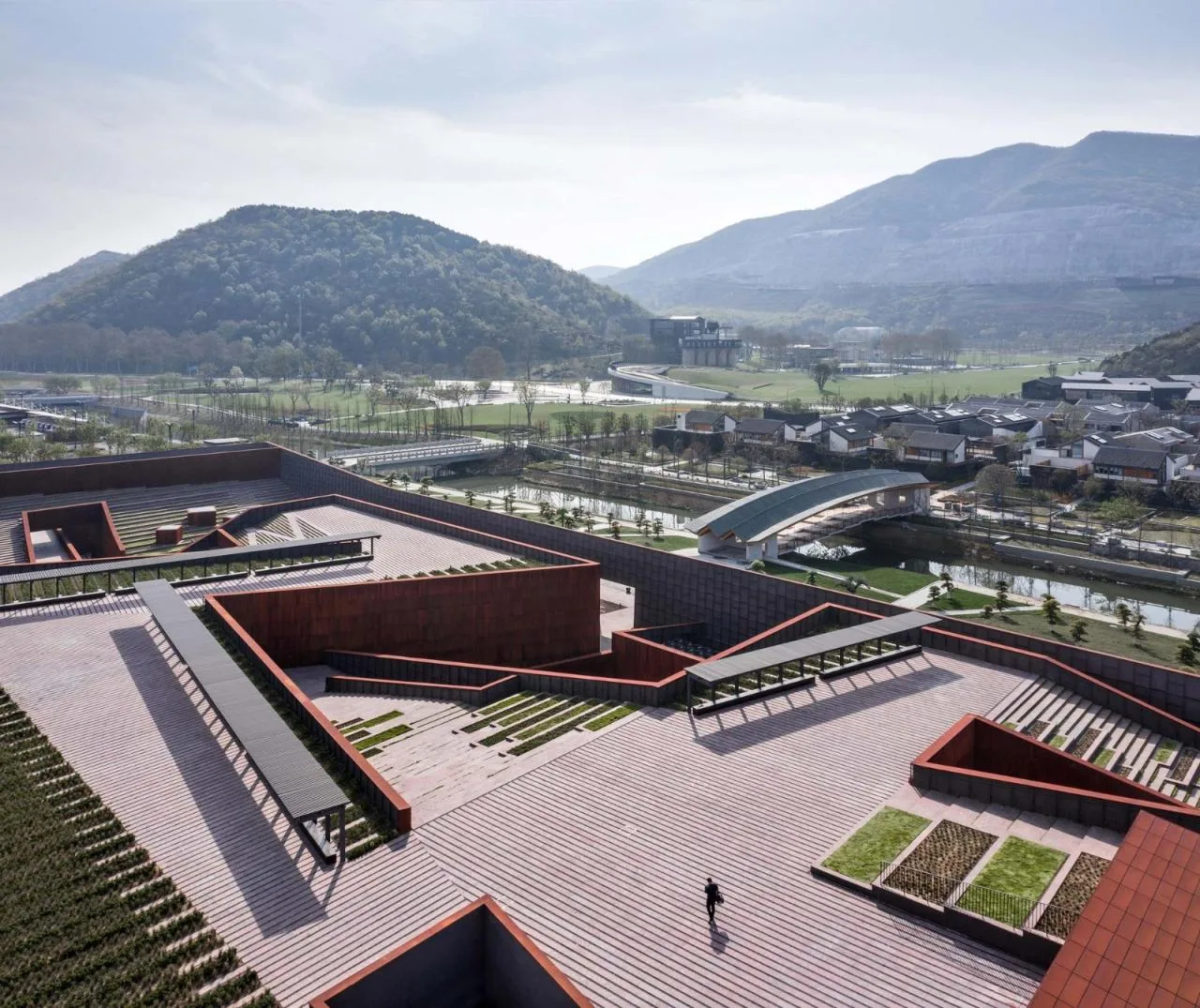
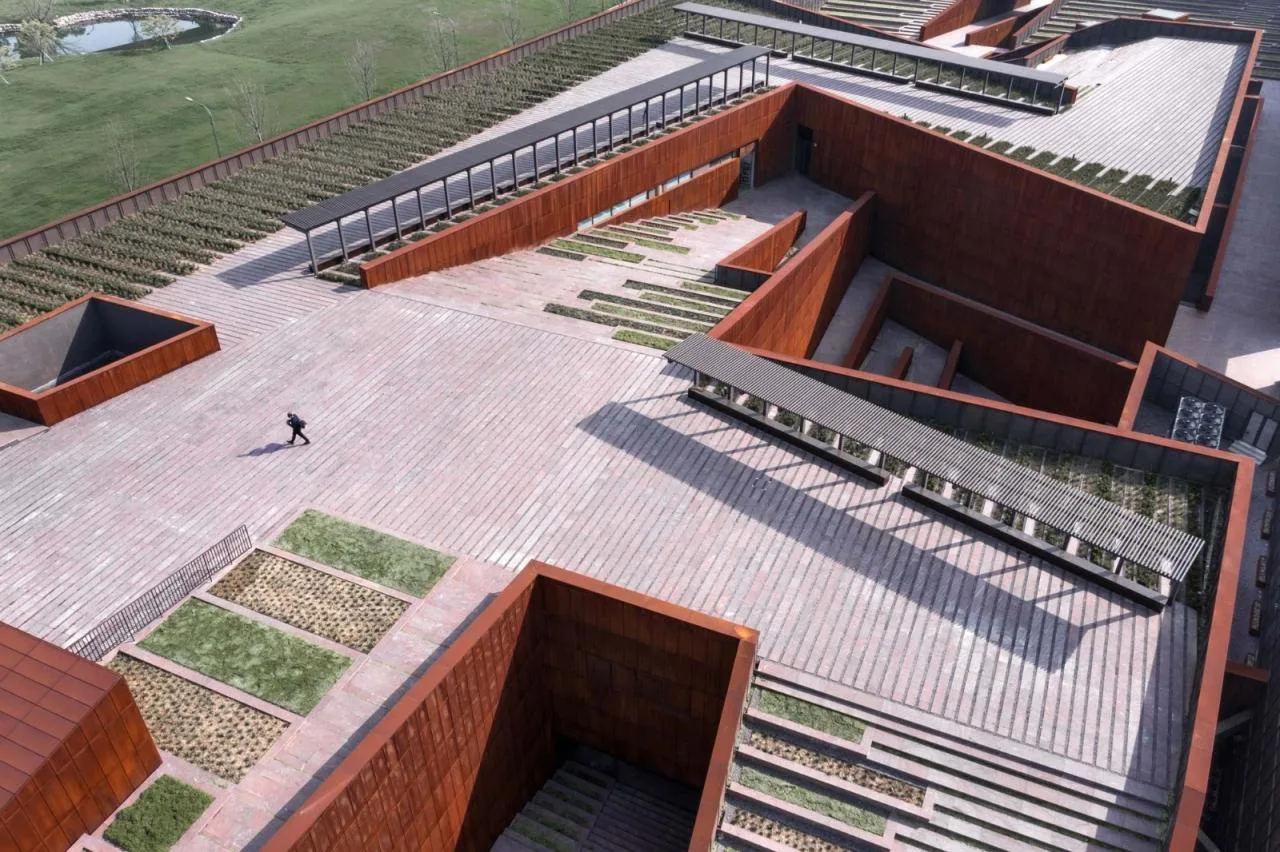
South of the Treasure Museum stands the VOCO Garden Expo Village Hotel, designed in a village-style layout with clustered, small-scale buildings topped by sloping roofs. When viewed from the hotel’s alleys, the Treasure Museum appears as a narrow, elongated red mountain-like backdrop.
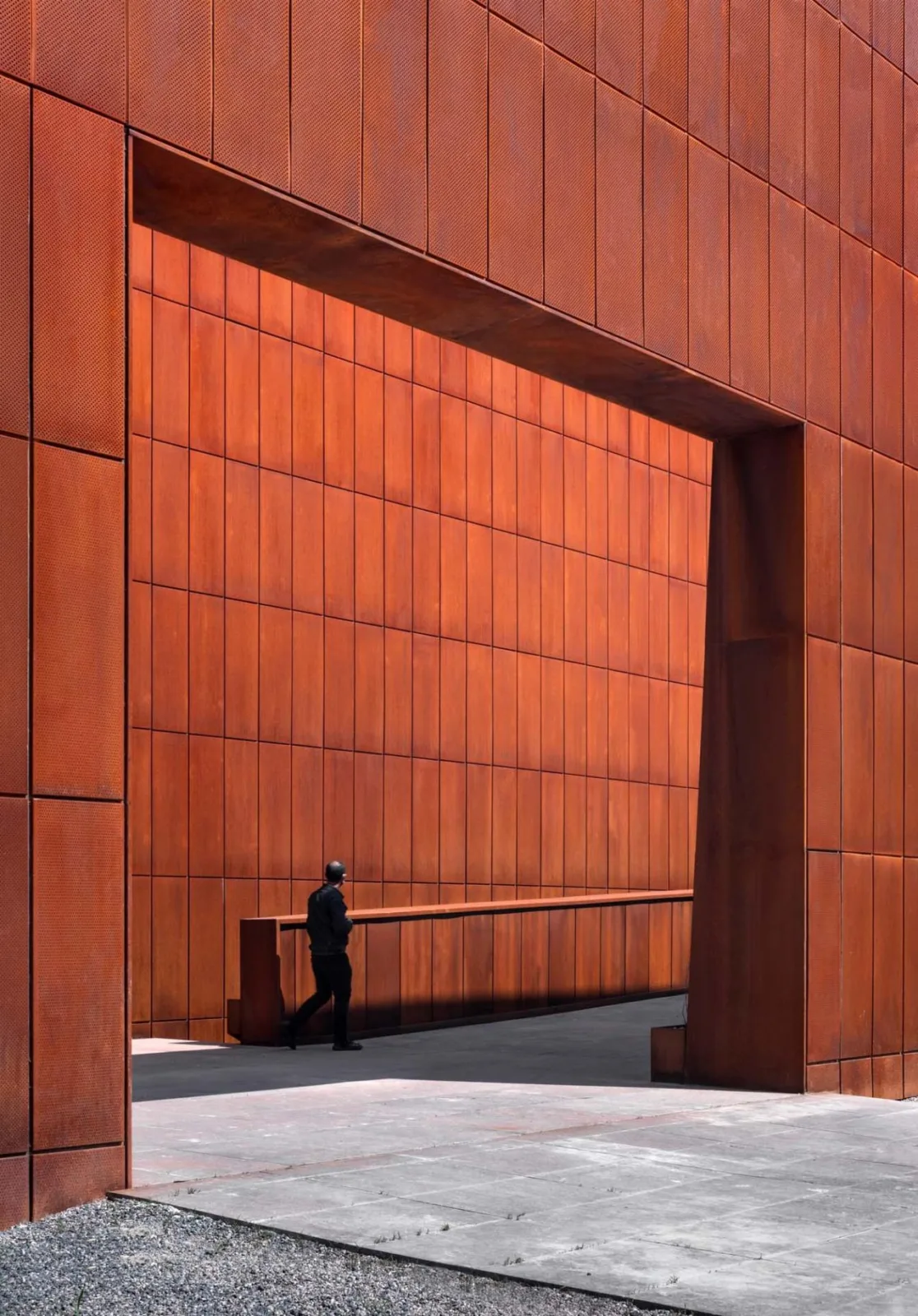
The building’s exterior wall, about 200 meters long, features restrained openings and a slender vertical window. The wall gently rises in the middle with slightly elevated ends, subtly echoing the surrounding rolling mountains. Unlike the expressive fifth facade, the other four facades are intentionally understated and simple, yet powerful—reminiscent of Richard Serra’s tensioned rusted steel sculptures.
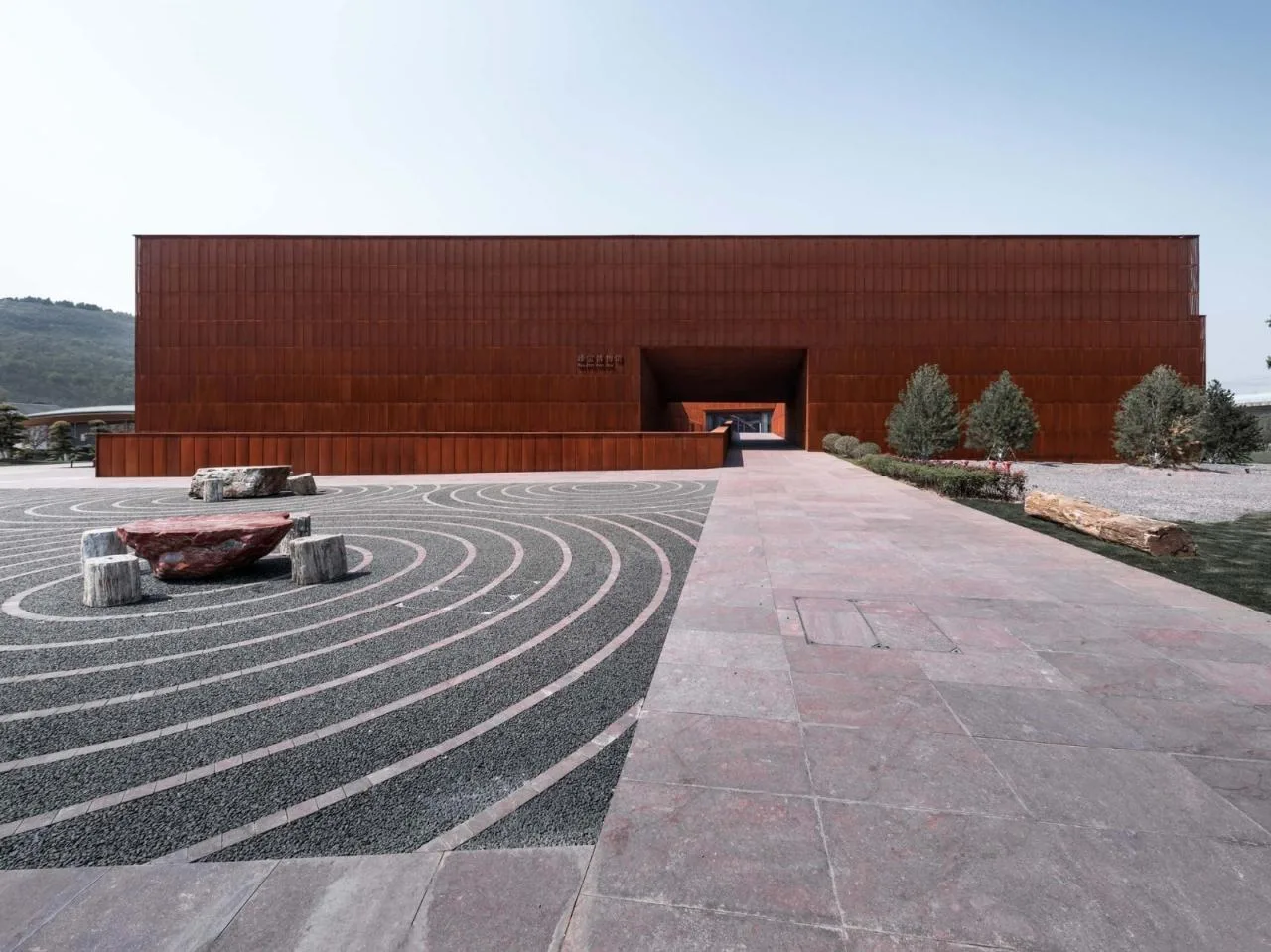
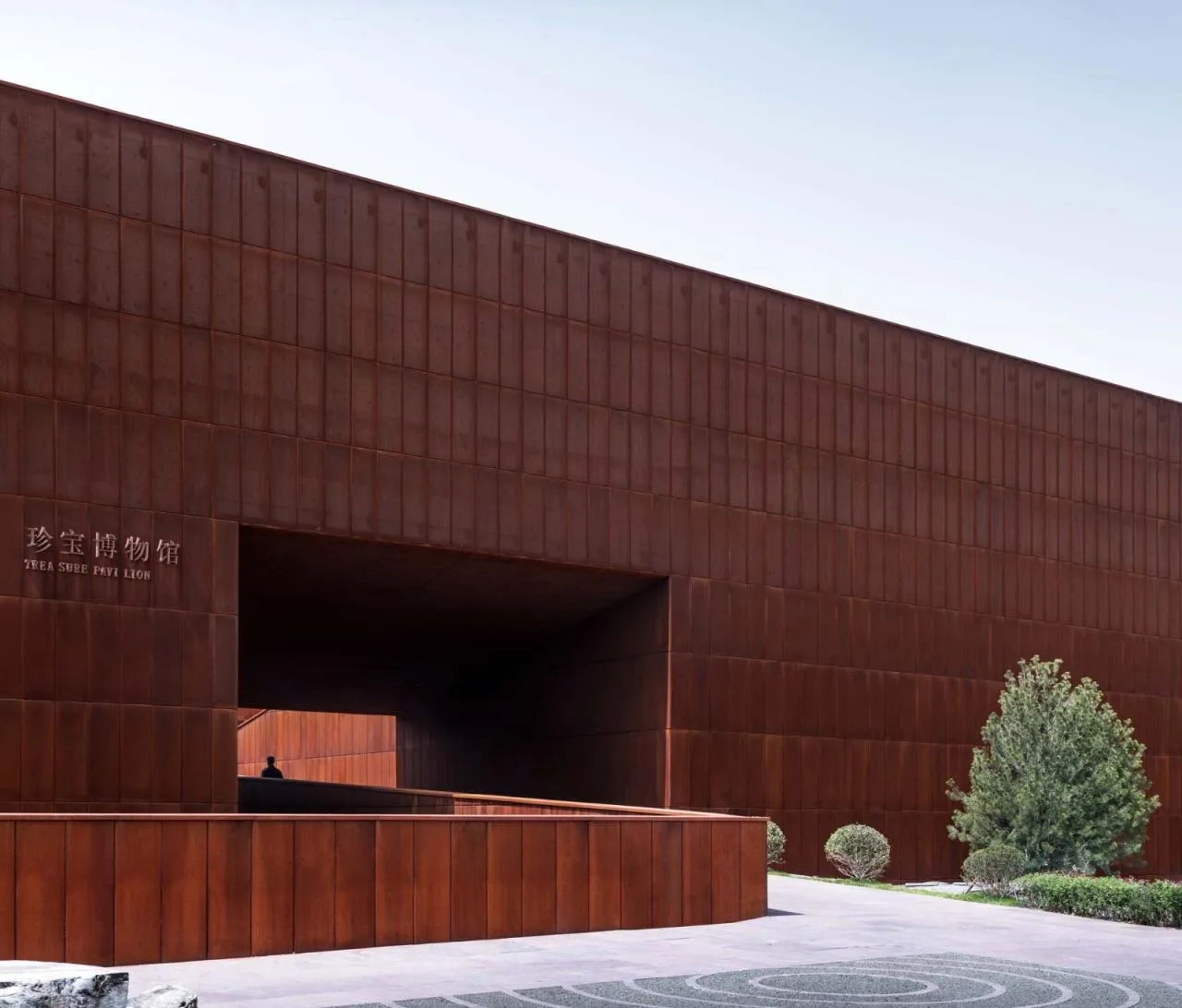
The Treasure Museum’s volume forms an almost complete rectangle, interrupted only by two concave corners at the northeast and southwest. These create overlapping volumes with varying heights, reducing the visual bulk and adding refinement when viewed up close.
The design’s “site construction” concept is three-dimensional, establishing a harmonious “marriage” between space and the earth from multiple perspectives—high, near, and distant. The architecture fully expresses its character while naturally integrating with the site.
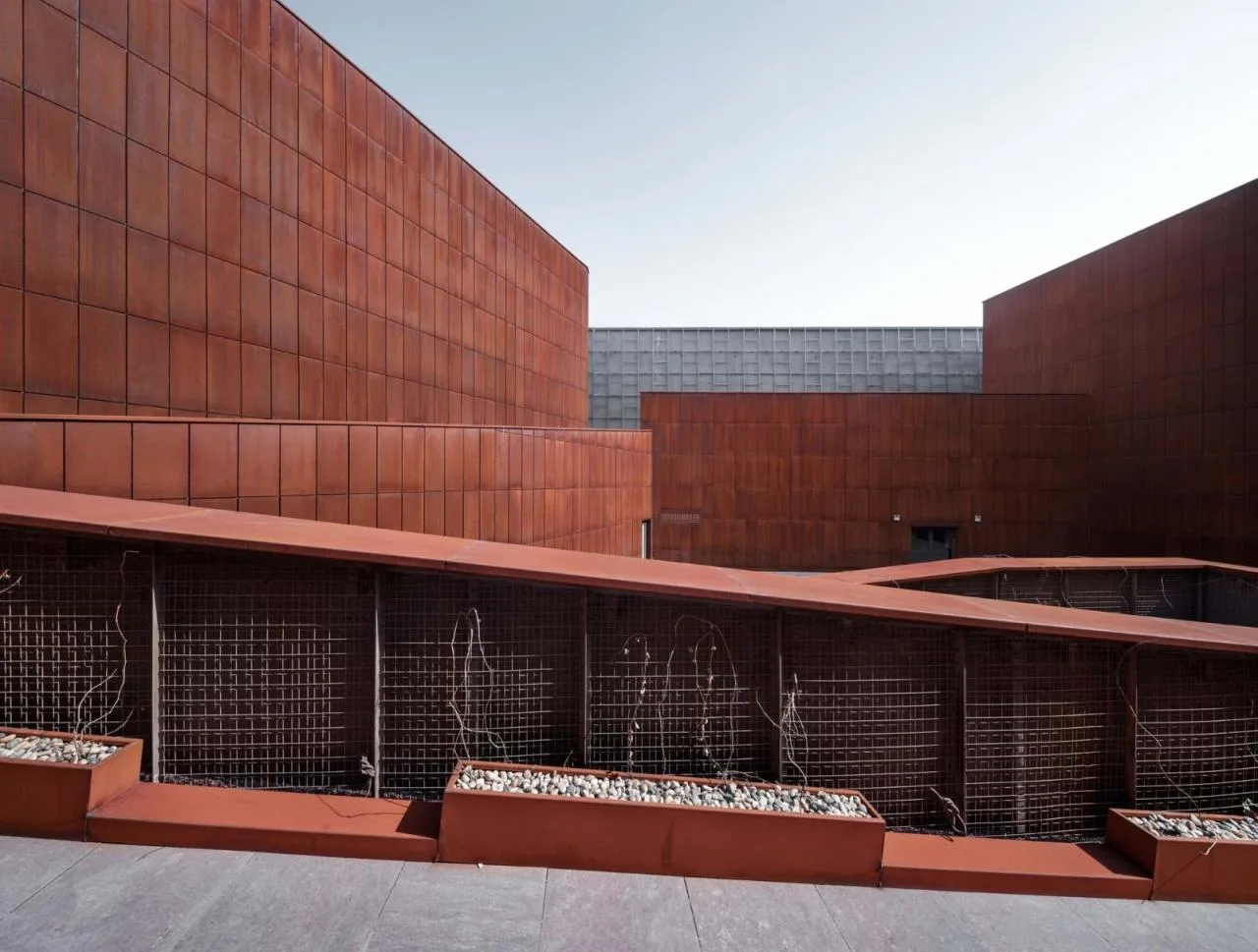
The Treasure Museum offers two main visitor routes: an inner path for viewing exhibits and an outer path for strolling on the rooftop terrace. Together, these create a continuous Möbius loop. By introducing the folding concept into a square plan, the flow is extended and effectively directed, overlapping interior and exterior spaces.
This folding approach also minimizes spatial layering, connecting the basement, ground floor, and roof levels into one continuous path.
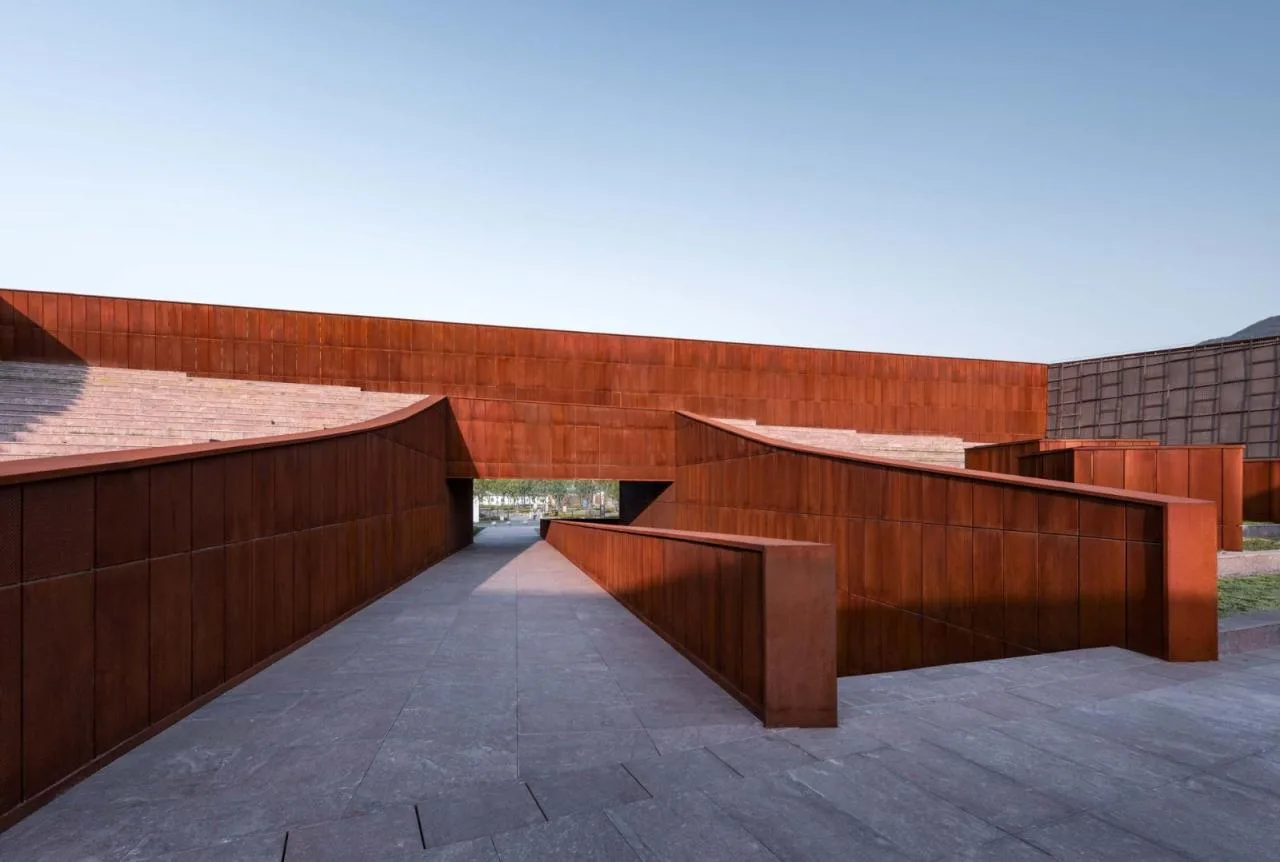
The main entrance to the Treasure Museum is located on Huatian Road on the east side. An L-shaped low wall guides visitors naturally, dividing the entry path into two: one side leads to a ramp entrance, and the other to stairs descending to the underground exhibition hall.
The entrance experience is designed to be ceremonial and mysterious, beginning with a deep doorway that gradually opens into a bright front courtyard—a prelude to the exhibition space. The spatial sequence ascends and descends before reaching the main exhibition hall entrance.
The L-shaped wall projects tension toward the plaza before the building, making the act of entering part of the spatial journey. A curved wall and subtly visible steps hint at a path leading to the rooftop. The intersection of visitor flows—those entering the hall and those returning from the rooftop garden—marks the true completion of the entry sequence.
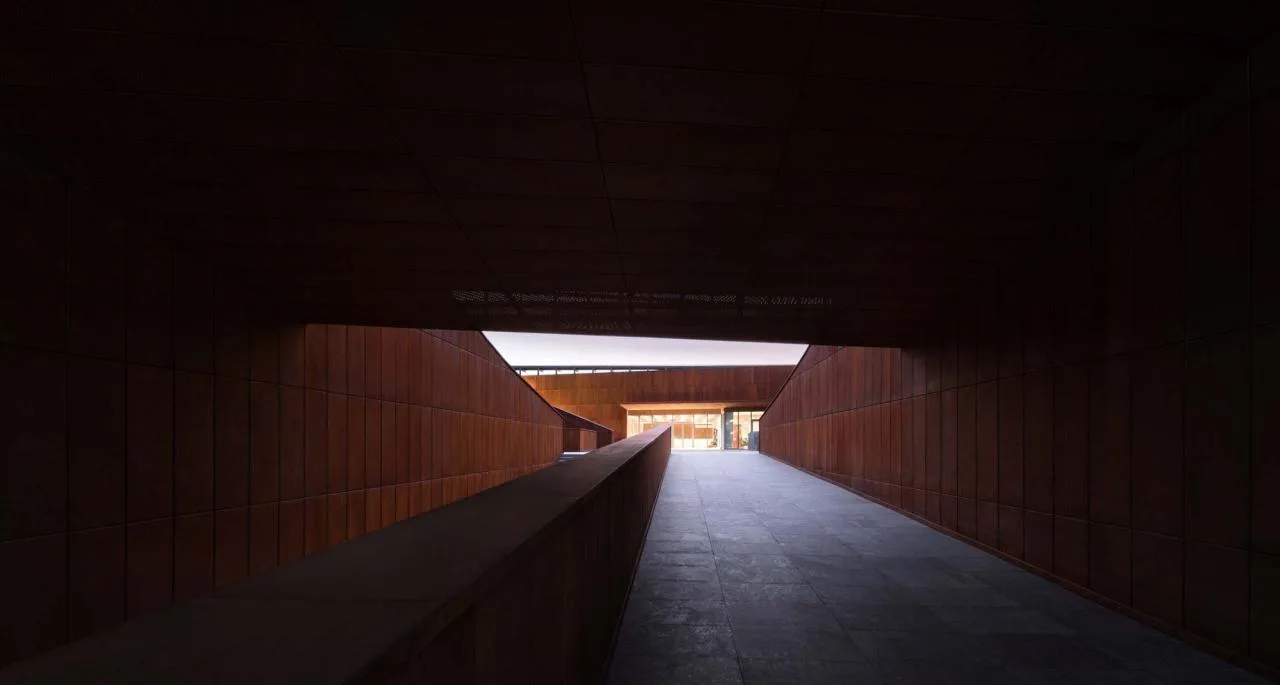
After navigating through the entrance and first-floor exhibition halls, visitors descend a grand staircase to the main exhibition area in the basement. Upon completing their visit, they return via a straight staircase on the east side to the entrance hall.
The outer loop begins at landscape steps in the basement’s southwest corner, leading west to the first-floor courtyard. Visitors then turn east, ascend stairs to the rooftop, and follow the folding wall to the rooftop garden before returning to the entrance courtyard.
This carefully designed circulation path allows visitors to experience a natural progression through the building, alternating between top and bottom levels, interior and exterior spaces, while engaging with the park’s natural and cultural landscapes.
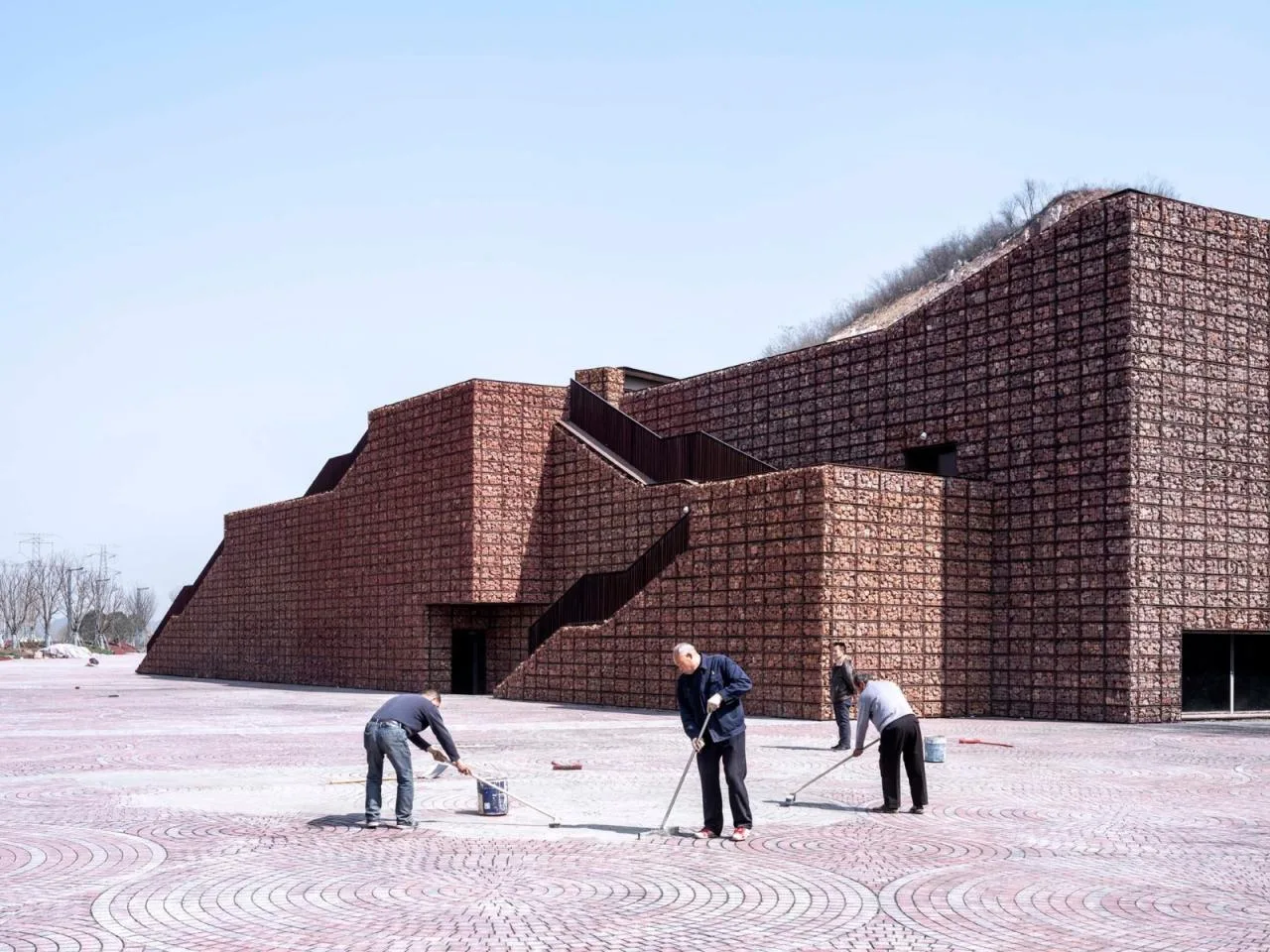
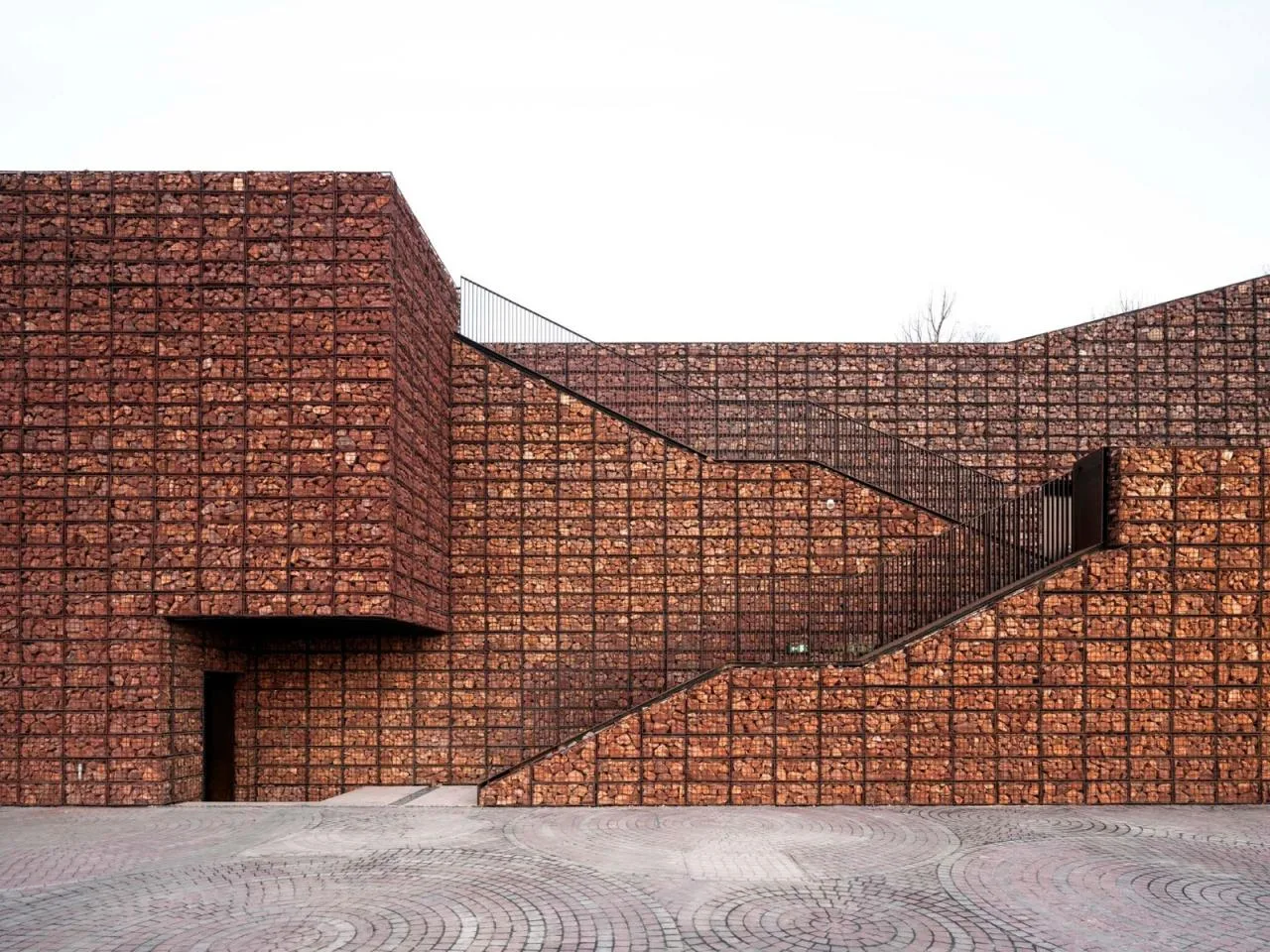
Geological folding forms mountains and rivers. Similarly, spatial folding creates sequences, and temporal folding restores nature. Folding plays multiple roles in the Treasure Museum’s design: it condenses place memory, repairs the past through temporal elements, and connects with the future.
Folding acts as a geometric brush, using curved walls to depict the site and craft a landscape where architecture and nature blend seamlessly. It also serves as a design strategy that expands the visitor path within a limited space, erasing spatial layering and establishing a continuous sequence.
Project Drawings
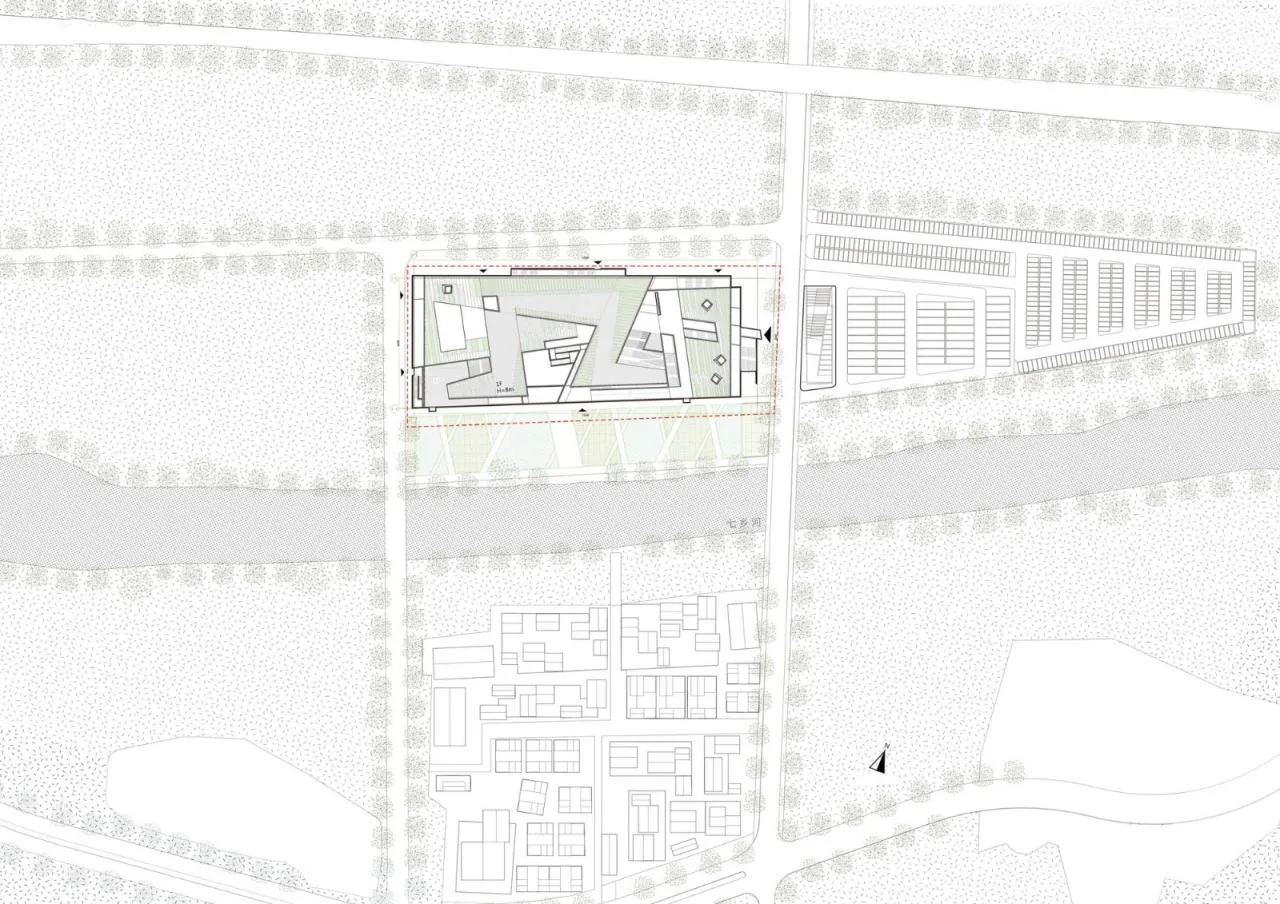
△ General Layout Plan
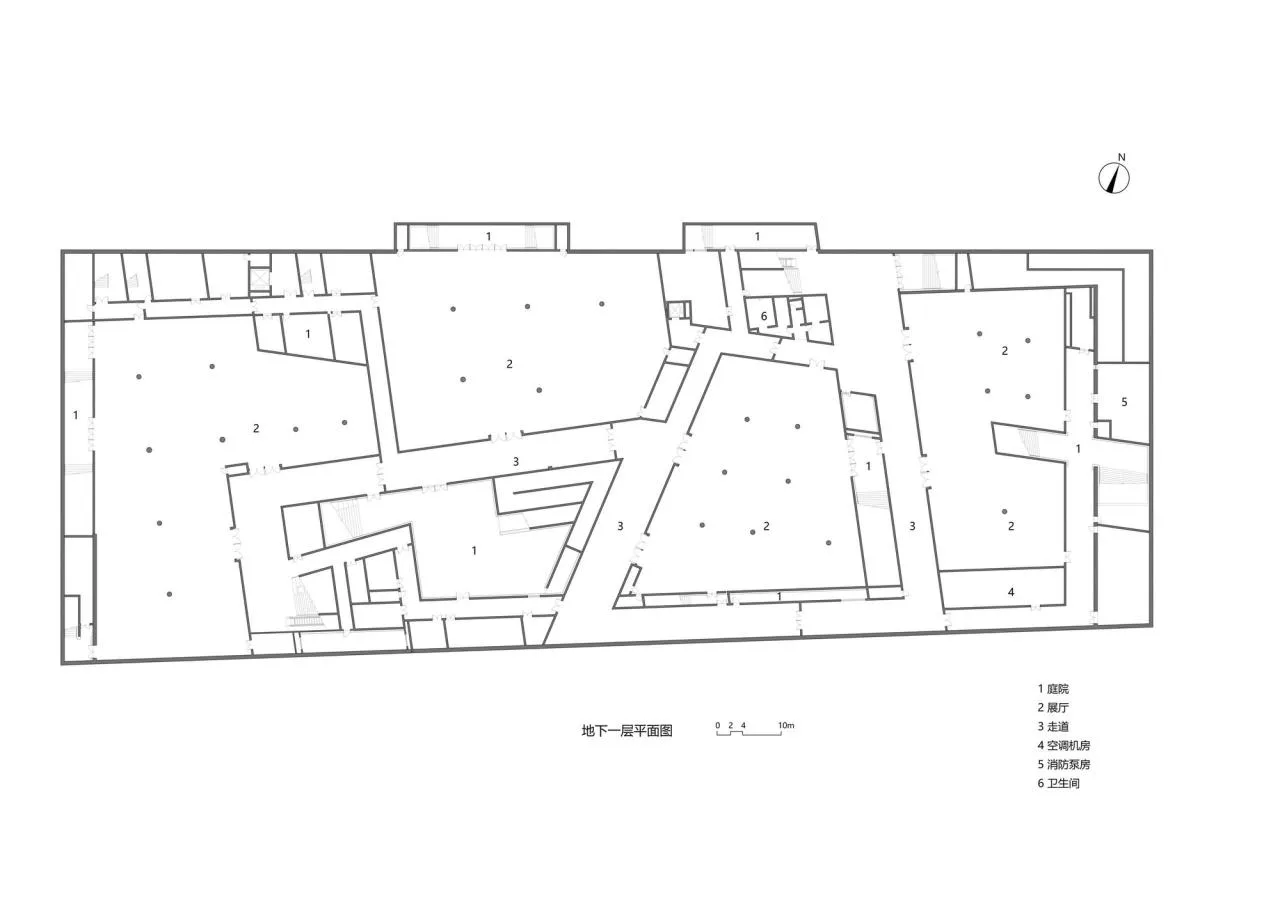
△ First Floor Plan
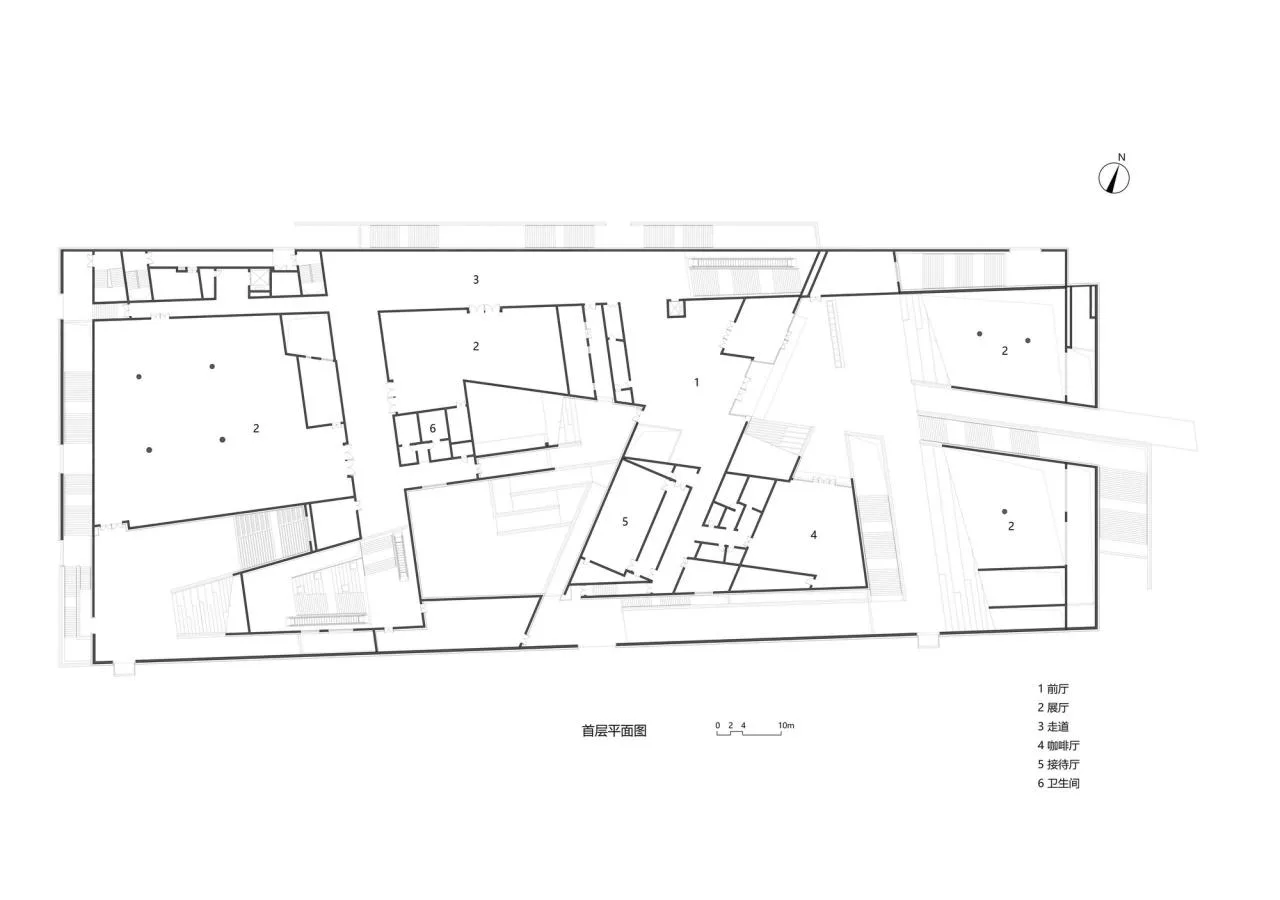
△ First Floor Plan
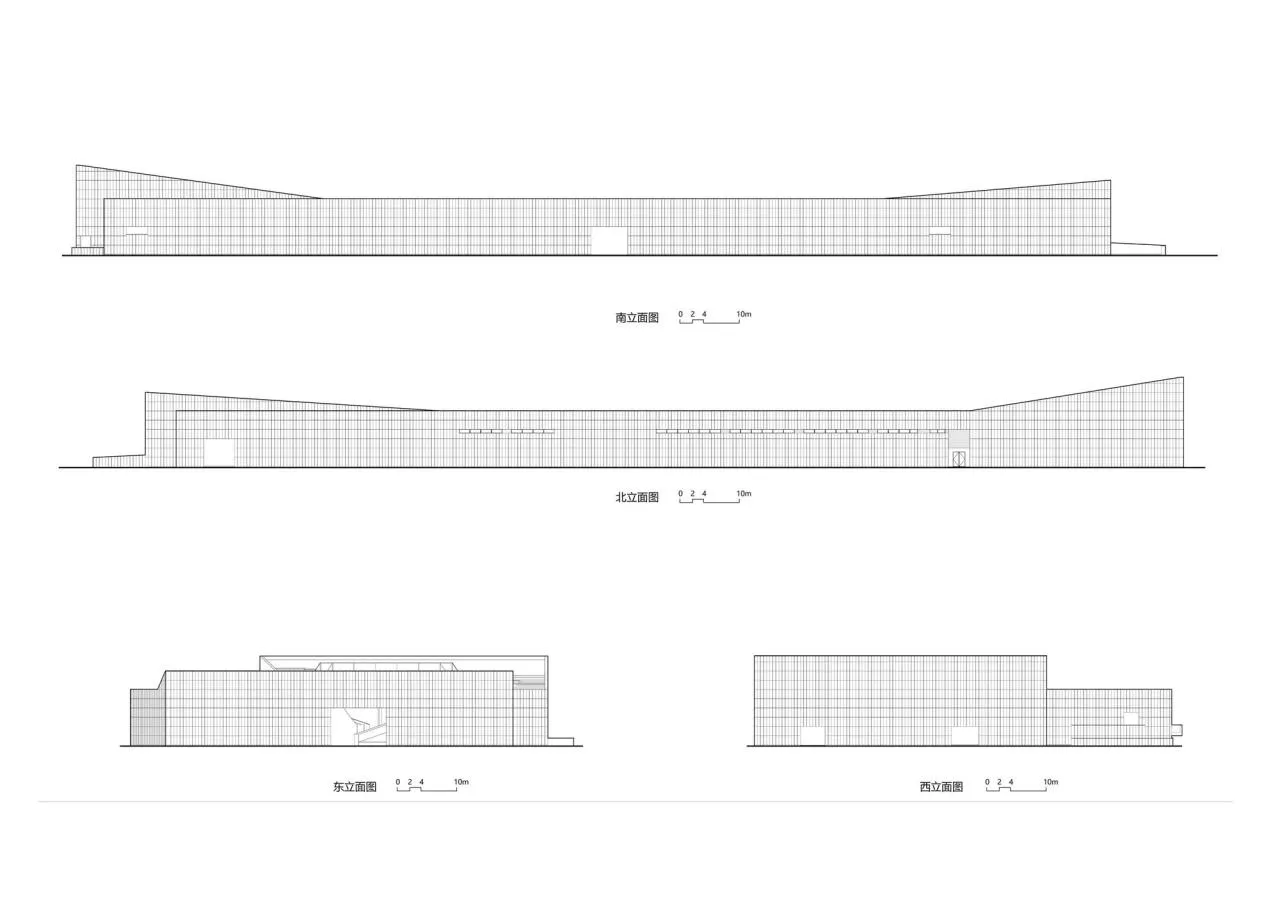
△ Elevation Drawing
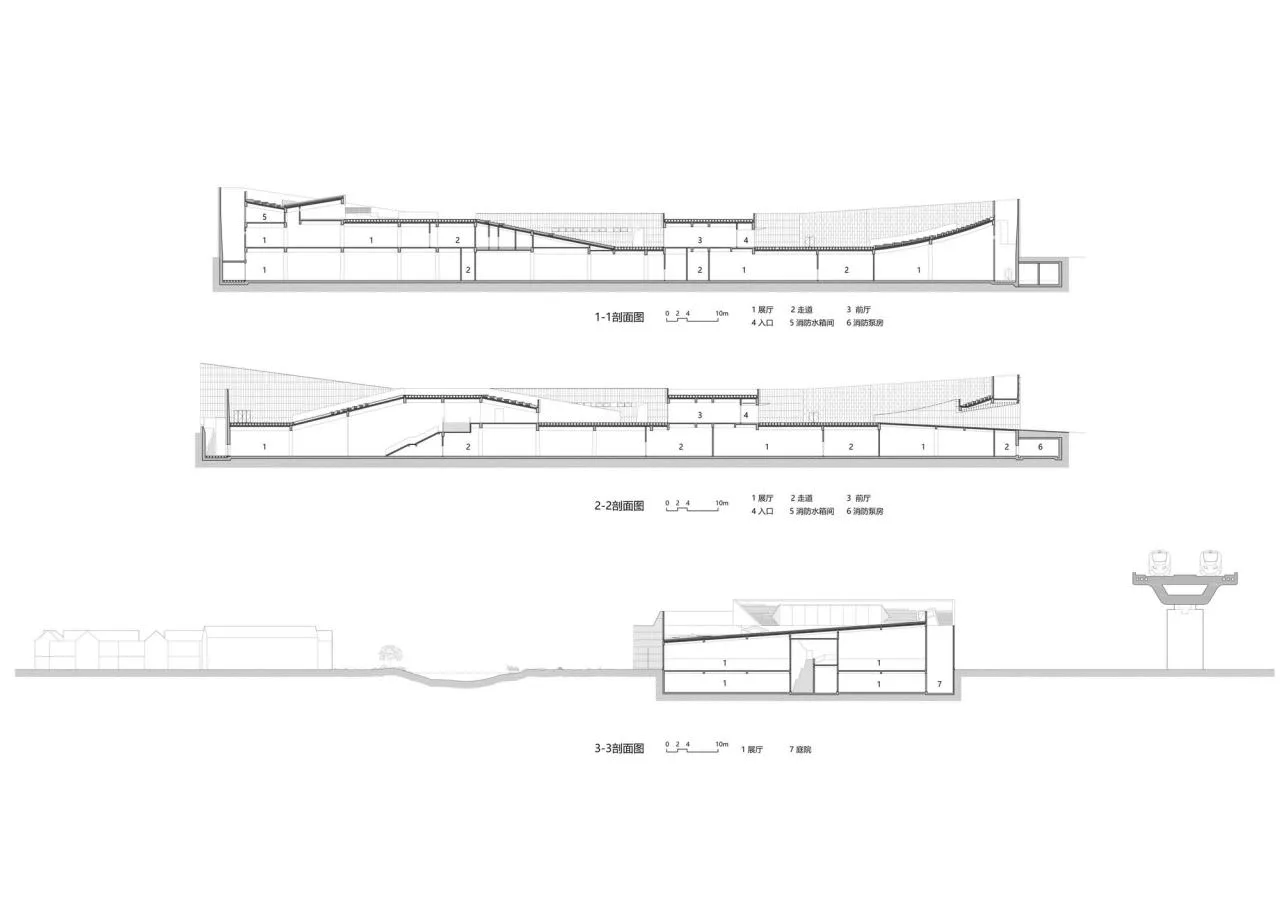
△ Section Diagram
Project Information
Architectural Design: Zhang Lei United Architectural Firm
Area: 15,500 m²
Project Year: 2021
Photographers: Hou Bowen, Tian Fangfang, Wang Kai
Lead Architects: Zhang Lei, Qi Wei, Li Chenxing
Architectural Design Team: Li Chenxing, Wang Liang, Articles of Association
Interior Design Team: Ma Haiyi, Cao Yi, Huang Rong, Chen Yingjie, Peng Mingxing, Pu Sirui, Luo Tiantian
Landscape Team: Zhao Min, Jiang Zhiyuan, Lian Hao
Writing: Li Chenxing, Zhang Lei
Owner Team: Li Wei, Wang Chongxu
Construction Drawing Design: Nanjing Changjiang Urban Architecture Design Co., Ltd
Location: Nanjing, China















Must log in before commenting!
Sign Up