
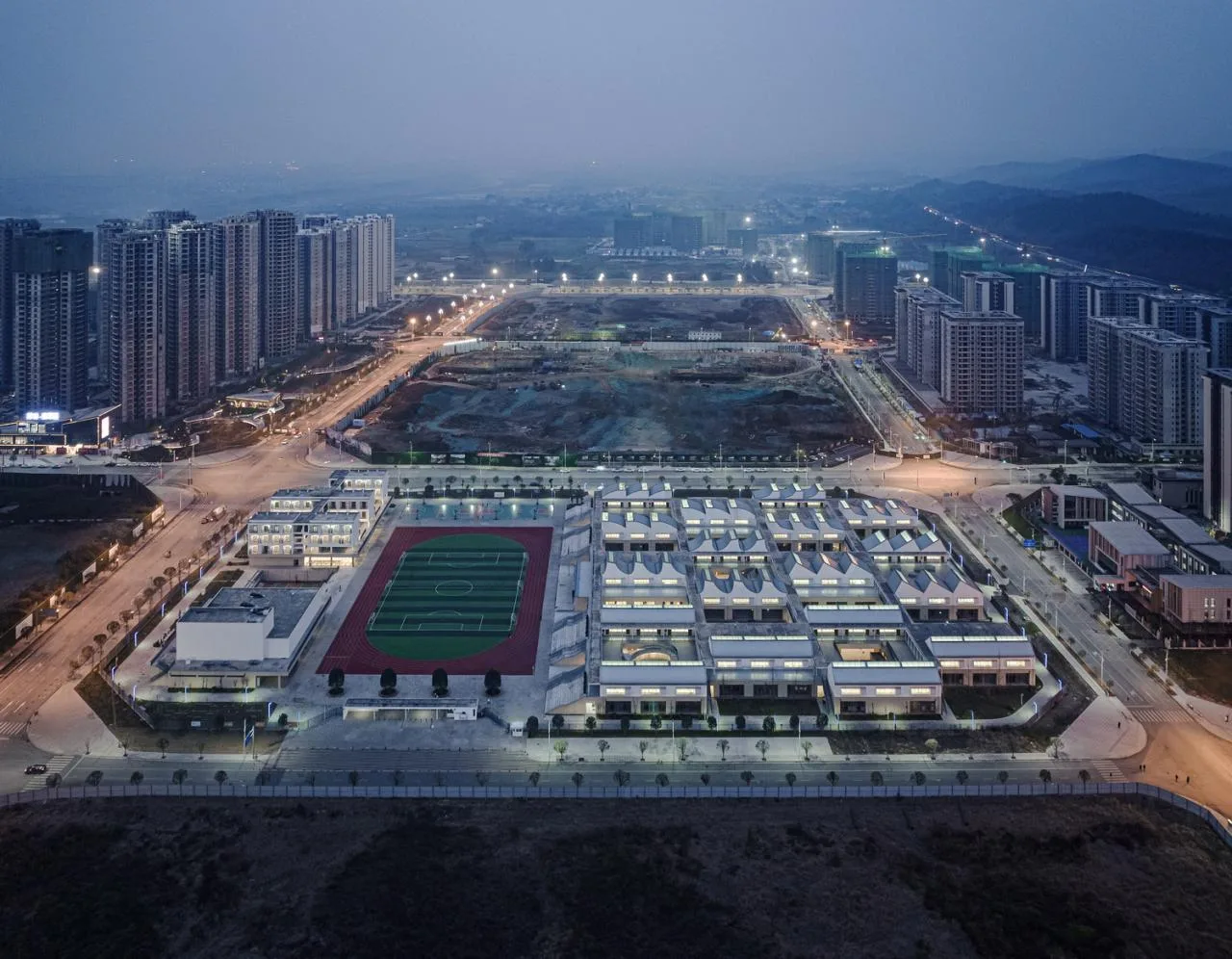
△ Aerial view © Architecture Photography
This school is a study in parallelism and light, sprawling horizontally across a broad field like a carpet laid out flat.
The two-story teaching building consists of a “pedestal” on the ground floor, housing functional classrooms, and a “cabin” on the second floor, containing standard classrooms.
The pedestal serves as a raised platform, encouraging students to engage easily in outdoor activities during breaks. The small structures, each with unique roof shapes, create a fairytale-like village scene. Inside, daylight softens and enlivens the classroom spaces. Each grade’s roof shape and lighting design consider the students’ age and learning styles, ensuring that their six years in school offer diverse spatial experiences rather than a single, monotonous classroom environment.
On the site plan, 54 classrooms are organized into six grade groups, each centered around a courtyard that fosters social interaction and activities. Corridors connect all classrooms and courtyards, forming a uniform grid layout without hierarchical divisions or obvious focal points. This design allows students to move freely, explore, and play without restrictions.
The cottages, platforms, courtyards, trees, and people together create a rich and engaging urban landscape.
We envision this as a school that nurtures imagination, freedom, and wonder—much like a vibrant city.
——Huali
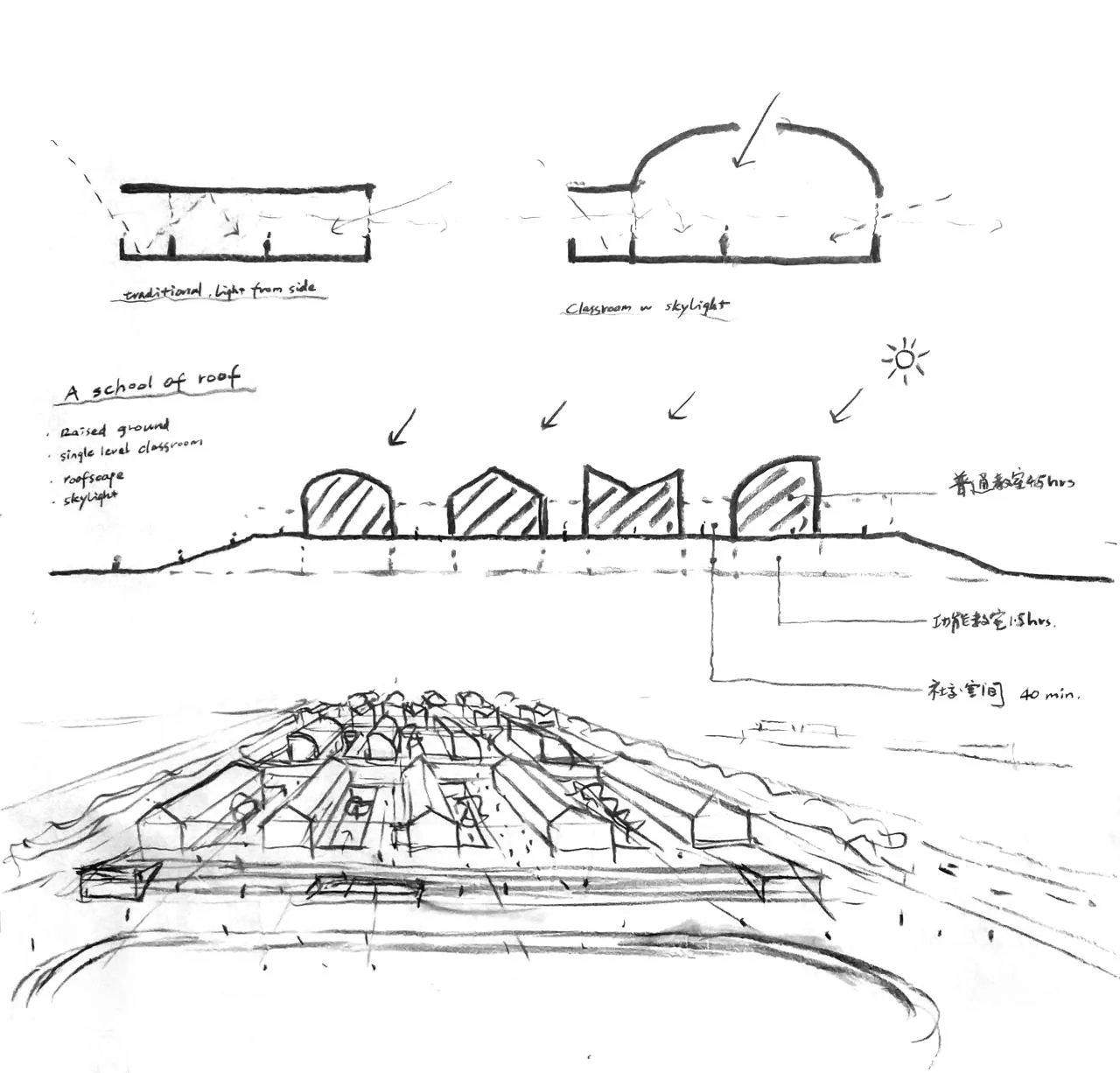
Concept sketch © Huali
Qingyijiang Road Primary School is a public elementary school with 54 classes, covering approximately 90 acres. The total built area is around 30,000 square meters, with a plot ratio of about 0.5. Compared to dense urban areas like Shenzhen, this project benefits from relatively relaxed land-use conditions.
Given these low-density planning parameters, we aimed to create a school model that breaks away from conventional designs.
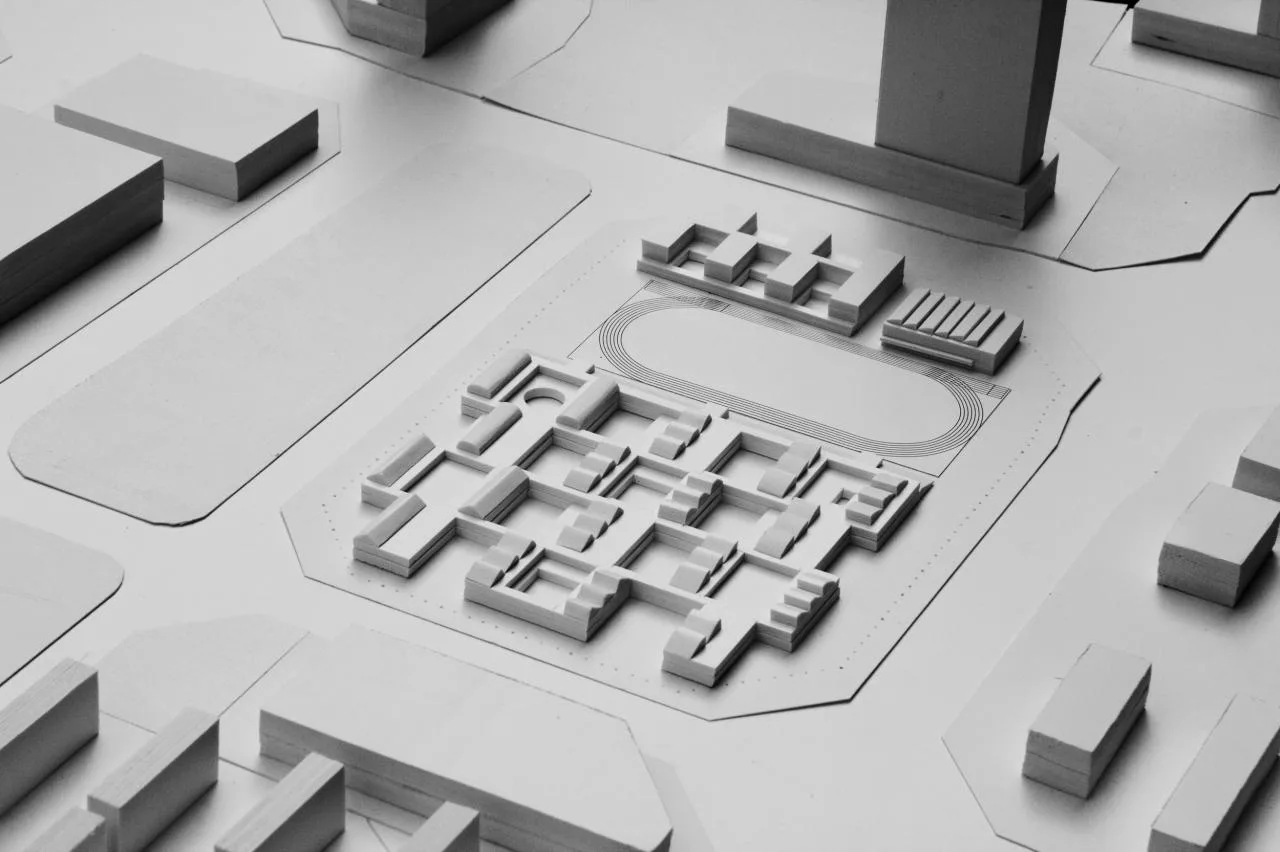
△ 1:1000 Site Model © Architectural Firm (TAO)
Low to High Density
Typically, schools in dense urban settings require buildings of four or more stories due to planning constraints. However, tall school buildings pose challenges: students find it inconvenient to access playgrounds during breaks, reducing their opportunity for outdoor activity. With the low plot ratio available here, we had the chance to limit building height and floor count.
Lower buildings bring classrooms closer to the ground, making outdoor activities more accessible. Additionally, fewer floors improve evacuation safety during emergencies like earthquakes or fires. Thus, the design strategy embraces low-density, low-rise construction, limiting the teaching area to two floors and expanding horizontally in a carpet-like layout.
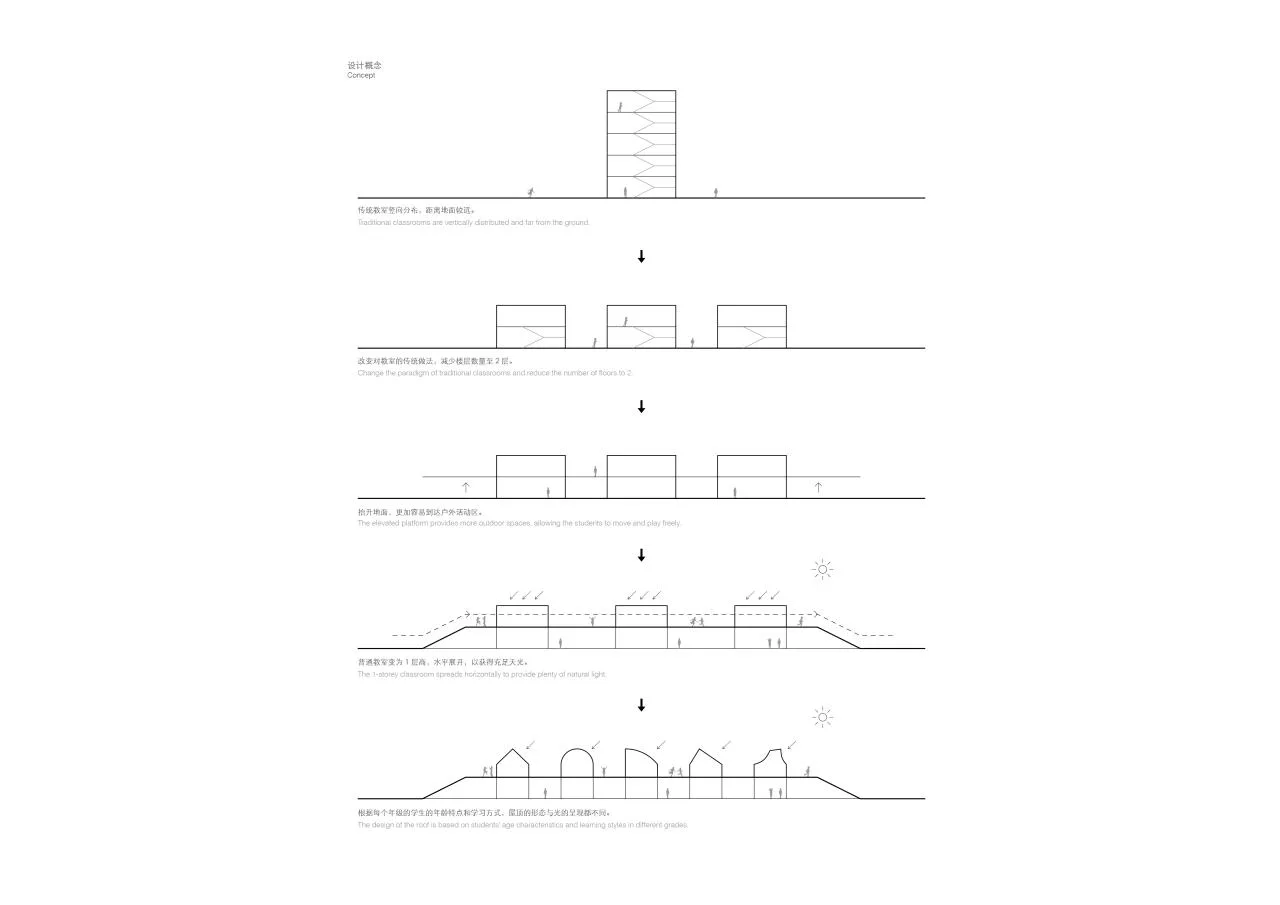
Concept analysis diagram © Architectural Firm (TAO)
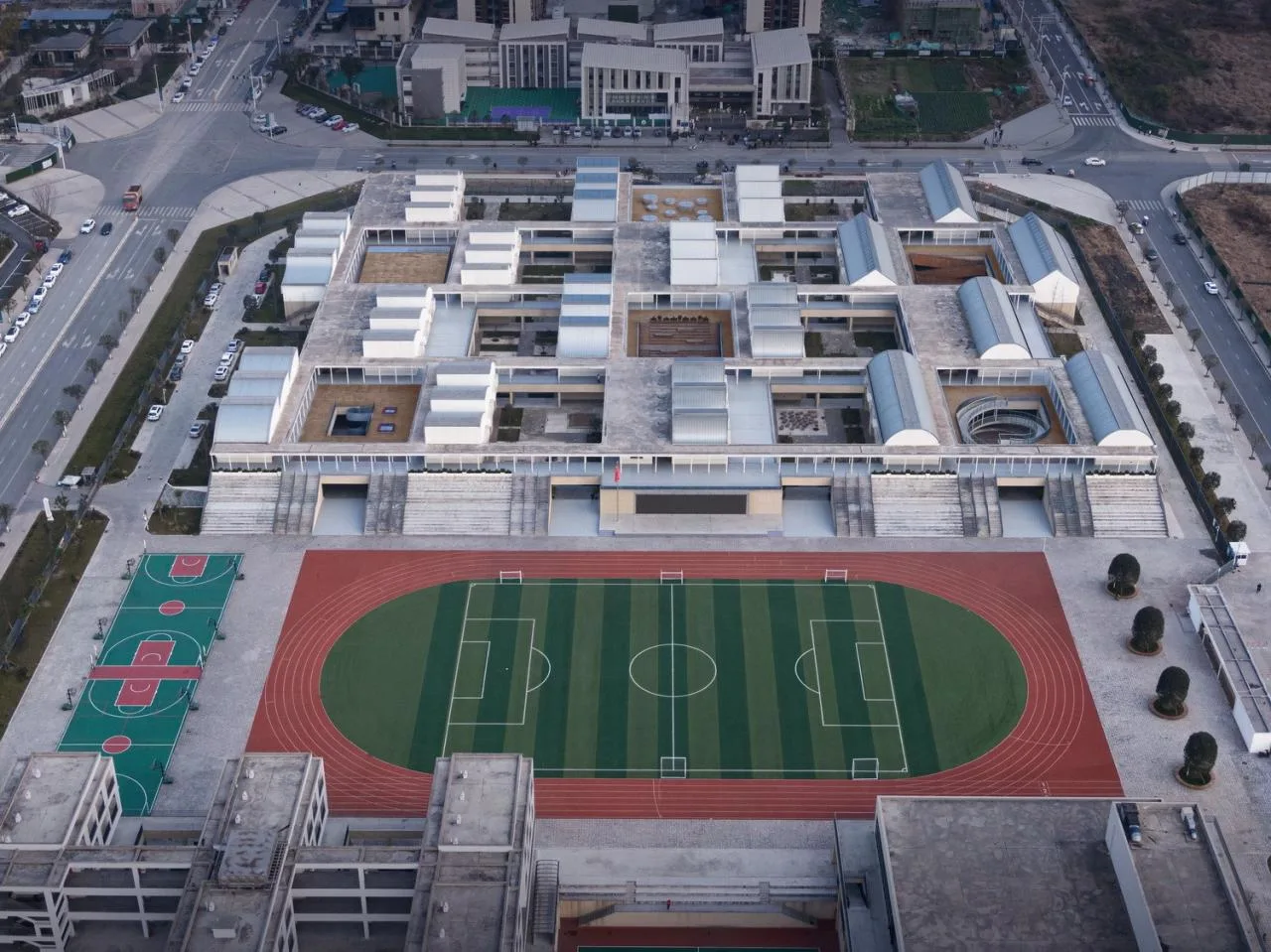
△ Aerial view © Architecture Photography
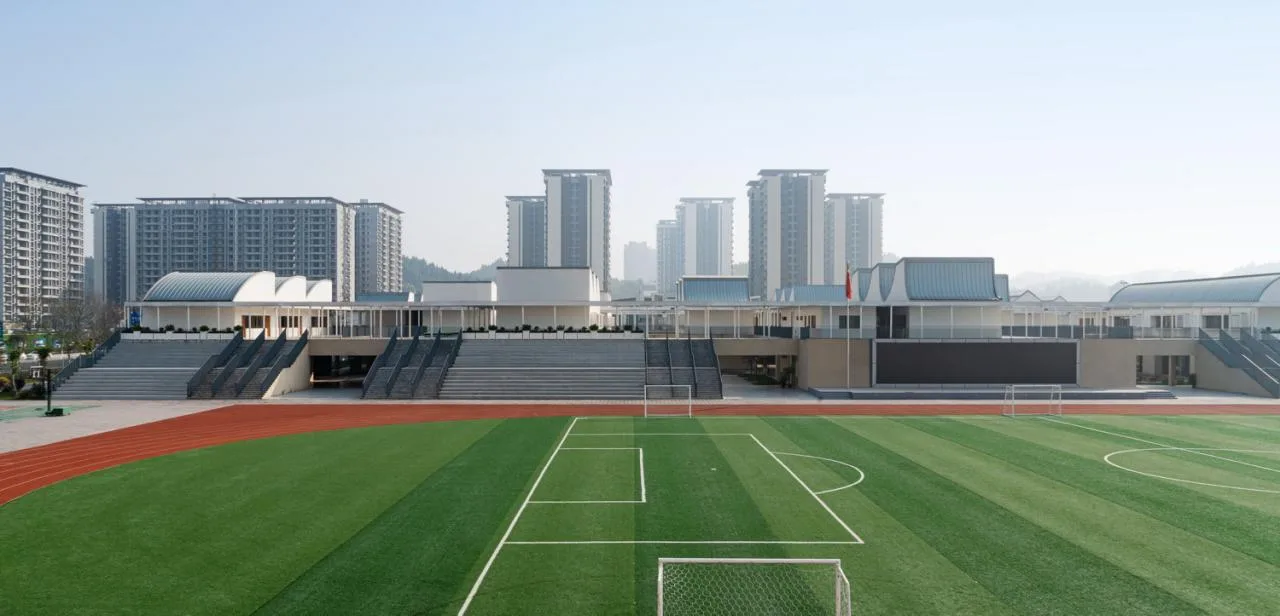
View towards the teaching building © Architecture Photography
Decentralization
The site is located in a newly planned urban area. The square plot is surrounded by residential neighborhoods, forming a typical but featureless “blank canvas.” Considering factors like traffic, noise, and lighting, the teaching buildings and living facilities (auditorium, cafeteria, dormitories, etc.) were arranged on the east and west sides of the playground, keeping them relatively independent.
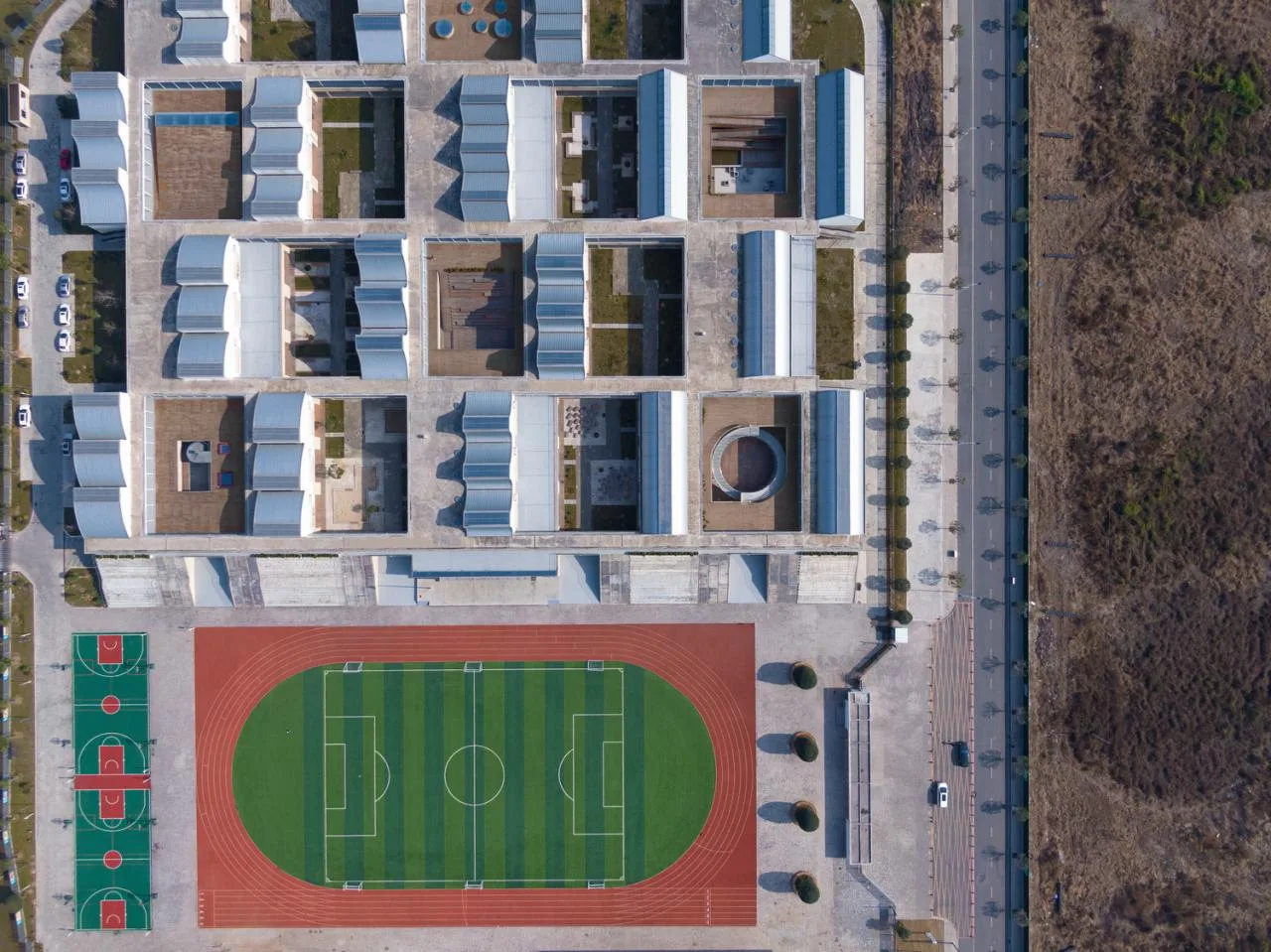
△ Aerial view © Architecture Photography
In planning the teaching areas, we sought to break free from traditional layouts—such as fishbone, radial, or enclosed styles—that typically feature a central space for collective rituals or public gatherings. Instead, we questioned whether a school could function effectively without a central hub.
Large group activities usually take place in playgrounds or auditoriums, so the teaching zones themselves don’t require a single central space. Local centers can exist within each grade group.
Responding to the site’s conditions, we designed a decentralized, grid-based plan. Horizontal and vertical corridors form a network of latitude and longitude lines, weaving together classrooms, courtyards, and platforms into an interconnected system that blurs the boundaries between buildings and open spaces.
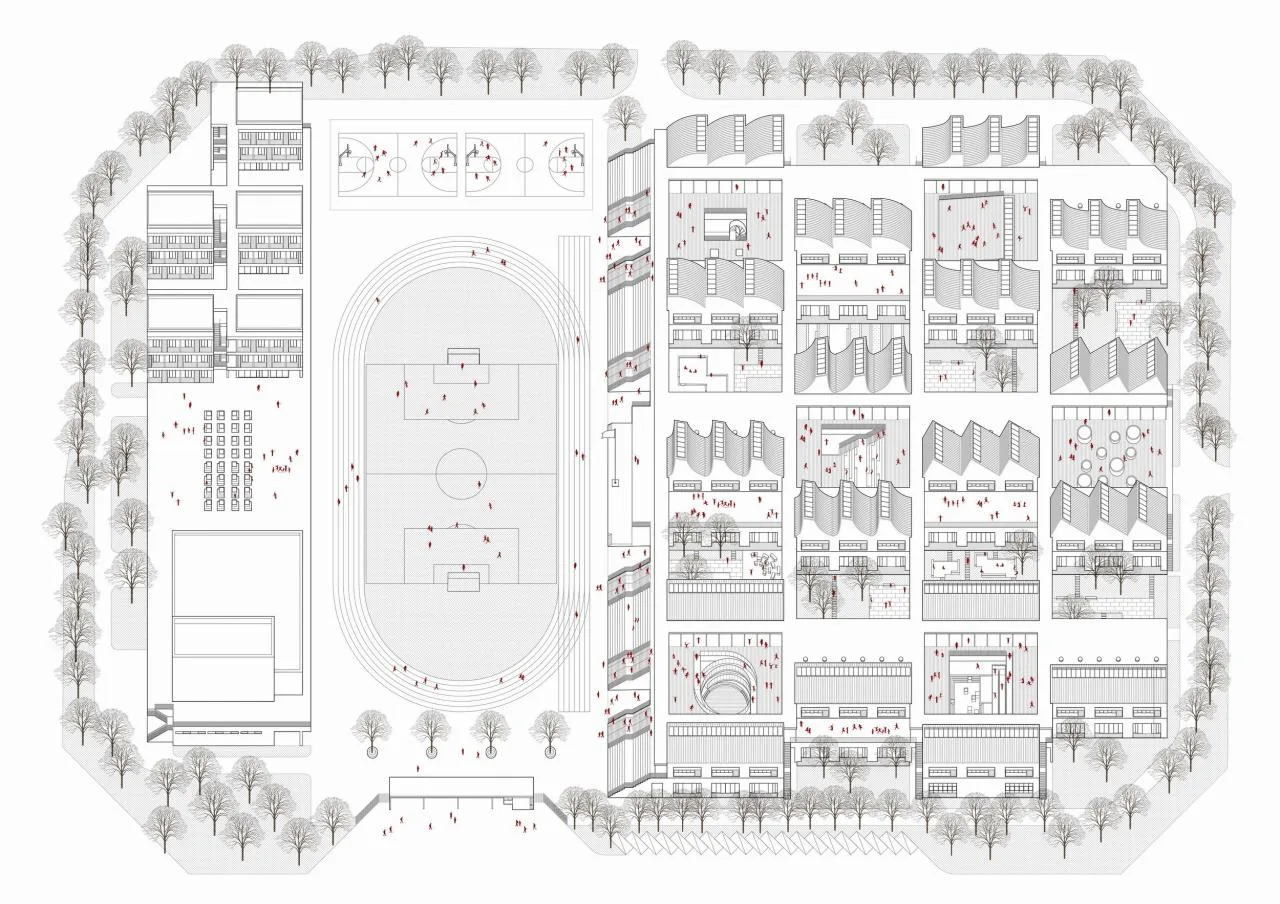
△ Campus overall axial measurement © Architectural Firm (TAO)
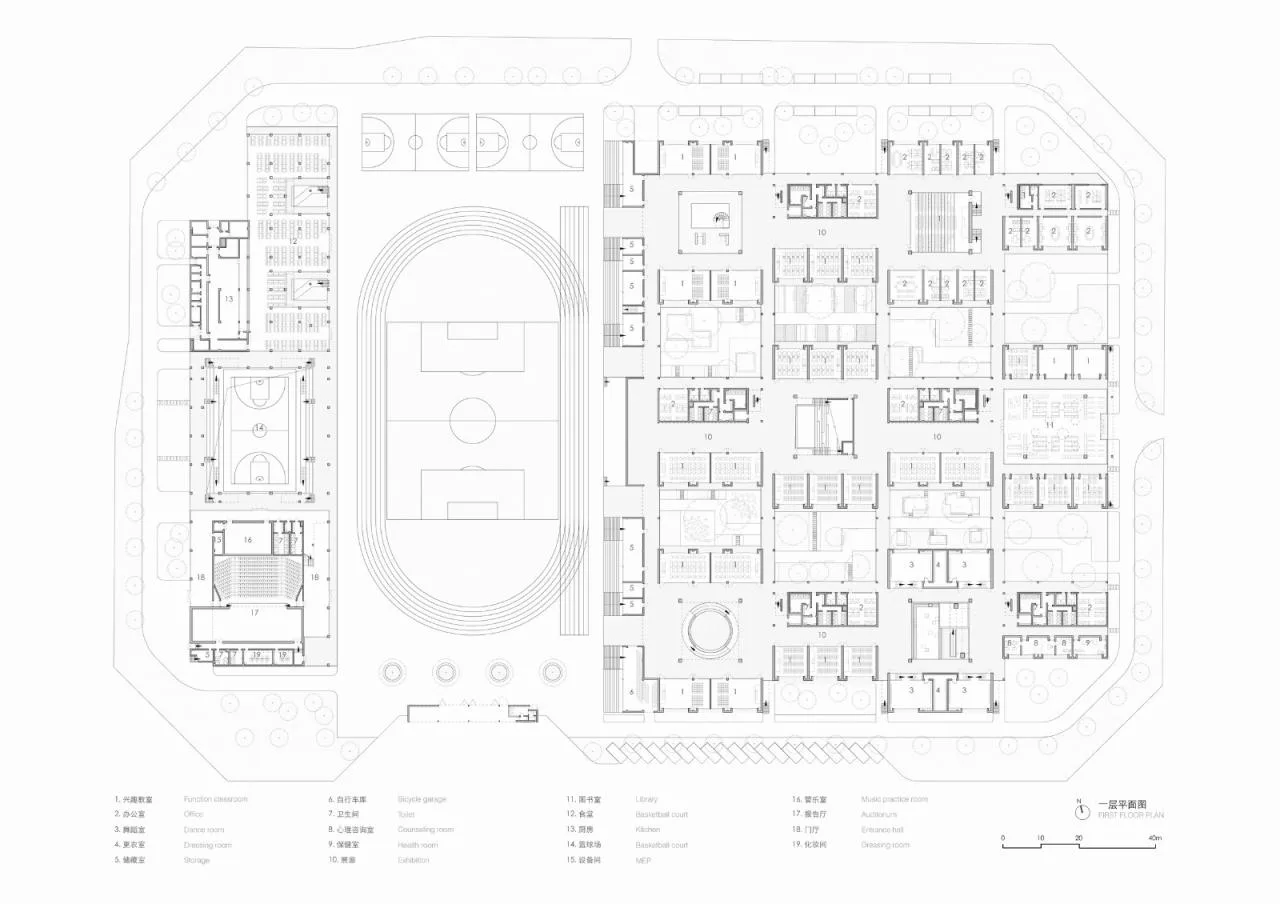
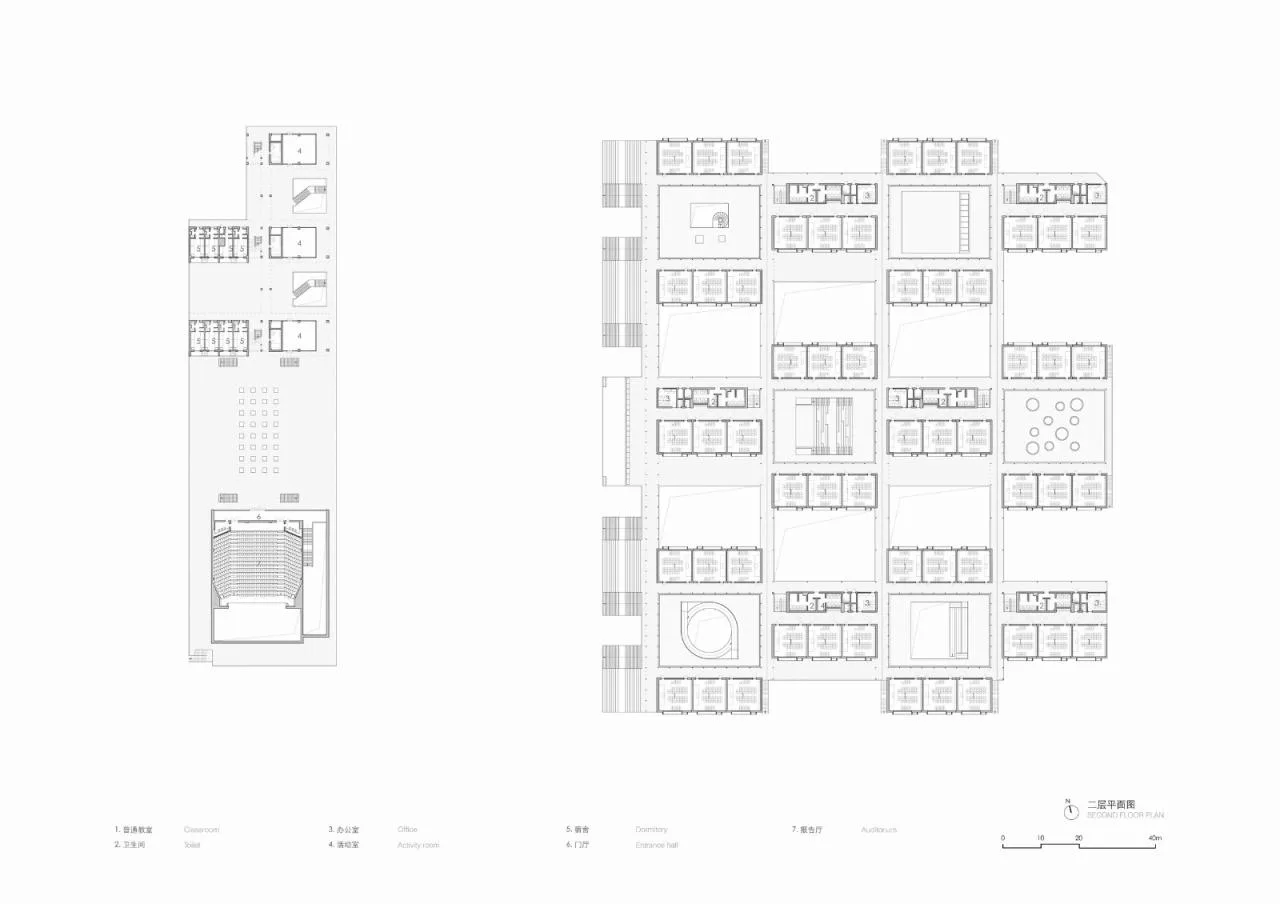
△ Plan view © Architectural Firm (TAO)
Removing a central axis creates a spatial model that emphasizes continuity, diffusion, homogeneity, openness, equality, and permeability. The campus becomes a dynamic system of interconnected spaces: teaching and support areas, social platforms, and natural courtyards are linked by corridors, eliminating isolation.
Spatially, every three classrooms form a rectangular block, and three such blocks create a grade group. Within each group, a shared activity area is enclosed by the surrounding classrooms. The natural courtyards act as breathable spaces between grade groups, allowing nature and social interaction to permeate each classroom cluster.
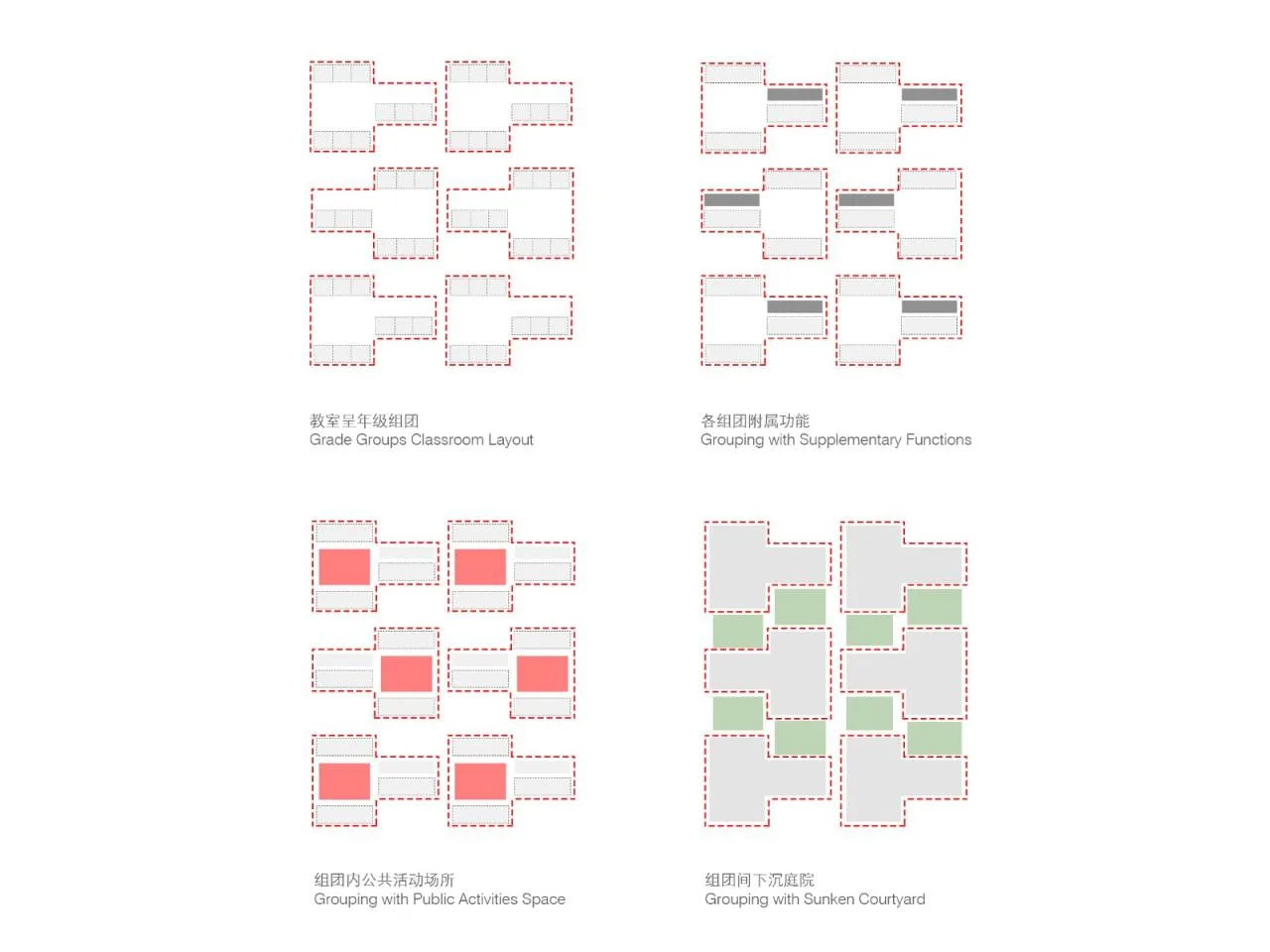
Concept analysis diagram © Architectural Firm (TAO)
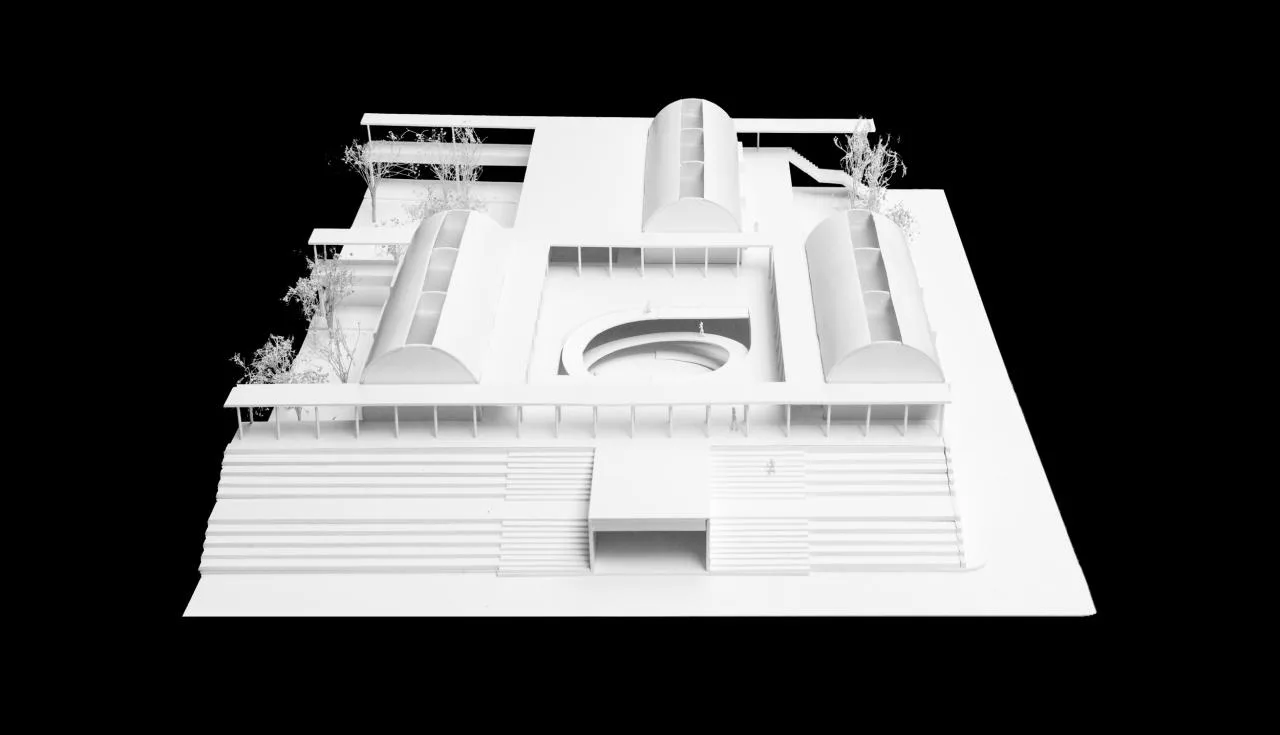
△ 1:100 Single Cluster Model © Architectural Firm (TAO)
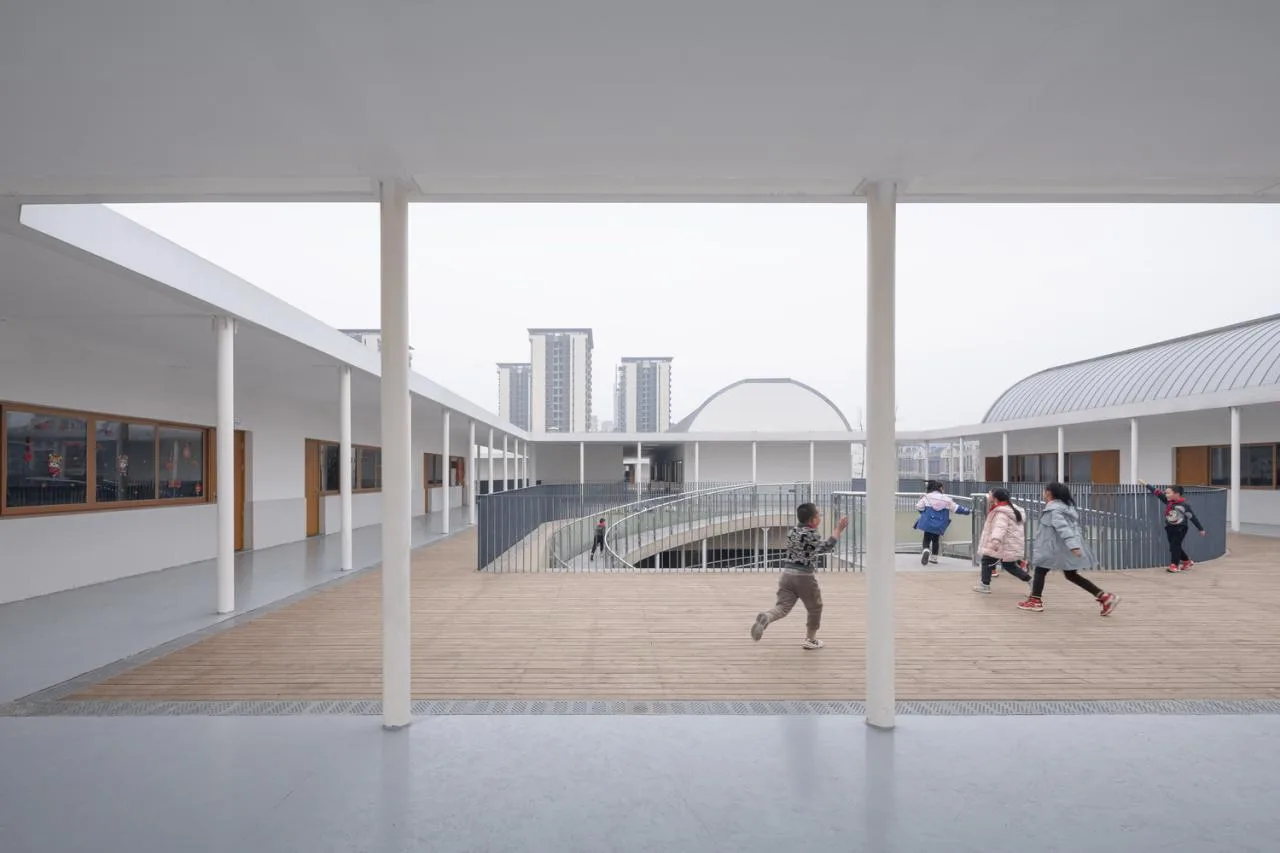
△ Second floor outdoor platform © Architecture Photography
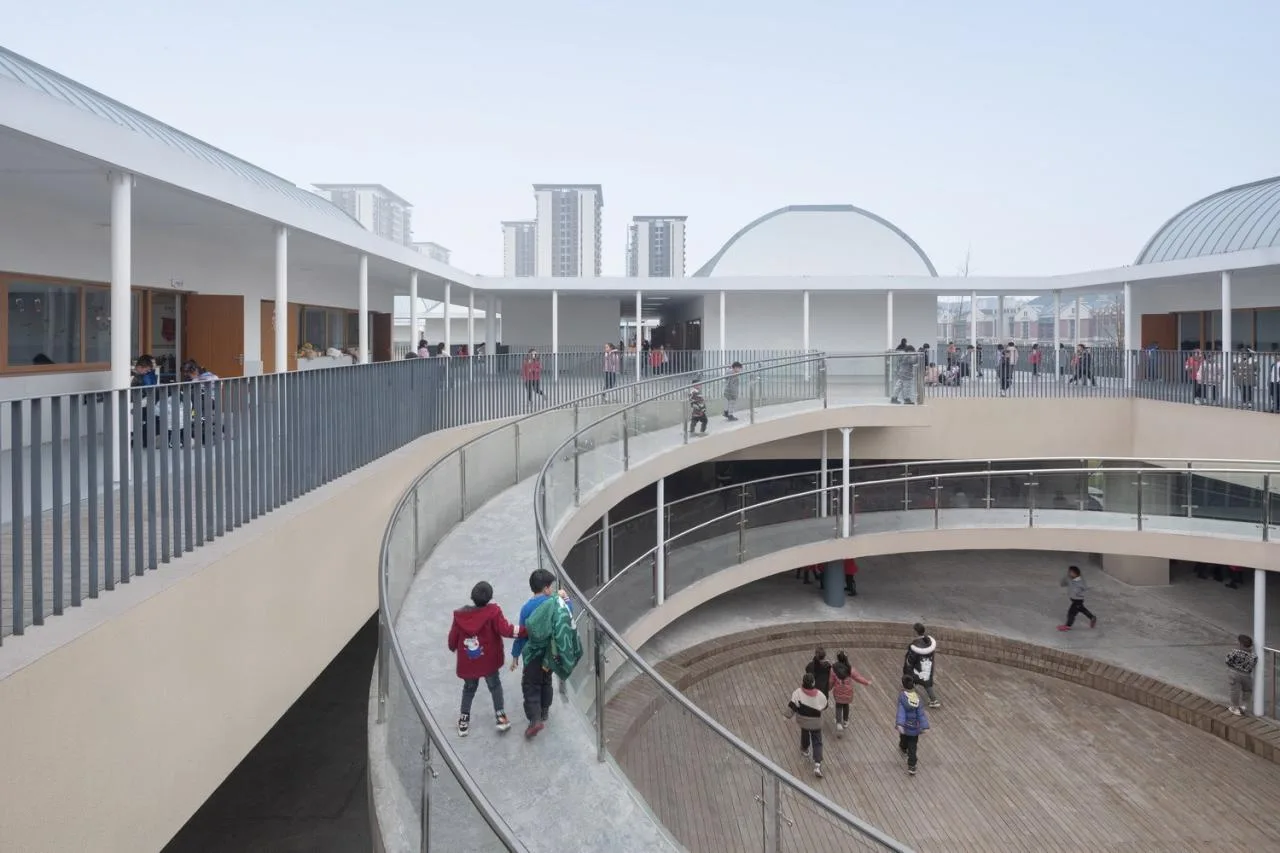
△ Ramp © Architecture Photography
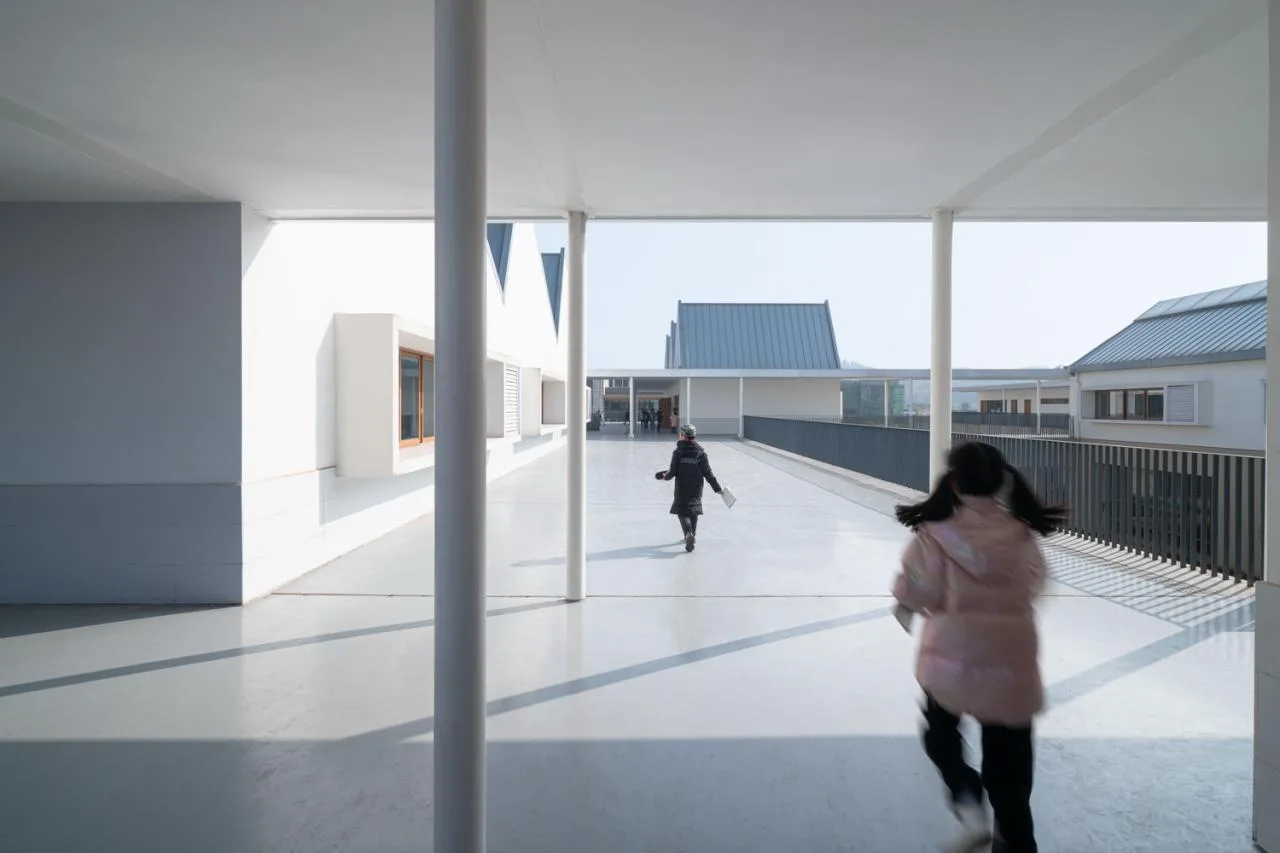
△ Corridor © Architecture Photography
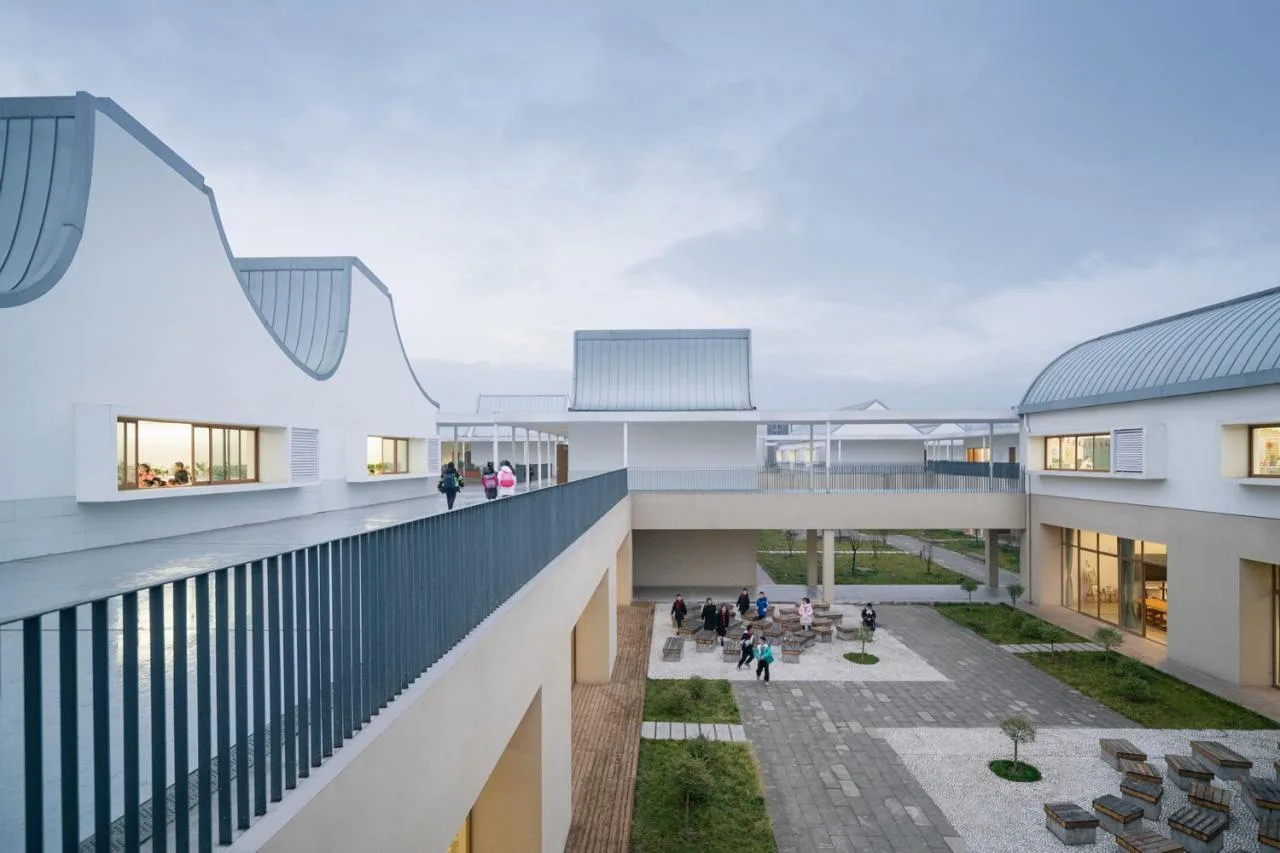
△ First floor natural courtyard © Architecture Photography
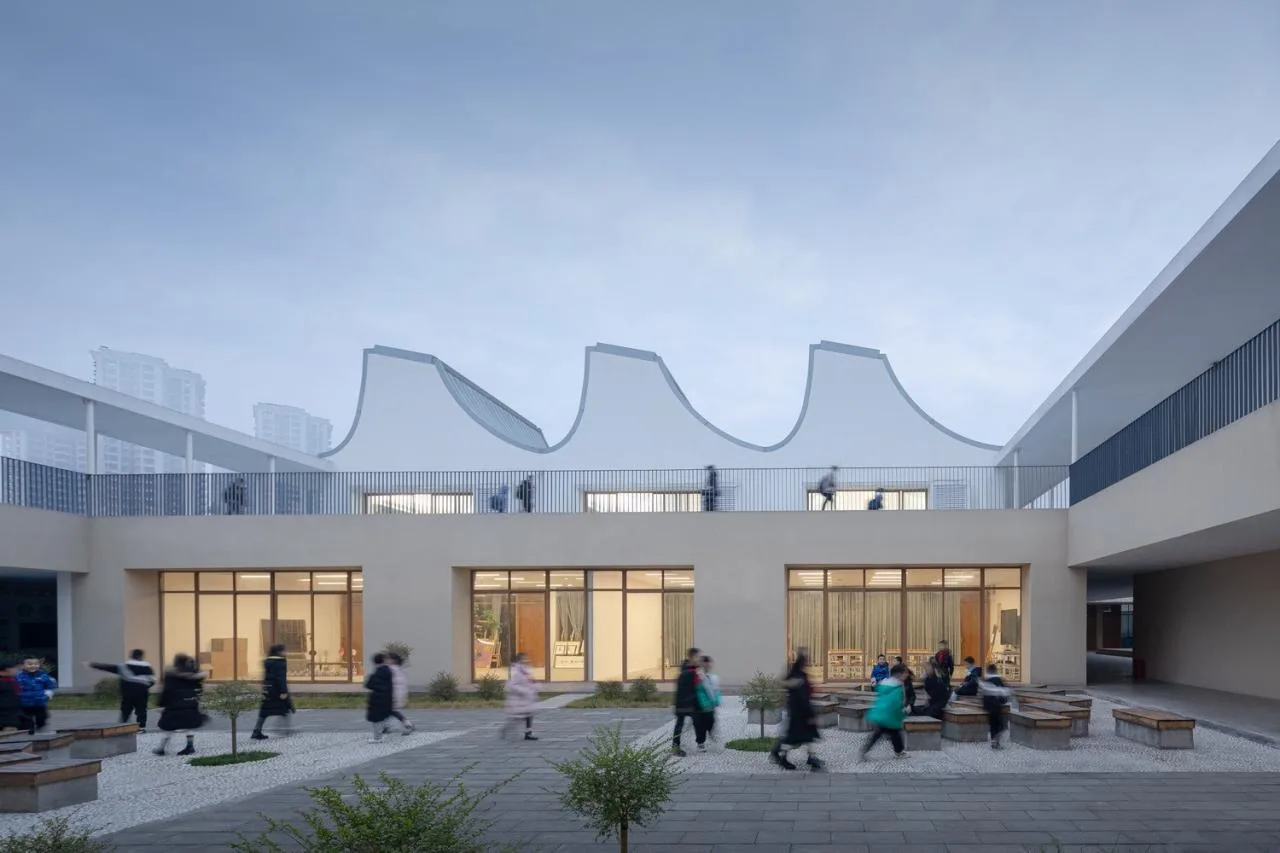
△ First floor natural courtyard © Architecture Photography
Raised Ground
The two-story teaching area is designed with a raised platform that separates 54 classrooms on the upper level from functional classrooms below, creating a courtyard at the center of each grade. These courtyards remain at ground level, providing convenient outdoor spaces where students can engage in free play during breaks.
Exiting directly from classroom corridors into these courtyards encourages students to enjoy fresh air, run freely, and look up at the sky for a refreshing 10 minutes. These courtyards naturally become vibrant social hubs for each grade group.
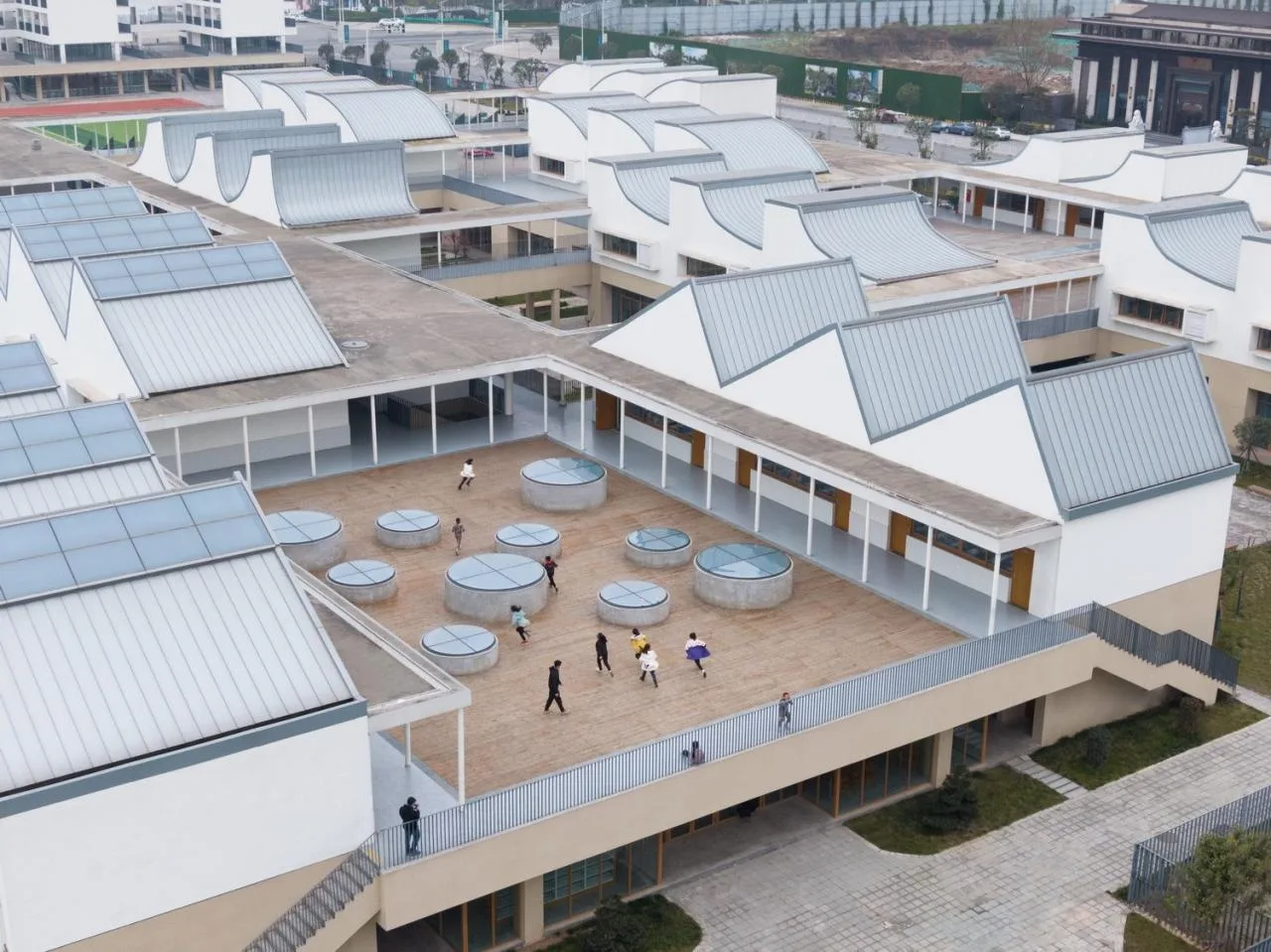
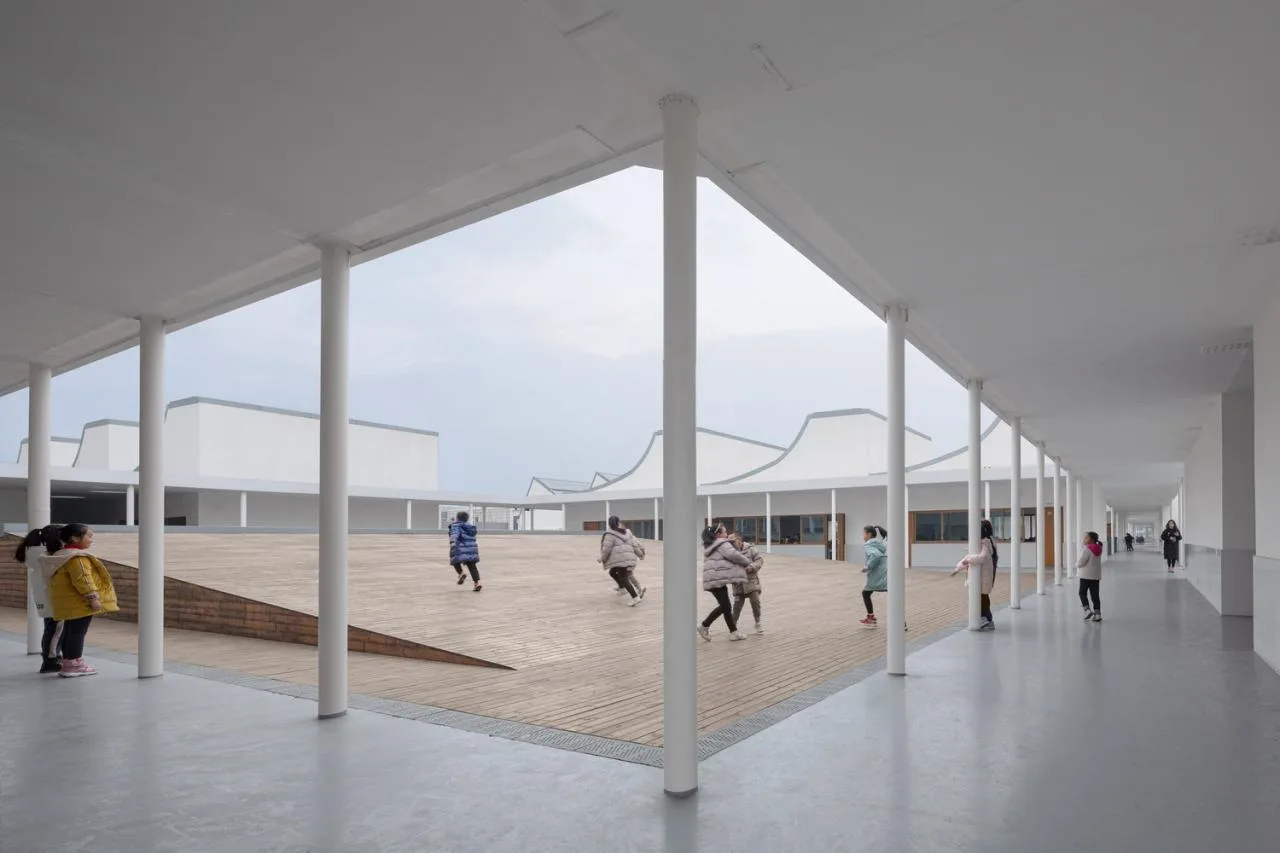
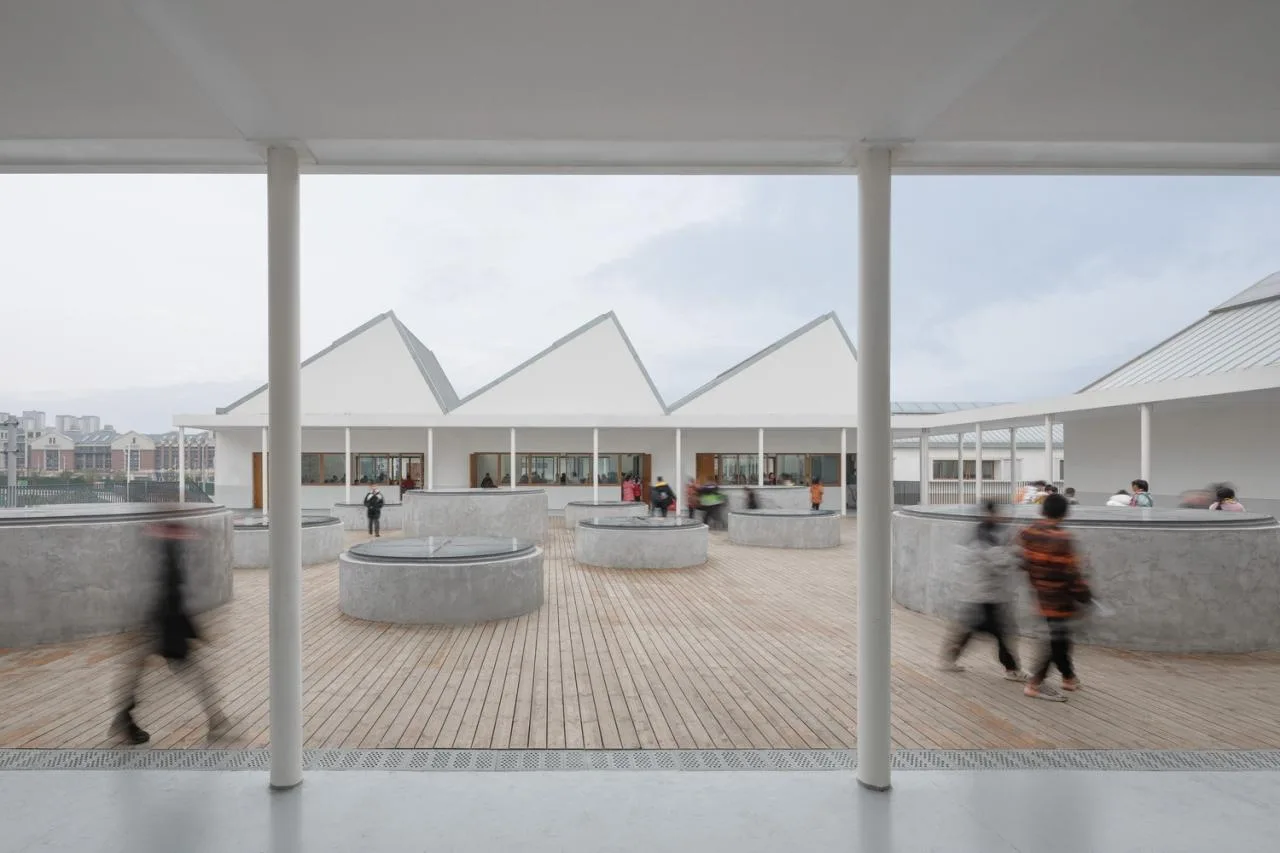
△ Second floor outdoor platform © Architecture Photography
These raised courtyards connect vertically to the lower level through ramps, stairs, and steps, providing easy access. A large staircase on the west side links the second floor to the playground and doubles as seating facing the sports field.
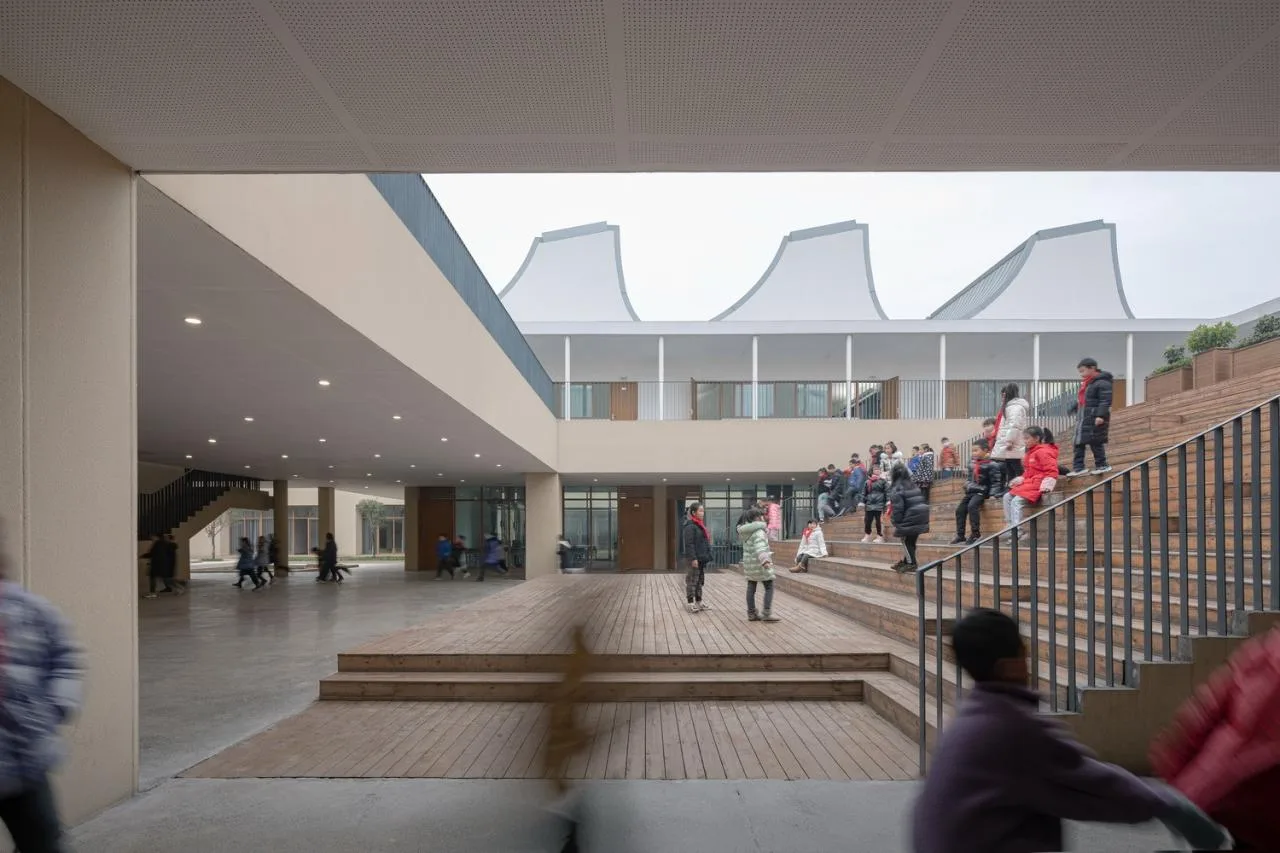
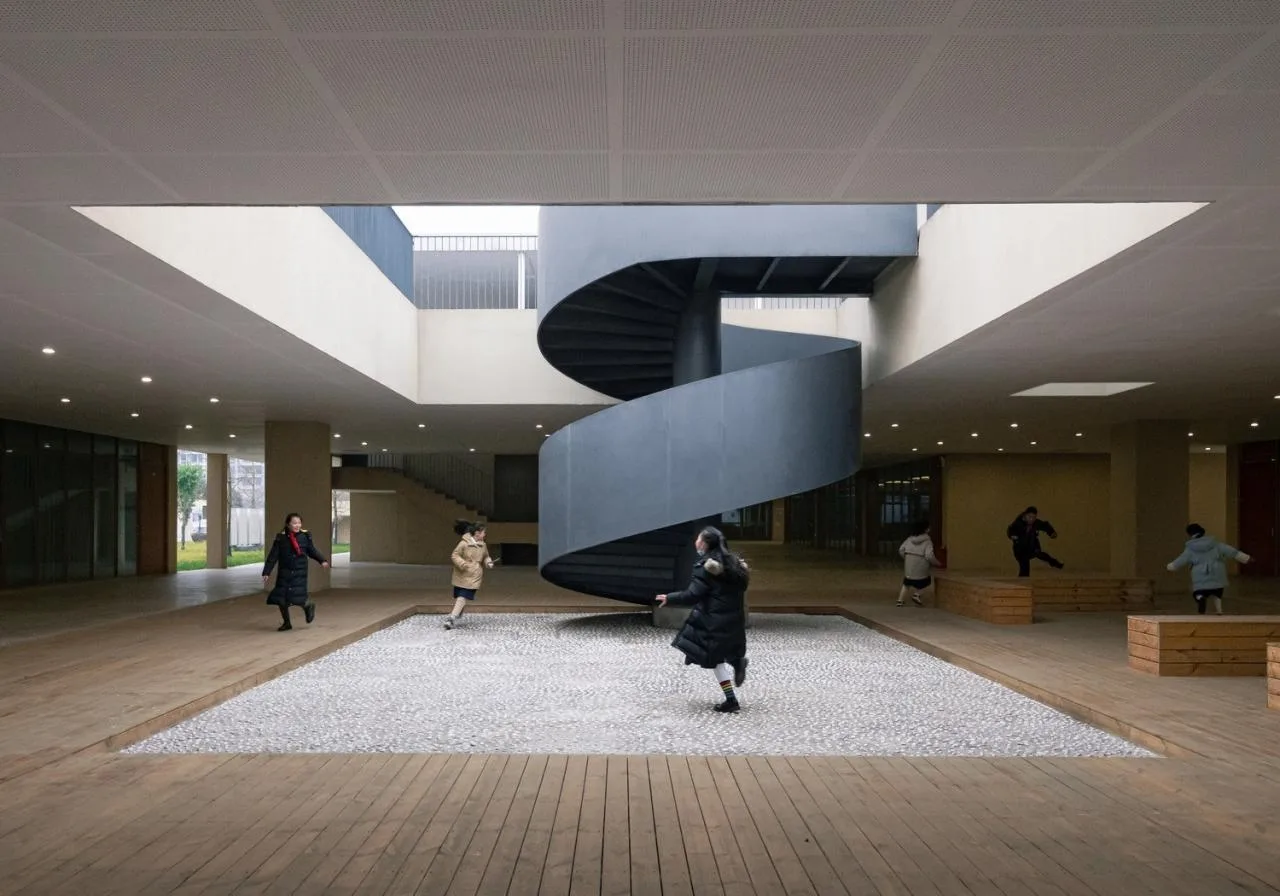
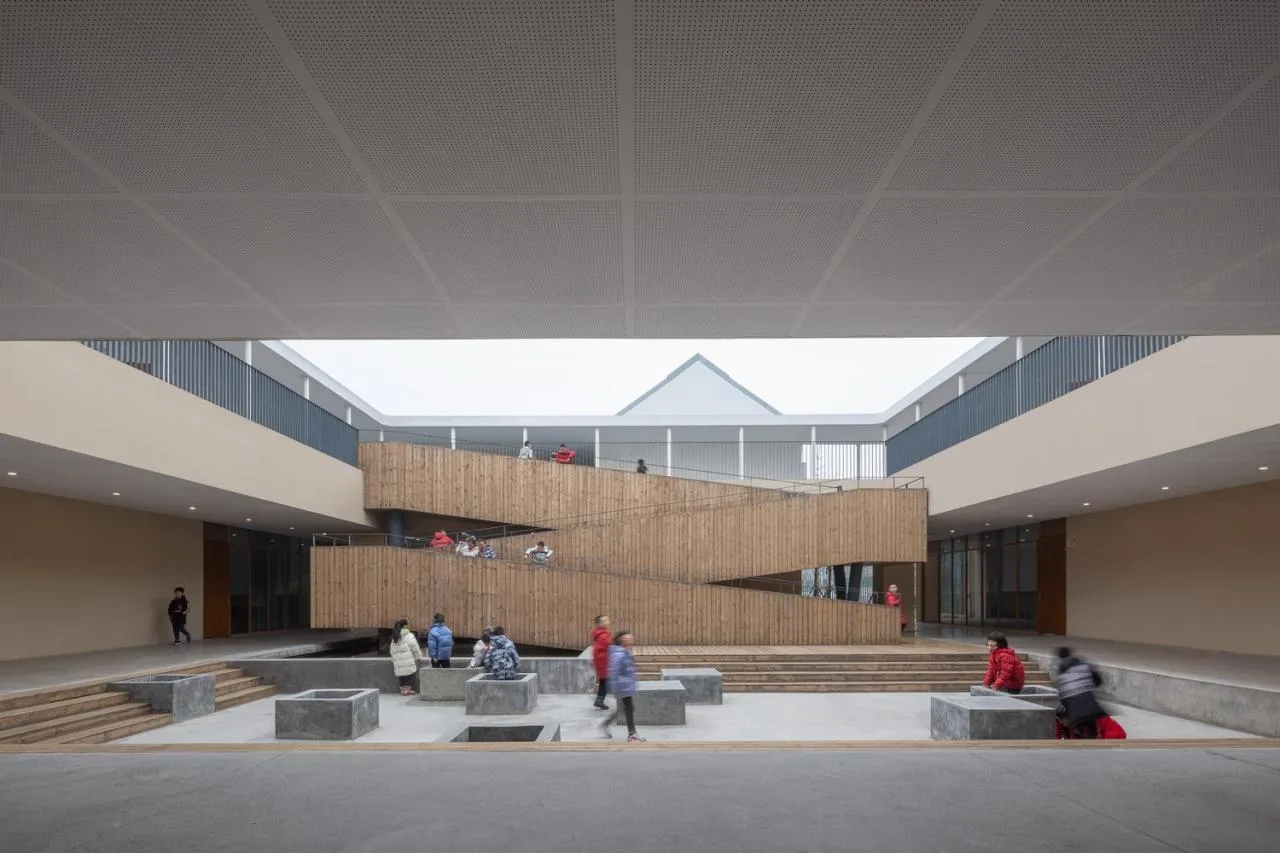
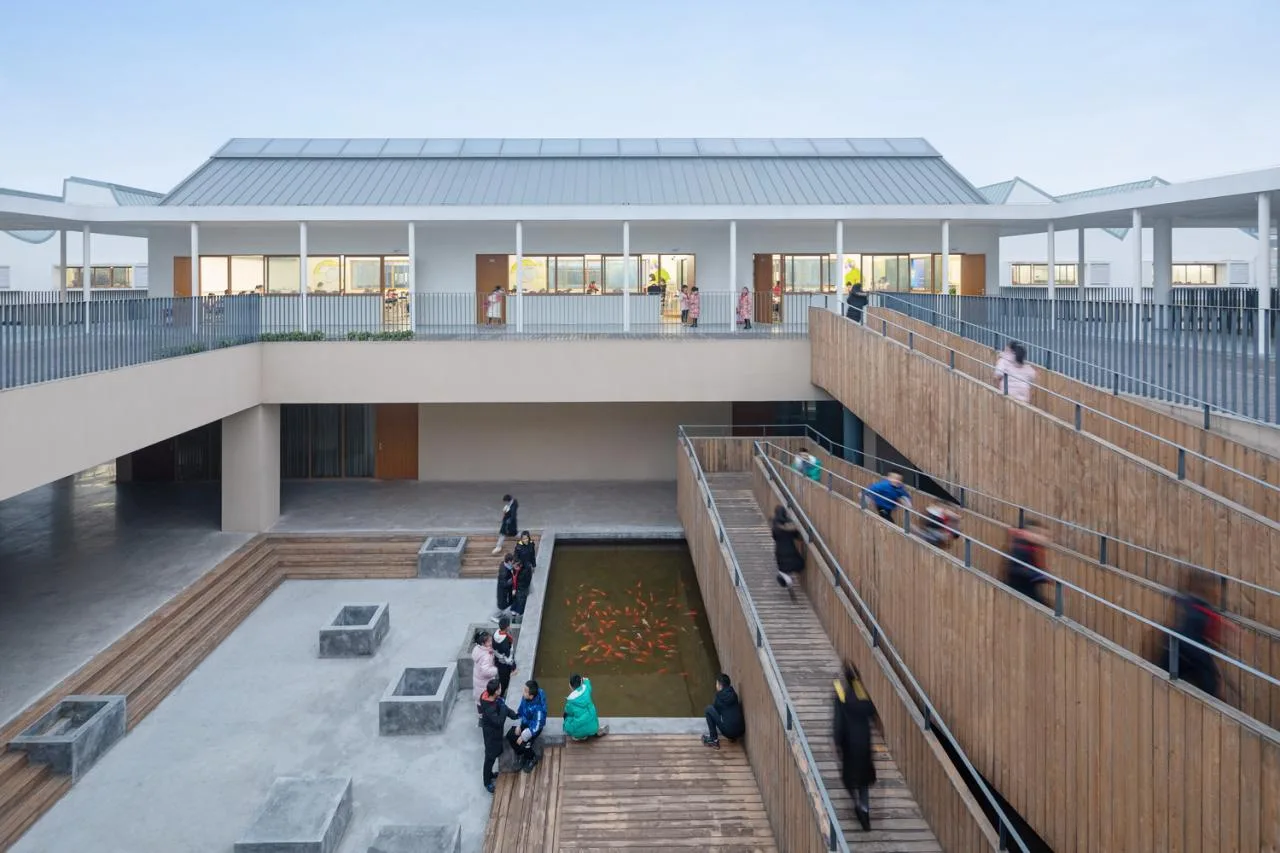
△ Level Activity Courtyard © Architecture Photography
Roof and Skylight Design
Students spend most of their time in regular classrooms, which demands high spatial quality. Traditional classrooms typically rely on multi-story stacking with side windows, resulting in limited daylight and monotonous spaces. Here, all classrooms are located on the second and top floor, allowing us to use skylights and special roof designs to create unique atmospheres.
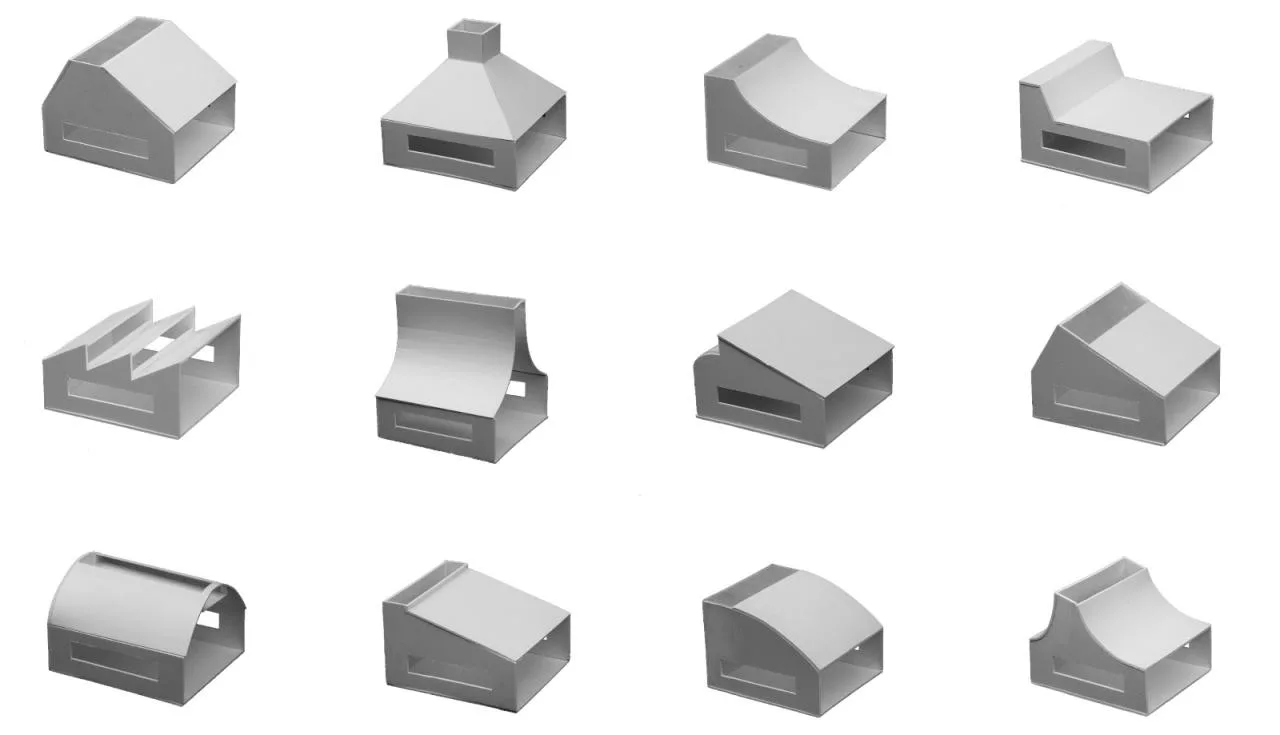
Based on the age and learning styles of each grade, six different roof types were developed. These diverse roof shapes and skylight configurations create varied spatial moods—from relaxed and lively to focused and serious—reflecting the distinct learning approaches and enriching students’ experiences year after year.
We envision these bright, lofty classrooms, reminiscent of art galleries, as spaces that stimulate imagination and curiosity.
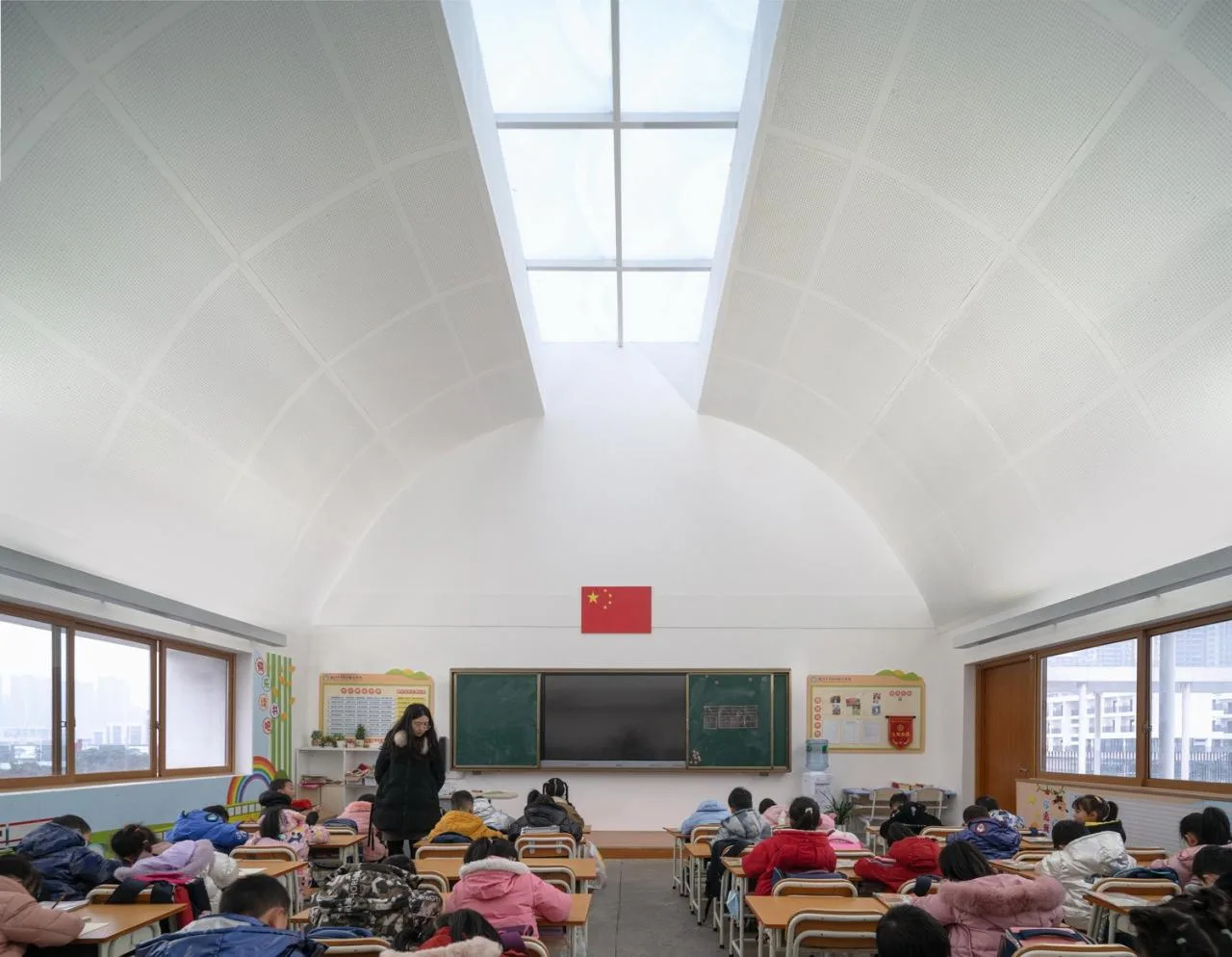
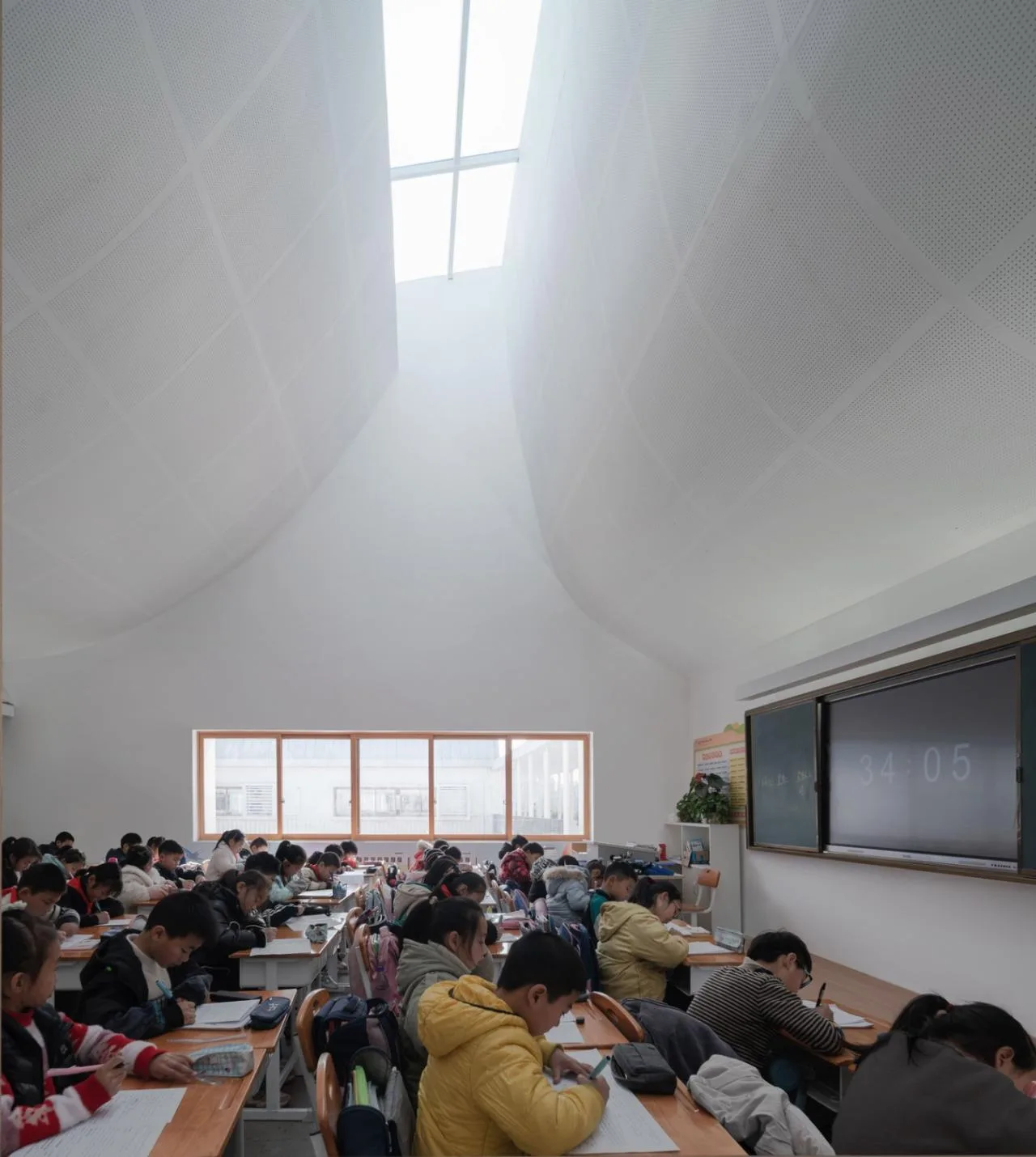
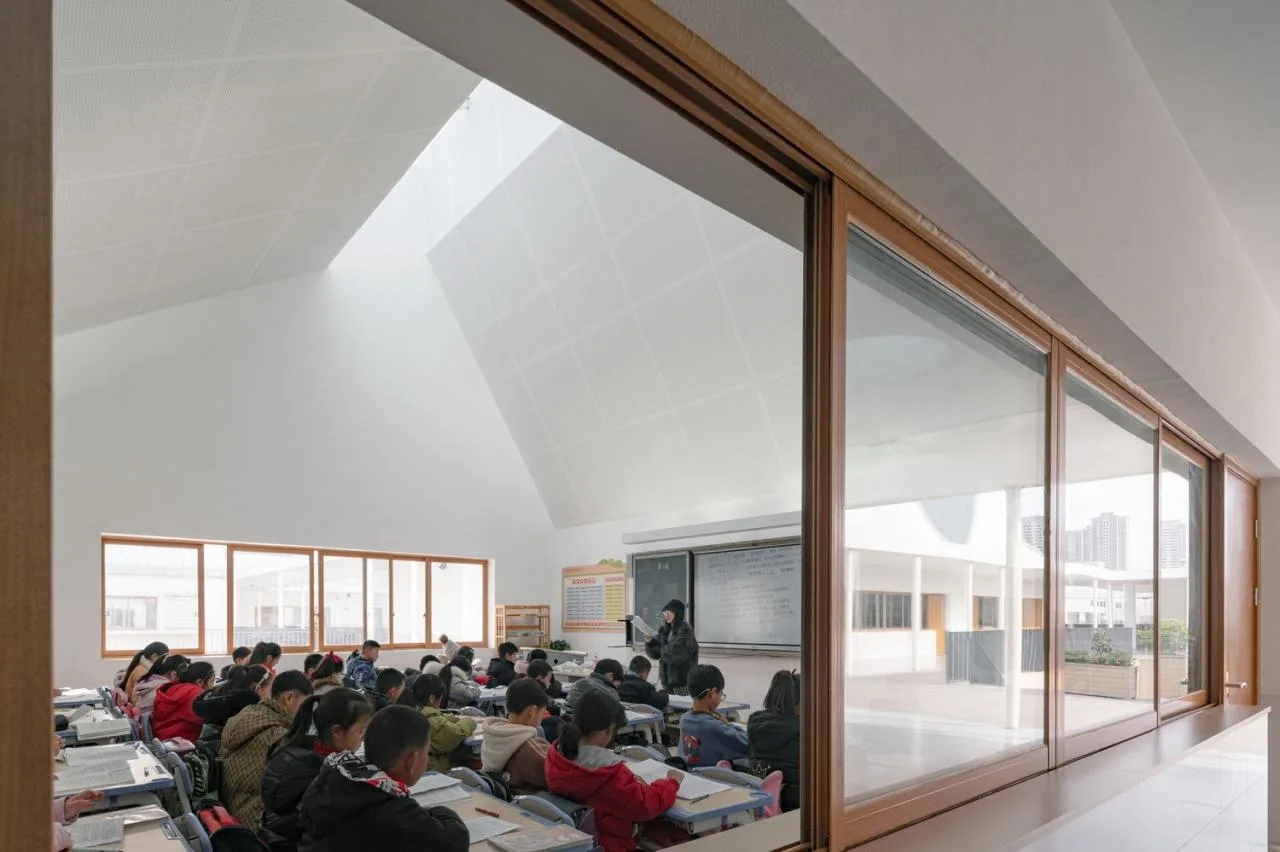
△ Classroom © Architecture Photography
From the outside, these varied roof forms are arranged rhythmically, evoking a whimsical village and giving the school a distinctive architectural identity.
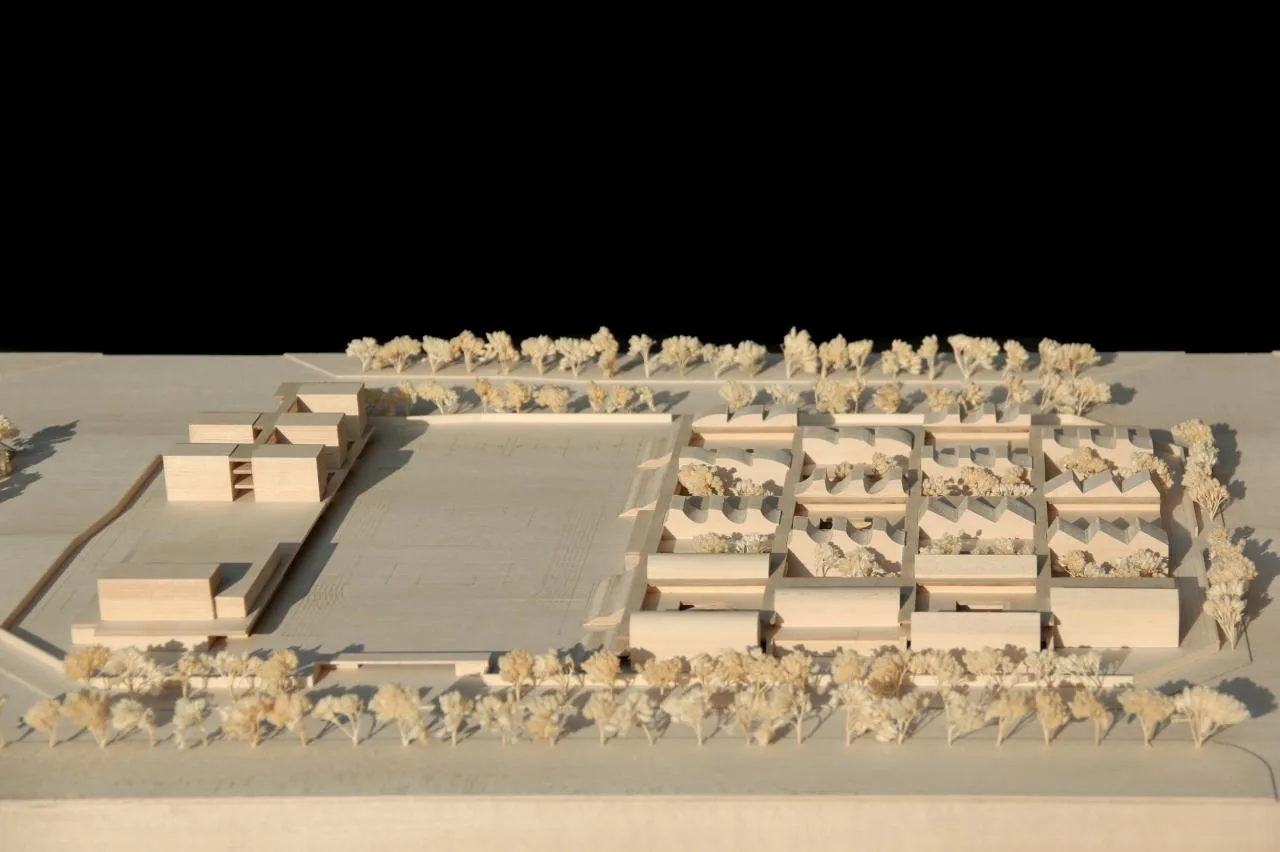
△ 1:500 architectural model © Architectural Firm (TAO)
Climate and Construction
Located in Sichuan’s humid, warm climate, the grid layout keeps most classrooms shallow in depth to enhance natural ventilation. The sloped, elevated roofs facilitate natural drainage and create high ceilings inside. Operable skylights help reduce heat buildup and improve airflow, reducing energy consumption.
The corridors between classrooms and courtyards serve as transitional buffer zones, protecting against rain and sun. Semi-outdoor spaces on the ground floor offer activity areas during unfavorable weather.
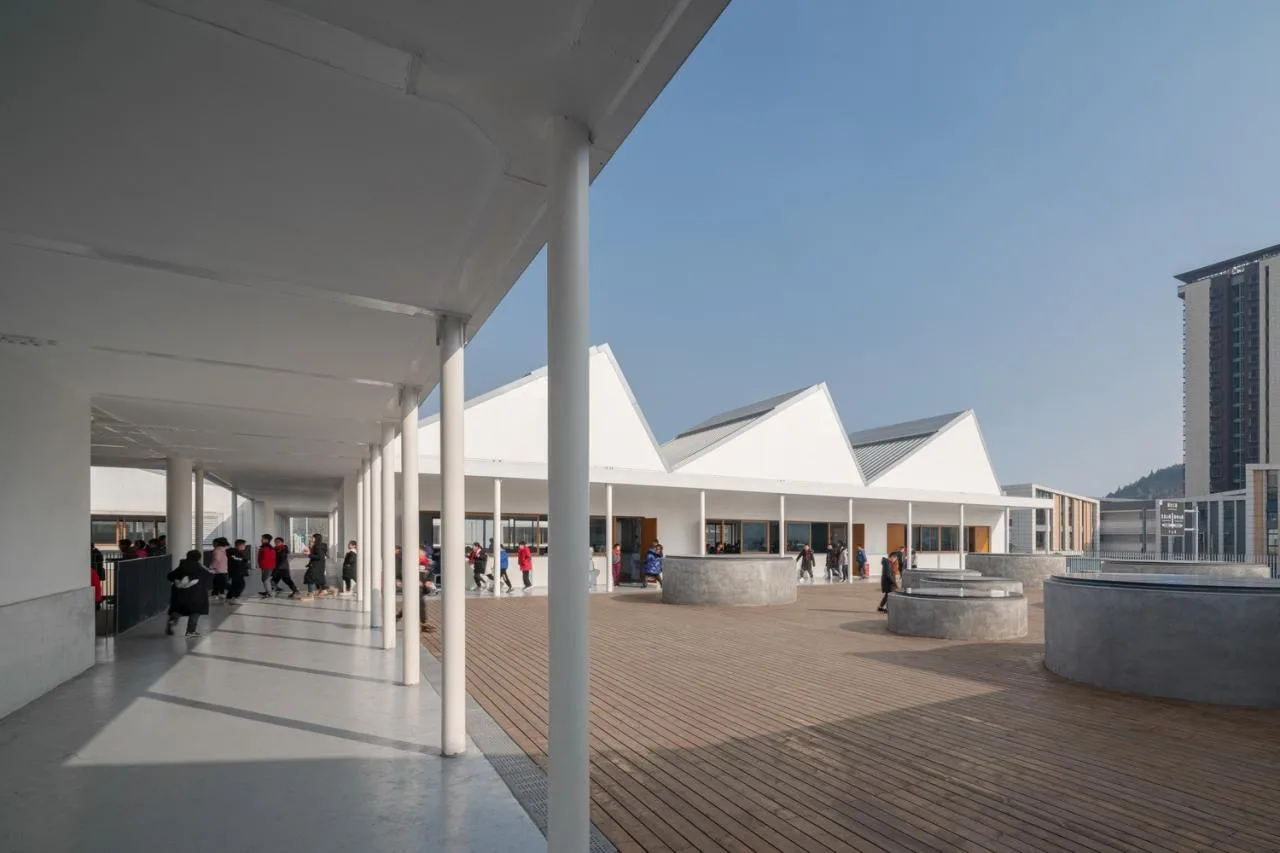
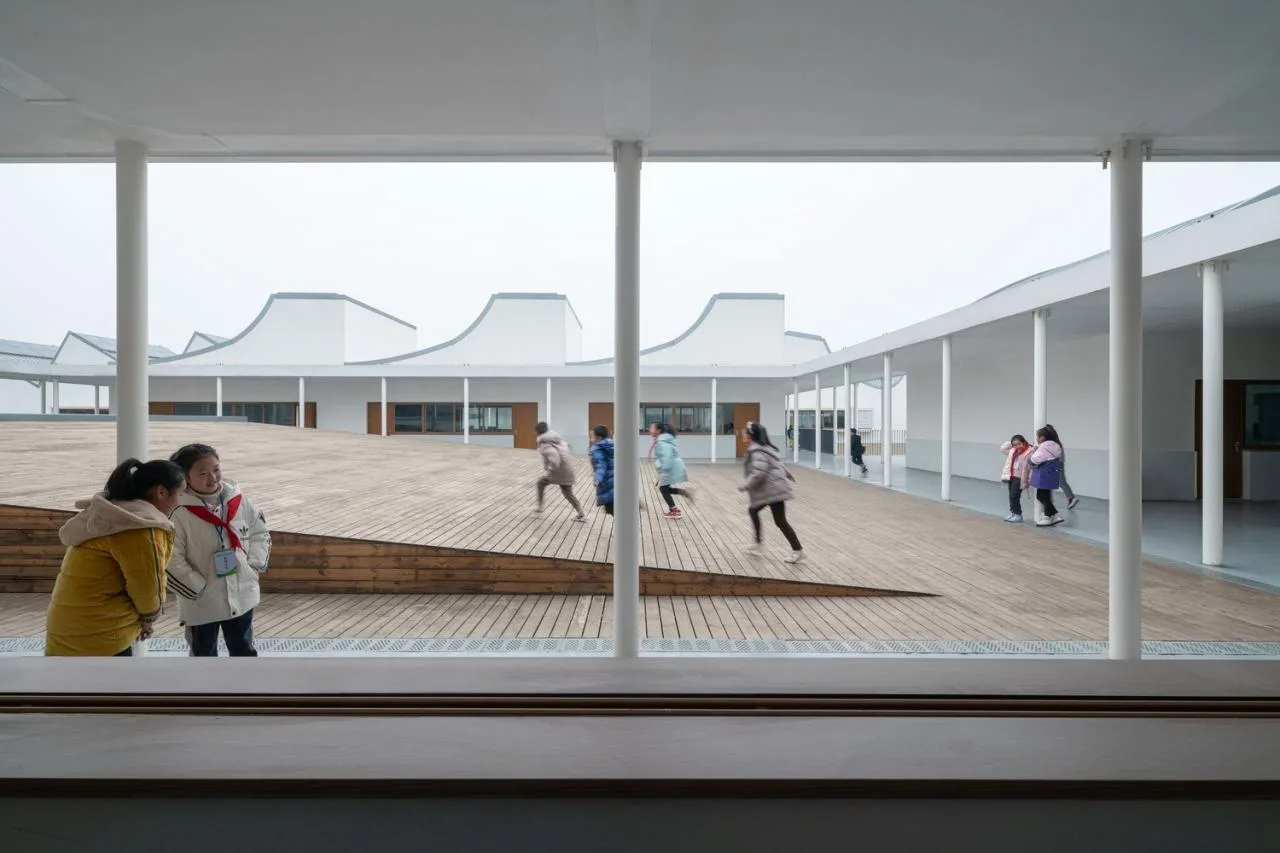
△ Second floor outdoor platform © Architecture Photography
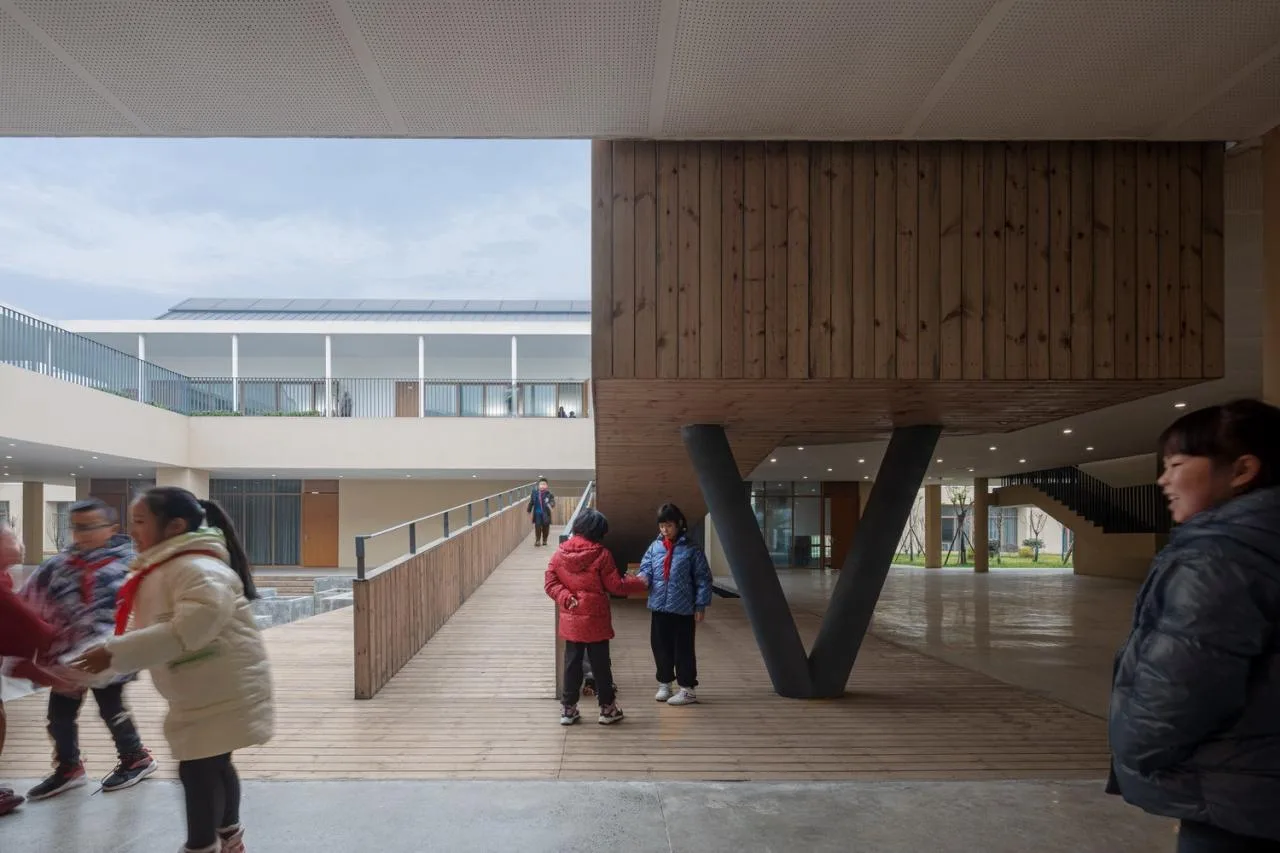
△ First floor activity courtyard © Architecture Photography
The building employs a steel frame structure, optimized for modular construction and prefabrication to enable rapid assembly. Although originally planned for completion within one year, delays due to funding, management, and construction impacted this timeline.
The roof features a titanium zinc metal vertical edge interlocking system. Ceilings incorporate perforated gypsum boards for sound absorption, while walls are finished with coatings. Initially, a combination of two coating layers and a stone layer was planned to create a heavier base contrasting with lighter upper layers; however, cost constraints led to the use of real stone paint instead.
Summary
This design explores a decentralized school organizational model, which we summarize as “parallelism.” It promotes equality by eliminating hierarchy, emphasizing freedom and diversity. The unique roof and lighting designs enhance spatial experience, earning the title “School of Parallelism and Light.”
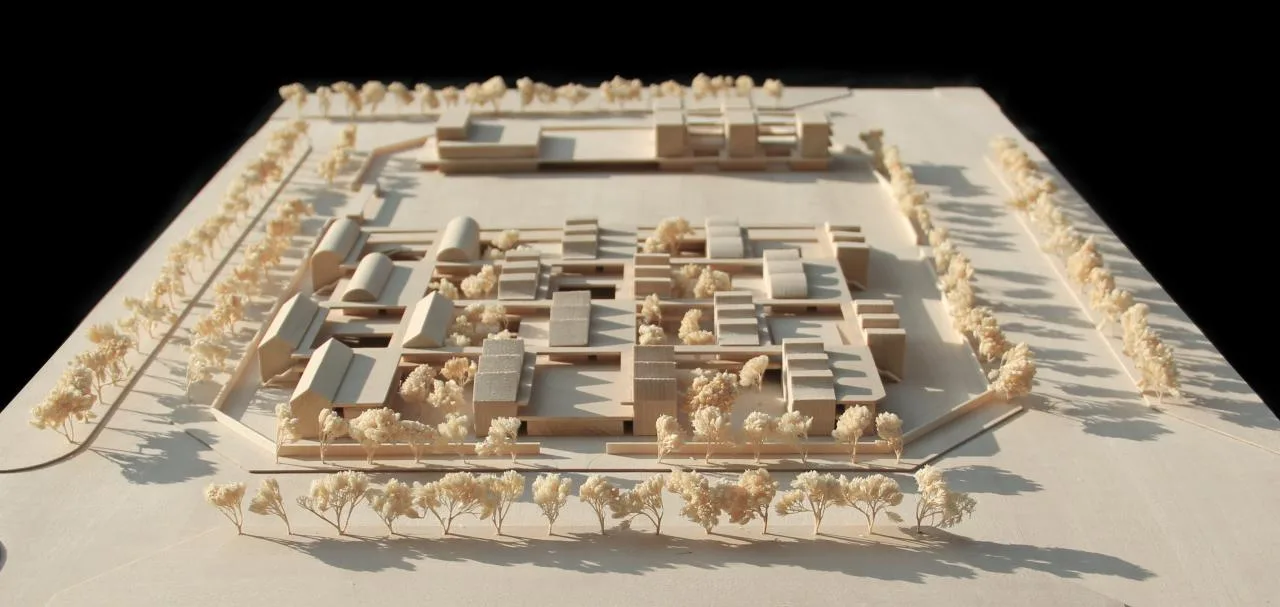
△ 1:500 architectural model © Architectural Firm (TAO)
Project Drawings
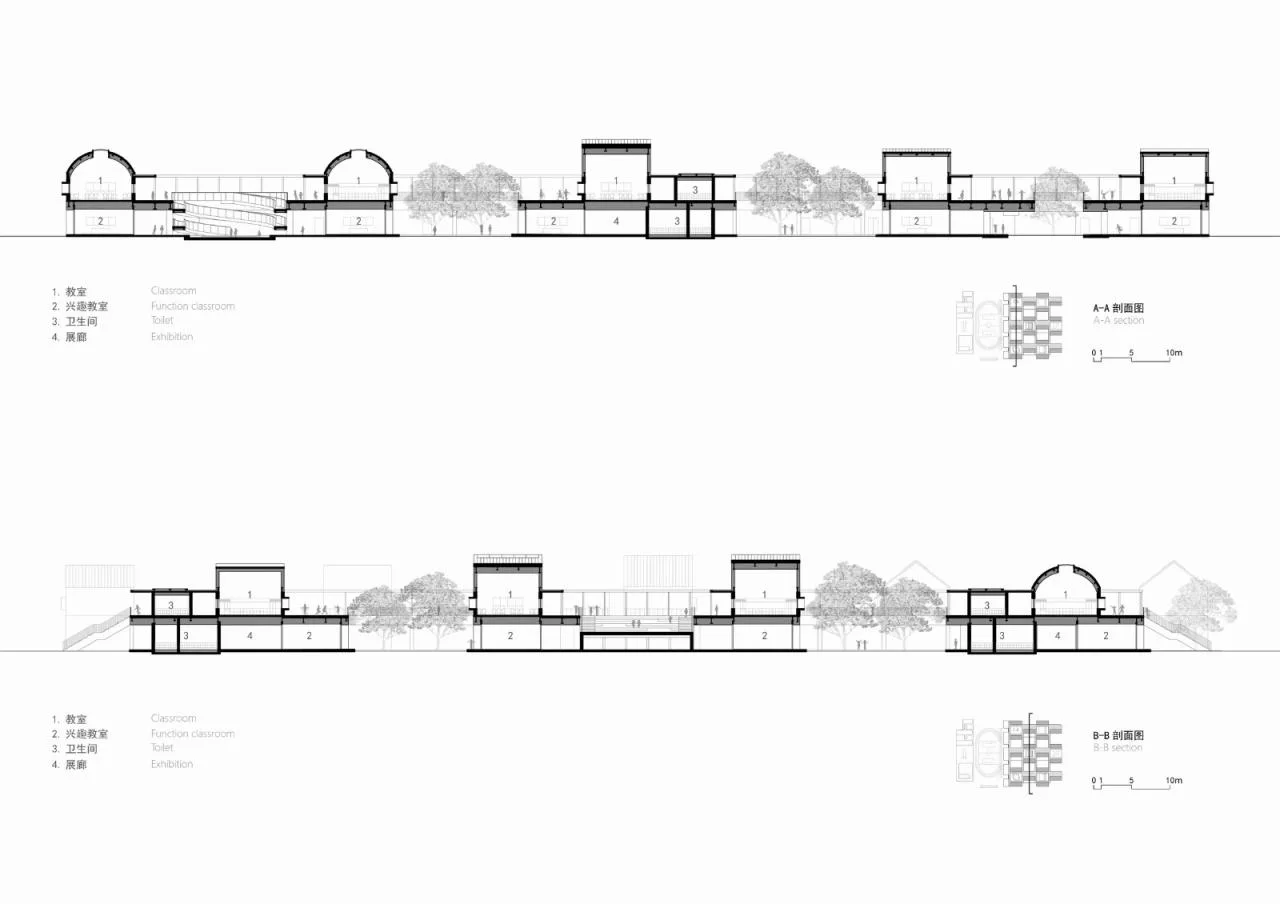
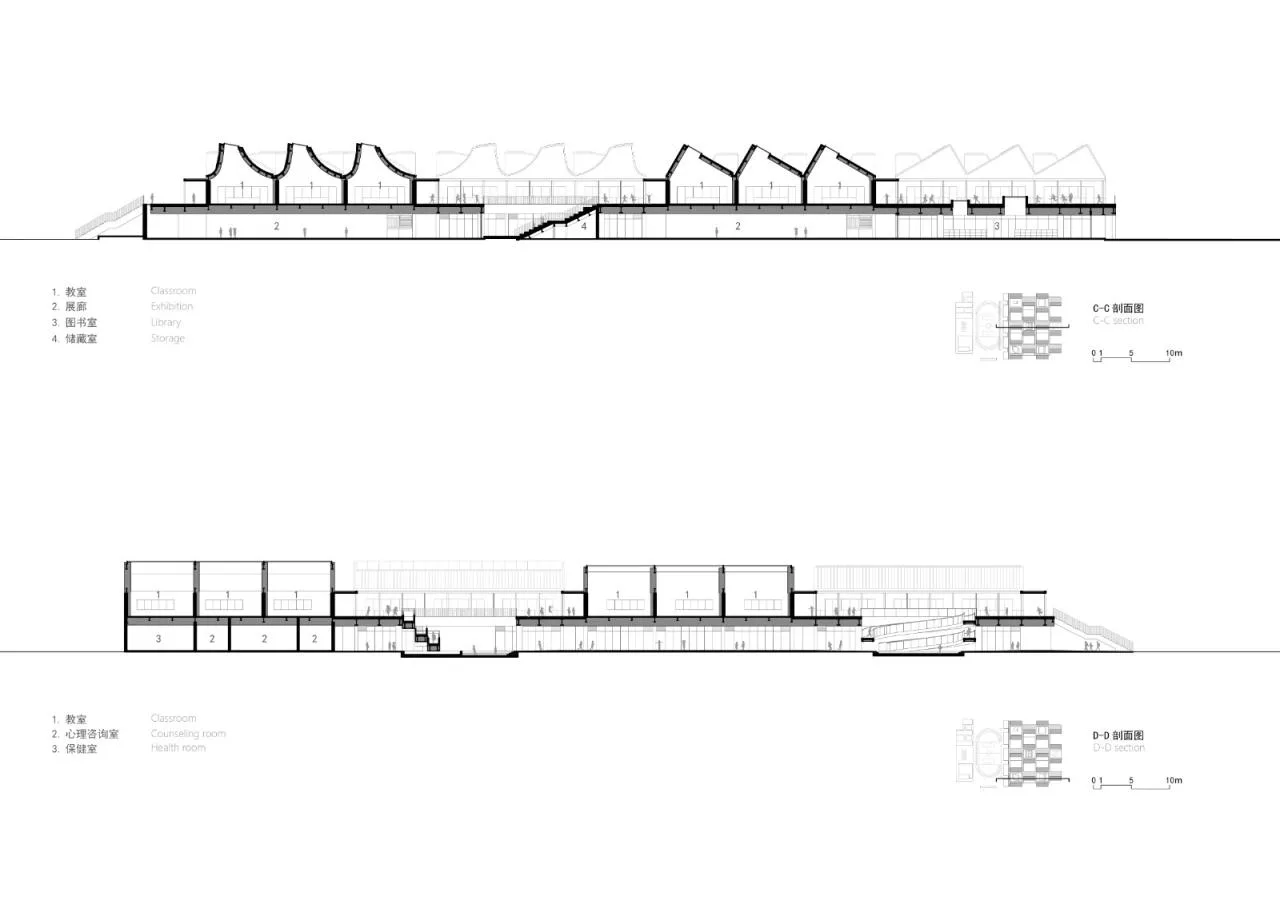
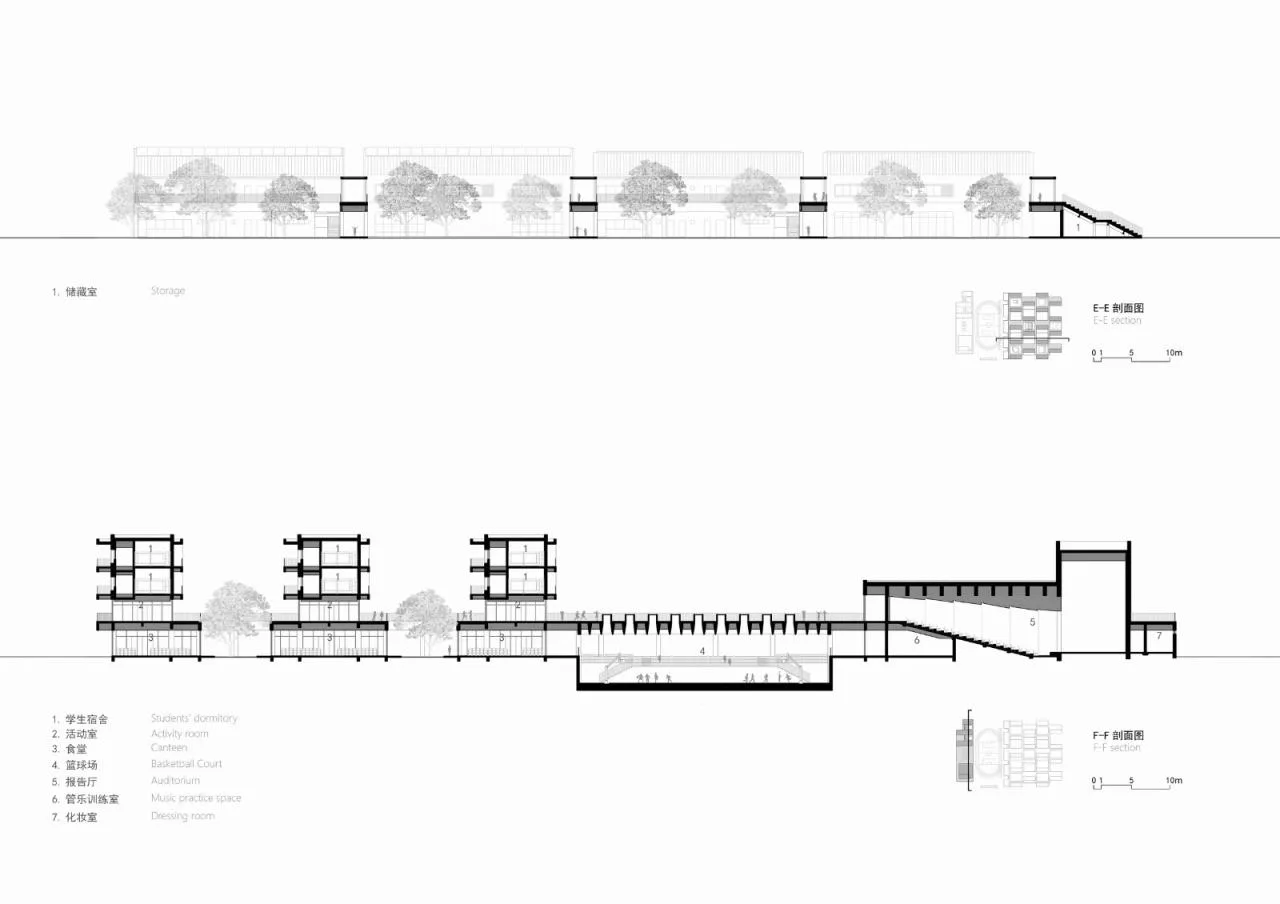
△ Section diagram © Architectural Firm (TAO)
Project Information
Project Name: Qingyijiang Road Primary School
Owner: Education Bureau of Jingyang District, Deyang City
Location: Deyang, Sichuan
Functions: Teaching Building, Student Dormitory, Cafeteria, Lecture Hall, Office, etc.
Lead Architect: Huali | TAO Architectural Firm
Design Team: Huali, Yan Yadong, Li Wenjie, Chen Wan, Wang Langhuan, Du Yunqiao, Cheng Xiangju, Zhao Kai, Ma Kun, Feng Zhenhui, Tang Yuanhong, Song Jing, Chen Xiaoyi, Su Wenjia, Guo Siyang, Lei Zheng, Zhang Ming
Building Area: 29,943 square meters
Structural System: Steel frame (teaching building), cast-in-place reinforced concrete frame (living area)
Design Period: 2017–2019
Construction Period: 2019–2022
Photography: Ziran Architecture Photography













Must log in before commenting!
Sign Up