
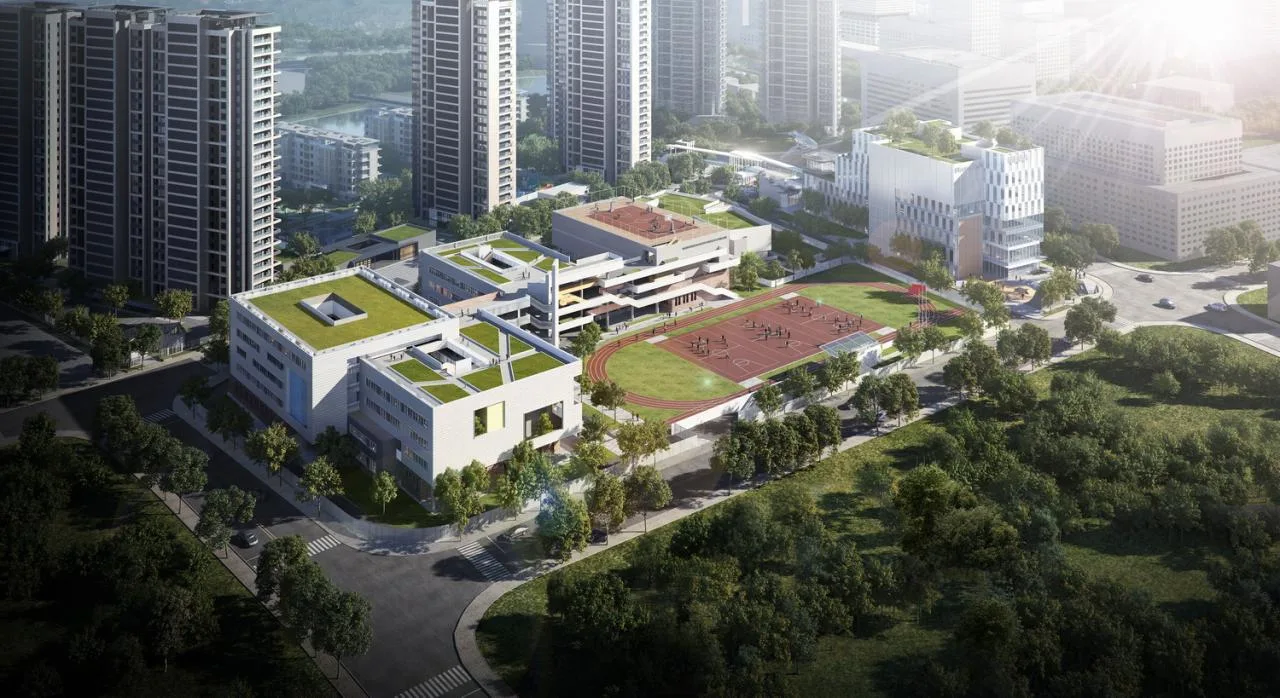
Children are the true heart of every school.
The Jingchao Primary School and Kindergarten, affiliated with Hangzhou Normal University, serves the Qianwan International Community in Hangzhou. From the outset, the design team collaborated closely with the client to address challenges related to land use, sunlight, transportation, and school floor planning. Embracing a global educational vision, they endeavored to create a campus that redefines traditional school environments.
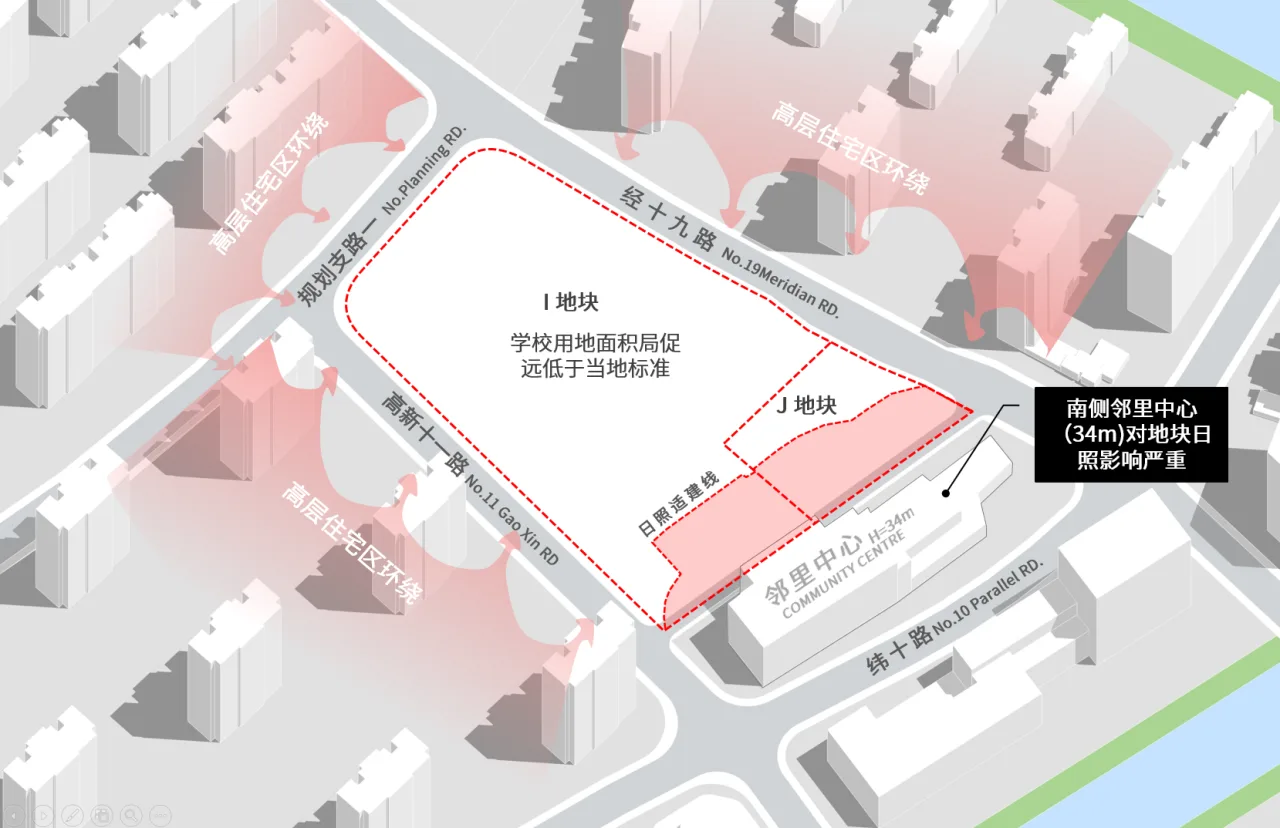
Design Conditions Analysis
Driven by dedication and creativity, the team developed a design strategy centered on “introducing social interaction into the campus,” carefully respecting regulations and land constraints. Starting from the perspective of the children, new spatial relationships and organizational methods emerged to meet varied needs effectively.
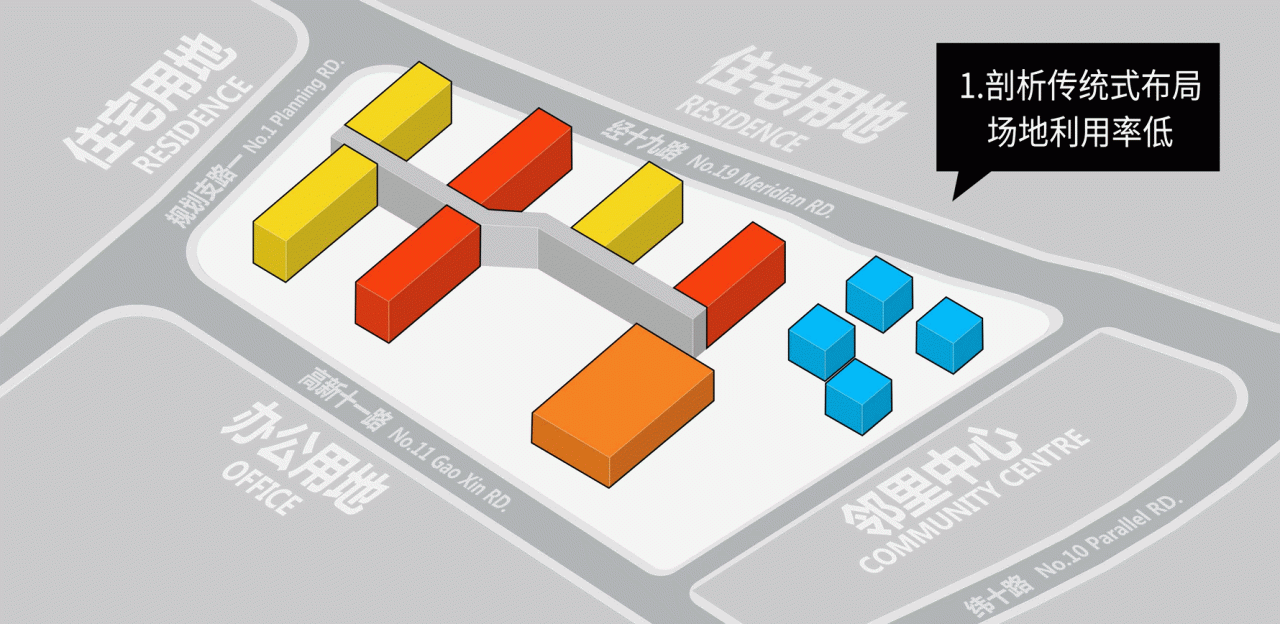
△ Generation Logic
Recognizing that drawings are merely carriers of design intentions, the team emphasized quality implementation as the true test. After regulatory approval in August 2018, their focus shifted to construction oversight, ensuring the project’s vision was realized flawlessly. Communication and circulation spaces, designed in various scales, serve as children’s first interaction points with the building. During site visits, designers meticulously supervised construction stages, checked main spatial dimensions, and ensured these spaces would serve their young users effectively.
Over the 1,787 days from construction through acceptance, the team maintained consistent dialogue with partner organizations, conducting 1–2 monthly inspections to guarantee the timely completion of this visionary campus. When the first group of children arrived in September 2021, their joyful play in courtyards and interactions in open spaces affirmed the success of a campus that is open and integrated with society, not confined like a “cage.” This new international campus model holds great promise for the future.
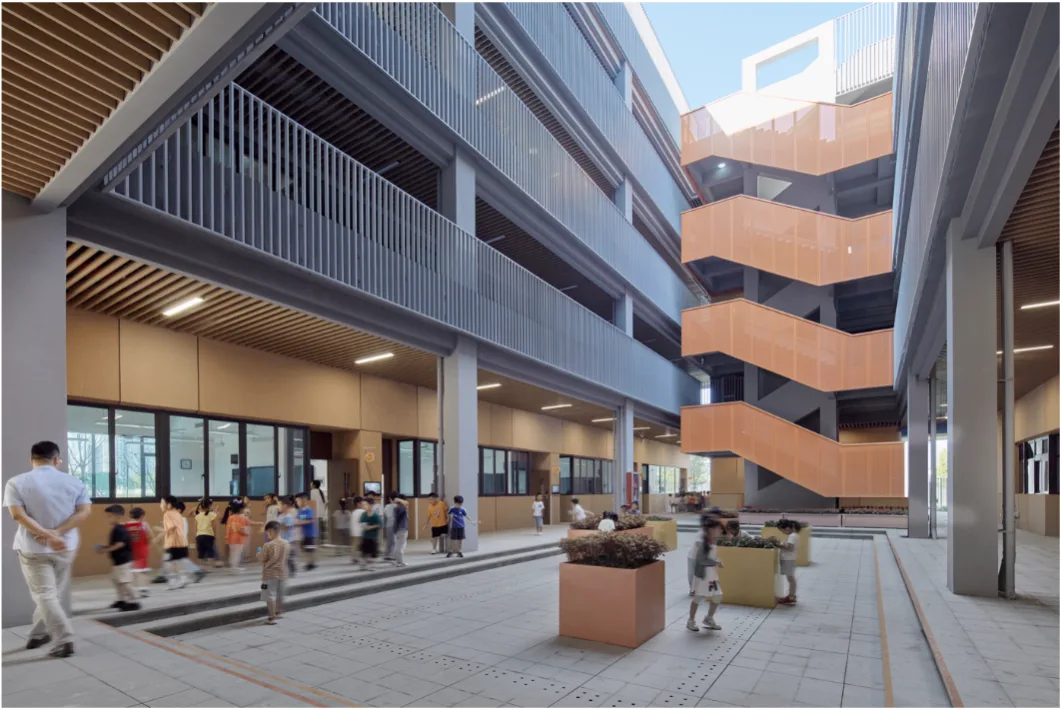
Children enjoying free play in undefined spaces
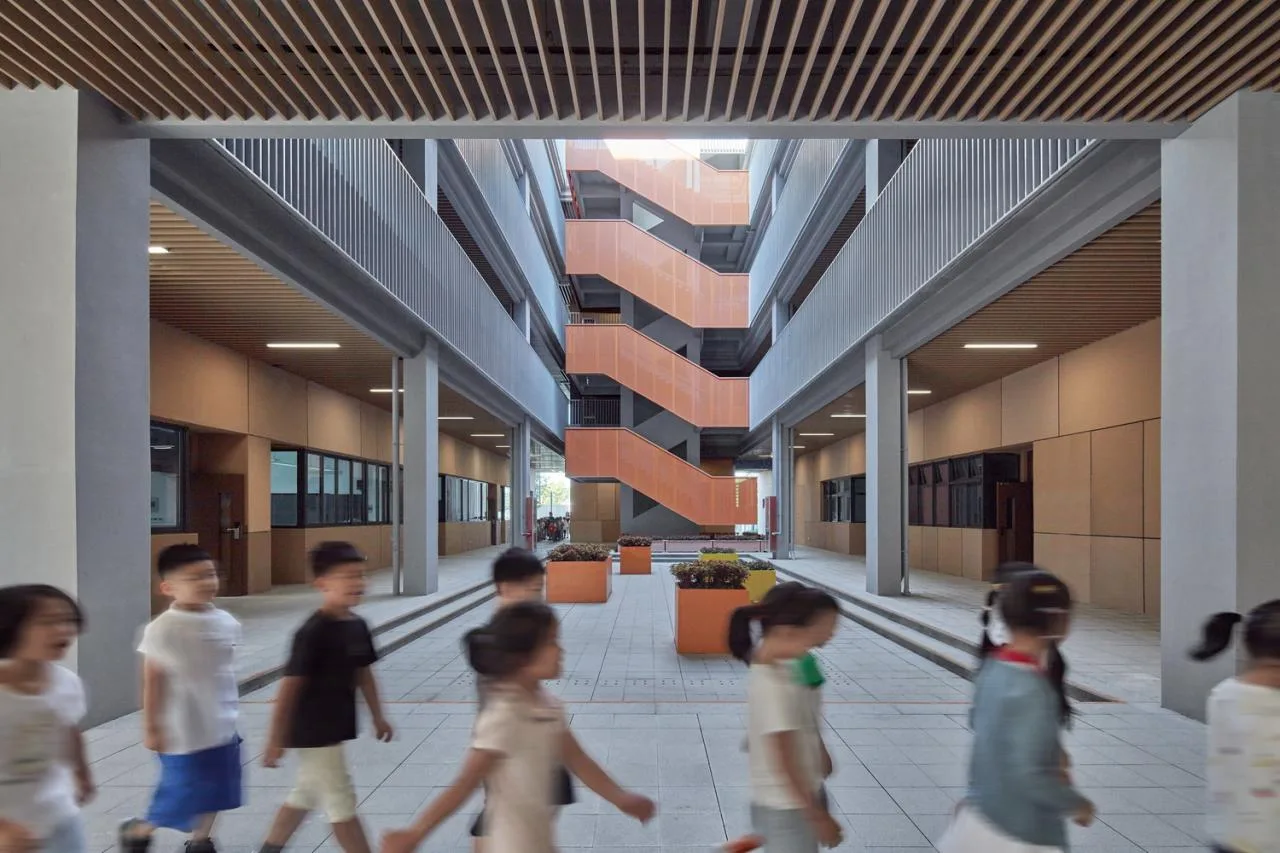
△ Children walking through the sunken courtyard – Photo © Xia Qiang
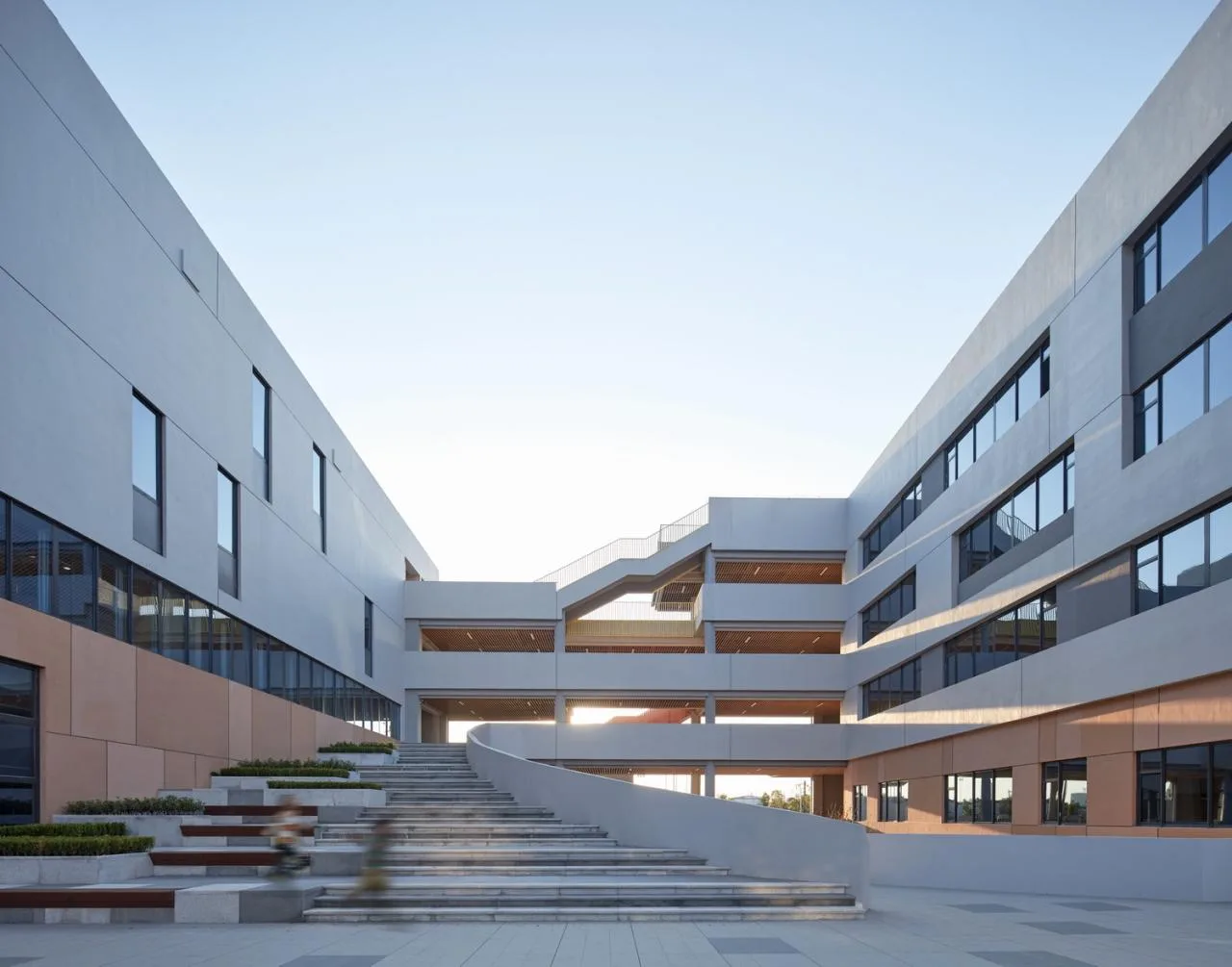
△ Curved large steps with children running – Photo © Xia Qiang
The design successfully embraces the theme of “social three-dimensional supervision” and the pre-control of social education spaces and usability, adding warmth to the buildings.
Street Eye: Three-Dimensional Social Supervision
Rethinking School Transportation Beyond the Fence
Transportation has long been a challenge not only for schools but also for urban planning. To address this, the design team removed the traditional barrier between campus and city, connecting the square in front of the main entrance with the sunken lobby square, creating a dedicated shuttle space.
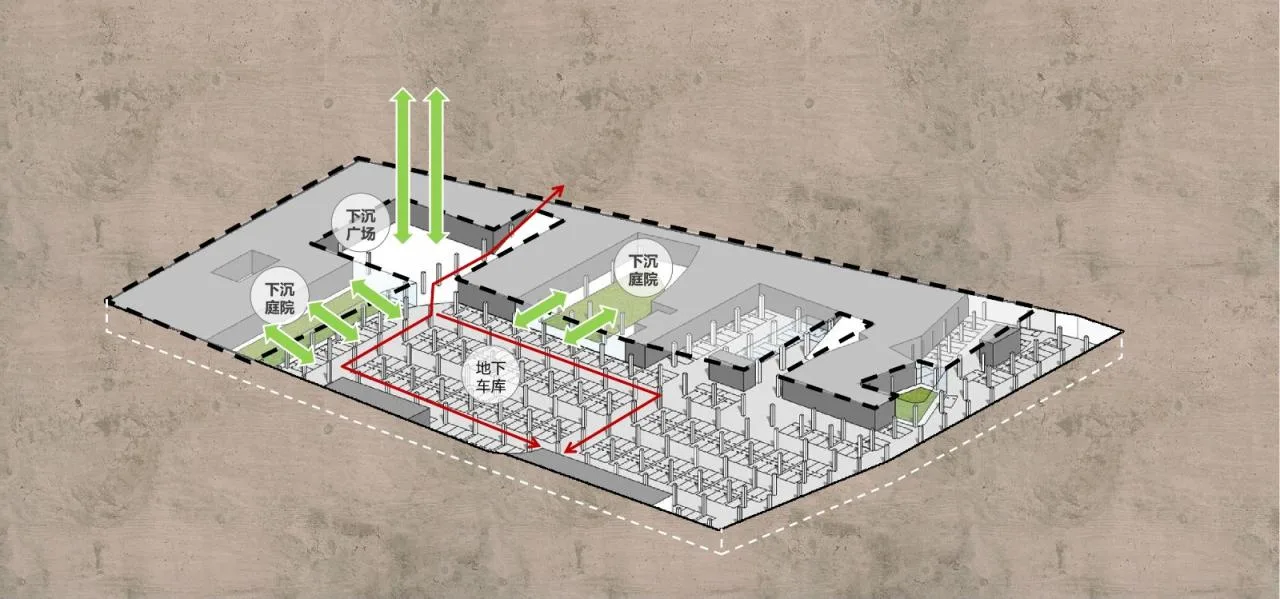
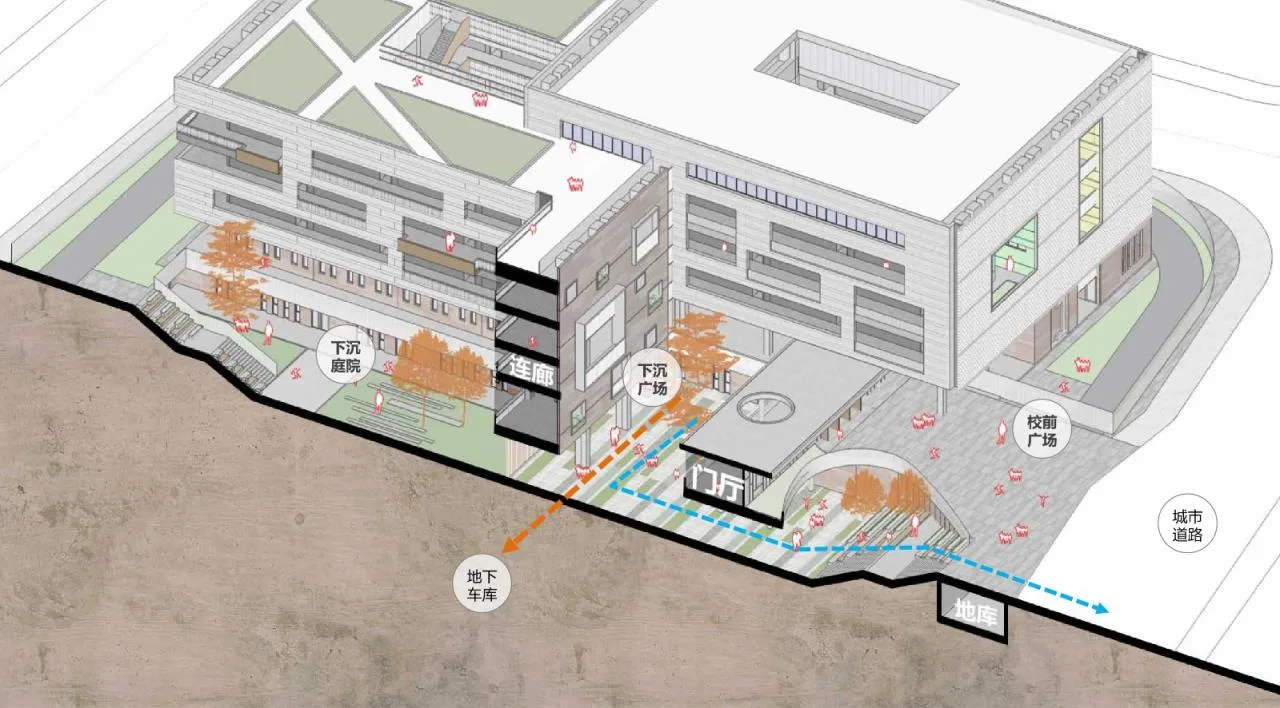
Flow Line Connection Analysis in Sunken Courtyards
Parents can comfortably wait for their children on the sunken steps, observing queues through windows. After pick-up, they can proceed to park and depart smoothly. This sheltered process prevents weather-related disruptions and eases road congestion around the school. This subtle yet effective design integrates social life into the campus and connects it seamlessly with the city.
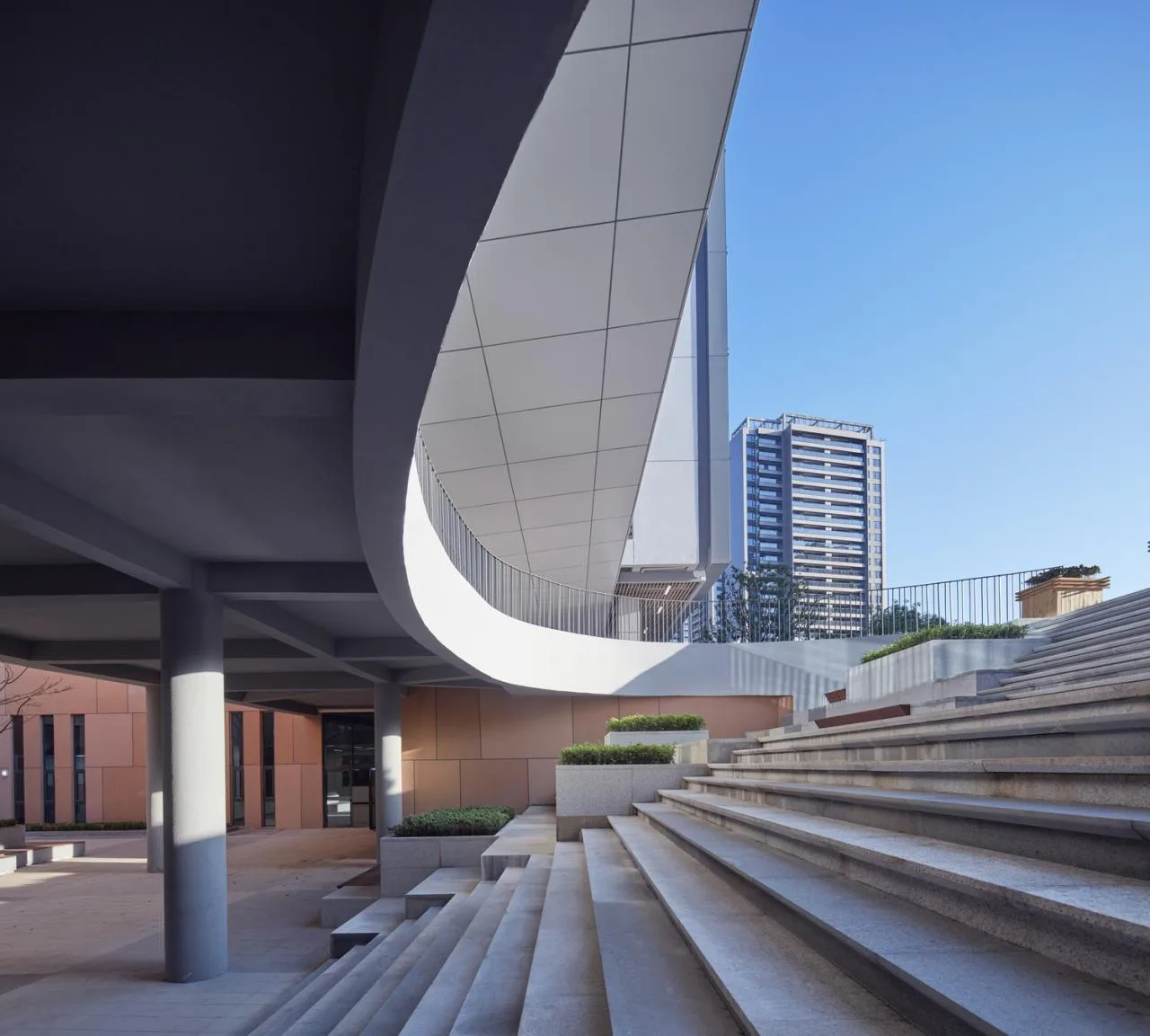
△ View of parents’ waiting and transportation space from the sunken courtyard – Photo © Xia Qiang
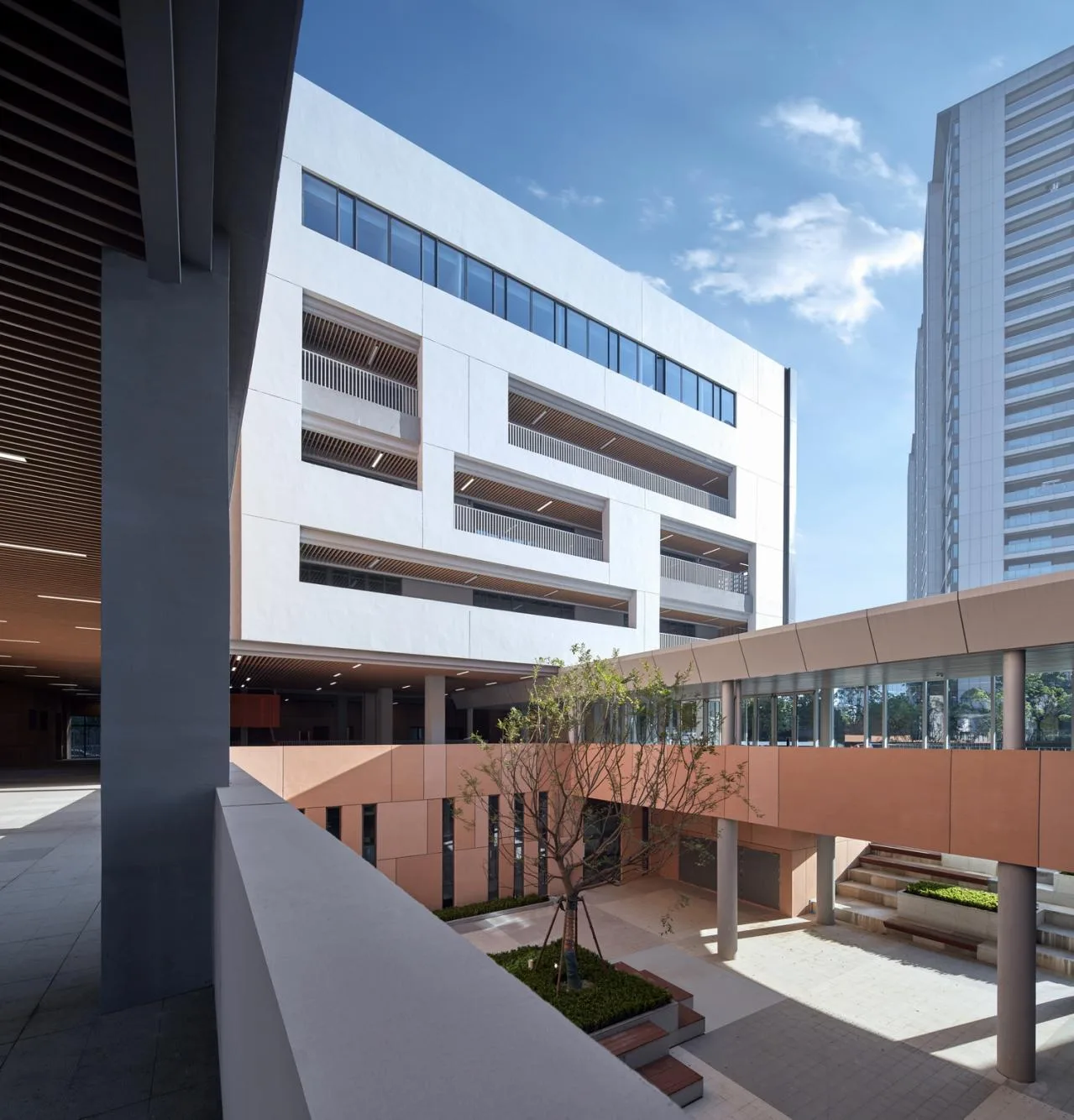
Parents can see children queuing through vertical bar windows, while children on the first floor can observe the sunken courtyard.
“Security+” Through Visual Transparency
Prioritizing children’s safety, the design moves beyond the concept of schools as isolated zones surrounded by high walls. By opening cross-level circulation within the teaching building, supervision and interaction extend through three-dimensional space, creating a “street eye” that safeguards children’s growth.
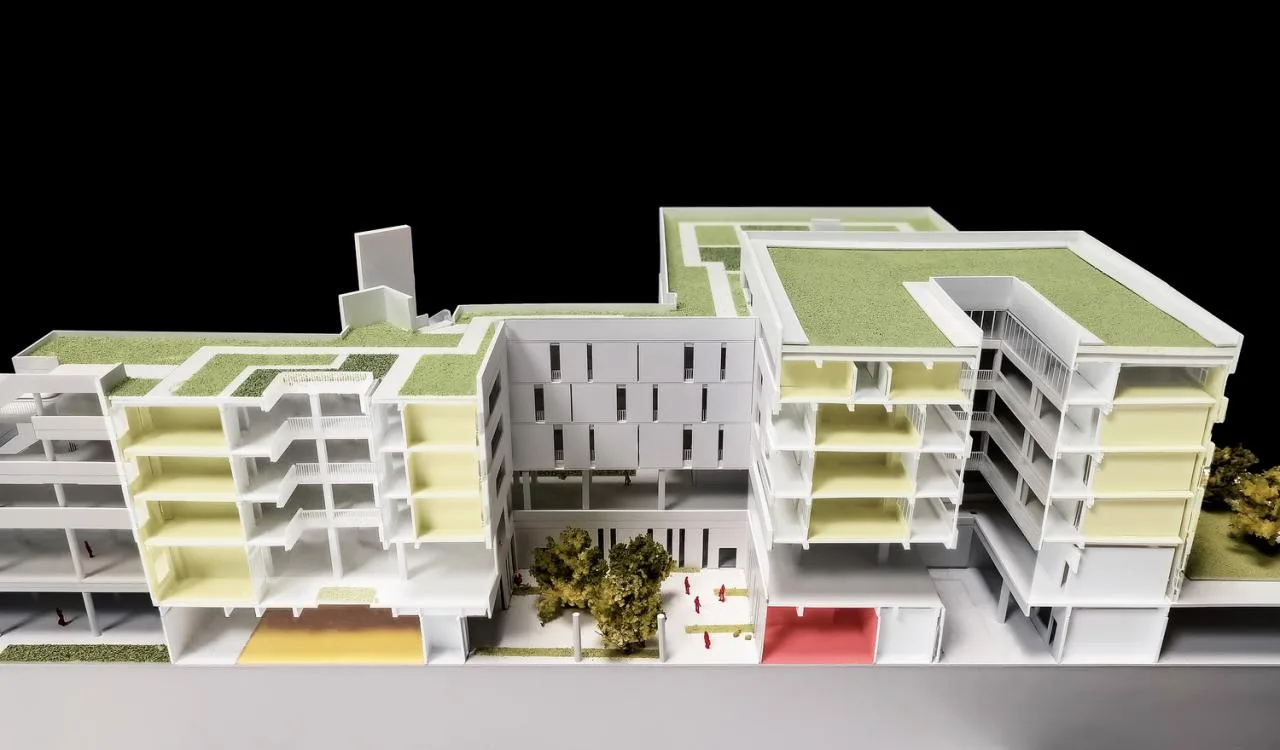
Analysis of Regulation and Interaction Models in Three-Dimensional Space
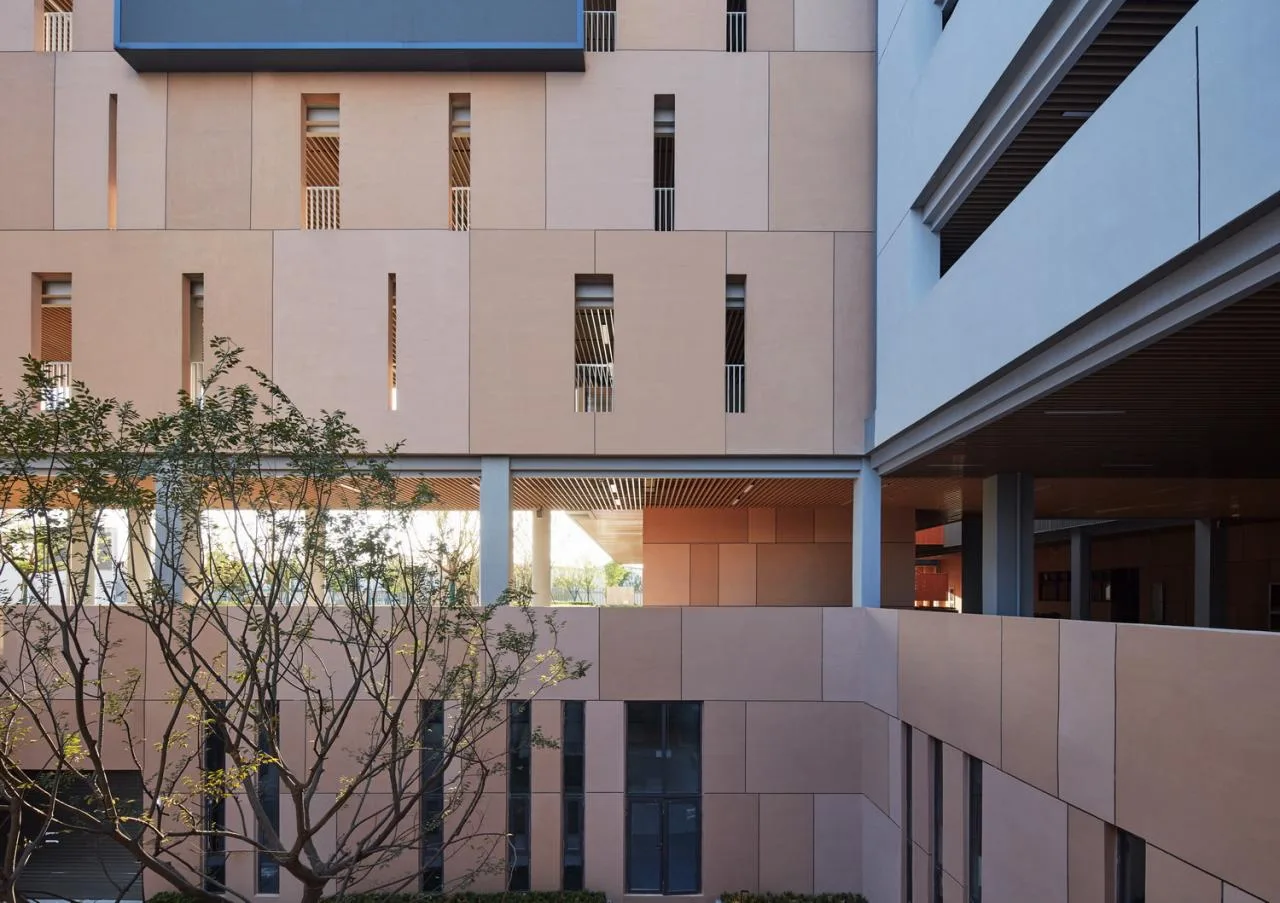
△ Three-dimensional vision strategy and courtyard ramp scene – Photo © Xia Qiang
Along the street facade, the design embraces visual transparency, allowing pedestrians to observe children’s daily activities, providing an informal yet effective layer of supervision.
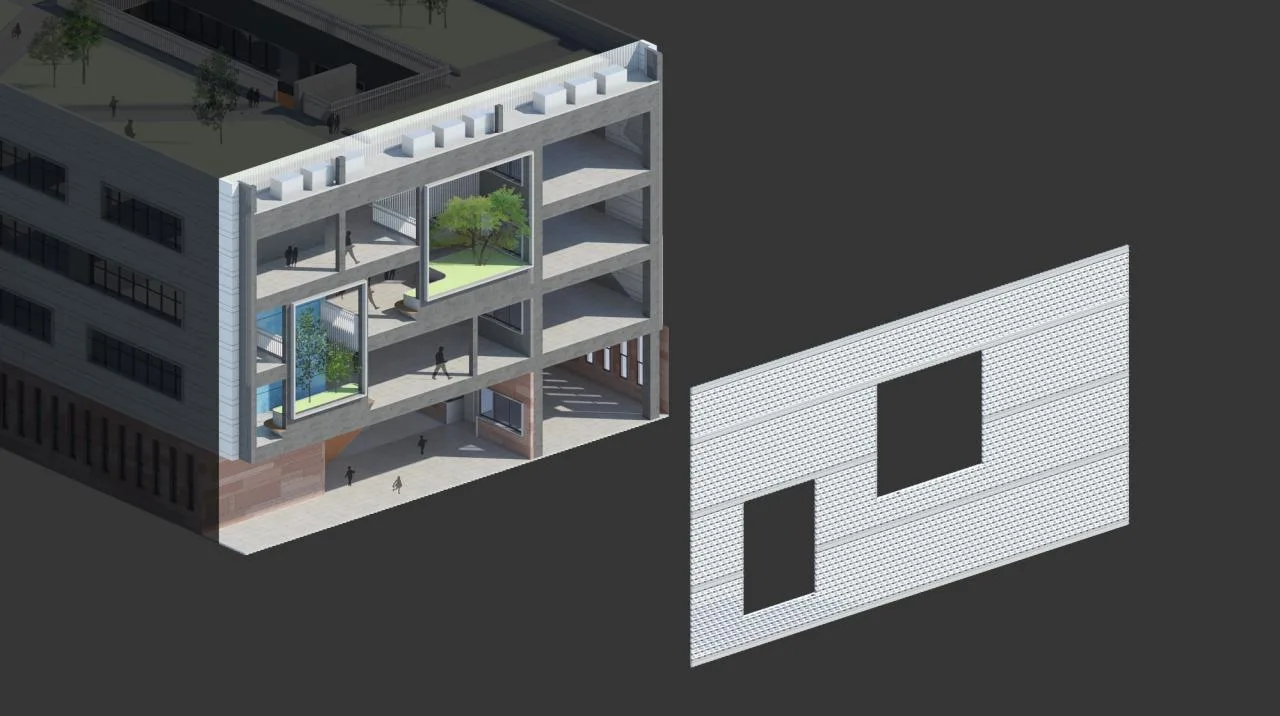
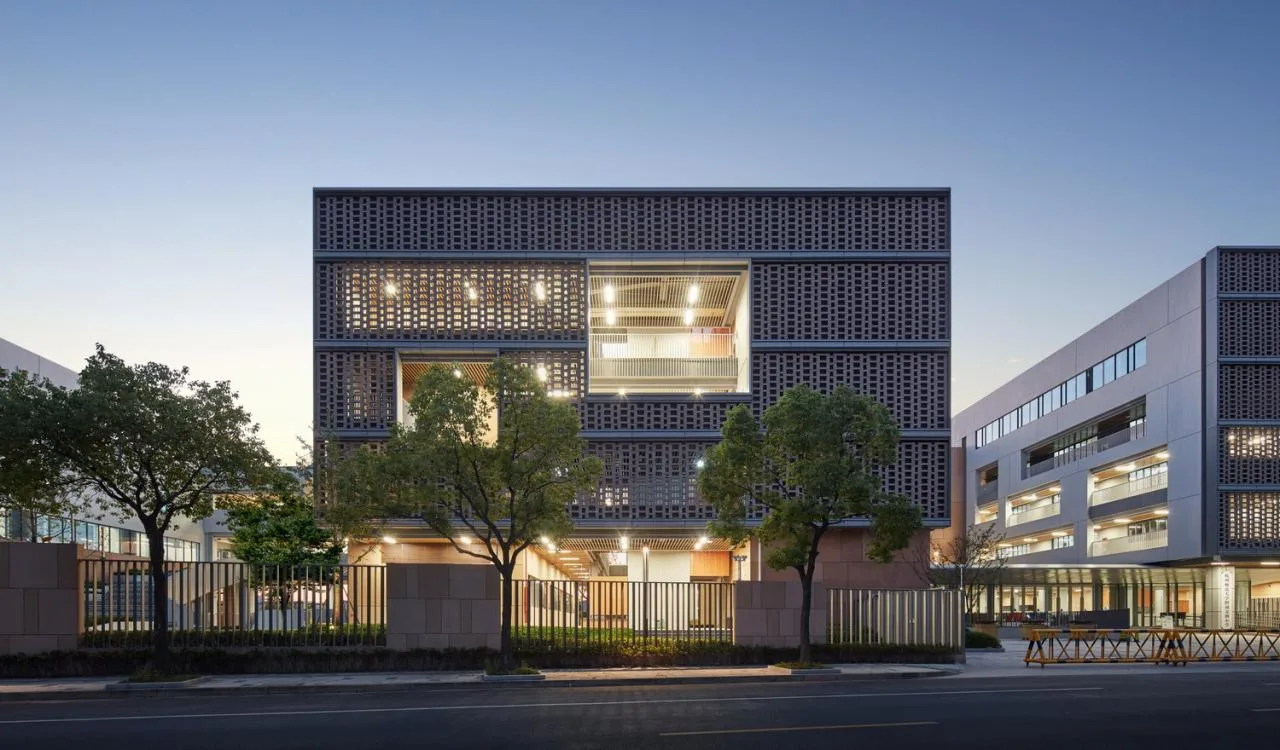
△ “Street Eye” in real-life setting – Photo © Xia Qiang
Experiential Social Education Spaces
Space as a Platform for Behavior
International education today emphasizes not only academic achievement in classrooms but also experiential learning through social activities. Considering the varying social needs of different age groups—where younger children prefer group spaces and older ones seek smaller, more private areas—the design team treated the school as a social education environment. They designed communication spaces of multiple scales, aligning spatial forms with behavior.
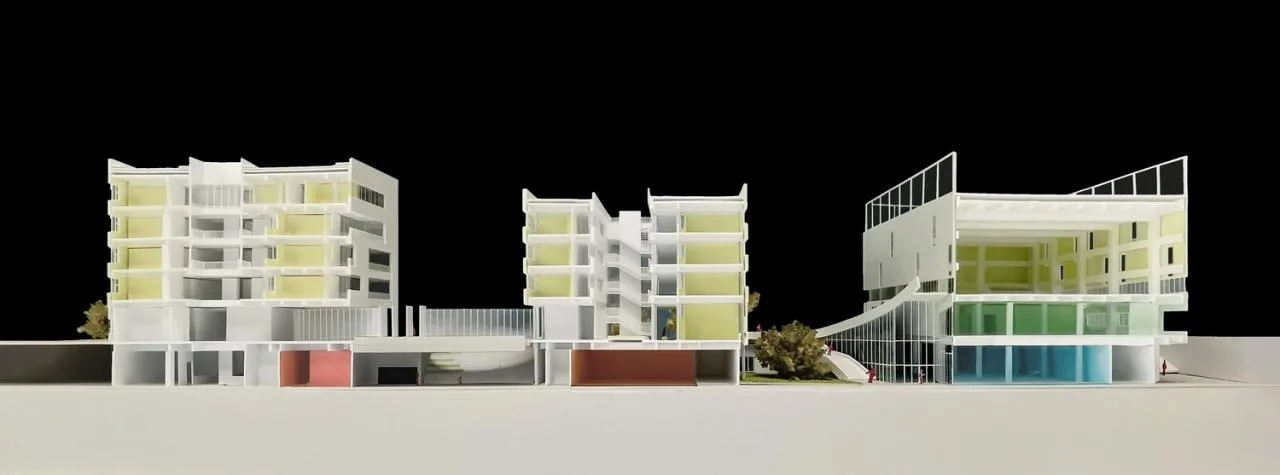
Model representation of various spatial types
Beyond classrooms, the design fosters unique spaces for children’s social interactions—libraries and classrooms blend seamlessly throughout the campus. Inner courtyards, teaching corridors, sky gardens, and expanded walkways serve as hubs for children to share interests and engage in social learning.
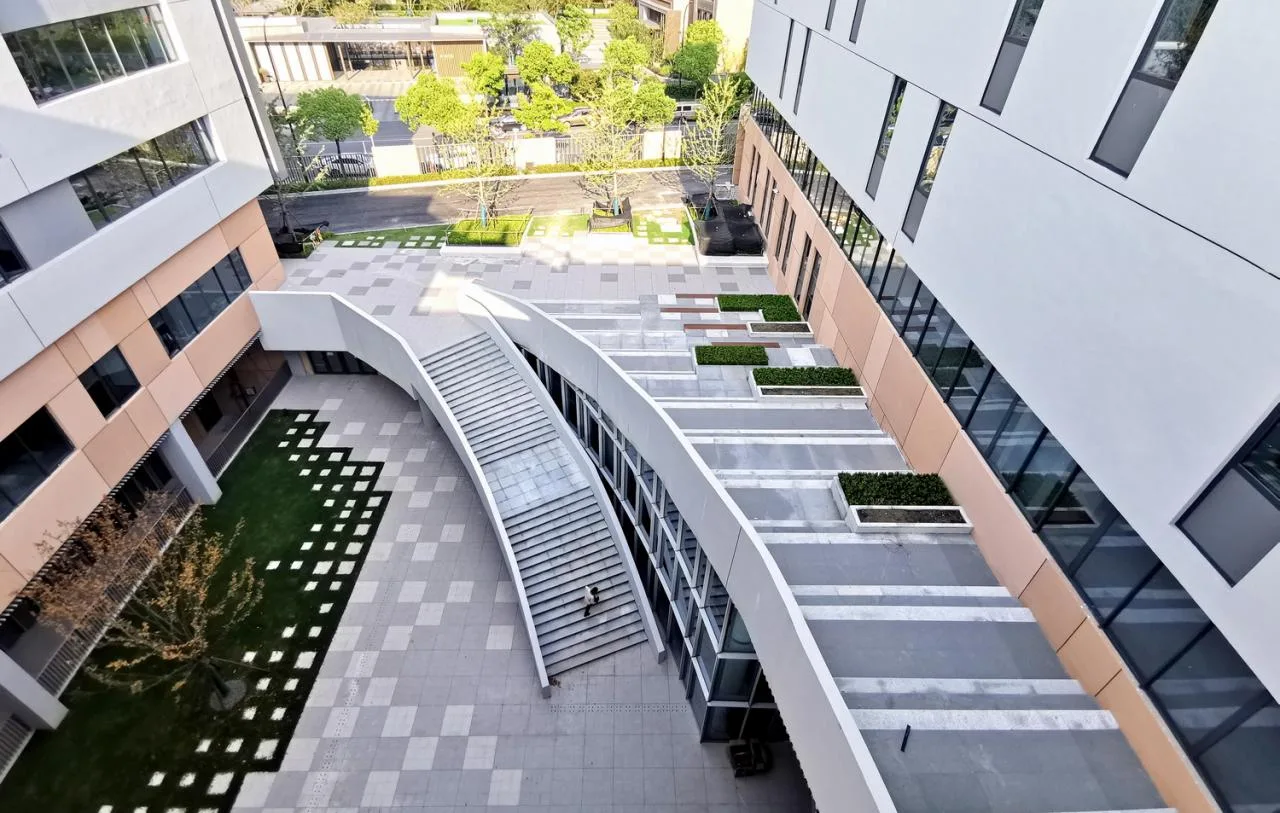
△ Sunken courtyard adjacent to the cafeteria – Photo © Xia Qiang
With classrooms no longer the sole learning spaces, every campus corner transforms into a unique area for learning. Interest clubs encourage socialized education, where older children mentor younger ones, supporting mutual growth.
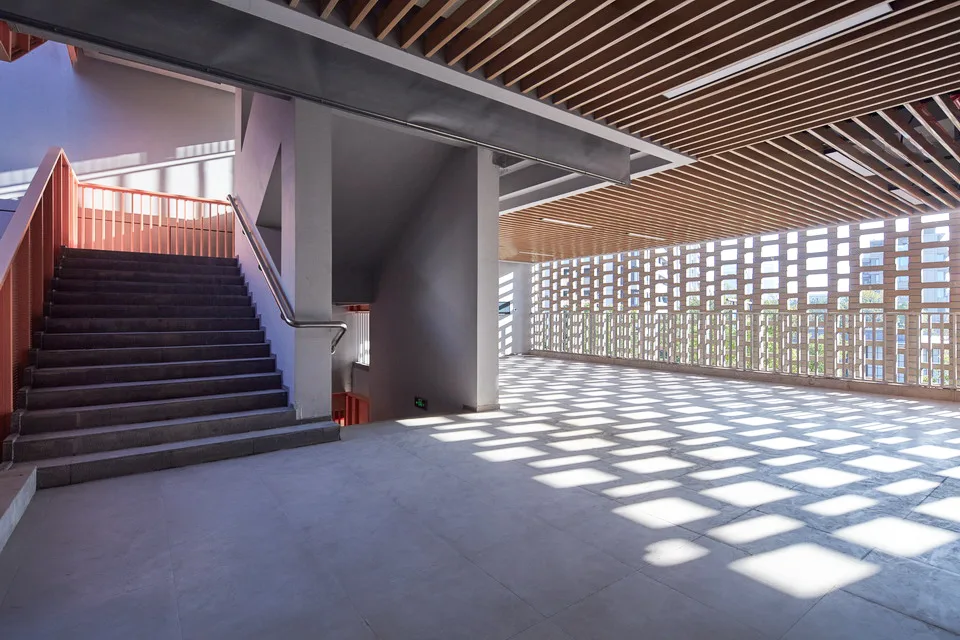
△ Social learning spaces in real life – Photo © Xia Qiang
Flexible Transportation Routes Encourage Exploration
Breaking from traditional single-path layouts, the design connects teaching buildings, sheltered playgrounds, and outdoor play areas with a teaching corridor spanning multiple levels. Rather than enforcing fixed routes, it offers children the freedom to choose their paths and spaces, enabling them to create personal memories and fostering diverse social interactions.
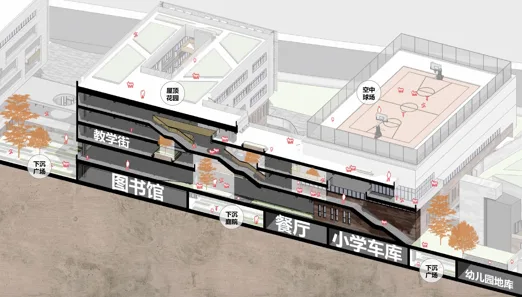
Traffic organization analysis for this project
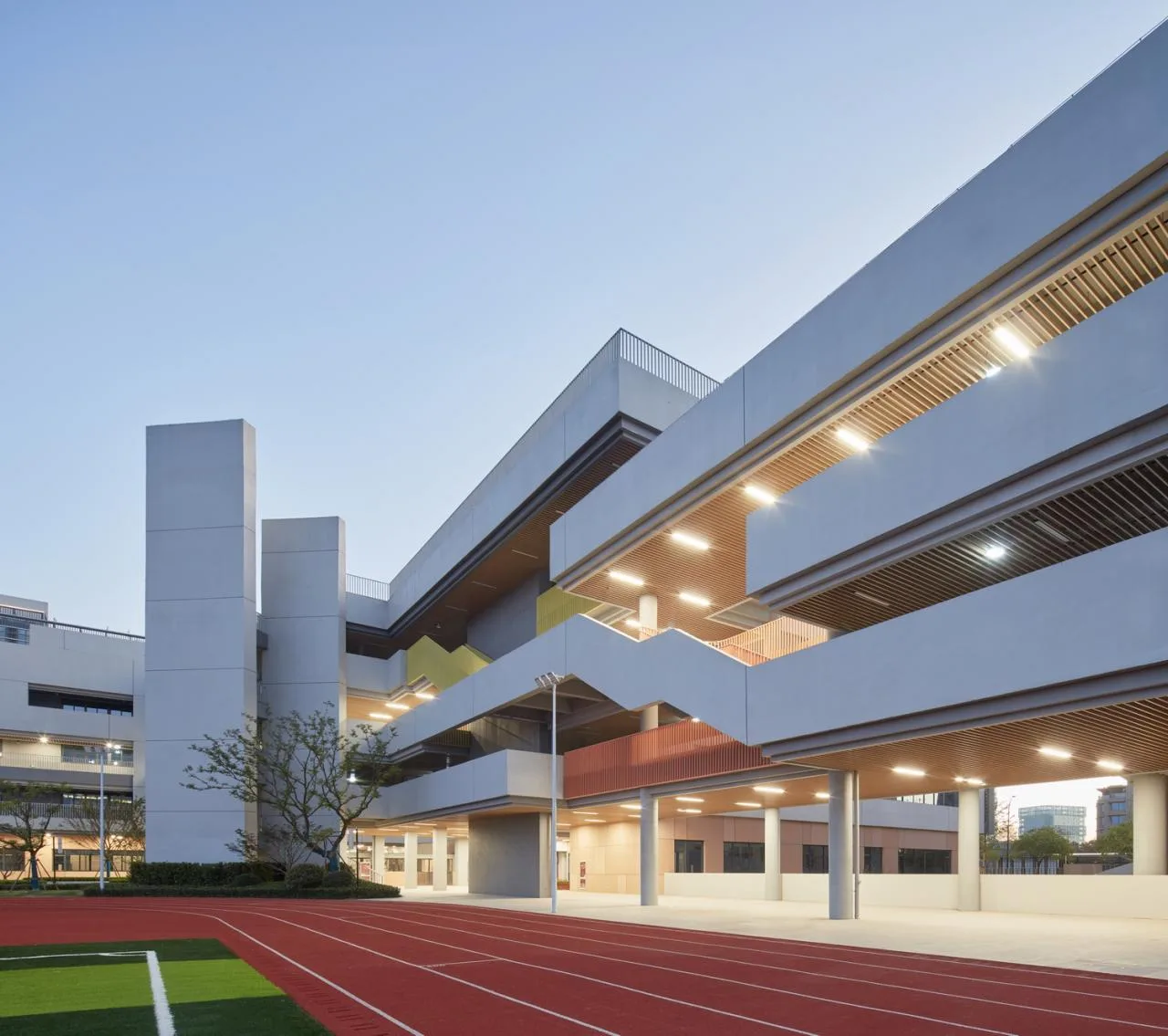
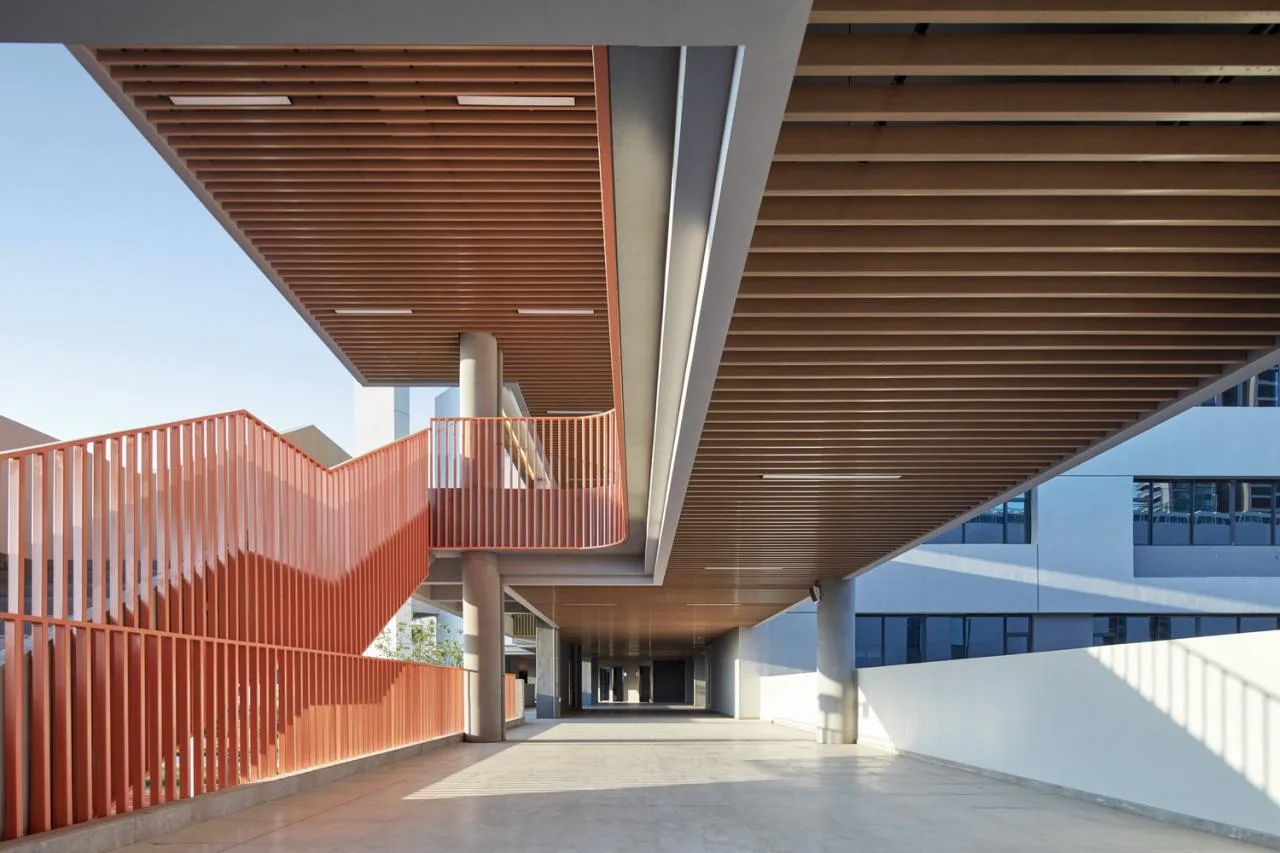
△ Real-life scene of freely chosen routes – Photo © Xia Qiang
Creating a Warm and Natural Environment
Thoughtful Color Choices as a Backdrop for Children
Unlike traditional schools that favor bright or primary colors, sometimes in stark contrast, the design team adopted a restrained palette aimed at warmth and naturalness, placing children at the center of the experience.
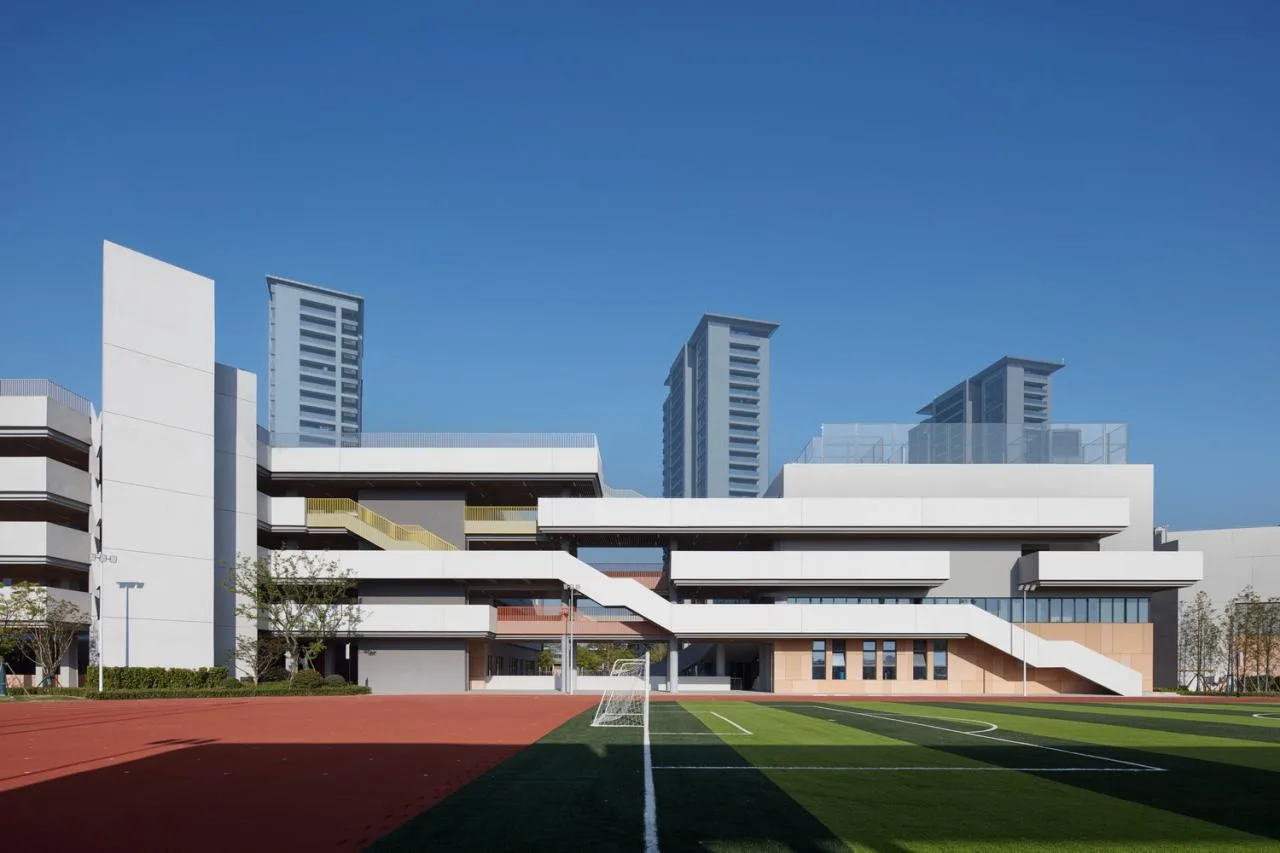
Soft orange and muted yellow subtly blend into the gray-white architecture – Photo © Xia Qiang
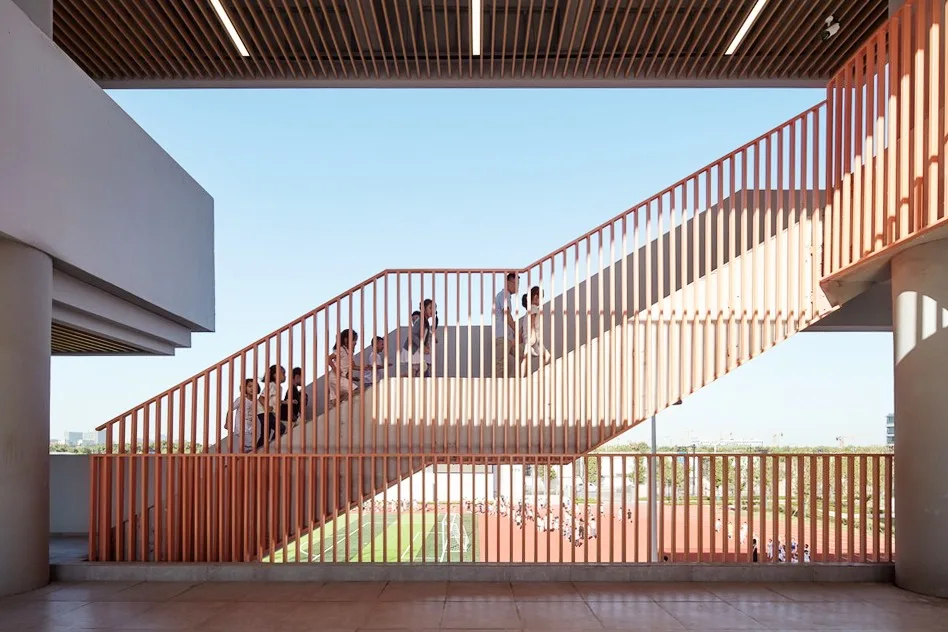
△ Diverse materials create warm orange spaces – Photo © Xia Qiang
This seemingly simple orange tone resulted from multiple rounds of sample testing, with final adjustments made on site to achieve the desired effect.
The design team maintained a consistent color scheme throughout interiors and landscapes, ensuring warmth permeates every aspect of campus life.
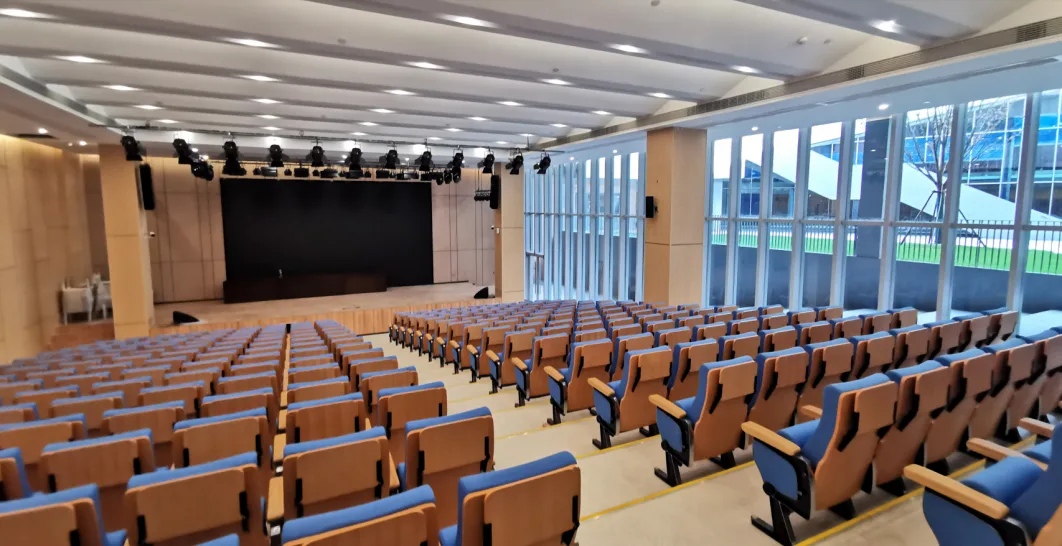
△ Interior view of the report hall – Photo © Xia Qiang
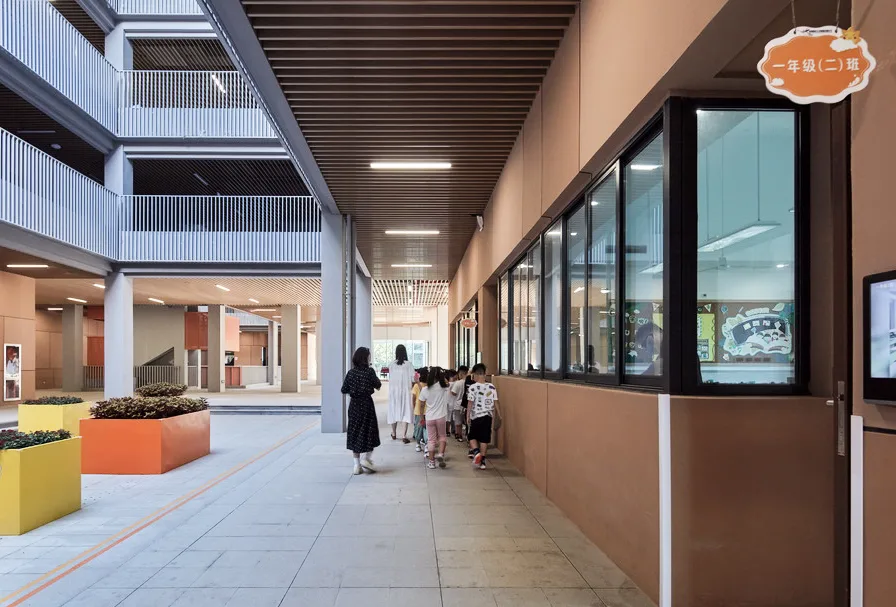
△ Classroom corridor scene – Photo © Xia Qiang
Defining Architecture Through Behavioral Change
Along the street facade, the design manipulates the spacing of hollow brick walls based on on-site lighting conditions. This delicate balance between openness and privacy allows public spaces to harmonize landscape views with a sense of seclusion. Like traditional Chinese shadow puppetry, children’s daily activities are visible yet shielded, integrating urban interaction with facade aesthetics.
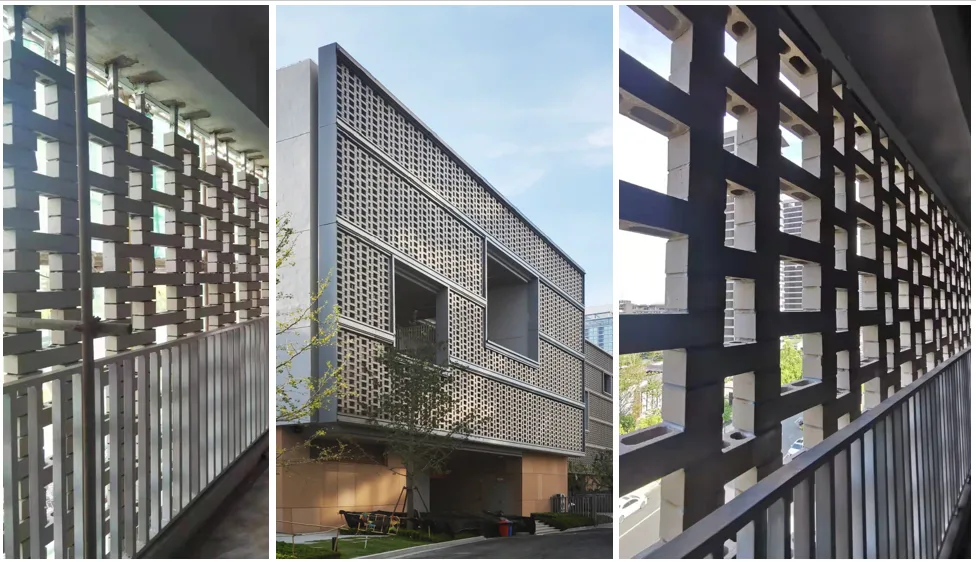
Ongoing construction site optimization photos
Technical Drawings
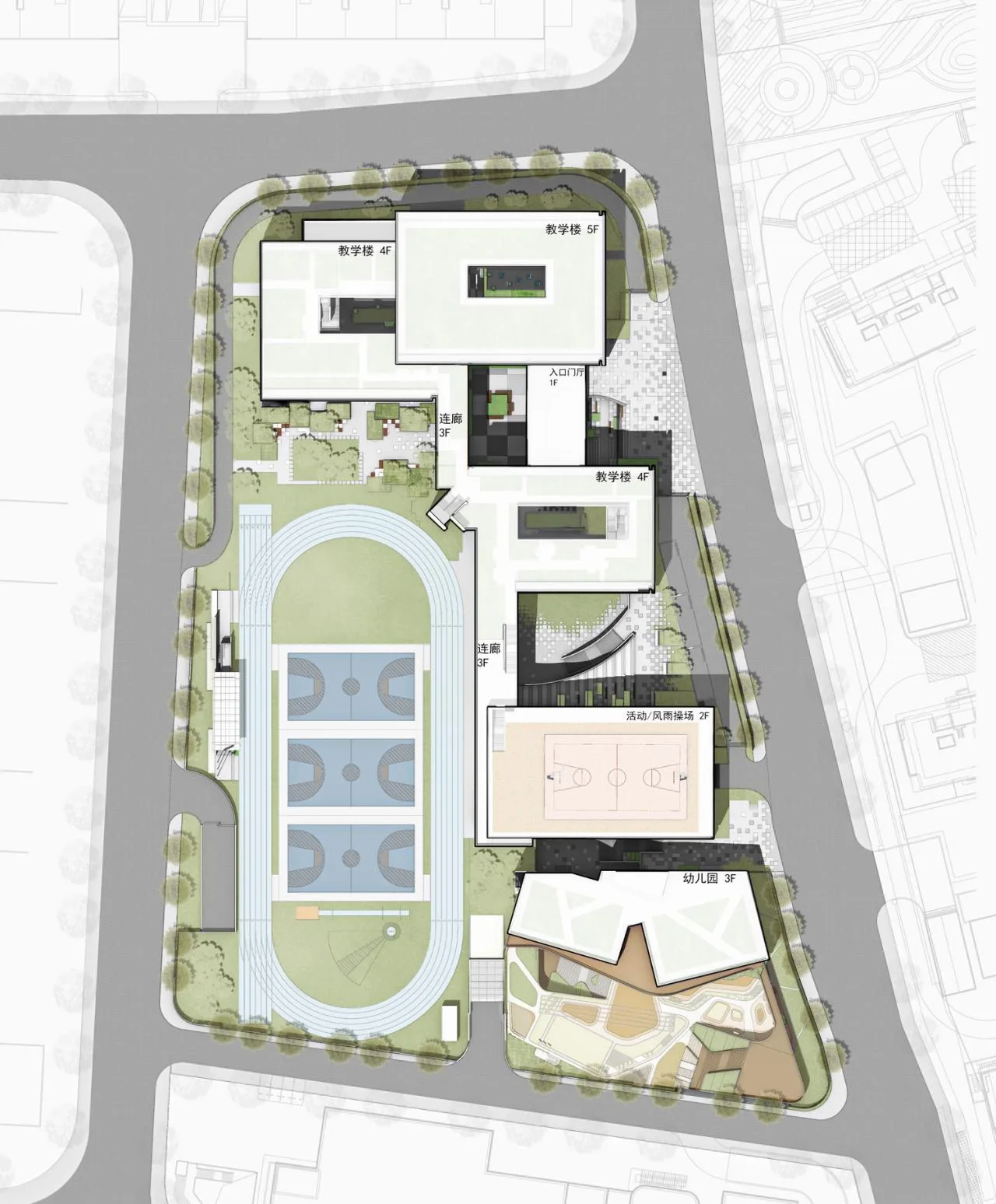
△ General layout plan
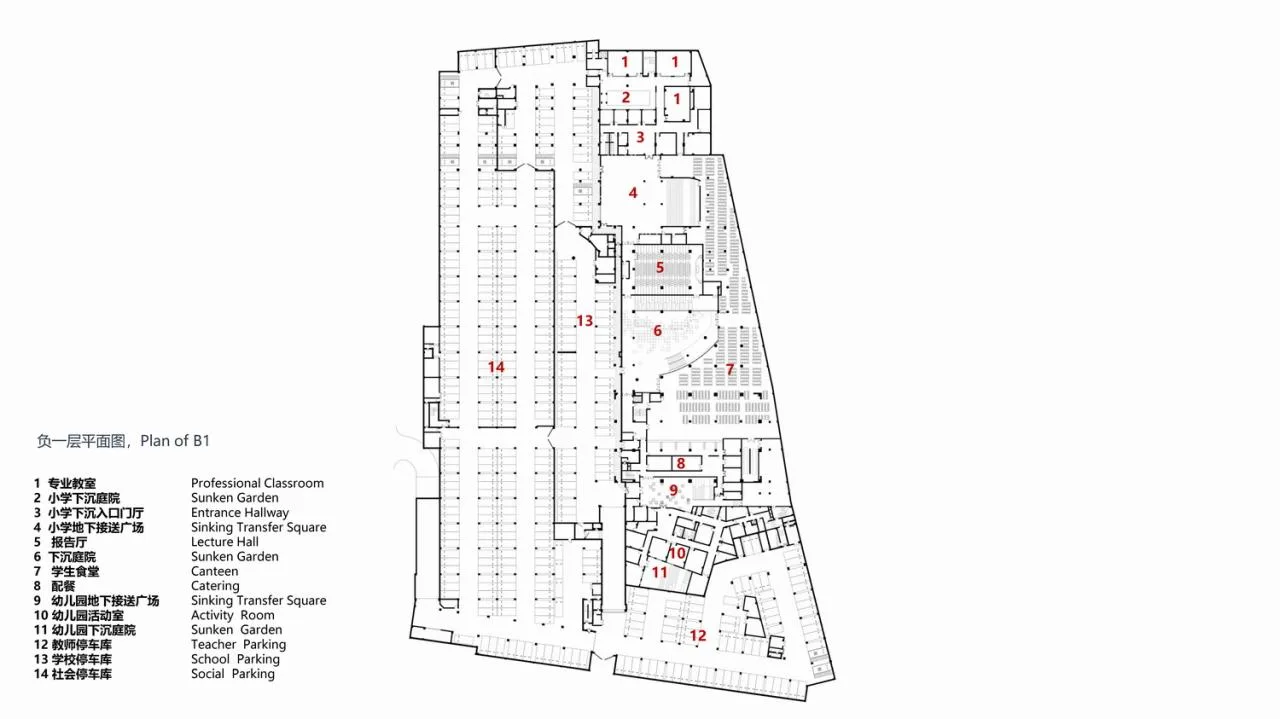
△ Underground floor plan
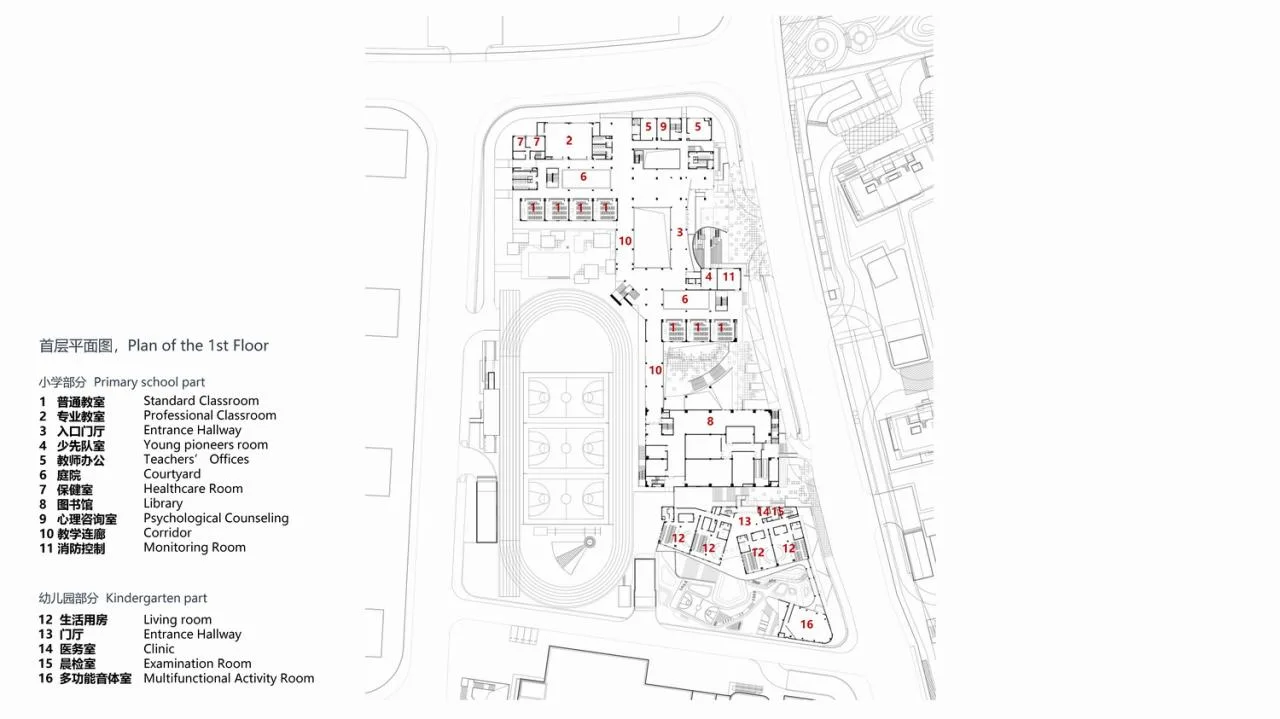
△ First floor plan
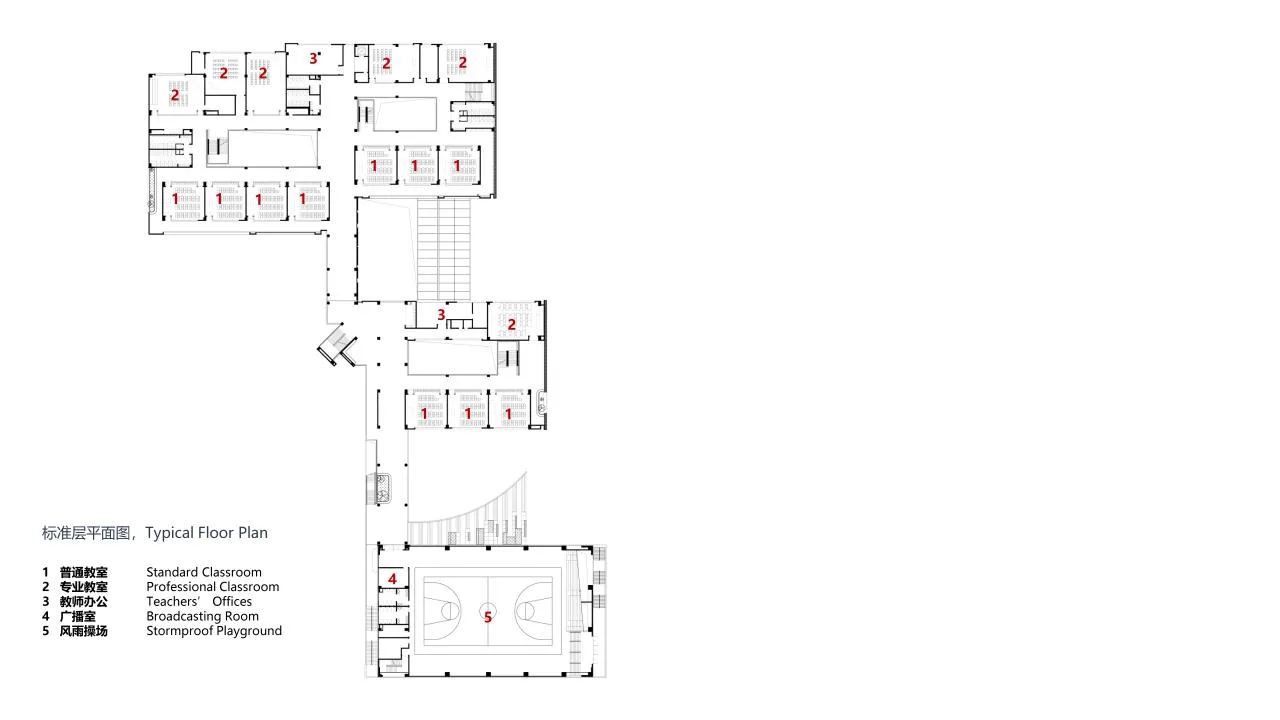
△ Standard floor plan
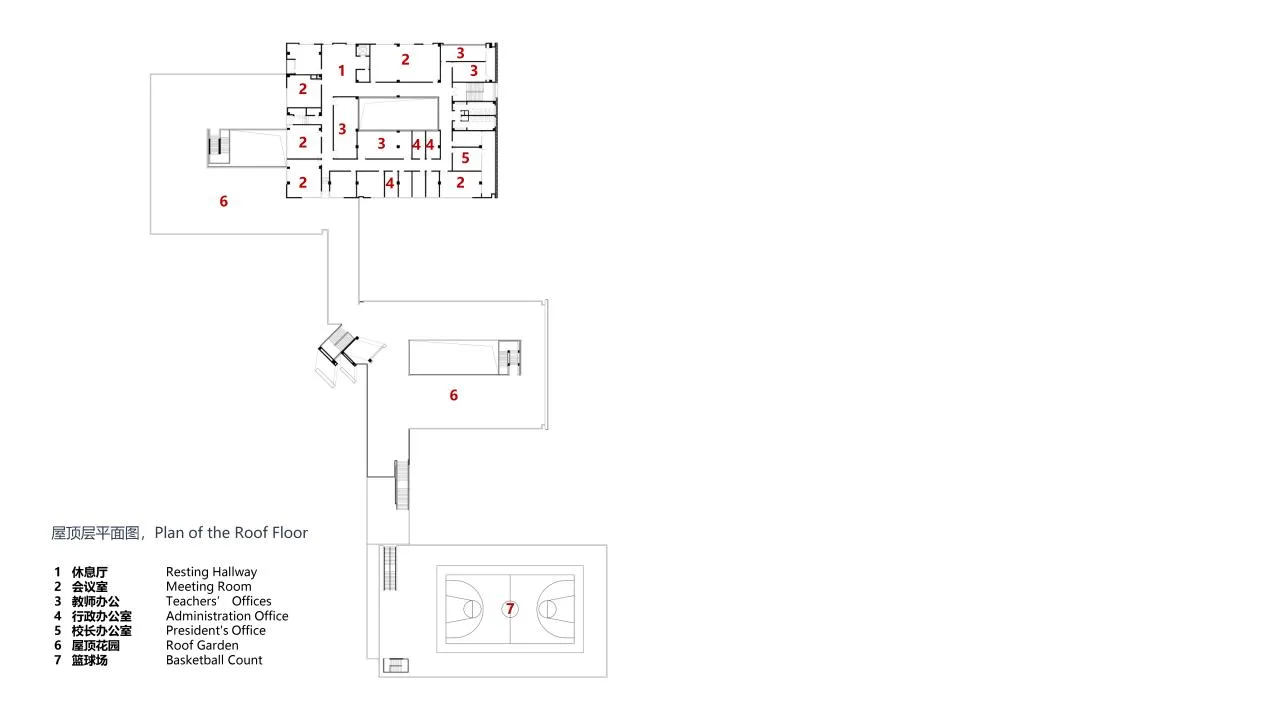
△ Roof floor plan
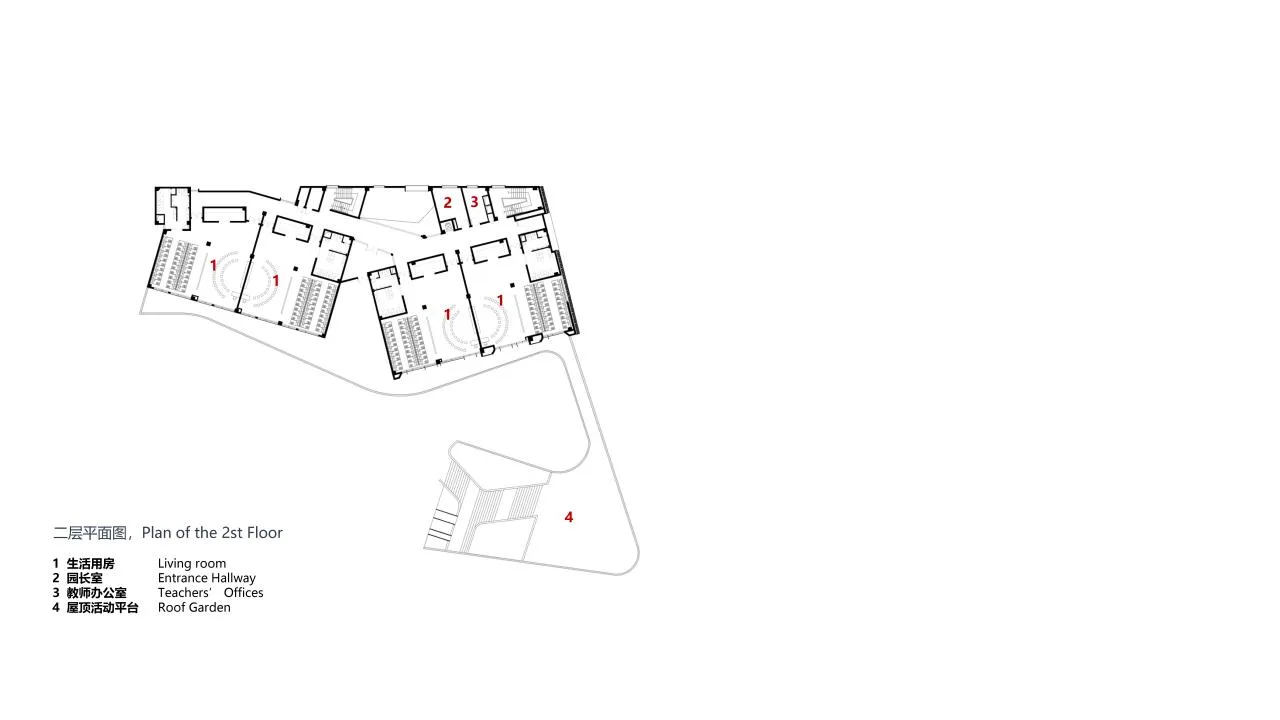
△ Kindergarten floor plan
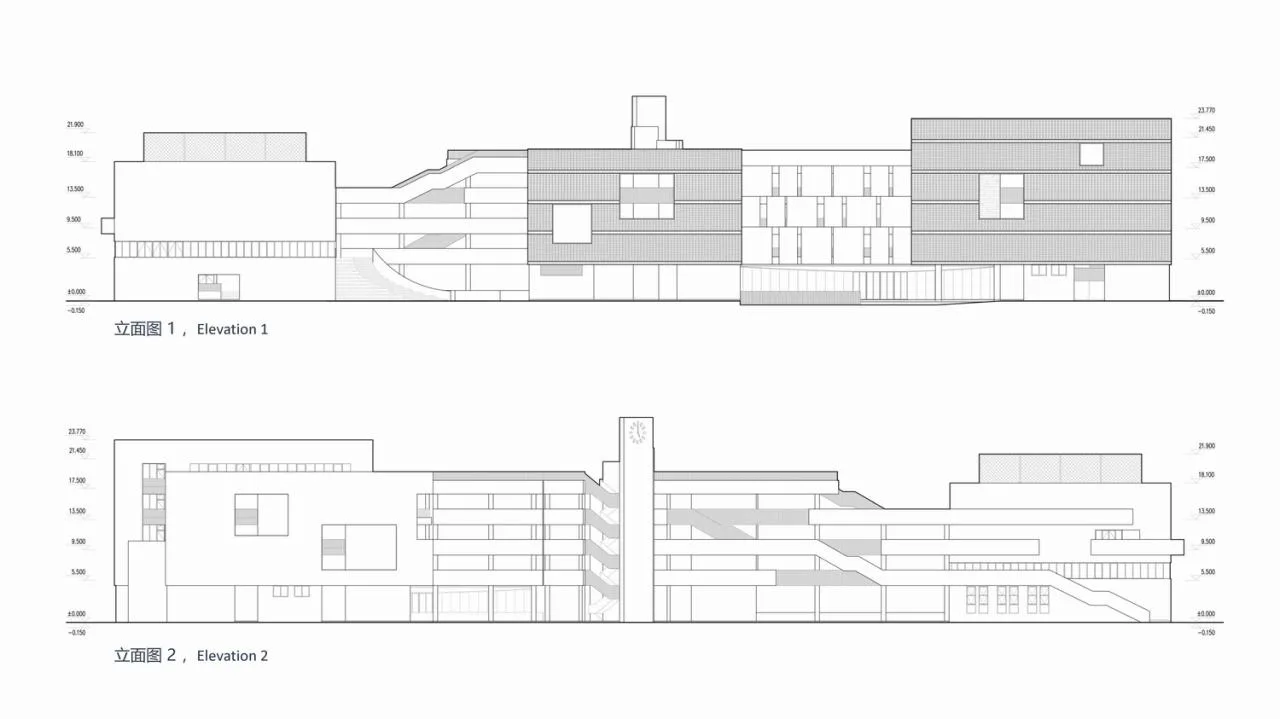
△ Elevation drawing
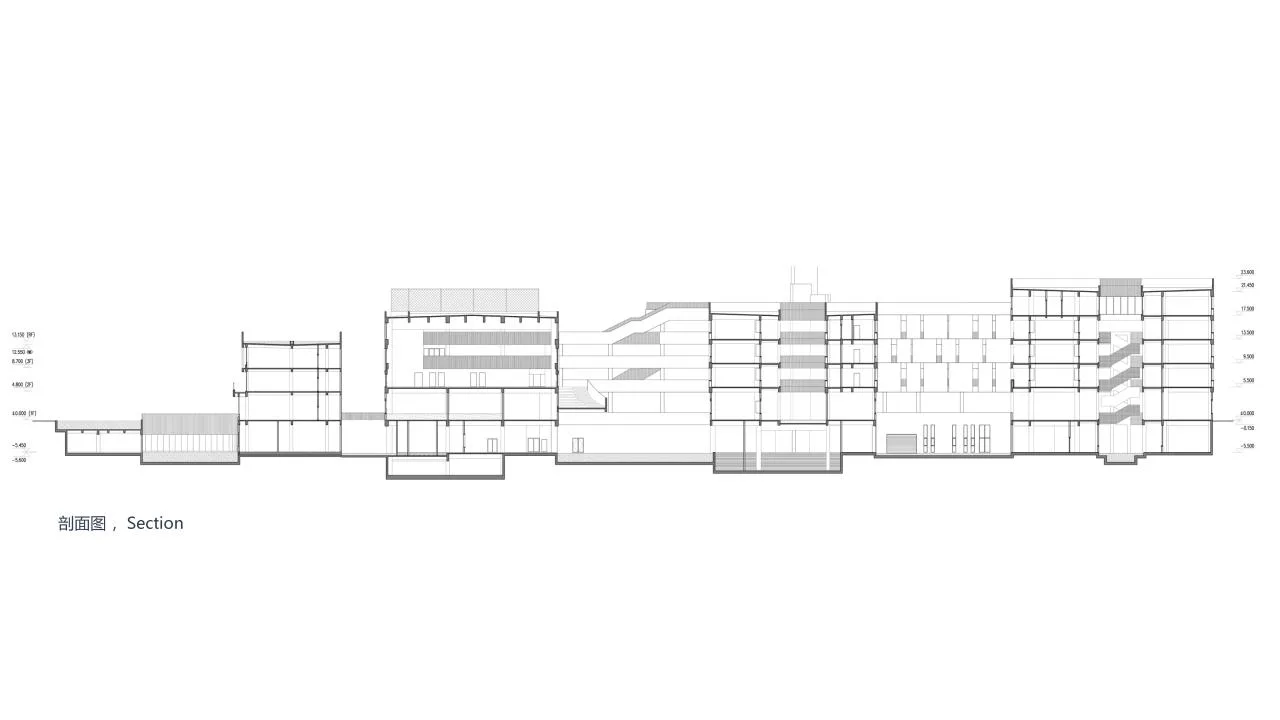
△ Section diagram
Enhancing Intangibles and Nurturing Growth
Under tight land use constraints and high design standards, incorporating diverse perspectives enriches the project. Designers act not as protagonists but as facilitators—considering user needs, behaviors, and interactions; organizing circulation as activity venues; focusing on ergonomics; and integrating indoor and outdoor environments cost-effectively. This approach naturally results in exceptional design quality.
Project Information
Building Type: School and Kindergarten
Total Area: 46,051 square meters
Developer: Renheng Land | Hong Kong Land
Architectural Design: UA You’an Design Division 4















Must log in before commenting!
Sign Up