
Project Overview
“Shake, shake, shake to Grandma’s Bridge…” The nursery rhyme echoed in my ears, and in a dreamlike state, I found myself back in a quaint village crisscrossed by waterways and paths. The lush trees on the riverbank were laden with ripe fruits, easily plucked by children aboard the black boats. Today, surrounded by steel and concrete jungles, we often prioritize ensuring the next generation accesses quality education and excels in fierce competition, while completely overlooking their connection with nature. This has led to a growing phenomenon known as “nature deficit disorder” among children.
By chance, we connected with Binhai Elementary School and saw an opportunity to focus on the natural environment of the campus and children’s activity zones as an entry point for educational architecture.
Embracing the Landscape: Creating a Bay by Integrating Water
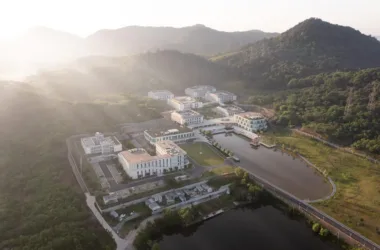
Situated in the Hangzhou Bay New Area, a region defined by its proximity and relationship to water, the project site is split into two by a planned river channel. The initial design dilemma was whether to avoid this waterway or embrace it.
After careful consideration, we chose to integrate the planned river as the natural heart of the campus, maximizing both the landscape and outdoor activity spaces. The originally straight river was reshaped into a winding form, balancing the land on either bank and creating a sheltered bay where teachers and students can relax. This transformation turned the river and its adjacent green belts into the campus’s central garden.
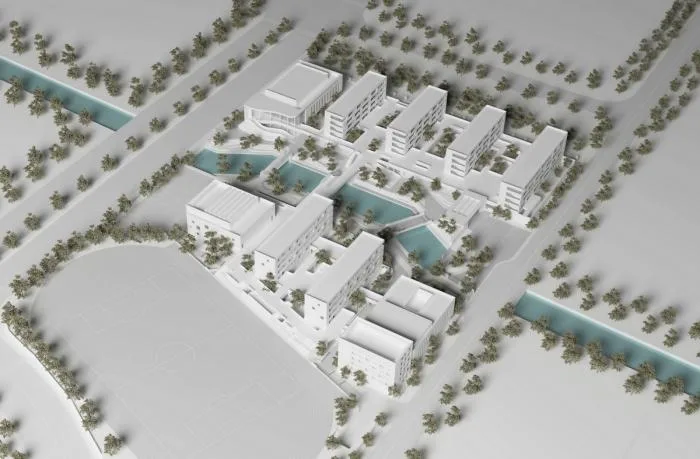
▲ Bird’s-eye view of the model
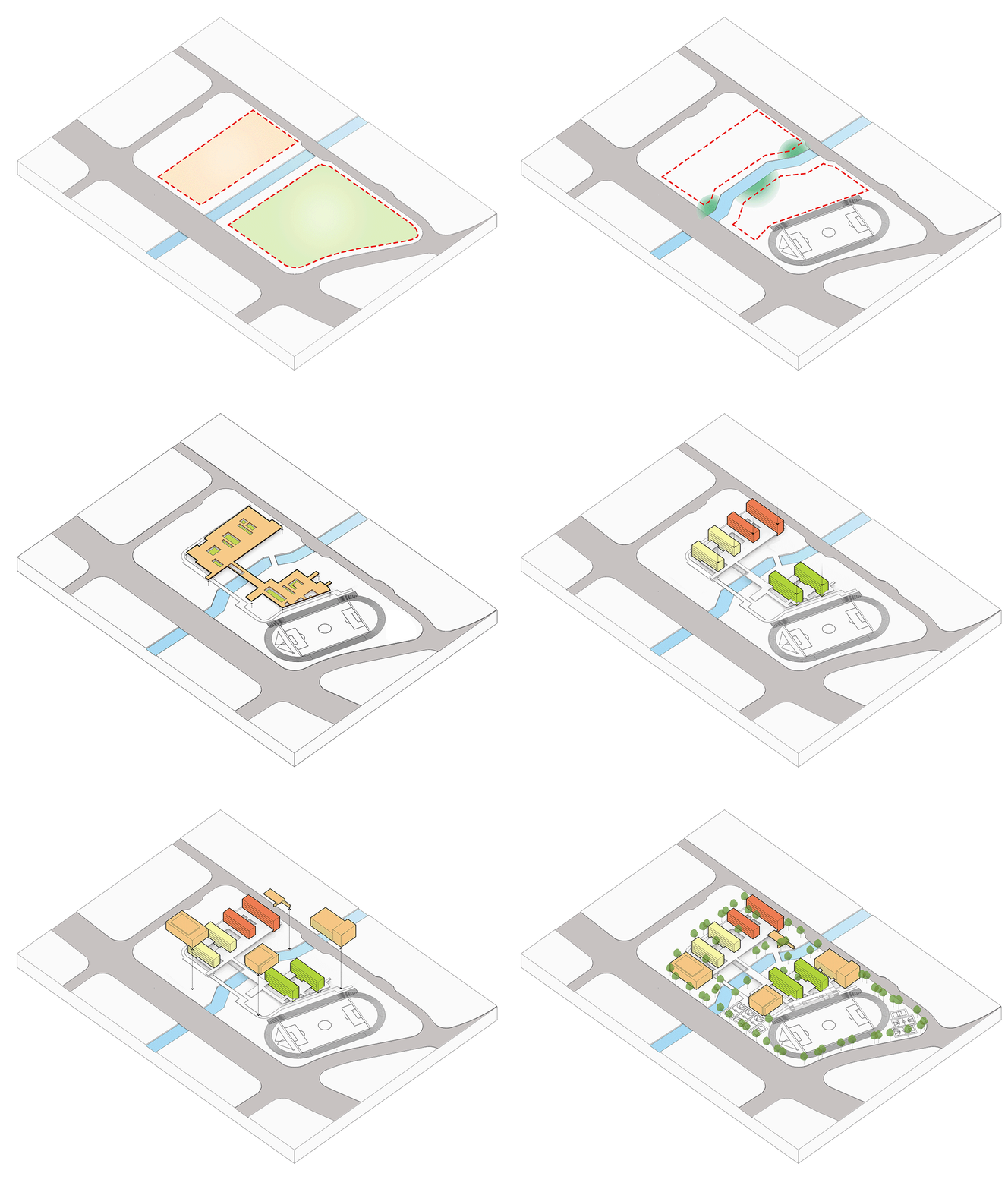
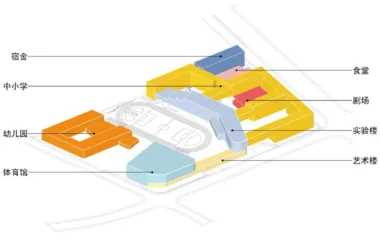
▲ Layout analysis
Boundary Spaces and Vertical Connectivity
To ensure sunlight reaches every child’s desk, professional classrooms and key functional spaces are positioned on the ground floor within high-density buildings. These are complemented by virtual courtyards and expanded public areas to create an engaging environment. Above them, standard classrooms are arranged by grade level, fostering a sense of belonging. The entire campus is woven together by a two-story platform that houses winding paths underneath, leading to tranquil spaces where children can roam freely above.
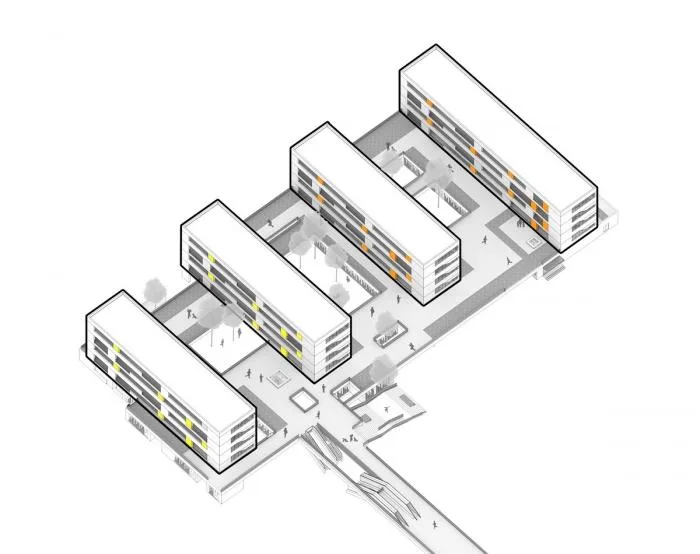
▲ Connection between courtyard and platform
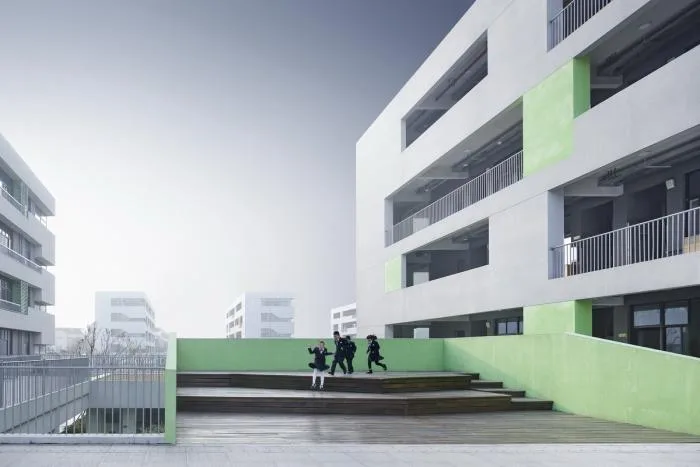
▲ Small stage utilizing local elevation
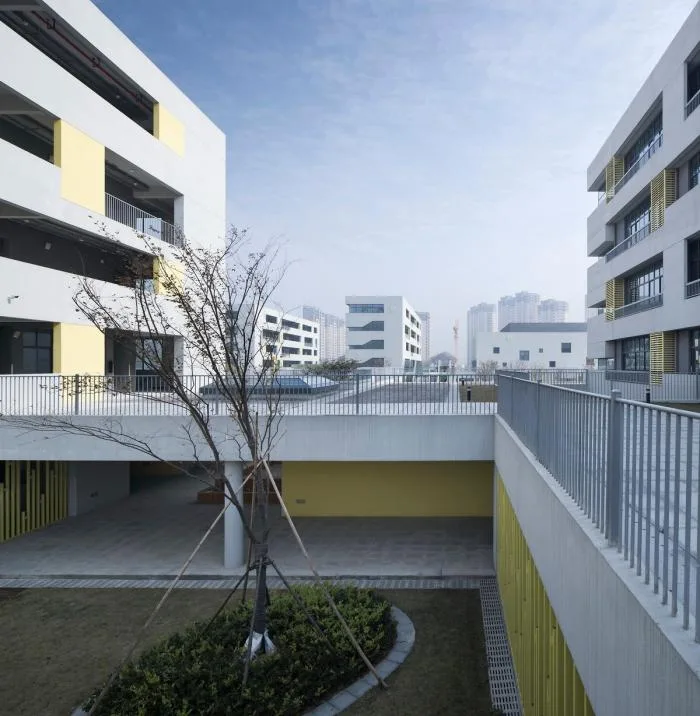
▲ Activity platform for middle age group on second floor
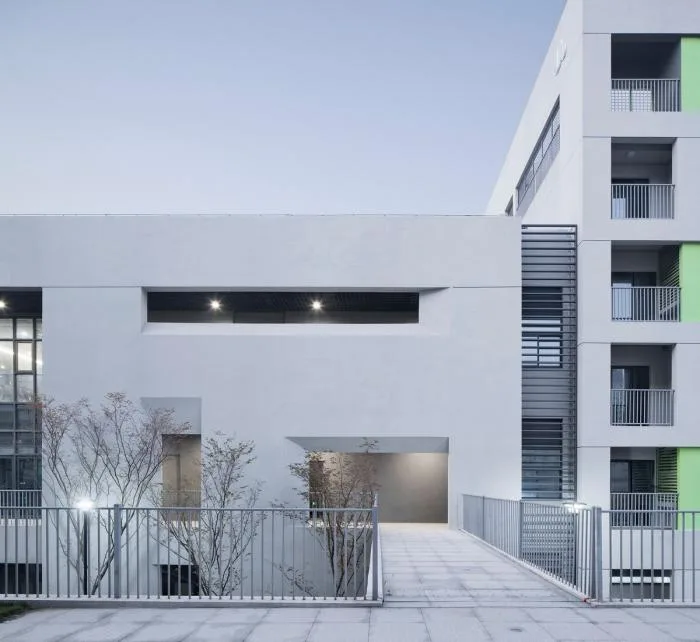
▲ Linking the cafeteria’s second-floor platform
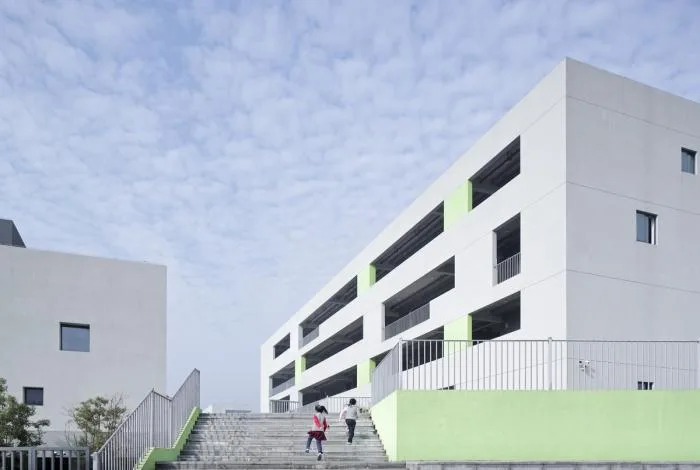
▲ Platform connected to sports field via bleachers
Wetland-Inspired Architecture: A Nurturing Environment
As the saying goes, children are like blank canvases, and emptiness forms the foundation of education and architectural space. The entire campus is designed as a virtual space centered around water, featuring wetlands, greenery, and scattered courtyards. The building’s lower platform hosts communal areas, while specialized classrooms occupy the upper level. Traditional Jiangnan-style walls define spaces, resulting in a courtyard-style campus woven with winding rivers and deep courtyards.
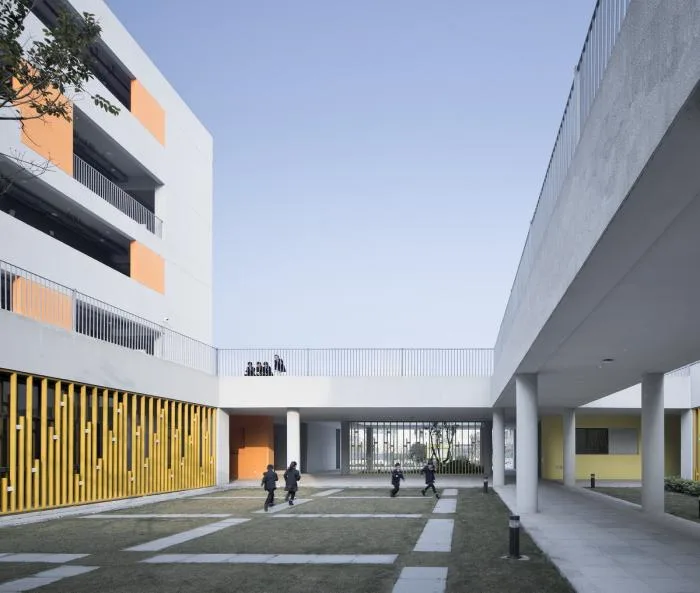
▲ Lower courtyard space
Age Groups and Scale Experience
Primary school marks a rapid stage of cognitive development in children. Our design reflects this by focusing on mobility, growth mindset, and age-specific needs. The campus is divided into three teaching buildings tailored for young, middle, and older age groups. We organized spaces from the students’ perspective, carefully controlling scale to enhance comfort and experience—especially for younger children.
The youngest group’s courtyards are smaller and more dispersed, with larger centralized spaces for guidance and close connections to various functions for ease of use. Courtyards for middle and older groups are logically arranged with clear pathways. These two groups are positioned adjacent to encourage interaction and communication among students.
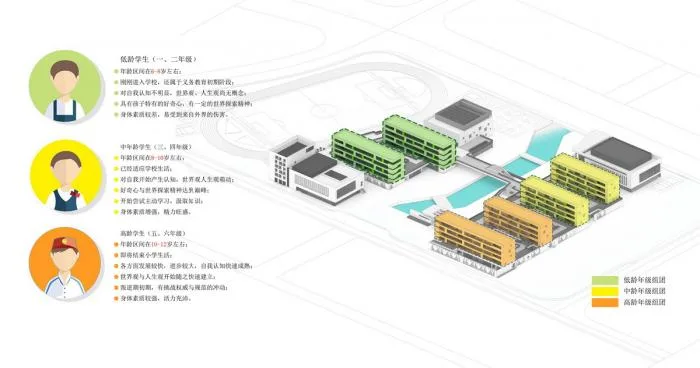
▲ Age group analysis
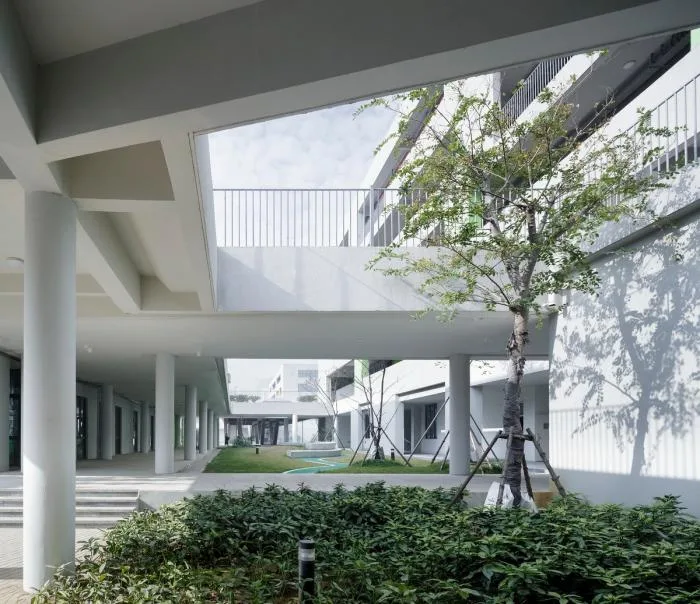
▲ Courtyard space for younger age groups
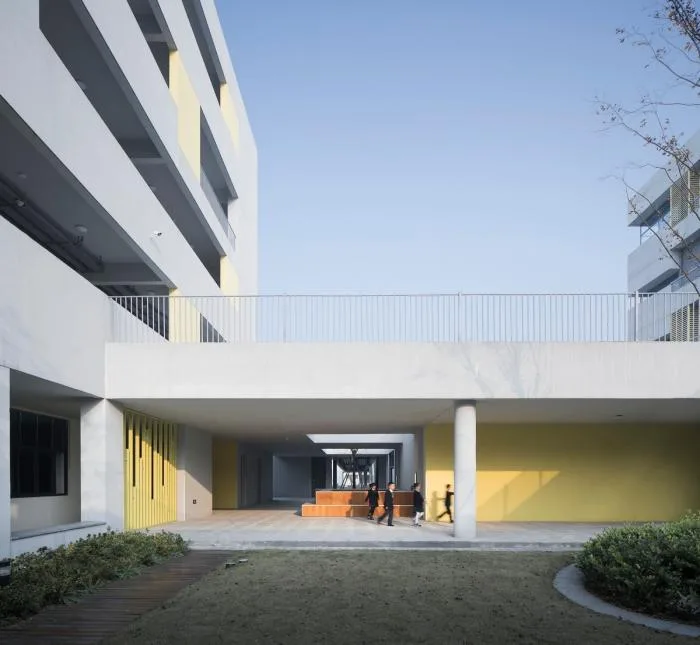
▲ Courtyard for middle age group
Conclusion
By the river, green plum blossoms bloom as children ride bamboo horses in the courtyard. Childhood memories remain warm and vivid. The designers hope that, in years to come, children will remember their alma mater as the deep courtyard full of joyful times and the winding river that once carried countless little orange lanterns downstream.
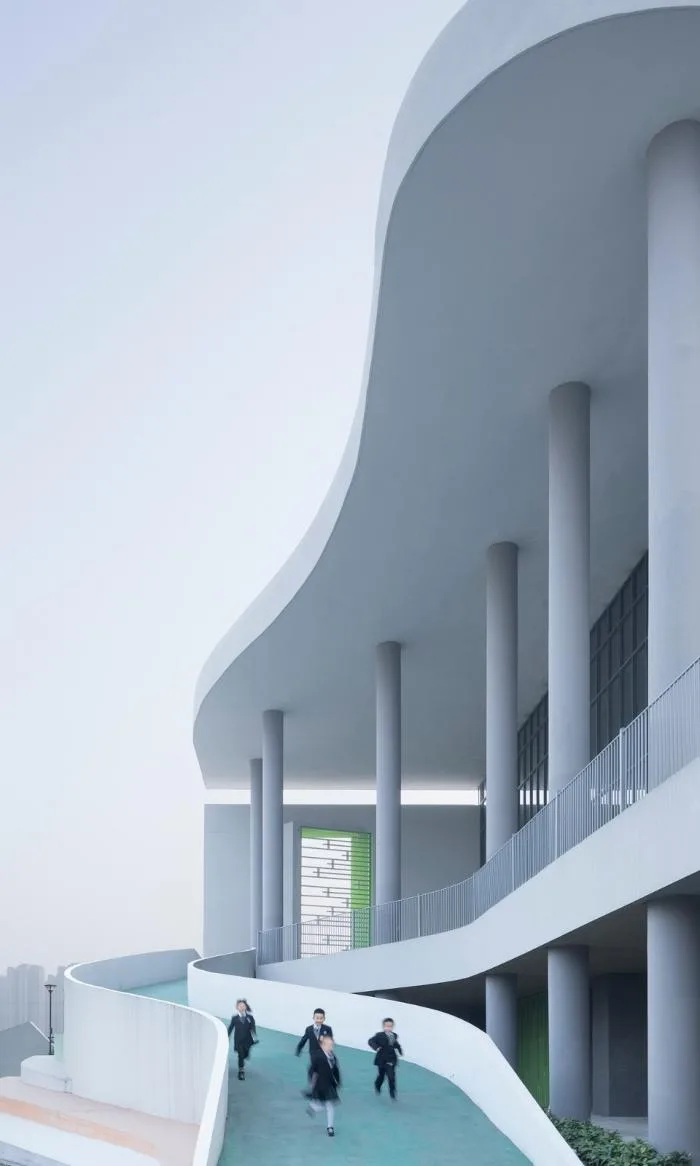
▲ Art Center entrance ramp
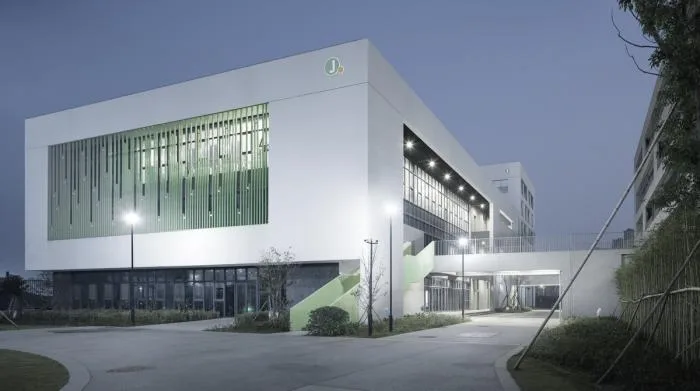
▲ Canteen illuminated at night
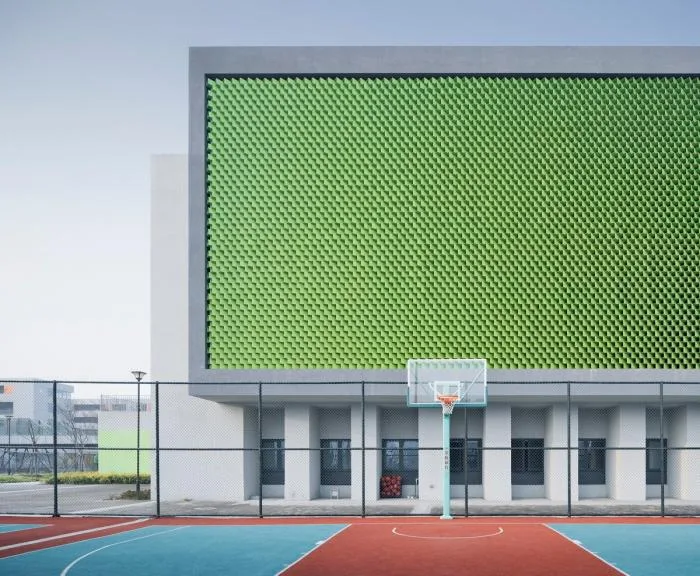
▲ Basketball court and gymnasium
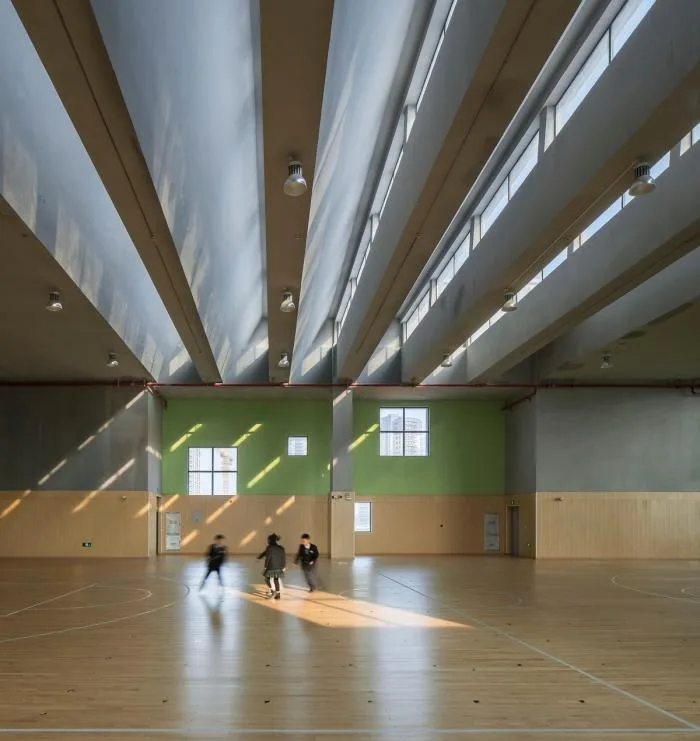
▲ Indoor Sports Center
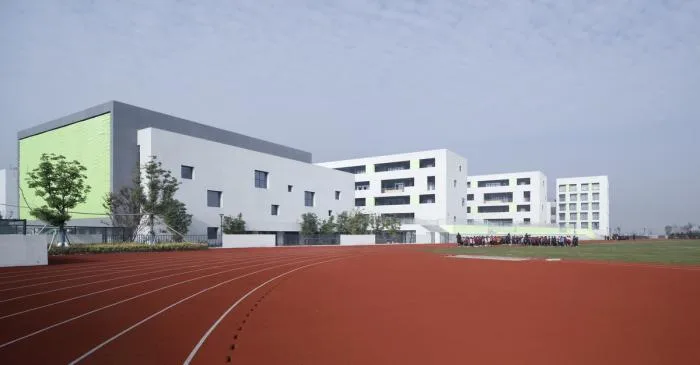
▲ Campus sports field
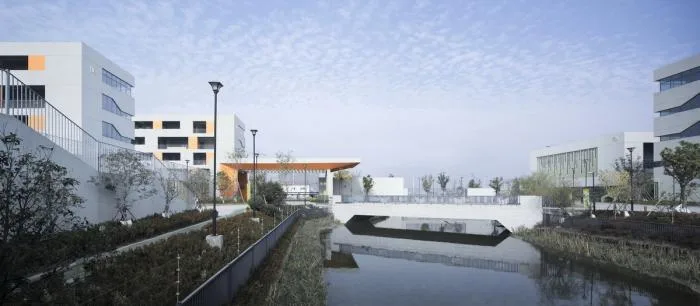
▲ The winding river throughout the campus
Project Drawings
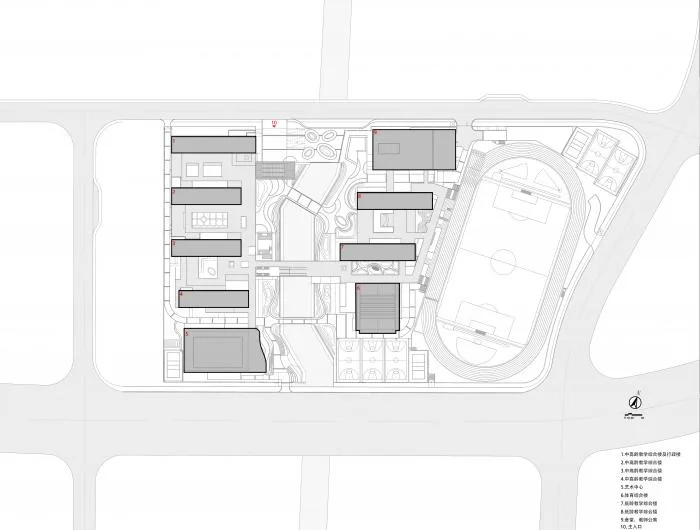
▲ General layout plan
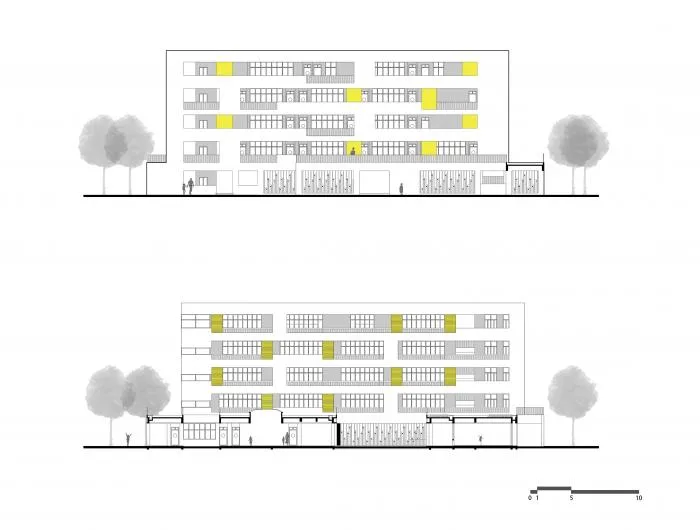
▲ Front elevation of teaching building
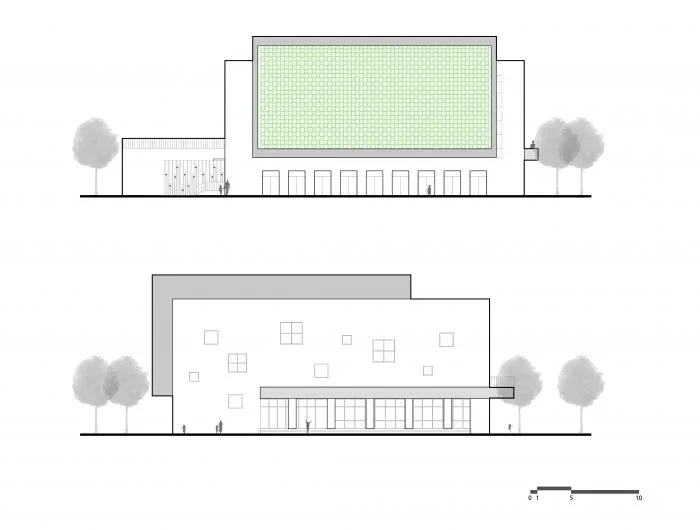
▲ Elevation of Sports Center
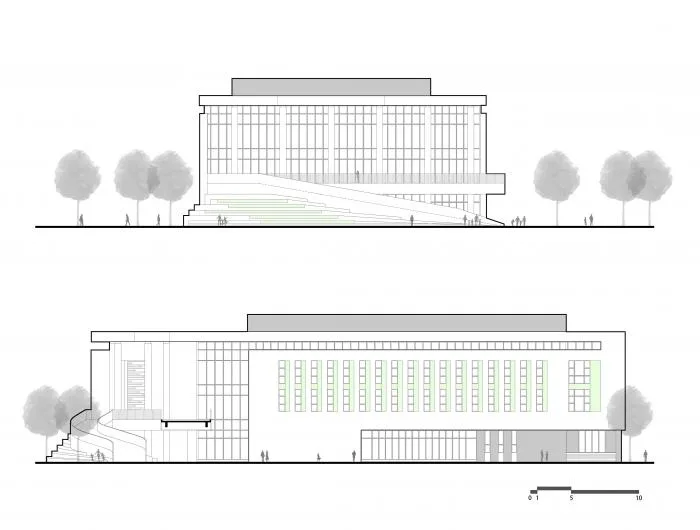
▲ Elevation of Art Center
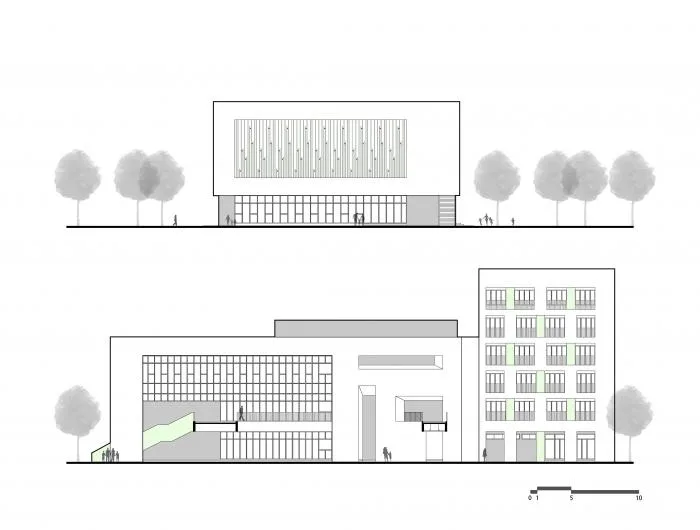
▲ Front view of cafeteria and teacher dormitory
Project Details
Project Name: Ningbo Hangzhou Bay Binhai Primary School
Design Firm: Zhejiang University Architectural Design and Research Institute Co., Ltd.
Design Period: August 2016 – January 2017
Completion Period: February 2017 – September 2019
Total Construction Area: 47,520 square meters
Ground Floor Area: 36,180 square meters
Client: Ningbo Hangzhou Bay New Area Education Development Center
Design Directors: Wu Zhenling, Zhu Rui
Architectural Design Team: Wang Yingni, Xu Sun, Zhang Jiachen, Fan Zhenyue, Wang Su
Structural Design Team: Jin Zhenxin, Wang Jun, Li Li, Li Shaohua, Ding Lei, Ni Wenhao, Huadan
Water Supply and Drainage Team: Chen Ji, Chen Zhoujie, Fang Huoming, Lin Lujia, Zhao Jieqin
HVAC Team: Ren Xiaodong, Guo Yinan, Shao Chunting
Electrical Team: Zheng Guoxing, Ding Li, Sun Dengfeng
Intelligent Systems Team: Jiang Bing, Zhang Wubo, Ni Gaojun, Ma Jian
Curtain Wall Team: Shi Jiqiang, Hong Chao
Landscape Design Team: Tang Zerong, Xu Conghua, Zhu Liang, Zhang Chi, Yao Haiyan
Photography Credit: Zhao Qiang












Must log in before commenting!
Sign Up