
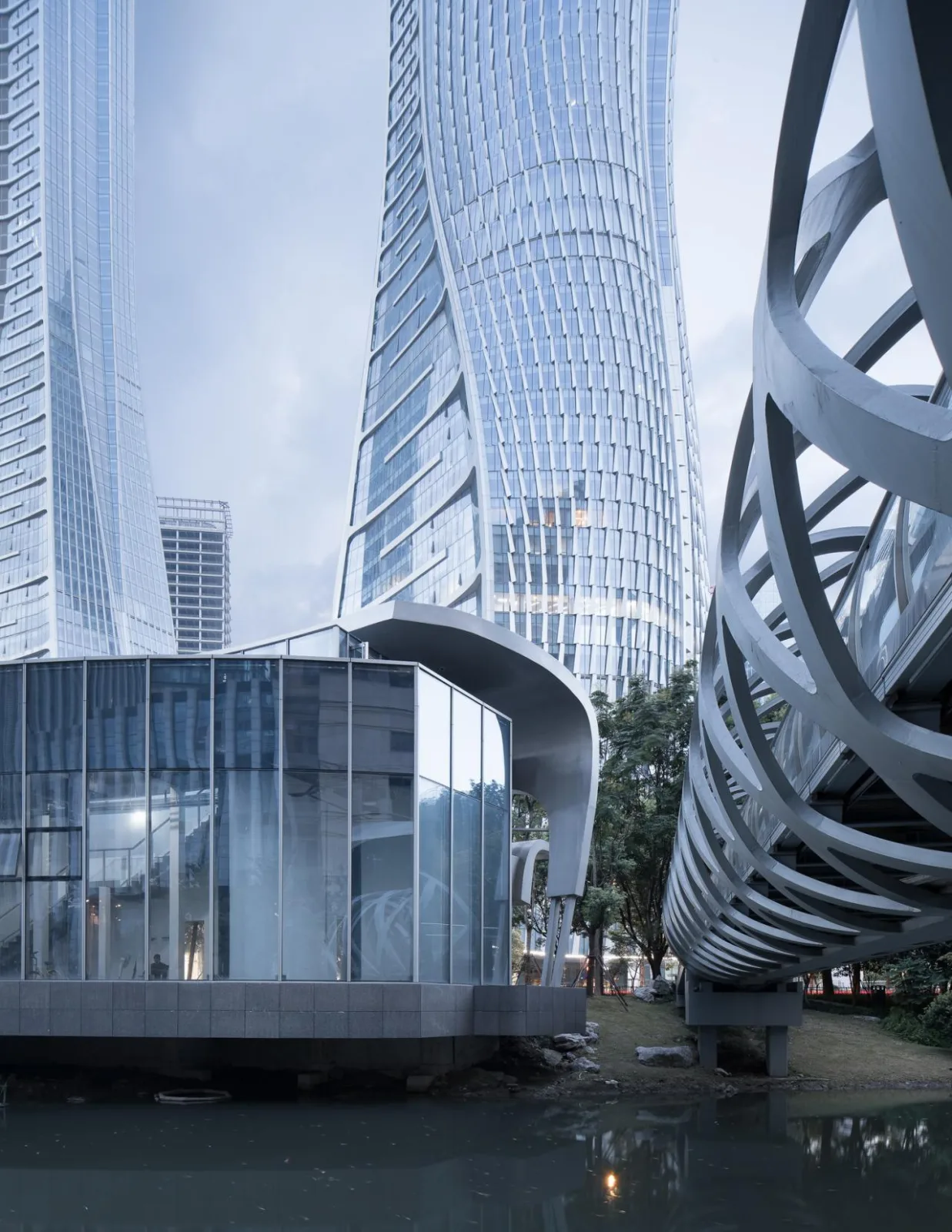
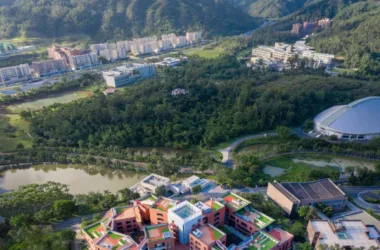
The spatial design of Qianjiang New City in Hangzhou centers around modern urban characteristics, dominated by high-rise buildings. The skyline integrates tall structures, residential areas, green spaces, and waterways, collectively shaping the city’s distinctive identity. However, vast metropolises often hinder social interactions, subtly increasing the gap between communities.
The metro supporting facilities along Xintang River in Qianjiang New City serve as vital urban acupuncture points, revitalizing underutilized spaces. These facilities organize the city’s block grid, reduce social distance, and harmonize with the natural environment and neighboring buildings. By weaving various social connections into a specific setting, the design fosters meaningful community interaction.
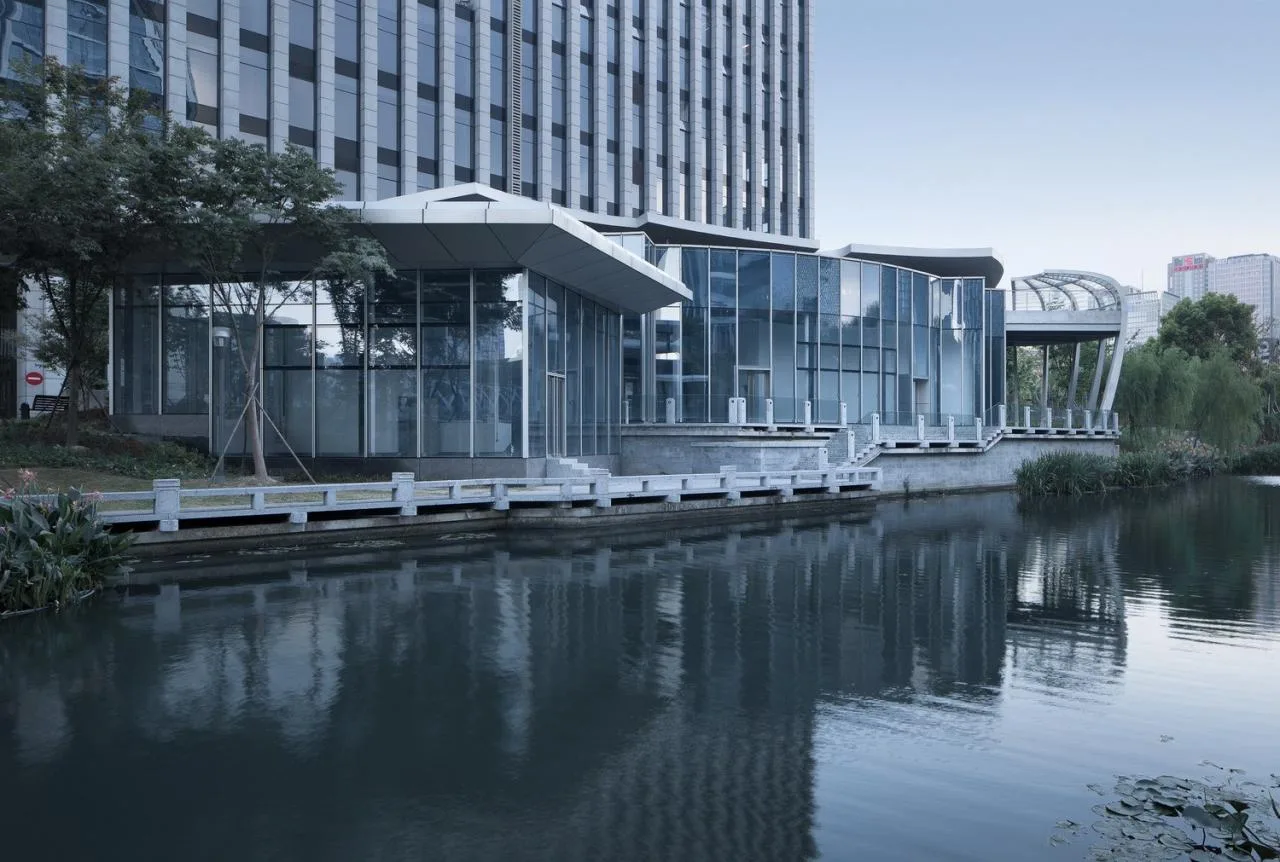
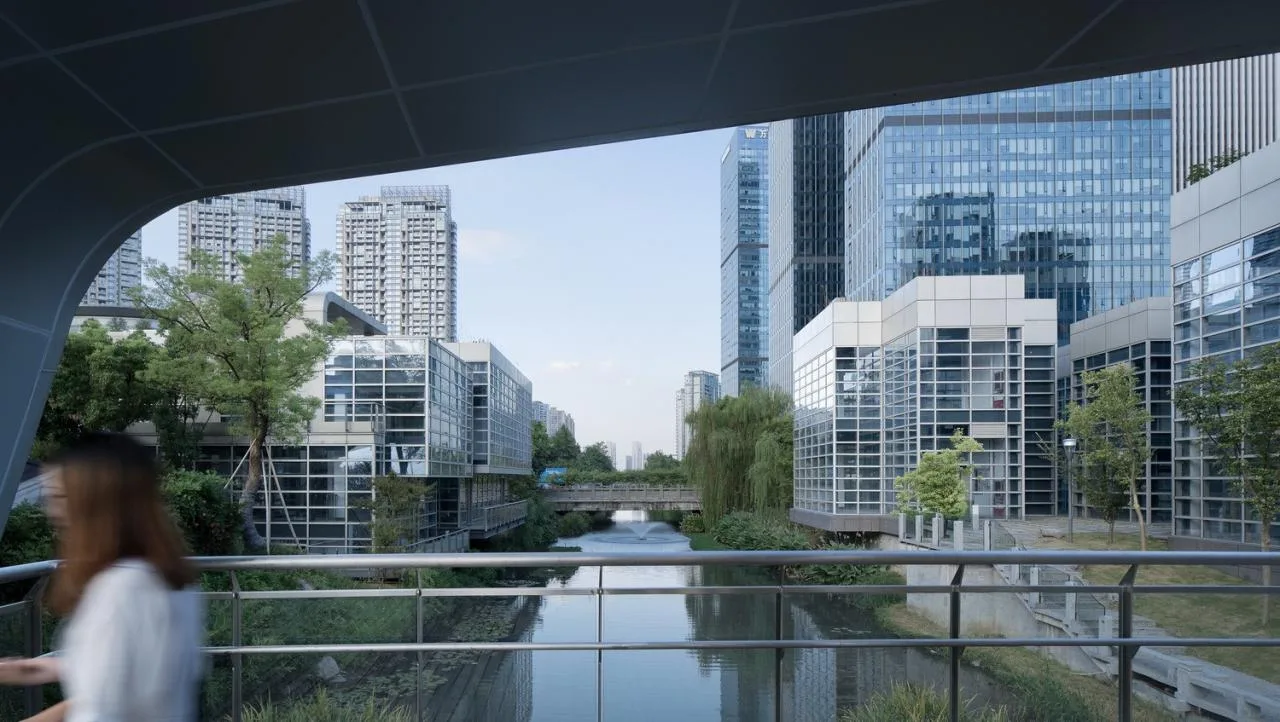
Xintang River serves as the primary east-west waterway in Qianjiang New City, flowing past several iconic landmarks. The metro supporting facilities along this river form a 2.2 km leisure and commercial corridor. Here, the architecture embraces a human scale, fostering a warm urban atmosphere and cultivating a vibrant daily life with a distinctly humanistic tone. This integration transforms the city into an organic, cohesive block space.
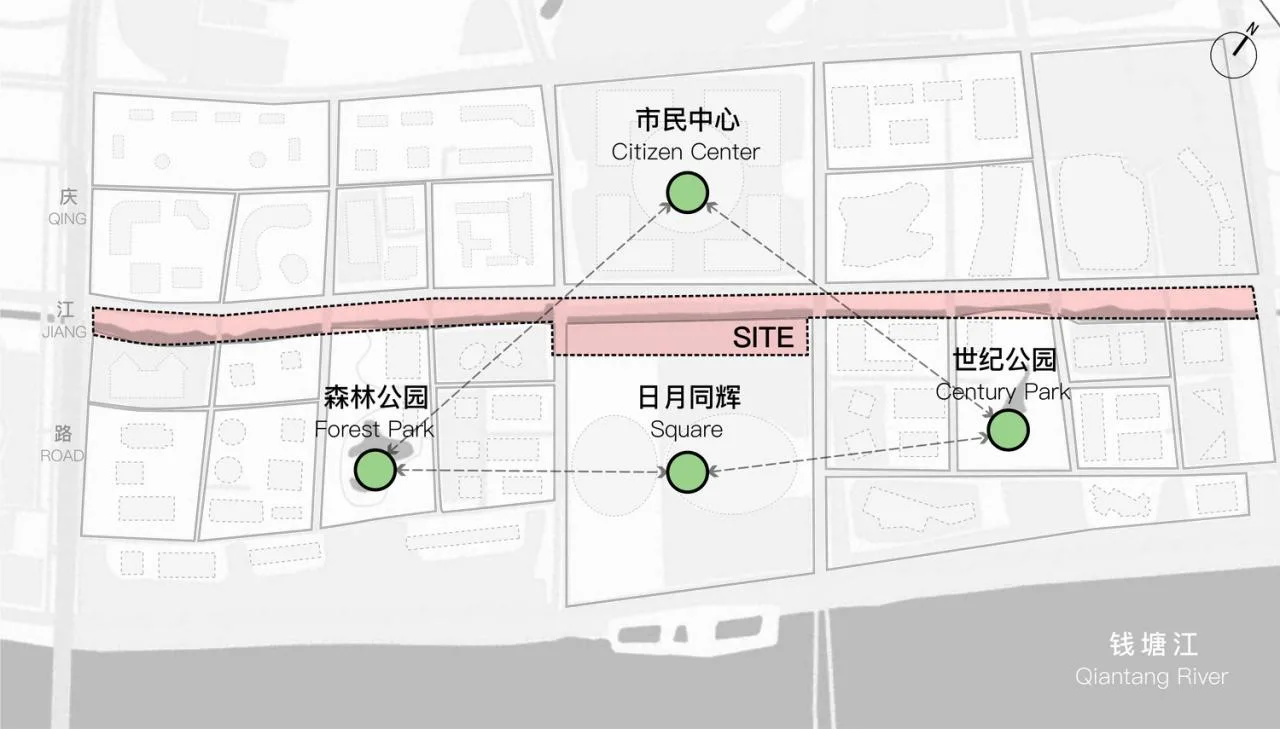
Life Force within the City
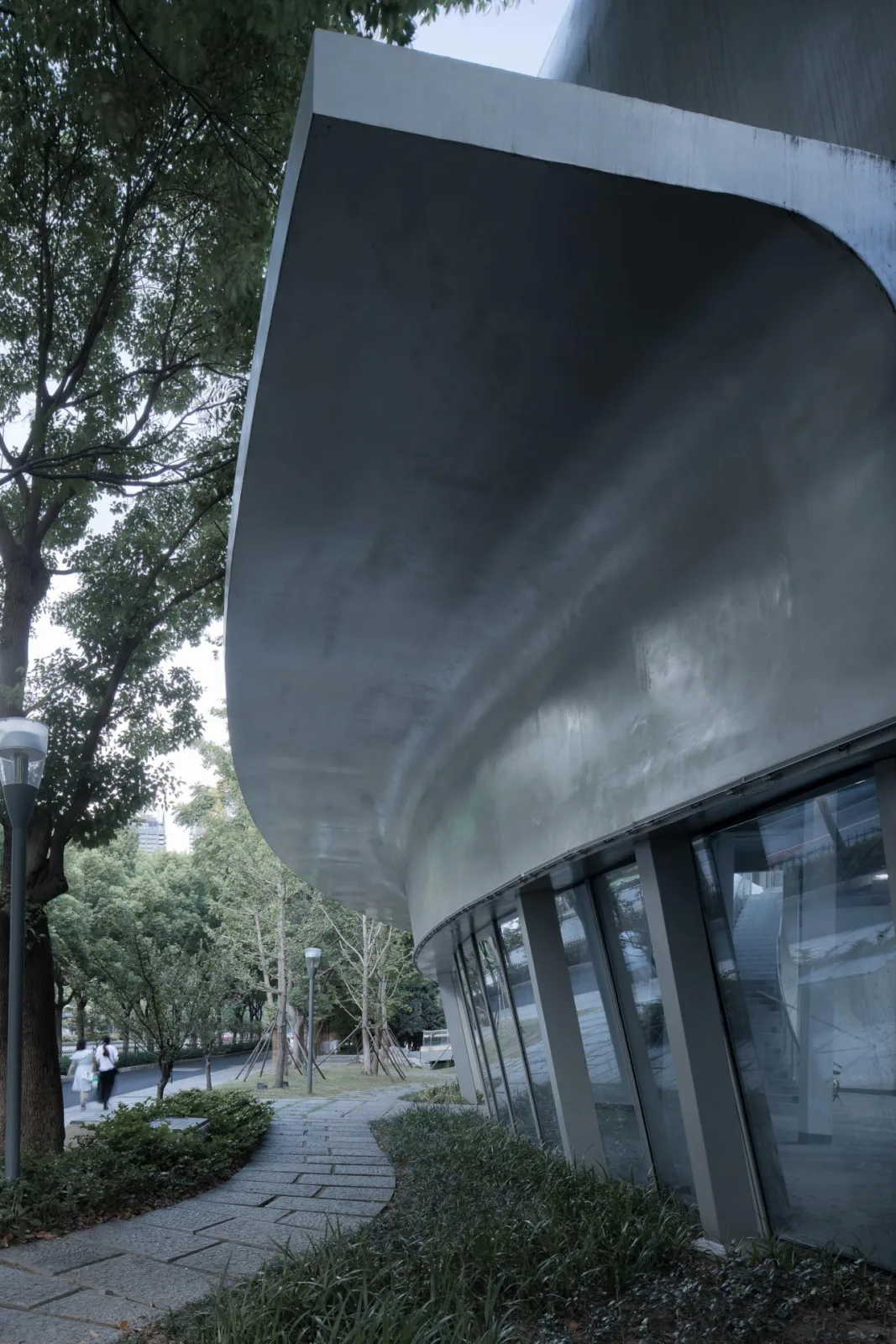
The vision for “Xingtanghe” is to create buildings filled with meaningful content and warmth. These are not just commercial spaces but elevated lifestyle hubs and diverse community centers designed to deepen residents’ sense of belonging and connection to their surroundings.
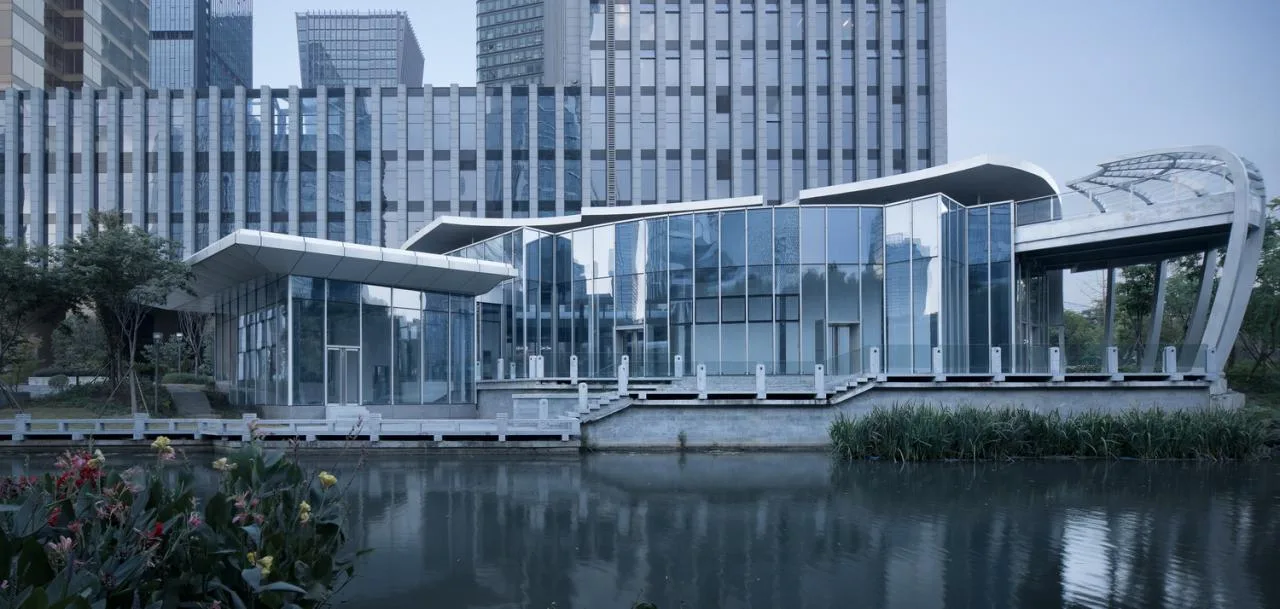
The architectural complex maintains a consistent rhythm with Qianjiang New City’s core, characterized by modern simplicity and a contemporary feel. The design respects the site’s context, neighboring buildings, and infrastructure while crafting distinctive living environments that satisfy functional needs.
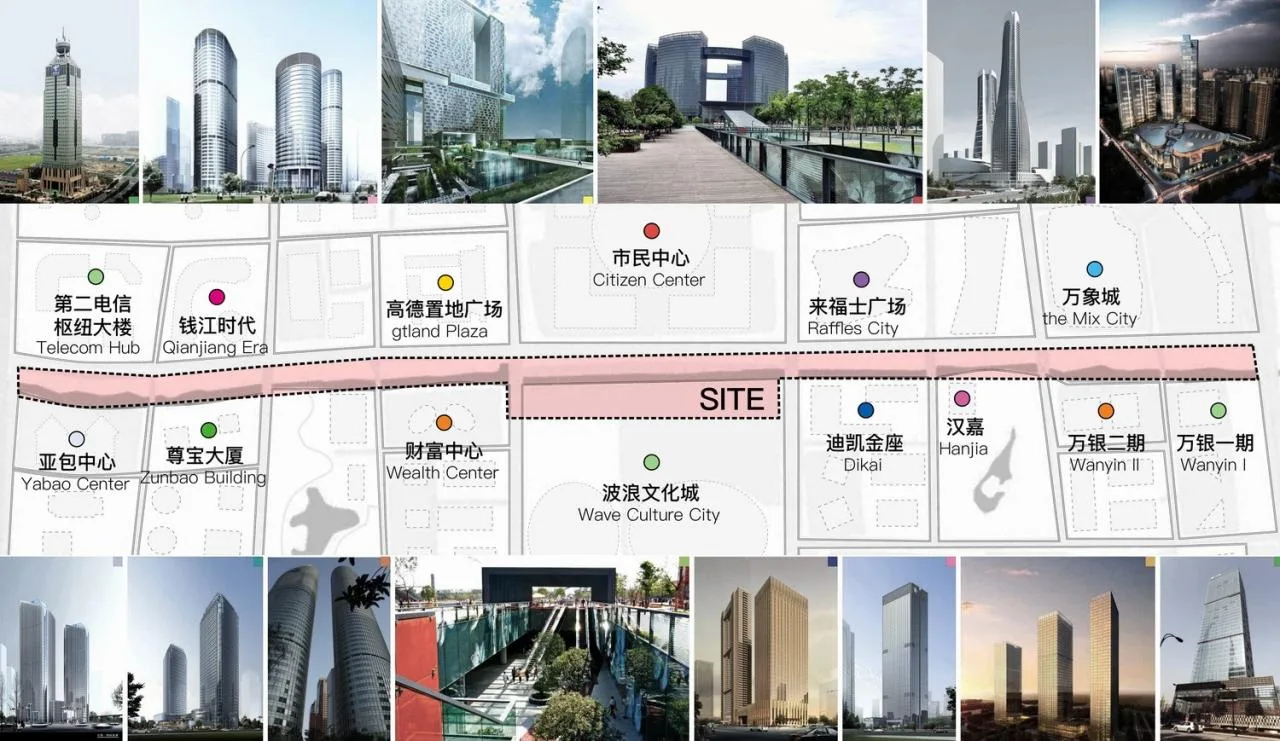
By enhancing facilities on both sides of Xintang River, “Xingtanghe” creates a seamless connection between the north and south banks, forming a lively, well-scaled space. Residents can move effortlessly between buildings without feeling disconnected by the river, resulting in a tightly knit community.
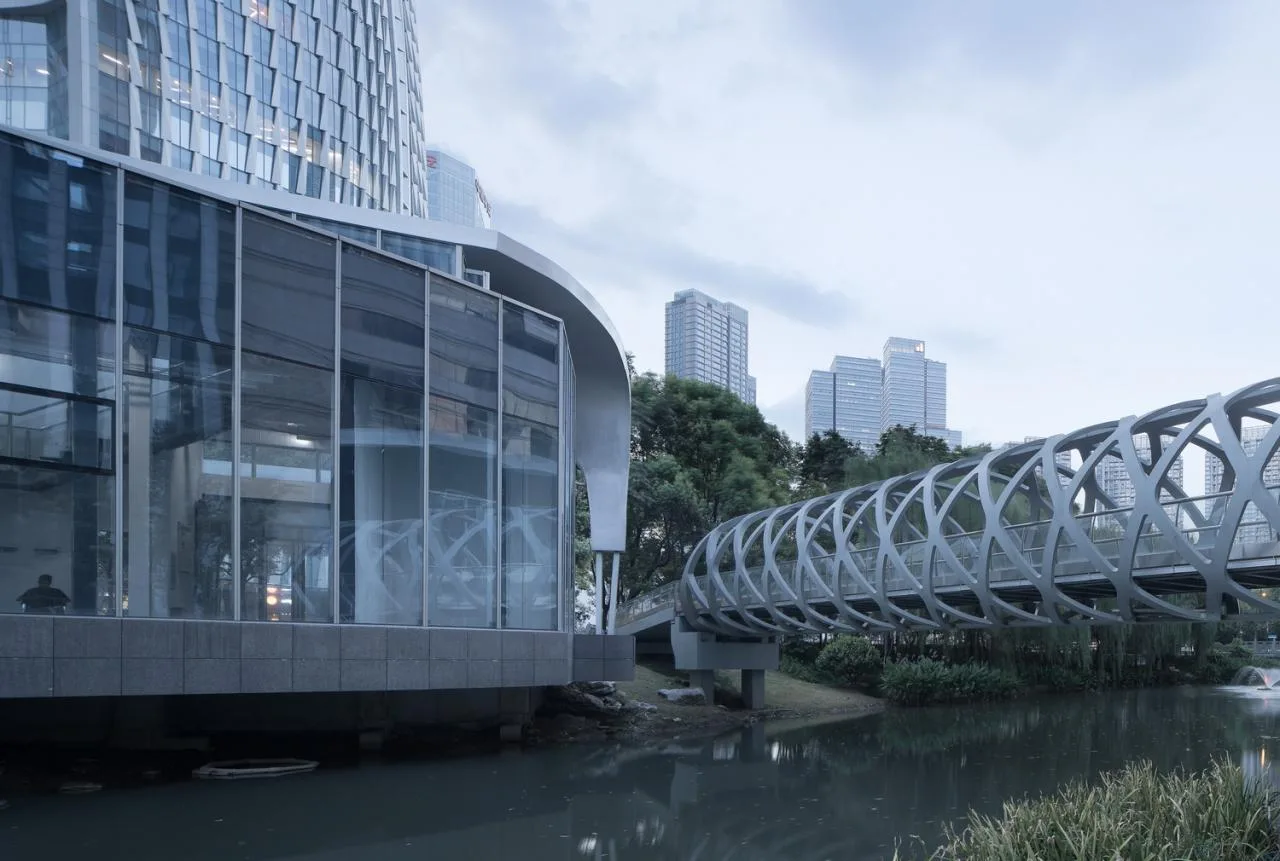
In designing the subway line facilities, architects concentrated on the overall impact of the complex, creating a “living force field” along the subway and river. This approach nurtures a fertile environment for the cultural growth of the new city block. Xingtanghe incorporates modern business models and functional layouts to develop alongside the new city area, while preserving its unique cultural identity.
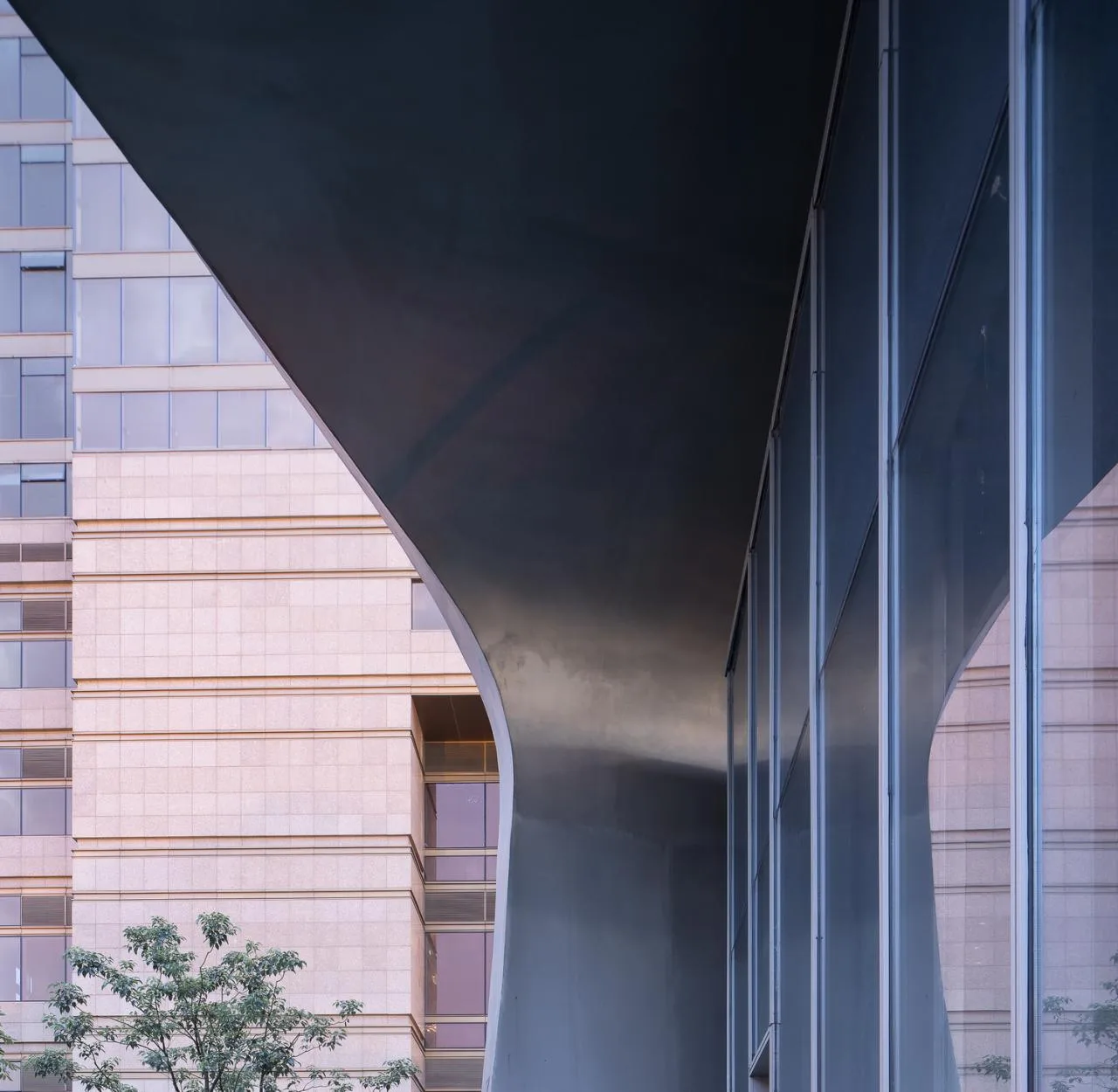
Diverse, Pedestrian-Friendly Neighborhoods
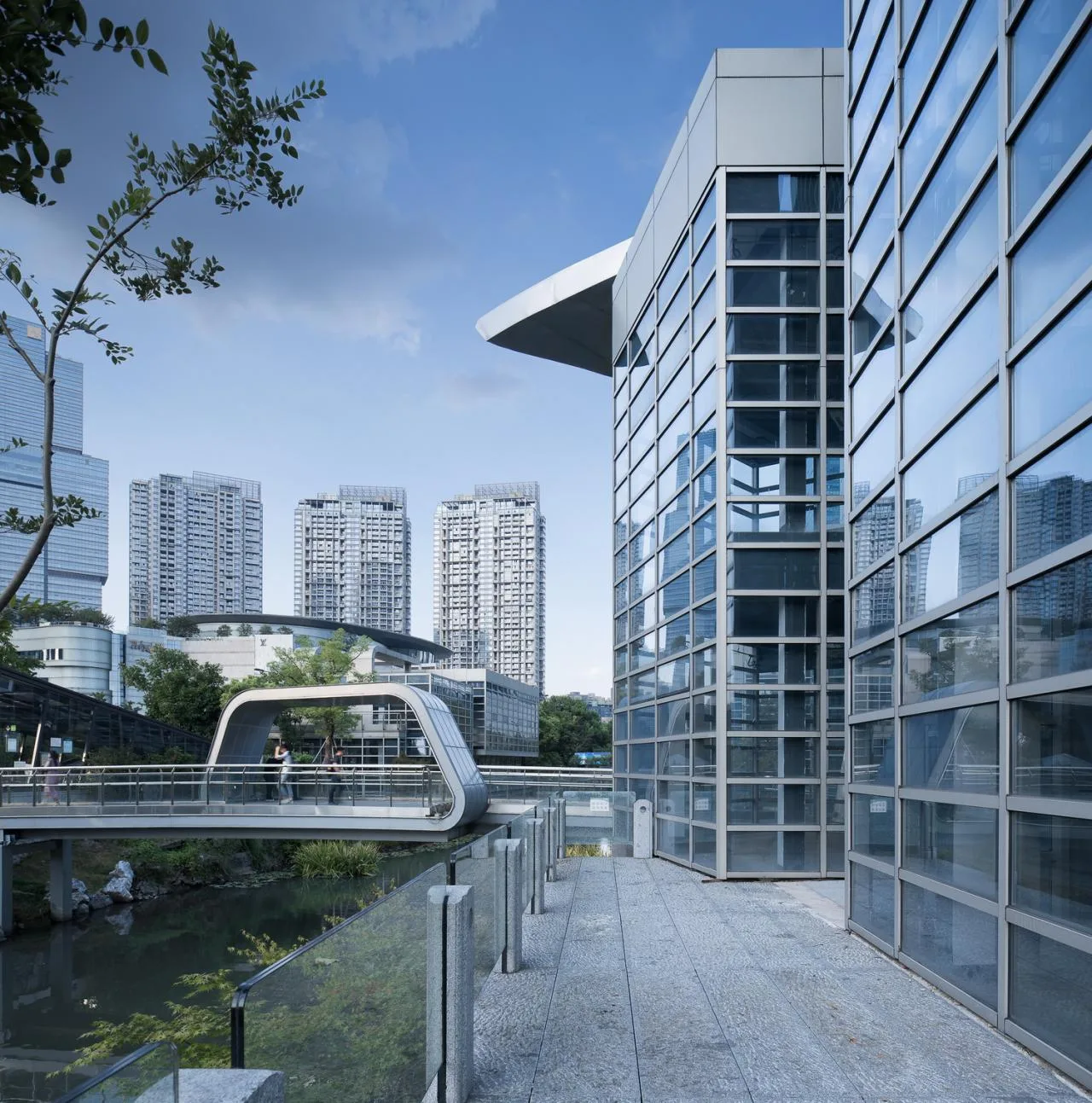
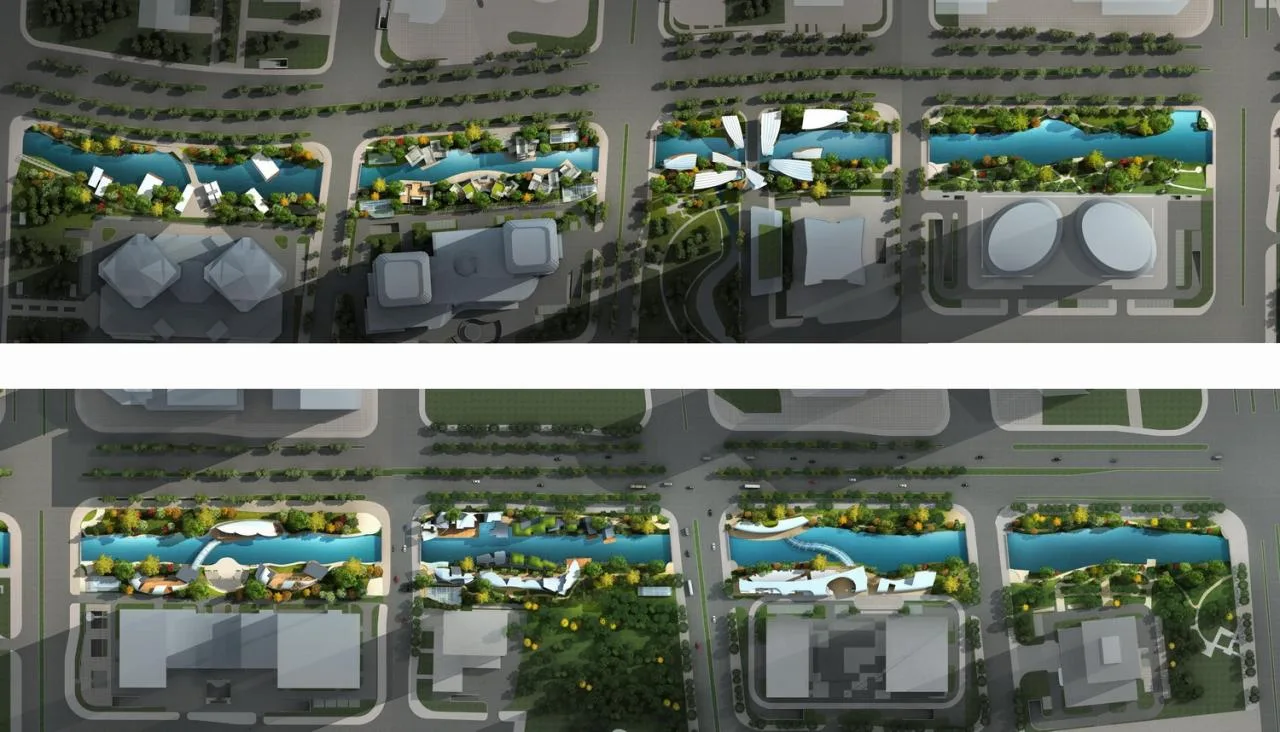
The “Xingtang and” area is divided into six distinct plots along the river, each featuring unique functional combinations and targeting specific audiences.
These include:
- A corporate experience hall for large companies to showcase their brand image;
- An intimate dining and appreciation hall for small group gatherings;
- An art and craft museum and joint exhibition gallery featuring signed artists;
- A music plaza hosting scheduled music appreciation events;
- A lifestyle and fashion street focused on high-end customization;
- A bookstore and innovation hub offering 24-hour spaces for entrepreneurs and creative communities to connect and collaborate.
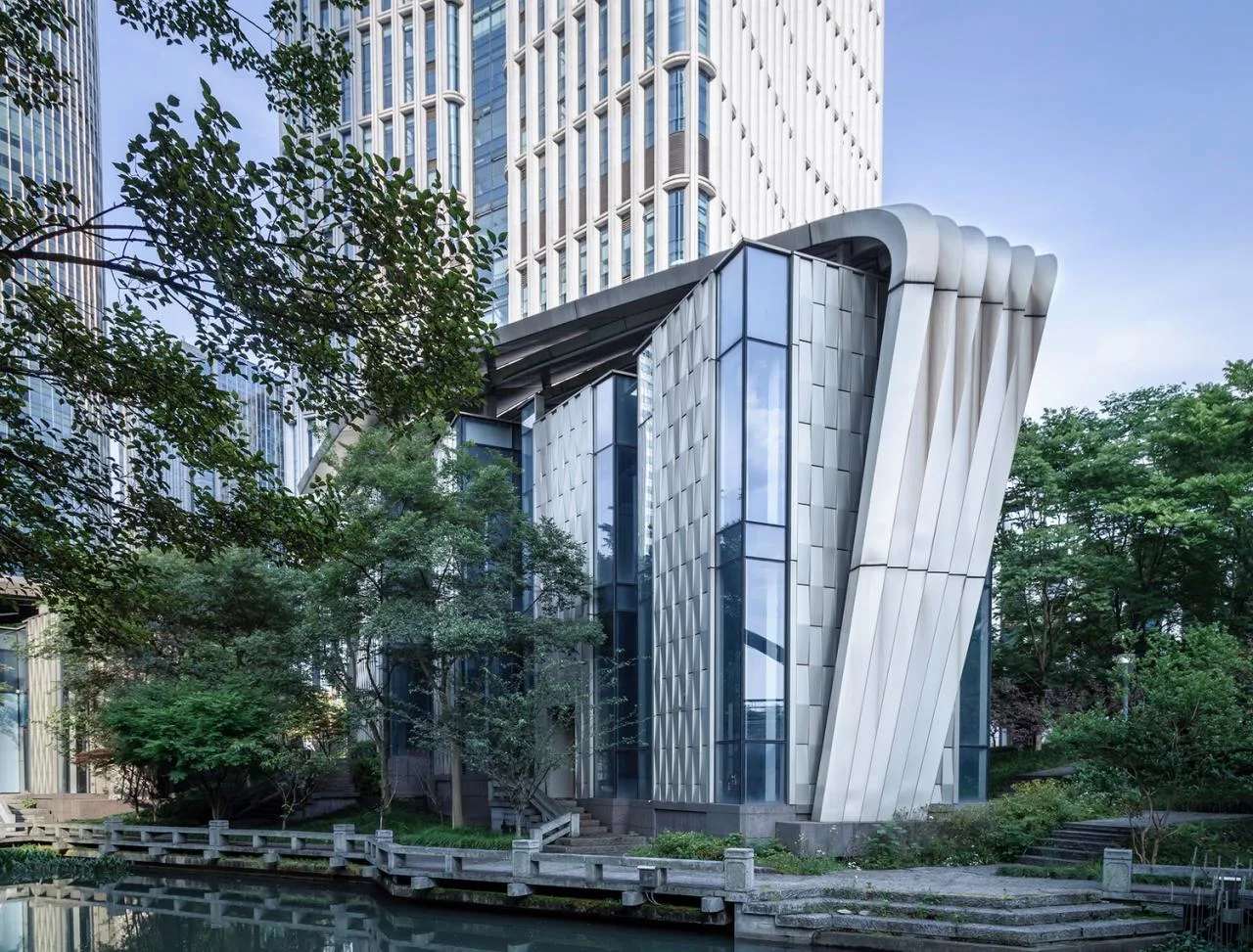
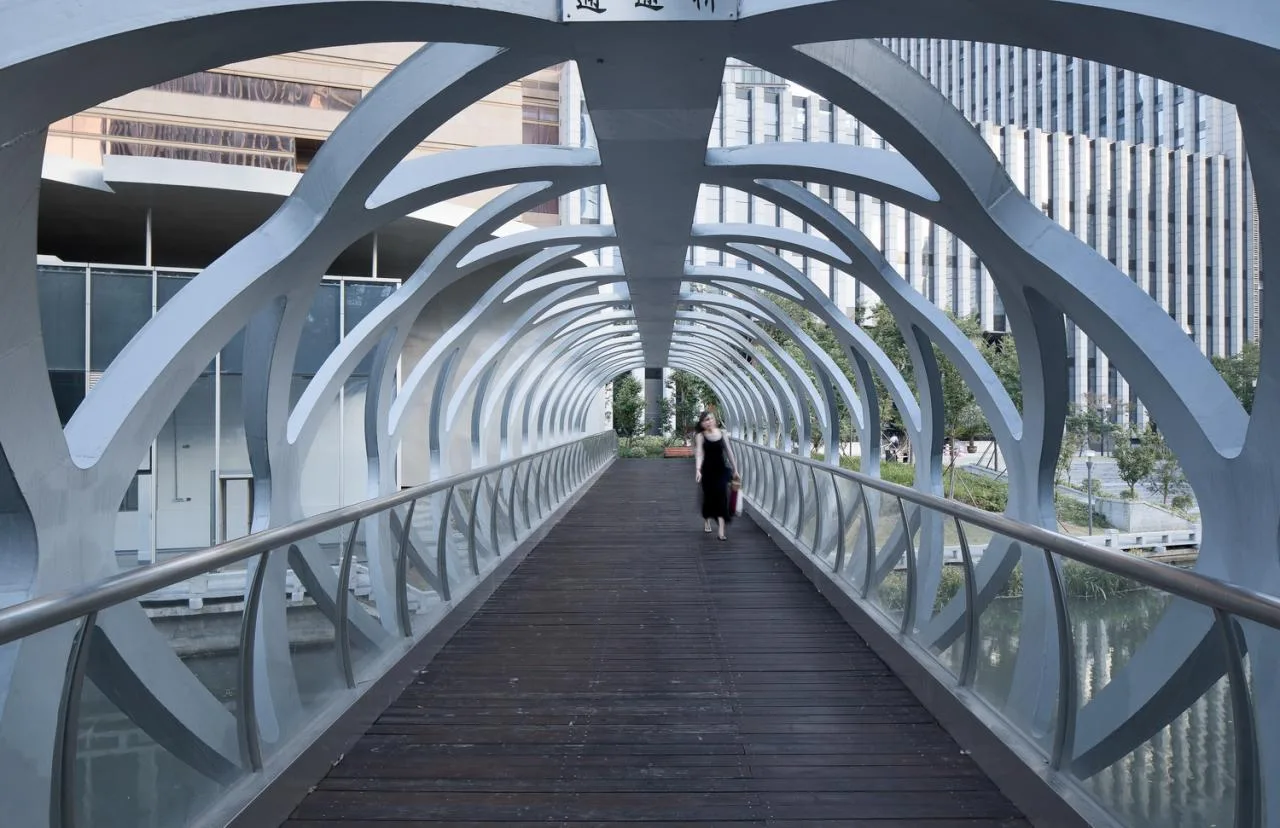
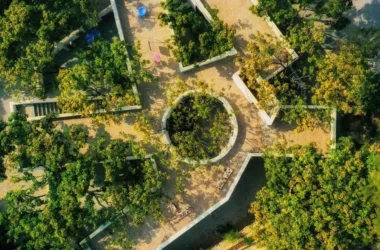
While these six plots maintain spatial independence, the design enhances interconnectivity through various transportation options. Continuous waterfront platforms and wooden boardwalks link the architectural community to the river, combined with functional flow lines to create small-scale landscape nodes and a rhythmic linear experience.
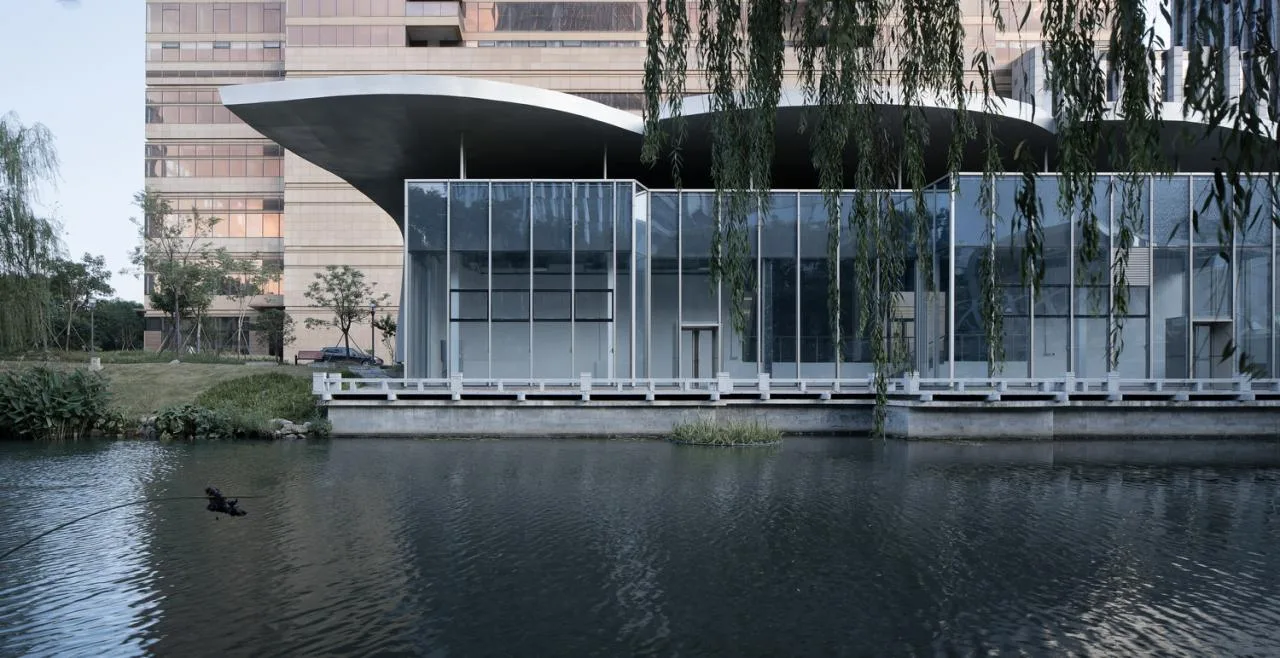
The complex is connected internally through corridors and courtyards, offering dynamic spatial experiences. Additionally, surrounding high-rise sites are utilized to create seasonal floral corridors, forming a vibrant commercial inner street that maintains a continuous block structure.
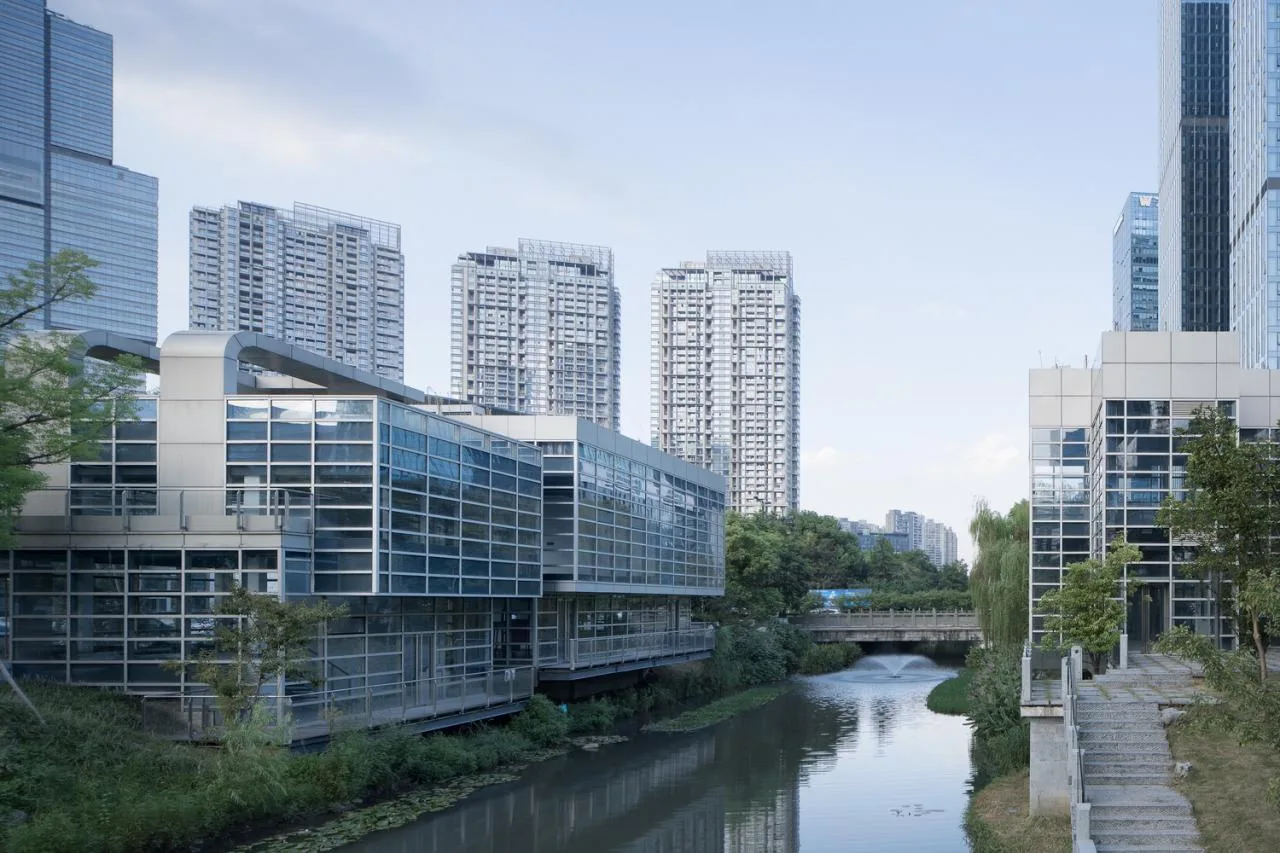
Following the principle of visual guidance for consumer flow, the building density on the north bank of Xintang River is relatively low, with most foot traffic directed to the south bank. By integrating a semi-private square with the entrance to the “Star Hall,” the design supports periodic events such as festivals, commercial streets, and art exhibitions. This enriches the block’s vibrancy, seamlessly connects with surrounding streets, and fosters a regional social network.
Conclusion
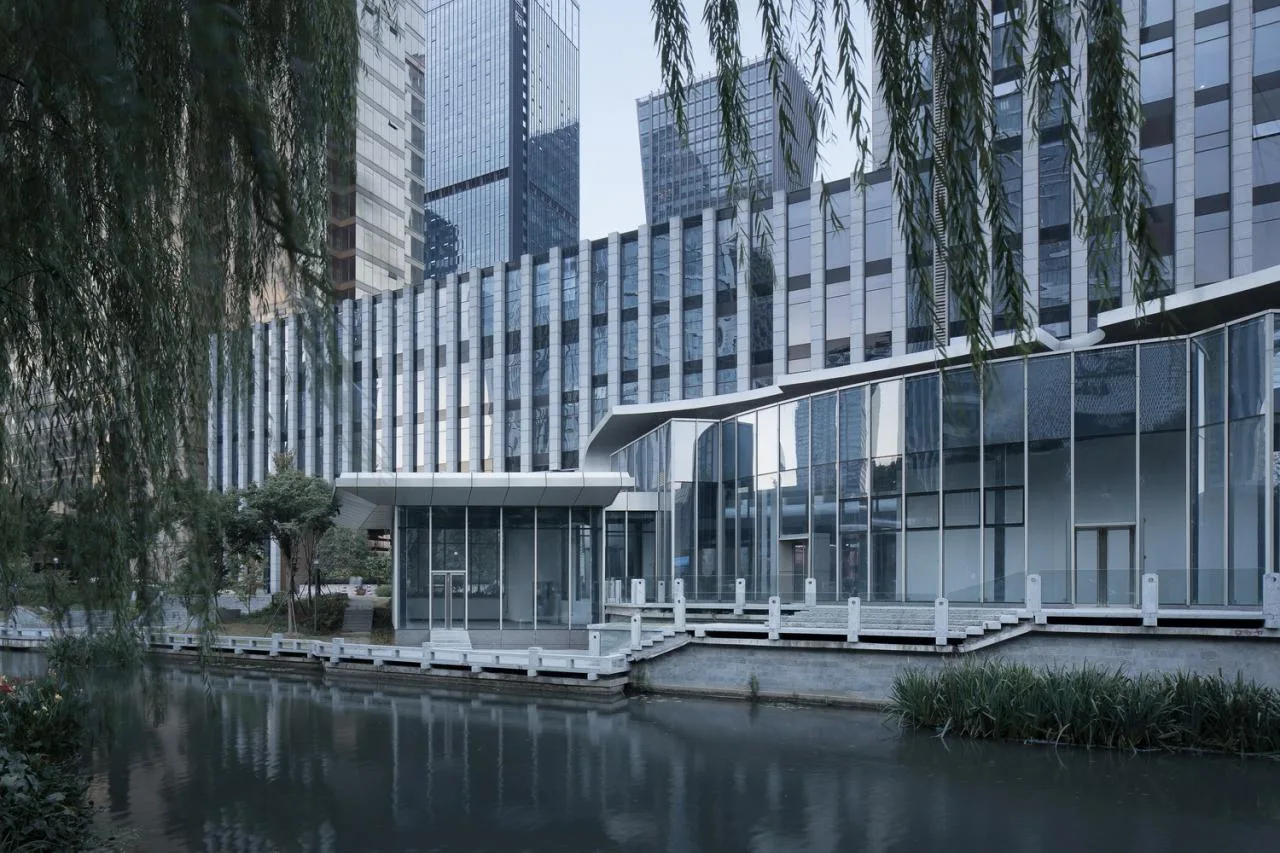
The Xingtang and metro supporting facilities along the Xintang River in Qianjiang New City, Hangzhou, have crafted an open and diverse architectural community. This area offers a rich mix of leisure and commercial spaces, fostering ever-evolving public spaces. Like scattered stars connected by the river, these complexes integrate seamlessly into the landscape, establishing an intimate interaction with the environment and city. This design breaks down the communication barriers typical of high-rise business districts and perpetuates Hangzhou’s cherished slow-paced lifestyle.
Project Information
Project Location: Hangzhou, China
Owner: Hangzhou Qianjiang New City Construction Management Committee
Design Firm: Zhejiang University Architectural Design and Research Institute
Design Period: September 2013 – January 2014
Completion Date: October 24, 2016
Total Construction Area: 2,579.8 m²
Land Area: 9,066.6 m²
Project Type: Commercial Building
Project Cost: 31.577 million yuan
Lead Designers: Dong Danshen, Qian Xidong
Project Manager: Qian Xidong
Architectural Design Team: Qian Xidong, Zhou Jun, Li Sicong, Zhang Muzi, Jia Qian, Zheng Yilin
Structural Design Team: Weng Yun, Ding Ziwen, Jin Jugao, Wang Xianliang, Hu Bo, Wang Wangwang, Cao Zhiyi, Cai Pengcheng, Jin Xiaolong, Wang Jia
Water Supply and Drainage Design: Zhang Nan
HVAC Design: Chen Haijun, Diao Yuefeng
Electrical Design: Wei Qiang, Wu Lihong, Zhu Jiji, Yang Kai
Construction Contractor: Zhejiang First Construction Group Co., Ltd
Architectural Photography: Zhao Qiang














Must log in before commenting!
Sign Up