
The Qinhai Neighborhood Center has been revitalized from an abandoned vegetable farm. Unlike other community businesses, the vegetable market inherently possesses a strong “regional identity” and community-oriented character. This quality addresses public concerns about whether vegetable markets will “disappear” under the pressure of large supermarkets, convenience stores, and online shopping platforms. Vegetable markets will continue to exist, serving as the “third space” or community living room, emphasizing their role as a public space that better fulfills the material and cultural needs of local residents.
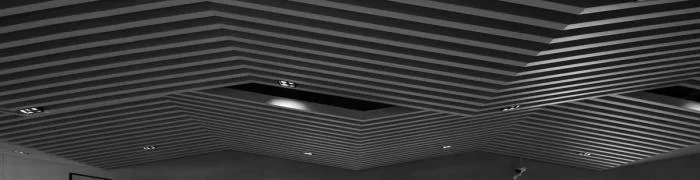
Project Background: Redefining Neighborhood Connections
“If there are no basic groups such as family and neighbors, it is doubtful whether fundamental moral norms—like kindness to neighbors and care for living beings—can be preserved through generations. As social networks expand and more people engage, numerous permanent centers of varying sizes become essential for face-to-face communication and frequent gatherings.”
—Lewis Mumford, History of Urban Development
In today’s rapidly urbanizing world, coupled with decentralized information technologies, people have become increasingly isolated from their traditional geographic and social environments. Many individuals resemble so-called “isolated wealthy individuals.” Rebuilding ancient, open, and warm neighborhood relationships holds great sociological, economic, and urban management significance. While technology serves merely as a tool, it cannot replace the human desire for interaction and community. This need is especially strong among middle-aged and elderly residents, who may not fully benefit from modern technology and yearn for intimate spaces to enrich their spiritual lives. Unfortunately, these deep social needs are often overlooked or marginalized in favor of profit-driven interests.
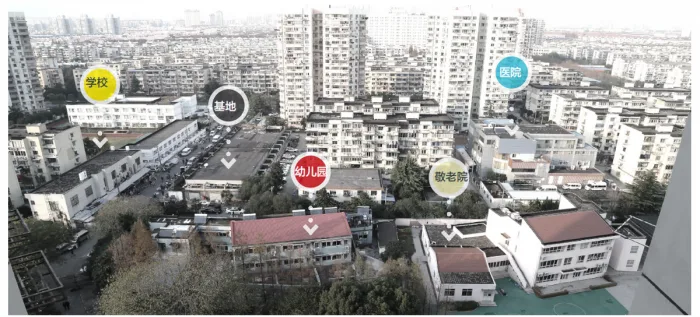
▲ Original state of the site
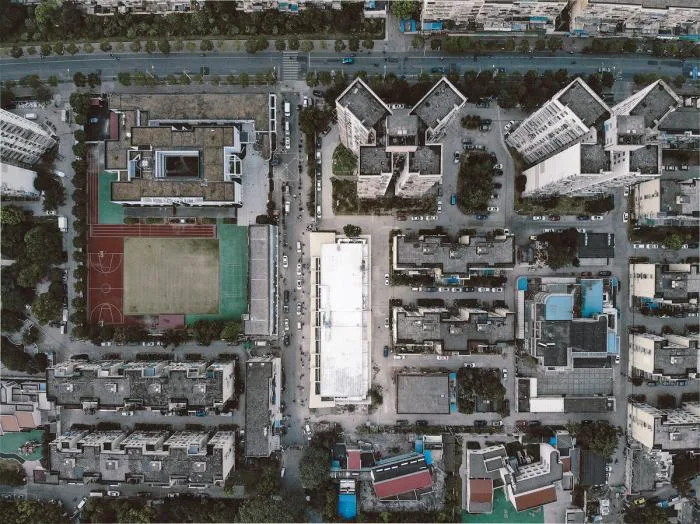
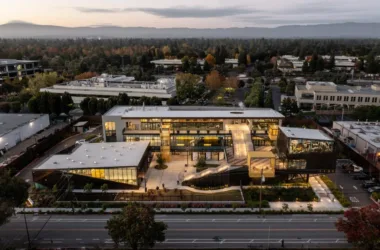
▲ Aerial view of the renovated site
The project is situated on Guohe Road in Yangpu District, primarily surrounded by communities in Shiguang New Village. This area was originally part of the 1930s “Great Shanghai Plan,” which aimed to establish the Wujiaochang area as Shanghai’s central hub but was halted due to the outbreak of the Anti-Japanese War. Currently, Shiguang New Village consists mostly of multi-story public housing built in the early 1990s, serving as early resettlement and welfare housing in central Shanghai. The residents are predominantly middle-income, middle-aged, and elderly salaried workers over 30 years old. To the west lies the First Primary School of Shiguang New Village, with the Cixin Elderly Care Home, Shuoyuan, and Shiguangyi Village Kindergarten to the south. While the neighborhood exudes a strong residential atmosphere, its supporting services are outdated and lack convenient community centers for communication and shopping.
Design Concept: Life and Poetry Under the Eaves
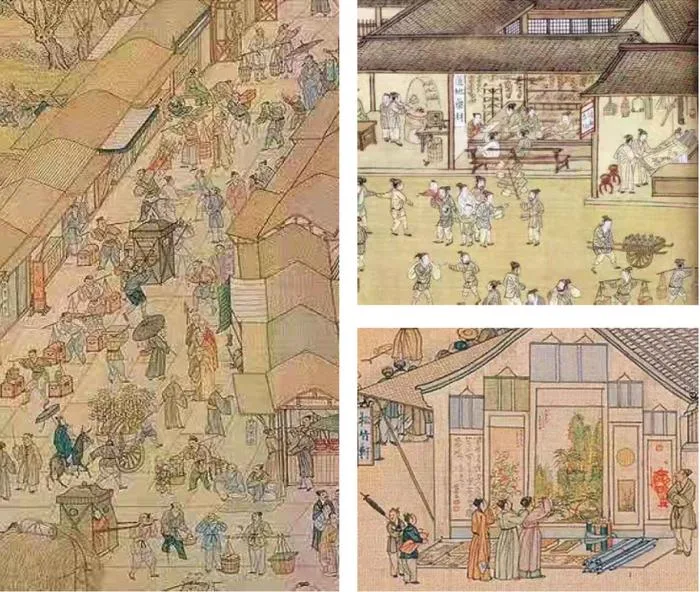
▲ Detail from Zhang Zeduan’s “Along the River During Qingming Festival,” Northern Song Dynasty
The project is designed as a small-scale community commercial center serving residents within a one-kilometer radius. Unlike medium or large community businesses that focus primarily on commerce and consumerism, this project centers on reshaping neighborhood relationships. Yushe Yuzhu developed the concept of “Warm Ripples,” aiming to revive scenes of humanistic care and emotional connection. This concept represents a small stone cast upon the vast sea of consumption or a gentle breeze that, while unable to create massive waves, generates meaningful ripples. It reflects the project’s social significance in transforming a vegetable market into a neighborhood center.
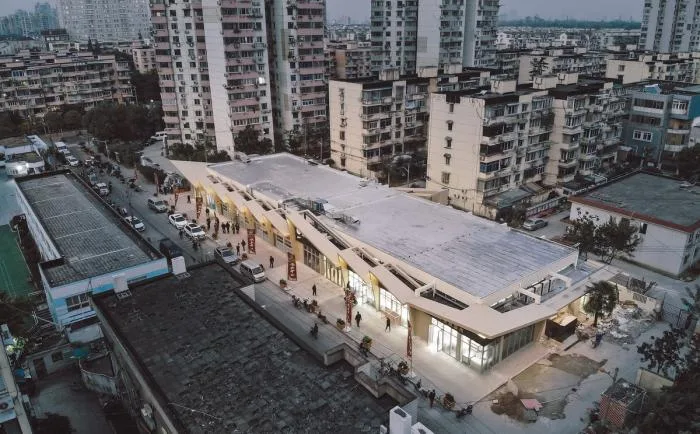
▲ View of the project from the southwest
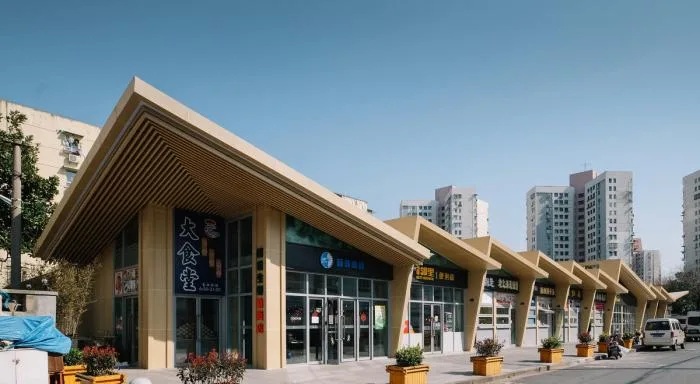
▲ Staggered high and low eaves
Building on this concept, the design embraces the idea of “life and poetry under the eaves,” inspired by the lively street markets depicted in the Song Dynasty painting “Along the River During Qingming Festival.” Citizens gathered under the high and low eaves, creating a vibrant market culture. The design adopts “eaves” as the primary language, using single-slope roofs to express this theme. This approach is more than a visual abstraction; it reconnects with shared emotional experiences within the community, fostering a deep sense of belonging and connection.
Design Development: Eaves Arrangement
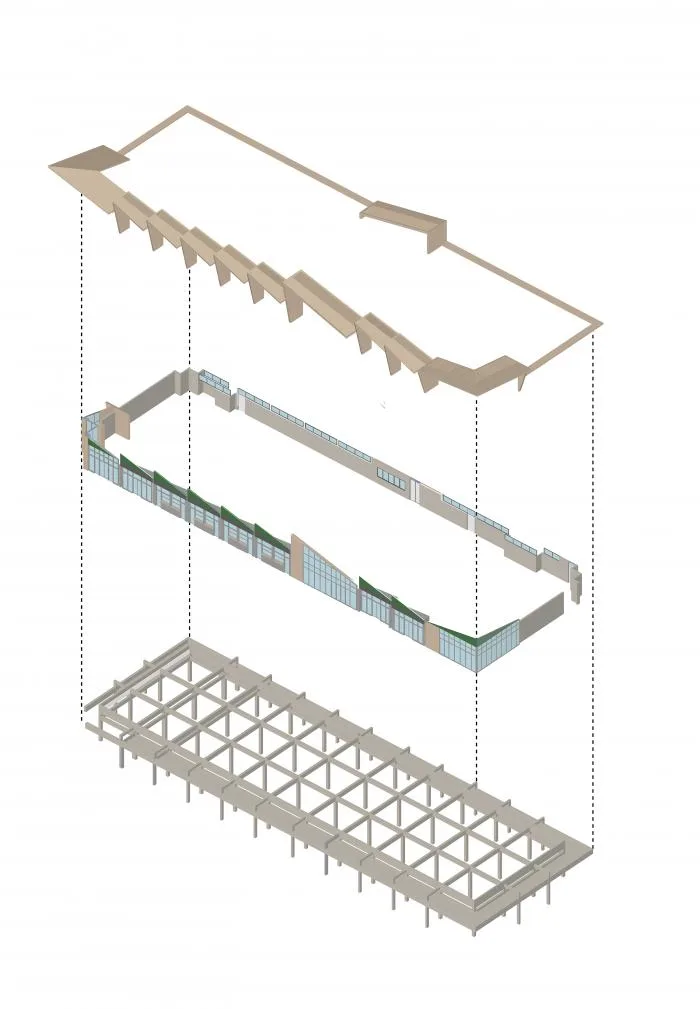
▲ Diagram illustrating the eaves arrangement and abrupt changes
In renovation projects, it is crucial to creatively maximize design benefits while controlling costs. The renovation retains the old building’s structural framework, using the original column grid as a modular unit combined with outward-overhanging eaves to form the main street-facing facade. Each stall can feature different opening styles based on function, creating a rich and diverse semi-public neighborhood space.
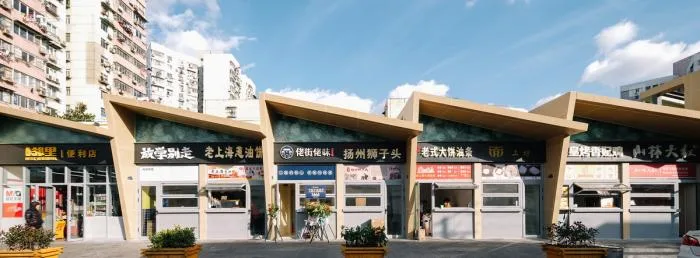
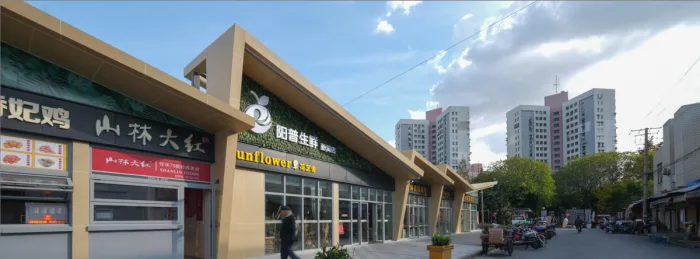
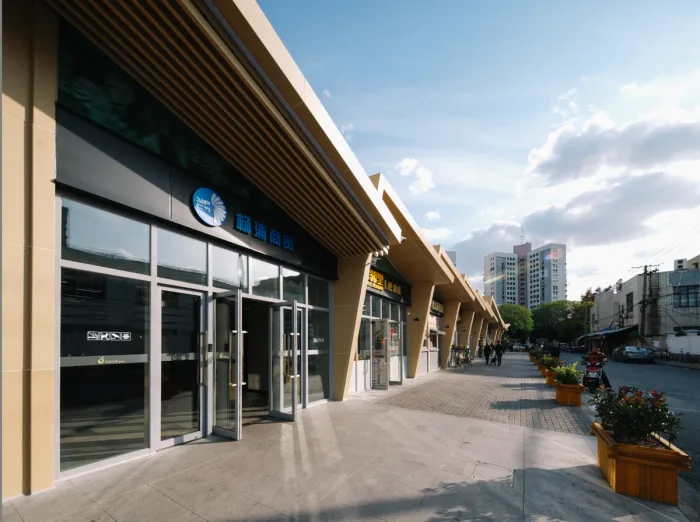
▲ Eaves from different angles
Considering pedestrian flow, the eaves at the northwest, west, and southwest corners were enlarged and modified to increase visual prominence and reinforce the “under the eaves” concept. The east side faces the community interior, where simpler flat eaves wrap the building, differentiating main and secondary street areas while maintaining overall unity. This design also respects the quieter community atmosphere and helps manage project costs.
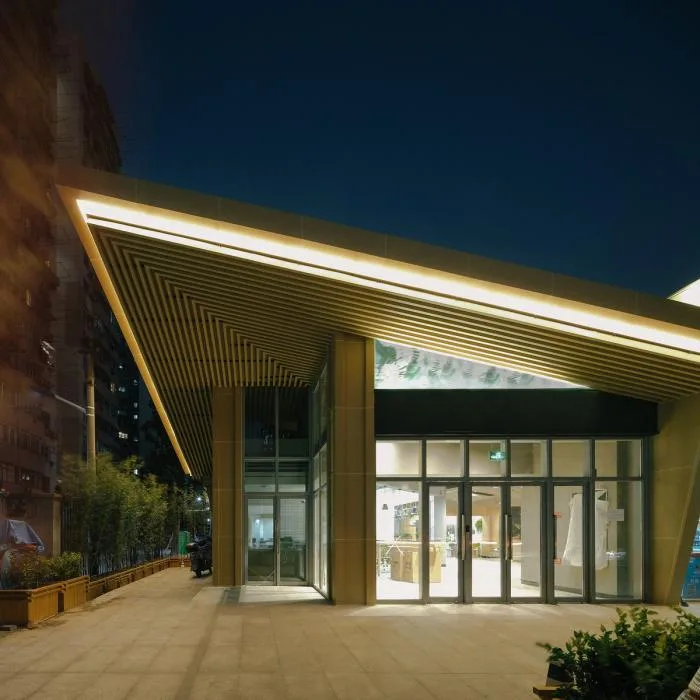
▲ Night Market
The eaves are constructed from 2.5mm thick wood-grain aluminum panels, featuring concealed LED strips on top that highlight the eaves’ graceful lines at night. Gray materials are used for stalls and signage areas to recede visually, while green printed art glass fills triangular spaces between signage and eaves, providing a smooth transition.
Comprehensive Design: From Architecture to Interior
Unlike traditional markets, Qinhai Neighborhood Center integrates diverse functions such as fresh supermarkets, restaurants, “neighborhood reception rooms,” community services, gyms, and flower shops. This variety offers convenience and leisure opportunities for residents within a one-kilometer radius, fostering a lively community hub.
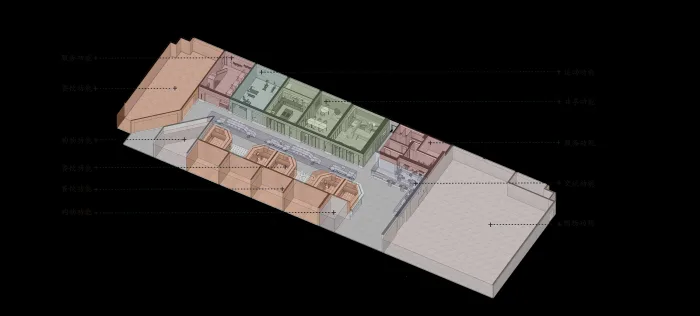
The design forms a “central block” within a compact space, linking main restaurants and fresh supermarkets at its ends. Corridors branch to either side, with small commercial units facing the street and community service stations and shared spaces oriented towards the neighborhood. This layout blurs indoor and outdoor boundaries, enhancing the “under the eaves” design concept.
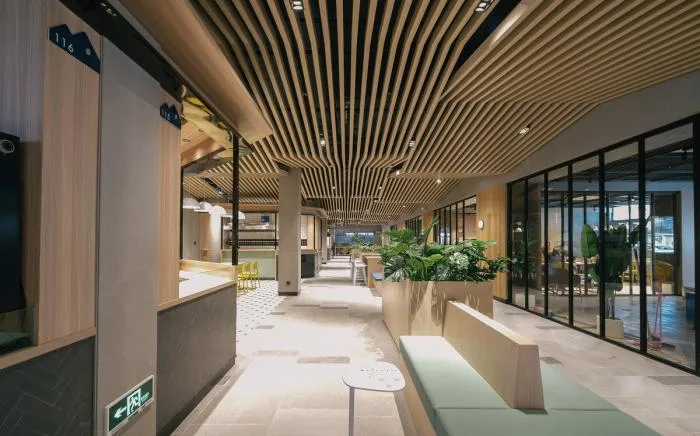
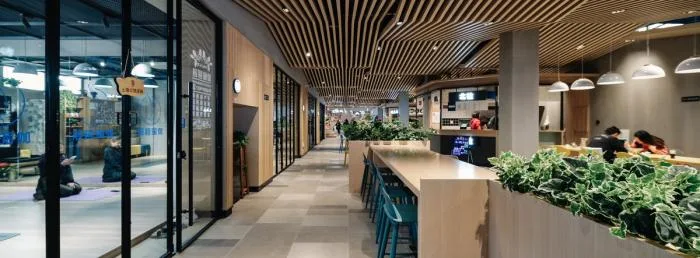
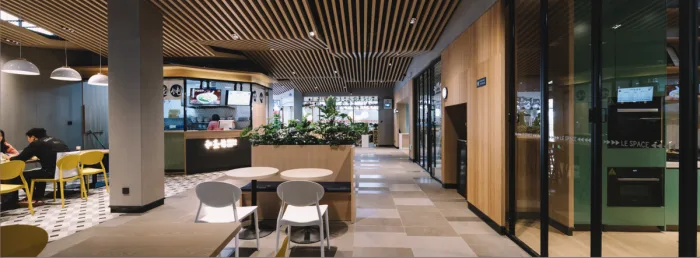
▲ Indoor ‘Central Block’
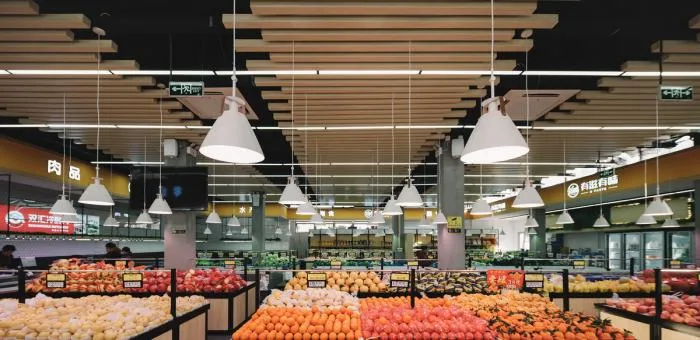
▲ Fresh Supermarket
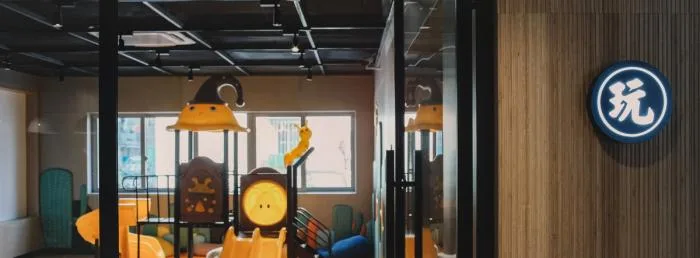
The open shared spaces provide ample leisure and entertainment options tailored to different needs: a children’s playground, shared meeting rooms, and shared kitchens for meetings and office work. While these spaces typically function independently, glass partitions allow them to be combined flexibly, creating larger, transparent communal areas when needed.
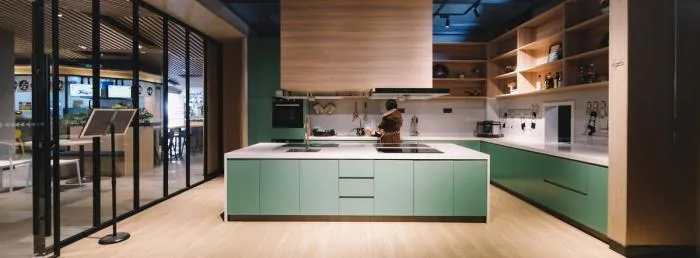
▲ Shared Kitchen
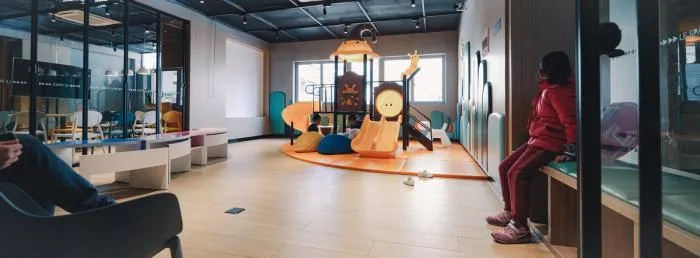
▲ Children’s Playground
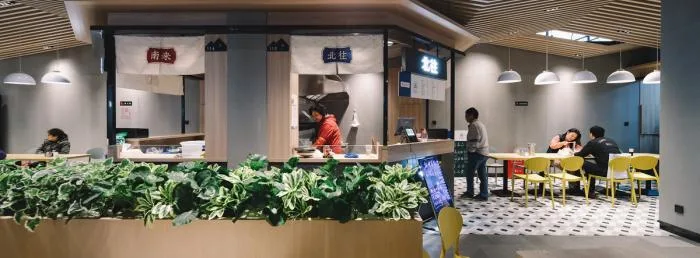
▲ Food Stall Entrance
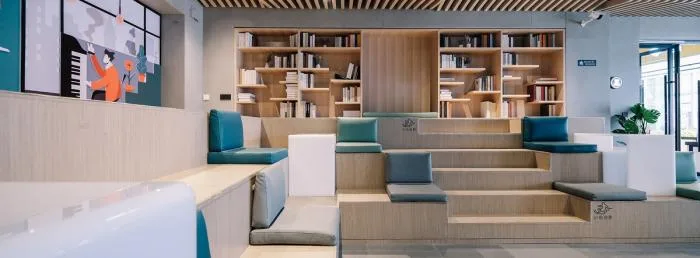
▲ Shared Activity Area
The “eaves” concept extends indoors, with facade line elements evolving into a wooden grid ceiling. The design carefully balances form and function, selecting 40mm wooden grids arranged at a 170° staggered angle, creating an undulating roof shape under eaves heights of 2.9m and 3.3m. Snack stalls beneath the eaves are standardized units designed ergonomically by lowering stall heights for user comfort.
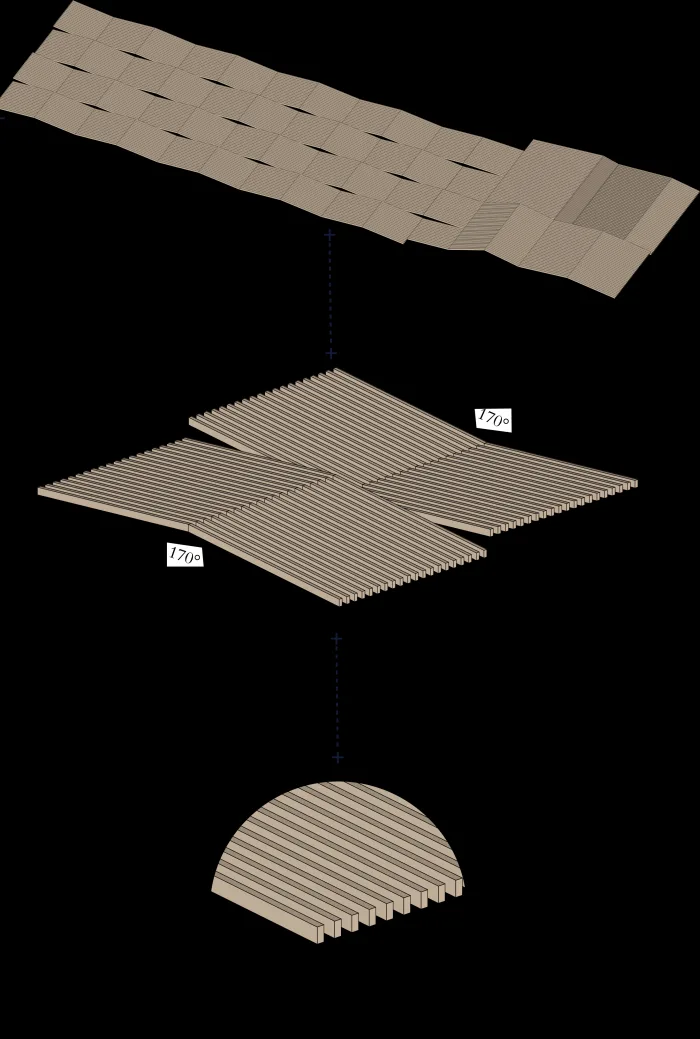
▲ Indoor eaves design
For interior materials, the aim was to evoke a warm, rustic atmosphere reflecting everyday life. If the architectural form imitates nature, then the interior design celebrates daily essentials. Wheat-colored wood veneer, green glazed tiles inspired by Shanghai Qing, and rice-textured white paint combine to create a harmonious environment.
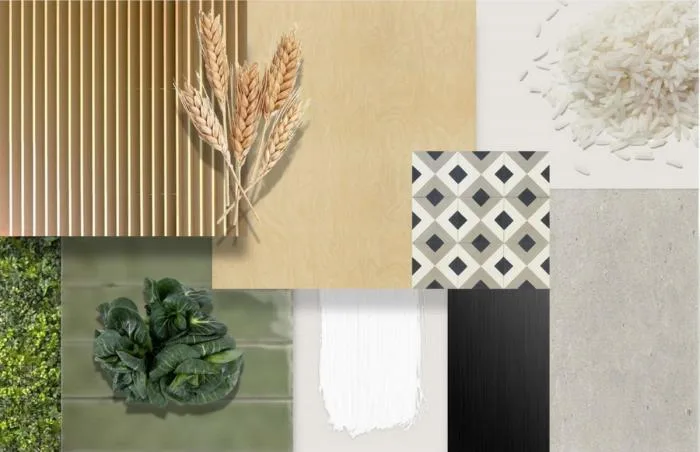
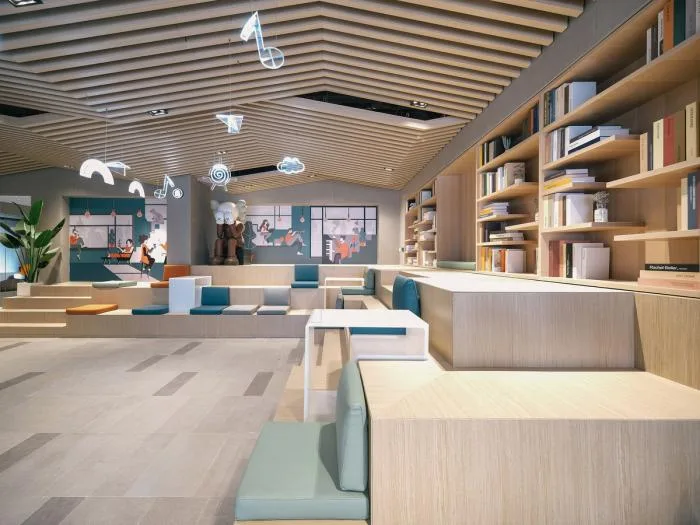
▲ Warm and rustic ambiance
Attention to detail extends to signage design, including standardized snack stall displays and indoor wayfinding, continuing the “integrated” theme of architecture and fixtures. The logo features traditional Chinese porcelain blue as its base color, standing out against warm gray spaces. The typography is set in Lanting font, updating the classic “seven necessities” of daily life—firewood, rice, oil, salt, ginger, vinegar, tea—to a modern set: exercise, play, rest, enjoy, accompany, and talk. These new categories align with the indoor spaces, catering to the diverse needs of today’s community.
Conclusion: A Warm Reflection
Following the project’s completion, multiple follow-up visits captured many genuine, heartwarming moments. These images, often overlooked by professional photographers or beyond conventional “imagery,” truly embody the vibrant spirit a market should have.
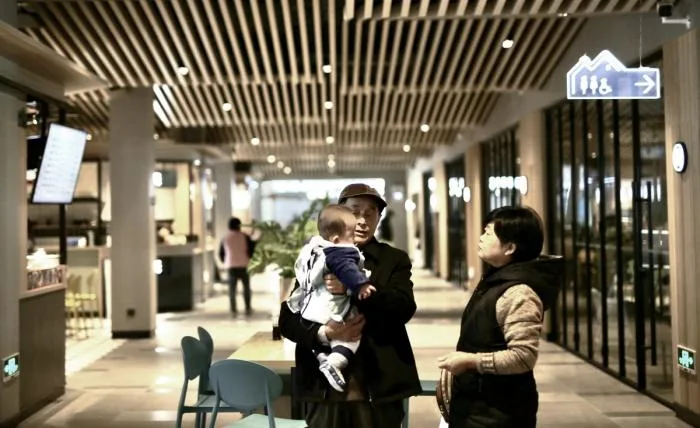
As public spaces and architecture inevitably become commodified within consumer society, design often emphasizes fashion and differentiation to add commercial value. In this project, the successful alignment of bottom-up and top-down values was key. Collaborative participation fostered the vegetable market’s humanistic renovation and demonstrated a broader potential for improving livelihoods and housing beyond innovative architectural forms.
Technical Drawings
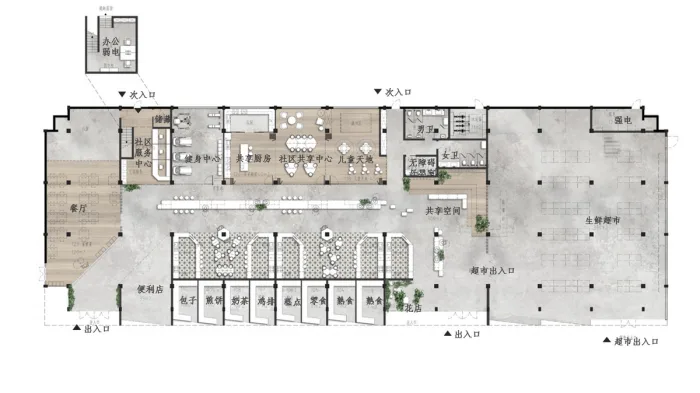
▲ Overall site layout
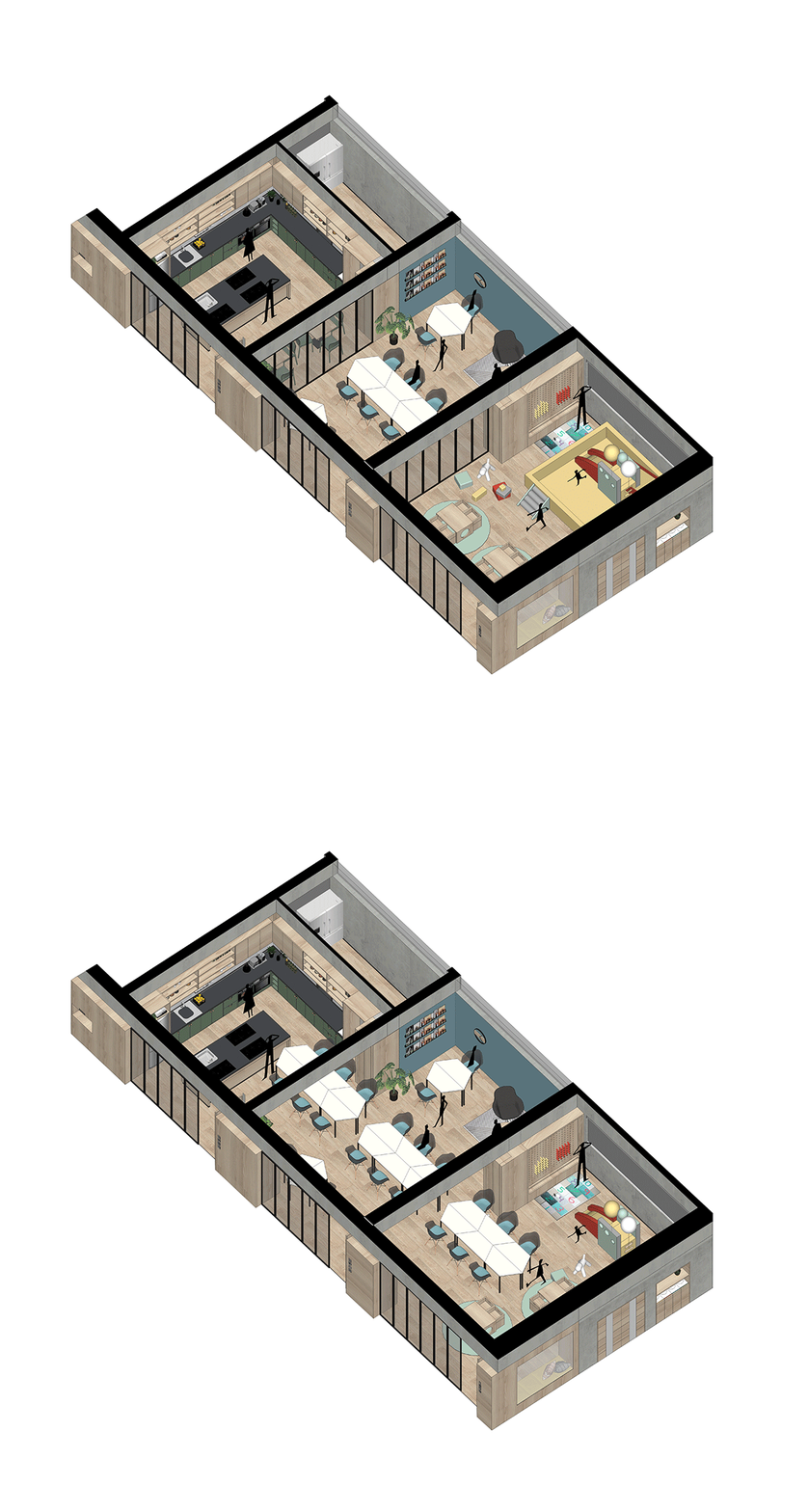
▲ Flexible combination of three shared spaces
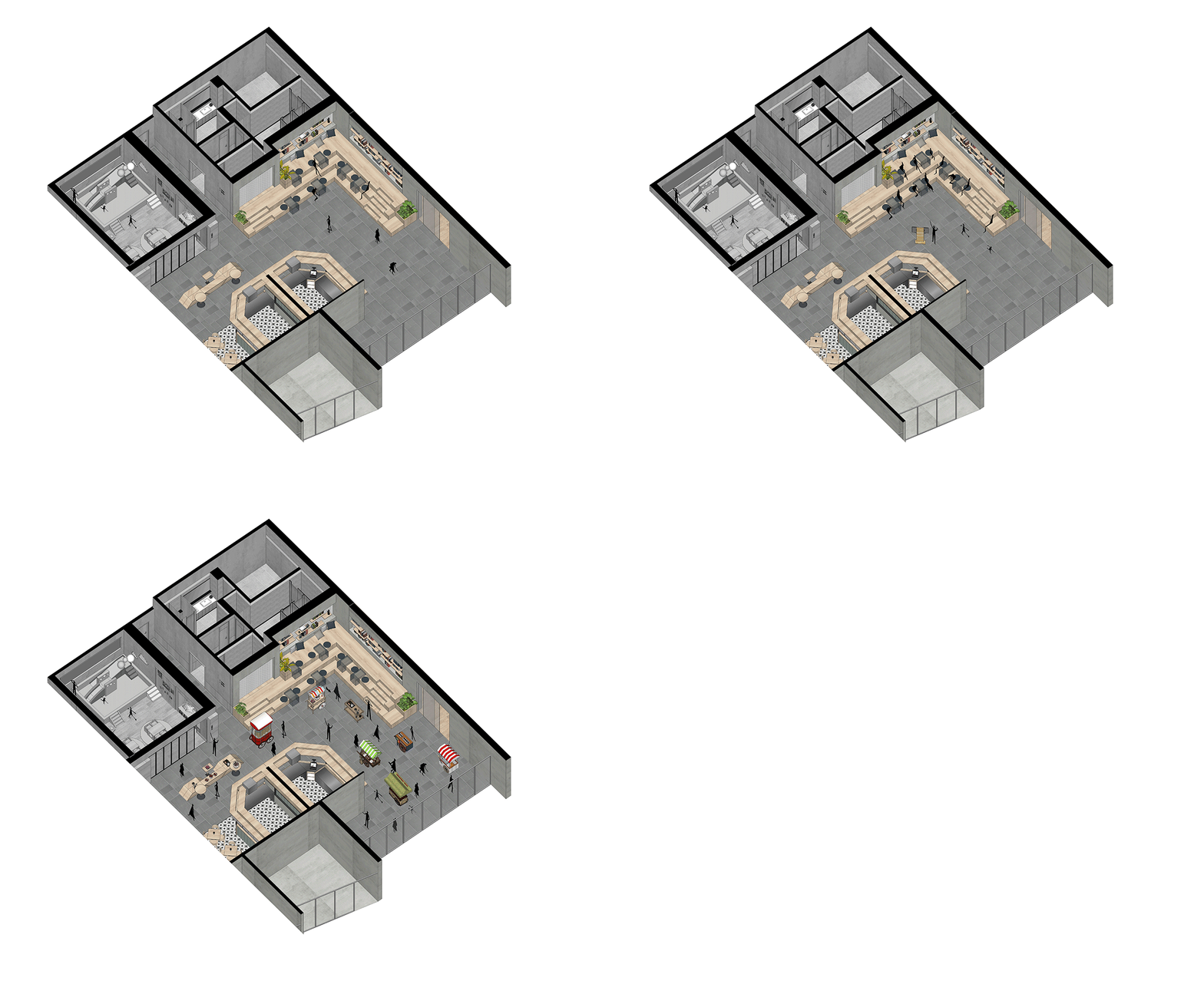
▲ Flexible evolution of shared activity areas
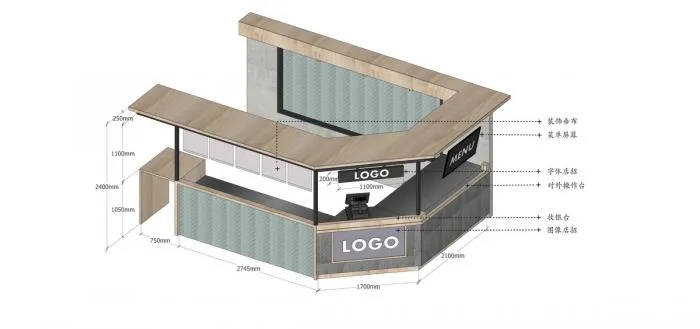
▲ Standardized design of stall entrances
Project Information
Project Name: Qinhai Neighborhood Center
Owner: Shanghai Yangpu Trading Group
Operator: Ruishang Liancheng
Address: No. 115-116, Shiguang Village, Yangpu District, Shanghai
Building Area: Approximately 1,379 square meters
Architecture and Interior Design: Yushe Design
Lead Architects: Xu Yi, Chen Xiao, Li Zhiqiang, Gao Shantong
Design Team: Pang Yu, Xu Junfeng, Cao Zhen, Zhou Xueying, Yang Huanli, Zong Qianxiang, Ji Shuai, Yu Haoyan, Ma Jiang
Design Period: December 2018 to August 2019
Construction Period: August 2019 to November 2019
Photography by Xu Haoyu












Must log in before commenting!
Sign Up