
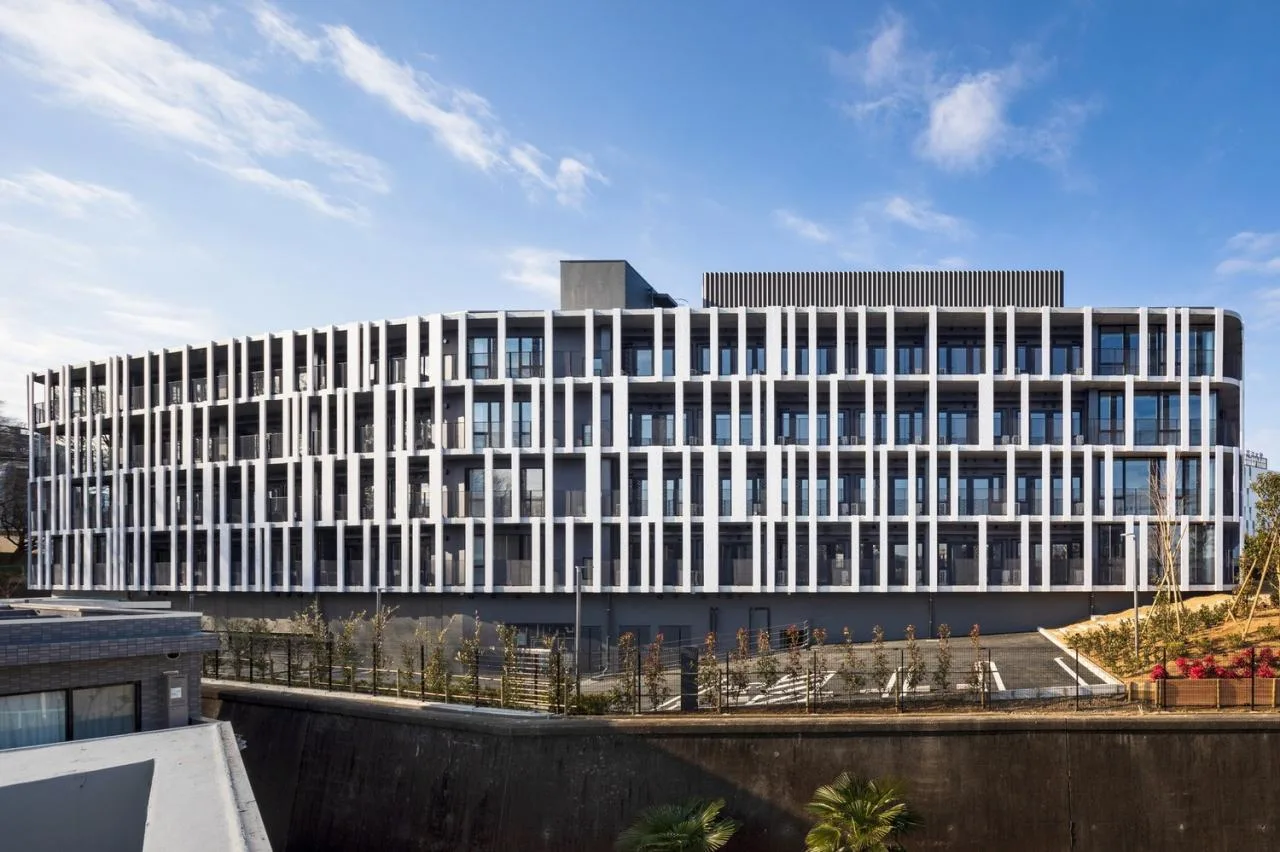
This international student dormitory, designed to accommodate around 300 international and Japanese students, was established by Toyo University to support the creation of Super Global Universities (SGU). Situated next to the Chiyoda Campus of Toyo University, which opened in 2017, the site sits at a higher elevation compared to surrounding residential areas. The campus features a continuous slope, resulting in a height difference of approximately 4 meters within the site. Therefore, coordinating the building layout with the terrain and surrounding environment was a key focus in the planning process.
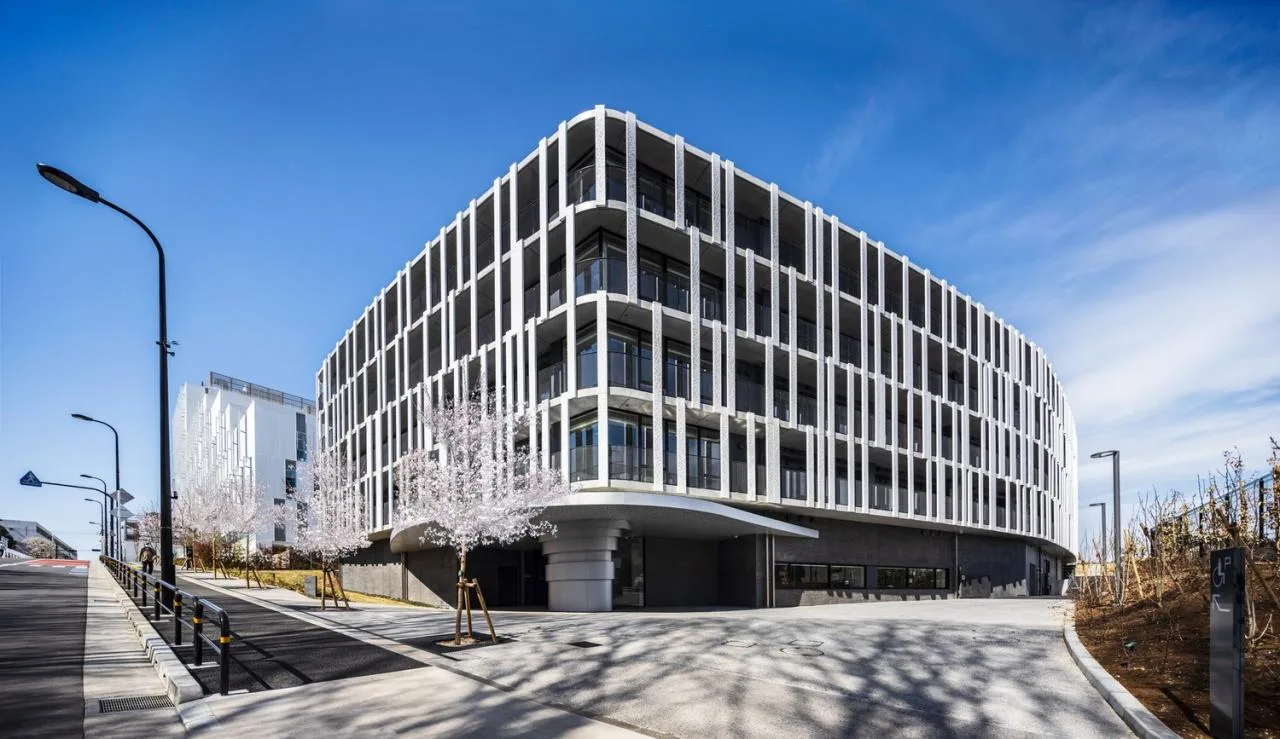
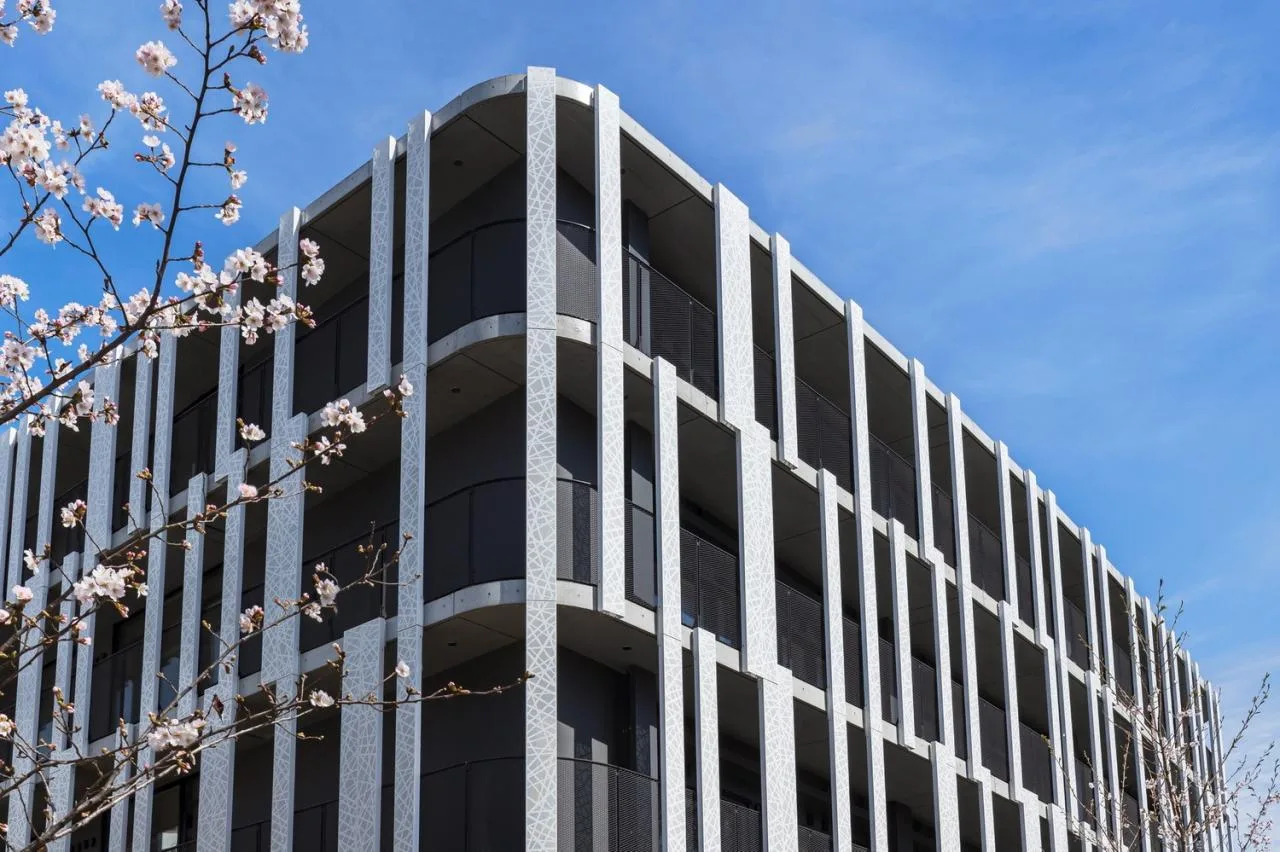
When designing large student dormitories, it is essential to consider their external impacts on the surrounding living environment, including effects like shading, noise, and social pressure. Internally, the goal was to create vibrant public spaces that encourage active interaction among residents, while also maximizing the number of dormitory rooms and improving plan efficiency. To achieve this, a polygonal floor plan with irregular exterior walls was adopted, following the site’s unique shape. This design controls the pressure caused by building height and wall length by maximizing the building’s perimeter.
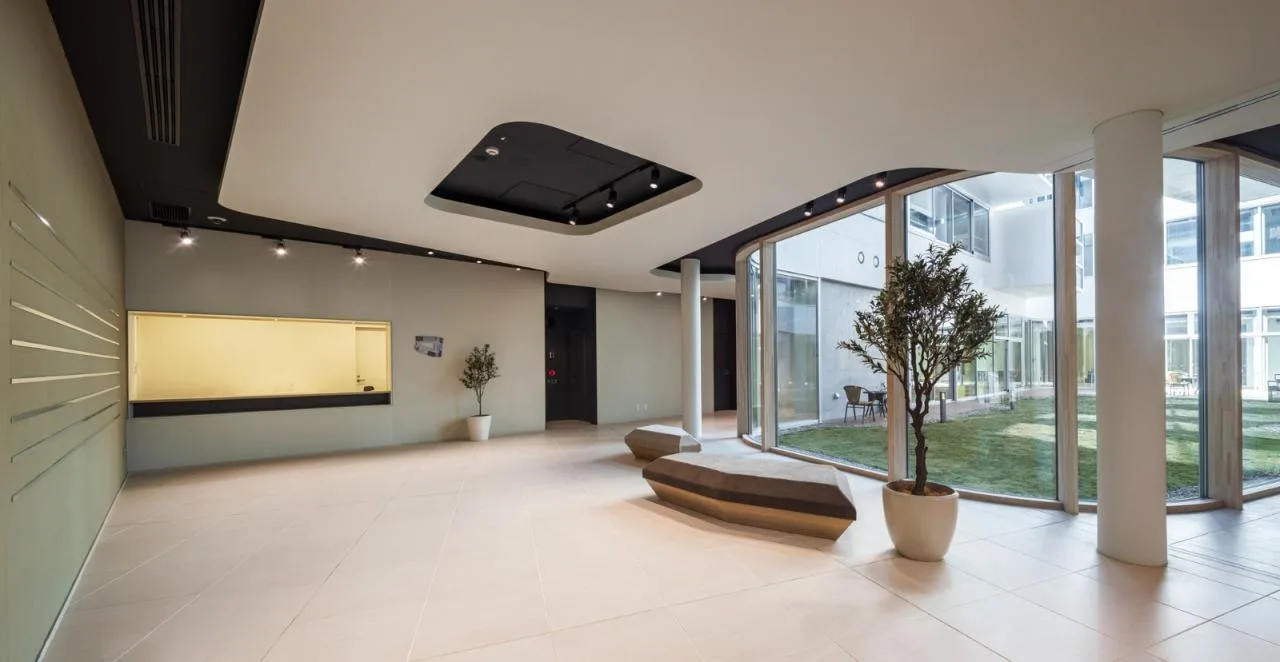
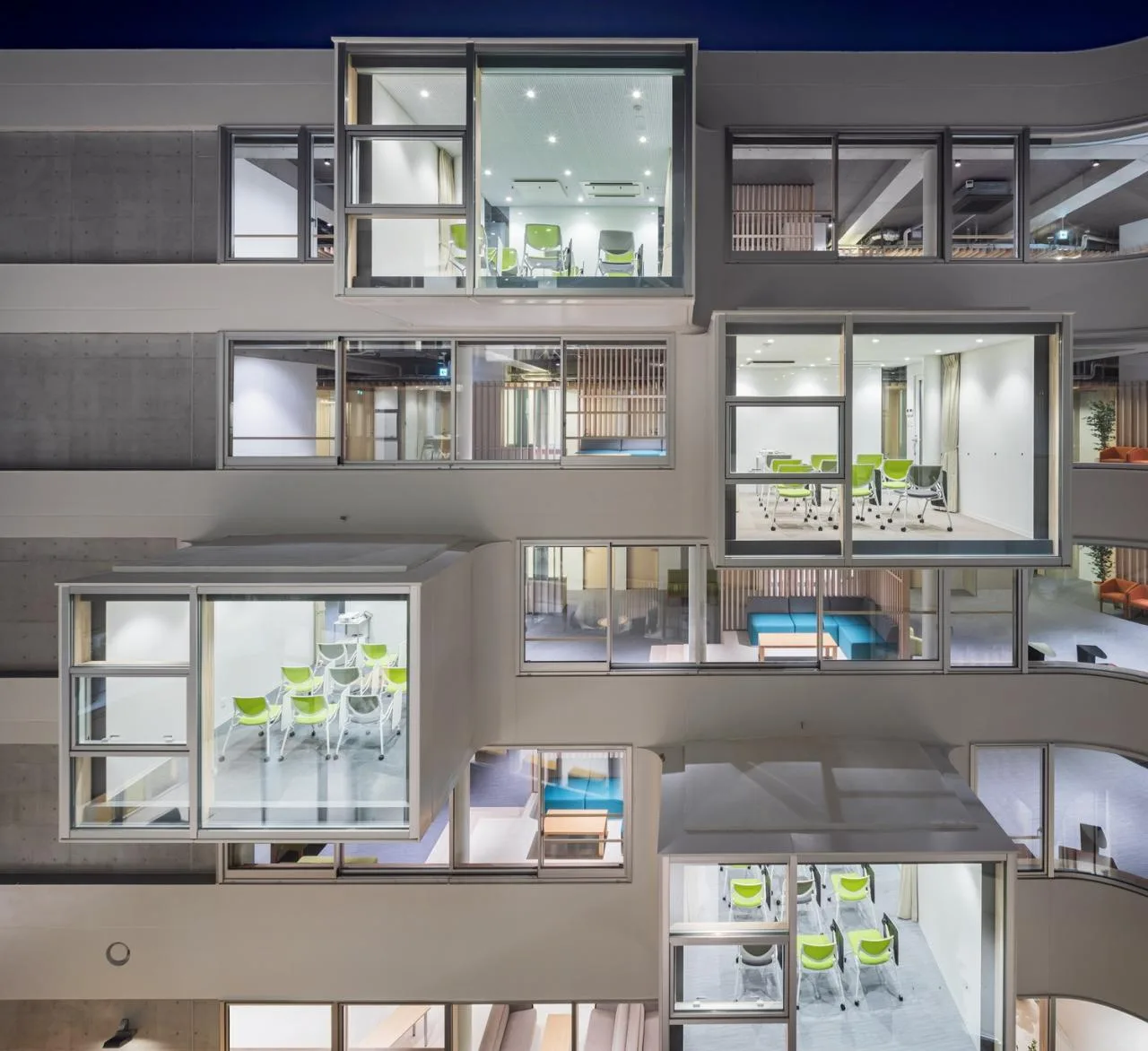
Two light wells within this polygonal layout connect the interior in a figure-eight pattern, fostering rich communal spaces where students can gather and socialize.
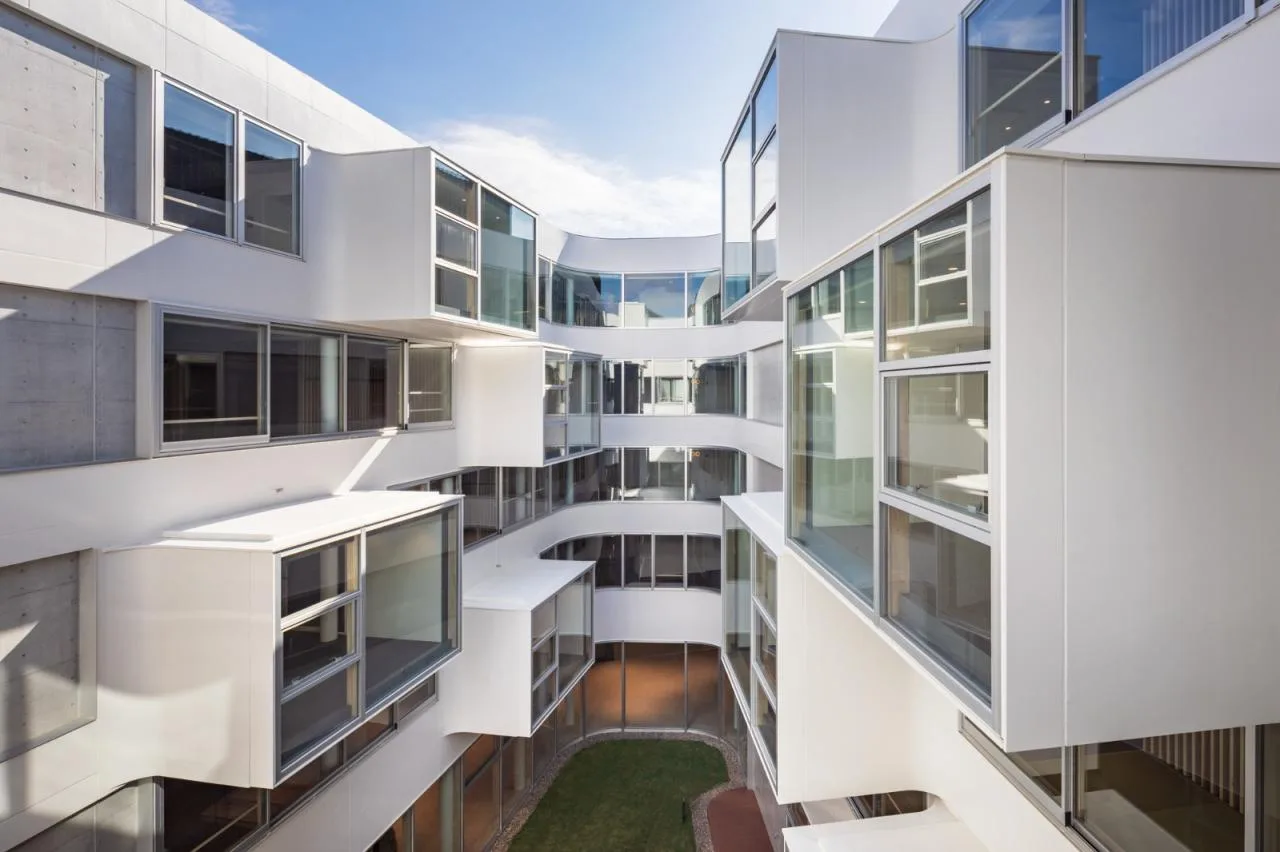
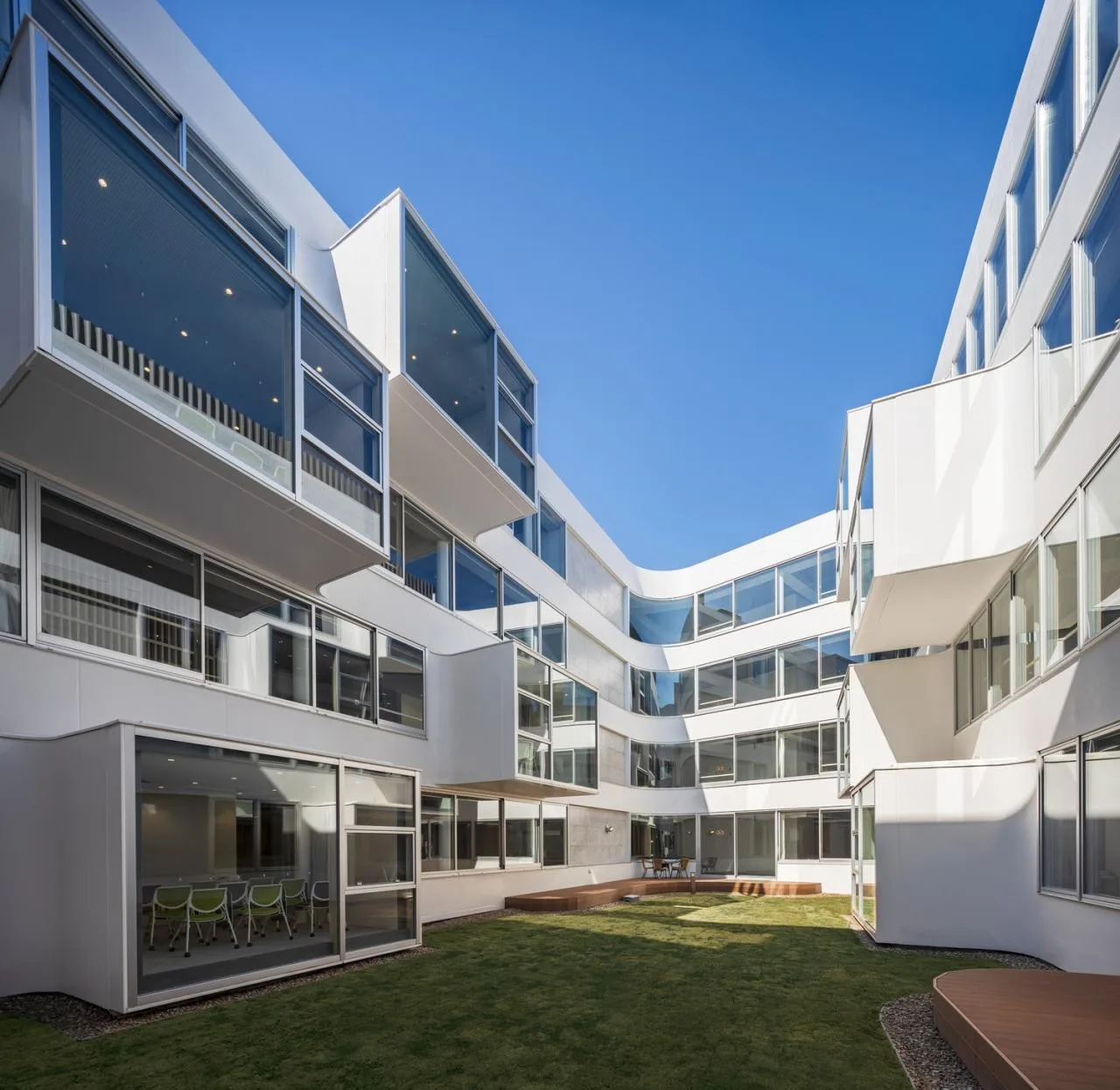
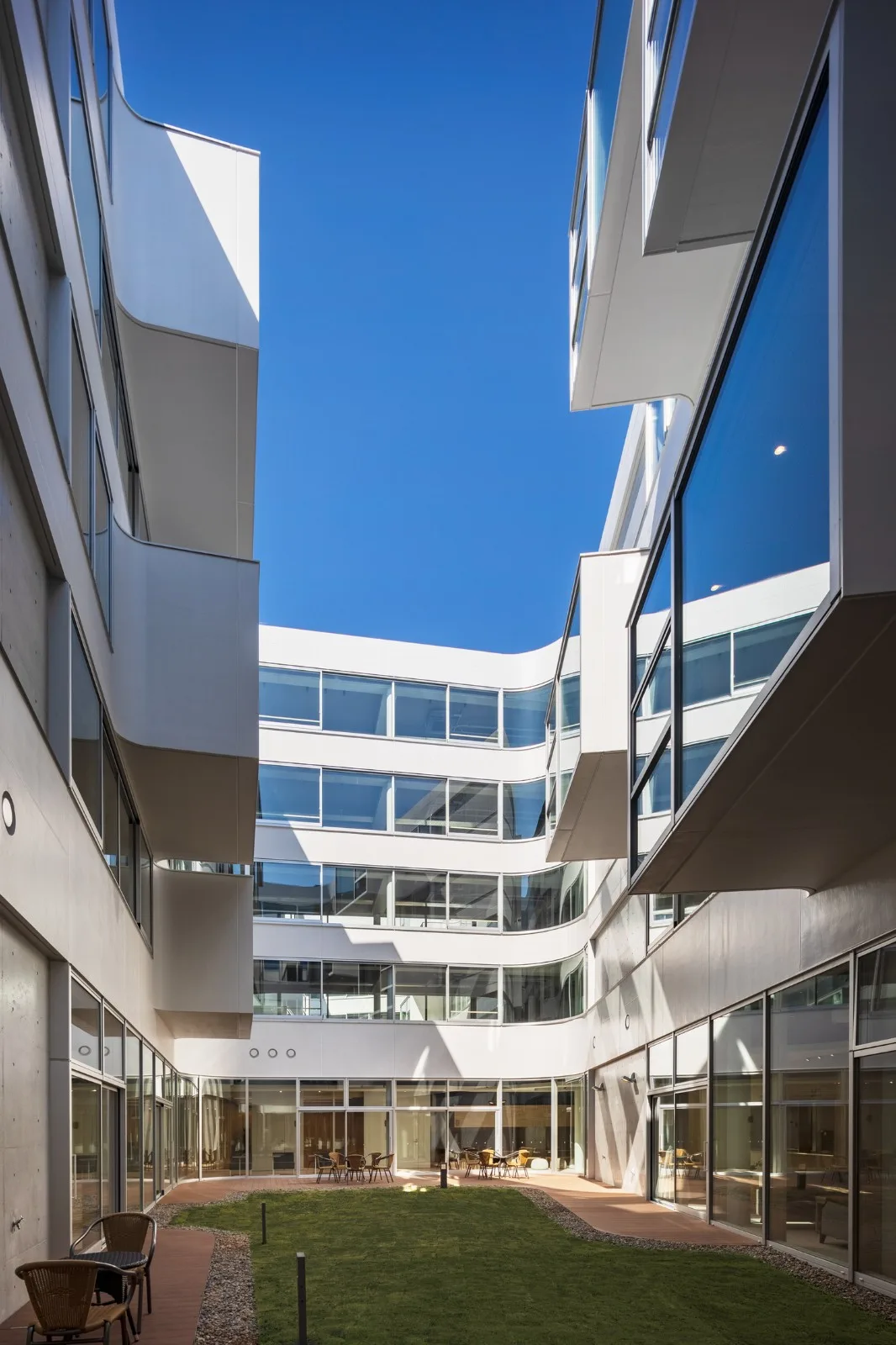
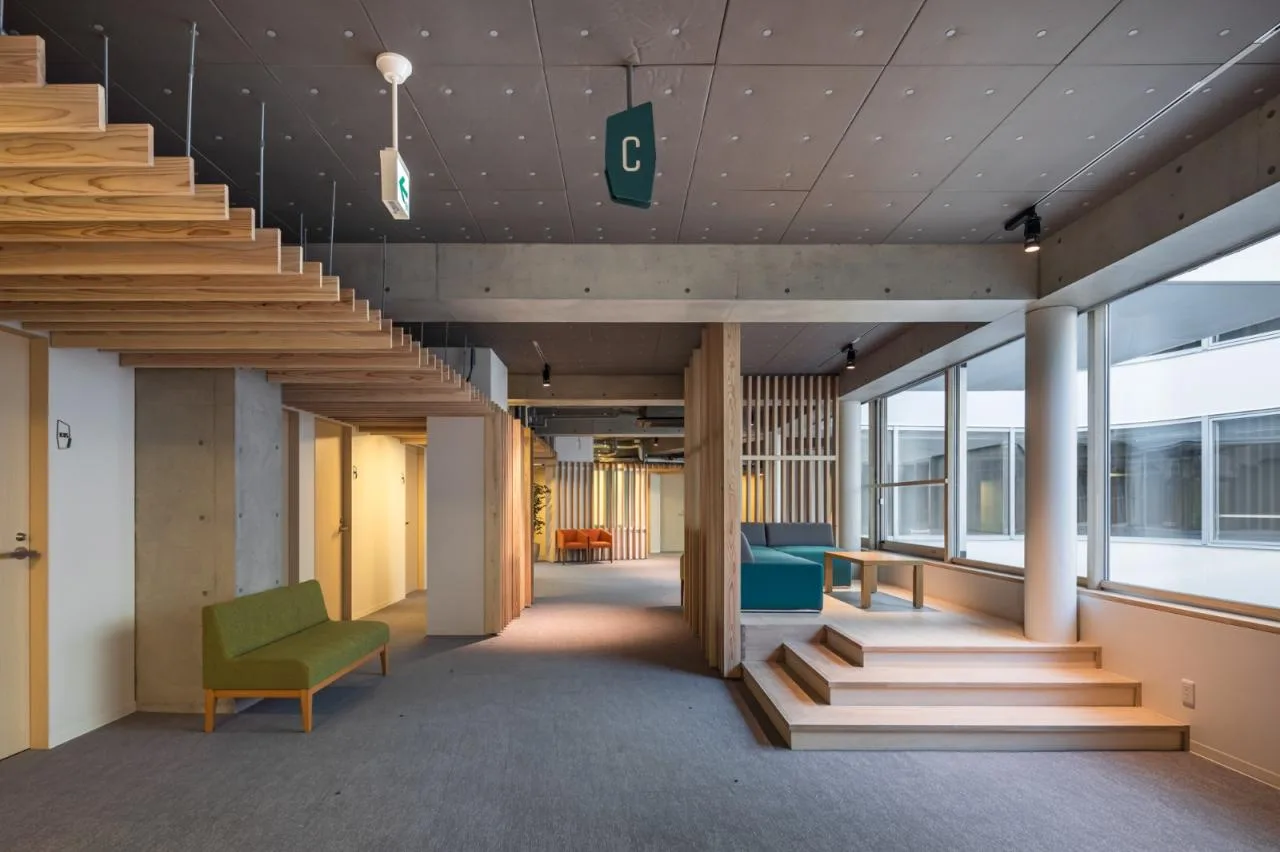
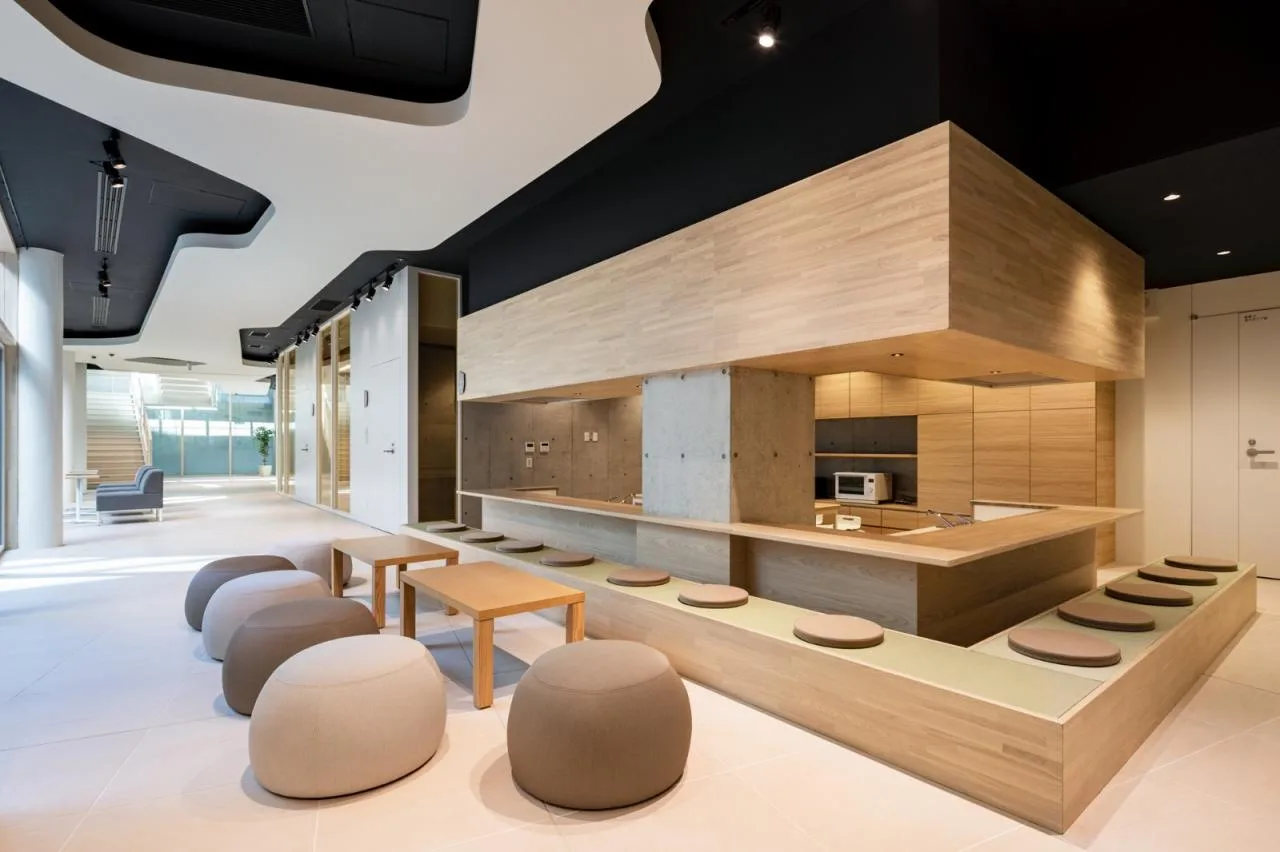
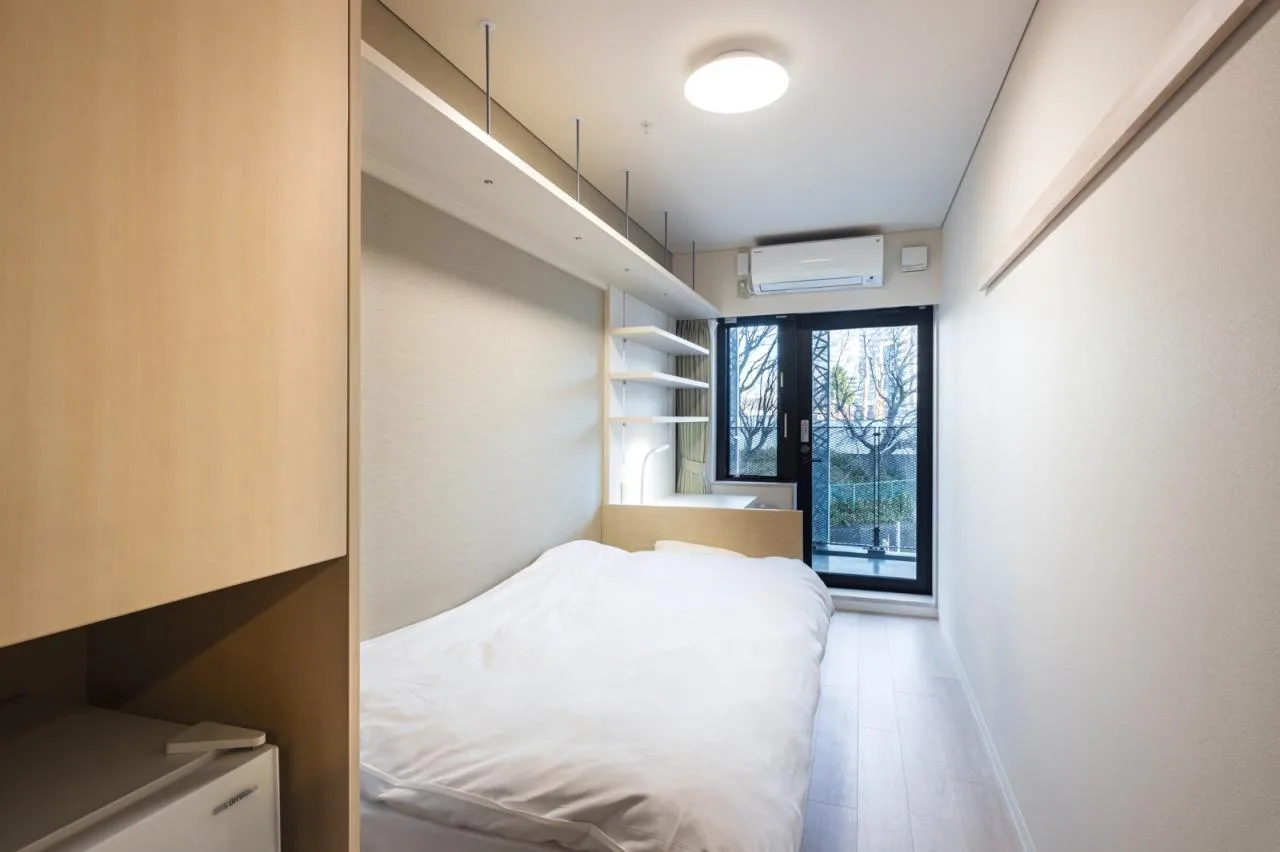
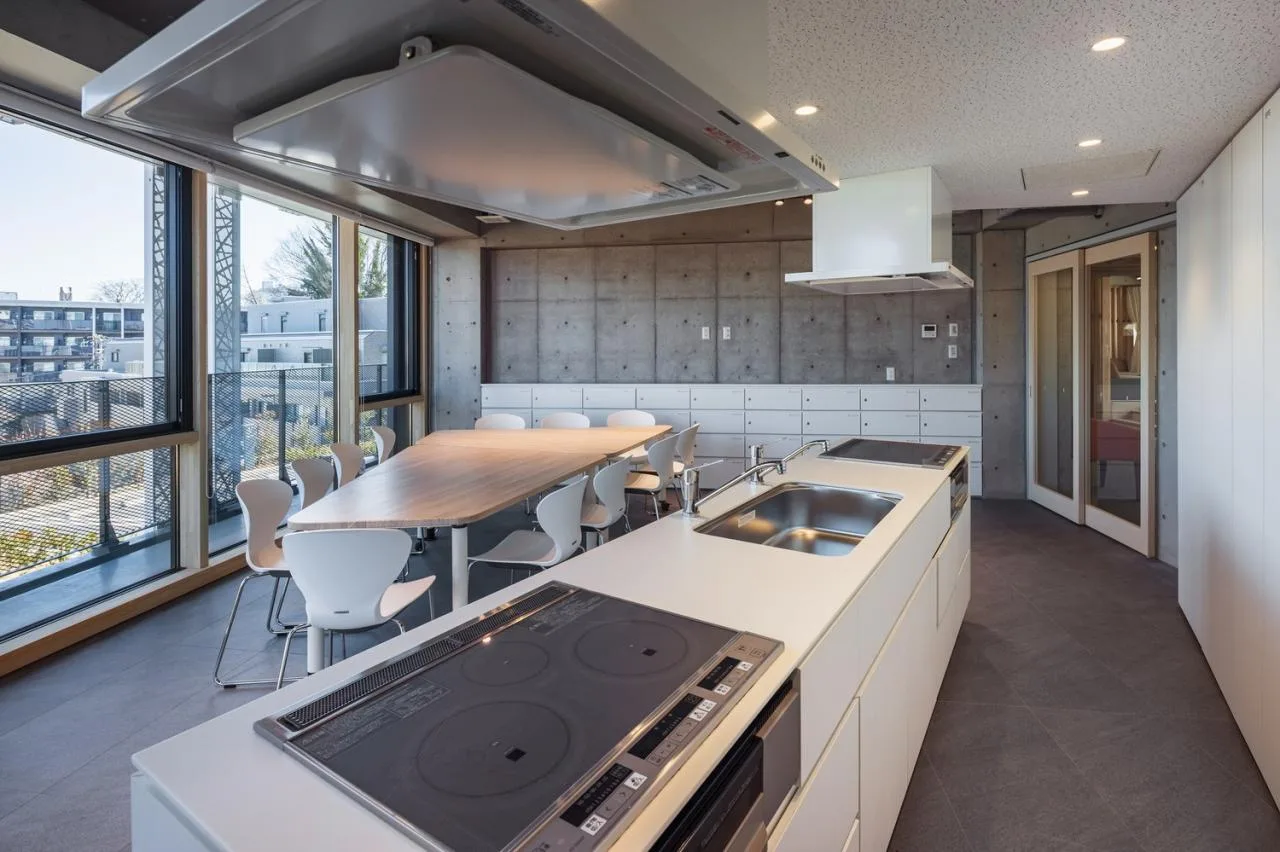
Shared spaces throughout the dormitory encourage diverse interactions. The first floor serves as a public area and includes study rooms, various studios, kitchen counters, and a cafeteria. On the second floor and above, living infrastructure such as toilets, showers, washbasins, and kitchens are arranged within the continuous figure-eight layout, shared among every 12 dormitory rooms.
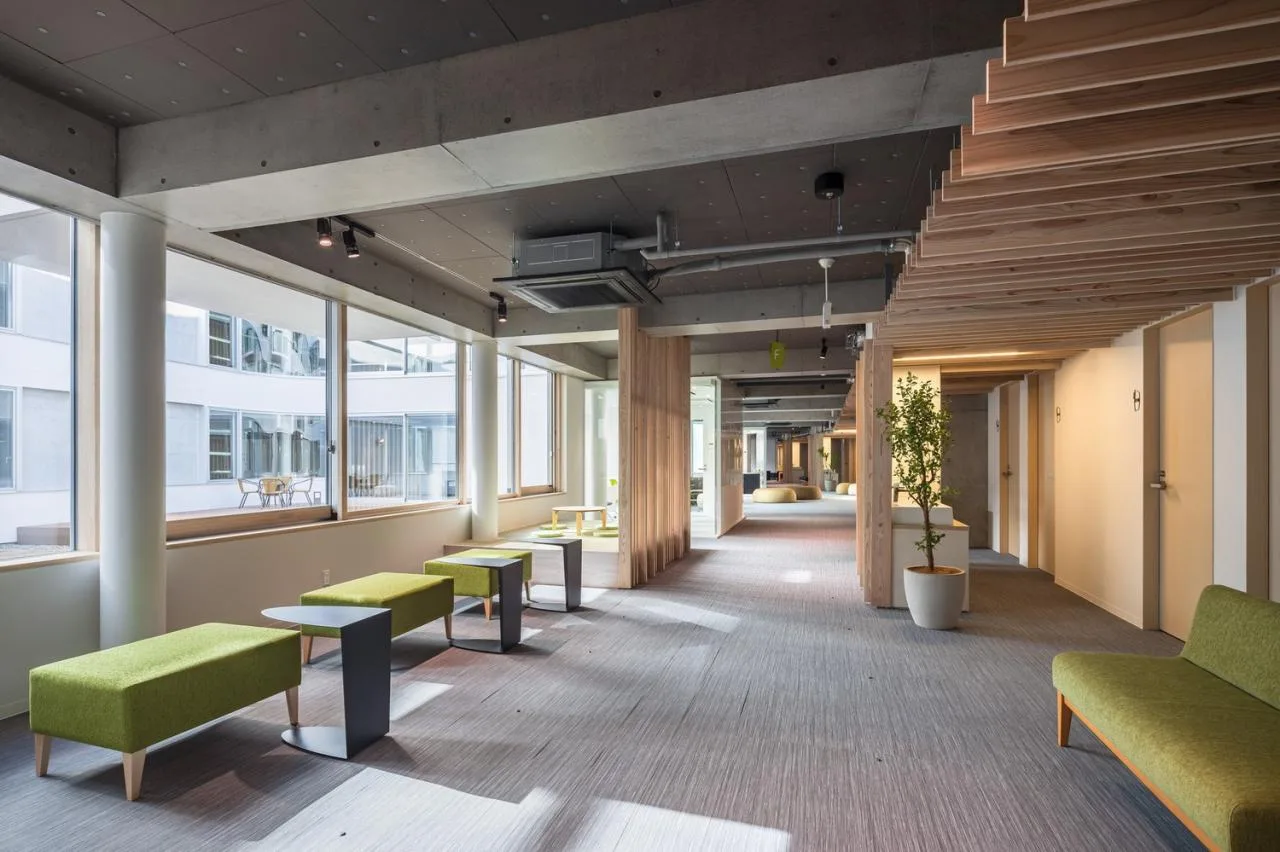
Public areas around the perimeter and courtyard feature scattered spaces for studying, tatami mats, and small living rooms. These create a continuous communal environment filled with natural light and fresh air, fostering a relaxed community atmosphere that transcends student groupings.
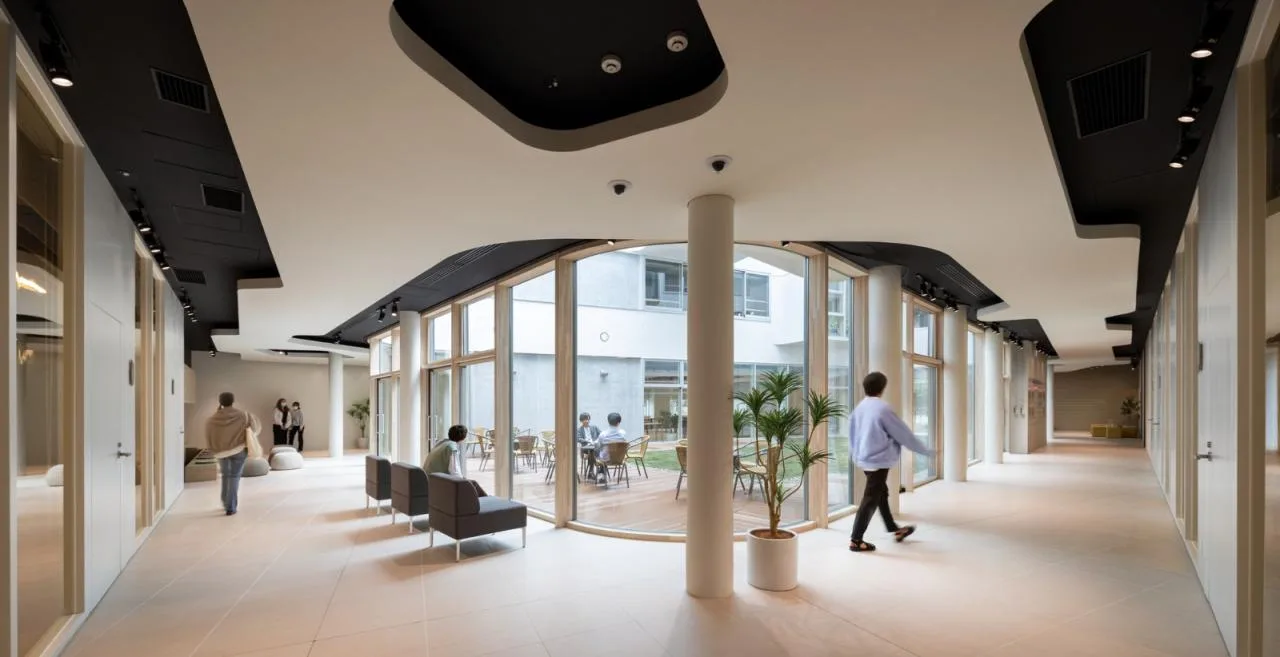
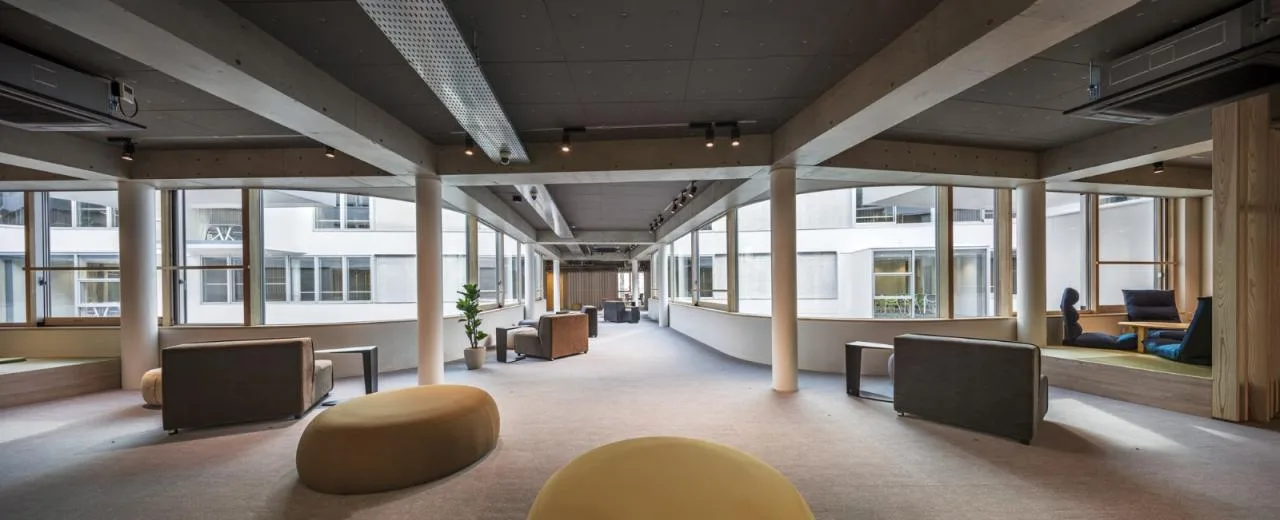
Under strict shading constraints, the design integrates the advantages of traditional dormitory styles—combining “private room” and “unit” types—to enhance area efficiency and foster small group communities. Although each group of 12 dormitory rooms shares living infrastructure, there are no physical partitions between groups. This open design encourages interaction by allowing free access to shared kitchens, study rooms, and other amenities, eliminating the concept of belonging to fixed groups.
Project Drawings
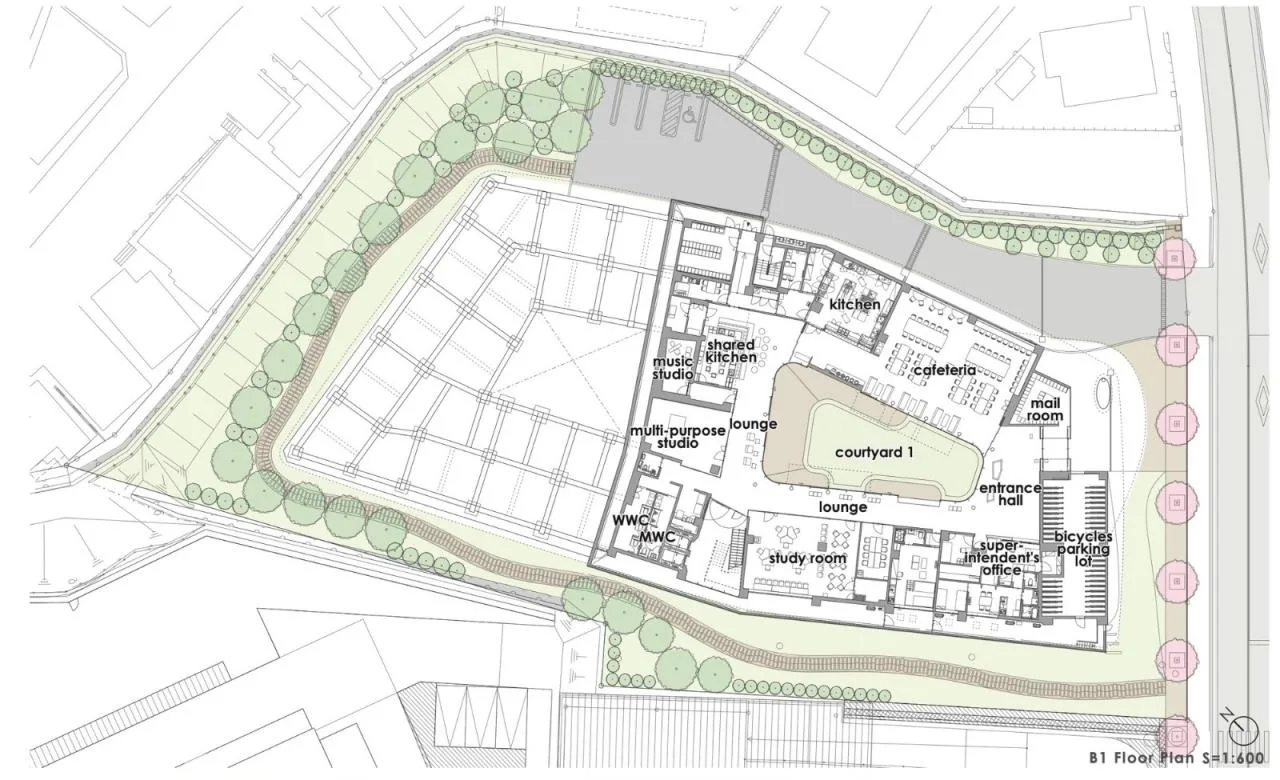
△ Negative Floor Plan
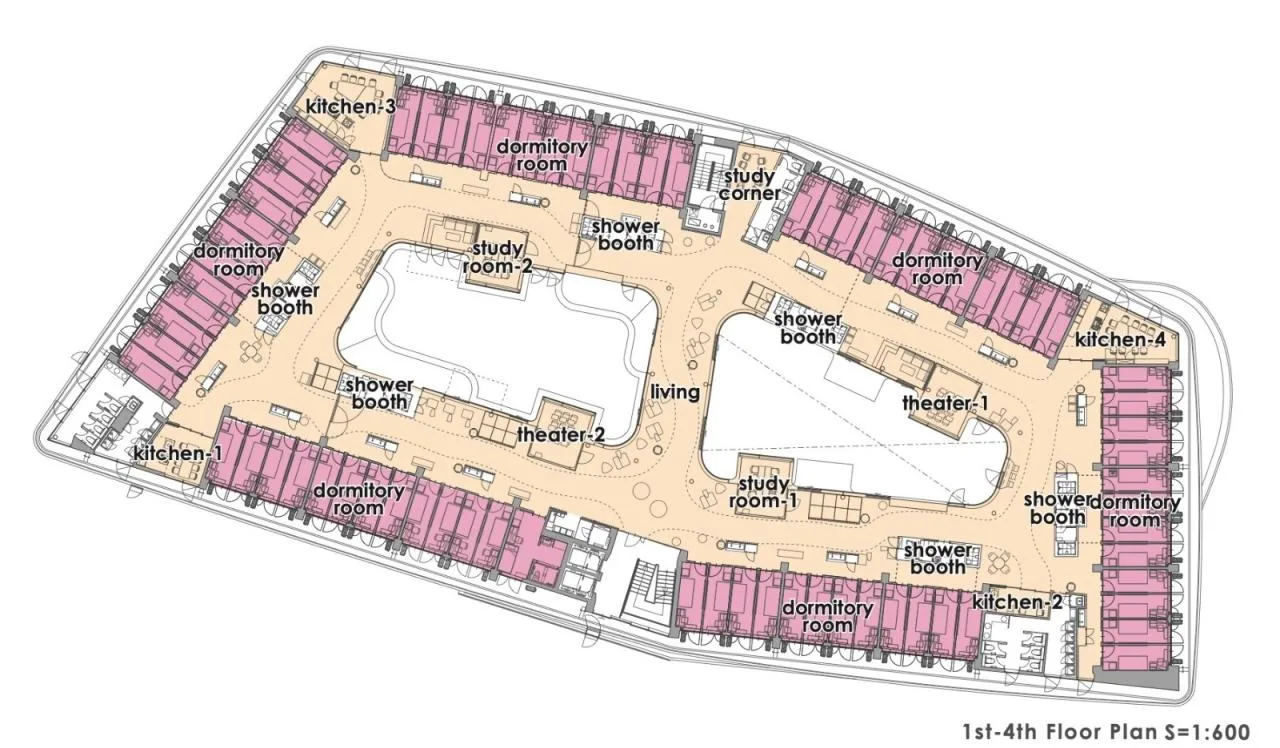
△ First to Fourth Floor Plan
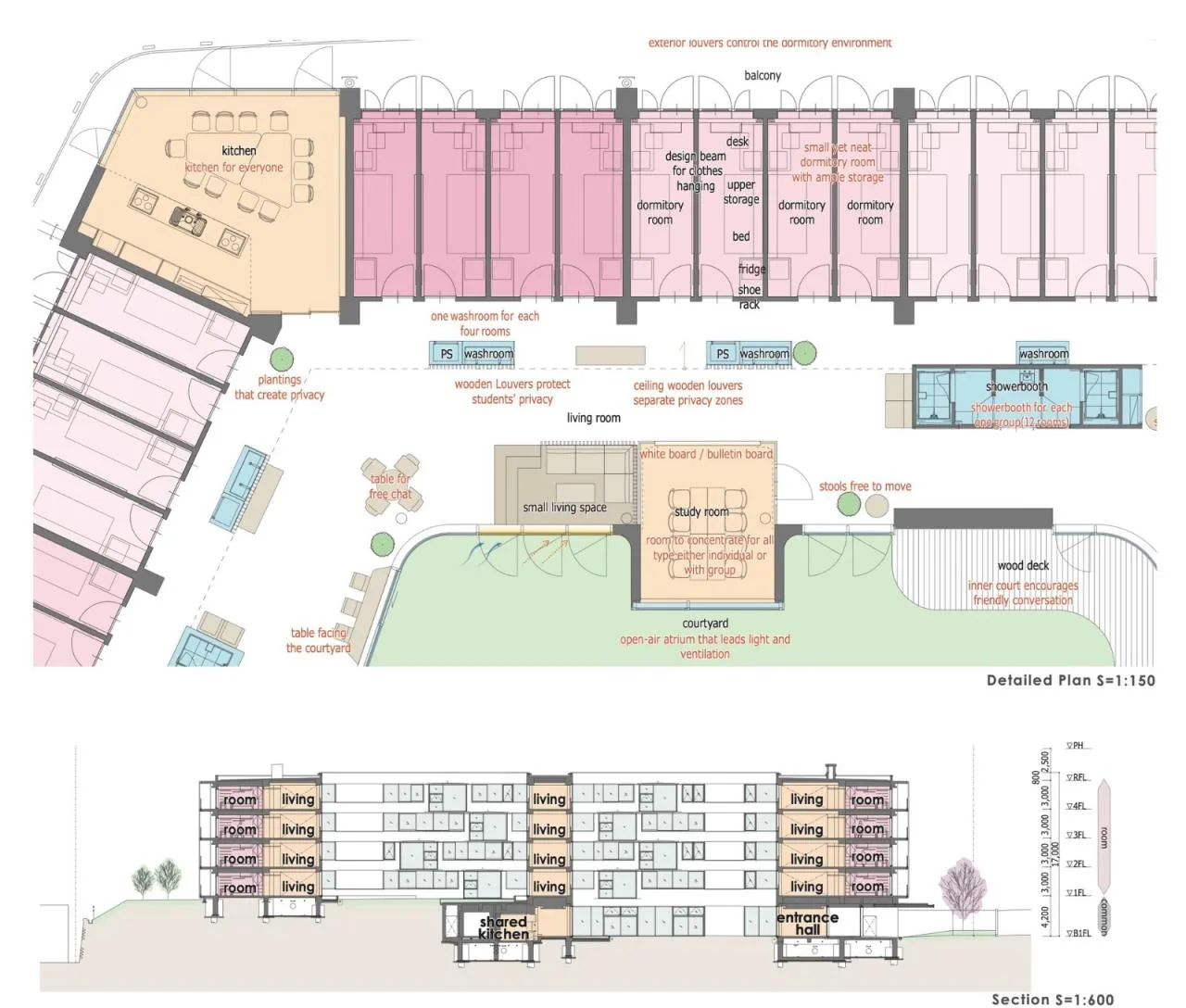
△ Local Plan View and Sectional View
Project Information
Architect: Ishimoto Architectural
Area: 2,106 m²
Project Year: 2022
Lead Architects: Takuma Hukuchi, Osamu Endo, Shota Yokoyama
Structural Design: Tomoya Ishikawa, Mikihito Yoshida
Electrical Machinery Design: Munetaka Ichikawa, Tadao Yagi, Daichi Takano
Architectural Design: Ishimoto Architectural & Engineering Firm, Inc.
Construction: HAZAMA ANDO Corporation
Location: Kita City, Japan













Must log in before commenting!
Sign Up