
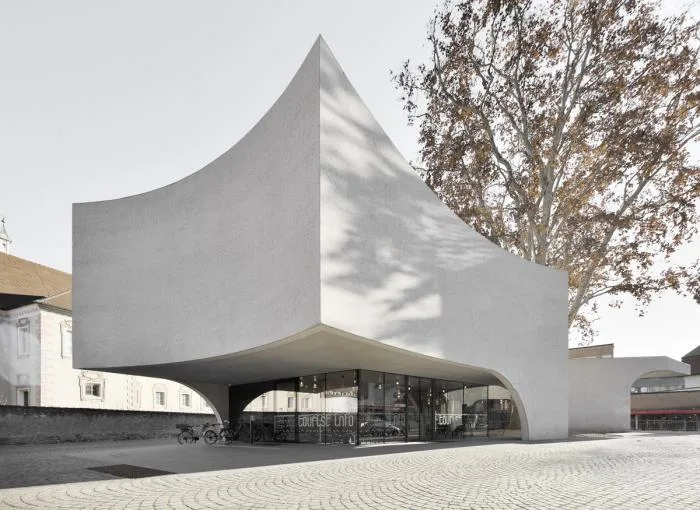
Located in the suburban area of the historic city of South Tyrol, near the Bishop’s Palace in Brixen, this project marks the final phase of the local “architectural homicide” initiative spanning from the 19th century to the 1970s. The building has attracted attention for its distinctive concrete exterior.
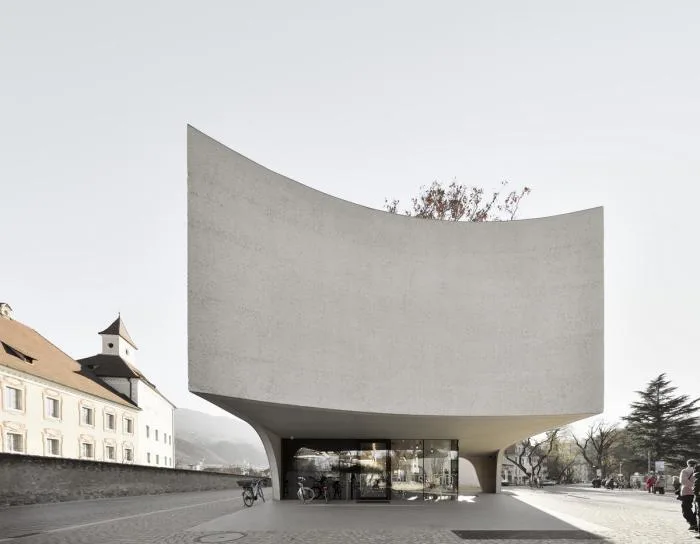
The TreeHugger Tourist Information Consultation Center was designed by adapting the existing site’s legacy structure. The architects preserved the original tall structure and its excellent spatial ventilation, incorporating slender support columns, deep corridors, and elegant overhangs to ensure a comfortable experience for visitors.
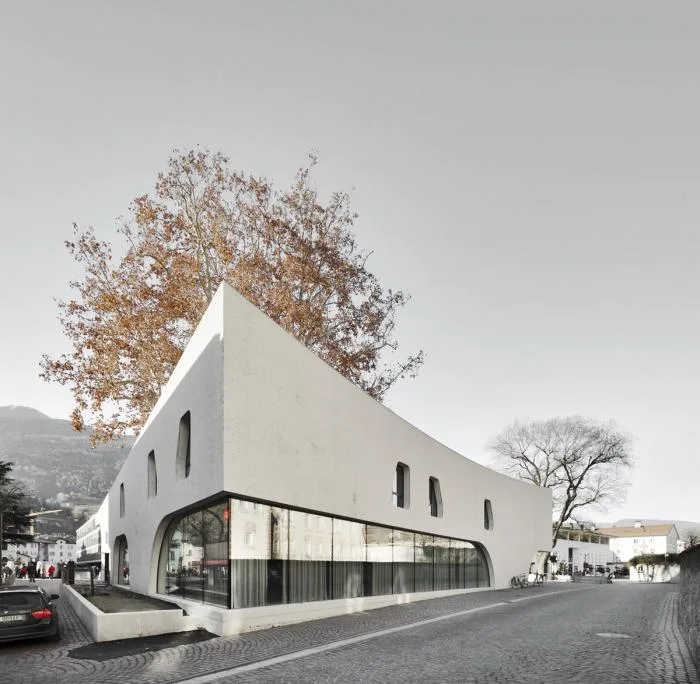
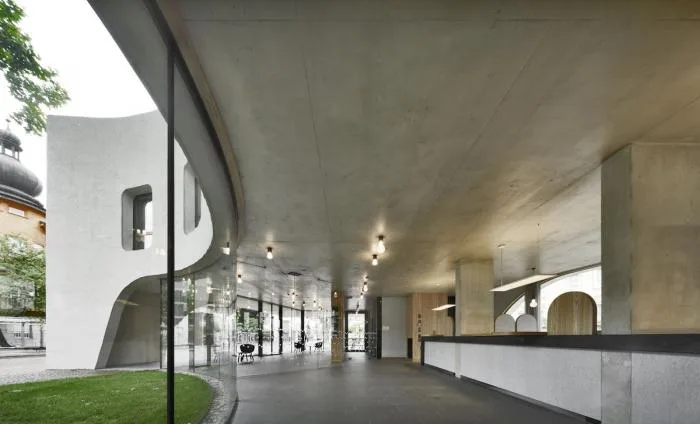
The ground floor of the tourist center was elevated to open the space to the city’s public. This design not only creates a visual link to the main building of the Bishop’s Palace but also connects with the adjacent Chinese and Japanese pavilions located in the palace garden’s corner. The architect incorporated these exotic curved shapes to establish the new center as a landmark in Brixen.
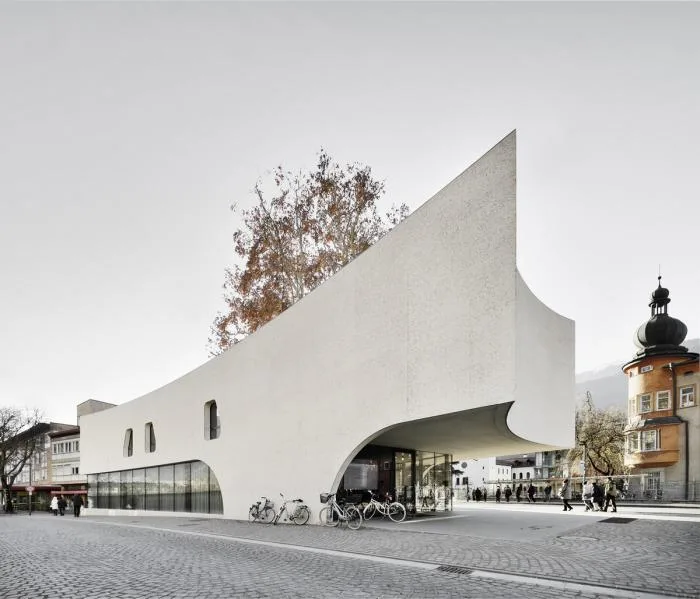
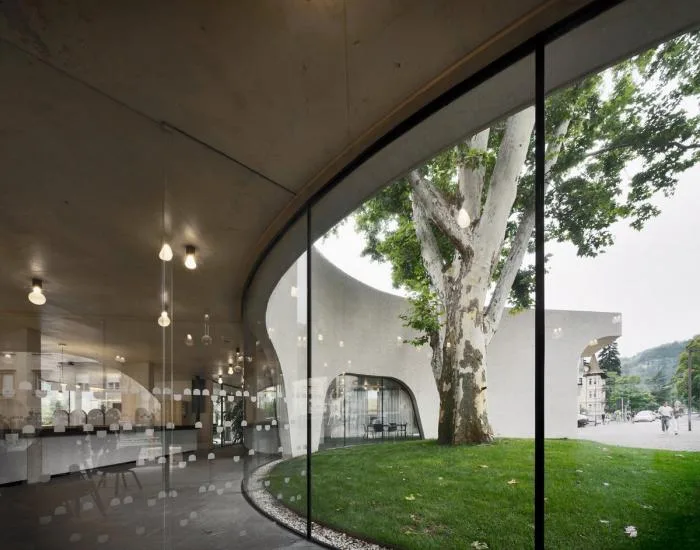
Dominating the site is an ancient tree, which significantly influenced the project’s design. The architects embraced this natural element by surrounding the tree, fostering a strong connection between the new building and the central plane tree. The textured concrete walls complement the tree’s rugged, scaly bark.
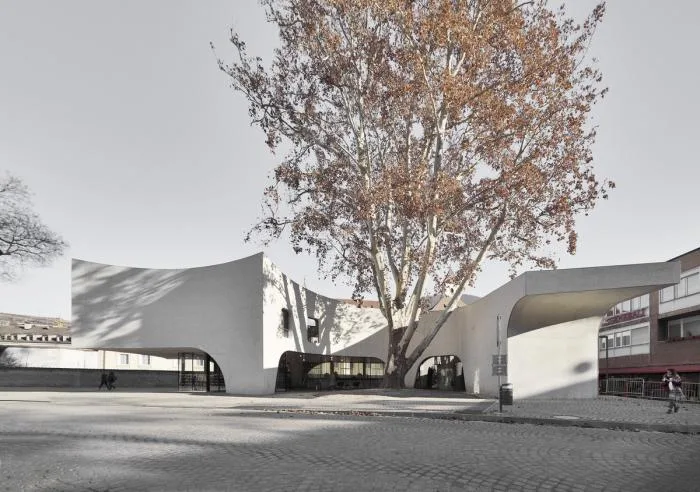
The design features five arches, centered around the tree trunk, creating the impression that the building is lifted from the ground. These arches weave an open framework around the tree canopy. To achieve a seamless vertical concrete surface, the architects employed a one-time pouring technique to form a nine-meter-high giant ring, reinforced with concrete slabs for added strength. This unique curvature, combined with the smooth integration of floor slabs, results in a unified architectural expression in form, structure, and facade.
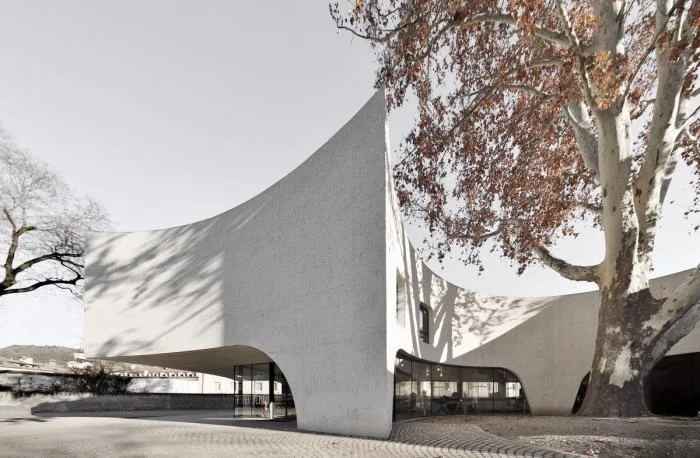
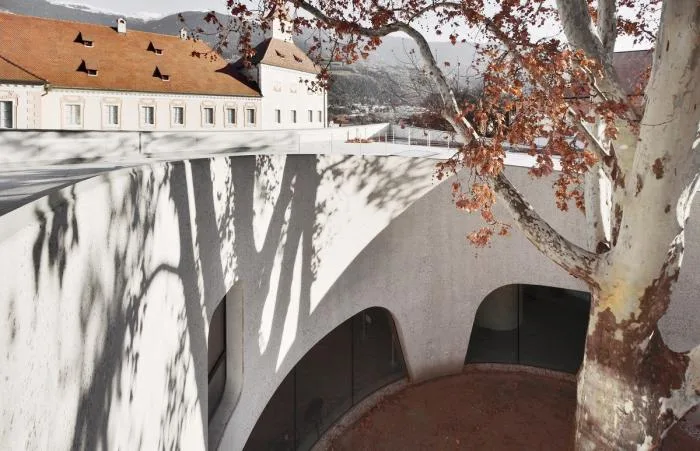
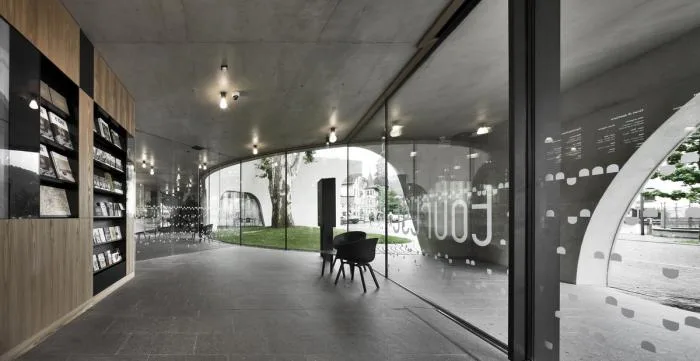
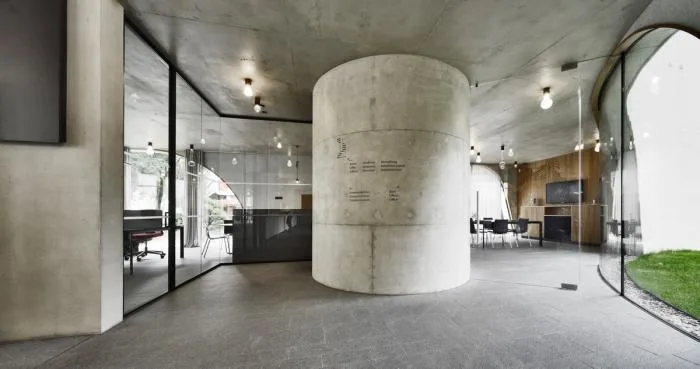
With the tourist center elevated, the ground level is largely returned to public use, leaving only an information pavilion. This design ensures transparency and permeability throughout the building. A clear signage marks the entrance, accompanied by a large overhang directing visitors toward the square. The upper level houses administrative offices enclosed within curving walls, creating intimate and mysterious spaces.
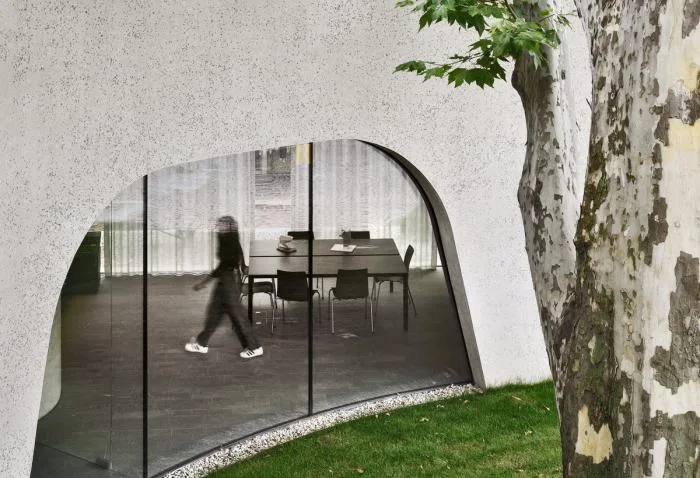
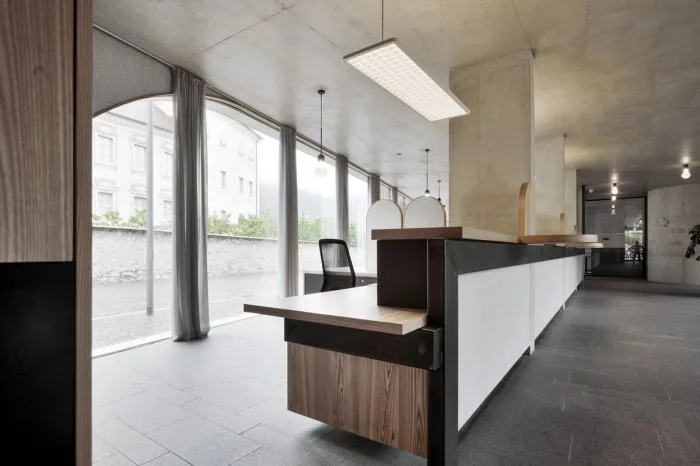
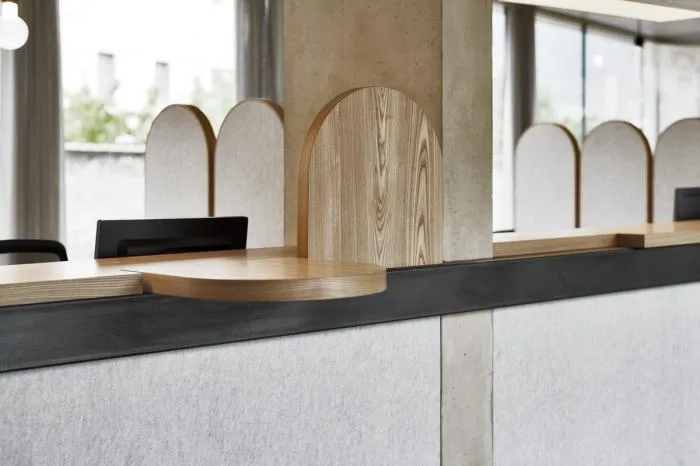
Thanks to its distinctive curved form and advanced concrete pouring techniques, the TreeHugger Tourist Information Center establishes a new dialogue within its historical context, attracting both locals and tourists while preserving and continuing the local cultural heritage.
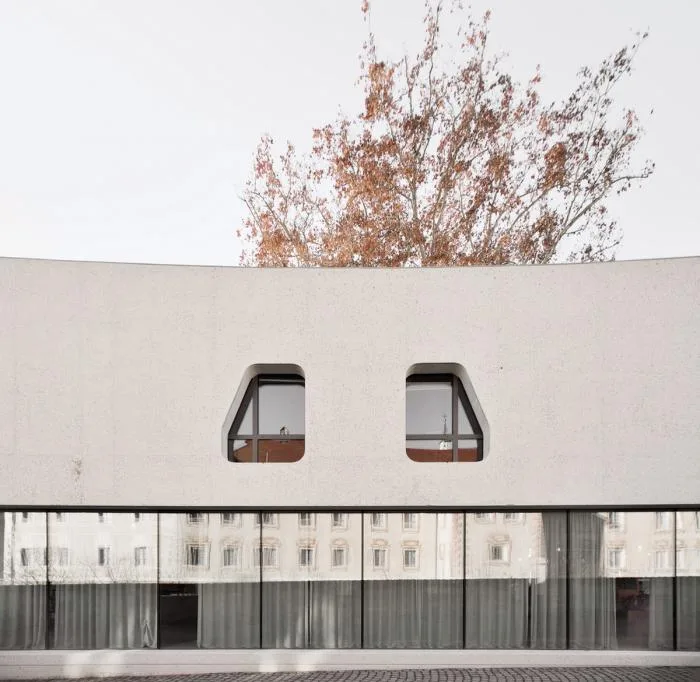
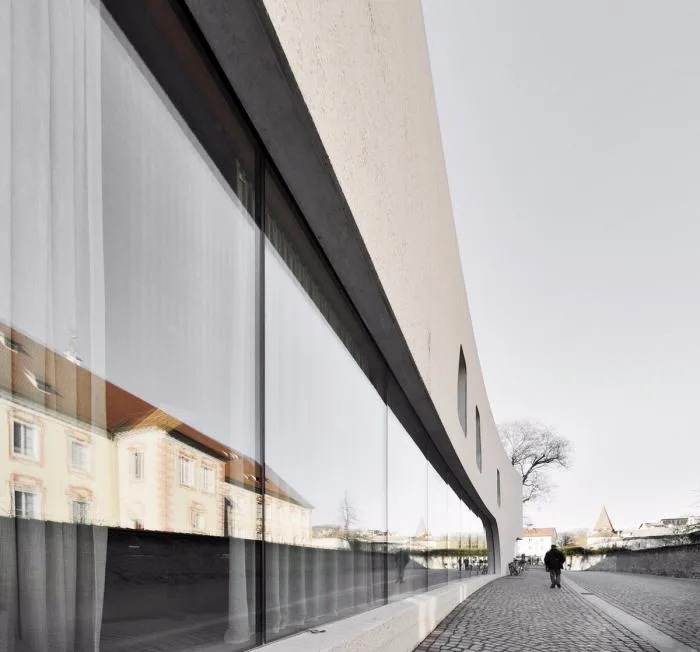
Project Drawings
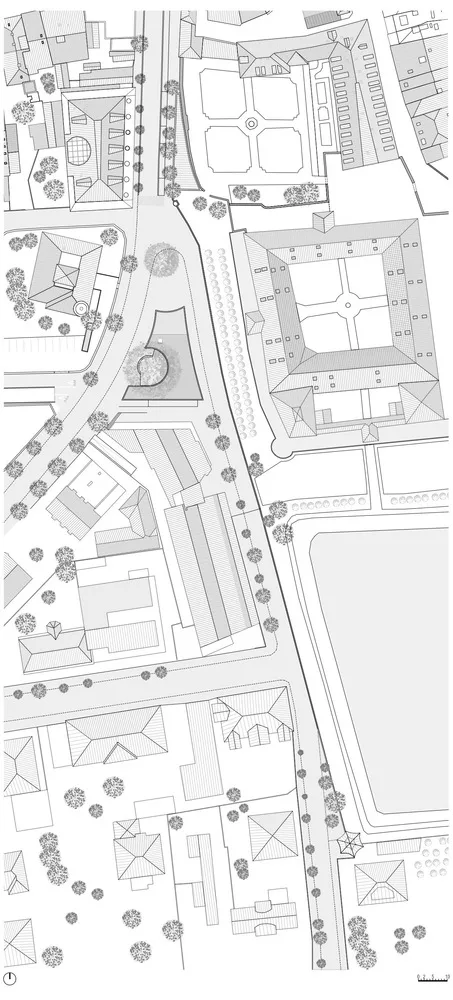
▲ Overall Site Plan
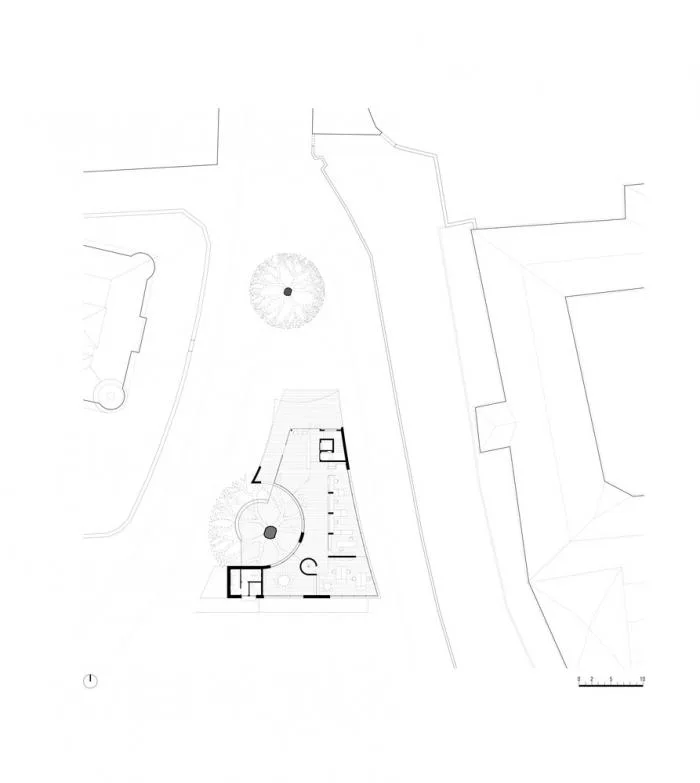
▲ Overall Project Plan
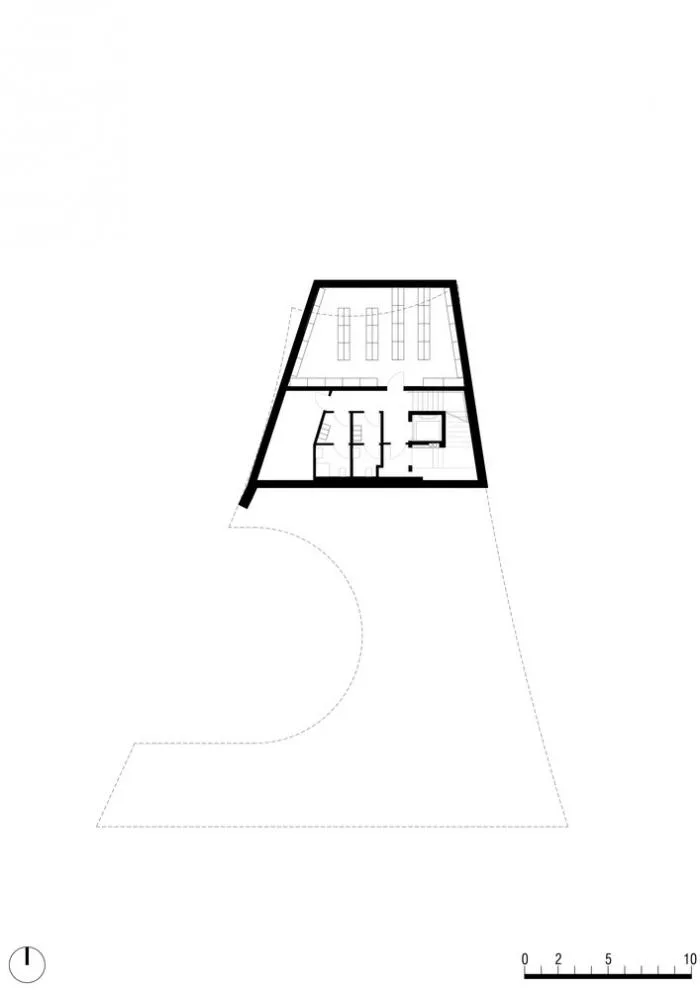
▲ Basement Floor Plan
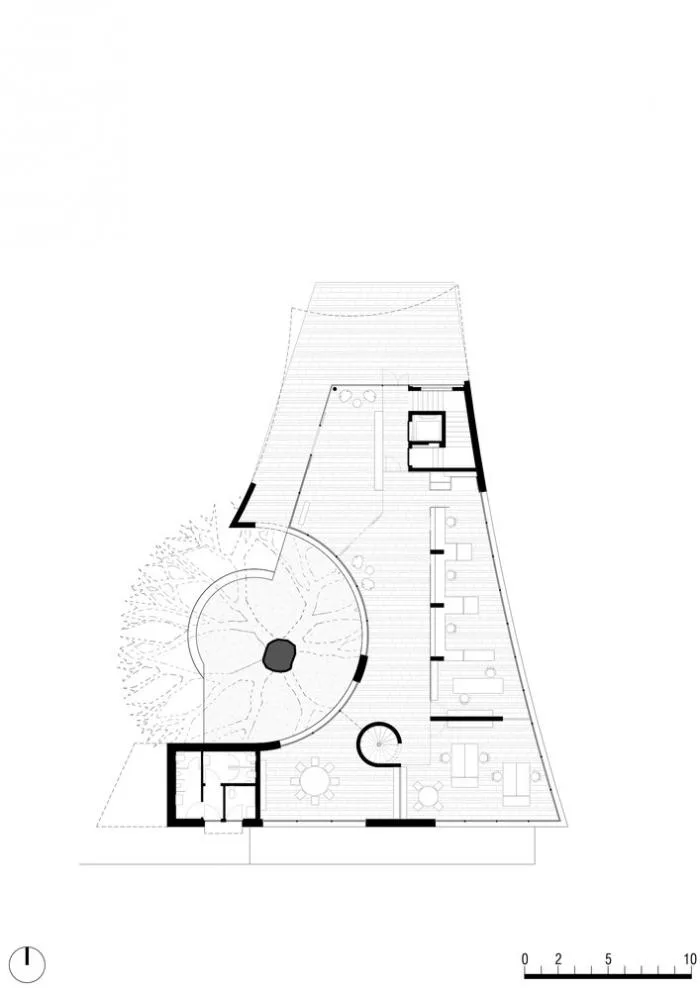
▲ Ground Floor Plan
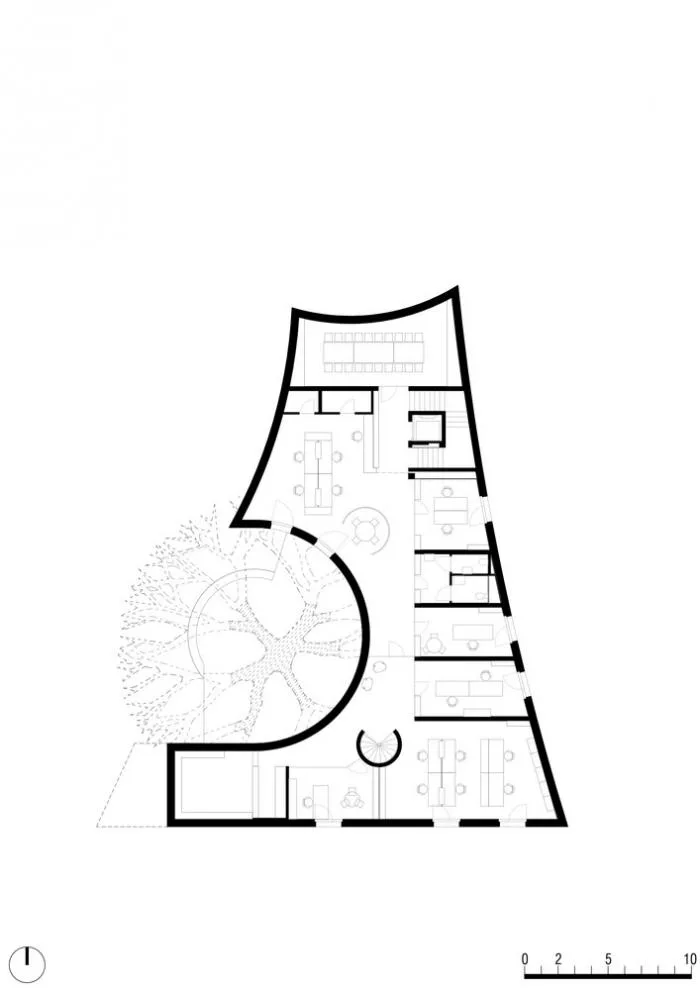
▲ First Floor Plan
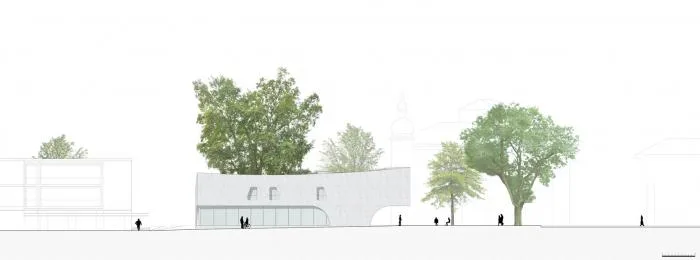
▲ East Elevation View
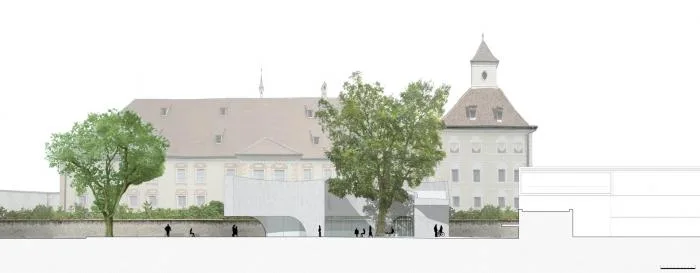
▲ West Elevation View
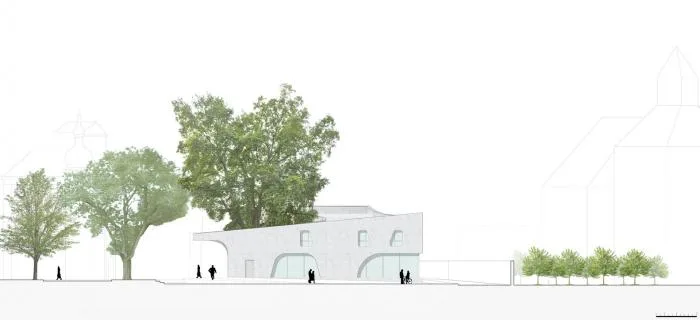
▲ South Elevation View
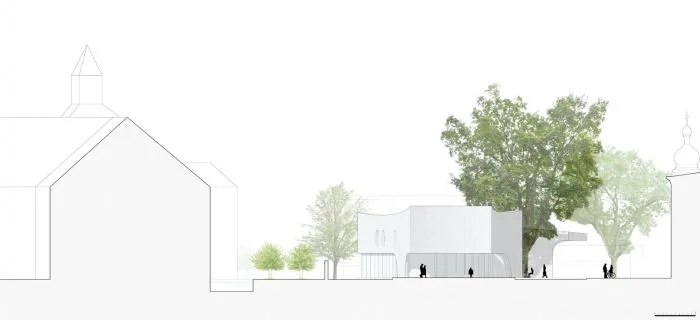
▲ North Elevation View
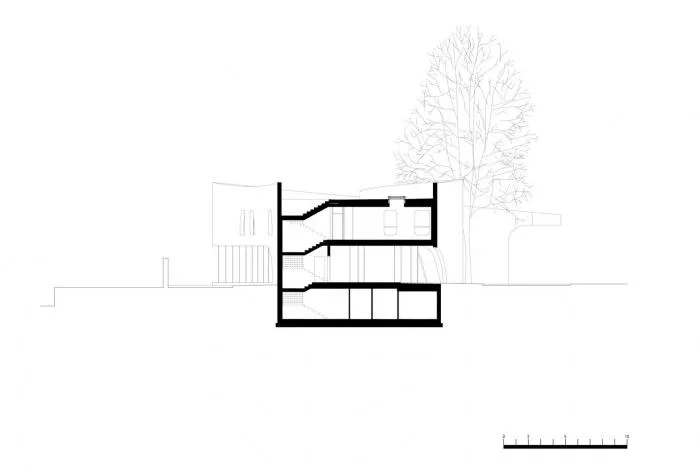
▲ Horizontal Section
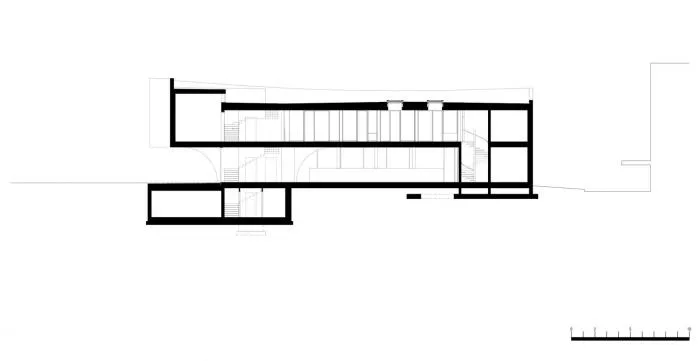
▲ Longitudinal Section
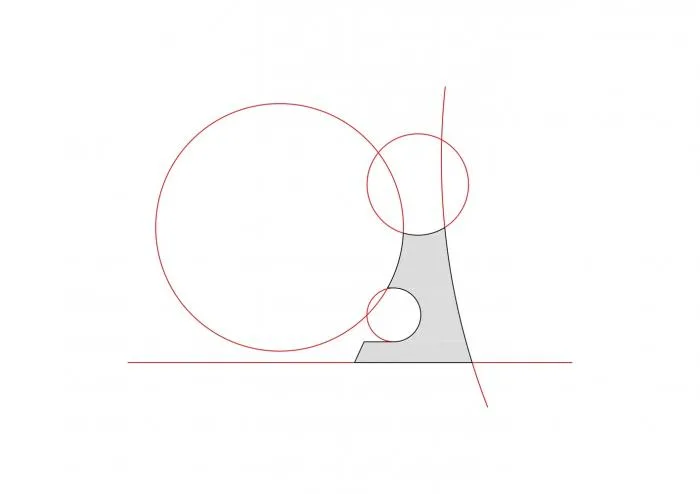
▲ Conceptual Analysis Diagram
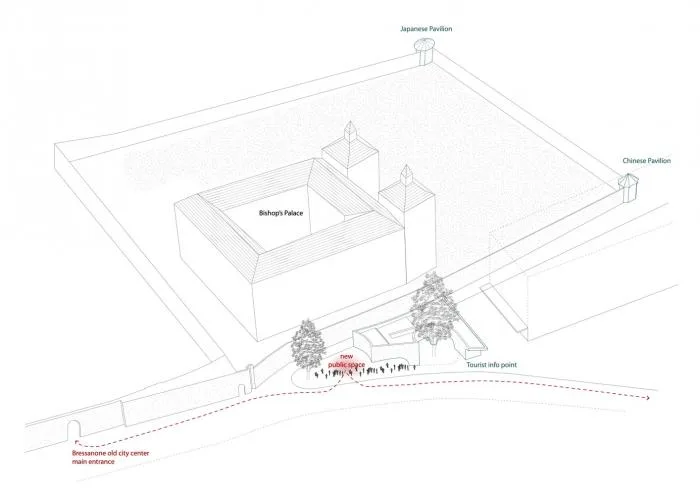
▲ Axonometric Diagram
Project Information
Project Type: Visitor Center
Location: Brixen, Italy
Architectural Design: MoDusArchitects
Area: 430 m²
Year: 2019
Photographer: Oskar Da Riz
Manufacturer: Barth, Aster GmbH
Lead Architects: Sandy Attia, Matteo Scagnol
Design Team: Irene Braito, Filippo Pesavento
Structural Engineer: Luca Bragagna
Owner: Bressanone Tourist Association
Contractor: Unionbau
Construction Management: Goller Bögel
Electrical Installation: Elektro Josef Graber
Thermal Hydraulic System: Pezzei












Must log in before commenting!
Sign Up