
Learn to Let Go
Education Is Not Production
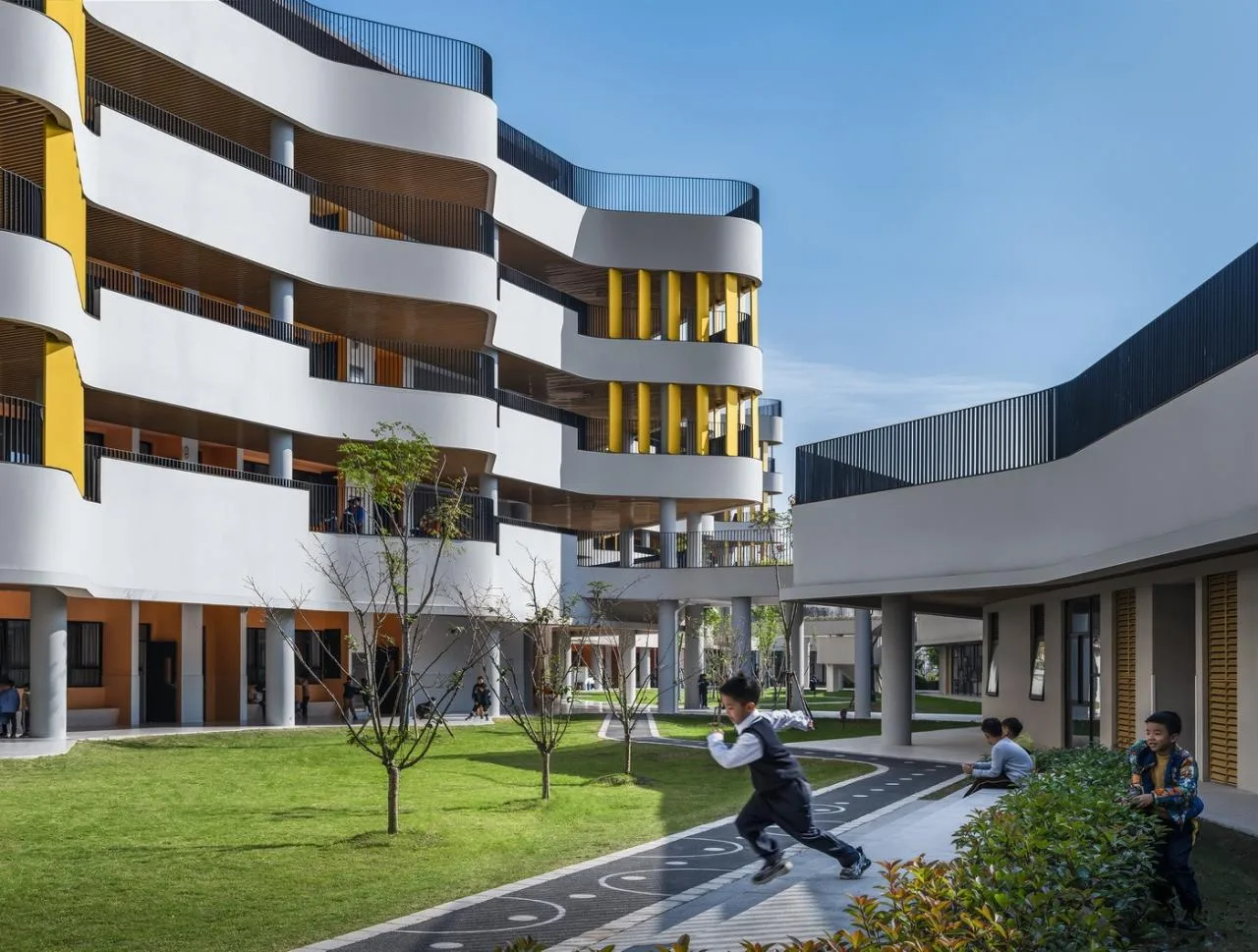
Public schools in Shanghai typically follow conservative teaching methods and feature architecture resembling factory buildings. However, the new Chonggu Experimental School aims to break away from this traditional, discipline-focused approach by embracing a more informal, inquiry-based learning model. Designed as a space for happiness, play, and imagination, the school’s architecture embodies this educational paradigm shift.
Like a Dream or a Fantasy
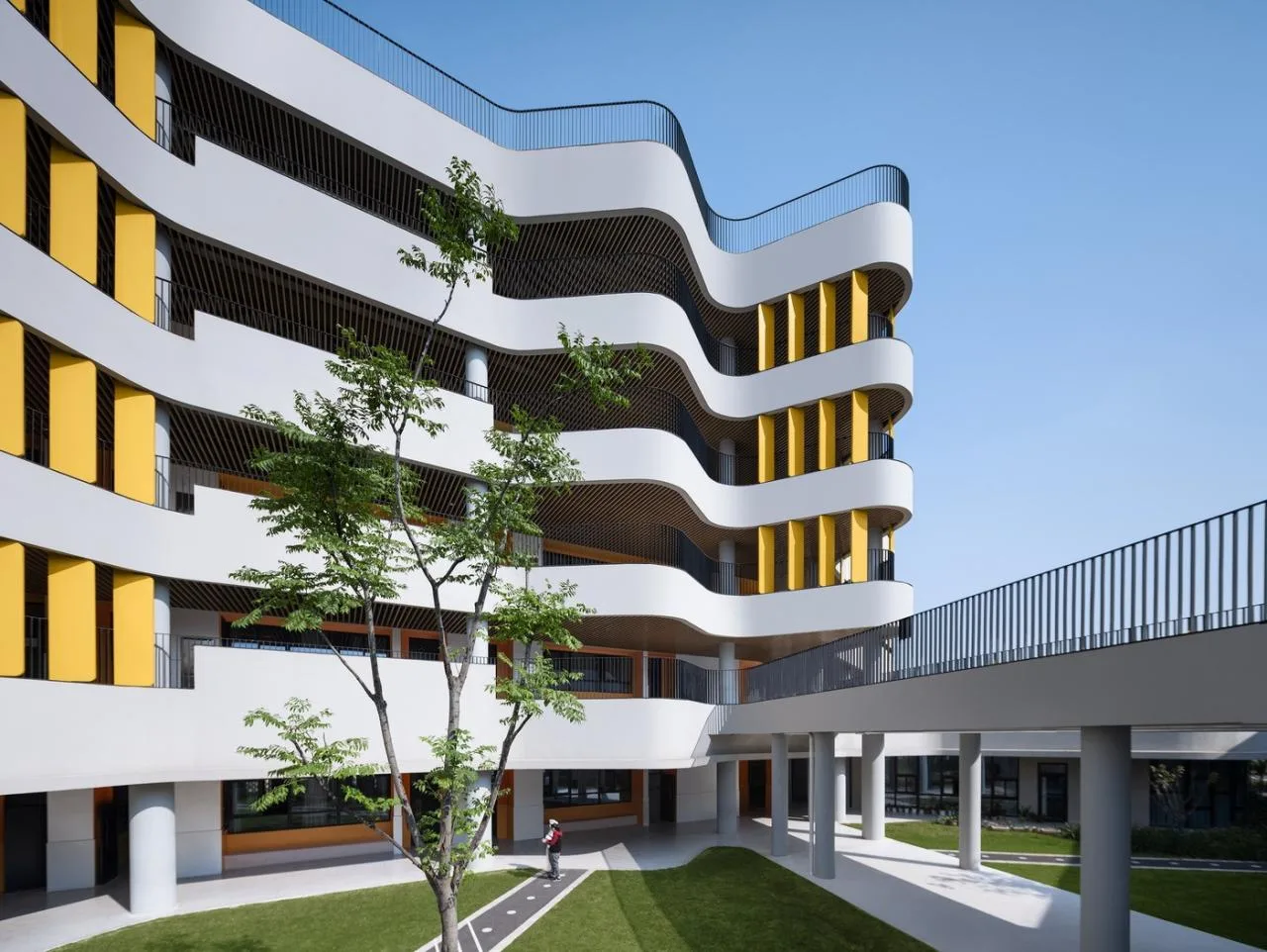
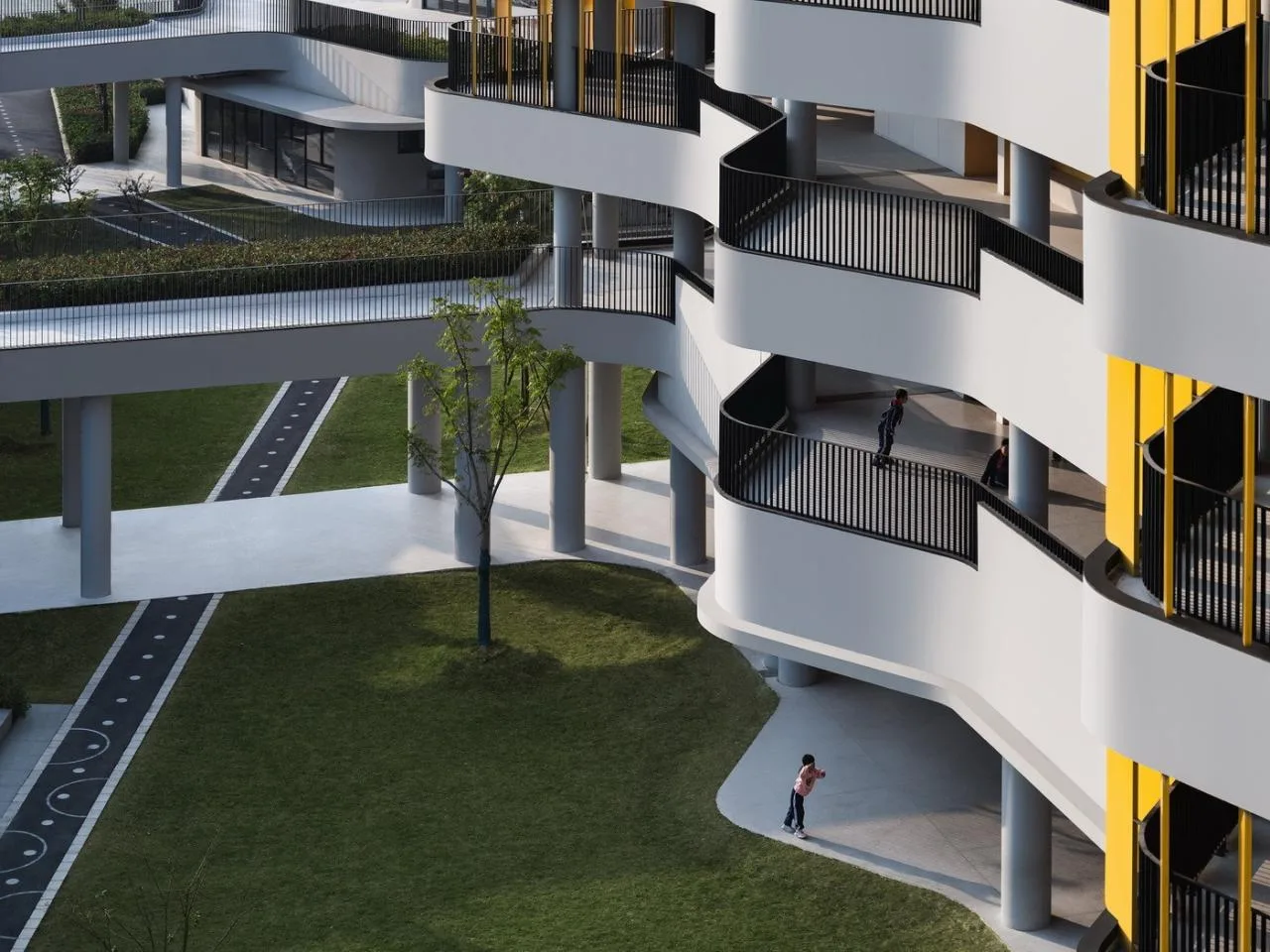
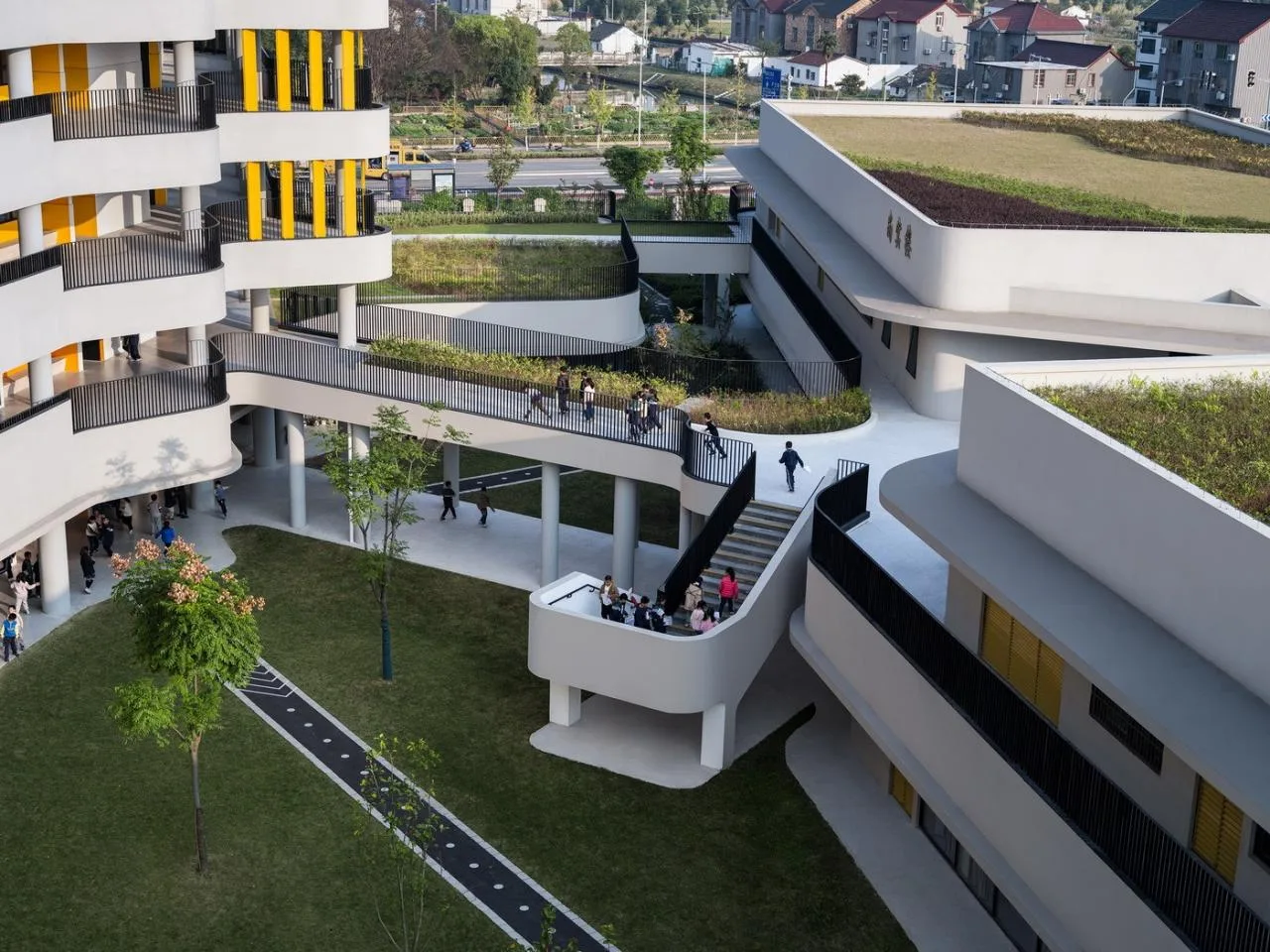
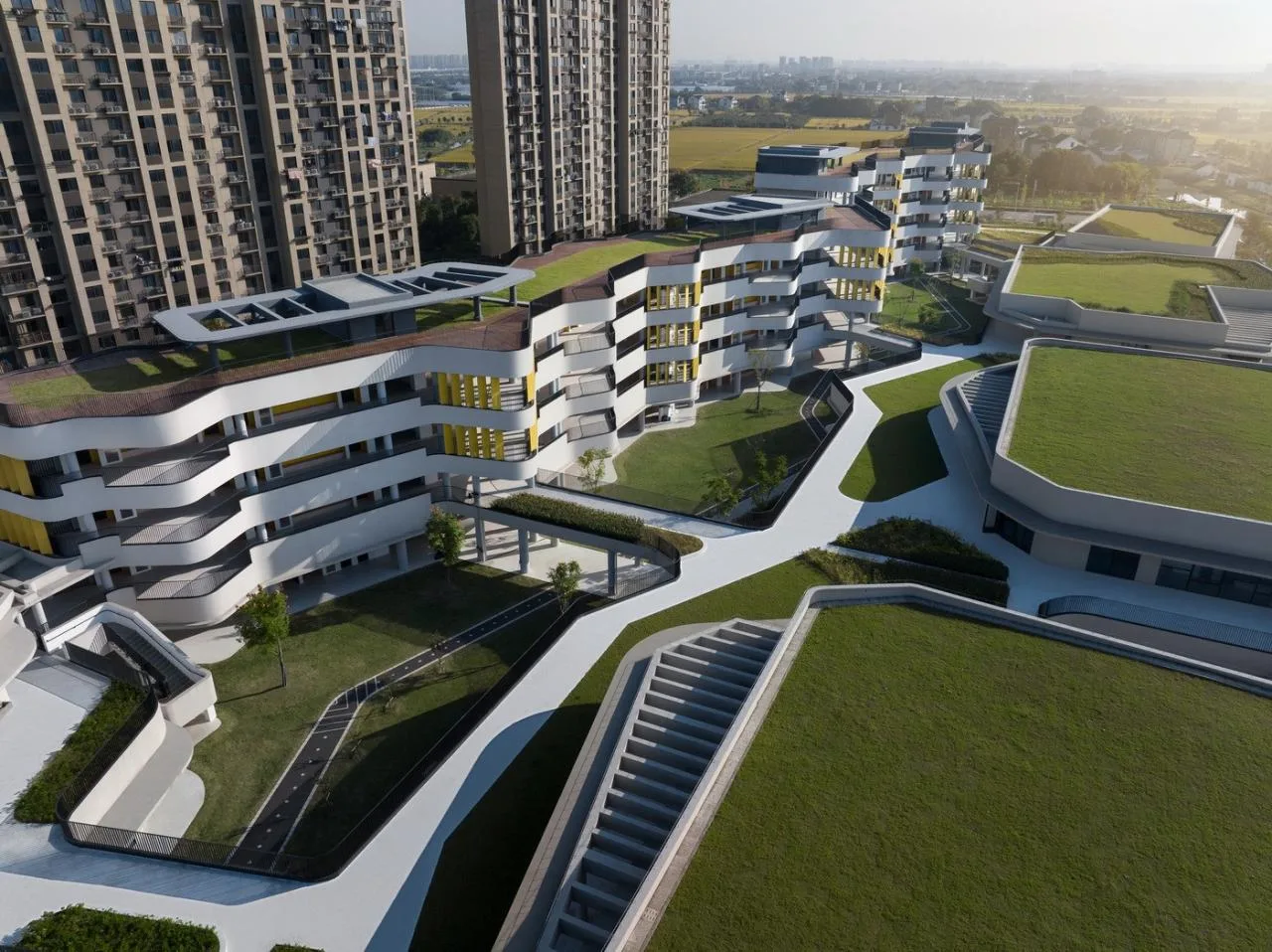
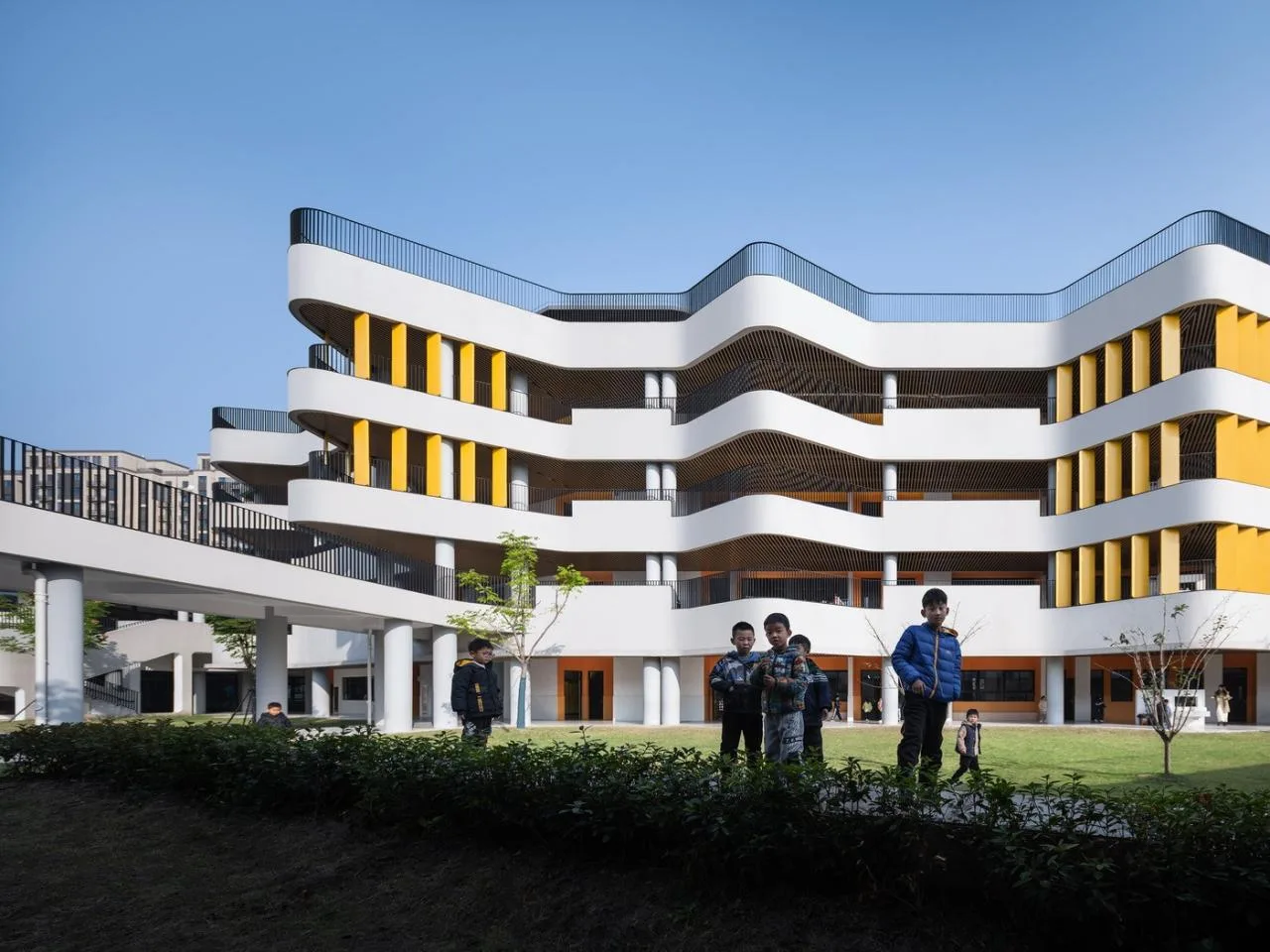
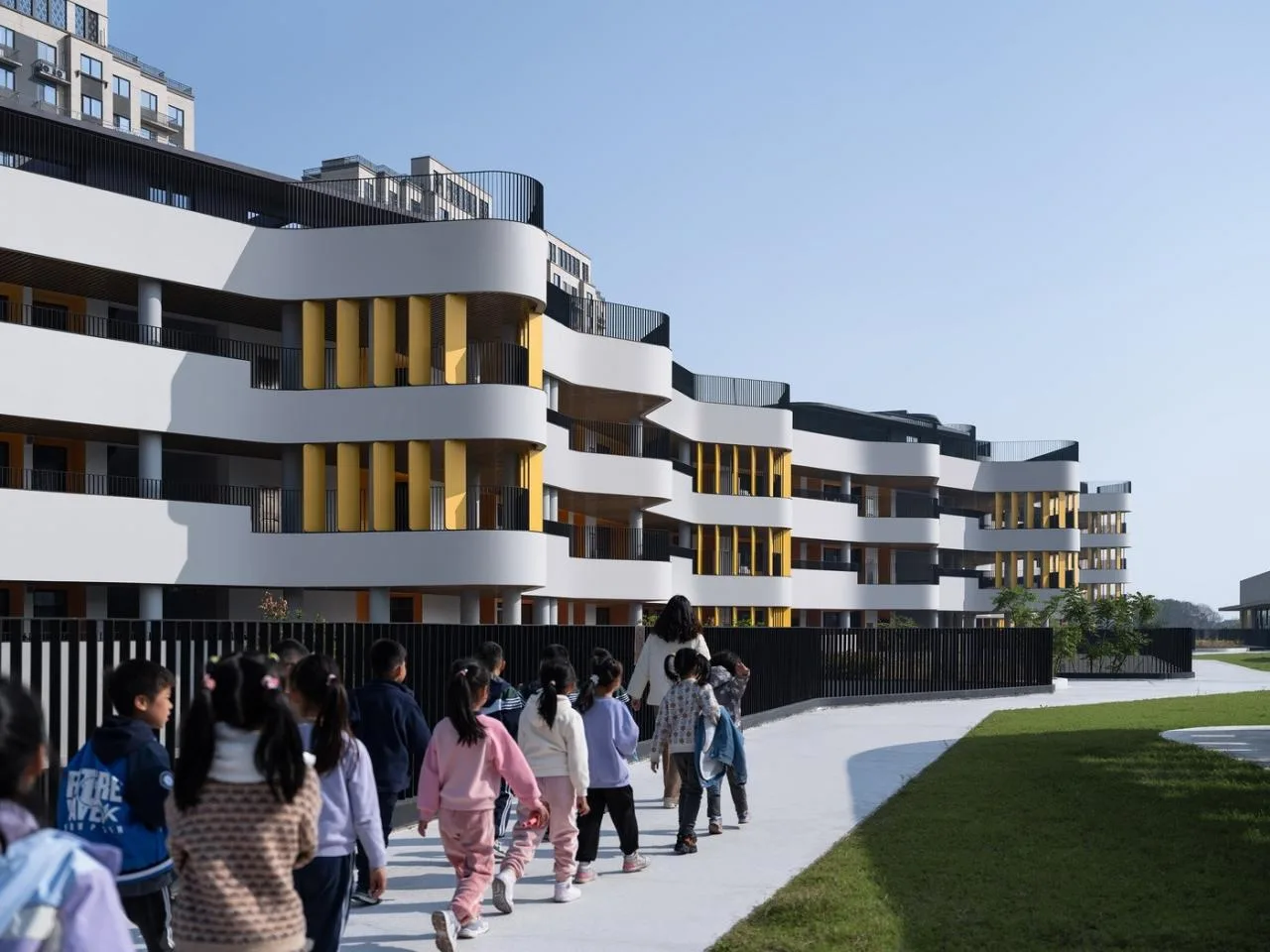
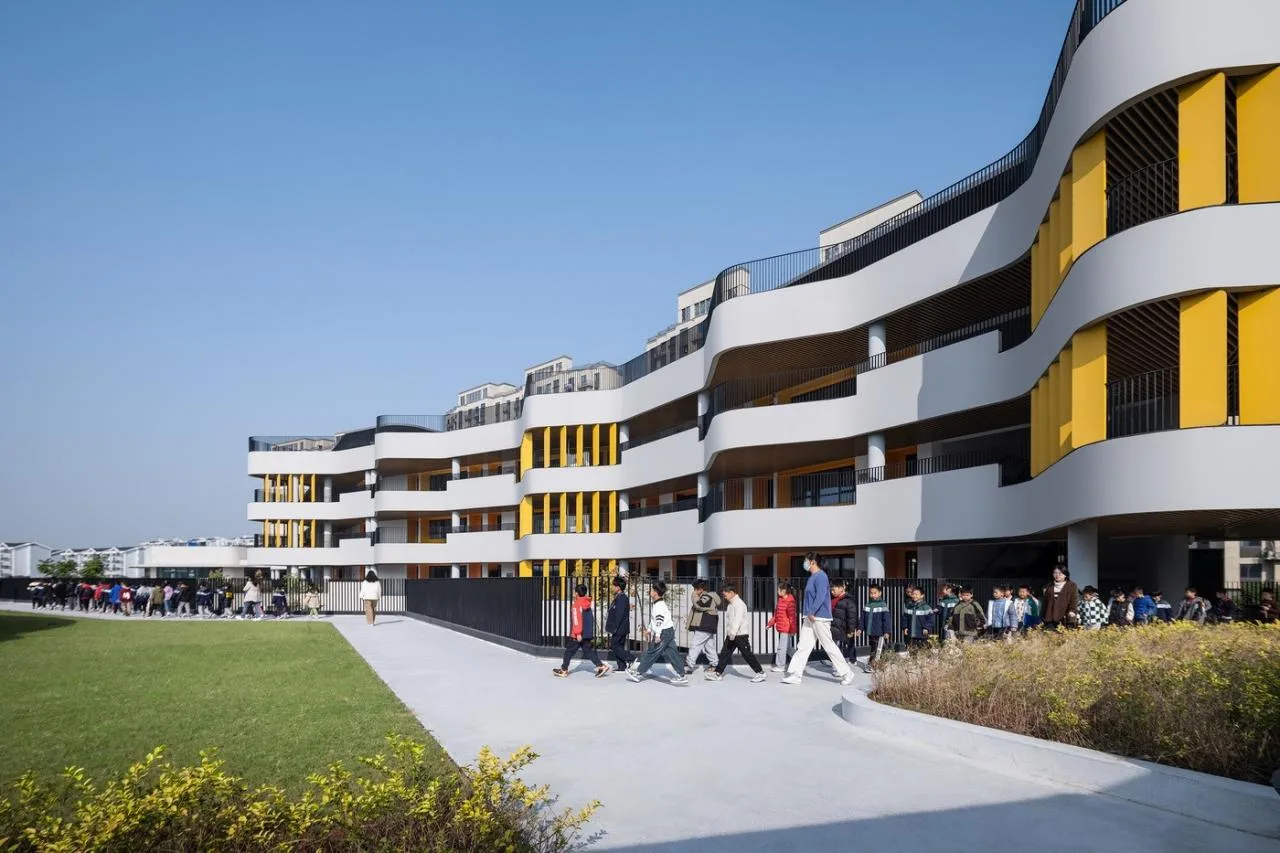
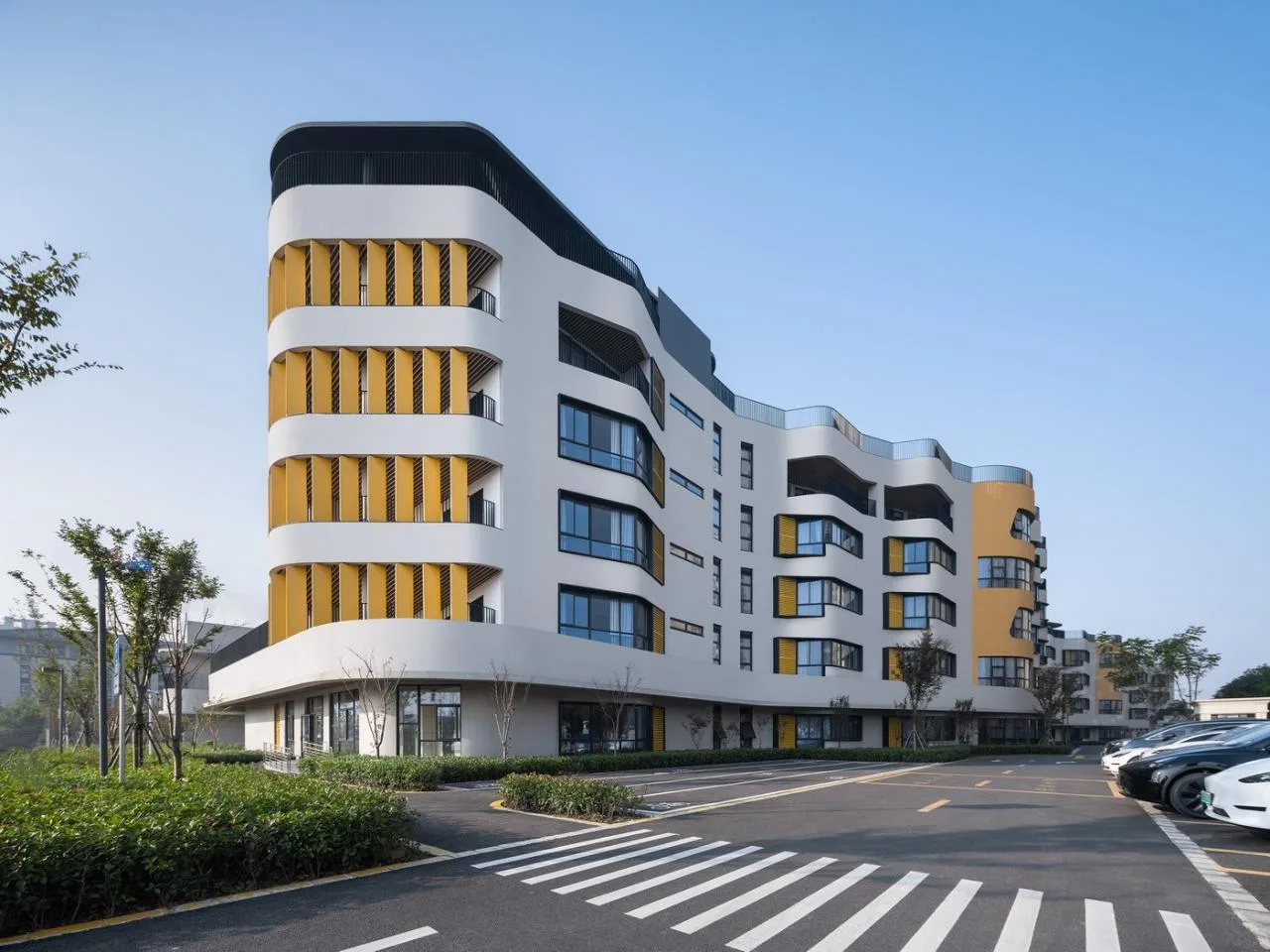
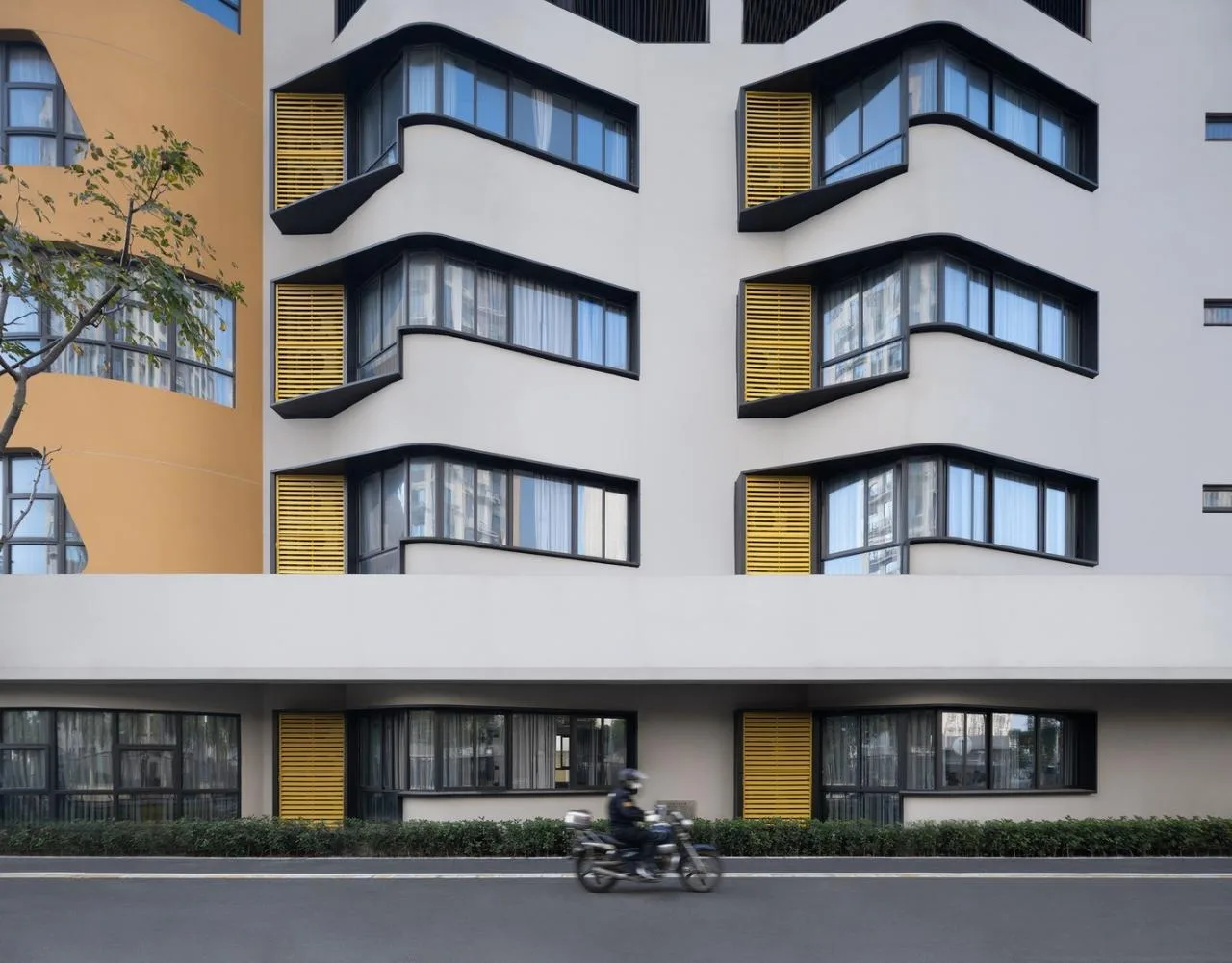
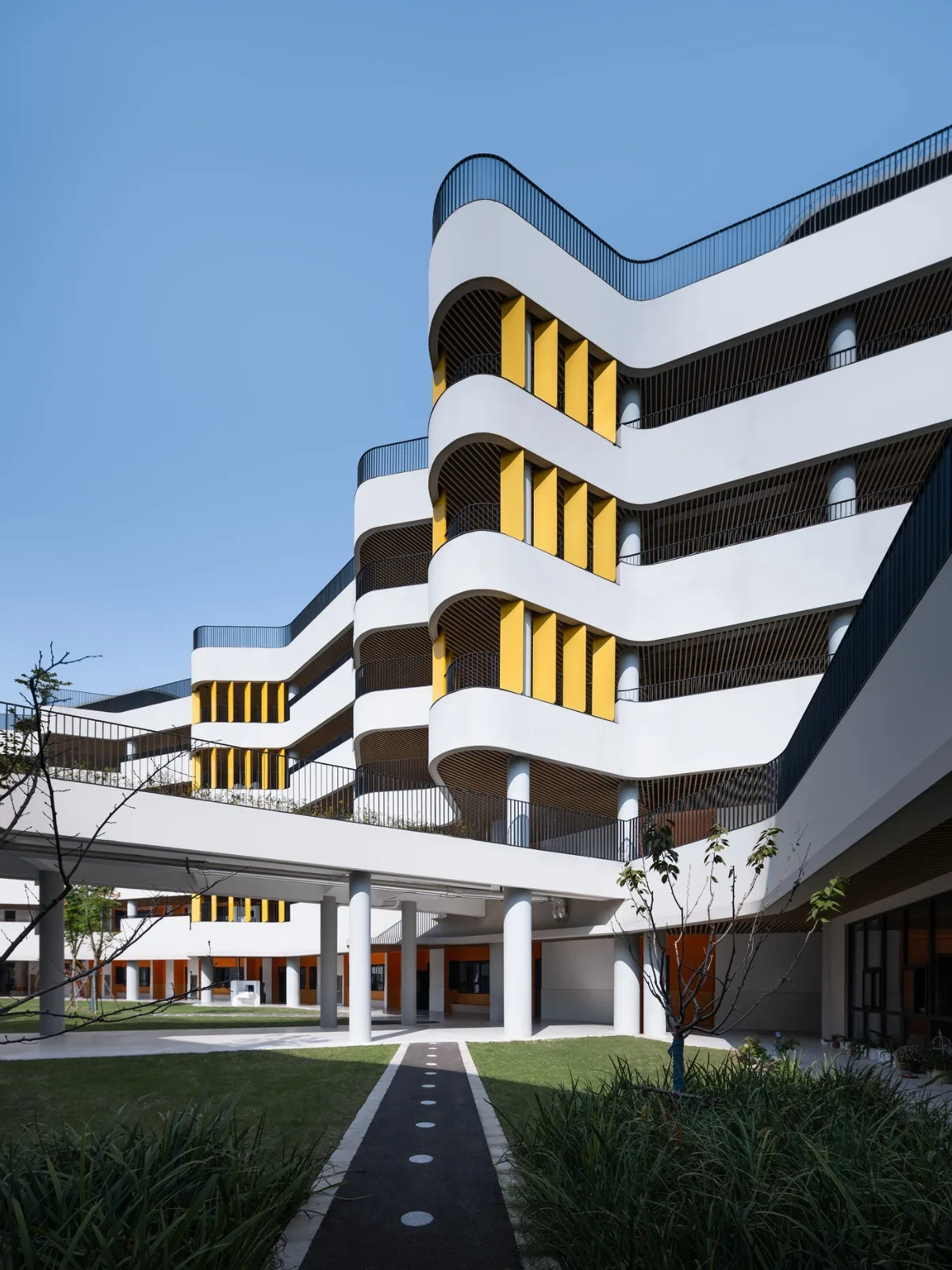
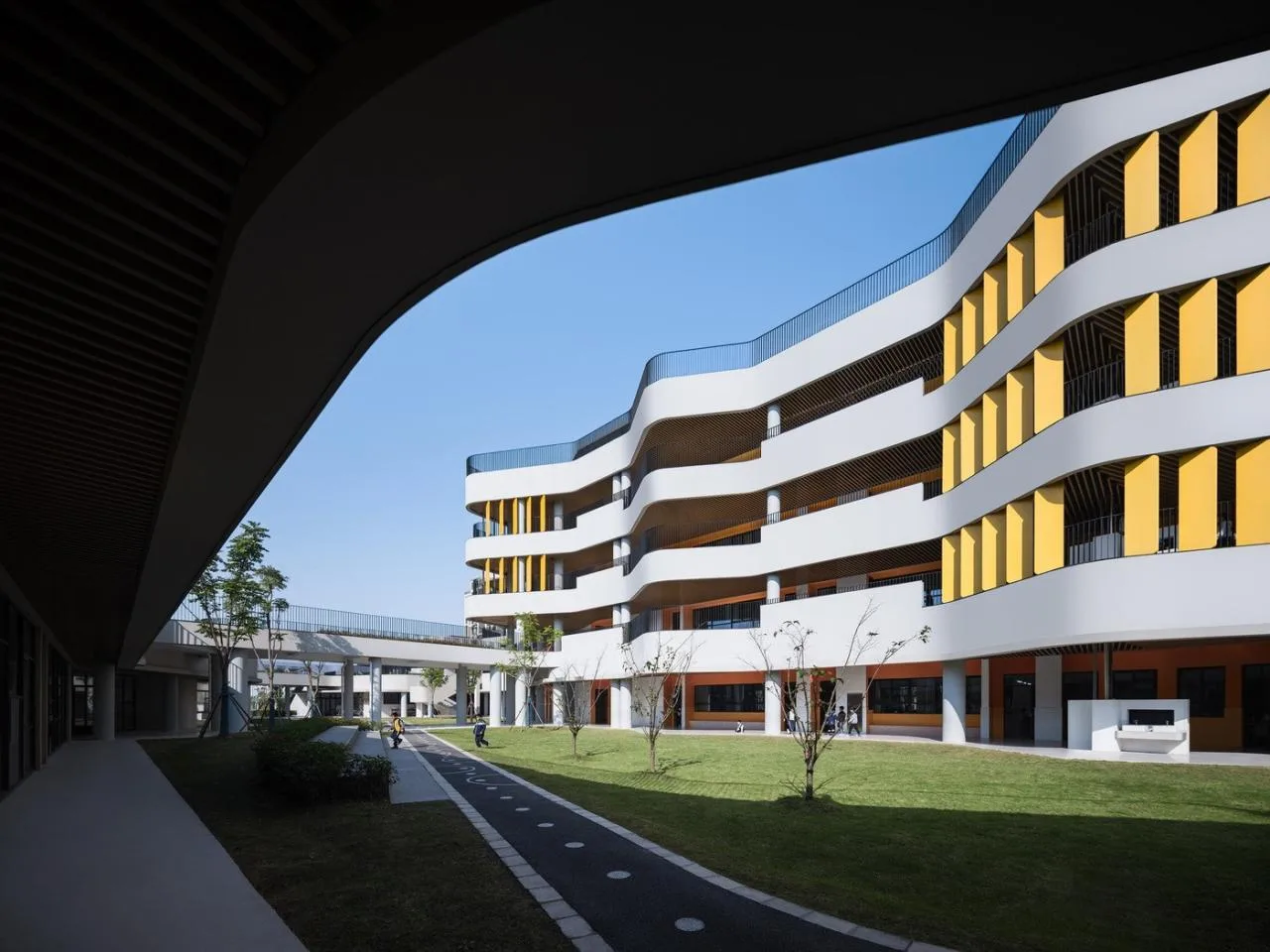
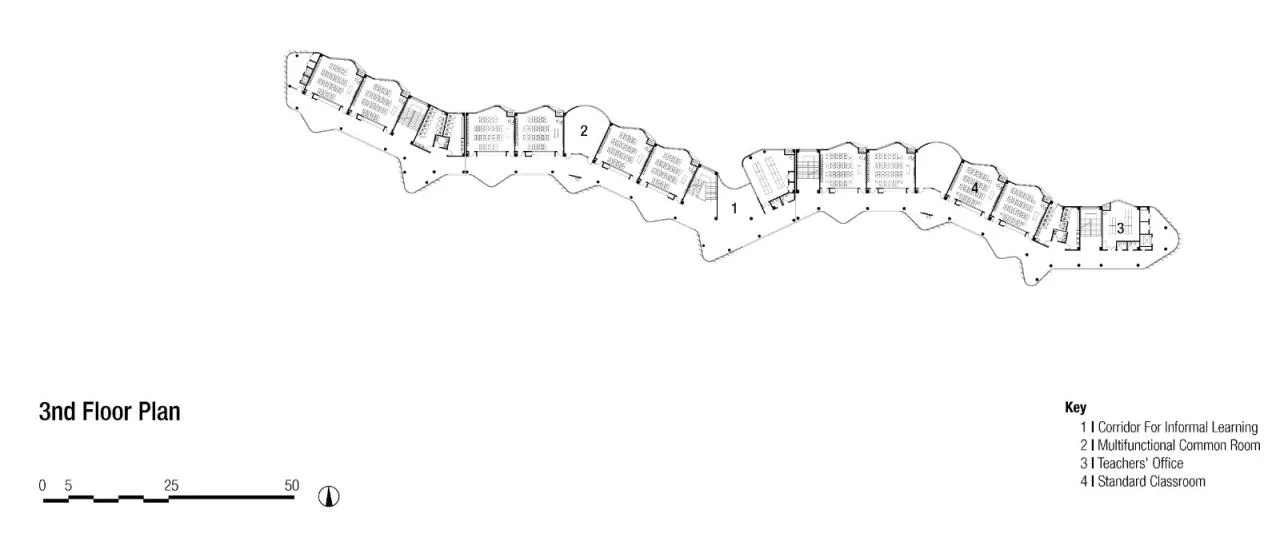
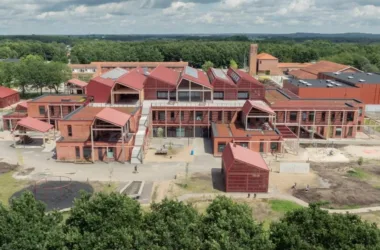
The design inspiration for the school draws from the adjacent canal and the poetic paintings of the late architect Zhang Zaiyuan. The architectural language evokes a dreamy, otherworldly atmosphere filled with innovation, creativity, and uniqueness. Traditional school layouts, which connect classrooms through corridors, transform here into winding pathways facing the campus courtyard. Starting with a crank-shaped floor slab, followed by curved glass and parabolic convex windows, the balconies seem to ripple with movement. The building appears as if shaken by external forces—like a rope being flicked at one end, sending waves of varying sizes along its length before freezing in a suspended moment.
Not Rote Learning, but Self-Directed Learning
The academic community remains divided over the effectiveness of formal versus informal teaching methods. In China, teachers are traditionally viewed as the sole source of knowledge, with students expected to memorize correct answers. In contrast, schools adopting the Reggio Emilia philosophy empower both students and teachers with greater autonomy in curriculum design.
Traditional classrooms are usually square rooms with rows of desks facing the teacher. By contrast, informal learning spaces at Chonggu are large, flowing areas resembling tree roots, where teachers guide students to learn independently or collaboratively.
China’s high student-to-teacher ratios—often 40 to 50 students per class—make alternative teaching models challenging without significantly increasing staff and costs. However, with China’s birth rate declining, student populations are expected to drop soon, creating an opportunity to experiment with new teaching methods. The new school buildings are designed to be flexible to support and encourage these progressive educational approaches.
If It Can’t Be Easier, It Should at Least Be More Interesting
Chinese students achieve high academic standards, often through rigorous study methods and intense competition for top university placements starting from kindergarten. Although authorities have recognized the problem of excessive learning burdens and sought solutions, challenges remain.
A more student-centered model may offer a solution by providing a richer, more engaging curriculum without compromising academic rigor. This approach can also better prepare students to adapt flexibly to future challenges, including those posed by artificial intelligence.
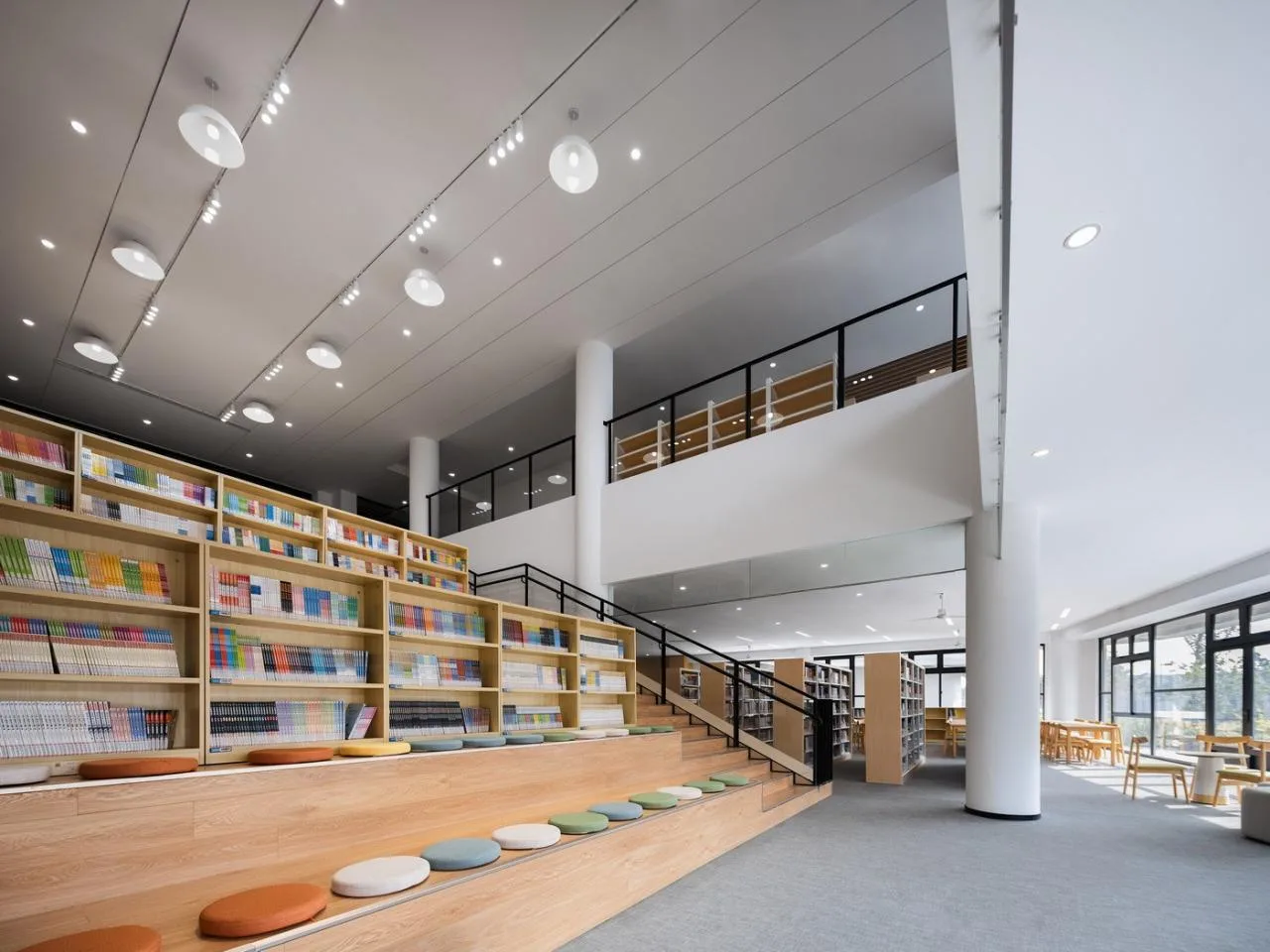
Flexible and Versatile Future Spaces
Chonggu Experimental School offers a student-centered environment conducive to self-directed learning through several key design features:
- A framework structural system allows walls between every two or three classrooms to be replaced with movable panels, enabling larger group teaching.
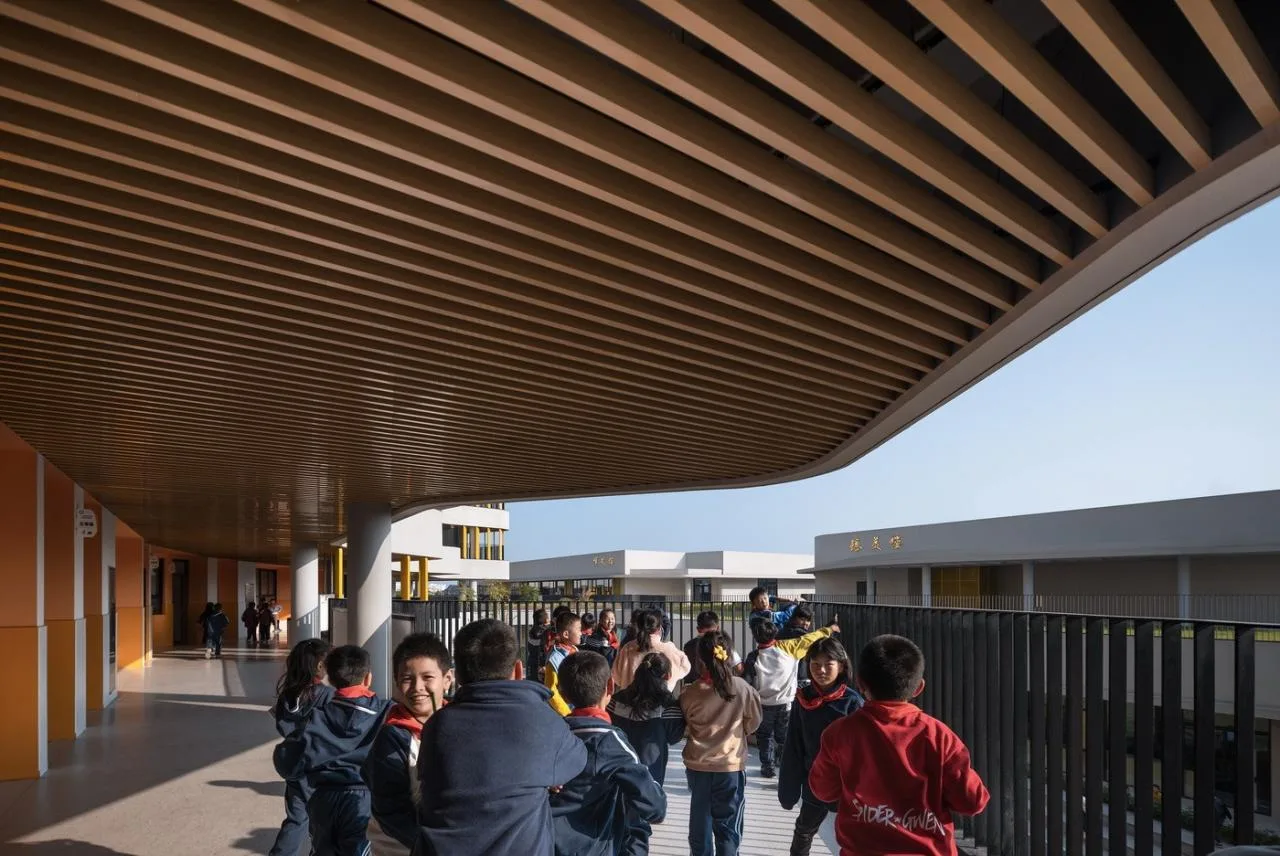
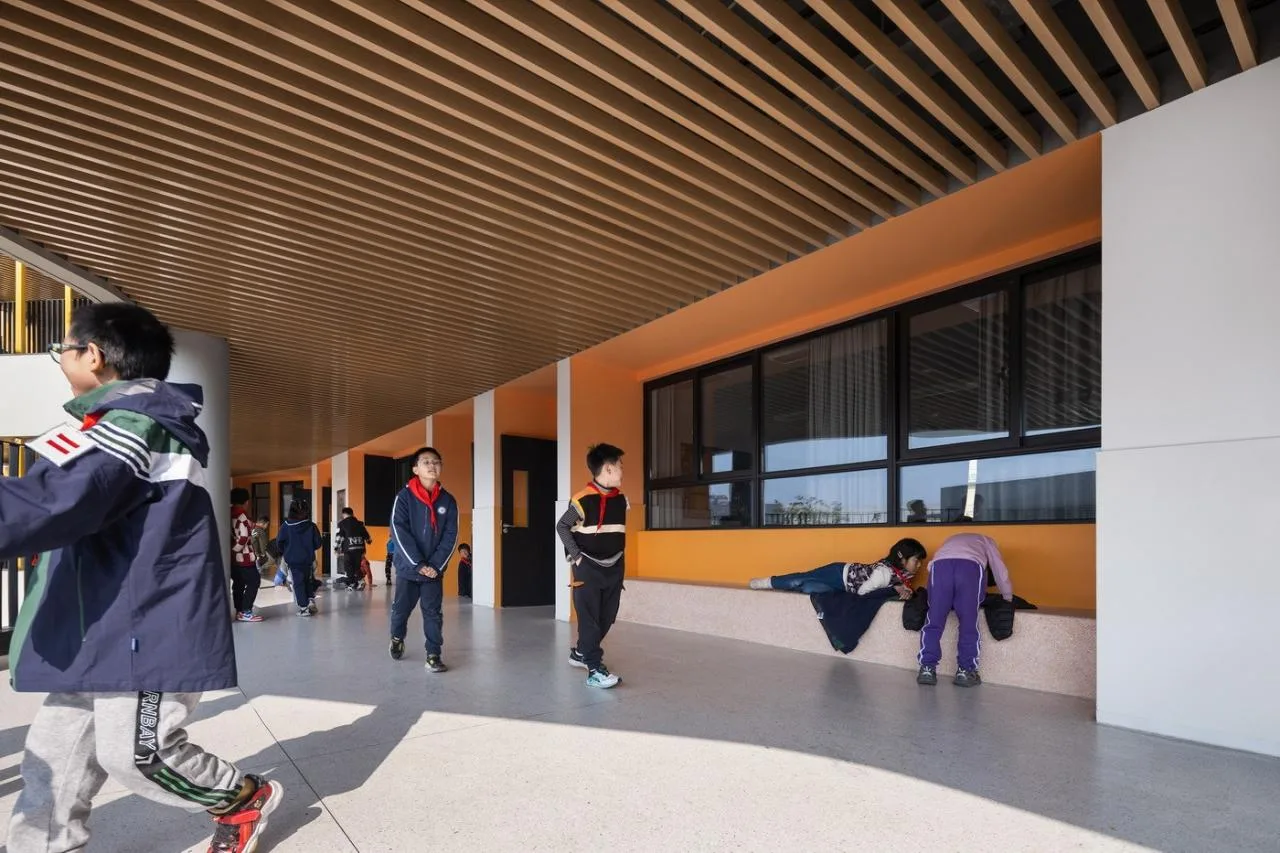
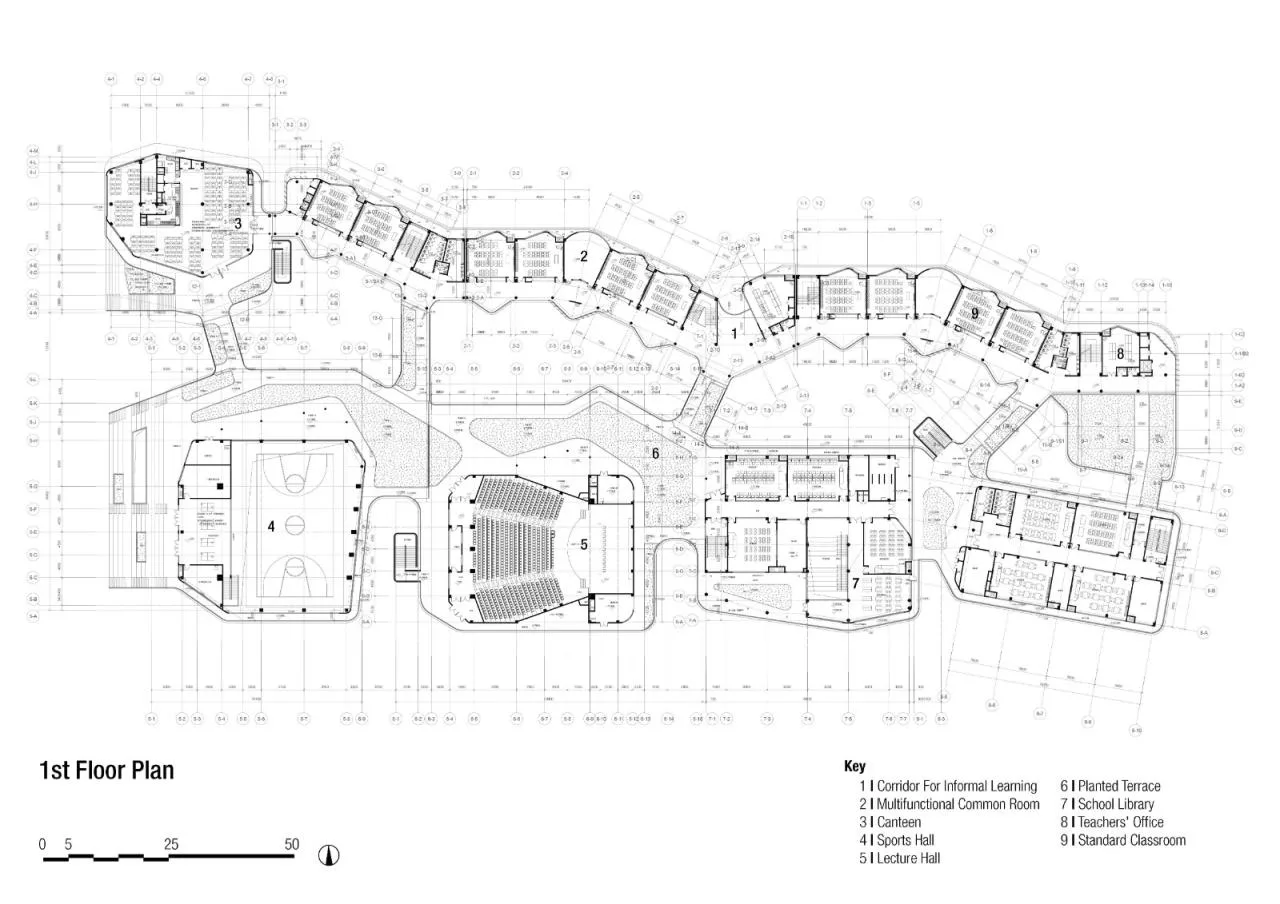
- The winding, continuous outer corridor can be enclosed with glass, creating a spacious indoor street for activities like exhibitions and social interaction.
- Rooms located at floor nodes or turns serve as dedicated spaces for self-study and group discussions.
- The podium’s public areas are connected by wide, curved corridors that expand into additional spaces for learning and topic discussions.
These informal learning spaces support group work, digital learning, research projects, consultations, Q&A sessions, and STEAM education.
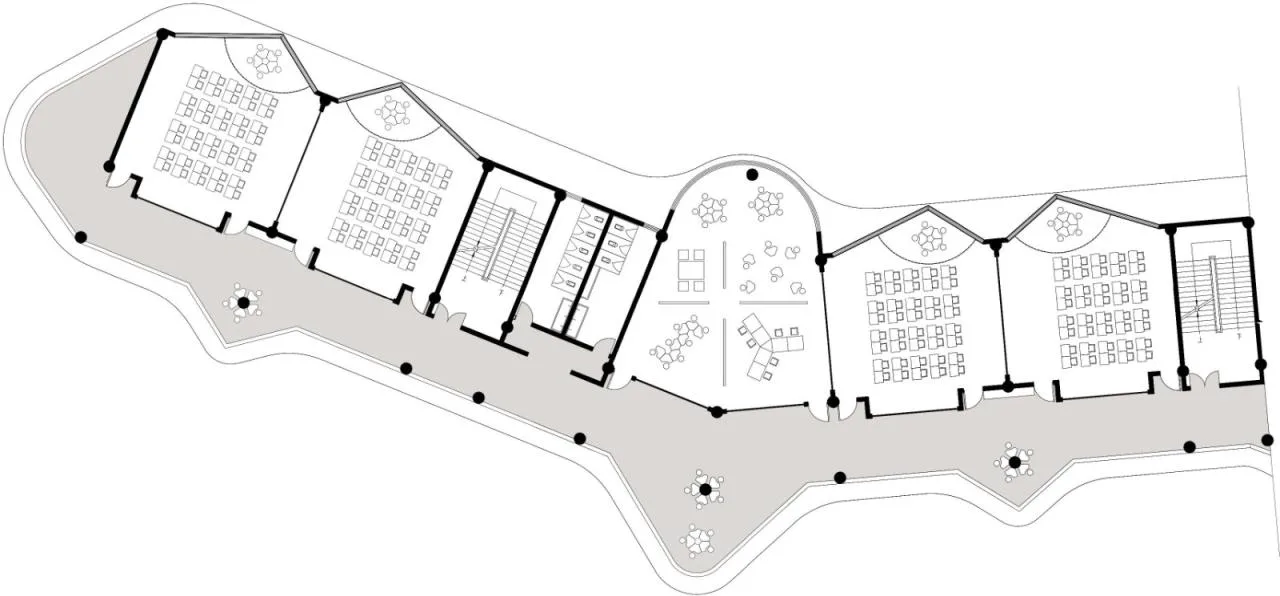
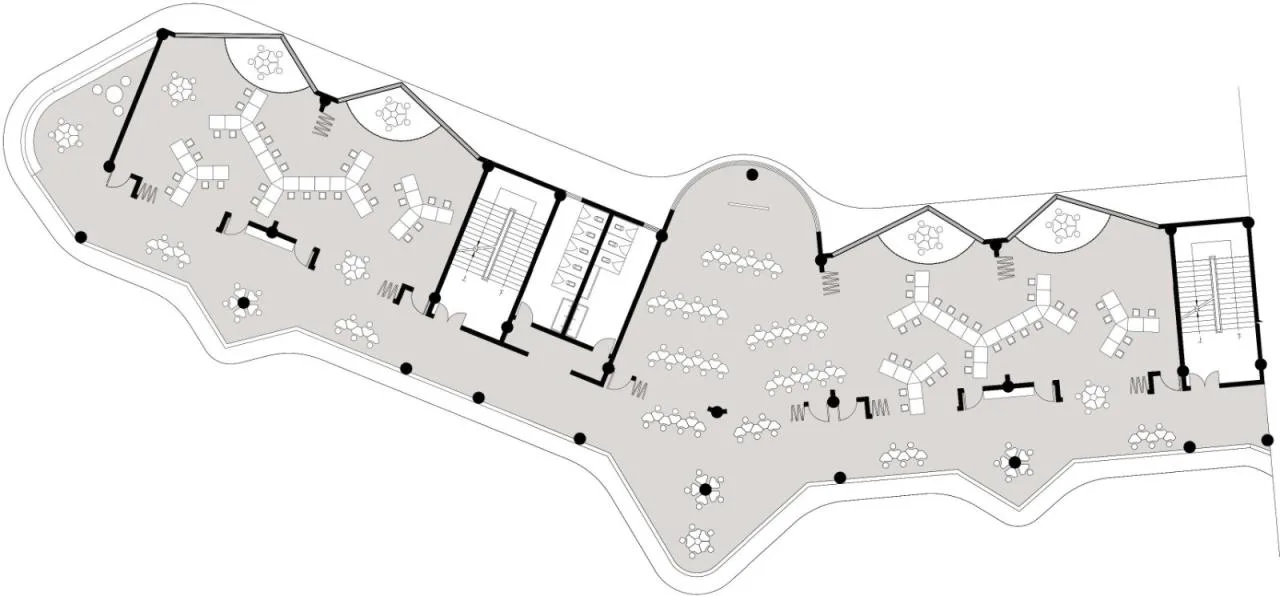
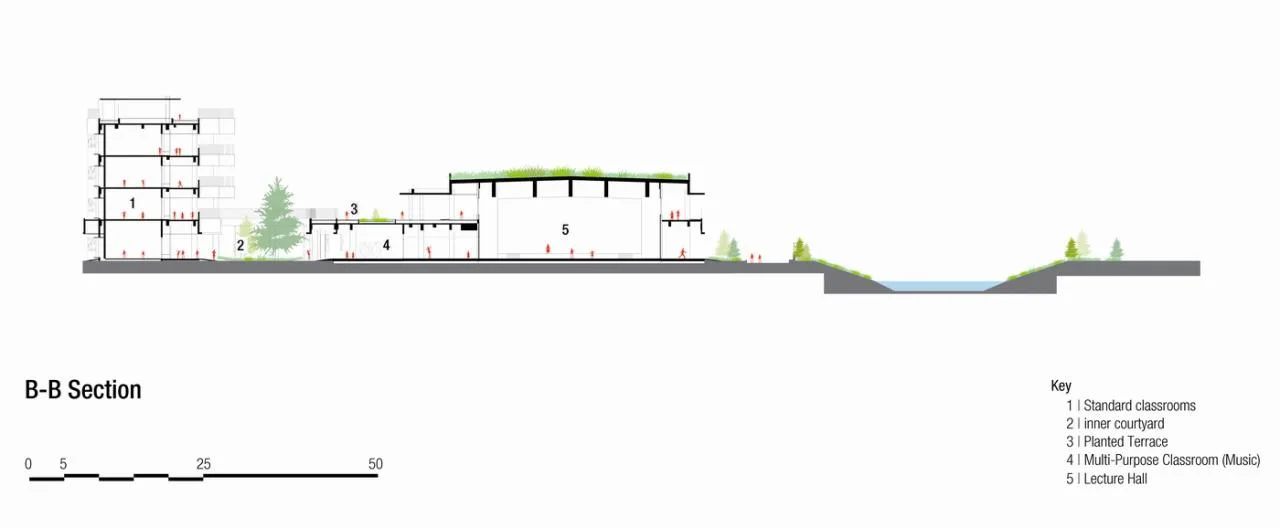
△ Classroom Standard Section
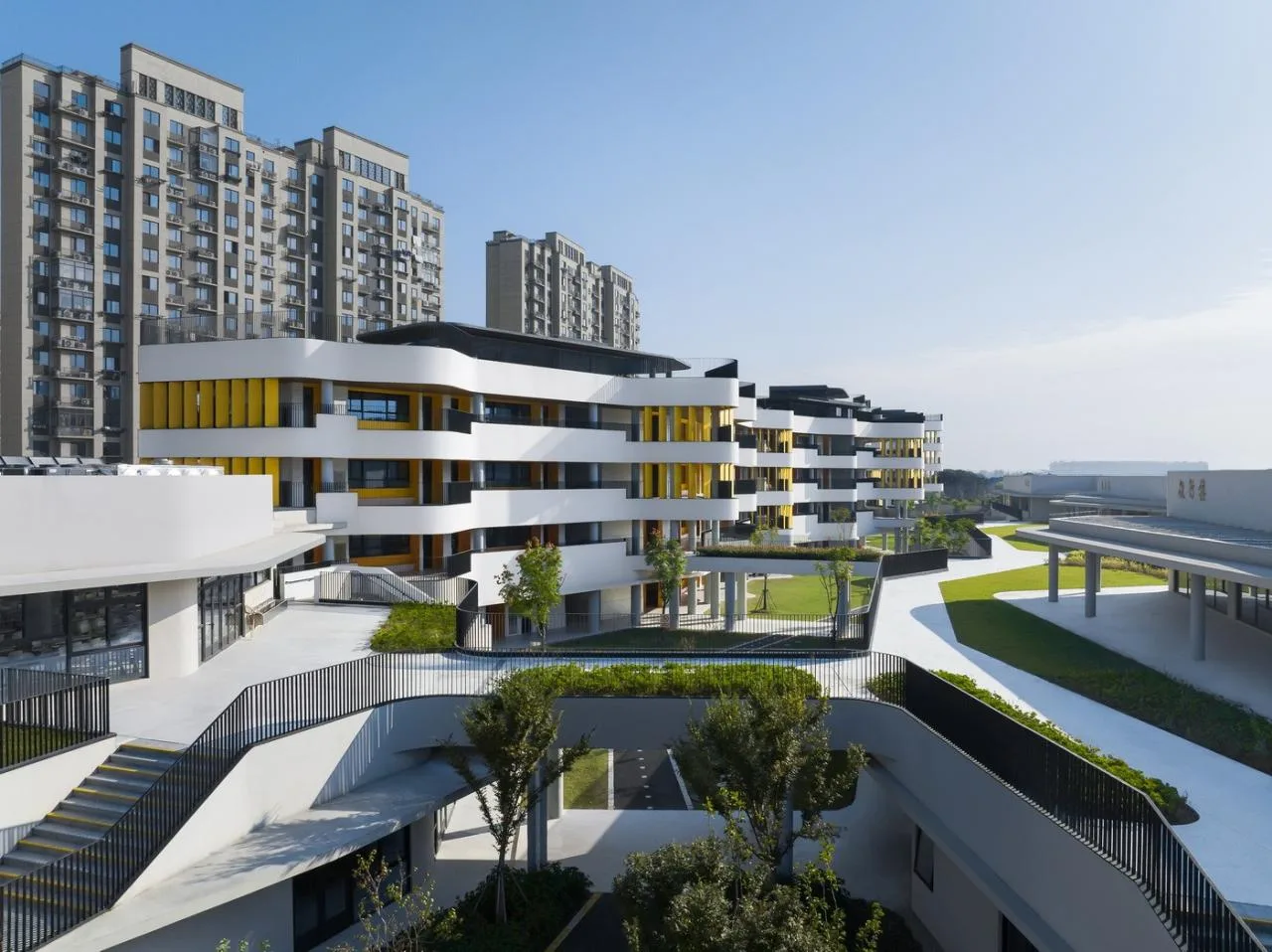
Looking Out the Window
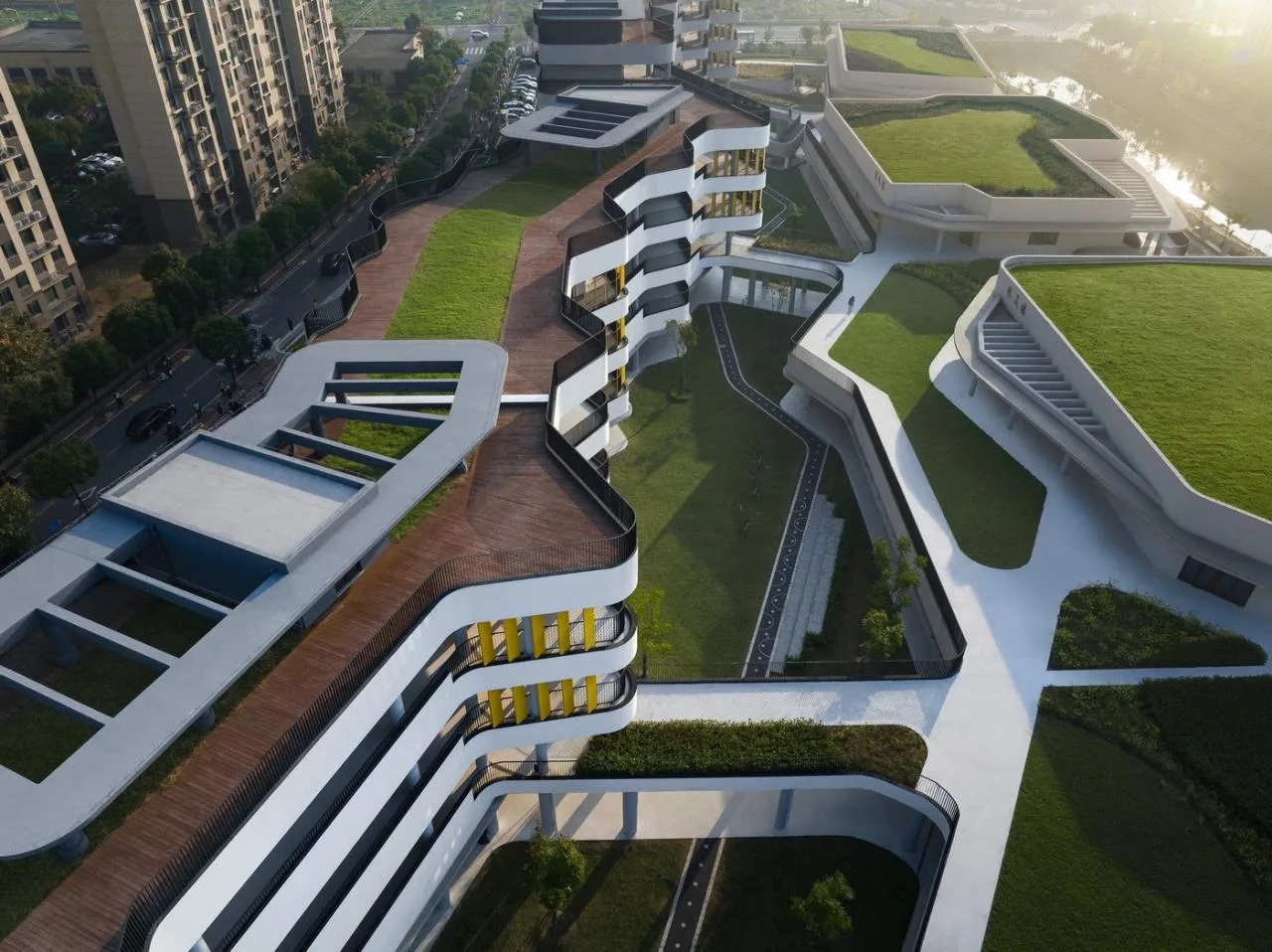
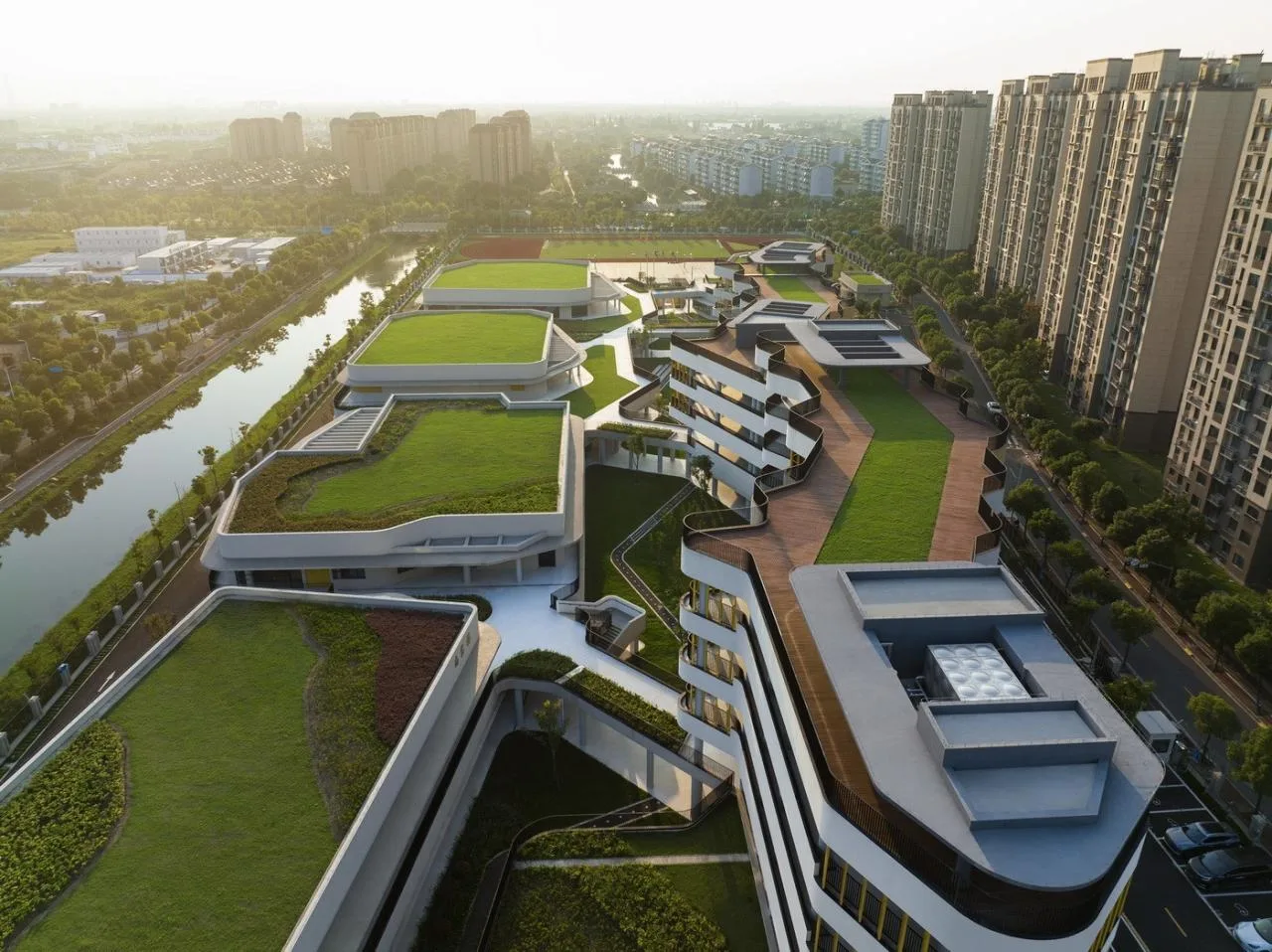
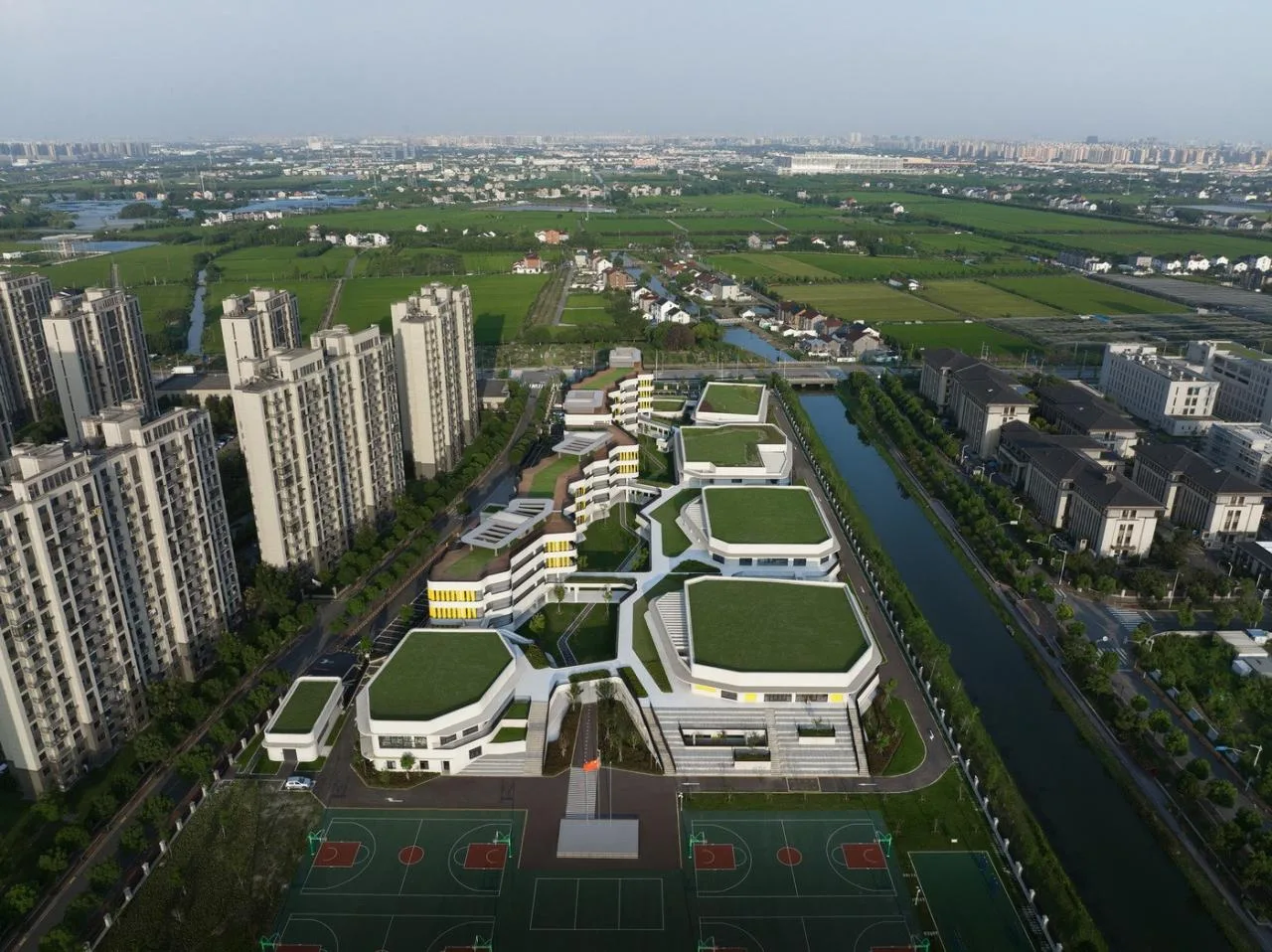
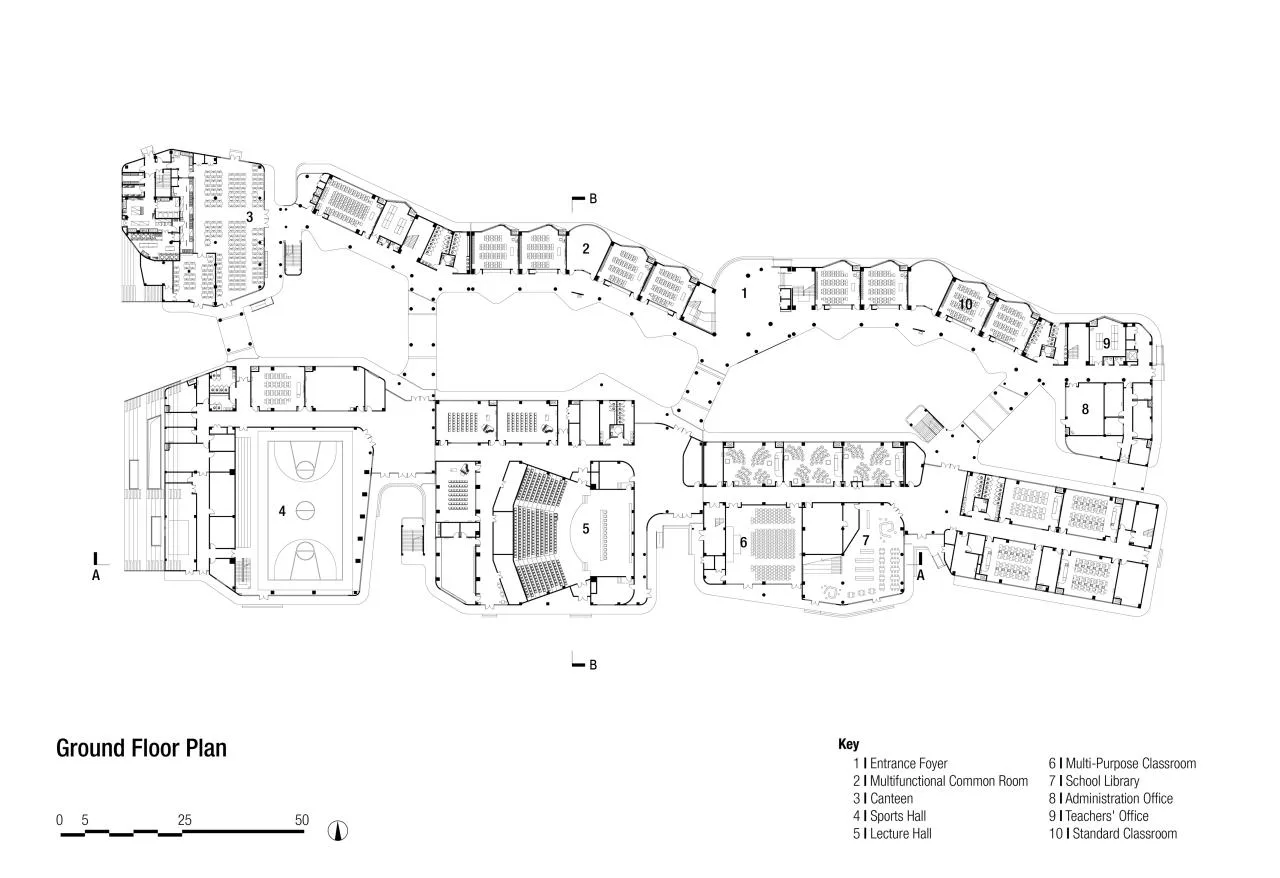
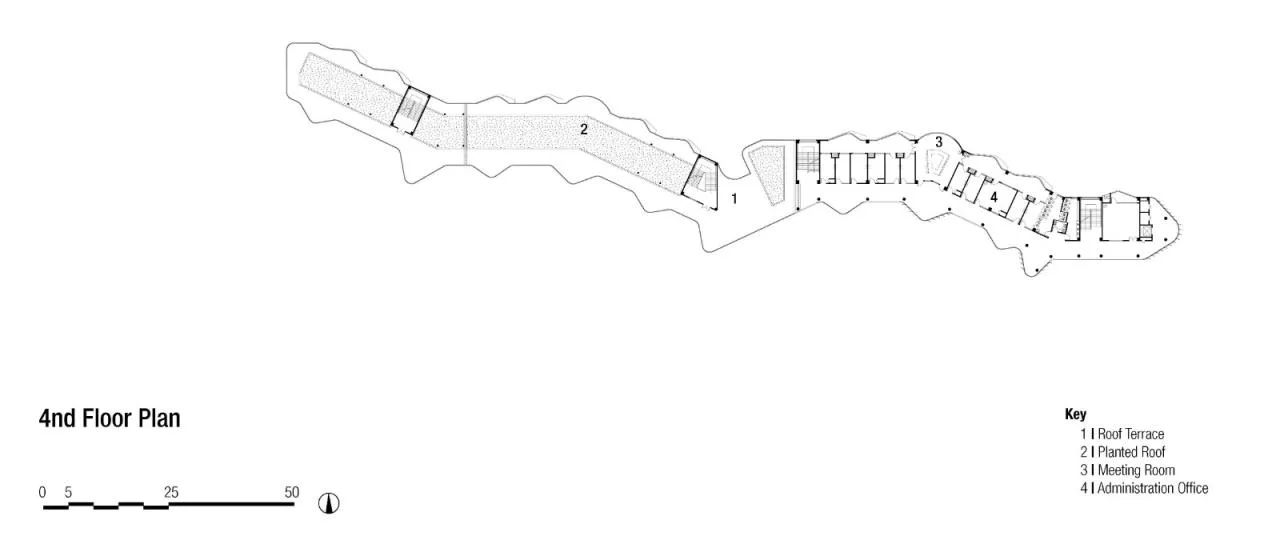
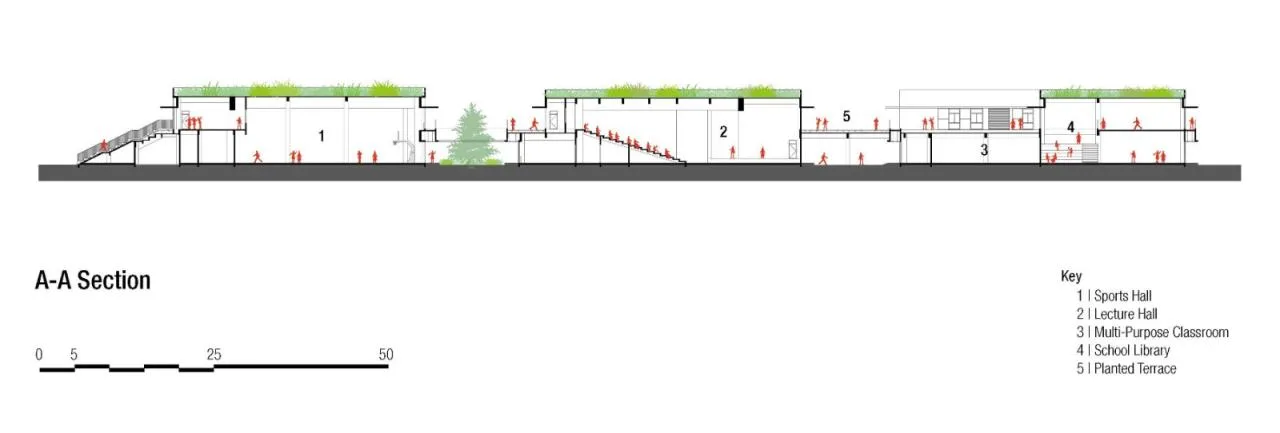
The campus borders one of Qingpu’s many canals. Facilities such as the gymnasium, library, auditorium, music and art classrooms are positioned along the canal with windows, balconies, and terraces offering views of the water. In the future, if canal fences are removed, the school could integrate with the riverside landscape, turning green spaces and waterways into teaching environments. From the higher teaching buildings’ balconies, one can overlook the green roof of the public teaching building and the entire riverside greenbelt.
Stands and Stadium
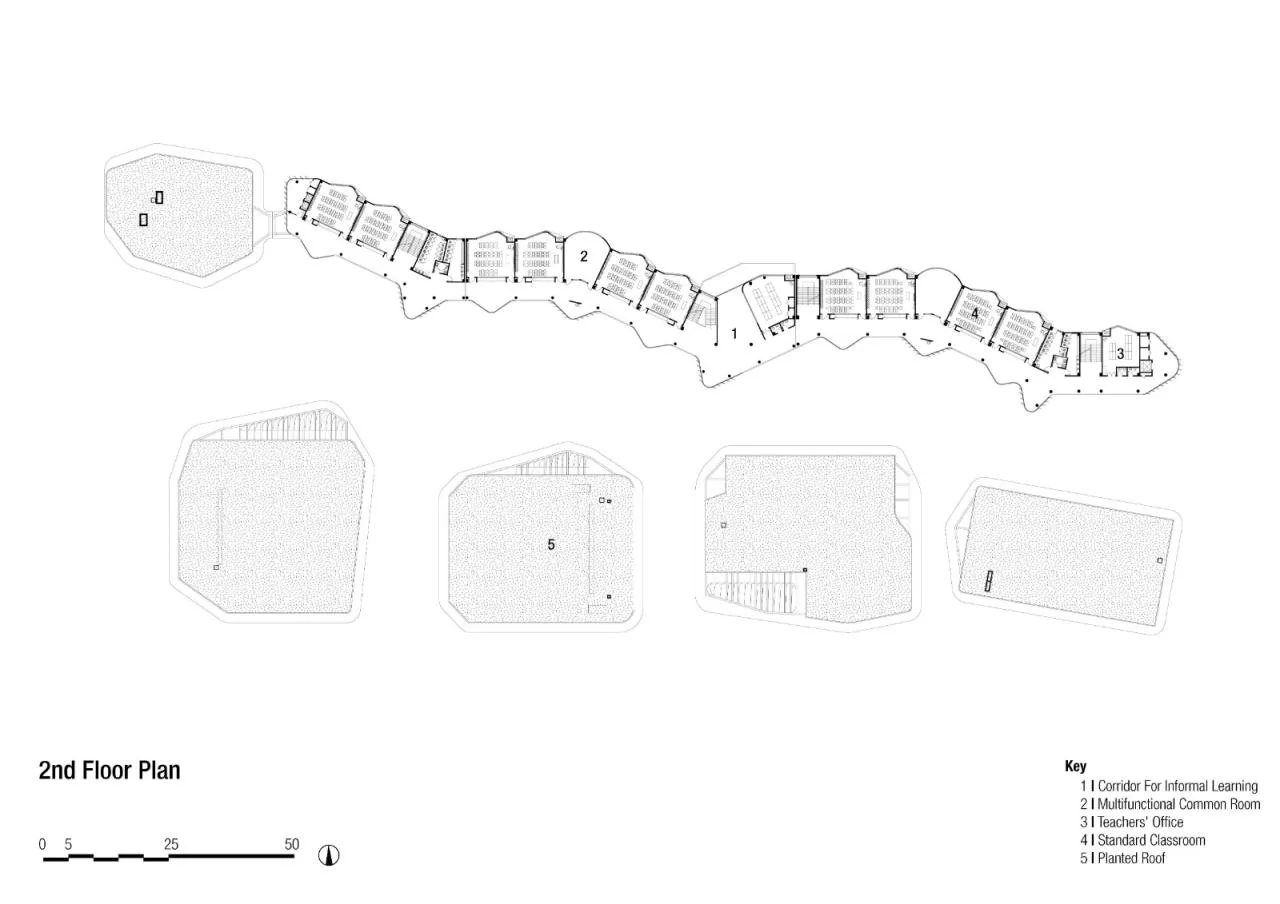
The gymnasium and cafeteria are located adjacent to the sports field. A large staircase links the second-floor rooftop garden to the sports field, serving as a gathering spot for students. Positioned to share scenic views with the taller teaching building behind it, the cafeteria and its terrace overlook the entire sports field.
Efficient Prefabricated Construction
Despite the curved floor slab edges, the building employs a standard structural grid to assemble prefabricated components. Exterior walls, columns, floors, and stairs have been rationalized to achieve a 40% prefabrication rate across the project. Prefabrication reduces costs, minimizes waste, shortens construction time, lessens urban disruption, and ensures higher quality details.
Smart Solutions for Hot Summers
To address Qingpu’s hot summer climate, reduce carbon emissions, and enhance comfort, the design incorporates passive shading with horizontal eaves and vertical elements to block most summer sunlight. Green roofs and landscaping with native plants support sustainable urban drainage, promote biodiversity, and mitigate the urban heat island effect, contributing to the city’s “sponge city” goals.
Unlocking Potential
The increasingly popular team teaching method aims to unleash the potential of all students, especially those less motivated by traditional instruction. Similarly, Chonggu Experimental School provides opportunities for a variety of educators to explore different teaching methods. While its architecture supports conventional teaching, it also encourages innovation under open-minded leadership.
Project Drawings
Project Information
Design Company: BAU Architecture and Urban Design Firm
Project Status: Completed in 2023
Location: Qingpu District, Shanghai
Building Area: 21,425 square meters
Construction Investment: 145.365 million yuan
Type: Public School
Facilities: Primary school (grades 1-6) with 20 classrooms; Junior high school (grades 7-9) with 16 classrooms; canteen; gymnasium; auditorium; theater; library; science classrooms; music, dance, and art rooms; sports field.
BAU Project Team Members:
Architecture: James Brearley, Luo Huaili, Liao Wang, Huang He, Li Zheng, Francisco Garcia, Wang Shuangdiao, Qin Xiaohang, Yao Wenxuan
Landscape: Huang Fang, Guo Liexia, He Yuqing, Luo Li, Shi Zhengting
Interior Design: Wang Mingdong, Zheng Jiamin
Client: Education Comprehensive Affairs Center, Qingpu District, Shanghai
Construction Agency: Shanghai Qingpu New City Development (Group) Co., Ltd
Collaborative Design Institute: Shanghai Hanlian Architectural Design Consulting Co., Ltd
Construction Unit: China Railway Fourth Bureau
Photography: Heshi Photography














Must log in before commenting!
Sign Up