
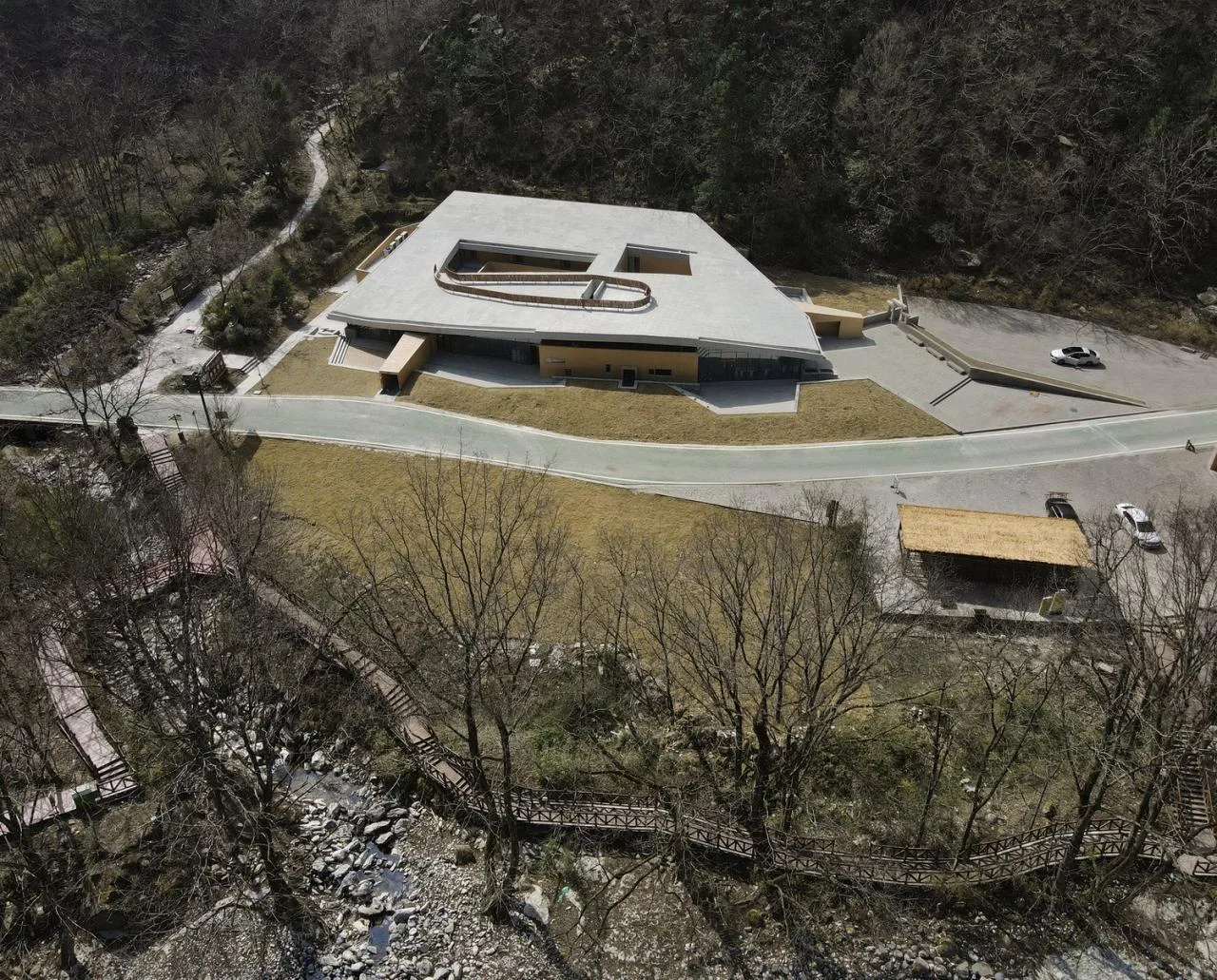
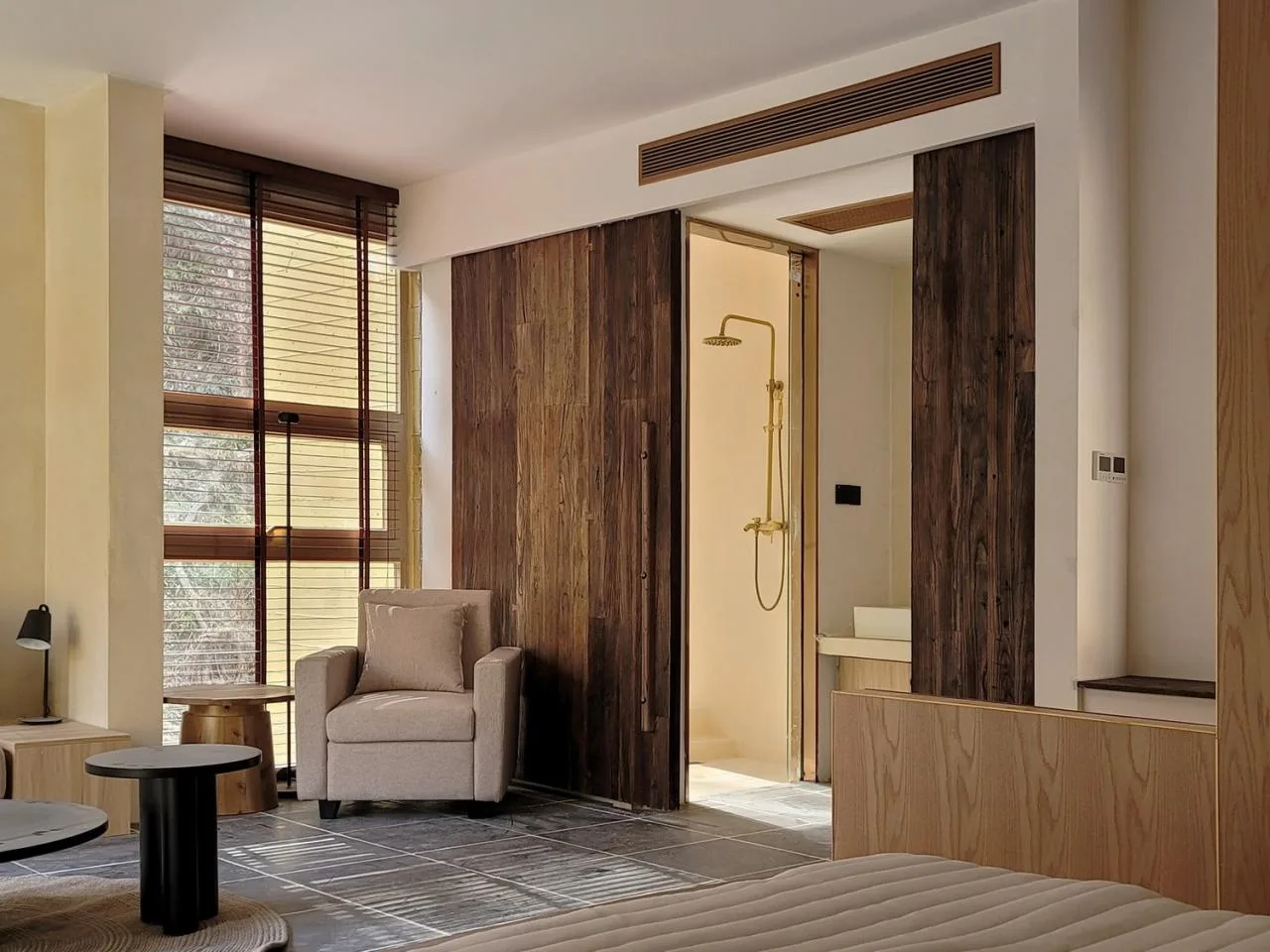
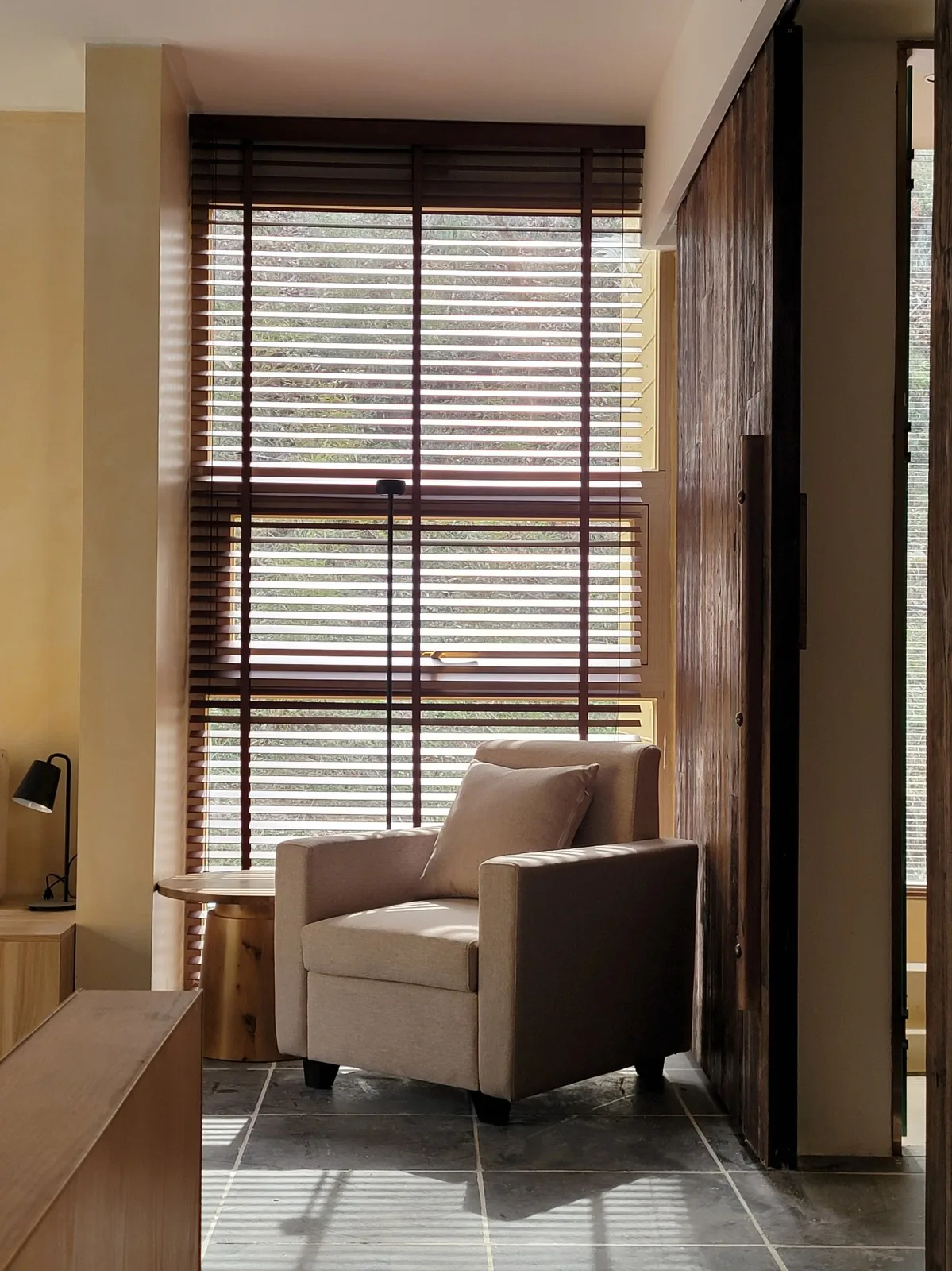
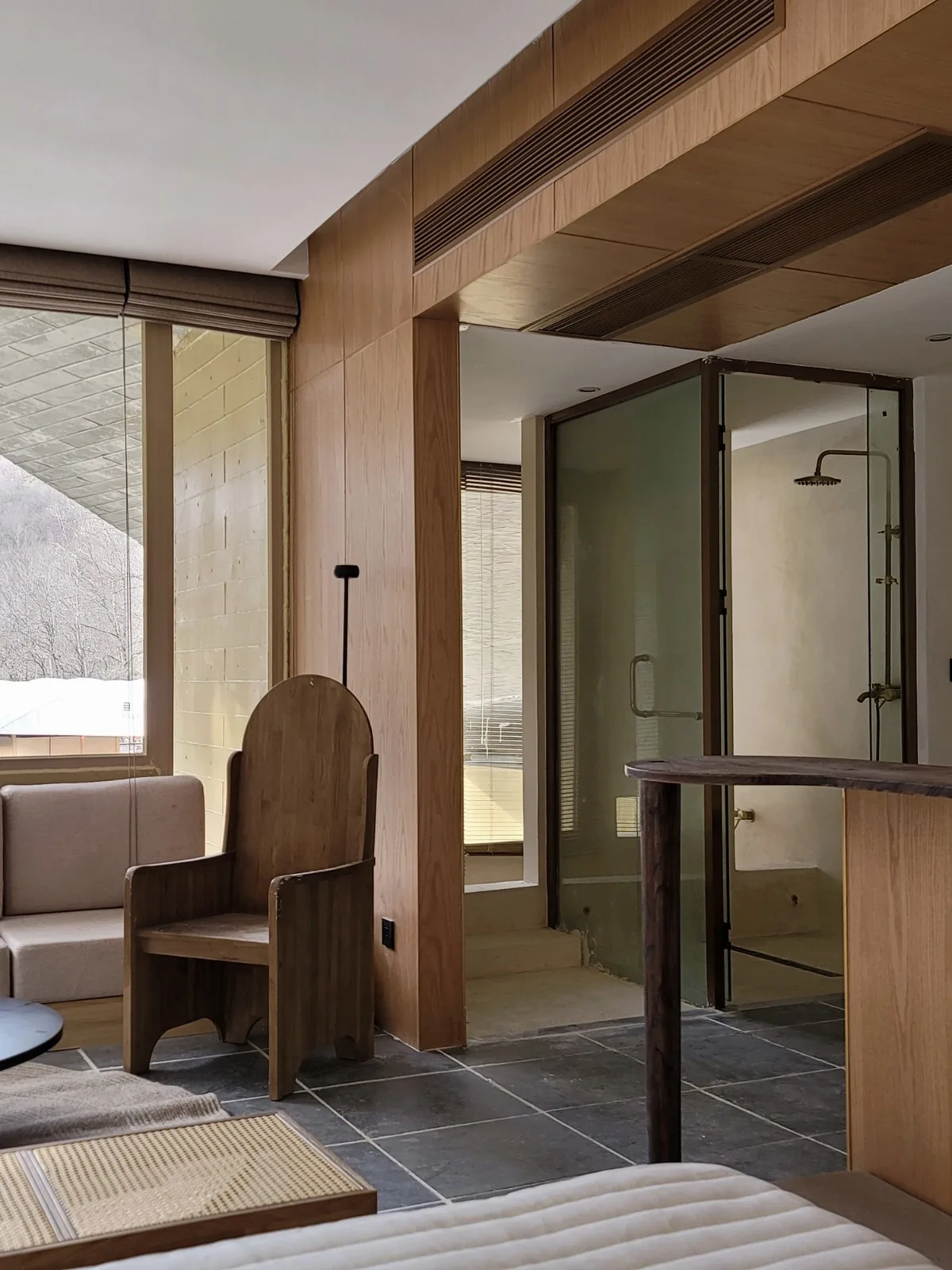
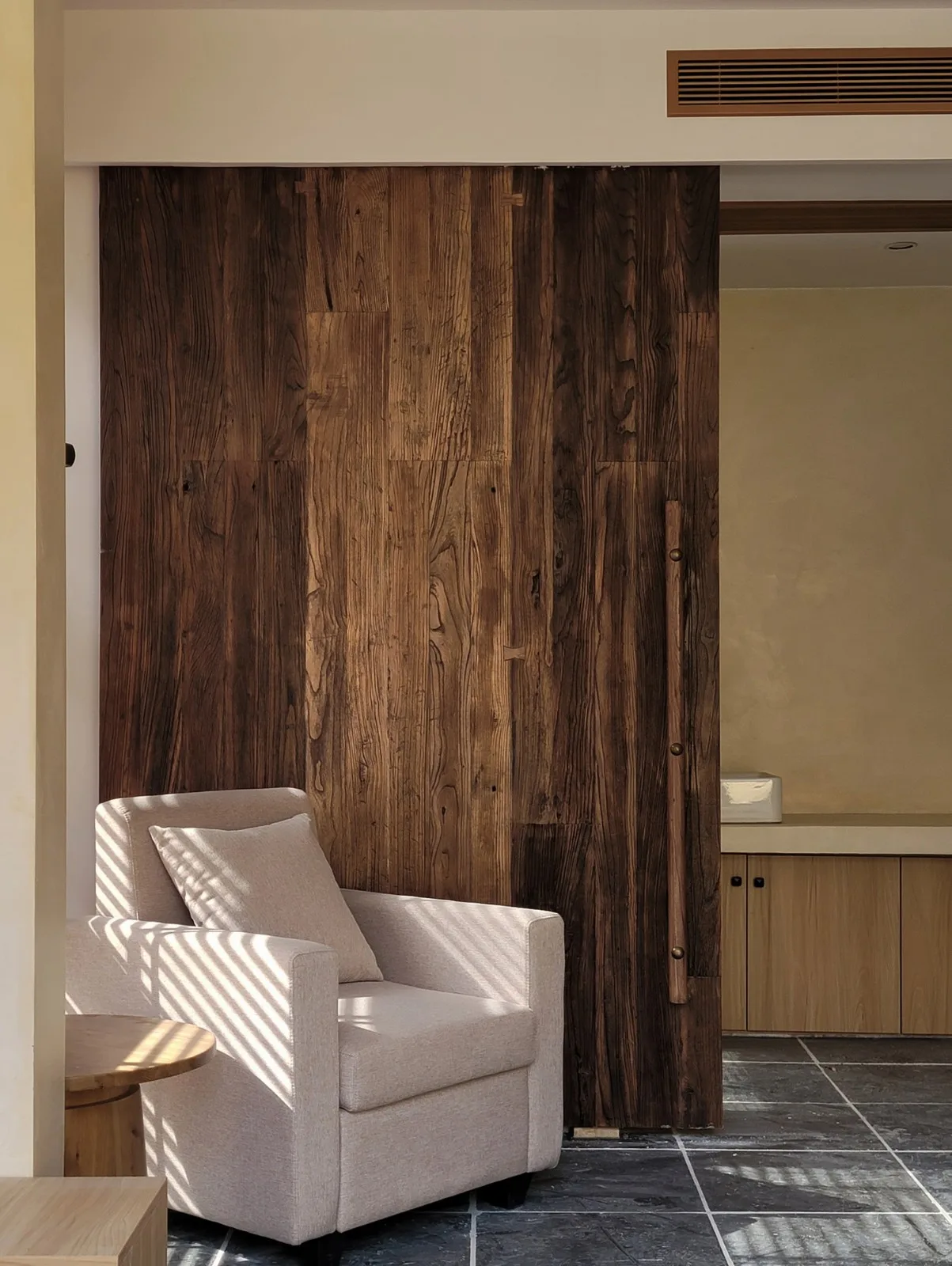
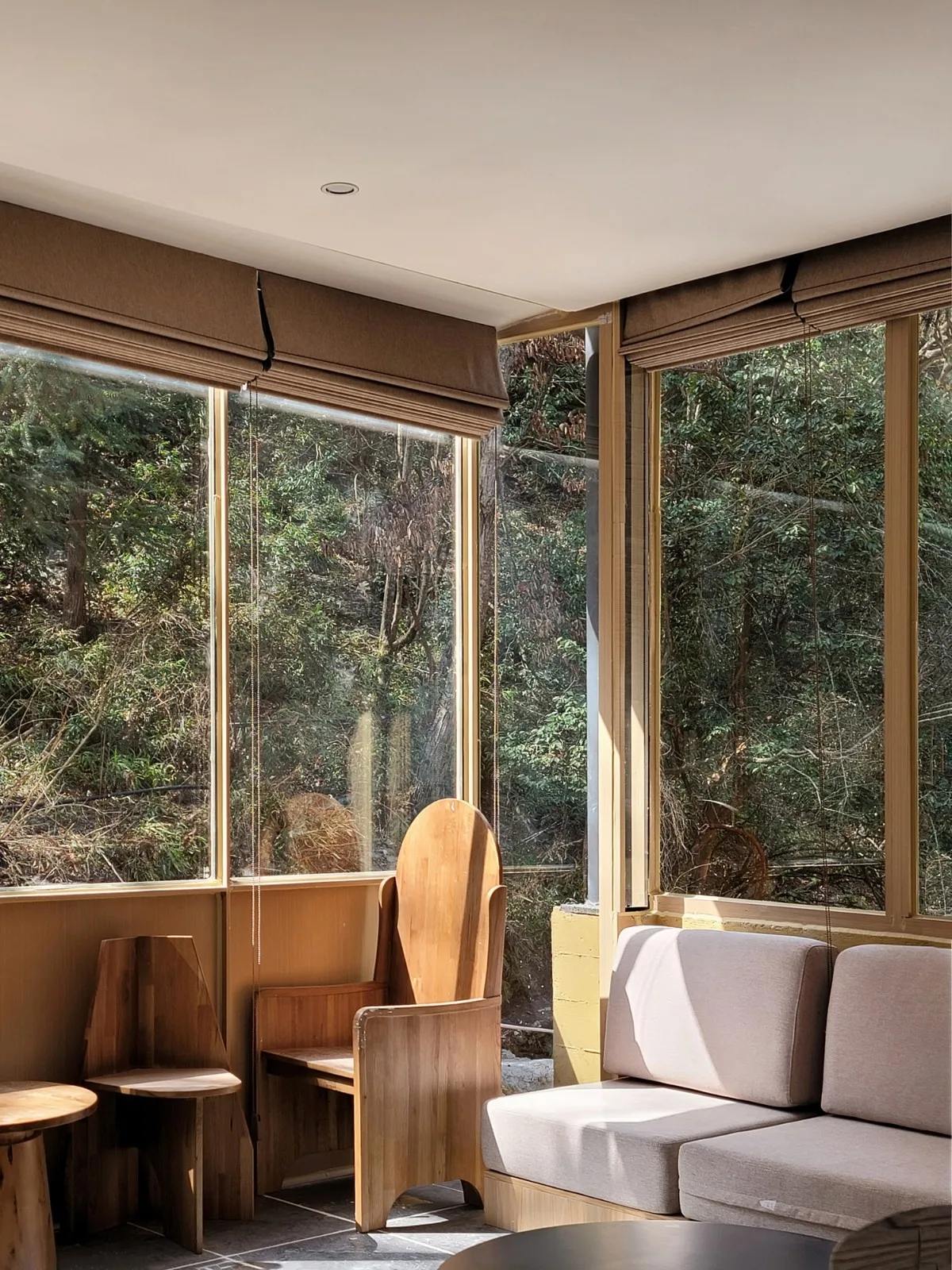
This building redefines educational spaces by integrating lifestyle and natural perception as its core teaching mediums, rather than traditional school environments. Its public areas include a museum exhibition hall, multimedia classrooms, a nature-themed dining space focused on natural food education, and nine guest rooms designed for study tours.
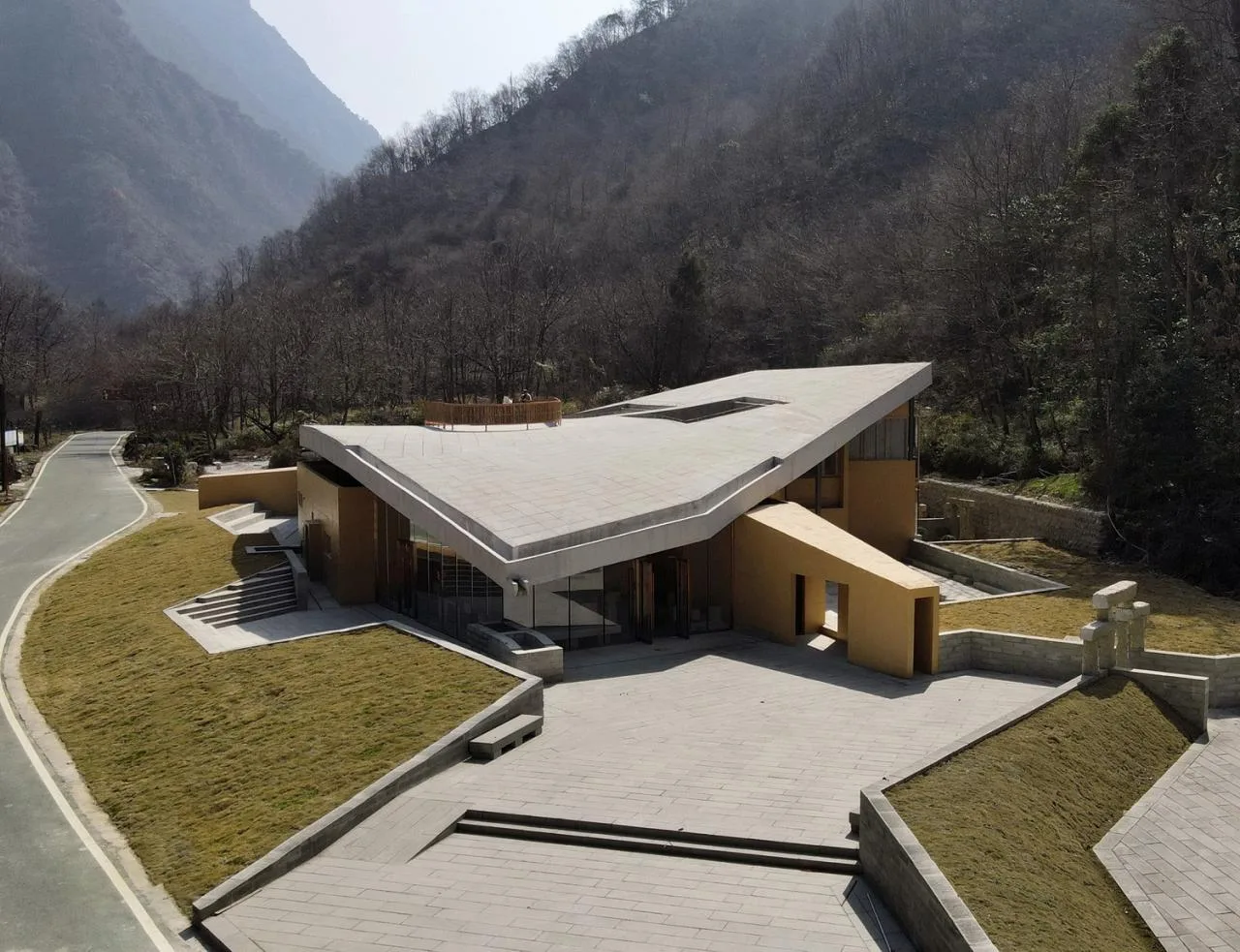
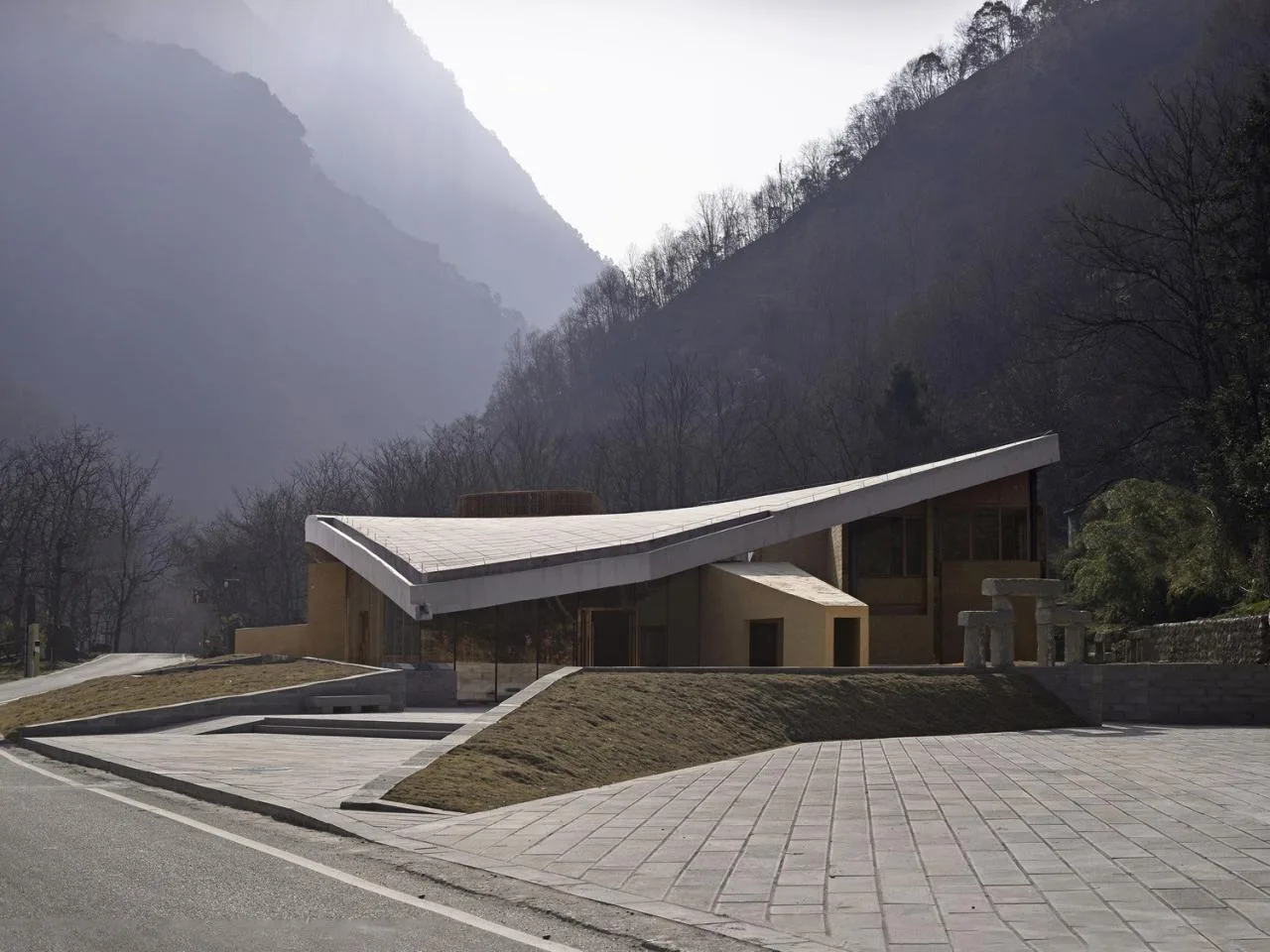
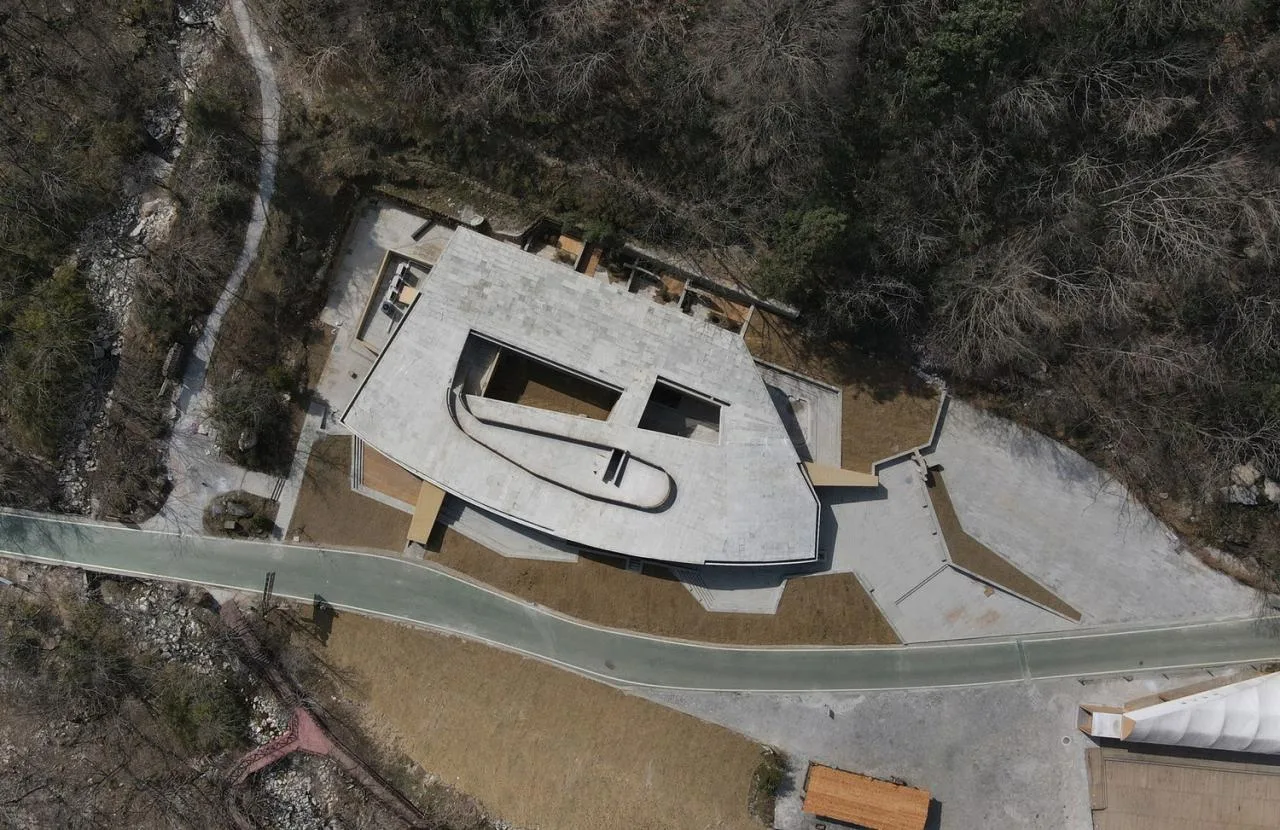
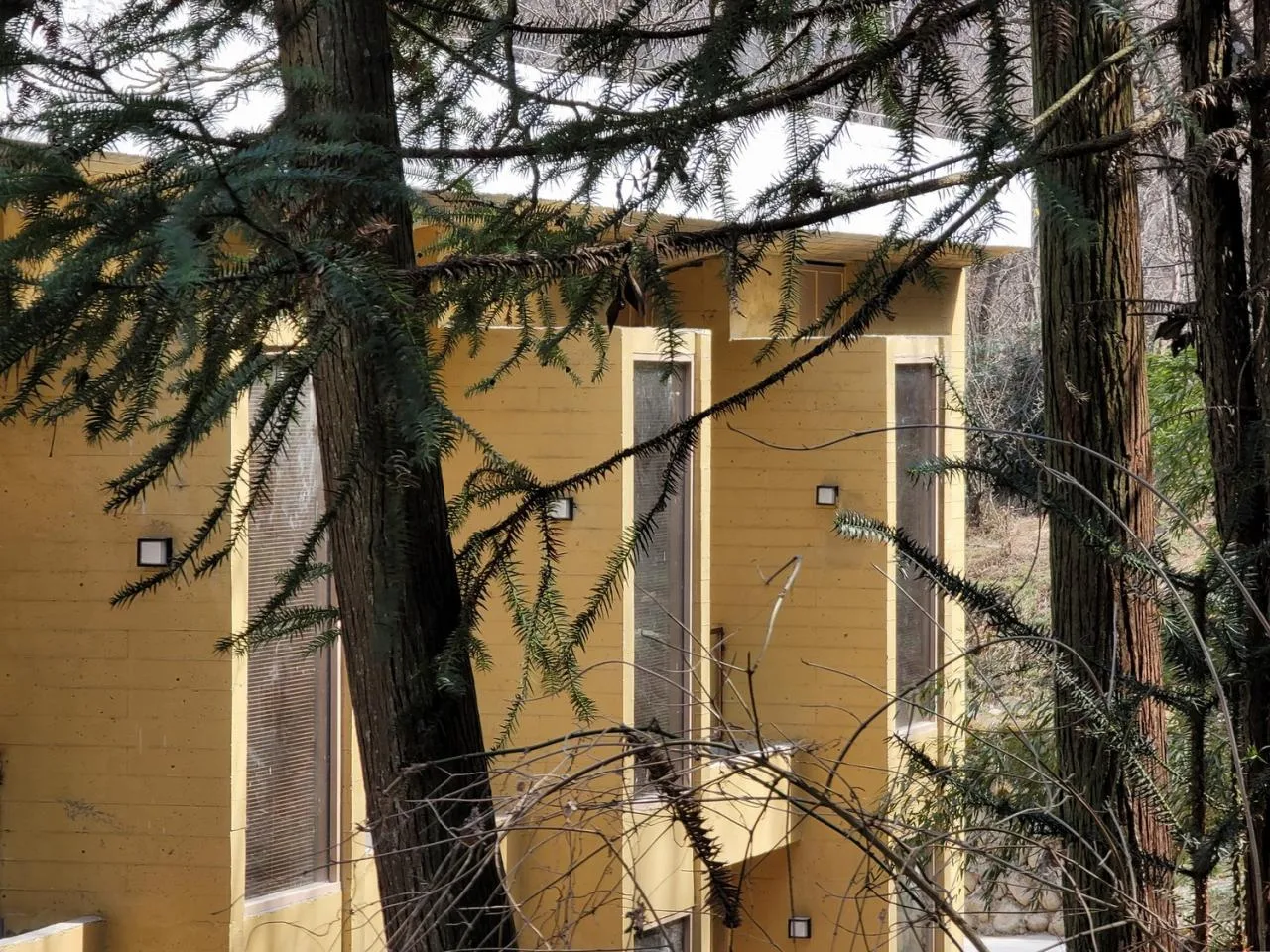
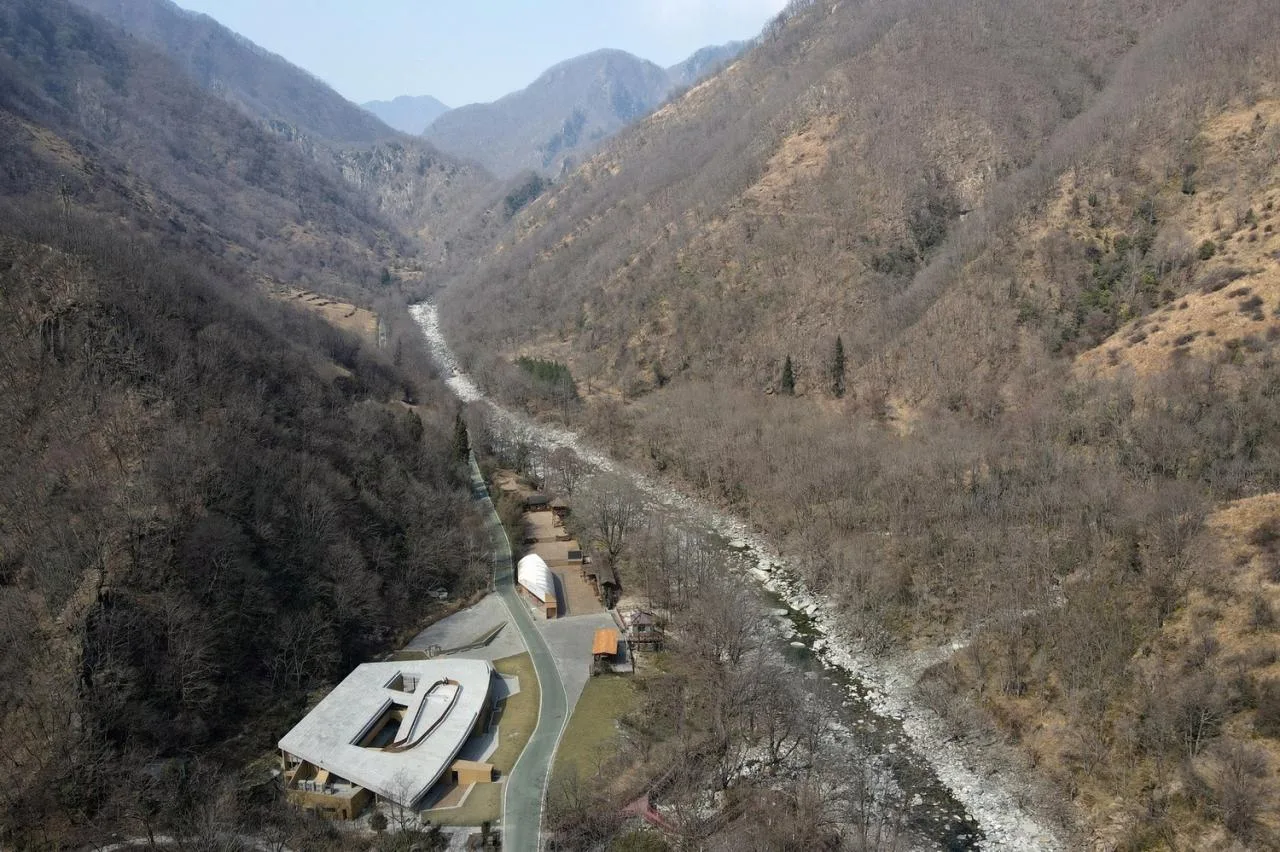
Living immersed in nature offers the most authentic form of natural education. This fundamental insight shaped the architectural design: the goal is to seamlessly connect the building with its natural surroundings, creating an environment that fosters a deep connection between users and nature.
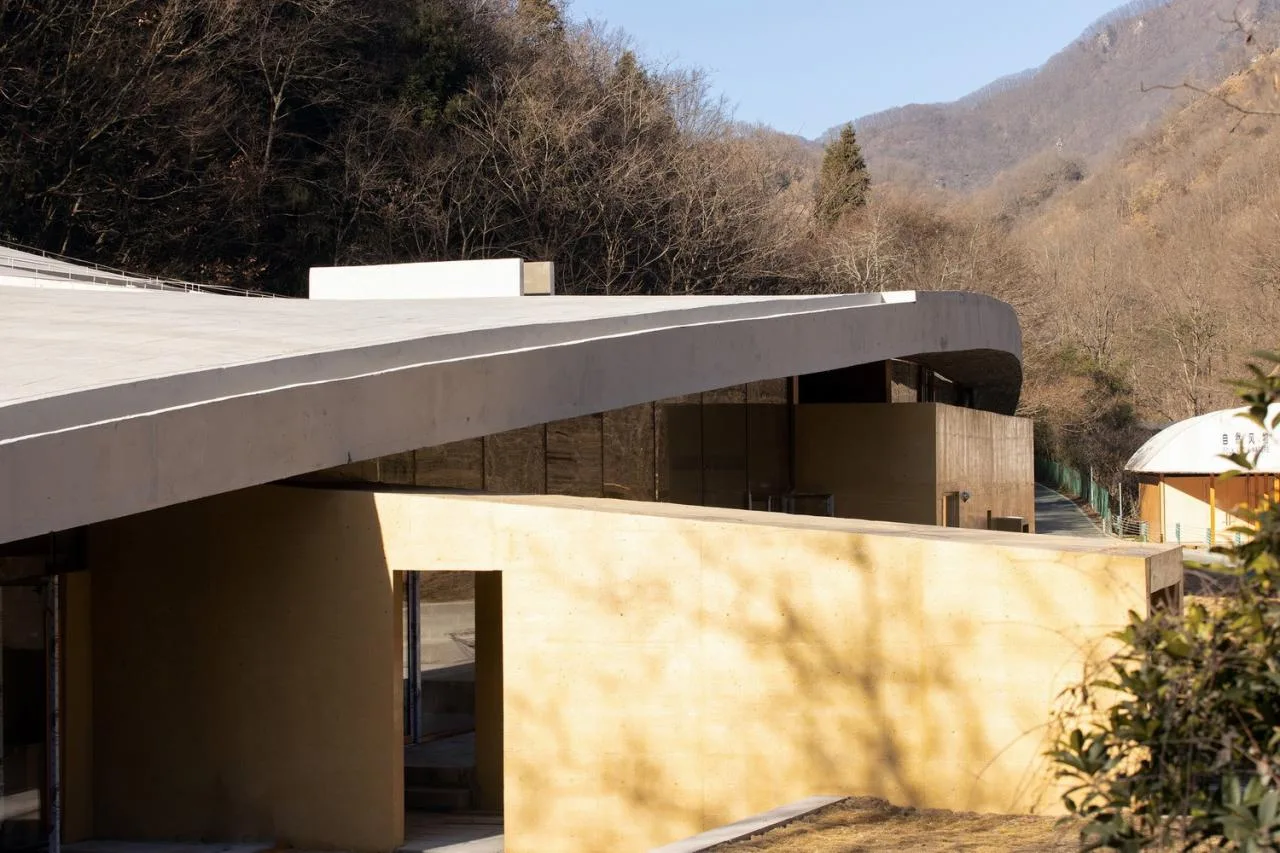
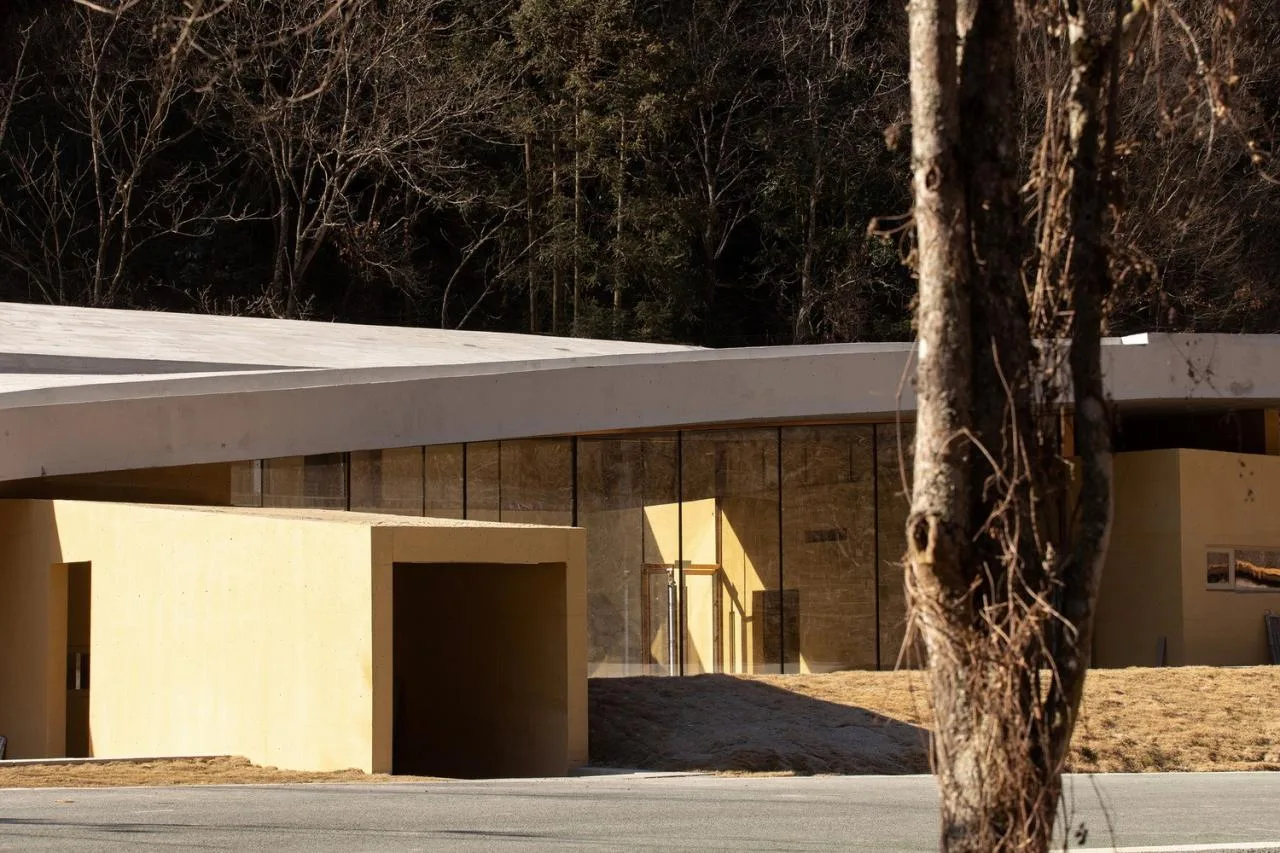
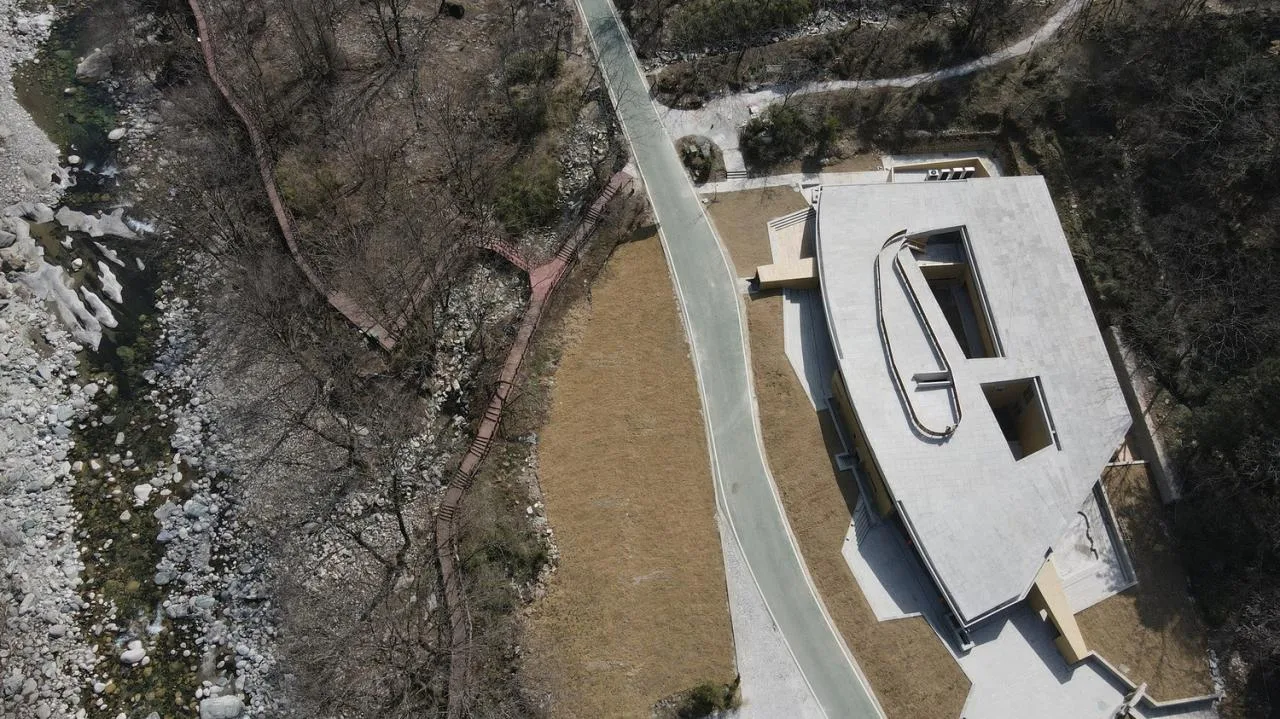
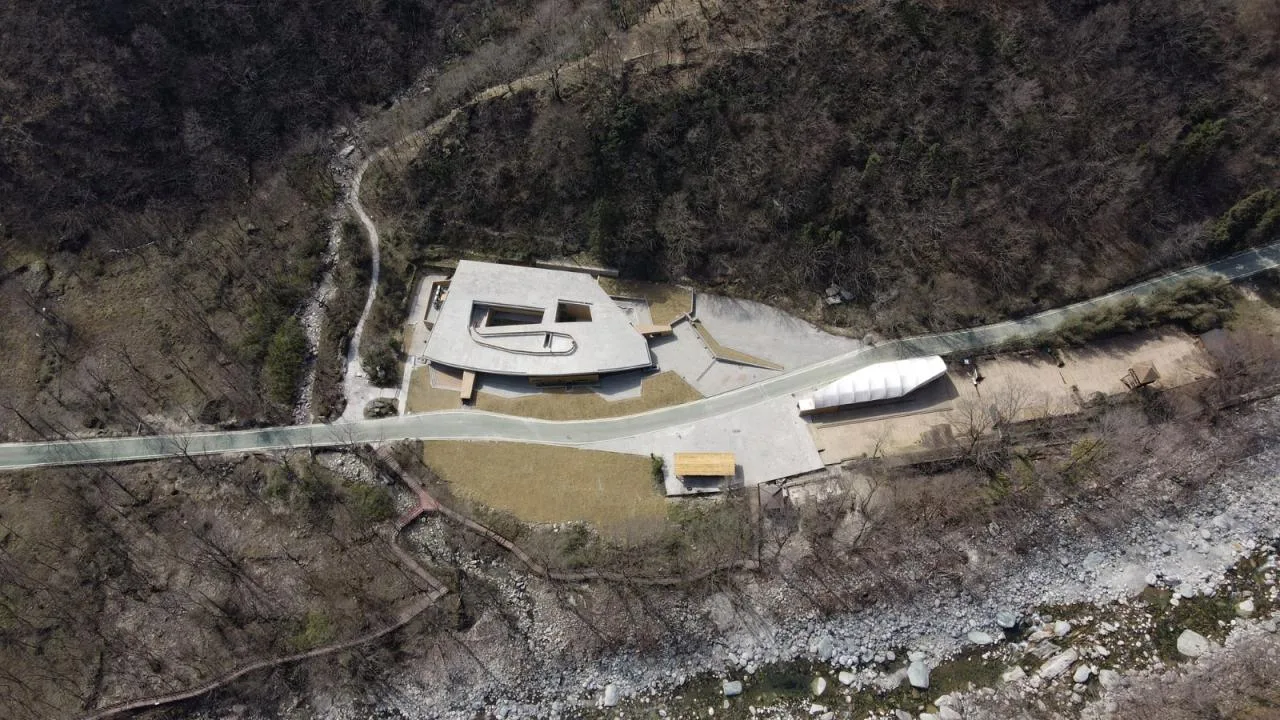
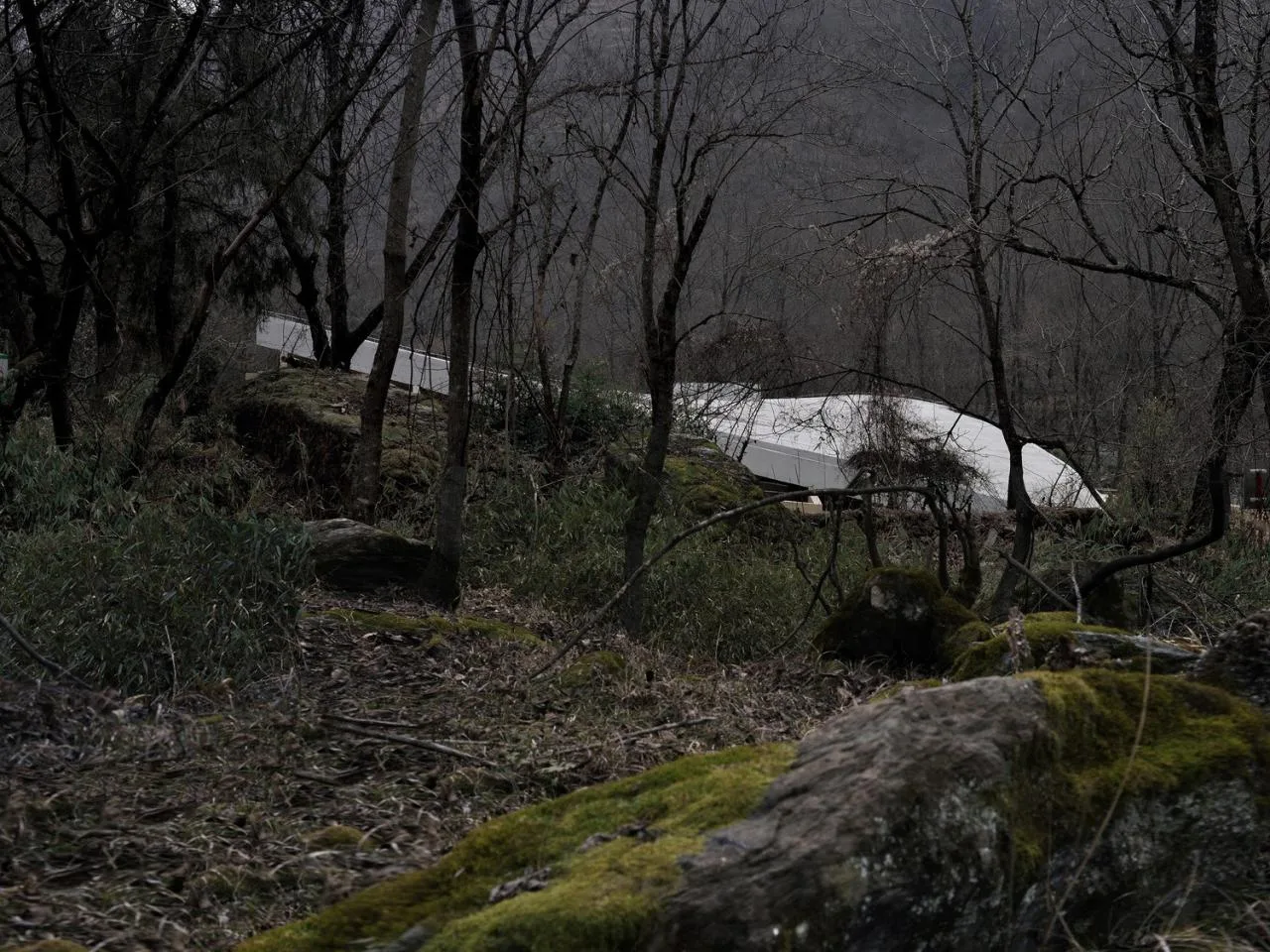
The building’s roof features a large, saddle-shaped concrete slab that mimics a natural slate rock, responding to the valley’s contours and water erosion. It appears as a massive river stone nestled in the valley, embodying the forces of nature’s time and space. The architectural form is inspired by the mountain terrain and river valleys, with the structure seemingly sinking into the mountain and sprawling along the riverbed, as if sculpted by nature over centuries.
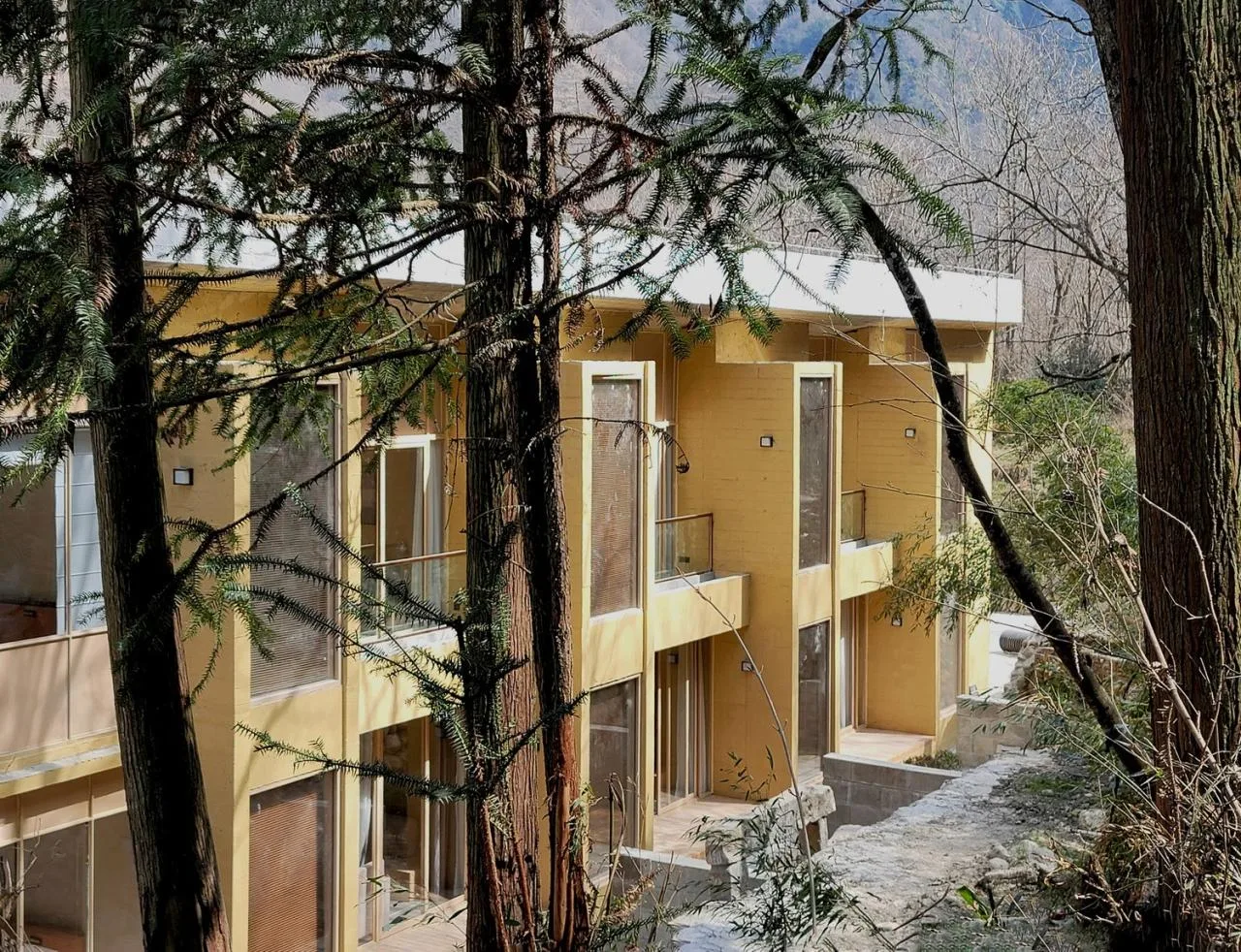
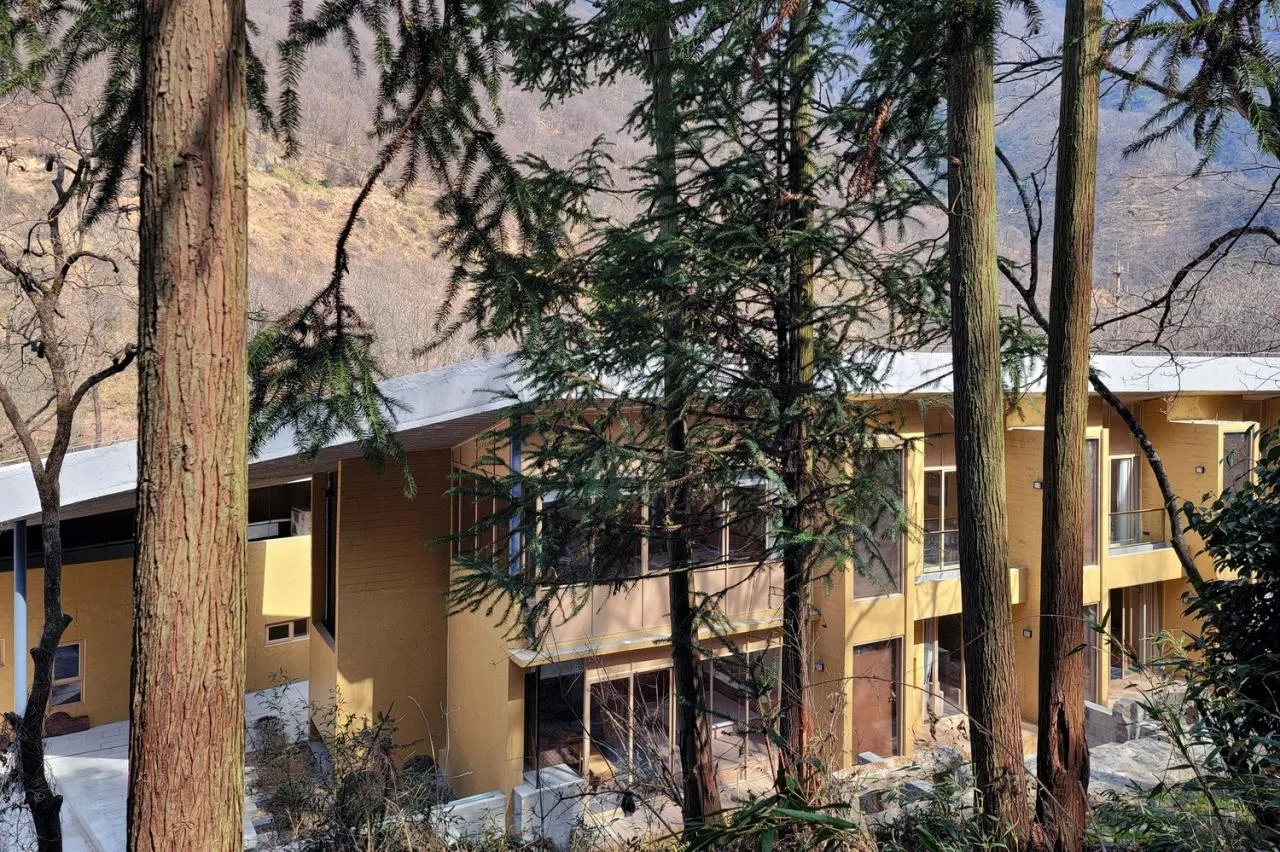
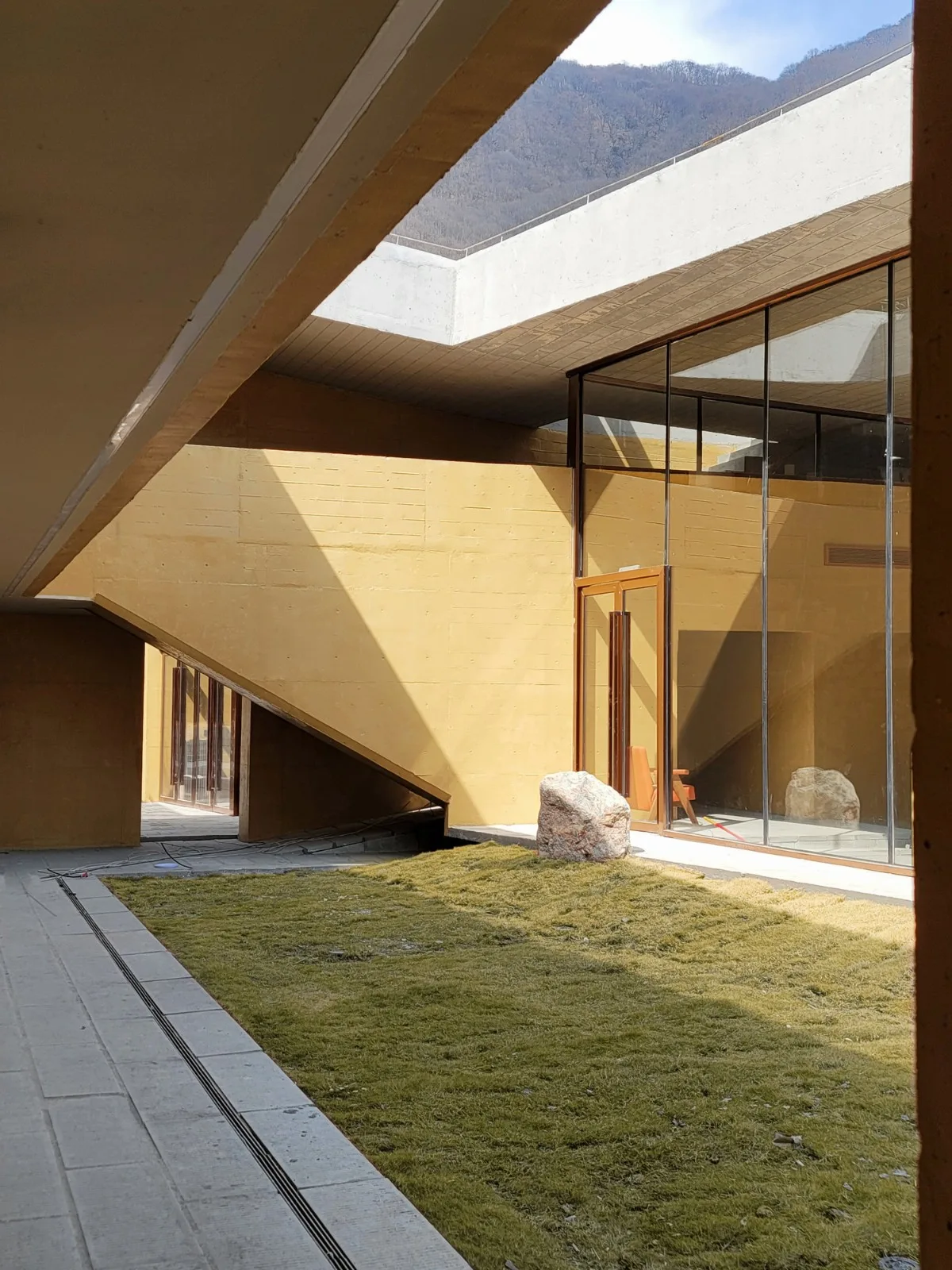
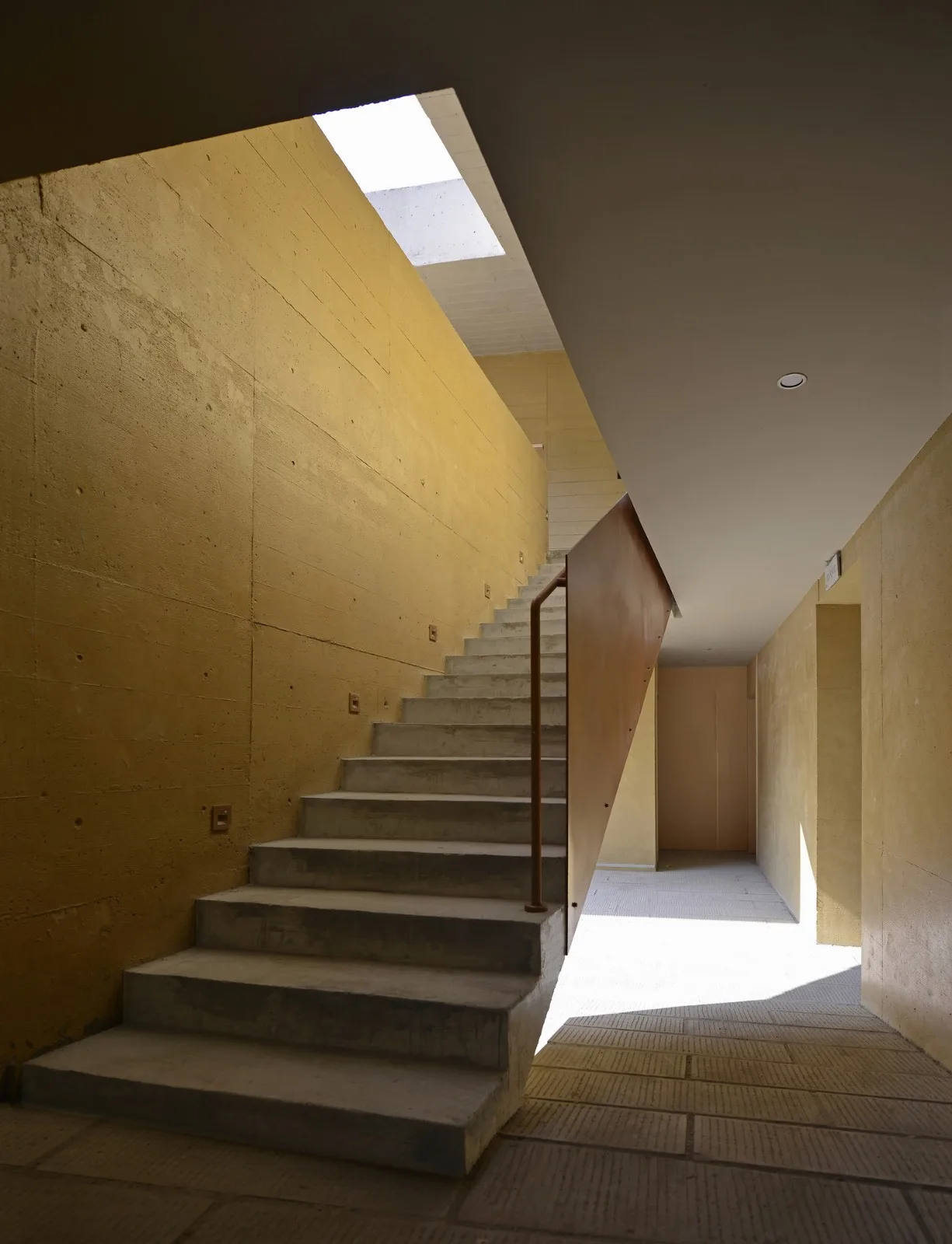
The architectural plan creates a continuous landscape volume, reminiscent of overlapping stones in a mossy forest floor. These ‘stones’ represent the building’s service spaces, including circulation areas and bathrooms. The open spaces between them are areas genuinely experienced by users: four public spaces adjacent to the road—exhibition hall, classroom, café, and food education area—and guest rooms and living spaces located near the mountain.
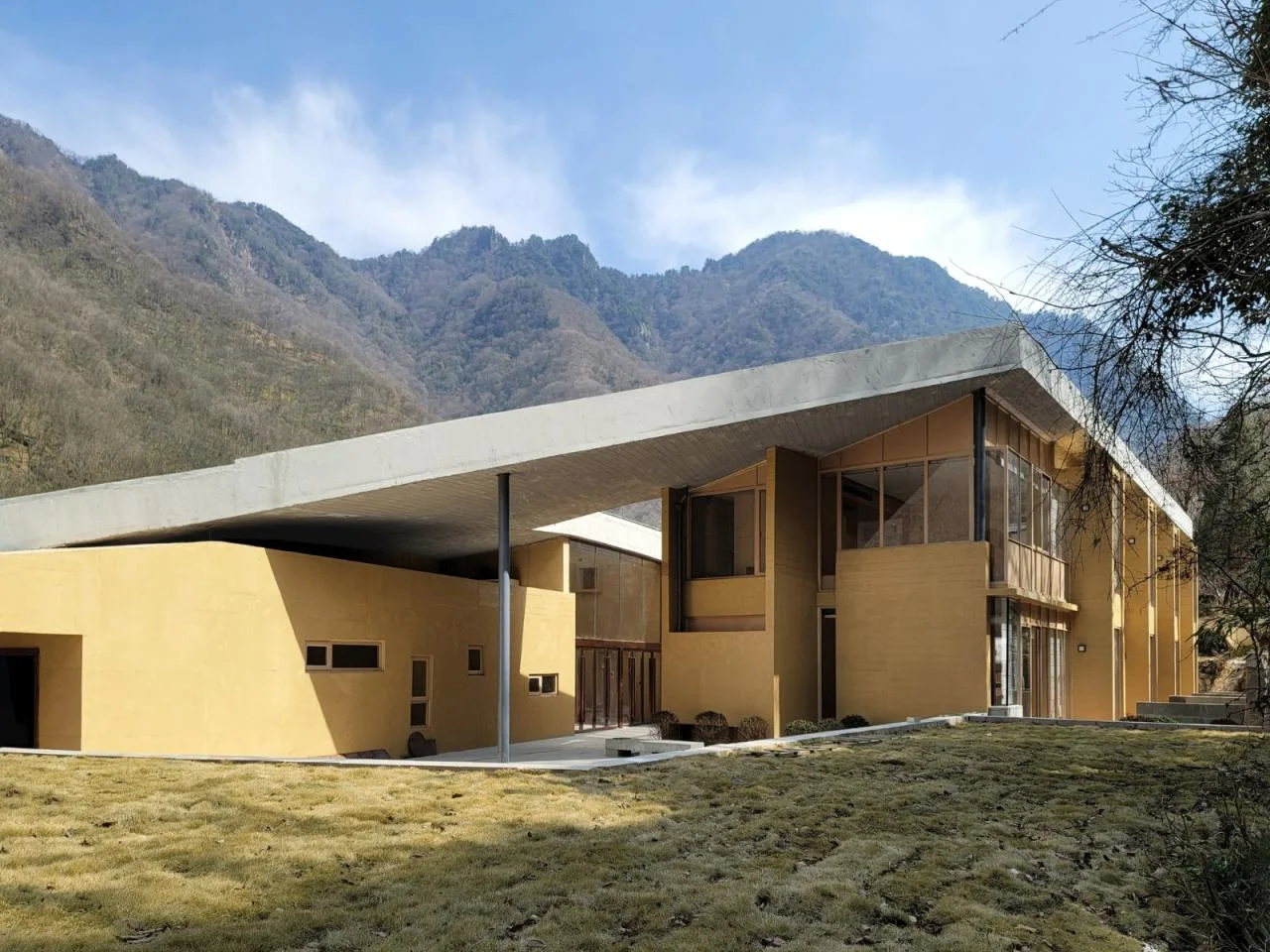
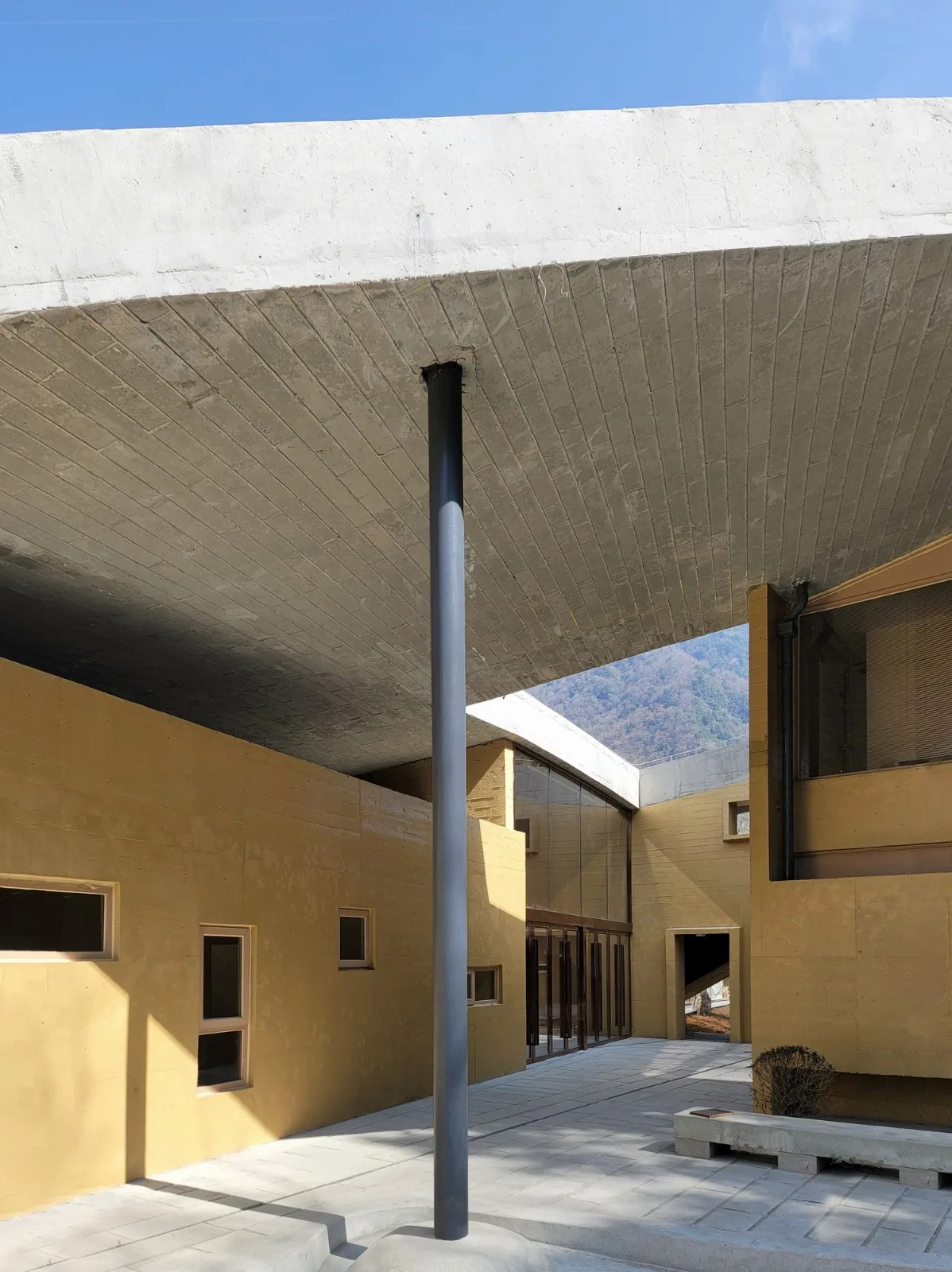
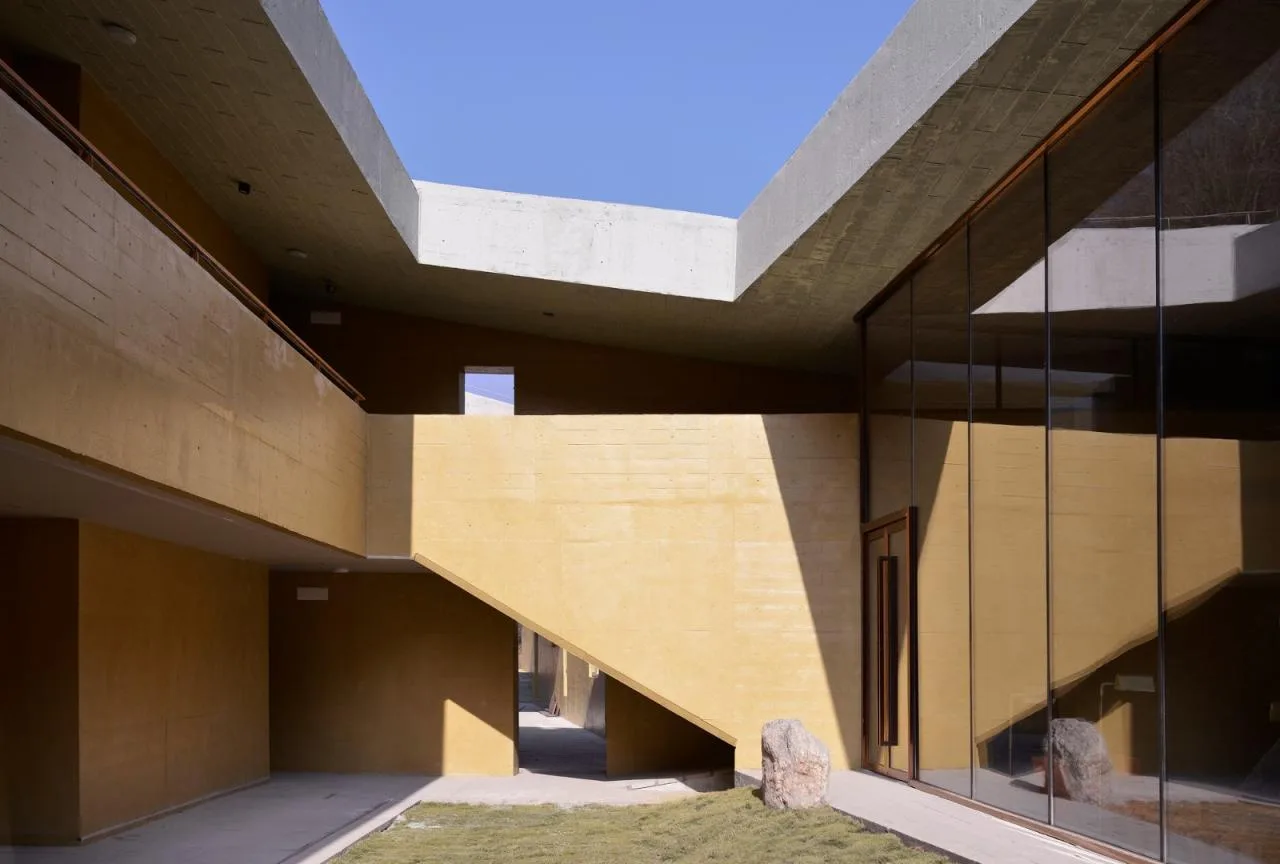
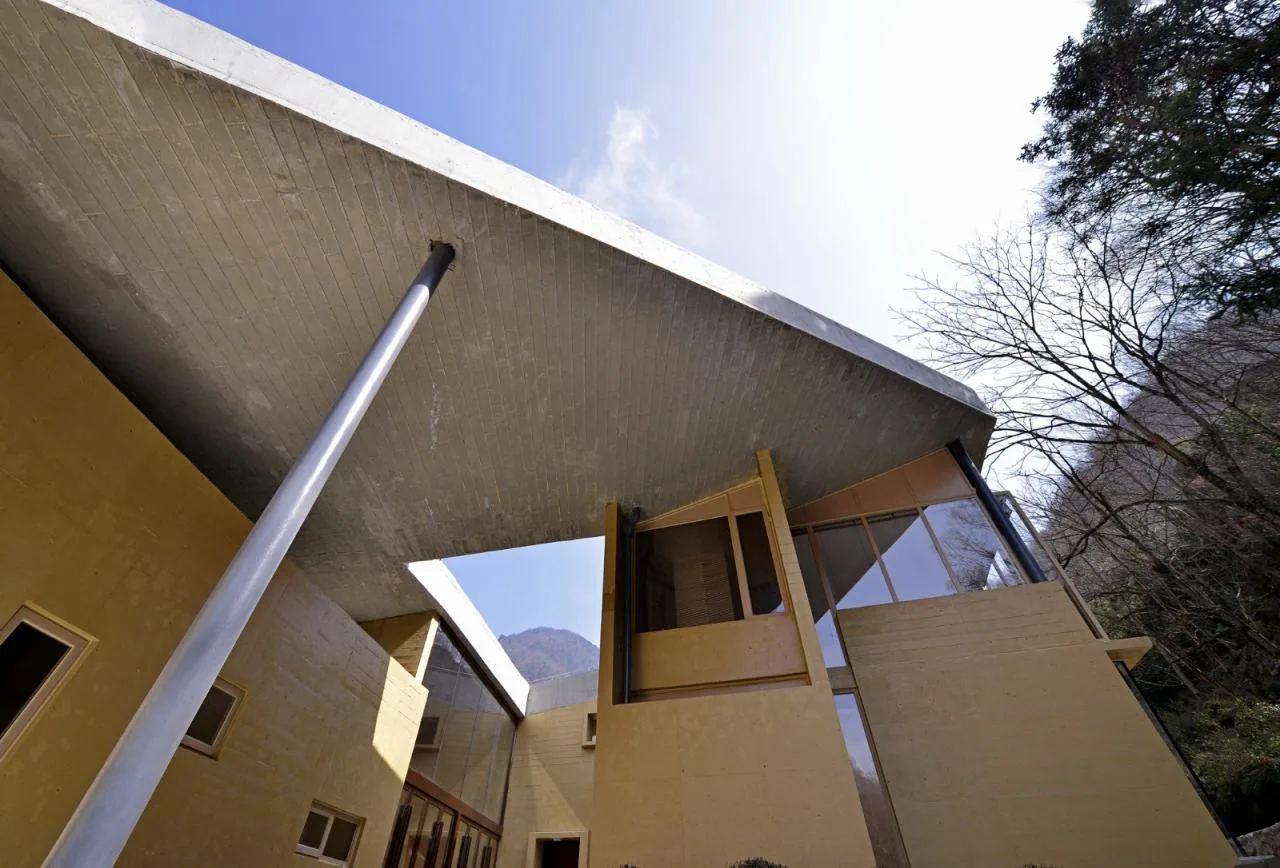
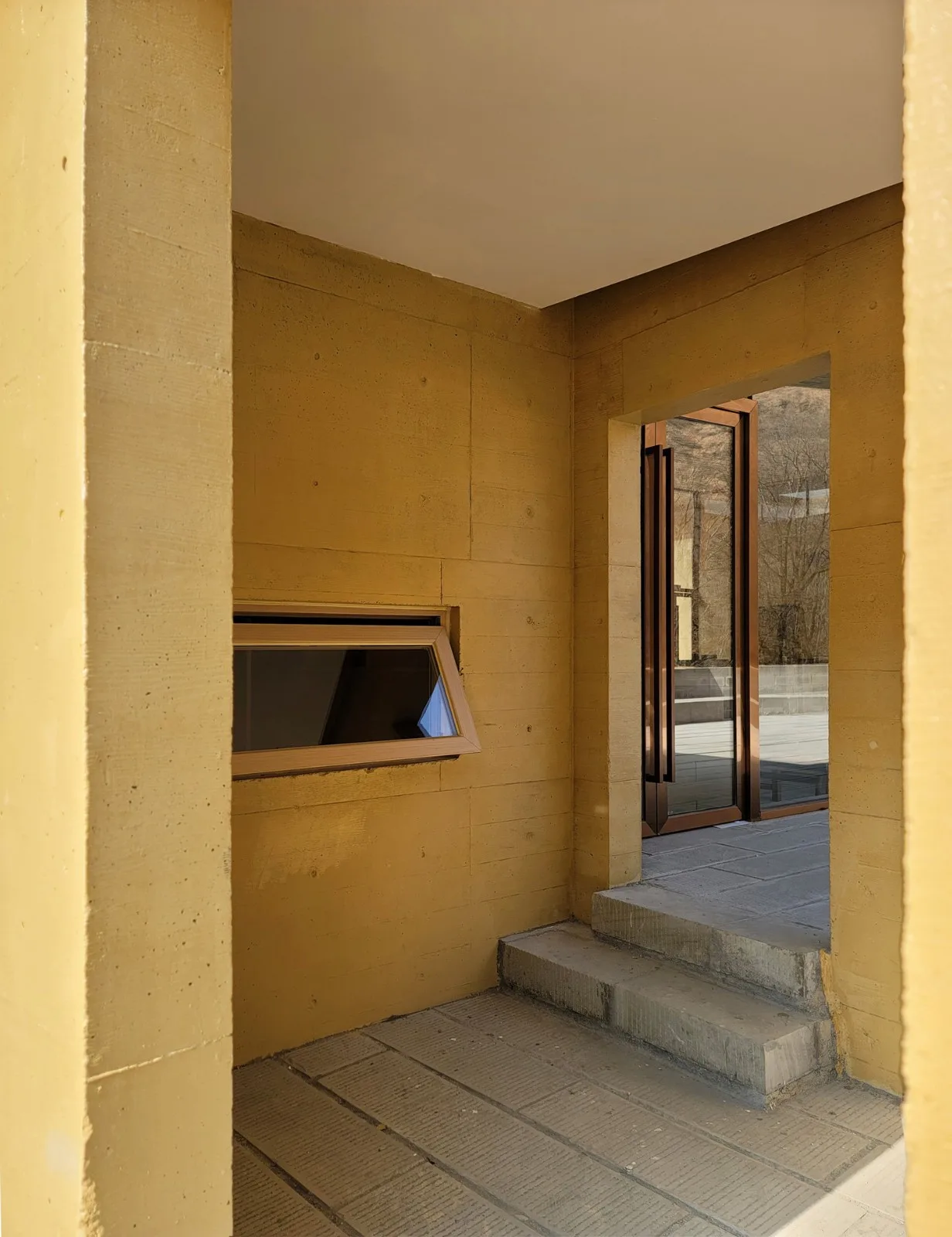
The building’s structural and functional layouts follow a unified logic. Each service space doubles as a structural unit, forming a continuous landscape like stones emerging and overlapping in a mossy field.
The roof’s structural form stands as the building’s most significant architectural expression. Emerging directly from its structural logic, it creates a unique formal language that transcends traditional typologies. This process echoes how water shapes stones in a river over time.
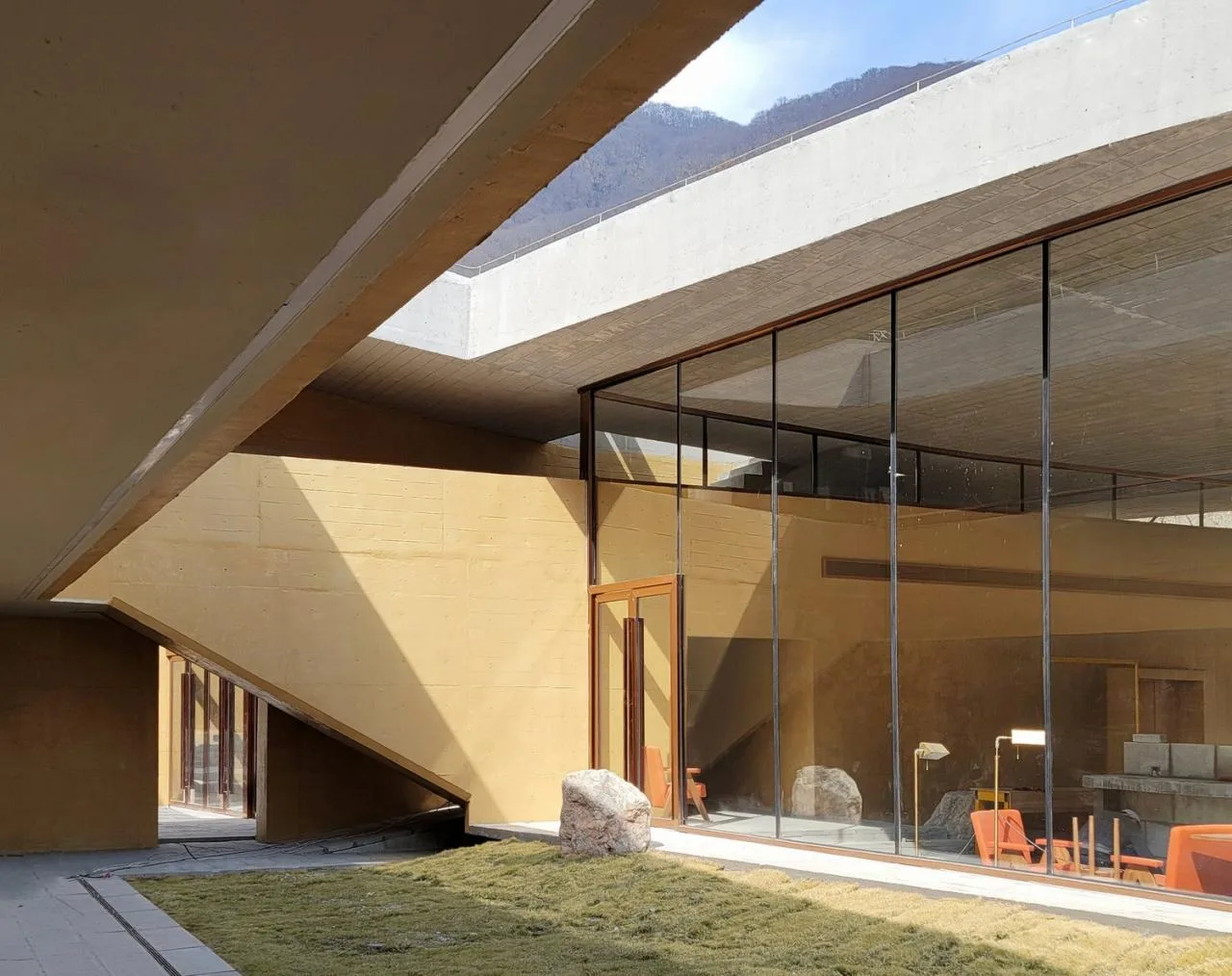
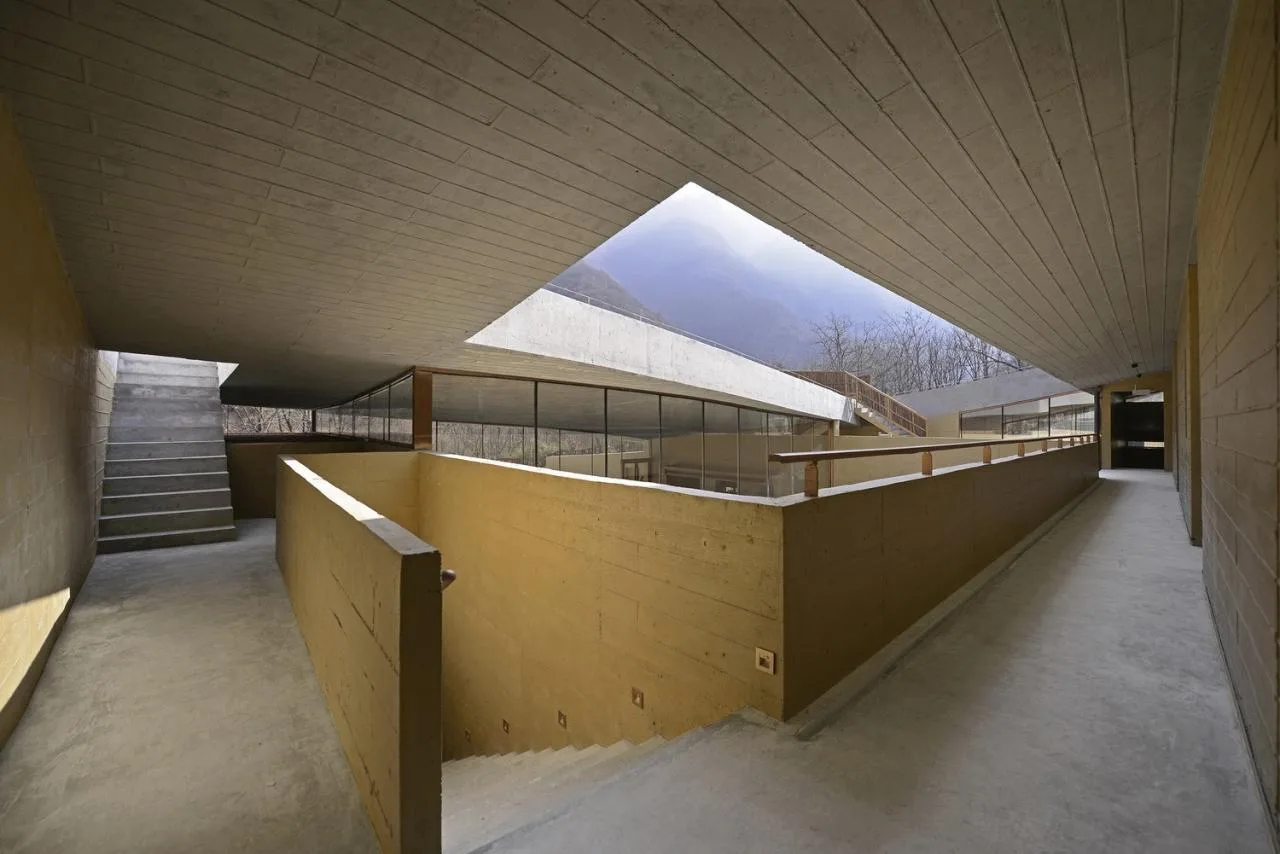
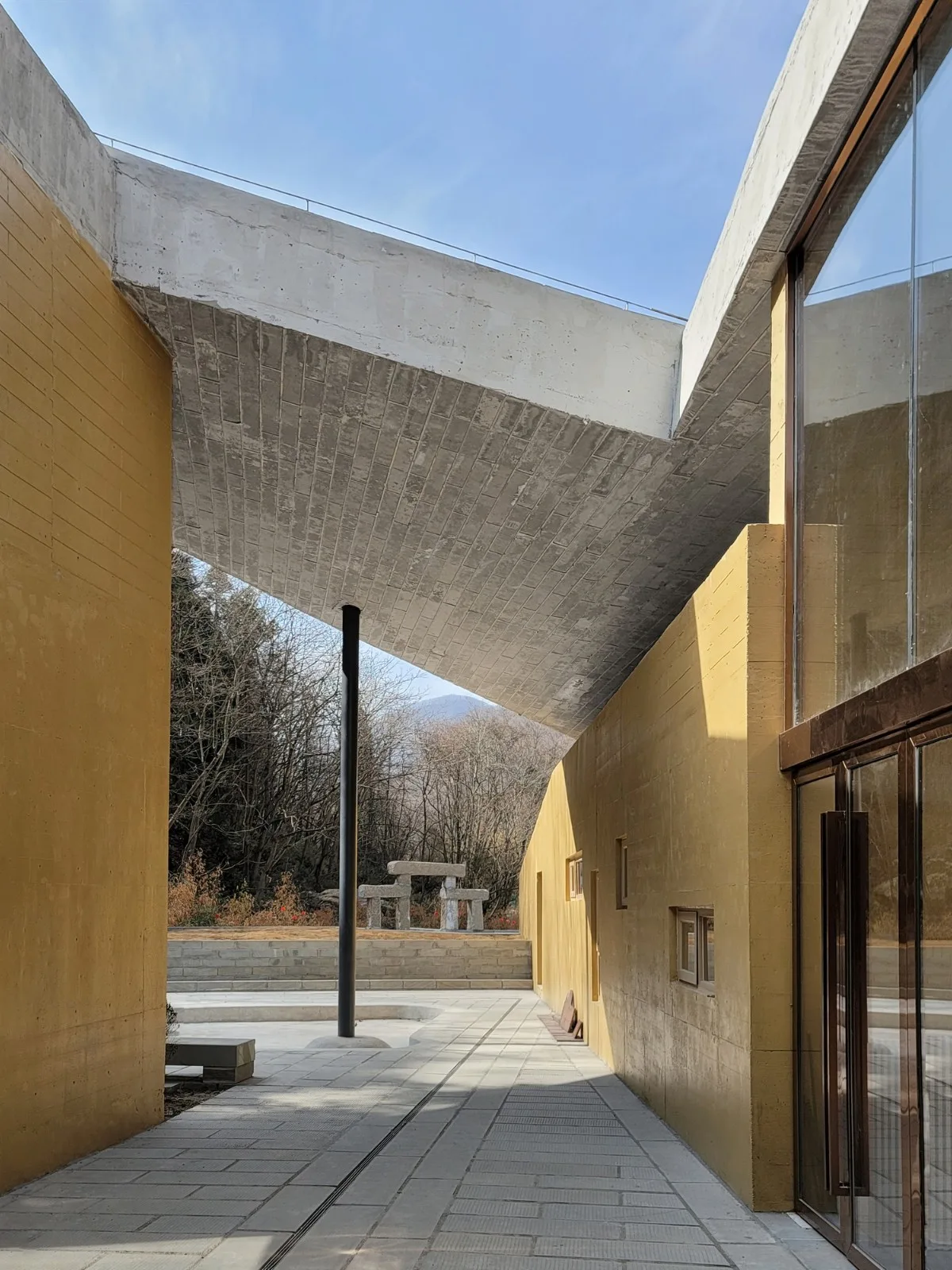
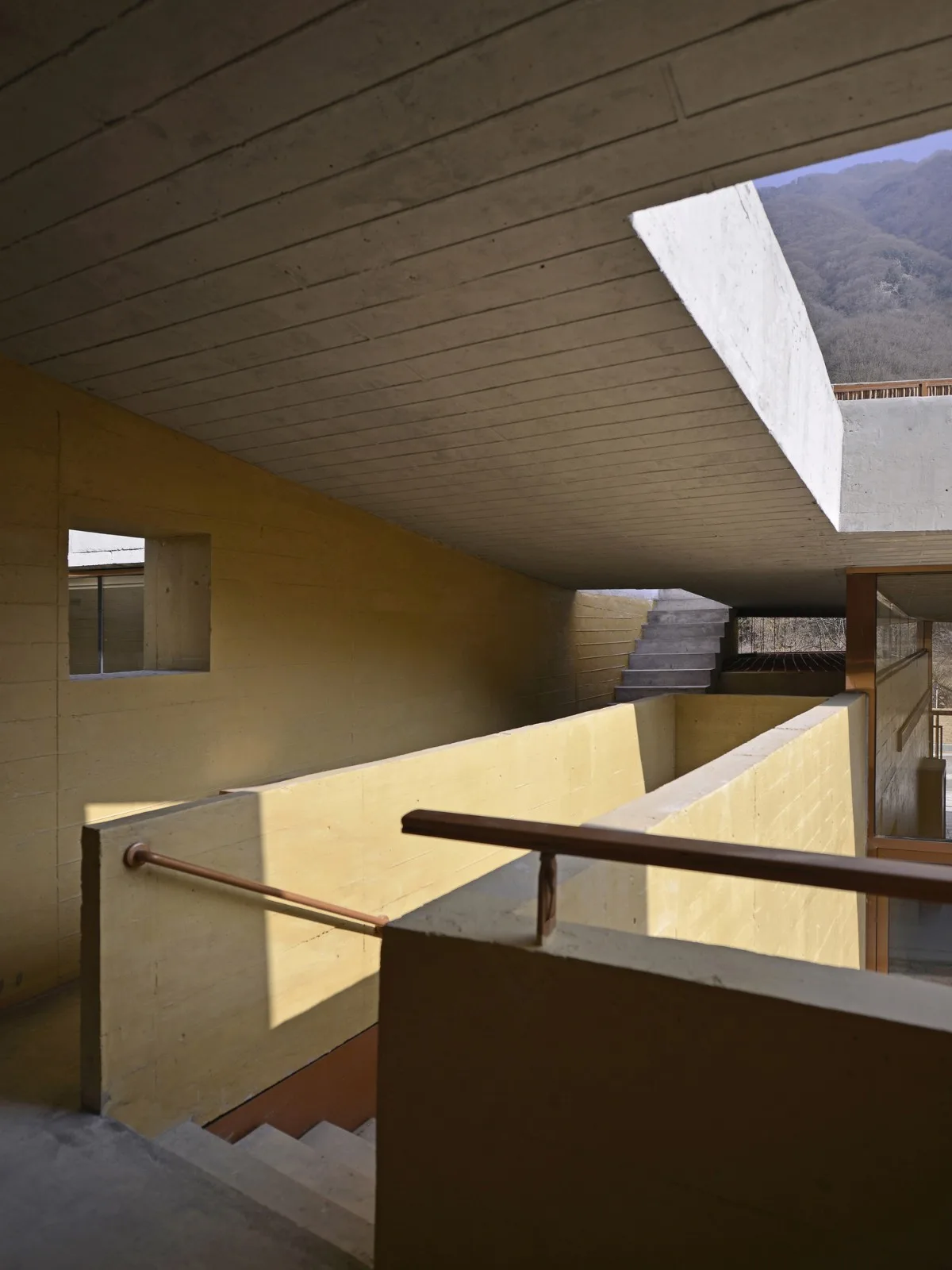
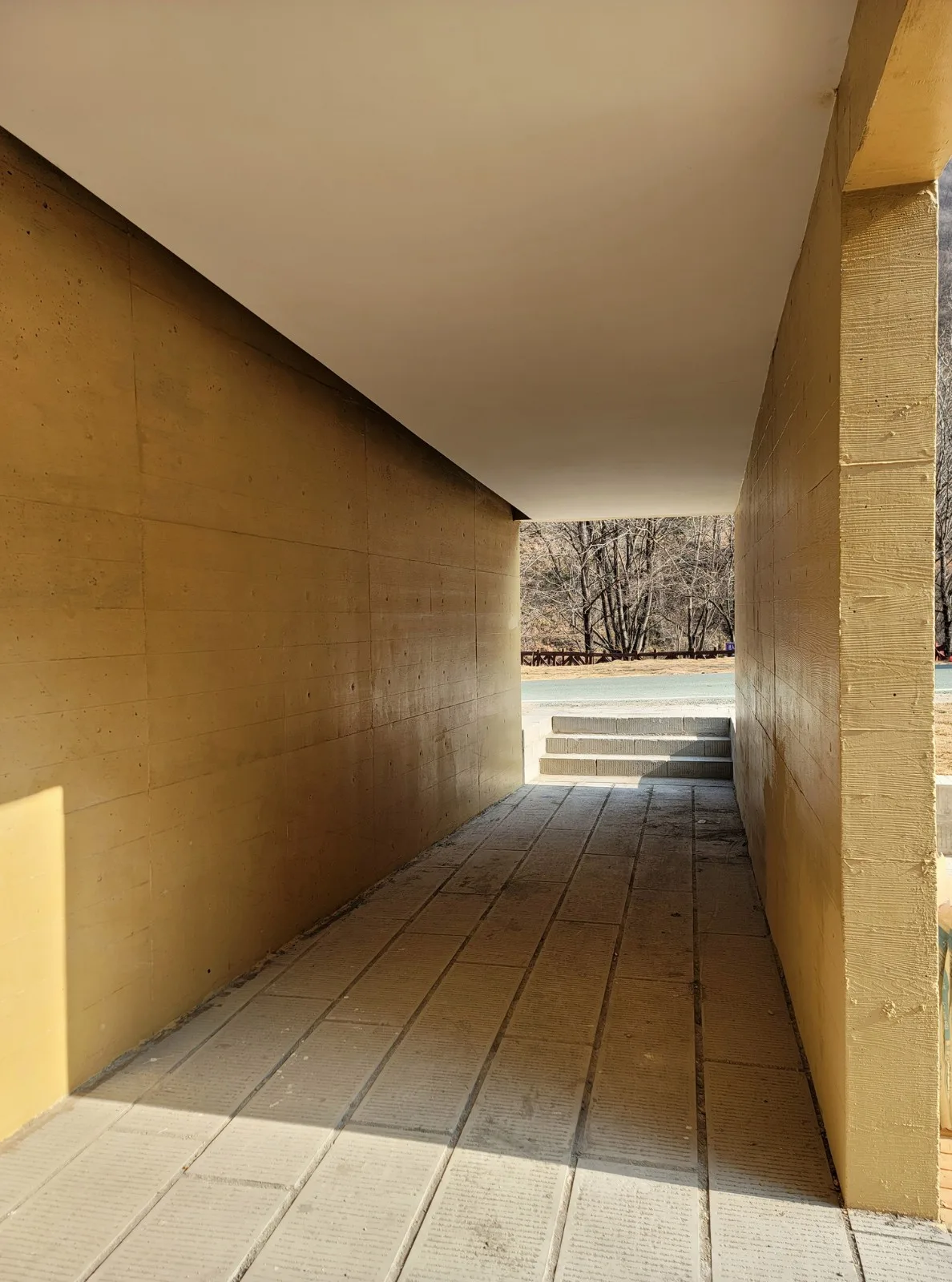
The structural design emerged from the spatial demands of the building. To achieve balance, a static equilibrium is created between a 16-meter-long span and a 9-meter cantilever. The entire building presents a subtle arch shape in the front public space, with horizontal extensions at both ends providing lateral thrust resistance to stabilize the arch.
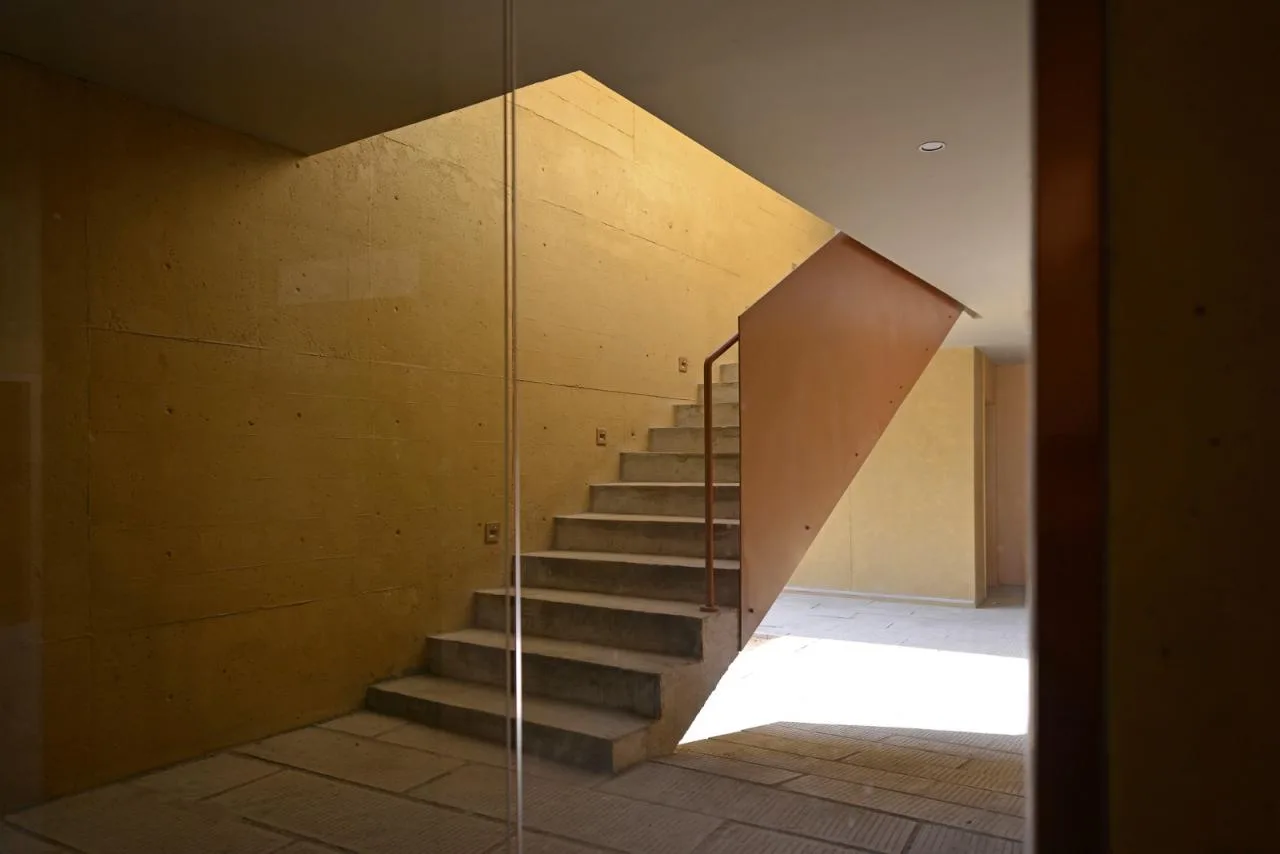
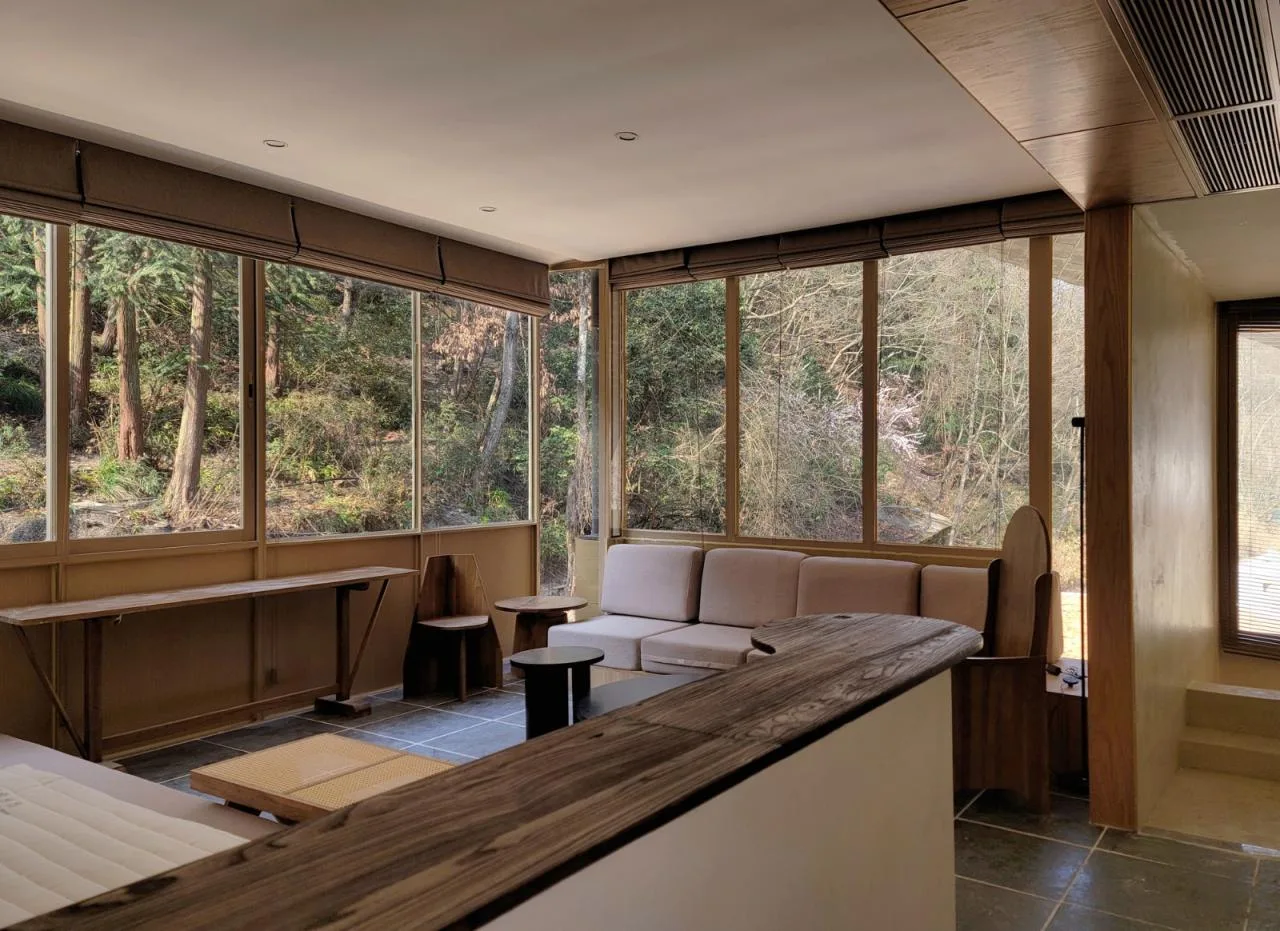
The roof’s structural logic primarily uses multi-ribbed continuous beams to minimize beam spacing, enabling each beam to span the full 16 meters smoothly. For the cantilever sections, concrete beams extend independently, with thin steel columns controlling overall deflection. These slender steel columns, positioned beneath the thick concrete ribbed slab, add a poetic, expressive quality to the architectural space that goes beyond mere rationality.
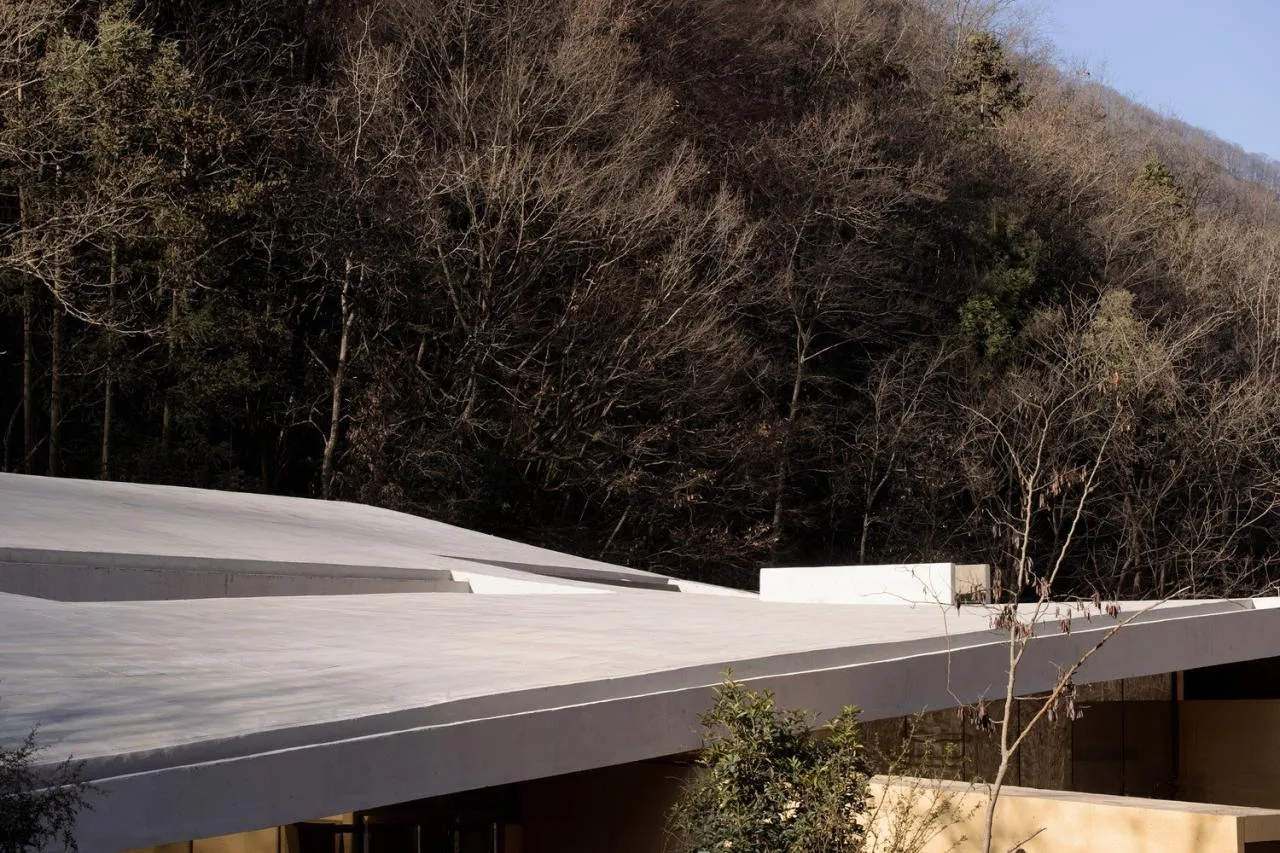
Project drawings
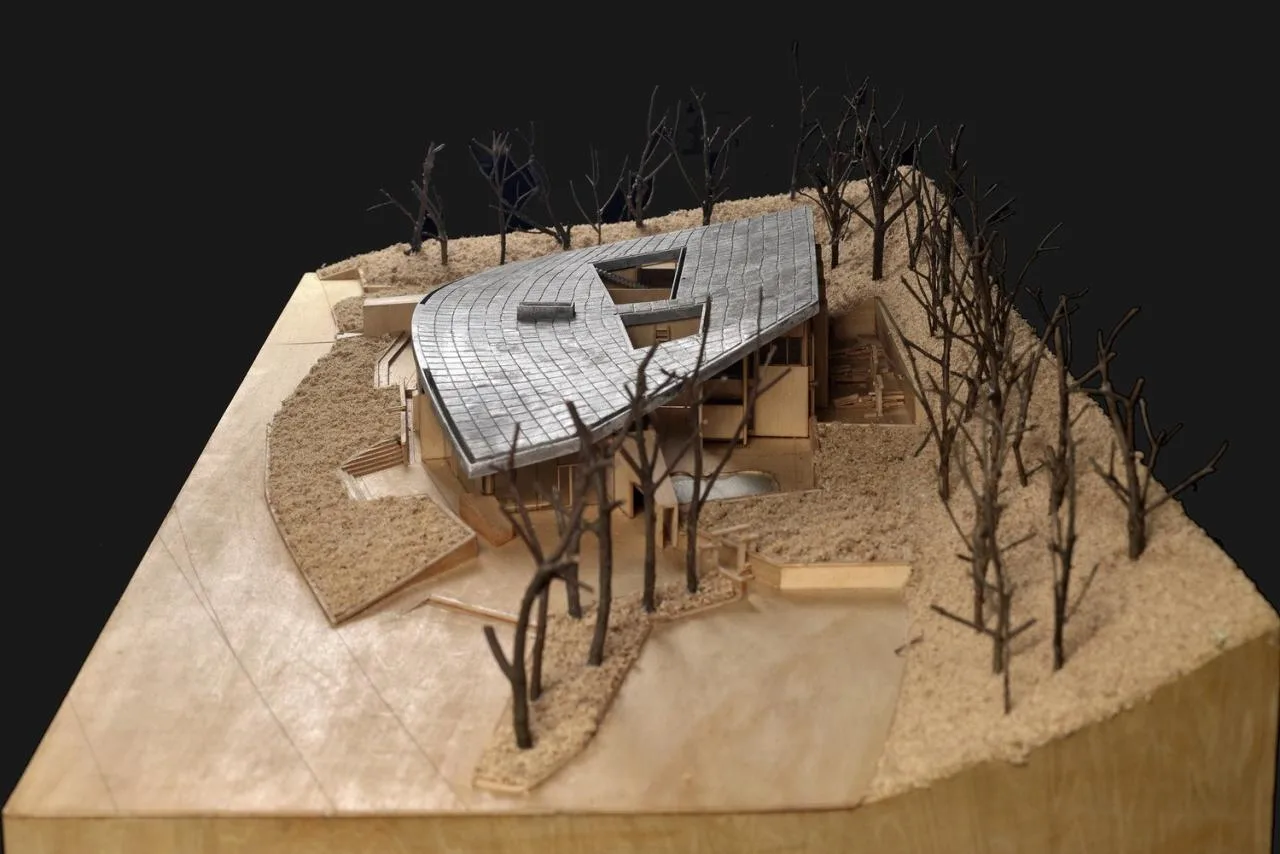
△ Model diagram
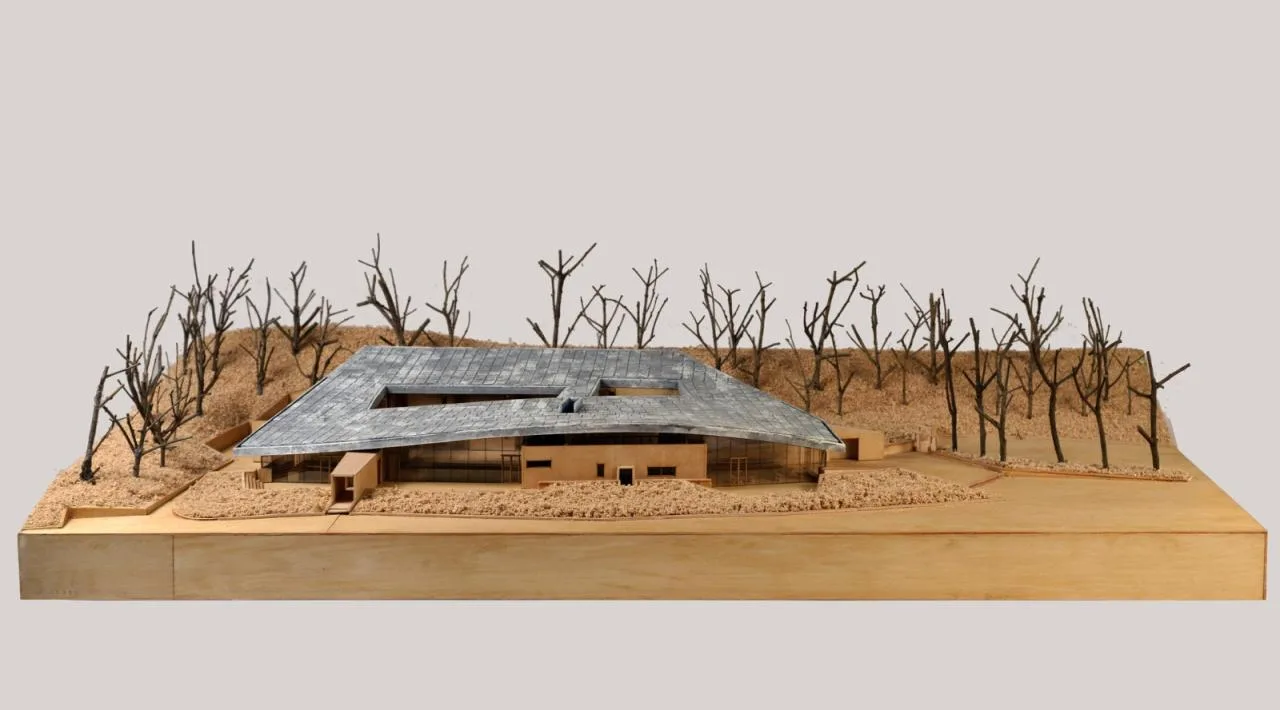
△ Model diagram
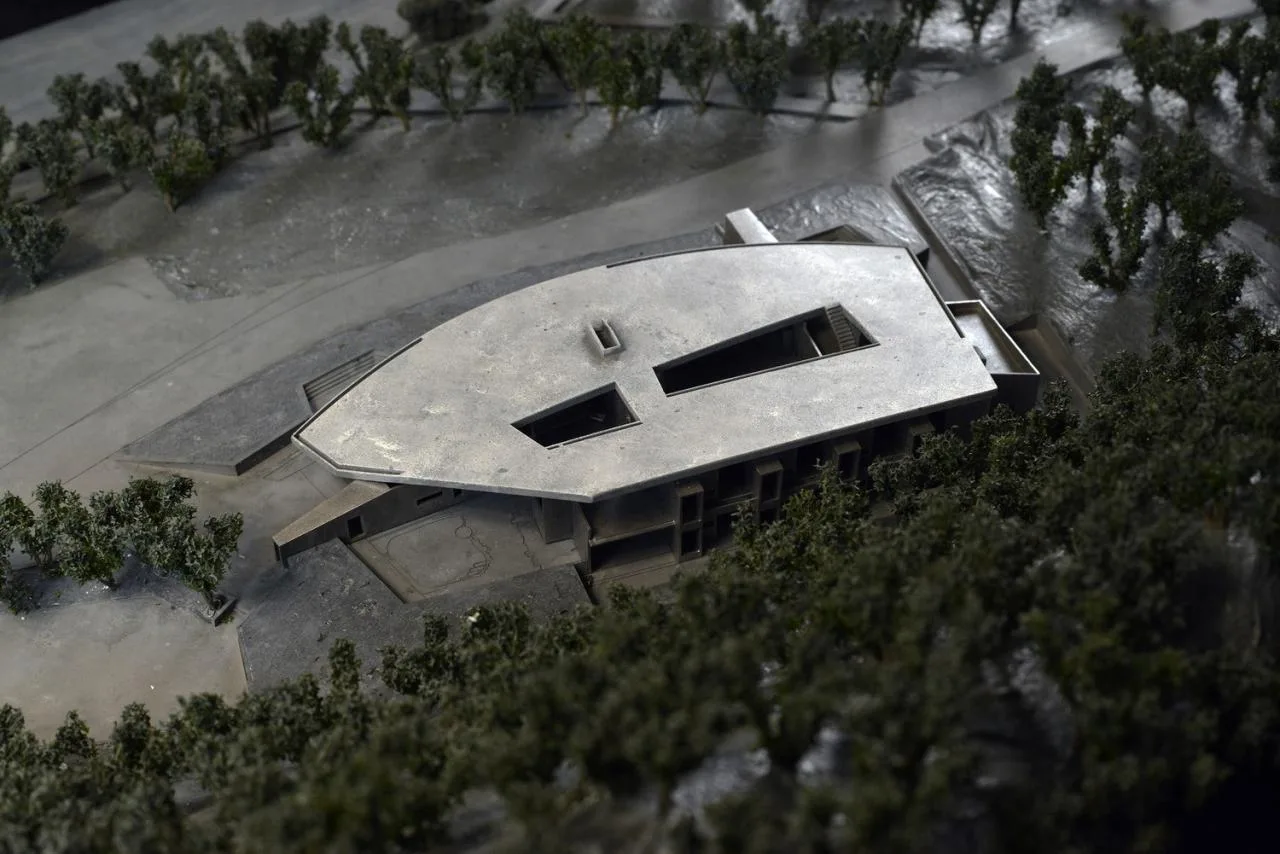
△ Model diagram
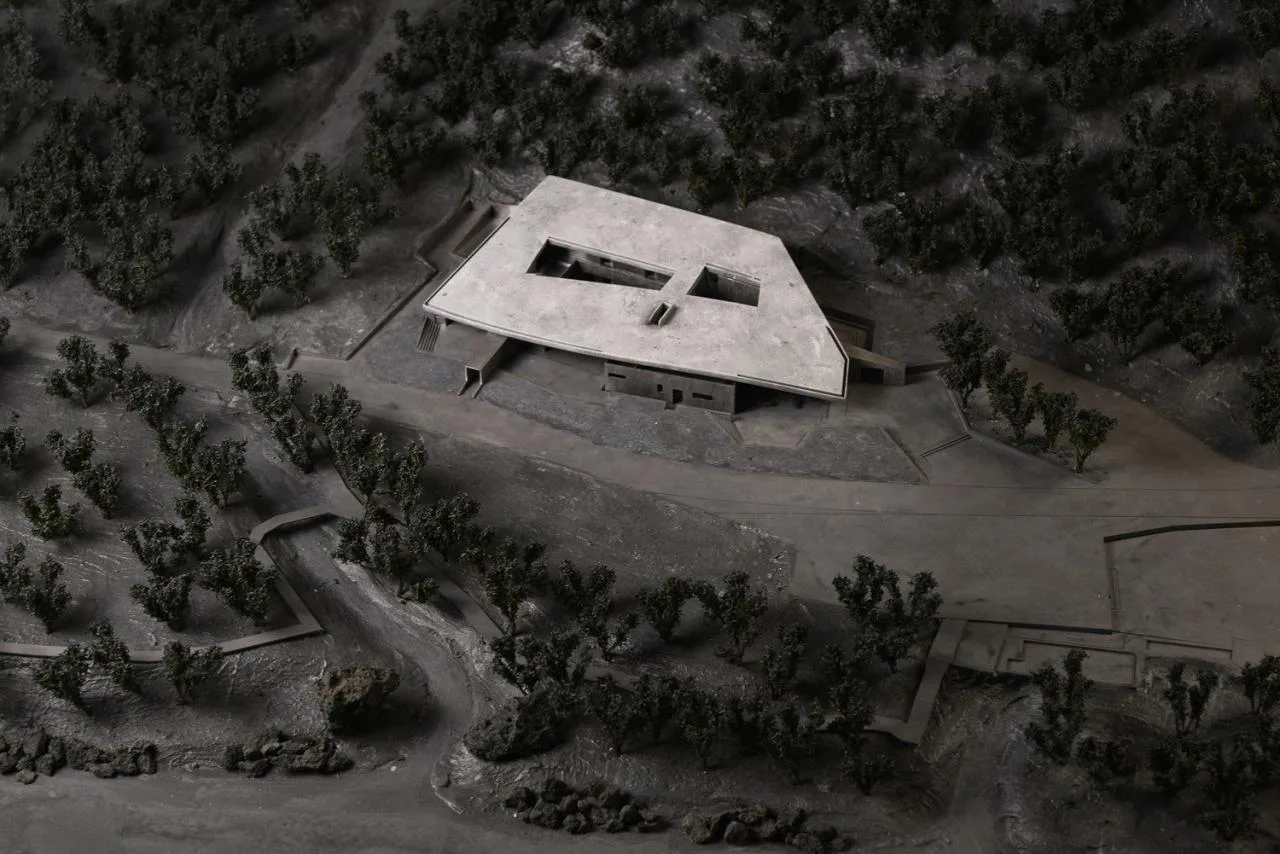
△ Model diagram
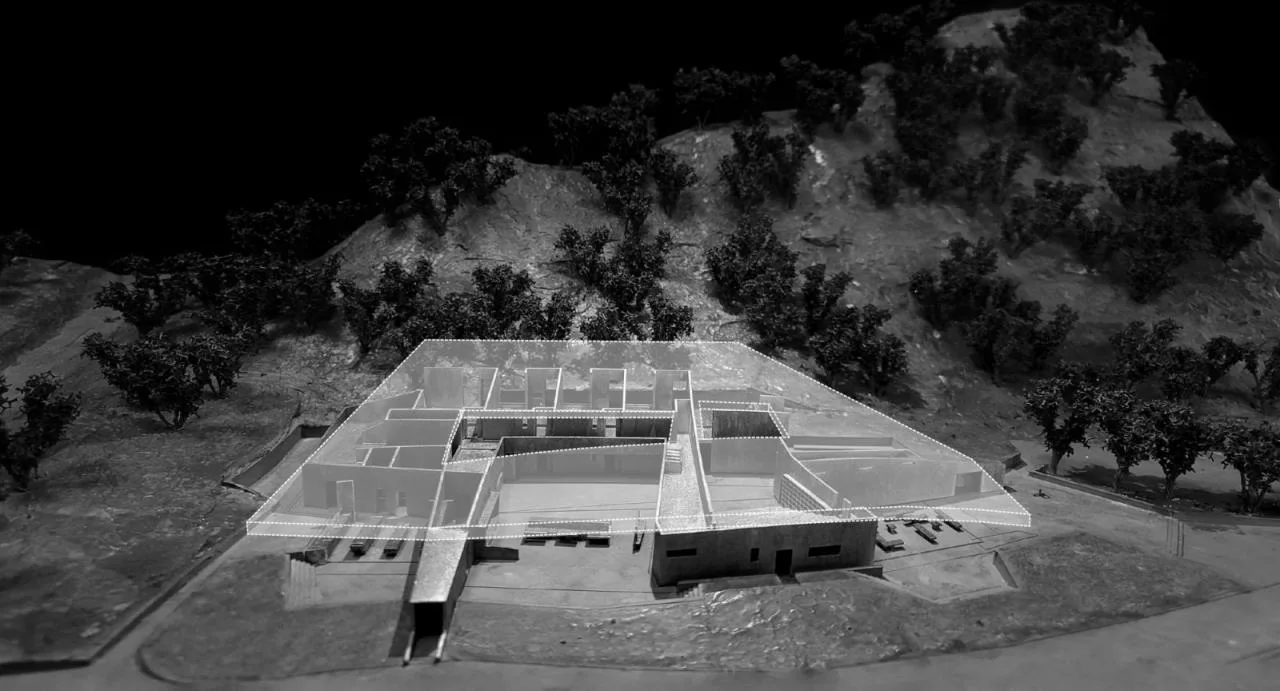
△ Model diagram
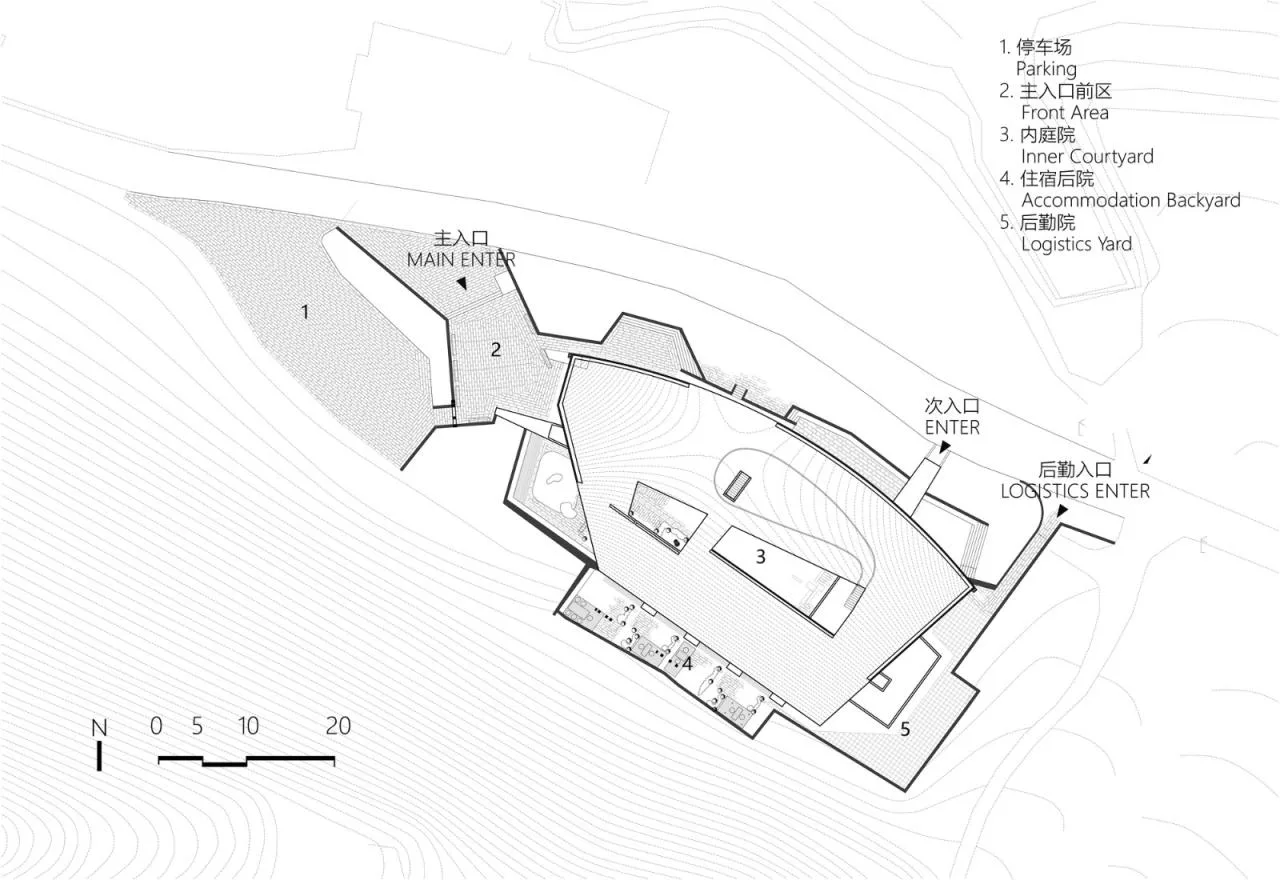
△ General layout plan
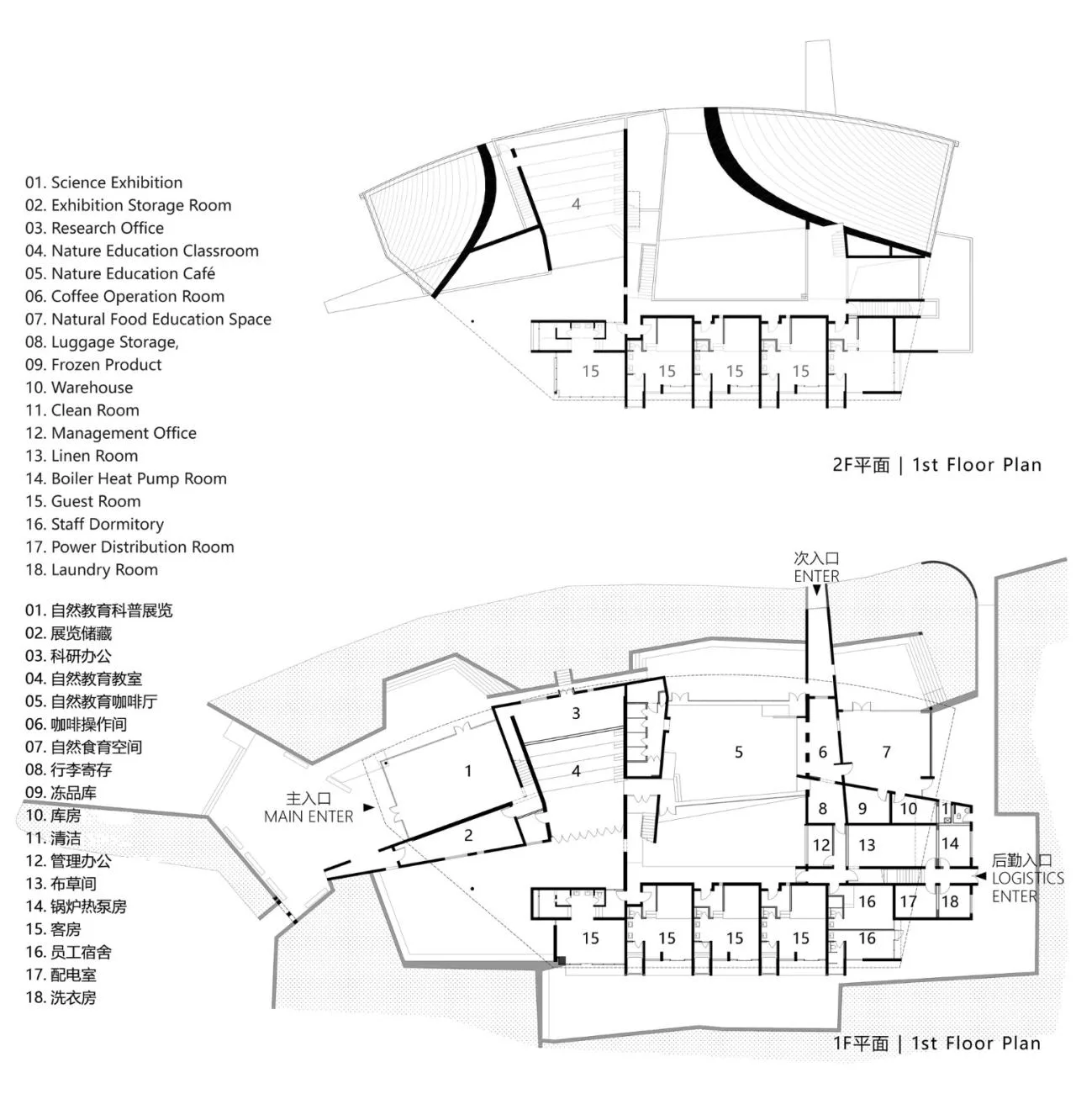
△ First floor plan
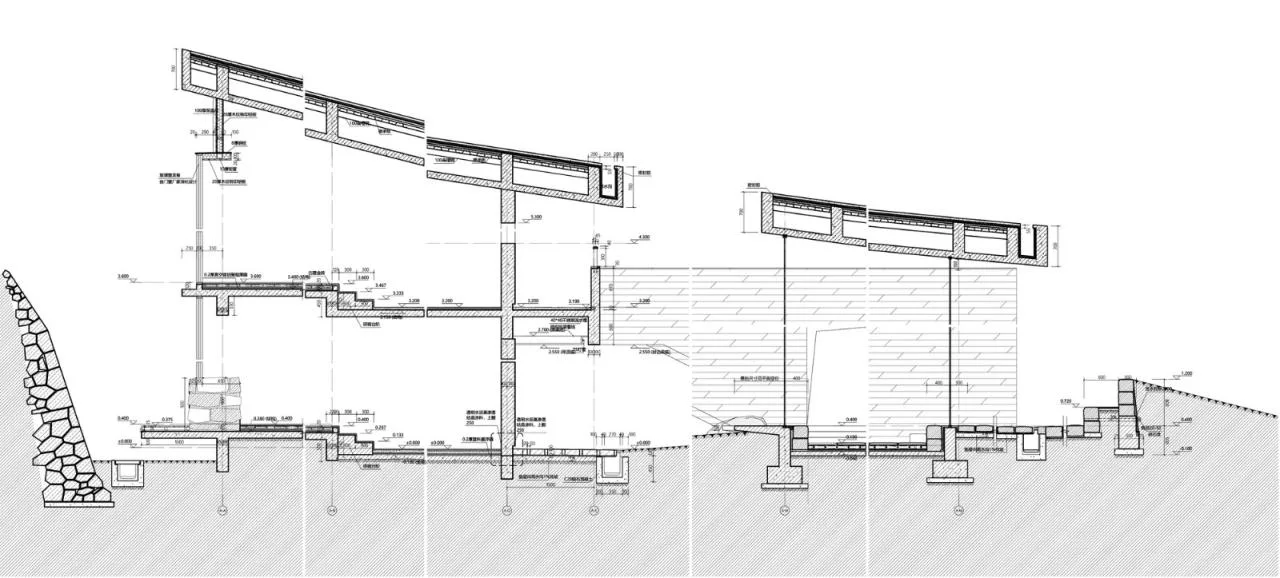
△ Section diagram
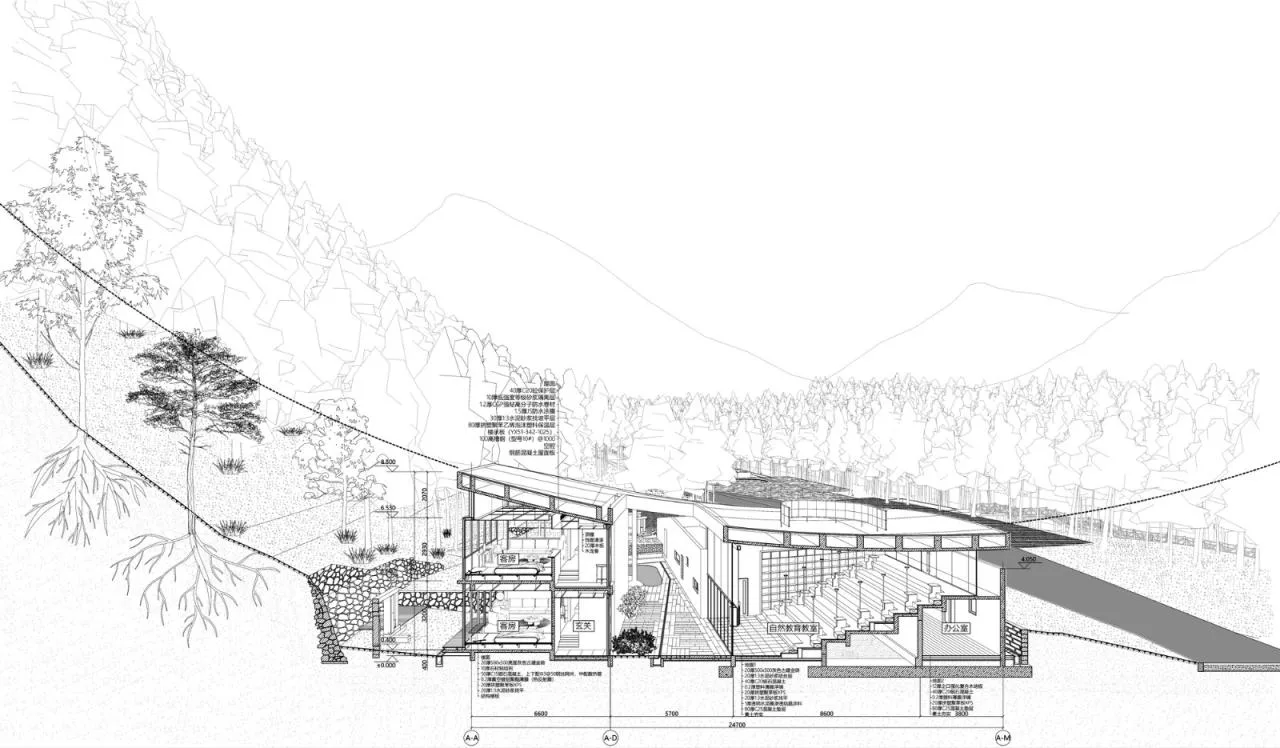
△ Sectional perspective
Project Information
Architect: Hezuo Architectural Design Firm
Area: 1350m²
Project Year: 2023
Photography: Xu Lang, Existing Architecture
Lead Architect: Xu Lang
Design Team: Xu Lang, Chen Dongxu, Wei Yu, Hou Zhidong, Qin Jie, Zeng Yuanyuan
Partners: Lai Guoping, Xiao Li, Zhu Lido
Client: Tangjiahe Nature Reserve Management Office, Chengdu Lijing Engineering Project Management Co., Ltd
Structural Design: Luan Cong Construction Design Firm
Location: Guangyuan














Must log in before commenting!
Sign Up